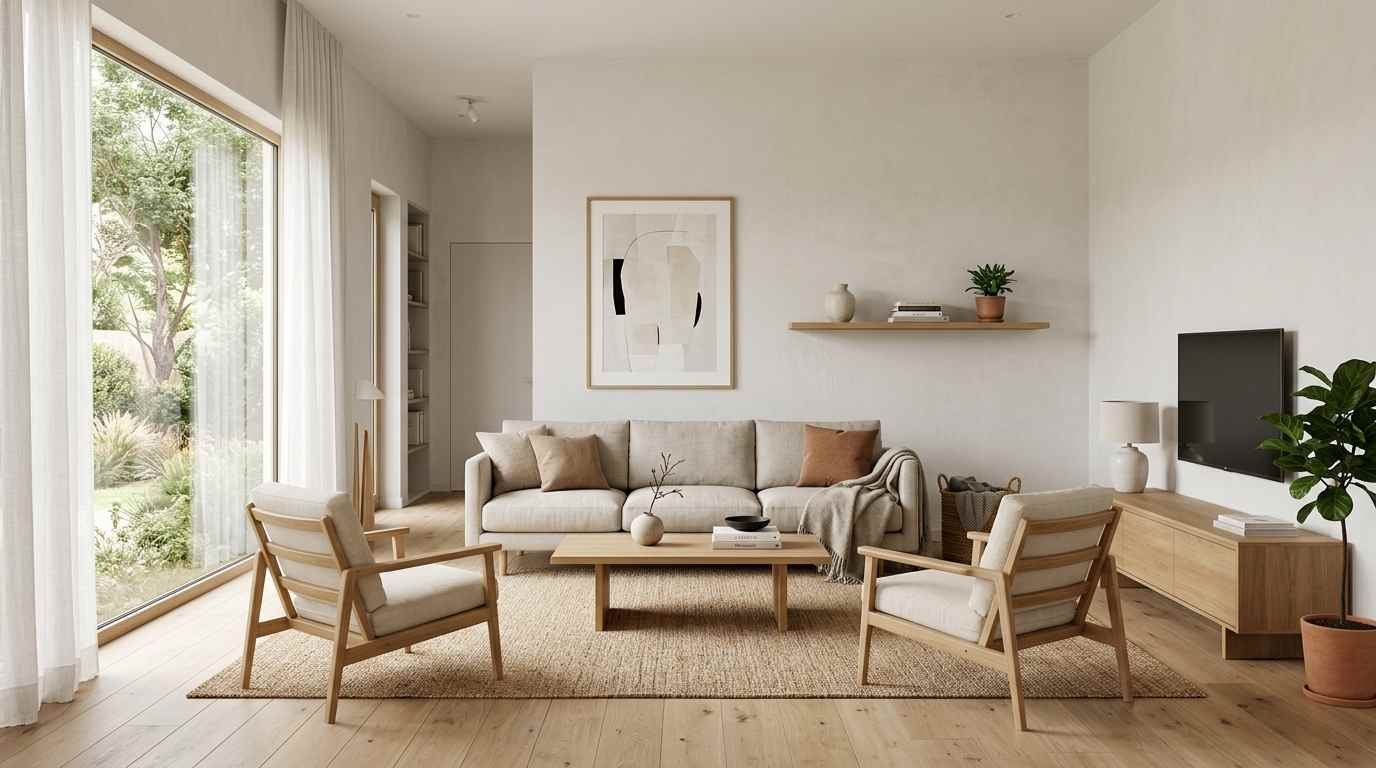
Two years ago my living room looked like a furniture showroom had a fight with a thrift store. Five throw pillows nobody used.
A bookshelf full of books I’d already read. A coffee table buried under mail I kept meaning to sort.
One Saturday I sat down, looked at the mess, and started removing things. By Sunday the room felt twice as big, and I hadn’t moved a single wall.
That’s the whole point of minimalist living rooms: subtract until what’s left actually matters.
I’ve spent the last two years redoing rooms (mine, my sister’s, one very patient friend’s) and picked up a stack of ideas that hold up outside a photo shoot.
Here are 25 of them, grouped so you can jump straight to whatever part of your room is bothering you.
Which minimalist style fits you
Not every minimalist room looks the same. Some lean cold and gallery-like, some lean warm and lived-in. Here’s a quick gut check before you buy anything.
| Style | Best for | Color palette |
|---|---|---|
| Scandinavian | Renters, small apartments | White, pale wood, soft gray |
| Japandi | Anyone who finds stark white unsettling | Walnut, cream, charcoal |
| Warm minimalism | Families, pet owners, people who actually live in the room | Terracotta, sand, olive |
The Swedish have a word for the underlying idea: lagom, roughly “the right amount.” That’s a more useful goal than “as little as possible.” A room with nothing in it isn’t minimalist, it’s just empty. There’s a difference, and it’s the difference your eyes notice immediately.
Start with what you already own (ideas 1 to 5)
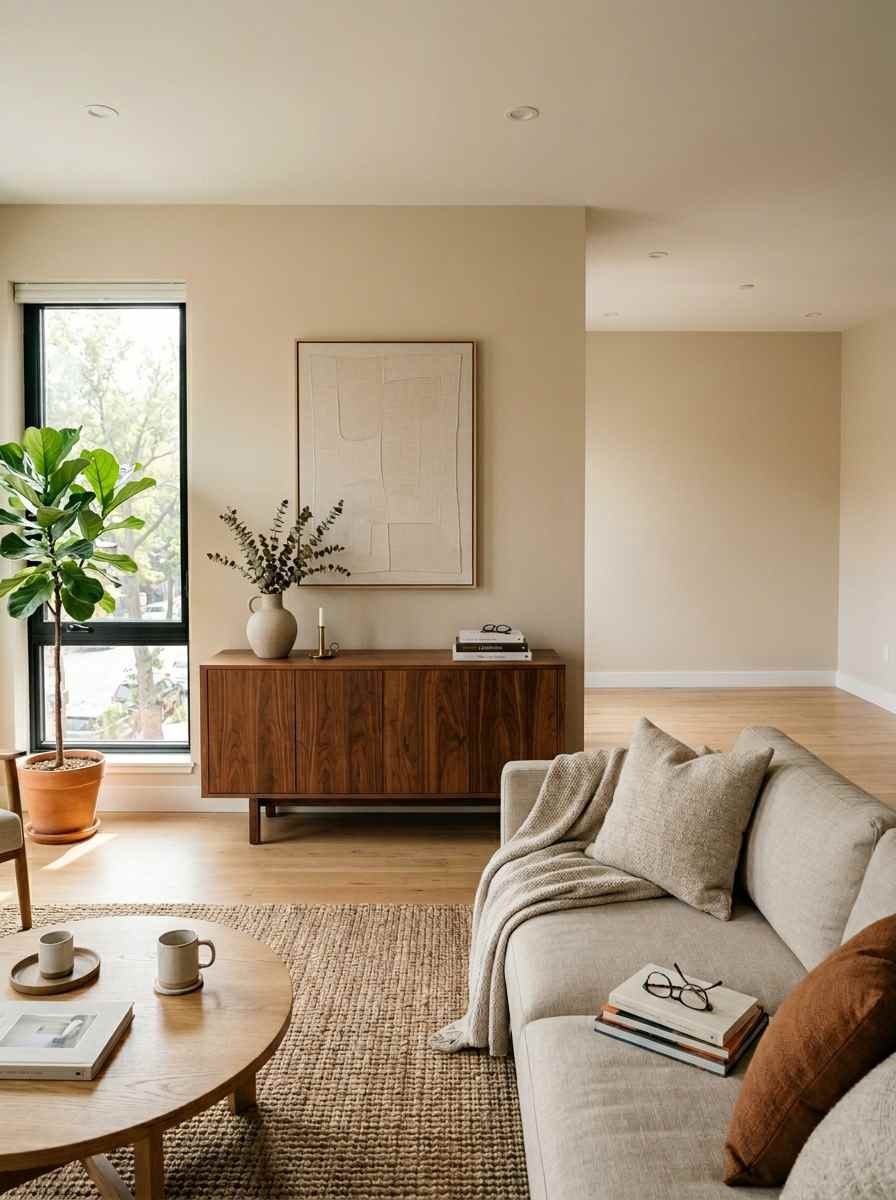
You don’t need a shopping trip to start. You need an honest look at what’s already in the room.
Edit furniture down to what you use weekly. If a piece hasn’t earned its space in a month, it’s not decor, it’s clutter with good intentions.
Pick one hero piece and let everything else support it. Mine is a walnut credenza. Once I decided that, every other decision got easier.
Clear the sightline from the doorway. Whatever you see first when you walk in sets the tone for the whole room.
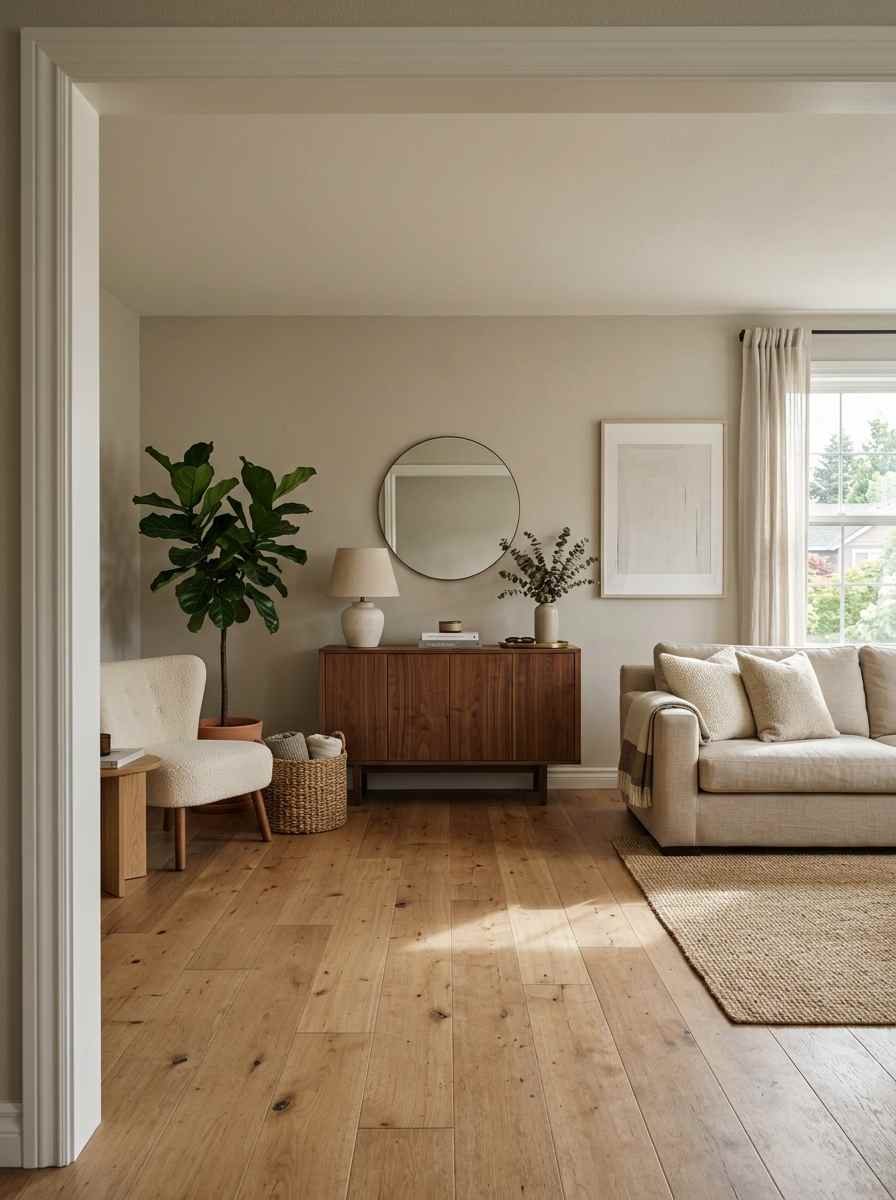
Hide cords and chargers. This one sounds small. It isn’t.
Tidying cables behind furniture or inside a cable box did more for my room’s calm factor than any single piece of decor I’ve bought since.
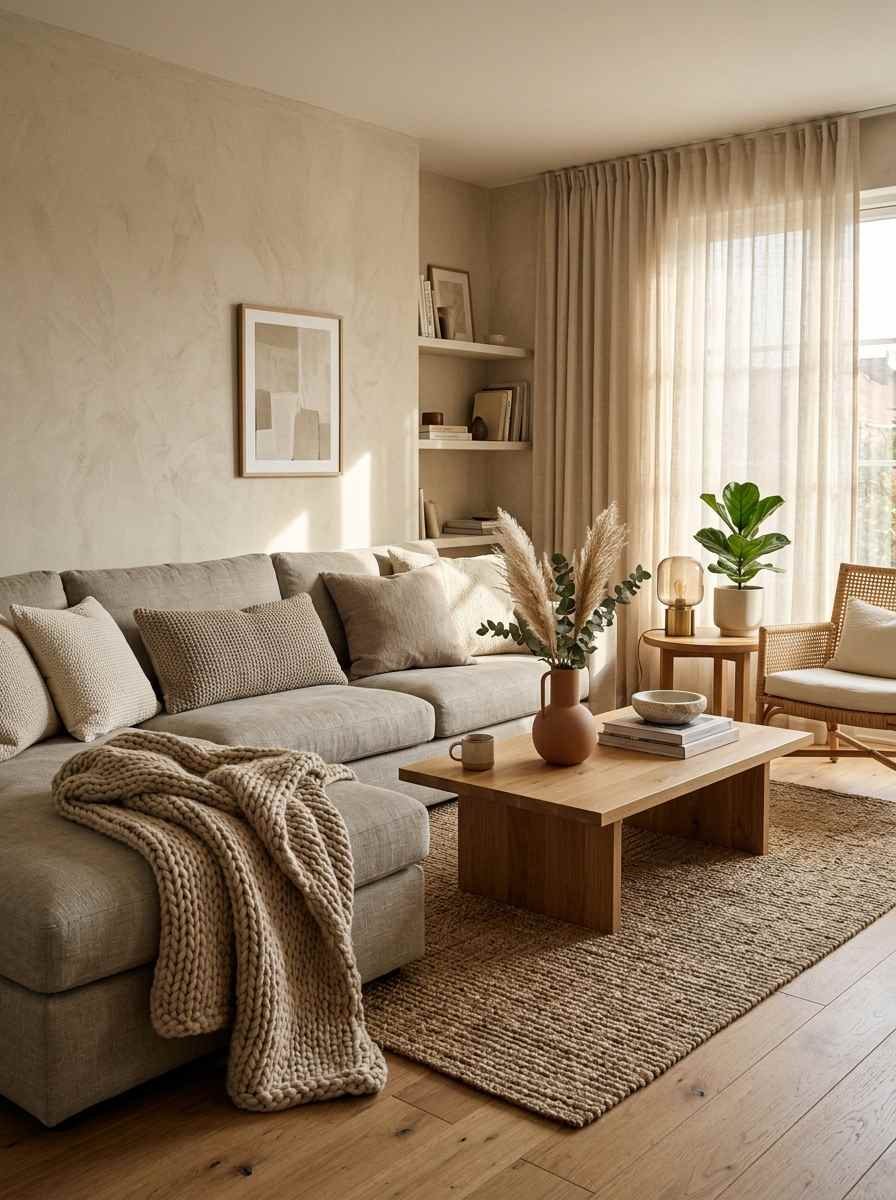
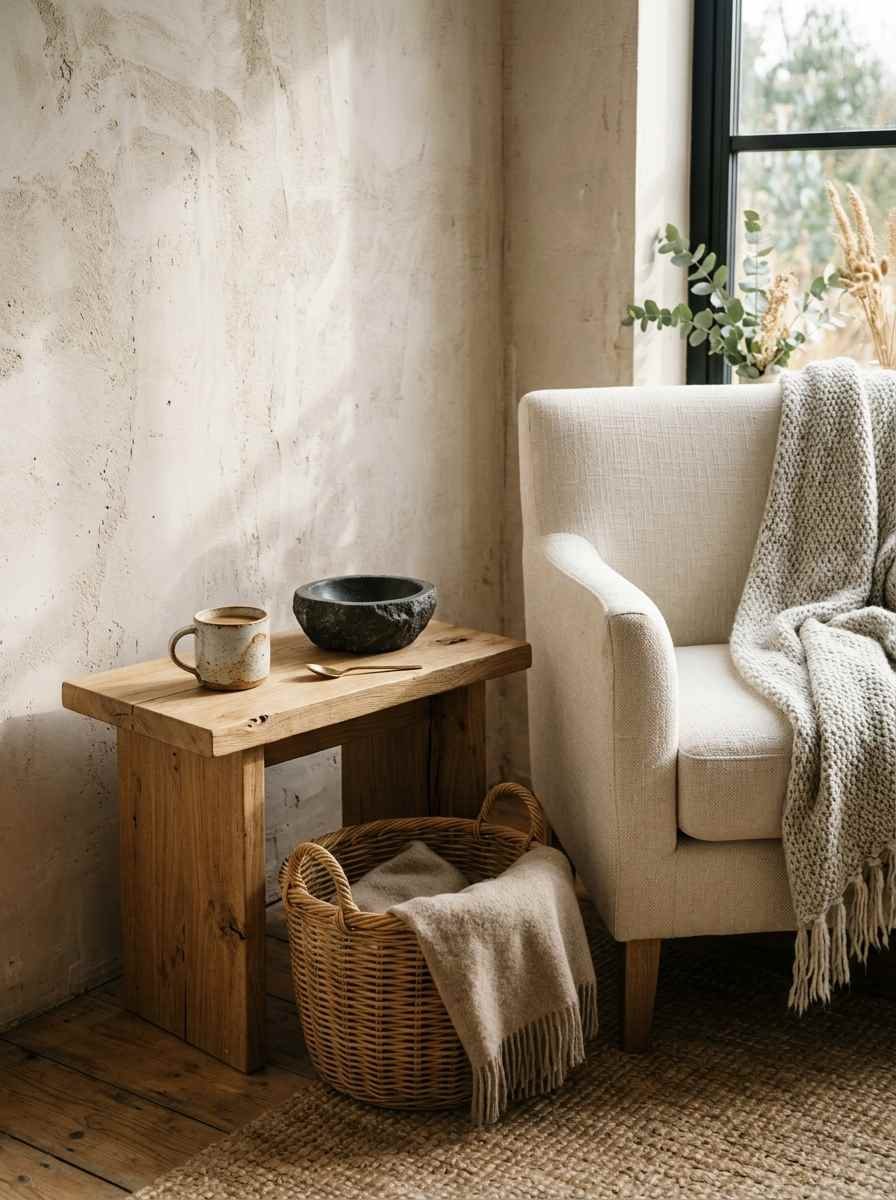
Let empty corners stay empty. A corner doesn’t need a plant or a lamp to look finished. Empty space is a design choice, not a gap waiting to be filled.
Random tangent: my downstairs neighbor redid his living room last spring and somehow ended up with a space that’s about 90% gray.
Gray walls, gray sofa, gray rug. I still don’t fully understand how that happened, and he insists he likes it. Anyway, back to the actual point.
Color and texture without going stark (ideas 6 to 10)
This is where most “minimalist” rooms go wrong. People hear minimalist and reach for white paint and call it done. That’s how you end up with a room that looks like a dentist’s waiting area.
Build around one warm neutral instead of stark white. Greige, oatmeal, and soft taupe all read as minimalist without the clinical edge.
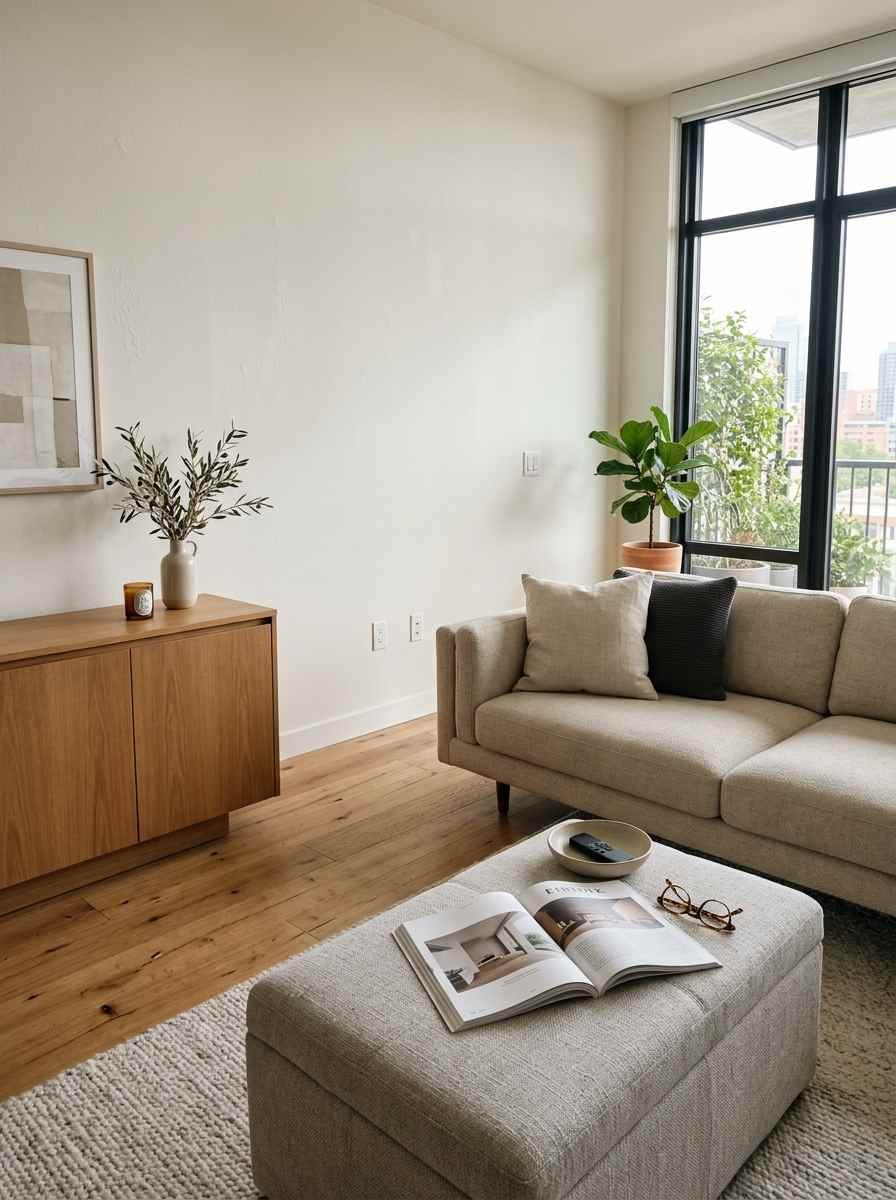
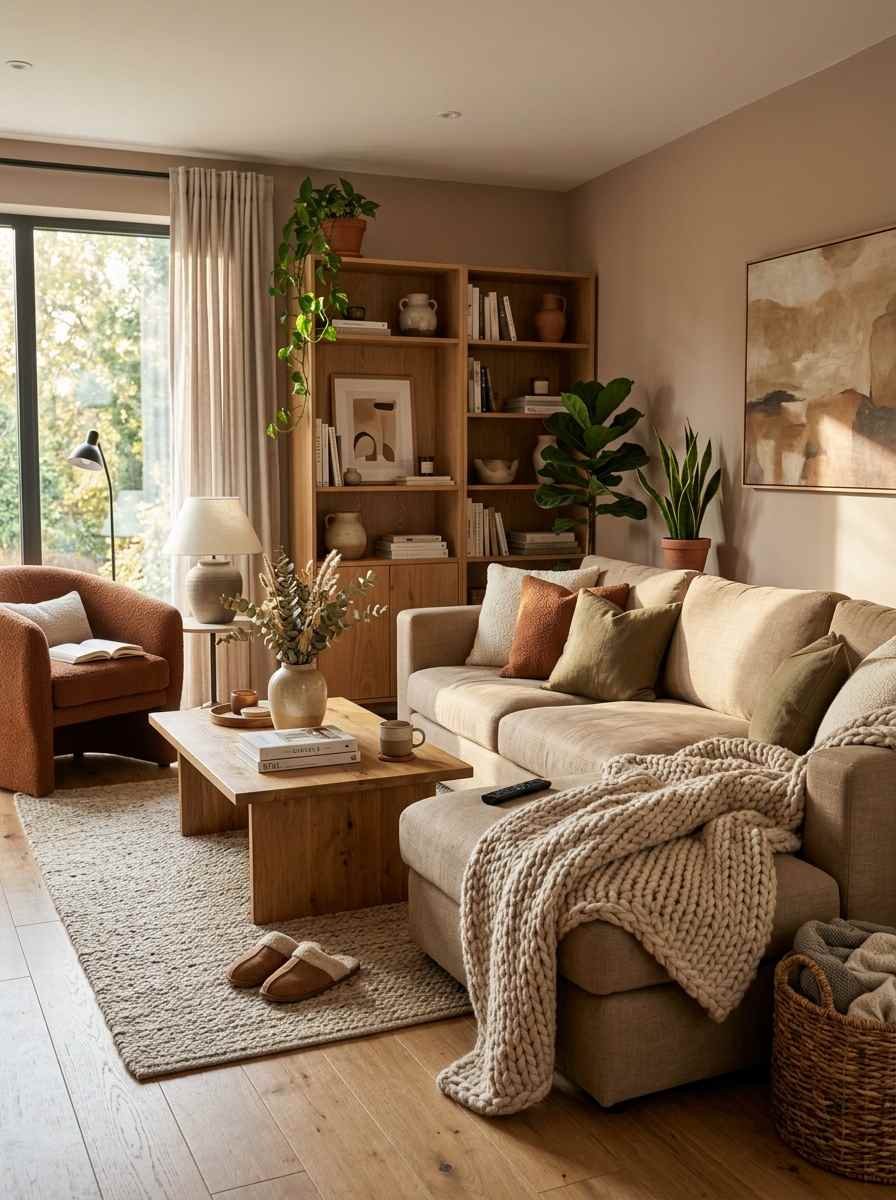
Layer two or three textures. Linen on the sofa, a wool throw, a wood coffee table. Texture does the work that pattern used to do.
Pick a single accent color and repeat it three times. A pillow, a vase, one piece of art. Repetition reads as intentional. One random colorful object reads as an accident.
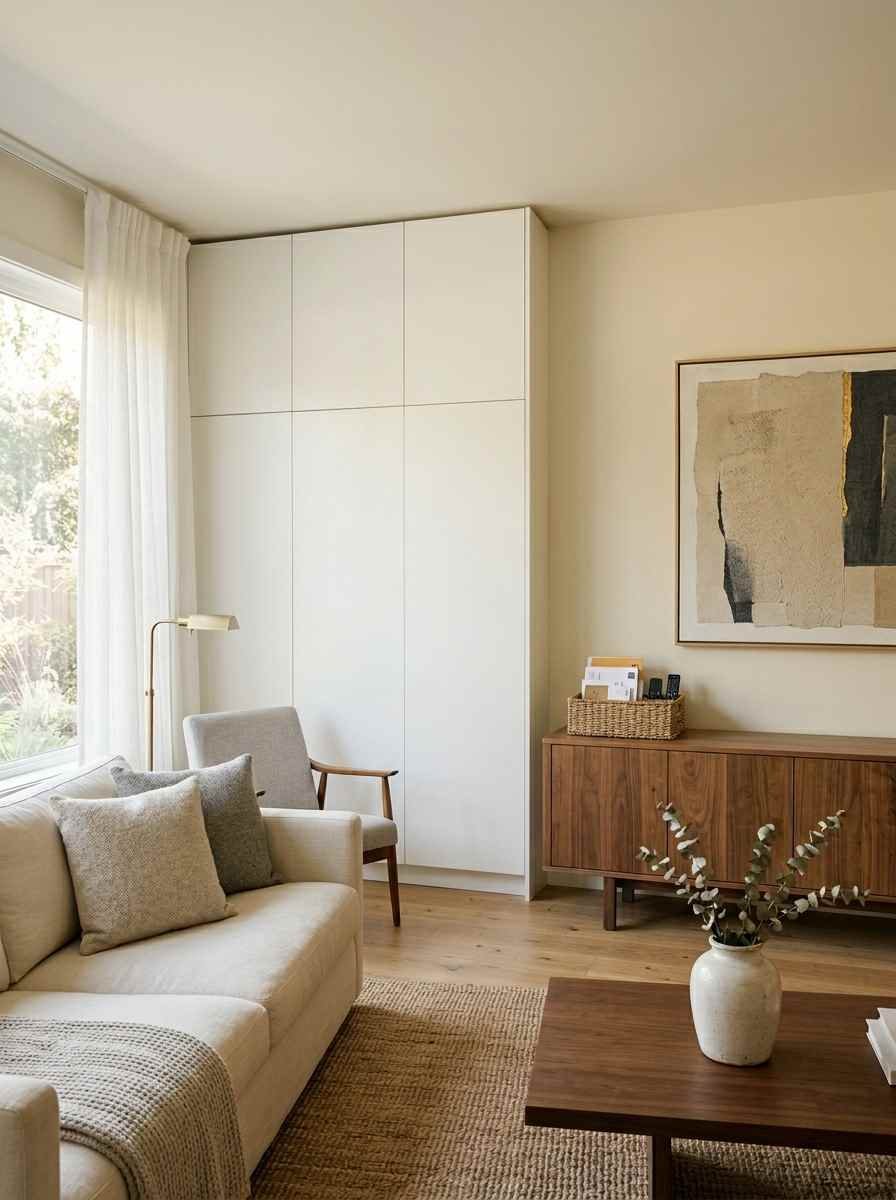
Use natural materials. Wood, stone, rattan. They add depth to a room without adding stuff to it, which is honestly the whole trick of good minimalism.
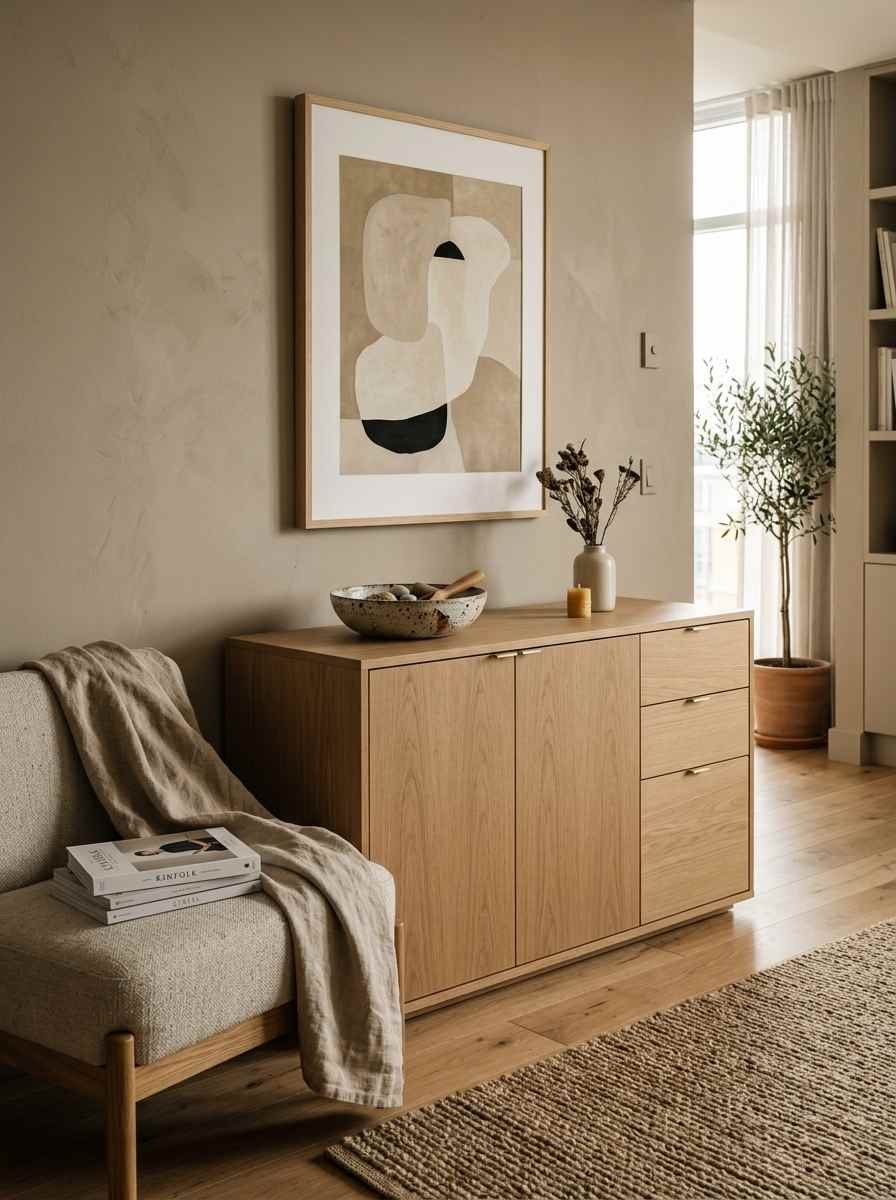
Skip the all-white room trend. It photographs well and lives badly. My friend tried it, then realized white upholstery and a toddler don’t mix. She repainted within a year.
Furniture that earns its place (ideas 11 to 15)
Furniture is where the budget goes, so it deserves more thought than “does it fit.”
Choose multi-functional pieces. A storage ottoman does the job of a coffee table and a junk drawer at once.
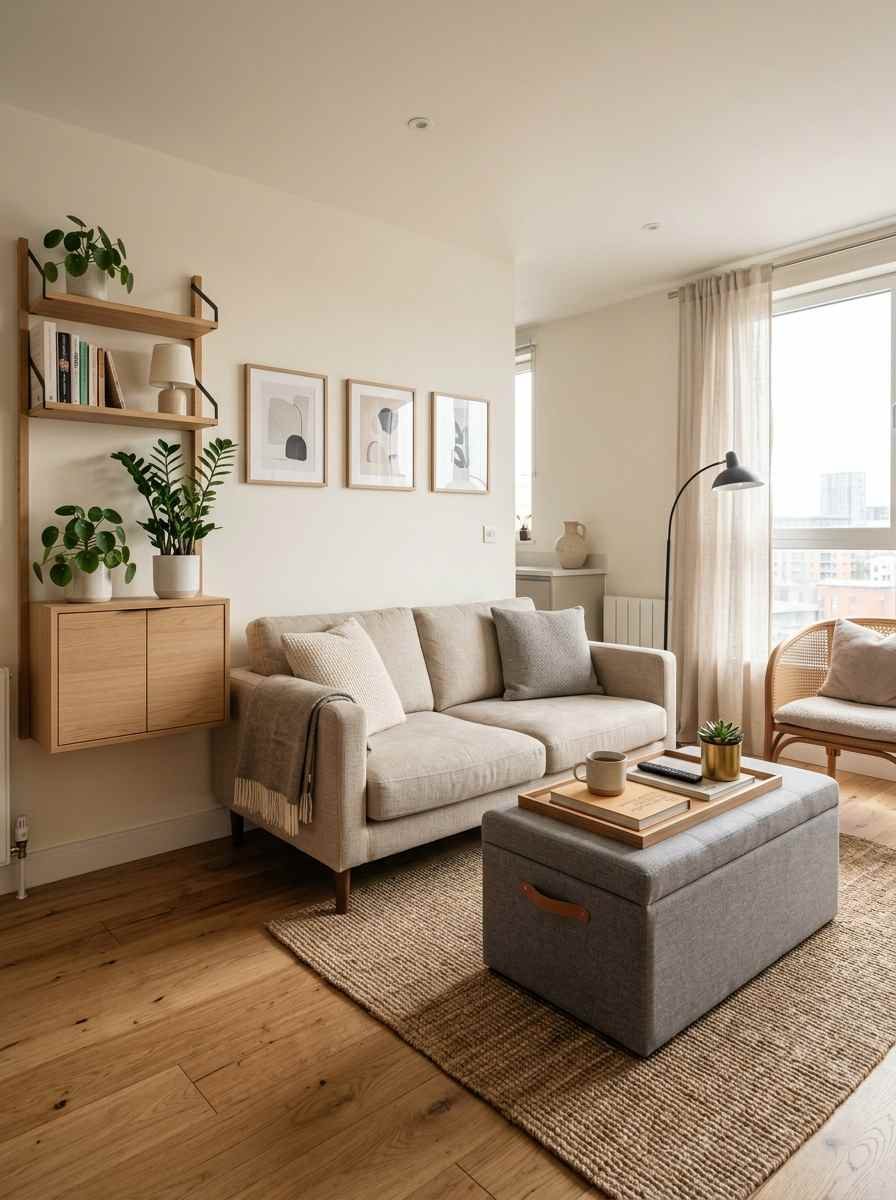
Go lower profile. Low sofas and consoles make ceilings feel taller, which matters a lot if your room is on the small side.
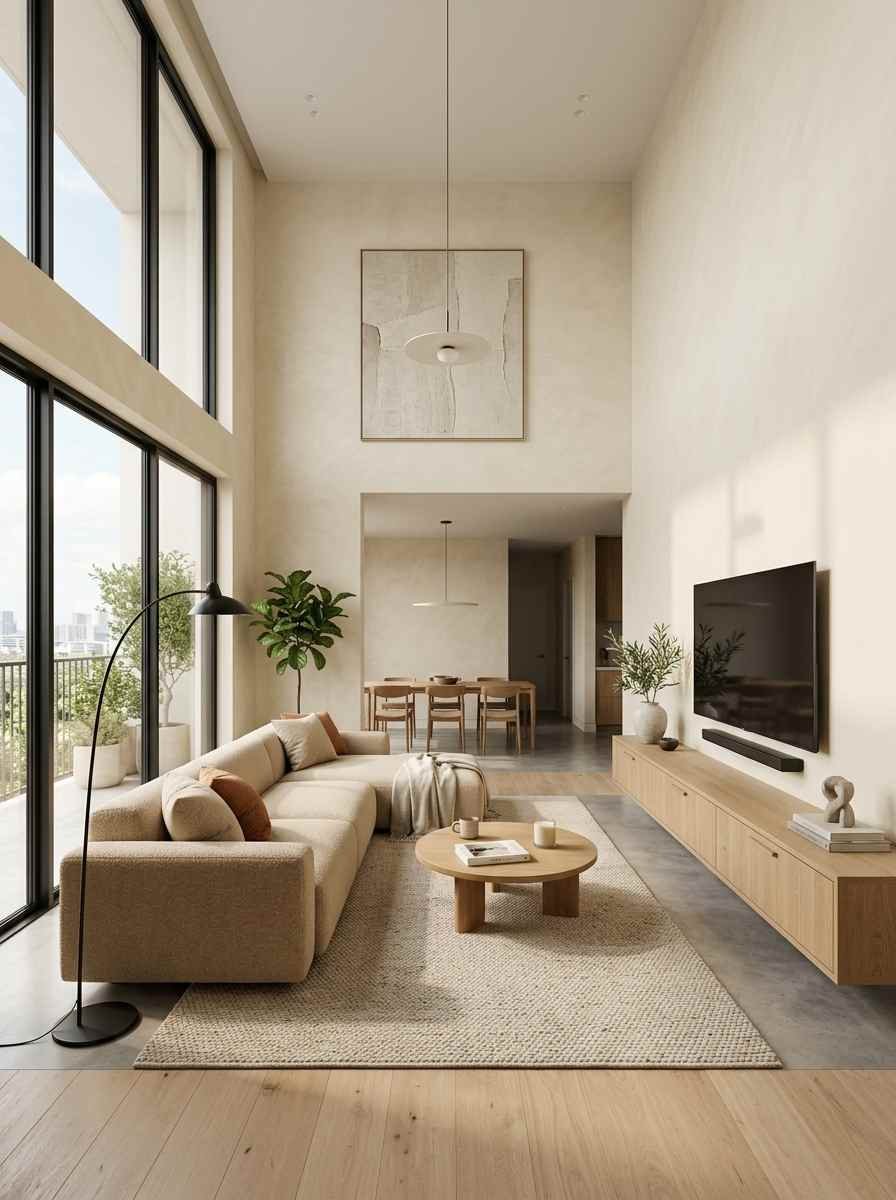
Buy fewer, better pieces. One good sofa beats three so-so ones every single time. IMO this is the single most underrated rule in the whole list, and the one people skip because quality costs more upfront.
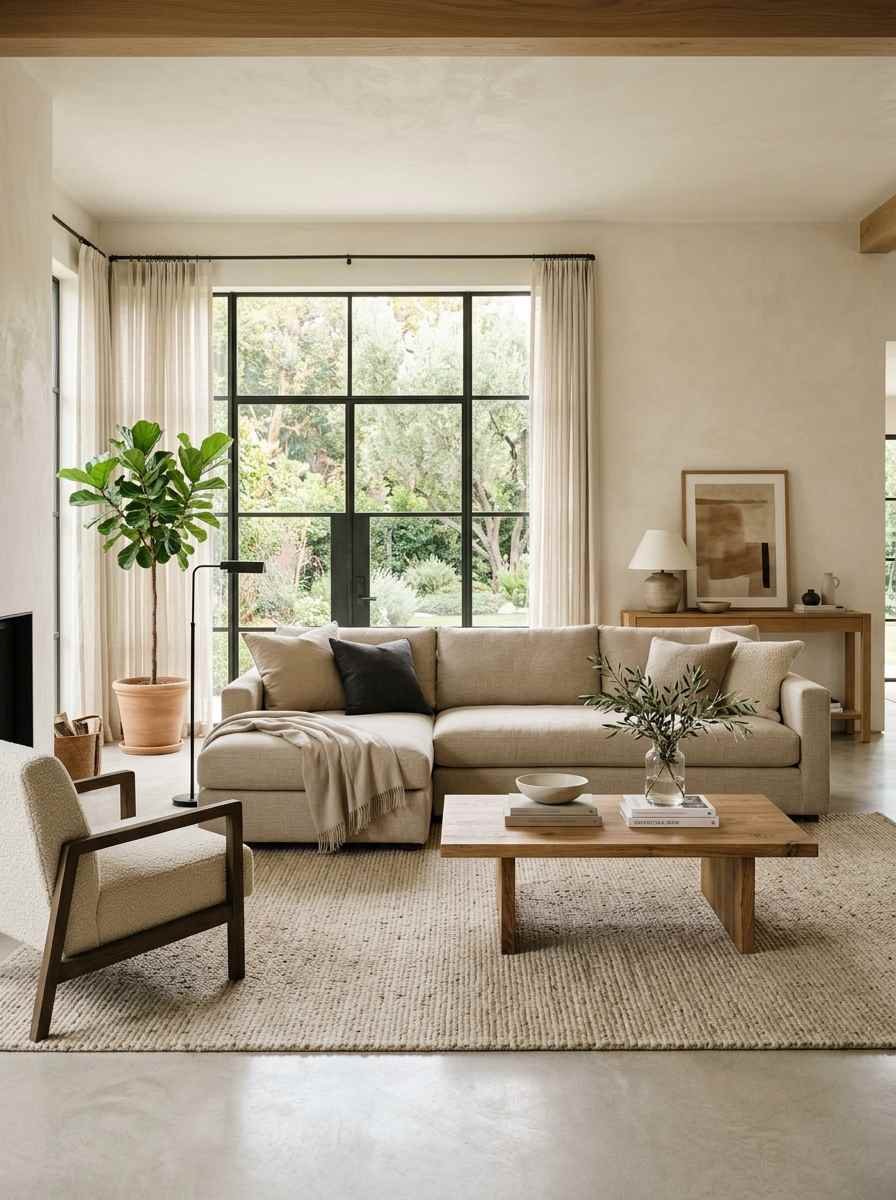
Limit throw pillows to two. More than that and you’ve created a nightly chore (move pillows, sit down, move pillows back).
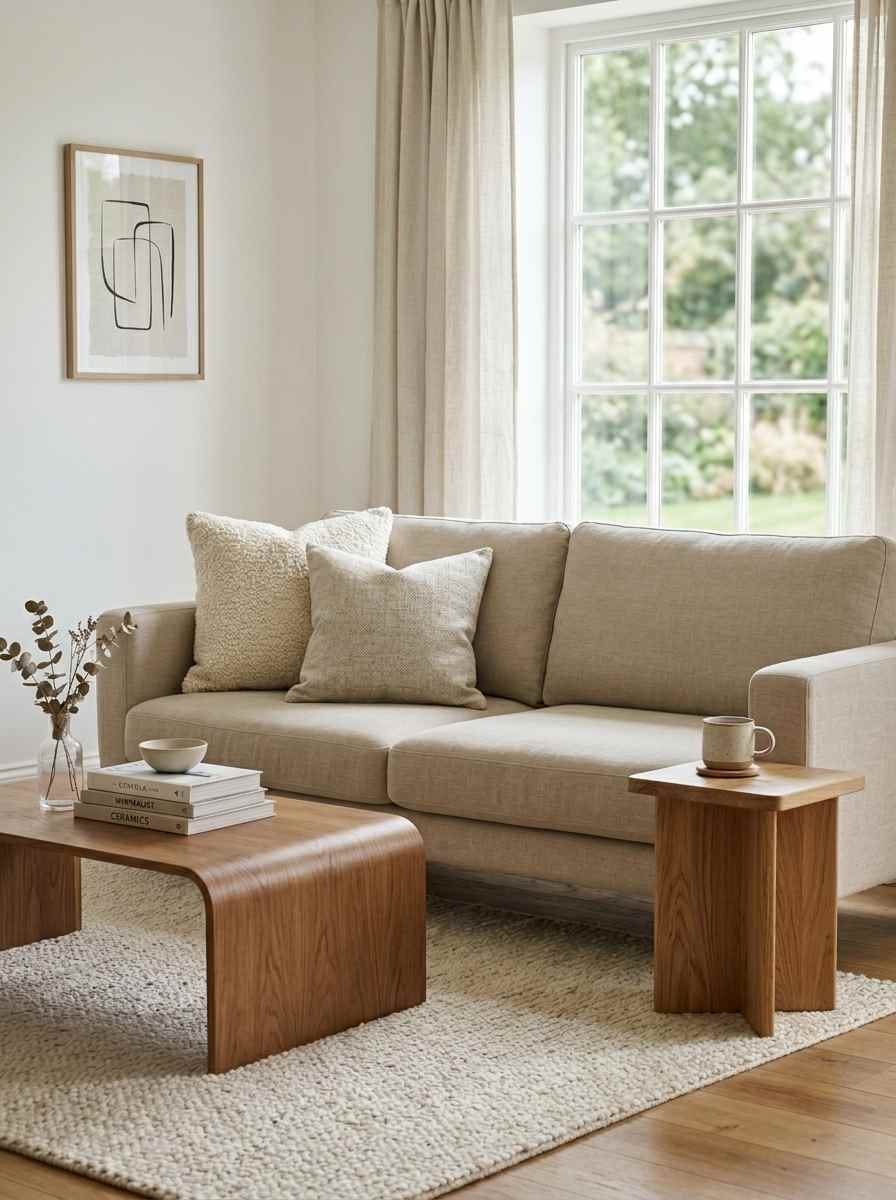
Add furniture with closed storage built in. A console with doors holds remotes, cords, and the random stuff that otherwise lands on the coffee table.
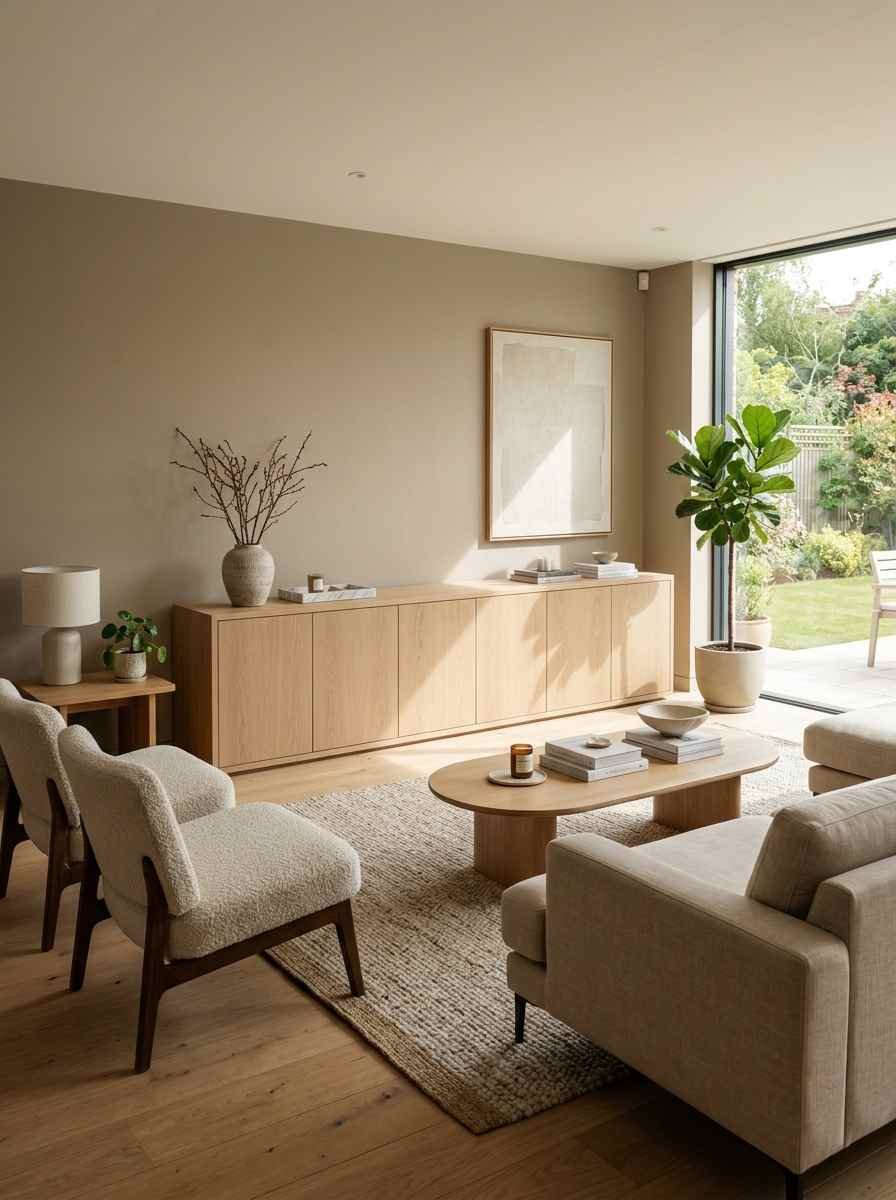
Light it like you mean it (ideas 16 to 18)
A minimalist room with bad lighting still looks unfinished, no matter how curated the furniture is.
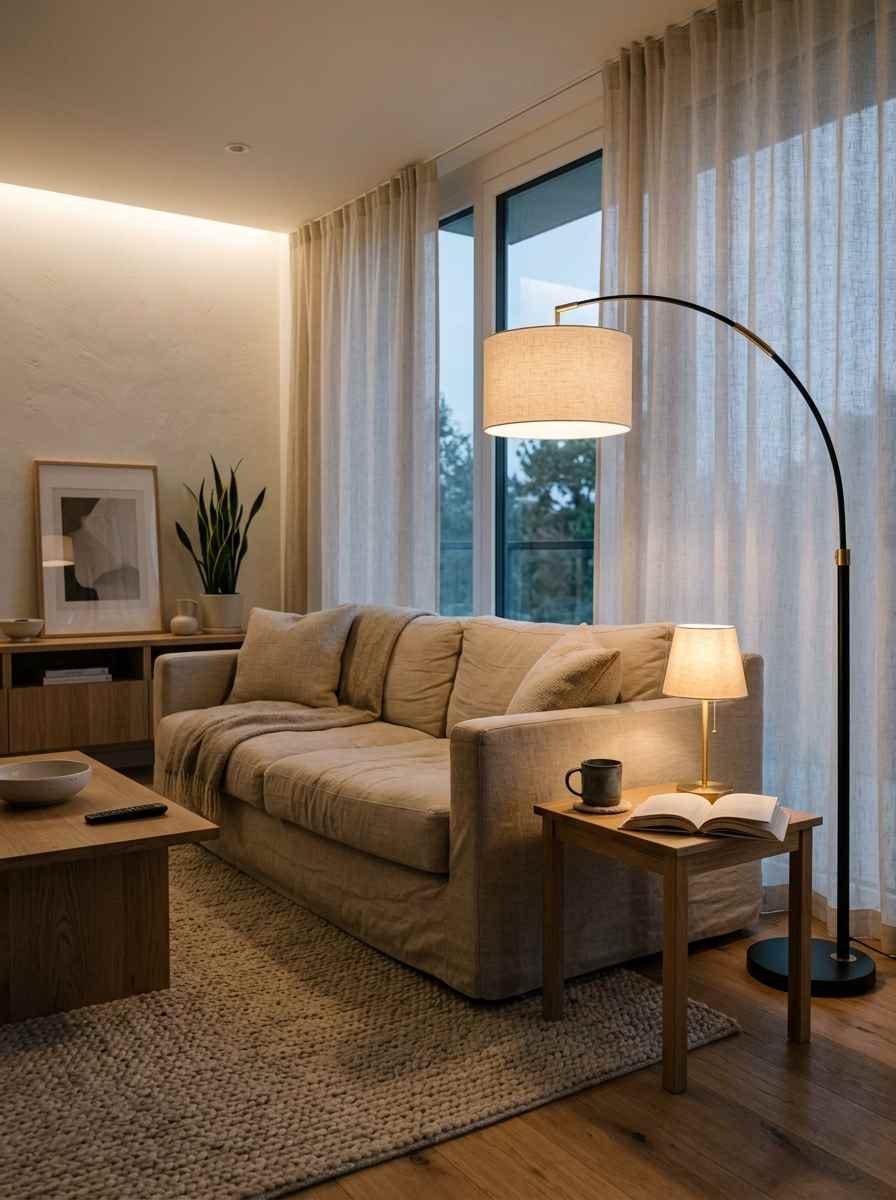
Layer three light sources. Overhead, a floor lamp, and a reading lamp give you control over the mood instead of one flat blast of light.
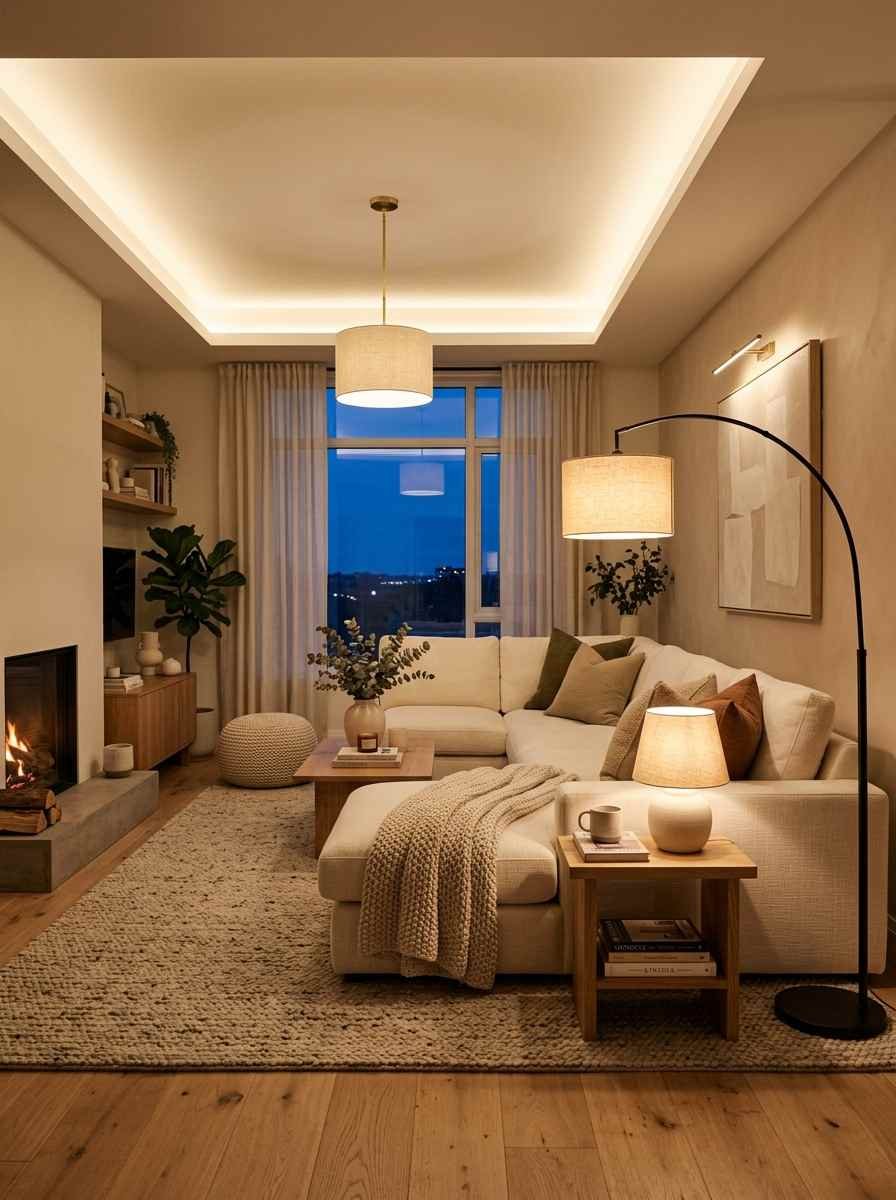
Maximize natural light. Swap heavy curtains for sheer panels, or skip curtains entirely if privacy allows it.
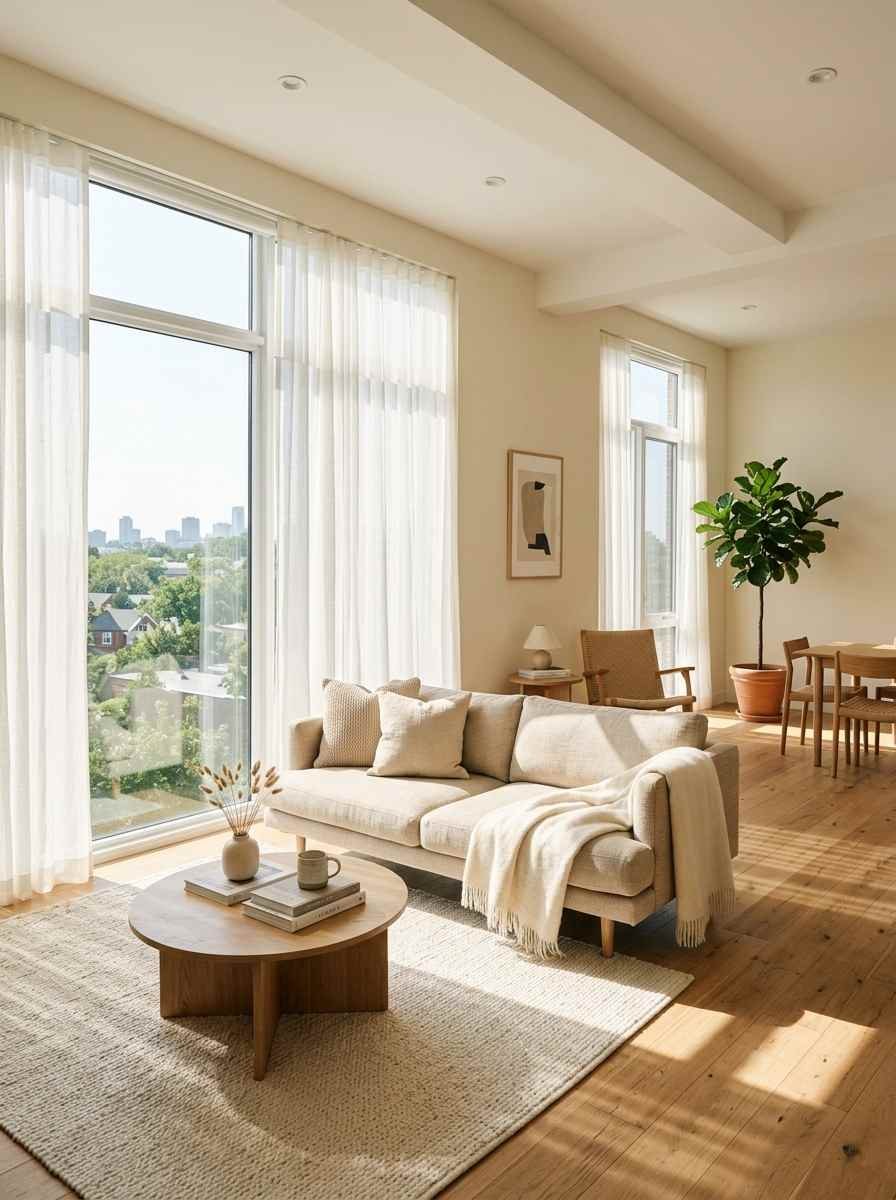
Choose warm bulbs, around 2700K to 3000K, instead of cold white. Warm light is the fastest, cheapest way to make a sparse room feel comfortable instead of clinical.
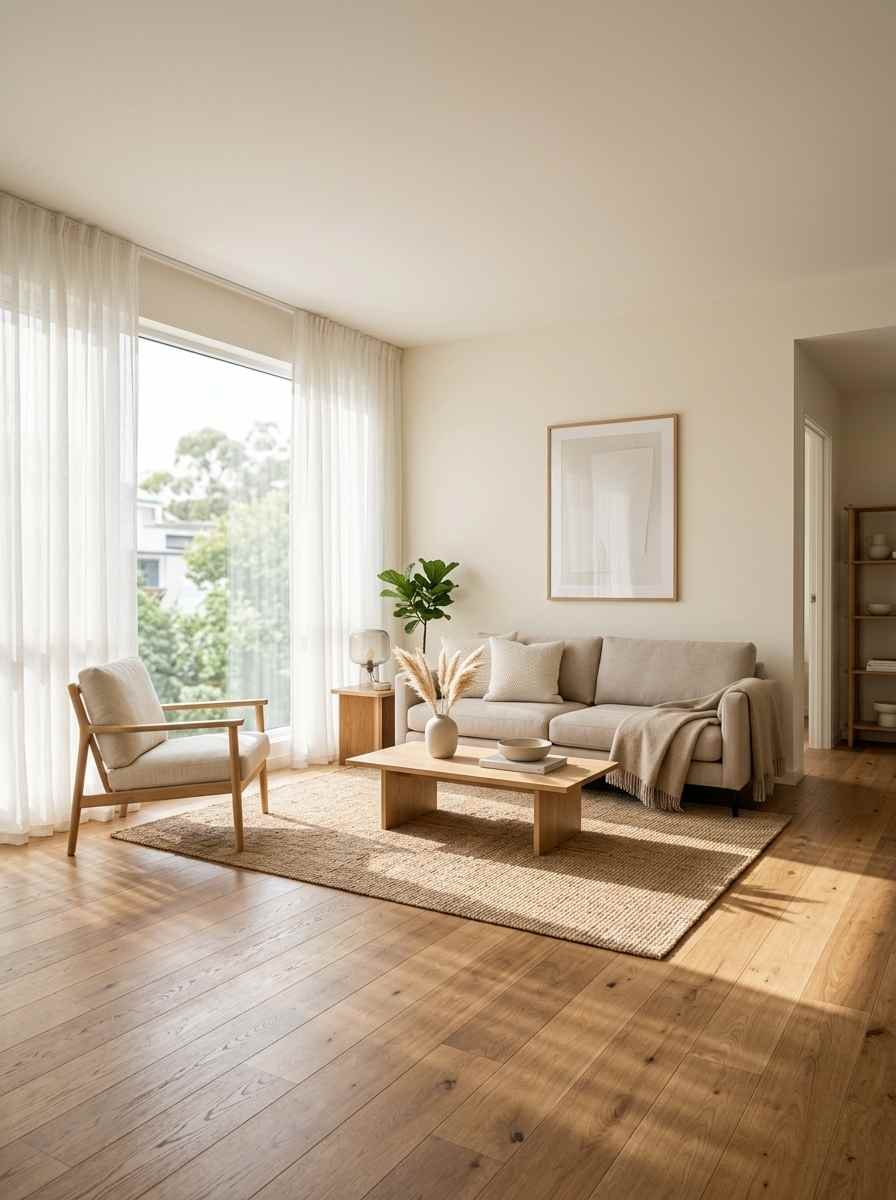
Storage tricks that keep clutter invisible (ideas 19 to 22)
This is the unglamorous half of minimalism, and it’s the half that actually keeps the room looking the way it did on day one.
Apply a one-in-one-out rule for new decor.
Bring in a new vase, donate an old one. It sounds rigid, but it’s the only thing that’s worked long term for me.
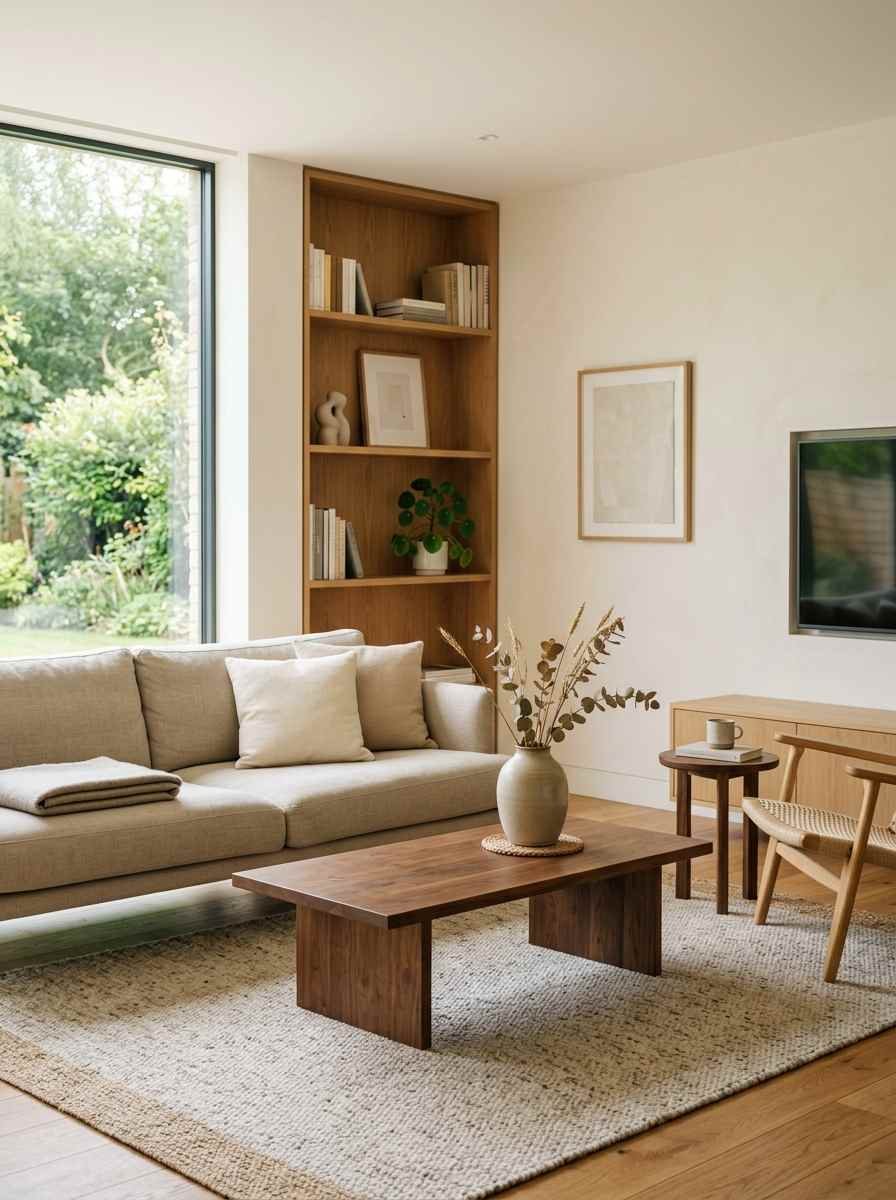
Choose closed cabinets over open shelving if you’re not naturally tidy.
Open shelves look incredible in photos and chaotic in real life unless you’re the kind of person who folds towels into thirds. Be honest about which person you are.
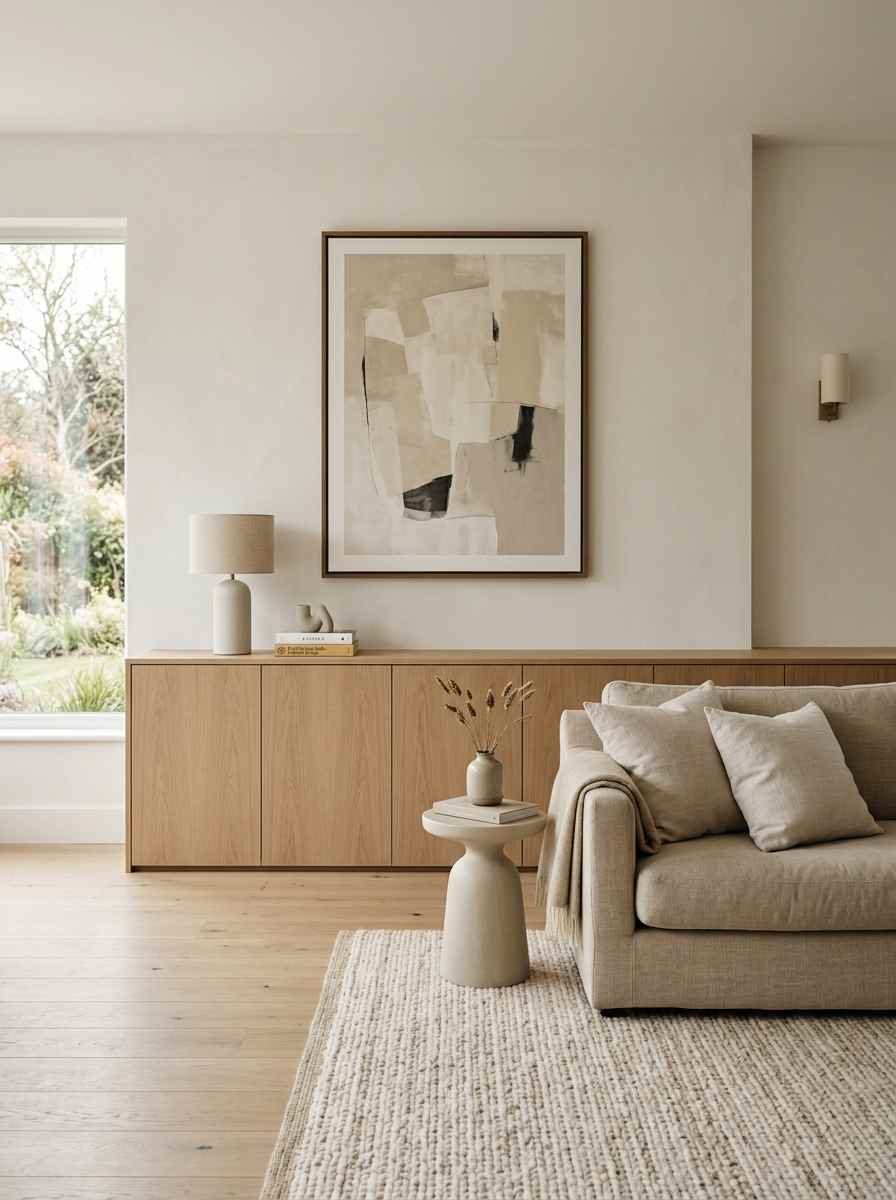
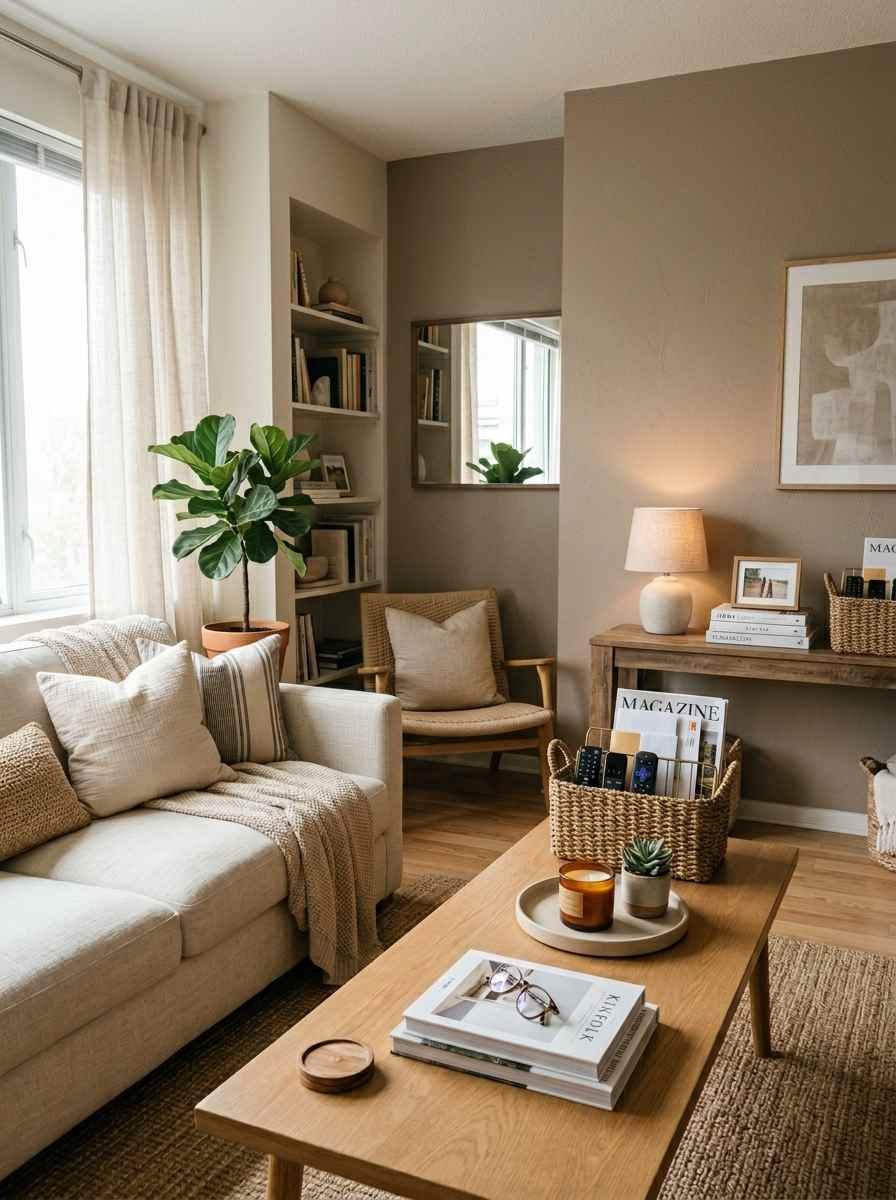
Keep one small landing basket for mail and remotes so they don’t sprawl across the coffee table.
Marie Kondo’s KonMari method leans hard on this idea: a home for every object, no exceptions.
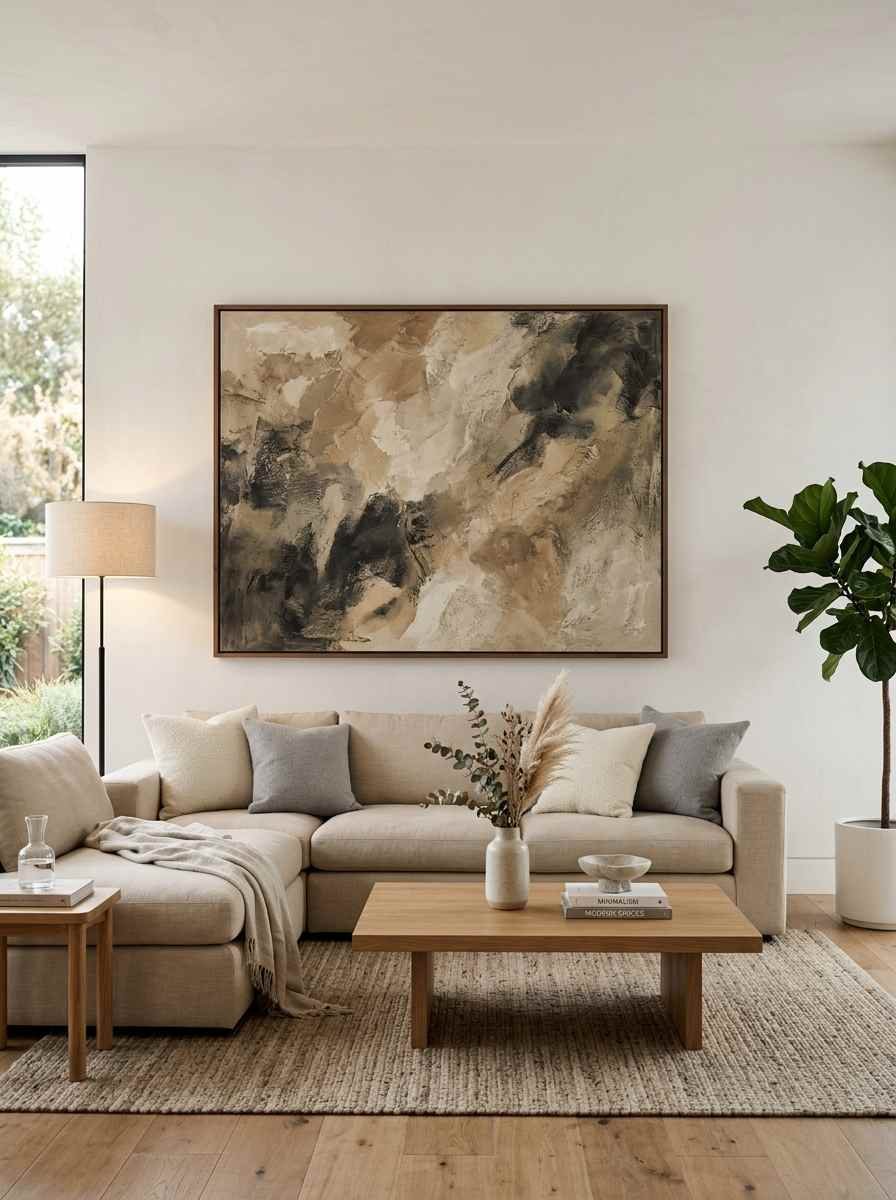
Limit wall art to one large piece or a tight set of three, instead of a sprawling gallery wall.
A gallery wall can absolutely work, but it’s a different style entirely, and mixing the two usually just looks unfinished.
Small space fixes (ideas 23 to 25)
If your living room is genuinely tiny, these three make the biggest visible difference for the least effort.
Hang a mirror opposite the window to double the natural light in the room.
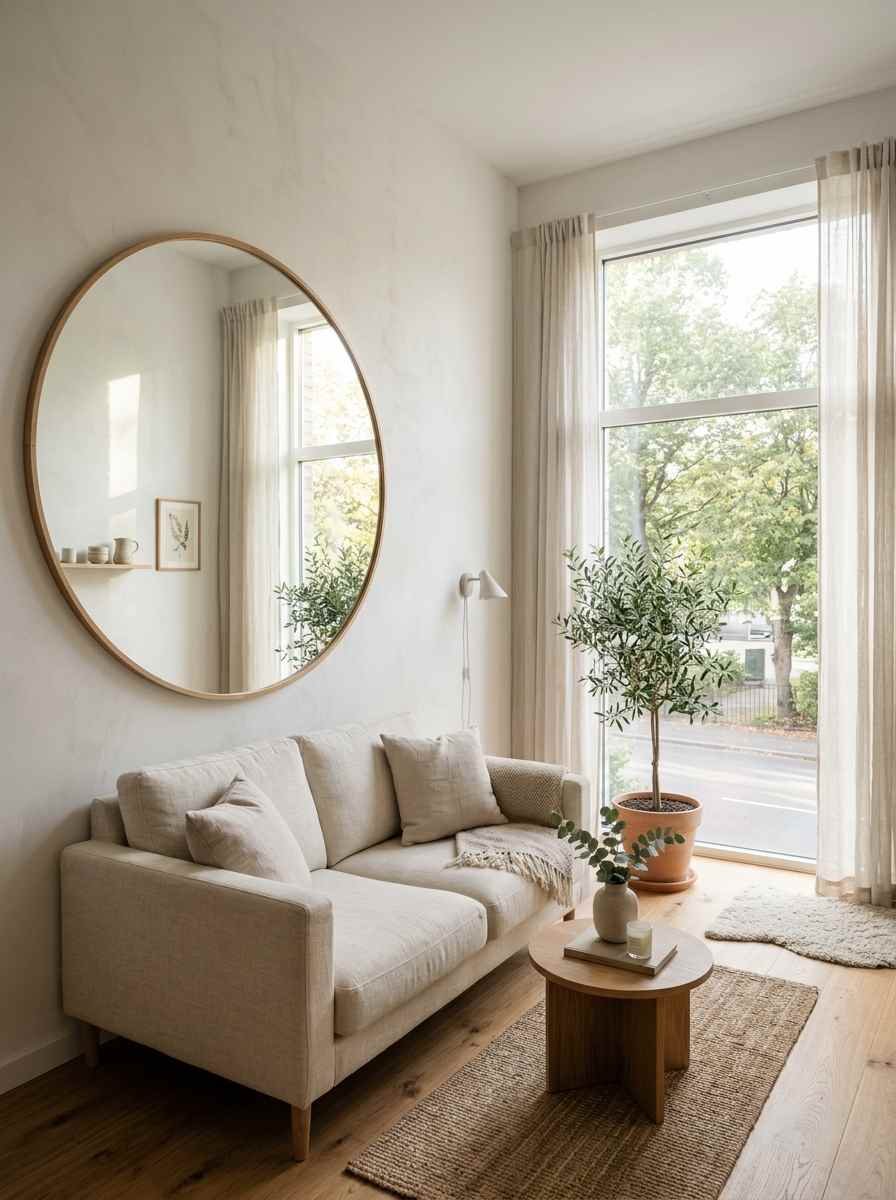
Float furniture slightly off the walls. A few inches of breathing room creates depth, even in a tiny space. Pushing everything flush against the wall is the instinct, and it’s almost always the wrong one.
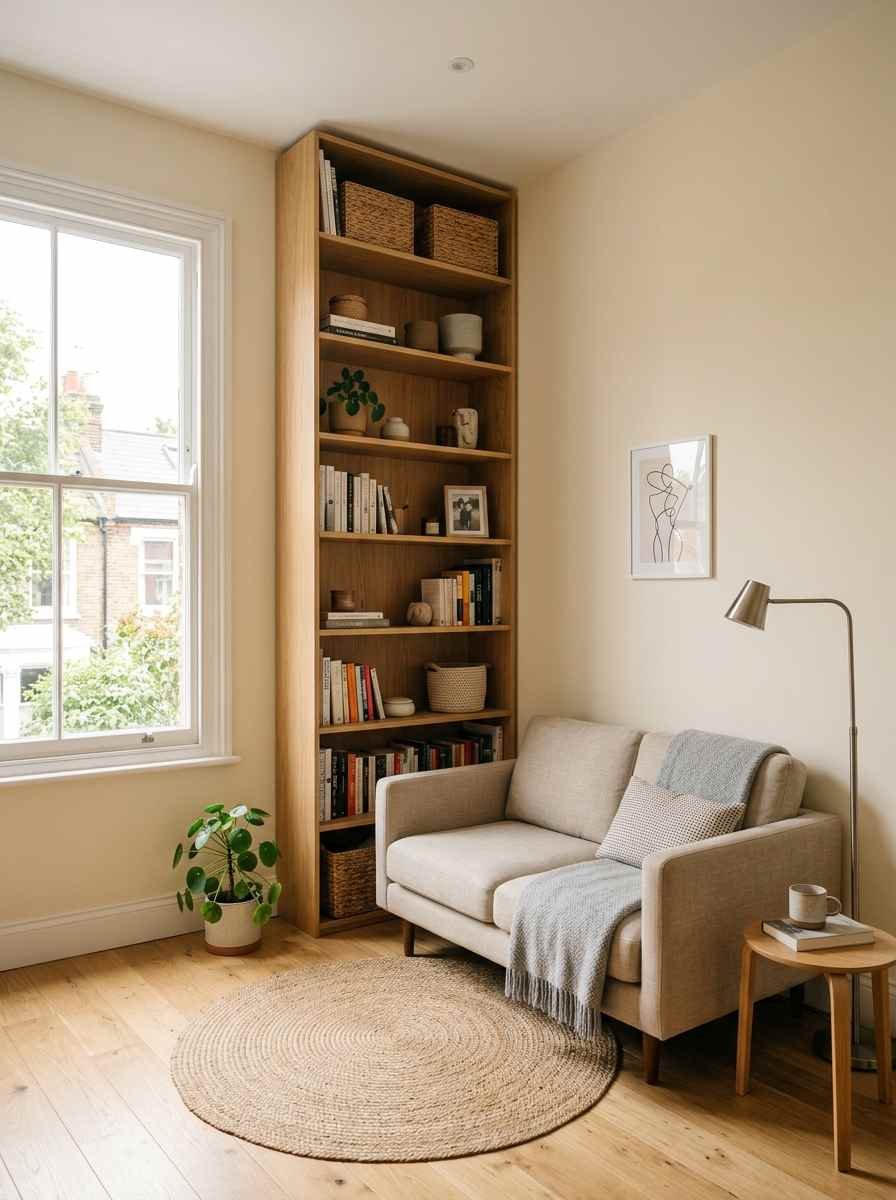
Go vertical with storage. A tall, narrow shelf uses far less floor space than a wide, low unit while holding the same amount of stuff.
This is the one idea on this list that made me go, wow, why didn’t I think of that sooner, when a designer friend pointed it out.
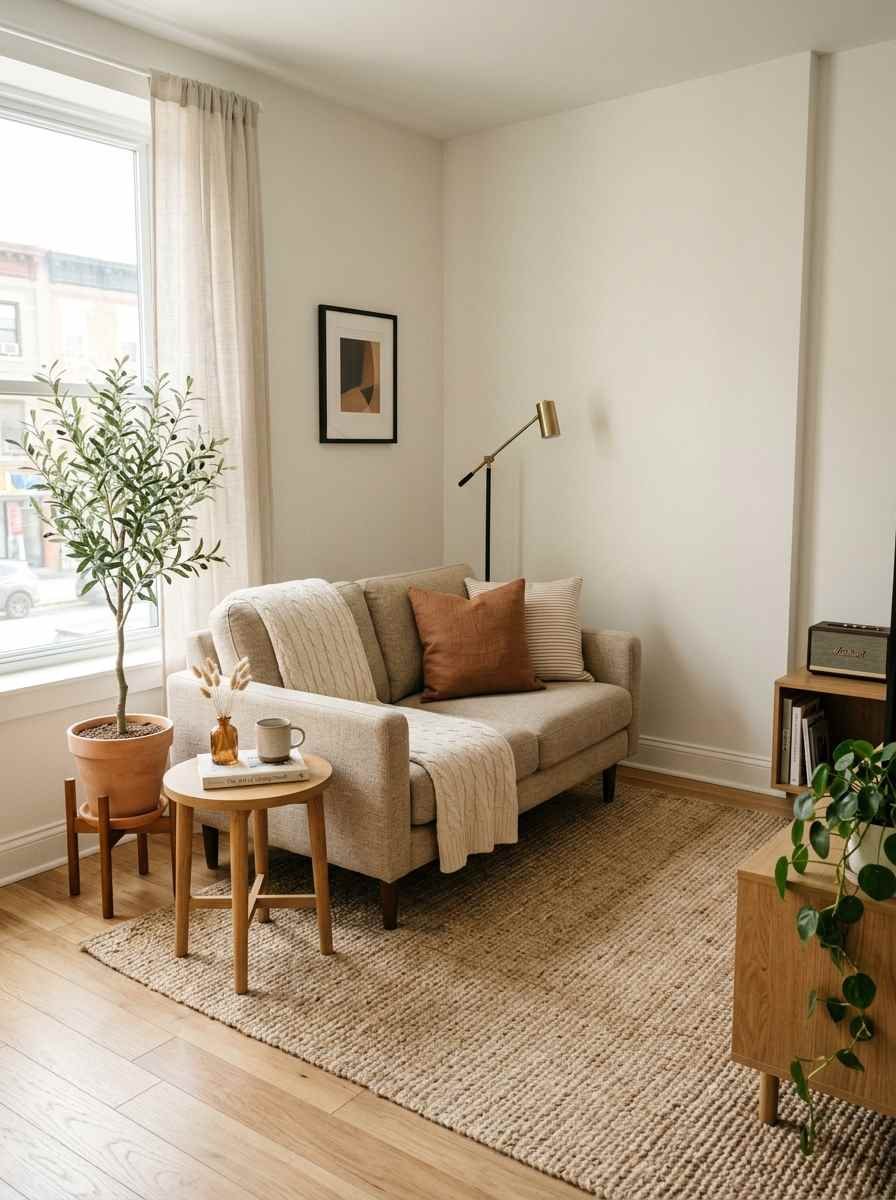
A quick gut check before you buy anything
If you’re staring at a room full of decisions, ask one question per item: does this make the room feel calmer, or does it just fill space? That single filter cut my shopping list in half. It’s not glamorous advice, but it works better than any mood board.
FAQs
Will a minimalist living room feel cold and empty? Not if you layer in texture and warm light. Cold rooms usually come from hard, untextured surfaces (glass, metal, bare walls), not from having fewer objects. Add a wool throw and a warm bulb before you blame the style.
What’s the difference between minimalist and Scandinavian style? Scandinavian design is a specific look (light wood, white walls, soft gray). Minimalism is a broader principle that can be applied to almost any palette, including warm or moody ones. Every Scandinavian room is minimalist, but not every minimalist room is Scandinavian.
How much does a minimalist makeover cost? Often less than people expect, since the first step is removing things rather than buying them. My own redo cost under $200, and most of that went to paint and one good lamp.
Final thought
A minimalist living room isn’t really about the furniture. It’s about deciding what your room is for and clearing out everything that doesn’t help it do that job.
So, what’s the one item in your living room that you already know needs to go, the thing you keep finding excuses for? Tell me in the comments. I want proof I’m not the only one with a junk drawer disguised as a side table.
