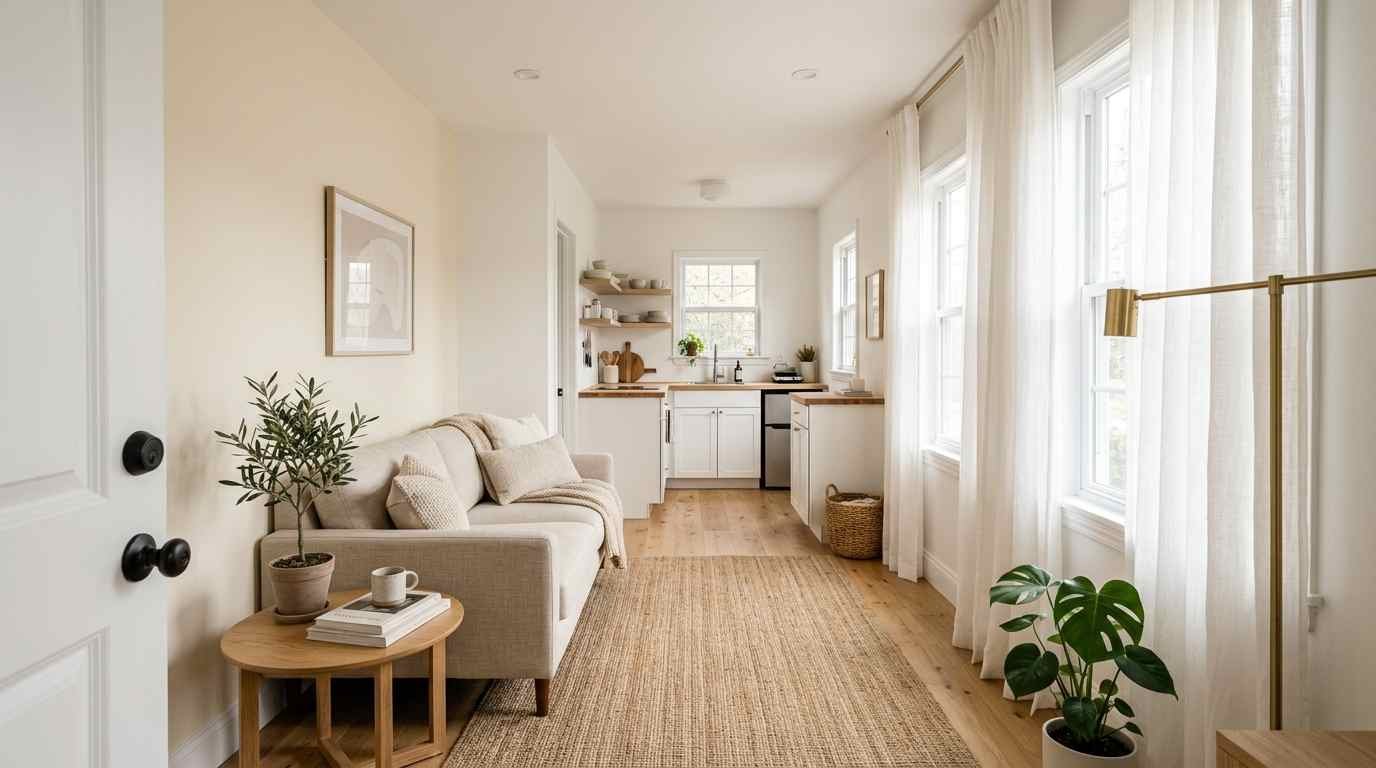
My first apartment was 340 square feet. I crammed in a sectional sofa (why?), a full-size dining table, and a bookshelf so packed it looked like a Tetris fever dream.
The room felt like a storage unit I happened to sleep in.
A friend walked in once and said, “Oh. You’ve got a lot going on.” She was being kind.
That was 6 years ago. Since then I’ve learned that small rooms don’t need more stuff.
They need the right stuff, in the right places, with a lot of breathing room in between. Minimalism fixed my apartment.
And I think it can fix yours too, whether you’ve got a 200-square-foot studio or just a bedroom that’s starting to feel like it’s closing in on you.
So here are 19 small room decor ideas, all minimalist, all Pinterest-ready, and all genuinely worth copying.
1. Use a neutral base palette and stop apologizing for it
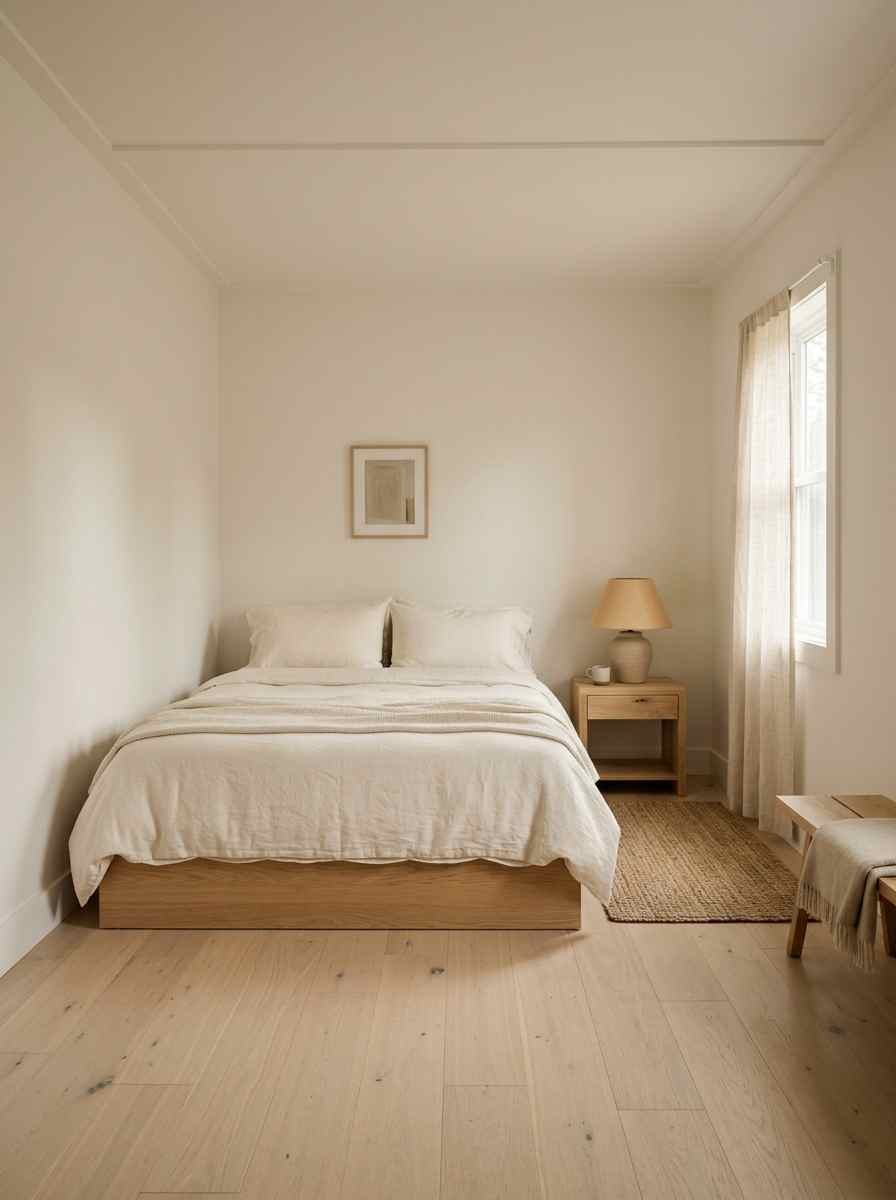
Beige, white, cream, soft grey. People act like neutrals are boring, but they’re actually doing the hardest work in a small room: making it feel twice as big.
When your walls, floors, and large furniture pieces share a similar tonal range, the eye doesn’t bounce around trying to process contrast.
The room reads as one continuous space, which tricks the brain into perceiving more square footage.
Warm whites (like Benjamin Moore’s White Dove) work better in rooms with limited natural light, since they don’t look clinical under lamps.
2. Pick one accent color, max
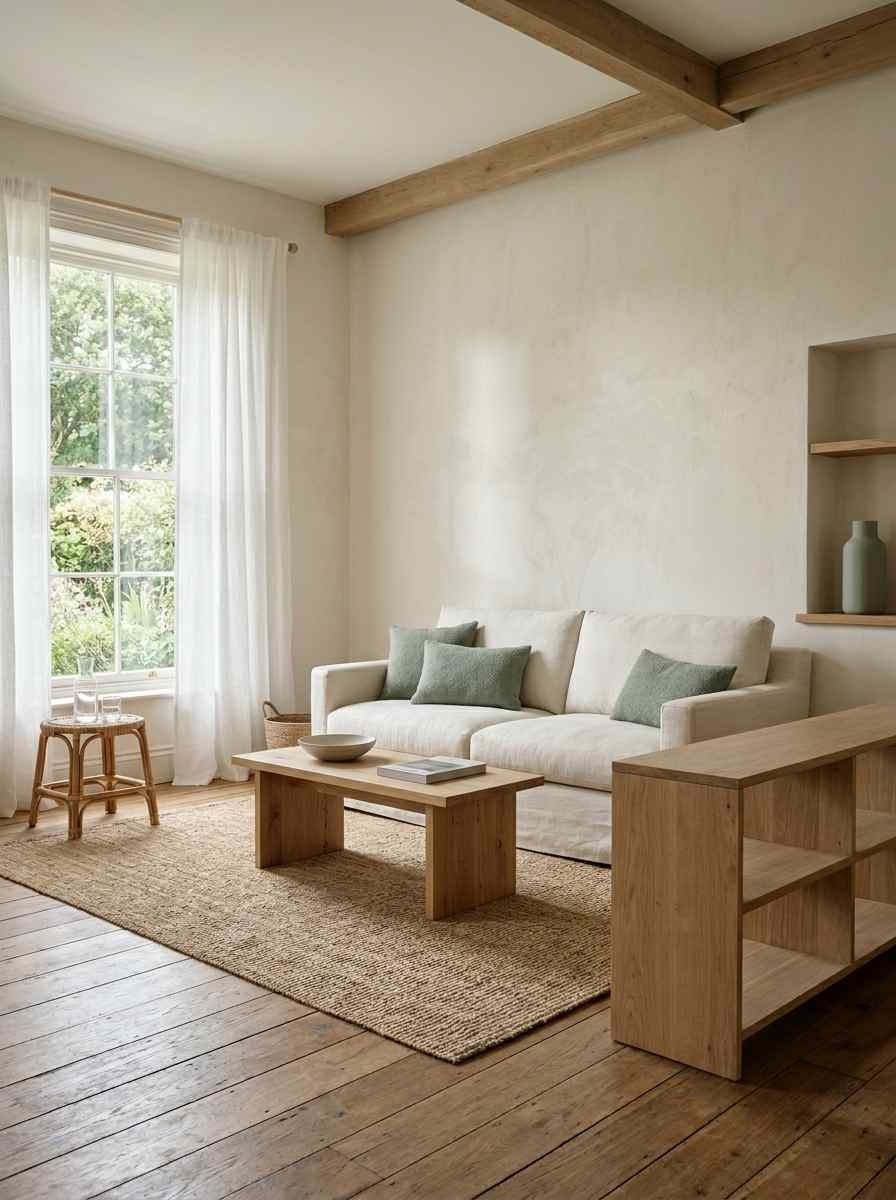
One. Not a teal throw, terracotta cushions, AND a mustard rug. One.
I went with a dusty sage green in my current place: a few small cushions, one ceramic vase, a linen throw.
Everything else is cream and natural wood. The result looks intentional, like someone who actually thought about it (as opposed to someone who just bought whatever was on sale at HomeGoods, which, no judgment, I’ve been there).
The Spruce has a solid breakdown of how to build a cohesive accent color scheme around neutral rooms if you want a starting point.
3. Mount things on the wall
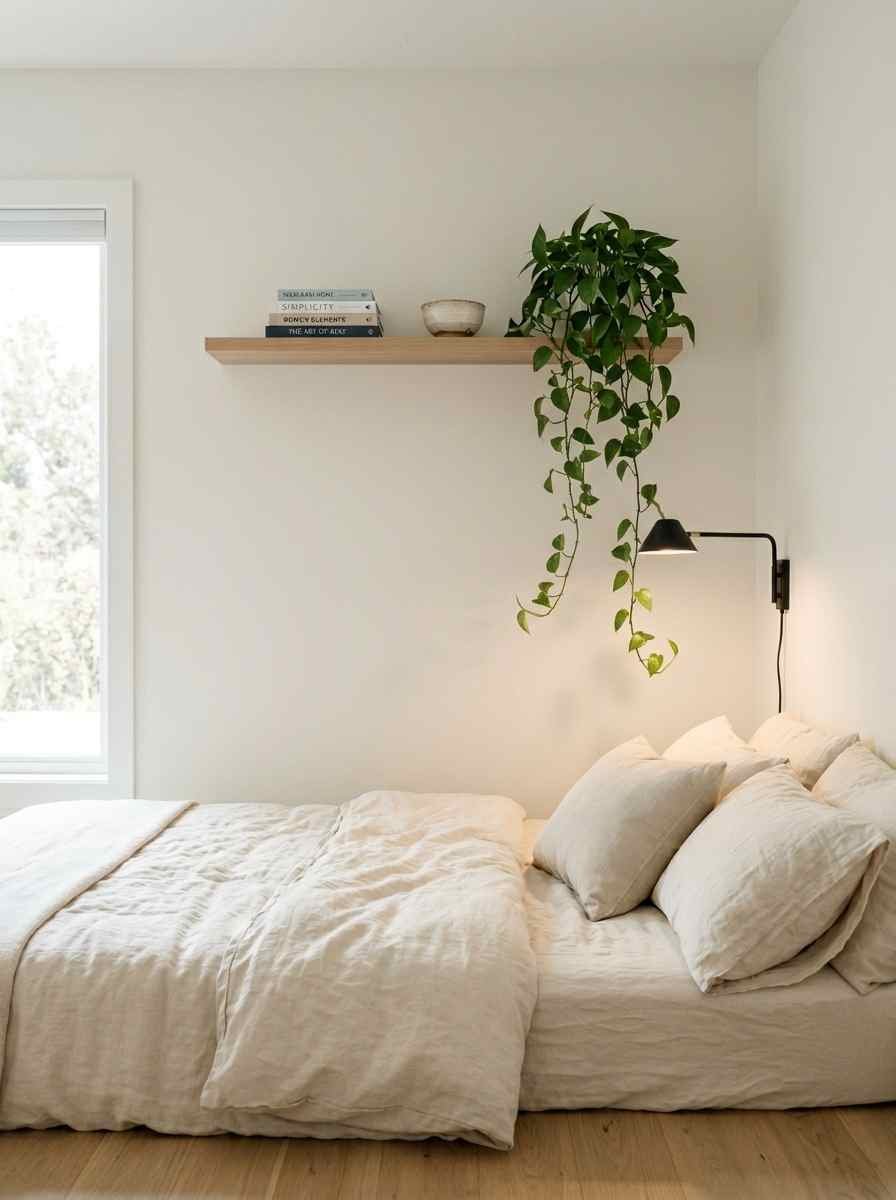
Floor space is real estate. Wall space is free.
Floating shelves instead of a bookshelf. A wall-mounted lamp instead of a table lamp eating up nightstand room.
Hooks instead of a coat rack. Every item you move off the floor opens up visual breathing room, and in a small space, that visual openness matters as much as actual openness.
4. Go tall with furniture, not wide
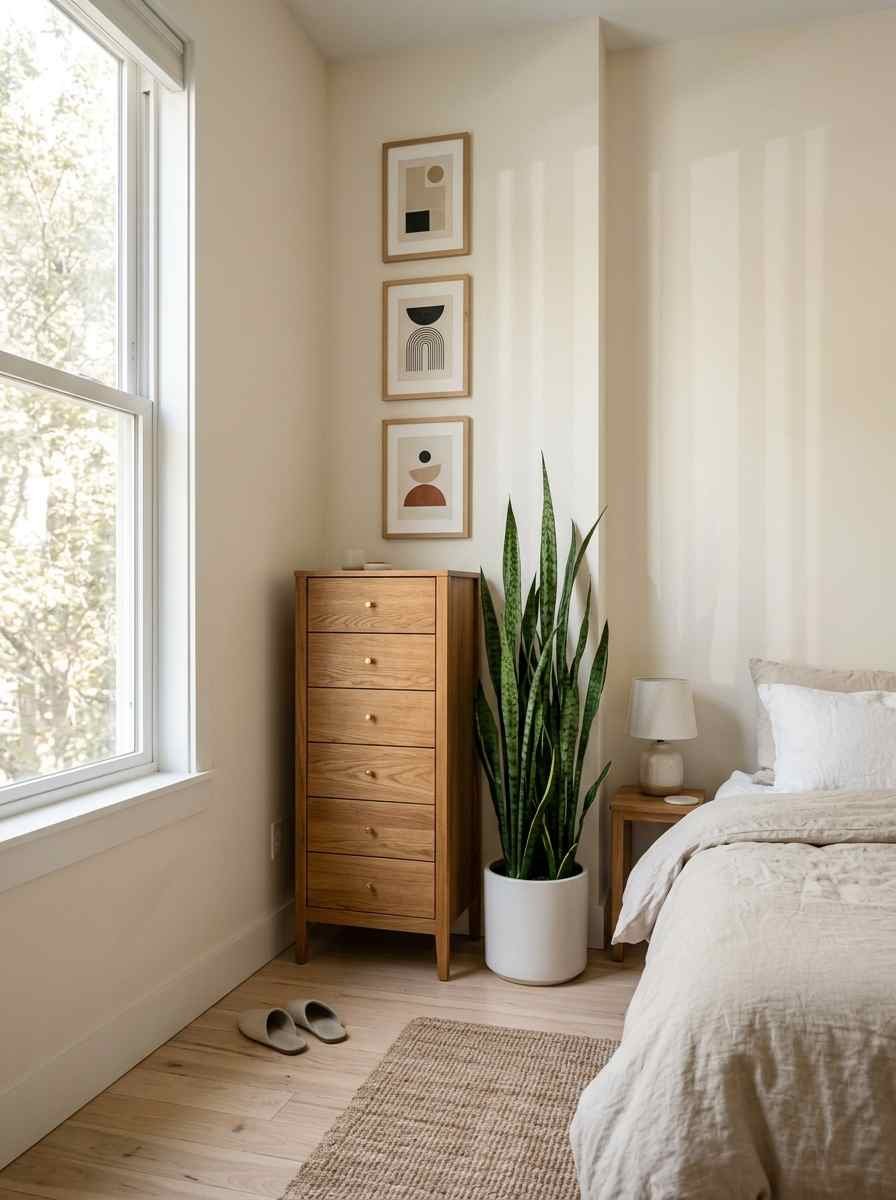
A narrow, tall bookcase takes up less floor space than a wide, squat one, and draws the eye upward, making ceilings feel higher.
Same logic with floor lamps, tall plants, and art hung high.
Vertical lines are a small room’s best friend. I replaced a low, wide dresser with a narrow 6-drawer chest and got back about 3 feet of floor space.
Genuinely life-changing for a room that was already pushing it.
5. Swap heavy curtains for sheer ones
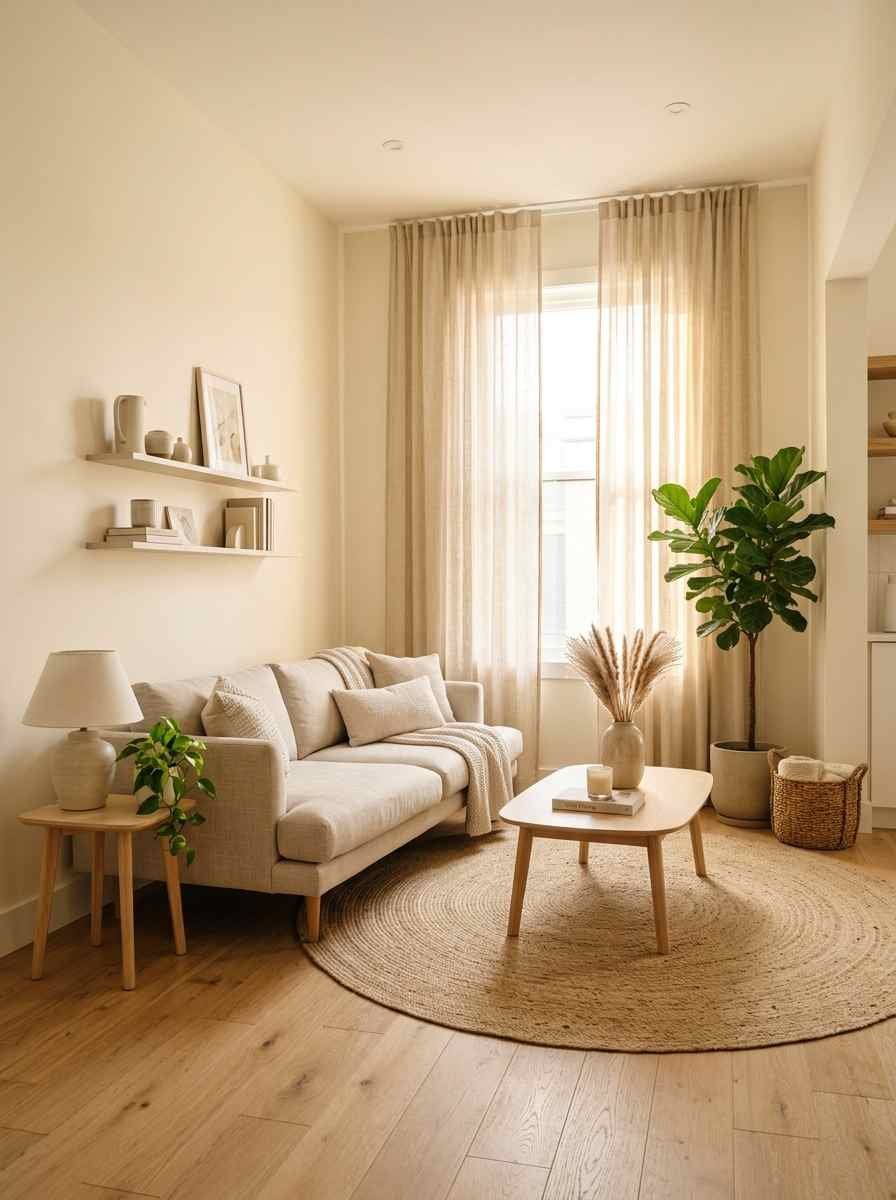
Heavy drapes eat light and make walls feel closer.
Sheer linen curtains hung close to the ceiling (mount the rod 4 to 6 inches above the window frame) do the opposite: they let light filter through and the extra height makes the window look taller than it is.
I know some people love a thick blackout curtain, and for bedrooms that’s fine. But pair them with sheer panels in front so daytime still feels open.
6. Use mirrors strategically, not aggressively
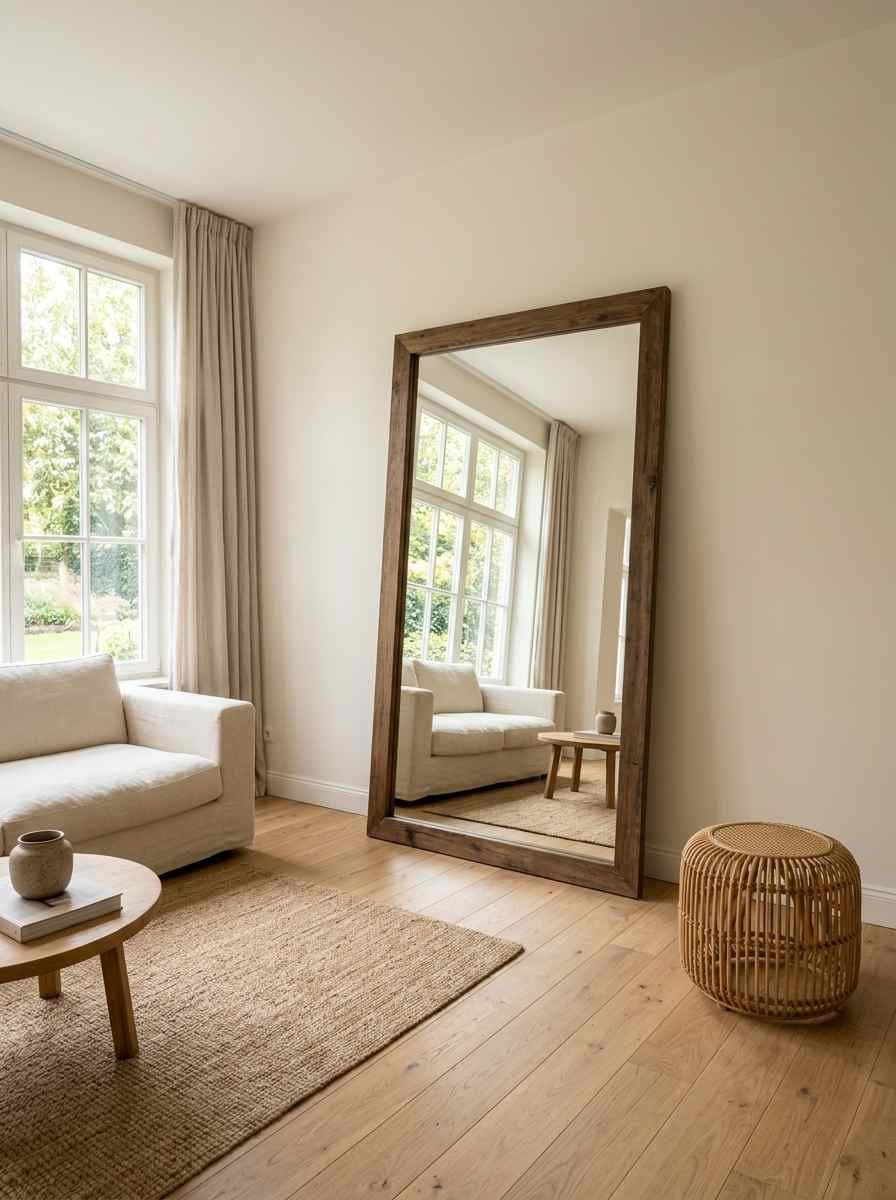
One large mirror on the right wall does more than 4 small mirrors scattered around.
It reflects light back across the room and creates actual depth, like the room has another section you can’t quite reach.
The classic move: a full-length mirror leaned against the wall opposite a window. Simple, costs maybe $80 at IKEA, and the effect is immediate.
7. Keep furniture legs visible
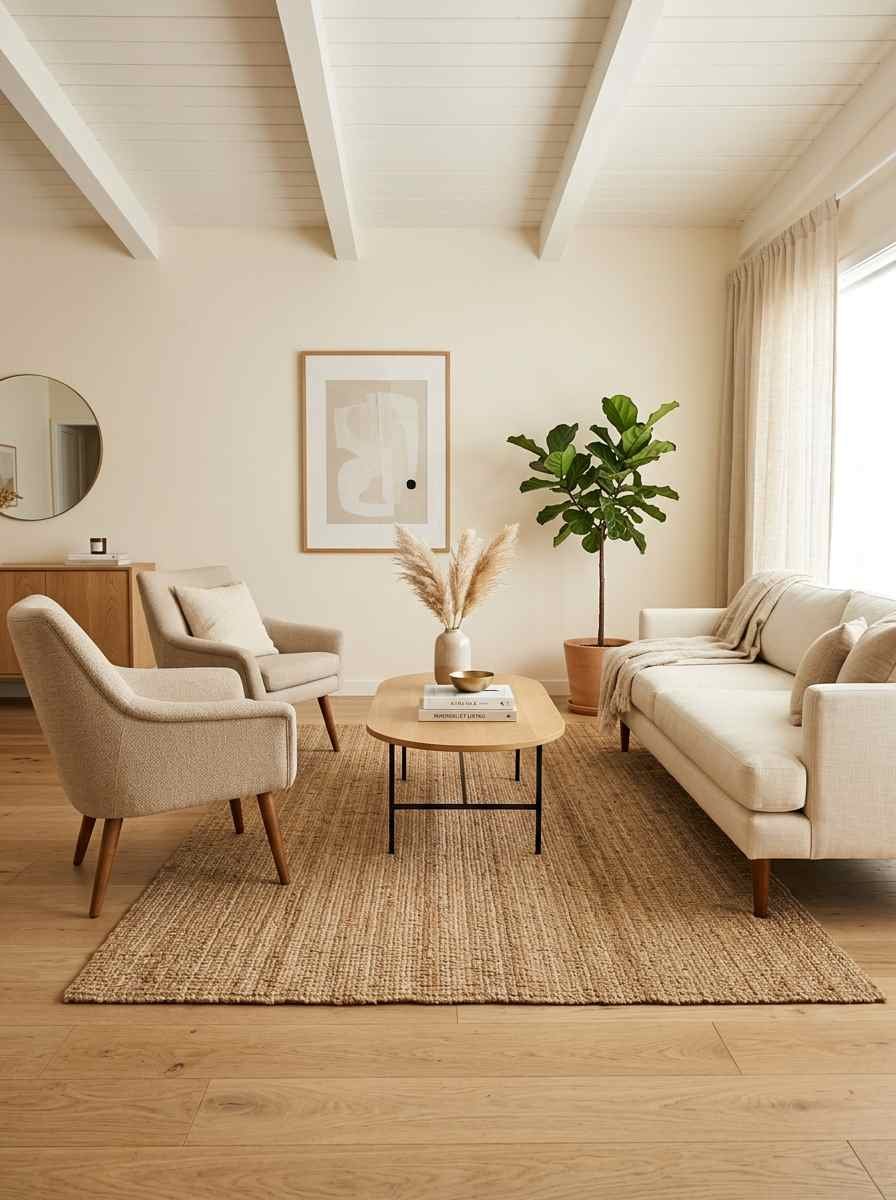
Sofas and chairs with exposed legs make a room feel lighter. Pieces that sit flush on the floor block your sightline at ground level and make the space feel denser.
Visible legs = air underneath = room reads more open. It’s a small thing, but walk into any well-decorated small apartment and you’ll notice it.
8. Limit decor to what you’d actually notice if it went missing
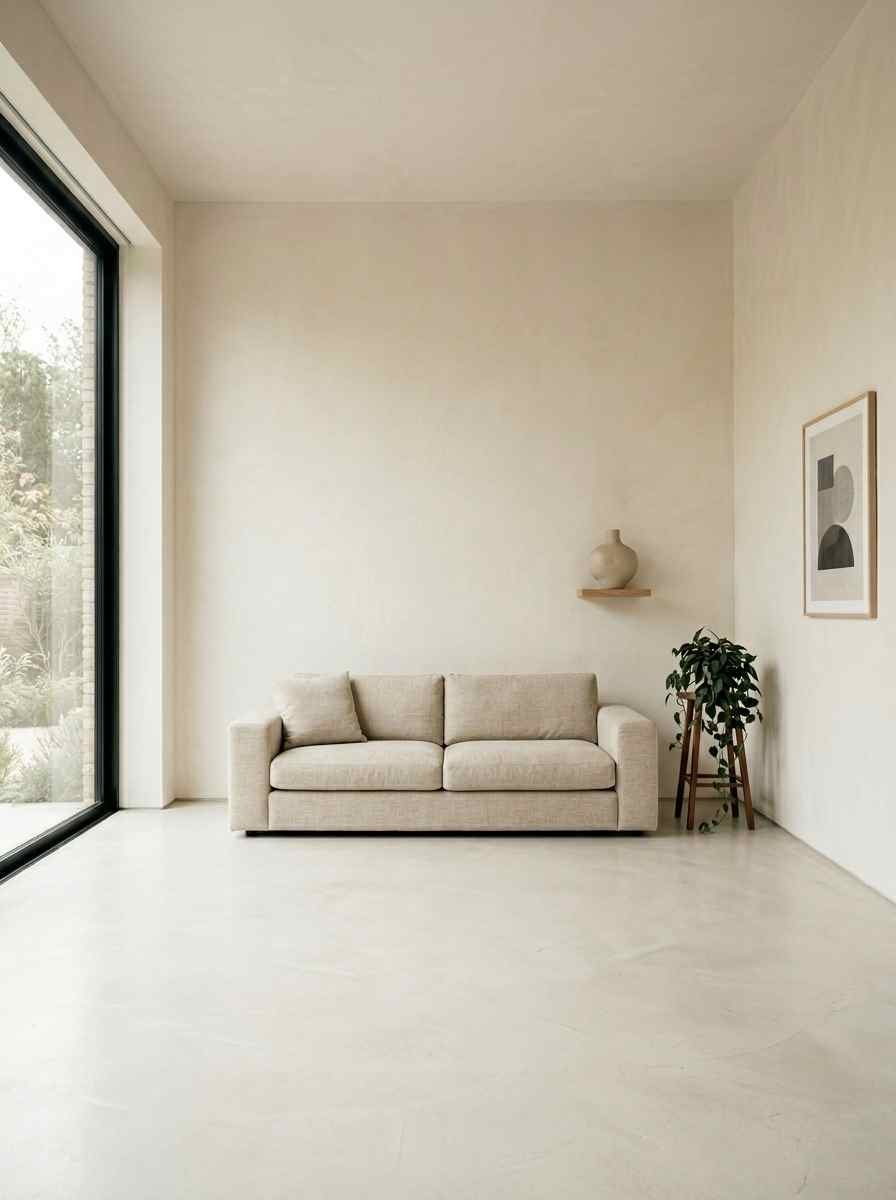
This sounds harsh, but try it. Walk through your room and mentally remove each decorative item. If you wouldn’t notice it was gone, it probably shouldn’t be there.
Clutter doesn’t have to be junk. It can be too many nice things in too small a space. Curate down to the pieces that actually matter to you, and give them room to breathe.
9. Choose multi-functional furniture
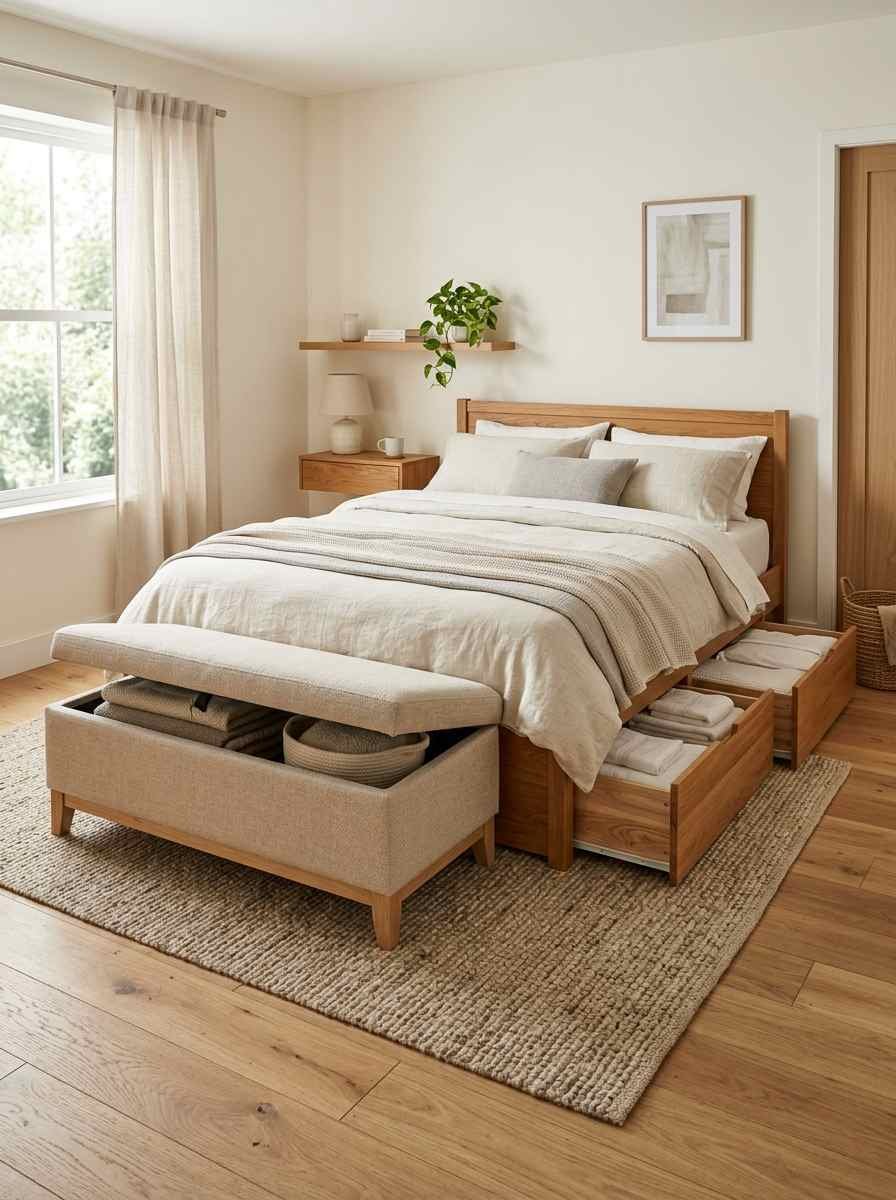
A storage ottoman instead of a coffee table. A bed frame with built-in drawers. A bench at the foot of the bed that also holds extra blankets. A desk that folds flat against the wall.
| Furniture piece | Standard version | Multi-functional version |
|---|---|---|
| Coffee table | Solid top, no storage | Ottoman with lid storage |
| Bed frame | Basic slats | Drawers underneath |
| Nightstand | Single drawer | Wall-mounted with shelf |
| Sofa | Fixed seating | Sofa bed with pull-out |
This table barely scratches the surface, but the pattern is the same across all of them: every piece earns its floor space by doing at least 2 things.
10. Go for low-profile seating in living areas
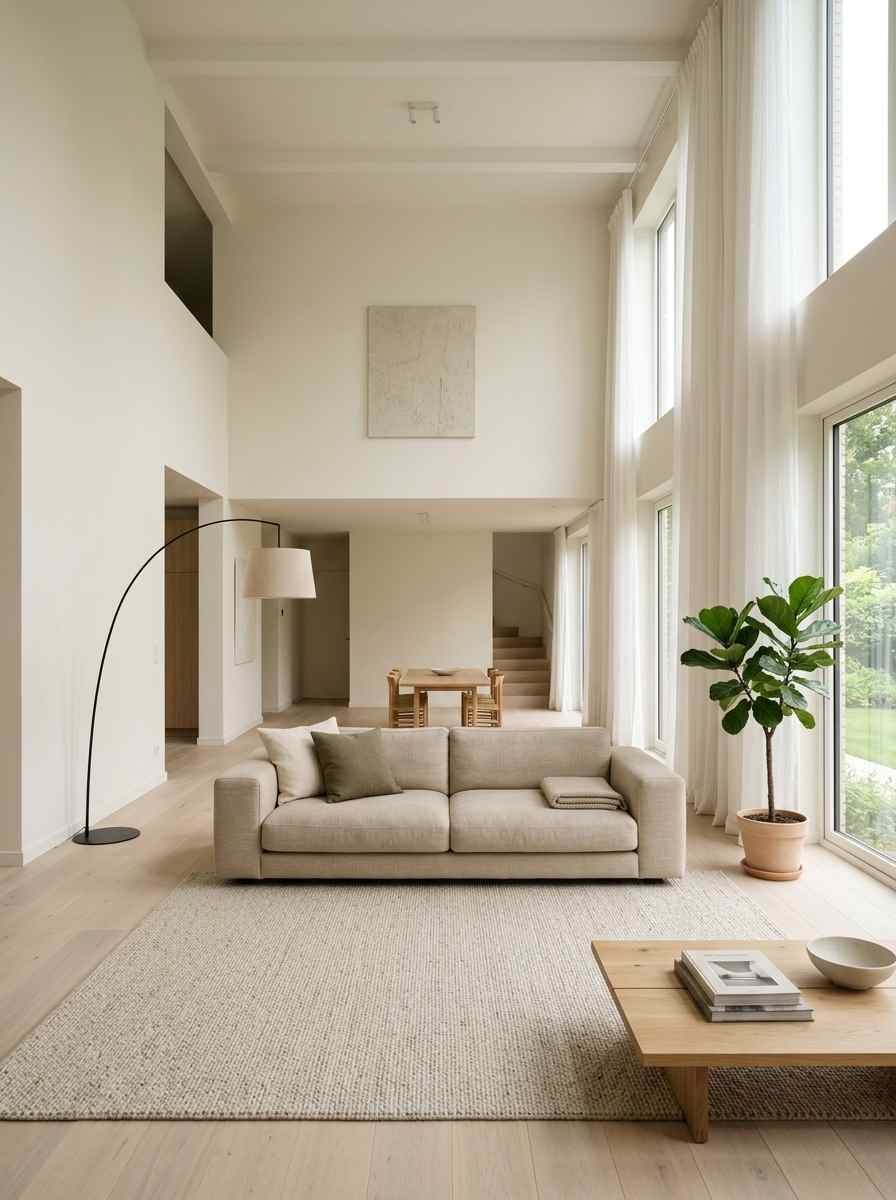
A sofa that sits lower to the ground makes ceilings feel higher by comparison. High-back sofas do the opposite: they take up more visual mass and can make a small room feel like a waiting room.
The Muji low sofa is the textbook example. It’s practically on the floor and somehow makes rooms look like they belong in an architecture magazine.
11. Use rugs to define zones, not fill space
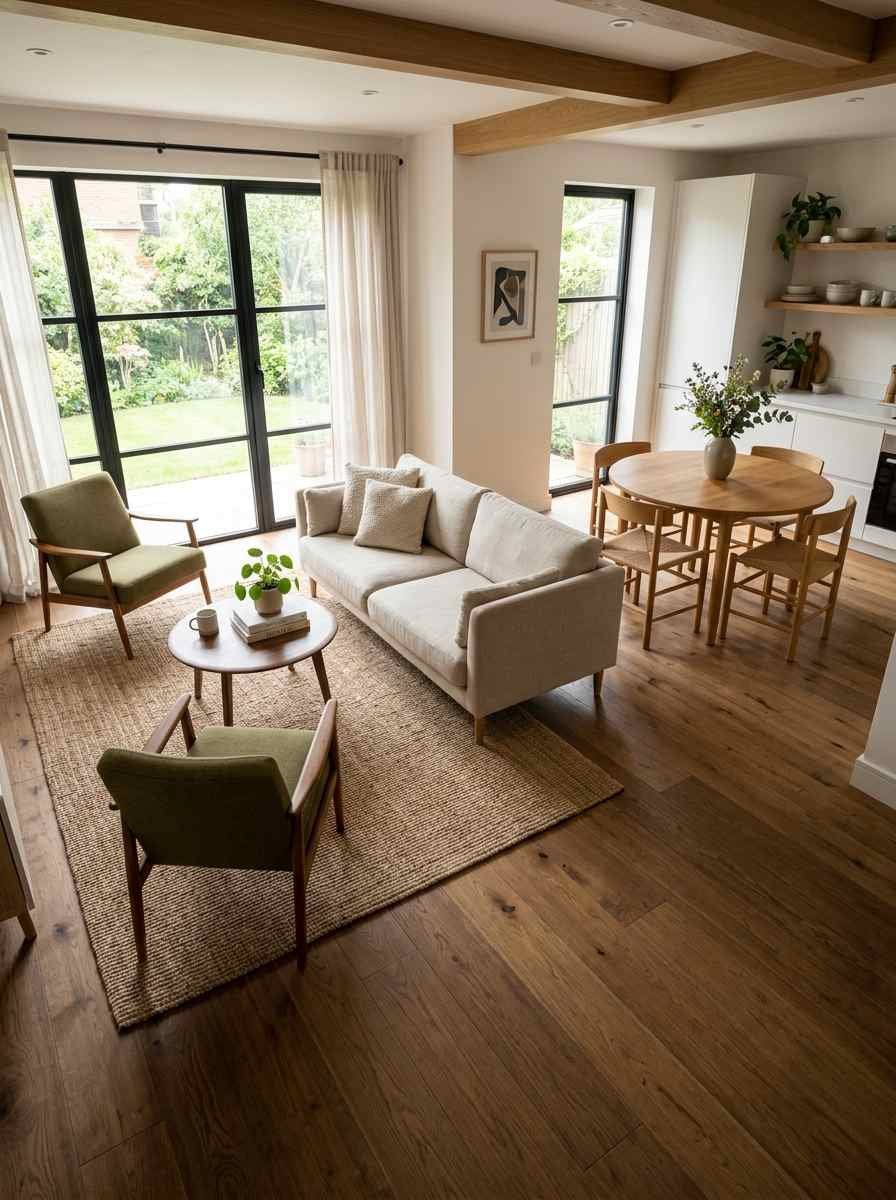
A rug in a small room shouldn’t cover the entire floor. It should mark out a specific area: the seating zone, the dining area, the reading nook.
Leaving floor visible around the edges creates the impression of a larger perimeter.
Go for flat-weave rugs too, like a dhurrie or kilim. They keep the texture quiet and don’t add visual noise the way a thick shag rug does.
12. Keep the floor as clear as possible
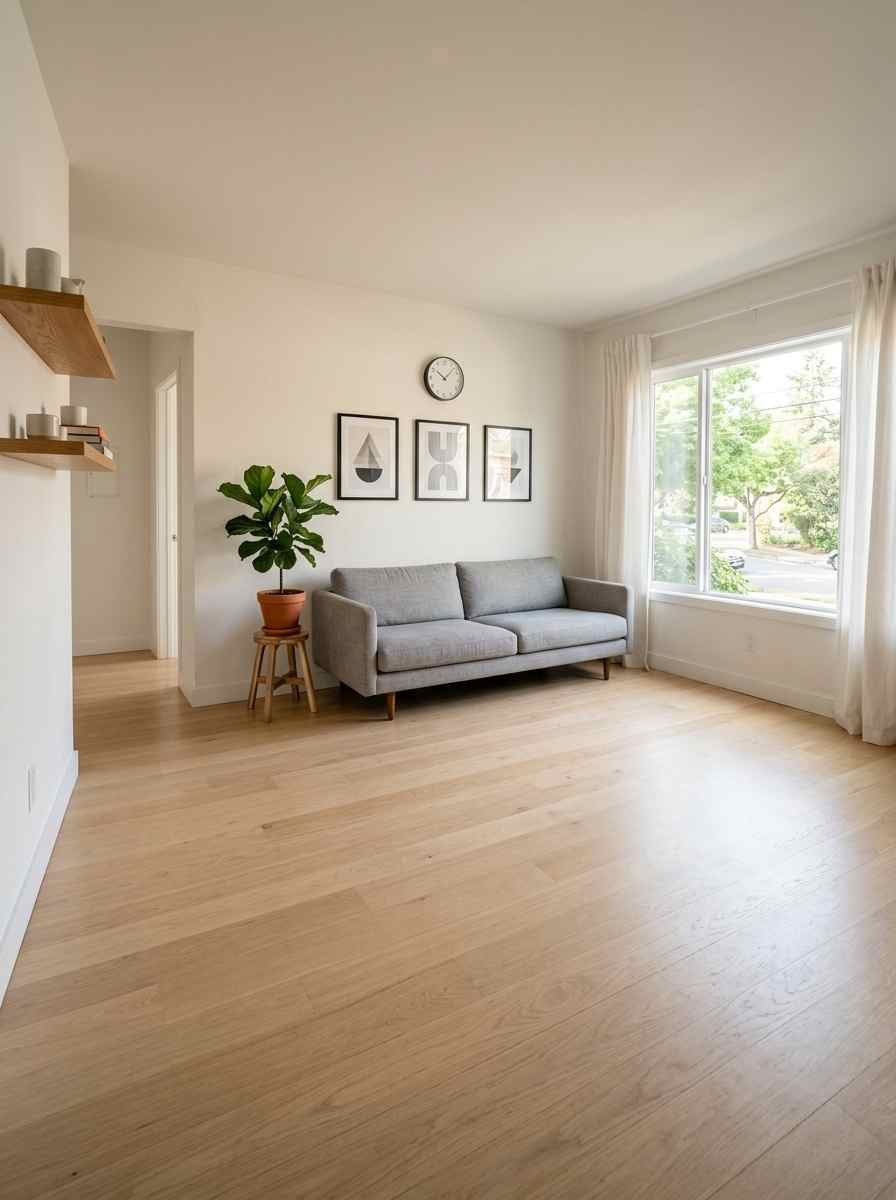
I know this is obvious, but I mean it literally. No floor plants (put them on a shelf or stool), no floor lamps if you can avoid them, no side tables sitting in the middle of traffic paths.
The more floor you can actually see, the bigger the room feels.
Architectural Digest has a genuinely useful photo essay on how top designers handle floor clearance in small apartments if you want visual proof this works.
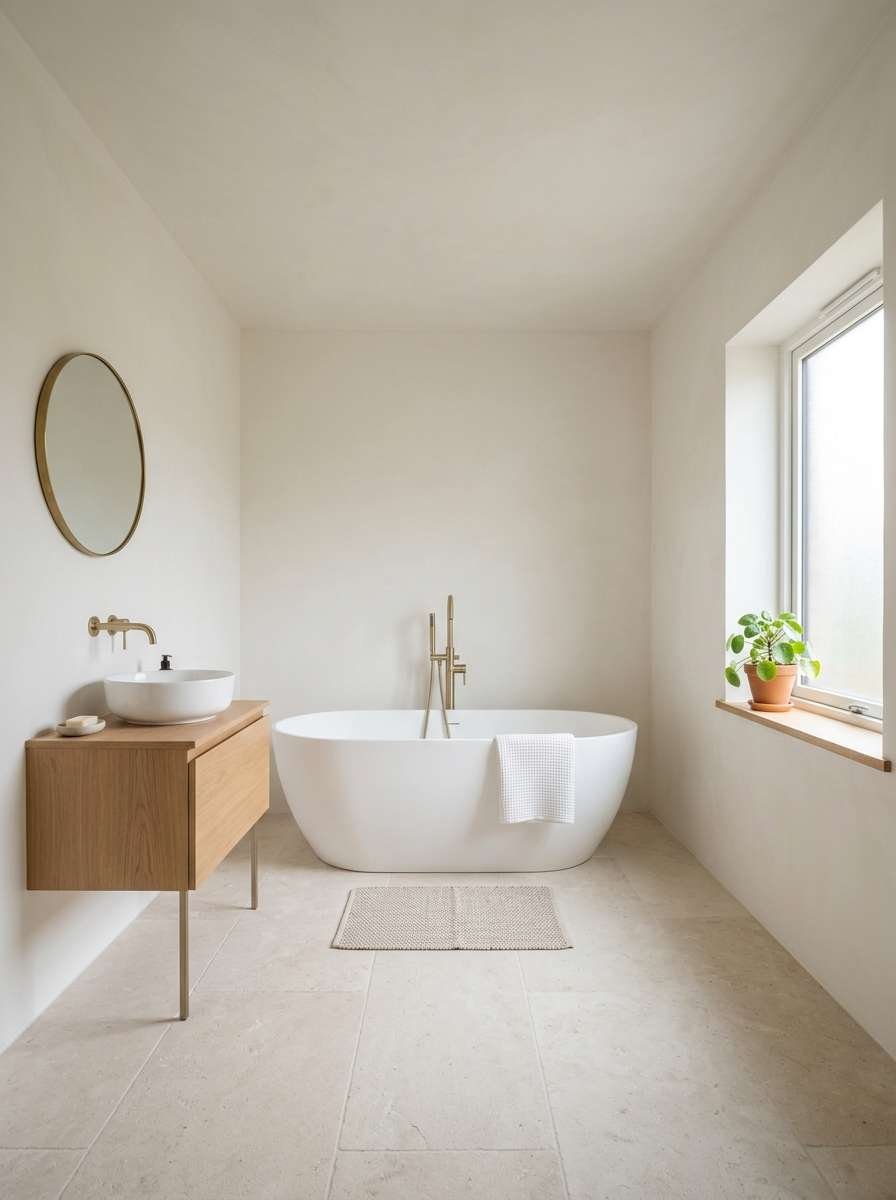
13. Paint the ceiling the same color as the walls
Okay, this one surprises people every time.
But when you paint the ceiling white and the walls a color, it creates a visual cut-off point that makes the room feel boxier.
Paint everything (walls AND ceiling) the same warm white or very soft color, and the room suddenly feels like it has no ceiling, just space.
I tried this in my bathroom and the difference was actually kind of shocking. The room went from feeling like a closet to feeling like… a room.
14. Edit your bookshelf like a gallery
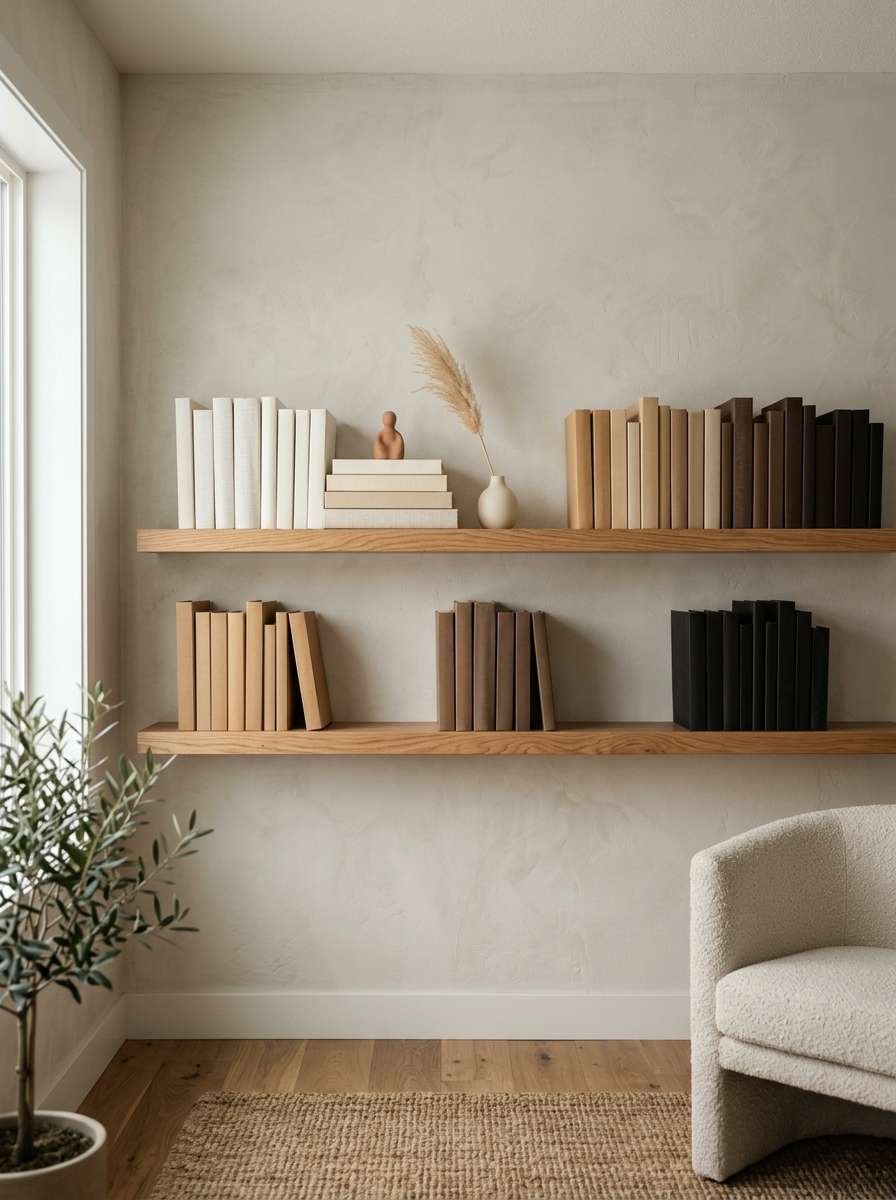
Books arranged by color, with some laid flat, a few small objects mixed in, and intentional gaps between sections.
This is what makes bookshelves look like Pinterest and not like a library sale.
Removing 30% of the books also helps.
I know. It hurts. But a bookshelf that’s 70% full reads as curated; one that’s 100% full reads as overflow storage.
15. Use natural textures for warmth without weight
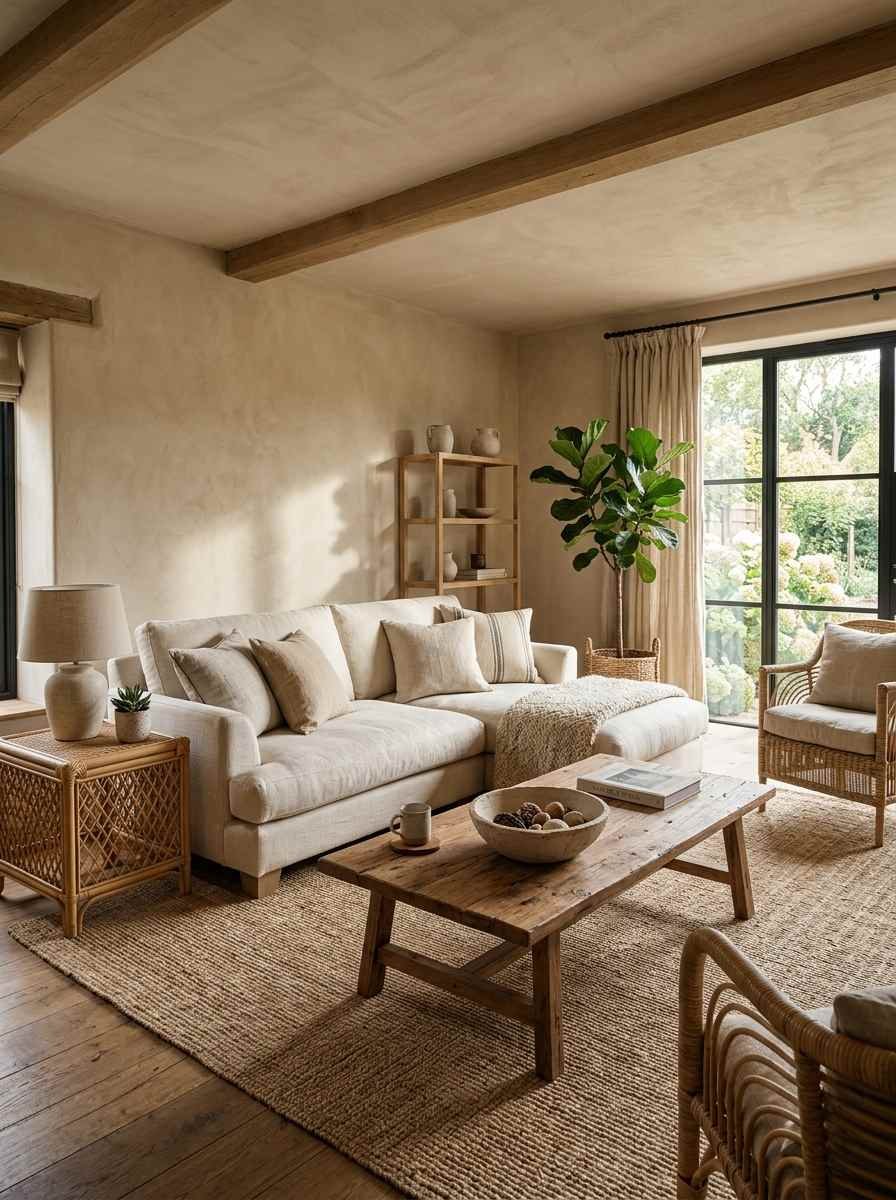
Linen, jute, rattan, natural wood, unglazed ceramic. These materials add warmth to a neutral room without adding visual weight or color noise.
A rattan side table, a jute rug, a few linen cushions, one small wooden bowl on the coffee table.
You get texture and interest without anything competing for attention.
I’d say this is probably the most underrated minimalist move for people who worry neutral rooms look cold.
16. Put your best-lit corner to work
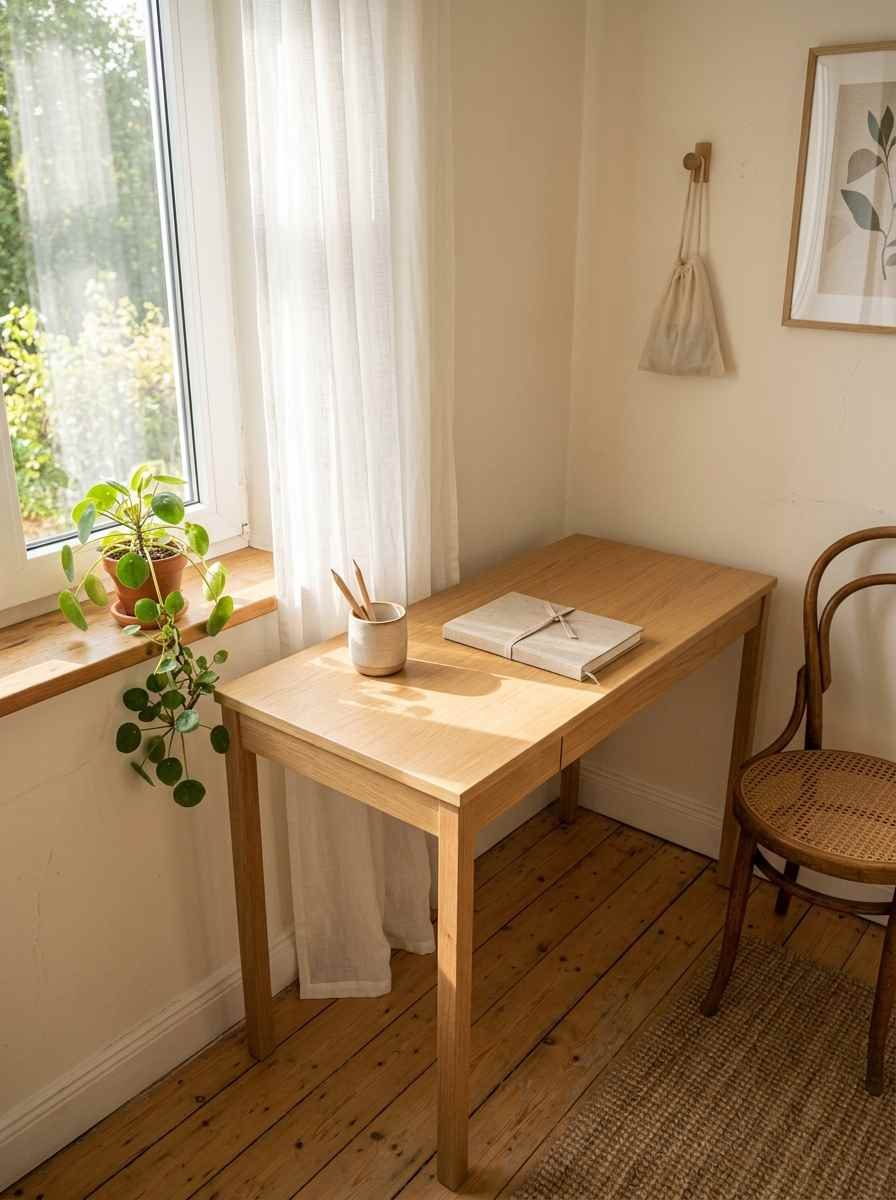
Every small room has a corner that gets the best light. Most people ignore it. Put your reading chair there, or your desk, or a small plant arrangement. Make it the room’s focal point, and design the rest of the space to support it.
Honestly, I spent years putting my desk against the wall with no window and wondering why I dreaded sitting at it.
The moment I moved it to face the one window in my apartment, everything changed.
I think about this more than is probably healthy. 🙂
17. Invest in good lighting at 3 different heights
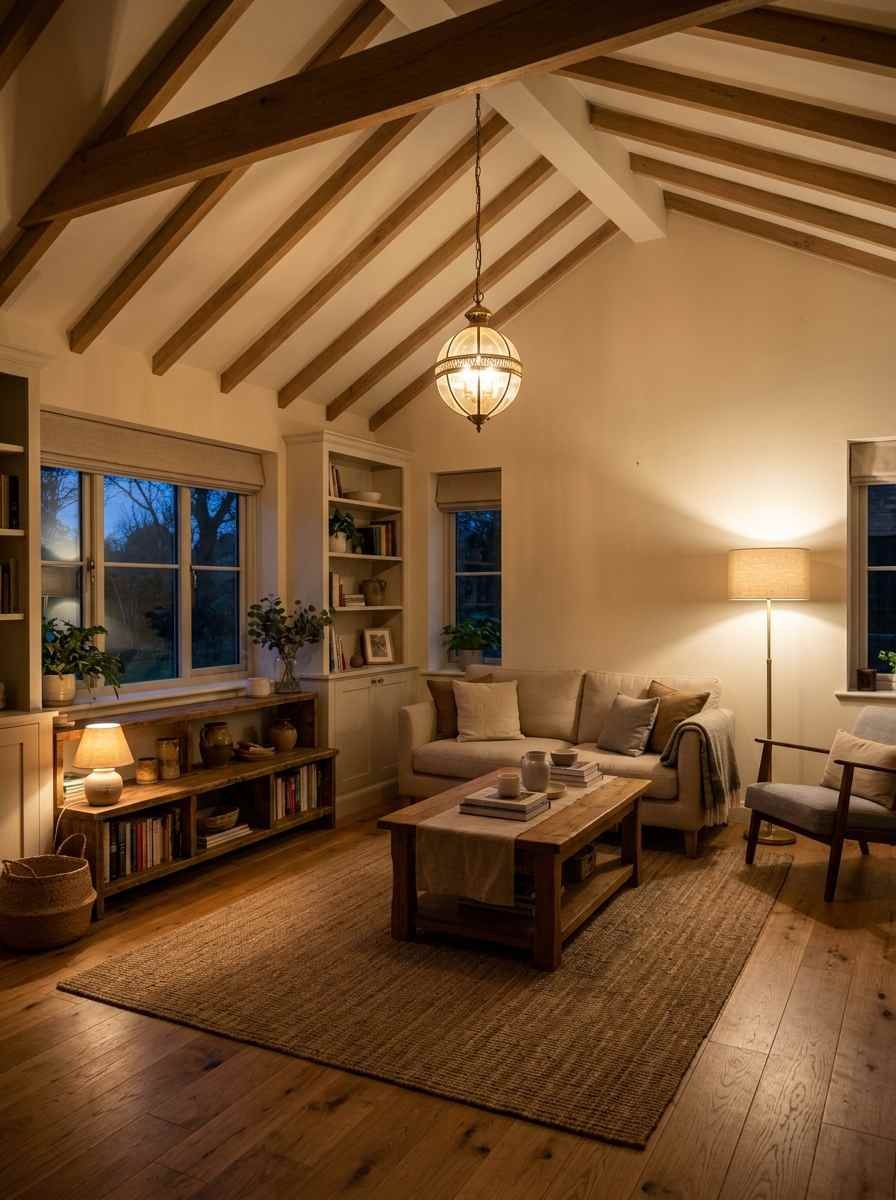
Ceiling light, mid-height lamp, low-level light (a small table lamp or LED strip).
Layered lighting at different heights makes a room feel considered and warm instead of harsh.
A single overhead fixture in a small room is the worst. It flattens everything and makes the space look like a hospital corridor.
Add a floor lamp in the corner and a small table lamp on the shelf, and the same room feels like somewhere you’d actually want to be.
18. Let one piece be interesting
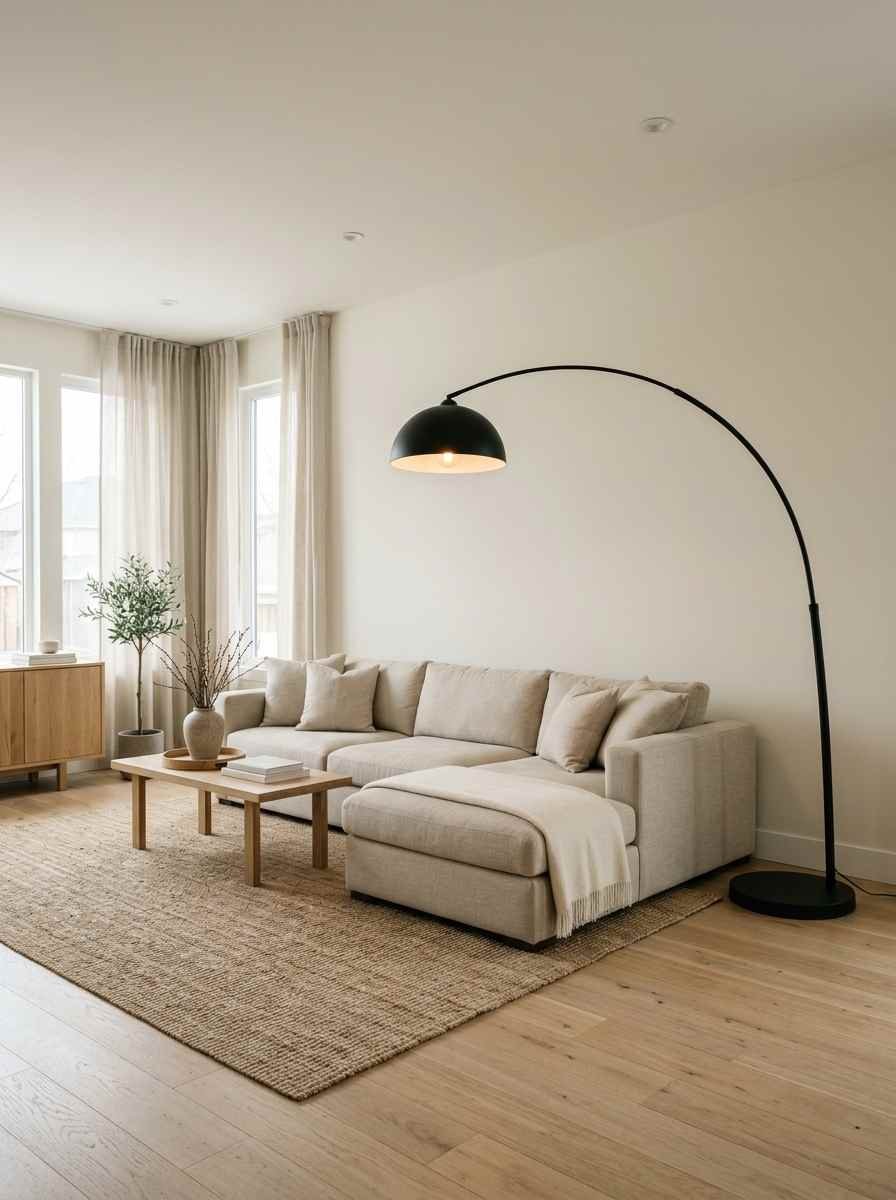
Minimalism doesn’t mean boring. It means everything is quiet so one thing can be loud.
Maybe it’s a sculptural lamp.
A single piece of art that actually means something to you.
An unusual plant (a fiddle-leaf fig, a tall snake plant). One interesting piece gives the eye somewhere to land, and it makes the whole room feel intentional.
Don’t make everything interesting. That’s just maximalism with extra steps.
19. Declutter on a schedule, not when you snap
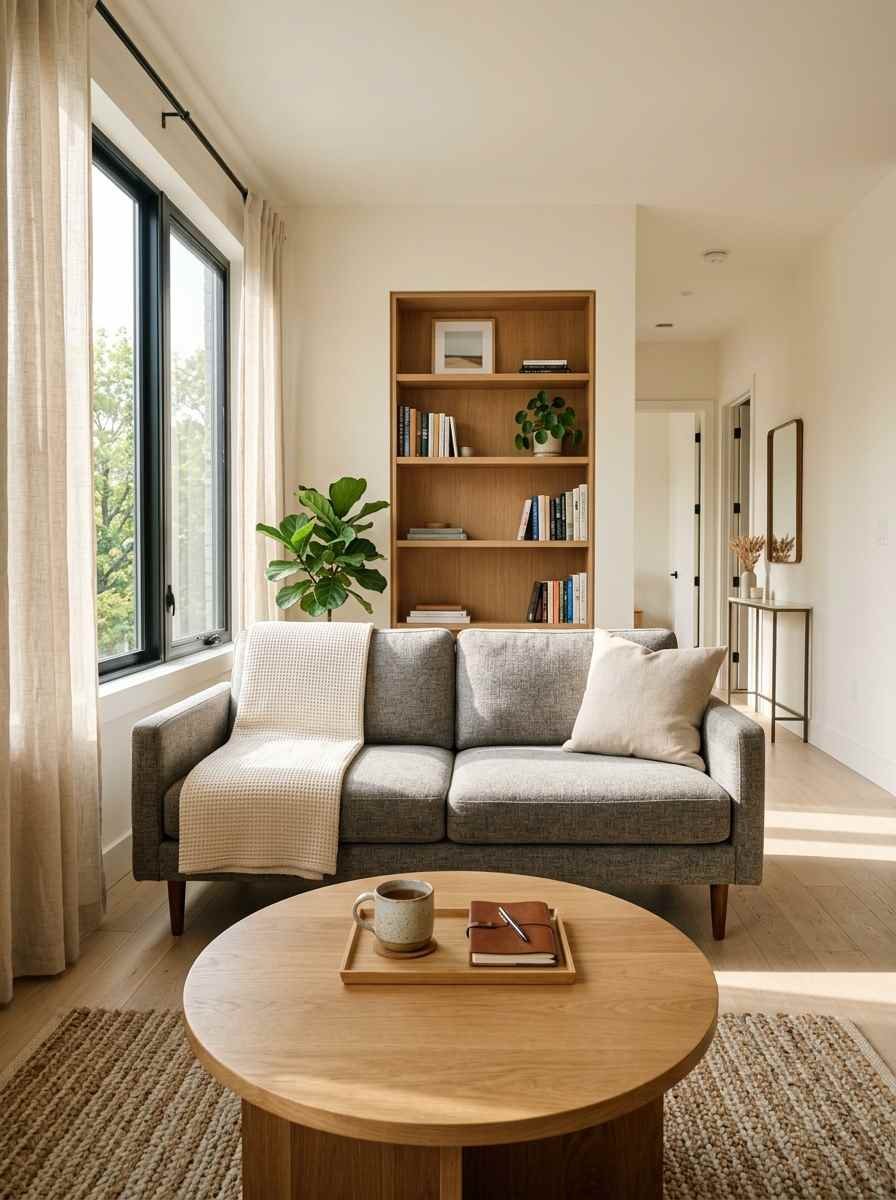
The biggest threat to a minimalist small room isn’t bad decorating. It’s drift. Things accumulate without you noticing: a bag left by the door, mail on the counter, an extra chair “just for now.”
I do a 10-minute walkthrough every Sunday. Pull out anything that doesn’t belong. Return it to its place or get rid of it.
This sounds tedious, but it takes less time than you think, and it’s the reason the room still looks like the room you designed instead of a room that just happened to you.
Quick reference: minimalist small room rules
- Neutral base palette, 1 accent color
- Vertical furniture lines over horizontal sprawl
- Visible floor space beats filled floor space
- Every piece does at least 2 things
- Layered lighting at 3 heights
- One interesting focal point, everything else is quiet
FAQs
Does minimalist decor work in a room with lots of natural light? Yes, and it’s actually easier. Natural light already makes a room feel open, so minimalism amplifies that. Keep window treatments light (sheer linen, roman shades in neutral tones) and let the light do half the work.
Can I do minimalist decor on a tight budget? Mostly yes. The biggest changes (clearing clutter, painting walls, rearranging furniture) cost nothing. IKEA, H&M Home, and second-hand shops cover most of what you’d need to buy. I’d say 80% of my current apartment’s look came from IKEA pieces and thrifted ceramics.
How do I add personality to a minimalist room without making it feel cluttered? Pick 3 to 5 objects that actually mean something to you and display those prominently. Everything else should be functional. A shelf with 1 framed photo, 1 plant, and 1 small object you love reads as personal. A shelf with 12 things reads as busy.
A final thought
Small rooms get a bad reputation they don’t deserve. The problem is almost always too much in too little space, and the fix is almost always the same: pull back, edit, and let the room breathe.
Pick 3 ideas from this list and try them this week. Which of these minimalist moves do you think would make the biggest difference in your space?
For more minimalist home inspo, Apartment Therapy’s small space guides and The Spruce’s minimalism section are worth bookmarking if you’re deep in a room refresh right now.
