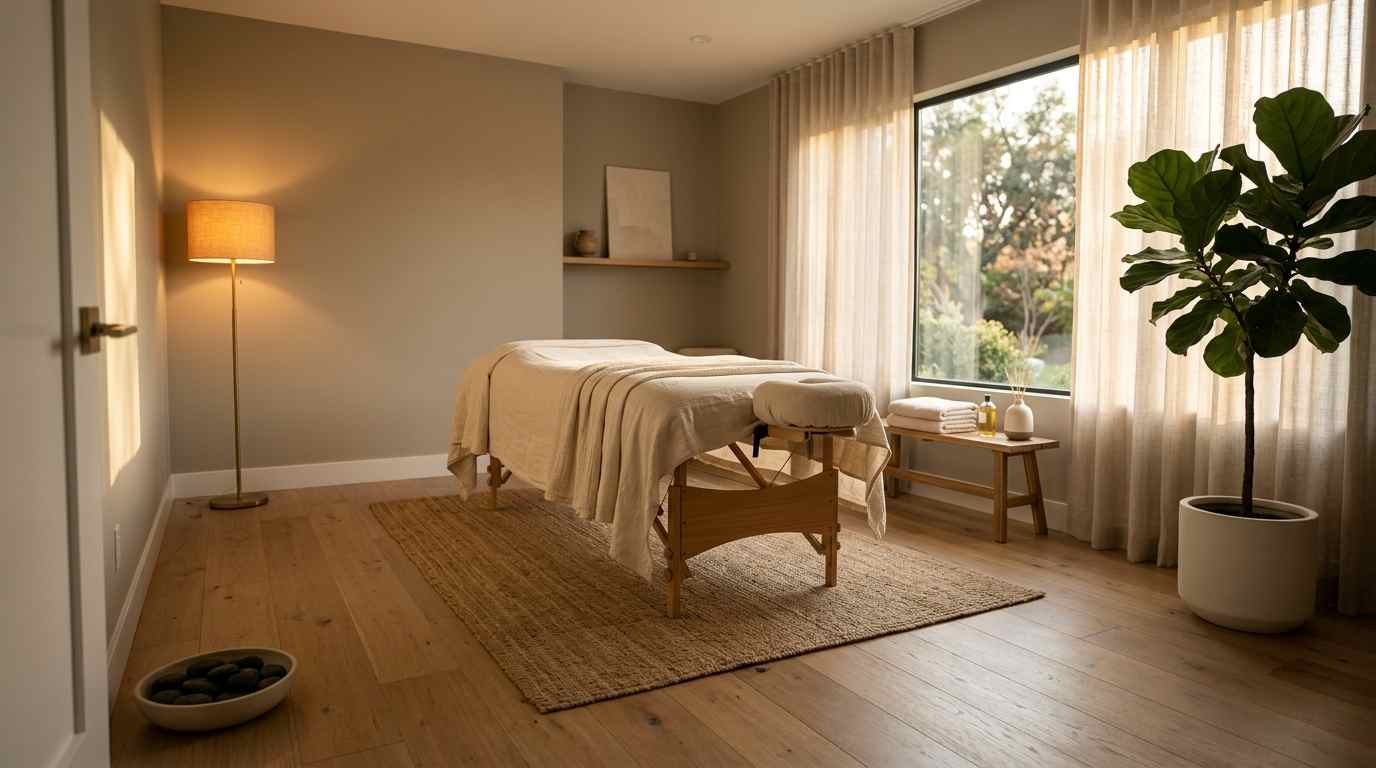
You know that feeling when you walk into a really good spa and your shoulders just… drop?
Like your body exhales before your brain even registers what’s happening? That’s not magic. That’s intentional design.
And you can build that exact feeling in your own massage room, even if it’s a converted spare bedroom or a tight studio corner.
Minimalism is your best friend here.
Because the less visual noise you throw at someone the moment they walk in, the faster their nervous system actually calms down.
I’ve spent way too much time obsessing over spa aesthetics (occupational hazard, honestly), and these 22 ideas are the ones I keep coming back to. Some are free. Some cost a little. All of them work.
1. Start with the wall color first
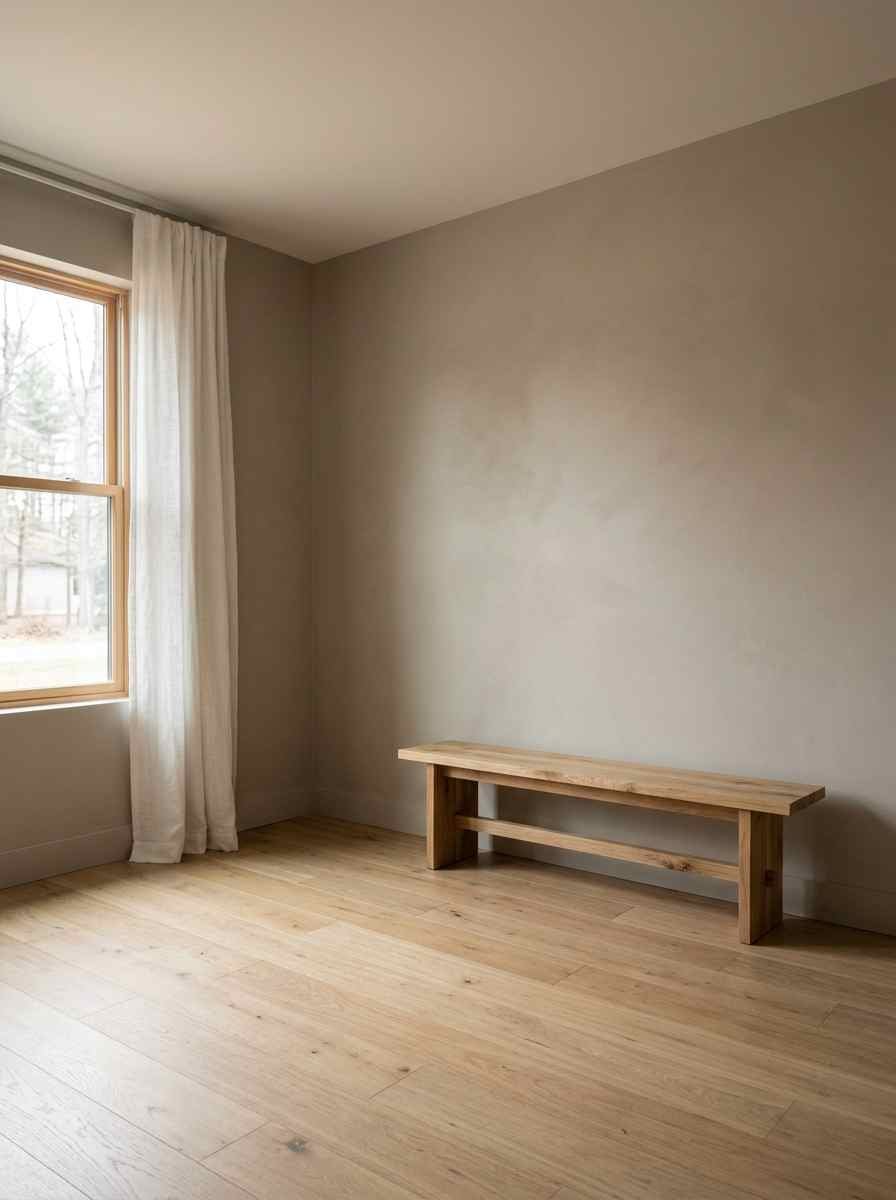
Every single decision you make after this one will respond to your wall color. Pick it last and you’ll spend months fighting your own room.
For a minimalist massage space, I’d go with a warm greige (think Benjamin Moore’s “Revere Pewter” or Sherwin-Williams “Accessible Beige”) or a very soft sage.
These colors read as neutral without the coldness of pure white. Pure white, IMO, gives off clinical energy, and that’s the opposite of what you want.
2. The massage table placement matters more than the table itself
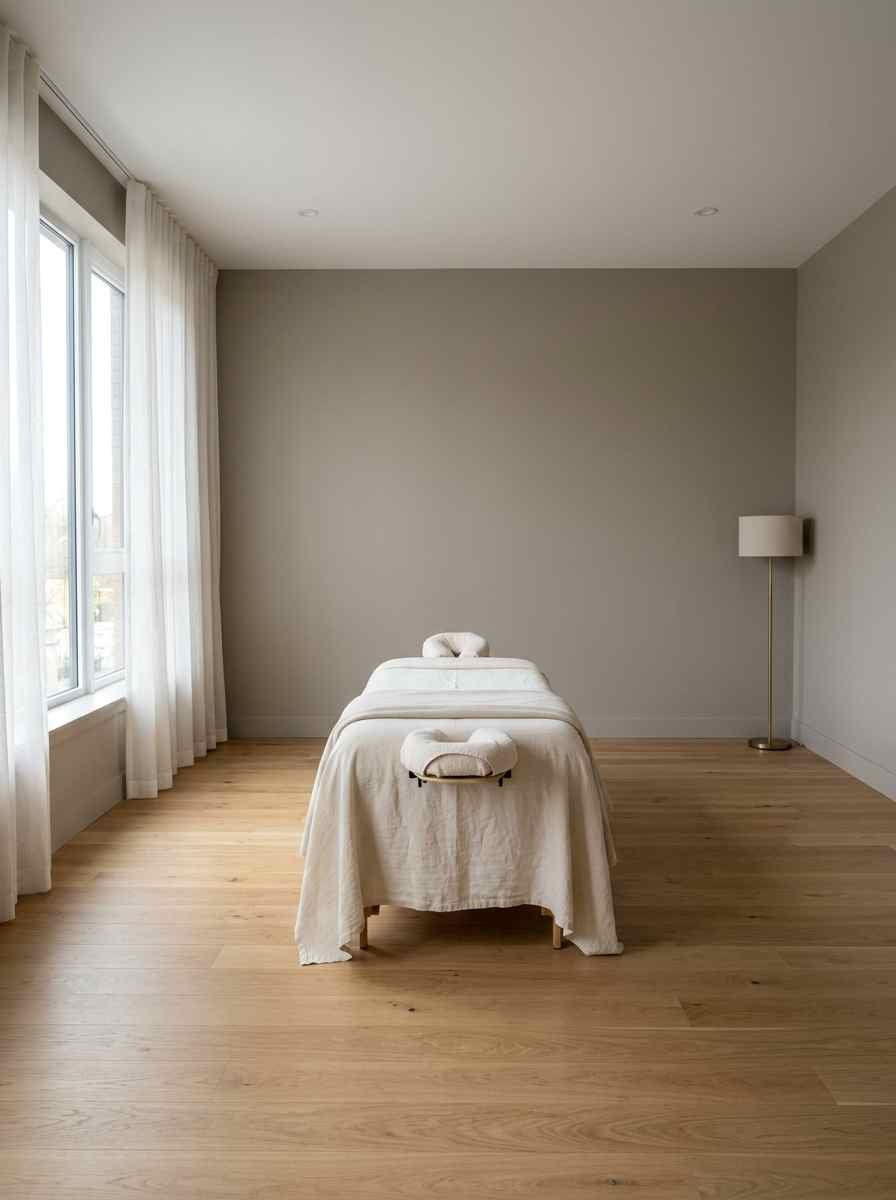
Center the table, leave at least 3 feet on each long side, and position the headrest toward the softest light source in the room. That’s it.
A lot of therapists push the table against a wall to “save space.” But then you can only work one side properly, and the whole flow feels off.
Space around the table is part of the experience.
3. Linen everything (seriously)
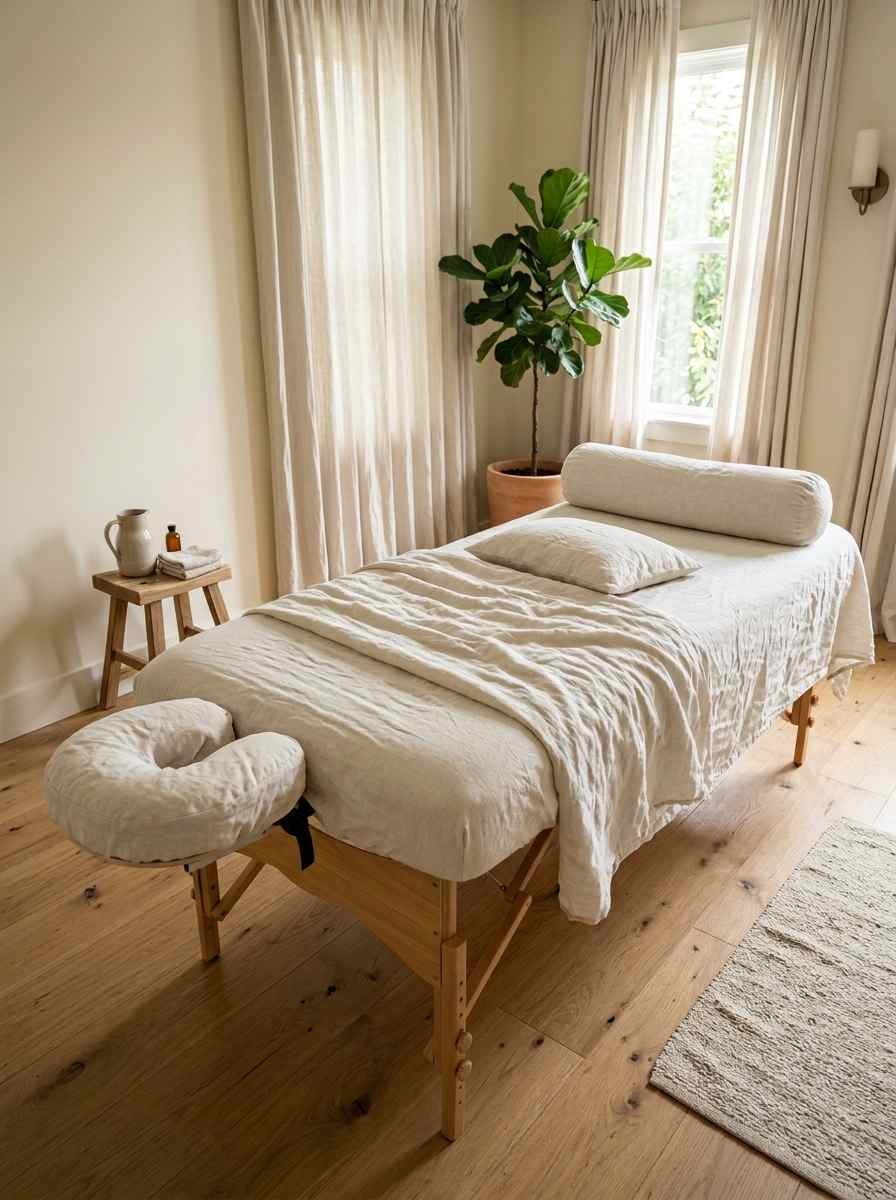
Linen sheets, linen curtains, a linen bolster cover. The texture reads as expensive and the wrinkles read as intentional rather than sloppy, which is a minor miracle in fabric form.
Go with off-white or warm ivory. Bright white linen just turns gray after 3 washes anyway.
4. Layer two light sources, never one
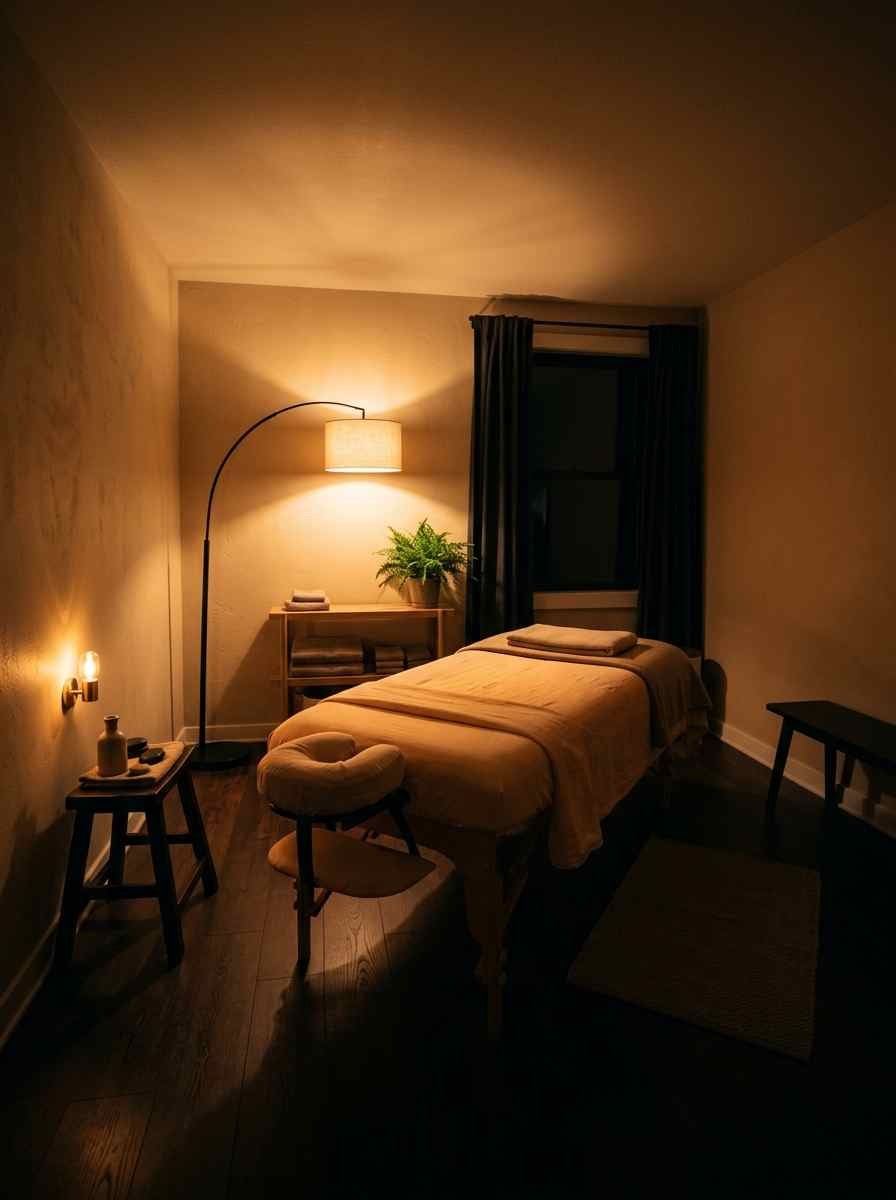
A single overhead light is the enemy of relaxation. Overhead lighting puts people on guard because it mimics interrogation rooms and fluorescent offices.
Use a floor lamp in one corner and a small table lamp or plug-in wall sconce near the head of the table.
Both on warm bulbs, 2700K max. That combination creates depth in the room without adding visual clutter.
5. A live plant in the corner (just one)
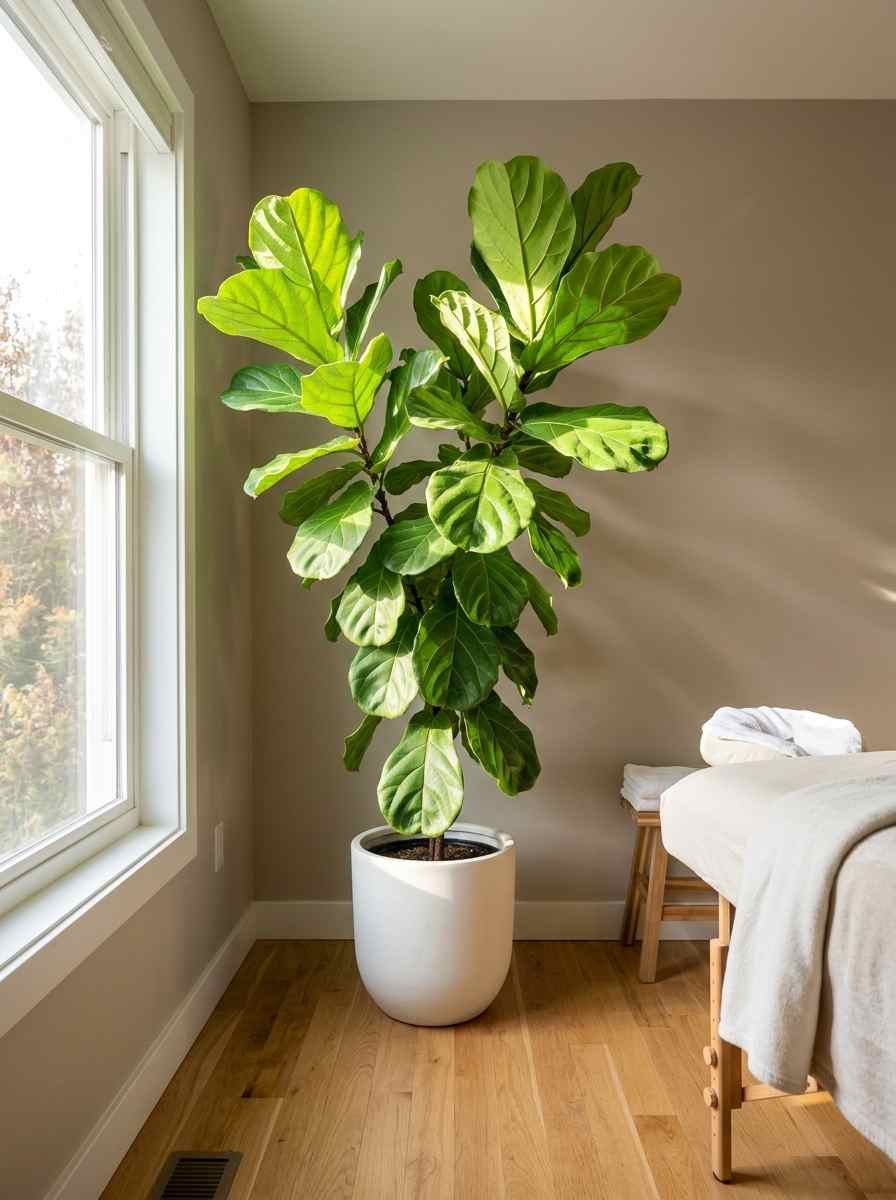
One big plant does more work than 6 small ones scattered around. A fiddle leaf fig, a large pothos in a hanging planter, a tall snake plant. One. In the corner with the most natural light.
Plants add softness without decoration.
They’re alive, which sounds obvious but actually registers subconsciously to clients as “this place is tended to.”
6. A scent strategy, not just a candle
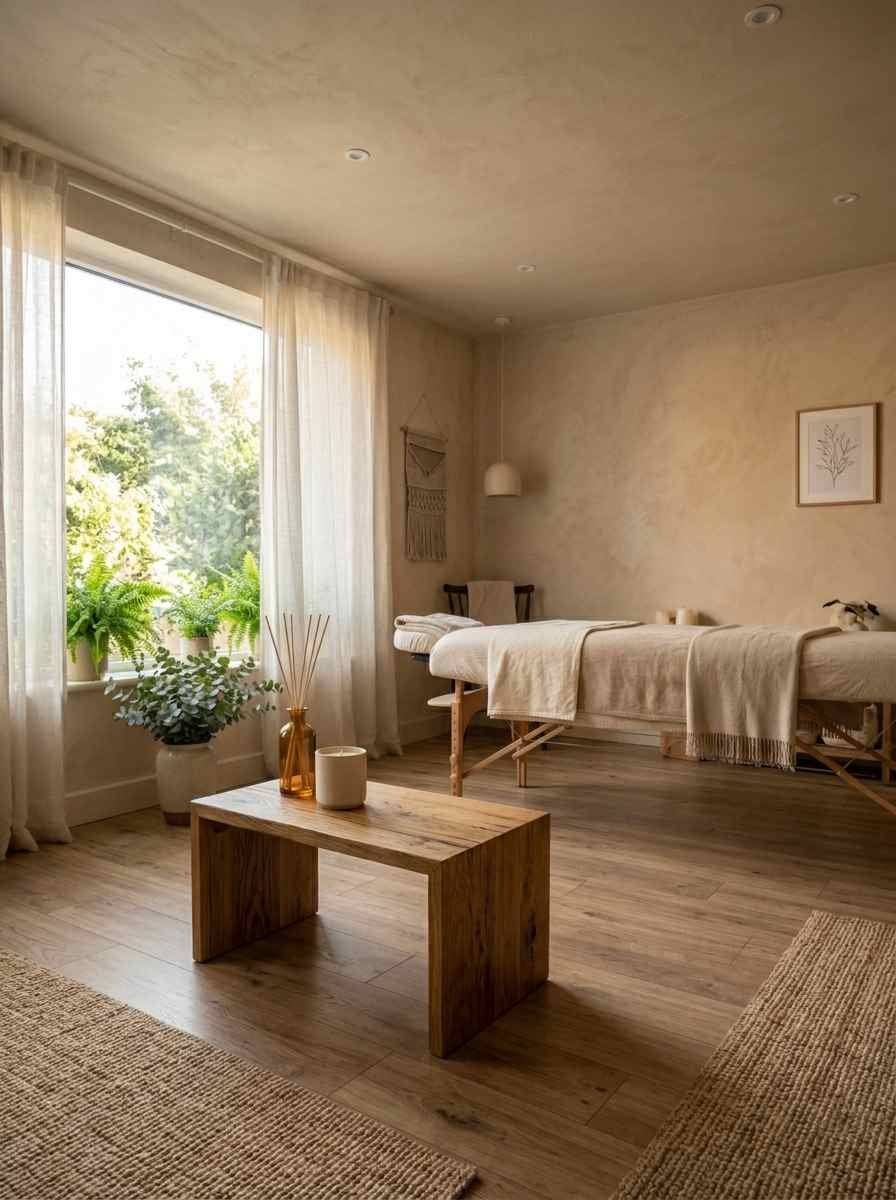
Scent is the fastest way to shift someone’s mood. Lavender and eucalyptus are classics for good reason. But don’t just burn a candle and hope for the best.
Use a reed diffuser as your baseline scent (consistent, low-maintenance), and light a soy candle only for longer sessions when you want something warmer.
This way the room always smells intentional, not like you just sprayed Febreze before they walked in.
For a solid starting point on aromatherapy for massage spaces, the National Association for Holistic Aromatherapy has genuinely useful guidance on safe diffusion ratios and oil combinations.
7. A simple wooden stool for your supplies
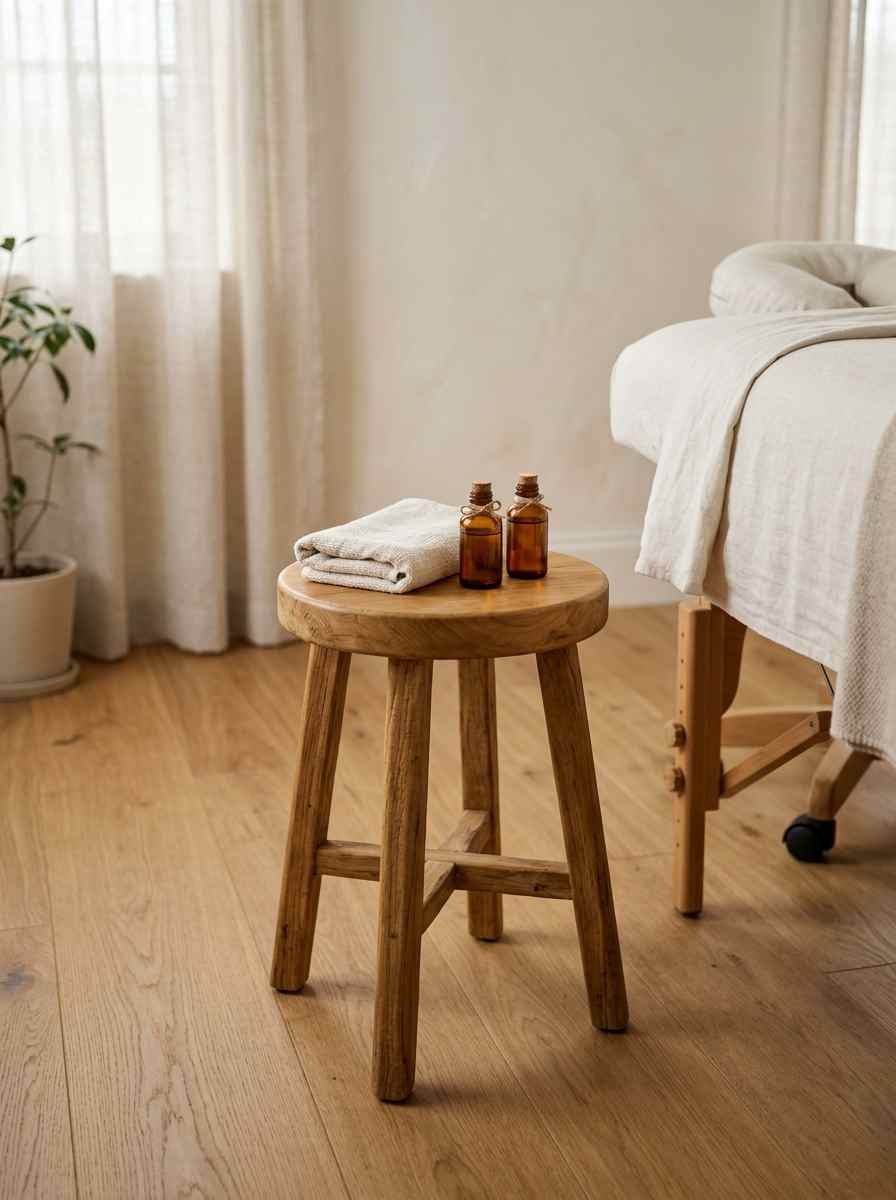
Skip the rolling metal cart that looks like it belongs in a dentist’s office. A short wooden stool or a low natural wood side table works perfectly for oils, stones, and towels.
It keeps things accessible without looking clinical. A round stool from IKEA’s FROSTA line runs about $20 and looks great with a folded linen towel on top.
8. Sound layered, not just playing
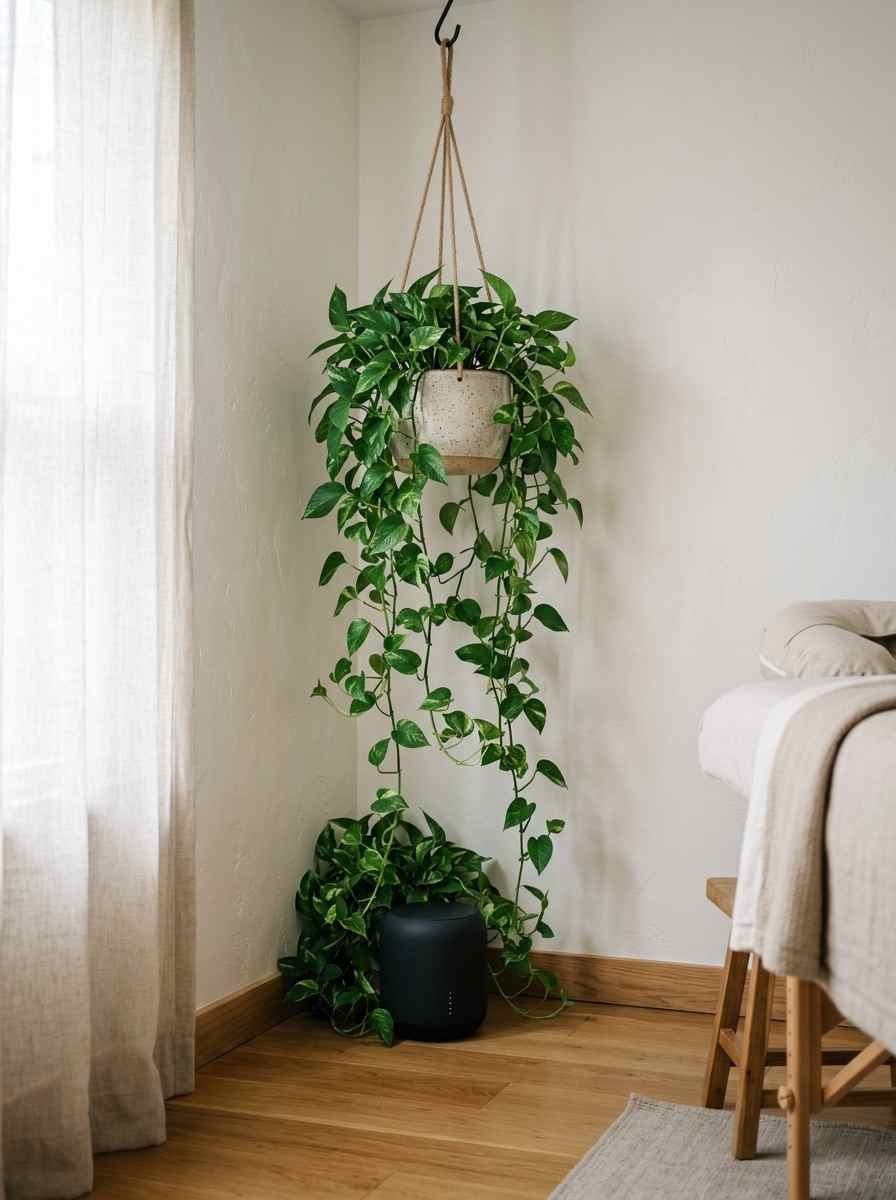
Most therapists run a Spotify playlist and call it a day. I get it. But the speakers matter as much as the music.
A small Bluetooth speaker hidden behind a plant or tucked on a low shelf fills the room with sound more naturally than a phone propped against the wall.
The Anker Soundcore Mini is $26 and has surprisingly warm audio for its size.
Pair it with nature sounds or binaural beats (try the Brain.fm app if you want science-backed focus music that actually works for relaxation too).
9. A folded blanket at the foot of the table
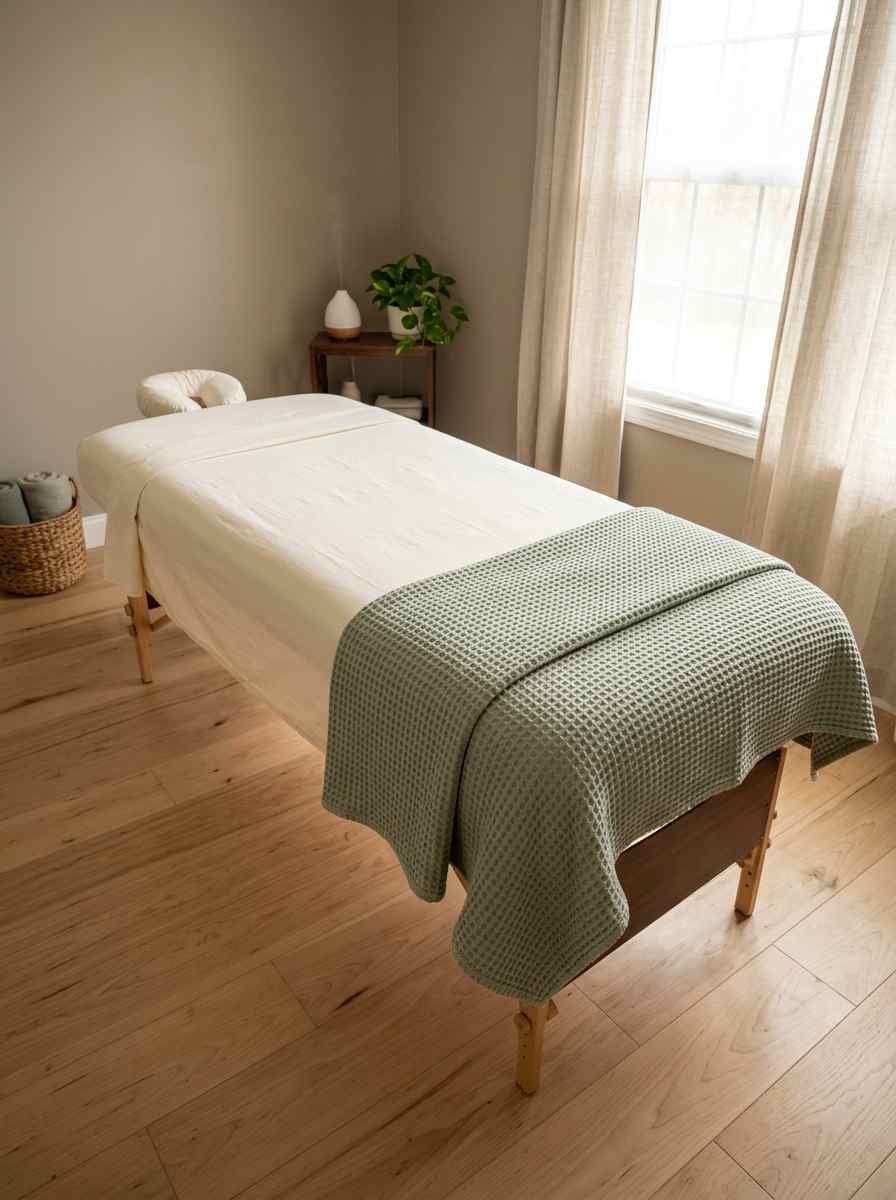
Always have one. Always folded neatly.
Not a fleece blanket, not a quilt with a loud pattern. A simple waffle-weave cotton throw in a neutral or muted sage tone.
This one detail signals care and preparation, and clients reach for it more often than you’d expect even in warm rooms.
10. Curtains floor to ceiling
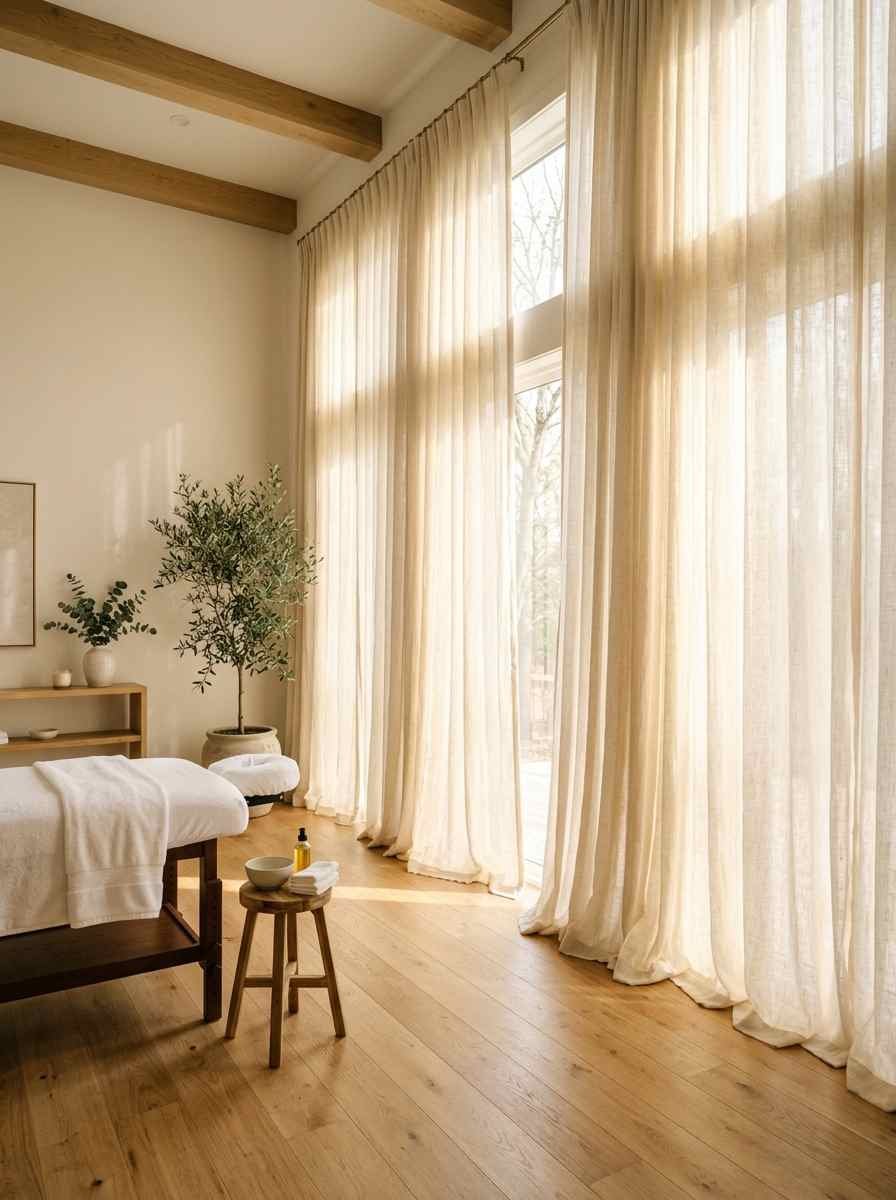
Floor-to-ceiling curtains make any room feel taller and more considered. You don’t need fancy ones.
IKEA’s LENDA curtains in white or linen-tone hang beautifully and cost around $20 a panel.
Mount the rod as high as physically possible, ideally within 4 inches of the ceiling. The extra visual height makes the whole room breathe.
11. A low wooden bench near the entry
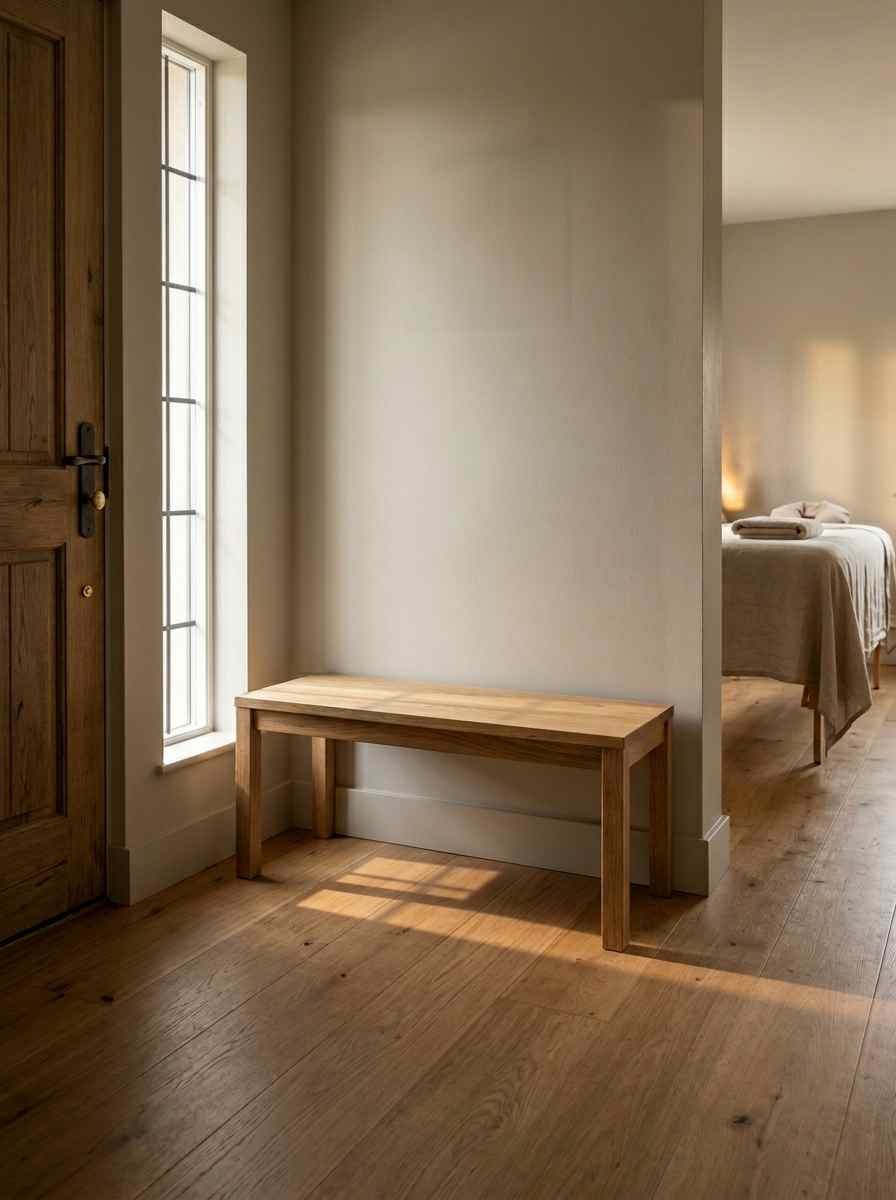
Clients need somewhere to sit while they remove shoes, or just a moment to transition from outside chaos to quiet space.
A simple wooden bench does exactly that.
No cushion needed. The simplicity is the point. It’s a visual and physical pause before they walk to the table.
12. Declutter the massage cart entirely
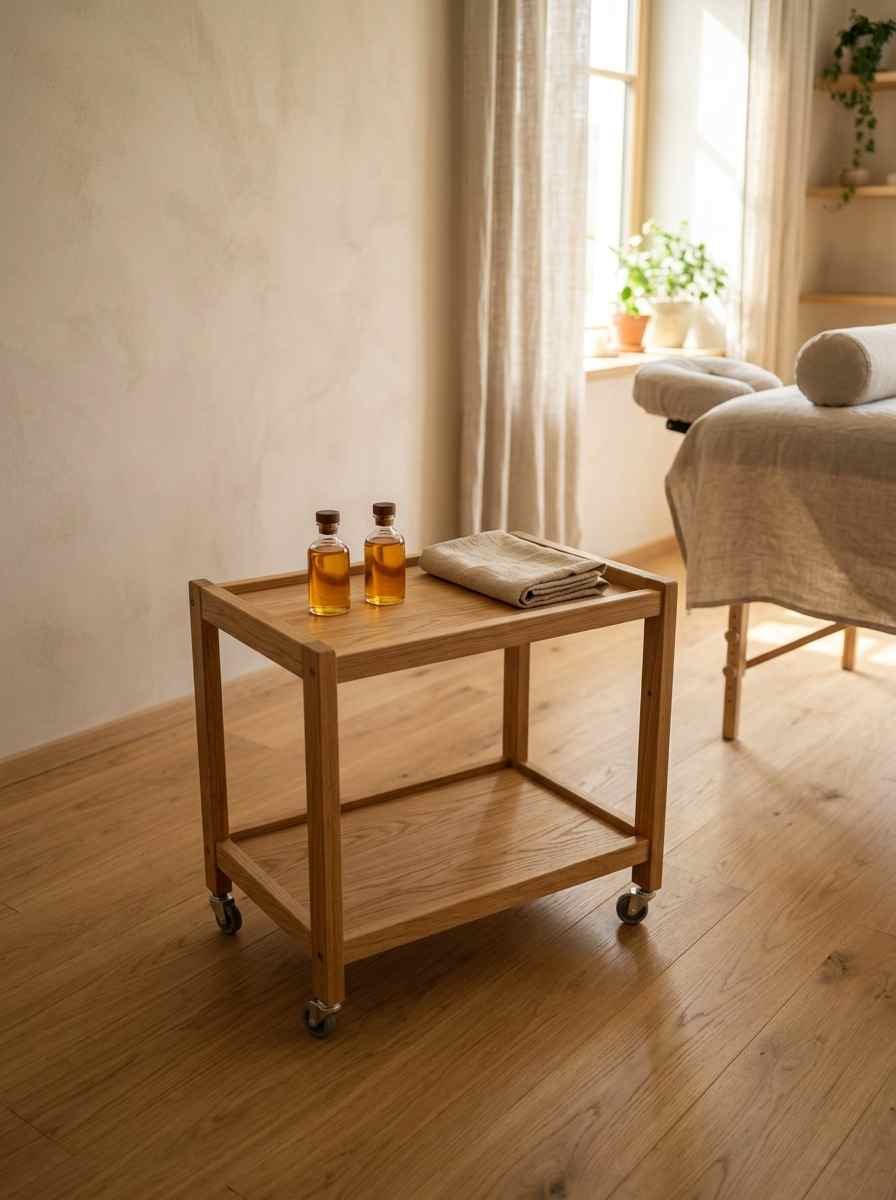
Everything on your cart should have a reason to be there. Oils you’ll actually use in that session. Nothing else.
This sounds almost too simple, but clients look at that cart. If it’s crowded with 14 products, empty tubes, and a random phone charger, that visual noise registers even when they’re face-down. Keep it clean.
13. Himalayan salt lamp for ambient warmth
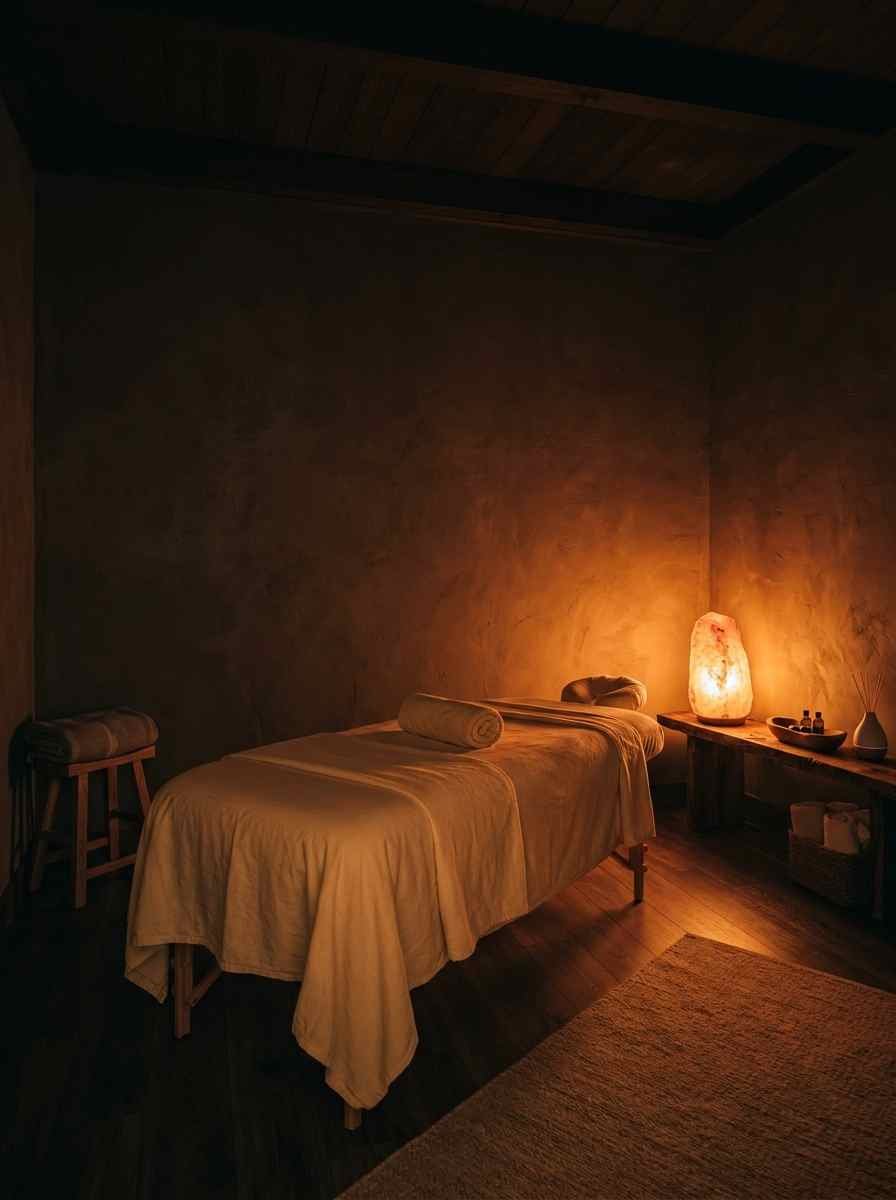
These get a bad rap because they’re everywhere, but honestly, they do the job. The light they put out is so warm and so dim that they function almost like a candle without the fire hazard.
Put one on the floor in a corner or on a low shelf. Don’t buy a huge one for a small room. A 5-8 lb lamp is enough for a 12×12 space.
14. A dark wood headrest face cradle cover
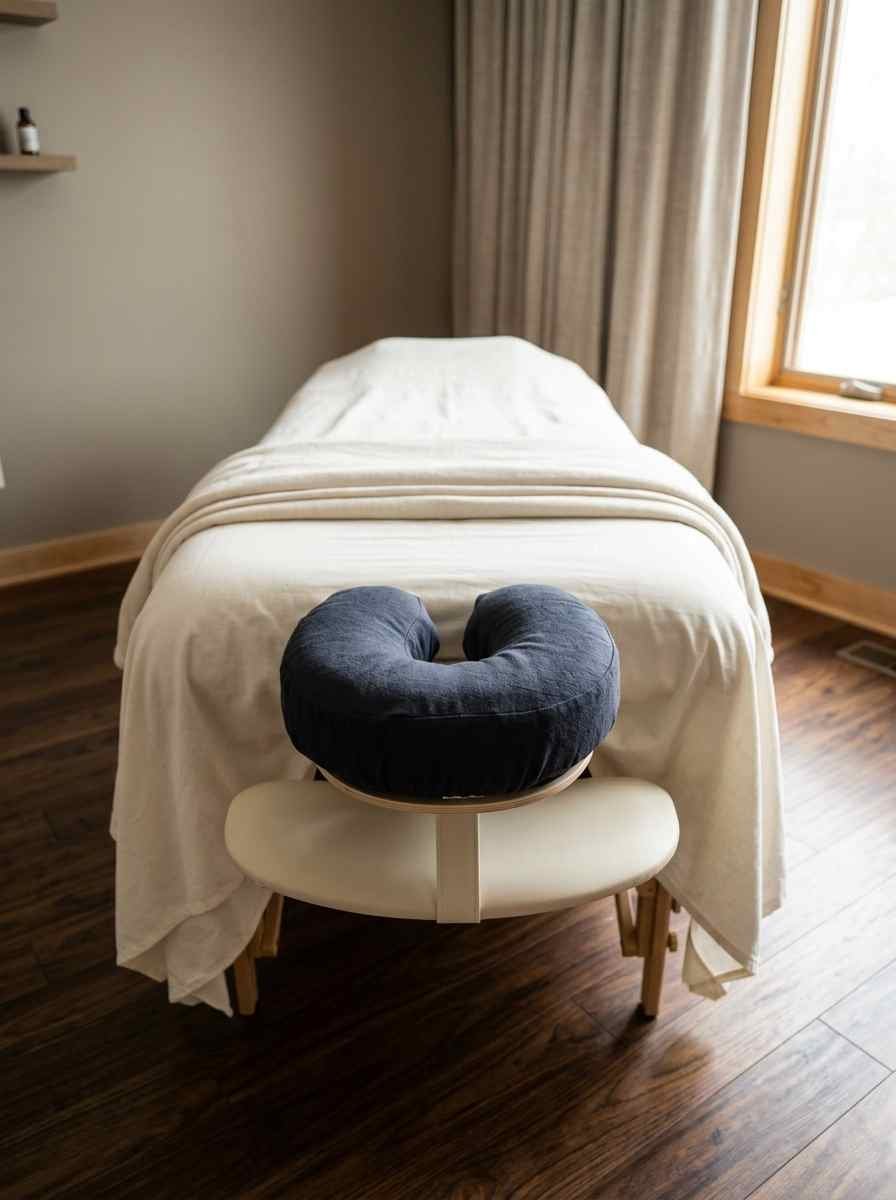
The face cradle is the thing clients stare at for an entire hour.
A cotton face cradle cover in dark charcoal or deep linen navy looks significantly more upscale than a standard white one.
Galaxy Face Cradle Covers makes good ones. Around $12 for a pack. Small detail, genuinely noticeable.
15. A stone or ceramic tray for small items
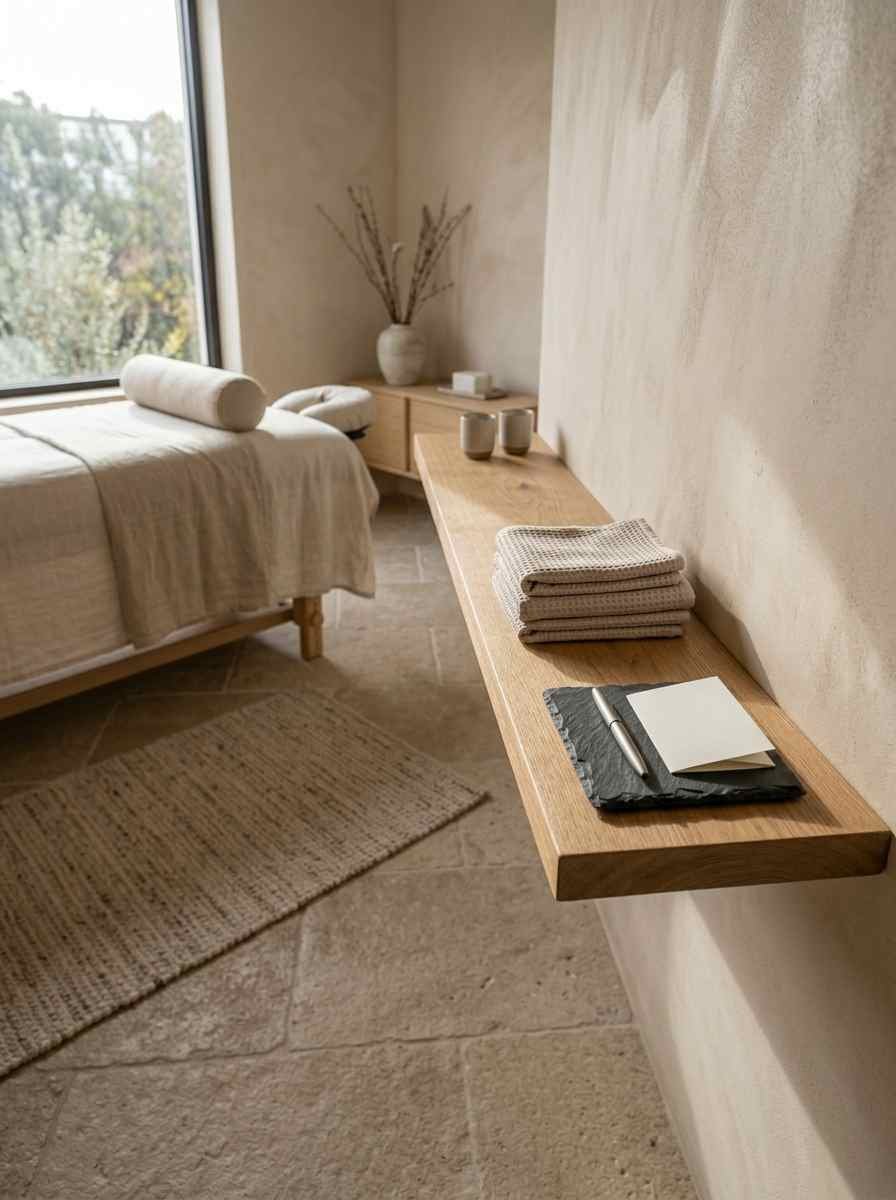
A small tray (4-6 inches, slate or matte ceramic) corrals the little things: a hair tie, a consent form, a pen. It keeps flat surfaces from looking scattered.
This also creates a visual anchor on whatever surface it sits on, which tricks the eye into reading the whole surface as organized even if it’s not perfectly clean.
16. Heated table warmer under the sheet
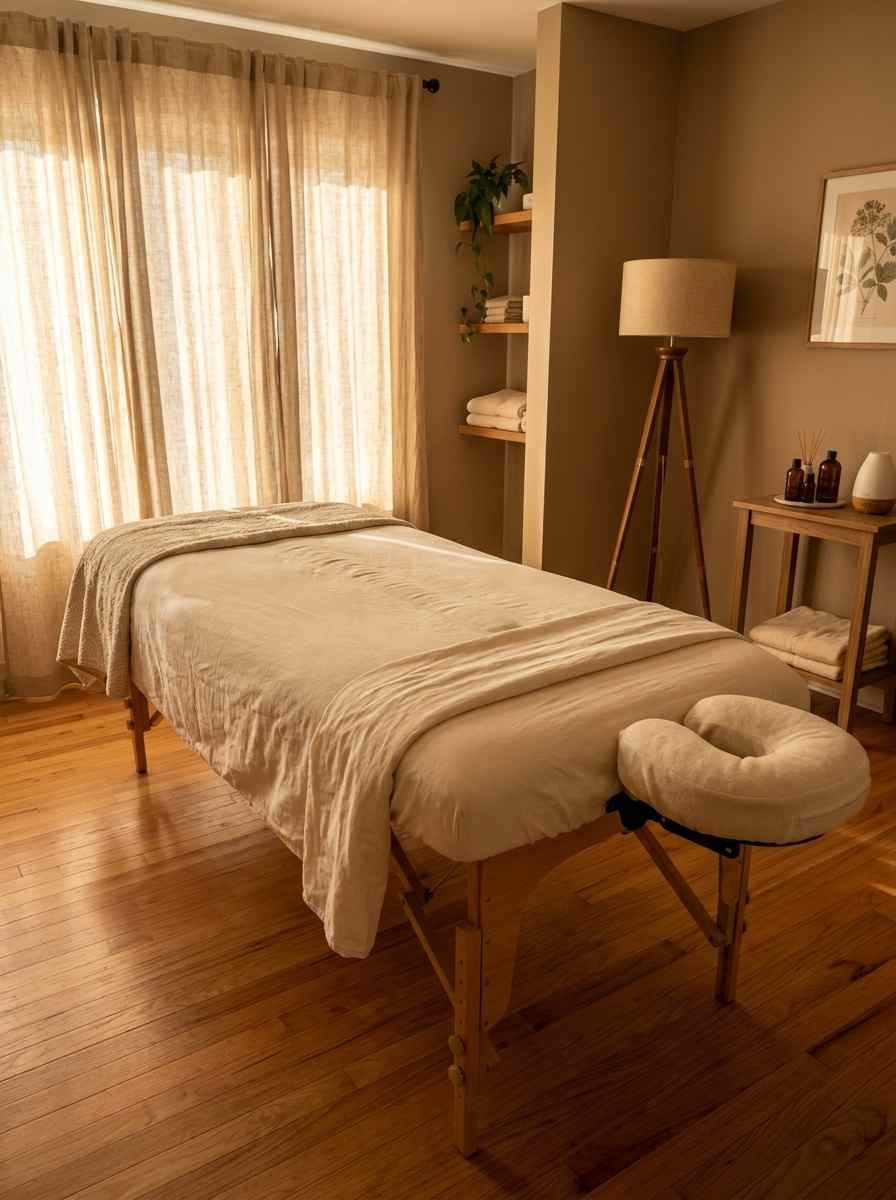
Okay, this one’s practical more than decorative, but it counts. A heated table warmer changed my entire client experience more than any candle or plant ever did.
The Oakworks table warmer runs around $85 and fits any standard table.
Clients who weren’t sure if they liked massage have come back specifically because they felt physically safe and warm. That matters a lot.
17. A small water station near the exit
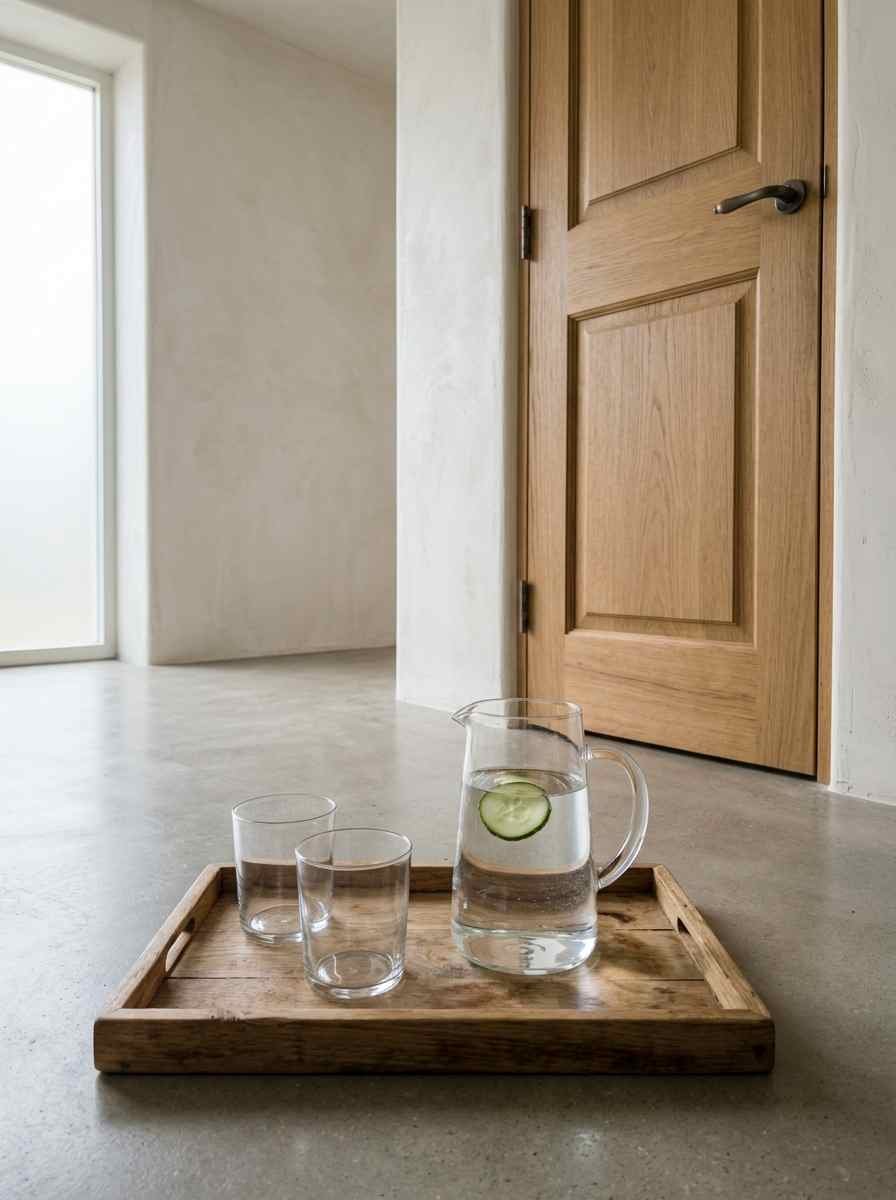
After a massage, people need water. Having a simple tray with a glass pitcher, 2 glasses, and maybe a slice of cucumber or lemon sitting near the door is the most effortless hospitality move in the room.
It rounds out the experience without adding complexity. ELLO glass pitchers are around $25 and look clean on a wooden tray.
18. Texture on one wall only
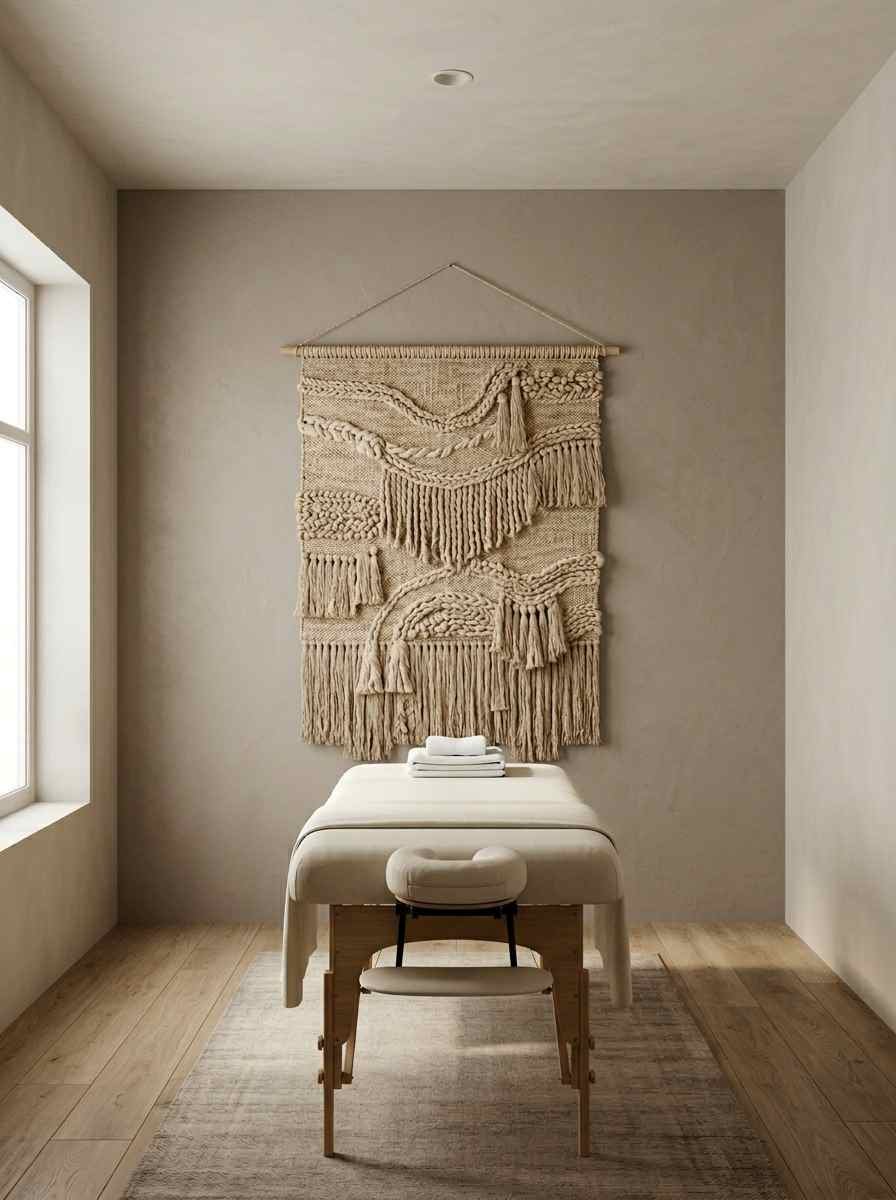
A woven wall hanging, a single piece of macrame, or a textured plaster effect on just one wall (the one clients face when lying prone) gives the eye somewhere to rest without creating chaos.
The key word is one. One wall. One texture. Minimalism doesn’t mean empty, it means deliberate.
19. Black or matte hardware on everything
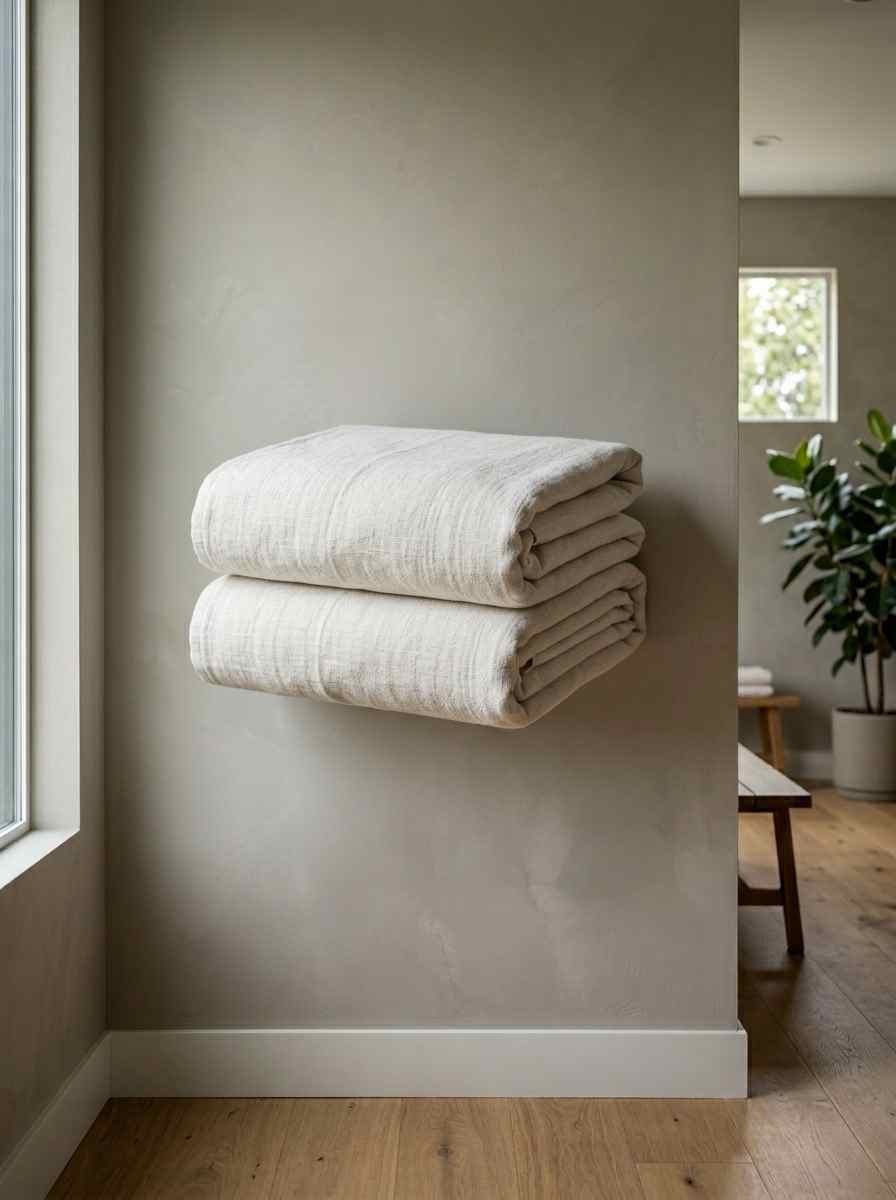
If you have any hooks, knobs, or fixtures in the room, make them matte black. It’s the single easiest way to make a budget room look considered.
Matte black towel hooks from Amazon run $8-12 each. Swap 2 hooks and watch the whole room tighten up visually.
20. A salt bowl or small stone accent on the floor
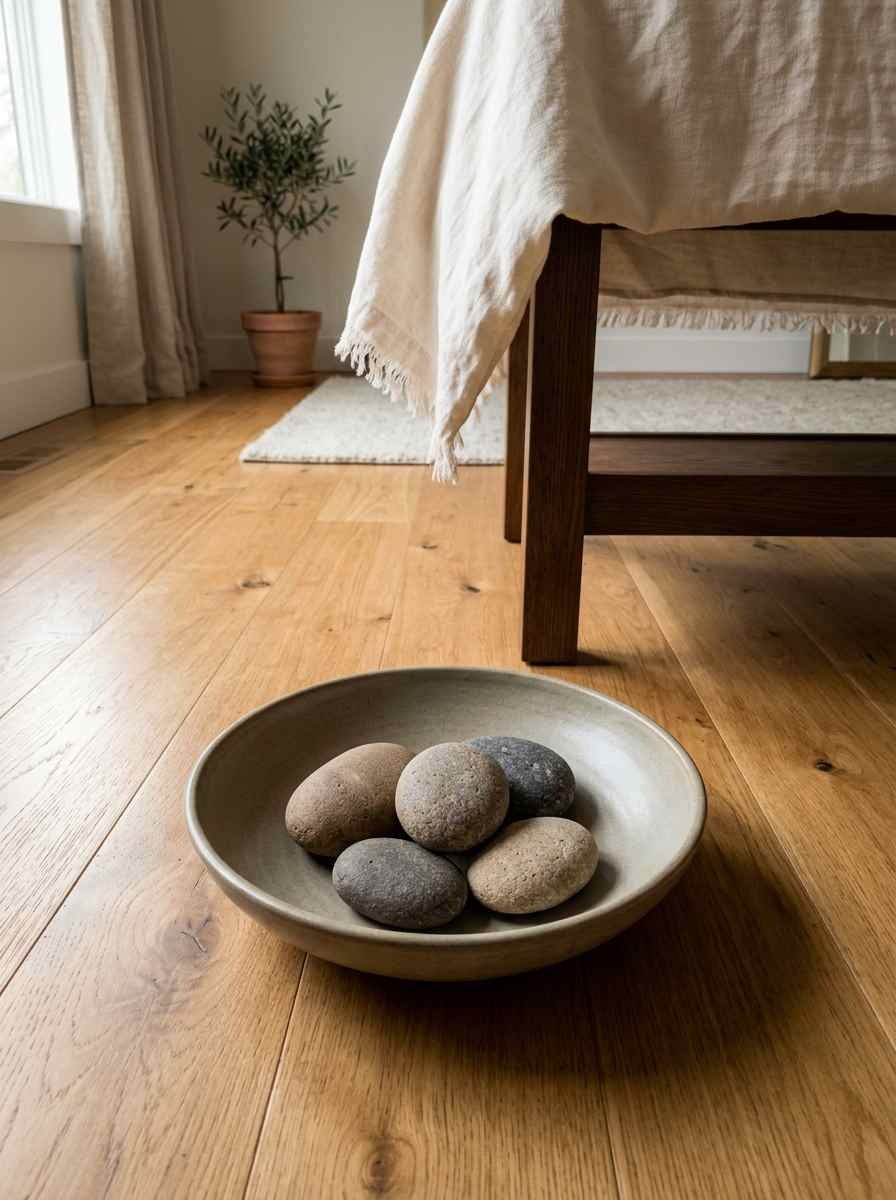
A shallow bowl with 4-5 smooth river stones, placed near the foot of the table or by the door, costs almost nothing and reads as intentional.
It’s the kind of detail you see in high-end spas and assume is expensive. It’s not. A bag of river stones from a garden center is $6.
Wow, honestly, how much mileage you can get from a $6 bag of rocks is slightly absurd.
21. Blackout curtains behind the linen ones
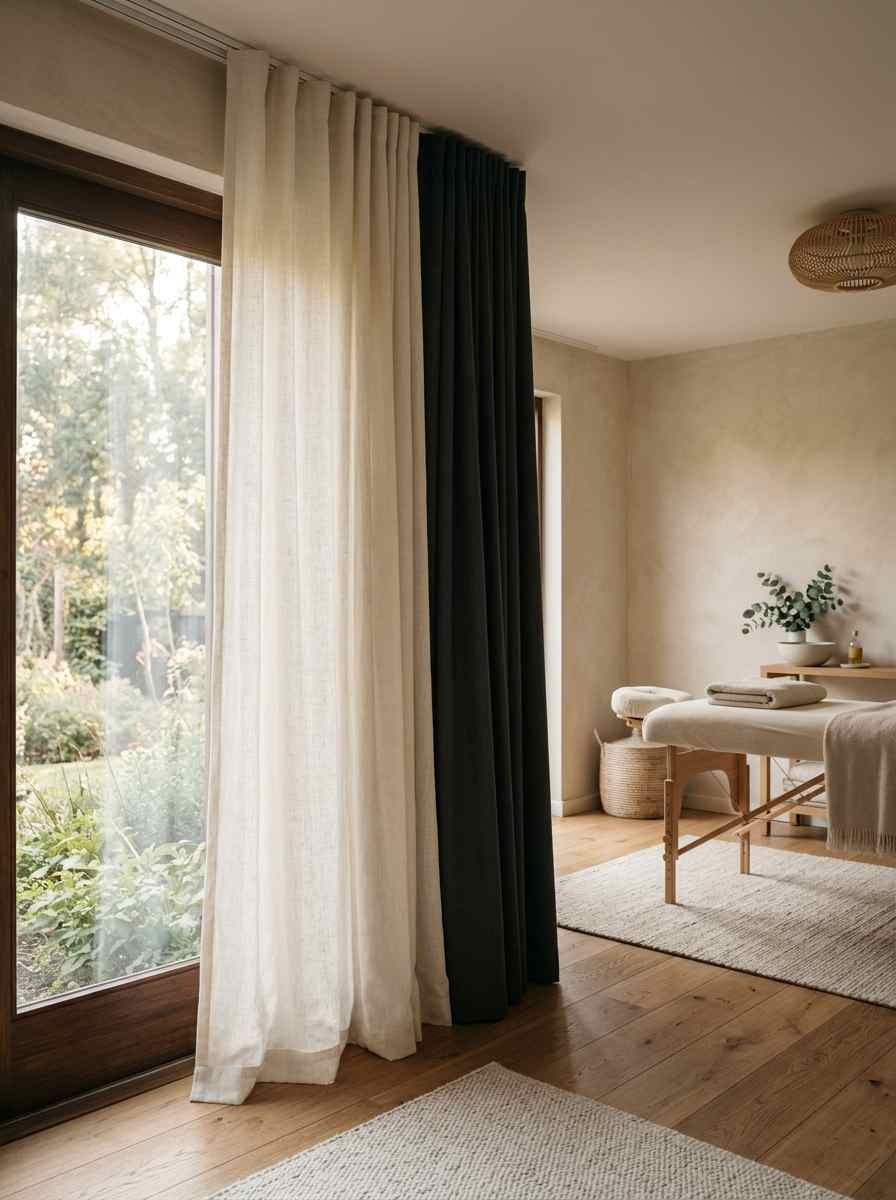
Layer them. Linen curtain in front for texture and warmth, blackout panel behind for complete light control.
This lets you dial the room to near-complete darkness for clients who need it, without sacrificing the look.
Deconovo blackout panels are $20-30 for a pair and come in colors that disappear behind a linen layer.
22. A single framed piece of art, low on the wall
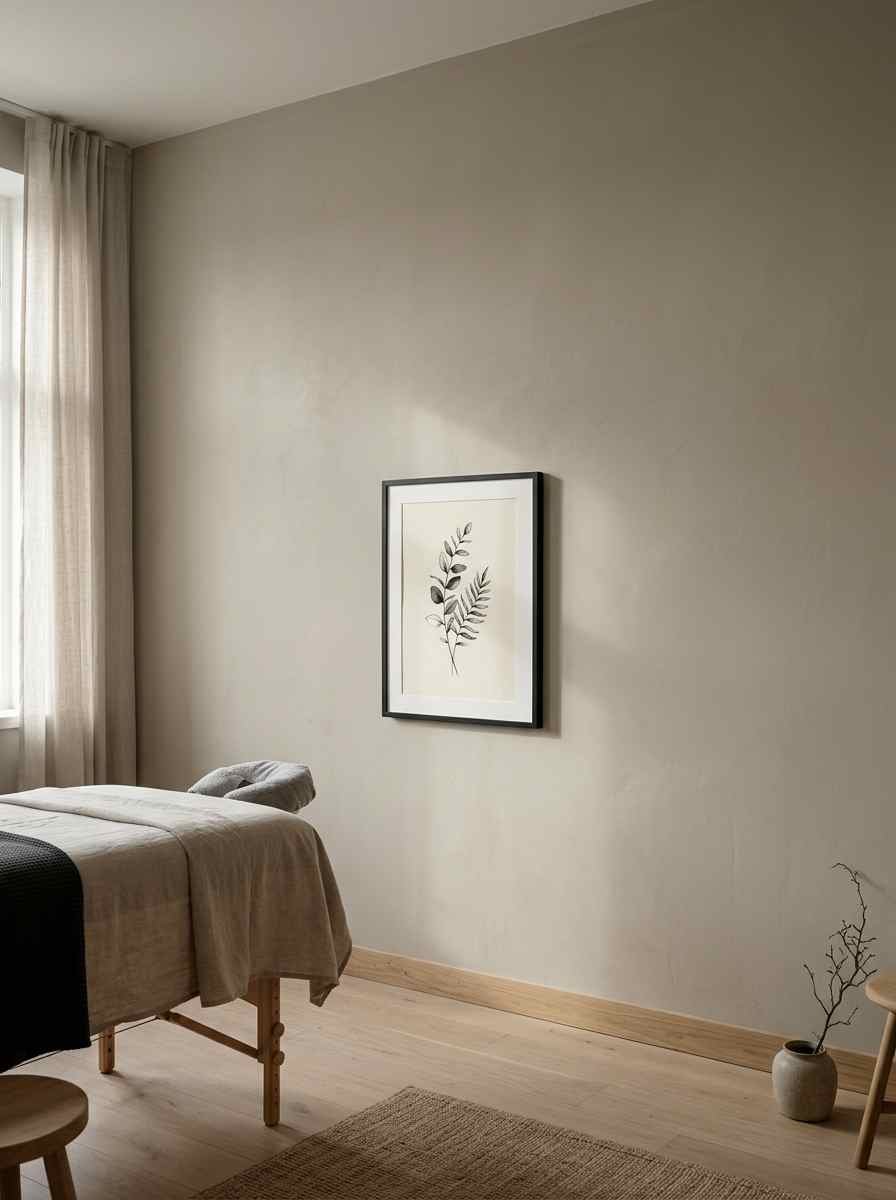
Hang it at seated-person eye level on the wall clients face when lying face-up, or when sitting on the bench before the session. That means lower than you’d normally hang art: around 48-52 inches from the floor to the center of the frame.
A simple ink wash, a botanical print, or a black-and-white photograph works well. Keep the frame thin and matte.
No gilded frames, no gallery walls, no grid of 9 tiny prints that turns the wall into visual homework.
Quick reference: room elements at a glance
| Element | Budget pick | Approx. cost |
|---|---|---|
| Floor lamp | TorchStar arc floor lamp | $45-65 |
| Linen curtains | IKEA LENDA (per panel) | $20 |
| Table warmer | Oakworks standard warmer | $85 |
| Scent diffuser | URPOWER 300ml | $18 |
Putting the room together without overcomplicating it
Start with the 3 things that cost nothing: rearrange the table placement, clear the massage cart down to essentials, and move the overhead light out of the equation by unplugging it and switching to lamps. Do those 3 things first.
Then add scent, a plant, and floor-to-ceiling curtains. That’s already 80% of the vibe.
The rest, the stones, the tray, the dark face cradle cover, those are refinements. They matter but they’re not what creates the atmosphere. Atmosphere comes from light, scent, and space. Add the details once the foundation is solid.
For more on how spa design affects client outcomes, the Global Wellness Institute publishes solid research on environmental design in wellness spaces that’s worth a read if you really want to go deep on the psychology of it.
FAQs
Q: Do I need a dedicated room for a minimalist massage setup, or can I use a multi-purpose space?
You can absolutely use a multi-purpose space. The key is visual separation during sessions: a folding screen or floor-to-ceiling curtain can section off the massage area so the client’s eye doesn’t wander to a bookshelf or desk. When the session is over, you fold it back. Takes about 60 seconds.
Q: What’s the most impactful single change I can make to an existing massage room right now?
Replace your overhead lighting with 2 lamps on warm (2700K) bulbs. I’ve recommended a lot of things in this article but this one change produces the fastest visible difference. The room will read as completely different within 10 minutes.
Q: How do I keep a minimalist massage room smelling consistently good without overdoing the scent?
Reed diffuser as the baseline, always. Run it in the room between sessions and take it out (or cap it) right before a client arrives if the scent feels strong. You want the room to smell like something without clients walking in and immediately identifying 4 specific essential oils. Subtle is the goal.
A final thought
Minimalism in a massage space isn’t about spending less or decorating less. It’s about choosing things that earn their place in the room. Every element your client sees, smells, and feels is communicating something about how much care went into the space. So make those choices on purpose.
Which of these ideas are you planning to try first? Drop a comment below or save this to your Pinterest board for when you’re ready to start.
