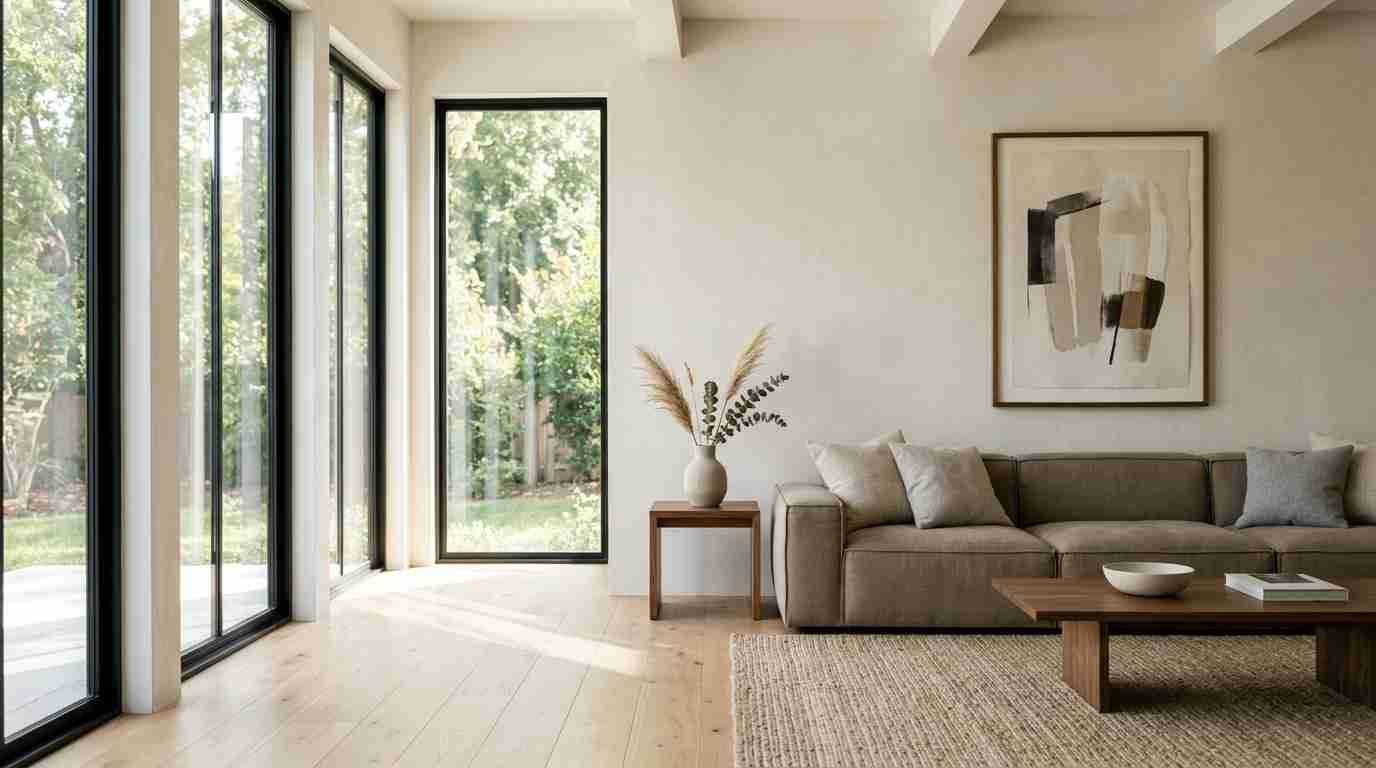
I’ve moved four times in the last six years. Four different living rooms, four blank walls staring back at me like a dare. Every time, I went straight for the easy fix: cover the wall with stuff.
Big mistake. Every single time.
The rooms that actually felt good, the ones where friends walked in and asked who designed it, had something in common.
I’d held back. Chosen one piece I actually loved, given it room to breathe, and walked away.
Minimalist wall decor sounds intimidating if you picture sterile white boxes from a design magazine. In practice, it’s a lot more forgiving.
You’re choosing fewer, better pieces, and treating empty space as part of the design instead of something to panic-fill before guests arrive.
I’ve pulled together 24 ideas below, from $0 changes you can make this weekend to small investments that’ll change how a room feels.
Some I’ve used myself. Some came from designers and decor sites I trust.
All of them work in a real living room, not just a styled photo shoot.
I’m not a professional decorator. I’m someone who’s repainted the same accent wall three times trying to get it right, and learned most of this the slow, expensive way so you don’t have to.
Why an empty wall can do more than a full one
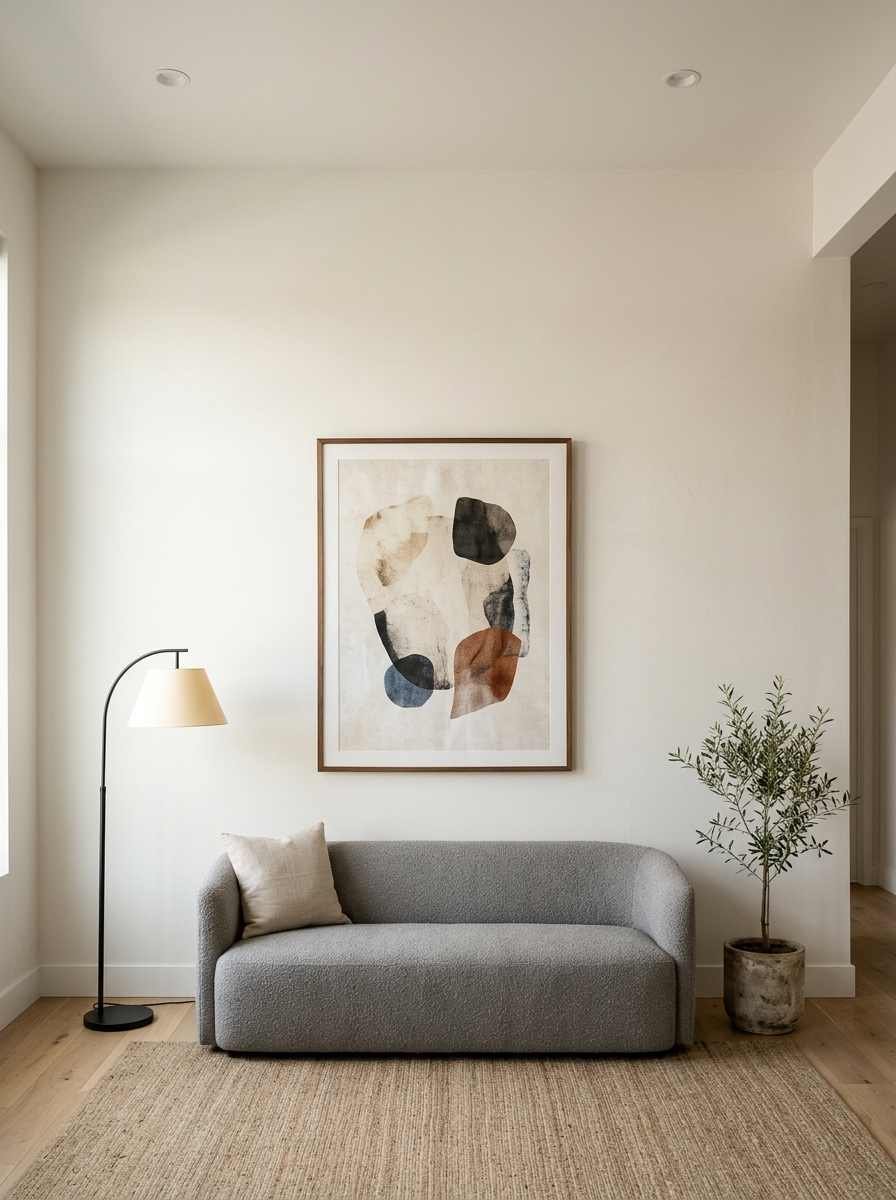
Here’s a thing most people get backwards: more wall decor doesn’t equal more style. Often it’s the opposite.
Interior designers have a term for the empty space around and between objects: negative space.
The team at Homes & Gardens points out that giving a piece room on the wall makes it feel more important, since it doesn’t have to fight neighboring objects for your eye.
I felt this firsthand. In my last apartment, I had a gallery wall with nine frames crammed above the sofa. It looked busy.
I took down six of them, kept the three I actually loved, and the wall finally looked intentional instead of accidental. Wow, what a difference six frames make.
That’s the move behind every idea on this list: choose less, and give it room to do the work. It’s a small mindset shift, and once it clicks, you’ll probably start noticing it in restaurants, hotel lobbies, and friends’ houses too.
Color and negative space ideas
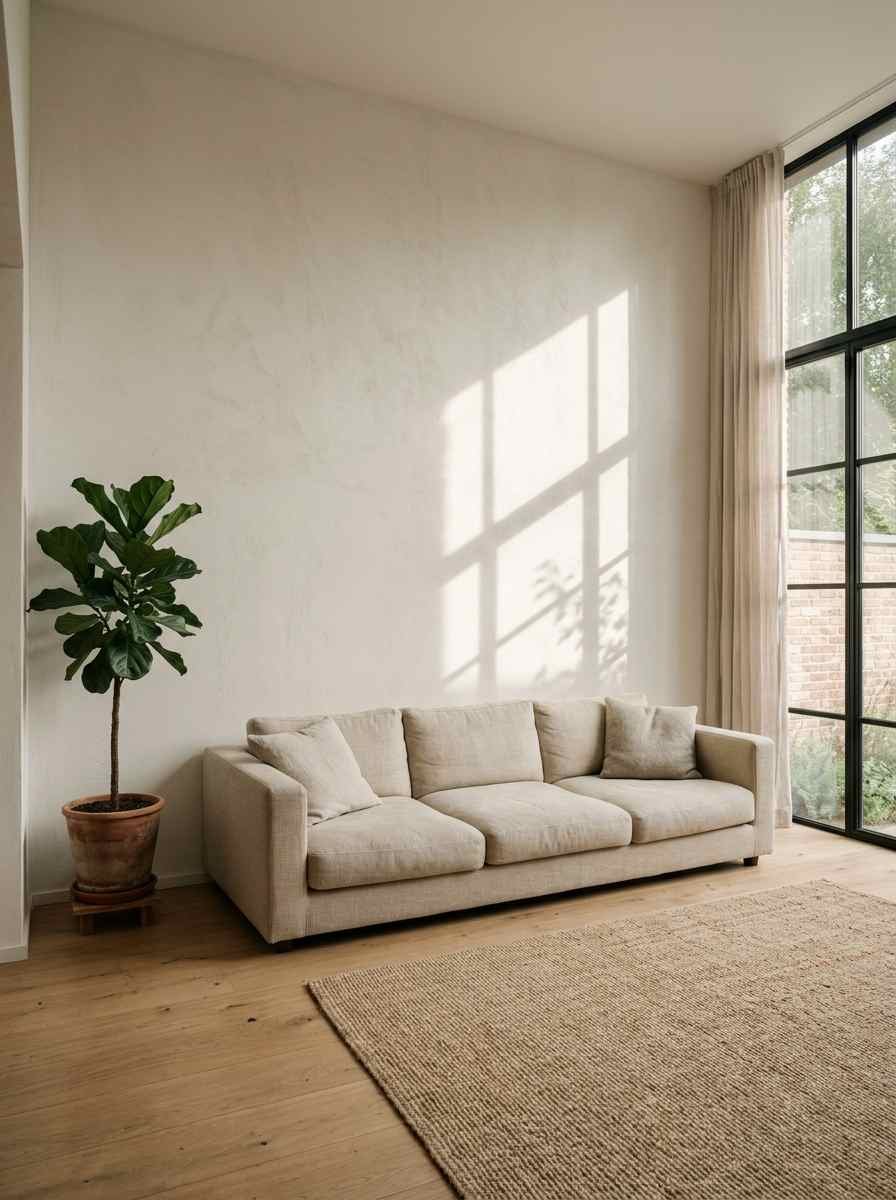
- Leave one wall completely bare. Pick the wall with the best natural light or the cleanest lines, and leave it alone. A bare wall behind a nice sofa often reads as more expensive than a wall covered in art.
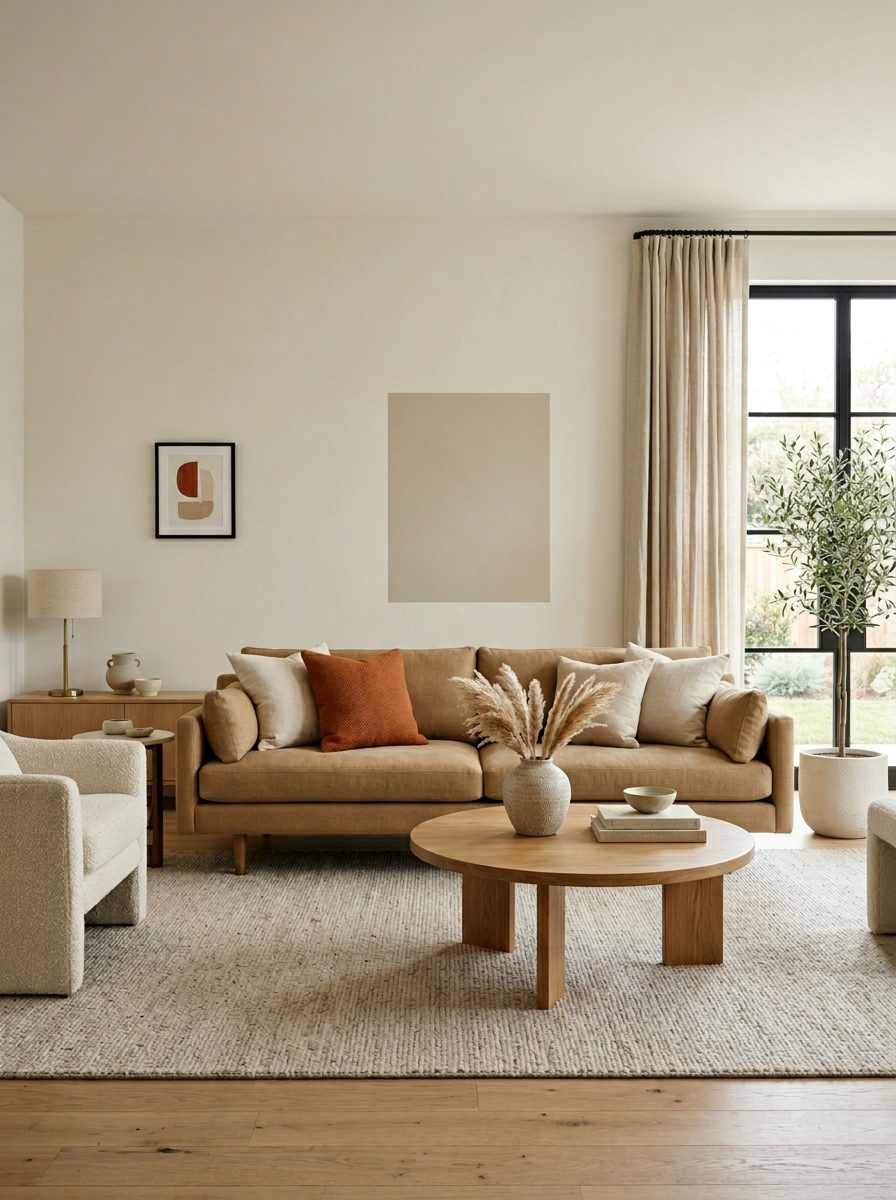
- Pick one accent color and repeat it twice. Not three places, not five. Twice. A throw pillow and one piece of art in the same shade ties a room together without forcing a whole color story.
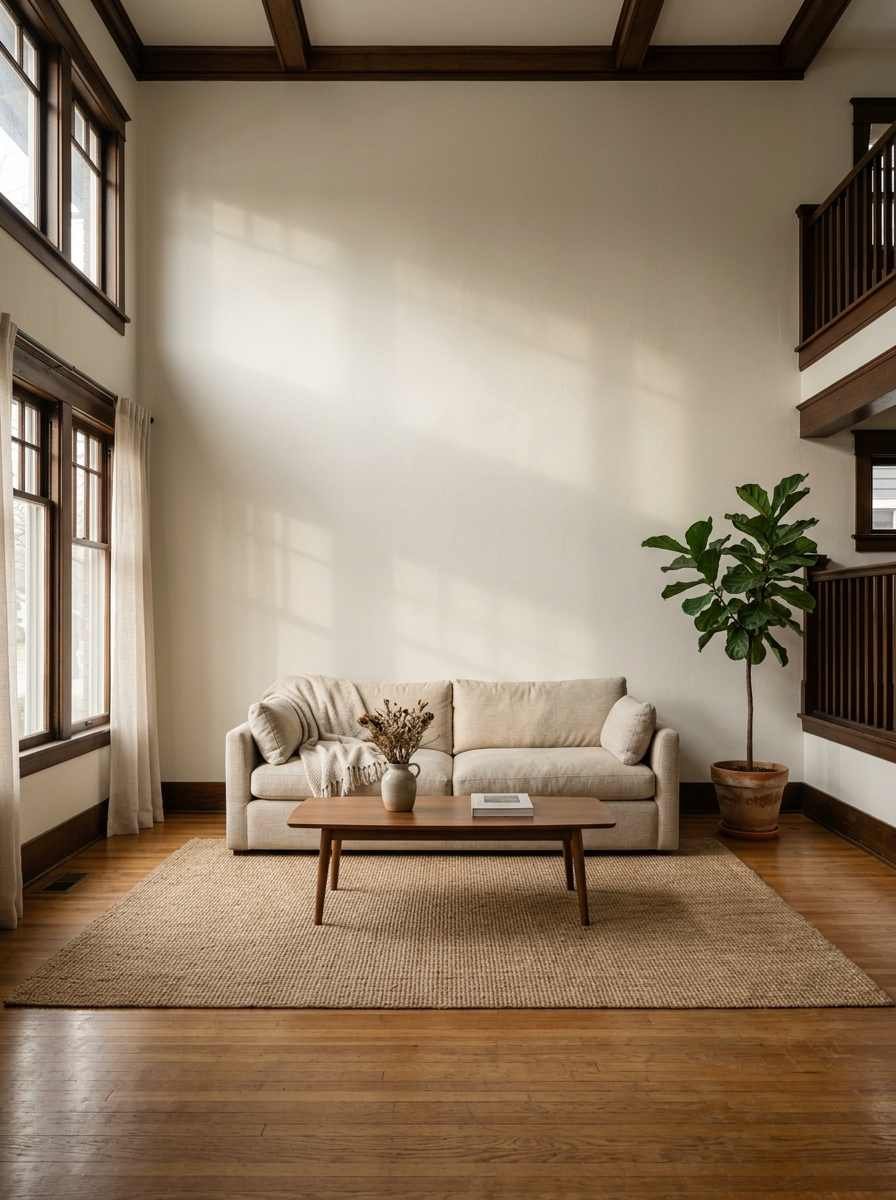
- Go warm white instead of stark white. Pure white walls can feel clinical under most living room lighting.
- A warm white with a hint of cream softens the space and makes whatever you hang on it look intentional, not sterile.
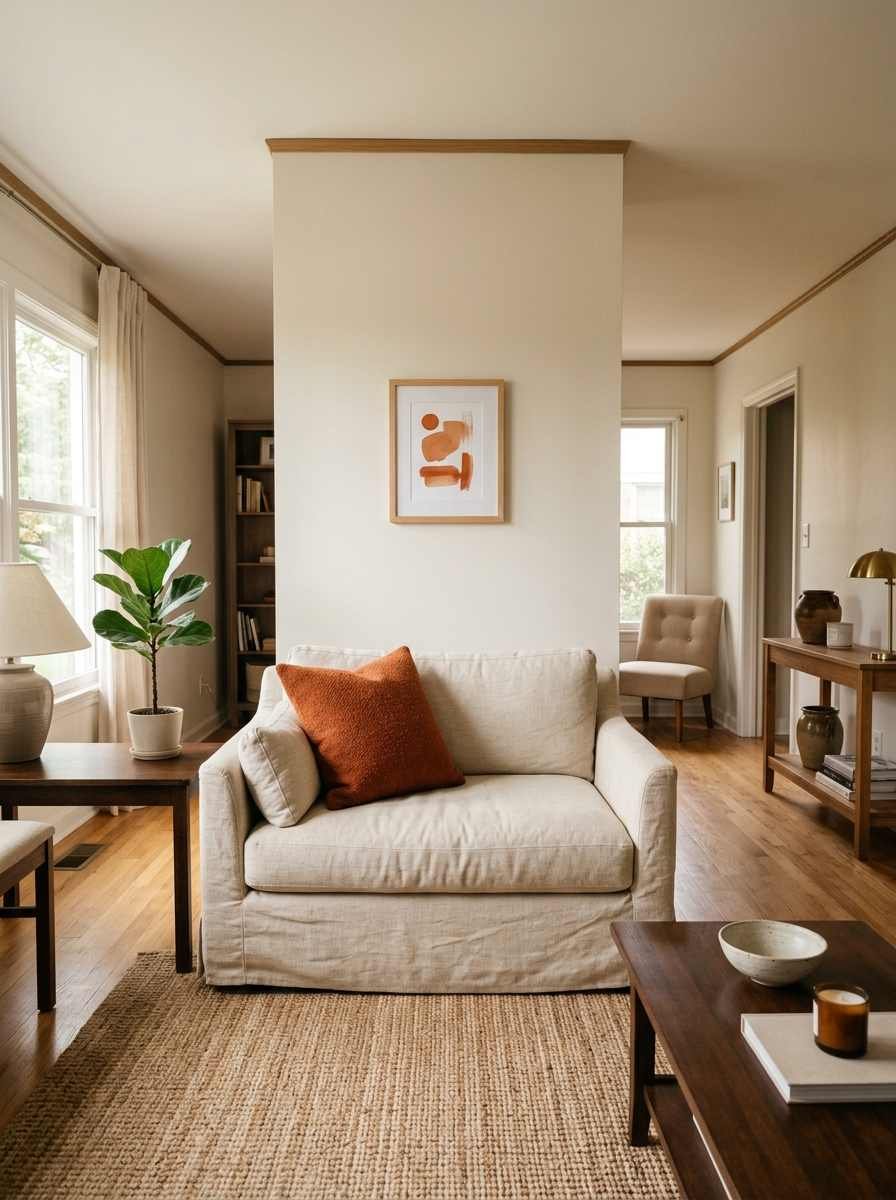
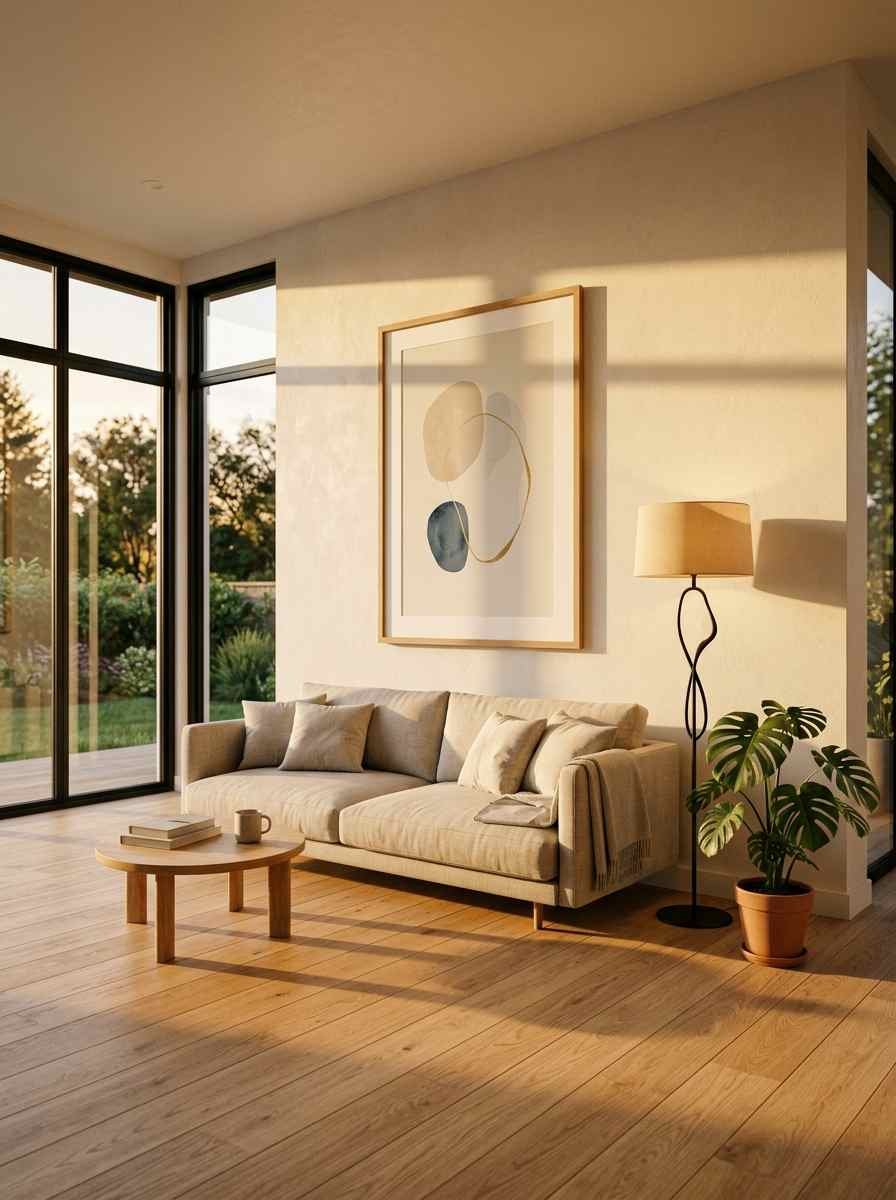
- Try a tonal color block behind the sofa. Paint a soft rectangle one shade darker than your wall color, and hang nothing on it. It reads as art on its own.
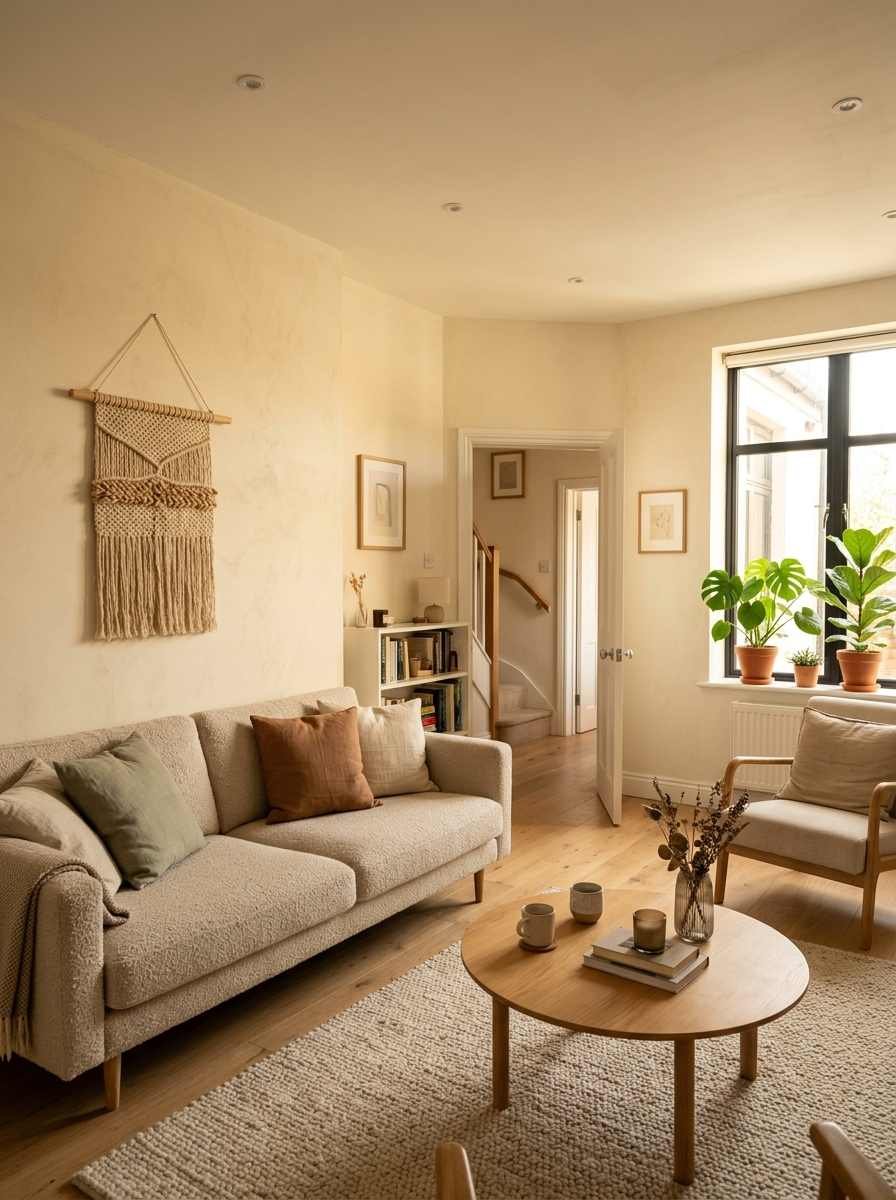
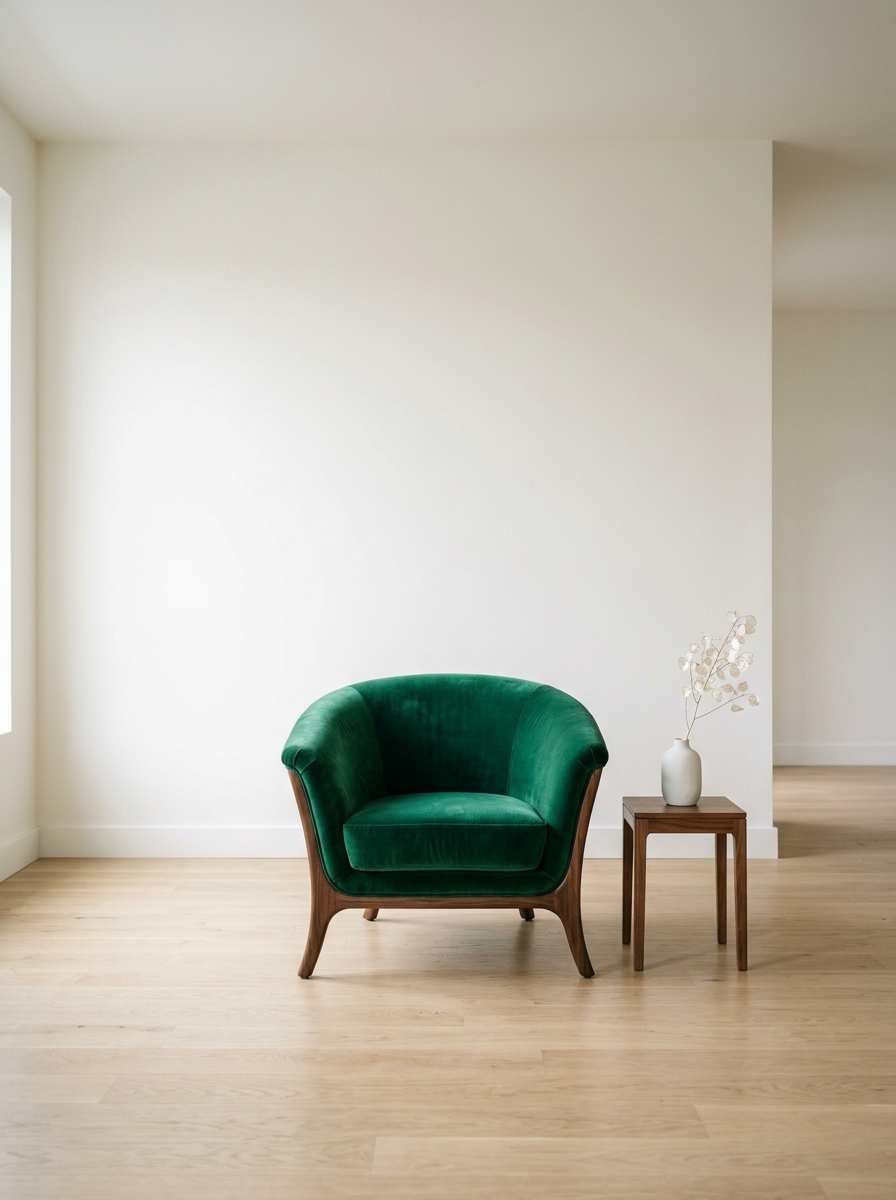
- Let your furniture be the art. If you’ve got one striking piece, a velvet sofa, a sculptural chair, the smartest move is sometimes skipping wall decor on that wall entirely.
- According to Sherwin-Williams’ breakdown of color psychology, color does a lot of the emotional heavy lifting in a room, often more than what’s hanging on the walls.
IMO, idea 5 is the most underused trick on this whole list. People assume an empty wall means an unfinished room. Usually it’s the opposite.
Gallery wall and layout ideas
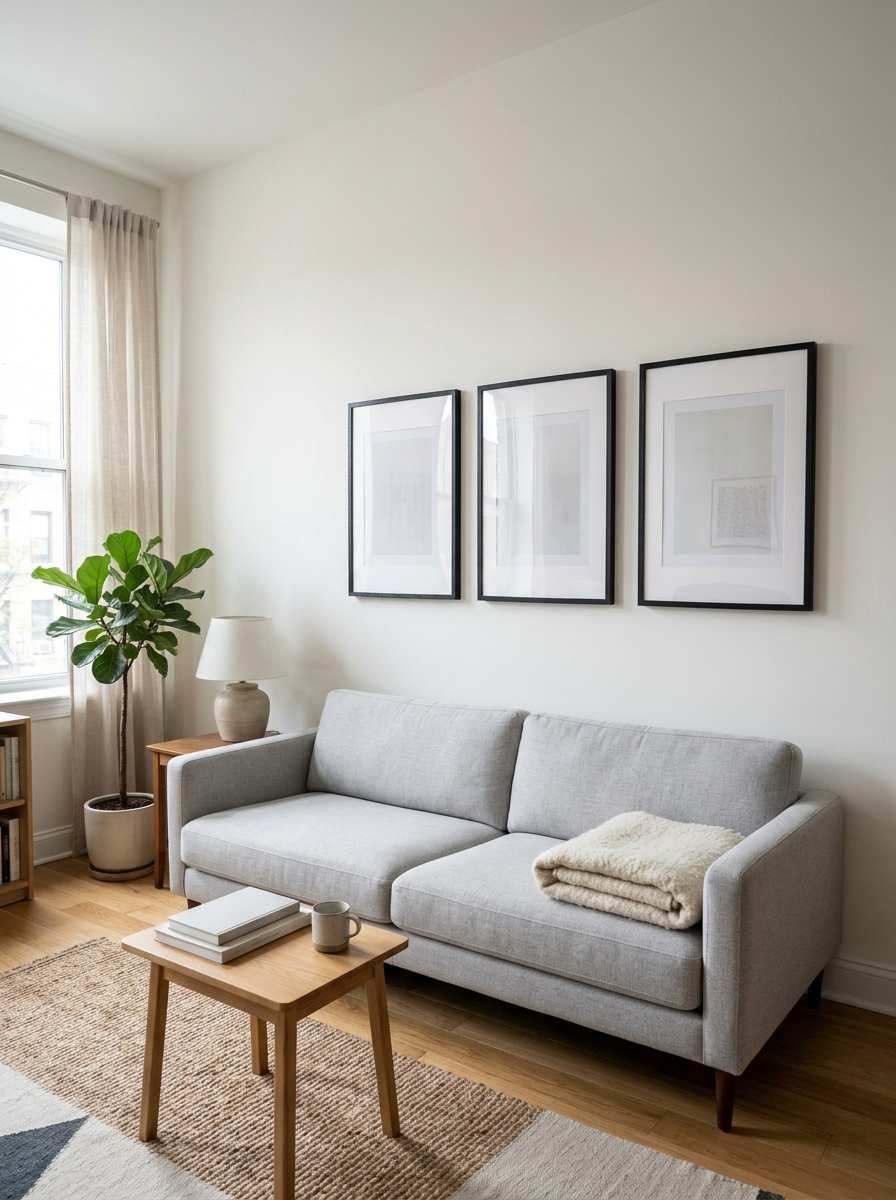
- Build a tight 3-frame grid. Three identical frames, evenly spaced, same matting. Calm, simple, and a lot harder to mess up than a sprawling salon wall.
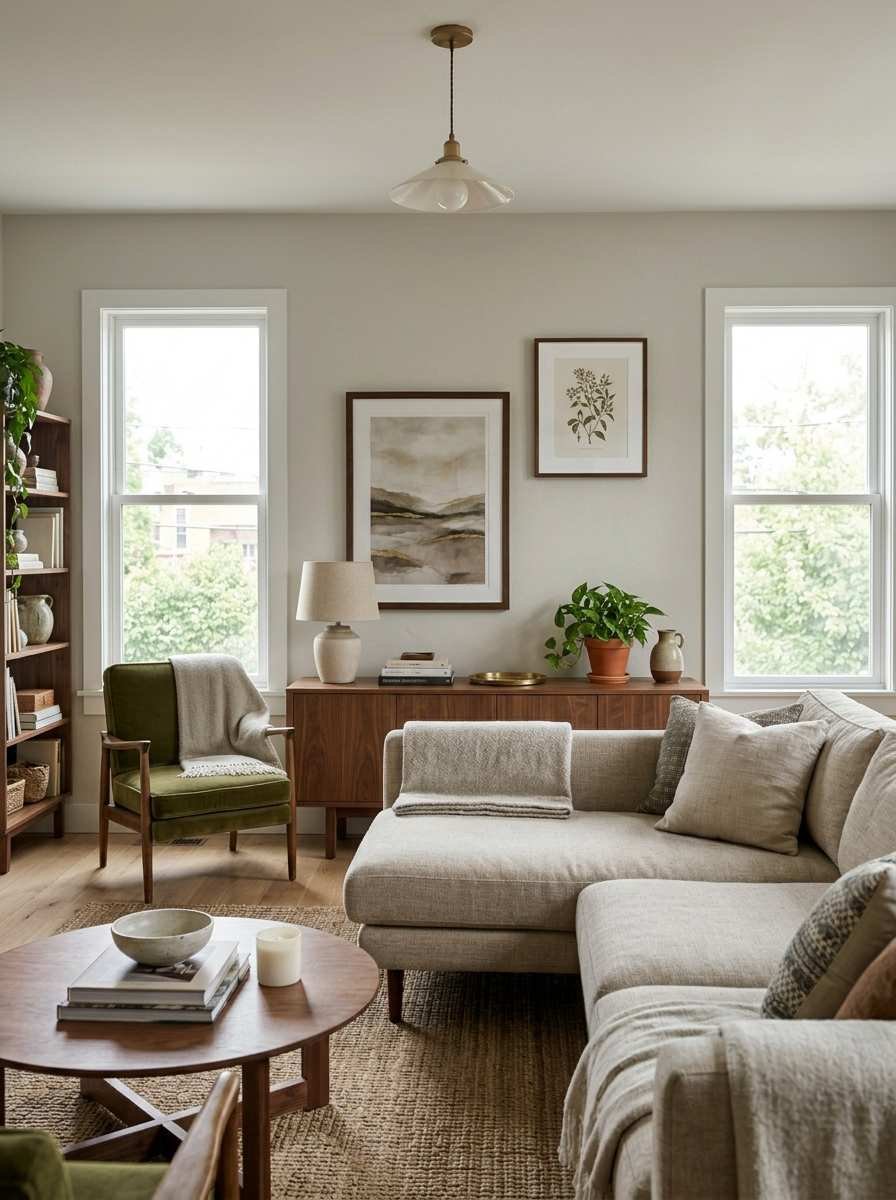
- Try an asymmetrical duo. Two pieces of different sizes, placed off-center. It feels more collected than a perfectly matched pair, and a lot less like a furniture-store display.
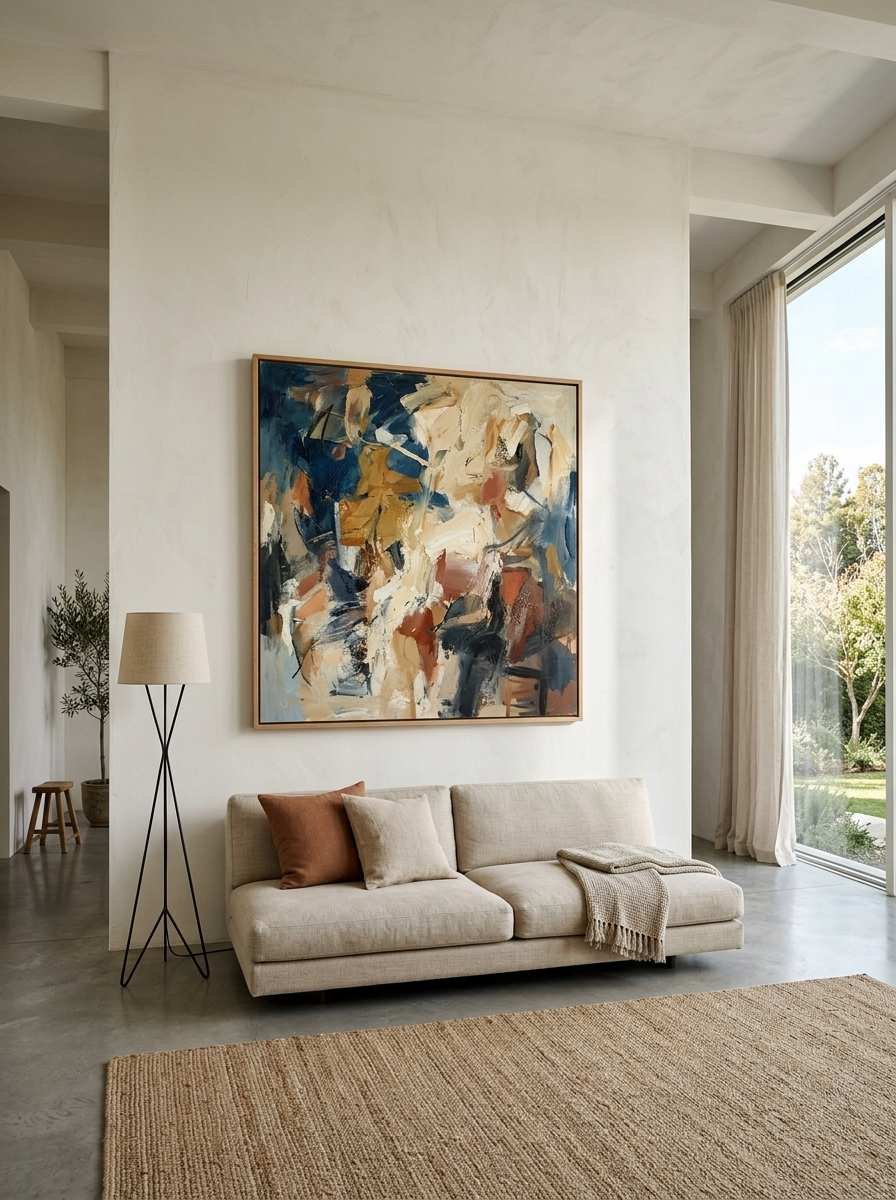
- Go big instead of going wide. One oversized print, 30 by 40 inches or bigger, almost always beats five small ones scattered around. Scale does more visual work than quantity, and it’s usually cheaper once you add up five frames and five mats.
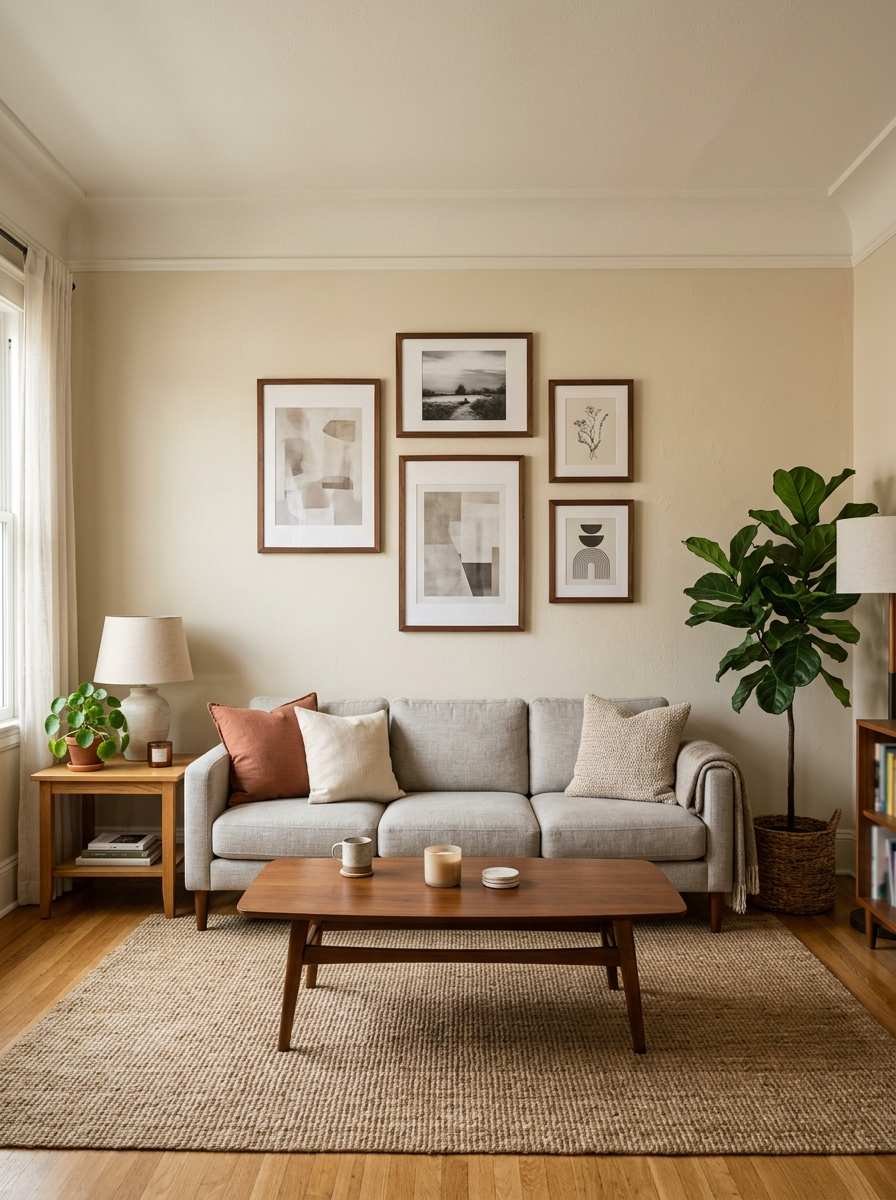
- Match your frame finishes, not your frame sizes. Mixed sizes look intentional when every frame shares the same metal or wood tone. Mixed finishes just look like leftovers from different decades.
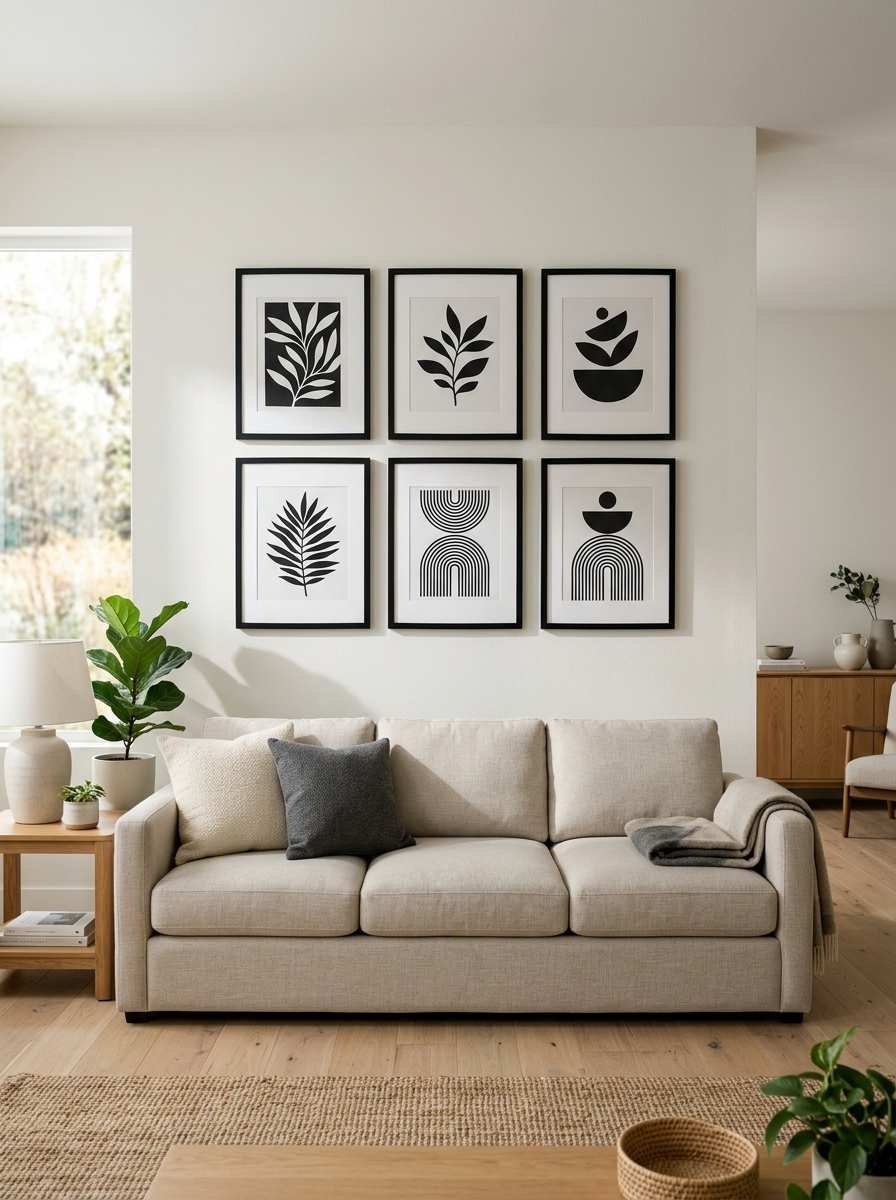
- Keep 2 to 3 inches between every piece. This one’s non-negotiable if you want a gallery wall to look planned instead of crowded. Shutterfly’s gallery wall guide backs this up too: even spacing is what separates “curated” from “thrown together.” FYI, this is the easiest rule to get right and the first one people skip.
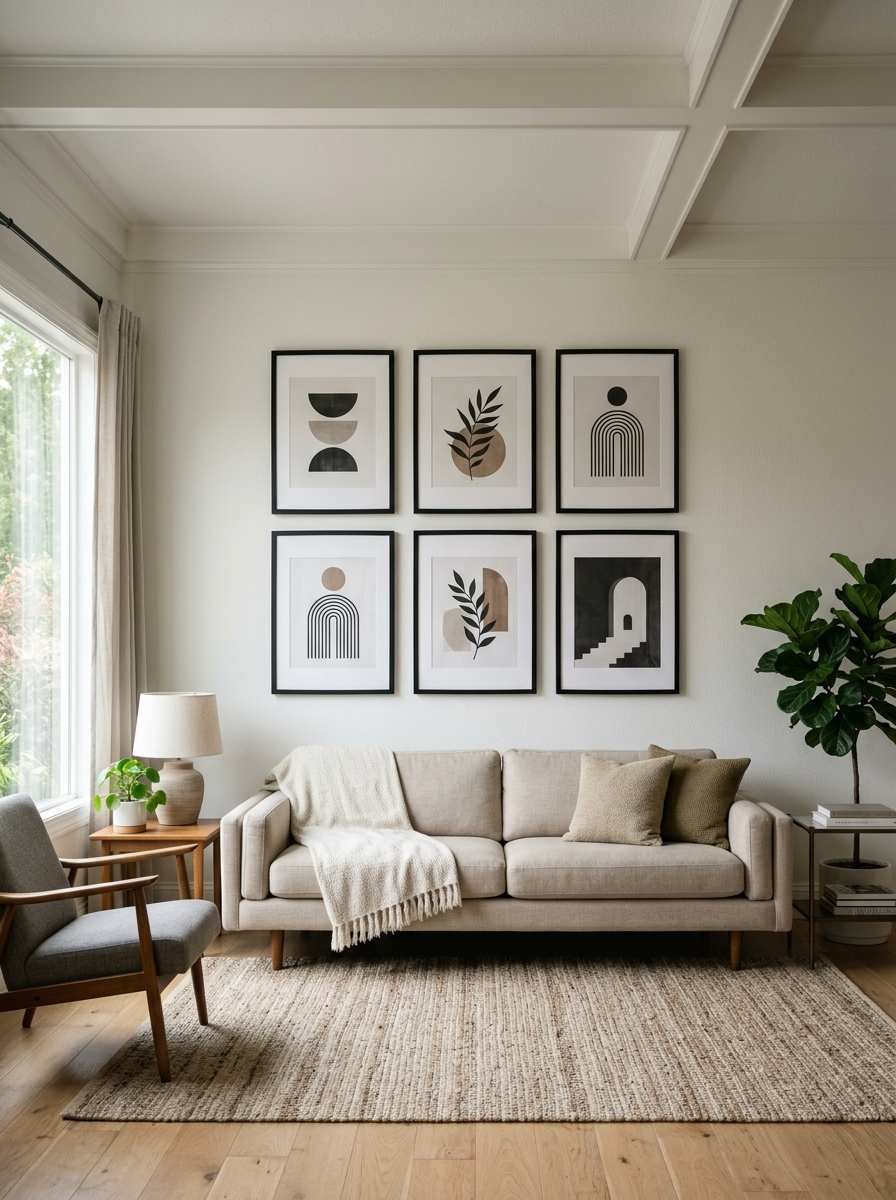
Random thought, completely unrelated: I once spent an entire Saturday afternoon rearranging frames on my living room floor before hanging a single one. My partner thought I’d lost it. Worth it, though.
This is insane, but a single extra inch of spacing can make a wall look cluttered instead of curated. Floor-test your layout before you touch a hammer.
Texture and material ideas
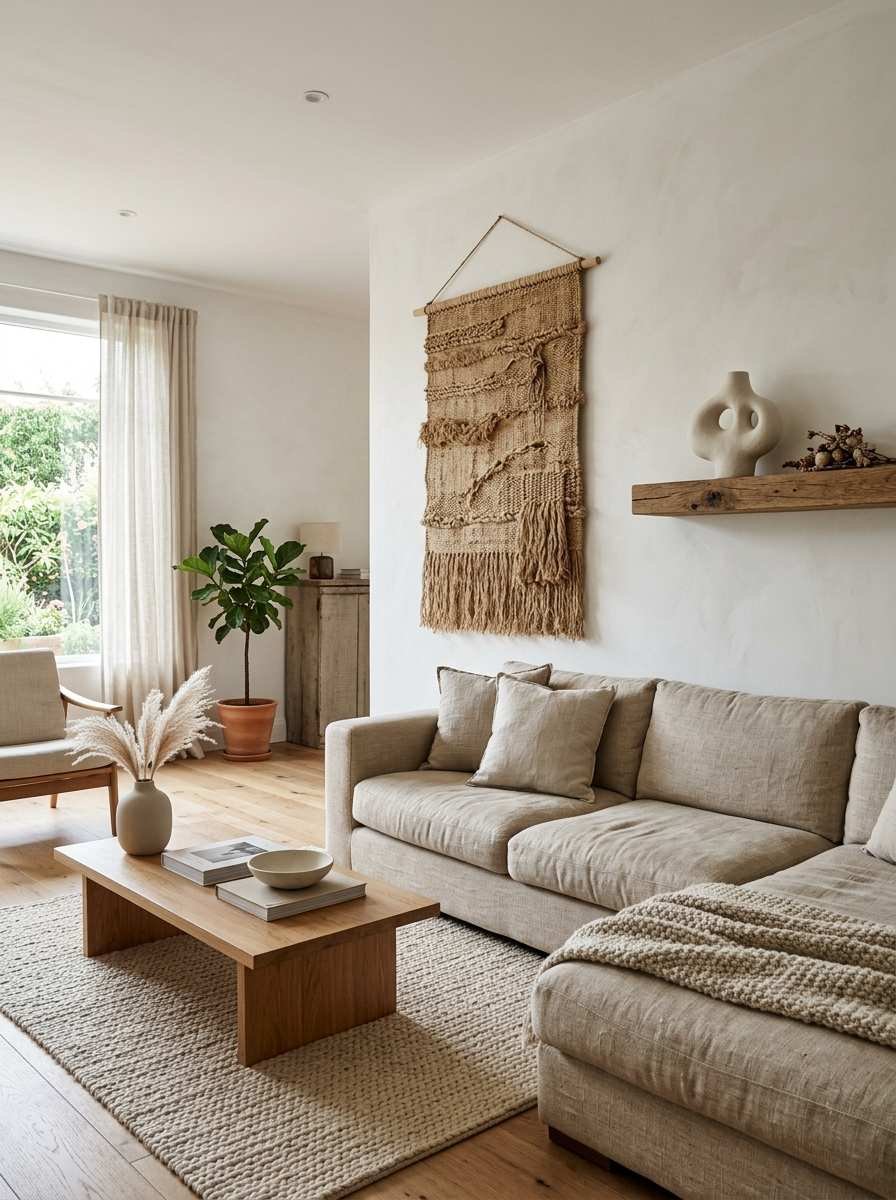
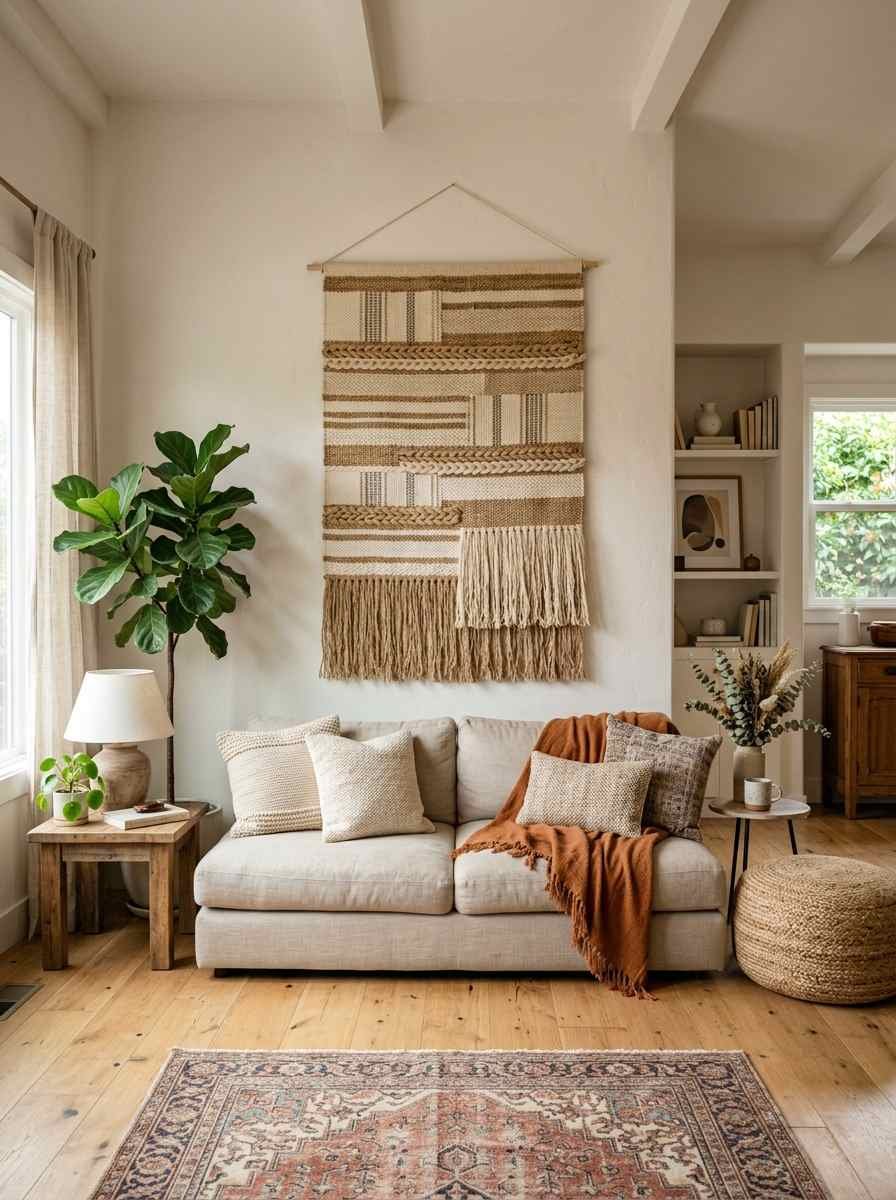
- Hang one woven wall hanging. Texture reads as warmth without adding visual noise. A single jute or macrame piece can replace an entire gallery wall and still feel cozy.
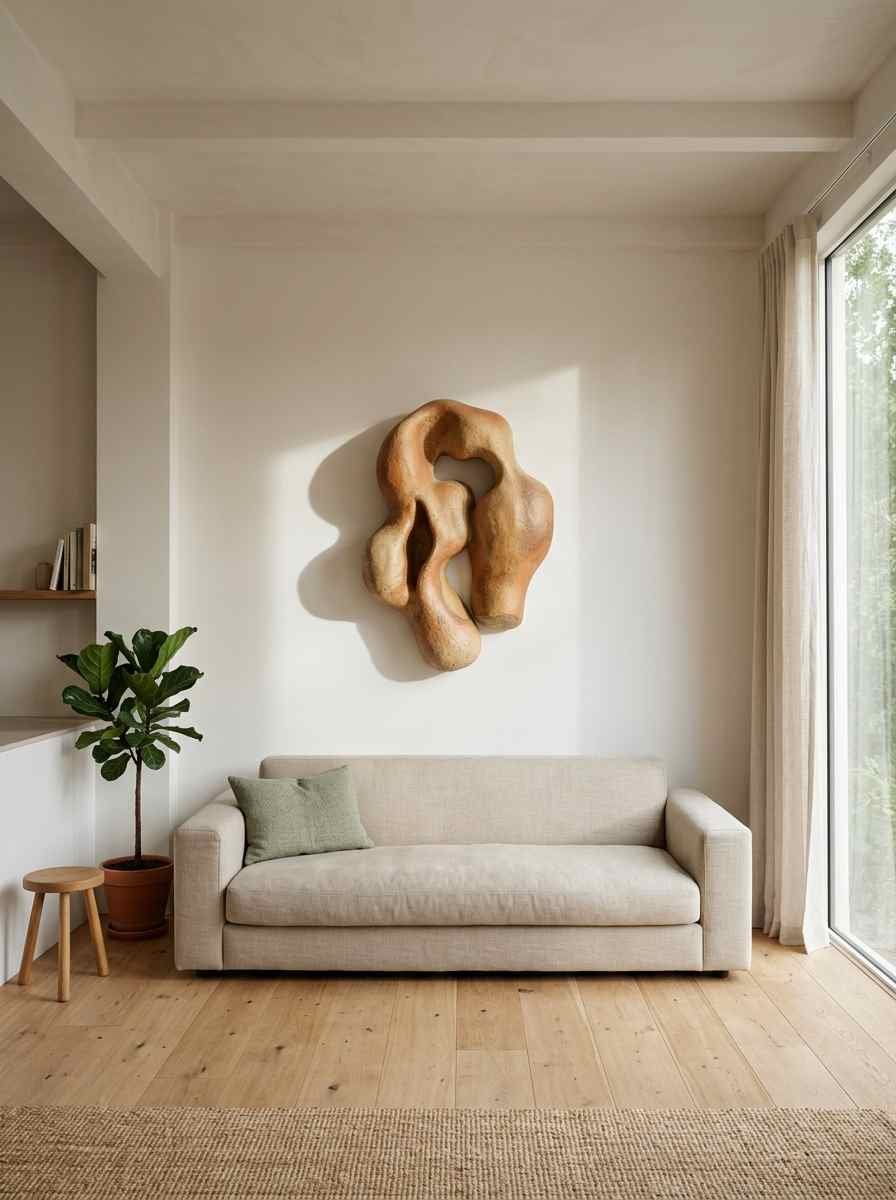
- Display one ceramic or sculptural object. A wall-mounted plate, a small relief sculpture, anything with shadow and dimension catches the eye differently than flat art does.
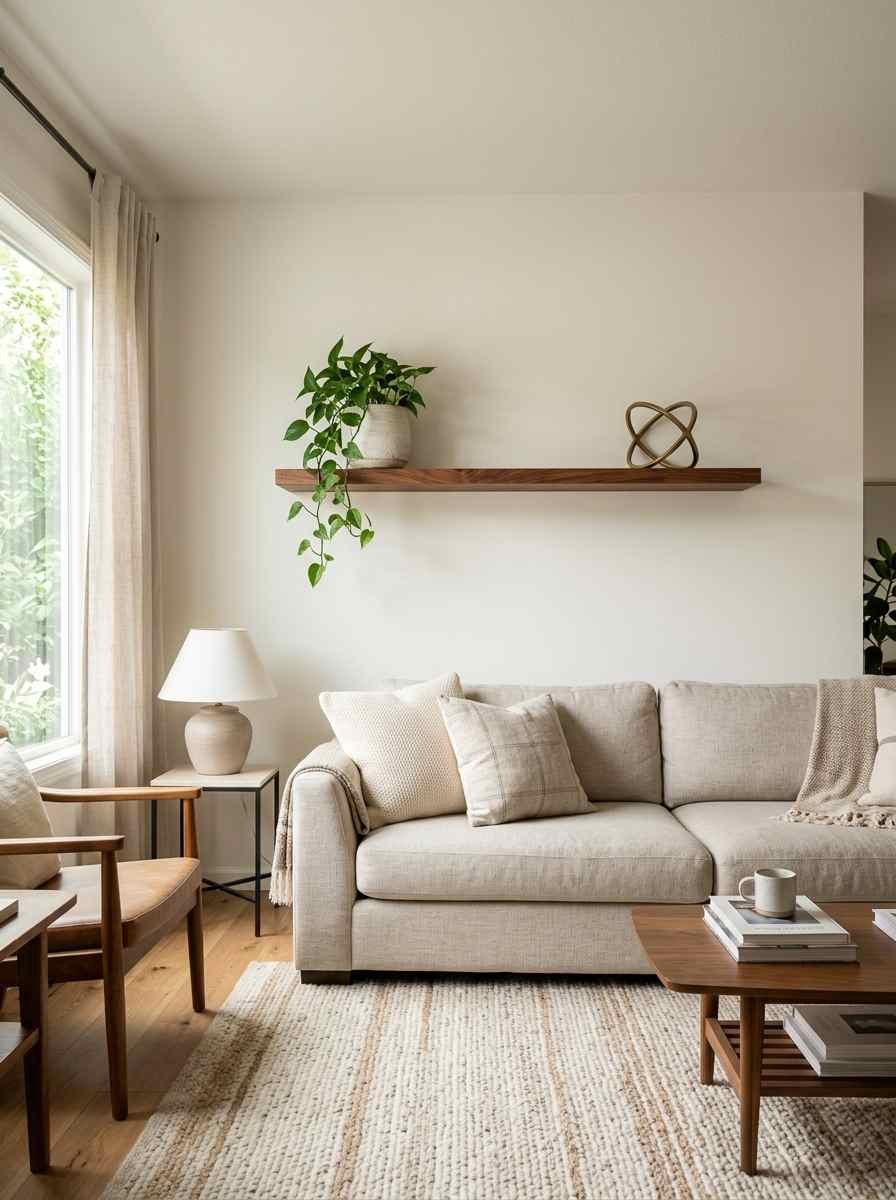
- Add a floating wood shelf with two or three items. Not ten knickknacks. A small plant, plus one object you actually care about, and some open space around them.
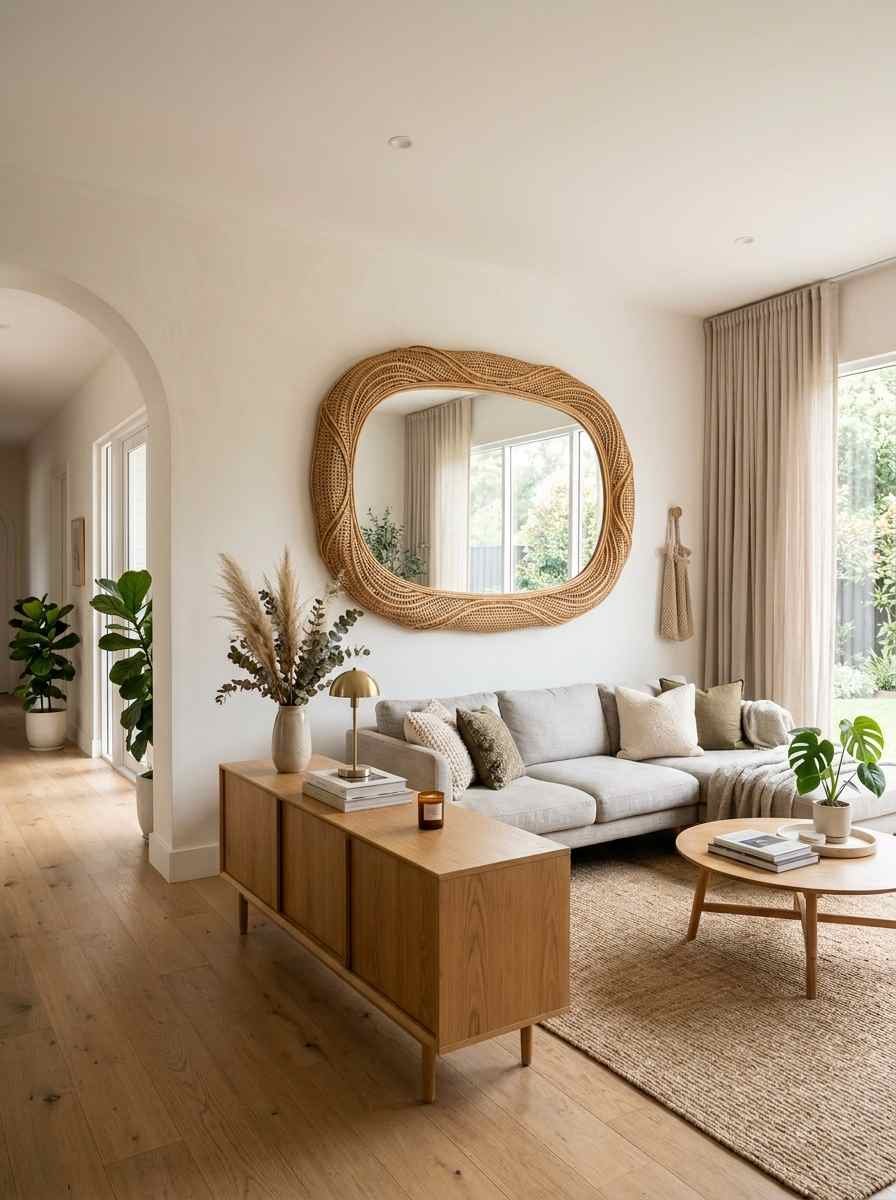
- Swap art for a textured mirror. A mirror in a rattan, wood, or sculpted metal frame does double duty. It reflects light and works as your wall’s visual anchor at the same time.
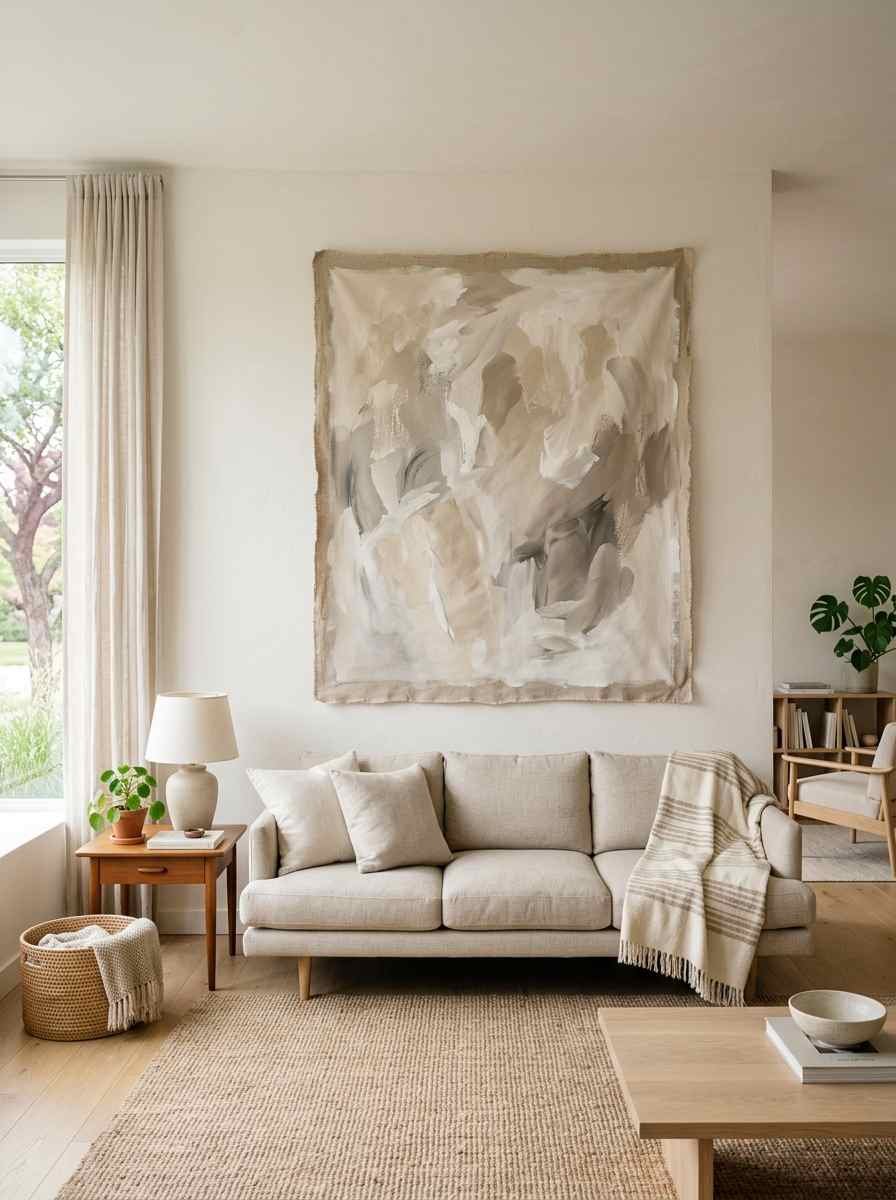
- Use unframed linen or raw canvas art. Skip the frame entirely. A canvas with exposed edges feels more relaxed than anything from the department-store art aisle.
Functional wall decor ideas
- Mount one floating shelf with books. Function and decor in the same five minutes of effort. Stack a few books flat, lean one upright, done.
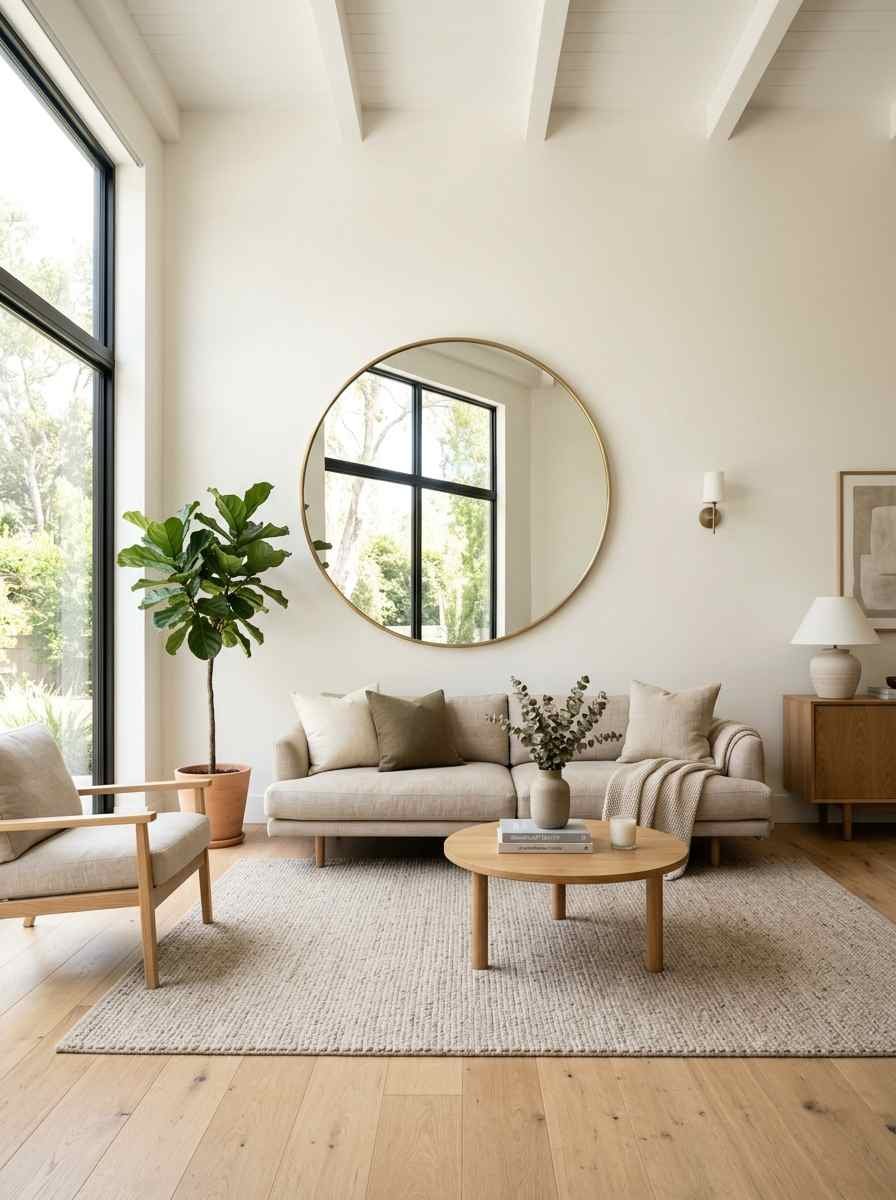
- Hang a large round mirror. Round shapes soften a room full of straight furniture lines, and a big mirror bounces light around a space that doesn’t get much of it.
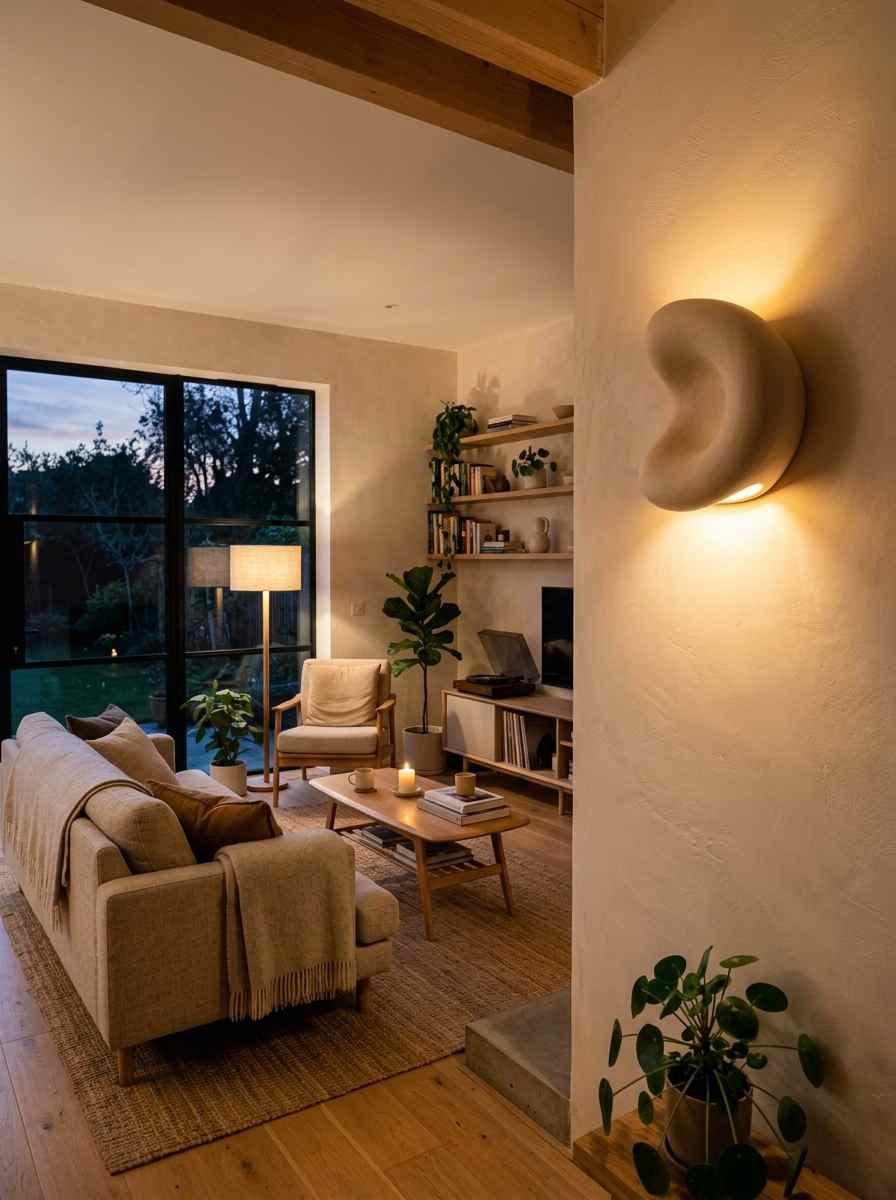
- Use a sculptural wall sconce as your art. A good light fixture can replace a painting entirely. You get ambiance and a focal point in one piece.
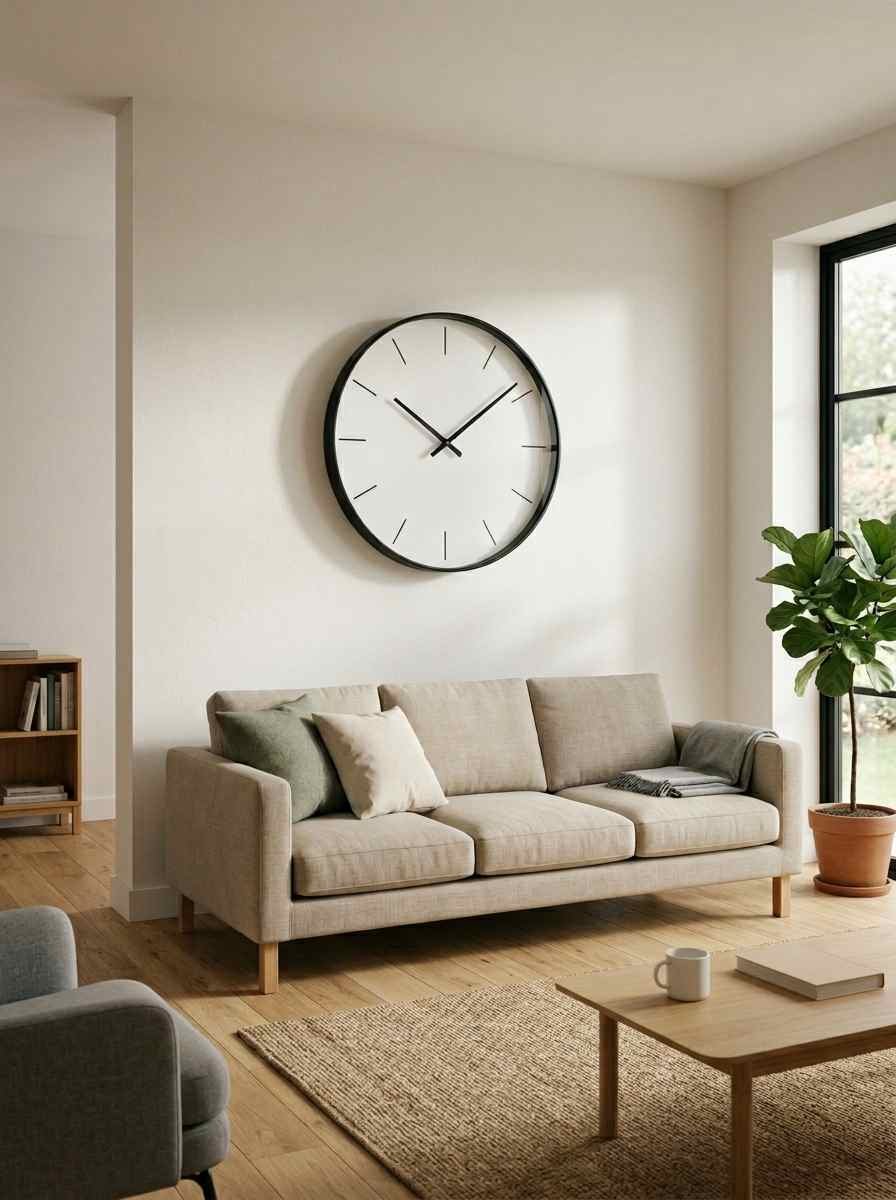
- Mount a simple, oversized clock. One clean piece, no extra decor needed. It’s functional, and it still doesn’t compete with anything else in the room.
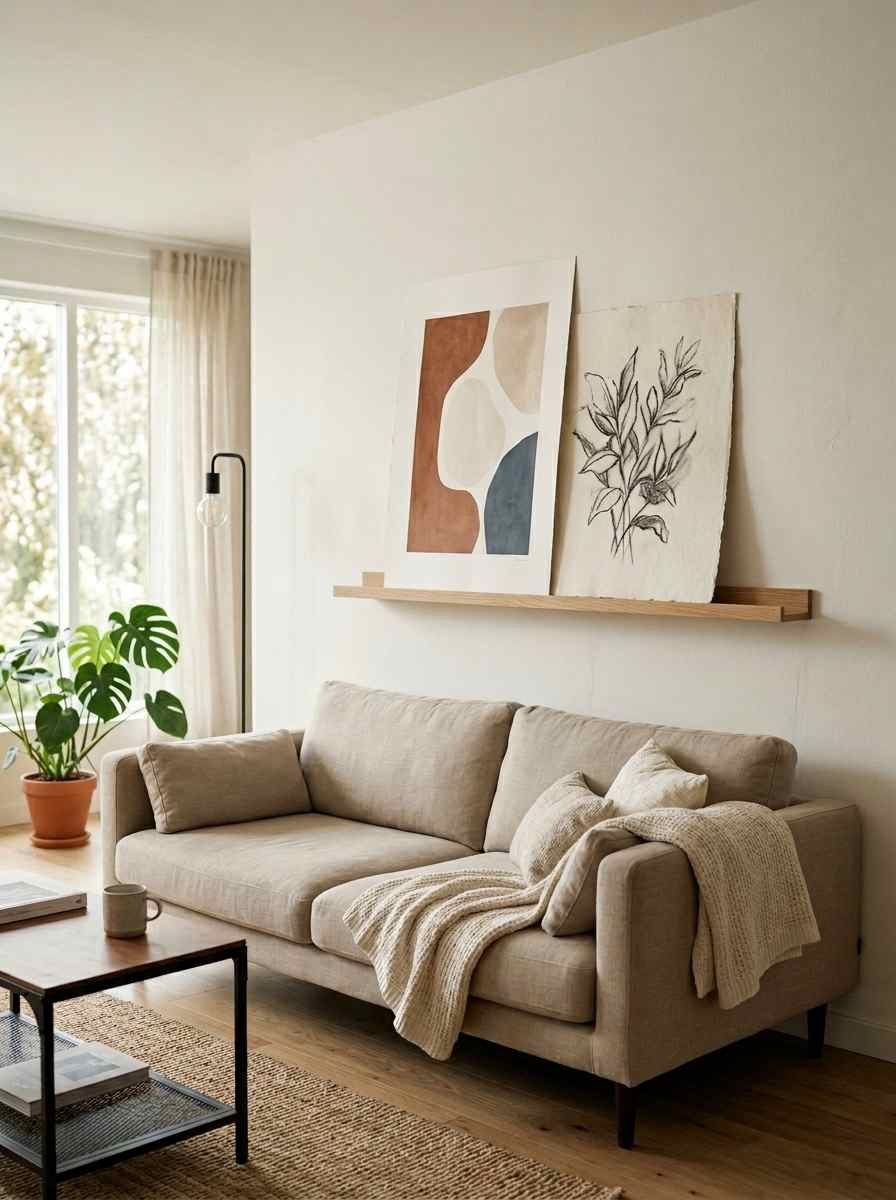
- Install a slim picture ledge instead of frames. A ledge lets you lean and rotate art whenever the mood strikes, without new nail holes every time you change your mind.
- I switch mine out every few months, and it still looks deliberate, mostly because I never lean more than two or three pieces on it at once.
Budget-friendly and DIY ideas
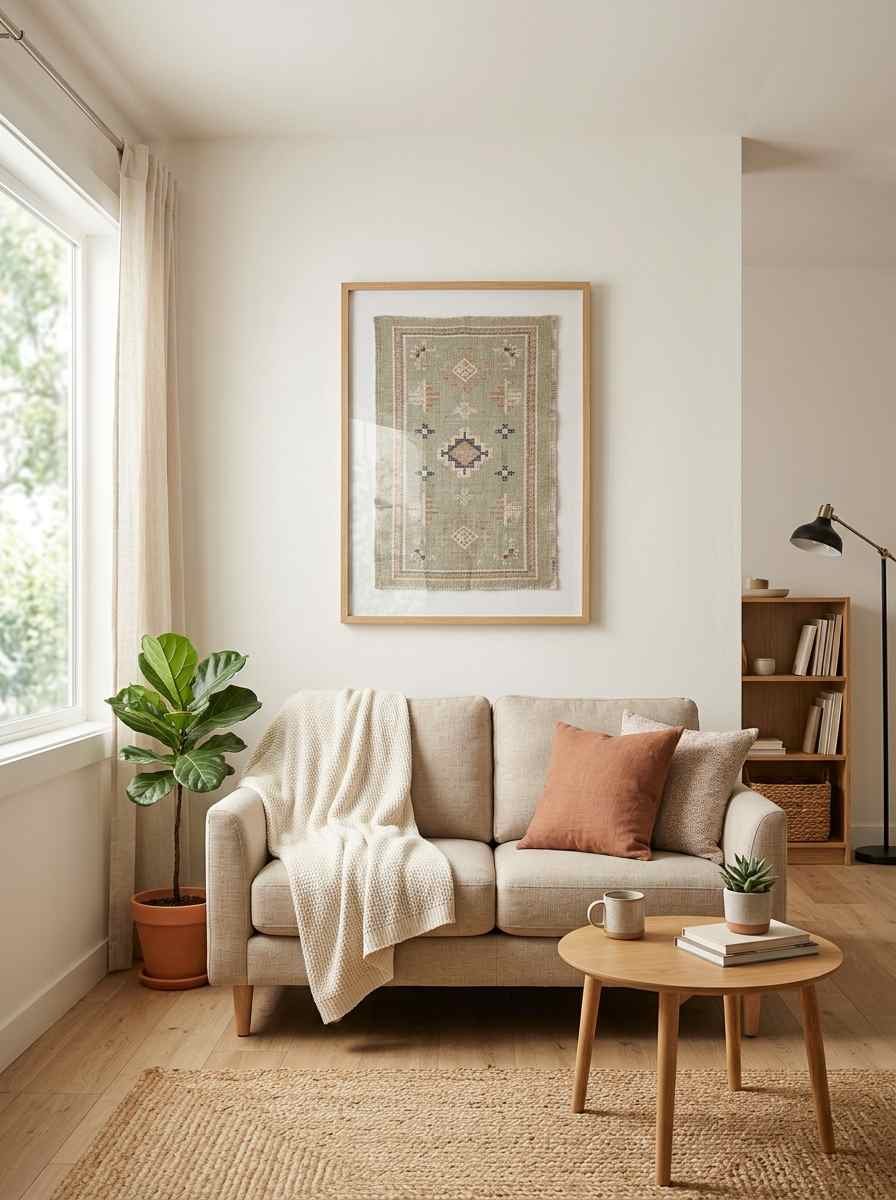
- Frame a piece of fabric or leftover wallpaper. A yard of nice fabric in a simple frame can look like a $200 print for a fraction of the cost.
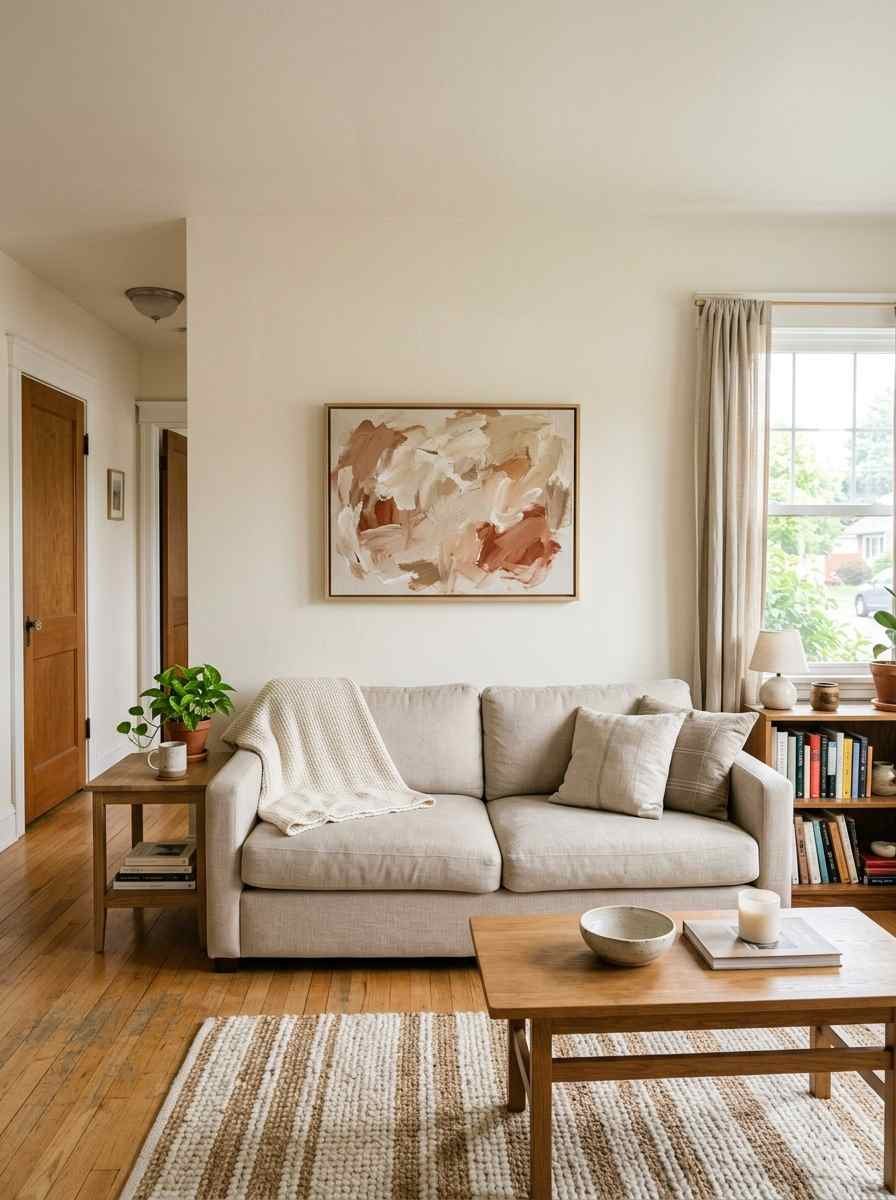
- Make abstract art with leftover paint. Grab a canvas and whatever paint you’ve got left from your last project. A few confident brushstrokes, one color story, done in 20 minutes.
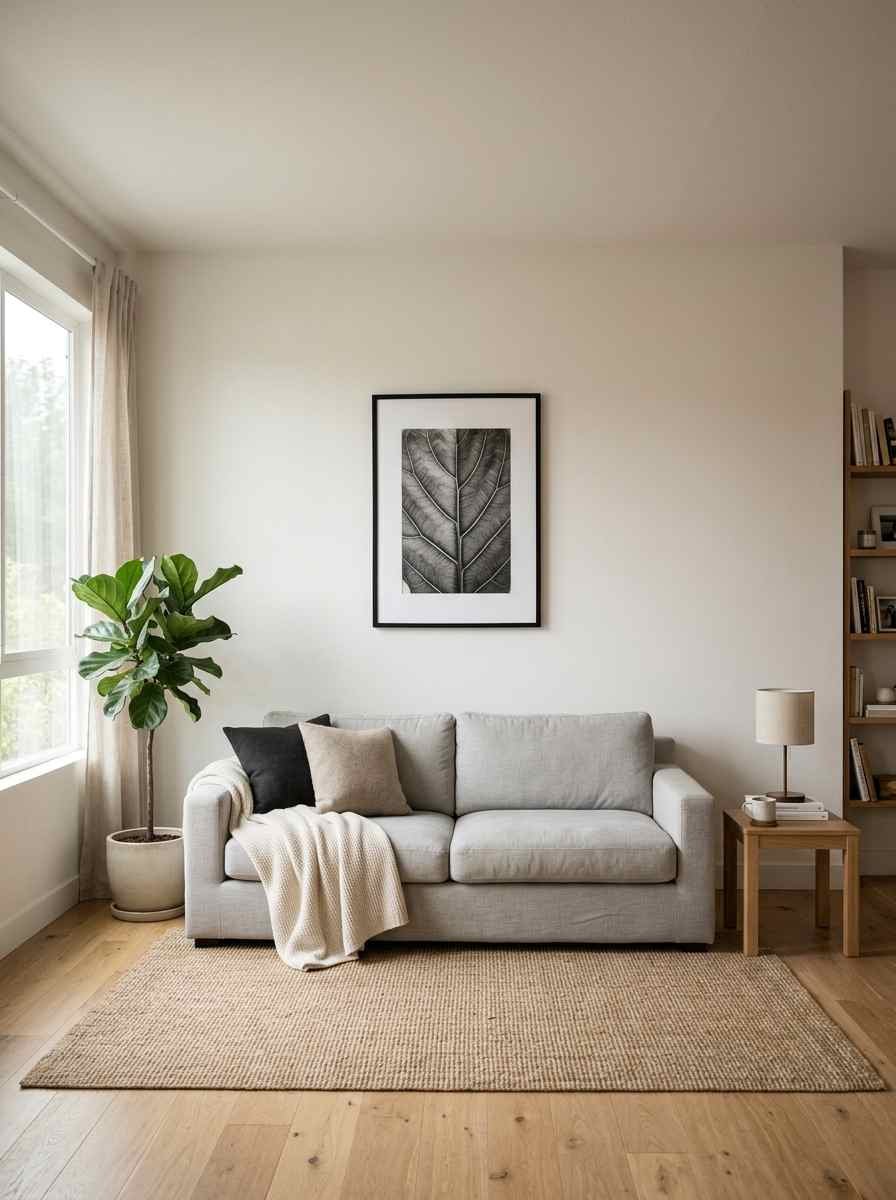
- Print and frame your own photography. Phone photos count. A close-up of a plant, a black-and-white street shot, whatever you’ve got on your camera roll.
- Personal photography almost always feels more “you” than stock art ever will.
- Sometimes, do nothing. Live with the bare wall for a month before buying anything for it. That trial run saves you from buying a piece you’ll want to take down by spring.
Mistakes I made before I figured this out
A few things tripped me up across four apartments, in case they save you a trip back to the hardware store.
- Buying art before the furniture was settled. I once bought a print, then rearranged the sofa, and the print never sat right again. Decide on furniture placement first.
- Hanging everything at eye level for me. I’m tall. My partner isn’t. We compromised on 58 inches to the center of the piece, and it works for both of us now.
- Matching frames too perfectly. A wall where every frame is identical can feel more like a hotel hallway than a home. One outlier piece usually helps, not hurts.
Quick comparison: which idea fits your living room
| Idea type | Cost | Effort | Best for |
|---|---|---|---|
| Negative space styling | Free | Low | Renters and rooms with strong furniture |
| Gallery wall | $$ | Medium | Photo collections and personal mementos |
| DIY painted art | $ | Medium | Crafty types on a tight budget |
A few quick questions
How many pieces should I hang on one wall in a minimalist living room? One to three, usually. If you’re reaching for a fourth piece, ask yourself whether it’s adding something or just filling space.
When in doubt, take it down and live without it for a week before deciding.
Is a bare wall actually acceptable in minimalist design, or does it look unfinished? It’s acceptable, and often the goal.
A bare wall paired with strong furniture or good natural light tends to look more finished, not less. The wall only looks unfinished if the rest of the room feels unfinished too.
What’s the right height to hang art above a sofa? Center the piece around 57 to 60 inches from the floor, or roughly 6 to 8 inches above the back of the sofa. It’s the standard most designers use, and it works in nearly every room shape.
Measure twice before you commit to a nail hole.
Final thought
Twenty-four ideas is a lot to take in at once. You don’t need all of them. You need one or two that actually fit your space and the way you live in it.
Start small. Pick the idea from this list that made you a little nervous when you read it. That’s usually the one worth trying first.
A minimalist wall gives the few things you love enough room to actually be seen, instead of letting them get lost in a pile of stuff you bought just to fill space.
So, what’s on your living room wall right now, and does it actually deserve to be there?
