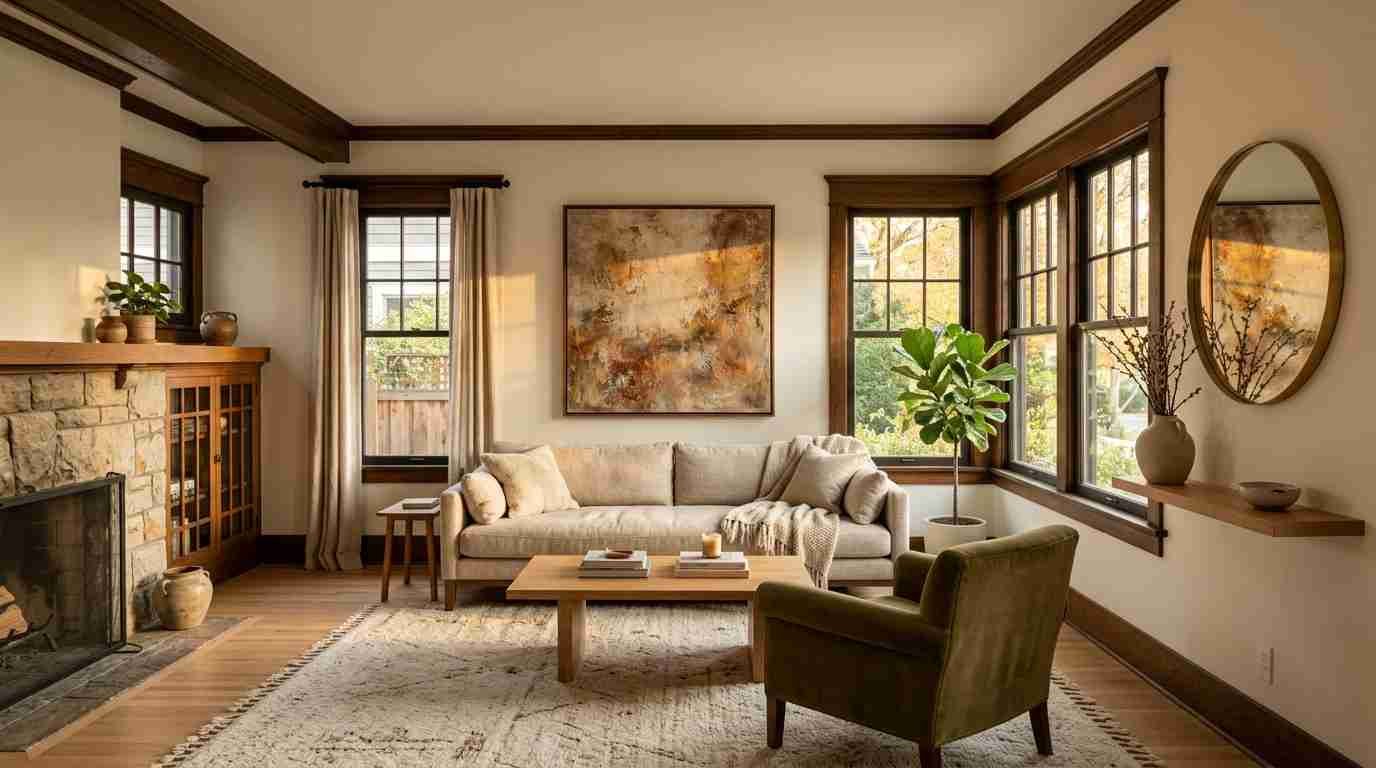
I redid my living room wall three times last year before I got it right.
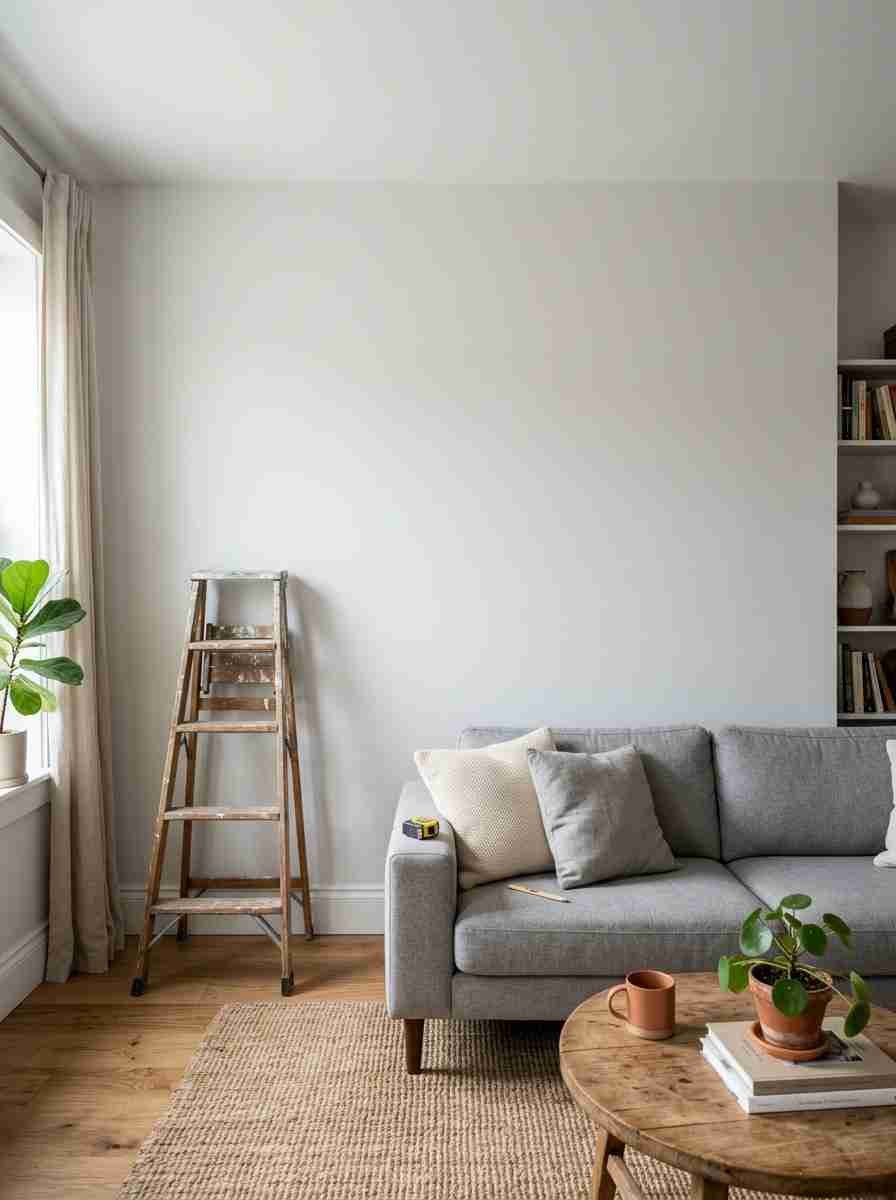
Bought too much art, hung it too high, took it all down, started over. So if you’re standing in front of a blank wall right now feeling stuck, I get it.
Minimalist wall decor looks effortless in photos, but getting that calm, put-together look takes a few wrong turns first.
The first round, I bought four small prints and crammed them above the sofa because the wall felt too bare to leave alone. It looked busy within a week.
Round two, I went too far the other way and left the whole wall empty, which felt cold instead of calm. Round three is the version I actually kept, one large mirror and a single floating shelf, and it’s the one my friends actually comment on when they visit.
Good news: you don’t need to make my mistakes. Below are 25 ideas I actually like, tested by me or by people whose taste I trust, plus the little details that separate “empty wall” from “intentional wall.” Pin the ones that catch your eye and skip the rest.
That’s basically the whole minimalist philosophy anyway, picking a few things on purpose instead of filling space because it’s there.
Why minimalist walls are harder than they look
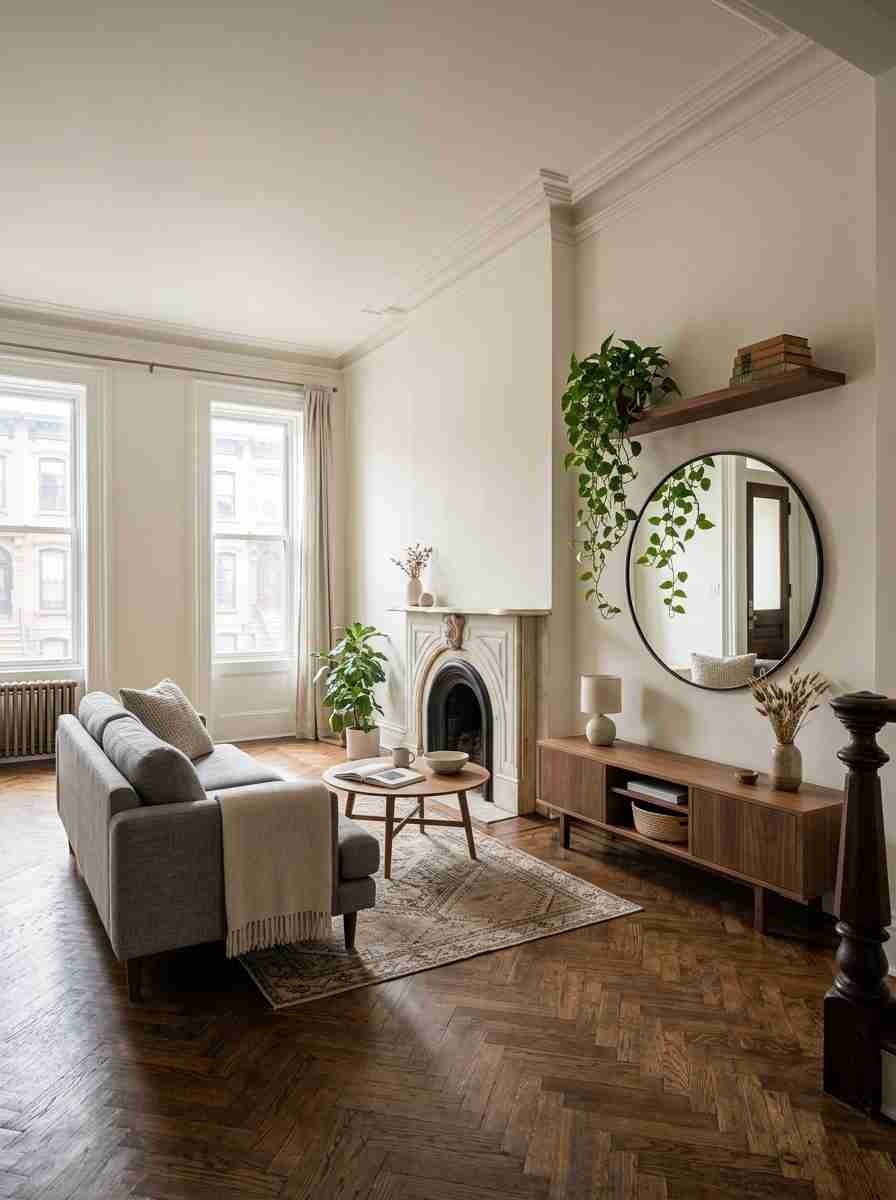
A bare wall photographs well on Pinterest. In real life, it can feel cold by week two.
The trick is picking fewer pieces that actually mean something to you, sizing them right, and giving them room to breathe.
Most of these ideas follow that same logic: one strong choice beats five timid ones.
It also helps to think about function, not just looks. A minimalist wall isn’t required to be purely decorative.
A clock, a mirror, a shelf that actually holds something you use, all of that counts.
Treating every item on the wall as if it has to earn its spot is, IMO, the real secret behind rooms that feel calm instead of just empty.
The 25 ideas
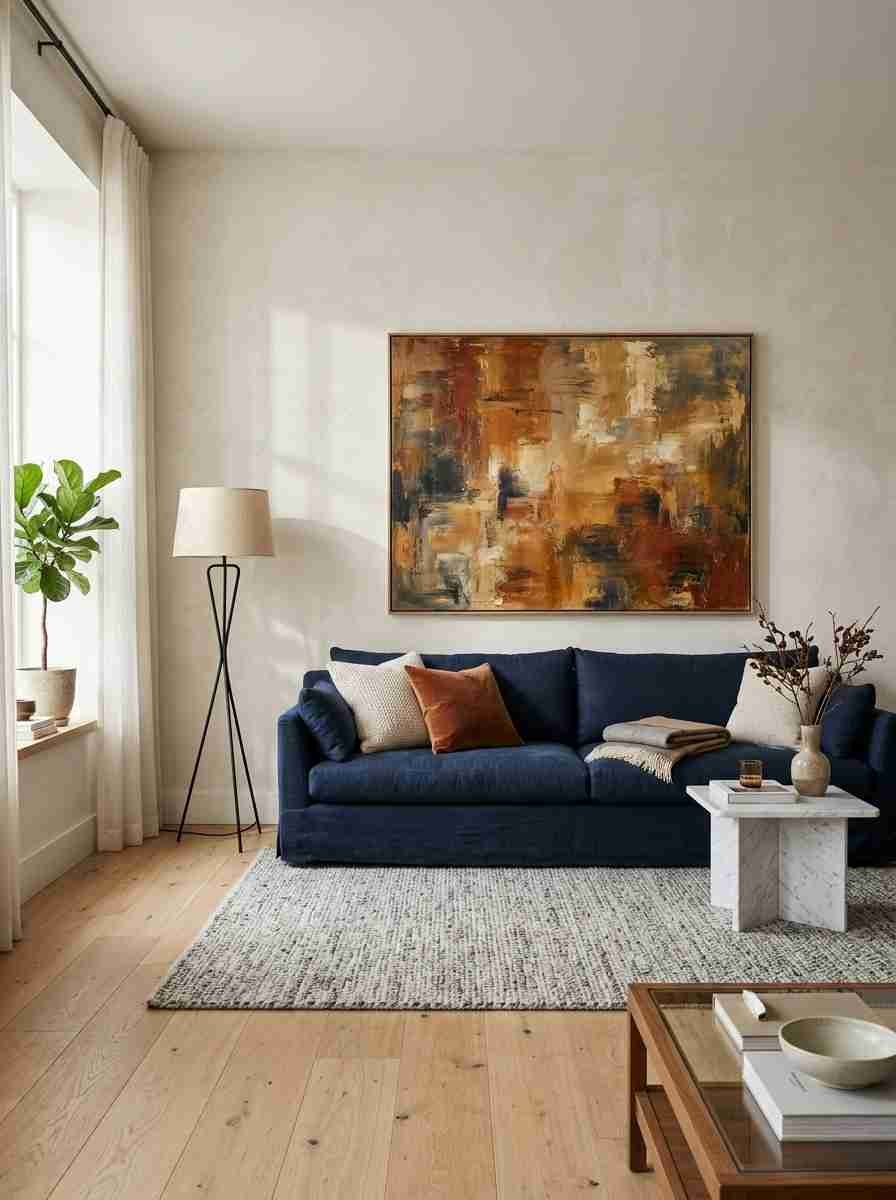
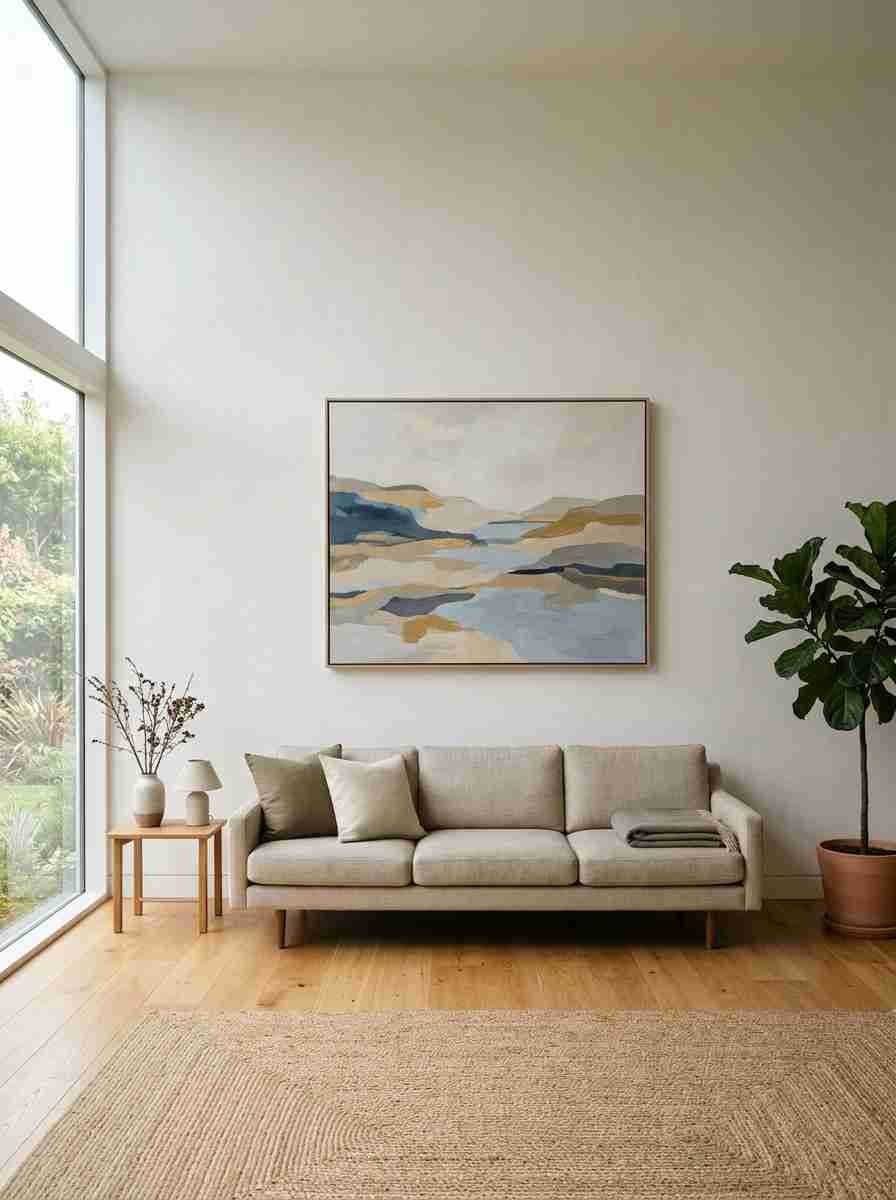
Hang one big piece instead of five small ones. A single oversized canvas above your sofa does more work than a cluster of mismatched prints.
Aim for art that covers about two-thirds of the furniture width below it, and don’t be afraid to go bigger than feels comfortable at first. Most people undersize their art, not the other way around.
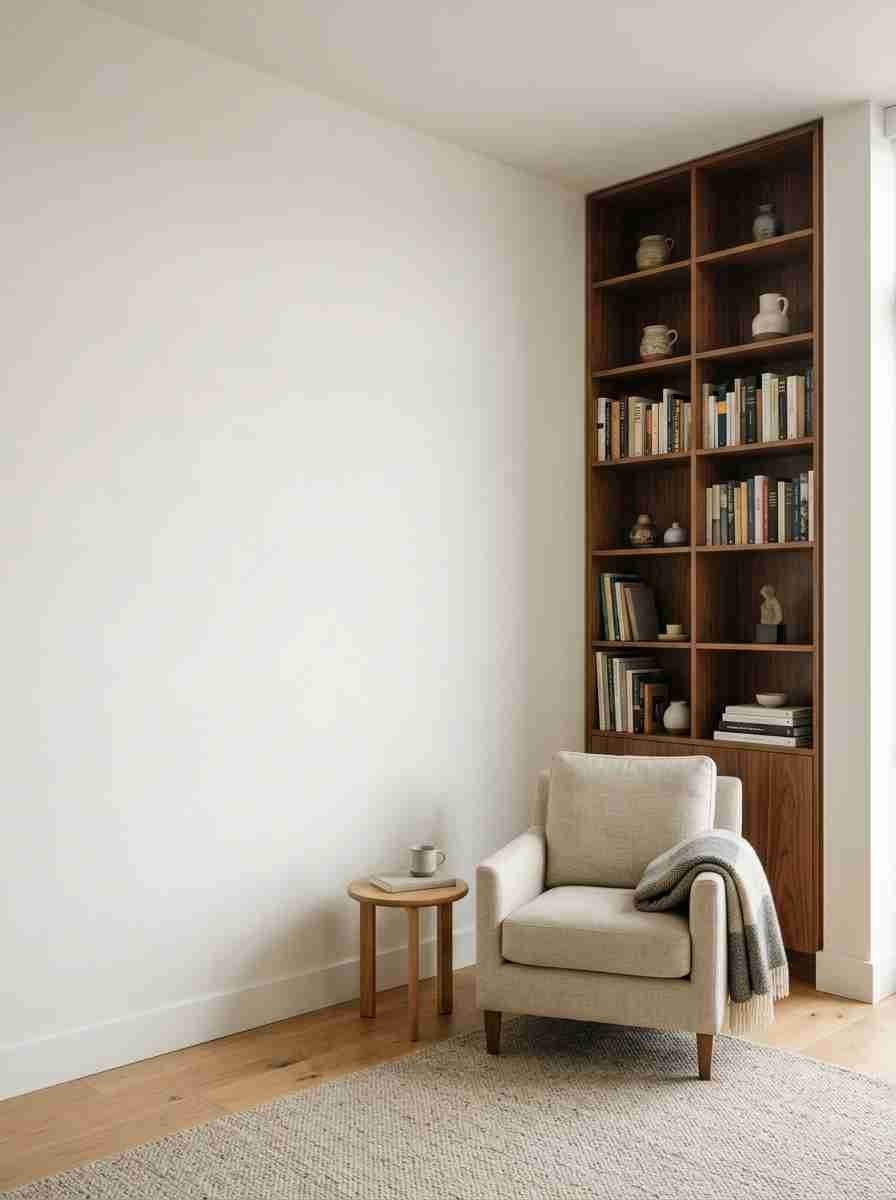
Leave a wall genuinely empty on purpose. Not every wall needs something on it. A clean, unadorned stretch next to a busy bookshelf gives the eye somewhere to rest.
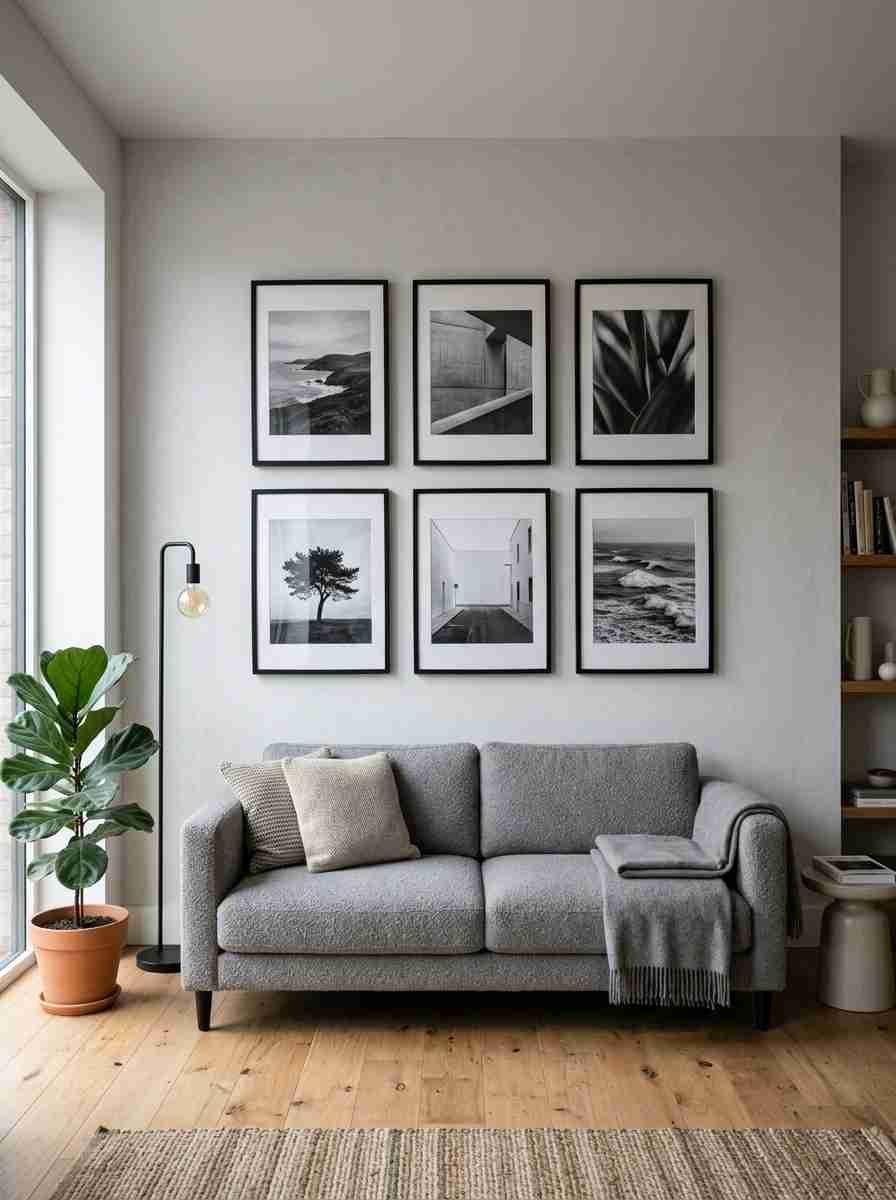
Build a monochrome gallery wall. Pick black and white photography only, hang them in matching frames, and space everything 2 to 3 inches apart. It reads as curated, not cluttered.
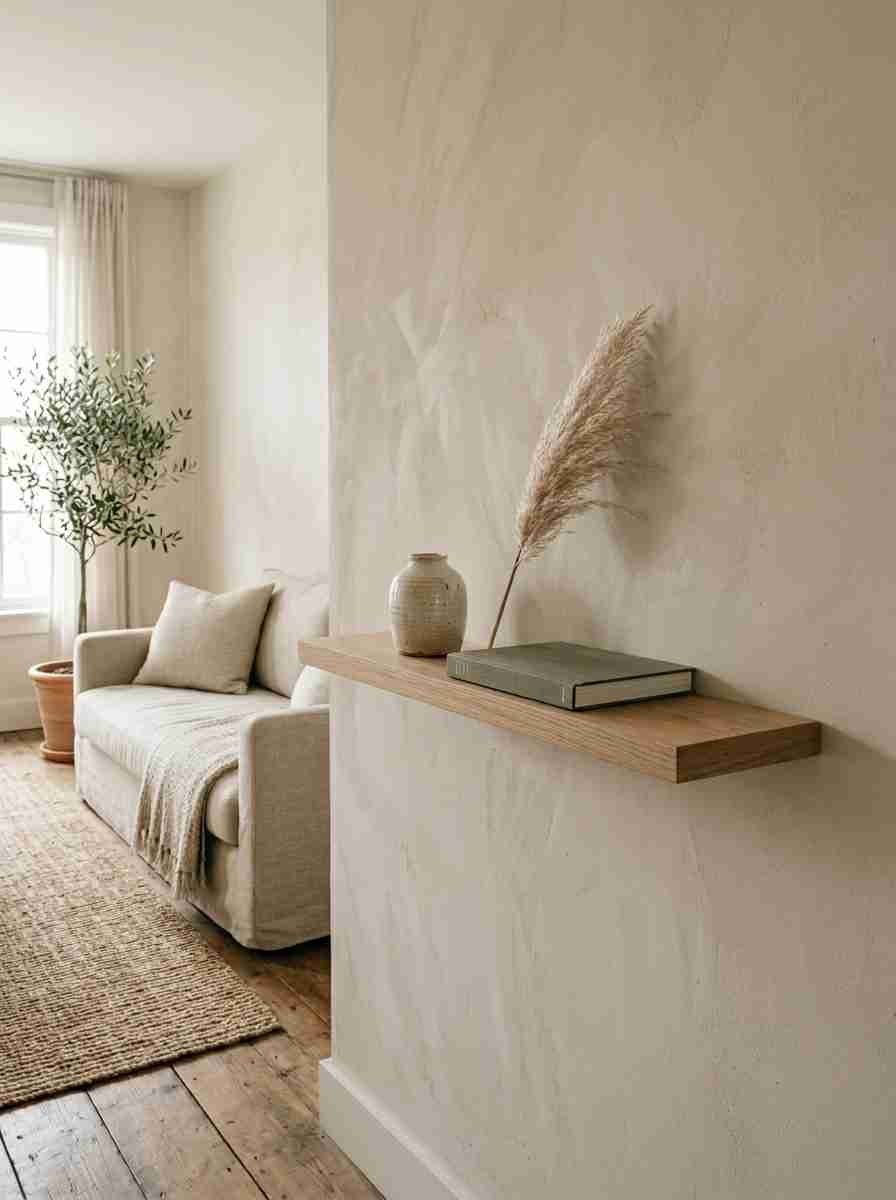
Add one floating shelf with two or three objects. A small ceramic vase, a single book, maybe a dried branch. Resist the urge to fill it.
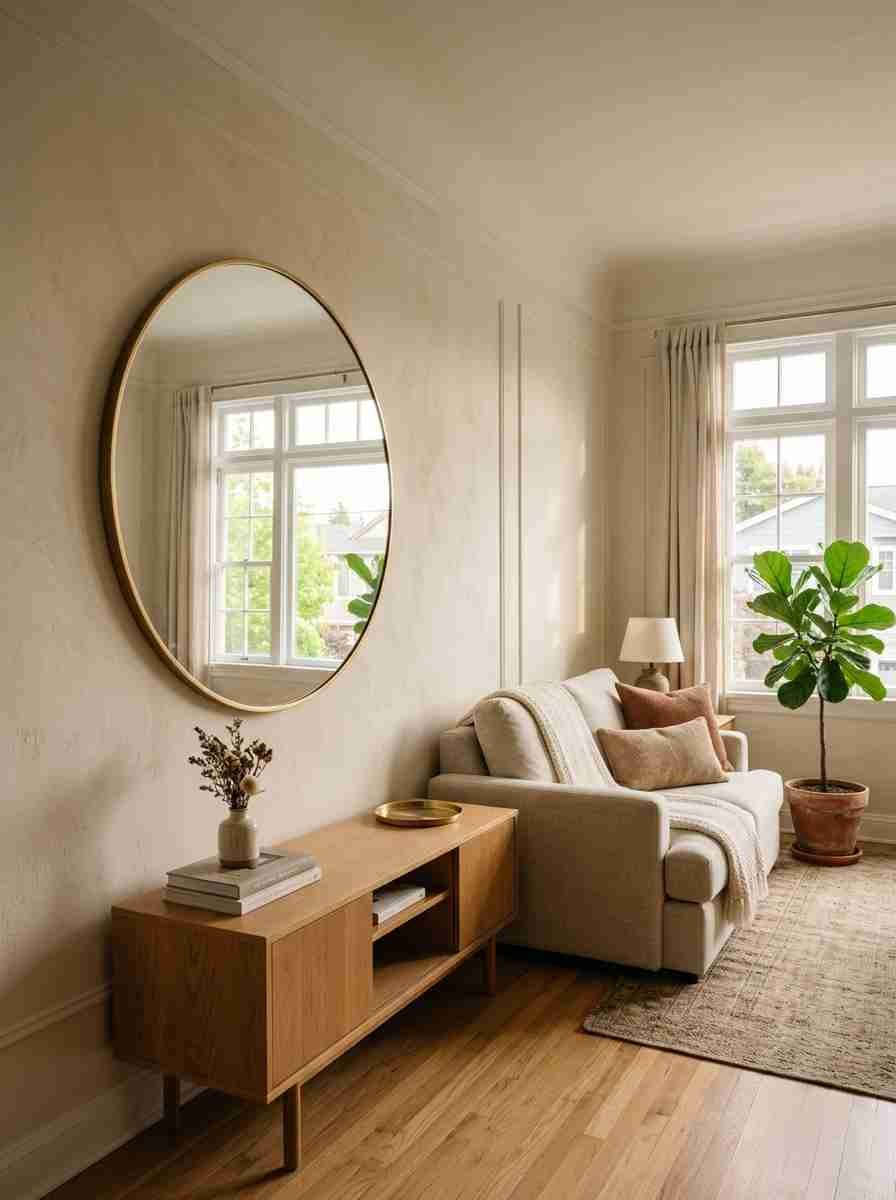
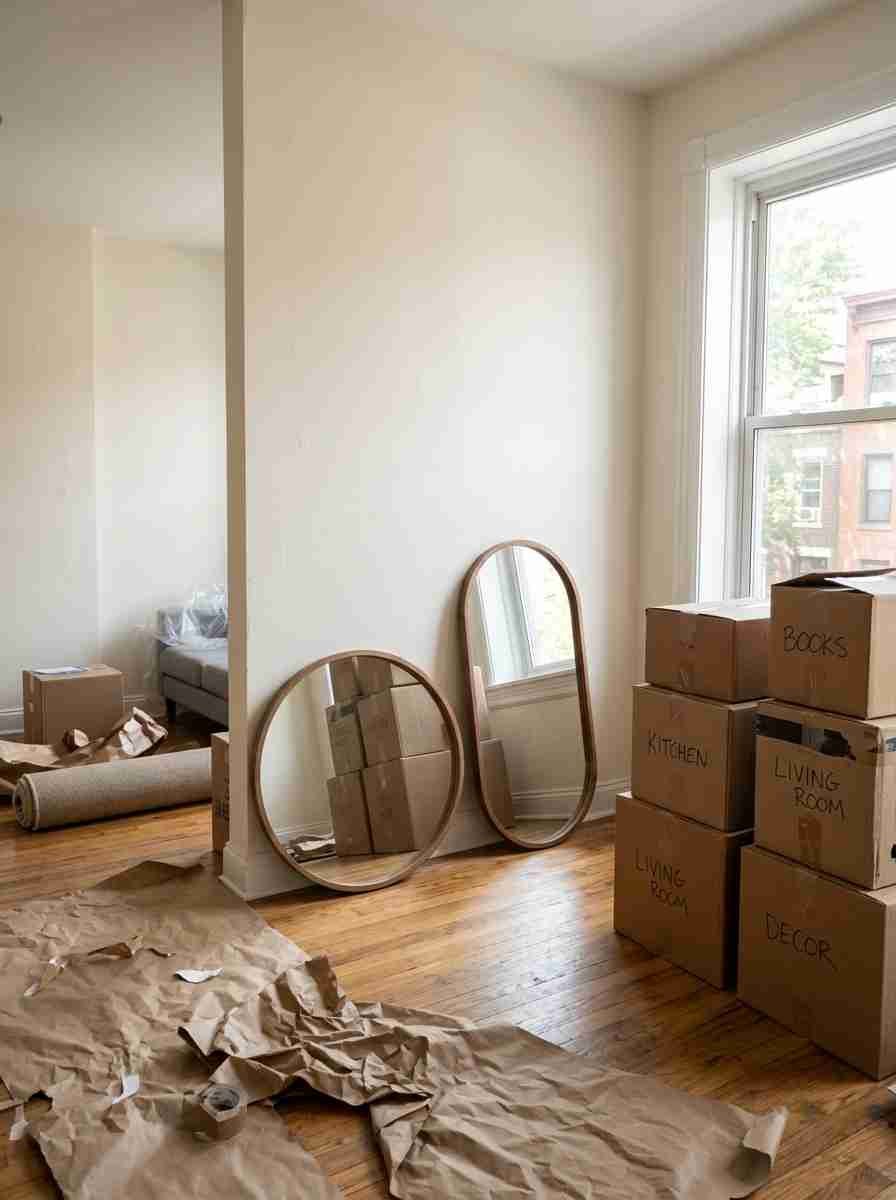
Hang a large round mirror. It bounces light around the room and makes a small living room feel noticeably bigger. This is the one I’d recommend first if your room feels dark, especially in a rental where you can’t repaint or add windows. A 30 to 36 inch round mirror in a thin frame works in most living rooms without overwhelming the wall.
Go for an abstract canvas in two or three colors max. Limited palettes feel calmer than busy, multicolor prints.
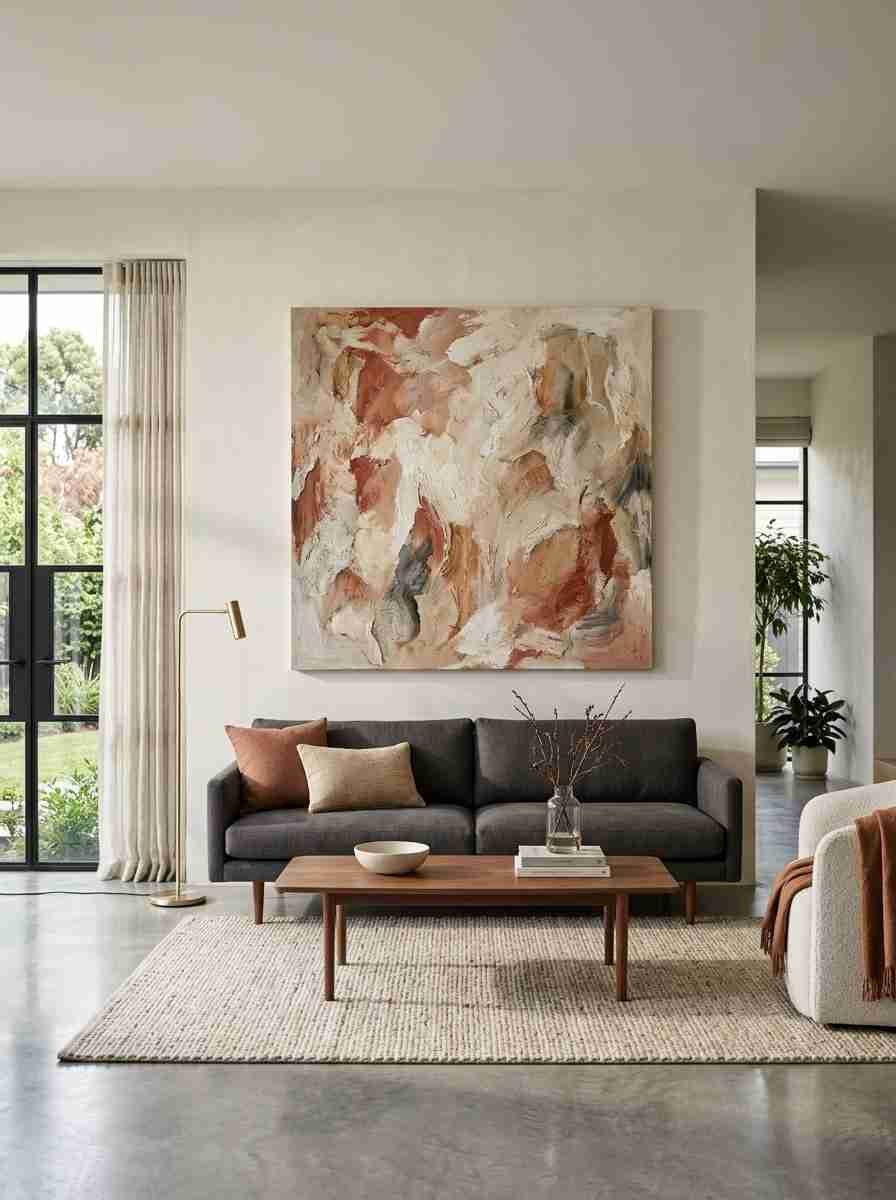
Use a wall clock as your decor, not just a tool. A simple round or square clock in black or brass does double duty.
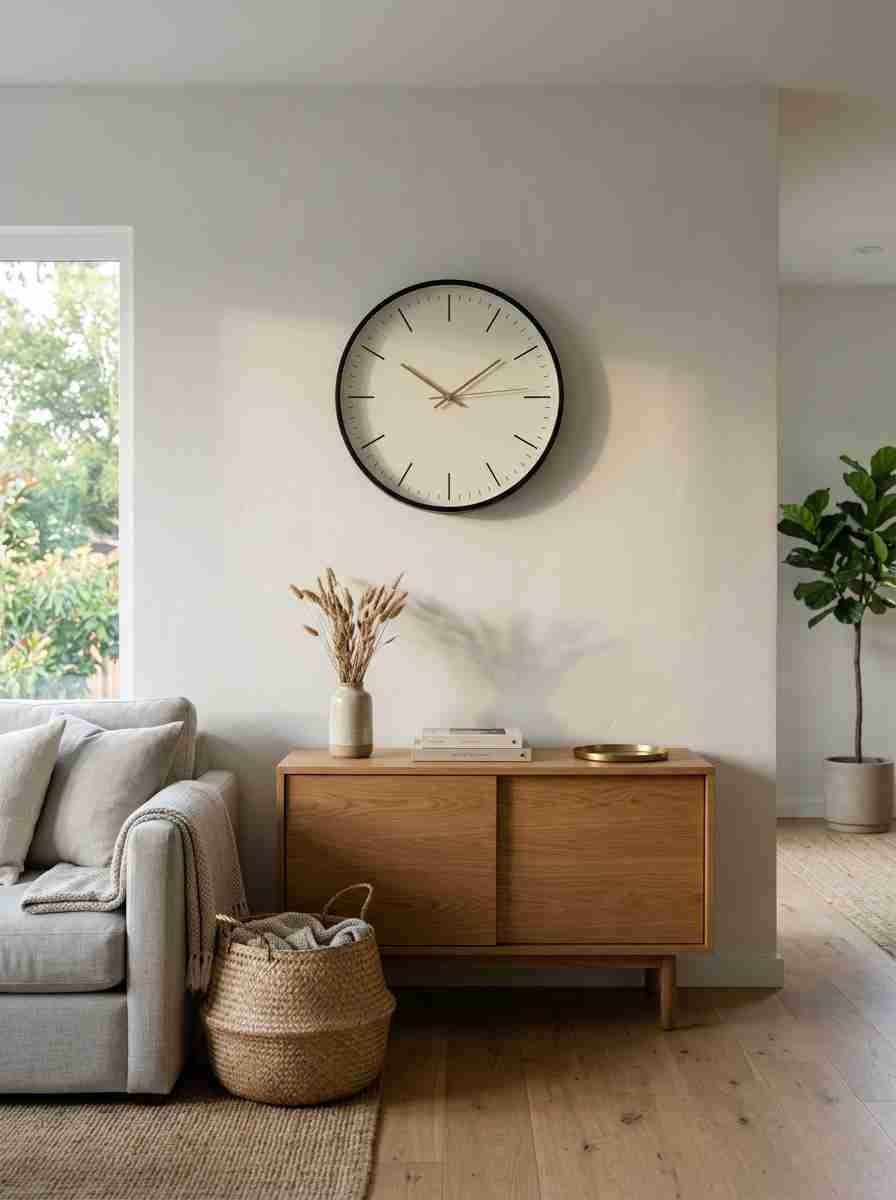
Try slatted wood paneling painted the same tone as your wall. It adds texture without adding visual noise, which is the whole point of minimalism, honestly.
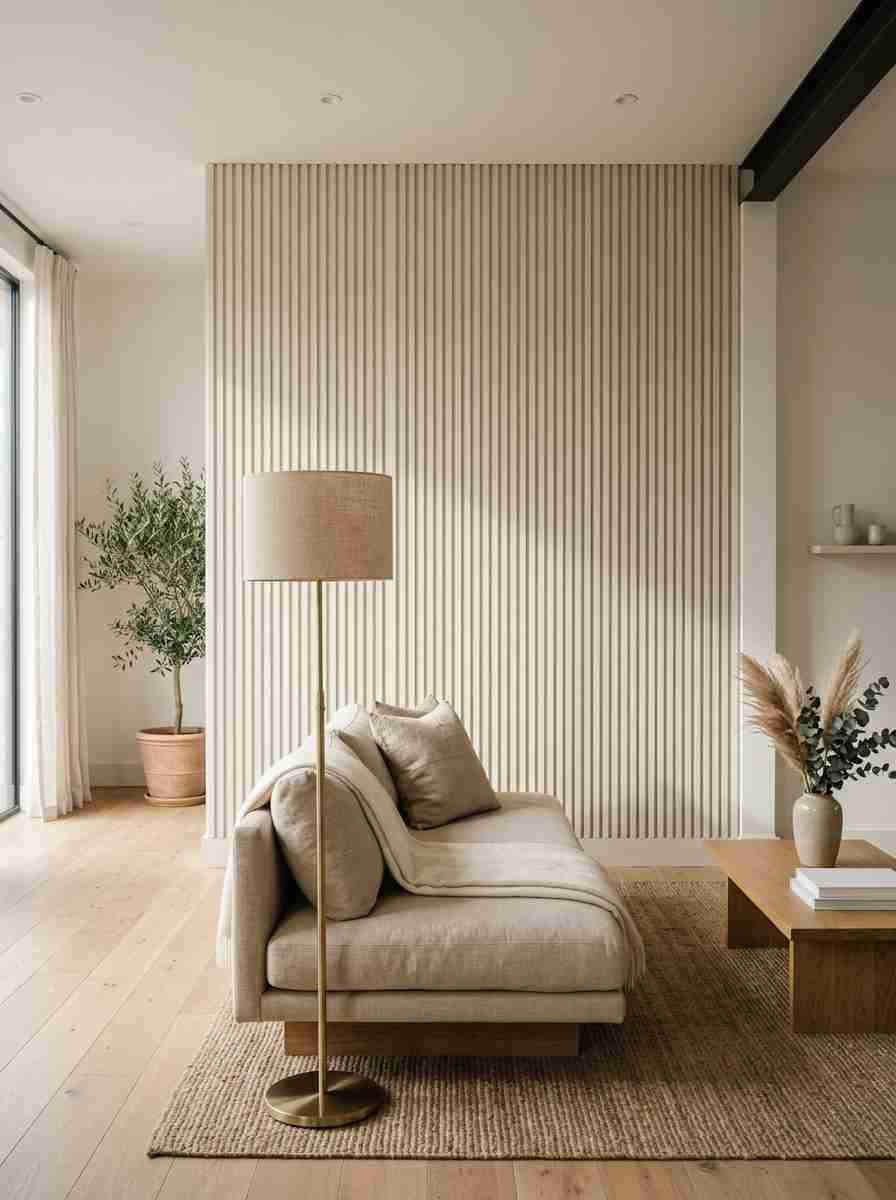
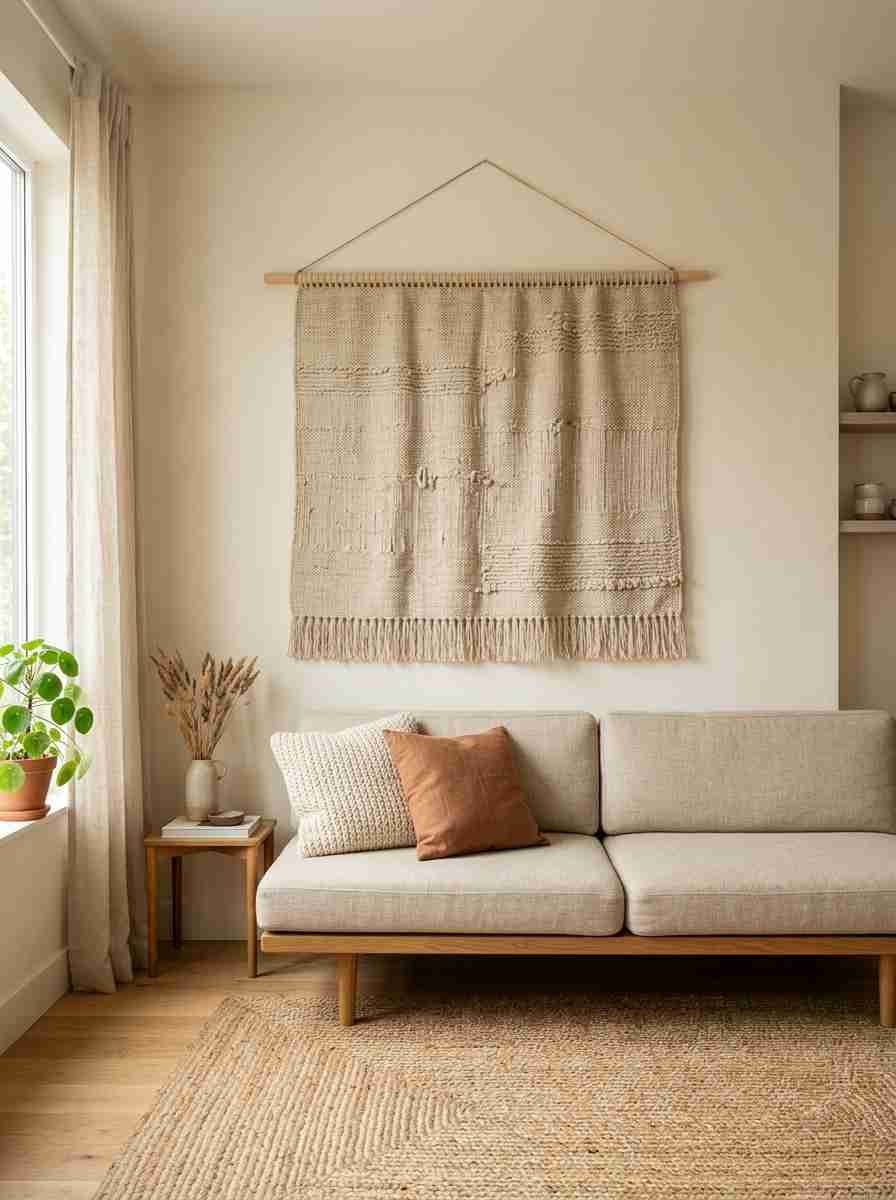
Hang a single woven or macrame piece. One textile hanging brings warmth to a room that might otherwise feel a bit sterile.
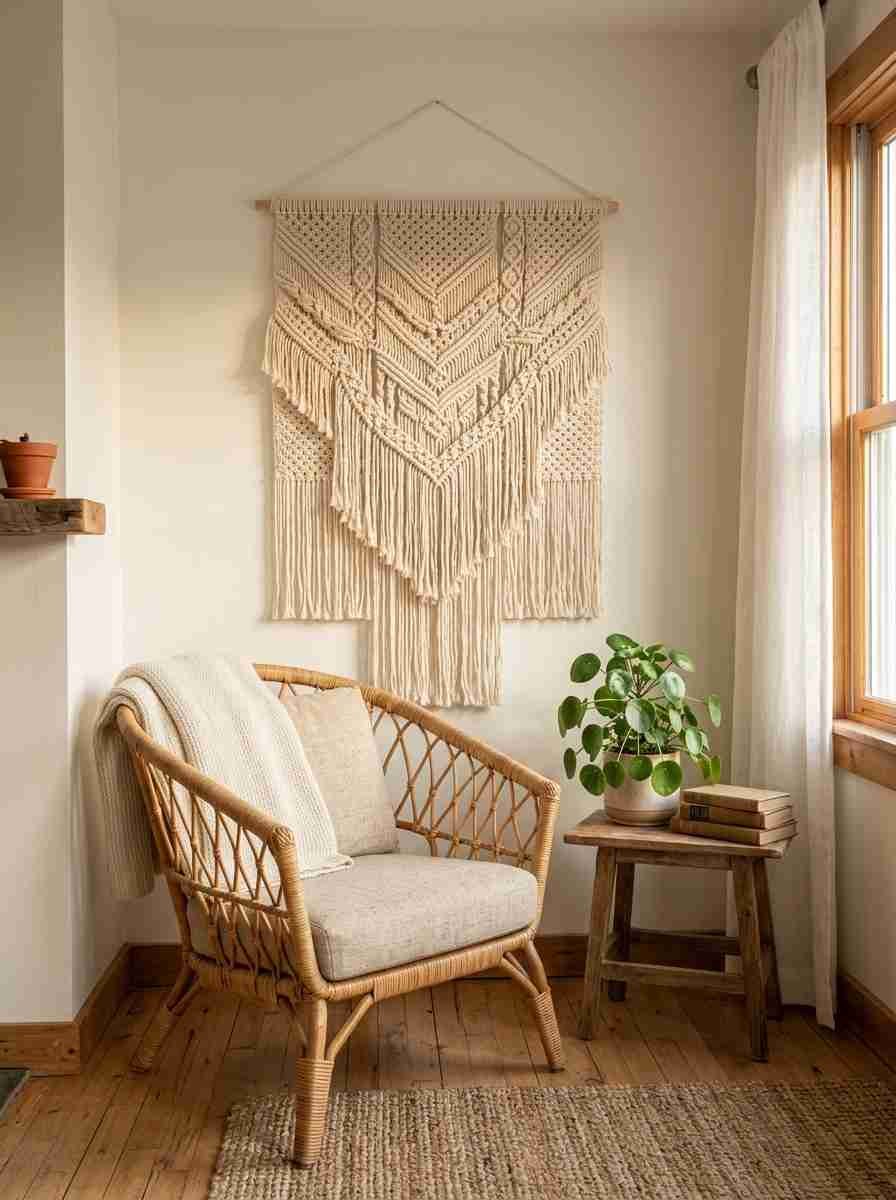
Pick one-word typography art. A single framed word, in a simple serif or sans-serif font, says more than a paragraph of decor ever could.
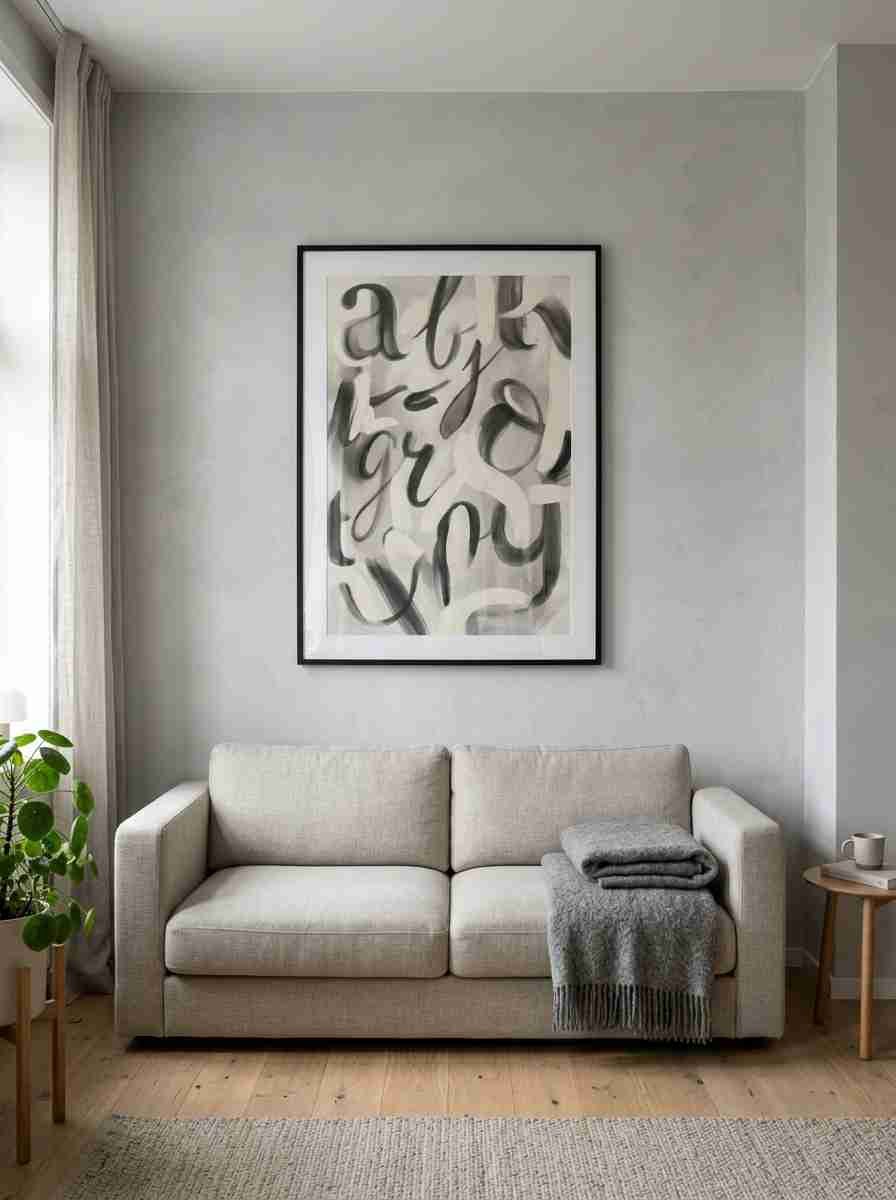
Lean art on a picture ledge instead of hanging it. Leaning feels more relaxed and lets you swap pieces in seconds, no nail holes required.
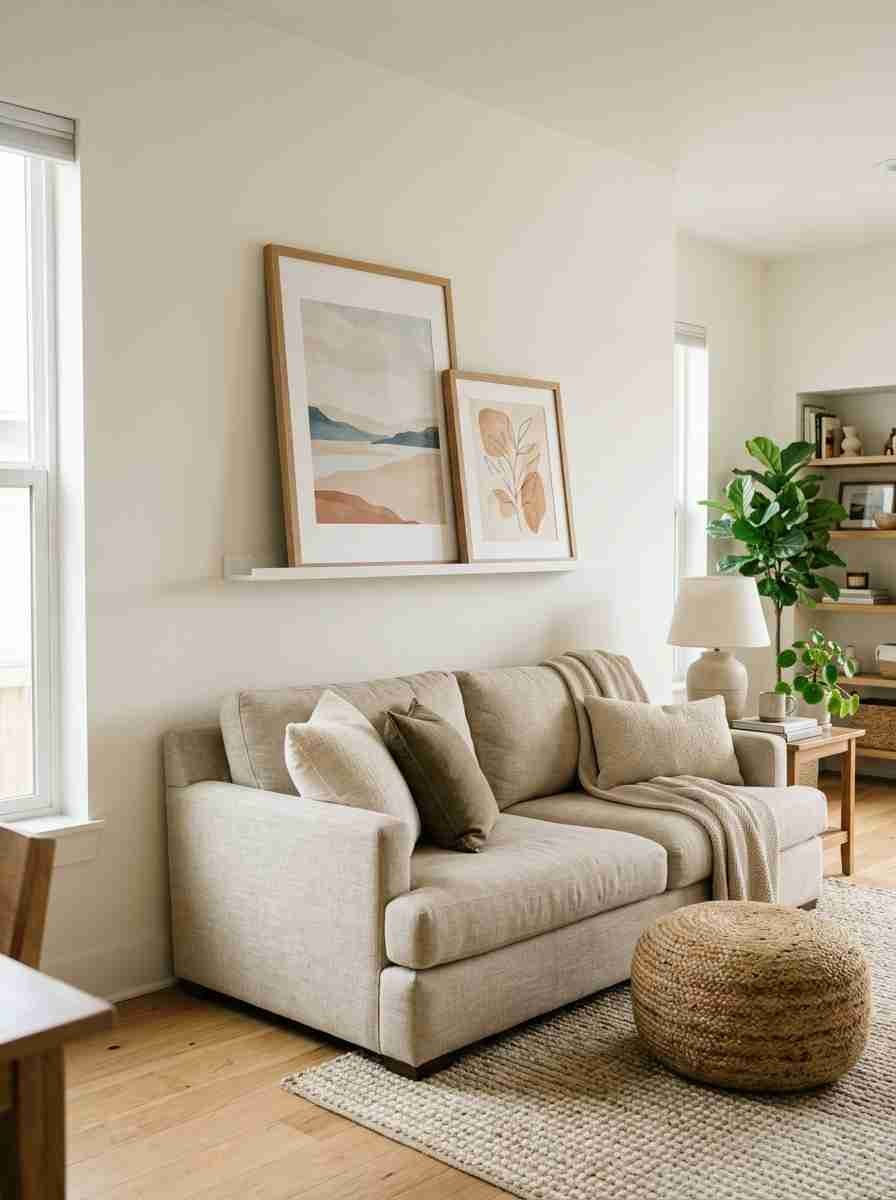
Frame pressed leaves or botanicals between two pieces of glass. It’s a cheap DIY project, and it photographs beautifully for Pinterest.
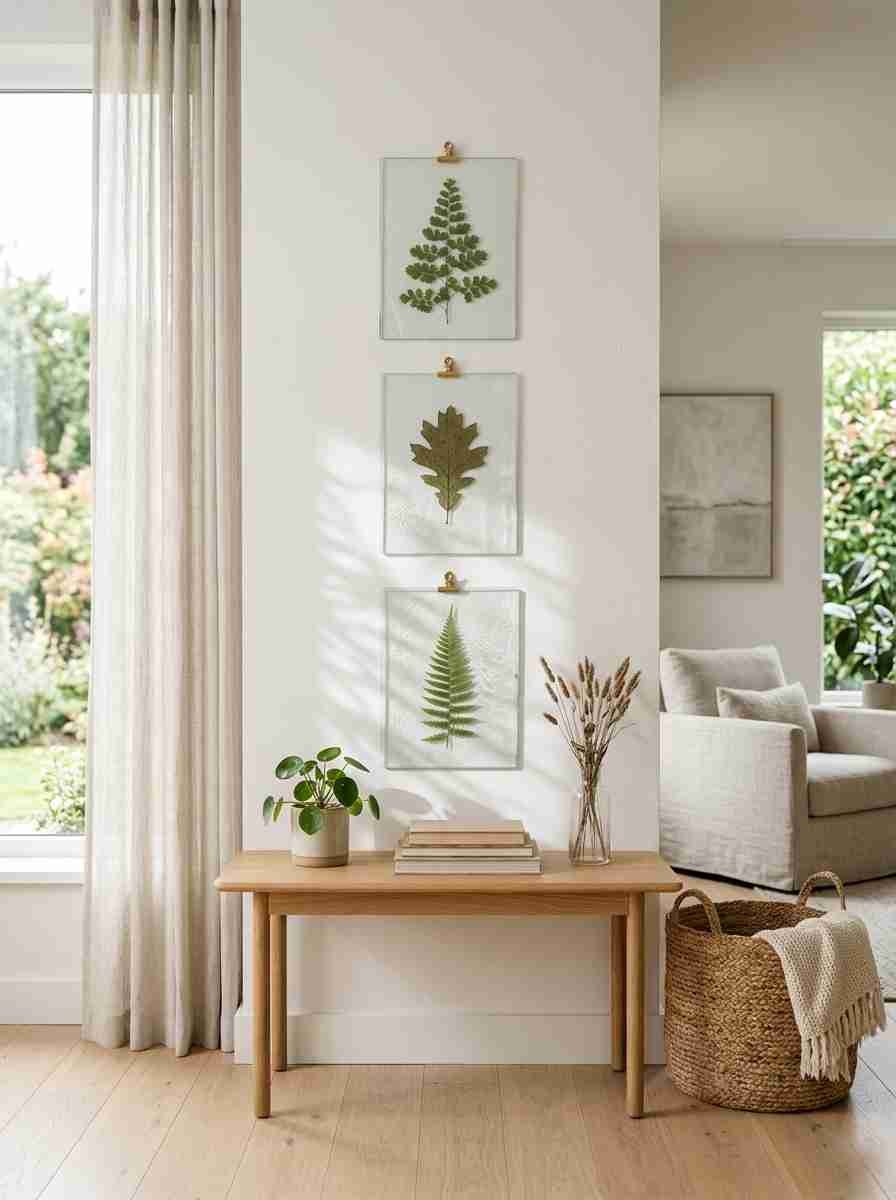
Choose vertical art for a narrow or tall wall. Tall, slim pieces draw the eye upward and make low ceilings feel less squat.
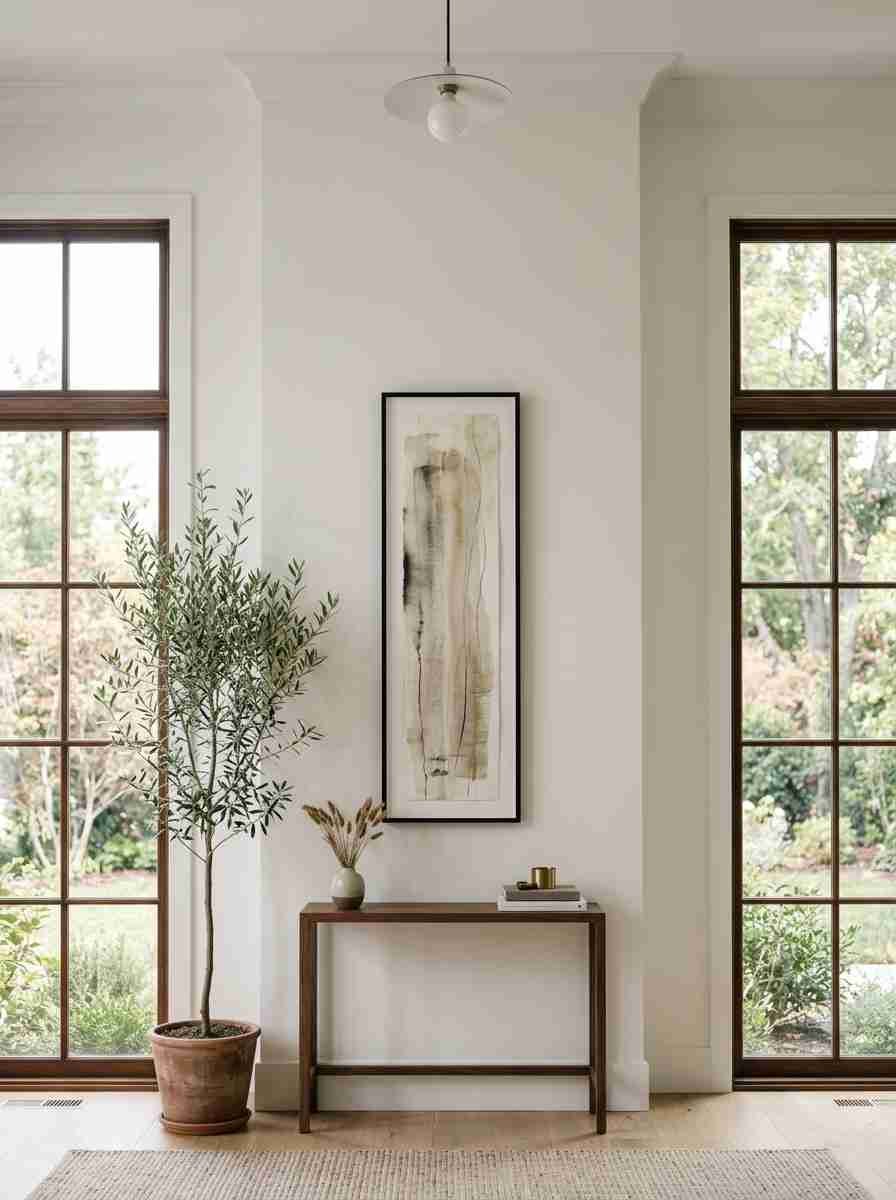
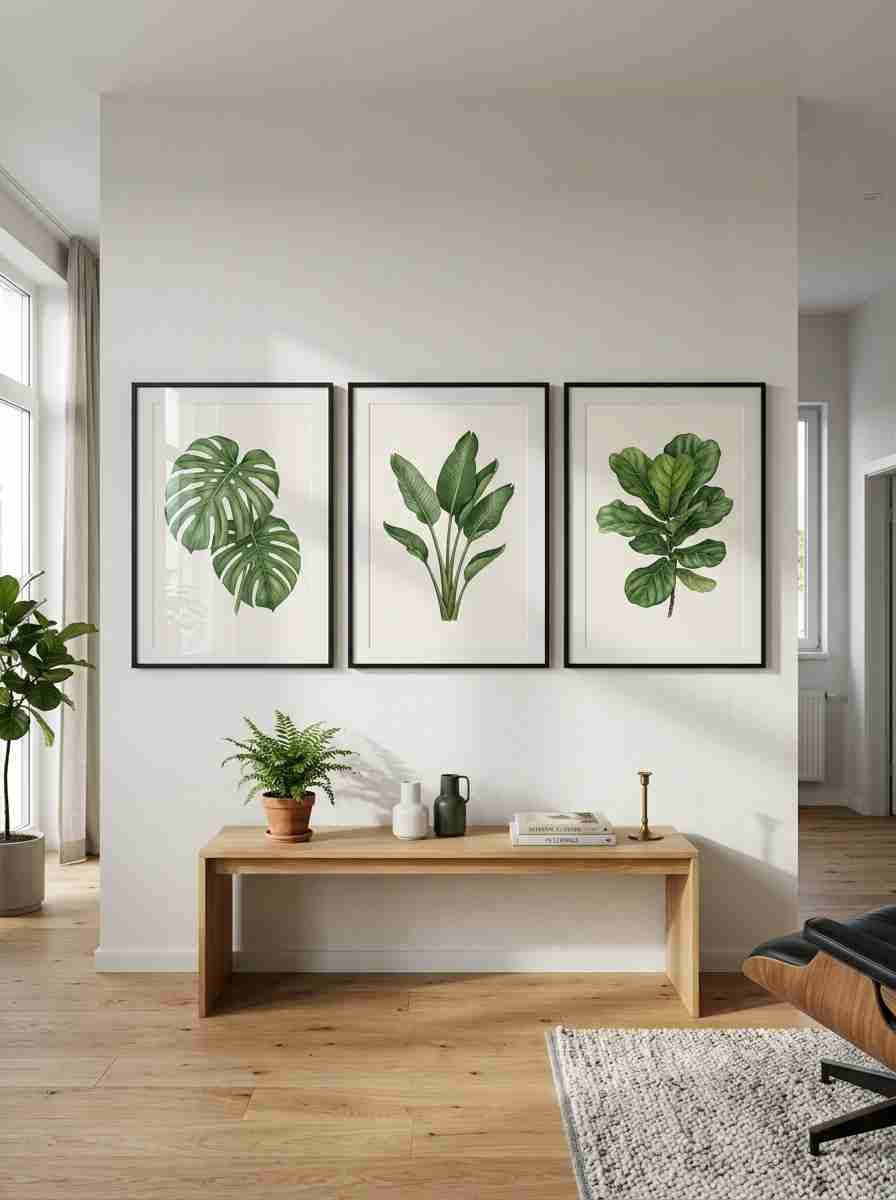
Hang a diptych or triptych. Splitting one image across two or three panels fills a big wall without it looking busy.
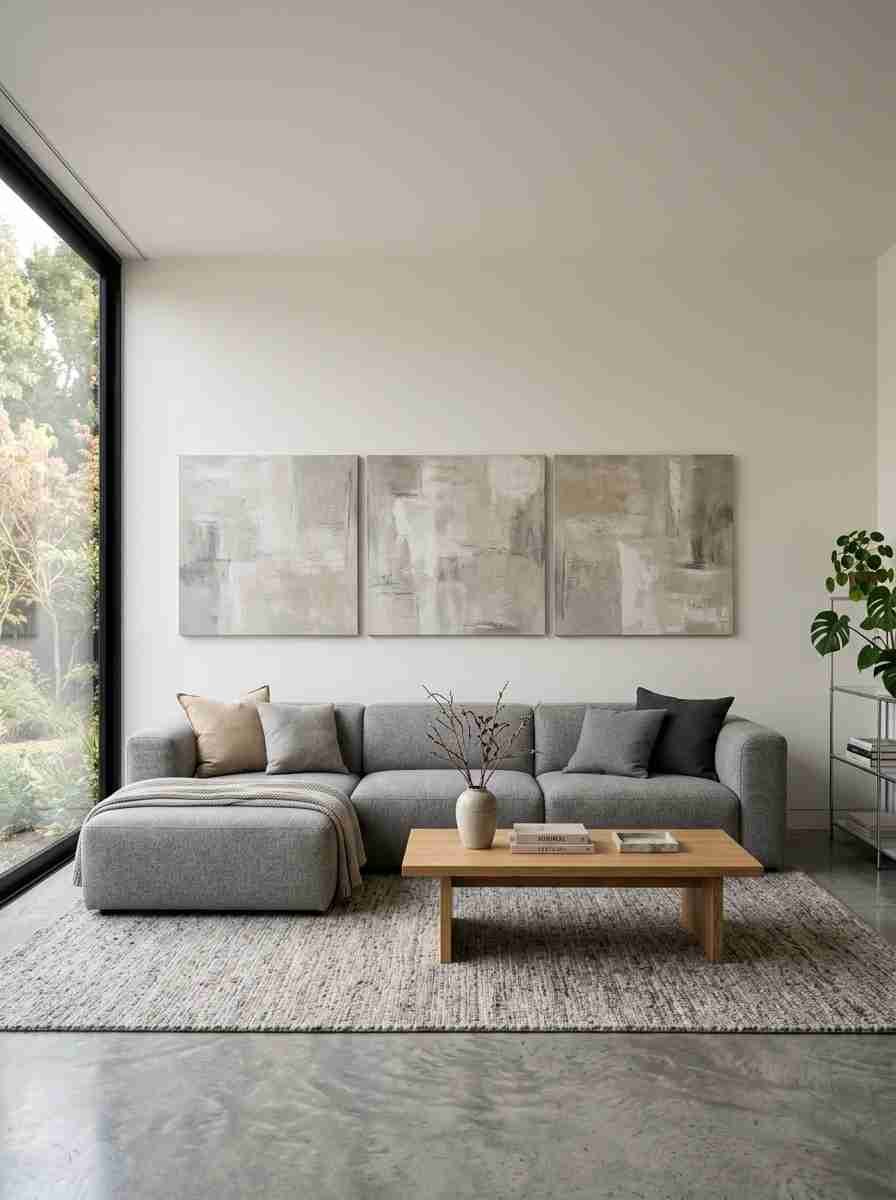
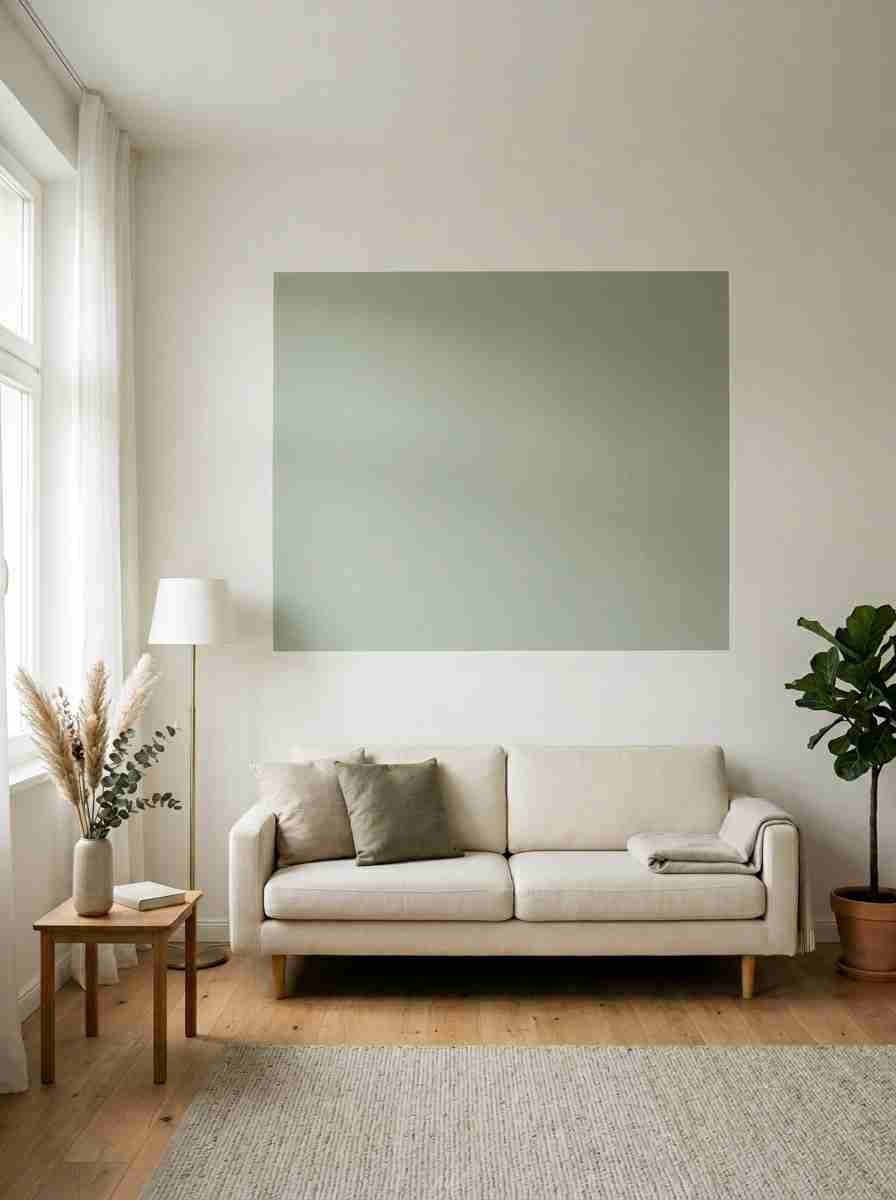
Paint a single color-blocked panel directly on the wall. A soft sage or warm clay rectangle, painted freehand or taped off, works as art on its own.
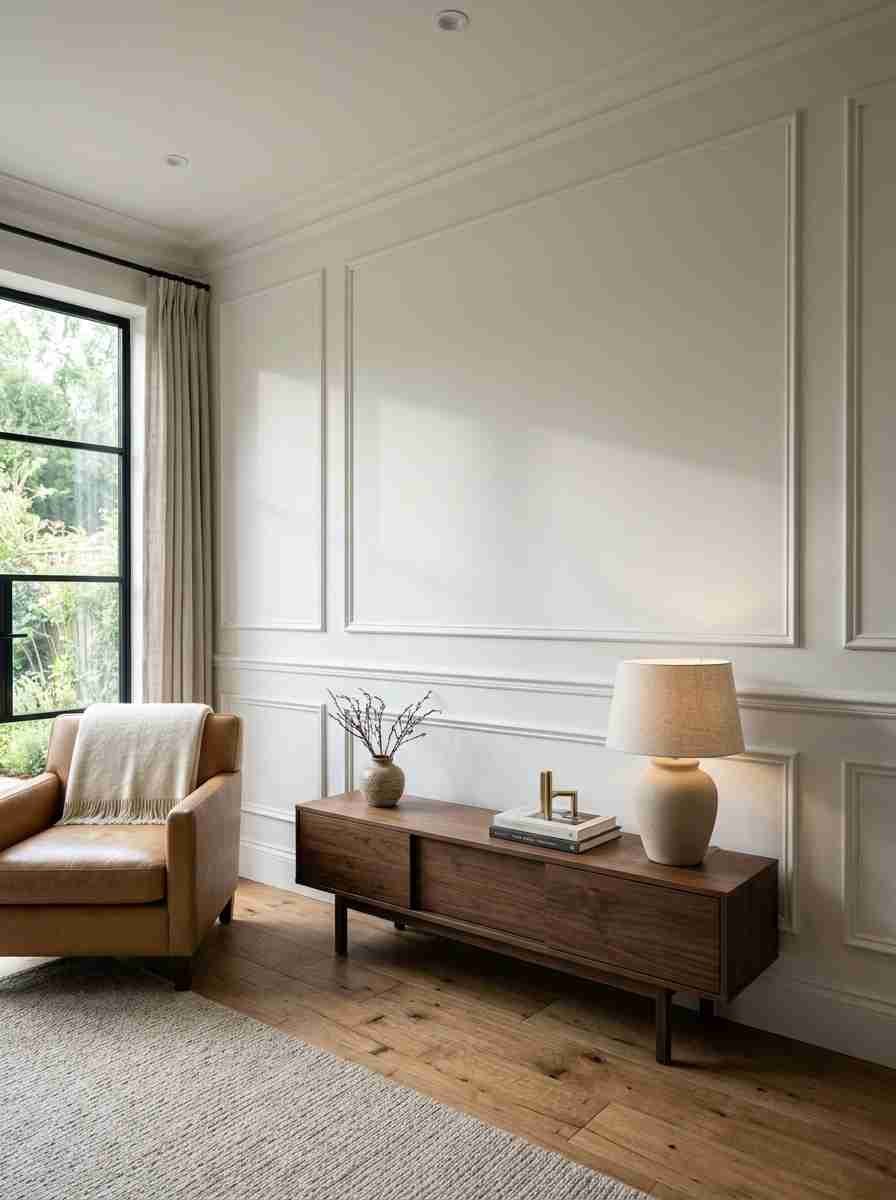
Add picture-frame moulding painted the wall color. This is a quieter, more architectural way to fill a big blank space, and it’s one of my favorite tricks once you’ve outgrown basic framed prints.
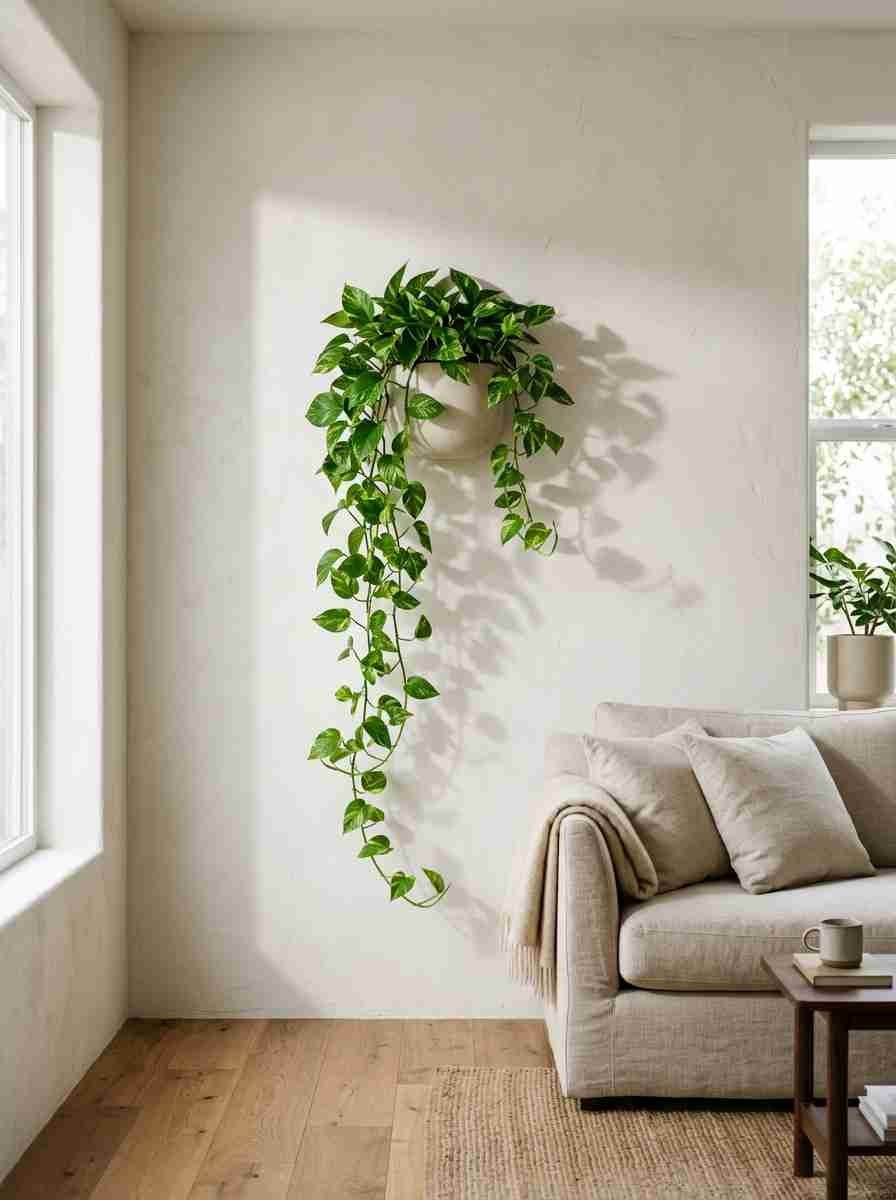
Mount a single trailing plant in a wall planter. Pothos or string of pearls works well here. It adds life without adding clutter.
Hang one sculptural ceramic or wood piece. Think of it like jewelry for the wall: one statement object, nothing else nearby competing for attention.
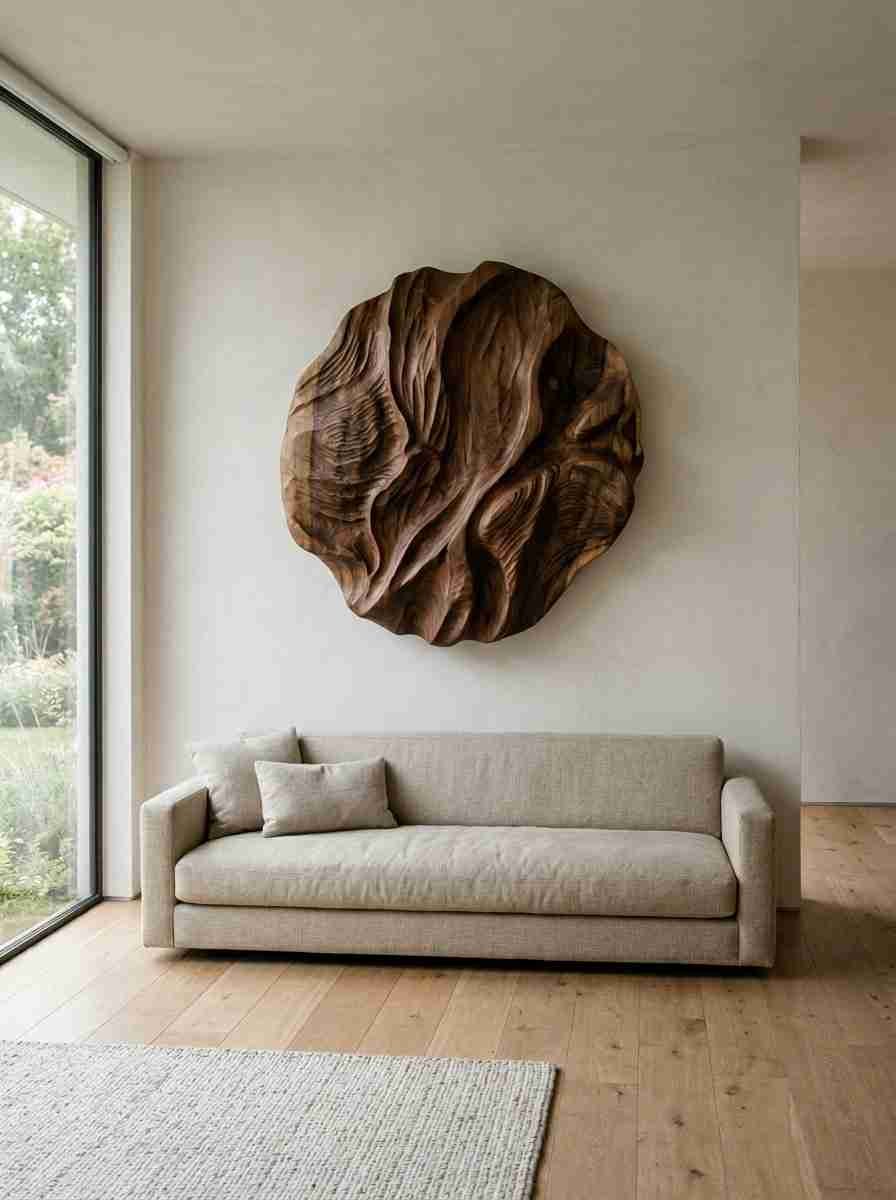
Try an asymmetrical cluster of just three frames. Keep them in the same tone family so the eye reads it as one grouping, not three random pictures.
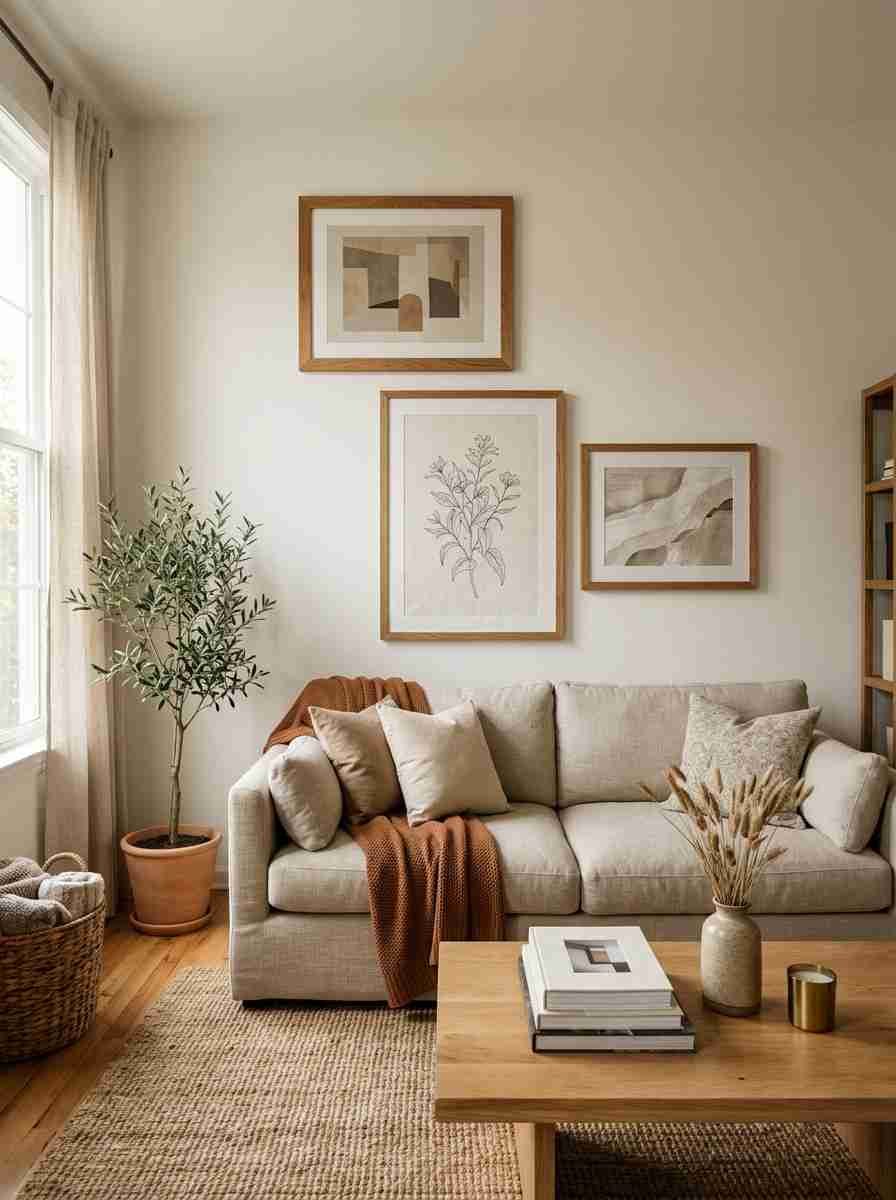
Add minimal wall sconces instead of a floor lamp. Lighting fixtures count as decor too, and they free up floor space.
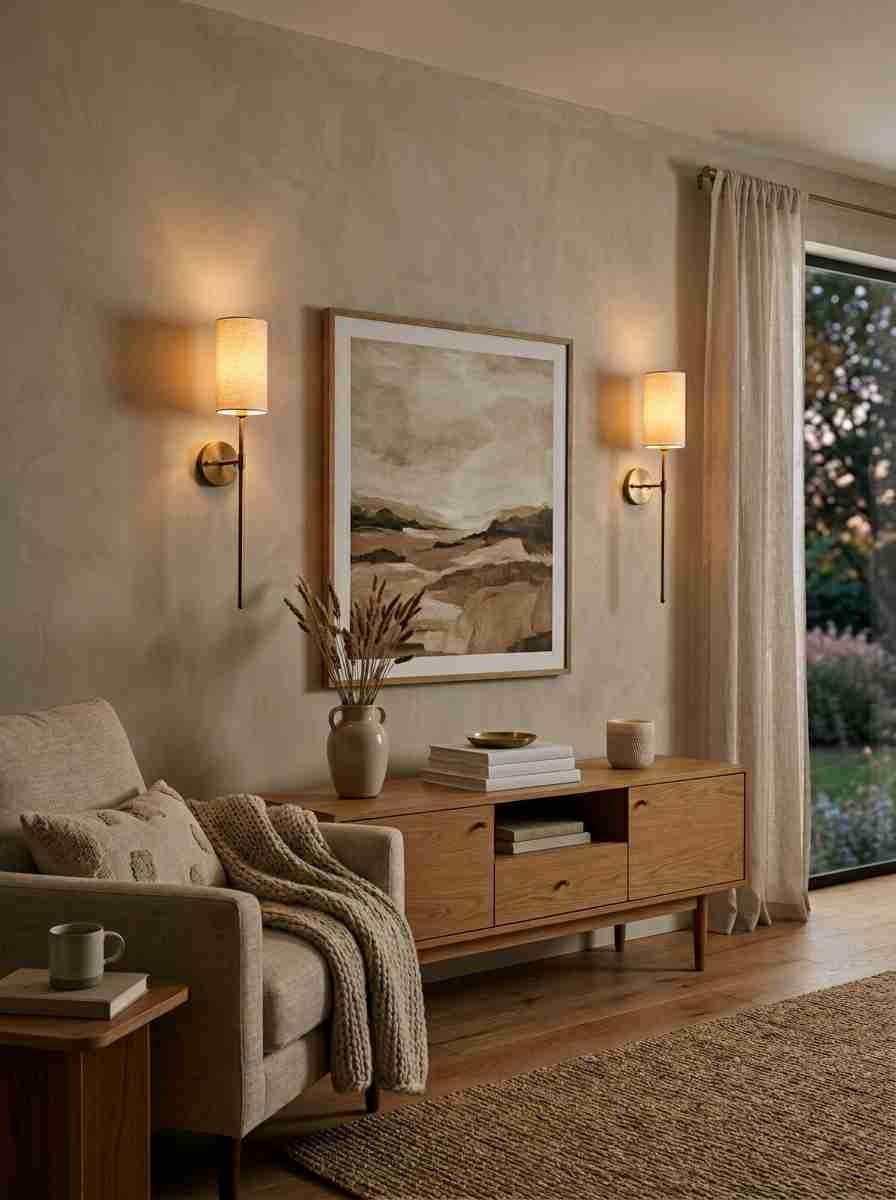
Go big with a single line drawing. A loose, oversized sketch of a face or a body in black ink on a white background is striking and surprisingly cheap to print.
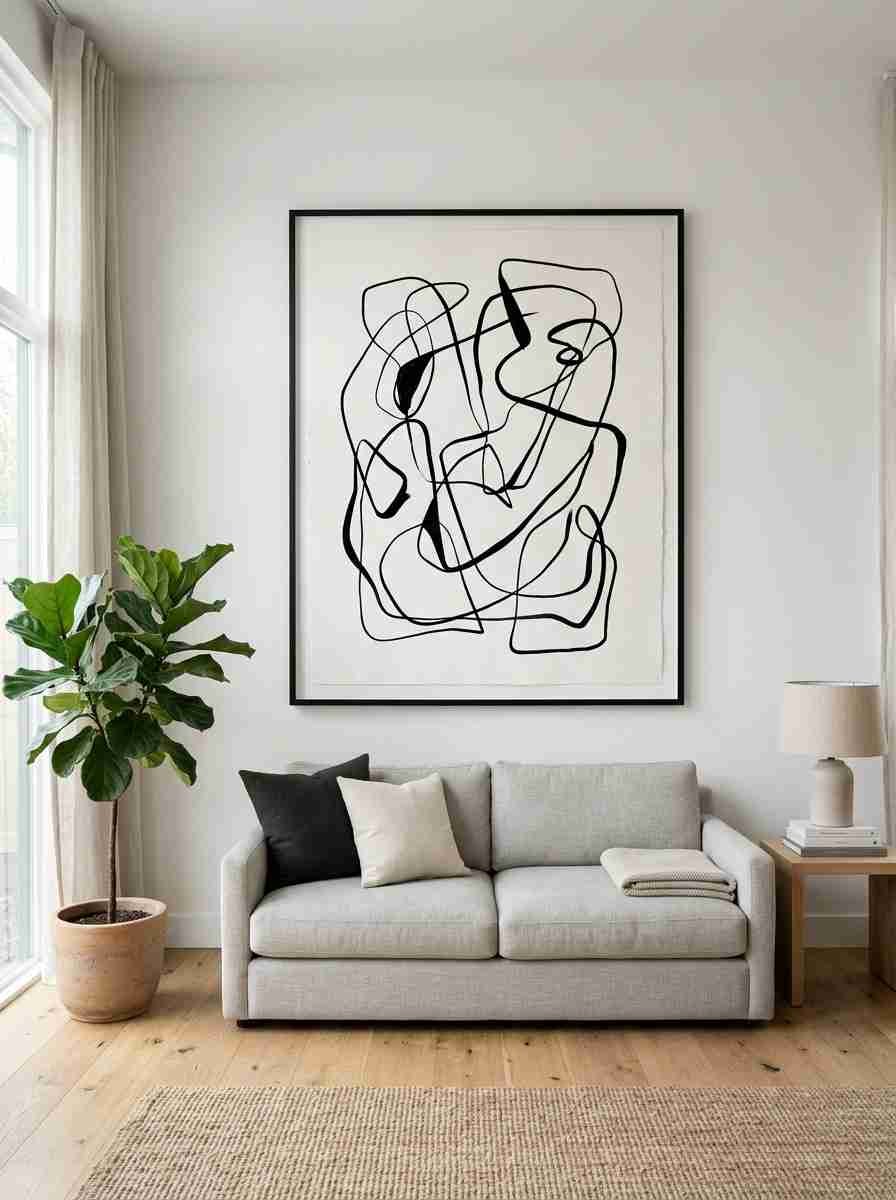
Pair a mirror with a slim shelf underneath it. You get function and visual interest in one move, which feels very “why didn’t I think of that.”
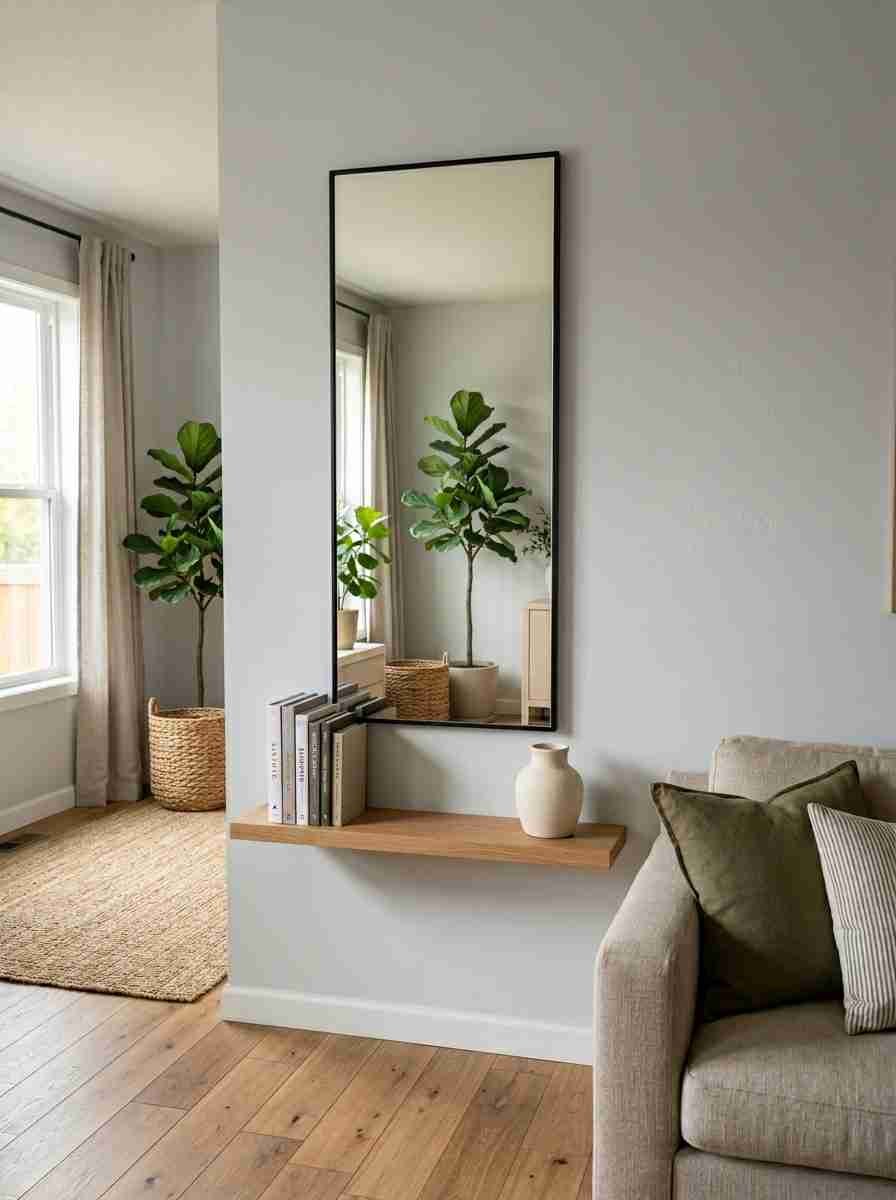
Use a neutral tapestry instead of a canvas. Linen or cotton wall hangings in oatmeal or stone tones soften a room full of hard furniture.
Hang oversized black-framed botanical prints in a row. Three matching frames in a straight line look gallery-grade without the gallery budget.
Finish with negative space around everything. Whatever you choose from this list, give it room. Crowding a wall undoes the whole minimalist effect, even with gorgeous individual pieces.
A quick mid-article confession
Slight tangent here, but I have to mention it: I once spent two hours debating whether a mirror should be round or oval, for one wall, in my own apartment that nobody else was going to judge. Minimalism is supposed to lower decision fatigue. Sometimes it just relocates it. Anyway, back to the walls.
Getting the height right actually matters
Picking the art is half the job. Hanging it wrong undoes all of it. Most interior designers and galleries use what’s called the 57-inch rule: the center of your artwork sits about 57 inches from the floor, which lines up with average eye level. Above furniture, that changes slightly, you’ll want the bottom of the frame around 6 to 8 inches above the sofa or console instead. It sounds fussy, but it’s the difference between art that looks placed and art that looks like it’s floating in the wrong spot.
For a gallery cluster or a set of three frames, treat the whole grouping as one piece and center that group at 57 inches rather than measuring each frame on its own. Space the individual pieces 2 to 3 inches apart so they read as a single arrangement instead of three separate decisions. It’s a small detail, but it’s the one that makes a cluster look intentional instead of accidental.
If you want more sizing specifics for different wall types, Great Big Canvas has a solid breakdown of how to scale art to your furniture, and the design team at Havenly covers a few more layout combinations if you’re working with an oddly shaped wall.
A quick size and tone cheat sheet
| Living room size | Best wall decor pick | Frame tone to choose |
|---|---|---|
| Small apartment | One large mirror or tall vertical art | Light wood or thin black |
| Medium room | One oversized canvas above the sofa | Matte black or natural oak |
| Large or open-plan | A diptych or triptych panel set | Mixed neutral frames |
IMO, that table alone solves about 80% of the “what do I even hang” panic. Save it for later if you need to.
A few honest opinions, since you asked
Two things I’ll say plainly, because lists like this usually dodge opinions. First, gallery walls with mismatched frame colors almost never look minimalist, no matter how good the individual prints are. Pick one frame family and stick to it. Second, I think wall clocks are underrated. Everyone reaches for canvas art first, and a clean clock face quietly does more for a room than another abstract print ever will.
One more thing worth saying: you don’t need to buy everything at once. Wow, I wish someone had told me that before I dropped a full paycheck on art for one wall. Pick your favorite idea from this list, live with it for a month, and add the second piece only once the first one earns its spot.
Common questions about minimalist wall decor
What’s the cheapest way to get this look on a blank wall? Start with one piece you already own, even a mirror from another room, and hang it alone at 57 inches before buying anything new. You’ll often realize you don’t need as much as you thought.
Thrifted frames and a fresh coat of paint cost almost nothing and usually beat a brand-new print from a big box store anyway.
How many things should I put on one wall for it to still read as minimalist? One to three is the sweet spot for most walls.
Past four separate items, it usually starts reading as a gallery wall instead of a minimalist one, which isn’t bad, just a different look. If you genuinely love a full gallery wall, keep the frames in one tone family so it still feels curated rather than cluttered.
Is minimalist wall decor going to feel dated soon? Trends shift, but pared-back, intentional walls have stuck around for decades because they’re flexible. Swap one or two pieces and the whole room feels updated again, no full redecorate required.
That flexibility is honestly the best argument for starting minimal in the first place, you’re not locked into anything.
Final thought
Twenty-five ideas is a lot to take in at once, so don’t try to do all of them.
Pick two, maybe three, that actually fit how you live in your space. Which one are you trying first, the big statement mirror or the floating shelf? Save this post, come back to it once you’ve got your first piece up, and tell me how it turned out.
