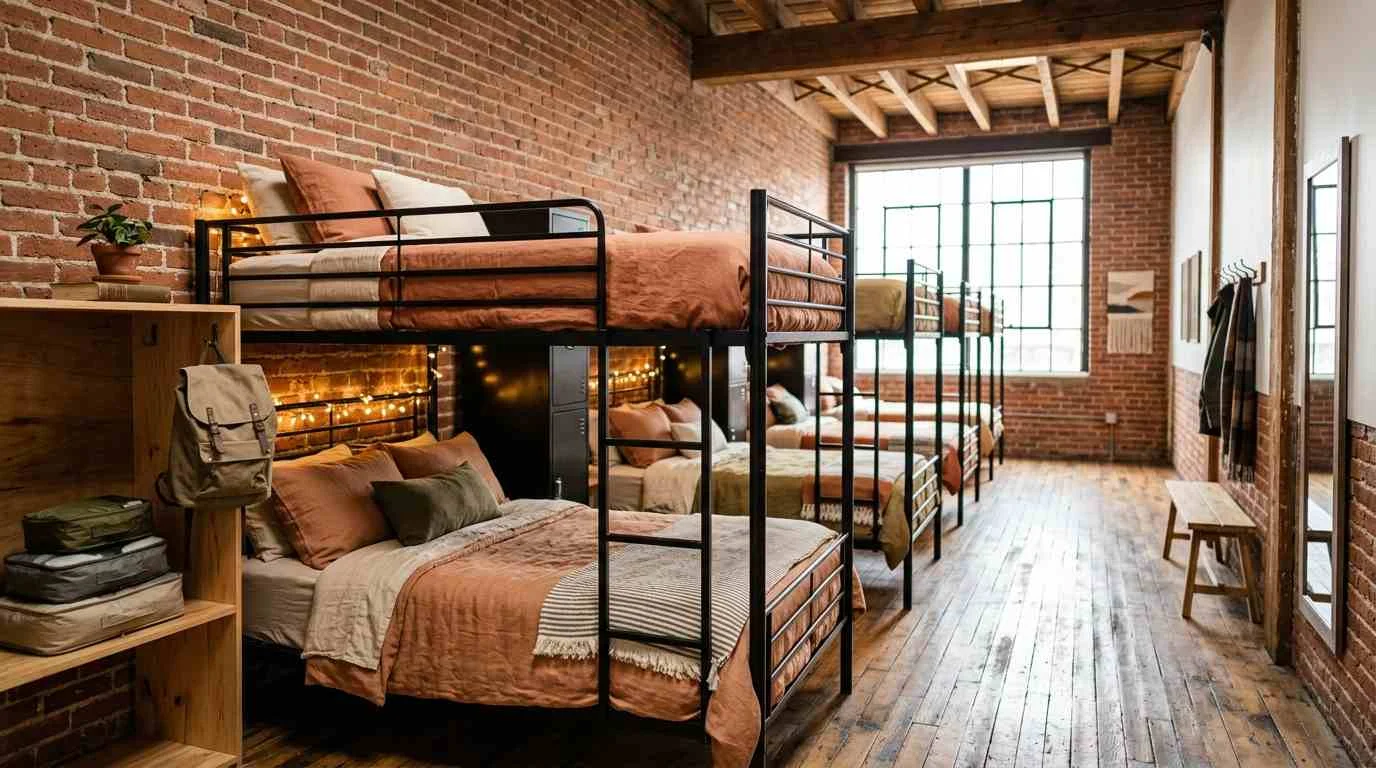
I lived in a cinderblock box for two years of college. Gray walls, fluorescent lighting that hummed all night, a bed frame that creaked every time I rolled over.
By the end of freshman year, I’d turned it into the room I actually wanted to come back to, and I didn’t spend more than $150 doing it.
The funny part is I didn’t get there by buying more. My roommate filled her side with everything from a Target clearance run, and her half of the room always looked busier and somehow less finished than mine.
I went the other direction: a handful of pieces I actually liked, placed where they mattered, instead of every cheap thing that caught my eye at 11pm on a Tuesday.
Here’s something I learned the hard way: a tiny, shared, temporary room feels like yours once you’ve got the right stuff in it, placed with some intention, and a plan for moving out without losing your deposit.
That last part matters more than people think when you’re sharing a 10×12 footprint with someone else’s belongings too.
So here are 24 ideas I’ve actually used, watched work for friends, or would try without hesitation.
Pin the ones that fit your space and skip the rest. IMO half the fun of decorating a small room is figuring out what you can leave out, not how much you can cram in before orientation week ends.
Why minimalist actually works better in a 10×12 room
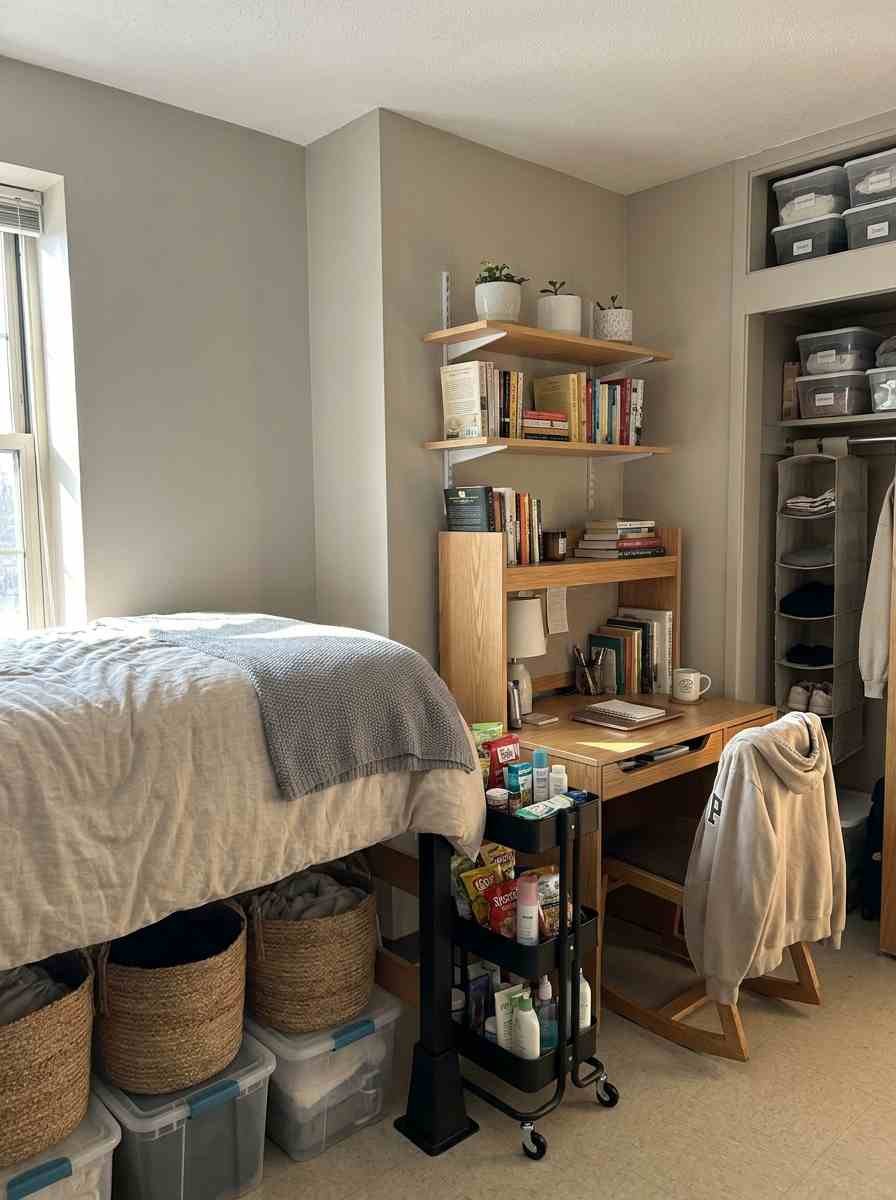
Small rooms punish clutter fast. One extra throw pillow, one too many posters, and the whole space starts looking like a storage unit instead of a bedroom.
Ever notice how that happens almost overnight, like one day it’s fine and the next day you can’t find your desk?
Minimalist decor gives every item a job. A lamp lights the desk. A rug warms the floor.
Nothing sits there just because it looked cute in a photo. This matters even more when two people are splitting a room that barely fits two beds, since every object you bring in eats into space that isn’t really yours to begin with.
The Spruce has a solid breakdown of small-space design principles if you want to go deeper. The short version: fewer, better choices beat a pile of cheap extras almost every time.
A $30 lamp you’ll keep for four years does more for a room than ten dollar-store knickknacks combined.
There’s also the deposit issue. Most hostels and dorms restrict nails, paint, and permanent fixtures.
A minimalist approach naturally avoids most of that, since you’re working with fewer items that need mounting in the first place, and fewer items means less to patch up or pack away come May.
Storage that pulls double duty as decor
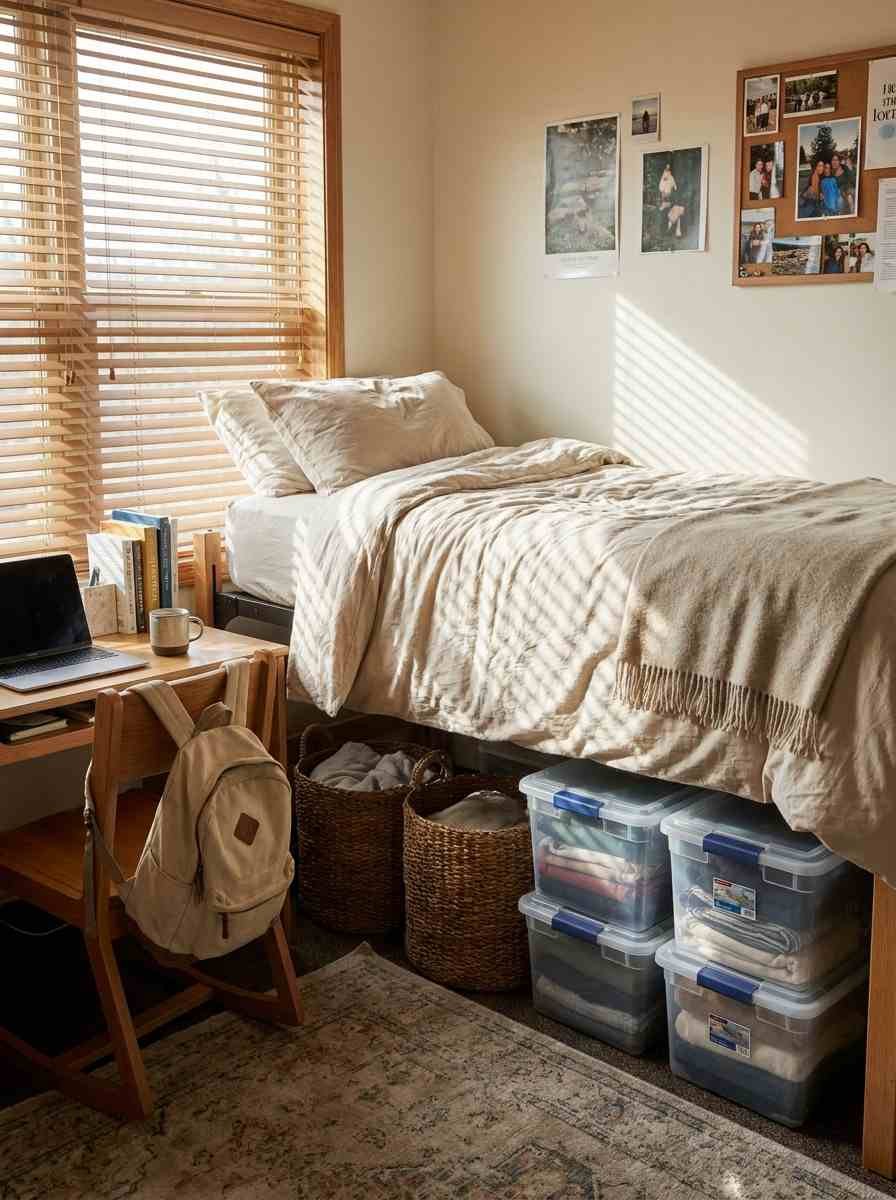
Storage is where most students either nail their room or completely lose the plot. Here’s what works.
Under-bed storage bins – clear or woven, depending on whether you want things visible or hidden.
I went clear once and regretted it within a week, since my laundry pile really didn’t need an audience.
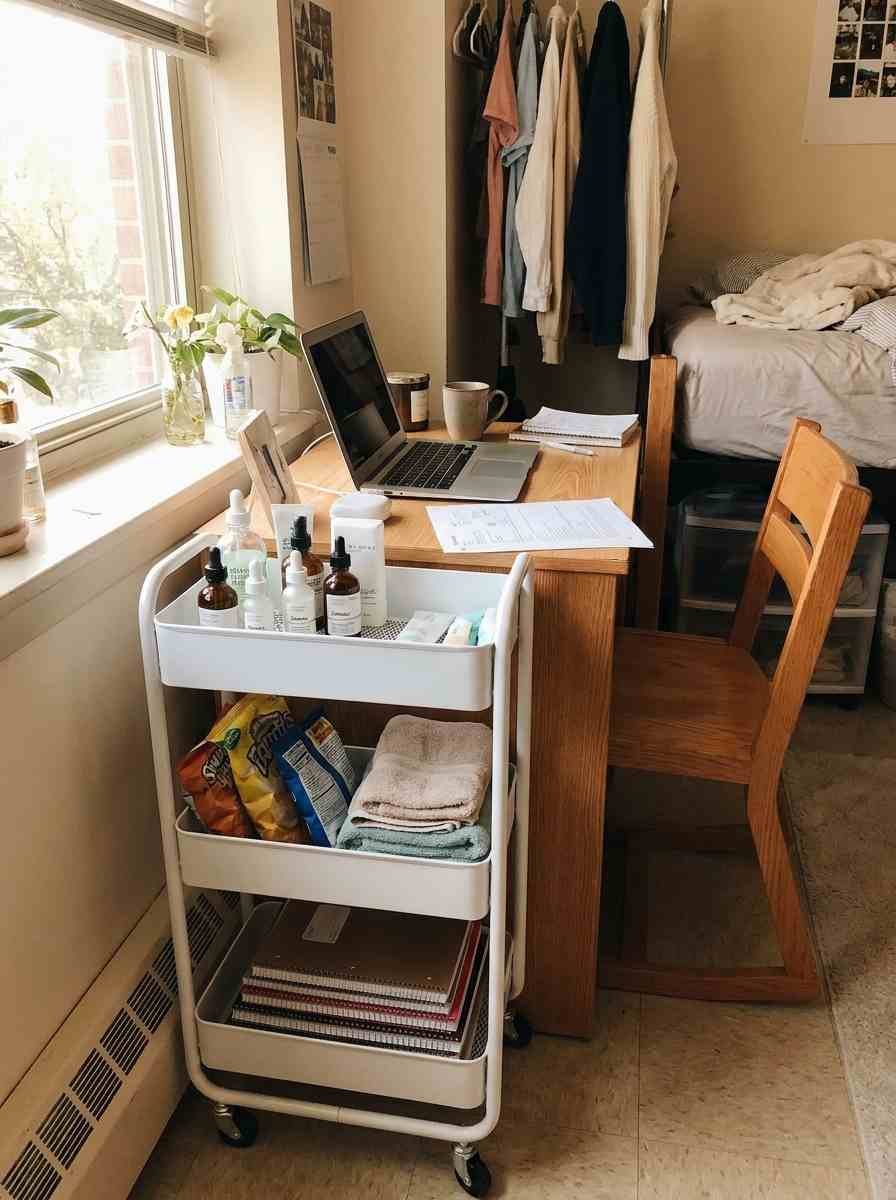
A slim rolling cart – tucks beside a desk or bed, holds toiletries or snacks, rolls out when you actually need it.
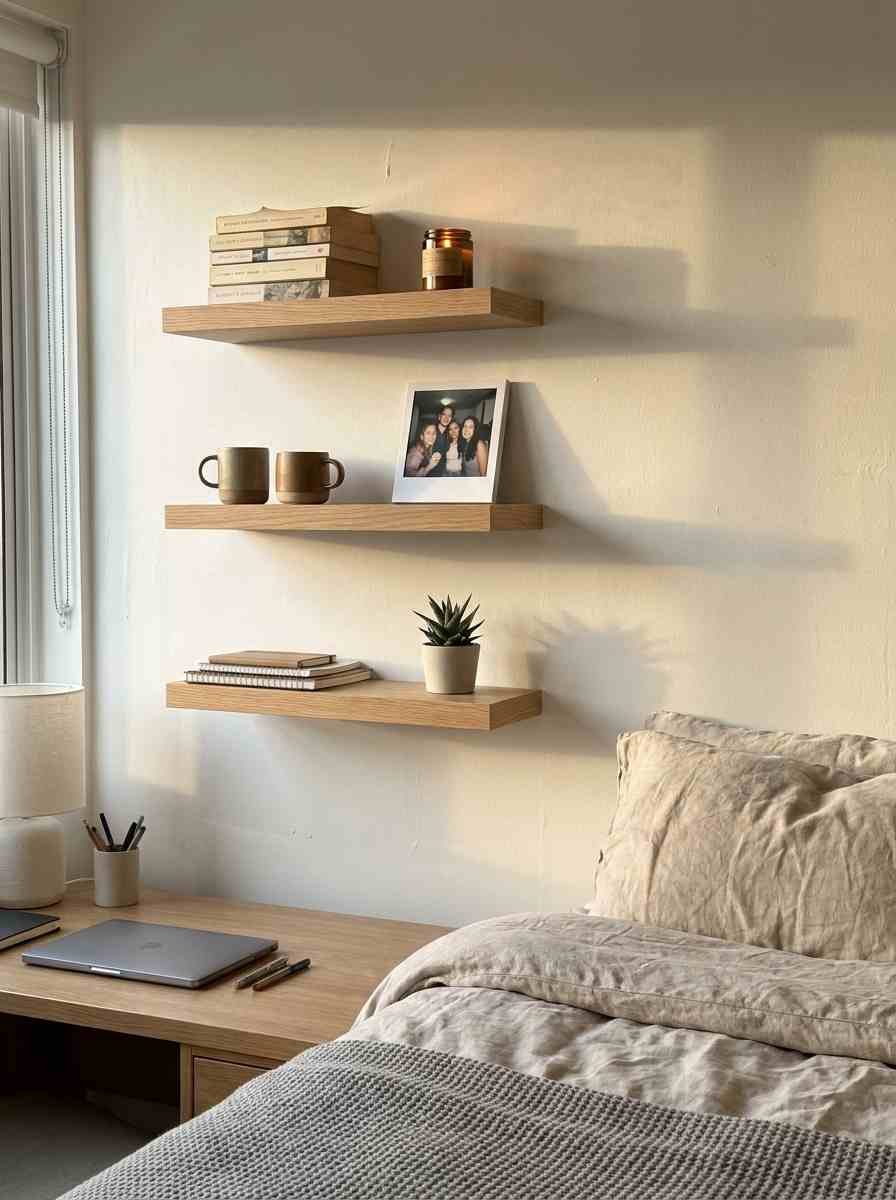
Floating shelves – command-strip mounted, three to a wall at most. More than that and it starts looking like a hardware store display.

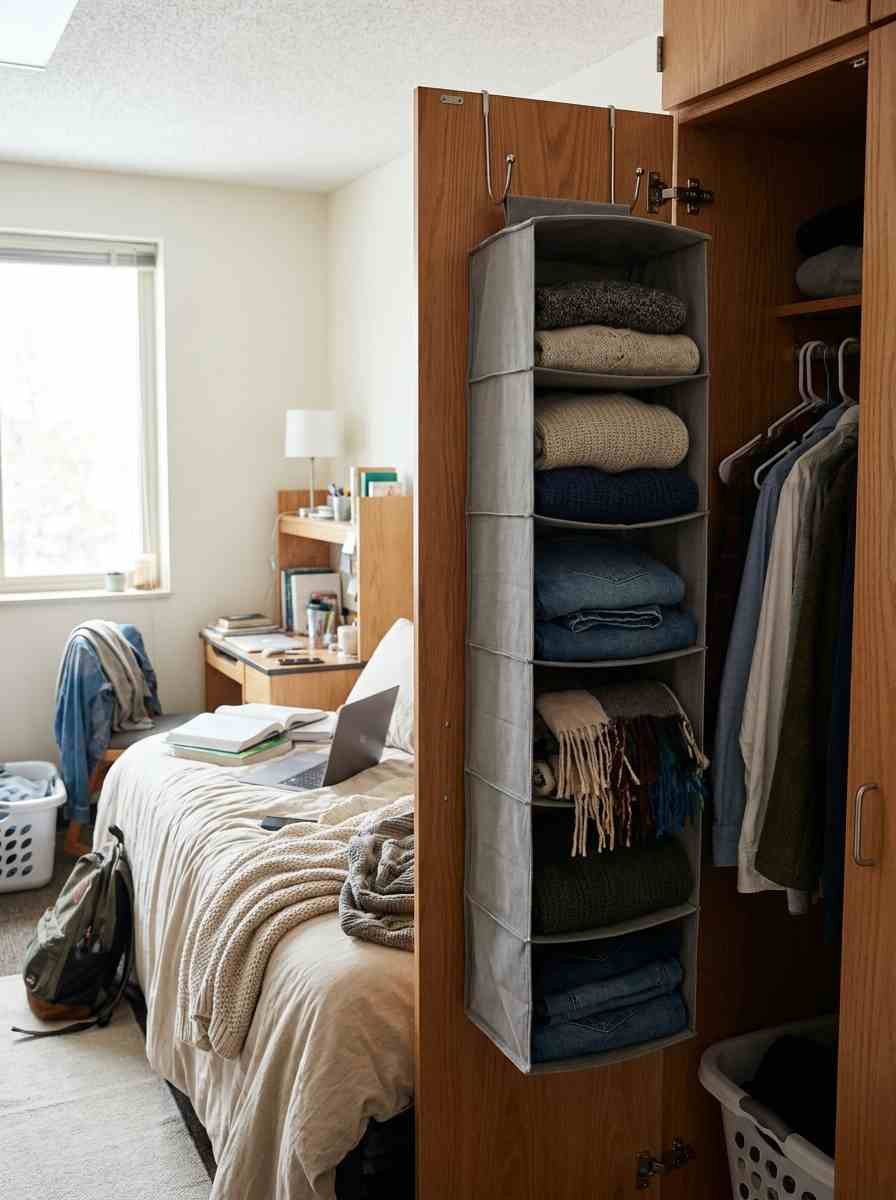
A hanging closet organizer – doubles your closet space without touching a single wall.
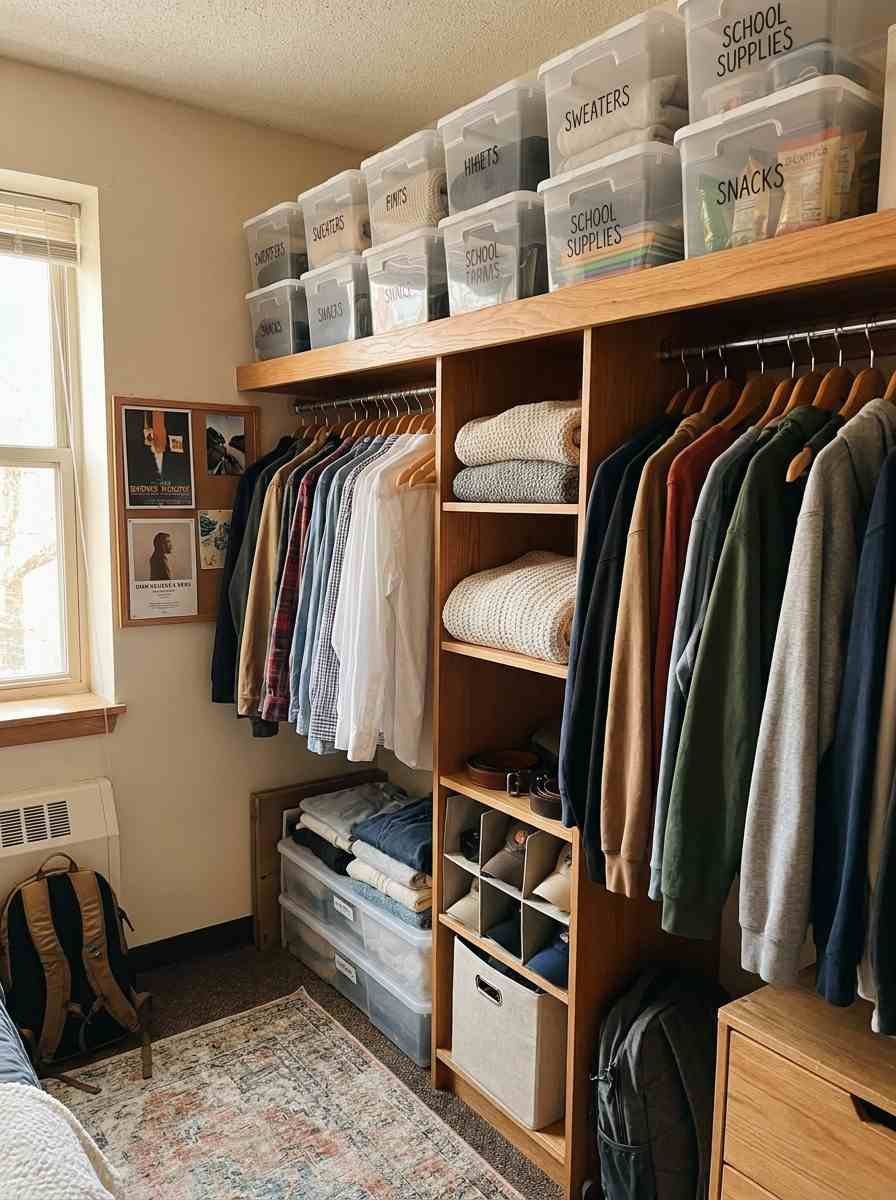
Stackable bins on the closet shelf – label them if you’re the type who needs that. I am
A bed riser set – lifts your bed about 6 inches and frees up real storage underneath, not just sock-drawer space.
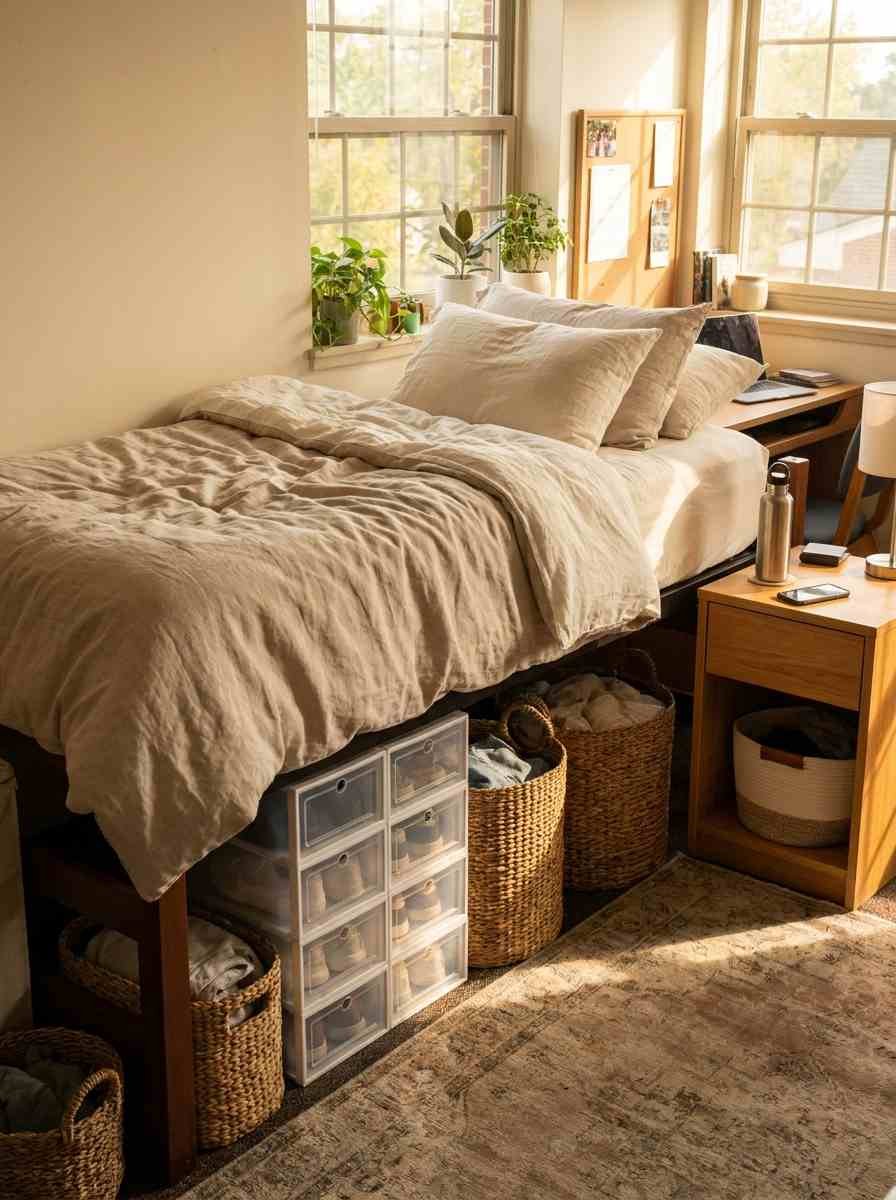
Most of these (the cart, the bins, the risers) are cheap to find at places like IKEA or any big-box store.
A few cost under $15. None of them require a drill, which matters more than it sounds like once you remember most schools won’t let you patch holes yourself anyway.
One thing worth saying out loud: storage isn’t glamorous, but it does more visual work than decor ever will.
A room with hidden clutter looks calmer than a room with pretty clutter sitting out in the open. I learned that one slowly, and mostly by trial and error.
Wall decor your RA won’t make you take down
This is the category where students get into the most trouble, usually by reaching for actual nails.
Don’t do that. Command makes removable hooks and strips rated for posters, frames, and small shelves, and they come off clean.
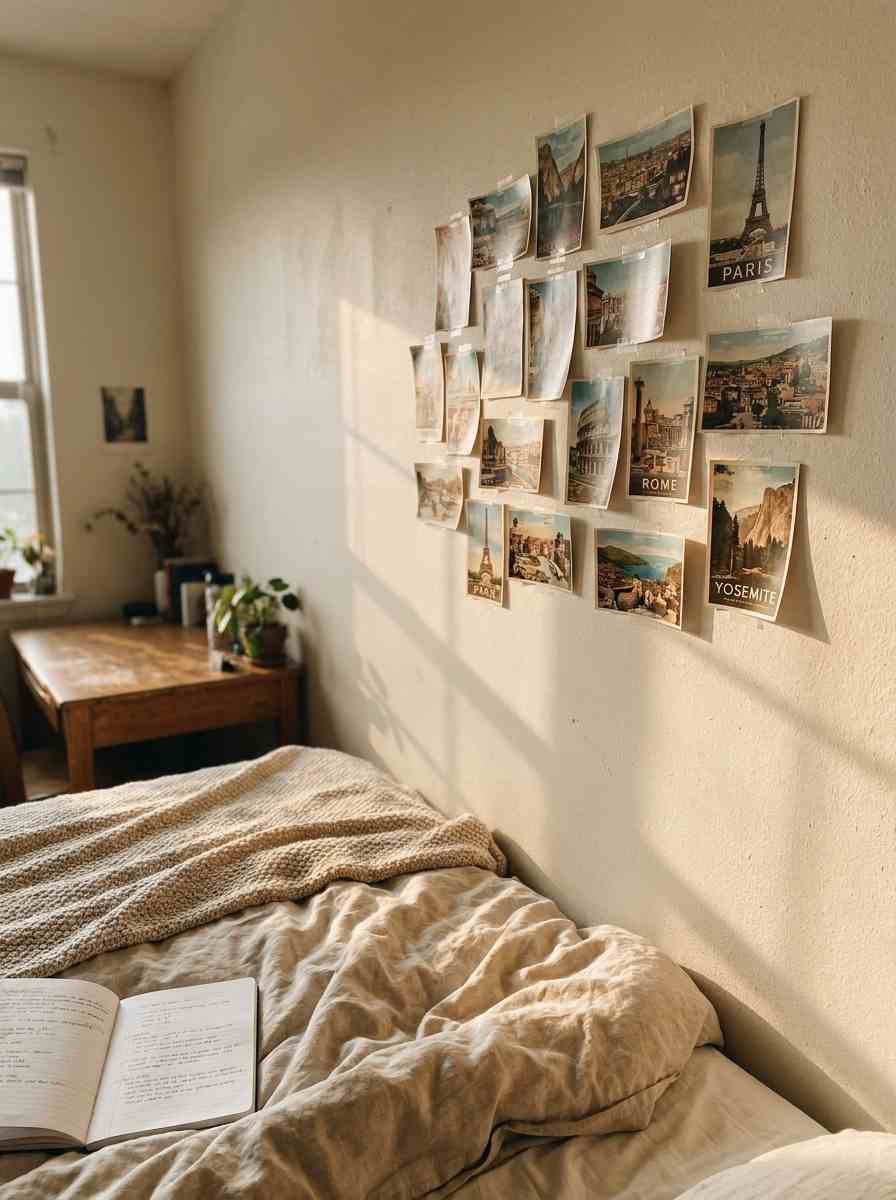
A gallery wall of postcards – cheap, swappable, and you can build it over months instead of buying a full set at once.
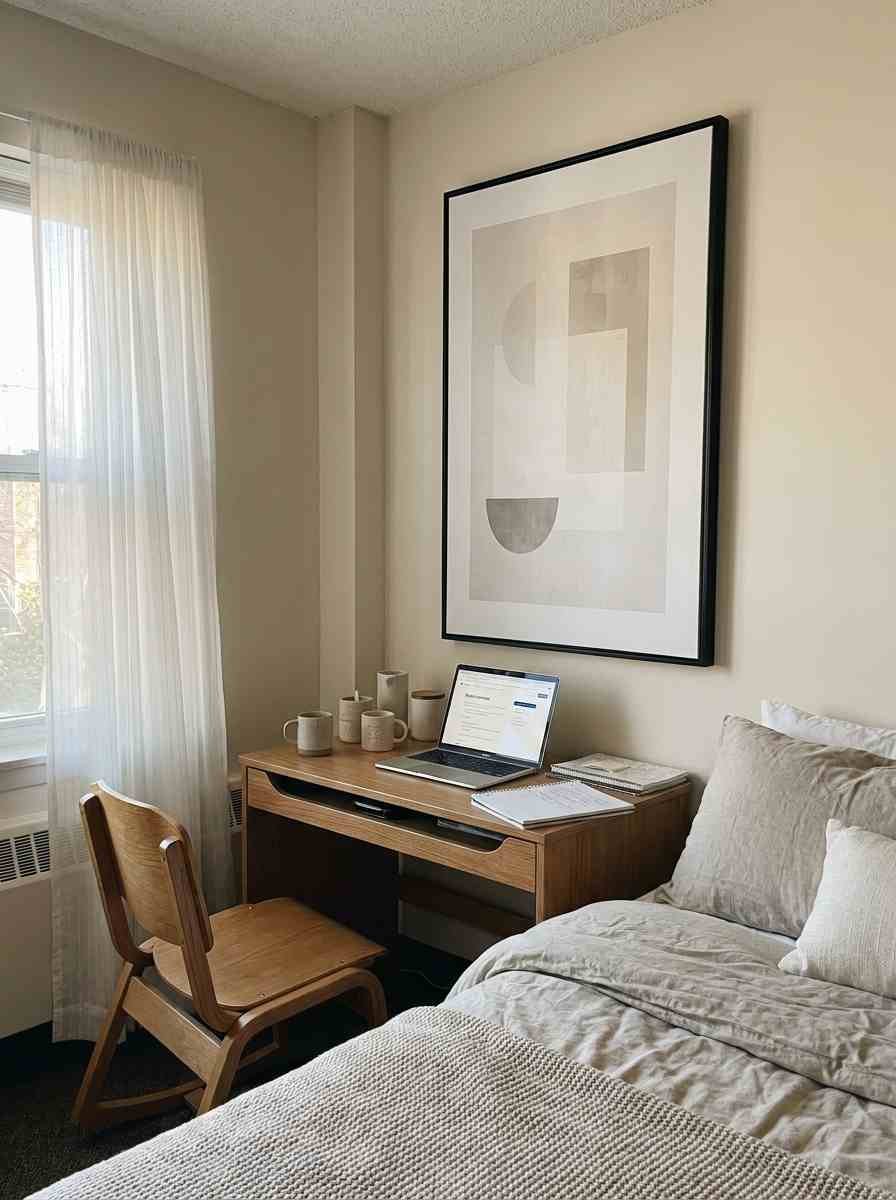
One large minimalist print – a single statement piece beats six small mismatched ones
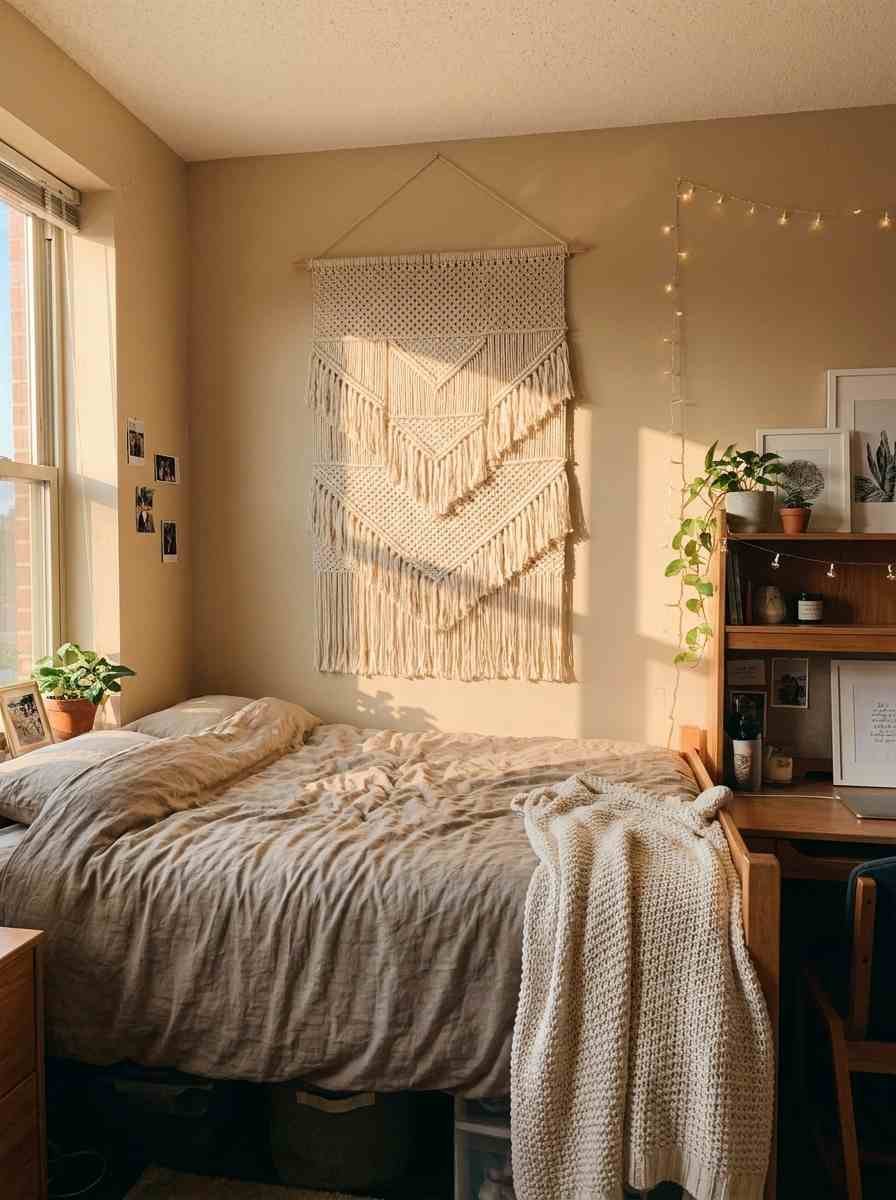
A woven wall hanging – adds texture without adding visual noise.
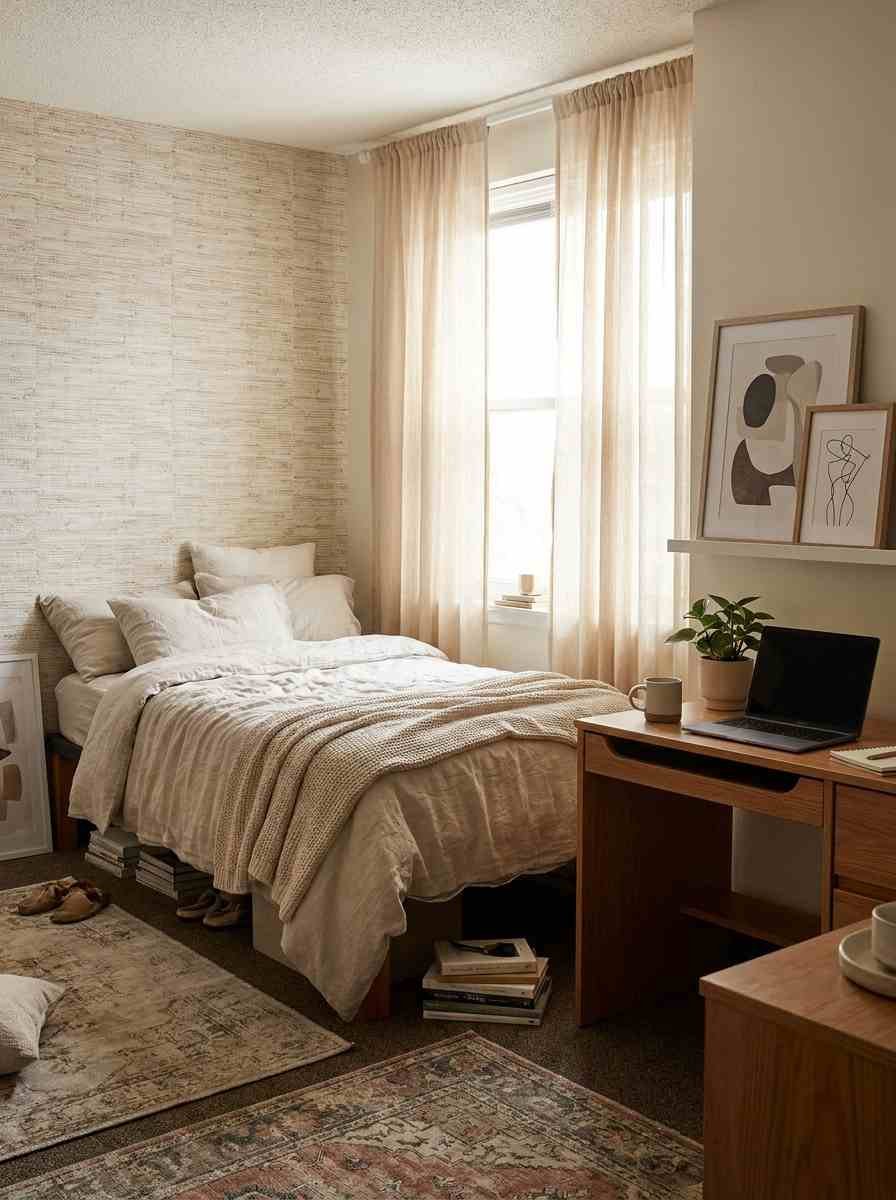
Removable wallpaper on one accent wall – peel-and-stick, no commitment, cheaper per square foot than people expect.
A corkboard for rotating photos and notes – functional and decorative, which is the whole point of this list in one object.
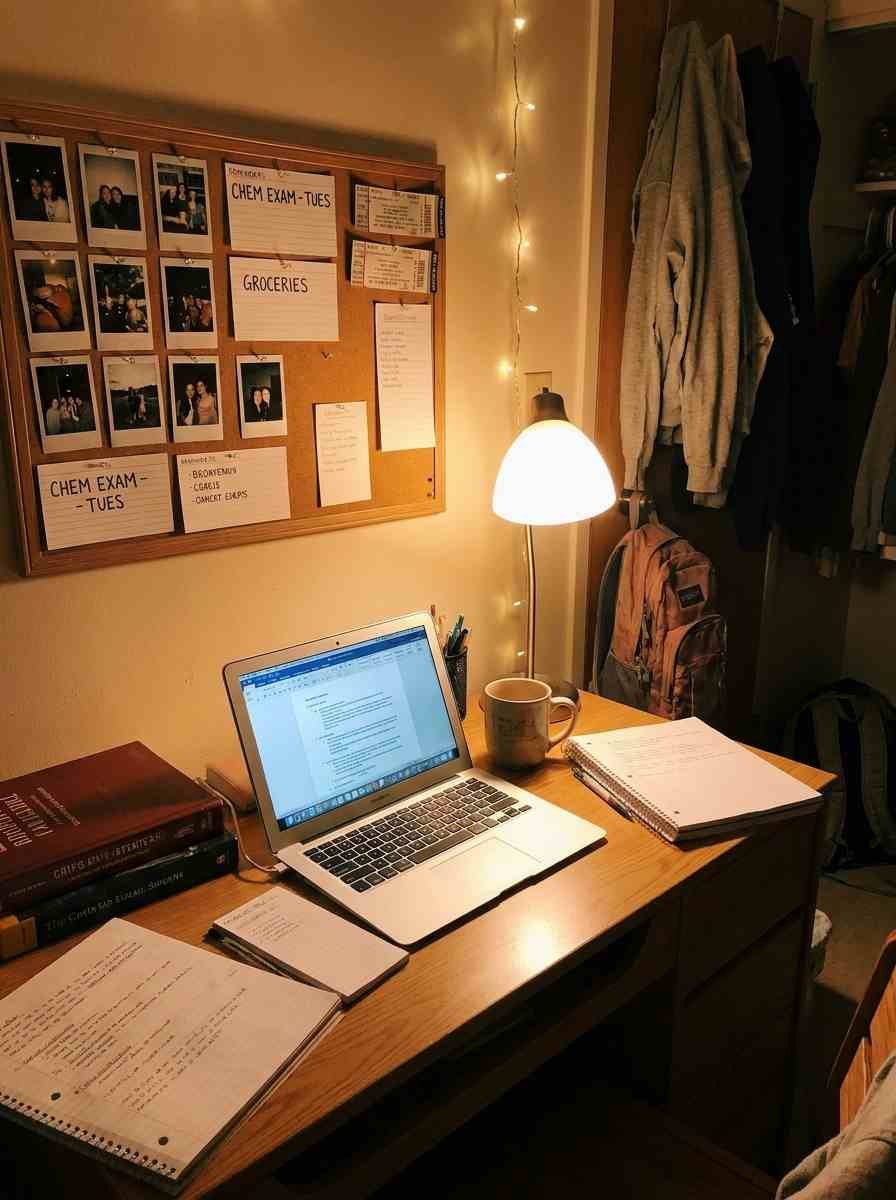
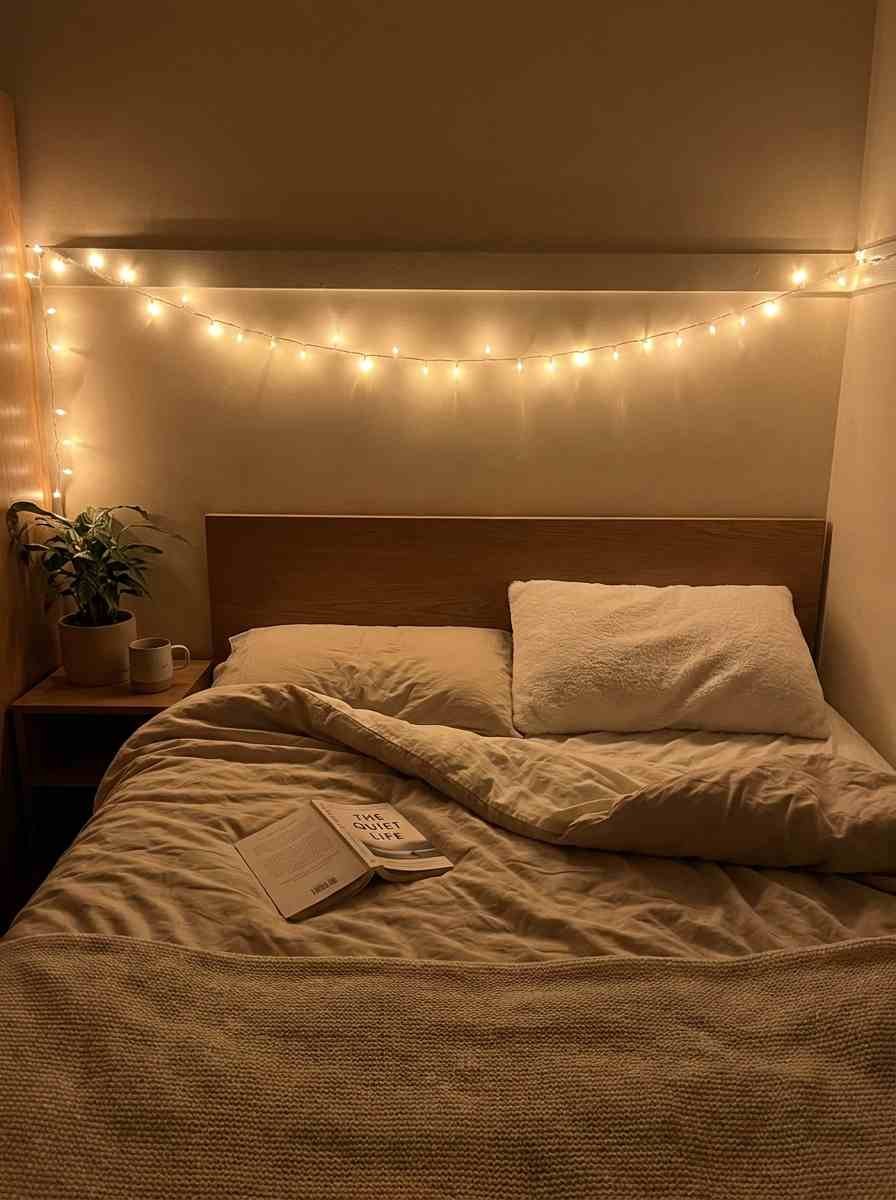
String lights pinned in a simple line – not draped everywhere, just one clean run along a shelf or headboard.
Random side note: my old roommate decorated her entire side of the room with thrifted concert posters from bands neither of us had heard of, and somehow it looked more put together than my carefully chosen prints.
Taste doesn’t always follow the rules above. Treat all of this as a starting point, not a strict code, and don’t be afraid to break it once you know your own room well enough.
23 top small room decor minimalist ideas for a stylish space
Lighting that makes a room feel less like a hospital wing
Dorm overhead lighting is rough. It’s almost always one harsh ceiling fixture, the kind that makes everyone look slightly sick, and fixing it changes the whole room’s personality more than any poster will.
A warm-toned desk lamp – skip the cool white bulb that came with the room if you can.
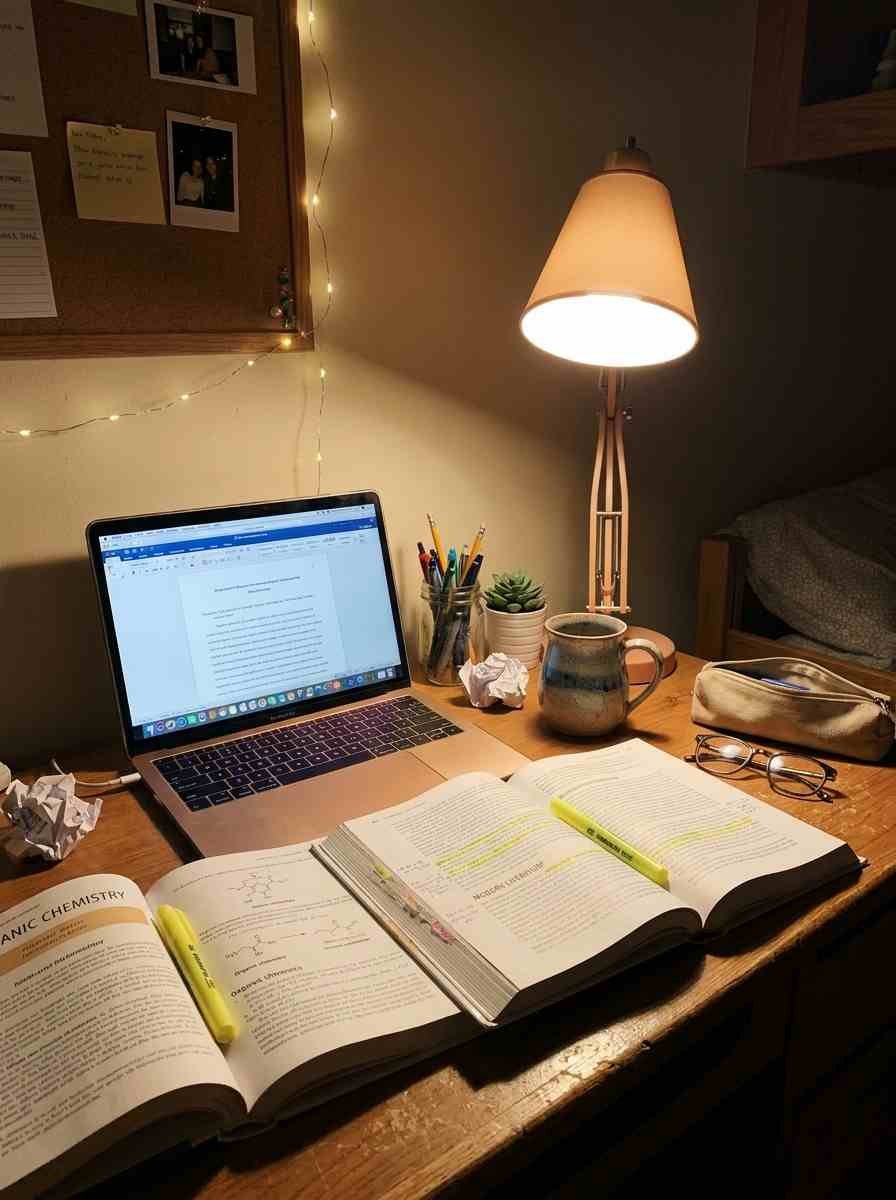
A small clip-on reading light – clamps to a headboard or shelf, saves you from waking your roommate at 1am.
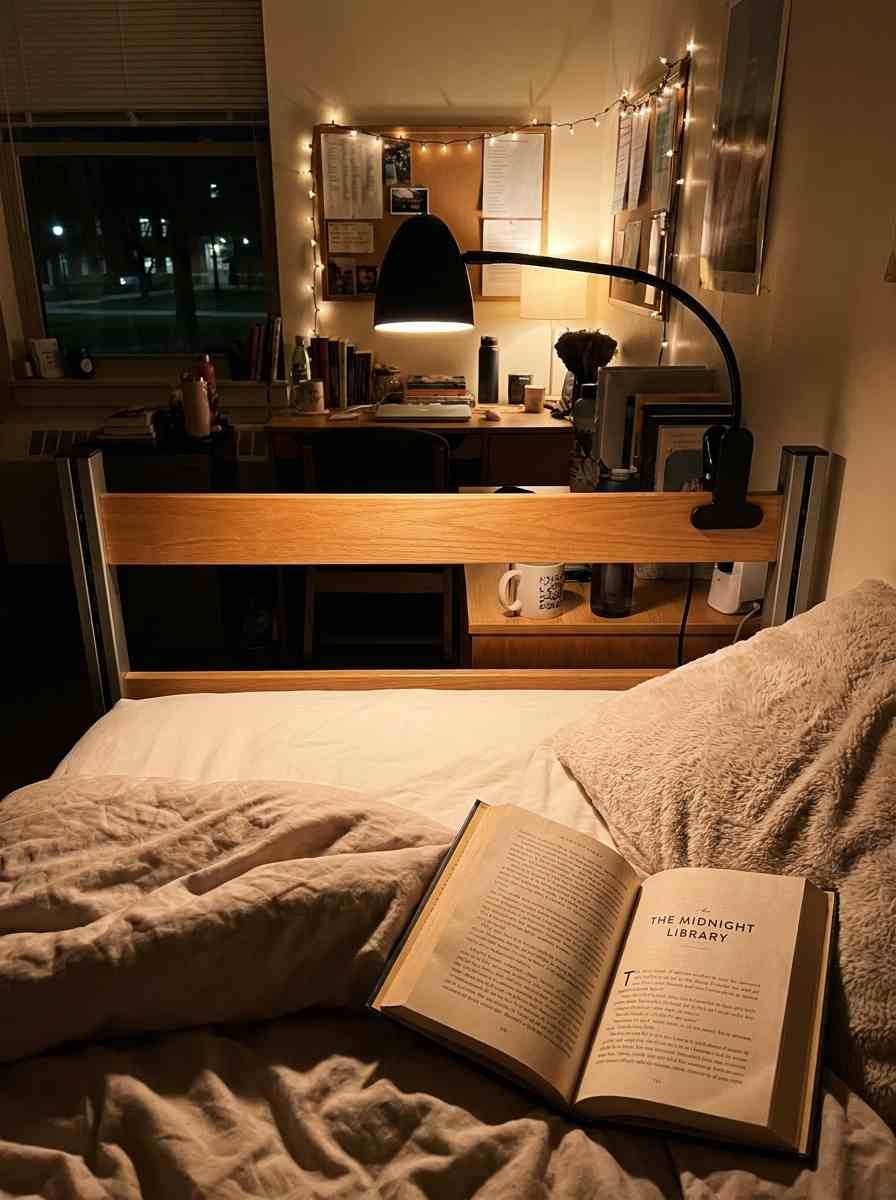
LED strip lights behind a desk or headboard – subtle, not club-lighting levels of bright.
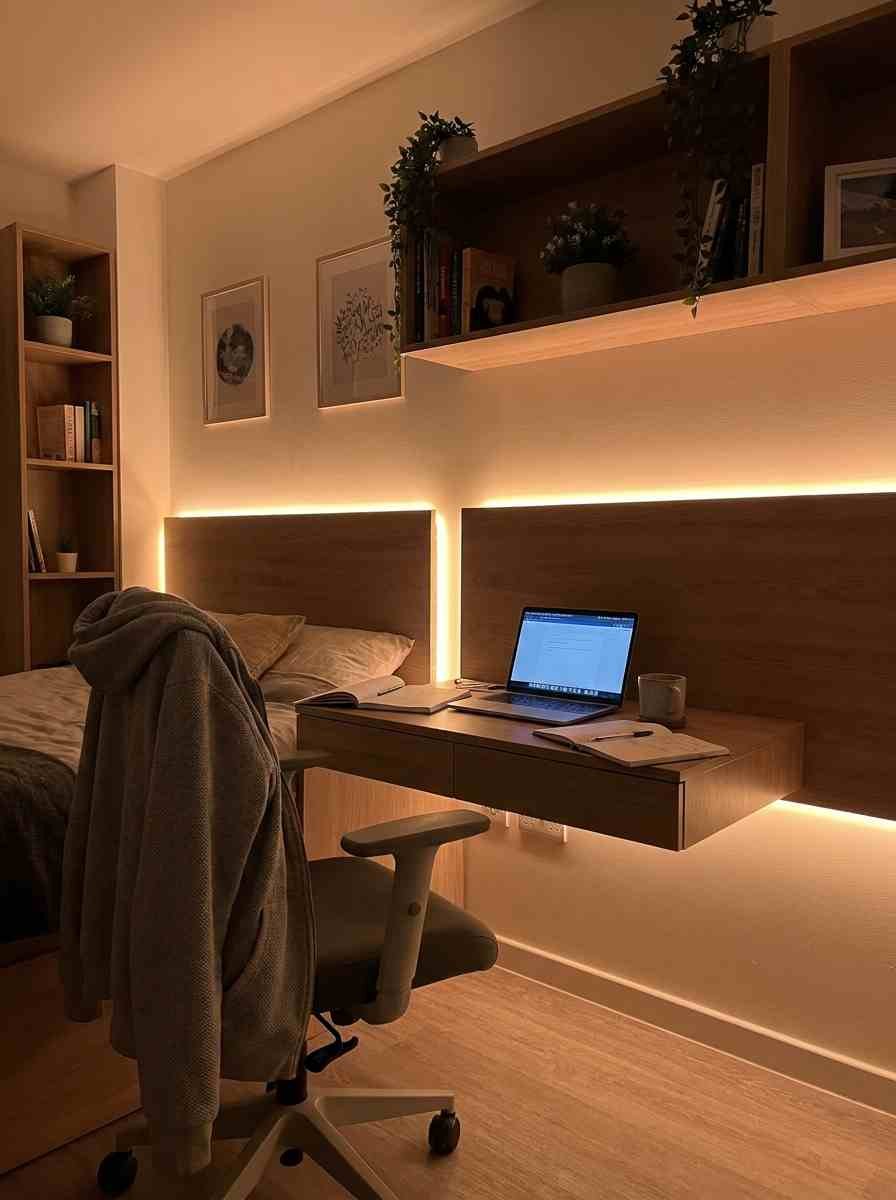
A simple floor lamp – if your room has the floor space for one, it does more for the mood than anything else on this list.
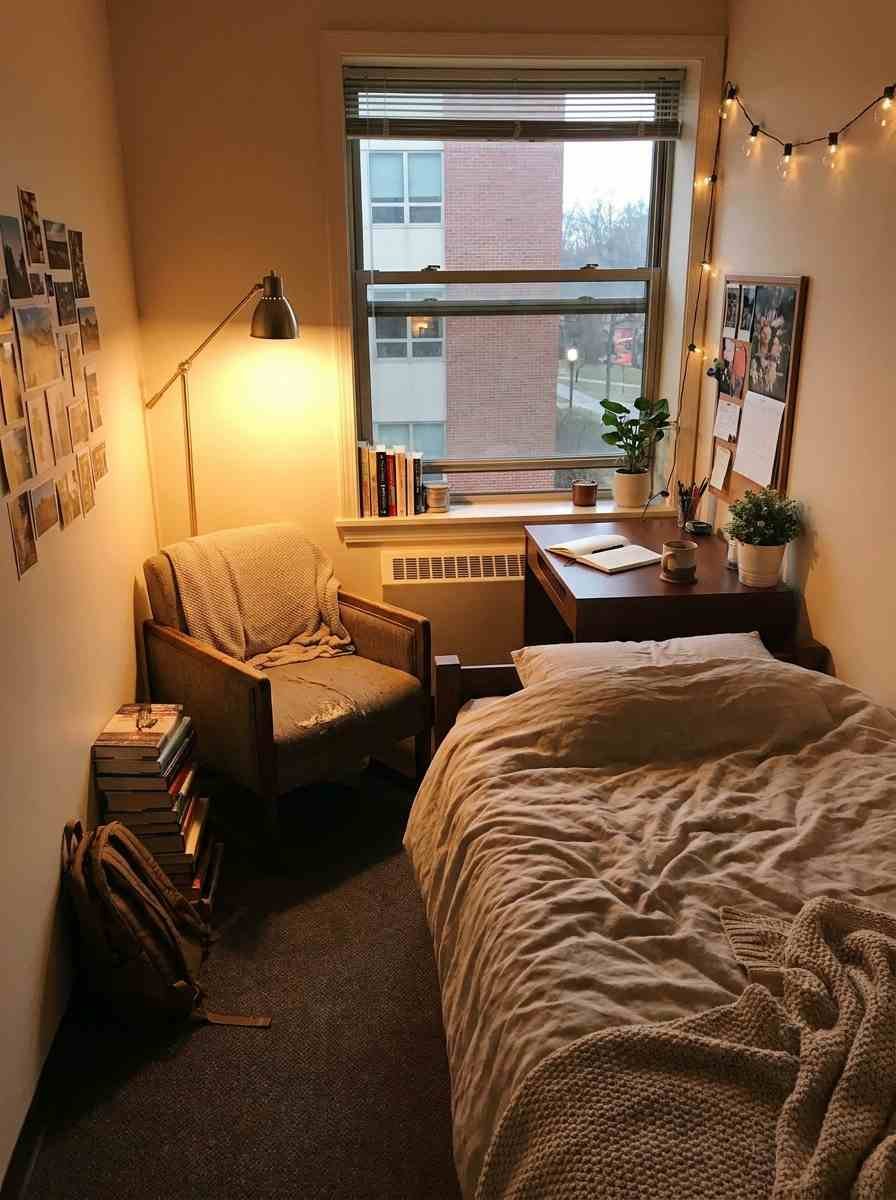
Warm white bulbs, usually in the 2700K to 3000K range, read as cozier than the cooler 5000K bulbs most schools install by default.
Energy Star has a clear explainer on what those Kelvin numbers actually mean if you want the full technical picture. That single bulb swap changes a room more than you’d expect.
Textiles and color, without the bed turning into a showroom
This is where minimalism gets tested. It’s tempting to pile on cushions until your bed looks like a furniture catalog spread, especially once you start scrolling for inspiration and every photo has eight throw pillows in it.
One textured throw blanket – wool, knit, or chunky weave, draped at the foot of the bed.
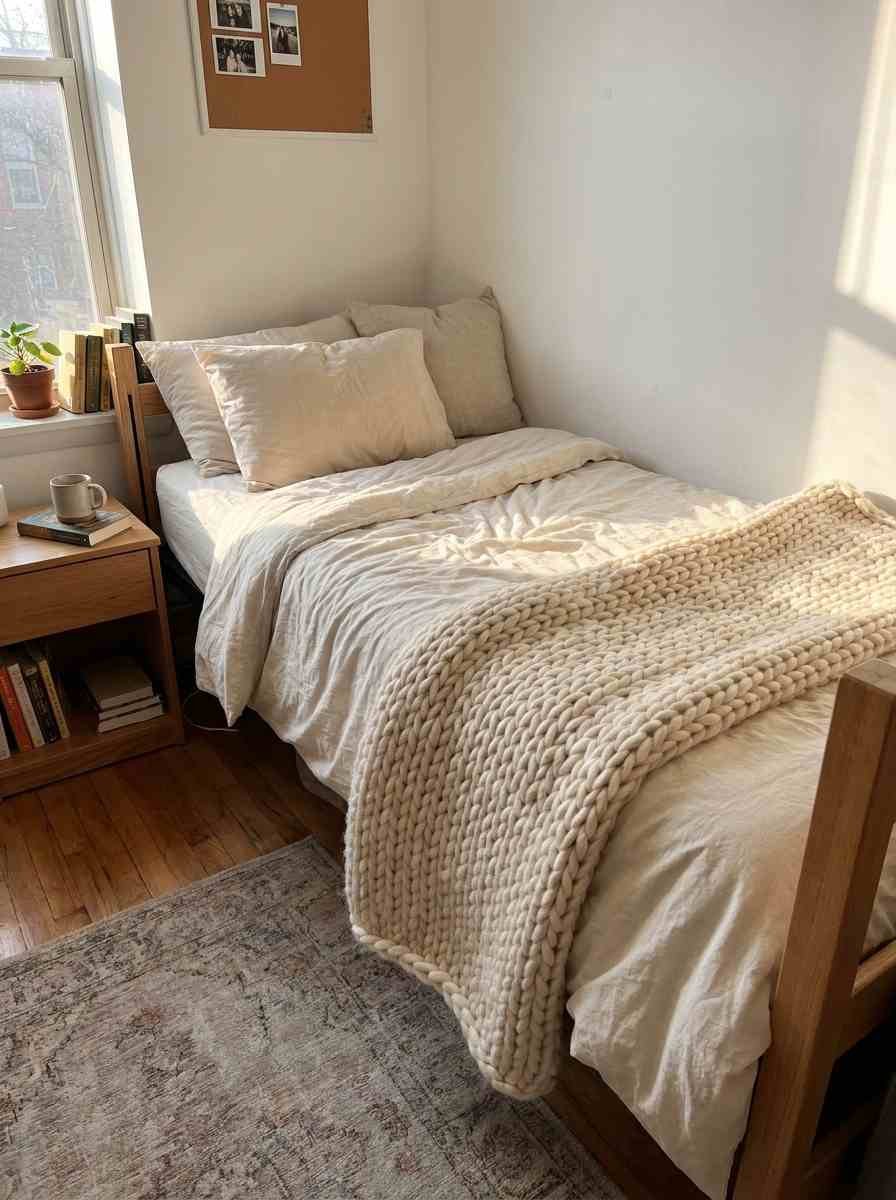
Two pillows max, in coordinating but not matching tones – matching everything reads as try-hard.
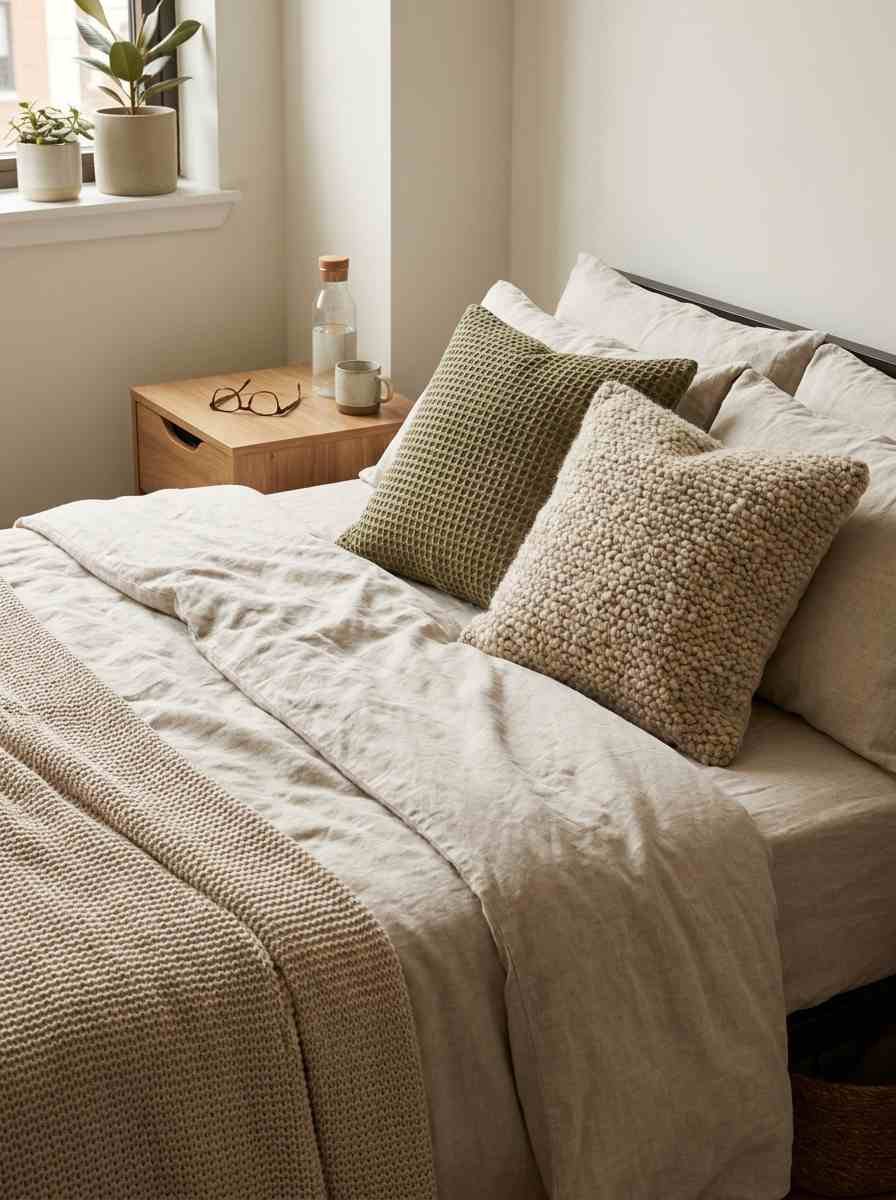
A small area rug – even 3×5 feet changes how a room feels underfoot and breaks up the floor visually.
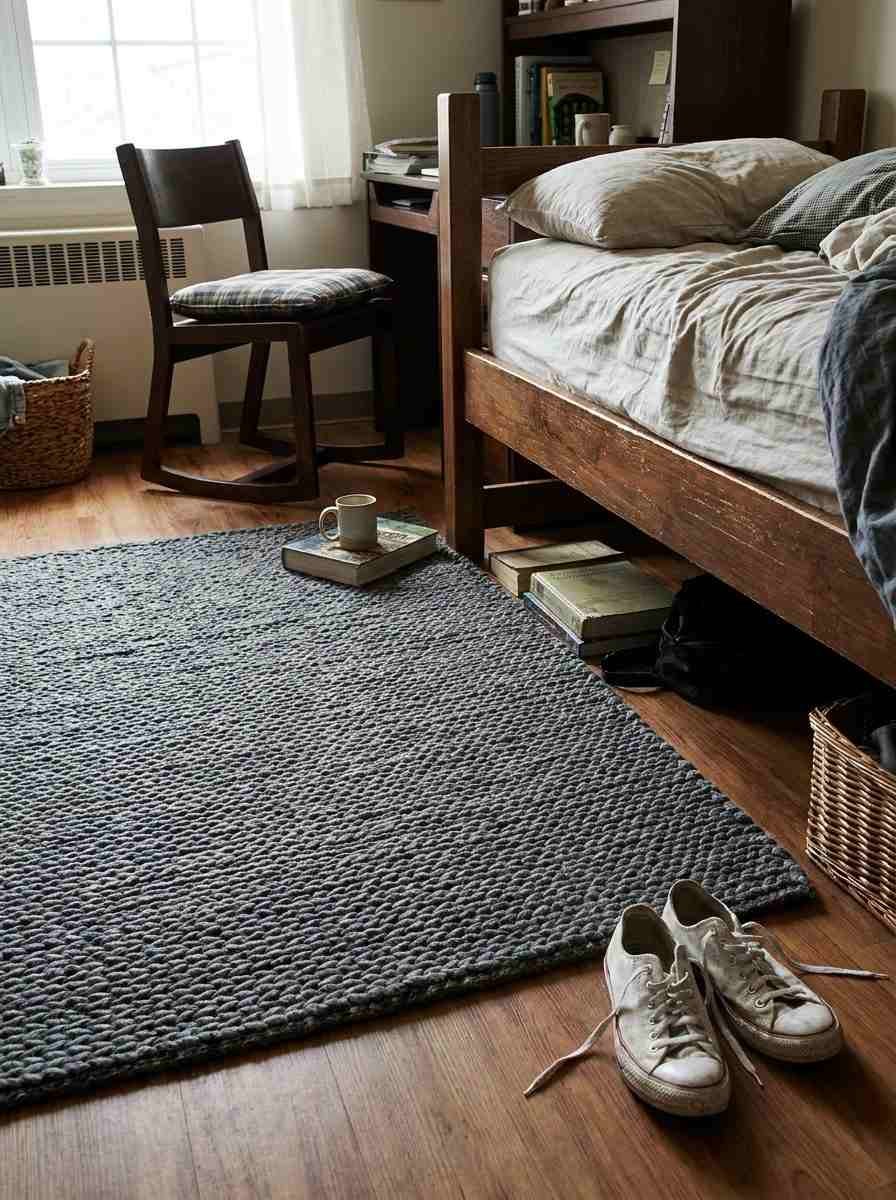
Curtains in a neutral or muted tone – blackout if your windows face anything bright, sheer if you want softness during the day.
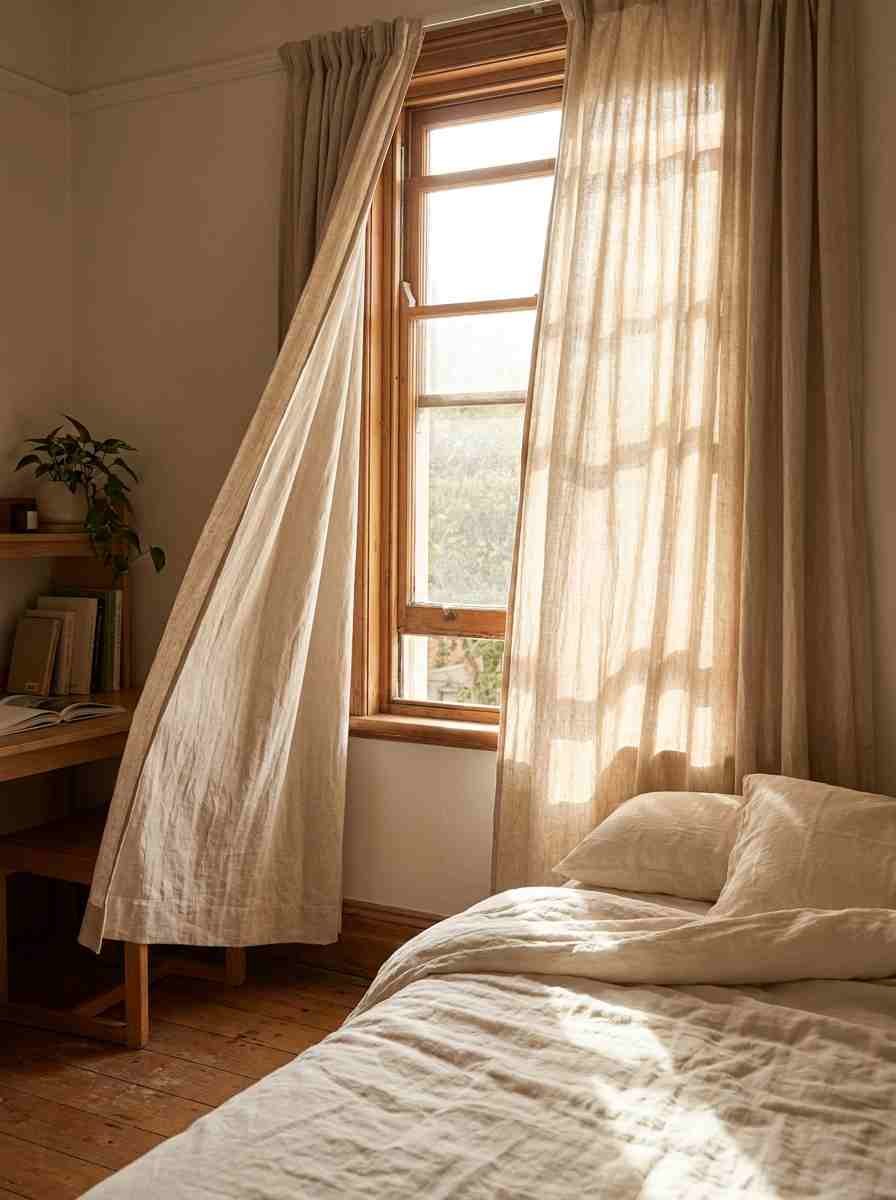
IMO the biggest mistake students make here is buying every textile in the same color family.
A little contrast, like a charcoal rug against a cream blanket, reads as intentional instead of accidental.
Personal touches that still read as minimal
Decor without any personality is just a hotel room. These last four ideas keep the space yours.
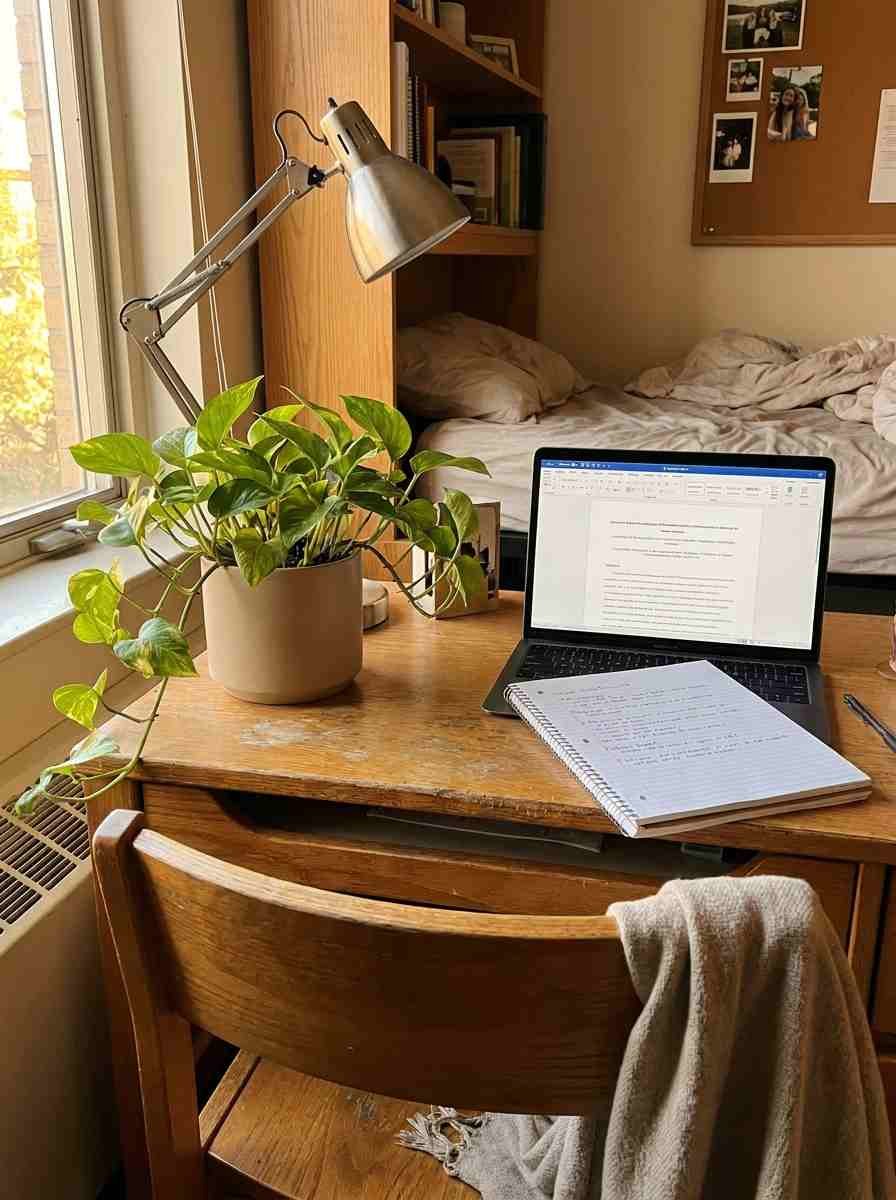
A small plant – low-maintenance varieties like pothos or snake plants survive dorm lighting and inconsistent watering.
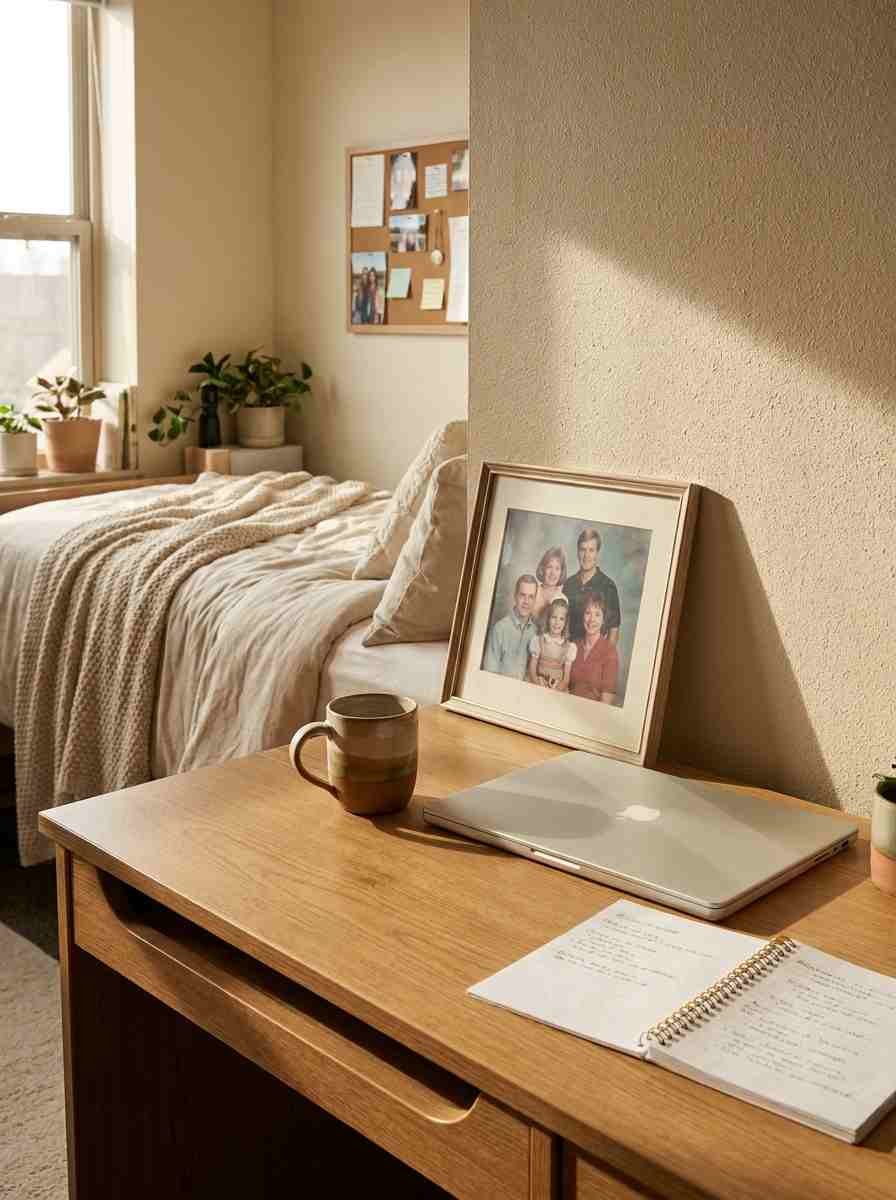
A framed photo of people who matter to you – one, not six.
A single scented candle or reed diffuser – check your school’s fire policy first. This one trips people up constantly.
A small tray on your desk for keys, jewelry, or whatever you’d otherwise lose – functional, but it also gives your desk a finished look.

That’s all 24. Wow, writing them out, I forgot how much of my old room traces back to a list almost exactly like this one.
A few things worth skipping
Not every popular dorm trend earns its space, and it’s fair to call a couple of them out before you spend money on them.
- Giant tapestries covering an entire wall – they trap dust, they’re a pain to wash, and most rooms are too small for one to read as anything but overwhelming.
- A dozen tiny picture frames in random sizes – it looks chaotic fast, and half of them end up face-down in a drawer by November anyway.
- Scented plug-ins – a lot of schools ban them outright, and they’re rough on a roommate with allergies or a small room with bad airflow.
None of these are disasters. They’re just the items I’d put money toward something on the list above instead.
Quick budget cheat sheet
| Category | Typical cost | Worth the splurge? |
|---|---|---|
| Storage (bins, cart, riser) | $20-$60 | Yes, every time |
| Lighting (lamp, LED strip) | $15-$40 | Yes |
| Wall decor (prints, hooks) | $10-$35 | Only for one statement piece |
A few quick questions
Will Command strips actually hold without damaging the paint? Yes, as long as you stay under the weight limit on the package and remove them slowly by pulling straight down instead of outward. I’ve used them in three different rooms across two schools with zero paint damage, and the only time I had an issue was when I ignored the weight rating and hung something heavier than the strip was rated for.
How much should I budget for a full room decor refresh? Somewhere between $80 and $200 covers most of this list comfortably. You can spend less if you thrift textiles and reuse what you already own, and you don’t need to buy everything at once. I bought my lamp in August and didn’t get around to the rug until October.
What’s the easiest idea to start with if this whole list feels like a lot? Swap your light bulb for a warmer tone and add one throw blanket. Those two changes alone shift the entire feel of a room, and neither takes more than 10 minutes from package to finished.
So, which one are you starting with this week? Pin your favorites now so you’re not scrambling to remember them on move-in day.
