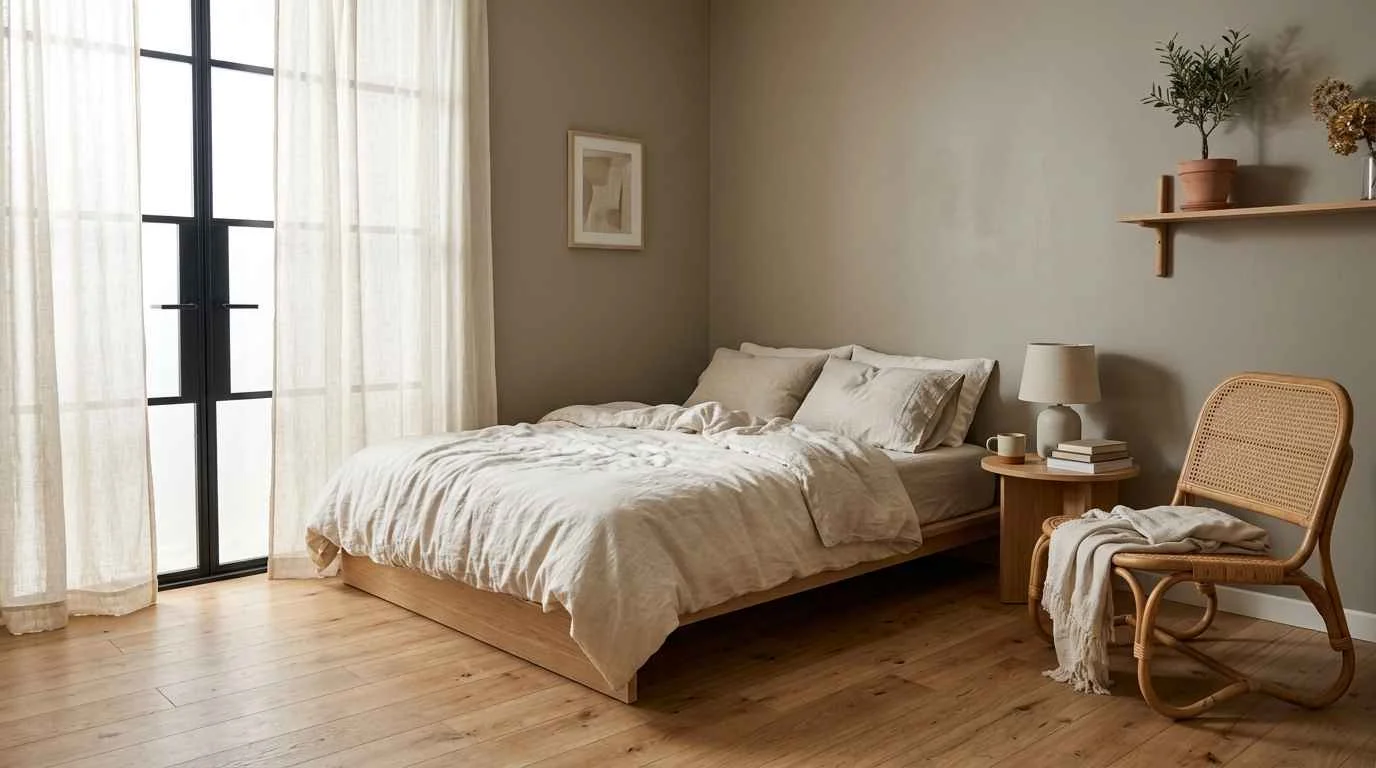
Small rooms get a bad reputation. People treat them like a problem to solve instead of a style to embrace.
I’ve lived in a 280-square-foot studio. I’ve also helped friends turn cramped guest rooms into spaces people actually want to nap in.
The secret isn’t cramming in clever storage hacks (though we’ll get to a few). It’s minimalism done right.
A small room doesn’t need less stuff. It needs the right stuff, placed with intention. Here are 23 ideas that prove tiny spaces can look like they belong in a design magazine.
Start with a neutral base
Color theory matters more in small rooms than anywhere else.
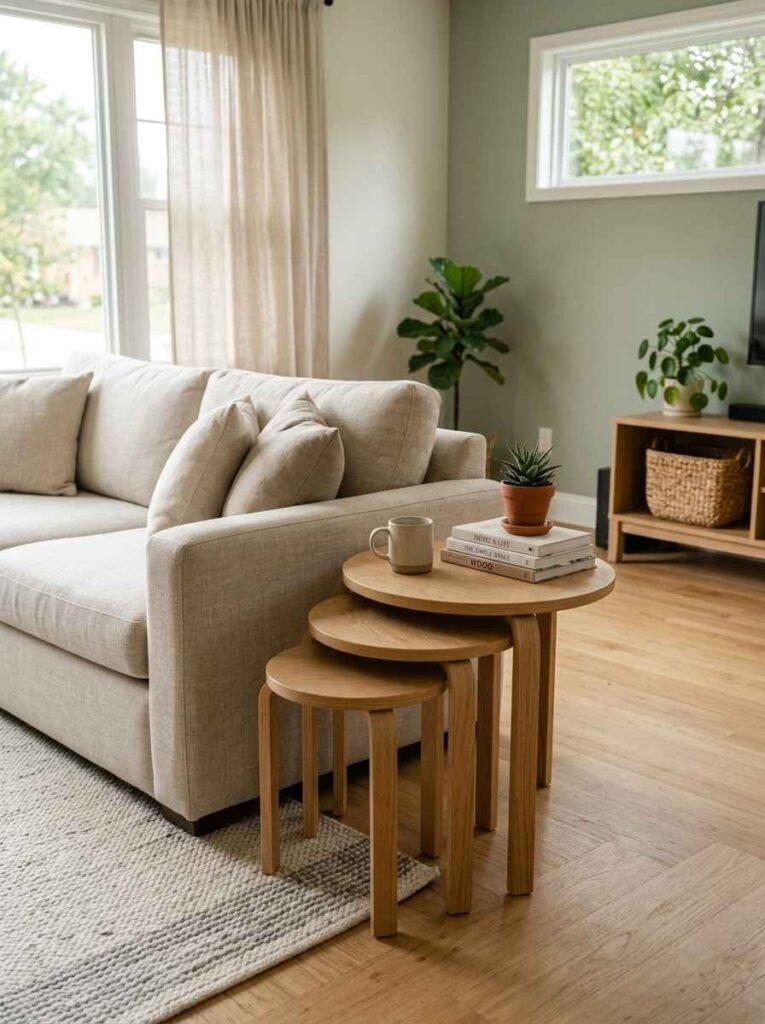
1. Go monochrome on walls and big furniture. Stick to one or two neutral tones: warm white, soft greige, pale oat. This trick alone makes walls feel like they’re receding instead of closing in.
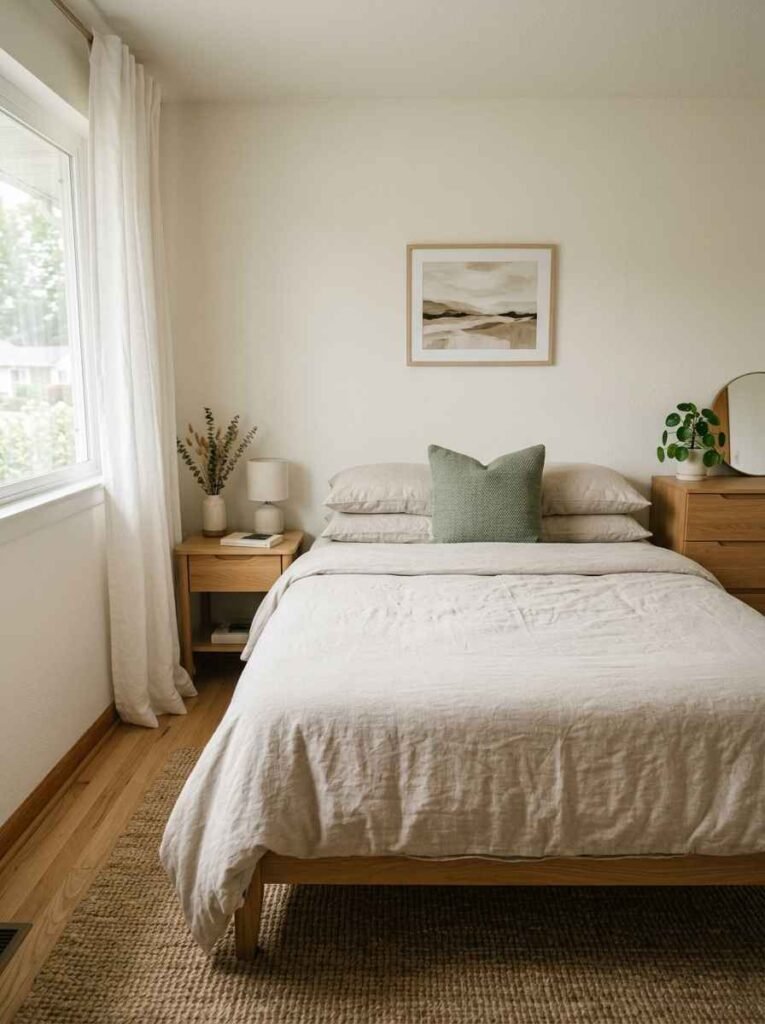
2. Use a single accent color, sparingly. Pick one shade. Sage green. Terracotta. Dusty blue.
Let it show up on a pillow, a vase, maybe a piece of art. One accent reads as intentional. Five accents read as chaos.
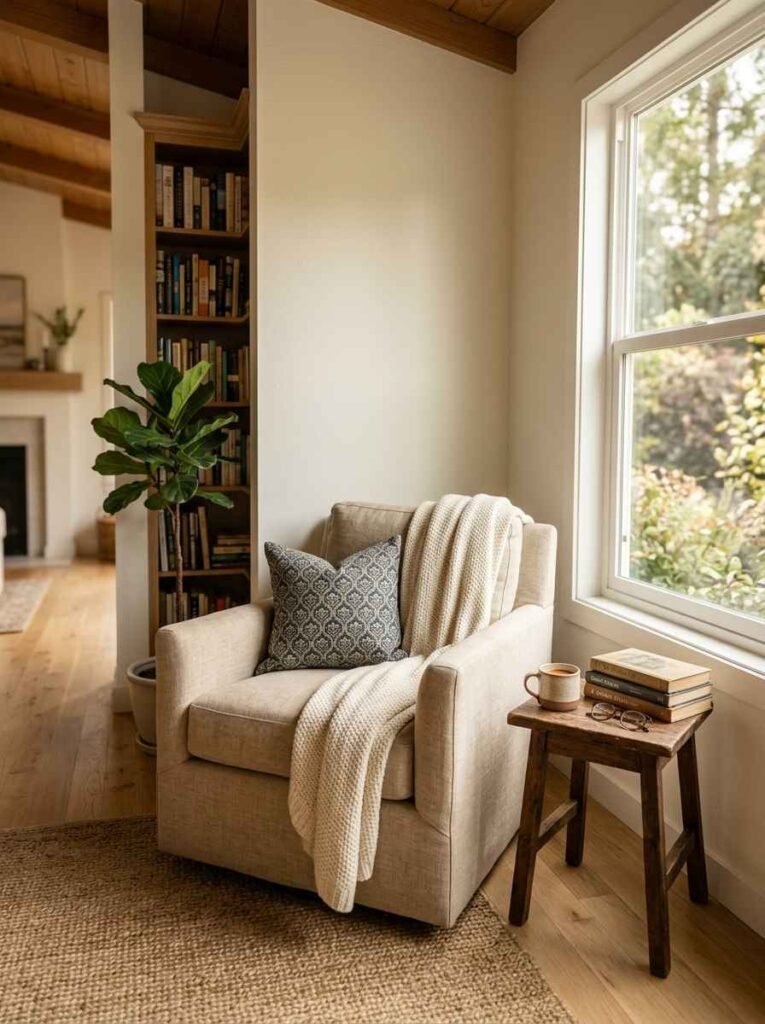
3. Skip busy patterns on large surfaces. Save the patterns for small items: a throw, a single chair, a stack of books.
Big patterned rugs or curtains in a tiny room fight for attention they don’t deserve.
Furniture that earns its square footage
Every piece in a small room has to work harder than it would in a big one.
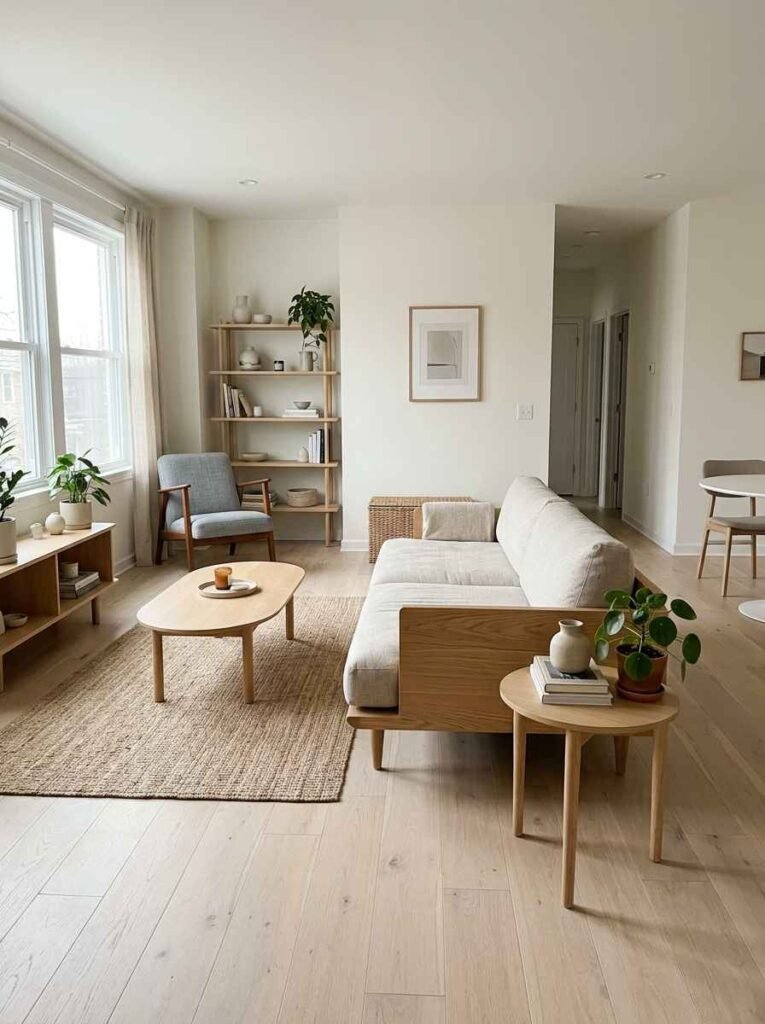
4. Choose furniture with visible legs. A sofa or bed frame that sits up off the floor lets light pass underneath.
That sliver of visible floor tricks the eye into reading more space than exists.
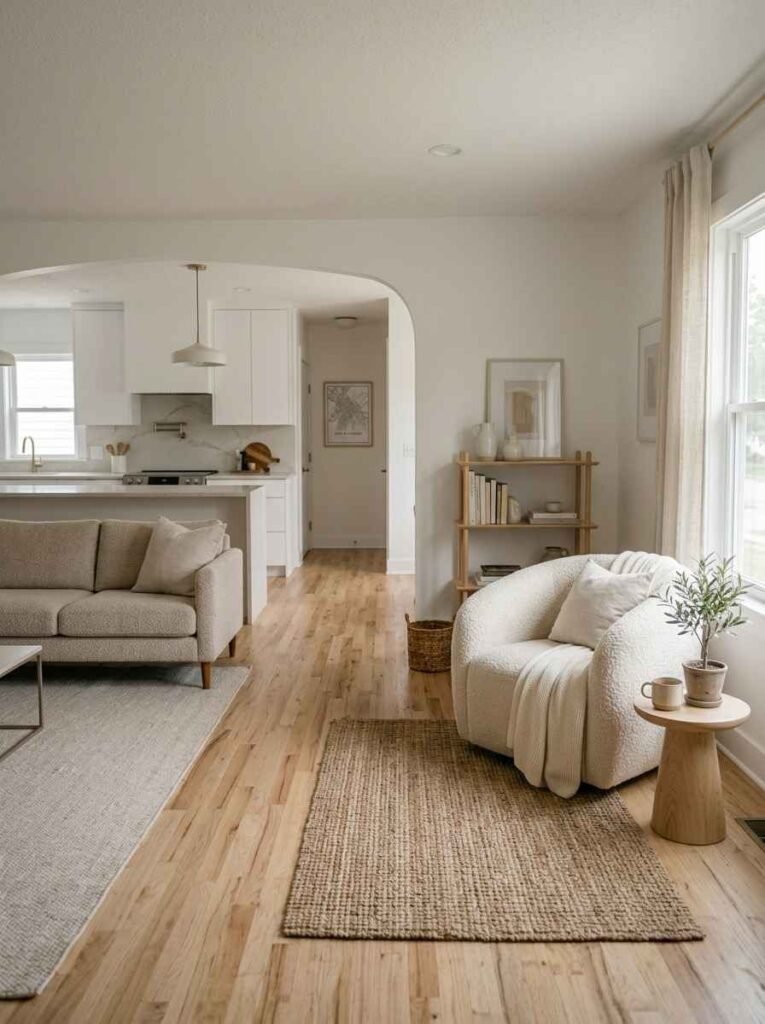
5. Pick one statement piece, not five small ones. A single well-proportioned armchair beats three mismatched accent pieces. IMO, this is the rule people break most often.
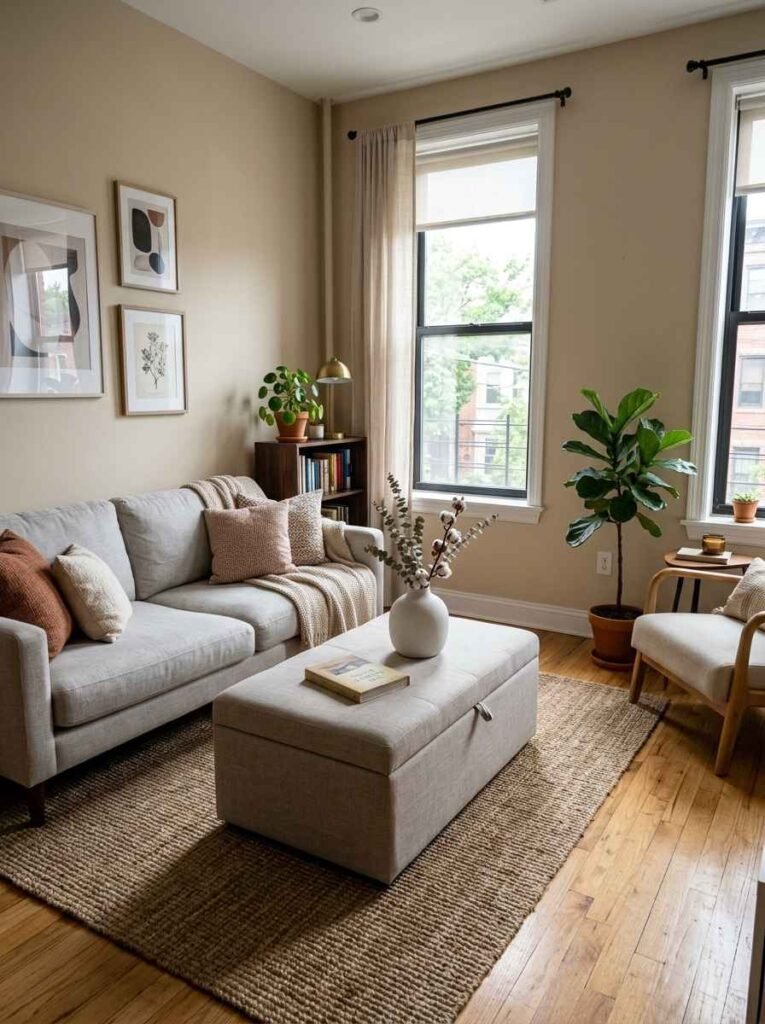
6. Multi-functional furniture is non-negotiable. A storage ottoman. A daybed that doubles as seating.
A console that hides a fold-out desk. In a small room, furniture should never have just one job.
| Furniture Type | Why It Works | Best For |
|---|---|---|
| Storage ottoman | Hides clutter, adds seating | Living rooms |
| Daybed | Sleeps + lounges | Guest rooms, studios |
| Nesting tables | Stacks away when not needed | Apartments |
| Wall-mounted desk | Folds flat against wall | Home offices |
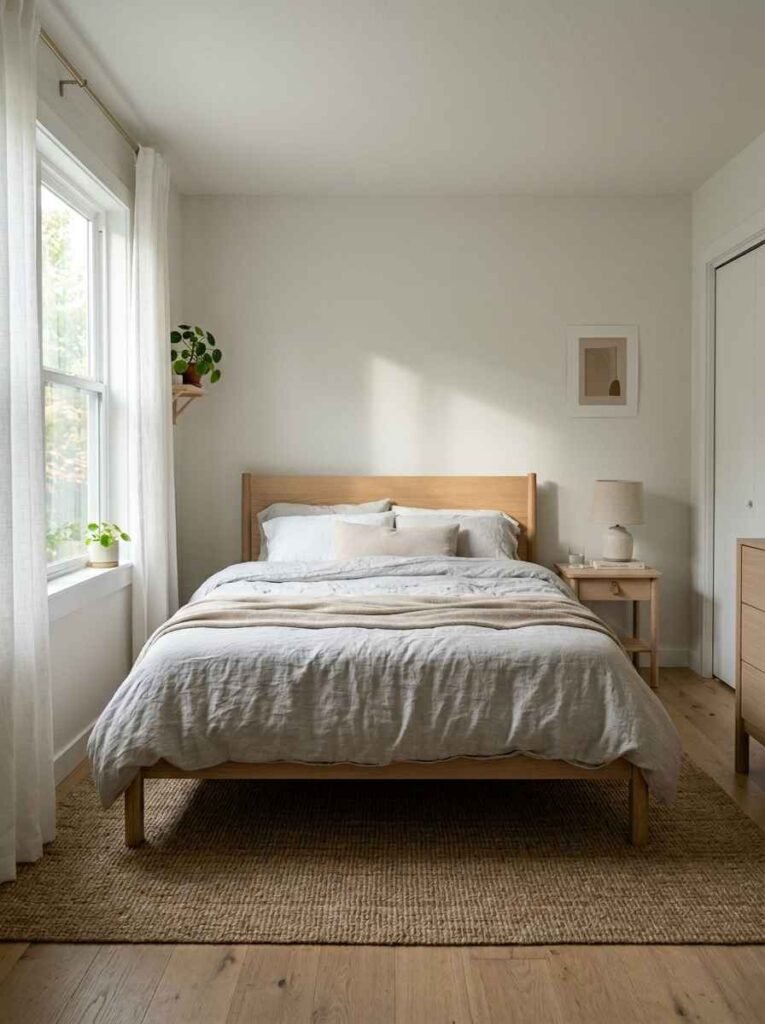
7. Float furniture away from walls when you can. Sounds backward, but pulling a bed or sofa even six inches off the wall creates a shadow line that adds depth. Pushing everything flush against the wall flattens the whole room.
Let the light do the work
Lighting changes a small room more than almost anything else on this list.
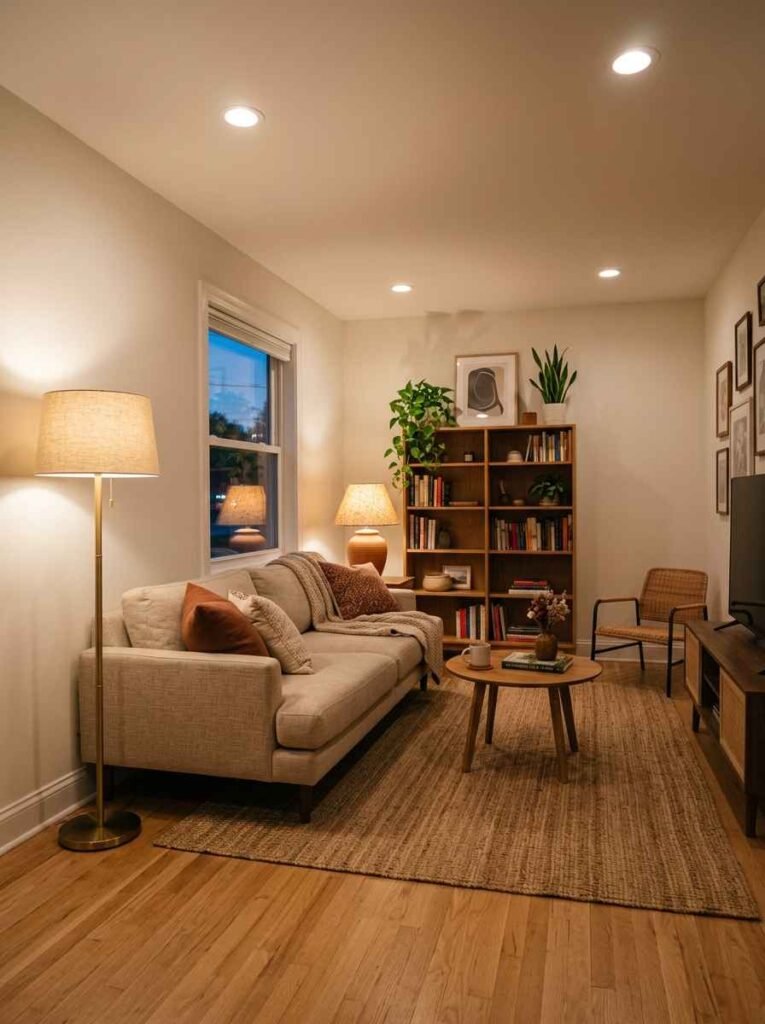
8. Layer three light sources minimum. Overhead, task, and ambient. A single overhead bulb makes any room feel like a waiting room. Three sources at different heights make a space feel designed.
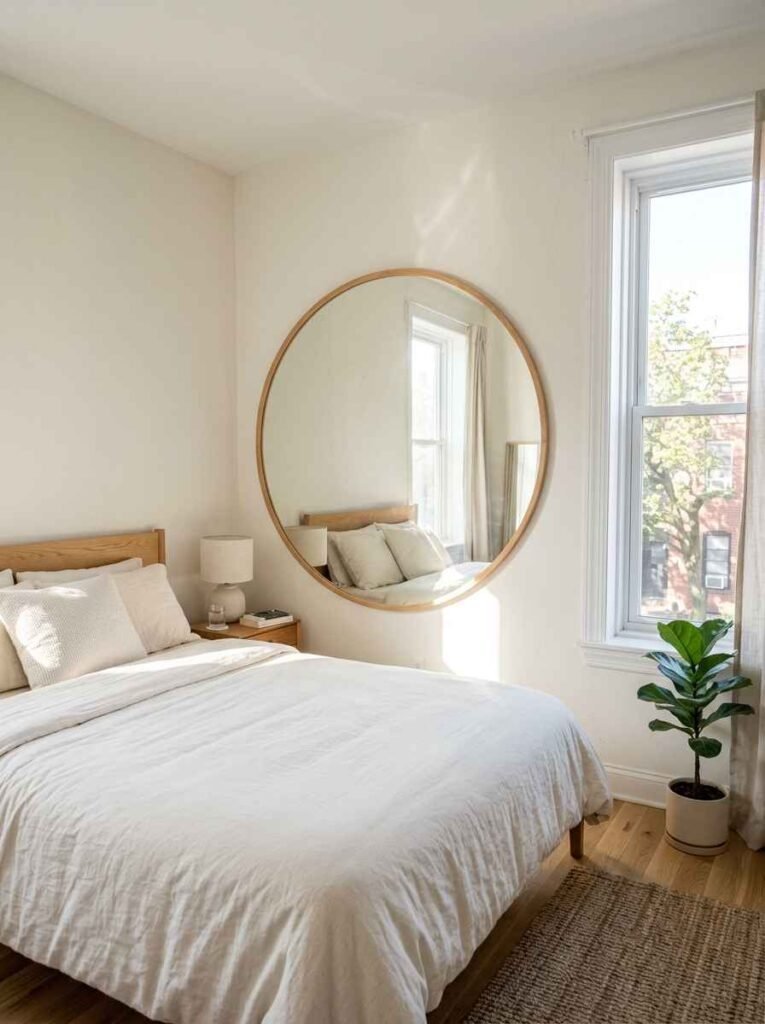
9. Mirrors aren’t a cliché, they’re a tool. Place one across from a window. It doubles the light and visually doubles the room. I was skeptical until I tried it in my own studio. It works.
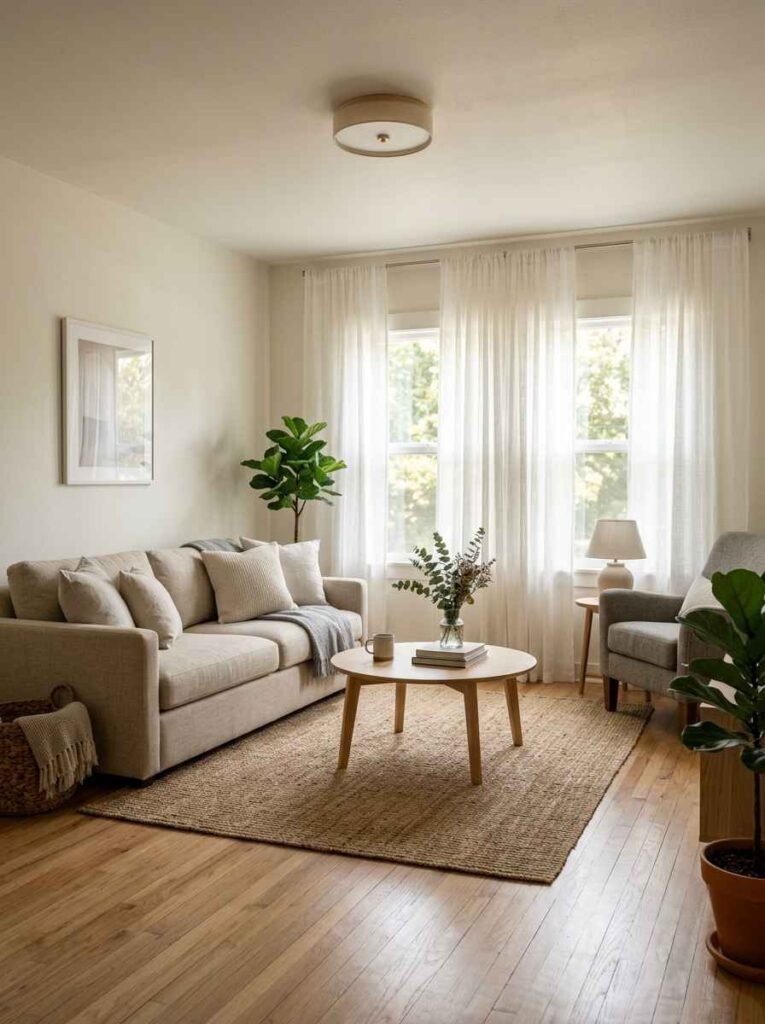
10. Swap heavy drapes for sheer panels. Blackout curtains have their place (hello, bedrooms), but in living areas, sheer fabric lets light bounce around without sacrificing privacy.
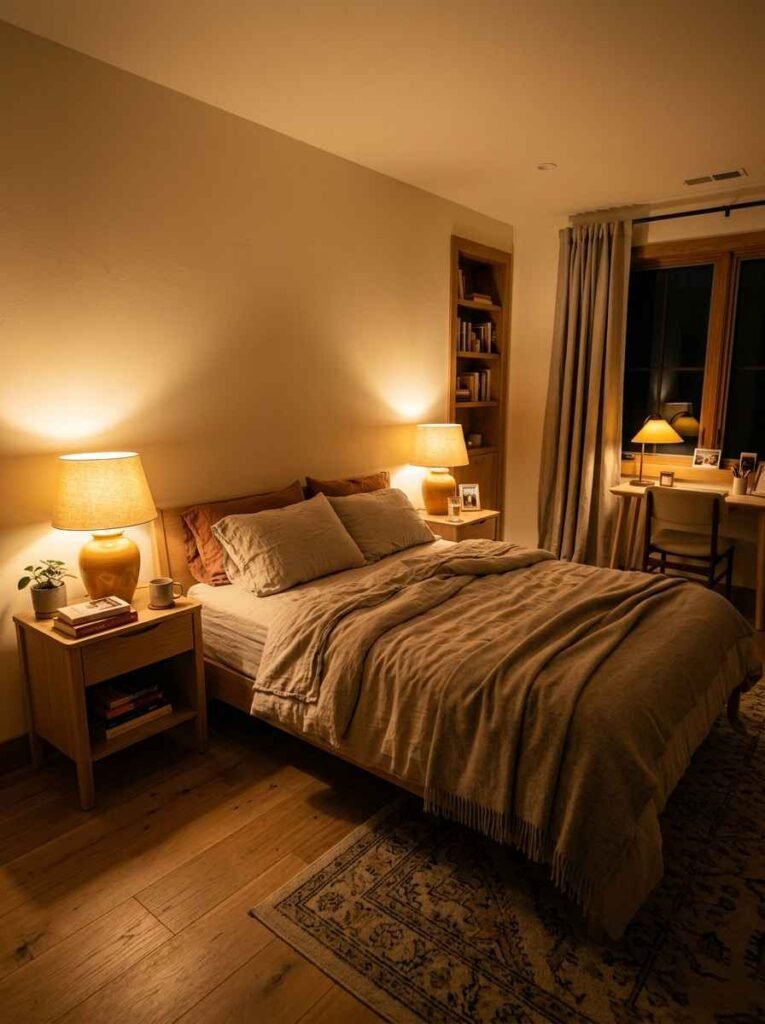
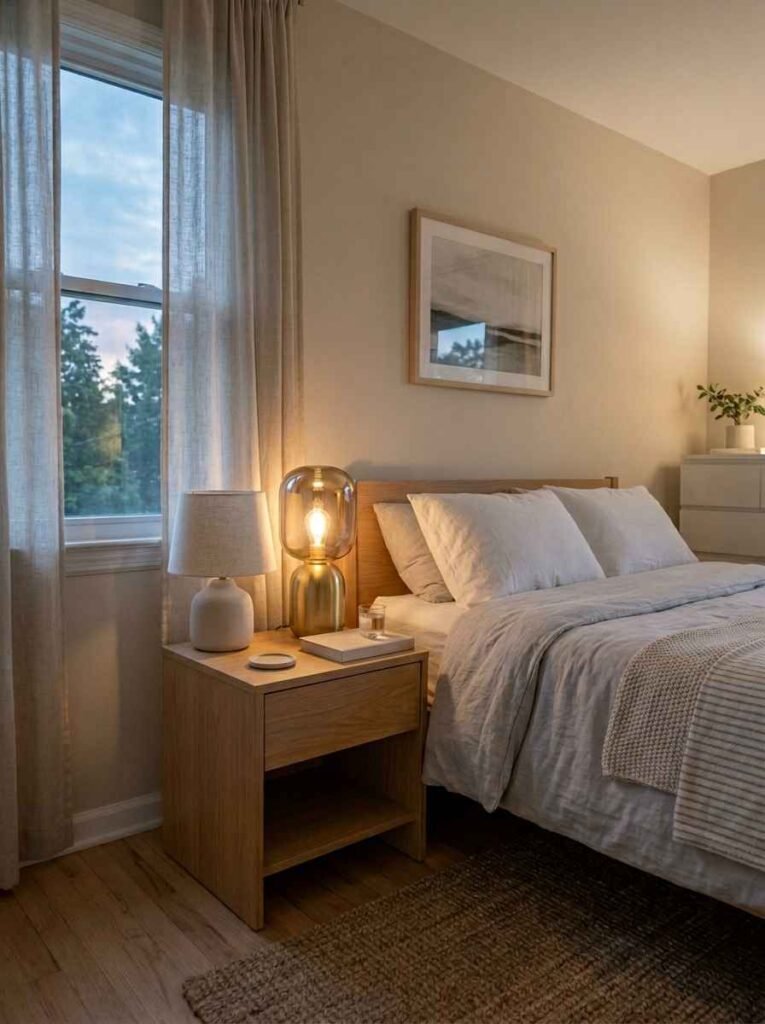
11. Go for warm bulbs, not cool white. Cool lighting reads clinical. Warm lighting, around 2700K, makes a tiny room feel like a retreat instead of a hallway.
Smart storage that doesn’t scream “storage”
The best storage in a small room is the kind nobody notices.
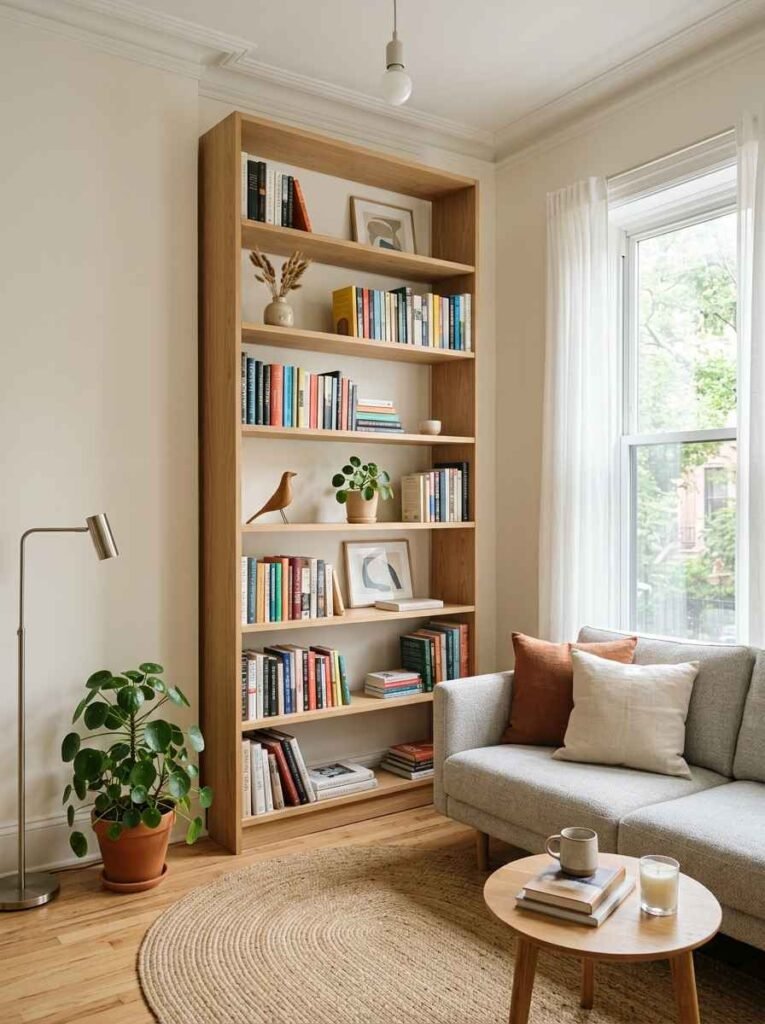
12. Use vertical space before floor space. Tall, narrow bookshelves hold as much as a wide dresser while taking up a fraction of the footprint. Go up, not out.
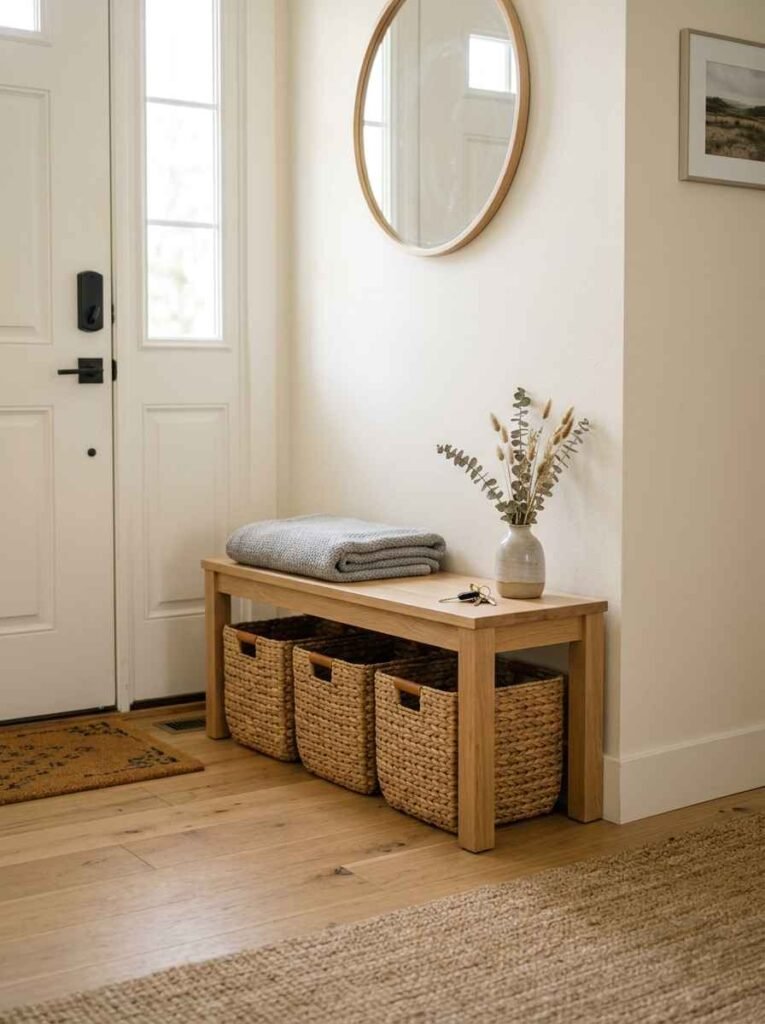
13. Hide storage inside furniture, not on top of it. Baskets under a console. A bench with a lift-up seat.
Drawers built into a bed frame. Visible bins everywhere just look like unfinished moving day.
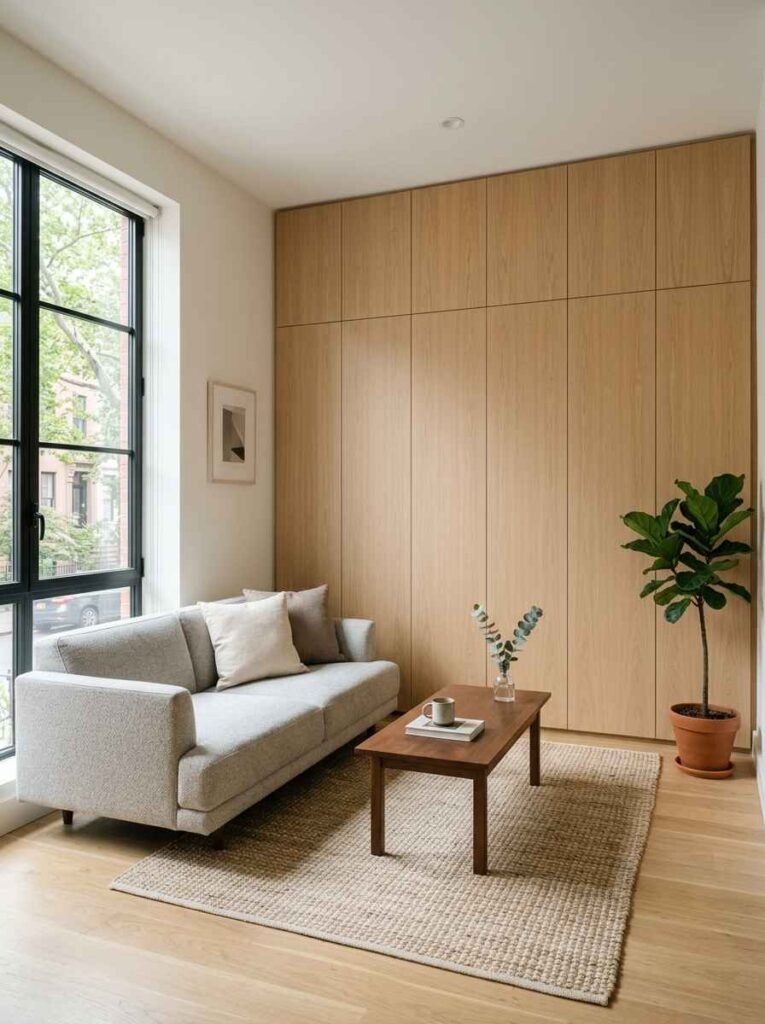
14. Pick closed cabinets over open shelving for everyday clutter. Open shelves look gorgeous in photos.
They look stressful in real life unless you’re rearranging them daily. Save open shelving for a few curated objects only.
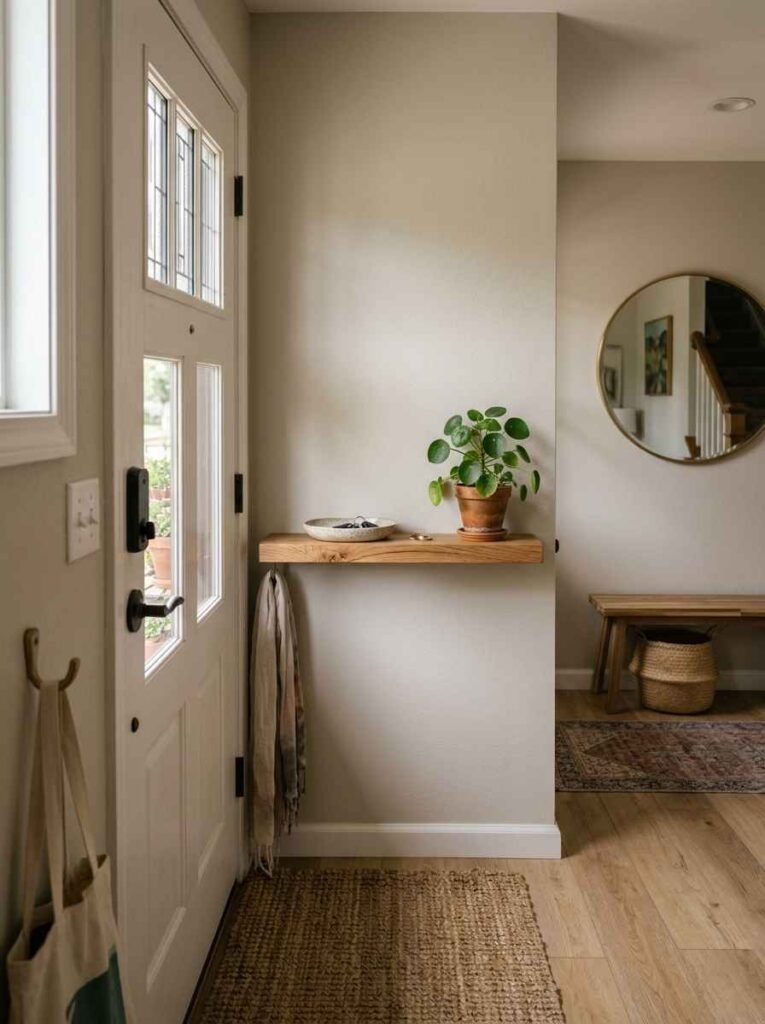
15. Install a slim entryway shelf, even if you don’t have an entryway. A 6-inch ledge near the door for keys, mail, and sunglasses keeps that stuff from migrating onto every other surface.
Texture over volume
This is where minimalism stops feeling cold and starts feeling cozy.
16. Add texture through textiles, not objects. A chunky knit throw. A linen pillow cover. A wool rug.
Texture gives a room warmth without adding visual clutter the way extra decor pieces do.
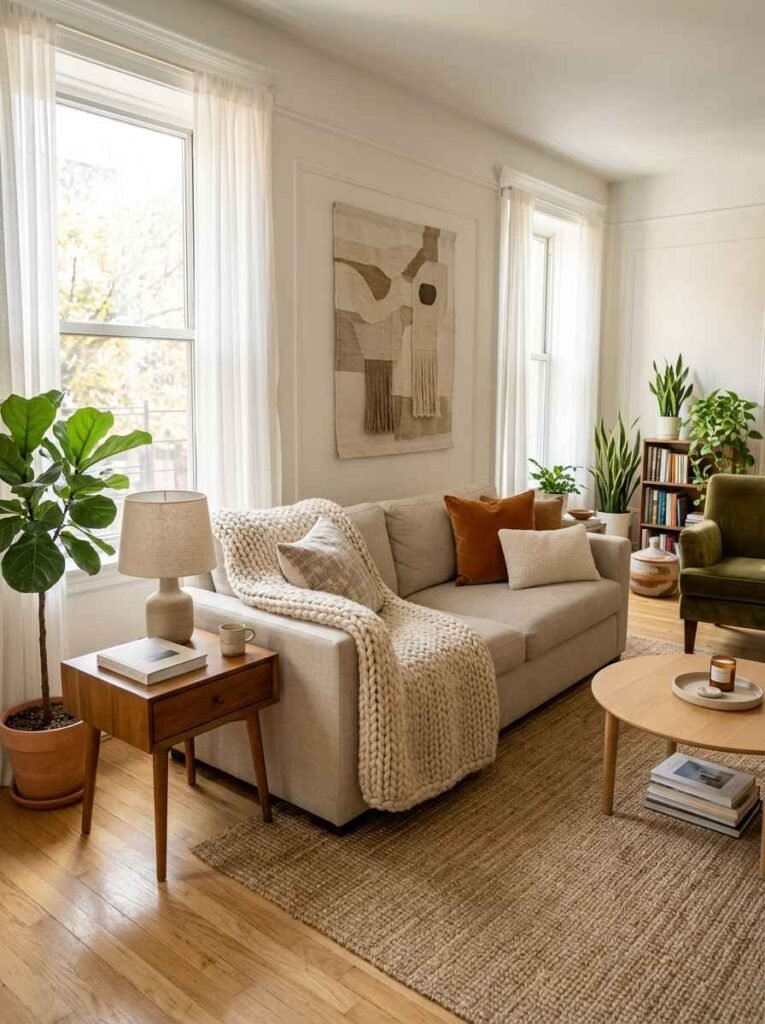
17. Mix matte and slight sheen finishes. All-matte rooms can feel flat. A single glossy ceramic vase or a brushed brass lamp adds just enough contrast to keep the eye interested.
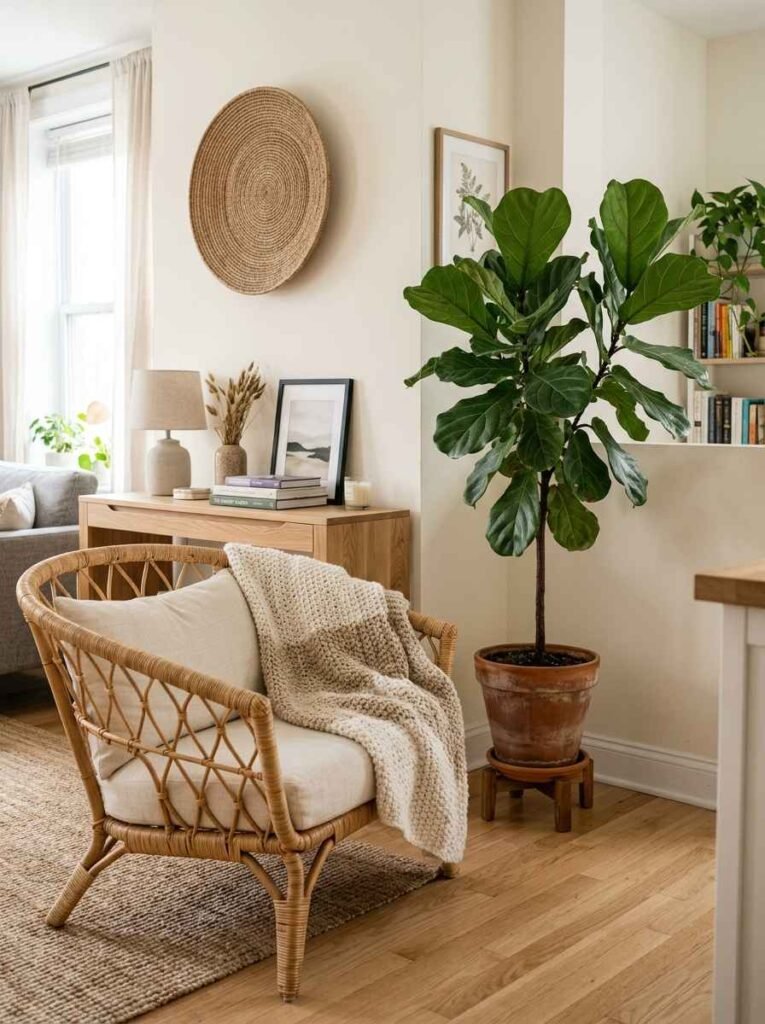
18. Bring in one organic material minimum. Wood, rattan, stone, or a live plant. Synthetic-only rooms feel sterile fast. One natural element softens everything else.
Walls and ceilings are decor too
People forget these surfaces exist until it’s too late.
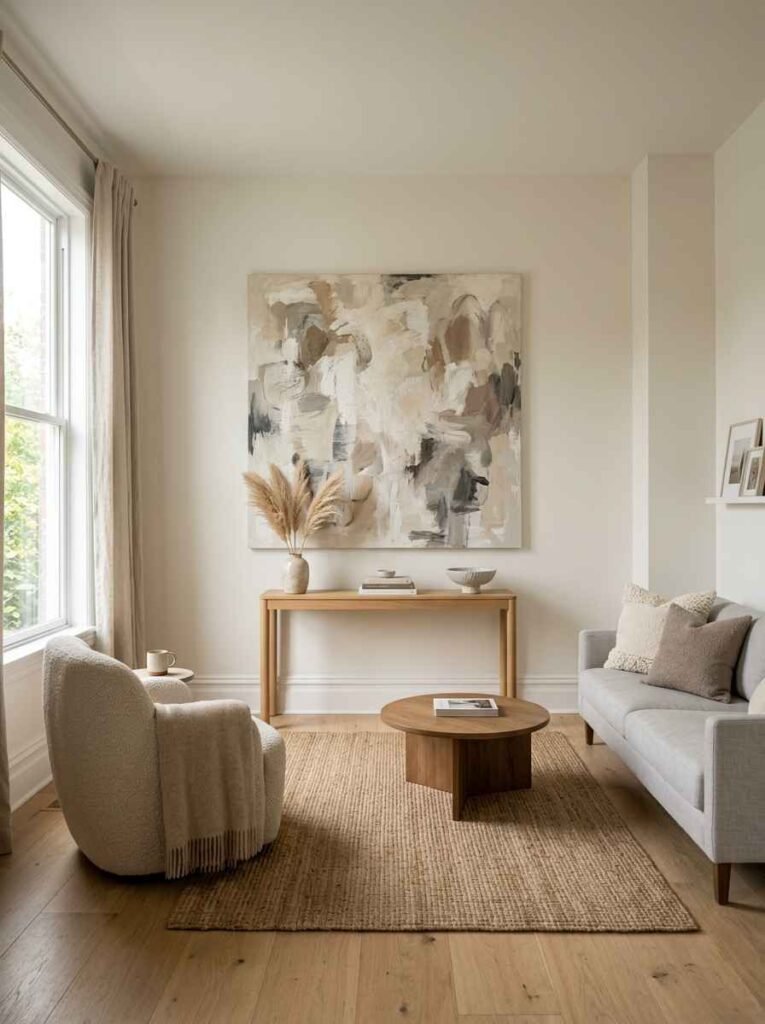
19. Hang one large piece of art instead of a gallery wall. A gallery wall in a small room reads as busy almost every time. One large piece, properly scaled, reads as curated.
20. Paint the ceiling a shade lighter than the walls, not stark white. Stark white ceilings create a harsh line that chops the room visually in half.
A soft tint blurs that line and makes the ceiling feel higher.
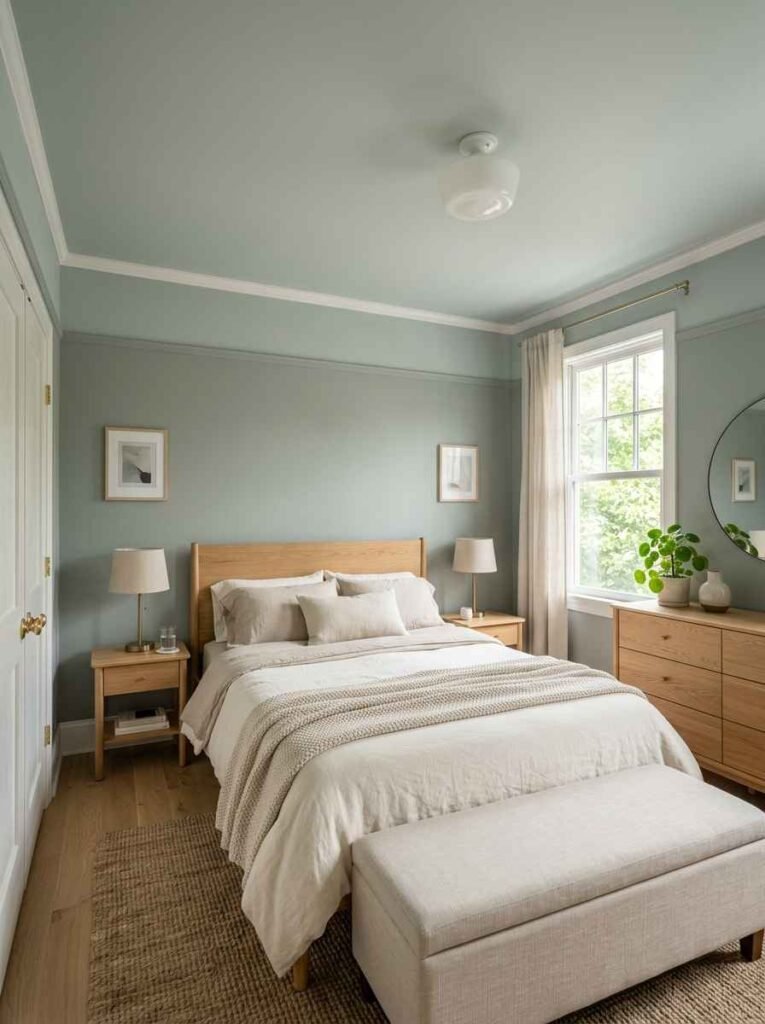
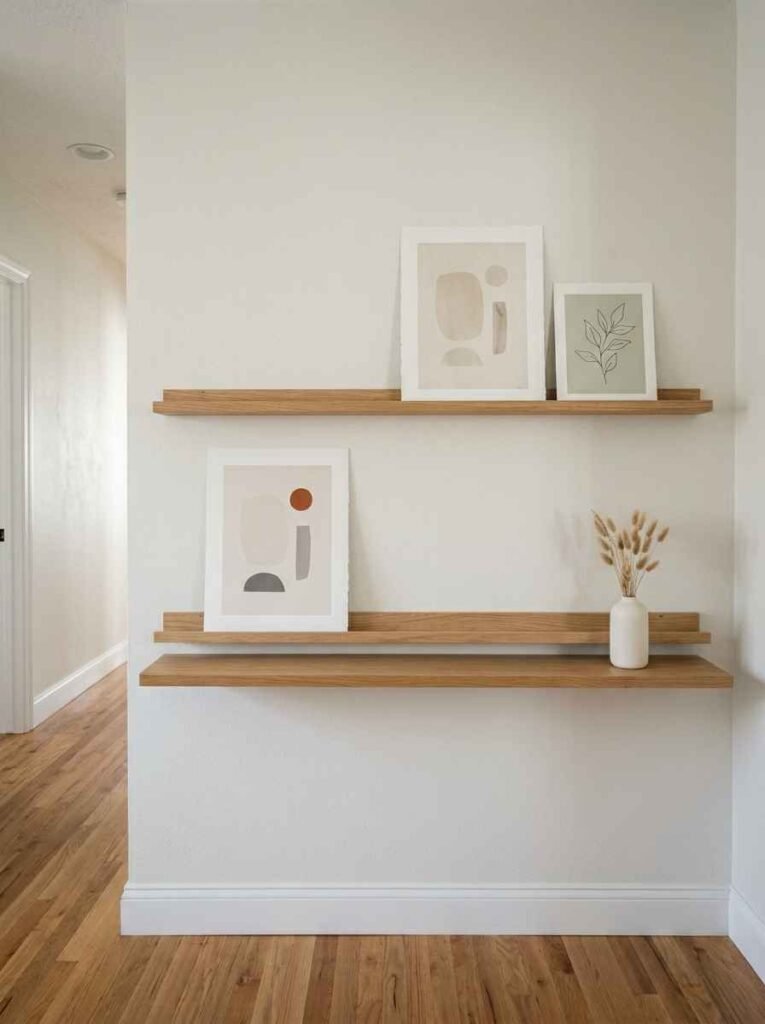
21. Use picture ledges instead of frames hung directly on the wall. Ledges let you swap and restyle art without new nail holes, and the slight depth they add reads as more dimensional than flat framed pieces.
The finishing touches
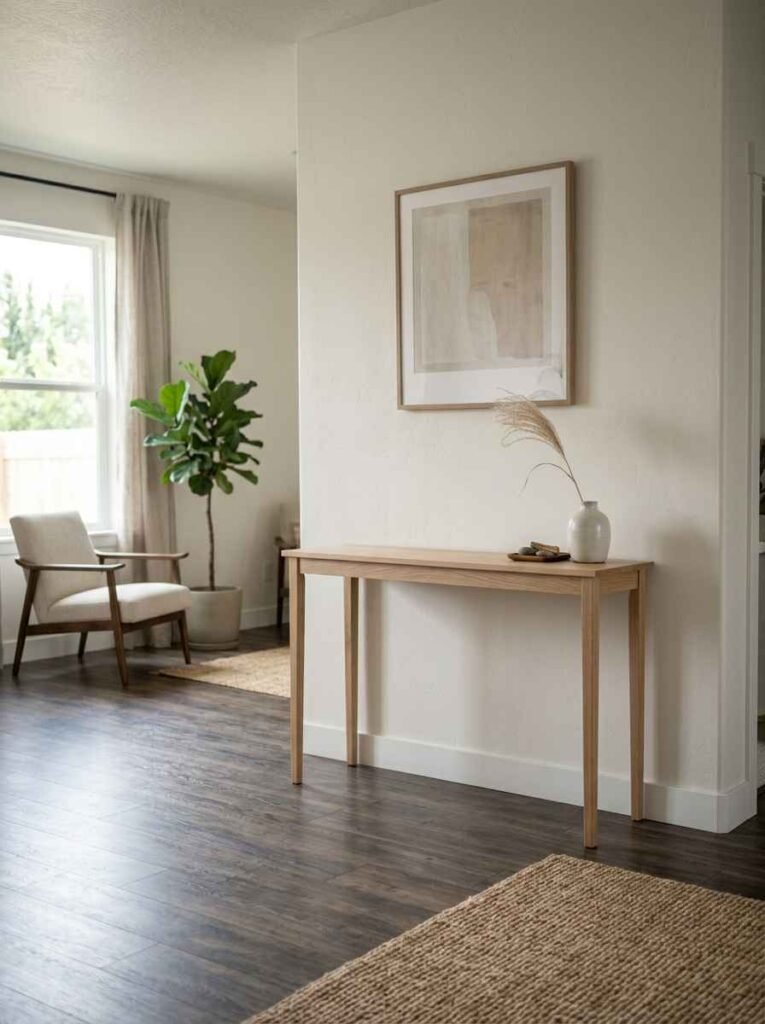
22. Keep surfaces 80% clear, 20% styled. This ratio comes up in nearly every minimalist design conversation, and it holds up.
A fully empty surface feels unfinished. A fully covered surface feels chaotic. Eighty-twenty nails it.
23. Edit constantly, not just once. Minimalism isn’t a one-time purge. Things accumulate. Set a monthly five-minute reset where you put back, donate, or toss anything that snuck onto a clear surface.
Small rooms show clutter fast, so staying ahead of it matters more here than in any other space.
Small space, big style
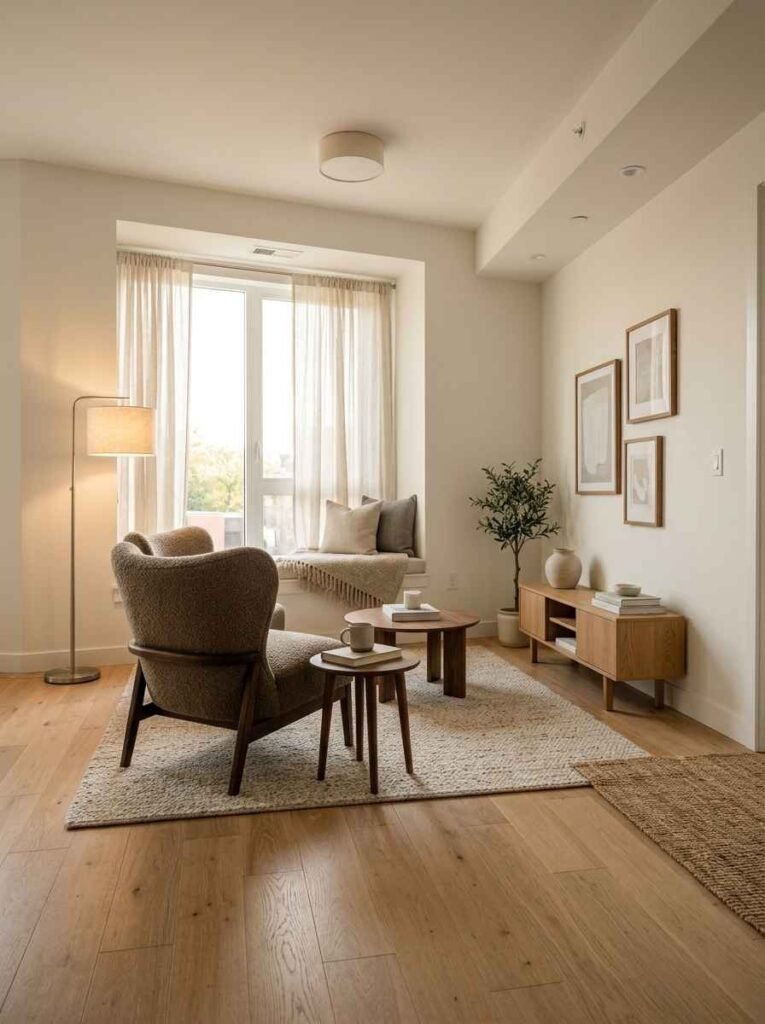
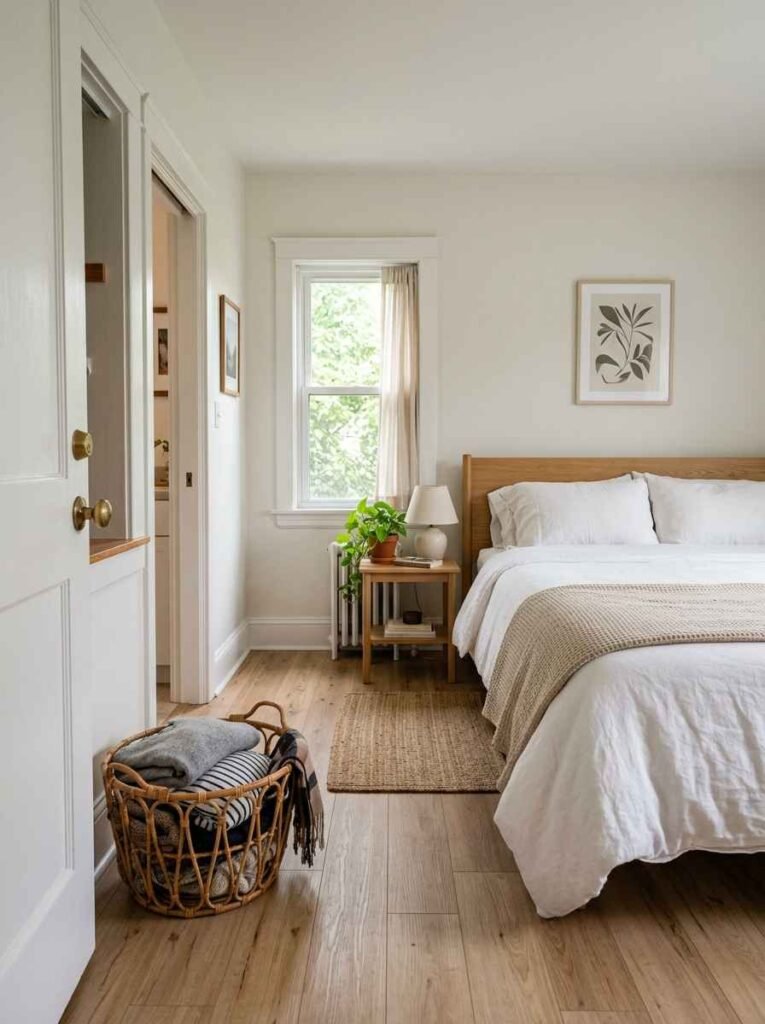
None of these ideas require a renovation budget. Most cost nothing beyond a Saturday afternoon and a willingness to edit what you already own.
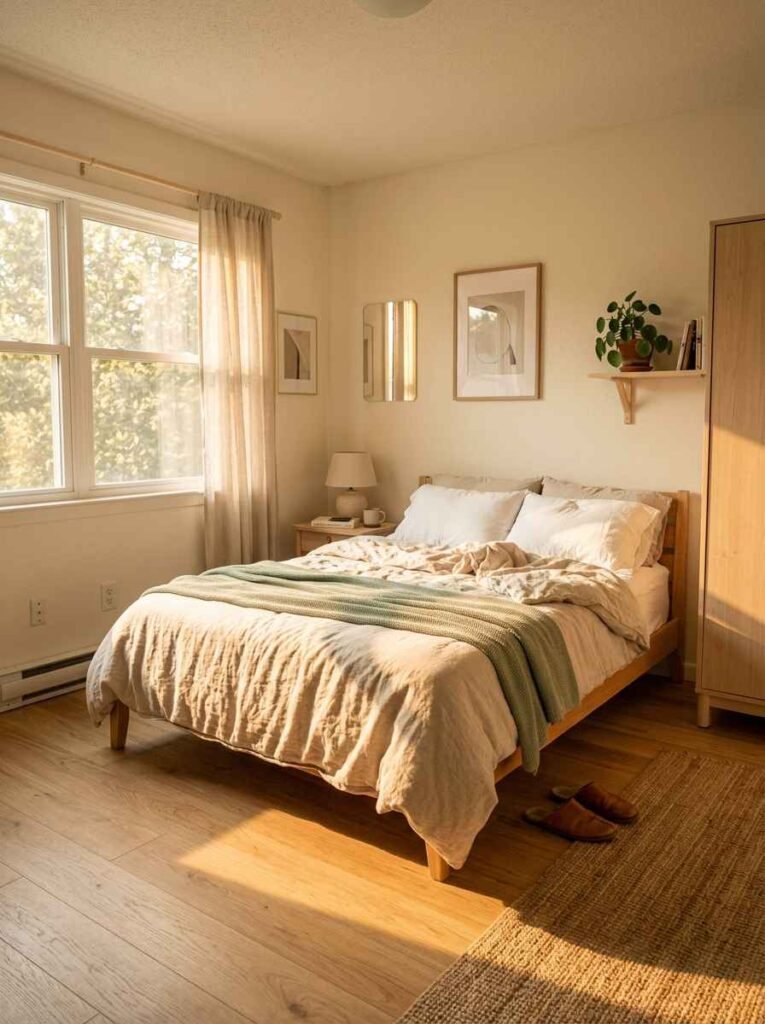
Pick three or four ideas from this list and start there. A small room styled with intention will always beat a big room filled with stuff nobody chose carefully.
Which of these are you trying first? Save this for your next decor refresh 🙂
