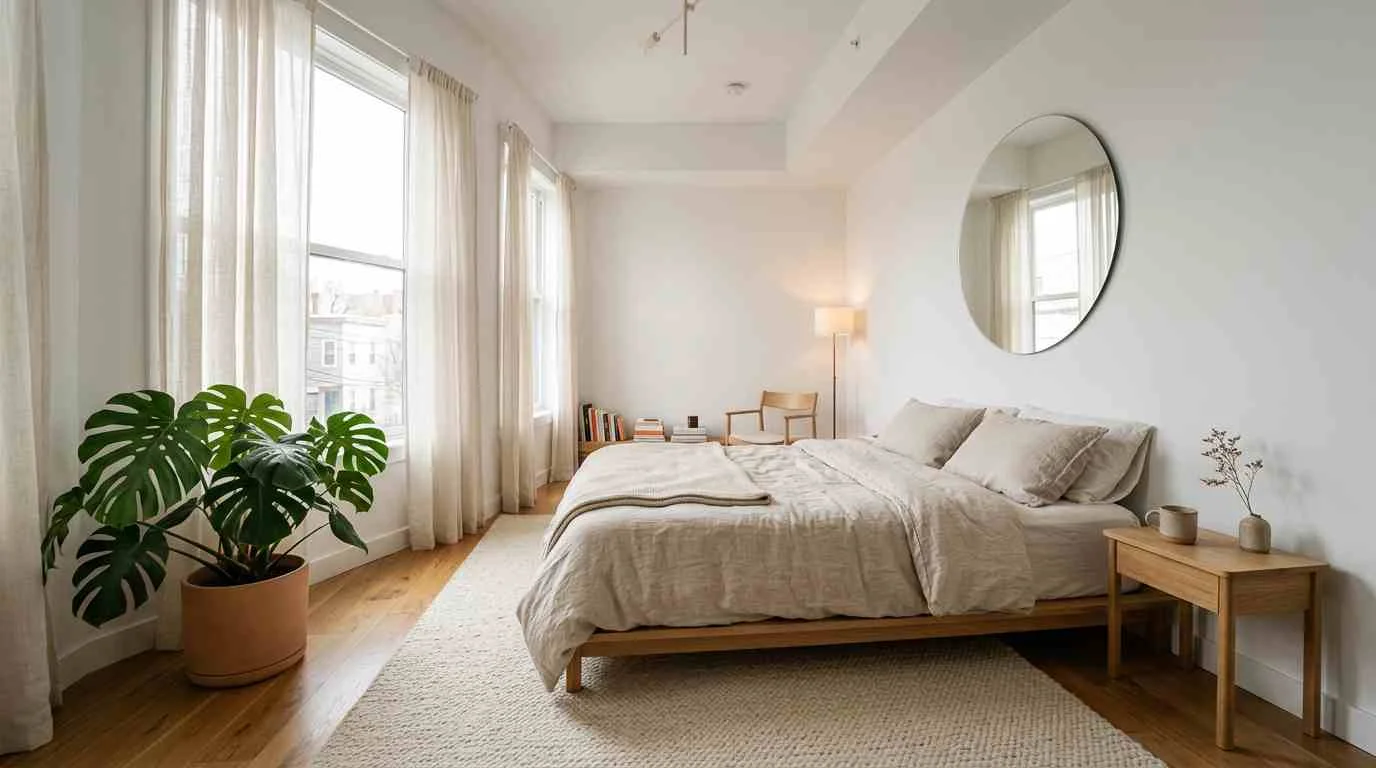
You know that feeling when you walk into a small room that somehow feels like a breath of fresh air? No clutter, no chaos. Just quiet and warmth.
That’s what good minimalist decor actually does, and it has nothing to do with buying a bunch of expensive furniture or owning a color-theory degree.
I’ve lived in a 280-square-foot studio apartment. I know what it’s like to have a bed, a desk, and a yoga mat all competing for the same 4 feet of floor space.
So these ideas come from real trial and error, not a mood board that exists only in a Pinterest algorithm.
1. Start with a strict “one in, one out” rule
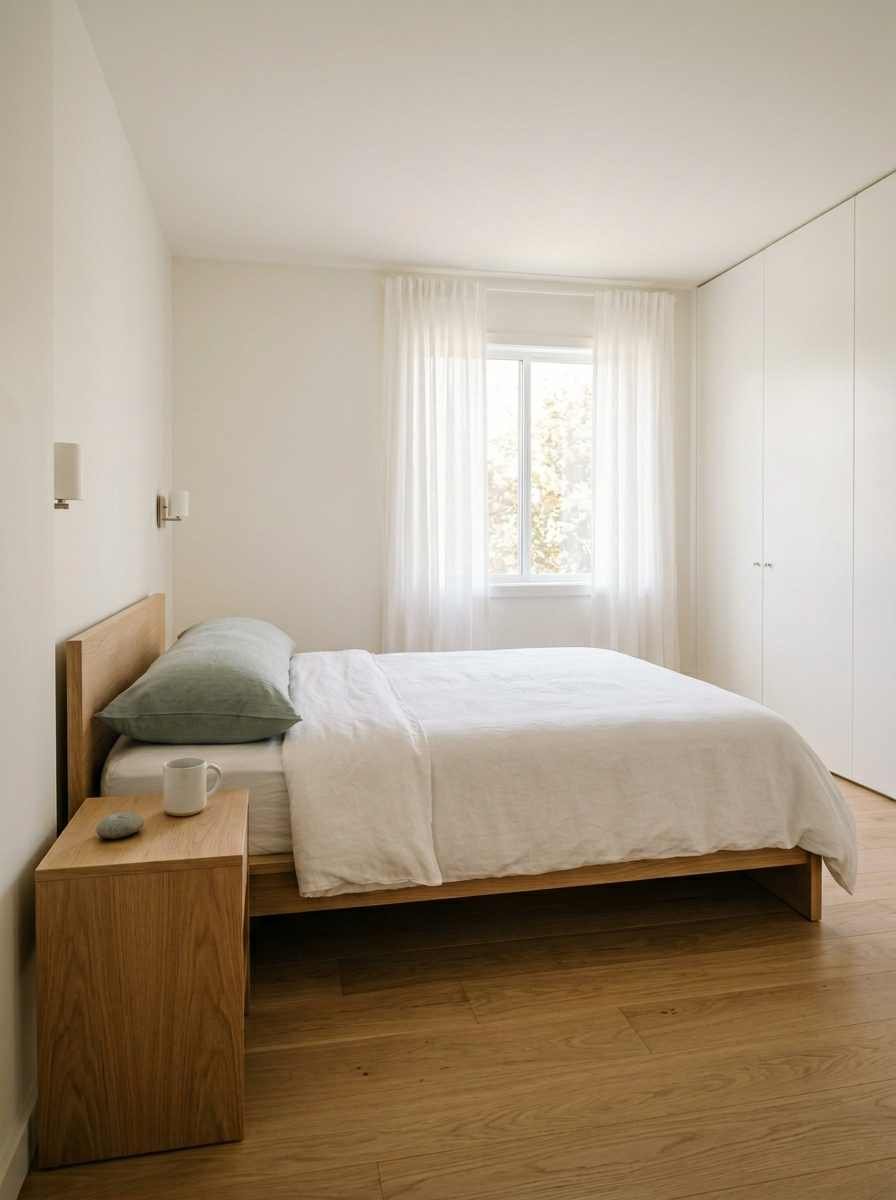
Before you rearrange anything, fix the stuff you keep bringing home. Every new item that comes into a small room should replace something else. No exceptions.
I used to break this rule constantly. I’d buy a cute little side table and just… add it. The room looked worse within a week.
2. Pick a two-color base and commit
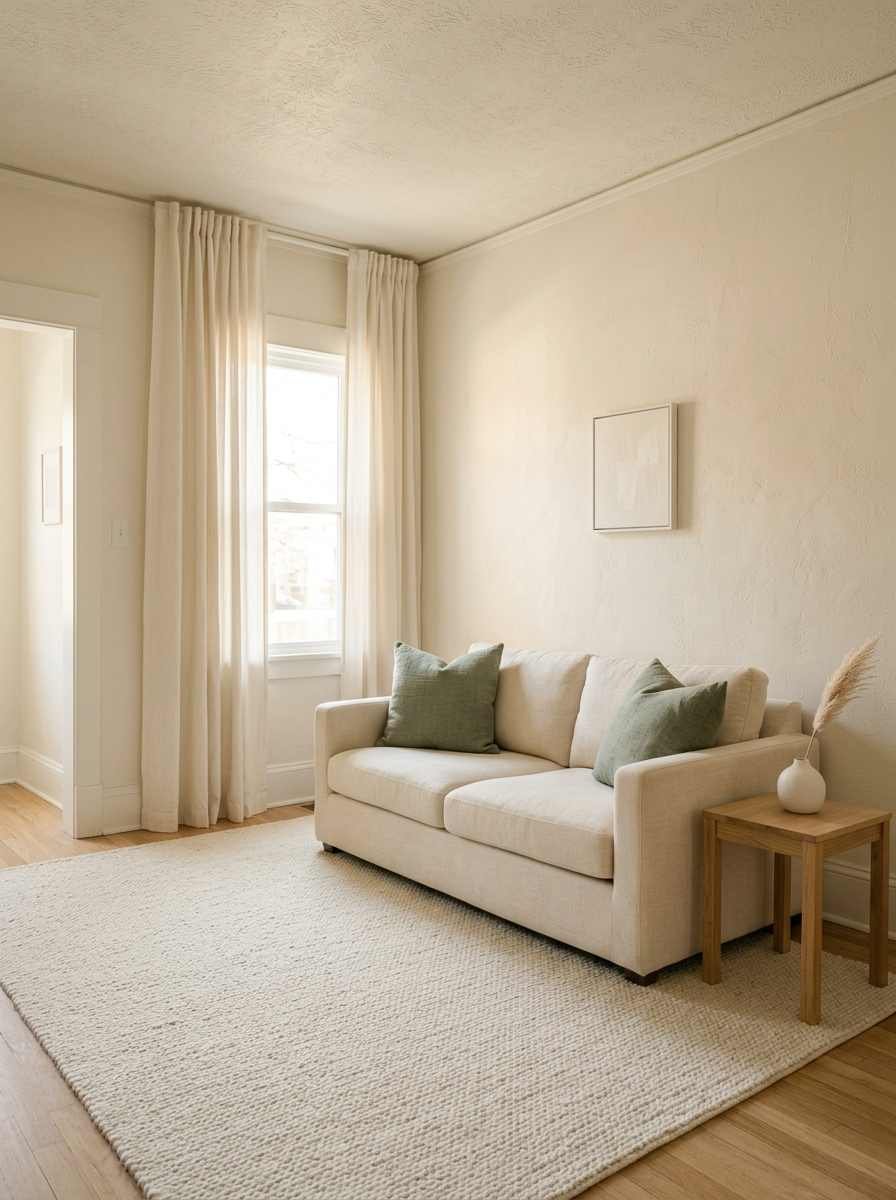
Choose 2 base colors for the whole room. Warm white plus a muted sage, or off-white plus dusty taupe. Then let your textiles and wood tones do the rest of the work.
Rooms with 5+ colors feel jumpy and tight. 2 colors feel intentional.
3. Low-profile furniture changes everything
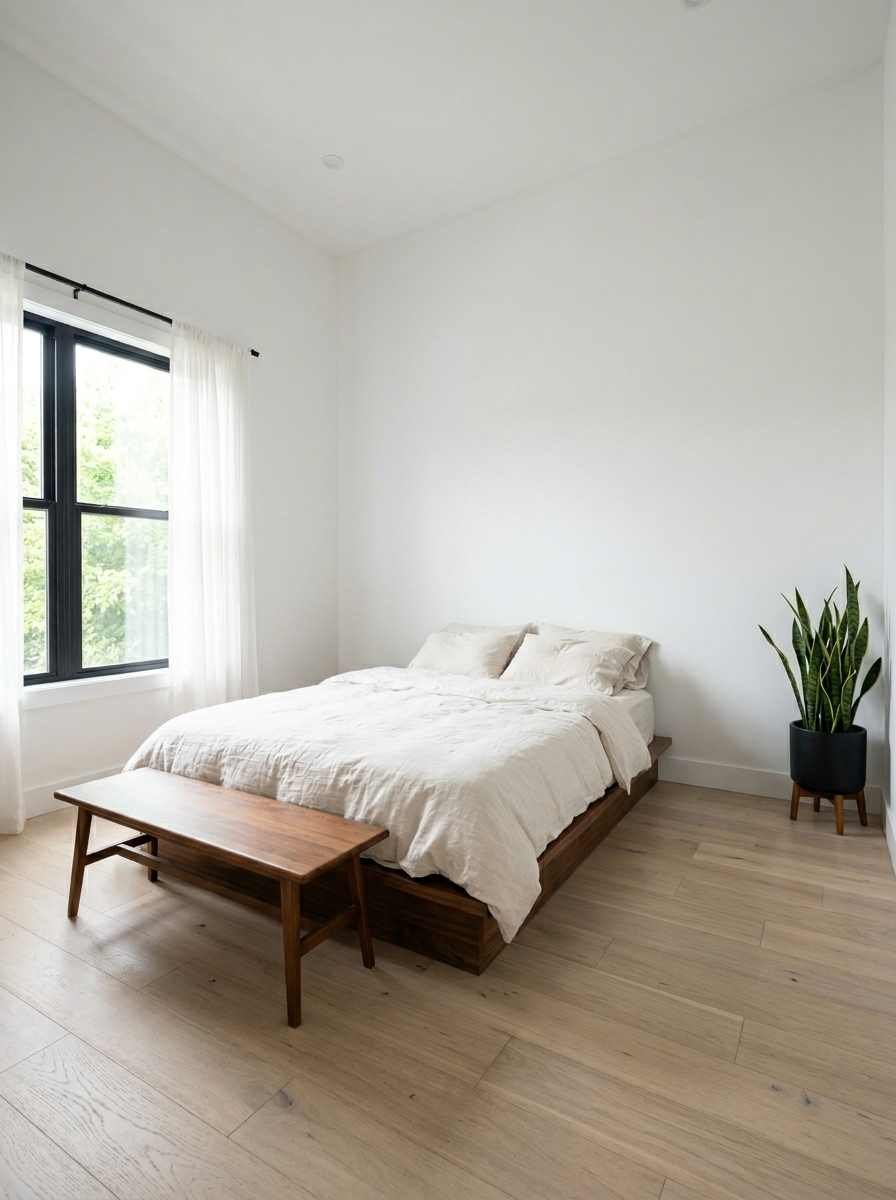
High headboards and tall bookshelves eat vertical space visually.
A low platform bed, a low-slung sofa, pieces that sit closer to the floor… they all make ceilings feel taller.
Personally, I switched to a bed frame that’s about 12 inches off the ground and the room felt like it gained a foot of ceiling height overnight.
4. Float your furniture off the walls
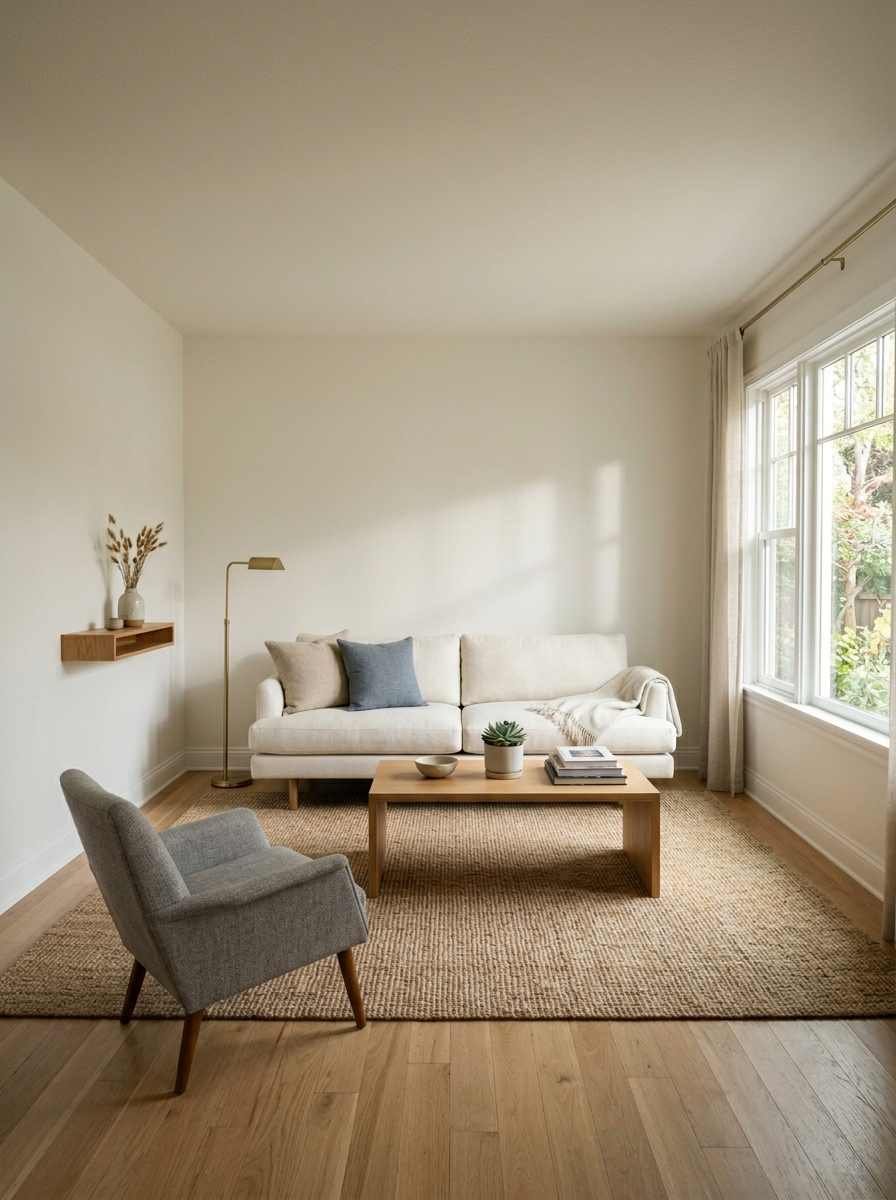
This one surprises people. Pushing everything against the walls makes a room feel smaller, not bigger.
Pull pieces a few inches away from the wall, and you create breathing room between objects.
It looks weird for about 2 days. Then it looks right.
5. Use a single large rug instead of multiple small ones
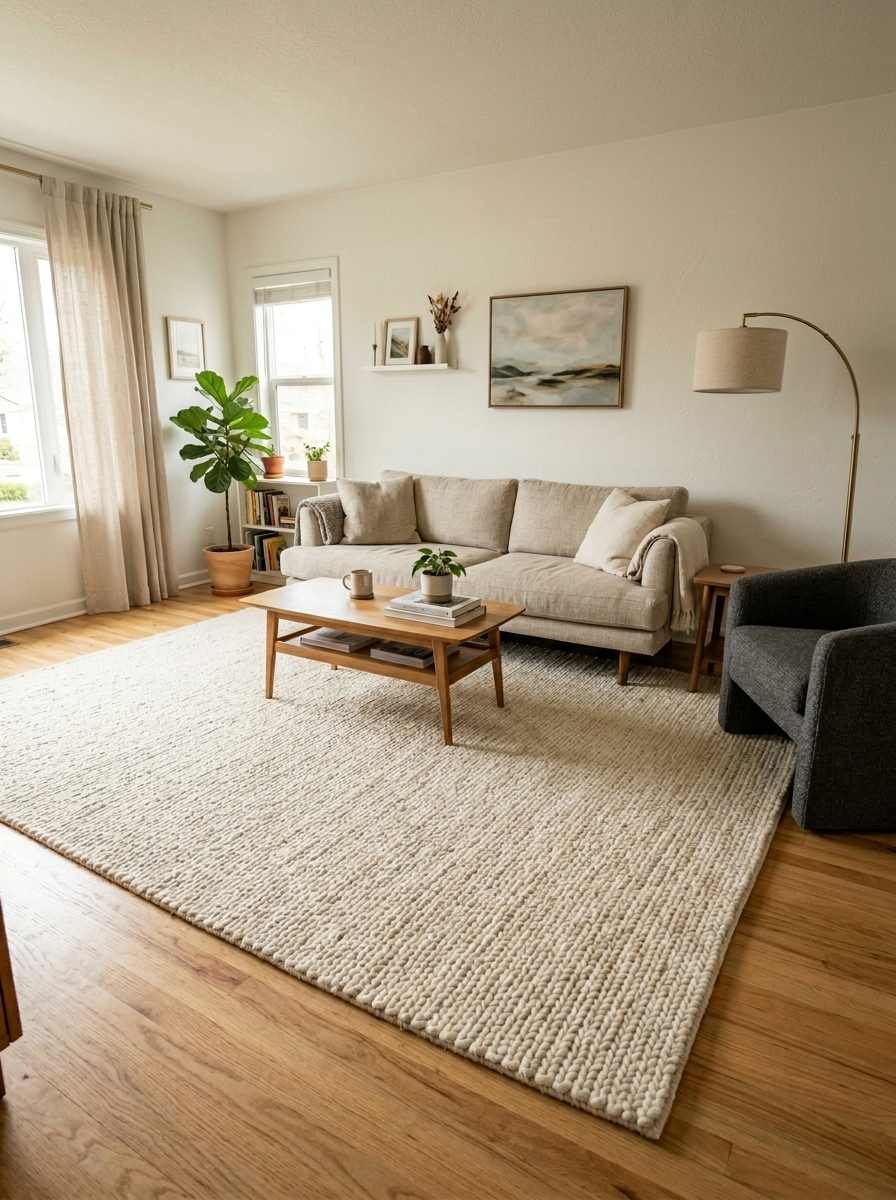
Small rugs chop the floor into sections. 1 large rug that goes under the front legs of your seating (at minimum) ties the space together without fragmenting it.
If the rug is too small for the room, it’ll look like it got lost. Go bigger than you think you need.
6. Mirrors: placed thoughtfully, not frantically
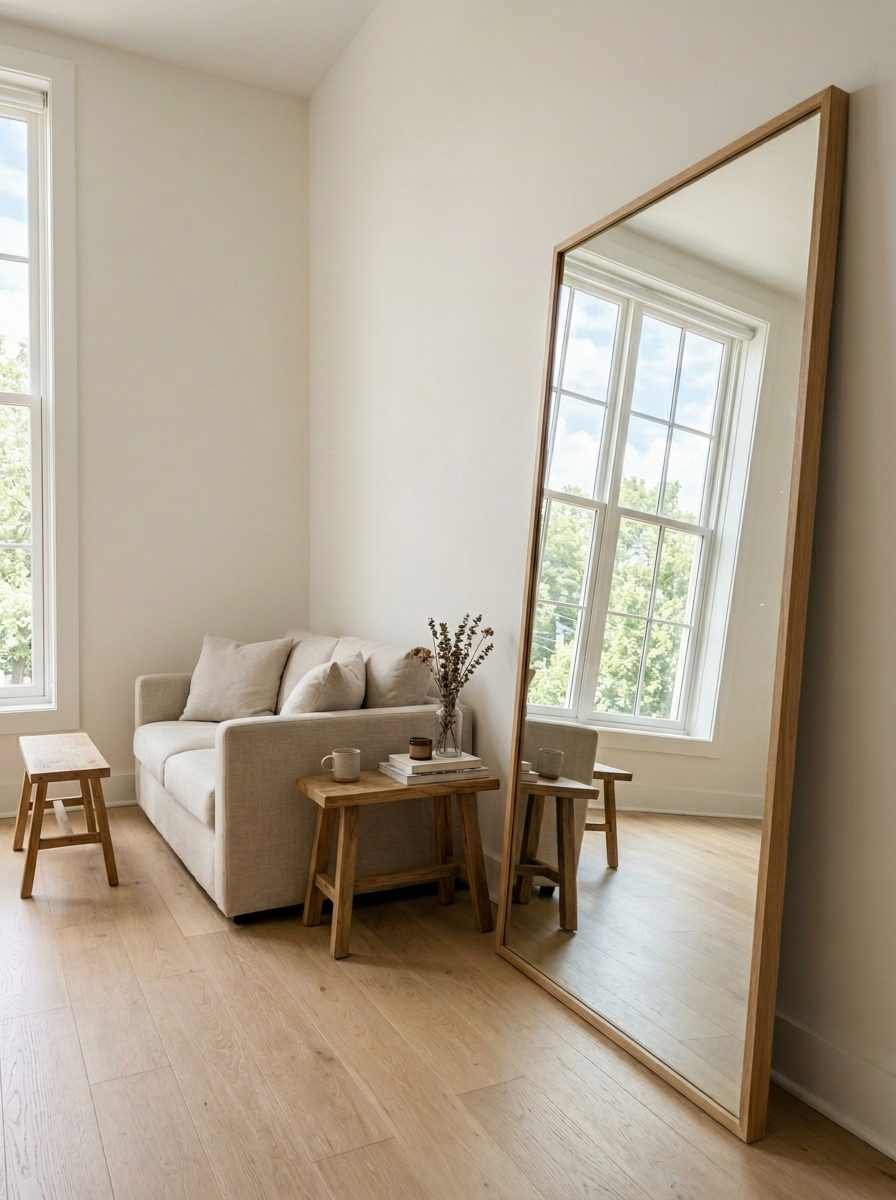
A mirror opposite a window bounces light around the room in a way that feels almost architectural. But 3 mirrors on different walls? That’s just a funhouse.
1 good mirror in the right spot does more than 5 mirrors placed randomly.
7. Clear surfaces as a daily habit
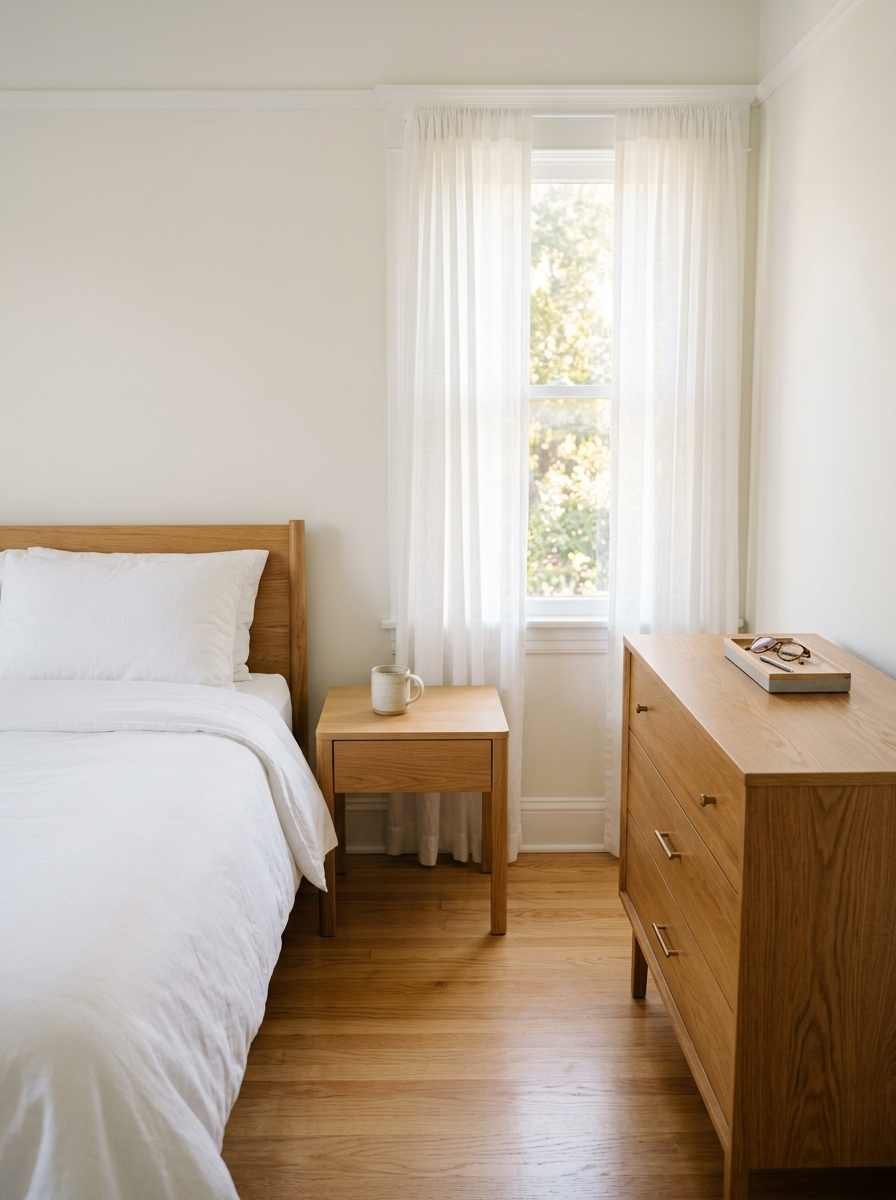
This is less of a decor tip and more of a lifestyle thing, which I realize sounds annoying to say.
But clear countertops and nightstands genuinely make a room feel 30% calmer.
Keep 1 or 2 intentional items on a surface. Everything else gets a home inside a drawer or cabinet.
8. Hidden storage is your best friend
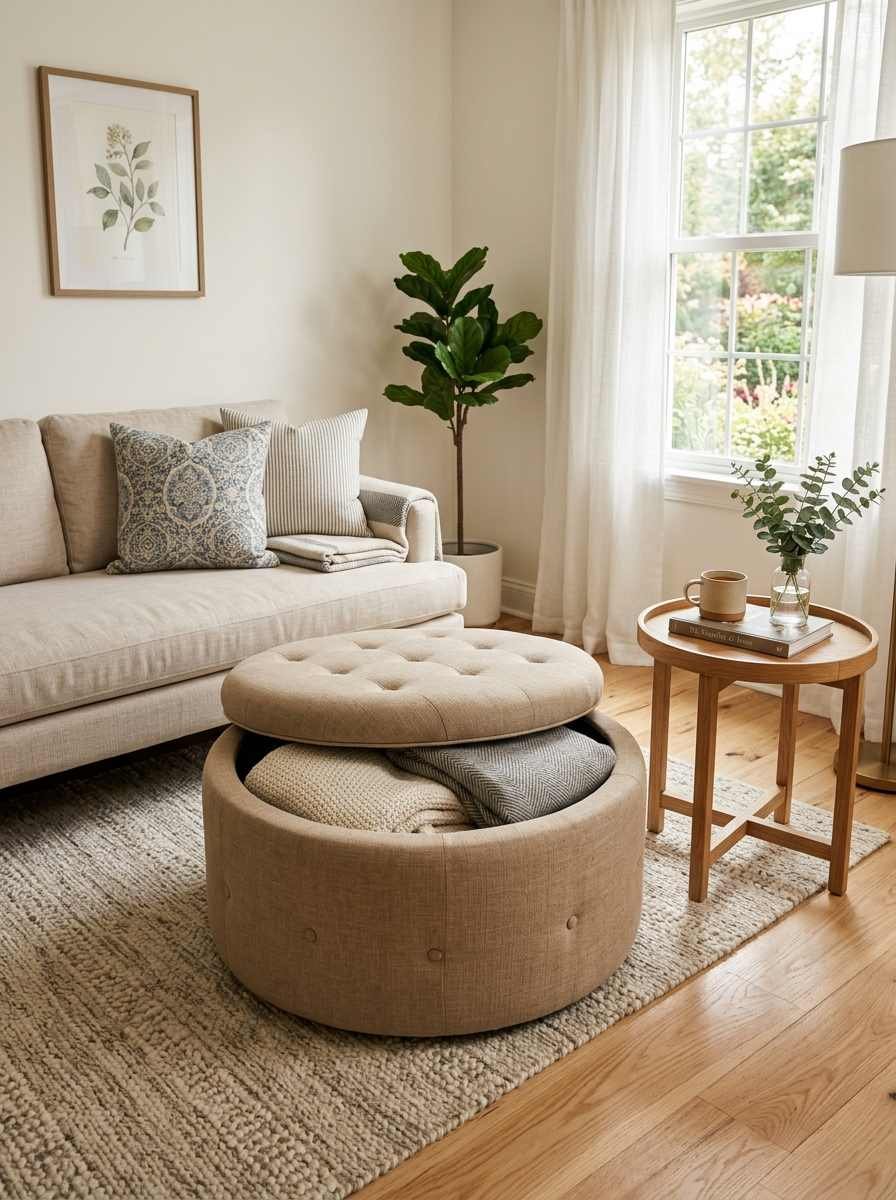
Ottomans with storage inside, bed frames with built-in drawers, benches with lift-up lids. These pieces earn their square footage in a small room.
I have an ottoman that holds extra blankets, extension cords, and a box of documents. From the outside it just looks like a nice footrest. Honestly it’s one of the best purchases I’ve made.
9. Wall-mounted shelves instead of floor shelves
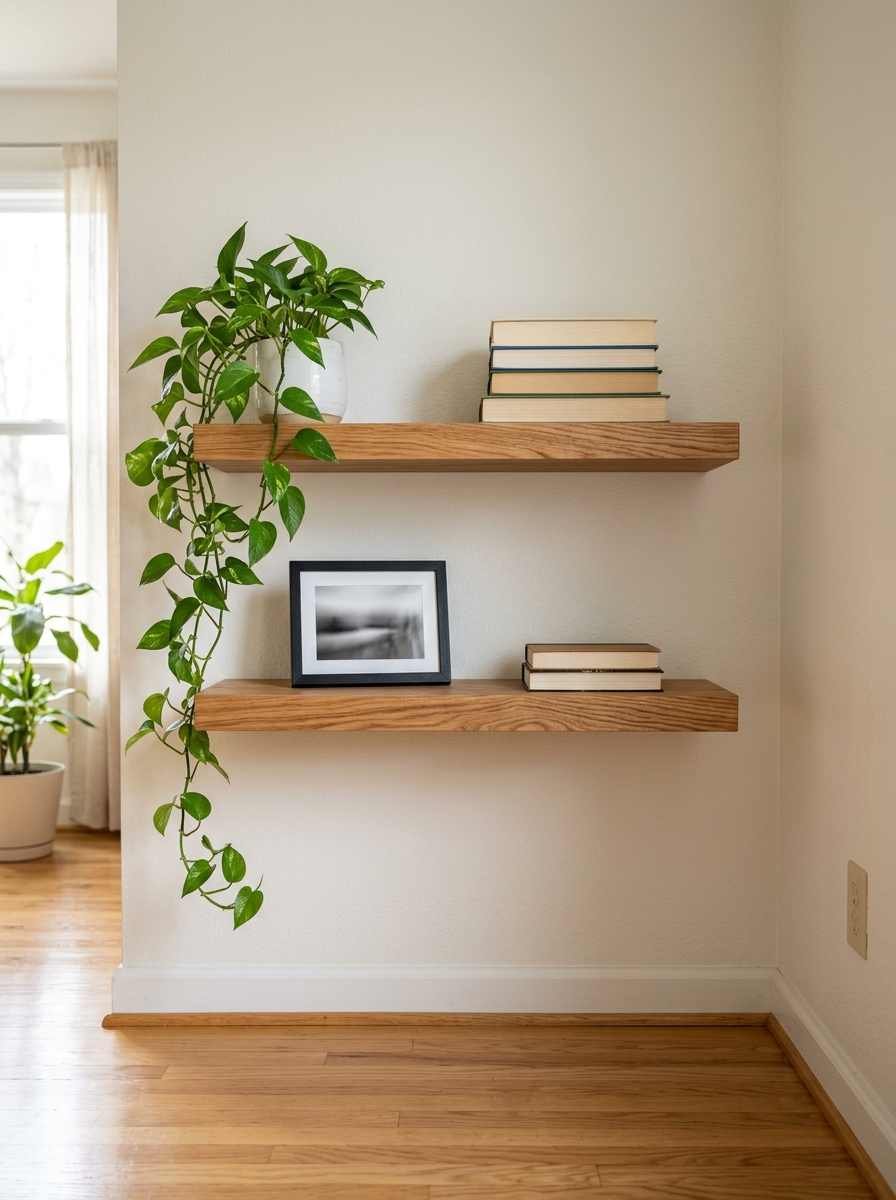
Floor shelves take up actual floor space. Wall-mounted shelves use dead vertical space that was just… air before.
Keep what’s on them minimal: 3 to 5 items max per shelf. A shelf with 20 small trinkets is visual noise, not decor.
10. Stick to natural materials
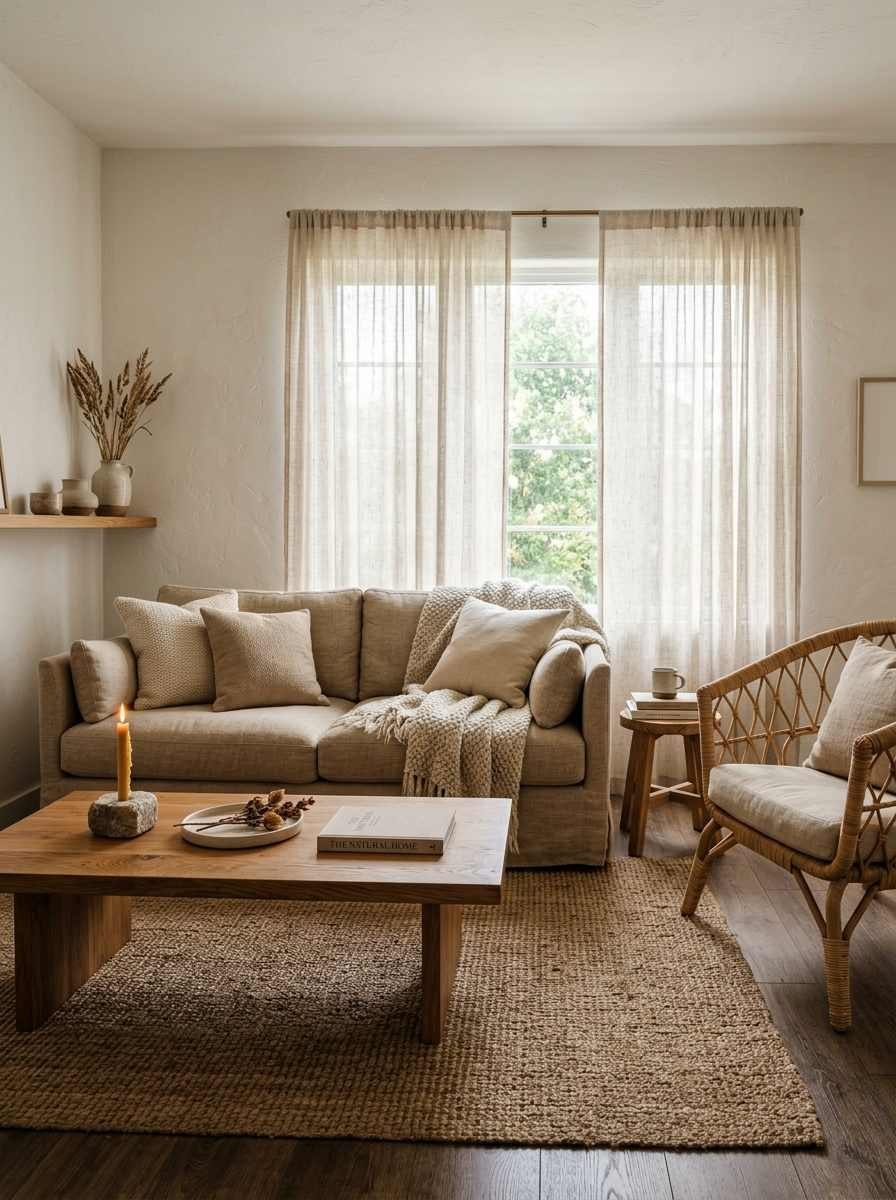
Wood, linen, cotton, rattan, stone. Natural materials have a texture that feels warm without being loud.
Synthetic materials (think glossy plastic, shiny metallics everywhere) can make a small room feel cold and a bit clinical.
There’s a time and place for metallics, but anchoring the room in natural textures first is the move.
11. One statement plant, not a whole jungle
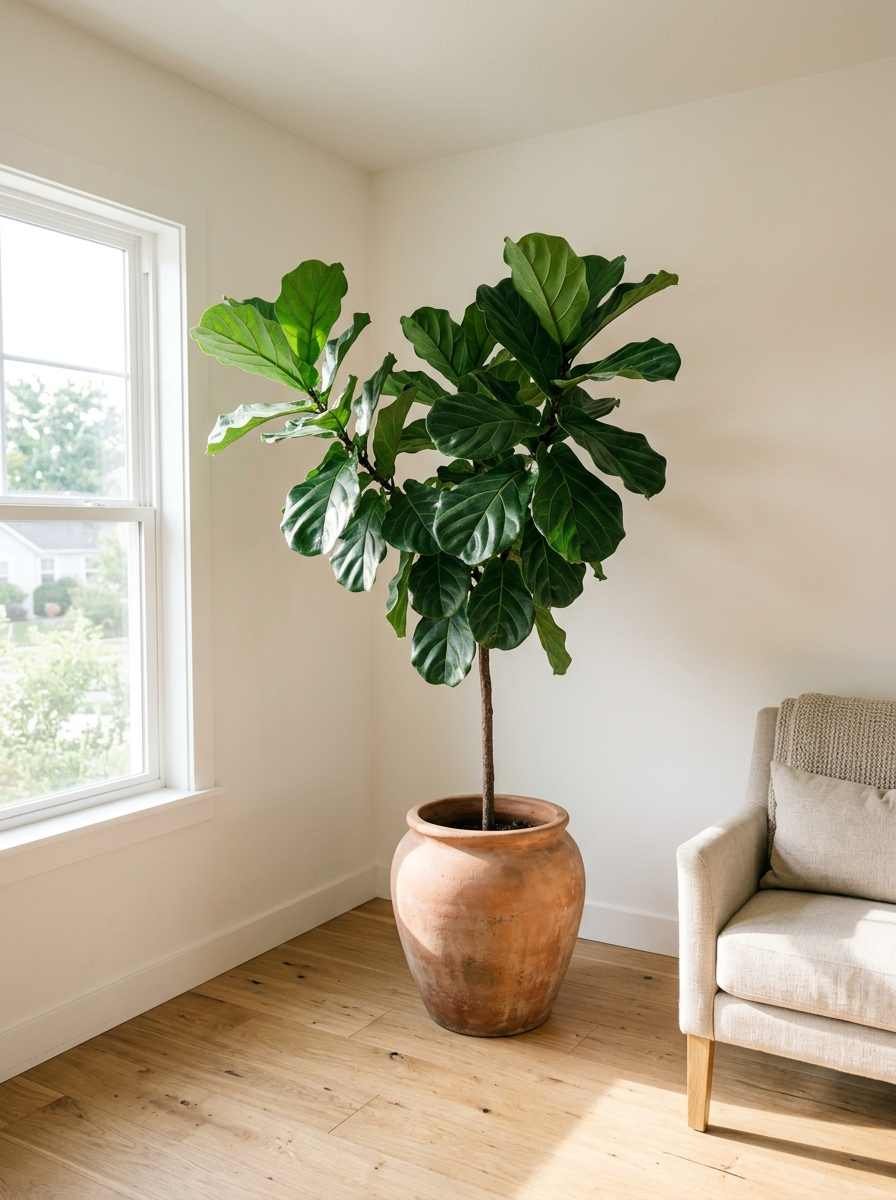
A single fiddle-leaf fig or a tall monstera does more for a room than 12 succulents scattered across every surface. Big plant, one corner, done.
I know the “plant parent” aesthetic is everywhere on Pinterest right now and I love it, but in a small room, plant quantity needs a cap.
12. Curtains hung high and wide
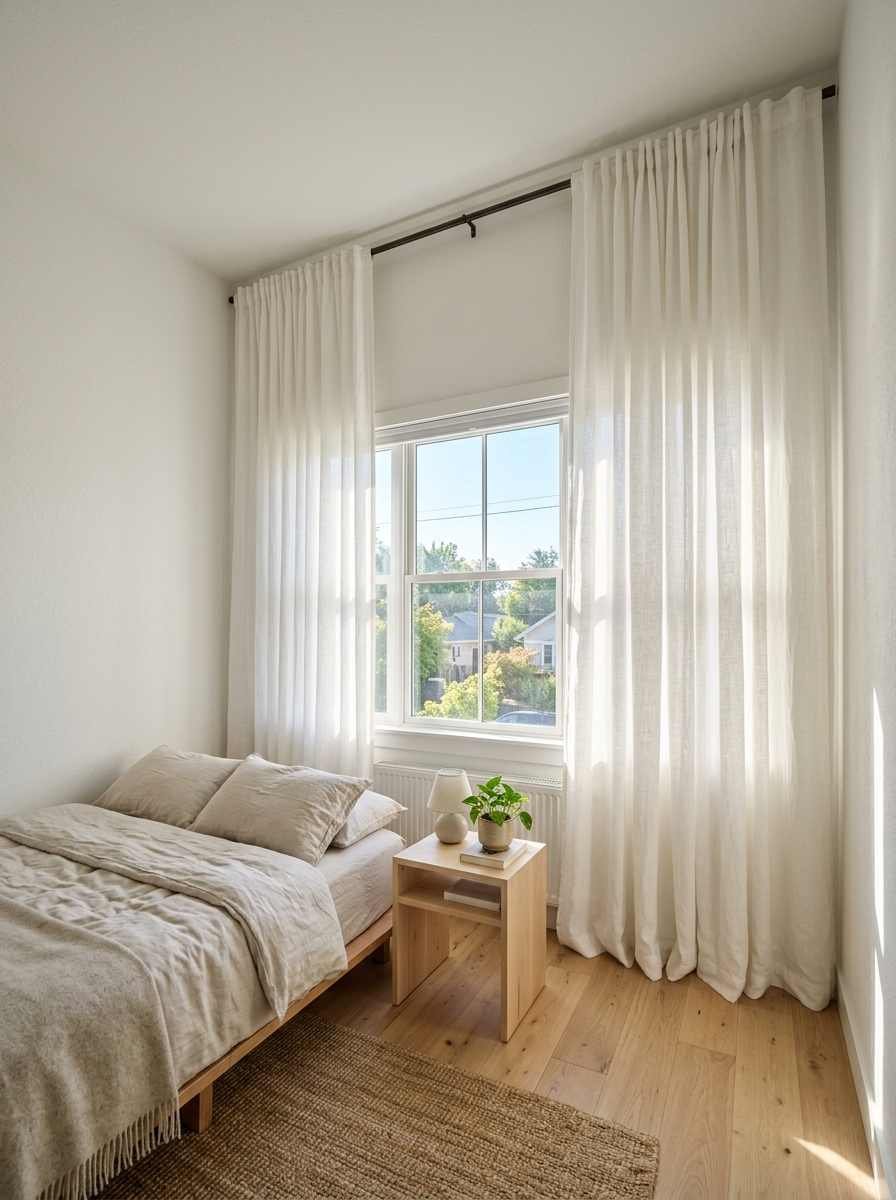
Hang curtain rods close to the ceiling (not just above the window frame) and extend the rod at least 6 inches past the window on each side.
The curtains frame the wall, not just the window. The room reads taller and wider.
This is probably the cheapest visual trick that works every single time. You can get decent linen curtain panels from IKEA for under $40 and the effect is genuinely good.
13. Lighting in layers
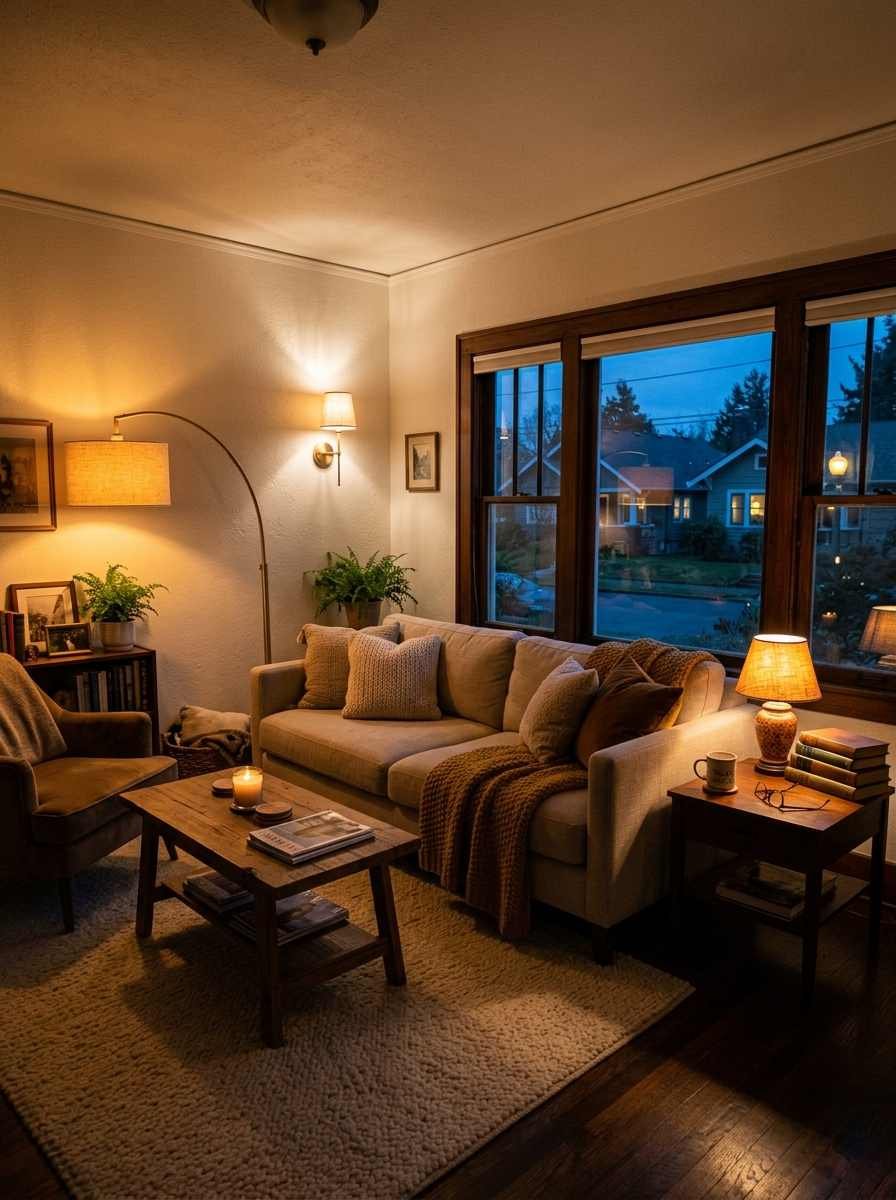
Overhead lighting alone is flat and harsh. Layer it: a floor lamp in one corner, a small table lamp, maybe a wall sconce.
You want to be able to control the mood.
Warm bulbs (2700K to 3000K color temperature) make a small room feel cozy. Anything cooler than that starts to feel like a dentist’s office.
14. Keep your bedding simple
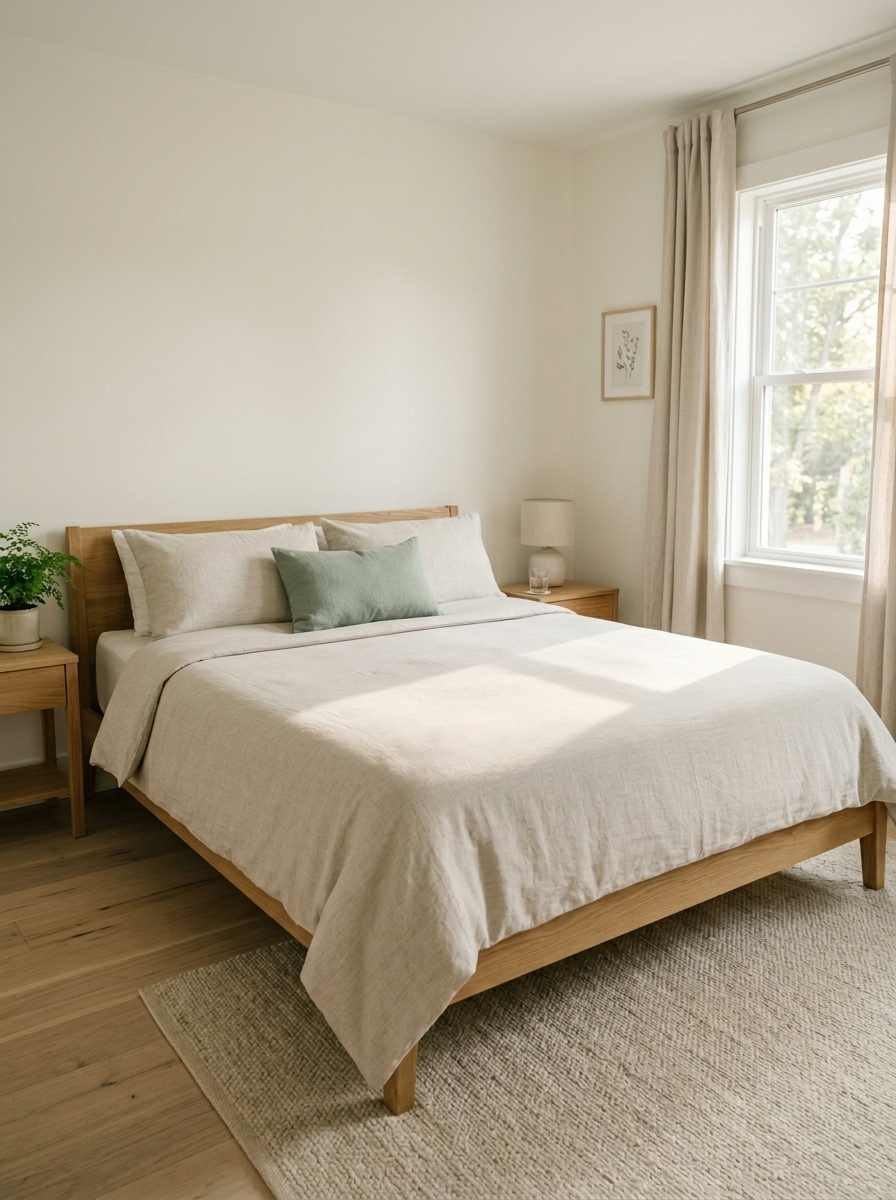
A solid duvet in a natural linen or cotton fabric reads quieter than a patterned comforter with matching pillow shams and 11 decorative cushions.
2 sleeping pillows, 1 lumbar cushion if you want it. That’s it. You’re not staging a hotel room.
15. Use vertical space with intention
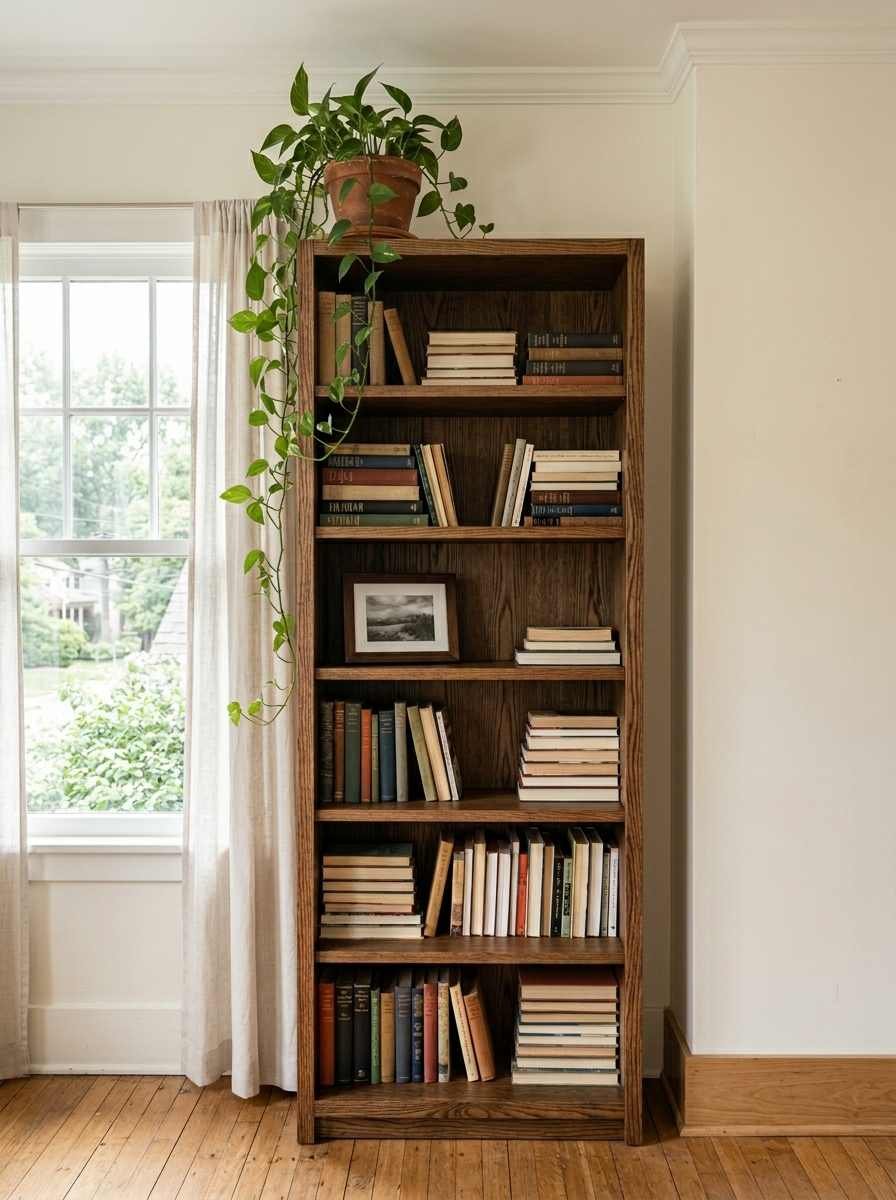
A tall, narrow bookcase is better than a short, wide one in most small rooms. You go up instead of out.
But here’s what I’ll actually say from experience: I styled my tall bookcase with books, a plant on top, and one small framed photo at eye level. The visual anchor point at eye level stops the shelf from feeling like it’s toppling over.
23 Stunning Minimalist Apartment Decor Living Room Ideas for Small Spaces
16. A consistent wood tone throughout
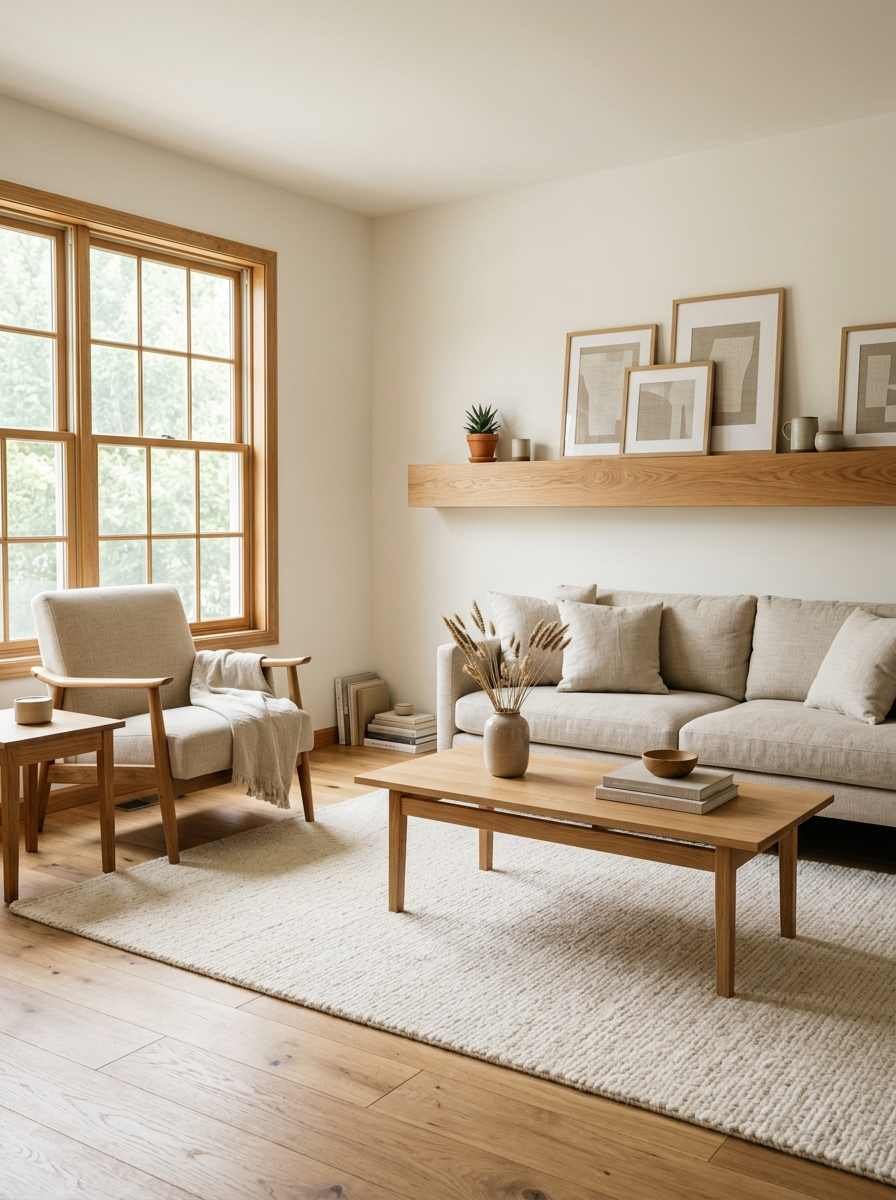
Mixing 6 different wood tones (blonde oak here, dark walnut there, cherry somewhere else) makes a room feel scattered. Pick 1 main wood tone and let it run through your furniture pieces.
You can have variation, but keep it within the same warm or cool family.
17. Multifunctional furniture is worth the research
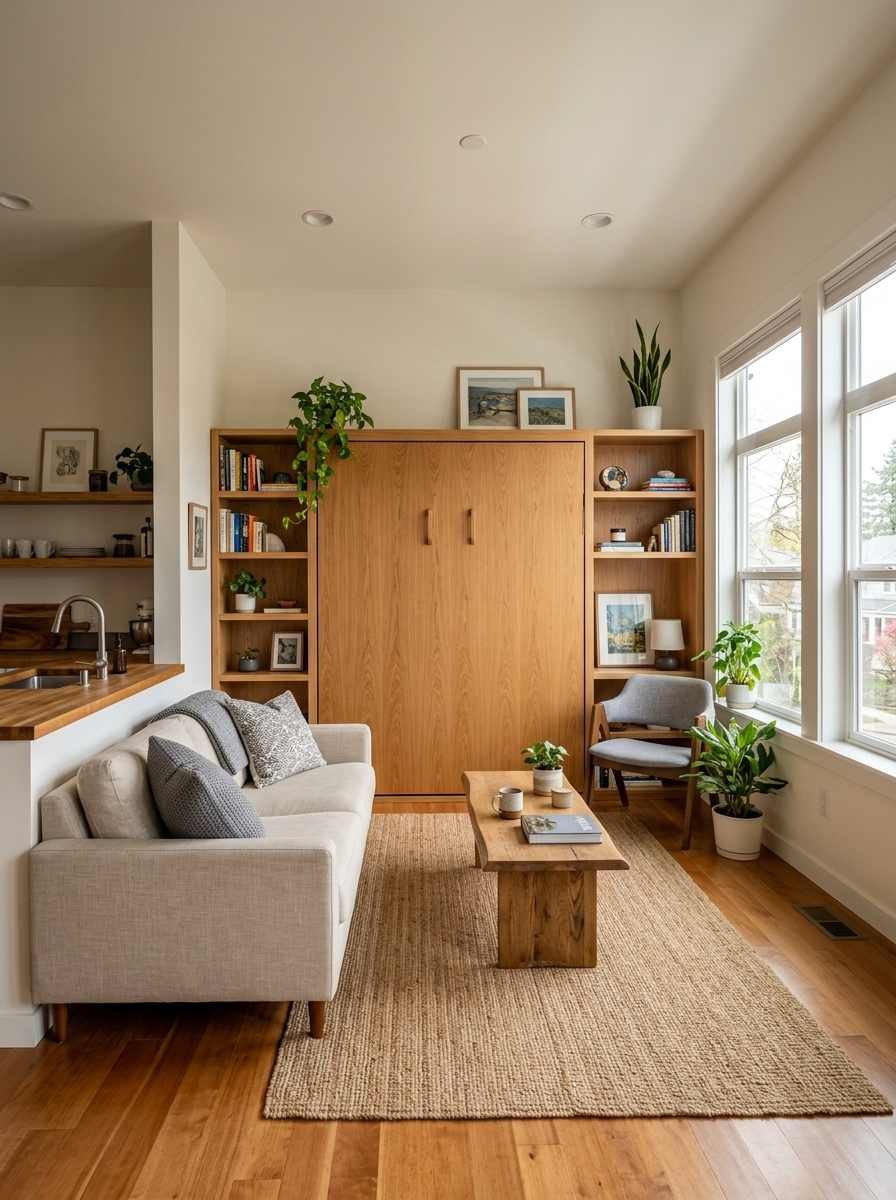
A dining table that folds against the wall, a Murphy bed with a built-in desk, a sofa that converts into a guest bed. These pieces cost more upfront but they’re genuinely good investments in small spaces.
The Murphy bed especially. Wow. If you’re in a studio and you haven’t considered one, look into it. It frees up floor space during the day in a way that feels almost absurd. Here’s a resource on space-saving furniture that’s worth bookmarking: apartmenttherapy.com has a good roundup of multifunctional picks that don’t look like IKEA hacks.
18. Go minimal with art
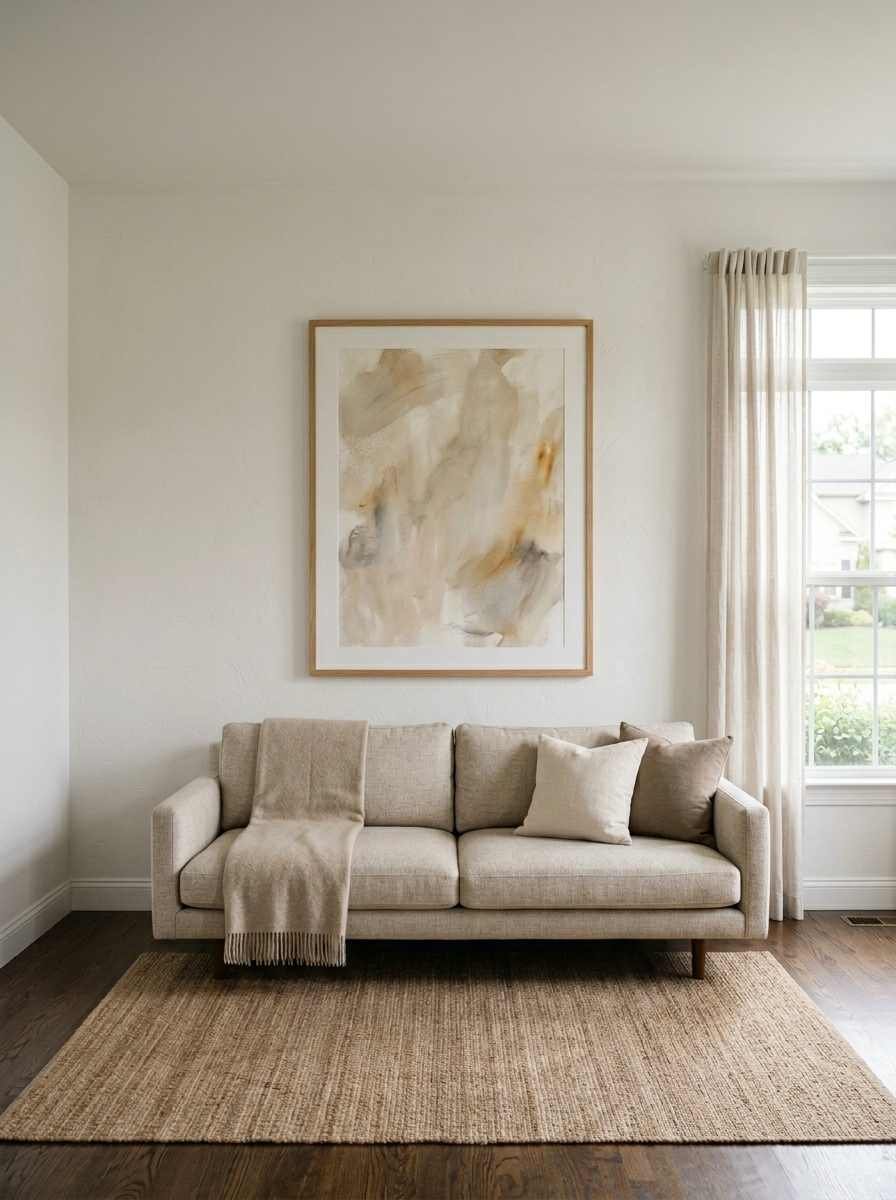
1 large framed piece on a wall reads calmer than a gallery wall with 14 frames. I know gallery walls are popular and some of them look great, but in a small room they tend to crowd the space visually.
If you love the gallery wall idea, keep it tight: 3 to 4 frames max, all in matching frames, with consistent spacing.
19. Declutter first, decorate second
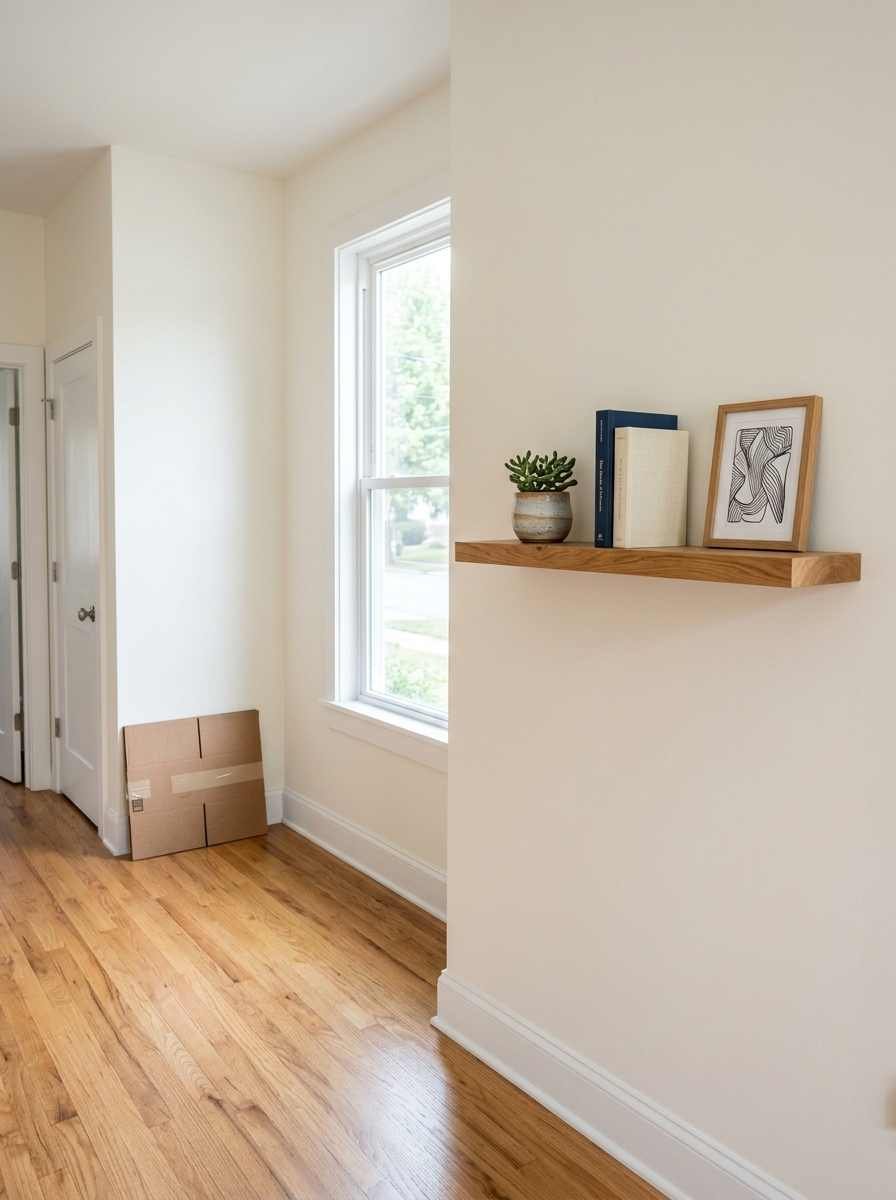
And I mean actually declutter. Not “move things into a closet” declutter. Actually remove items from the home. Donate, sell, throw away. The space can only work with what isn’t there as much as what is.
I went through my apartment with a box and pulled out 40 items I hadn’t used in 6 months. The room looked beter before I changed a single piece of decor. That was the lesson.
20. Keep the floor as clear as possible
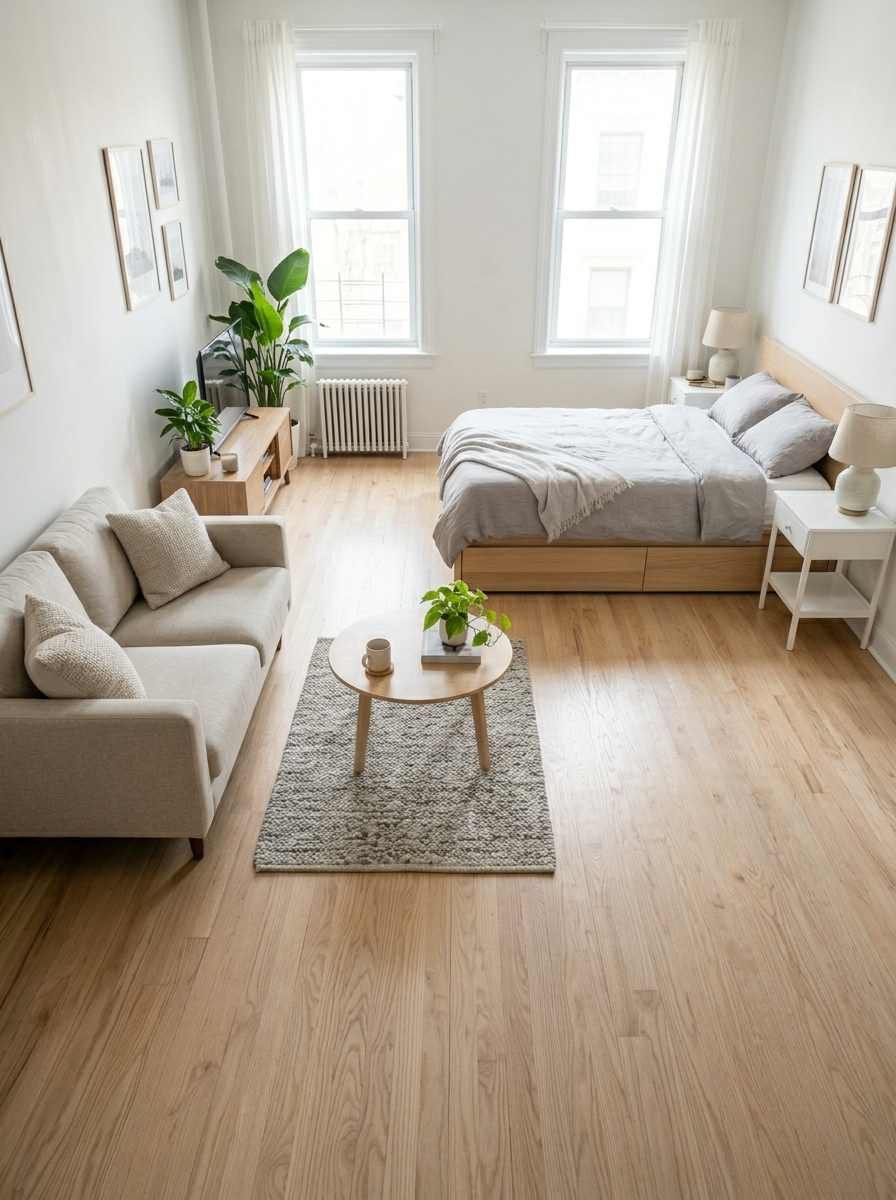
Floor clutter reads louder in a small room than in a large one. No shoes by the door, no stacks of books on the floor, no visible cable tangles. The more floor you can see, the bigger the room feels.
Cable management is genuinely one of the unsexy things that matters more than people admit. A cable box or some well-placed cable clips behind furniture costs almost nothing.
21. Scent is part of the calm, too
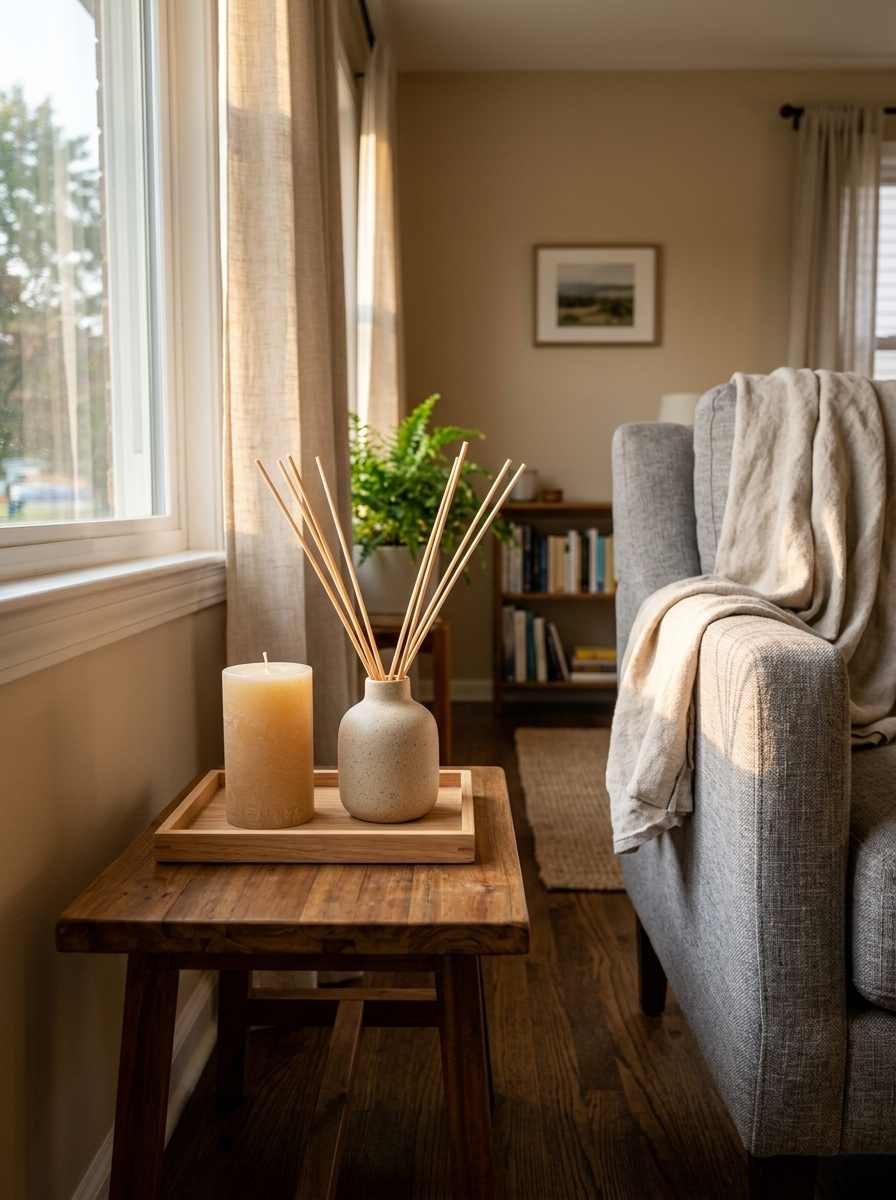
Okay, this is slightly off the visual decor track, but hear me out: a room that smells good feels more intentional. A simple reed diffuser or a candle in one consistent scent (not 4 competing ones) adds something that photos can’t capture but people feel immediately when they walk in.
I use a cedarwood and bergamot candle and every person who comes over asks what that smell is. It does something to the feeling of the room.
22. Textiles add warmth without taking up floor space
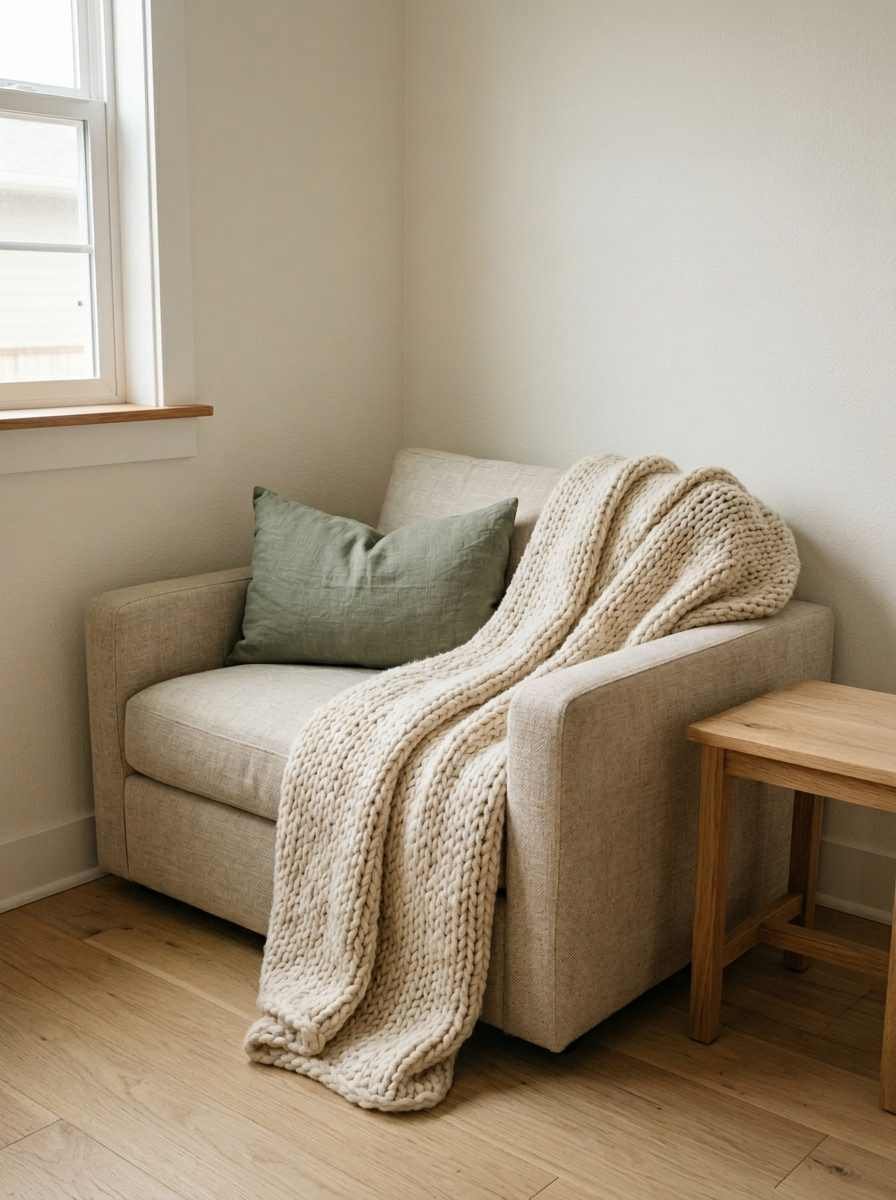
A chunky knit throw on the arm of a chair, a linen cushion on the sofa. Textiles work hard: they add color, warmth, and texture without claiming any floor space at all.
Rotate them seasonally if you want to refresh the room without buying anything new.
23. Designate zones, even in one room
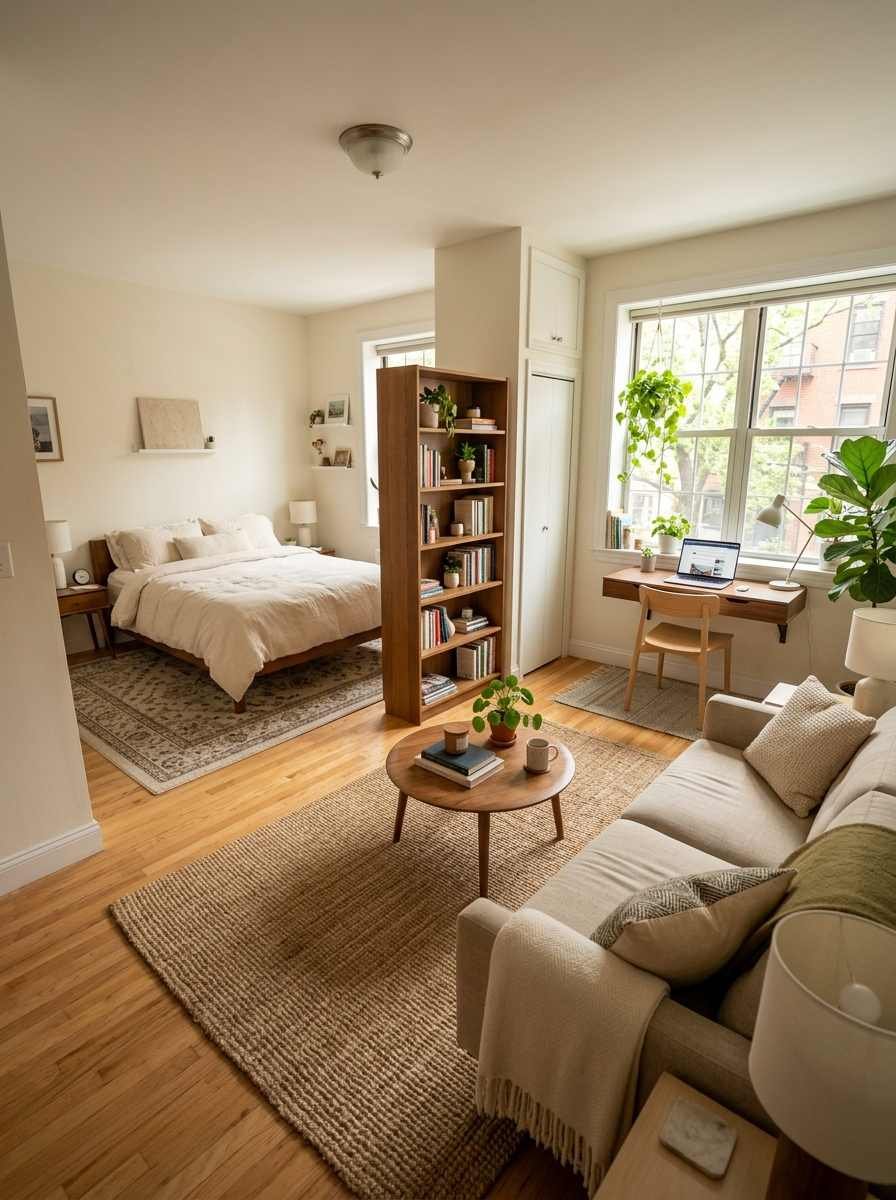
Even in a studio, you can carve out a “work zone” and a “sleep zone” and a “lounging zone” using furniture placement and rugs rather than walls. This psychological separation makes the space feel less like you’re sleeping in your office.
A bookcase or a sheer curtain panel can do the job of a wall for zoning purposes.
24. Go easy on decorative objects
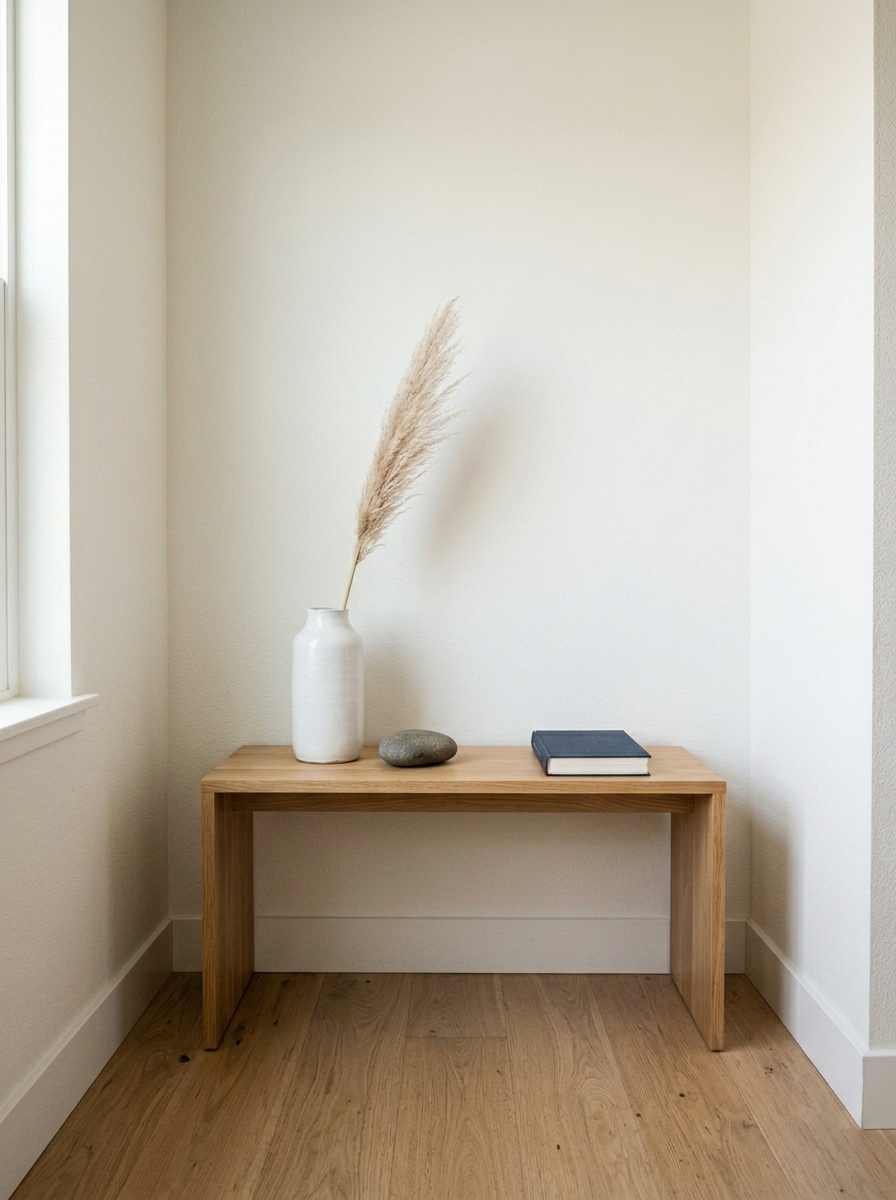
Every decorative object in a small room competes for attention.
A ceramic vase, a small sculpture, a stack of books: pick things you actually love and give them space to breathe.
The rule I use: if I wouldn’t notice it was gone, it probably doesn’t need to be there.
25. Keep window sills clear
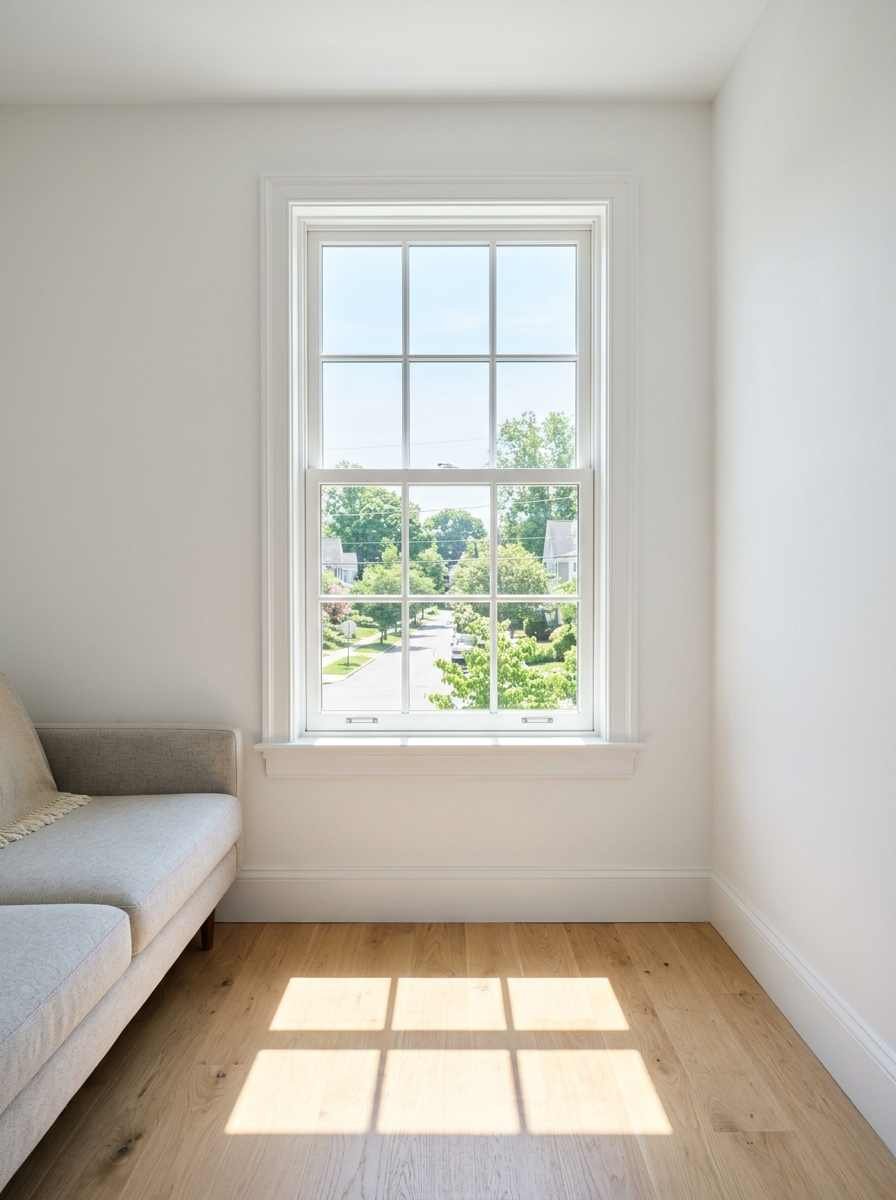
Window sills collect stuff fast: plants, candles, small frames, random objects. But a clear window sill lets light come in freely and makes the window feel like an architectural feature rather than a shelf.
Try it for a week. You might not go back.
26. Photograph the room before and after
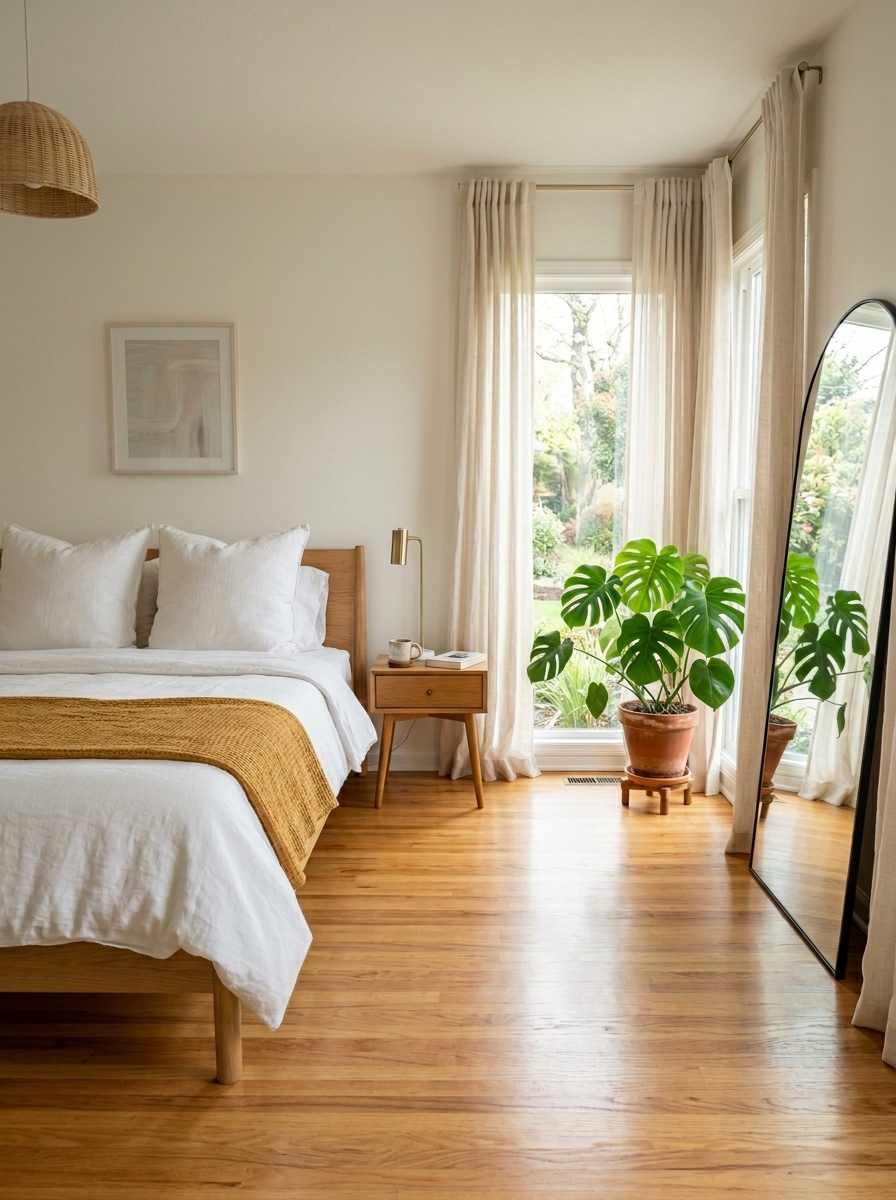
This is practical more than decorative, but it’s genuinely useful. Take a photo of your room as it is now. Make changes. Photograph again. The camera sees clutter and imbalance that your eyes get used to when you live in a space every day.
It’s also just satisfying to see the before and after side by side. IMO it’s one of the most motivating things you can do when a room refresh starts to feel overwhelming.
Quick reference: minimalist small room principles at a glance
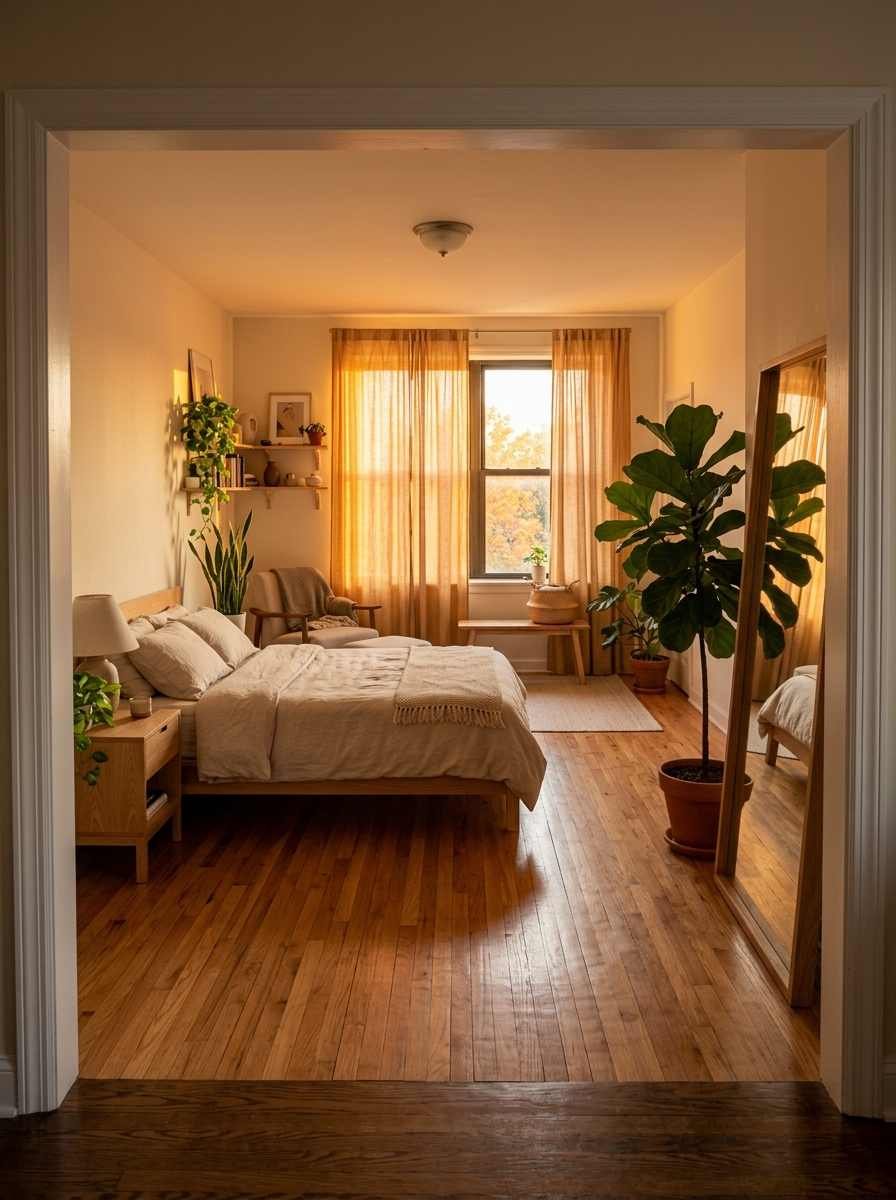
| Area | What to do | What to skip |
|---|---|---|
| Furniture | Low-profile, multifunctional | Bulky, single-purpose pieces |
| Color | 2 base tones, warm neutrals | 5+ colors, high-contrast patterns |
| Storage | Hidden, built-in, vertical | Open floor shelving everywhere |
| Decor objects | 1 to 3 intentional pieces | Clusters of small trinkets |
Frequently asked questions
Can a small room really look minimalist if it’s a rental and I can’t paint the walls?
Yes. Stick to furniture and textiles in warm neutrals to counteract whatever the landlord painted the walls (usually that flat builder’s beige that’s neither warm nor cool). A large area rug and some linen curtains can visually override a bad wall color faster than you’d expect. Removable wallpaper is also worth considering for an accent wall, check out Tempaper or Chasing Paper for peel-and-stick options that don’t damage surfaces.
How do I make a minimalist room feel cozy and not cold?
Layer your lighting (never rely on one overhead light alone), bring in natural textures like wood and linen, and add 1 or 2 textiles like a throw or a cushion. The mistake people make is assuming “minimal” means “bare.” It doesn’t. You can have warmth and restraint at the same time. The Spruce has a good breakdown of cozy minimalist styling if you want more ideas: thespruce.com.
What’s the single biggest mistake people make decorating small rooms?
Buying furniture that’s too big because it looks good in a showroom. A massive sectional sofa will physically dominate a small room and leave you with about 8 inches of walking space around it. Measure your room first, tape out the footprint of the furniture on the floor, and walk around it for a day before you buy anything. It takes 10 minutes and it’s saved me from 2 genuinely bad purchases.
Final thought
Small rooms aren’t a consolation prize. Some of the calmest, most personal spaces I’ve ever been in were under 400 square feet, because the person living there had to be intentional about every single thing they kept. That intentionality shows.
Start with one area: clear the nightstand, float the bed frame away from the wall, hang one good curtain. See what it feels like. Then keep going.
What’s the one thing in your room right now that you know doesn’t belong there?
