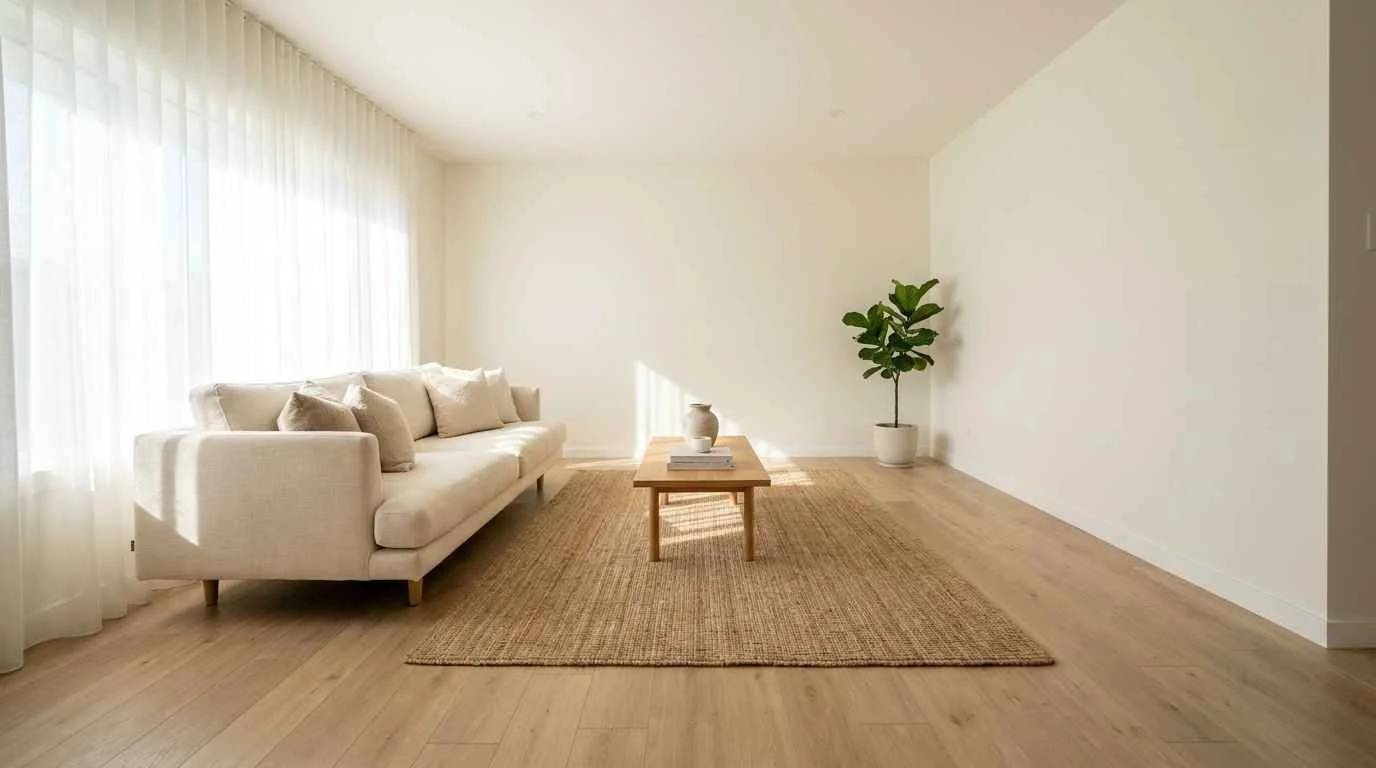
Small room, big problem: where does anything go? Every chair feels like it’s blocking traffic. Every wall feels two inches too close.
You’ve probably stood in your own bedroom wondering how it shrank overnight.
Here’s the good news. You don’t need a bigger room. You need a smarter one.
Minimalist design isn’t about owning less stuff for the sake of it (though, IMO, that helps too).
It’s about making every square foot pull its weight. Below are 26 ideas that actually work in real homes, not just in magazine spreads.
Why Minimalism Works So Well in Small Spaces
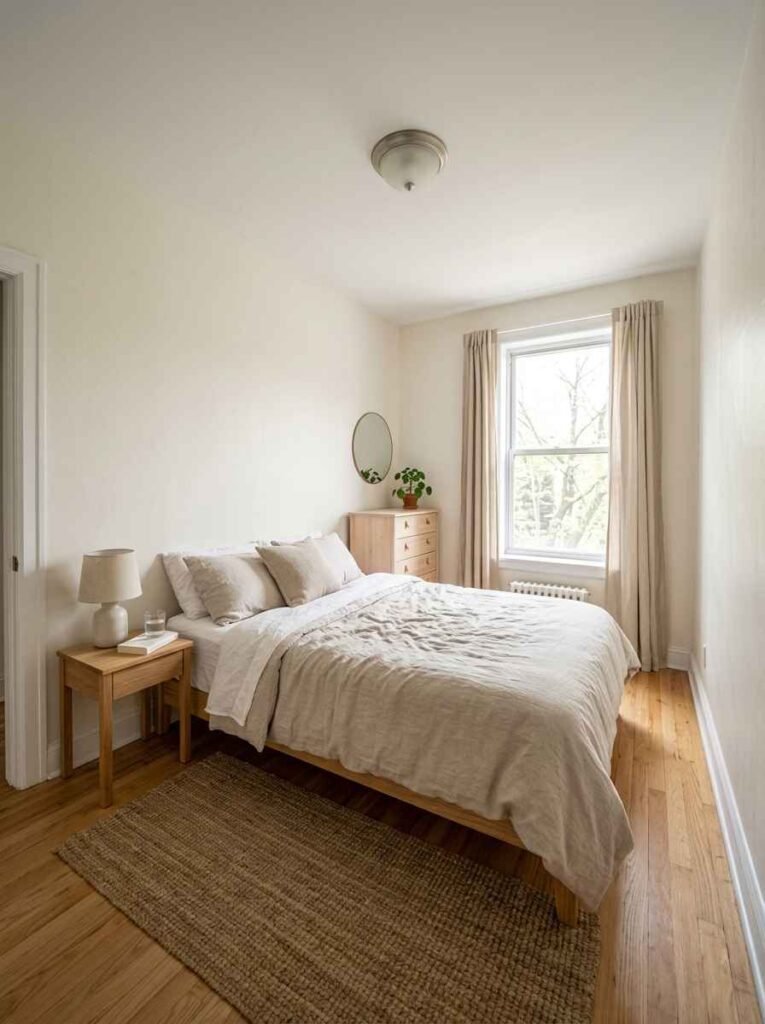
Ever notice how a cluttered room feels smaller than it actually is? That’s not your imagination.
Visual clutter tricks your brain into thinking a space is cramped, even when the square footage says otherwise.
Minimalism strips that confusion away. Fewer objects mean fewer visual stops for your eyes, and that makes the whole room read as open.
It’s basic psychology dressed up as interior design.
The fewer distractions a room has, the bigger it feels. That’s the whole game.
1. Choose a Monochromatic Color Palette
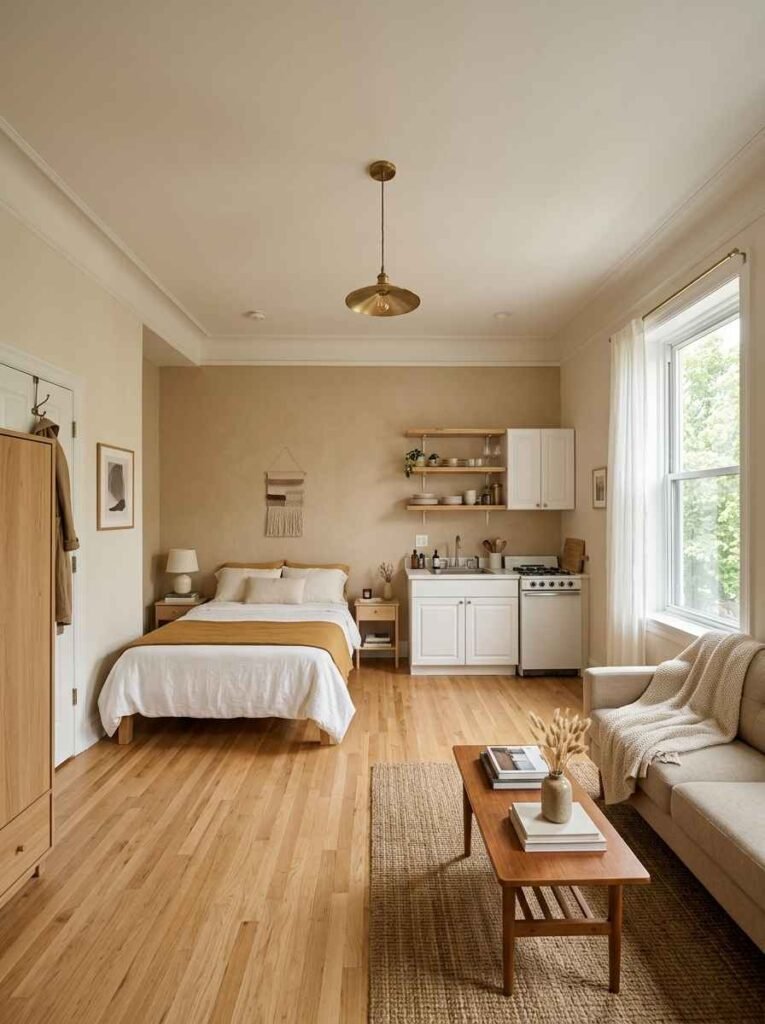
Sticking to one or two colors throughout a room removes visual breaks that make spaces feel chopped up. Think soft whites, warm greiges, or muted sage tones.
I painted my own studio apartment in three shades of the same off-white, and the ceiling instantly felt higher. Coincidence? Maybe. But I’m not repainting to find out.
2. Use Multi-Functional Furniture
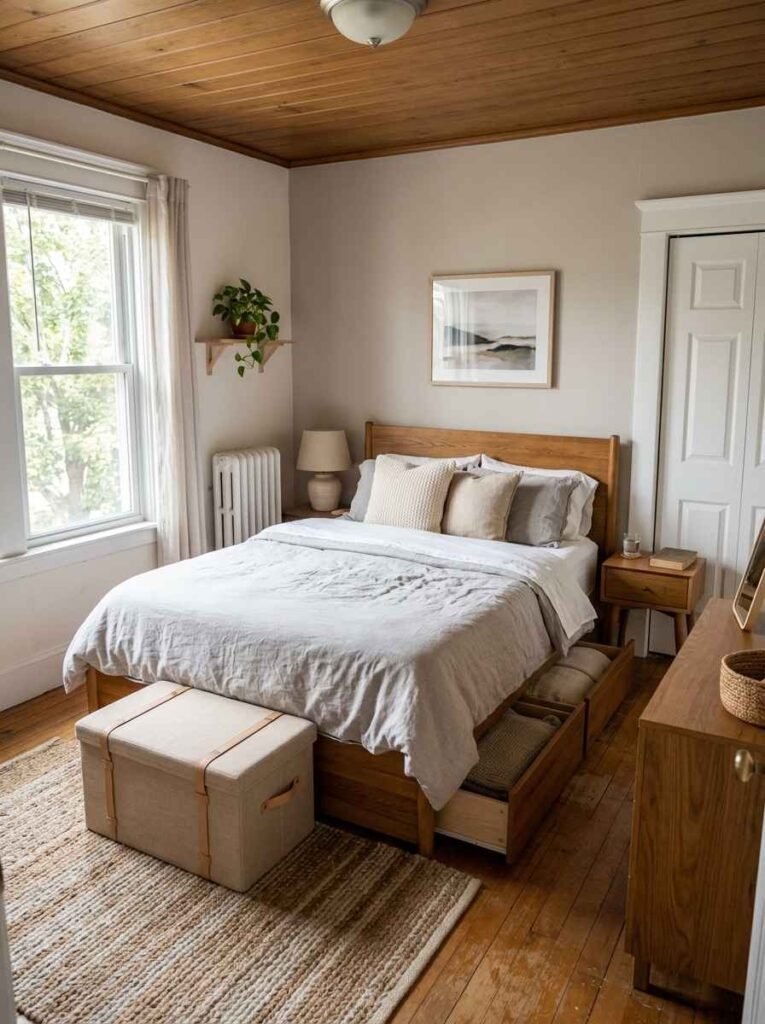
A bed with drawers underneath. A coffee table that opens into storage. An ottoman that’s secretly a chest.
These pieces do double duty so you don’t need separate furniture for separate jobs.
- Storage beds eliminate the need for a dresser
- Nesting tables collapse down when not in use
- Fold-out desks disappear into the wall when you’re done working
3. Float Your Furniture Off the Floor
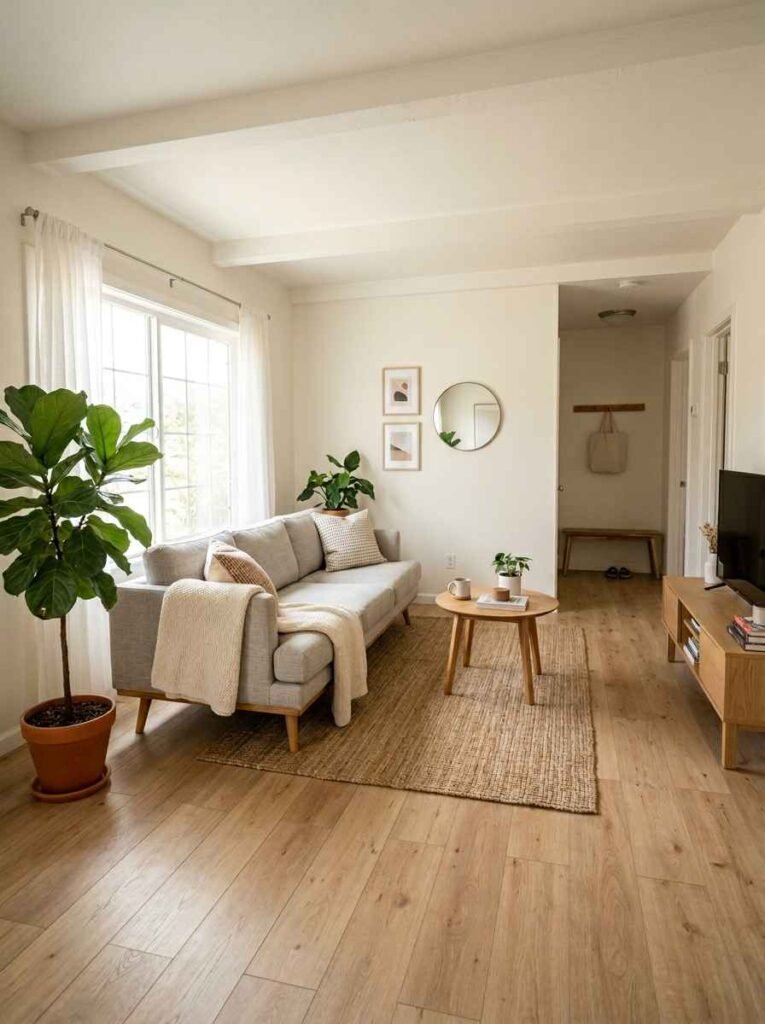
Furniture with visible legs lets light pass underneath, which makes the floor feel continuous instead of broken up.
A sofa that floats a few inches off the ground reads as lighter than one that sits flush.
4. Mount Your TV Instead of Using a Stand
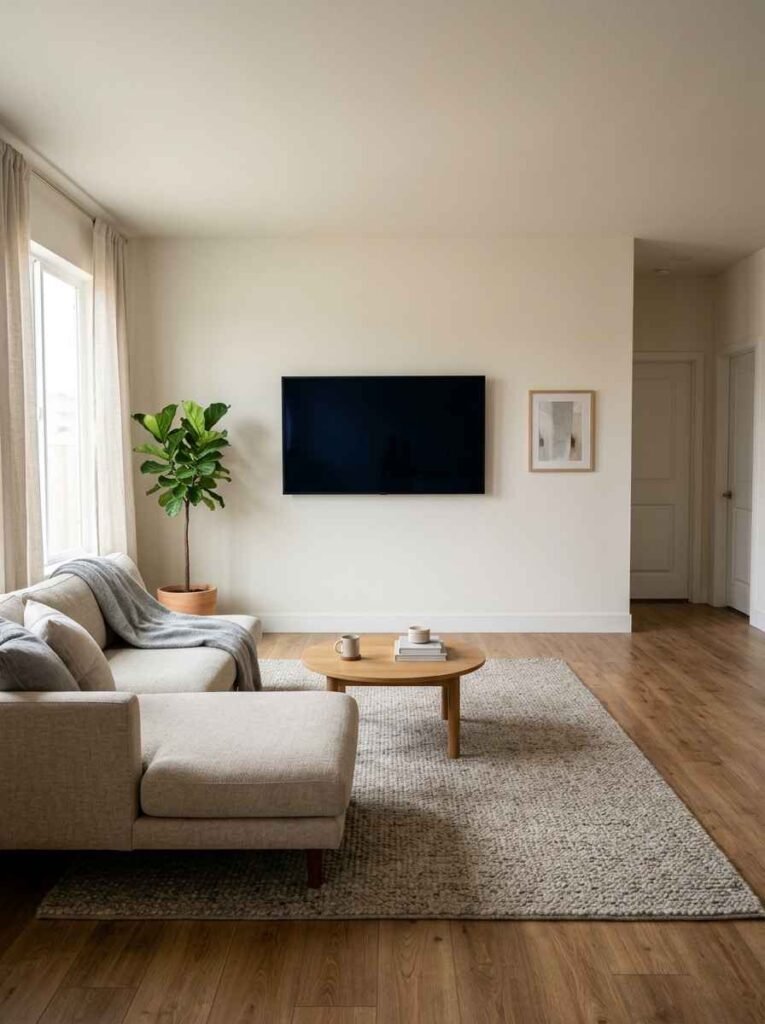
A TV stand eats floor space and visual space at the same time. Wall-mounting frees up that whole zone for, well, anything else. Or nothing else, which is sort of the point.
5. Go Vertical With Storage
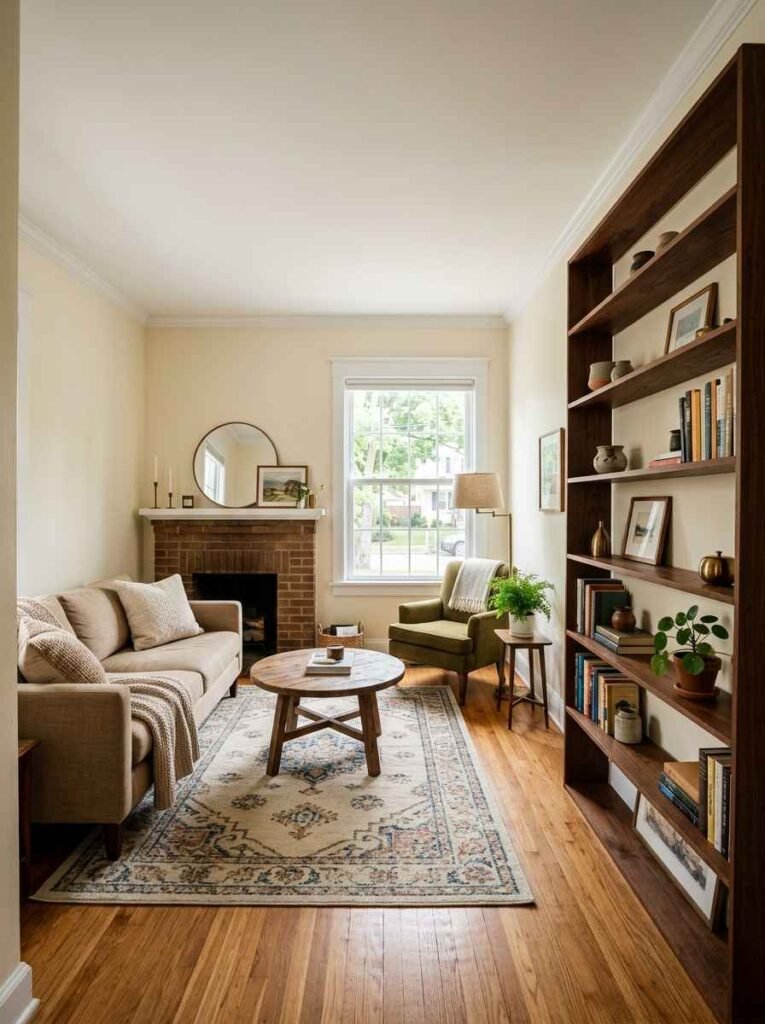
When floor space runs out, the walls are still wide open. Tall, narrow bookshelves use height instead of width, which matters a lot in a small room.
6. Use Mirrors Strategically
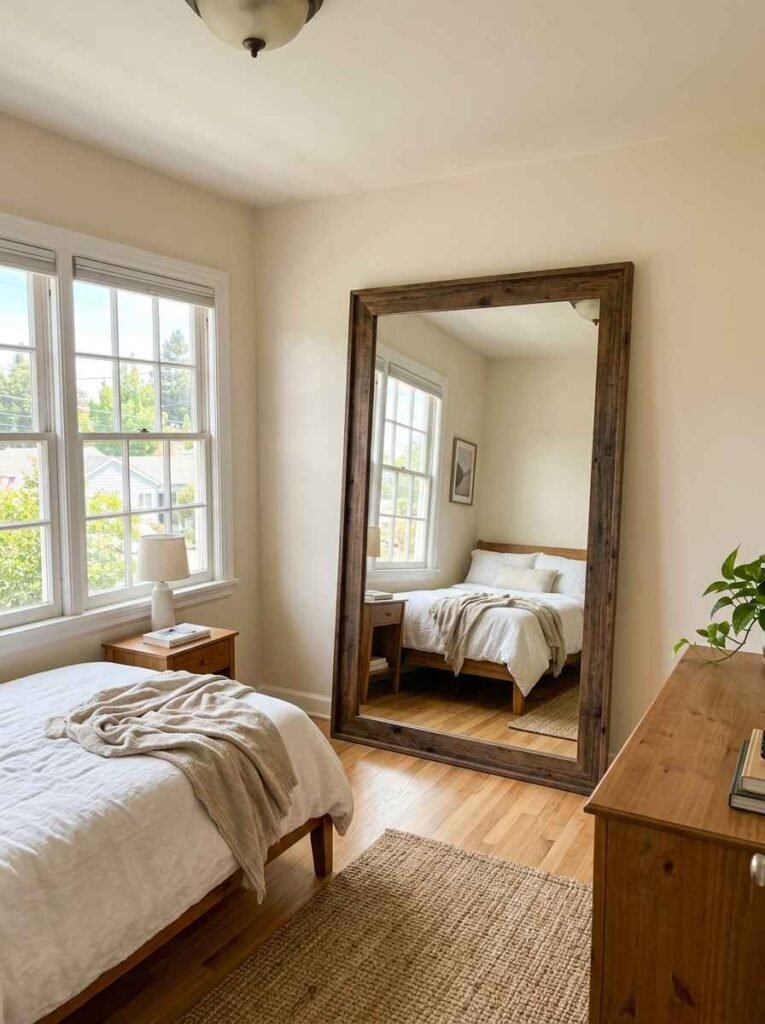
Mirrors bounce light around and create the illusion of depth. Place one across from a window and watch the room practically double in perceived size.
FYI, a mirror leaning against a wall (rather than hung) adds a relaxed, designer-ish touch without any drilling.
7. Keep Window Treatments Minimal
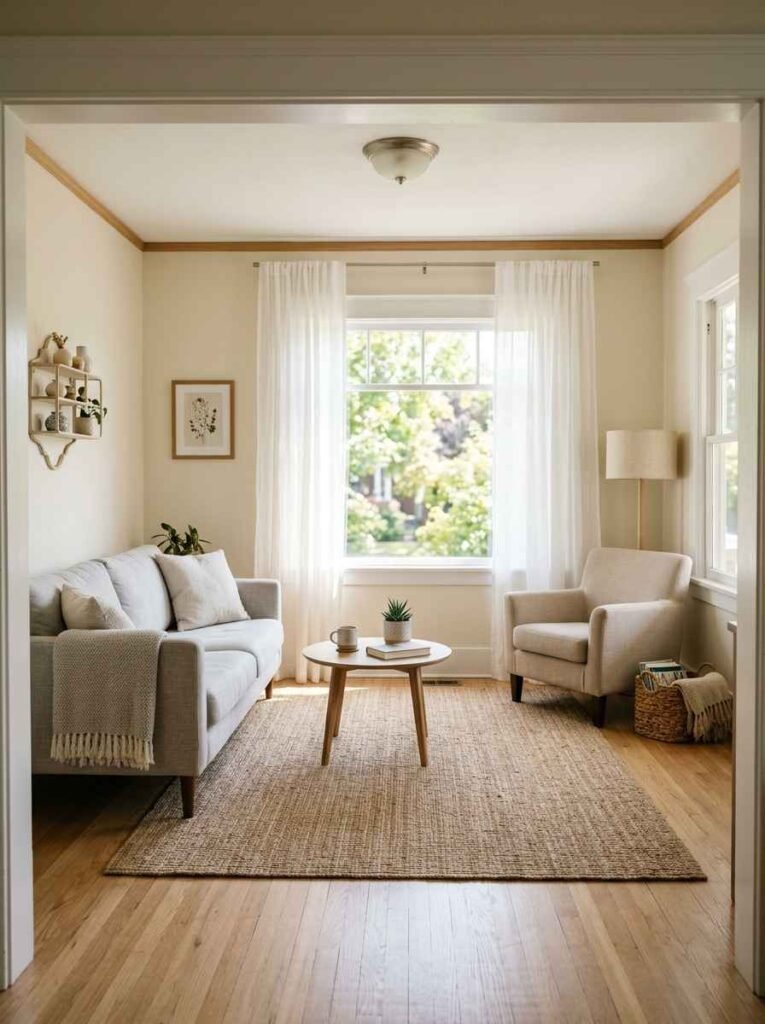
Heavy drapes block light and visually lower your ceiling. Swap them for sheer curtains or simple roller shades that let light flood in.
8. Stick to a Limited Furniture Count
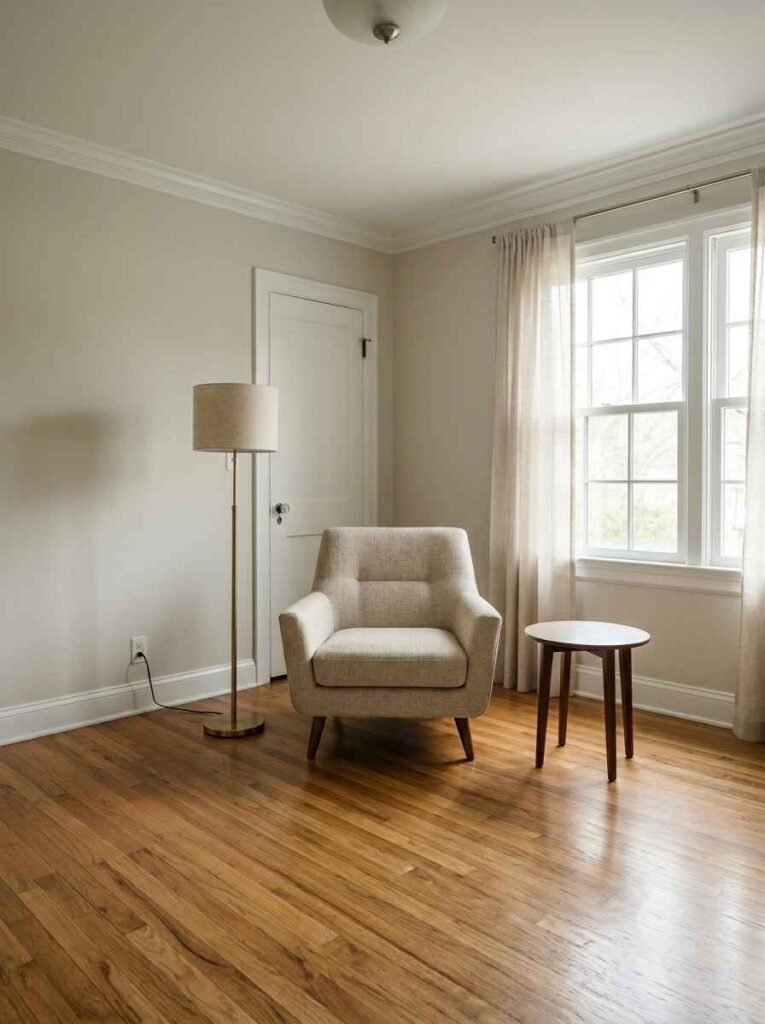
Every extra piece is one more thing your eyes have to process.
Ask yourself: does this room actually need a side table, or does it just have one because side tables exist?
9. Choose Furniture With Exposed Legs
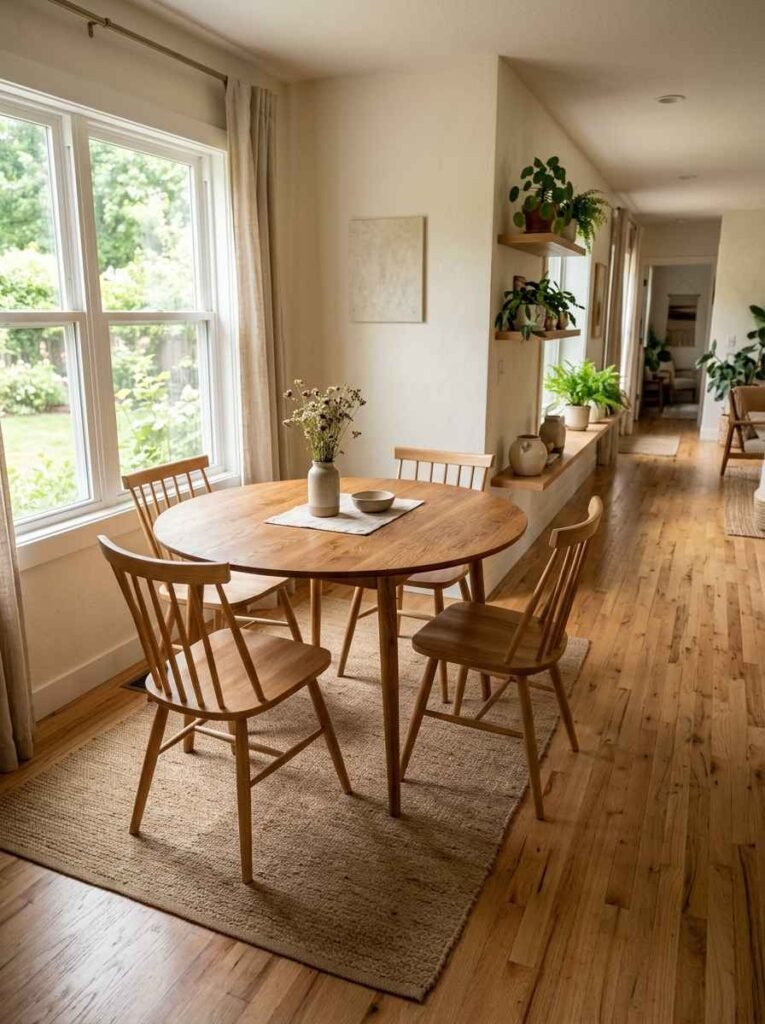
Similar to floating furniture, exposed legs on chairs and tables let you see more floor. More visible floor equals a bigger-feeling room. It’s almost too simple.
10. Declutter Surfaces Completely
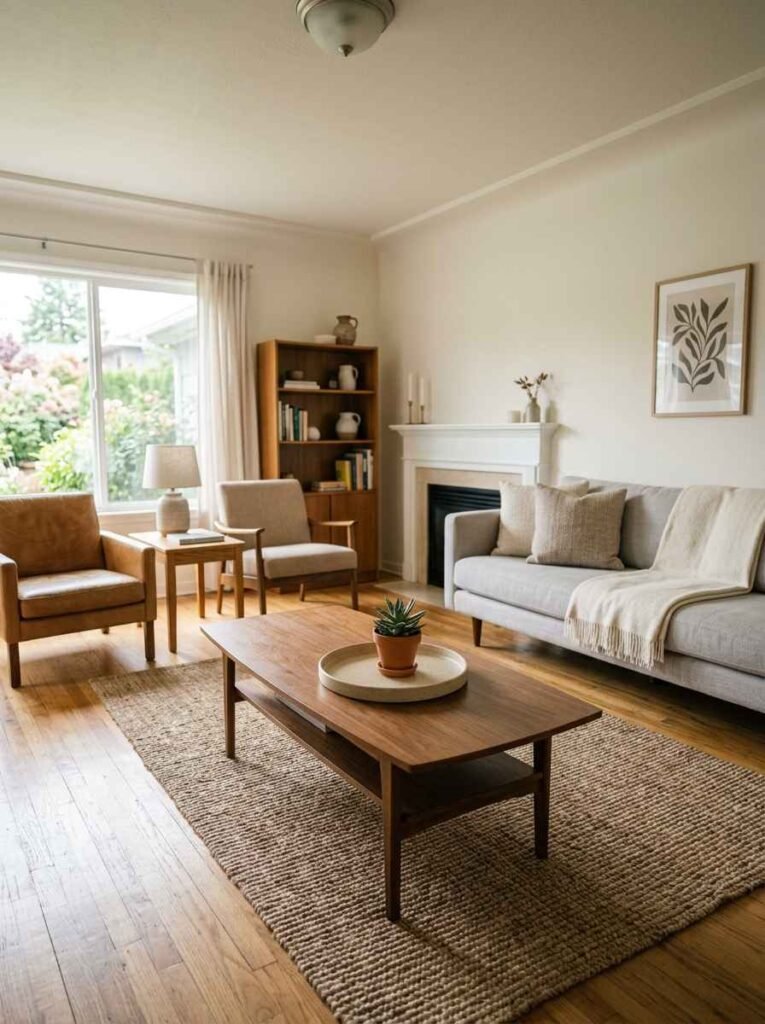
Coffee tables, nightstands, and counters should hold next to nothing. One plant, one tray, maybe a candle. That’s it.
11. Use Light, Neutral Flooring
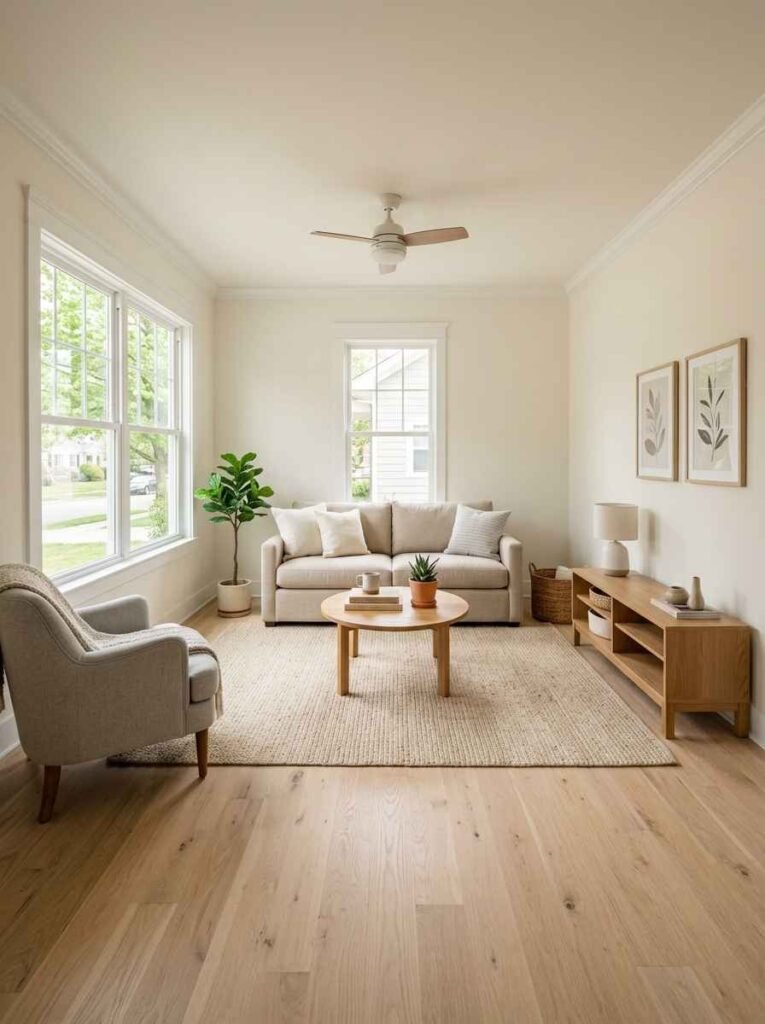
Dark floors can make a small room feel like a cave. Lighter wood tones or pale rugs open things up instantly.
12. Hang Curtains Close to the Ceiling
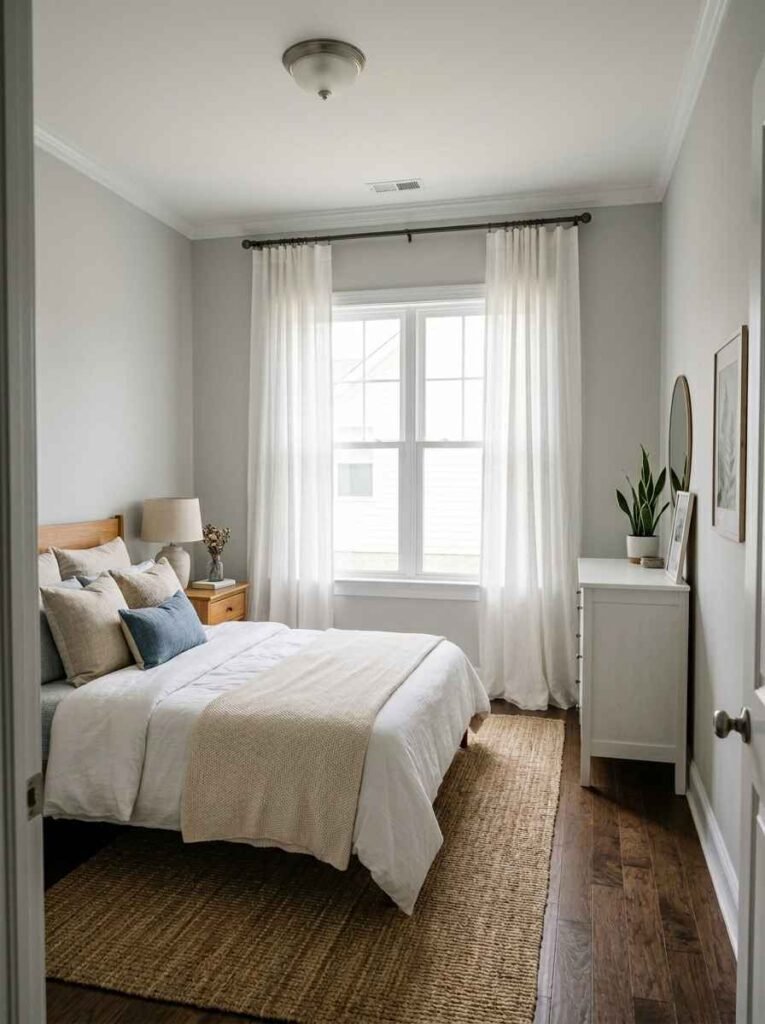
Mounting curtain rods a few inches below the ceiling (instead of right above the window frame) tricks the eye into seeing taller walls.
13. Choose a Statement Piece, Not Many Small Ones
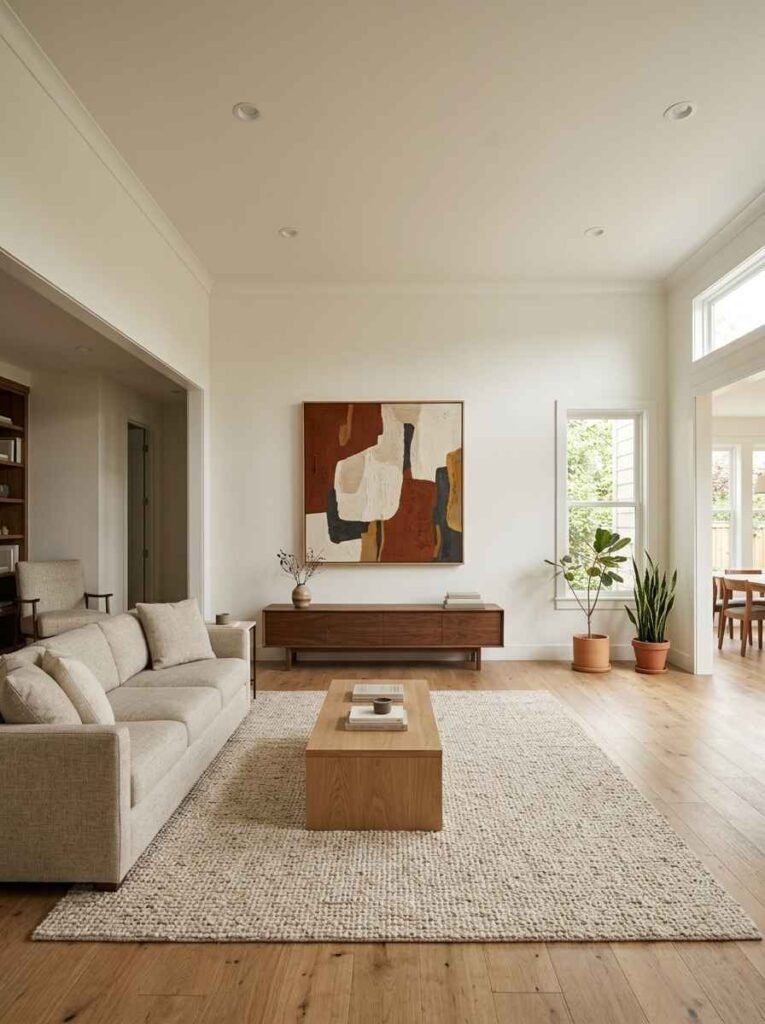
One striking item, like a single piece of art or a bold lamp, does more for a room than five scattered knickknacks. Minimalism doesn’t mean boring. It means intentional.
14. Use Glass and Acrylic Furniture
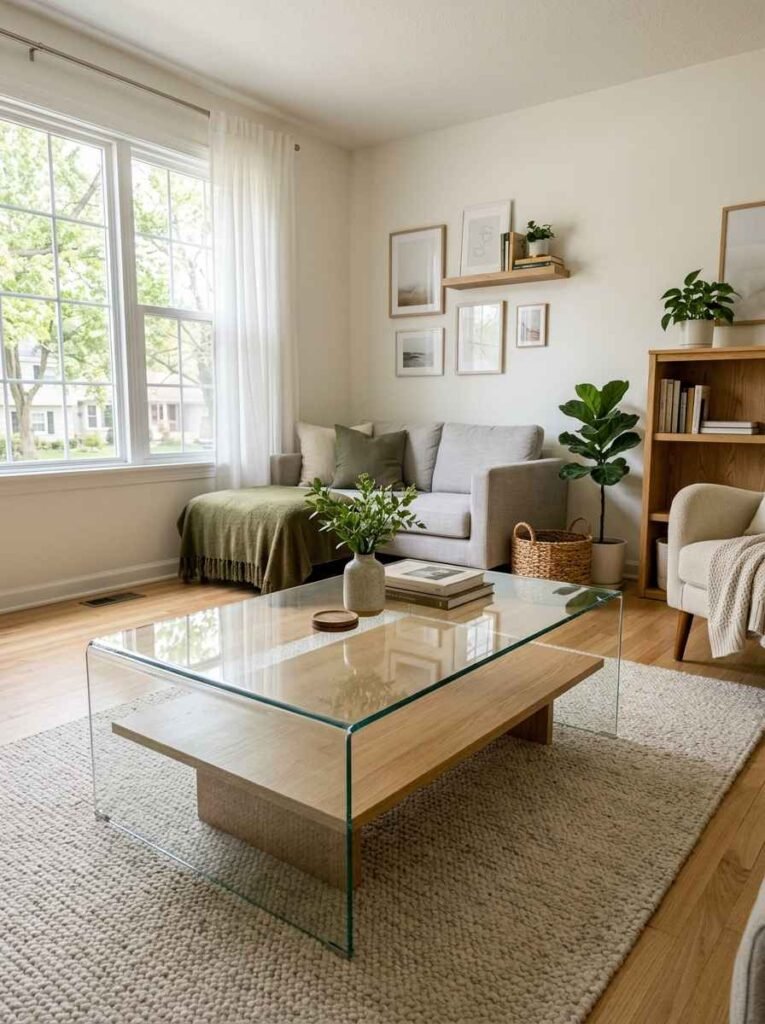
Clear materials practically disappear. A glass coffee table holds your stuff without holding visual weight.
15. Stick to One Pattern Max
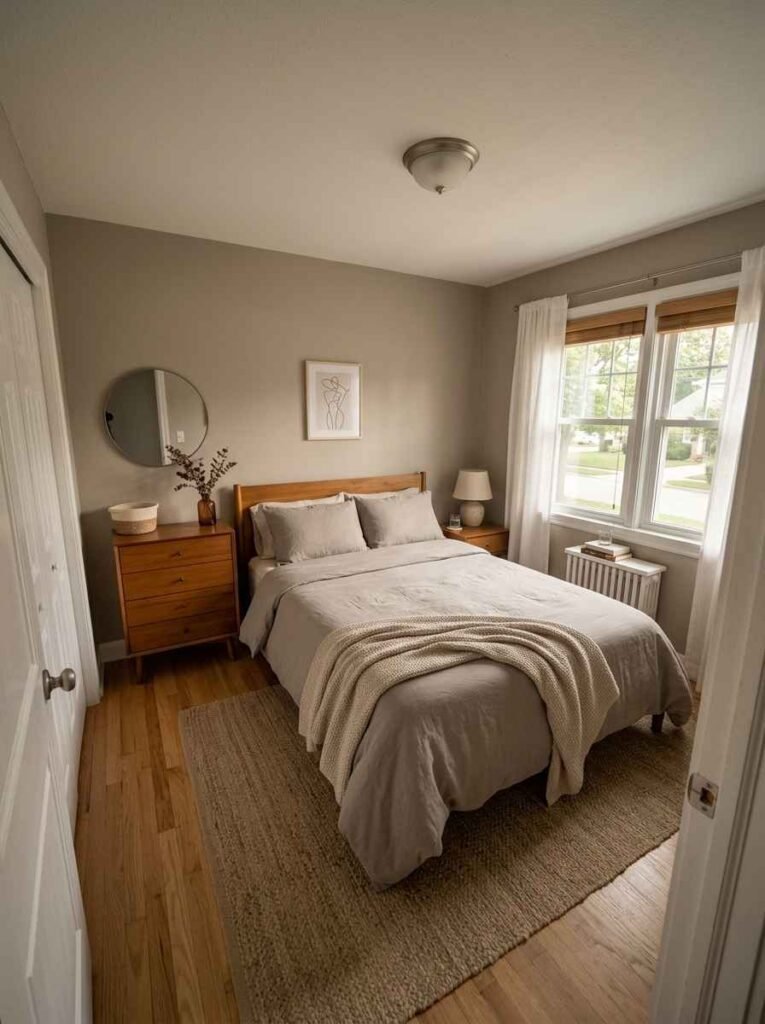
Too many patterns compete for attention. If you want texture, get it from material (linen, wool, woven baskets) instead of busy prints.
16. Hide Cords and Cables
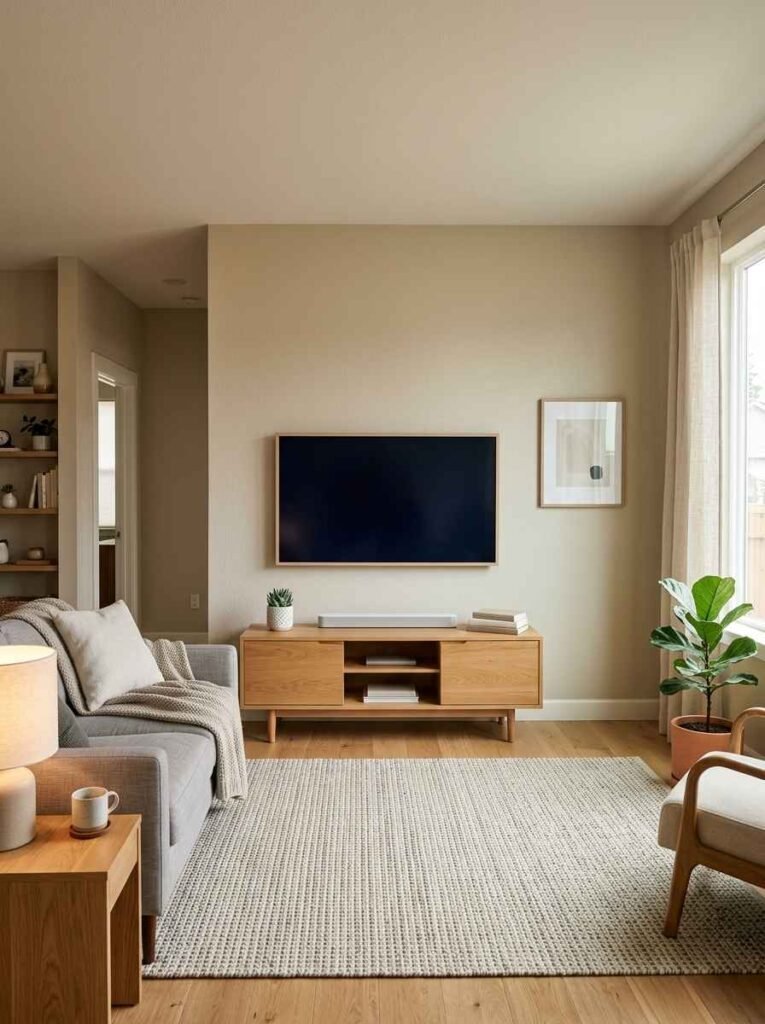
Nothing kills a clean look faster than a tangle of cords behind the TV. Cord clips and cable boxes are cheap and make a real difference.
17. Use Wall-Mounted Lighting
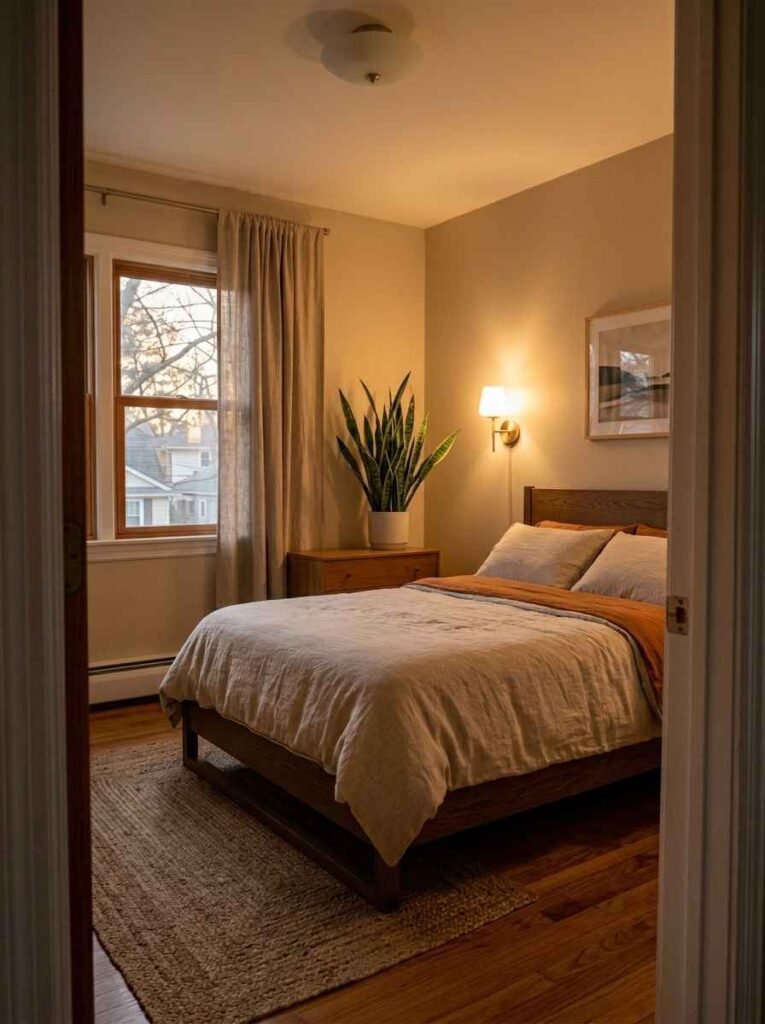
Floor and table lamps take up real estate. Sconces and wall-mounted fixtures free up that space while still lighting the room well.
18. Choose a Low-Profile Bed Frame
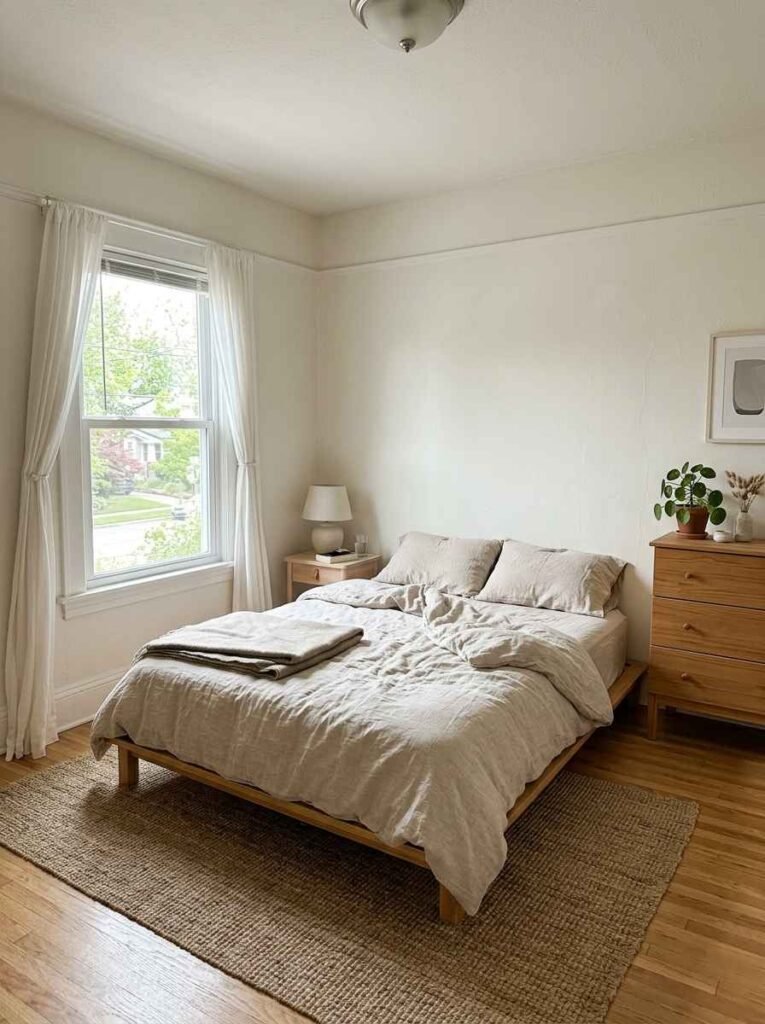
A platform bed sits lower to the ground, which keeps the room’s sightline open. Tall headboards and footboards can make a bedroom feel boxed in.
19. Limit Your Color Palette to Three Shades
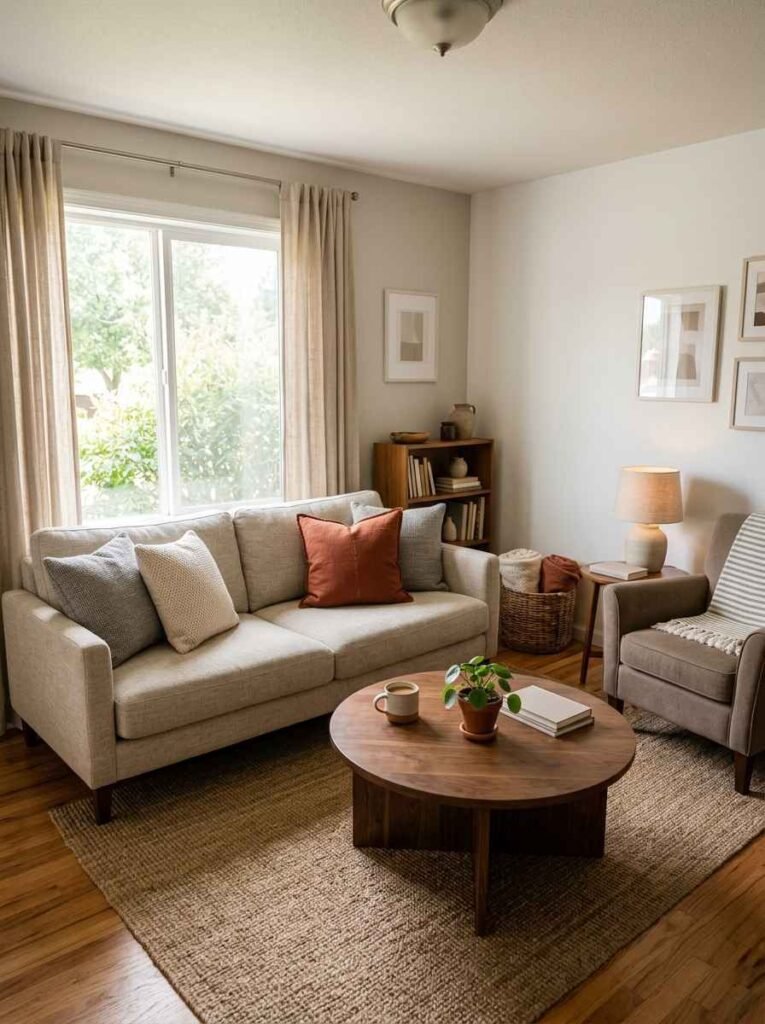
Two neutrals plus one accent color. That’s the whole formula. Anything more starts to feel busy, even in a well-organized room.
20. Use Built-In Shelving Where Possible
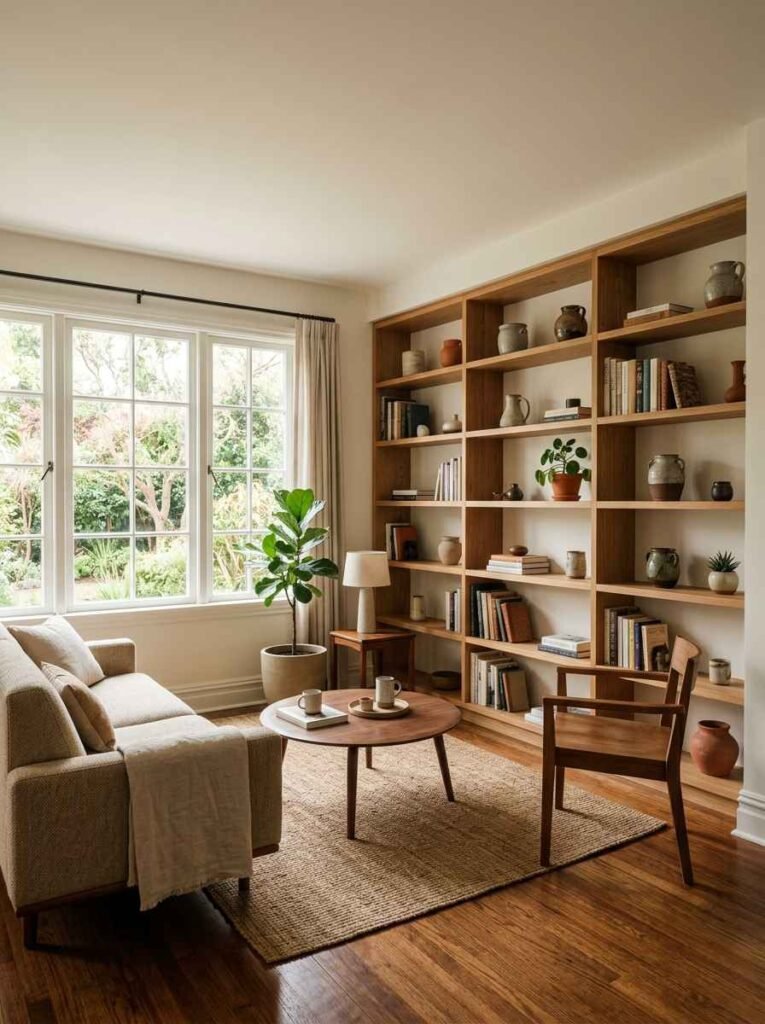
Built-ins sit flush with the wall instead of jutting into the room. They look intentional and use space that floating furniture never could.
21. Skip the Area Rug, or Choose One That Fits the Room
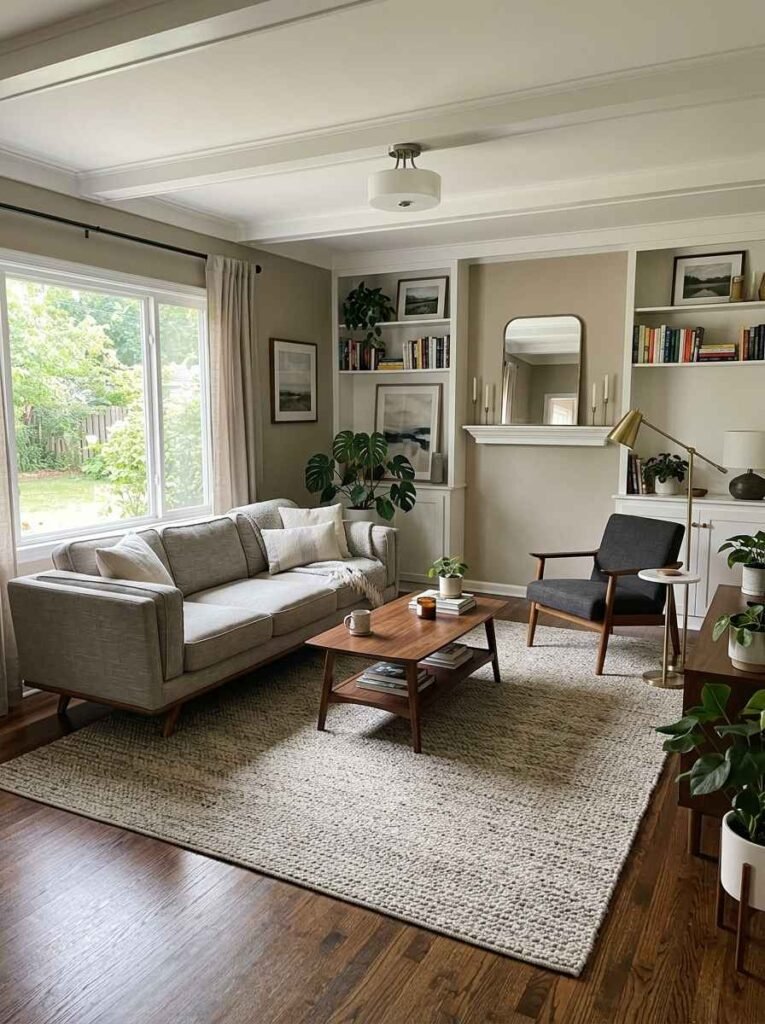
A rug that’s too small actually makes a room look smaller by chopping up the floor visually. Either go big enough to anchor the furniture or skip it entirely.
22. Display Fewer, Better Objects
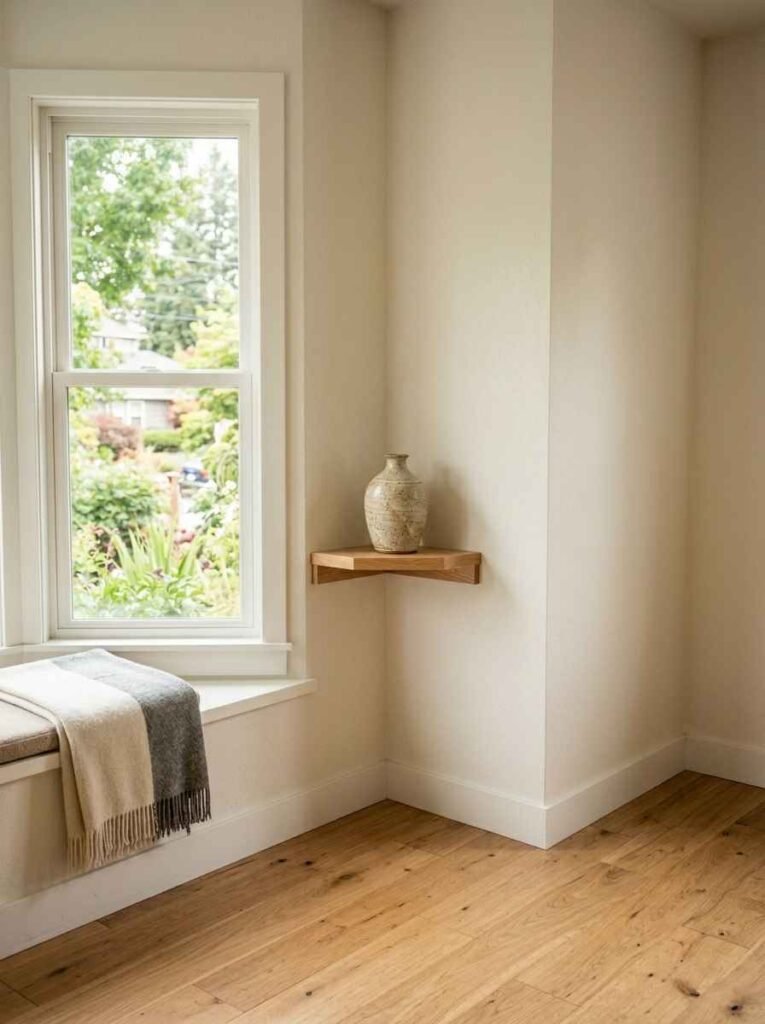
This is the heart of minimalism: quality over quantity. One good vase beats five mediocre ones every time.
23. Use Vertical Stripes or Paneling
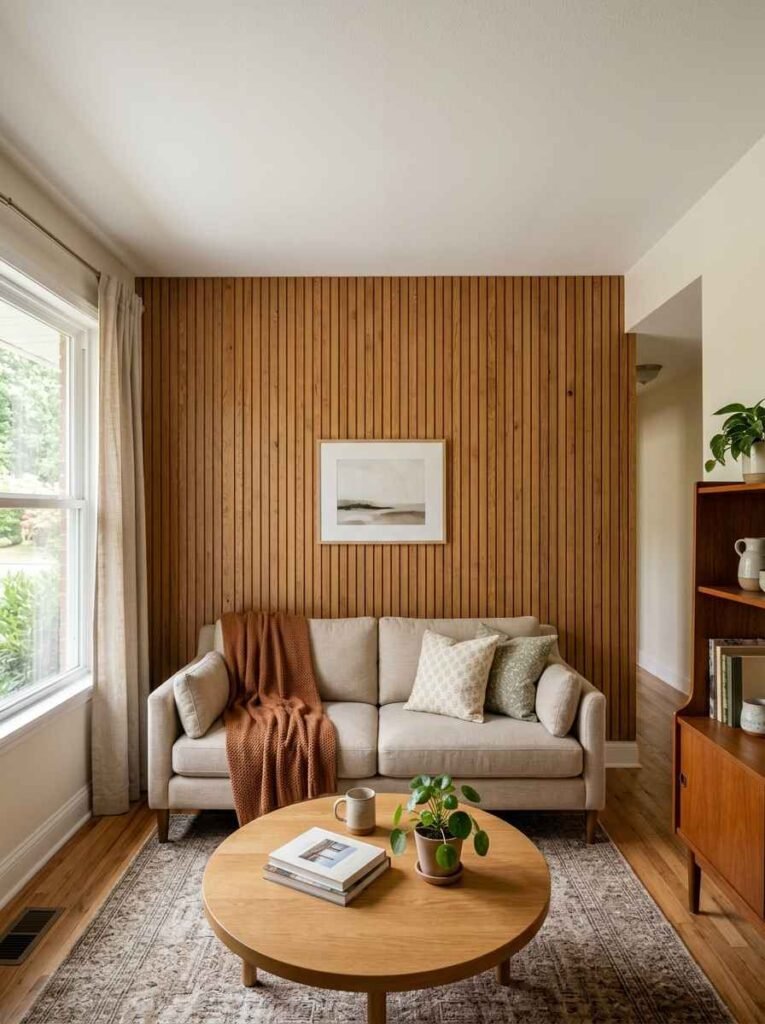
Vertical lines, whether from wall paneling or a striped accent wall, draw the eye upward and make ceilings feel taller.
24. Keep Closet Doors Off (or Use Curtains)
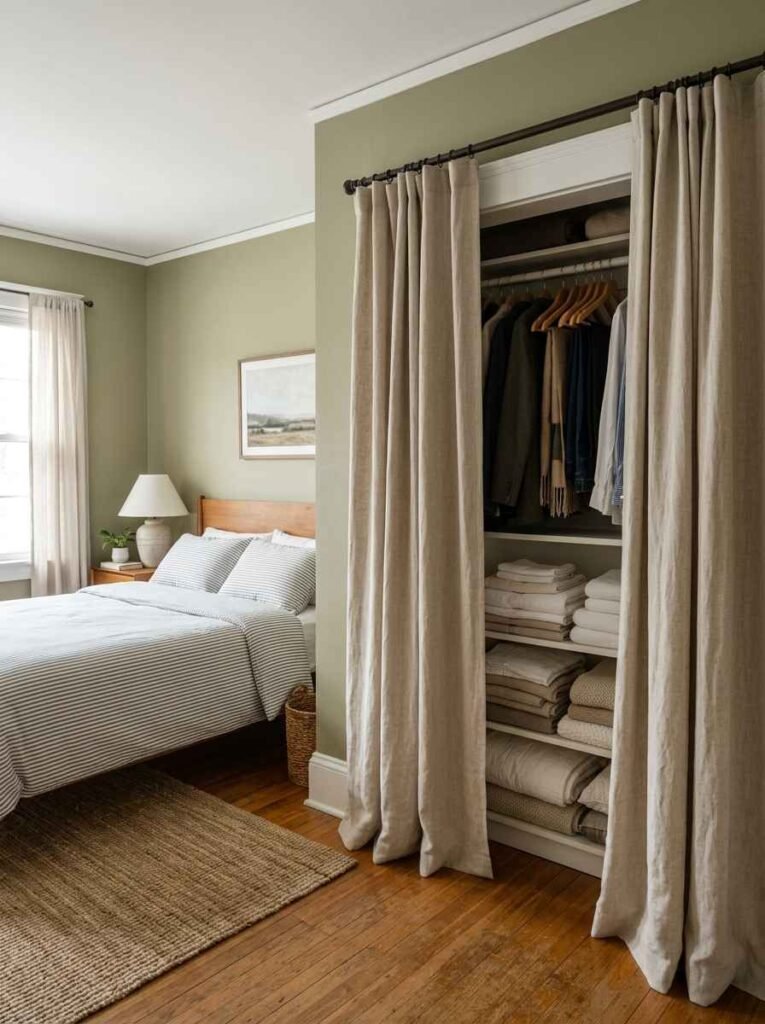
A swinging closet door needs clearance space. Curtains or sliding doors don’t, and they free up a surprising amount of usable floor.
25. Add Plants Instead of Knickknacks
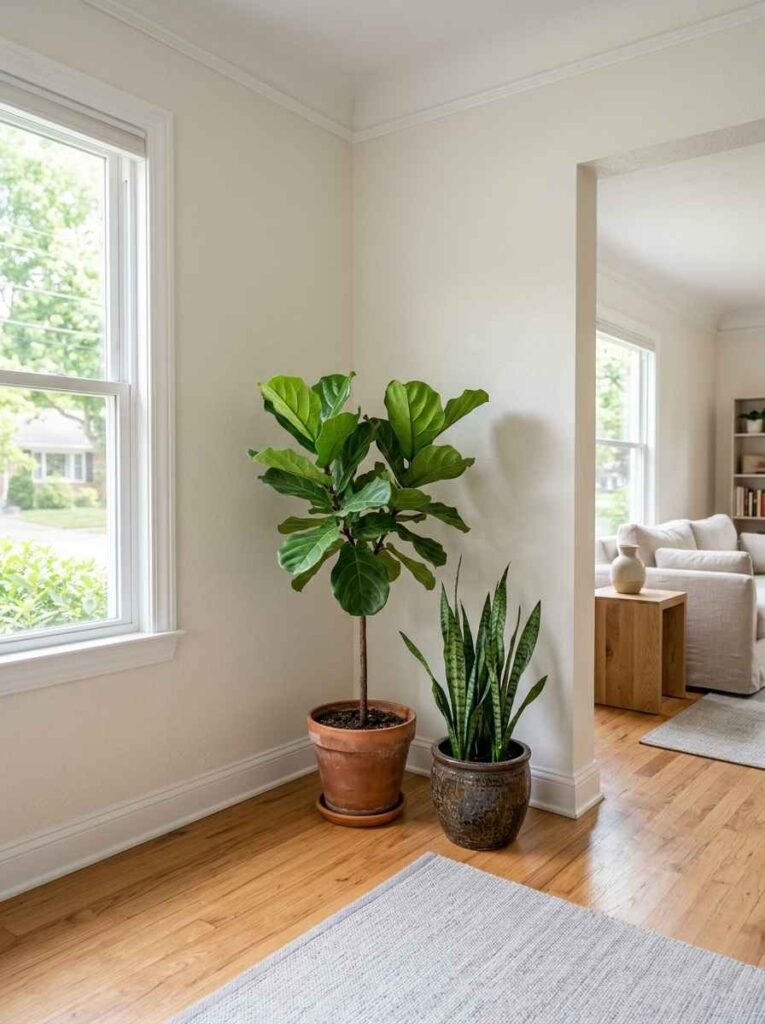
A few well-placed plants add life to a room without adding visual noise the way trinkets do. They’re decor that breathes, literally.
26. Edit Ruthlessly Every Few Months
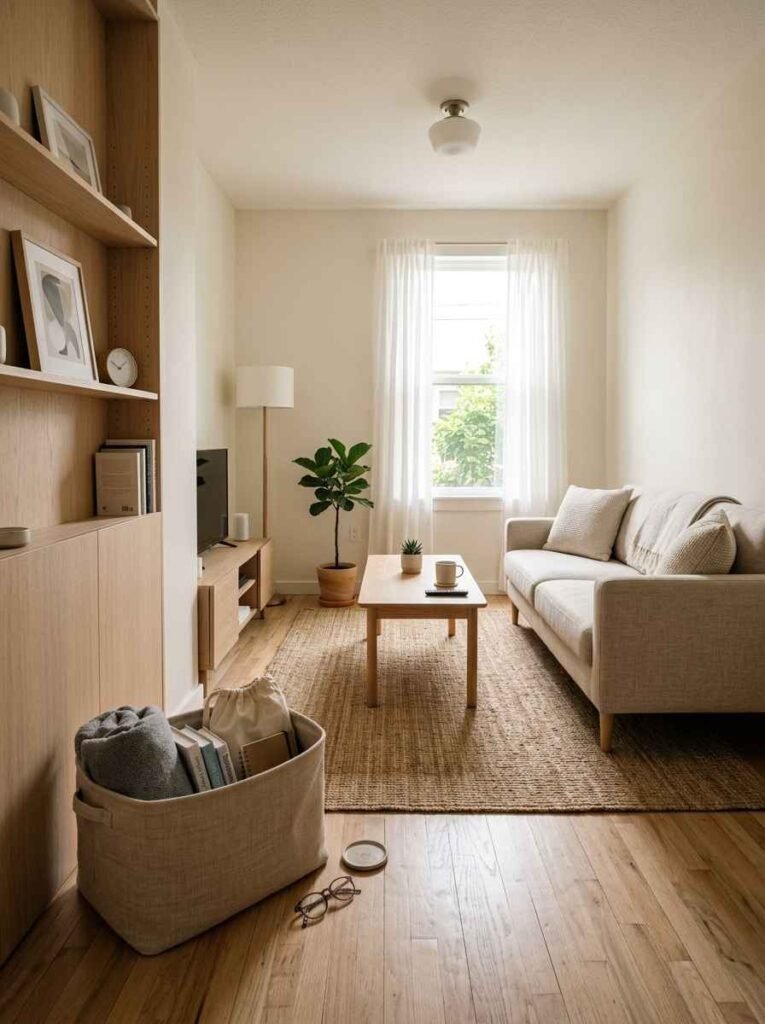
Minimalism isn’t a one-time decorating choice. It’s a habit. Things creep back in. Go through your space every few months and ask what’s actually earning its spot.
Quick Comparison: Small-Space Furniture Choices
| Furniture Type | Visual Weight | Best For |
|---|---|---|
| Platform bed, exposed legs | Light | Bedrooms |
| Glass coffee table | Minimal | Living rooms |
| Built-in shelving | Low (flush to wall) | Any room |
| Bulky upholstered sofa | Heavy | Avoid in tight spaces |
Making It Stick
A small room doesn’t have to feel small. It just needs fewer things competing for attention and more decisions made on purpose.
Start with one or two ideas from this list instead of overhauling everything at once. Float your furniture. Edit your surfaces. Hang a mirror where it counts.
Your space will thank you. So will your sense of calm every time you walk in.
