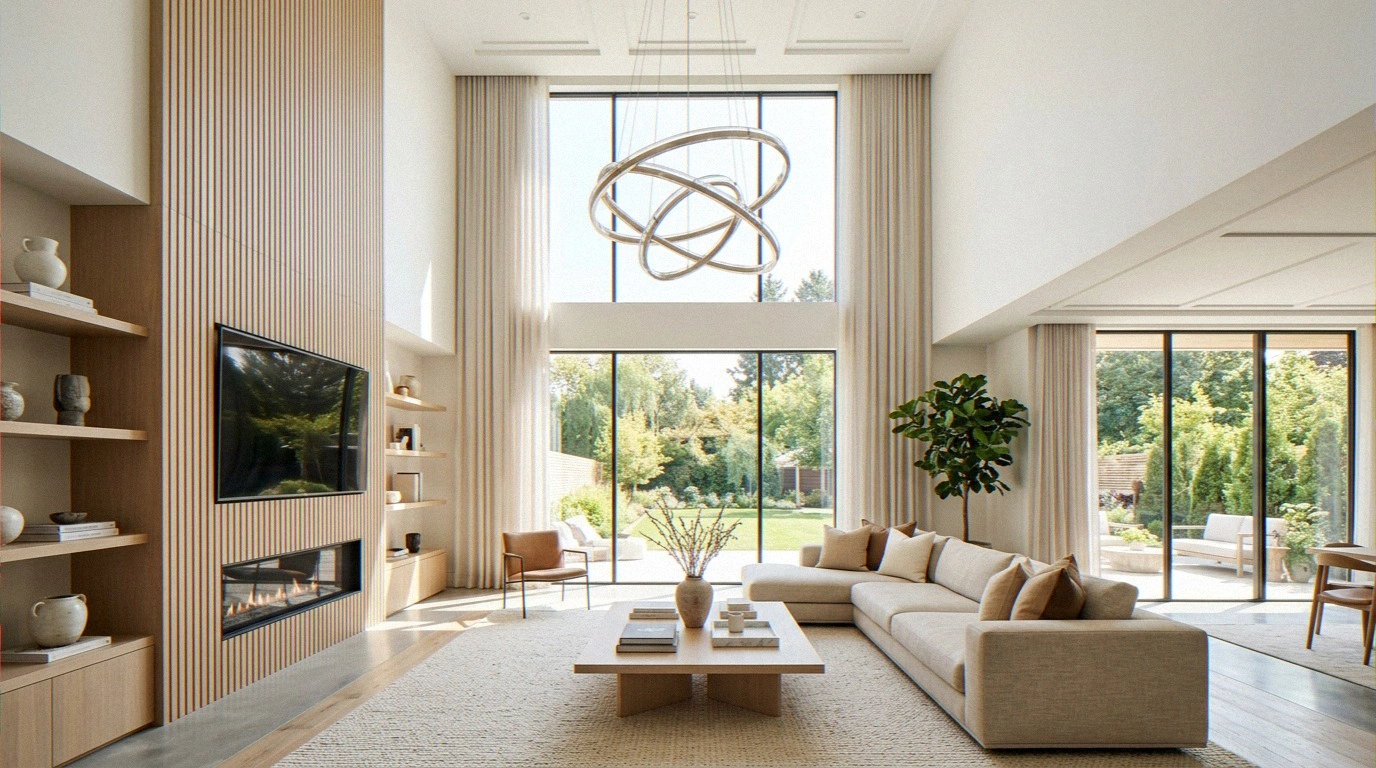
So you’ve got high ceilings. Lucky you — seriously. I remember the first time I walked into a room with 14-foot ceilings and just stood there like an idiot with my mouth open. That’s the power of vertical space done right.
But here’s the honest truth: most people get high ceilings and completely waste them. They buy normal-sized furniture, hang curtains at the standard 7-foot mark, and then wonder why the room still feels “off.” That stops today.
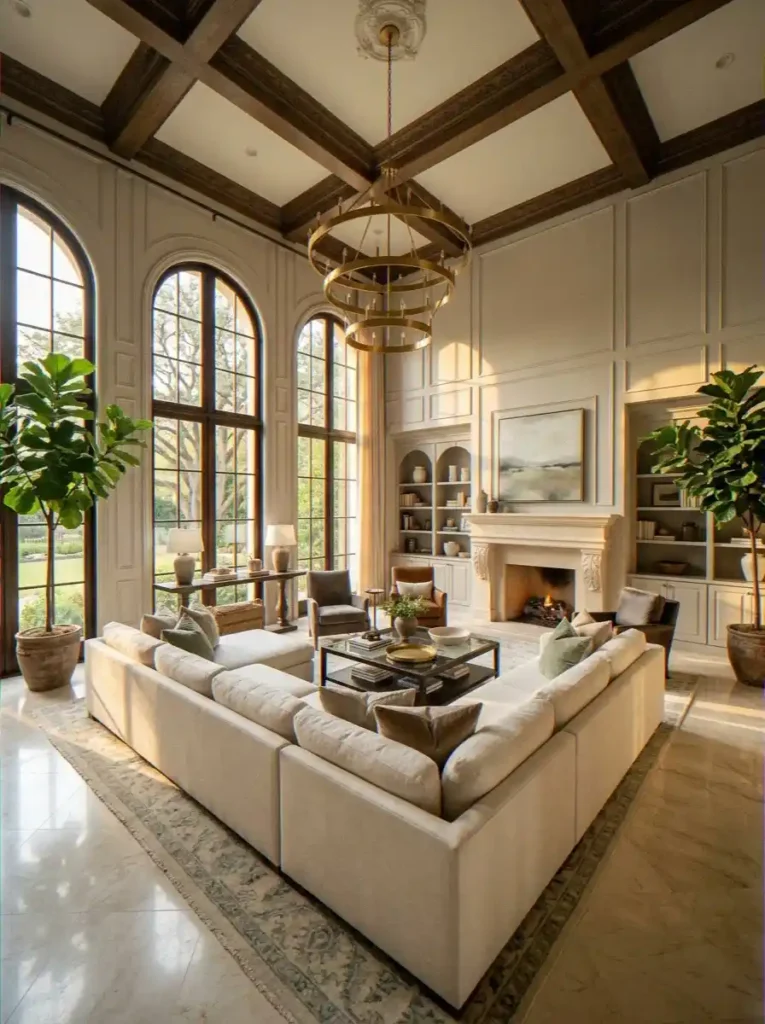
This guide covers 52 real, actionable design ideas for high-ceiling spaces — from budget-friendly weekend wins to full-blown renovation goals.
I’ve personally tried a chunk of these, seen others in projects I’ve followed obsessively, and yes, a few of them flopped for me (I’ll tell you which ones). Let’s go.
Why High Ceilings Are Basically a Luxury Cheat Code
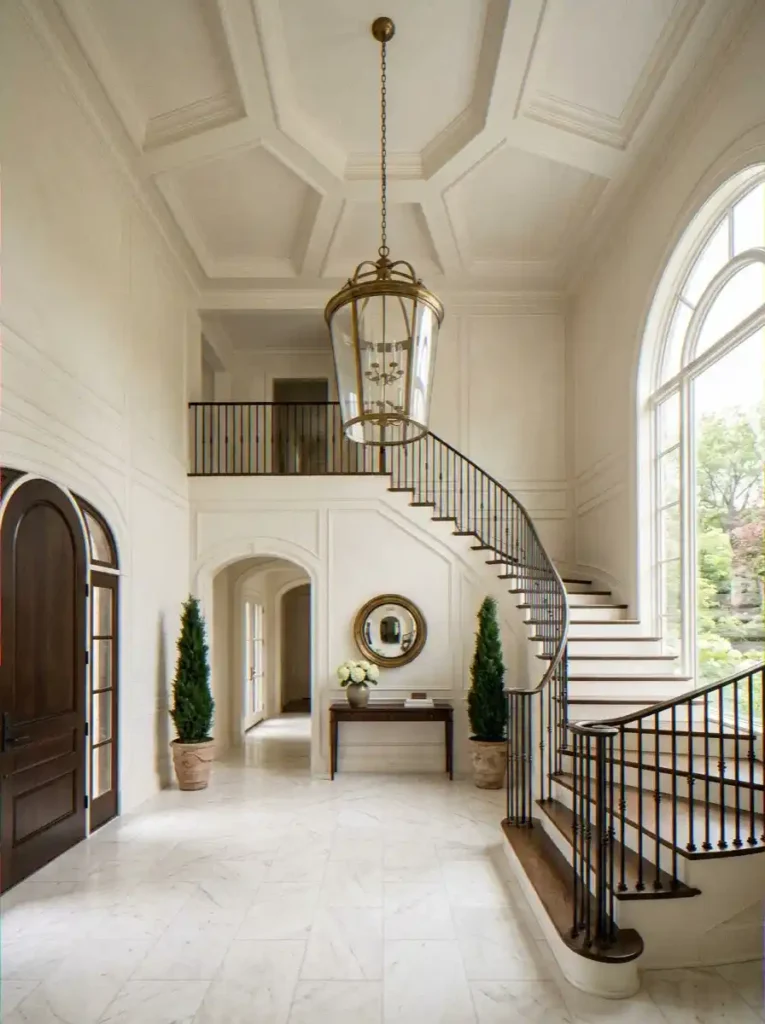
High ceilings do something no furniture or paint color can fully replicate — they give a room visual breathing room. The moment you walk in, your brain clocks the extra vertical space and files the whole place under “fancy.” It’s that automatic.
Interior designers and real estate agents consistently point to ceiling height as one of the top drivers of perceived luxury in a home.
According to Architectural Digest, rooms above 10 feet consistently score higher in buyer and renter “luxury perception” surveys.
So if you’re sitting on 12-foot ceilings and doing nothing special with them — bro, that’s a missed opportunity of epic proportions.
It’s not enough to just be tall. It’s about knowing how to fill the vertical space on purpose, stacking design elements from floor to ceiling, and making everything bigger to fit the room’s size. That’s exactly what we’re going to talk about here.
Part 1: Lighting Ideas That Actually Do Justice to the Height
1. The Grand Chandelier — Go Big or Go Home
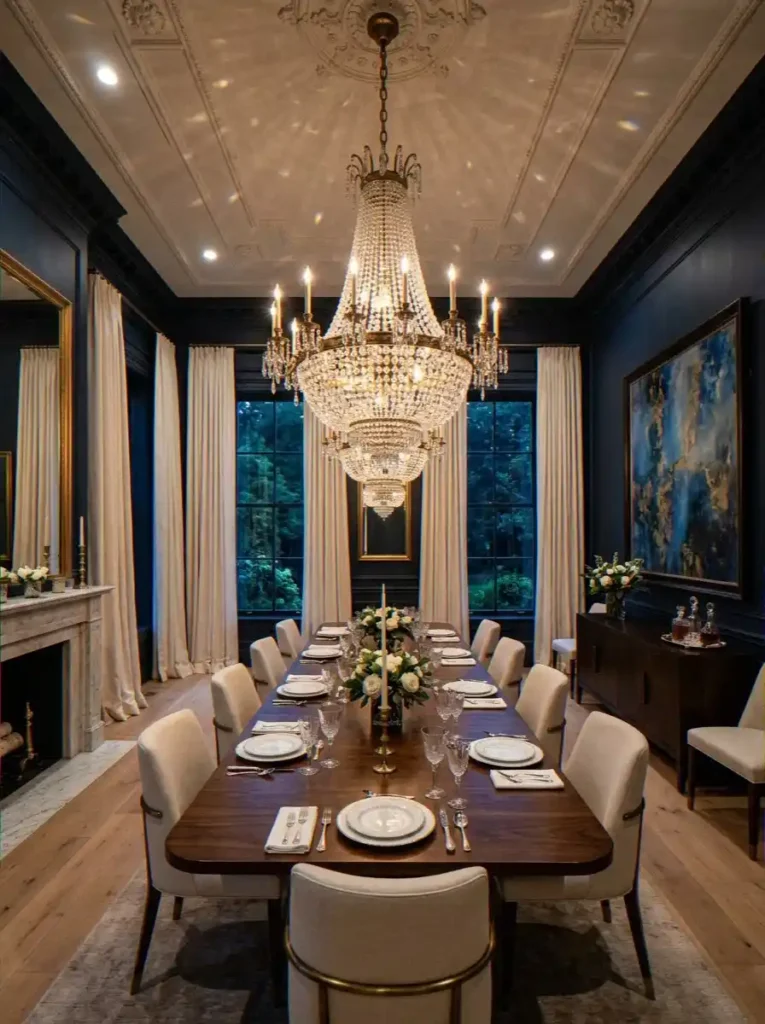
If there’s one non-negotiable in a high-ceiling room, it’s the chandelier. A tiny fixture dangling 12 feet up looks absolutely tragic — like someone forgot to finish the room.
Scale is the whole game here. The classic sizing formula: add the room’s length and width in feet, and that sum in inches is your minimum chandelier diameter. A 20×15 room? You’re looking at a 35-inch minimum, ideally bigger.
Choose crystal drops, metal structures with multiple levels, or even a dramatic custom piece that can be used as a sculpture.
I once put a huge brass chandelier in a client’s 13-foot dining room, and the whole room changed overnight. Every penny is worth it.
2. Cascading Pendant Clusters
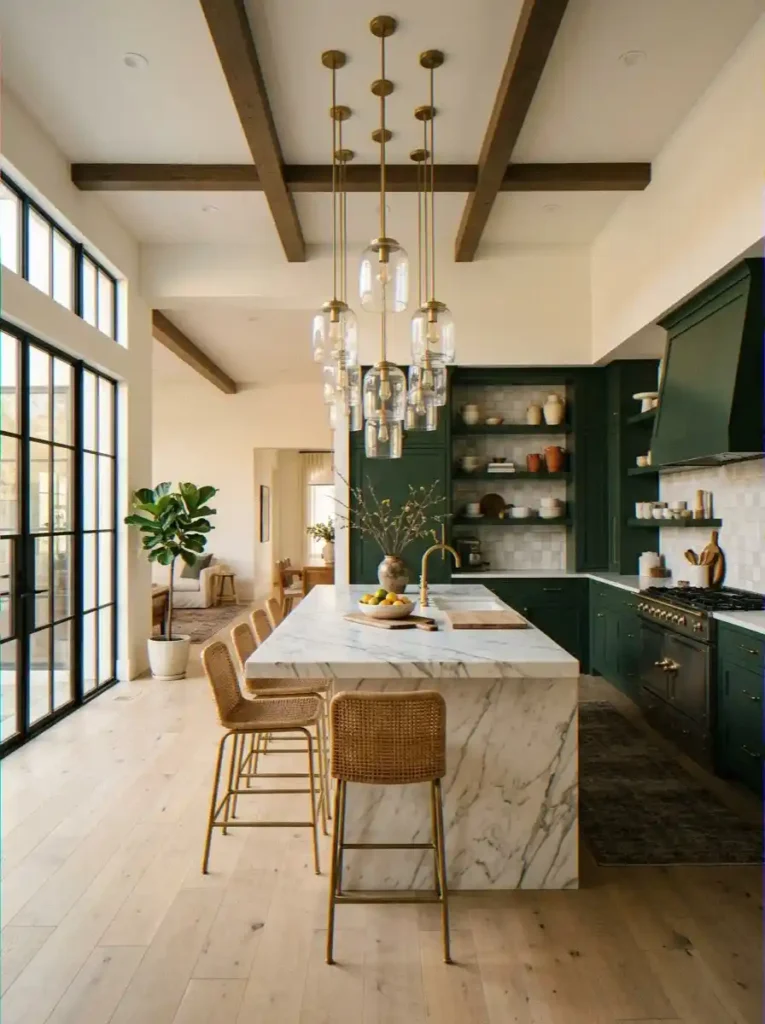
Can’t commit to one big piece? Try a cluster of 5–9 pendants hung at staggered heights to create a waterfall effect overhead.
This works brilliantly in dining rooms and over kitchen islands. Keep your lowest pendant at least 7 feet from the floor — learned that the hard way when a tall friend walked straight into one at a dinner party. Awkward. 😬
The different drop lengths make things move and look interesting in a way that a single fixture can’t. Brass and black are two metals that are really popular right now.
3. Recessed Lighting in Tiered Layers
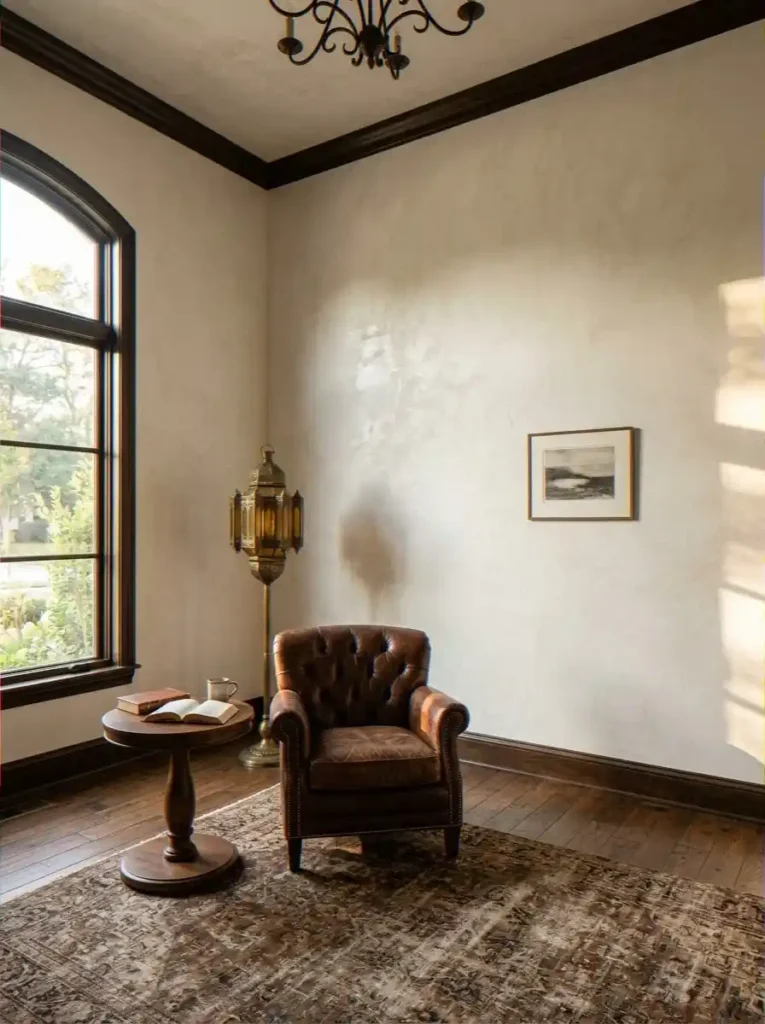
High ceilings open up the option for tiered recessed lighting — placing fixtures at different heights along the wall rather than just on the ceiling plane.
This creates distinct ambient zones that visually divide a very tall room into livable layers. The upper zone stays dramatic; the lower zone stays cozy.
4. Cove Lighting Along Crown Molding
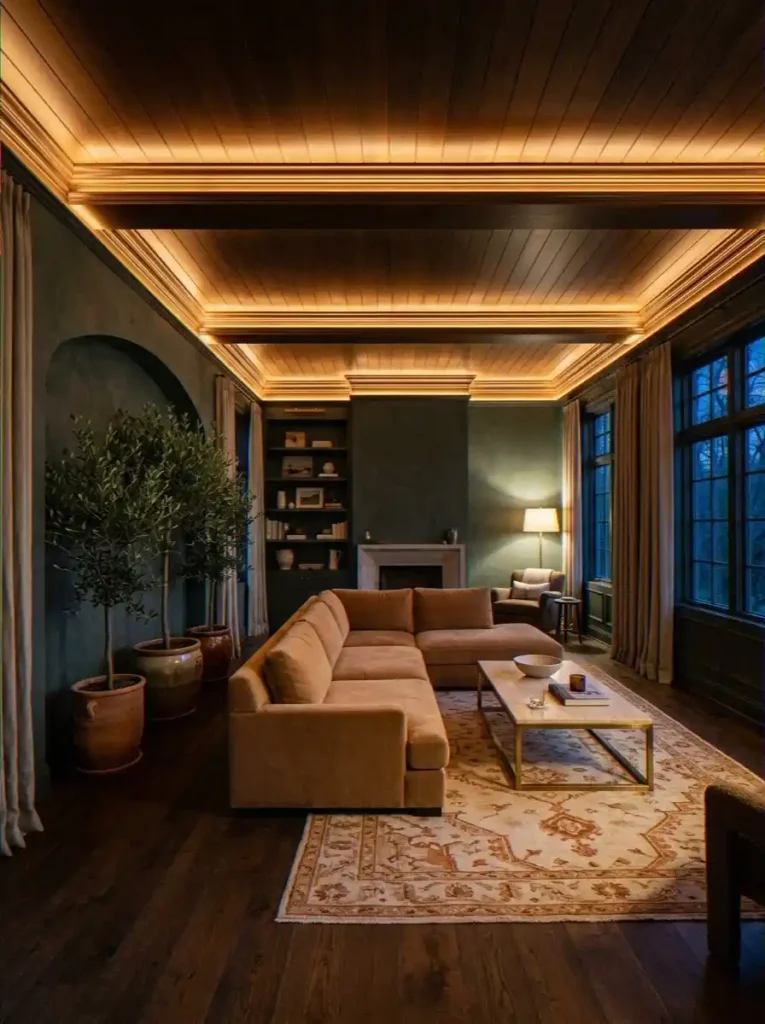
Install LED strip lights inside a built-up cove running along the ceiling perimeter. Cove lighting bounces warm, diffused light upward and really emphasizes the ceiling height without the harshness of direct downlights.
It’s one of those details that looks expensive but actually isn’t — a full room can run you a few hundred dollars in materials if you DIY it. I tried this in my ownliving room and it completely changed the evening atmosphere.
5. Sconces at Double Height
Do you have two stories of wall space? Wall sconces on the upper level that are 10 to 12 feet high make architectural accents that draw the eye up.
For a balanced, layered lighting scheme that looks good and works well, put them with lower sconces at the usual 5–6 foot mark.
6. Rope Lights Along Exposed Beams\
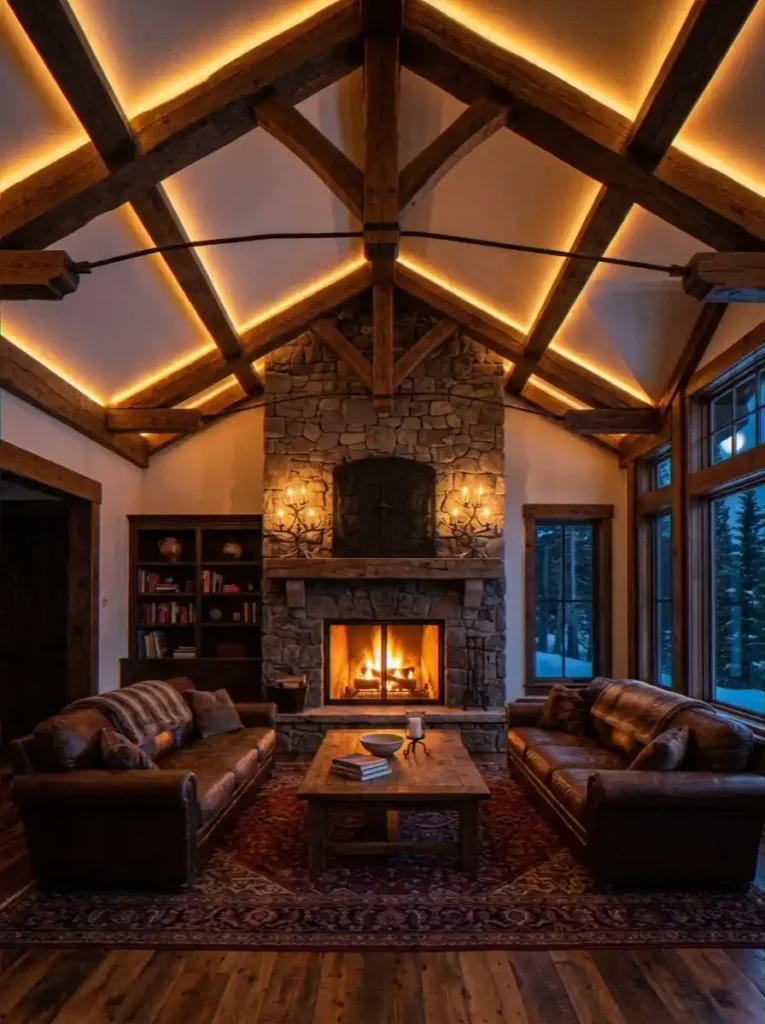
This one’s a killer trick that costs almost nothing. Run warm LED rope lights or strip lights along the top of exposed ceiling beams.
At night, the effect is genuinely stunning — warm glow bouncing off the ceiling, long soft shadows, the whole thing looks like a luxury lodge. I’ve recommended this to dozens of people and not one has regretted it.
Part 2: Wall Treatments That Command Attention
7. Floor-to-Ceiling Shiplap or Paneling
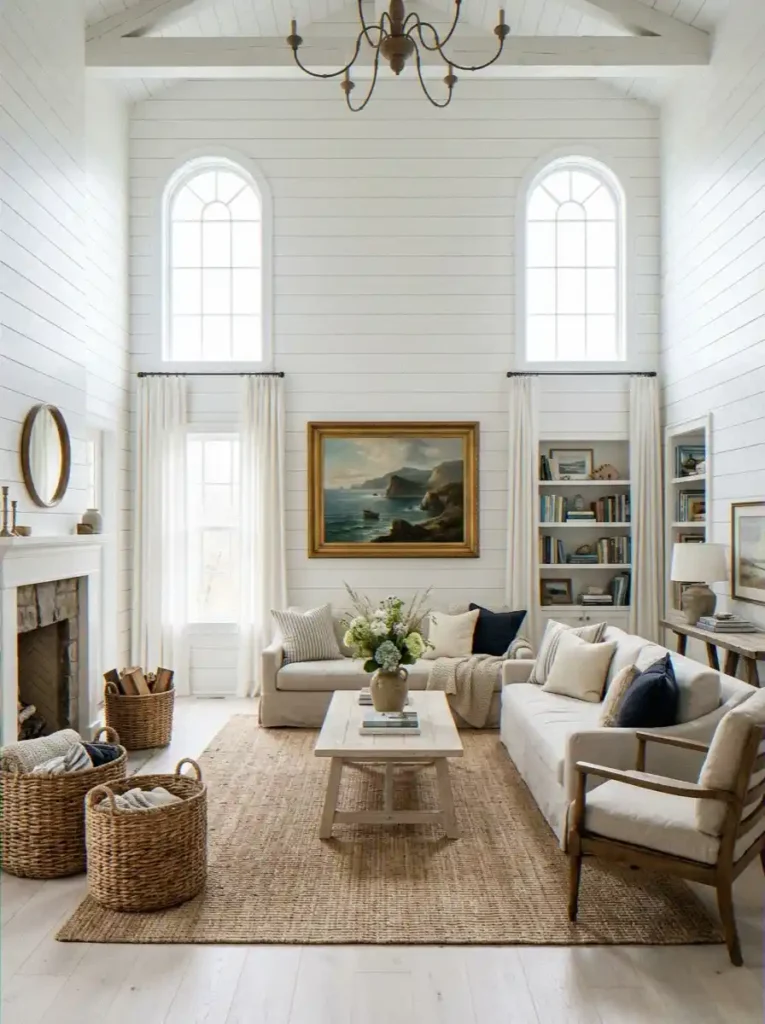
Vertical paneling from floor to ceiling is one of the most effective transformations available in a high-ceiling room.
The continuous vertical lines naturally guide the eye upward and give the walls a tailored, intentional look that bare paint simply can’t achieve.
Shiplap suits coastal and farmhouse styles perfectly; for something more formal, classic wainscoting topped by a contrasting upper-wall color is incredibly sophisticated.
8. Two-Tone Painted Walls
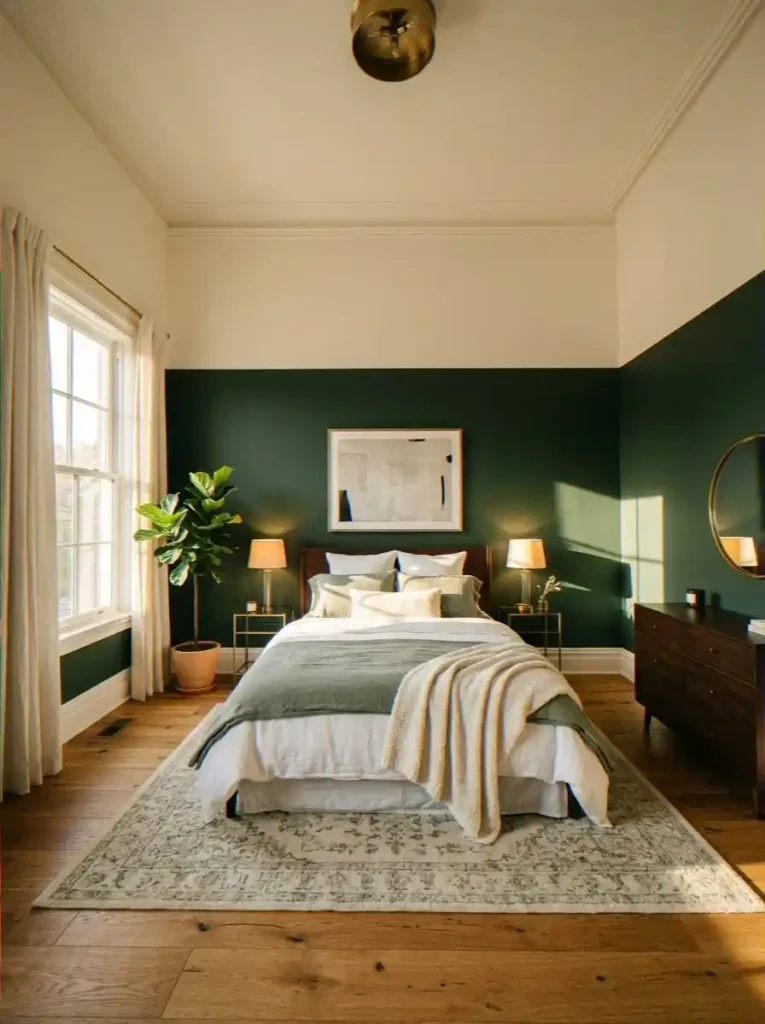
Use a dark, rich color on the bottom two-thirds of your wall and a lighter color on the top. You don’t need to mold anything; the color break does the trick visually, and your eye sees it as a planned architectural feature.
Right now, the best color combinations are deep forest green with warm cream, navy with soft white, and charcoal with pale blush. In real life, they all look really beautiful.
9. Dramatic Wallpaper on the Upper Wall
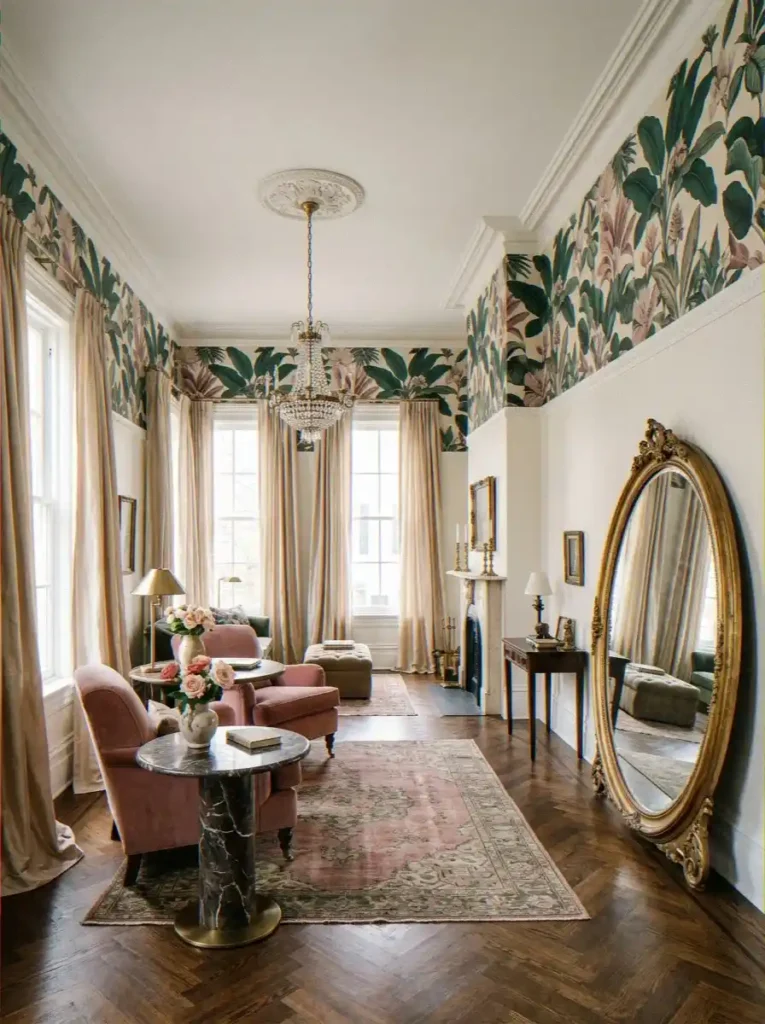
Here’s one that genuinely impresses people: install bold patterned wallpaper only on the upper section of the wall, above a chair rail or picture rail.
Oversized botanicals, geometric prints, and classic damask all look brilliant up high where they have actual room to unfold. The lower walls stay painted — the contrast makes both elements hit harder.
Honestly, this trend feels a bit overdone in some interior design circles now — so if you’re going for it, make sure your pattern choice is timeless rather than chasing the moment.
10. Full-Height Stone or Brick Accent Wall
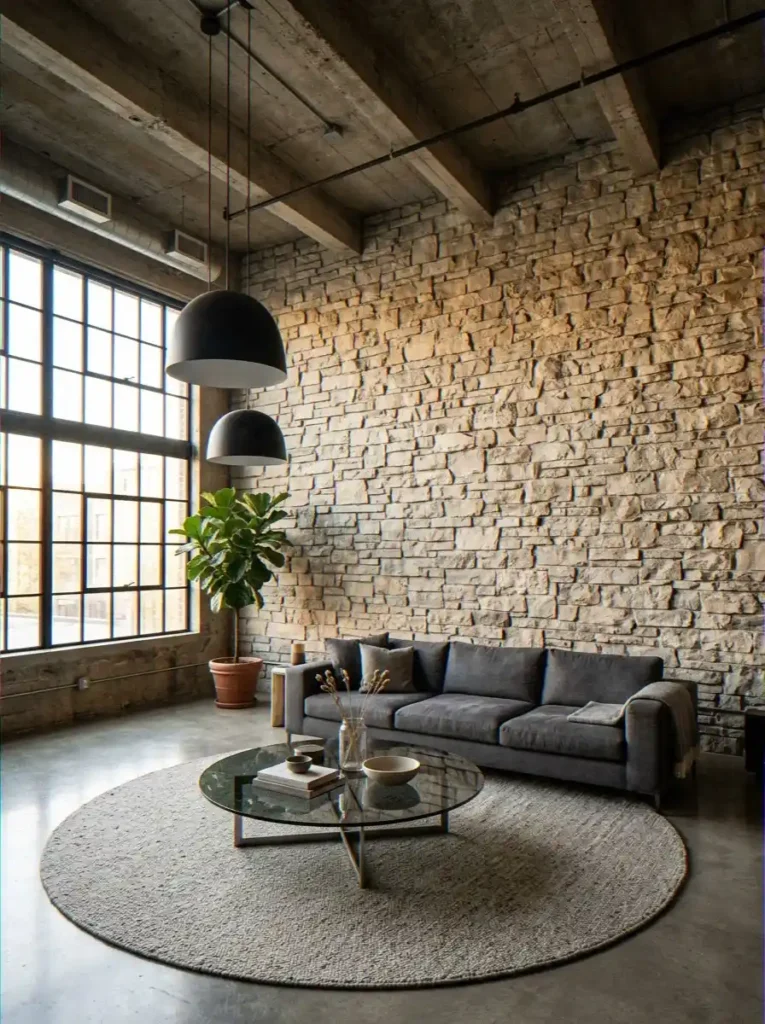
A floor-to-ceiling stone or brick accent wall is an absolute power move. Natural materials at full height create a sense of permanence and weight that’s genuinely hard to replicate with anything else.
Even faux stone panels have gotten seriously convincing — you can achieve 90% of the look at 20% of the cost.
11. Tall Wainscoting with Picture Rail
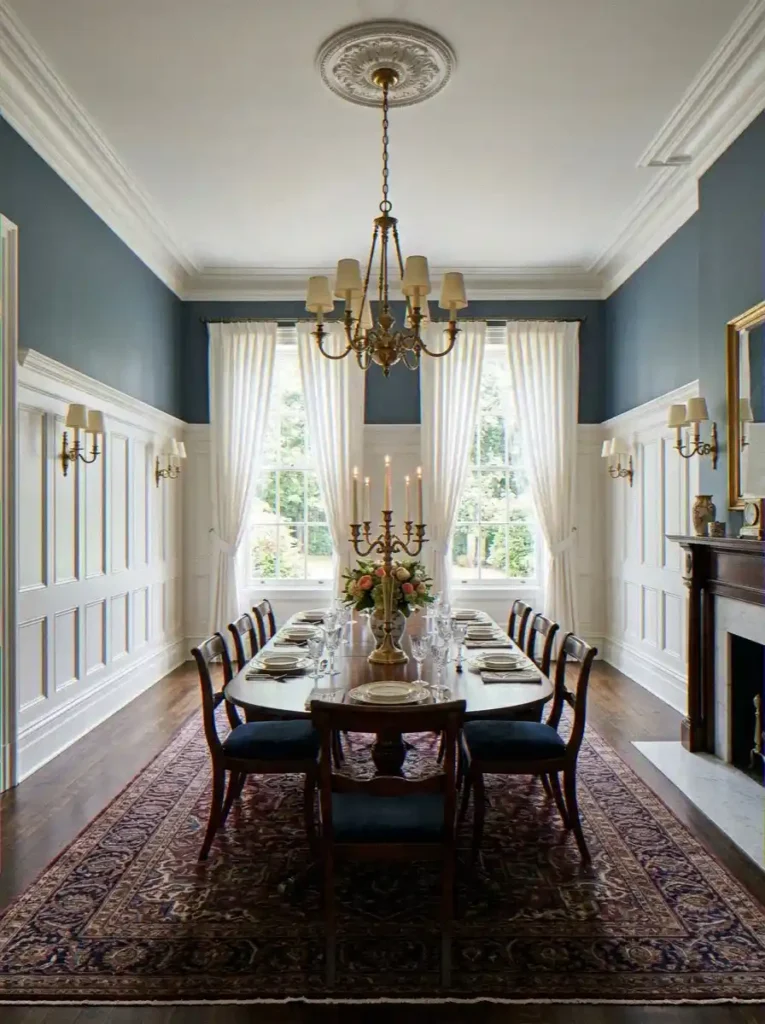
Traditional wainscoting stops at 36–42 inches. In a high-ceiling room, push it to 60–72 inches and cap it with a picture rail molding.
The result looks like a classic, old-world hotel lobby and it never — not once — goes out of style. This one is a forever design choice.
| Wall Treatment | Best Style Fit | Rough Cost | Visual Impact |
|---|---|---|---|
| Floor-to-Ceiling Shiplap | Farmhouse / Coastal | $$ | High |
| Two-Tone Paint | Any / Universal | $ | Medium–High |
| Full-Height Stone Wall | Industrial / Rustic | $$$ | Very High |
| Tall Wainscoting + Rail | Traditional / Classic | $$ | High |
12. Gallery Walls That Actually Climb
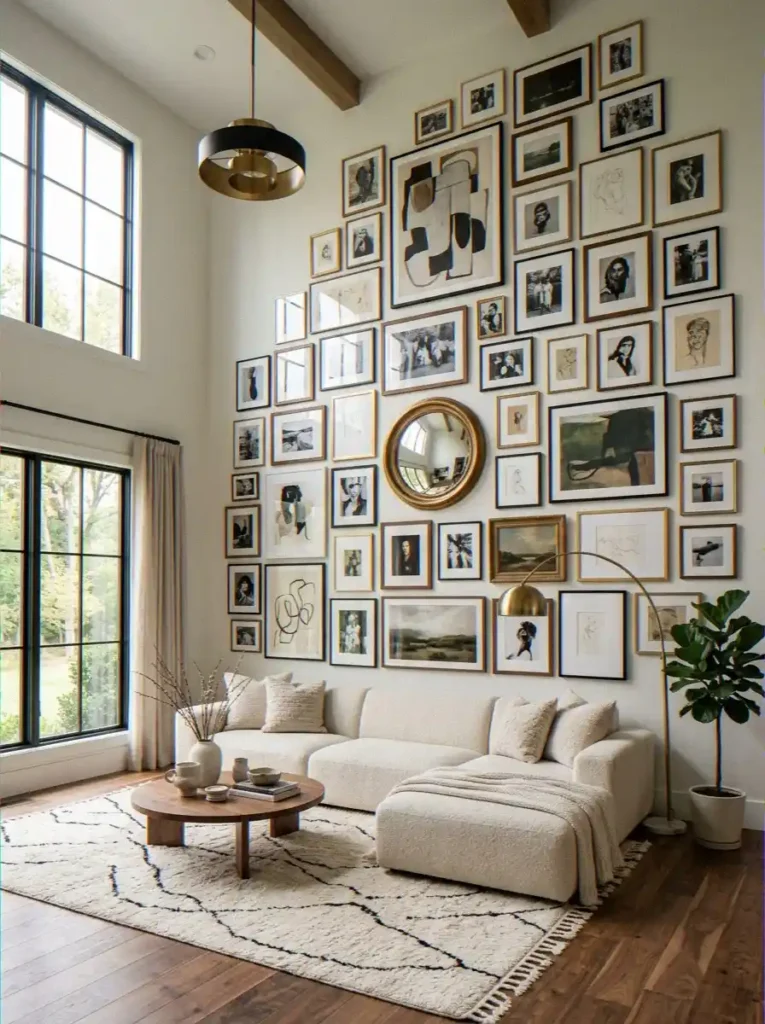
Stop capping your gallery wall at the standard 5–7 foot zone. In a high-ceiling room, let the gallery climb — mix frame sizes, vary orientations, add 3D wall sculptures and mirrors.
The upper row can use smaller, less detailed prints; they exist for visual mass, not close inspection. The result looks curated and ambitious in all the right ways.
Part 3: Window Treatments for High-Ceiling Rooms
13. Floor-to-Ceiling Curtains — Hung High, Hung Wide
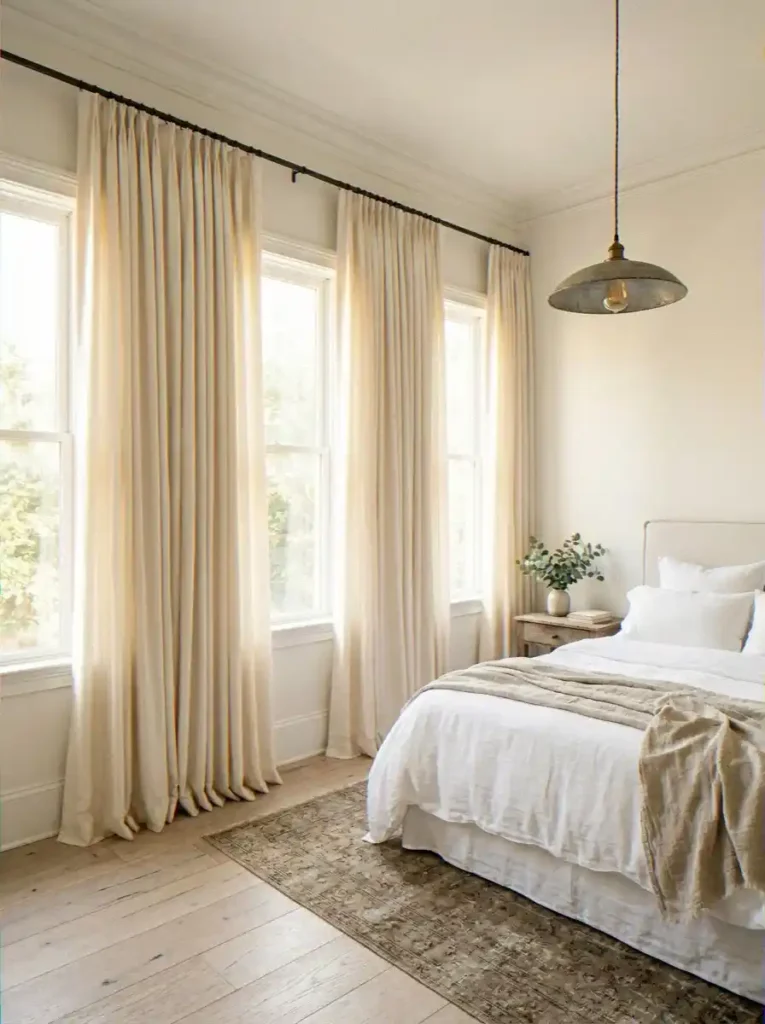
This might be the single most transformative trick in the entire guide. Mount your curtain rod as close to the ceiling as physically possible, even if the actual window ends several feet lower.
Your eye reads the rod height as the top of the window — so the window appears massively taller than it is. Pure optical magic, and it costs basically nothing extra.
Let the fabric pool very slightly on the floor — about an inch of pooling reads as intentional luxury. More than that and it starts looking like you ran out of tape measure. 😄
14. Motorized Window Shades
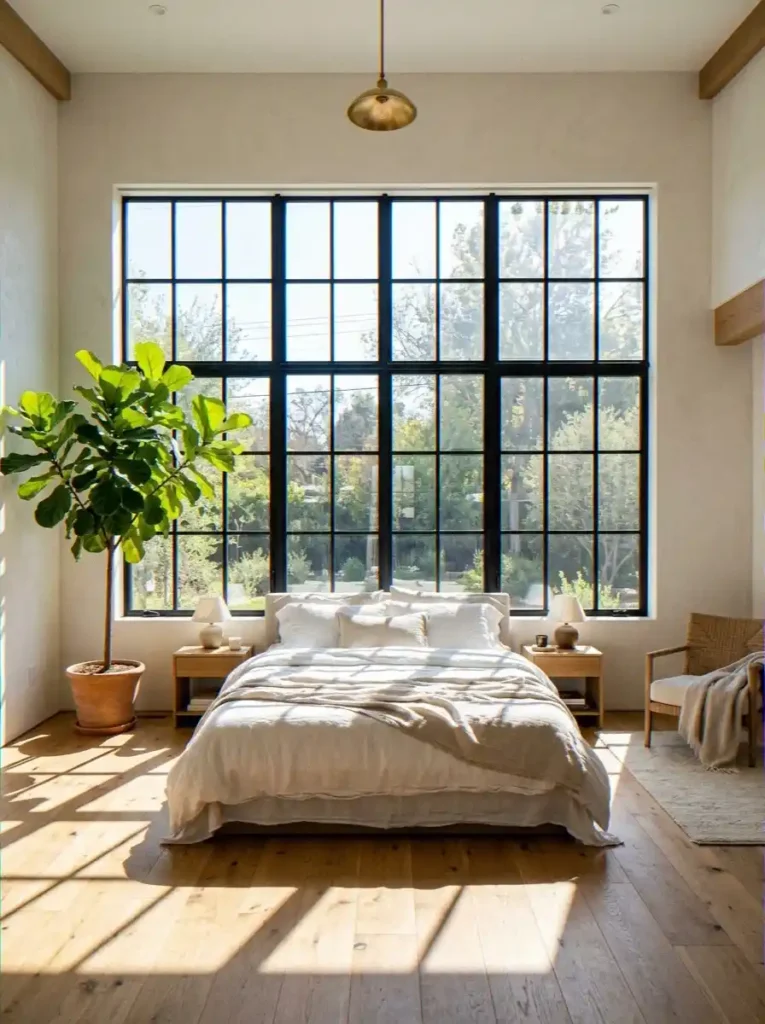
When windows extend above normal reach (which happens constantly in high-ceiling homes), motorized shades go from being a luxury to an actual practical necessity. Modern systems integrate beautifully with smart home apps.
Hunter Douglas and Lutron both make stunning motorized options that disappear completely into ceiling pockets when fully open — you’d never know they were there.
15. Stacked Roman Shades
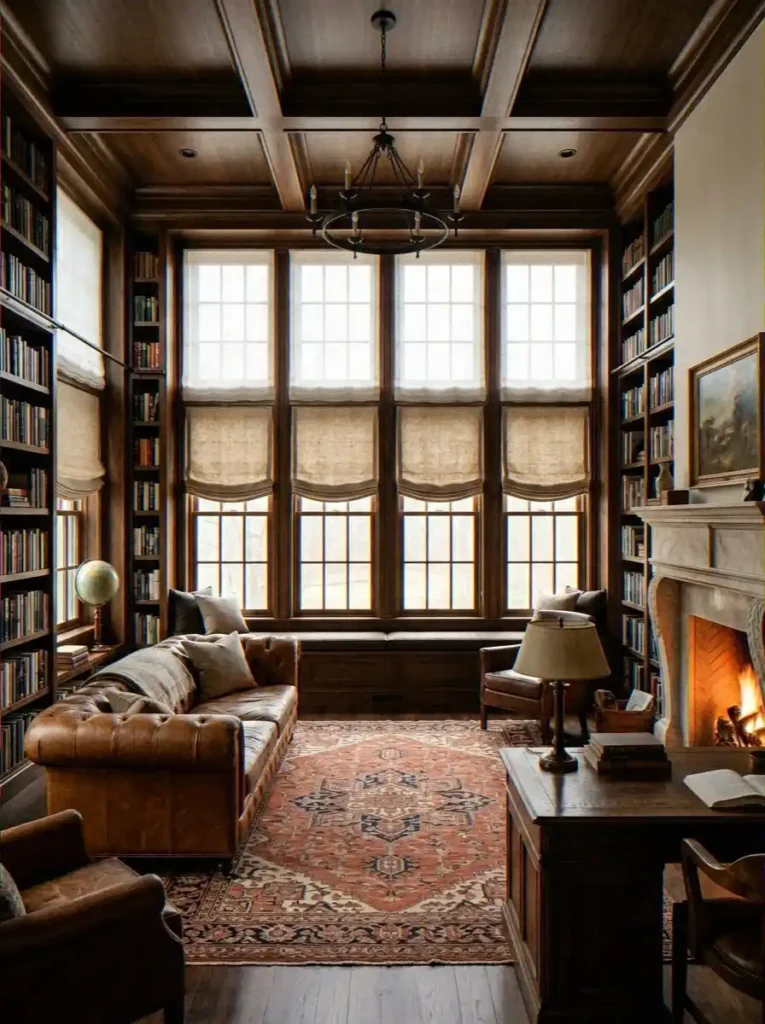
For a layered, textural look, use Roman shades on multiple window levels: privacy shades on the lower half, sheer Romans on the upper.
You control light and privacy independently — which sounds like a small thing until you actually live with it. Genuinely useful, not just pretty. I’ve installed this setup in three rooms and it’s always the feature people notice and ask about.
16. Leave Transom Windows Uncovered
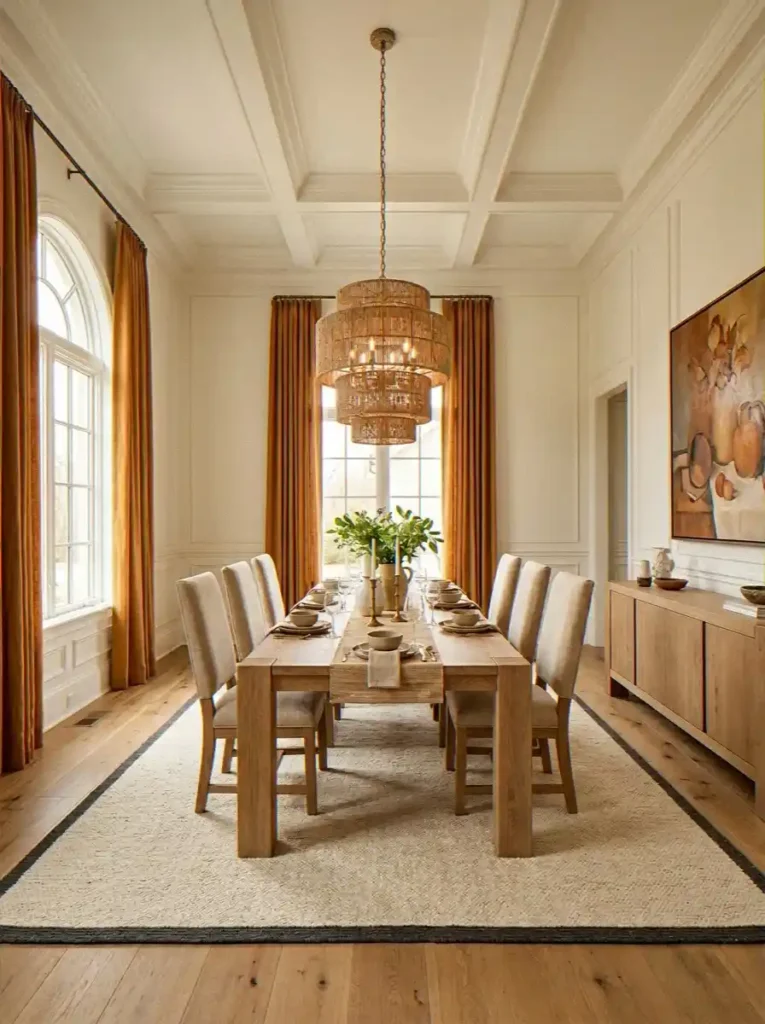
Many high-ceiling homes have transom windows above doors and main windows. Leave them bare whenever possible — the extra light they pour in is spectacular.
If you need some privacy or glare control, frosted film is infinitely better than heavy treatments that chop the window height visually.
17. Full-Height Interior Plantation Shutters
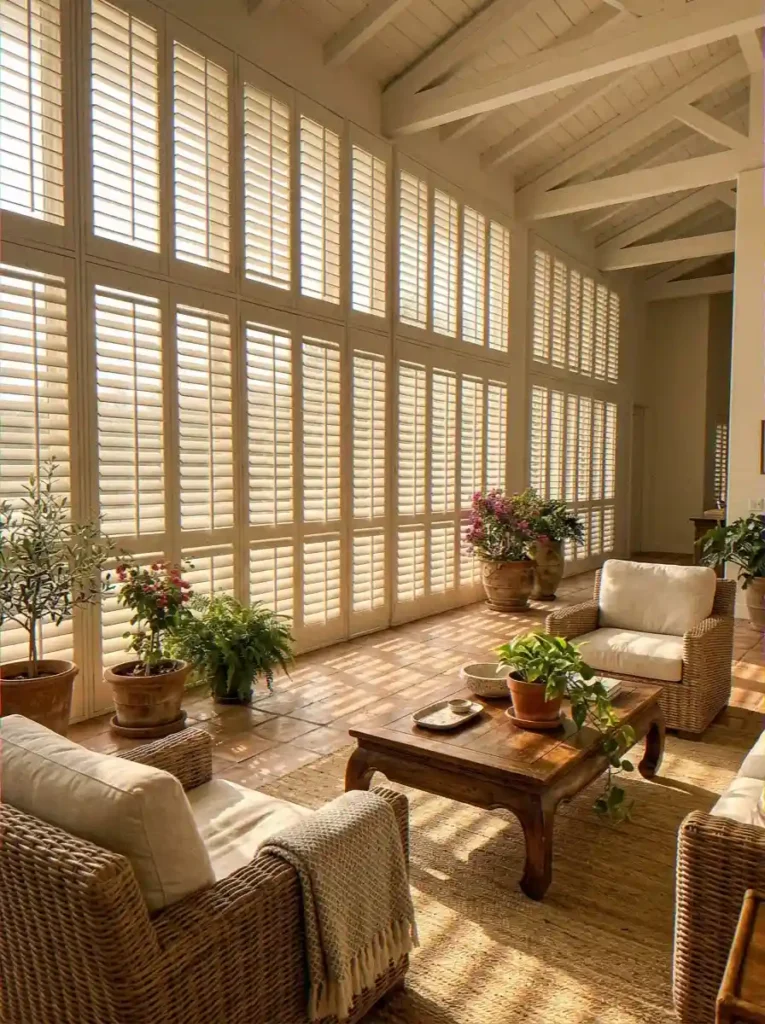
Full-height plantation shutters give a clean, architectural look that goes well with Mediterranean, Colonial, and transitional-style homes.
They seem more permanent and planned than curtains, and they really add value to the home. In a very modern, minimalist space, this one didn’t work for me because it felt too traditional. But in the right setting, they’re amazing.
Part 4: Furniture and Layout That Actually Fits the Room
18. Floor-to-Ceiling Built-In Bookcases
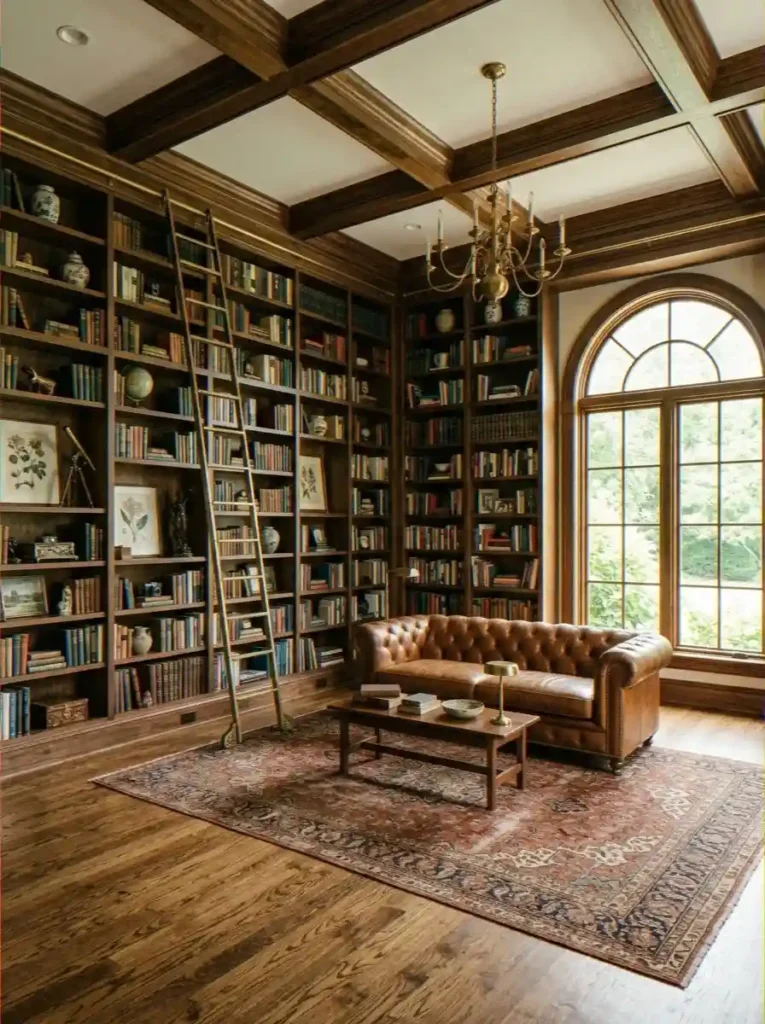
This is my personal all-time favourite high-ceiling design move. Full-height built-in bookcases turn blank wall space into the most beautiful, functional design feature you can imagine.
They frame the room, provide incredible storage, and look magnificent in libraries, home offices, and living rooms alike.
If built-ins aren’t in budget, IKEA’s Billy bookcases with height extensions get you shockingly close for a fraction of the cost.
19. Oversized Statement Headboards
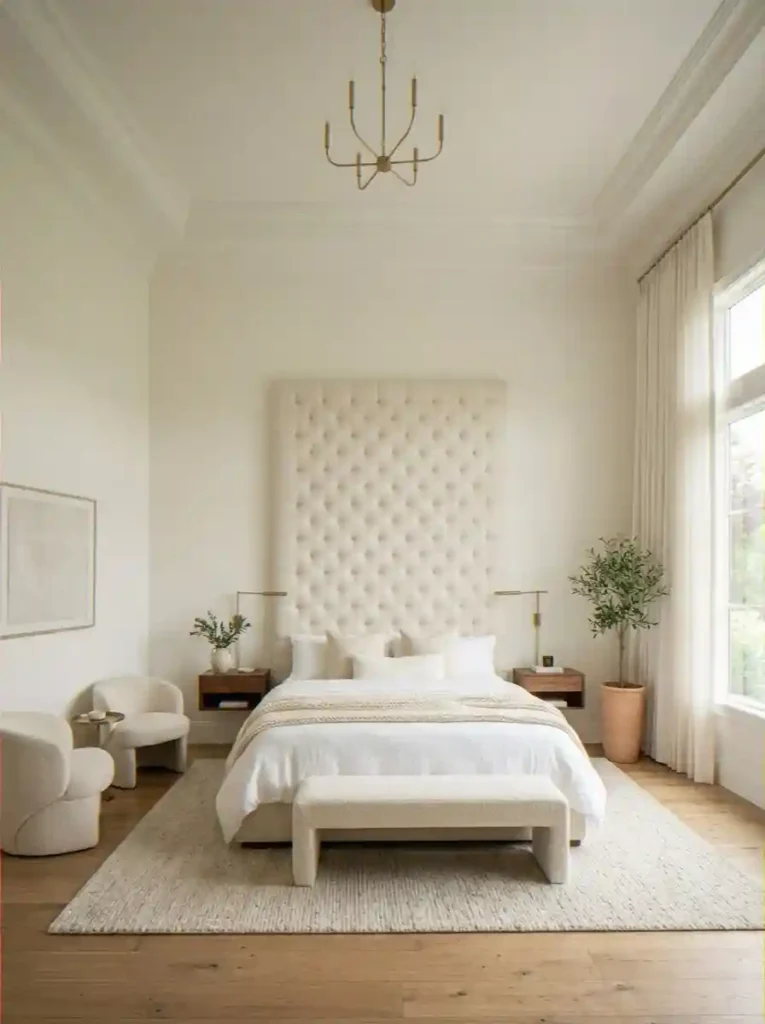
In bedrooms with high ceilings, an upholstered headboard that extends 6–7 feet up the wall anchors the bed beautifully and creates the kind of focal point you’d expect in a high-end hotel.
It fills the vertical space behind the bed without needing shelves or artwork to do the heavy lifting.
20. Open Shelving All the Way to the Ceiling
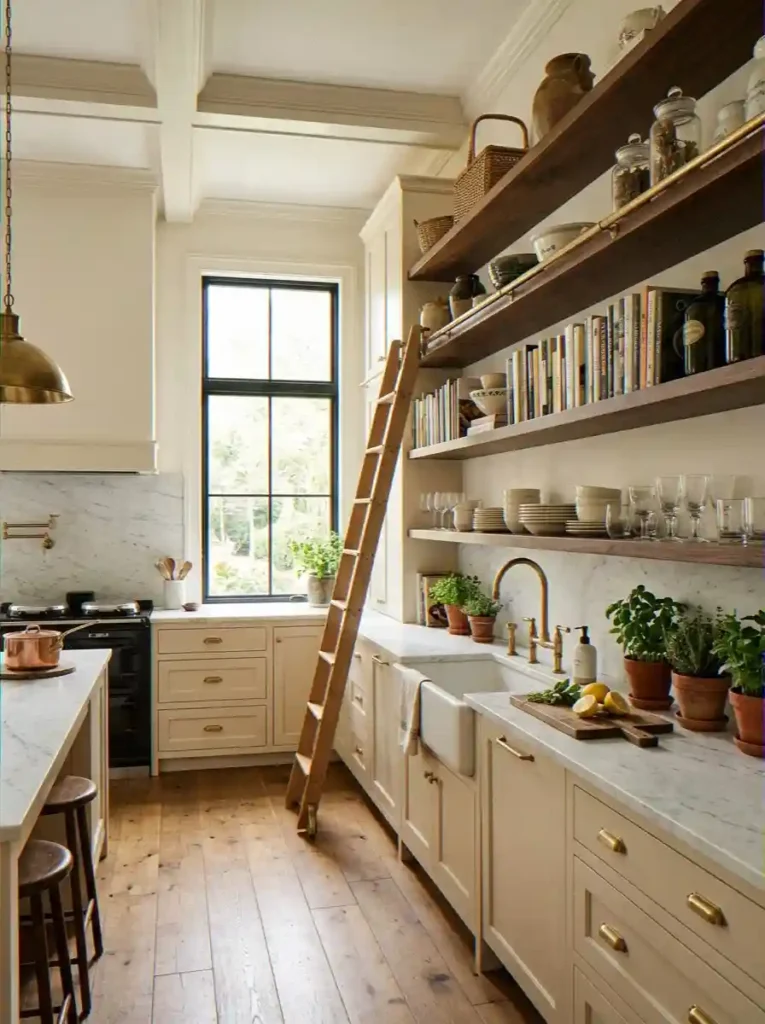
Use the upper shelves for pretty things that you don’t use very often, like decorative vases, art books, and vintage finds.
You can get to them with a rolling library ladder (yes, like Belle from Beauty and the Beast, and no, I’m not sorry). This never gets old, no matter how many times I’ve seen it in kitchens and living rooms.
21. Go Big on Sofas and Sectionals
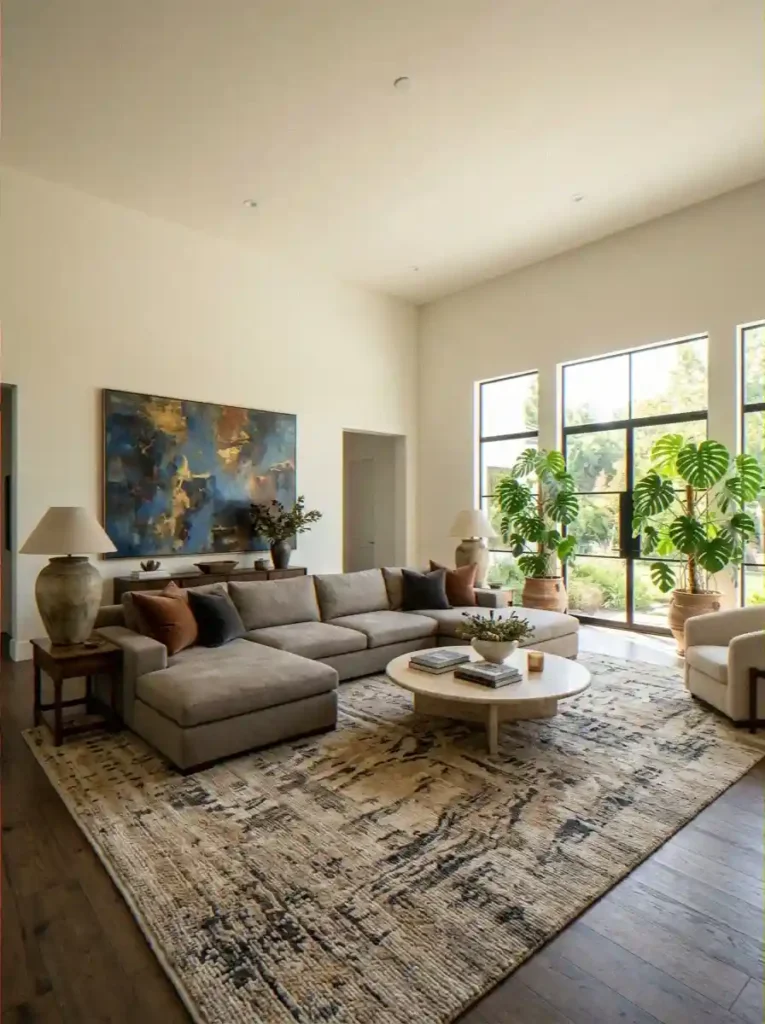
One of the most common mistakes in high-ceiling rooms: using furniture that’s way too small. A loveseat in a 20-foot room looks like doll furniture — no offence.
High-ceiling rooms need large, deep sofas and sectionals that anchor the floor plan and hold their own visually against all that vertical space. Low-profile pieces work best — they create contrast with the height above.
| Furniture Type | Why It Works | Ceiling Height Sweet Spot |
|---|---|---|
| Deep L-Shape Sectional | Anchors floor, fills visual weight | 10–14 ft |
| Canopy Bed | Vertical drama matches ceiling | 12–16 ft |
| Built-In Bookcases | Uses full wall height | Any high ceiling |
| Oversized Coffee Table | Grounds seating area visually | 10 ft+ |
22. Canopy Beds
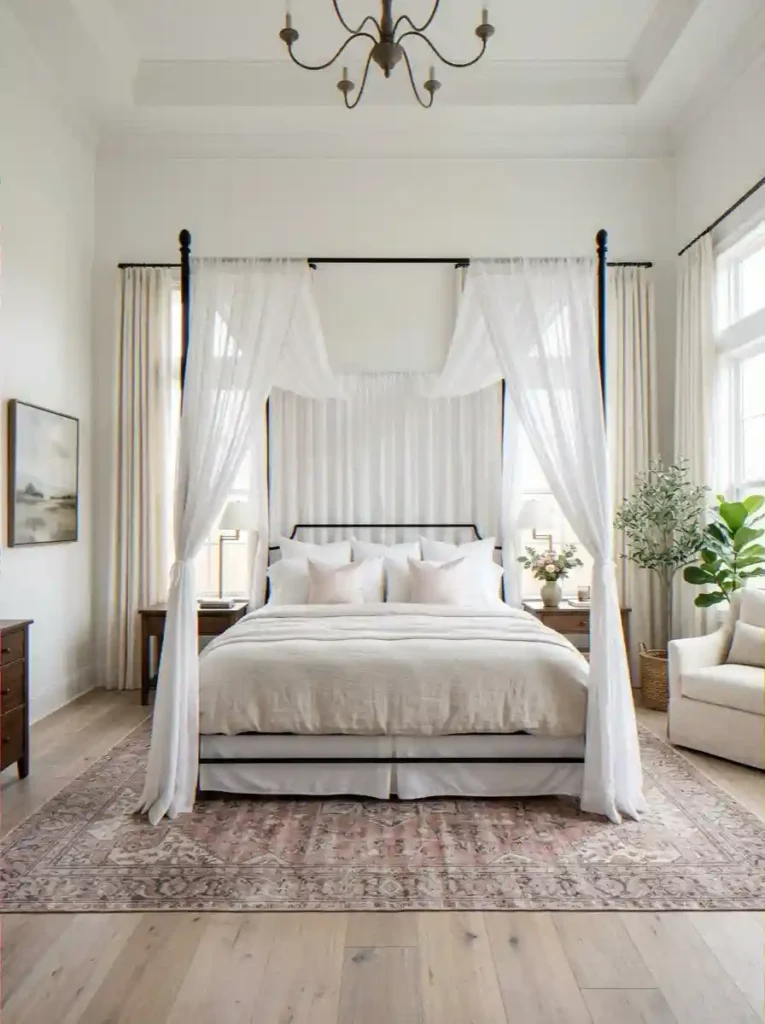
A canopy bed in a high-ceiling bedroom is a design match that was genuinely made to exist together.
The vertical posts mirror the room’s height, and the frame creates an intimate, cocooning effect within a space that might otherwise feel too open.
Go four-poster with fabric for maximum drama, or four-poster without fabric for something cleaner and more modern.
23. Low-Profile Media Units
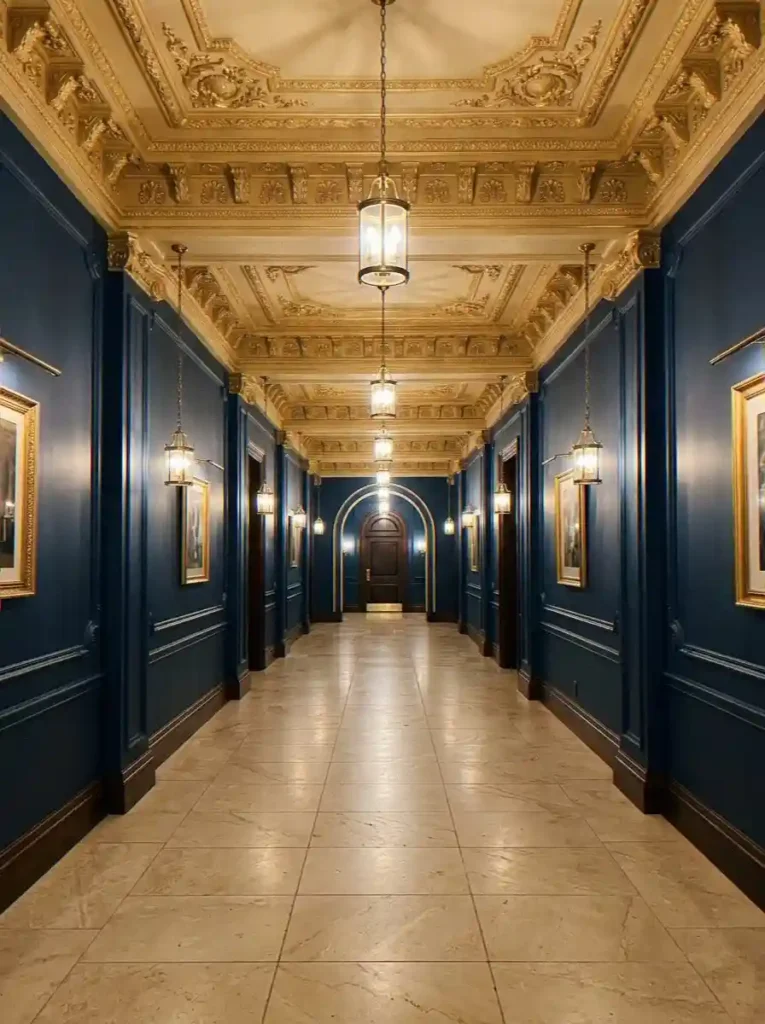
Counterintuitively, a very low TV console in a high-ceiling room creates gorgeous visual contrast.
A sleek, ground-hugging unit with the TV mounted at true eye level keeps the technology grounded and lets the ceiling height do its thing in the upper half of the room without competition.
Part 5: Architectural Details That Elevate Everything
24. Exposed Ceiling Beams (Real or Faux)
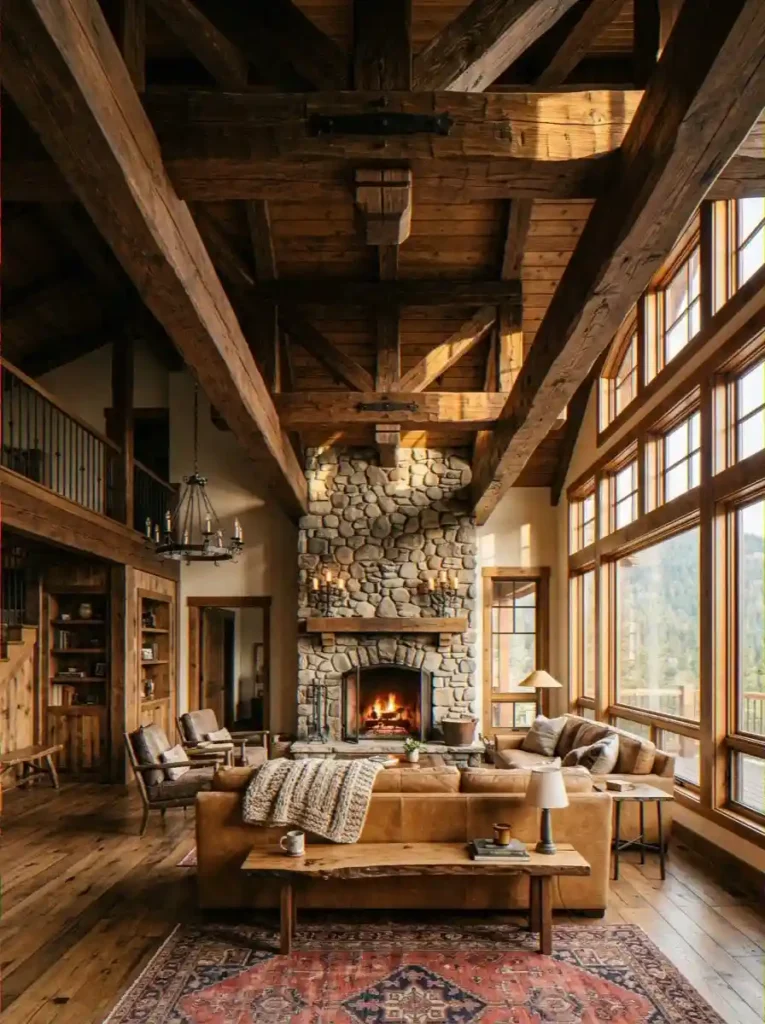
Exposed beams are one of the most popular architectural features in high-end renovations right now, and for good reason.
They bring warmth, texture, and skill that smooth ceilings just can’t match. Dark walnut stain looks modern and classy, while weathered gray looks rustic and natural.
Can’t add real beams? Faux wood beam systems have gotten incredibly realistic. Check out Faux Wood Workshop for options that genuinely fool even experienced designers.
25. Coffered Ceilings
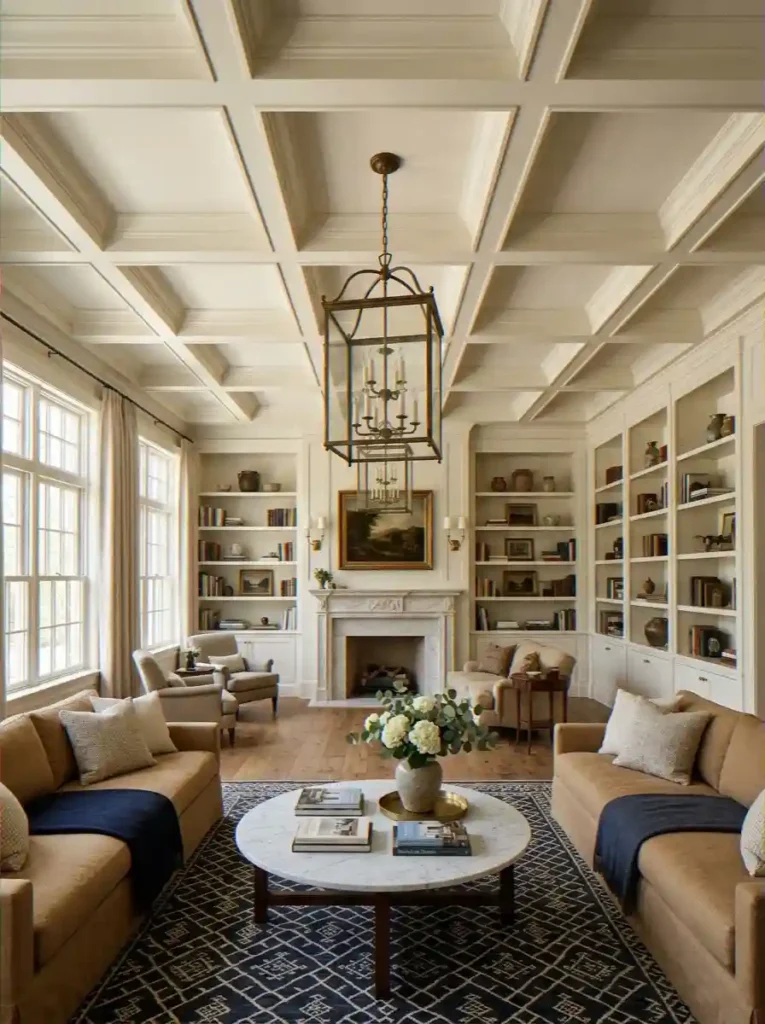
A coffered ceiling — that classic grid of recessed panels — is pure architectural elegance. It adds overhead depth and shadow play without adding visual weight that makes a room feel smaller.
In a high-ceiling room, go deep with your coffers — 4–6 inches creates dramatic shadow lines. Paint them the same color as the ceiling for subtle sophistication, or go two-tone for something bolder.
26. Tray Ceilings with Uplighting
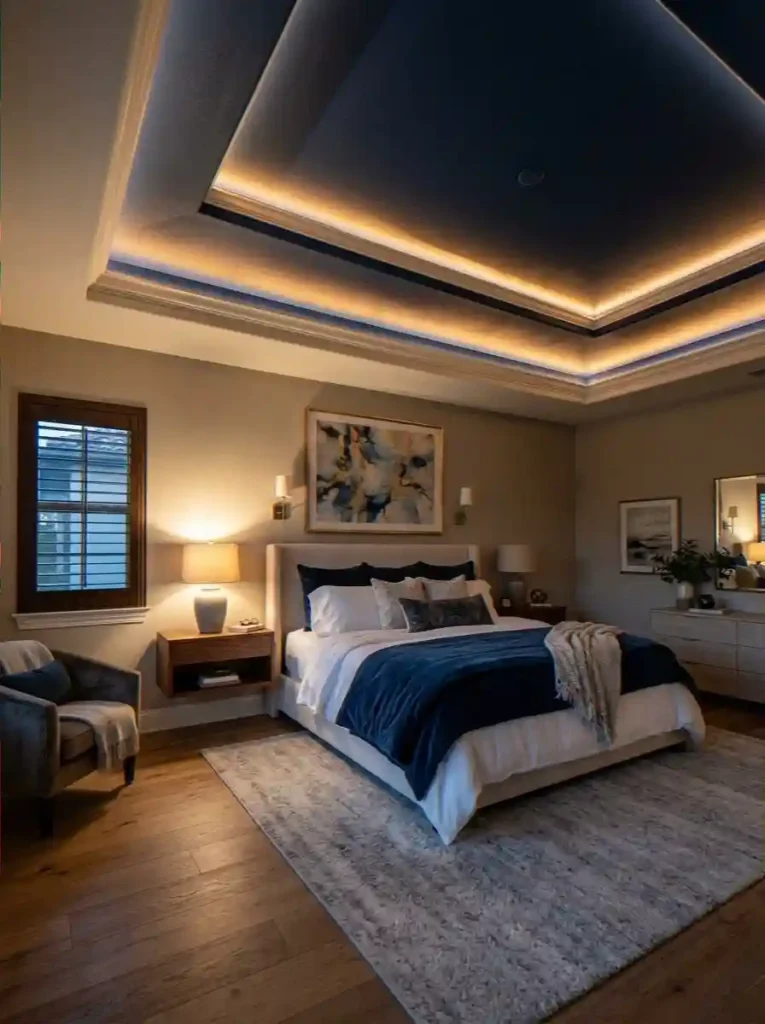
A tray ceiling — where the center is recessed higher than the perimeter — creates a beautiful layered look overhead.
Add LED strip uplighting around the inner perimeter of the tray and you’ve created one of the most elegant ceiling treatments in residential design. The cost-to-impact ratio on this one is genuinely excellent.
27. Tongue-and-Groove Wood Ceilings
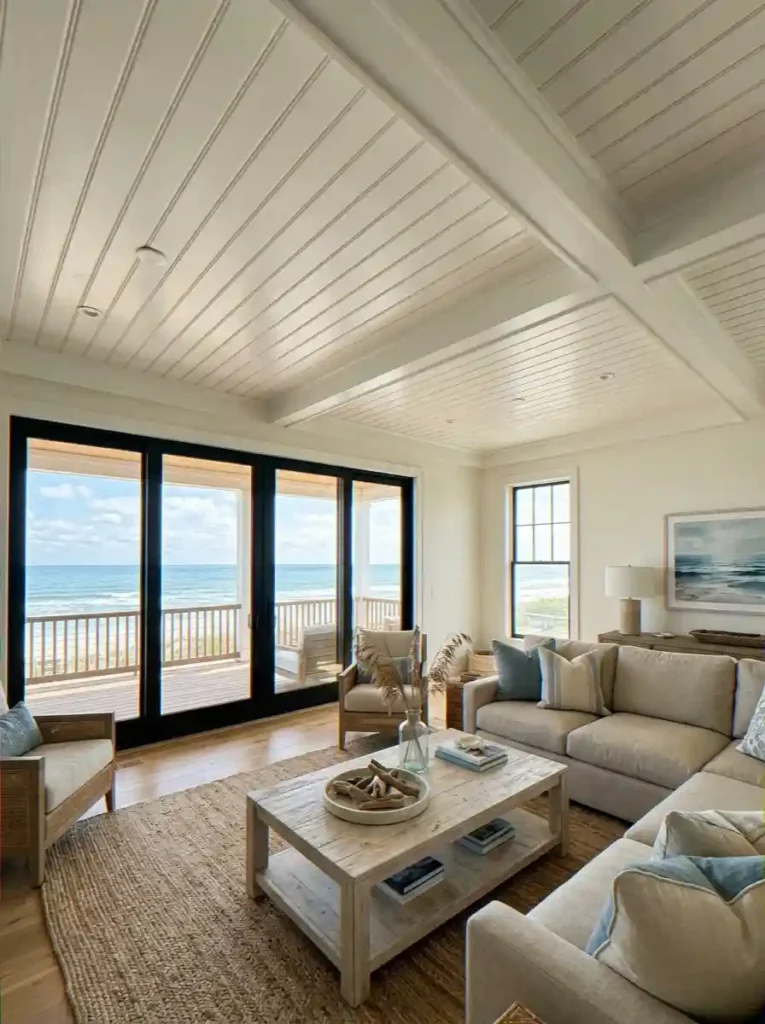
Wood plank ceilings bring warmth and texture that no amount of smooth white paint can replicate.
White-painted V-groove planks suit coastal and Hamptons-style homes; stained walnut or oak planks work beautifully in more formal or contemporary spaces.
The moment you walk under a wood ceiling, the whole room feels different. Wow! 🌿
28. Painted Ceiling Murals
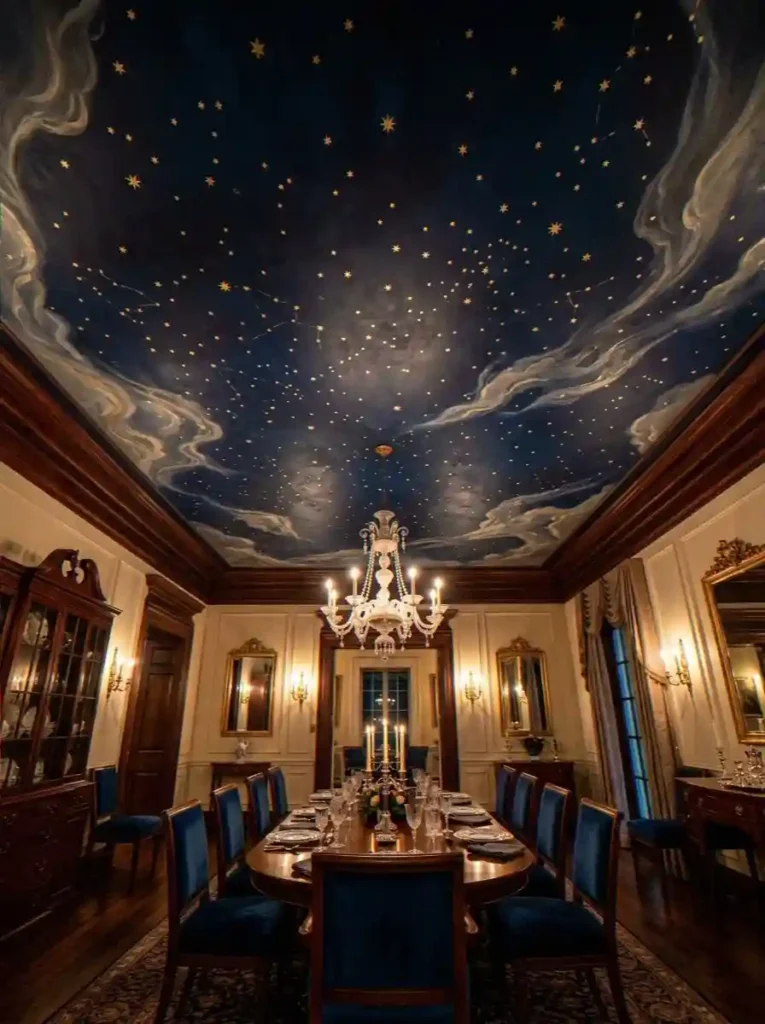
Okay — this one is definitely not for everyone, and I’ll be the first to admit it takes courage. But a ceiling mural in a high-ceiling room creates a conversation piece that people genuinely never forget.
It doesn’t need to be Sistine Chapel scale. A simple botanical print, a night sky scene, or even a large-scale geometric motif overhead can be absolutely breathtaking.
29. Large Ceiling Medallions
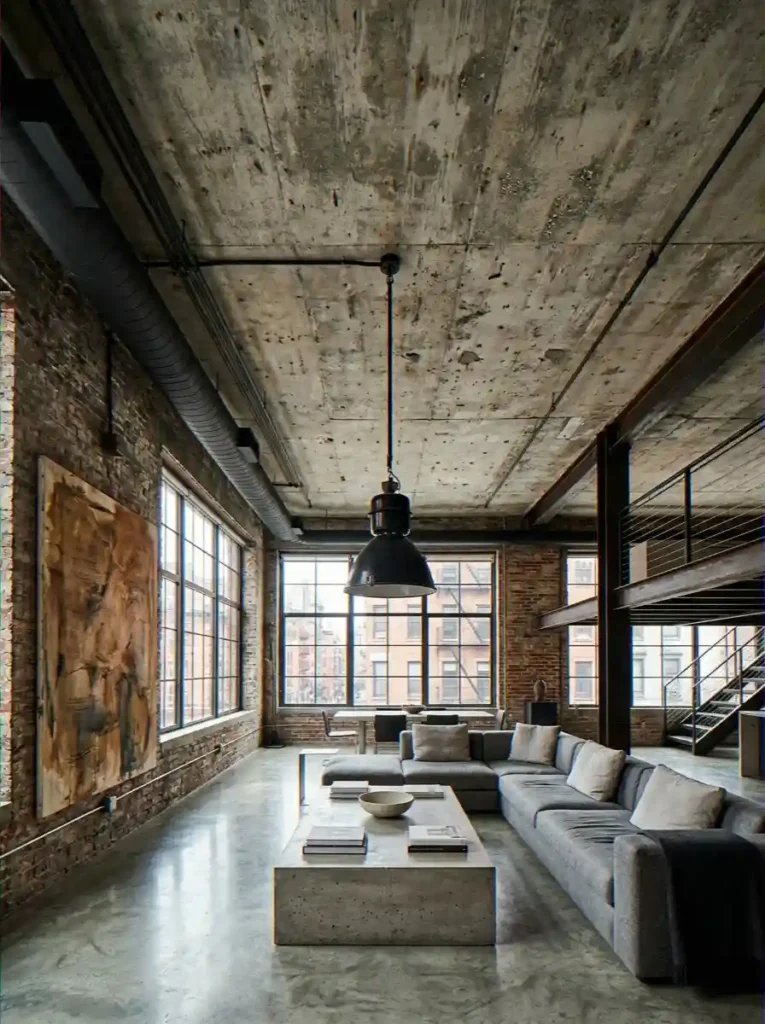
Ceiling medallions around lights make a room look instantly more elegant. When ceilings are high, don’t be afraid to go big.
Medallions that are 24 to 36 inches wide look right at that height and add a beautiful decorative touch right where the eye naturally goes.
30. Coffered Ceiling with Contrasting Color Insides
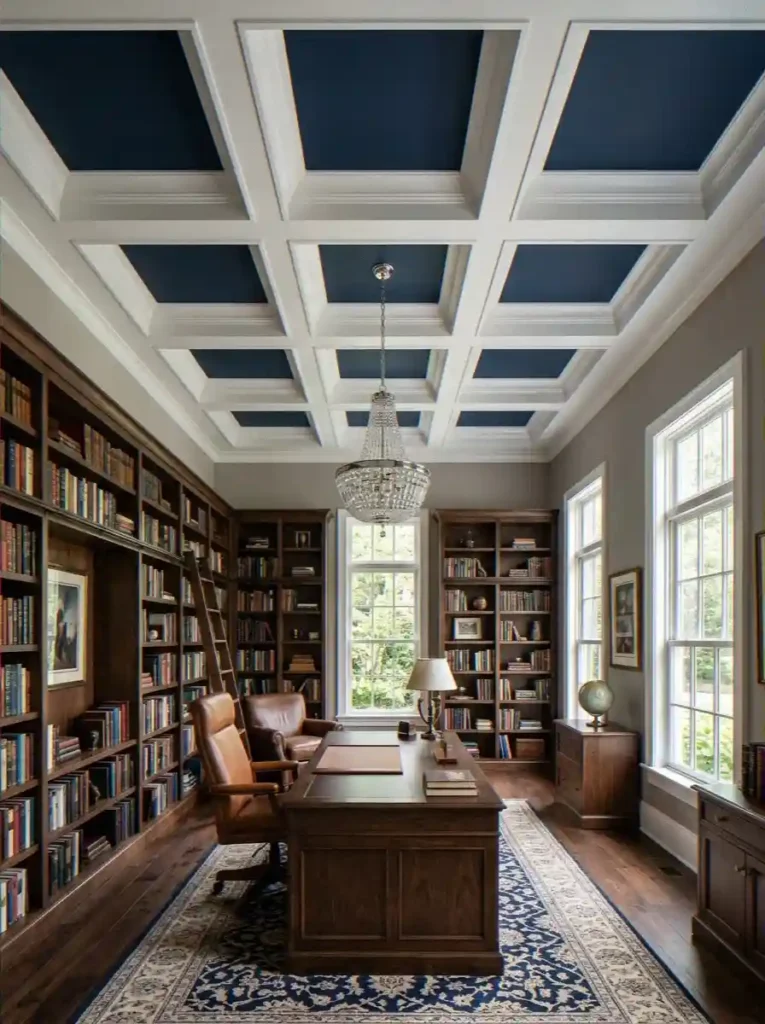
Take coffered ceilings further by painting the interior of each coffer an accent color. Navy coffer insides with white trim: stunning.
Gold inside, cream outside: incredibly luxurious. This is the kind of detail that separates “nice room” from “what is this place?!”
Part 6: Modern High Ceiling Design Ideas (What’s Trending Now)
What Is the New Trend for Ceilings?
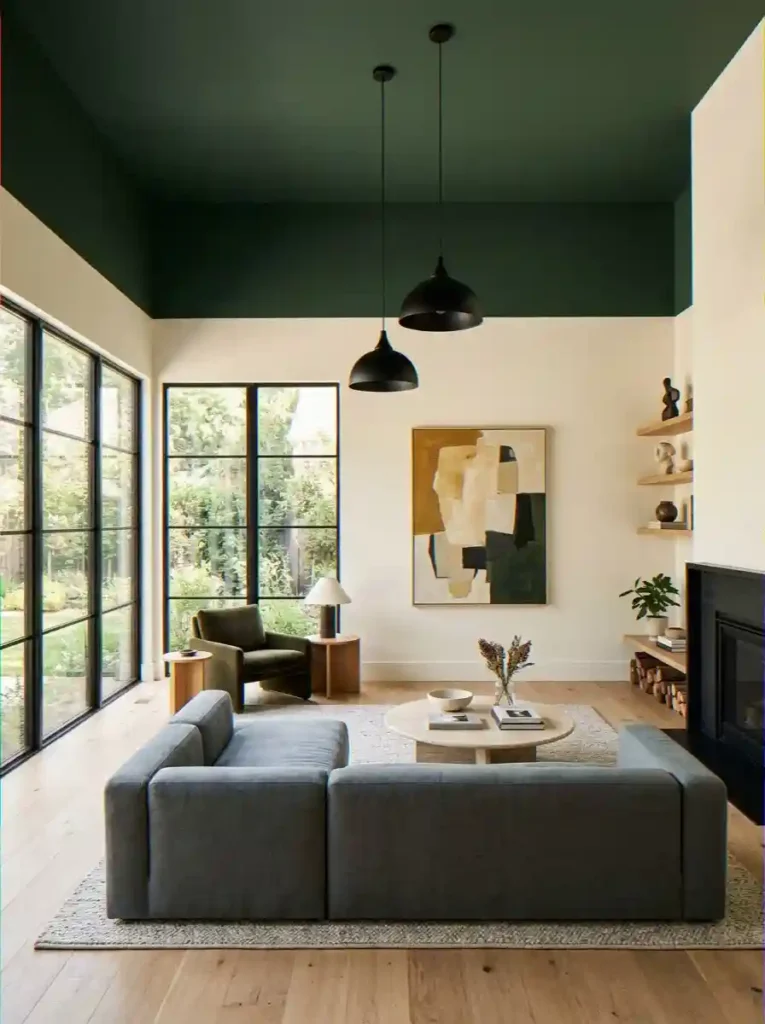
Great question — and there’s actually a lot happening in ceiling design right now. The biggest shifts I’m seeing:
- Dark-painted ceilings — “fifth wall” treatment in deep navy, forest green, and charcoal is everywhere in contemporary luxury design right now. It sounds counterintuitive but it’s genuinely brilliant.
- Textured plaster ceilings — limewash and troweled plaster finishes are replacing smooth white as the cool ceiling treatment in design-forward homes.
- Integrated LED cove lighting — no longer just for hotels, this has gone mainstream and looks incredible in residential spaces.
- Natural material ceilings — rattan, woven grass cloth, wood planks, and even cork are appearing overhead in place of traditional paint or plaster.
- Exposed industrial elements — raw concrete, visible ductwork, and black steel in high-ceiling lofts and modern homes continue to have serious staying power.
The time of “all white everything” ceilings is slowly coming to an end. The new trend is to focus on texture, depth, and material interest, making the ceiling a real design surface instead of an afterthought.
31. Dark Ceiling, Light Walls
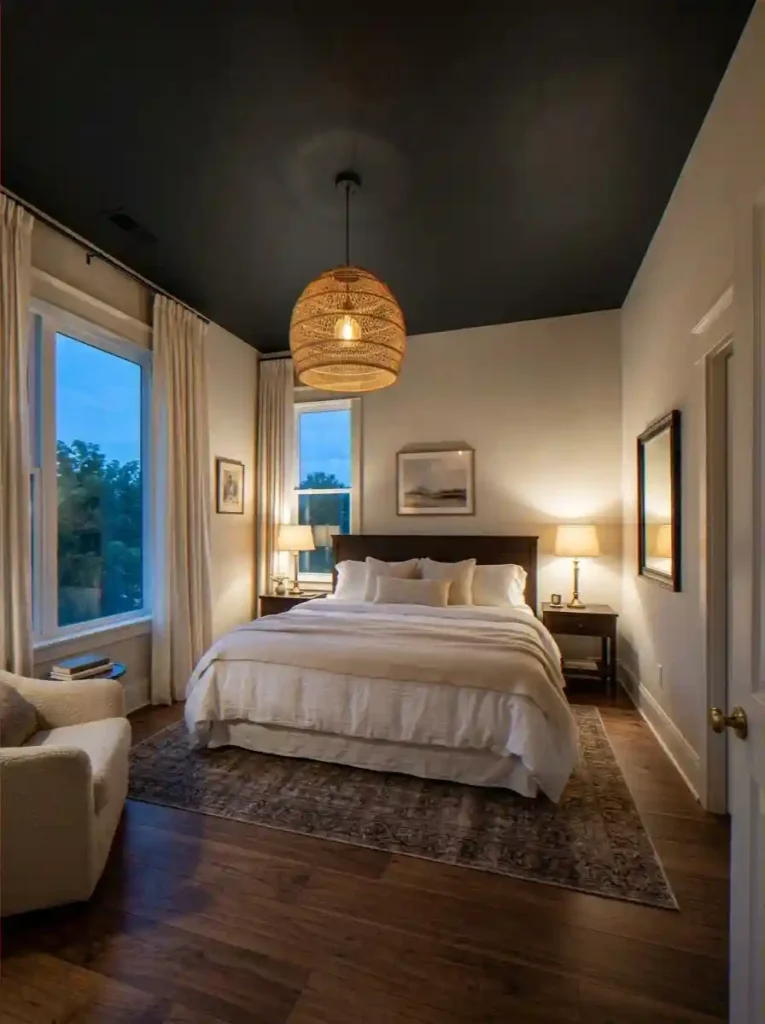
A dark ceiling in deep navy, forest green, or charcoal creates a cocooning, intimate atmosphere that high-ceiling rooms often lack.
The height remains impressive — the darkness just adds layers of drama and personality. Try it in a living room or bedroom and report back. Seriously, this one converts skeptics fast.
32. Monochromatic High-Gloss Ceiling
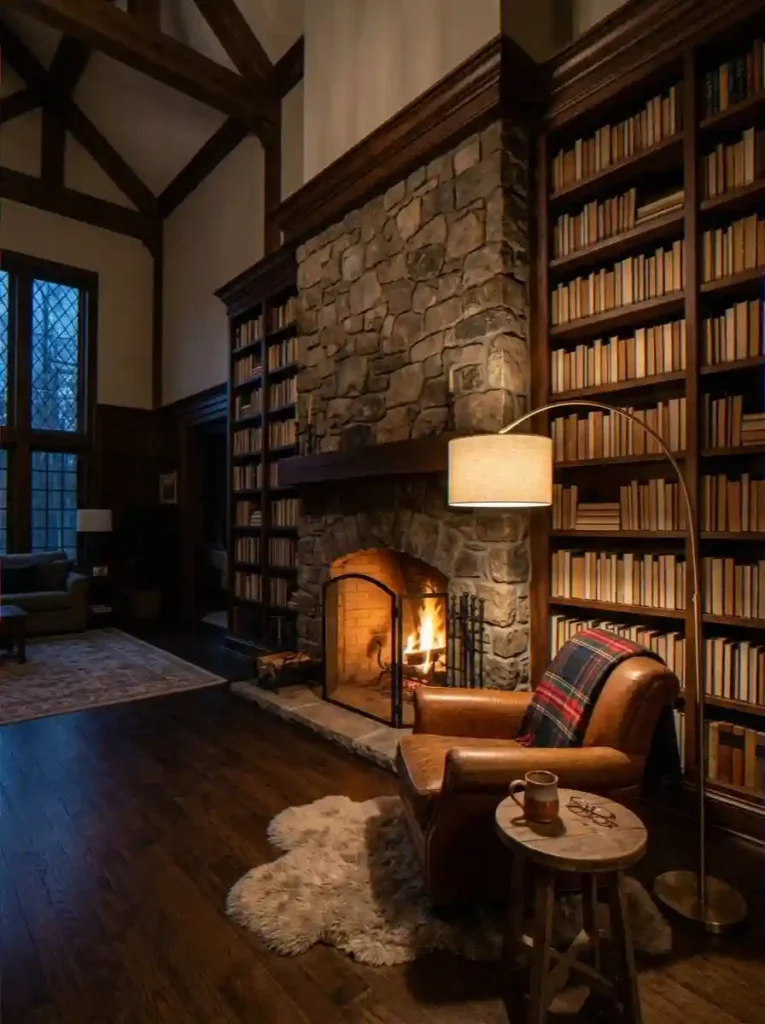
Using high-gloss paint on the ceiling that matches the walls gives the room a sophisticated envelope effect that is popular in modern luxury homes.
The gloss reflects light in a very precise and clean way that makes it look polished and thought out.
33. Limewash Plaster Treatment
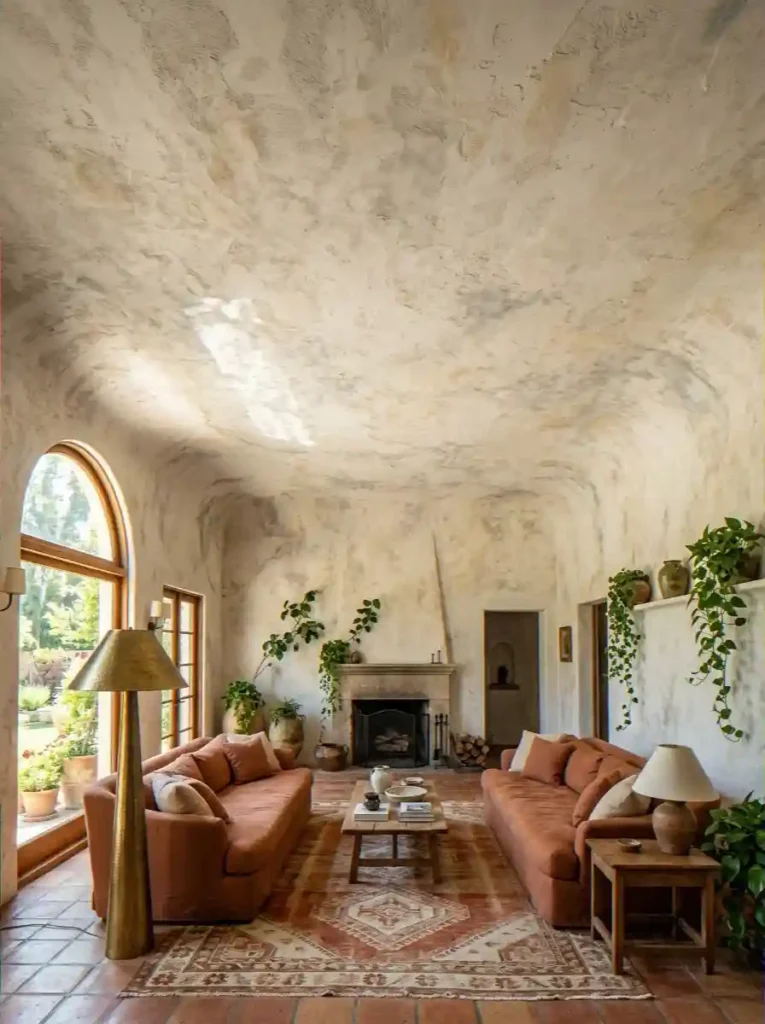
The texture of limewash plaster on ceilings is just extraordinary. The mottled, aged-looking surface creates depth that flat paint can’t touch.
It works in Mediterranean, Tuscan, transitional, and even stripped-back modern spaces.
34. Black Accent Details Throughout
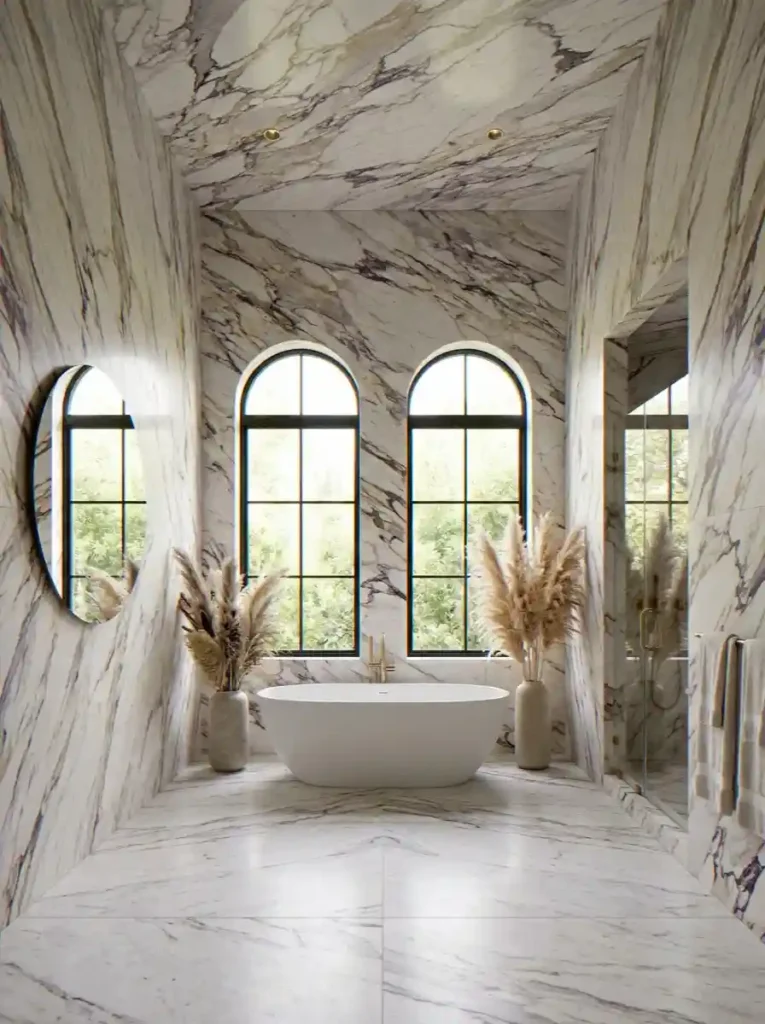
Black window frames, black hardware, black light fixtures — the sharp graphic contrast these create in a high-ceiling room makes every architectural detail pop in the most satisfying way.
Modern farmhouse and industrial styles have been running with this forever, and it keeps working because the contrast is just that good.
Part 7: Modern High Ceiling Living Room Design
35. Double-Height Feature Fireplace
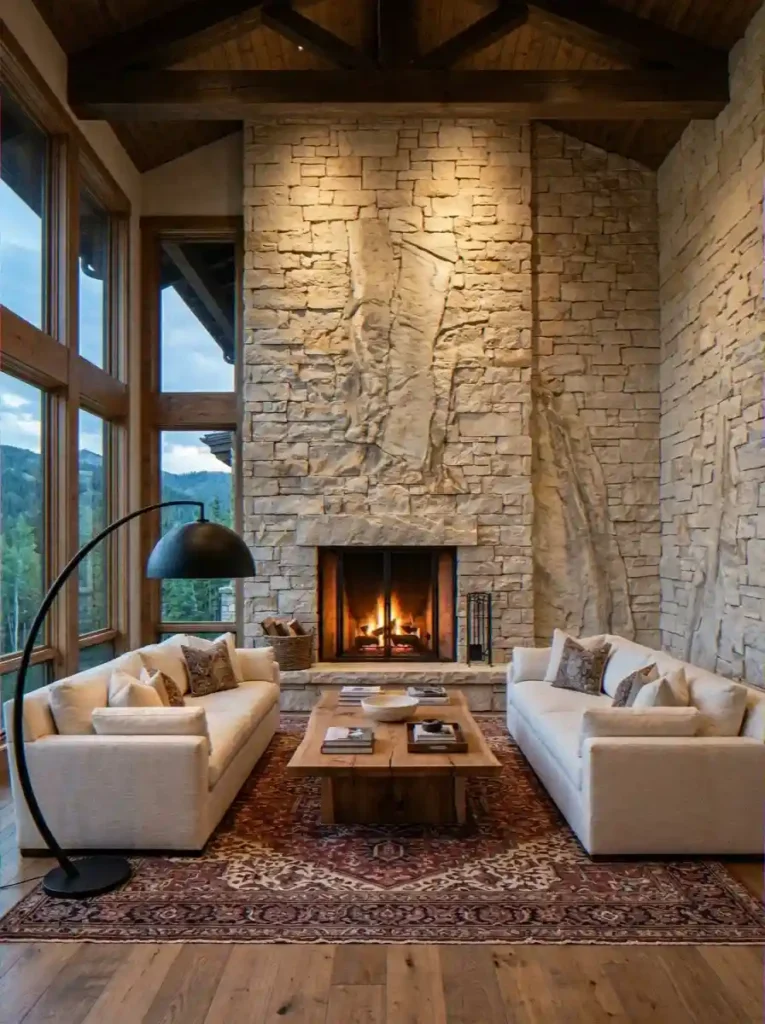
If the architecture supports it, a double-height fireplace surround in natural stone or marble extending from firebox to ceiling is the ultimate living room statement. Hotel-lobby grandeur, but it’s yours.
FYI — even a faux fireplace with an electric insert can support a dramatic full-height stone surround if you love the look but not the construction budget.
36. Oversized Art Installations
High ceilings give you the wall real estate for truly large-scale artwork — pieces that would look outrageous in a standard 8-foot room but look perfectly proportional here.
A single painting at 6×8 feet on a 14-foot wall is a transformative moment. For accessible large-format originals, Saatchi Art is worth exploring — genuinely good work at prices that don’t require a second mortgage.
37. Tall Indoor Plants as Architectural Elements
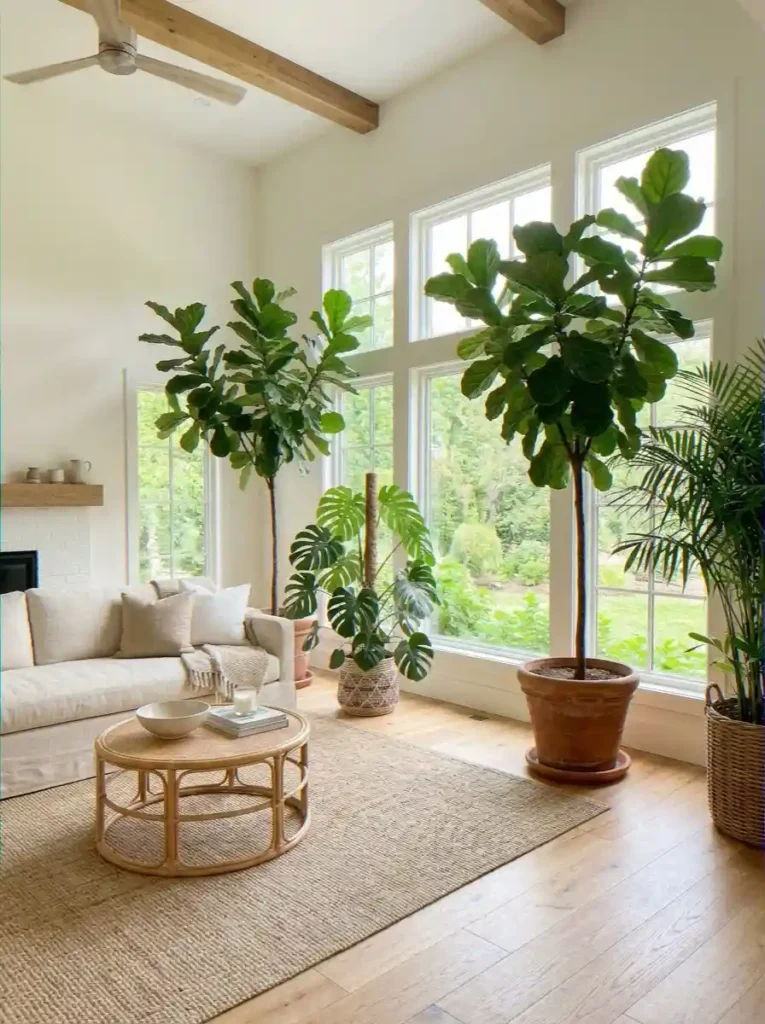
Big indoor plants are the unsung heroes of living rooms with high ceilings. A 7-foot fiddle leaf fig, a giant monstera, and a pair of bamboo palms fill vertical space naturally, add life, improve air quality, and cost a lot less than architectural features.
38. High Ceiling Design Ideas for Living Room: The Layered Zone Approach
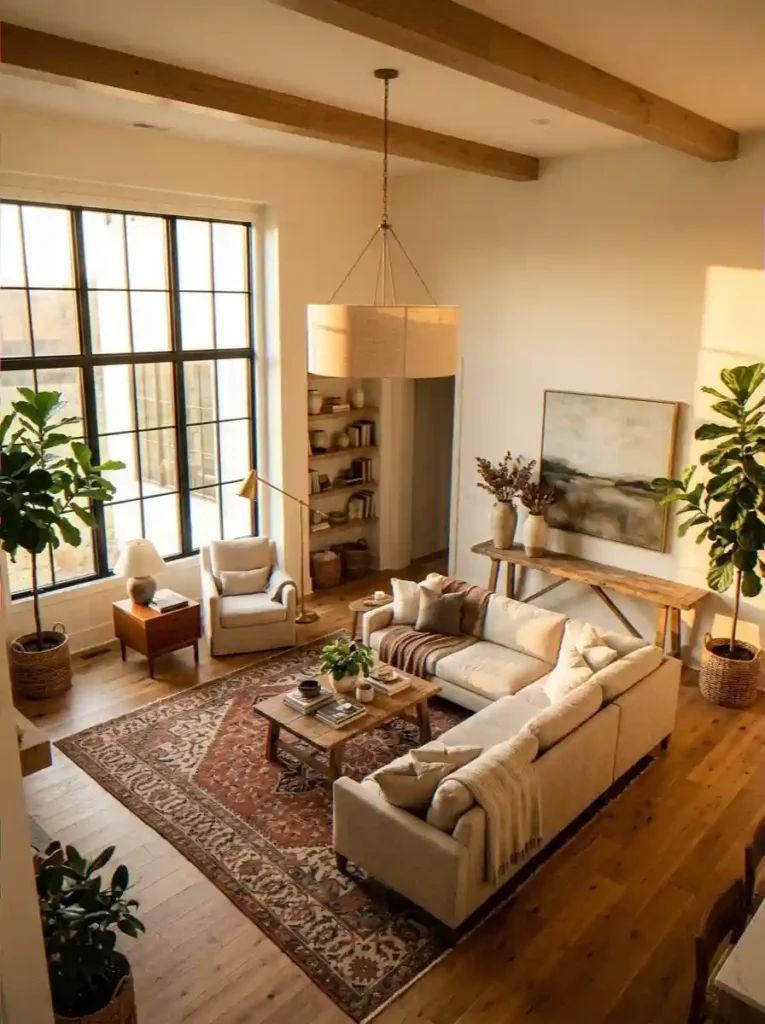
The most common high-ceiling living room mistake is treating the whole room as one undifferentiated space. Divide it into vertical zones:
- Floor zone (to 3 ft): rugs, low furniture bases, baseboards
- Mid zone (3–8 ft): main furniture, art at eye level, sconces, primary focal points
- Upper zone (8 ft to ceiling): architectural ceiling details, upper shelves, high-hung art, dramatic light fixtures
Each zone should have intentional design elements. An empty upper zone wastes the room’s most valuable visual real estate — full stop.
39. Floating Mezzanine Shelving
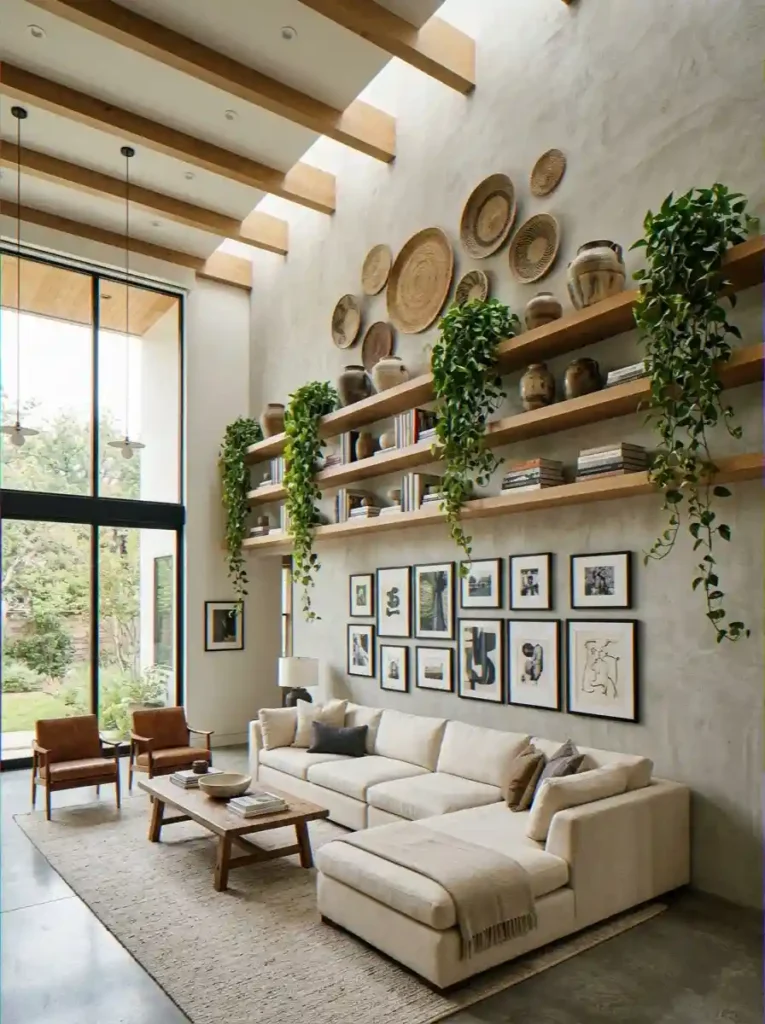
Floating mezzanine-level shelving installed 8 to 10 feet up the wall in very tall living rooms (16 feet or more) adds a dramatic architectural layer.
Put sculptures, plants, and decorative items on display up here to make it look like a gallery, which is only possible in rooms with really high ceilings.
40. Layered Area Rugs for Ground-Level Richness
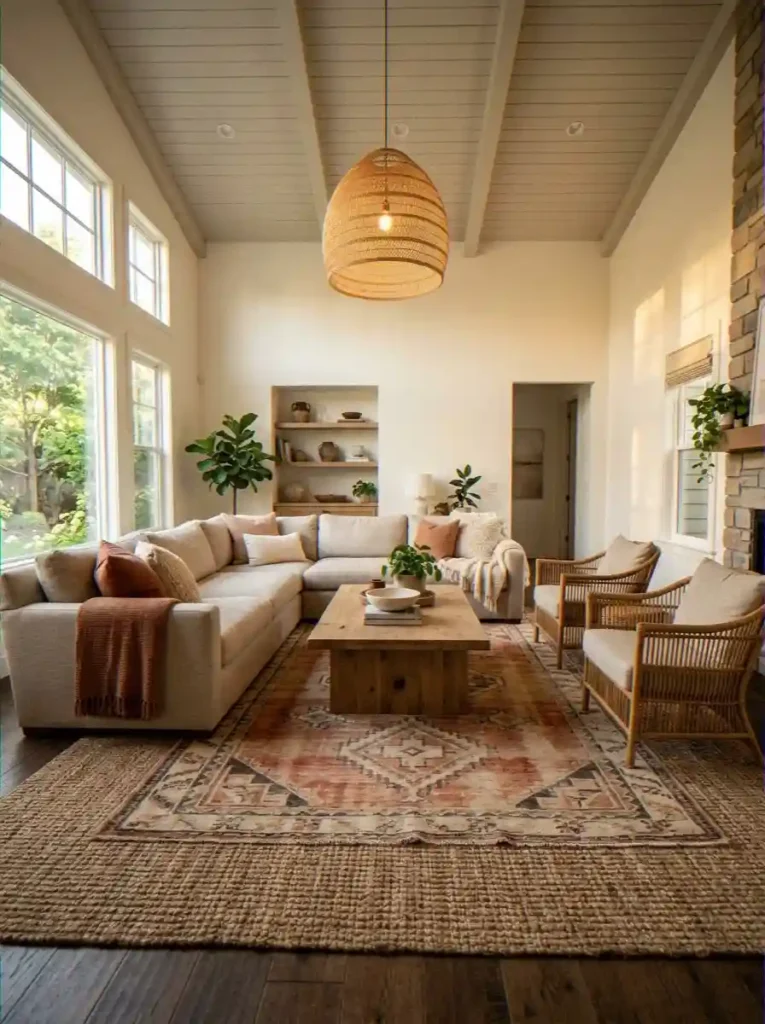
In high-ceiling open-plan rooms, layering two area rugs — a large natural fiber base with a smaller patterned rug on top — creates visual grounding that balances all that vertical drama.
It zones the seating area and adds texture at the level where people actually live, sit, and move. Trust me, this is one of those details that makes a room feel “done.”
Part 8: Simple High Ceiling Design Ideas (Big Impact, Low Effort)
Not every high-ceiling transformation requires a contractor and a six-week timeline. Here are the highest-impact moves you can make with minimal effort:
- Rehang your curtain rods at ceiling height. This is free if you already own curtains and the impact is genuinely dramatic. Your windows will look twice as tall overnight.
- Swap your light fixture for something proportionally larger. The right-sized chandelier or pendant transforms a room instantly. This was my single best purchase last year.
- Paint the ceiling a bold color. One can of paint, one afternoon, completely different room. Dark navy or forest green overhead in a living room or bedroom = instant luxury.
- Add a large mirror. A floor-to-ceiling or very tall mirror reflects the height and light simultaneously. I hung a 7-foot mirror in a narrow hallway and it completely removed the tunnel-like feeling.
- Move plants to the floor and go tall. Swap small tabletop plants for large floor plants and watch the room come alive vertically.
- Install simple rope lighting on beams. If you have exposed beams, this takes about an hour and looks extraordinary at night.
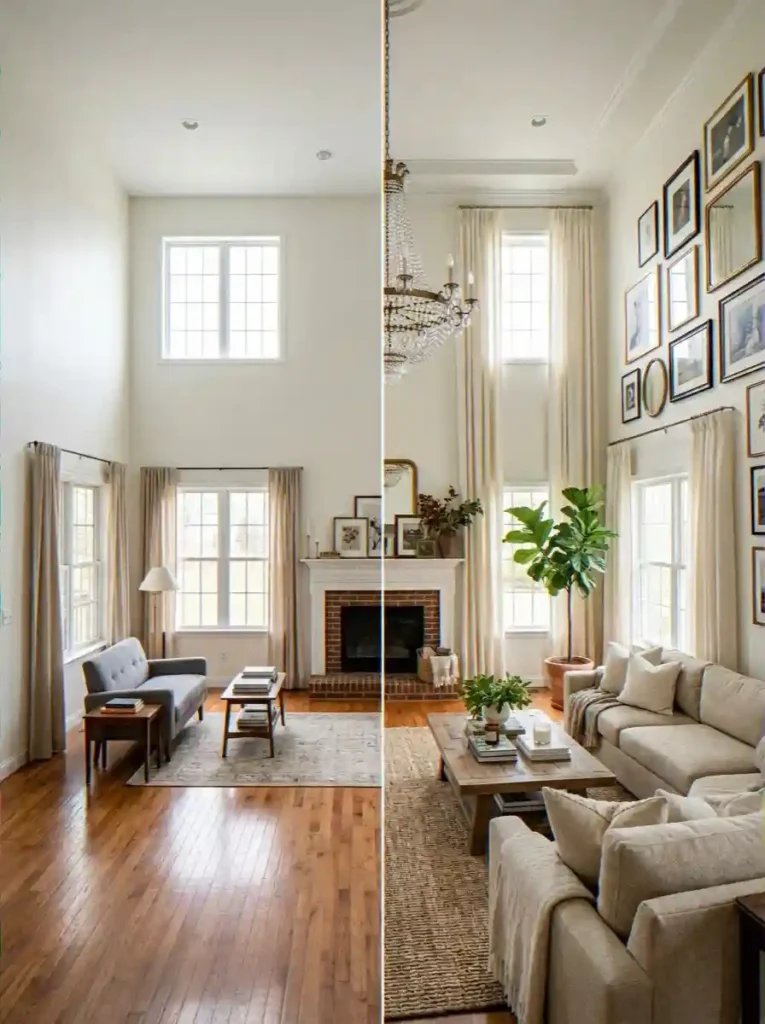
Honestly — just those six moves alone would transform most high-ceiling rooms without any contractor involvement. Start there before spending a dime on renovations.
Part 9: Bedroom and Kitchen High Ceiling Ideas
41. Fabric Draped from the Ceiling in Bedrooms
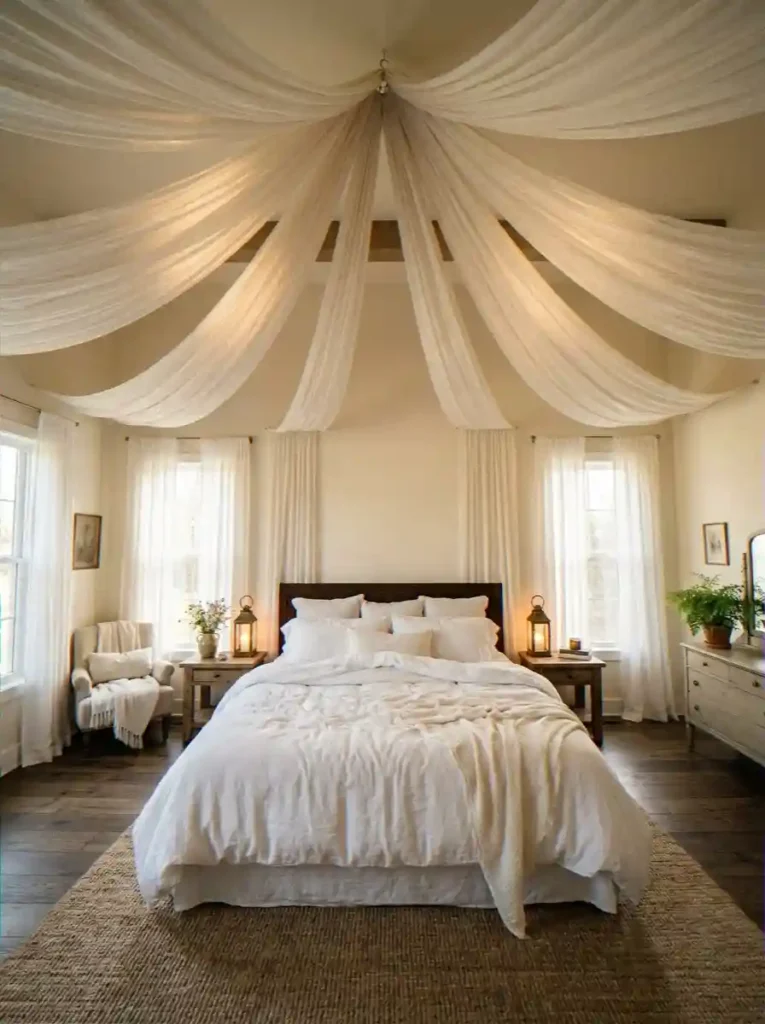
A tent-like, romantic look is created by sheer fabric hanging from the center of the ceiling and spreading out to the edges of the room.
This looks especially nice in bedrooms. White sheer fabric is the most traditional choice, but patterned fabrics can also give a boho-luxe look.
This is one of the most dramatic and inexpensive ways to change up a bedroom, especially for renters who can’t touch the walls.
42. Paneled Accent Wall Behind the Bed
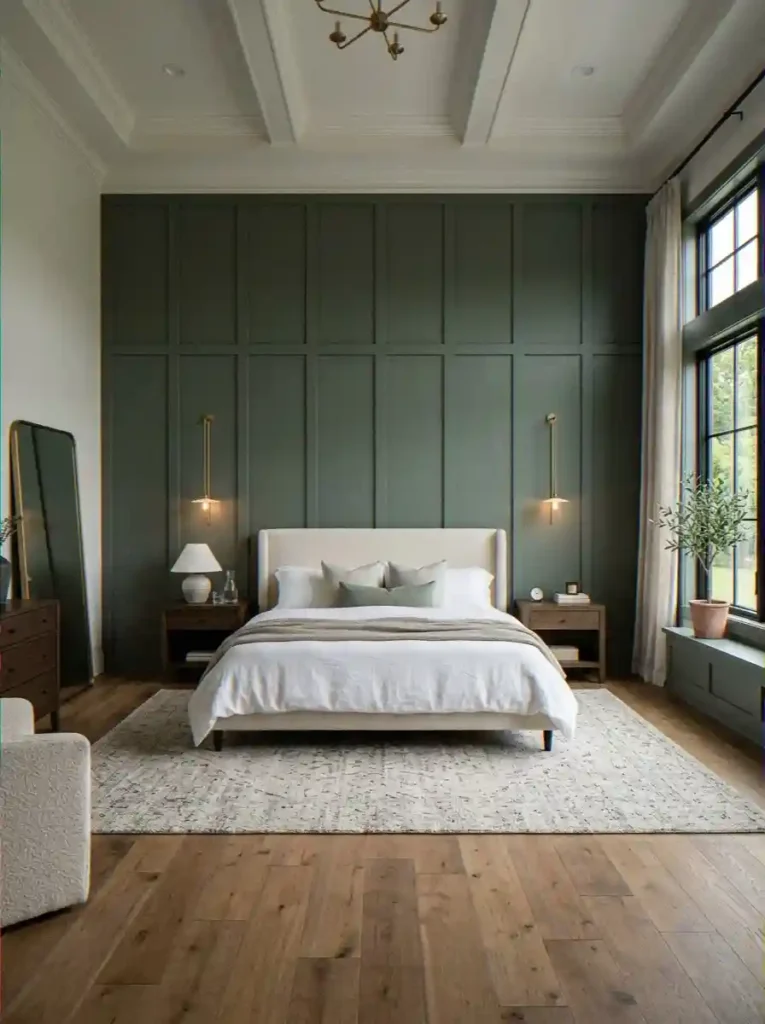
Floor-to-ceiling decorative paneling on the wall behind the bed — board-and-batten, shiplap, or decorative molding — creates a permanent-looking backdrop that anchors the whole room.
It’s one of those moves where the cost is low but the perceived value is high. Guests always assume it was expensive.
43. Dramatic Range Hood in the Kitchen
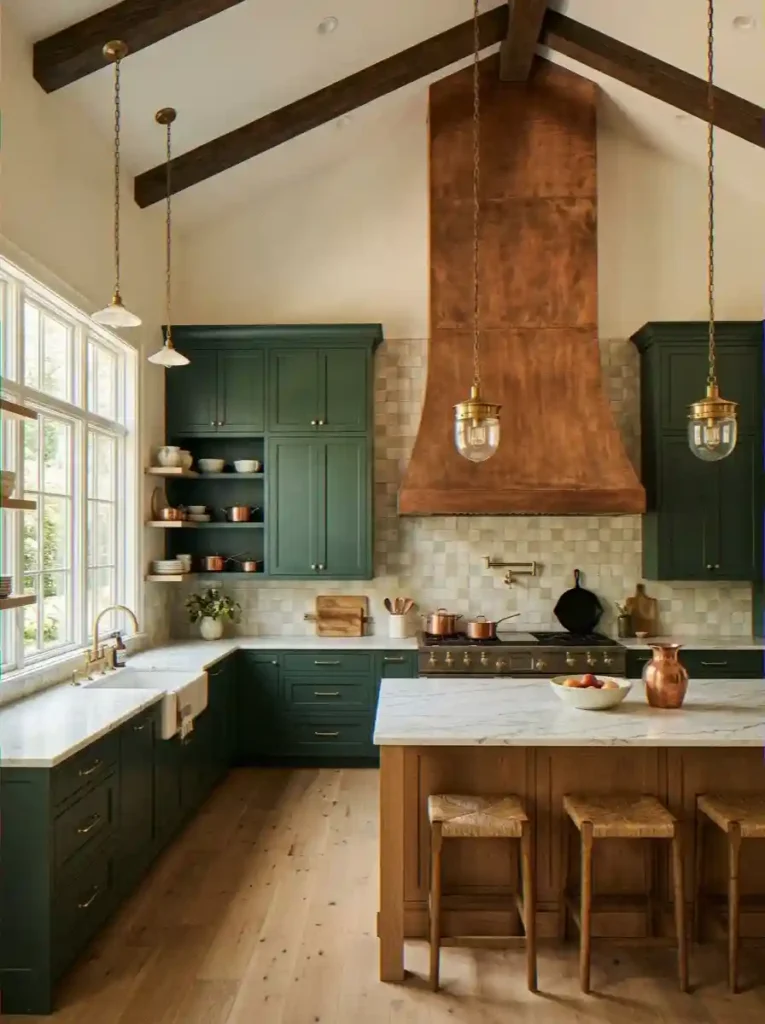
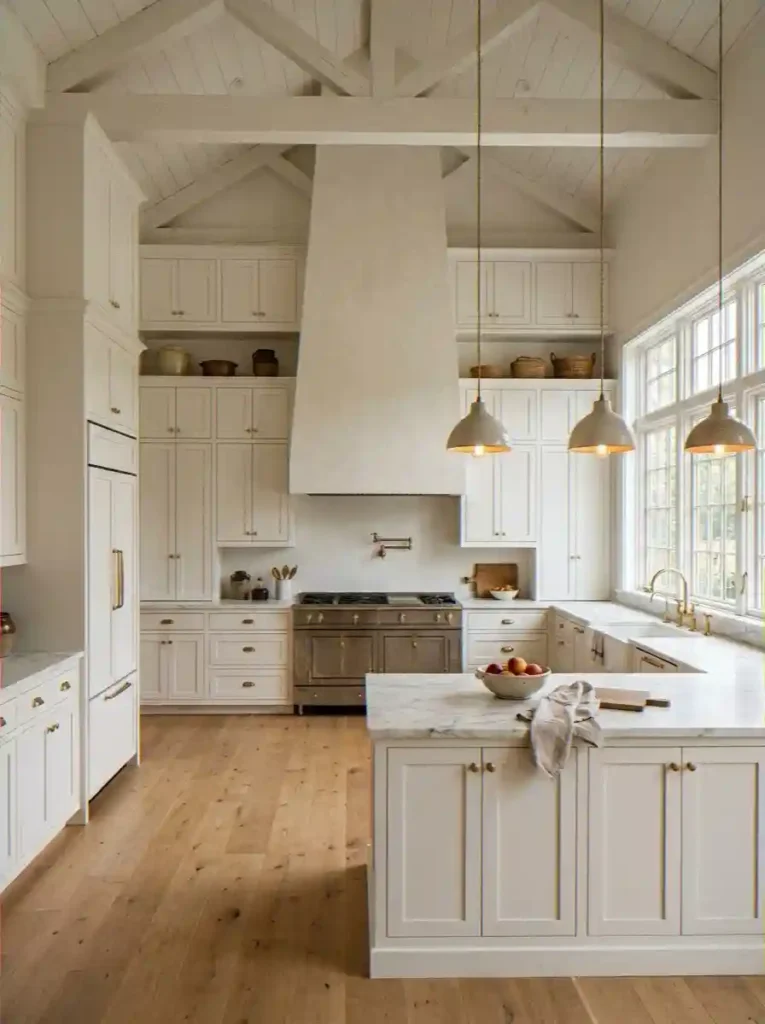
A custom range hood that extends dramatically upward toward a high kitchen ceiling becomes a sculptural focal point.
Stone, copper, stainless steel, painted wood — whatever material fits your kitchen’s style, a tall hood fills the vertical space above the cooktop purposefully and beautifully.
44. Open Shelving to the Rafters
Open shelves that go all the way up are both pretty and useful in kitchens with high ceilings.
Everyday dishes are easy to get to, and beautiful things like old crockery, glass jars, and cookbooks are up high. You need a step stool to reach the top shelves, but the look is worth it.
45. Statement Dining Chandelier Scaled to Ceiling Height
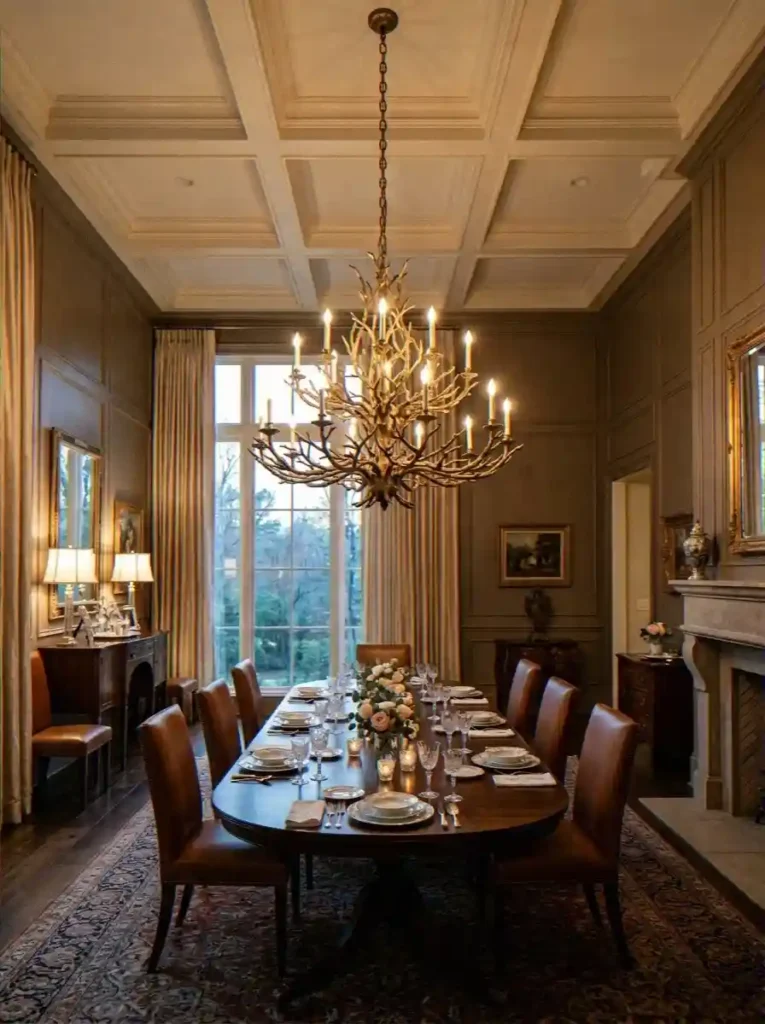
The dining room chandelier should always be scaled to the ceiling, not just the table. In a 12-foot room, go for a fixture with at least 30–36 inches of vertical drop. Hang it so the bottom of the fixture sits 30–36 inches above the tabletop.
Get that formula wrong and the whole room feels off — get it right and the room feels like a proper dining experience.
Part 10: Foyer, Staircase, and Transitional Spaces
46. Double-Height Foyer Design
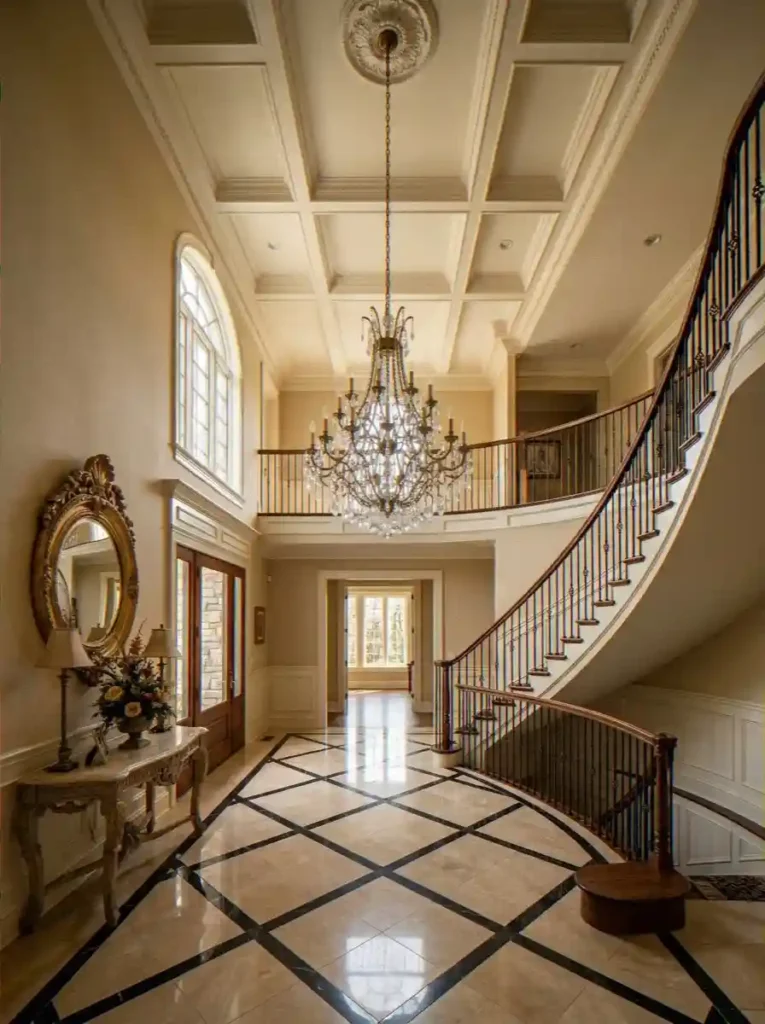
The first room people see when they come to your house is the foyer. If your house has high ceilings, a double-height entry is a great way to make a strong first impression.
You really only need one amazing light fixture, some dramatic floor tiles, and a big console table with a statement mirror. Everything else is just building on those basics.
47. Gallery Wall Climbing the Stairwell
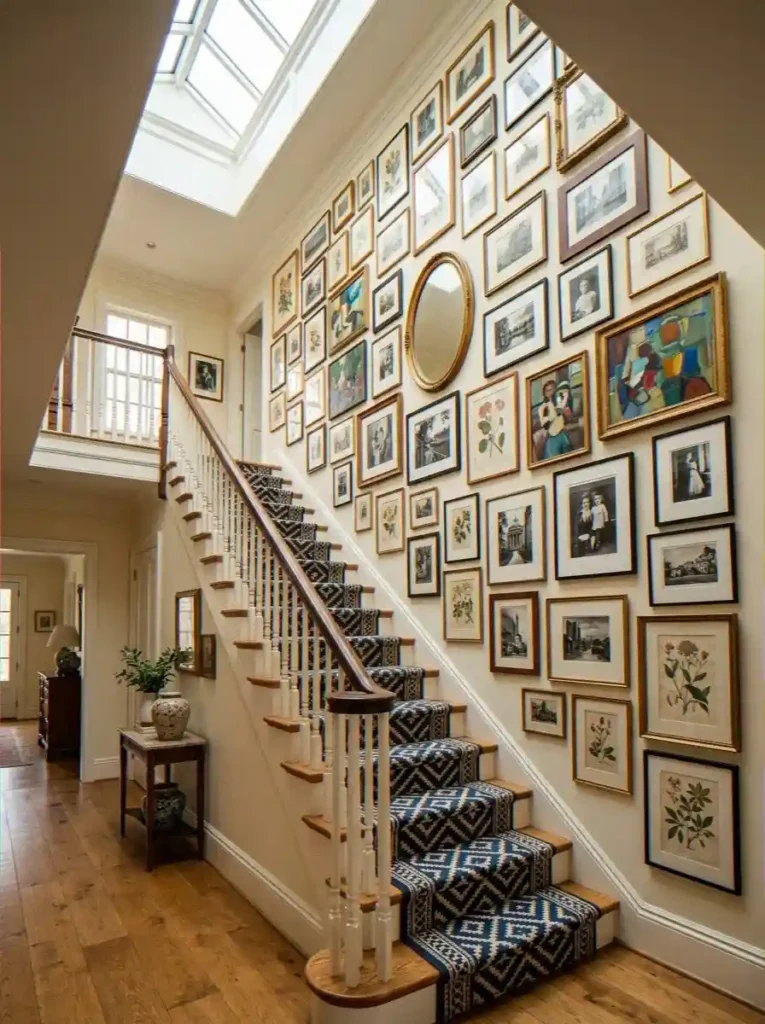
A staircase wall is a vertical canvas that most people completely ignore. Don’t. Let a gallery wall climb the entire height — art, mirrors, photographs, wall sculptures.
Stagger the arrangement to follow the stair angle. The effect is dramatic from below and engaging as you actually ascend the stairs.
48. Skylights for Natural Drama
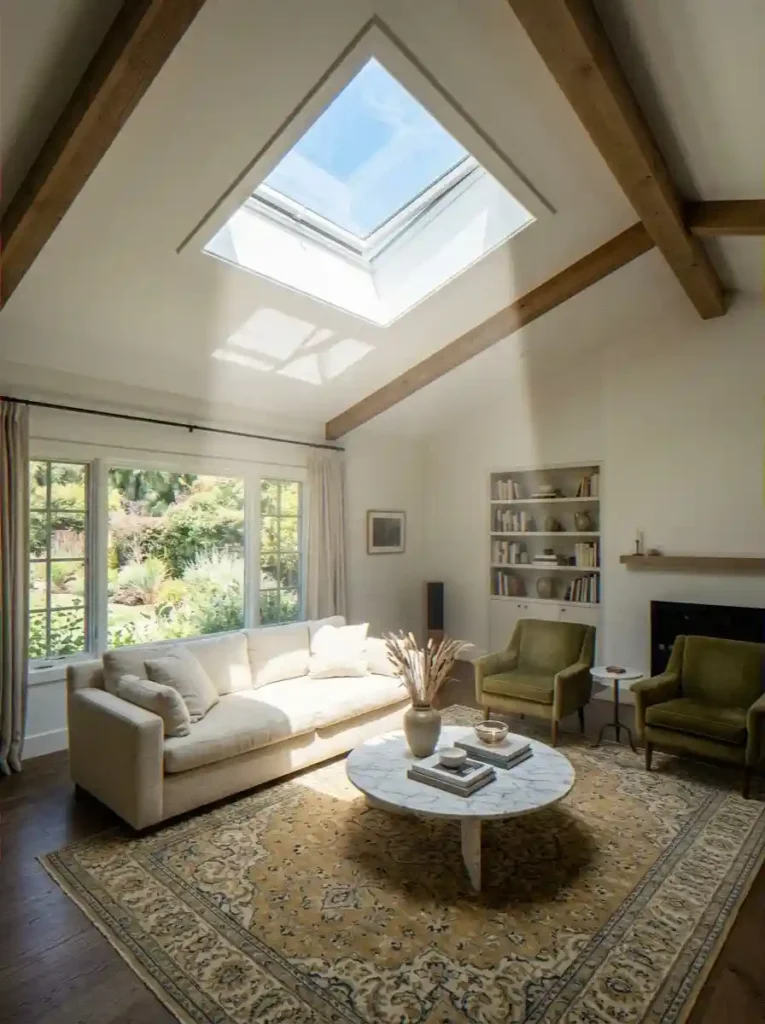
If renovation is on the table, skylights positioned over your high-ceiling space are in a category of their own.
Natural light from above makes any room feel like a living gallery. Even a single operable skylight creates a light shaft effect at different times of day that no artificial lighting can replicate.
49. Vaulted Porch Ceilings with Bead Board
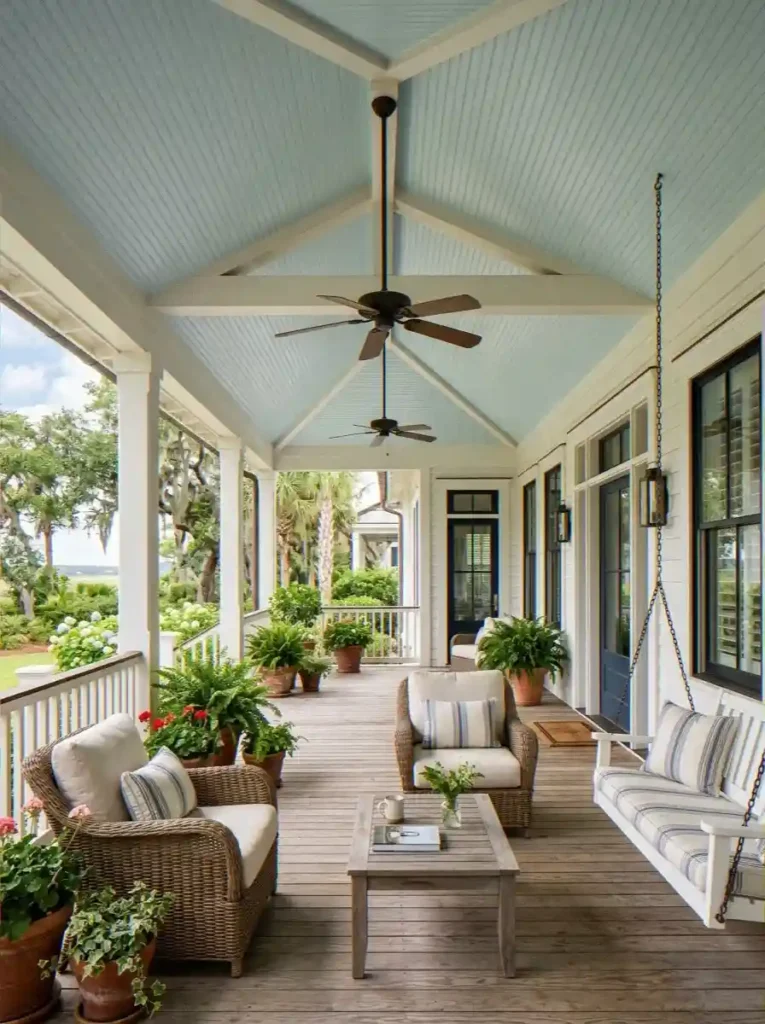
Porch ceilings in traditional “haint blue” — that distinctive pale blue-green — with bead board paneling are a classic that transfers beautifully to any height.
The pale blue reflects sky light and makes outdoor spaces feel fresh, connected, and finished. Simple and killer. 🏡
50. Statement Staircase Treatment
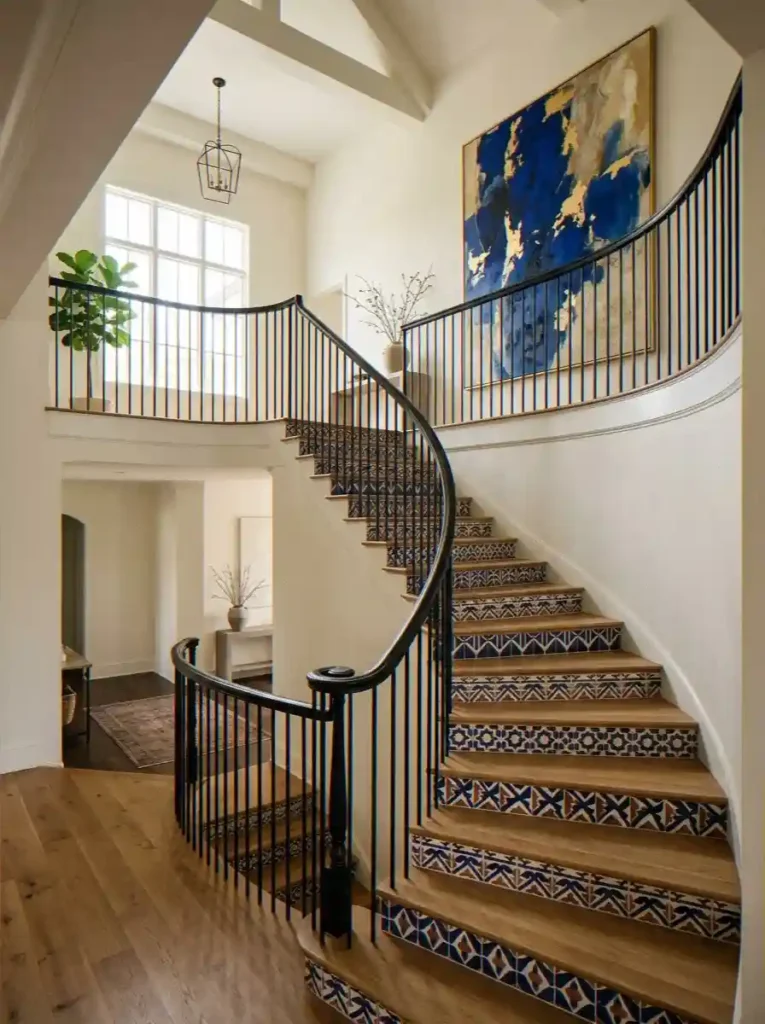
When a staircase goes through a space with a high ceiling, the staircase itself becomes a big design feature. Hand-painted tile risers, dramatic iron railings, a bold stair runner, and gallery art climbing the wall all work. Instead of doing a little bit of everything, pick one or two and stick with them.
51. Interior Glass Walls or Railings
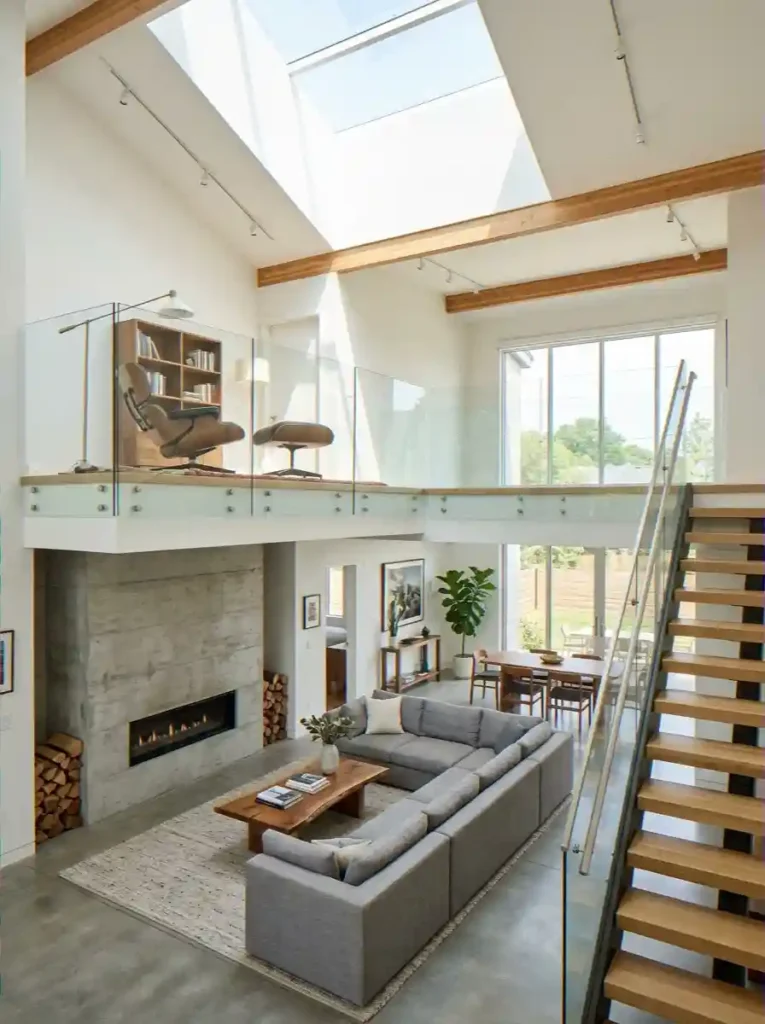
In homes with double-height spaces, glass interior railings or partial glass walls on upper levels preserve the open, airy quality of the space rather than chopping it with solid balustrades.
Frameless glass is the most dramatic option; black-framed glass hits that modern-industrial sweet spot beautifully.
52. The Accent Ceiling With Geometric Pattern
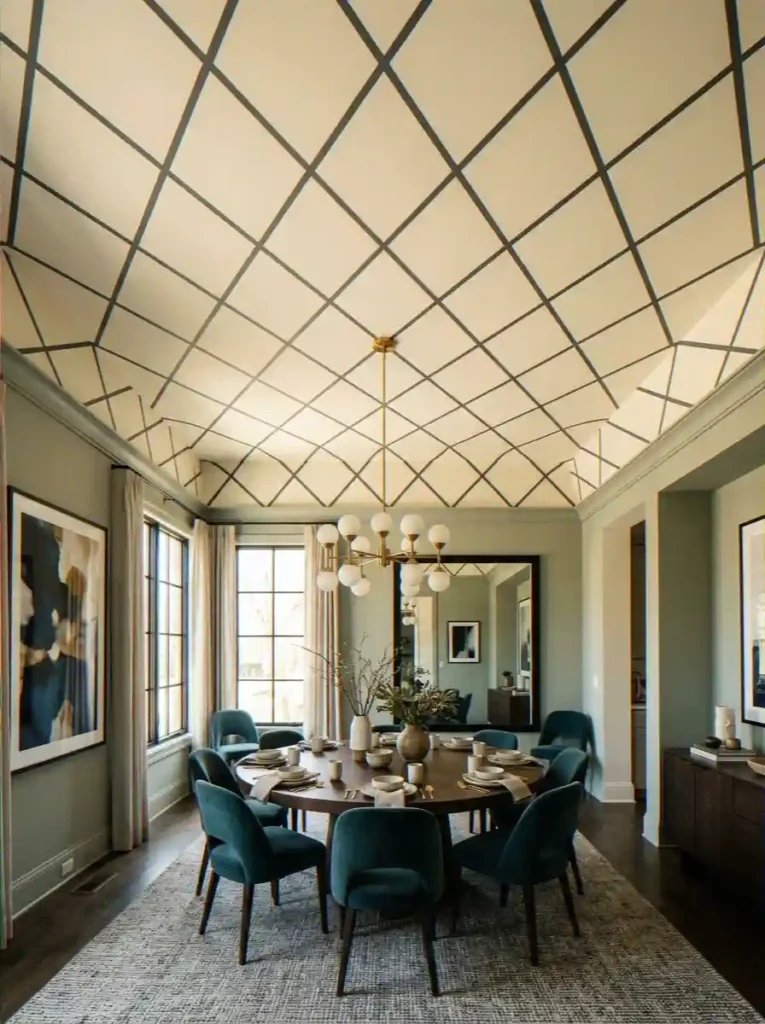
For the final idea and honestly one of the coolest: paint a geometric pattern directly on the ceiling. Not a mural — a pattern. Chevron, hexagon, diamond grid, bold stripes — painted in two tones on an otherwise simple ceiling.
In a high-ceiling room, the pattern reads as decoration overhead without ever feeling busy at eye level. Genuinely underused and genuinely awesome.
Key Design Principles to Keep in Mind
There are a few rules that apply to every idea in this guide before you start ordering anything or calling contractors.
Scale everything up. This is the one rule. Furniture too small, fixtures too small, art too small — everything feels like a dollhouse. Match the scale of your design choices to the scale of the room.
Treat every vertical zone intentionally. Floor, mid-wall, upper wall, ceiling — all four zones deserve thought. Most people nail the bottom two and abandon the top two completely.
Pick a material palette and hold it. Mismatched wood tones, clashing metals, inconsistent finishes — these things read as chaos regardless of how much you spent. Choose 2–3 materials and run them throughout.
Add softness to fight the echo. High-ceiling rooms are acoustically live. Rugs, curtains, upholstered furniture, cushions, and plants all ad
d acoustic dampening that makes the space feel warmer and more livable — not just look better.
People Also Ask: High Ceiling Design FAQ
How to Style a High Ceiling?
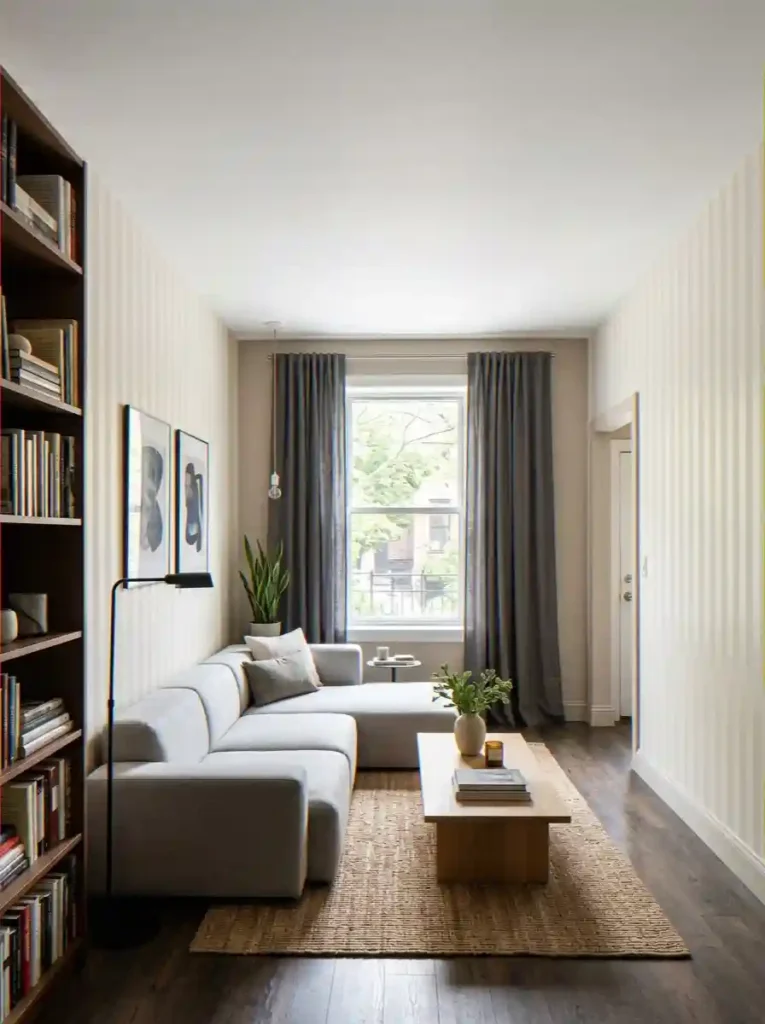
The key is working in vertical layers rather than just decorating at eye level. Start with the ceiling itself — add architectural detail, a dramatic light fixture, or a bold color.
Then work down: upper wall treatments like tall paneling, high-hung art, or dramatic curtains. Mid-wall gets your standard art and lighting. Floor level gets properly scaled furniture and layered rugs.
The goal is no empty zones. An untreated upper wall in a 14-foot room is like leaving half your canvas blank — technically fine but a huge wasted opportunity.
The most luxurious high-ceiling rooms use every single vertical foot purposefully.
Scale is the other thing that can’t be changed. You should compare everything—furniture, art, fixtures, and accessories—to what you would choose for a room with a standard height.
When in doubt, make it bigger. In a room with a high ceiling, you can almost never go too big.
How to Make 7-Foot Ceilings Look Higher?
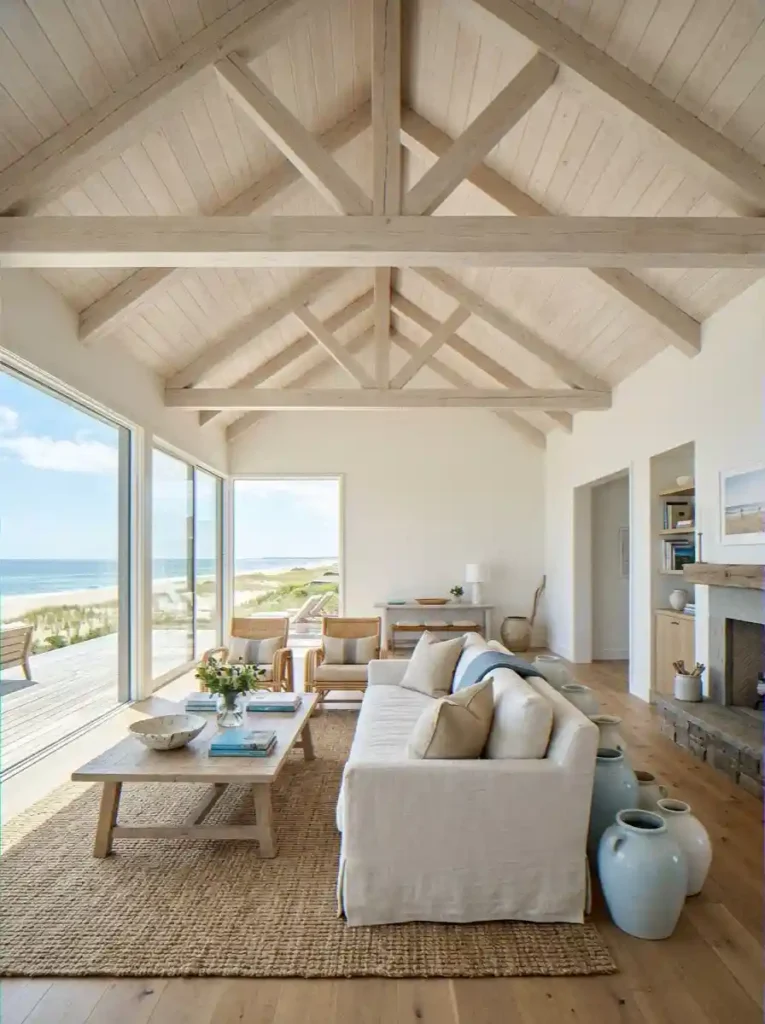
This is a slightly different question — 7-foot ceilings aren’t actually high, they’re slightly below standard. But the illusion tricks are fantastic and work brilliantly:
- Hang curtains as high as possible — mount rods within 2–3 inches of the ceiling and let curtains fall to the floor. This single move adds more perceived height than anything else.
- Use vertical stripes on walls (wallpaper or paint) to draw the eye upward.
- Keep furniture low-profile — low sofas, low coffee tables, low beds. The contrast between low furniture and the ceiling makes the ceiling feel relatively higher.
- Paint the ceiling white (or lighter than the walls) — dark ceilings pull down visually; light ones push up.
- Use tall, narrow bookcases or shelving — vertical lines read as height.
- Avoid anything that creates a horizontal emphasis at mid-wall height — no thick picture rails, no chunky chair rails.
The honest answer: you can make a 7-foot ceiling feel more spacious, but you can’t make it feel truly high. The goal is removing anything that makes it feel lower than it already is.
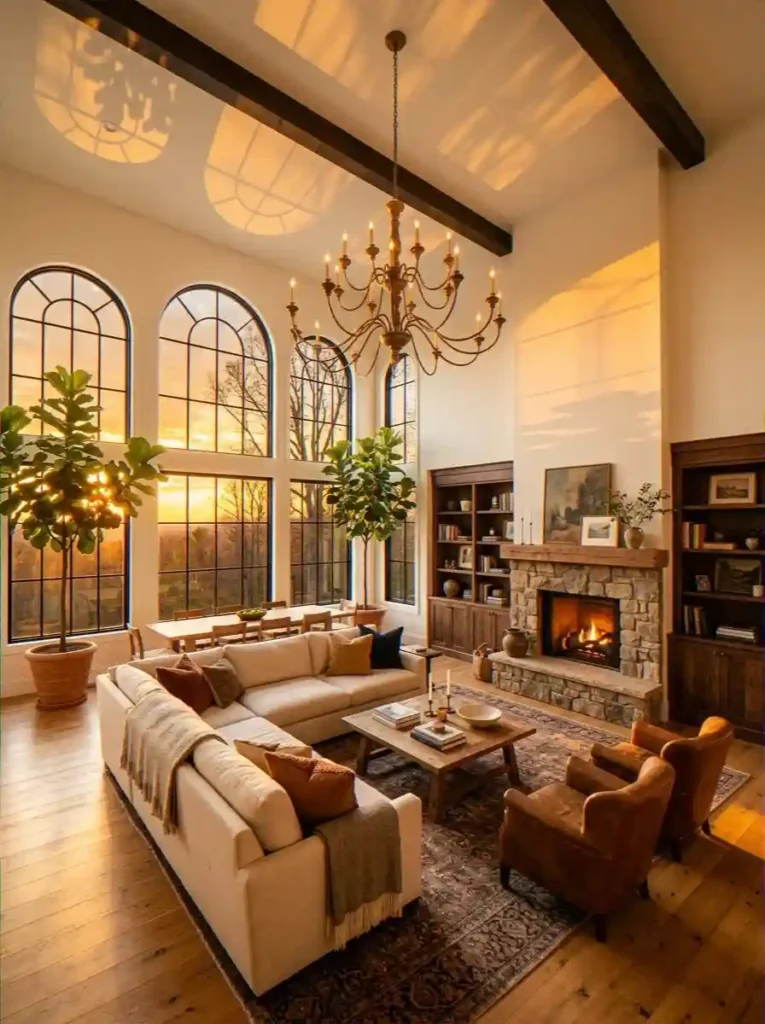
See related content
Creative TV Wall Design Ideas for a Stylish and Functional Living Room
Modern TV Wall Decoration Ideas to Elevate Your Living Room Style
21 Stylish Bedroom TV Wall Ideas That Look Designer-Approved
What Is the New Trend for Ceilings?
The biggest change in ceiling design right now is to treat the ceiling as a real design surface instead of just a blank canvas. Main trends:
- Dark-painted ceilings — navy, forest green, charcoal, even black — are the biggest breakout trend in residential interiors right now. The “fifth wall” concept has gone fully mainstream.
- Textured plaster finishes — limewash, Venetian plaster, and troweled finishes are replacing smooth white as the elevated choice.
- Natural materials overhead — wood planks, rattan panels, woven grass cloth, and cork ceilings are gaining serious traction in design-forward homes.
- Integrated LED cove lighting — no longer just commercial or hospitality, this is now a standard feature in luxury residential design.
- Exposed structural elements — raw concrete, visible beams, and industrial ductwork in high-ceiling spaces continue to have real staying power.
The short version: the ceiling is no longer an afterthought. It’s a primary design surface, and the current design world is treating it that way.
People Also Search For: Related Design Topics
Modern High Ceiling Design Ideas
Modern high-ceiling design leans into clean lines, dramatic contrasts, and intentional material choices. Think matte black fixtures against pale concrete, single oversized pendant clusters in brushed brass, floor-to-ceiling glazing, and minimal furniture in large-scale proportions.
The modern approach deliberately avoids ornament in favor of letting the architectural elements — the height, the structure, the materials — speak for themselves.
Key modern moves: exposed concrete ceilings, frameless glass railings on upper levels, linear LED strips, low-profile sectionals in neutral tones, and oversized abstract art on a single feature wall.
Modern High Ceiling Living Room Design
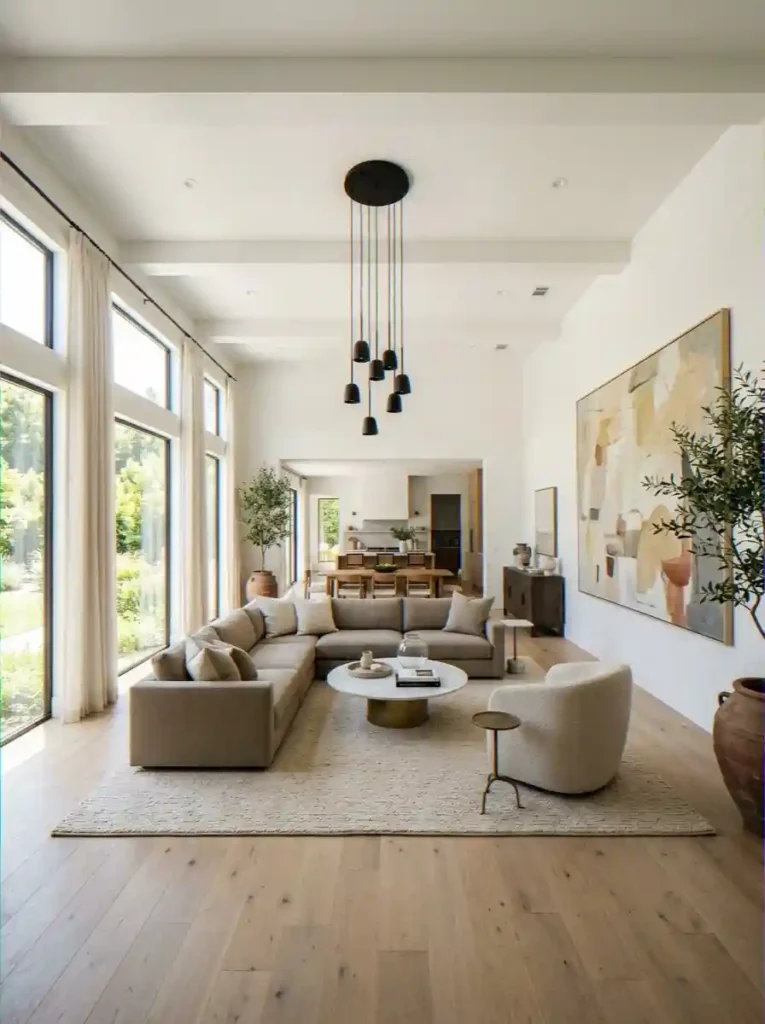
A modern high-ceiling living room typically centers on one dramatic focal point — usually either a feature wall, an oversized artwork, or a statement light installation — and then keeps everything else relatively restrained to let that focal point breathe.
The layout is purposeful and generous, with a big sectional defining the seating area, a huge area rug anchoring the floor, curtains from floor to ceiling framing the windows, and a light fixture overhead that is the right size to fill the space.
The picture is finished off with tall plants in the corners, built-in shelves, and clean ceiling details.
High Ceiling Design Ideas for Living Room
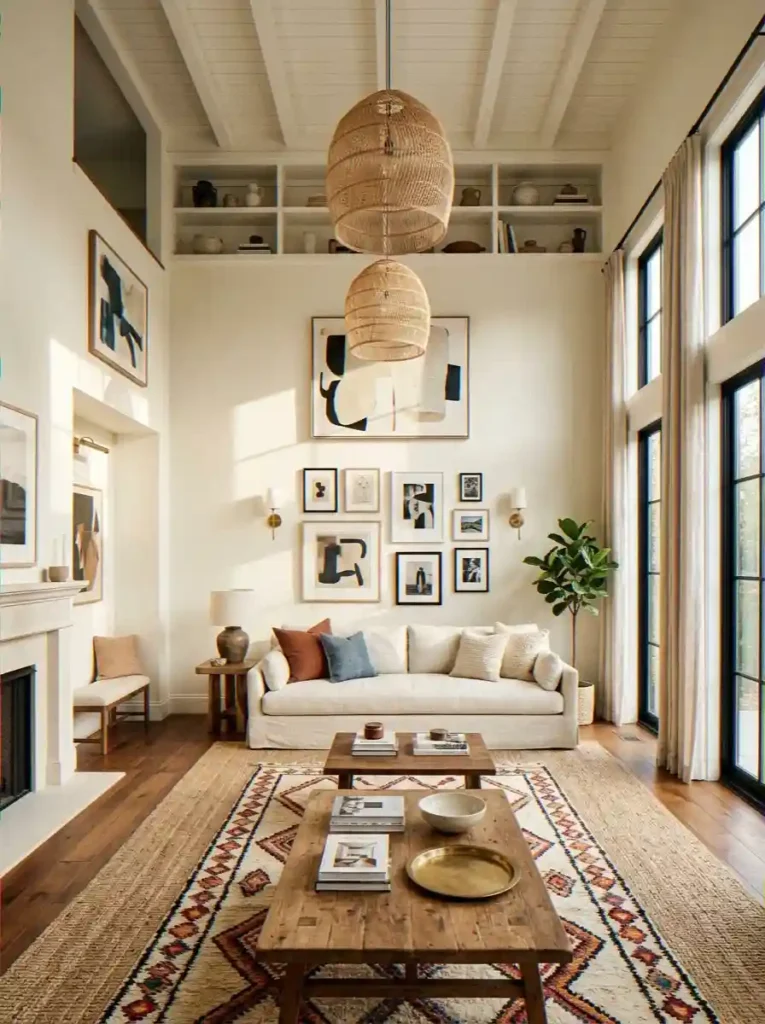
The living room is where high ceilings pay off most visibly. Beyond the ideas already covered, some specific living room considerations:
- Zone the space with lighting levels — ceiling fixtures for overall ambient light, floor lamps for reading zones, sconces for accent layers
- Use a large area rug to anchor the seating area — in a very tall room, the floor feels far from the ceiling, so what’s on the floor matters more
- Consider acoustic panels — in very tall, hard-surface living rooms, echo can be significant. Decorative acoustic panels have gotten beautifully designed
- Don’t forget the corners — tall corners in high-ceiling rooms are often wasted. Tall plants, corner floor lamps, corner shelving units, or even small corner seating areas fill them beautifully
Simple High Ceiling Design Ideas
Sometimes you don’t need a renovation — you just need a few smart moves. The simplest, highest-impact ideas for high ceilings:
- Rehang curtain rods at ceiling height (free or minimal cost, massive visual impact)
- Replace undersized light fixture with a properly scaled one
- Paint the ceiling a bold color — one afternoon, dramatic result
- Add one very large-scale piece of art to a bare wall
- Bring in two or three tall floor plants
- Install rope lights or LED strips on exposed beams
Those six things alone will transform most high-ceiling rooms without a single structural change. Start there. Then, if you’re feeling inspired, layer in the bigger moves.
A Final Word (and an Honest One)
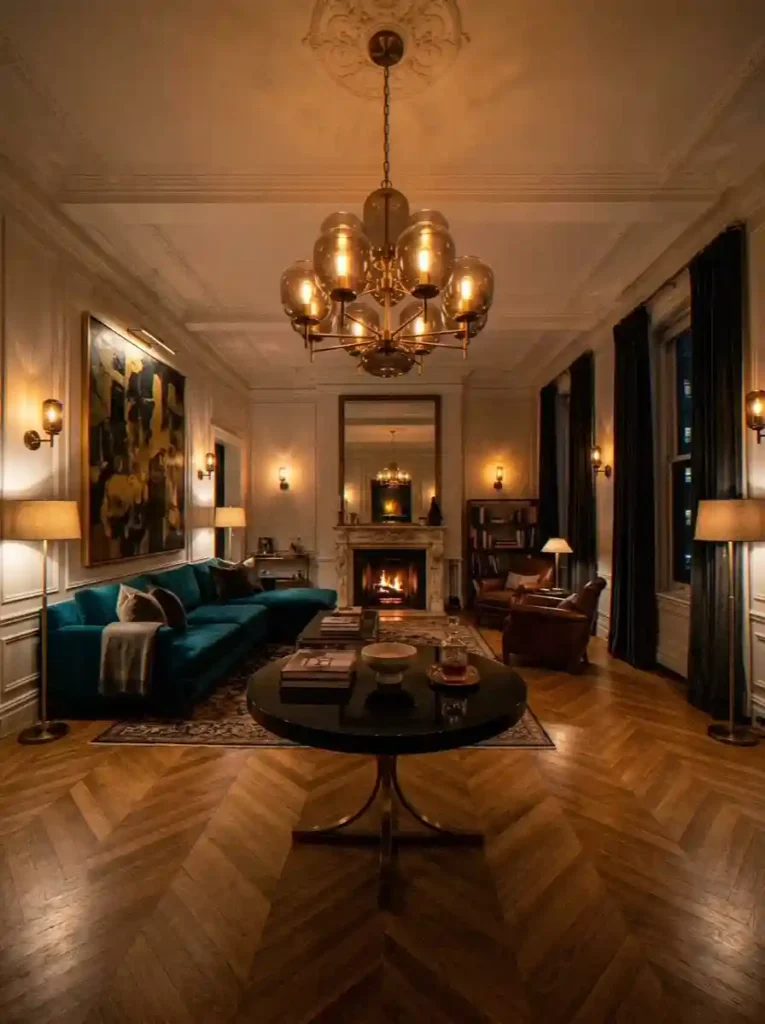
High ceilings are one of those architectural gifts that keep giving — but only if you actually engage with them.
I’ve seen gorgeous high-ceiling rooms done on shoestring budgets and underwhelming ones where the homeowner clearly spent a fortune but missed the fundamental principles of scale, layering, and intentionality.
The ideas in this guide work. Some are expensive, some are free, most are somewhere in the middle.
But all of them share the same underlying logic: respect the height, fill the vertical space purposefully, scale everything to match, and treat every surface — including the ceiling — as a design opportunity.
You don’t need to implement all 52. Pick four or five that genuinely excite you and execute them well. That focused, intentional approach will always beat doing twelve things halfway.
So — which of these ideas are you actually going to try first? Honestly curious. Drop it in the comments or share your results — I’d love to see what you do with the space! 🏠✨
Have a high-ceiling room you’re struggling with? Think there’s a design idea I missed? Let me know — always happy to talk through what actually works in real spaces.
