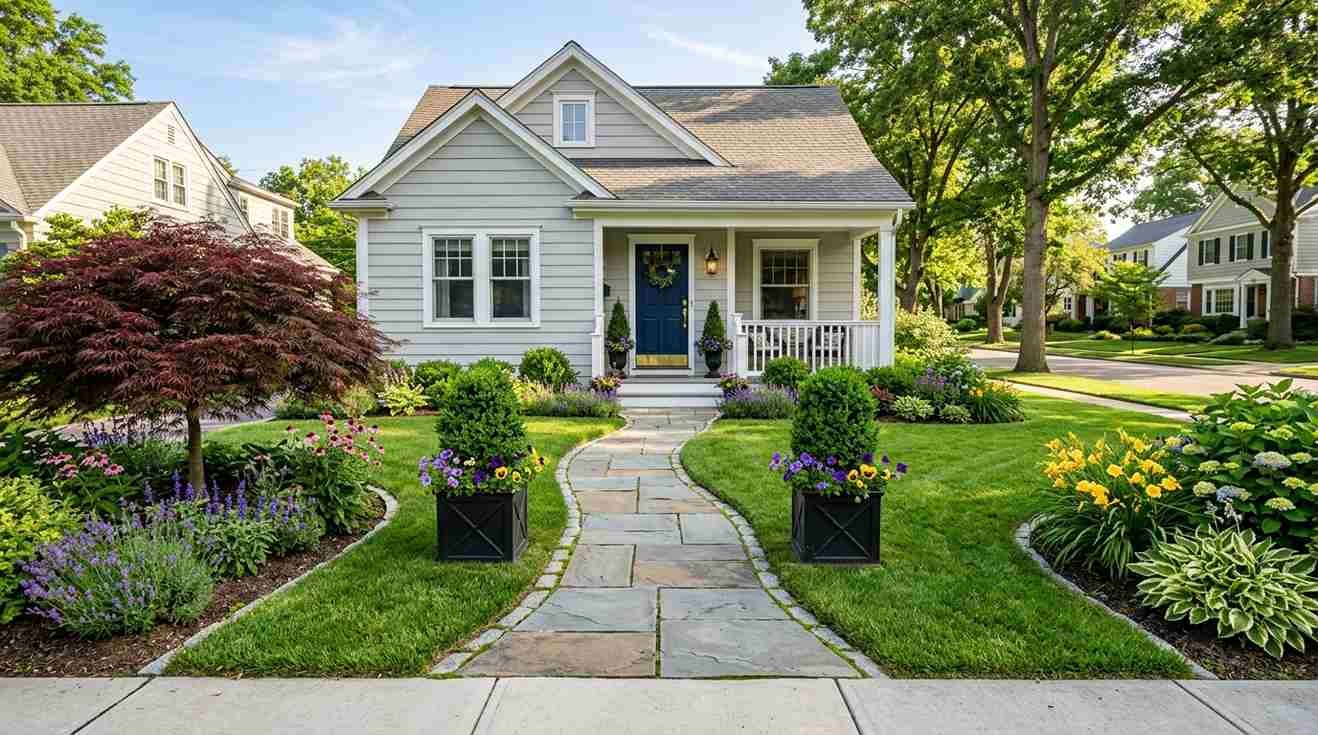
So your front yard is basically a postage stamp. Been there.
A tiny square of grass staring back at you, full of potential — and maybe a few dead patches from last summer.
Here’s the thing: small yards are actually fun to work with. You have to be intentional, which means every plant, path, and pot earns its spot.
Pinterest-worthy doesn’t require acreage. It requires ideas. Here are 35 of them.
Start with a Plan (Seriously, Don’t Skip This)
Know your space before you buy a single plant
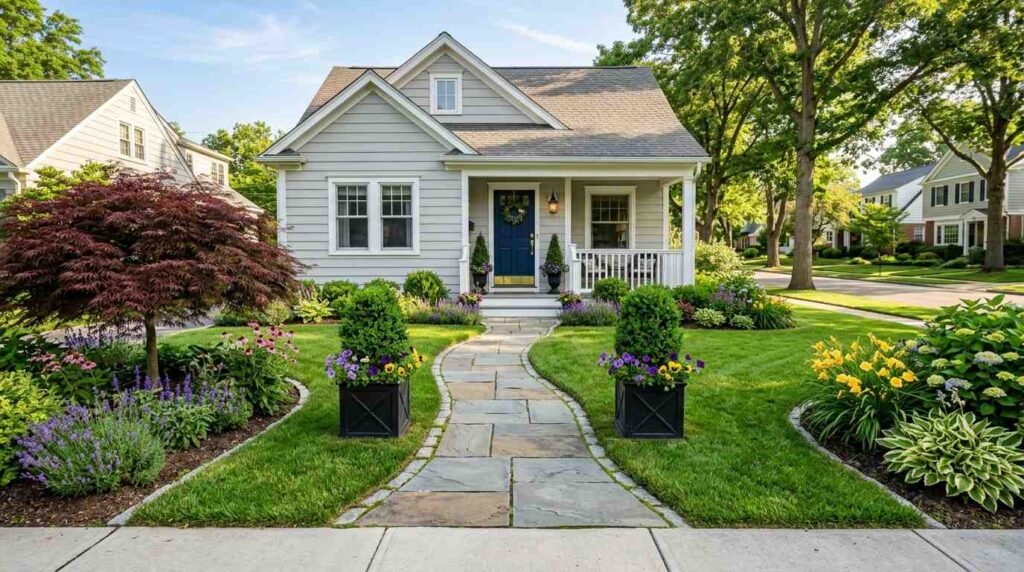
Measure your yard. Sketch it out on graph paper or just snap a photo and doodle on it. Know which direction it faces — south-facing yards get full sun, north-facing stay shady.
That one detail changes everything about what you can grow.
Also figure out your focal point before anything else. Every good small yard design has one — a tree, a door, a garden bed. Once you pick yours, the rest of the design flows around it.
Curb Appeal Ideas That Actually Work in Small Spaces
1. Frame your front door with symmetrical planters
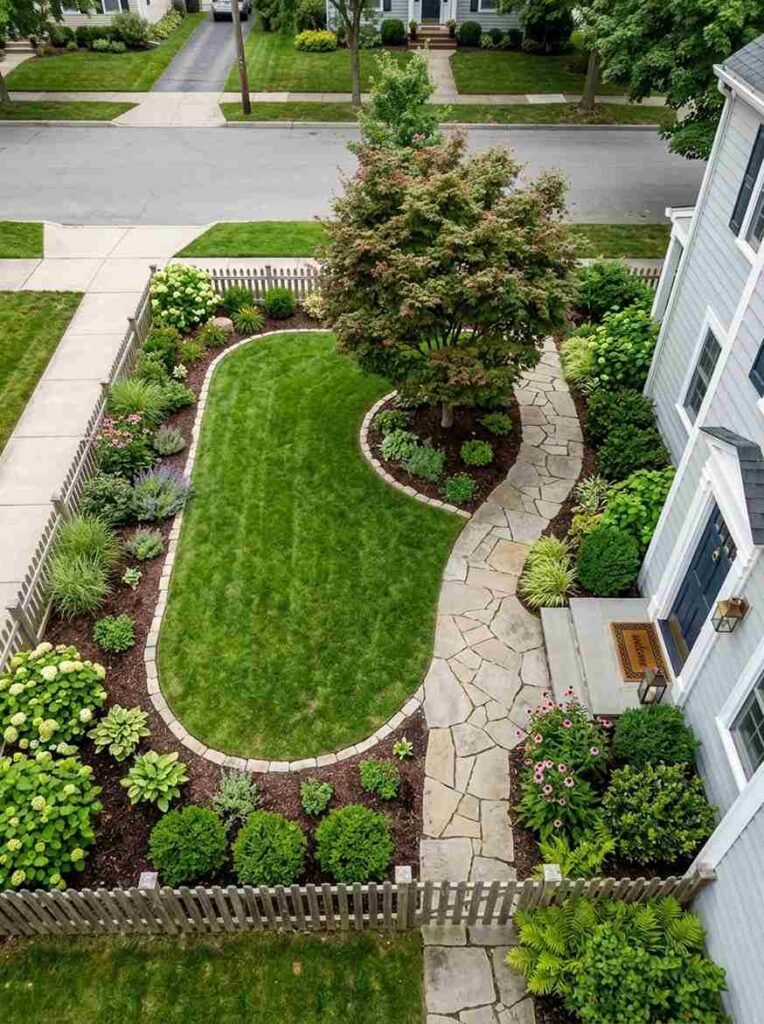
Two matching planters on either side of your door create instant structure.
Go with boxwoods for year-round greenery or seasonal flowers if you like switching things up. Symmetry is your best friend in a small square yard — it makes the space feel intentional rather than crowded.
2. Add a defined pathway
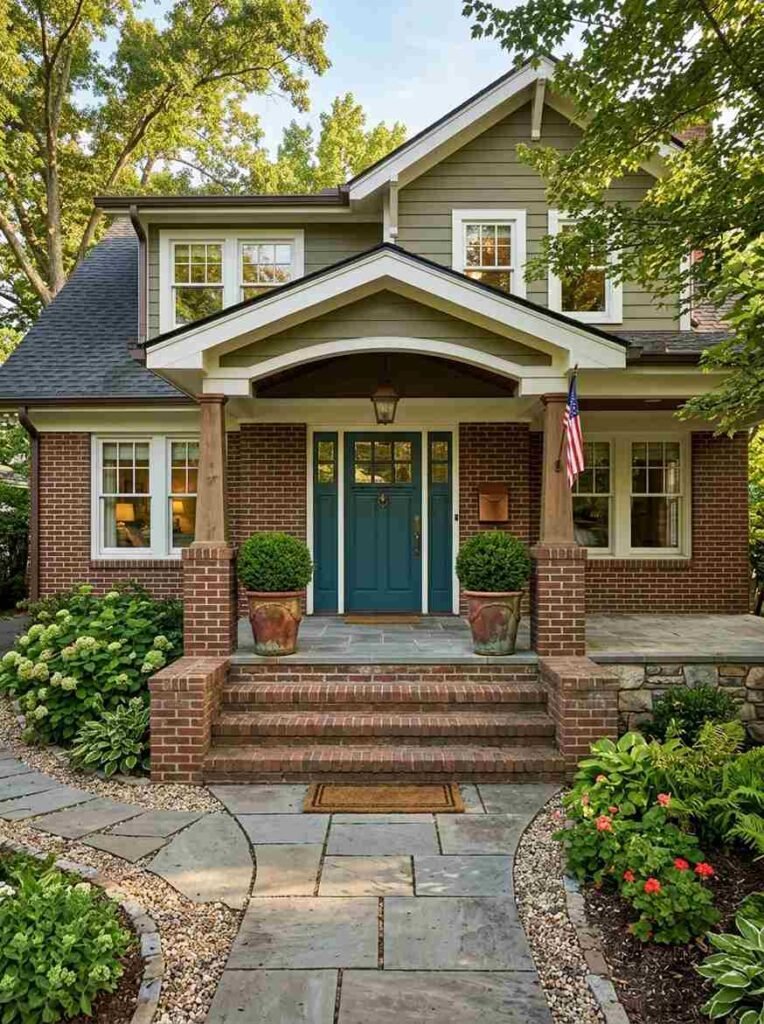
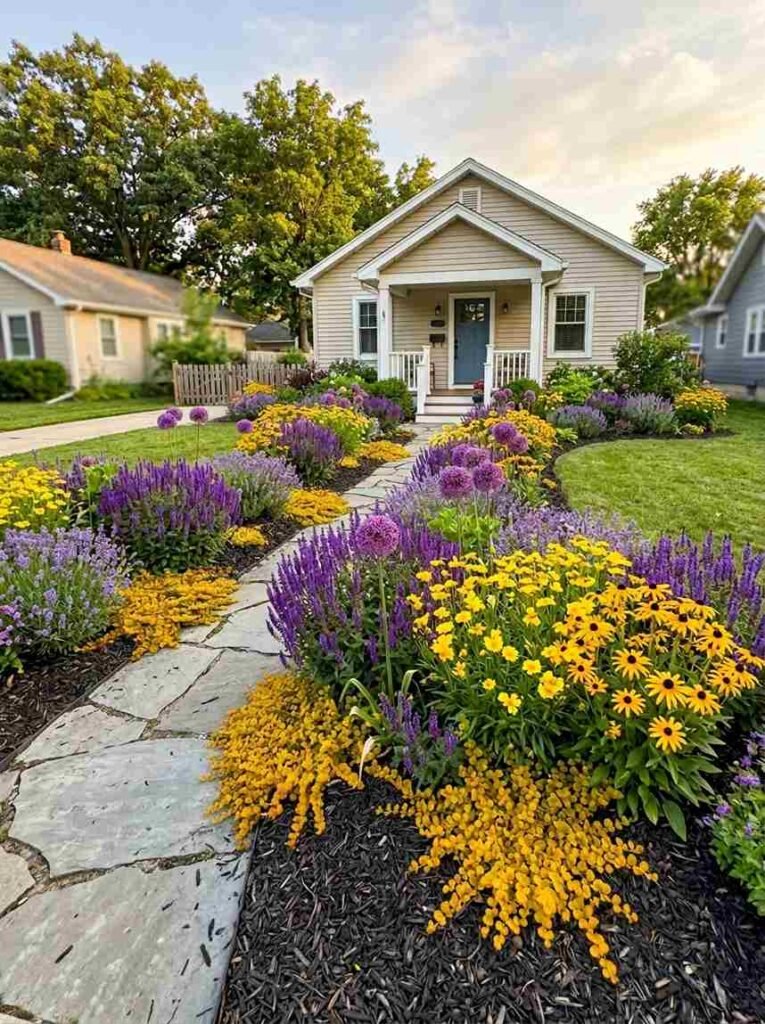
A simple stone or brick path from the sidewalk to your door does more visual work than you’d expect.
It gives the eye a clear line to follow and makes the yard feel organized. Use pavers that contrast with your lawn or mulch so the path actually reads as a design element.
3. Install low border edging
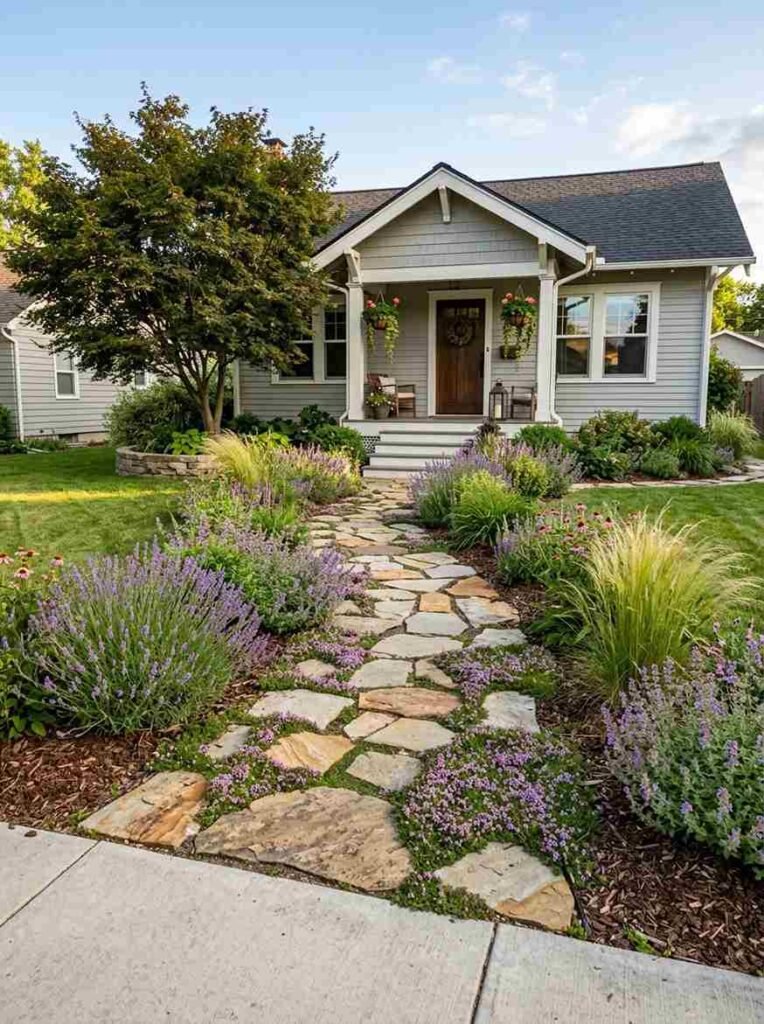
Clean edges between lawn and garden beds are underrated. A simple metal or stone border keeps mulch where it belongs and makes even a basic yard look like someone actually tried.
Takes an afternoon and costs almost nothing. FYI, this might be the highest ROI upgrade on this entire list.
4. Plant a single statement tree
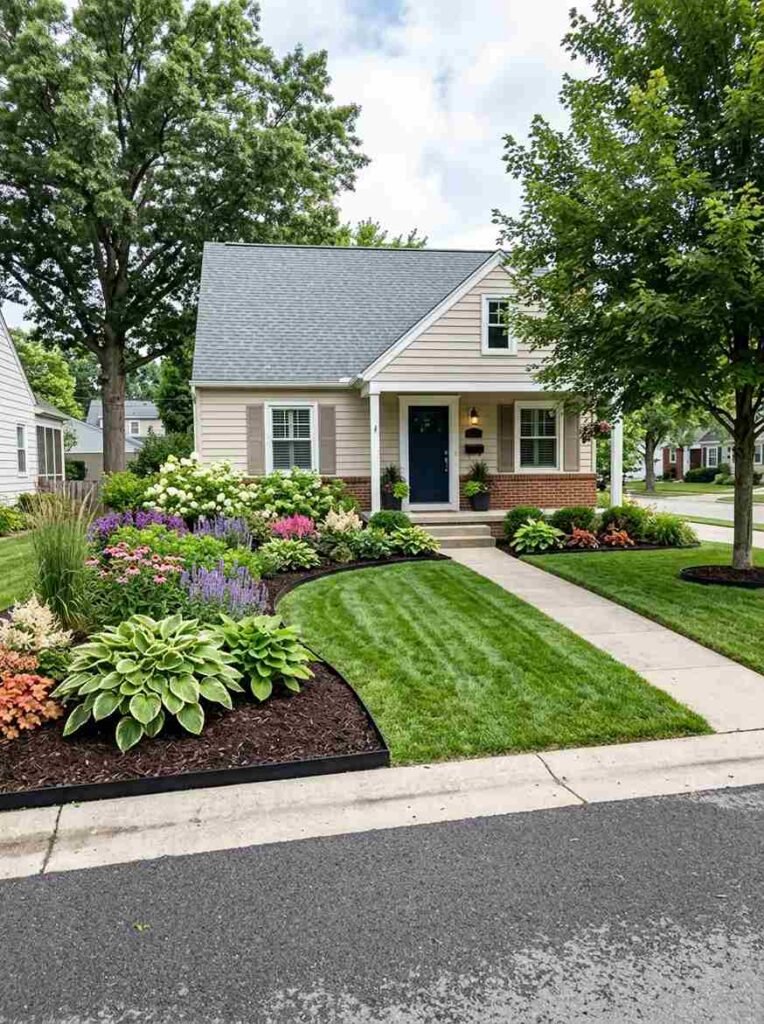
One well-placed ornamental tree — a Japanese maple, a crape myrtle, a dwarf cherry — anchors a small yard beautifully.
Go dwarf varieties so it doesn’t swallow the whole space. It gives your yard height without eating up square footage.
5. Use a mix of textures, not just colors
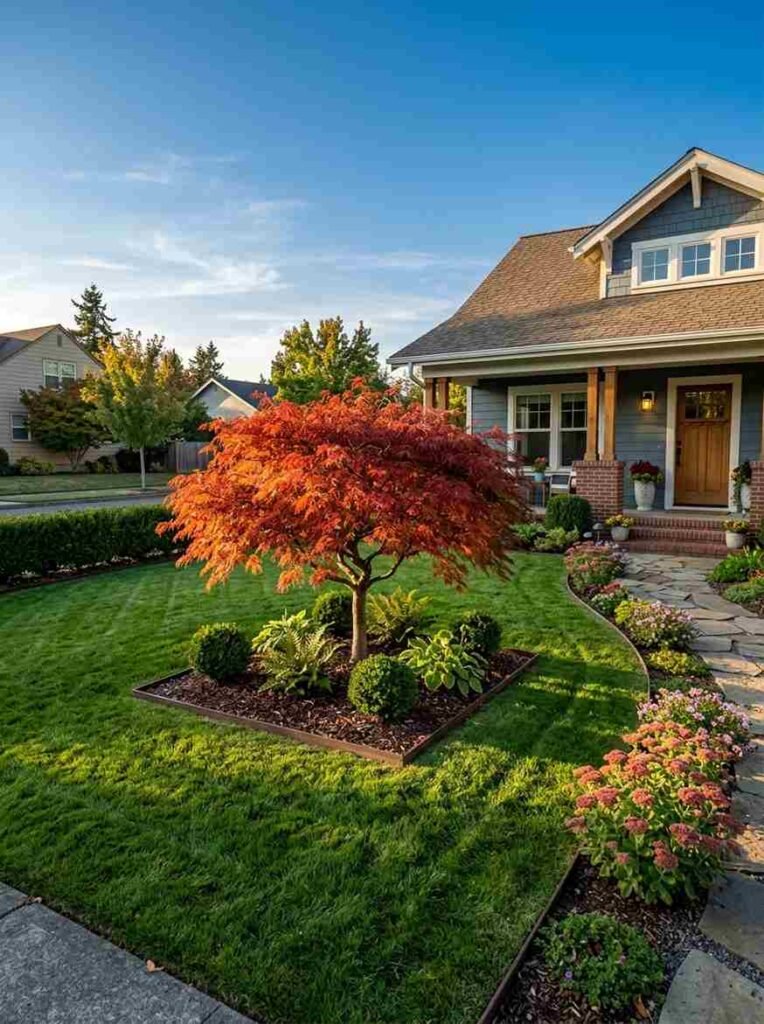
Flat green grass plus flat green shrubs equals flat design. Mix fine-textured plants (like ornamental grasses) with bold-leafed ones (like hostas or elephant ears).
The contrast creates visual depth that color alone can’t.
Low-Maintenance Landscaping for Small Front Yards
6. Replace turf with gravel and ground cover
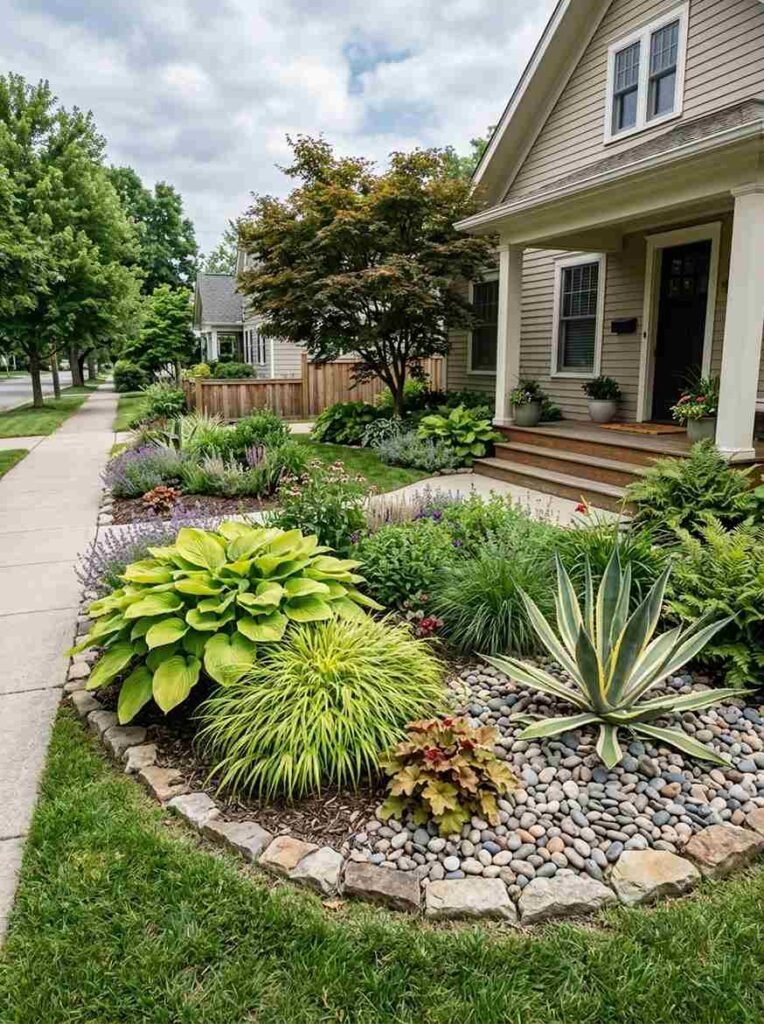
Grass in a tiny yard often looks sparse and sad, especially if foot traffic is heavy.
Swapping it for decomposed granite or pea gravel with low-growing ground cover (creeping thyme, clover) looks sharp and requires almost zero upkeep. Big win.
7. Go native plants all the way
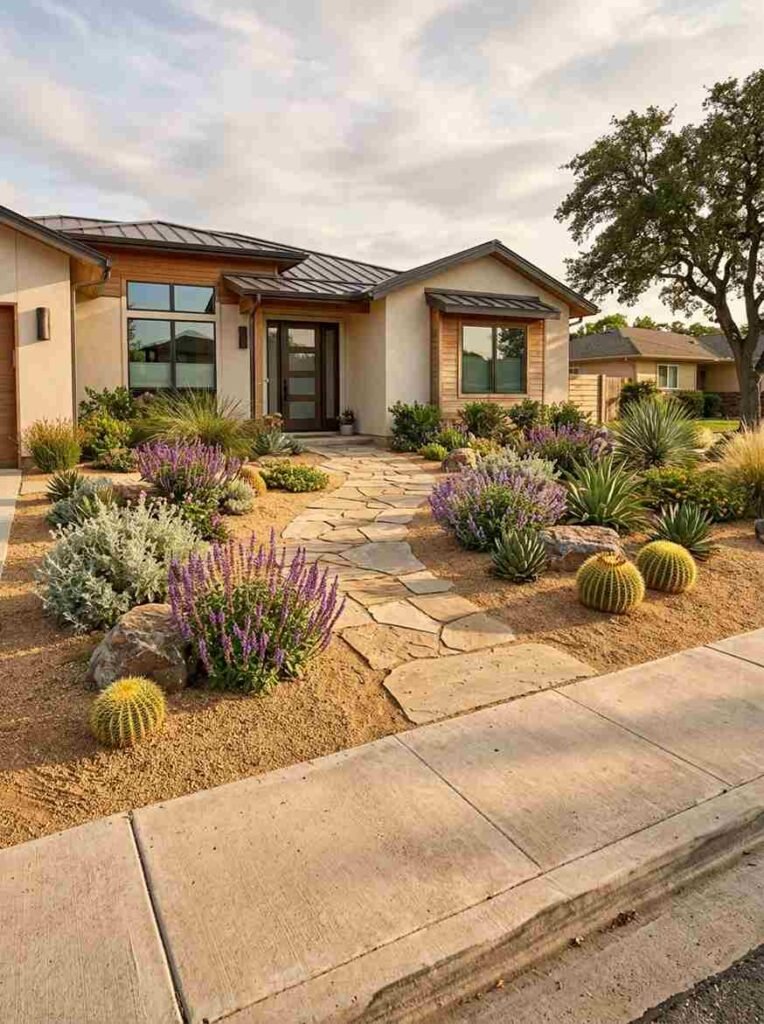
Native plants are adapted to your local climate, which means they grow better with less work.
No constant watering, no fighting the soil. Look up your region’s native plant society for specific recommendations — they’ll know what thrives in your exact conditions.
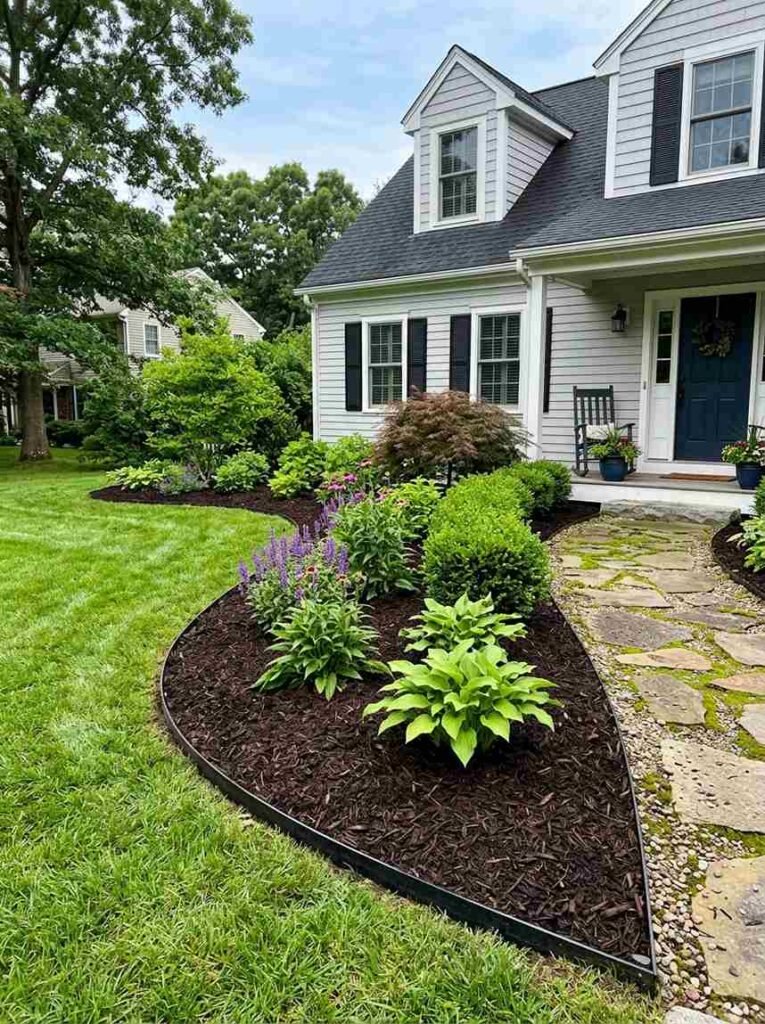
8. Mulch everything generously
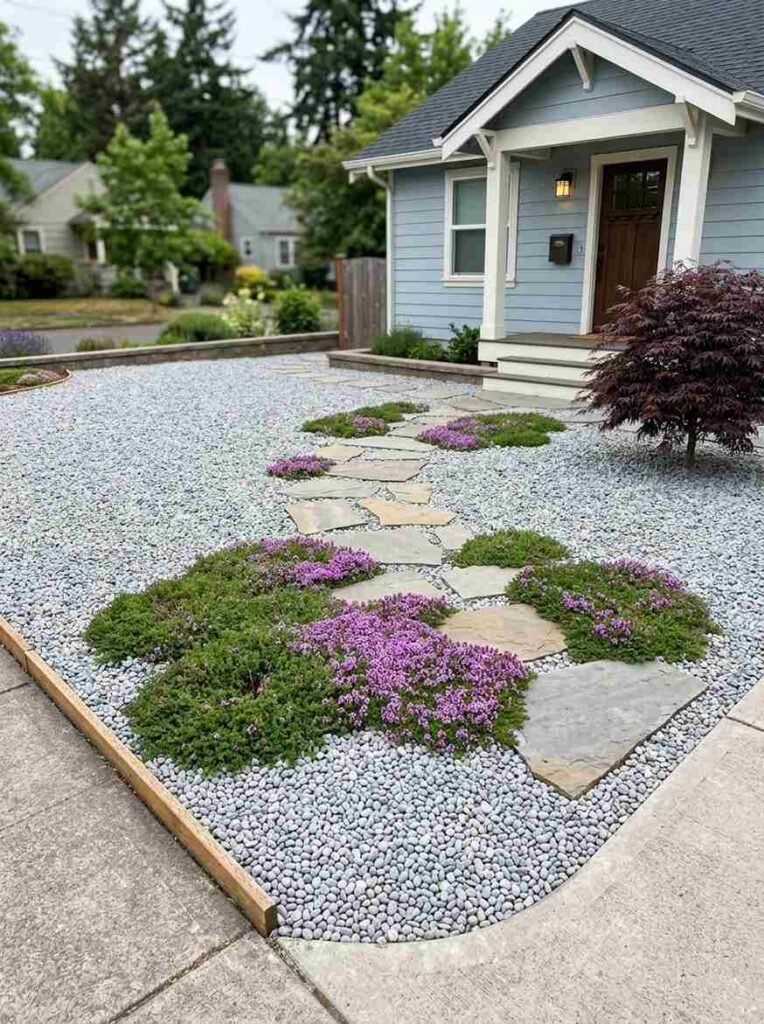
A 3-inch layer of mulch suppresses weeds, holds moisture, and makes beds look finished. It’s the single easiest way to make a yard look more polished.
Dark brown mulch especially pops against green foliage.
9. Plant perennials instead of annuals
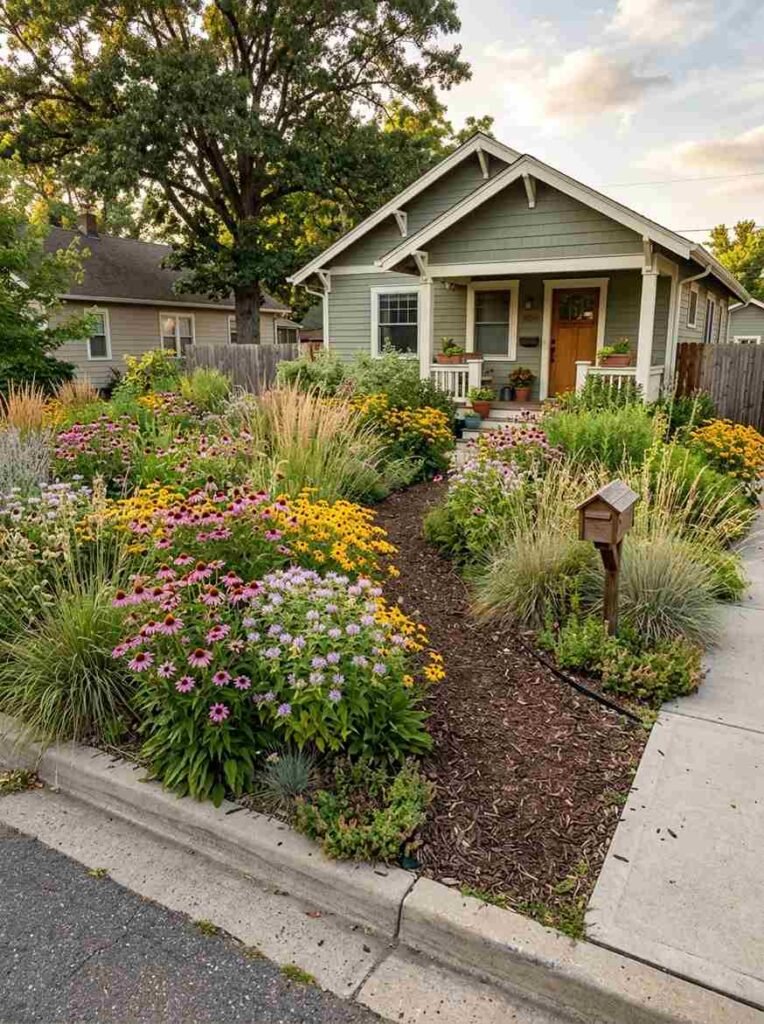
Perennials come back every year. Yes, annuals have great color — but replanting every season in a small yard gets old fast (:/). Load up on perennials like coneflowers, black-eyed Susans, and salvia, then accent with a few annuals if you want seasonal color.
10. Install drip irrigation
Even a simple soaker hose on a timer takes watering off your to-do list completely. Plants stay consistently hydrated, which means they actually look good instead of half-dead mid-August.
Small Front Yard Garden Bed Ideas
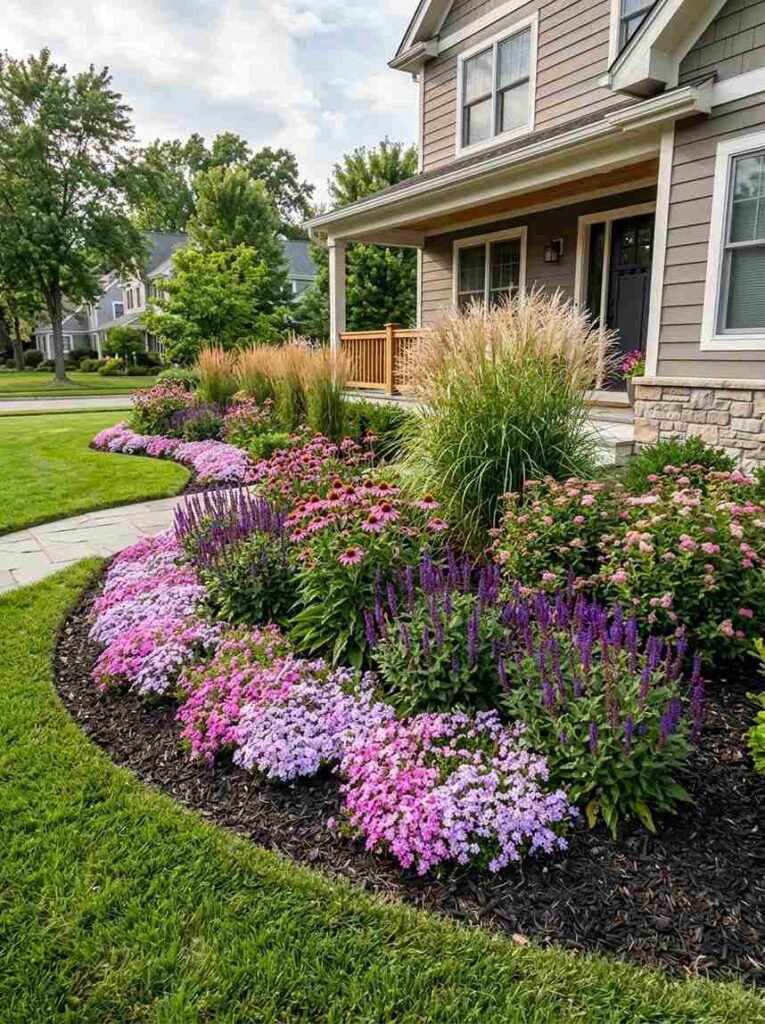
11. Create a crescent-shaped bed along the foundation
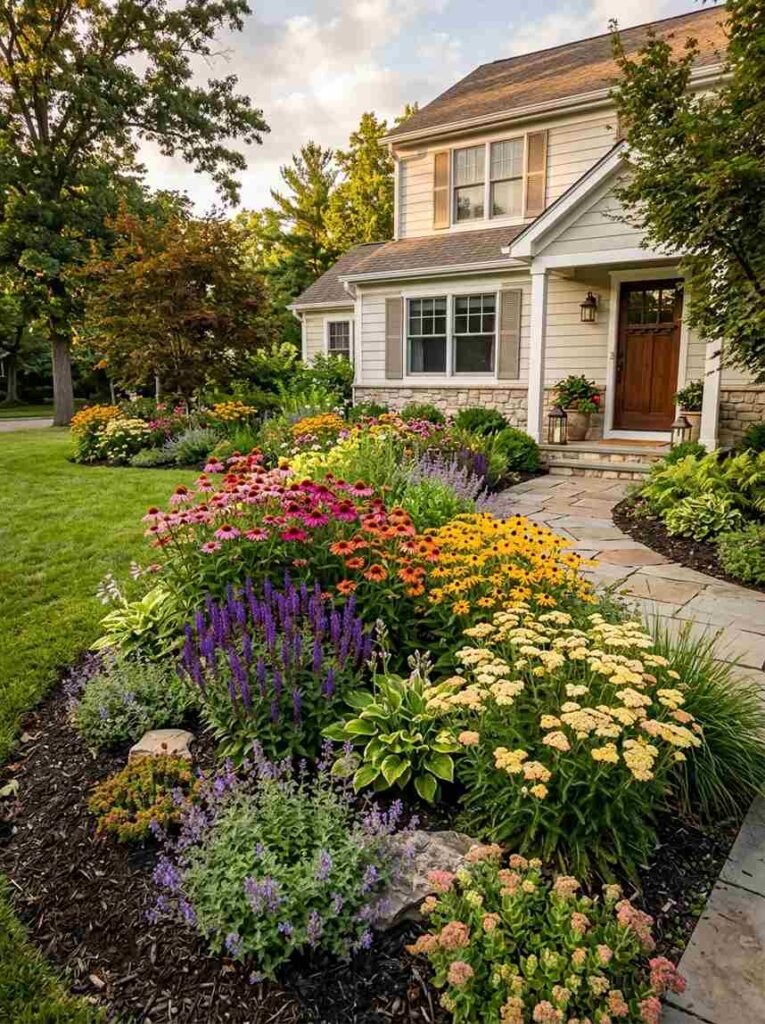
A gently curved bed along your home’s front foundation softens the transition from house to yard.
Fill it with layered plants — tall shrubs in the back, medium perennials in the middle, low edging plants in the front. Classic for a reason.
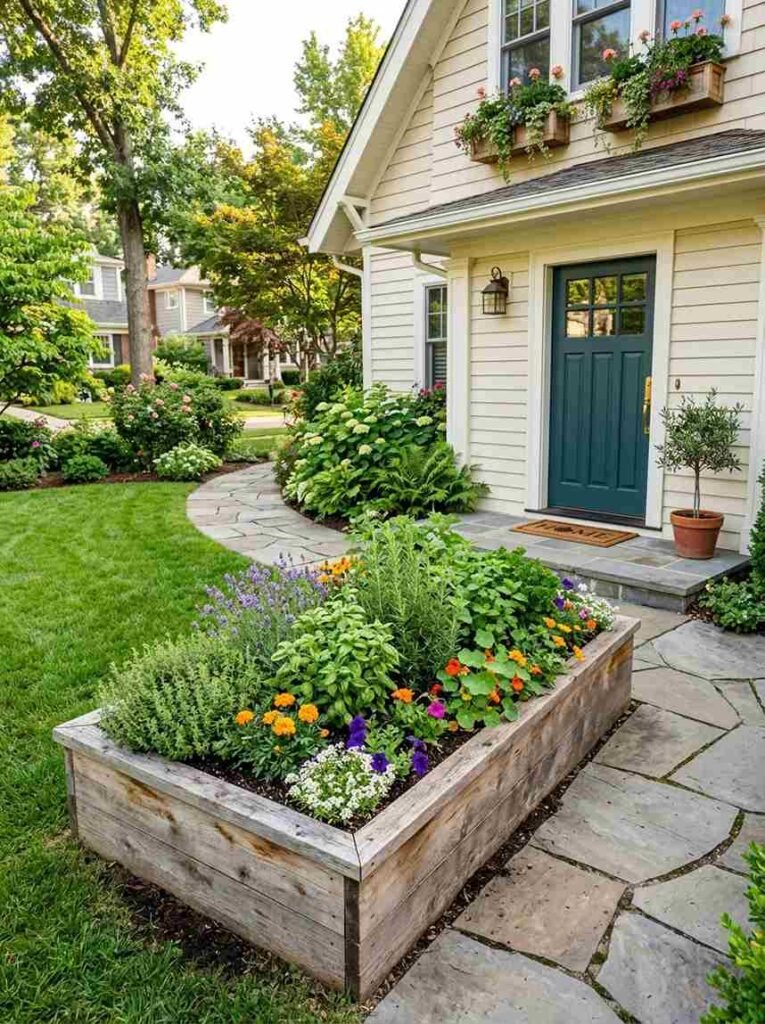
12. Build a raised garden bed
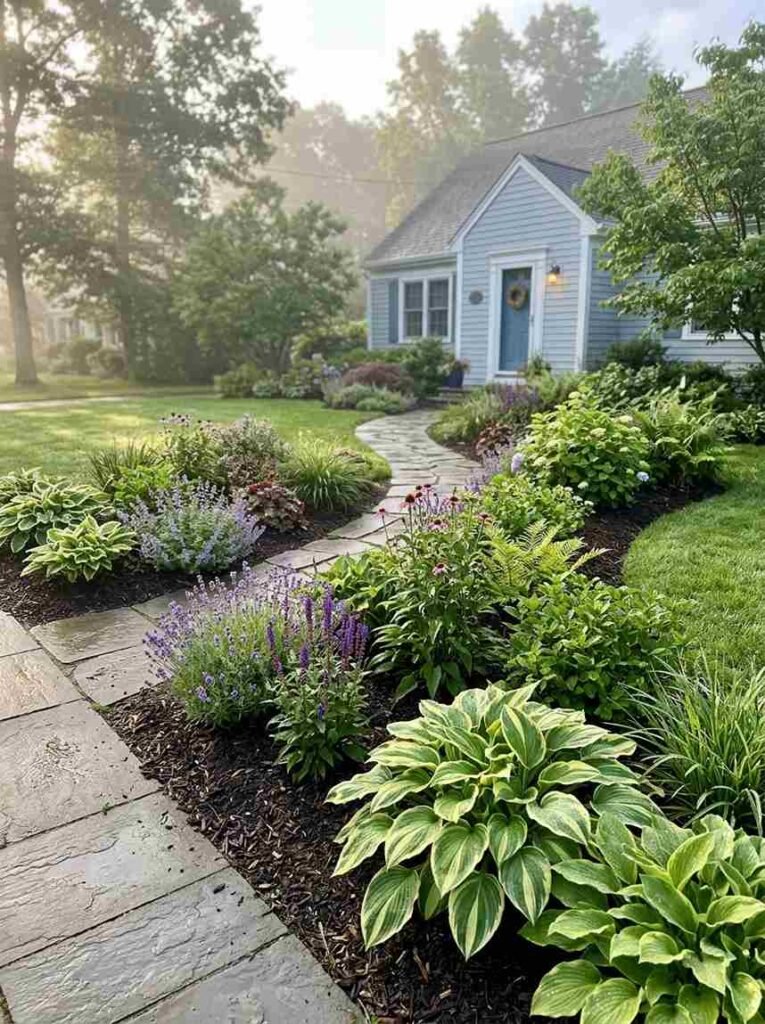
A raised bed adds dimension and keeps everything tidy. You control the soil quality, which means better plants.
Even a 4×4 raised bed of herbs or flowers near your entry makes a yard feel lived-in and cared-for.
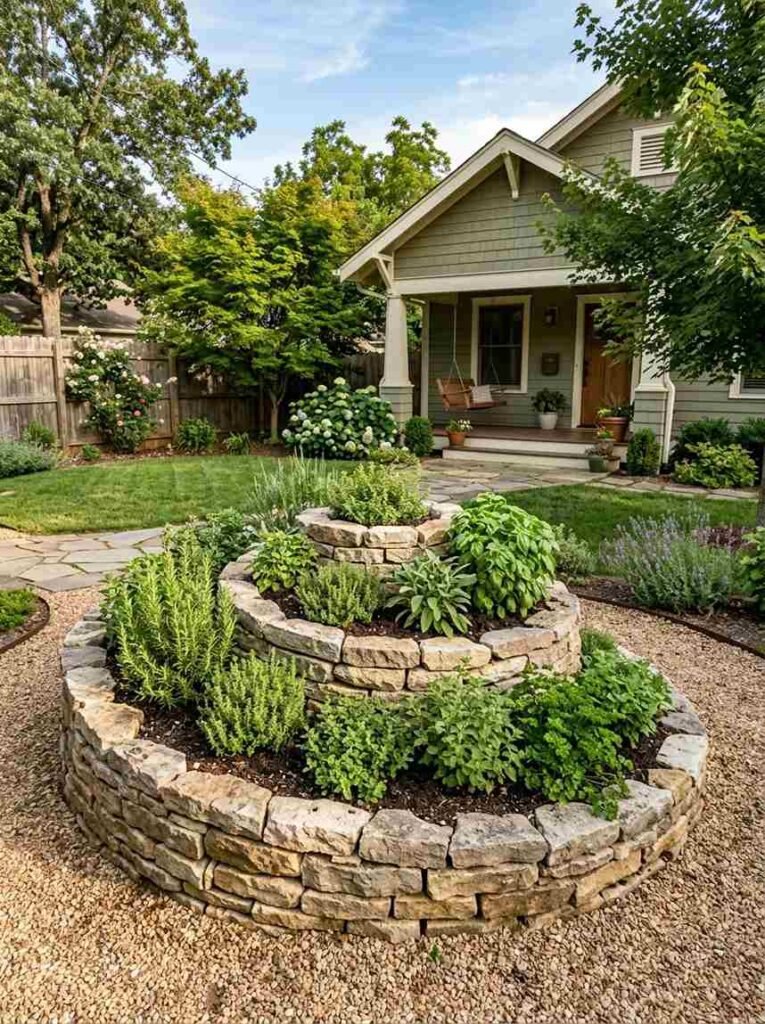
13. Try a spiral herb garden
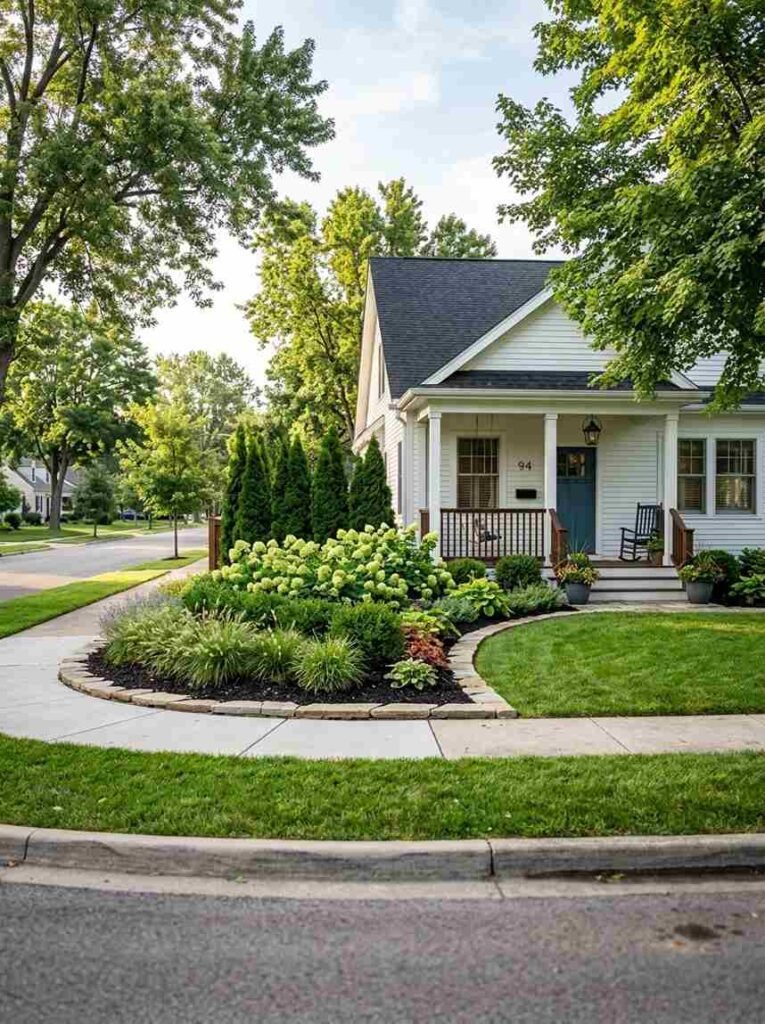
This one’s big on Pinterest and for good reason — it looks amazing and uses very little space.
A spiral of stacked stones creates different growing zones (drier at the top, moister at the bottom) so you can grow multiple herbs in one tight footprint.
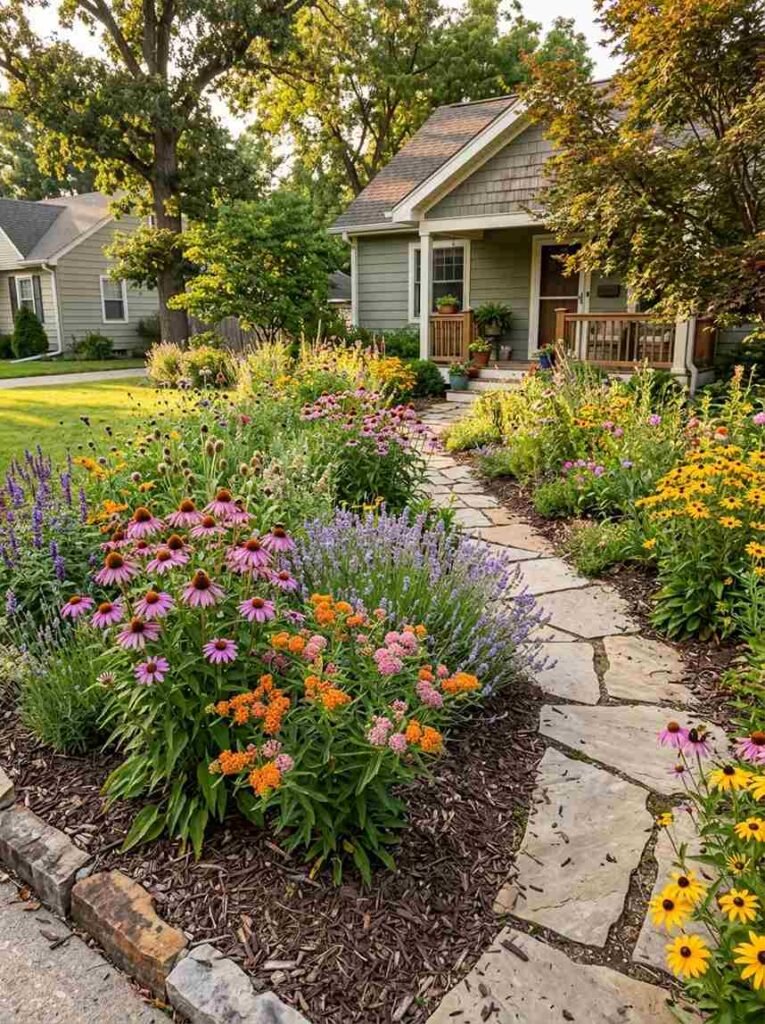
14. Plant a pollinator garden
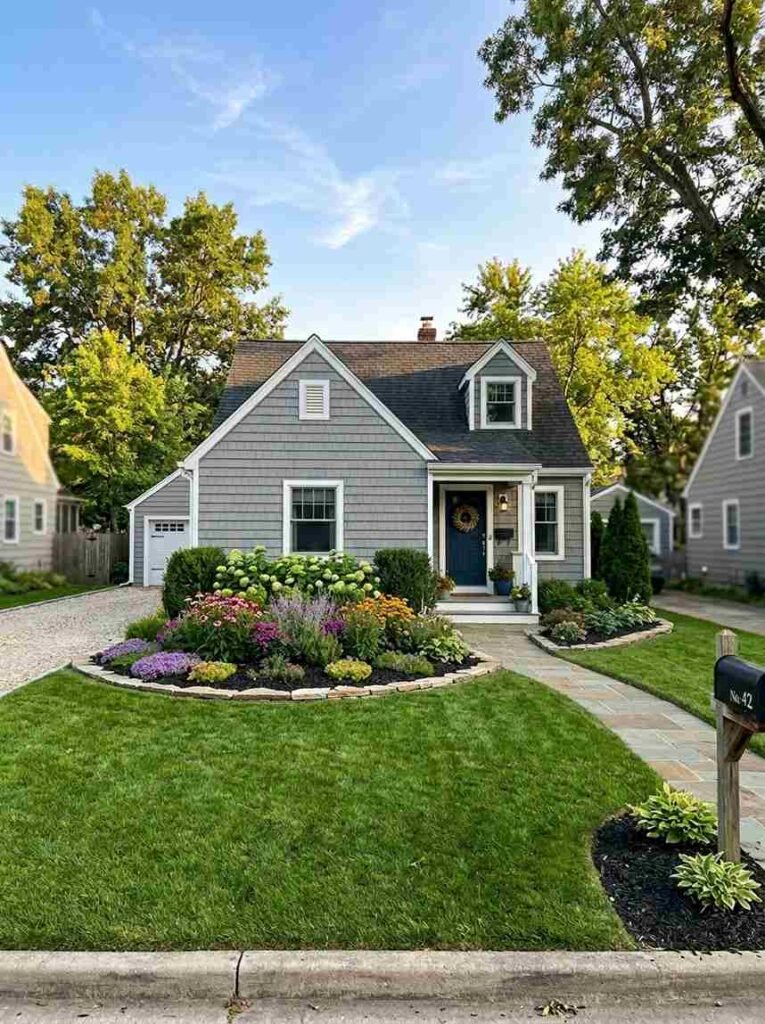
A small patch of lavender, coneflowers, and milkweed draws butterflies and bees all season. It looks beautiful, helps local ecosystems, and basically takes care of itself once established. Neighbors will ask about it, guaranteed.
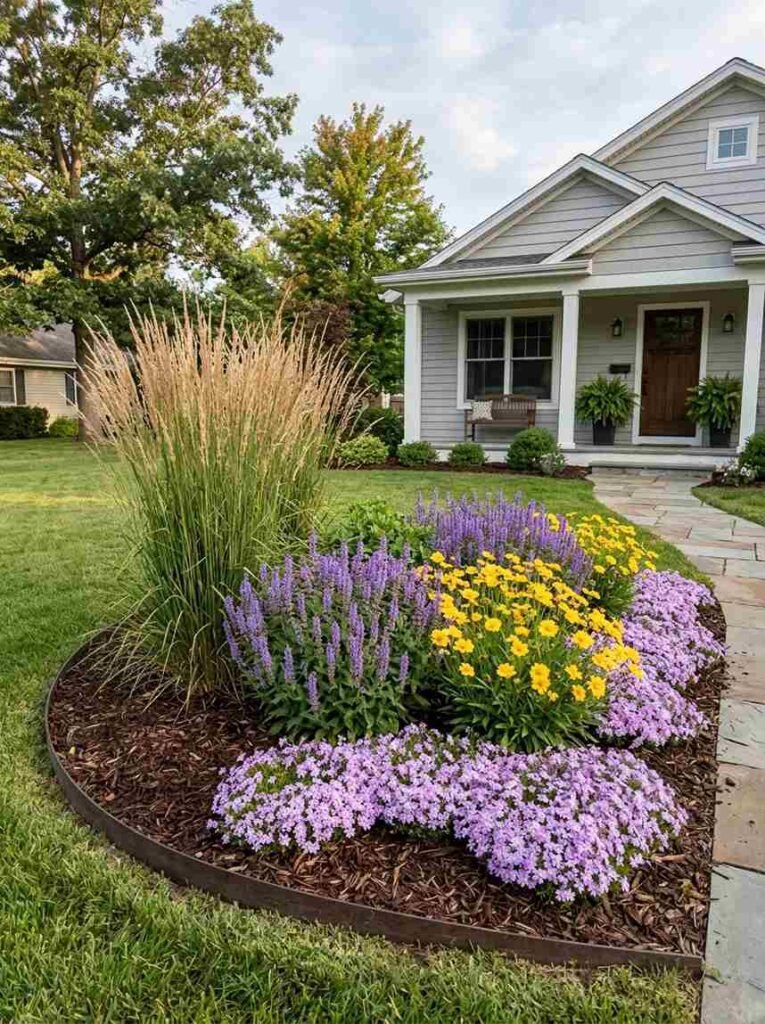
15. Use a corner bed strategically
The corners of a square yard often get ignored. A corner planting with a tall shrub or ornamental grass creates structure and fills what would otherwise be dead space. Think of corners as your secret design weapon.
Ideas for Adding Height and Dimension
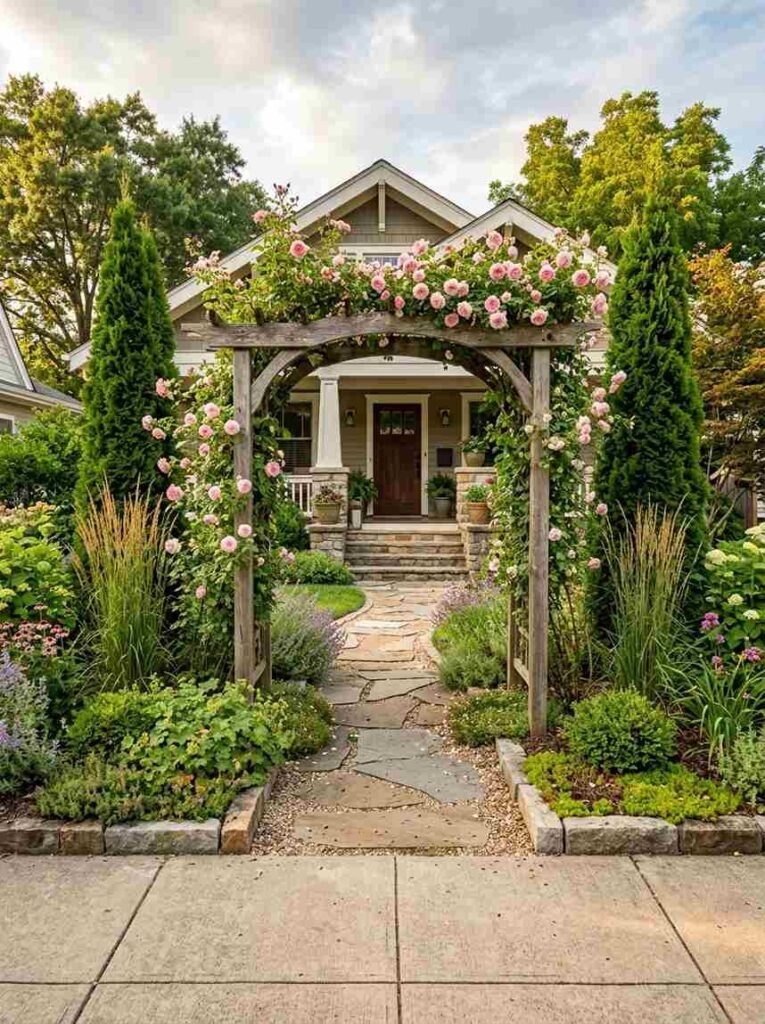
16. Add a trellis or garden arch
A simple wooden or metal arch over your pathway instantly adds vertical interest. Train climbing roses, clematis, or jasmine up it.
The structure creates a sense of arrival that feels way more impactful than the actual footprint it takes up.
17. Layer plant heights deliberately
Short in front, medium in the middle, tall in the back. Every time, no exceptions. This simple rule makes a tiny bed look full and designed rather than like you just stuck plants in randomly wherever there was dirt.
| Height Zone | Plant Type | Examples |
|---|---|---|
| Front (low) | Ground cover, edgers | Creeping phlox, mondo grass |
| Middle | Perennials | Coneflower, salvia, yarrow |
| Back (tall) | Shrubs, grasses | Spirea, Karl Foerster grass |
| Vertical | Climbers | Clematis, climbing roses |
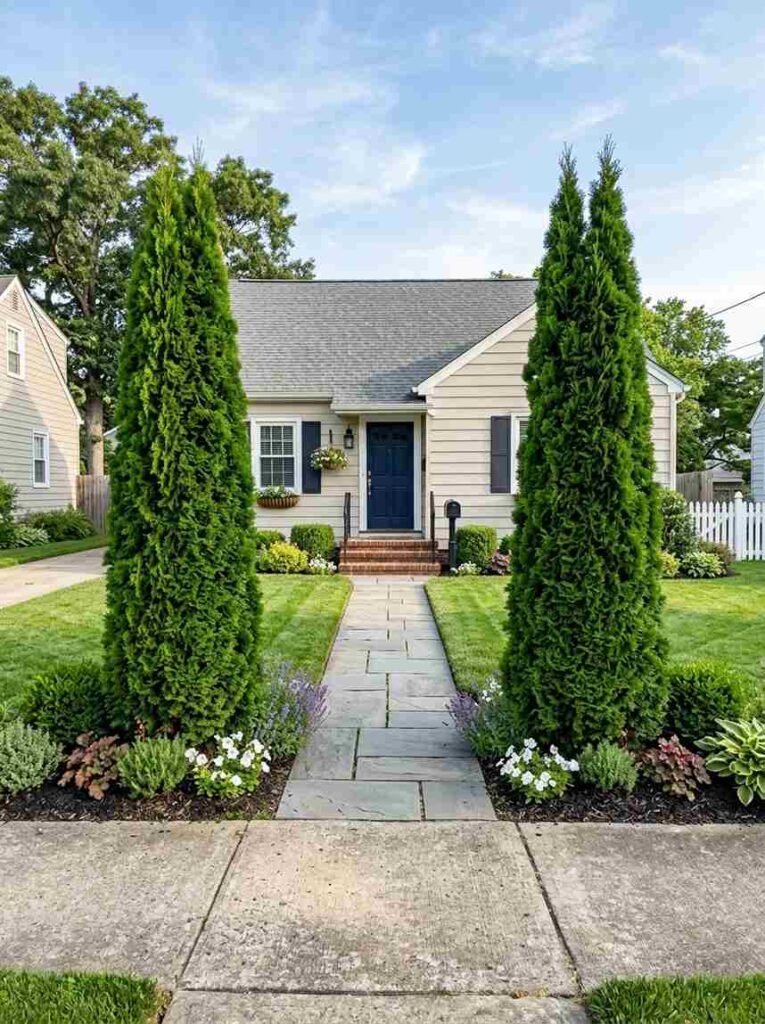
18. Plant columnar trees
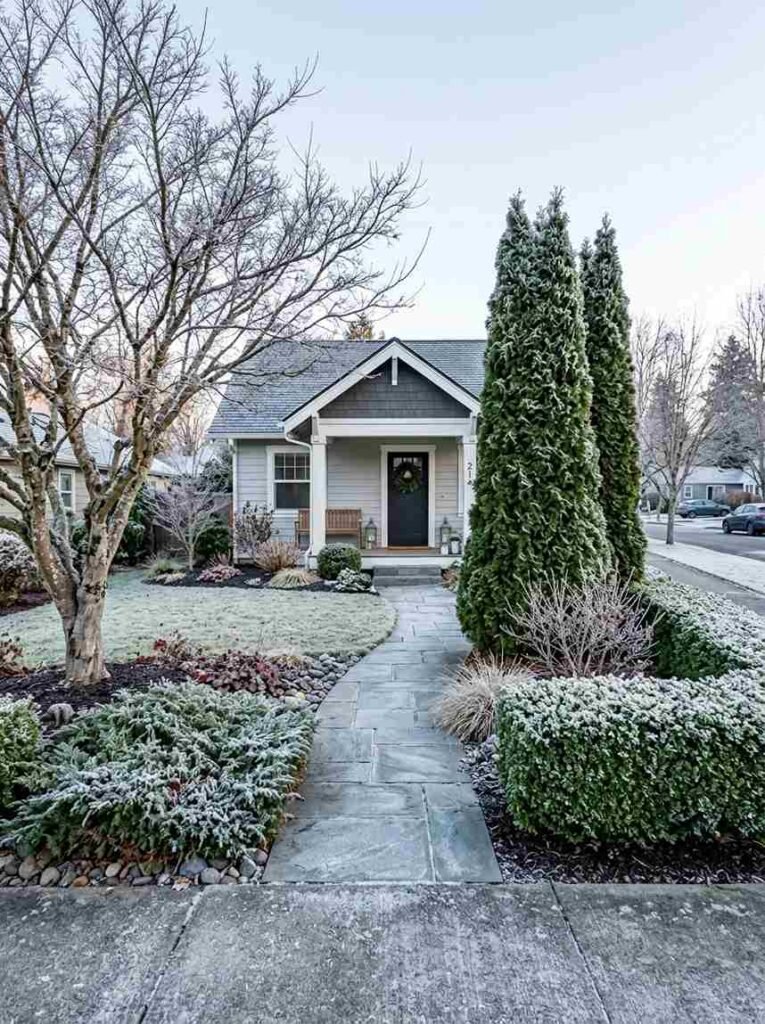
Columnar trees like Sky Pencil holly or Emerald Green arborvitae grow tall and narrow. They add serious height without stealing ground space — perfect for a tight square yard that needs vertical scale.
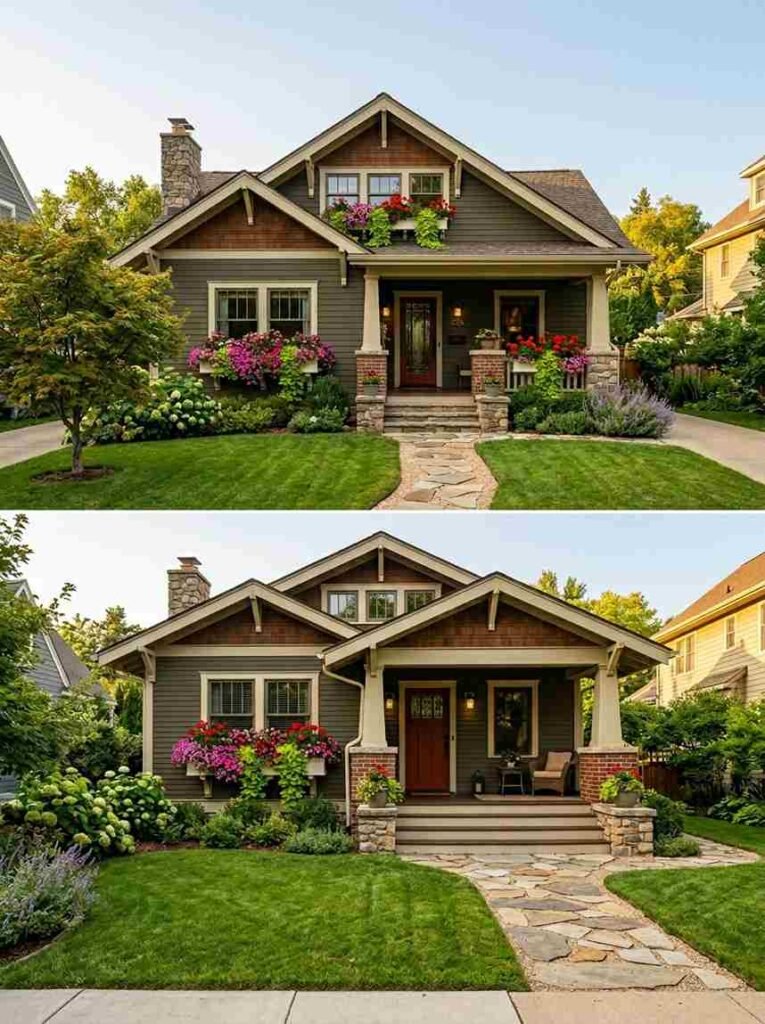
19. Use window boxes
If your yard is truly tiny, bring the planting vertical. Window boxes on your home’s facade add color and greenery without using any ground space at all. Trailing plants like petunias or sweet potato vine spill down beautifully.
20. Hang a wall-mounted planter or living wall panel
A small living wall section on your fence or home exterior creates a visual focal point while keeping the ground clear. Works especially well in urban yards where every inch of ground matters.
Hardscaping Ideas for Small Square Yards
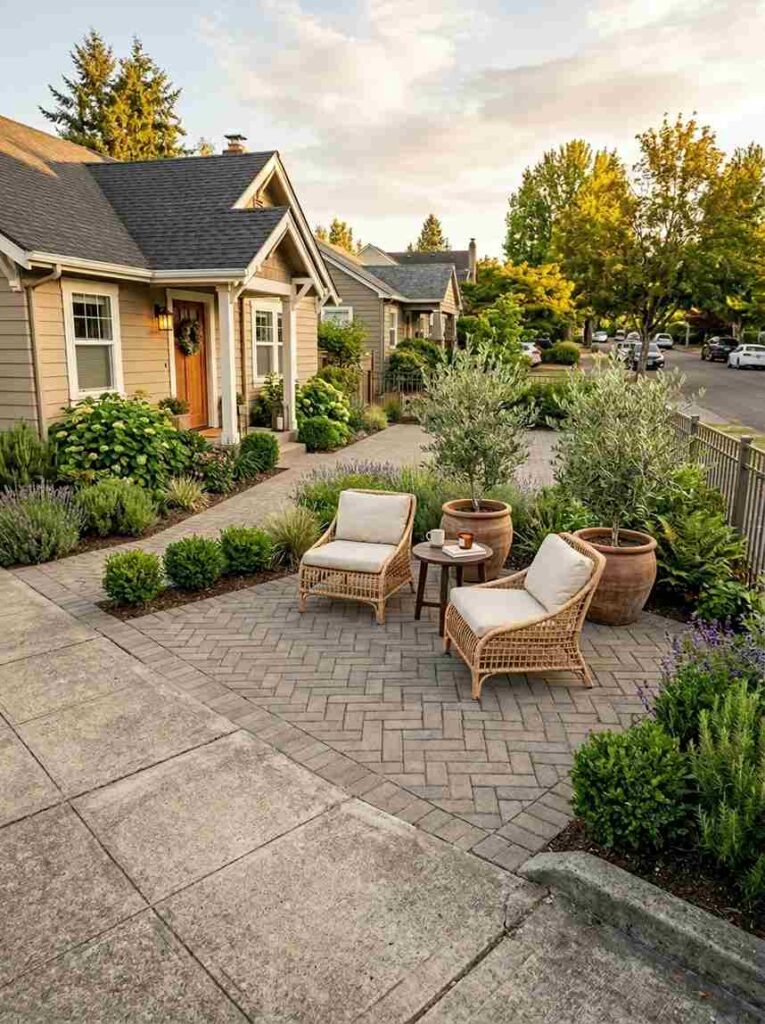
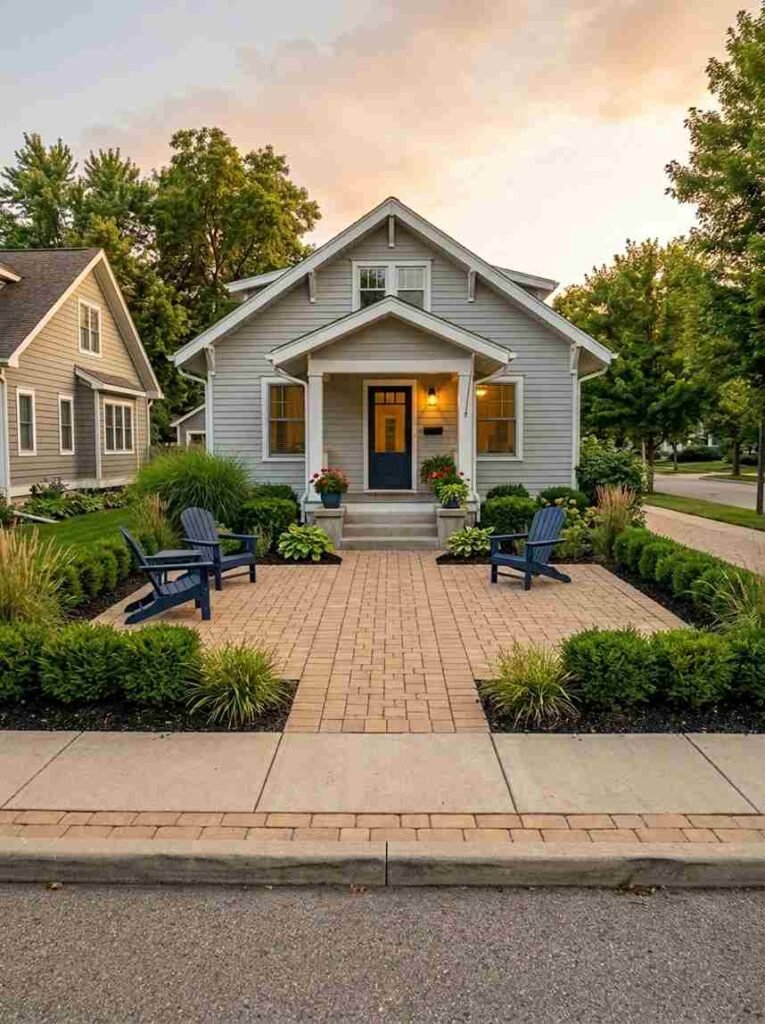
21. Lay a paver patio instead of a lawn
If your yard is mostly foot traffic anyway, lose the grass and put in a small paver patio. Add two chairs and a potted plant. Suddenly it’s an outdoor room instead of a struggling lawn.
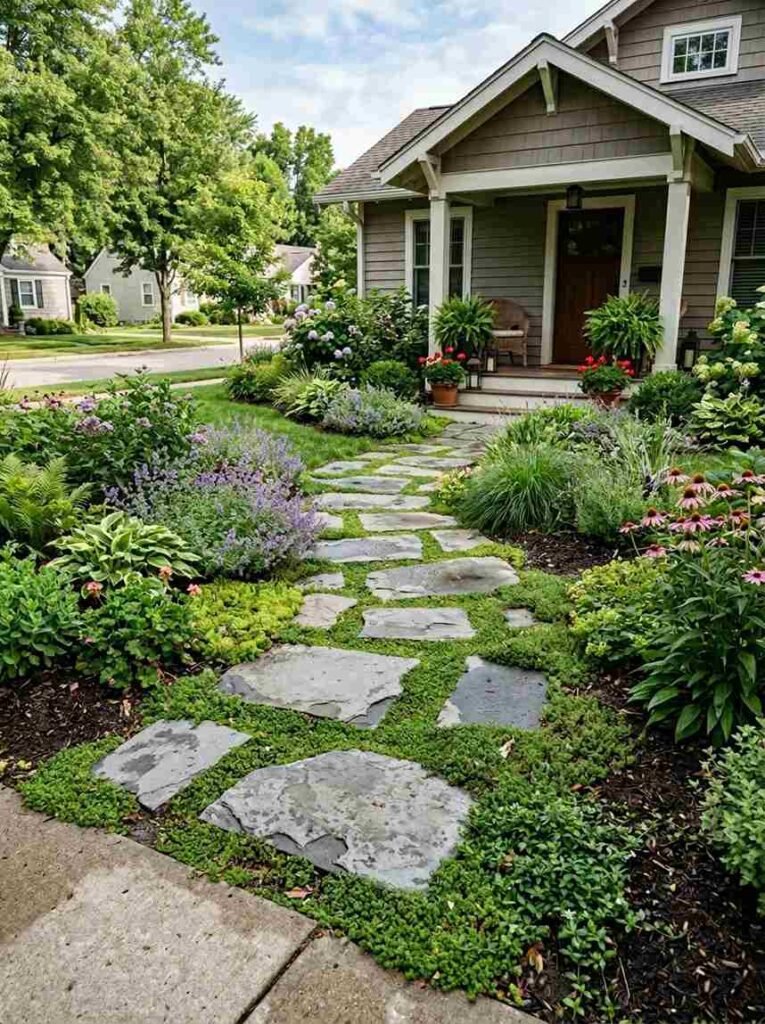
22. Use stepping stones through planting beds
Irregular stepping stones through a planted bed give you access without compacting soil around your plants.
They also look natural and interesting — much better than a straight concrete edge.
23. Build a small retaining wall
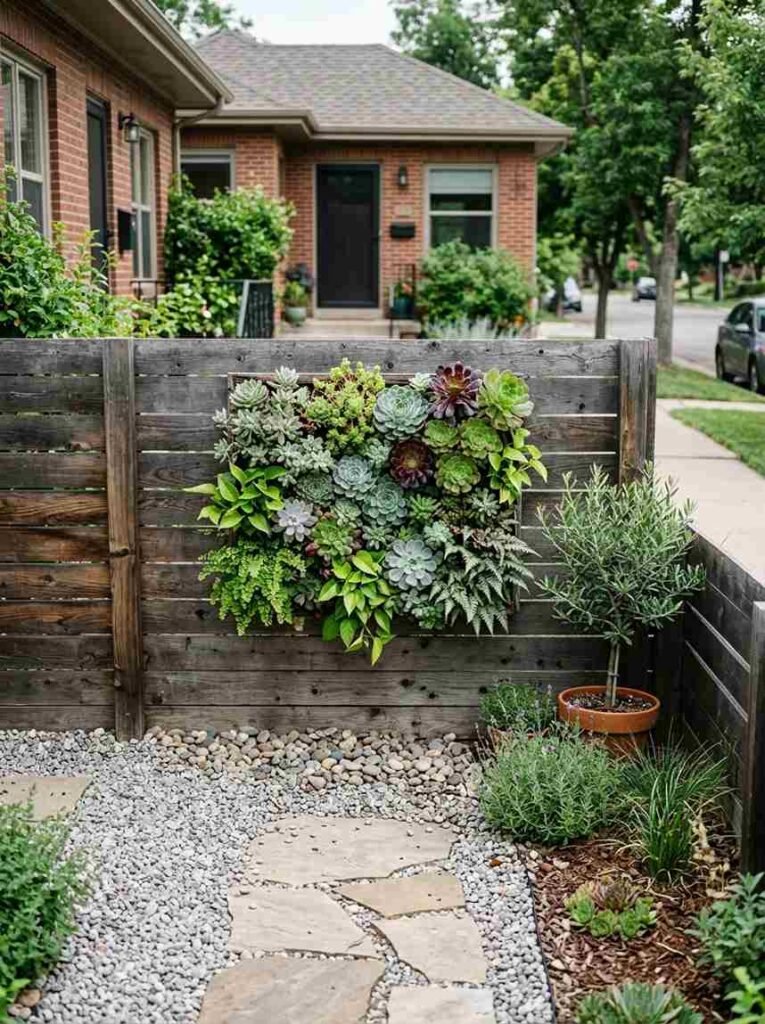
Even a 1-foot-tall stone or timber retaining wall creates a level change that makes a flat square yard feel more dynamic.
Put a raised bed on top and you’ve got structure plus function.
24. Add a water feature
A small bubbling fountain or bird bath draws the eye and creates sound that makes a small space feel more alive.
Compact solar-powered fountains need no wiring and work surprisingly well.
25. Install landscape lighting
Low-voltage path lights and uplighting on your trees completely transform a yard at night. It’s also a safety feature, so doubly practical. Solar options have gotten genuinely good — no electrician required.
Seasonal and Visual Interest Ideas
26. Plan for four-season interest
Most people plant for summer. Think beyond that. Add a few things that look good in every season:
- Spring: Bulbs (tulips, daffodils), flowering trees
- Summer: Perennials, ornamental grasses
- Fall: Sedums, ornamental kale, burning bush
- Winter: Evergreen shrubs, berry-producing hollies, ornamental bark
27. Use a bold color scheme and stick to it
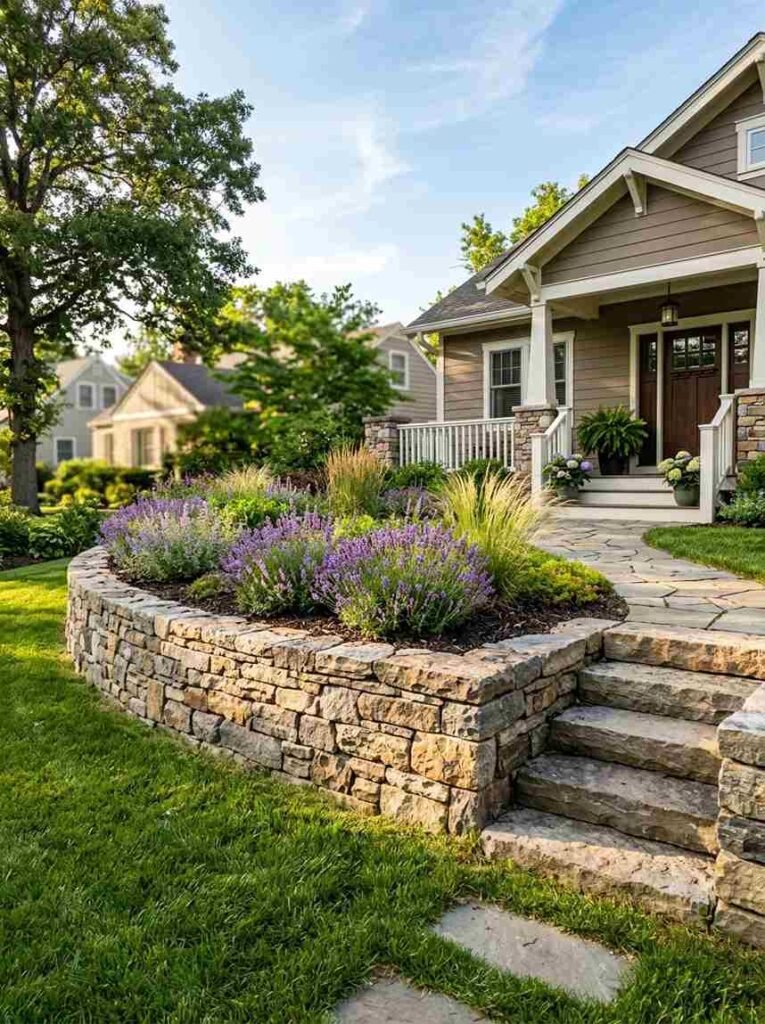
Picking one or two colors and repeating them throughout a small yard makes it look curated rather than chaotic.
IMO, purple and yellow is the easiest combo — they’re complementary colors and almost everything blooms in one of them.
28. Add ornamental grasses for movement
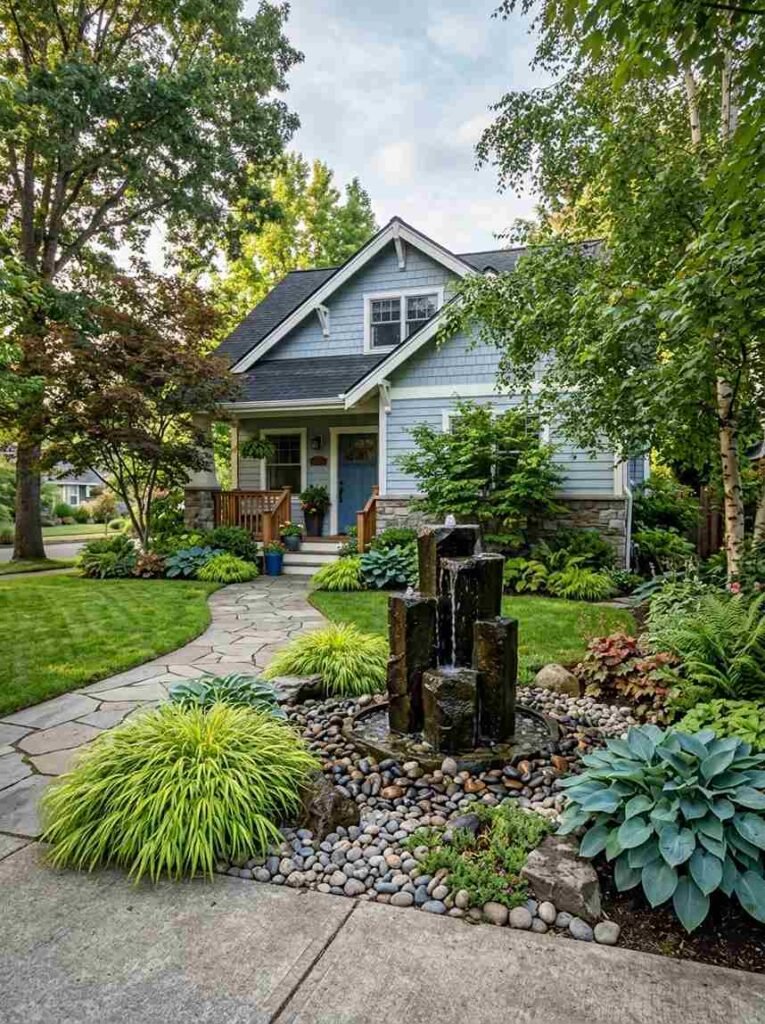
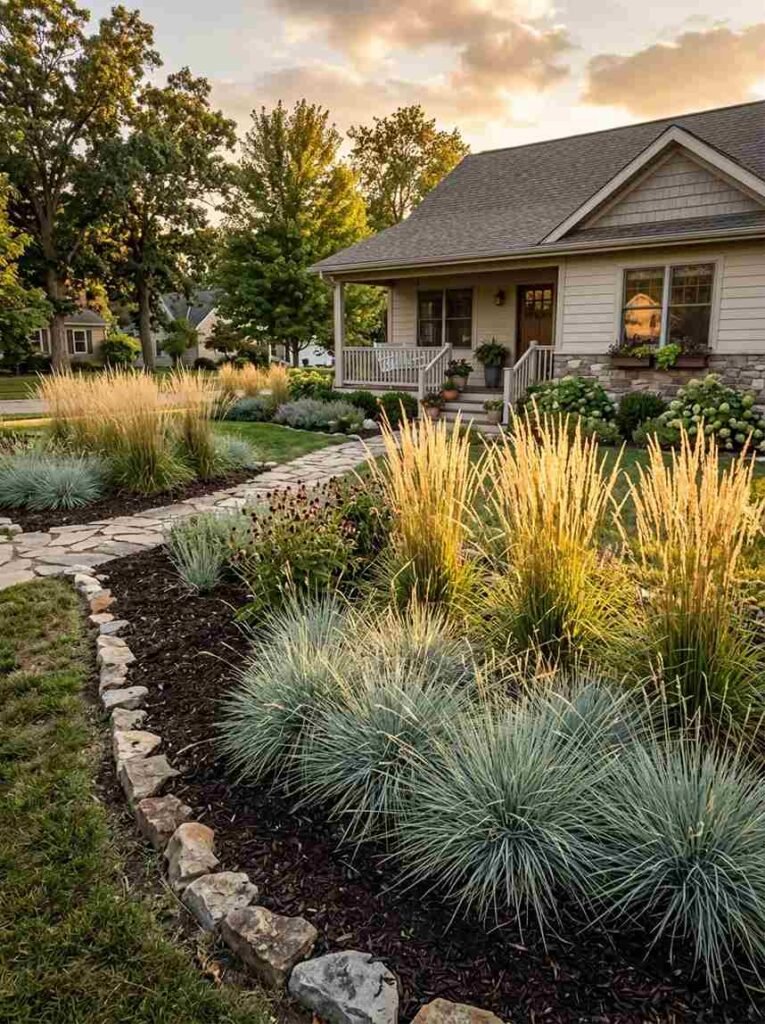
Grasses sway in the breeze and catch light in a way no other plant does. Little Bluestem, Feather Reed Grass, and Blue Oat Grass all stay compact enough for small yards. They also look great in winter when everything else has died back.
29. Try a monochromatic white garden
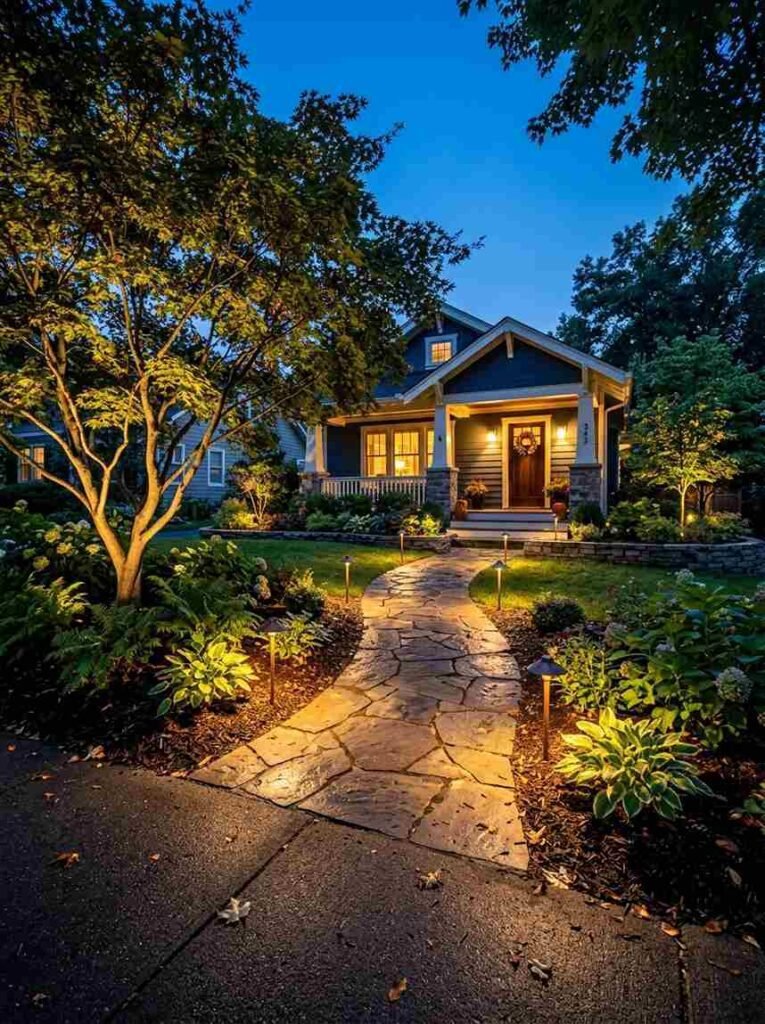
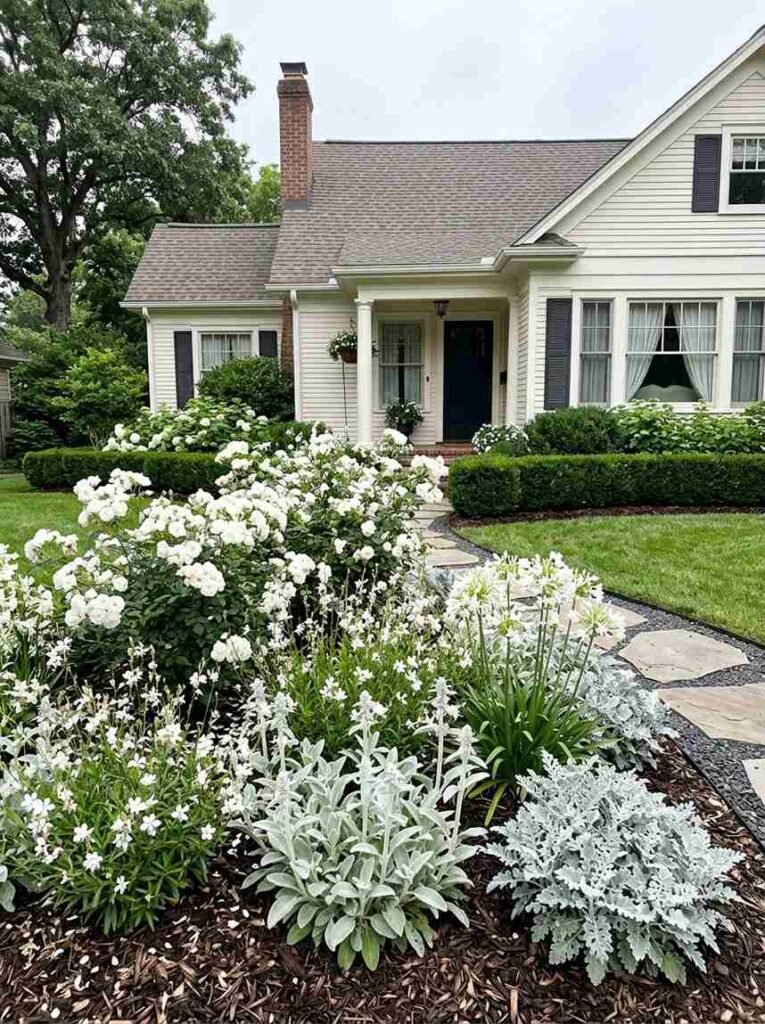
An all-white planting scheme — white flowers, silvery foliage — looks elegant and sophisticated in small spaces. It also pops in the evening and reflects moonlight. Very Pinterest-friendly, and easier to maintain than a multi-color scheme.
30. Include evergreen structure
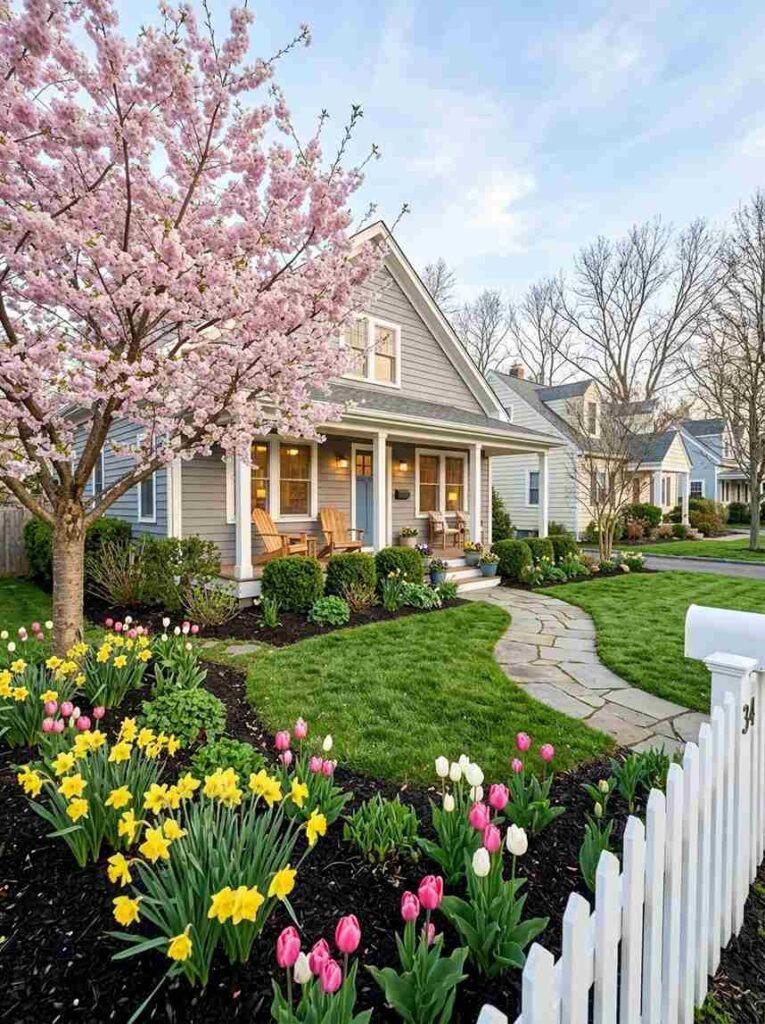
At least 30-40% of your planting should stay green year-round. Evergreens give your yard a skeleton so it looks intentional even in January, not just a patch of dead sticks and mulch. 🙂
Budget-Friendly Small Yard Ideas
31. Propagate your own plants
Divide perennials in spring or fall and you’ll double your plants for free. Most established perennials actually need division every few years anyway. Swap divisions with neighbors and you get variety without spending anything.
32. Shop end-of-season sales
Garden centers slash prices 50-75% in late summer and fall. The plants go in the ground stressed but almost always recover. This is how you fill a yard on a fraction of the budget.
33. Use containers strategically
A cluster of 3-5 pots near your entry works just as hard as a planted bed — and you can move things around, swap out plants seasonally, and take them with you if you move. Great for renters or anyone still figuring out their long-term design.
34. Repurpose materials
An old wooden ladder becomes a vertical plant stand. Cinder blocks become a raised planter. A vintage crate becomes a window box. Quirky materials add character to a small yard and cost almost nothing.
35. Start small and expand gradually
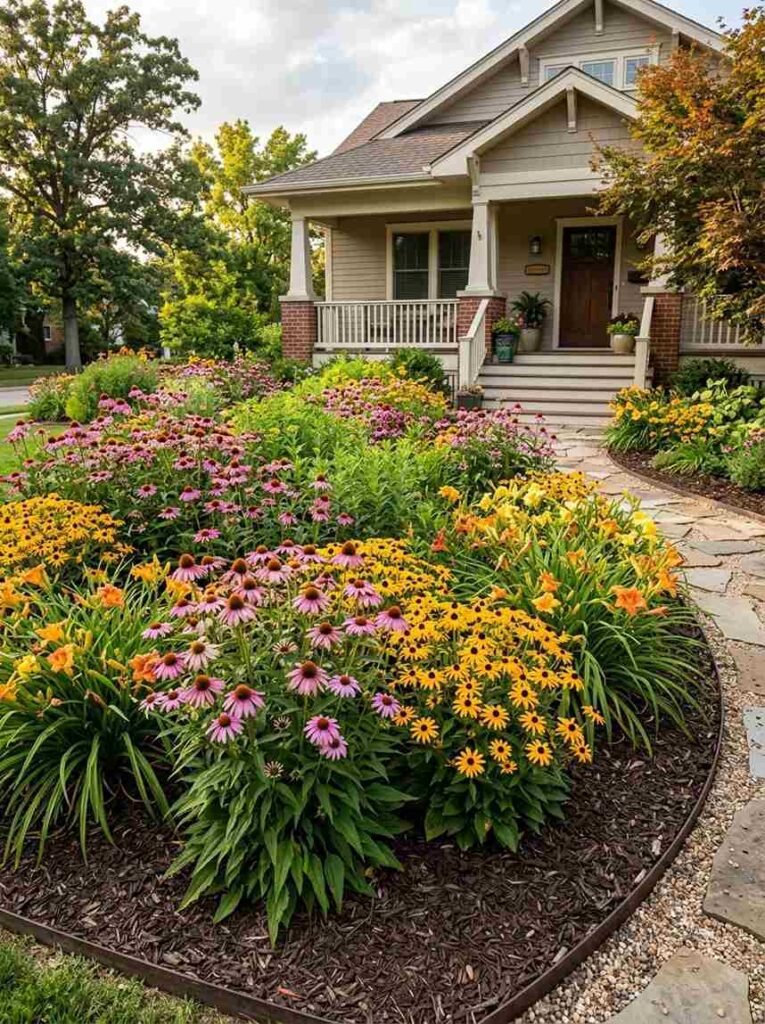
You don’t have to do everything at once. Pick the one change that will have the biggest visual impact — probably that front pathway or foundation bed — and nail it. Then add from there. A small yard done well in stages beats an ambitious plan half-finished.
The Takeaway
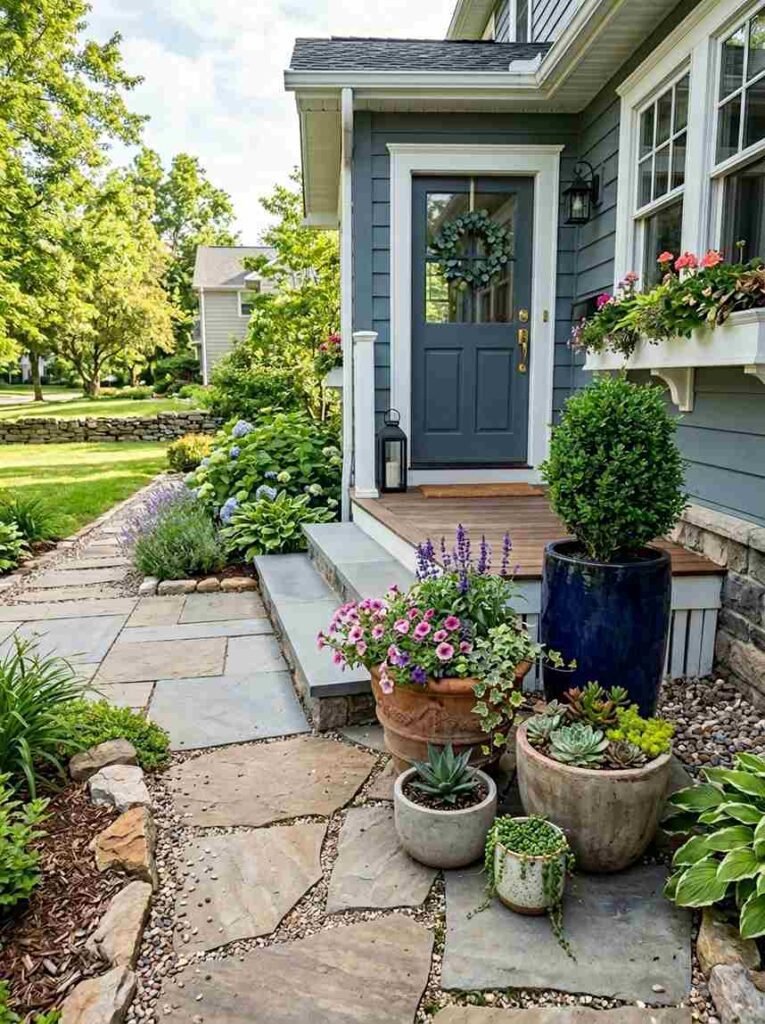
Small square front yards are honestly more fun to design than big ones. Every decision matters, which means every improvement shows. You don’t need acres to have a yard that stops people on the sidewalk.
Pick three ideas from this list that fit your style and your budget. Do those first. See what changes. Then keep going. The best version of your yard is just a few good decisions away.
Which of these ideas are you trying first? Save this for later when you’re ready to get your hands dirty.
