Got a tiny square patch of grass out front and absolutely no idea what to do with it?
Same. A small front yard can feel like a creative dead-end — until you realize the constraint is actually the point.
Compact spaces force better decisions. Every plant, path, and pebble has to earn its place. And honestly? Some of the most stunning front yards I’ve ever seen were barely 15×15 feet.
Here’s what actually works.
Why Small Square Yards Are a Design Goldmine
Small doesn’t mean boring. It means focused.
You’re not managing an acre. You’re curating a moment — the first thing anyone sees when they pull up to your house.
That’s a lot of power packed into a small footprint.
The real challenge is avoiding the mistake most people make: cramming in too much. Less is genuinely more here.
Curb Appeal Foundations: Get These Right First
Define Your Edges
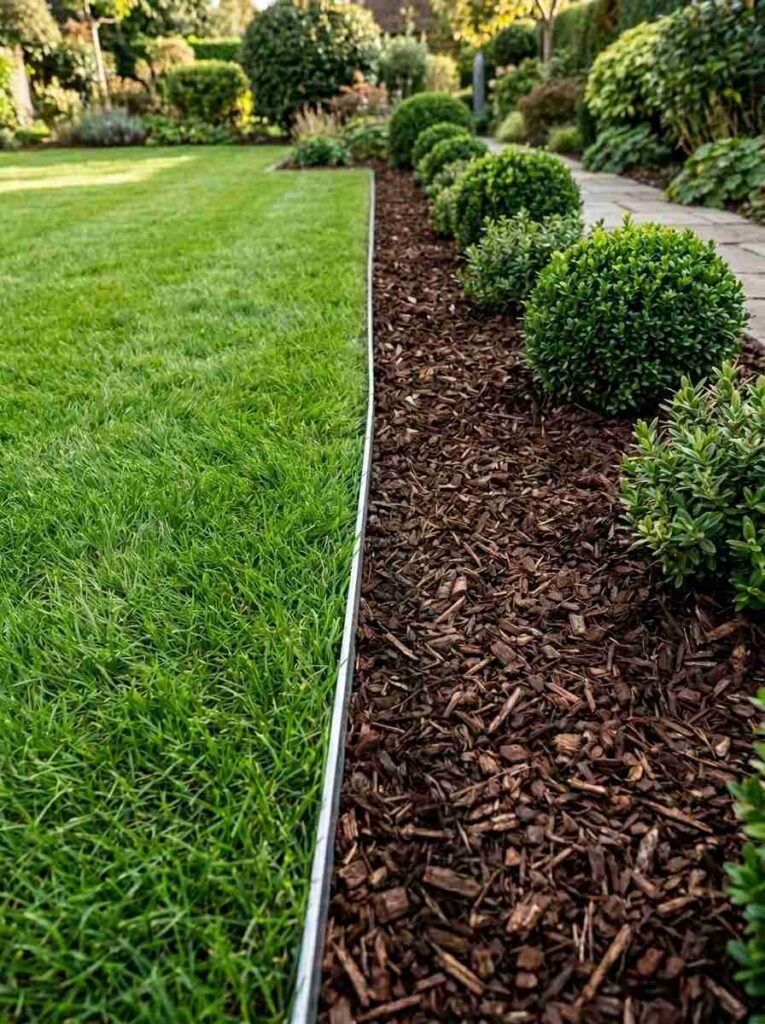
Edge definition is the single biggest upgrade you can make. A clean border between lawn and bed, or gravel and planting, transforms a messy yard into something intentional.
Use one of these:
- Steel or aluminum edging (modern, low-maintenance)
- Brick border (classic, warm)
- Natural stone (organic, textural)
- Concrete mow strip (if you still have lawn)
Anchor With a Focal Point
Every successful small yard has one clear star. Could be a statement tree, a bold planter, a water feature, or even a well-lit mailbox. Pick one. Make it count.
Don’t try to have 4 focal points. That’s just chaos with flowers.
32 Small Square Front Yard Landscaping Ideas
Lawn-Free Designs
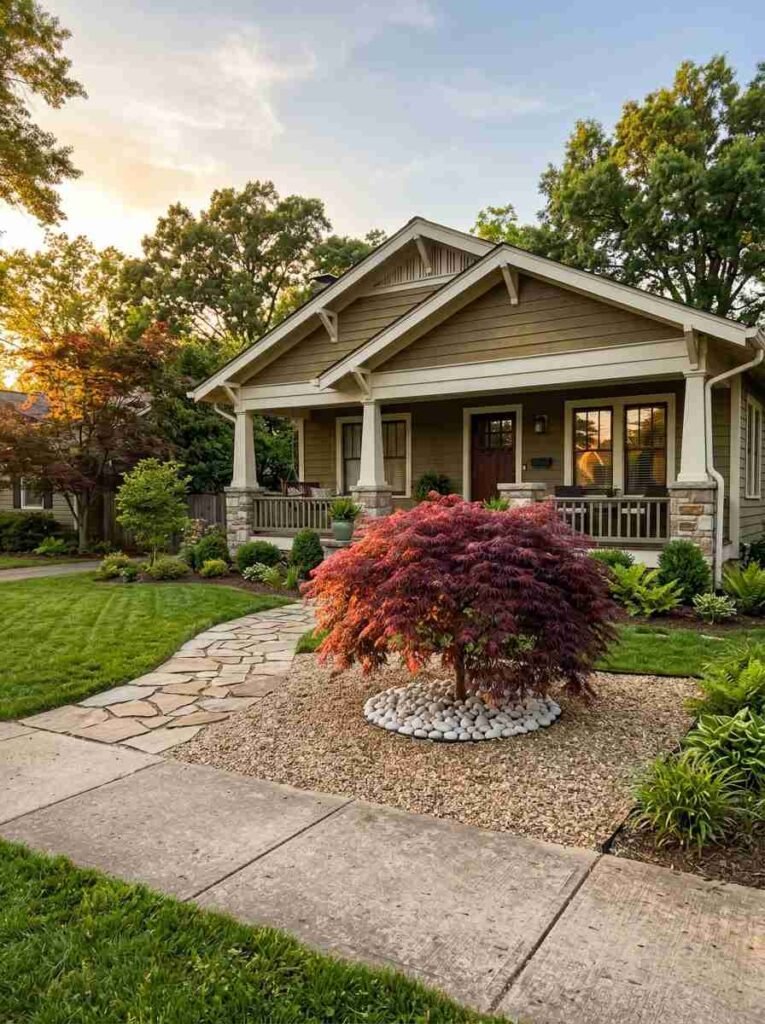
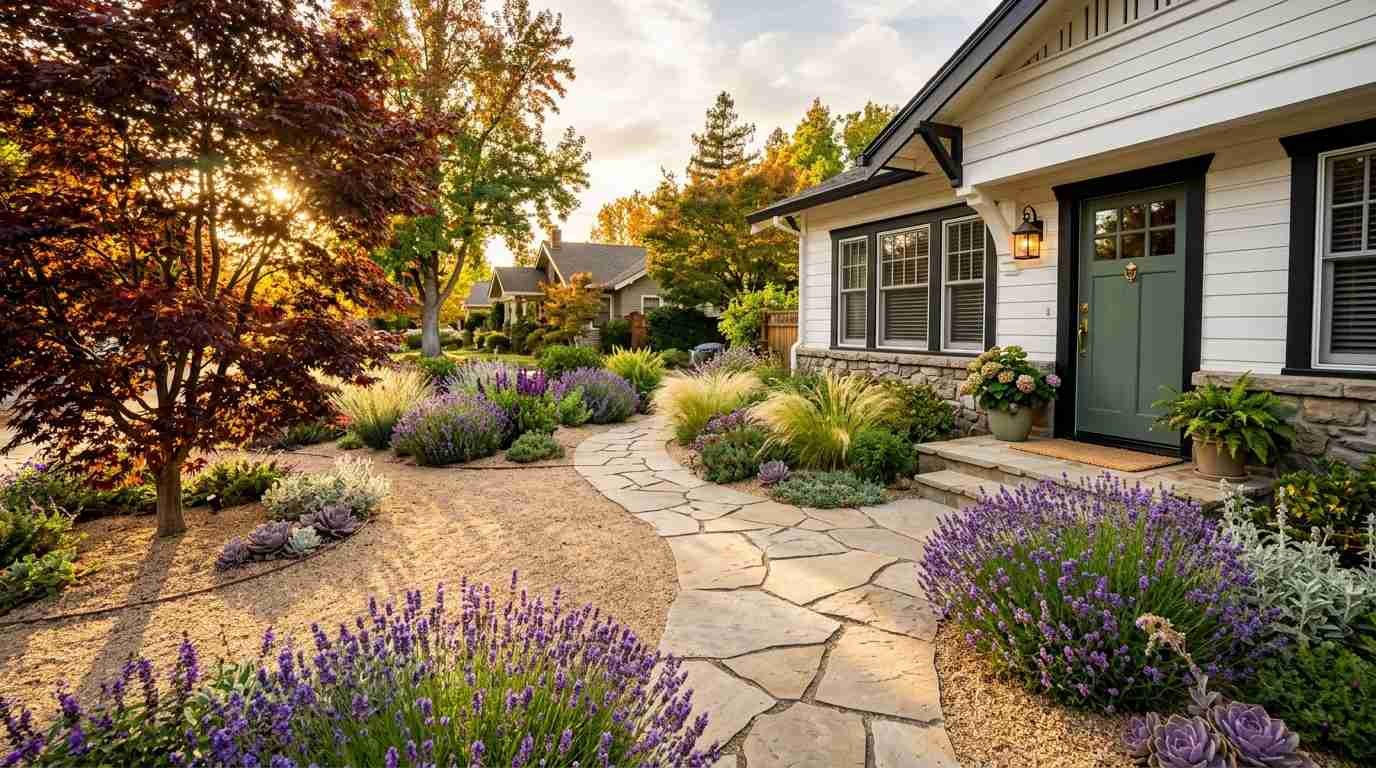
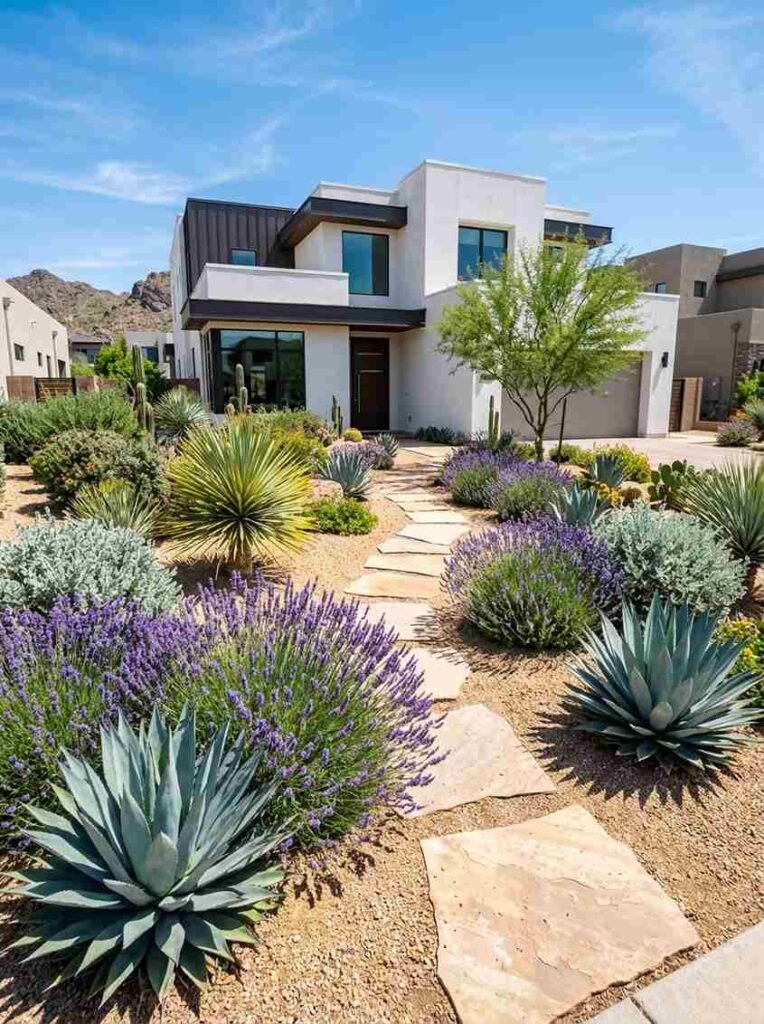
1. Full gravel with drought-tolerant plantings Replace grass entirely with decomposed granite or pea gravel.
Plant ornamental grasses, lavender, and agave for low-water drama. Zero mowing. High visual impact.
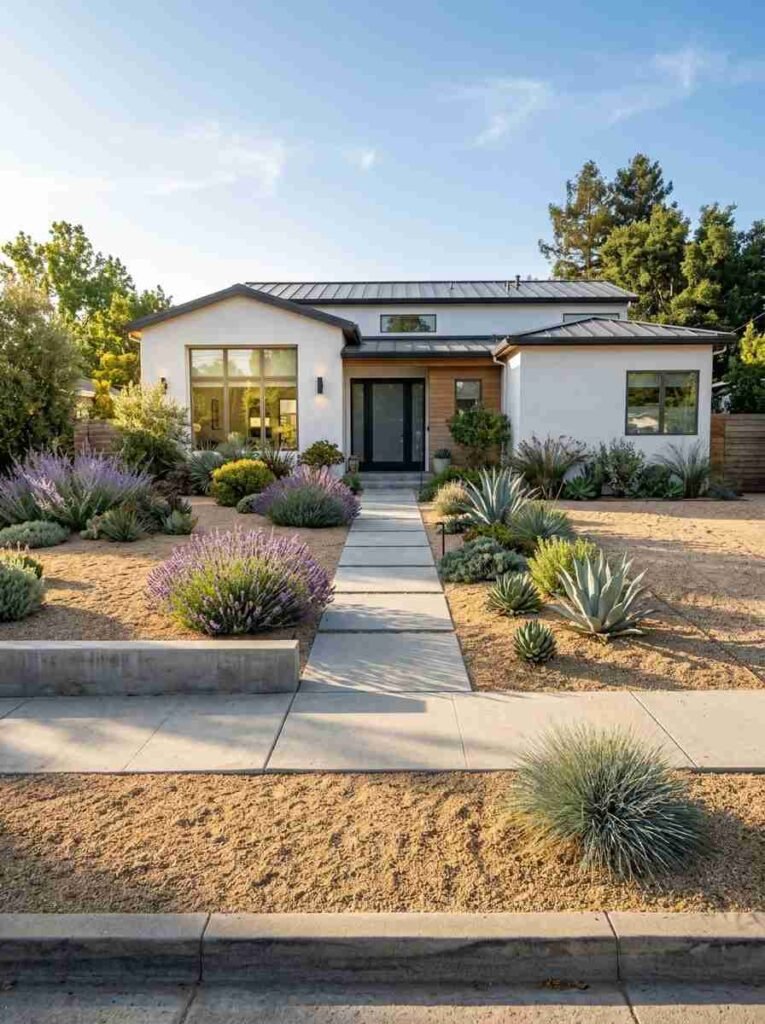
2. Flagstone paver yard Cover the ground in irregular flagstone with low creeping thyme or moss filling the gaps.
It walks well and looks expensive. FYI, creeping thyme also smells amazing when you step on it 🙂
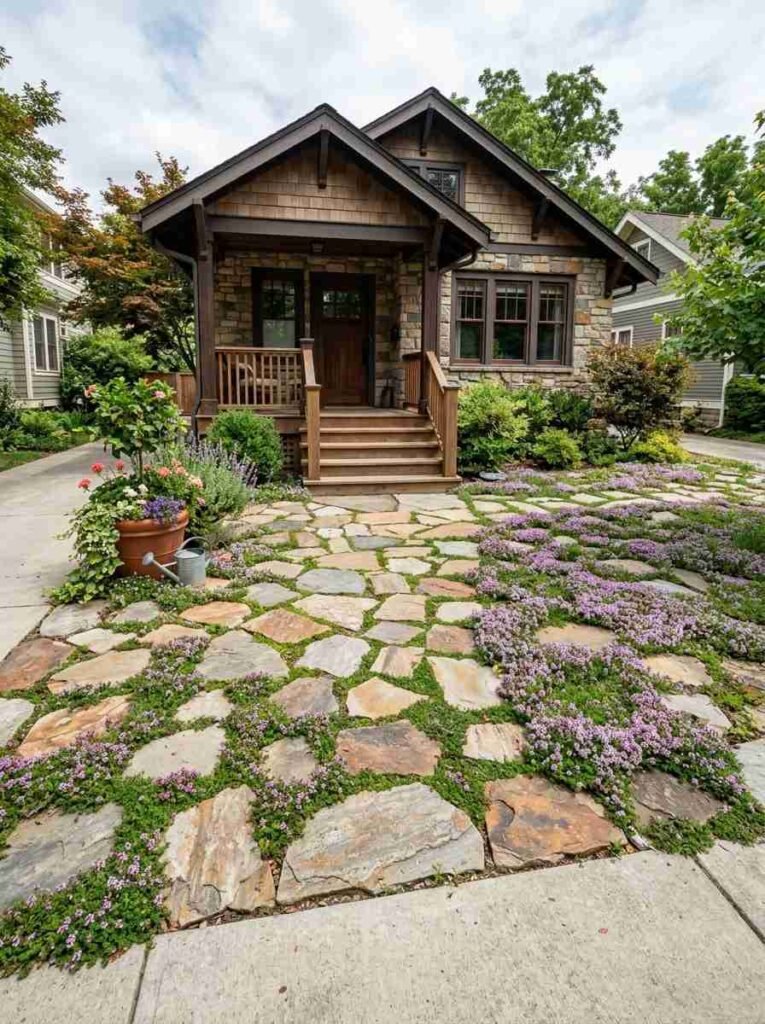
3. Decomposed granite with raised steel planters A clean, modern combo. The warm rust of Corten steel planters against grey gravel reads as very intentional and current.
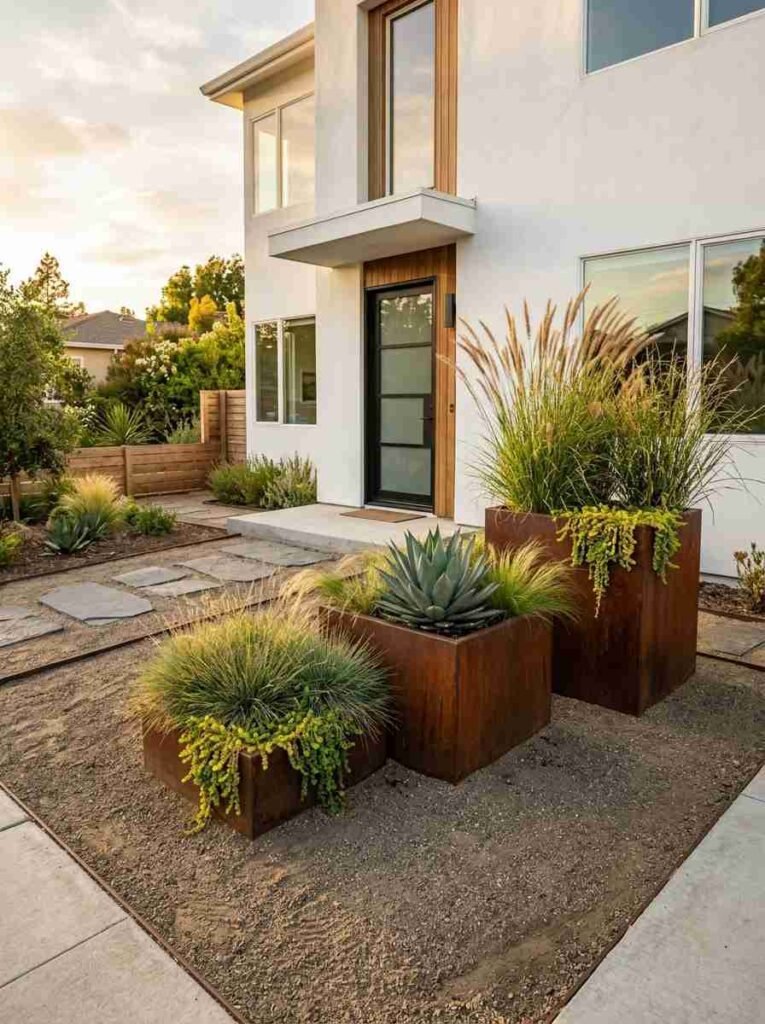
4. Gravel river bed design Use smooth river rocks arranged to mimic a dry streambed. Plant ornamental grasses alongside it. Surprisingly dynamic for a flat yard.
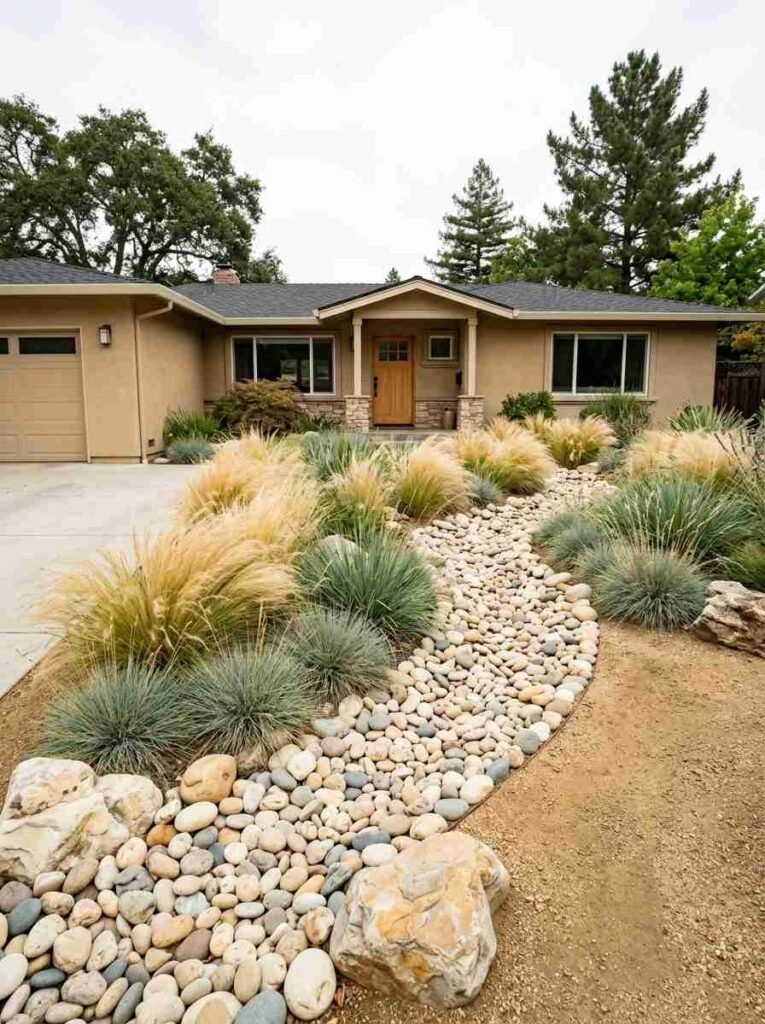
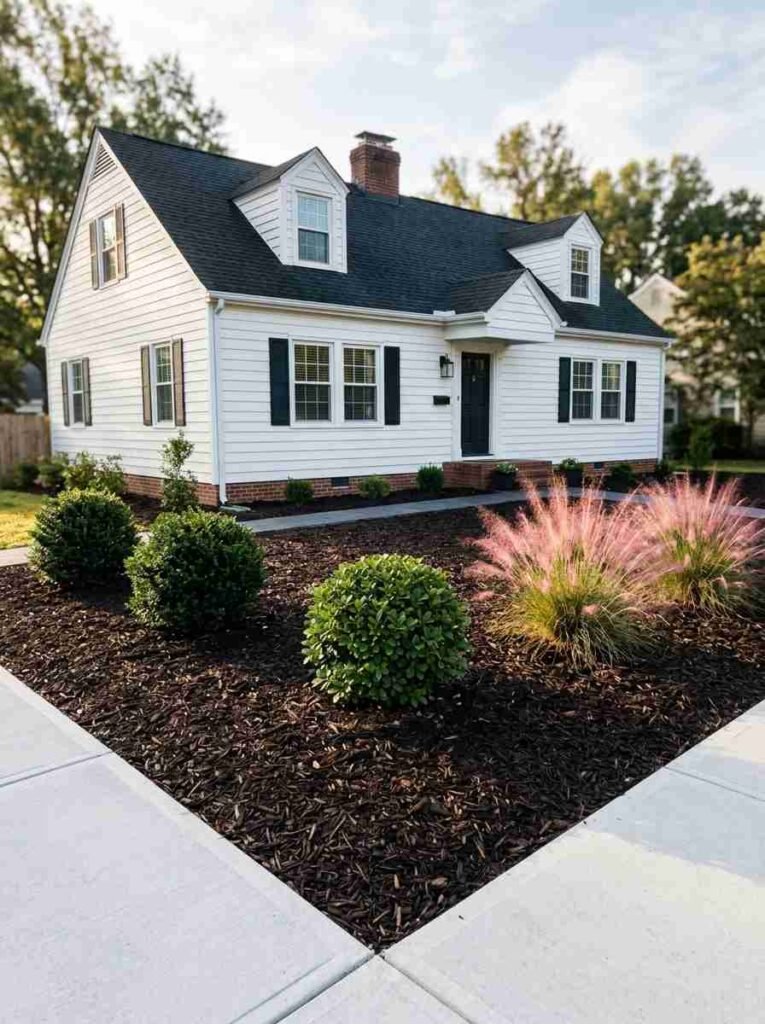
5. All-mulch bed with specimen shrubs Skip grass entirely. Deep mulch (3-4 inches) with 3 or 5 well-spaced shrubs gives you a clean, maintainable front yard that looks designed.
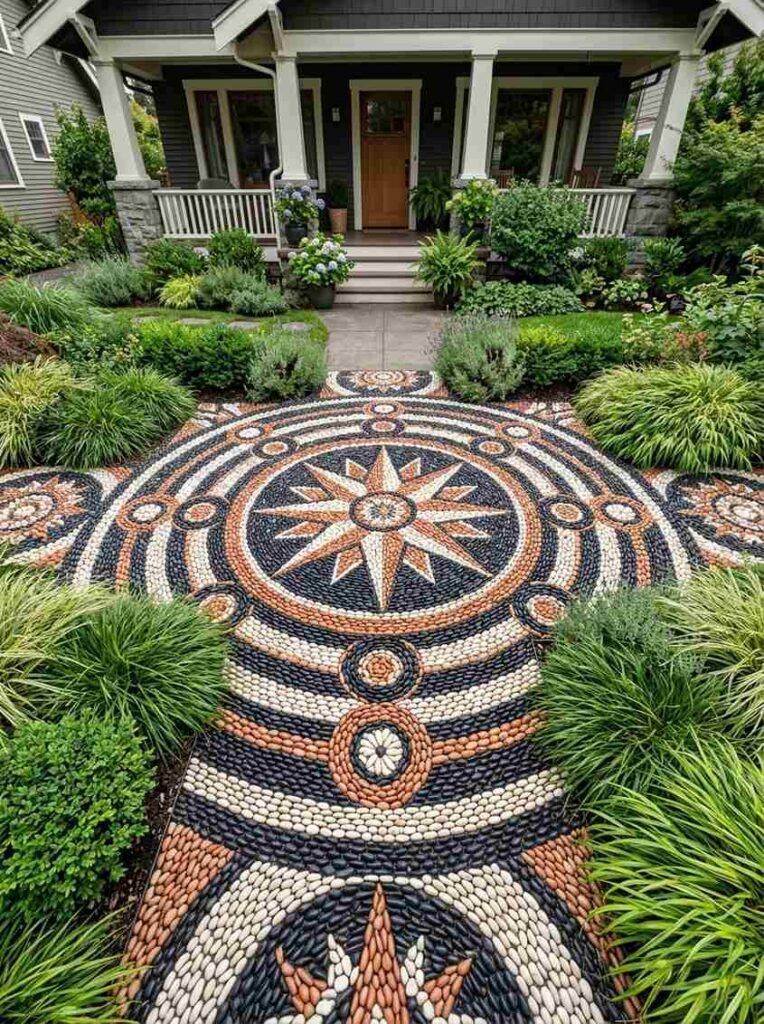
6. Pebble mosaic ground cover Small yards are the perfect canvas for decorative pebble arrangements geometric patterns, simple spirals. Pinterest loves these for a reason.
Cottage & Garden Style
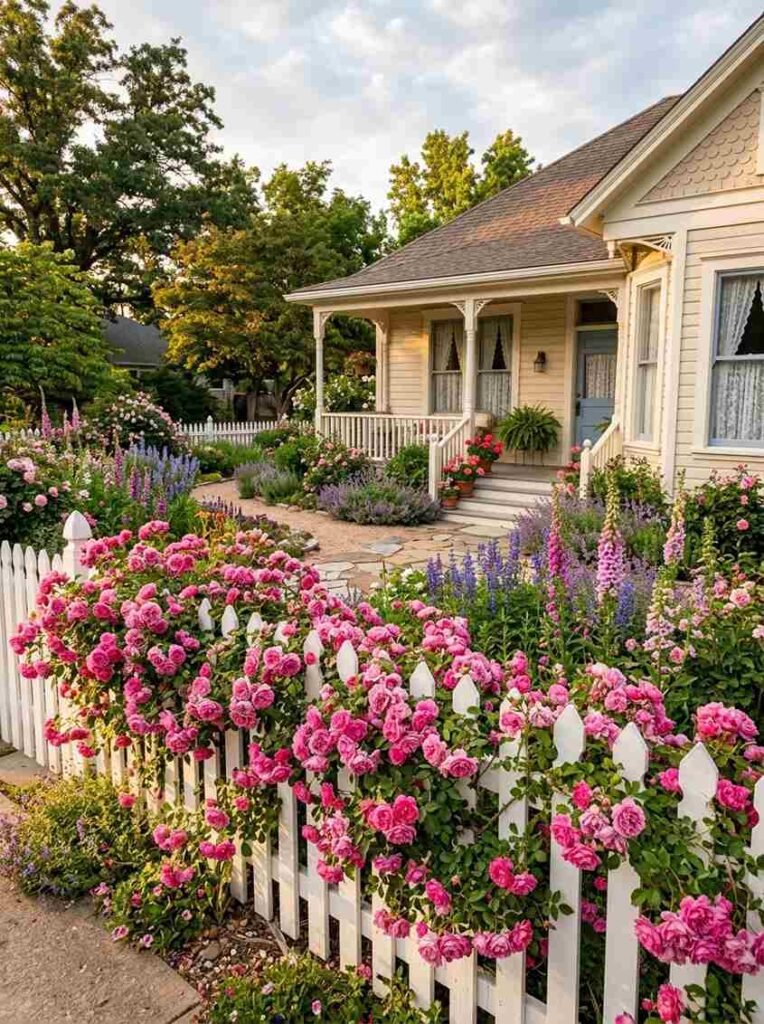
7. Picket fence with climbing roses A white picket fence at the property line with a climbing rose trained along it is genuinely timeless. David Austin ‘Gertrude Jekyll’ if you want a specific recommendation.
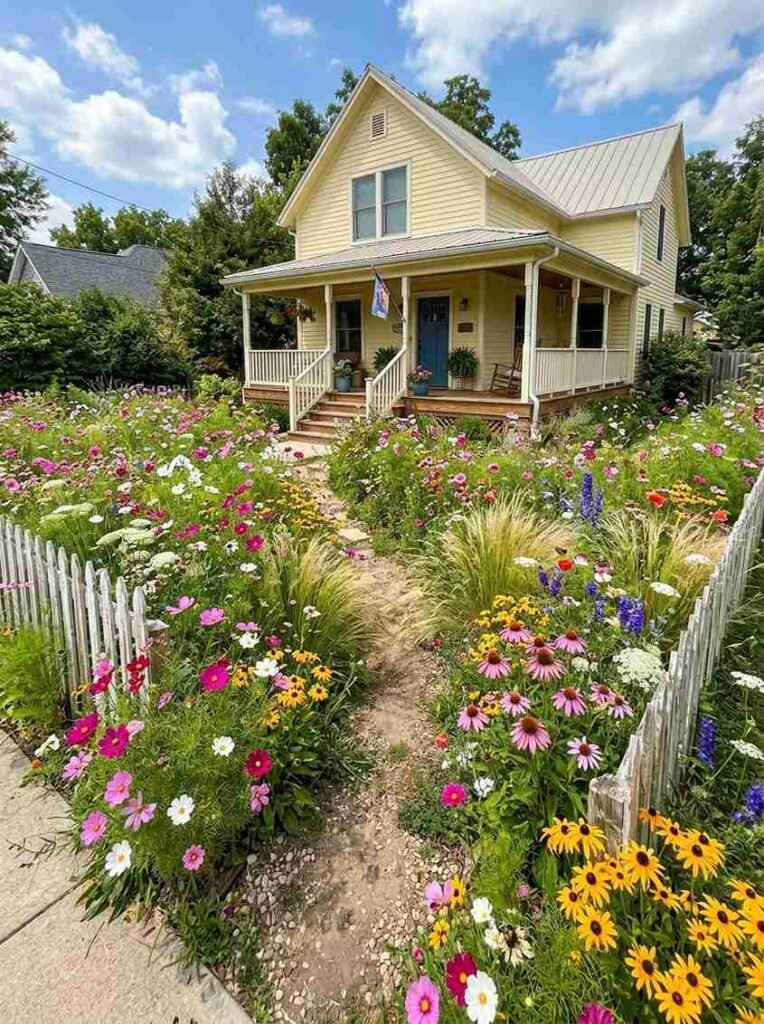
8. Cottage wildflower patch Replace lawn with a curated wildflower meadow. Cosmos, echinacea, black-eyed Susans. Messy-on-purpose is a real design style, and it’s pollinator-friendly too.
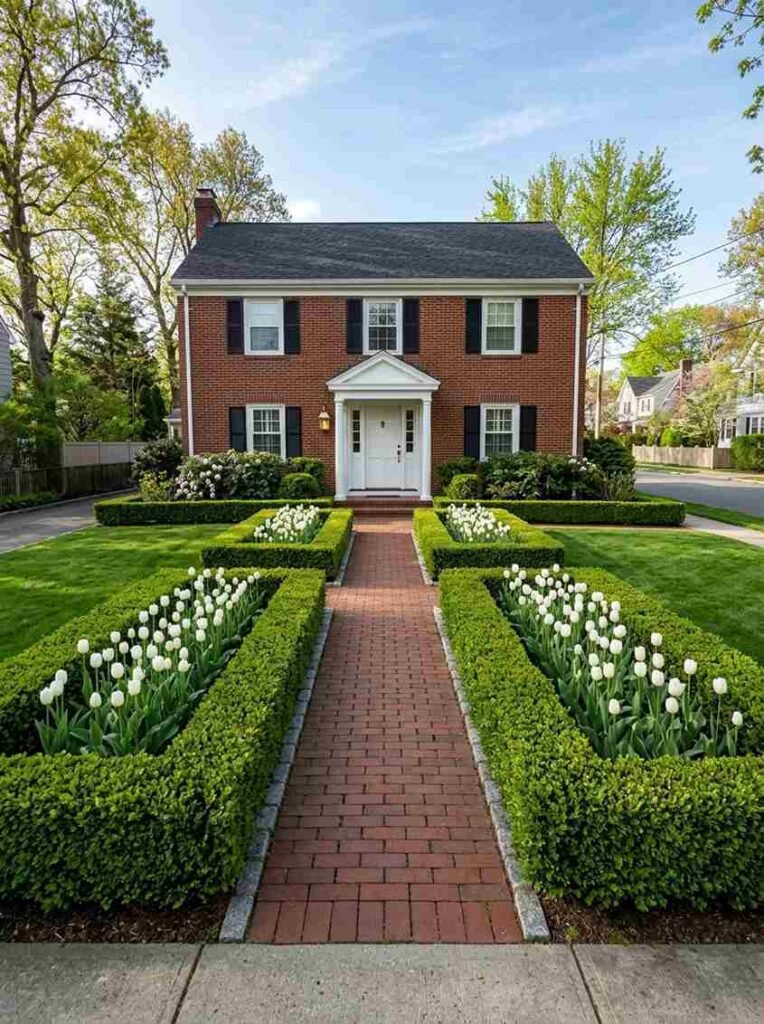
9. Boxwood hedge frames Low, clipped boxwood hedges around a small central bed give formal structure to a tiny space. Works especially well with period homes.
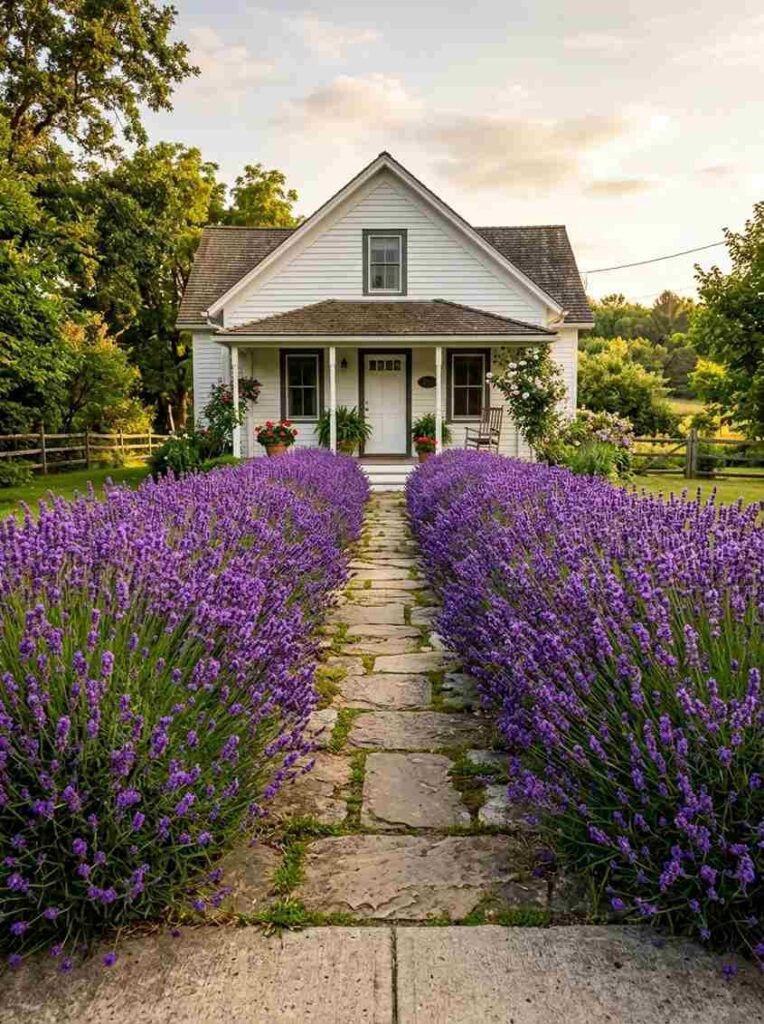
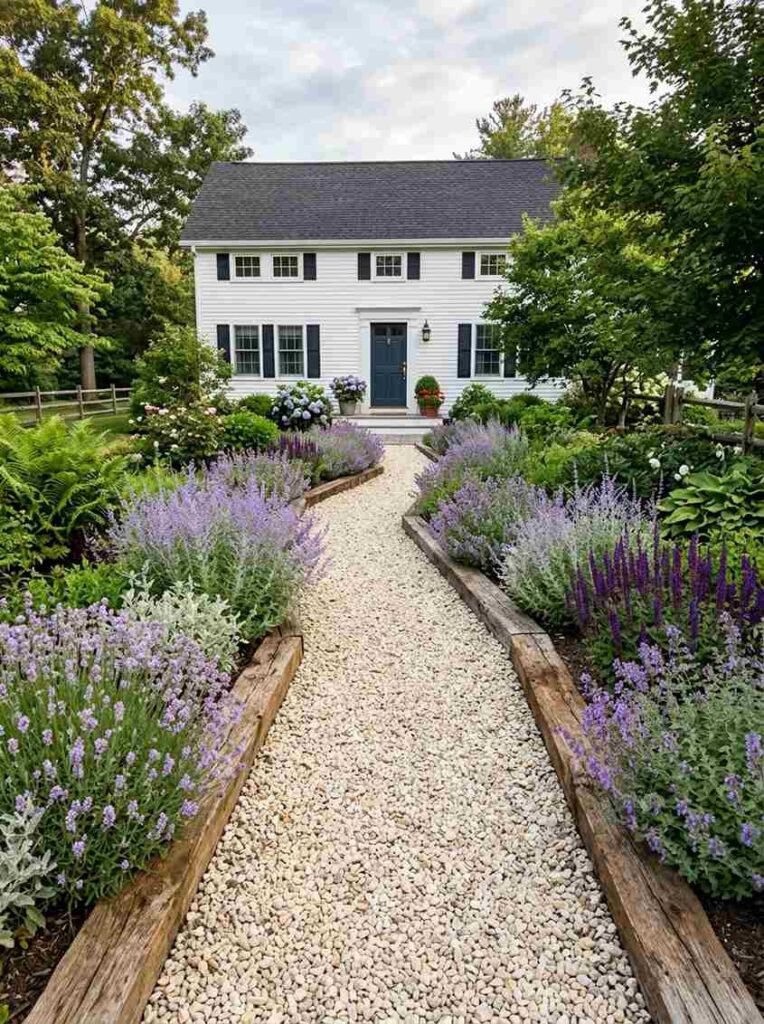
10. Lavender border along the path Line your front path with English lavender on both sides. Purple in summer, silver-grey in winter. Smells like a dream every time you walk to the front door.
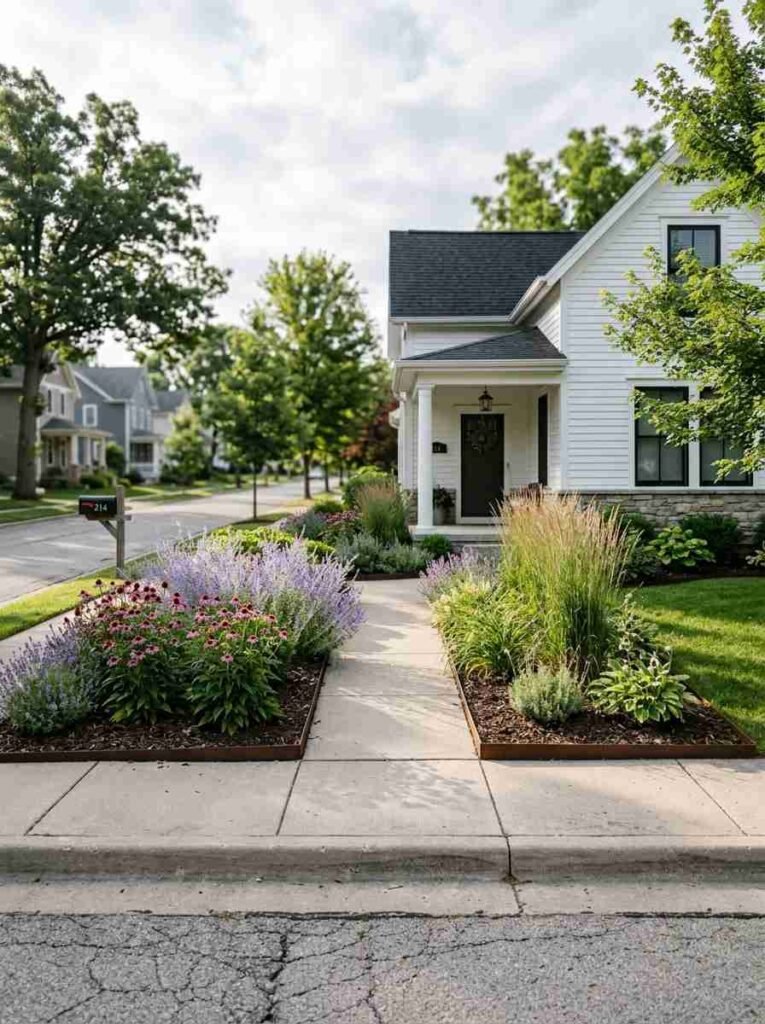
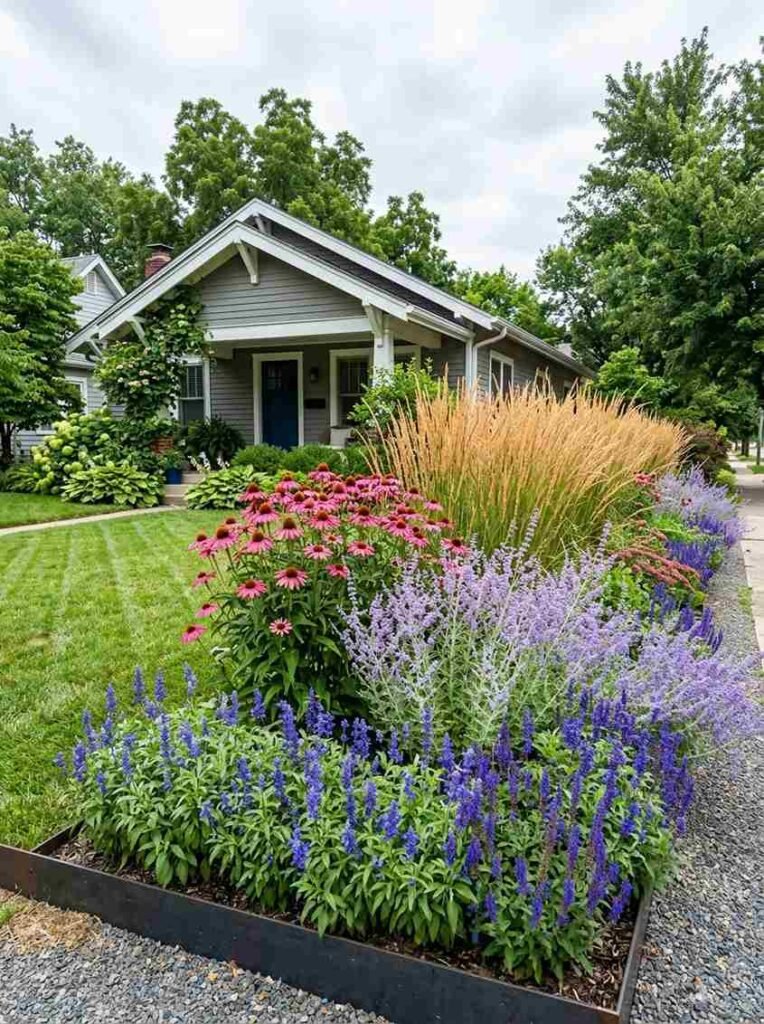
11. Mixed perennial border A single deep perennial border along one side, with plants graduating from short (front) to tall (back): salvia, Russian sage, echinacea, ornamental grasses.
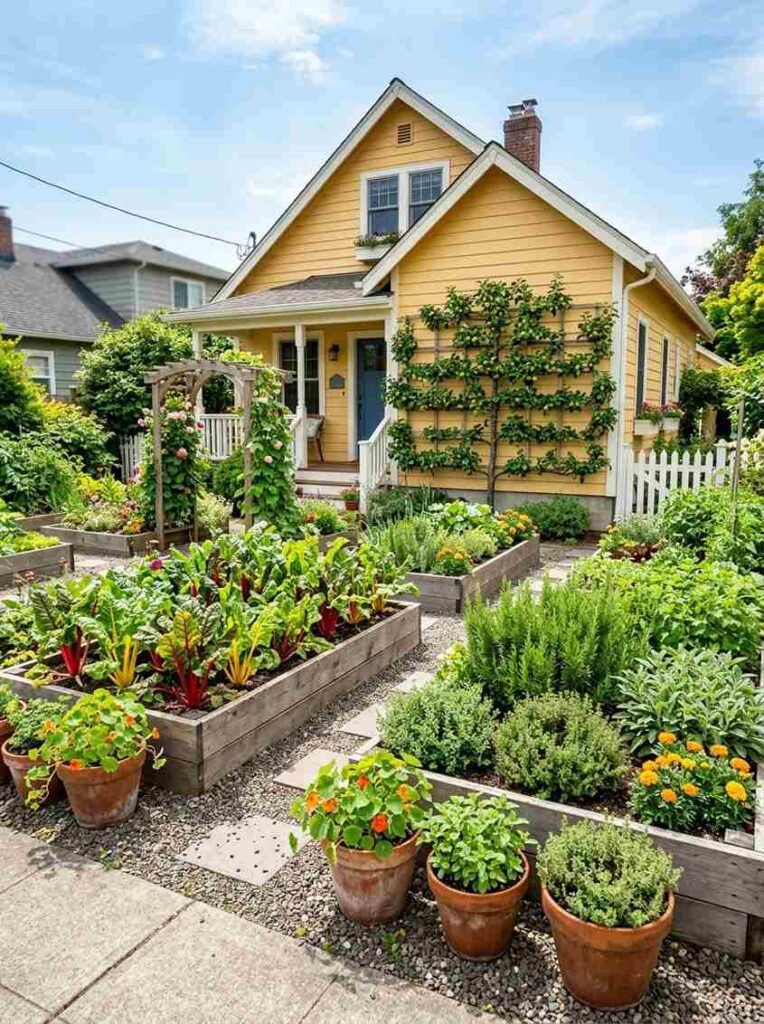
12. Potager-style front garden Edible plants as the main feature. Neat rows of herbs, dwarf fruit trees, rainbow chard. Functional and visually interesting. More people should do this.
Modern & Minimalist
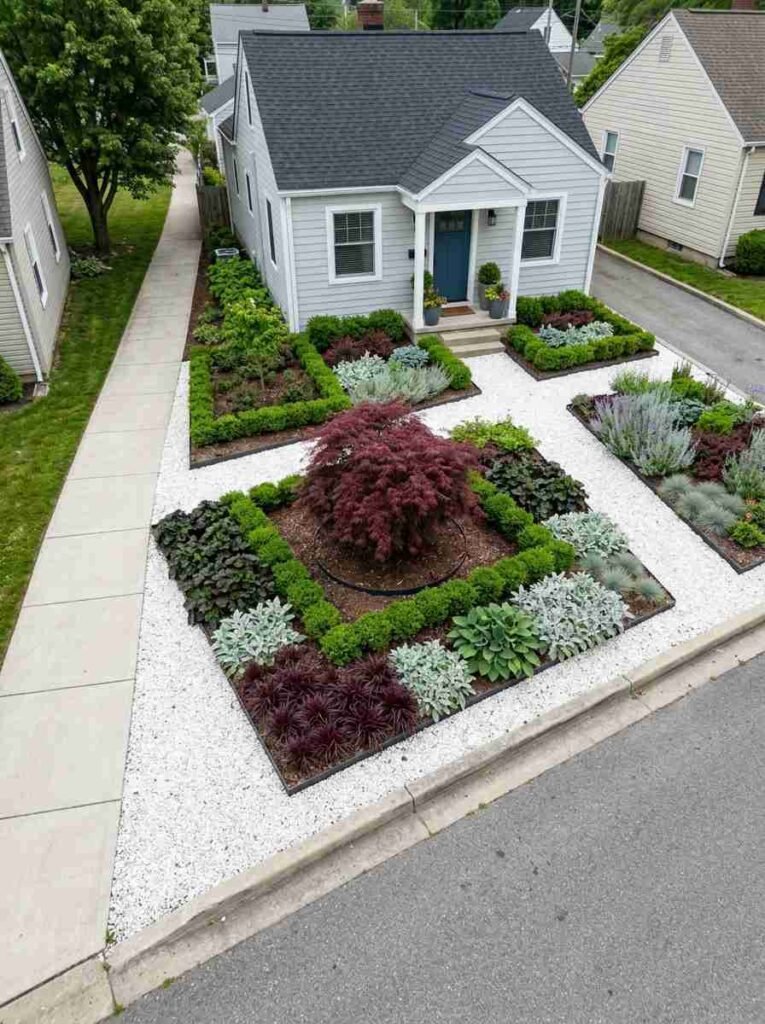
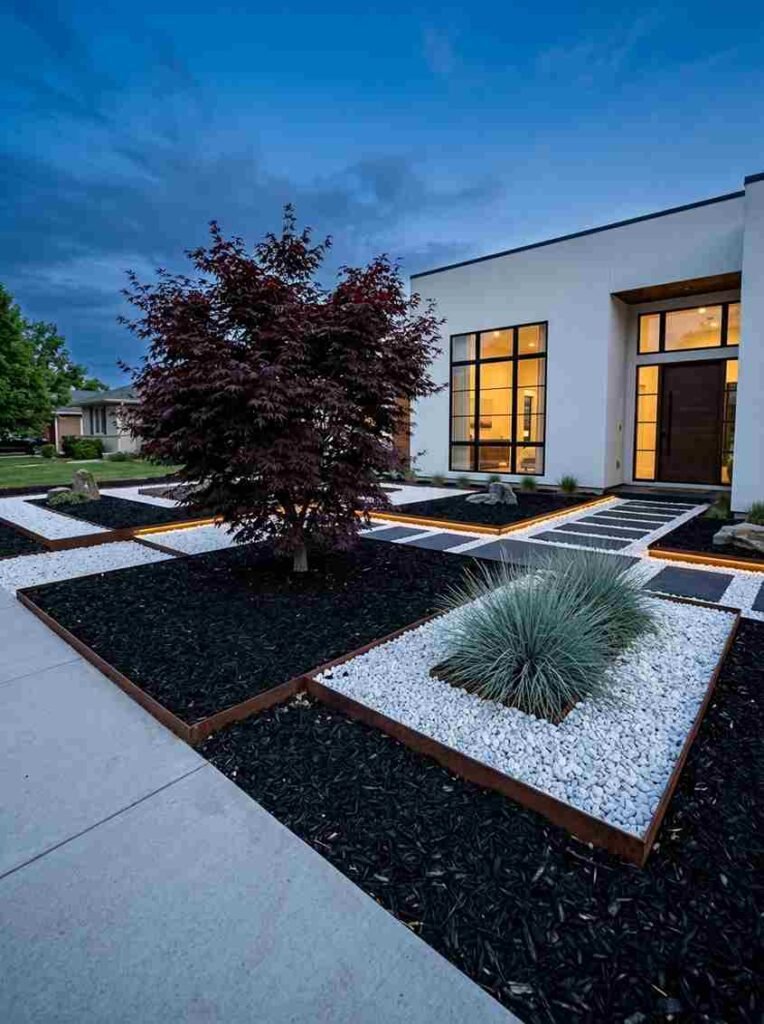
13. Black mulch + white gravel geometric design High contrast, high impact. Geometric beds of dark mulch and white gravel with a few bold architectural plants (Japanese maple, ornamental grass, agave).
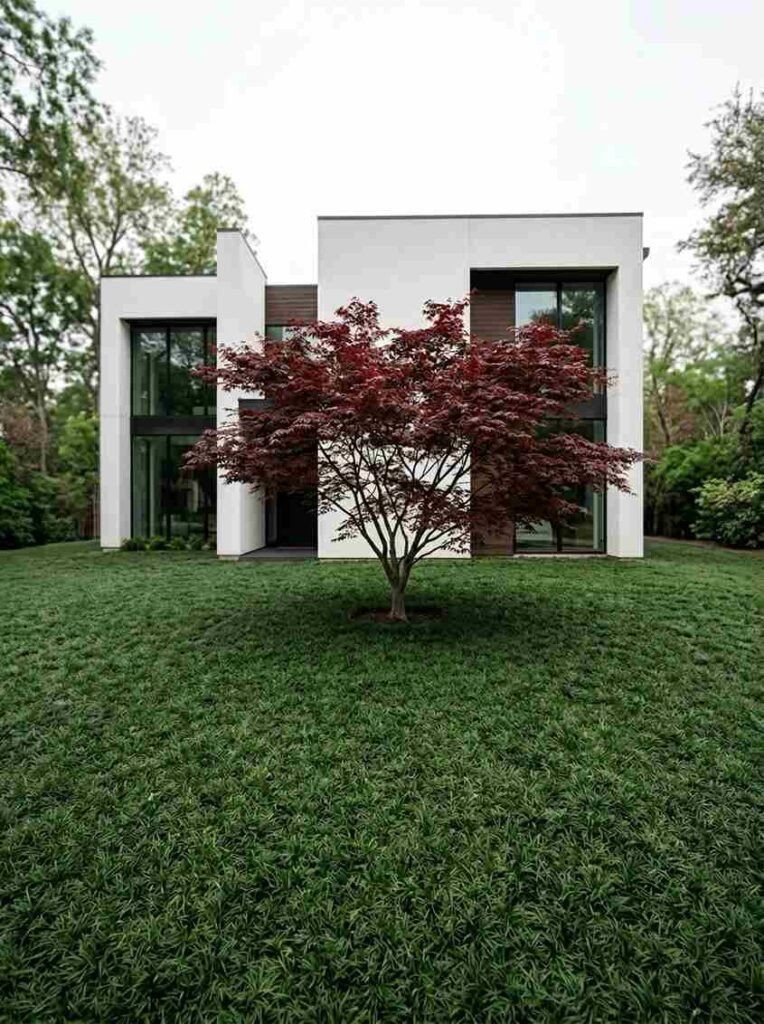
14. Single specimen tree + ground cover One well-chosen tree — Japanese maple, serviceberry, dwarf magnolia — surrounded by a single ground cover species. That’s it. Simple and strong.
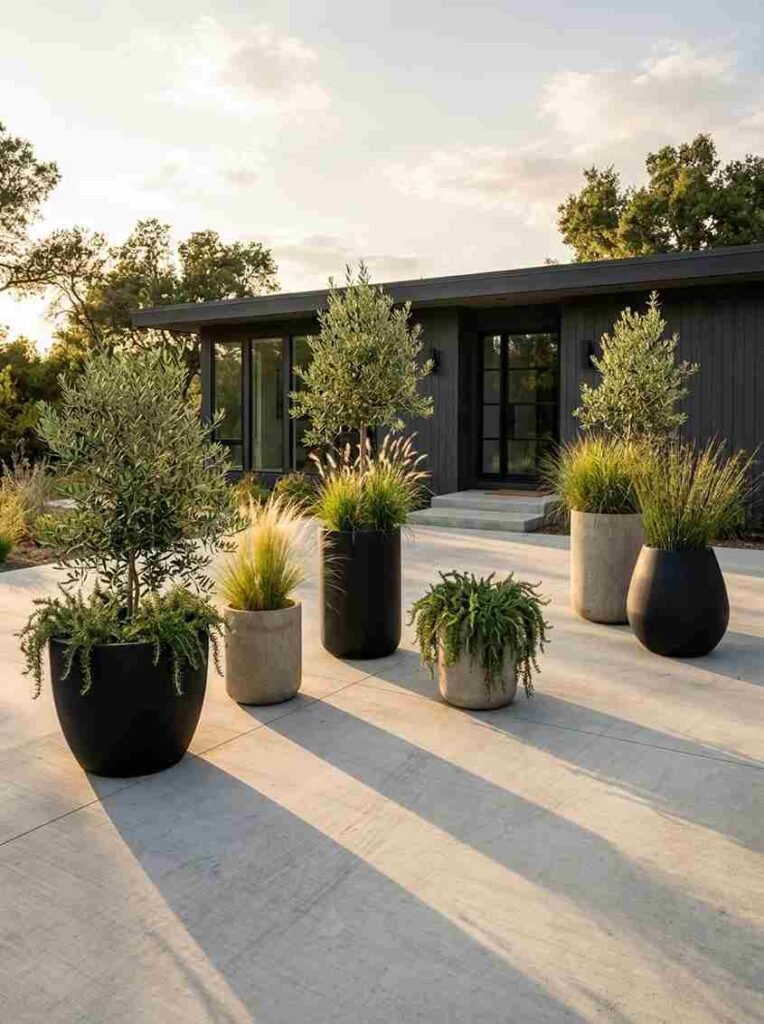
15. Concrete pad with container garden Replace the yard with a smooth concrete or pavers area and use large pots instead of in-ground planting. Fully flexible. Great for renters.
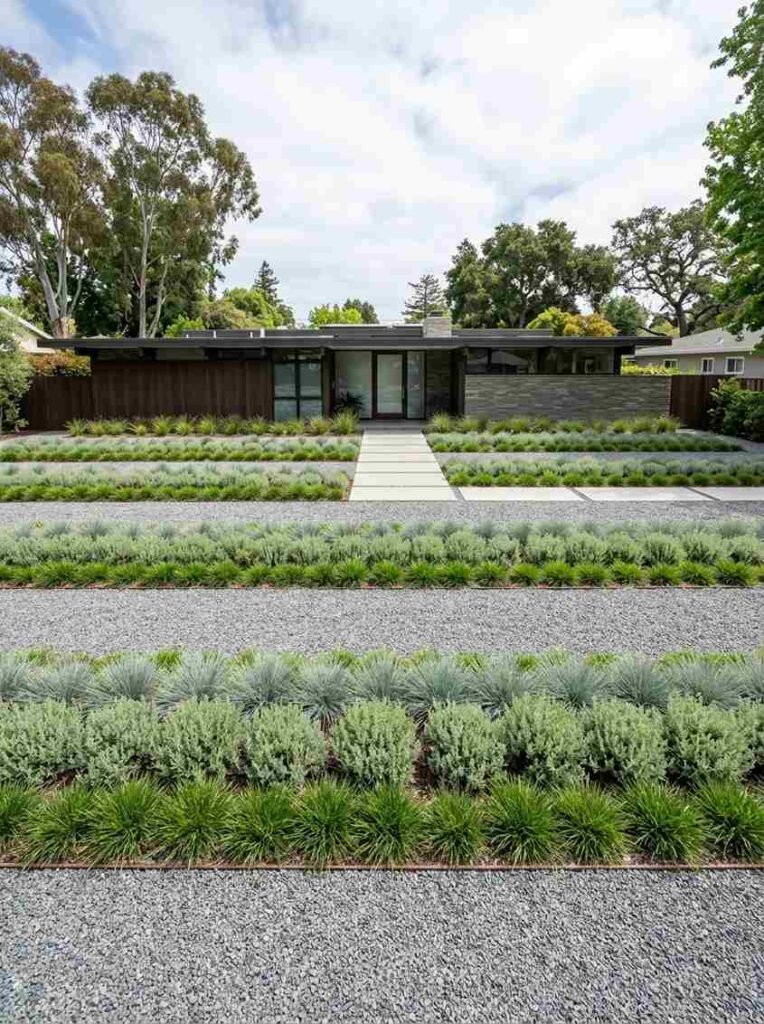
16. Linear planting strips Parallel strips of planting separated by gravel or pavers. Very architectural. Works brilliantly with modern or mid-century homes.
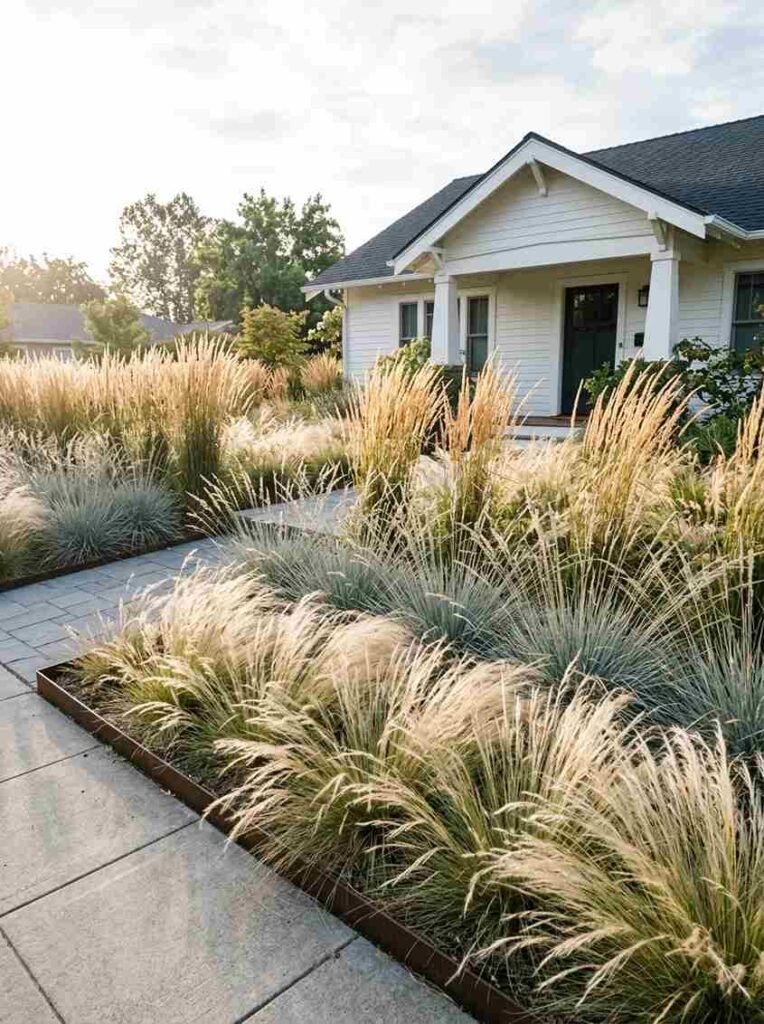
17. Ornamental grass meadow Mass-plant 2-3 species of ornamental grass (Karl Foerster, Blue Oat grass, Mexican Feather grass). Movement, texture, and basically zero maintenance once established.
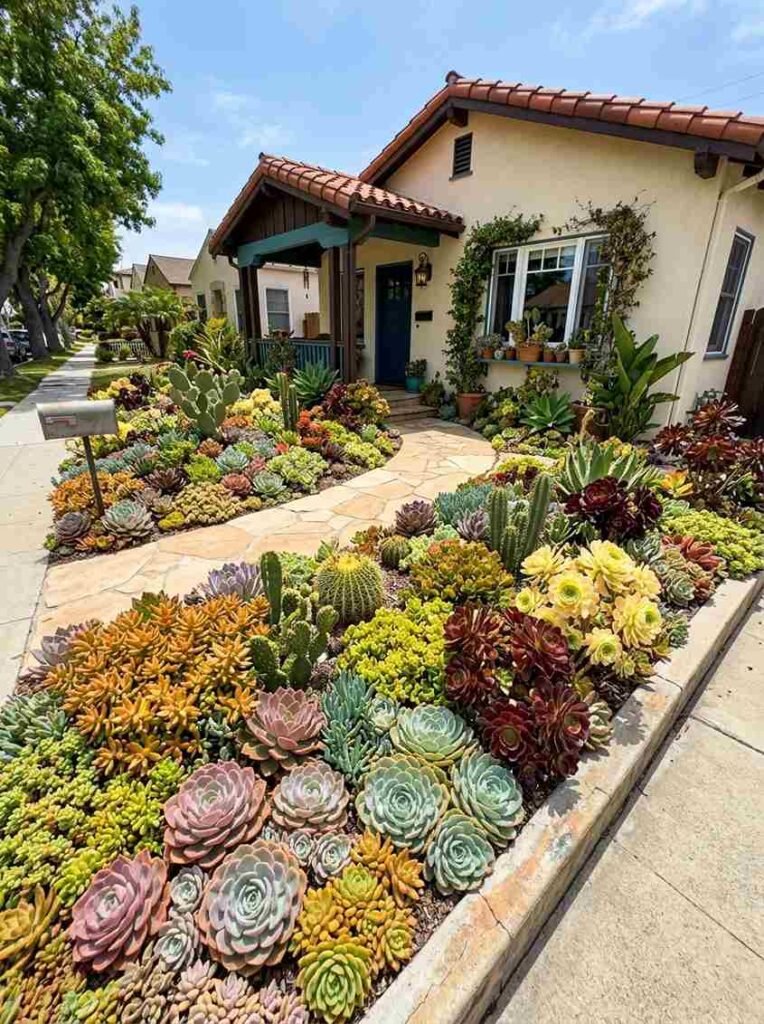
18. Succulent tapestry In mild climates, a mix of succulents planted close together creates a living tapestry. Echeverias, sedums, aeoniums — the color combinations are wild.
Pathway-Focused Designs
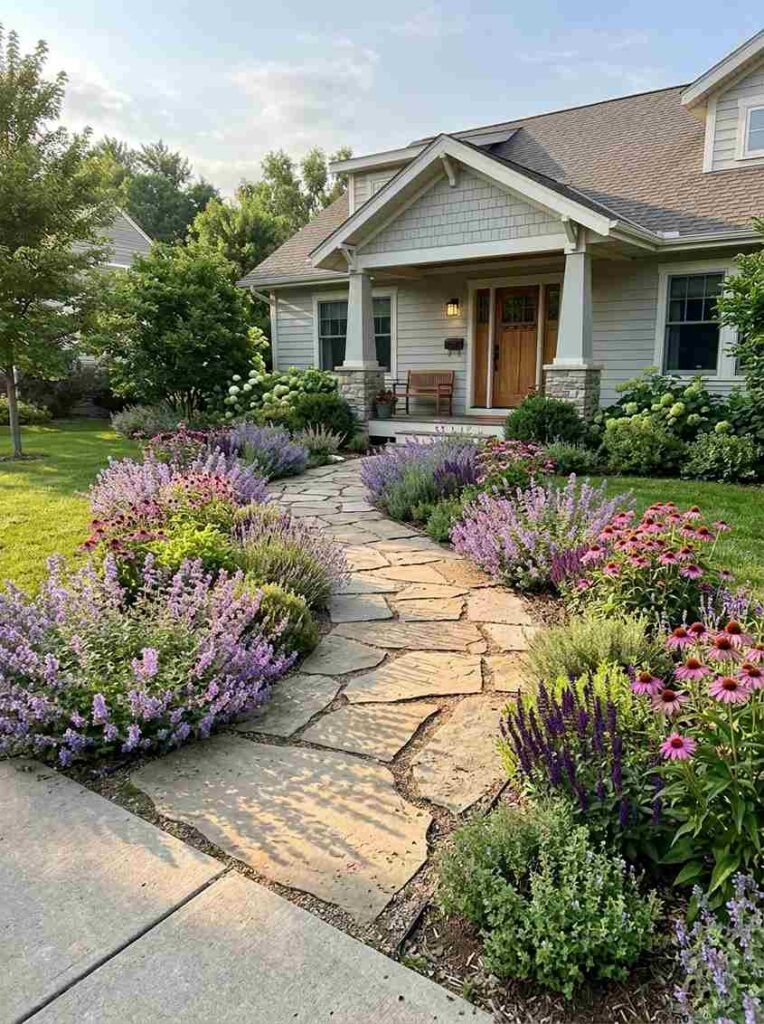
19. Curved path with planting on both sides Swap the straight-shot path for a gentle curve. It makes even a short walk to the door feel like a journey. Plant both sides with low perennials.
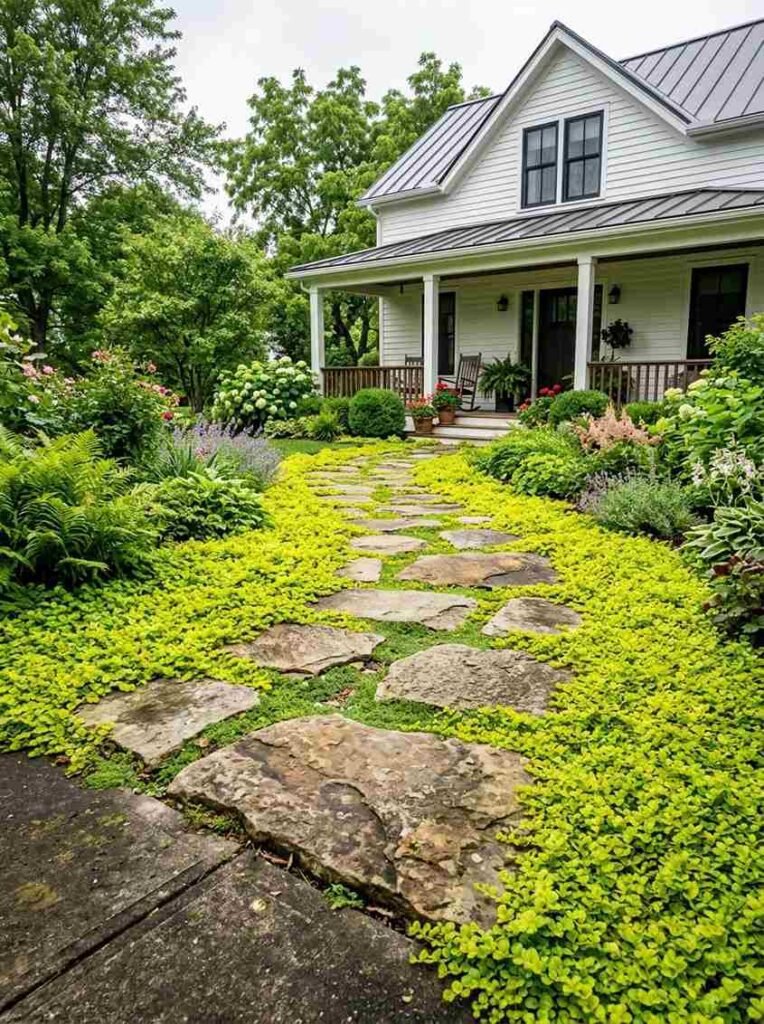
20. Stepping stones through ground cover Large irregular stepping stones set into a sea of creeping Jenny, ajuga, or mondo grass. Lush, textural, and no-mow.
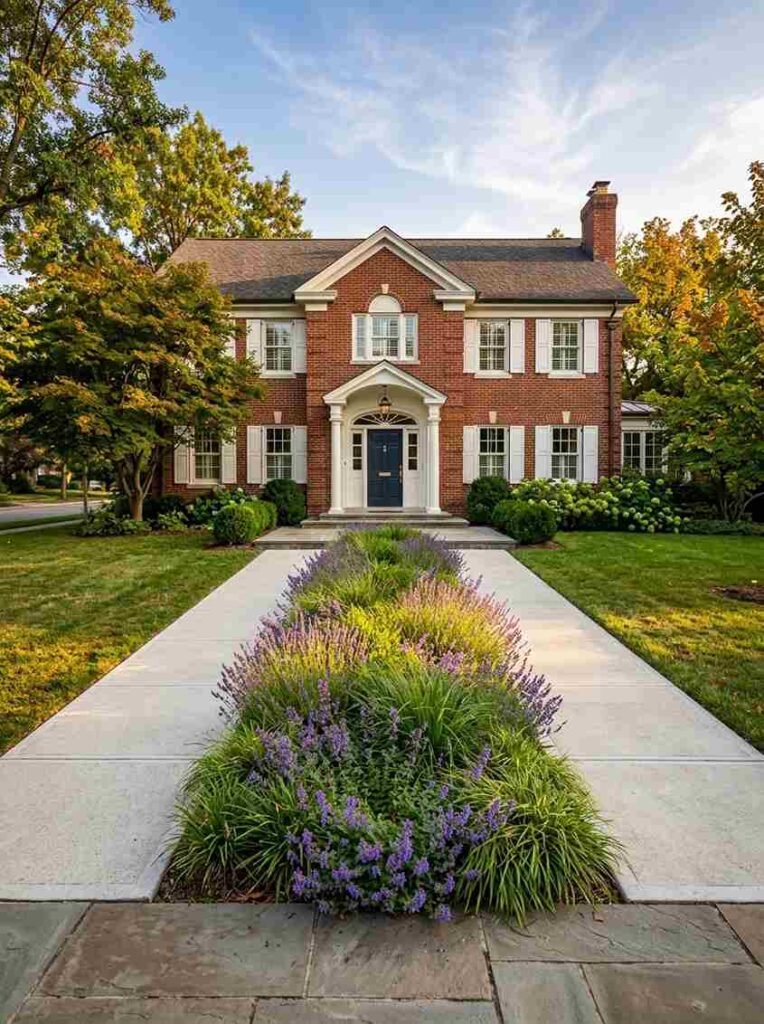
21. Double path with center planting strip Two parallel paths with a planted strip down the middle. Great for welcoming guests and framing the front door approach.
22. Gravel path with timber edging Loose gravel path held in by low timber borders. Inexpensive, textural, and surprisingly elegant.
Water-Smart Landscapes
23. Xeriscape design Built around drought-tolerant plants: agave, yucca, lavender, ornamental grasses, and native shrubs. Works in any climate if you choose region-appropriate plants.
24. Rain garden A shallow depression planted with moisture-tolerant natives that catches runoff from your roof or driveway. Practical AND pretty. IMO one of the most underused ideas on this list.
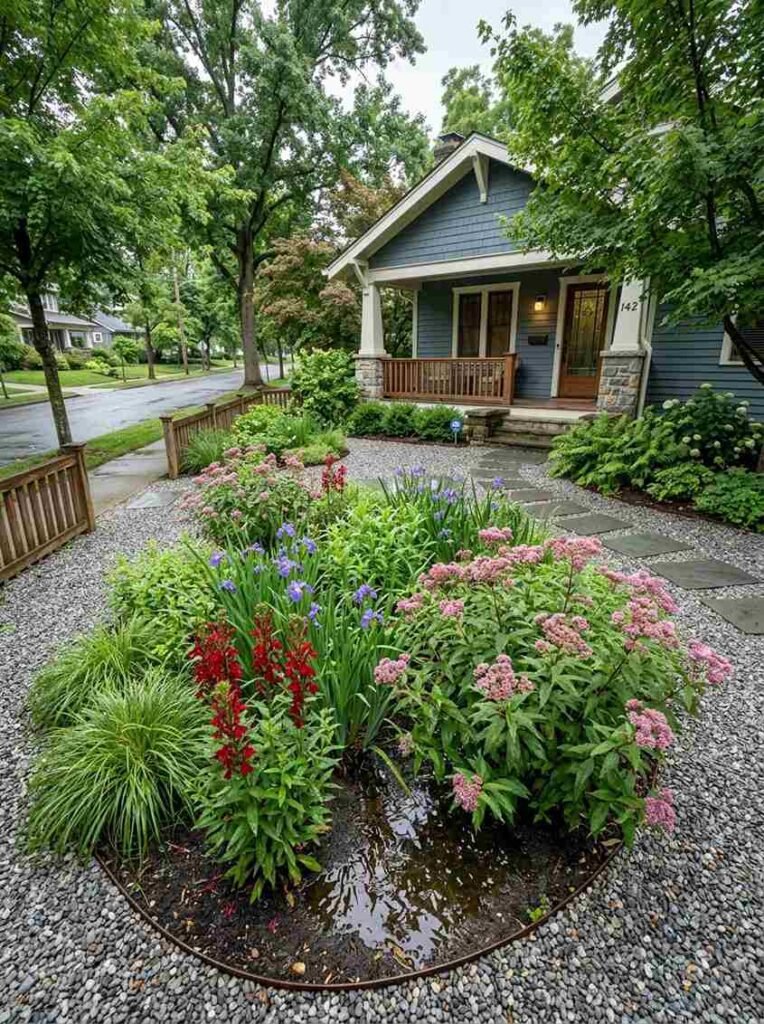
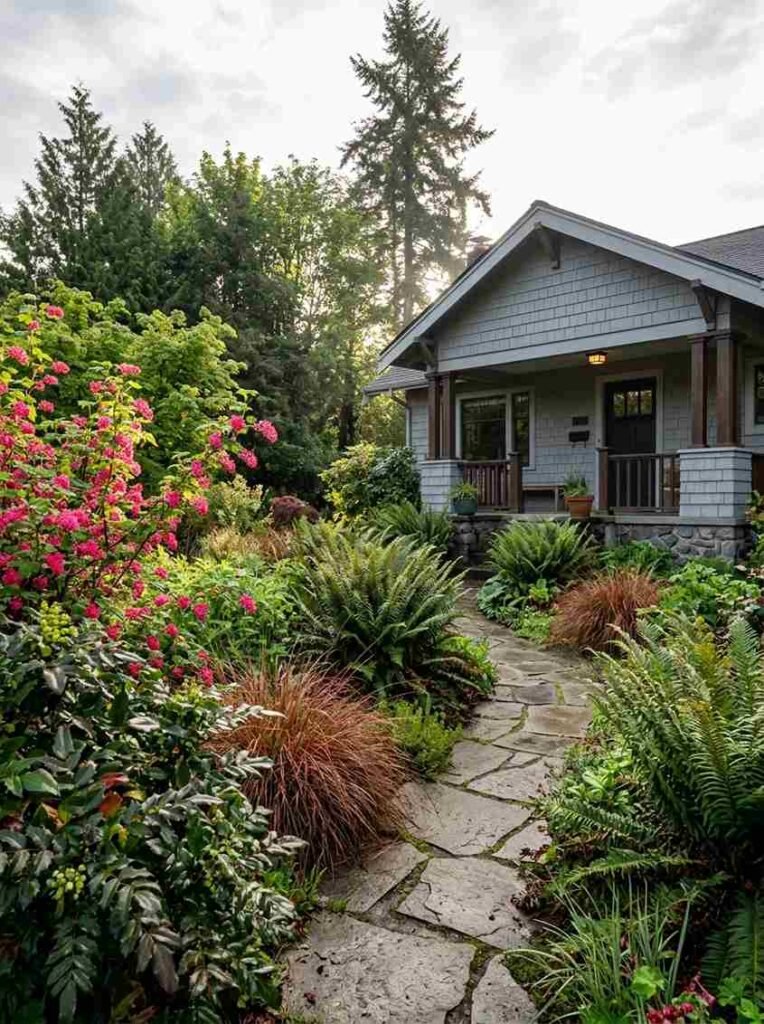
25. Native plant front yard All-native plant palette specific to your region. Requires almost no irrigation once established, supports local wildlife, and looks intentional.
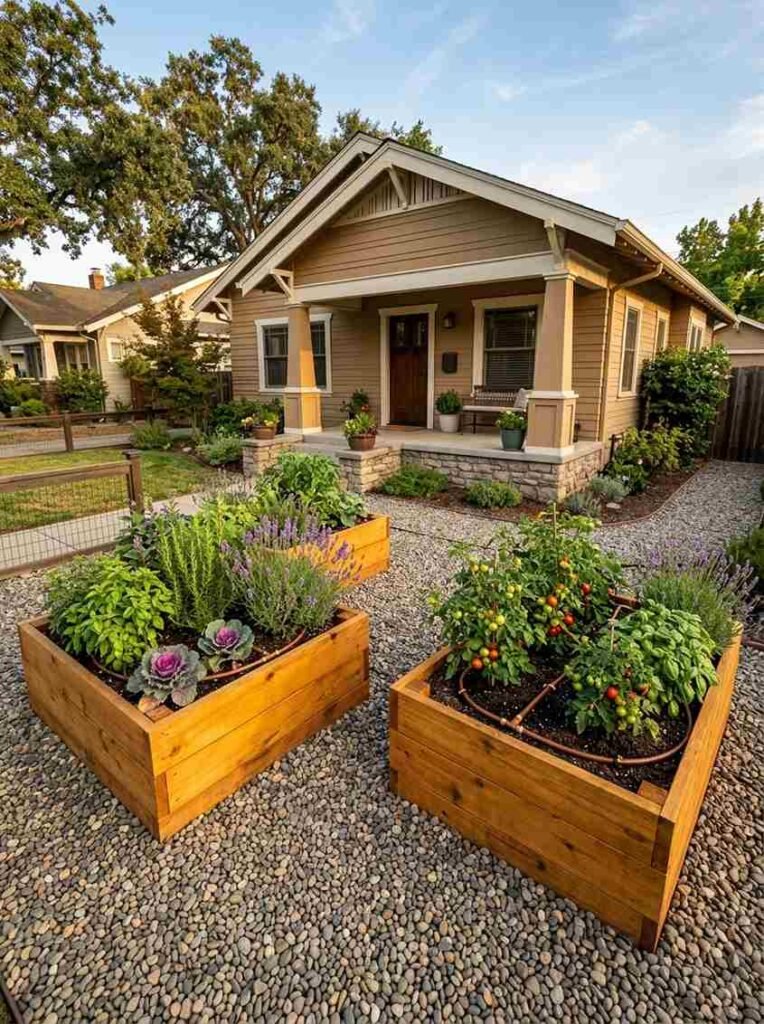
26. Drip-irrigated raised beds Even a small front yard has room for 1-2 raised beds with drip irrigation. Efficient, contained, and gives you control over soil quality.
Vertical & Structural Ideas
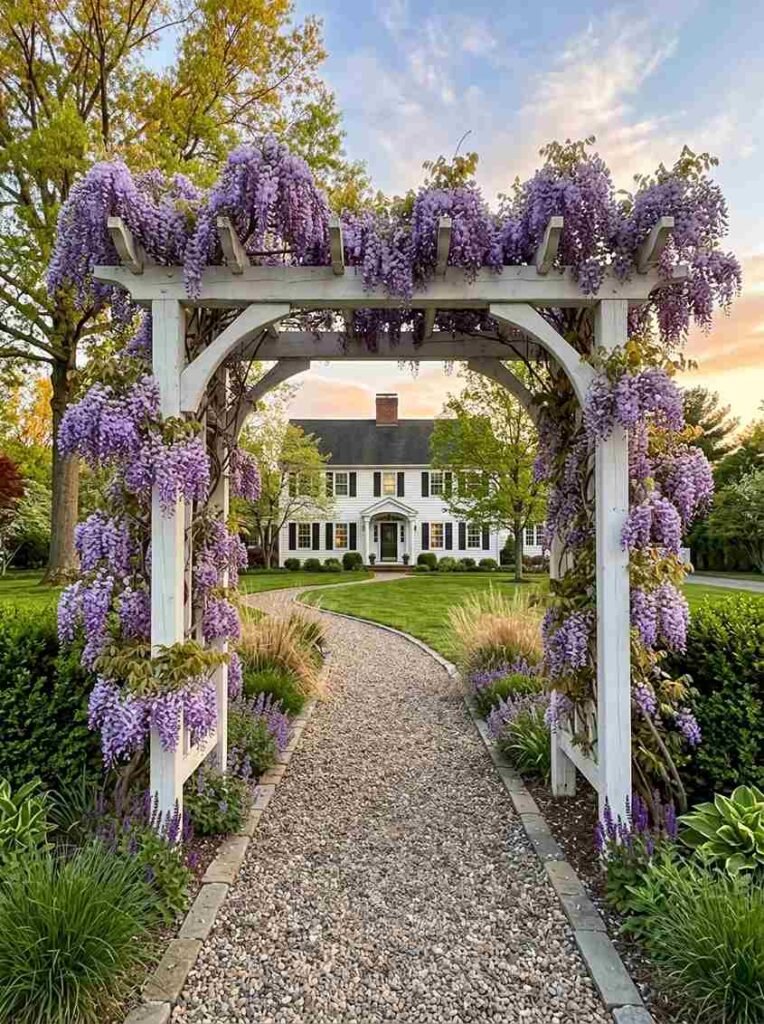
27. Trellis with climbing plants A freestanding trellis or arbor at the entry planted with climbing hydrangea, clematis, or wisteria. Adds height and drama to a flat, square space.
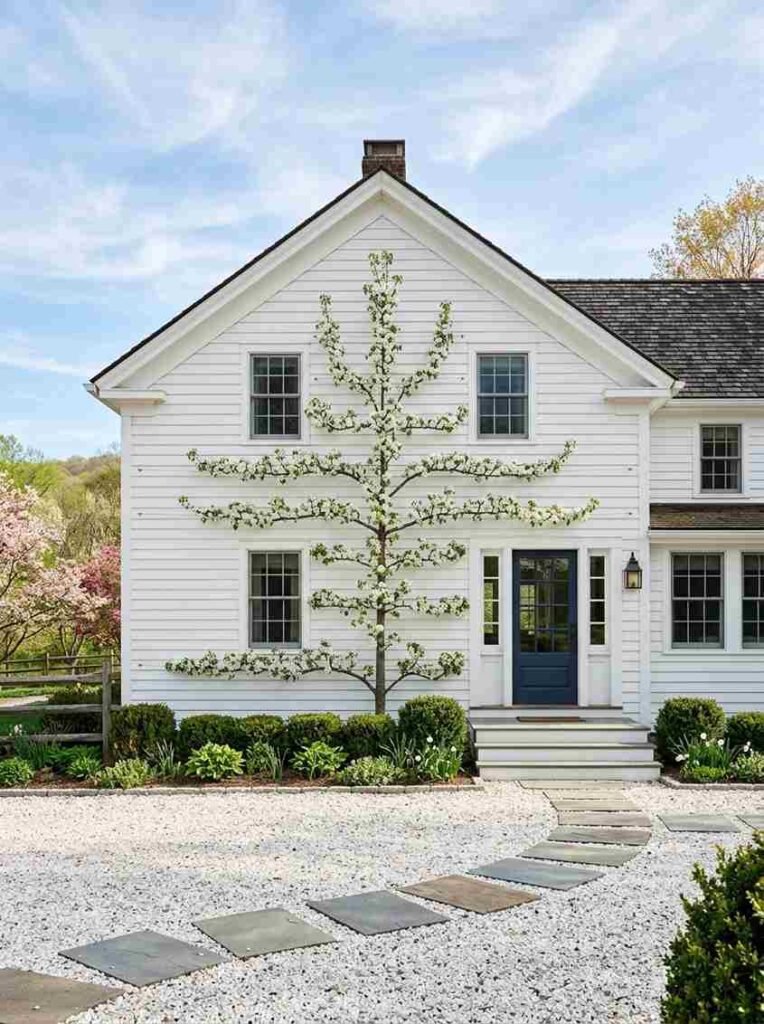
28. Espalier against the house Train a fruit tree or ornamental shrub flat against the front of your house. Space-efficient, architectural, and genuinely impressive.
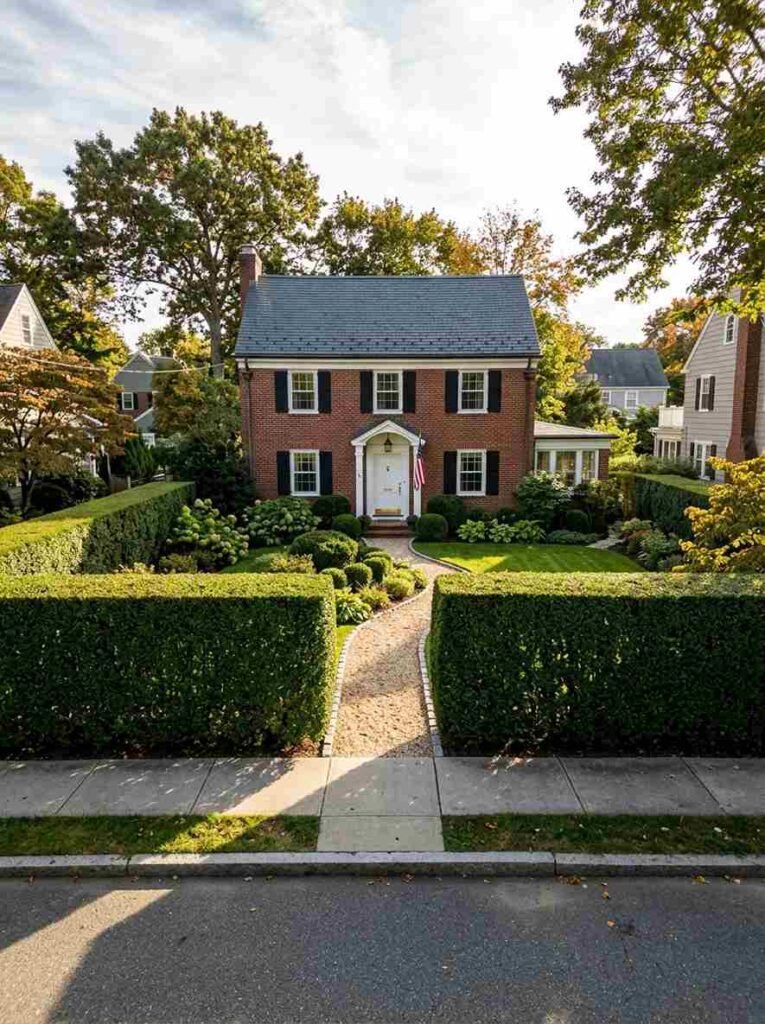
29. Hedge as privacy screen A tall, clipped hedge along the street side creates enclosure and privacy. Yew, hornbeam, and privet all work well and clip cleanly.
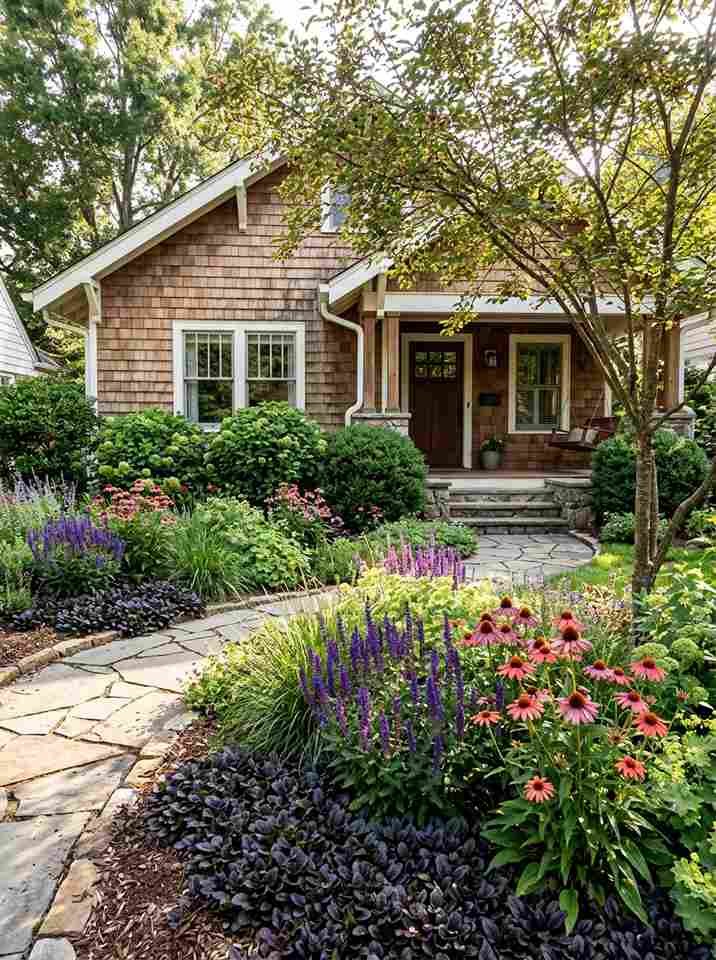
30. Layered planting design Think in layers: trees (canopy), shrubs (structure), perennials (color), and ground covers (fill). Even in a tiny yard, all 4 layers fit if you choose compact varieties.
Statement & Specialty Designs
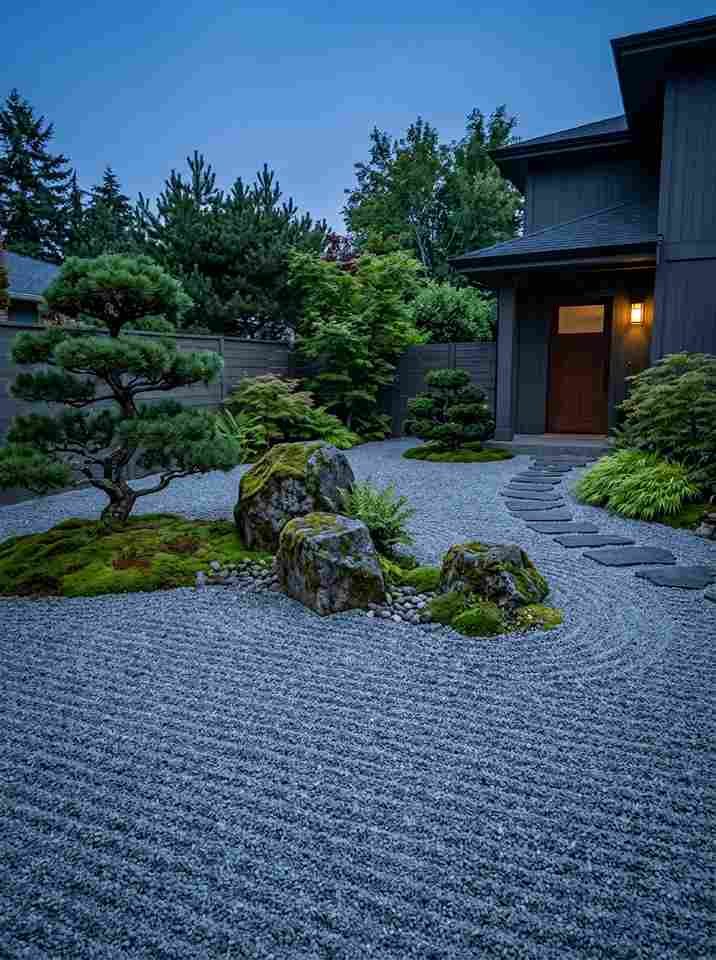
31. Japanese-inspired zen garden Raked gravel, a few carefully placed stones, a dwarf pine or Japanese maple. Calm, considered, and about as far from the standard suburban lawn as you can get.
32. Seasonal color rotation beds Design beds specifically for rotating seasonal interest: spring bulbs, summer annuals, fall perennials, winter structure. Every season looks intentional.
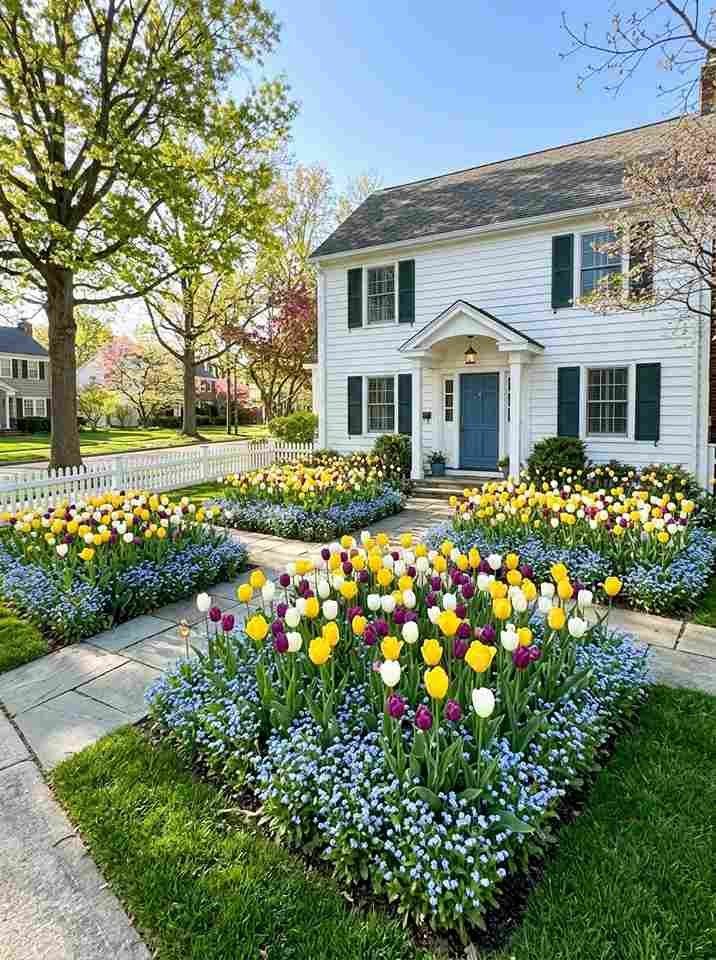
Quick Reference: Style vs. Effort
| Style | Maintenance Level | Best For | Key Plant |
|---|---|---|---|
| Xeriscape | Low | Dry climates | Lavender / Agave |
| Cottage garden | Medium | Period homes | Roses / Perennials |
| Modern minimal | Very low | Contemporary homes | Ornamental grass |
| Native planting | Low (once established) | Any region | Region-specific |
Common Mistakes to Avoid
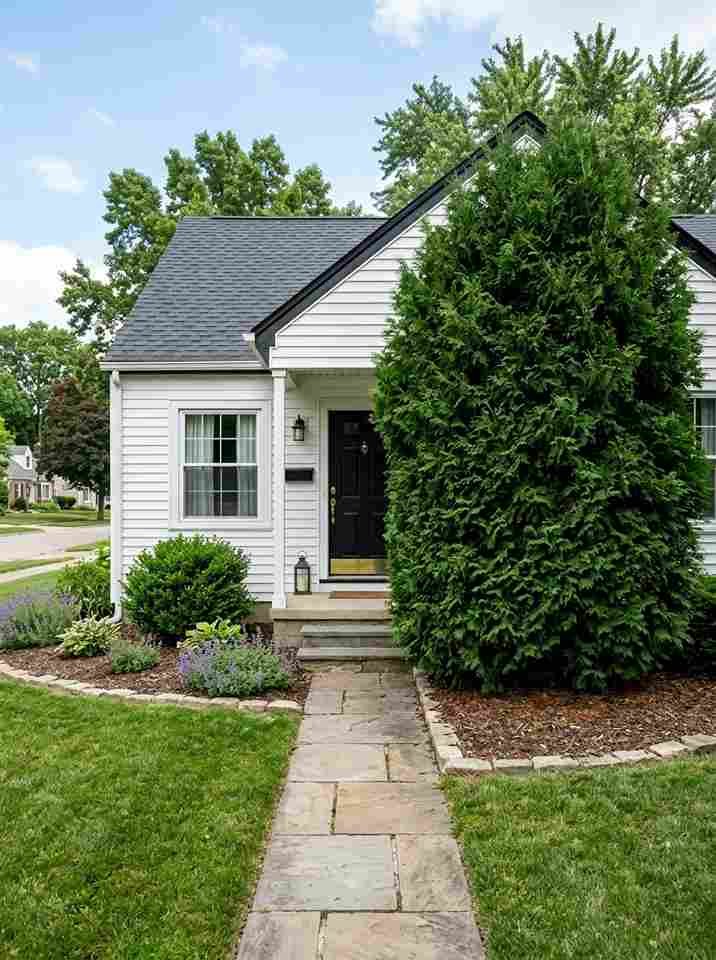
Planting too close to the house. Shrubs that look small at the nursery grow. Check mature size before you plant. A 6-foot shrub in front of a window blocks light and creates maintenance headaches forever.
Ignoring scale. Giant plants in a tiny yard look like furniture that doesn’t fit the room. Stick to dwarf or compact varieties unless you have a specific reason not to.
Forgetting the view from inside. You’ll look at your front yard from your windows more than from the street. Design it to look good from both angles.
Skipping hardscape planning. Plants get all the attention, but the path, edging, and ground cover are what hold the design together. Get those right and the plants almost take care of themselves.
How to Choose Your Design
Three questions worth asking before you pick up a shovel:
- How much time do you want to spend on it? Be honest. A cottage garden is beautiful and requires regular attention. Gravel and ornamental grasses are nearly set-it-and-forget-it.
- What does your house look like? A zen garden in front of a Victorian cottage is going to look confused. Match the garden style to the architecture.
- What’s your climate? Plants that thrive in Seattle struggle in Phoenix. Work with your conditions, not against them.
The Real Secret to a Great Small Front Yard
You don’t need 32 ideas. You need 3-5 executed really well.
Pick a direction, choose quality materials, plant thoughtfully, and maintain consistently. A simple design done well beats a complicated one done poorly every single time.
Your front yard doesn’t have to be a showstopper. It just has to feel intentional. And with even one or two of these ideas, it will.
Now go make something you actually want to come home to.
