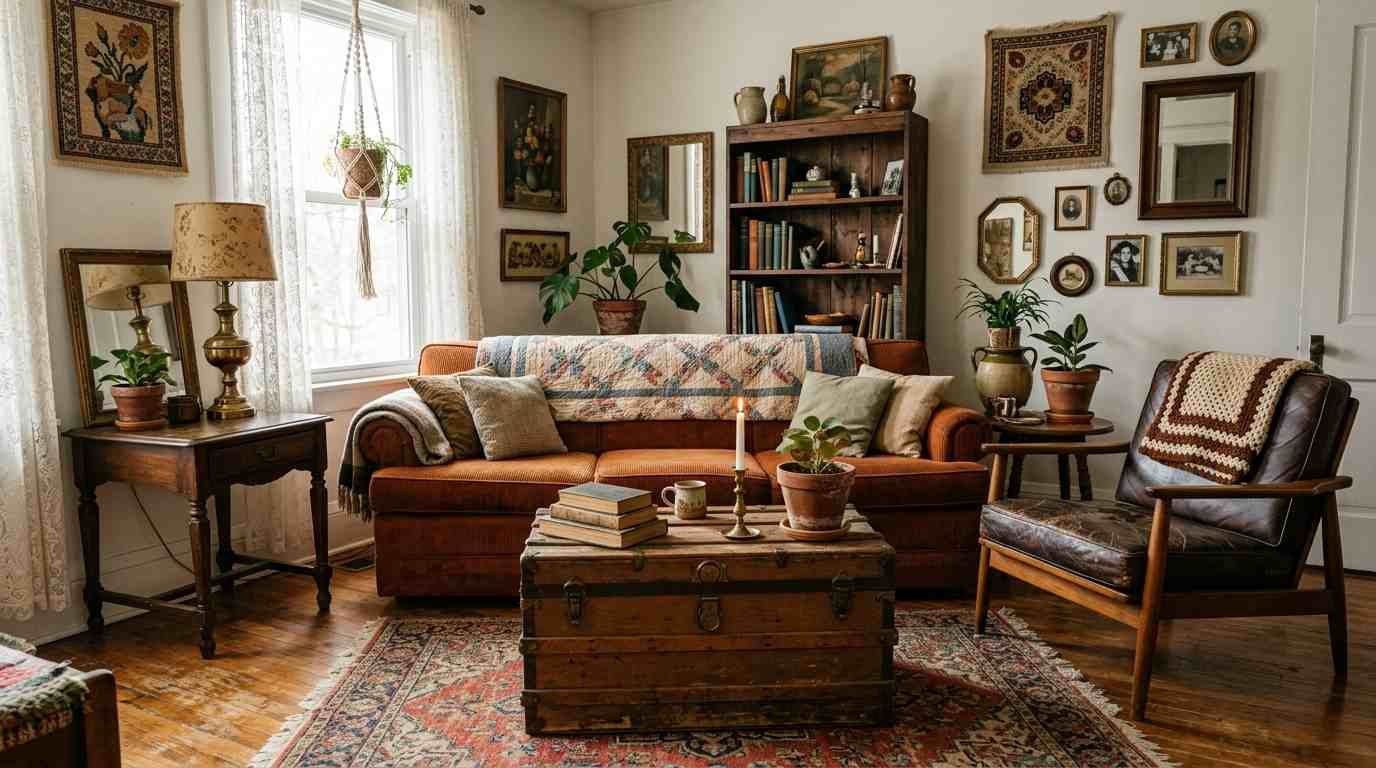
If you’ve been scrolling Pinterest for hours (and let’s be real, who hasn’t?), you’ve probably noticed bohemian design everywhere.
There’s something magnetic about it—the way those colorful rugs, mismatched patterns, and eclectic art pieces just work together.
It’s the opposite of rigid and sterile. Boho design feels lived-in, collected, and honestly, a lot more like home.
I used to think you needed a design degree to pull off this look. Turns out, you just need permission to break a few rules and trust your instincts.
Bohemian interior design is actually one of the most forgiving styles out there.
Want to mix that vintage Persian rug with modern furniture? Go for it. Paint an accent wall in terracotta while keeping the rest neutral? Perfect.
That’s the whole point.
Let me walk you through 35 ways to bring that soft, artistic bohemian vibe into your space—whether you’re starting from scratch or just adding touches to what you’ve already got.
Understanding Bohemian Design
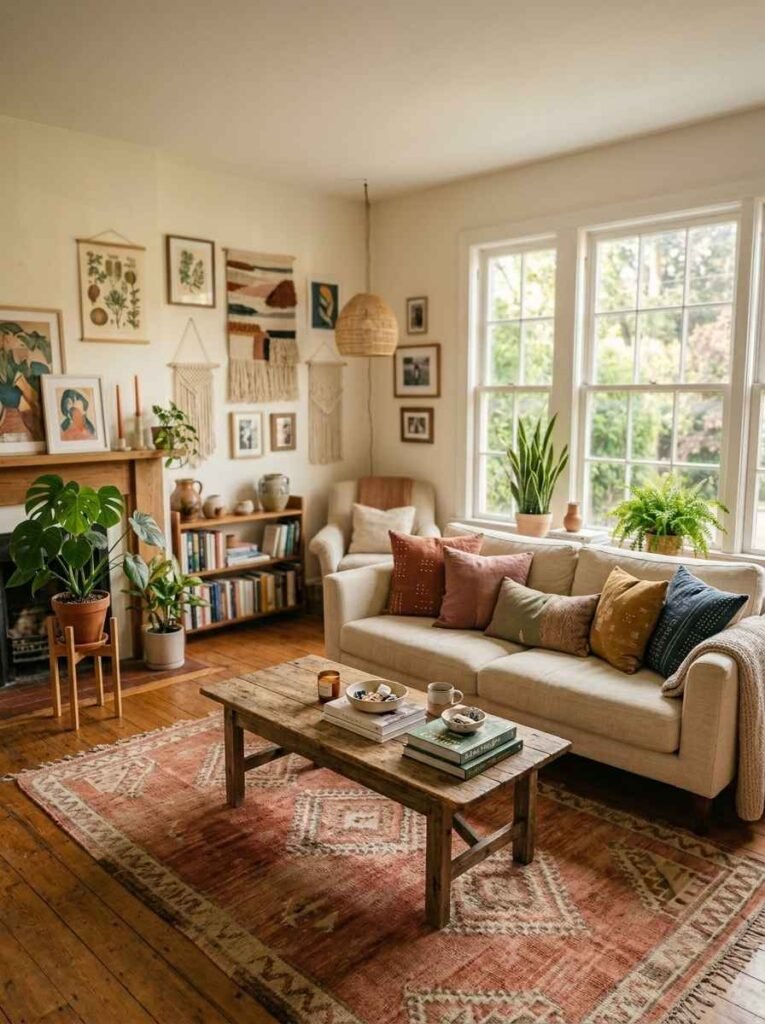
Before we get into specifics, let’s talk about what bohemian actually means.
It’s not just about throwing things together and calling it eclectic (though that’s definitely part of the appeal).
Boho design celebrates individuality, handcrafted elements, and a worldly aesthetic. Think global travels, thrifted finds, and art that matters to you personally.
The color palette typically leans soft—terracotta, dusty rose, sage green, warm whites, and cream. But here’s where it gets fun: you layer in richer jewel tones or burnt oranges for depth without looking chaotic.
| Element | Style | Why It Works |
|---|---|---|
| Color | Warm, earthy, with jewel tones | Creates cozy, artistic atmosphere |
| Textures | Woven, natural, layered | Adds dimension and interest |
| Furniture | Vintage, mismatched, low-key | Feels collected and personal |
| Accessories | Handmade, global, eclectic | Tells your story visually |
Walls & Paint Colors
Soft Paint Choices That Ground Your Space
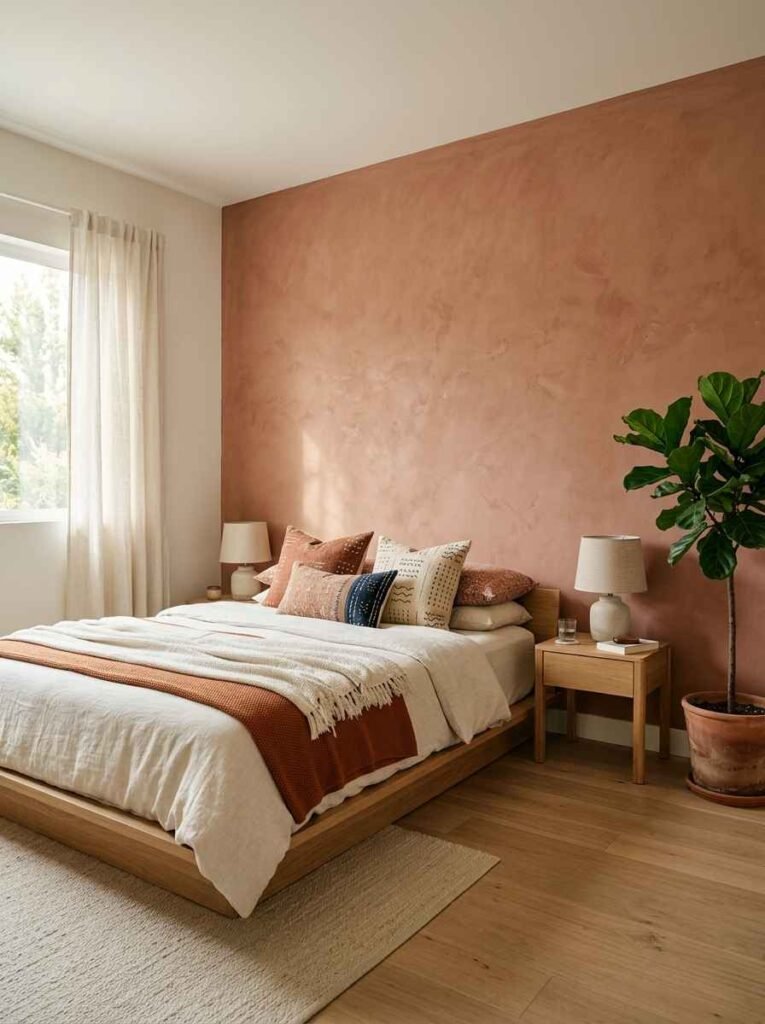
You don’t need bold accent walls for boho—though you can have them. I started with soft terracotta in my living room, and it completely changed how the space feels.
Warm without being aggressive. It makes everything else pop without fighting for attention.
Dusty sage is another winner. It’s muted enough to work as a backdrop, but it brings that earthy, natural vibe that boho thrives on.
Cream and off-white walls work great too, especially if you’re layering textiles and art to do the heavy lifting.
Pro tip: Don’t paint all four walls in a bold color. Pick one accent wall or keep three neutral and let your furniture and decor shine.
Wallpaper Moments
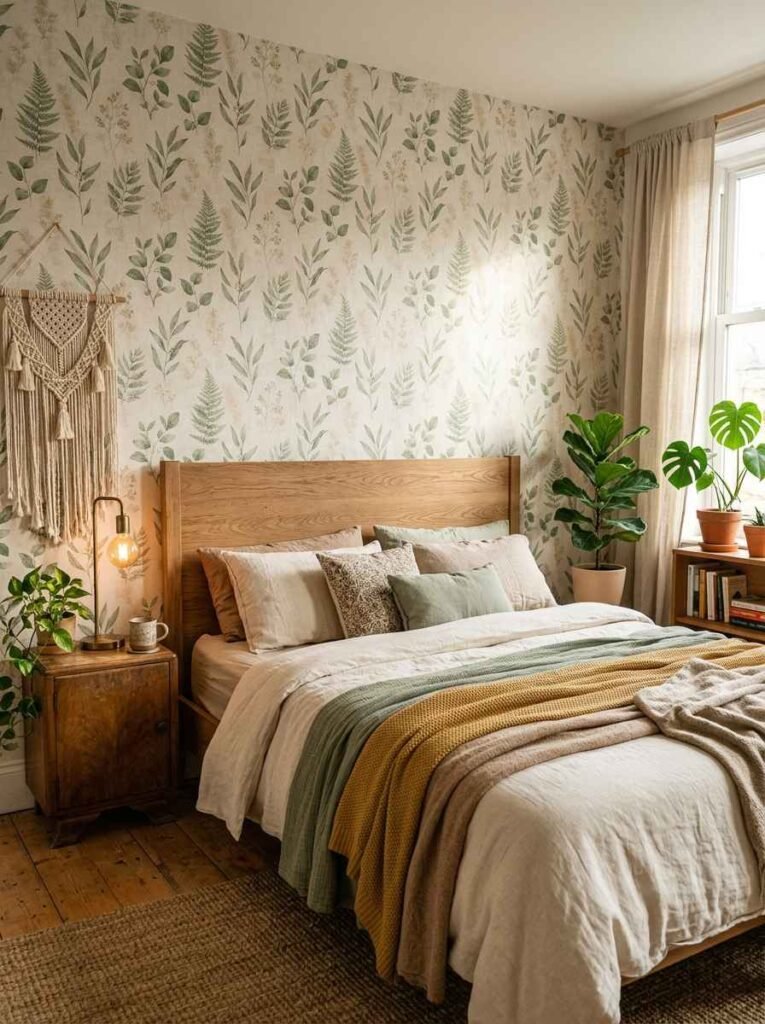
Geometric patterns, botanical prints, or subtle damask designs work beautifully in boho spaces. I’m talking about the kind that whispers rather than shouts. A feature wall behind your bed or sofa grounds the entire room and gives you a visual anchor without overwhelming the space.
Textiles: The Heart of Boho
Layering Rugs Like You Mean It
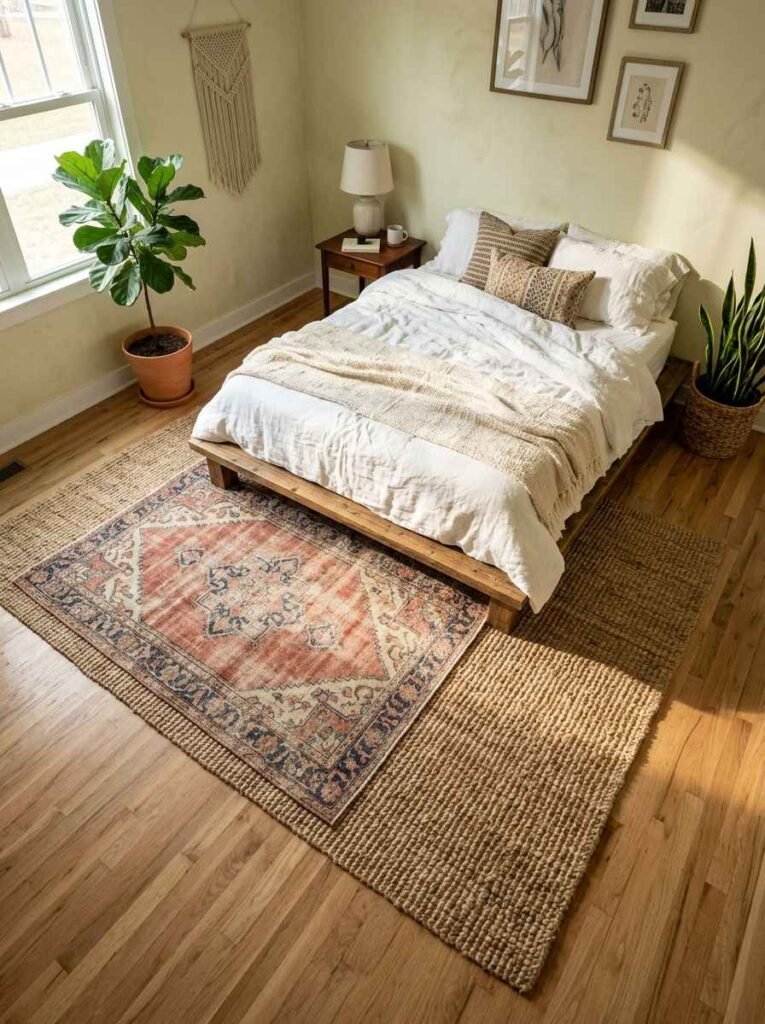
This is where bohemian design really starts to feel like yours. Skip the matching set approach.
I layer two rugs in my bedroom—a larger neutral jute base with a smaller patterned kilim on top.
The combination adds texture, defines the space, and honestly looks way more interesting than a single rug ever could.
Mix patterns. Old Persian designs with geometric kilims. Faded florals with stripes. The key is varying the scale of your patterns so they don’t visually compete.
Textured Throws & Blankets
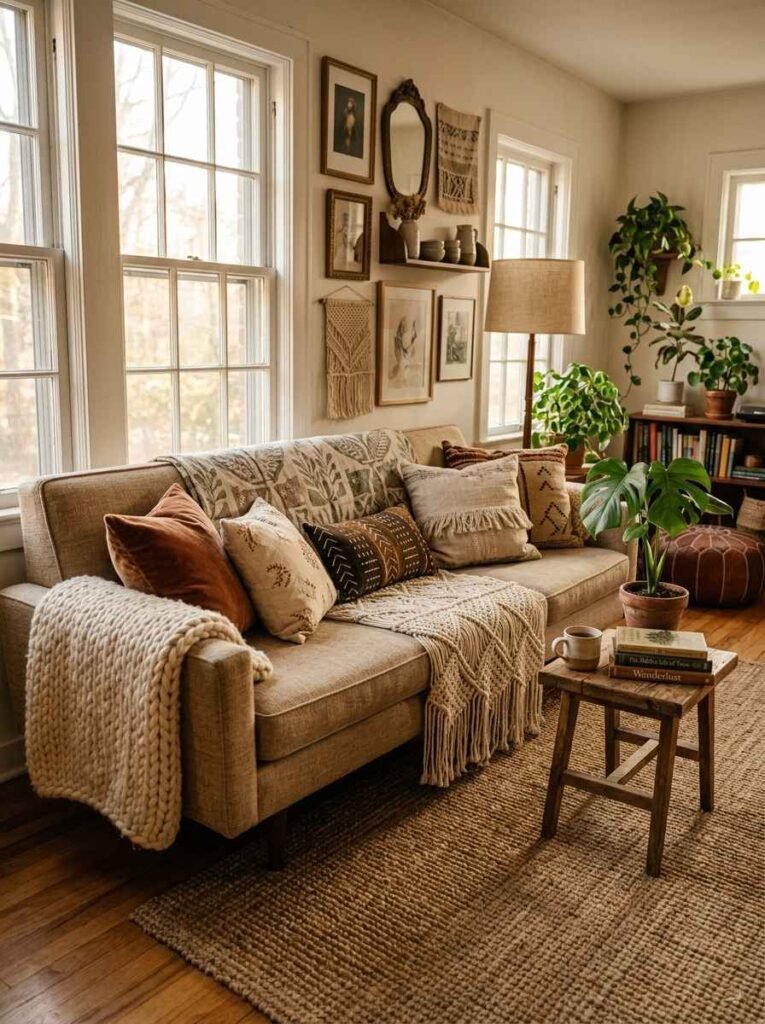
Drape them over sofas, chairs, even your bed. Macramé, chunky knit, linen, or faded printed fabrics.
These don’t need to match or be precious. The lived-in, collected feeling is exactly what you want.
Pillows That Tell a Story
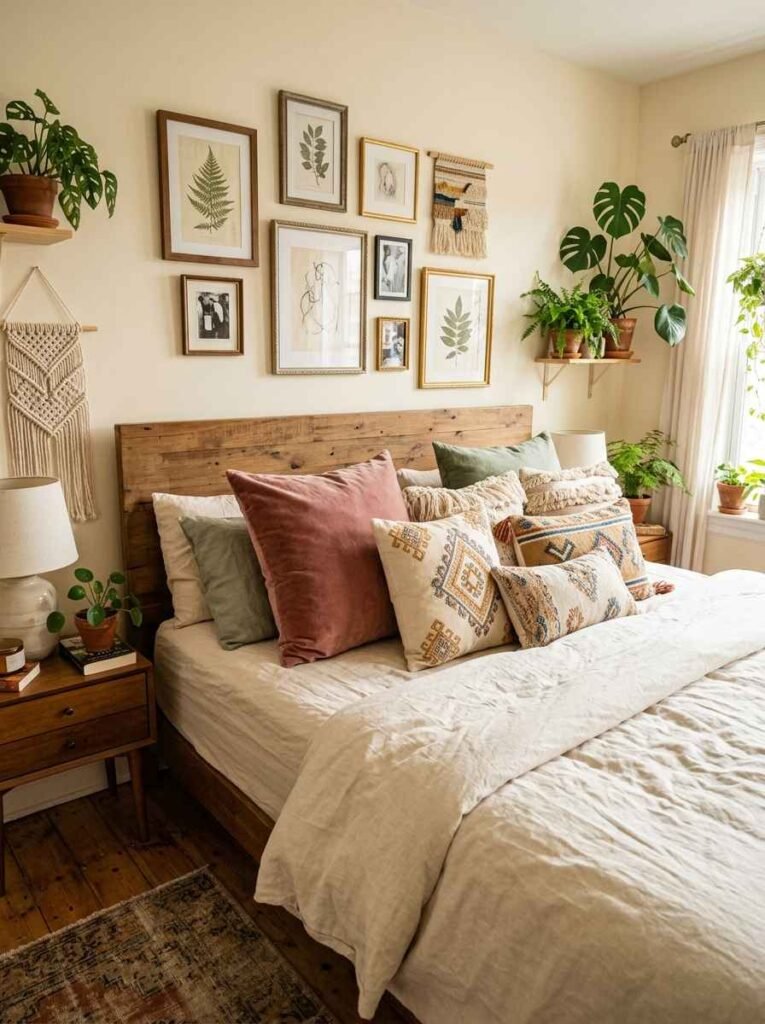
Different sizes, different textures, different patterns.
Velvet next to linen next to embroidered cotton. Include some neutral ones to balance busier patterns, but don’t shy away from color and texture variation.
Furniture: Mixing Old & New
Vintage & Secondhand Pieces
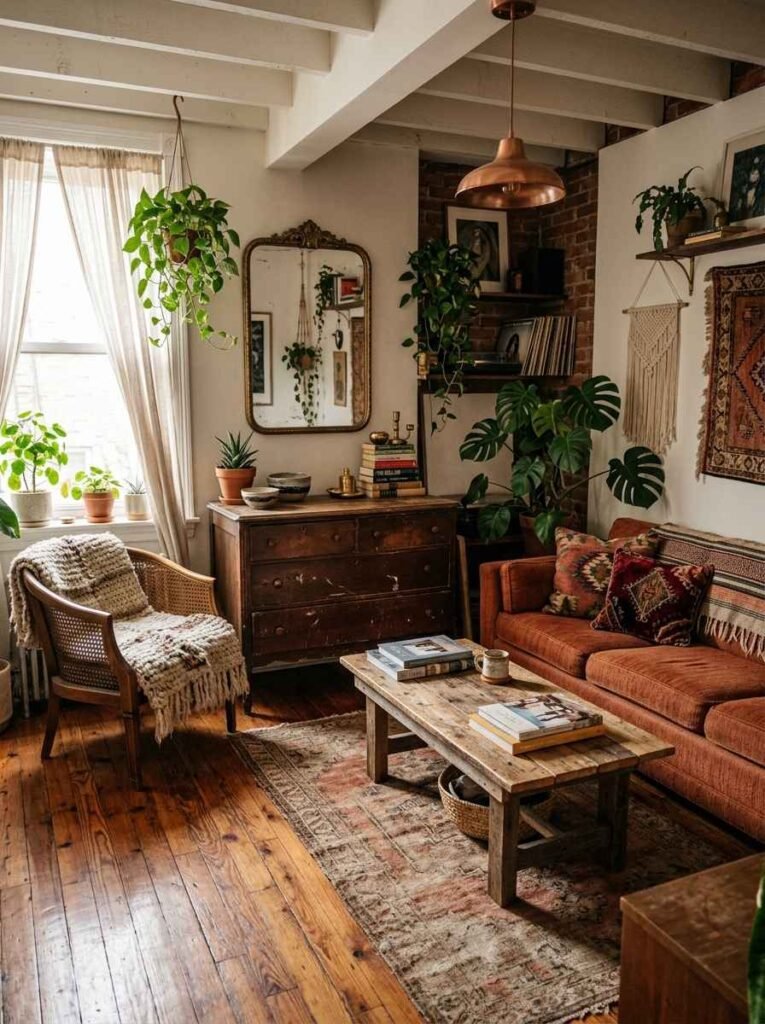
Thrift stores and estate sales are boho gold. That weathered wooden dresser, the caned chair, the low-slung sofa from the ’70s?
That’s not old—that’s authenticity. These pieces have more character than anything fresh from a big-box store, and they cost less too.
33 Bohemian House Interior Ideas That Feel Warm, Free & Stylish
I furnished half my living room from vintage finds, and honestly, I think about those pieces more than the new stuff. They have stories (even if I make them up in my head :).
Low-Profile Seating
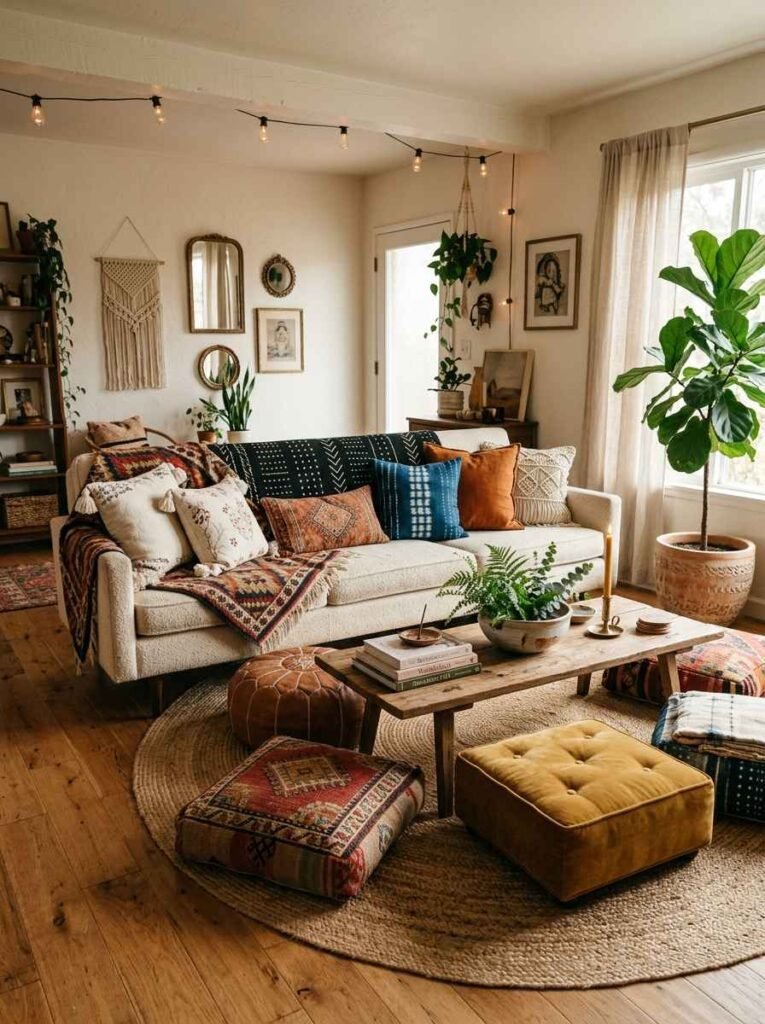
Boho design often skips the tall, formal sofa. Low ottomans, floor cushions, and ground-level seating feel more relaxed and open.
If you do have a sofa, choose one with clean lines in a neutral fabric. Let your textiles do the decorating.
Natural Wood Elements
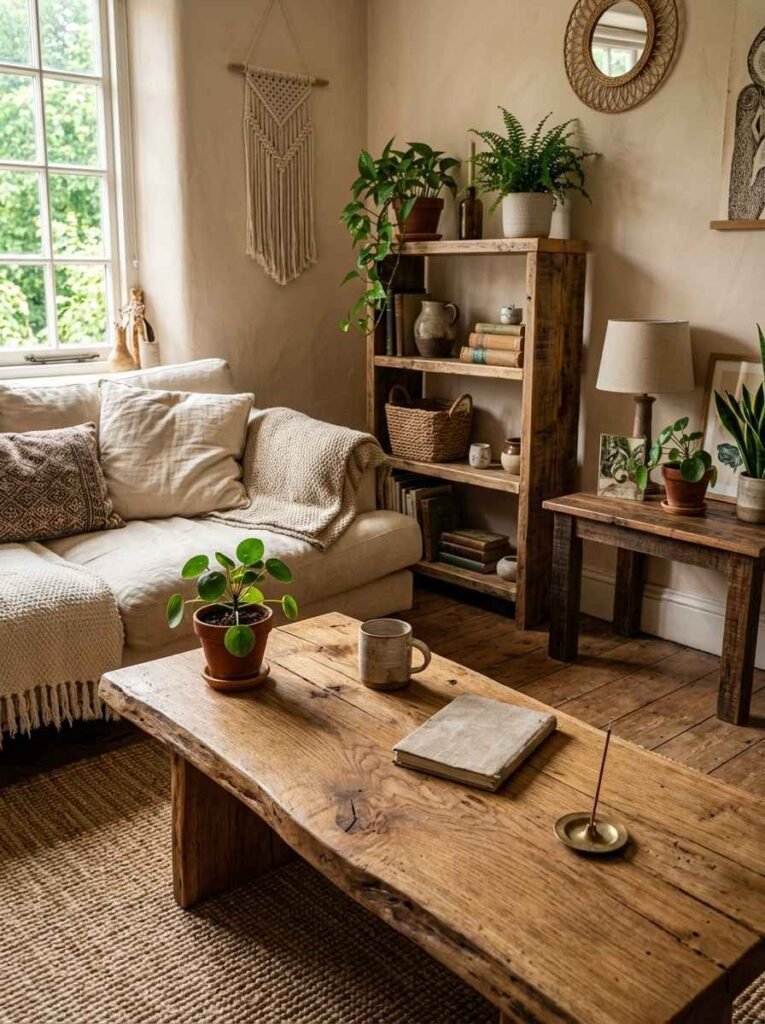
Unfinished or lightly stained wood works beautifully.
Coffee tables, side tables, shelving units. The grain and texture feel authentic and grounding in a way that sleek finishes don’t.
Wall Decor & Art
Gallery Walls Done Right
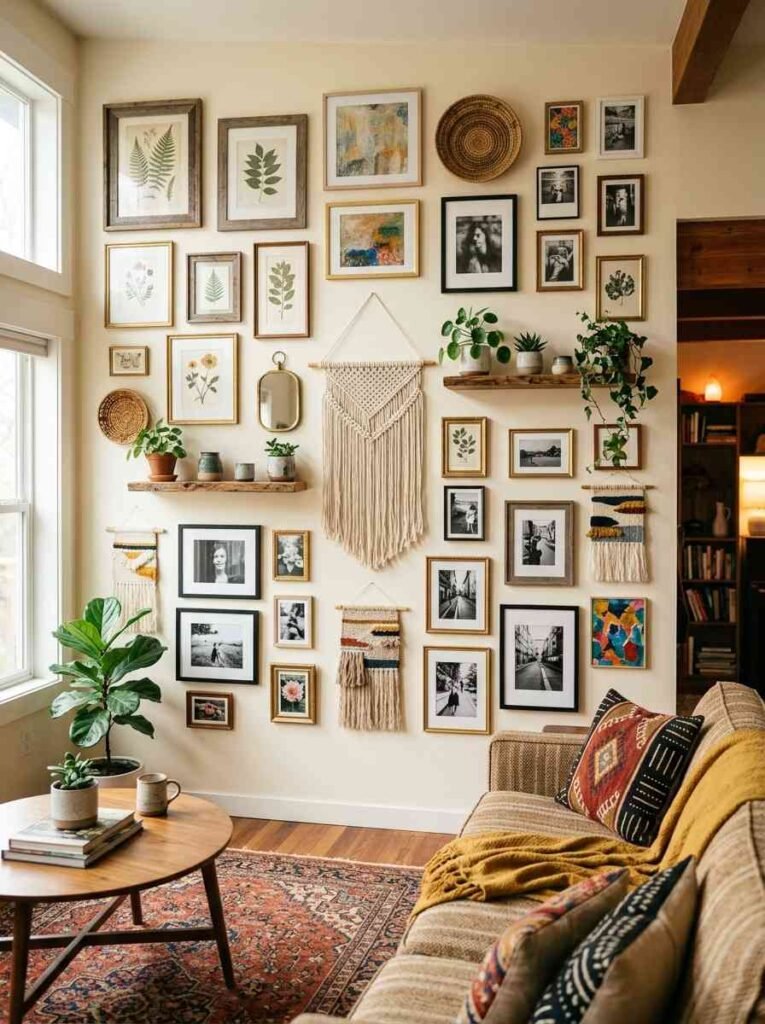
A curated collection of art, photographs, and textile pieces creates a focal point without looking like a museum.
Frame things at different sizes. Mix mediums—paintings, prints, woven hangings, even small shelves with objects.
The trick? Don’t overthink spacing. Bohemian gallery walls feel a bit organic, a bit “I added this because I loved it,” not algorithmically perfect.
Macramé Wall Hangings
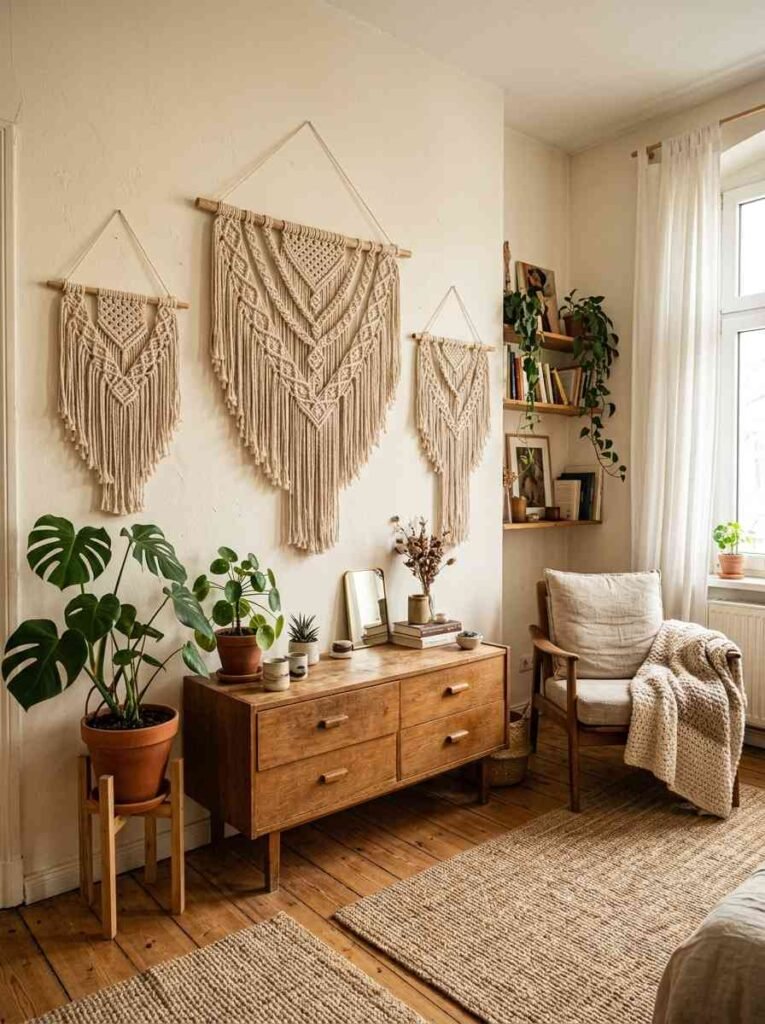
You’ve seen these everywhere, and there’s a reason why. They add texture and that handcrafted element without being overwhelming.
Large or small, they work as solo pieces or as part of a gallery wall.
Botanical Prints & Pressed Plants
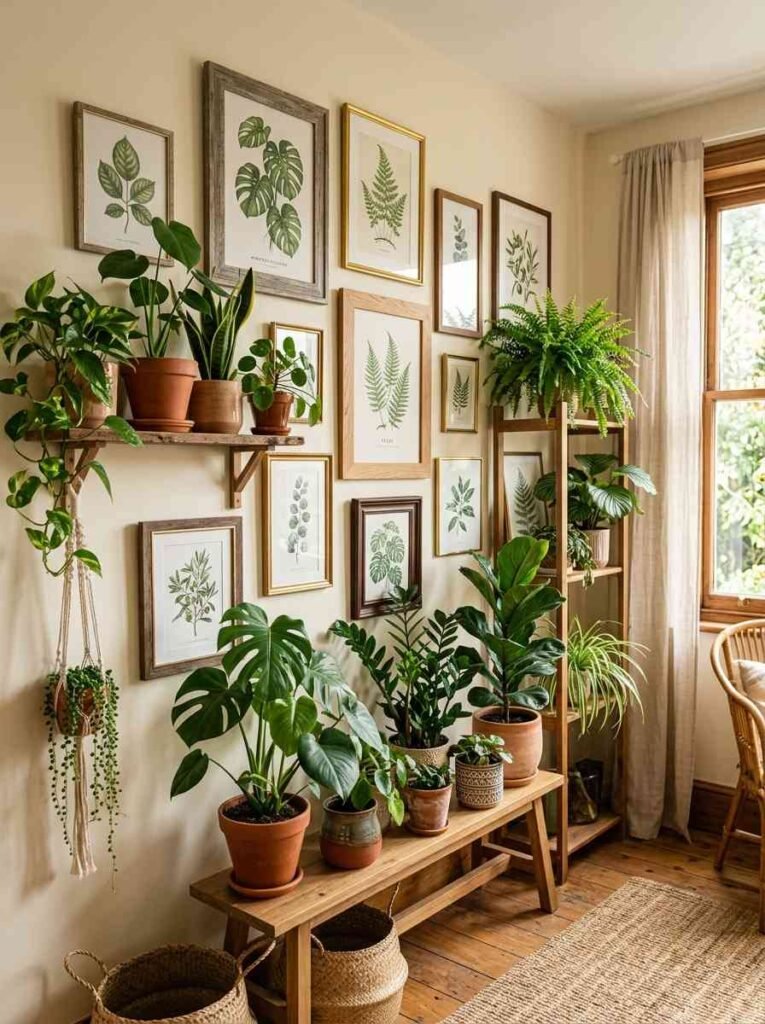
Botanical art feels natural and artistic at once.
Pair printed botanicals with actual plants to blur that line between art and living decoration.
Woven Wall Baskets
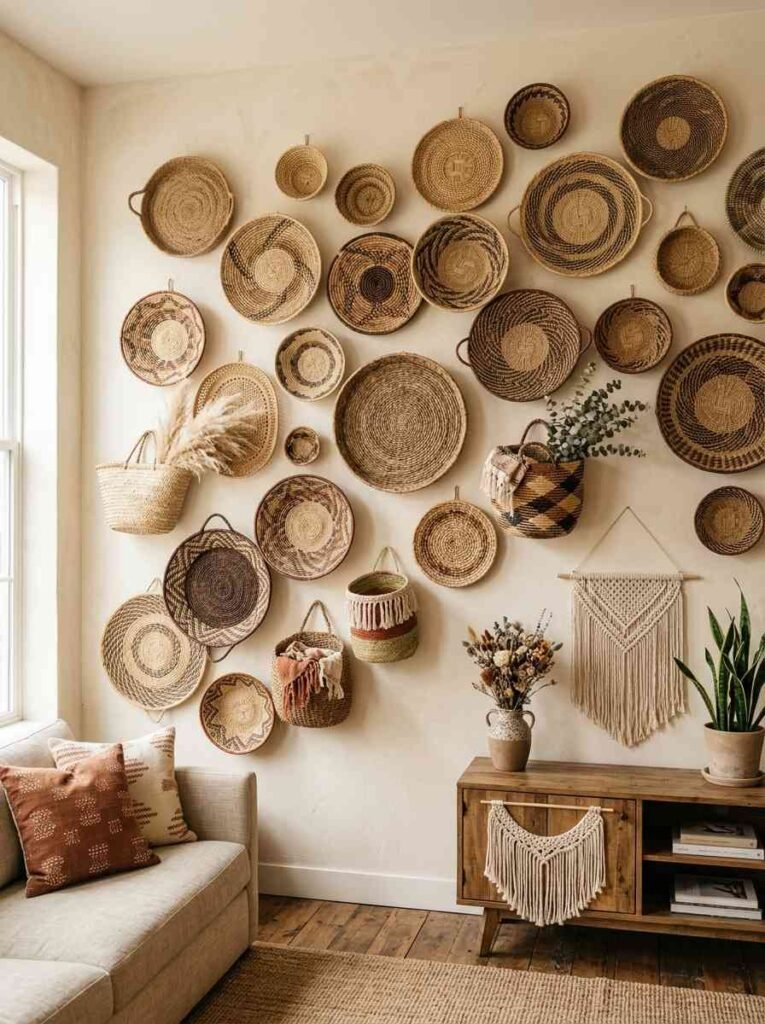
Functional and decorative. Hang them to add warmth and texture to otherwise plain walls.
Plants & Greenery
Go Big with Statement Plants
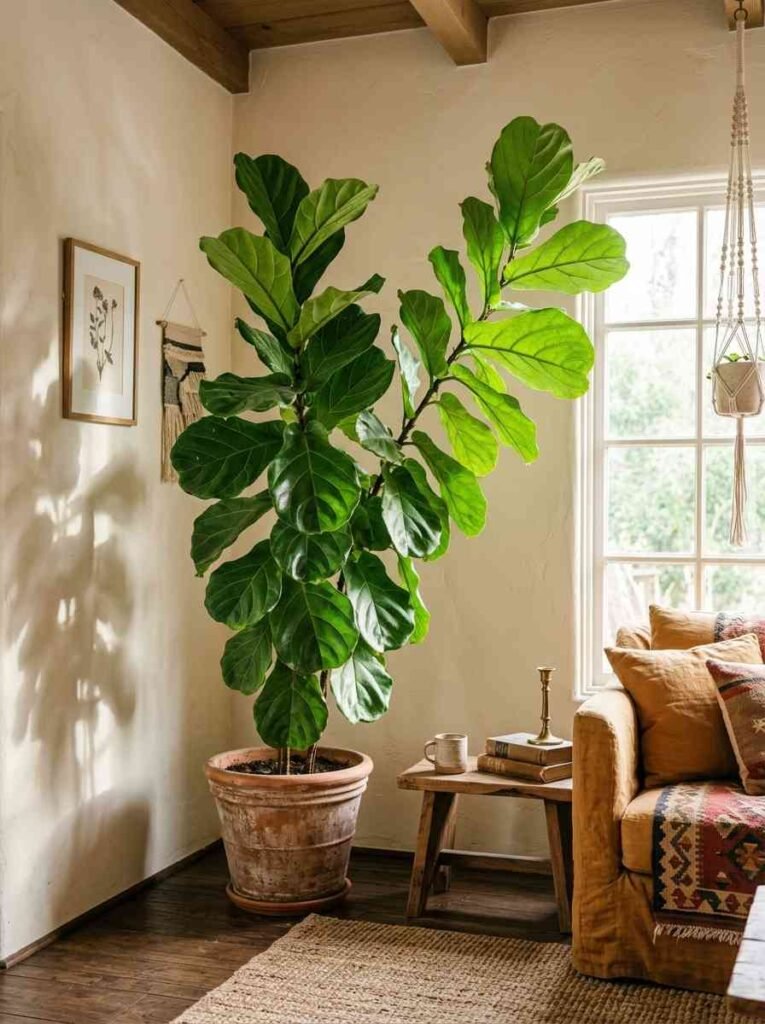
A fiddle leaf fig, tall snake plant, or monstera in a corner commands attention without needing anything else nearby.
These plants feel like sculpture when they’re large enough.
Cluster Smaller Plants
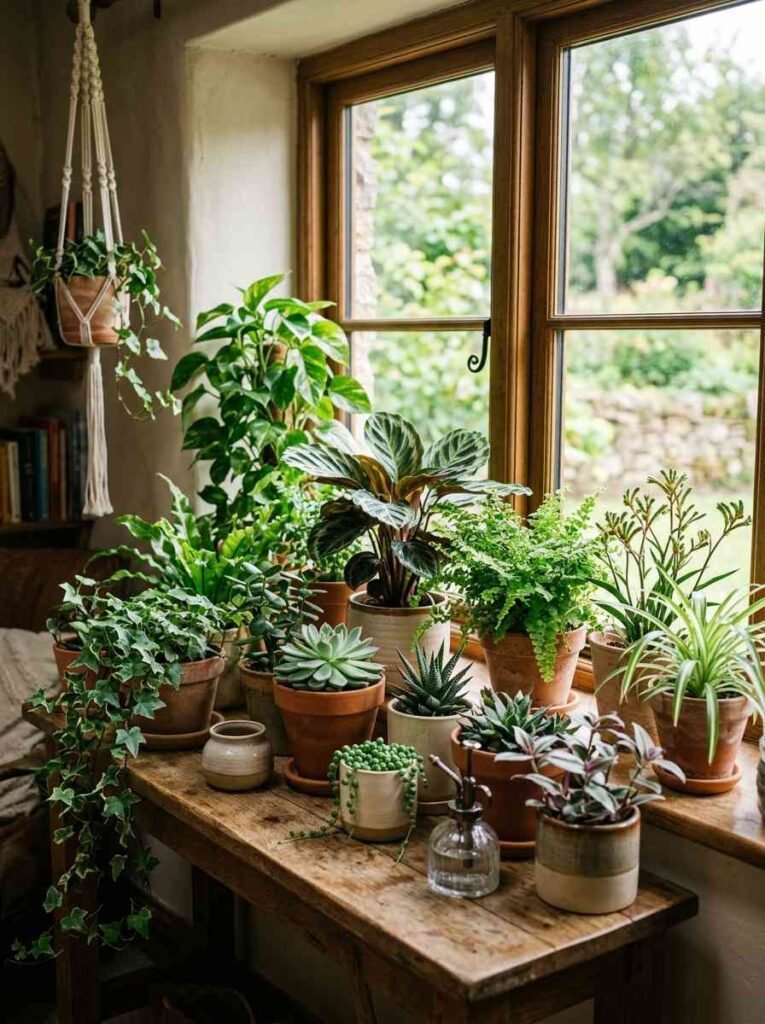
Grouping plants on shelves, windowsills, or side tables creates visual interest. Varying heights and sizes keeps it from looking staged. Plus, they’re easier to care for clustered together (they create humidity for each other).
Hang Plants from Macramé Hangers
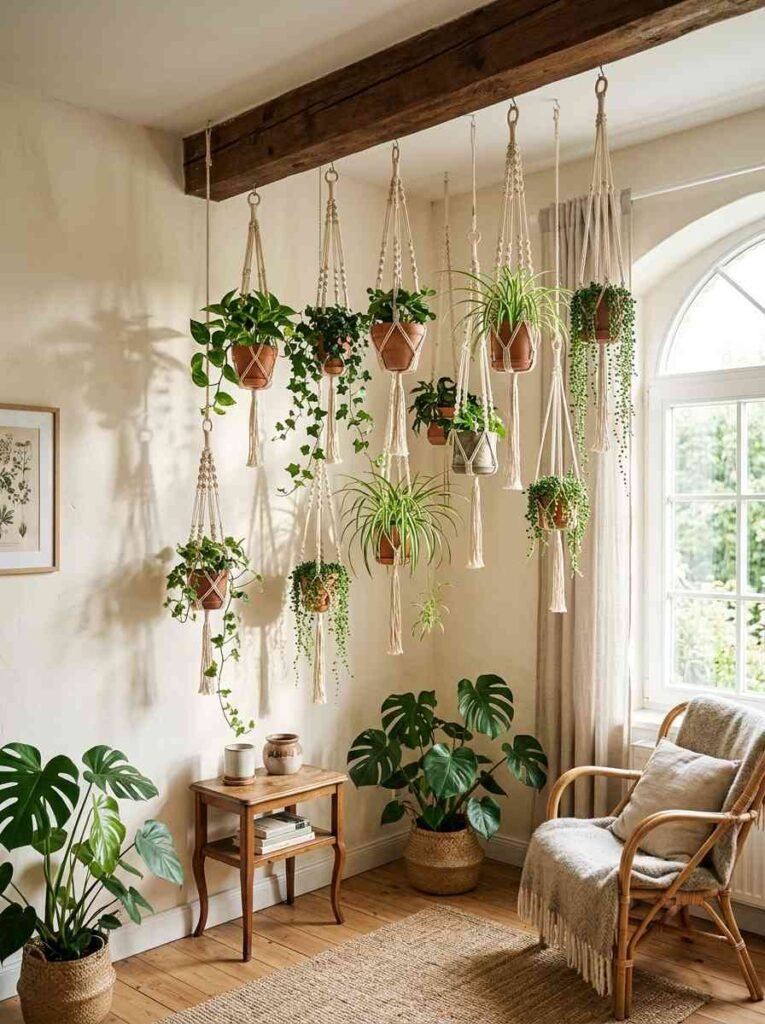
This is boho 101, but it works because it genuinely looks good. Hanging plants draw the eye upward and soften harsh ceiling lines.
Ceramic & Terracotta Pots
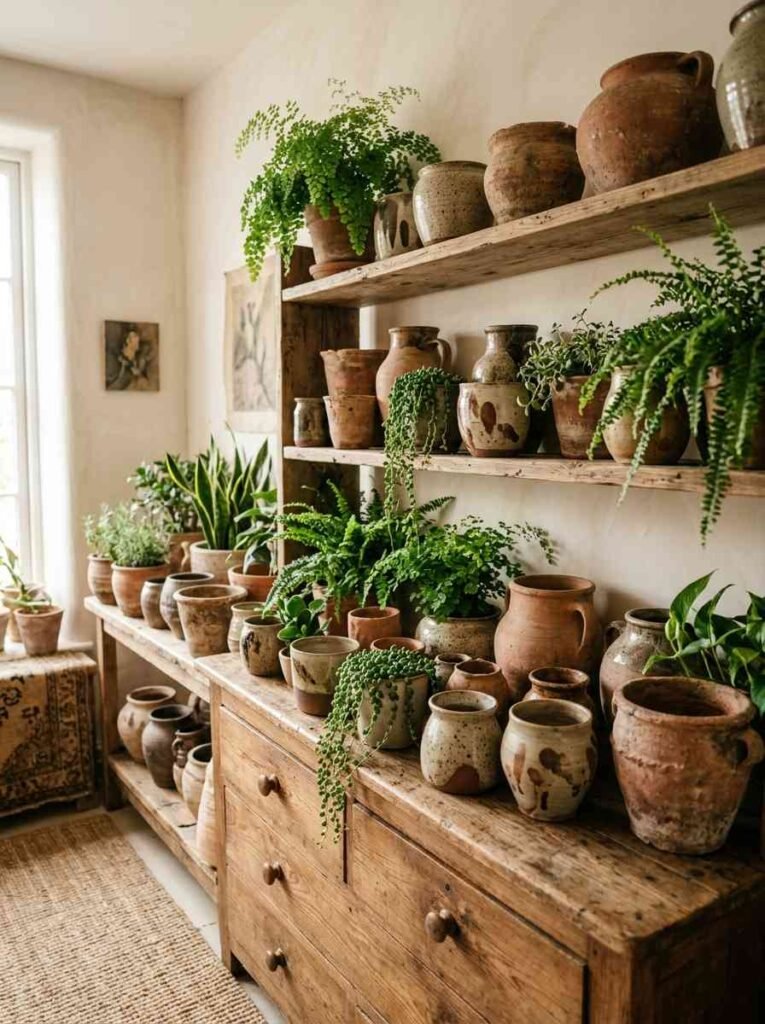
Handmade ceramic pots or simple terracotta—don’t go for pristine matching planters. Slightly imperfect, natural materials feel way more bohemian.
Lighting
Warm Ambient Lighting
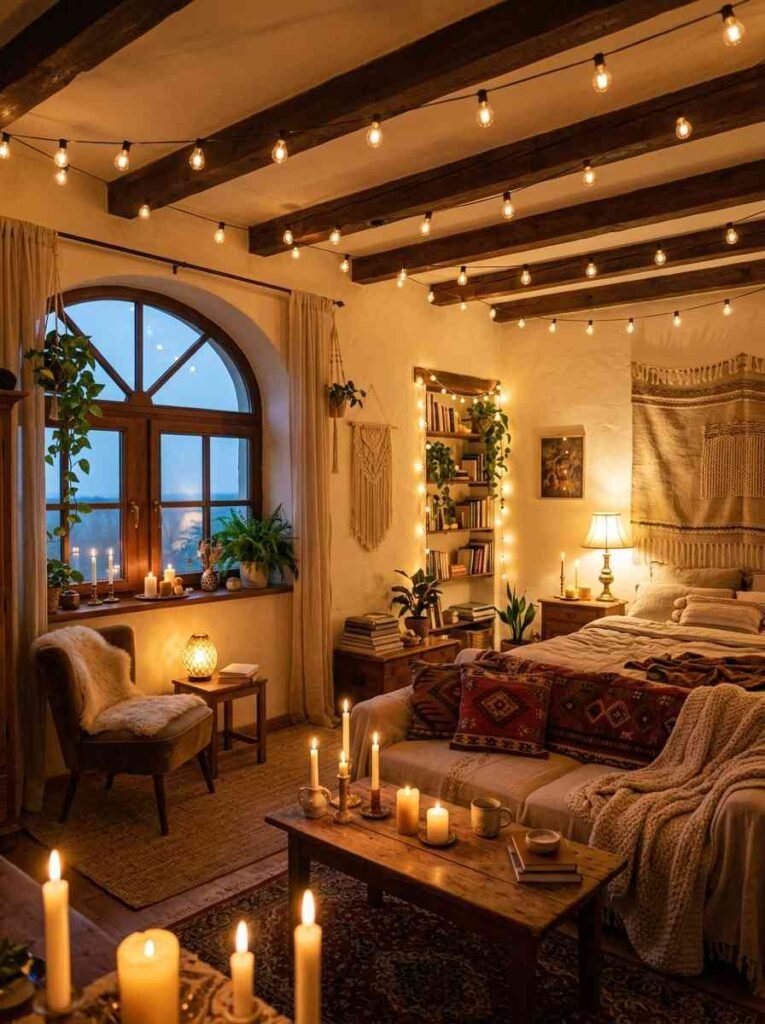
Ditch the harsh overhead lights. Boho spaces glow. String lights, lanterns, vintage lamps, or dimmable warm bulbs create that soft, artistic atmosphere you’re after.
Vintage Lamps & Fixtures
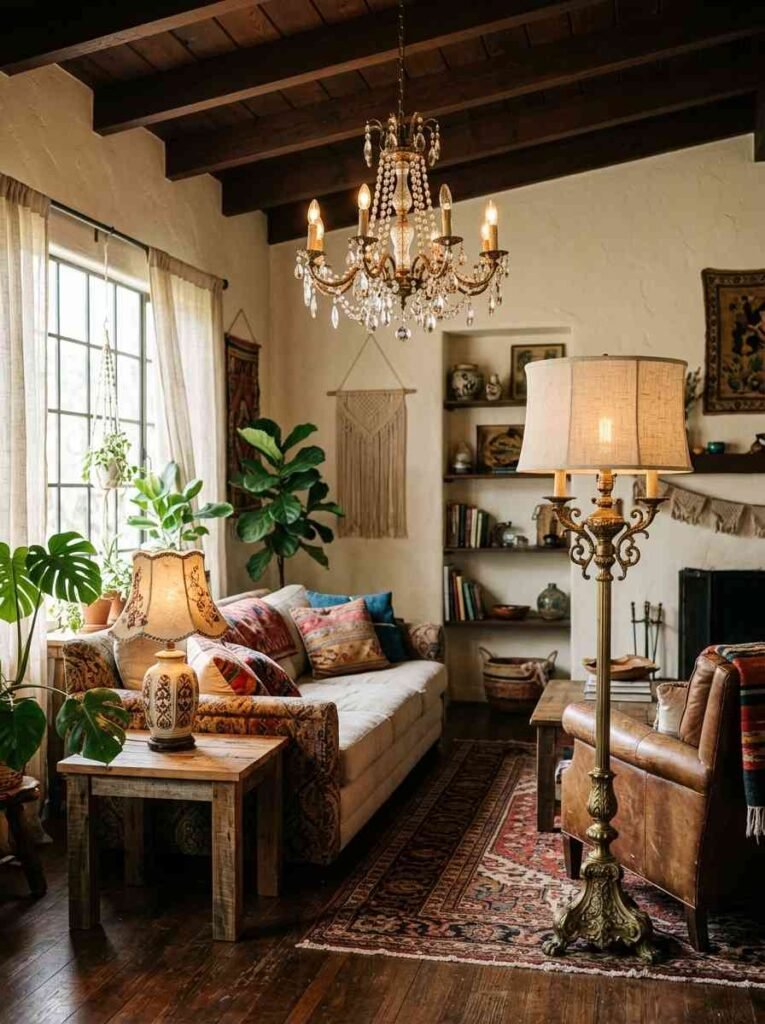
An ornate brass lamp, a woven pendant light, or a vintage chandelier all add character.
These don’t need to match your other furniture—mismatched lighting actually reinforces the boho aesthetic.
Candles Everywhere
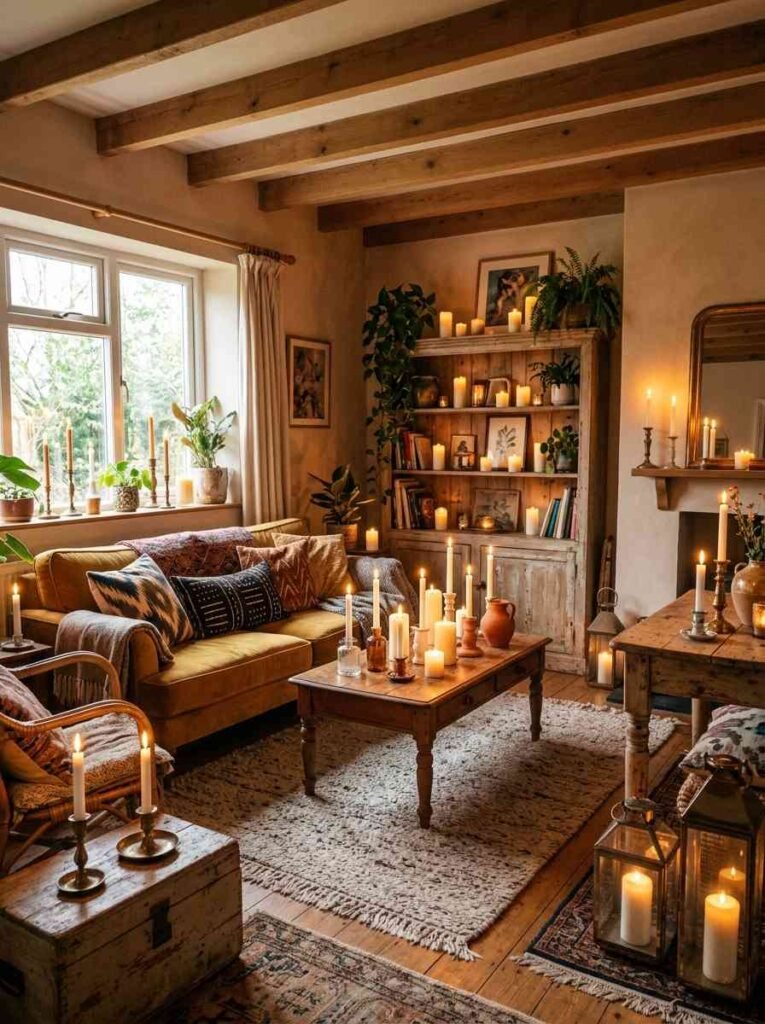
Real candles (not just for decoration) in varied heights and holders. They cost almost nothing and transform a room the moment you light them.
Accessories & Collections
Displaying Collections Intentionally
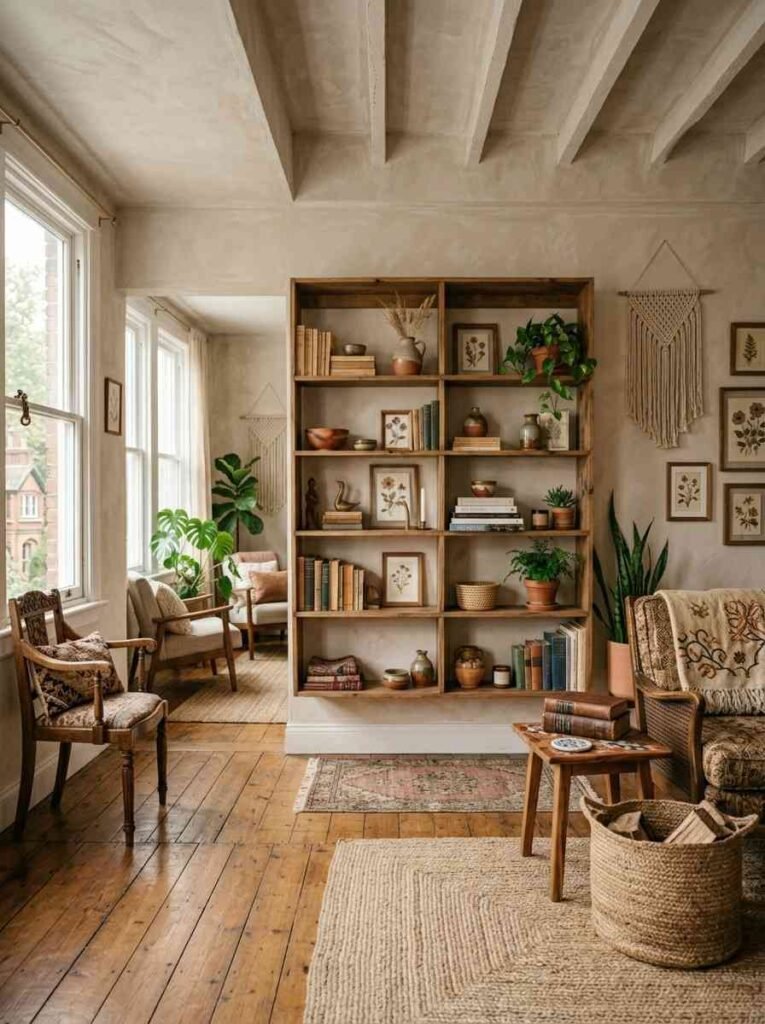
Boho spaces often showcase collected items—books, ceramics, vintage finds, travel souvenirs.
Arrange them on shelves with some breathing room. Cluster, don’t line them up perfectly.
Mirrors (in Interesting Frames)
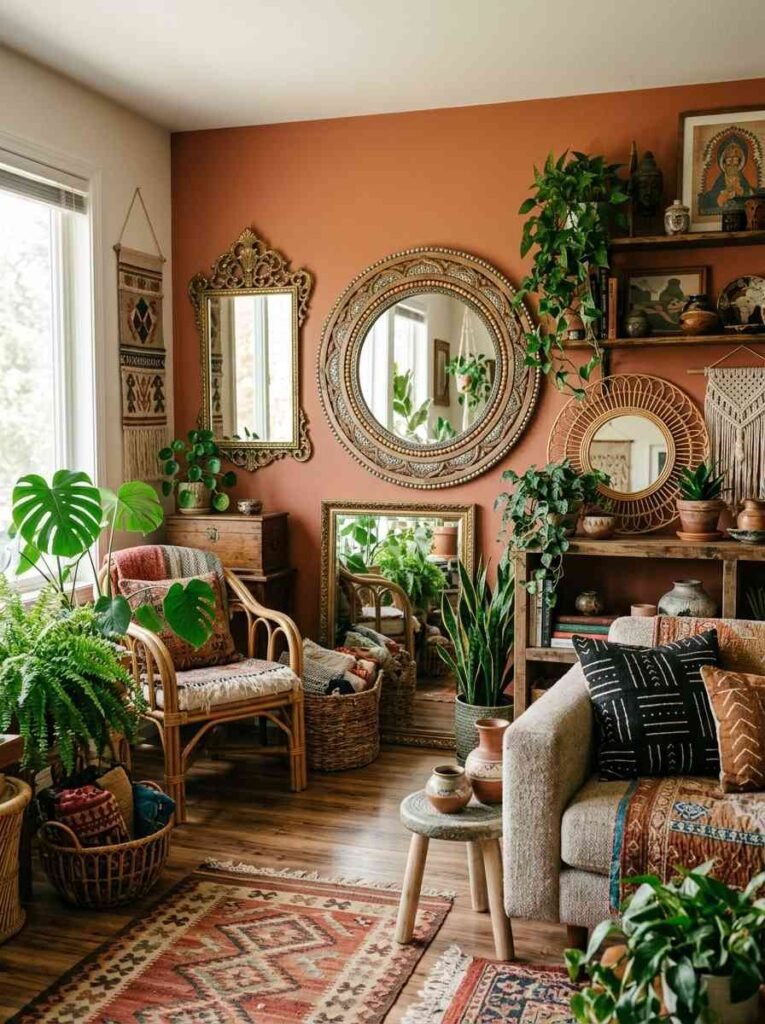
Ornate vintage mirrors, woven rattan-framed mirrors, or brass-rimmed pieces reflect light and make spaces feel larger.
Bohemian design loves a good mirror.
Ceramics & Pottery
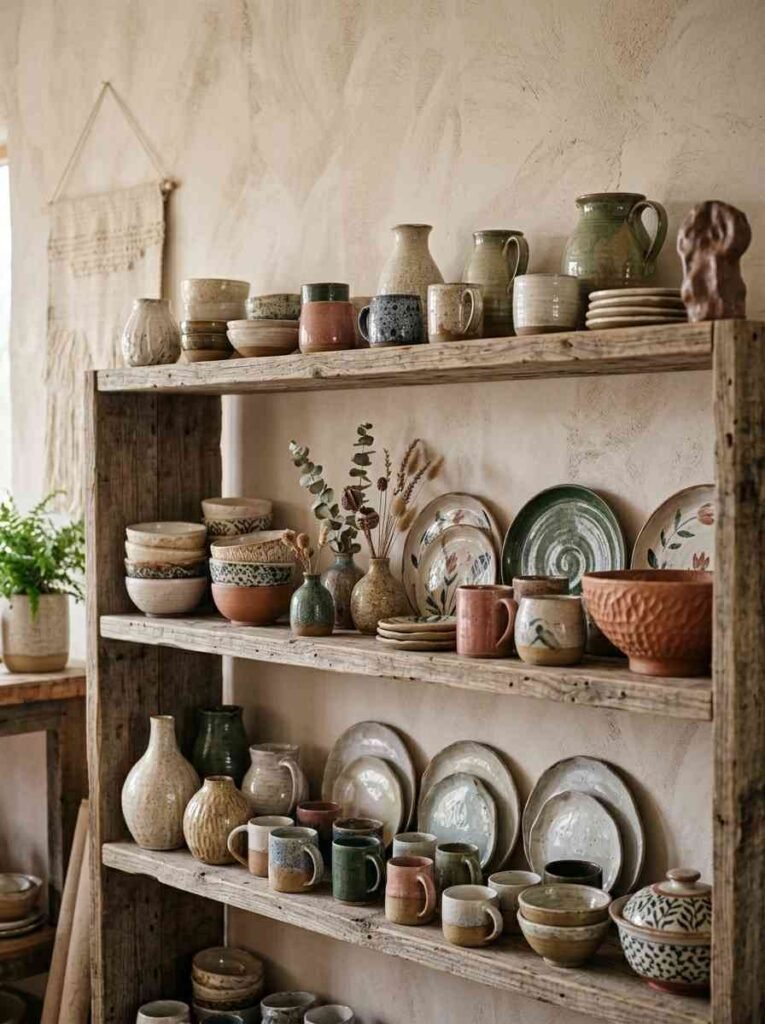
Handmade bowls, plates, vases. Imperfections and irregular glazing are features, not flaws. Display these on shelves or tables where they can be appreciated.
Books as Decor
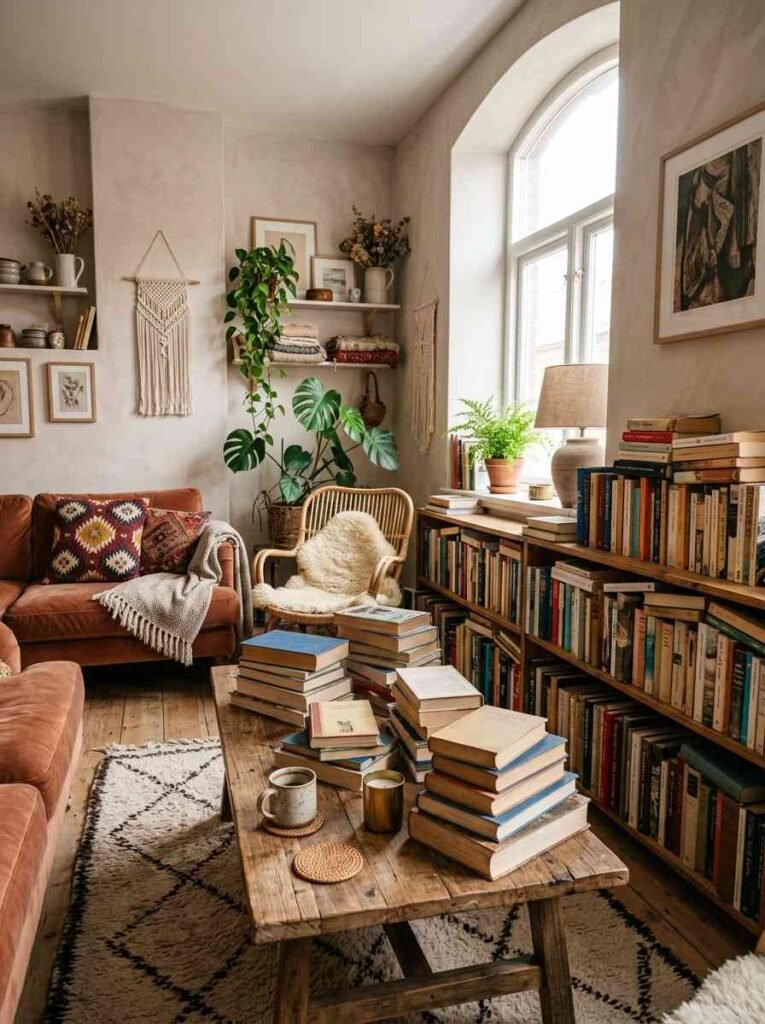
Stack books on coffee tables, nightstands, or shelves. This sounds obvious, but the way you arrange them matters.
Mix orientations, heights, and colors for visual interest.
Global Textiles
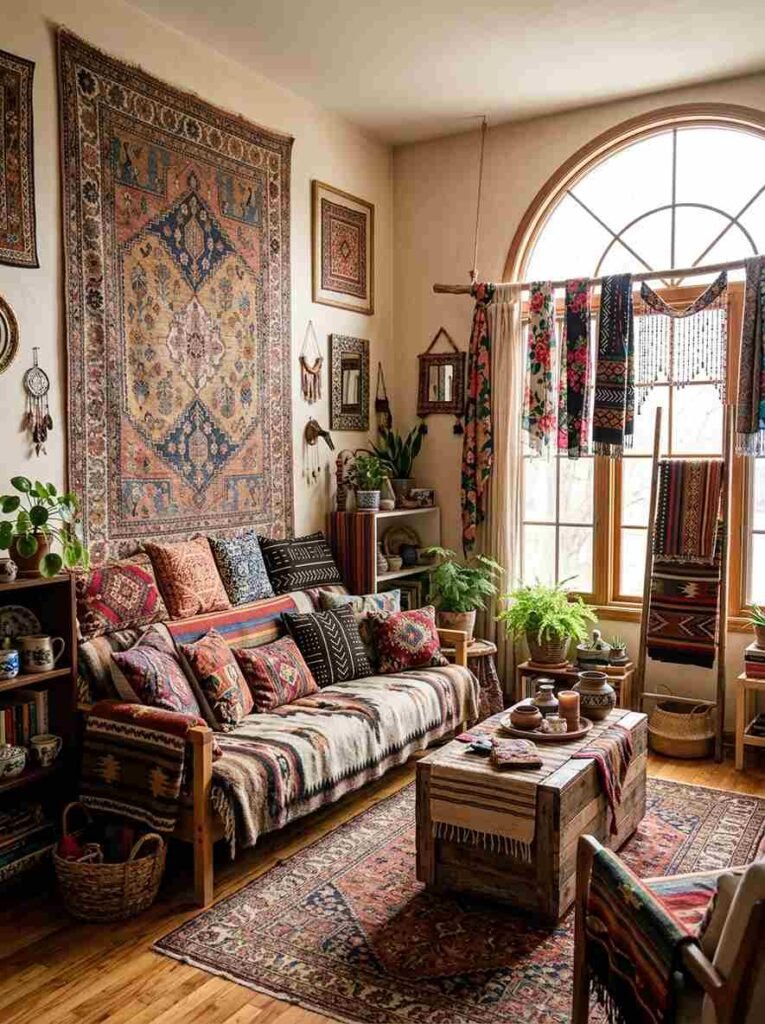
Tapestries, scarves, or fabric wall hangings from travels or markets. These add color and that worldly, collected feeling boho thrives on.
Color Coordination Without Matching
Tying It Together with a Palette
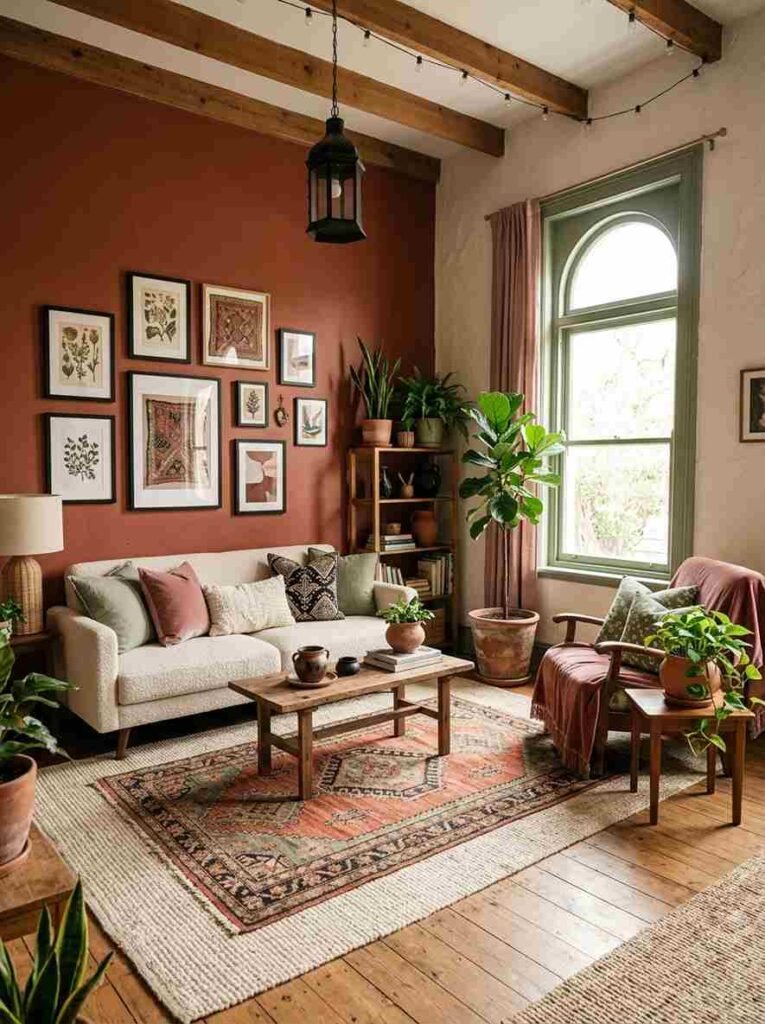
Pick 3–5 colors and repeat them throughout the room. Mine are terracotta, sage, cream, dusty rose, and warm black.
These show up in different textures and patterns, creating cohesion without uniformity.
Neutral Anchors
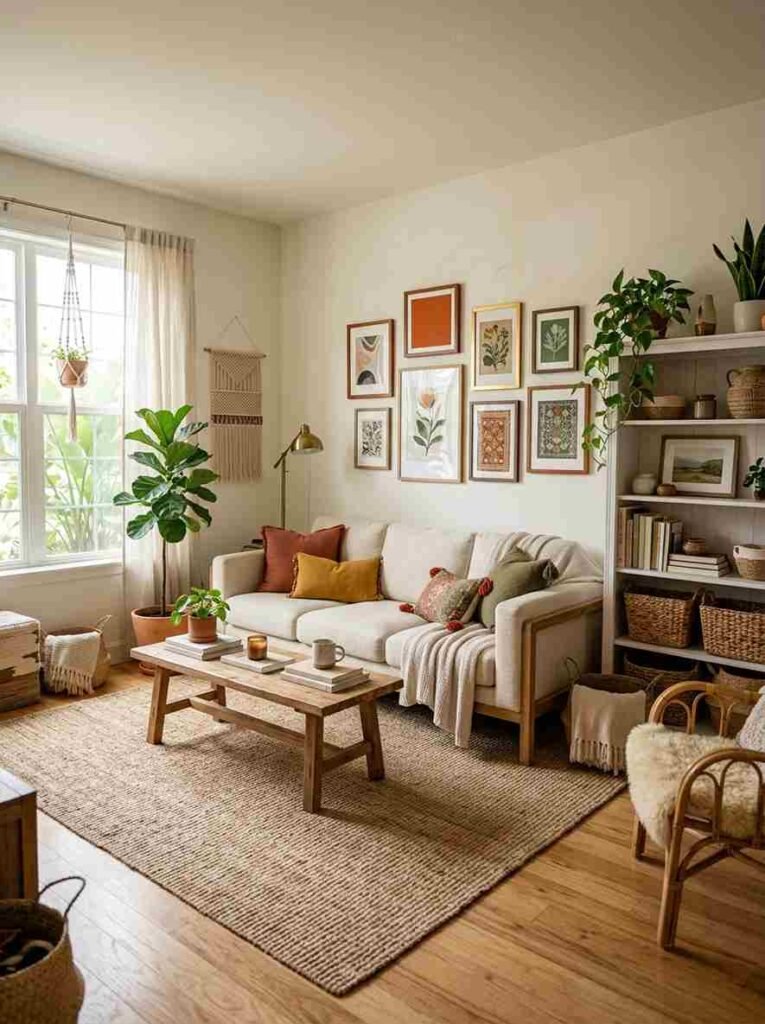
Too many colors at once reads chaotic instead of collected.
Use cream, white, or natural wood to give your eye places to rest.
Accent Colors Through Accessories
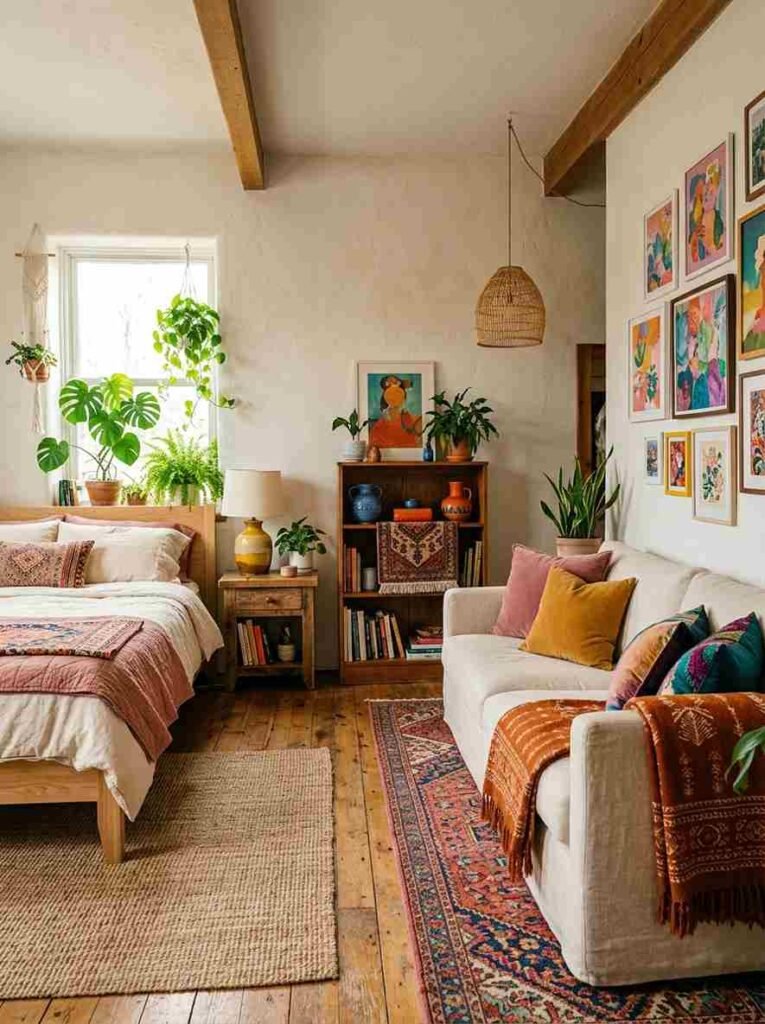
Don’t commit to bright colors in large furniture pieces. Use them in pillows, throws, art, and smaller decor items. This keeps things flexible if your taste shifts.
The Bedroom Bohemian
Creating a Cozy Sleep Sanctuary
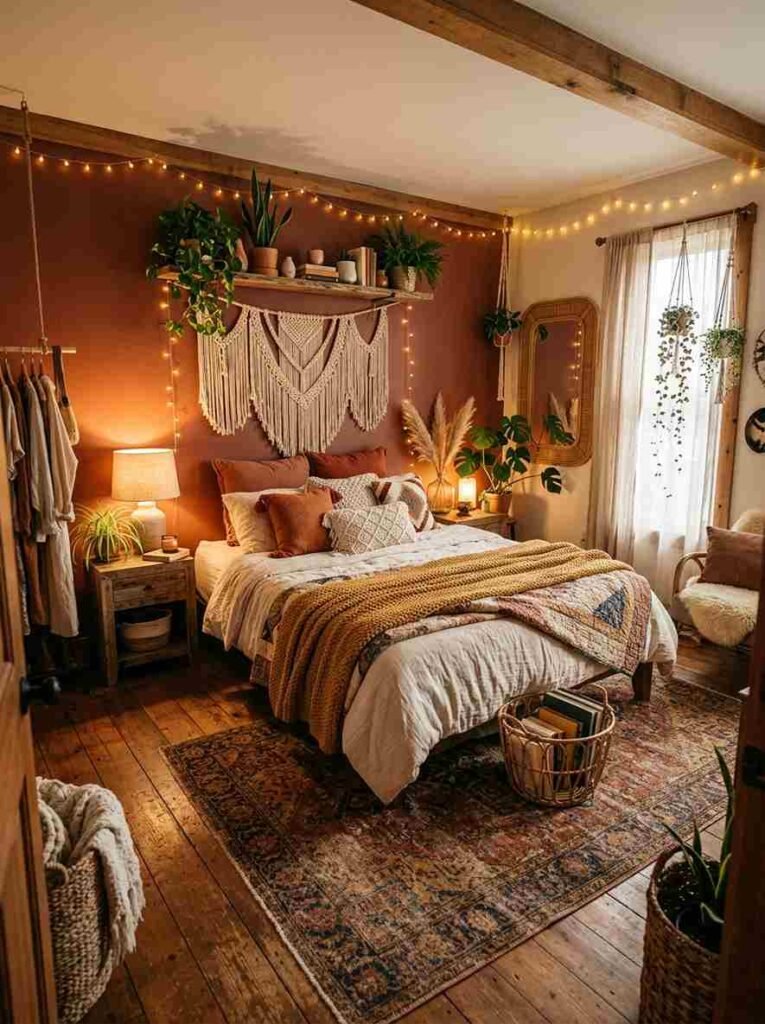
Soft linens, layered textiles, and warm lighting make bedrooms feel like actual retreats.
A painted accent wall behind the bed or a large tapestry creates a focal point.
String lights or a vintage lamp provide gentle illumination.
Pile on pillows and throws without worry—boho bedrooms are supposed to look comfortable and inviting, not minimal.
The Living Room Vibe
Arranging Seating for Connection
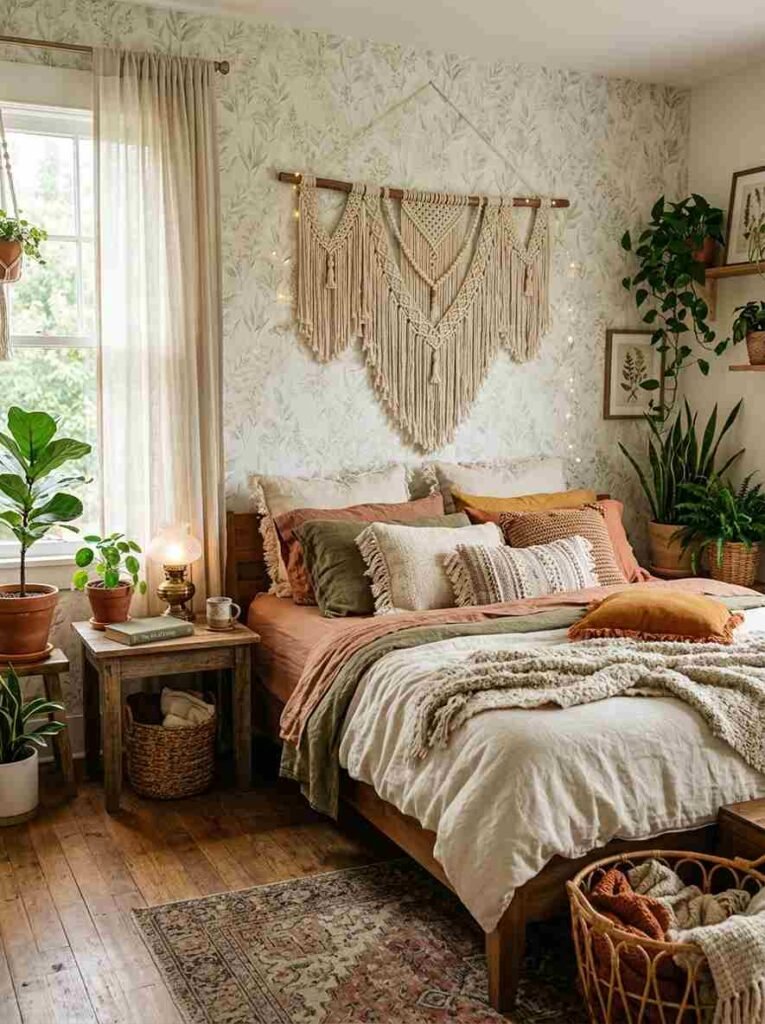
Low seating, floor cushions, and varied furniture heights create a relaxed gathering space.
You don’t need a formal sofa-chairs-table arrangement. Angle pieces toward each other and layer in rugs to define the space.
Finishing Touches
Adding Personality Without Clutter
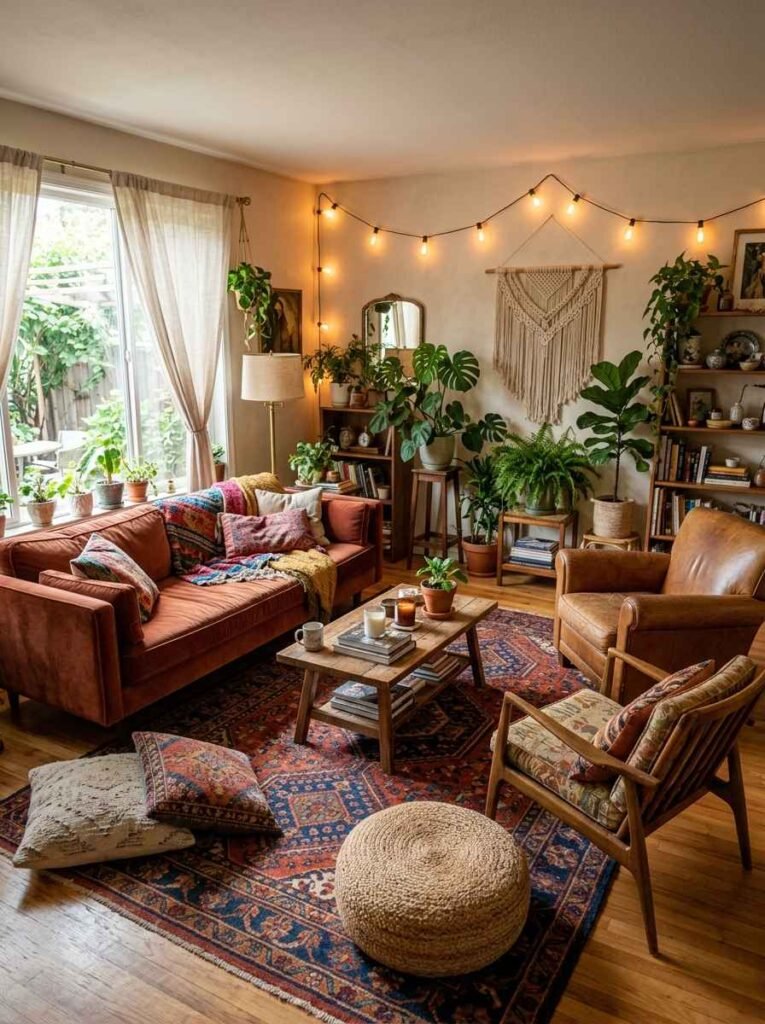
The difference between bohemian and chaotic? Intentionality.
Every piece should either serve a purpose or bring you joy. If it’s just taking up space, it doesn’t belong.
Seasonal Swaps
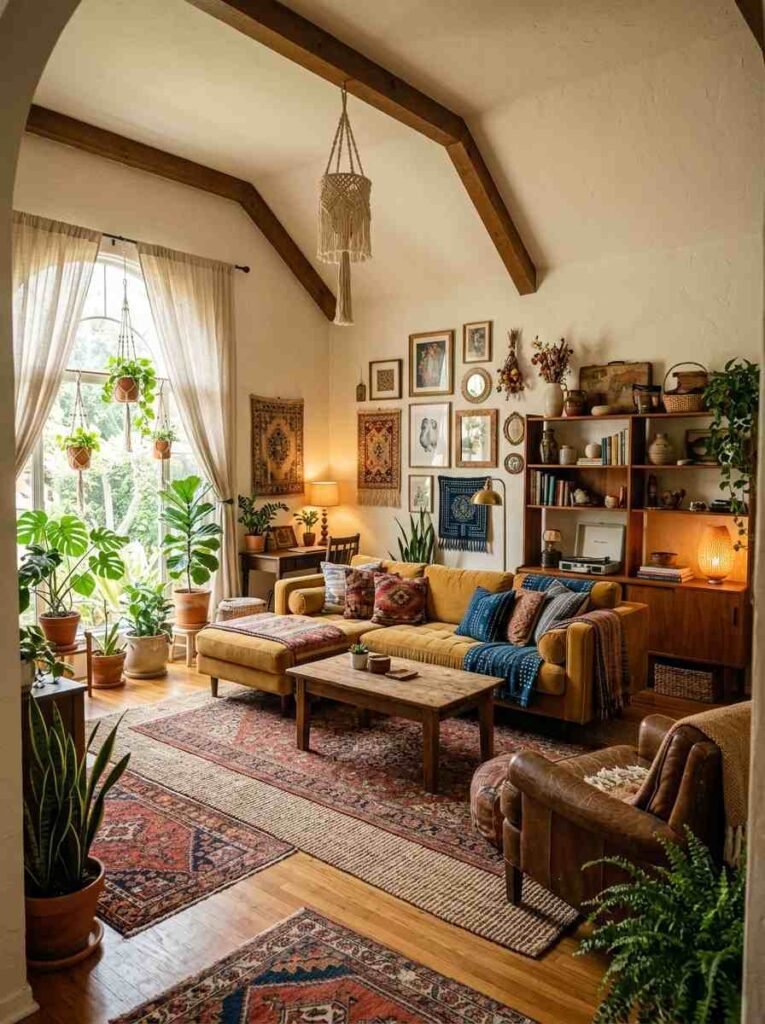
Change out throw pillows, swap art, rotate plants.
Boho design welcomes evolution. What worked last summer might feel different now, and that’s perfectly fine.
Embracing Imperfection
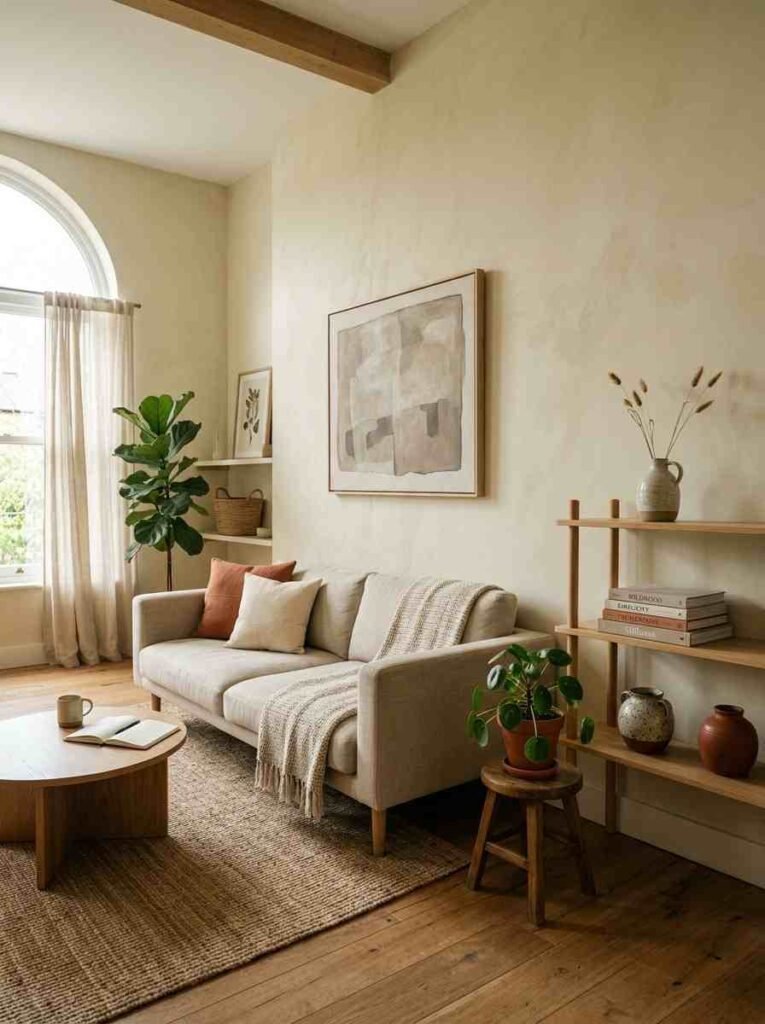
Slightly faded colors, uneven patterns, weathered finishes—these aren’t mistakes. They’re what make bohemian design feel authentic and lived-in rather than styled for a magazine shoot.
The Bottom Line
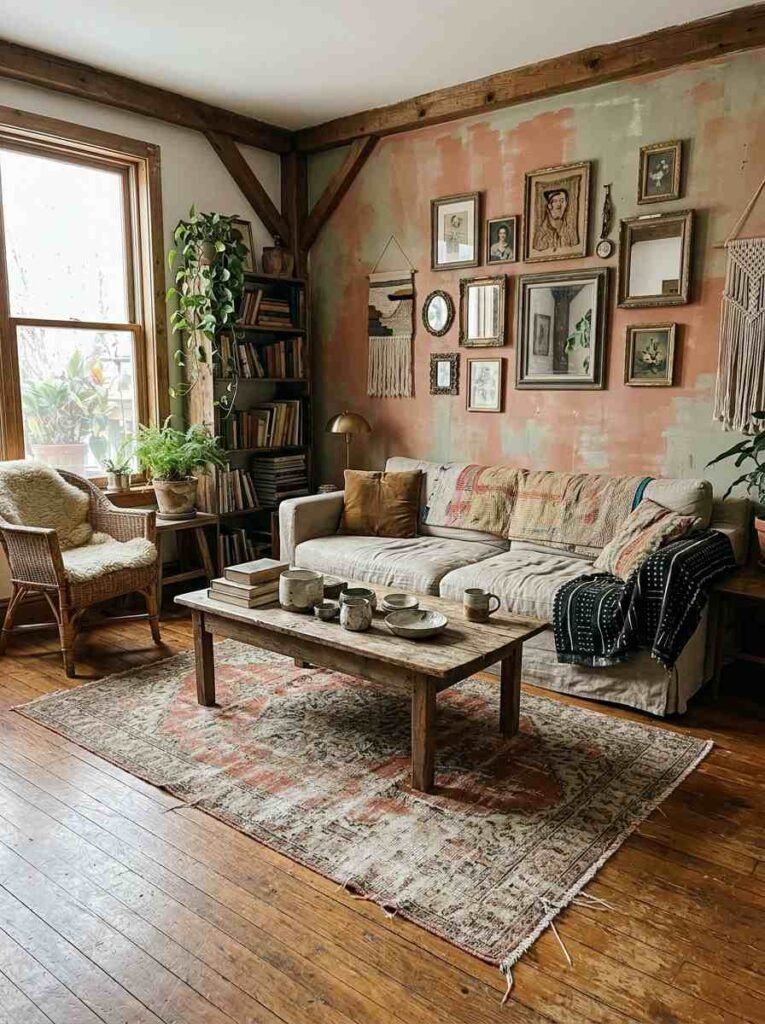
Bohemian interior design isn’t about following rules.
It’s about collecting things you love, honoring global influences, and creating a space that reflects your story instead of someone else’s idea of what a home should look like.
Start with one or two ideas from this list.
Maybe it’s a terracotta accent wall and some layered rugs.
Or plants and macramé and soft lighting. Build from there as you find pieces and textures that speak to you.
The best part about boho? You can’t really get it wrong.
The whole point is imperfection, eclecticism, and personal choice.
So trust yourself, enjoy the process, and create a home that actually feels like yours.
