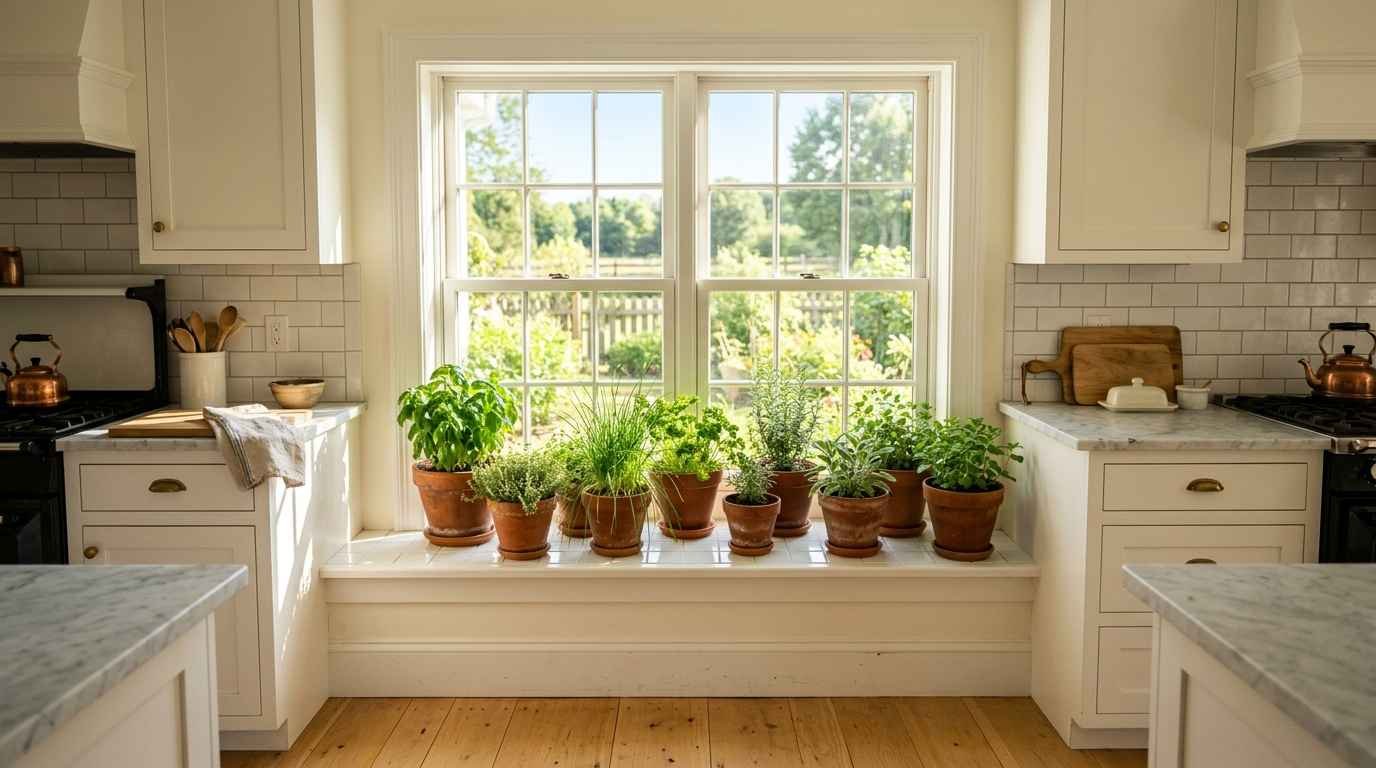
My kitchen windowsill has 11 pots on it right now. I know that sounds a little unhinged, but once you start growing your own basil, you kind of can’t stop.
Fresh herbs change the way you cook, and I say that as someone who spent years grabbing those sad plastic clamshells from the grocery store.
If you’ve got a small apartment, a rental with no balcony, or just a corner of your kitchen you don’t know what to do with, this is for you.
You don’t need a garden. You barely need sunlight (some herbs, anyway). You just need a decent idea and a bit of patience.
Why indoor herb gardens actually work
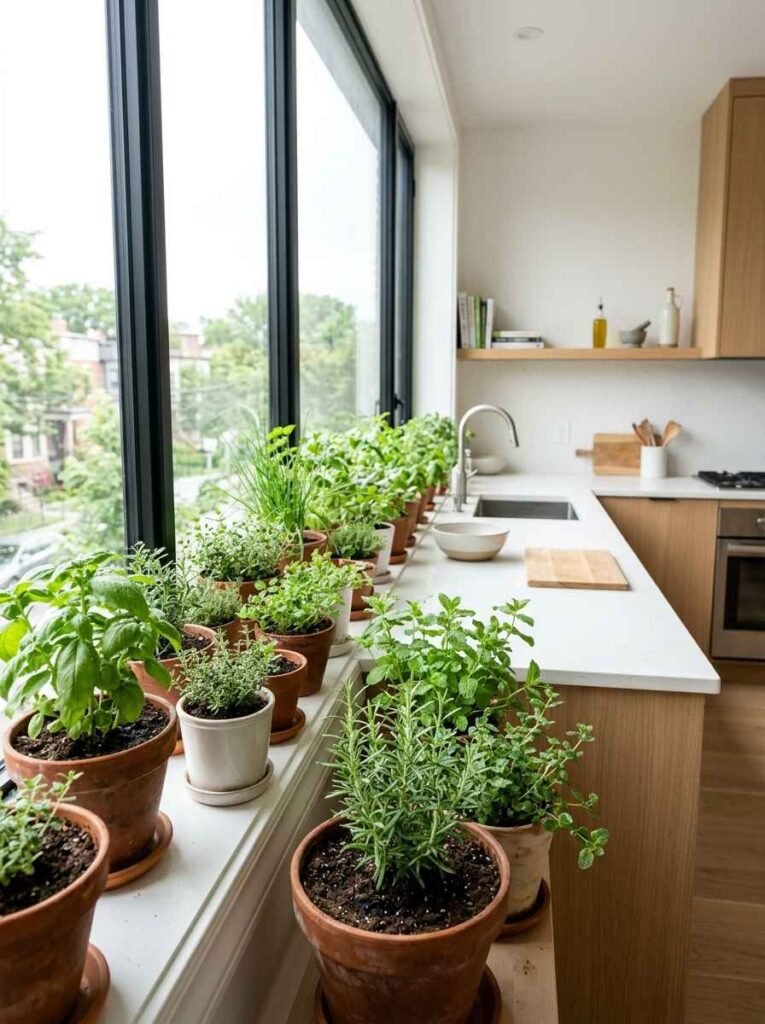
People assume growing herbs indoors is harder than it looks.
It’s really not. The biggest difference between a thriving herb pot and a dead one is airflow and drainage, not some secret green-thumb talent.
Most culinary herbs come from Mediterranean climates, which means they like warmth, sun, and soil that dries out a little between waterings.
Your heated apartment? Honestly, kinda perfect. The trick is picking the right herbs for your light conditions, then not drowning them.
32 small herb garden ideas for indoors
1. The classic kitchen windowsill setup
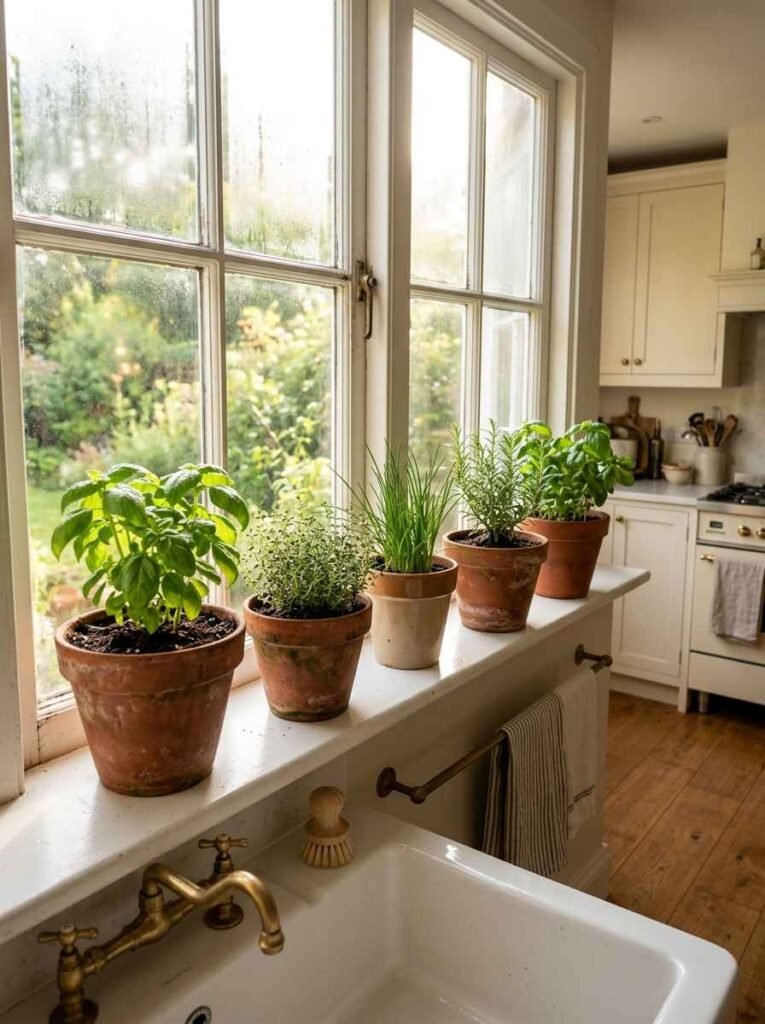
Put 4 to 5 pots on your sunniest windowsill. South or west-facing windows get the most light in the northern hemisphere. Basil, thyme, and chives all do well here together.
2. A tiered plant stand
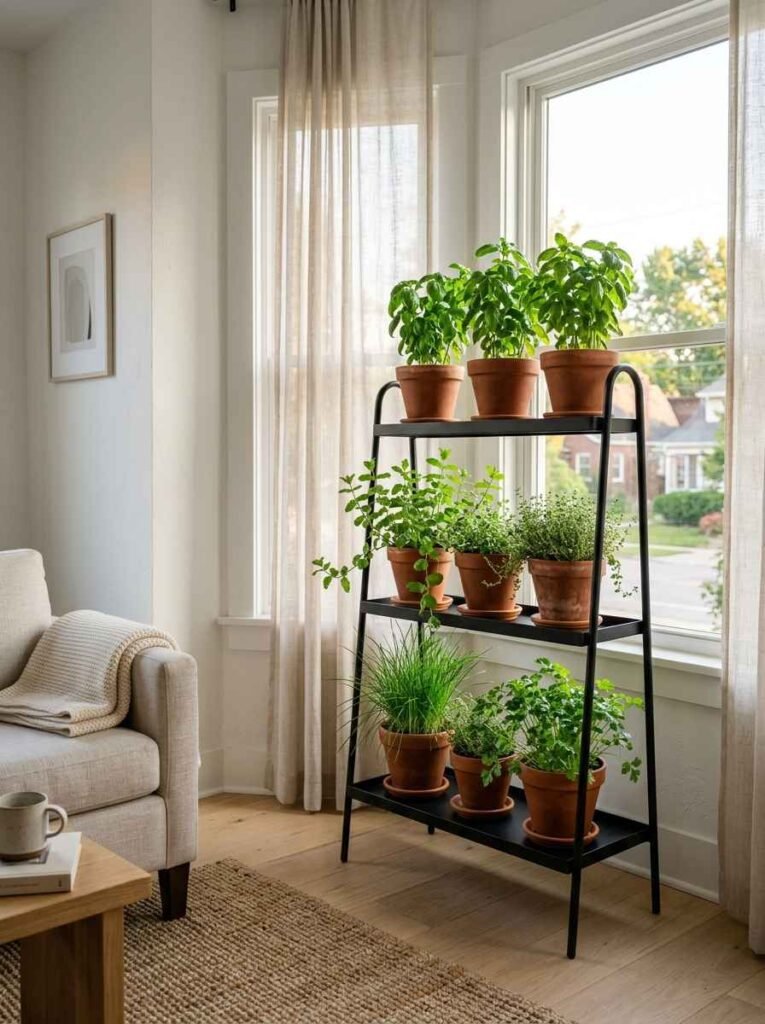
A 3-tier metal plant stand near a window holds a lot of herbs without taking up much floor space. I’ve seen people fit 12 pots on a single stand and it looks genuinely nice.
3. Magnetic herb pots on the fridge
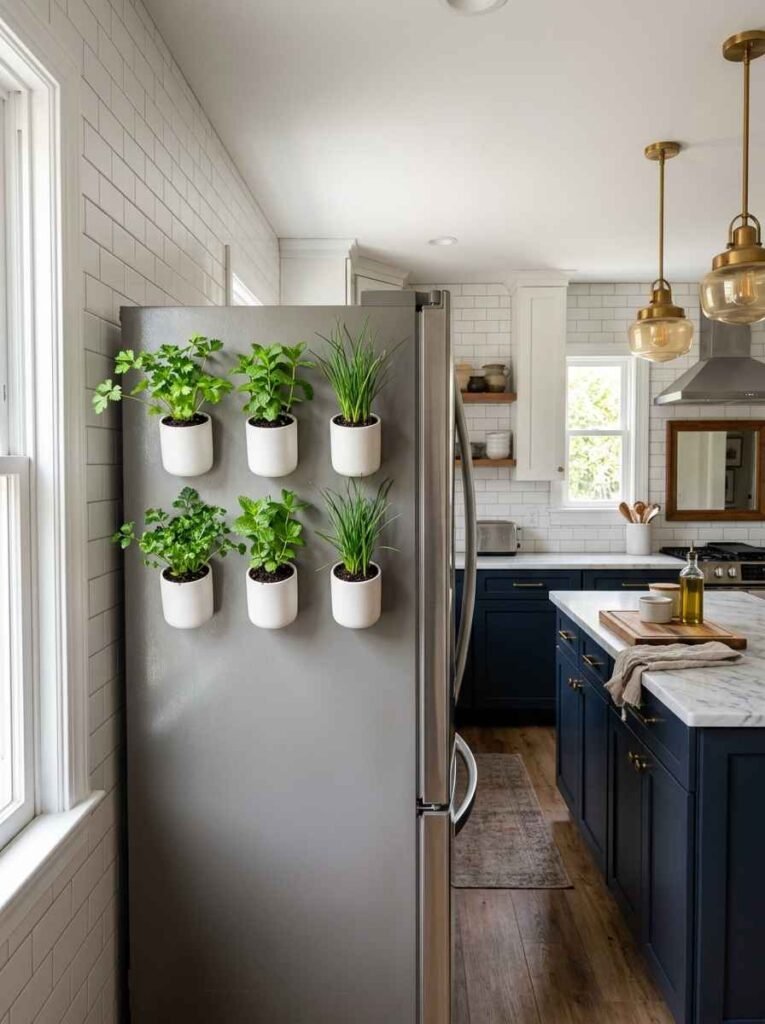
Small magnetic planters stuck to the side of your fridge work surprisingly well for low-light herbs like mint and parsley.
They’re right there when you’re cooking, which means you’ll actually use them.
4. A hanging macrame planter cluster
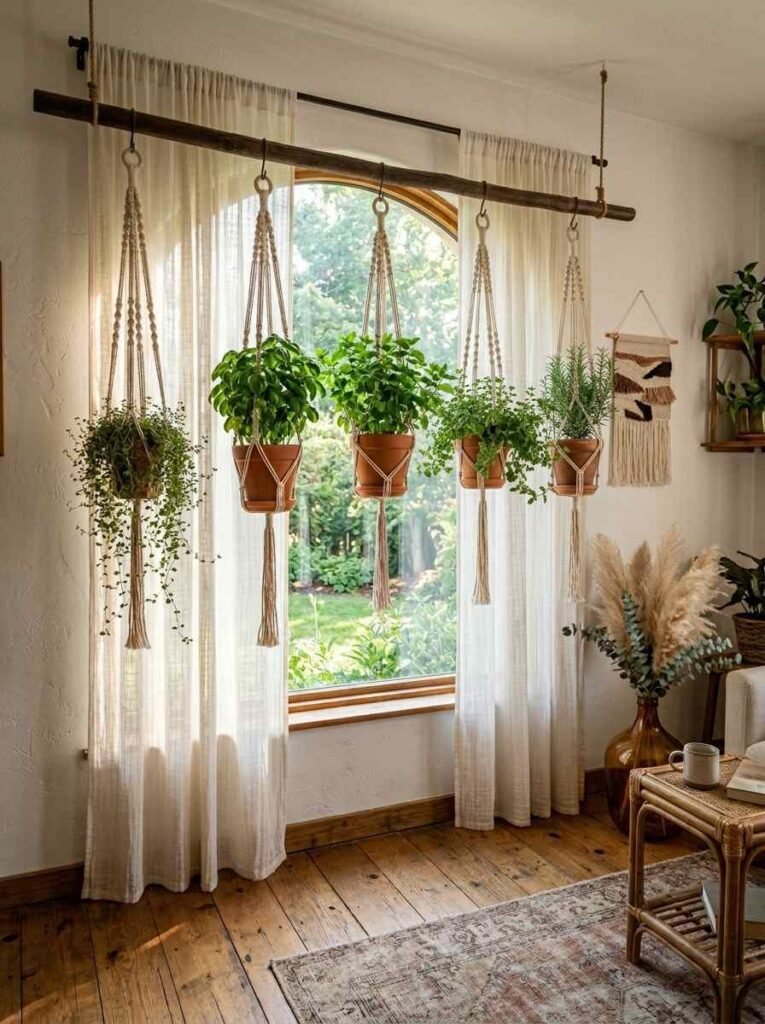
A cluster of 4 or 5 hanging macrame planters near a window looks great on Pinterest for a reason. It keeps pots off the counter and brings some texture to the space.
5. Repurposed mason jars on a shelf
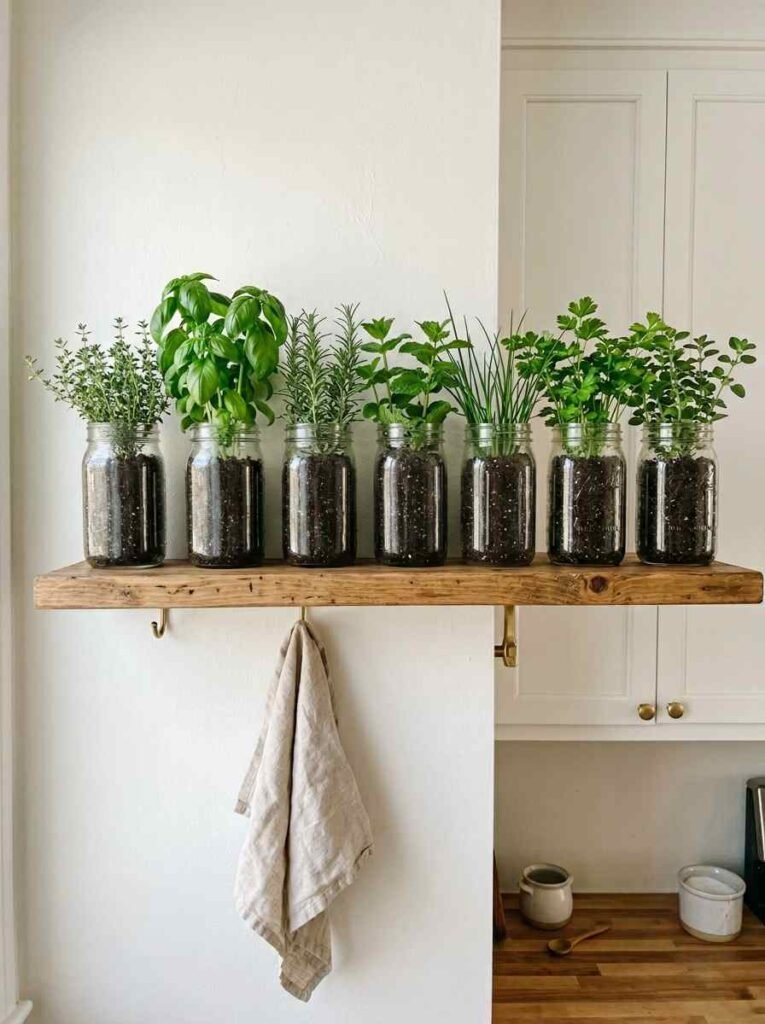
Mason jars with drainage holes drilled in the bottom work perfectly fine as herb planters. Line them up on a floating shelf, and it looks intentional and neat.
6. A wall-mounted pocket planter
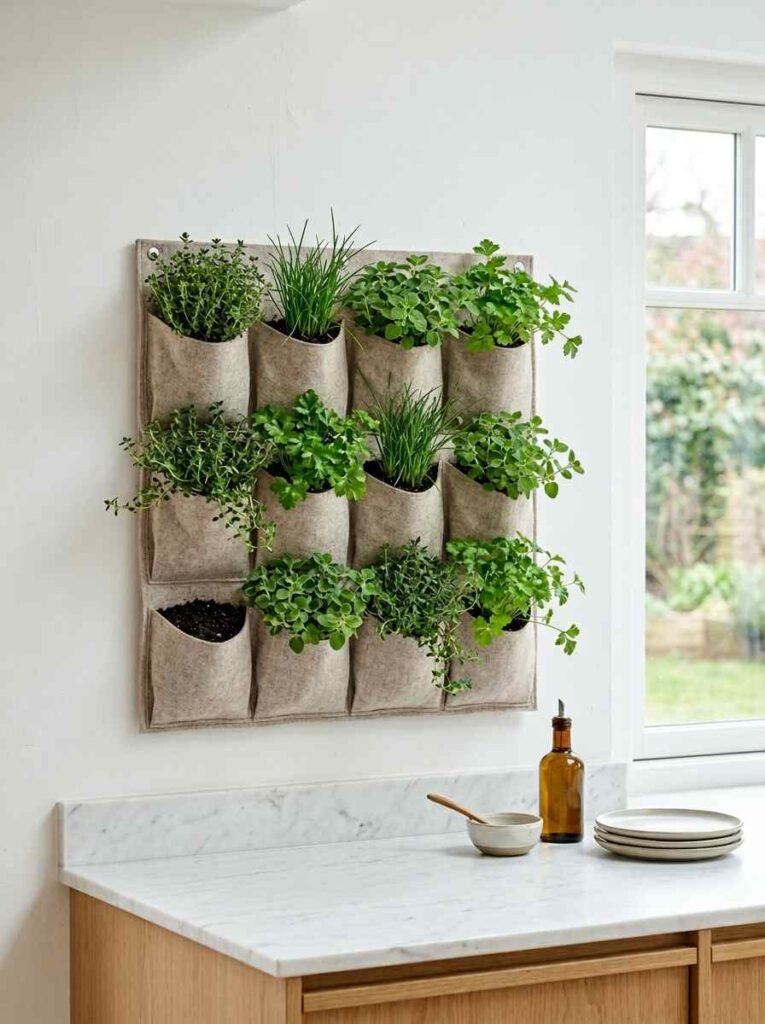
Felt or fabric pocket planters mount directly to the wall. You can fit 8 to 12 herbs in one panel. These work especially well in kitchens with limited counter space.
7. A wooden crate planter box
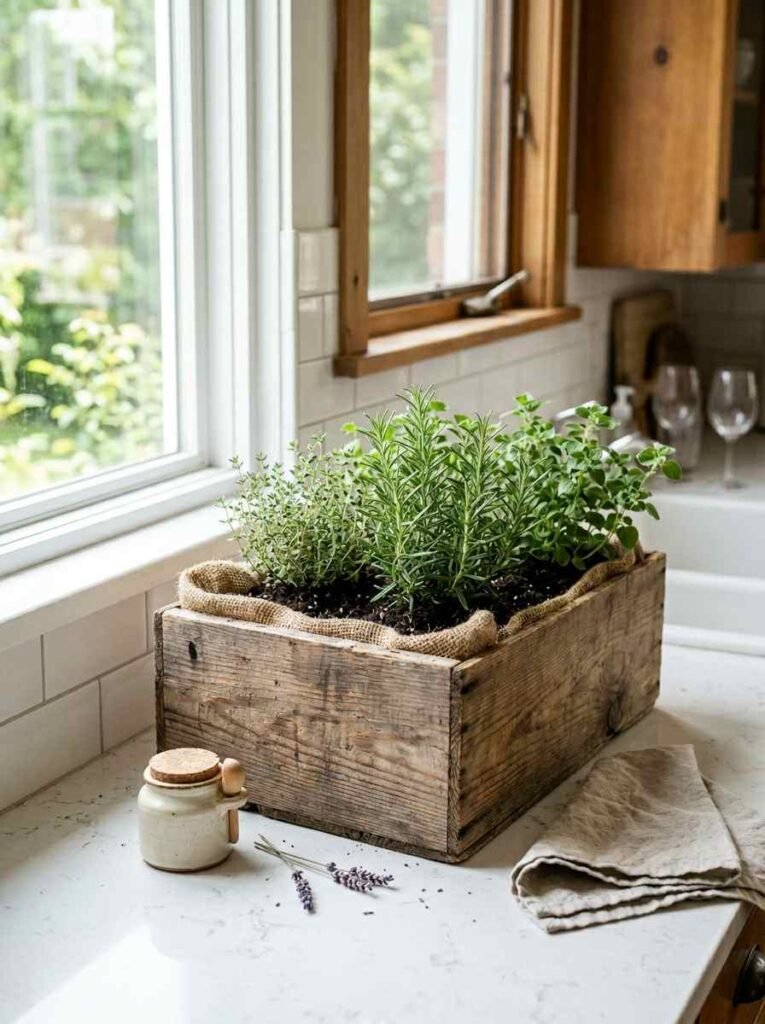
An old wine crate lined with burlap and filled with potting mix holds multiple herbs in one spot. Rosemary, thyme, and oregano can share the space comfortably.
8. A grow light herb shelf
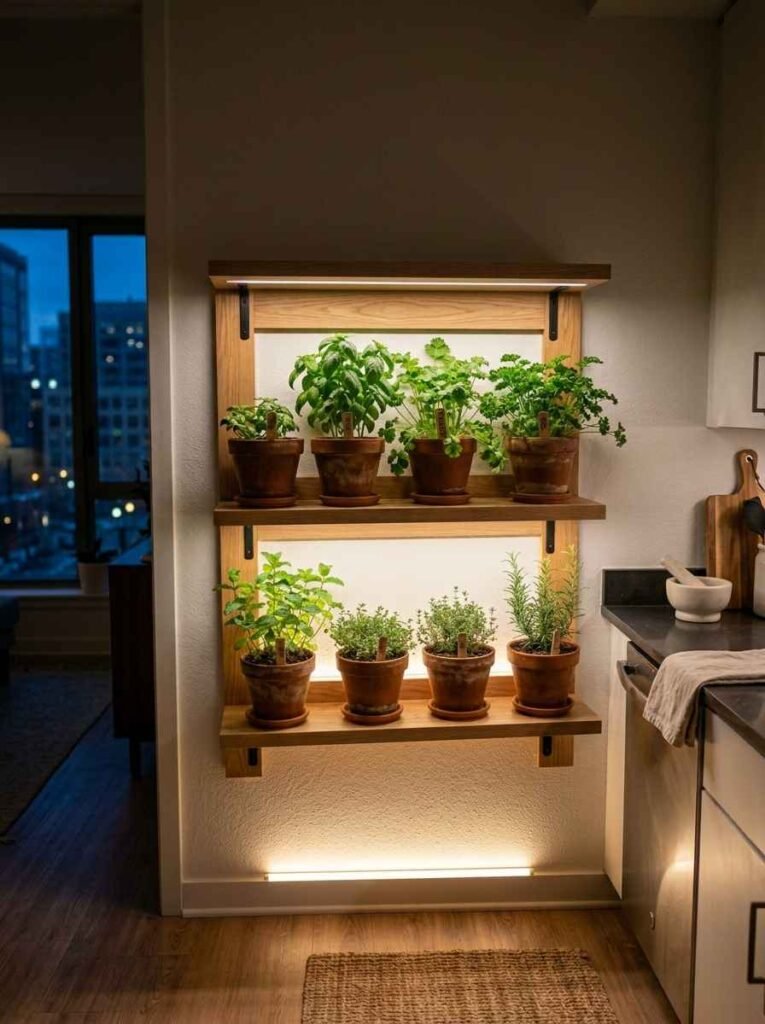
If your apartment doesn’t get much natural light, a dedicated grow light shelf changes everything.
A full-spectrum LED grow light about 6 inches above your pots keeps basil and cilantro going year-round.
9. A repurposed colander
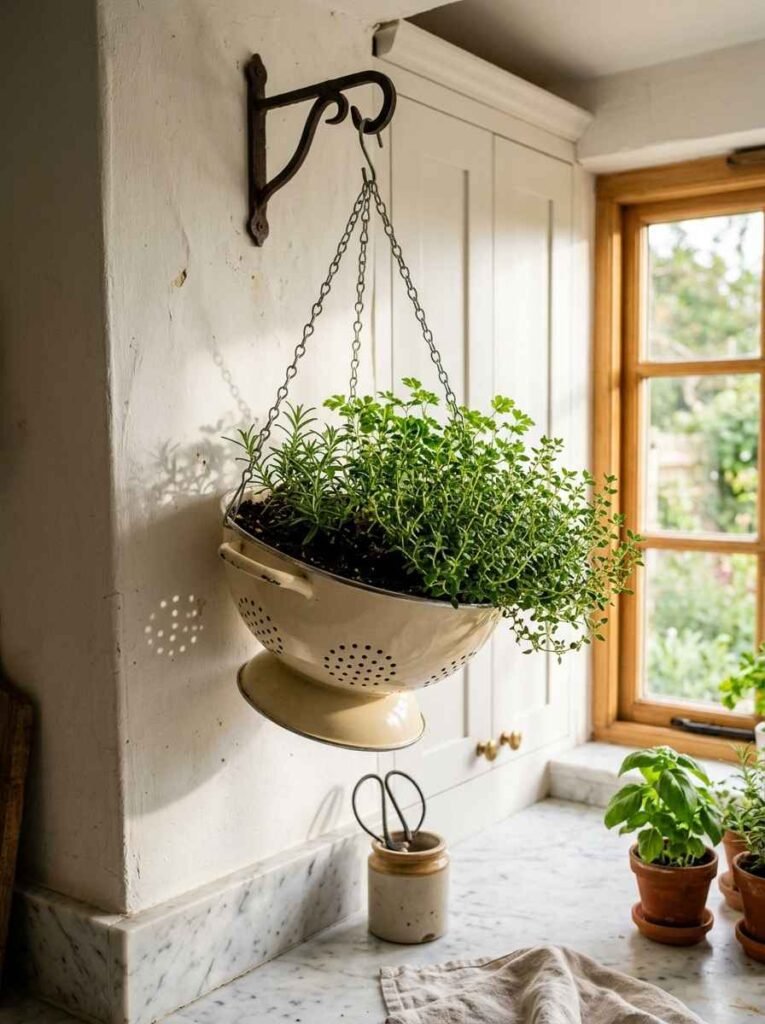
A colander already has drainage holes, which is the one thing most planters fail at. Fill it with herbs, hang it, and you’ve got something genuinely clever.
10. A terracotta pot collection
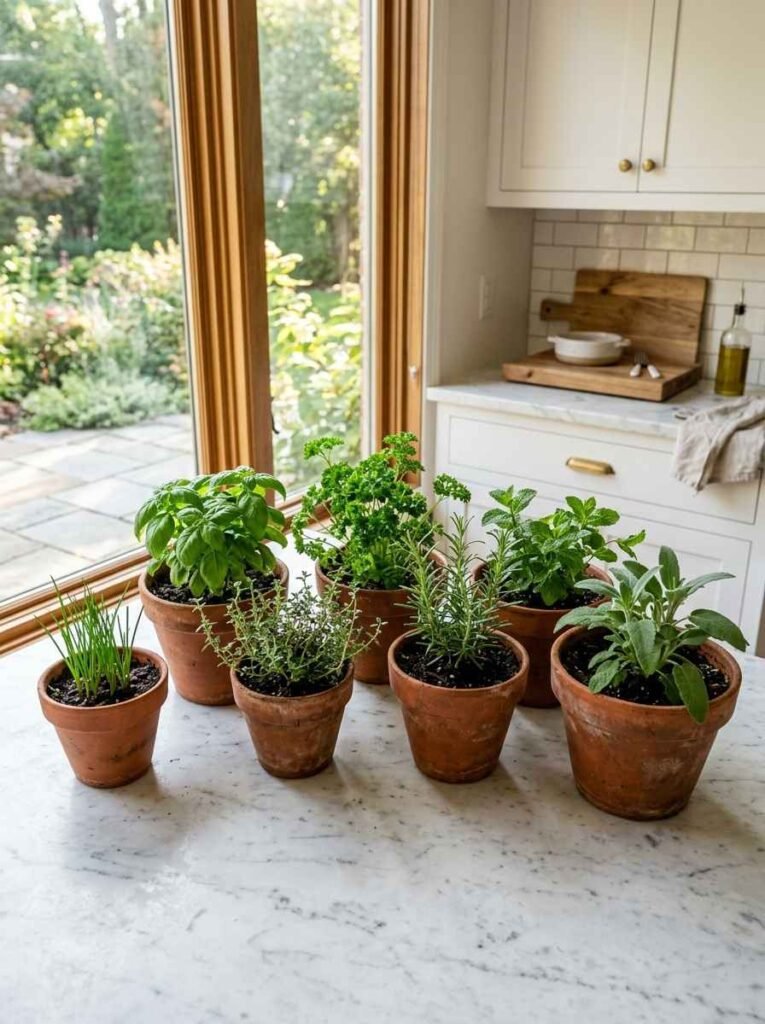
Plain terracotta pots are still the best option for herbs, IMO. They’re breathable, cheap, and they look good when you line up 6 or 7 of them in graduating sizes.
11. A window box on an interior sill
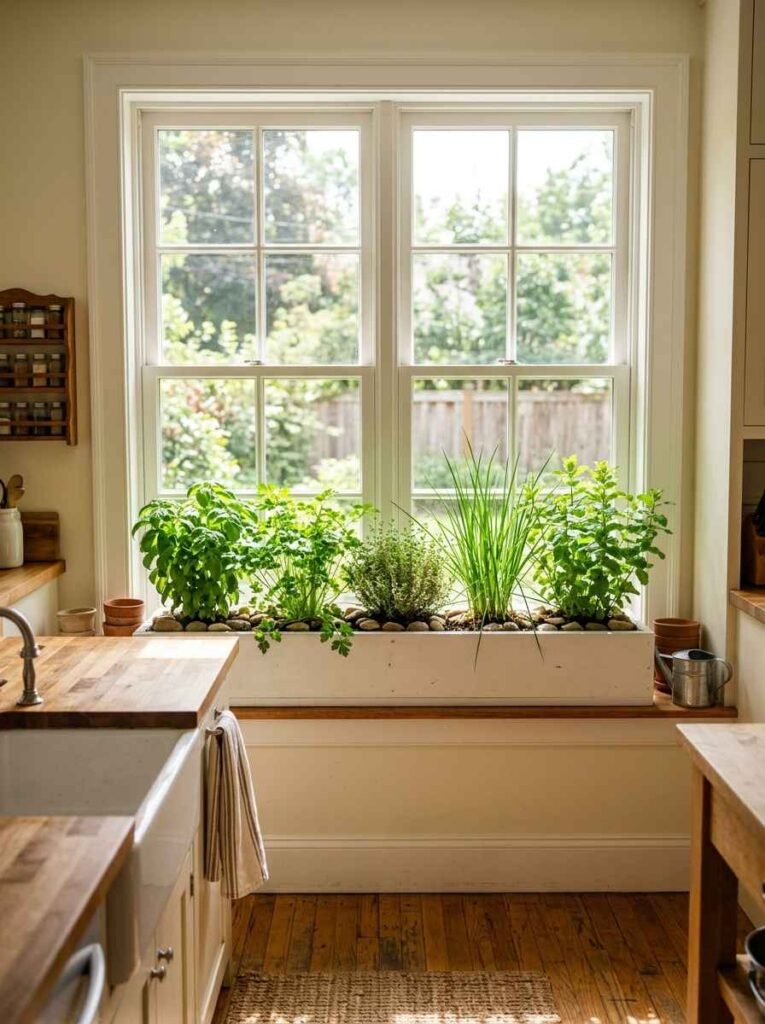
Deep window boxes sit on wide windowsills and hold 4 to 6 herbs planted closely together. Herbs like basil and parsley don’t mind being neighbors.
12. An IKEA KALLAX shelf garden
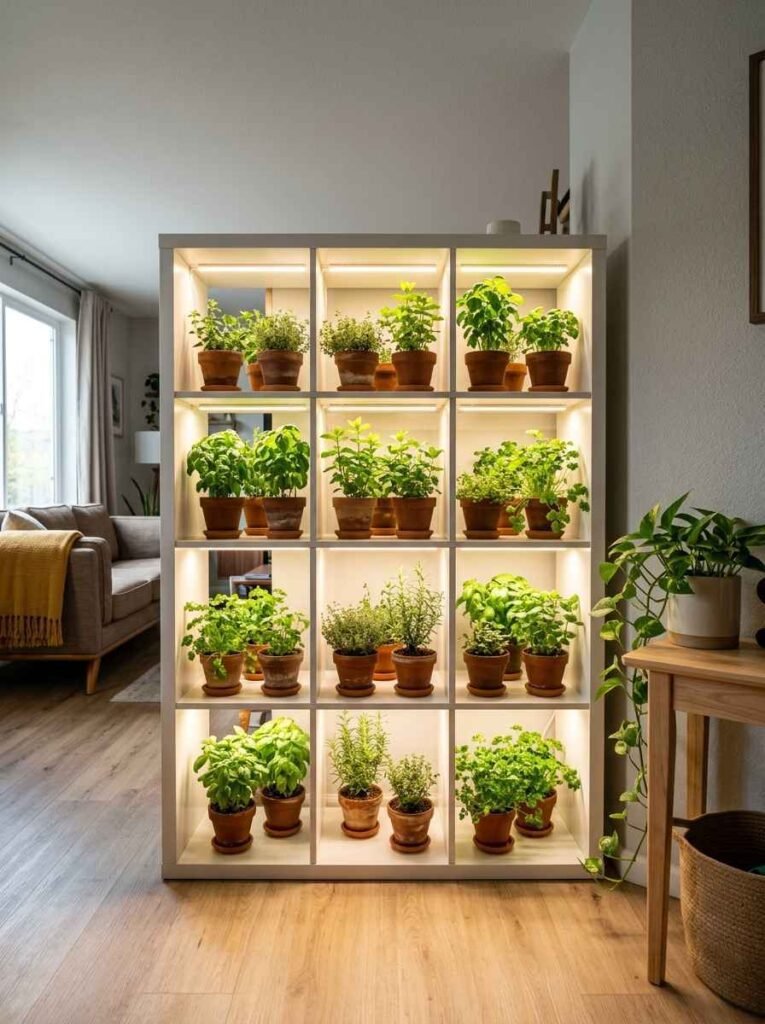
The IKEA KALLAX cube shelf with grow lights mounted underneath each shelf is one of the most practical setups I’ve seen for apartment herb growing.
You can stack multiple levels and grow a lot of different things.
13. A small greenhouse cabinet
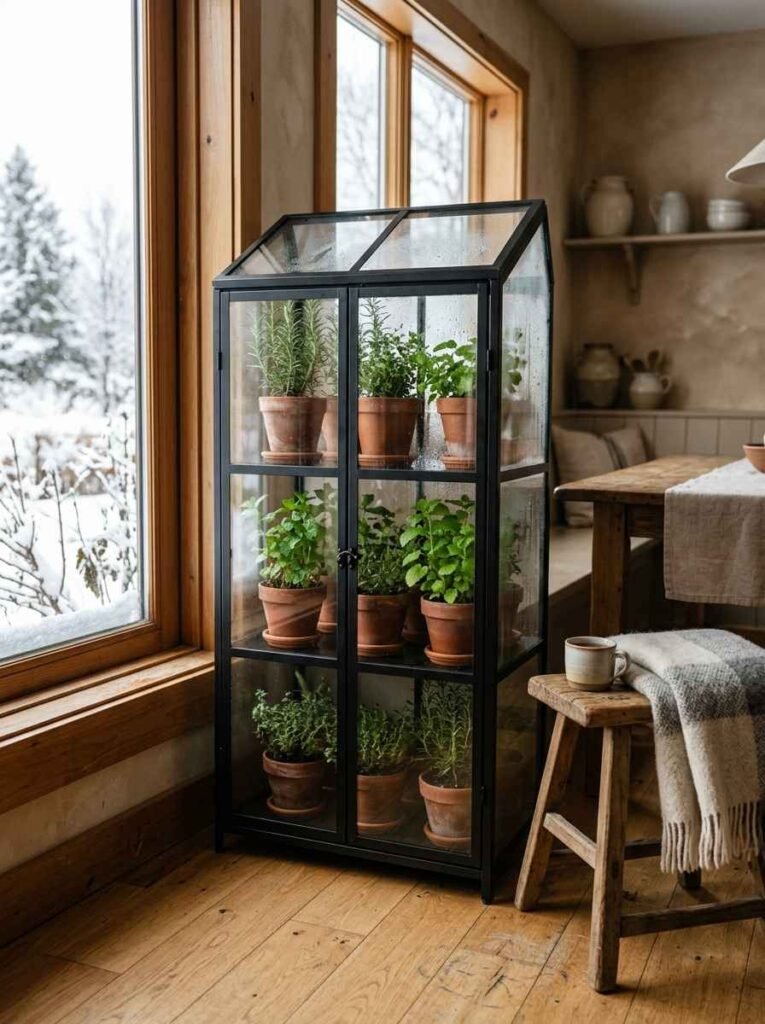
Mini indoor greenhouse cabinets (they look like little glass cabinets) keep humidity in, which herbs like. They’re especially useful in winter when central heating dries everything out.
14. A repurposed wooden ladder shelf
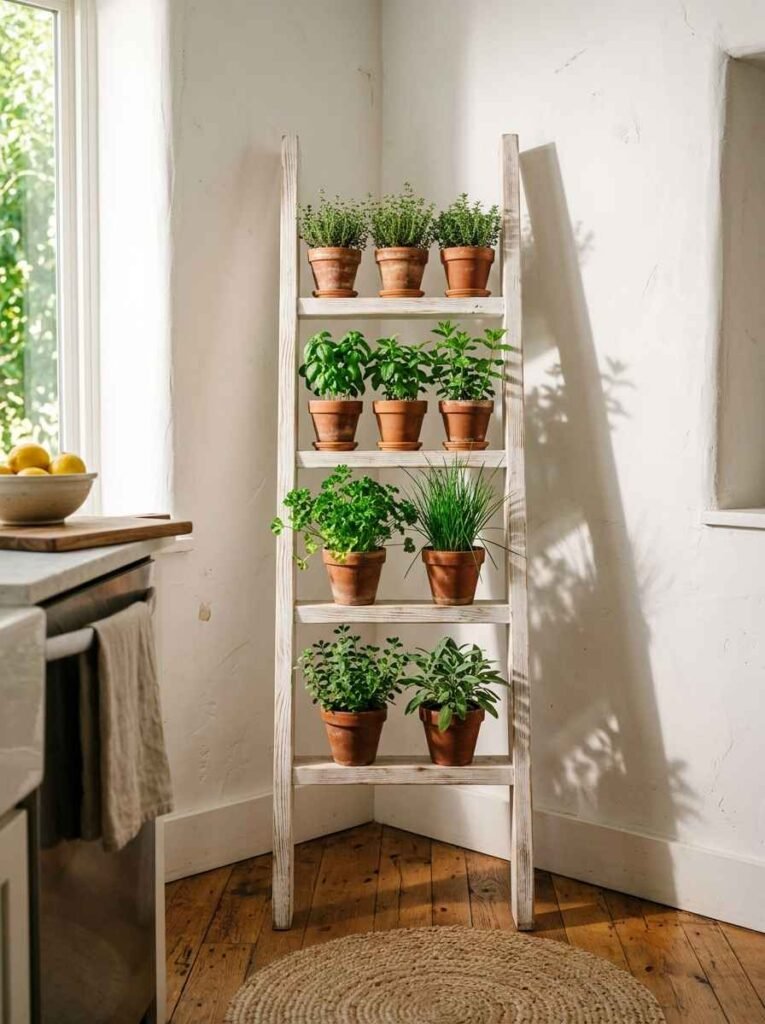
A leaning ladder shelf turned into a herb display looks great in a corner. Add small terracotta pots to each rung and you’ve got a full herb setup that takes almost no floor space.
15. Herbs in mugs
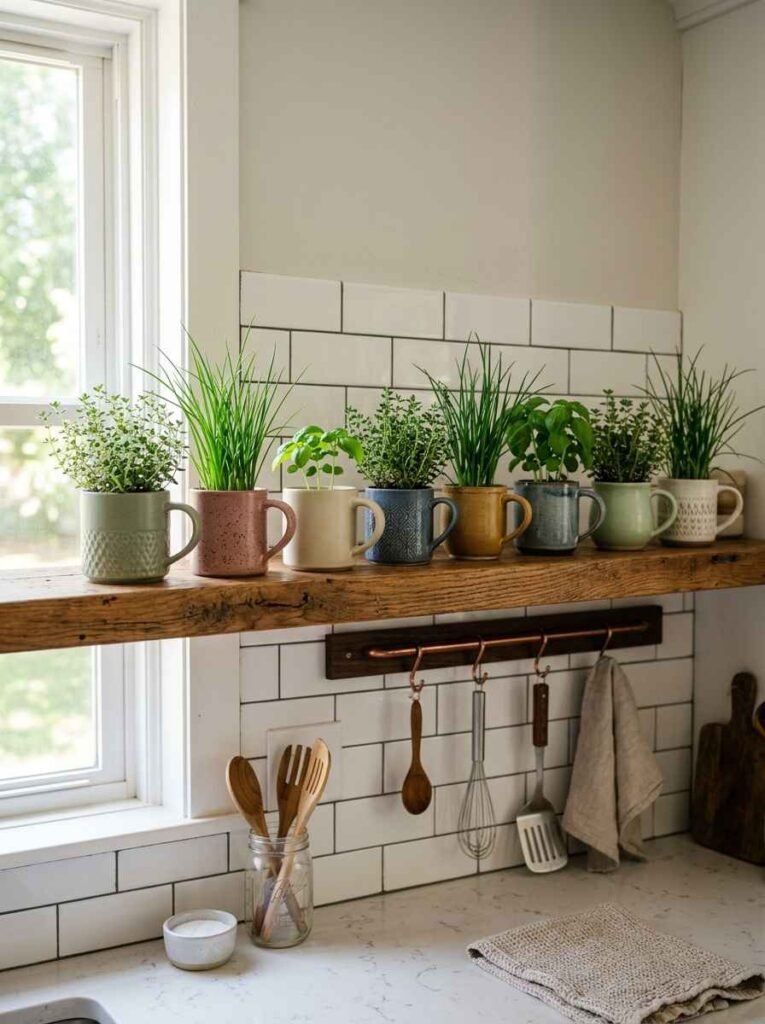
Okay, this one’s more cute than functional, but small herbs like thyme and chives actually grow fine in mugs with holes drilled in the bottom. Line your open kitchen shelving with them. It works.
16. A magnetic knife strip herb holder
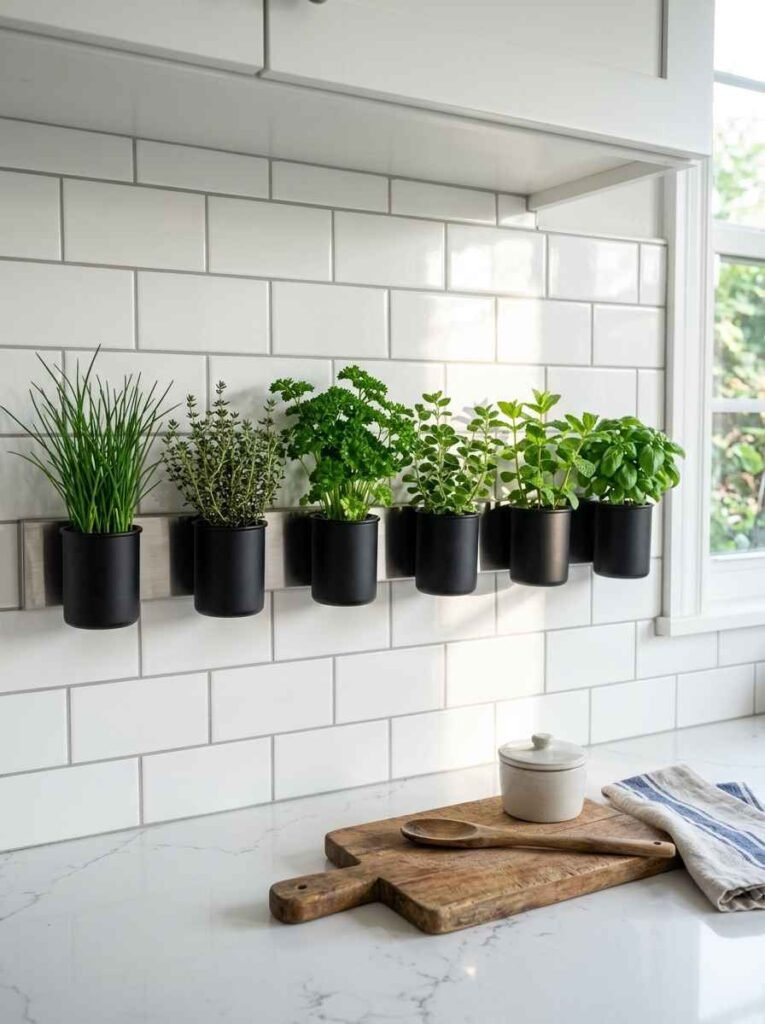
Attach small magnetic planters to a magnetic knife strip mounted on your backsplash. It keeps everything at eye level and it looks sharp.
17. A tray garden on the countertop
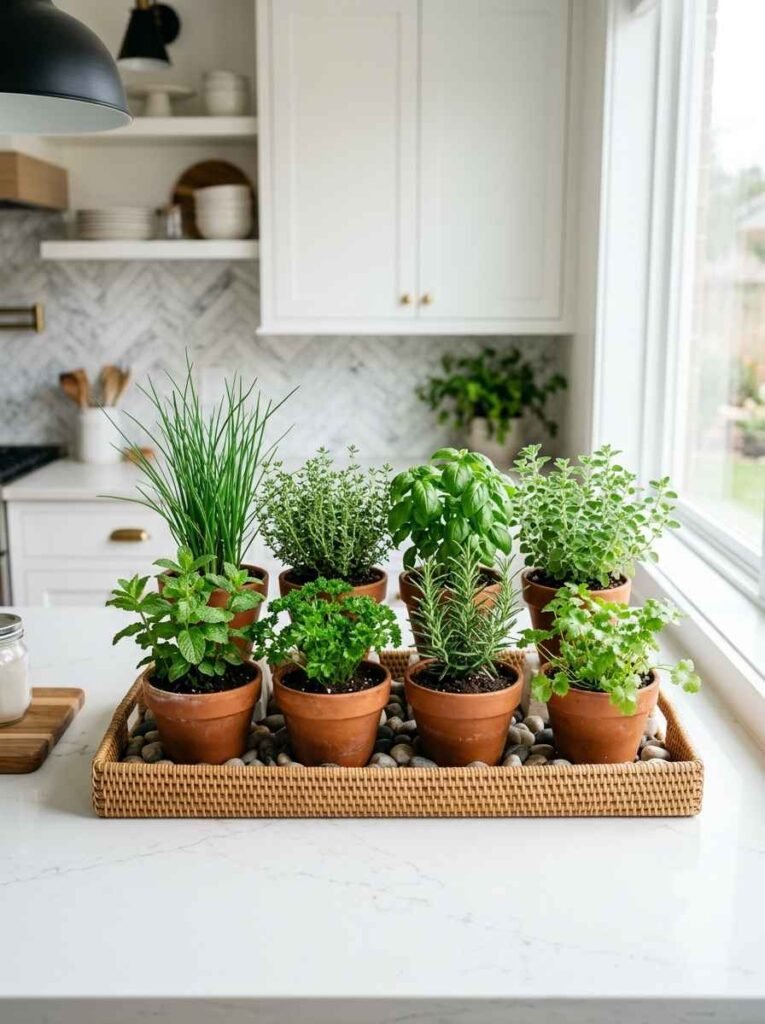
Line up 8 small pots on a decorative tray. It keeps water and soil contained, and it makes the whole thing look organized rather than chaotic.
18. A hanging gutter planter
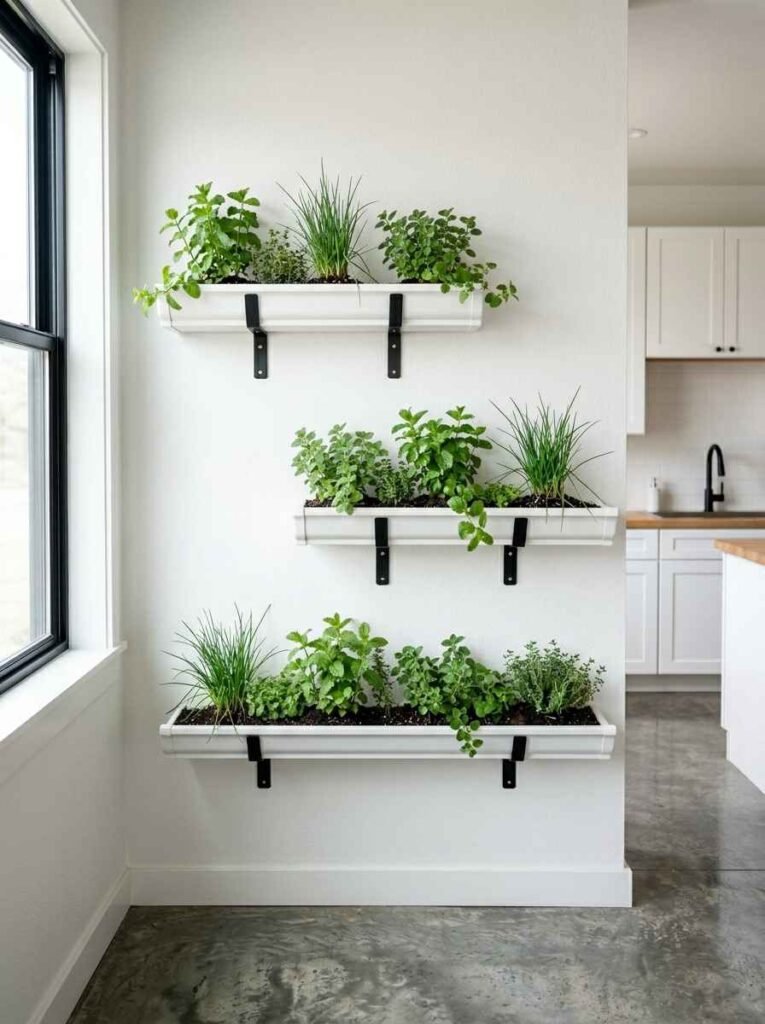
Cut lengths of vinyl gutter material, cap the ends, drill drainage holes, and hang them horizontally on a wall. Each length holds 3 to 4 herbs and the whole setup costs maybe $15.
19. A repurposed wooden drawer
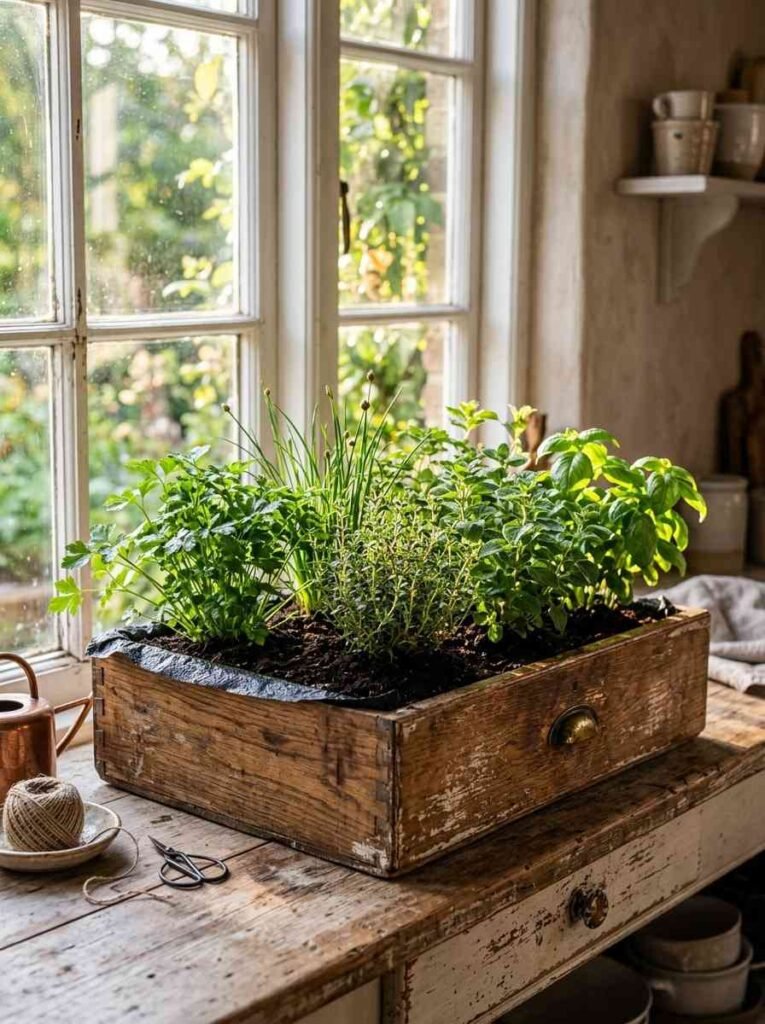
Pull an old drawer out of a piece of furniture you’re getting rid of, line it with plastic, add drainage holes, and fill it with soil. Herbs grow well in shallow wide containers.
20. A self-watering planter box
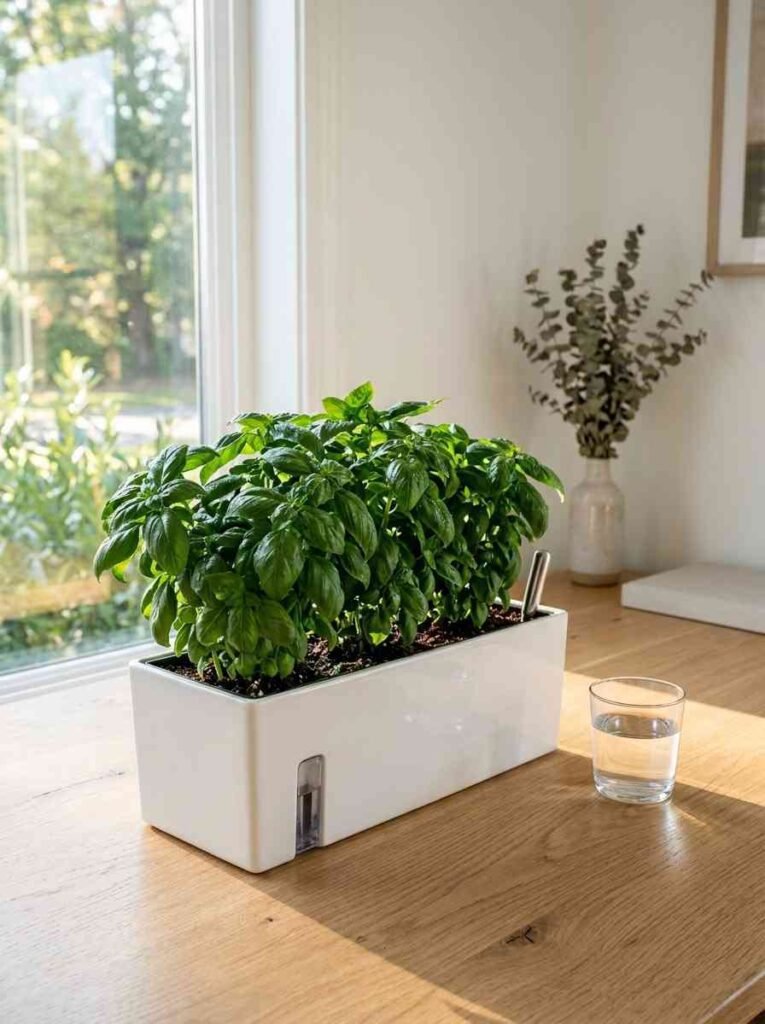
Self-watering planters have a reservoir at the bottom that wicks moisture upward. They’re great for basil, which wilts fast if you forget to water. I’ve had a self-watering box on my desk for 2 years and it’s basically foolproof.
21. A kitchen island herb garden
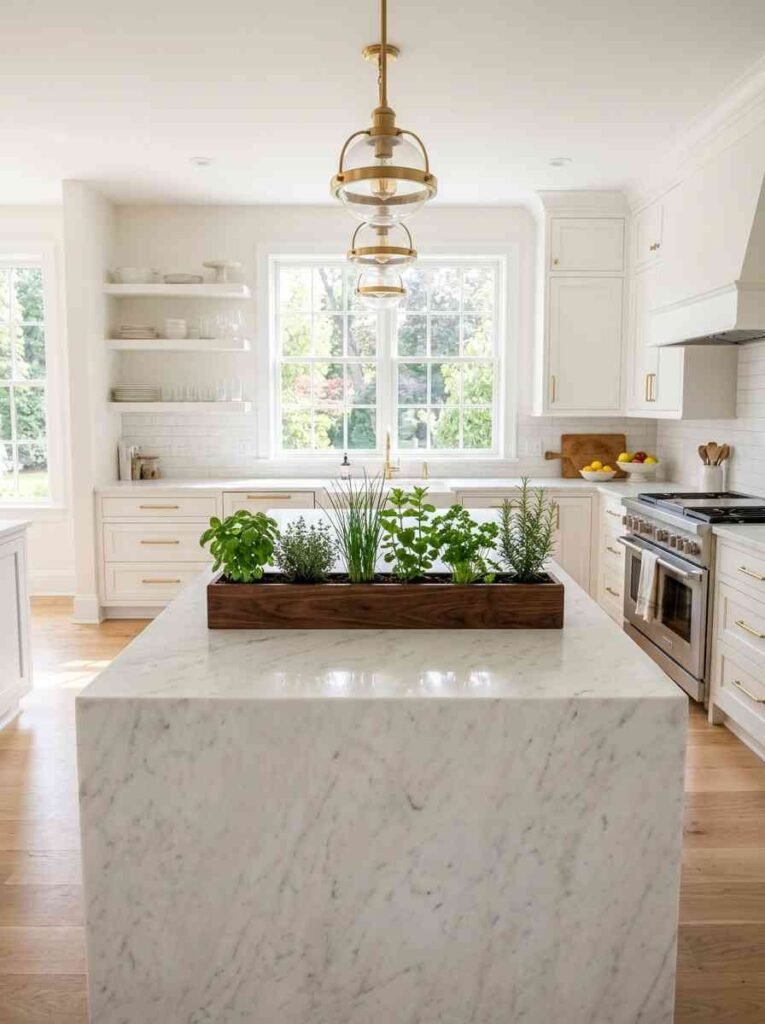
If you have a kitchen island with a little extra surface, a long rectangular planter with 5 or 6 herbs runs down the middle beautifully. It’s functional and looks intentional.
22. A vintage tin can collection
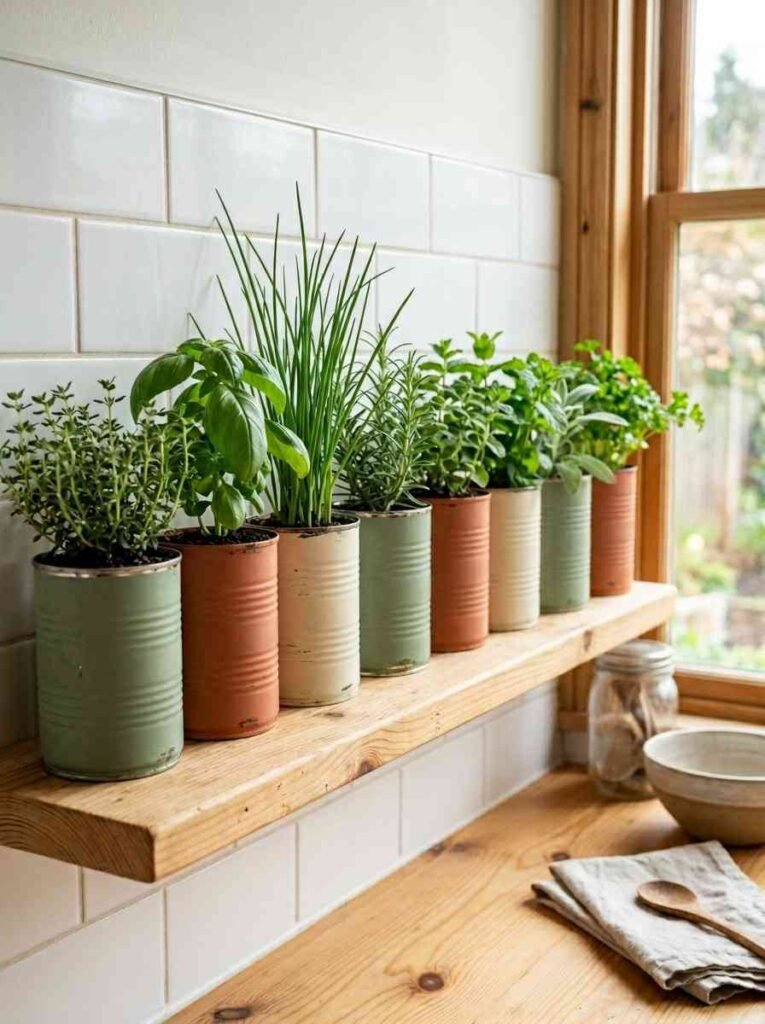
Old tin cans (coffee tins, tomato cans) painted in a consistent color palette and lined up together look really good as herb planters. Punch holes in the bottom and you’re set.
23. A repurposed colander hanging basket
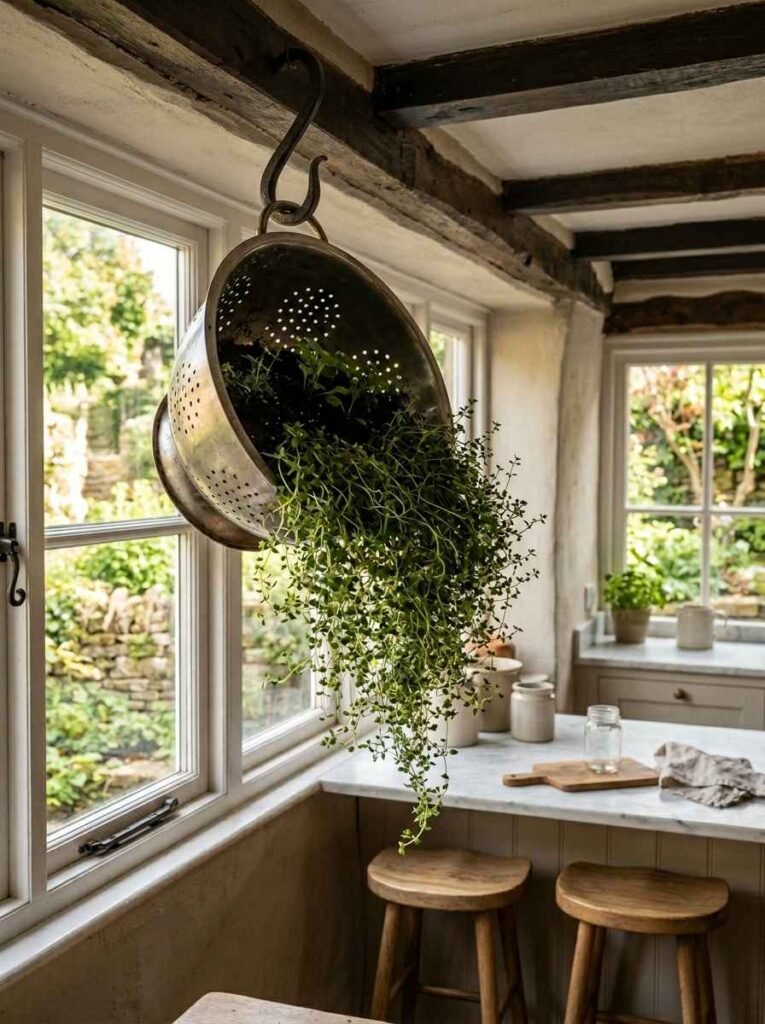
Hang a metal colander from the ceiling or a hook near a window. The natural drainage is already built in. Fill it with trailing herbs like thyme.
24. A floating shelf herb row
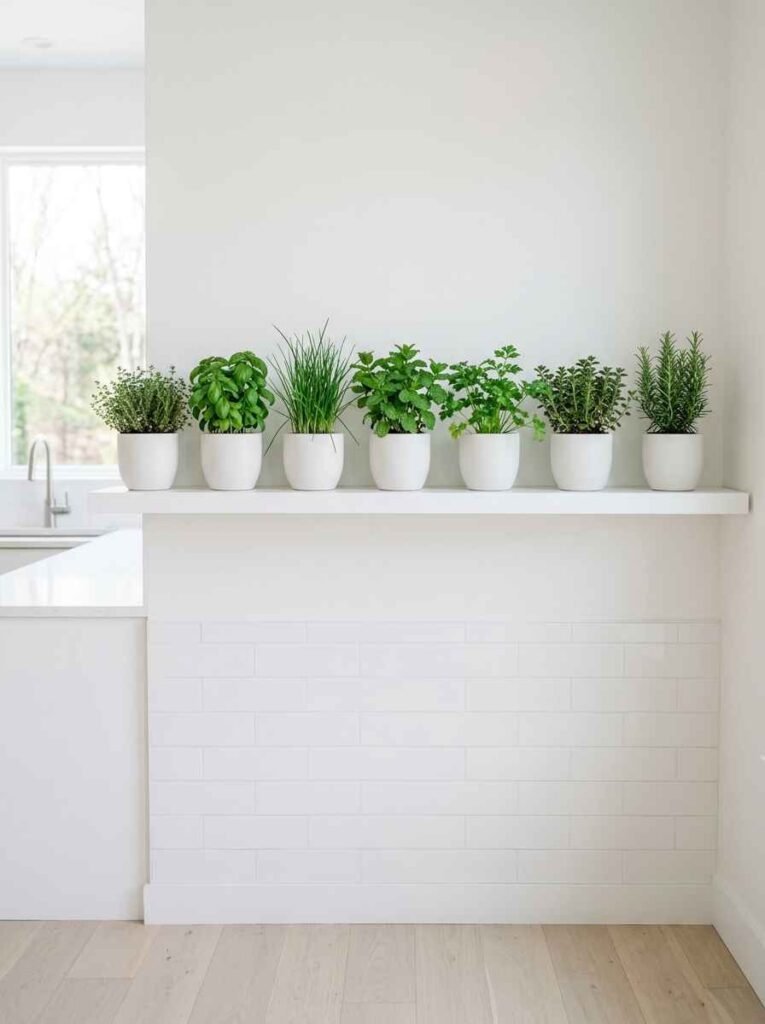
A single long floating shelf at eye level with a row of matching pots is maybe the cleanest look you can get for a kitchen herb garden. Simple and it never looks cluttered.
25. A breakfast bar herb strip
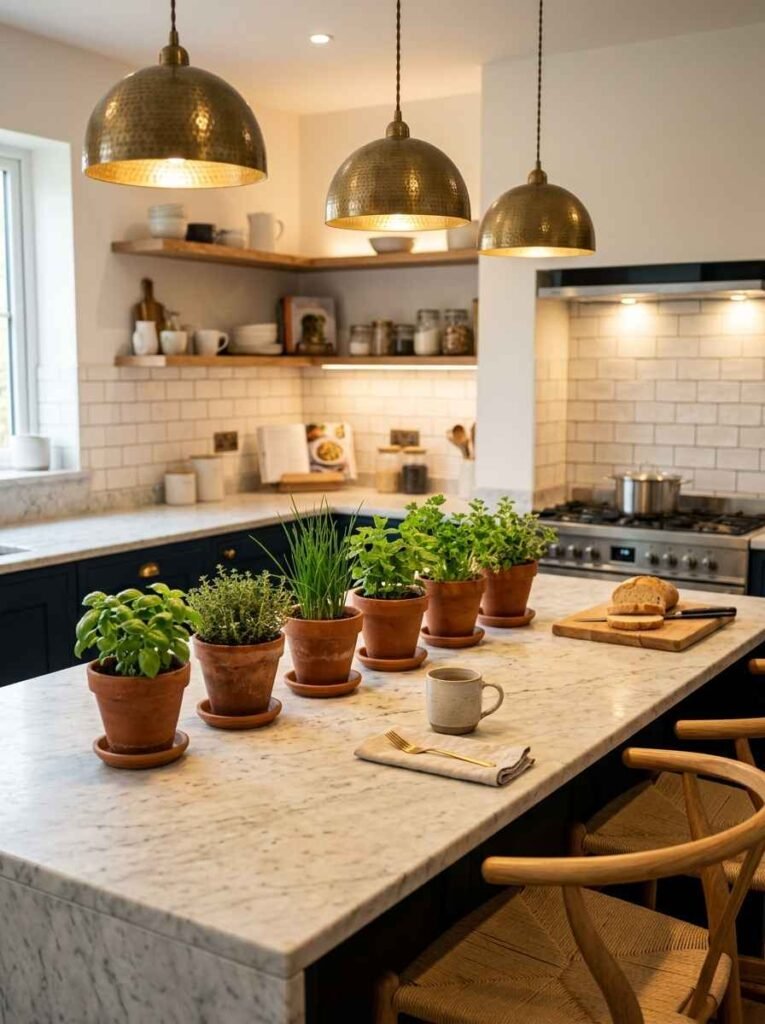
If your kitchen has a breakfast bar or counter with some depth, a strip of 6 small pots along the back edge keeps herbs accessible without getting in the way.
26. A repurposed muffin tin
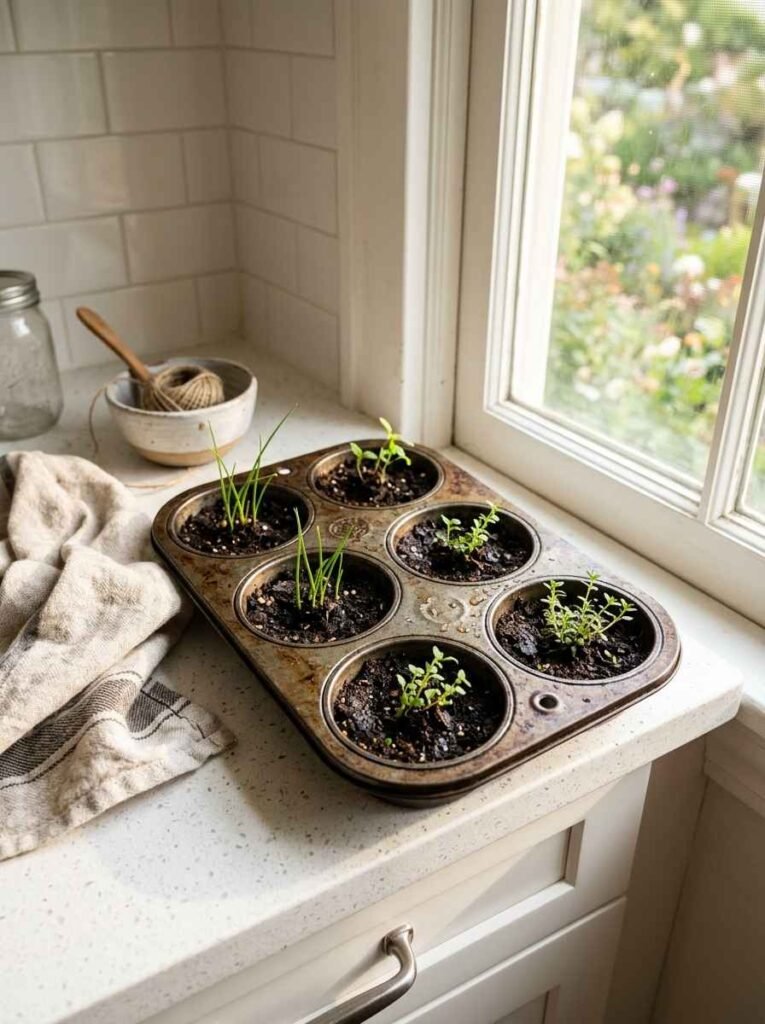
A muffin tin makes 6 individual herb pockets. It’s a bit shallow, so it works best for herbs that don’t need much root depth, like chives or small thyme plants. Works great as a starter tray.
27. A bathroom herb garden
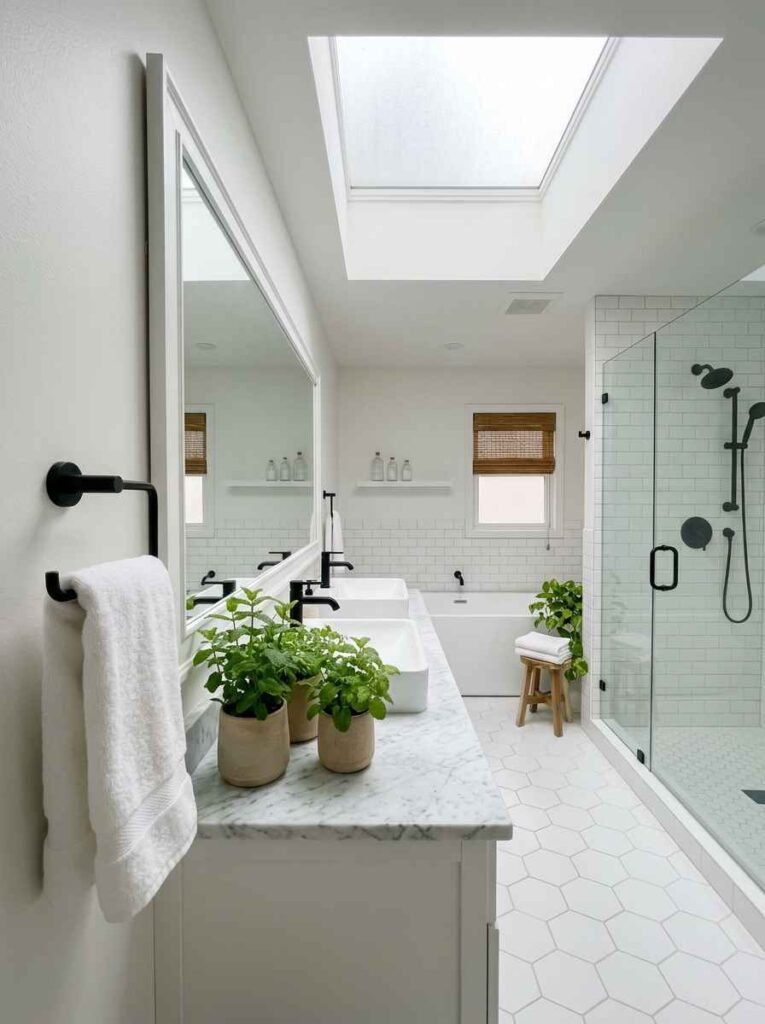
Okay, this sounds weird, but some herbs actually prefer humidity. Mint and lemon balm do well in bathrooms with a skylight or decent window. And having fresh mint near your bathroom sink is honestly a nice touch.
28. A kitchen pegboard herb wall
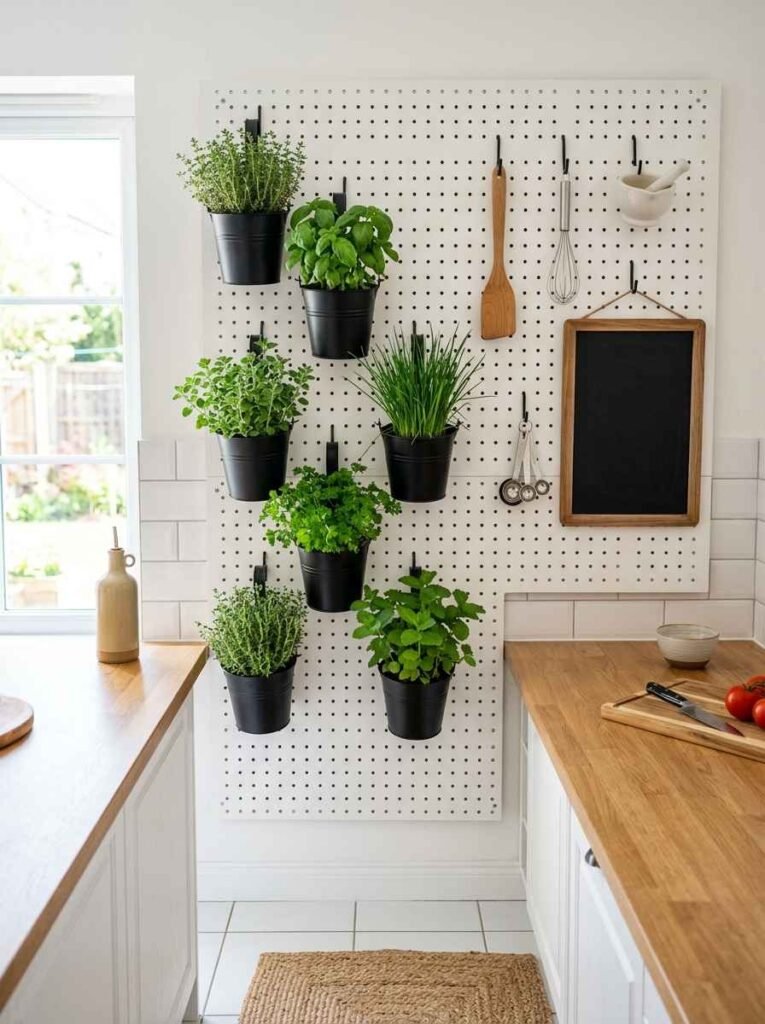
A pegboard mounted on the kitchen wall with small bucket hooks and pots creates an adjustable herb wall. You can move things around as plants grow or as you need more space.
29. A balcony-to-kitchen window box
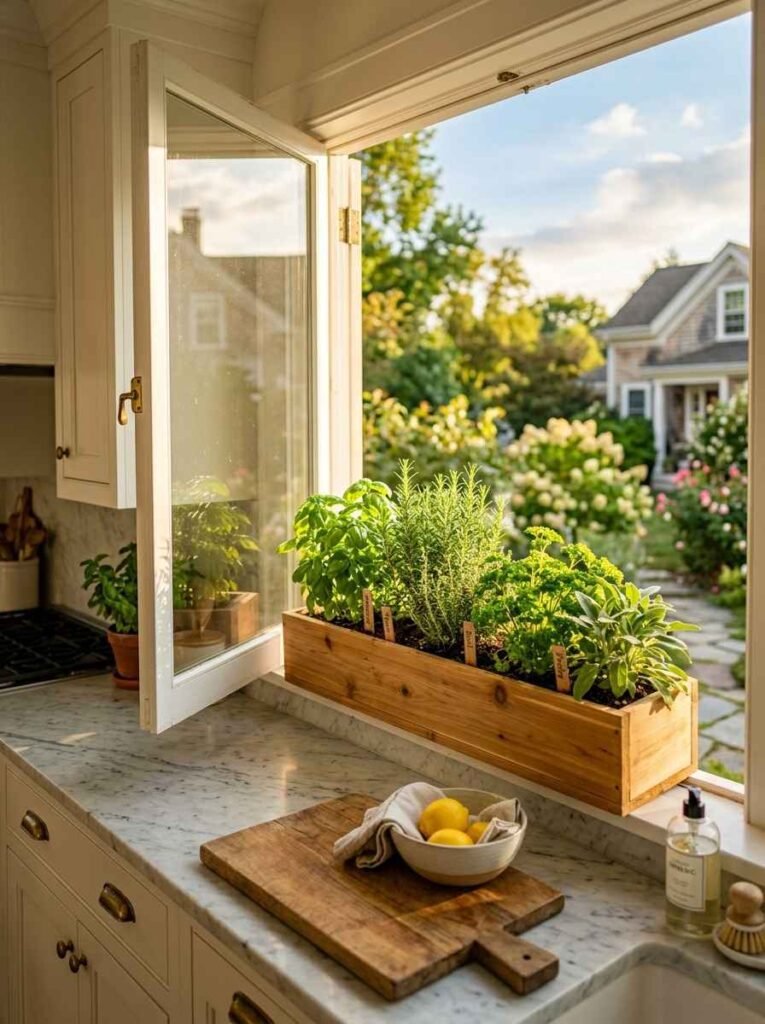
If you have a balcony but want herbs accessible inside, mount a window box on the exterior of your kitchen window. You can reach out and snip herbs from the inside. Smart setup.
30. A glass cloche mini garden
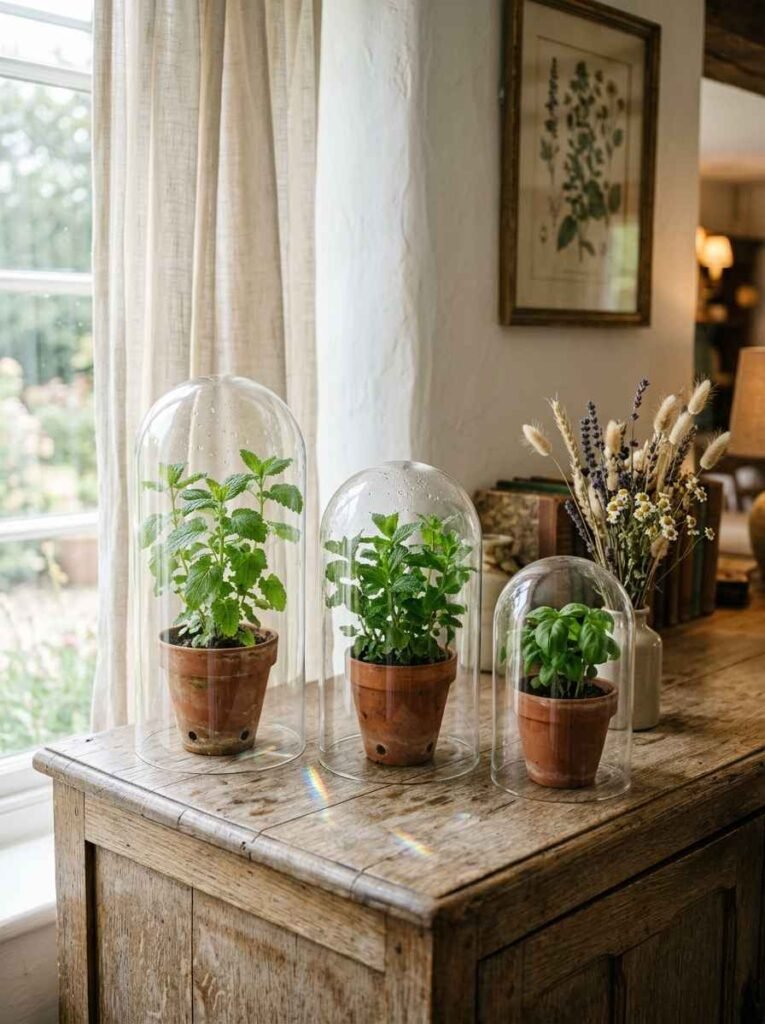
Small glass cloches over individual herb pots create a little humid microclimate. They look beautiful on a dining table or sideboard and they actually help moisture-loving herbs thrive.
31. A vertical planter frame
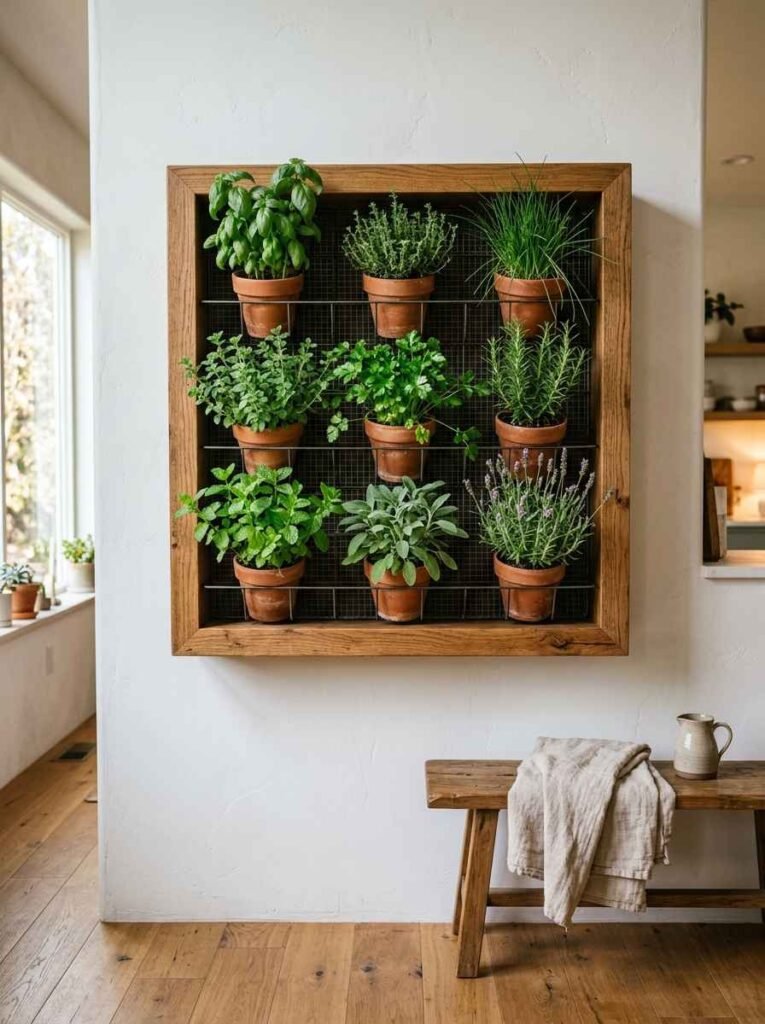
A framed vertical planter (basically a shadow box filled with small pots) mounts to the wall like art. You can find these on Etsy or make one with scrap wood and wire mesh.
32. A dedicated grow light cart
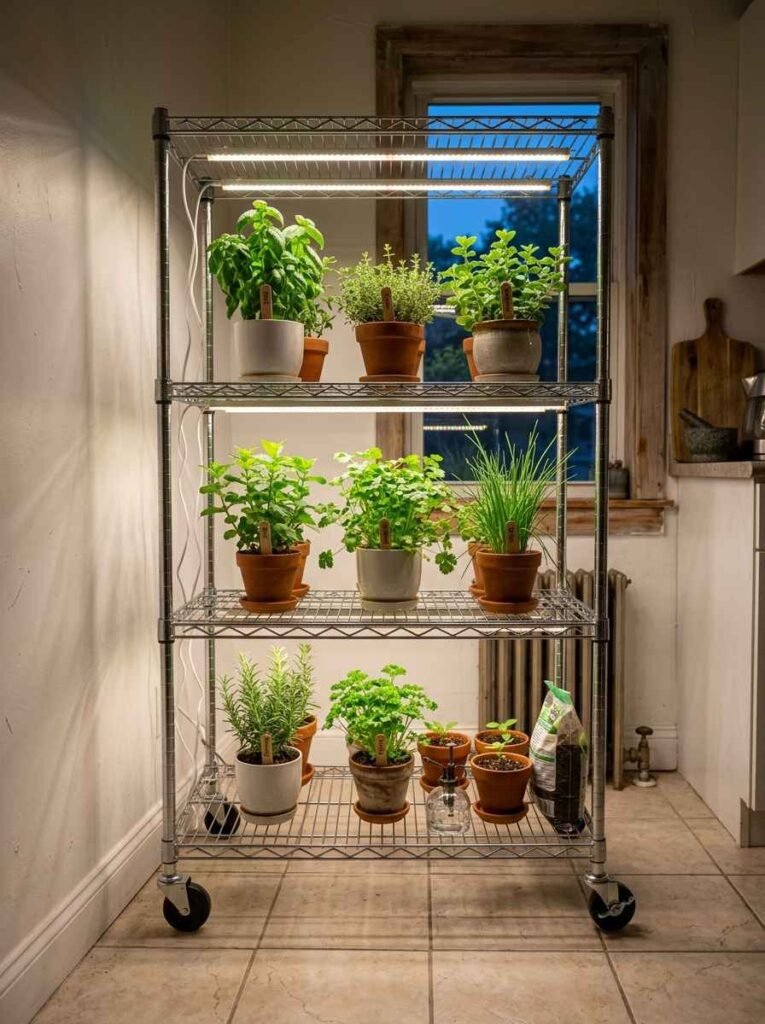
A rolling utility cart with grow lights attached under each shelf is probably the most serious indoor herb setup before you start calling yourself a “grower.” 3 shelves, grow lights, and you’ve got a full herb production setup in about 3 square feet. For anyone who cooks seriously, this is genuinely worth it.
How to actually grow herbs easily indoors
Picking the right herbs to start with
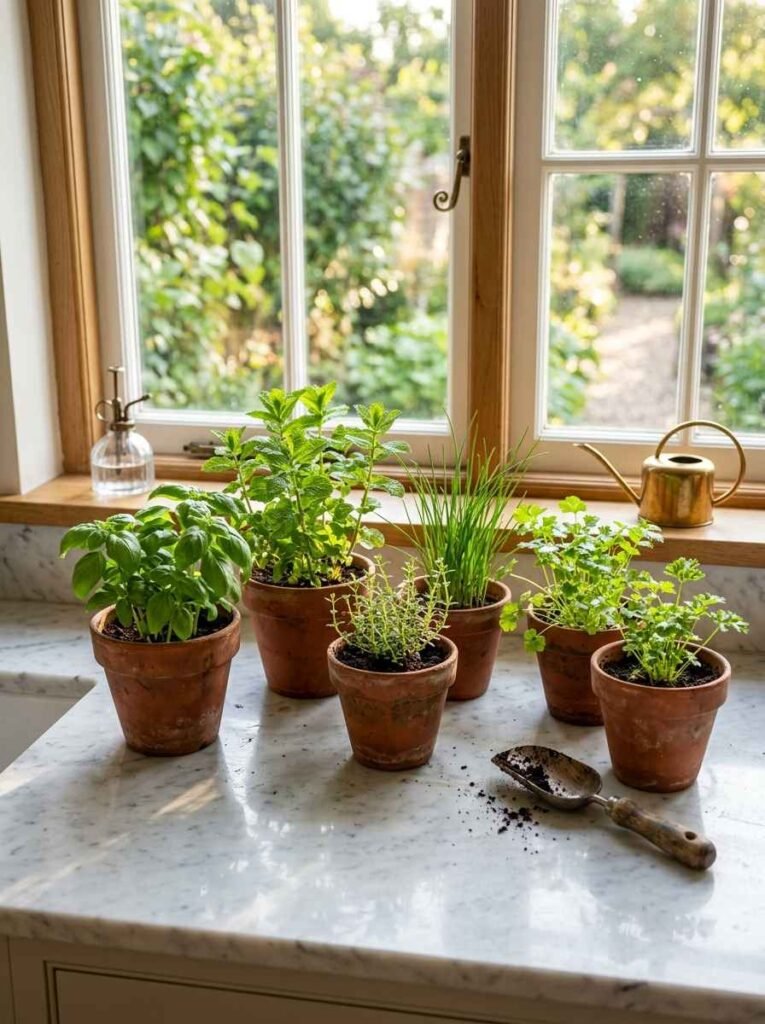
Start with herbs that don’t demand much. Chives, mint, and thyme are almost impossible to kill. Basil is rewarding but it needs warmth and good light. Cilantro is the drama queen of herbs, it bolts fast and doesn’t love being moved.
Here’s a quick reference:
| Herb | Light needed | Watering frequency | Best location |
|---|---|---|---|
| Basil | 6+ hours sun | Every 2-3 days | South-facing window |
| Mint | Partial light | Every 3-4 days | Any bright spot |
| Thyme | 4-6 hours sun | Every 5-7 days | Windowsill or shelf |
| Chives | 4+ hours sun | Every 4-5 days | Kitchen counter |
Soil, drainage, and pots
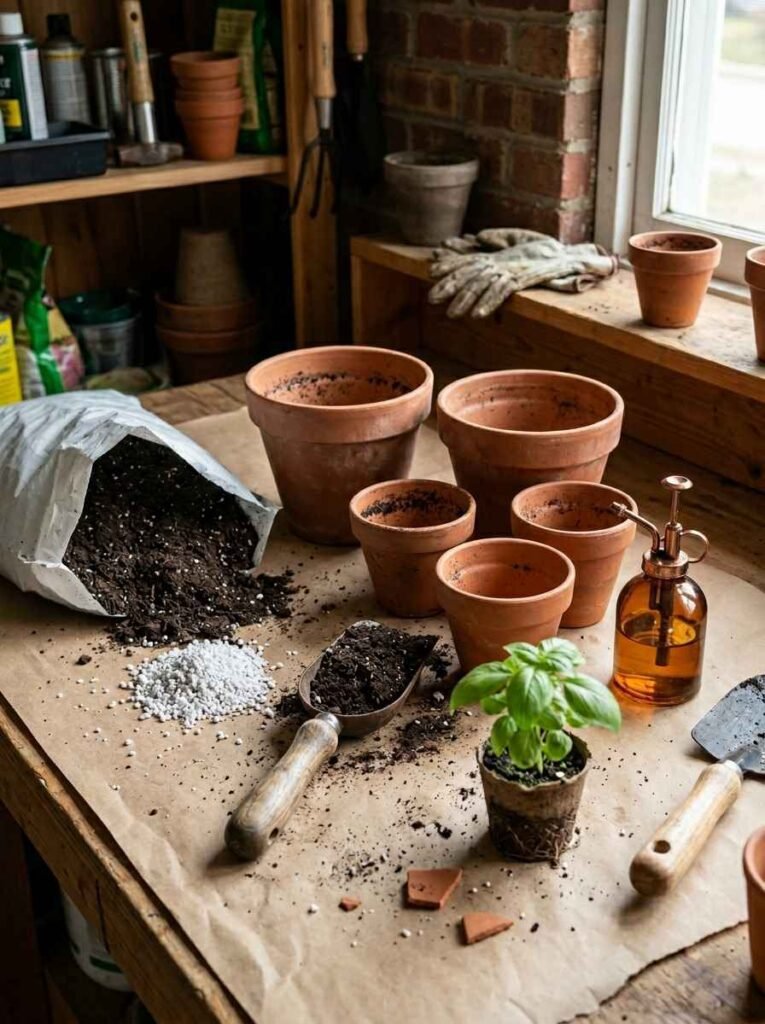
Use a good quality potting mix, not garden soil. Garden soil compacts in pots and basically suffocates roots. Something like Miracle-Gro Indoor Potting Mix or a peat-free alternative works well.
Drainage is non-negotiable. Every pot needs a hole at the bottom. I’ve killed more herbs from overwatering in pots without drainage than from any other mistake.
Watering without overdoing it
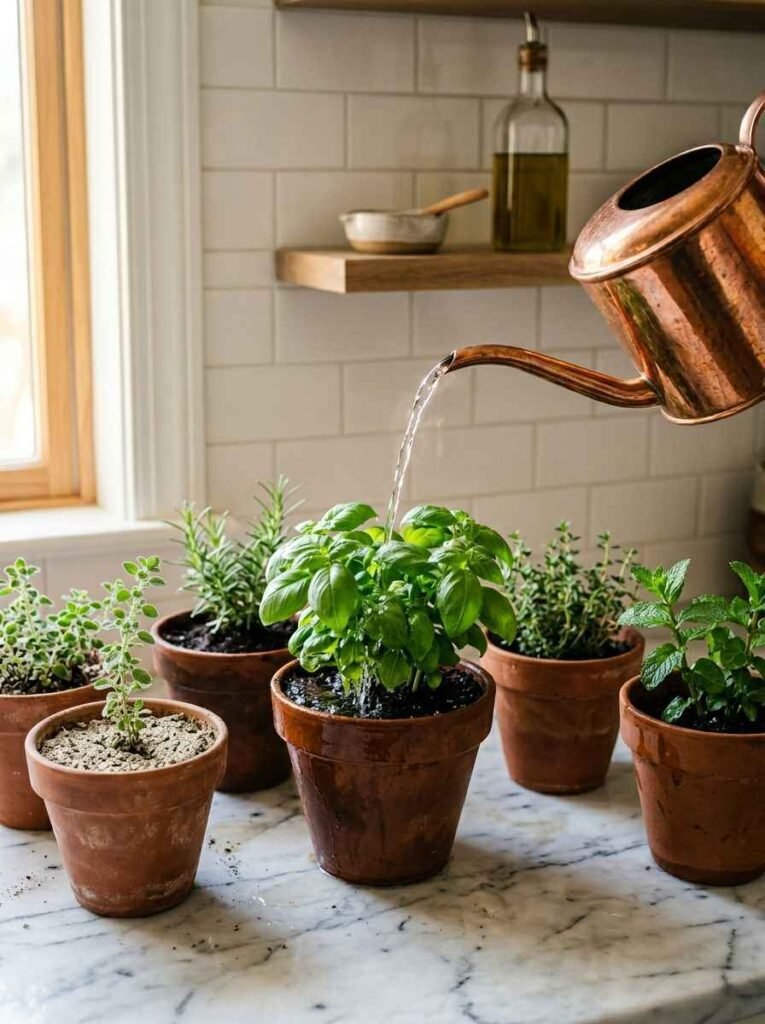
Stick your finger 1 inch into the soil. If it’s still damp, don’t water. If it’s dry, water until it runs out the bottom. That’s the whole method.
Basil likes more moisture. Rosemary and thyme want to dry out completely between waterings. If you’re treating all your herbs the same, some of them will suffer.
Light and artificial grow lights
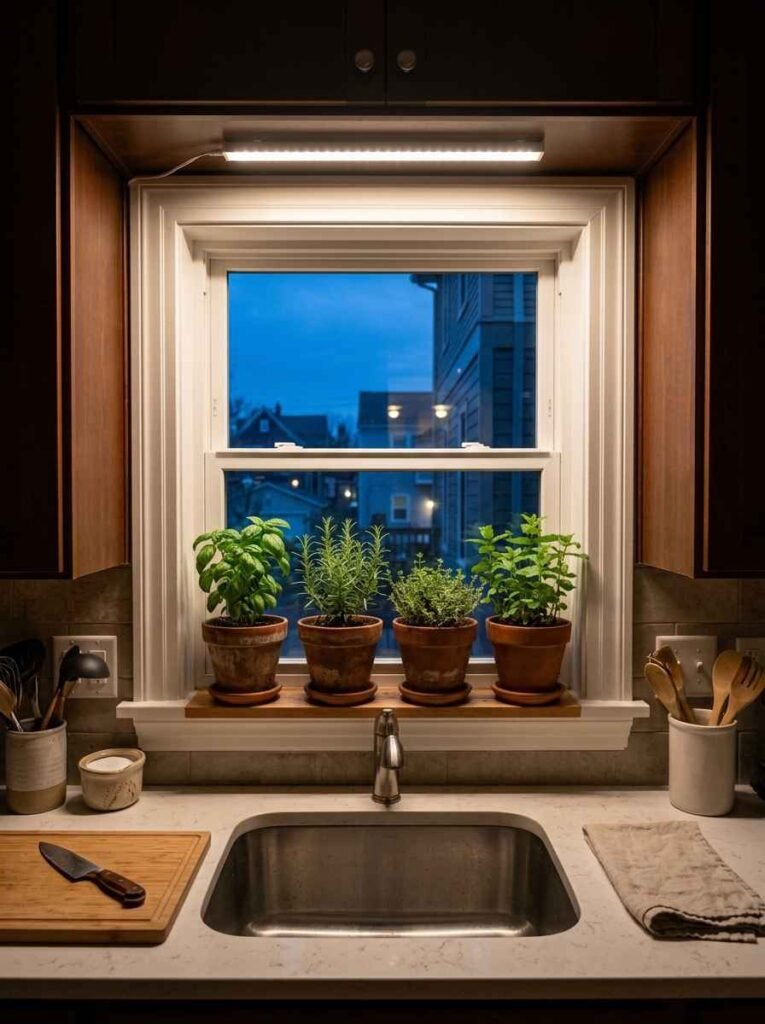
UK get the most sun hours. If you can’t manage 4 to 6 hours of direct light, a basic full-spectrum LED grow light on a timer makes a real difference. Something like the Juhefa LED Grow Light set to 14 hours on, 10 off keeps most herbs healthy even in a north-facing flat.
Wow, honestly the difference grow lights make for basil in winter is a bit insane. I went from one sad plant to basically a small production line once I added a light.
Feeding your herbs
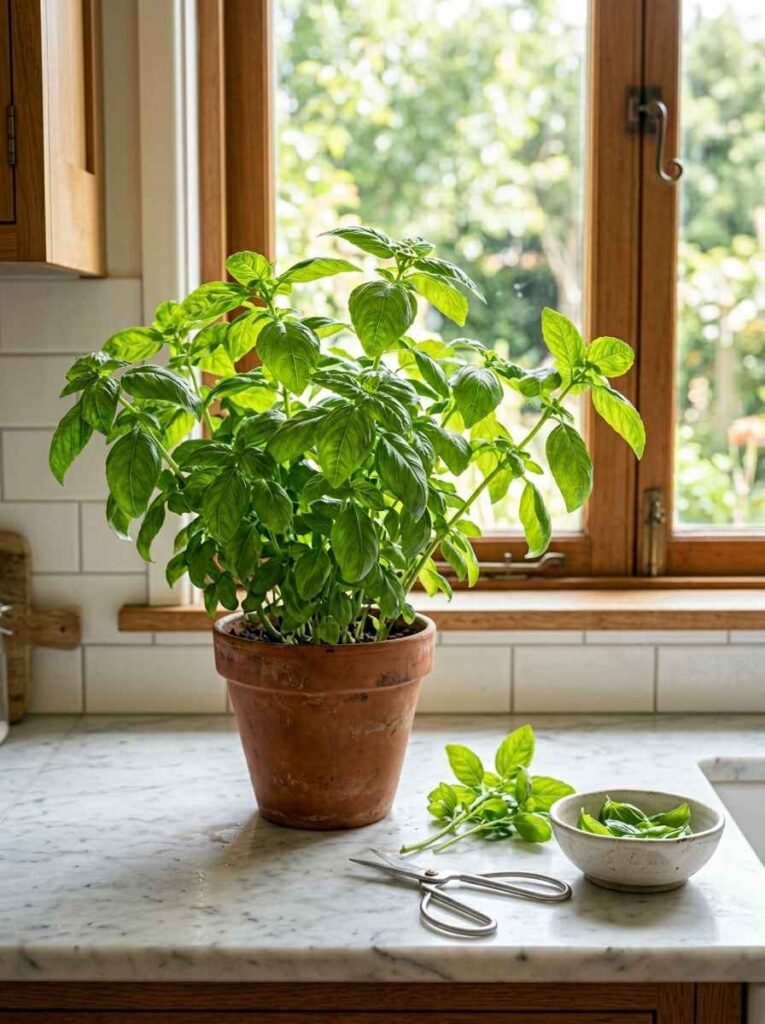
Herbs don’t need constant fertilizer. A half-strength liquid feed once every 3 weeks during the growing season (spring and summer) is plenty. Don’t feed in winter when growth slows down.
Harvesting the right way
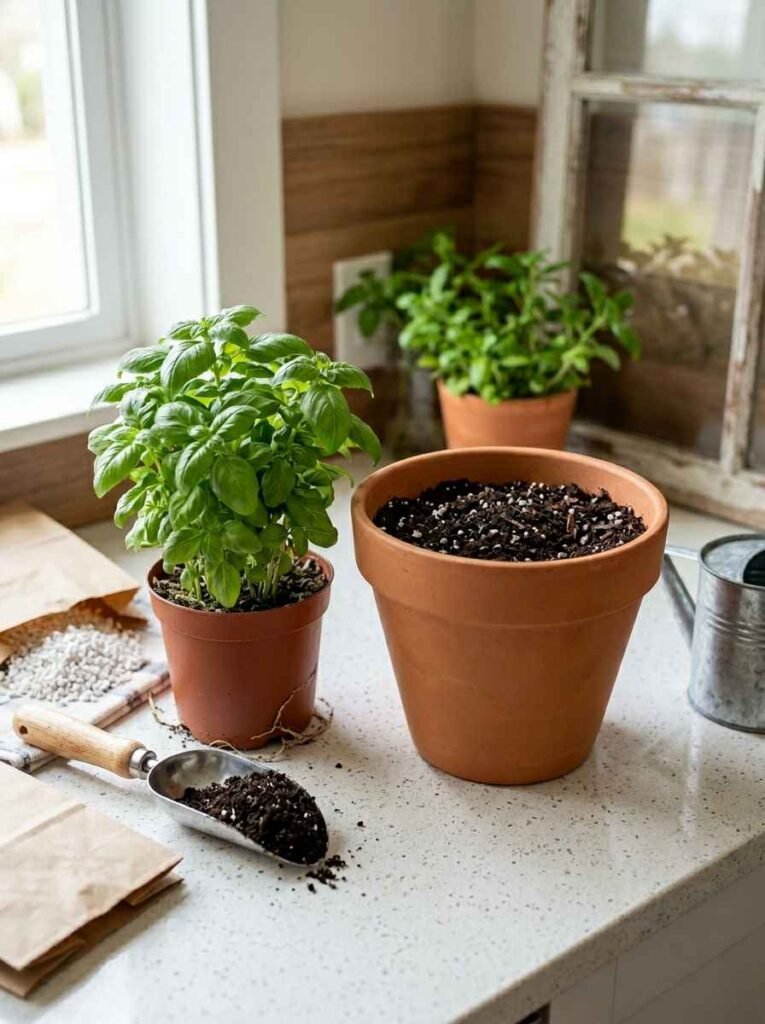
Always harvest from the top of the plant, just above a leaf node. This encourages the plant to branch out and get bushier.
Cutting from the bottom or pulling off random leaves stresses the plant and slows growth.
For basil specifically, pinch off any flower buds the moment you see them. Once basil flowers, the leaves get bitter and the plant focuses energy on seed production.
Pinch it and it’ll keep producing for months.
Quick tips that actually matter
- Repot store-bought herbs immediately. The small pots they come in are designed for short shelf life, not long-term growing. Move them into a larger pot with better soil and they’ll last 10 times longer.
- Mint spreads aggressively. Keep it in its own pot. This is personal experience talking: I planted mint with basil once and it basically took over within 6 weeks.
- Group pots together. Plants near each other increase local humidity slightly, which most herbs appreciate.
- Rotate pots every few days so all sides get light and the plant grows evenly.
FAQs
Can herbs really grow in a windowsill with no extra lighting? Yes, for quite a few of them. Chives, mint, parsley, and thyme all manage with 3 to 4 hours of indirect natural light. Basil and cilantro need more, so if your window doesn’t get direct sun, a small grow light is worth adding just for those 2.
How do I keep basil alive longer indoors? Keep it warm (above 60F / 15C), water it from the base rather than the leaves, give it as much sun as possible, and pinch off flowers immediately. Cold drafts from windows in winter are the most common reason basil suddenly collapses, so move it away from the glass on cold nights.
Do I need special soil for indoor herbs? Garden soil doesn’t work well in pots. A good quality potting mix with good drainage is what you want. Some gardeners mix in a bit of perlite (about 20%) to improve drainage further, especially for thyme and rosemary.
A final thought
Growing herbs indoors isn’t really about having a green thumb. I’d say it’s closer to paying attention. Check the soil, watch for flower buds, give them decent light, and don’t drown them. That’s mostly it.
The RHS (Royal Horticultural Society) has good guidance on specific herb varieties if you want to go deeper, and The Old Farmer’s Almanac herb growing guide is genuinely one of the best free resources out there.
Which of these 32 ideas are you actually going to try first? Drop it in the comments, I’m always curious which setups people go for in small spaces.
