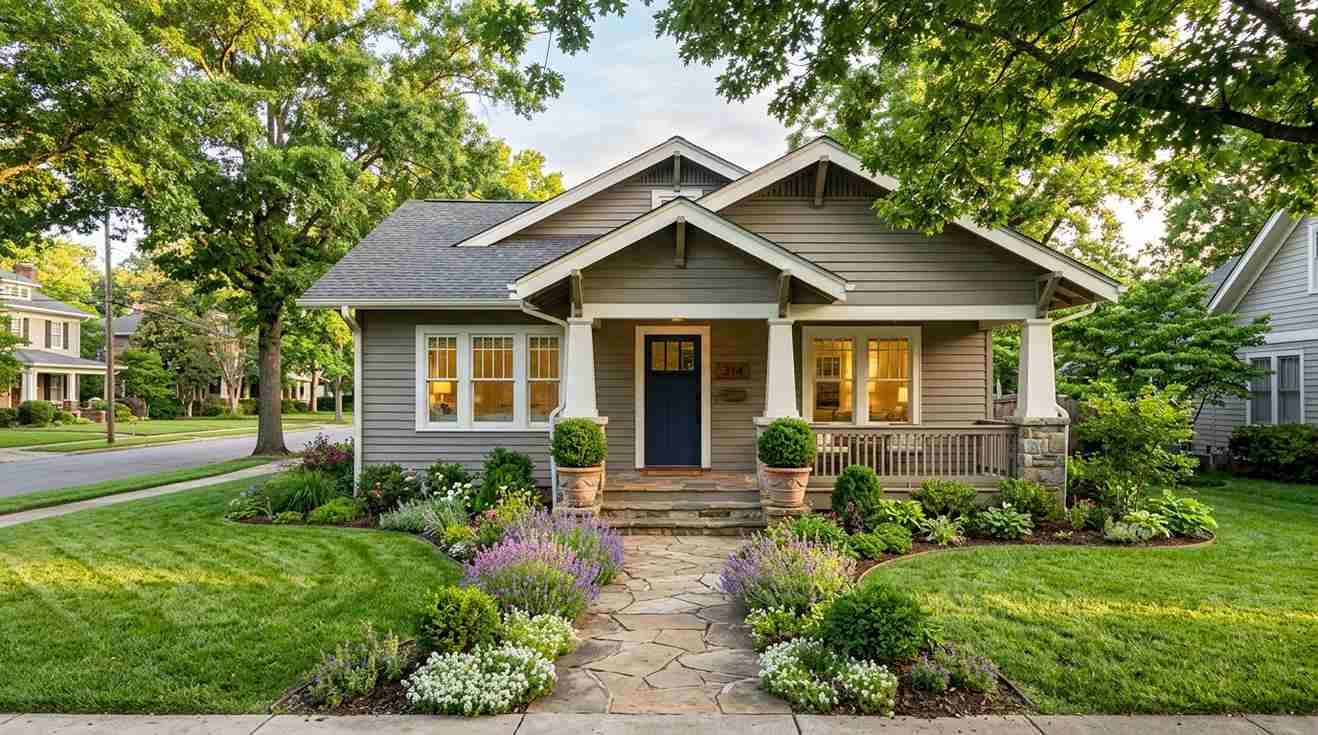
Your front yard is doing a lot of heavy lifting.
It’s the first thing people see, the backdrop for every photo ever taken of your house, and honestly, the difference between “oh, cute place” and “wait, who lives here?”
Small square footage doesn’t mean small impact.
Some of the most jaw-dropping curb appeal I’ve ever seen belongs to tiny houses with thoughtful front yards.
It’s all about working with what you’ve got.
Here are 30 ideas to make that happen.
Foundational Ideas That Do the Most Work
1. Define a clear path to the front door
If someone can’t immediately see where to walk, your yard already feels chaotic.
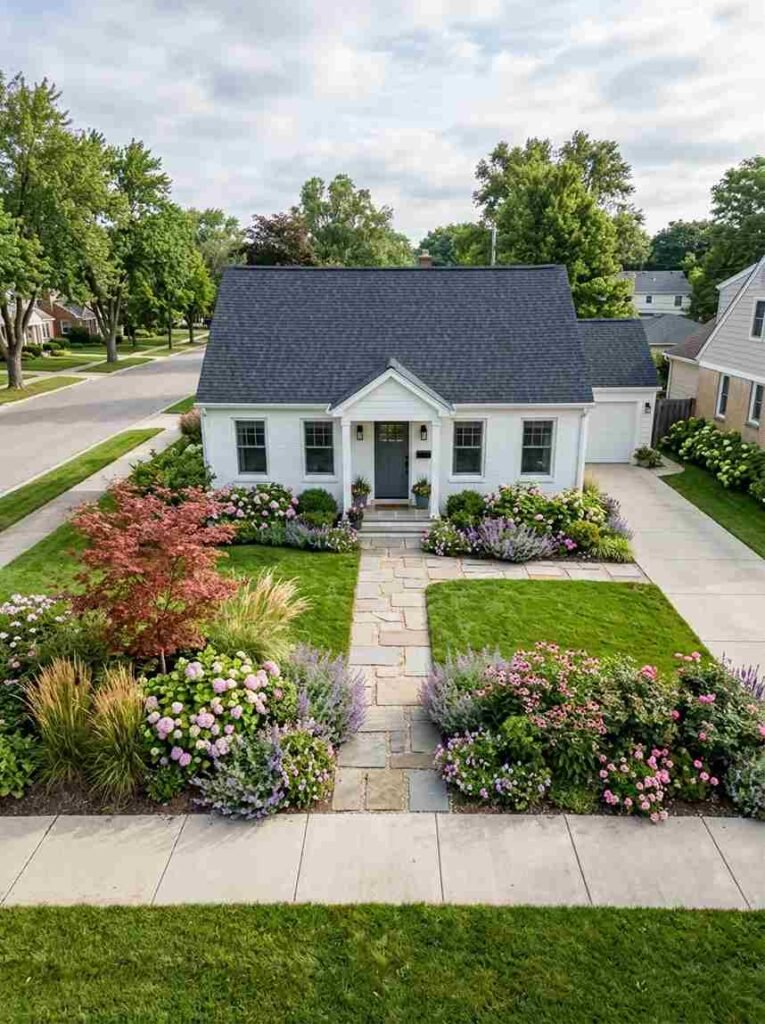
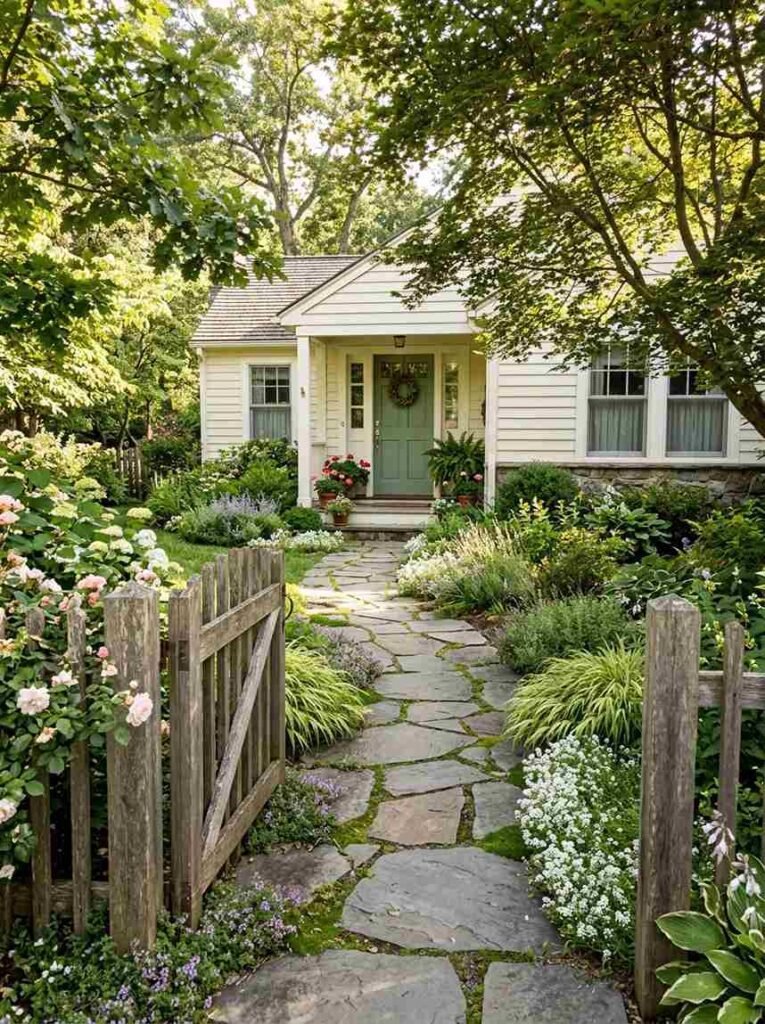
A defined path, whether flagstone, concrete pavers, or gravel bordered by edging, gives the eye a destination and the yard a sense of structure.
Curved paths feel softer and more welcoming than straight ones. Worth noting if your home has a more traditional or cottage-style exterior.
2. Frame the entrance with symmetrical plantings
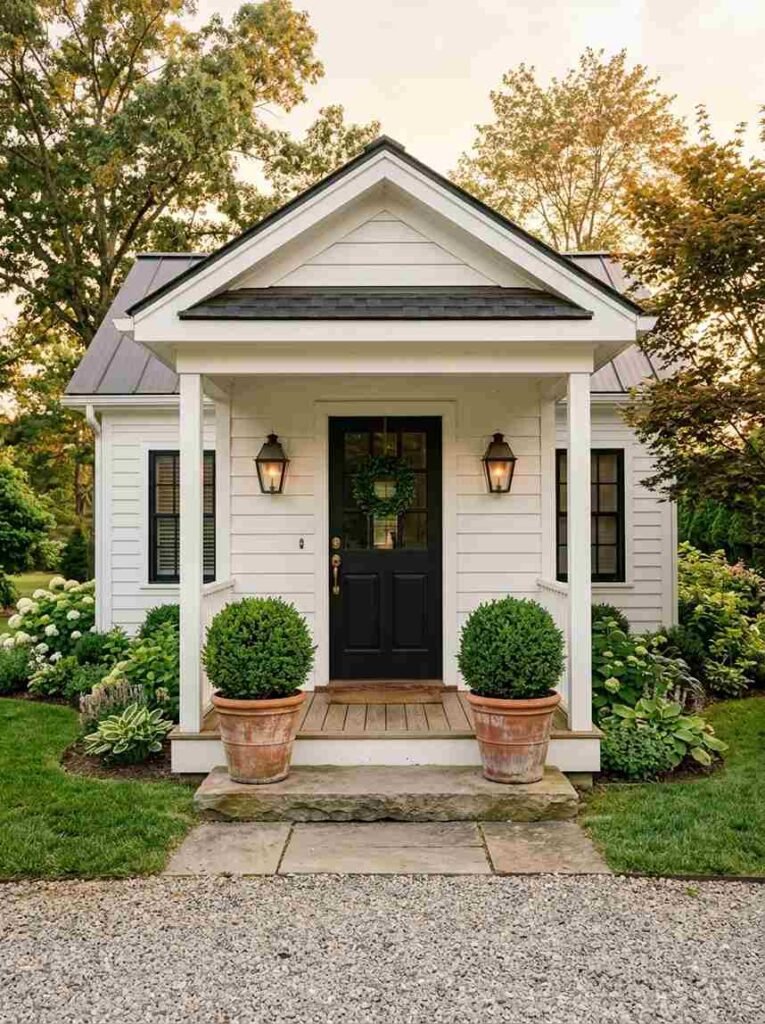
Two matching shrubs or ornamental grasses flanking your front door is one of the oldest tricks in curb appeal, and it still works every single time.
Symmetry reads as intentional. Your yard stops looking like “whatever grew there” and starts looking designed.
Boxwoods, dwarf hollies, or even a pair of potted topiaries work beautifully for this.
3. Install low garden borders along the foundation
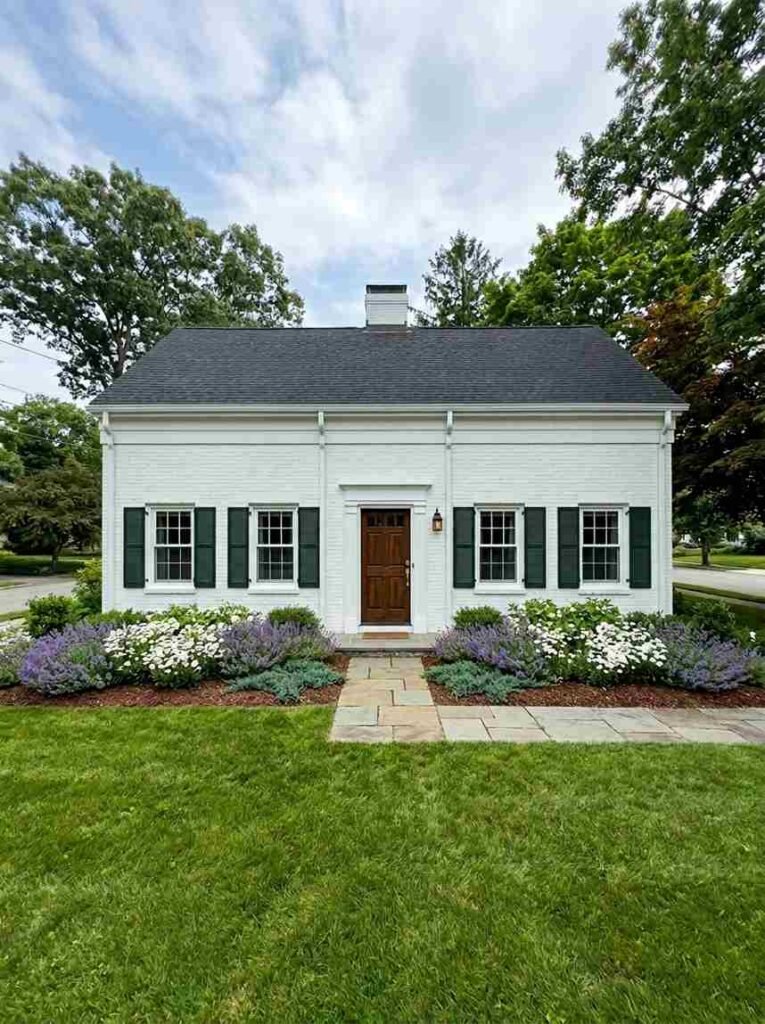
The gap between your home’s foundation and the lawn is a missed opportunity. Fill it with a shallow planting bed, low-growing perennials, or ornamental grasses.
This grounds the house visually and hides the concrete foundation line that makes so many small homes look boxy.
Keep the plants under 2 feet tall so they don’t compete with your windows.
Hardscape Ideas That Add Structure
4. Use stepping stones through a ground cover lawn
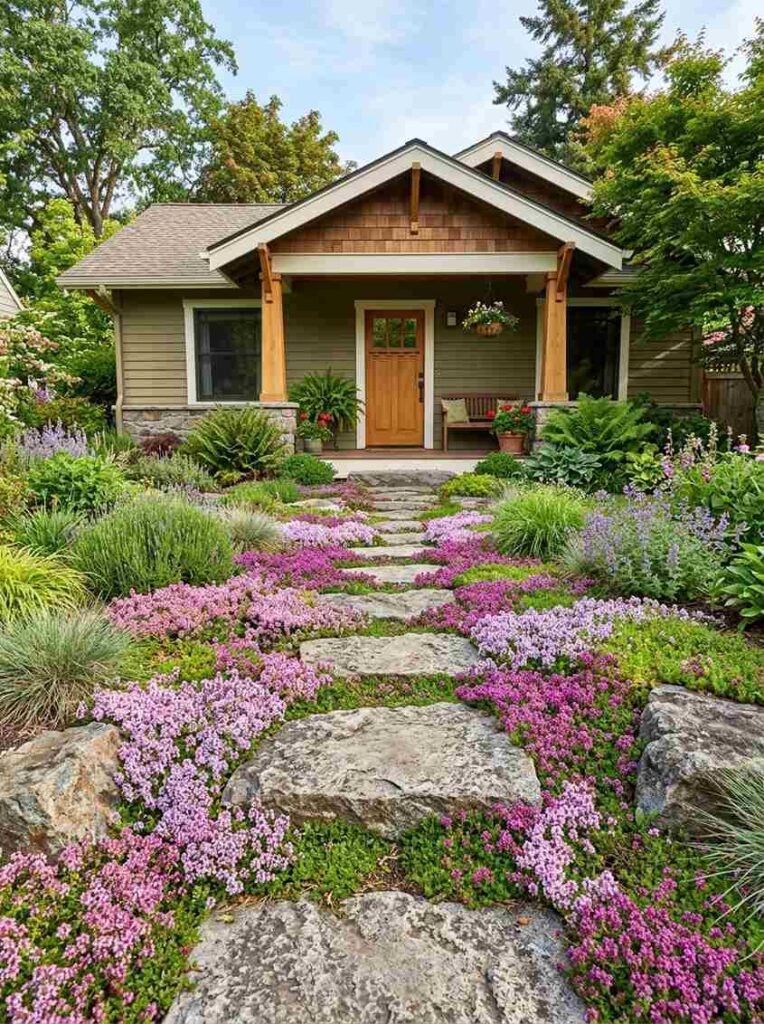
Grass isn’t your only option for ground coverage. Low creeping thyme, clover, or mondo grass between stepping stones gives you a lush look with far less maintenance.
The stones add visual rhythm, and the ground cover fills in beautifully over time.
FYI, clover also helps fix nitrogen in your soil. Practical and pretty.
5. Add a small retaining wall for dimension
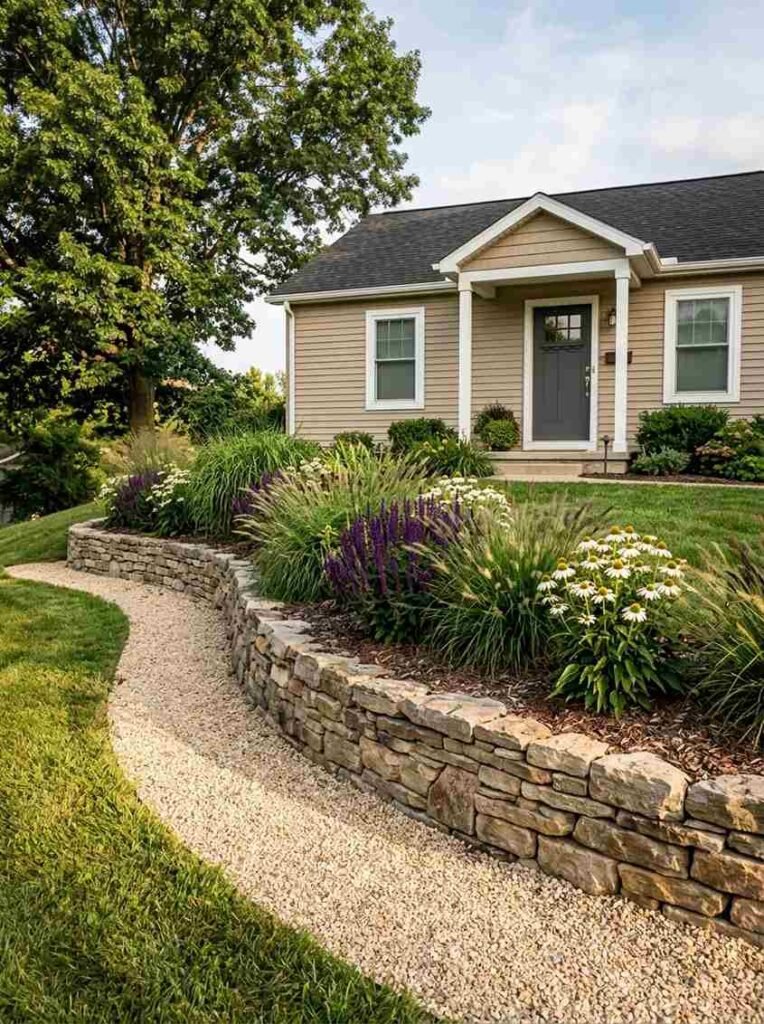
Flat front yards can look a little lifeless. A single low retaining wall, even just 12 to 18 inches tall, adds dimension and creates a raised planting bed that becomes a natural focal point.
Stack stone or concrete block both work well and hold up for decades.
This is especially effective on properties with a slight natural slope already.
6. Create a defined parking strip planting
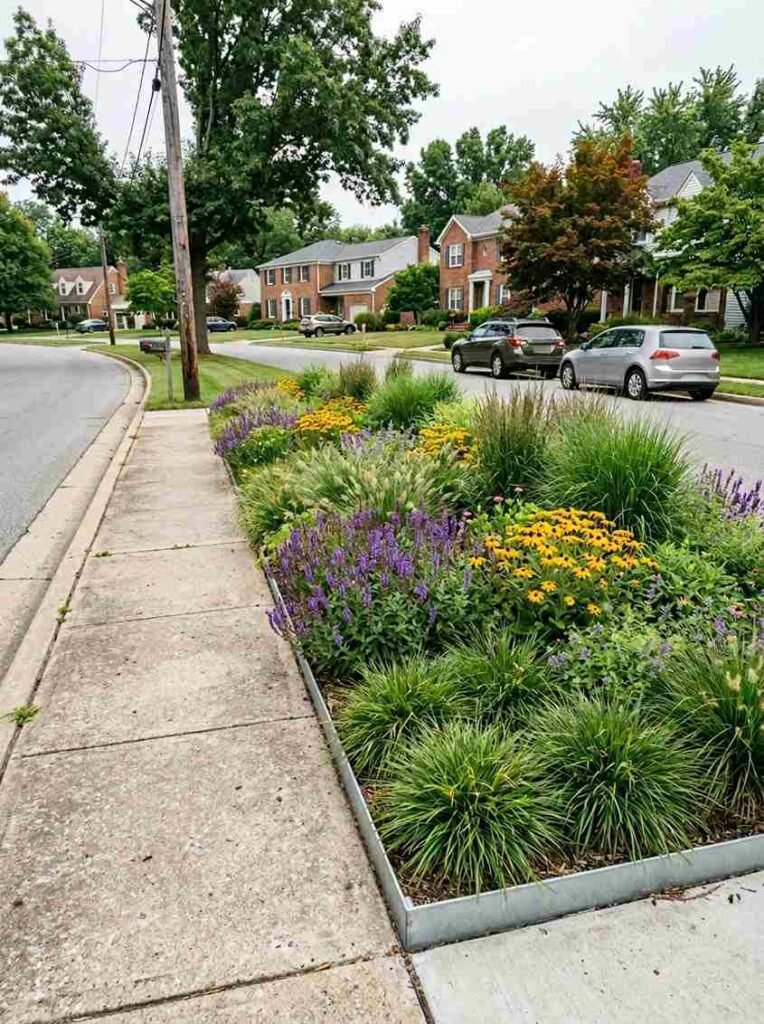
The strip between the sidewalk and the street is usually a dead zone of struggling grass. Replace it with drought-tolerant perennials, ornamental grasses, or native plants.
It immediately separates your home from every other on the block and the plants typically require far less water than turf.
7. Install a simple low fence or picket border
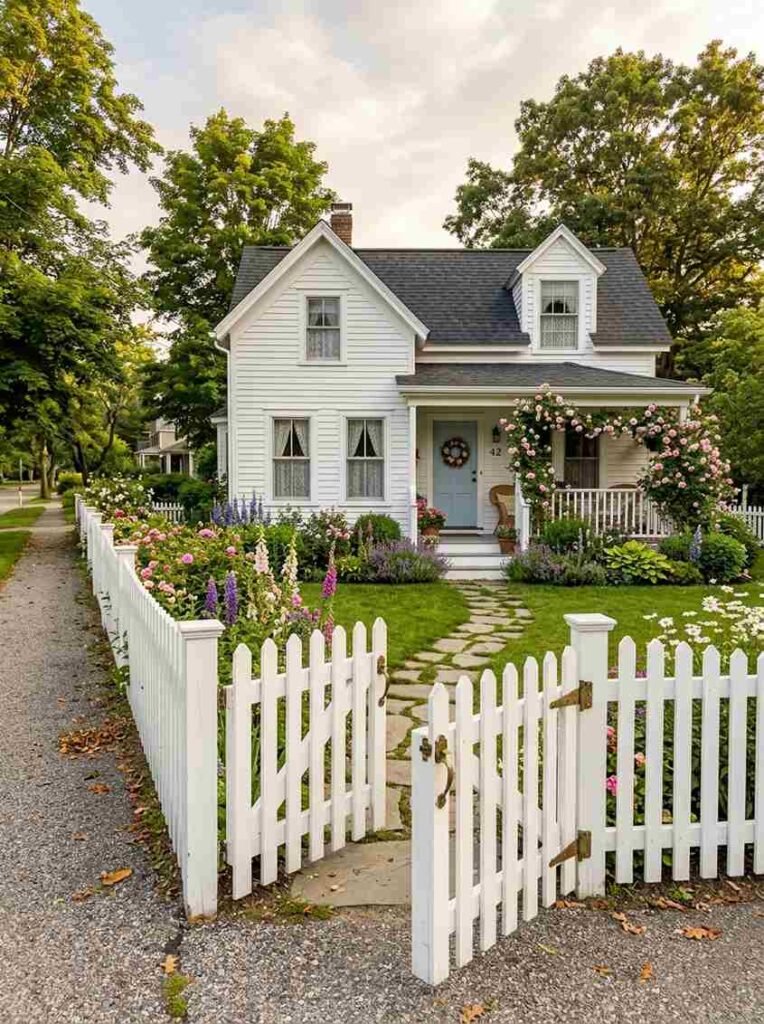
A low fence, roughly 2 to 3 feet, can define your property line and give your planting beds a finished edge.
White picket is classic cottage-style. Black metal is clean and modern. Either one photographs exceptionally well for Pinterest-style content.
| Fence Style | Best Home Exterior | Maintenance Level | Visual Effect |
|---|---|---|---|
| White picket | Cottage, farmhouse | Moderate | Charming, classic |
| Black metal | Modern, craftsman | Low | Sharp, structured |
| Split rail wood | Ranch, rustic | Low | Natural, relaxed |
| Stone border | Traditional, colonial | Very low | Permanent, grounded |
8. Lay a simple gravel bed under mature trees
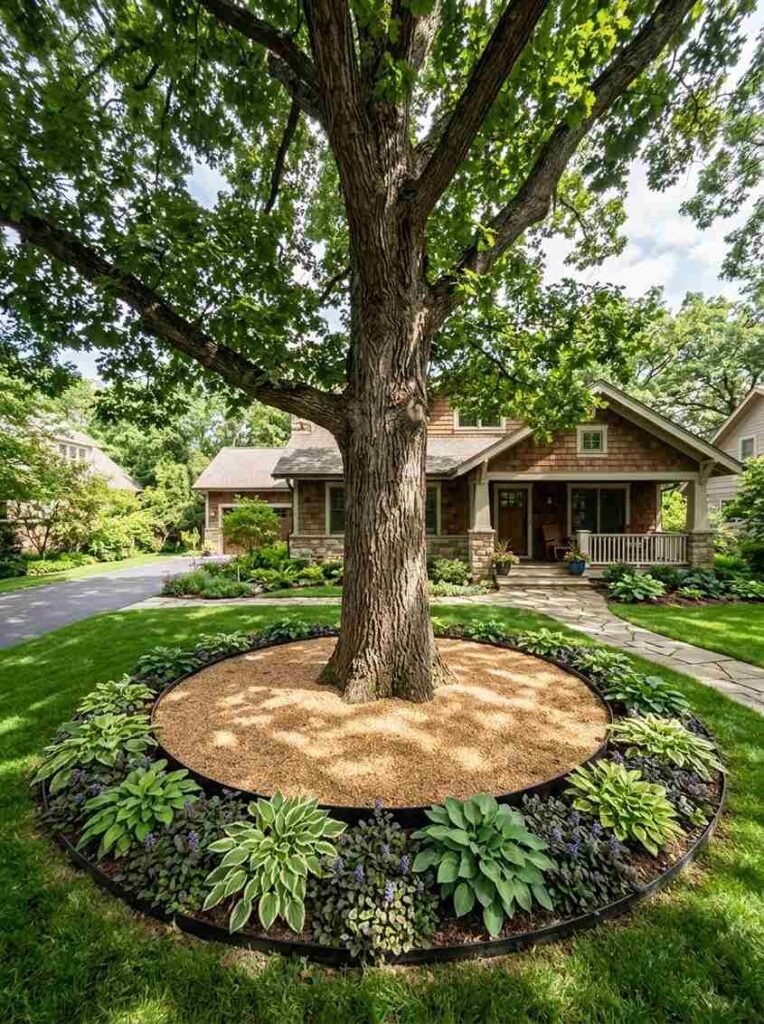
Tree roots make growing grass under mature trees nearly impossible. Swap the struggling turf for a clean gravel circle, bordered with a steel or plastic edging ring.
Add a few shade-tolerant plants around the perimeter and it looks totally intentional.
Plant-Based Ideas That Create Visual Impact
9. Go vertical with climbing plants on a trellis
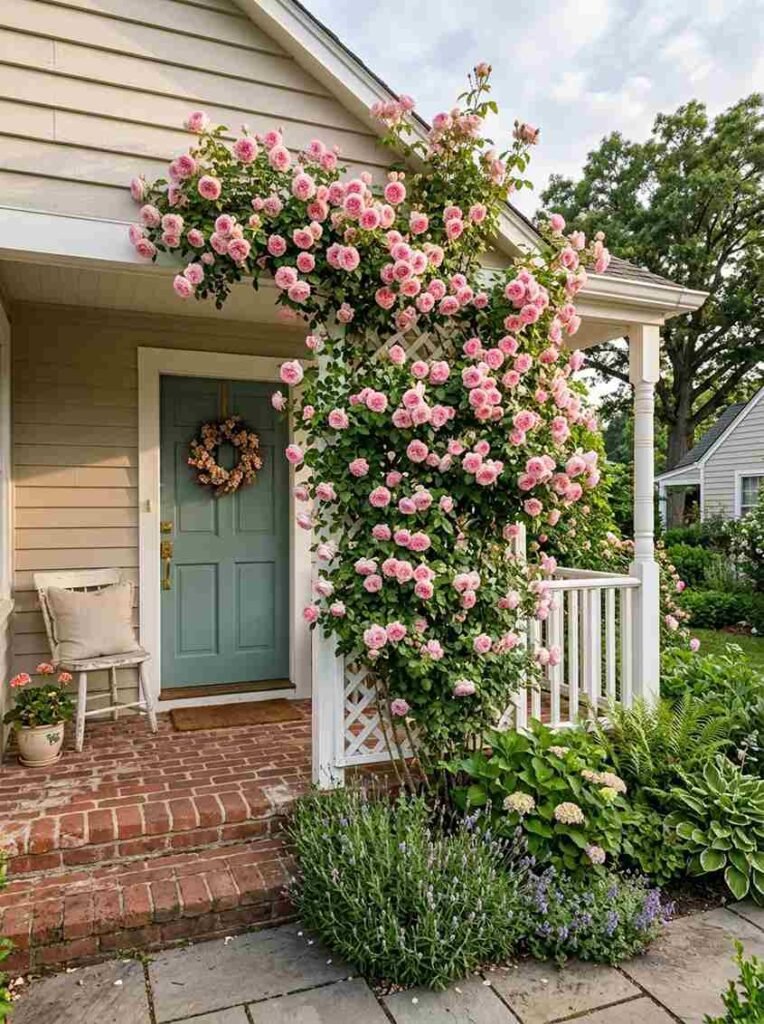
When horizontal space is limited, go up.
A simple wood or metal trellis against a fence or the side of your porch, planted with climbing roses, clematis, or jasmine, adds height and lushness without taking up an inch of ground space.
Climbing roses are especially effective. They’re Pinterest-gold for a reason.
10. Plant ornamental grasses for year-round texture
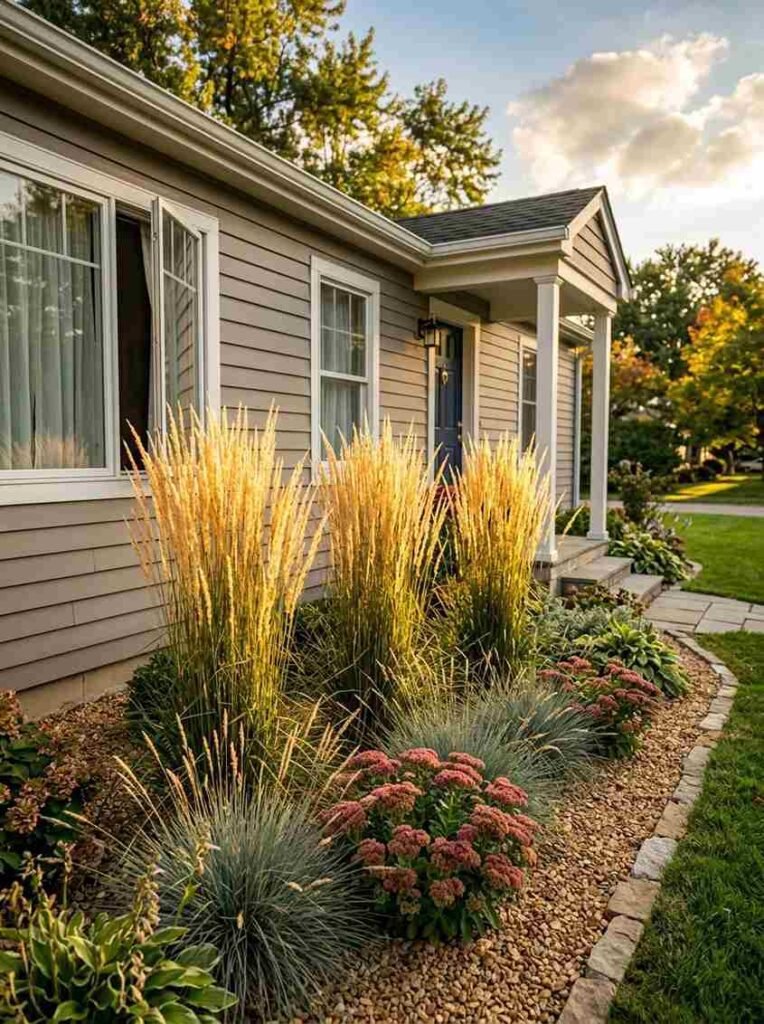
Ornamental grasses are one of the most underused front yard plants. Karl Foerster, Blue Oat
Grass, or Little Bluestem give you movement in the wind, texture through every season, and almost zero maintenance. They also look incredible in fall when they go golden.
Plant them in clusters of 3 or 5 rather than a single specimen for the most natural look.
11. Add a seasonal color bed near the mailbox
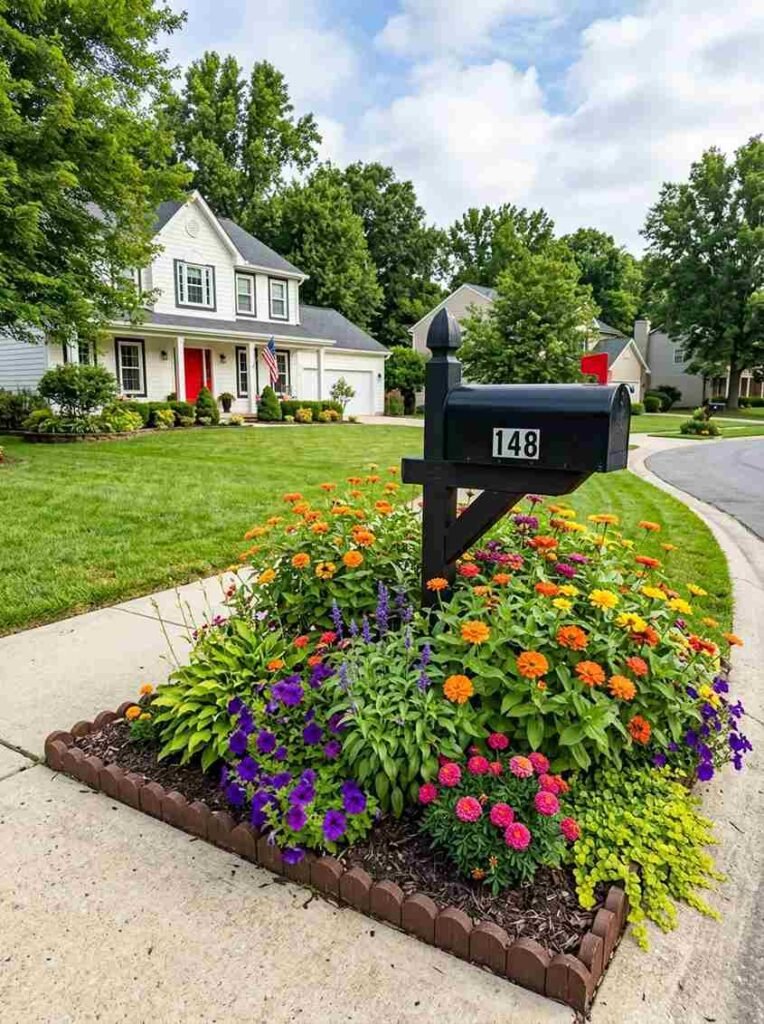
Your mailbox is a landmark. Give it a planting bed, even a small one, packed with seasonal annuals.
Change it out spring and fall. The color pop reads from the street and the seasonal rotation keeps things feeling fresh.
Petunias, zinnias, and marigolds for summer. Ornamental kale and pansies for fall. Easy.
12. Use native plants for a low-maintenance front yard
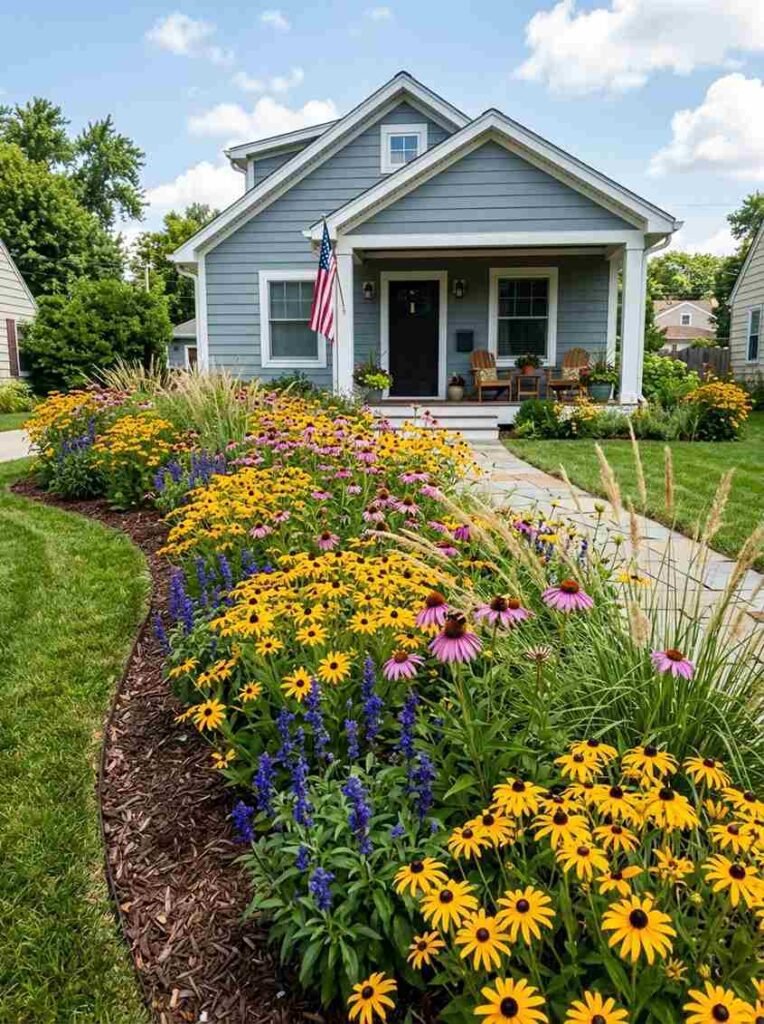
Native plants are adapted to your local climate, require less water, and support local pollinators.
They’re also increasingly showing up on Pinterest as people get smarter about sustainable landscaping.
Black-eyed Susans, coneflowers, and salvia are gorgeous and nearly bulletproof once established.
13. Create a cottage garden look with layered perennials
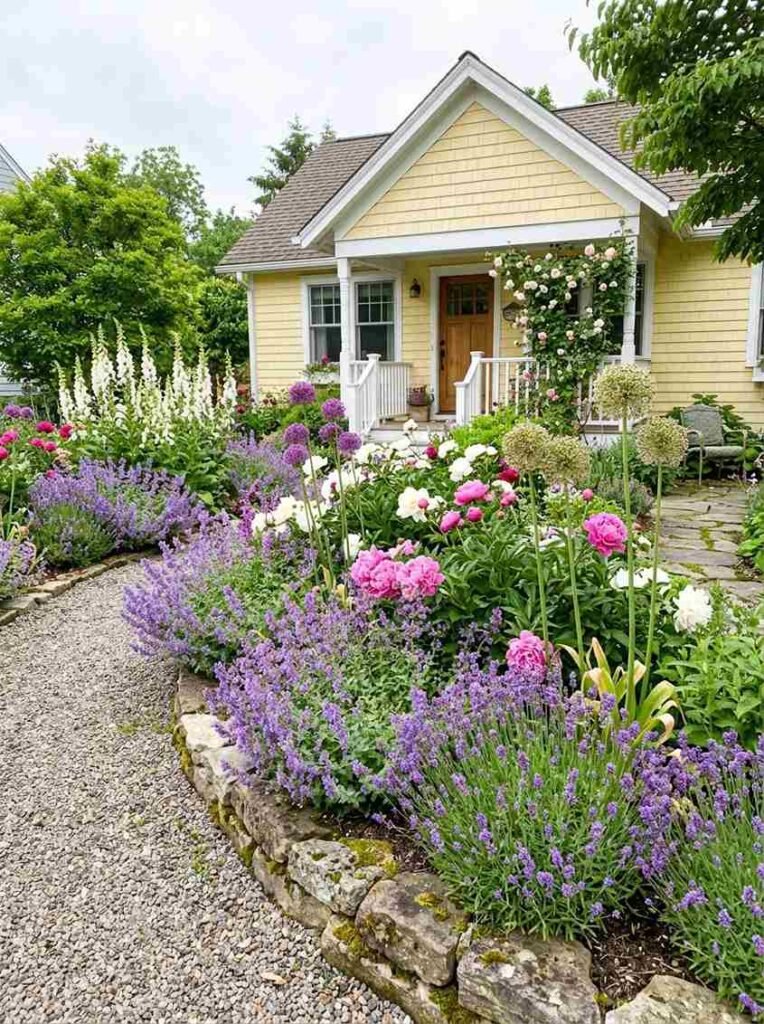
The cottage garden aesthetic, layers of perennials in soft colors that seem slightly wild but very intentional, works brilliantly on small properties.
The key is planting in drifts rather than rows and letting things grow a little informally. Think lavender, catmint, alliums, and peonies together.
It’s controlled chaos, and it looks incredible by midsummer.
14. Plant a flowering tree as a focal point
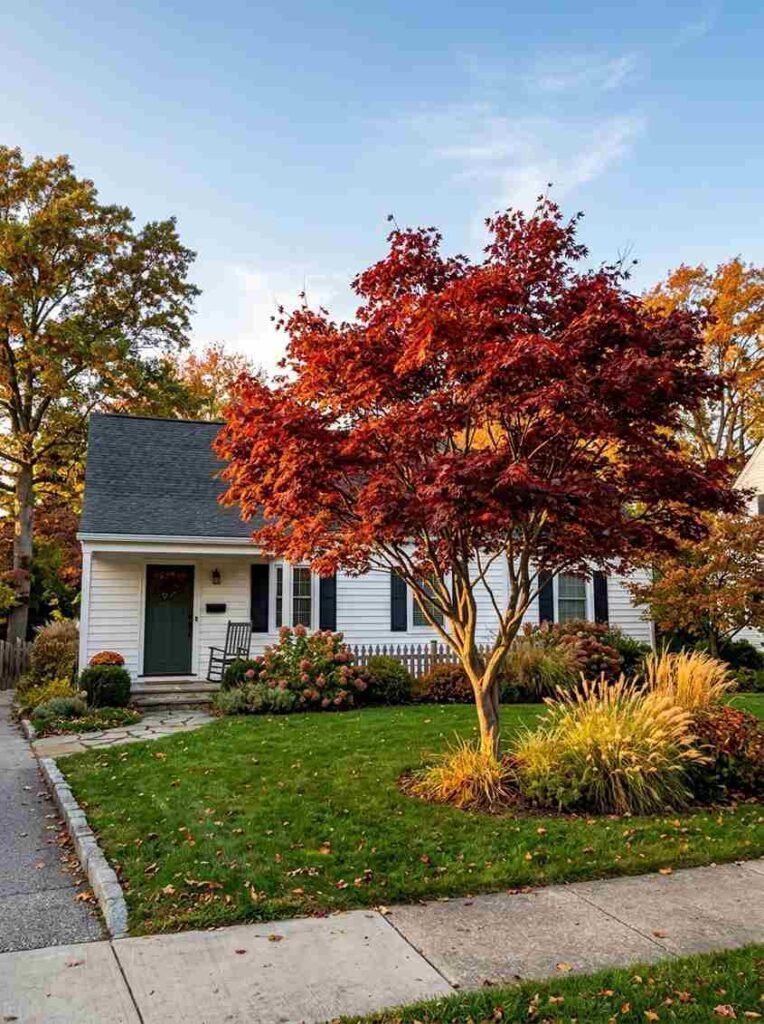
One well-chosen small flowering tree can completely transform a front yard. A Japanese maple, dogwood,
or serviceberry gives you spring blooms, summer shade, fall color, and winter structure. All from one plant.
Situate it off-center in your yard rather than dead center for a more natural, less municipal look.
15. Line your path with low boxwood hedges
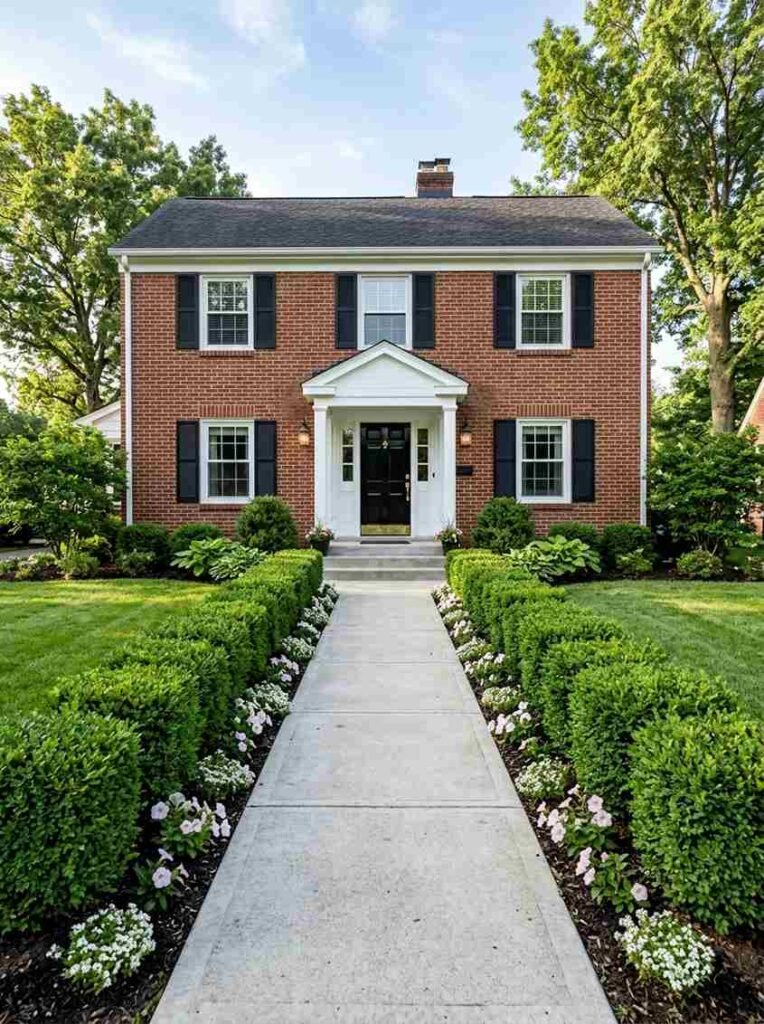
Boxwood-lined paths are classic for a reason. They’re tidy, they stay green year-round, they respond well to shaping, and they photograph beautifully.
Even a simple low hedge of 12 to 18 inch boxwoods on both sides of your front path can make the whole yard look more polished.
16. Add a container garden to your porch or stoop
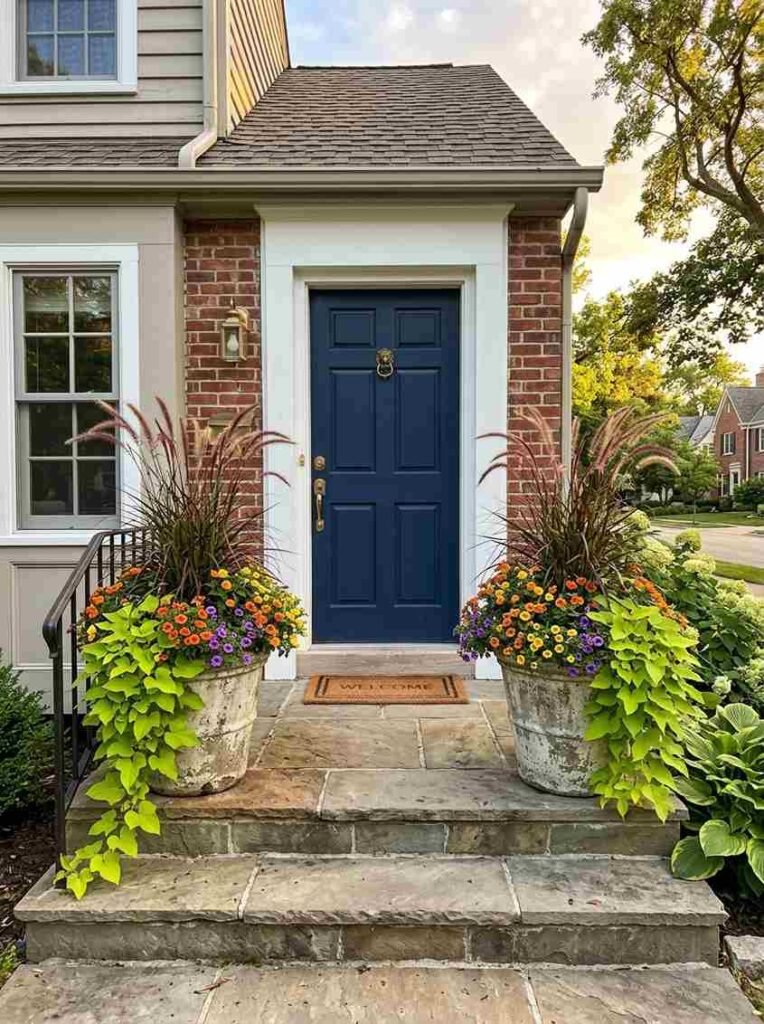
If you have almost no plantable ground space at all, containers are your answer.
A pair of large planters flanking your front door, filled with a thriller-filler-spiller combination (tall centerpiece, mounding filler, trailing edge plant), adds a ton of visual interest with total flexibility.
Swap the plants seasonally and you’ve got year-round curb appeal.
17. Use ground covers to eliminate bare soil patches
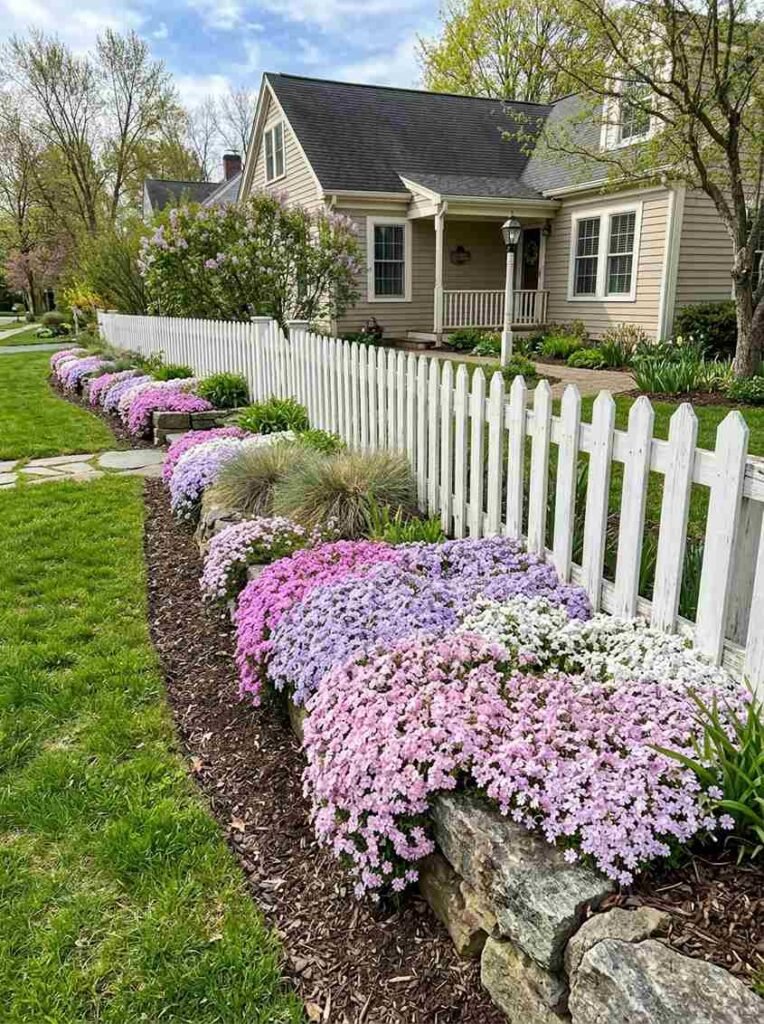
Bare soil looks unfinished and invites weeds.
Ground covers like creeping phlox, ajuga, or vinca fill gaps beautifully, spread on their own over time, and suppress weeds as they grow.
Creeping phlox especially puts on a show in spring with waves of pink, purple, and white blooms.
Design Tricks for Small Yards Specifically
18. Choose plants in scale with your house
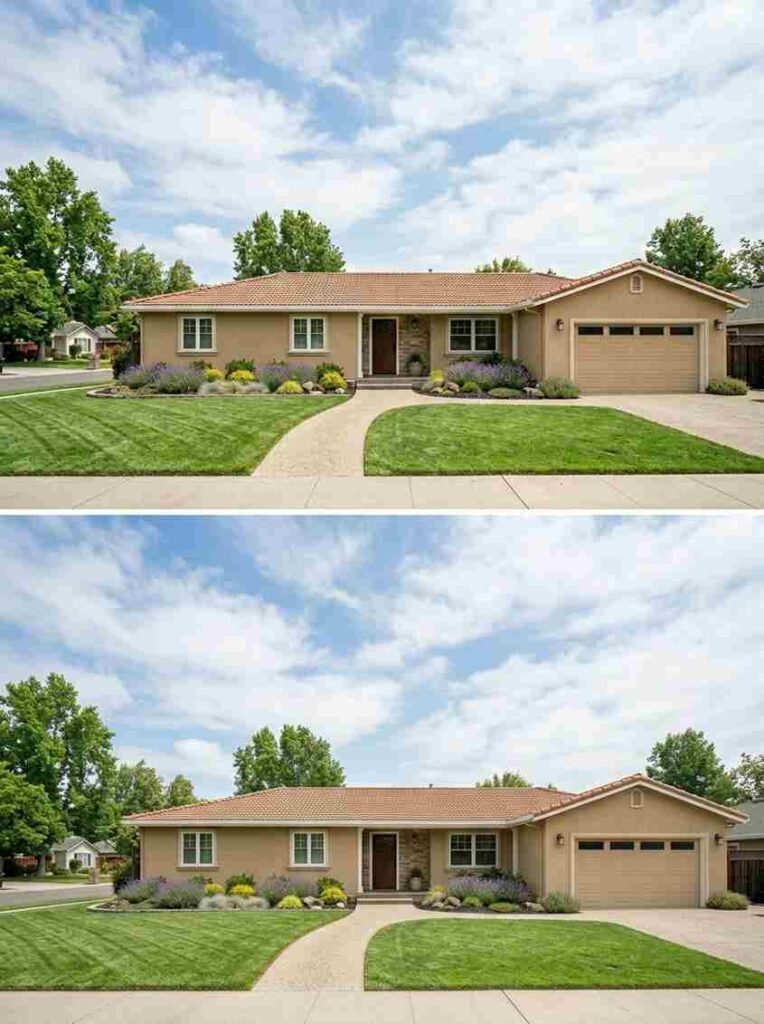
Oversized plants make a small house look smaller. A 15-foot shrub against a single-story home swallows it.
Stick with plants that max out at 4 to 5 feet for foundation beds, and save taller specimens for property edges where they add depth rather than overwhelm.
Scale is probably the most underappreciated concept in residential landscaping, IMO.
19. Use repetition to create cohesion
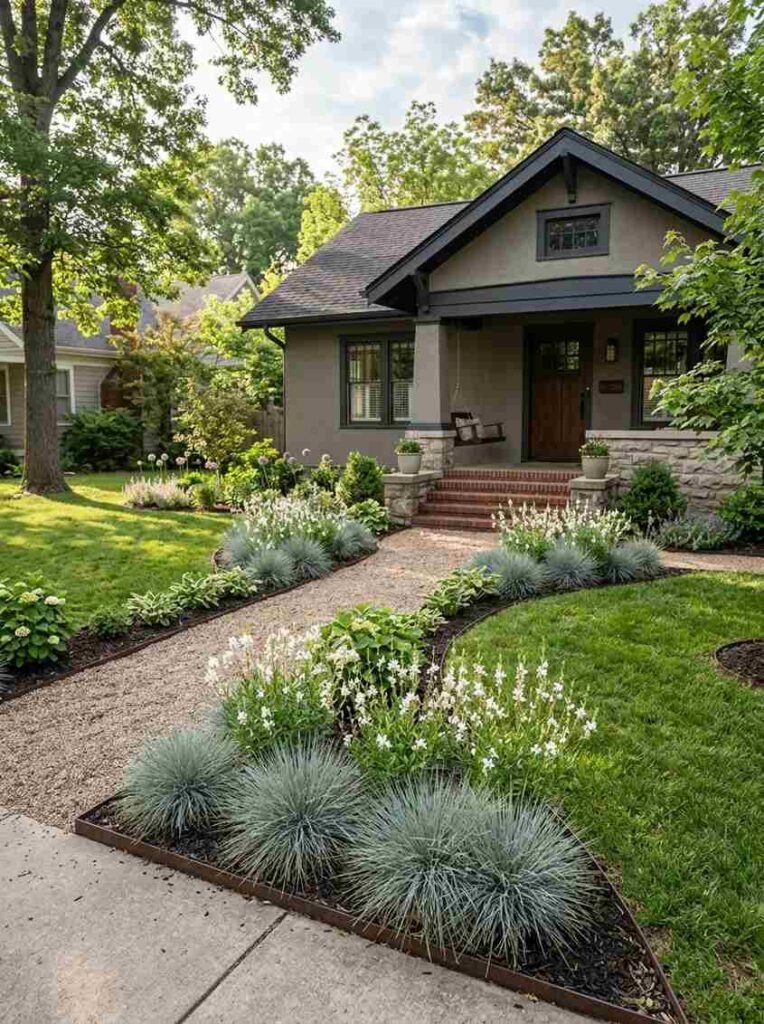
Pick 2 or 3 plants and repeat them throughout the yard rather than planting one of everything. Repetition creates a sense of intention and makes small spaces feel curated rather than cluttered.
A front yard with 15 different plant species looks busy. One with 4 species planted in groups looks designed.
20. Create the illusion of depth with layered heights
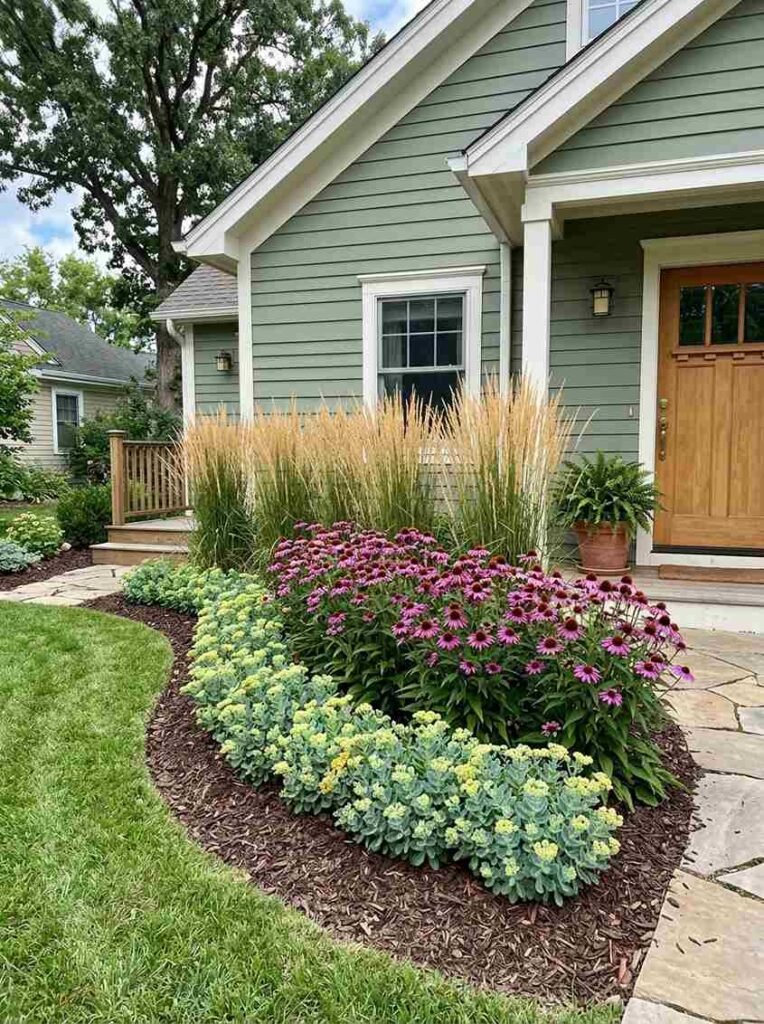
Plant tall things in back, medium things in the middle, short things at the front edge. This sounds obvious but most people do it randomly.
The layered approach creates visual depth that makes even a shallow 10-foot planting bed look lush and full.
21. Choose a restrained color palette
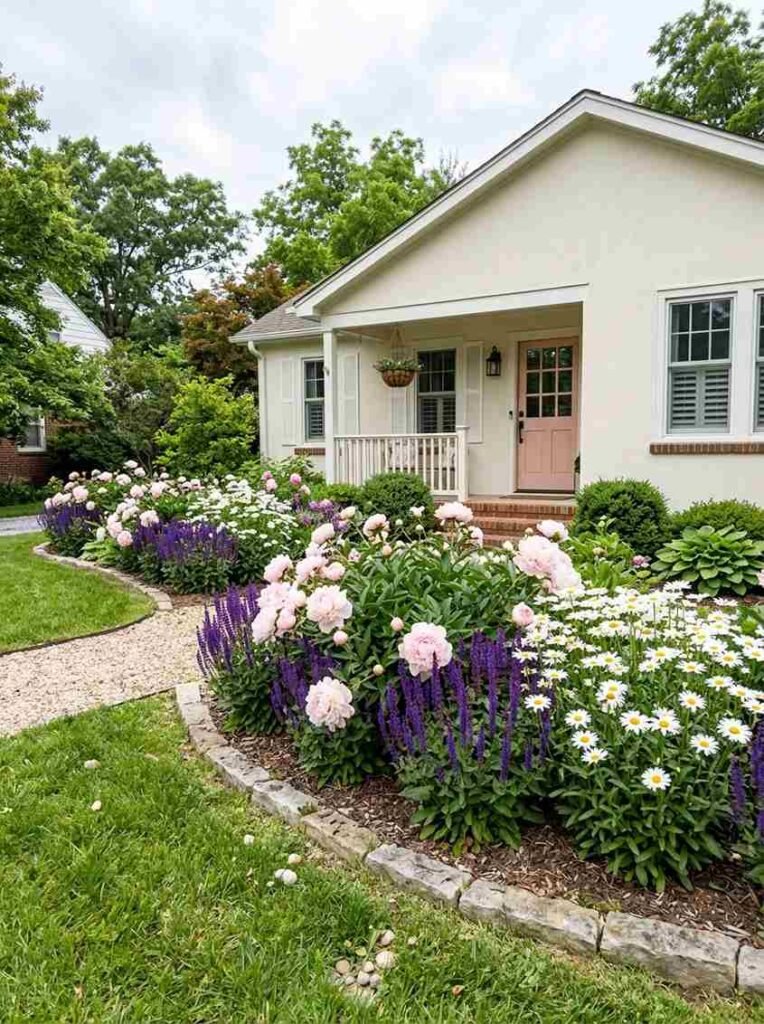
Three colors maximum in any planting bed. More than that and it reads as chaotic from the street.
Pick a primary color, a complementary color, and add white or silver as a neutral. That combination photographs beautifully and reads clearly from the road.
Lighting Ideas That Work Day and Night
22. Install path lighting along your walkway
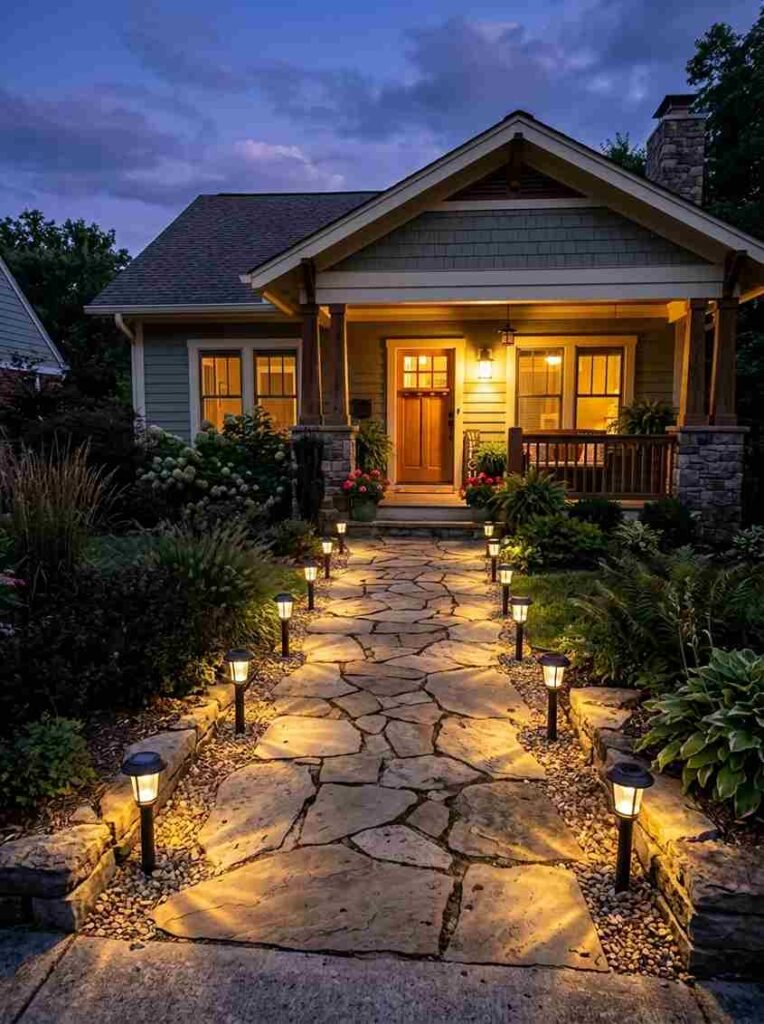
Solar path lights have gotten genuinely good in recent years.
A row of low bollard-style lights along your front path adds nighttime curb appeal, improves safety, and makes your home look polished after dark. Warm white light reads the best on camera.
23. Uplighting for trees and architectural features
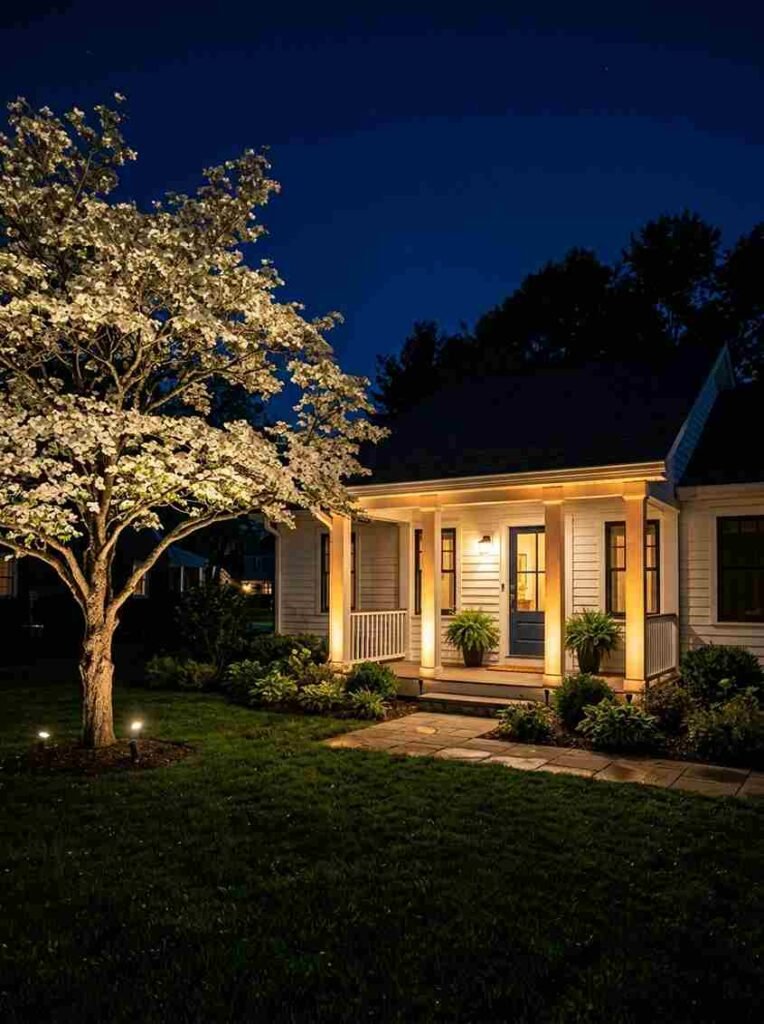
A few well-placed uplights aimed at your flowering tree, front columns, or an interesting textured wall can completely change how your home reads at night.
Uplighting adds drama and depth that flat overhead lighting can’t touch.
24. Accent lighting in planting beds
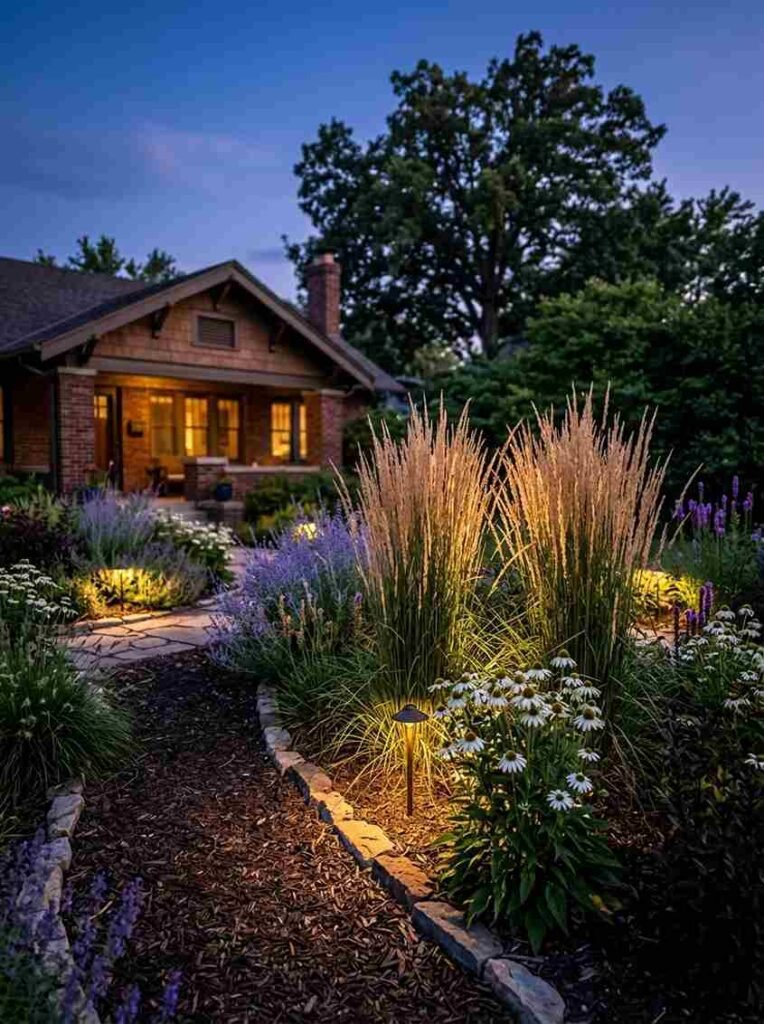
Small stake lights placed among garden plantings highlight texture and color after dark.
This is especially effective with ornamental grasses, which backlit against uplighting look almost ethereal.
Water Feature and Decorative Ideas
25. Add a small birdbath as a focal point
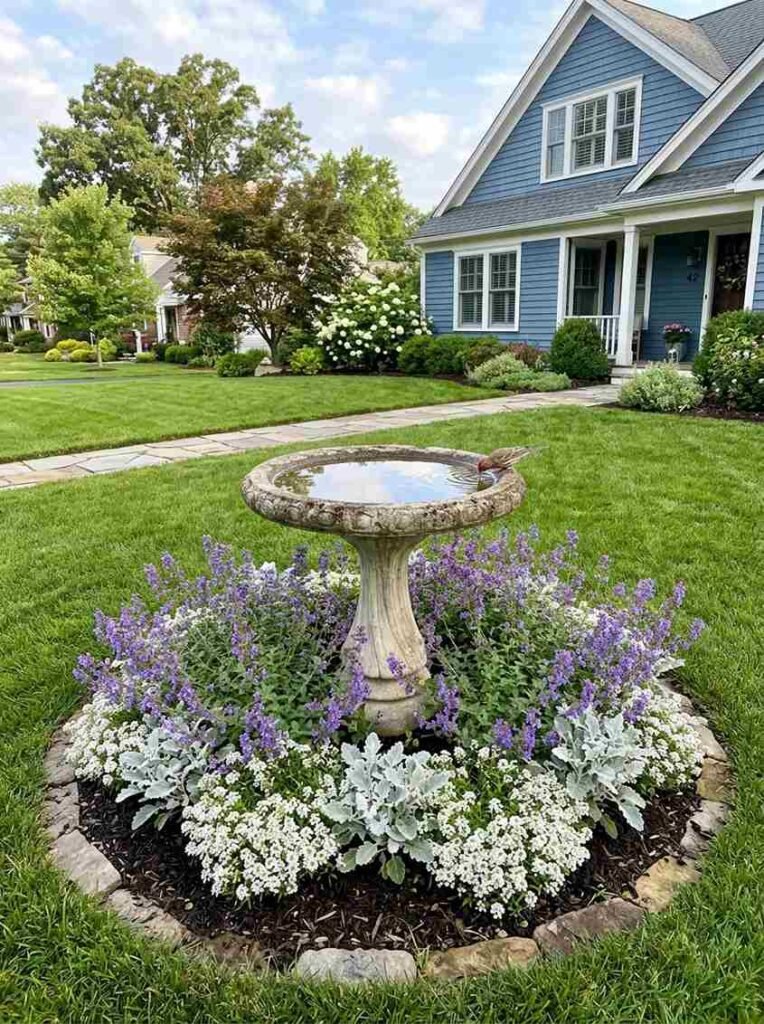
A birdbath doesn’t require plumbing, electricity, or a significant budget, and it adds a vertical element, a focal point, and actual wildlife activity to your yard.
Surround it with low plantings and it looks completely intentional. Just keep it clean.
26. Install a small water fountain near the entrance
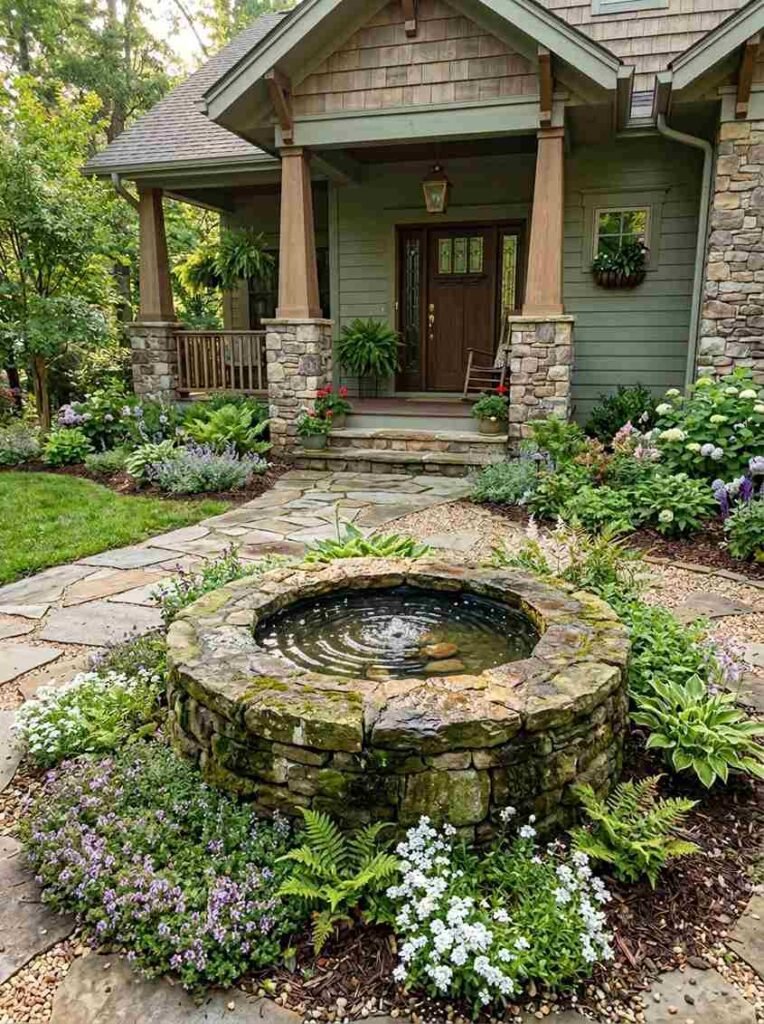
A self-contained solar fountain, the kind with a reservoir basin and a simple spout, brings sound and movement to your front yard.
Sound is one of those elements that makes a space feel alive in a way that visuals alone can’t quite replicate. Even a very modest version makes a big impression.
27. Use a decorative mailbox post as an anchor
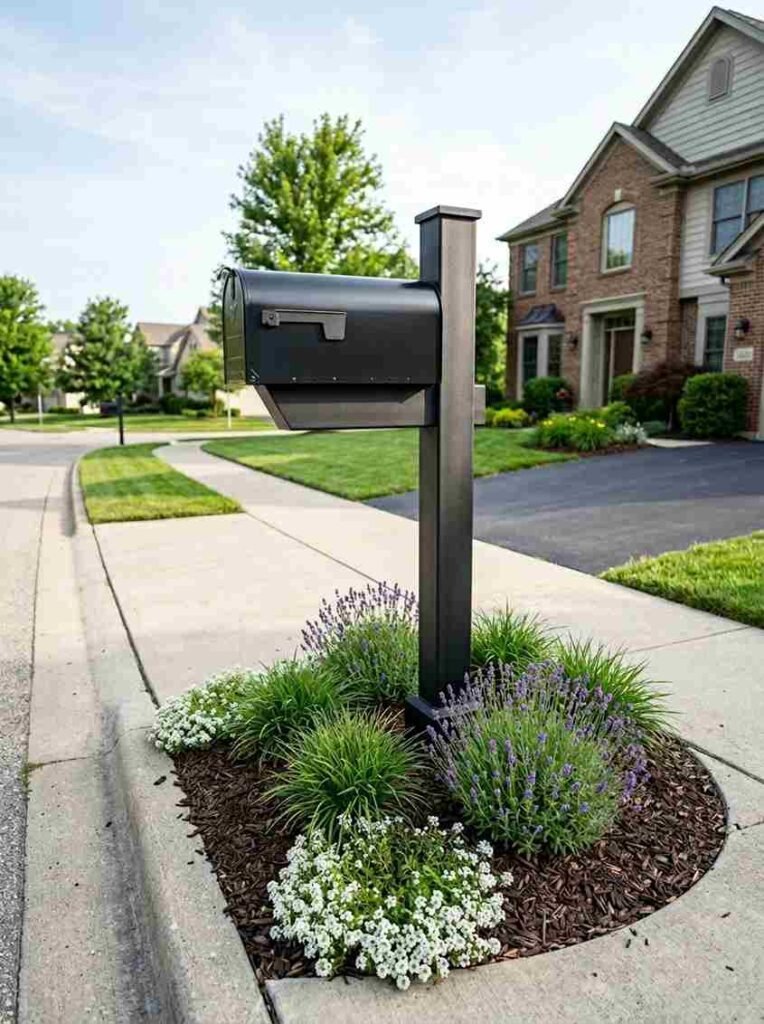
An upgraded mailbox post, something in metal, wood, or stone that matches your home’s exterior style, gives you a natural anchor for a small planting bed and signals that you care about the details.
It’s a small change that reads as surprisingly considered.
Lawn Alternatives Worth Considering
28. Replace turf with a gravel garden
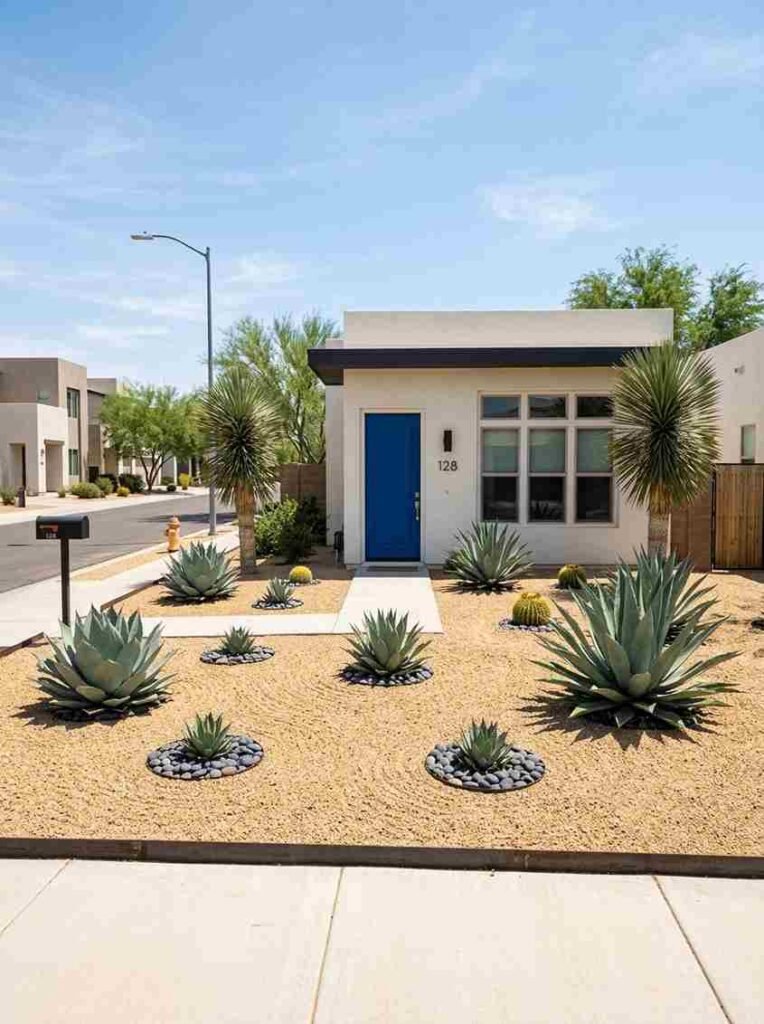
Full grass replacement with crushed granite or pea gravel is increasingly popular, especially in drier climates or water-restricted areas.
Pair it with sculptural plants like agave, yucca, or ornamental grasses and it looks deliberately Southwestern-modern rather than neglected.
29. Try a clover lawn
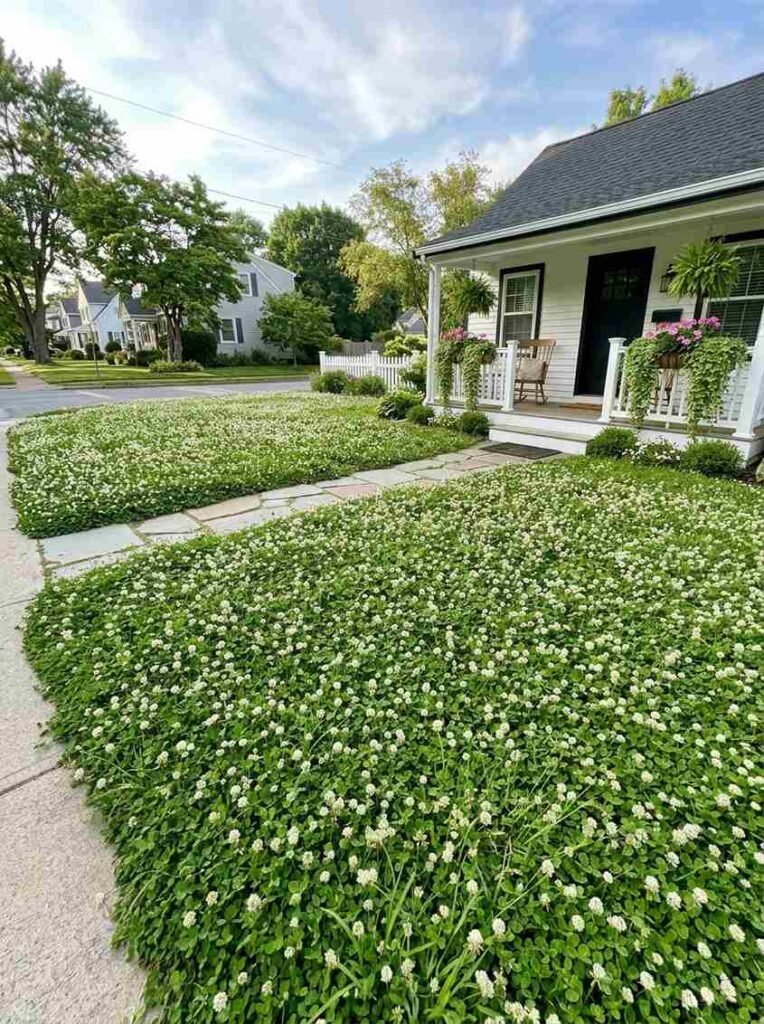
Clover lawns are having a moment, and honestly, they deserve it.
They stay low, they stay green through mild droughts, they feel soft underfoot, and they’re covered in tiny white blooms that pollinators love.
They’re also significantly cheaper to maintain than traditional grass. Worth a serious look.
30. Consider a moss garden in shaded areas
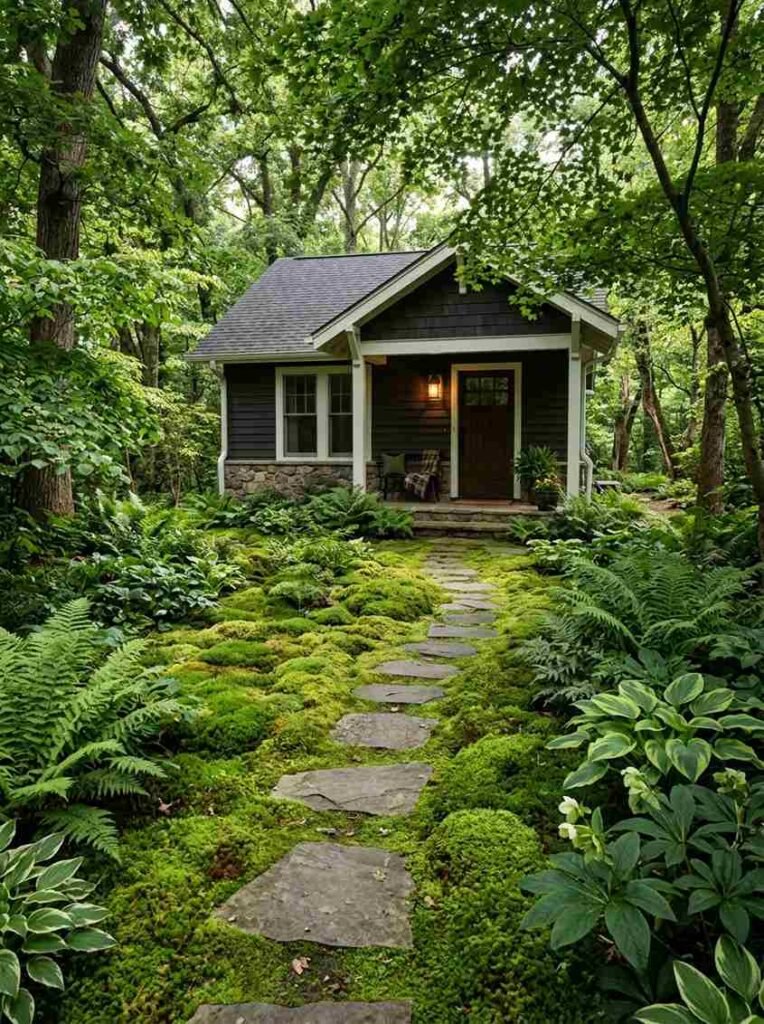
If your front yard is heavily shaded and grass just won’t cooperate, moss is your answer. A moss garden is quiet, lush, and incredibly photogenic.
It requires almost no maintenance once established and never needs mowing. It does need consistent moisture, so it works best in naturally humid climates 🙂
Putting It All Together
The thing about small front yards is that every square foot is visible. There’s nowhere to hide a bad decision, but there’s also nowhere for a good one to get lost.
Pick 5 or 6 of these ideas that fit your home’s style, your climate, and your realistic maintenance bandwidth.
Do those things well rather than attempting 20 things poorly. A clean, simple, well-executed front yard beats a complicated one every single time.
Your entrance sets the tone for everything behind it. Make it count.
