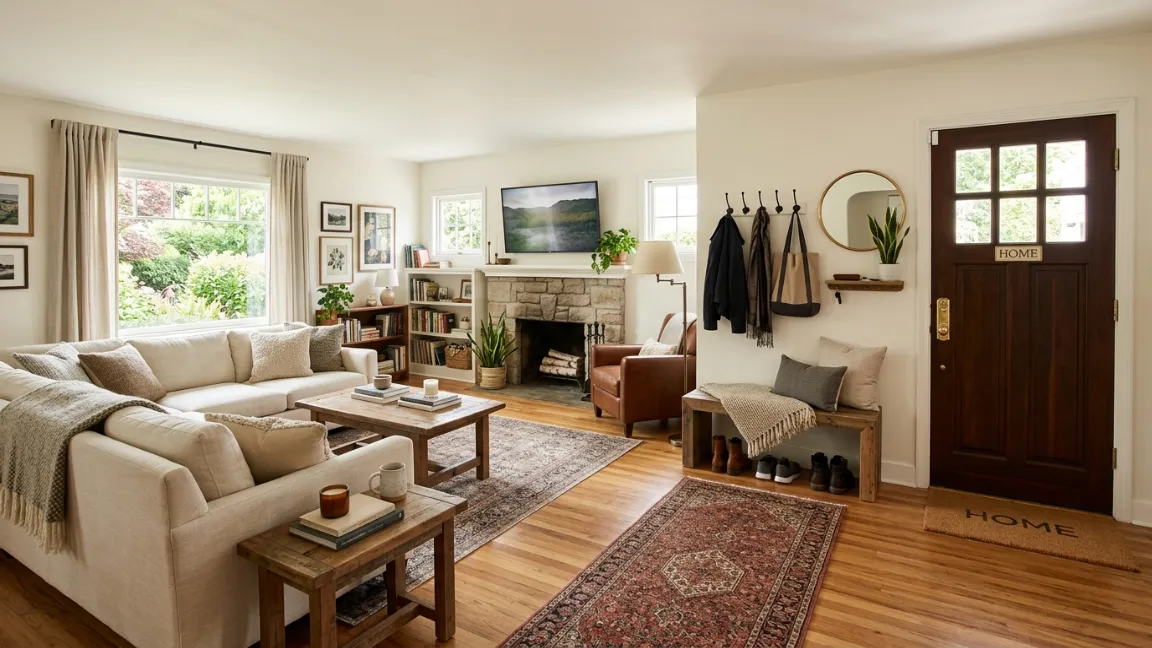
Okay, real talk — not every home comes with a gorgeous foyer. Some of us open the front door and bam, we’re standing smack in the middle of the living room.
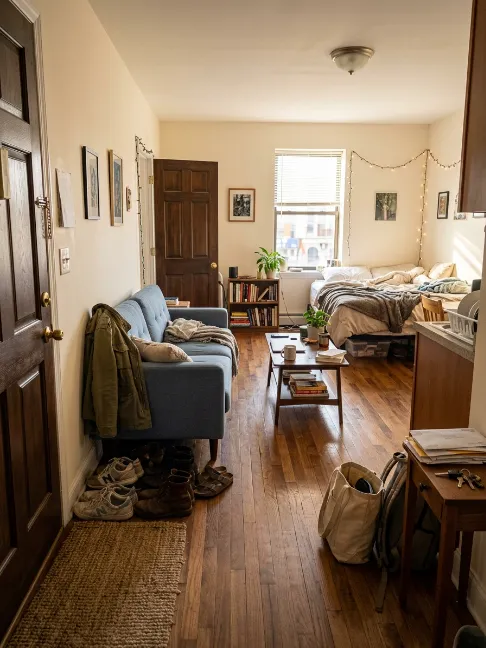
Shoes piling up, bags dumped on the sofa, keys nowhere to be found. I’ve lived like that for two years in my first apartment, and honestly?
It was chaos. But here’s the thing — you don’t need a dedicated entryway to have a clutter-free, welcoming home. You just need the right ideas and a bit of creativity.
That’s exactly why I put this guide together. These 29 no entryway ideas for living rooms are practical, budget-friendly, and actually work in real life — not just in fancy Pinterest photos. Let’s get into it!
The Real Challenge of Living Without an Entryway
Why It Matters More Than You Think
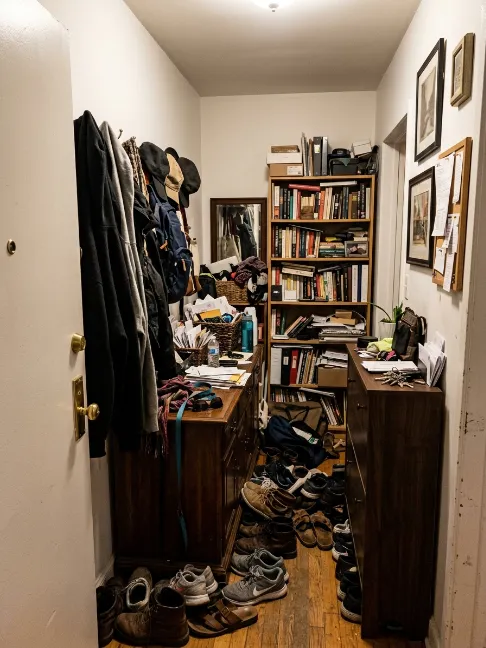
Most people don’t realize how much a missing entryway affects the whole vibe of their home. When there’s no transition zone between the outside world and your living space, everything bleeds together — the mess, the noise, the energy.
It genuinely affects how relaxed you feel at home. I noticed a massive difference once I carved out even a tiny entry zone in my open-plan flat. It wasn’t expensive or complicated. It was just intentional.
A no-entryway situation is super common in city apartments, studio flats, older terrace houses in the UK, and budget rentals across the US.
You’re not alone in this, bro. Millions of people deal with the same layout, and the good news is — designers have figured out some genuinely clever workarounds.
What You Actually Need to Make It Work
Before jumping into the ideas, here’s what every good no-entryway setup needs:
- A visual boundary — something that signals “this is where outside ends”
- A landing zone — somewhere for keys, mail, and the random stuff you carry in
- Shoe storage — because nothing kills a living room vibe faster than a shoe pile
- At least one vertical storage element — go up when you can’t go out
- Lighting — seriously underrated and always overlooked
29 No Entryway Ideas Living Rooms That Actually Work
1. The Console Table Trick
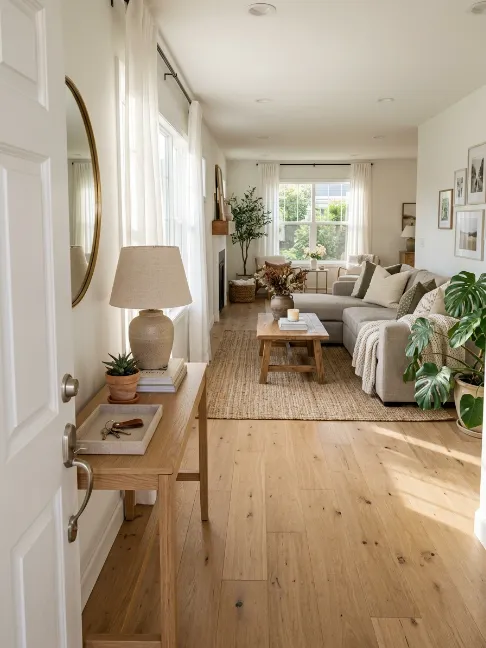
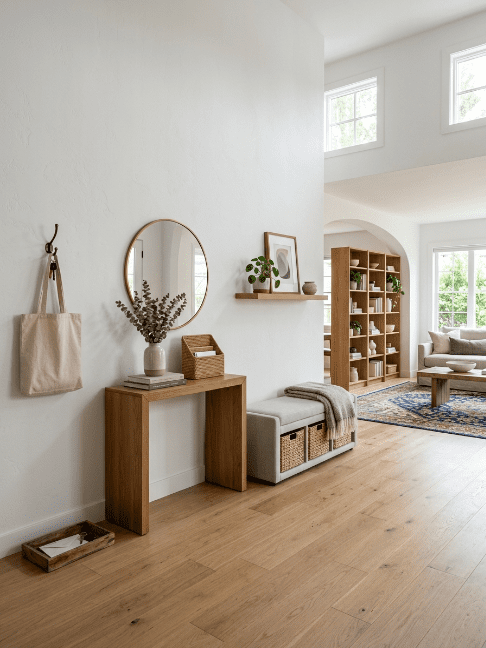
This one is my personal go-to, and I recommend it to literally everyone. A slim console table placed just inside the front door instantly creates that “arriving home” feeling. Style it simply — a small lamp, a tray for keys, maybe a plant — and suddenly your living room has a proper entry moment. Keep the table depth under 14 inches so it doesn’t block the walkway.
2. Define the Zone with a Statement Rug
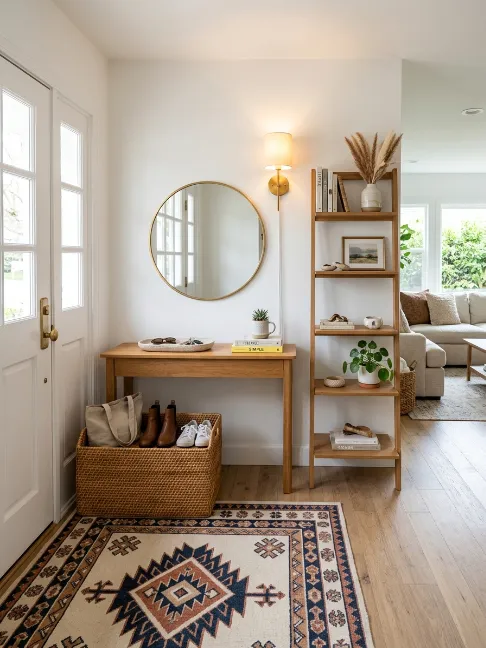
Place a bold, durable rug right at the entry point. It visually tells both you and your guests — hey, this is where you arrive. Choose something with a pattern or texture that’s different from your main living area rug. Layering rugs is also a great move if you want extra definition without adding furniture.
3. Wall-Mounted Hooks — Simple, But Don’t Underestimate Them
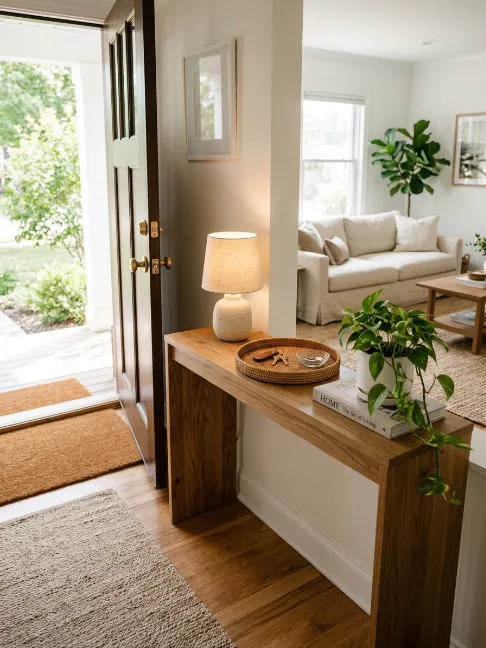
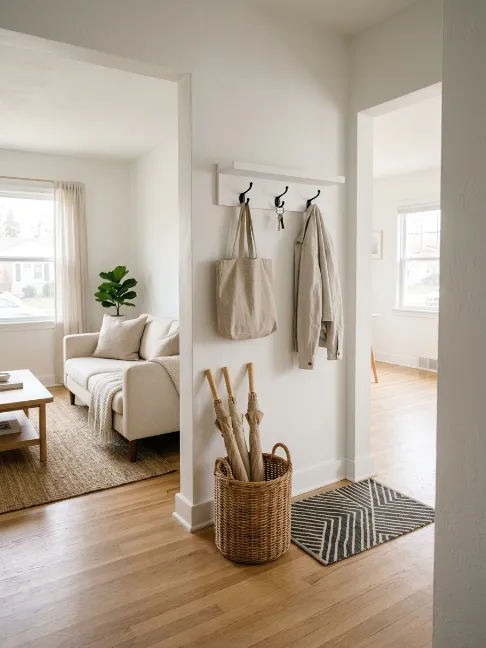
Honestly, three sturdy hooks on a wall can change your life. I’m not even being dramatic. Coats, bags, dog leads, umbrellas — everything gets a home immediately. Add a small shelf above the hooks for extra functionality. This whole setup can cost under $30 and takes about 20 minutes to install.
4. A Floating Shelf with Hooks Underneath
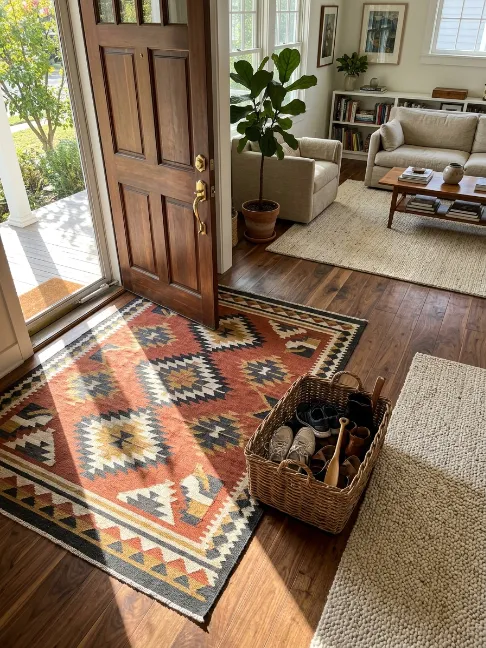
This combo is chef’s kiss for small spaces. Mount a floating shelf at about head height, add a row of hooks beneath it, and you’ve got a fully functional mini-entryway on your wall. Keep a small basket or tray on the shelf for keys and sunglasses. It looks intentional, it’s practical, and it costs next to nothing compared to buying a full piece of furniture.
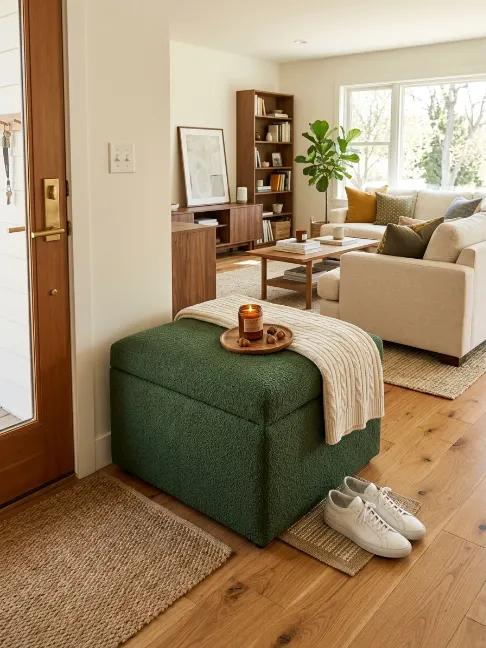
5. Storage Ottoman Near the Door
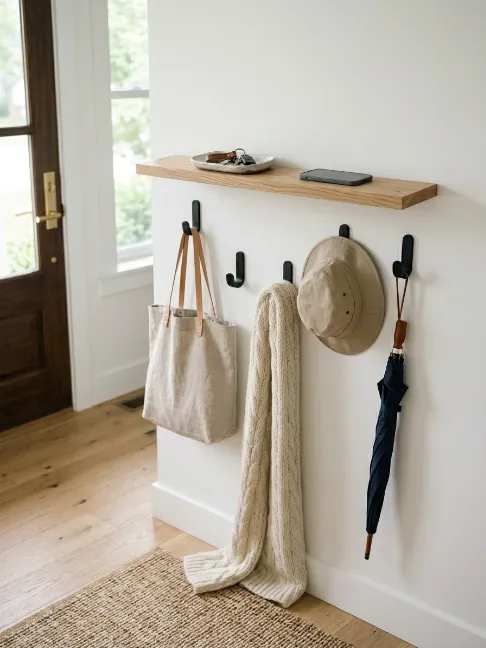
A storage ottoman is one of those multitasking heroes that deserves way more credit. It gives you somewhere to sit while putting shoes on, hides all kinds of clutter inside, and can double as extra seating when people visit. Look for a firm-lidded version — the flimsy ones collapse the moment someone actually sits on them. Ask me how I know 😅.
6. Use a Bookcase as a Soft Room Divider
Place a low-to-mid-height bookcase perpendicular to the front door and watch the magic happen. The living room side gets styled with books, plants, and décor. The entry side stays practical with hooks or baskets. It’s one of those solutions that looks like intentional interior design rather than a problem-fix, which I love.
7. The Mirror Move
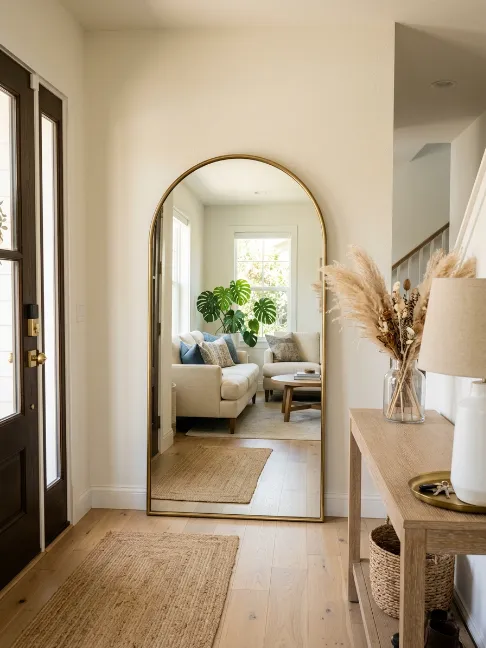
A large mirror near the front door does a few brilliant things at once. It bounces light around, makes the space feel bigger, and gives you that last-minute outfit check before heading out. Go for a full-length or oversized round mirror for maximum impact. Honestly, this is one of the easiest upgrades you can make for under $80.
8. A Narrow Bench with Shoe Cubbies
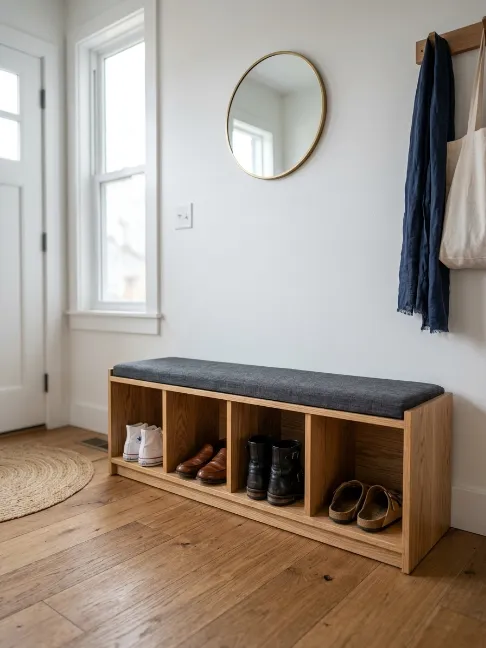
This is probably the most practical piece of furniture you can add to a no-entryway living room. A slim bench with cubbies underneath keeps shoes organized, gives you a seat, and doesn’t eat up floor space. Stick to a bench that’s no wider than 36 inches unless you’ve got room to spare.
9. Hang a Curtain Partition
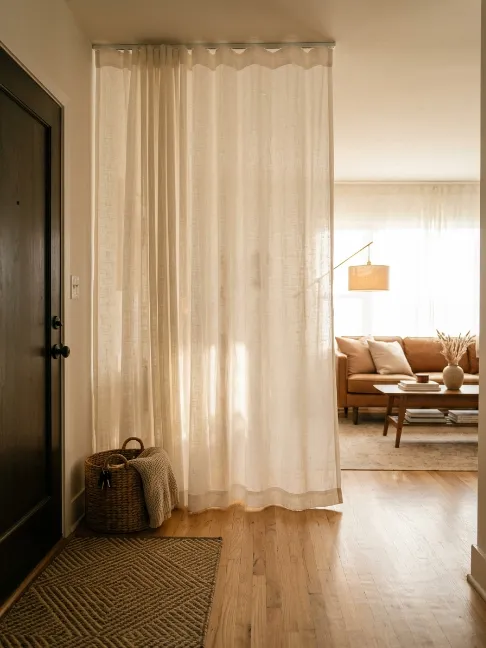
If your front door opens directly into the living room with zero buffer, a hanging curtain can save the day. Mount a ceiling curtain rod and hang a semi-sheer panel to create a soft visual boundary. It’s dramatic in the best possible way — very New York loft energy. It also gives you privacy if someone rings the doorbell mid-movie-night.
10. Use a Tall Plant as a Natural Divider
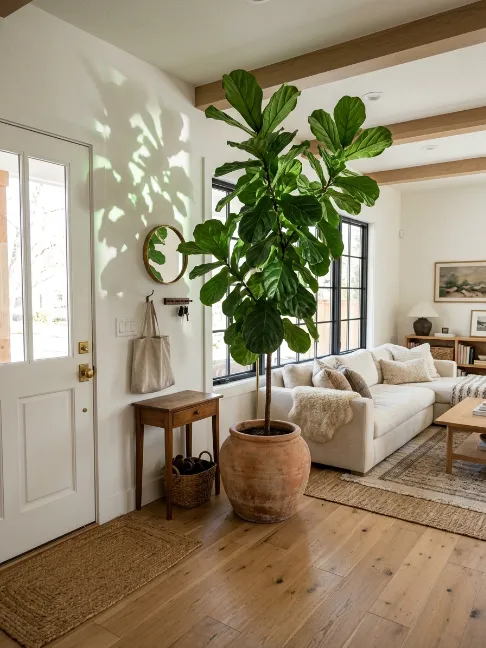
Okay, this one feels obvious once you hear it, but most people never think of it. A big, leafy plant — think fiddle-leaf fig, monstera, or bird of paradise — positioned near the entry creates an organic, natural boundary between zones. It looks intentional and designed, it improves air quality, and honestly, plants just fix everything. This trend actually feels timeless, unlike some of the overcomplicated entryway ideas floating around on Instagram right now.
11. Pegboard Wall Panel
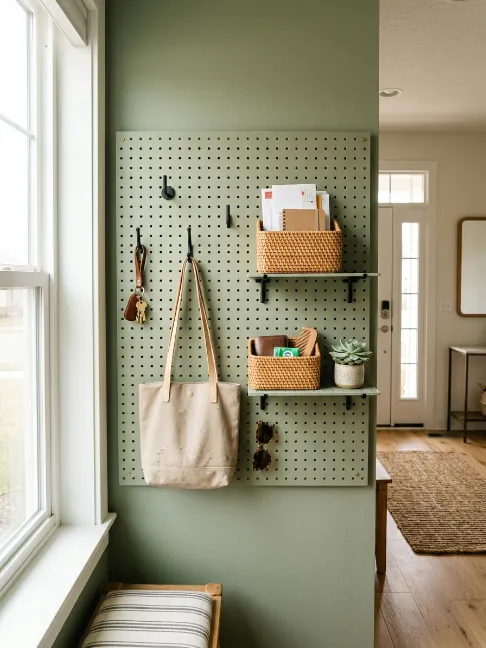
Pegboards aren’t just for garages and craft rooms anymore. A styled pegboard with hooks, small baskets, and shelves creates a genuinely functional command center at your entry point. Paint it to match your wall colour and it blends right in. Use small baskets for mail, hooks for keys, and a shelf for sunglasses. I tried this setup in my home office first, then moved it to the entry area — way more useful there.
12. A Coat Rack with Integrated Shelf
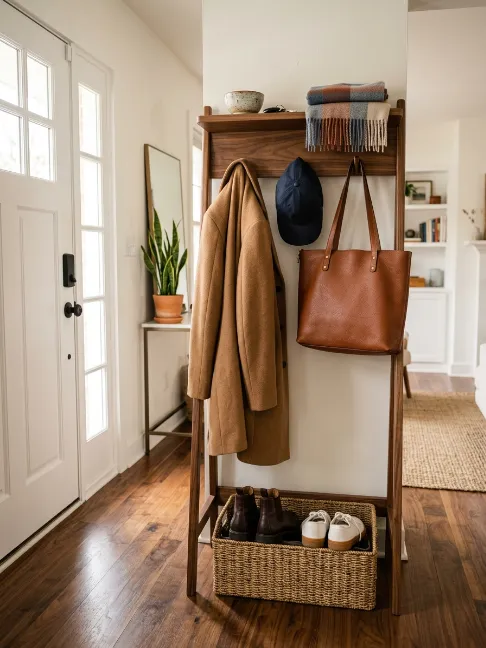
A freestanding coat rack with a small shelf at the top handles outerwear, bags, and accessories without any wall installation. This is a perfect solution for renters who can’t drill into walls. Look for one with a weighted base so it doesn’t topple over every time someone grabs their coat in a rush — which, speaking from experience, they absolutely will.
13. The Decorative Tray as a Drop Zone
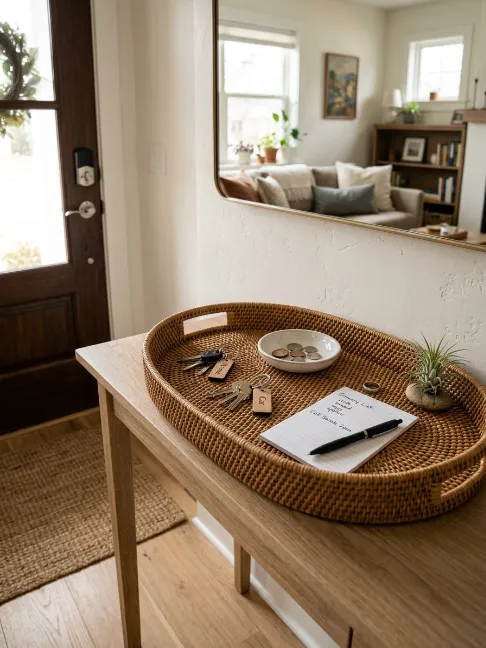
This costs almost nothing and works almost too well. A large decorative tray on any surface near the door becomes the designated landing spot for keys, coins, sunglasses, and all the random stuff you walk in with. When everything has a designated spot, clutter becomes genuinely manageable. Pick a tray that matches your aesthetic — rattan, marble, lacquered wood, whatever fits.
14. Accent Wall Near the Entry
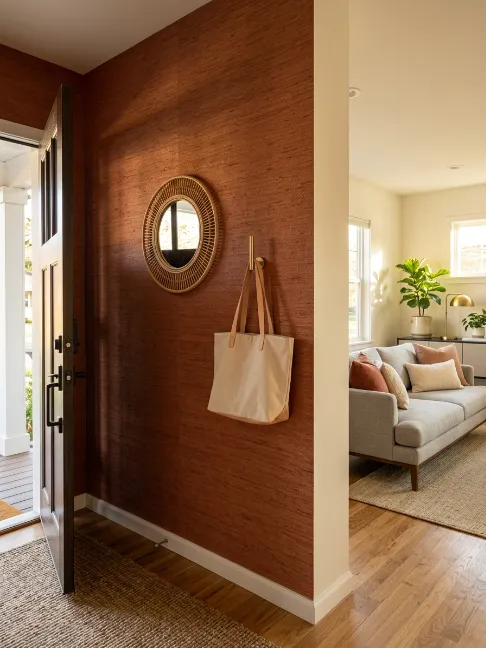
Sometimes you don’t need furniture at all. An accent wall — whether it’s bold wallpaper, a contrasting paint colour, or wainscoting — near the front door visually signals “entry zone” without taking up any floor space. This works brilliantly in smaller apartments where adding furniture just isn’t an option. It’s pure visual design doing the heavy lifting.
15. Indoor Doormat as a Visual Anchor
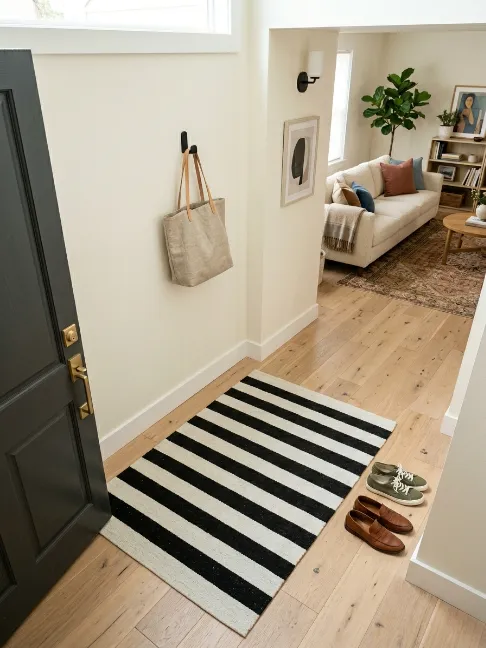
An indoor doormat isn’t just about wiping shoes. It’s a visual anchor that defines where the entry begins. Choose a bold pattern or a colour that complements your living room palette. A mat with a fun slogan can also add a bit of personality — I have one that says “Oh Good, You’re Here” and guests always smile when they see it.
16. Small Cabinet or Credenza
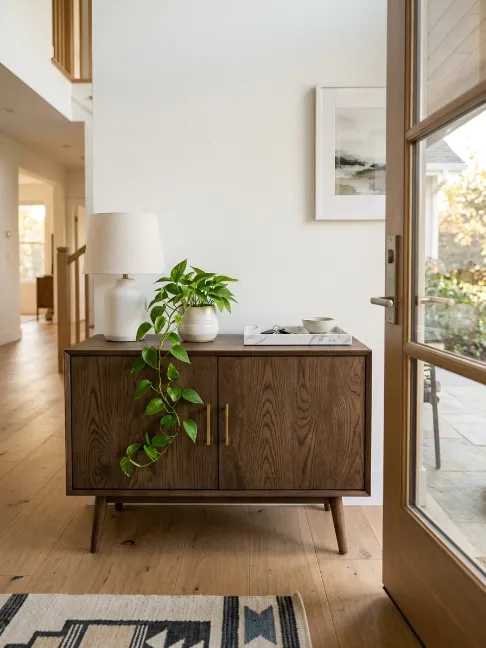
A low, slim cabinet near the door offers concealed storage for shoes, bags, and random clutter. Keep the top minimal — one plant, one decorative object, done. Don’t overstyle the top or it becomes another clutter magnet. The VASAGLE Slim Console Table I mentioned earlier actually fits this role perfectly too, FYI.
17. Gallery Wall Starting at the Entry Point
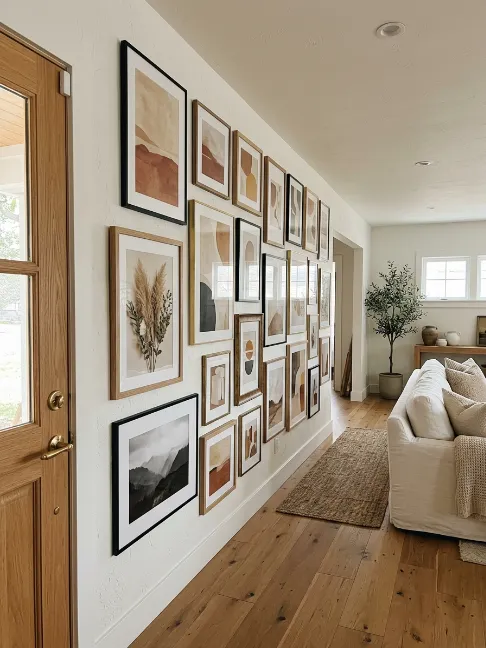
A curated gallery wall that begins near the front door draws the eye inward and signals a transition from outside to inside. It’s subtle but remarkably effective. Use a mix of frames, sizes, and art styles to keep it feeling personal rather than showroom-ish. This one genuinely transforms the feel of a space without moving a single piece of furniture.
18. Wicker or Fabric Baskets for Shoe Storage
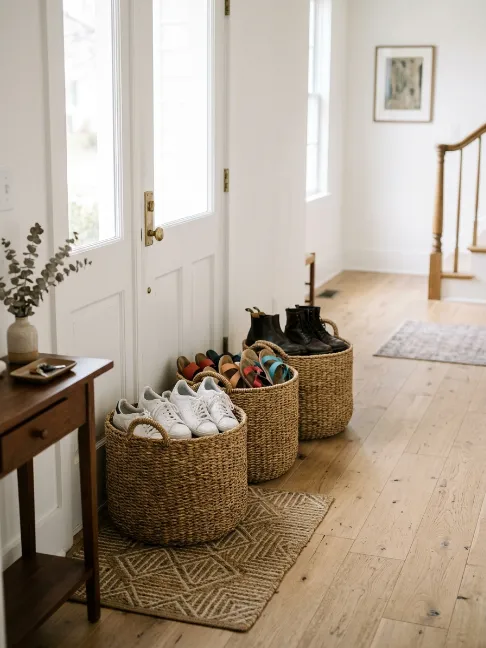
Open baskets lined up near the door are casual, affordable, and way more effective than they look. Each family member or housemate gets a basket — their stuff goes in there, full stop. Choose woven or fabric baskets to keep the look warm and intentional rather than chaotic. This flopped for me when I used plastic bins instead — they looked terrible and I ditched them within a week.
19. Fold-Down Wall Table
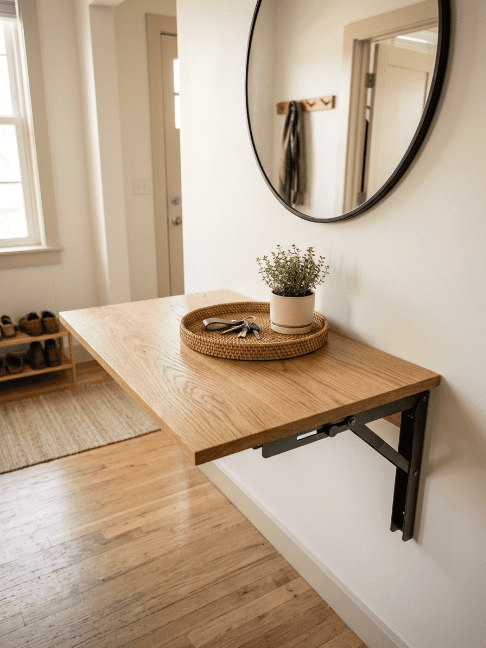
If space is genuinely tight — like, we’re talking a few feet of entry zone — a fold-down wall table is a genius solution. It gives you a landing surface when you need it and folds flat when you don’t. It’s satisfying to use and surprisingly sturdy when properly installed. Great for studios and micro-apartments where every inch counts.
20. Ladder Shelf Near the Door
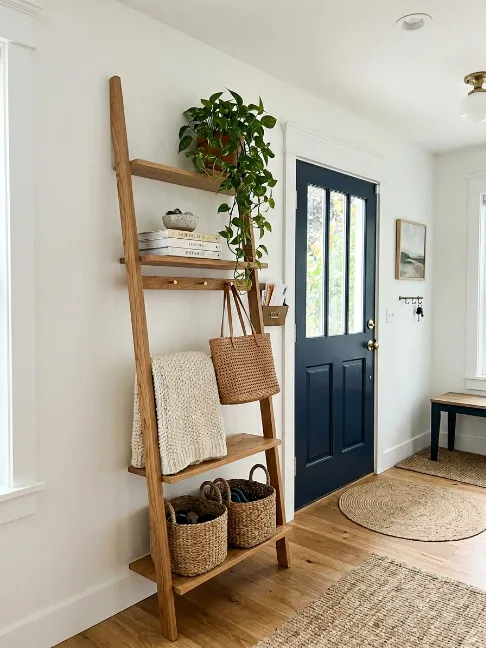
A leaning ladder shelf takes up almost no floor space and gives you multiple levels of storage and display. Hang a bag on one rung, stack a few books on another, pop a plant on top. It’s functional without looking purely functional, which is the holy grail of entry zone design in small living rooms.
21. Ceiling-to-Floor Curtain Nook
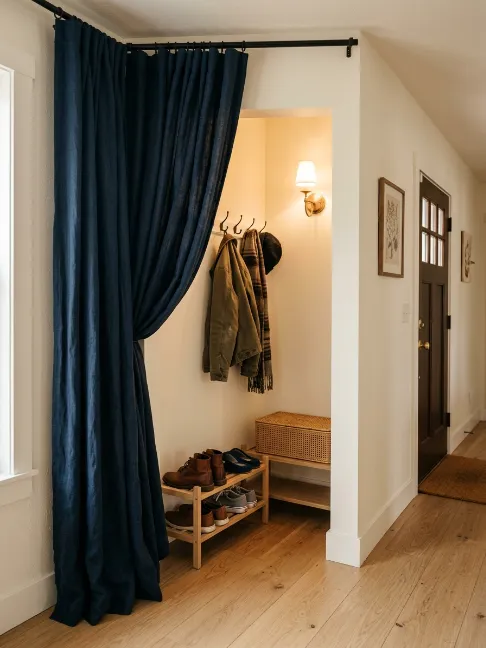
If you have a recessed wall or awkward alcove near the door, hang floor-to-ceiling curtains to create a hidden storage nook. Coats, bags, shoes — tuck it all behind the curtain and it’s completely out of sight. This is honestly one of the most underrated solutions on this entire list, and barely anyone talks about it.
22. Folding Decorative Screen
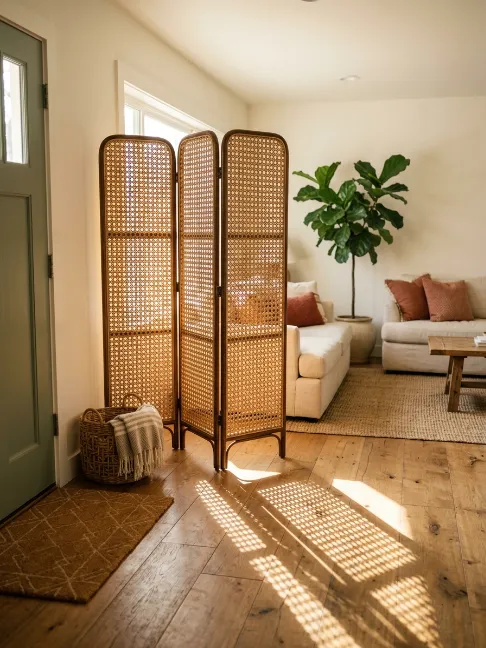
A folding decorative screen creates an instant visual boundary between your entry and your living area. Rattan, carved wood, metal — all work beautifully depending on your style. It’s also portable, which is great for renters or people who like to rearrange their space regularly. Wow! The transformation this creates is genuinely surprising for such a simple piece.
23. Key and Mail Organizer Wall Mount
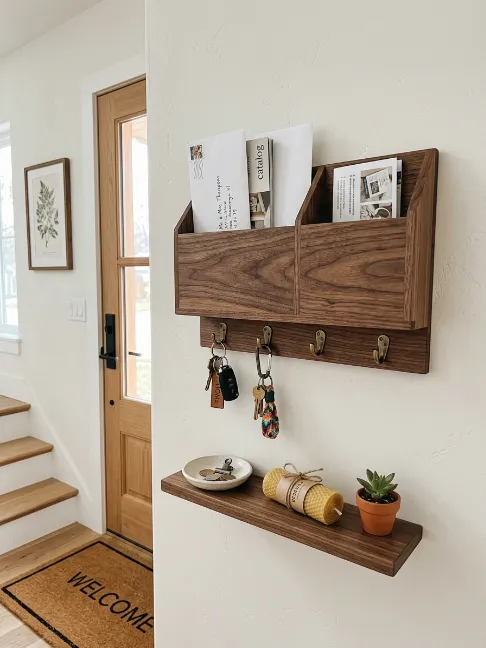
A wall-mounted organizer with compartments for mail, keys, and daily essentials keeps the most misplaced items in one spot. I mounted one of these beside my front door and genuinely cannot overstate how much less stressed my mornings became.
24. Bold Wallpaper Accent Strip
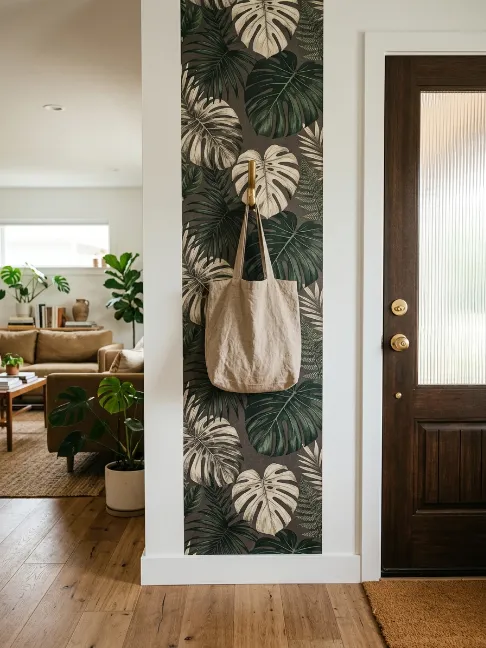
Wallpaper just a narrow strip or section of wall near the entry to define the zone with zero floor space. Choose a pattern bold enough to make a statement but not so overwhelming that it fights with the rest of your living room décor. This is a designer trick that most people assume is expensive — it’s not. A single roll of peel-and-stick wallpaper can do the job for under $40.
25. Shoe Cabinet with Cushioned Top
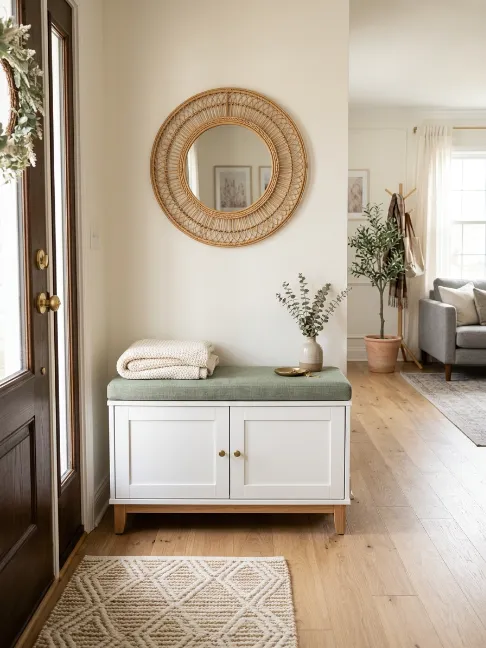
This is the Prepac bench’s slightly more formal sibling. A shoe cabinet with a cushioned top handles footwear storage inside and gives you a seat on top. It looks clean and furniture-like rather than purely storage-like, which matters a lot in a living room setting. The Prepac Entryway Storage Bench with Shoe Cubby is genuinely one of the best versions of this I’ve come across.
26. Color-Blocked Floor Zone
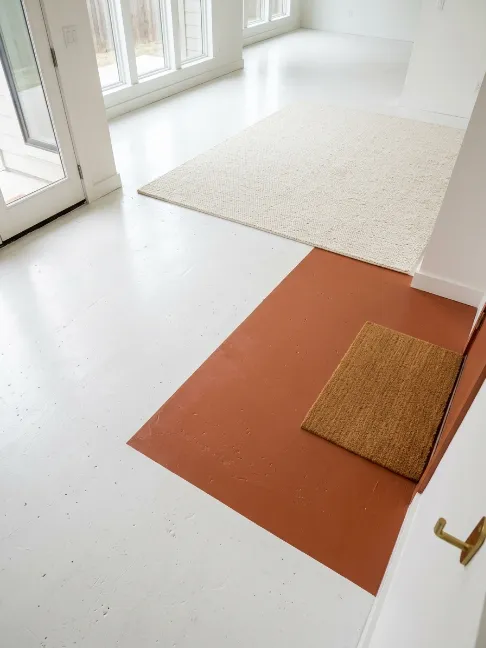
Paint or tile a clearly defined section of floor near the front door in a contrasting colour. This creates a visual entry zone that requires absolutely no furniture. It’s especially effective in open-plan spaces where the boundaries between kitchen, living, and entry blur together. Bold, graphic, and completely underused as a design strategy.
27. Vertical Stripe Décor to Elongate Space
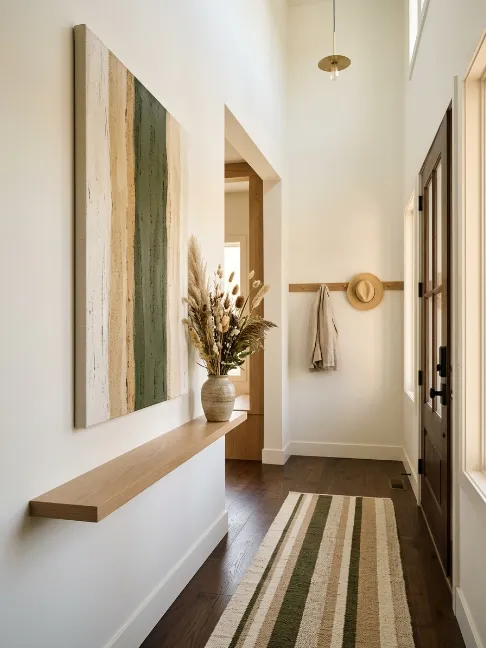
Vertical stripes — on a rug, wallpaper, or tall artwork — make a narrow entry zone feel taller and more deliberate. It’s a small visual trick with a disproportionately large impact, especially in low-ceiling apartments. Works beautifully when combined with a floating shelf and hooks.
28. Murphy-Style Fold-Down Bench
If you want a seating option that completely disappears when not in use, a Murphy-style fold-down bench is the answer. Mount it to the wall, fold it up, and your entry zone is completely clear. Fold it down when you need to sit and put shoes on. This is insane value for the floor space it preserves — especially in micro-apartments.
29. The “Welcome Corner” with Personality
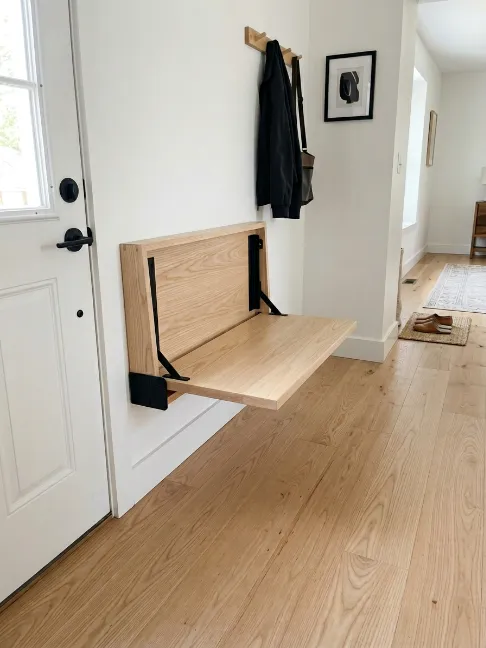
This is my favourite idea on the whole list, honestly. Combine a small table, a mirror, one plant, and one personal item — a travel photo, a quirky lamp, a vintage find — and you’ve created a corner that tells your story the moment someone walks through the door. It’s not about perfection. It’s about making it feel like your home. That’s the whole point.
Best No-Entryway Solutions by Space Size
| Space Size | Top Solution | Why It Works |
|---|---|---|
| Very Small (under 4ft) | Wall hooks + tray | No floor footprint at all |
| Small (4–6ft) | Console table + mirror | Functional and visually open |
| Medium (6–10ft) | Bench + floating shelf | Storage plus seating |
| Large/Open Plan | Bookcase divider + bold rug | Defines a genuine zone |
Mistakes That’ll Make Your Entry Zone Worse
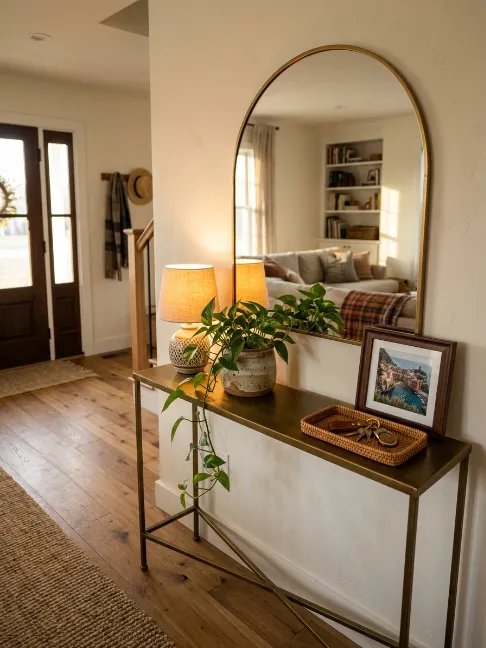
Overloading the Space with Furniture
This is the most common mistake, and I’ve made it myself. You get excited, buy four different storage pieces, and suddenly the entry zone is more claustrophobic than before you started. Pick two or three solutions and commit to them. A hook rack, a tray, and one basket — that’s genuinely enough for most people.
Ignoring Scale and Proportions
A massive console table in a 3-foot entry zone looks ridiculous. Measure everything before buying anything. I cannot say this enough — I’ve returned more furniture than I care to admit because I skipped this step. Use painter’s tape on the floor to mock up furniture dimensions before spending a penny.
Forgetting That Lighting Changes Everything
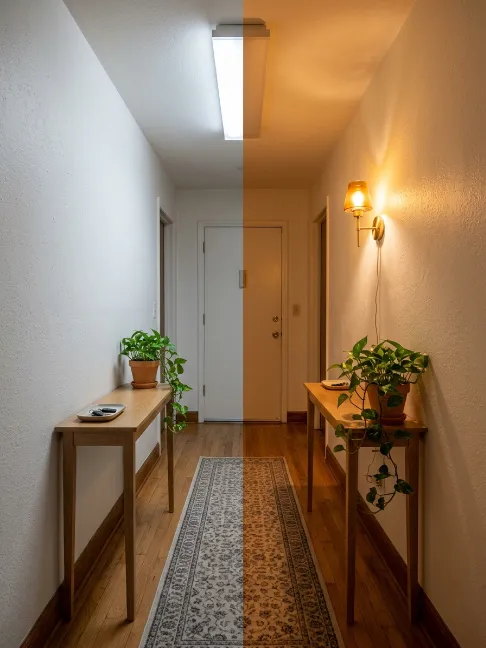
A dark, unlit entry zone feels cramped and unwelcoming no matter how well-organized it is. Even a simple plug-in wall sconce or a small table lamp transforms the atmosphere completely. Lighting is the last thing most people think of and the first thing that makes a difference.
Essential Products Mentioned in This Article
- VASAGLE Slim Console Table with Storage Shelf — best for tight entry zones
- Prepac Entryway Storage Bench with Shoe Cubby — best all-in-one bench solution
- Umbra Trigg Wall Shelf with Hooks — best wall-mounted entry station
⚠️ Affiliate Disclosure: This post contains Amazon affiliate links. If you purchase through these links, I may earn a small commission at no extra cost to you.
FAQ — Your No-Entryway Questions Answered
Q: Can I really create a proper entry feel without dedicated space? Yes, 100%. The right combination of furniture, rugs, and lighting creates a psychological sense of transition even in the tightest spaces. It’s more about visual cues than square footage.
Q: What’s the most budget-friendly solution to start with? Wall-mounted hooks and a decorative tray. You can get a solid setup for under $30 total, and it handles the most common pain points immediately — coats, bags, and keys.
Q: How do I stop the no-entryway area from getting messy again? Give every single item a designated home. Keys go in the tray, shoes go in the basket, coats go on the hook — every time, no exceptions. The system only works if you actually use it consistently.
Q: Does a rug alone work as an entry divider? It helps, but it works best when paired with at least one other element — a console table, hooks, or a mirror — to reinforce the zone visually and practically.
Q: Is the Prepac bench worth it for small spaces? IMO, absolutely yes. It’s one of the best value-for-money furniture pieces in this category. The shoe storage capacity alone justifies the price, and the cushioned top makes it genuinely useful on a daily basis.
Final Thoughts — Your Entryway Upgrade Starts Now
Look, not having a dedicated entryway isn’t a design death sentence. It’s actually an opportunity to get creative and make your living room work harder. These 29 no entryway ideas for living rooms cover every budget, every space size, and every design style — so there’s genuinely no excuse not to start.
My honest advice? Pick two ideas from this list that match your space and your budget. Start small, stay consistent, and don’t try to do everything at once. The VASAGLE Console Table, Prepac Storage Bench, and Umbra Trigg Shelf are all solid starting points if you want proven, well-reviewed products rather than guessing blind.
Your living room deserves to feel organized and welcoming from the very first step through the door. And so do you 🙂
Now I want to hear from you — which of these 29 ideas are you planning to try first? Drop it in the comments below, and let me know how it goes! 👇
