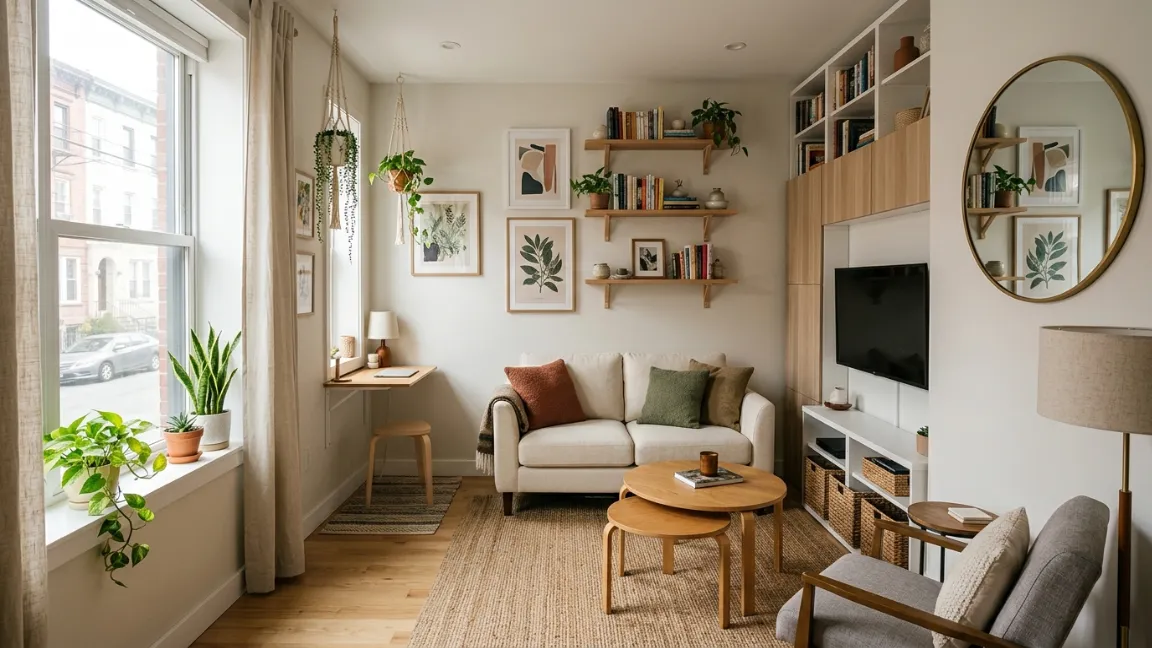
You know that feeling when you walk into a tiny living room and think, “Okay… where exactly am I supposed to put everything?” Yeah, I’ve been there.
My first apartment had a living room so small that my coffee table literally bumped into the sofa every time someone tried to sit down. It was chaos. But honestly? That cramped little room taught me more about smart design than any interior design course ever could.
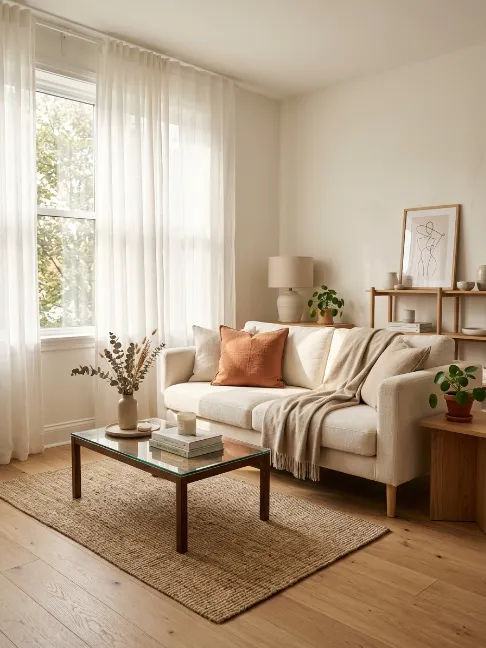
So if you’re working with a small living room right now, don’t stress. I’ve pulled together 27 layout ideas that actually work — not just look good on Pinterest and fail in real life. Let’s get into it.
The Real Problem With Small Living Rooms
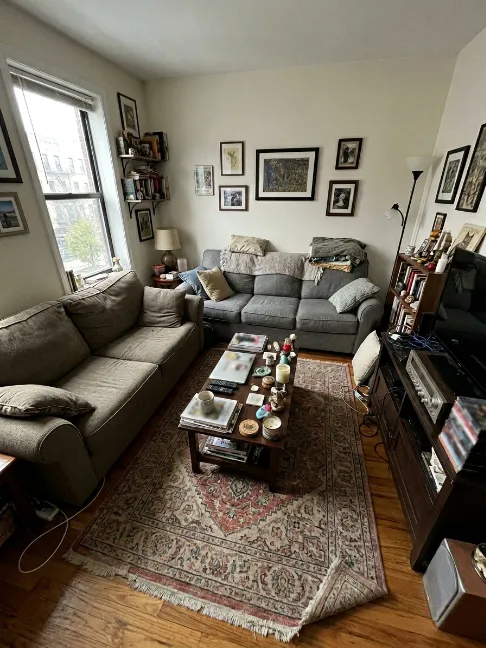
Most people think the problem is space. It’s not. The real problem is not knowing how to use the space you have.
I used to shove every piece of furniture against the wall thinking it’d open things up — spoiler: it made everything worse. Small living rooms need intention, not just minimalism.
Layout is the foundation. Get that right first, and the rest — color, décor, lighting — falls into place naturally. Trust me on this one, bro.
Why Most Small Room Advice Fails
Half the “small space tips” online assume you’re living in a beautifully lit Scandinavian flat with perfect proportions.
Real small living rooms are awkward. They’ve got weird corners, bad lighting, and maybe a radiator right where your sofa needs to go. The ideas in this article work for real rooms, not catalog shoots
Smart Furniture Choices That Actually Make a Difference
1. Pick a Sofa With Legs — Always
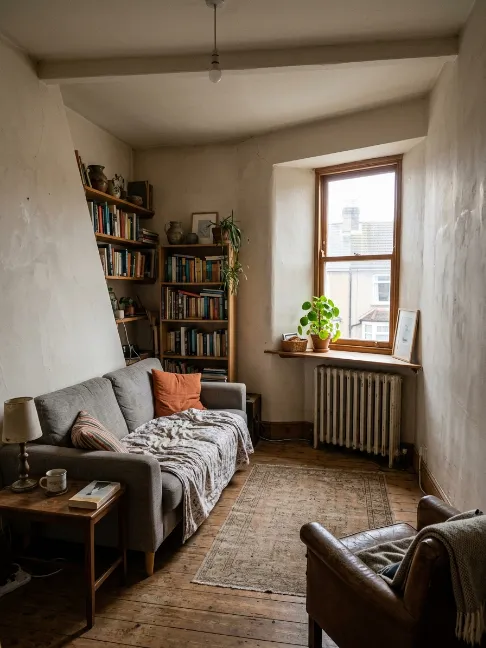
This is non-negotiable. A sofa that sits flush to the floor visually blocks the room. A sofa with legs? The eye travels under it, and suddenly the room feels like it has more breathing space.
I swapped my old heavy sofa for a mid-century style one with tapered wooden legs, and honestly — the difference was kind of insane.
2. Consider a Loveseat Over a Full Sofa
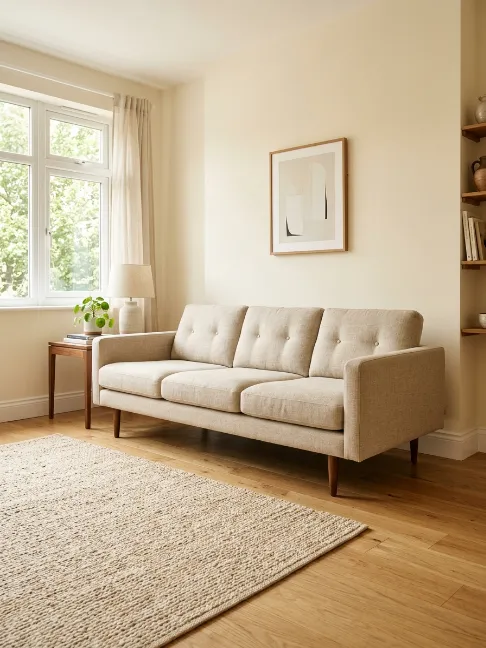
If a standard three-seater is swallowing your entire room, a loveseat is genuinely the smarter move.
It seats two people comfortably, frees up floor space, and still looks intentional rather than like a compromise. Pair it with a floor cushion or accent chair for extra seating when guests come over.
3. Go Multi-Functional Every Single Time
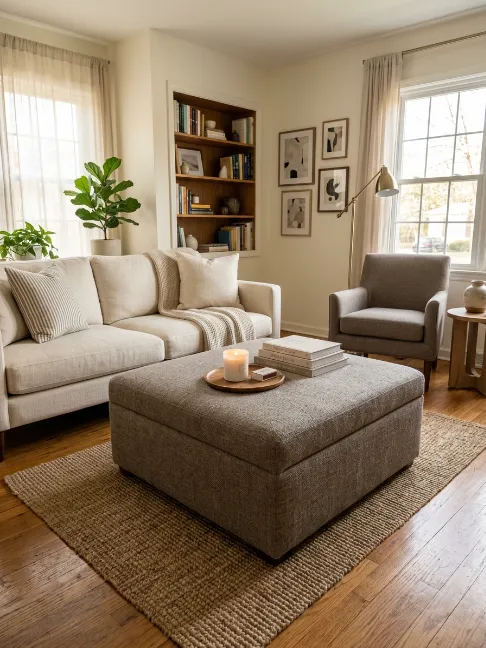
Every piece of furniture in a small living room needs to earn its place. A storage ottoman that doubles as a coffee table? That’s doing two jobs. A daybed that works as your sofa during the day? Even better. Multi-functional furniture isn’t just practical — it’s essential.
4. Use Glass or Acrylic Pieces
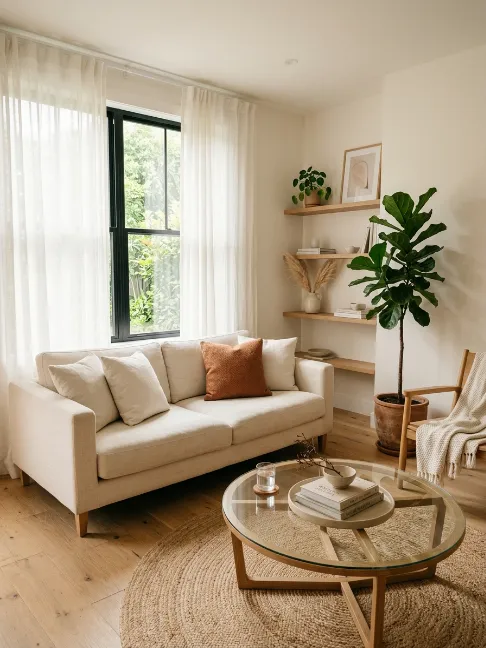
A glass coffee table or a clear acrylic side chair takes up zero visual weight. IMO, this is one of the most underrated tricks in small space design. The furniture is there, but your eyes don’t register it as clutter — it just kind of disappears into the room.
5. Nesting Tables Are Underrated
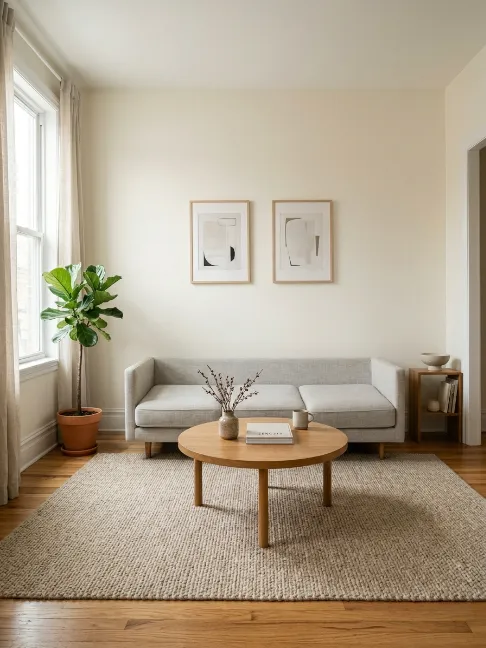
Nesting tables are wildly useful. Use one when you need it, tuck the rest away. They don’t crowd the room like a full-size coffee table, and honestly, they look really cool when styled right.
Layout Ideas That Open Up Your Room
6. Float Furniture Away From the Walls
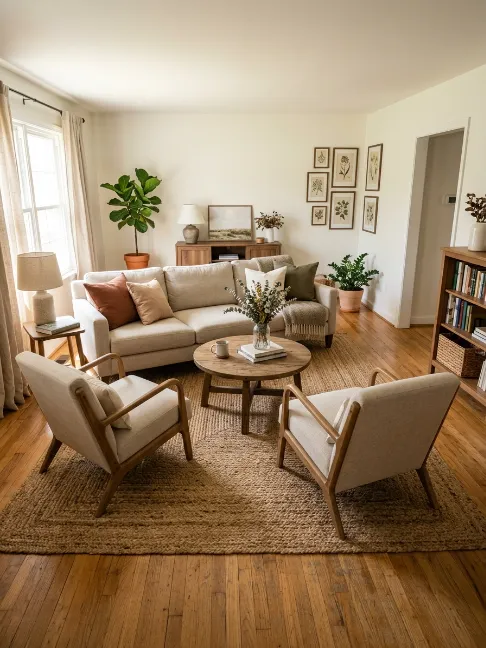
I know, I know — it sounds wrong. But pulling your sofa even 6–12 inches away from the wall creates depth and makes the layout feel considered rather than crammed. Every interior designer I’ve ever spoken to swears by this, and it works every single time.
7. Define a Conversation Zone With a Rug
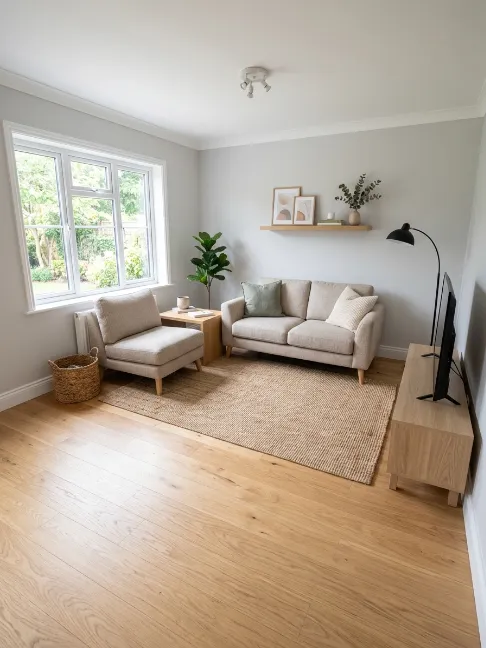
Use a small area rug to anchor your seating arrangement. This creates a clear visual zone without needing walls or dividers to do the job. The rug basically tells the room, “this is the living area” — and your brain believes it.
8. Try an L-Shape in a Square Room
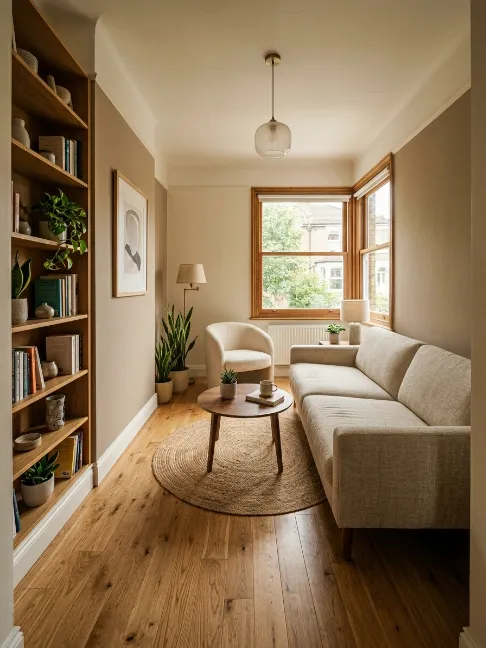
Square rooms respond really well to L-shaped furniture arrangements. It maximises seating, keeps the centre of the room open, and naturally guides movement around the space.
I’ve seen this layout completely transform boxy rooms that felt hopeless before.
9. Go Diagonal — Seriously
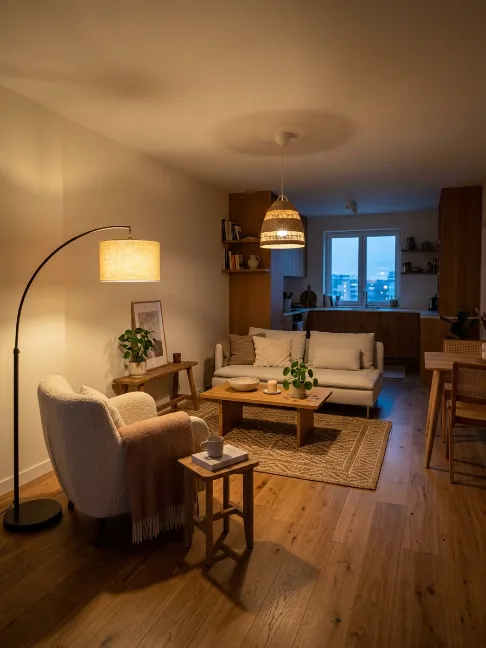
Placing your sofa or even your rug at a slight diagonal adds visual interest and makes narrow rooms feel wider. It sounds like a weird tip, but it genuinely works. I tried this in a galley-style living room once and couldn’t believe the difference.
10. Create Zones With Lighting Alone
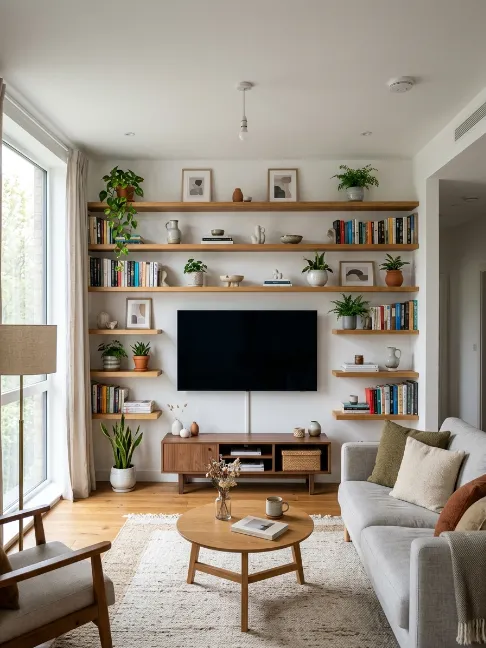
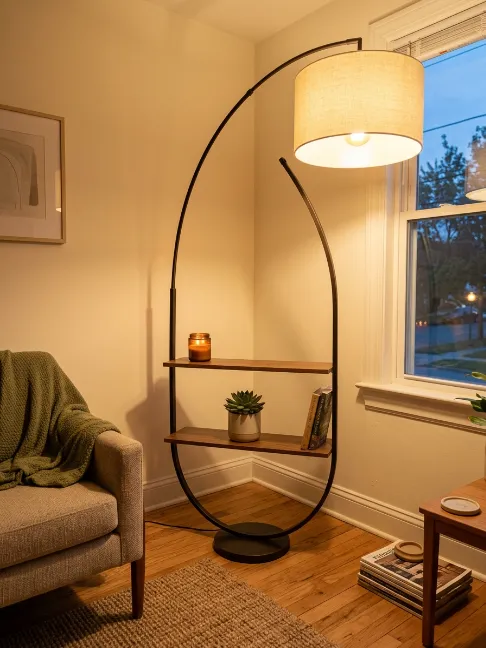
In open-plan small spaces, lighting does the work that walls can’t. A floor lamp in one corner becomes a reading nook.
Pendant lighting over the coffee table defines the sitting area. You’re creating rooms within a room without spending a fortune on renovation.
Quick Layout Comparison Table
| Room Shape | Best Layout Style | Key Tip |
|---|---|---|
| Square | Centred, symmetrical | Balance both sides equally |
| Long & Narrow | Two defined zones | Use sofa as a natural divider |
| Oddly Shaped | Work with the angles | Use alcoves for built-in storage |
| Open Plan | Lighting zones | Anchor each zone with a rug |
Storage That Doesn’t Look Like Storage
11. Built-In Shelving Around Your TV
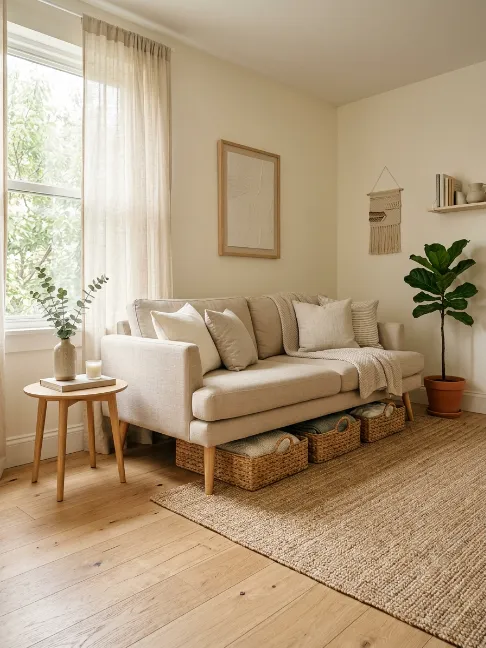
Frame your TV with floating shelves or built-in units. This draws the eye up, uses vertical space brilliantly, and gives you real storage without eating into floor space.
According to Architectural Digest, built-in storage is consistently ranked as one of the best investments for small spaces.
12. Under-Sofa Storage Is Sleeping Gold
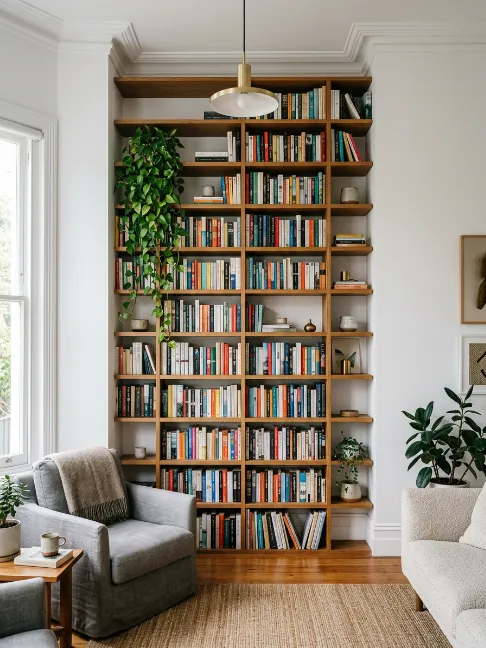
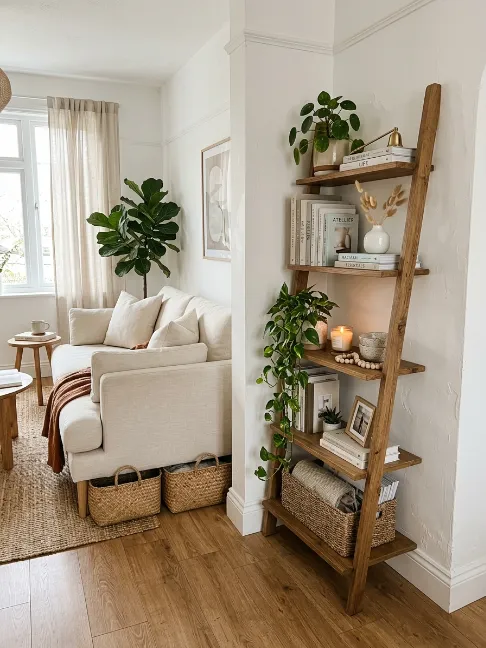
Most people completely ignore the space under their sofa — and that’s a mistake. Flat storage bins or long woven baskets slide right under there and hold blankets, books, or anything you want out of sight. Free storage you already own. Wow!
13. Go Tall With Shelving, Not Wide
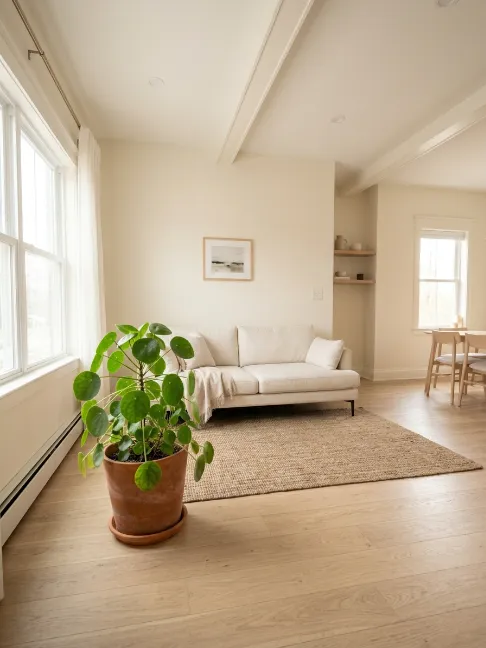
A tall, narrow bookshelf pulls the eye upward and makes the ceiling feel higher. Wide, low shelving spreads visual weight along the floor and makes the room feel short and cramped. Always go vertical when you can.
14. Hidden Storage in Plain Sight
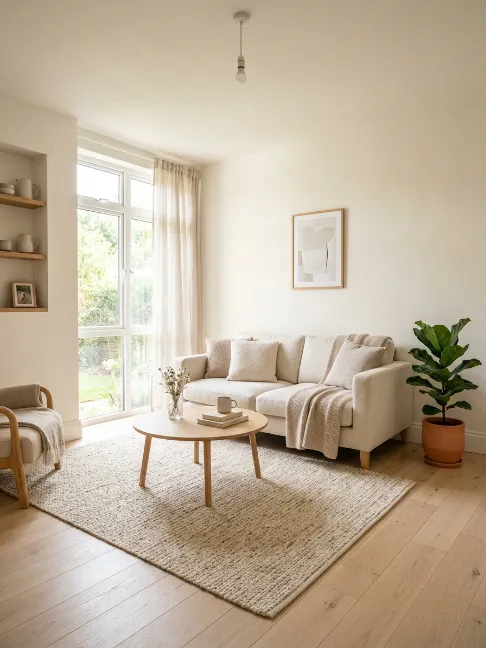
Side tables with drawers, lift-top benches, poufs with internal compartments — this stuff keeps your room looking minimal while your actual belongings have somewhere to live. The room stays clean. You stay sane.
Color, Light, and Visual Tricks
15. Keep Your Base Light and Neutral
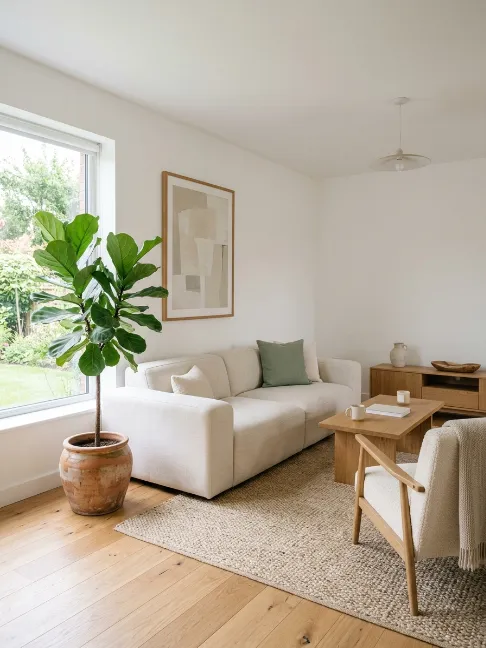
Light walls, light furniture, light floors — this combination reflects natural light and makes a room feel genuinely bigger.
I painted my small living room a warm off-white a couple of years back and the shift was honestly shocking. You don’t have to go full brilliant white either — soft cream, warm greige, pale taupe all work beautifully.
16. One Accent Color, Not Five
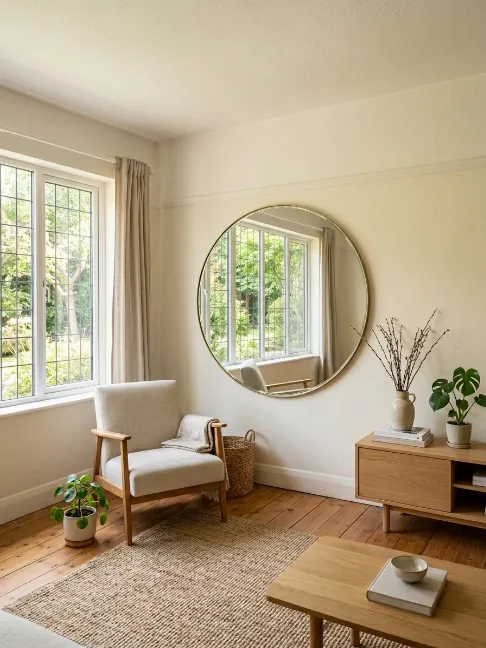
In a small space, too many colors fighting for attention creates visual chaos. Pick one accent color — a terracotta cushion, a sage green plant, a navy throw — and let the rest breathe. The room will feel calm, intentional, and way more put-together.
17. Mirrors Are Non-Negotiable
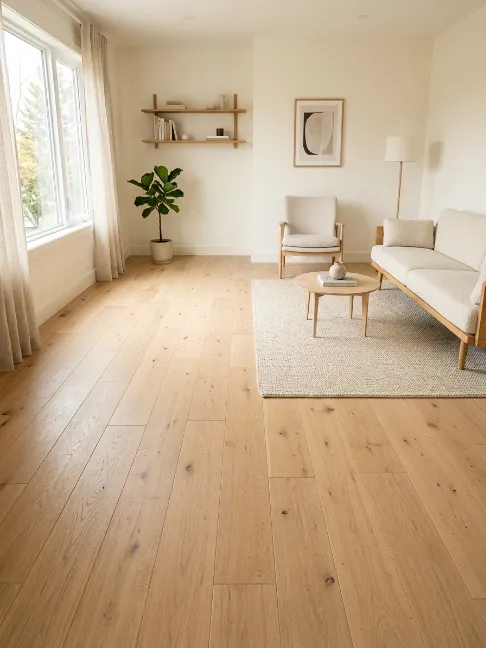
A large mirror placed opposite a window bounces light around the room and visually doubles the space.
This isn’t just a design tip — it’s practically a law of small space living. HGTV recommends placing an oversized mirror directly facing your main light source for the best effect. Full stop.
Honestly, this one trick alone can save a room that feels beyond help.
18. Keep the Floor Visible
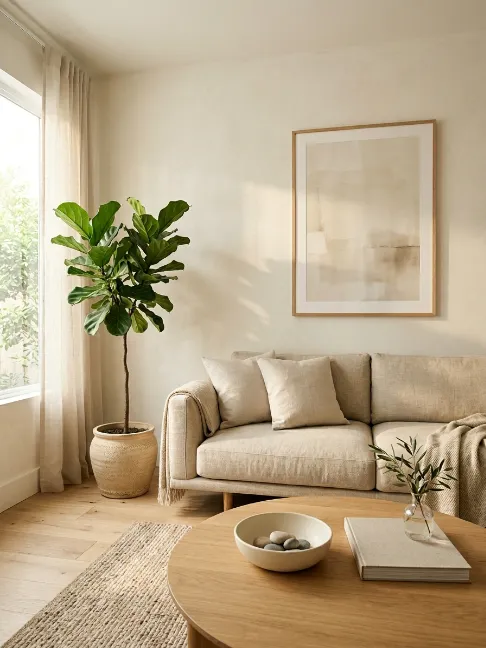
The more floor you can see, the bigger the room feels. Avoid skirted furniture, don’t oversize your rug, and keep pathways clear. Visible floor equals perceived square footage. Period.
Minimalist Styling That Actually Looks Good
19. Edit Ruthlessly — Then Edit Again
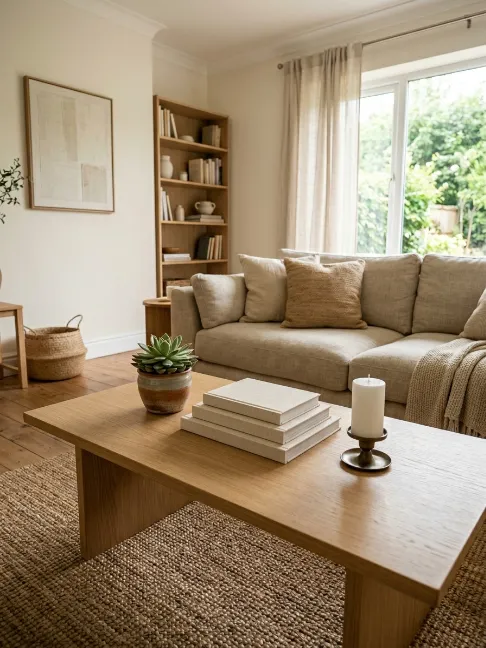
Minimalism in a small space isn’t a trend, it’s survival. I use a one-in-one-out rule: if something new comes into the room, something old leaves. It sounds brutal but it keeps things from creeping back into chaos. Every item should either function or bring genuine joy — not just sit there collecting dust.
20. Three Objects Per Surface Maximum
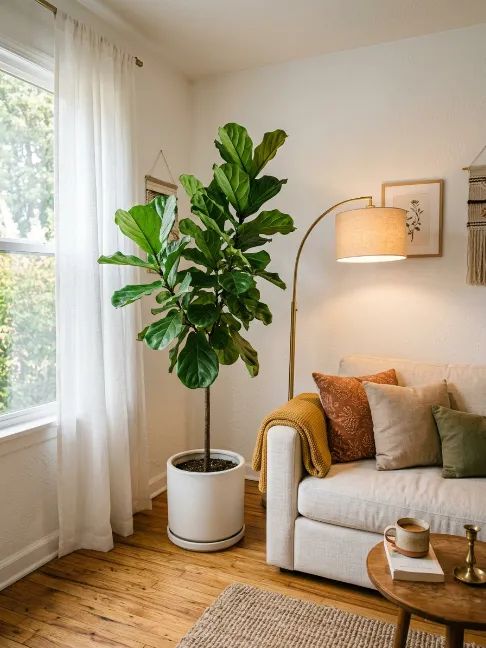
A coffee table with twelve things on it looks like a car boot sale. Three intentional objects — a small plant, a stack of books, a candle — looks styled. This one rule alone will transform your living room. Honestly, try it this weekend.
21. Let Plants Do the Heavy Lifting
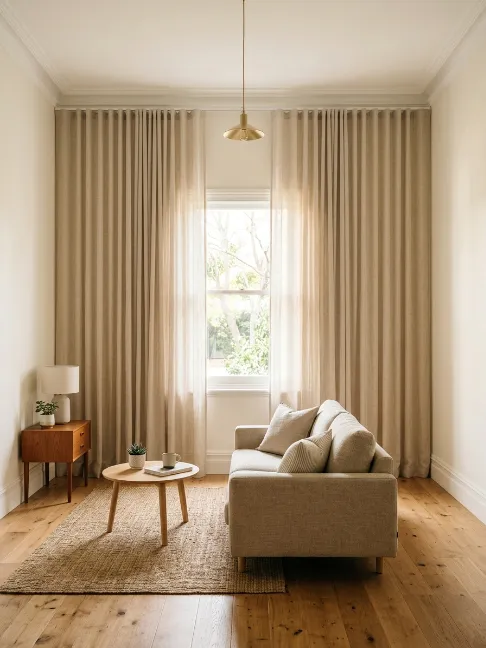
One tall plant in a corner does more for a room than an entire shelf of décor. Plants add life, texture, warmth, and even improve air quality. FYI — a snake plant or a fiddle leaf fig is perfect for low-light living room corners and basically impossible to kill. Well, mostly.
22. Match Your Metals and Finishes
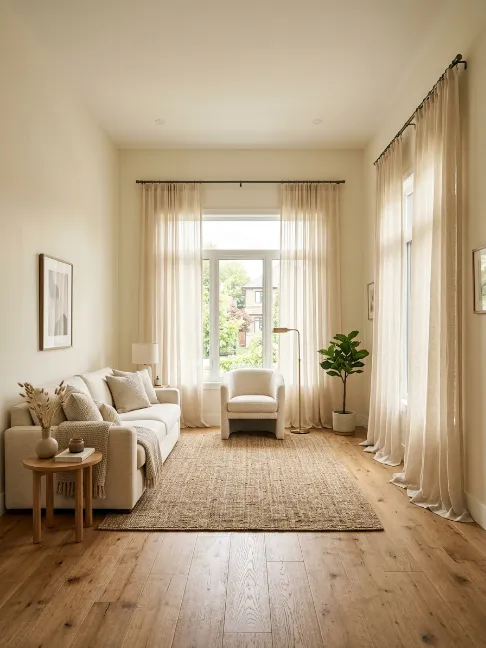
In a small space, cohesion prevents visual clutter. If your coffee table has brass legs, echo that brass in your lamp base or picture frames. You’re not adding more stuff — you’re making what’s already there look intentional.
Window and Lighting Strategies
23. Hang Curtains High and Wide
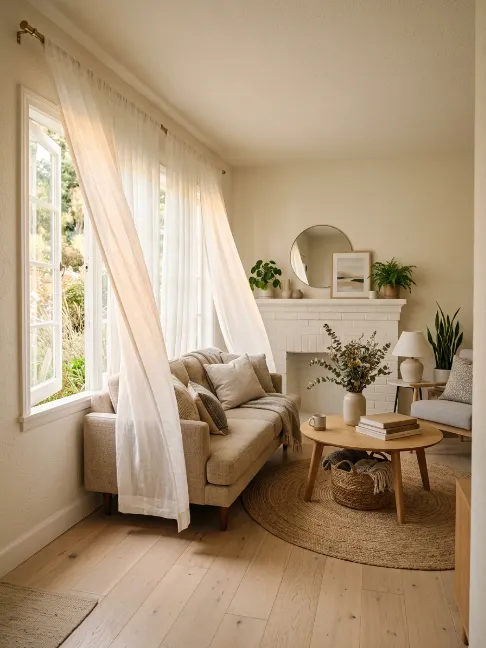
Mount your curtain rods as close to the ceiling as possible, and extend the rod well beyond the window frame on each side. This makes windows look taller, ceilings feel higher, and the entire room feels grander. It costs next to nothing and it’s one of the highest-impact changes you can make.
24. Use Sheer or Linen Curtains
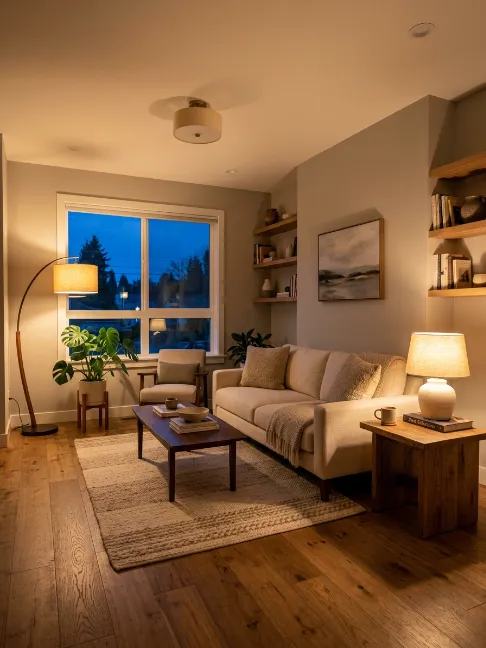
Heavy drapes block light and visually shrink the room. Sheer or linen curtains keep things bright and airy while still giving you the privacy you need. The room stays open. The light stays in.
25. Layer Your Lighting — Don’t Rely on One Source
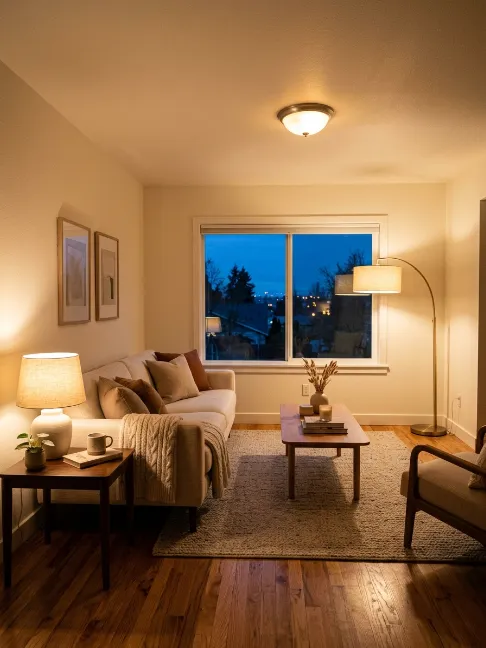
Overhead lighting alone makes a small room feel flat and a bit harsh. Layer in table lamps, floor lamps, and wall sconces at different heights. Multiple sources of warm light mimic how natural light works and make the space feel genuinely inviting rather than just bright.
Layout Hacks for Specific Room Shapes
26. Long and Narrow? Create Two Zones
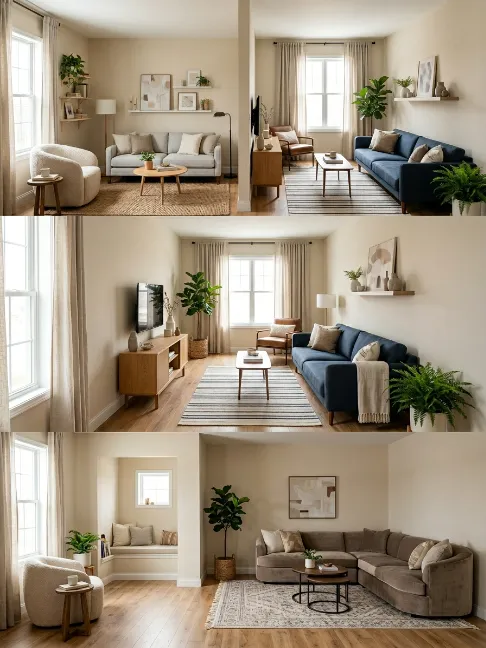
A long narrow room works best when you split it into two distinct areas — a main seating zone and a secondary space for reading or a small workspace. Use the back of your sofa as a natural divider between the two. It’s clean, it’s clever, and it actually makes the room feel more spacious, not less.
27. Oddly Shaped Rooms? Embrace the Weirdness
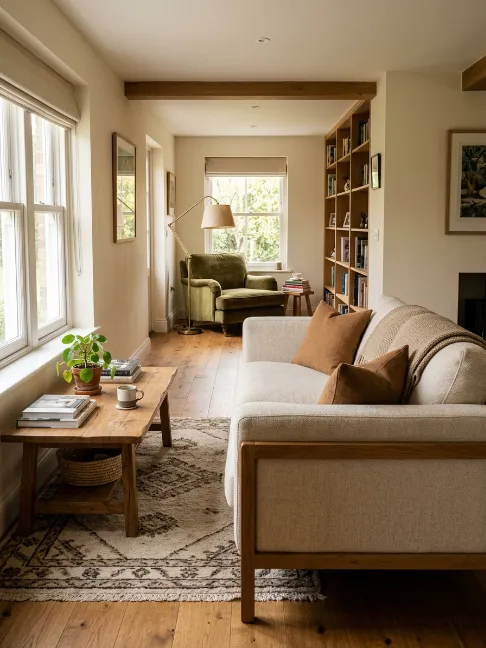
Got a bay window, an awkward alcove, or a random column in the corner? Stop fighting it. A bay window becomes a window seat with hidden storage underneath. An alcove becomes the perfect shelving nook or compact TV setup. Work with what the room gives you. The best small space designs I’ve seen all lean into the architecture rather than trying to pretend it isn’t there.
Small Living Room Quick-Win Checklist
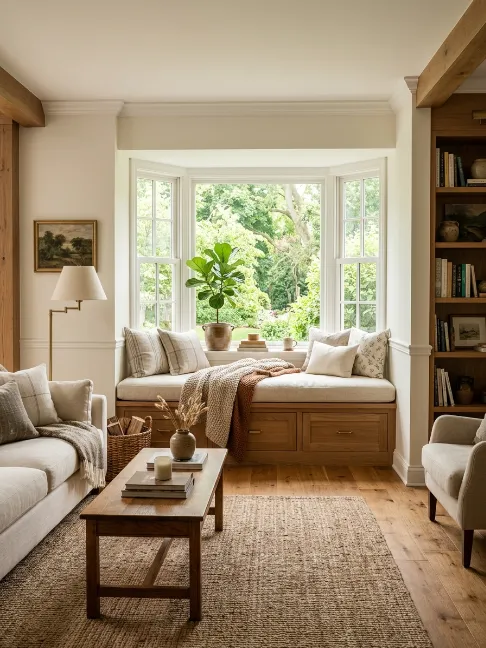
- Float your sofa at least 6 inches from the wall
- Anchor seating with a correctly sized rug
- Go vertical with shelving — always up, never wide
- One accent color maximum — keep the base light
- Three objects per surface — edit everything else out
- Mirror opposite a window — non-negotiable
- Layer lighting with at least two to three sources
- Multi-functional furniture only — every piece earns its place
Frequently Asked Questions
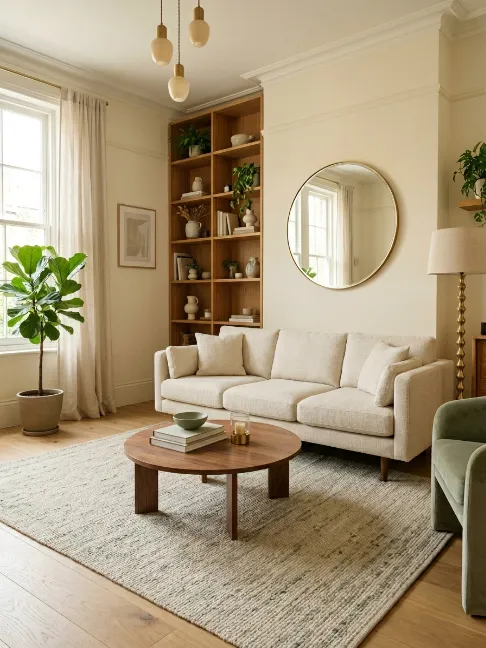
What’s the best furniture layout for a small living room?
Float your furniture away from the walls, anchor the seating zone with a rug, and keep pathways clear. An L-shaped or conversation-style arrangement works well in most small rooms. Avoid pushing everything flat against the walls — it actually makes things feel tighter.
How do I make a small living room look bigger without renovating?
Use light colors on the walls, hang a large mirror opposite your main window, choose furniture with visible legs, and keep the floor as visible as possible. Hanging curtains high and wide is also one of the cheapest, highest-impact changes you can make.
What’s the right rug size for a small living room?
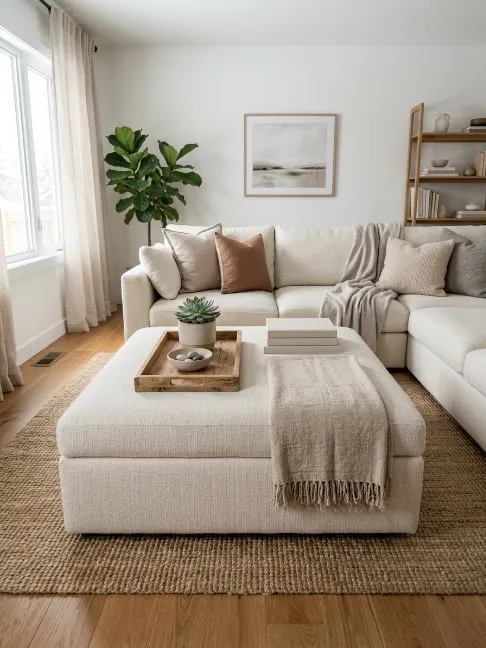
Go bigger than you think. The front legs of all your seating pieces should sit on the rug. A rug that’s too small makes the room feel disconnected and actually smaller. If you’re between sizes, size up.
Can I use dark colors in a small living room?
You can — but use them as accents, not as your base. A dark accent wall behind your sofa can add depth without closing the room in. Just keep the surrounding walls and ceiling light to balance it out.
Is it worth investing in a storage ottoman for a small living room?
100% yes. A good storage ottoman (like the SONGMICS Storage Ottoman) replaces your coffee table, gives you hidden storage, and adds extra seating when needed. It’s genuinely one of the most useful pieces you can own in a small space — and it’s very affordable on Amazon.
Wrapping It Up
Small living rooms are honestly some of the coolest spaces to design — when you know the rules, and when to break them. The best small living rooms I’ve ever seen aren’t ones that desperately tried to look bigger. They’re the ones that leaned into their coziness, made every inch count, and felt genuinely lived in.
Start with your layout. Get that right. Then layer in smart storage — the VASAGLE Ladder Shelf and TaoTronics Floor Lamp are both brilliant starting points. Keep your palette calm, edit your décor down hard, and only keep what you love.
Your small living room can absolutely be the most stylish, most intentional space in your entire home. And honestly? It usually ends up being exactly that. 😊
So — which of these ideas are you trying first? Drop it in the comments, I’d genuinely love to know!
