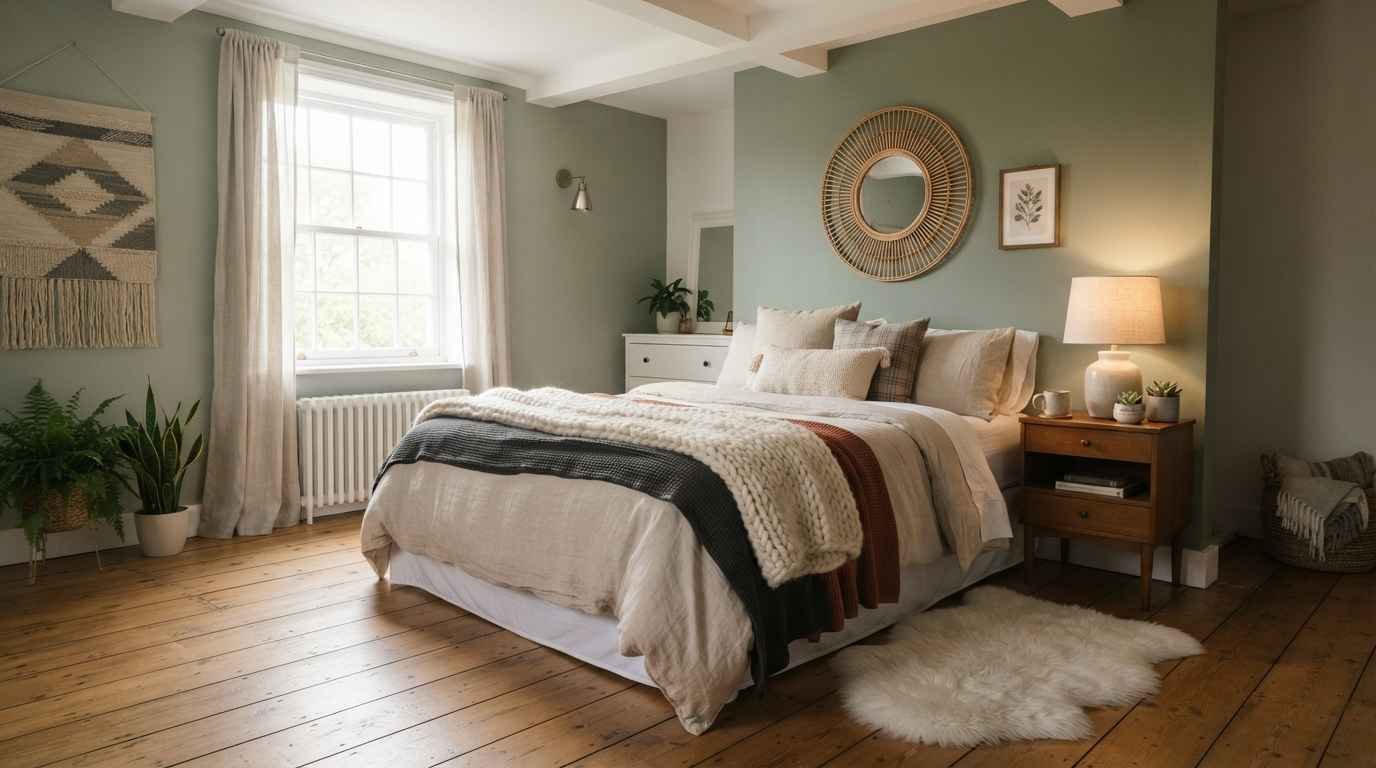
My bedroom used to look like a college dorm that gave up halfway through decorating. A mattress, a lamp from 2016, and a pile of laundry pretending to be a chair.
Then I spent one weekend, about 40 dollars, and a lot of Pinterest scrolling, and the whole room finally felt like mine.
That’s the thing about bedroom aesthetics. You don’t need a full renovation or a designer on speed dial.
You need the right small moves, stacked in the right order. Below are 29 of them, the ones I’ve actually tried, borrowed from friends, or stolen straight off a Pinterest board and made better.
I’m not a designer. I’ve never taken a color theory class.
What I have done is redecorate my own bedroom four times in the last three years, chasing whatever aesthetic was living rent-free in my head that season.
Cottagecore, then dark academia, then something I can only describe as “soft grandma.” Each round taught me which ideas were worth repeating and which ones looked great on a screen and terrible in daylight.
That’s what this list is. Not theory. Just the ideas that survived actual bedrooms, actual budgets, and actual furniture assembly disasters.
Grab a coffee. Let’s get your room looking like it belongs in someone’s saved folder.
Color and mood: start with the walls
Color sets the emotional temperature of a room before you’ve placed a single pillow. Get this part wrong and no amount of fairy lights will save you.
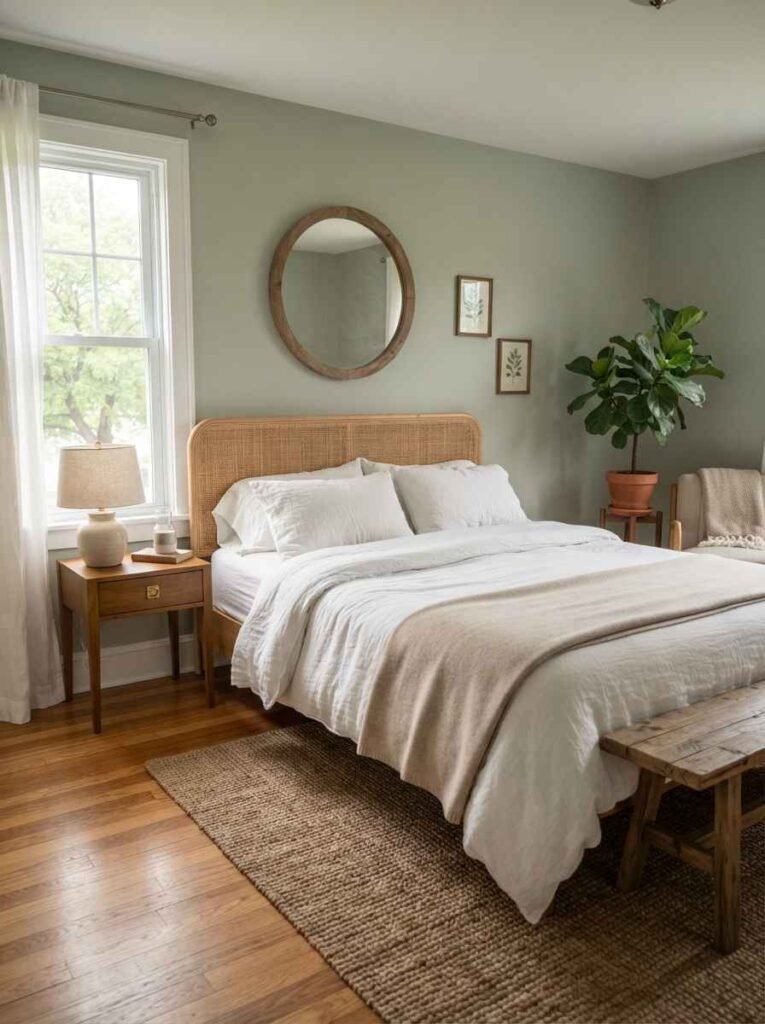
- Sage green walls. Soft, earthy, and forgiving of clutter. It pairs with warm wood and brass without trying too hard.
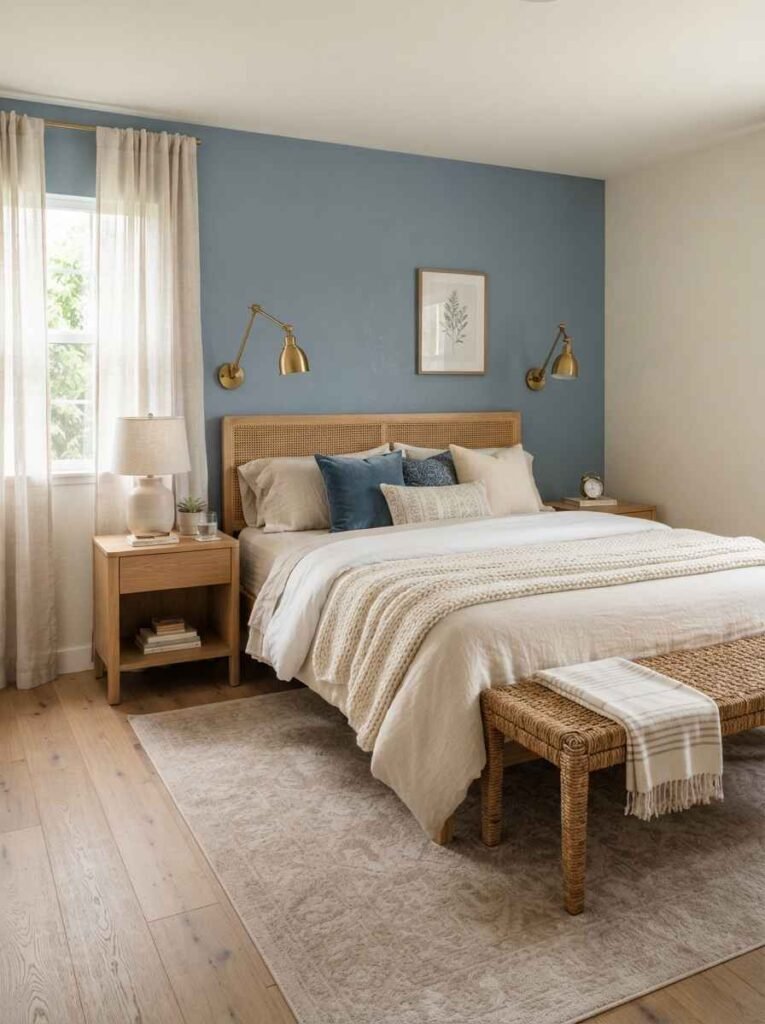
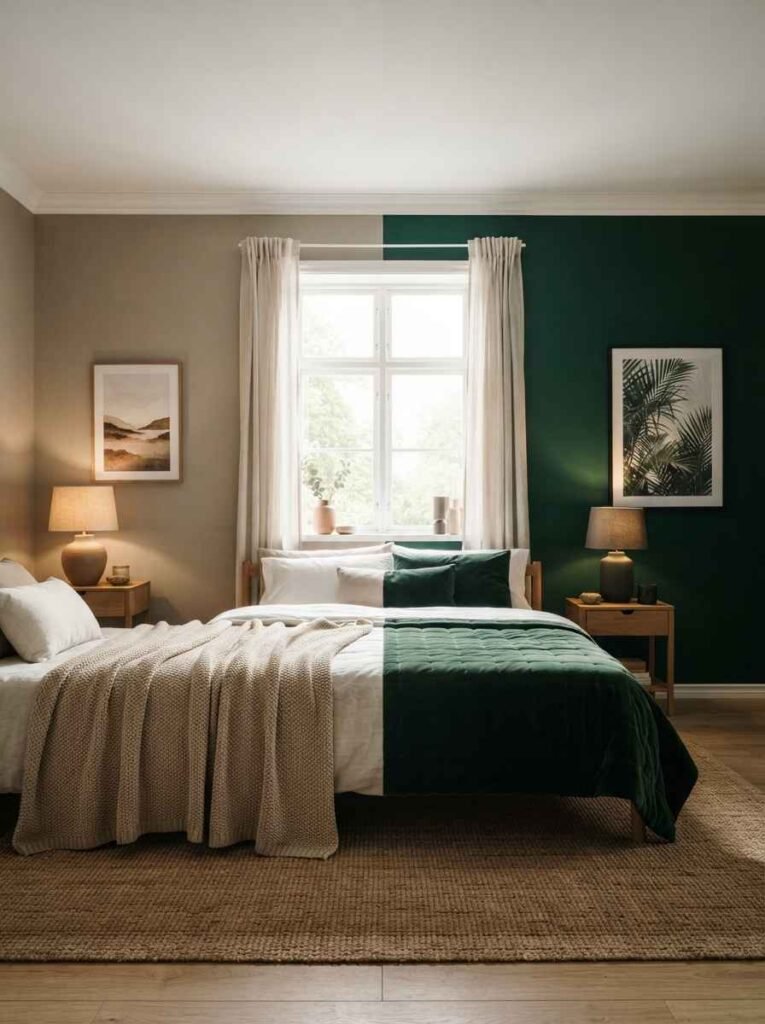
- Dusty blue accent wall. Just one wall, usually behind the headboard.
- According to color psychology guidance from Livingetc, softening a cool tone like blue with warmer undertones keeps a room feeling gentle instead of cold, which is exactly why it works so well behind a bed.
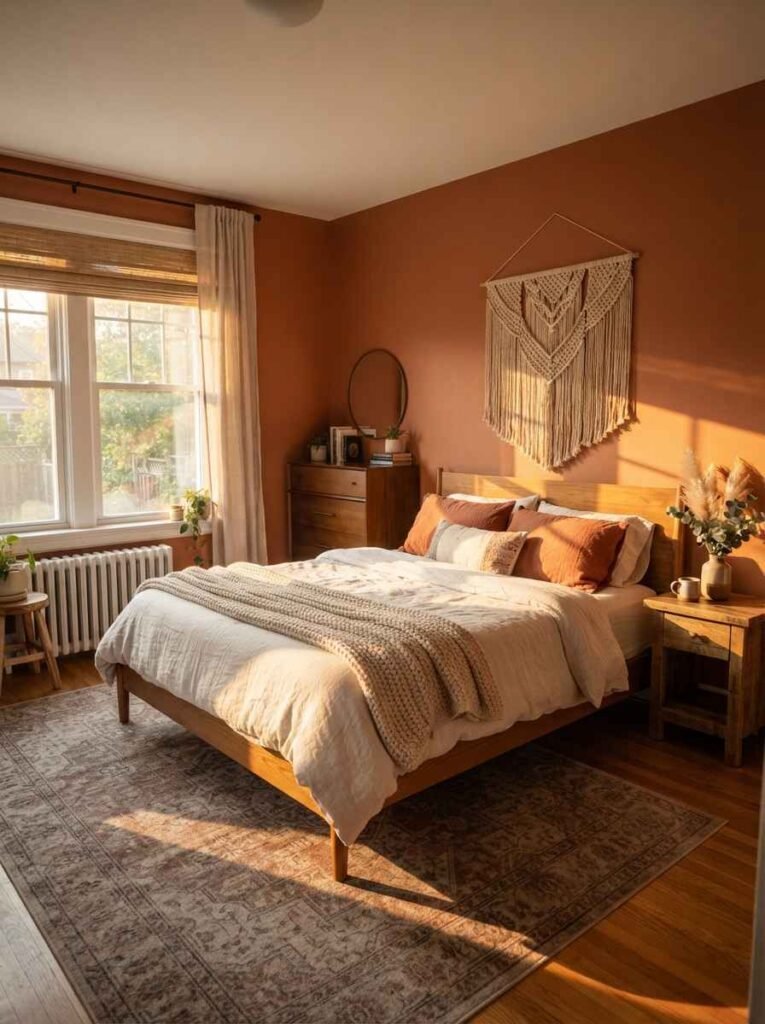
- Warm terracotta. IMO this is the most underrated bedroom color right now. It reads cozy in winter and sun-washed in summer.
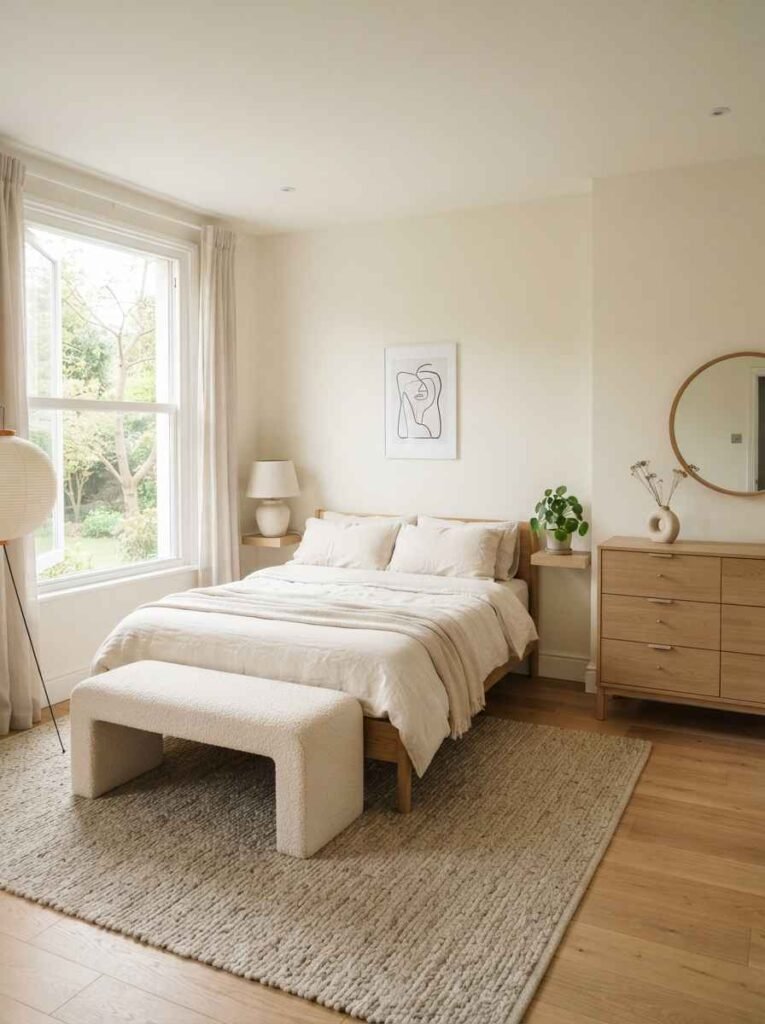
- Creamy off-white base. Not stark white, not beige. Something in between that photographs beautifully and never fights with your bedding.
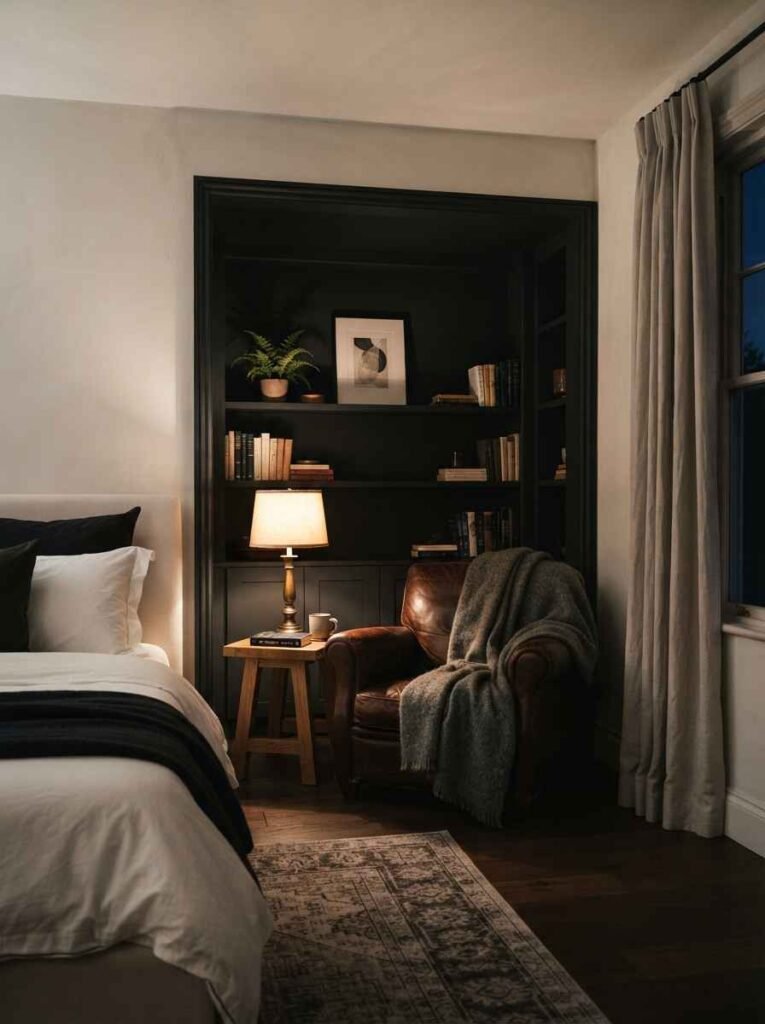
- Moody charcoal accent nook. Paint the alcove behind your bed dark and watch it turn into the coziest corner of the house.
Here’s a quick way to picture how these choices stack up against each other:
| Color choice | Cost to try | Best for | Overall vibe |
|---|---|---|---|
| Sage green | Low | Small or rented rooms | Calm, earthy |
| Dusty blue | Medium | North-facing rooms | Airy, restful |
| Terracotta | Medium | Rooms with lots of light | Warm, grounded |
| Charcoal accent | Low (one wall) | Reading nooks | Moody, cocoon-like |
Sleep researchers back this up too. Cooler, muted tones are consistently rated as more restful, and a well-designed sleep environment has real, measurable effects on how well you actually rest at night, according to guidance from the Sleep Foundation.
Here’s my honest take, and it’s a little unpopular: don’t pick your bedroom color from a Pinterest board alone. Pick it from a physical paint swatch taped to your actual wall, checked at 8am and again at 9pm. A color that looks dreamy under a ring light can look sickly under your ceiling fixture. I learned this the hard way with a blush pink that turned oddly orange every evening. Swatches are cheap. Repainting a whole room is not.
Lighting that actually flatters your room
Overhead lighting is the enemy of aesthetic. Fight it with layers.
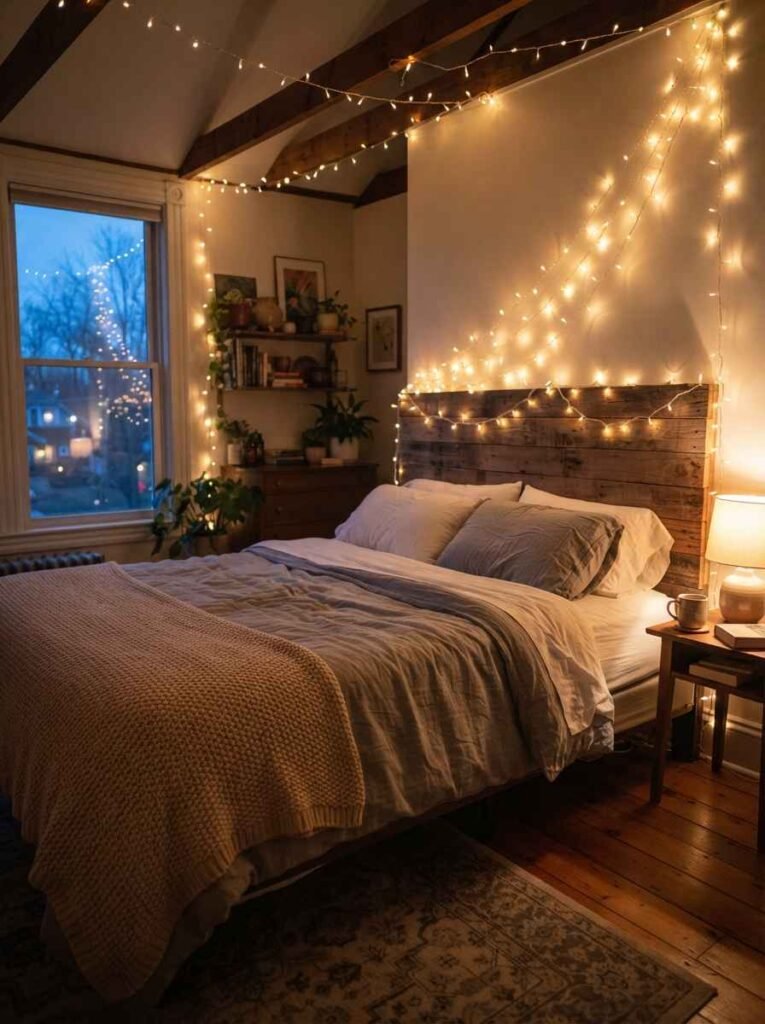
- Warm string lights along the headboard or draped over a canopy frame. Cheap, forgiving, and somehow makes every photo look better.
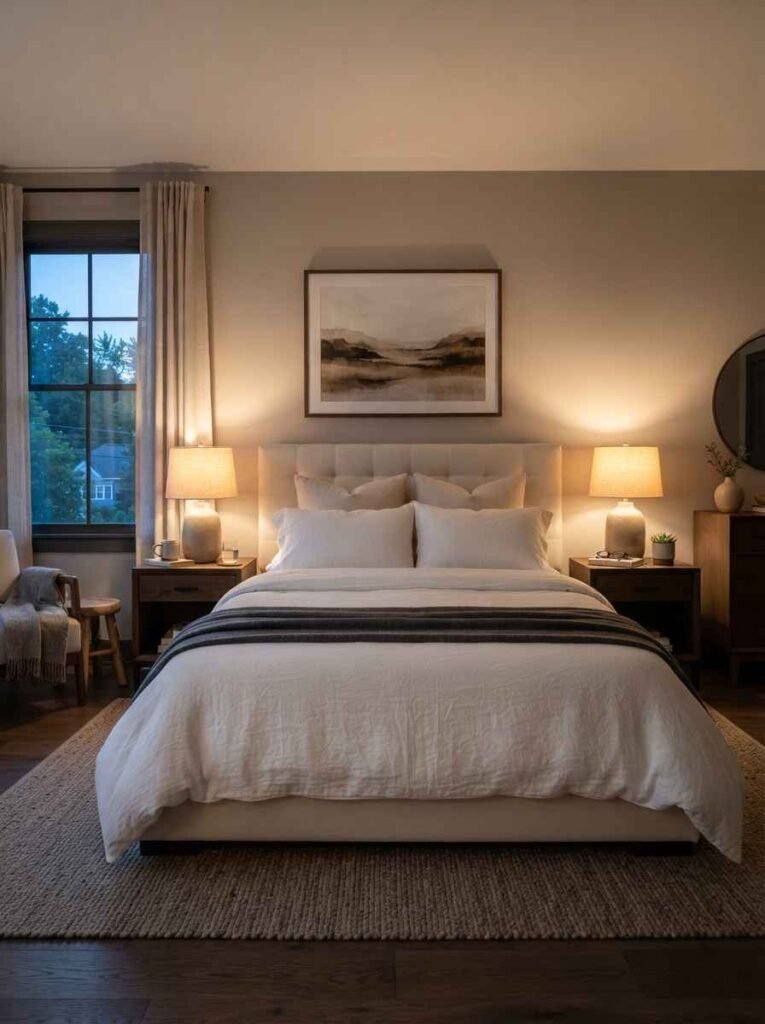
- A dimmable table lamp on each nightstand. Symmetry does a lot of heavy lifting here.
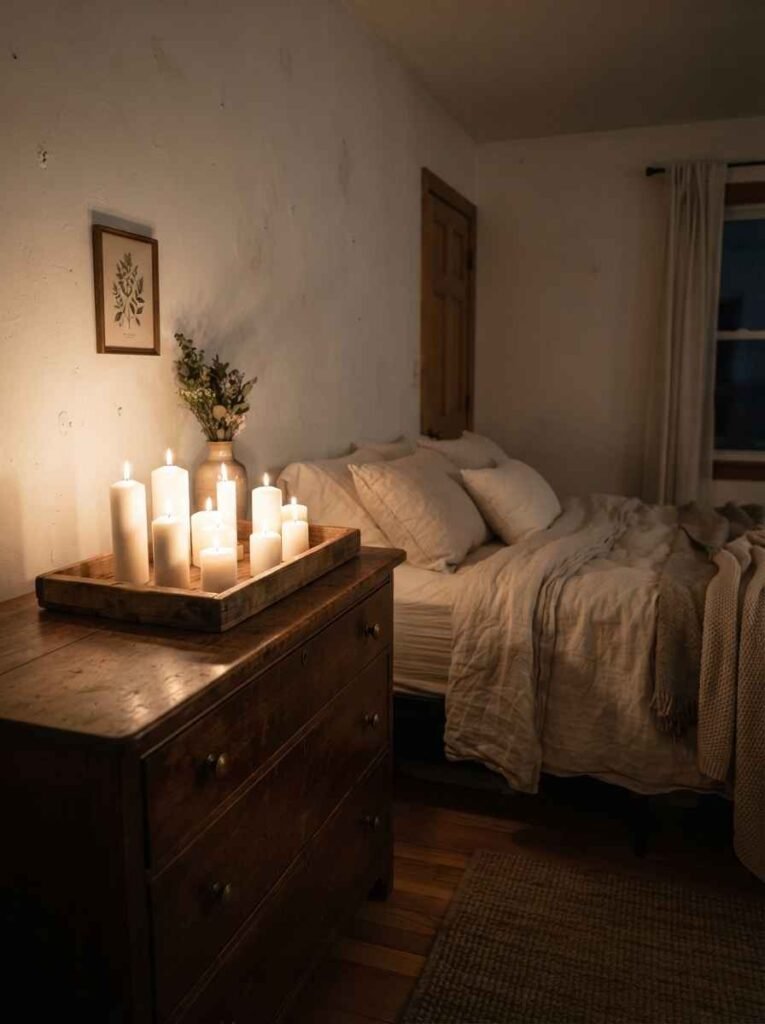
- Unscented candles on a tray. I know, fire hazard, be careful, but nothing beats that flicker at night.
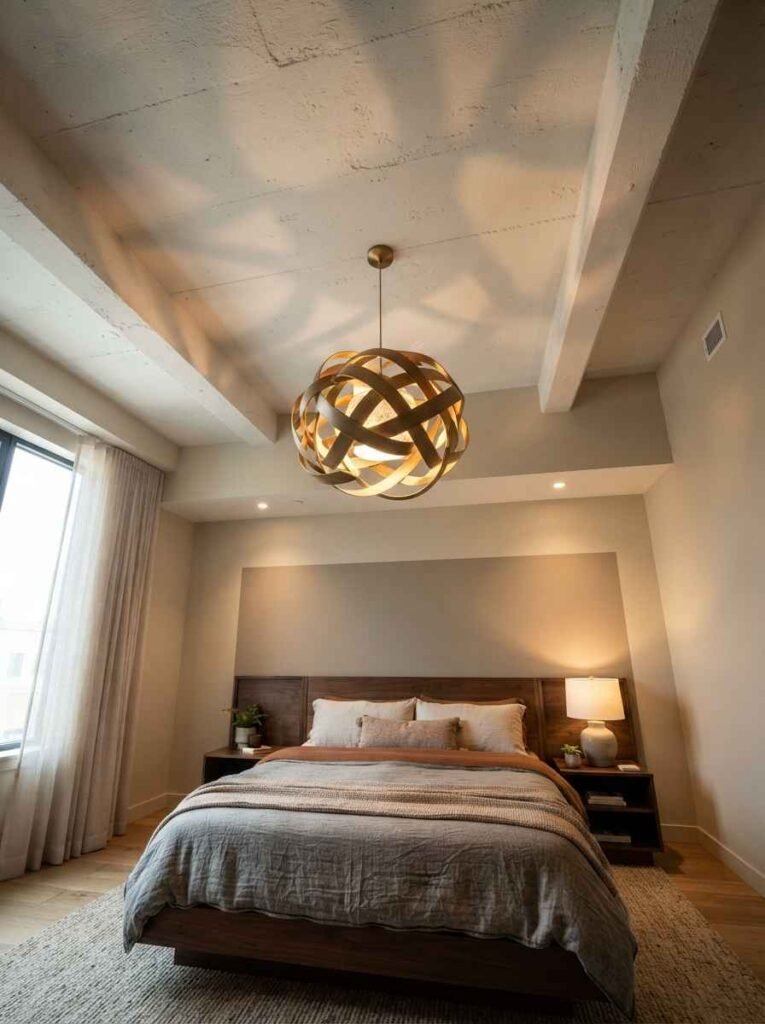
- One statement pendant light instead of a boring flush mount. Swap it yourself in twenty minutes if your fixture allows it.
Keeping the lights dim as bedtime approaches isn’t just pretty, either. It genuinely helps your body wind down. The National Sleep Foundation’s guide to sleep-friendly bedrooms explains that bright light in the evening slows the release of melatonin, the hormone that gets you sleepy in the first place, so dimming your lamps as bedtime nears is doing more than setting a mood.
FYI, if you’re renting and worried about swapping fixtures, plug-in options solve most of this. A dimmable plug-in sconce next to the bed gives you the same warm, layered look as a hardwired lamp, and you take it with you when you move. I’ve moved apartments twice with the same pair of sconces and they’ve earned their keep both times.
Don’t underestimate the smaller lighting details either. Swap harsh white bulbs for warm 2700K ones across every fixture in the room. It’s a five-dollar change that makes even a plain rental bedroom feel like a boutique hotel room at night.
Textiles and bedding: the fastest glow-up in this list
If you only do one thing from this article, do this section. Bedding changes a room faster than paint ever will.
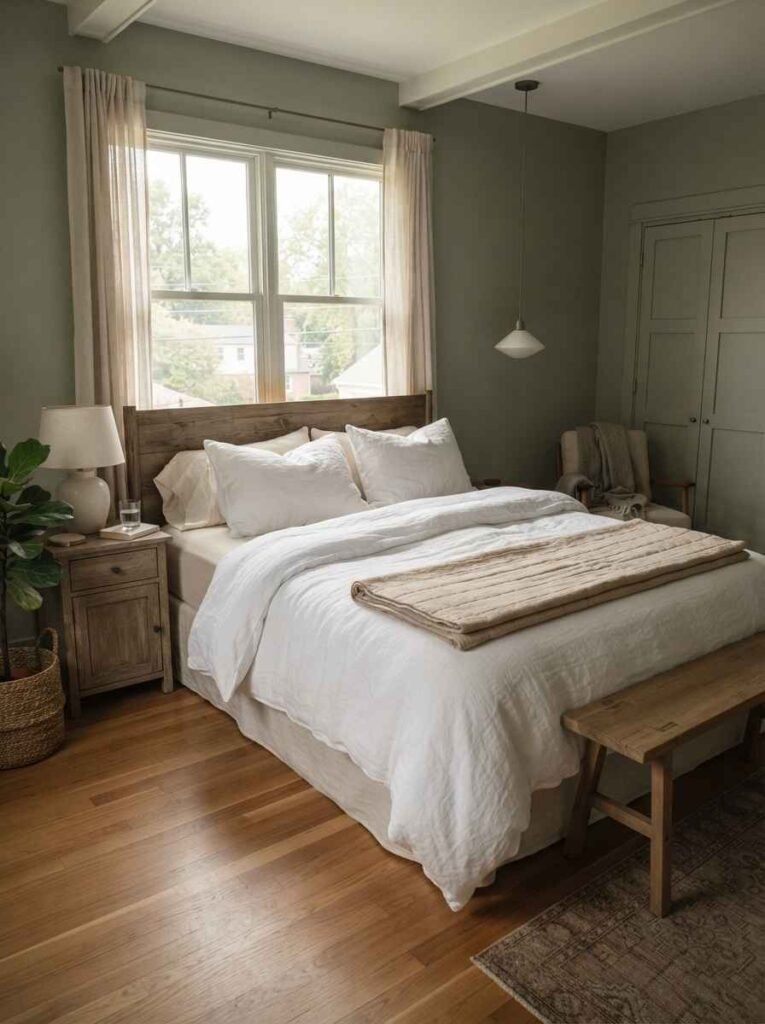
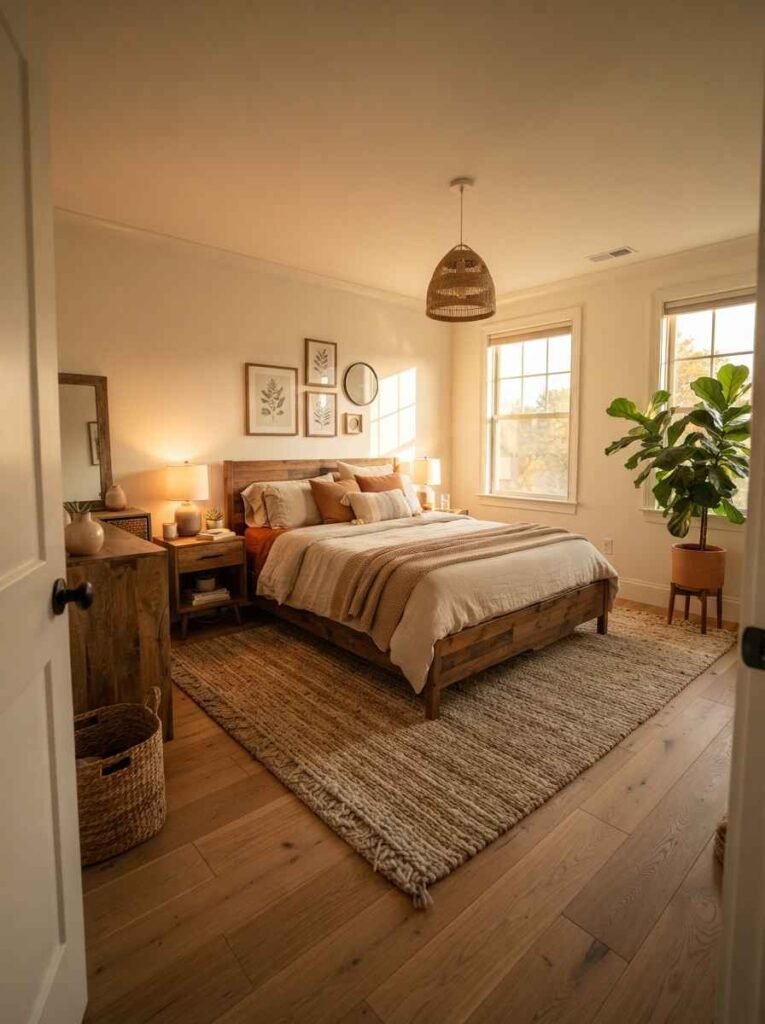
- Layered linens. A fitted sheet, a duvet, and a lightweight quilt folded at the foot of the bed. Texture over matching.
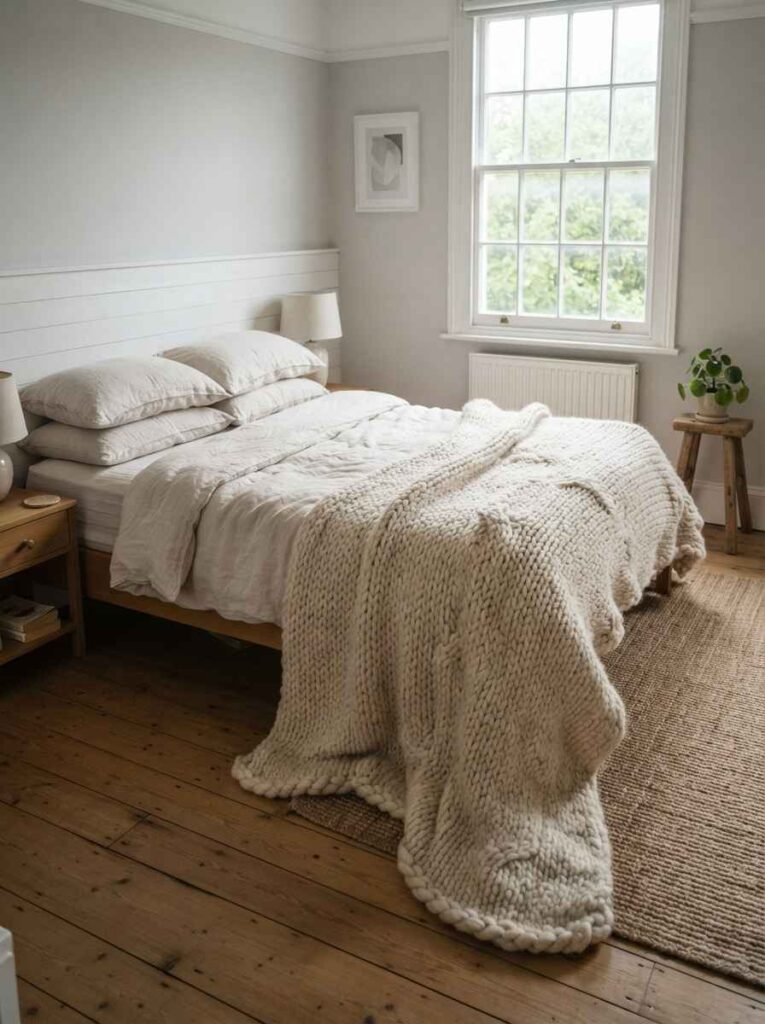
- A chunky knit throw. Draped, never folded flat. Mess it up a little on purpose.
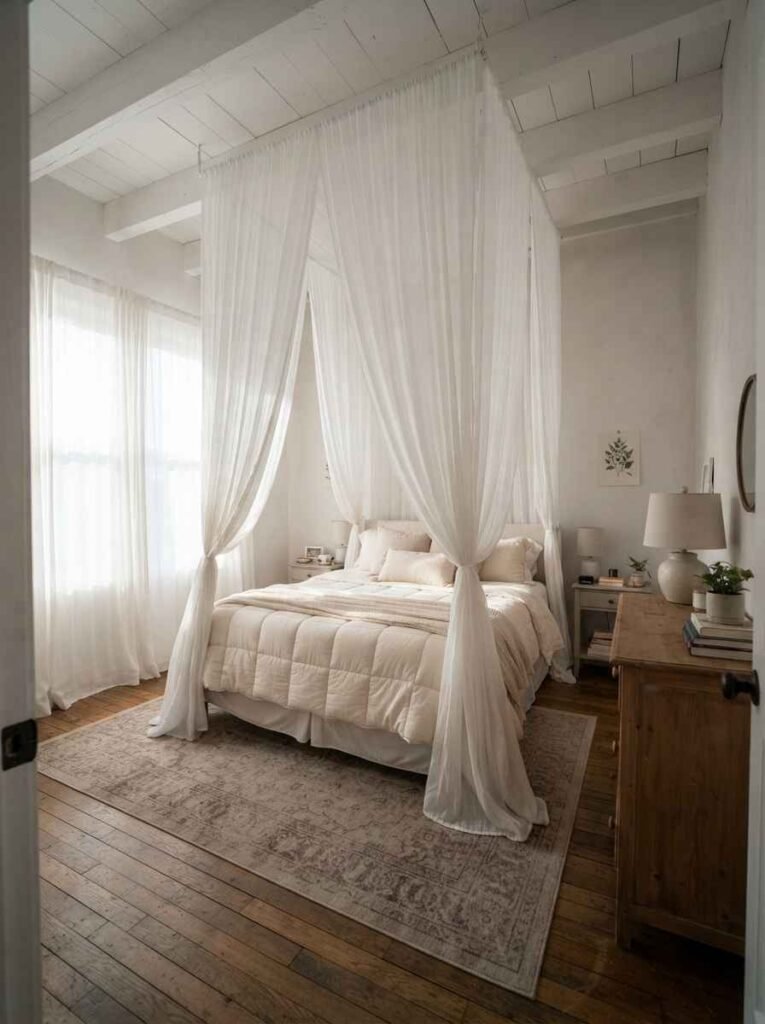
- Canopy drapes hung from the ceiling, even without a canopy frame. Command hooks and sheer curtain panels do the trick.
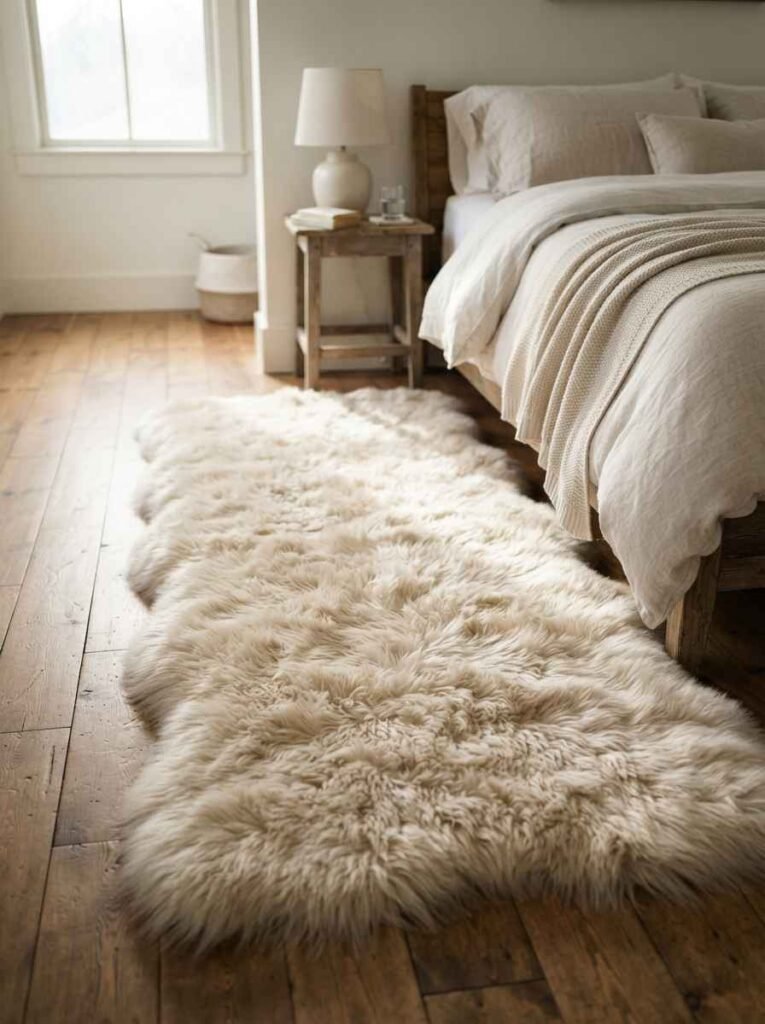
- A faux fur or shag rug placed just under the front two-thirds of the bed, not centered under the whole thing.
- Mismatched pillow shams in coordinating (not matching) colors. Three pillows, three shades of the same color family, zero stress.
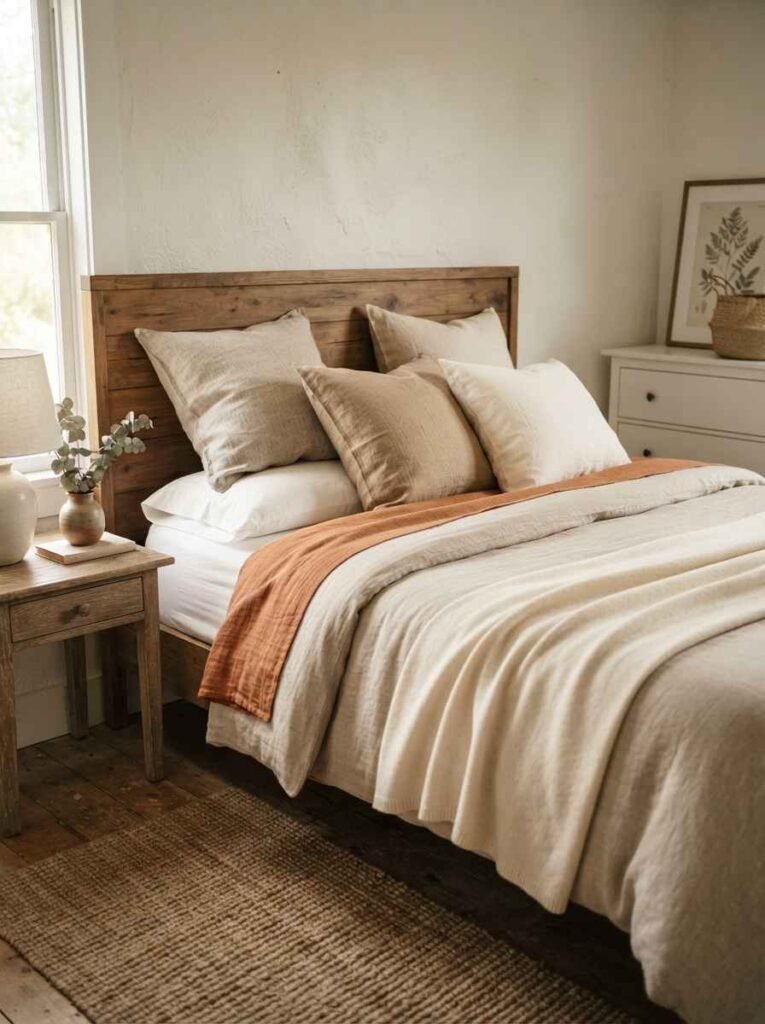
A quick personal opinion here: I think the biggest mistake people make is buying an all-white bedding set and calling it done. It looks nice in the store. It looks flat at home. Add at least one textured or patterned layer or the whole bed reads like a hotel nobody booked.
Second opinion, equally strong: skip the throw pillows nobody actually uses. Three or four max. Beyond that you’re just building a wall you have to move every single night before you can sleep, and wow, that gets old fast. Style the bed for photos if you want, sure, but design it for the version of you who’s exhausted at 11pm and just wants to lie down.
Fabric quality matters more than color here too. A linen duvet cover in a plain oatmeal shade will look more expensive than a printed polyester set in a trendy pattern, every single time. Texture reads as quality even in a photo. Pattern often reads as cheap once you’re standing in the room.
Wall decor that doesn’t feel like an afterthought
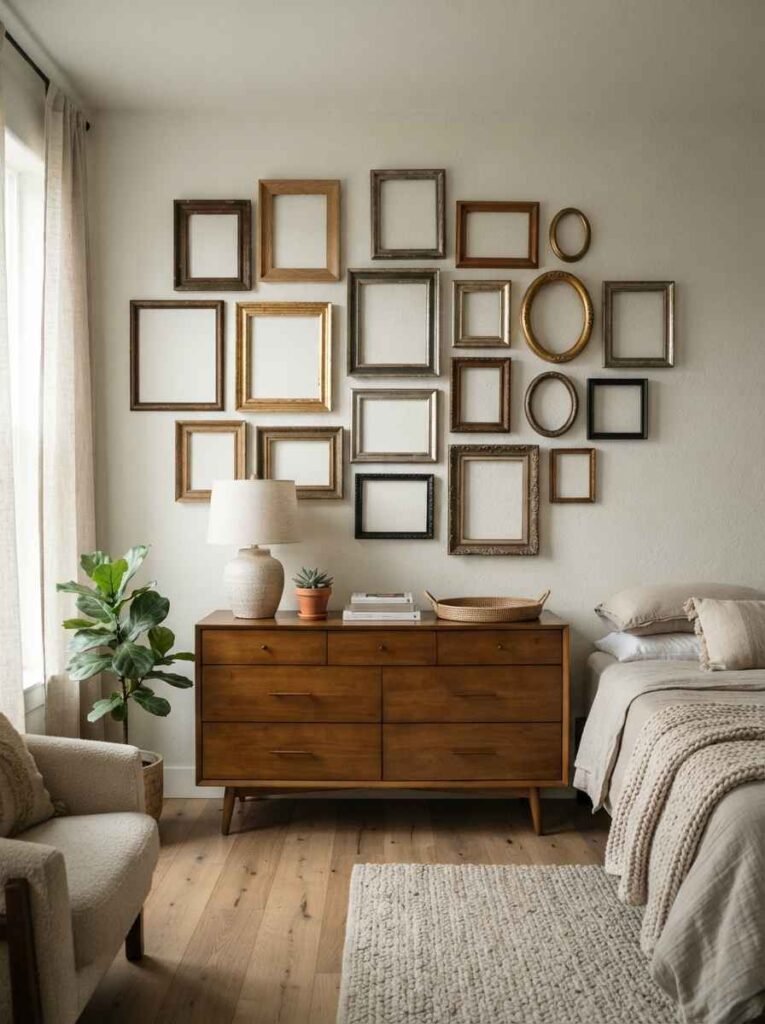
- A gallery wall of mismatched frames, spaced with actual planning, not just nailed up wherever.
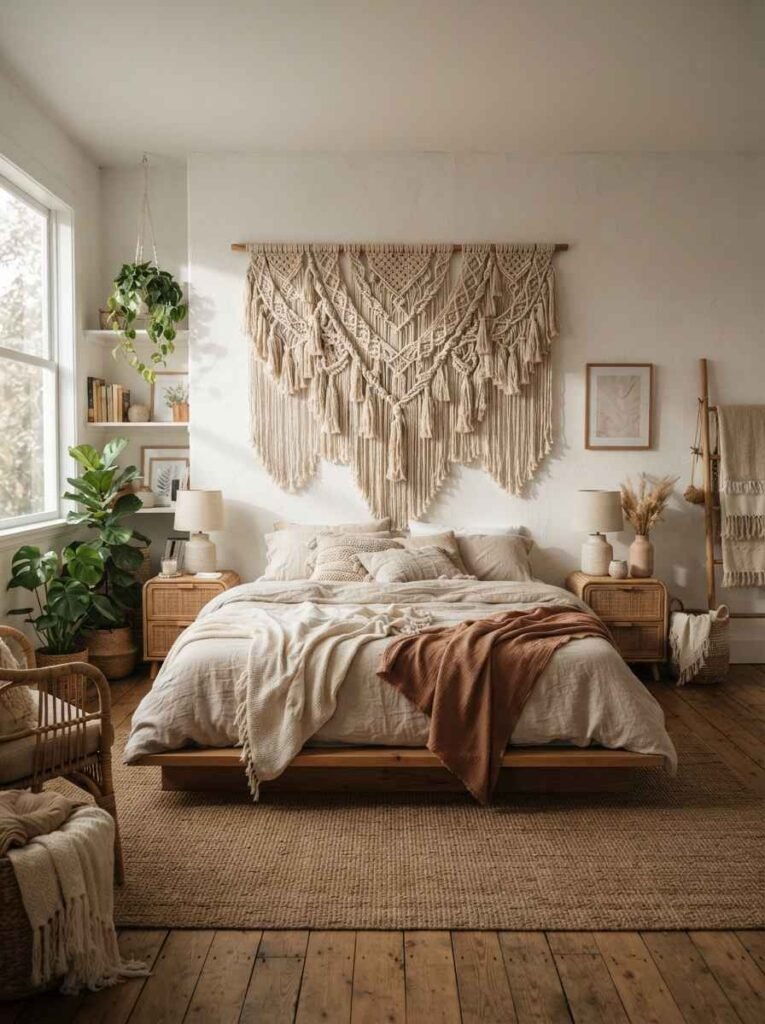
- A woven tapestry behind the bed instead of a headboard. Cheaper than furniture, and it fills a huge visual gap.
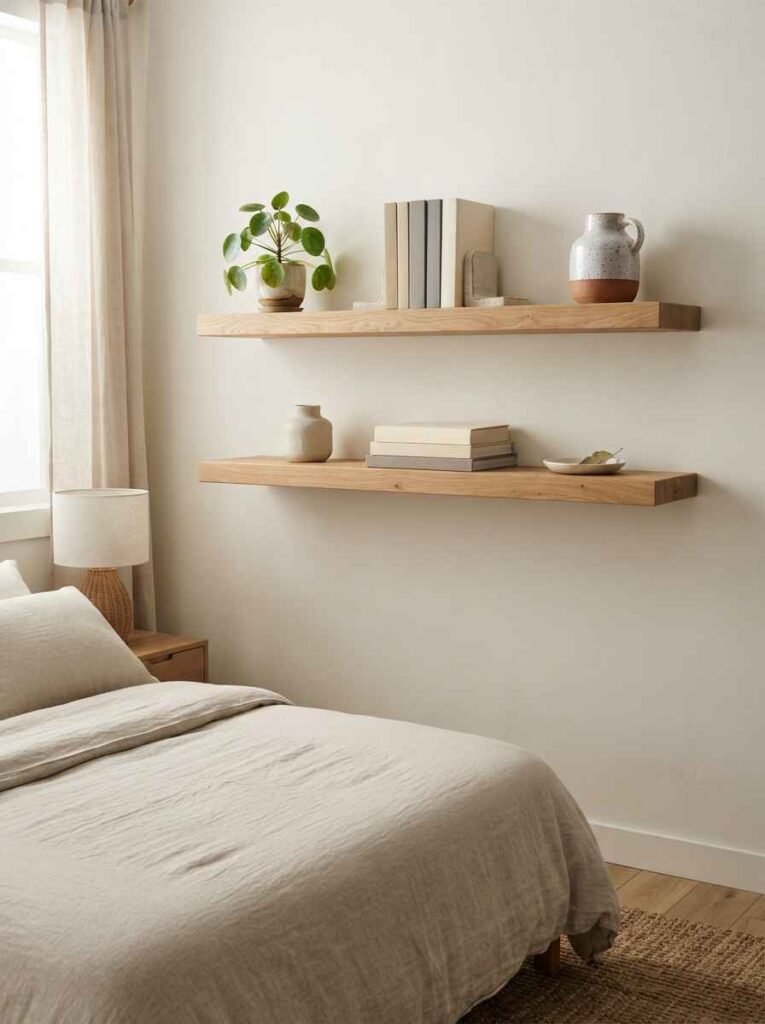
- Floating shelves styled with a small plant, a stack of books, and one weird little object that makes you smile.
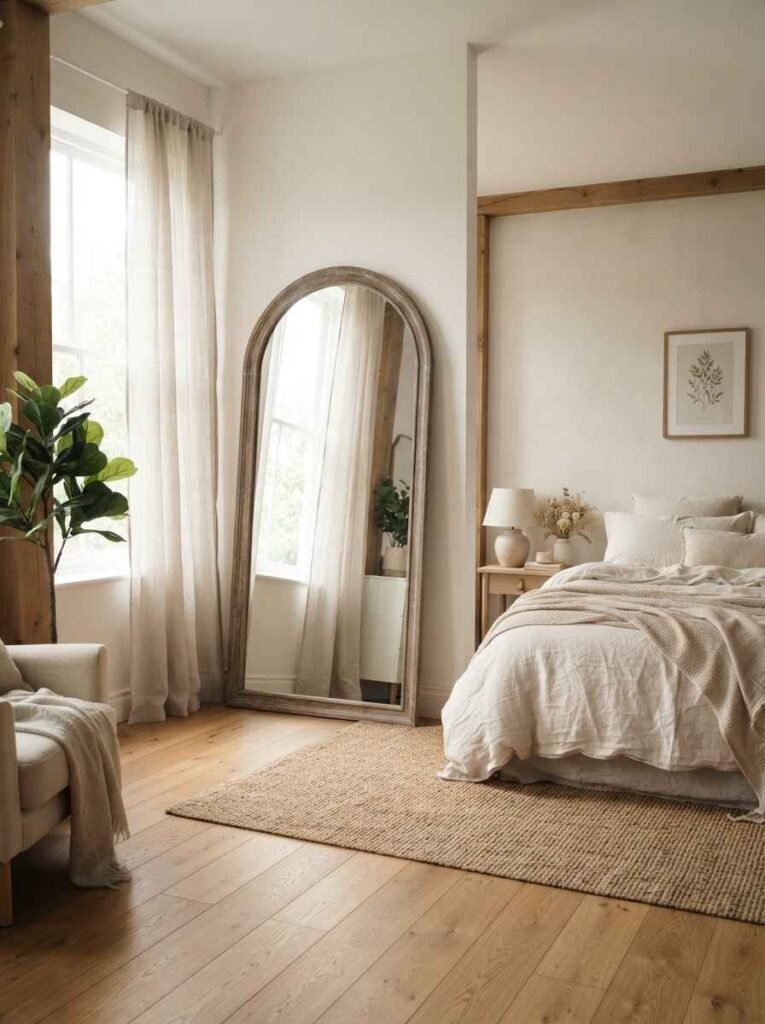
- A large mirror leaned against the wall, not hung. It bounces light around and makes small rooms feel bigger.
Ever notice how a room with bare walls just feels unfinished, no matter how nice the furniture is? That’s not a coincidence. Your eye needs somewhere to land above furniture height, or the whole room feels like it’s missing a top layer.
One more thing on gallery walls specifically: lay everything out on the floor first. Trace the arrangement on paper if you’re renting and can’t test extra nail holes. It saves you from a wall that looks like it happened by accident instead of on purpose.
Furniture and layout tweaks worth the effort
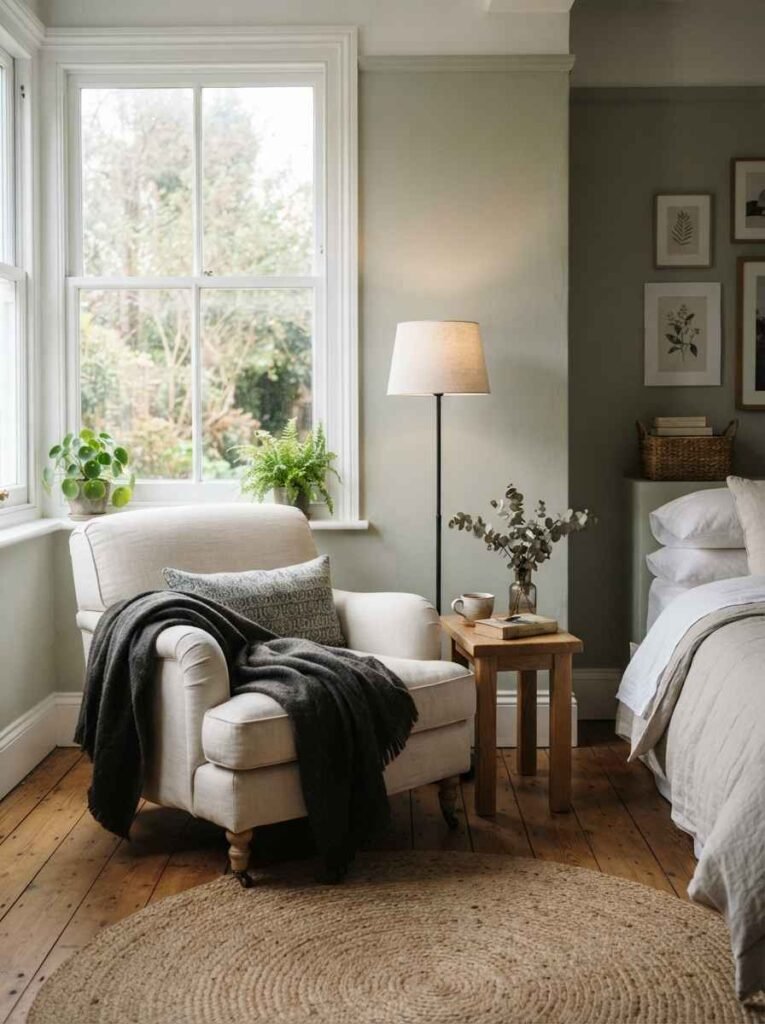
- A reading nook in the corner, even if it’s just a chair and a small lamp. You don’t need a whole library.
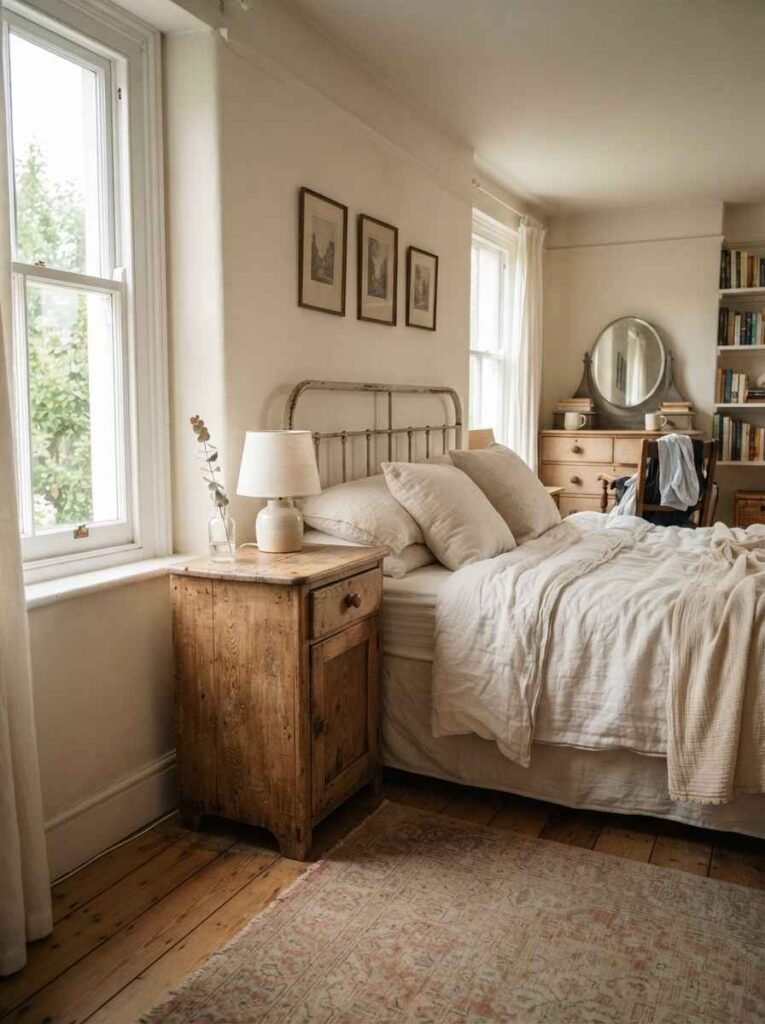
- A vintage nightstand sourced secondhand. New furniture rarely has this much personality for this little money.
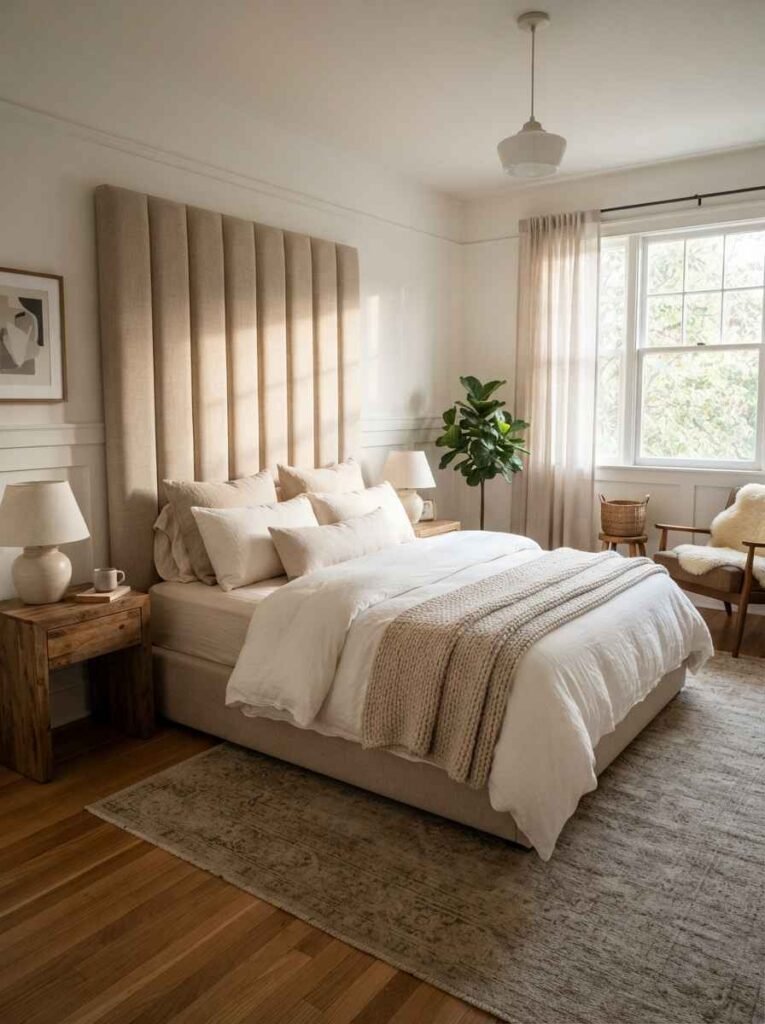
- An upholstered headboard. DIY one with plywood and foam if the retail versions feel overpriced, because IMO they usually are.
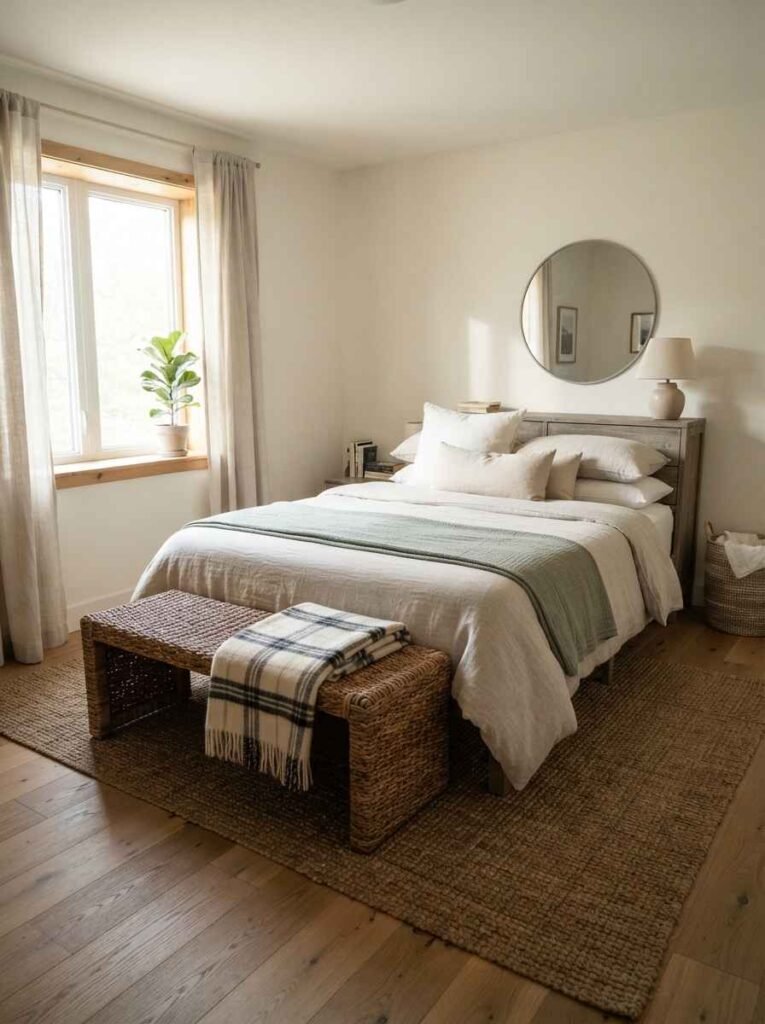
- A bench at the foot of the bed. Somewhere to sit while you put your shoes on, or just to pile blankets you’re not currently using.
Quick aside, completely unrelated: I once spent three hours trying to assemble a nightstand from a brand I won’t name, only to realize halfway through that I’d installed a drawer upside down. Bring a screwdriver and patience to any furniture project. You’ll need both.
Layout matters just as much as any single piece. Floating the bed away from a wall, even by a foot, instantly makes a small room feel bigger, because it breaks the “everything pushed to the edges” look most starter bedrooms fall into. Try it before you buy a single new item. It’s free and it might solve half your problem on its own.
Plants and greenery
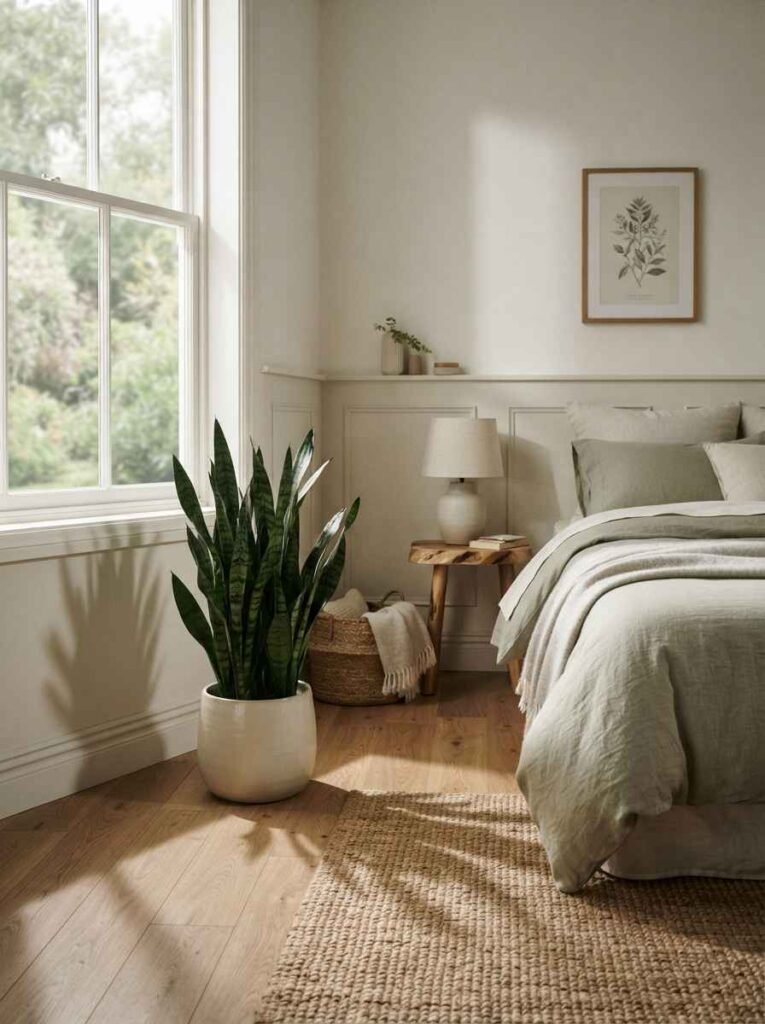
- A snake plant on the floor near a window. Nearly impossible to kill, which matters if your track record with plants is rough.
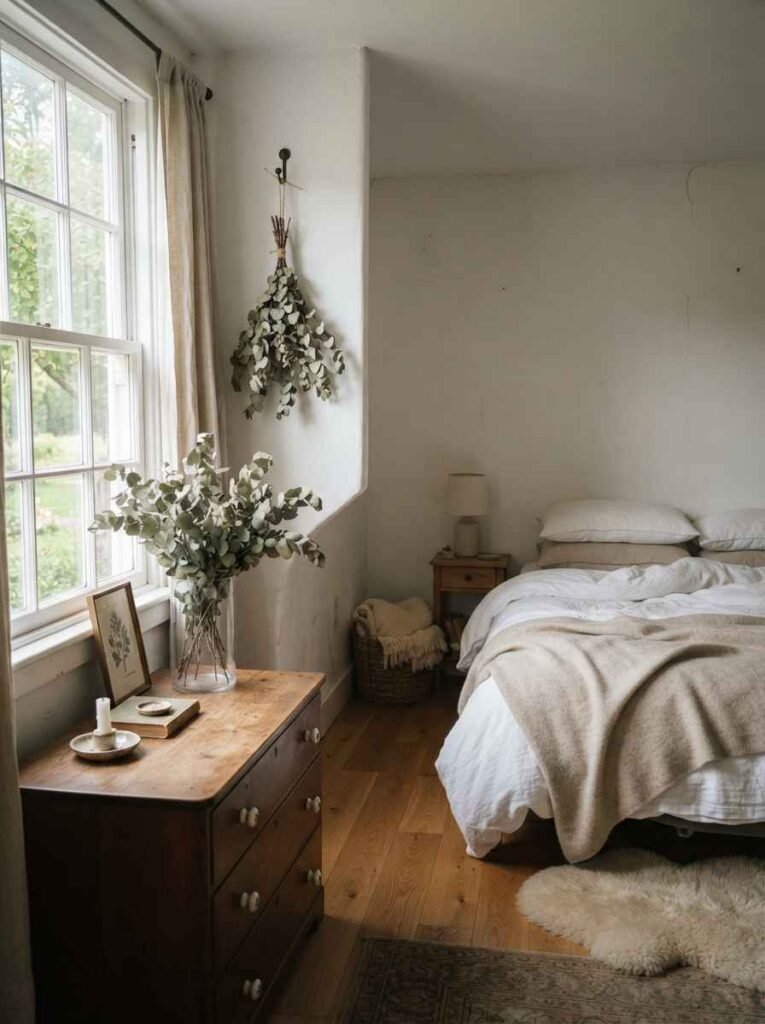
- Dried eucalyptus bunches hung upside down from a hook or tucked into a vase. Zero maintenance, permanent aesthetic.
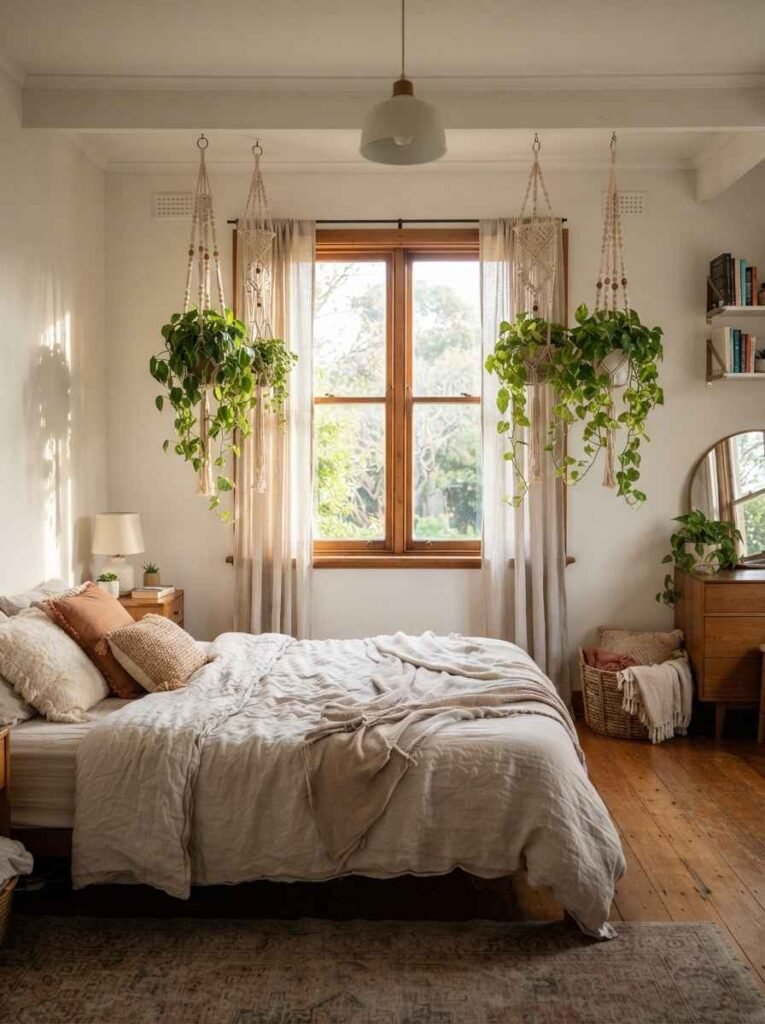
- Hanging planters near a window to add height without eating floor space.
Small space hacks that still look intentional
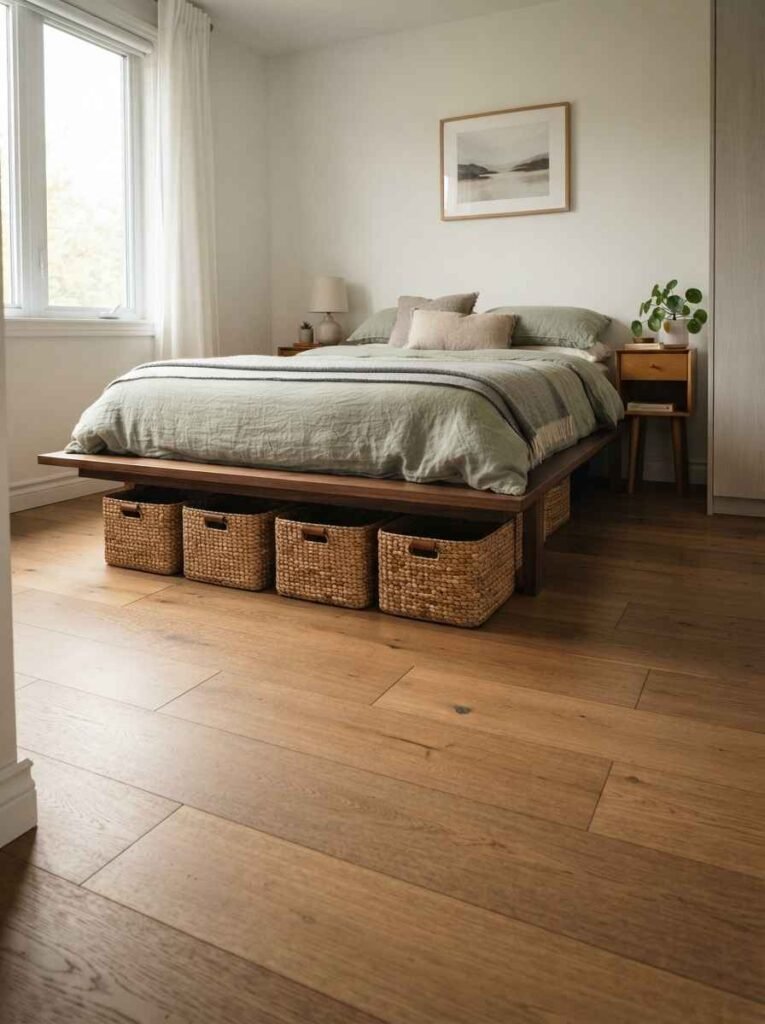
- Under-bed storage bins that hide clutter while keeping the floor visually clear.
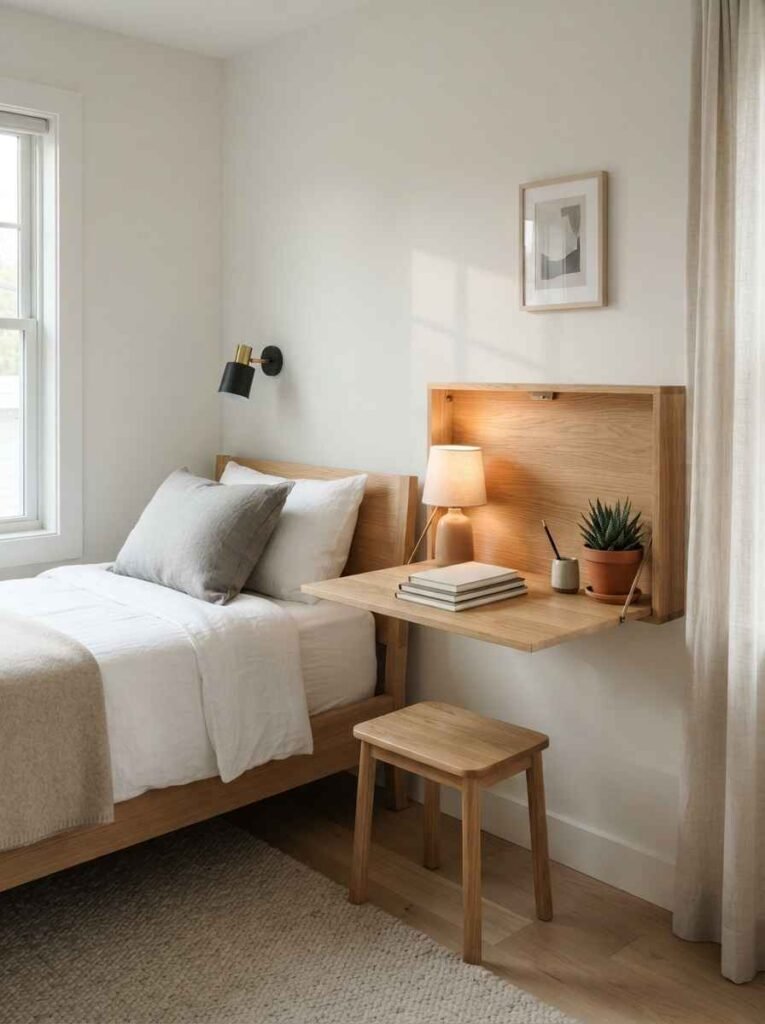
- A wall-mounted fold-down desk for anyone squeezing a home office into a bedroom corner.
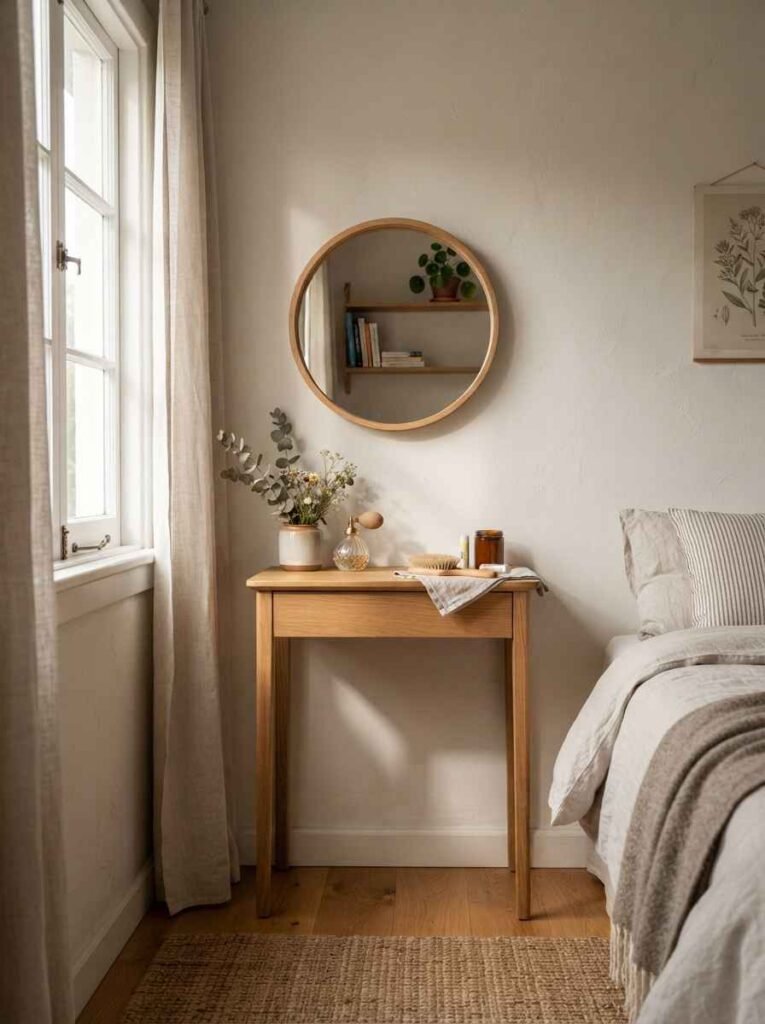
- A corner vanity with a small round mirror, perfect for tiny rooms that can’t fit a full dresser.
- A multi-use ottoman that opens up for storage and doubles as extra seating when friends crash in your room.
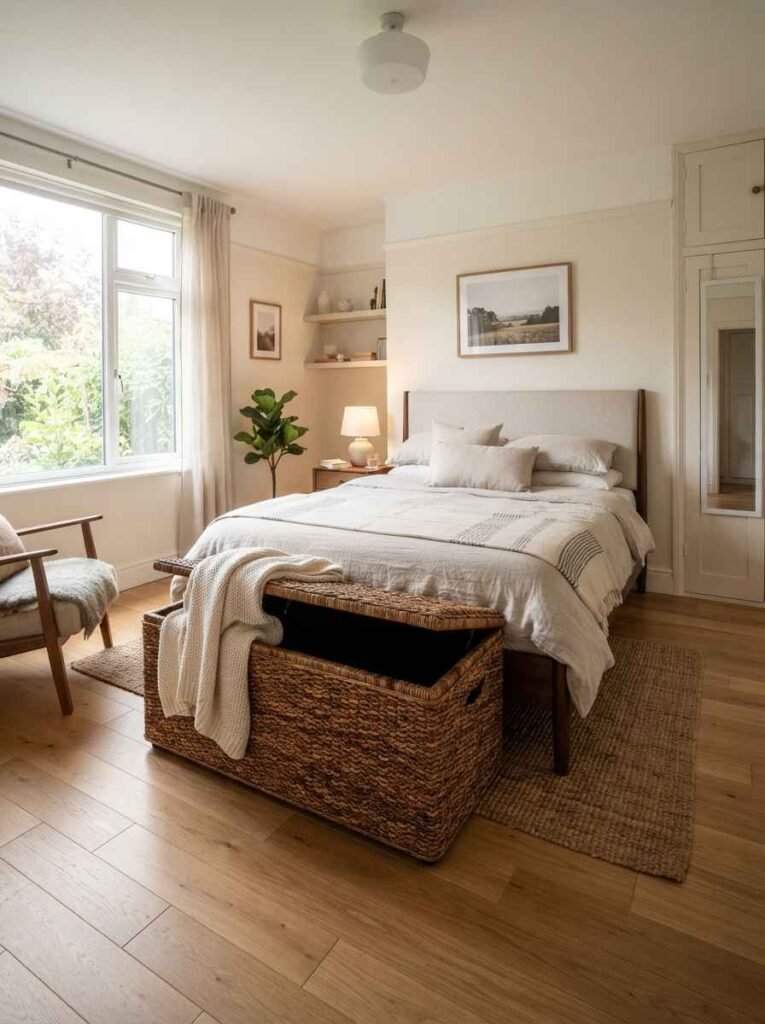
This is insane, but that last one alone solved more of my clutter problems than three separate storage bins combined.
A few honest comparisons
Before you commit to a full aesthetic direction, it helps to know what you’re actually signing up for.
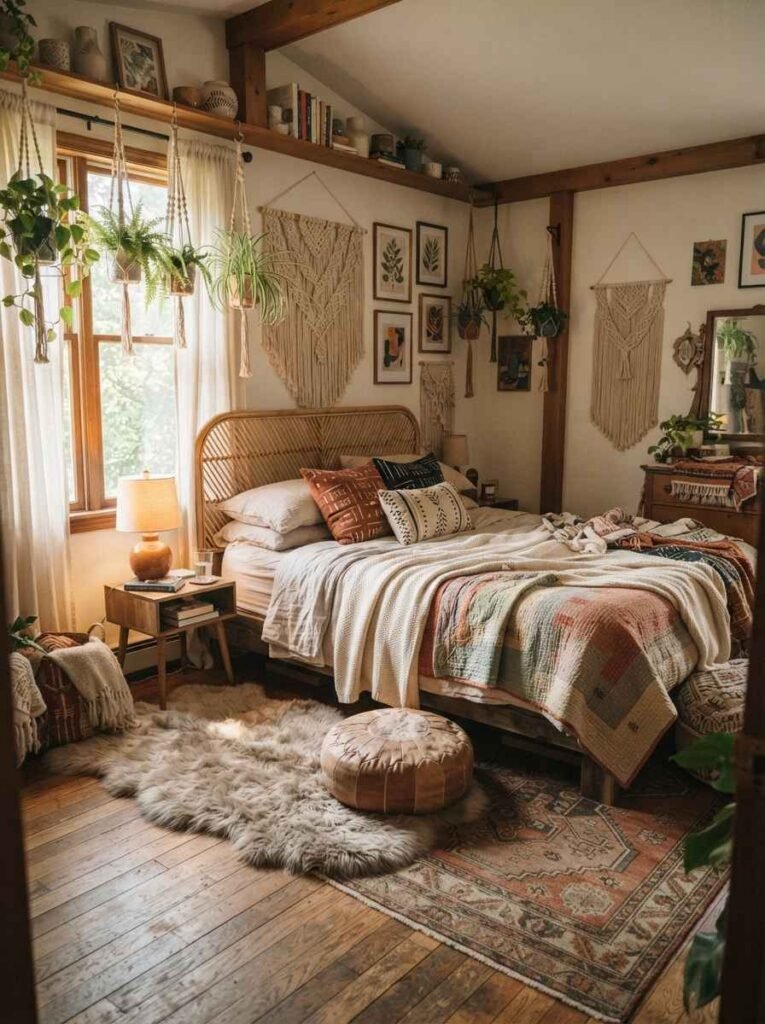
- Boho vs. minimalist: Boho hides more flaws (mismatched furniture disappears into the layers) but takes longer to style well. Minimalist looks effortless in photos and is brutally unforgiving of a messy room in real life.
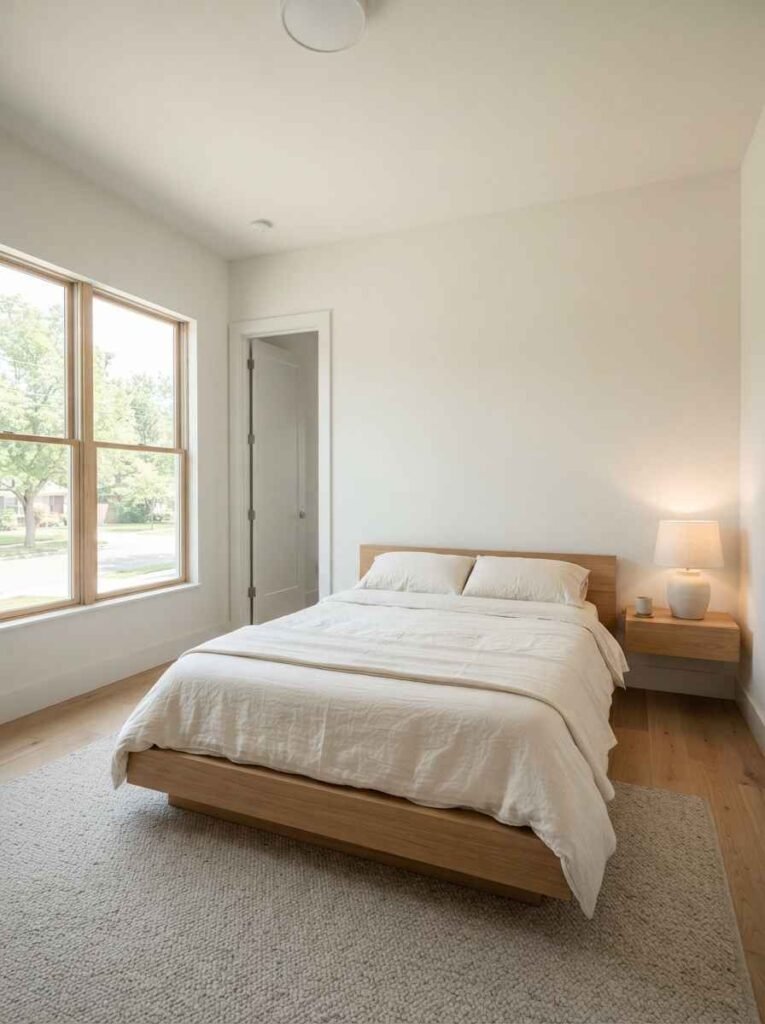
- Warm neutrals vs. bold color: Warm neutrals age better if you’re renting or planning to move soon. Bold color commits you, but it commits you to something memorable.
- DIY headboard vs. store-bought: A DIY upholstered headboard usually looks better for less money, but only if you’re willing to actually finish the project instead of leaving foam scraps in your closet for six months (ask me how I know).
Frequently asked questions
Does redecorating a bedroom aesthetic have to be expensive? Not even close. Bedding, a rug, and some wall decor can transform a room for under 150 dollars if you shop secondhand and DIY a few pieces.
Do I need to paint to get an aesthetic bedroom? No. Textiles, lighting, and wall decor can carry an entire look without touching a paintbrush, which is great news for renters.
What’s the easiest bedroom idea to start with? Layered bedding. It takes an afternoon, costs the least out of everything on this list, and makes the biggest visual difference.
Final thought
A great bedroom doesn’t need every idea on this list. It needs three or four that actually match how you live, plus a little patience while you figure out which ones those are.
Pick your favorites, save this for later, and start with whichever idea you can’t stop thinking about. Which one are you trying first?
