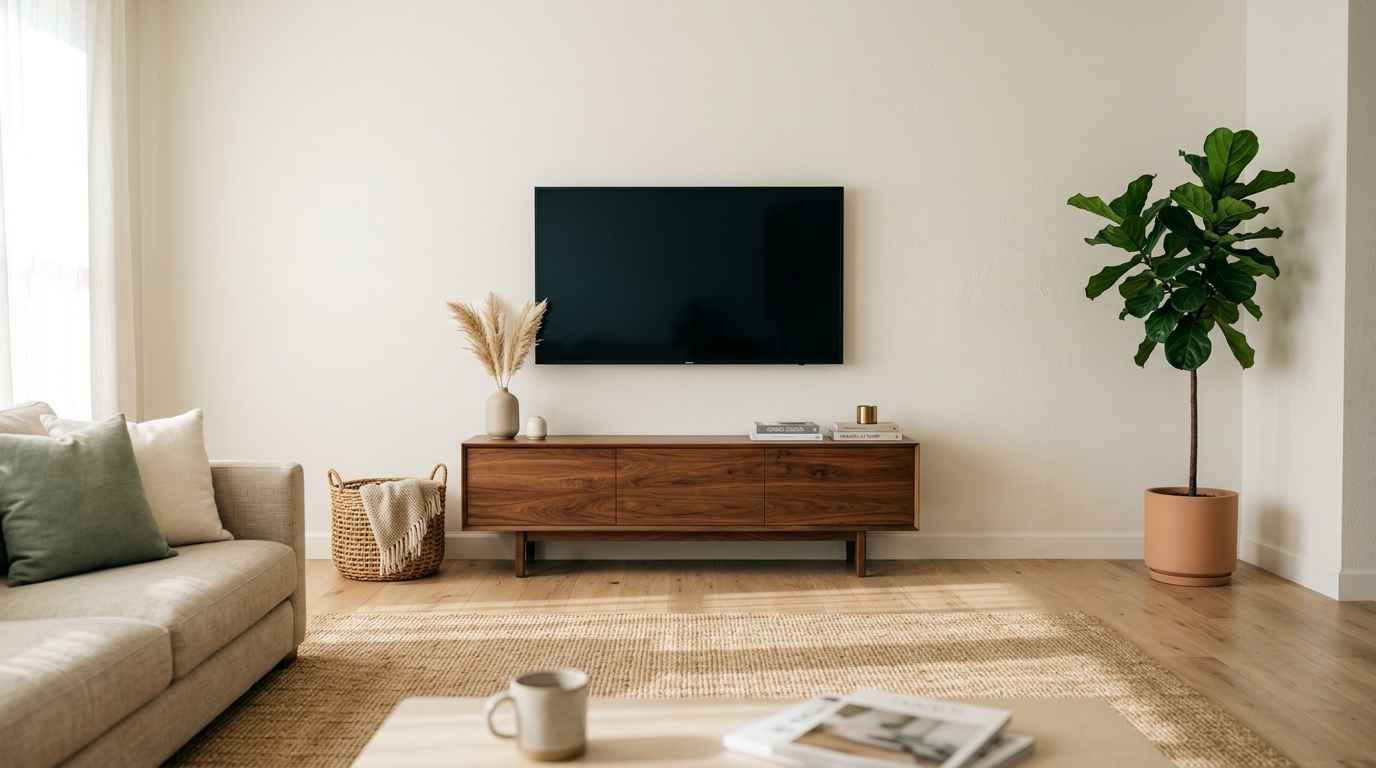
My TV stand used to be a graveyard for remotes, dead batteries, and one sad, half-dead pothos. Then I gutted it, styled it properly, and the whole living room suddenly felt finished.
That’s the thing about a TV stand: it’s the piece everyone stares at without noticing, until it’s done wrong.
If you’re pinning minimalist living room boards right now, you already know the drill. Fewer things, better things, more breathing room.
Below are 28 ideas I’ve actually tried, borrowed, or stolen from friends who have better taste than me. Pin whichever ones fit your space and skip the rest.
This isn’t a rulebook.
Why minimalist TV stand decor actually works
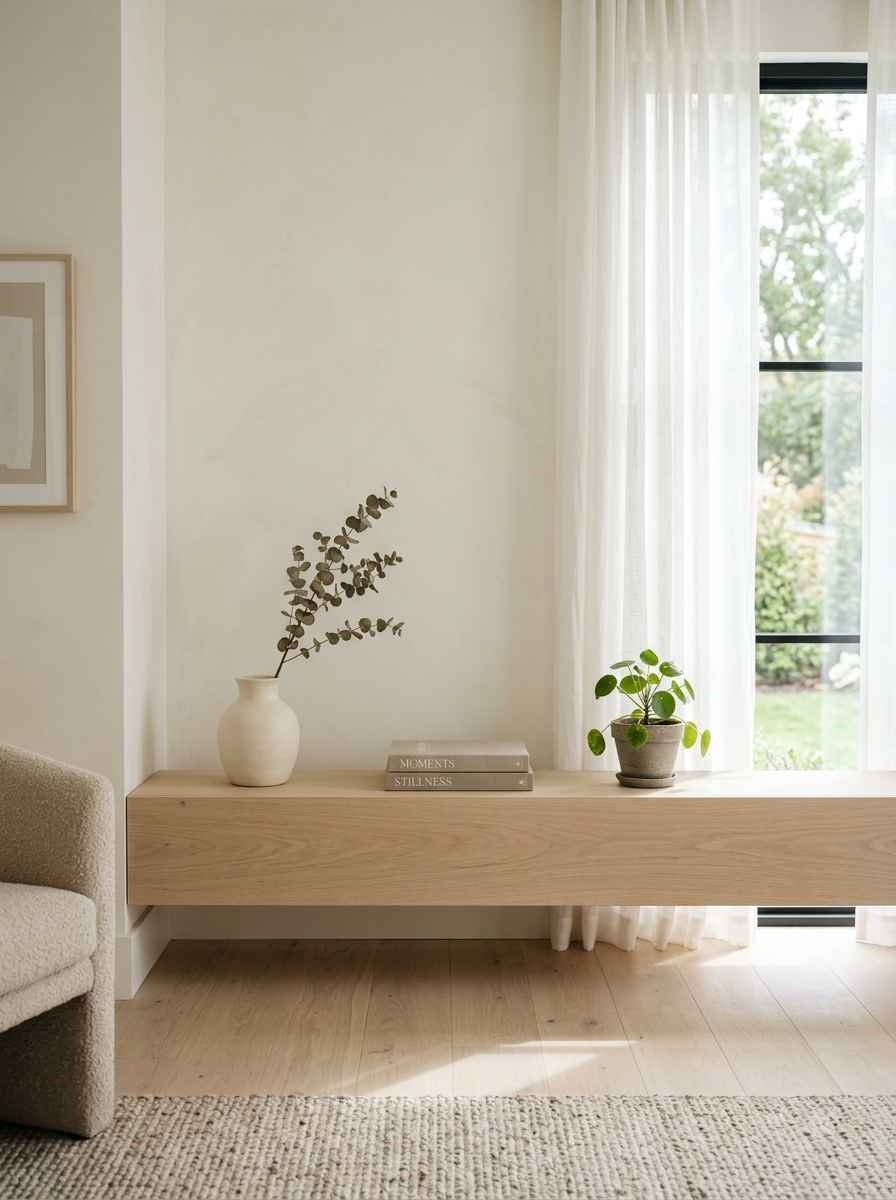
A cluttered console makes an entire room feel busy, even if everything else is spotless. Pull three or four things off the top of your stand and the whole wall calms down.
It’s a strange trick, but it works every time.
Design pros back this up too. A Havenly designer points out that a TV stand isn’t just storage, it’s a focal point that frames the whole seating area. Treat it like one.
Minimalism doesn’t mean bare walls and a single candle, either. It means every object earns its spot.
A plant that’s actually alive. A tray that actually catches your keys. A stack of books you’d actually reread.
Quick reference: matching decor style to your space
| Style | Best for | Skip if you have | Effort level |
|---|---|---|---|
| Floating shelf, no console | Small apartments, rentals | Heavy soundbars or gaming consoles | Low |
| Low wood console, open legs | Mid-size living rooms | Pets who chew cords | Medium |
| Built-in with closed cabinets | Families, cable clutter | A tight budget | High |
| Woven baskets on open shelving | Anyone who hates drawers | Kids who dump toys everywhere | Low |
Floating, mounting, and letting go of bulk
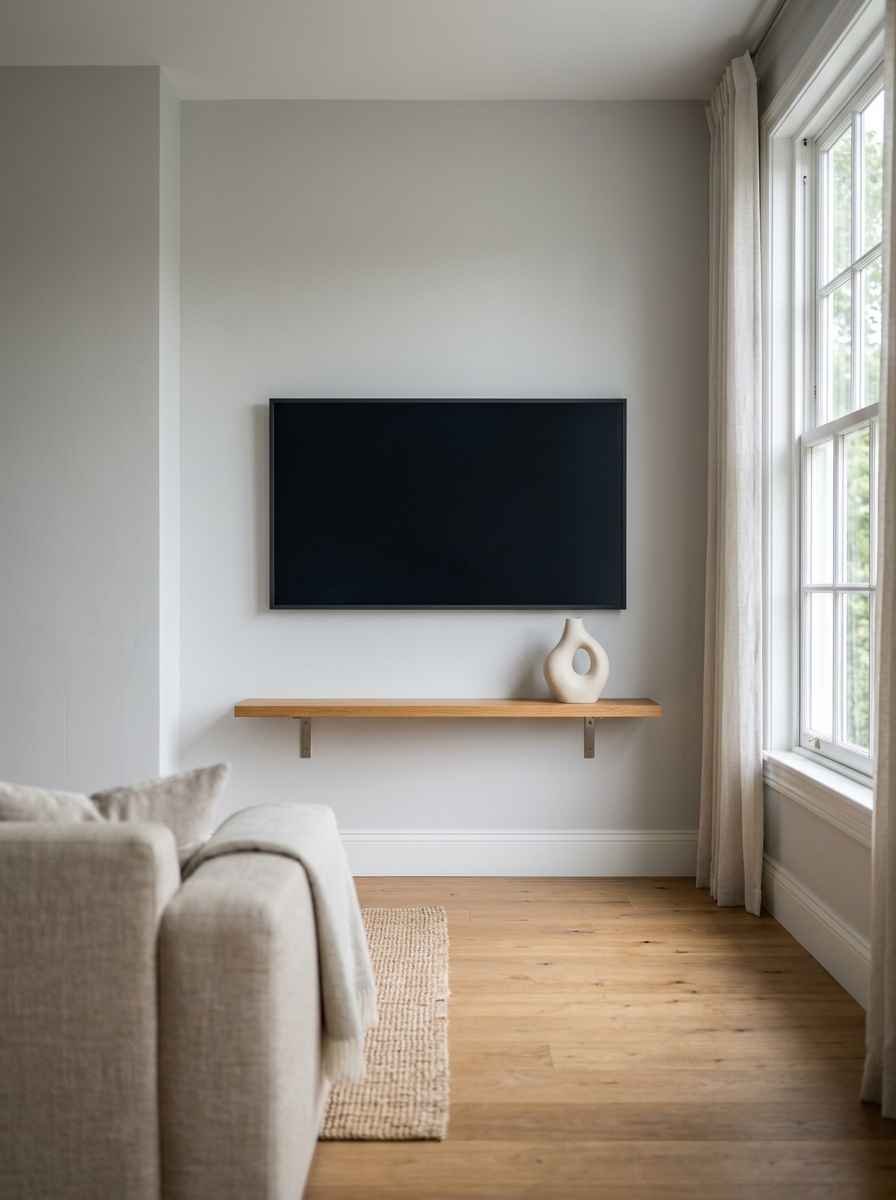
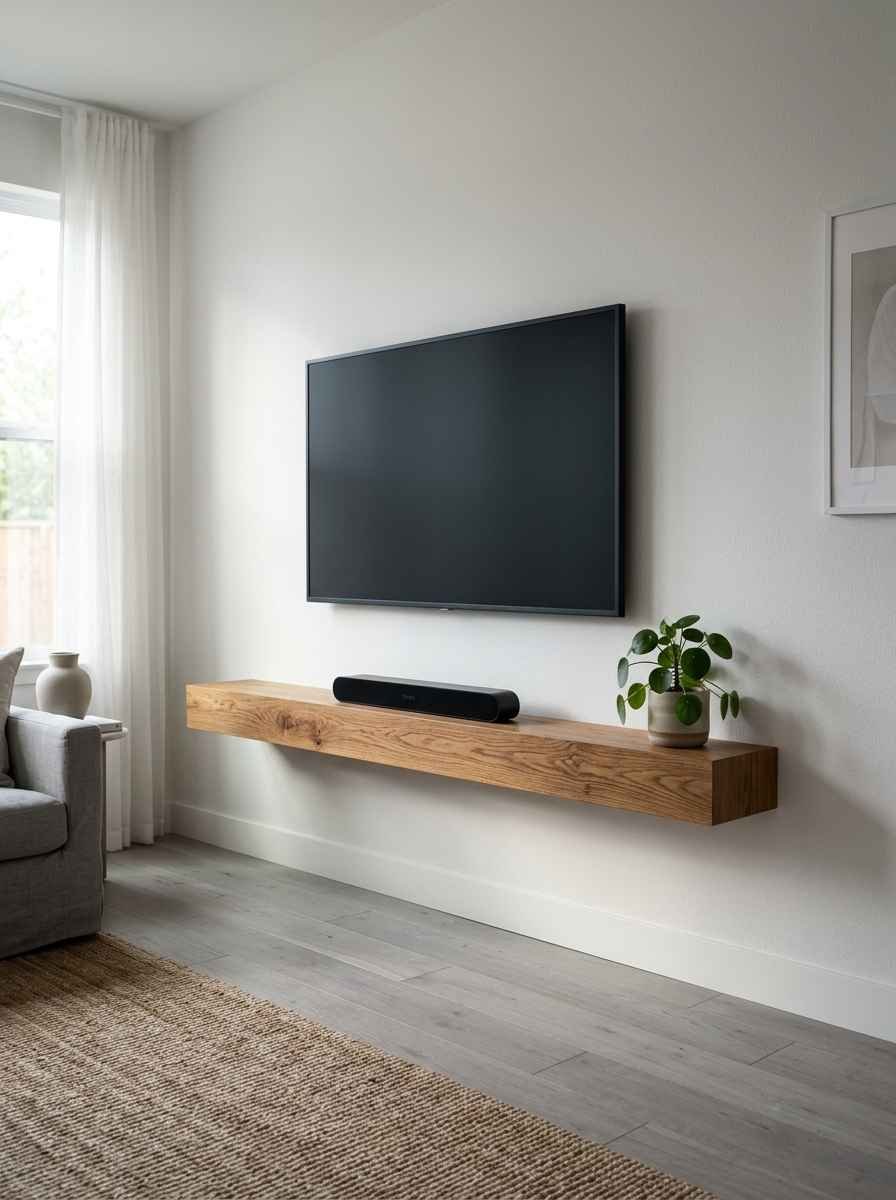
Mount the TV and skip the stand entirely. A wall-mounted TV with a slim floating shelf underneath reads as instantly modern.
It also frees up floor space, which matters a lot in smaller rooms.
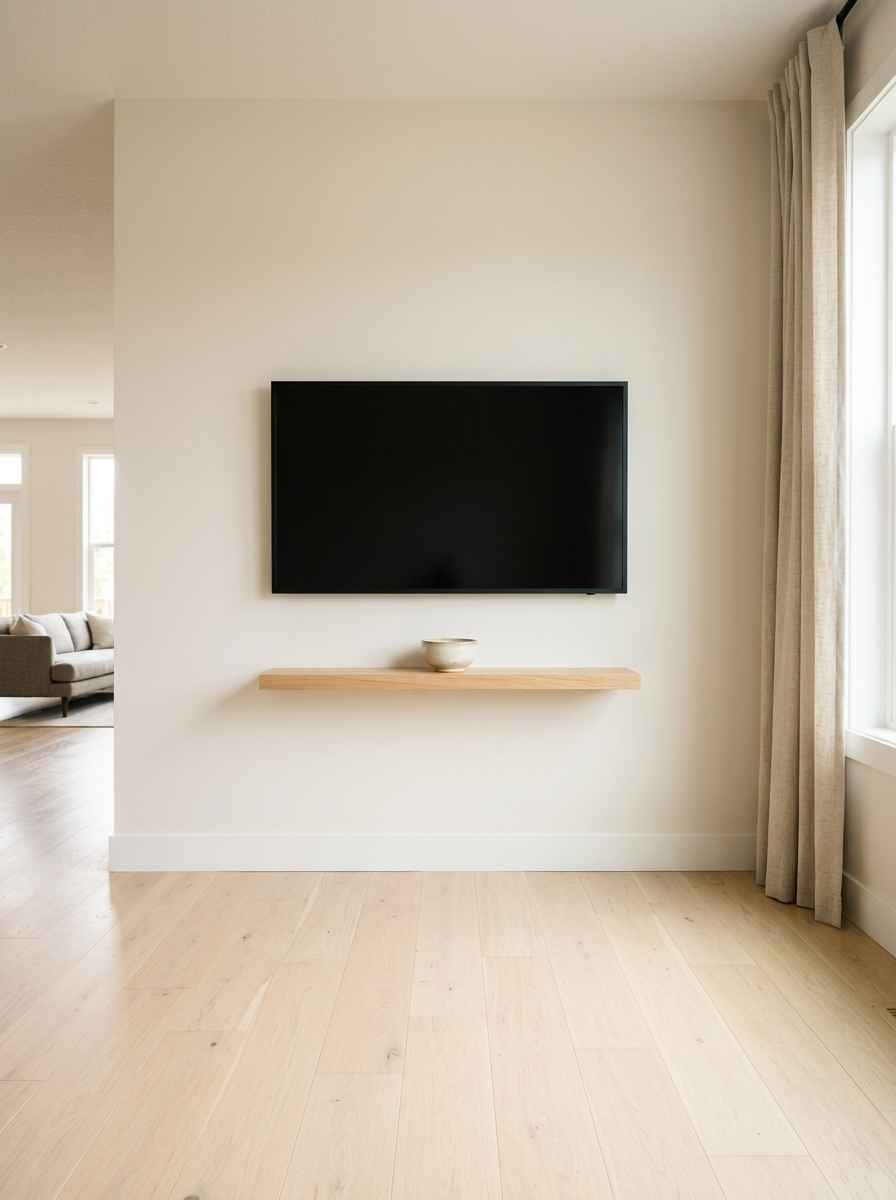
Use a single long floating shelf instead of a console. Twelve inches deep is usually enough for a soundbar, one plant, and nothing else.
IMO this is the easiest way to fake a custom built-in without the price tag.
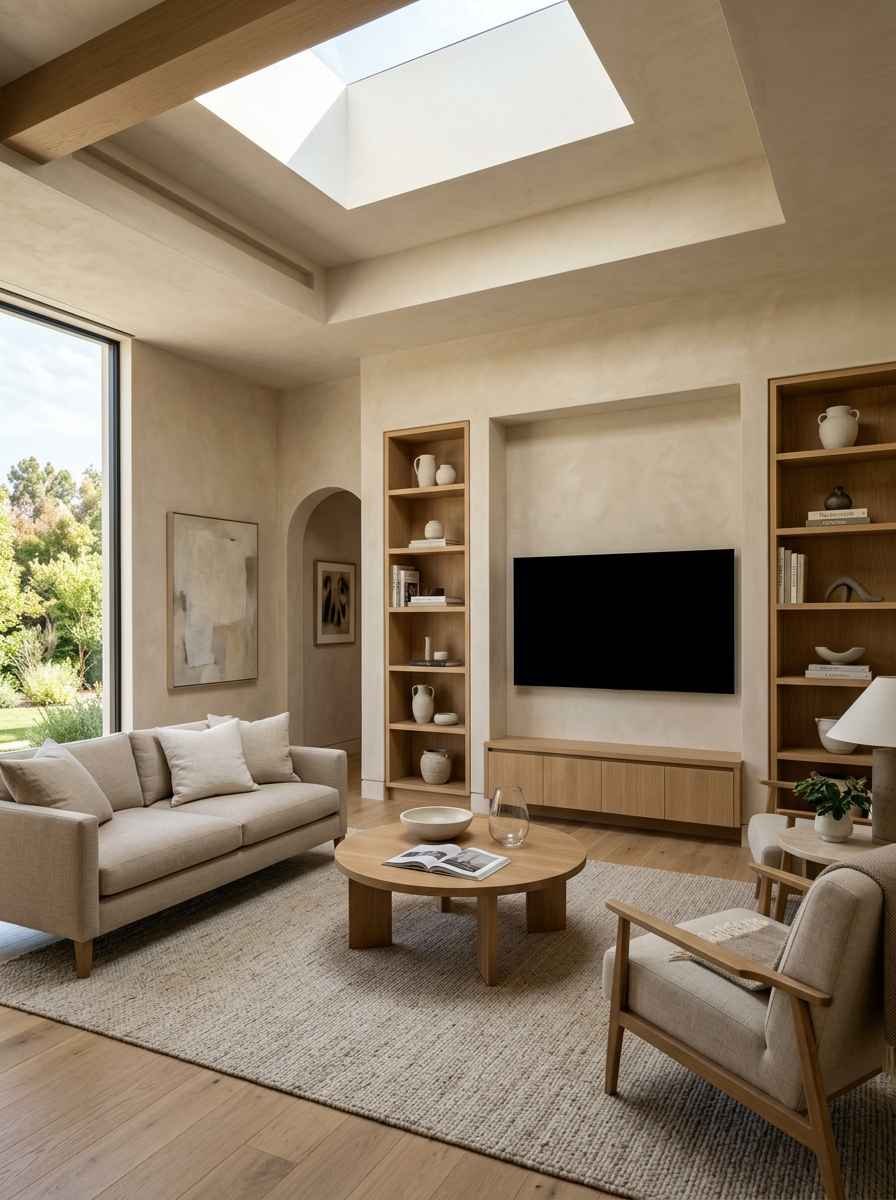
Recess the TV into a shallow wall niche. Not cheap, not fast, but wow, the payoff is worth it if you’re doing a full renovation.
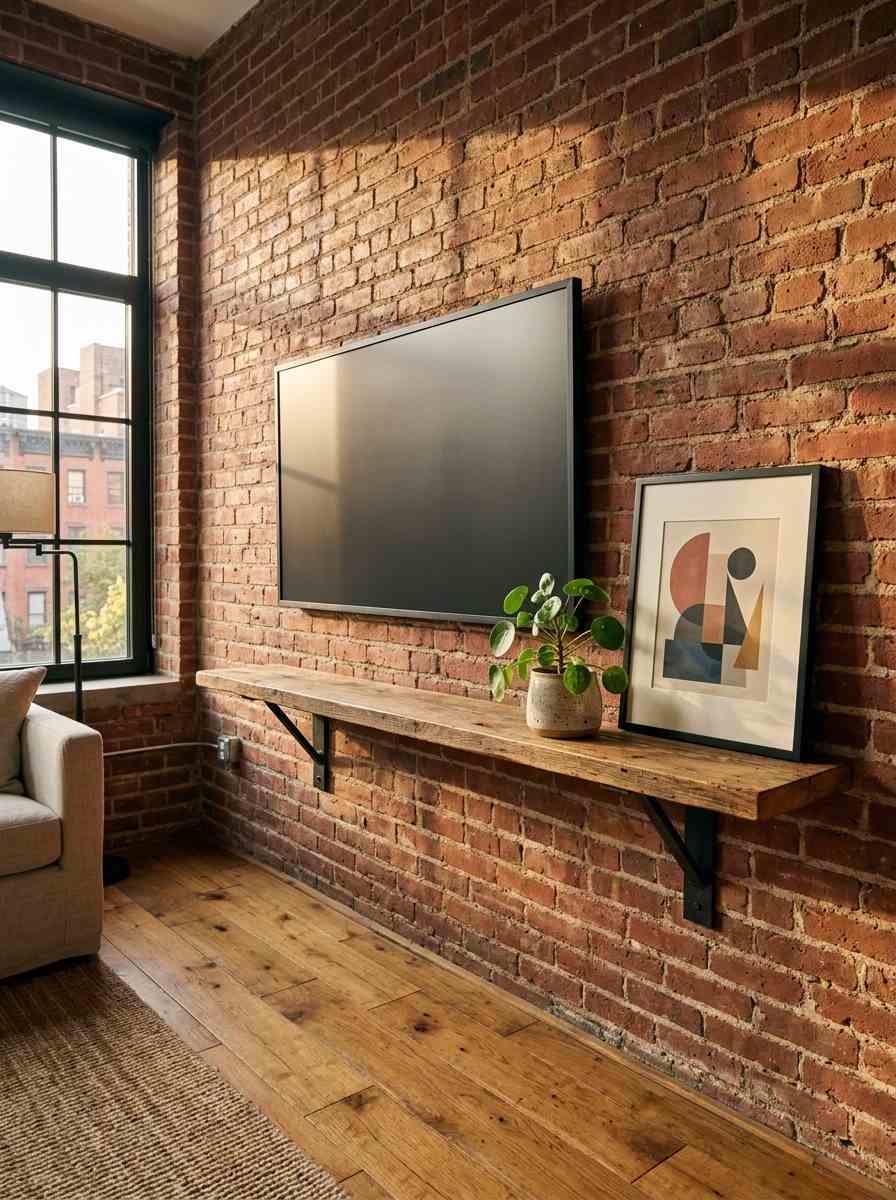
Go with brackets instead of a full shelf. Two or three industrial brackets holding a thin wood plank look intentional, almost gallery-like.
Let the cables disappear. A cord cover or raceway painted to match your wall color does more for the “clean” look than any decor item ever will. Cluttered cords ruin an otherwise great setup, every single time.
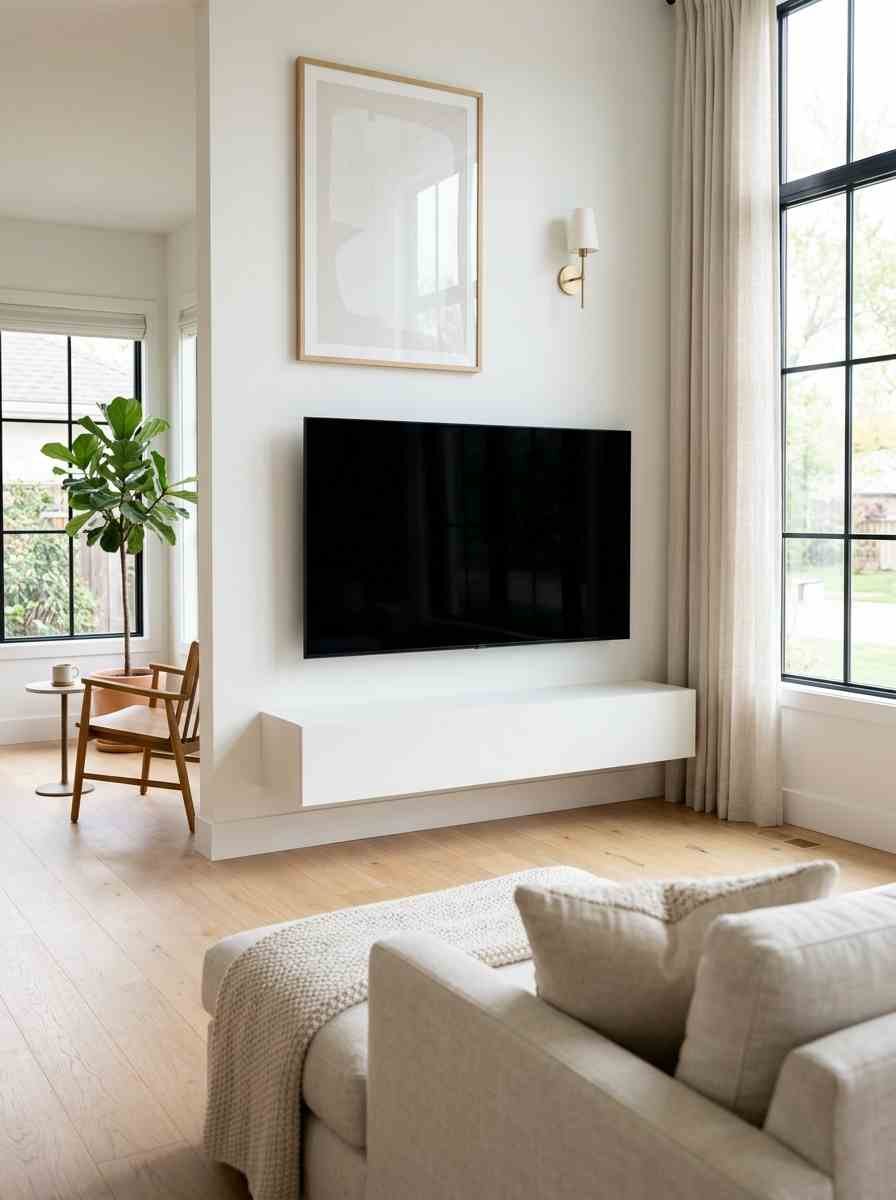
Storage that hides the mess
Woven baskets under an open console. They soften a lot of hard lines (wood, metal, glass) and hide remotes, chargers, and the odd game controller.
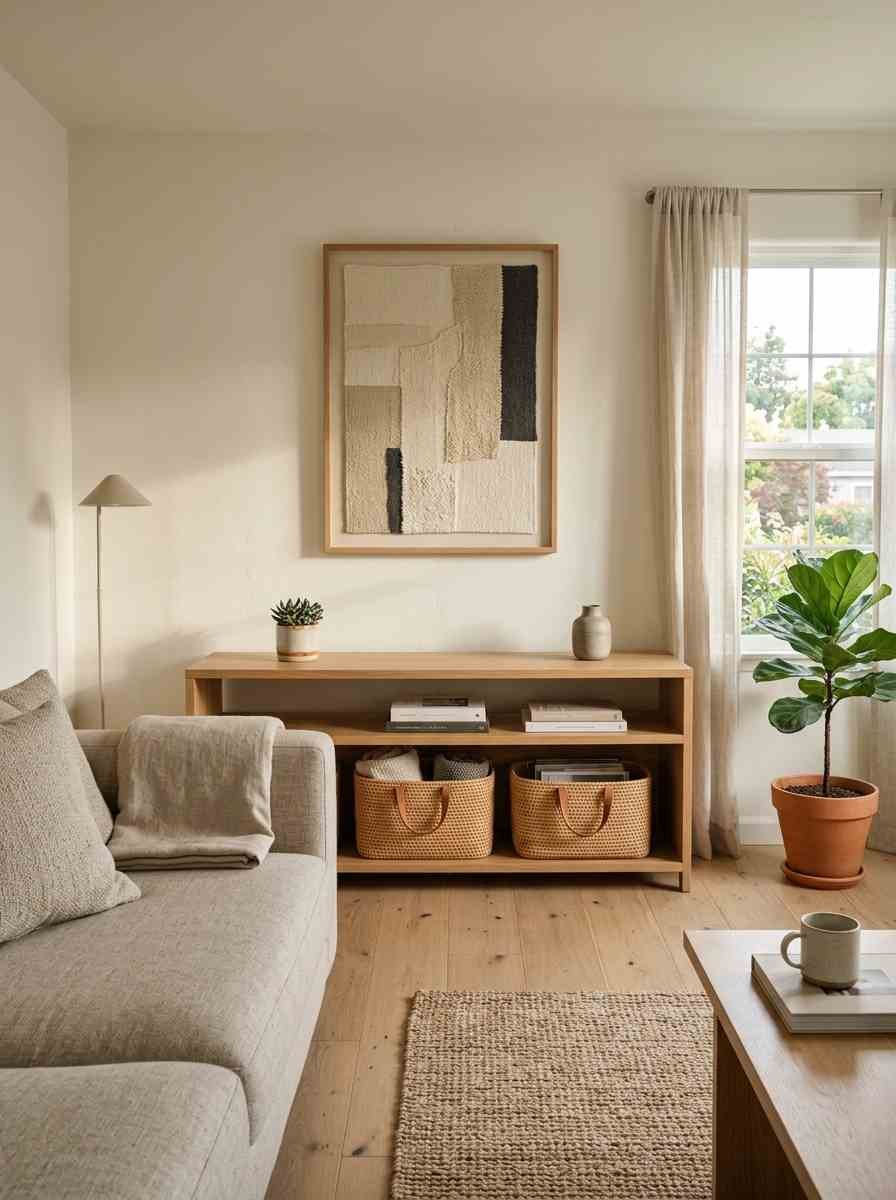
A console with two closed doors and zero open shelving. If you have kids, this is honestly the only option that keeps your minimalist dream intact past week one.
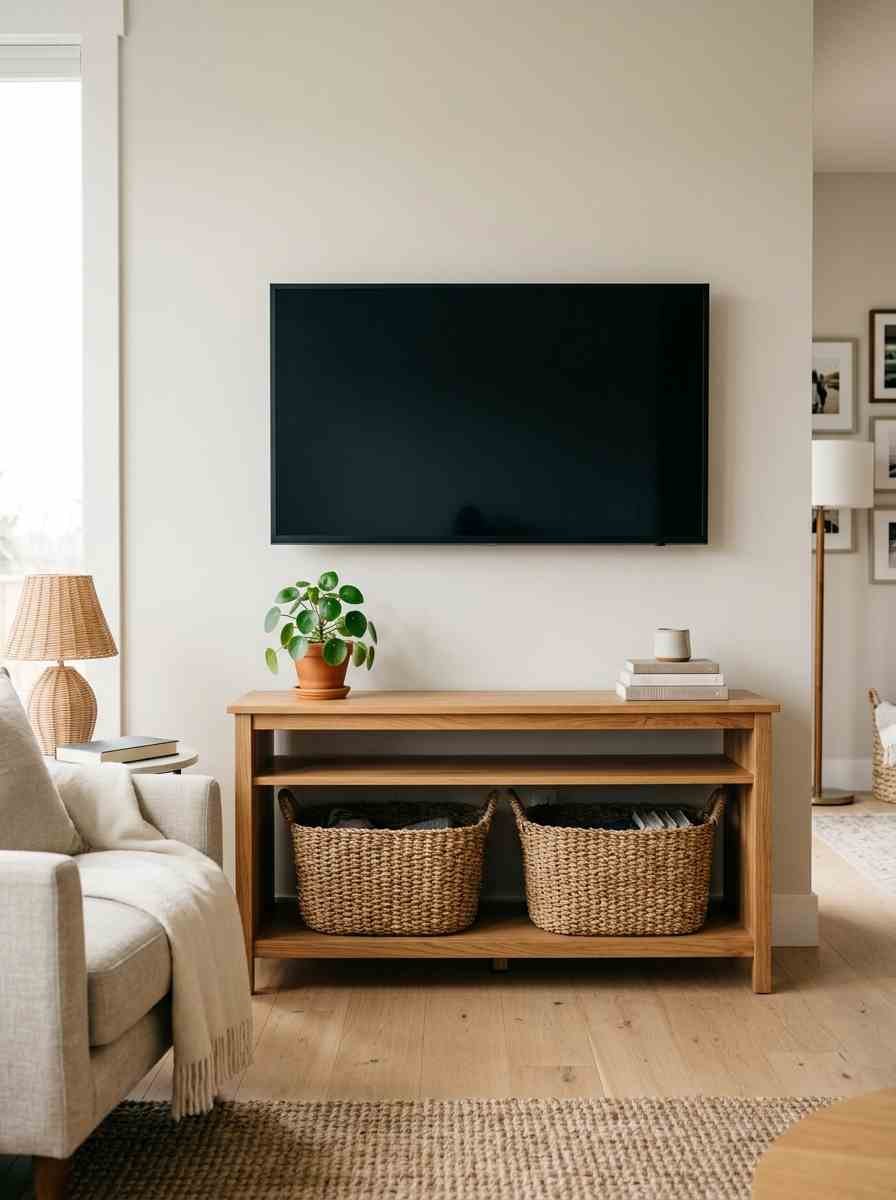
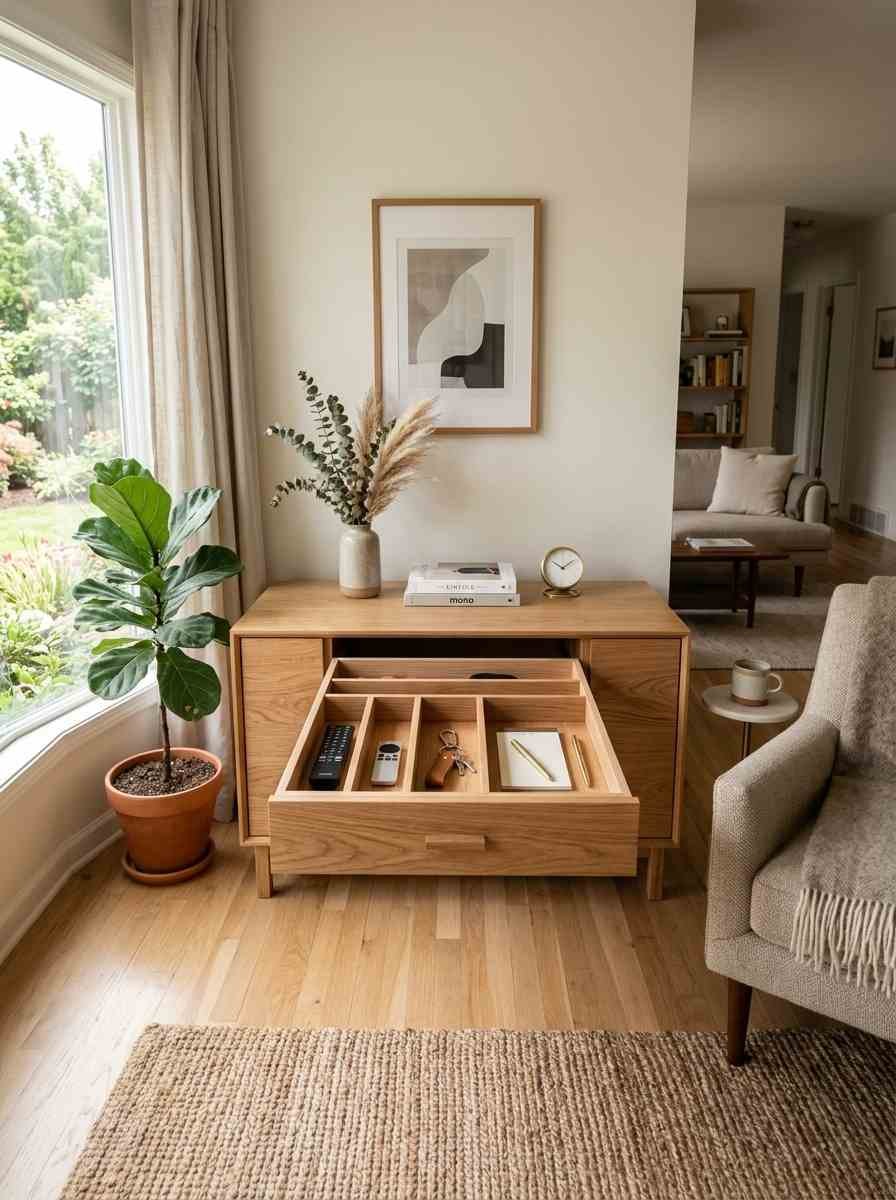
Drawer dividers inside the stand. Sounds boring, changes everything. You stop losing the HDMI cable behind the couch cushions.
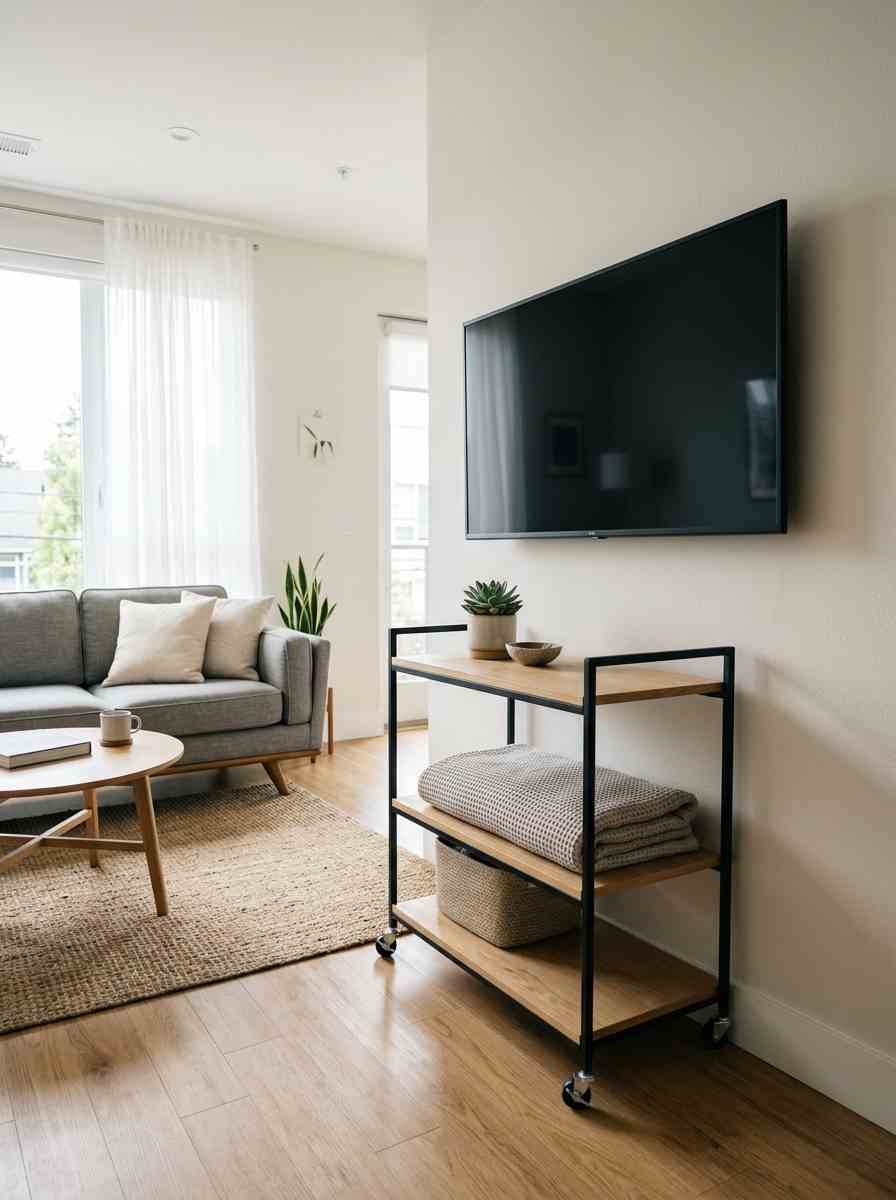
A rolling media cart tucked to the side. Pull it out during movie night, tuck it away after. Great for renters who can’t mount anything to the wall.
One catch-all tray on top, nothing else loose. Keys, a lighter, a spare remote battery. Everything has a home, nothing looks like clutter.
Wood, stone, and other honest materials
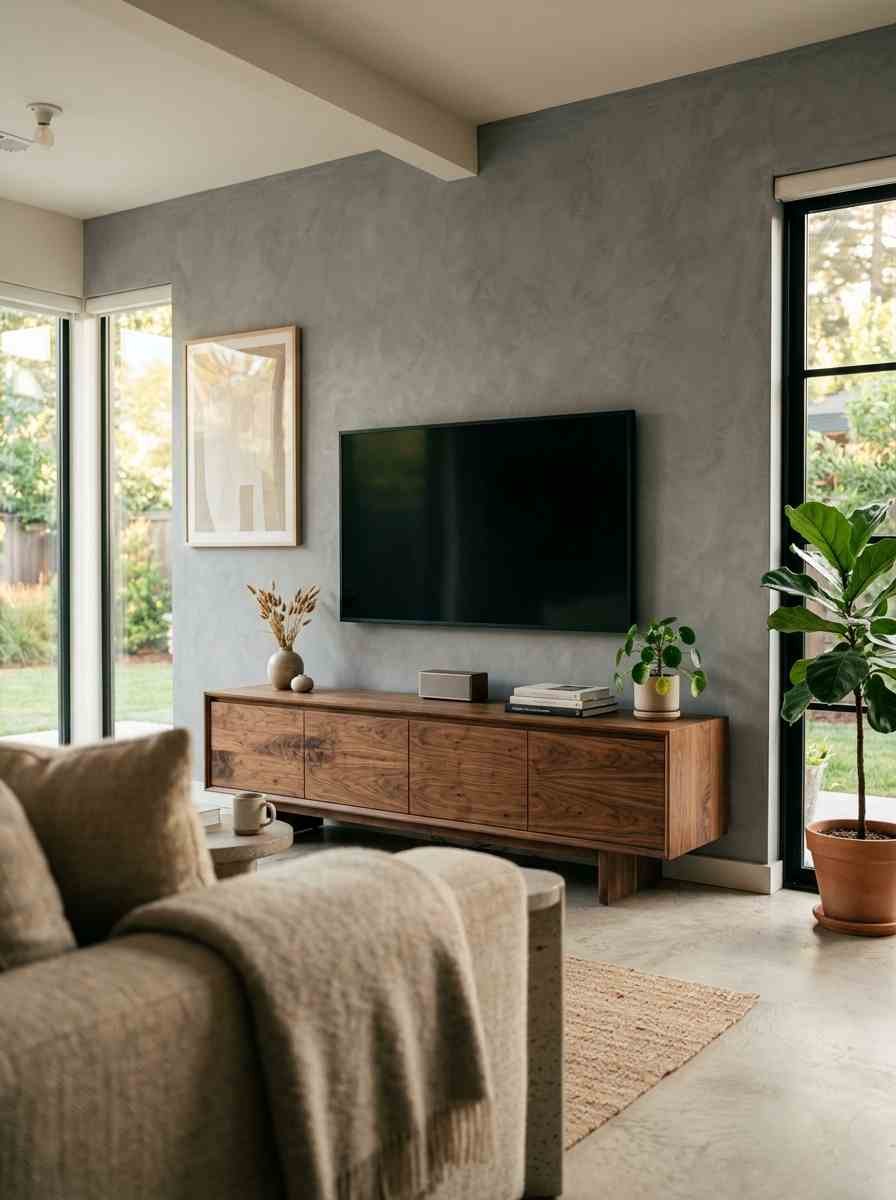
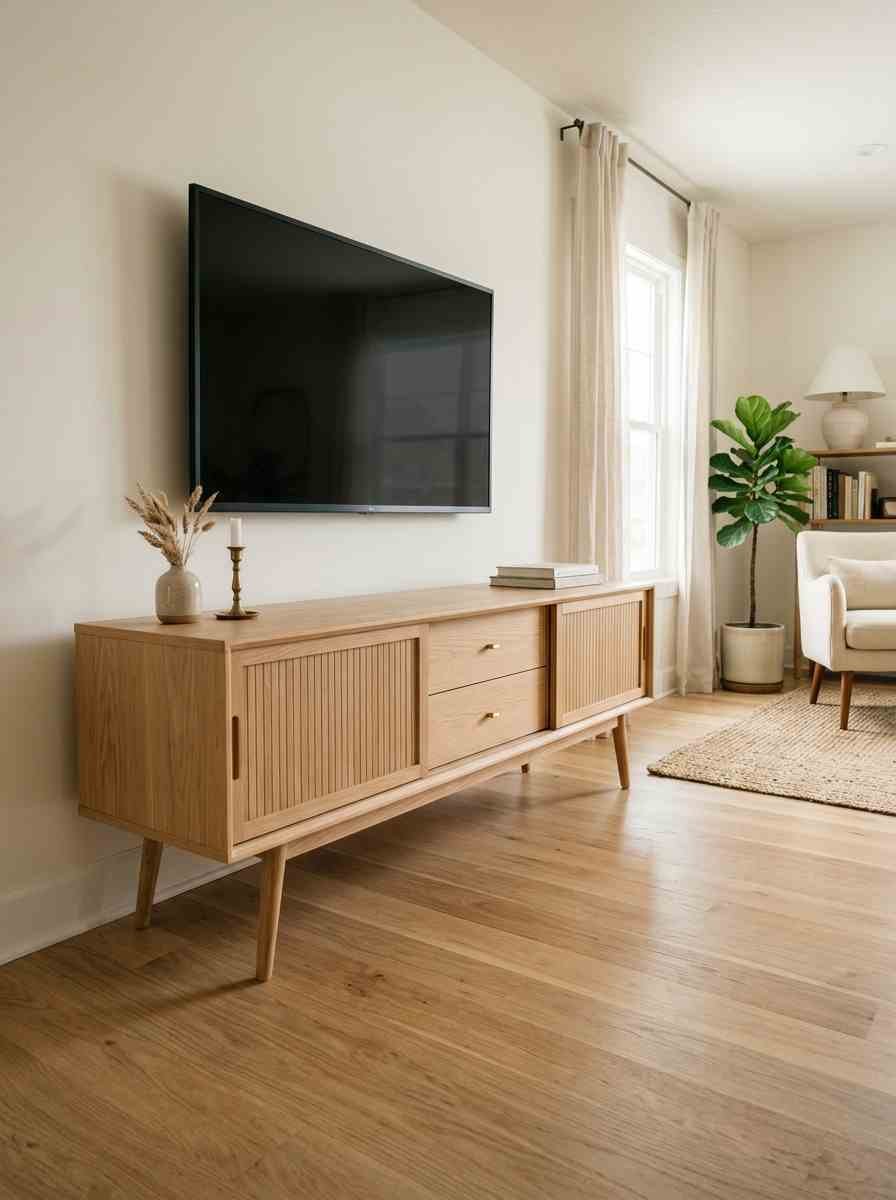
Warm oak or walnut console against a cool gray wall. The contrast does most of the styling work for you.
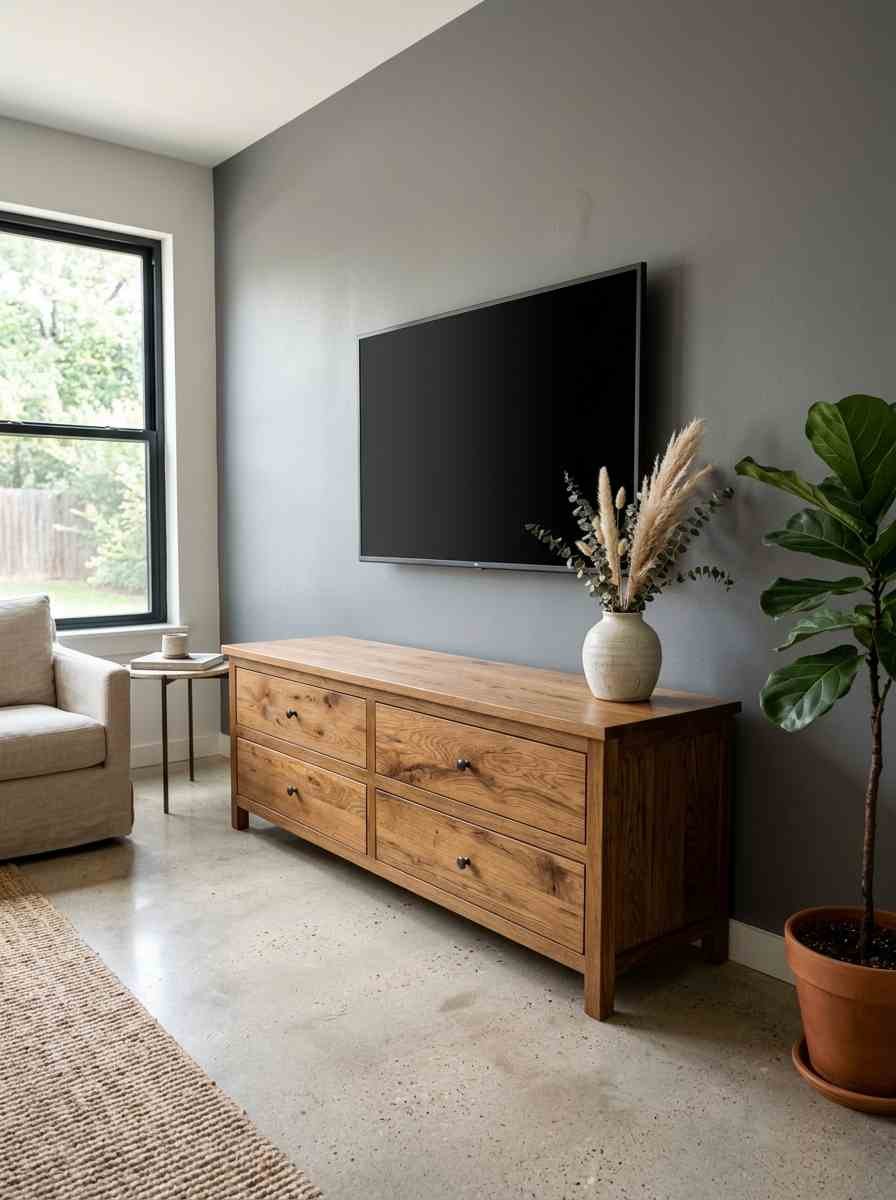
A stone or concrete plinth as the base. Heavier visually, but it grounds a room with tall ceilings in a way that feels expensive.
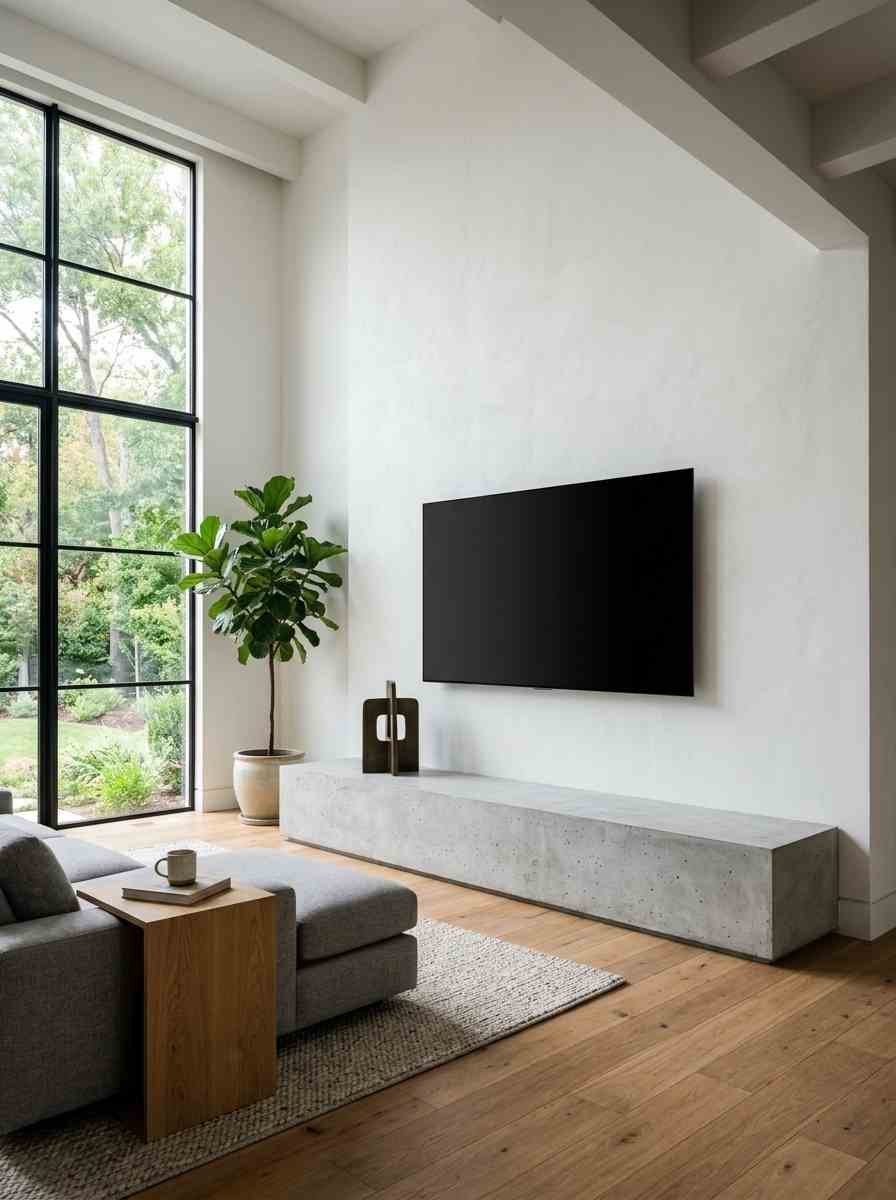
Rattan or cane-front cabinet doors. Adds texture without adding pattern, which keeps it minimalist instead of busy.
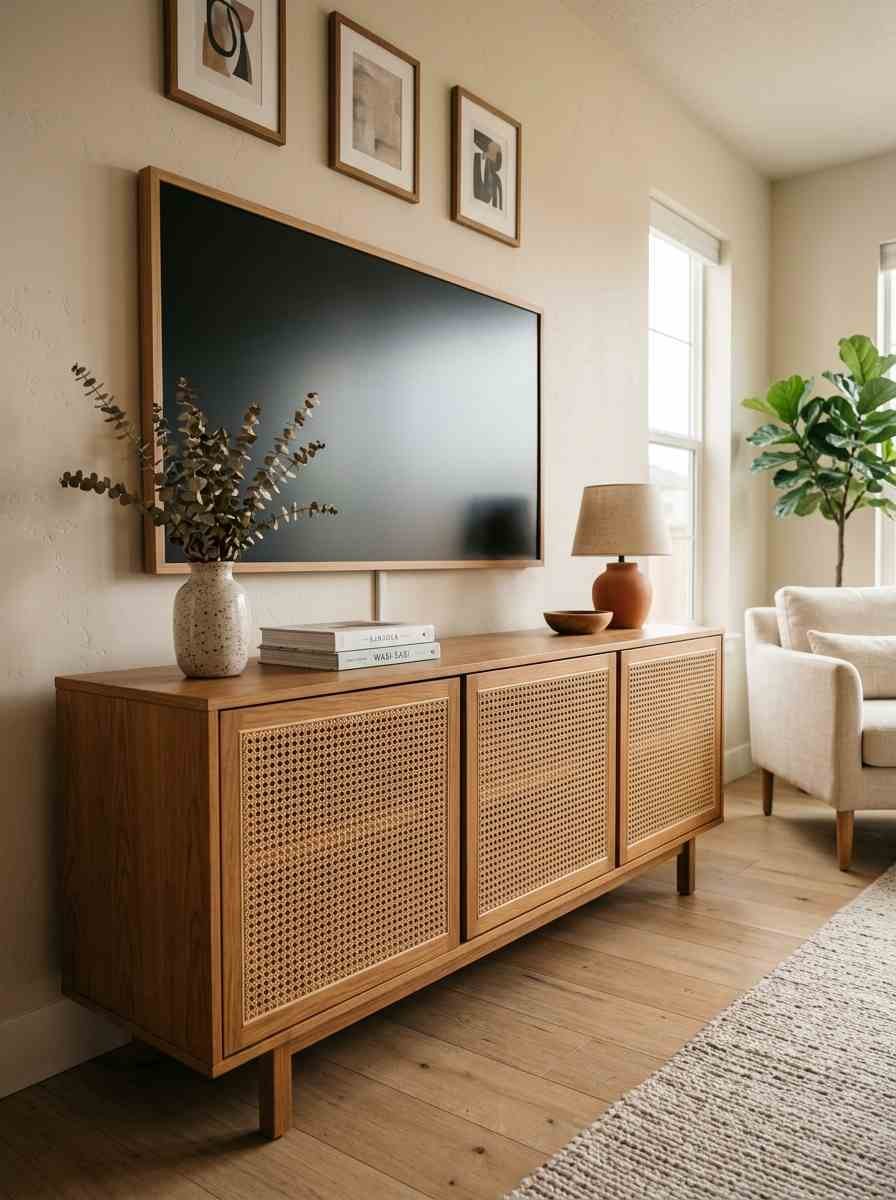
Exposed wood legs, no skirting. Letting light hit the floor underneath a console makes even a small room feel less cramped. I learned this one the hard way after years of boxy, floor-hugging furniture.
A little color goes a long way
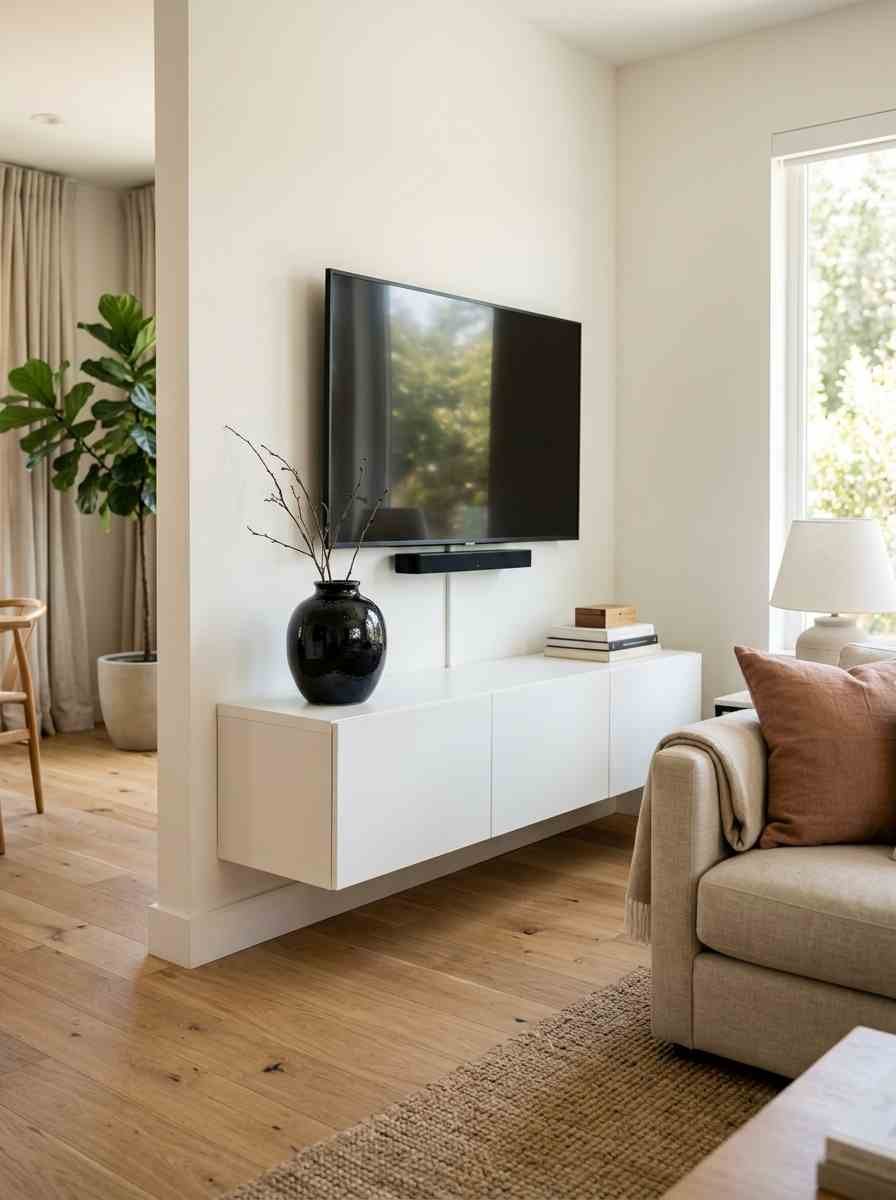
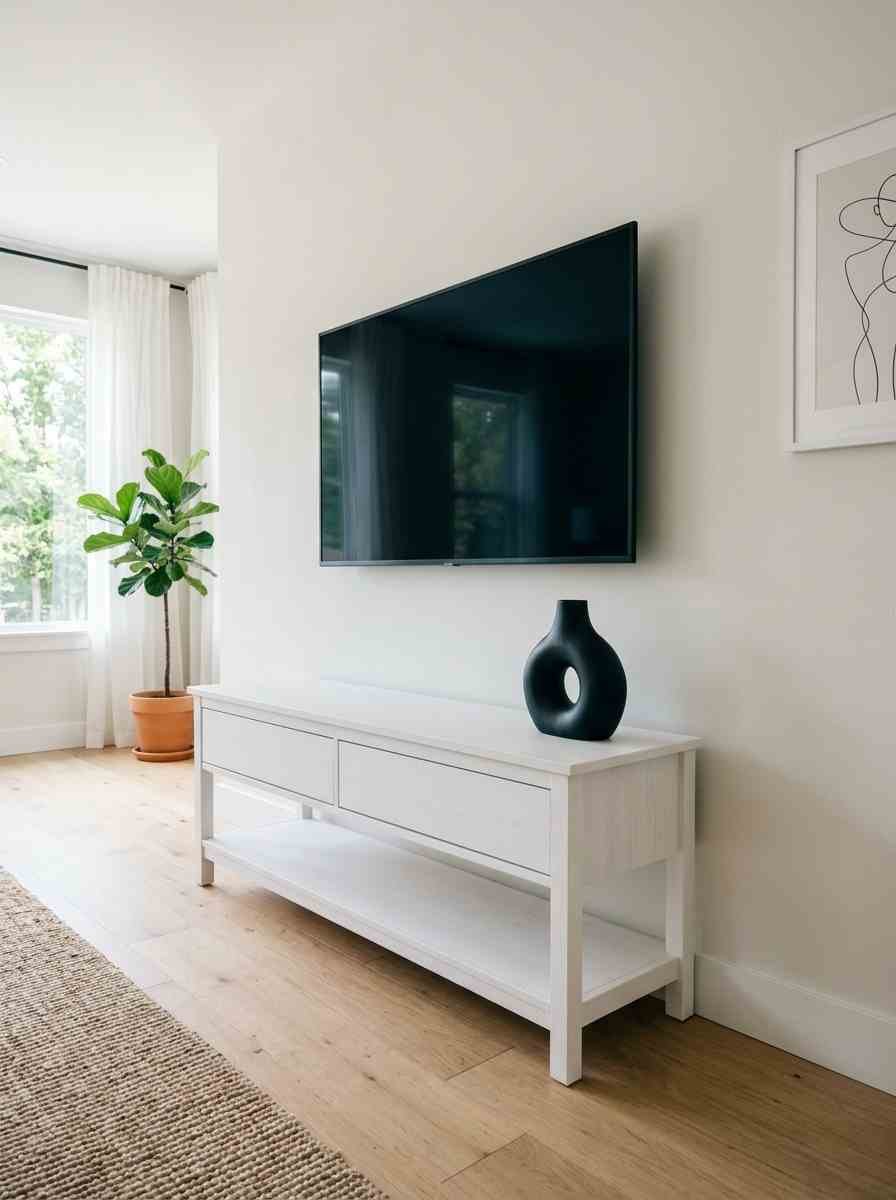
All white console, single black object on top. One dark vase or sculpture against a white piece creates instant contrast without breaking the palette.
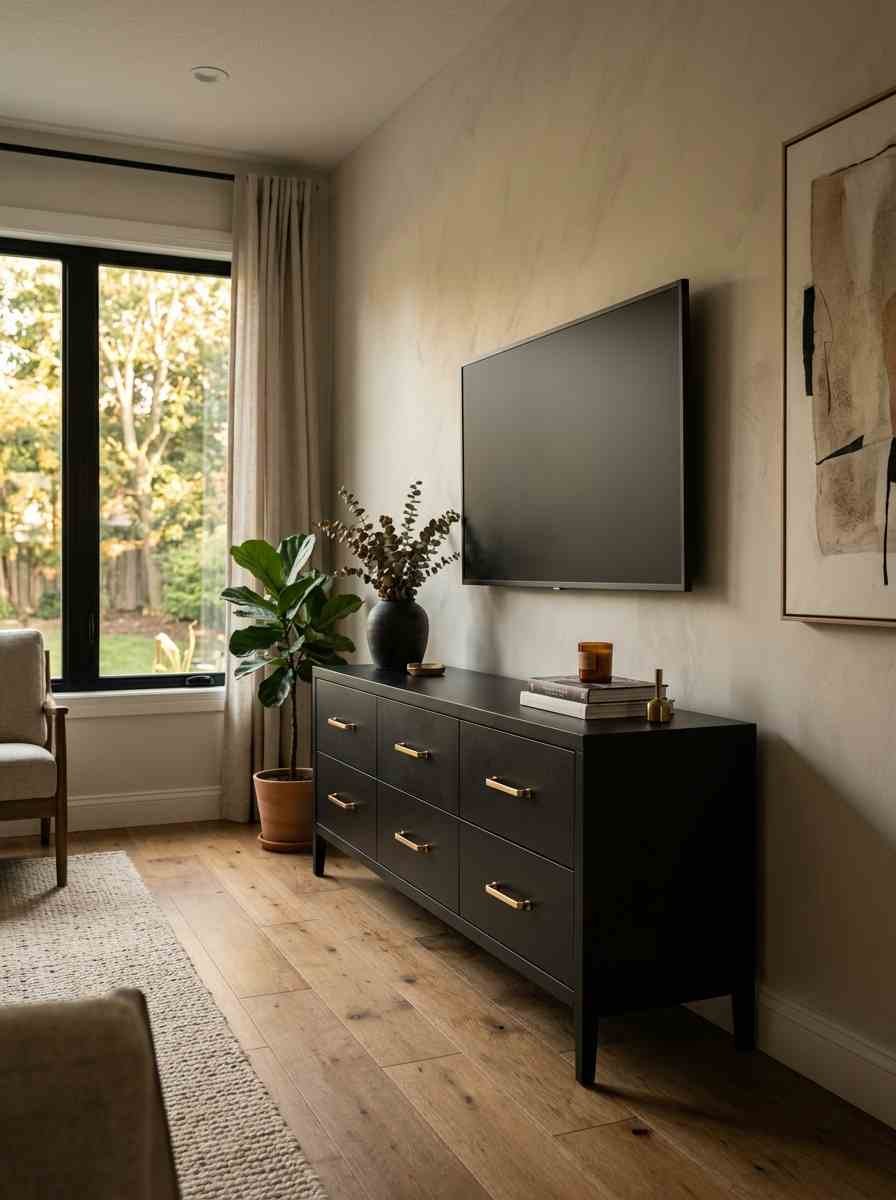
Matte black stand with brass hardware. Feels moody without feeling heavy, especially in a room with a lot of natural light.
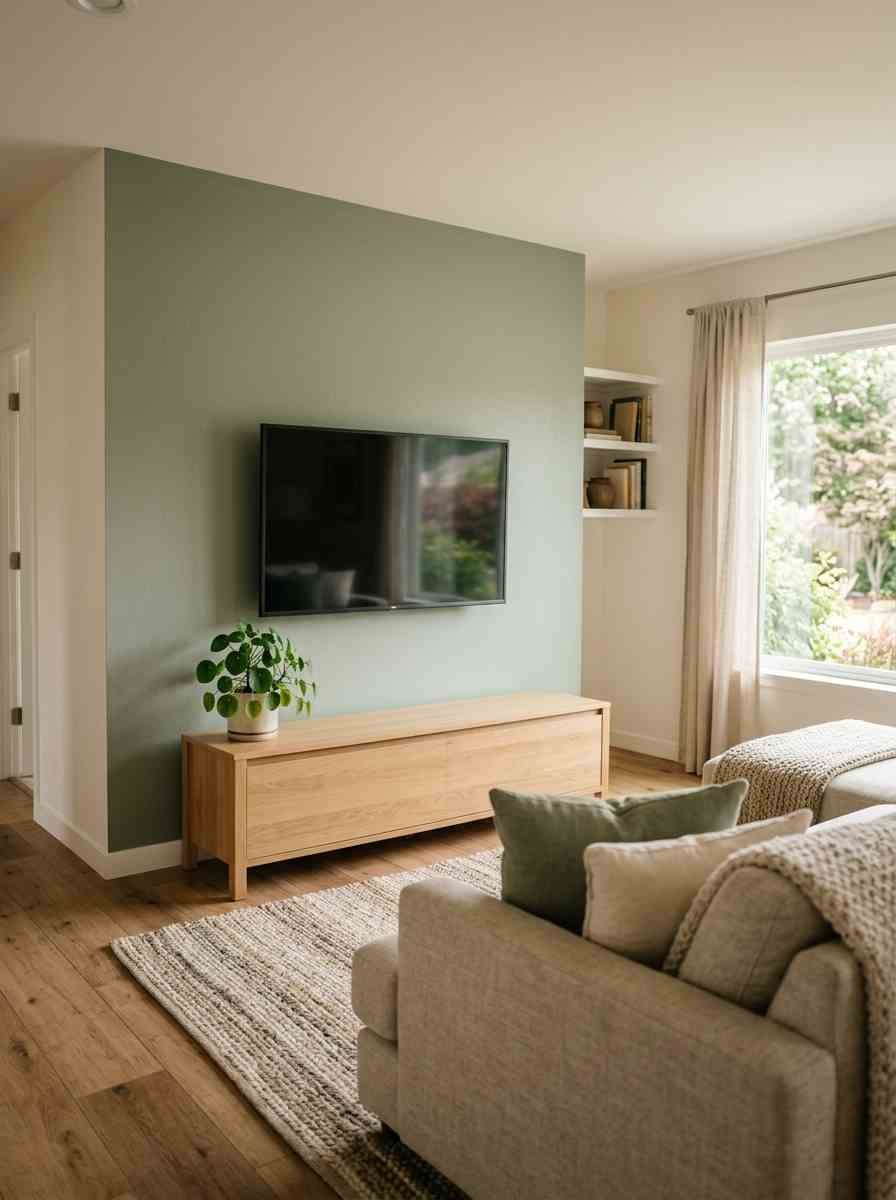
A muted sage or terracotta accent wall behind the TV. According to Extra Space Storage’s design guide, a soft accent wall keeps a neutral room from feeling cold, and I’d agree, my old all-white setup felt like a waiting room until I added one.
Monochrome styling, one texture break. All beige, but one linen basket and one ceramic vase so it doesn’t look flat.
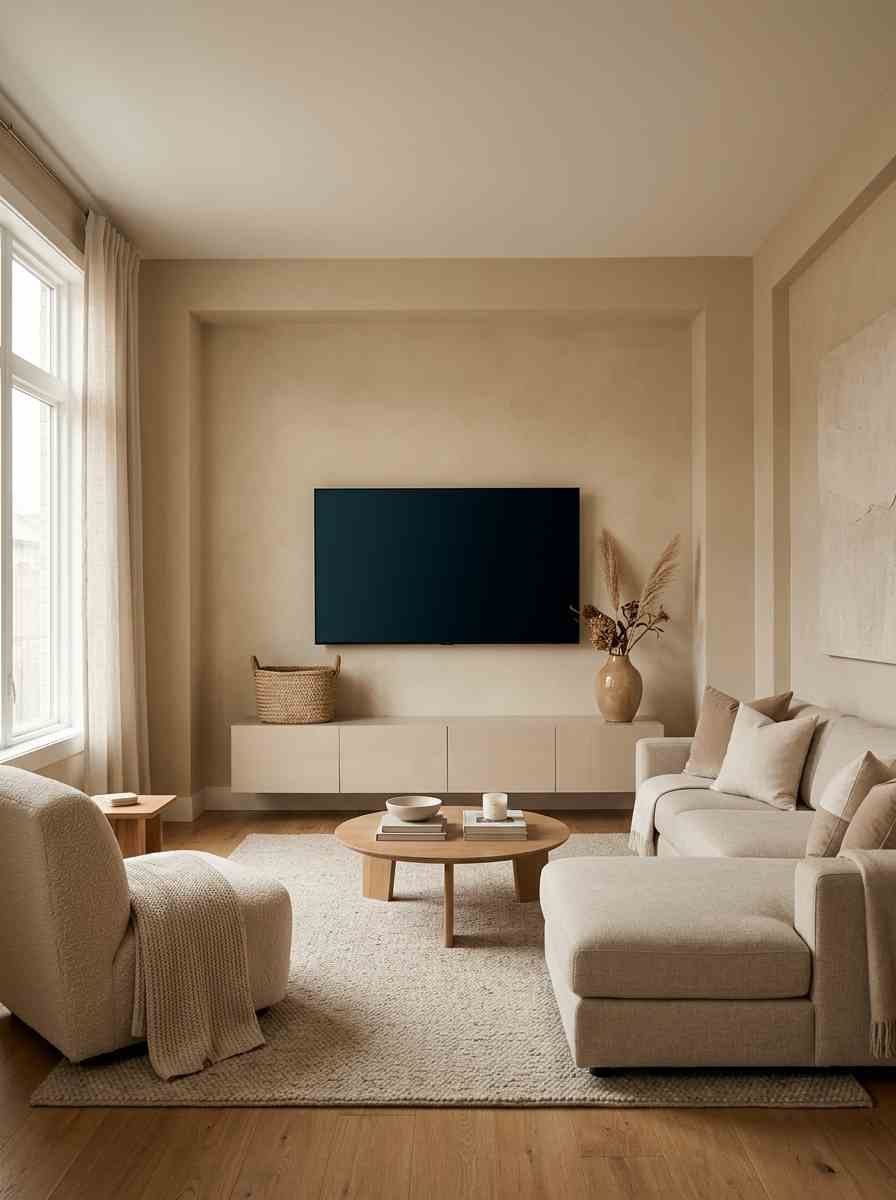
(Random thought, but has anyone else noticed how many “minimalist” Pinterest boards are secretly just beige moodboards? There’s nothing wrong with beige. I just think we should call it what it is.)
Small objects, big impact
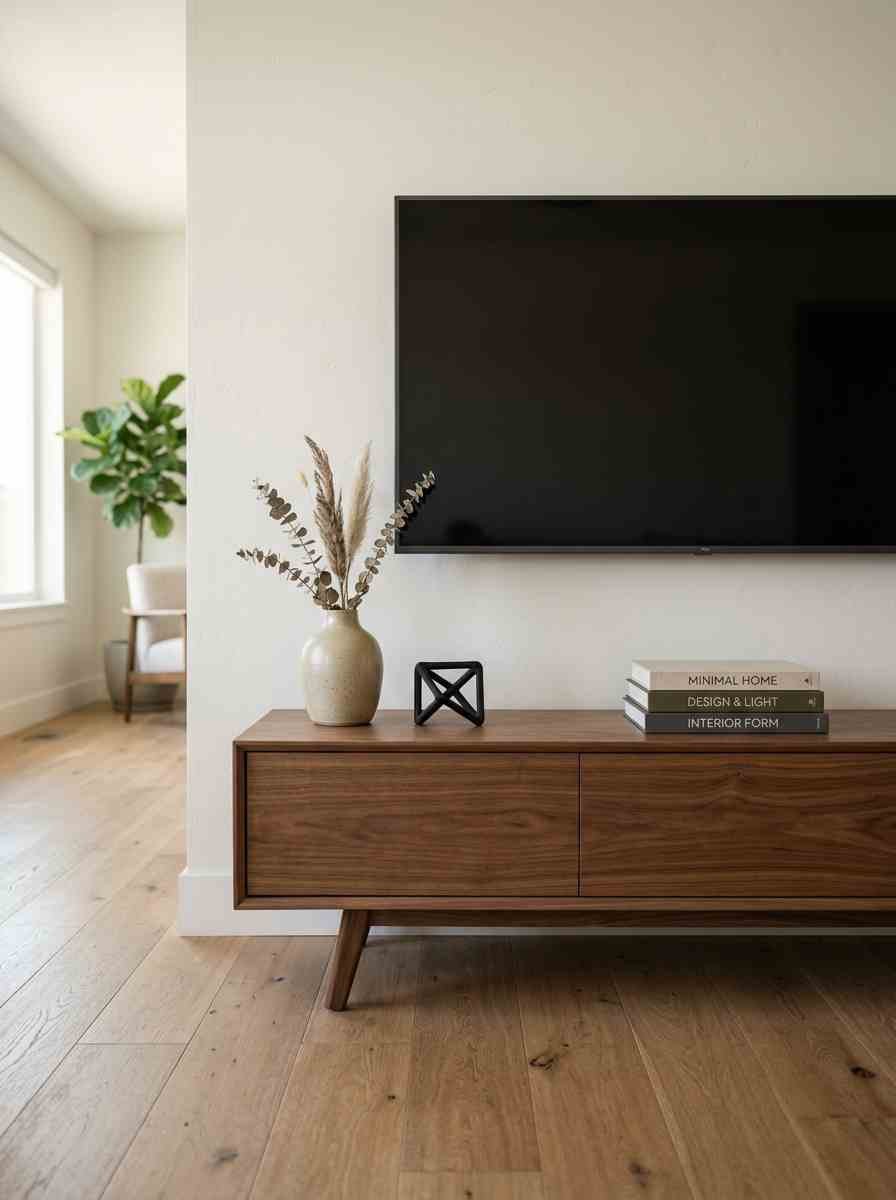
Group decor in odd numbers. Three items, not four. A Wayfair styling guide makes a similar point about balance, and honestly, odd groupings just look less staged.
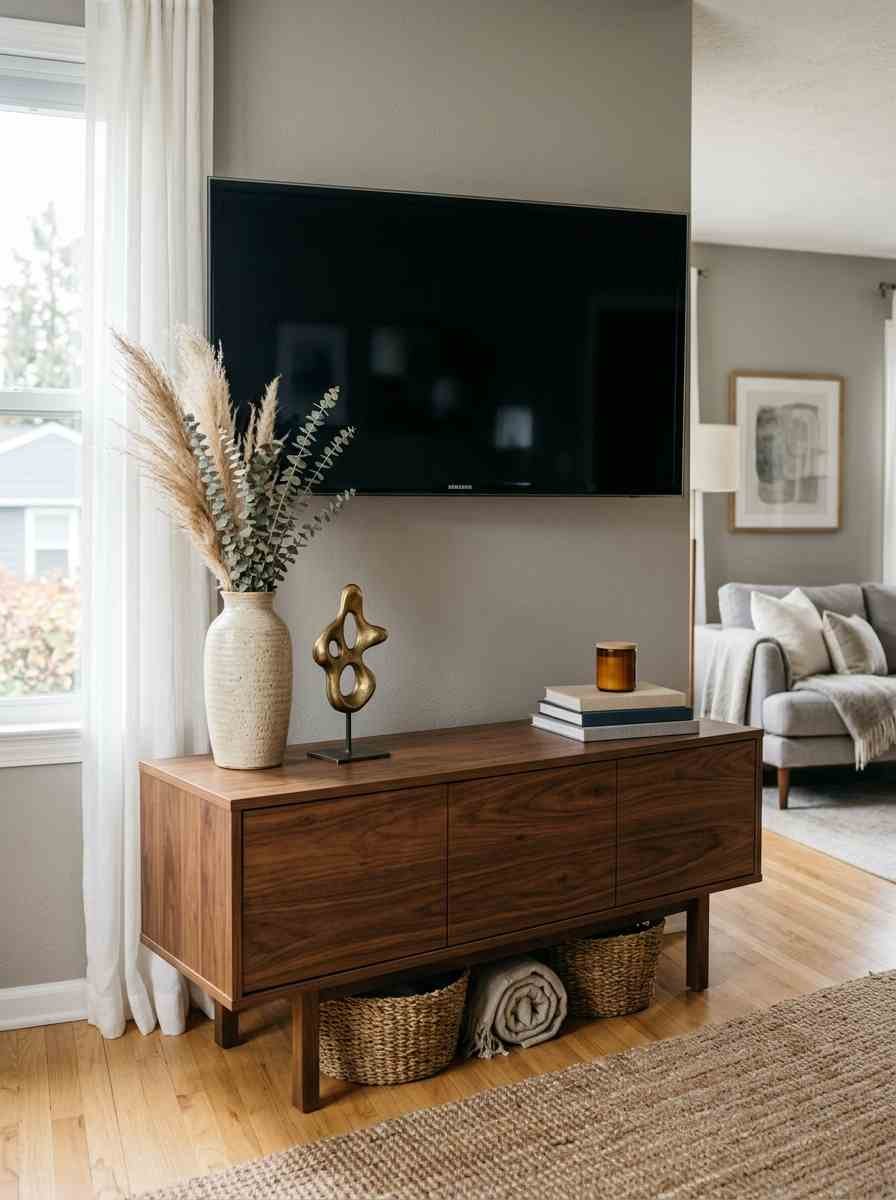
One sculptural object, nothing else competing. A single ceramic form or wood carving does more than five small trinkets ever could.
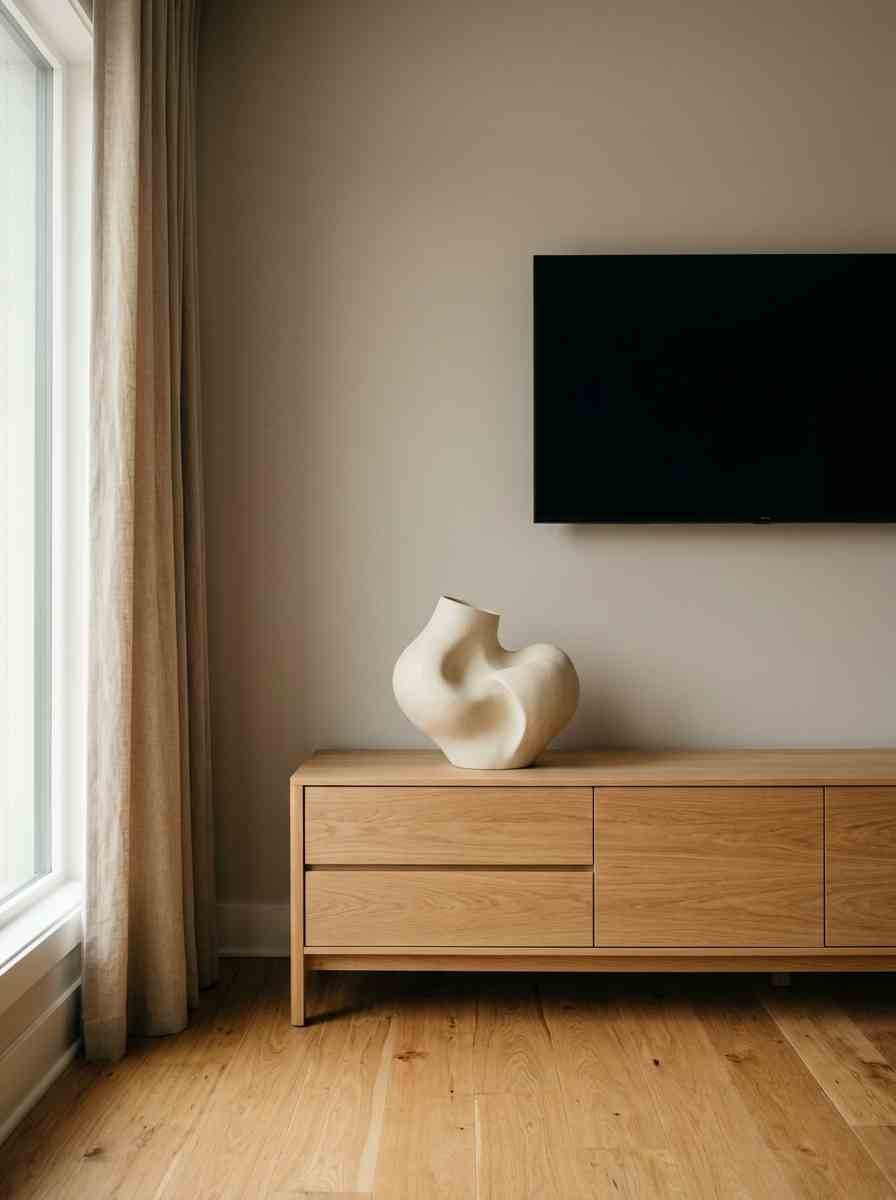
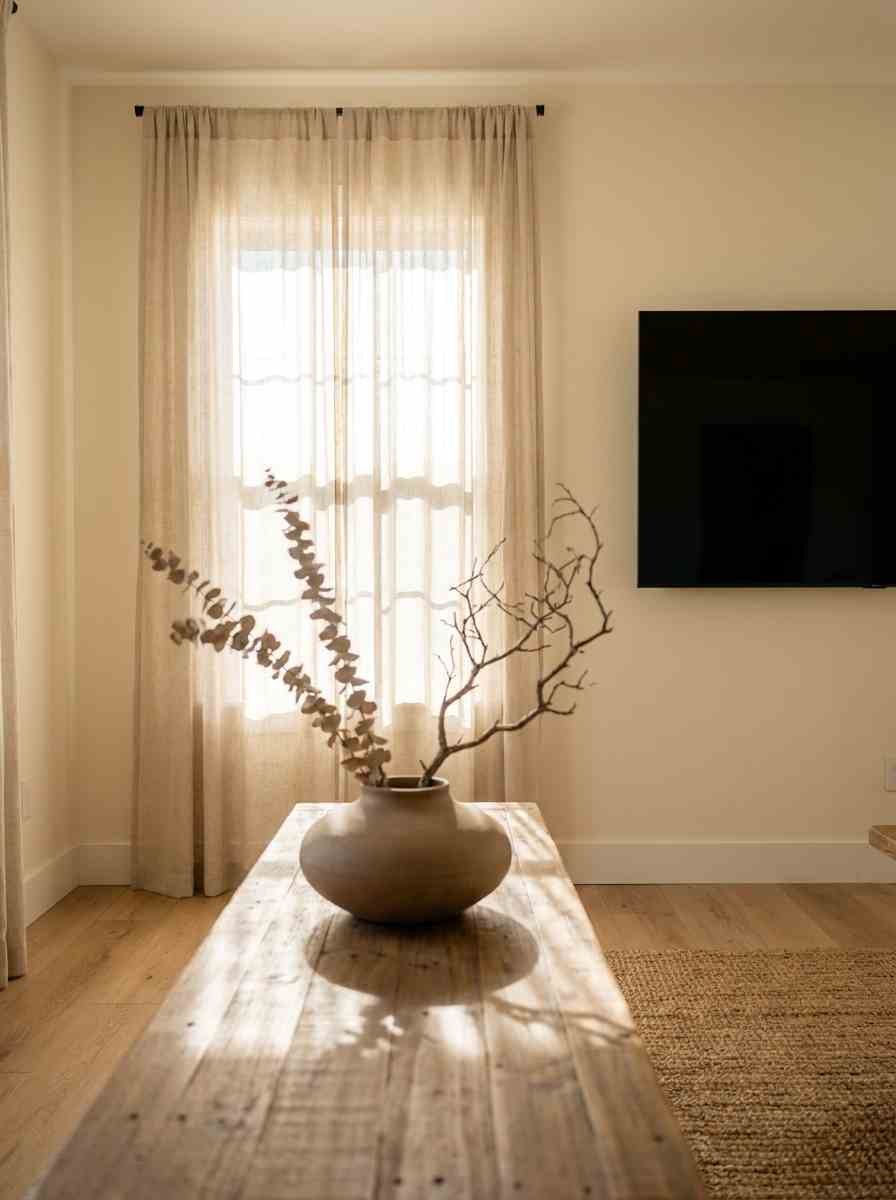
A low, wide vase with one or two dried branches. Cheap, low maintenance, and it softens the hard edge of a flat-screen TV without blocking the view.
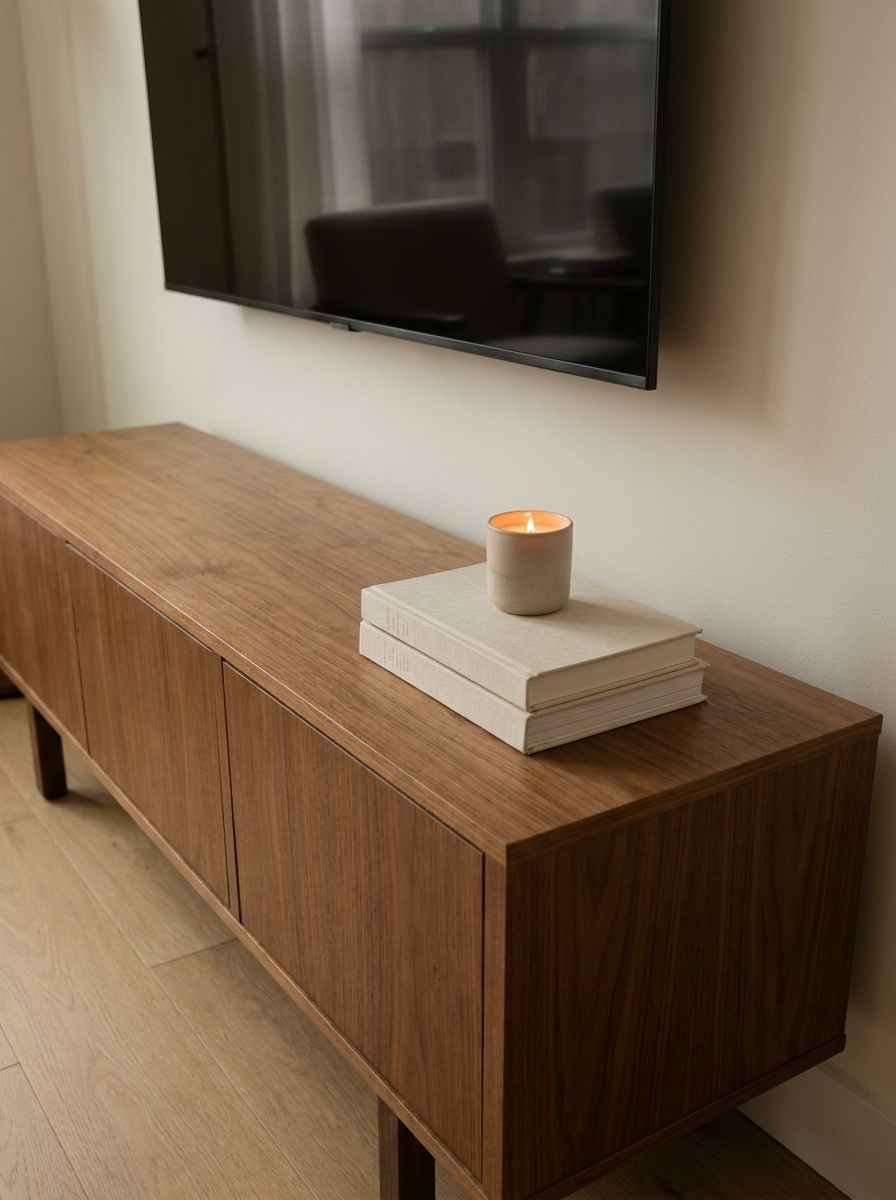
A stack of two or three books, spine-in. Hides the titles, keeps the color palette calm, still functions as a little pedestal for a candle or small object.
A single framed photo, leaned rather than hung. Leaning gives it a lived-in, unfussy feel that a perfectly centered frame just doesn’t have.
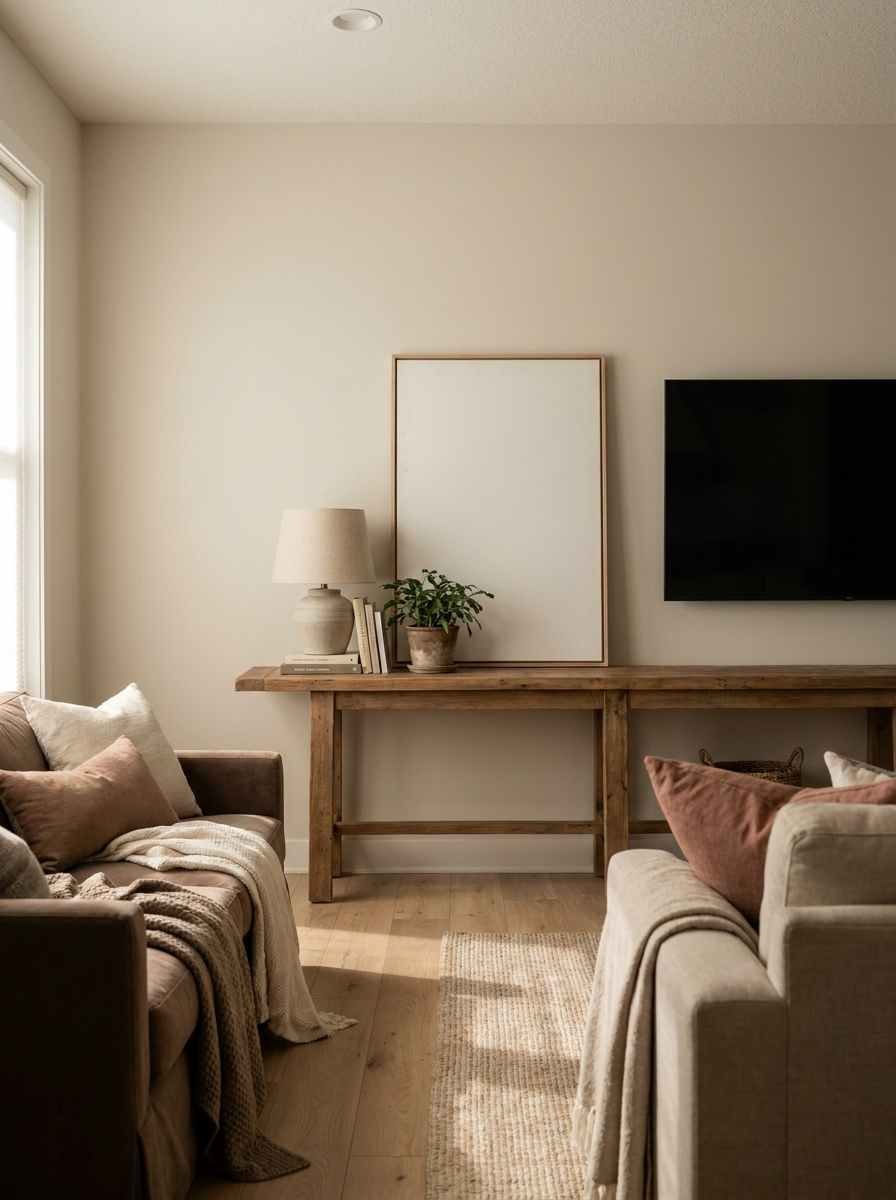
A small plant, real or high-quality faux. A snake plant or pothos works well because it doesn’t need direct sun and won’t overgrow the shelf in a month.
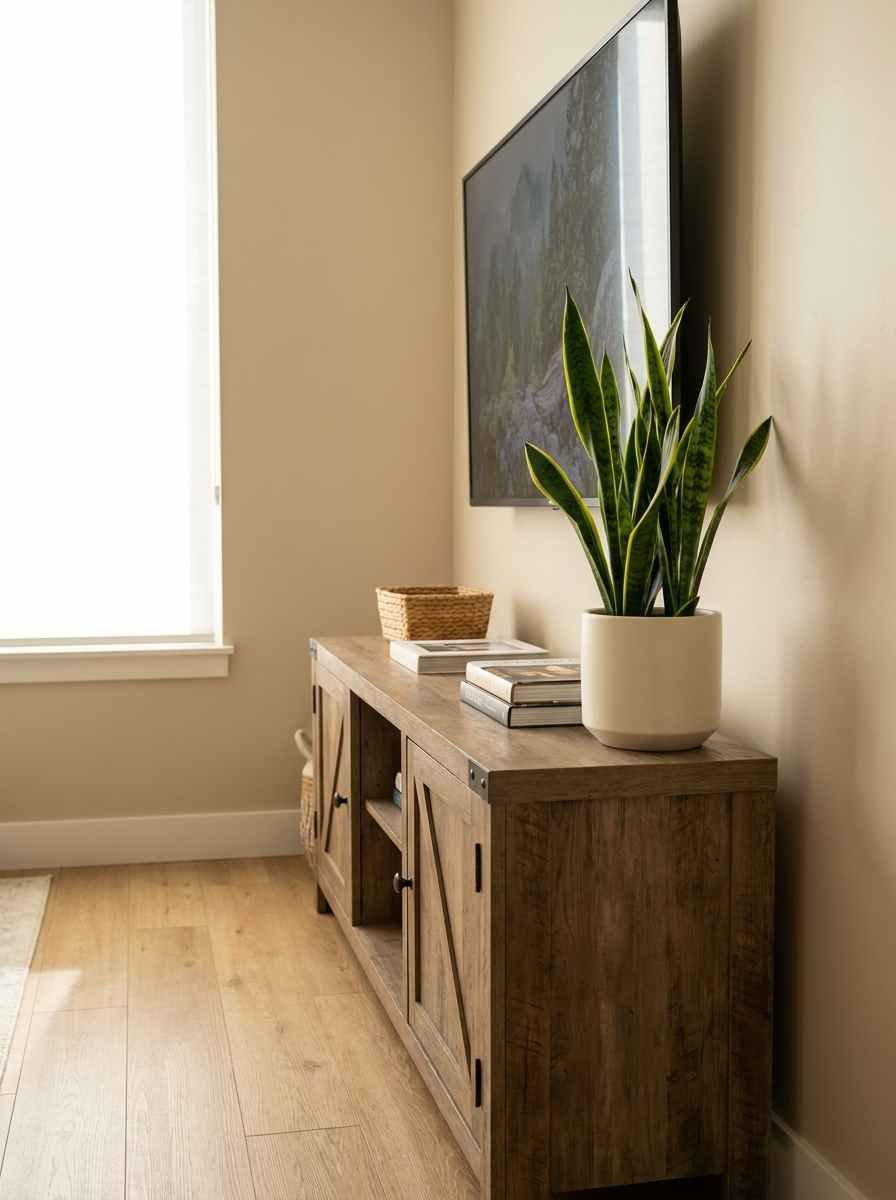
Layout tricks that make a small stand feel bigger
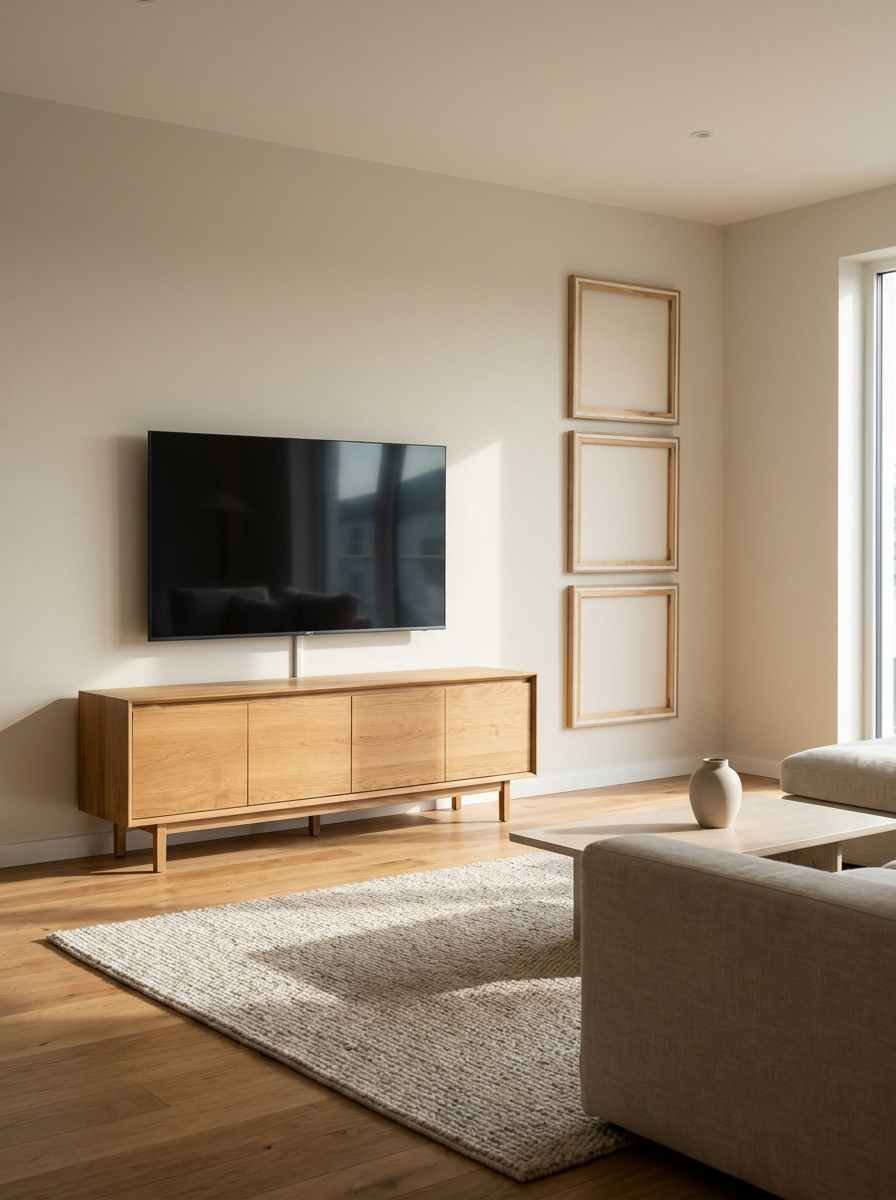
Off-center the TV, not the furniture. Push the console dead center, mount the TV slightly off to one side, and build a small gallery wall around the gap. This is genuinely one of my favorite tricks and it barely costs anything.
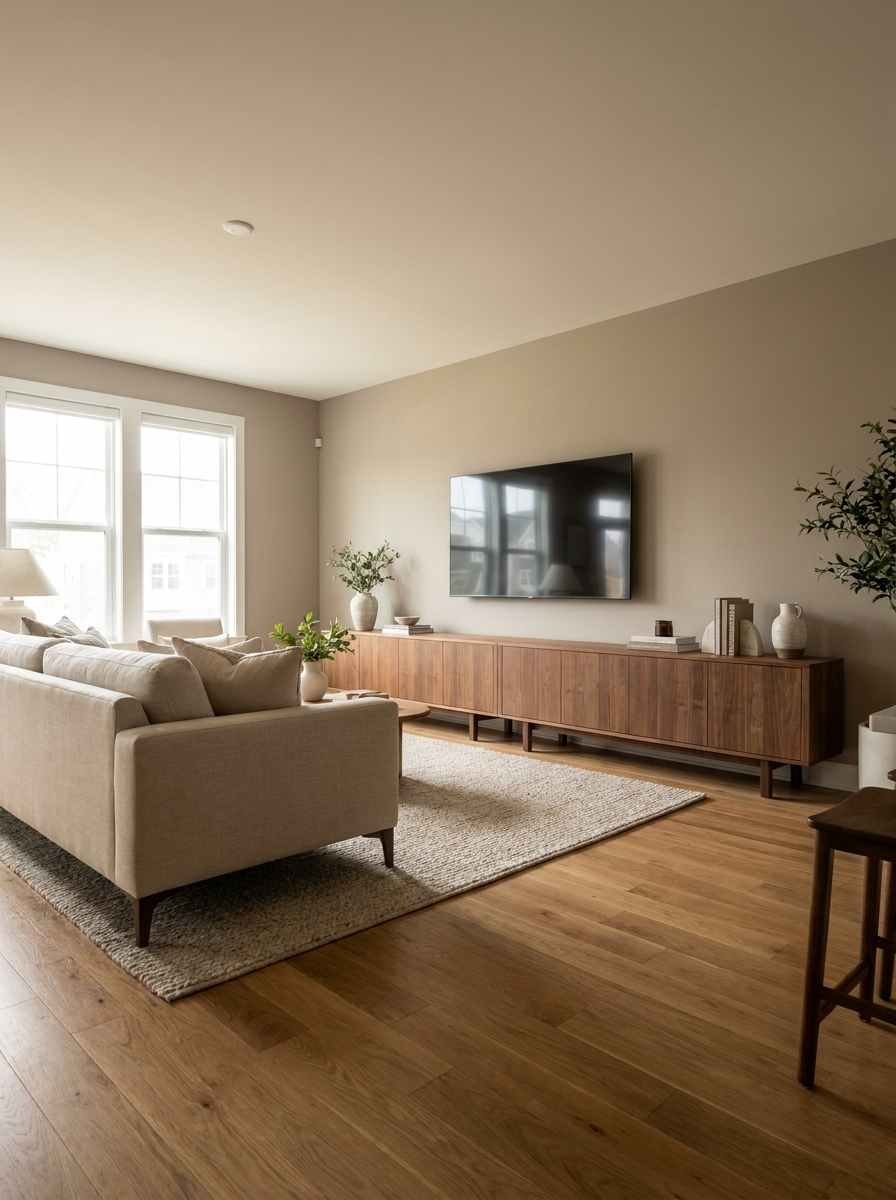
Leave one third of the surface completely empty. Negative space is still a design choice. Don’t fill every inch just because you can.
Match the console width to your sofa, not your TV. A stand that’s too narrow for the screen above it always looks off, even if you can’t say why.
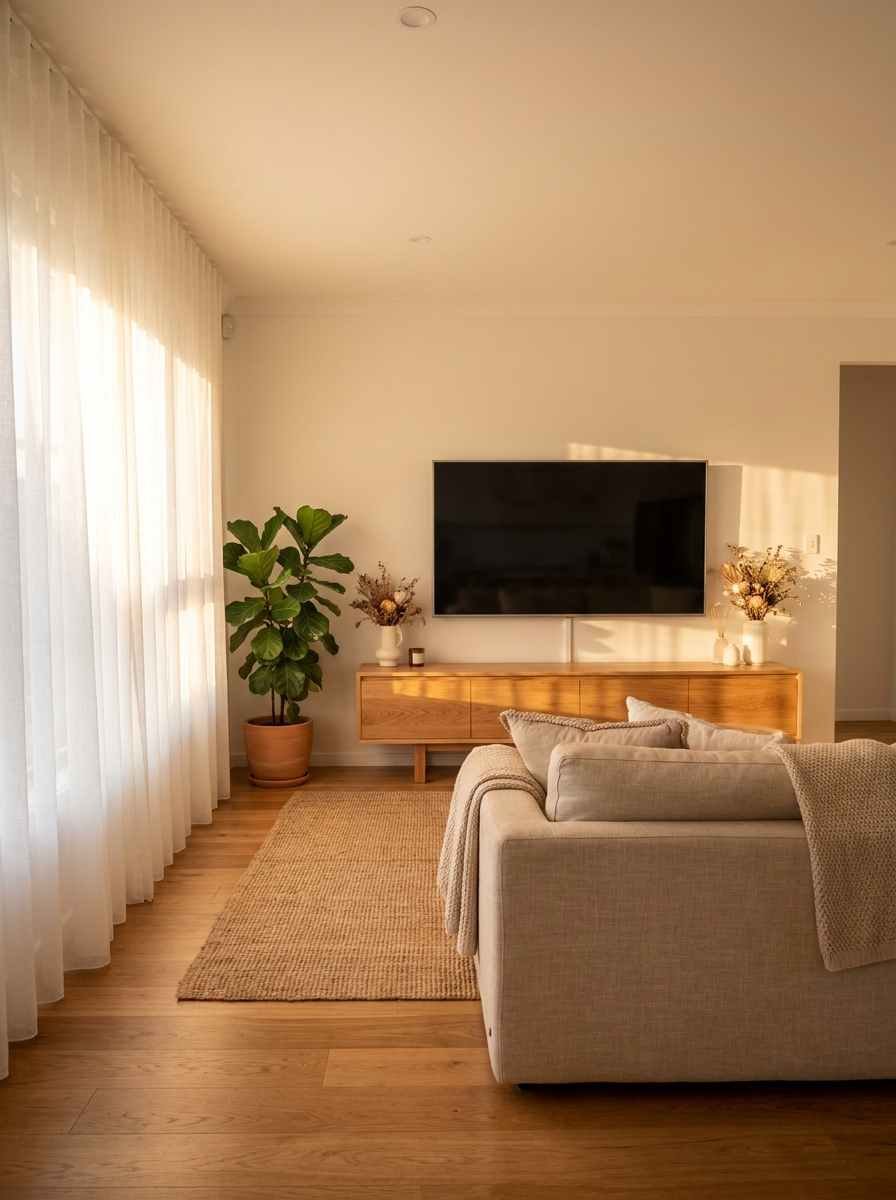
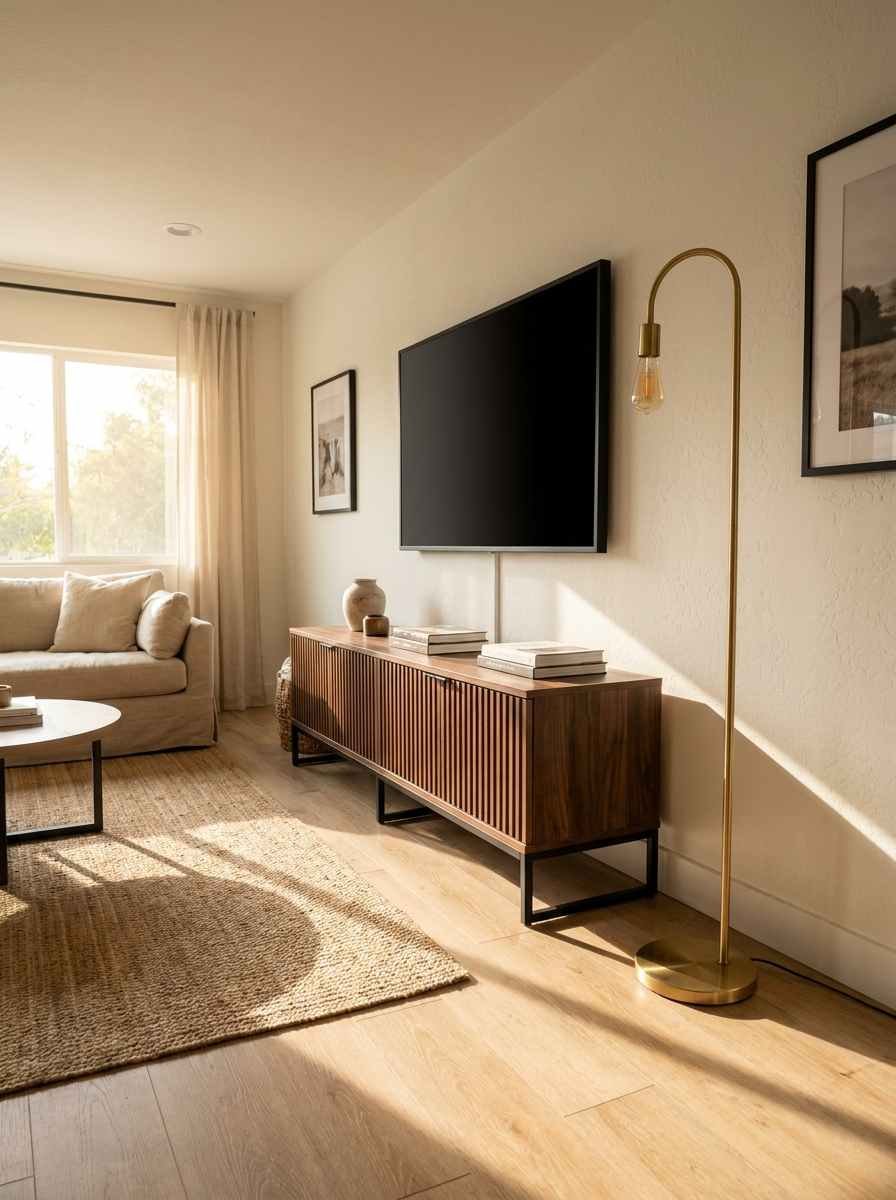
Add height on one side only. A tall floor lamp or leaning mirror next to the stand breaks up a flat, boxy look and draws the eye upward instead of sideways.
A few things I’d tell a friend before they start
- Don’t buy decor items in one shopping trip. Live with the empty console for a week first. You’ll notice what’s actually missing instead of guessing.
- Test your layout with your phone camera. A photo flattens the room and shows clutter you’d otherwise miss standing right in front of it.
- Skip trend-driven colors on big furniture. Put trends on the small, swappable stuff, like a vase or a throw, not the console you’ll own for a decade.
FAQ
How do I decorate a TV stand without it looking cluttered? Pick a maximum of three or four objects and vary their height. Anything beyond that starts to compete with the TV instead of complementing it.
What’s the best TV stand height for a minimalist living room? Eye level while seated, roughly 42 to 48 inches from the floor to the center of the screen for most sofas. Lower stands paired with a wall-mounted TV tend to look the most minimalist.
Do I need matching decor pieces on a minimalist TV stand? No, and honestly it looks better when you don’t. Mix one wood piece, one ceramic piece, and one plant instead of a matched set. It reads as curated rather than bought as a bundle.
Final thought
A great TV stand setup isn’t about owning less stuff. It’s about owning fewer things that actually deserve the space. Start with one shelf, one plant, and one thing that means something to you, then build from there.
What’s the one item sitting on your TV stand right now that you’d honestly toss if you were being real with yourself?
