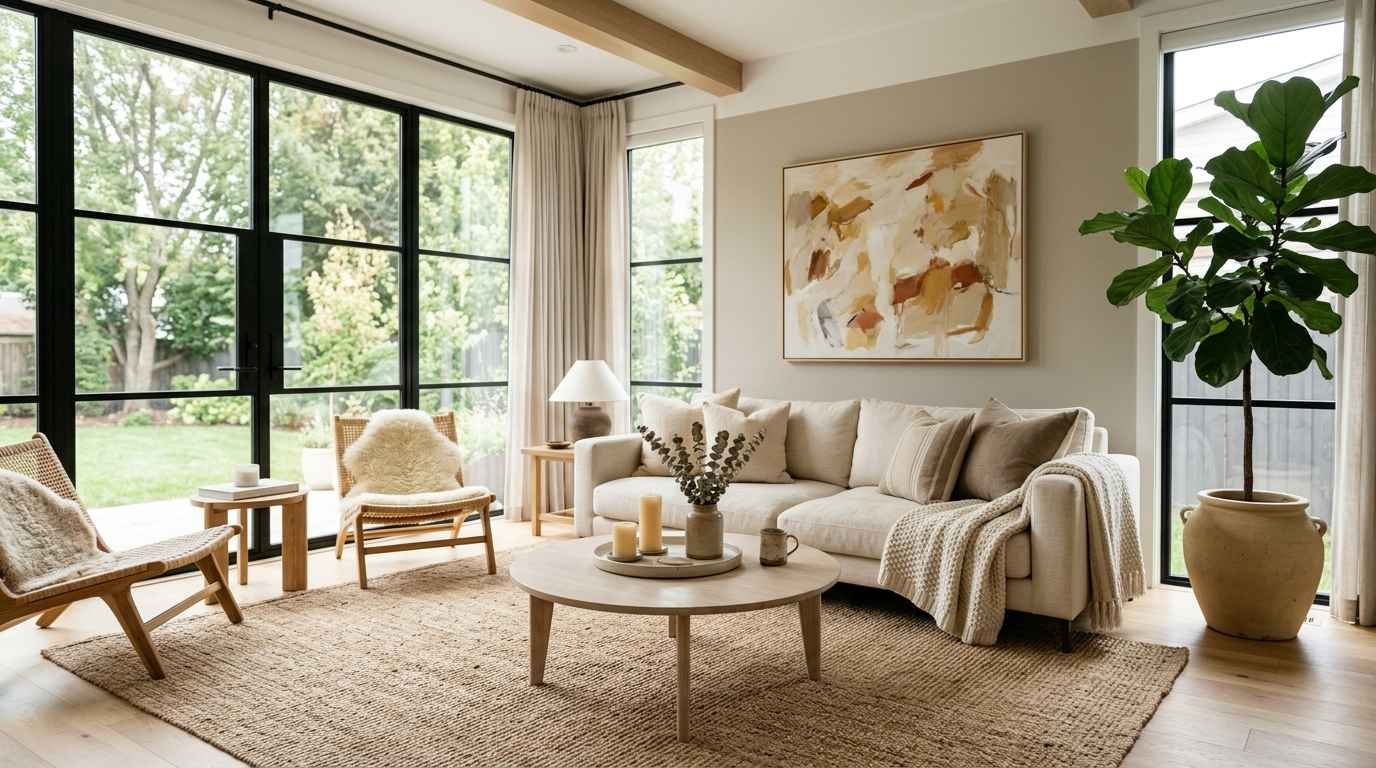
You know that feeling when you walk into a room and just… exhale? Like the space itself gives you permission to relax?
That’s what minimalist cozy design does. And the best part — you don’t need to gut your whole living room or spend a fortune to get there.
I’ve spent way too many hours on Pinterest (no regrets) obsessing over this exact aesthetic. Here’s what actually works.
Why minimalist and cozy aren’t opposites
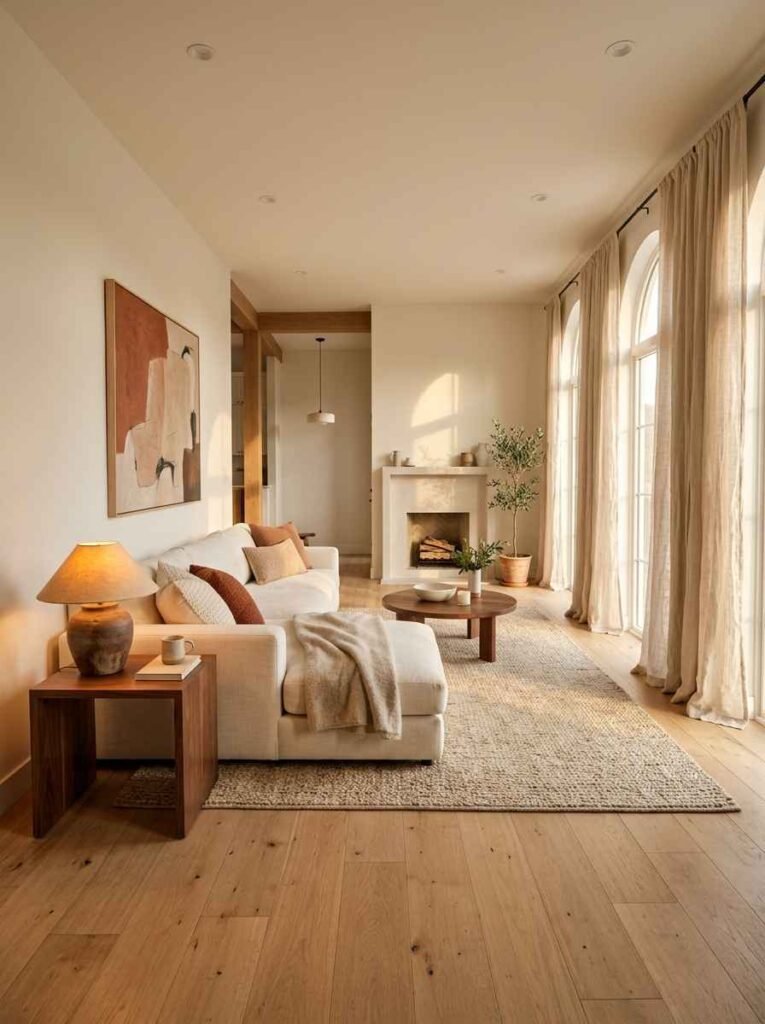
Most people think minimalism means cold, sparse, and uncomfortable. A white box with one sad plant. Not true.
Real minimalist coziness is about fewer things, chosen carefully. Every object earns its place. The result feels intentional and warm, not sterile.
Before anything else, three things set the tone for every minimalist cozy space.
Think of it this way: a cluttered room exhausts you. A room with breathing room lets you actually feel the warmth of what’s in it.
The foundation: get these right first
1. Neutral base colors that actually feel warm
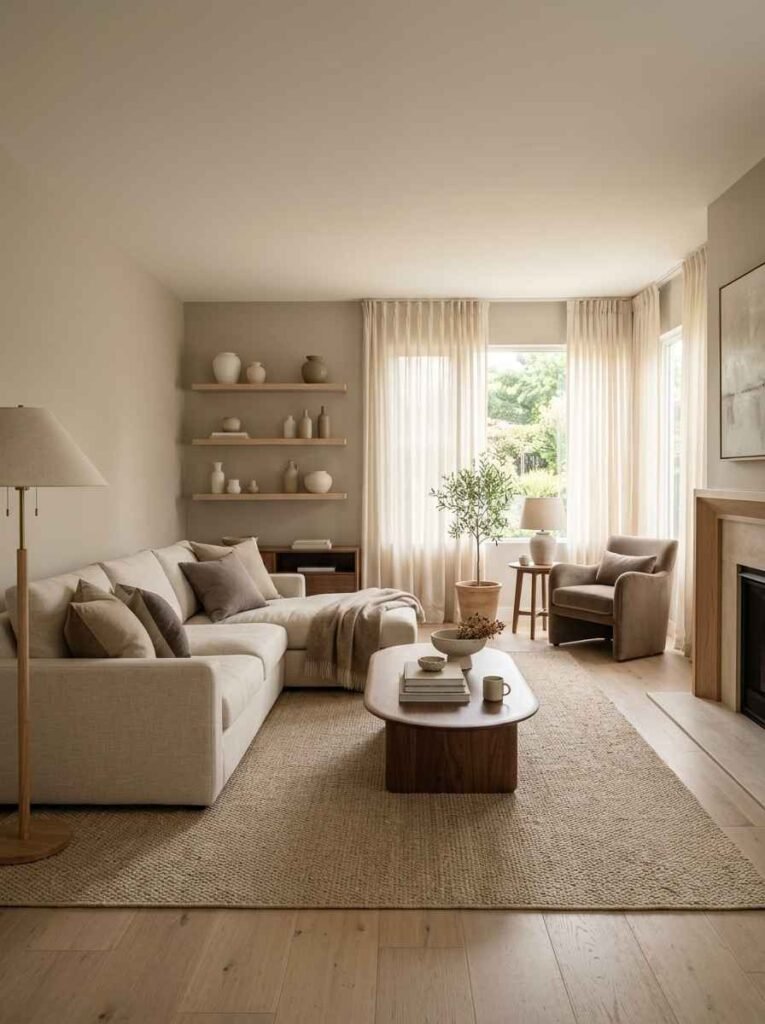
Skip the bright whites. They read clinical.
Go for:
- Warm whites (creamy, slightly yellow-toned)
- Greige (gray + beige — a forever classic)
- Soft taupe or sand
- Warm mushroom tones
These make a room feel wrapped, not washed out.
2. One statement texture
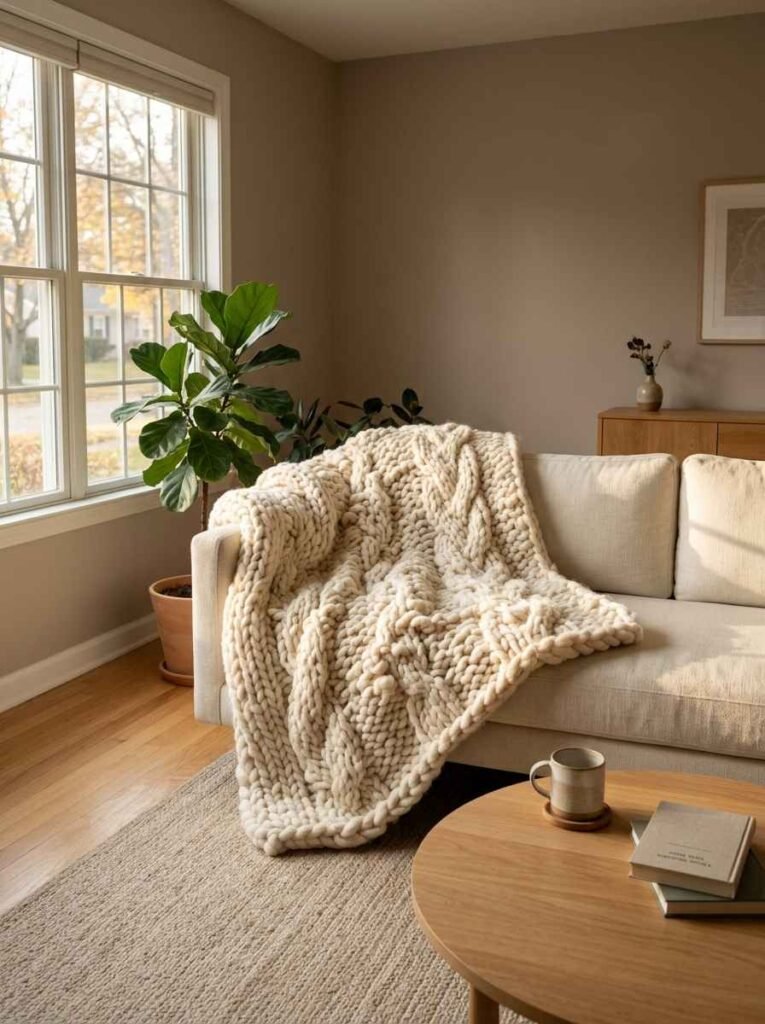
Minimalism means restraint, but one really good texture does a lot of work. A chunky knit throw.
A linen sofa. A jute rug with some roughness to it.
Pick one. Let it breathe.
3. Natural light (or fake it well)
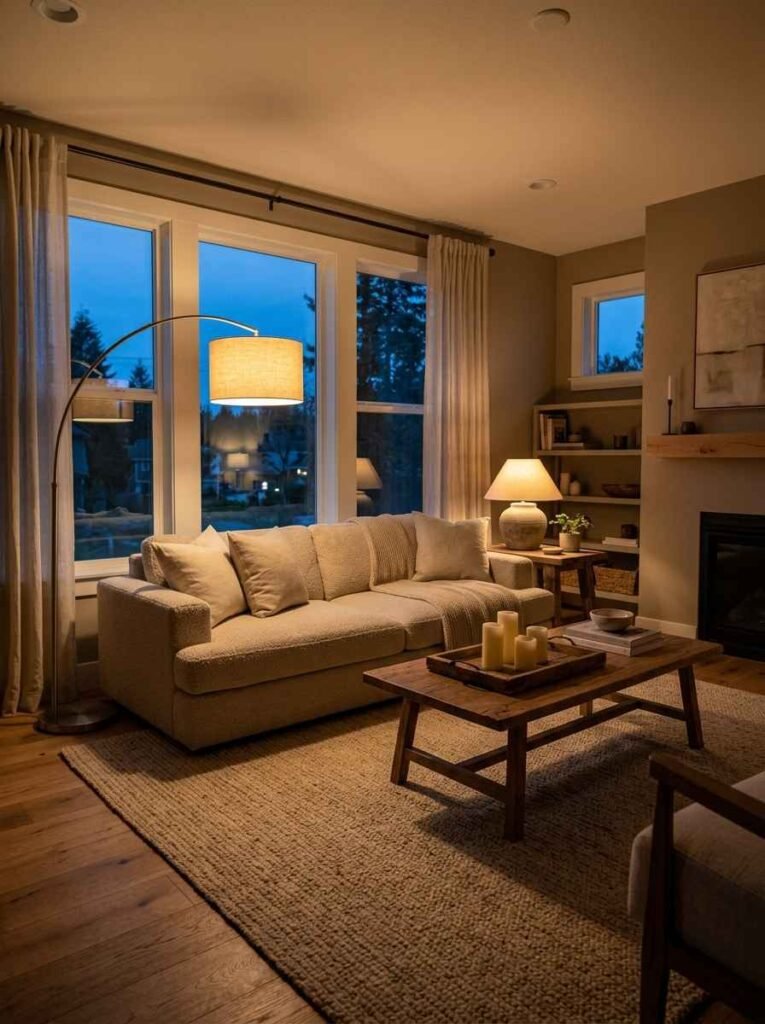
Harsh overhead lighting kills the vibe instantly. Layer your lighting: a floor lamp, a table lamp, maybe some warm candles.
If natural light is limited, warm-toned bulbs (2700K-3000K) are non-negotiable.
28 ideas to steal right now
Sofas and seating
1. Go low and slouchy Low-profile sofas make a room feel relaxed and generous. Think Japandi aesthetic — close to the ground, clean lines, but with enough cushion to disappear into.
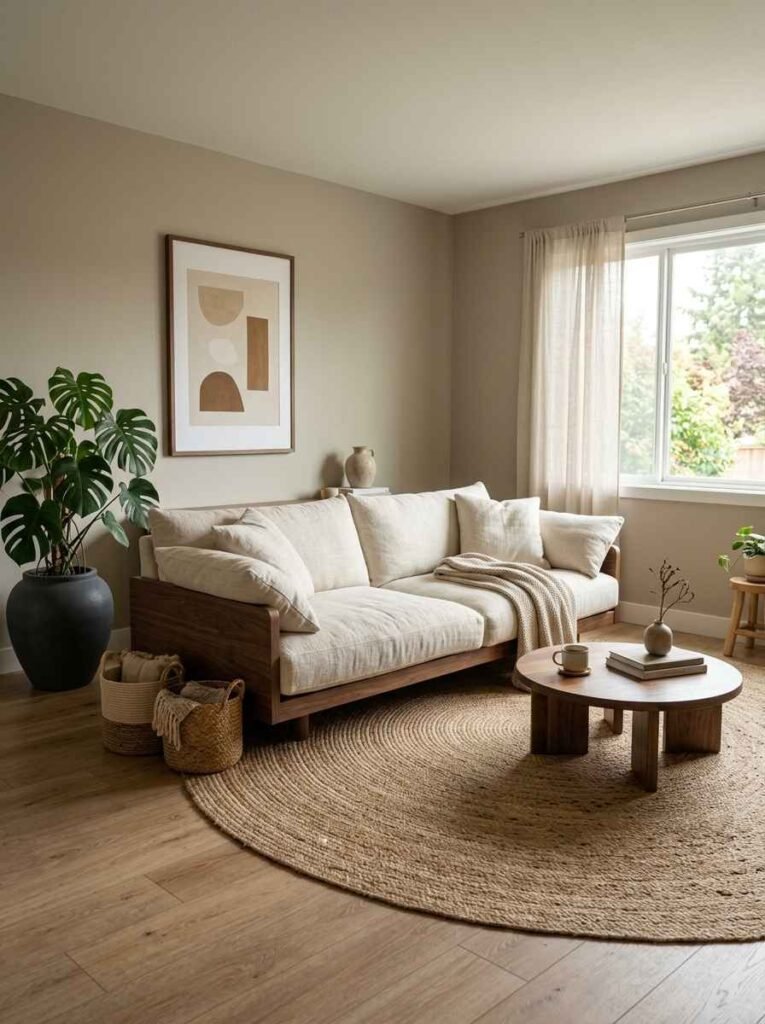
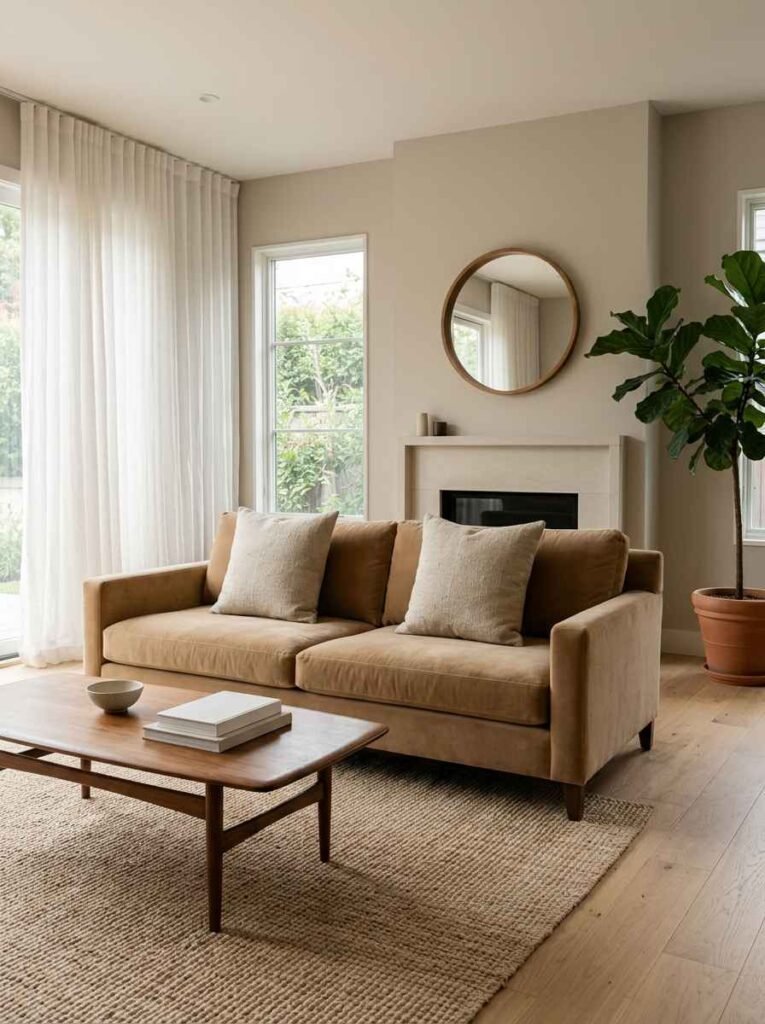
2. Linen slipcovers Linen wrinkles. That’s the point. It signals “lived-in comfort” without trying too hard.
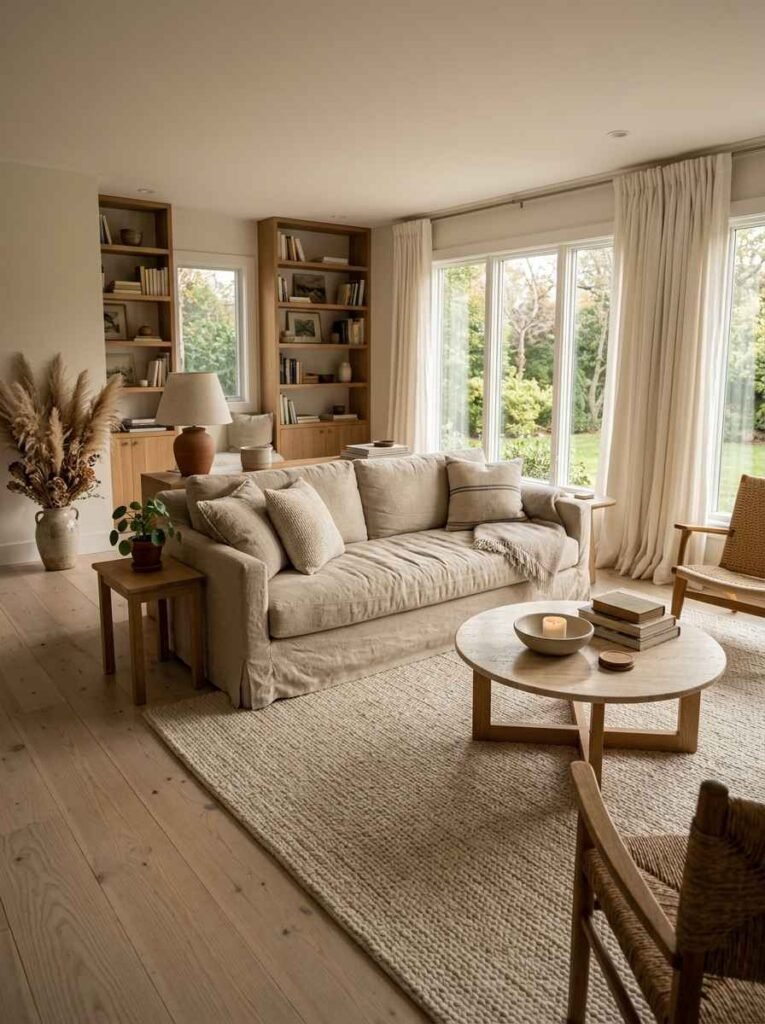
3. One oversized chair, not two small ones A single big armchair reads more intentional than a matching set that crowd the space.
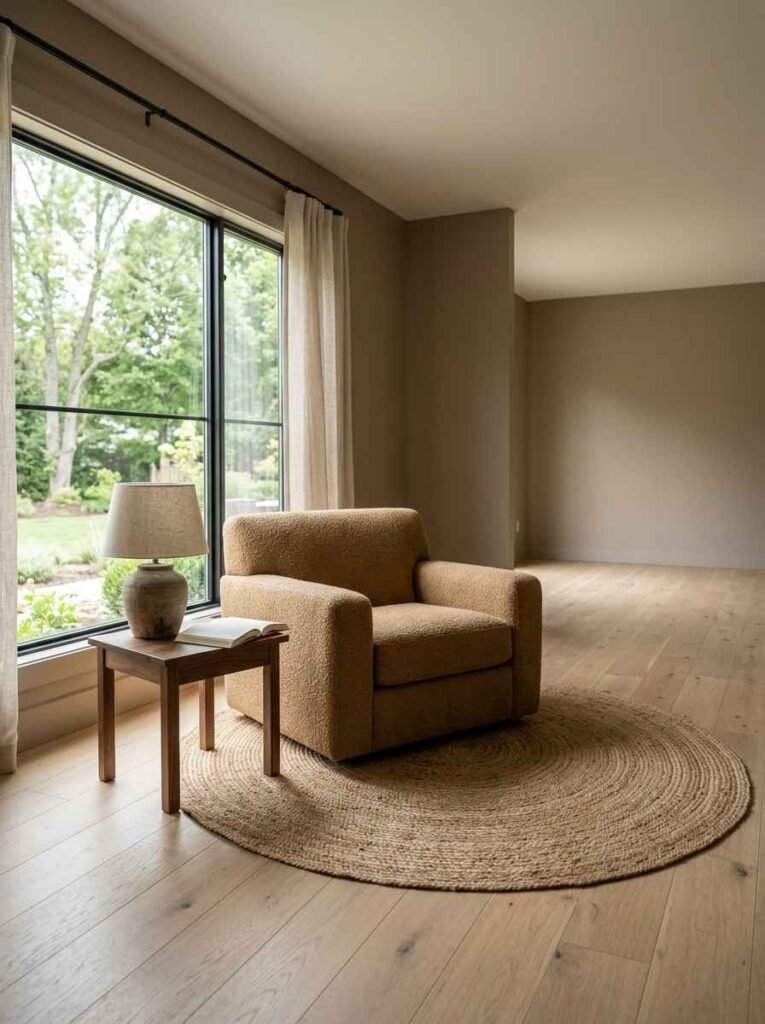
4. Floor cushions or poufs Adds seating without adding furniture. Tuck them under a coffee table when not in use.
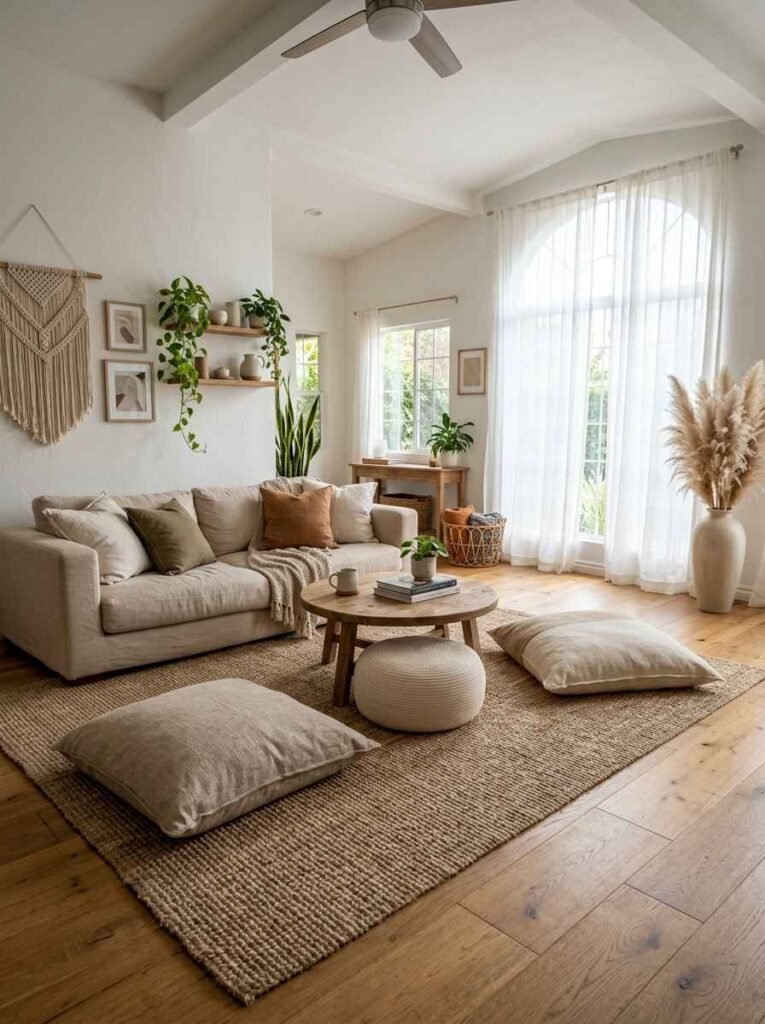
5. Stick to a 2-fabric rule Two textures on seating (say, velvet and linen) feel collected. Three or more start to compete. IMO, people underestimate how much this matters.
Rugs
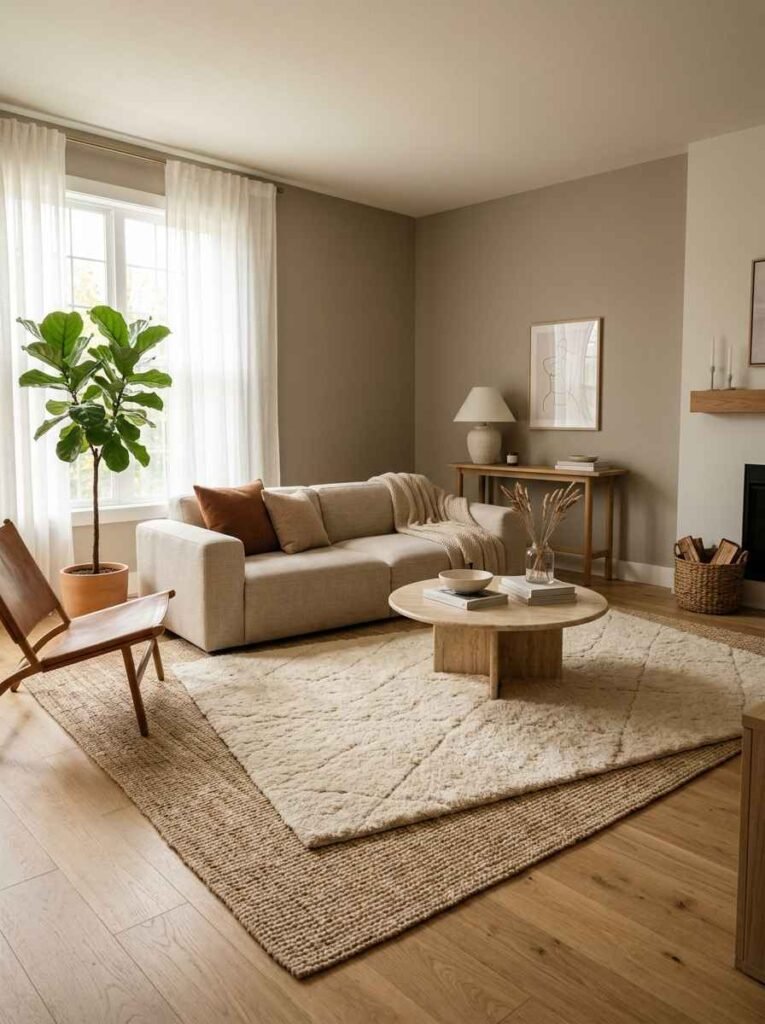
6. Go bigger than you think The single most common rug mistake: too small. All four legs of your sofa should sit on it, or at least the front two. A properly-sized rug anchors everything.
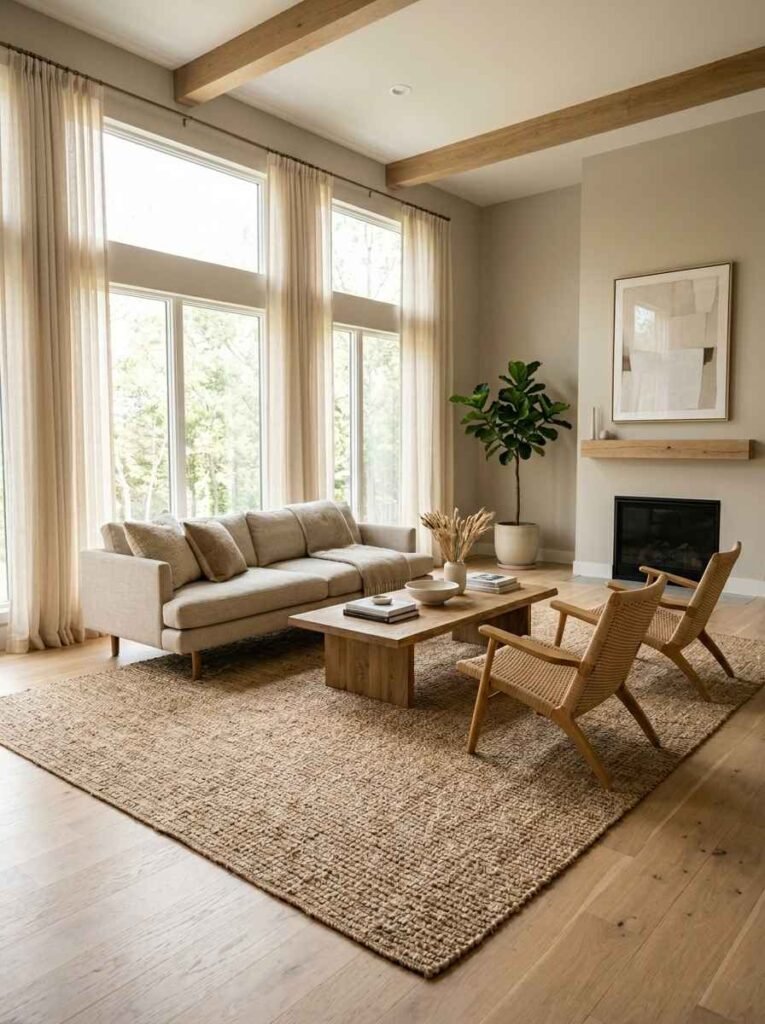
7. Natural fibers only Jute, sisal, wool, or cotton. These materials photograph beautifully and age gracefully.
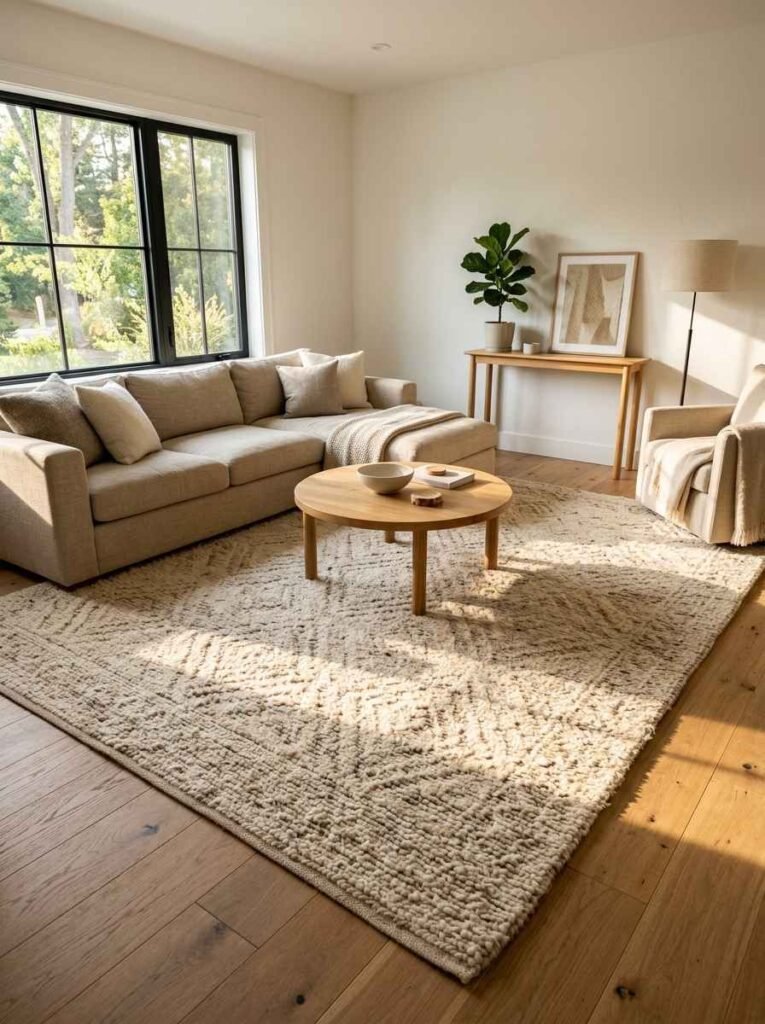
8. Layer two rugs A flat-weave base with a smaller, softer rug on top. Cozy and collected, not chaotic.
| Rug Material | Feel | Best For |
|---|---|---|
| Jute | Textured, earthy | High-traffic areas |
| Wool | Soft, plush | Main seating zone |
| Cotton | Light, casual | Layering on top |
| Sisal | Structured, neutral | Minimalist base |
Coffee tables and surfaces
9. Organic shapes Round or oval coffee tables soften a room instantly. Square and rectangular are fine, but they can feel stiff in a cozy setup.
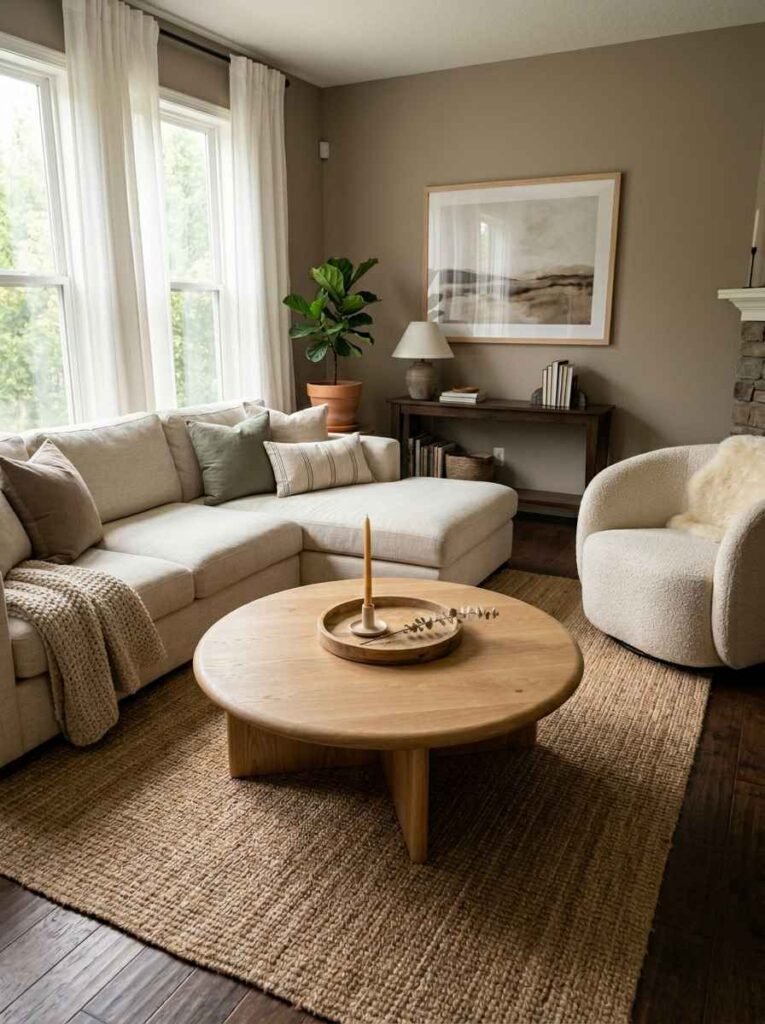
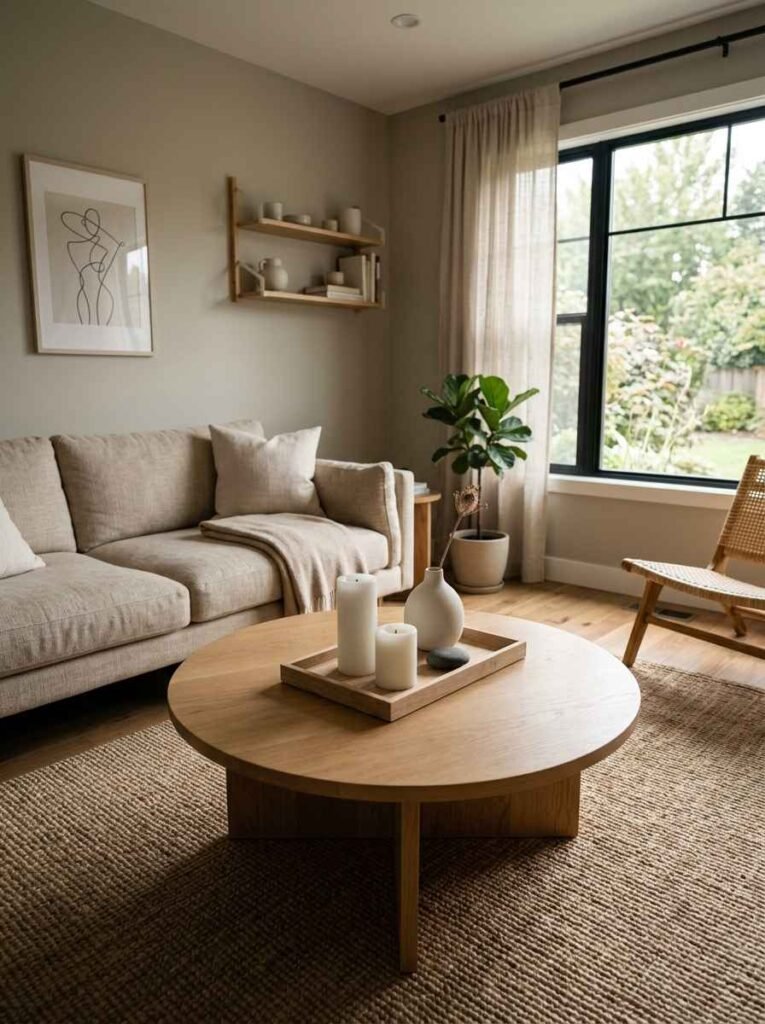
10. Leave 60% of surfaces empty Seriously. Whatever you have on your coffee table, remove half of it. That empty space is doing more work than you realize.
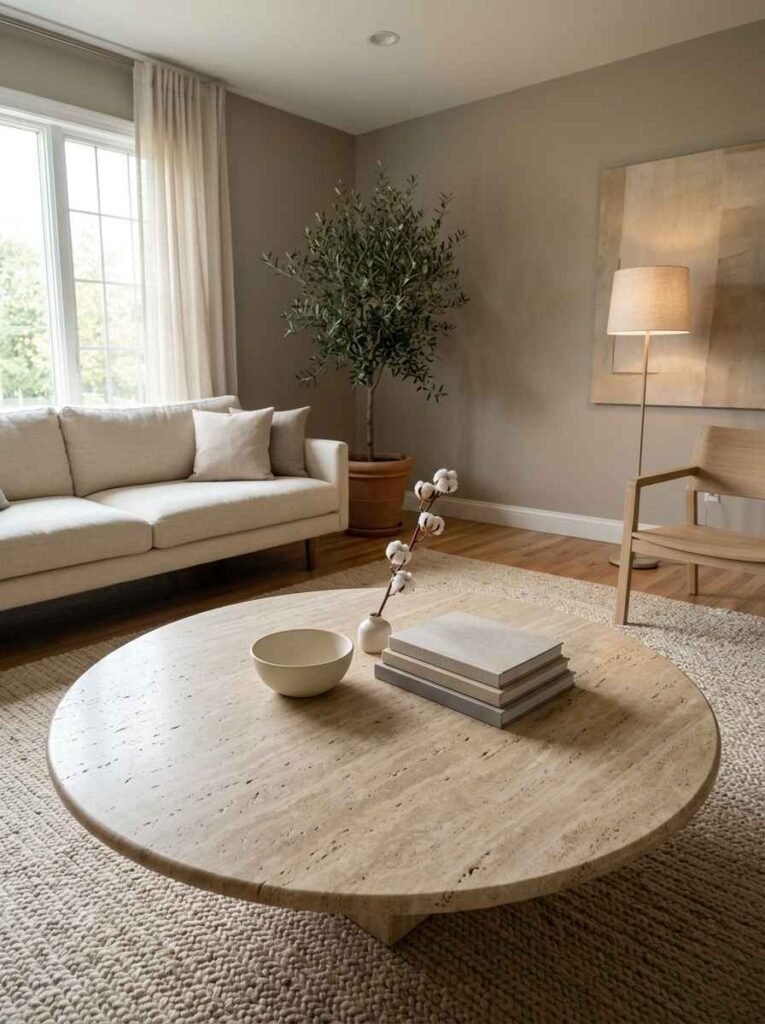
11. Wood over glass Glass tables are harder to keep looking clean and read a little cold. Warm wood tones carry the cozy.
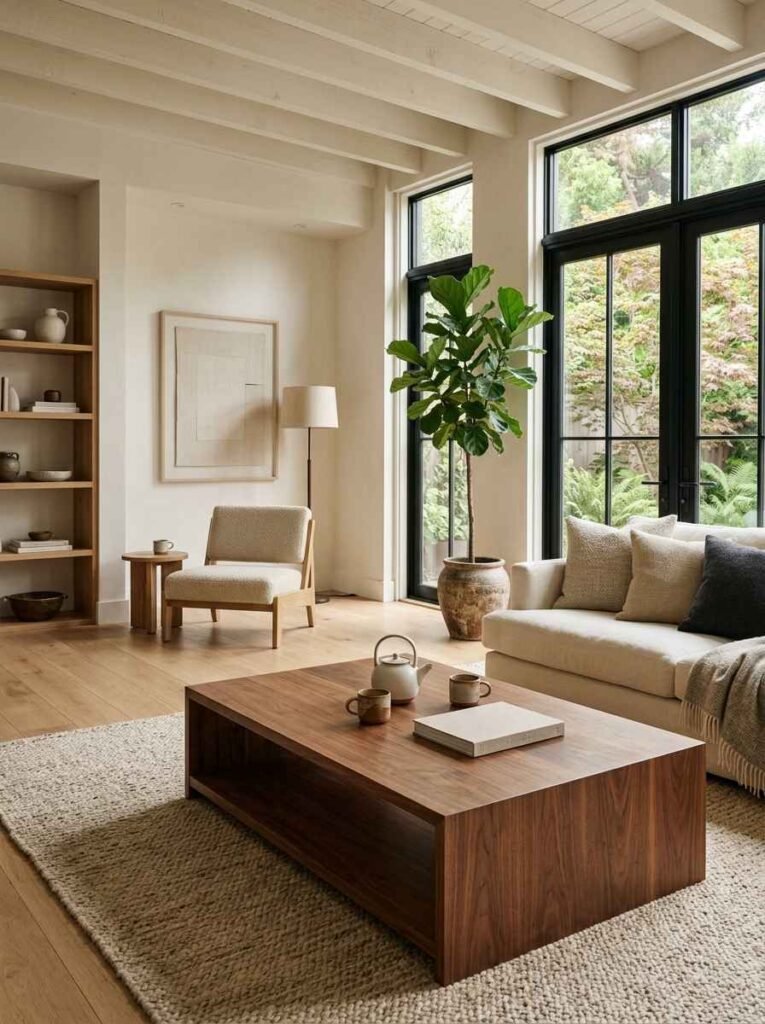
12. The “tray trick” Group small objects on a tray instead of scattering them. It organizes the eye and makes a surface look styled instead of cluttered.
Walls and art
13. One large piece, not a gallery wall Gallery walls look great in photos (hence Pinterest). In real life?
They can stress you out if they’re not perfectly curated. One oversized print or canvas is more peaceful and more minimal.
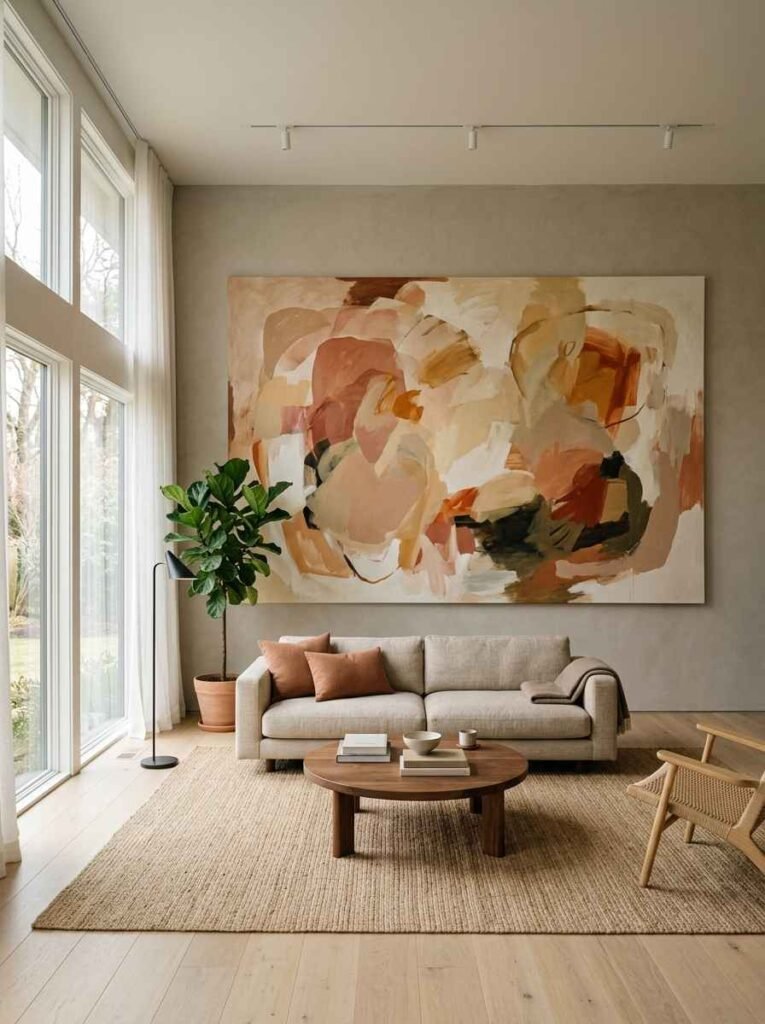
14. Leave some walls bare Empty wall space is a design choice. It lets your eye rest.
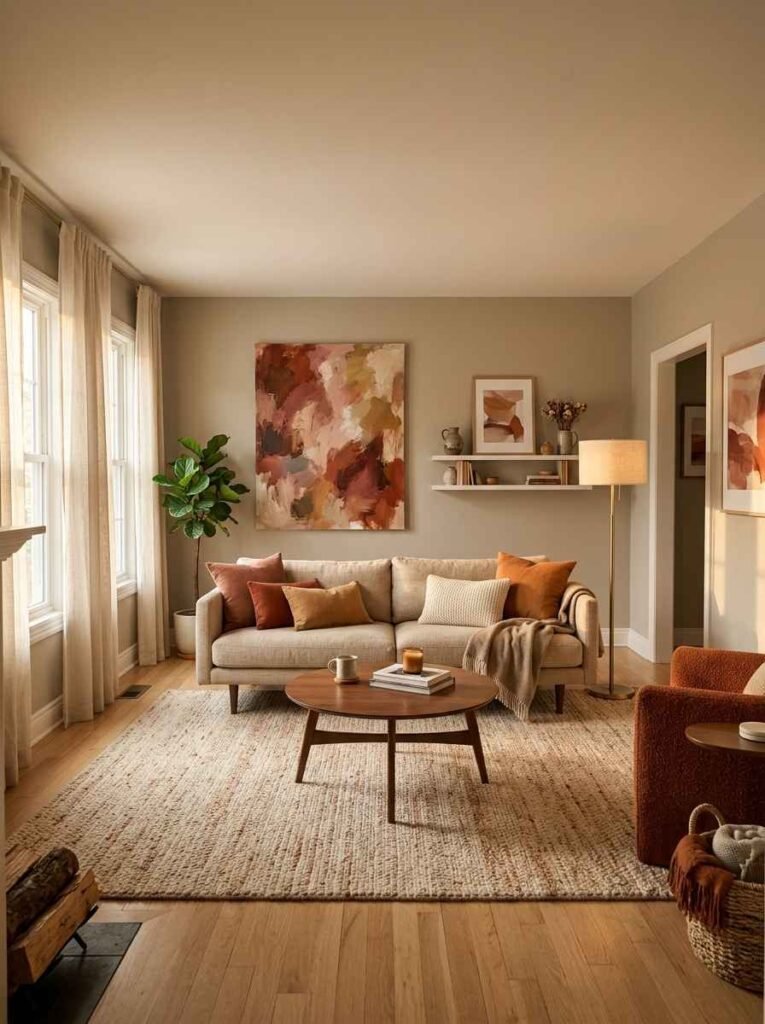
15. Warm-toned art Earthy tones, terracotta, warm neutrals, soft ochres. They read “cozy” immediately.
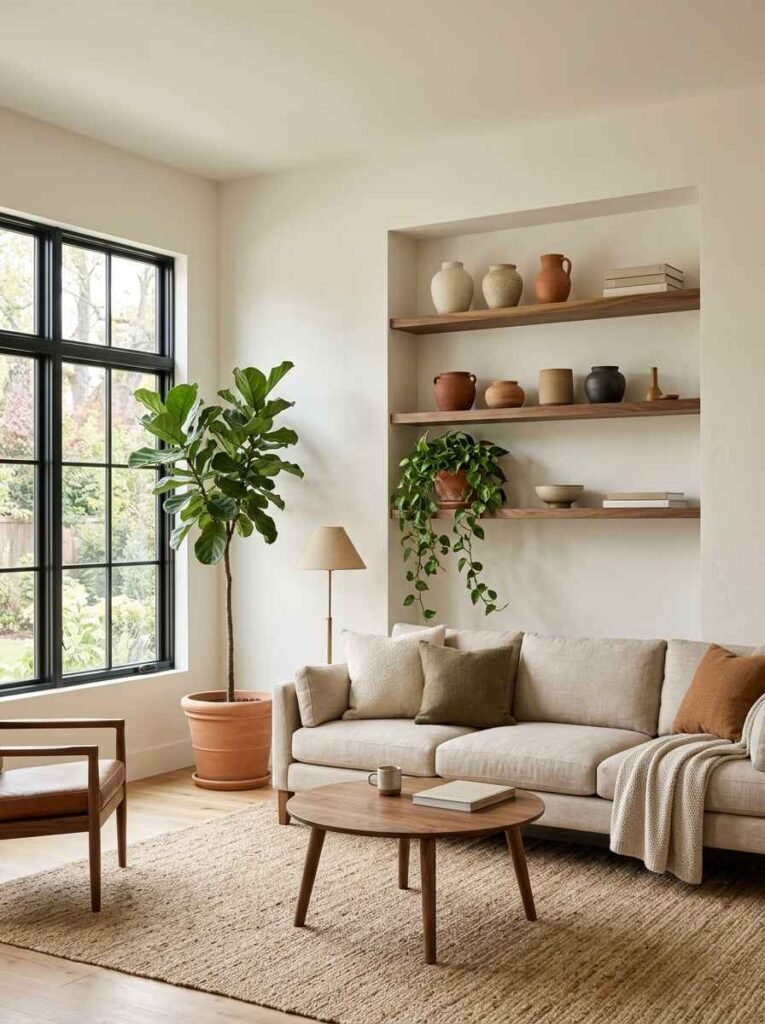
16. Architectural details count Floating shelves, a simple ledge, a built-in nook — these add visual depth without needing art at all.
Plants and nature
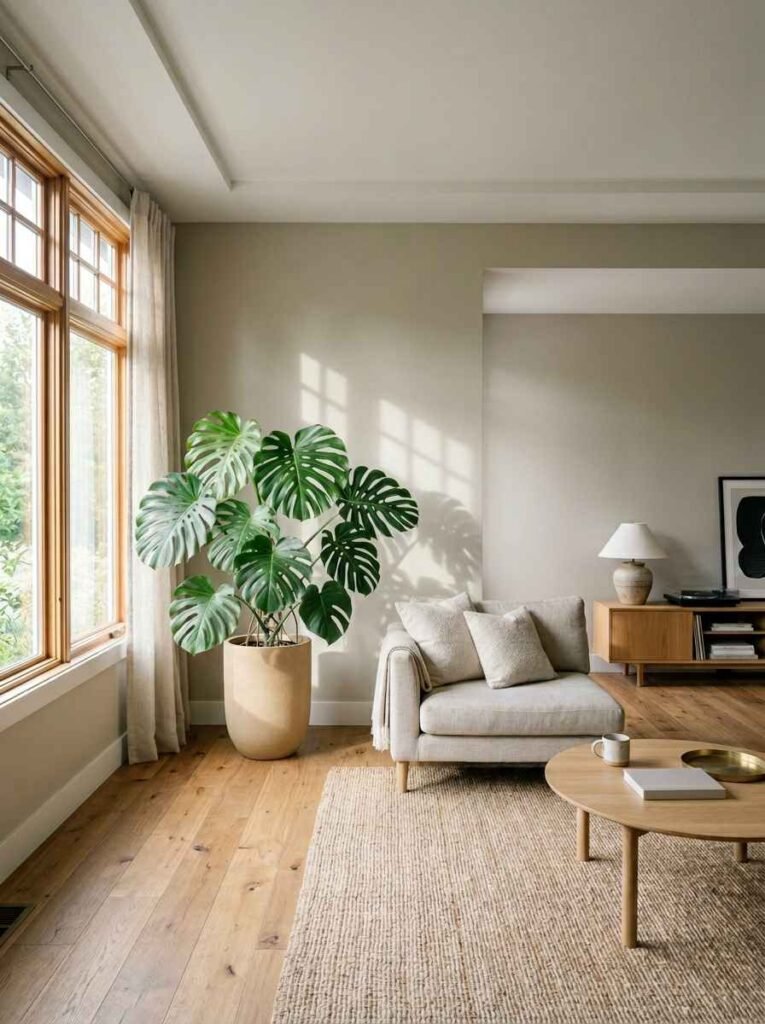
17. One large plant instead of many small ones A tall fiddle-leaf fig or a big monstera reads more intentional than ten little succulents competing for attention.
Single statement plants are having a well-deserved moment.
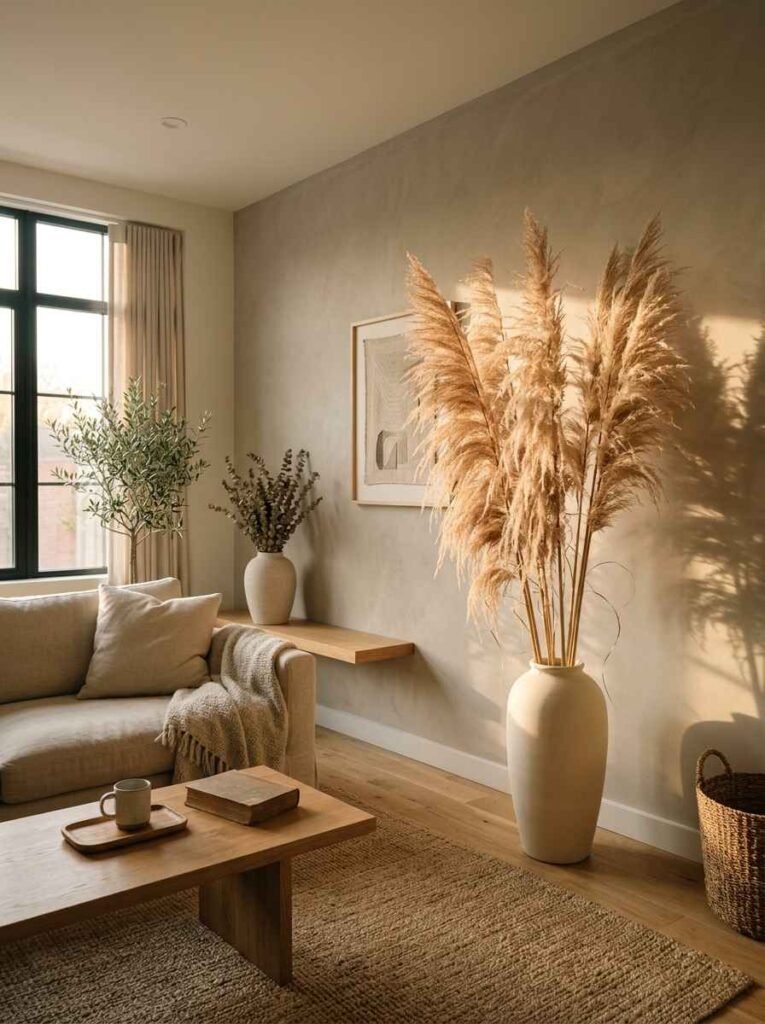
18. Dried botanicals Pampas grass, dried eucalyptus, cotton stems. These age into the space in a way that feels earned, not staged.
27 Covered Patio Seating Ideas for the Ultimate Cozy Backyard
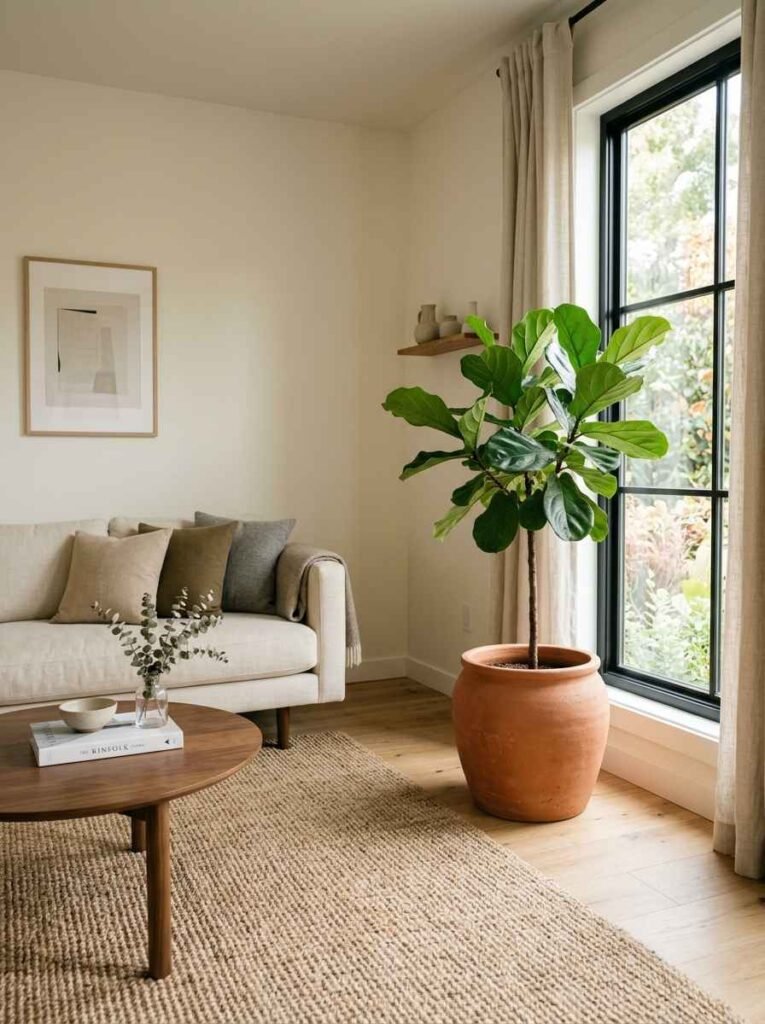
19. A simple ceramic pot The vessel matters. A beautiful matte ceramic pot makes any basic plant look like a design choice.
Lighting
20. Wabi-sabi ceramic lamps Imperfect, earthy, handmade-looking. They photograph beautifully and add warmth without shouting.
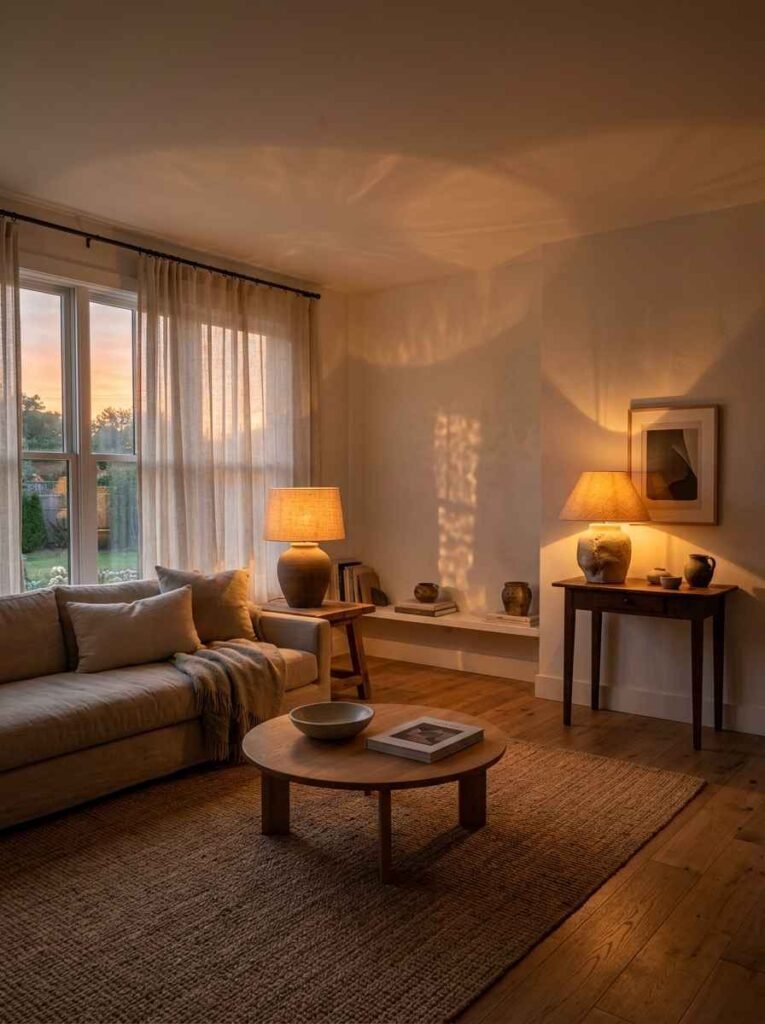
21. Floor lamps over ceiling lights Every time. Floor lamps create pools of warm light at human level. Ceiling lights just flatten everything.
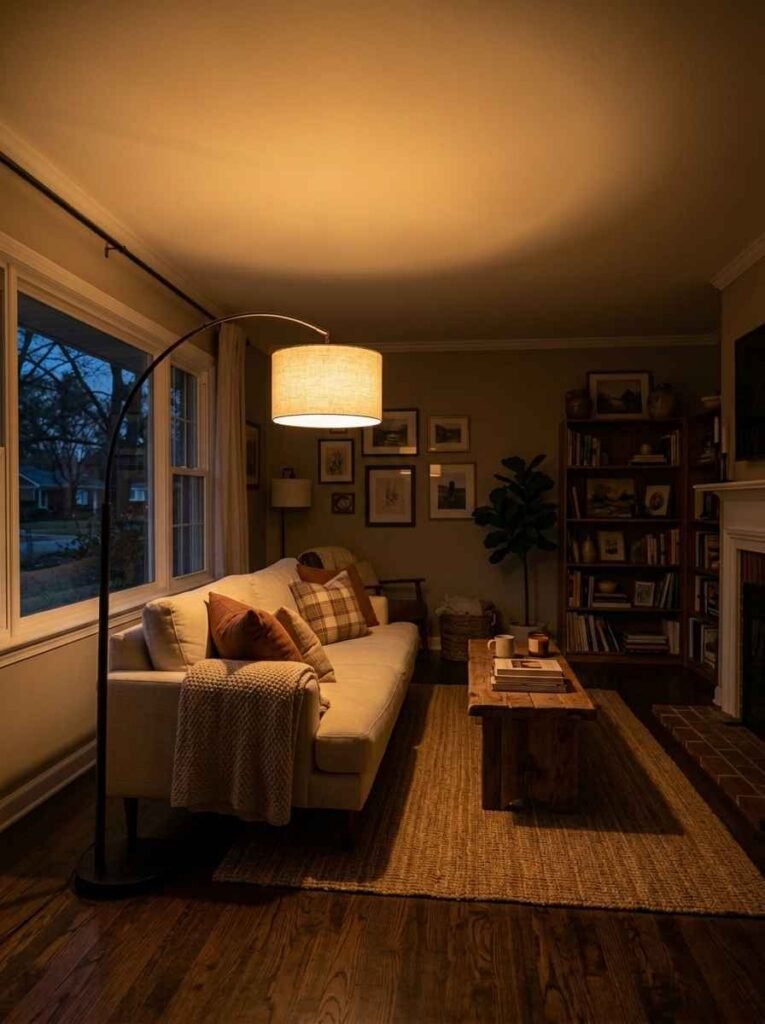
22. Candles count as lighting Three candles on a tray on your coffee table. That’s a whole mood shift for under $20. 🙂
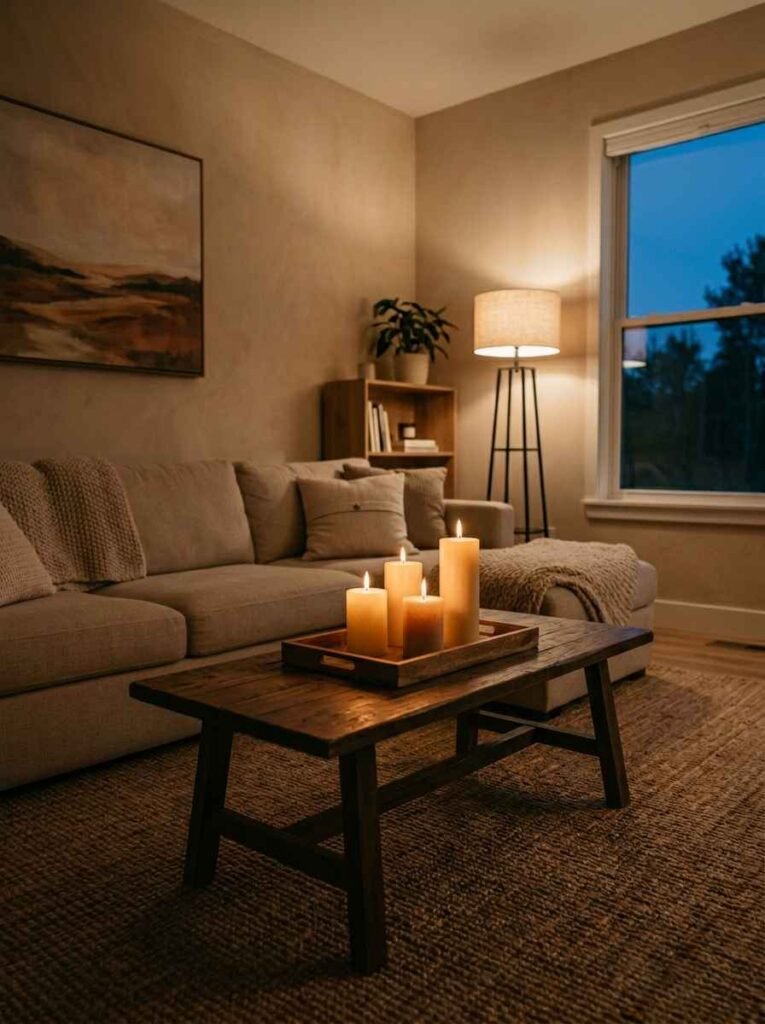
23. Dimmer switches If you do nothing else on this list, install a dimmer switch. The ability to control light intensity changes everything about how a room feels at night.
Curtains and windows
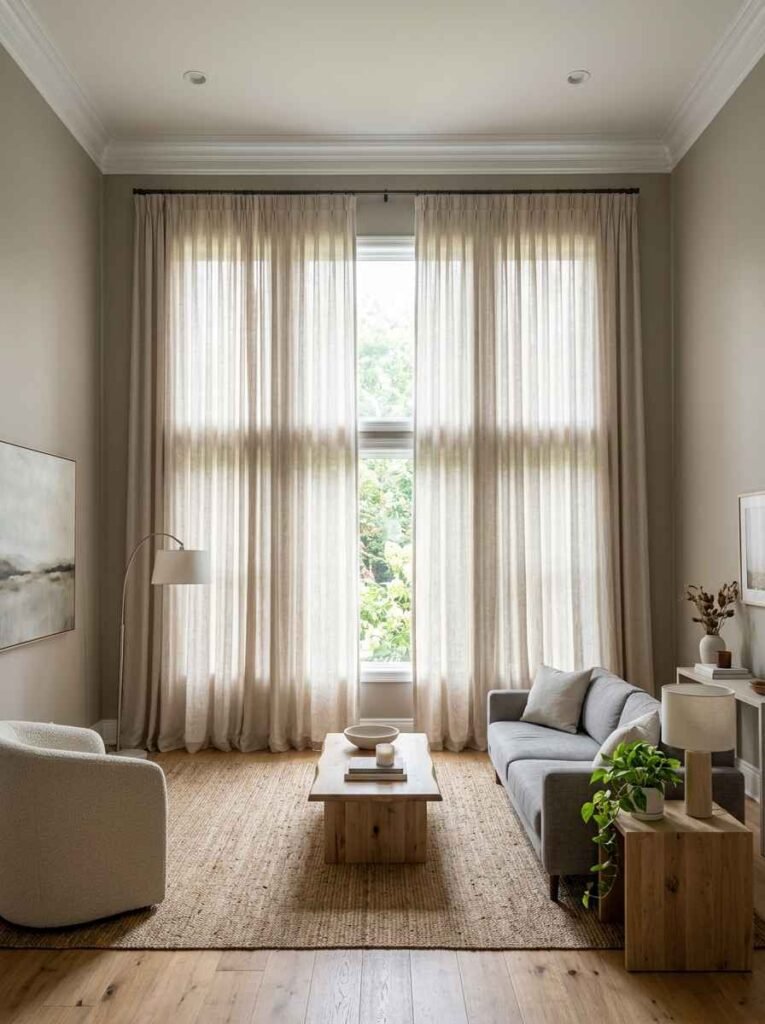
24. Floor-to-ceiling curtains, even on small windows Hang the rod as high as possible, as wide as the wall allows.
This makes ceilings feel taller and windows feel larger. FYI, most people hang curtains way too low and too narrow — it’s one of the easiest fixes.
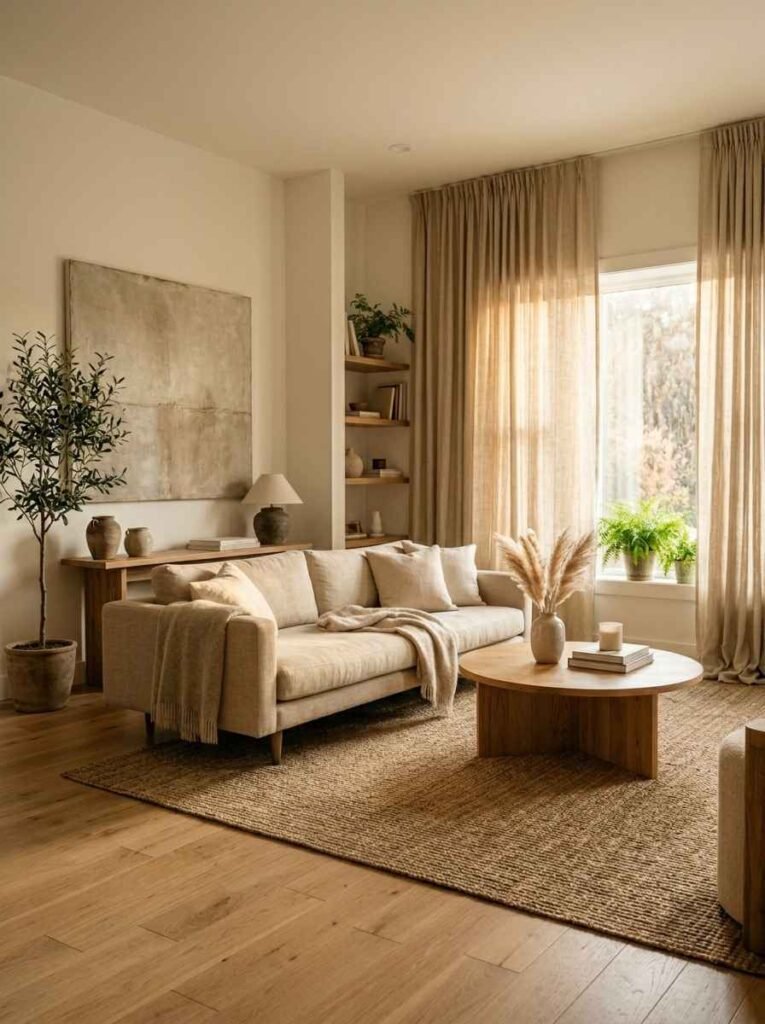
25. Linen or cotton curtains in warm white or oatmeal Let them puddle slightly on the floor. Yes, it’s impractical. Yes, it looks incredible.
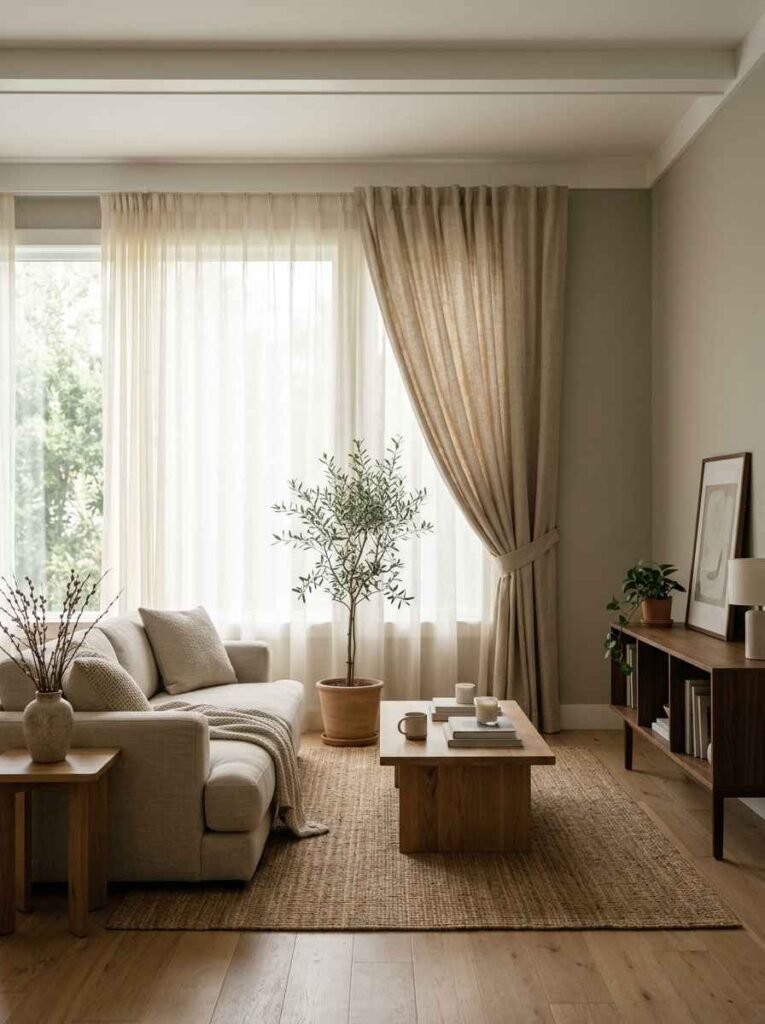
26. Sheer layers first A sheer layer behind heavier curtains gives you softness and privacy during the day without blocking light.
Small details that change everything
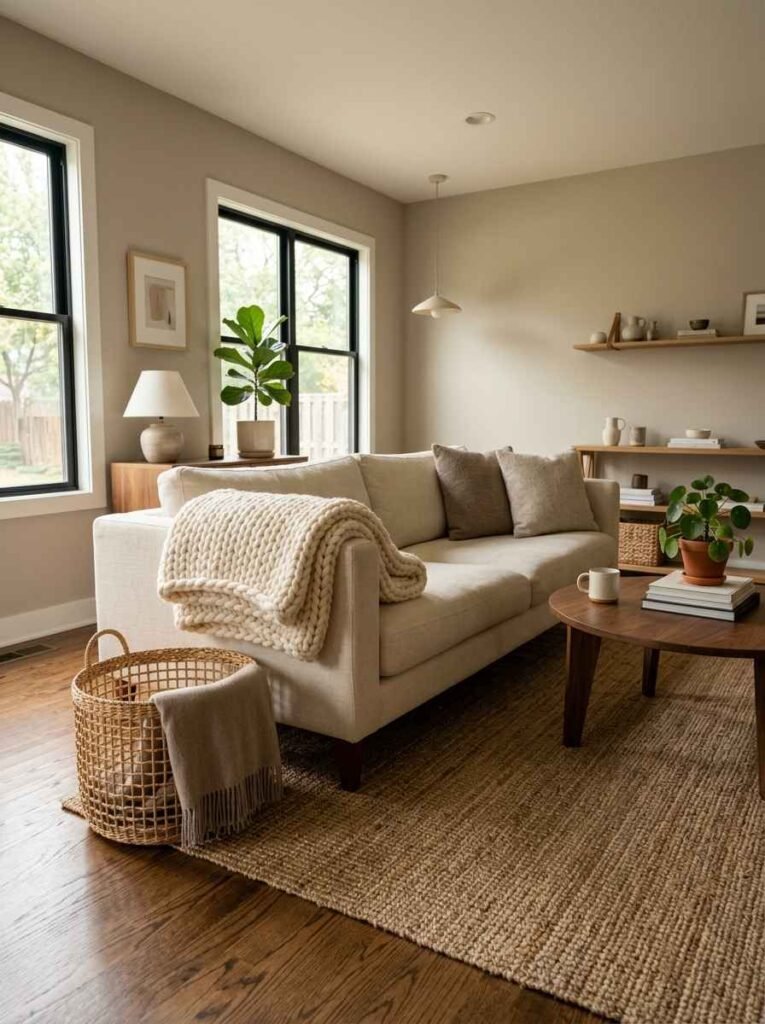
27. Throw blankets folded with intention Not draped haphazardly (unless that’s genuinely your style). A folded throw on the arm of the sofa or in a basket signals “cozy” without looking messy.
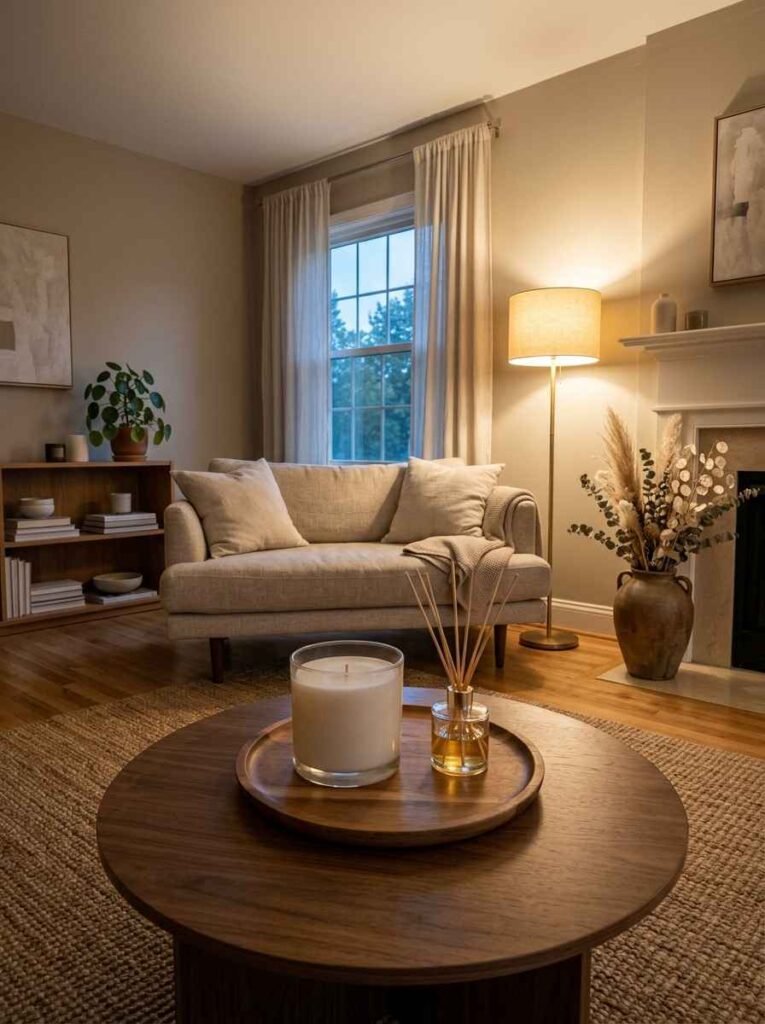
28. Scent Underrated. A candle or diffuser with a woody, earthy scent (sandalwood, cedar, fig) completes the sensory picture. You’re designing for all the senses, not just the visual. :/
What to actually spend money on
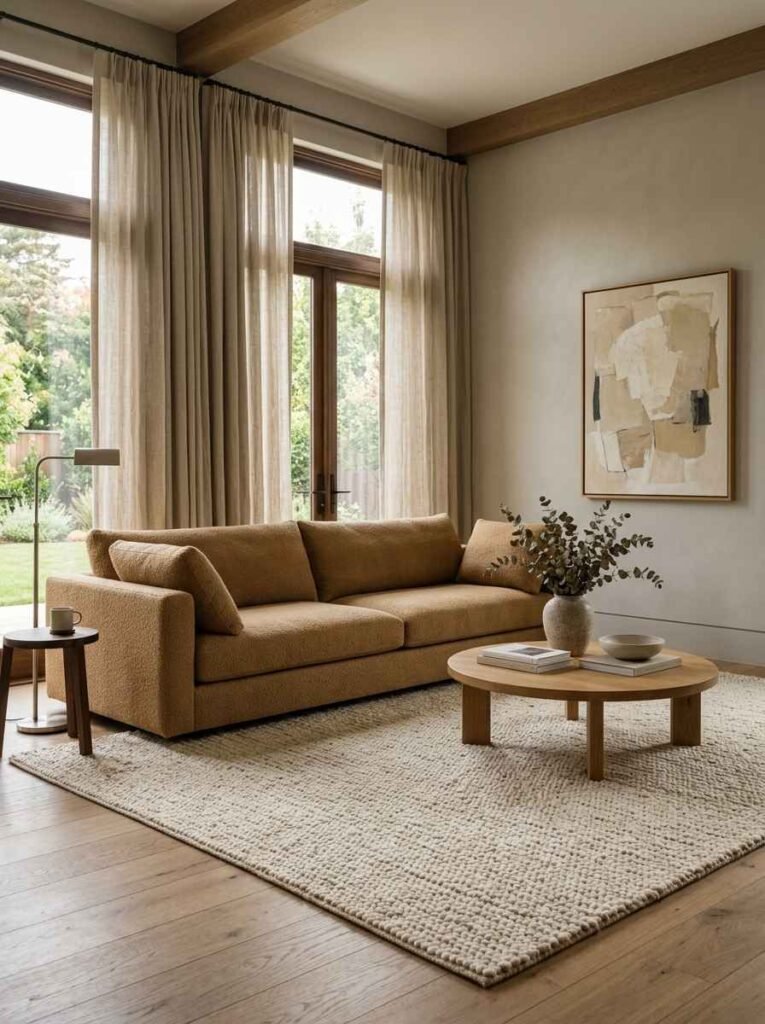
If budget is a constraint (and when isn’t it?), here’s where it genuinely makes a difference:
- Splurge: Sofa, rug, curtains — these set the whole tone
- Save: Decorative objects, trays, throws, candles
- DIY territory: Art prints, plant styling, pillow arrangements
The rug especially. A cheap rug undercuts an entire room. Get the best rug you can afford.
The one-room rule
Here’s something I wish someone told me earlier: pick one idea from this list and do it today.
Not 10. One.
Move a lamp. Buy one throw. Hang curtains higher. The momentum of one small change makes the next one feel possible. And suddenly your living room actually feels like yours.
That’s the whole point.
