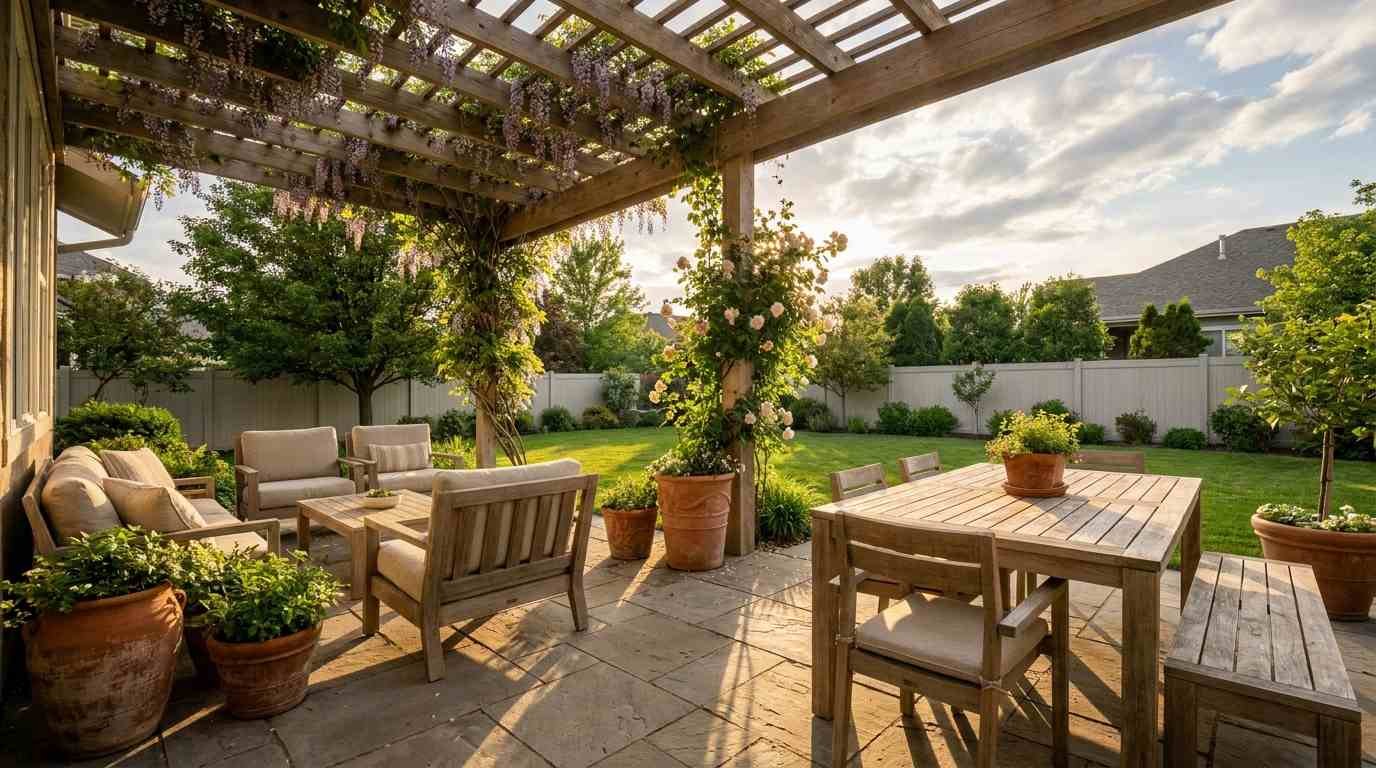
You want to enjoy your patio. But the blazing afternoon sun has other plans. So does that random Tuesday thunderstorm.
A partially covered patio fixes that without turning your backyard into a bunker.
It’s the sweet spot between wide-open and fully enclosed — shade and shelter exactly where you need it, open sky everywhere else.
I’ve spent way too much time obsessing over this for my own backyard, and honestly? The options are better than most people realize. Here are 27 ideas to get your wheels turning.
Classic Pergola Styles
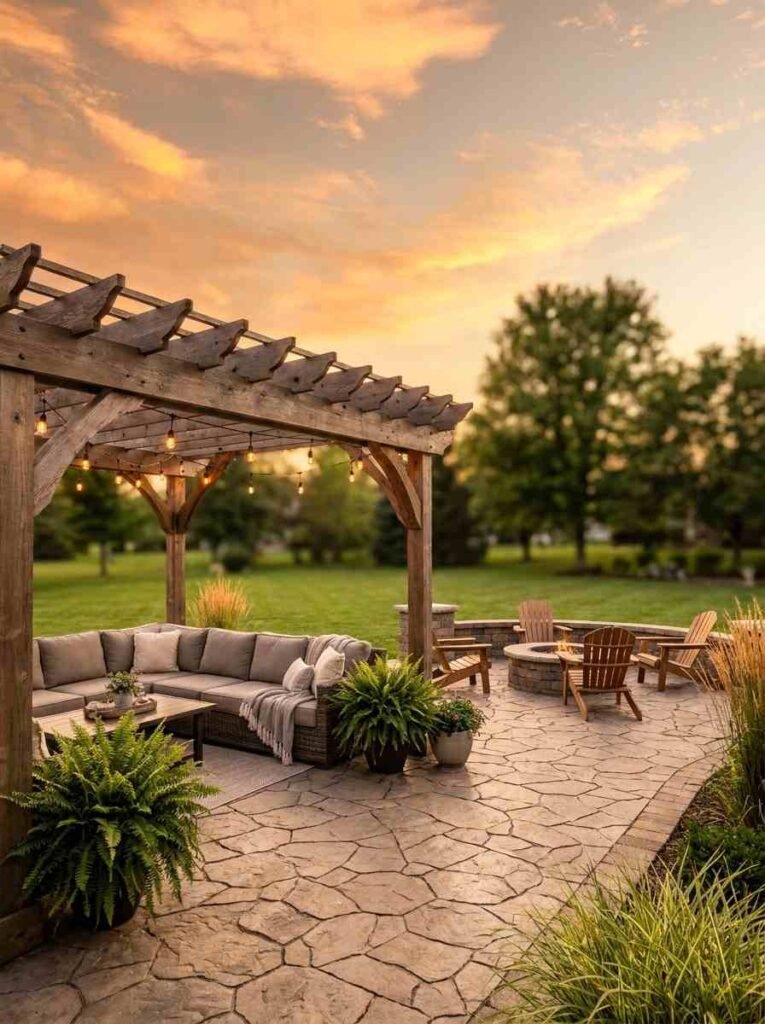
1. Traditional wood pergola with climbing vines
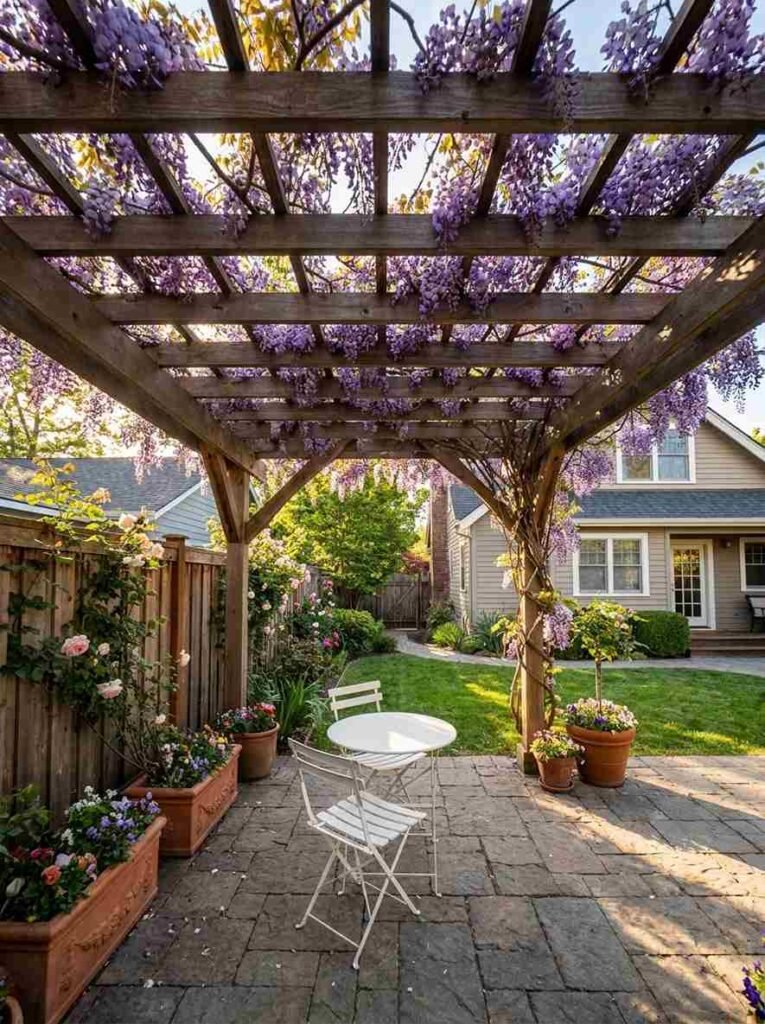
A cedar or redwood pergola with open rafters is a classic for good reason. Train wisteria or jasmine across the top and you get natural, living shade that smells incredible.
The coverage grows denser each season, so the patio kind of calibrates itself over time.
2. Attached pergola with retractable canopy
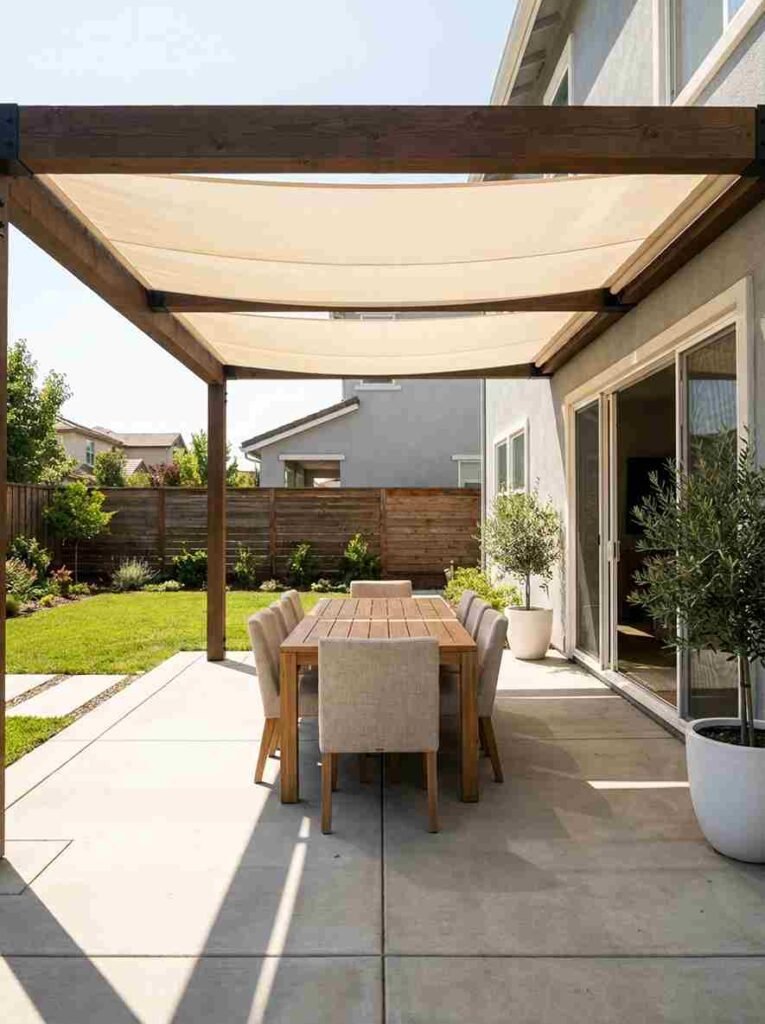
This is the one I keep coming back to. You bolt the pergola to the house, then run a retractable canopy across the beams.
Pull it out when the sun hits. Roll it back for stargazing. Best of both worlds, zero compromise.
3. Freestanding pergola with shade sail insert
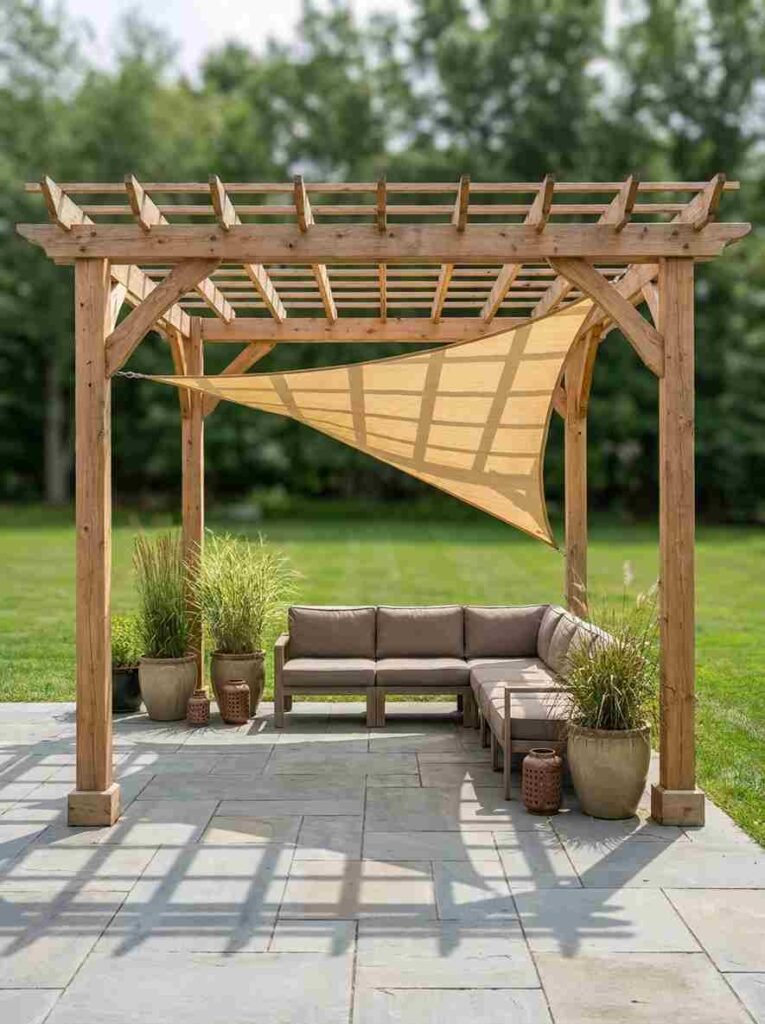
A freestanding pergola doesn’t need the house at all — great if your patio sits away from the structure.
Drop a geometric shade sail inside the frame and you get 40-60% sun blocking without losing the airy feel. The angled sail also drains rain cleanly.
4. Modern flat-roof pergola with slatted panels
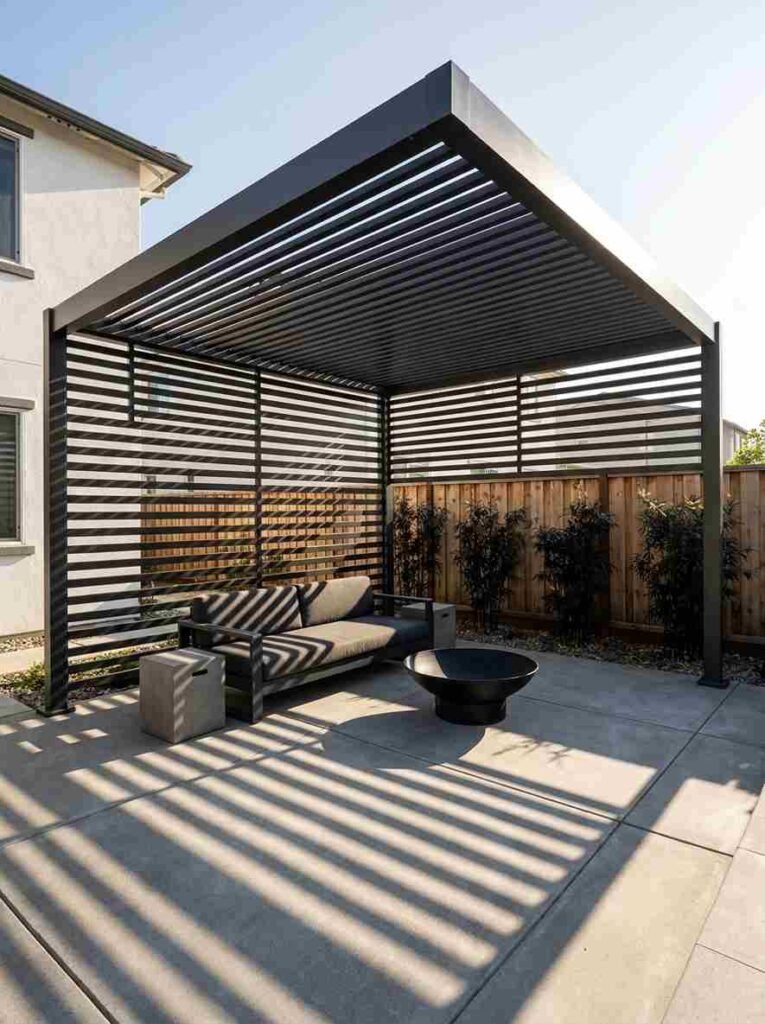
Horizontal slats at a set angle block overhead sun while letting afternoon light through the sides.
Perfect for contemporary homes with clean lines. Go aluminum for zero maintenance or wood for warmth.
| Pergola Type | Coverage Level | Maintenance | Best For |
|---|---|---|---|
| Wood + Vines | Medium (grows) | Moderate | Cottage/Traditional |
| Retractable Canopy | Adjustable | Low | Flexible climates |
| Shade Sail Insert | 40-60% | Very Low | Modern/Minimal |
Sail Shade and Fabric Cover Ideas
5. Overlapping triangle shade sails
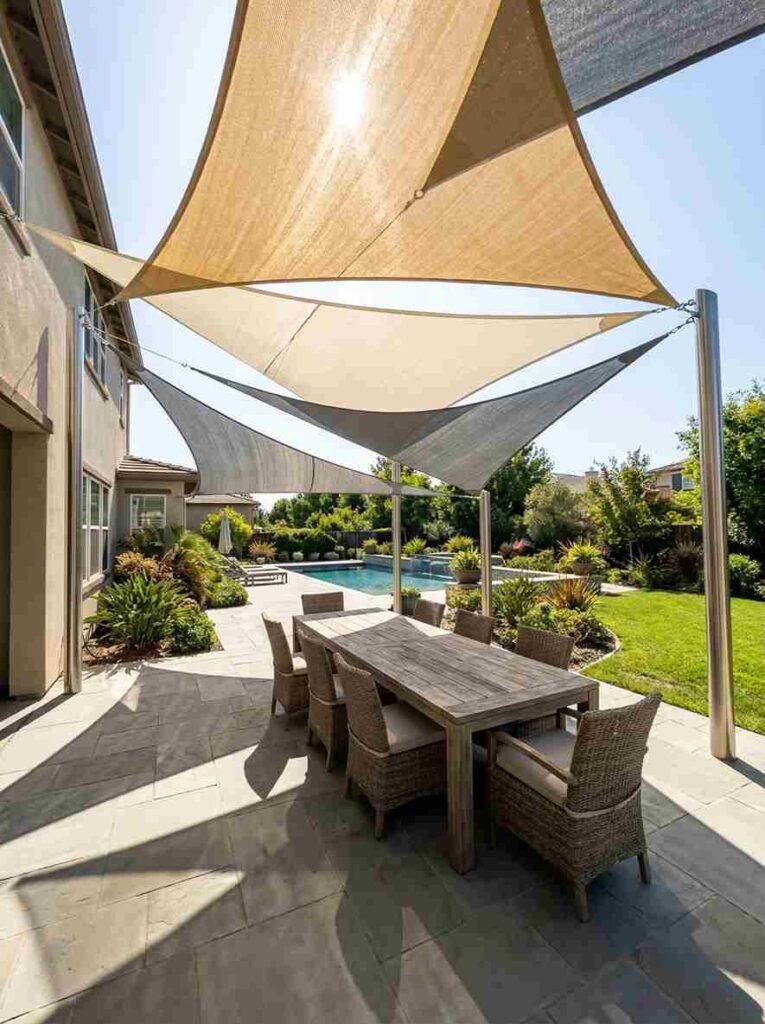
One triangle shade sail leaves gaps. Two or three overlapping ones at different heights and angles give you dynamic partial coverage that looks intentional and architectural.
Choose UV-stabilized HDPE fabric — it blocks up to 95% of UV rays while still allowing airflow underneath.
6. Striped canvas awning off the house
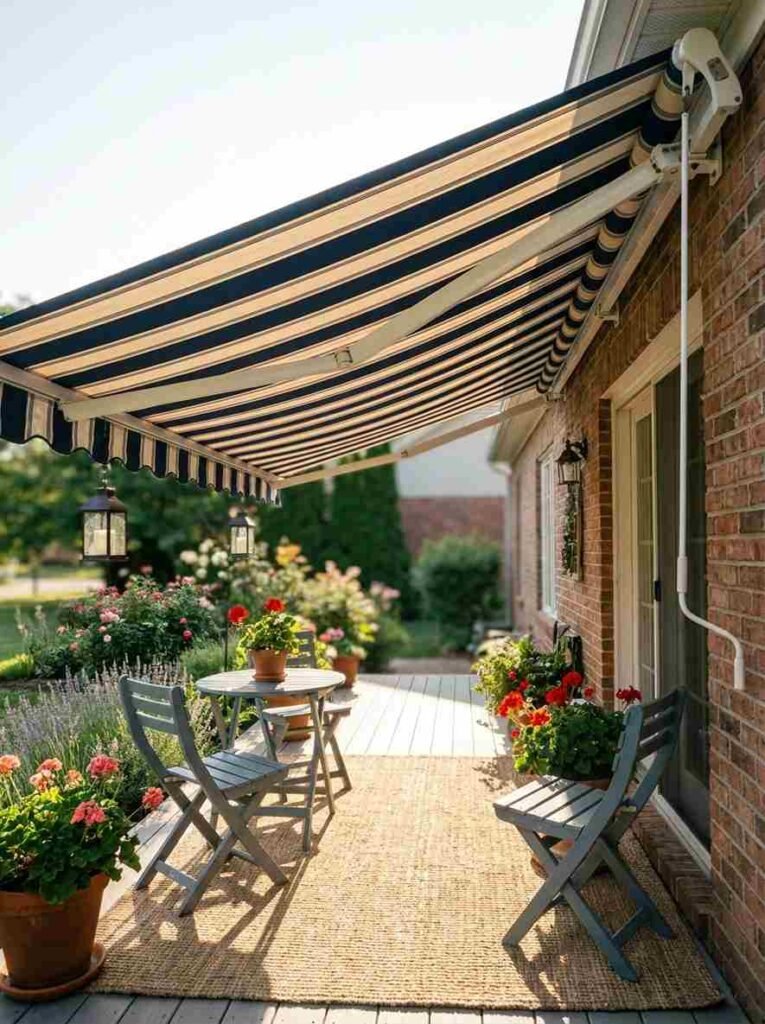
A retractable awning mounted to the house wall extends over the patio on demand. Striped canvas has a classic resort look.
IMO it’s one of the fastest installs that makes the biggest visual impact — a weekend project with years of payoff.
7. Tensioned fabric between posts
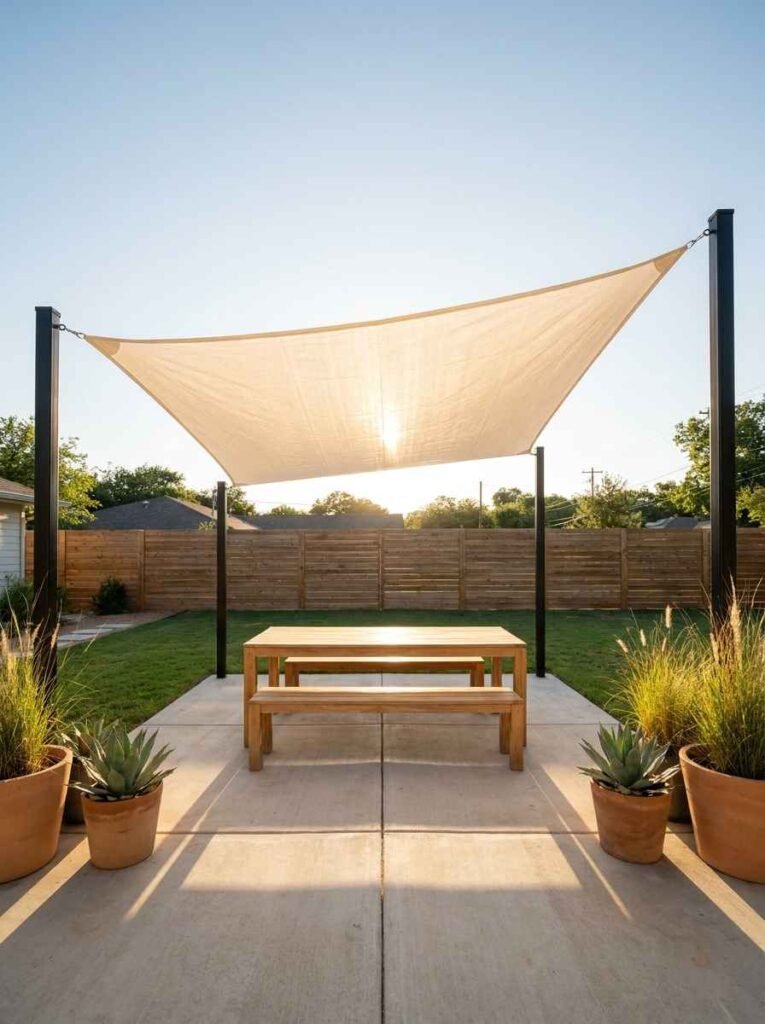
Sink four posts in the ground, tension a waterproof fabric panel between them, and you’ve got a clean minimalist cover that takes an afternoon to install.
The tension keeps it taut so rain slides right off instead of pooling.
8. Curved sail shade over dining area only
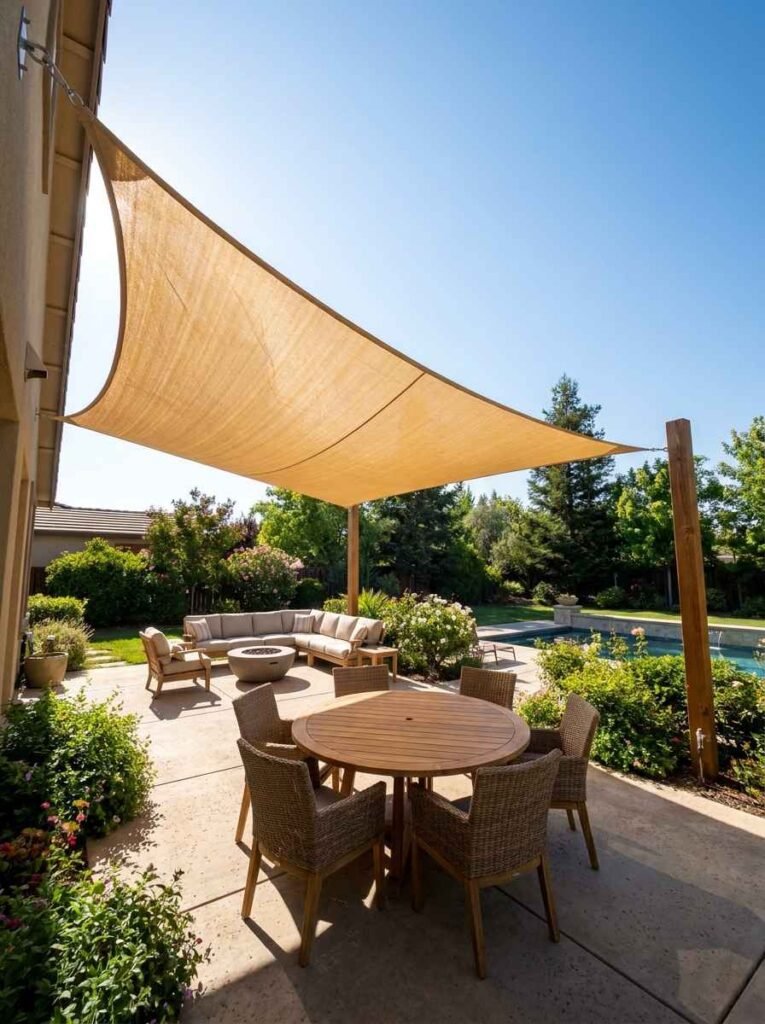
Shade the dining table, leave the rest open. A single curved sail directly above the table creates a focal point and keeps the sun off food and faces during lunch.
The open perimeter stays breezy and light.
Polycarbonate and Metal Roof Ideas
9. Clear polycarbonate roof panel section
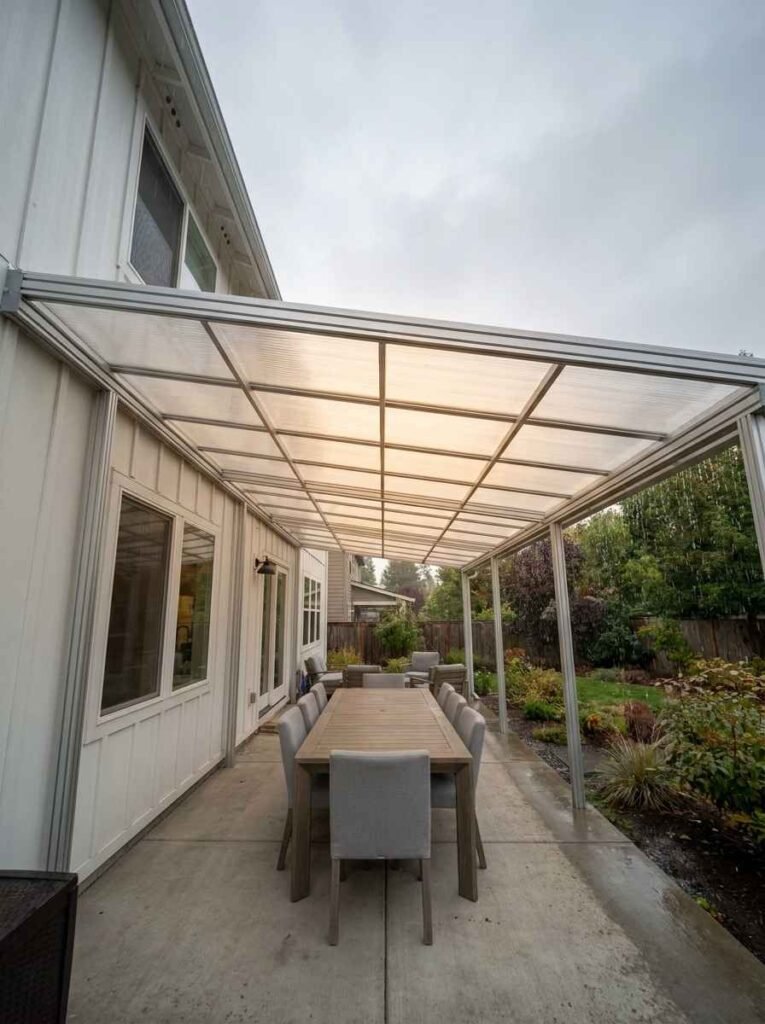
Run polycarbonate panels across half the patio and leave the other half open. You get full weather protection under the panels with real light coming through — it doesn’t feel like you’re sitting under a plastic tarp.
Twin-wall polycarbonate also insulates better than you’d expect.
10. Corrugated metal roof with open lattice section
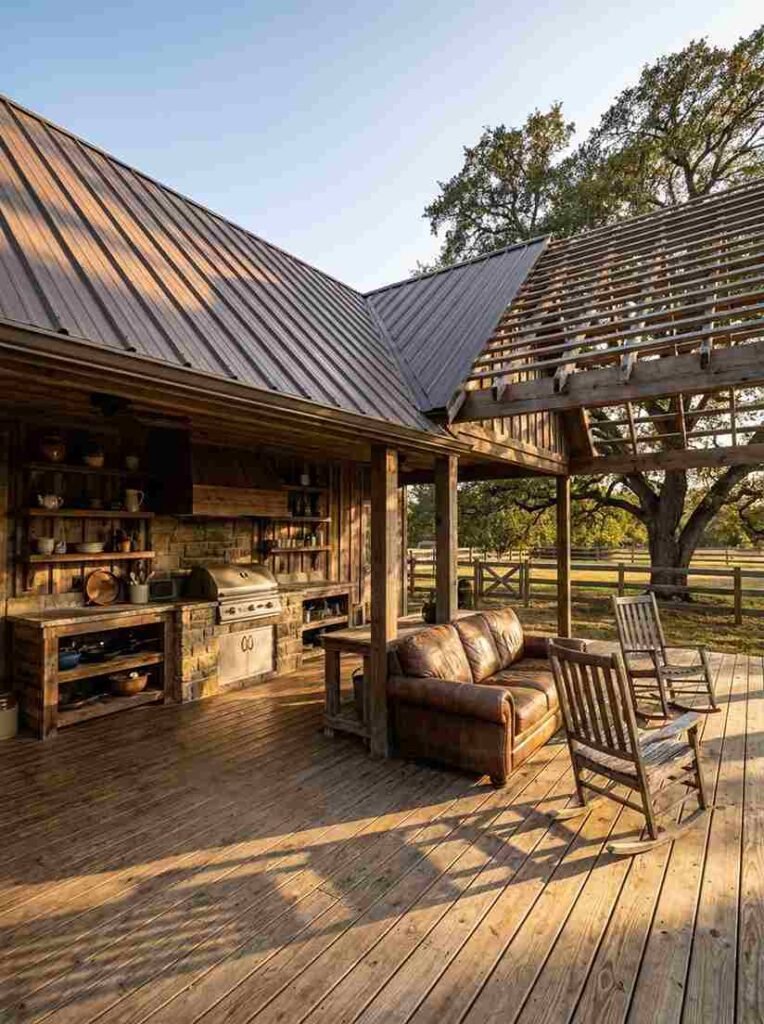
A corrugated metal roof over the cooking and dining end. Open lattice over the lounge end.
Rain pounds the metal section while you stay dry — the lounge side gets filtered light and breeze. This combo is wildly popular in farmhouse-style builds for good reason.
11. Standing seam metal roof with skylights
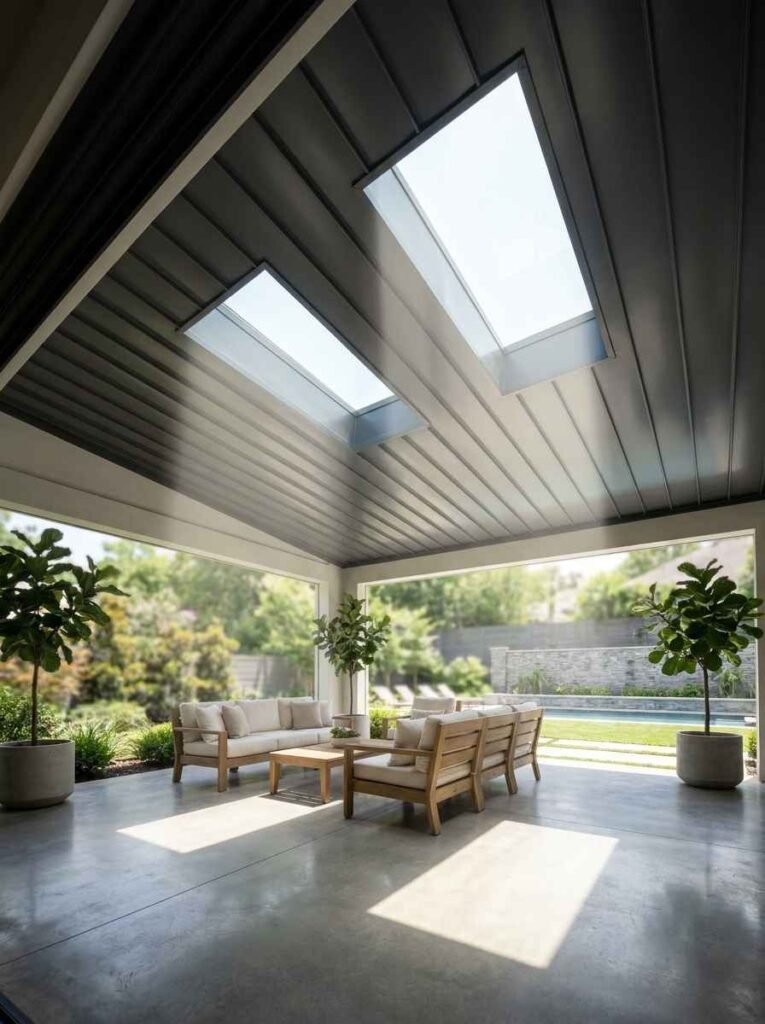
A proper standing seam metal roof looks sharp and lasts 50 years. Add 1 or 2 operable skylights to keep the space from feeling dim.
Solid weather protection with a pocket of open sky above you.
12. Lean-to roof covering half the patio depth
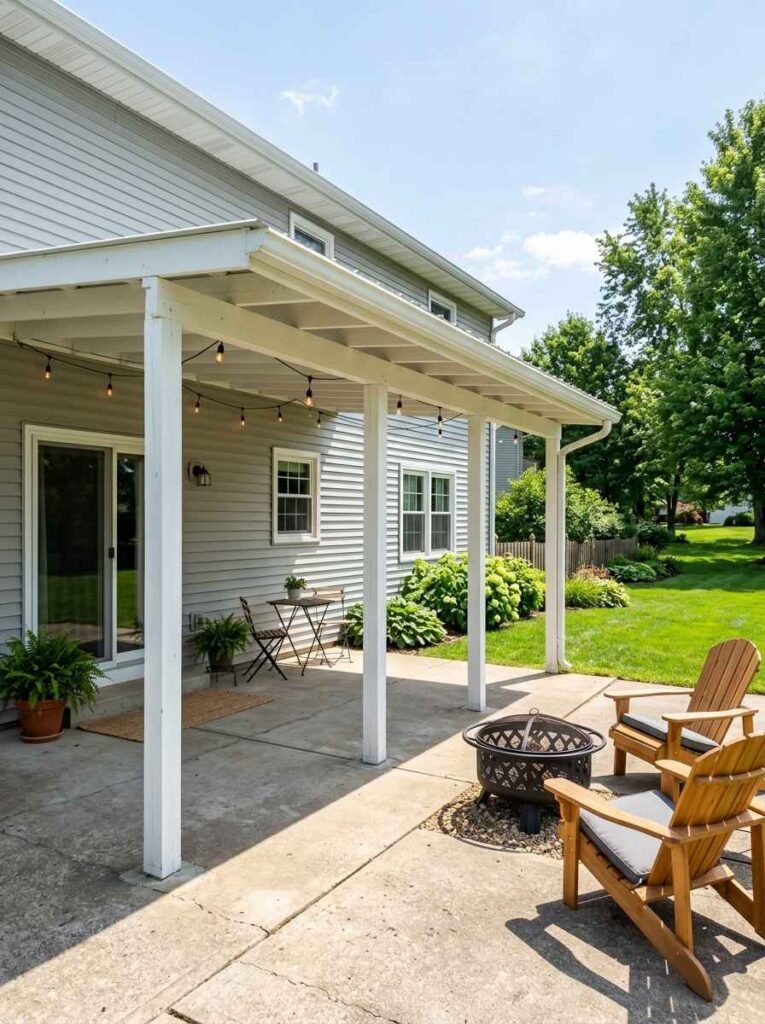
A lean-to extends from the house wall and covers half the patio depth — usually 8-10 feet.
The back half stays completely open. Simple, cheap, and effective. Great for narrow patios where a full structure would eat the space.
Lattice and Louvered Options
13. Adjustable louvered pergola roof
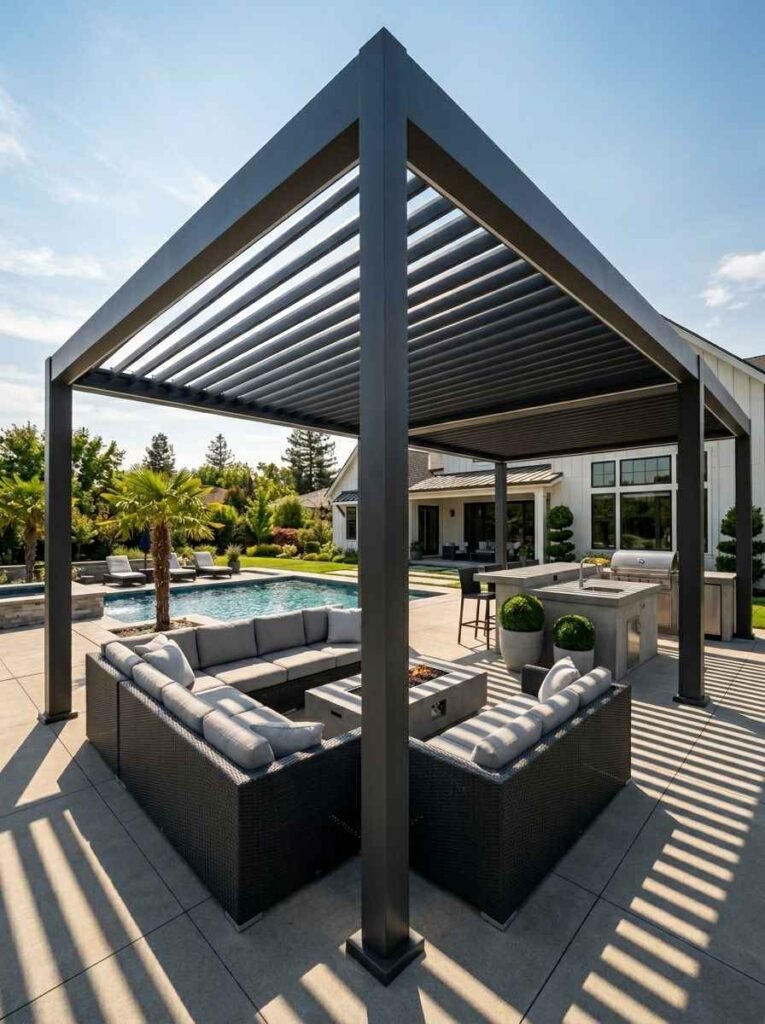
This is the Cadillac of partial coverage. Motorized aluminum louvers rotate open and closed with a remote.
Full open for a breeze. Tilted 45 degrees for filtered shade. Fully closed when it rains. Pricier upfront, but nothing else offers this level of control.
14. Fixed wood lattice roof
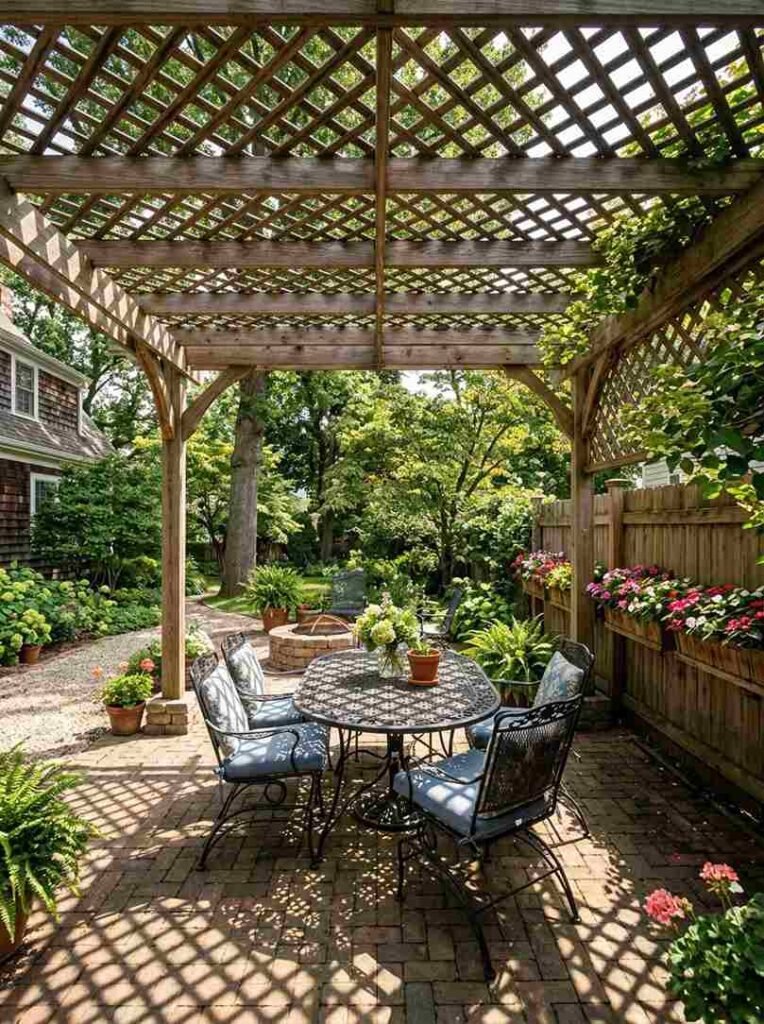
A fixed lattice creates dappled shade that moves through the day as the sun tracks across. It’s never full shade or full sun — always in between, which suits a lot of plants and people. Stain it to match your deck boards and it feels completely intentional.
15. Angled louver panels on one side only
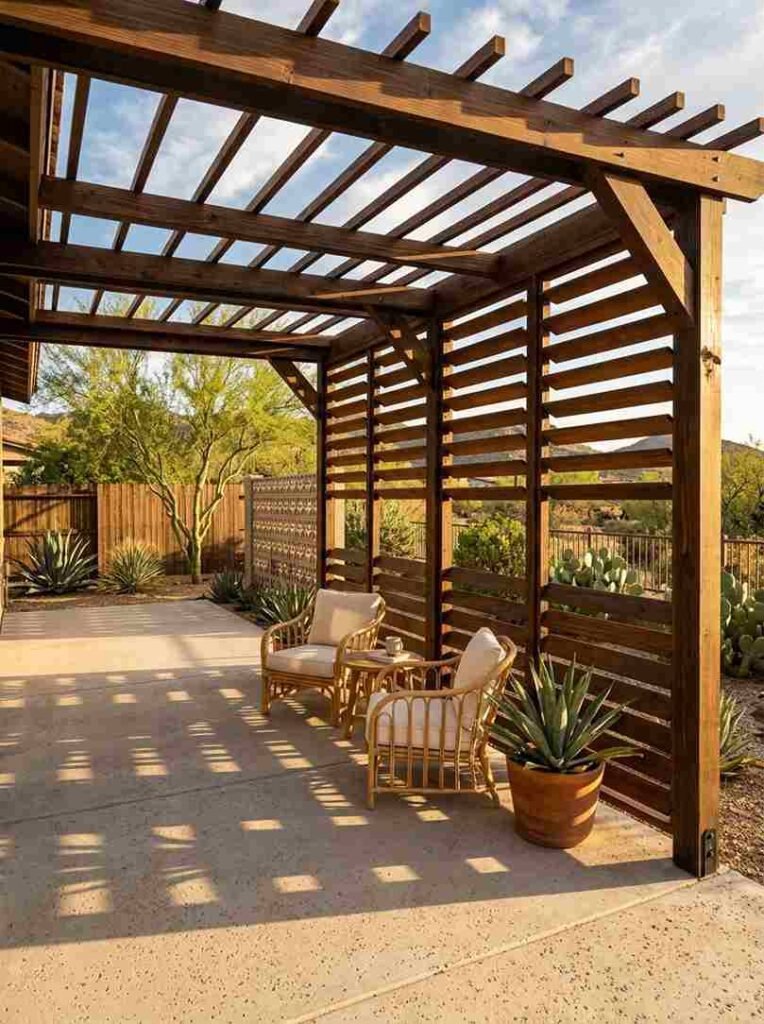
Block the western sun specifically. Fix louvered panels on the west side of your patio structure, angled to cut that brutal late-afternoon glare.
The rest stays wide open. FYI, this directional approach costs a fraction of a full louvered roof.
16. Bamboo roll shade on pergola beams
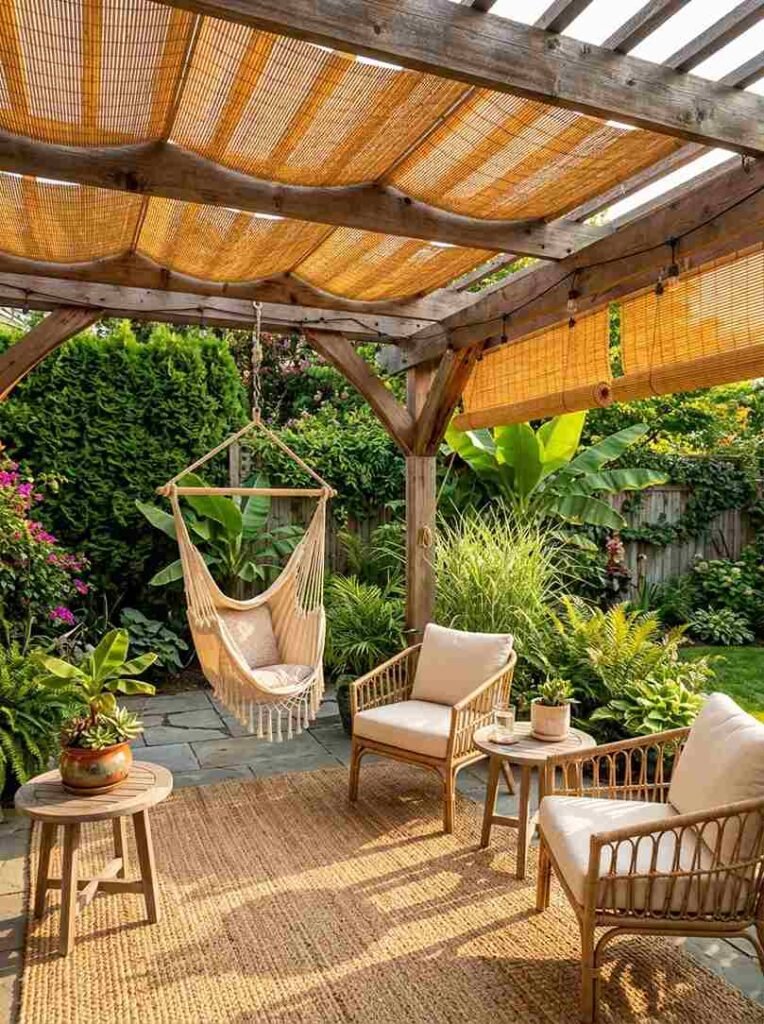
Roll bamboo shades across pergola beams and tie them in place for the season. Roll them up in winter.
Super cheap, surprisingly attractive, and easy to replace when they eventually wear out. Works well in warm climates with less rain.
Creative Green and Living Cover Ideas
17. Grape vine pergola
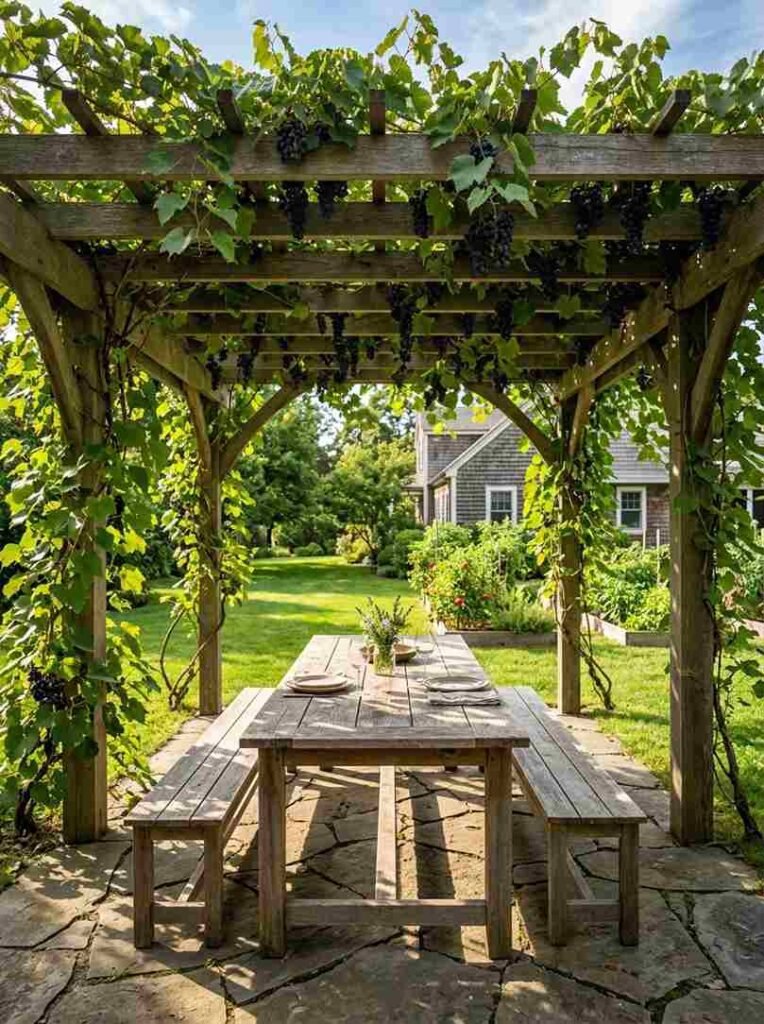
Grapes are the original patio cover. Plant them at the base of a sturdy pergola and train them across.
By year 3 or 4 you’ll have dense canopy cover, actual grapes to snack on, and brilliant fall color when the leaves turn. Extremely low-cost once established.
18. Wisteria tunnel section
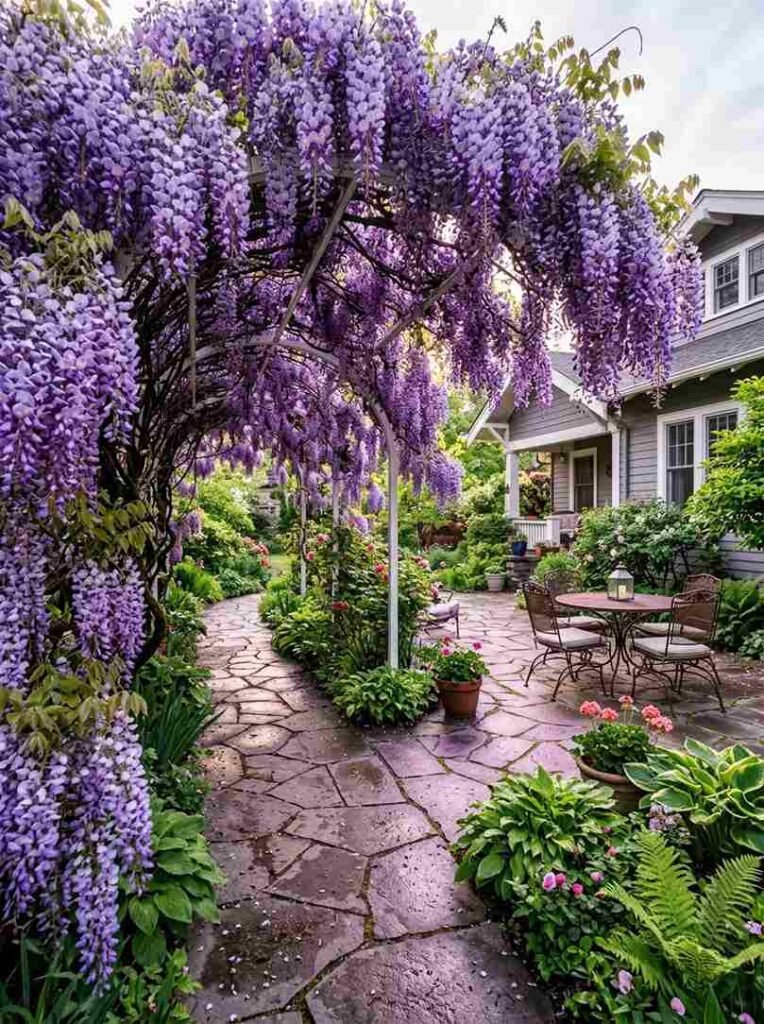
Build a partial pergola tunnel over a walkway or one end of the patio. Plant wisteria at each post.
When it blooms in spring, it’s one of the most dramatic outdoor spaces possible.
Just go in with eyes open — wisteria is aggressive and needs structural support that can handle the weight.
19. Climbing roses over arched trellis
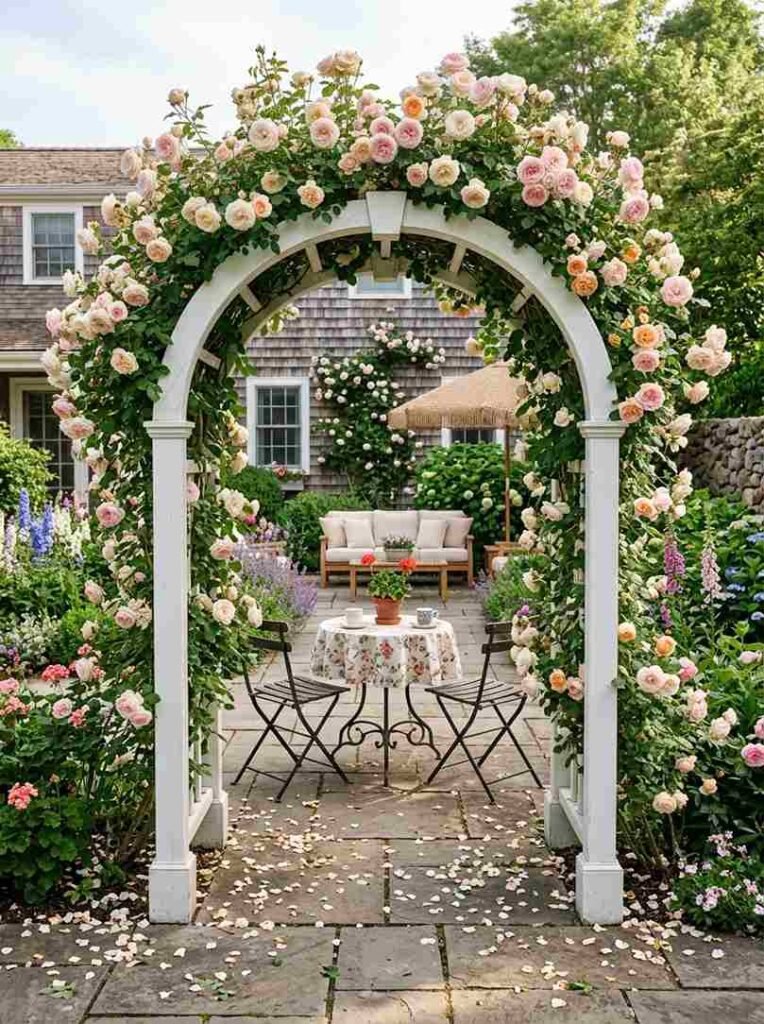
An arched trellis covered in climbing roses creates fragrant partial coverage that’s hard to beat for a romantic or cottage garden setting. Use repeat-blooming varieties for color from late spring through fall.
Prune annually and they’ll fill the arch completely within 2-3 years.
20. Green roof over solid section
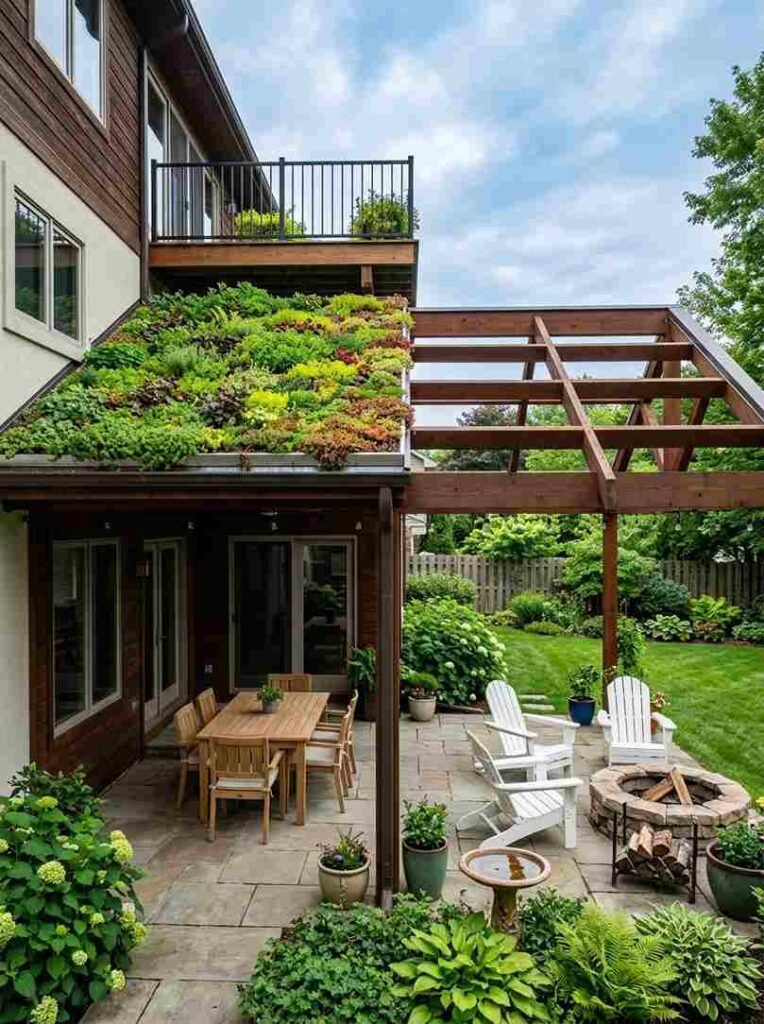
Cover the solid portion of your patio roof with a lightweight sedum green roof.
It insulates, it looks stunning from above (great if you have a second-floor window), and it handles rainfall beautifully. The open section stays classic patio.
Combo and Hybrid Structure Ideas
21. Solid roof over kitchen, pergola over dining
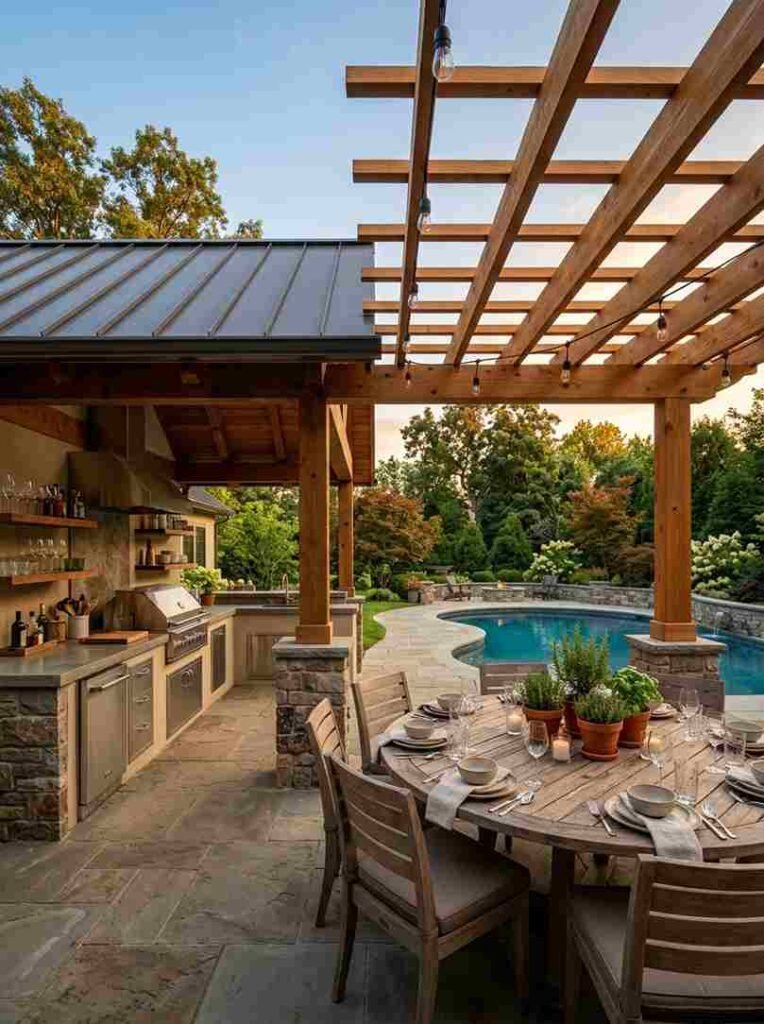
This is the most functional split I’ve seen. Solid weather-tight roof over the outdoor kitchen — keeps your grill, fridge, and countertops protected year-round.
Open pergola over the dining table lets you eat under the stars on clear nights. Clean zoning that matches how the space actually gets used.
22. Covered lounge area with open fire pit zone
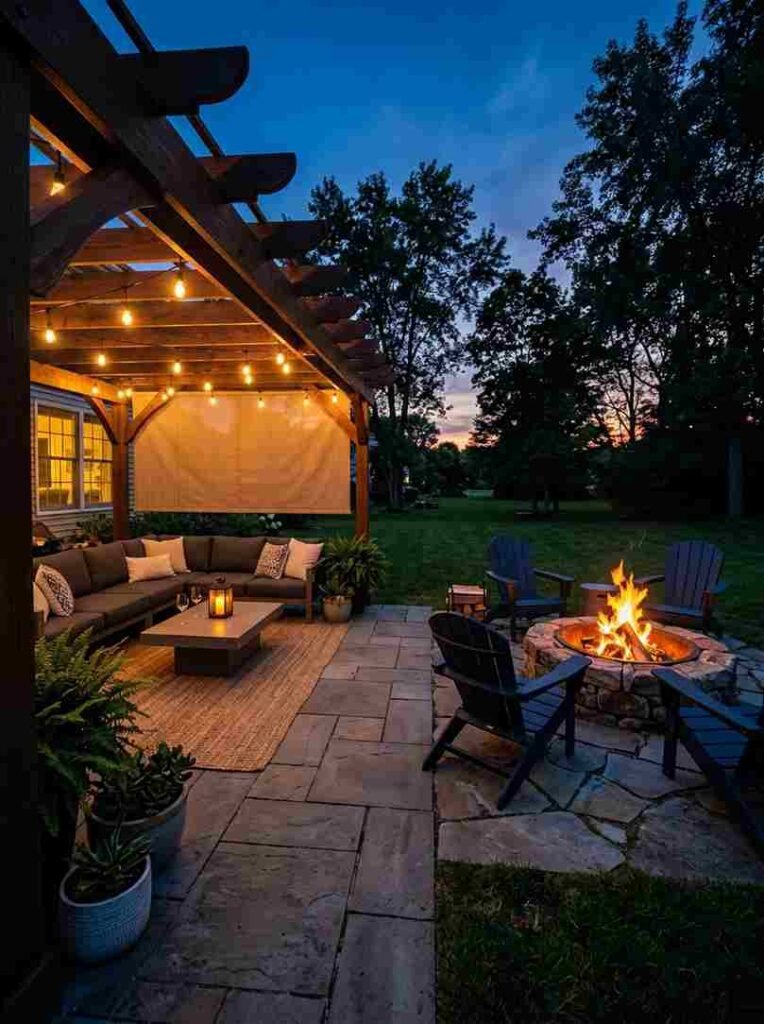
Cover the sofa and seating area. Leave the fire pit section completely open. Fire pits need the ventilation, and smoke under a low roof is no fun for anyone.
The covered zone keeps furniture dry between uses; the open zone stays safe for the fire.
23. Pavilion with open sides and solid top
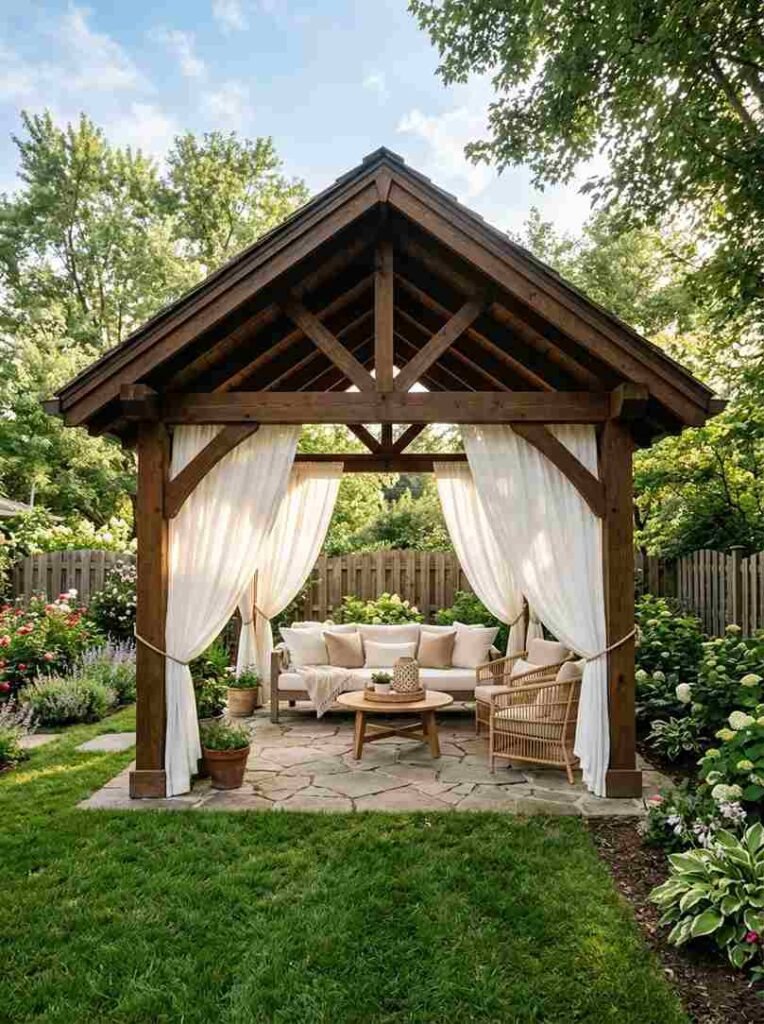
A four-posted pavilion with a solid roof and completely open sides is one of the most versatile structures you can build.
Drop outdoor curtains on the sides when wind or privacy is needed. Roll them up the rest of the time.
Feels like a proper outdoor room without the permanence.
24. Enclosed screen room with open deck attached
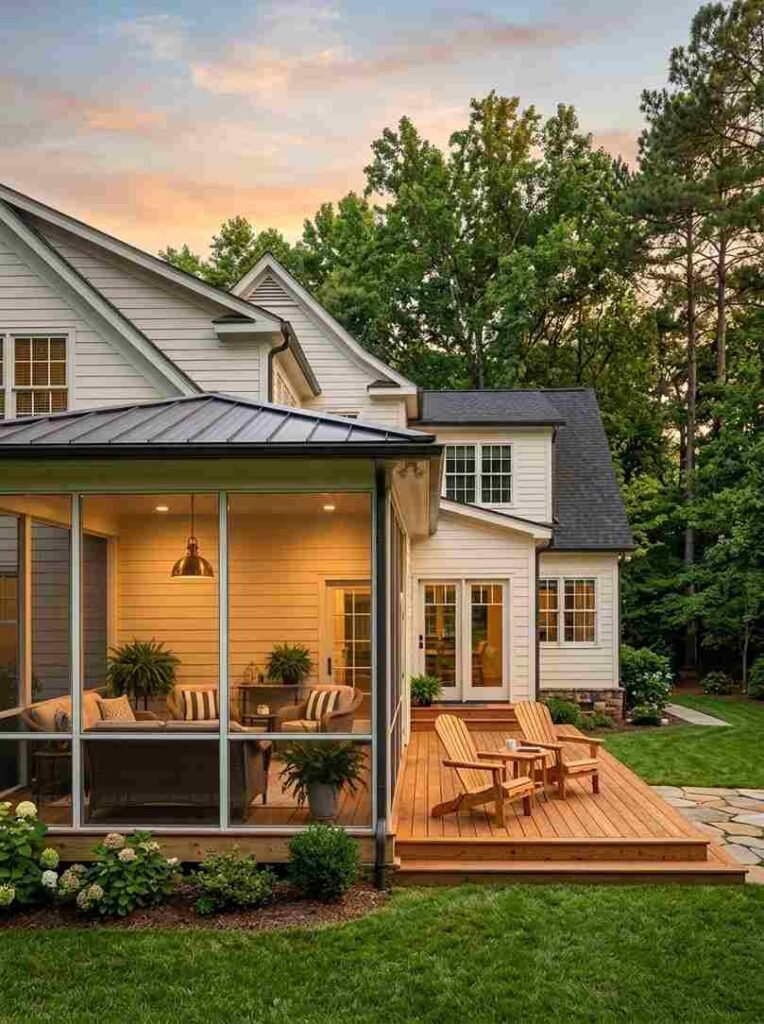
A fully screened porch on one end, open deck on the other. Screens keep bugs out of the sitting area while the open deck stays connected to the yard.
Great for bug-heavy climates where an unscreened covered patio is just not realistic from May through September 🙂
Budget-Friendly Partial Cover Ideas
25. Patio umbrella cluster
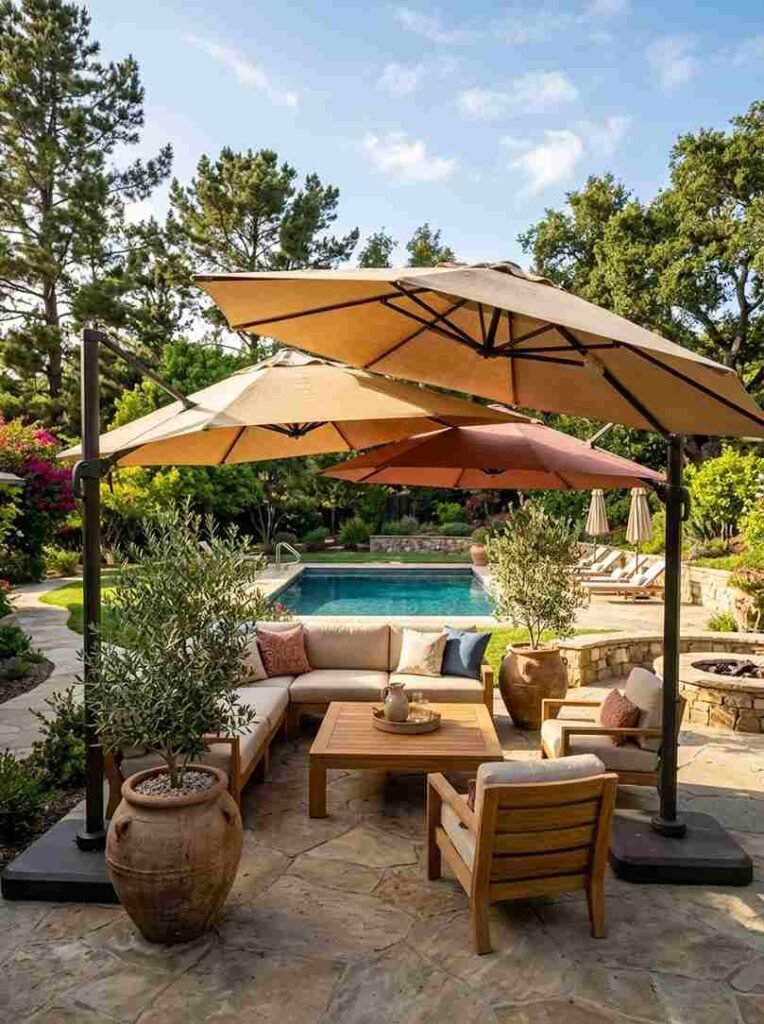
3 large offset umbrellas grouped together create surprisingly effective partial coverage. Move them for parties, store them for winter, replace one at a time.
27 Small Back Patio Ideas Covered: Guide for Small-Space Inspiration
The upfront cost is low and the flexibility is unmatched. Not glamorous — extremely practical.
26. DIY wood frame with shade cloth
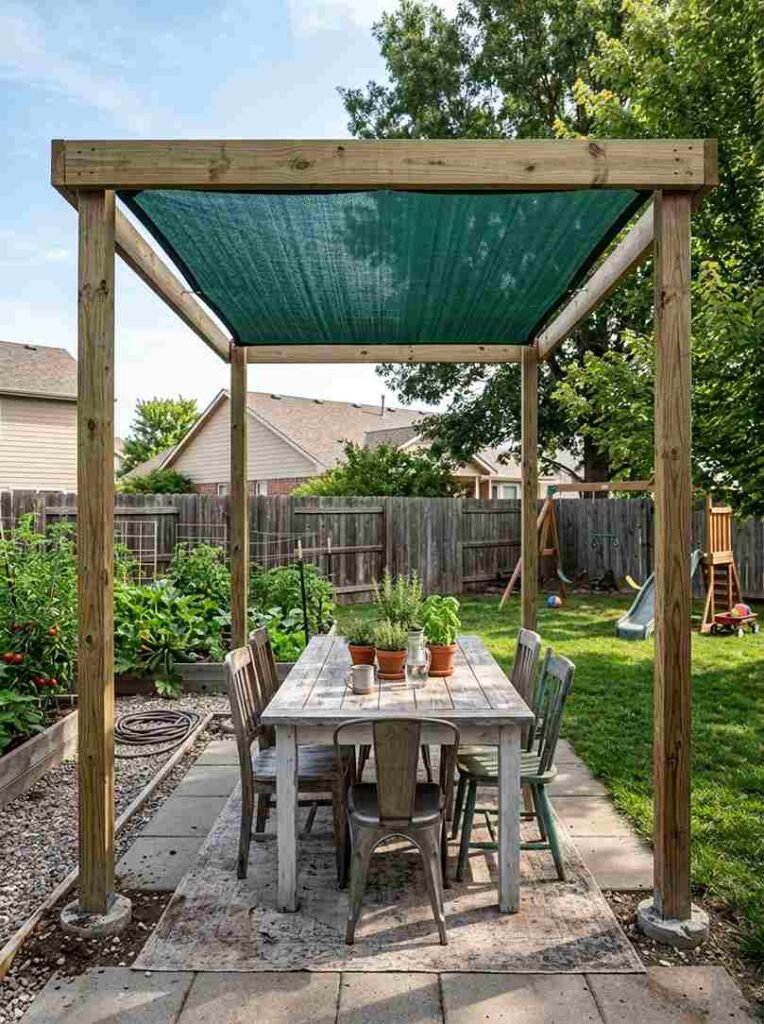
Build a basic rectangular frame from pressure-treated 4x4s and 2x6s. Staple knitted shade cloth across the top. Total material cost for a 12×16 version runs around $400-600. It’ll cut the heat and block the UV effectively.
27. Repurposed sail from a boat
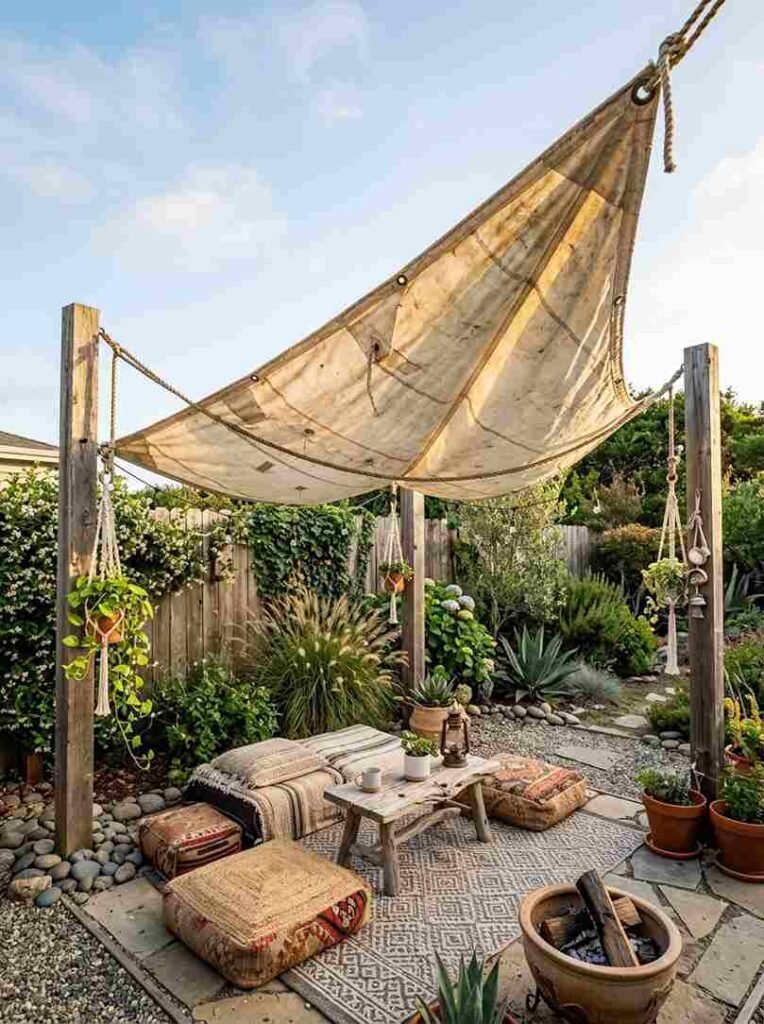
Sounds niche, but marine-grade sail fabric is tough, UV-resistant, and genuinely beautiful. Old sails show up regularly at marine salvage shops and online.
Rig it between posts or trees. It’s weathered, textured, and completely unique — no two look the same. My favorite left-field idea on this whole list.
Picking the Right Cover Material
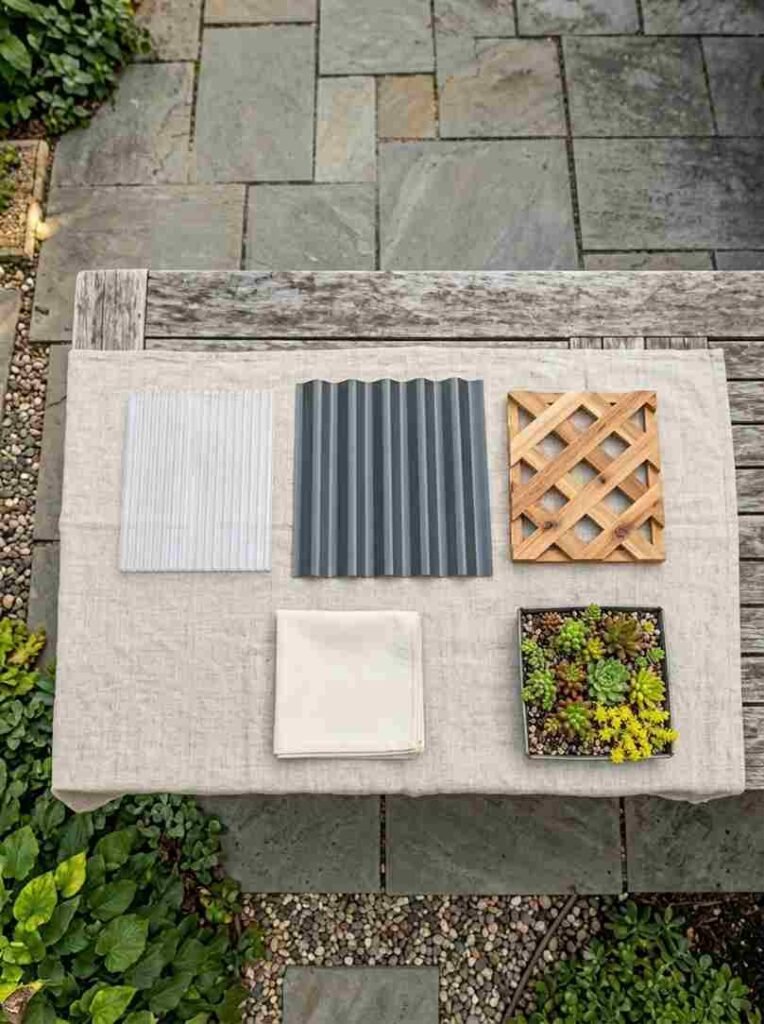
Before you commit, match the material to your climate and how you actually use the space:
- Polycarbonate: Best for rain-heavy climates. Lets light in. Holds up to hail and wind. Clear, bronze, or opal finishes available.
- Fabric/canvas: Best for moderate climates. Needs occasional cleaning. Retractable options extend the life significantly.
- Metal: Best for longevity and zero maintenance. Heavy-duty. Pairs well with modern or industrial styles.
- Wood/lattice: Best for aesthetics and DIY builds. Needs sealing every few years. Works in most climates.
- Living plants: Best for slow-build, natural coverage. Requires several years of training. Cheapest long-term option.
A Few Things to Figure Out Before You Build
What direction does the worst sun come from? That angle determines where you actually need coverage versus where you can leave things open.
Check your HOA rules and local permit requirements before ordering materials. Some structures need permits even if they’re freestanding. Worth a 20-minute phone call to avoid a much longer conversation later.
Think about what you’re protecting — furniture, a grill, people, plants. The answer shapes which section gets solid coverage and which stays open. Most patios have a clear answer once you frame the question this way.
Now Go Build Your Outdoor Balance
A partially covered patio sounds like a compromise. Pull it off right and it’s actually the upgrade — you get sun when you want it, shade when you need it, and a space you’ll actually use year-round instead of abandoning every July.
Pick one idea from this list that fits your budget and your yard. Start there. You can always expand later. That’s the beauty of partial coverage — it grows with you 🙂
