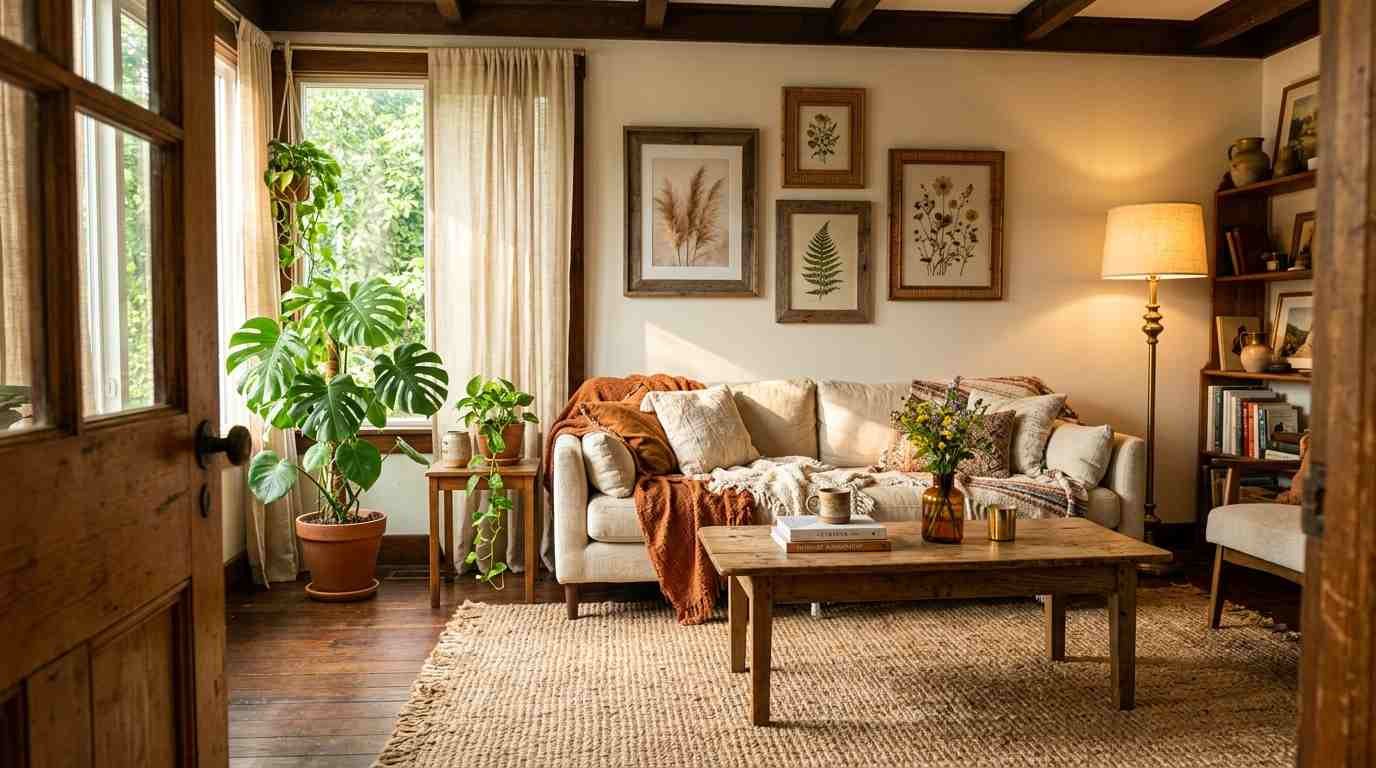
Your space should feel like you—not like a catalog page somebody else designed. That’s what draws me to bohemian interiors.
They’re unapologetically personal, layered, lived-in. This guide covers 27 concrete ideas to get you there, plus the styling system that actually works.
What Modern Bohemian Actually Means
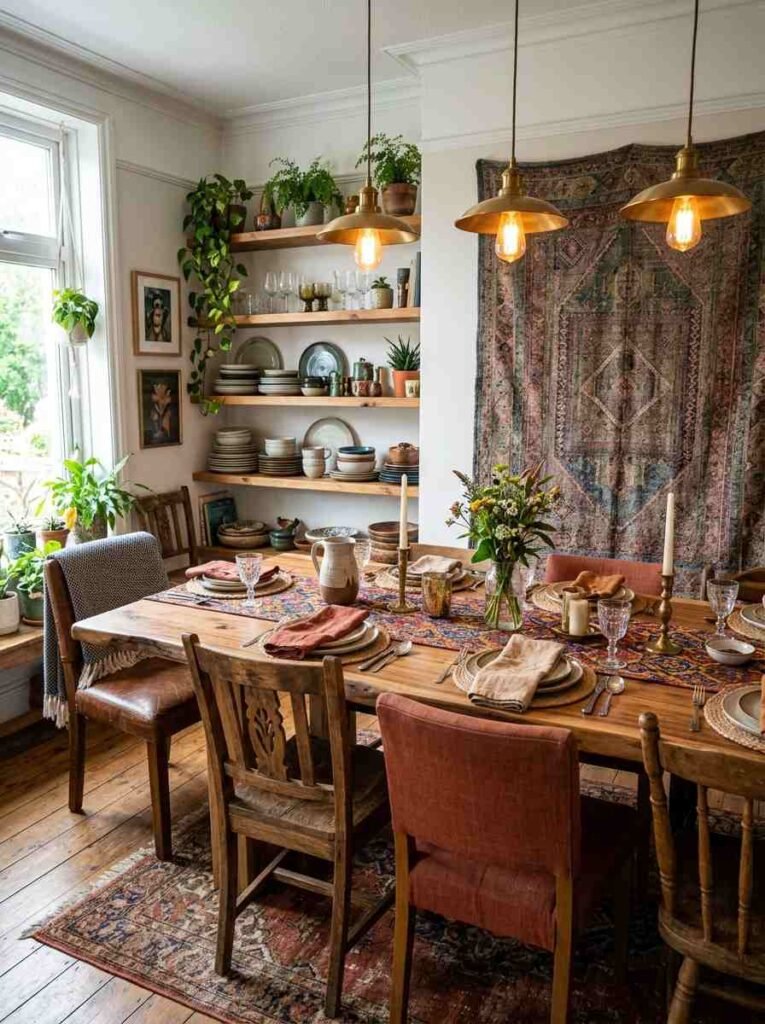
Forget your grandmother’s macramé wall hangings. Modern bohemian strips away the chaos and keeps the soul.
It’s about mixing cultural pieces, natural textures, and unconventional color without it looking like a thrift store exploded in your living room.
30 Must-See Cozy Living Room Ideas Minimalist Decor Enthusiasts Love
The key difference? Intention. Everything you add should either function, inspire you, or both. Not just “I found this in Morocco once, so it stays forever.”
I spent two years rotating boho elements before I figured out the system. Too many patterns and your space feels restless. Too minimal and you kill the whole vibe. There’s a balance, and it’s actually teachable.
The Foundation: Color Palette
Start here. Not furniture, not decor. Color.
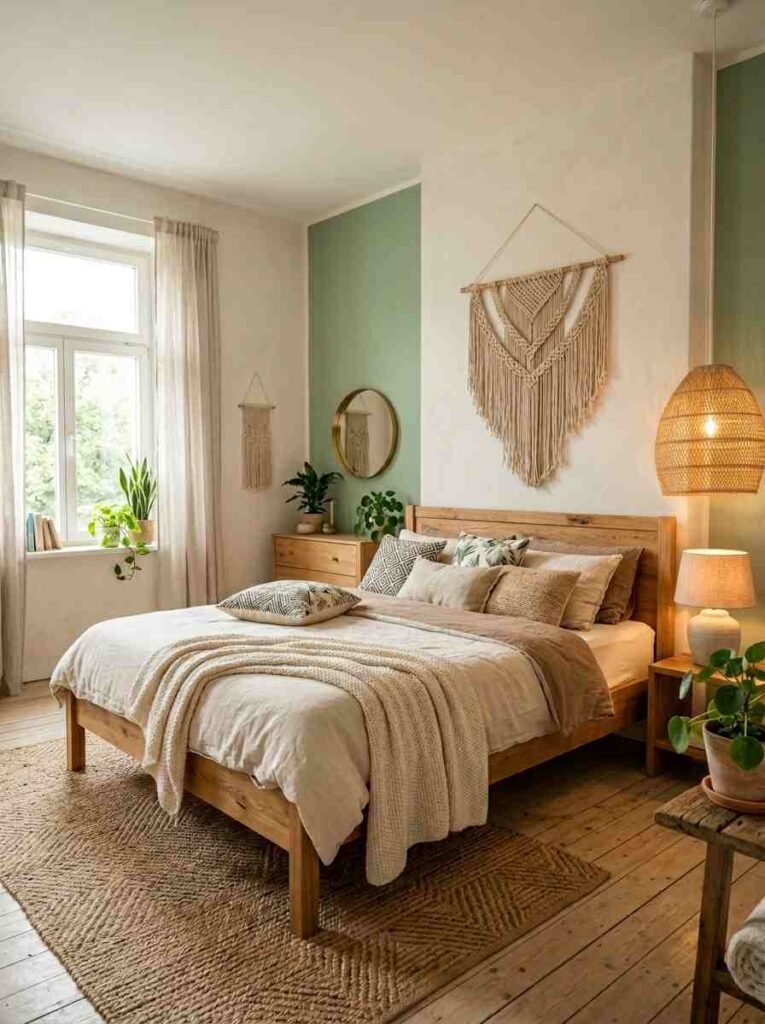
Modern bohemian lives in warm neutrals with pops of intentional color. Think terracotta, cream, soft sage, muted mustard.
Your base walls should be one of these. I painted my bedroom a warm off-white and it became the anchor for everything else.
Add color through textiles and art, not paint. This matters because you can change fabrics. You can’t repaint walls every six months when you get bored. Here’s what works:
| Color | Role | Example |
|---|---|---|
| Warm neutral | 60% of the room | Walls, main rug, large furniture |
| Secondary color | 30% | Throw pillows, artwork, smaller pieces |
| Accent color | 10% | Plants, small decor, jewelry displays |
| Metallics | Sparkle | Gold, copper (brass feels modern) |
Jewel tones work if you’re careful. A single teal chair? Yes. An entire wall of teal? Visually exhausting. Test colors with fabric swatches first. Seriously. Natural light changes everything.
Pattern Rules That Actually Work
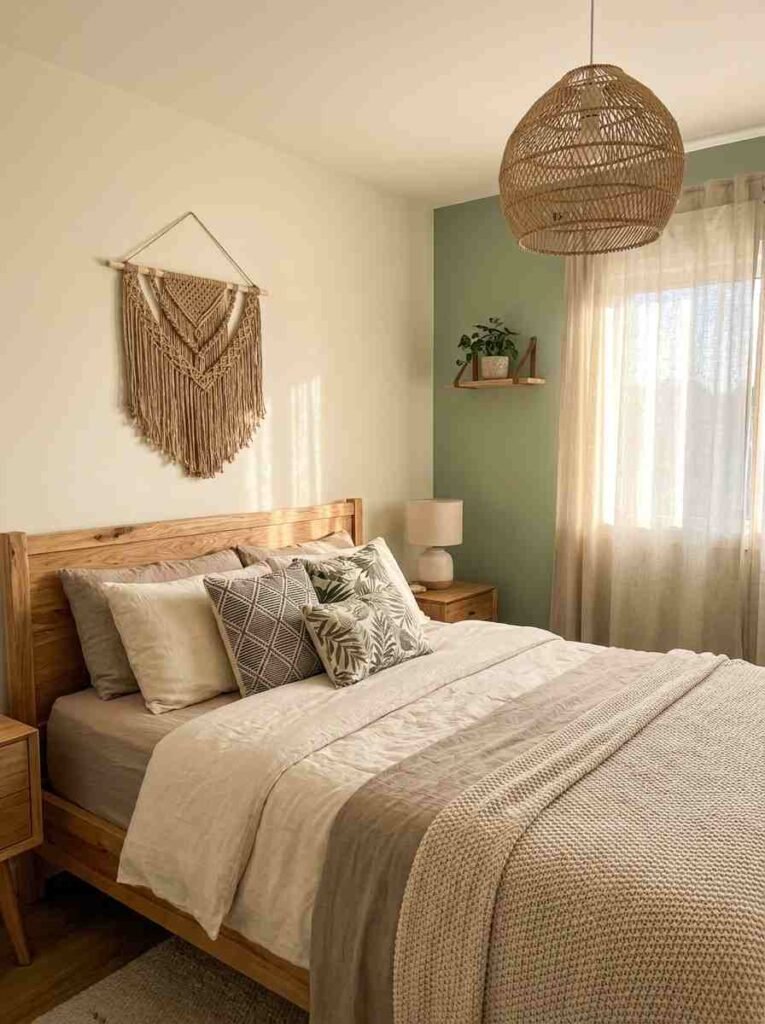
Everyone messes this up. They see boho inspiration images (taken with professional lighting and a $2,000 budget) and assume they need fourteen different patterns happening at once.
You need three. Maybe four on a good day.
Pick one as dominant. For me, that’s usually a large-scale geometric rug. Everything else follows.
Then add a secondary pattern through pillows or textiles—could be a botanical print or a traditional ikat. The third pattern can be smaller: trim on a blanket, weaving details, tile work.
If patterns clash, they usually share a color family. A rust-and-cream rug works with rust-and-white pillows because the rust connects them. Your eye recognizes the relationship.
Solid textures count as visual breaks too. A chunky knit throw. Raw wood. Linen. These aren’t boring—they’re essential breathing room. Your eyes need somewhere to rest.
Natural Materials Are Non-Negotiable
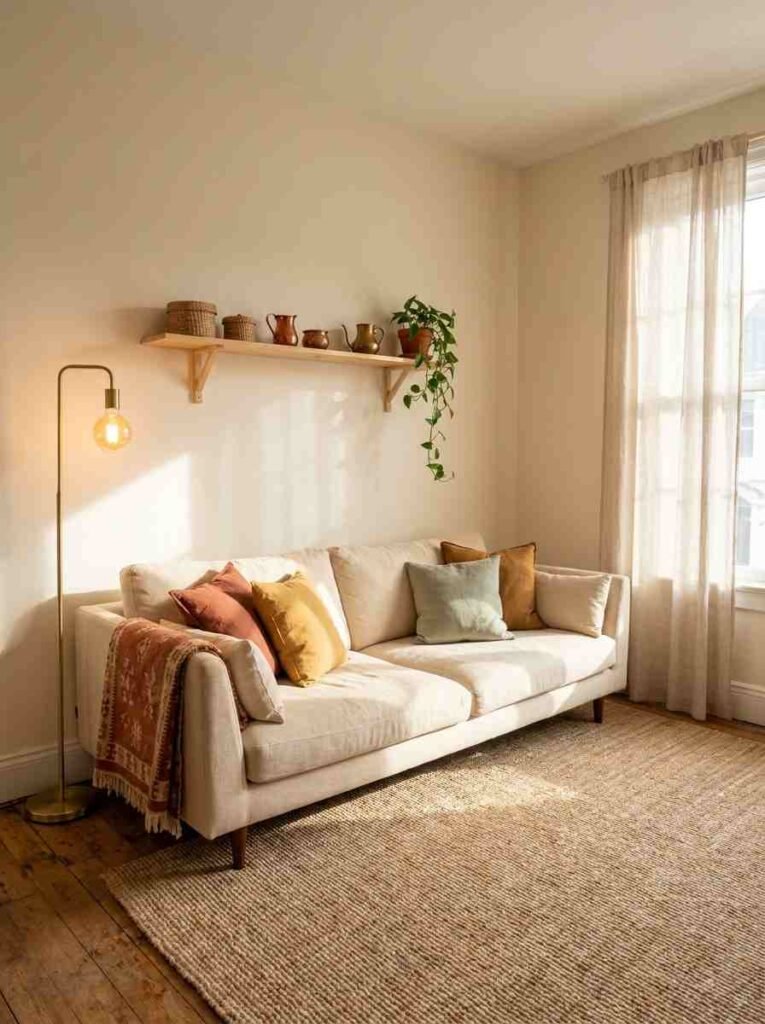
This is where boho stops being aesthetic and becomes actually comfortable.
Wood anchors everything. A solid dining table, shelving, bed frame. Doesn’t have to be perfect or finished—natural grain and variations are the point.
One coffee table with uneven legs and weathered finish taught me more about boho than any design rule could.
Leather and suede add richness. A single leather chair. Suede pillows. You don’t need much. Pair it with cotton and linen to keep things balanced.
Natural fibers matter. Jute, sisal, cotton, wool. These materials feel different than synthetics. They age beautifully. Stains become part of the story instead of disasters.
Ceramic and clay beat plastic every single time. Handmade pots with irregular glazing. Terracotta planters. These imperfections are exactly why they work.
Metal should be warm—copper, brass, bronze. Not chrome or stainless steel (unless you’re going for industrial-boho, which is a whole different thing). Warm metals feel intentional.
Plants: The Living Component
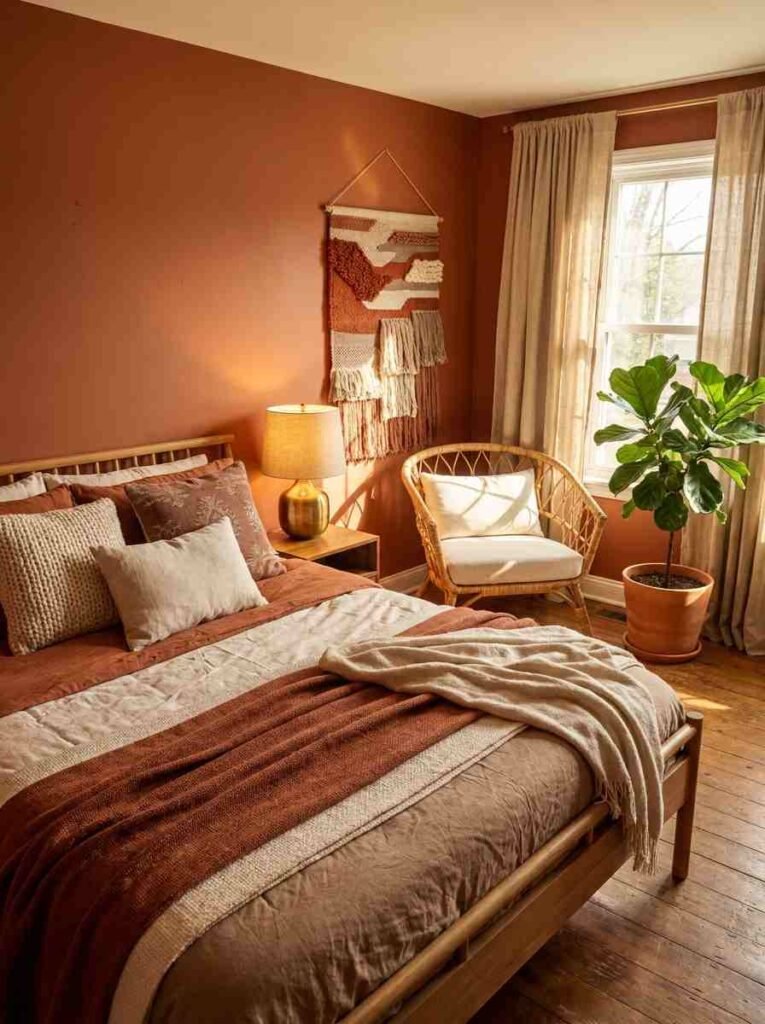
You can’t have boho without greenery. It’s not optional.
Large floor plants create height variation. A fiddle leaf fig, snake plant, or pampas grass (indoor variety) gives structure.
They anchor corners and make rooms feel less flat. I have one in every corner of my living room and it genuinely changed the spatial proportions.
Hanging plants add dimension. Pothos trails from shelves. String of pearls drapes elegantly. These work in small spaces where floor room is limited.
Grouped smaller plants on shelves or side tables create focal points. A mix of heights and textures—spiky snake plant next to trailing ferns. Include at least one flowering plant for color.
29 Entryway Console Table Ideas & Styling Tips for an Elegant Home
Keep them alive. This sounds obvious, but dead plants destroy the whole boho aesthetic. They just look sad.
If you struggle with plant care, start with low-maintenance varieties: ZZ plants, pothos, snake plants, monstera. These forgive irregular watering and thrive in average light.
Textiles: Rugs, Layers, and Throws
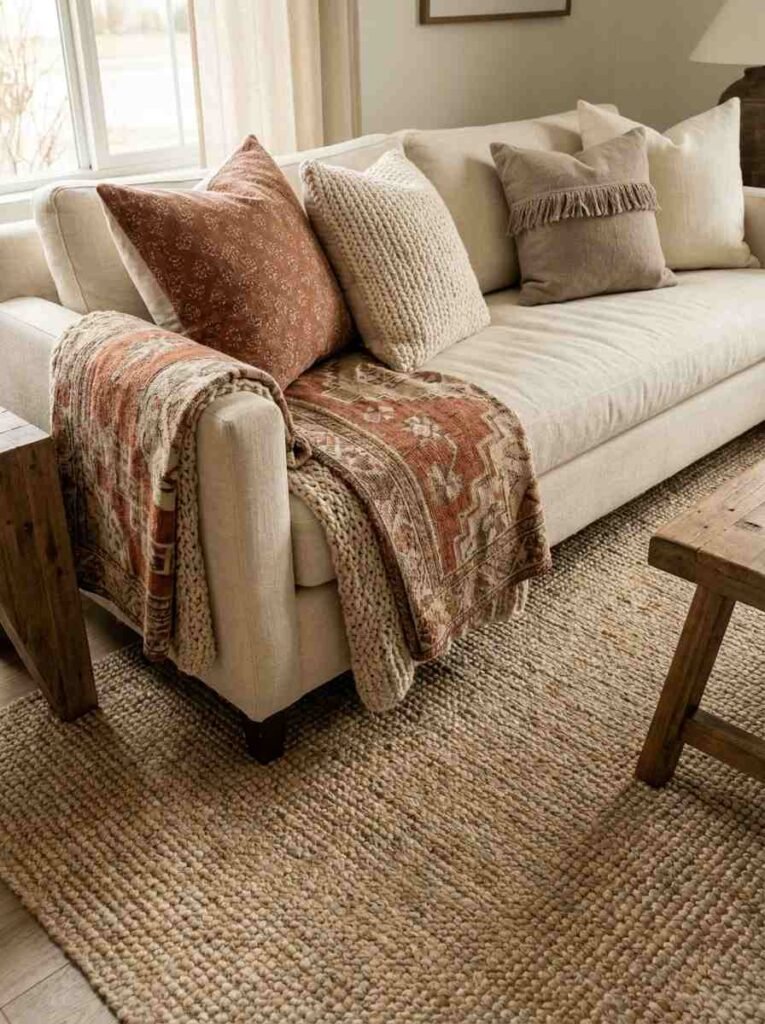
This is where boho really lives.
The rug grounds the space. A natural fiber rug—jute, wool, or a blend—sets the tone. Size matters.
Too small and your furniture floats. Too large and it consumes the room. I learned this by trying four different sizes before landing on the right one.
The furniture legs should sit partially on the rug.
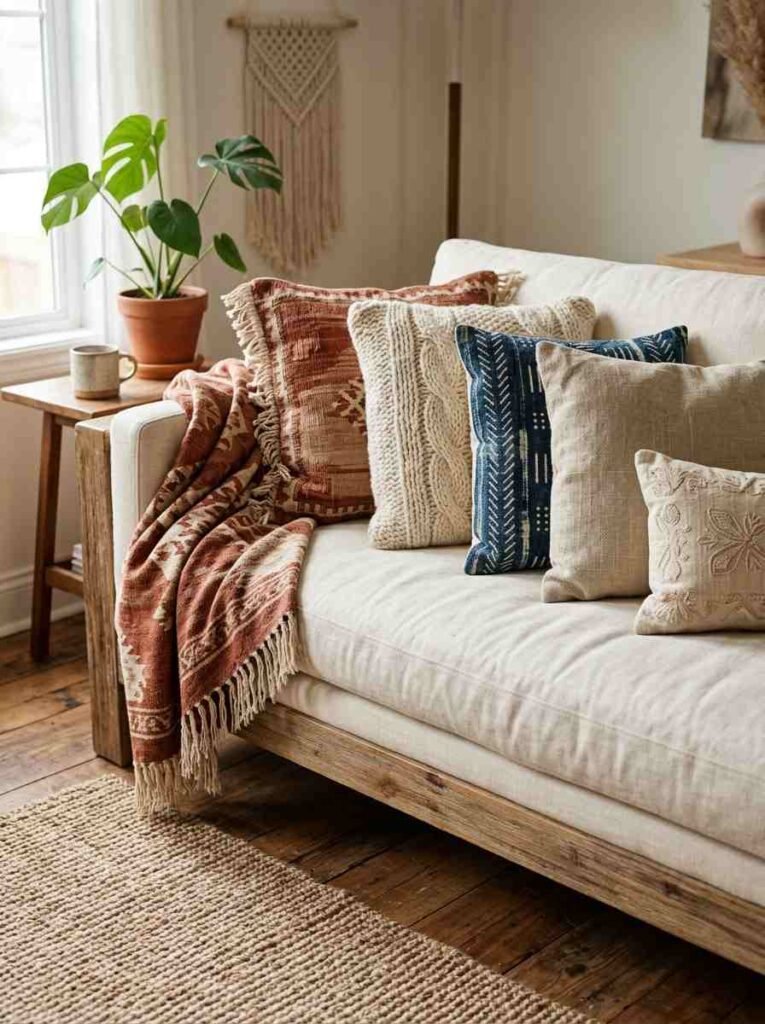
Layer textiles, not just for warmth. Throw a vintage kilim blanket over a sofa.
Drape a handwoven throw across a chair. Layer textured pillows—some with fringe, some with tassels, some plain linen. Inconsistent textures create visual interest.
Curtains should flow. Heavy blackout curtains feel too corporate. Go for linen or cotton that moves. Natural fibers filter light beautifully and add softness to windows.
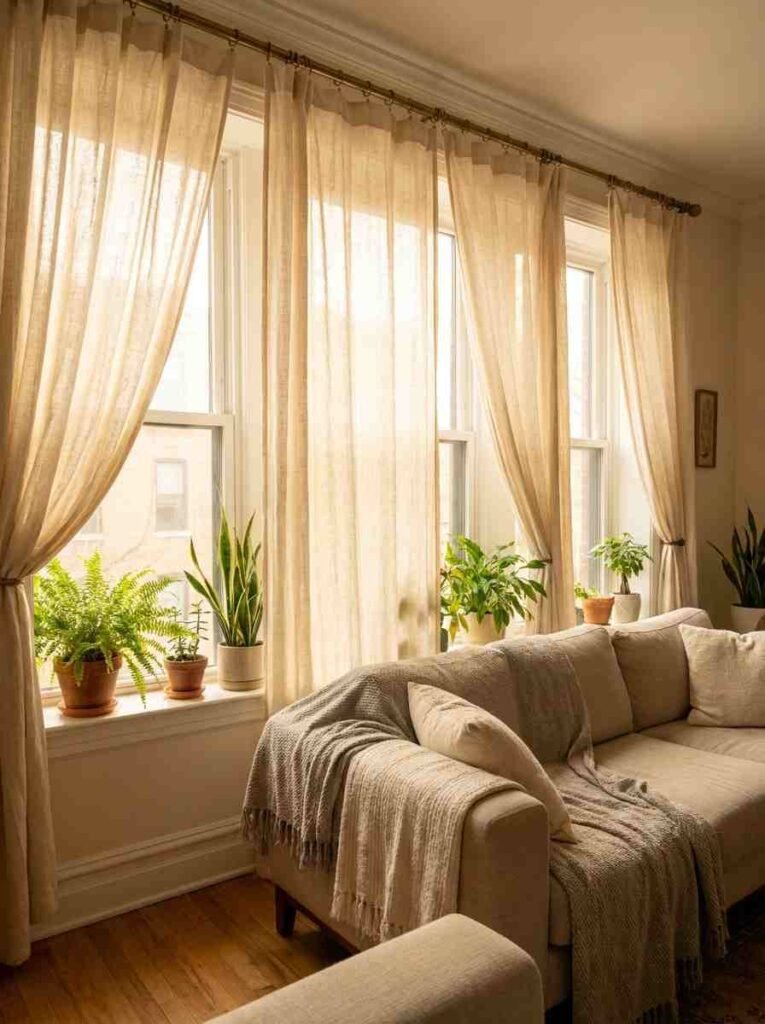
Vintage textiles add authenticity. A Turkish throw. A Moroccan cushion. Peruvian blankets. These don’t need to match perfectly—that’s the point. They’ve traveled. They have history.
Wall Styling (Beyond the Paint)
Blank walls are the enemy of boho.
Macramé wall hangings work if they’re minimal and well-spaced.
One large piece > three small ones competing for attention. Keep the color palette simple so it doesn’t clash with everything else.
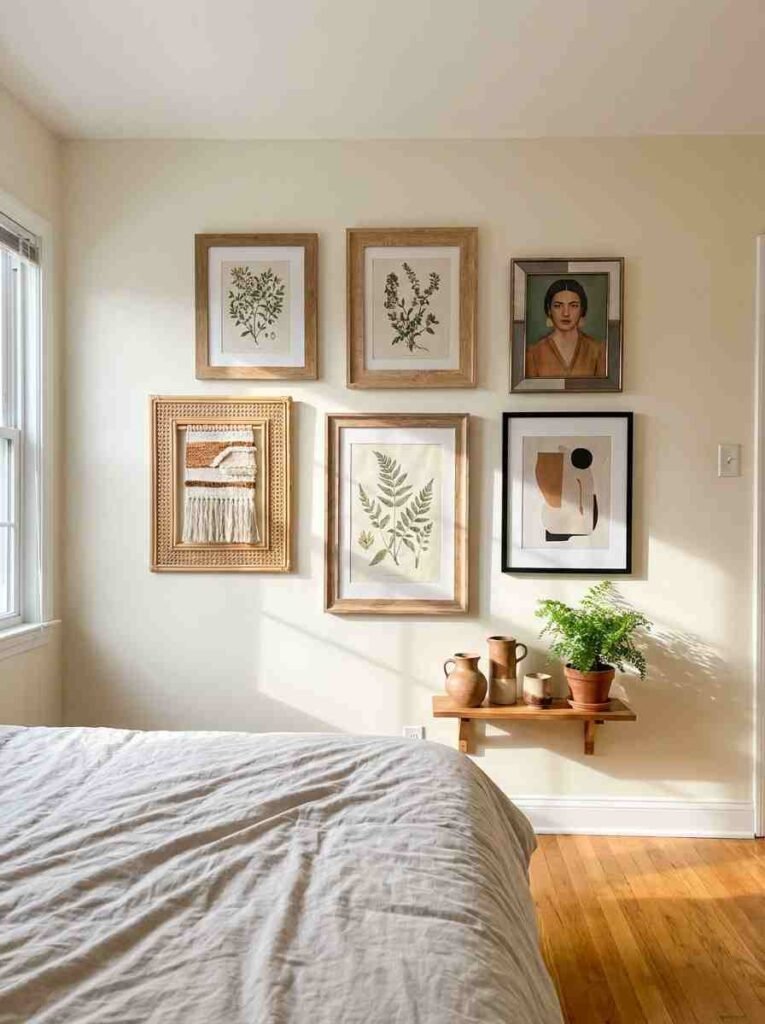
Gallery walls need a system. Mix frame sizes and styles, but keep them honest. Black frames, natural wood frames, rattan frames can live together if the spacing is even.
Vary the artwork—botanical prints, portraits, abstract pieces, woven textiles. Just give everything room to breathe.
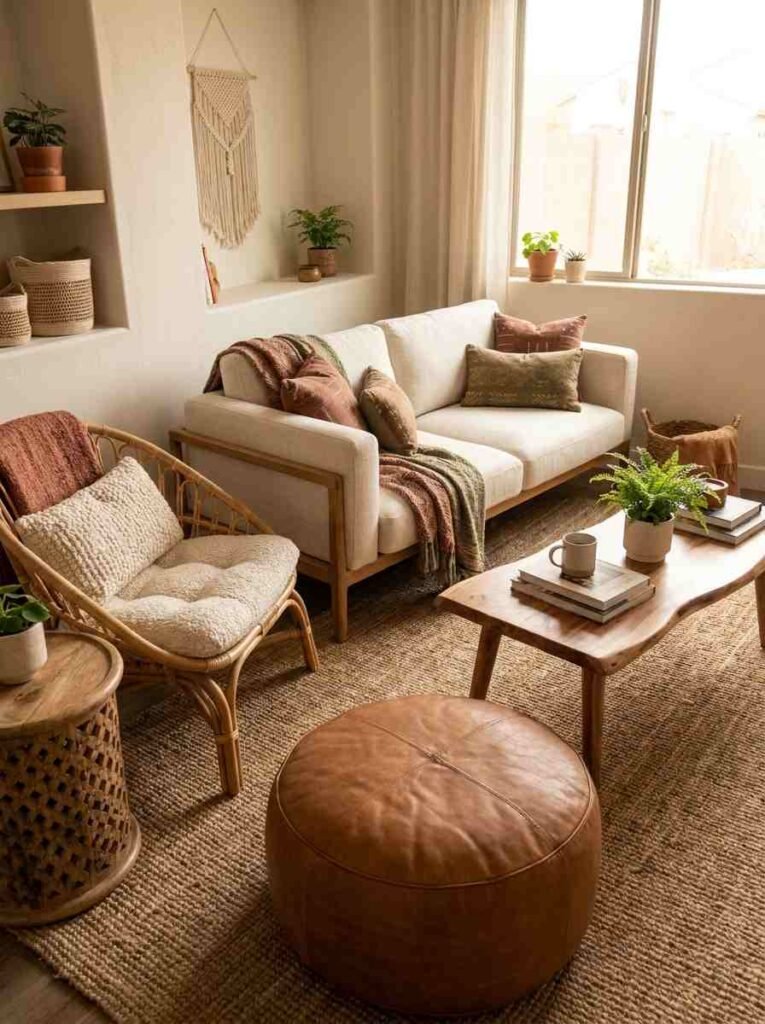
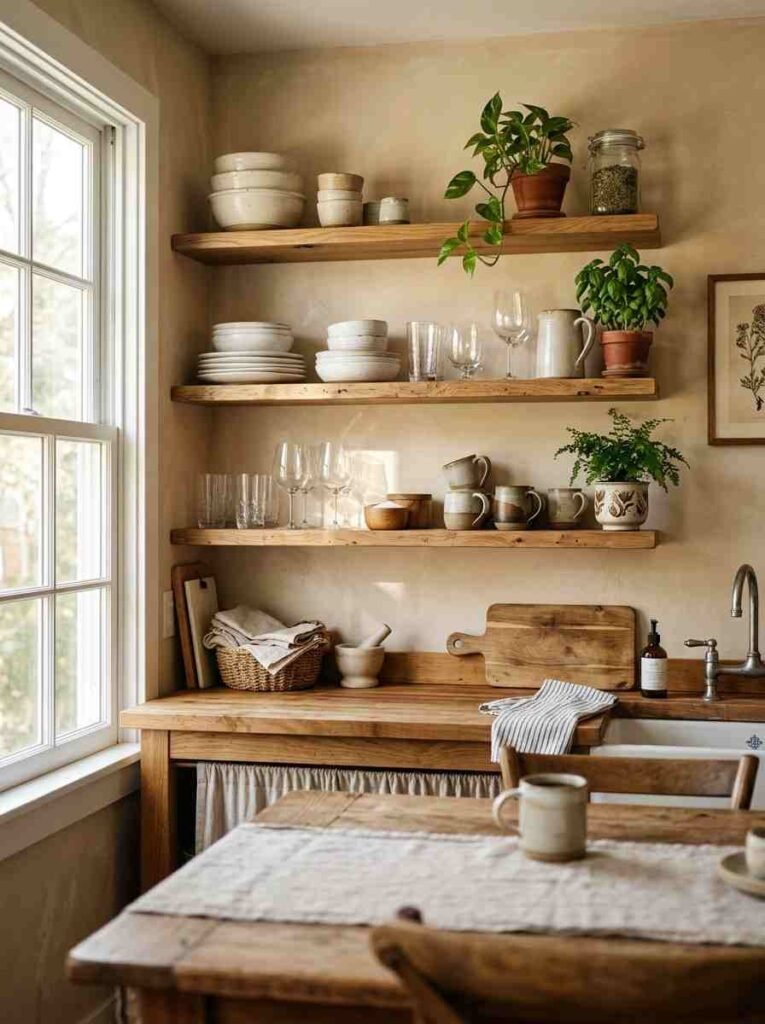
Floating shelves display meaningful objects. Books turned sideways, small plants, ceramic vessels, travel finds. Curate this. Not every surface needs every object.
Mirrors expand light. An ornate gold-framed mirror. A rattan-framed mirror. These reflect natural light and make spaces feel bigger. Position them opposite windows when possible.
Furniture Selection
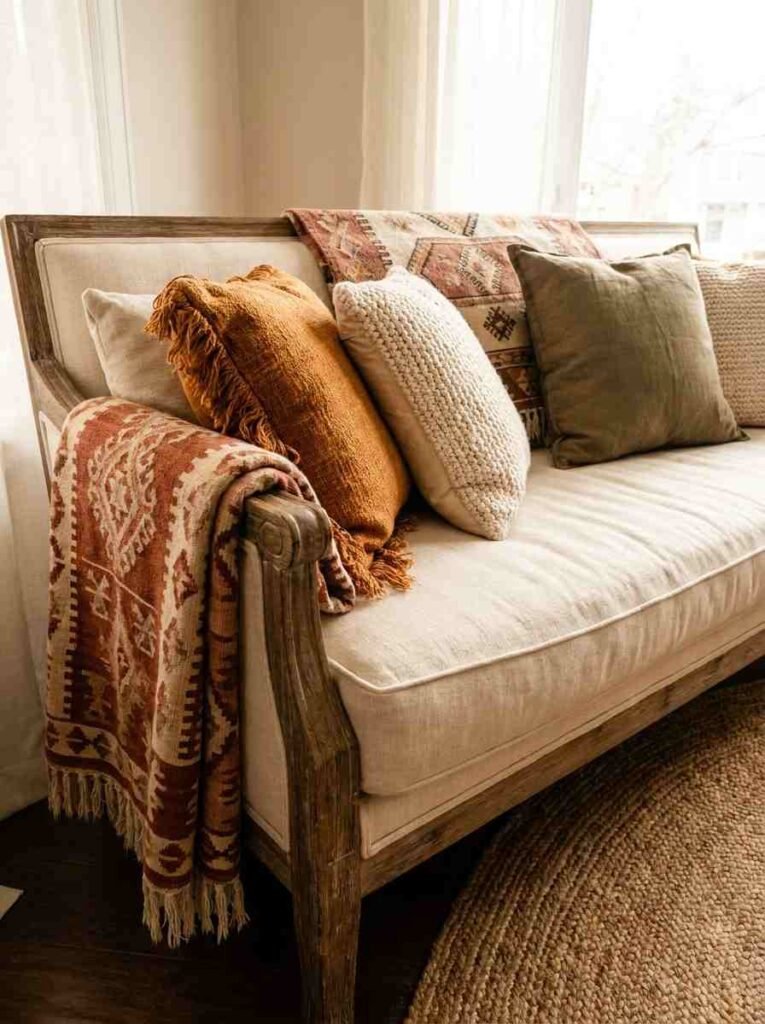
The pieces themselves don’t need to match. That’s actually the point.
A statement sofa in a neutral tone can be modern or traditional.
Pair it with contrasting chairs—maybe a rattan accent chair, maybe a leather piece. Mix it up. This is where intentionality shows.
Tables should feature natural wood. A low coffee table with organic edges. A side table with visible grain. Pair them with metal bases or carved wooden legs depending on your vibe.
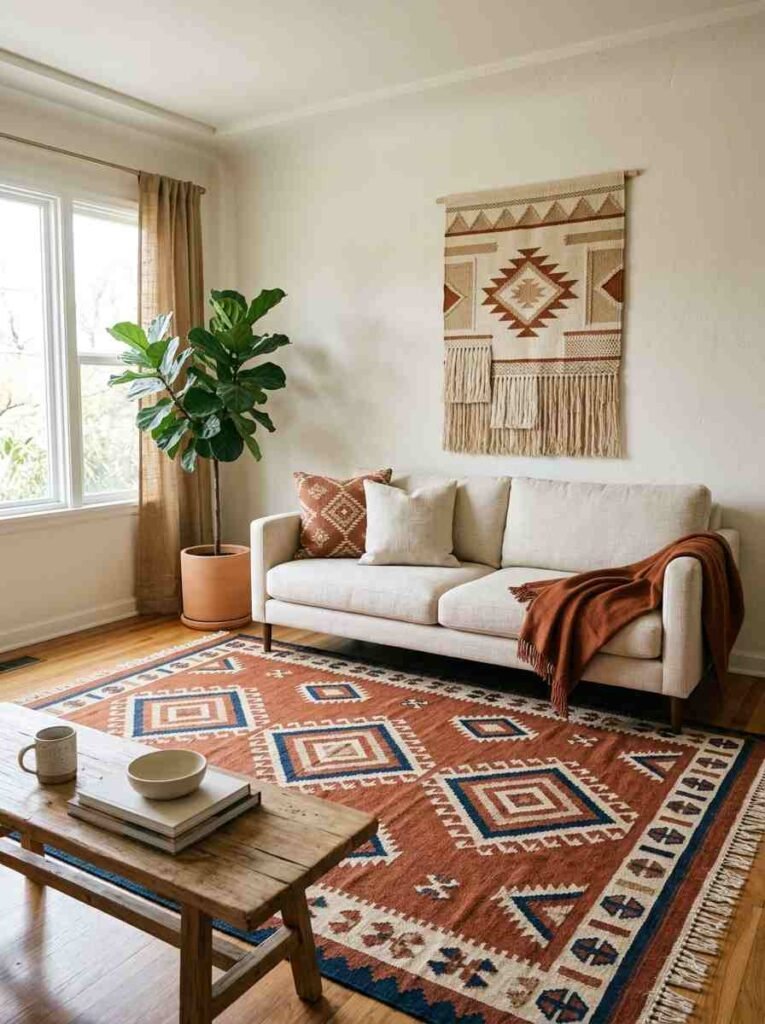
Seating needs variety. One upholstered chair, one wooden chair with a cushion, a bench for layering textiles. Give people options for how they sit.
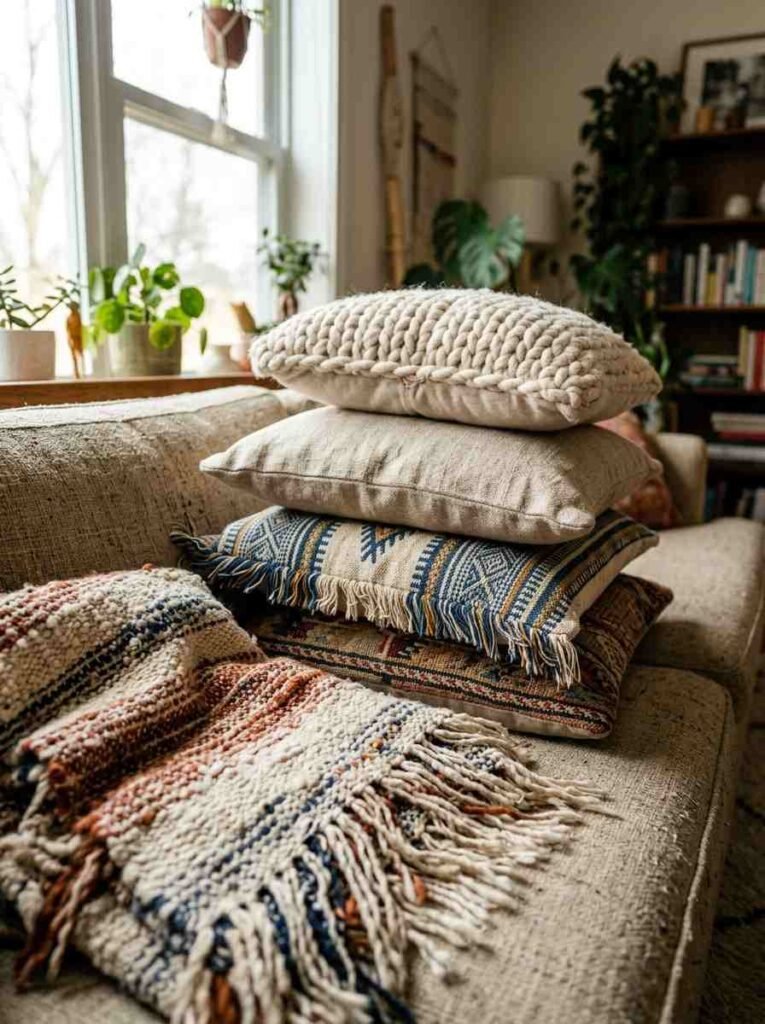
Avoid anything too sleek or minimalist. Boho embraces imperfection. Carved details, organic shapes, worn finishes—these feel human. They tell stories.
Lighting Transforms Everything
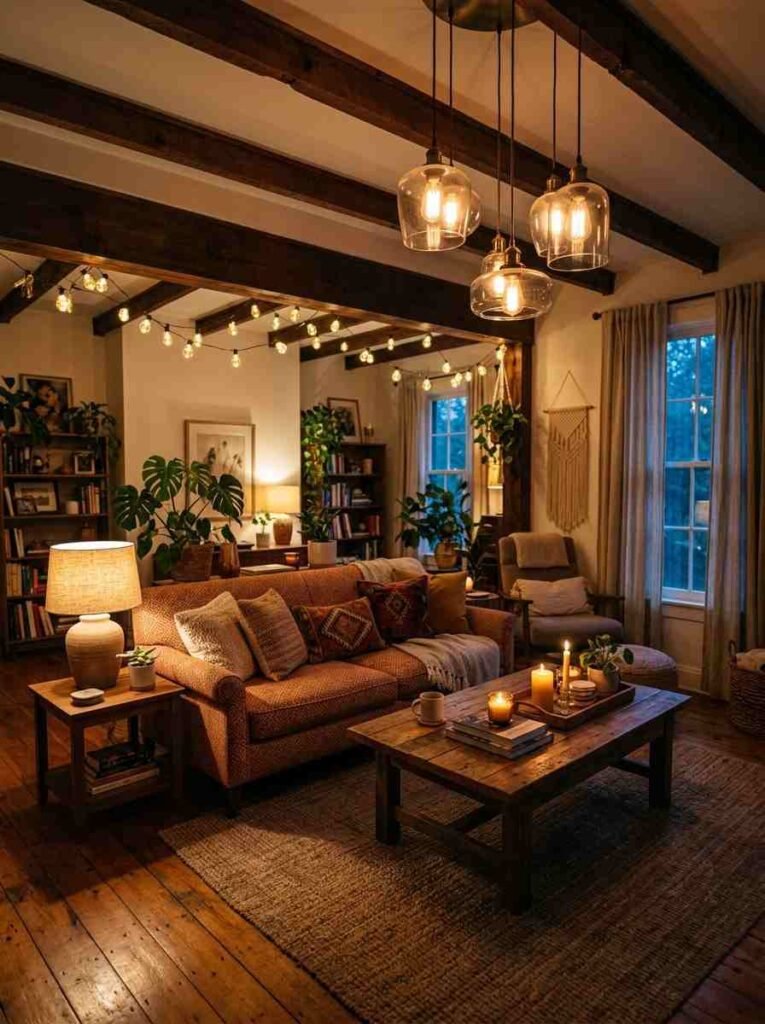
Harsh overhead lights kill bohemian interiors. They just do.
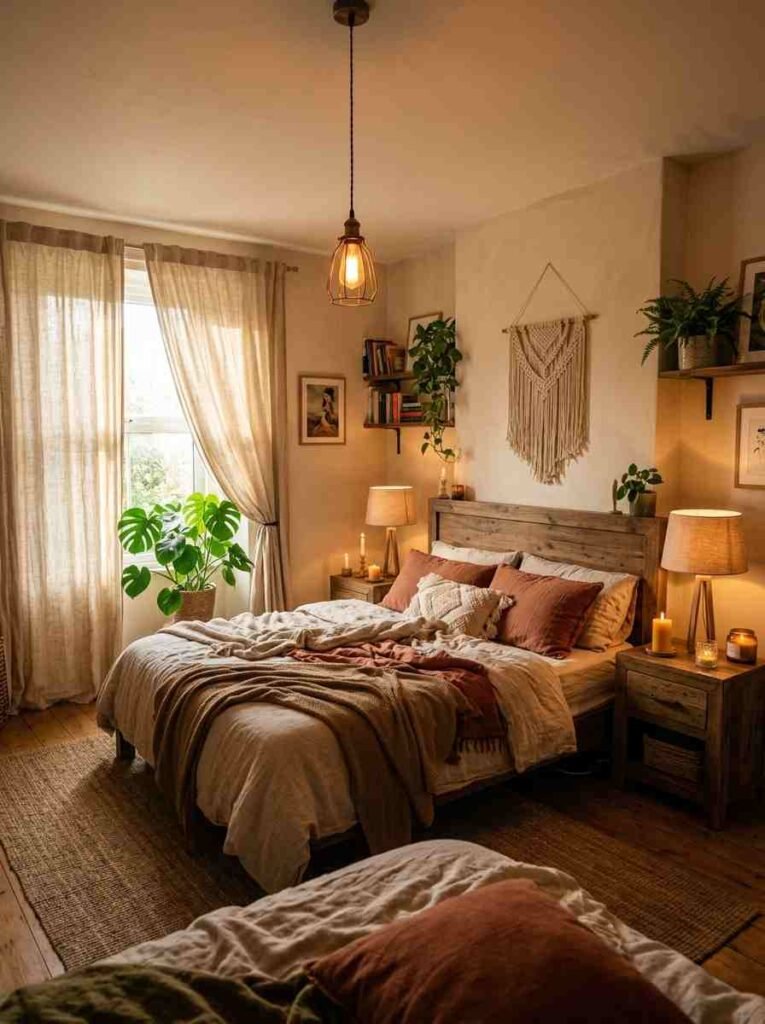
Layered lighting changes everything. A pendant light or two. Table lamps with fabric shades. String lights if you’re willing to commit (I am).
Candles matter too. Scented candles add another sensory layer.
Edison bulbs or warm-toned LEDs feel intentional. Bright white light reads sterile. Go warm. Your eyes and your space will thank you.
Position lights at different heights so you’re not relying on one source. This creates shadows and warmth, which is exactly what bohemian needs.
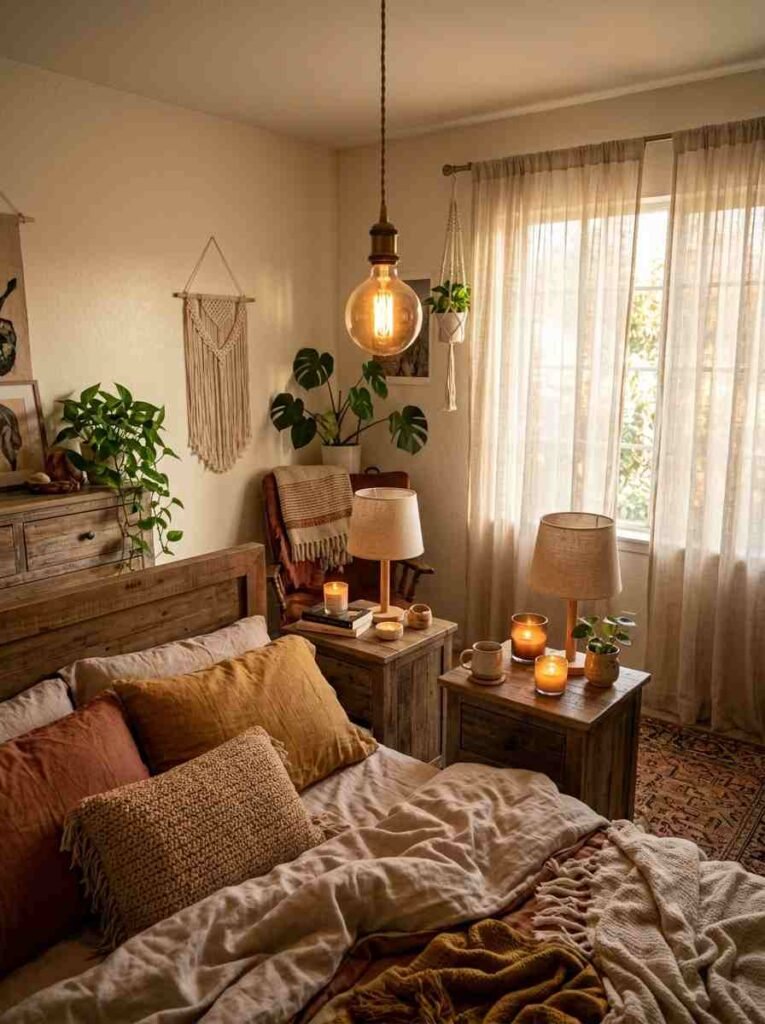
Small Styling Details That Actually Matter
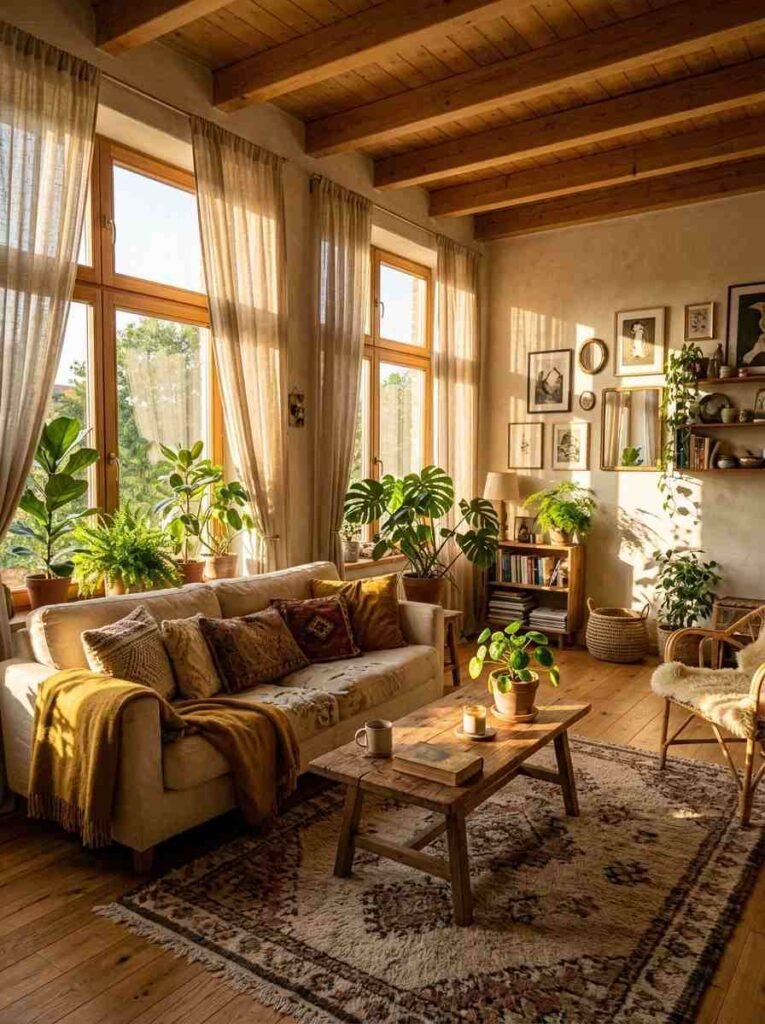
These are the moves that separate inspiration images from real homes.
Layered textiles on seating: A throw blanket casually draped (not folded perfectly). Pillows stacked with varying heights and textures. This looks inviting and lived-in. 🙂
Open shelving in the kitchen: If you have it, use it. Display beautiful dishes, glassware, and plants. It feels intentional instead of hiding everything behind cabinet doors.
Vintage or handmade decor: A hand-painted vase. A woven basket. A macramé plant hanger. Mass-produced decor reads sterile. Handmade reads human.
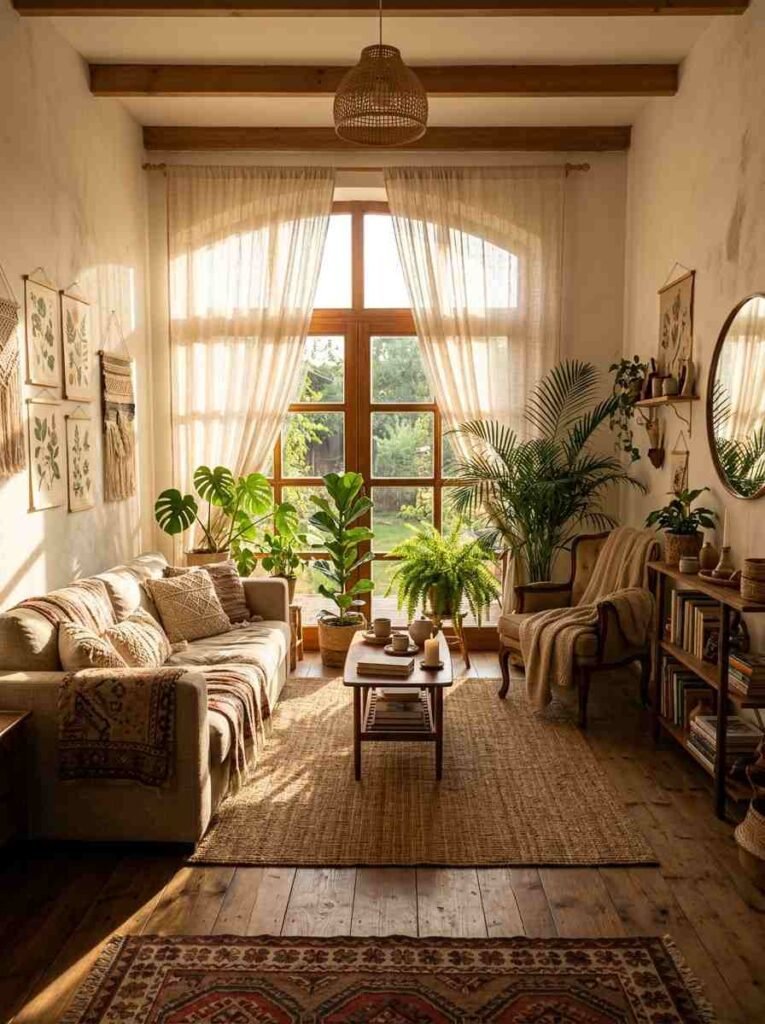
Collections displayed thoughtfully: Books. Vintage cameras. Travel ceramics. Group them by color or theme rather than random placement.
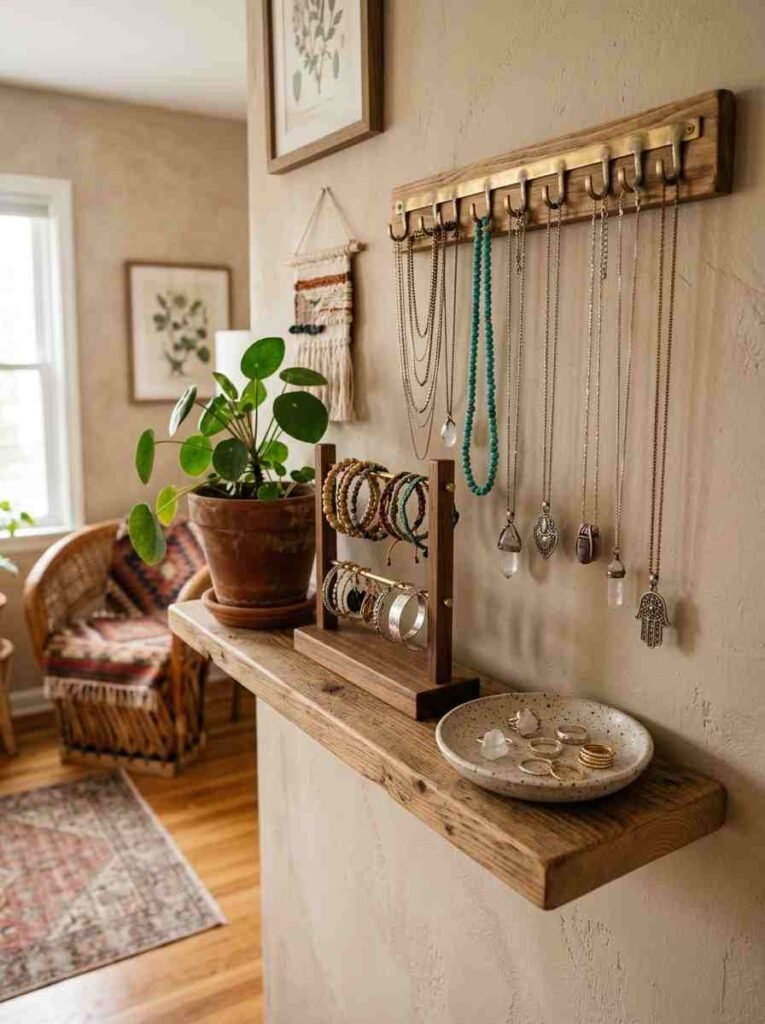
Jewelry displays for accessories: A small dish for rings. A hanging rack for necklaces. This keeps decor functional, not just decorative.
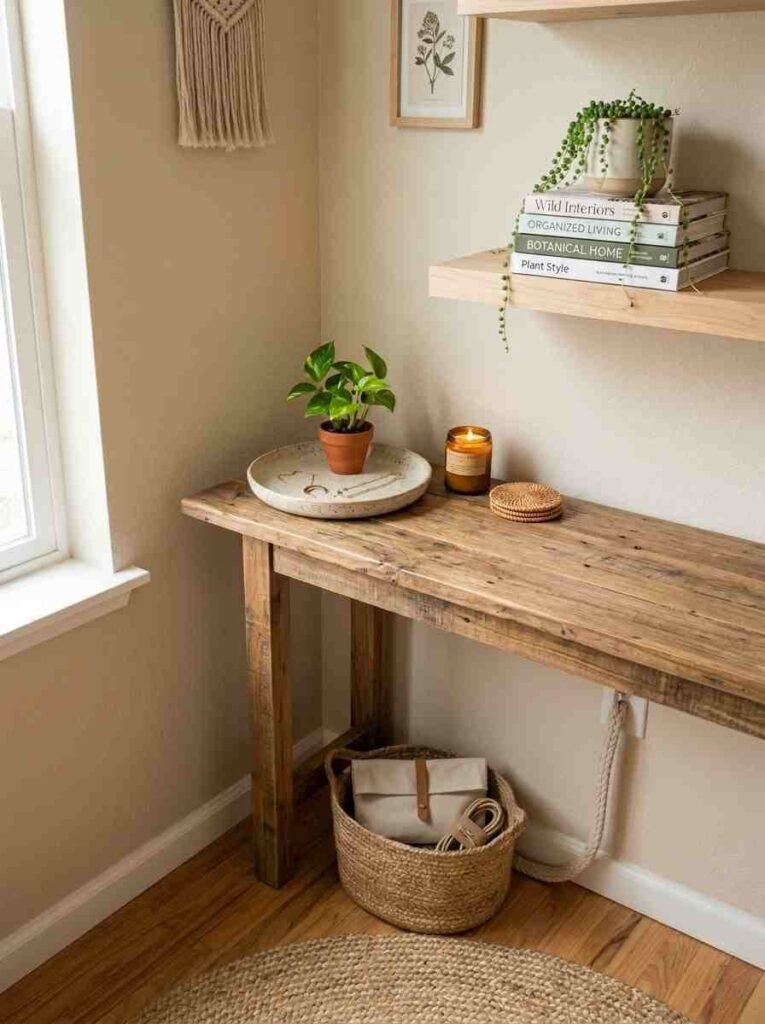
Cords and cables hidden: Nothing destroys boho like visible phone chargers and messy cords. Use fabric covers or route them behind furniture.
Common Modern Bohemian Mistakes
IMO, these trip people up most:
Too much pattern. I mentioned this, but it deserves repeating. More patterns ≠ more boho. Restraint reads sophisticated.
Matchy-matchy everything. Your throw pillows don’t need to coordinate perfectly. They should complement. There’s a difference.
Ignoring proportion. A giant mirror in a tiny room. Too-small art in a large gallery wall. Things need to be sized appropriately for their space.
Forgetting function. Every piece should serve a purpose or bring genuine joy. If you’re keeping something just because, it’s clutter.
Overdoing it. The natural instinct is “more more more.” Sometimes “less but better” solves the problem faster.
Creating Your Bohemian Styleguide
Here’s what actually worked for me:
- Choose a primary color (yours truly picked warm terracotta)
- Find a rug you genuinely love (the rest follows from there)
- Add one large plant and build around it
- Layer textiles intentionally, one group at a time
- Let it evolve. You don’t build this in a weekend
Modern bohemian isn’t about rules. It’s about honoring your taste while maintaining enough cohesion that the space feels intentional, not chaotic.
Your home should reflect you—your travels, your finds, your preferences.
The pieces matter less than the feeling they create. That’s really all boho is.
Start somewhere. Add slowly. Trust your instincts. Your space will tell you what it needs.
