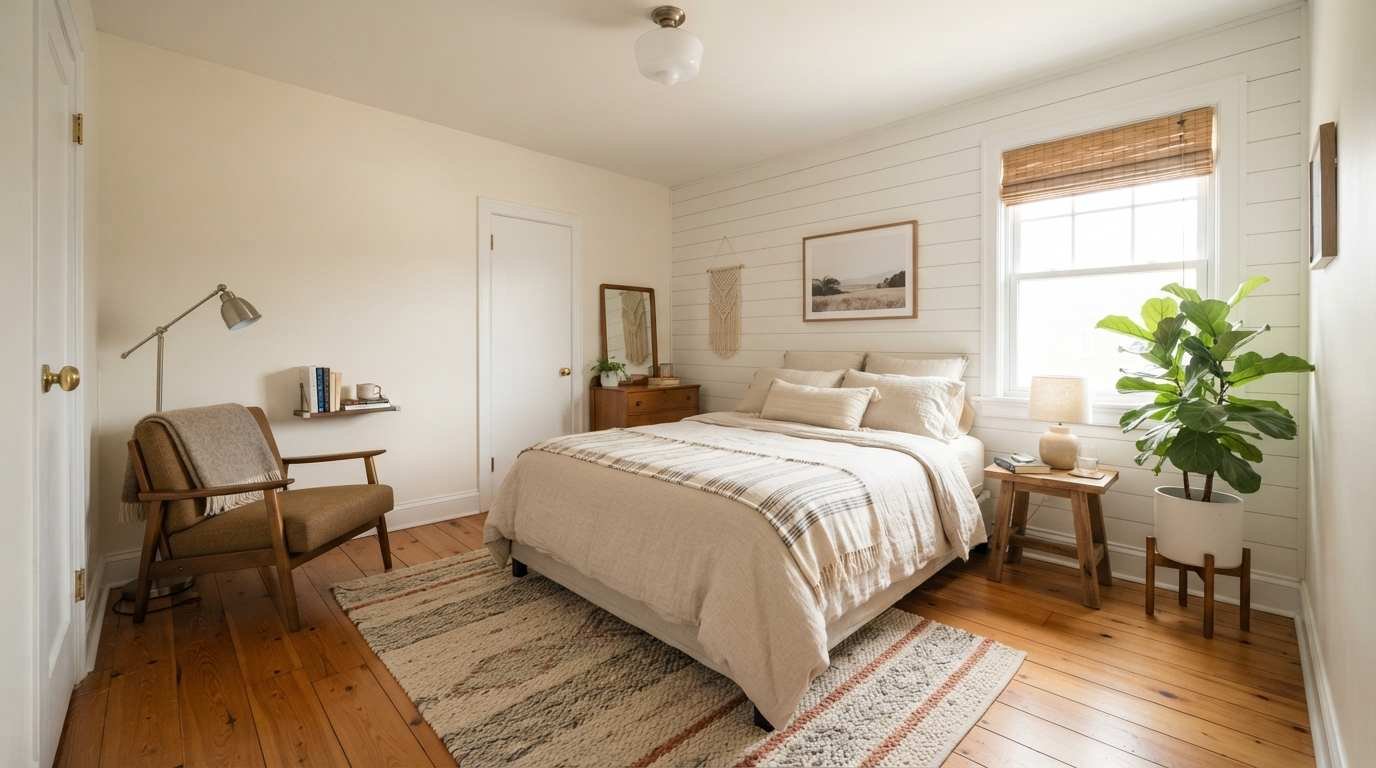
My first apartment bedroom was 9 feet by 10 feet. I measured it three times because I refused to believe anyone could fit a bed, a desk, and a personality into that space. Turns out you can.
You just have to stop decorating like the room is bigger than it is.
Small bedrooms get a bad reputation. People assume “cozy” is code for “cramped,” and honestly, sometimes it is, if you decorate it wrong.
But a small room done right feels intentional. It feels like a place you actually want to wake up in, not just a box where your bed happens to live.
I’ve rearranged my own bedroom so many times my neighbors probably think I’m hiding something. I’m not.
I just kept learning what works and what’s a waste of square footage.
Here are 27 ideas, pulled from real trial and error, that make a small bedroom look bigger, feel calmer, and honestly, look better than some larger rooms I’ve seen.
Work With Light, Not Against It
Light does more work in a small room than almost anything else. Get this wrong and even a perfectly designed room feels like a closet.
- Sheer curtains over blackout ones. Blackout curtains have their place, but in a small room they read heavy and dark. Sheers let light bounce around and make the walls feel farther apart.
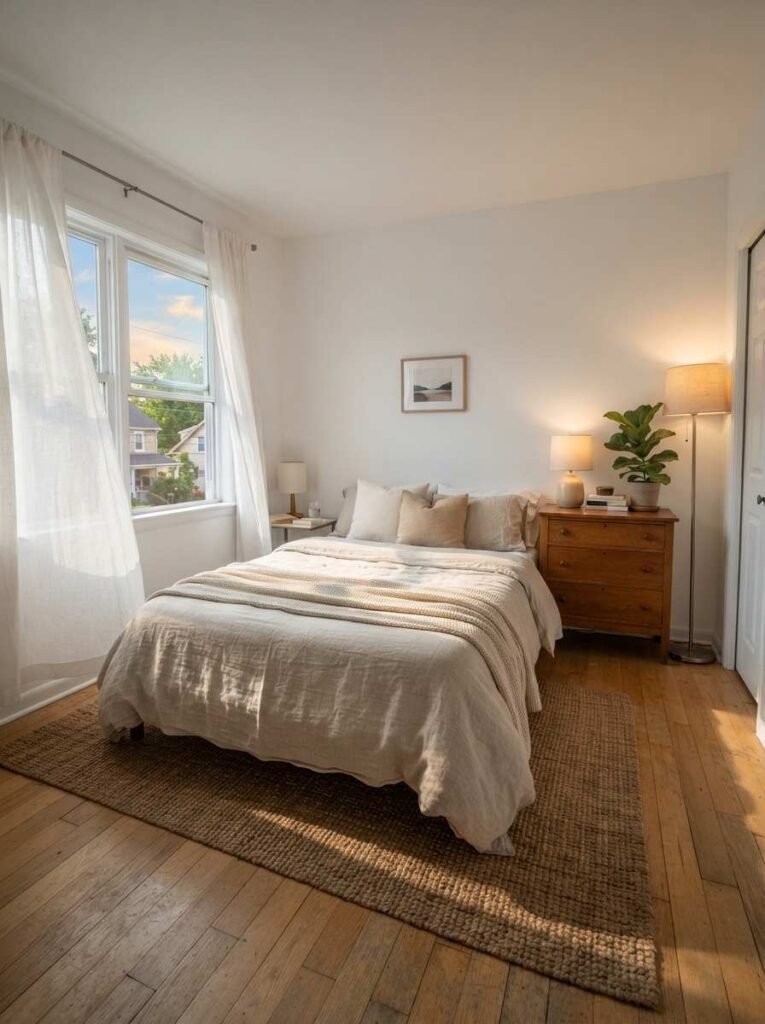
- A mirror across from the window. This is the oldest trick in the book because it works. Position a mirror to catch and reflect natural light and the whole room brightens up.
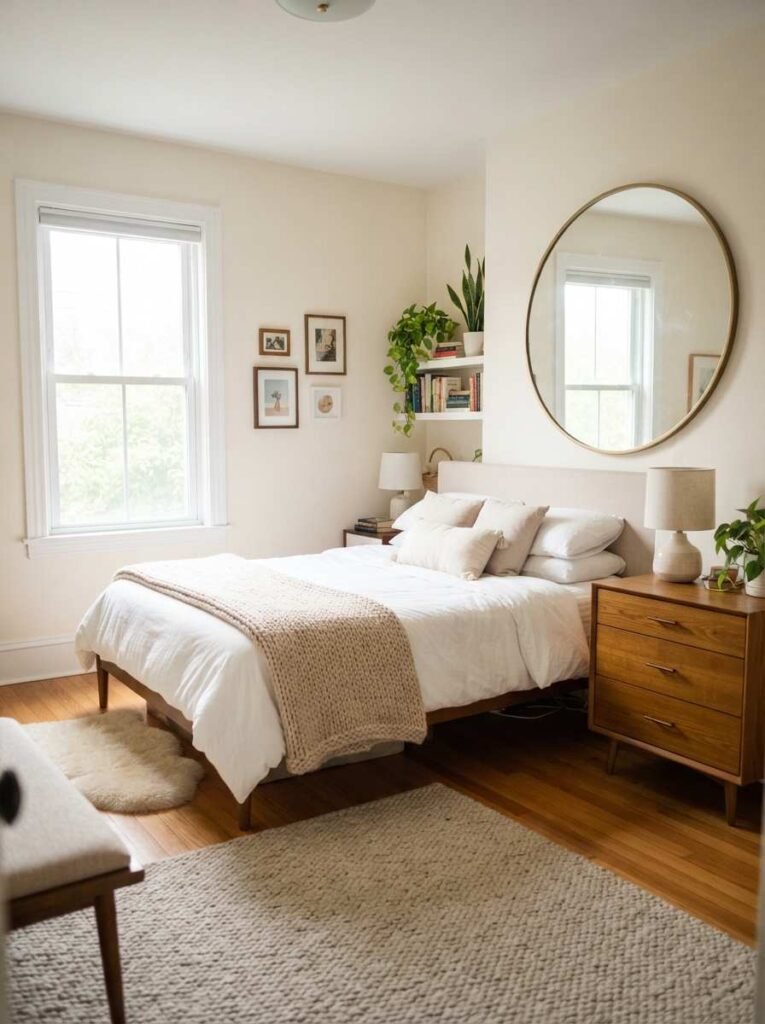
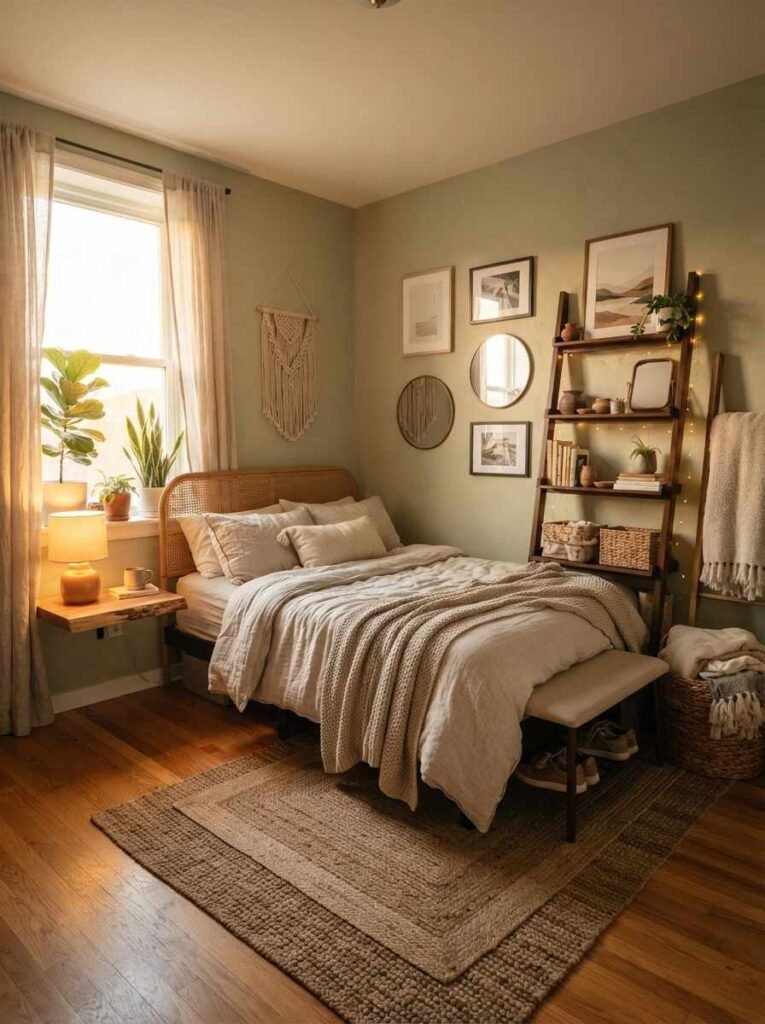
- Skip the overhead light as your only source. Layer in a floor lamp, a table lamp, and maybe fairy lights along a shelf.
- Interior designers at Better Homes & Gardens have long recommended layered lighting, and in a small room it’s not optional, it’s essential.
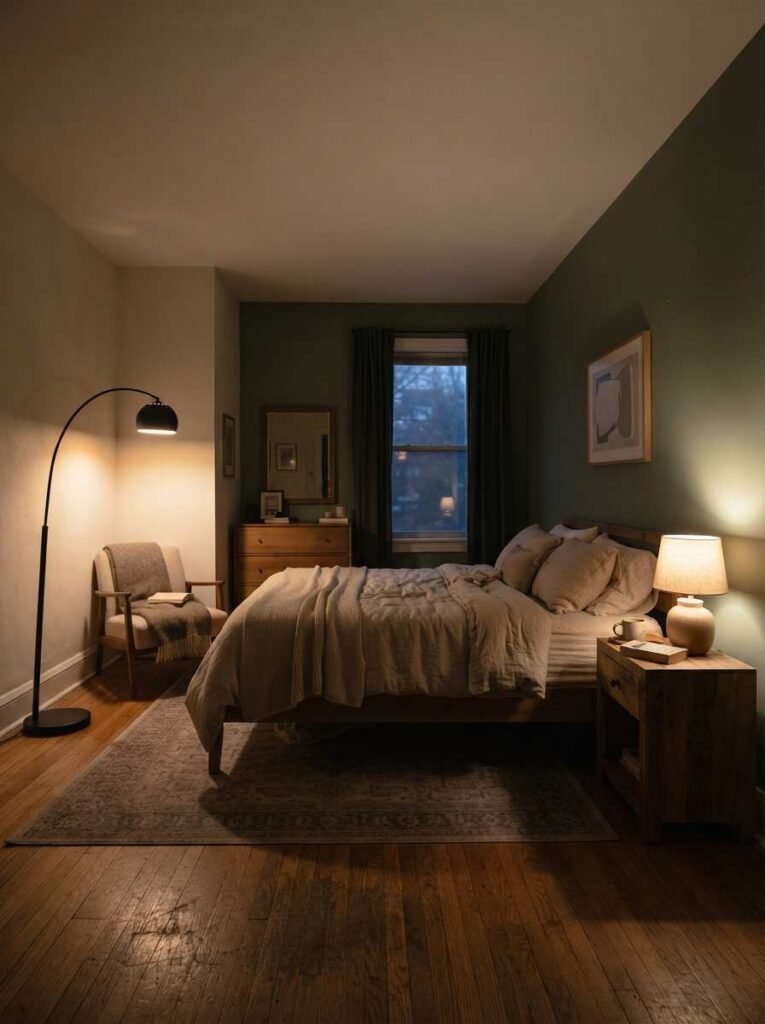
- Light, warm-toned bulbs over stark white ones. Warm light makes a compact room feel like a hug instead of an interrogation.
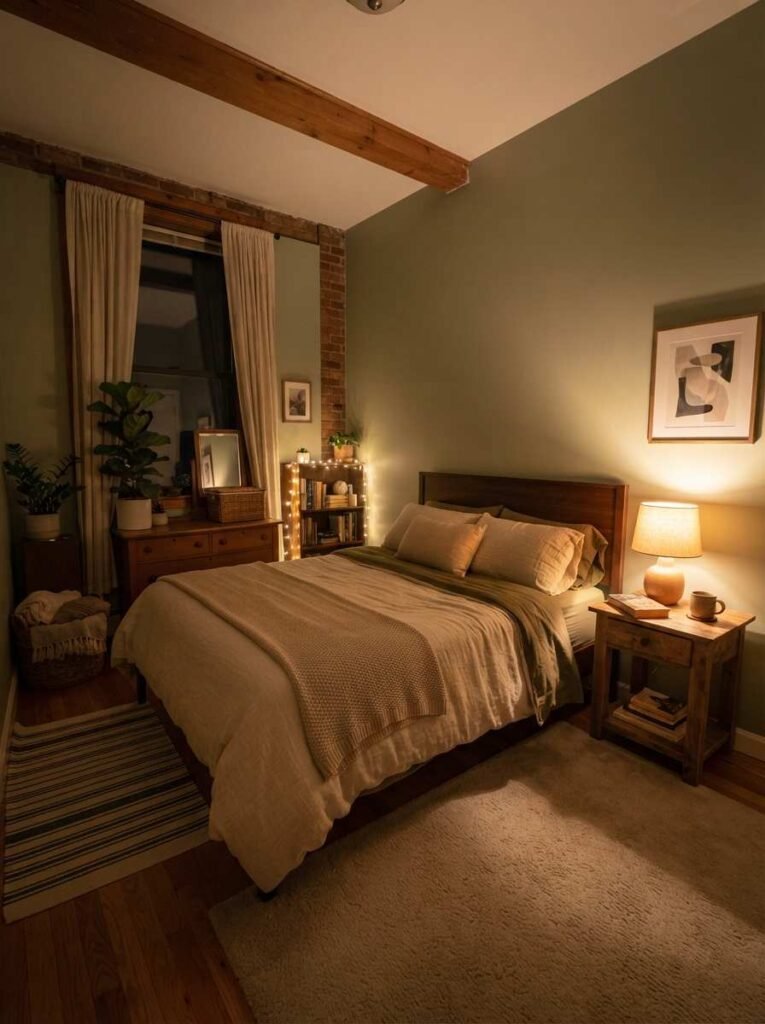
Color Choices That Actually Expand Space
I used to think dark walls automatically shrink a room. I was wrong, but only sometimes.
- Soft, warm whites instead of stark bright white. Bright white can feel clinical. A warmer white (think “linen” or “alabaster” on a paint chart) feels softer without losing the airy effect.
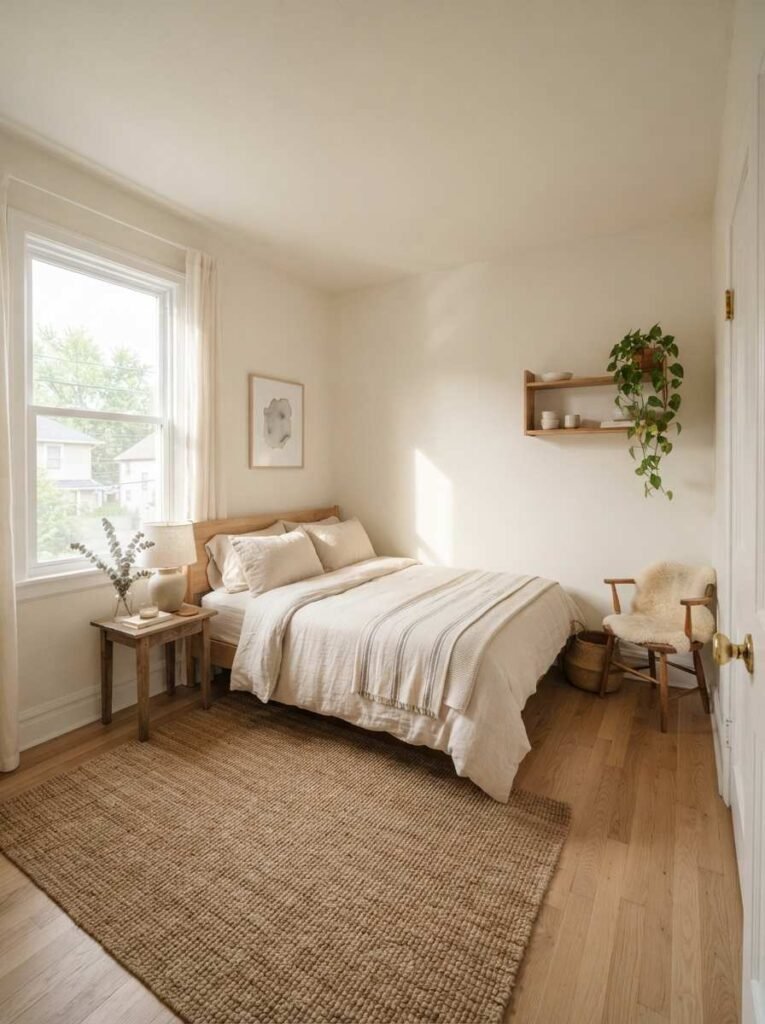
- One deep accent wall behind the headboard. Counterintuitive, I know. But a single dark wall (navy, forest green, even black) behind the bed adds depth instead of shrinking the room, as long as the rest stays light.
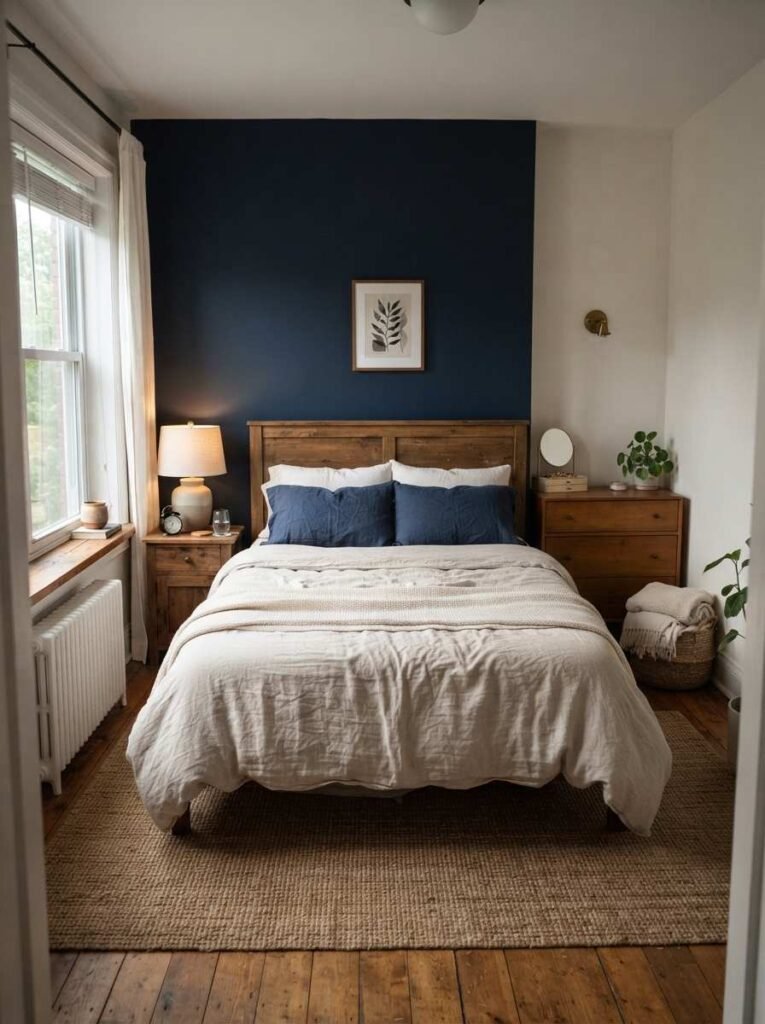
- Monochrome color schemes. Sticking to one or two colors in different shades tricks the eye into seeing fewer visual breaks, which reads as more space.
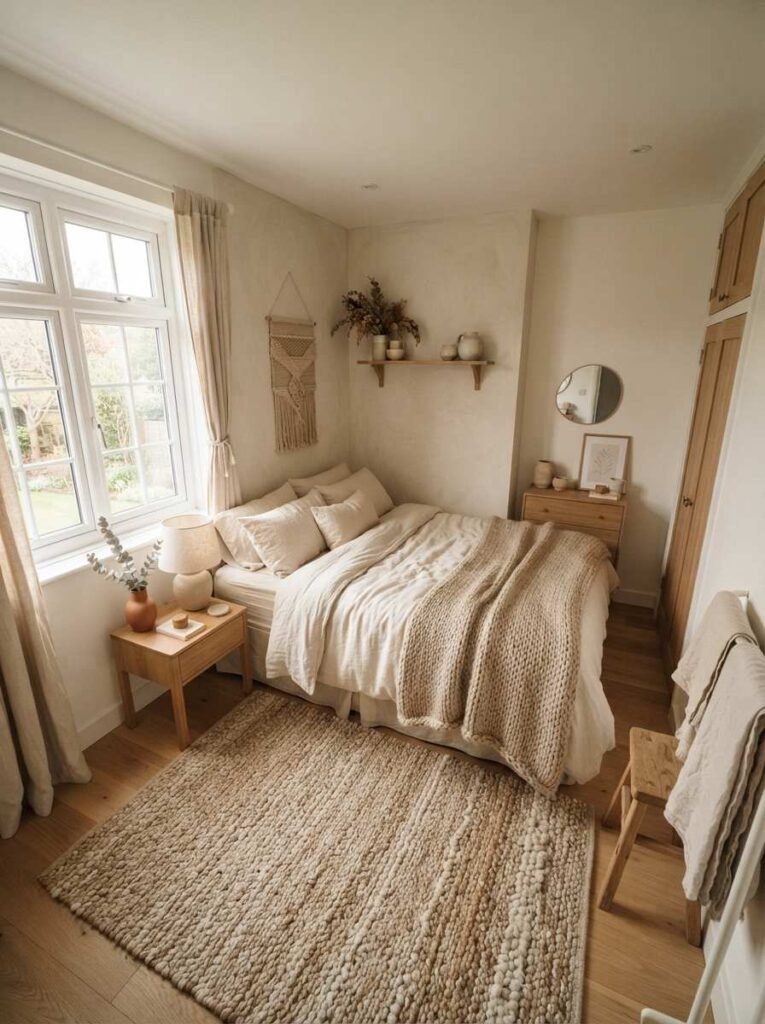
- Ceiling paint that matches the walls. This one surprised me the first time I tried it.
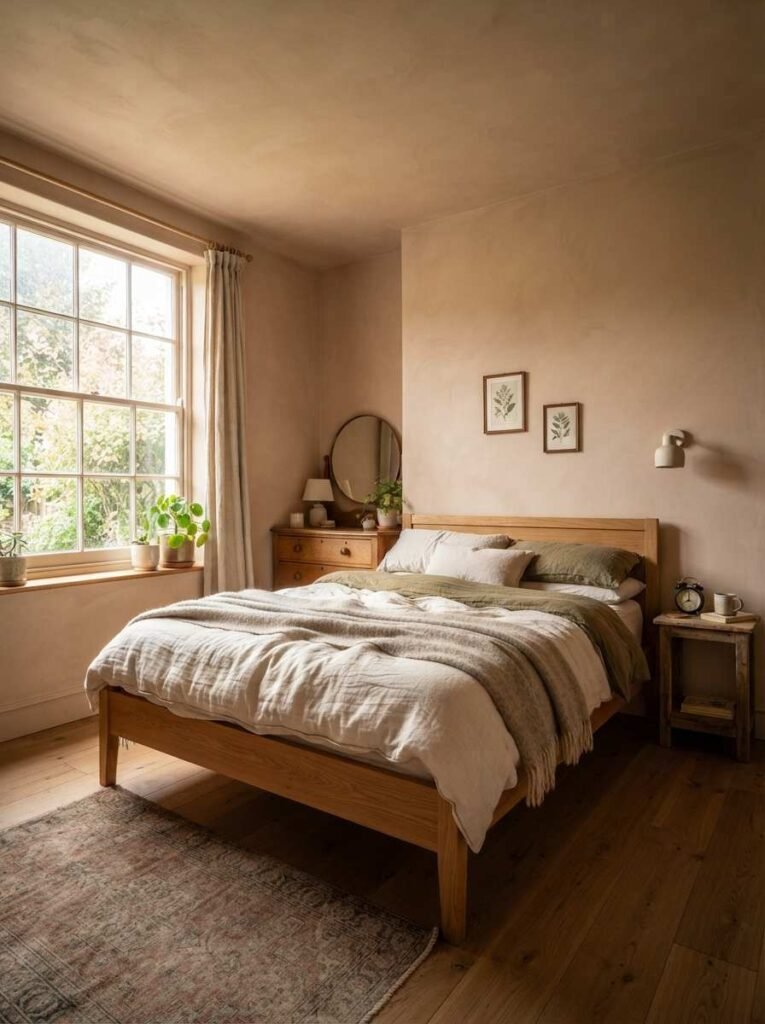
- Painting the ceiling the same color as the walls removes the “box” effect and makes the room feel taller.
Furniture That Earns Its Keep
Small rooms punish furniture that only does one job. Every piece needs a second purpose or it needs to go.
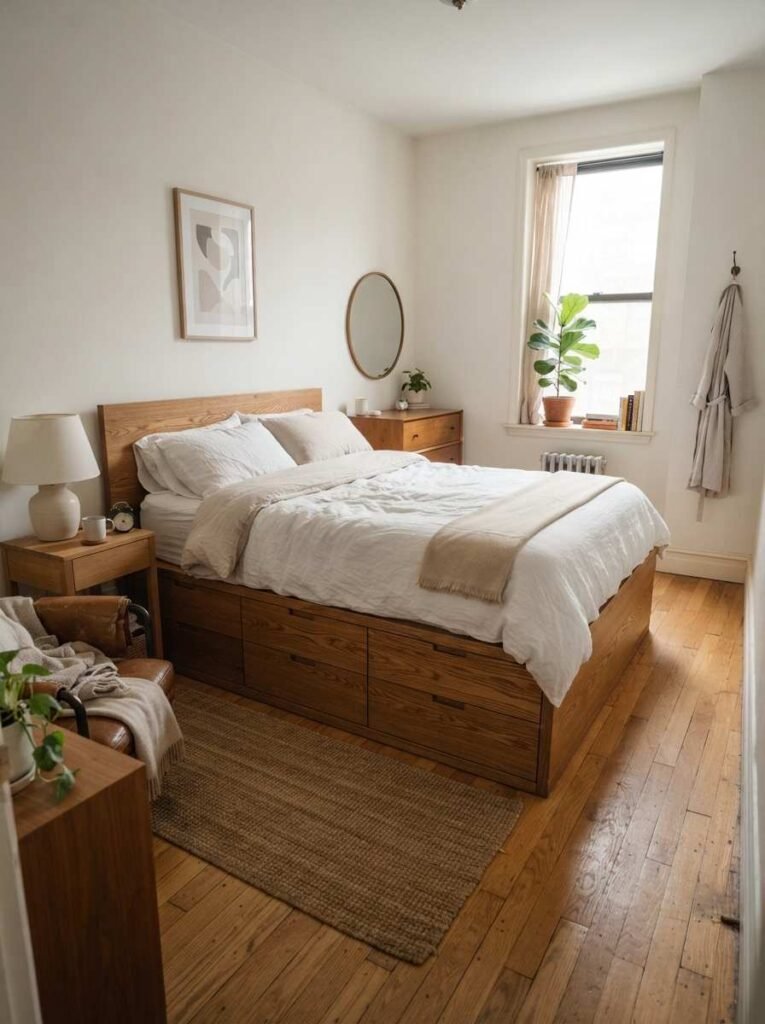
- A bed with built-in storage drawers. This single swap freed up an entire closet shelf in my place.
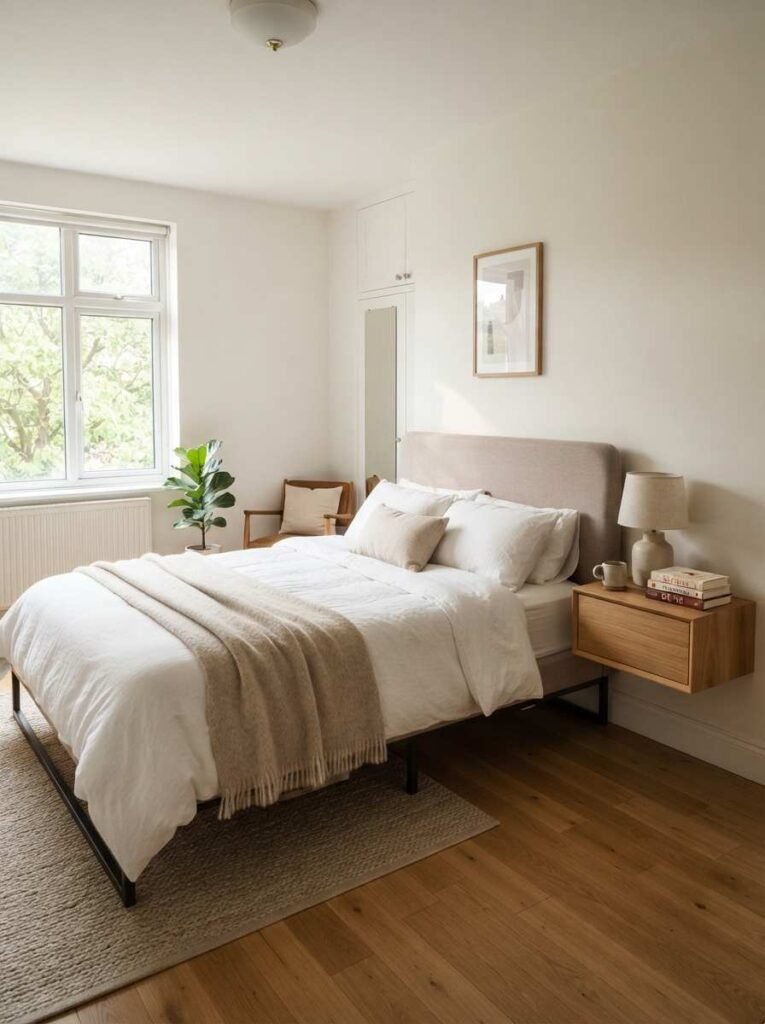
- Floating nightstands. Wall-mounted nightstands skip the bulky legs and free up visual floor space, which matters more than people think.
- A daybed instead of a full bed frame, if you’re working with a truly tiny room. It doubles as seating during the day.
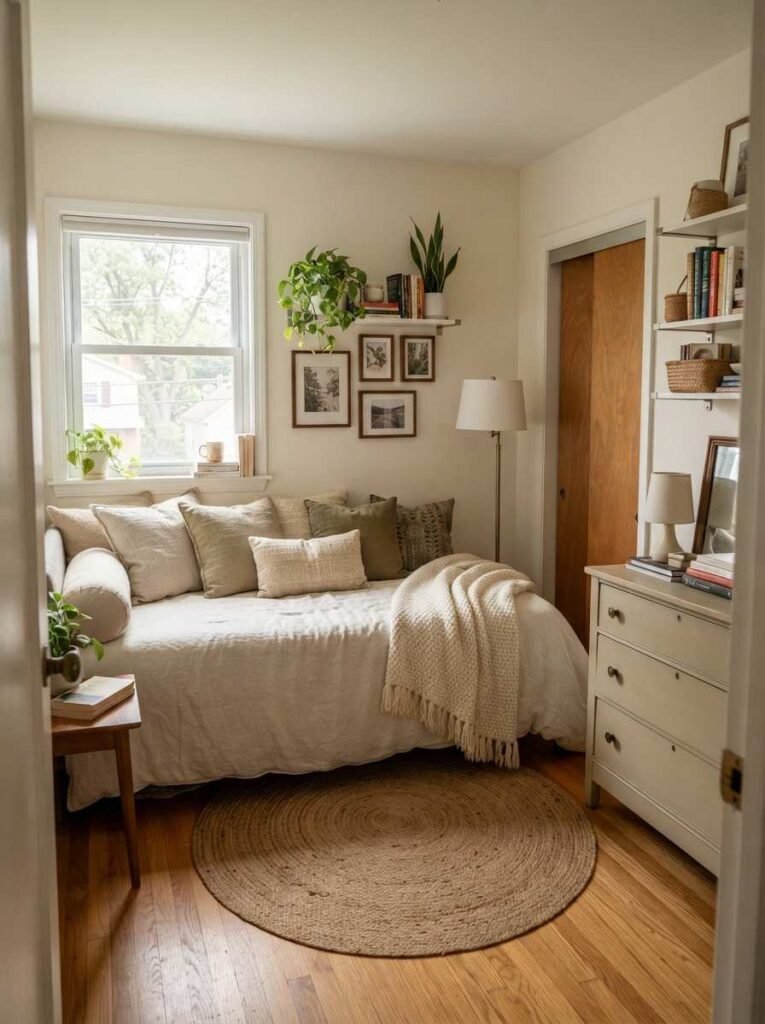
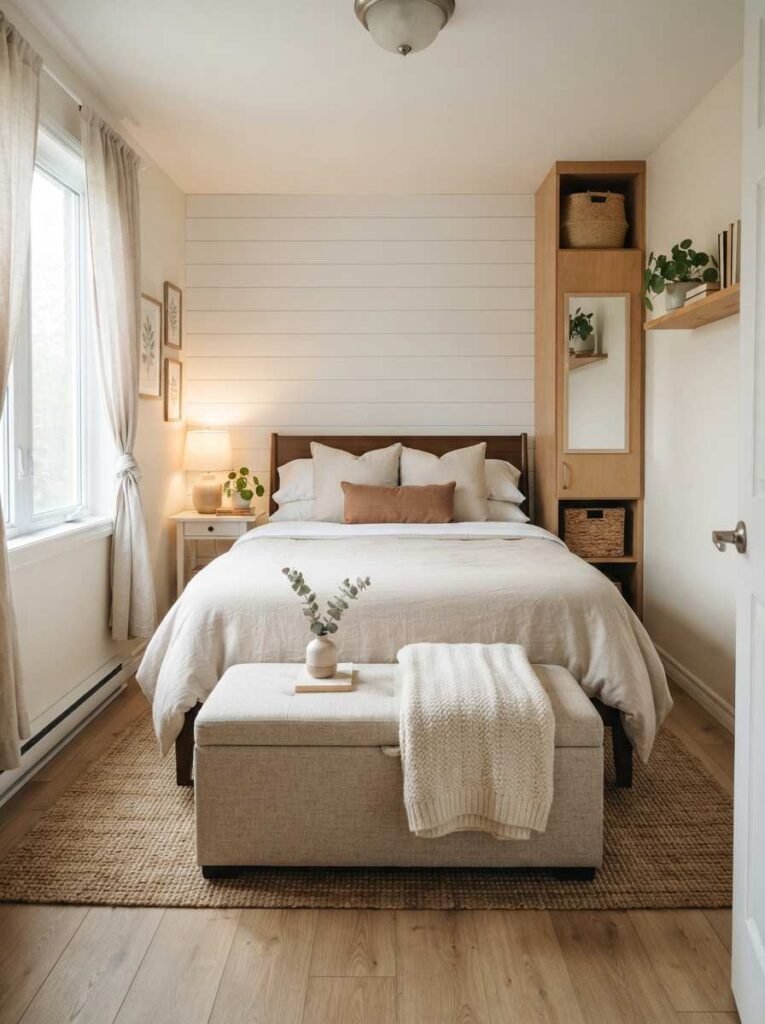
- Ottomans with hidden storage. Extra blankets, off-season clothes, whatever. Hide it in plain sight.
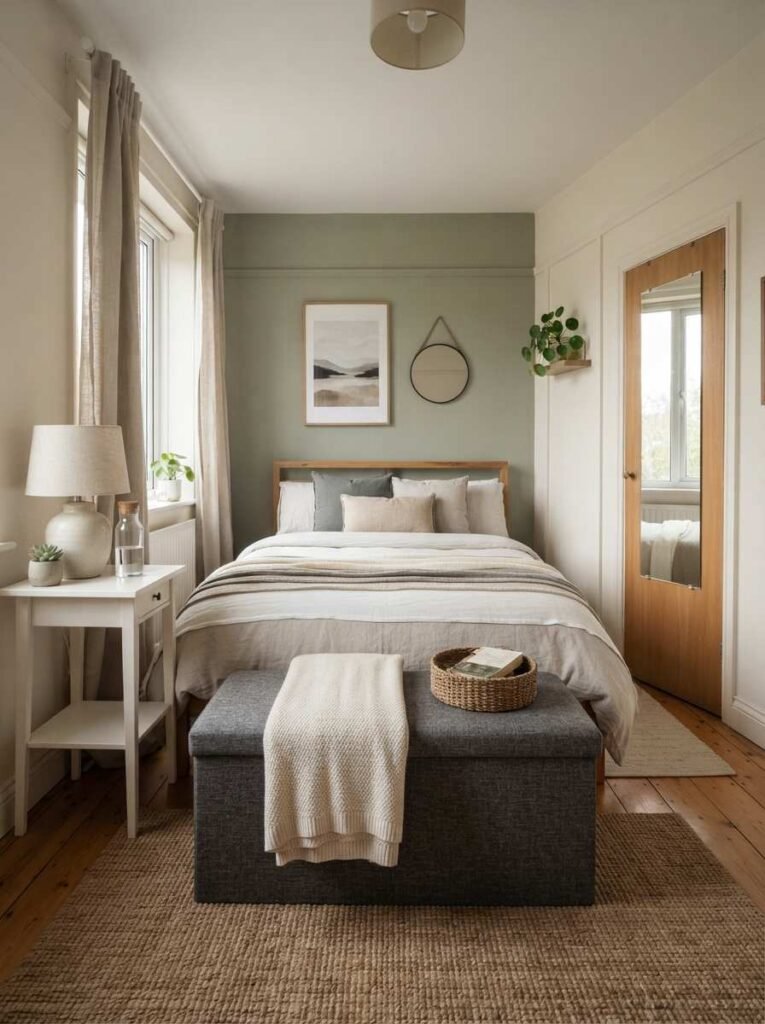
- A slim console table instead of a full desk, if you need a workspace but not a full-blown home office.
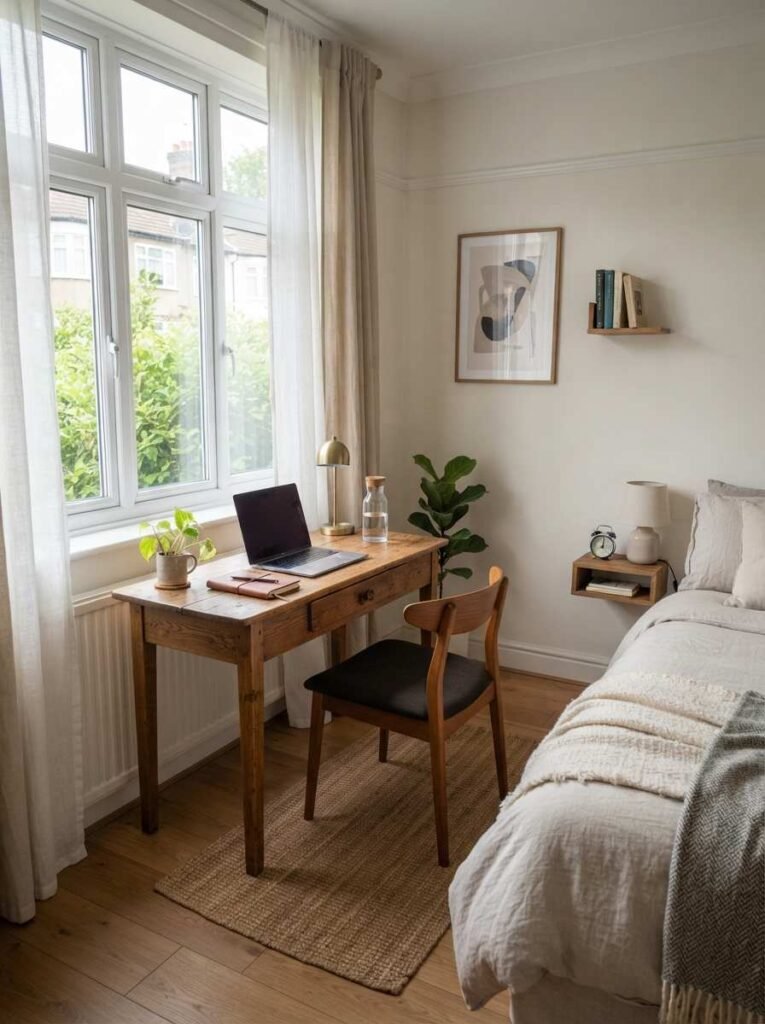
- Furniture on legs rather than furniture that sits flush to the floor. Seeing the floor underneath a dresser or bed frame makes the room read as more open. It’s a small thing. It works anyway.
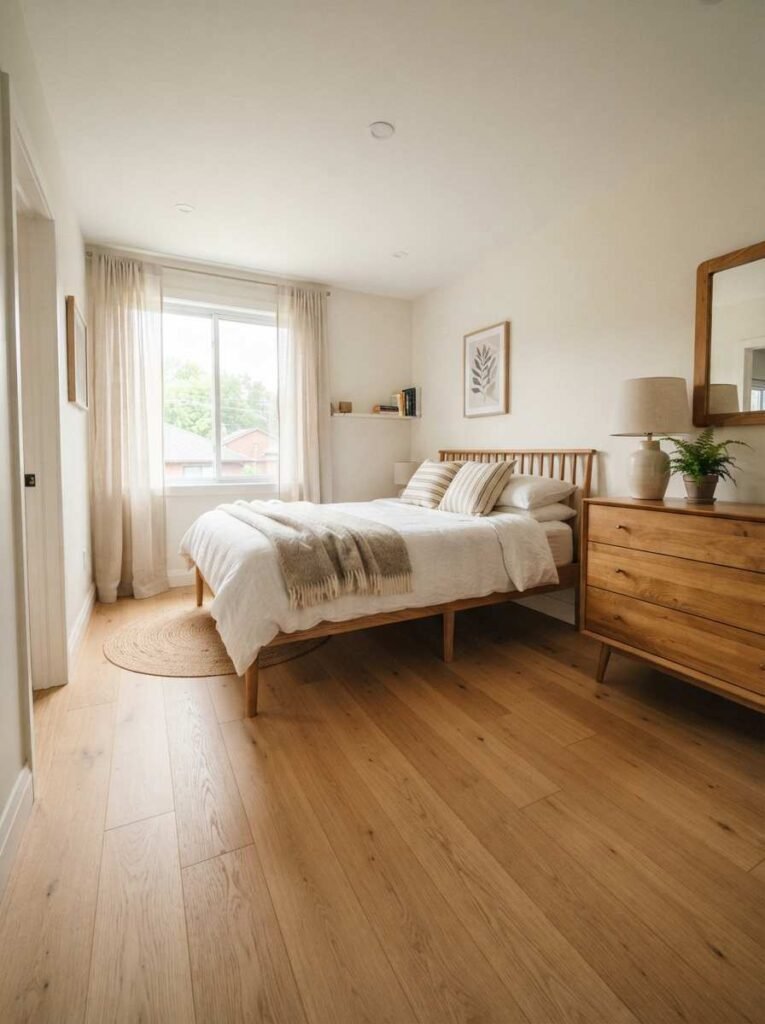
Vertical Space Is Your Best Friend
If the floor is maxed out, look up. IMO this is the single most underused trick in small bedroom design.
- Floor-to-ceiling curtains, even over a small window. It draws the eye upward and makes ceilings feel taller than they are.
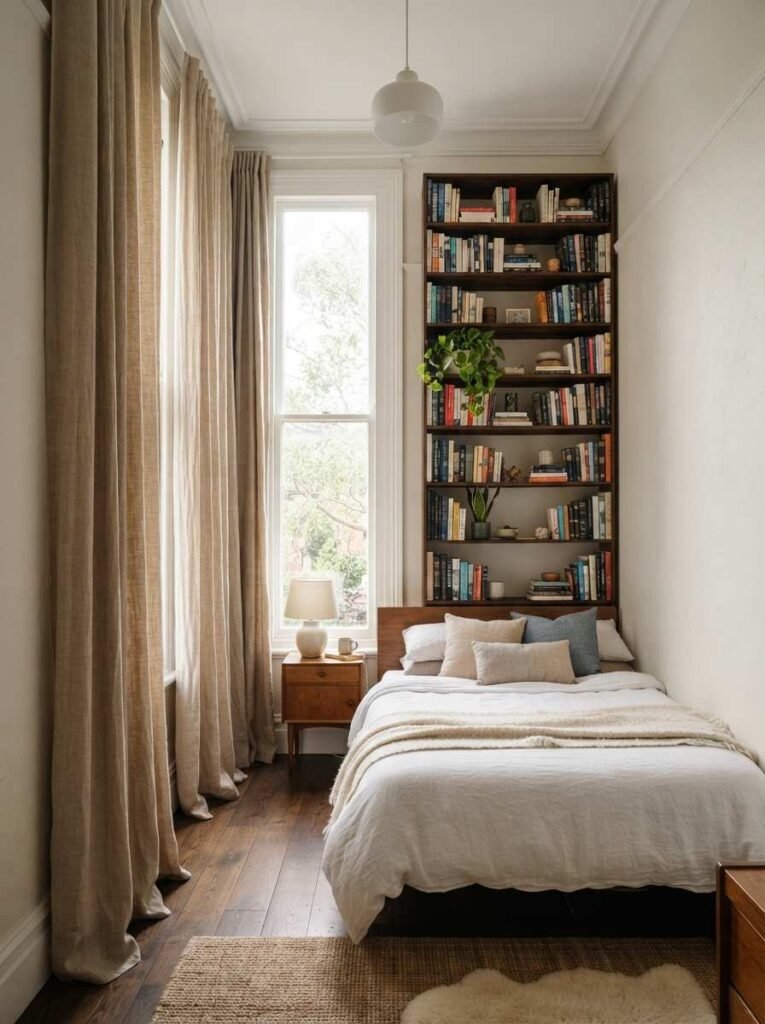
- Tall, narrow bookshelves instead of wide, low ones. Same storage, smaller footprint.
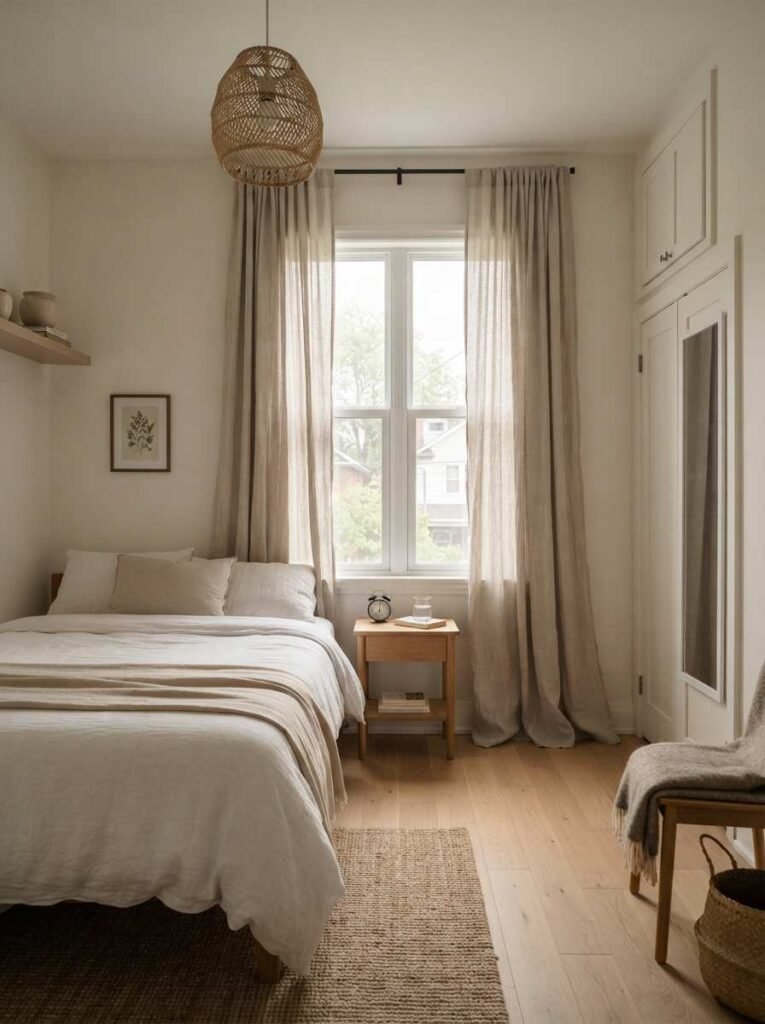
- Wall-mounted shelving above the bed for books, plants, or framed photos.
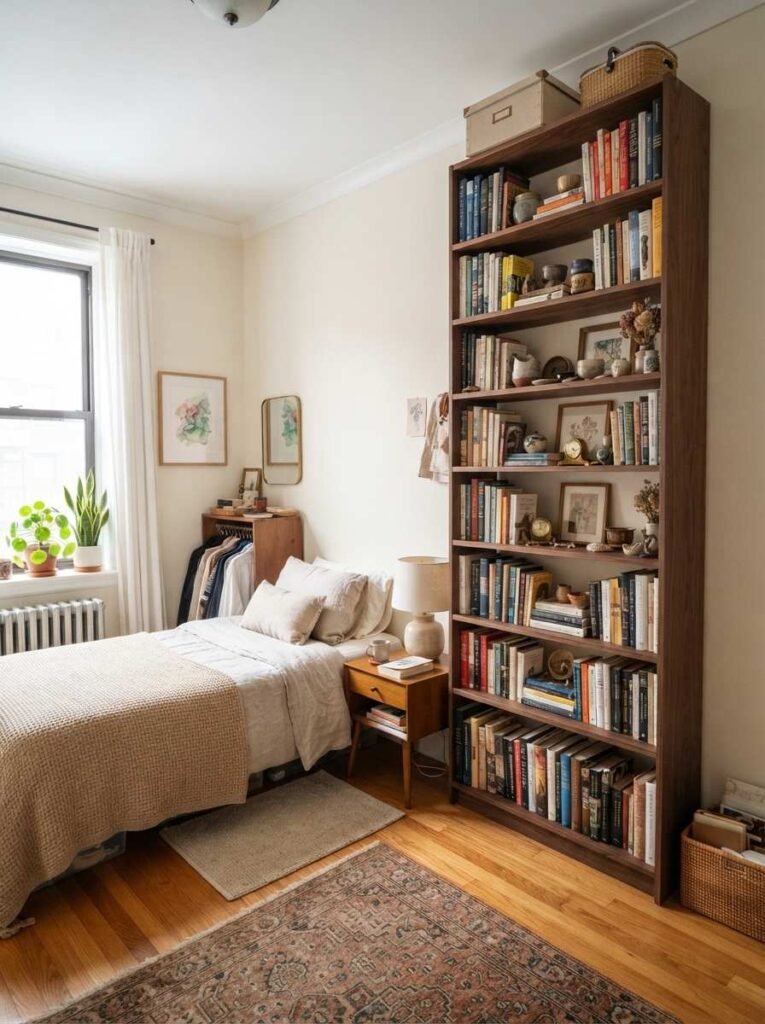
- A statement pendant light instead of a table lamp, freeing up nightstand space while adding visual height.
Texture and Softness Without the Clutter
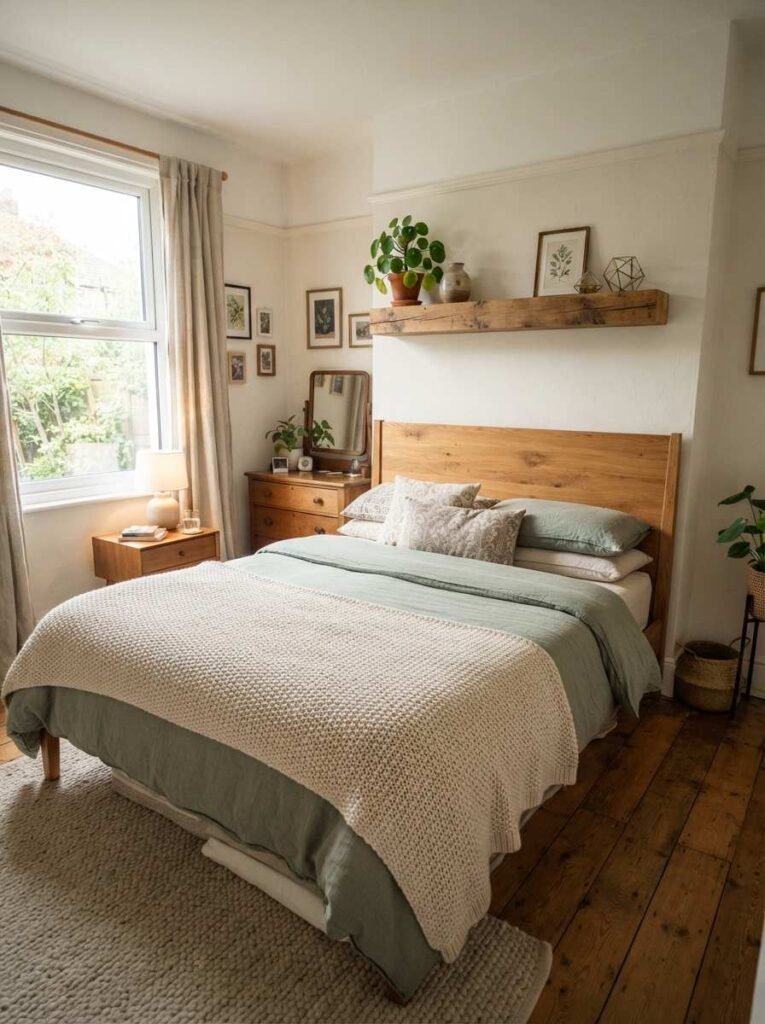
- Layered textiles: a chunky throw, a couple of textured pillows, maybe a woven rug.
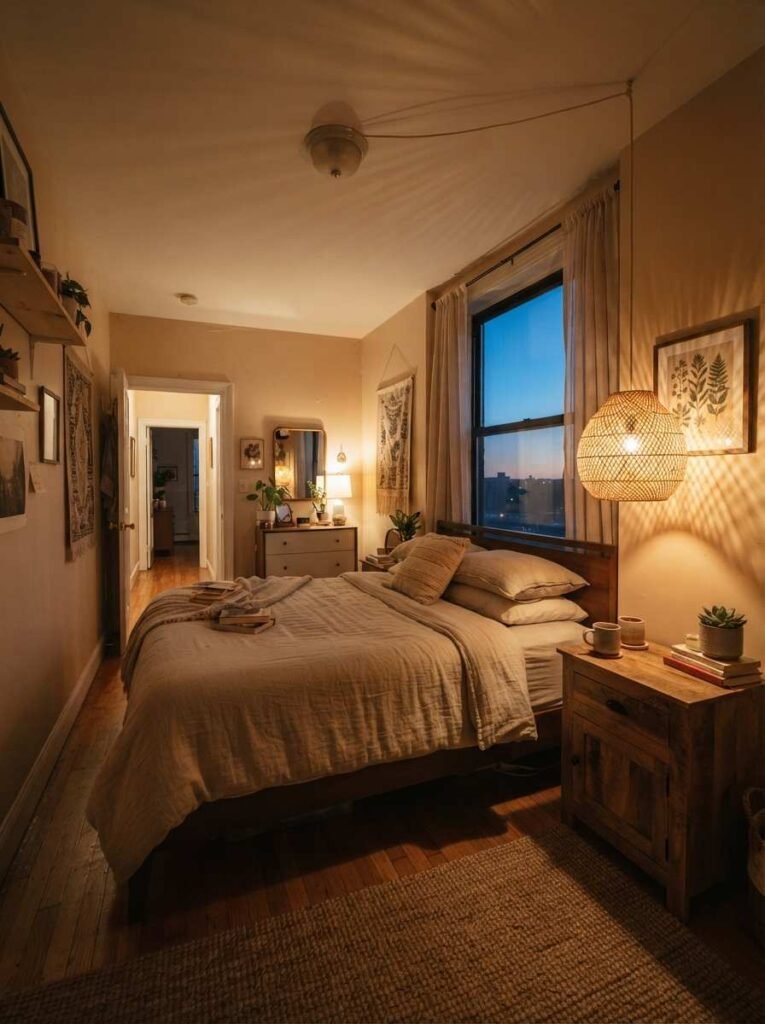
- Texture adds richness without adding visual bulk the way extra furniture does.
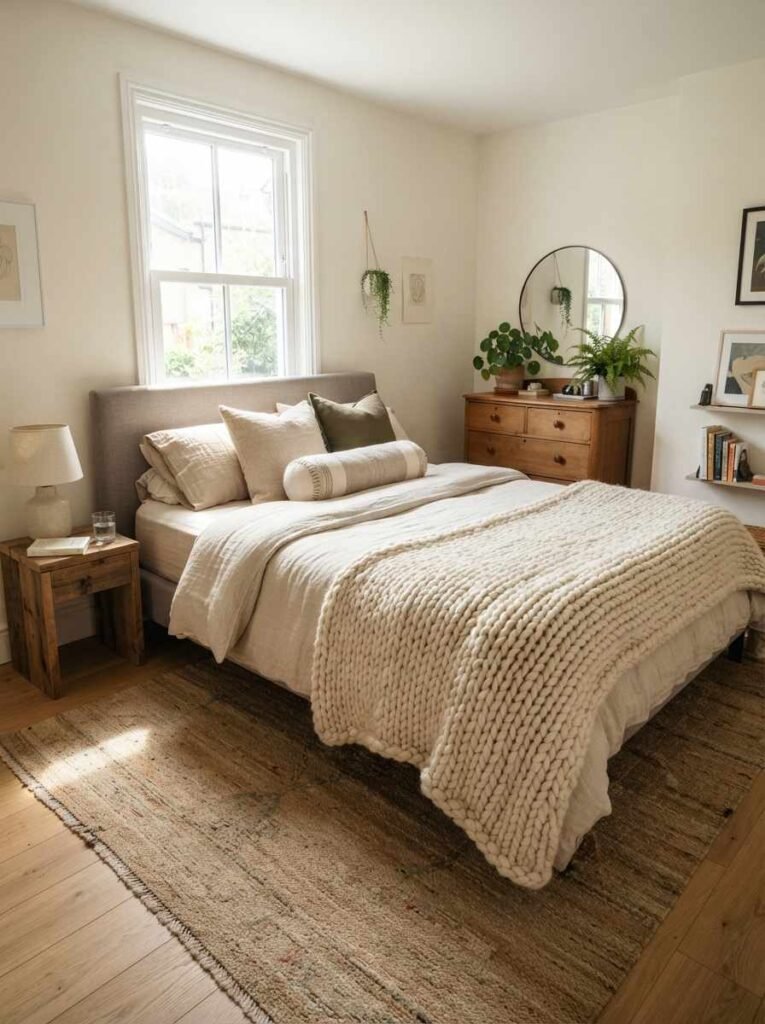
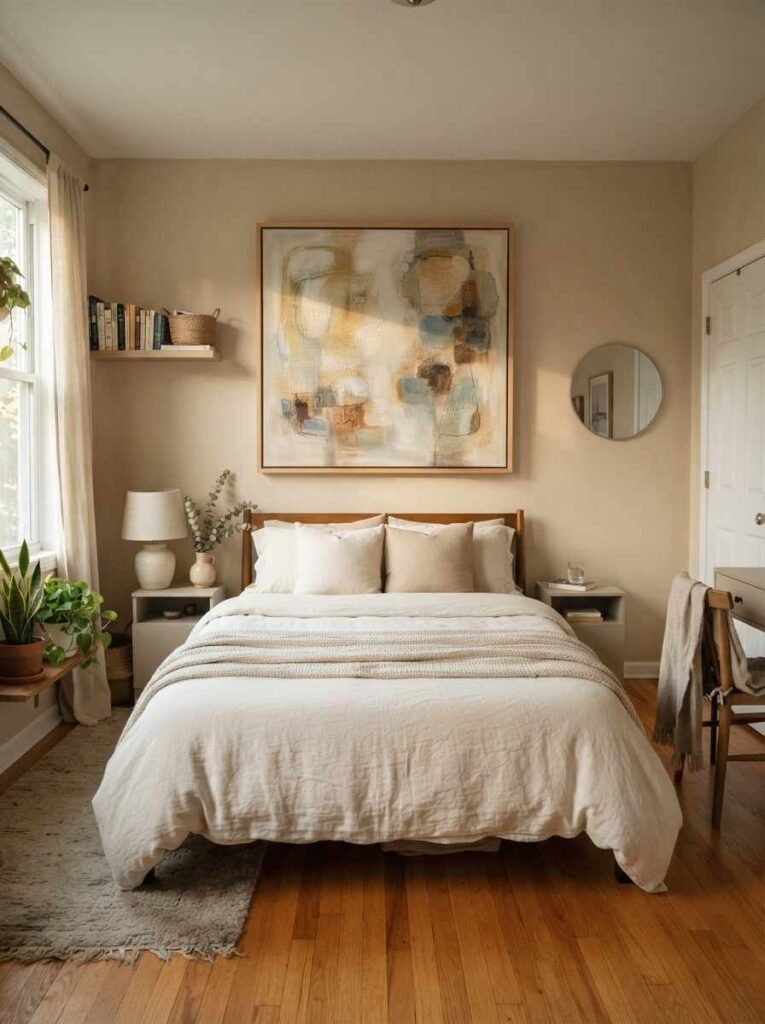
- A single oversized piece of art instead of a gallery wall. One big piece feels curated. A dozen small frames in a tiny room can look chaotic fast.
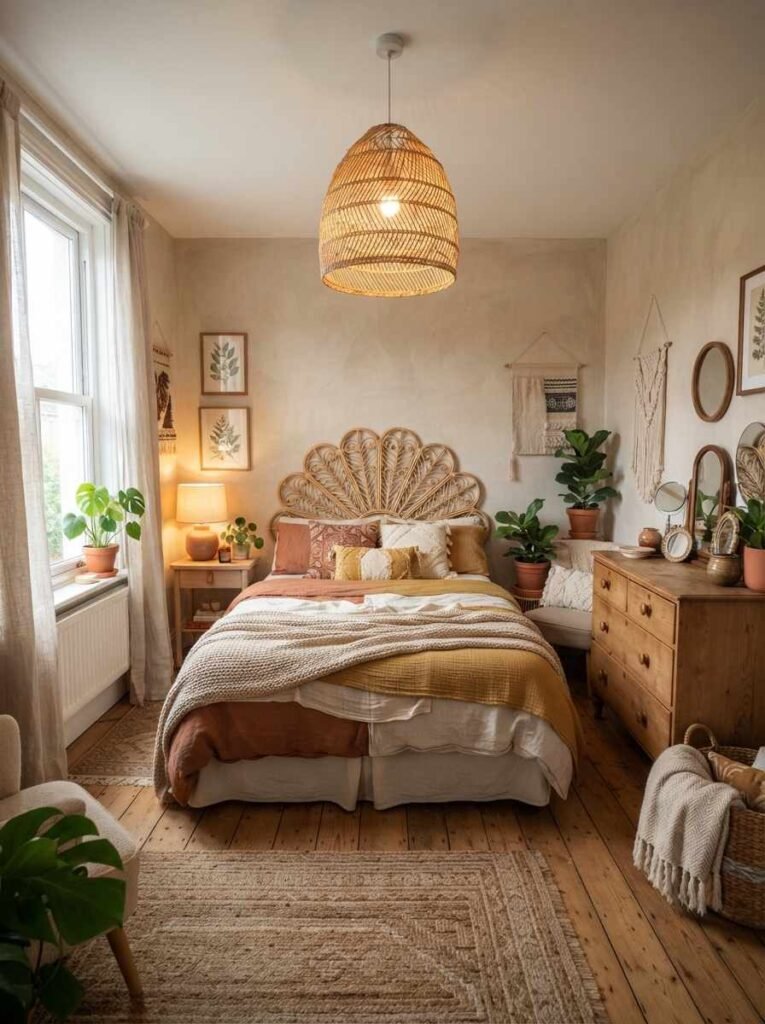
- Woven or rattan accents, like a headboard or a pendant shade. They add warmth without weight.
- A round rug instead of a rectangular one. It softens the sharp corners a small room tends to emphasize.
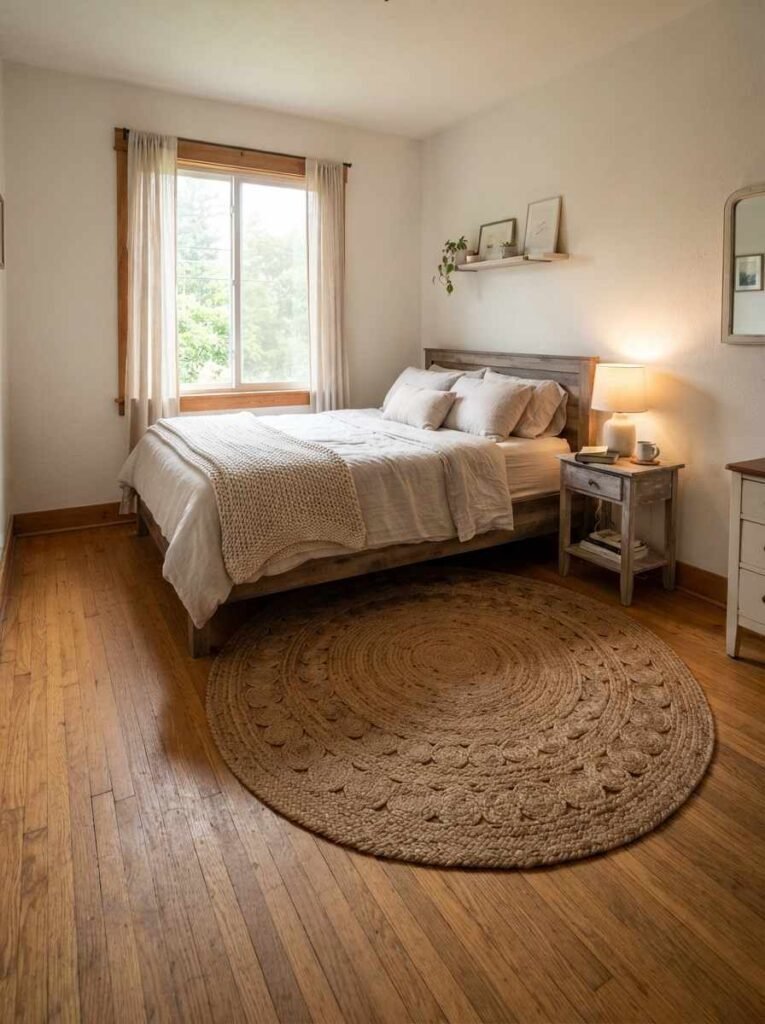
Smart Layout Tricks
- Push the bed into a corner instead of centering it against a wall. This frees up an entire side of the room for movement or a small chair.
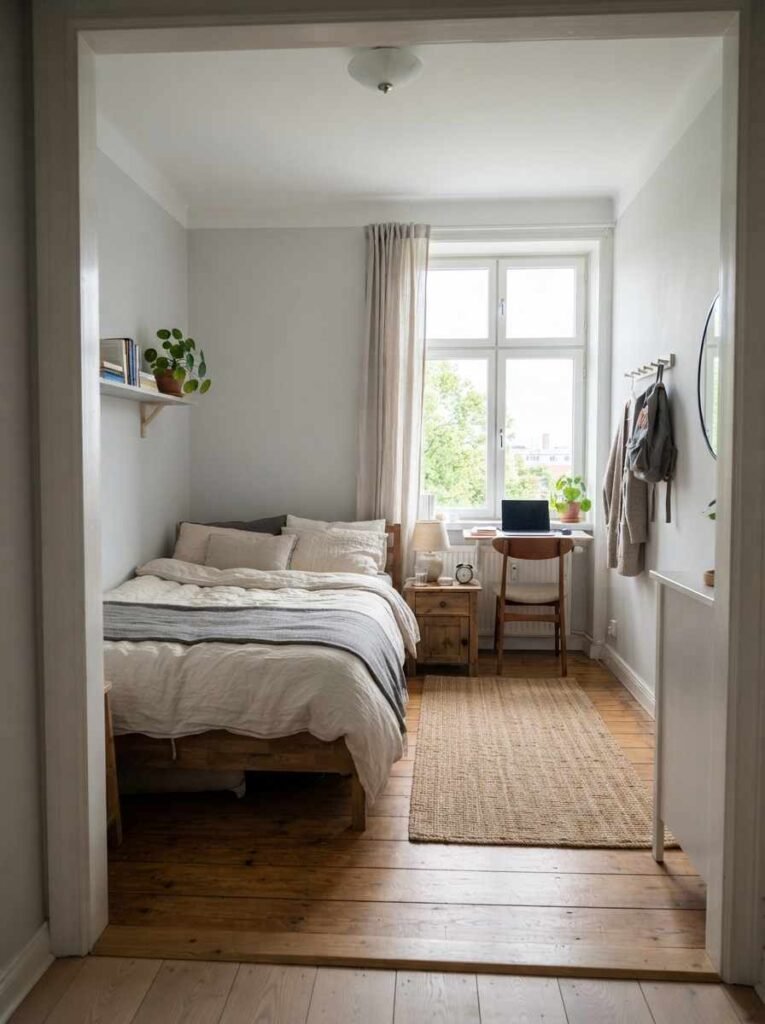
- Angle the bed diagonally, if the room’s proportions allow it. It’s unconventional, and it genuinely opens up unexpected floor space in oddly shaped rooms.
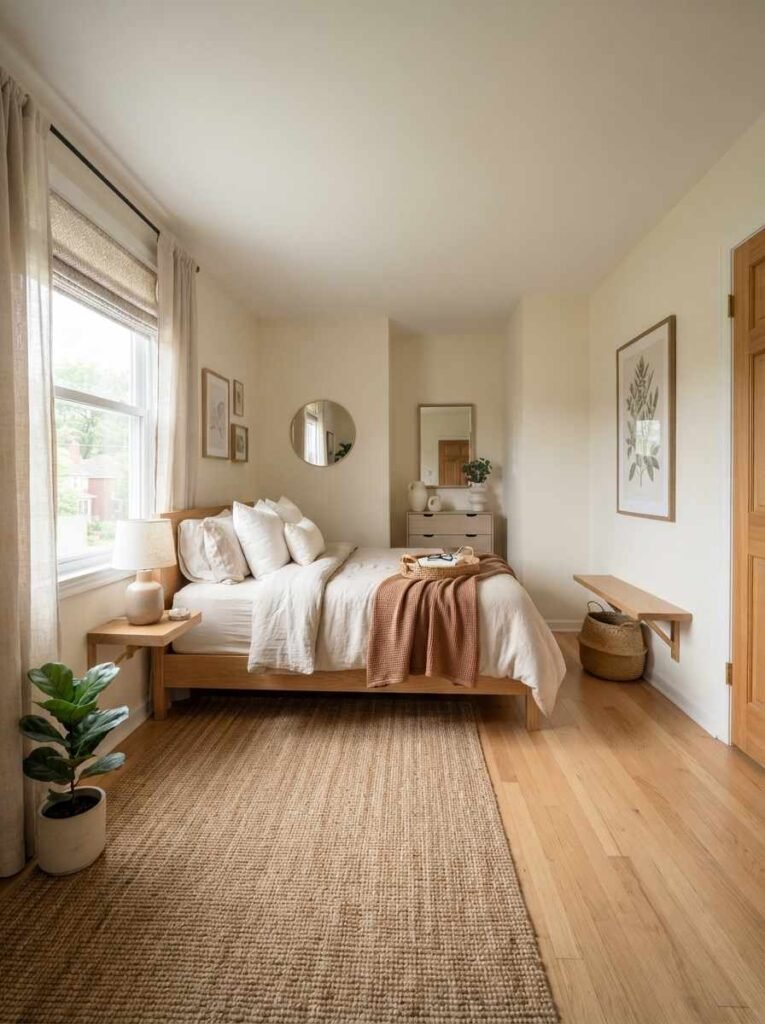
- Keep a clear path from door to window. Sounds obvious, but I’ve seen so many small rooms where furniture blocks natural walking lines, and it makes the whole space feel smaller than it is.
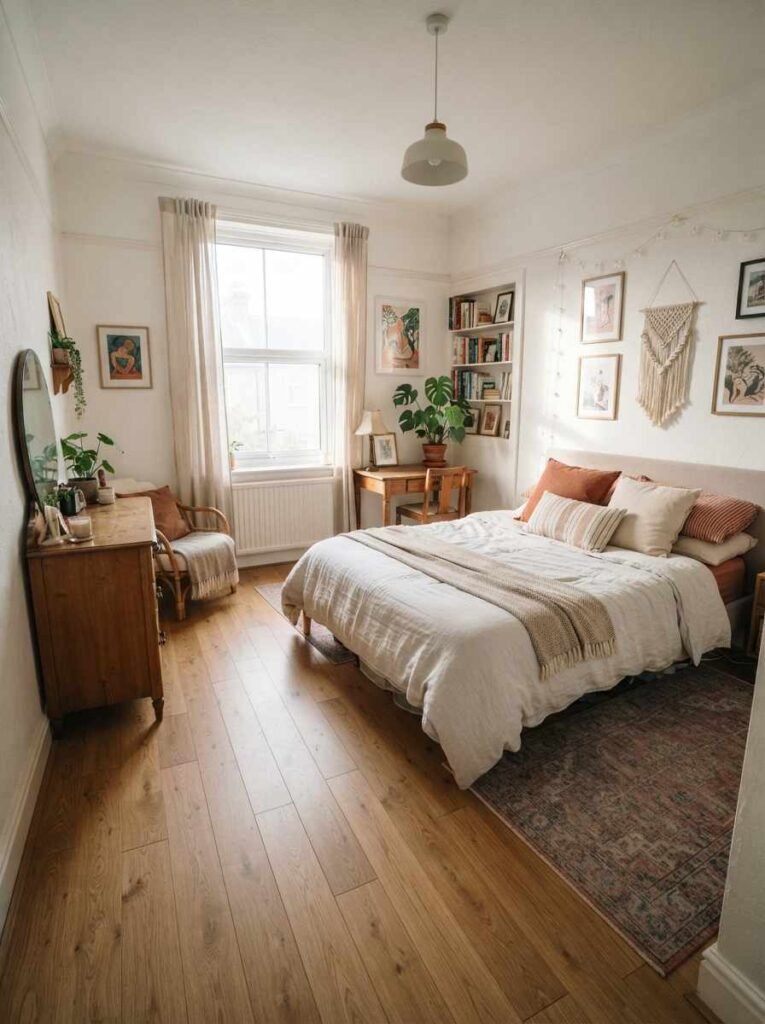
Personal Touches That Don’t Eat Space
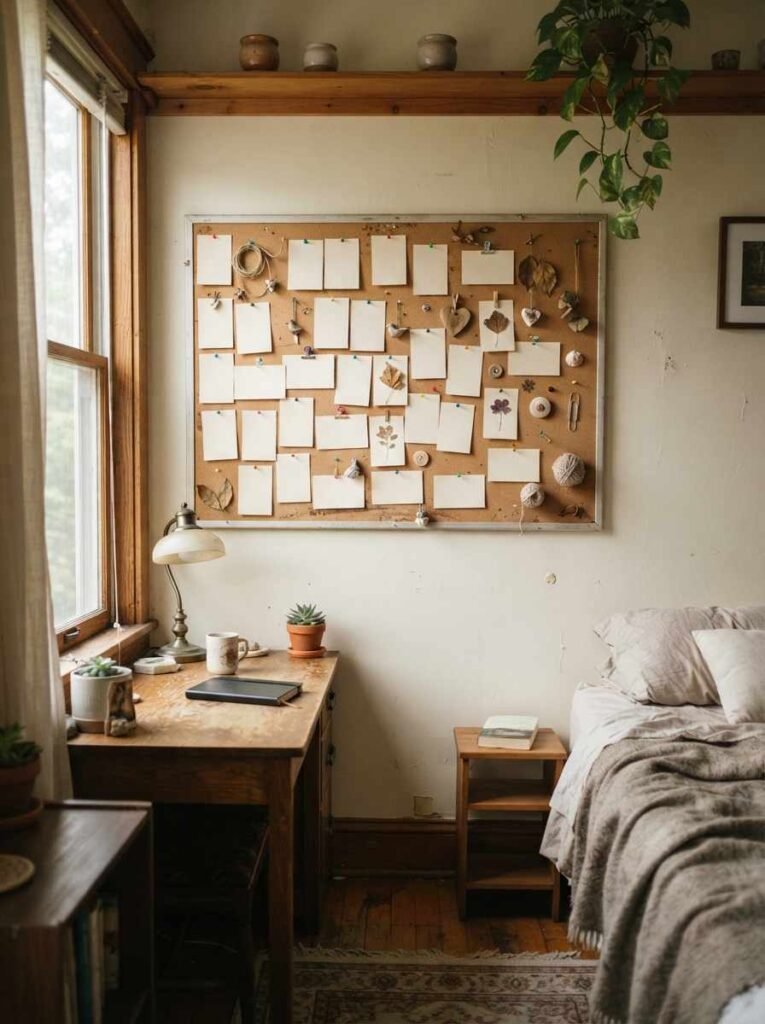
- A small gallery of Polaroids or postcards on a corkboard instead of frames. Zero depth, all personality.
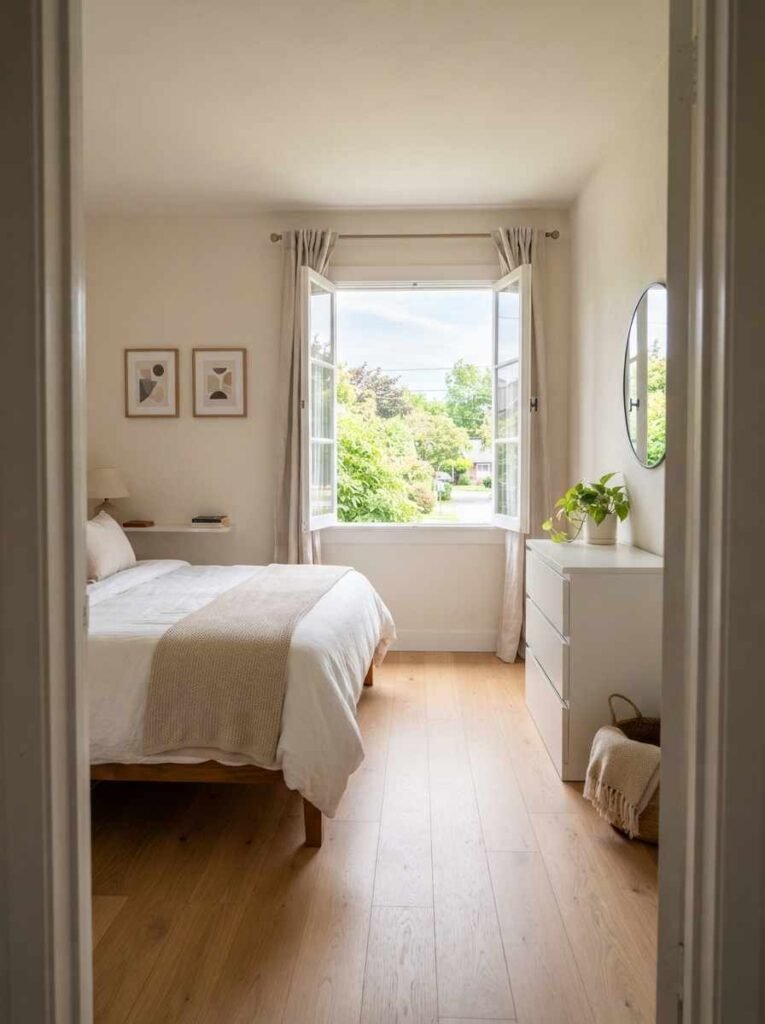
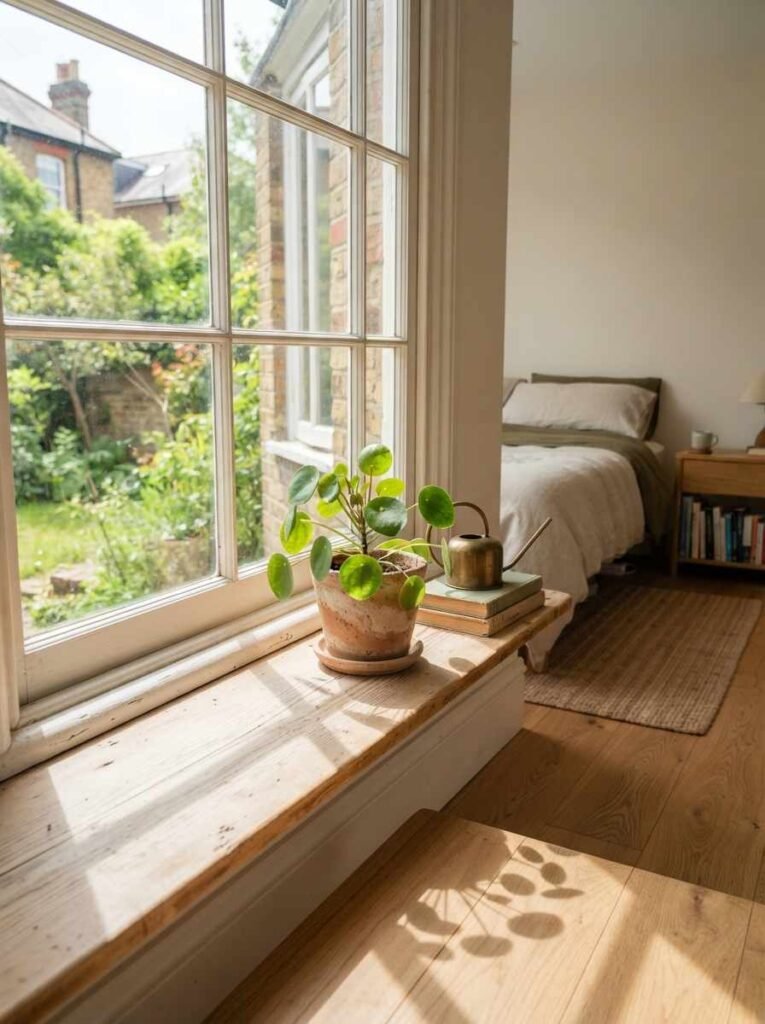
- Fresh (or fake, no judgment) greenery in a small pot on a windowsill or shelf.
- A little plant life does more for “aesthetic” than most people give it credit for. This one’s cheap too, which never hurts.
Quick Reference: Small Bedroom Fixes at a Glance
Problem | Fix | Why It Works Room feels dark | Layered warm lighting | Adds depth without harsh shadows Room feels boxy | Match ceiling to wall color | Removes visual “lid” effect Floor feels cluttered | Furniture on legs | Shows floor space underneath No storage | Bed with drawers, storage ottomans | Hides clutter without extra furniture
A quick tangent, because I can’t help myself: I once spent an entire Saturday debating whether a beaded curtain counts as “aesthetic” or “2004 college dorm.” Jury’s still out. Moving on.
Common Questions About Small Bedroom Design
Does painting a small bedroom dark actually make it feel bigger?
Sometimes, yes. A dark wall paired with good lighting and light-colored bedding can add depth rather than shrink the room.
The mistake people make is going dark on every wall, which does close things in.
What’s the single best change for a tiny bedroom on a budget?
Swap your lighting. New bulbs and a couple of lamps cost far less than new furniture, and the difference in how the room feels is honestly kind of wild.
Should I avoid a big bed in a small room?
Not necessarily. A queen bed with storage drawers underneath can work in a surprisingly small footprint, as long as you clear the walking paths around it.
Sites like Apartment Therapy have covered plenty of tiny bedrooms with full-size beds that don’t feel cramped at all.
Final Thought
A small bedroom isn’t a design limitation. It’s a design challenge, and honestly, those are more fun to solve.
I’ve tried most of these 27 ideas myself, some worked immediately, a couple took two attempts and a return trip to the hardware store.
Which one are you trying first? Save this list, pin your favorites, and let me know how your room turns out.
