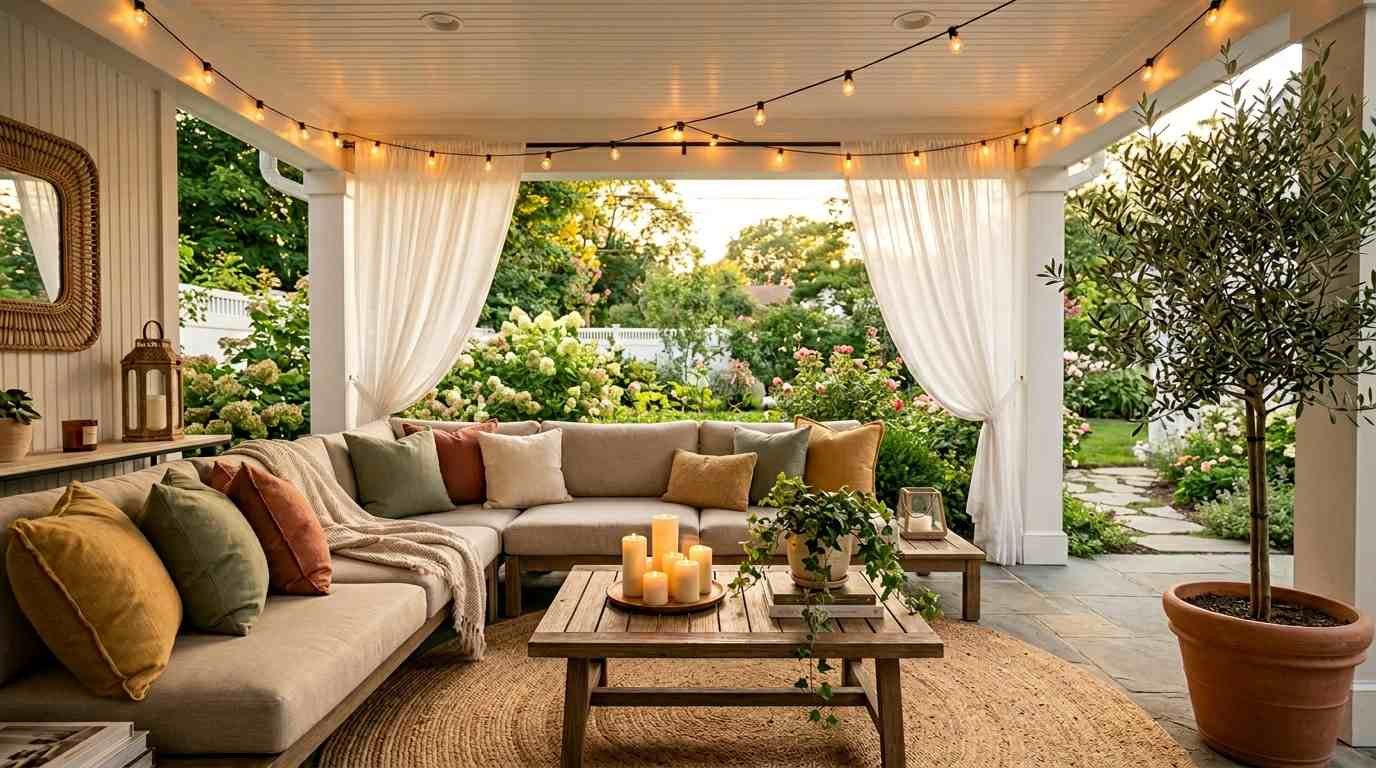
Your covered patio is 8×10 feet. Your budget is… not. Here’s how to make it look like neither of those things are true.
I’ve been obsessed with outdoor spaces for years.
Not in a “professional landscape designer” way — more in a “spent three weekends rearranging the same four pieces of furniture” kind of way.
And somewhere in that very humbling process, I figured out what actually makes a small covered patio look pulled together, expensive, and worth lingering in.
Spoiler: it’s rarely about buying more stuff. FYI, it’s almost always about being intentional with what you already have — or swapping one or two things for something with a bit more presence. Let’s get into it.
Lighting: the single biggest upgrade you can make
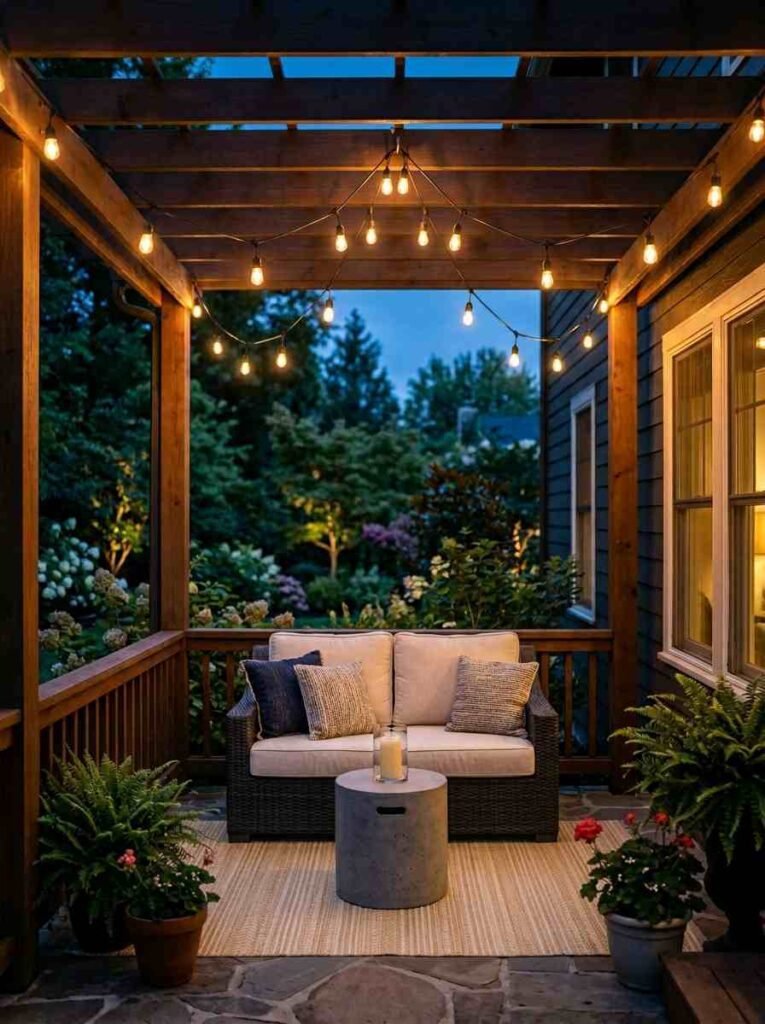
Overhead lighting ruins outdoor spaces. There — said it. Harsh, flat, direct light from a single fixture makes even a beautiful patio feel like a parking garage.
The fix is almost embarrassingly simple.
String lights, but hung properly
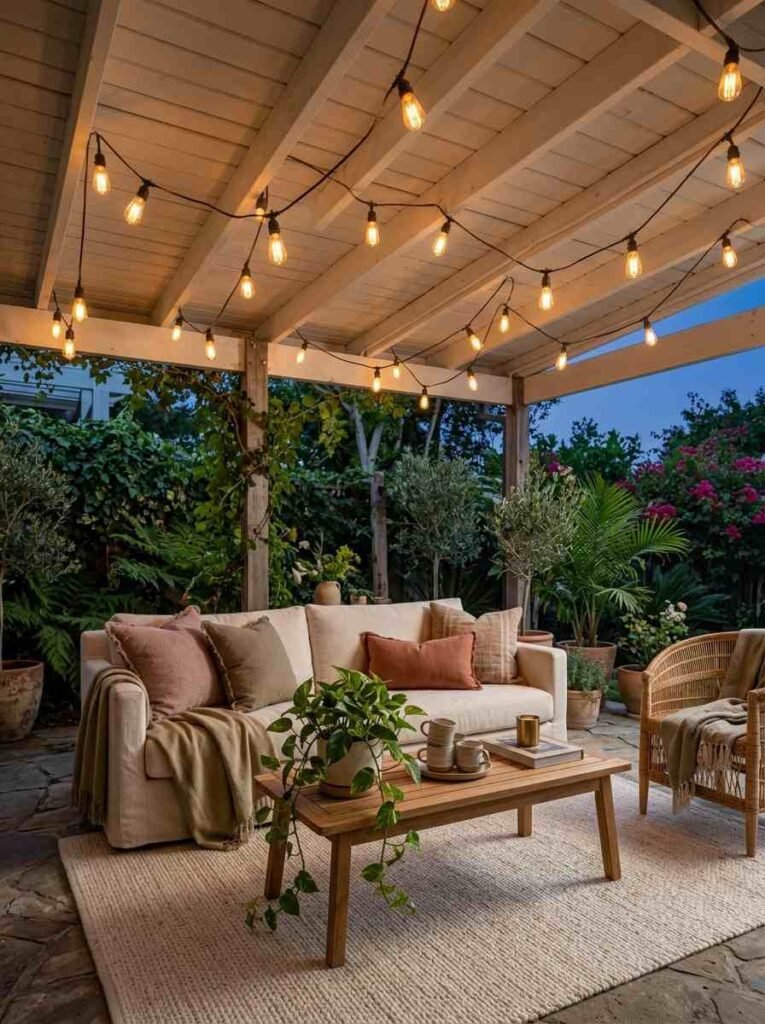
String lights are everywhere, yes. But how you hang them changes everything.
Drape them in loose catenary curves from hooks at the edge of your roof to a center point — not tight and straight like a grid.
The gentle sag looks intentional and warm. Edison bulbs at 2700K color temperature are the sweet spot between cozy and bright enough to actually see your food.
Lanterns at floor level
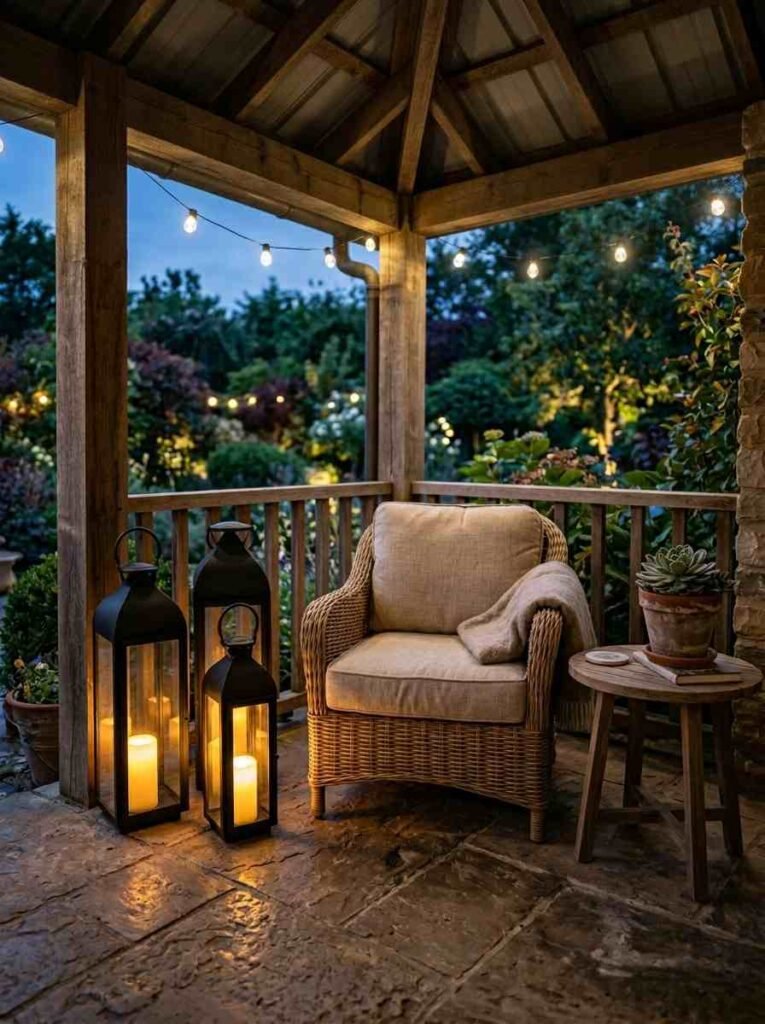
Tall floor lanterns next to a sofa or chair anchor the space and add height variation.
A cluster of 2-3 in different heights, all in the same finish, reads as a curated moment. Black matte or aged brass are your most versatile finishes right now.
Candles (real or flameless) on every surface
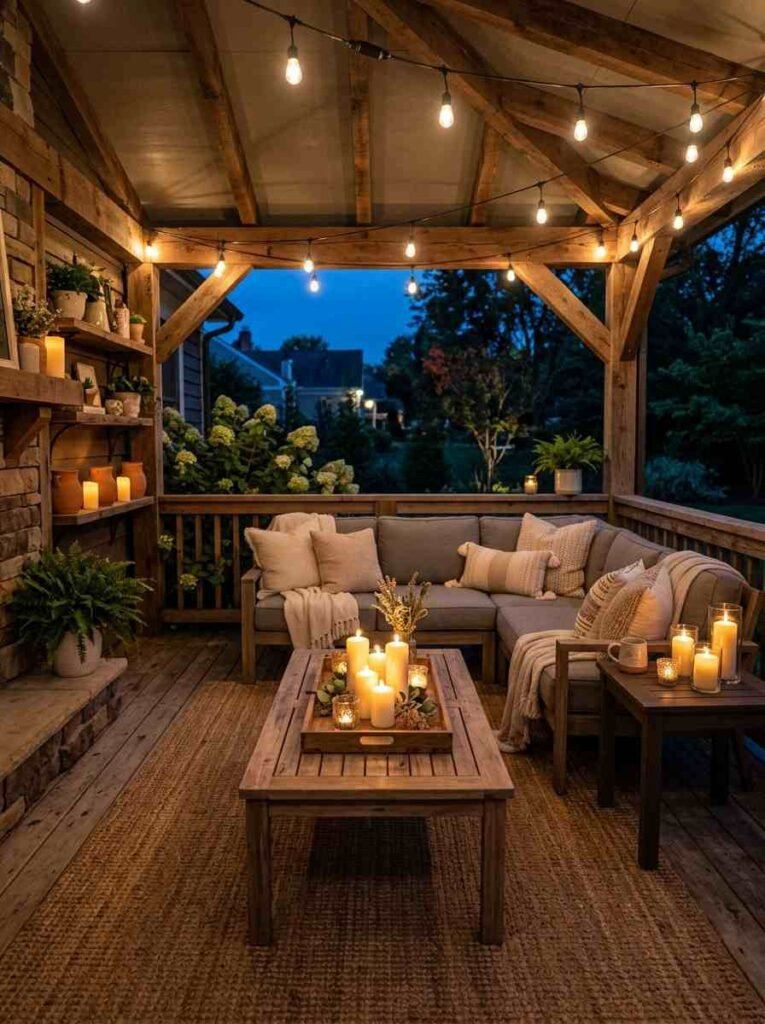
Don’t underestimate candles.
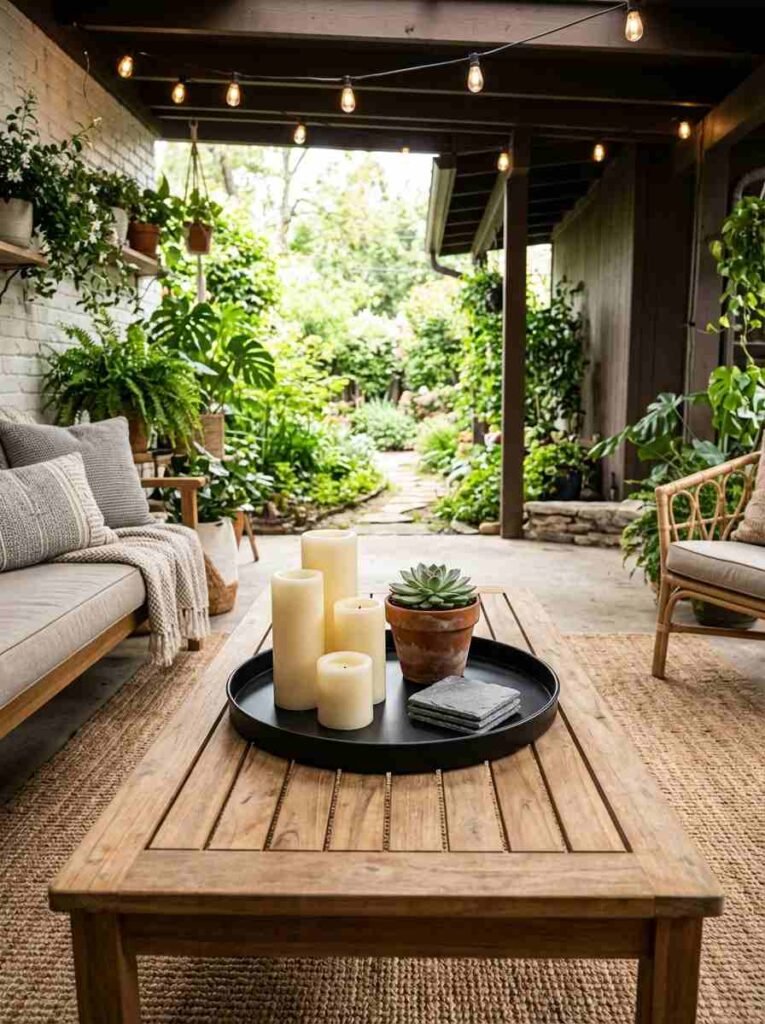
A cluster of pillar candles on a tray on the coffee table gives you that candlelit restaurant glow that costs about $18.
Flameless LED pillar candles look surprisingly convincing at night and you won’t have to think about fire safety every time there’s a breeze.
· · ·
Textiles: the fastest way to add “expensive” energy
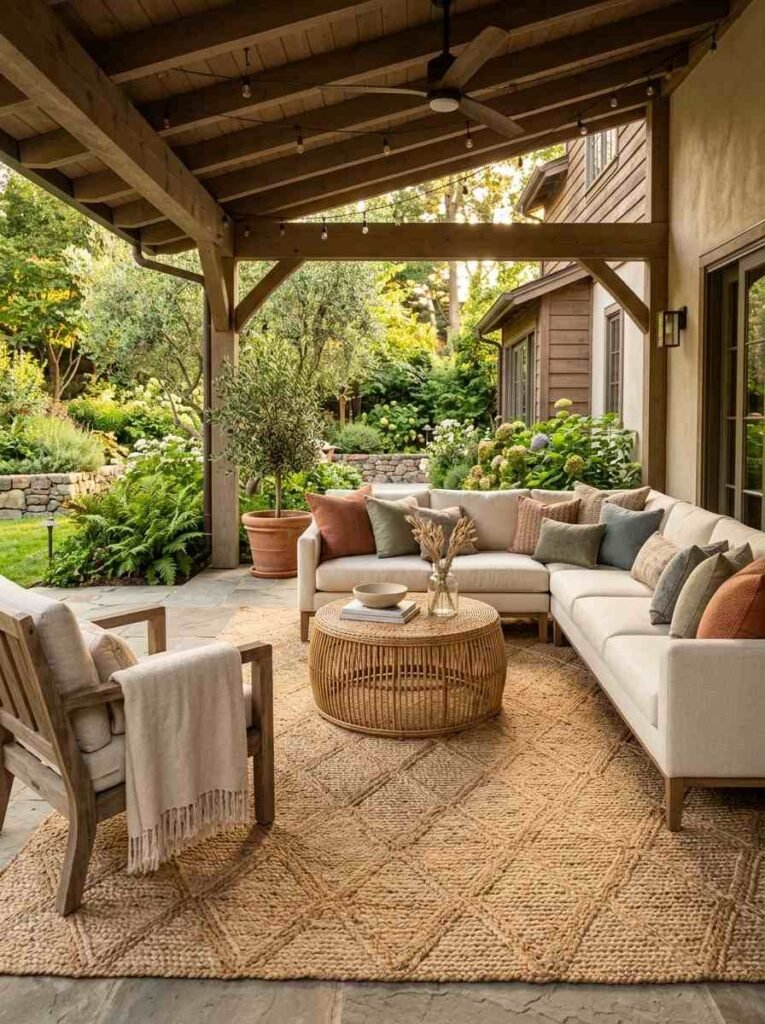
Outdoor furniture, even decent stuff, tends to look a bit… plastic-y. Bare.
Clinical. Textiles fix this immediately, and the right outdoor fabrics have come a long way — they can survive rain, sun, and the occasional wine spill without looking sad by October.
An outdoor rug, full stop
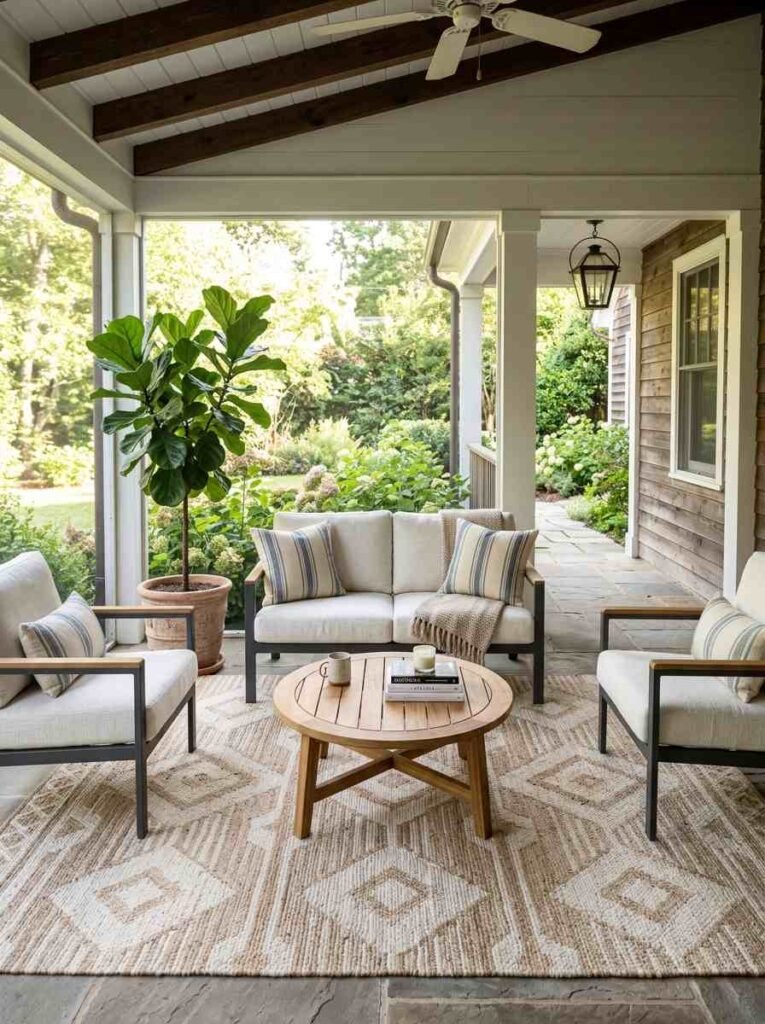
This is the single most impactful purchase you can make for a small patio. A rug defines the space, grounds the furniture, and signals “this is a room” rather than “this is where we put stuff.” Go bigger than you think you need.
If it looks slightly too big in the store, it’s probably right. On a covered patio, a rug that all four furniture legs sit on looks polished; one that only the front legs reach looks accidental.
Throw pillows in a real color story
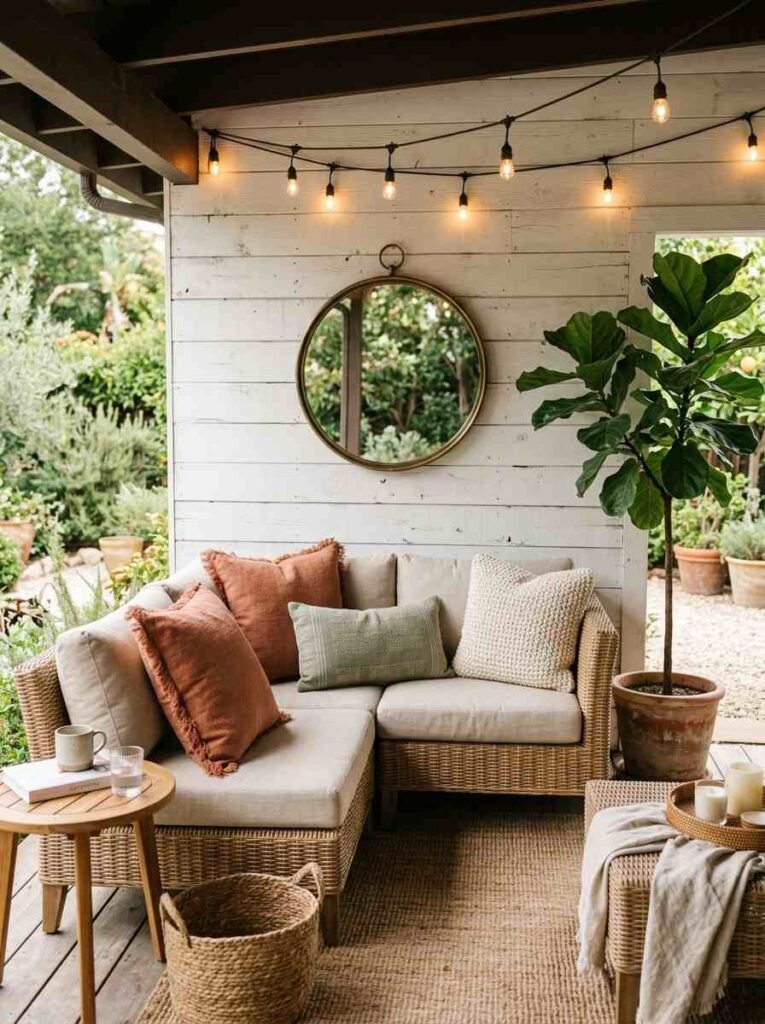
Two or three patterns max. Pick a dominant color, a supporting color, and a neutral. If you have four different pillow prints that don’t talk to each other — and you know who you are :/ — edit down. One color story, consistently applied, looks intentional and elevated.
A throw blanket draped over one seat
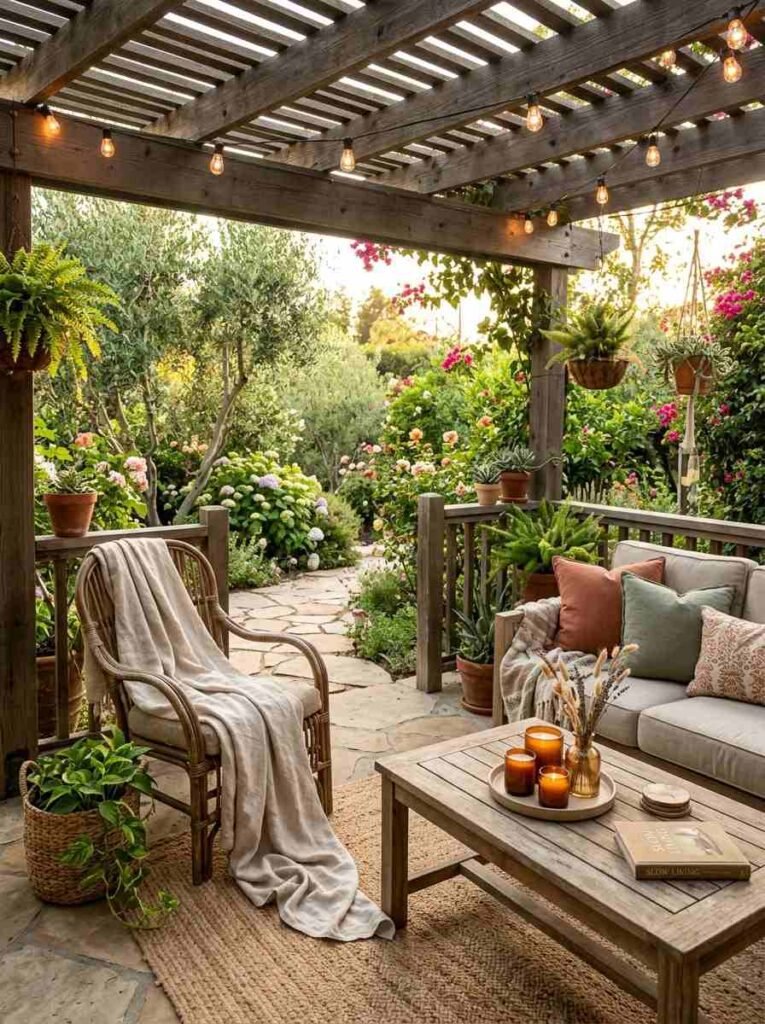
Not folded neatly. Draped slightly carelessly. This is a styling trick used in literally every editorial photo of a beautiful outdoor space.
It signals comfort and livability. Linen or cotton works outdoors as long as you bring it in when it rains.
| Textile | Impact level | Avg. cost | Outdoor-safe? |
|---|---|---|---|
| Outdoor rug | Very high | $60–$200 | Yes |
| Throw pillows | High | $15–$40 each | Check label |
| Throw blanket | Medium-high | $25–$80 | Bring in when wet |
Furniture arrangement and editing
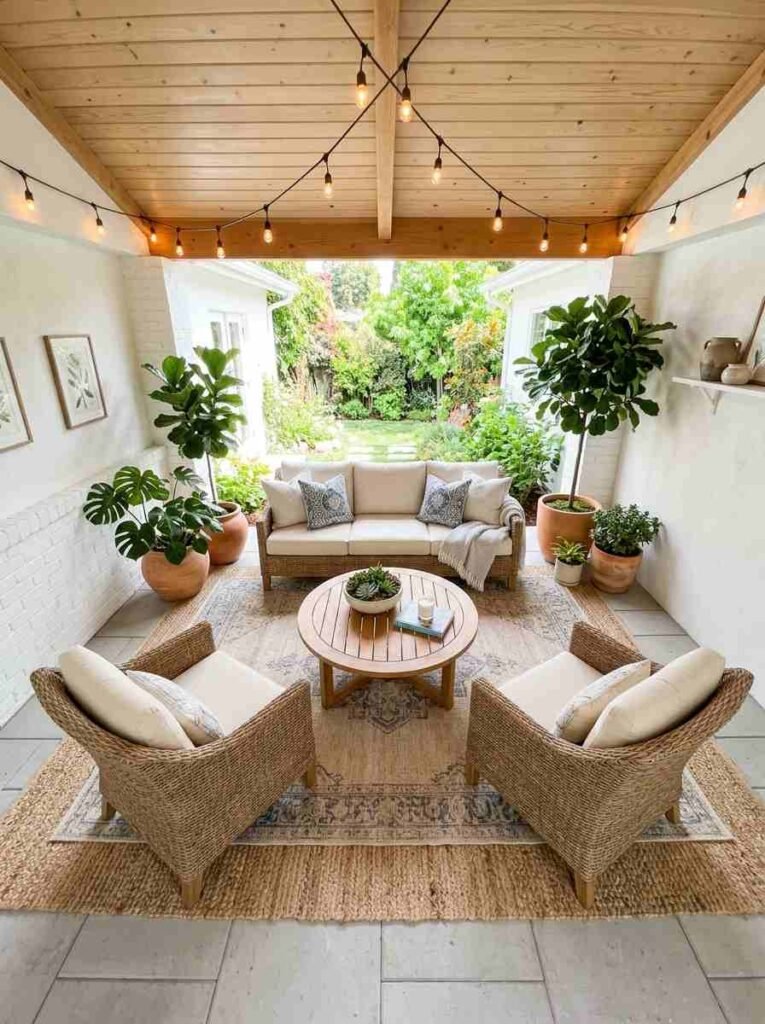
Small spaces don’t need fewer pieces — they need the right pieces arranged well.
The instinct to push everything against the walls to “create space” actually makes small patios feel smaller. Pull things in.
Make a conversation area. Let the space breathe around the arrangement, not behind the furniture.
Float your furniture
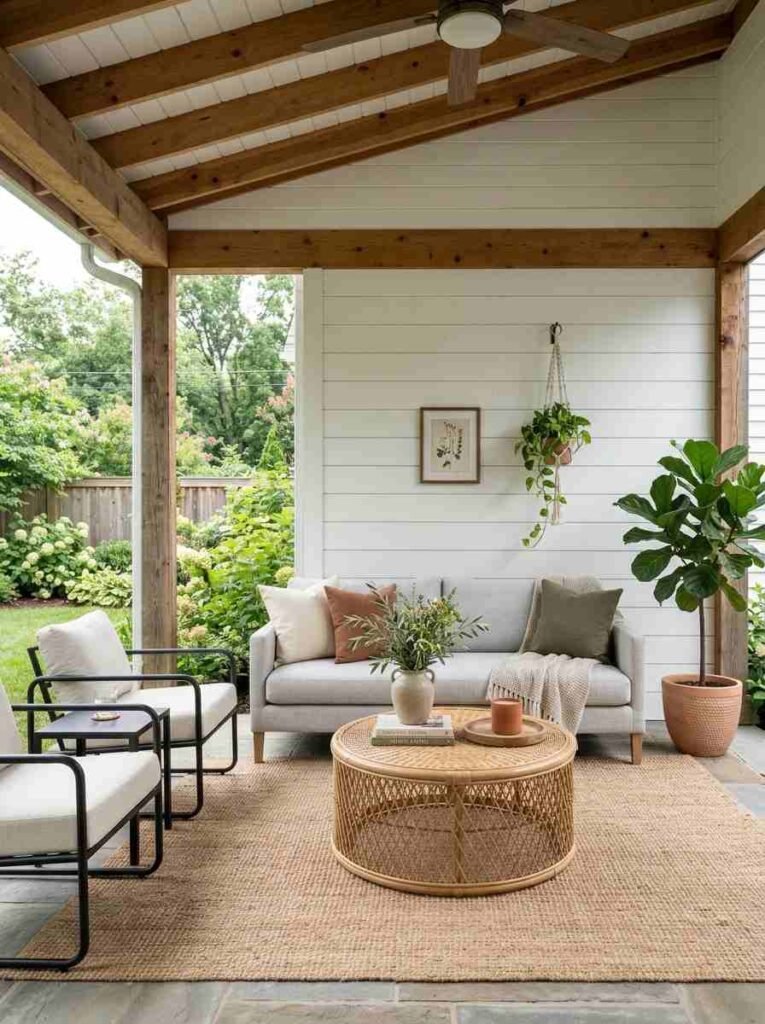
Pull your seating at least 6–8 inches away from the walls and columns. A sofa floating slightly away from a wall looks designed.
Pushed flat against it looks like you ran out of ideas. Even in a tiny 8×10 space, this principle works — it creates a sense of purpose.
One anchor piece with real presence
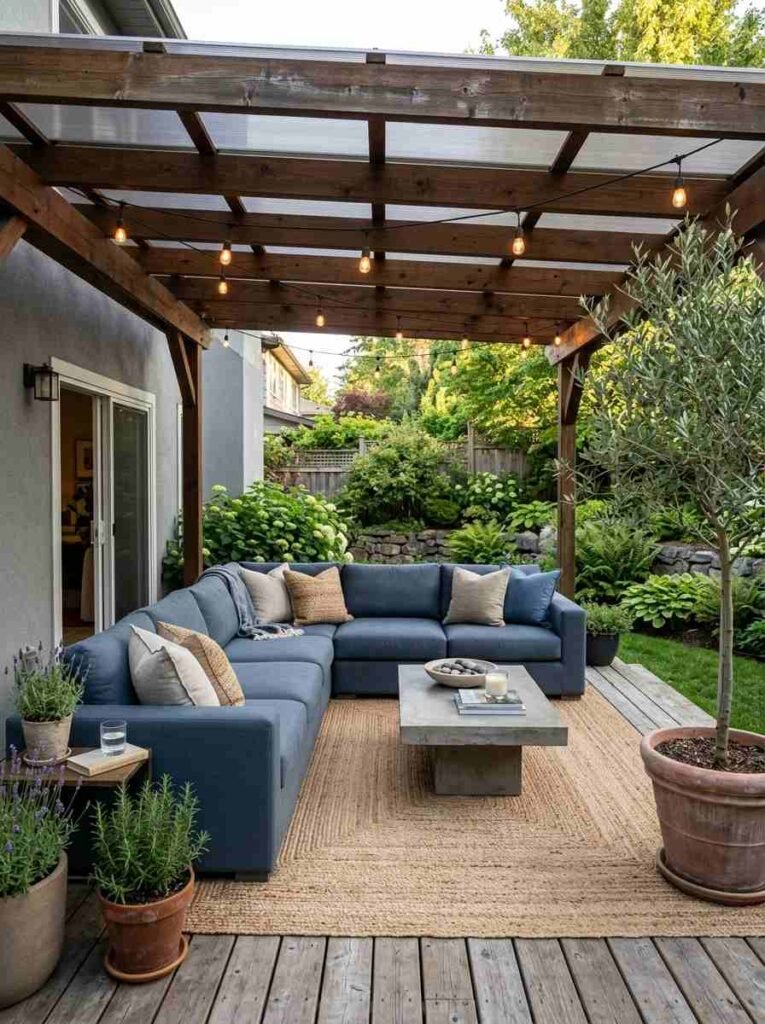
An outdoor sectional, a long bench, or a dining table with character — one statement piece does more work than four mismatched pieces.
If budget is tight, invest in the one thing you’ll look at the most and keep everything else simple and solid.
Side tables at every seat
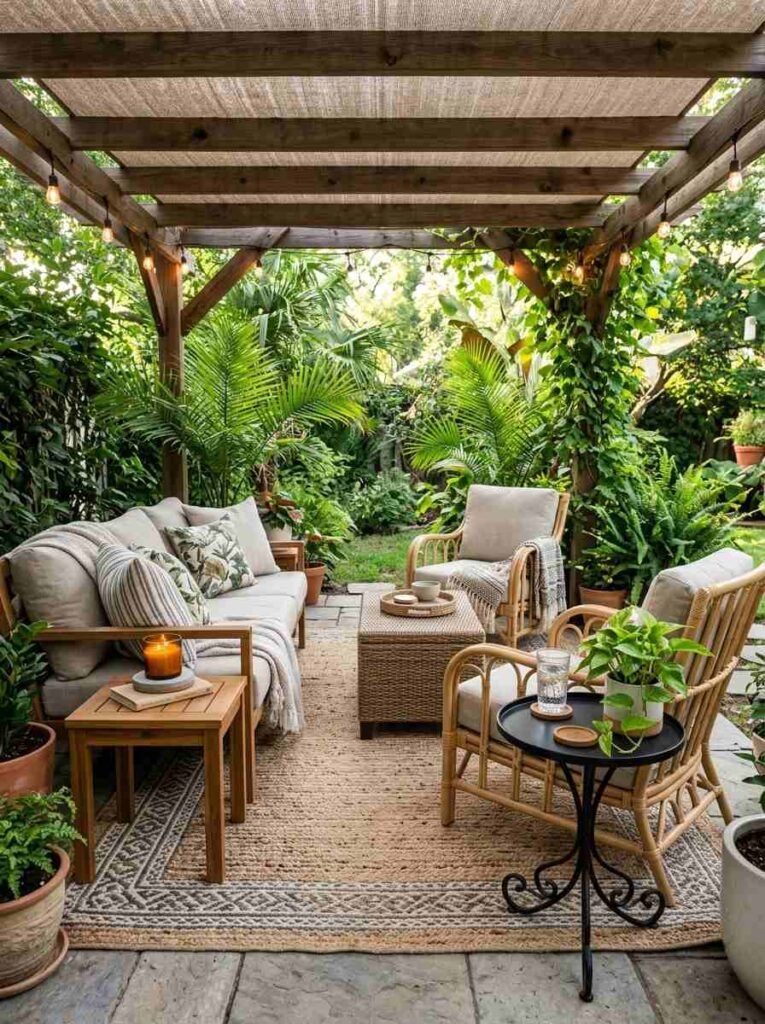
Every seat needs somewhere to put a drink. This sounds obvious, but it’s the thing most people skip.
A small side table next to each chair makes the whole setup feel complete and considered. Mismatched ones in the same metal finish or material can look purposefully curated.
A coffee table with storage
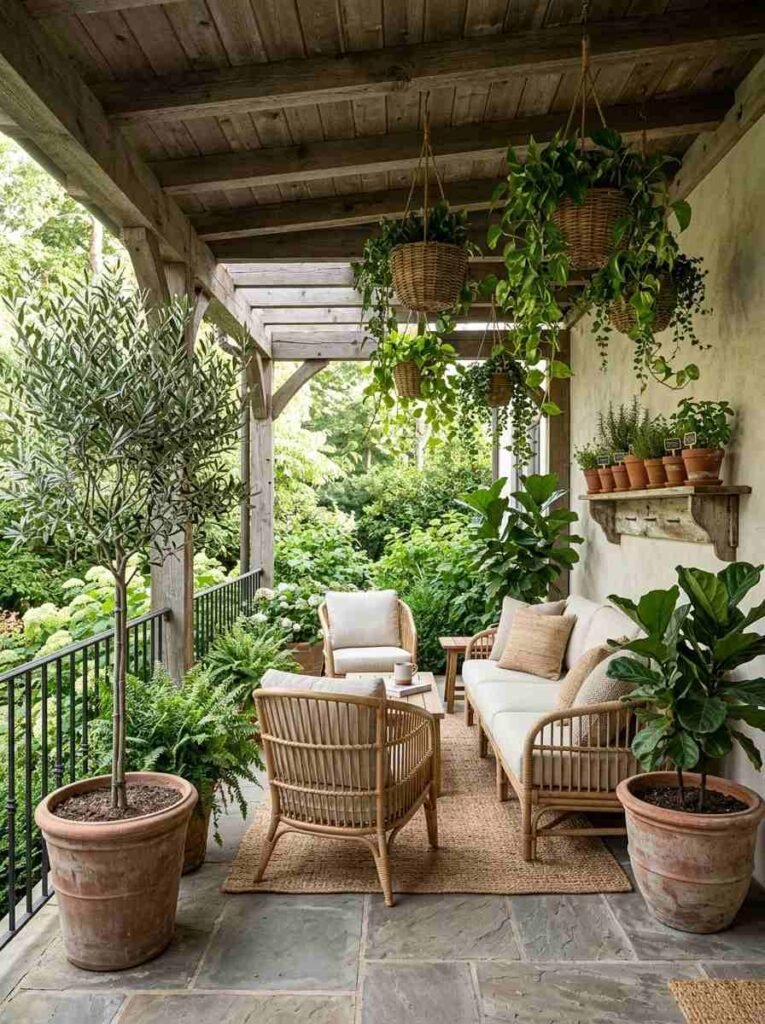
On a small patio, a coffee table with a lower shelf or built-in storage doubles as a place to stash extra candles, a speaker, or folded blankets. It makes the space feel thought-through rather than thrown together.
· · ·
Plants: the cheat code for making everything look better
Plants do three things for a small covered patio: they add life, they create visual layers, and they make the space feel cared for.
You don’t need a green thumb. You need a few strategic placements and a watering schedule you can actually stick to. IMO, this is where most people underinvest.
Tall plants to add height
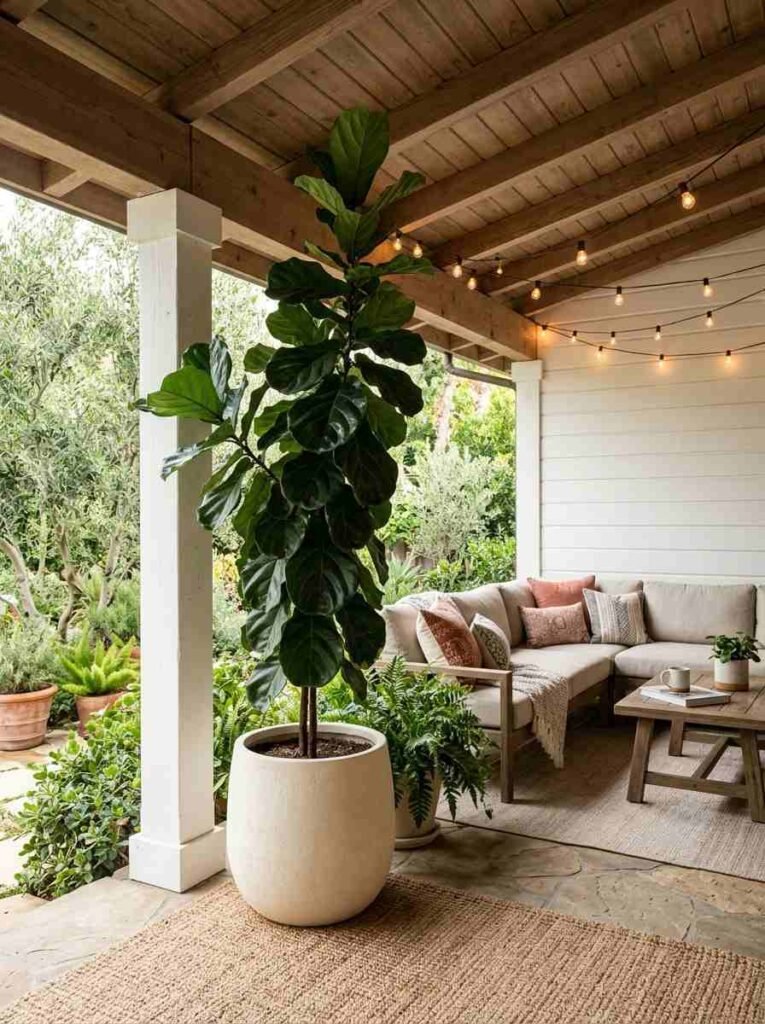
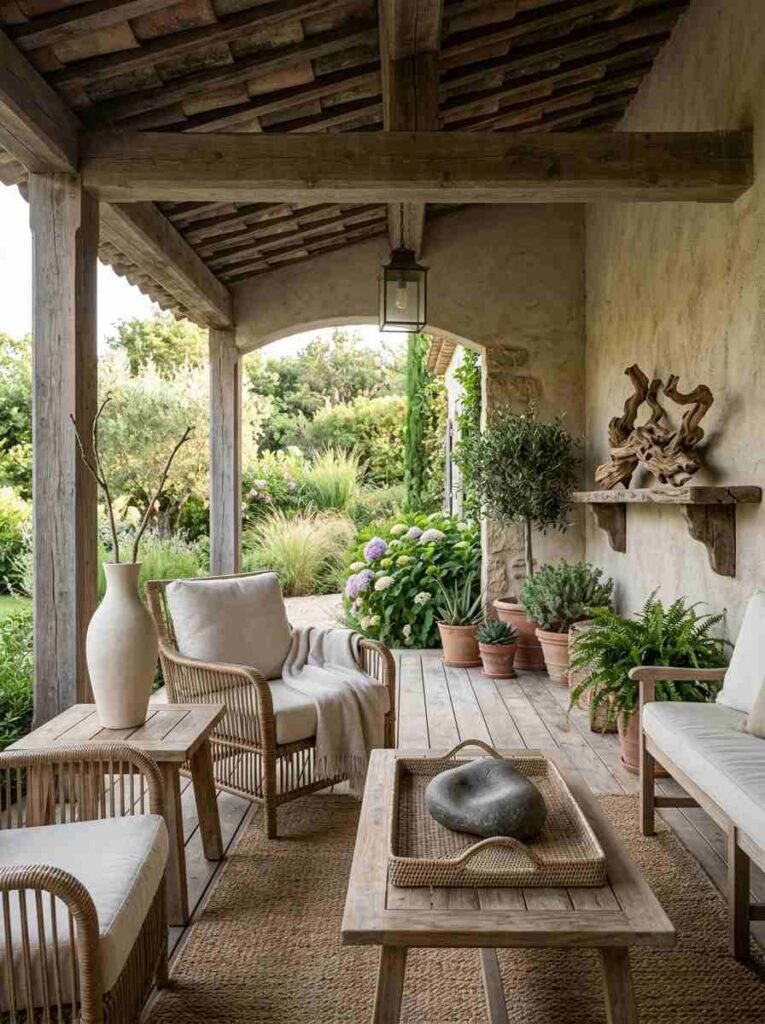
A tall fiddle-leaf fig or olive tree in a large planter next to a corner column makes a small patio feel like it has architecture.
Height variation is what creates the feeling of a “designed” space. Low and uniform reads flat; layered reads expensive.
Trailing plants from elevated spots
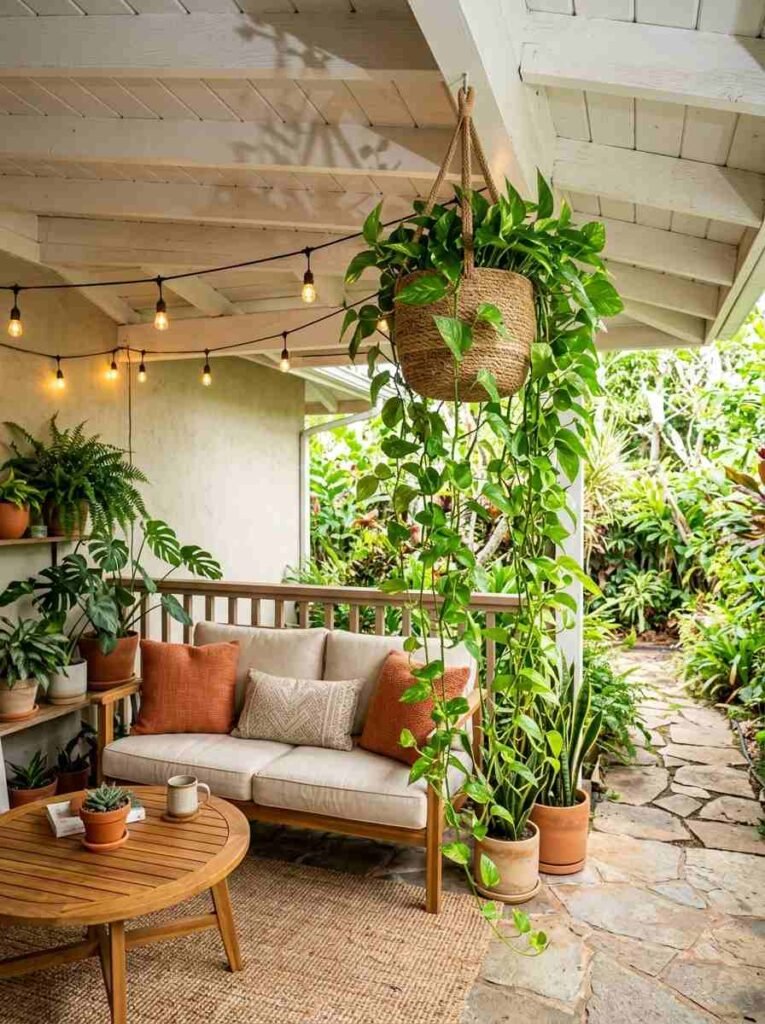
A pothos, string of pearls, or creeping jenny trailing from a shelf, hanging planter, or window box adds that lush, effortless quality you see in magazine photos.
They’re also remarkably hard to kill, which — respect to them.
Matching planters, not matching plantsYour plants can be totally different — in fact they should be, for visual interest. But if they’re all in terracotta, or all in white ceramic, or all in the same dark woven baskets, the collection reads as intentional rather than “I bought these across five different Home Depot trips.” Consistent containers. Varied plants.
Herbs in a cluster near the dining area
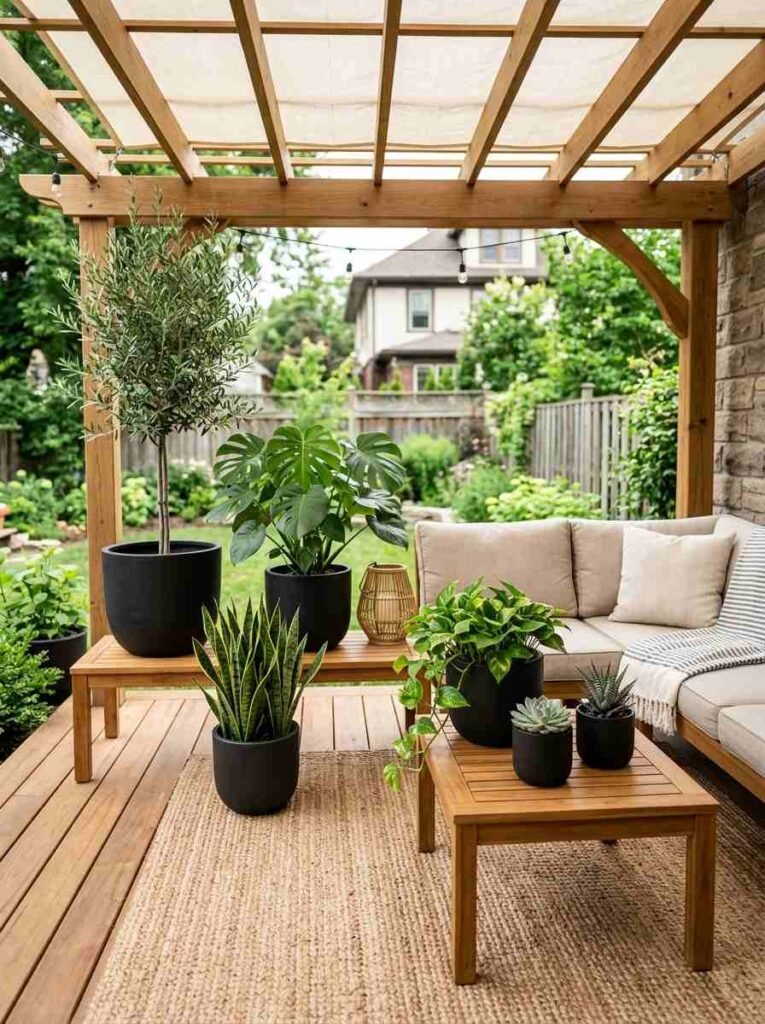
A little herb garden — basil, rosemary, mint, thyme — grouped in matching small pots near your dining table is practical, fragrant, and genuinely charming.
It signals that this is a space people actually use and love.
Walls, ceilings, and vertical space
31 Stunning Outdoor Space Ideas That Instantly Upgrade Your Home
On a small patio, you’ve got roughly 64 square feet of floor. But you’ve got walls, columns, and a ceiling — use them.
Vertical space is almost always ignored, and it’s where a lot of the “expensive” feeling comes from when you finally add something there.
A statement wall with outdoor artwork or mirrors
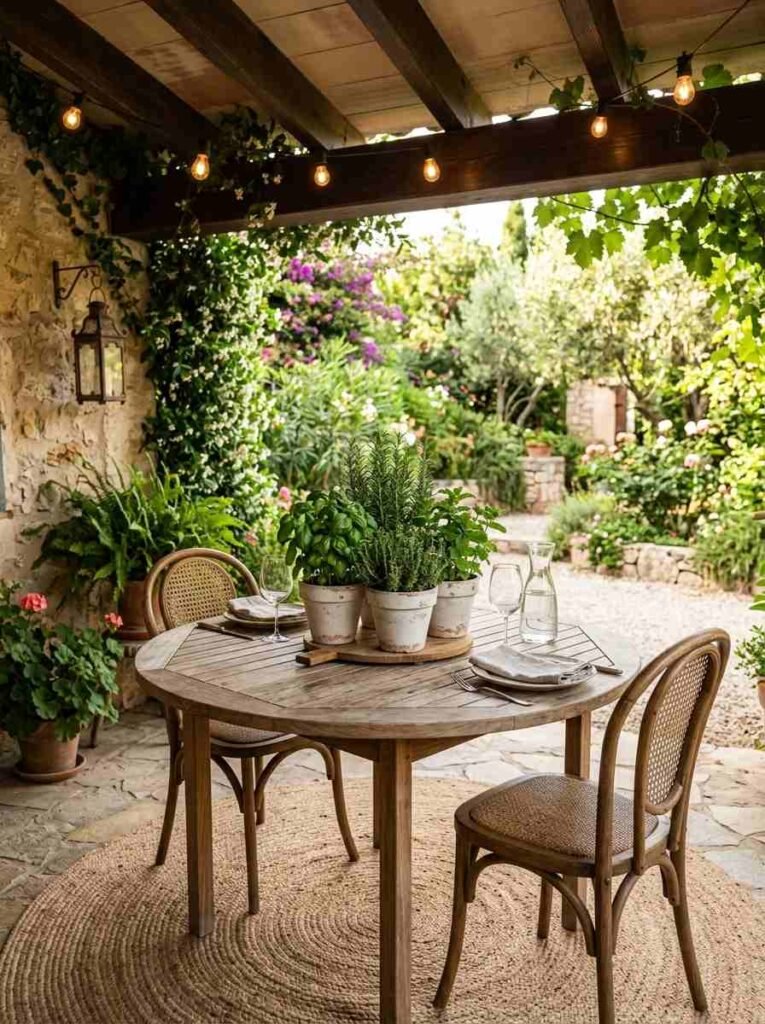
An outdoor mirror on a covered patio wall makes the space feel twice as large. Round ones in black or brass frames are having a very justified moment.
An outdoor art print in a weatherproof frame on the main wall turns a patio wall into a focal point rather than a backdrop.
A vertical planter or living wall panel
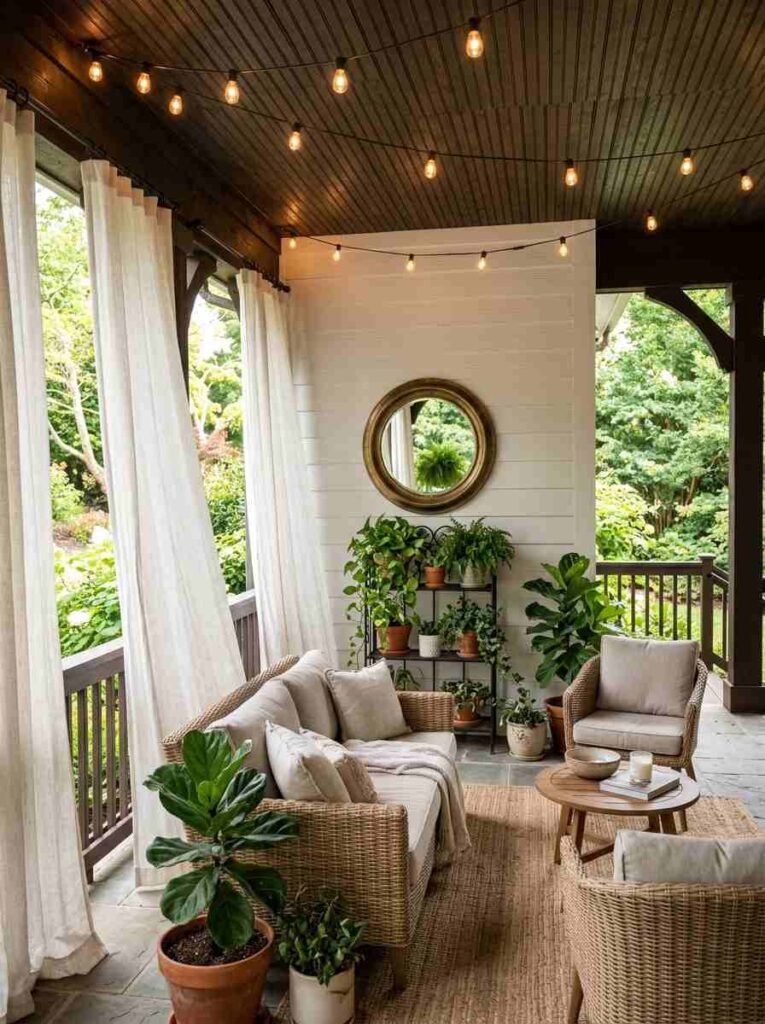
Even a small section of vertical planting — a modular living wall panel or a tall tiered plant stand — on one wall changes the atmosphere entirely.
Greenery on vertical surfaces is the restaurant patio secret that works just as well at home.
A curtain panel on one side
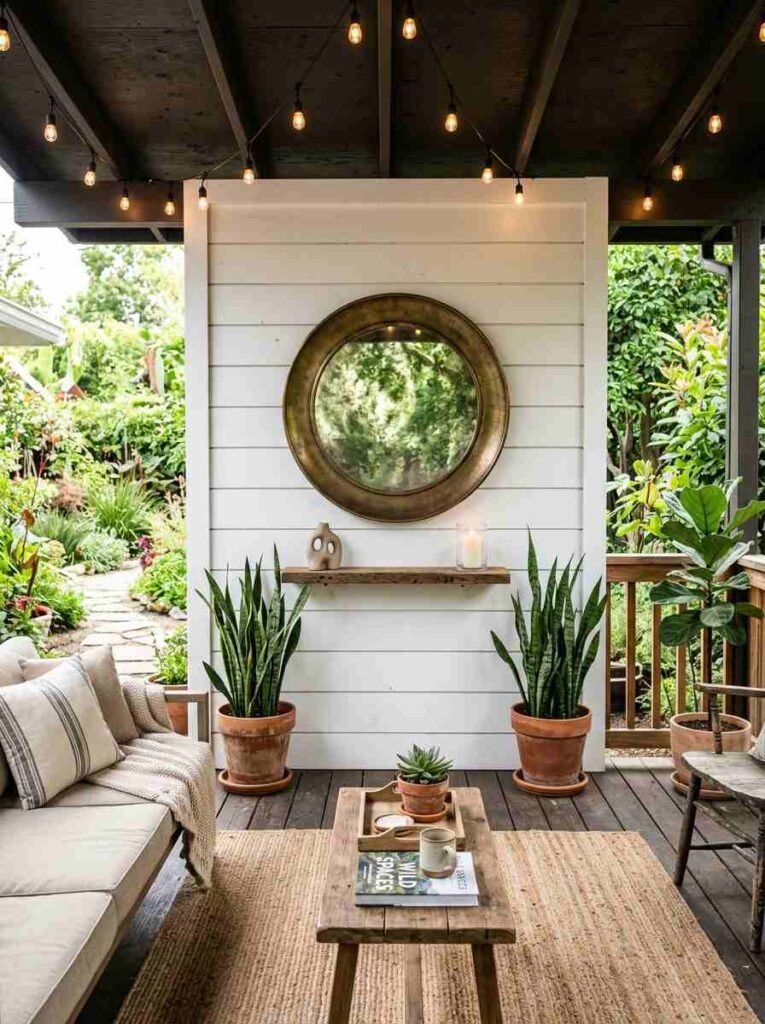
Outdoor curtain panels hung from a tension rod or ceiling hooks on one open side of your covered patio add softness, privacy, and a sense of enclosure.
White linen ones billow in the breeze and photograph beautifully, which — let’s be honest — matters.
Ceiling treatment with shiplap, wood slats, or paint
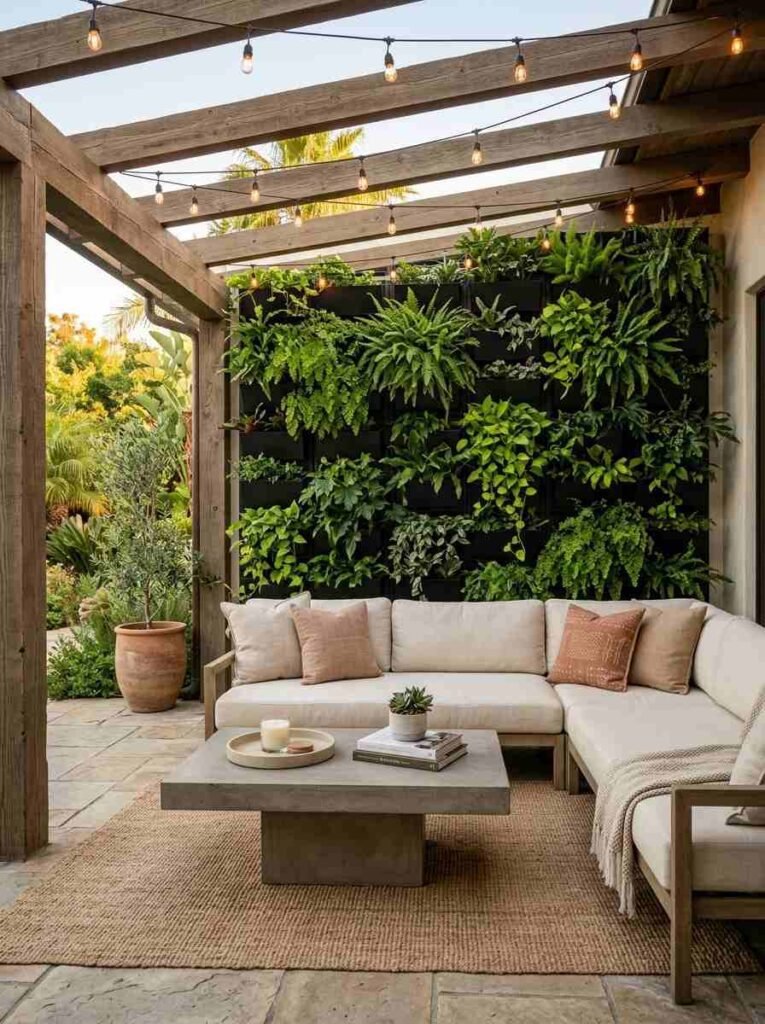
If you’re willing to do a little work, painting your patio ceiling a color — a dusty blue or sage — instantly makes it feel more finished.
Wood slats or bead board on the ceiling take it further. Even a fresh coat of bright white changes how the whole space reads.
Small details that do heavy lifting
Here’s where most decorating articles just list fifteen products.
I want to talk about the principles instead, because the specific item matters less than understanding why it works.
Trays to corral the clutter
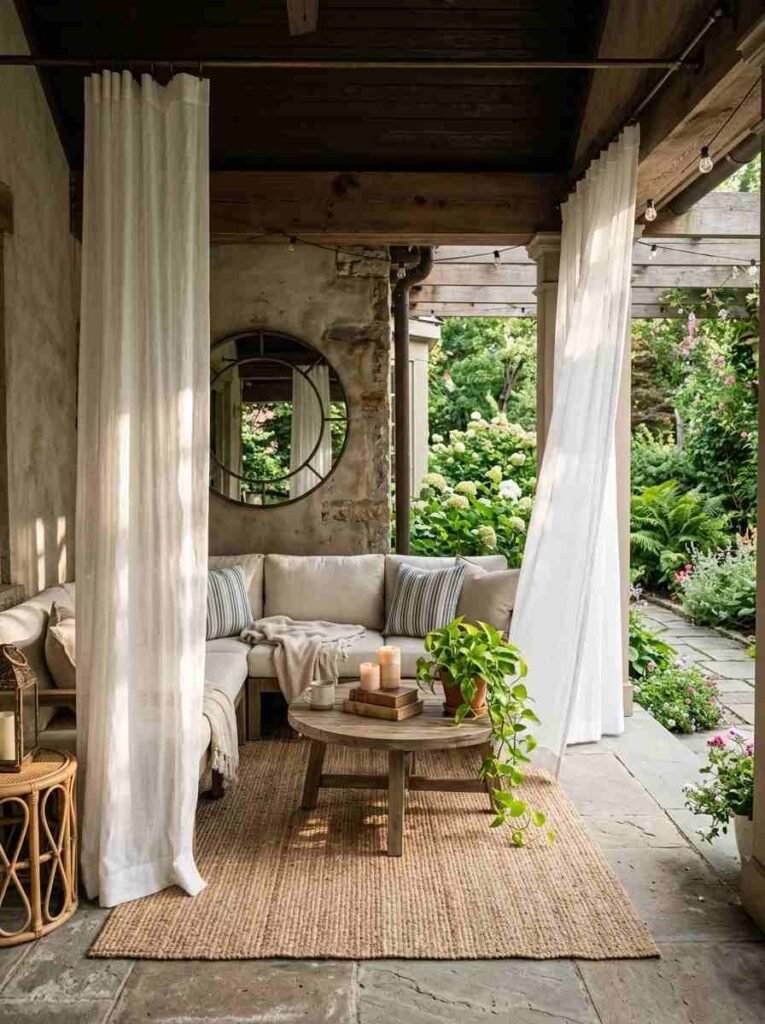
A decorative tray on the coffee table groups candles, a small plant, and a coaster set into one intentional moment.
Without the tray: clutter. With the tray: styling. Same objects. The container is the design decision.
One sculptural object per surface
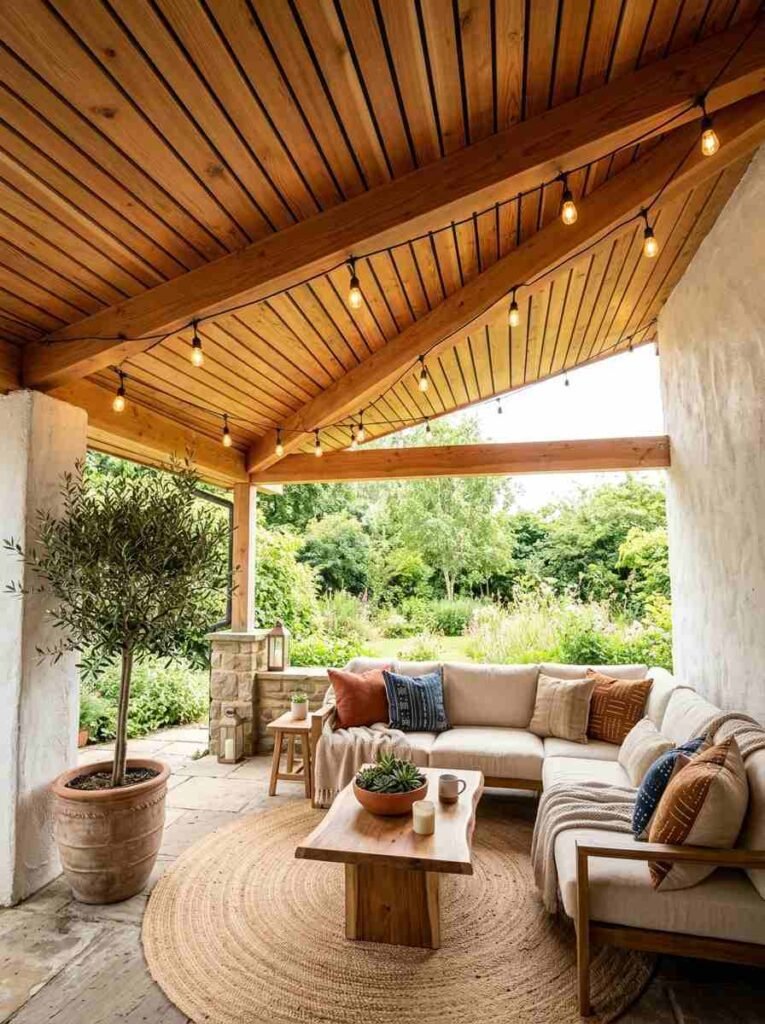
A ceramic vase, a concrete bookend, a sculptural candle holder.
One thing per surface that earns its place visually — not because it’s useful, but because it’s beautiful. This is how boutique hotels style their outdoor spaces and it’s completely replicable.
Hardware consistency across furniture
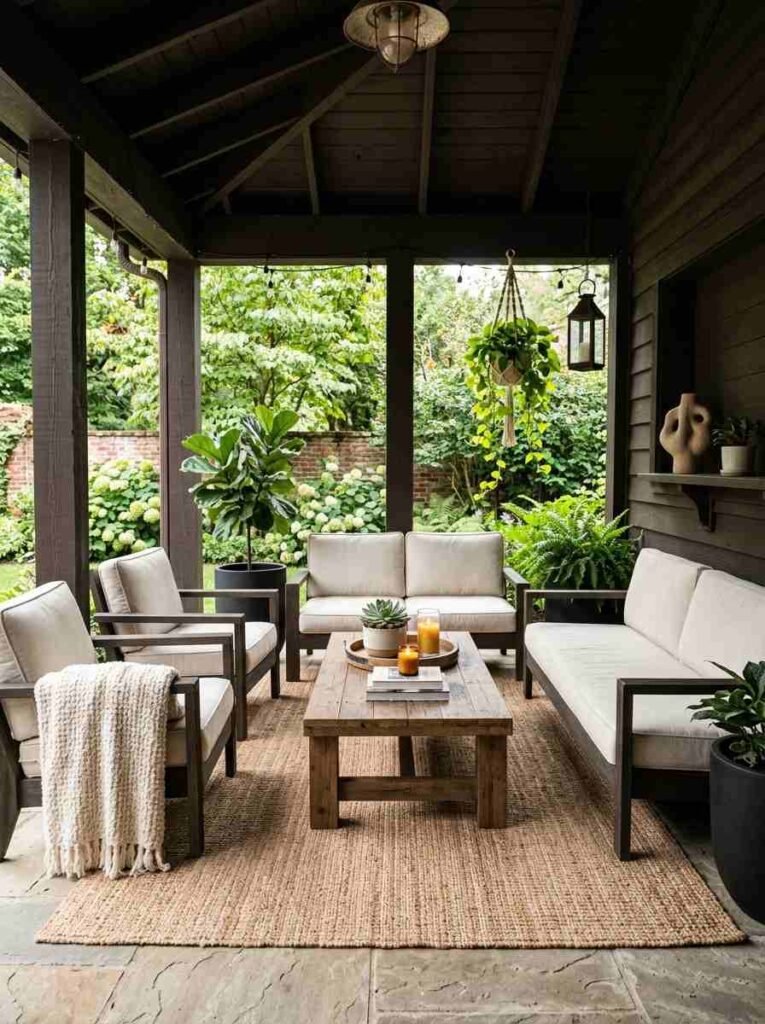
If your furniture has metal accents, try to keep them in the same finish family. All brushed brass, all black matte, all chrome.
Mixed metal finishes without intention read as mismatched; consistent hardware reads as a design choice.
A small water feature
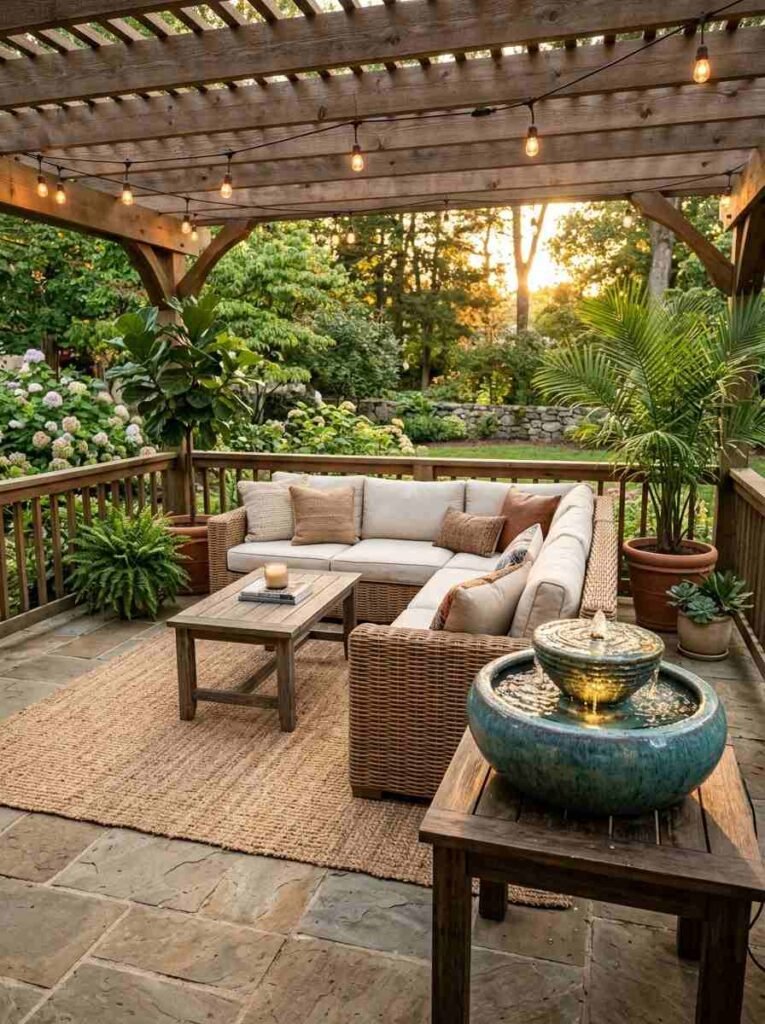
Sound matters in outdoor spaces. A small tabletop fountain — and they run anywhere from $30 to $200 — adds the kind of ambient white noise that makes a space feel like a destination.
People will sit on your patio longer because of it. Worth every penny.
An outdoor speaker that doesn’t look like a speaker
The rock-shaped outdoor speakers are not chic, and you know it. Stone-finish Bluetooth speakers that actually look good, or a small high-quality speaker tucked among plants, are a better call. Music changes how a space feels more than most people give it credit for.
Layered scent — candles, plants, and diffusers
A beautiful outdoor space smells intentional. Lavender in a planter, a citronella candle that’s also just a nice candle, a cedar oil diffuser.
Scent is the one decorating element you can’t see in photos, but people feel it immediately when they sit down.
Edit. Relentlessly.
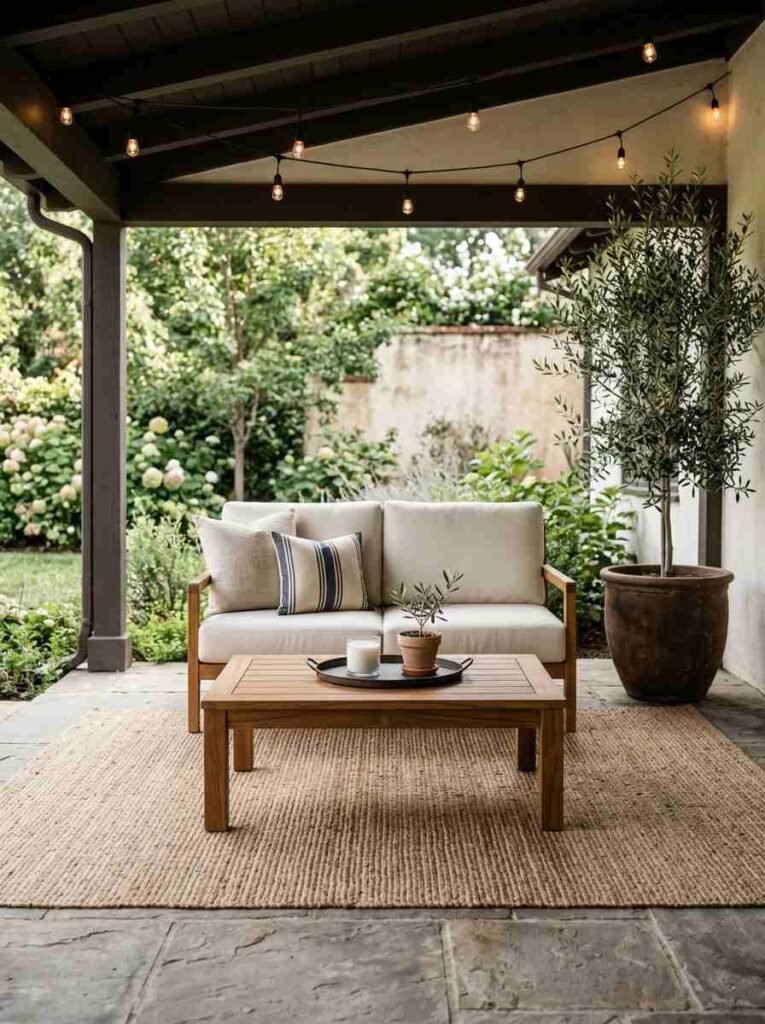
The most expensive-looking patios have fewer things than you think, chosen more carefully.
Every time you add something, ask whether it earns its place or just occupies it. Editing is the design skill that separates cluttered from curated. When in doubt, take something out.
The test I use
Stand at the entrance to your patio and take a photo. If you look at the photo and your eye doesn’t know where to land, you’ve got too much happening.
Add one anchor point — a plant, a lantern, a piece of art — and remove whatever’s competing with it.
One more thing before you go buy string lights
A small covered patio that looks expensive isn’t about having an unlimited budget.
It’s about working from principles: layer your lighting, anchor with an outdoor rug, add height with plants, keep your metal finishes consistent, and edit until what’s left deserves to be there.
Start with one change. Lighting is usually the fastest transformation per dollar spent. Then layer from there — textiles, plants, small objec
