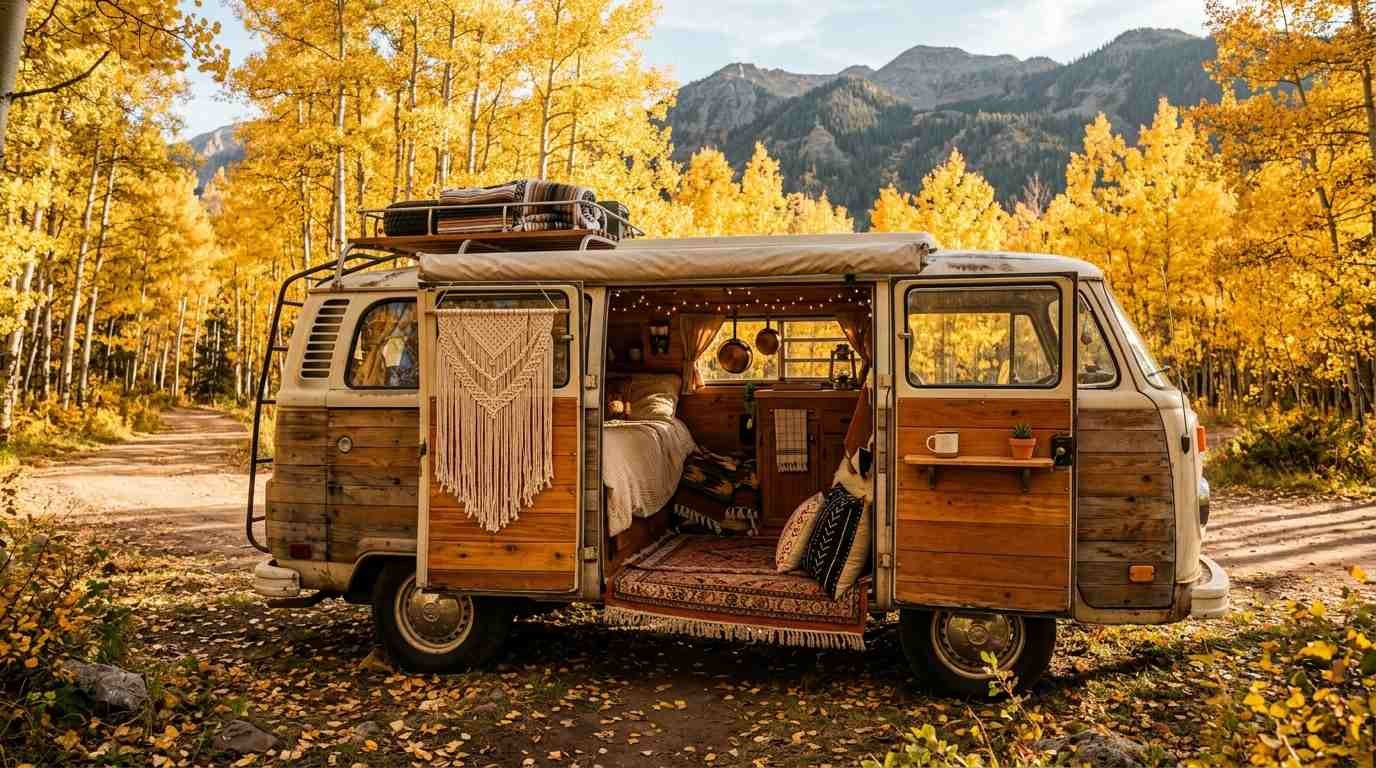
I converted my first van three summers ago, in a friend’s driveway, with a secondhand jigsaw and way too much confidence.
It was a disaster for the first month.
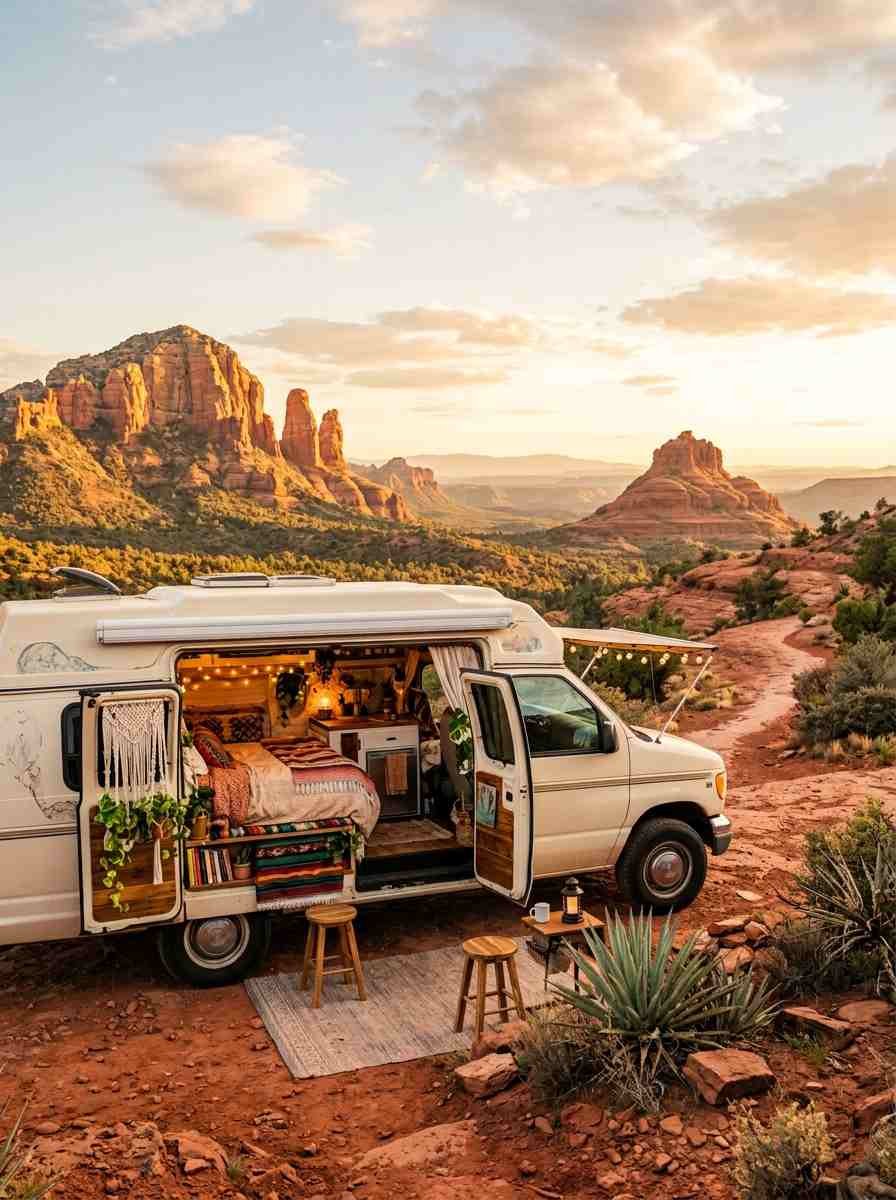
By the end, it looked like a tiny Moroccan riad on wheels, and I never wanted to sleep anywhere else again.
That’s the thing about boho van interiors. They’re forgiving. You don’t need a carpentry degree or a five-figure budget.
You need texture, warmth, and a willingness to mix things that “shouldn’t” go together but somehow do.
Here are 24 ideas that actually work inside a moving box on wheels, not just in a Pinterest board that assumes you have 400 square feet to play with.
Set the mood with color and fabric first
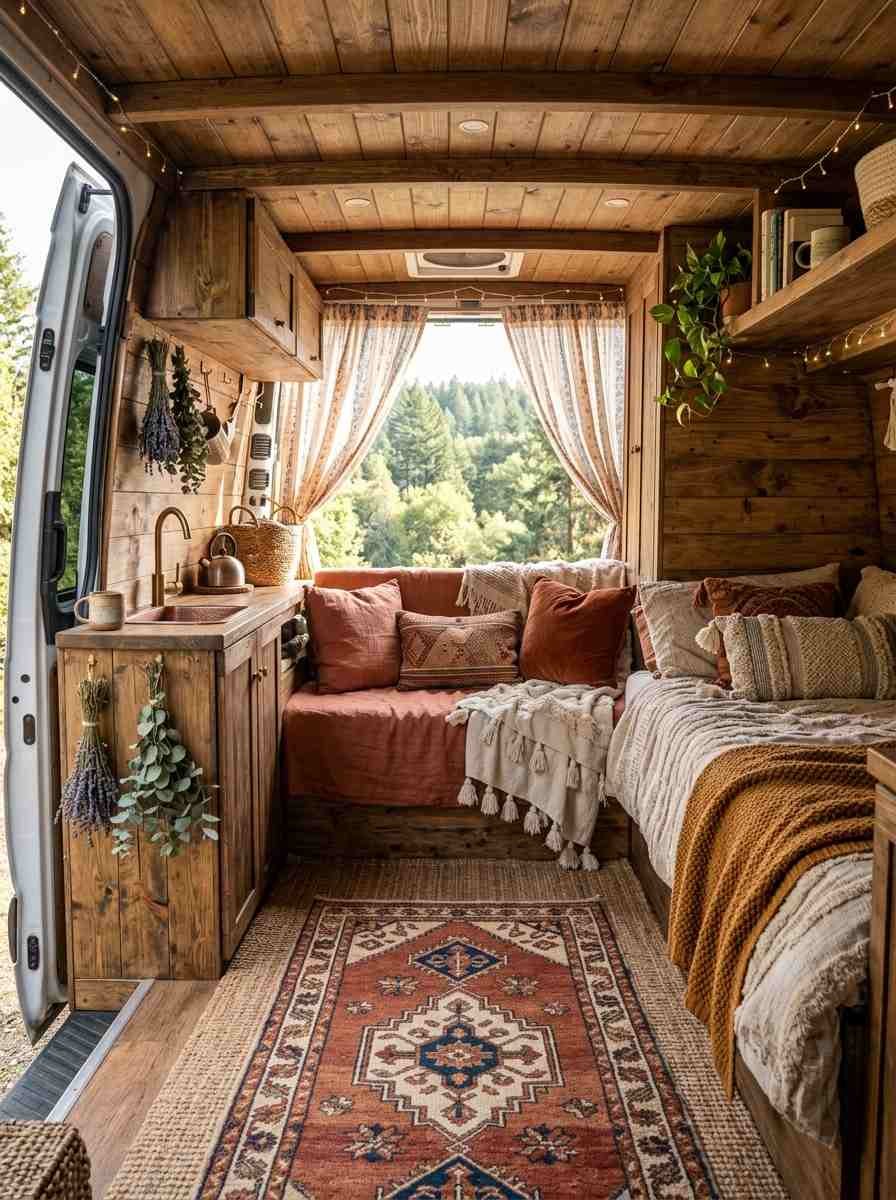
Before you buy a single piece of furniture, decide what your van feels like. Color and texture do 80% of the work in a small space.
1. Terracotta and rust as your anchor tone. Warm clay shades hide road dust better than white ever will, and they photograph beautifully in golden hour light (which, let’s be honest, matters if you’re posting this build).
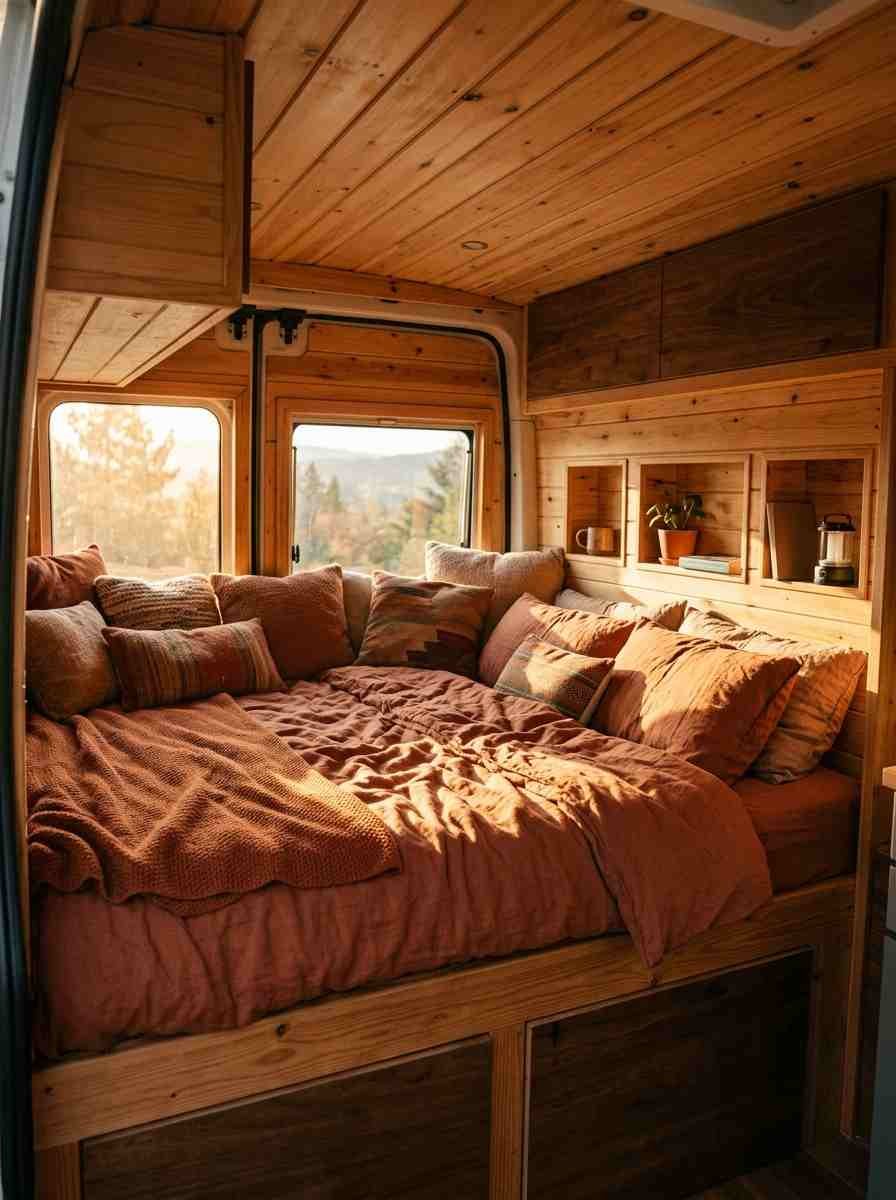
2. Layered textiles over a neutral base. Start with a plain jute or sisal mat, then stack a smaller Moroccan-style rug on top at an angle.
Two layers of rug in 60 square feet sounds excessive until you feel it under bare feet on a cold morning.
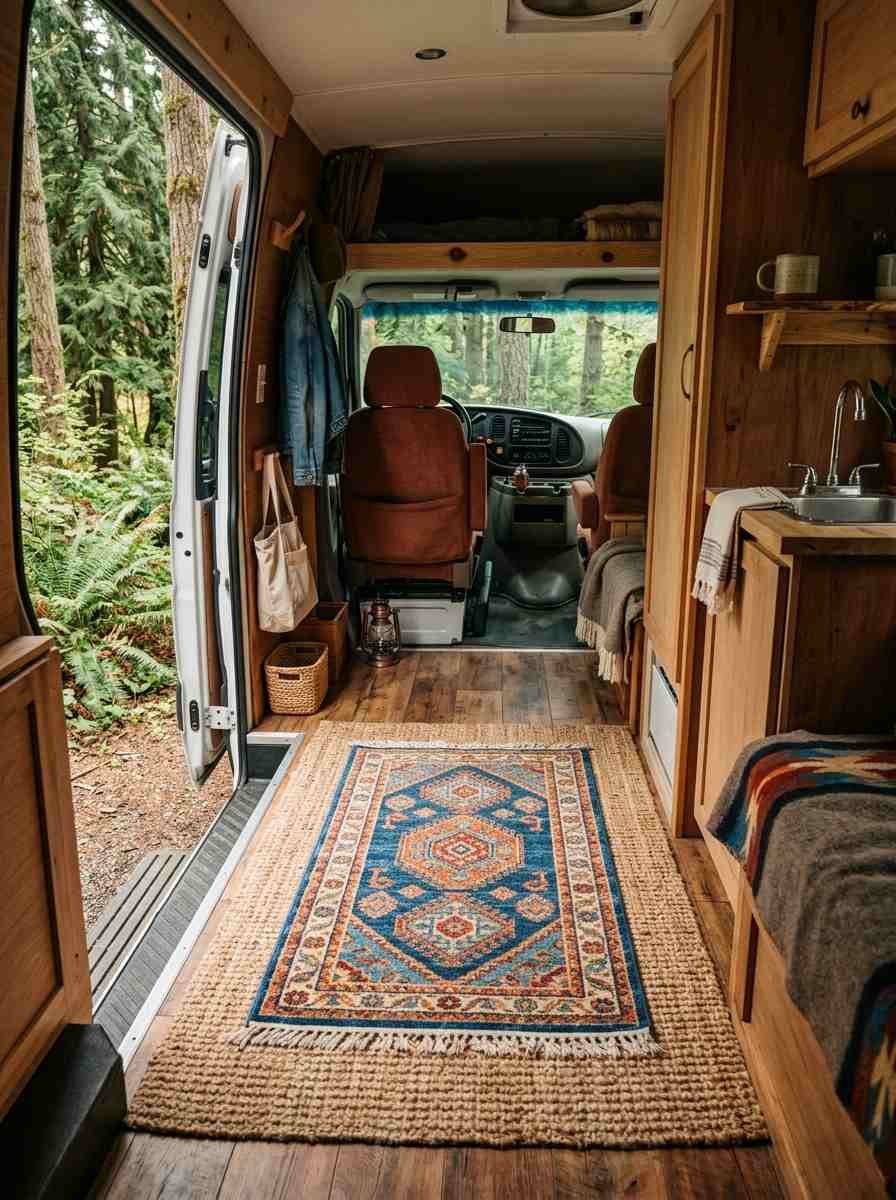
3. Macrame as your headboard. A large woven wall hanging behind the bed does more visual work than any framed print could.
It also doubles as a sound dampener, which nobody tells you about until you’ve slept next to a rattling window.
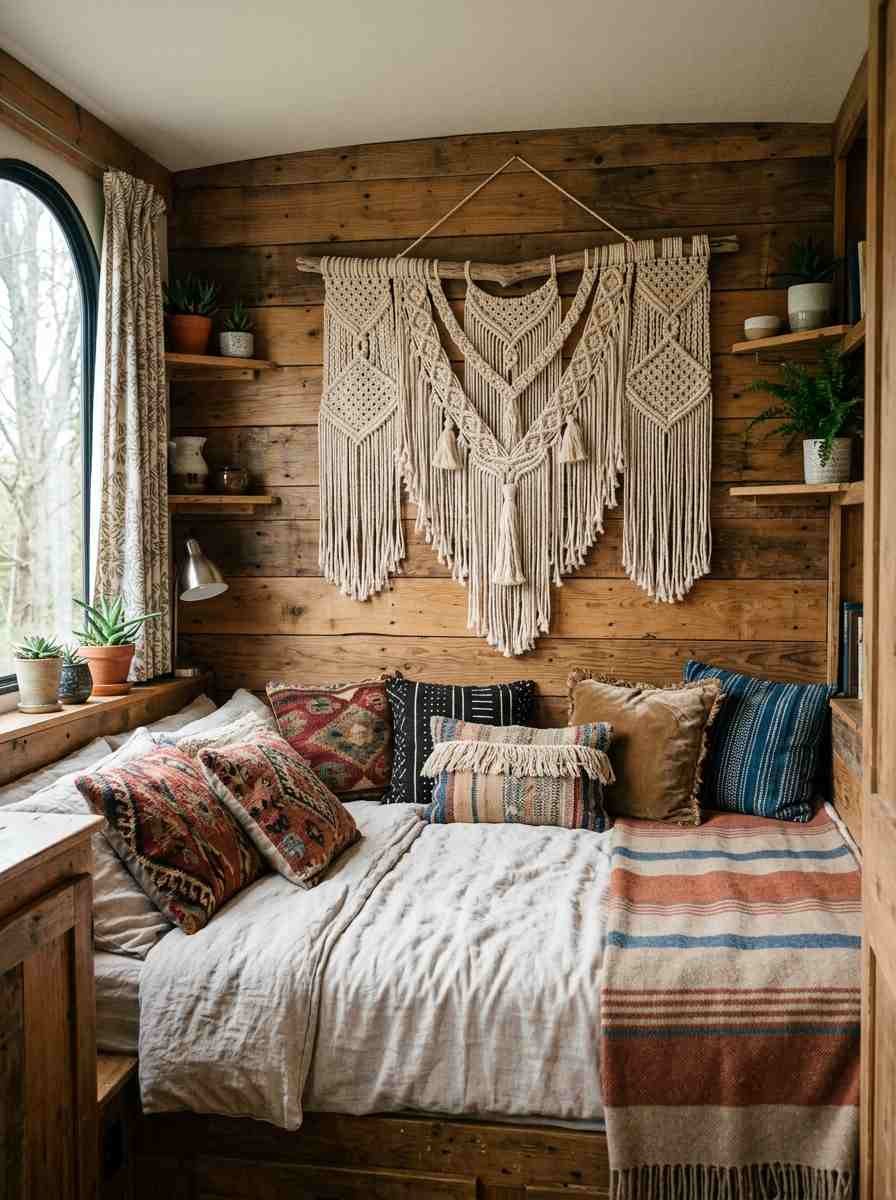
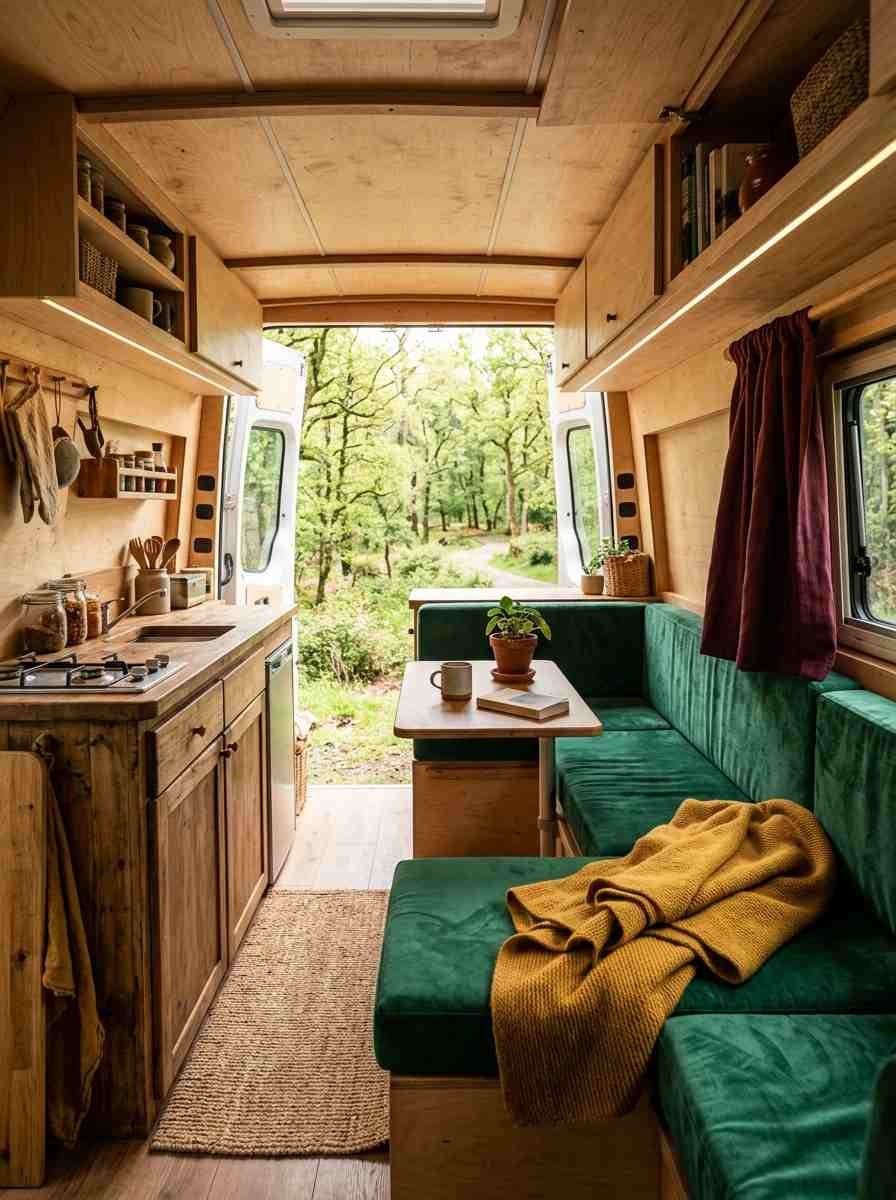
4. Mixed jewel tones with restraint. Emerald cushion here, mustard throw there, one deep burgundy curtain.
Pick three accent colors max, or a 60-square-foot van starts to look like a garage sale.
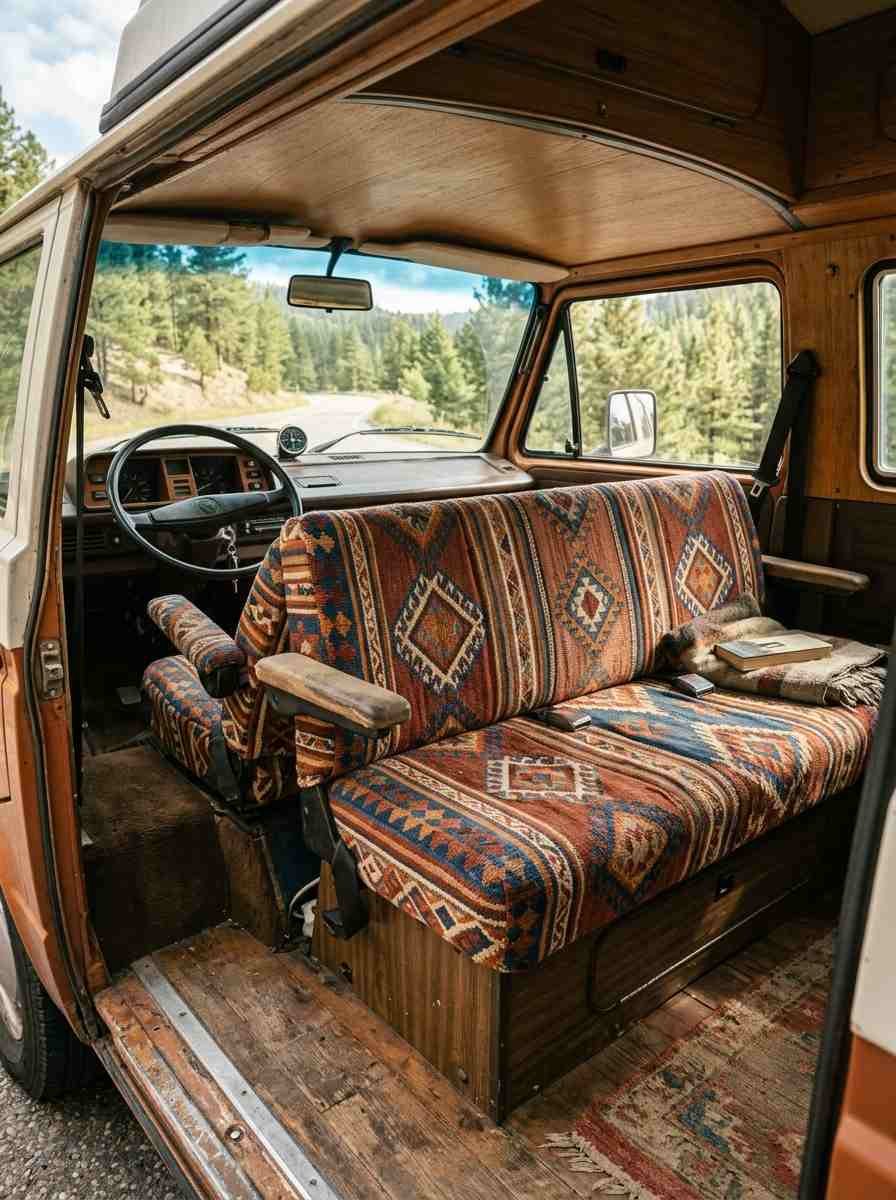
5. Vintage kilim seat covers. Reupholstering factory bench seats in kilim fabric is one of the highest-impact, lowest-effort swaps you can make. IMO it’s the single best dollar-per-wow-factor upgrade in this whole list.
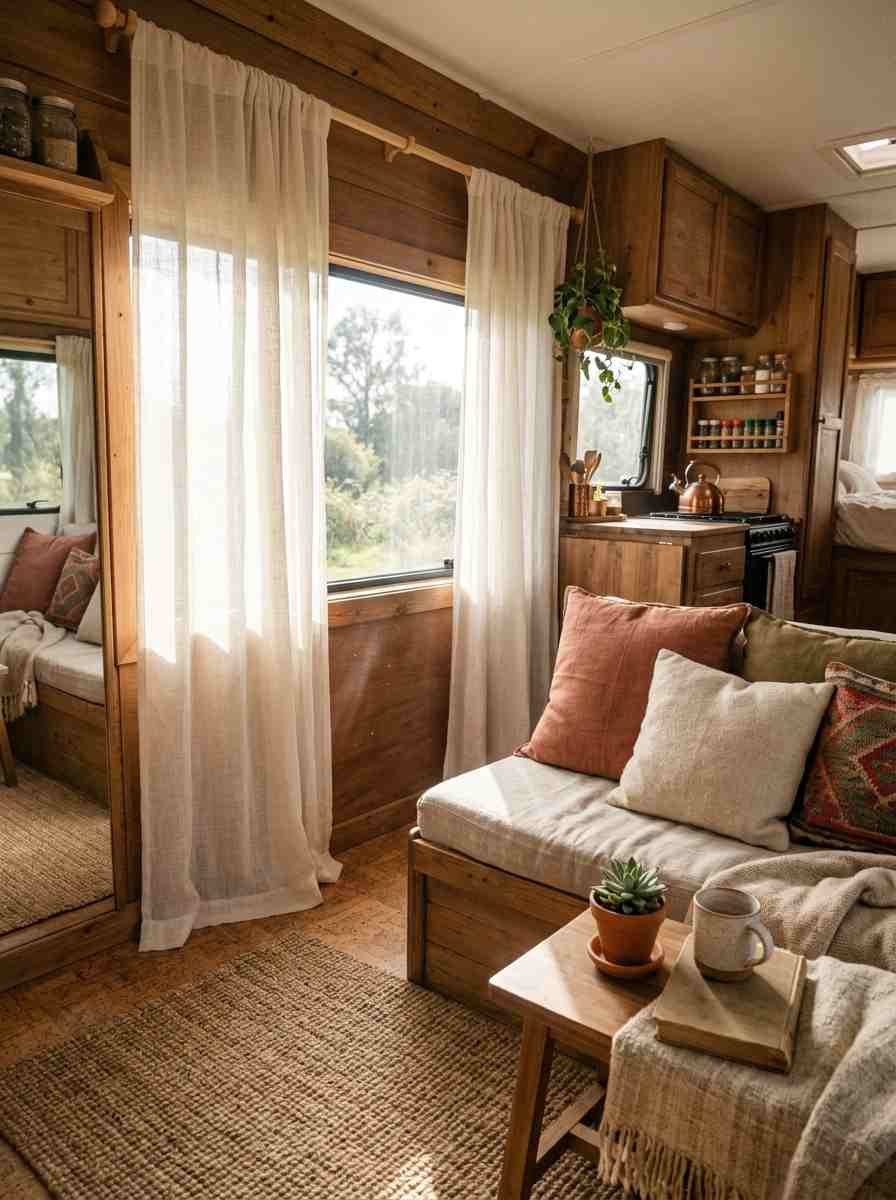
6. Sheer linen curtains instead of blackout only. Yes, you’ll want blackout for sleeping, but a second layer of sheer linen lets soft light in during the day and keeps the van from feeling like a cave.
Furniture that pulls double duty
Every piece of furniture in a van has to earn its square footage twice over. Boho style actually helps here, because it leans on flexible, lightweight pieces anyway.
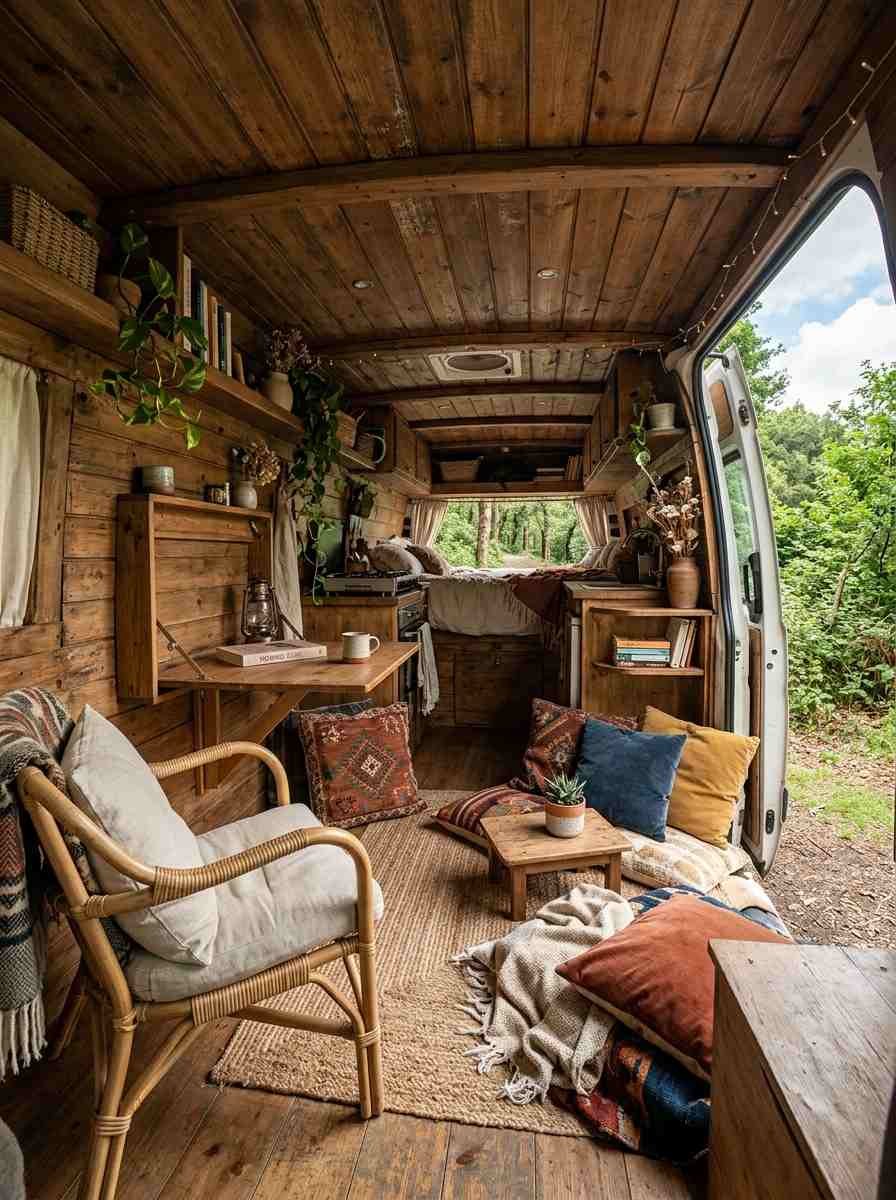
7. A rattan swivel chair bolted to the floor. It sounds like a small thing, but being able to spin a chair toward the side door changes how the whole space feels.
I use mine more than the bench seat, honestly.
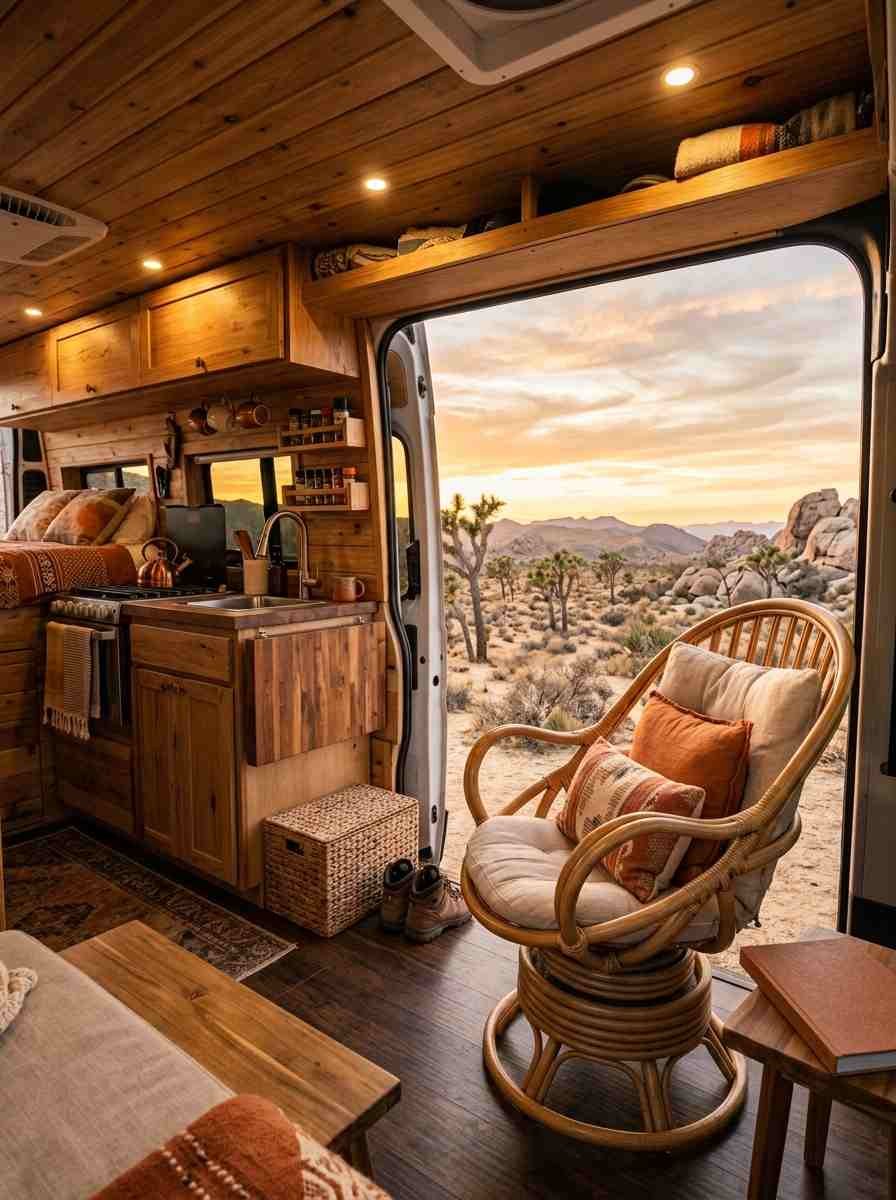
8. Floor cushions instead of a second chair. Cushions stack away in a cabinet when you’re driving and unroll into extra seating at camp. No wasted volume.
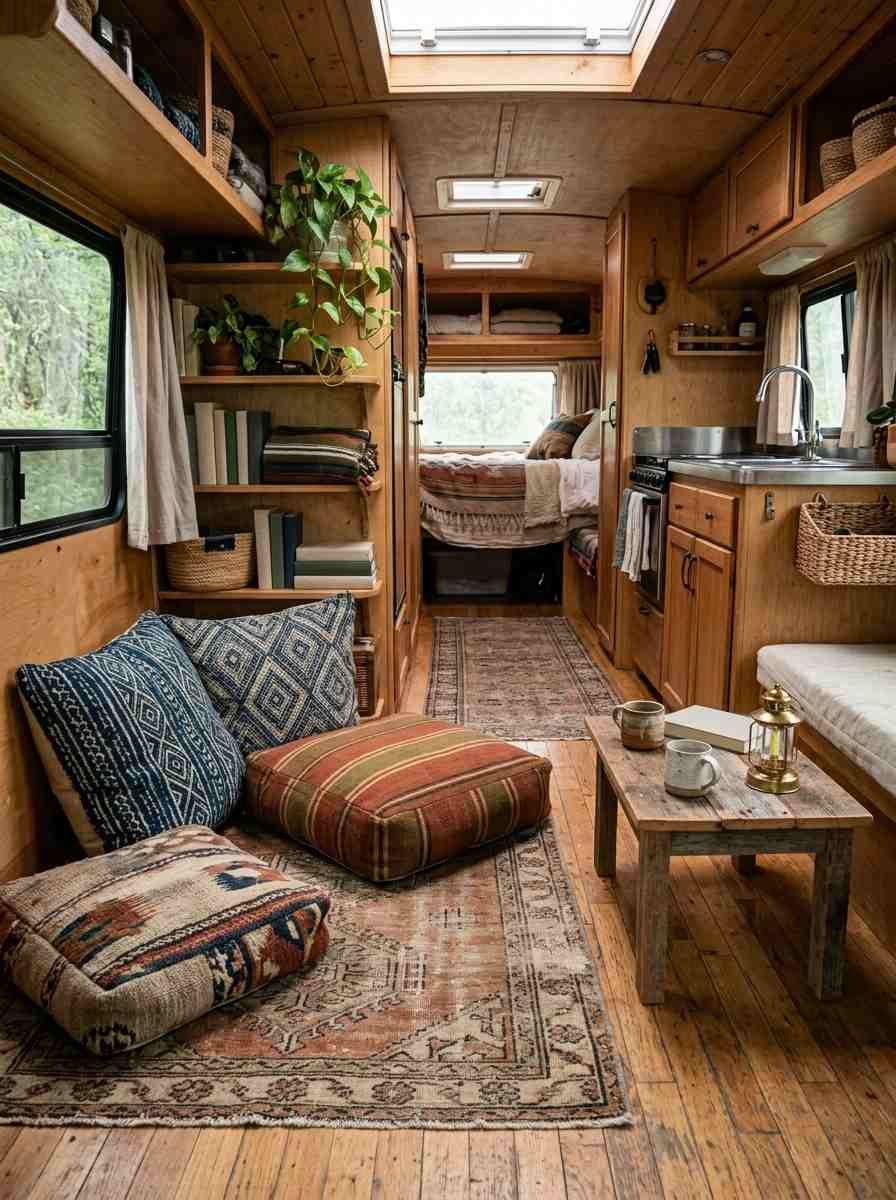
9. A fold-down table with a rattan or cane front. Skip the plain plywood look. A cane-front panel on your table or cabinet face adds warmth without adding a single inch of depth.
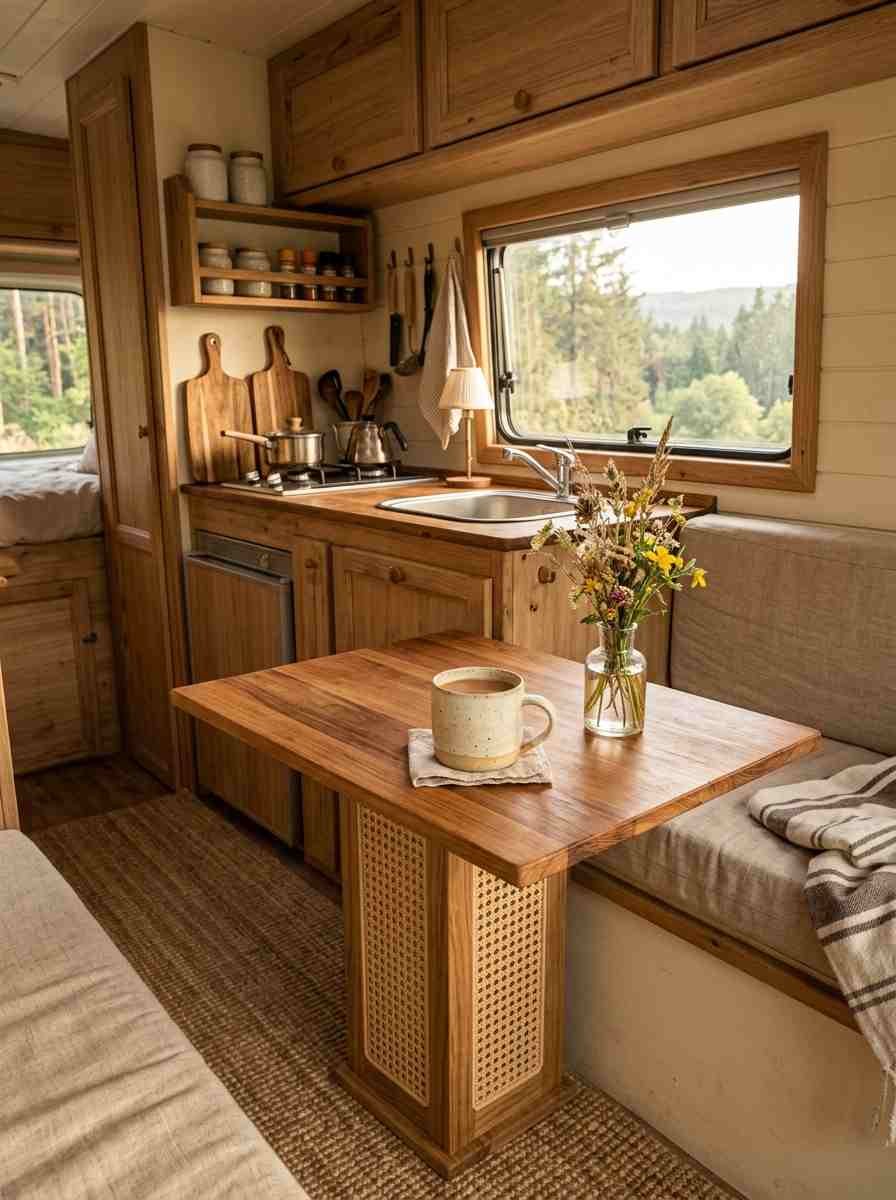
10. Vintage trunk as both storage and coffee table. An old leather or wood trunk strapped down near the bed gives you a landing spot for coffee, a place to stash blankets, and a story to tell when someone asks where it’s from.
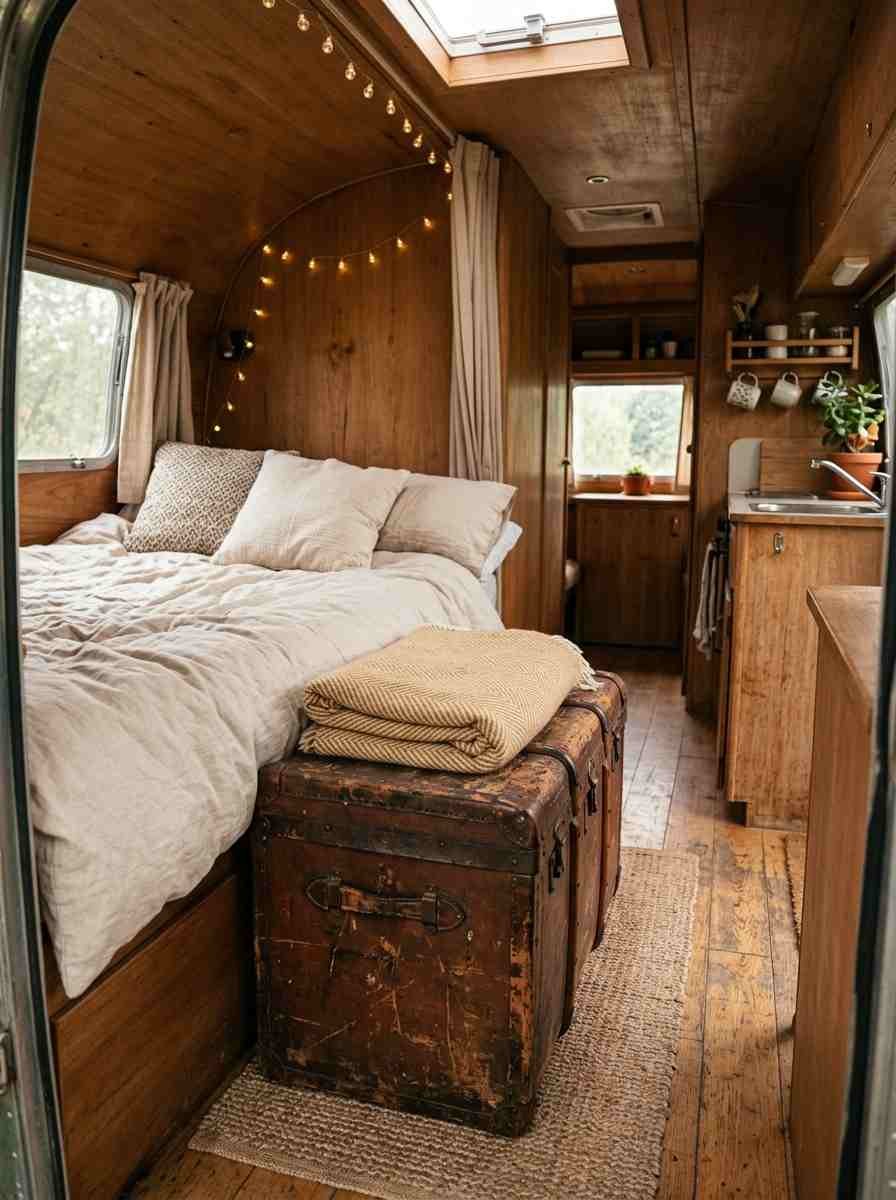
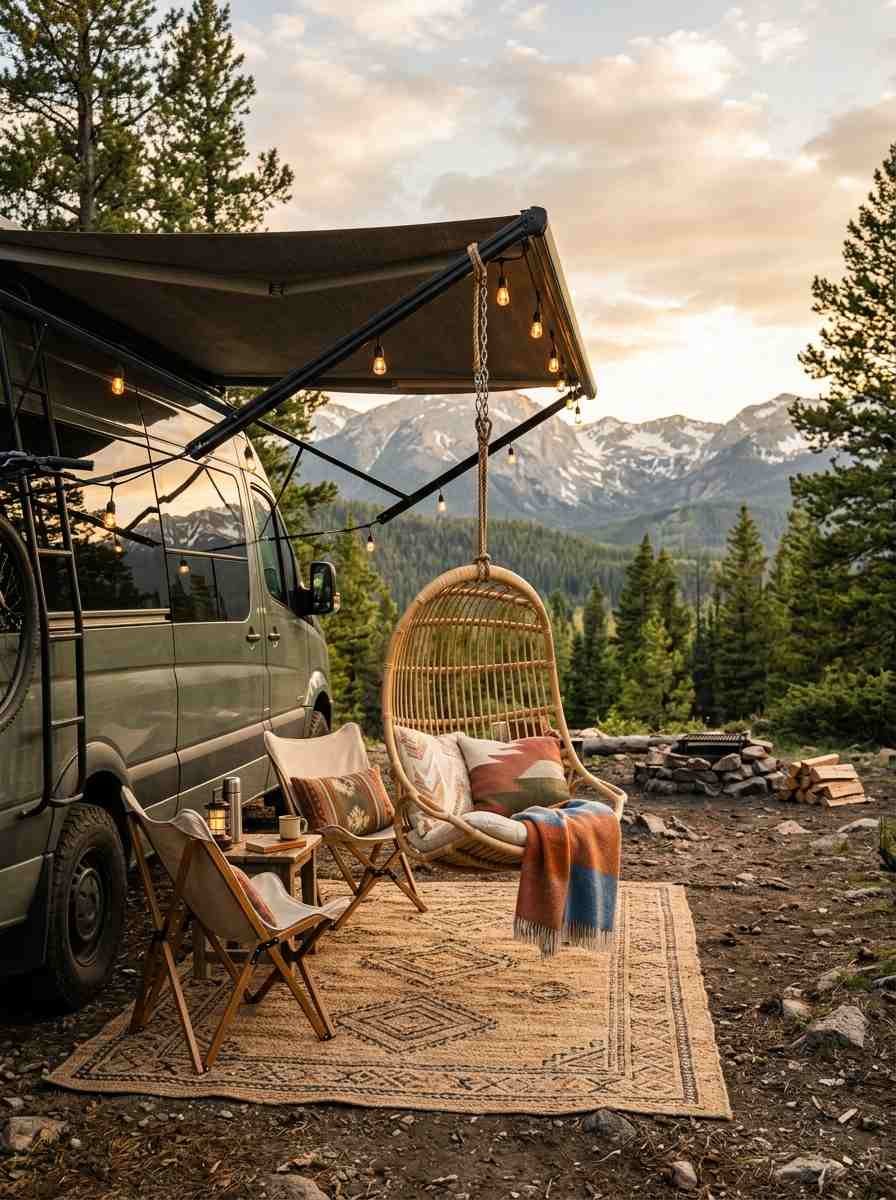
11. A hanging egg or hammock chair for the awning. This one lives outside the van most of the time, but it extends your bohemian living room into the campsite itself, and it’s the single most photographed item most vanlifers own.
Storage and layout that doesn’t fight the aesthetic
Boho gets accused of looking cluttered.
Done right, it’s actually one of the more forgiving styles for hiding practical storage in plain sight.
12. Woven baskets as your entire pantry system. Skip plastic bins. Stackable seagrass or rattan baskets hold produce and dry goods just as well and look intentional instead of purely functional.
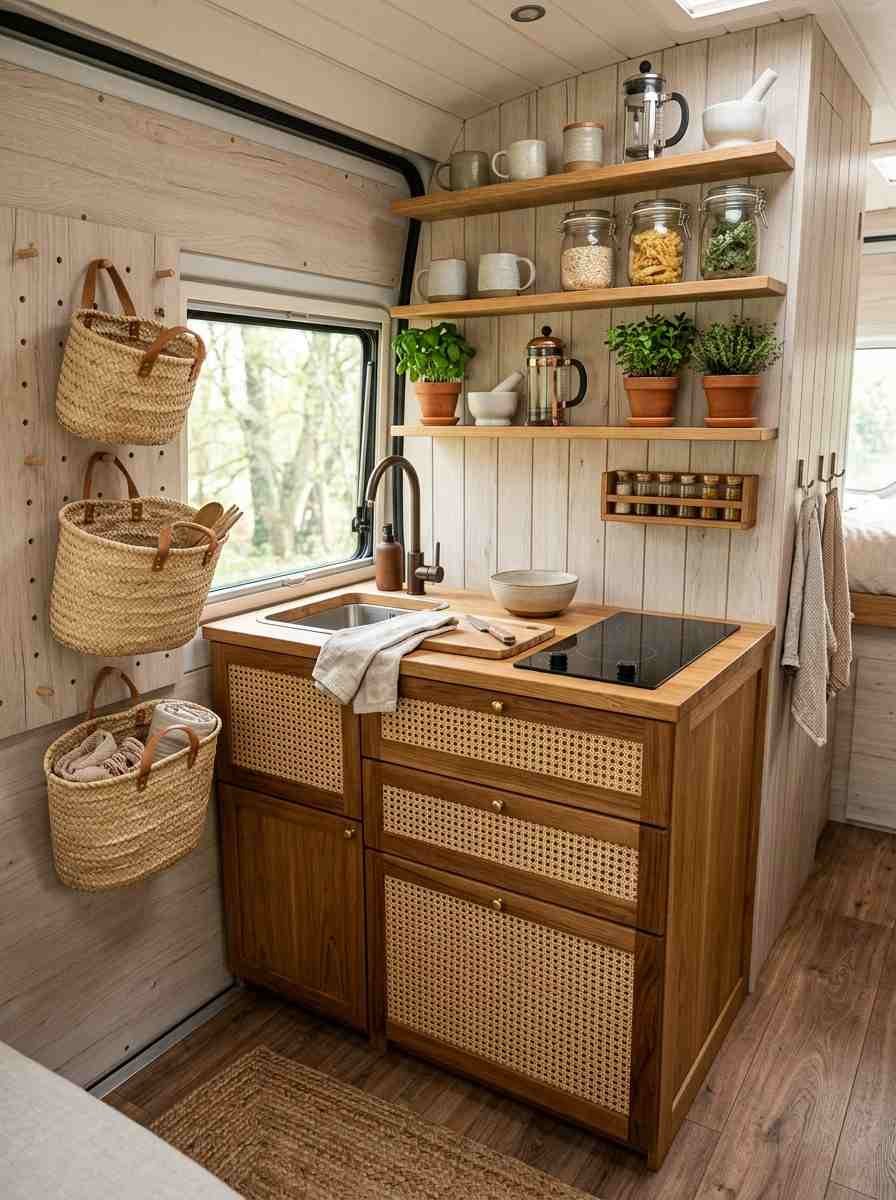
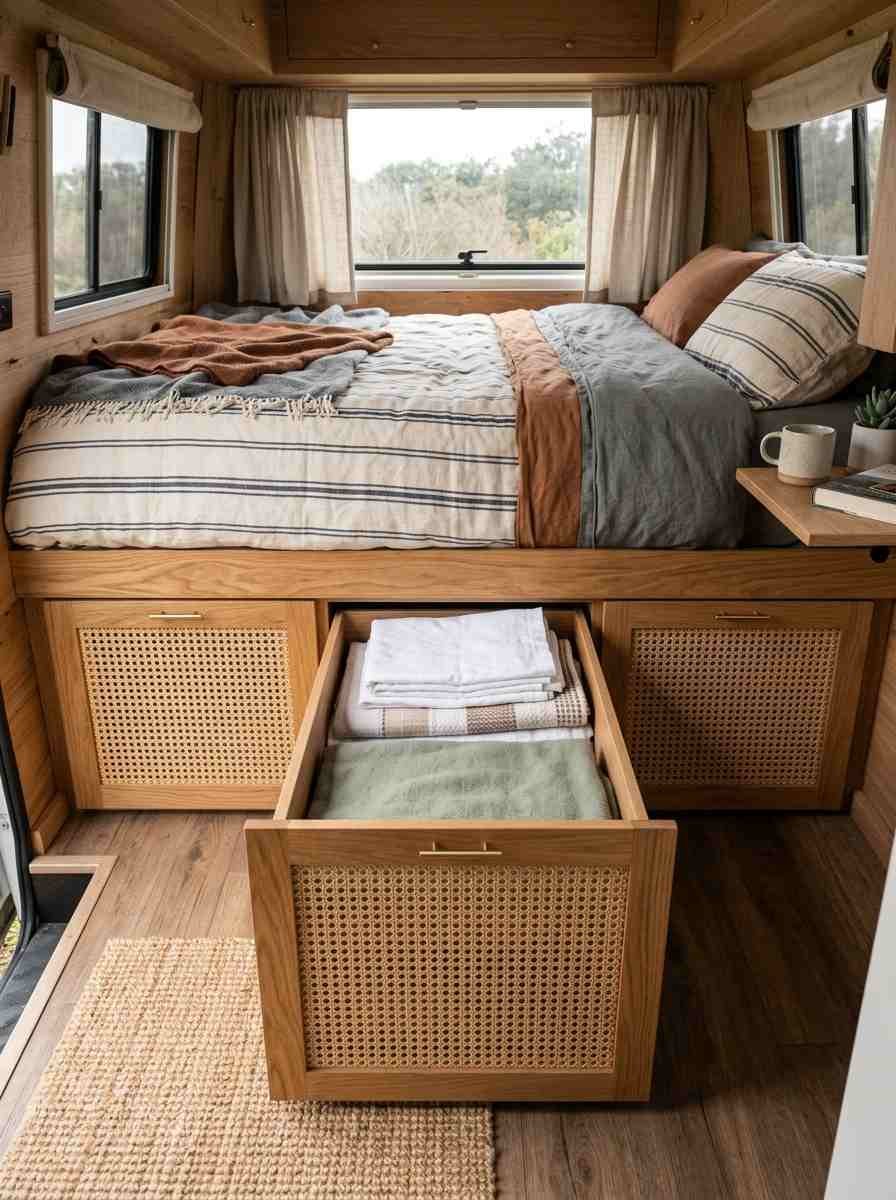
13. Under-bed drawers with cane fronts. If you’re building a fixed bed platform, this is where most of your storage lives anyway.
Face the drawers in the same rattan or cane material as your cabinets and the whole build reads as one cohesive design instead of a patchwork of leftover materials.
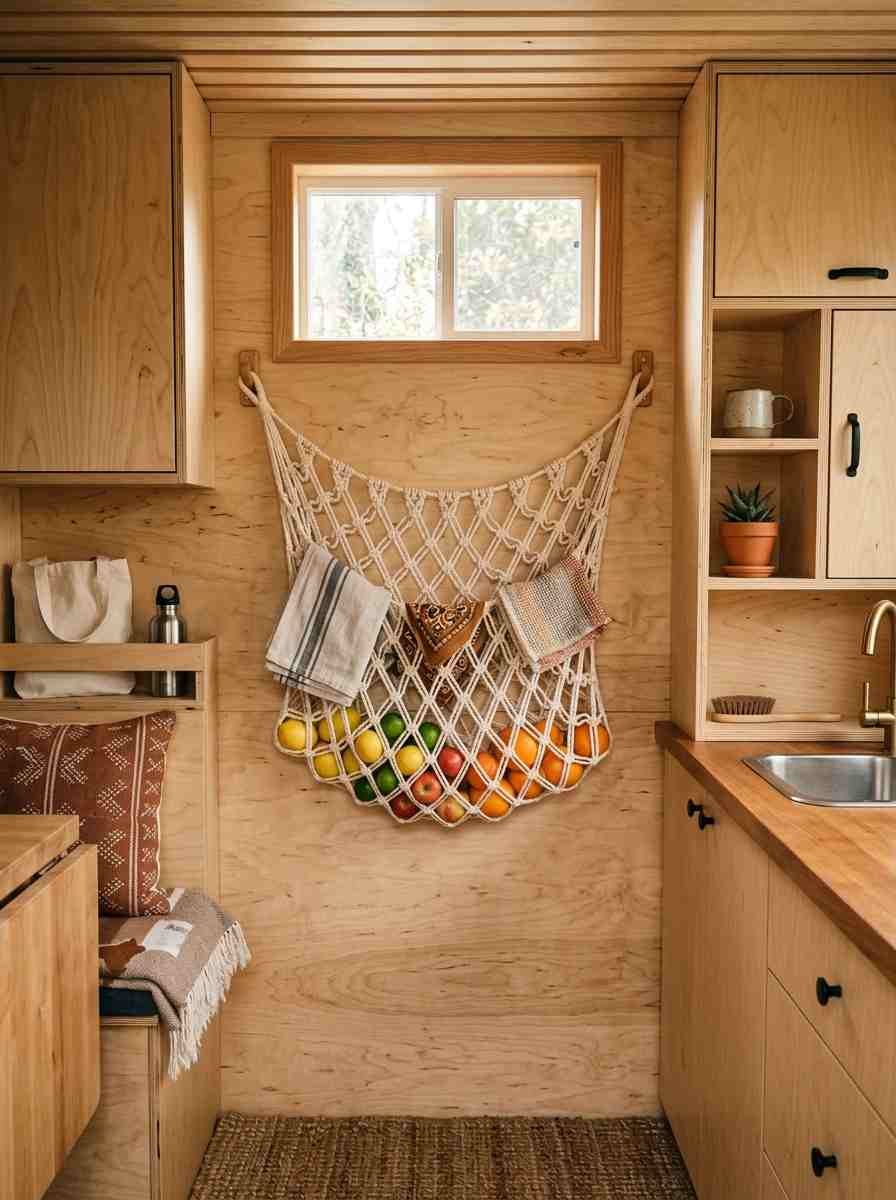
14. Vertical wall netting for produce and small items. A macrame or rope net strung along a bare wall panel keeps fruit, hats, and odds and ends visible and off the counter. It’s decorative storage, which is basically the whole point of boho design.
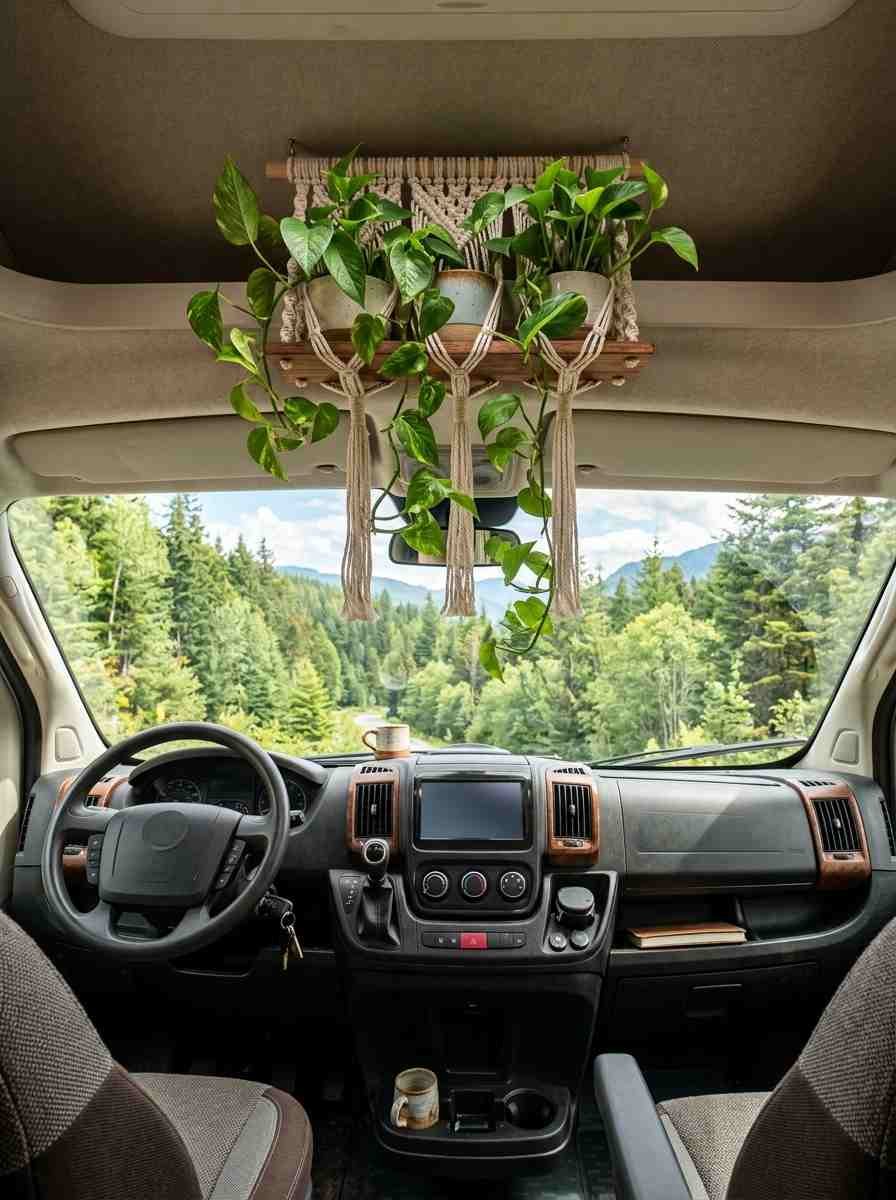
15. A hanging plant shelf near the windshield. Trailing pothos in macrame hangers near the front window softens the harshest, most utilitarian part of the van (the dashboard) and gets the best light in the whole rig.
Lighting and small details that make it feel lived-in
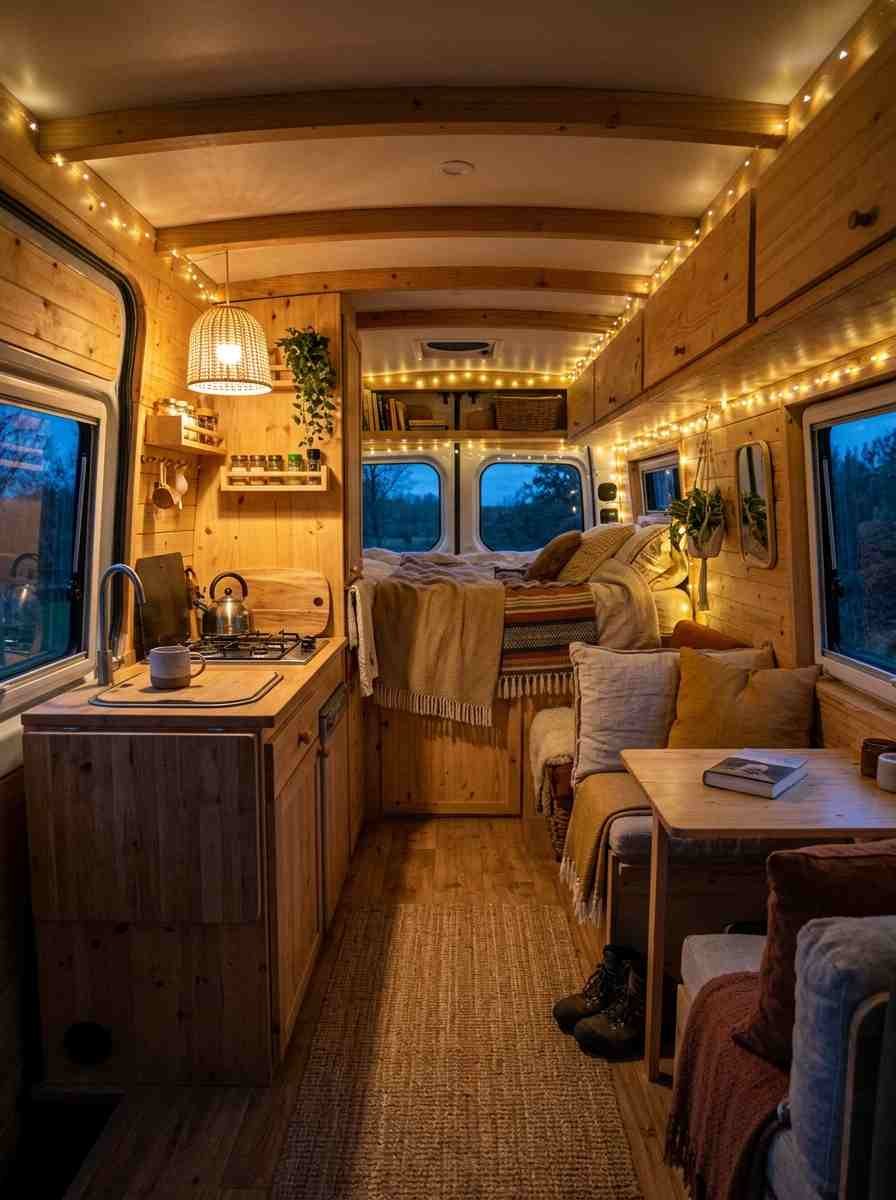
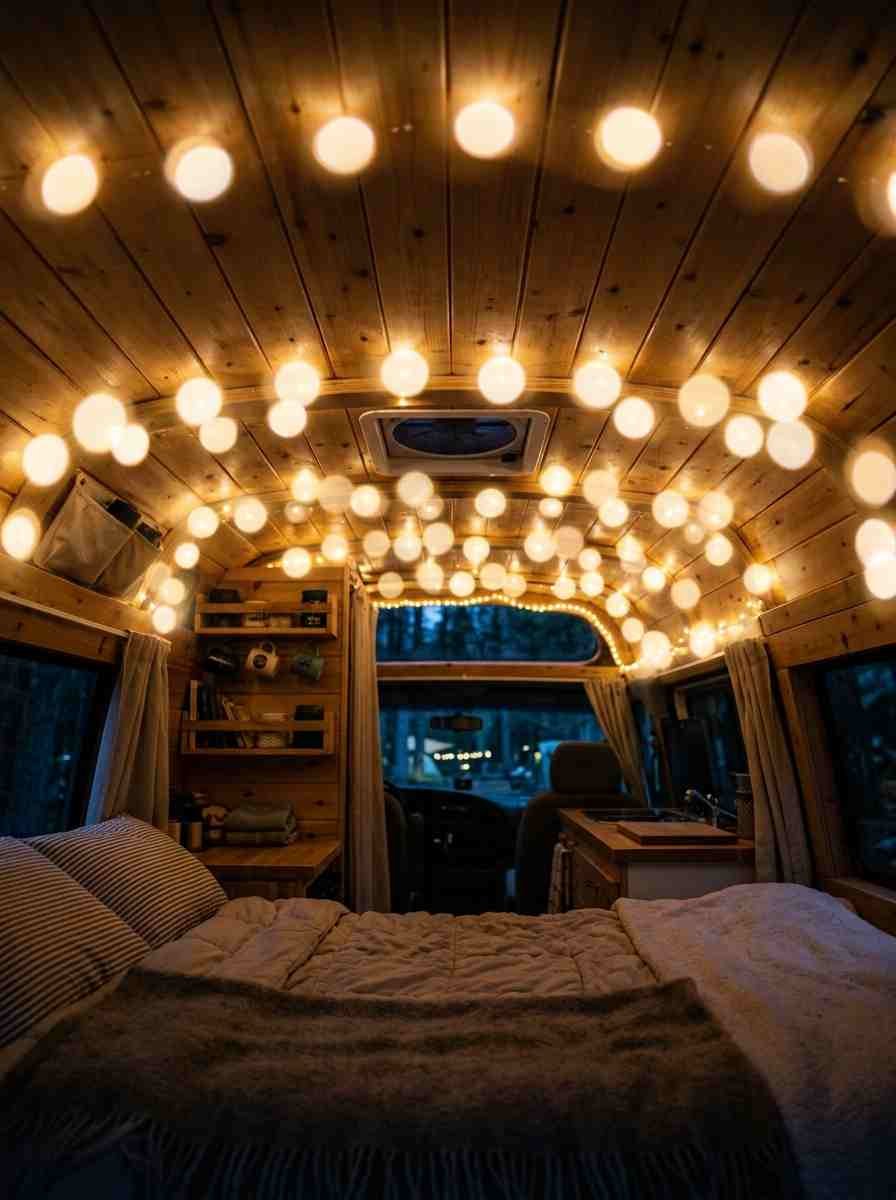
16. String lights on a dimmer, not just plugged straight in. A simple inline dimmer switch turns basic fairy lights from “dorm room” into “actually considered lighting design.
” Small change, huge difference at night.
17. A rattan or bamboo pendant over the kitchen area. Swap the stock LED puck light fixture for a small woven pendant shade.
It’s a 20-minute install and instantly kills the “rental van” feeling.
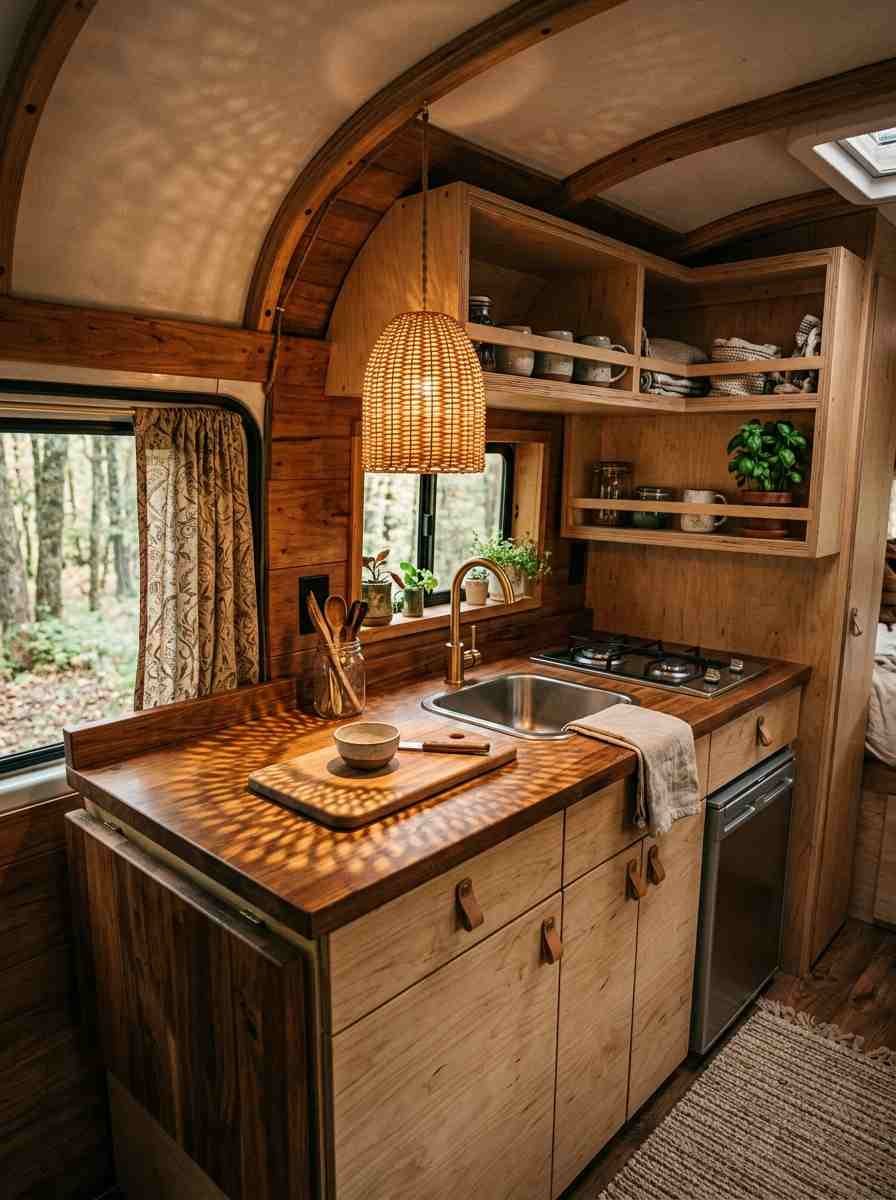
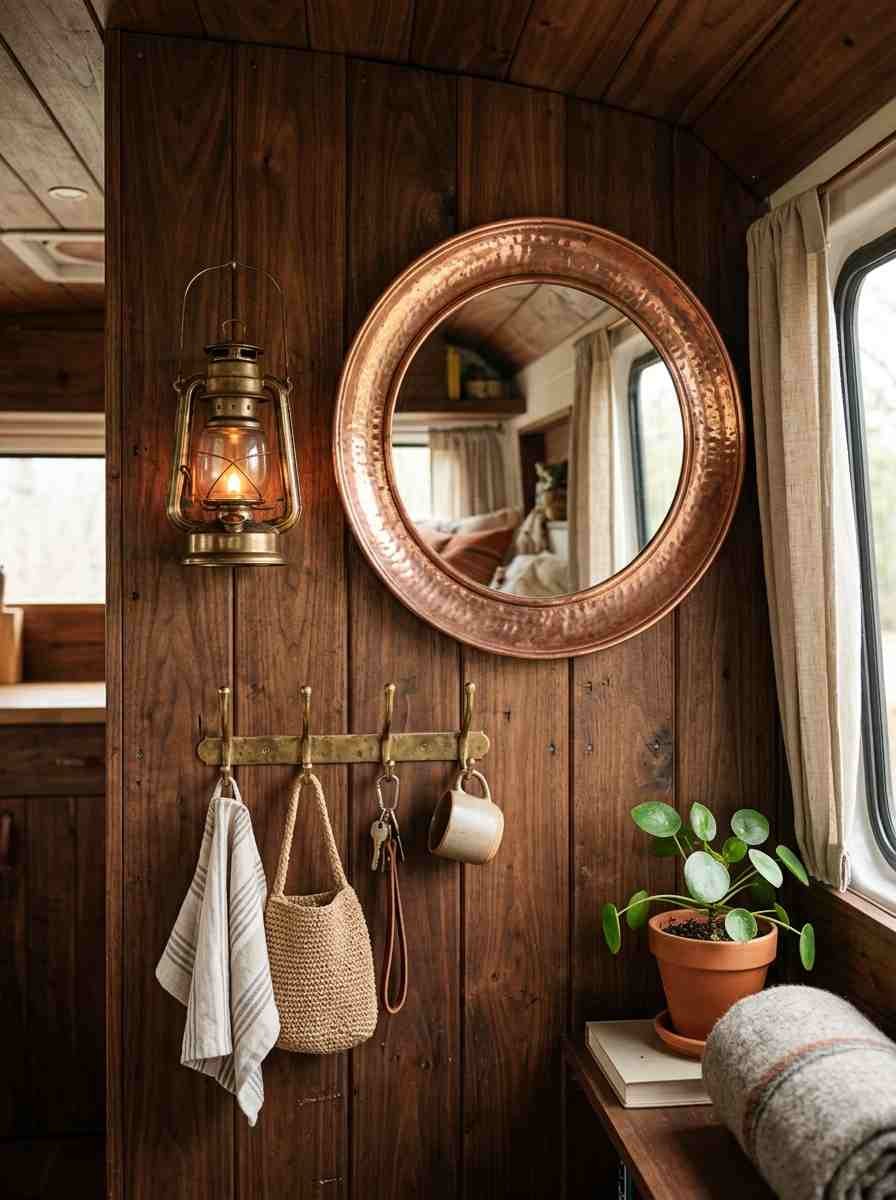
18. Brass or copper accents against dark wood. One or two metal touches, a lantern, a mirror frame, a hook rail, keep an all-natural-fiber space from feeling flat.
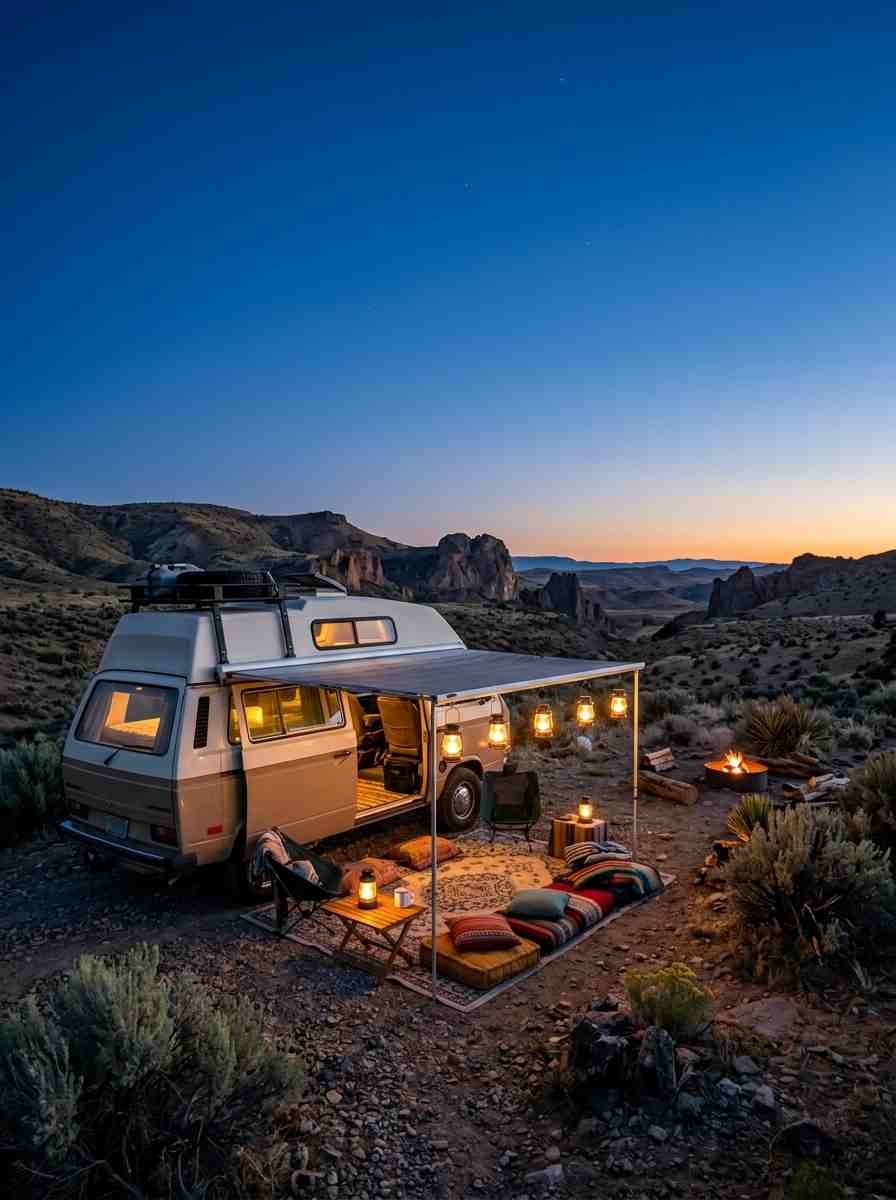
19. Battery lanterns for the outdoor seating area. Solar-charged lanterns hung from the awning extend the boho feel past the van doors and mean you’re never fumbling with your phone flashlight at 9pm.
Personal touches that make it yours, not a showroom
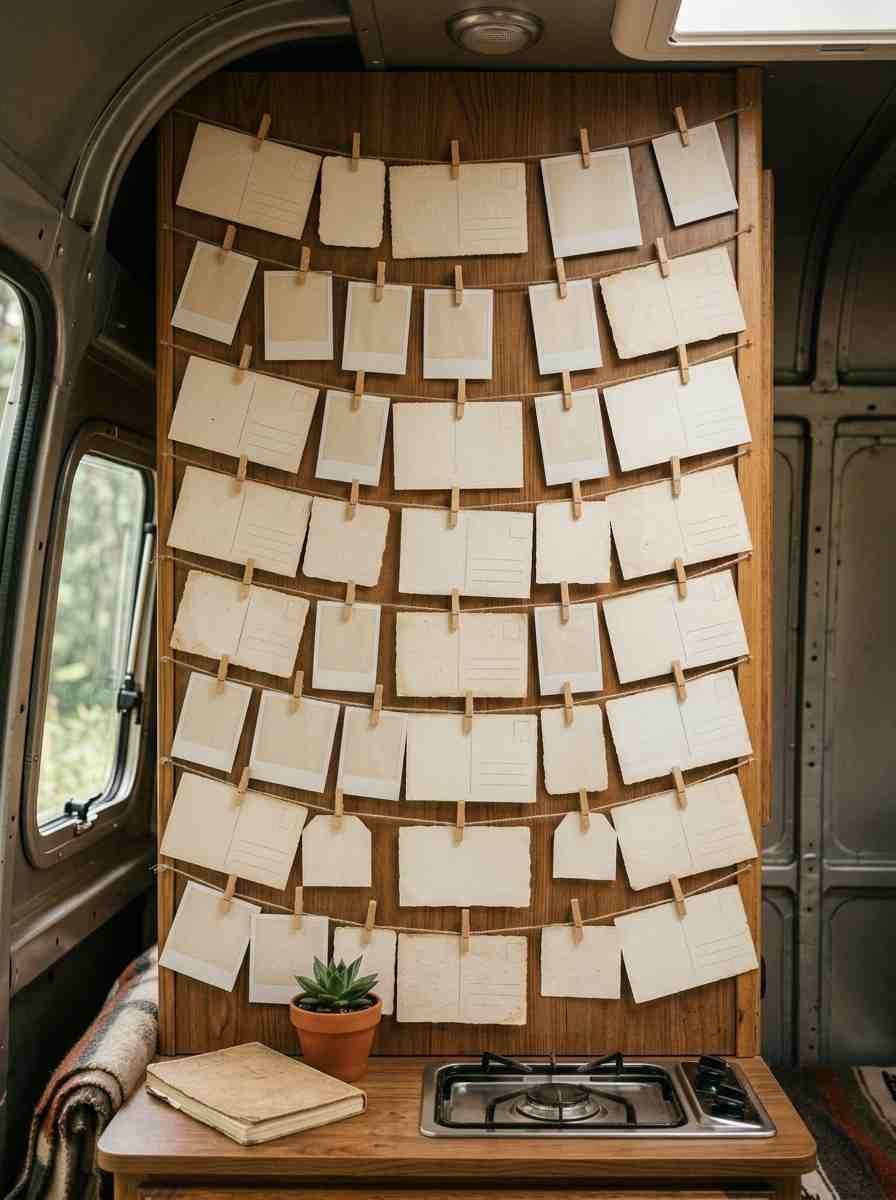
20. A gallery wall of travel photos and postcards. Command strips, a length of twine, and mini clothespins turn a blank cabinet face into a running scrapbook of the trip.
This is genuinely my favorite thing about van life: the wall fills itself up as you go.
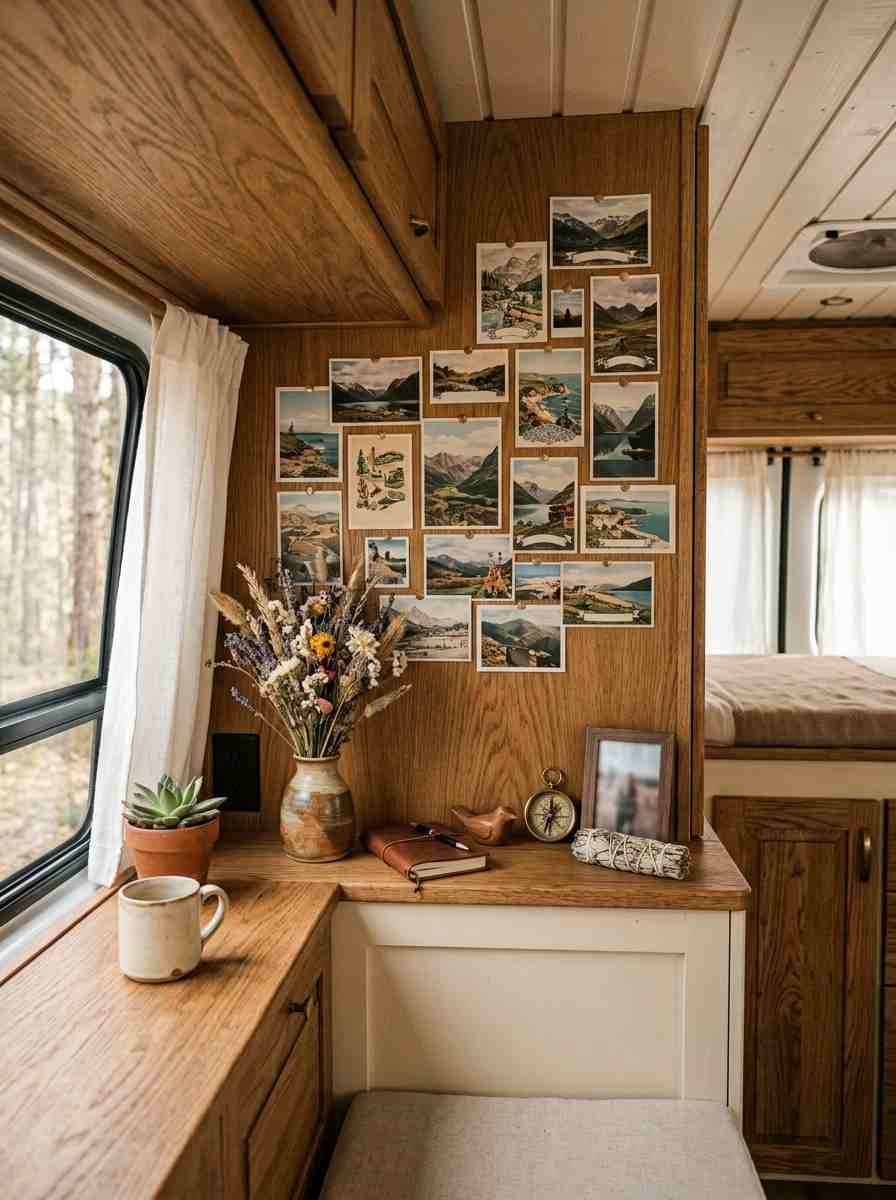
21. A small altar or shelf for meaningful objects. A shell from a beach, a rock from a trailhead, a candle. It doesn’t need to be spiritual to matter. It just needs to be yours.
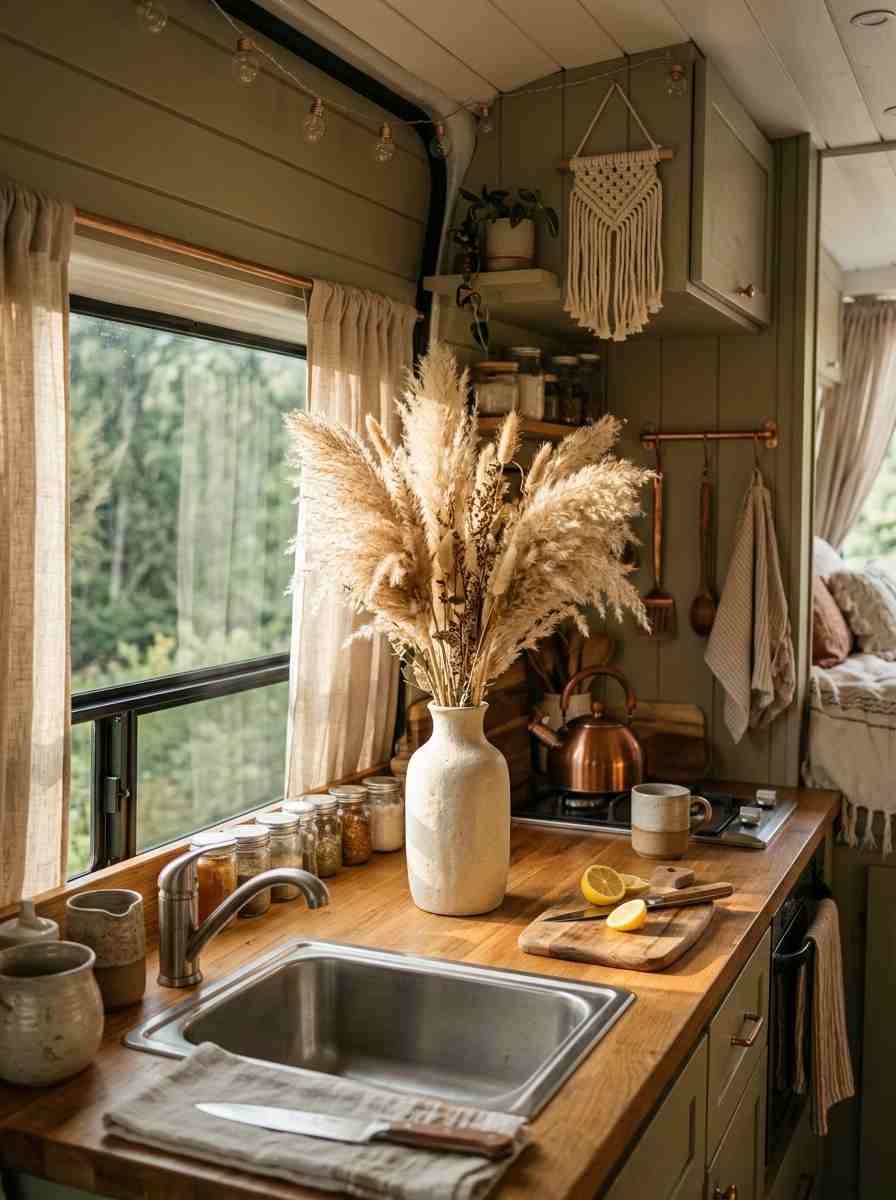
22. Dried flowers or pampas grass in a ceramic vase. No watering, no wilting on washboard roads, and they hold up to months of driving in a way fresh flowers simply can’t.
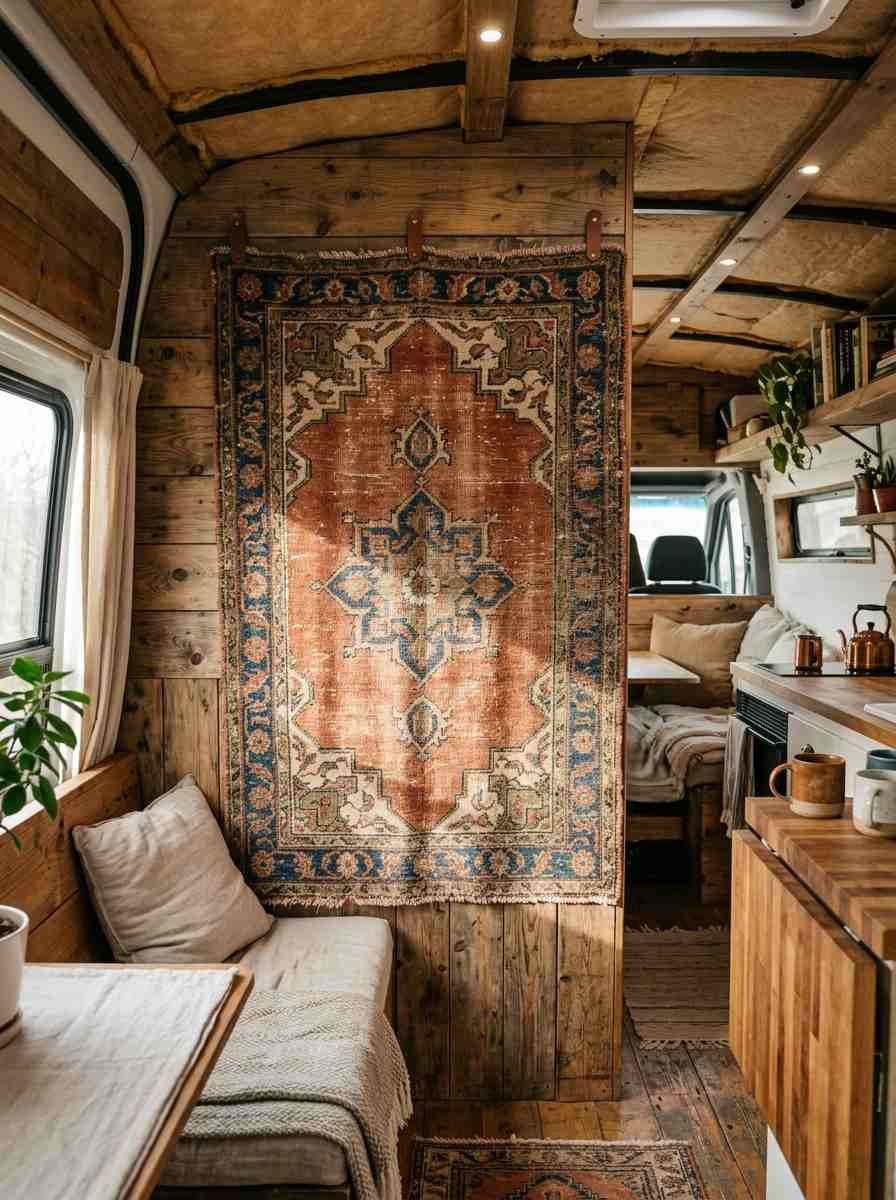
23. A hand-me-down rug repurposed as a wall tapestry. If a rug is too worn for the floor but too beautiful to toss, hang it. Instant texture, zero cost.
24. A window seat cushion in a fabric that doesn’t match anything else. This sounds like bad advice. It isn’t.
One deliberately mismatched fabric, a Suzani print, an ikat pattern, whatever catches your eye, keeps the whole build from looking like it came from a single catalog page.
That slightly-off piece is usually the one guests ask about first.
Quick reference: matching materials to van zones
| Van zone | Best boho material | Why it works here |
|---|---|---|
| Bed and headboard wall | Macrame, linen | Soft against skin, dampens road noise |
| Kitchen and cabinet fronts | Cane, rattan | Wipes clean, holds up to grease and steam |
| Floor | Jute or wool kilim | Layers well, hides dirt between washes |
| Seating and cushions | Kilim, block print cotton | Durable, easy to remove and wash |
A quick, honestly kind of random thought while I was writing this: I once spent an entire rainy afternoon at a campsite in Oregon debating with another van dweller whether rug fringe should face in or out toward the aisle. We never agreed.
I still think out is correct. Anyway, back to the ideas.
A note on making it actually work, not just look good
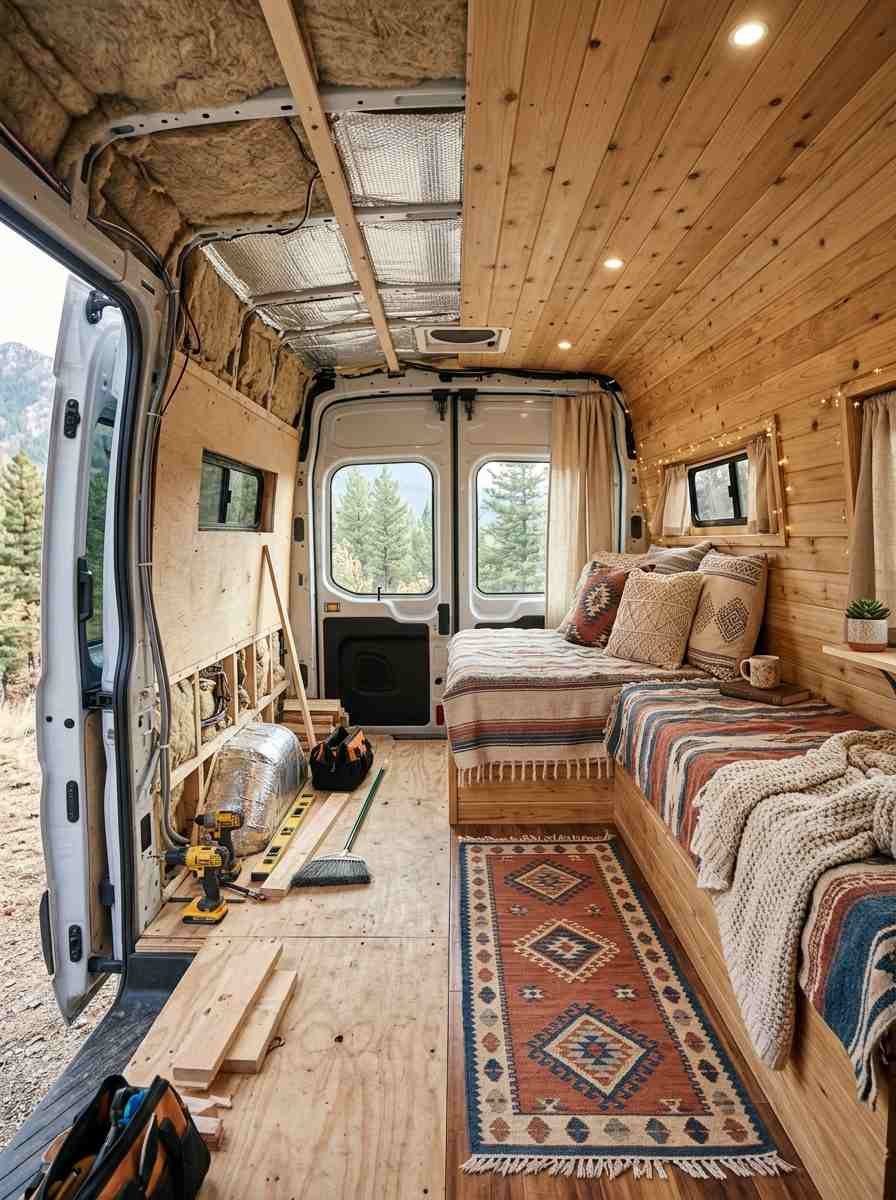
None of this matters if the bones of your van aren’t sound first. Boho decor sits on top of a build, it doesn’t replace one.
If you’re still in the planning stages, it’s worth reading a proper camper van layout guide before you buy a single yard of fabric, because your seating, storage, and bed placement decide how much room you actually have left for the fun stuff. Insulation matters just as much.
A gorgeous macrame headboard means nothing if you’re freezing behind it, so it’s worth checking a solid van insulation walkthrough before you start bolting in cabinets.
And if you want to see how a full DIY build actually comes together day by day, warts and all, FarOutRide’s build journal is one of the most honest accounts out there.
Wow, writing all this out makes me want to repaint my own cabinets this weekend. IMO the biggest mistake people make is trying to do all 24 of these at once. Pick five that speak to you, build those well, and let the rest come with time on the road.
FAQ
Do bohemian interiors work in small camper vans, or only bigger RVs? They work especially well in small vans. Boho leans on lightweight, layered materials, rugs, cushions, macrame, rather than bulky furniture, so it scales down without losing character.
What’s the most budget-friendly place to start? Textiles. A rug, a few cushion covers, and one macrame wall hanging can transform a van for under $150, and none of it requires tools.
Will boho decor hold up to actual off-grid travel and weather? Mostly yes, if you choose the right materials for the right spot.
Natural fiber rugs and cane cabinet fronts handle daily wear well. Save delicate fabrics like silk for cushions you can easily wash or swap out.
So, which of these 24 are you actually going to try first? Save this for your build board, and let me know what your van’s version of boho ends up looking like.
