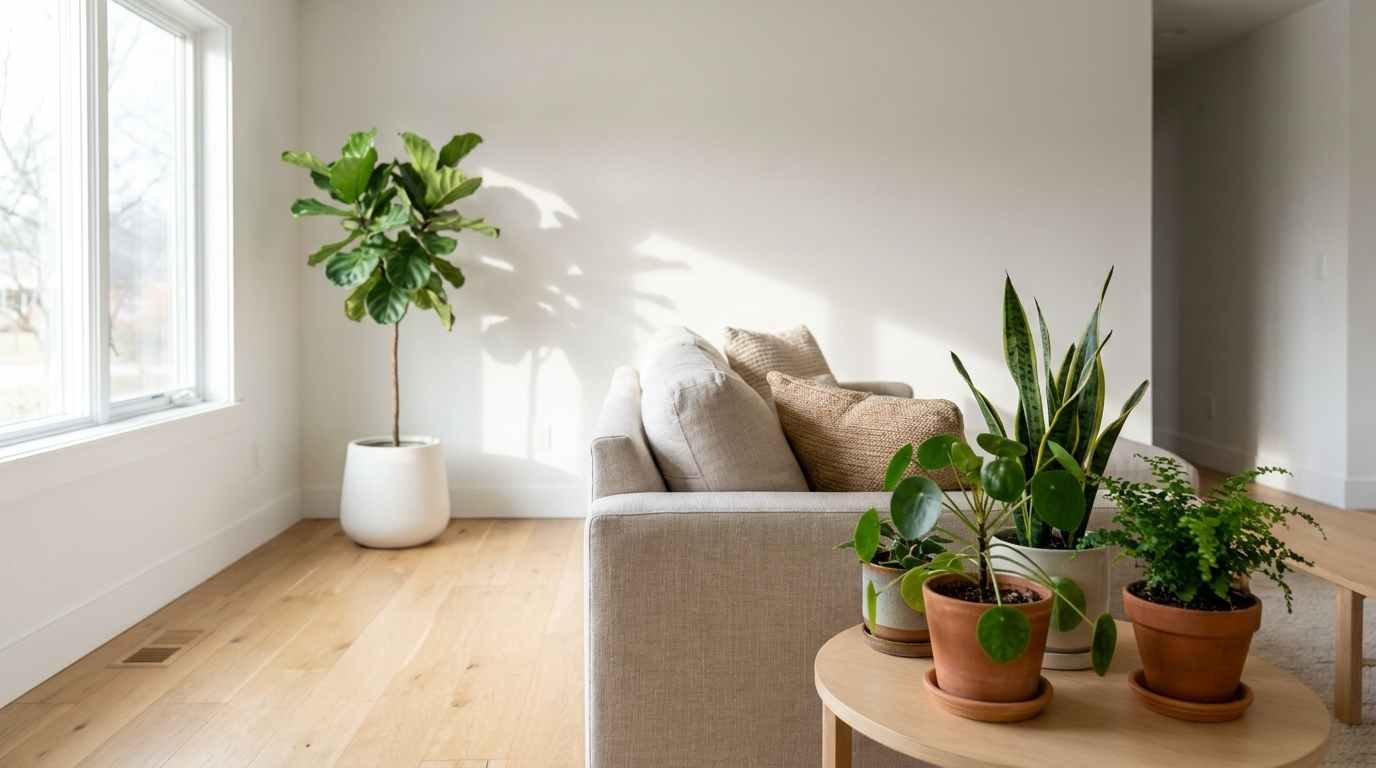
I used to think “minimalist plant decor” was a contradiction. Minimalism says less. Plants say more, more leaves, more pots, more mess on the windowsill.
Turns out the trick isn’t choosing between the two. It’s picking the right handful of plants and giving them room to actually be seen.
I learned this the hard way after cramming nine plants into a 12-foot living room wall and wondering why it looked like a jungle instead of a magazine spread.
Pulled six of them, kept three, and the room finally breathed. That’s basically the whole philosophy behind everything below.
If you’re the type who saves a hundred living room boards on Pinterest and still can’t commit to a layout, this list is for you.
Twenty-three ideas, grouped by theme, no fluff. Pin the ones that fit your space and skip the rest.
I’ve spent the last few years slowly redoing every room in my apartment with more plants and fewer knickknacks, and the living room took the longest to get right. Part of that is trial and error.
Part of it is realizing that “expensive-looking” rarely means expensive. It usually means someone made three good decisions and stopped, instead of making twenty mediocre ones and calling it eclectic.
So this isn’t a shopping list. It’s more of a filter. Read through it, pick the four or five ideas that actually match your space and your patience level, and ignore the rest.
Trying to do all 23 at once is how you end up back at square one, staring at a room that looks busier than before you started.
Start with restraint, not with plants
Before you buy a single leaf, sort out the bones of the room. This is the part everyone skips, and it’s the part that makes the difference between “curated” and “cluttered.”
1. Pick one pot color family and stick to it. Terracotta, white ceramic, or matte black, choose one lane. Mixing five pot colors is how a minimalist room turns into a garage sale.
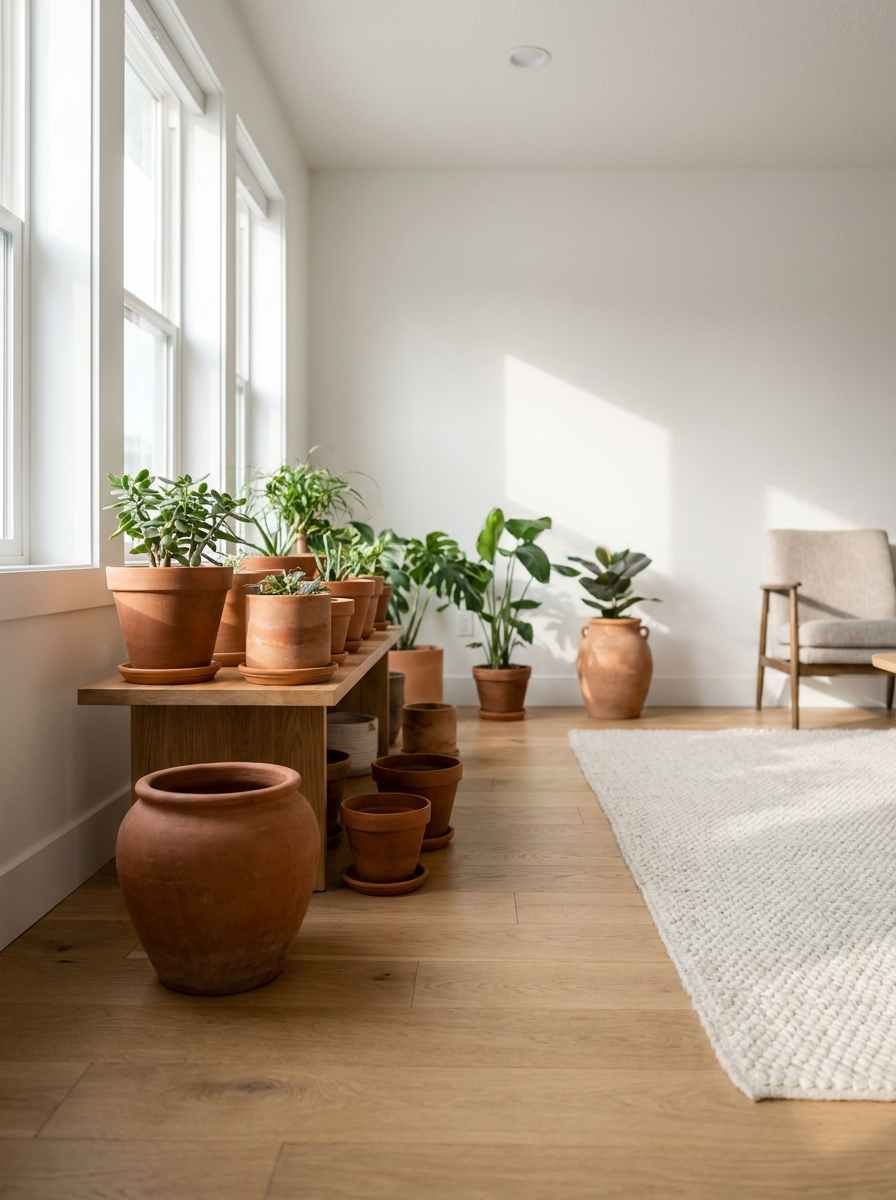
2. Go for sculptural planters over decorative ones. A concrete cylinder or a fluted stoneware pot does more visual work than a painted pattern ever will.
IMO the plant should be the decoration, not the pot.
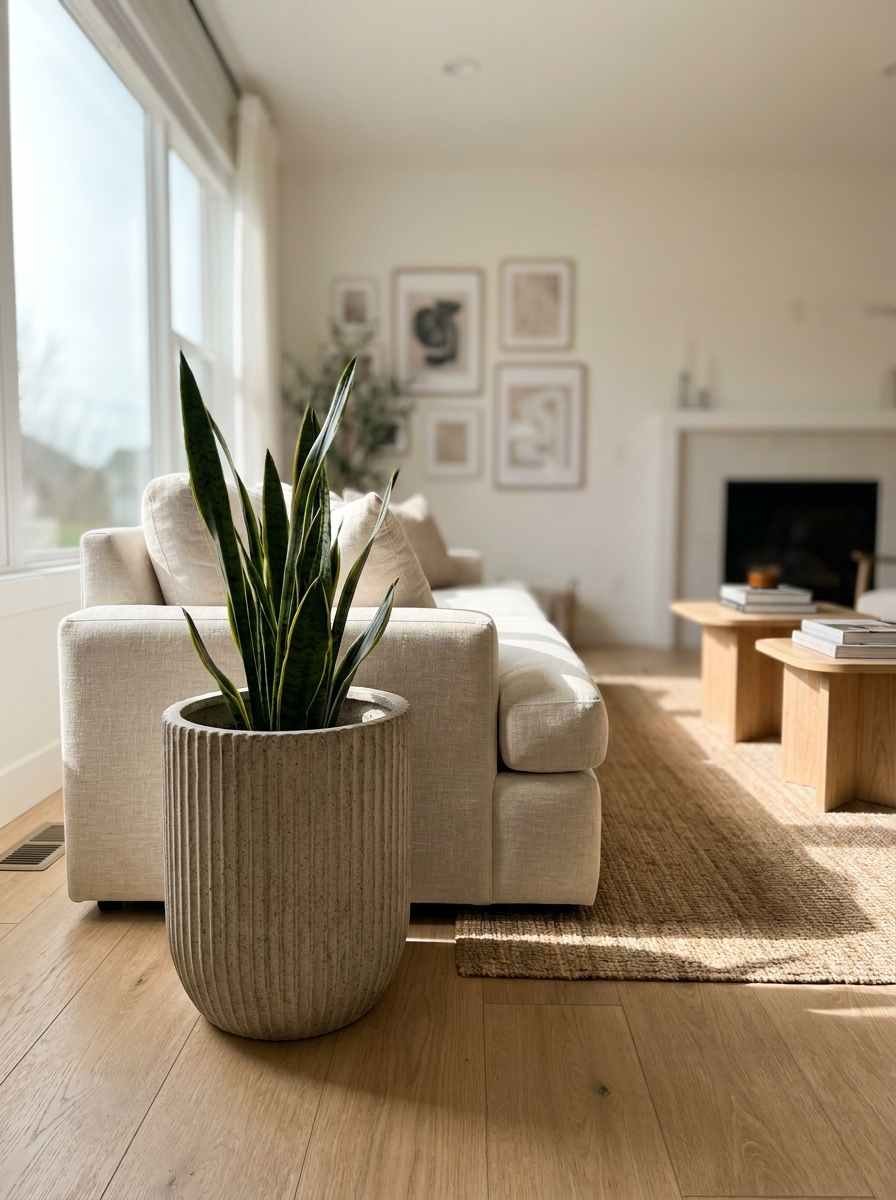
3. Let negative space do some of the styling. Empty floor around a plant isn’t wasted, it’s what makes the plant look intentional instead of forgotten there.
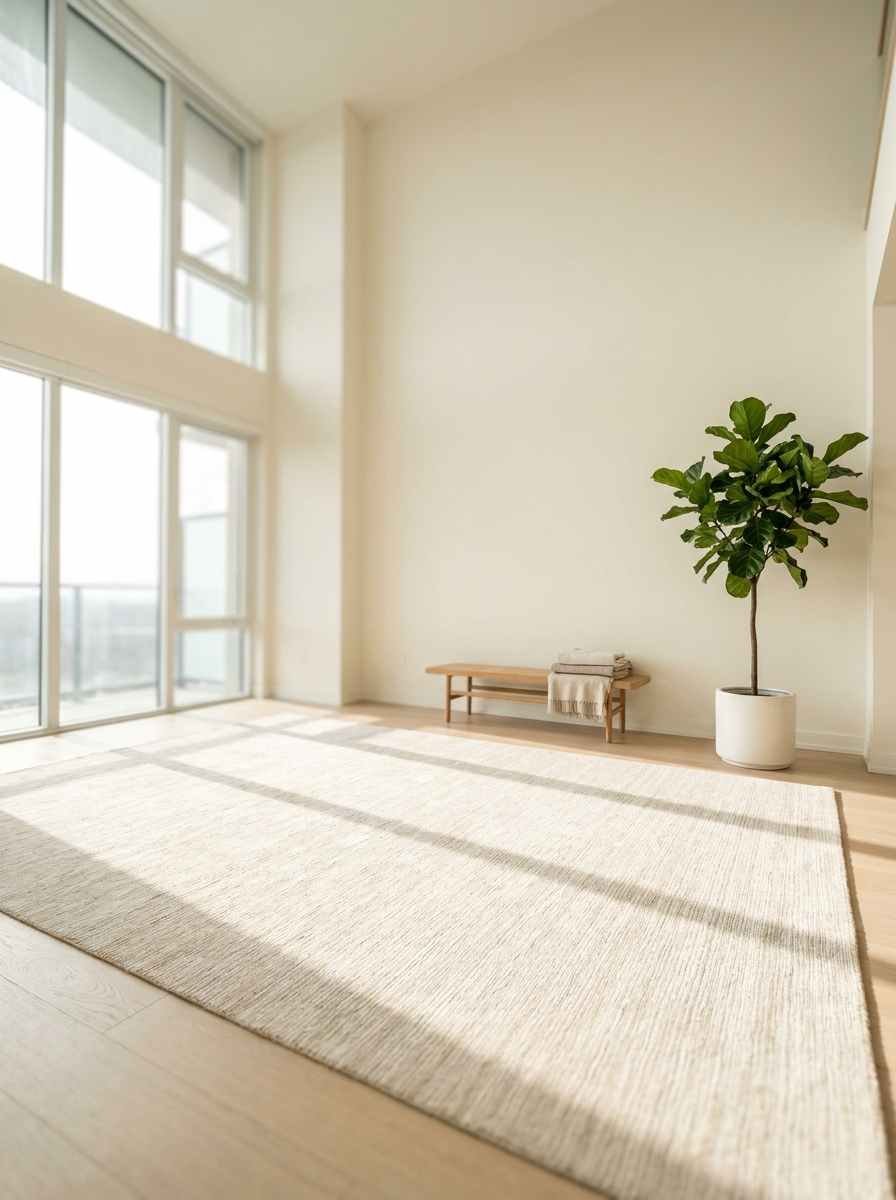
4. Match plant height to your furniture lines. A tall fiddle leaf next to a low sofa creates contrast. A tall plant next to a tall bookshelf just disappears into the background.
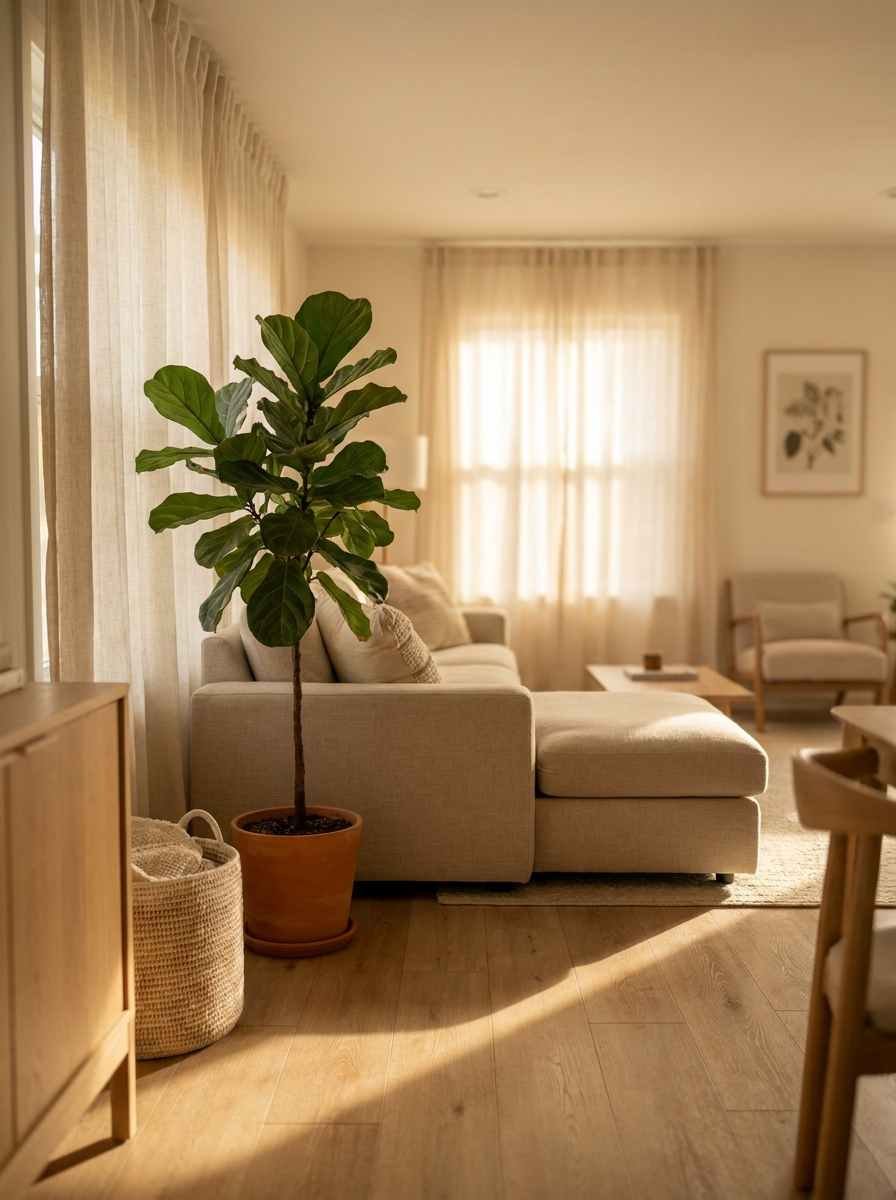
None of this costs anything, by the way. It’s just arranging what you’ve already got with a bit more intention.
IMO that’s the most underrated part of the whole minimalist trend: half the “look” is subtraction, not shopping.
Let one plant carry the whole room
Minimalist rooms don’t need ten plants. They need one or two that actually earn their spot.
5. A fiddle leaf fig by a bright window is the closest thing to instant “expensive apartment” energy. It’s dramatic, it’s tall, and it photographs beautifully for that Pinterest flat lay you’ve been planning.
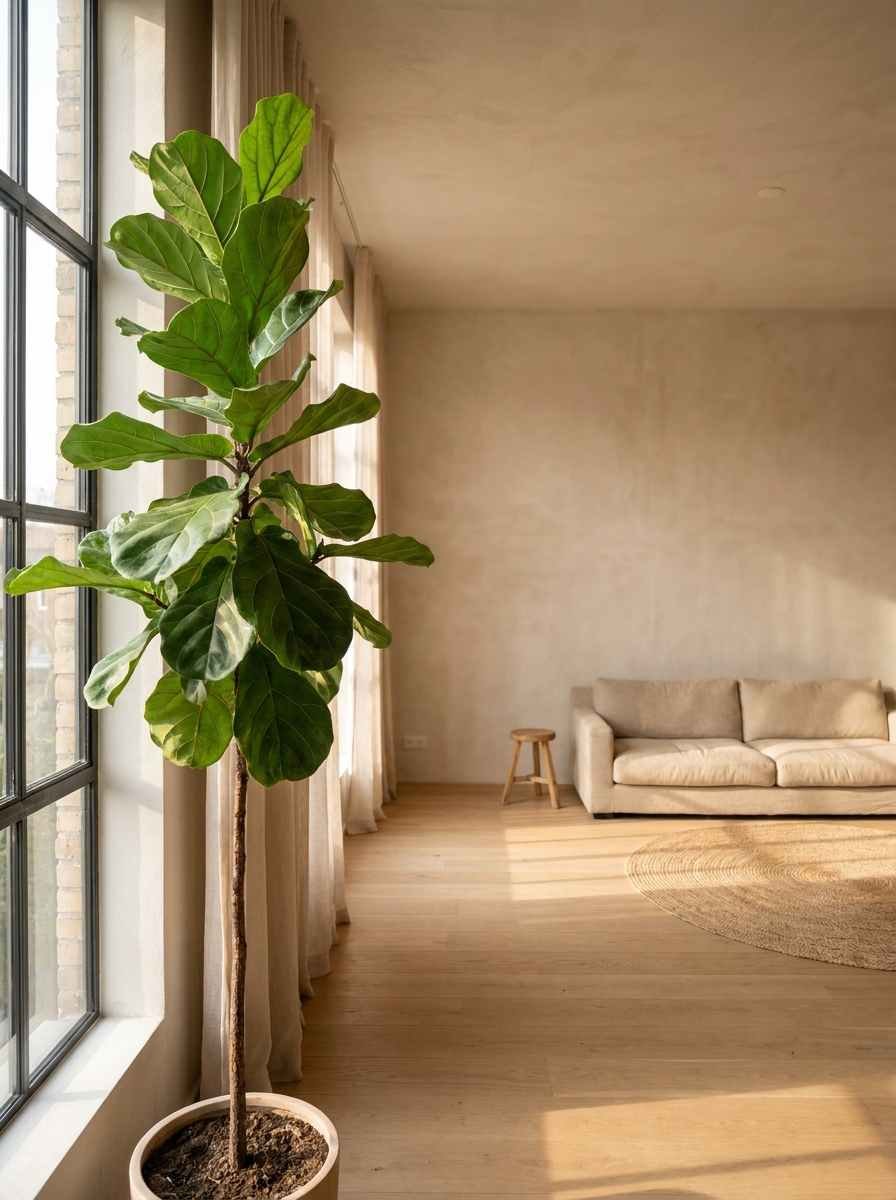
6. An olive tree brings height without the fuss of tropical plants. Mine’s survived two moves and a month of me forgetting to water it. Not exactly a delicate flower, and I mean that as a compliment.
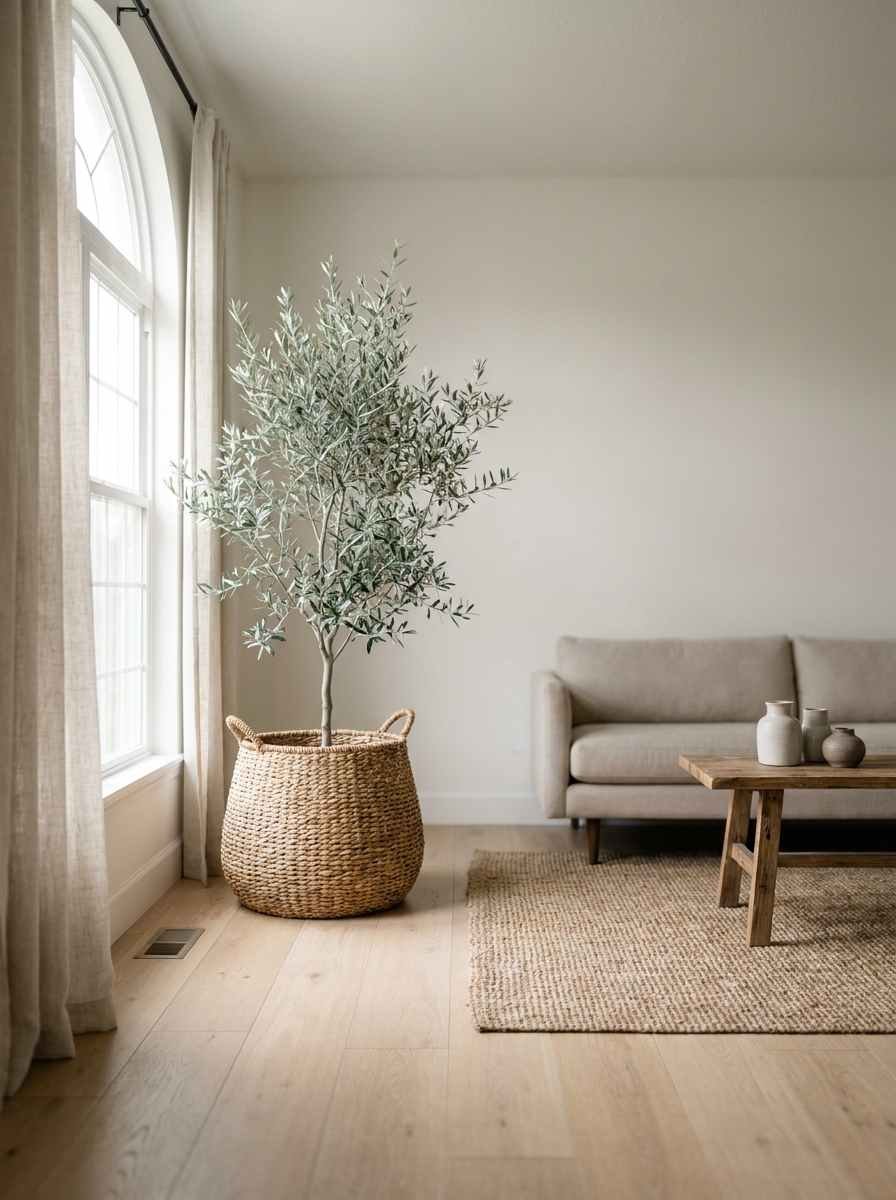
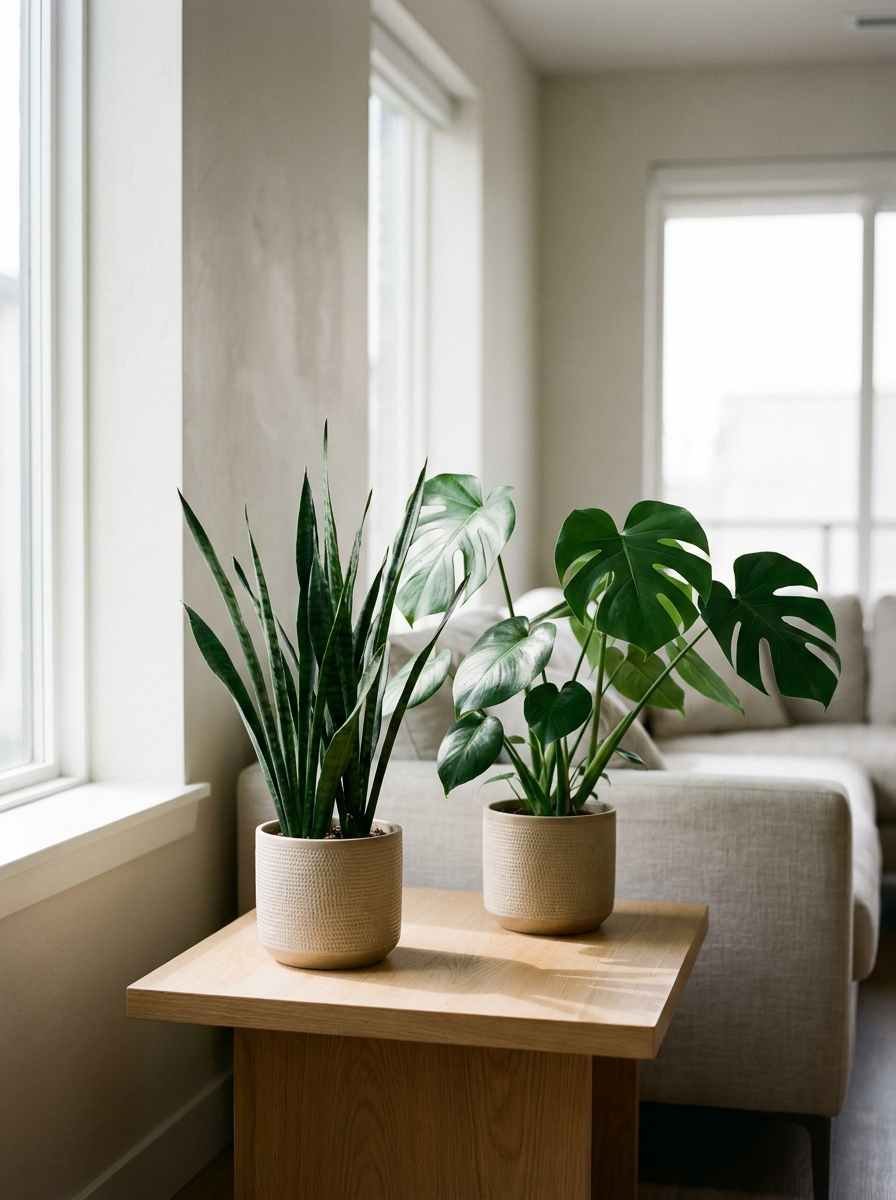
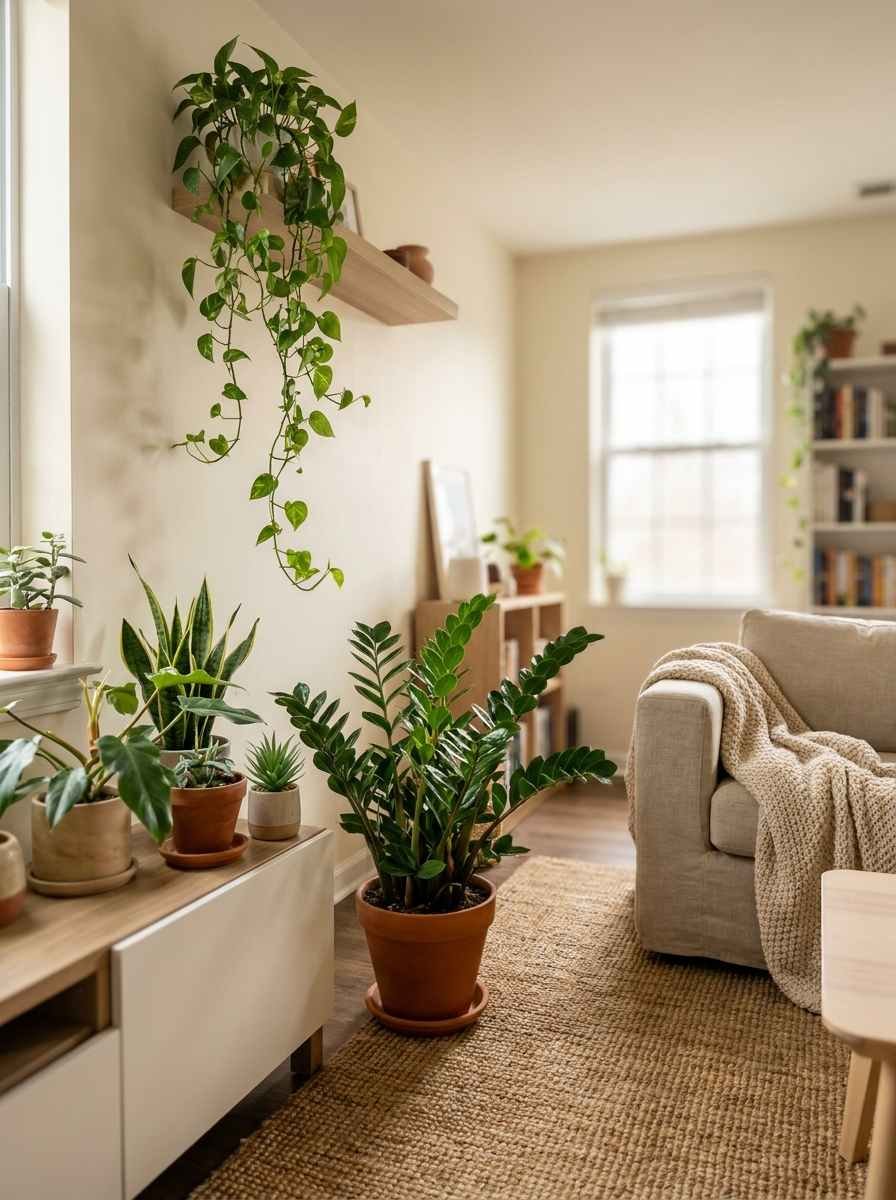
7. A large snake plant, styled alone in a corner, reads more like sculpture than houseplant. Its straight lines actually complement clean, geometric furniture instead of fighting it.
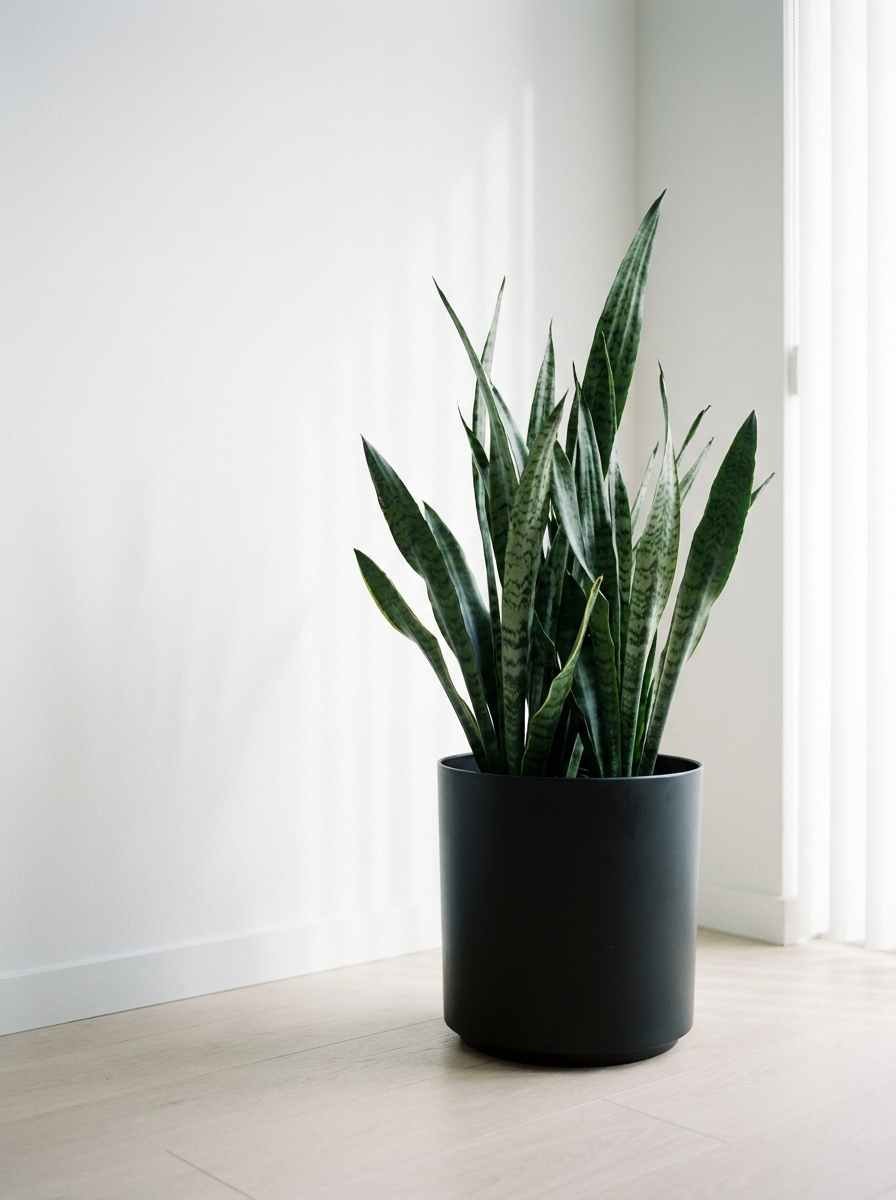
8. Group plants in odd numbers. Three pots always look more deliberate than two or four. Design nerds have known this forever; it’s called visual rhythm, and it works.
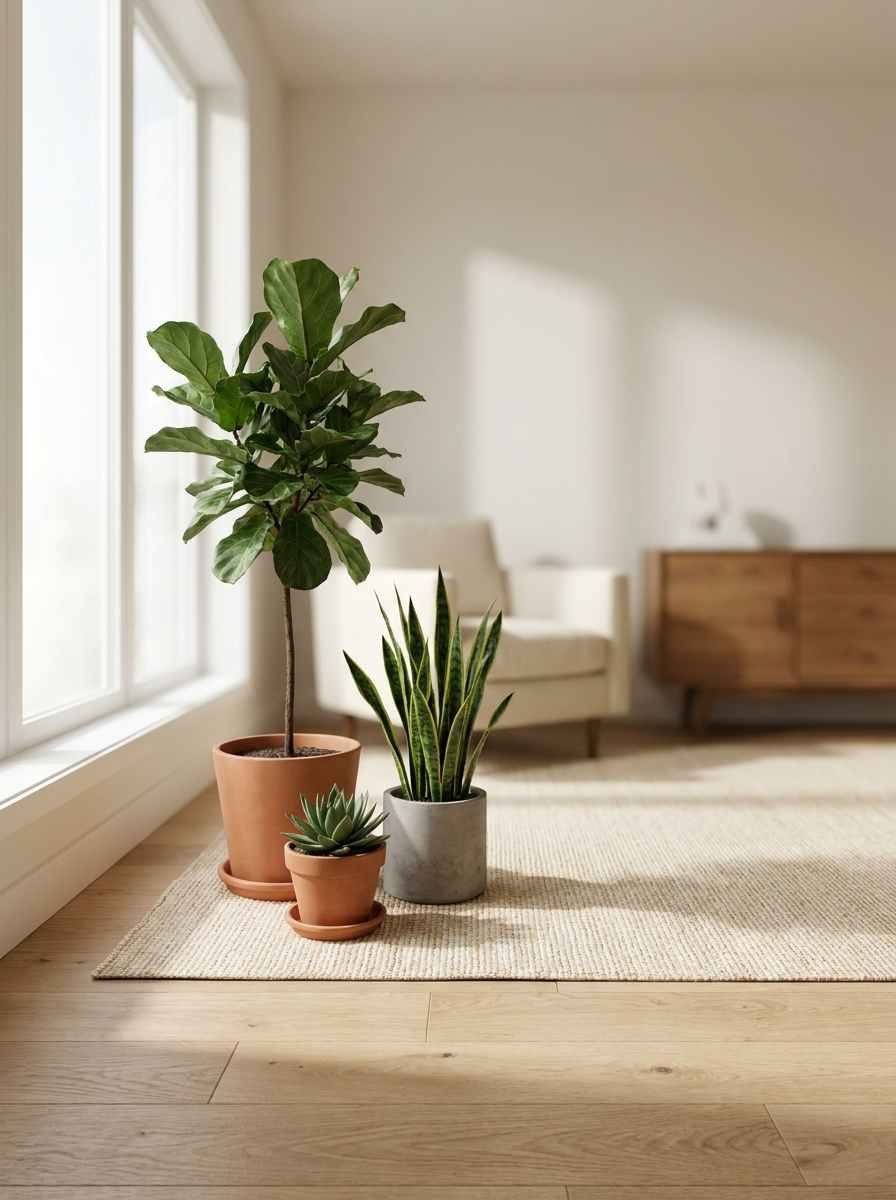
A friend of mine, an interior stylist who does shoots for a living, once told me the biggest mistake amateurs make is trying to fill every corner. Professionals leave gaps on purpose.
I didn’t fully believe her until I tried it myself and watched my own living room go from “nice” to “wait, did you hire someone?” within a single afternoon of just removing things.
Play with height before you play with color
A flat room, everything at coffee-table level, reads cheap even with expensive furniture. Height fixes that fast.
9. A wooden plant ladder against a bare wall adds vertical interest without taking up floor space. Three shelves, three plants, done.
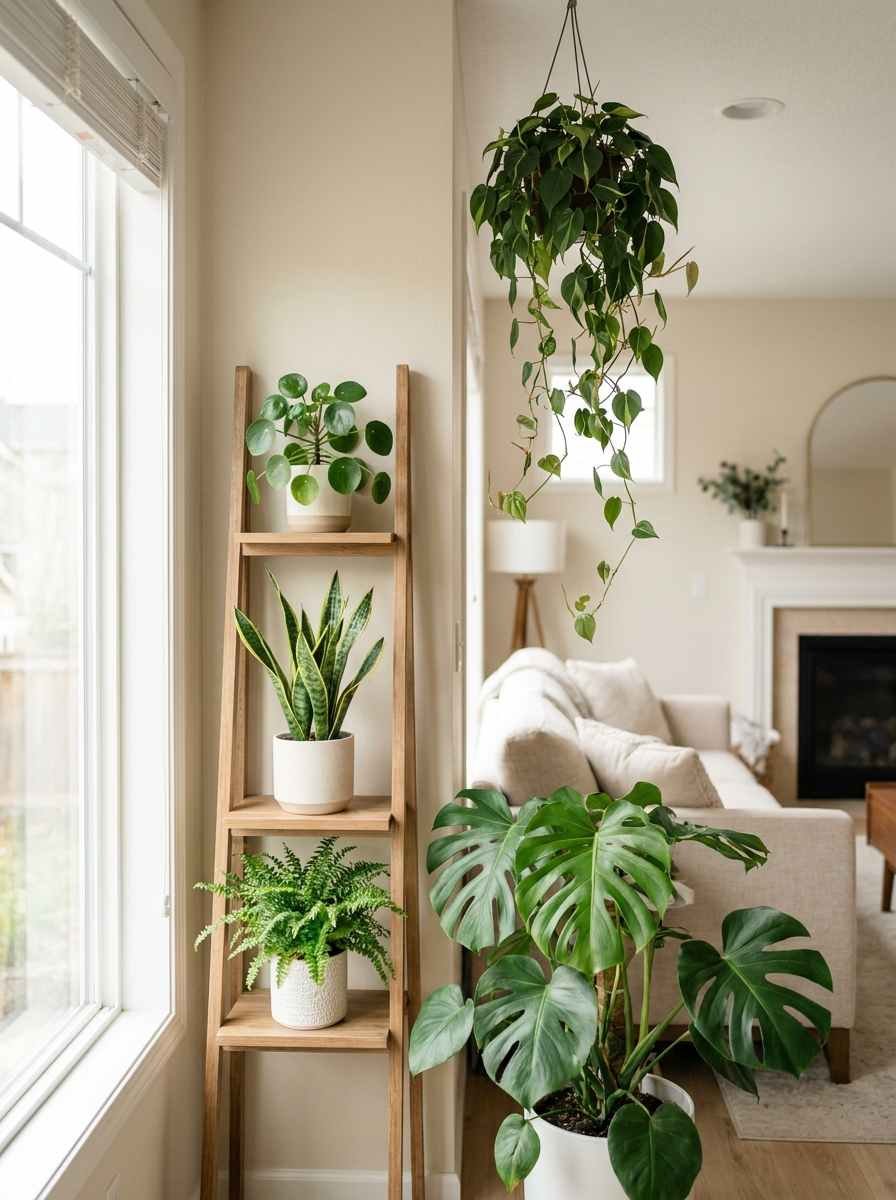
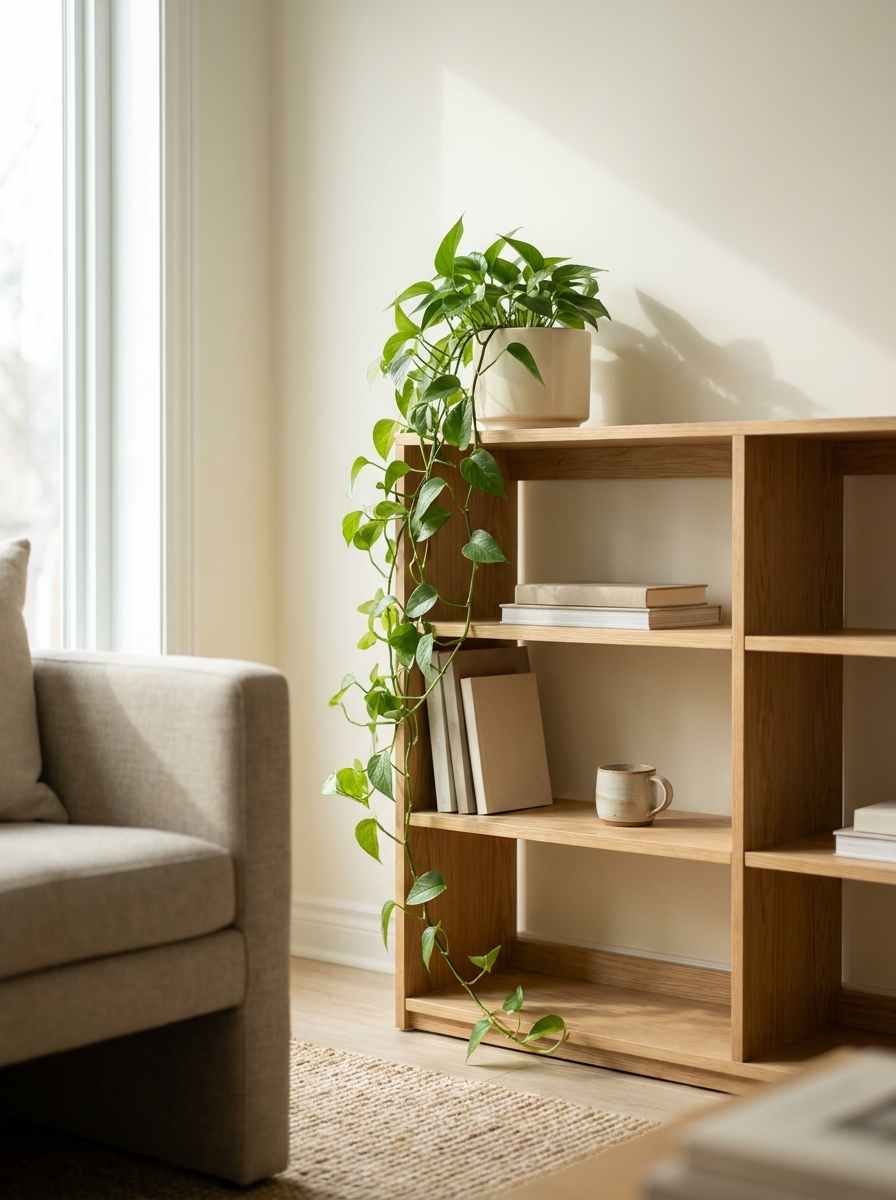
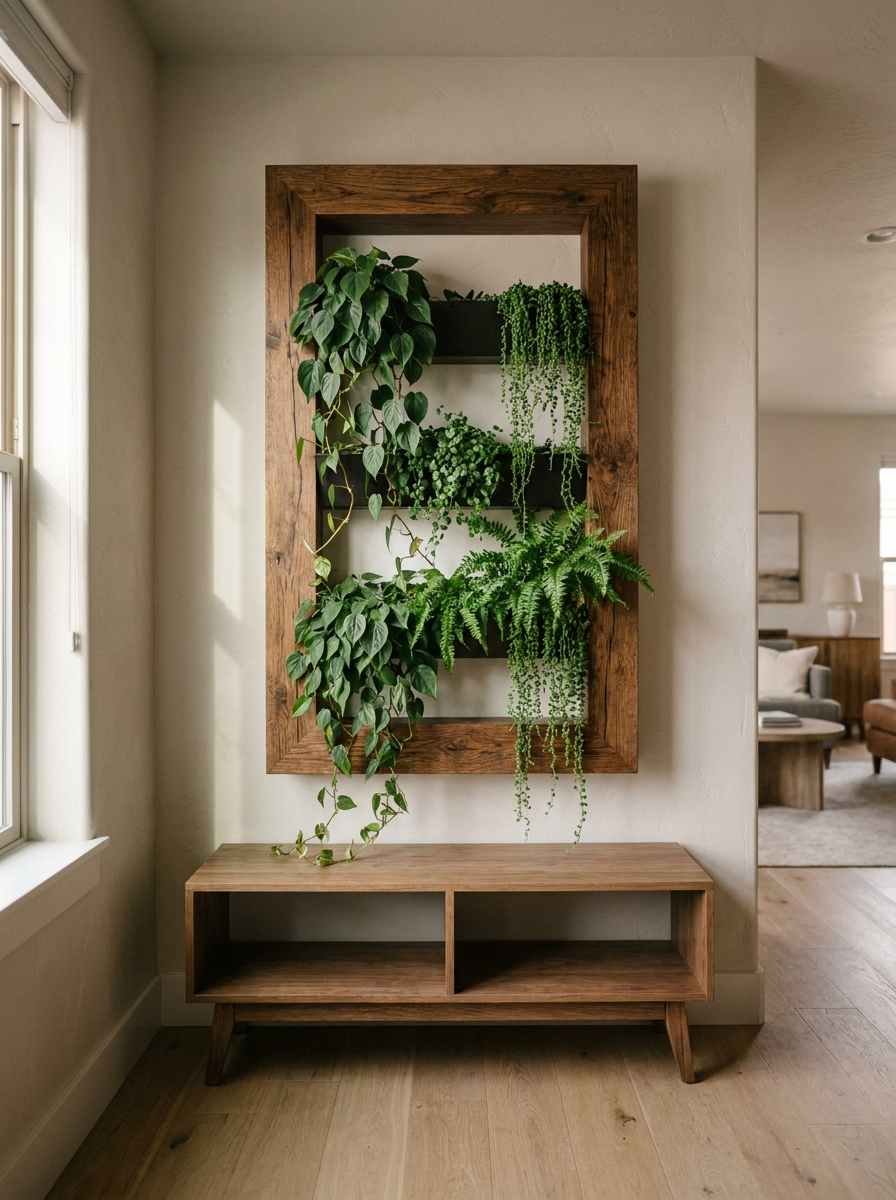
10. Hang a trailing pothos from a ceiling hook near the window. Let it grow long and a little unruly. The imperfection is the point; a too-neat hanging plant looks fake.
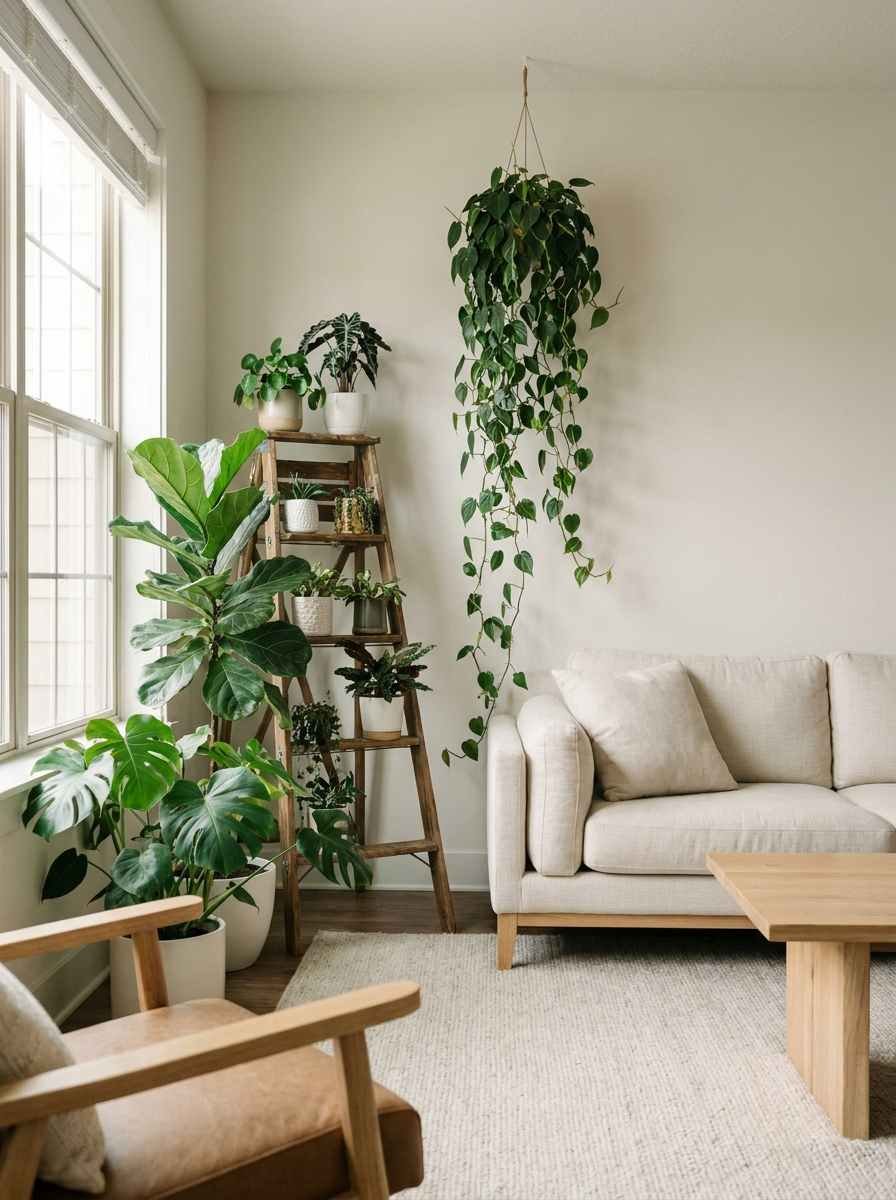
11. Try a small floating shelf “gallery” of three or four tiny pots instead of framed art. Ever wondered why some living rooms feel unexpectedly fresh? It’s usually because greenery replaced the usual wall clutter.
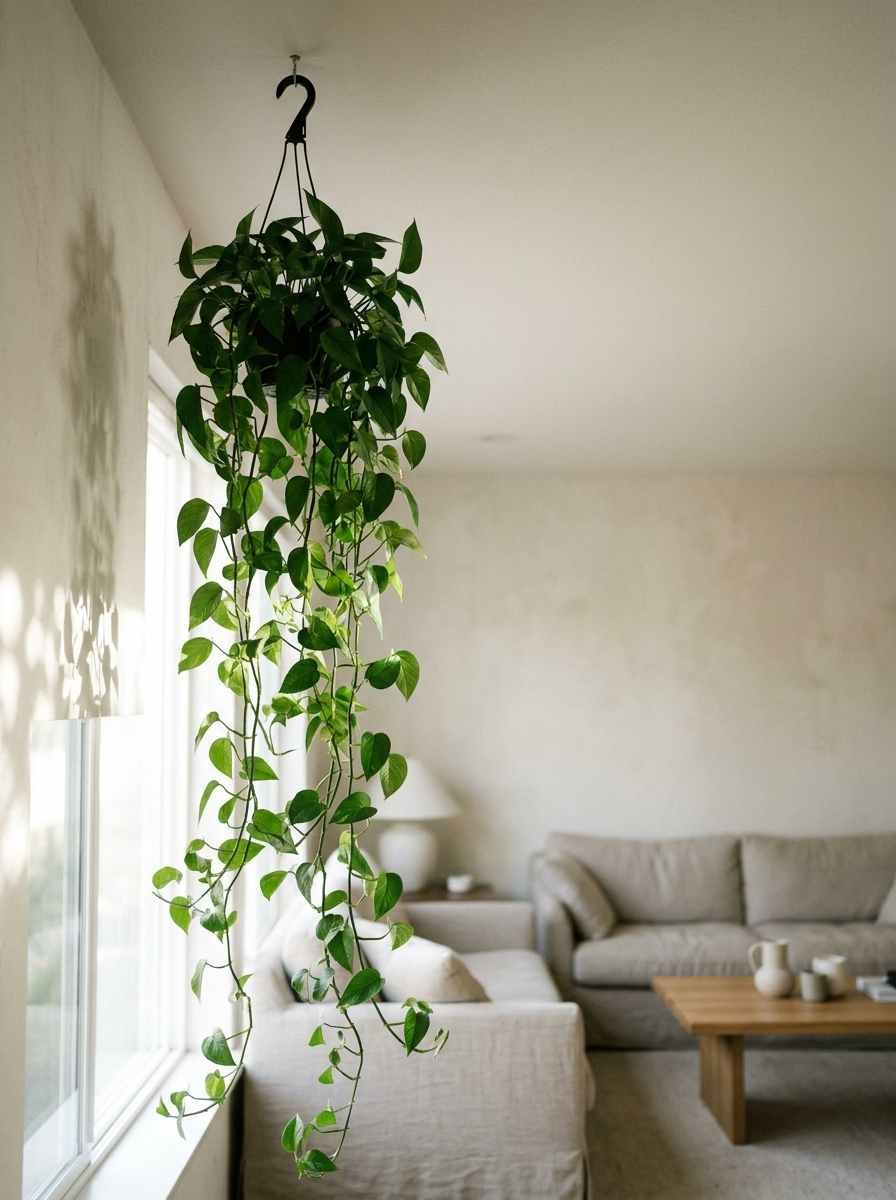
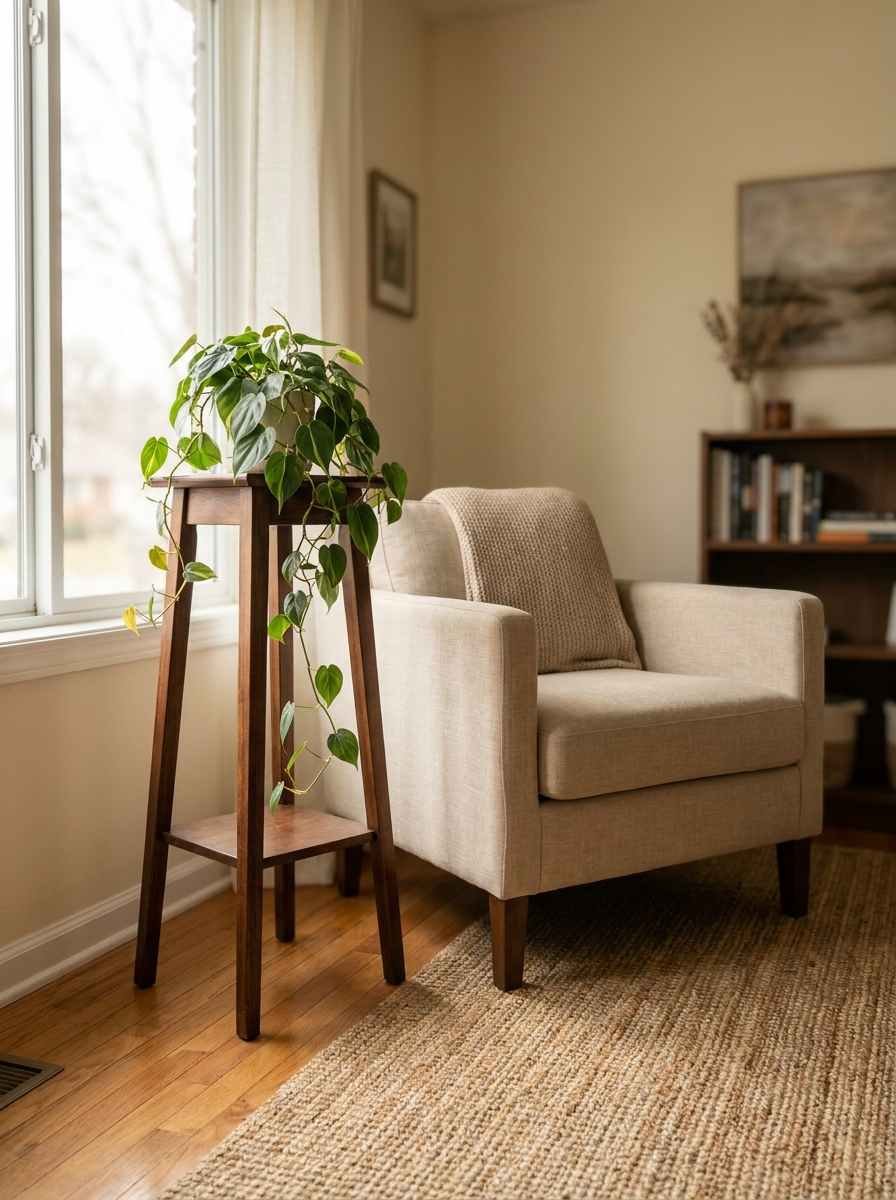
12. Put a plant stand in the one corner that always feels awkward. Every living room has one. Mine was the dead space behind the armchair for two years before I figured this out.
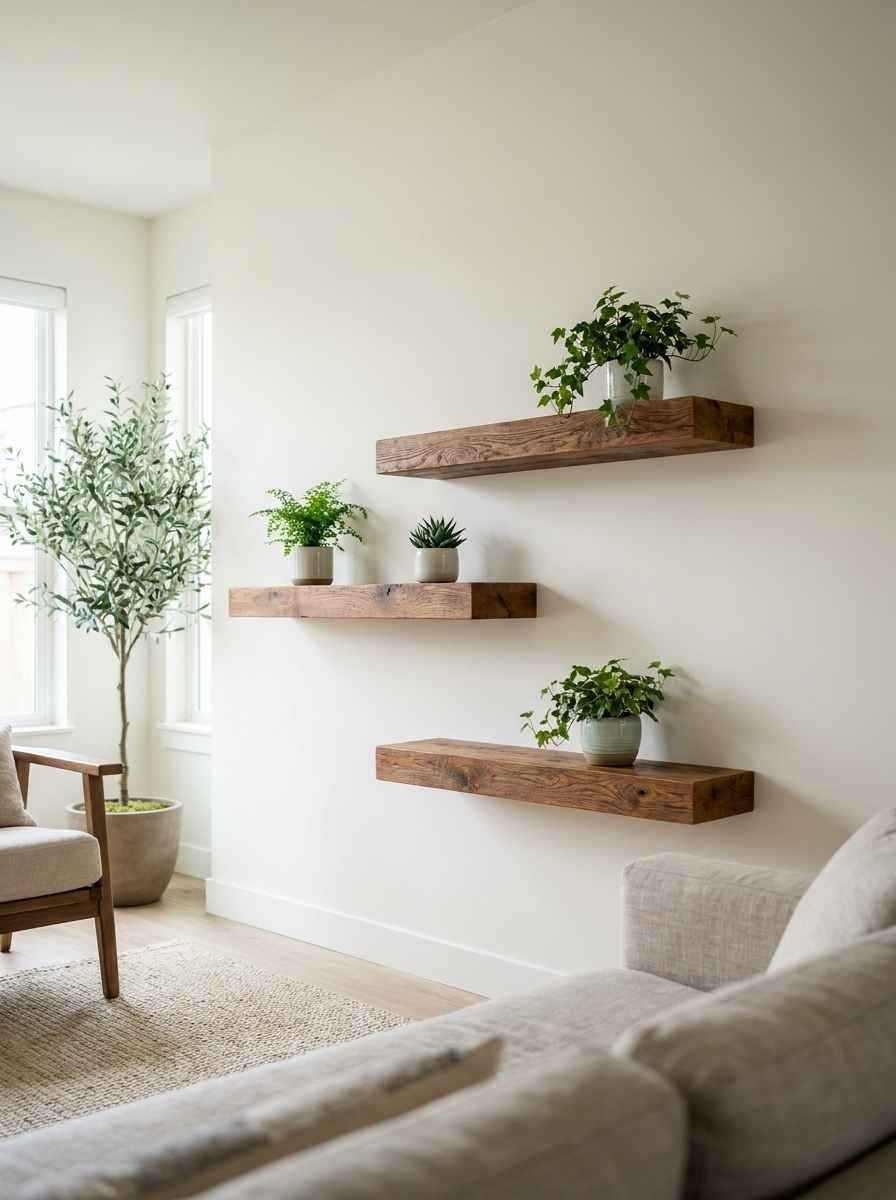
Height also changes how a room photographs, which matters more than people admit if you’re the kind of person who takes a picture of your living room every time you rearrange it. A flat layout looks flat in photos too. Add even one tall element and suddenly there’s depth for the eye to travel through.
Texture beats color, every time
Minimalist doesn’t mean boring, and texture is how you get visual interest without adding a single extra color to the room.
- Mix leaf shapes, not colors. A spiky snake plant next to a broad-leafed monstera creates contrast that a rainbow of flowers never could.
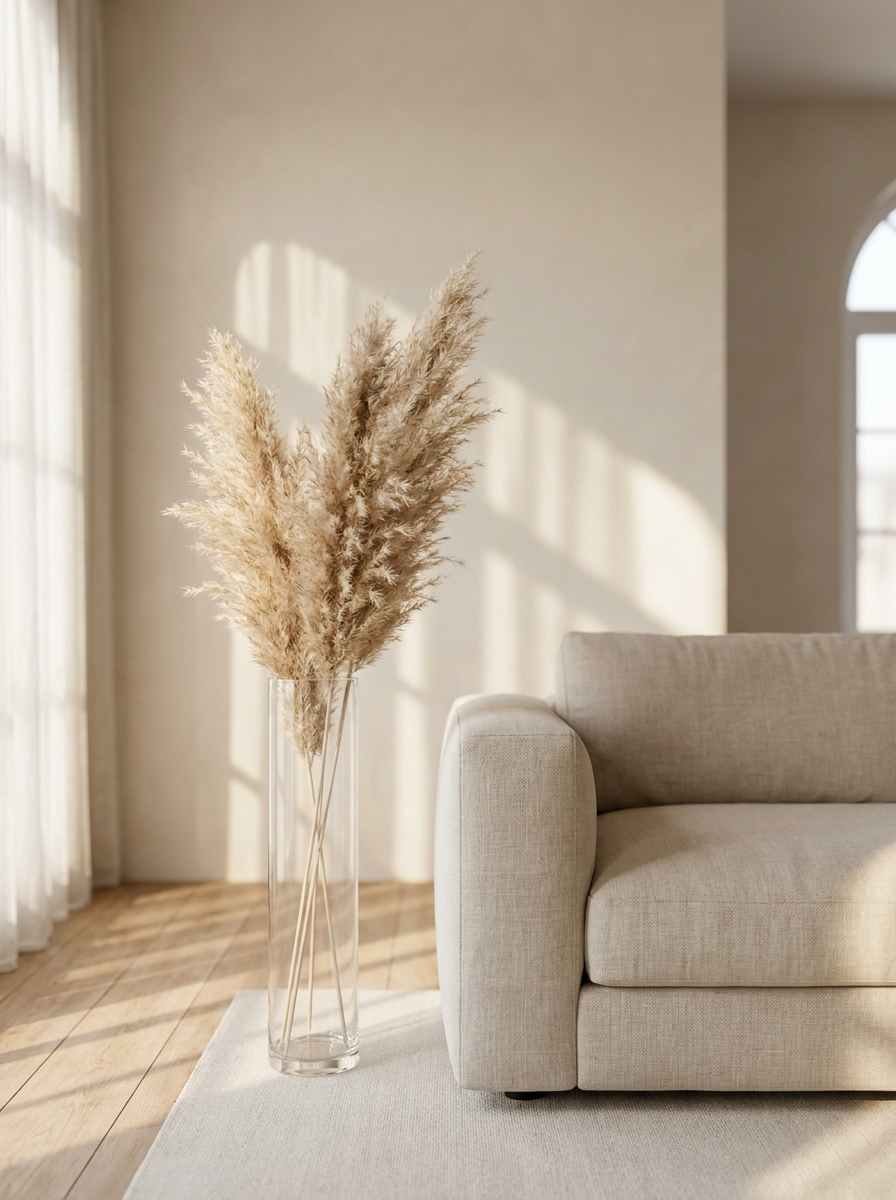
- Add one dried or preserved arrangement, like pampas grass in a tall vase, for texture that needs zero maintenance.
- A Boston fern softens hard lines if your furniture leans heavily industrial or angular.
- Contrast spiky with round. A round-leafed pilea next to an aloe plant is a small detail, but it’s the kind of thing that makes a room feel styled instead of thrown together.
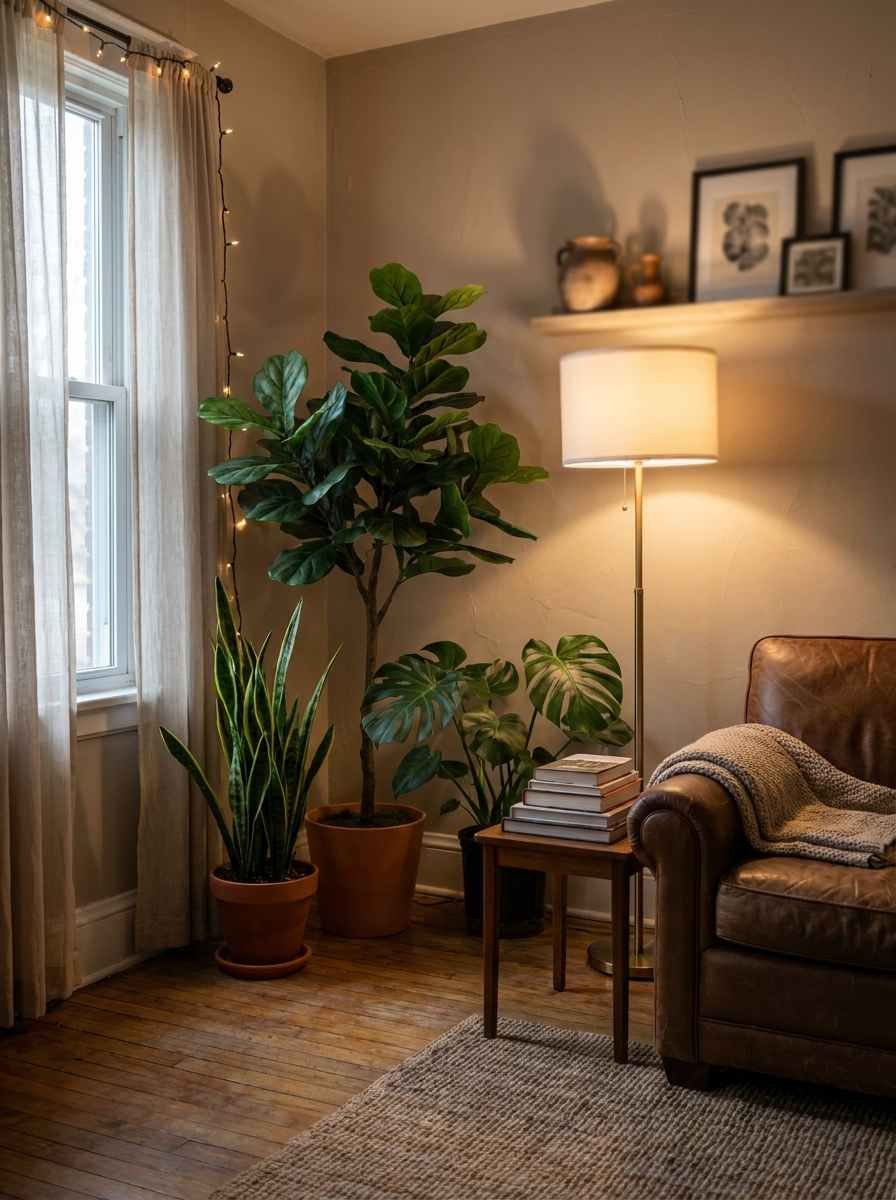
Texture is the part most people skip because it’s harder to shop for than color. You can’t just search “blue plant” and get instant gratification. But this is exactly why it looks more expensive when you get it right; it takes a slightly trained eye, and a room that clearly took a trained eye reads as higher effort even when the plants themselves cost fifteen dollars each.
Small living room? Here’s what actually works
Not everyone has floor space to spare, and honestly, most of the “minimalist plant wall” inspiration online assumes you’ve got room you probably don’t have.
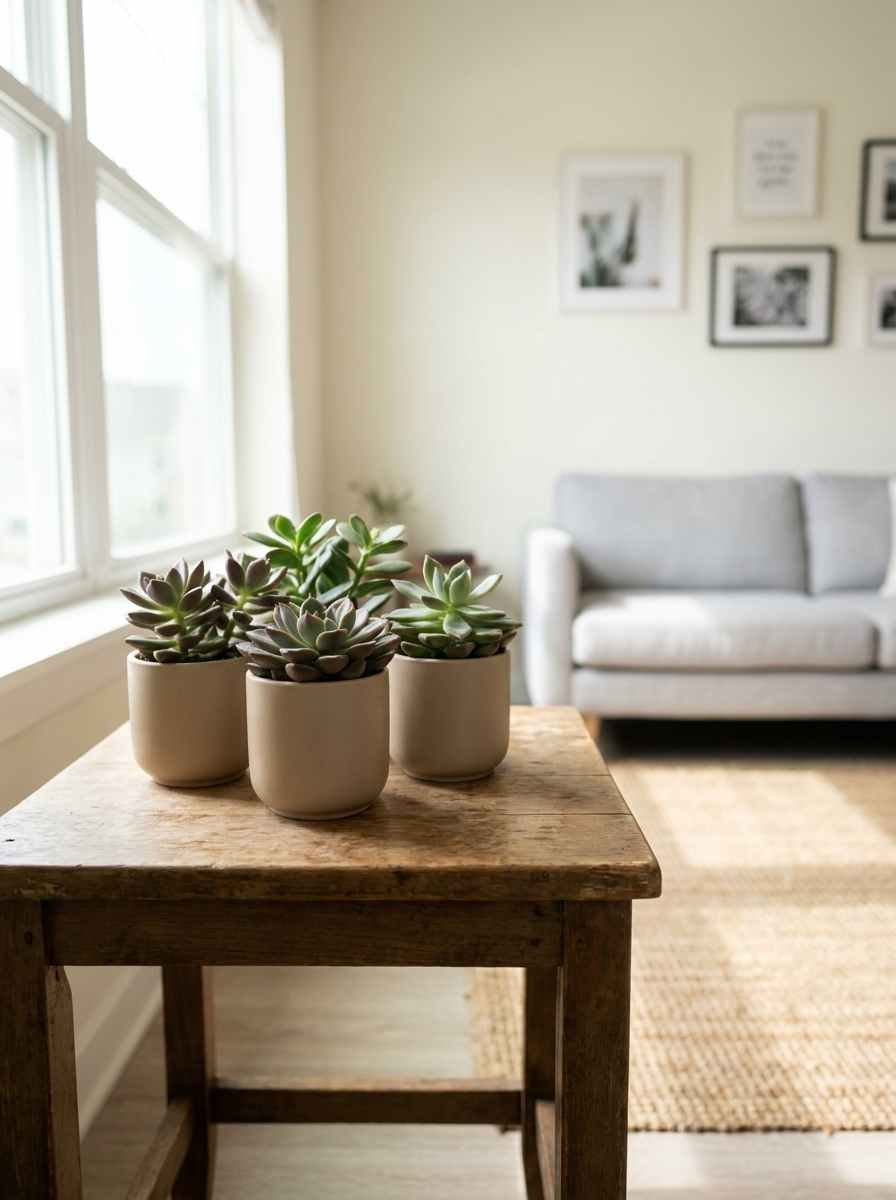
17. Cluster small succulents on a side table instead of one big floor plant. Three or four tiny pots take up less visual weight than a single large one, which sounds backwards but works.
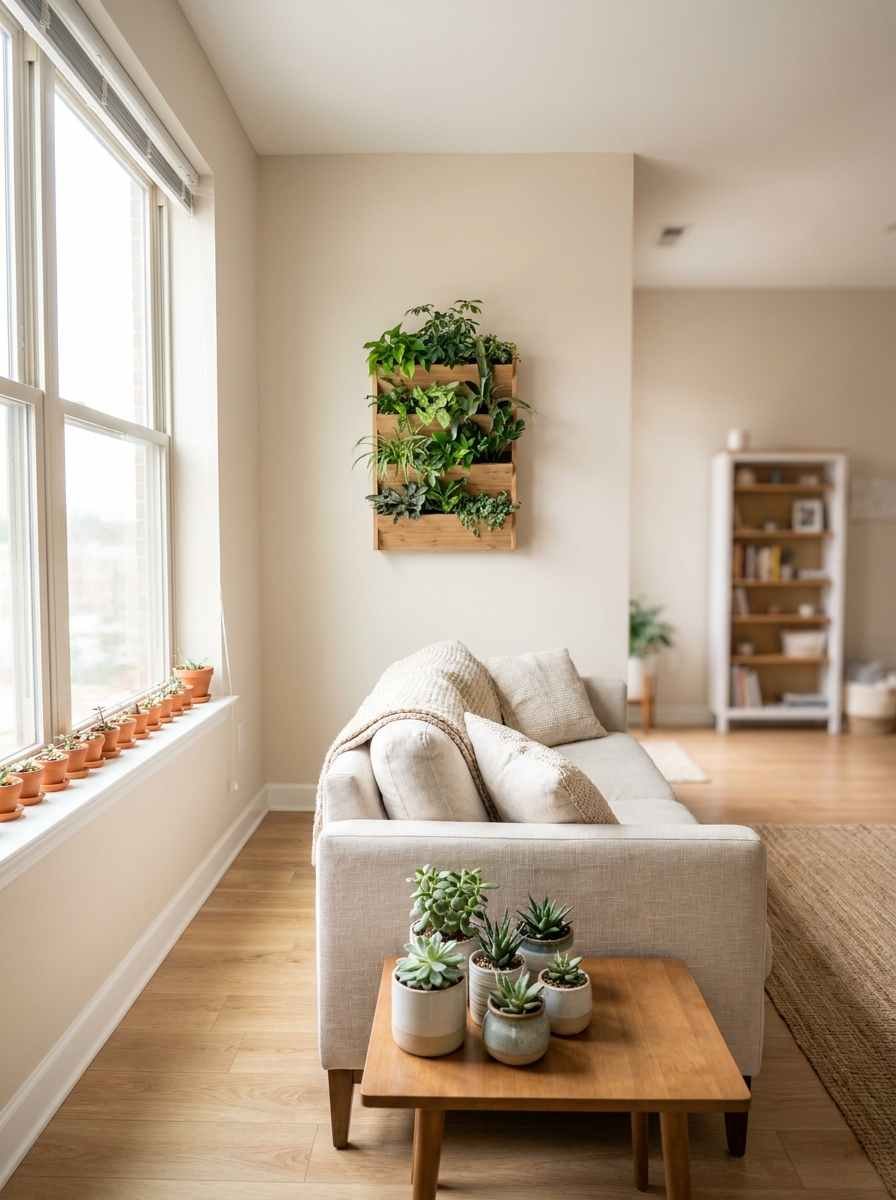
18. A vertical wall planter solves the space problem entirely. It’s basically a garden that never touches your floor plan.
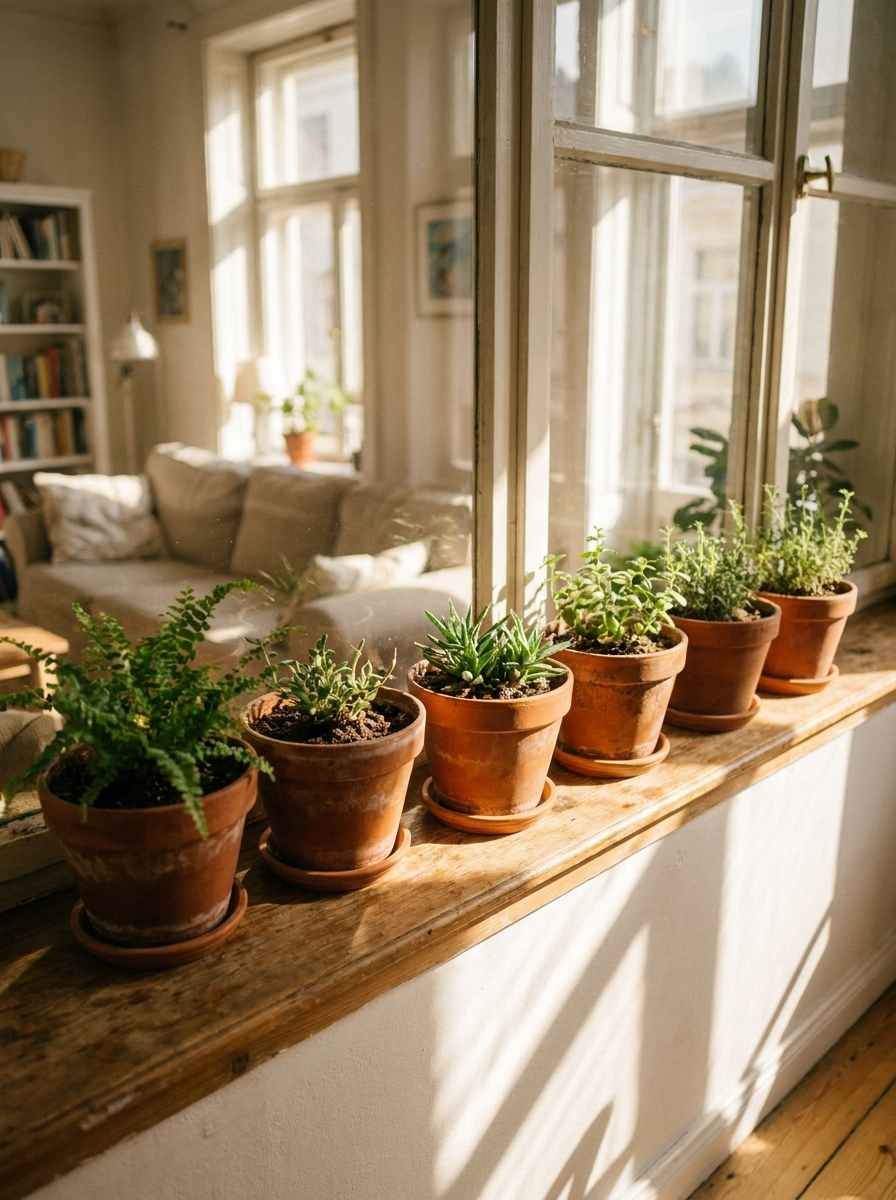
19. Line your windowsill with a few small pots in matching containers. Consistent pots make even a random plant collection look put together.
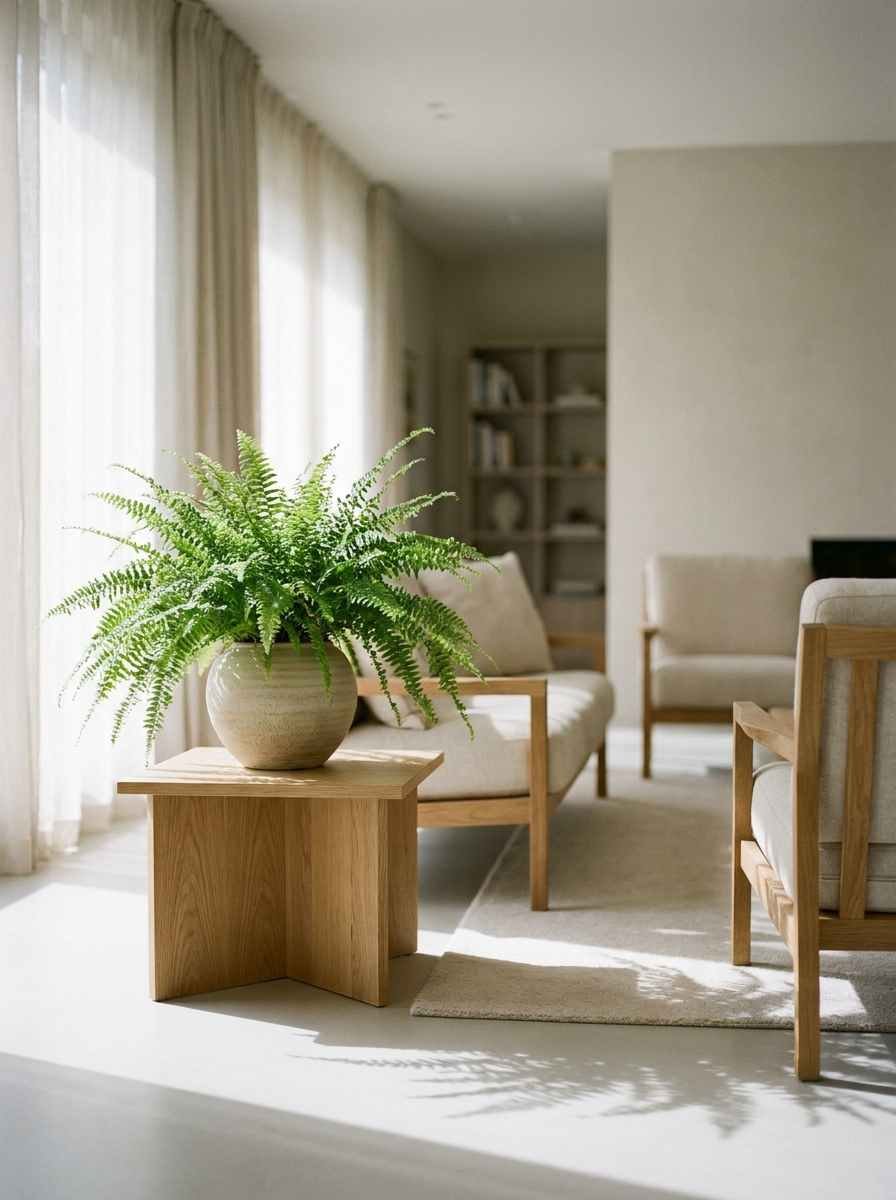
Random tangent, but has anyone else noticed how much better plants photograph in morning light versus that harsh 2pm sun? Worth keeping in mind if you’re styling for a Pinterest pin and not just for yourself.
Low-maintenance picks for people who kill everything
Let’s be honest, not everyone has a green thumb, and a wilting plant undoes a minimalist room faster than clutter does.
20. Pothos is basically unkillable and looks intentional trailing off any shelf.
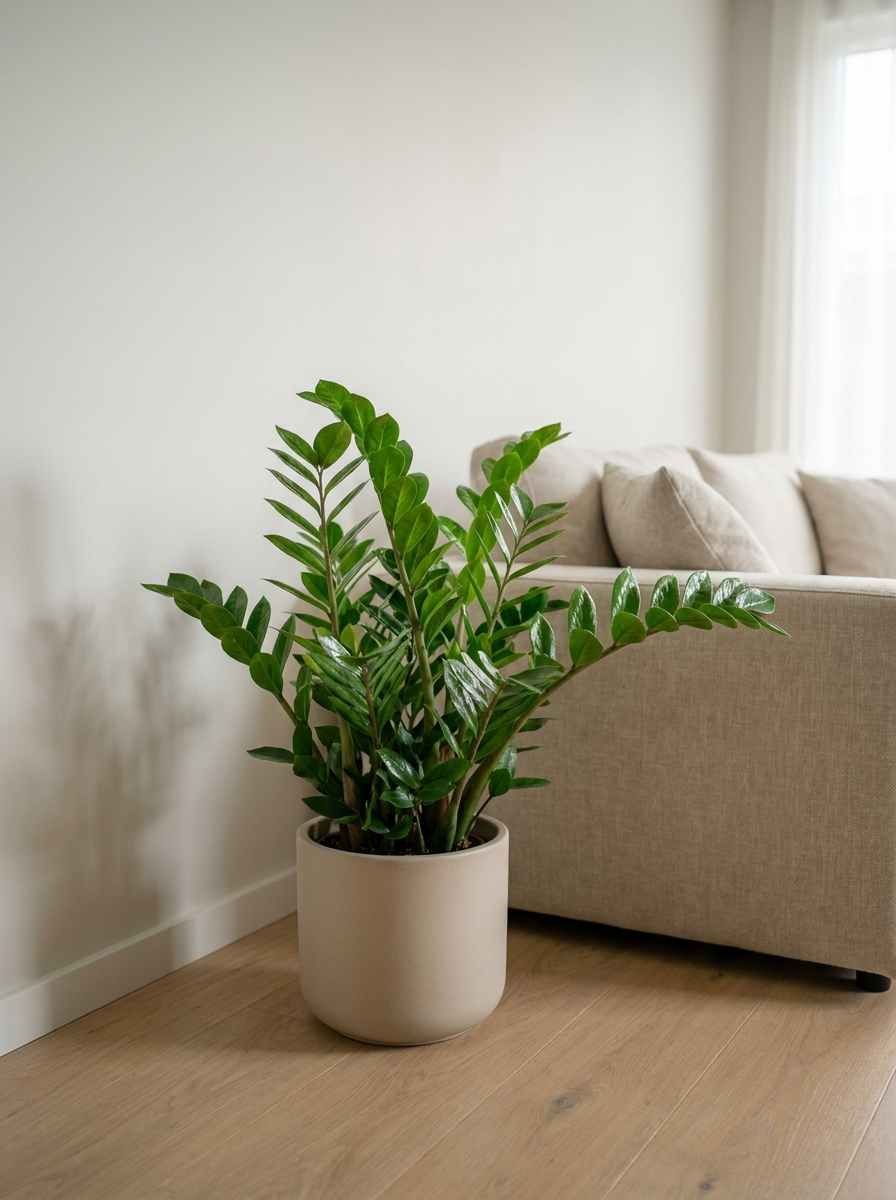
21. A ZZ plant survives weeks of neglect and still looks glossy and full. This is the plant for people who travel a lot or, like me, occasionally forget plants exist for two weeks straight.
22. Mix in one high-quality faux plant if your space gets zero natural light. Nobody’s checking. A well-made faux fiddle leaf in a dim corner beats a dying real one every time.
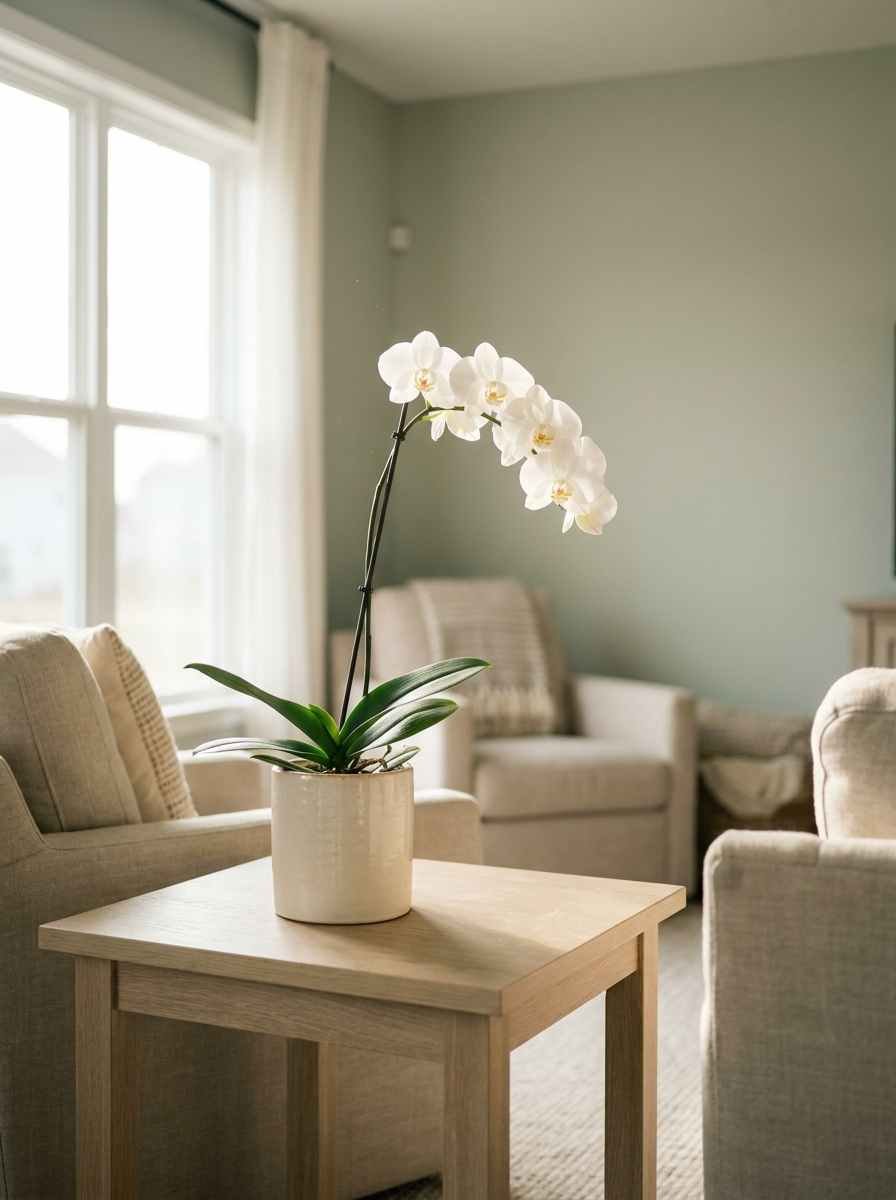
23. Rotate in one small seasonal bloom, like a single orchid, for a pop of color that doesn’t disrupt the neutral palette. Swap it out every few months instead of committing to permanent color.
Wow, I genuinely didn’t expect a single orchid to make that much of a difference the first time I tried it, but it does. One small colorful thing against a wall of green and neutral tones pulls the eye exactly where you want it, and it’s the closest thing to a design cheat code I’ve found.
A quick cheat sheet
Here’s a simple table to keep on hand when you’re plant shopping and don’t want to overthink it.
| Plant | Light needed | Maintenance | Best spot |
|---|---|---|---|
| Snake plant | Low to bright | Very low | Corner, as sculpture |
| Pothos | Low to medium | Low | Hanging or shelf |
| Fiddle leaf fig | Bright, indirect | Medium | Statement corner by a window |
| ZZ plant | Low | Very low | Anywhere you tend to forget |
Save that. You’ll thank yourself at the garden center when you’re standing there overwhelmed and everything looks green and confusing.
On the air-purifying claims you’ve probably seen floating around Pinterest: the popular idea traces back to a 1989 NASA Clean Air Study, but researchers have since pointed out the test was done in sealed chambers built to mimic spacecraft, not an actual living room, and the American Lung Association notes that houseplants don’t meaningfully clean indoor air at home.
Keep your plants for how they look and how they make a room feel, not as a substitute for opening a window.
For more on styling with negative space and neutral palettes, The Spruce has a solid breakdown of minimalist living room basics that pairs well with everything above.
FAQs
How many plants is too many for a minimalist living room? There’s no fixed number, but a good rule is one statement plant plus one or two smaller accents per seating area. Once you can’t immediately name every plant in the room, you’ve probably got too many.
What’s the best low-light plant for a minimalist look? Snake plants and ZZ plants both handle low light and have clean, architectural shapes that fit a minimalist aesthetic better than bushier tropical plants.
Should I use matching planters for every plant? Not strictly, but sticking to one material and one or two colors across all your pots is the fastest way to make a mixed plant collection look intentional instead of accidental.
Final thought
The whole point of minimalist plant decor is restraint with purpose, not restraint for its own sake. Pick a few plants you actually like looking at, give them the height and light they need, and stop there.
That’s it. That’s the whole secret, and it costs a lot less than the “expensive apartment” look would suggest.
Which of these are you pinning first, the plant ladder or the fiddle leaf fig corner? Save this post and let me know how your living room turns out.
