I used to think a nice laundry room was a wasted investment. Why spend money on the one room where you’re just… doing chores?
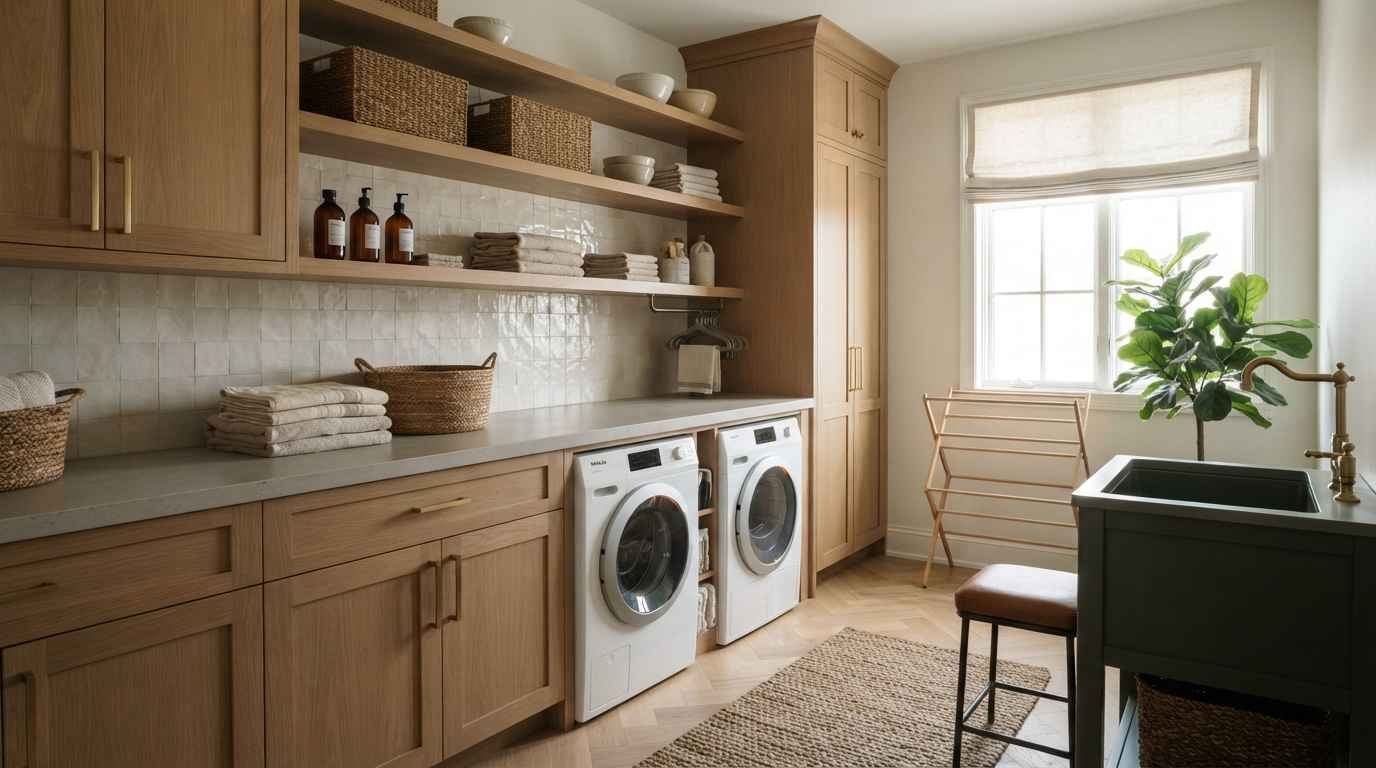
Then I redid mine. Marble-look quartz counter, a proper folding station, warm brass hardware.
And here’s the thing nobody warns you about: I started doing laundry more often.
Not because I love laundry (I don’t, not even a little), but because the room stopped feeling like punishment.
That’s the whole case for a luxury laundry room. It’s not about showing off. It’s about making a daily task less annoying, and if it looks good on Pinterest while you’re at it, even better.
I’ve spent the last few years going down this rabbit hole, first with my own house, then helping two friends redo theirs.
One had a full dedicated room. The other had a closet the size of a phone booth.
Both ended up with spaces they actually like standing in, and neither spent anywhere near what you’d guess from the photos.
That’s the part people underestimate. A laundry room reads as expensive when the details are consistent, not necessarily when the budget is huge.
Below are 23 ideas I’ve either used myself, seen work in real homes, or watched designers pull off in ways that made me want to redo my room a second time.
I’ve grouped them by layout, materials, storage, lighting and tech, and small-space solutions, because that’s the order you should actually think about them in.
Get the bones right first. Worry about the pretty stuff after.
Layout ideas that change how the room actually functions
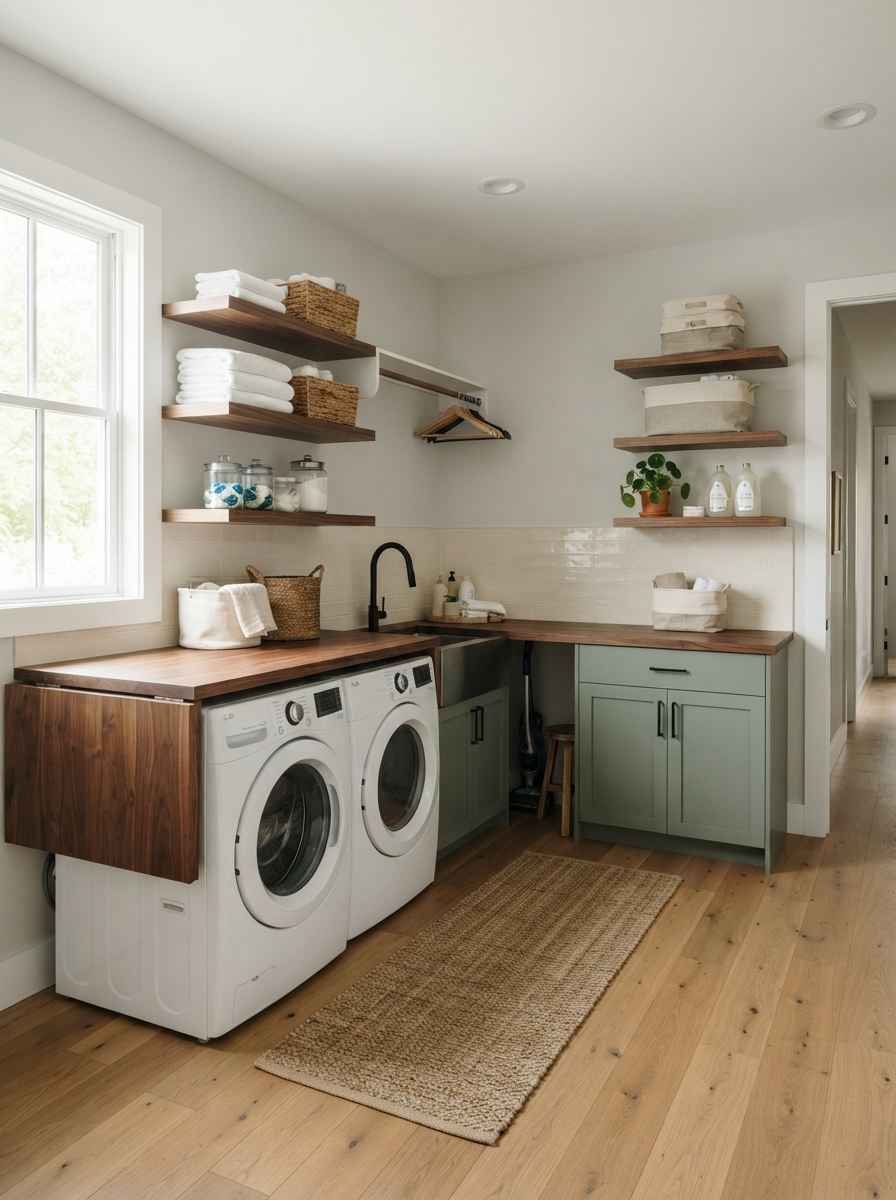
Before you pick a single tile or paint chip, get the layout right. A pretty laundry room with a bad workflow is still a bad laundry room.
1. The L-shaped work triangle. Put your washer, dryer, and folding counter in an L, the same logic kitchens use for the stove-sink-fridge triangle.
You stop walking in circles, and honestly, that alone saves more time than any gadget I’ve bought.
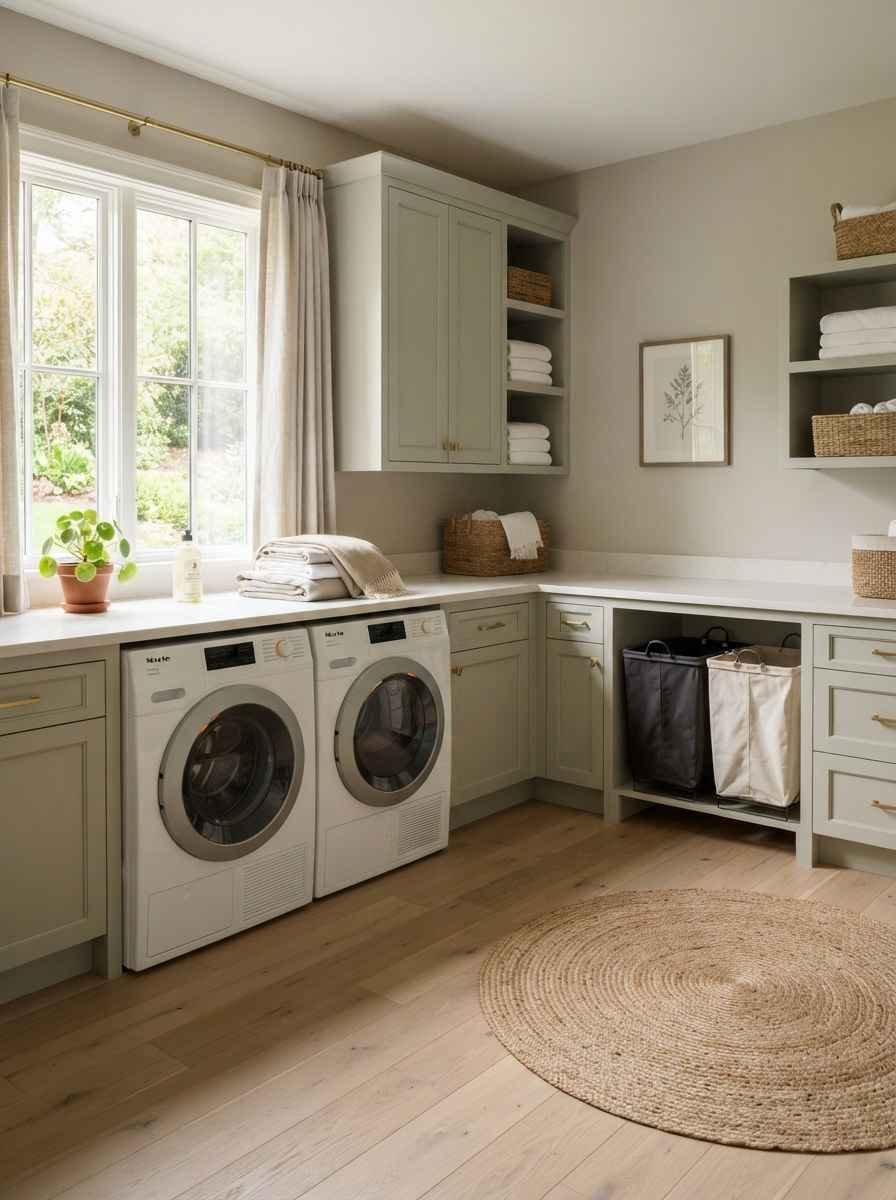
2. Front-load machines on risers. Raising your washer and dryer 12 to 14 inches off the floor saves your back and opens up drawer space underneath for detergent, dryer sheets, and the stray sock collection every household seems to accumulate.
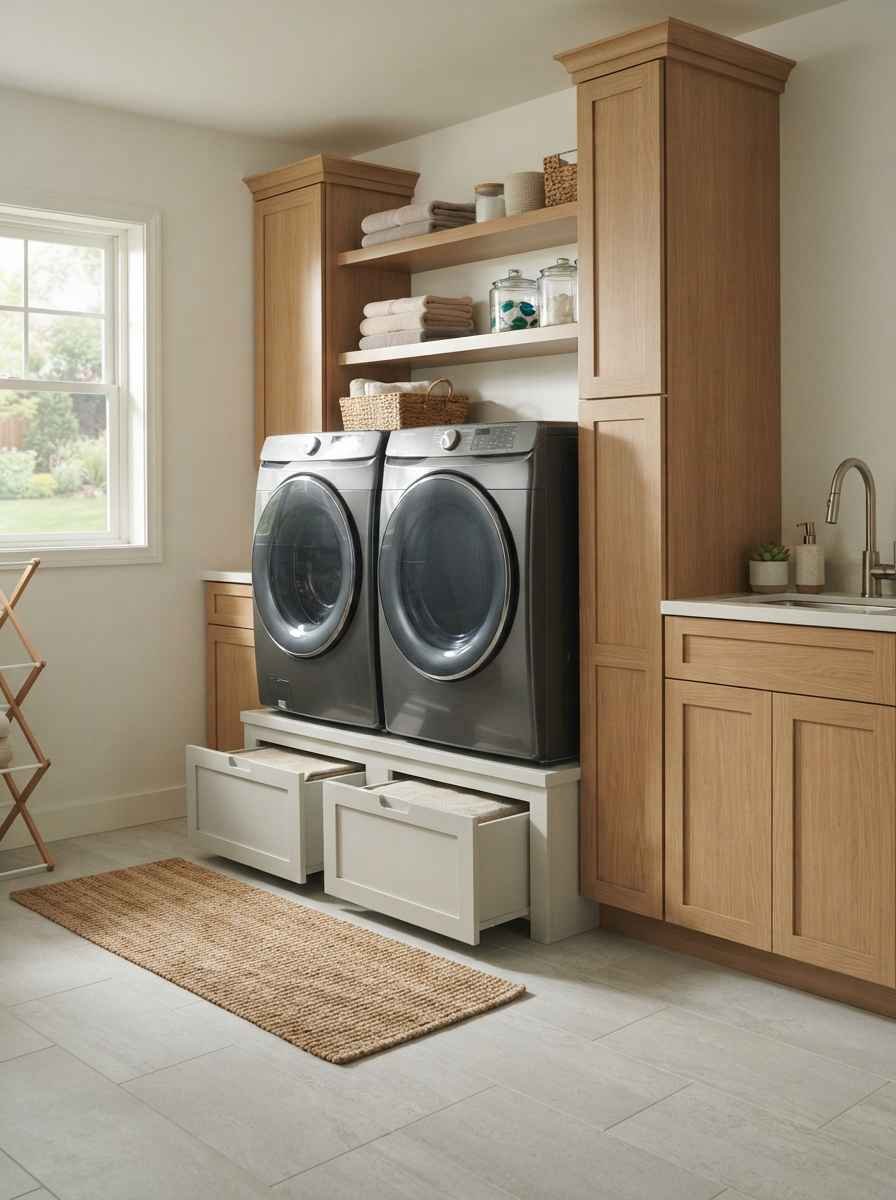
3. A dedicated sorting station. Three bins, one counter, done. Lights, darks, delicates.
I built mine into a lower cabinet with pull-out canvas hampers, and it’s probably the single change that got my teenagers actually sorting their own clothes. Small win, but I’ll take it.
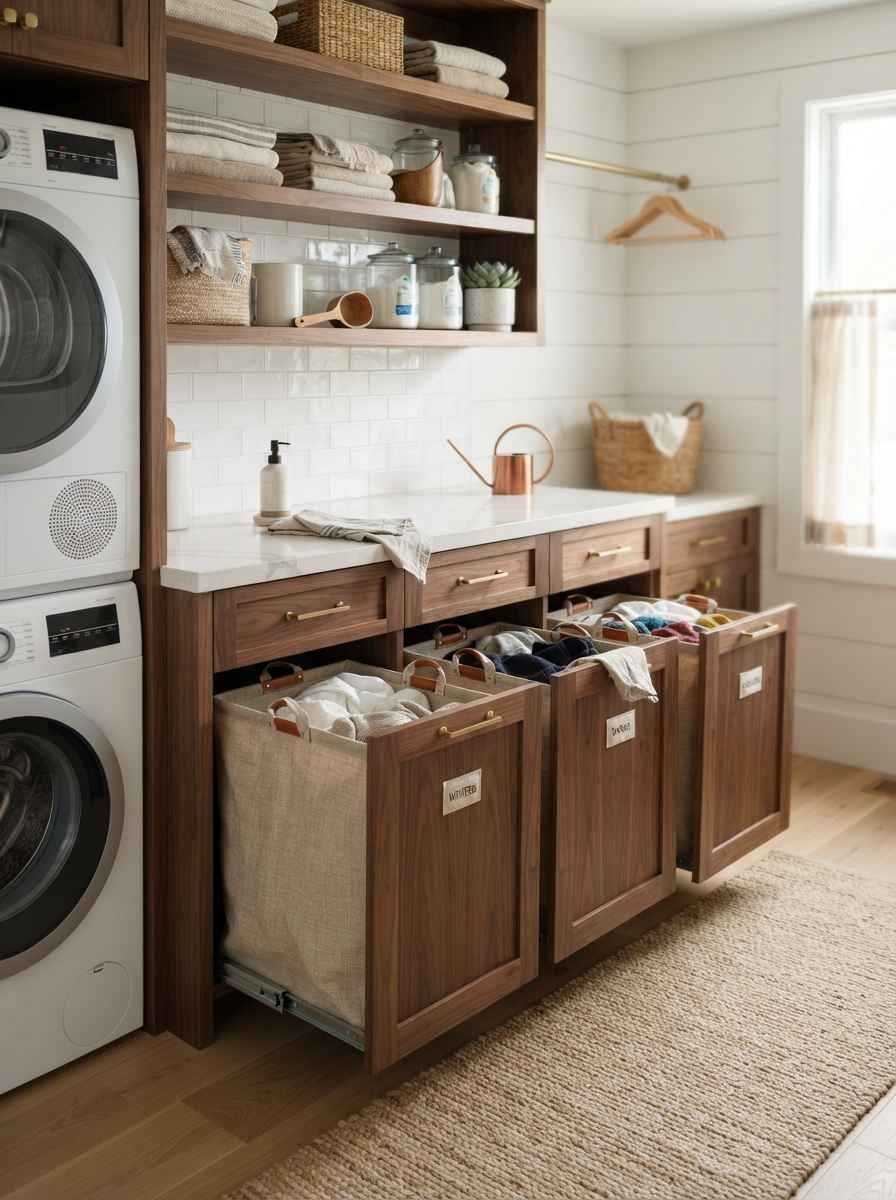
4. Butler’s pantry crossover. If your laundry room sits next to the kitchen, consider a shared counter that does double duty as pantry overflow and folding space.
Architects have been leaning into this kind of multi-purpose thinking for small urban homes, tucking appliances behind matching cabinetry so the whole setup blends into the rest of the house.
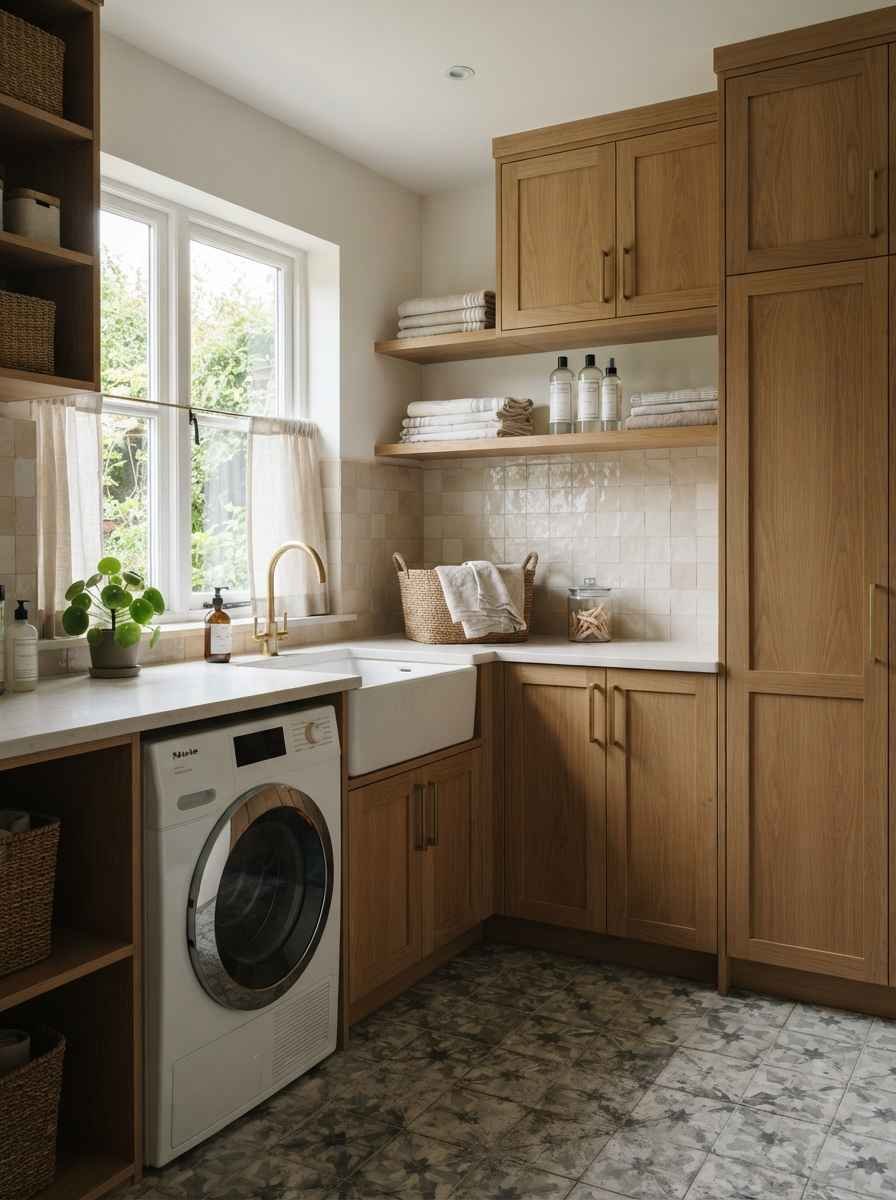
5. A dog-wash station with a real utility sink. If you have a dog that hates baths as much as mine does, a low tiled basin with a handheld sprayer next to the washer is worth every penny.
Skip the cheap plastic basin and spring for an actual deep sink with a pull-down sprayer, you’ll use it for rinsing paint brushes and soaking stained jerseys far more than you’d expect.
IMO, this is the most underrated upgrade on this entire list.
One thing worth saying here: measure twice before you commit to any of this.
I redid the sorting station in my own house once already because I guessed at the bin sizes instead of measuring my actual laundry basket. Small mistake, annoying fix.
Materials and finishes worth the splurge
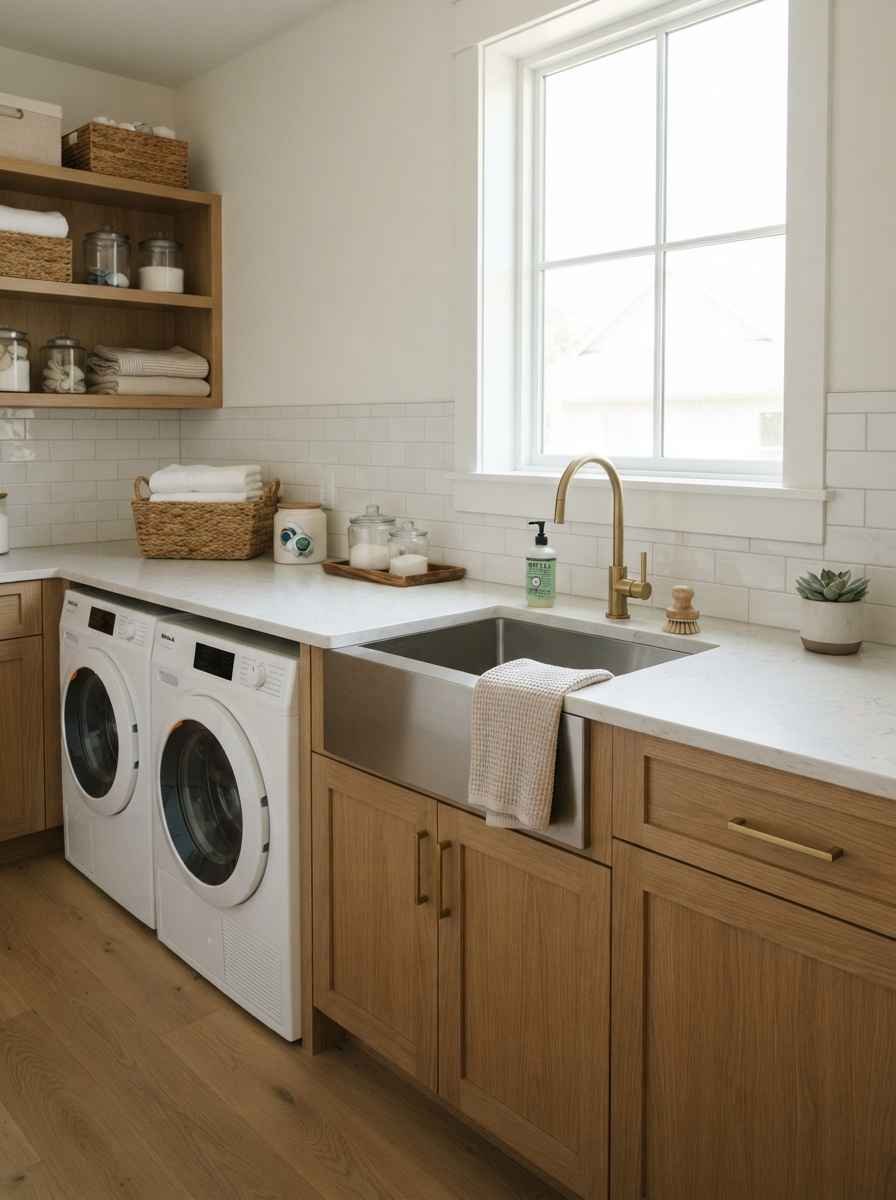
This is where “luxury” actually shows up. You don’t need marble everywhere, you need the right materials in the right spots.
6. Quartz counters over stone slab. Quartz resists staining from bleach and detergent better than marble does, and it looks close enough that nobody but you will know the difference.
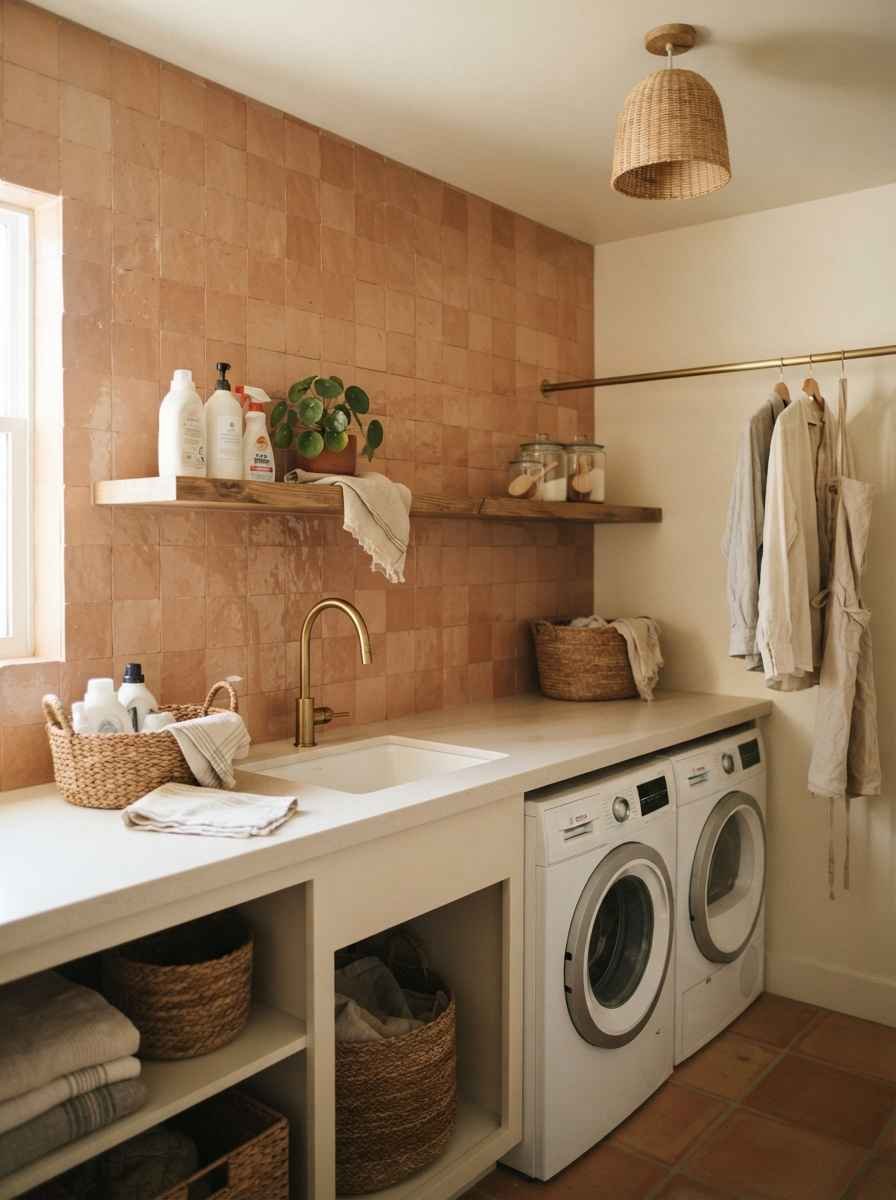
7. Zellige or handmade tile backsplash. The slight imperfections in handmade tile catch light differently than machine-made tile.
It’s a small detail, but it’s the kind of thing that makes a photo look expensive.
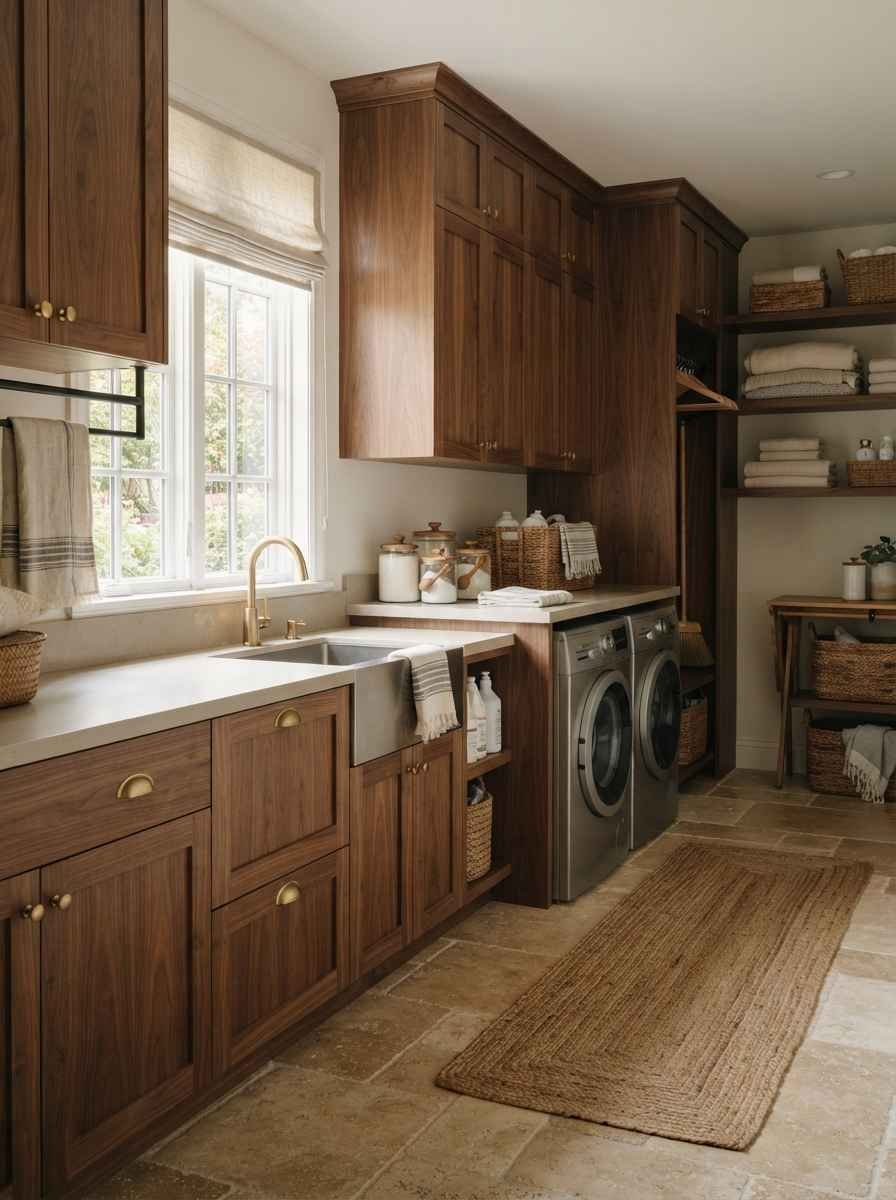
8. Warm wood cabinetry instead of stark white. White laundry rooms had their decade.
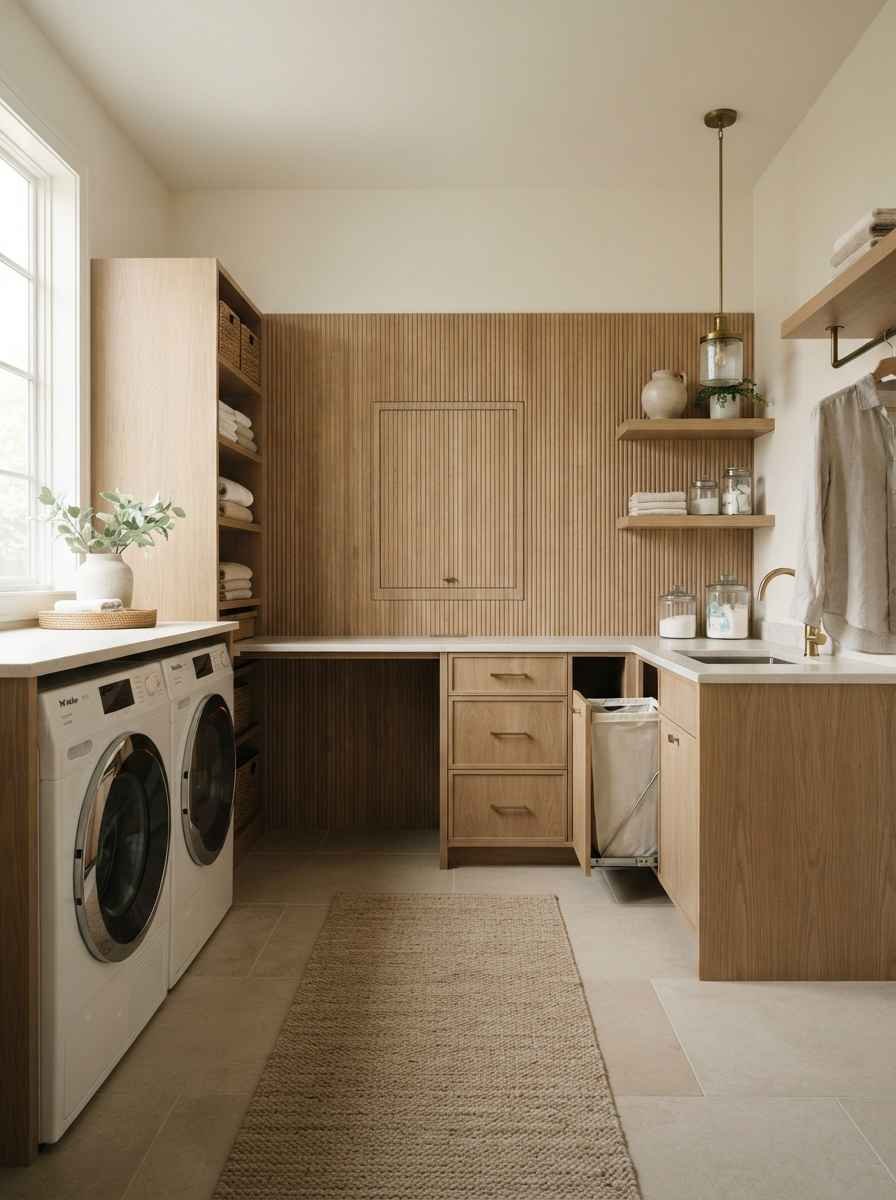
Designers are now pulling warm white tones, warm wood cabinetry, natural stone flooring, and mixed metal finishes into laundry spaces the same way they’ve been doing it in kitchens.
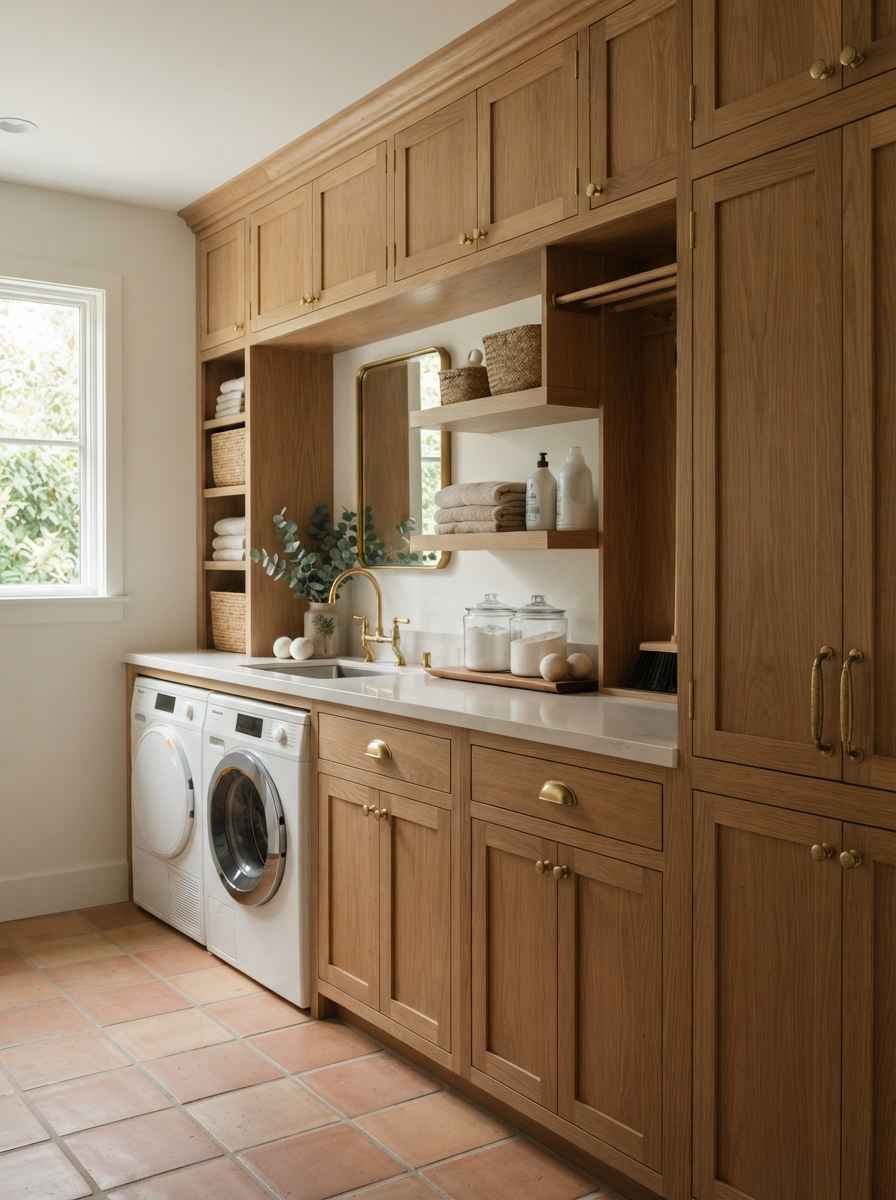
9. Brushed brass or matte black hardware. Pick one metal and stick with it.
Mixing three finishes in a small room reads as clutter, not style.
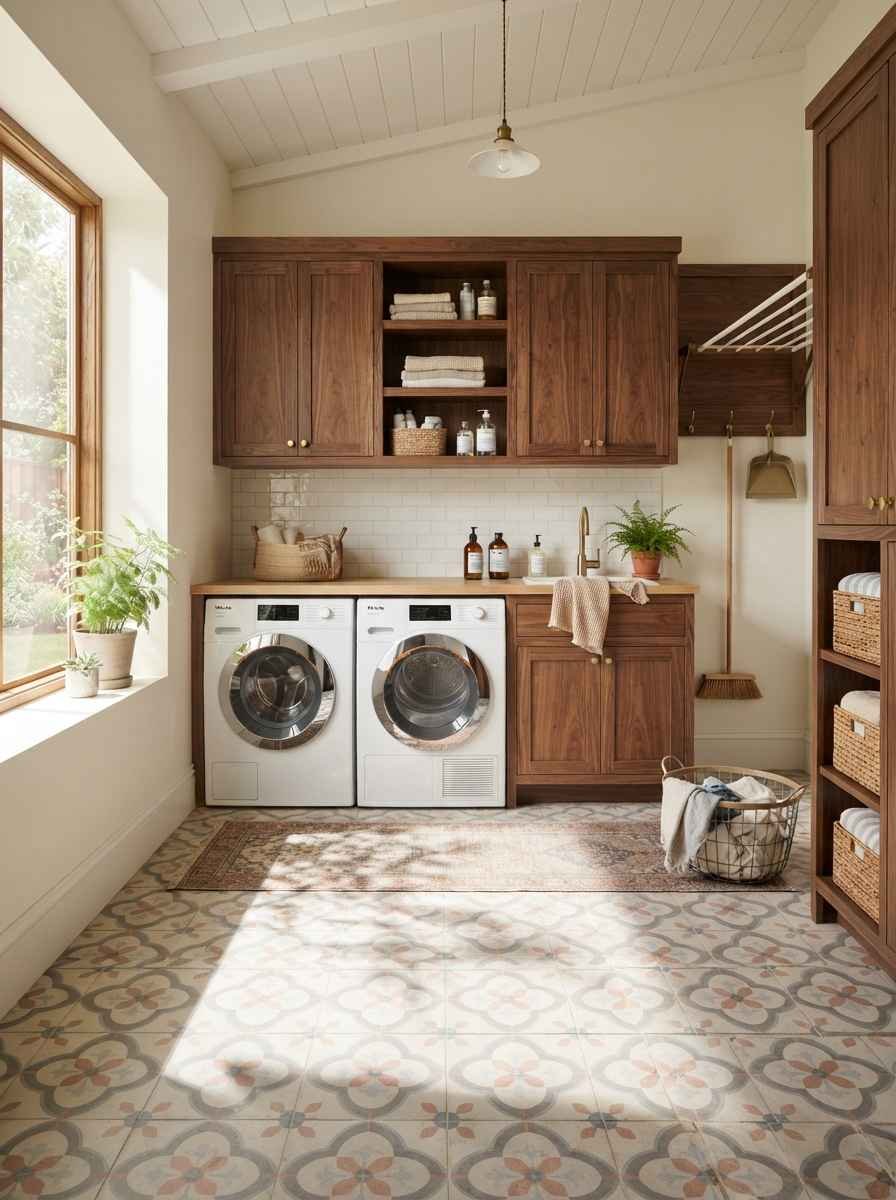
10. Patterned cement tile flooring. It hides dirt (real talk, laundry rooms get dirty fast) and gives the room a character that plain vinyl just can’t match.
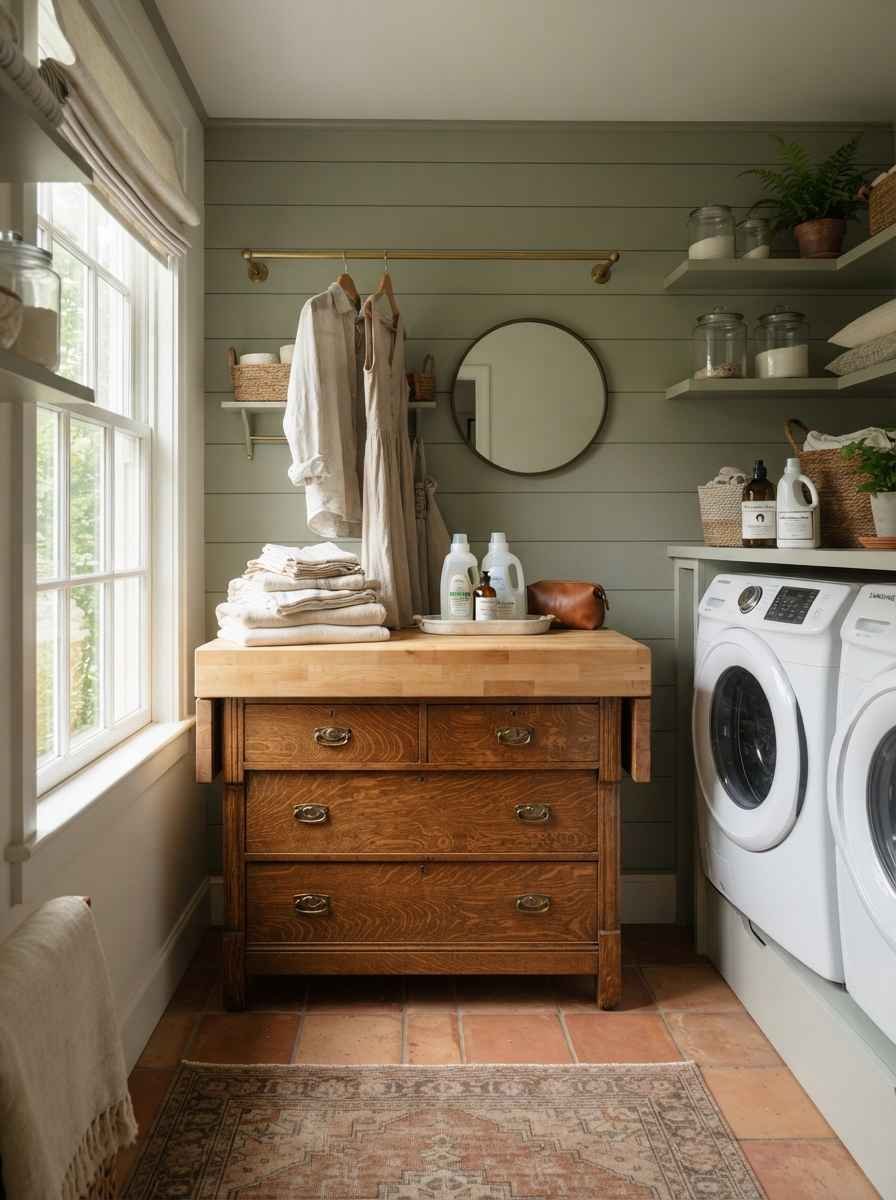
11. A furniture-style folding table. Skip the built-in laminate counter and use an actual piece of furniture, a vintage dresser topped with butcher block, for instance.
It softens a room that’s otherwise all hard surfaces.
A quick word on budget, because I know that’s what everyone’s really wondering. You don’t need to do all of this at once. Quartz and tile are the expensive line items on this list.
Hardware and paint are the cheap ones. If money’s tight, swap out hardware and paint the cabinetry first.
That combination changes a room more than people expect, and it costs a fraction of a full material overhaul.
Storage that actually earns its keep
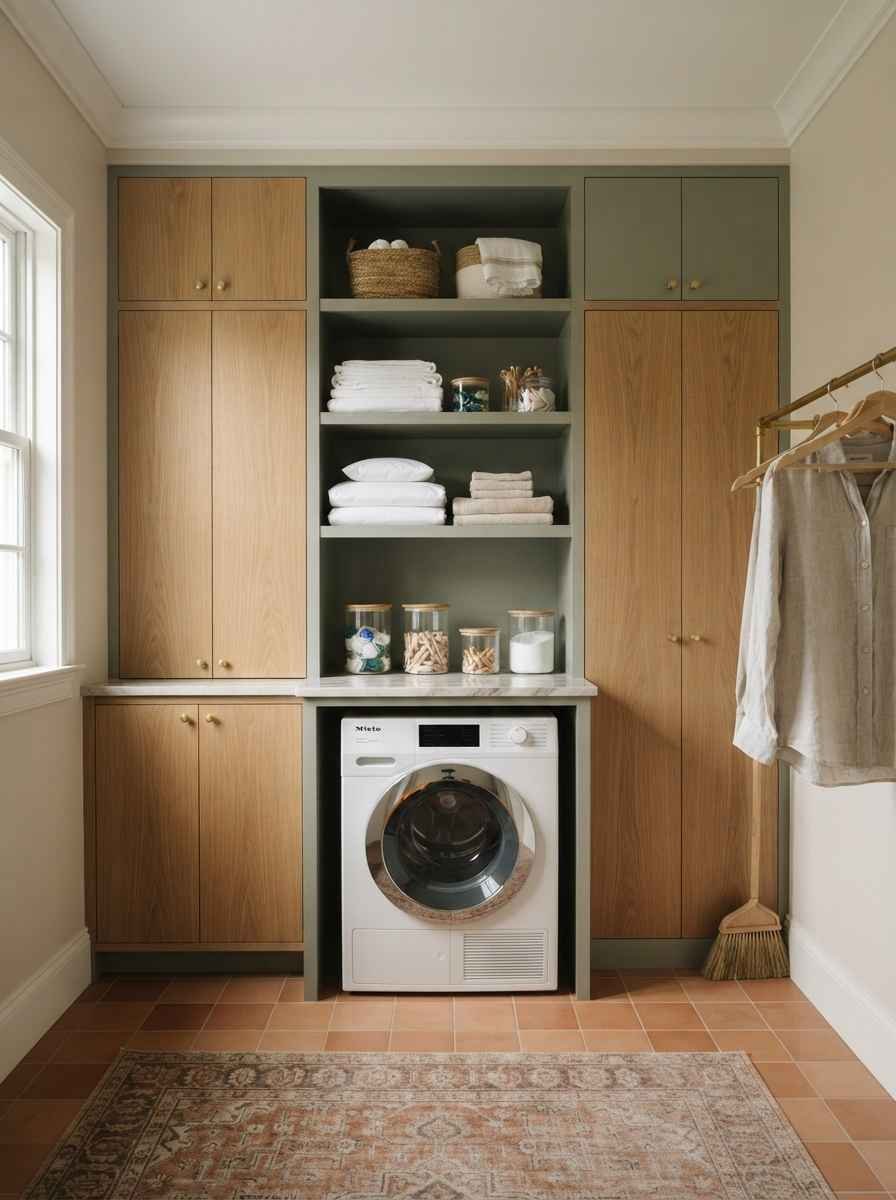
Nobody wants an open shelf of ugly detergent bottles staring at them every morning. Hide the mess, keep the essentials reachable.
12. Floor-to-ceiling cabinetry. Use every inch of vertical wall space. The gap above your washer and dryer is prime real estate that most homes waste completely.
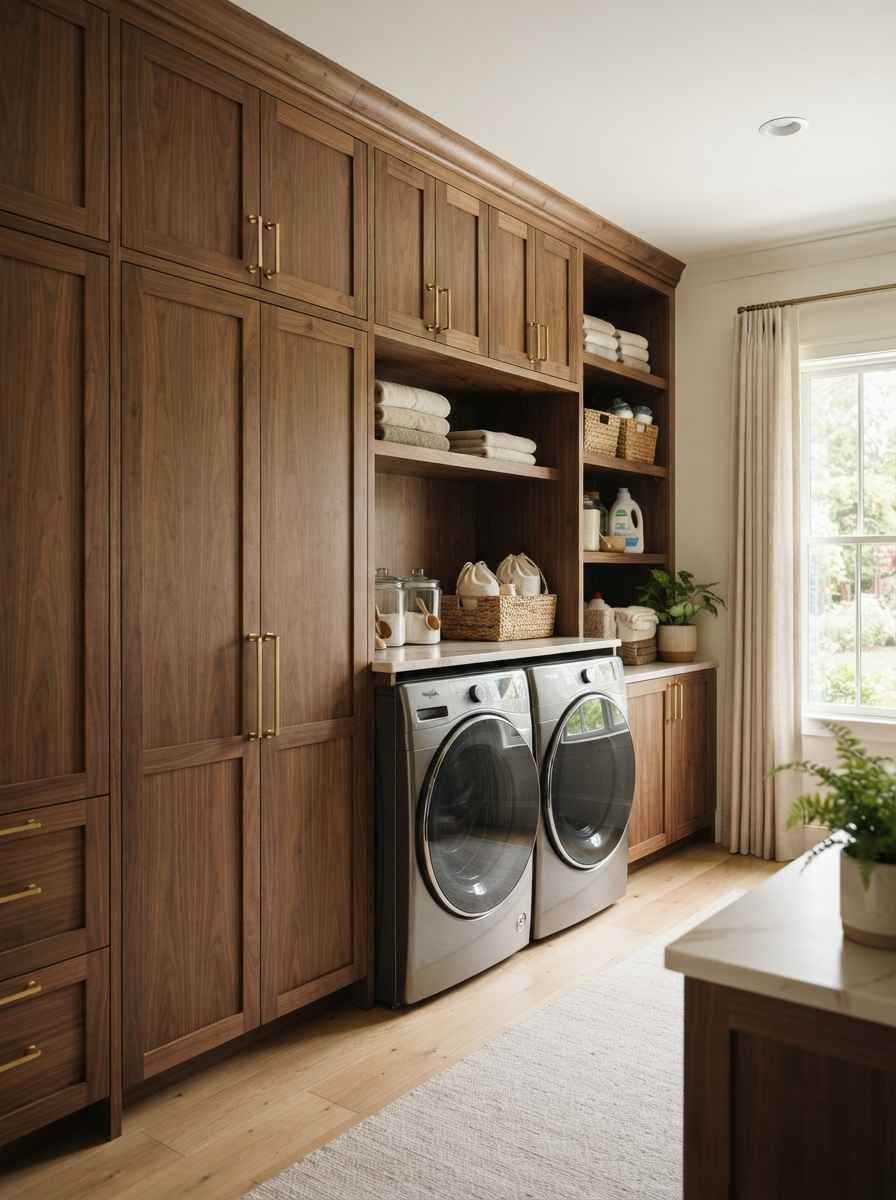
13. Pull-out ironing board drawer. It folds flat into a drawer the size of a standard cabinet, no wall-mounted board hanging around collecting dust.
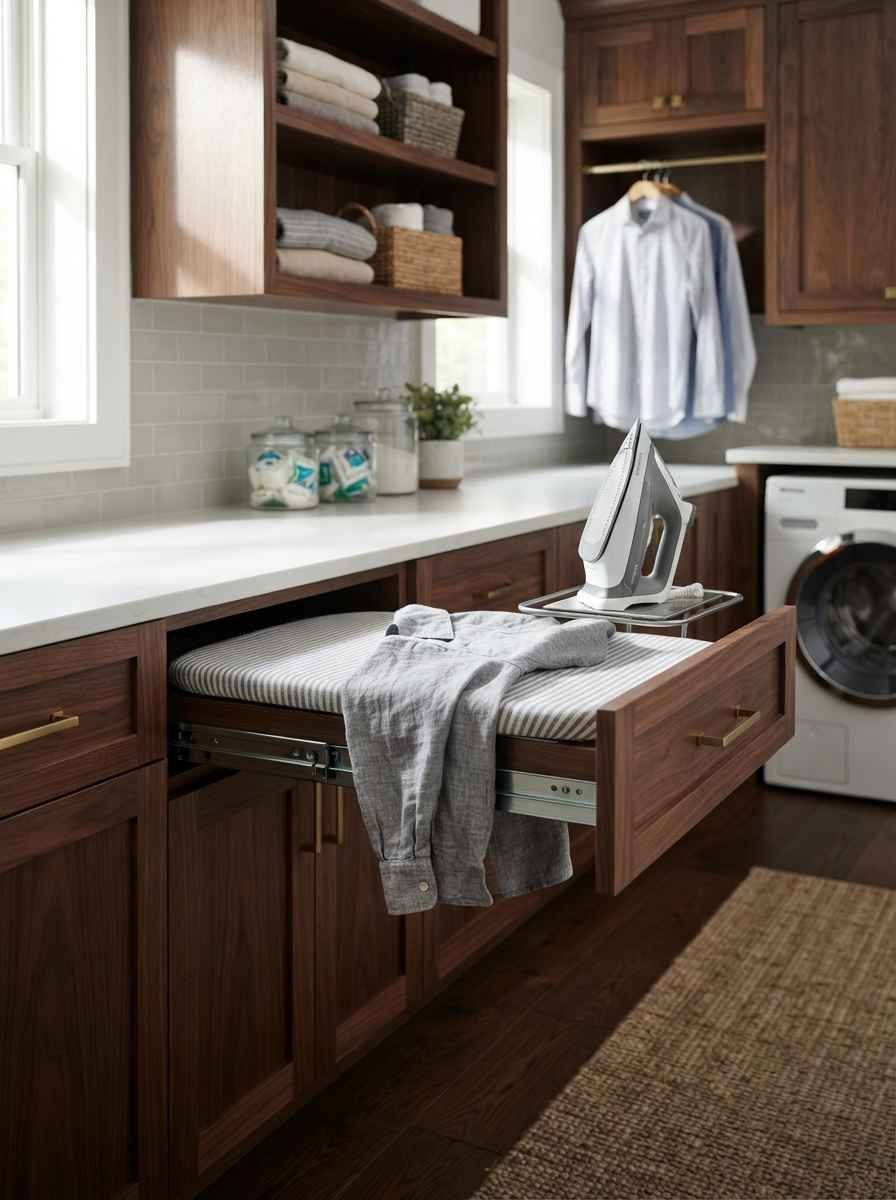
14. Concealed hamper drawers. Tilt-out or pull-out hampers hide dirty laundry behind a flat cabinet face, which matters a lot if your laundry room is visible from a hallway or kitchen.
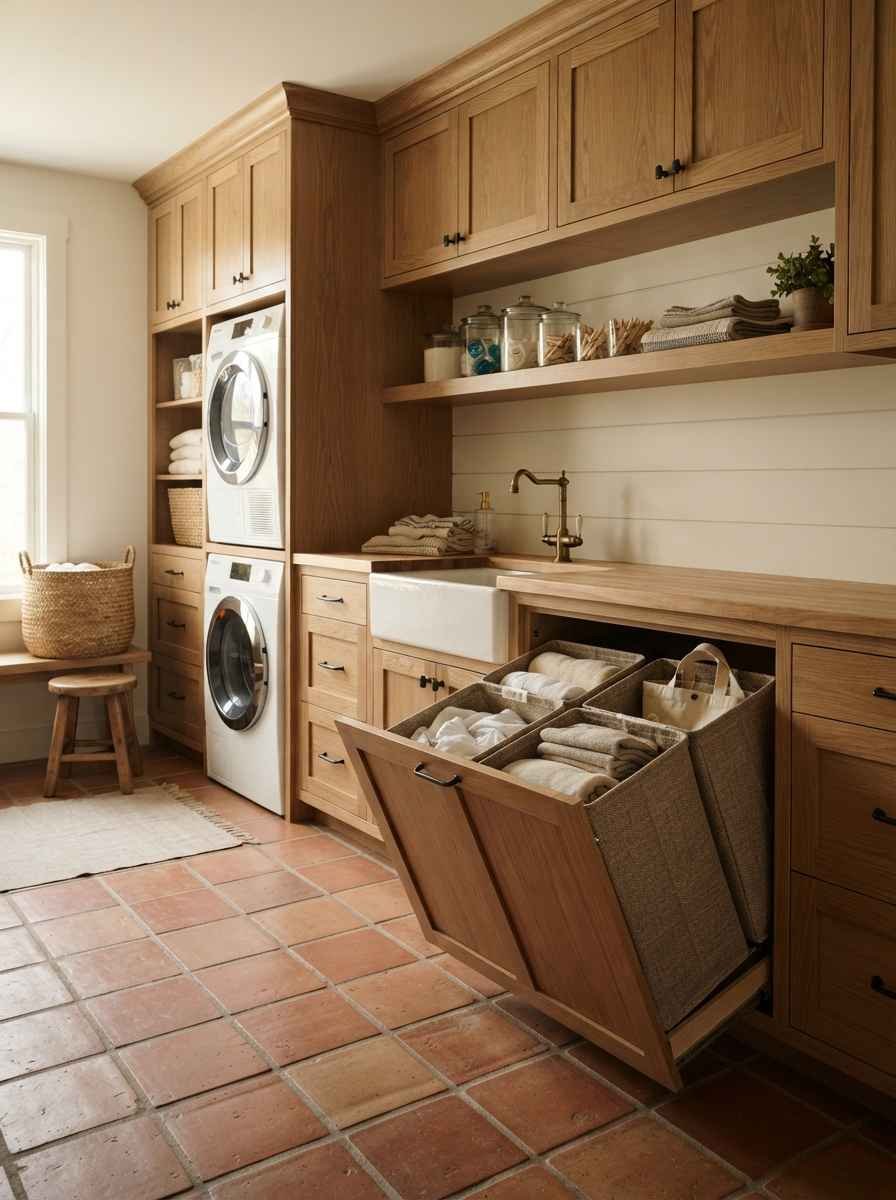
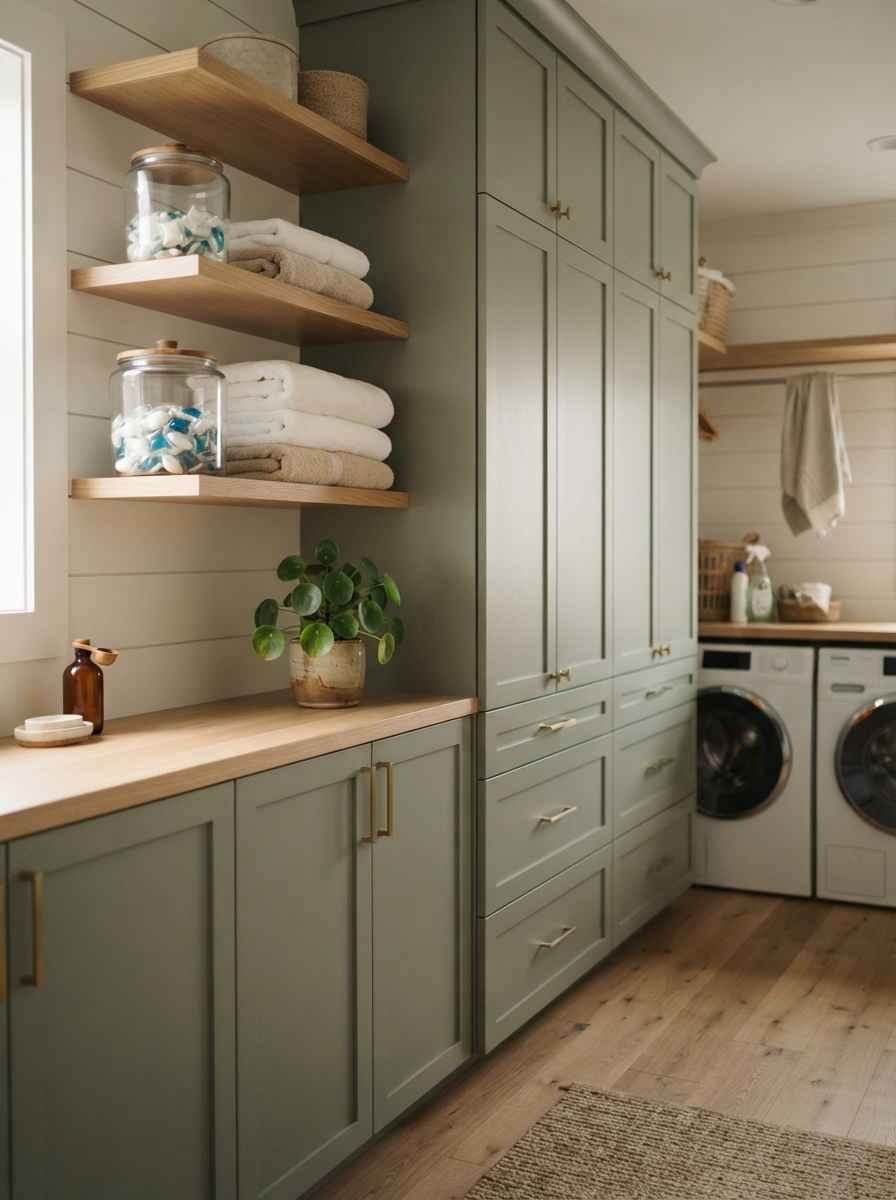
15. Open shelving for the pretty stuff only. Glass jars of pods, folded towels, a small plant. Everything else goes behind a door. This one rule alone will make your room photograph better.
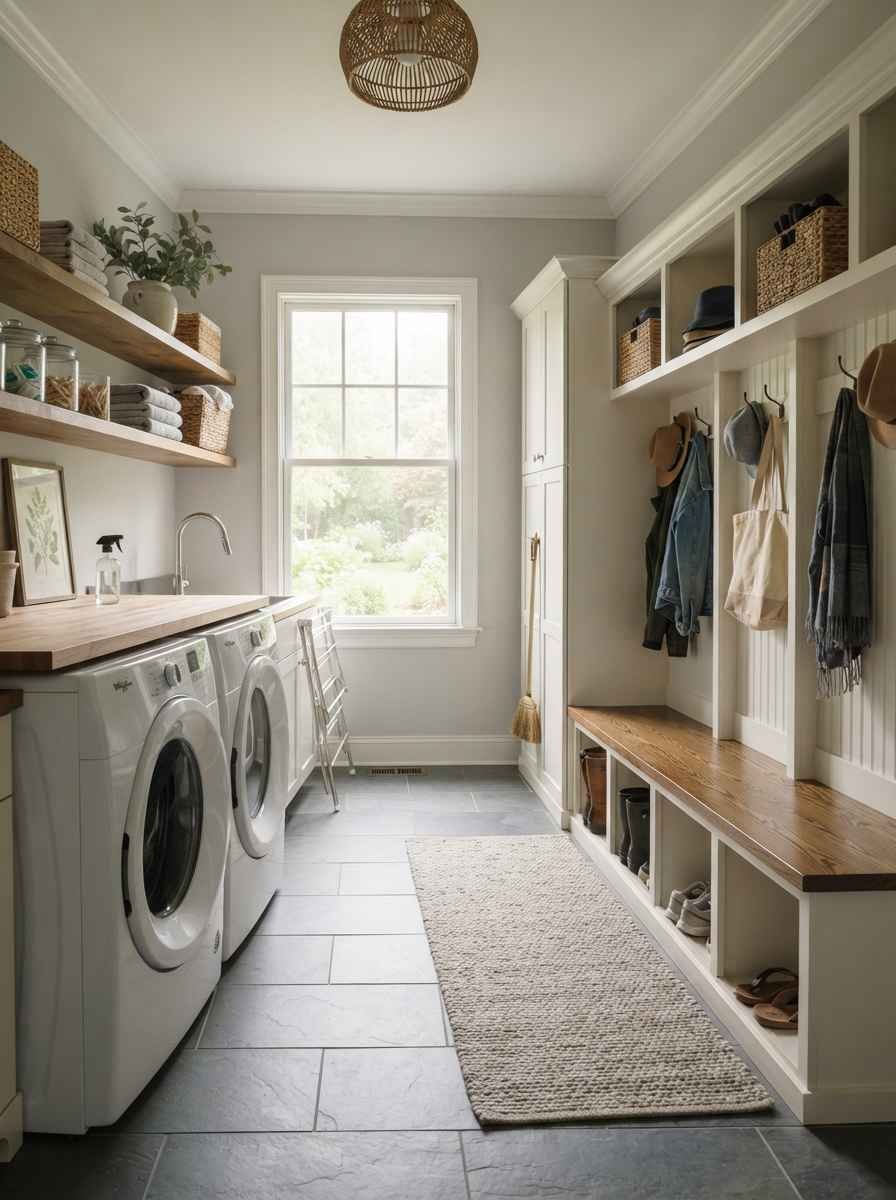
16. A boot and coat bench, if your laundry doubles as a mudroom. Combine laundry with entry storage and you solve two organizational headaches with one build.
A note on cabinetry that took me a while to learn: soft-close hinges are worth paying for.
It sounds like a minor upgrade until you’re closing a cabinet door a few times a day for years, and the slam-free version just feels better.
Same goes for full-extension drawer slides, they let you actually see and reach the back of a deep drawer instead of digging around blind.
Here’s a quick side-by-side if you’re deciding where to put your money first:
| Upgrade | Rough Cost Range | Impact on Daily Use |
|---|---|---|
| Quartz counter + backsplash | $$$ | High, used every day |
| Cabinet risers + drawers | $$ | High, saves your back |
| Statement lighting | $ | Medium, mostly visual |
| Full cabinetry rebuild | $$$$ | Highest, changes everything |
Lighting, tech, and the small touches that feel expensive
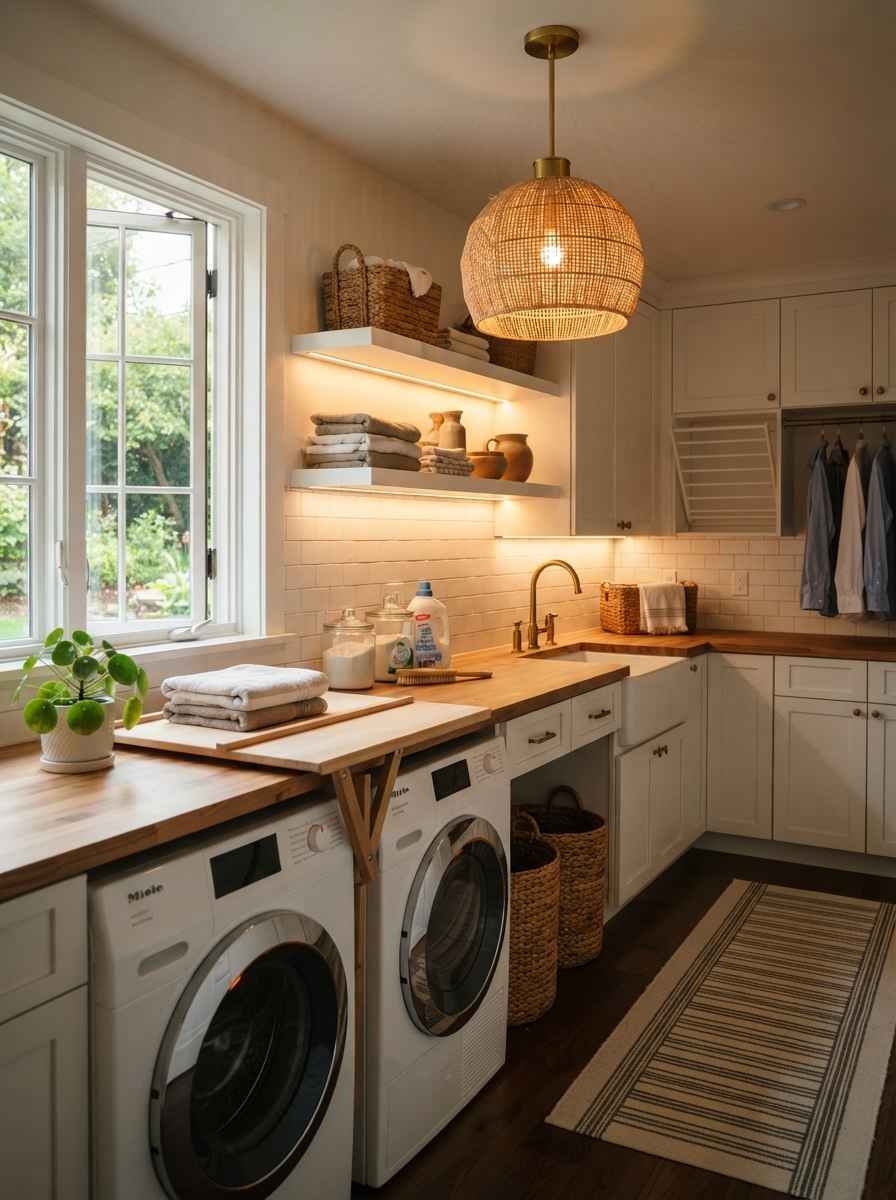
17. A statement pendant light. One good fixture over the folding counter does more for the room’s mood than any amount of extra recessed lighting.
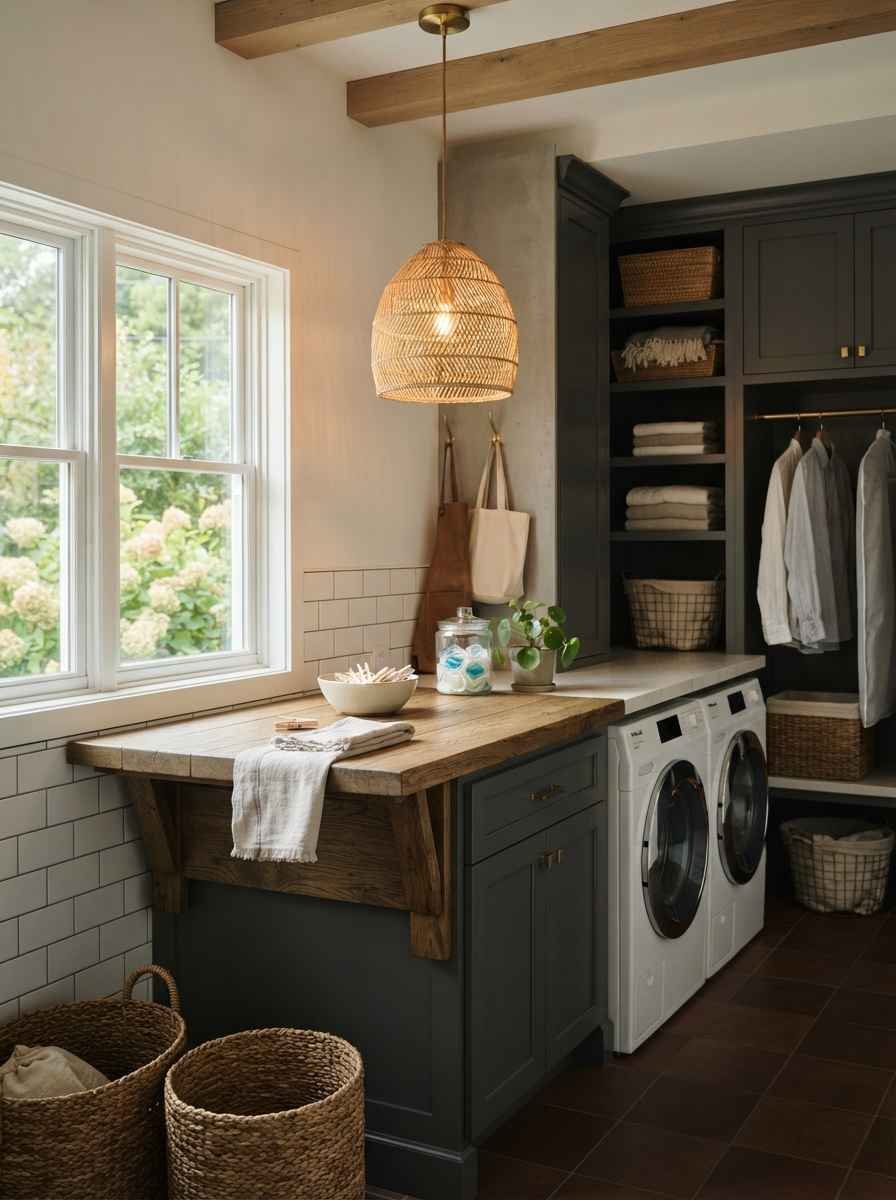
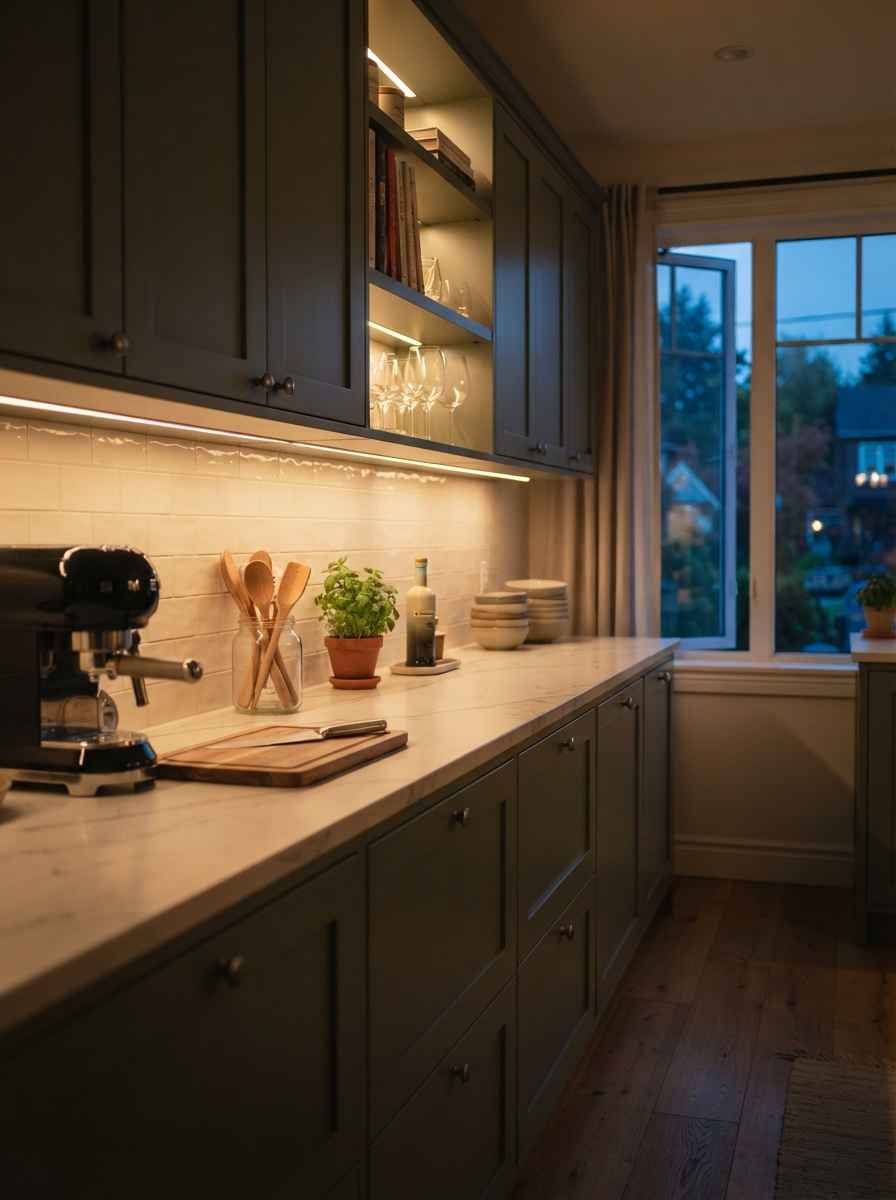
18. Under-cabinet LED strips. They’re cheap, they take an afternoon to install, and they make the counter feel like a real workspace instead of an afterthought.
19. A built-in speaker or smart display. Small, but if you’re spending 20 minutes a day in this room, a little music or a podcast makes it go faster. Wow, it’s amazing how much a good speaker changes a chore you dread.
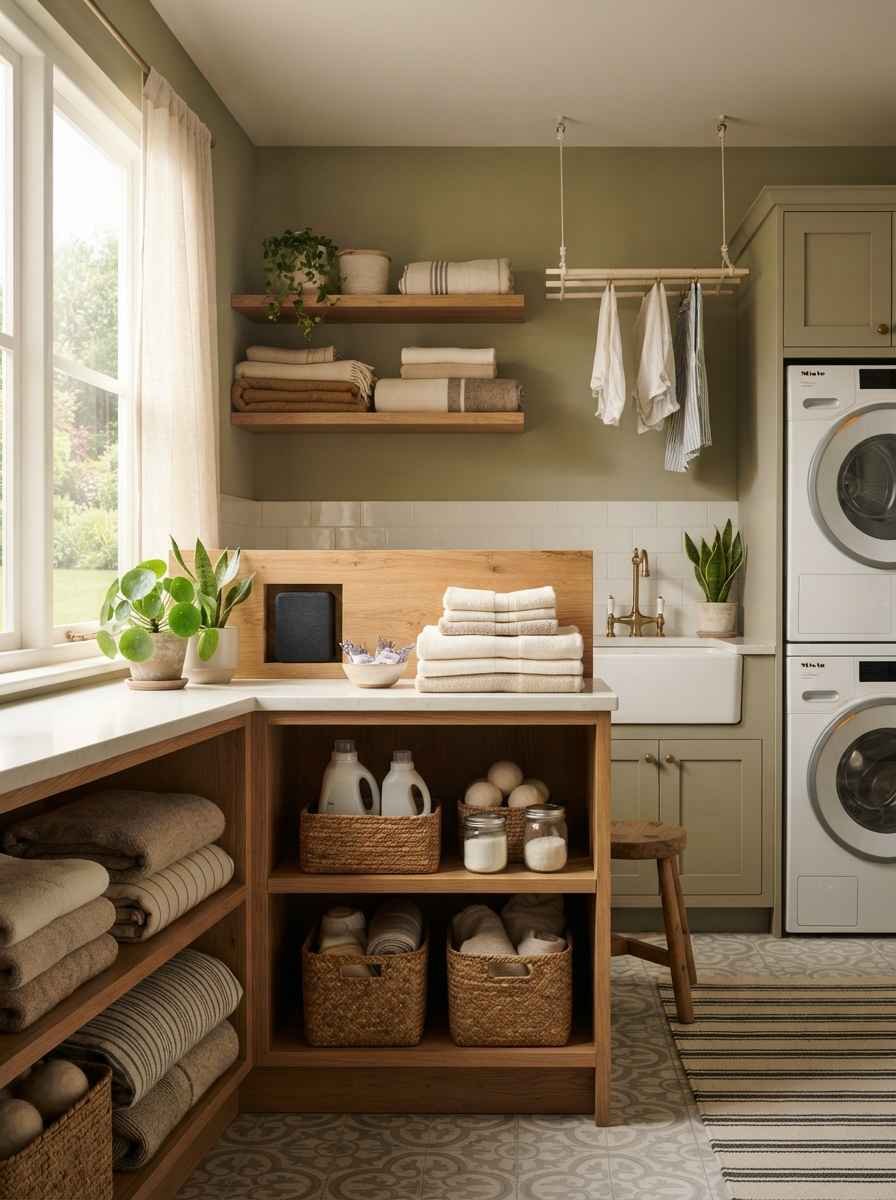
20. Retractable or ceiling-mounted drying racks. These have become one of the defining features of small modern laundry rooms because they disappear when you don’t need them, which matters most in apartments and tighter city homes.
21. A built-in laundry chute connection. If your layout allows it, tying an upstairs chute into a lower-level laundry room removes an entire category of daily hauling.
Small-space luxury (because most of us don’t have a dedicated room)
A quick aside, because I think this gets skipped in most “luxury” roundups: not everyone has a spare room to dedicate to laundry, and that’s fine. Some of the nicest laundry setups I’ve seen live inside a closet.
22. Stacked units behind bi-fold or pocket doors.
This “hidden laundry” approach keeps machines fully functional but visually out of the way, and it’s become one of the most requested layouts for 2026 renovations.
Designers at Better Homes & Gardens have pointed to hidden appliances tucked behind matching cabinet paneling as one of the year’s biggest laundry trends.
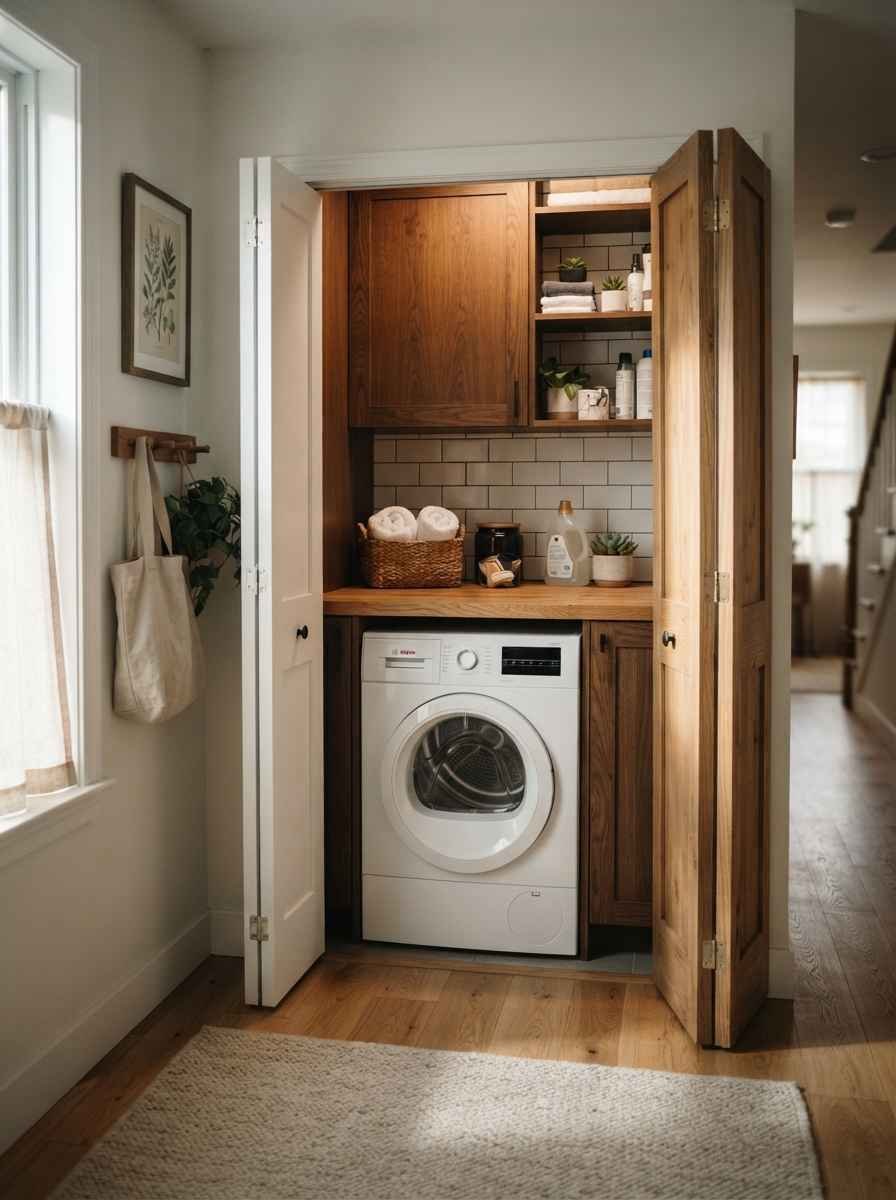
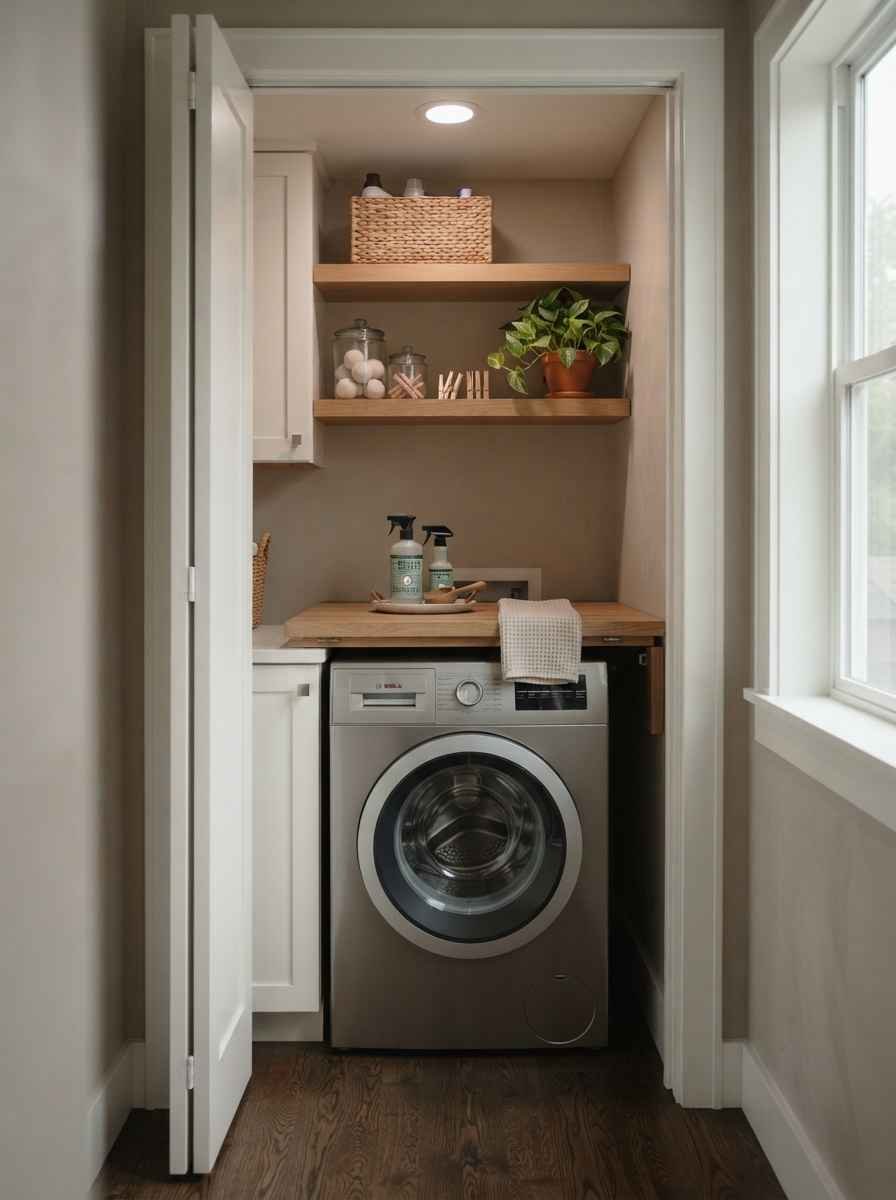
23. A fold-down counter in a closet setup. If floor space is tight, a hinged counter that folds flat against the wall gives you a folding surface only when you actually need one.
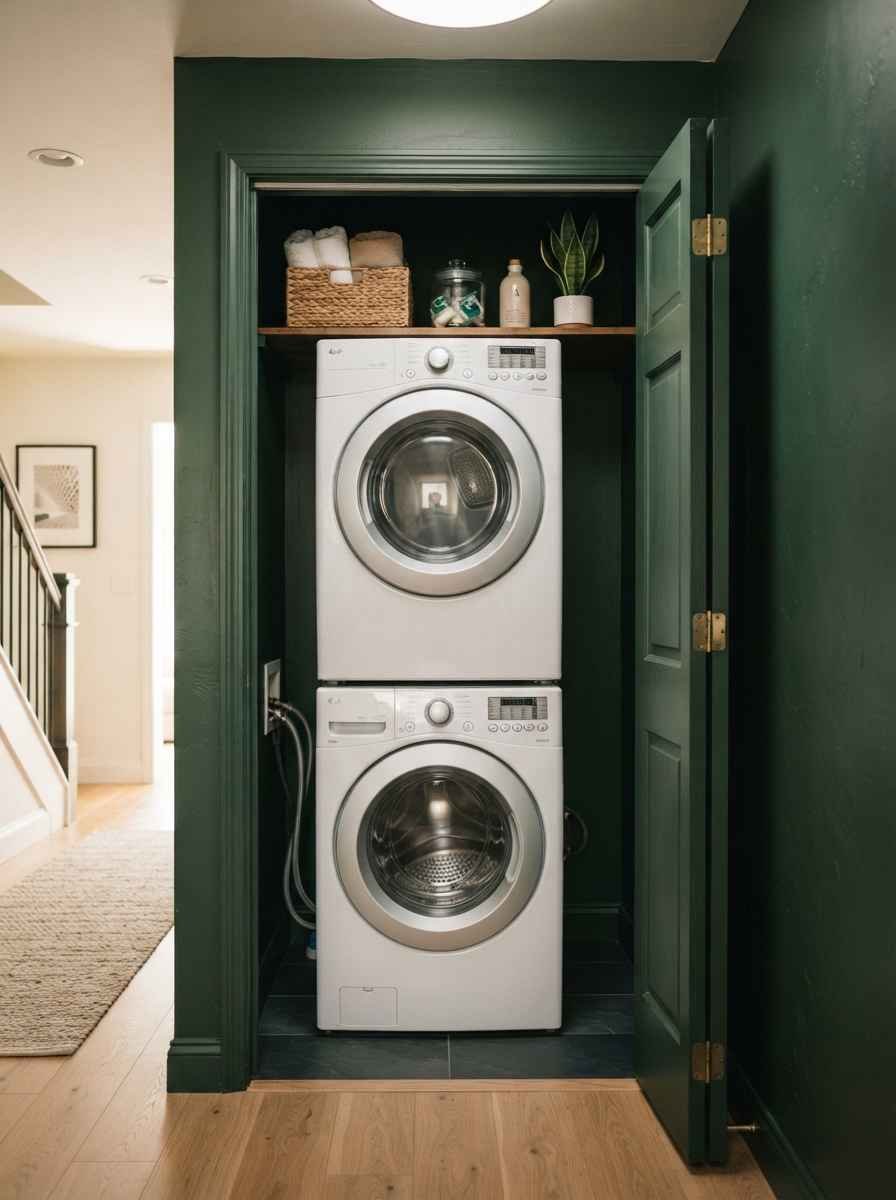
My friend with the phone-booth-sized closet went with option 22, stacked units behind a bi-fold door, and painted the interior a deep green instead of leaving it white.
It’s a small detail, but opening that door now feels intentional instead of like you’re exposing a mess.
That’s really the whole trick with small-space laundry: you’re not trying to make it look bigger than it is, you’re trying to make it look like it was designed on purpose.
A quick note on getting the details right
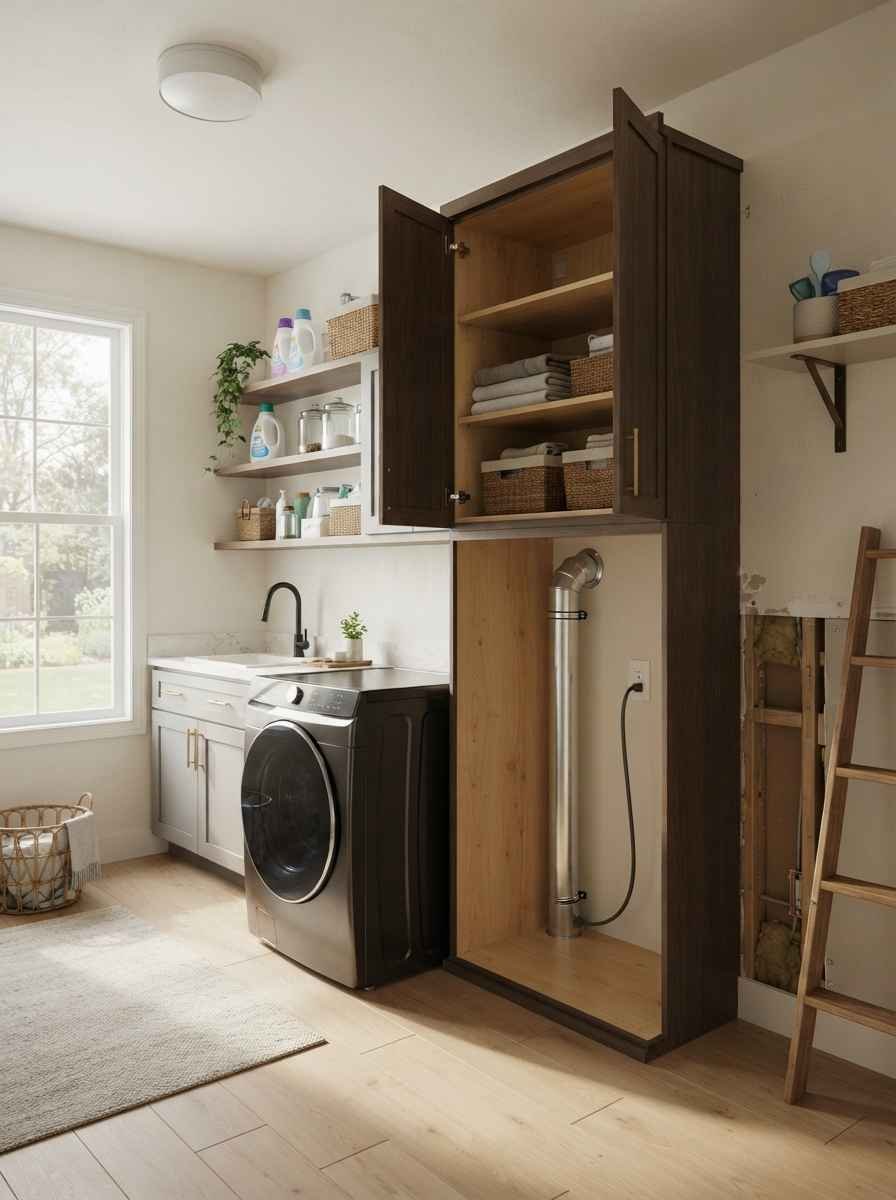
I’ll be honest: the biggest mistake I see in laundry room redesigns is people spending on finishes before they fix ventilation and outlet placement.
Get an electrician to check your dryer vent run and outlet count before you order a single tile.
It’s not glamorous advice, but it’s the kind of thing that saves you from tearing out brand-new cabinetry six months later.
If you want a deeper dive into current material and color choices, Better Homes & Gardens has a solid rundown of hidden laundry storage strategies that pairs well with several ideas here, and this detailed look at 2026 laundry layout trends is worth a read if you’re deciding between an open room and a hidden closet setup.
FAQ
Do I need a full renovation to get a “luxury” laundry room? No. A new counter, better lighting, and matching hardware will get you 80% of the visual upgrade for a fraction of a full remodel’s cost.
What’s the single best upgrade for a small laundry closet? Risers under the washer and dryer, paired with a hinged fold-down counter. Both are inexpensive and both change how the space functions daily.
Is quartz really better than marble for a laundry counter? For daily use, yes. Marble stains from bleach splashes, quartz doesn’t. Save marble for spaces that don’t see cleaning chemicals every week.
Final thought
A laundry room doesn’t need to be big to feel good.
It needs a layout that makes sense, a few materials that hold up to daily abuse, and one or two details that make you actually want to walk in there.
Which of these 23 would you tackle first: the layout, the storage, or the finishes? Save this list, pick your starting point, and tell me how it turns out.
