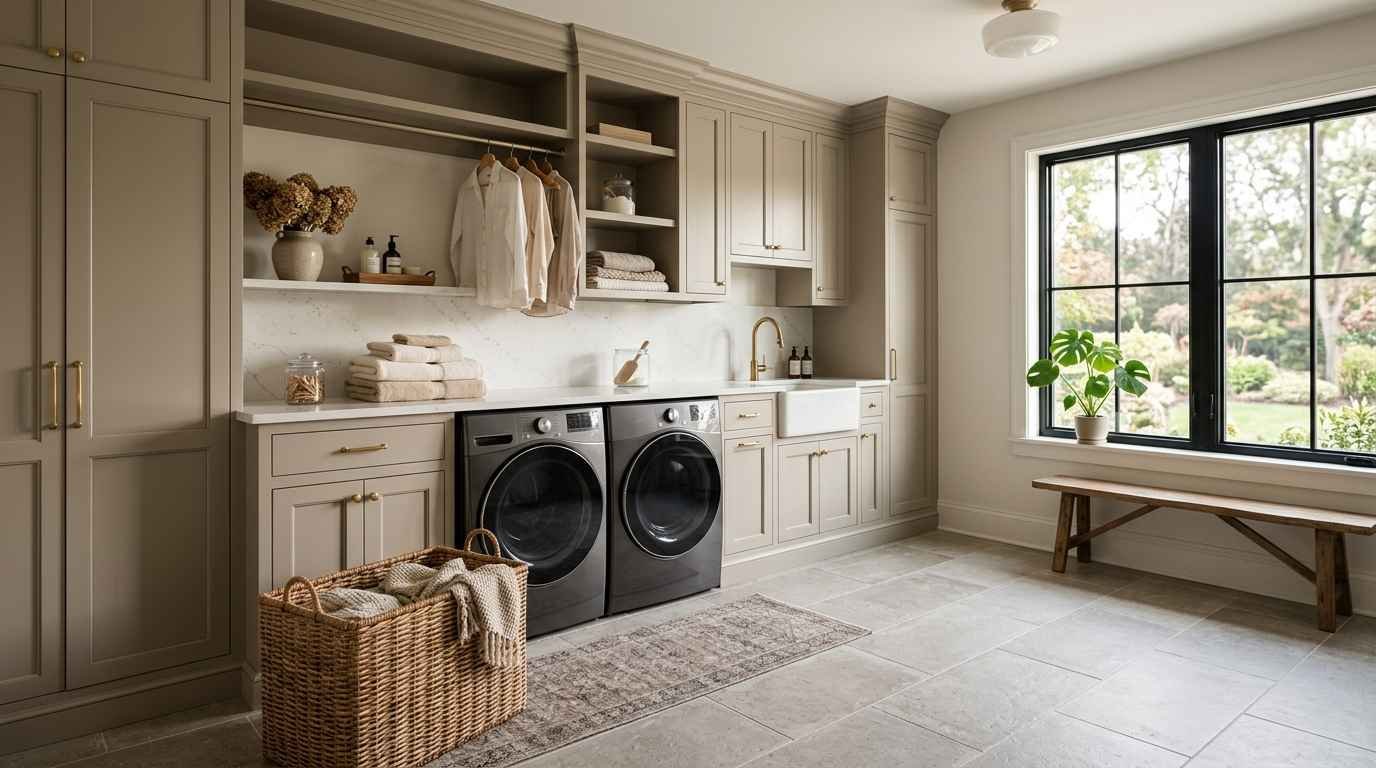
I redid my laundry room two years ago on what I thought was a “reasonable” budget. It wasn’t.
But here’s the thing I learned the hard way: the stuff that actually made it look expensive wasn’t the priciest stuff.
It was the details. Hardware. Paint sheen. The way the shelves were spaced. That’s it.
So if you’re standing in your laundry room right now looking at a beige box with a washer in it, wondering how some people get laundry rooms that look like a boutique hotel, I’ve got 23 ideas for you. Some cost real money.
A lot of them cost almost nothing. All of them punch above their weight.
Start with the floor, not the paint
Everyone reaches for paint first. Wrong move.
Floors set the tone for the whole room, and in a laundry room they take more abuse than almost anywhere else in the house.
Water, detergent drips, dropped irons. You want something that looks intentional and holds up.
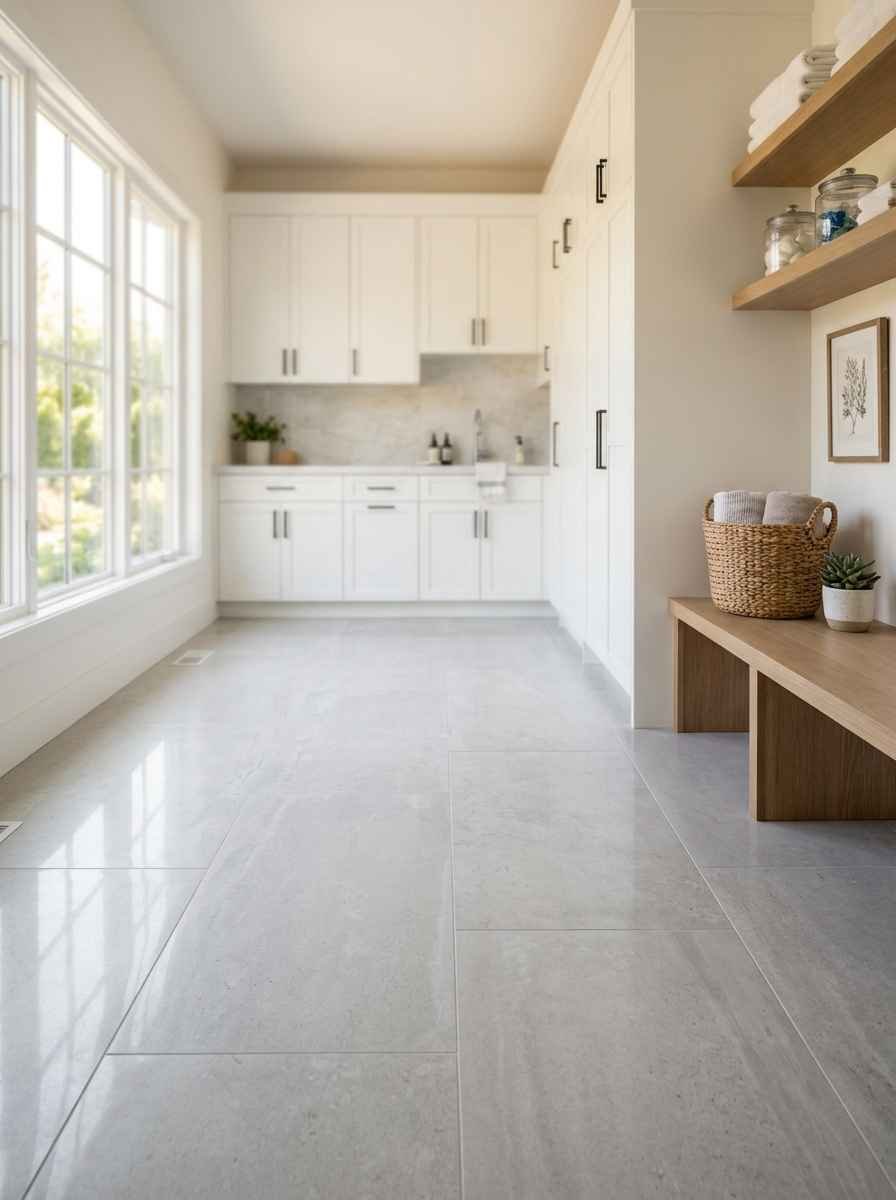
- Large-format porcelain tile. Go bigger than you think you need. Fewer grout lines read as more expensive, full stop.
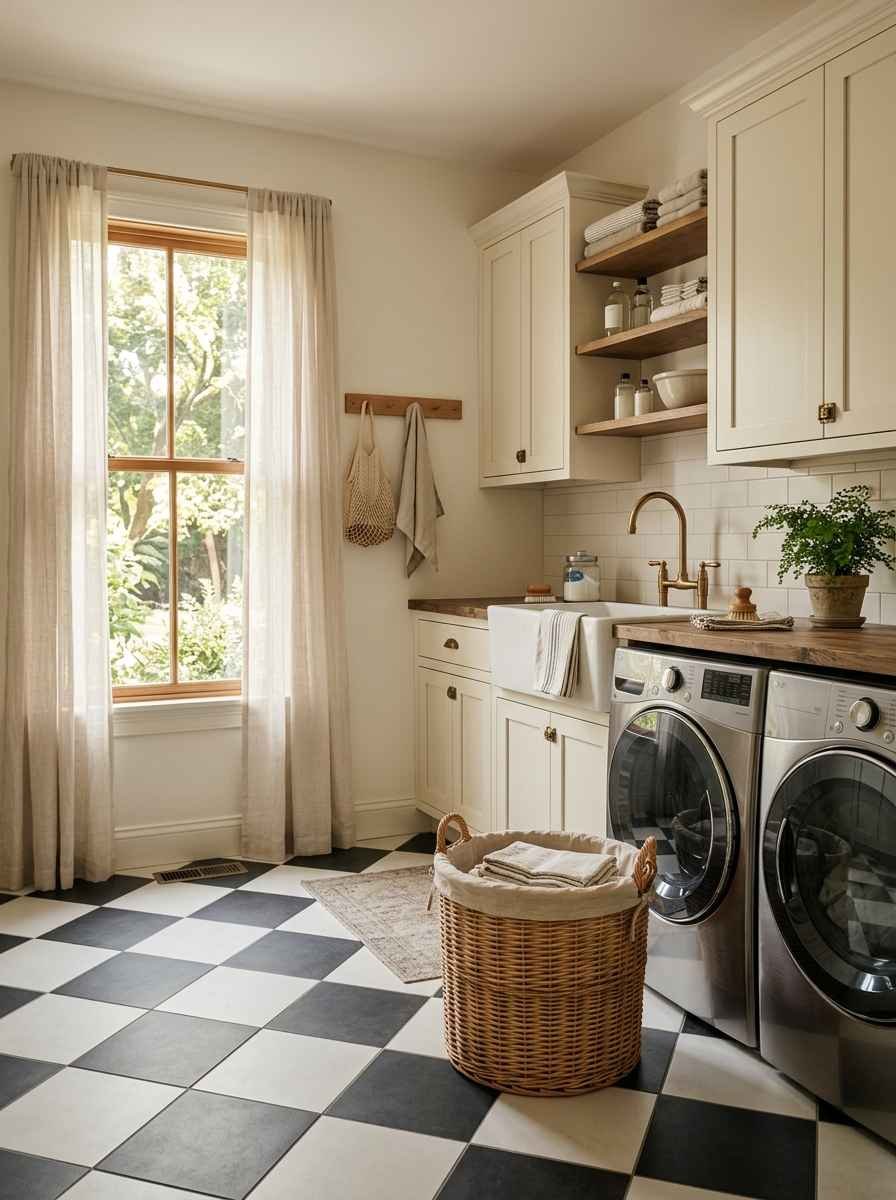
- Checkerboard flooring, black and white or two neutral tones. It’s a classic look you’ll find in high-end kitchens too, and it works just as well in a smaller laundry space.
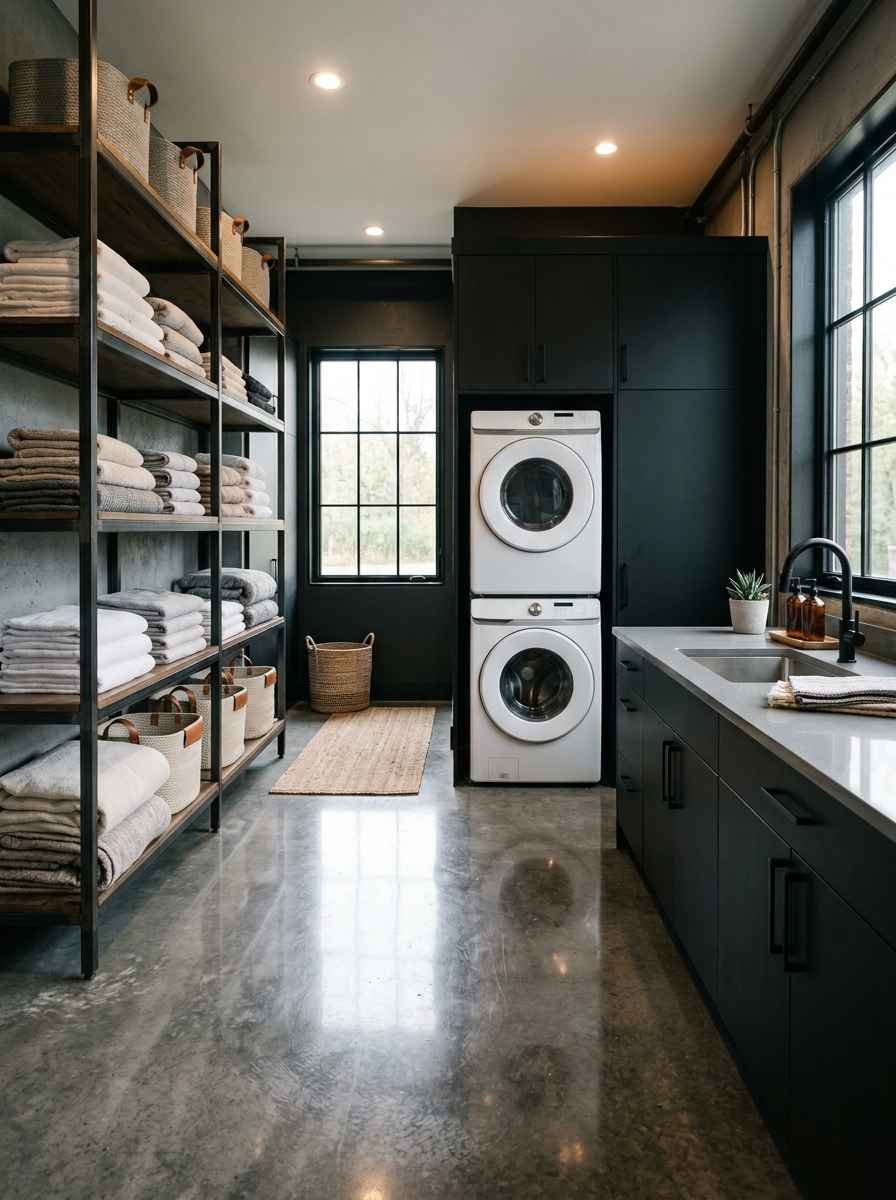
- Sealed concrete. Sounds cold on paper, but polished and sealed right, it reads industrial-chic instead of parking-garage. Cheap to install if you’re pouring new floors anyway.
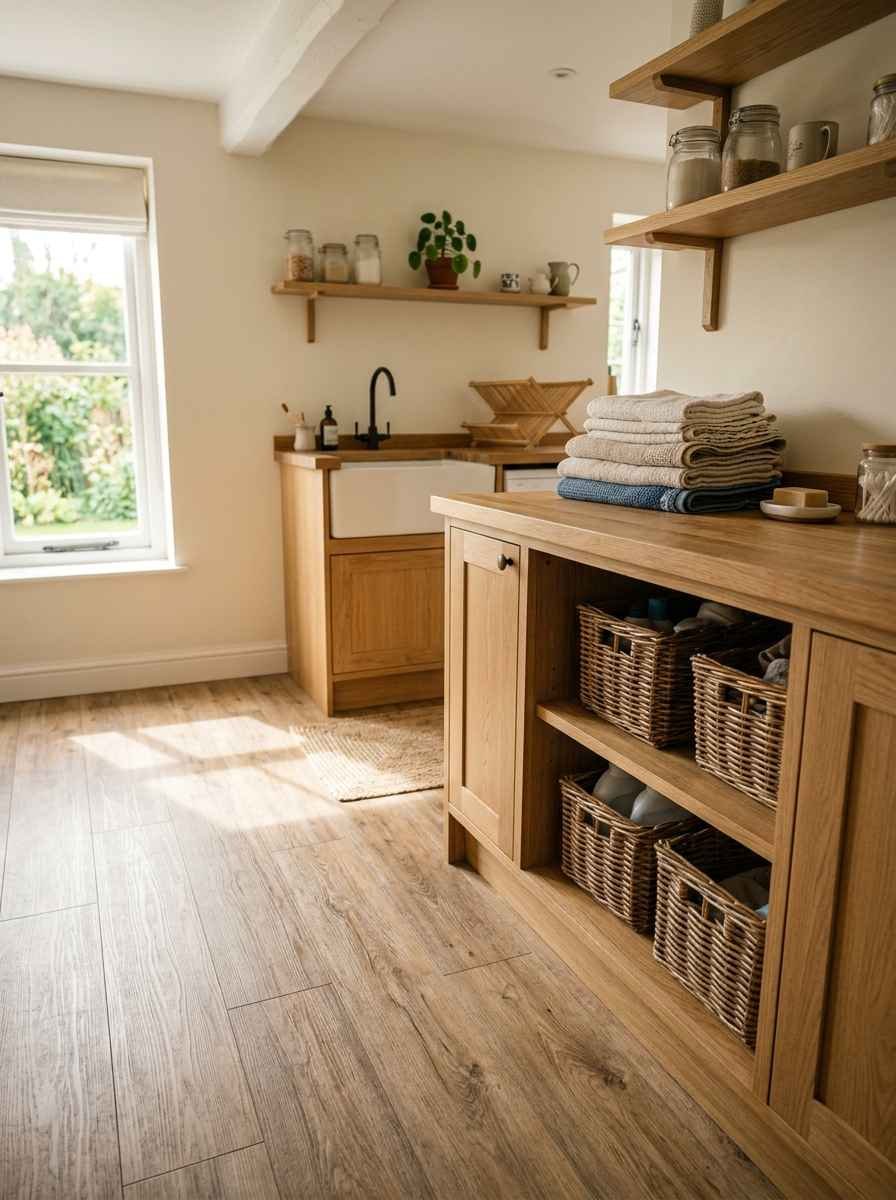
- Vinyl plank that mimics wood. IMO this is the most underrated option. Nobody can tell it’s not real hardwood from three feet away, and it laughs off water.
Cabinetry is where the money shows
Here’s an honest comparison, because I went through this decision myself. Stock cabinets versus custom built-ins.
Stock cabinets from a big box store look fine. Custom (or semi-custom) built-ins that go floor to ceiling look like a different room entirely. The difference isn’t really the wood. It’s that built-ins remove every gap and every visible seam.
- Floor-to-ceiling cabinetry around the washer and dryer, with a matching panel hiding the machines themselves.
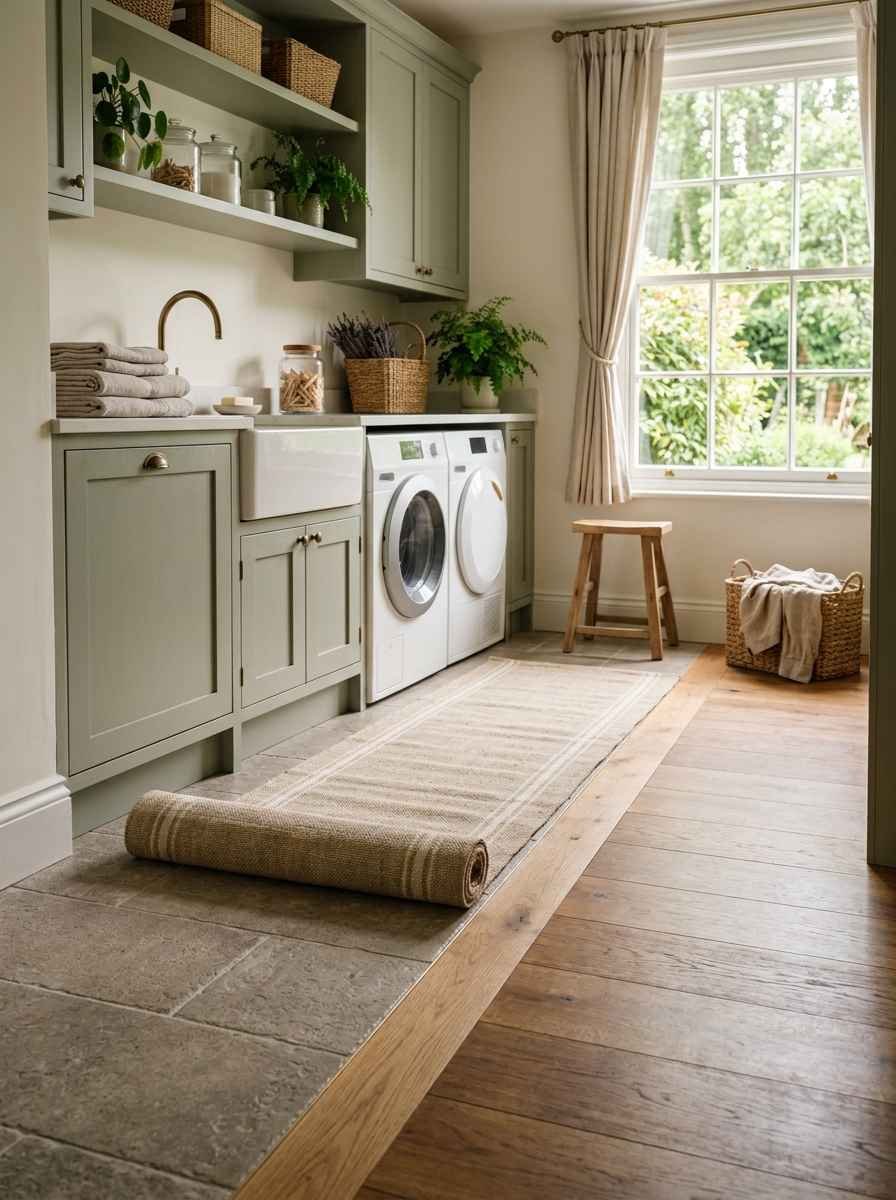
- Shaker-style fronts in a muted color, sage, navy, or warm greige instead of stark white.
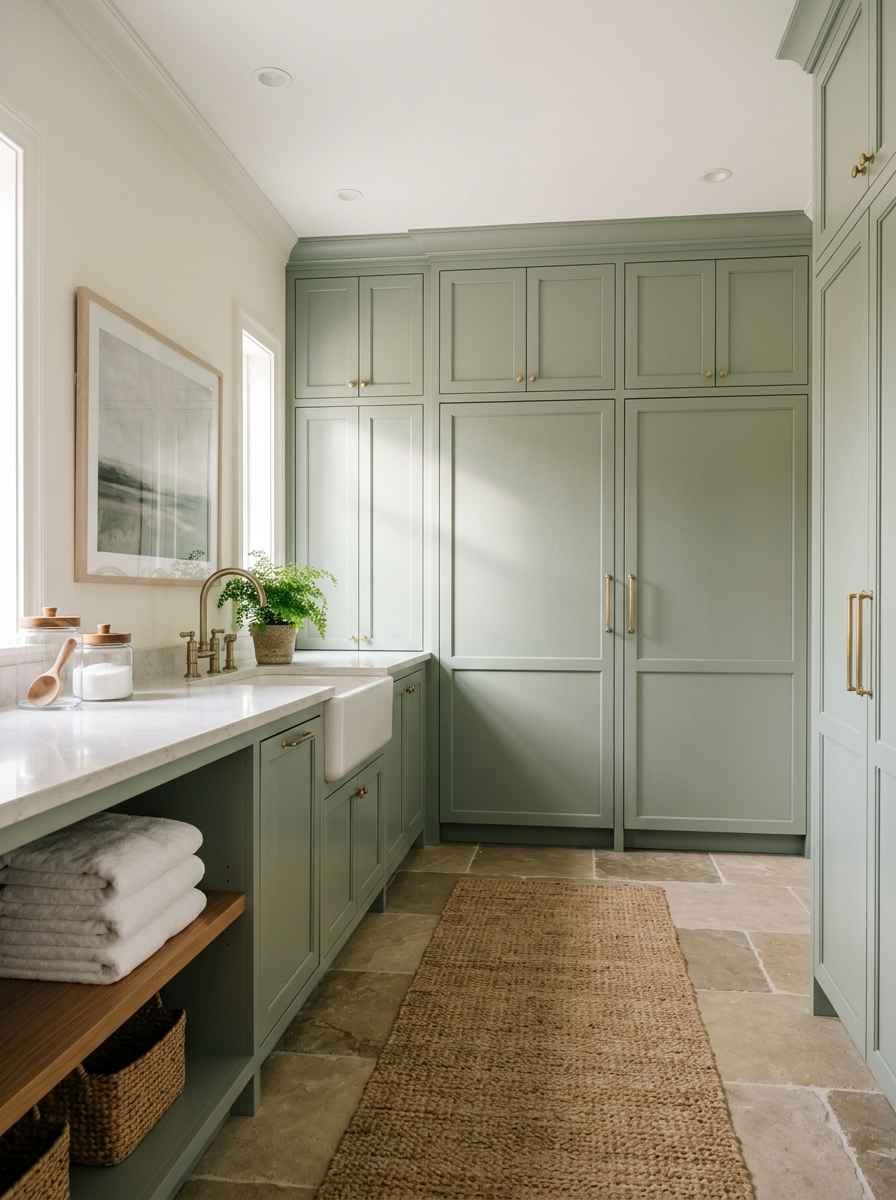
- Brass or unlacquered hardware. This one small swap changed how my whole kitchen felt, and it does the same in a laundry room.
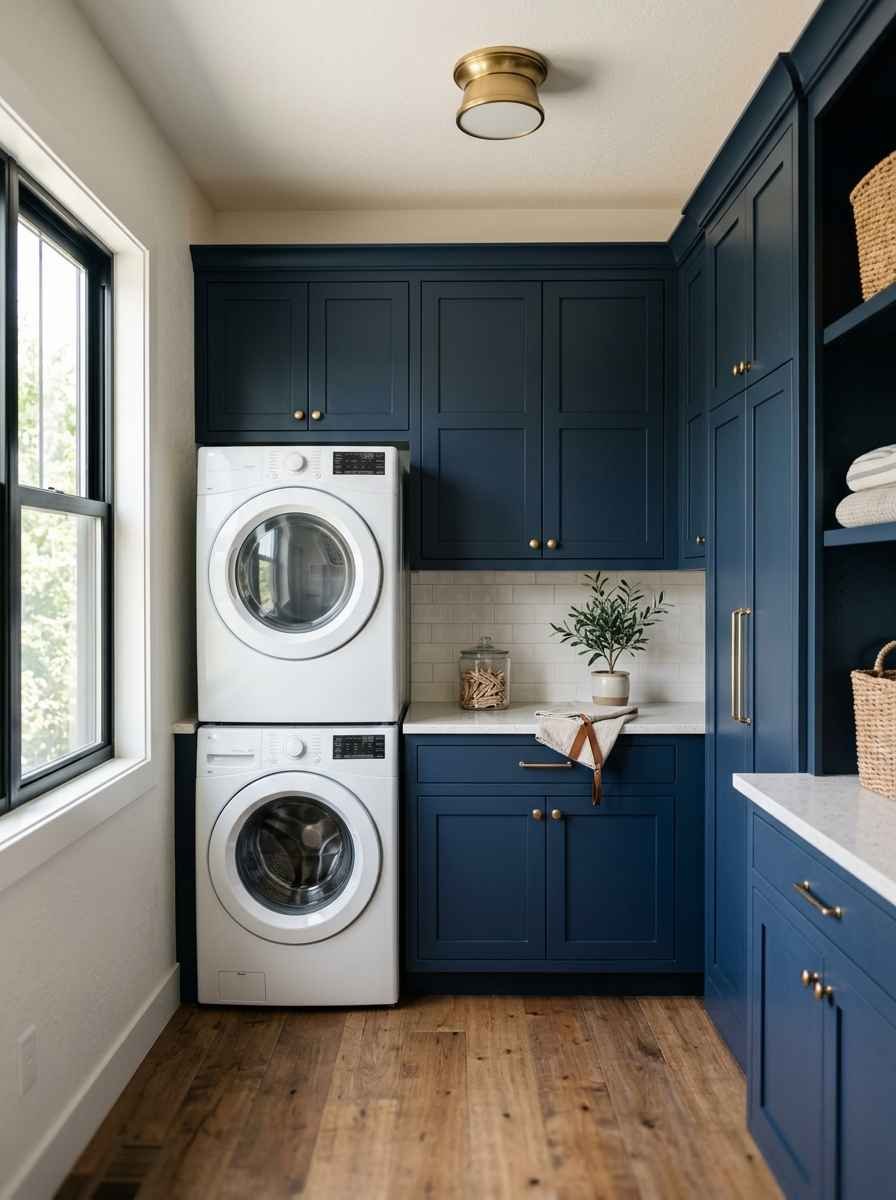
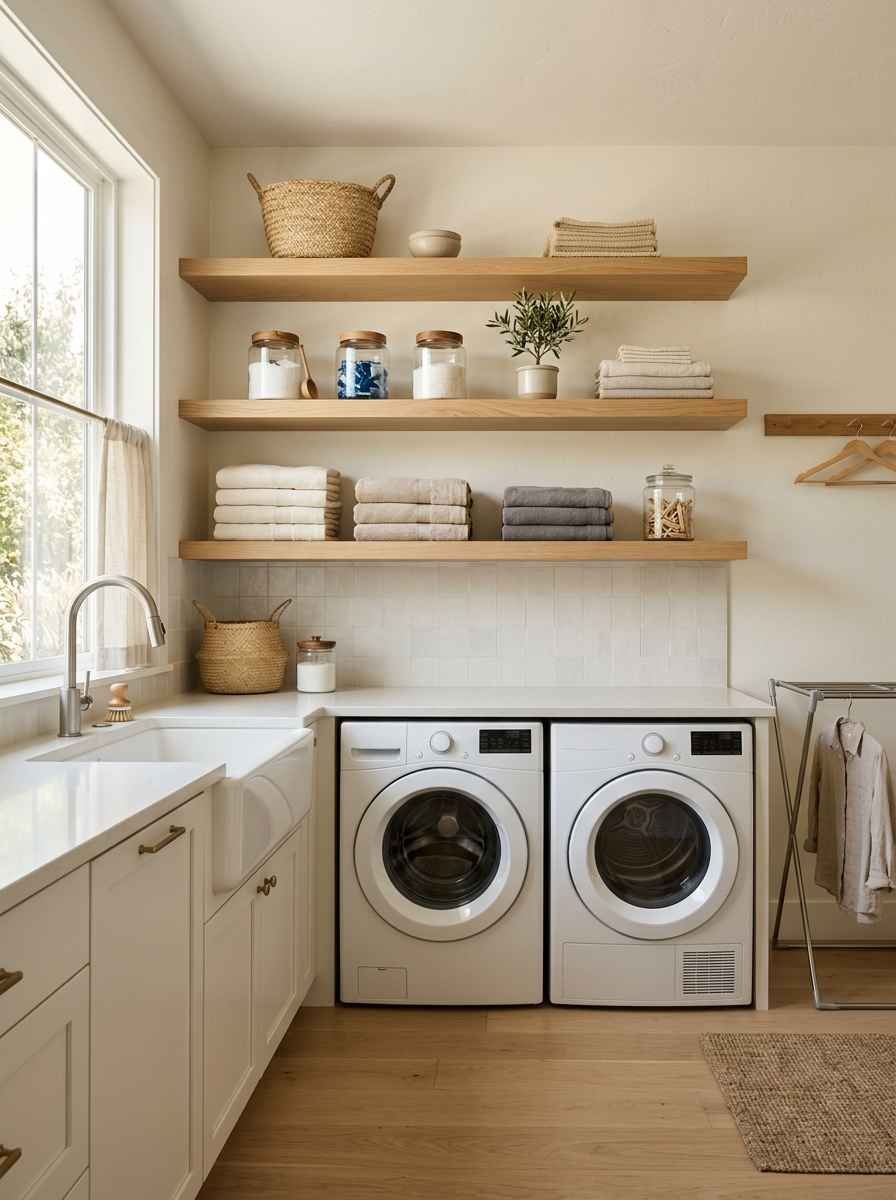
- Open shelving mixed with closed storage. All closed feels like a warehouse. All open feels cluttered. You want both.
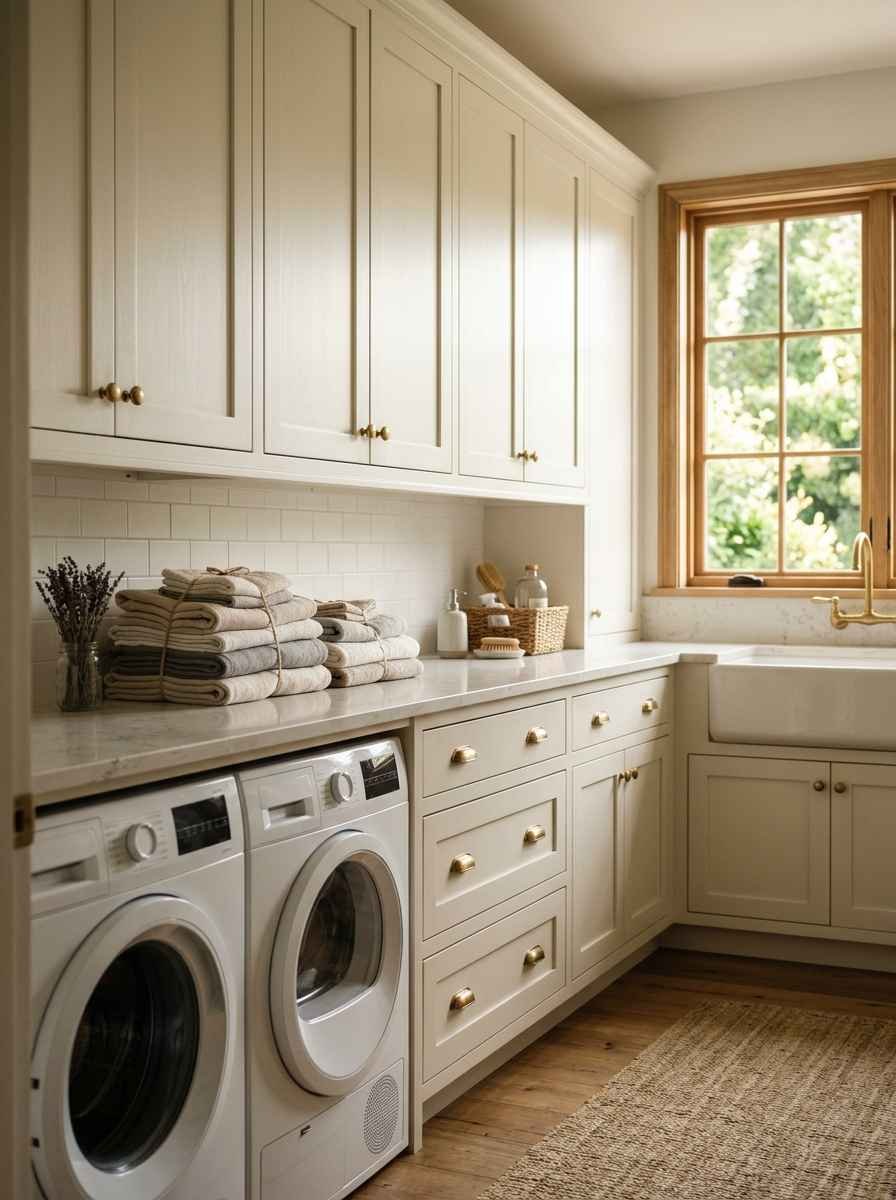
- A furniture-style base, like a piece that could pass for a dresser, instead of boxy lower cabinets.
Countertops and folding space
A laundry room without a folding surface is just a machine closet. Give yourself somewhere to work.
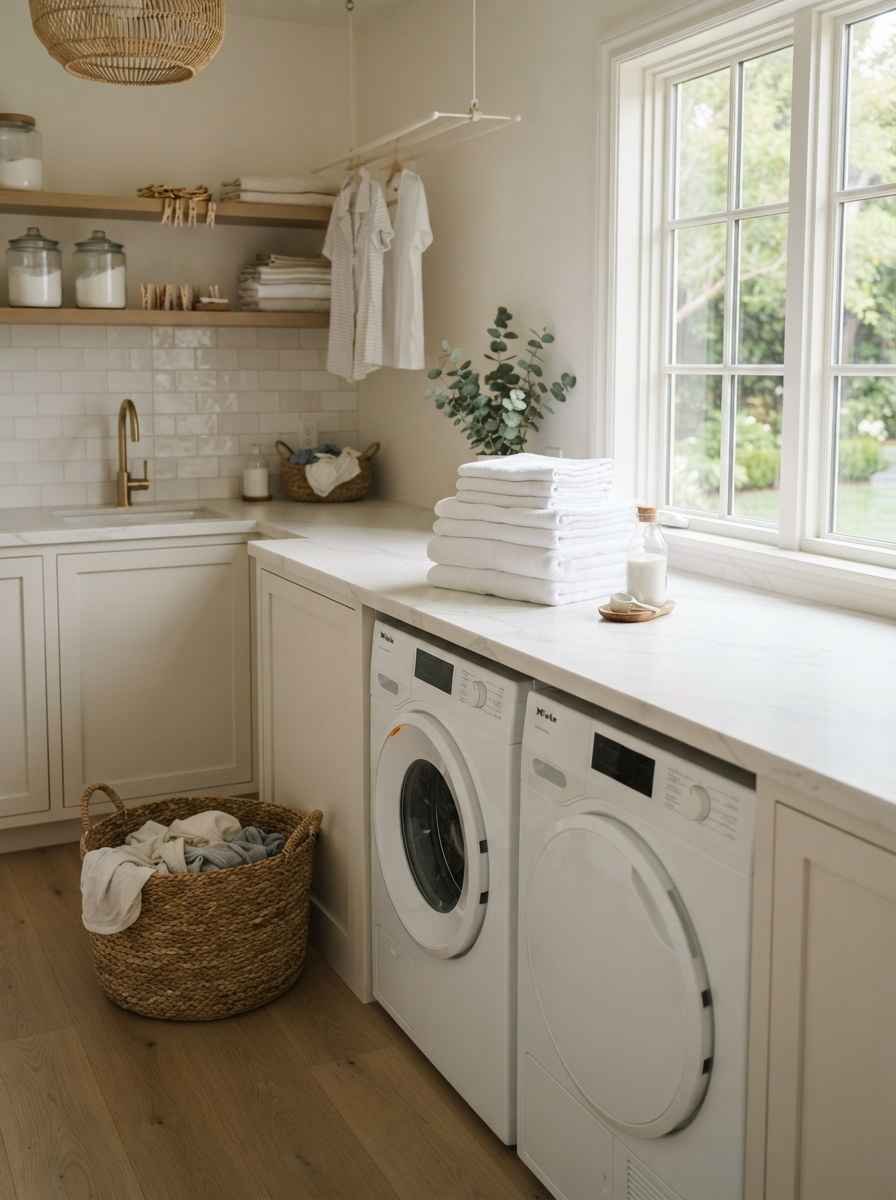
- Quartz countertop over the washer and dryer. Durable, stain-resistant, and it photographs beautifully, which matters if you’re the type who takes a picture of a finished project (no judgment, I do it too).
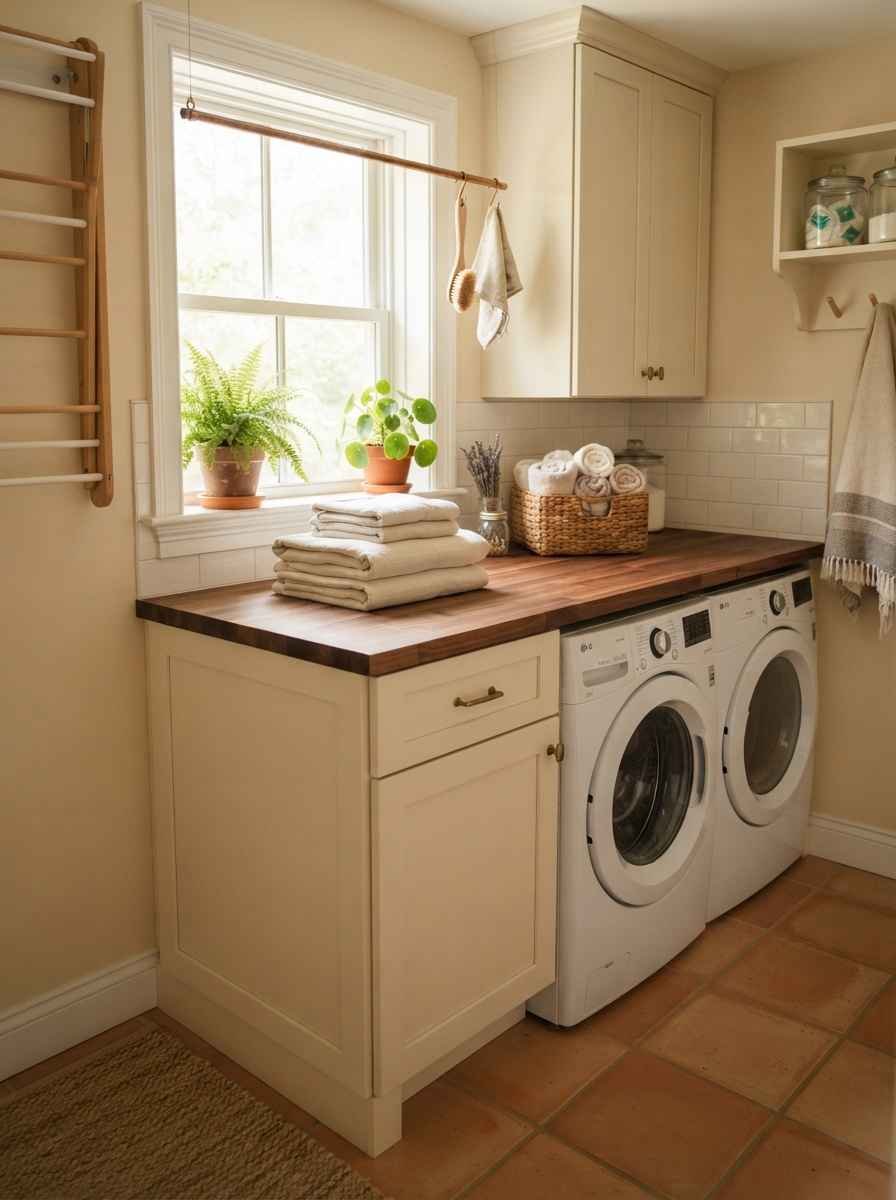
- Butcher block, if your room stays reasonably dry. Warmer look than stone, and it’s genuinely one of the cheaper premium-looking options out there.
- A rolling island if you’ve got the square footage. Extra storage underneath, extra counter space on top.
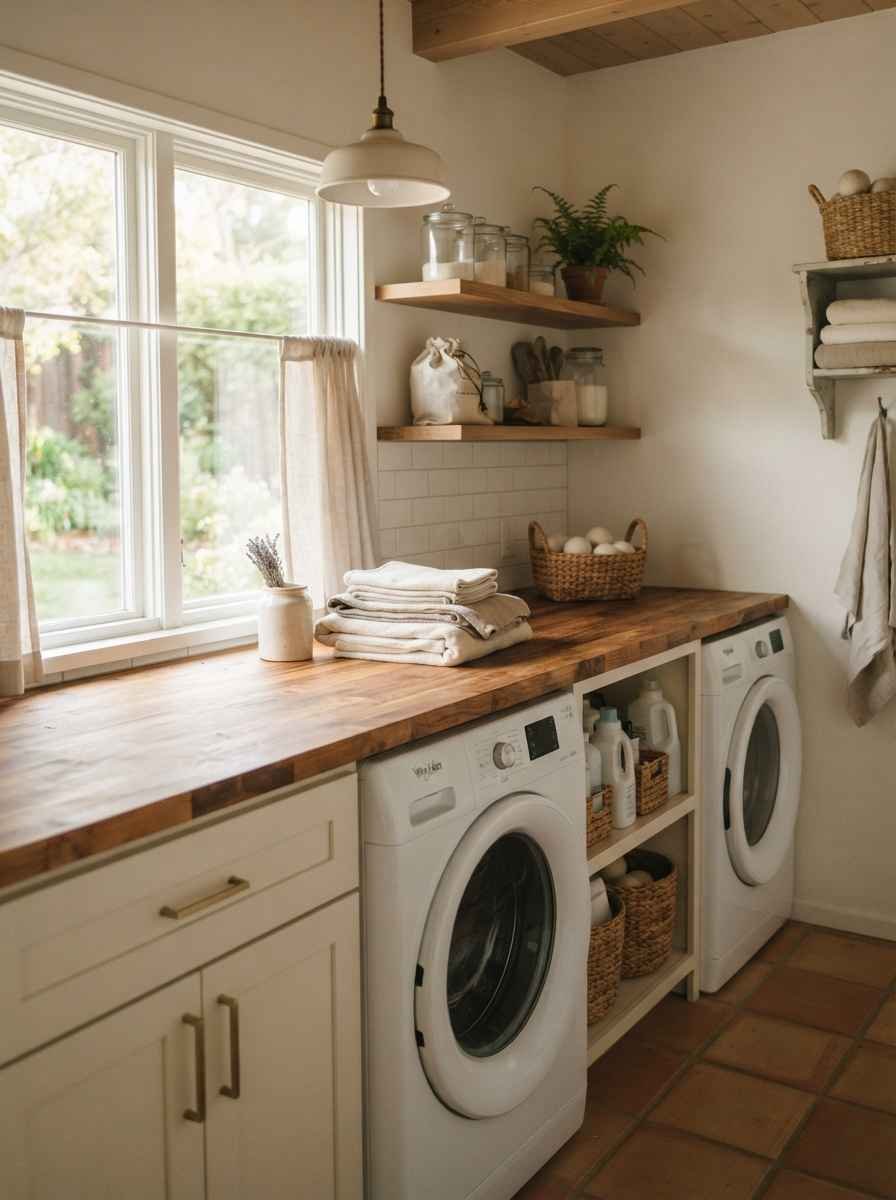
Lighting does more than you’d expect
Ever walk into a room and just feel like something’s off, but you can’t say what? Nine times out of 10, it’s the lighting.
- Swap the builder-grade flush mount for a small pendant or a flush fixture with real detail.
- This single change runs maybe $80 to $150 and it’s one of the highest-impact upgrades on this whole list.
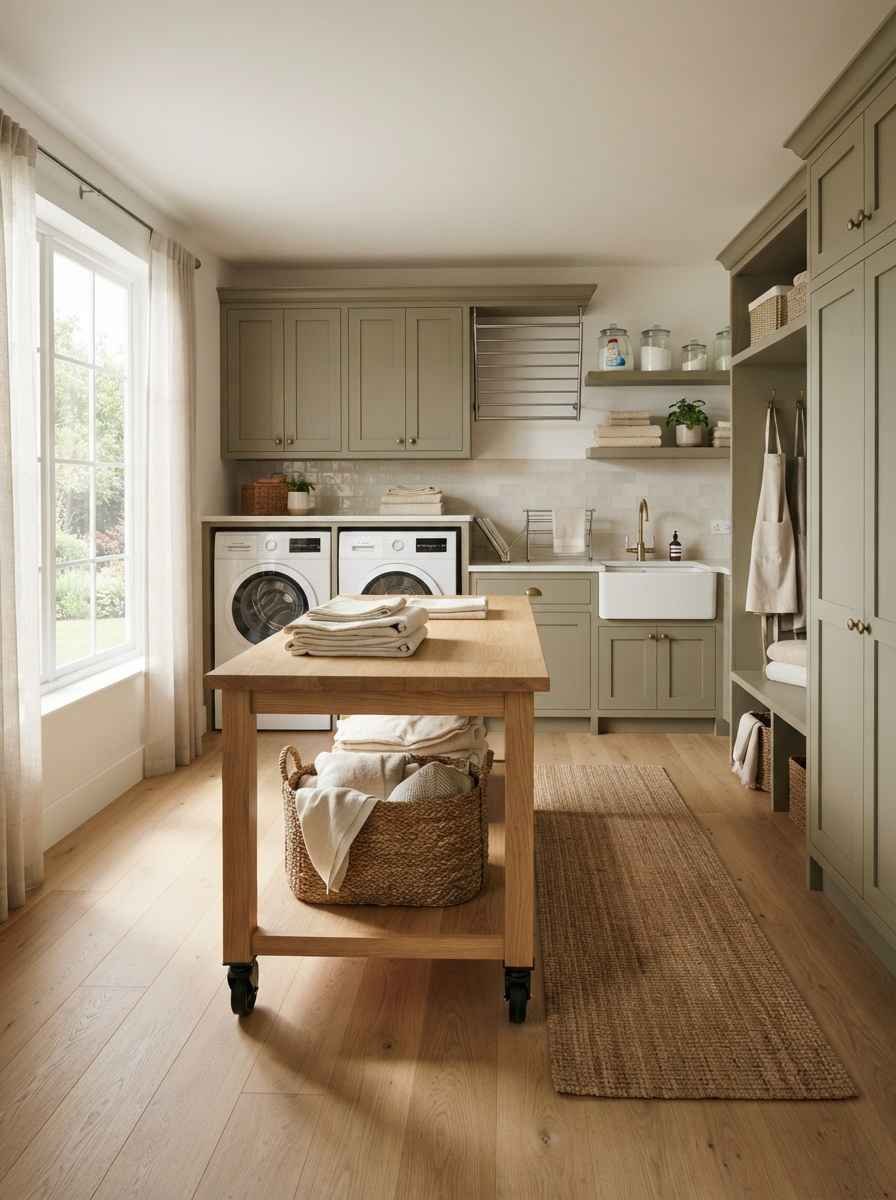
- Under-cabinet lighting above the counter. Practical for reading care labels, and it adds a soft glow that makes the whole room feel finished.
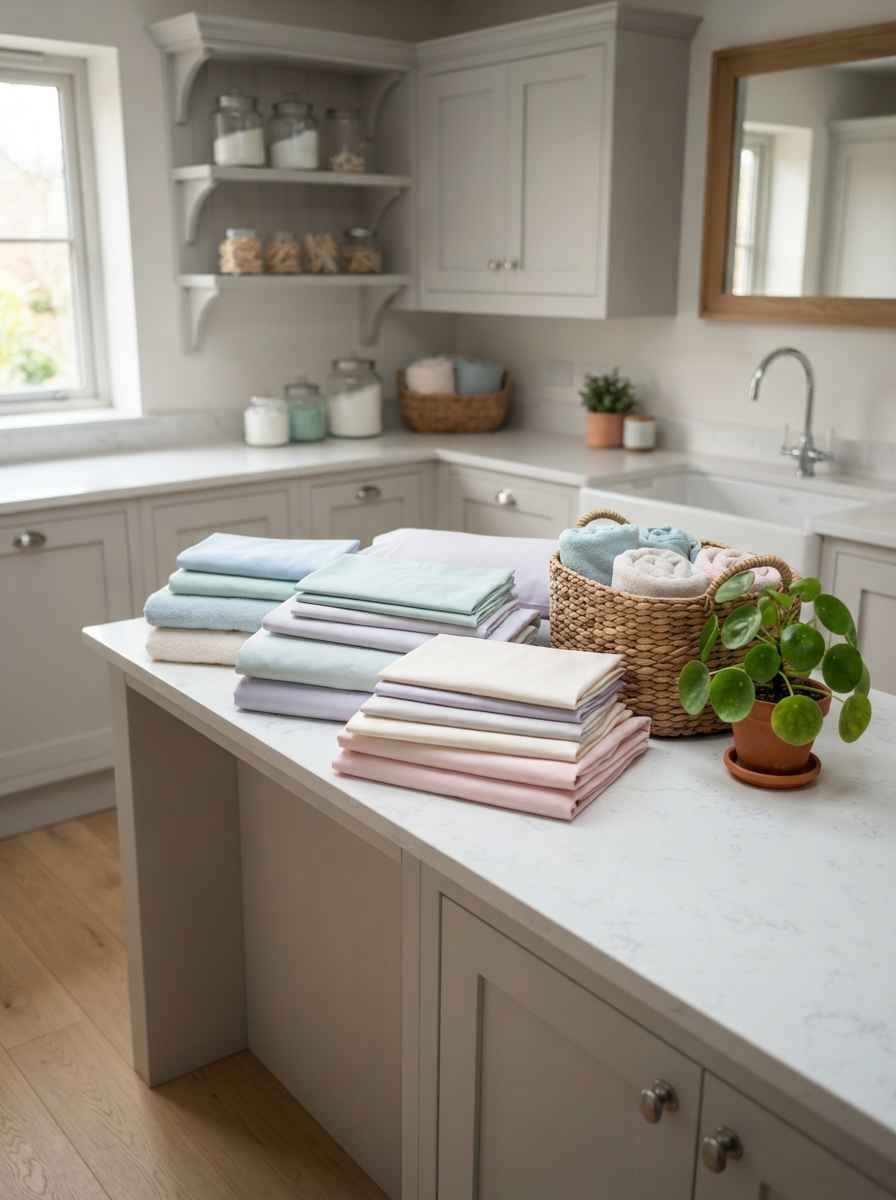
- A window, or a faux one. If you can’t add a real window, a mirror framed to look like one adds light and depth to a small room.
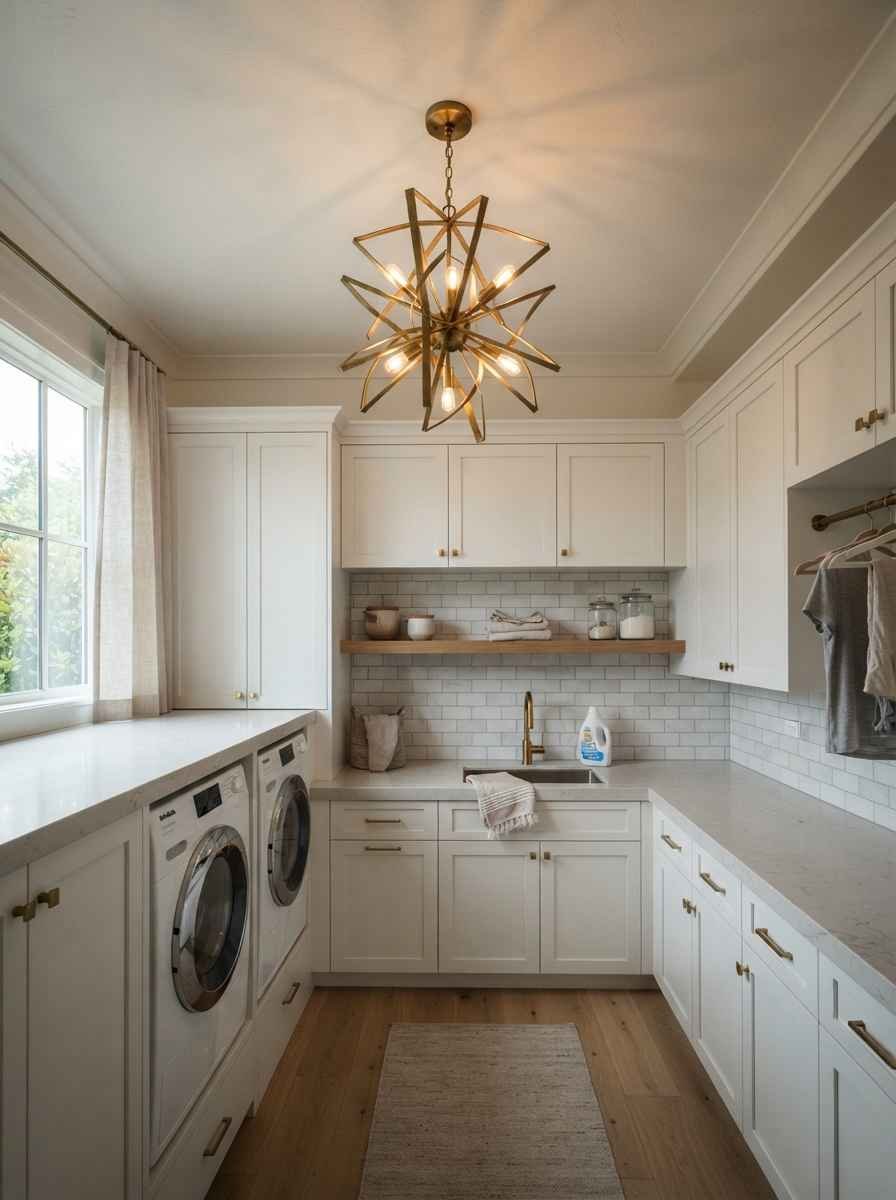
Color and texture choices that read as expensive
Cheap-looking rooms usually have one thing in common: everything is the same flat white with zero texture. Fix that and you fix a lot.
- Wallpaper on one wall, or all four. Laundry rooms are small, which makes them the perfect place to go bold with a pattern you’d never commit to in a living room.
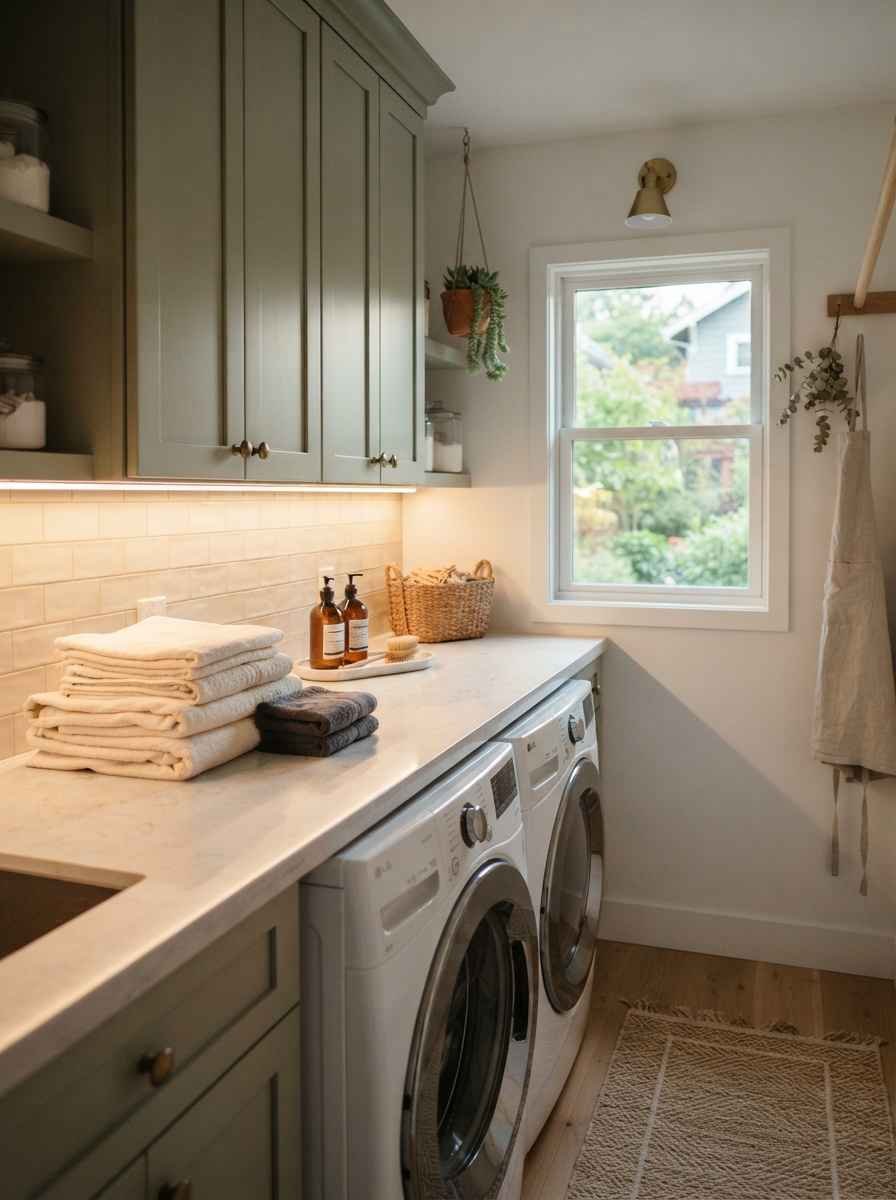
- A tile backsplash behind the sink or counter. Even a modest run of zellige or subway tile adds texture that plain drywall can’t.
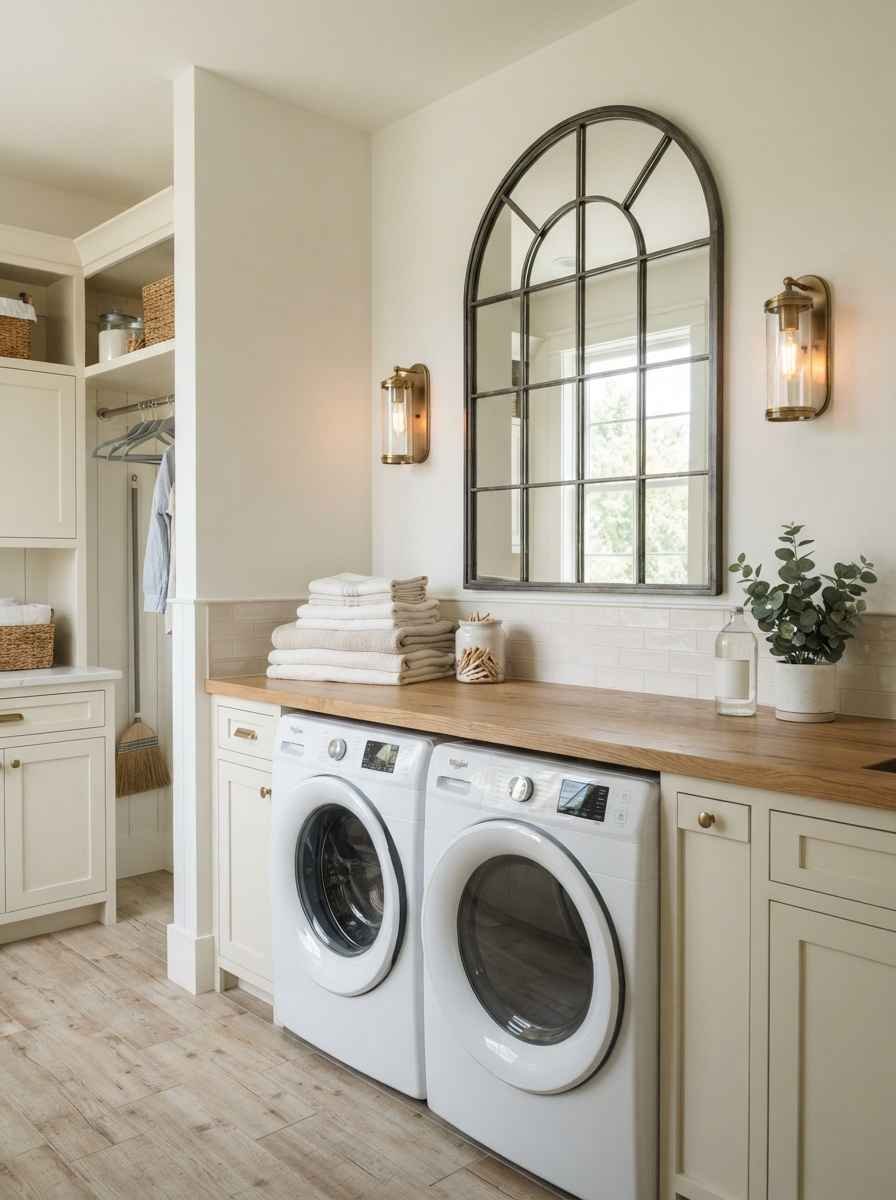
- Deep, saturated wall color instead of white. Forest green, charcoal, deep terracotta. Dark colors in a small room read as confident, not cramped, when the room has good lighting to back it up.
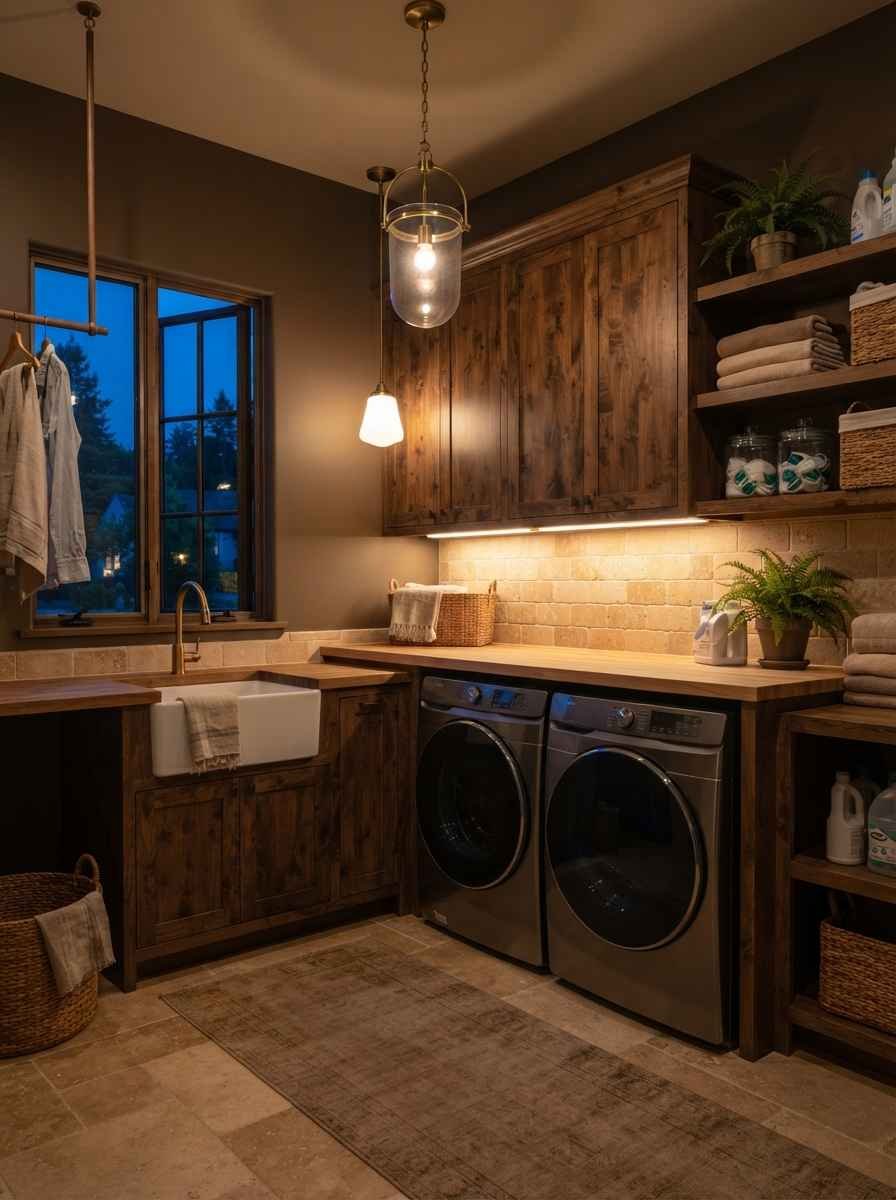
- A patterned runner rug. Vintage-style or Persian-inspired rugs are having a real moment in utility spaces right now, and they soften a room full of hard surfaces.
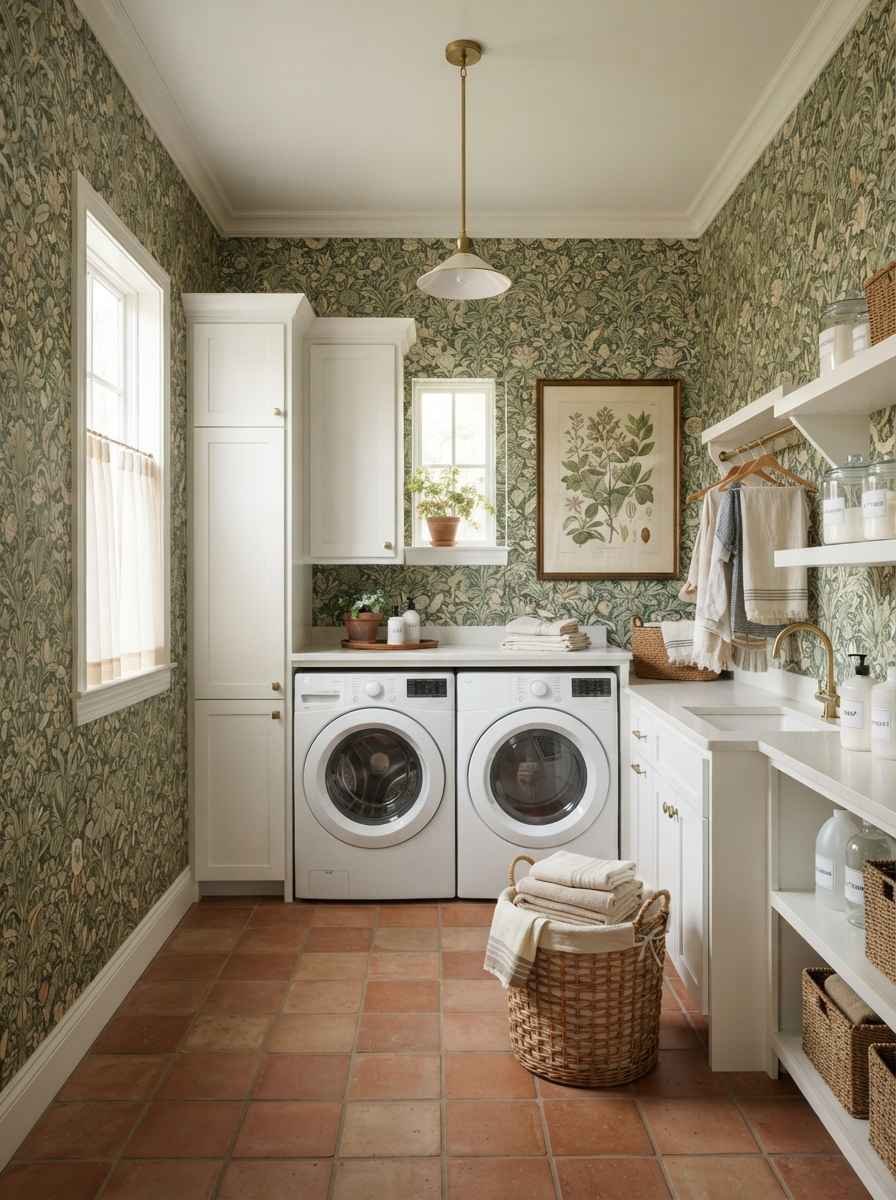
Small details that pull the whole thing together
This is the part nobody budgets for, and it’s usually the part guests actually notice.
- Matching hampers or bins, labeled if you’re feeling fancy, instead of a random plastic basket.
- A single piece of art or a mirror on the wall. One good piece beats a wall of clutter.
- Fresh flowers or a plant. Costs $8. Makes the whole room feel cared for.
- A skirted sink, fabric hiding the plumbing underneath a farmhouse sink. Small detail, big personality.
That’s 23 if you count the grouped ones individually, and honestly, you don’t need all of them.
Pick five or six that fit your space and your budget, and the room will look pulled together.
Quick tangent: I once spent 40 minutes in a hardware store comparing two nearly identical drawer pulls that were $4 apart.
My partner still brings it up. Was it worth it? Genuinely not sure. But I’d probably do it again.
Budget-friendly versus splurge, side by side
Here’s a quick breakdown if you want to know where your money goes furthest.
| Upgrade | Budget-friendly version | Splurge version |
|---|---|---|
| Lighting | Swap flush mount ($60-100) | Statement pendant ($200+) |
| Storage | Woven bins + open shelf | Custom floor-to-ceiling built-ins |
| Surfaces | Peel-and-stick tile | Quartz or natural stone counter |
| Hardware | Spray-painted existing pulls | Solid brass or matte black knobs |
If I had to pick just one row to splurge on, it’s hardware. Small cost, disproportionate impact.
A word on layout, because it matters more than decor
You can have the prettiest laundry room on Pinterest and still hate using it if the layout doesn’t work.
Before you pick a single finish, walk through your actual routine: where dirty clothes land, where you sort, where you fold, where finished laundry goes before it’s put away.
Design around that sequence, not around a photo you saved.
The National Kitchen and Bath Association publishes general guidelines on work-triangle spacing that translate surprisingly well to laundry rooms, if you want a starting point grounded in something other than vibes.
FAQ
Do I need custom cabinetry to get a high-end look? No. Semi-custom cabinet fronts, or even painted stock cabinets with upgraded hardware, get you 80% of the way there for a fraction of the cost.
What’s the single cheapest upgrade with the biggest visual impact? Lighting and hardware, in that order. Both are usually under $200 combined and both change how the whole room reads.
Is dark paint a bad idea in a small laundry room? Not if the room gets decent light, natural or otherwise. Dark, saturated color in a small room often looks more intentional than a safe, pale neutral.
For more real-world before-and-afters, HGTV’s design team has covered laundry rooms extensively, and there’s a solid roundup of designer-approved makeovers on Real Simple worth scrolling through for inspiration before you commit to anything.
So, which of these are you actually going to try first: the lighting swap, the hardware, or are you going all in on wallpaper?
Tell me in the comments, or better yet, pin this and come back to it once you’ve picked your paint color. You’ll thank yourself later 🙂
