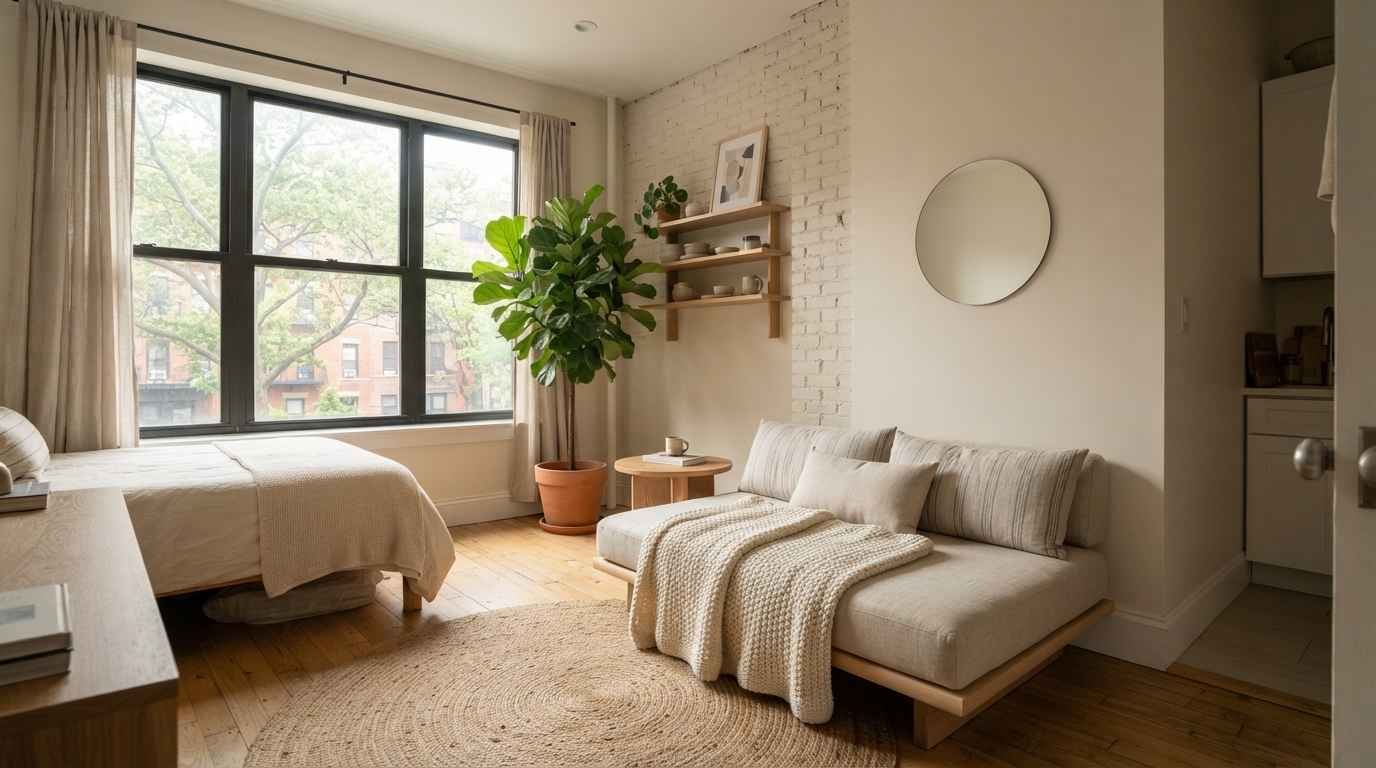
I moved into a 480-square-foot apartment three years ago and panicked immediately. My couch touched three walls.
My “office” was a shelf bolted above the toilet tank (don’t ask).
But somewhere between the panic and the second IKEA trip, I figured out that small spaces don’t need less personality. They need smarter choices.
That’s what this list is. Not theory. Stuff I’ve tried, moved around, returned, or kept for good.
I’ve since helped two friends redo their studios, and both asked the same question before we started: “Where do I even begin?” Fair question.
A small room punishes bad decisions faster than a big one does. One oversized couch in a studio apartment and suddenly you’re climbing over the arm to reach your kitchen.
So this isn’t a random grab bag. It moves from furniture, to storage, to light and color, then to the small cozy details that actually make a place feel lived-in instead of staged.
Pick what fits your space. You don’t need all 23 to see a difference, and honestly, trying to do all of them at once tends to backfire.
Why minimalism actually helps small rooms feel bigger
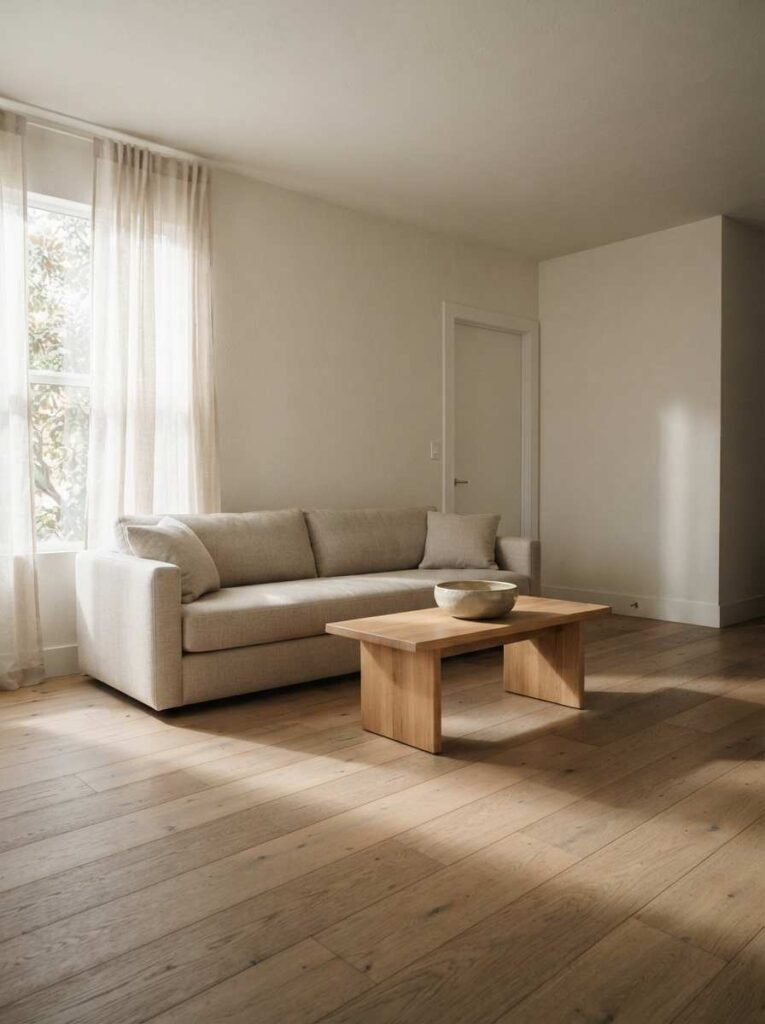
Clutter eats square footage before furniture ever does.
A room with 10 objects reads calmer than a room with 40, even if the 40-object room is technically bigger. Minimalism isn’t about owning nothing.
It’s about owning things on purpose.
Design blogs like The Spruce have covered this for years: light, sightlines, and scale matter more than raw square meters. I’d add one thing they don’t say enough: your eye needs somewhere to rest.
Give it that, and the whole room feels less like a storage unit.
There’s also a psychological piece nobody puts on a mood board. Fewer objects mean fewer decisions every time you walk into the room.
You’re not scanning past a pile of mail, three chargers, and a jacket you keep meaning to hang up. Your brain settles faster.
That’s not me being dramatic, either.
Environmental psychologists have linked visual clutter to measurably higher stress responses, which tracks with how differently my apartment feels on a day I’ve tidied versus a day I haven’t.
None of this means stripping a room down to a chair and a candle. I tried that phase in my early 20s and it felt like living in a waiting room.
Cozy minimalism keeps warmth, texture, and a few things you genuinely love. It just cuts the stuff that’s only there out of habit.
Furniture that pulls double duty
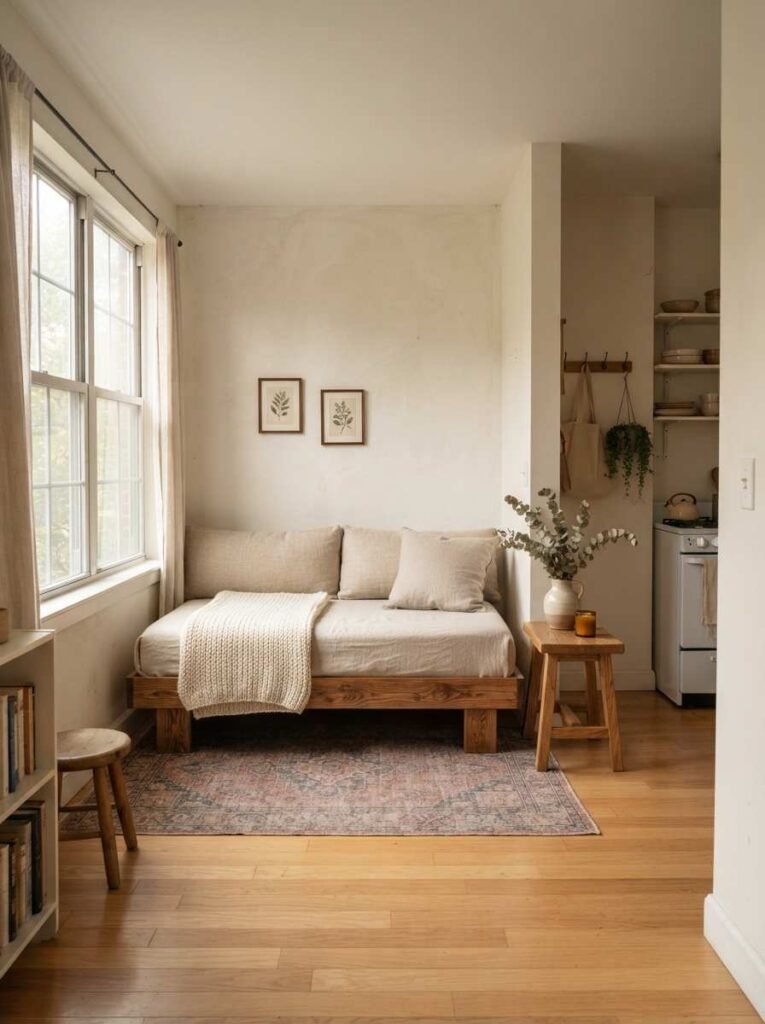
1. A daybed instead of a sofa. It seats people during the day and sleeps a guest at night. I bought one for $220 and it’s outperformed every couch I’ve owned.
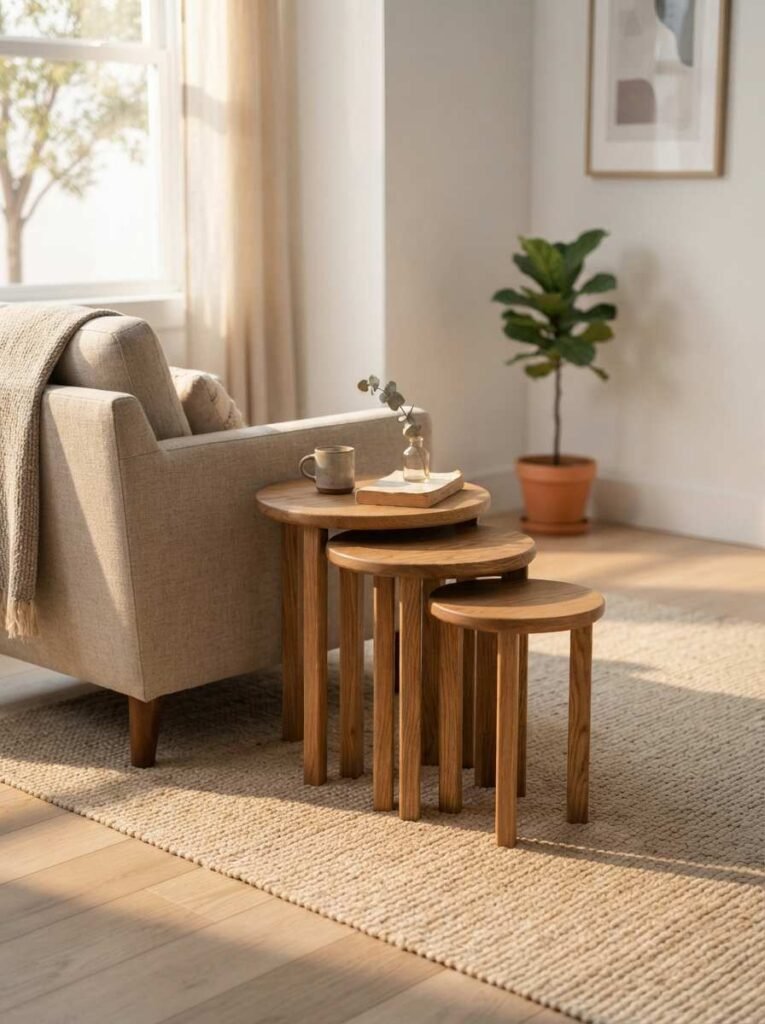
2. Nesting tables. Three tables that tuck into one footprint when you’re not hosting.
Pull them out for game night, push them back for Tuesday.
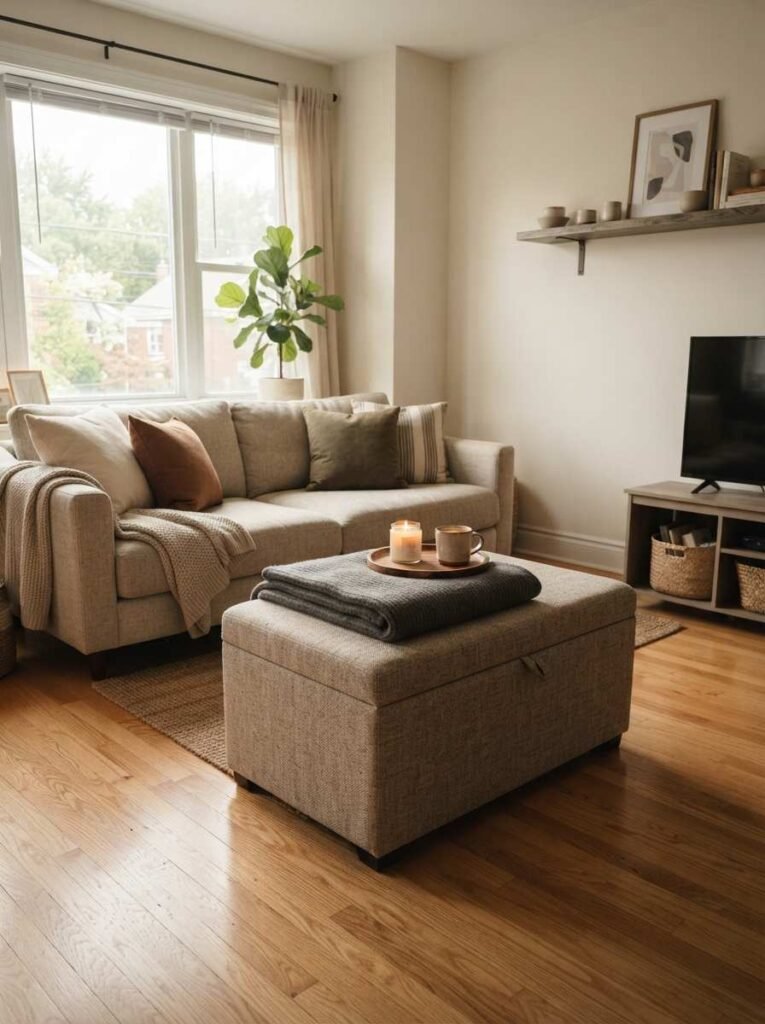
3. A storage ottoman. Coffee table, footrest, and a place to hide blankets nobody needs to see. Mine holds winter throws from October through March.
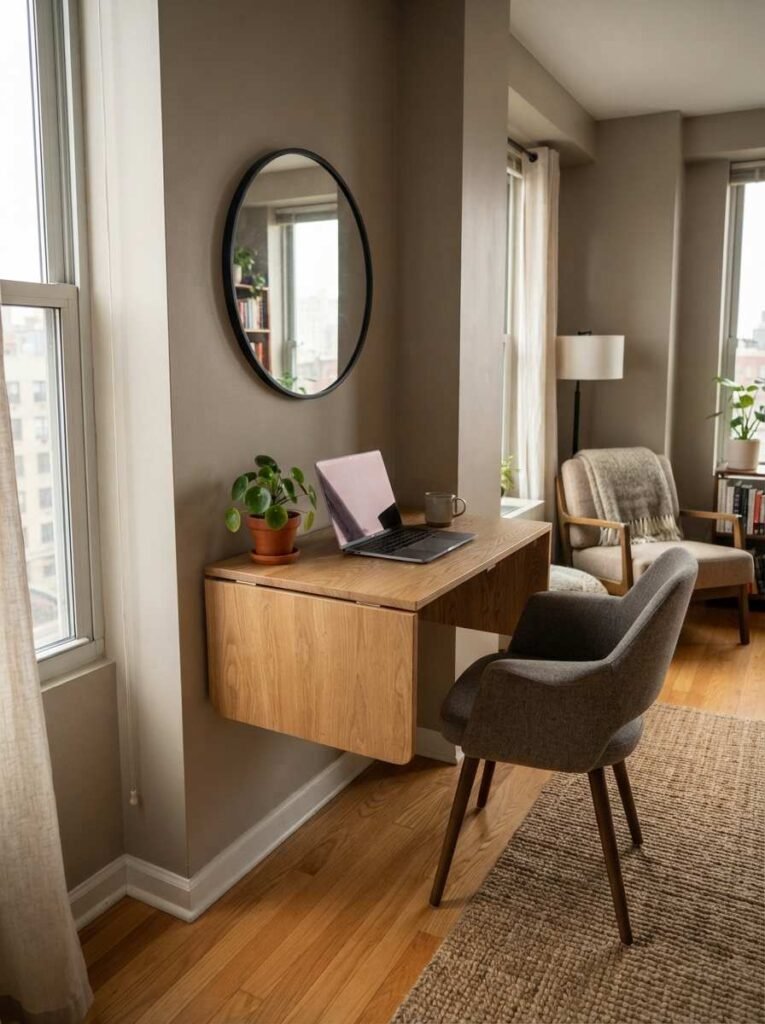
4. Wall-mounted drop-leaf desk. Folds flat against the wall when you’re done working. I resisted this one for a year because it looked flimsy in photos. It’s not.
It’s held a laptop and two monitors for two years straight.
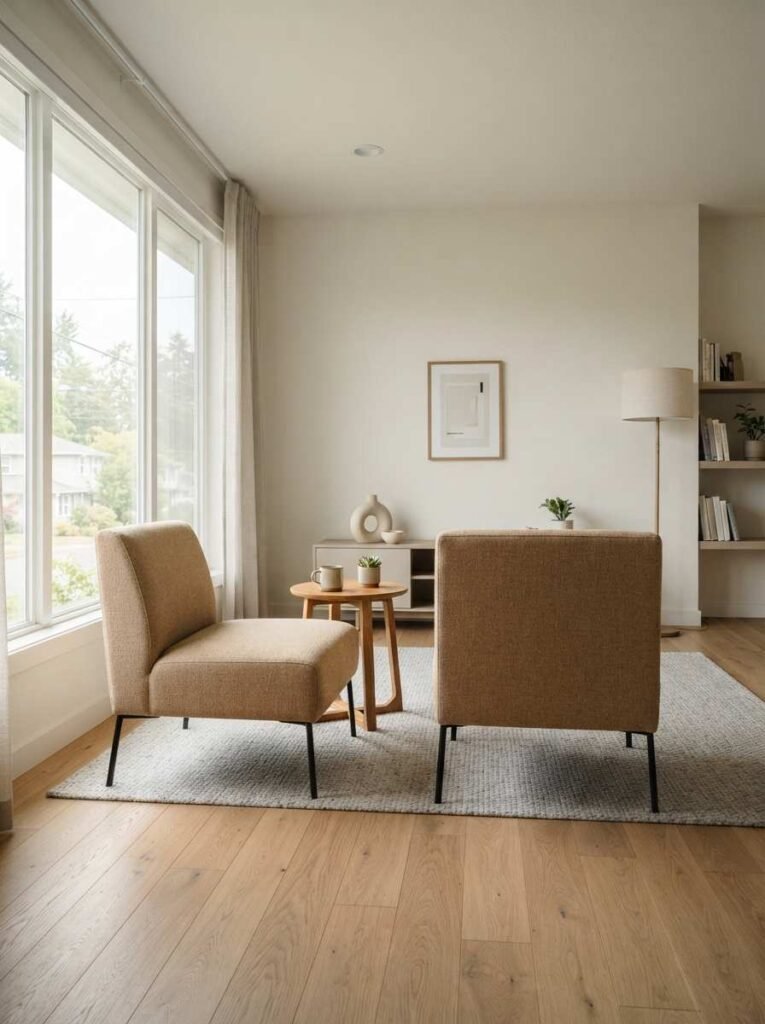
5. Armless chairs. They shave 4 to 6 inches off every seating arrangement without anyone noticing the difference.
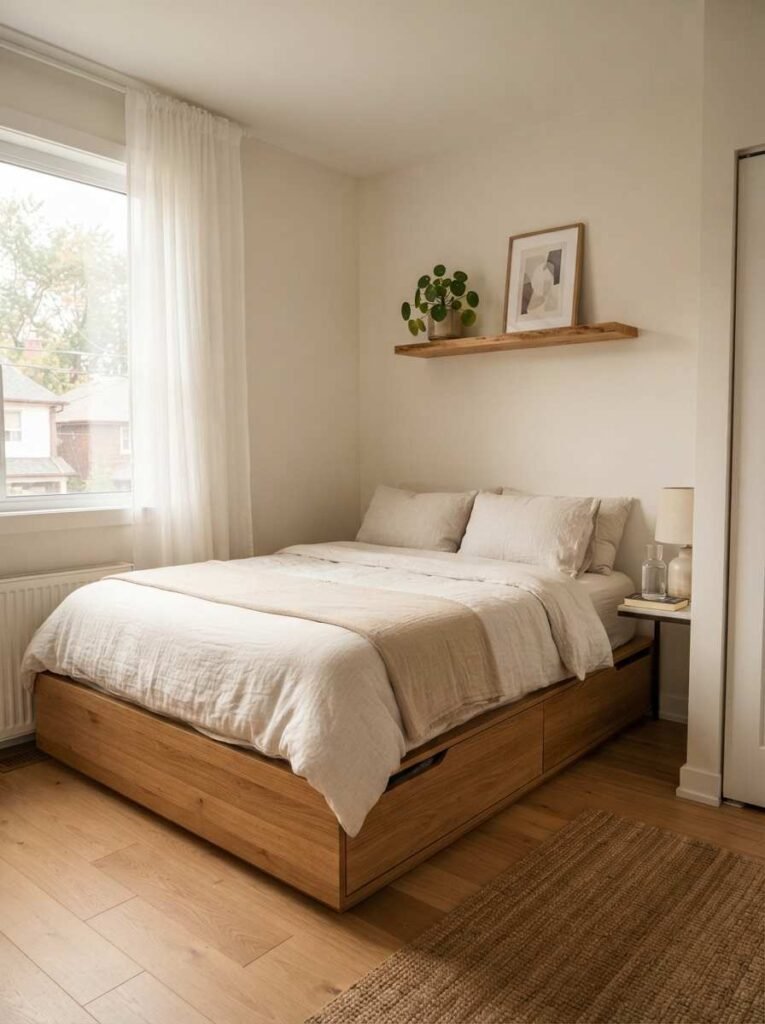
6. A bed frame with built-in drawers. Skip the dresser entirely.
This one’s not glamorous, IMO, but it’s probably the single biggest space-saver on this list.
Storage tricks that don’t scream “storage”
7. Floating shelves above eye level. Vertical space is free real estate. Most people ignore the top third of their walls.
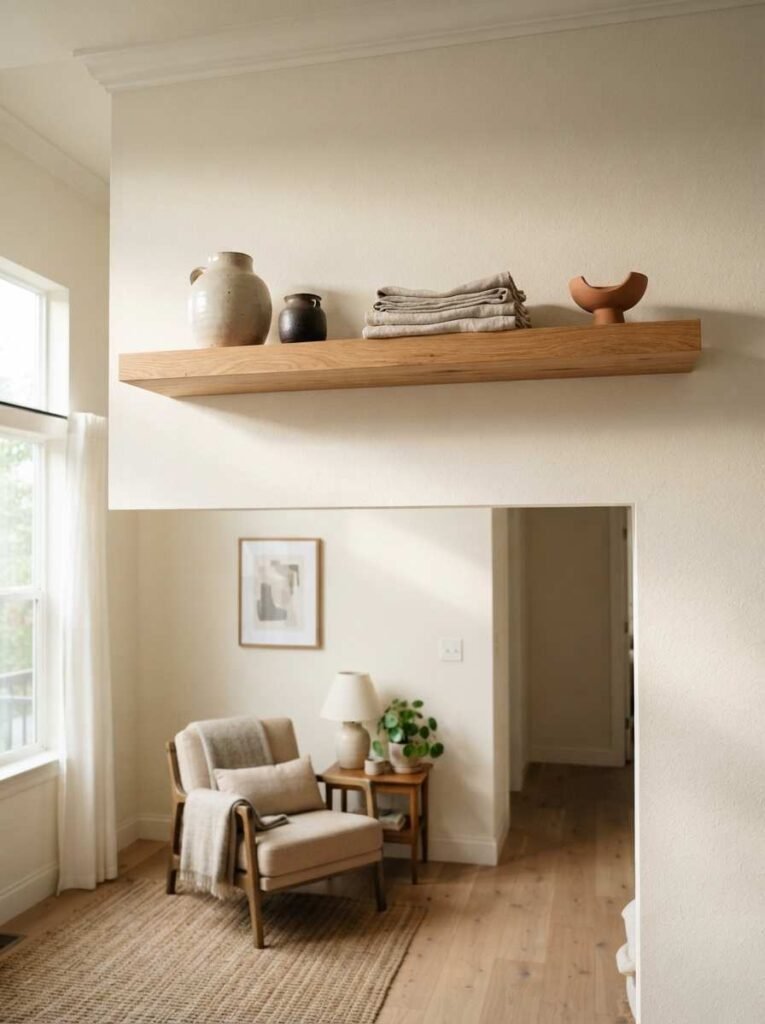
8. Baskets instead of bins. Woven baskets read as decor.
Plastic bins read as a garage. Same function, completely different feeling.
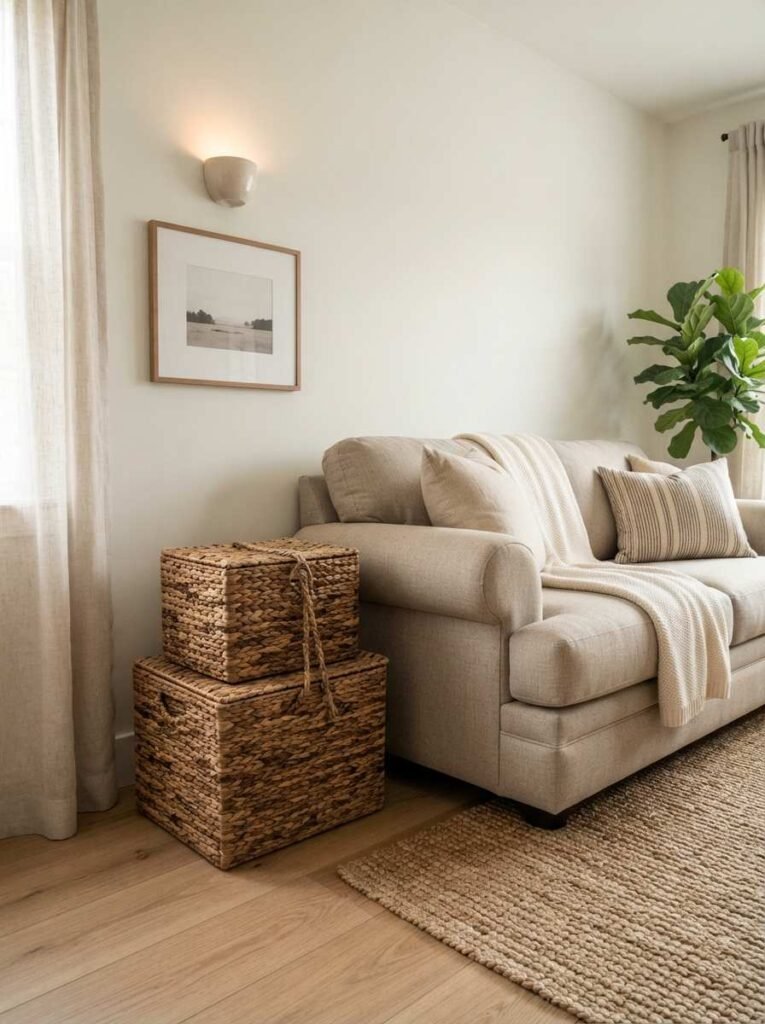
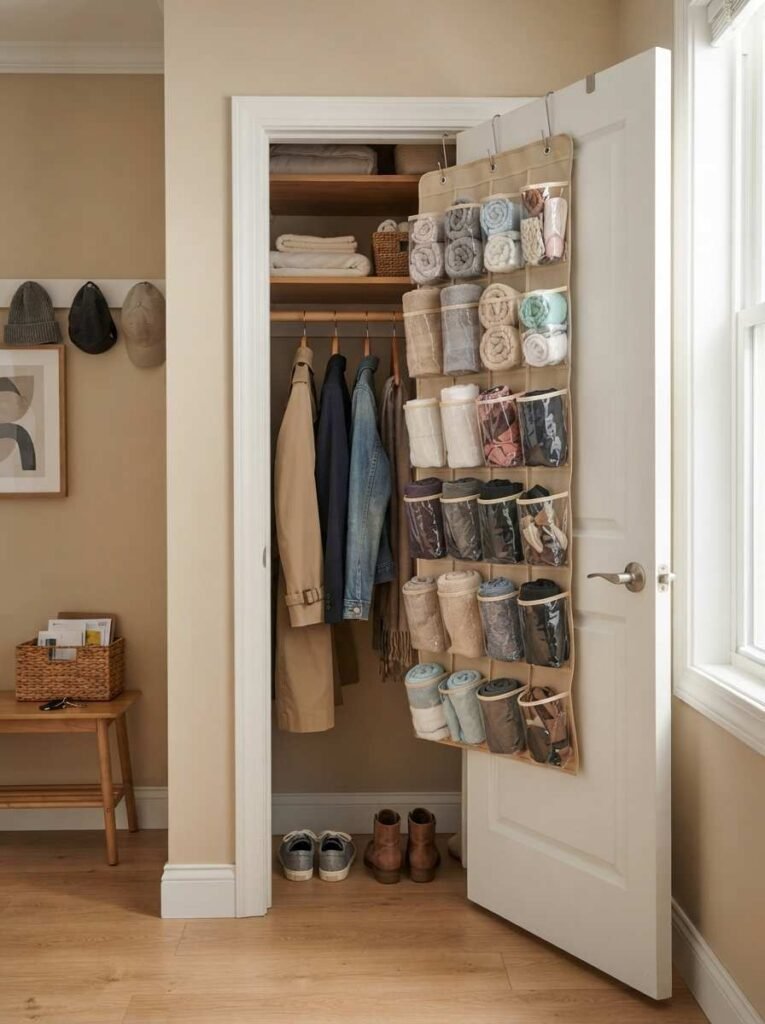
9. Behind-the-door organizers. Shoes, cleaning supplies, whatever. That door swing wastes a good 2 square feet if you let it.
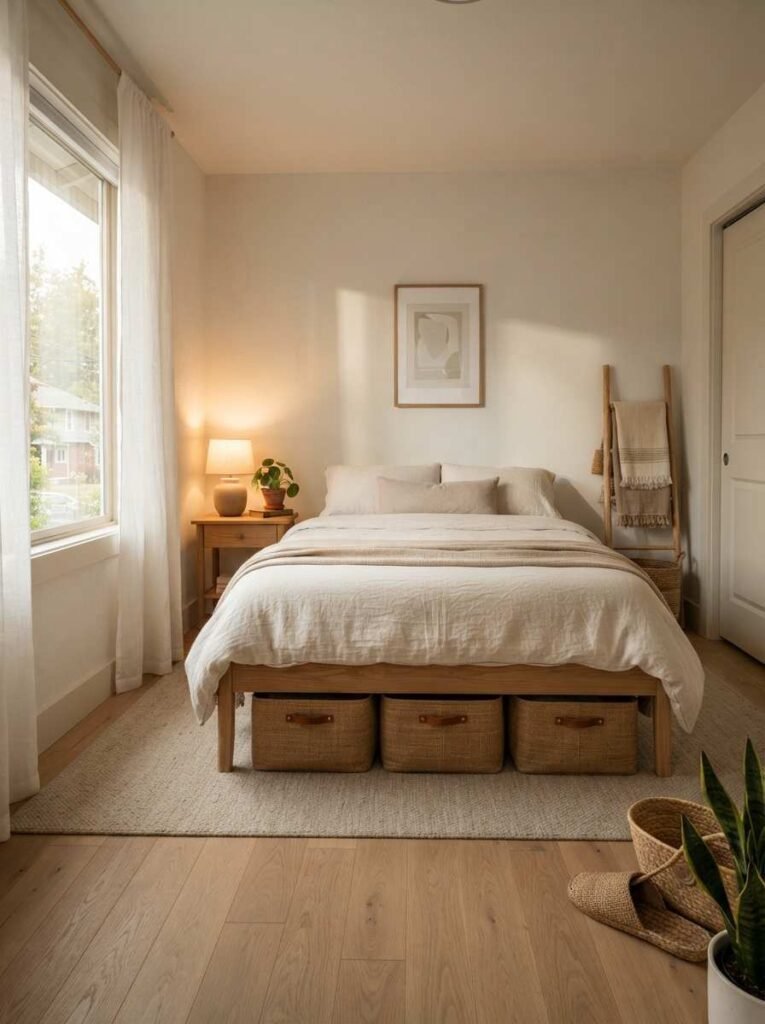
10. Under-bed storage boxes. Obvious, sure. Still underused.
Measure your bed frame clearance before buying, because I didn’t, and I ended up with three boxes that don’t fit anything.
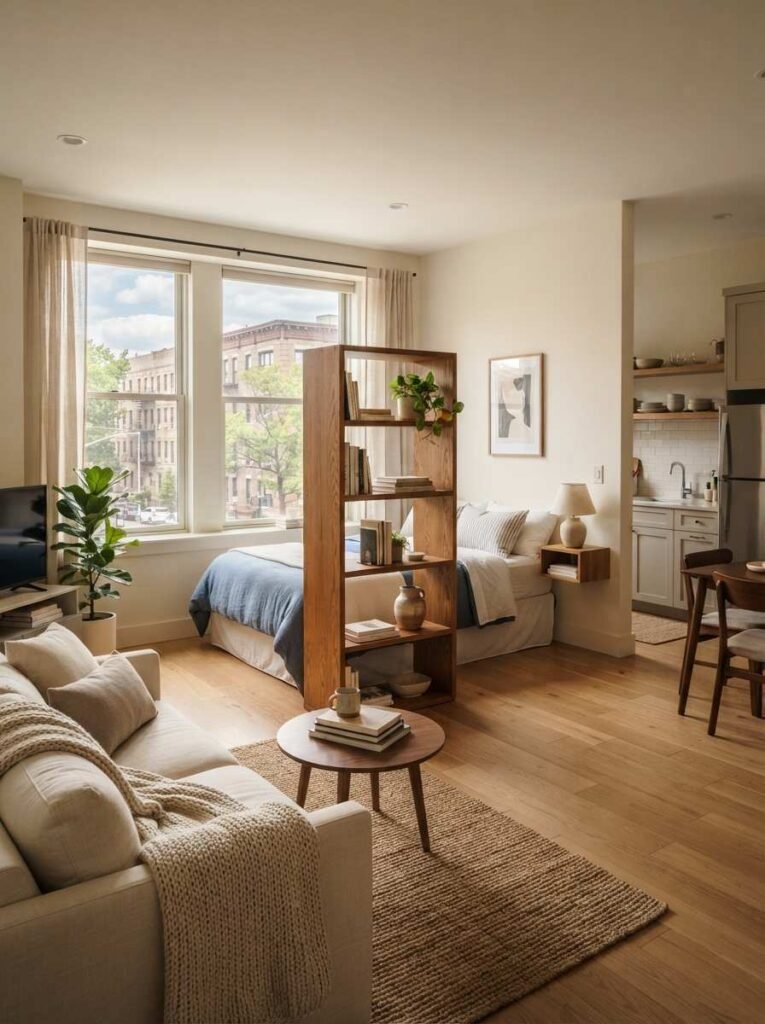
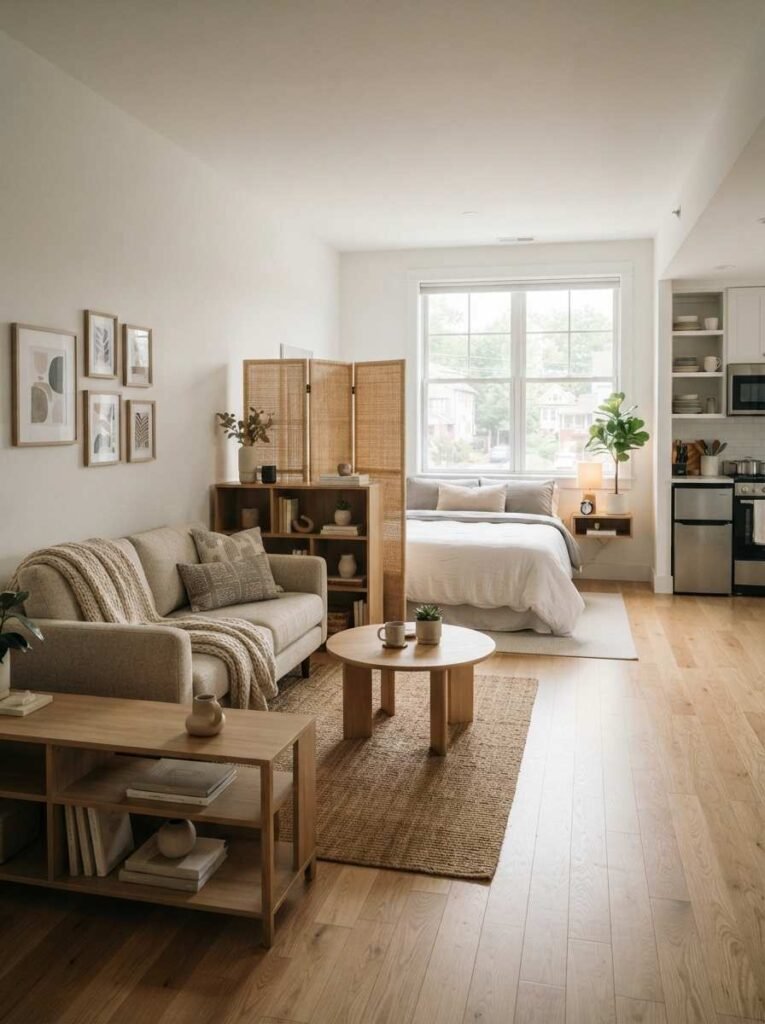
11. A bookshelf as a room divider. Splits a studio into “zones” without a single wall. Open-backed shelving keeps light moving through, so the room doesn’t feel chopped up.
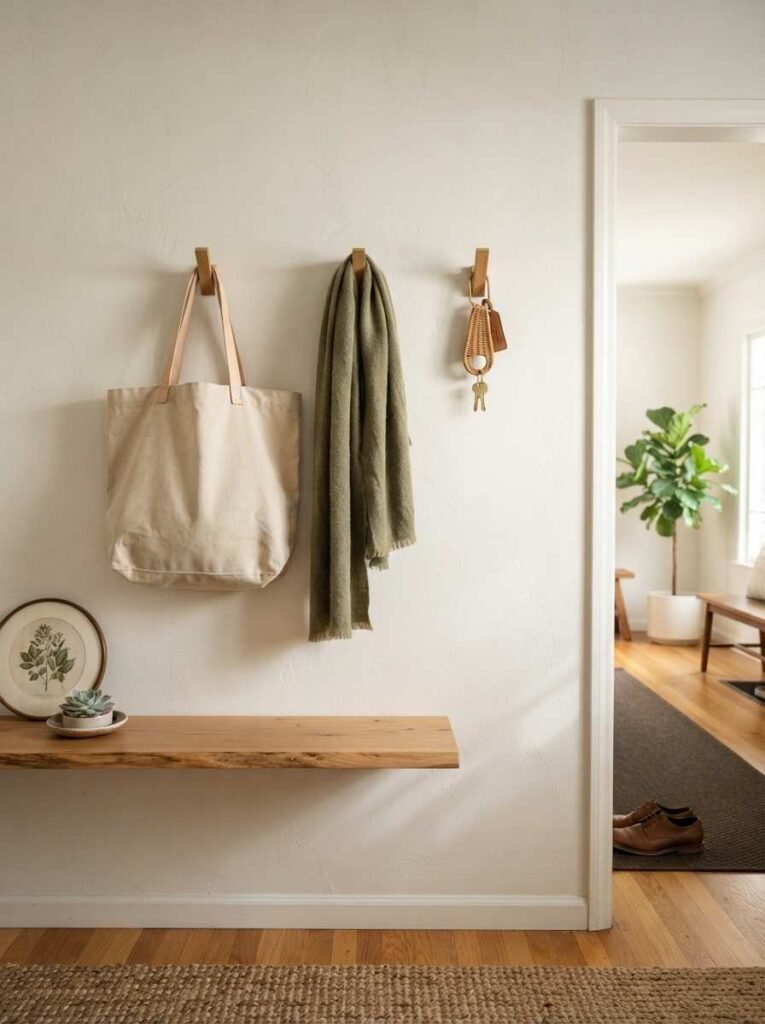
12. Hooks near the entry. Coats, bags, keys, off the floor and off the counter. Cheap fix, big visual payoff.
Color, light, and the illusion of space
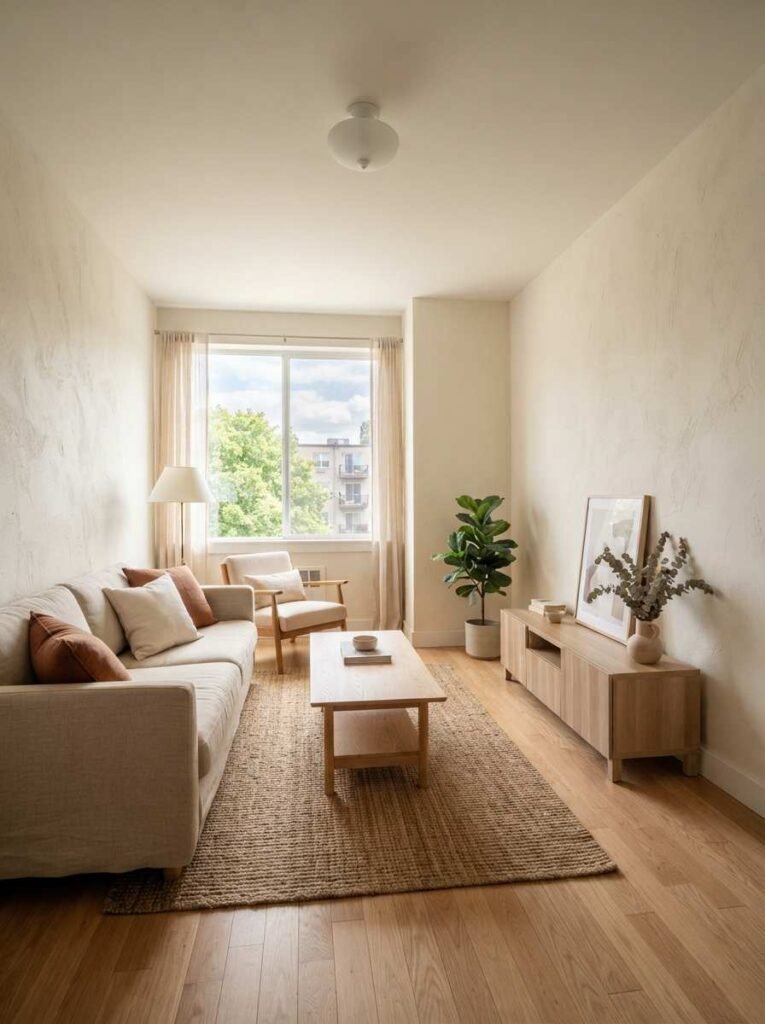
13. A soft, warm white on the walls. Stark white can feel clinical. Warm white (something with a hint of cream) feels bigger and cozier at the same time. This one surprised me. I expected the opposite.
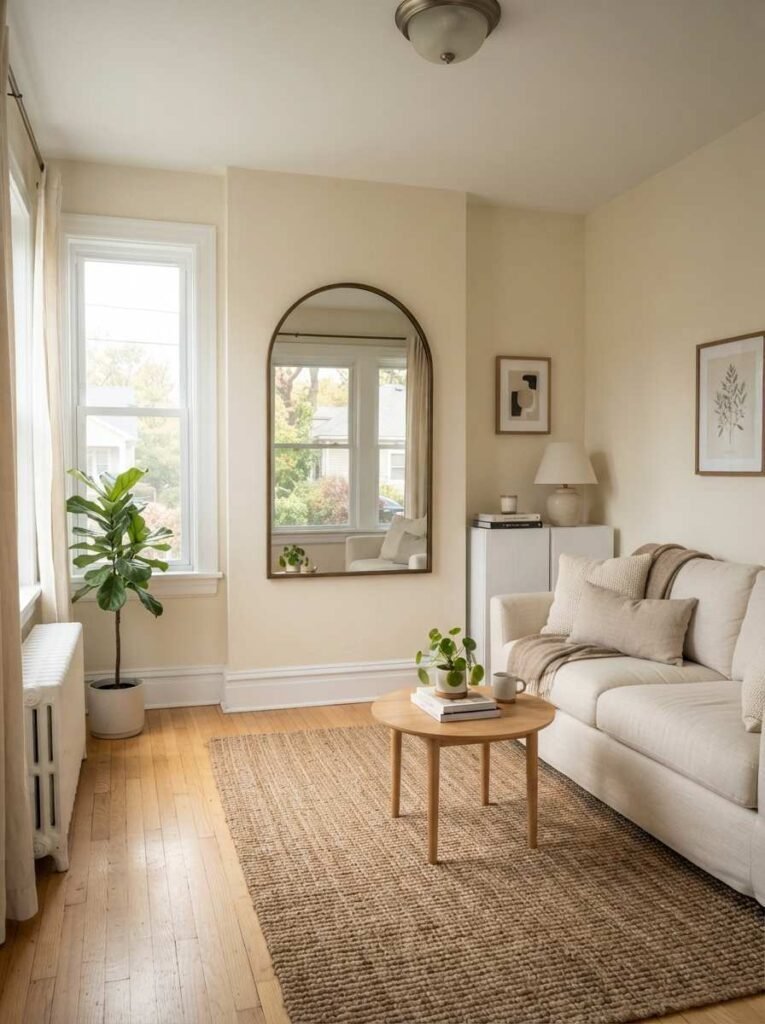
14. One statement mirror, positioned across from a window. Bounces natural light straight across the room.
Apartment Therapy has written about this trick for over a decade, and it still holds up.
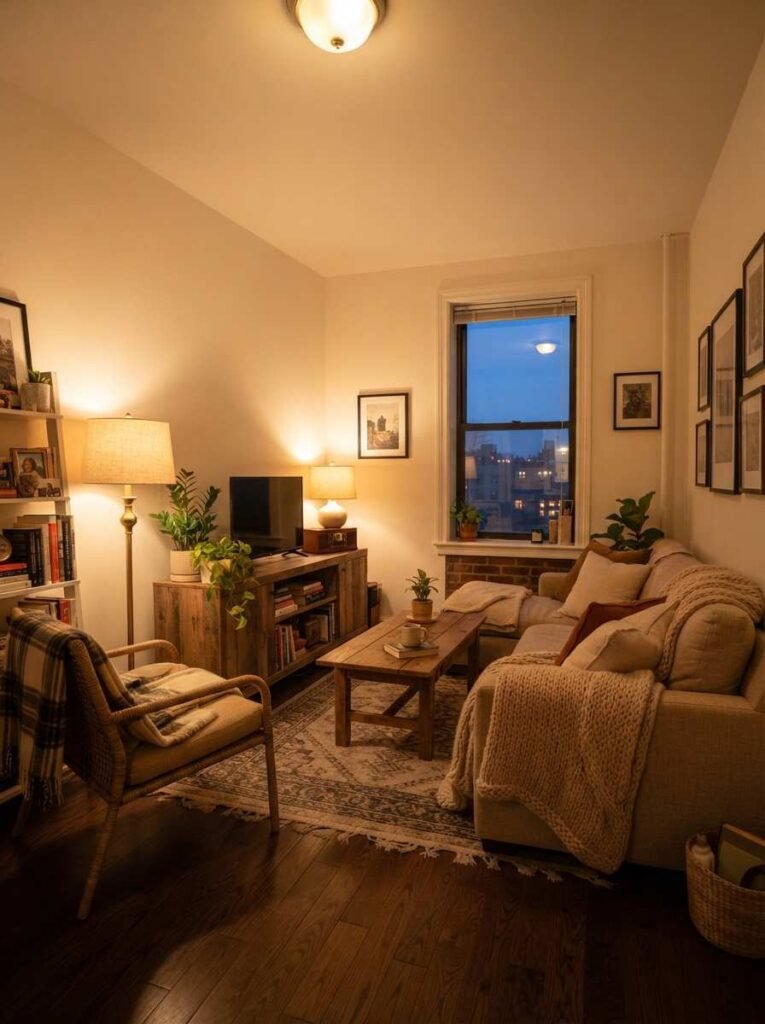
15. Layered lighting instead of one overhead fixture. A floor lamp, a table lamp, and one overhead source, all on different levels, make a small room feel like it has depth it doesn’t actually have.
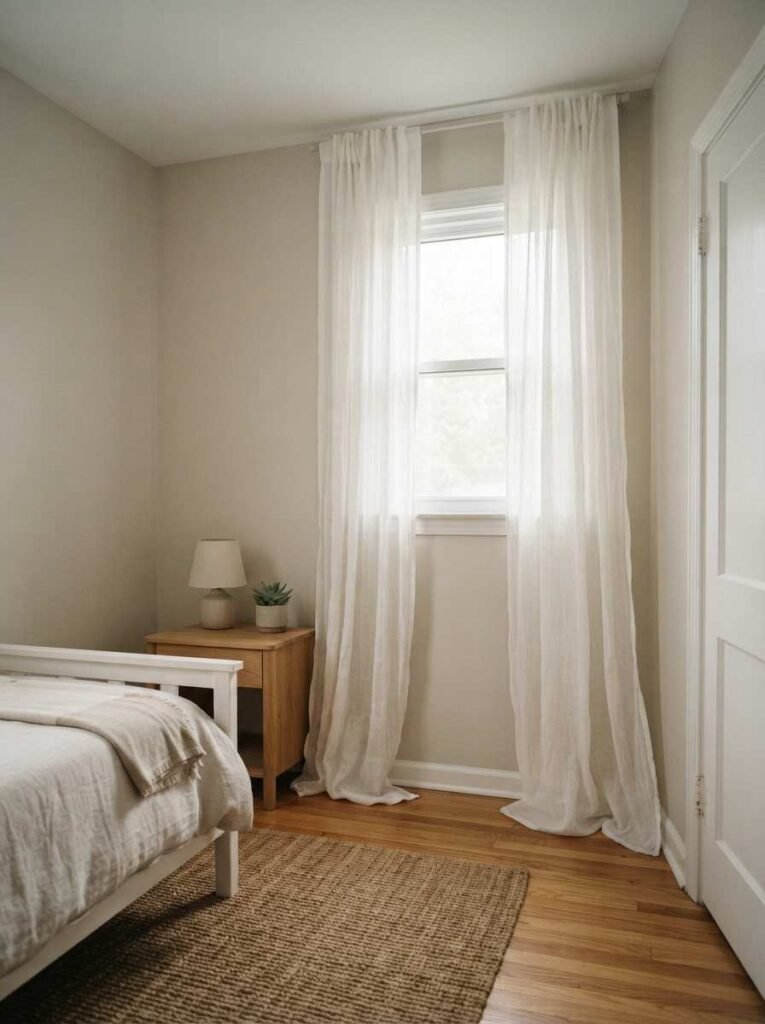
16. Sheer curtains, hung high. Mount the rod a few inches above the window frame. It tricks the eye into reading taller ceilings.
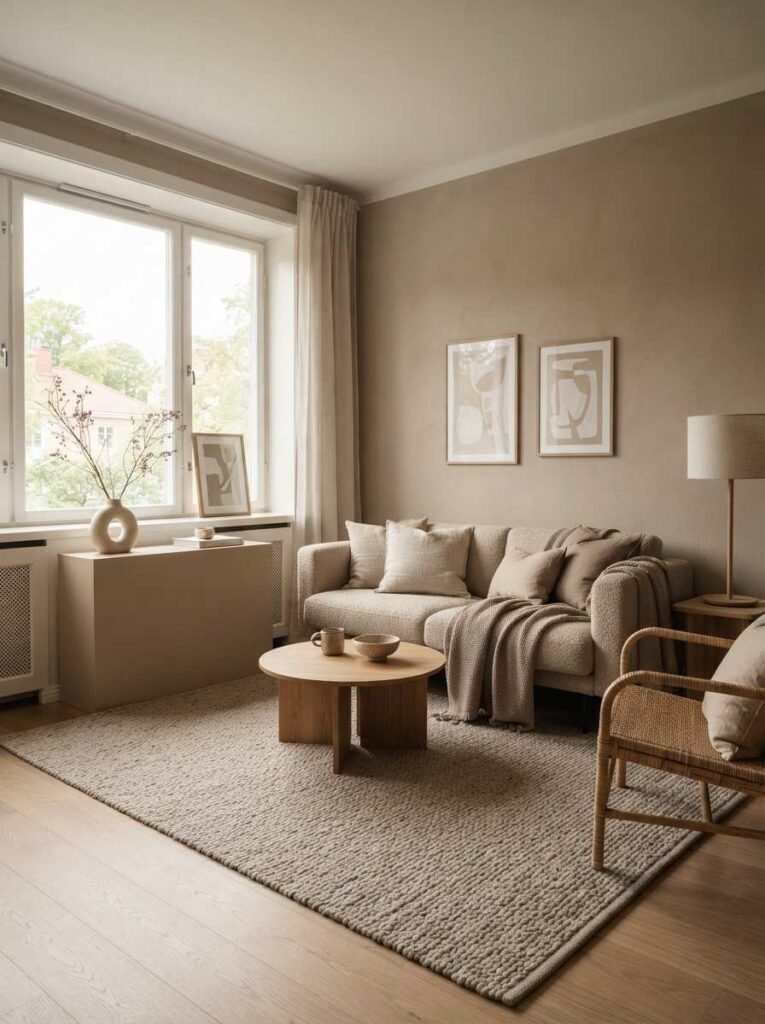
17. Monochrome color palettes. Not boring, just calmer. Pick one base tone and let texture do the rest of the work.
Cozy textures and personal touches
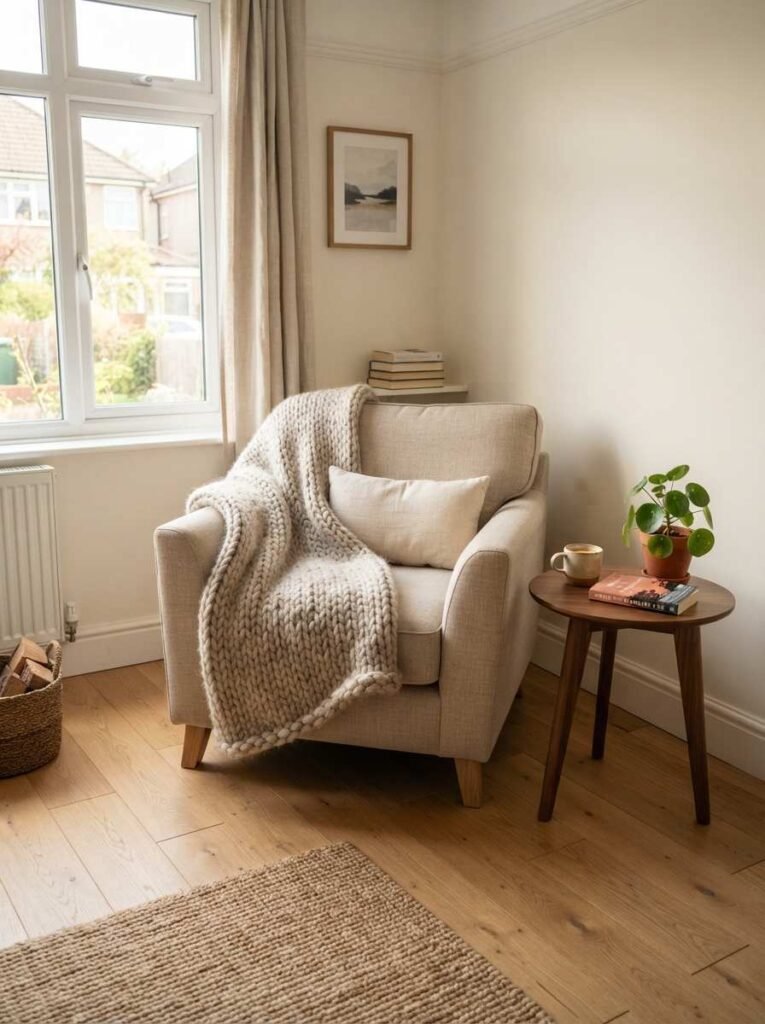
18. Chunky knit throws. Cheap, warm, and they photograph beautifully (relevant if you’re saving this for a Pinterest board, which, let’s be honest, you probably are).
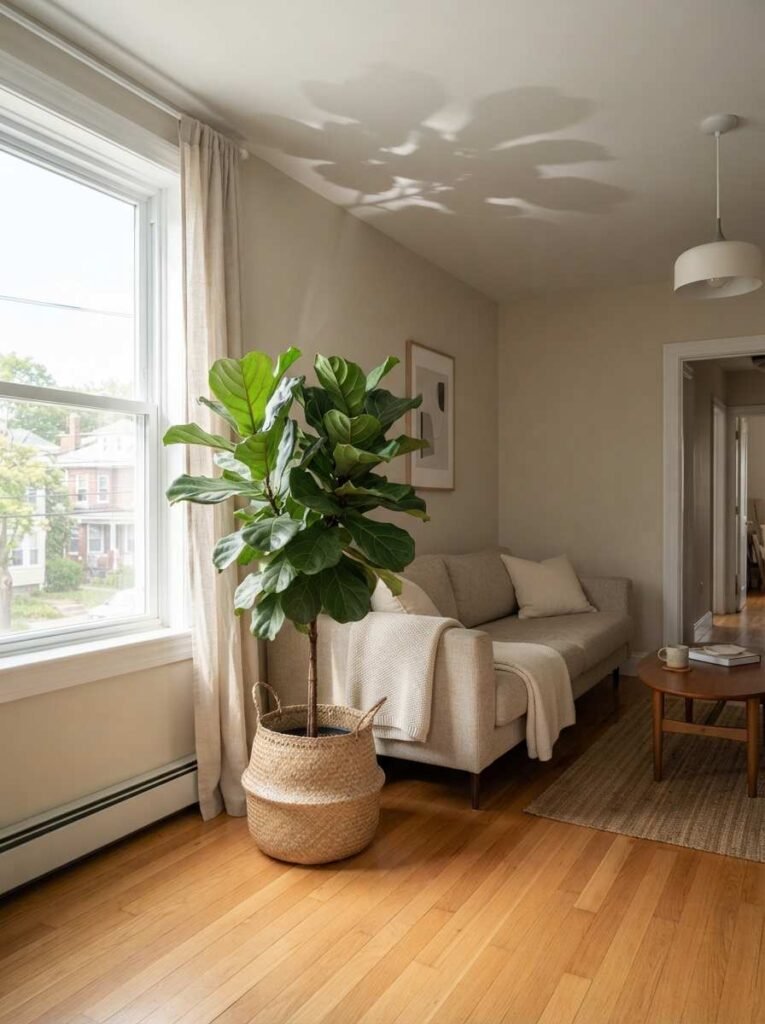
19. A single oversized plant instead of five small ones. One fiddle-leaf fig does more visual work than a windowsill cluttered with succulents. Fewer decisions, bigger impact.
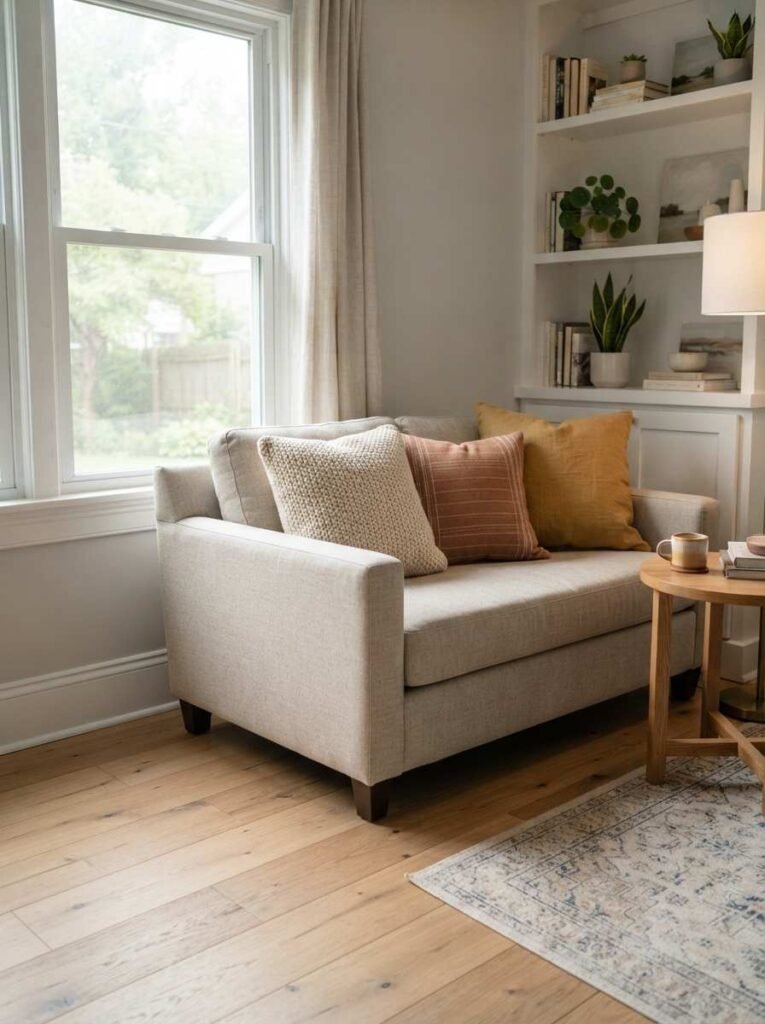
20. Textured throw pillows in 2-3 colors max. More than that and the couch starts looking like a clearance bin.
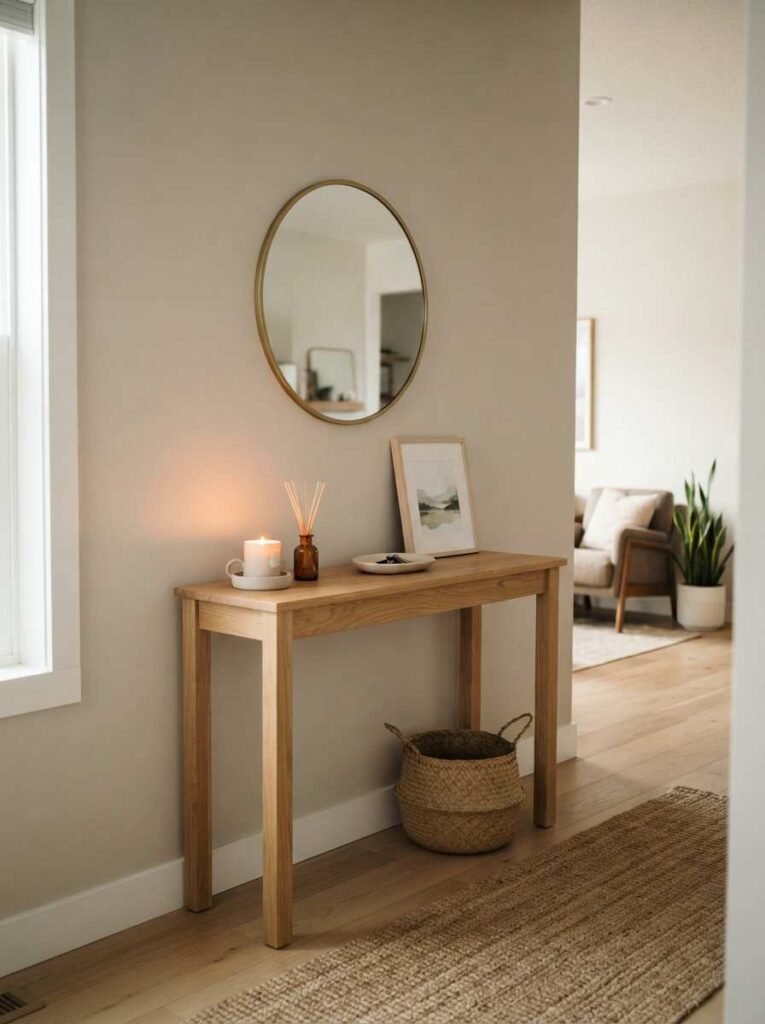
21. Candles or a diffuser near the entry. Scent shapes how “finished” a space feels. This one’s easy to skip and honestly shouldn’t be.
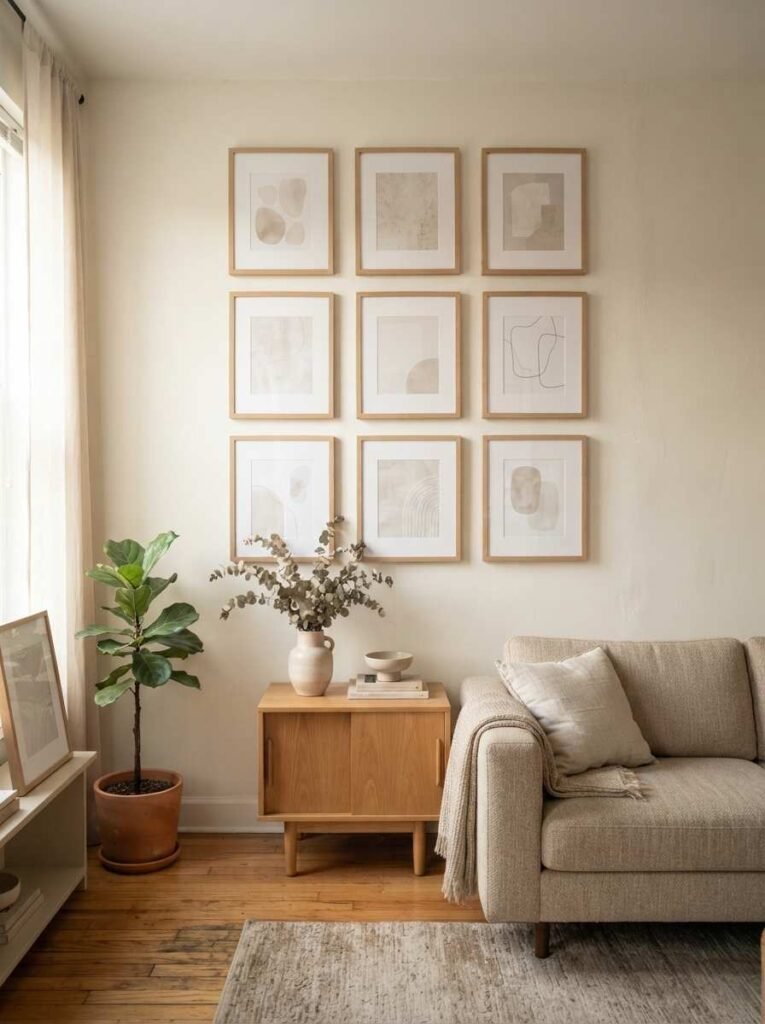
22. A gallery wall with matching frames. Uniform frames, mixed art. Reads intentional instead of chaotic, even with 8 or 9 pieces up.
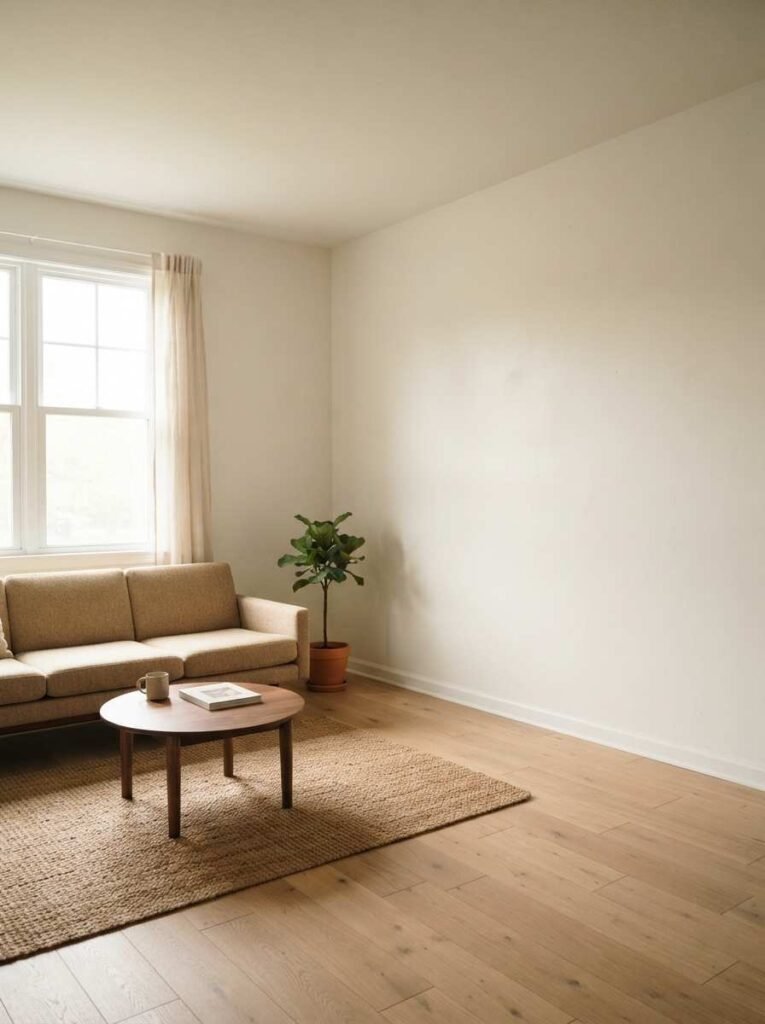
23. Negative space. On purpose. Leave one wall, one shelf, one corner completely empty. Sounds counterintuitive for a “cozy” list, but breathing room is what makes everything else feel calm instead of crammed. This is the one people skip, and it’s the one that matters most.
Quick side note, because I can’t help myself: my cat has claimed the drop-leaf desk as her personal throne, which means “working from home” now involves negotiating desk space with a 12-pound animal. Anyway. Back to the list.
Matching ideas to your actual space
Not every tip on this list fits every layout, and I learned that the hard way after trying to squeeze a room divider into a space that was already too narrow to walk through comfortably.
Studio apartments usually need zoning more than storage. Start with the bookshelf divider (idea 11) and layered lighting (idea 15).
Splitting one open room into “areas” does more for how livable it feels than any single furniture piece.
Small bedrooms benefit most from the bed-with-drawers swap (idea 6) and under-bed boxes (idea 10). Bedrooms get punished by dressers more than any other room, in my experience.
Pull the dresser and the floor space you get back is honestly kind of shocking.
Shared apartments or dorms should lean on renter-friendly fixes: hooks, removable floating shelves, and curtains. Nothing permanent, nothing you’ll have to patch and repaint when you move out.
Home offices carved out of a corner work best with the wall-mounted drop-leaf desk (idea 4) and one statement mirror behind the monitor to bounce light into video calls.
Small detail, but it matters more than people expect on a Zoom screen.
If you only take one thing from this section, let it be this: match the fix to the actual problem in your room, not the prettiest photo on your Pinterest board.
A gorgeous gallery wall won’t solve a storage problem, and a fancy storage ottoman won’t fix a room that just feels dark.
A quick comparison for small-space priorities
| Priority | Best fix | Rough cost | Effort |
|---|---|---|---|
| Feels cramped | Add a large mirror across from a window | Low | 15 minutes |
| Storage overflow | Under-bed boxes plus wall shelving | Low-medium | 1 afternoon |
| Feels cold or bare | Layered lighting, one chunky throw | Low | 1 hour |
| Furniture too bulky | Swap sofa for a daybed or armless chairs | Medium-high | 1 weekend |
Frequently asked questions
Do small spaces need a strict color rule to look bigger? Not strict, but consistent. A tight palette with one accent tone reads calmer than five competing colors. You can still have personality within that.
Is minimalist decor expensive? Not necessarily. Some of the biggest wins here, negative space, a mirror placement, fewer throw pillows, cost nothing at all. The furniture swaps cost more, but you don’t need all 23 ideas at once.
Can renters actually do most of this? Yes. Command hooks, floating shelves with removable mounts, curtain rods, and furniture swaps don’t require touching a wall permanently.
A handful of these came straight from my own rental, and my landlord never noticed a thing.
How many of these ideas should I try at once? Start with 2 or 3, and pick the ones that solve your biggest complaint about the room right now. Wow, I know that sounds anticlimactic after a list of 23, but doing everything at once tends to make a small room feel like a showroom instead of your home. Give each change a week before adding the next one.
A friend of mine used to say her studio apartment “felt like it was holding its breath.” That stuck with me, mostly because I knew exactly what she meant.
Overcrowded rooms feel tense, even when nothing’s technically wrong with them. The fixes above aren’t about making a small space look bigger than it is.
That’s a losing game anyway, and anyone who’s stood in a 300-square-foot apartment knows you can’t photograph your way out of that. They’re about making the space feel like it belongs to you instead of just holding your stuff.
I’ll be honest, some of these took me longer to warm up to than others.
The negative space one, especially. I spent a solid year filling every empty surface out of some vague anxiety that “bare” meant “unfinished.” It took visiting a friend’s much emptier, much calmer apartment to realize I had it backwards the whole time.
So, which one are you trying first? Drop it in your notes app, pin this list, or just start with the mirror trick tonight and see how the room feels tomorrow morning.
Small spaces don’t need to shrink your life. They just need a little more intention than the rest of the internet gives them credit for.
