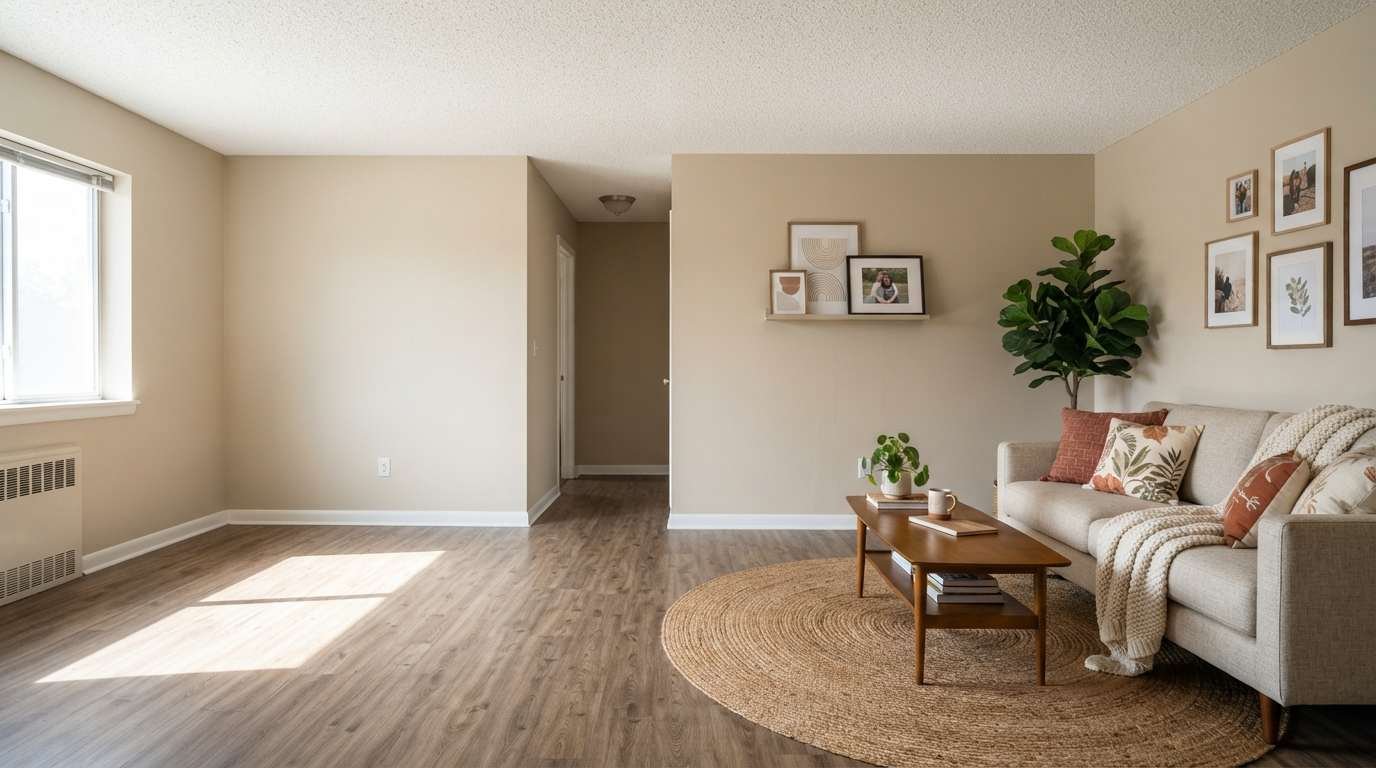
I moved into my first rental with a security deposit I could not afford to lose and a Pinterest board full of ideas I absolutely could not afford to buy. Sound familiar?
That gap between “inspiration” and “actual bank account” is where most renters get stuck.
You want a space that feels like you, not like a landlord’s idea of neutral. But you also want that deposit back. Good news: you can have both.
I have lived in five different rentals over the last 8 years, and I have tested nearly every trick on this list myself.
Some worked beautifully. A couple were a disaster (looking at you, cheap stick-on tile that peeled within a week). What follows is the real list, the one I wish someone had handed me before my first move-in day.
Why renters need a different decorating playbook
Homeowners get to drill, paint, and knock down walls.
Renters get a lease agreement and a strongly worded clause about “returning the unit to its original condition.” That single sentence changes everything about how you decorate.
The trick is not to decorate less. It is to decorate smarter.
Command strips, peel-and-stick materials, and furniture placement can do almost everything permanent fixtures do, minus the risk.
Once you start thinking this way, the limitations stop feeling like limitations.
Use removable wallpaper on one accent wall
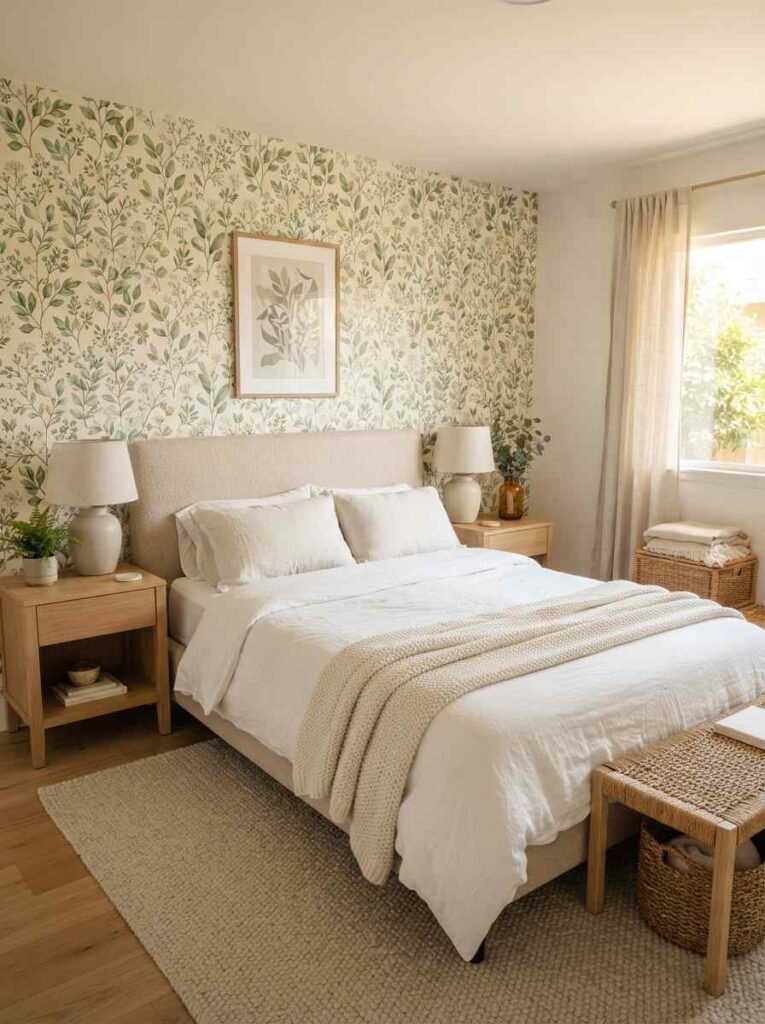
Peel-and-stick wallpaper has genuinely gotten good. The stuff from a decade ago used to bubble and peel at the corners within weeks.
Today’s versions hold up for months, sometimes years, and come off clean when you are ready to move.
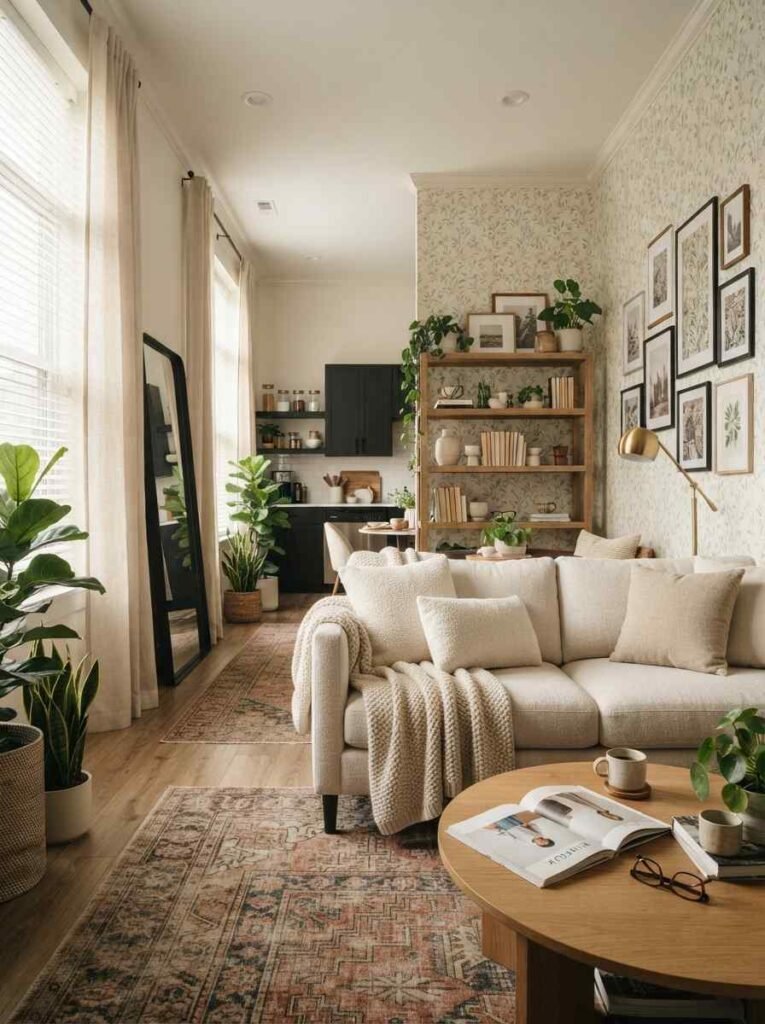
Pick one wall, maybe behind your bed or sofa, and go a little bold. A patterned accent wall does more for a room’s personality than four plain white walls ever will.
The DIY Playbook has a solid rundown of how this actually performs over time if you want a second opinion before committing.
Hang art with adhesive strips, not nails
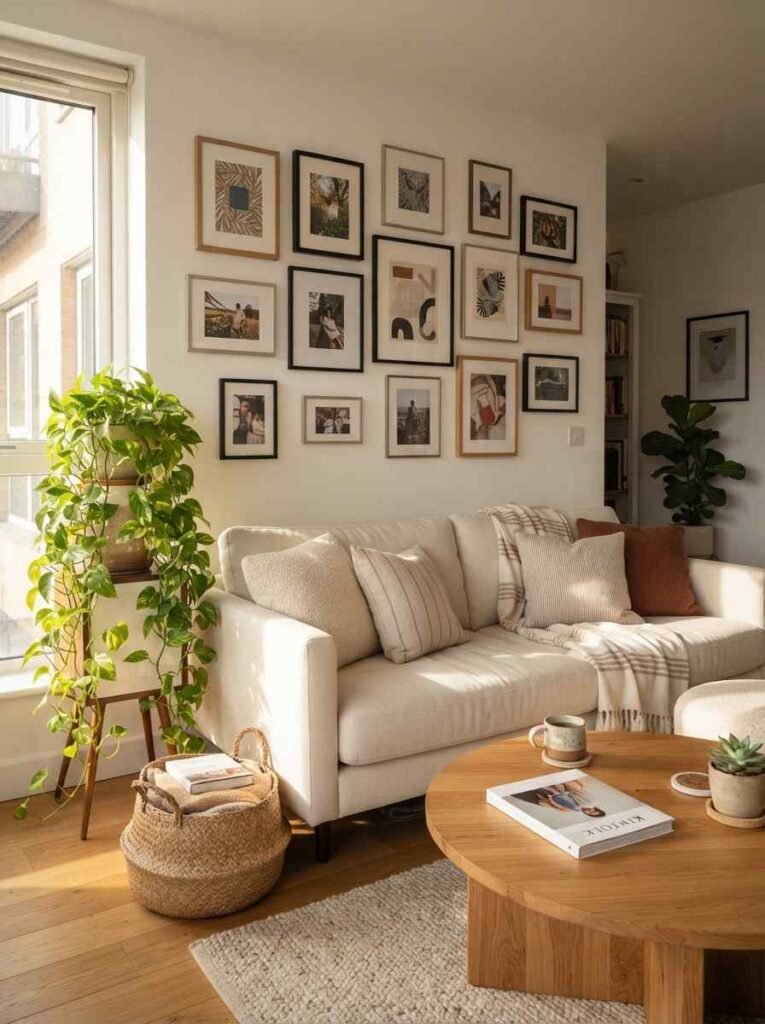
Command strips exist for a reason, and that reason is your security deposit.
They hold surprising amounts of weight when applied correctly (clean the wall first, and let them sit for an hour before hanging anything).
Build a small gallery wall using strips instead of nails. If you mess up the layout, you just move the piece. Try doing that with a nail hole.
Layer rugs to hide ugly flooring
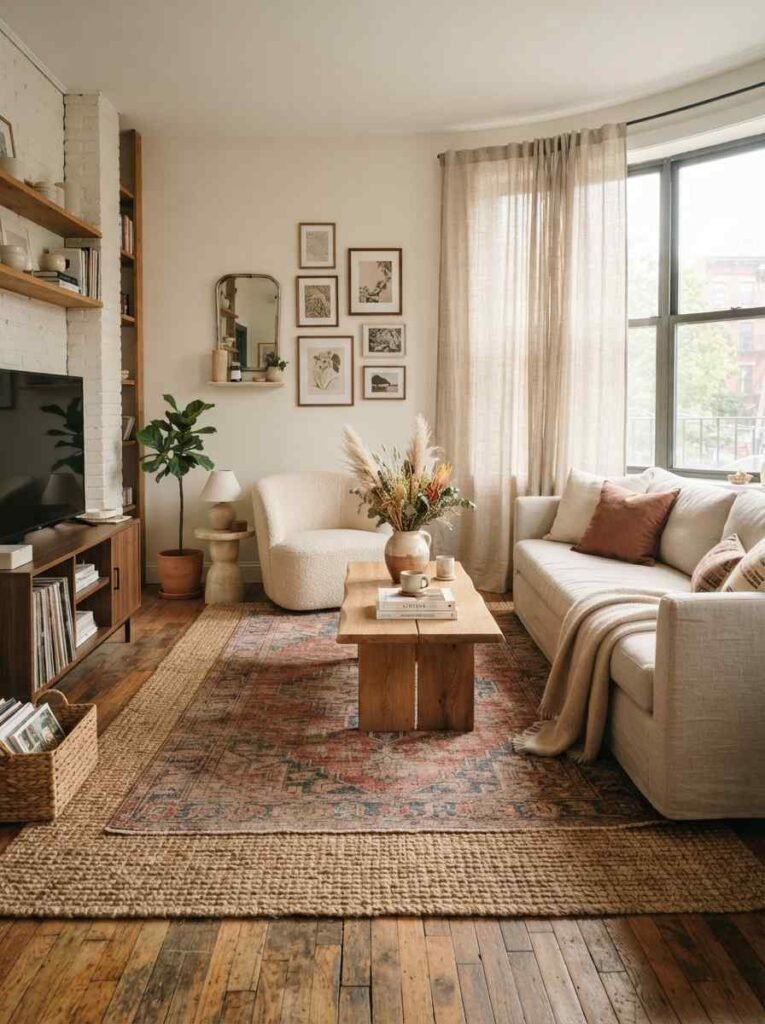
Rental flooring is rarely a design choice. It is whatever was cheapest and most durable at the time.
A large area rug fixes this instantly and adds warmth underfoot.
Layering two rugs, a big neutral one under a smaller patterned one, gives a room texture without needing a single tool. This is one of my favorite low-effort, high-impact tricks.
Swap out cabinet hardware
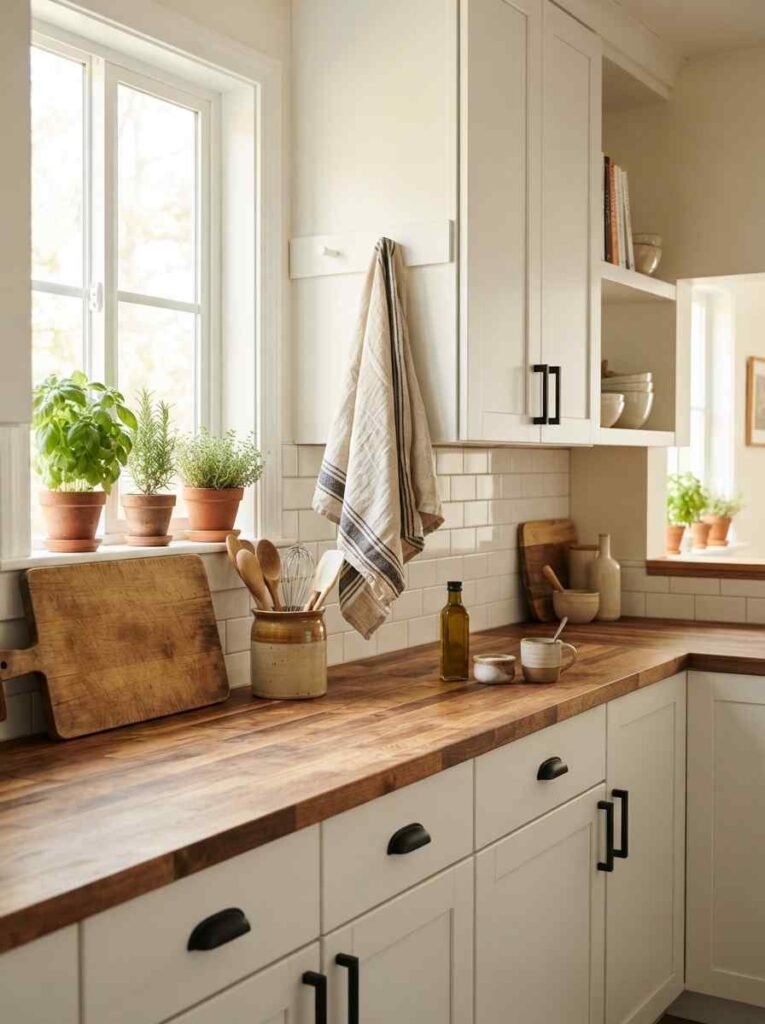
Kitchen and bathroom cabinets often look dated because of one thing: cheap builder-grade knobs.
New hardware costs very little and takes about 20 minutes with a screwdriver.
Keep the old hardware in a labeled bag so you can reinstall it before you move out. Landlords rarely notice new knobs, but they will notice missing ones.
Add a leaning mirror
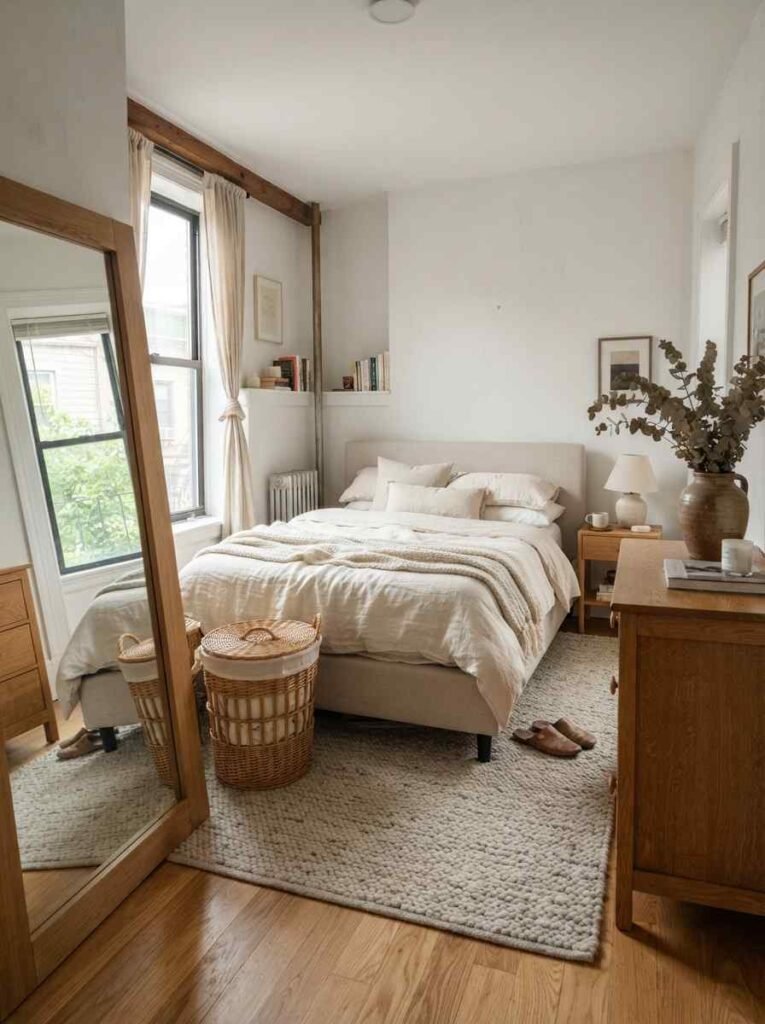
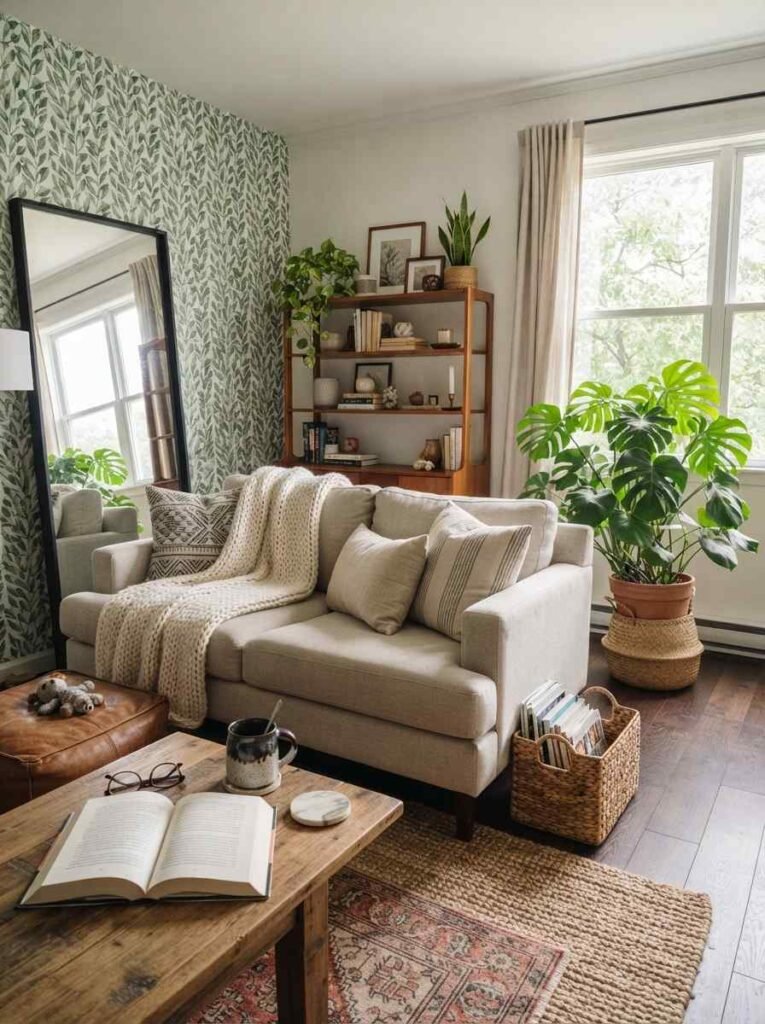
A large leaning mirror against a wall does two jobs at once: it bounces light around a room and makes a small space feel noticeably bigger.
No mounting hardware required.
I bought mine secondhand for 40 dollars and it has moved with me through three apartments. Honestly, it might be the best decor purchase I have ever made.
Use tension rods instead of curtain rods
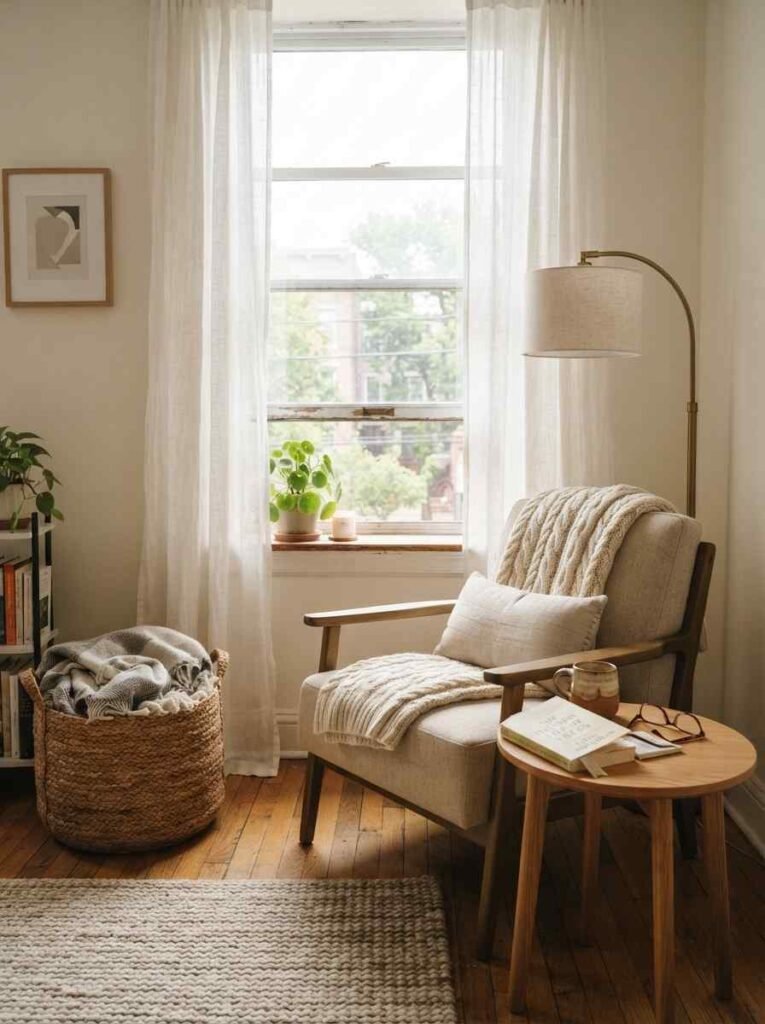
Tension rods wedge into place without screws, which makes them perfect for renters.
Use them for curtains, or get creative and use one to divide a closet or create a hanging plant display.
Bring in plants, real or faux
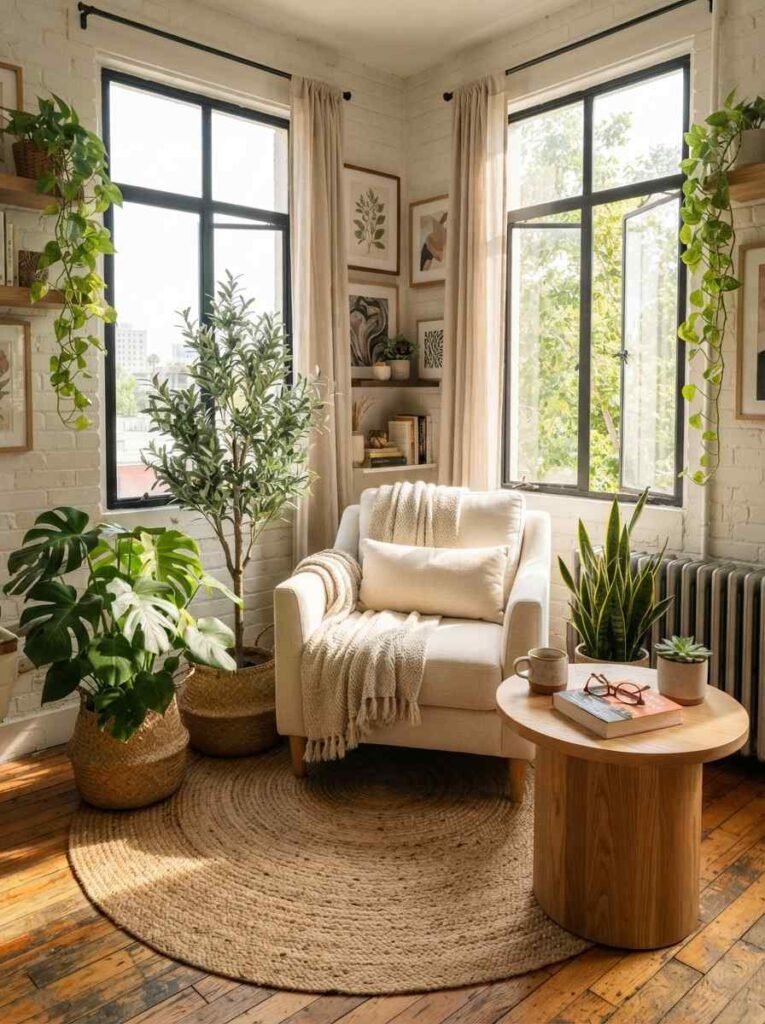
Plants soften a space in a way almost nothing else does.
If you do not trust yourself to keep something alive (no judgment, I killed three pothos before figuring it out), high-quality faux plants have come a long way.
A cluster of plants near a window changes the entire feel of a living room. Cheap, reversible, and genuinely effective.
Try removable wall decals
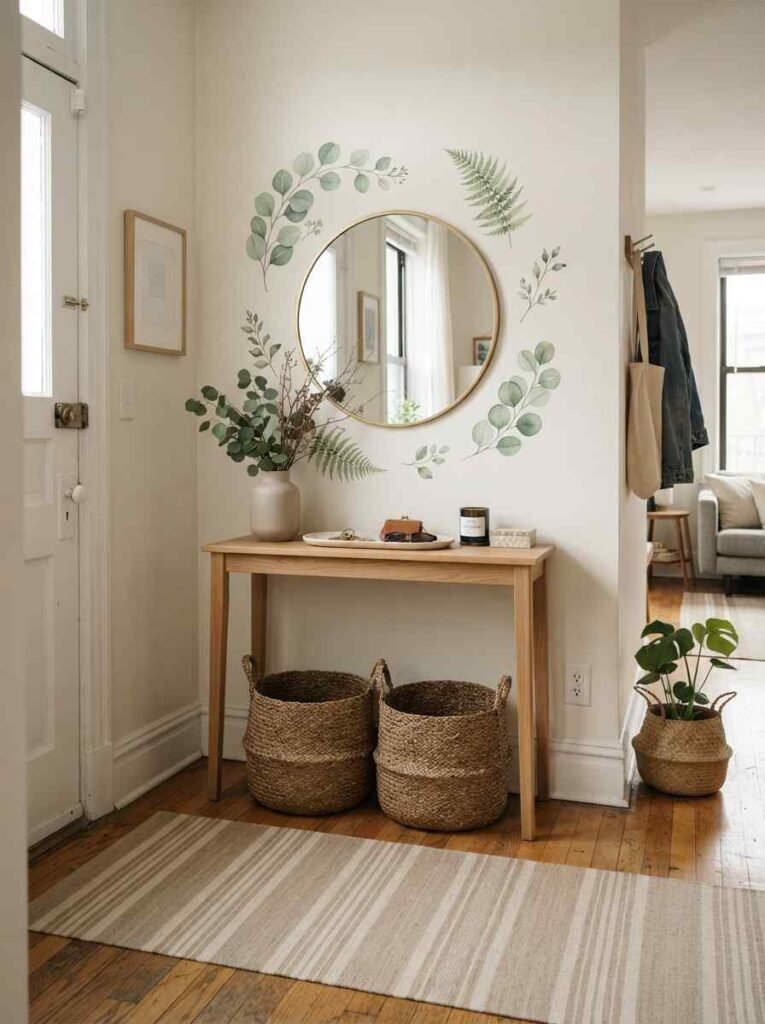
Decals are the low-commitment cousin of wallpaper.
They work great in smaller spaces like a bathroom, entryway, or above a headboard where full wallpaper might feel like overkill.
Upgrade your lighting with plug-in fixtures
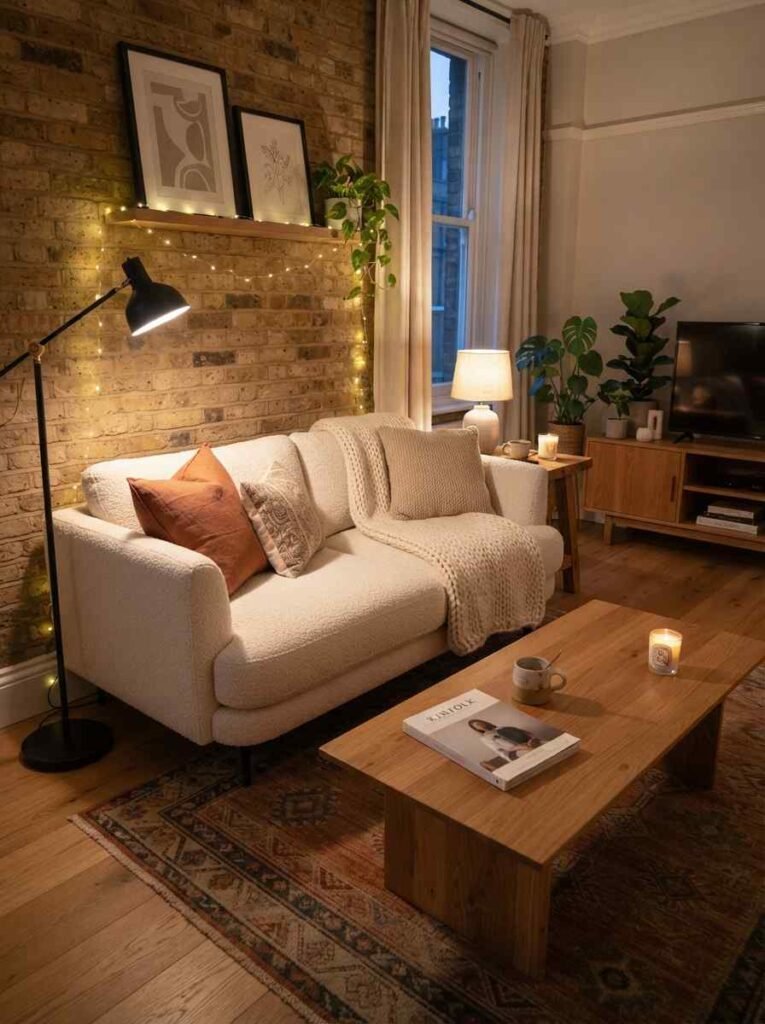
Overhead lighting in rentals tends to be harsh and unflattering.
Swap it out mentally, not literally, by adding plug-in floor lamps, table lamps, and string lights instead.
Warm-toned bulbs make an enormous difference. This is genuinely one of the cheapest ways to make a rental feel like a home instead of an office.
Use a room divider for open layouts
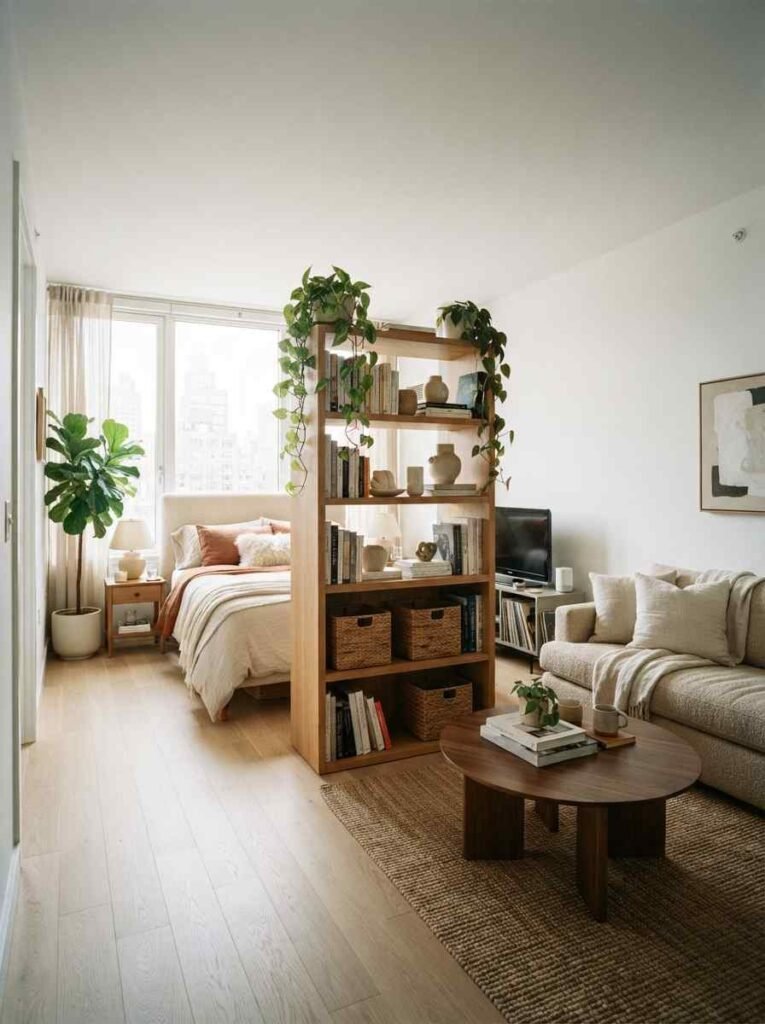
Studio apartments and open floor plans benefit hugely from a folding screen or bookshelf used as a divider.
It creates a visual “bedroom” or “office” zone without a single wall going up.
Add texture with throw pillows and blankets
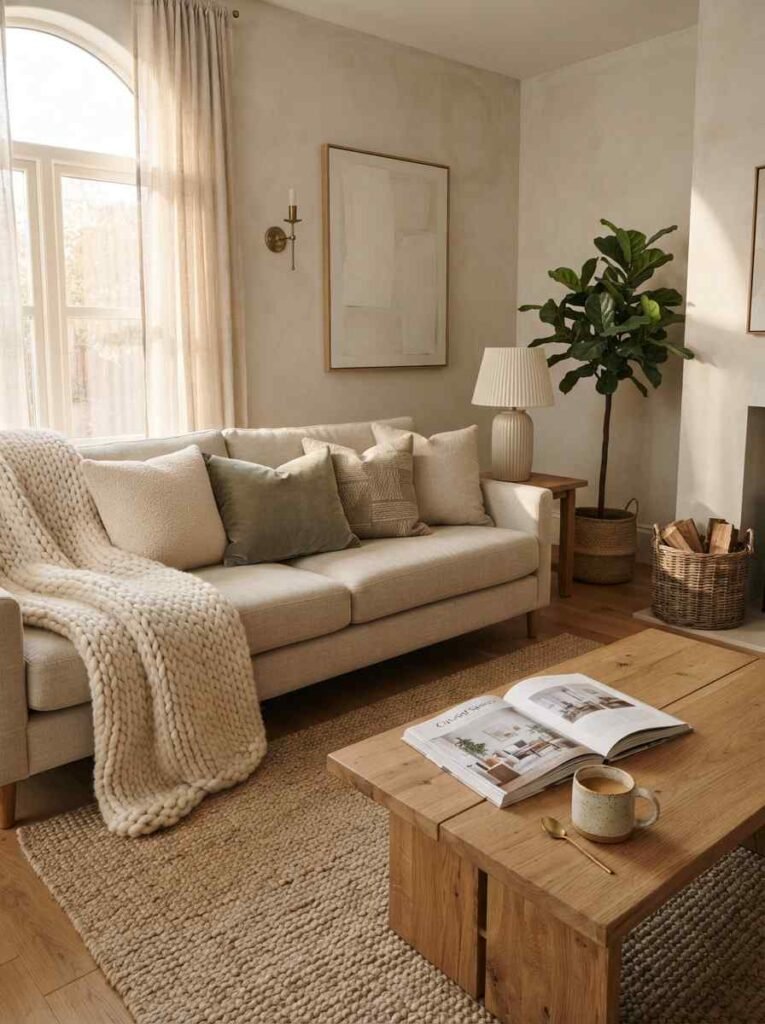
This one sounds obvious, but hear me out: most people underbuy here. A couch with two matching pillows looks fine.
A couch with five mixed textures and a chunky knit throw looks intentional.
Frame fabric instead of buying expensive art
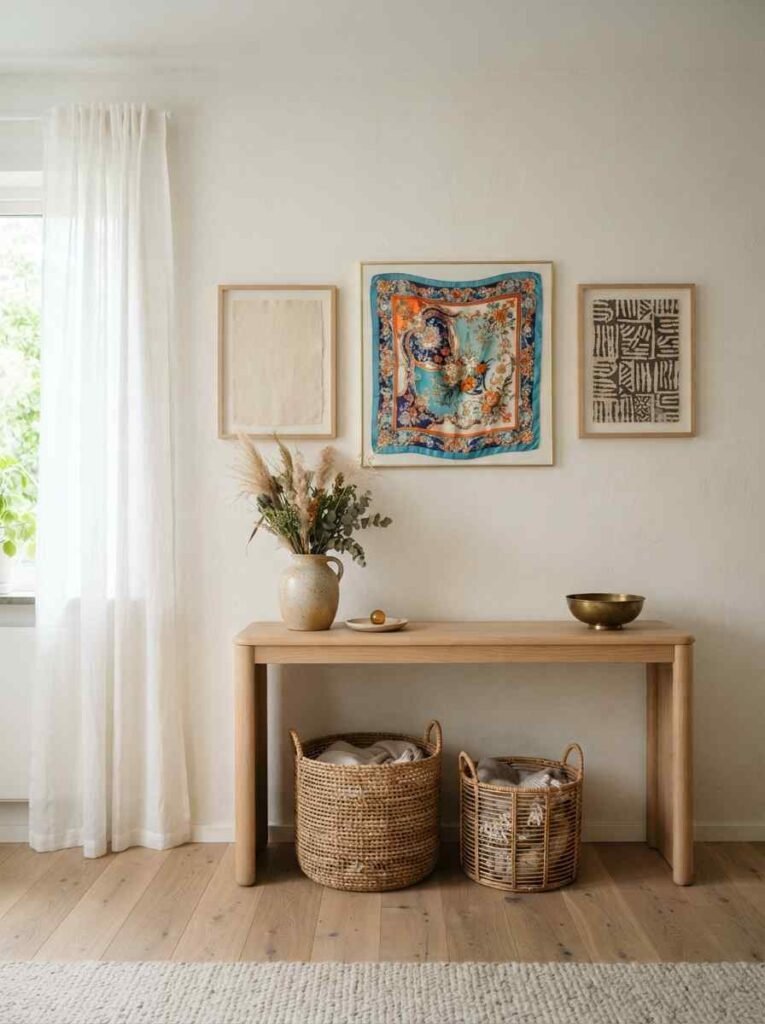
Fabric remnants, scarves, or even a nice tea towel look surprisingly elevated when stretched over a canvas frame or hung with clips.
This costs a fraction of framed prints and looks just as good from across the room.
Use command hooks in the kitchen
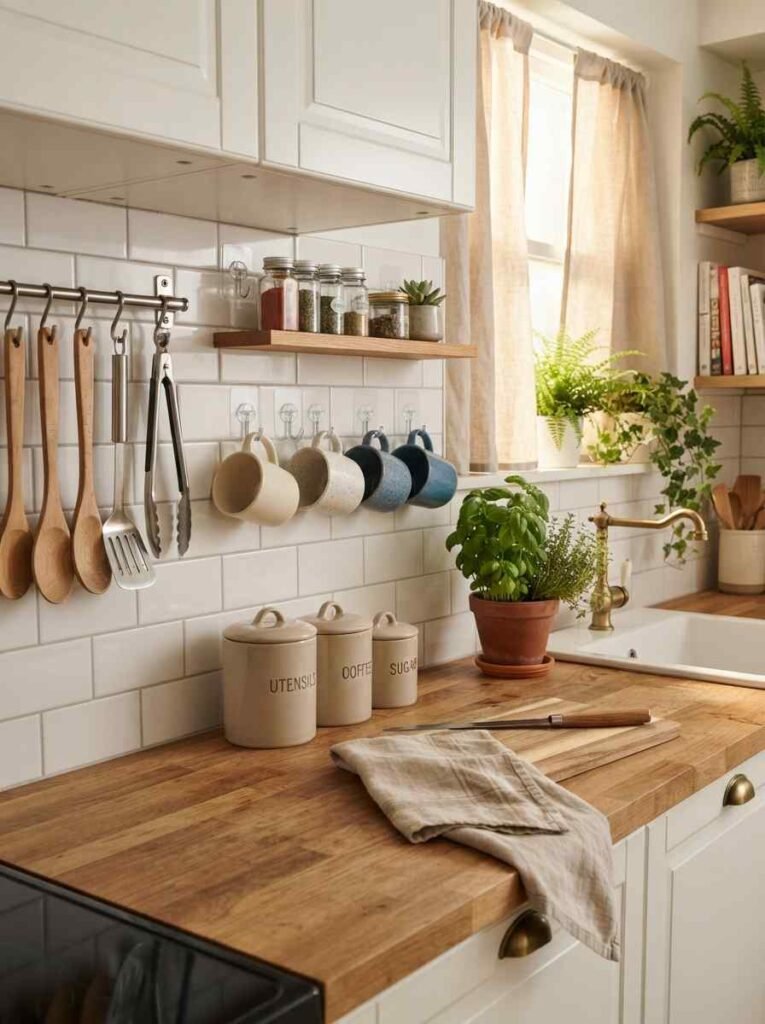
Vertical space in rental kitchens is almost always wasted. Command hooks let you hang pots, utensils, or a small shelf without drilling into cabinets or tile.
Add a statement headboard
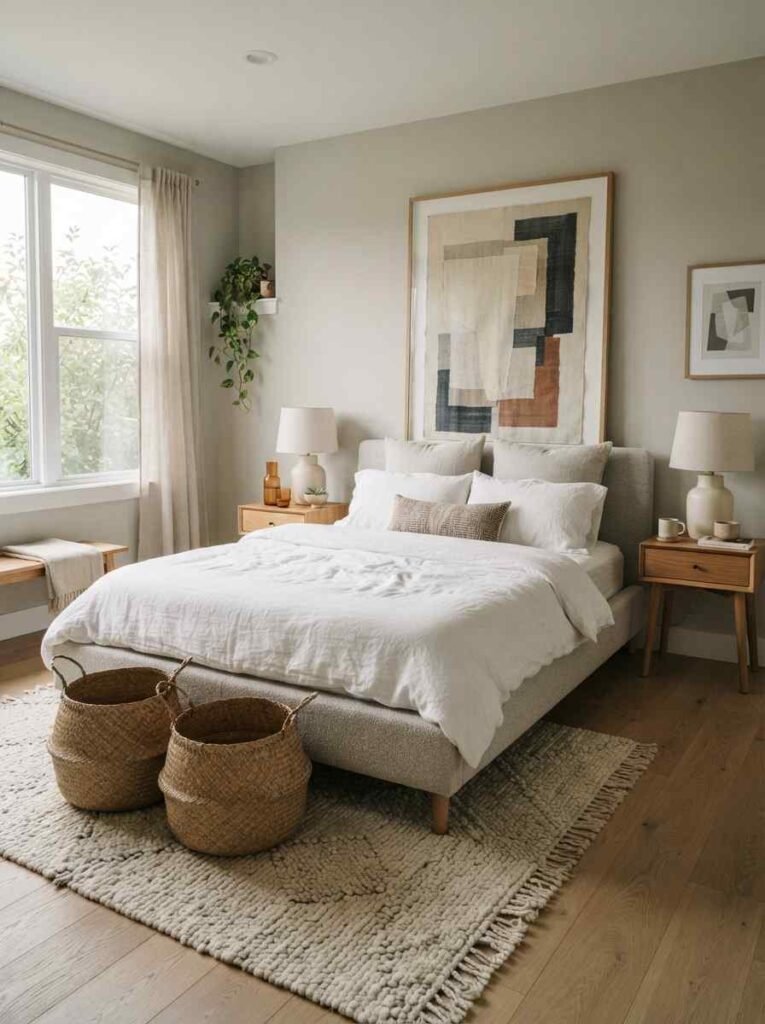
Renting does not mean your bed has to look like a dorm room. Lean a large framed piece of fabric or an oversized print against the wall behind your bed to fake a headboard.
Repaint with removable paint (where allowed)
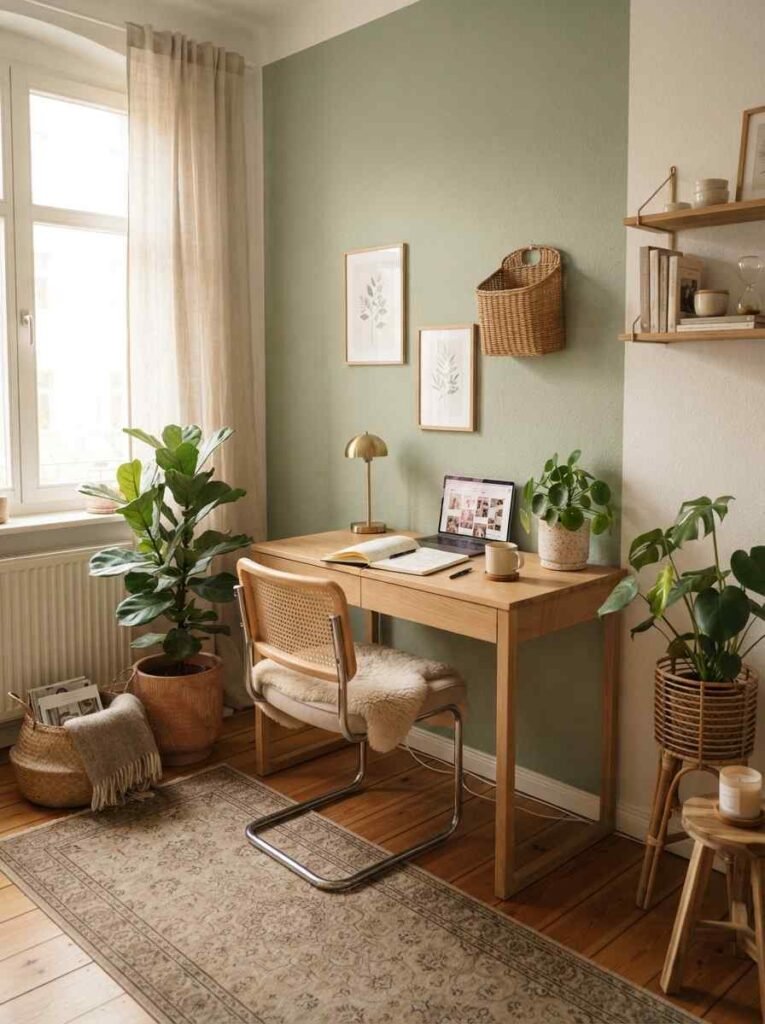
Some landlords now allow specific removable or peelable paint products. Always get this in writing before you touch a brush.
When it is allowed, it is one of the biggest visual upgrades on this entire list.
Use furniture to define zones
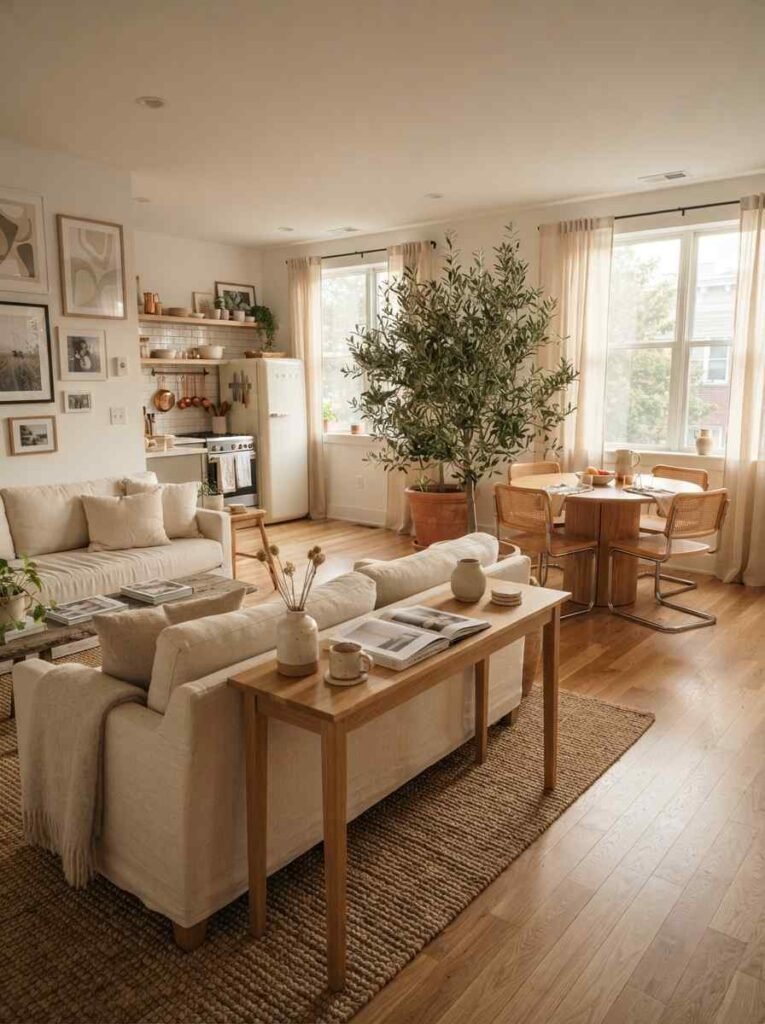
In small or open apartments, a bookshelf, console table, or even a large plant can act as a soft boundary between “living room” and “dining area” without any construction involved.
Add a runner rug in the hallway or kitchen
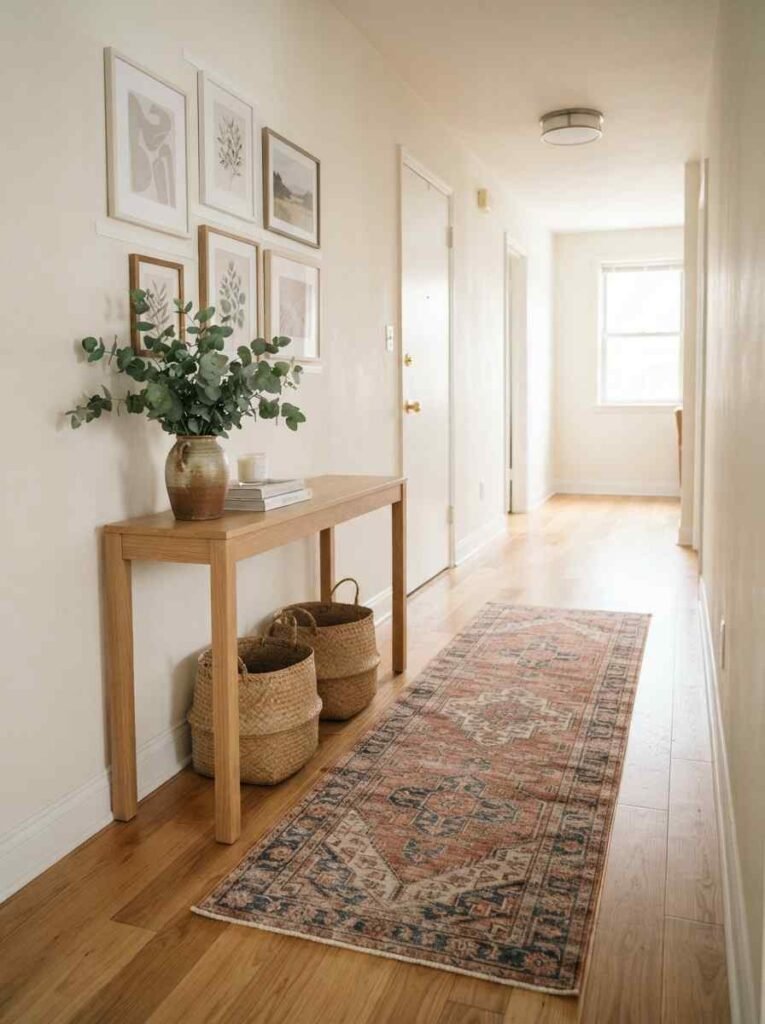
Hallways in rentals are almost always neglected. A simple runner rug adds color and softens footsteps, and it is one of the cheapest square-footage upgrades you can make.
Style your bookshelf like a designer would
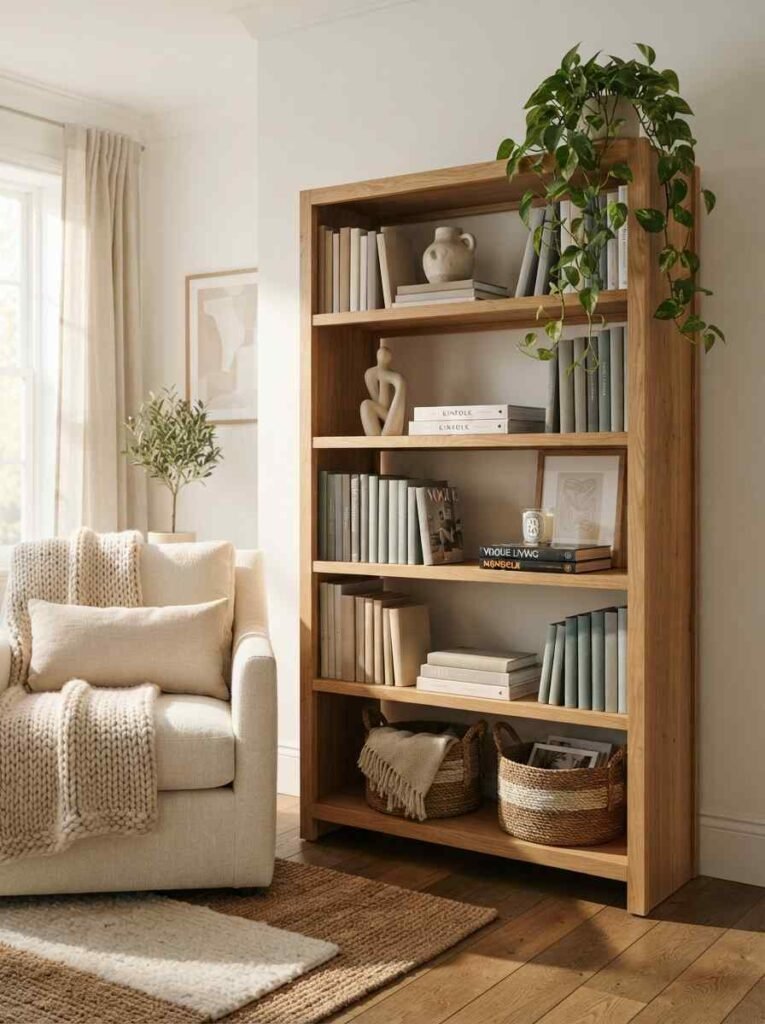
Group books by color, mix in small plants or candles, and leave some negative space. A packed, chaotic shelf reads as clutter. A styled one reads as intentional.
Use adhesive tile decals in the bathroom
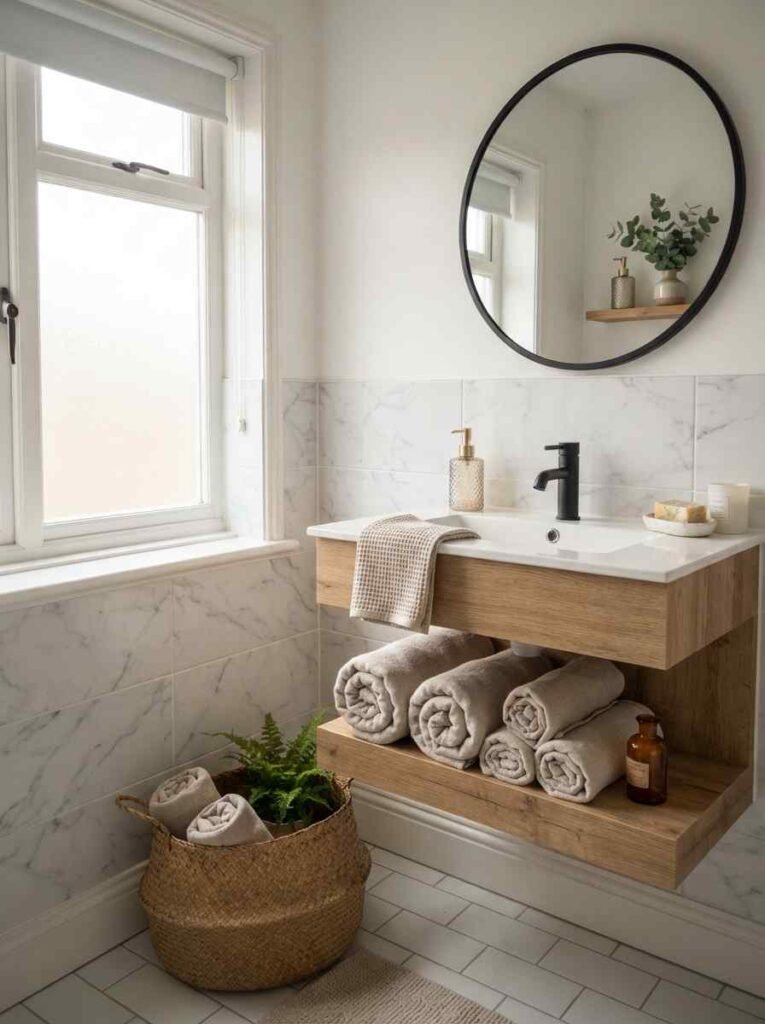
Ugly bathroom tile is one of the most common rental complaints, and adhesive tile stickers solve it without a single tool.
They come off cleanly, which matters a lot in a room that tends to get inspected closely at move-out.
Bring in a vintage or thrifted rug
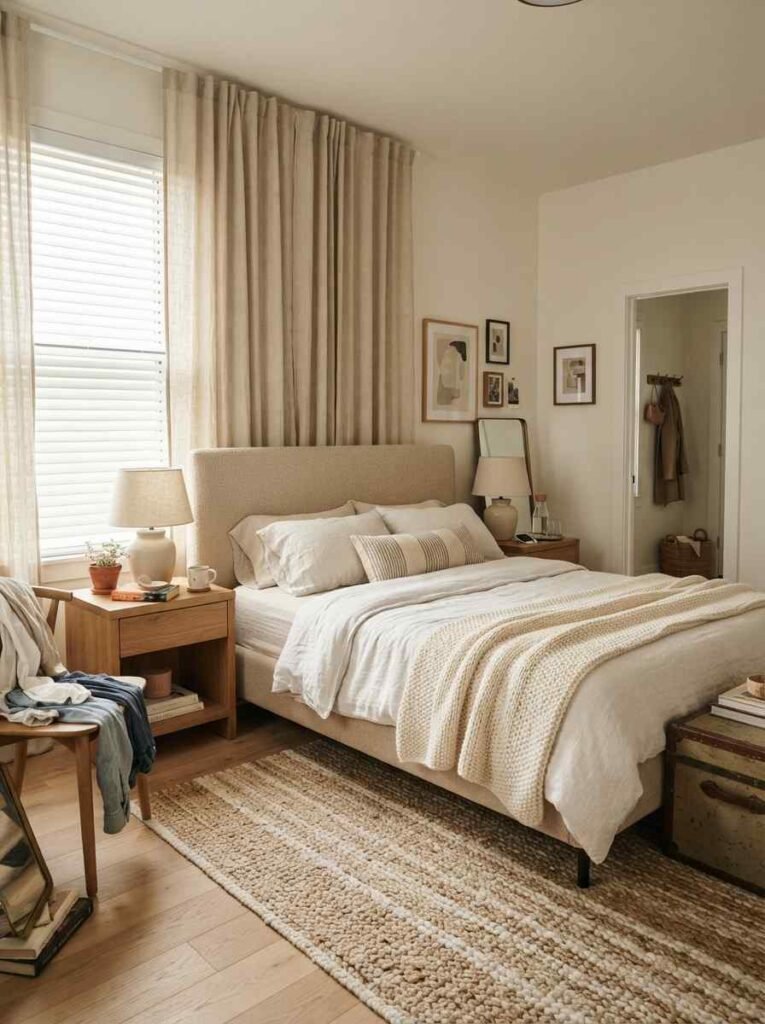
Thrifted and vintage rugs add character that new, mass-produced rugs rarely match. Check local estate sales or secondhand shops before buying new.
Add curtains, even over blinds
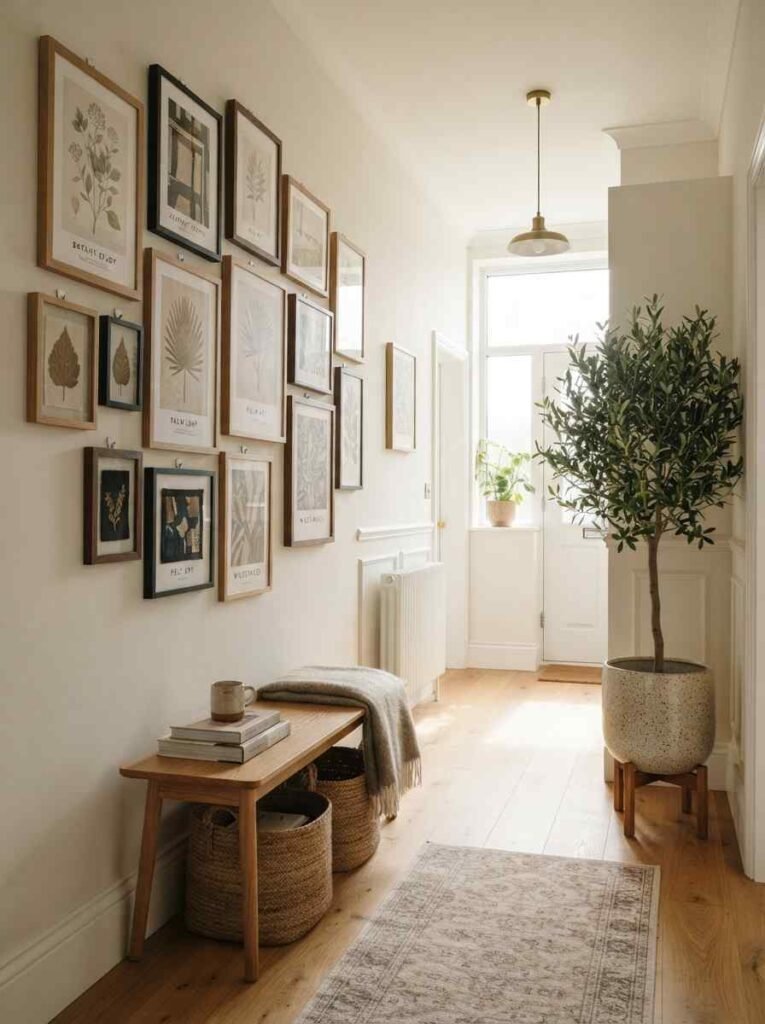
Layering curtains over existing blinds softens a window instantly and makes ceilings feel taller if you hang the rod close to the ceiling instead of right above the window frame.
Create a gallery wall with frame clips, not nails
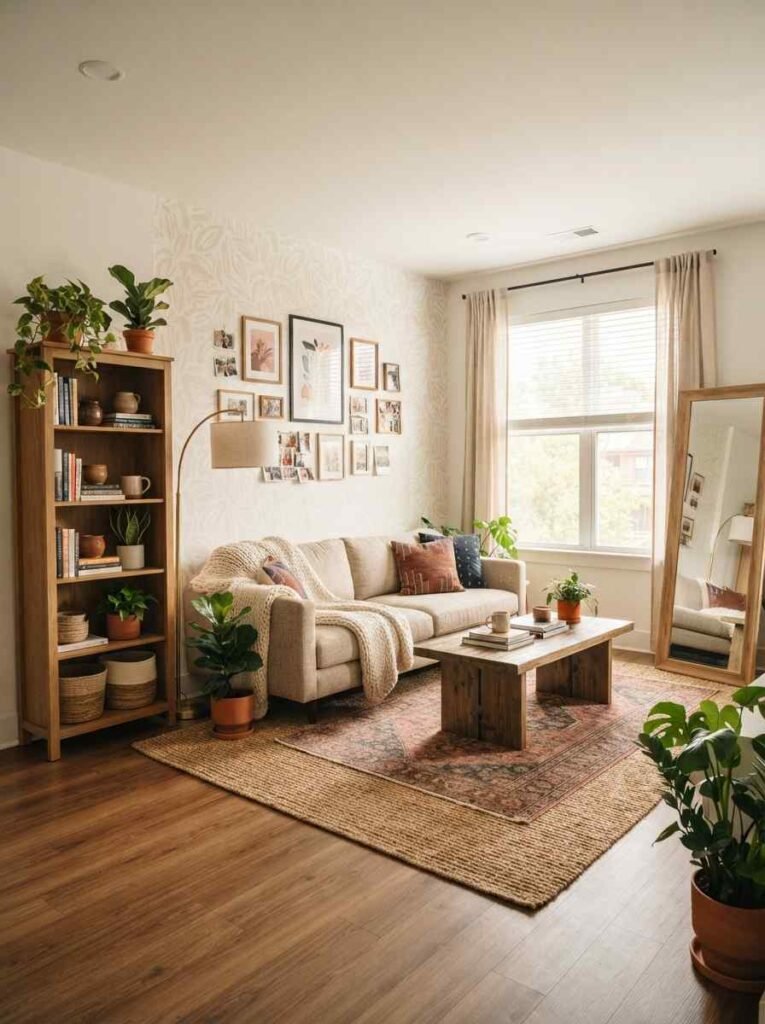
Frame clips and adhesive hooks let you build a full gallery wall arrangement without committing to nail placement.
Move pieces around as often as you want until it looks right.
Quick reference: renter-safe decorating swaps
Instead of this | Try this | Why it works Nails in the wall | Command strips or hooks | Zero holes, strong hold Painted accent wall | Peel-and-stick wallpaper | Same visual impact, fully removable Built-in shelving | Freestanding bookshelf | Doubles as a room divider
A quick side note, unrelated but worth mentioning: I have noticed way more apartment complexes allowing small modifications now compared to five years ago.
Some management companies even list “renter-friendly” clauses upfront. Worth asking before you assume something is off-limits.
Budget breakdown by project size
Smaller upgrades like cabinet hardware, hooks, and throw pillows usually run under 30 dollars total.
Mid-range projects, think peel-and-stick wallpaper or a large mirror, land somewhere between 50 and 150 dollars depending on room size.
The big-ticket items on this list, a quality rug or a full gallery wall setup, are the ones worth saving for since they last through multiple moves.
According to Extra Space Storage’s guide on renter-friendly DIY decor, mixing textures and patterns is one of the most effective low-cost strategies for making a rental feel personal rather than temporary, and I completely agree based on my own experience.
FAQs
Will Command strips actually hold heavier frames? Yes, as long as you use the correct weight-rated strip and apply them to a clean, smooth surface.
Check the packaging weight limit before hanging anything.
Do I need my landlord’s permission for peel-and-stick wallpaper? Most leases do not require it since the product is fully removable, but it is smart to double-check your lease or ask your landlord directly. A quick email saves a headache later.
What is the single best budget upgrade for a rental? A large area rug, hands down.
It hides bad flooring, adds warmth, and works in almost any room without any risk to your deposit.
Final thought
None of these ideas require a hammer, a landlord’s blessing, or a credit card you will regret using. Small changes stack up fast, and a rental can absolutely look like it belongs to you instead of whoever lived there before.
Which one are you trying first? Save this list, pick your top three, and start this weekend.
