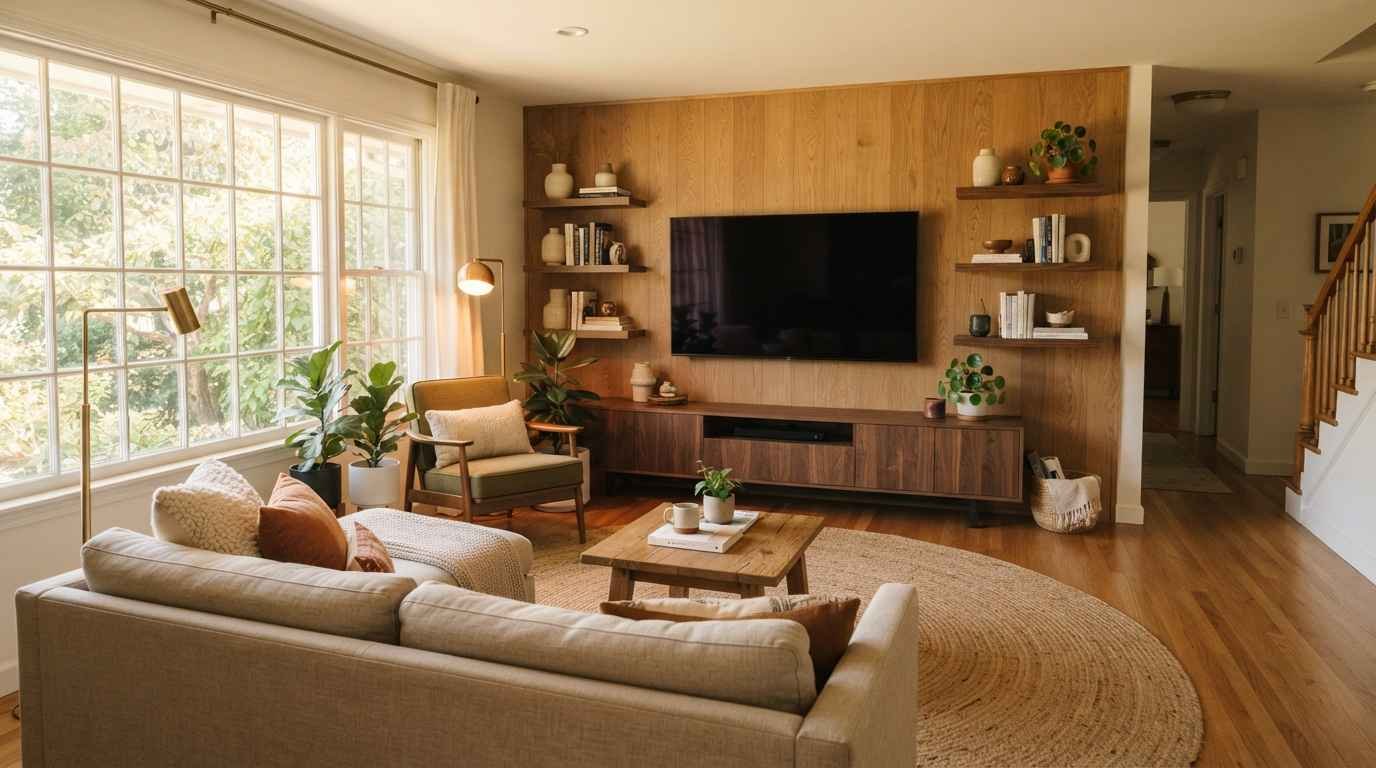
I redid my TV wall three times last year. Three. The first version had floating shelves that looked great on Pinterest and terrible in real life, because I forgot I own actual books, not staged ones.
So when I say I’ve made every TV wall mistake in the book, I mean it literally.
If you’re scrolling for TV wall ideas because your current setup is a beige wall, a black TV, and a tangle of cords behind the console, you’re in the right place.
This isn’t a list scraped together from stock photos.
It’s 21 ideas I’ve either built, tested, or watched a friend regret at 11pm on a Sunday.
Let’s get into it.
Why your TV wall matters more than you think
Your TV wall is the first thing people see when they walk into your living room. It sets the tone before anyone even sits down.
A bare wall with a mounted screen and a snake pit of cables says “I moved in eight months ago and haven’t gotten around to it.” A wall with intention, texture, and a little personality says something completely different.
IMO, the TV wall is the single most underrated design opportunity in the whole house. People spend weeks picking a sofa and five minutes on the wall behind their $1,200 television.
Think about how much time you actually spend looking at that wall. Movie nights, football Sundays, background noise while you cook dinner.
It’s earning its keep more than almost any other surface in your home, so it deserves a bit more thought than a quick coat of builder-grade white.
There’s a psychological piece here too, and I don’t think it gets talked about enough.
A cluttered, cord-heavy TV wall makes an entire room feel unfinished, even when the sofa, rug, and lighting are all dialed in.
Fix the wall, and the rest of the room suddenly reads as intentional.
Paneling and texture ideas
1. Vertical wood slat paneling
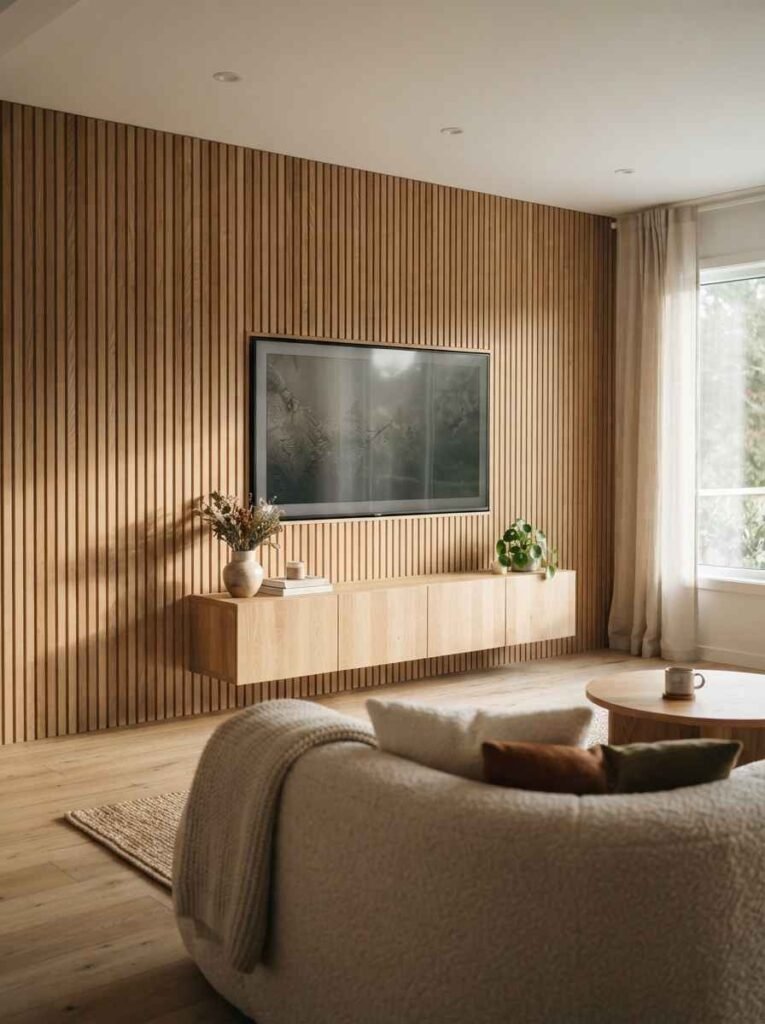
Slat walls are everywhere right now, and for good reason.
The vertical lines add height to a room, hide the TV mount hardware, and give you somewhere to run hidden LED strips.
I put slats in my own living room last spring. Cost me a weekend and about $180 in oak veneer strips.
2. Board and batten with a twist
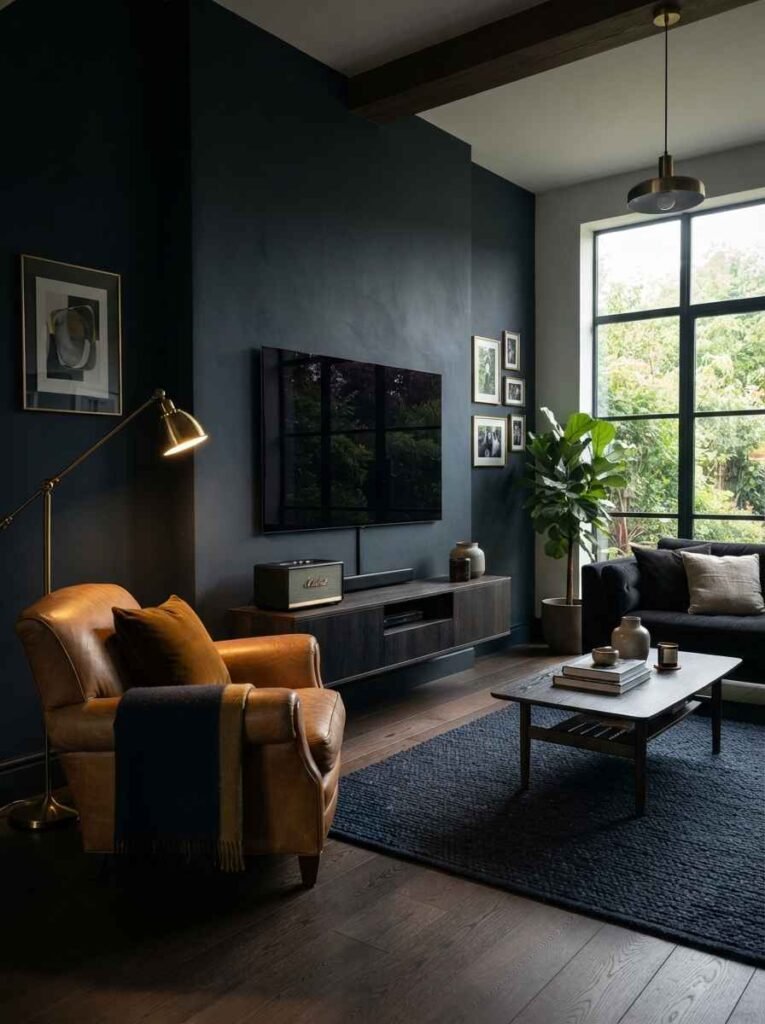
Classic board and batten feels traditional, but paint it a deep color instead of the usual white and it turns moody fast.
Try charcoal, hunter green, or a near-black navy.
3. Textured plaster or limewash
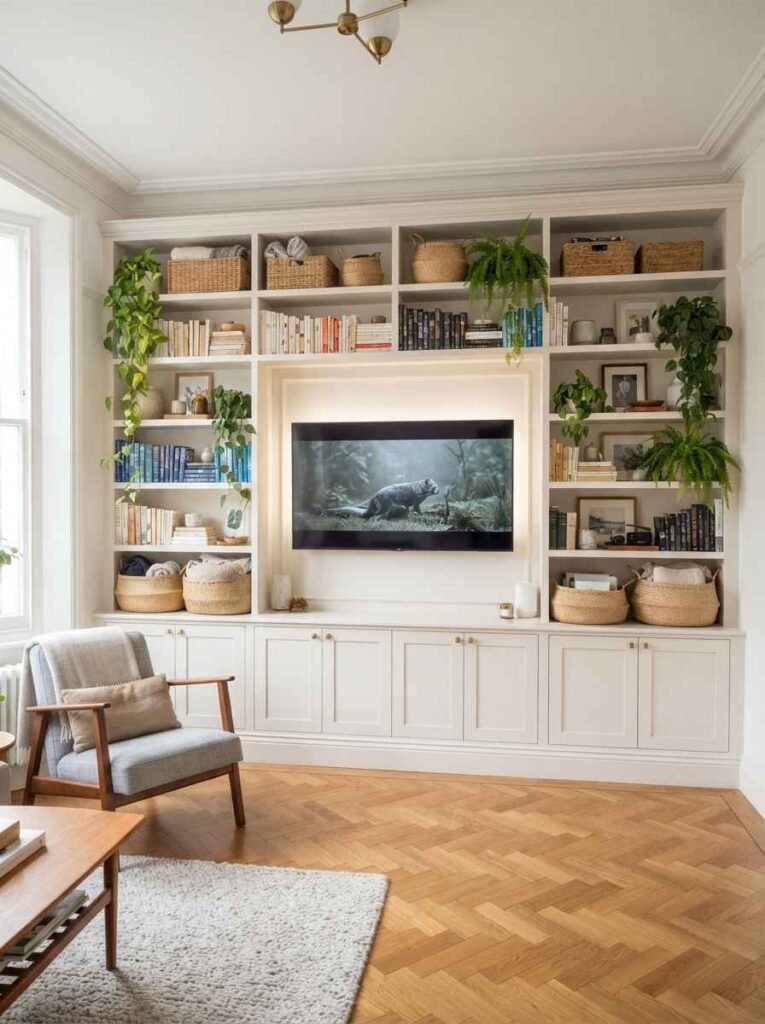
Limewash finishes give you that soft, cloudy, old-world texture without the cost of actual plaster work.
It photographs beautifully, which matters if you’re the type who takes a picture of every finished room (guilty).
4. Stacked stone or ledger panels
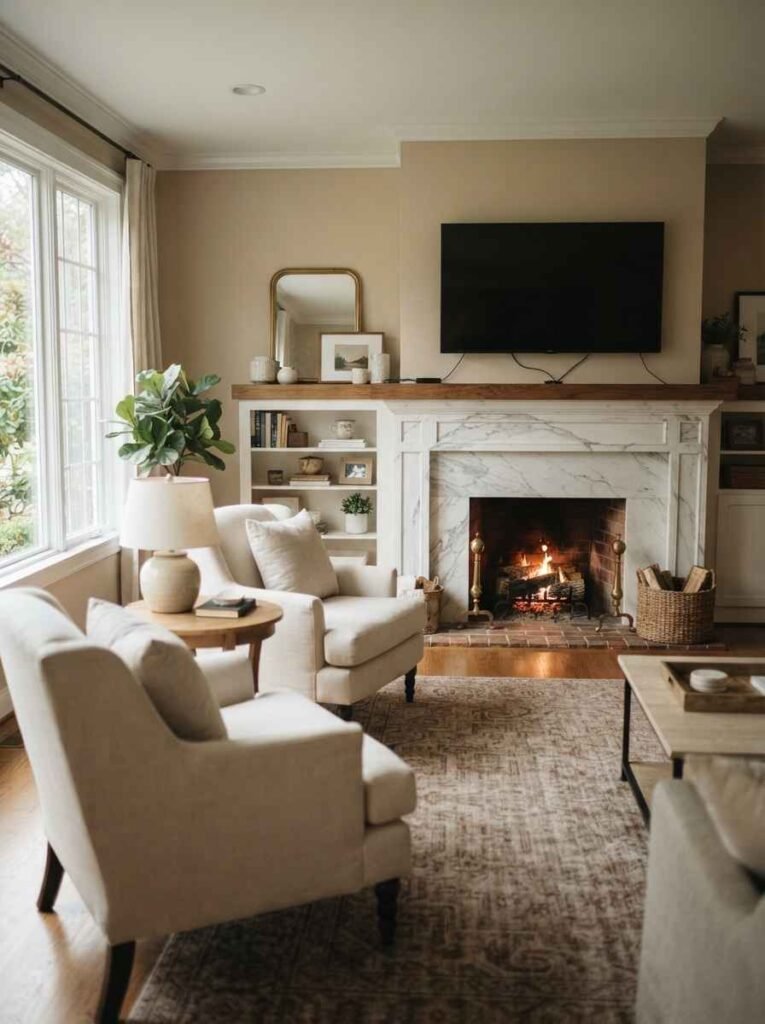
Stone feels like a big commitment, and it is.
But a stacked stone accent behind the TV, especially paired with a floating hearth or console, gives serious cabin-meets-city energy.
5. Geometric tile backdrop
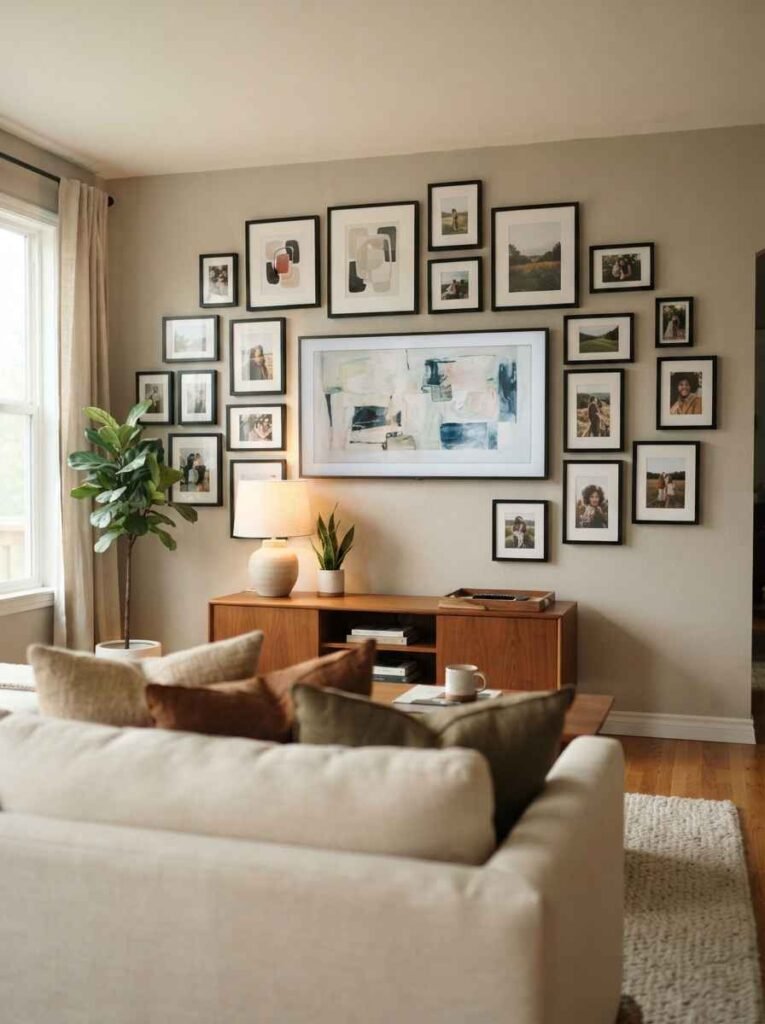
Tile isn’t just for kitchens anymore. Hexagon or fluted tile panels behind a mounted TV add a spa-like calm that regular drywall just can’t match.
Fair warning: tile installation isn’t a weekend job like the slat wall was.
Budget for a proper install if you’re not comfortable with a wet saw, and factor in that fluted tile especially can chip if you’re not careful mounting the bracket afterward.
I learned that one from a friend’s contractor, not from personal disaster, thankfully.
Color and paint ideas
6. Dark, moody accent wall
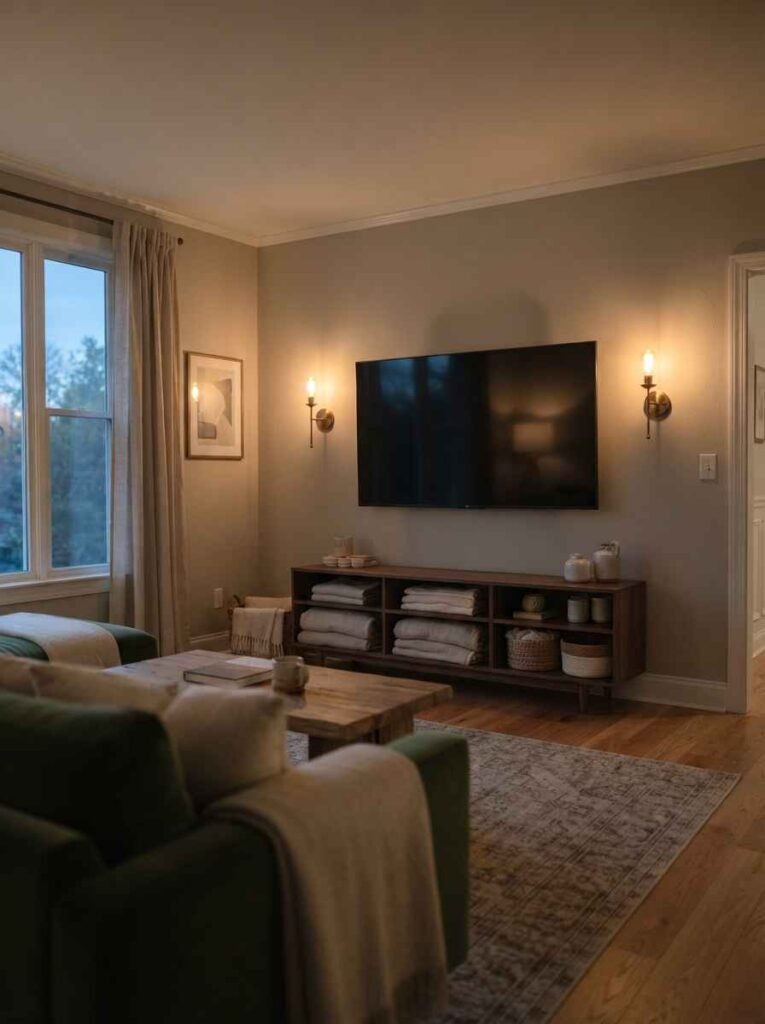
Painting the wall behind your TV a near-black shade makes the screen visually disappear when it’s off.
Designers have been leaning on charcoal, deep forest green, and navy for exactly this reason.
Sherwin-Williams and Behr both have solid color-matching tools if you want to test a few shades before committing to a whole gallon.
7. Two-tone contrast wall
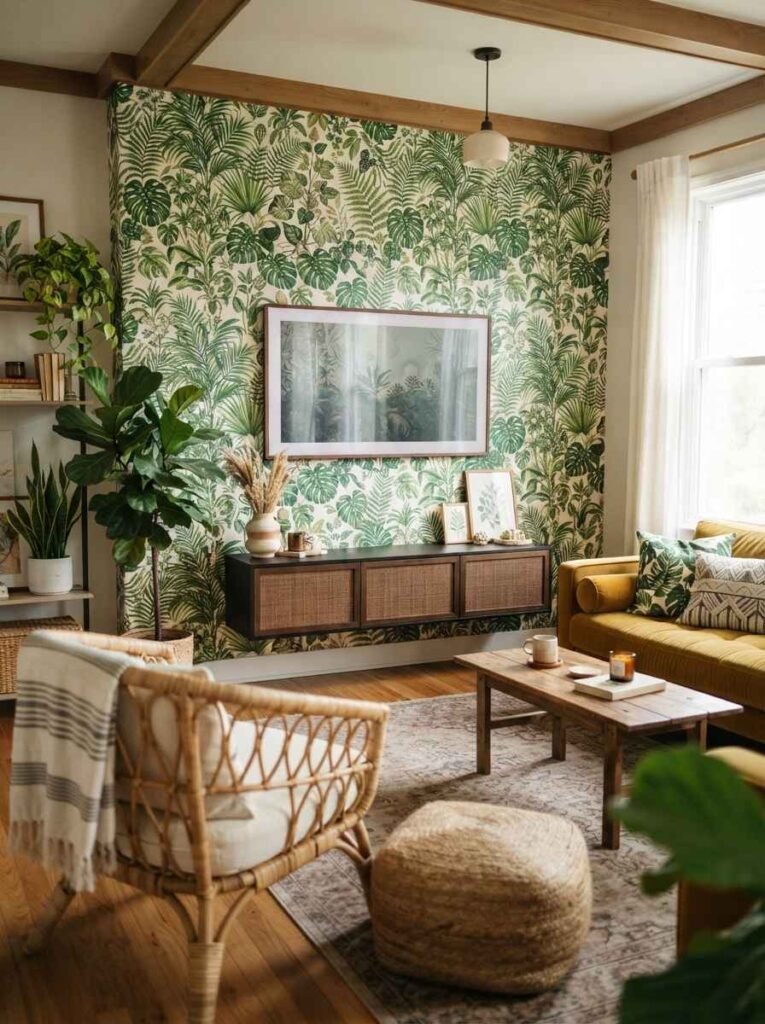
Split the wall horizontally, dark on the bottom, light on top, and mount the TV right on the seam. It reads as intentional, not accidental.
8. Warm neutral, matte finish
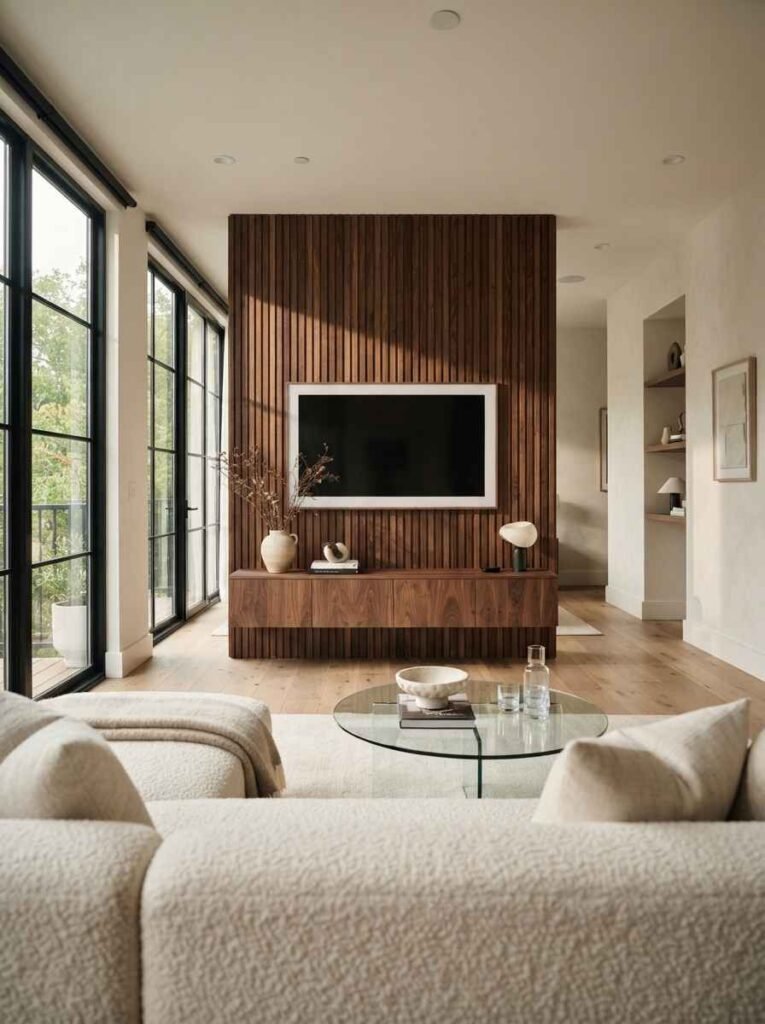
Not every wall needs drama.
Greige and soft taupe stay popular for a reason: they’re forgiving, timeless, and they work with almost any furniture you already own.
9. Color-drenched ceiling to match
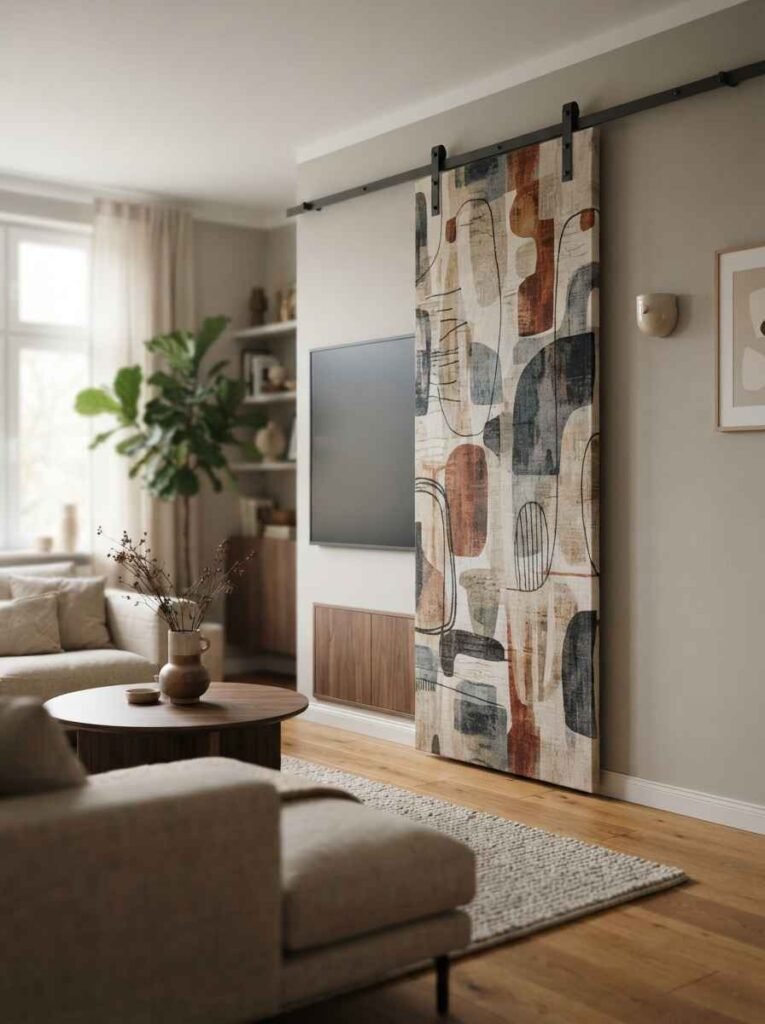
Painting the wall AND the ceiling the same shade creates a cocoon effect. It sounds intense on paper. In person, it’s kind of magic.
I was skeptical the first time a friend tried this in her apartment. This is insane, I remember thinking, standing in her doorway.
Then I sat on her couch for ten minutes and got it. The room stops fighting itself.
Every surface points your eye toward the same calm, enclosed feeling instead of bouncing between five different colors.
Shelving and storage ideas
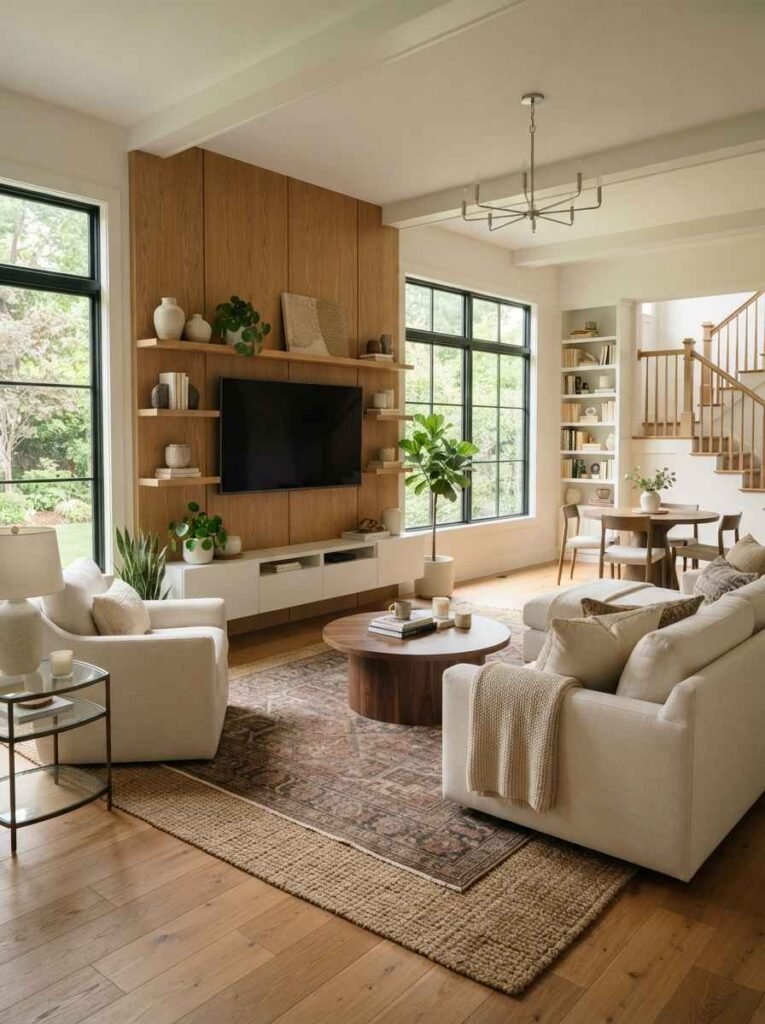
10. Floating shelves flanking the TV
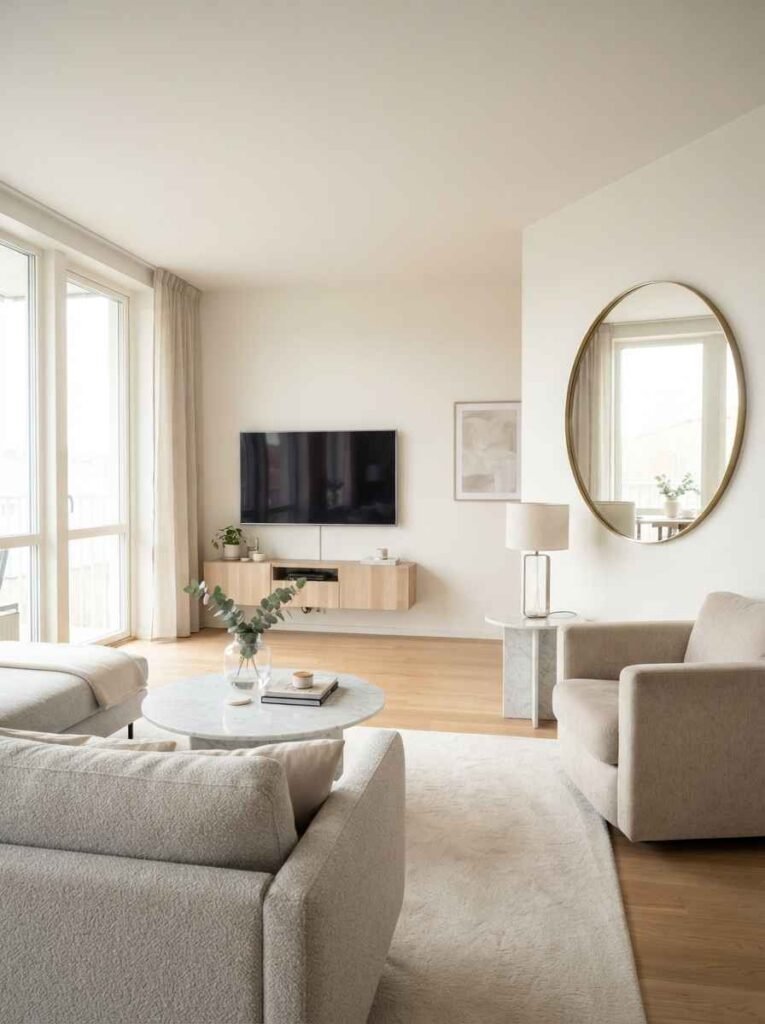
The most requested TV wall idea I get from friends, hands down. Symmetrical shelves on either side of the screen, styled with books, a plant, and one weird little sculpture nobody can identify.
11. Full built-in cabinetry wall
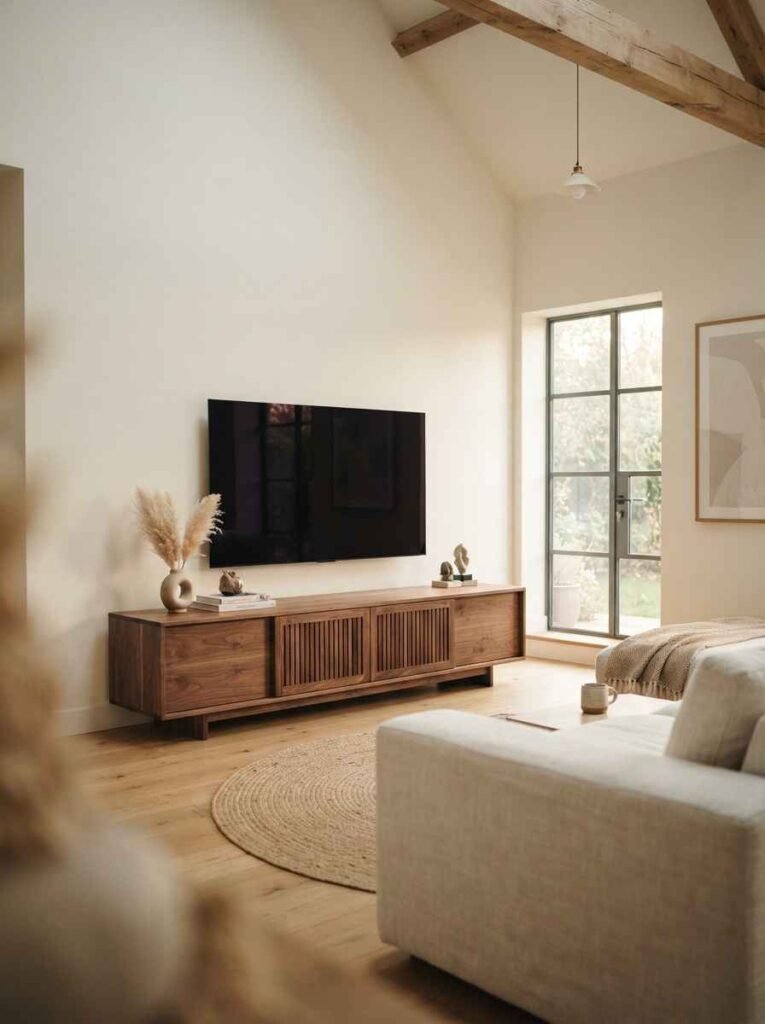
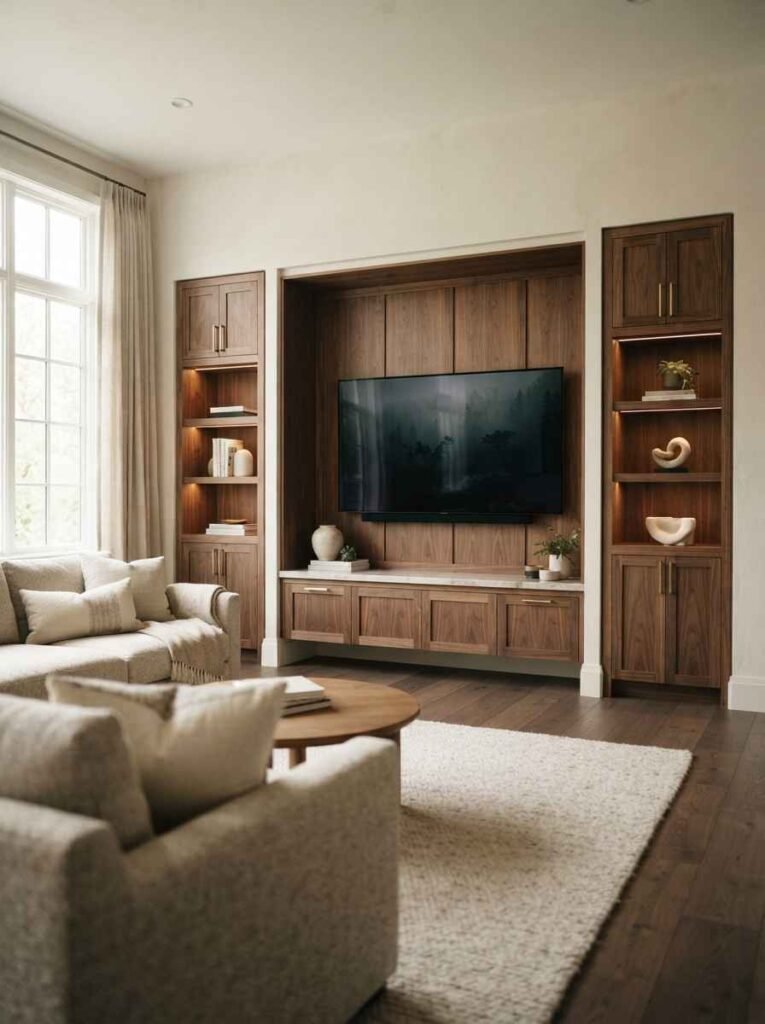
Floor-to-ceiling millwork around the TV turns a media wall into furniture. It’s pricier, usually $3,000 to $10,000 for custom work, but it hides literally everything: cable boxes, gaming consoles, the works.
12. Open shelving with curated objects
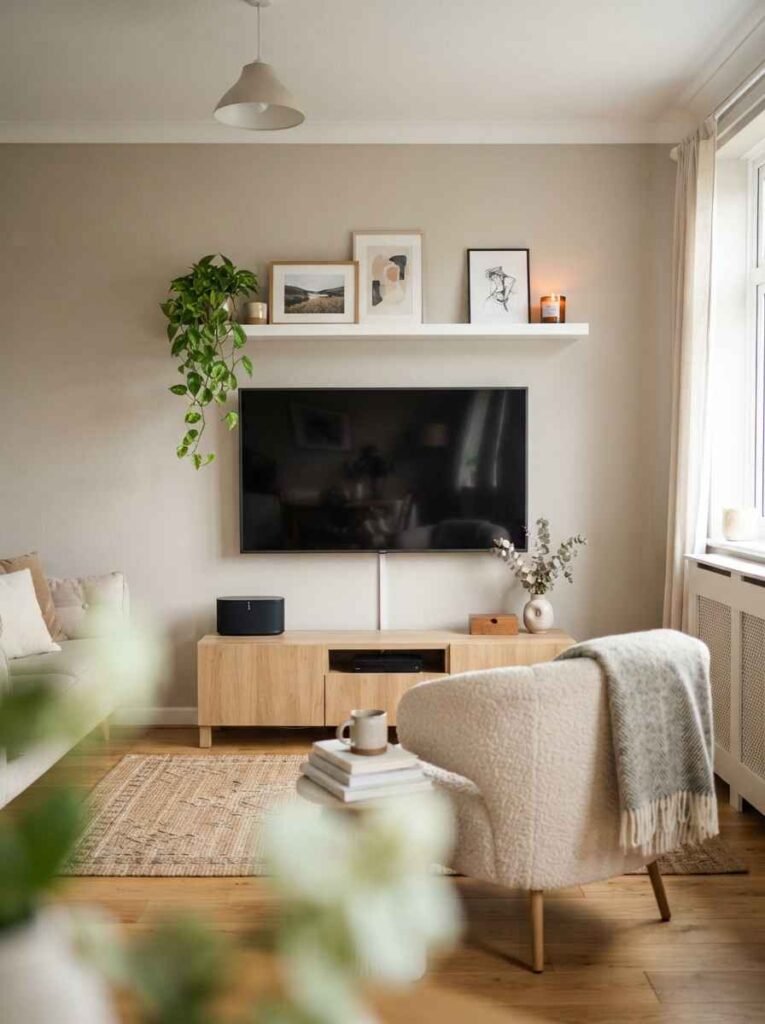
Skip the closed cabinets and go fully open.
This only works if you’re willing to edit your stuff ruthlessly. Nobody wants to see your old cable bills stacked next to a ceramic vase.
13. Asymmetrical shelving
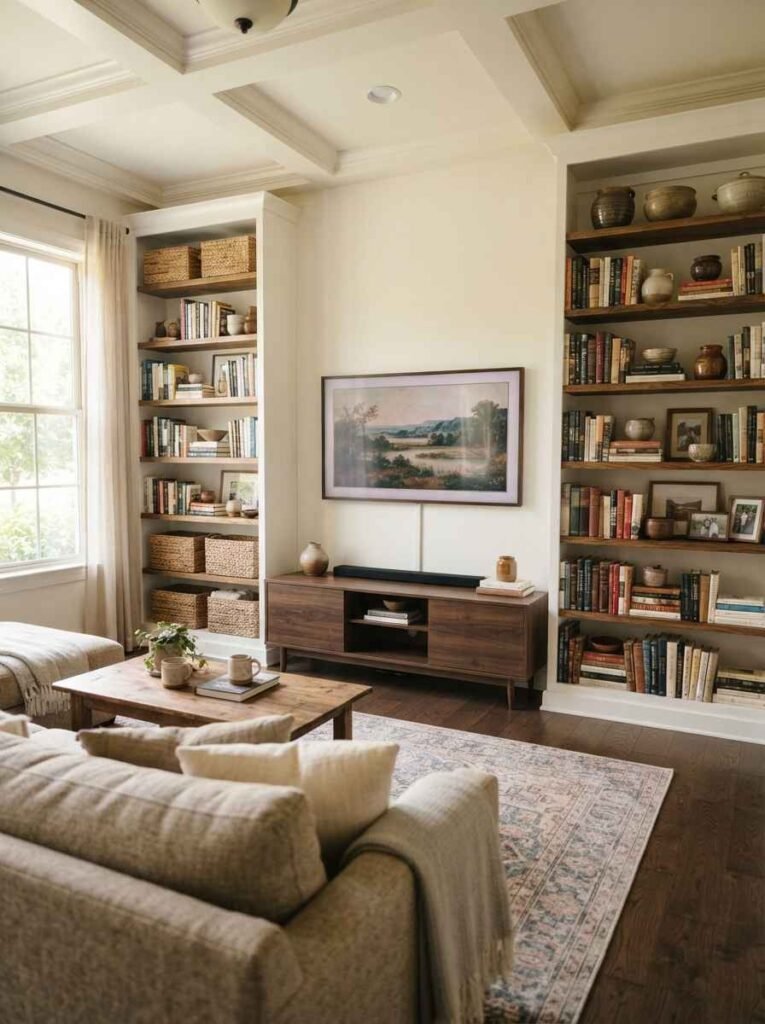
Off-center shelves feel more collected and less “kit from a big box store.” It’s a small change that makes a wall look like someone actually designed it.
I switched to asymmetrical shelving on my second TV wall attempt (remember, I’ve done three) and it fixed a problem I couldn’t name before.
Symmetry can look sterile if you don’t have enough decor to fill both sides evenly. Uneven shelving hides that gap without anyone noticing.
Disguise and disappearing act ideas
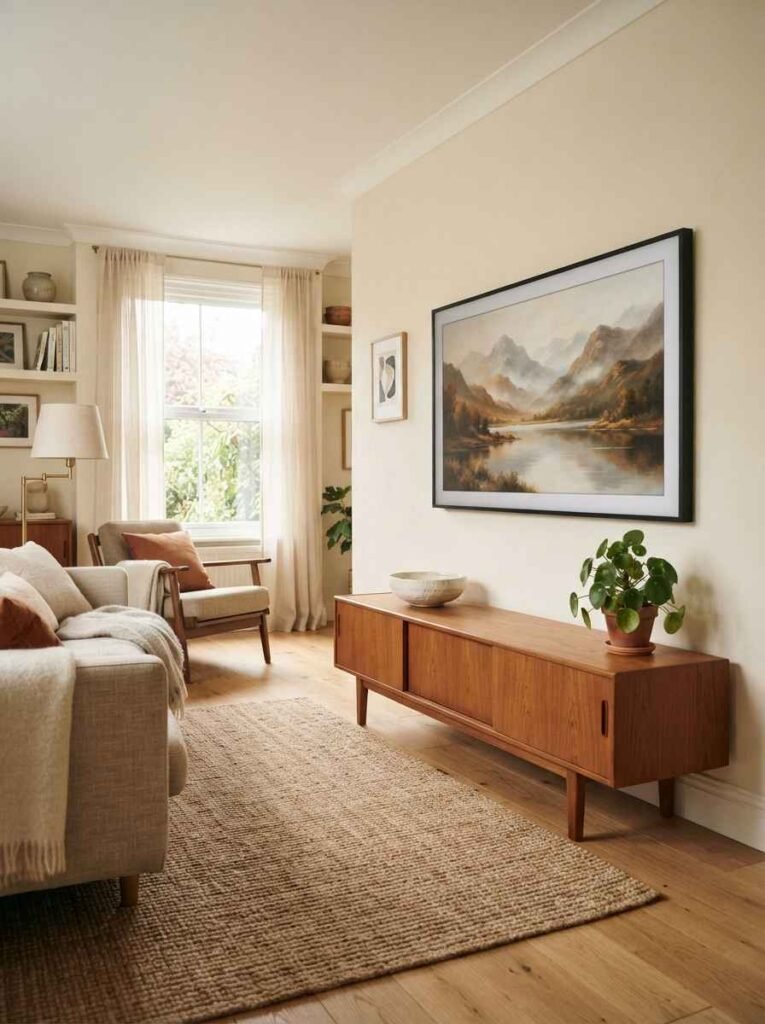
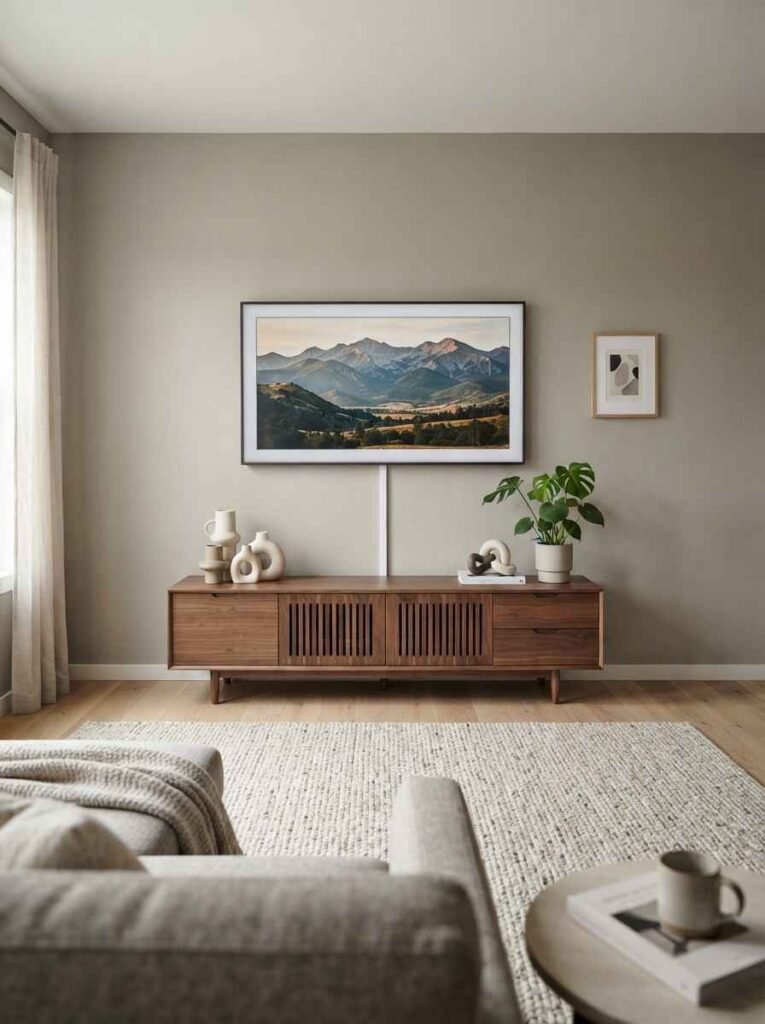
14. Art frame TV covers
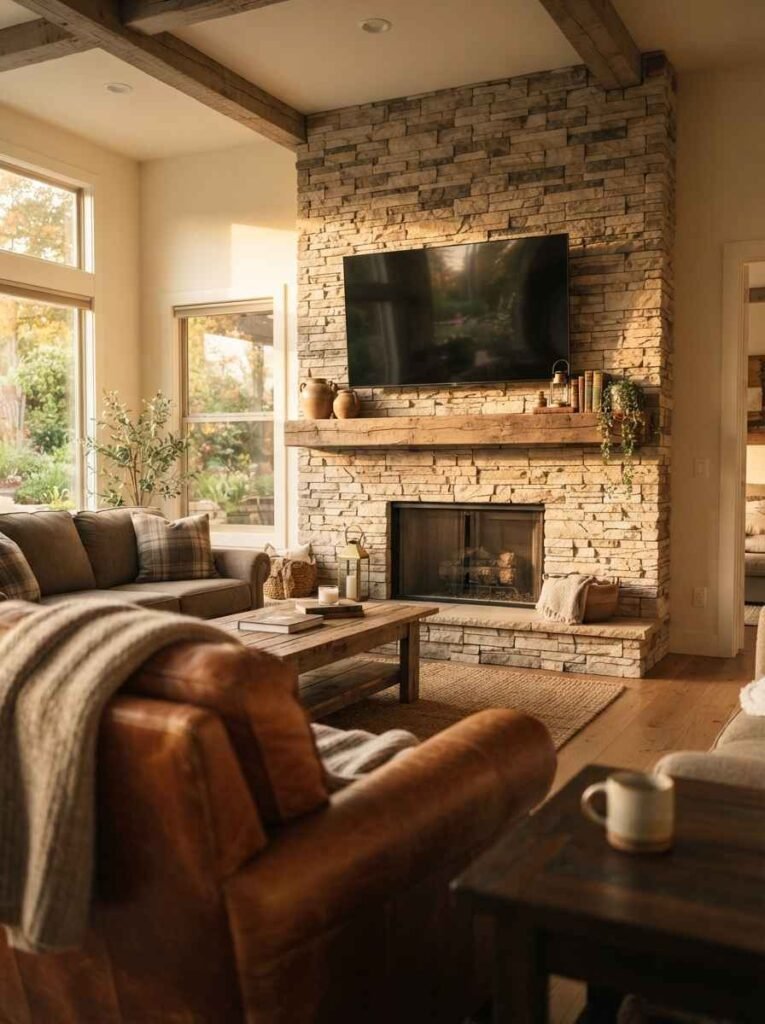
Frame-style TVs that display artwork when off have gotten a lot more affordable.
Third-party frame kits now exist for regular TVs too, so you don’t need to buy a whole new set.
15. Sliding barn door or panel cover
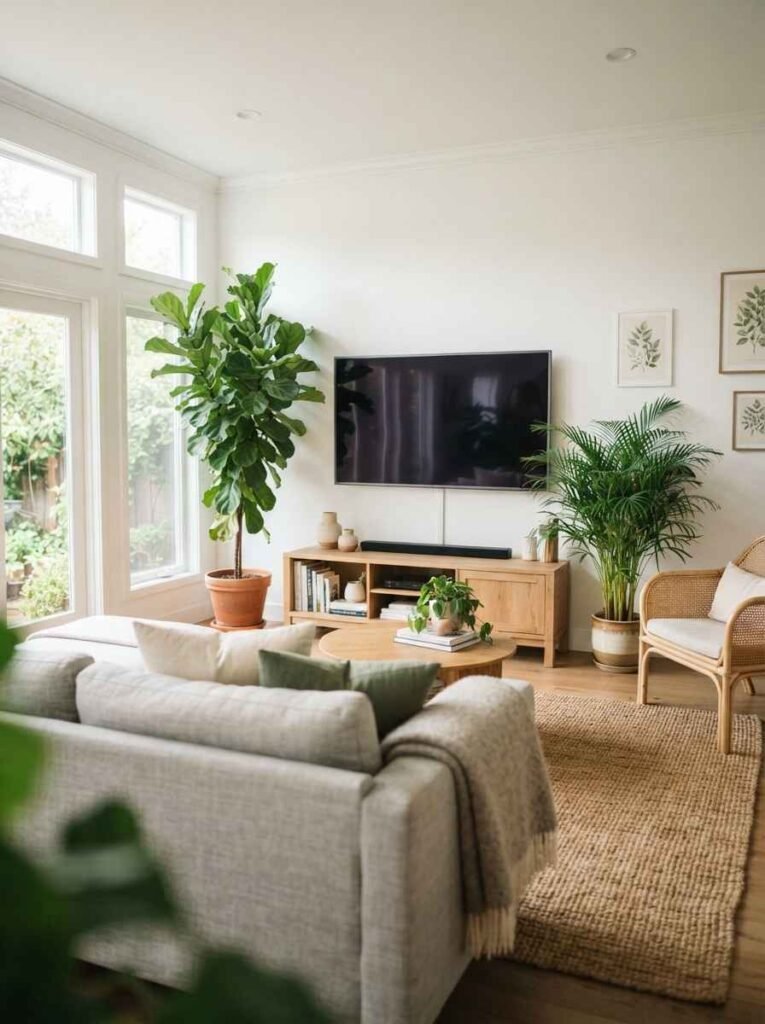
A sliding wood panel that hides the TV entirely when not in use. Old-school in concept, weirdly satisfying in practice.
16. Gallery wall camouflage
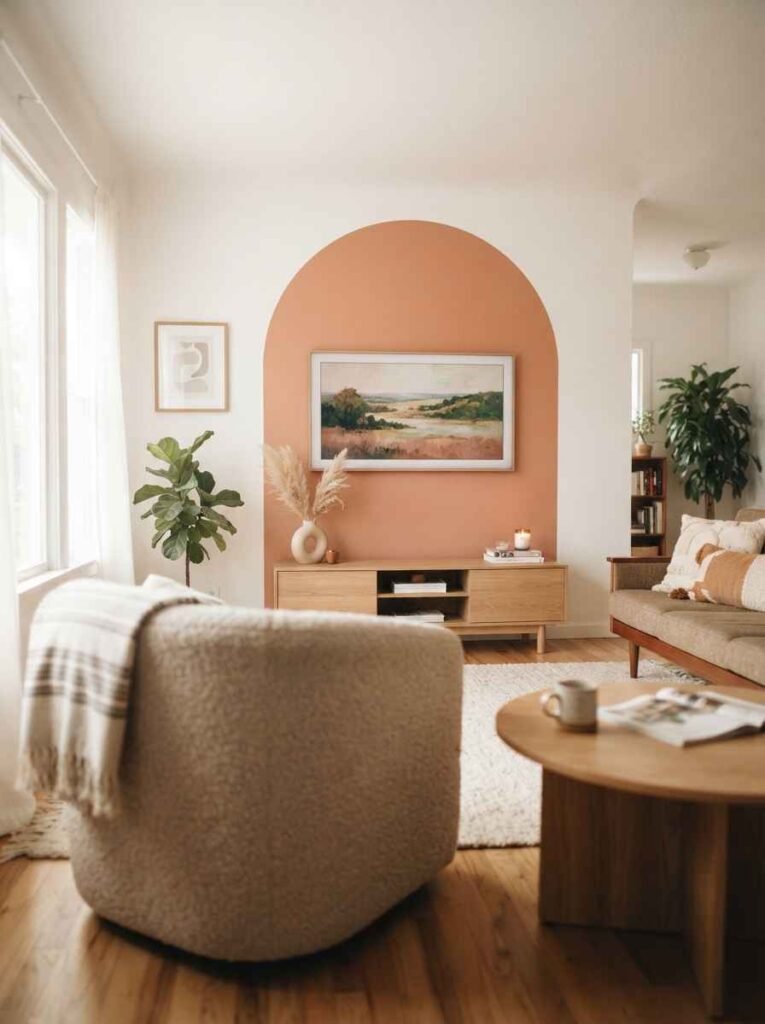
Surround the TV with framed prints and photos so it blends into a larger gallery arrangement instead of standing alone as the star of the wall.
The trick most people miss: keep the frame around the TV itself the same width and finish as the surrounding frames.
That’s what sells the illusion. If the TV bezel is thick and black while everything around it is thin and gold, your eye goes straight to the mismatch.
17. Mirror TV finish
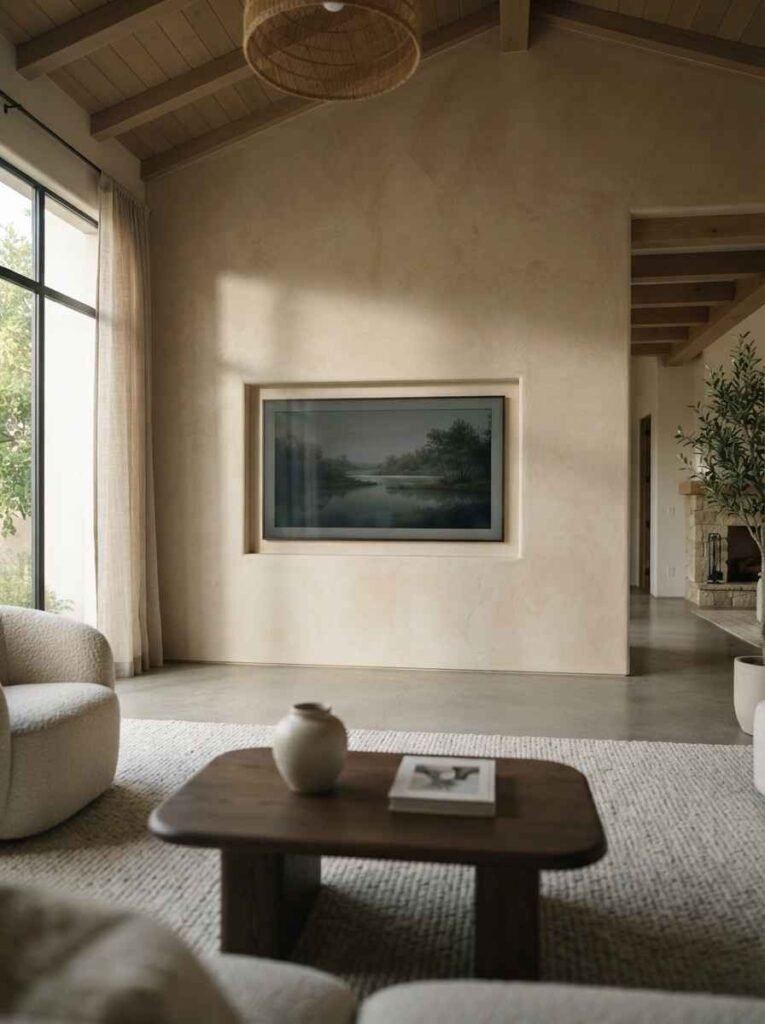
Smart mirror TVs look like a regular mirror when off and function as a screen when on. Wow, the first time I saw one in person I legitimately thought it was broken.
Lighting ideas
18. Backlit LED accent
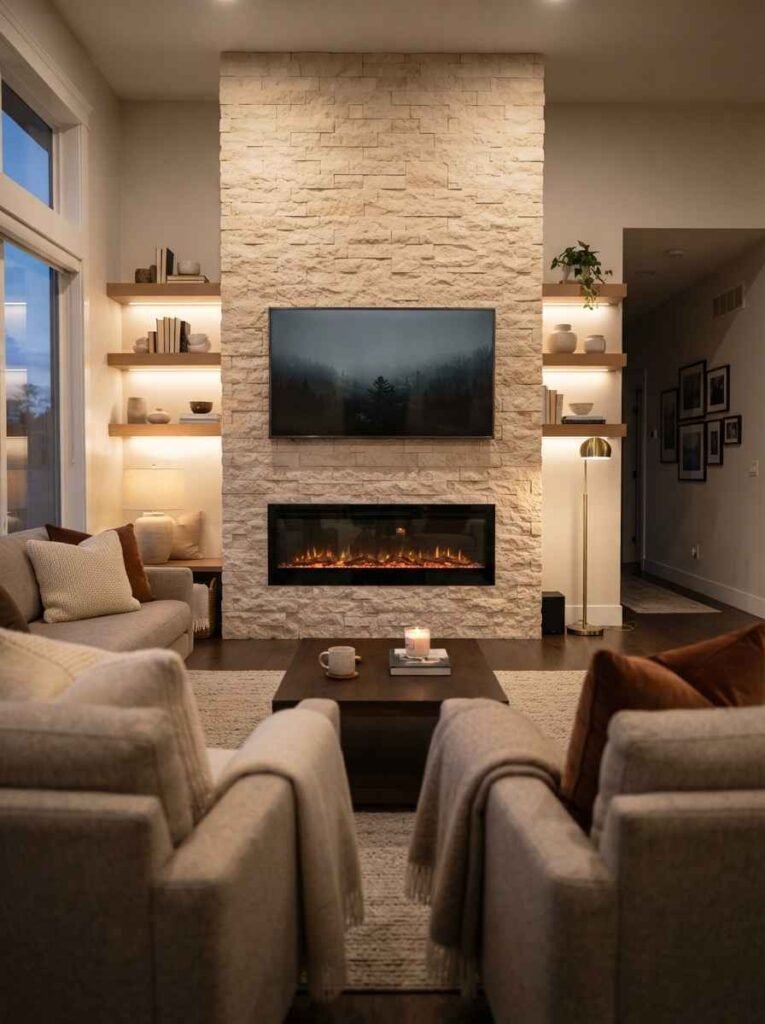
A thin LED strip behind the TV creates a soft glow that reduces eye strain during movie nights and makes the whole wall feel like it’s floating.
19. Picture lights over art or shelving
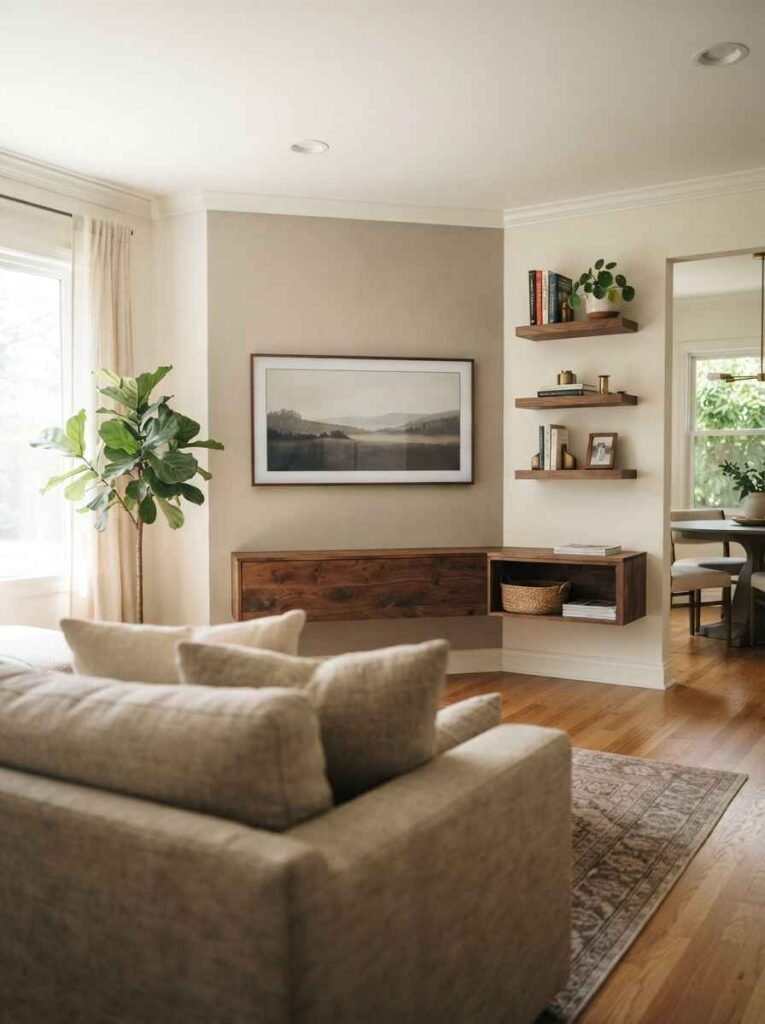
Small brass or black picture lights above artwork near the TV add a warm, gallery feel without competing with the screen’s glow.
20. Statement pendant off to the side
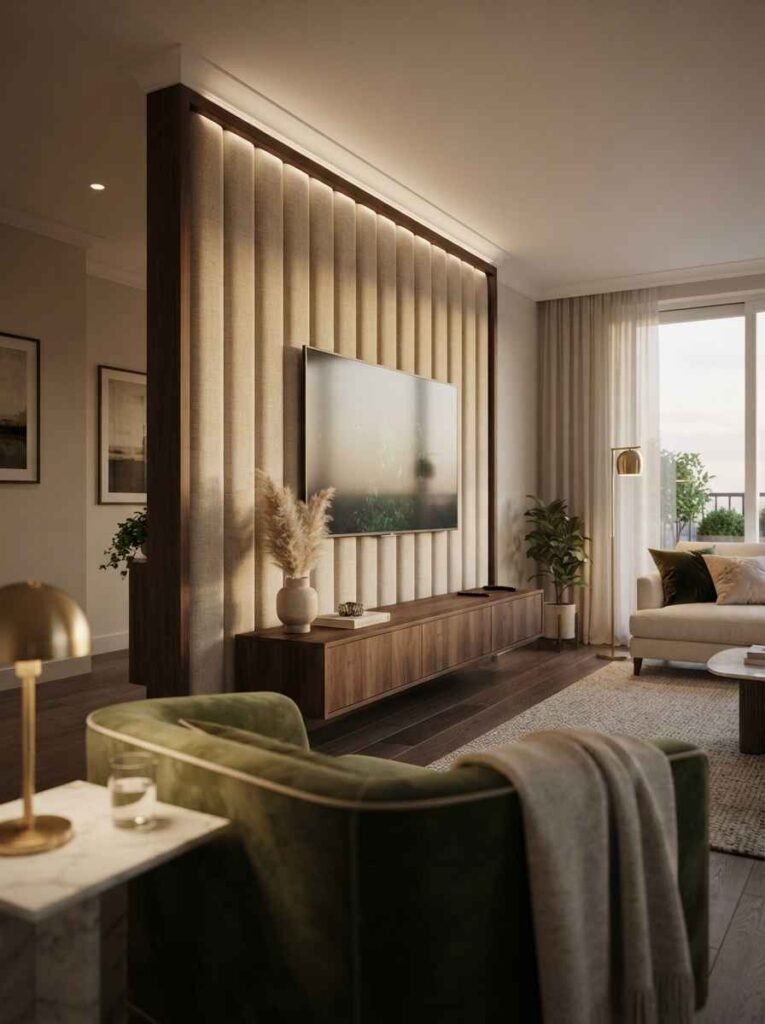
An oversized pendant light positioned beside, not above, the TV wall pulls focus and adds height. Just make sure the cord routing doesn’t ruin the effect.
Plug-in pendants with a cord cover kit solve most of this without an electrician.
I used one over a reading corner near my TV wall and it does double duty: ambient light for movie nights, task light for the one chair where I actually read books instead of just buying them.
A small, natural touch
21. Greenery and trailing plants
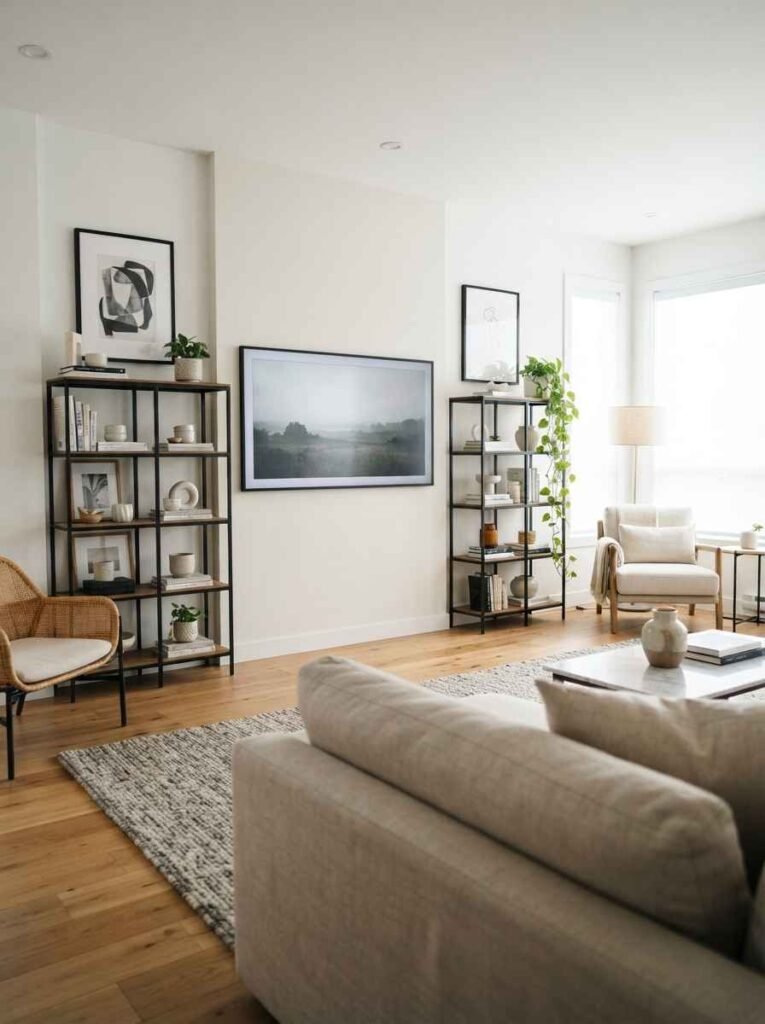
A few floating shelves with trailing pothos or ivy near the TV soften every hard edge in the room. It’s the cheapest idea on this entire list and, honestly, one of the most effective.
Quick side note, completely unrelated: I once killed three pothos plants in a row before I figured out I was overwatering them out of guilt.
If your plant looks sad, it’s probably drowning, not thirsty. Anyway, back to the wall.
Quick comparison table
| Style | Best for | Rough cost | Effort level |
|---|---|---|---|
| Wood slat paneling | Warm, textured rooms | $150 to $400 | Weekend DIY |
| Dark accent paint | Making the TV disappear | $50 to $100 | A few hours |
| Built-in cabinetry | Full storage and polish | $3,000+ | Hire a pro |
| Floating shelves | Renters and small budgets | $80 to $250 | Half a day |
A few things I’d tell a friend before they start
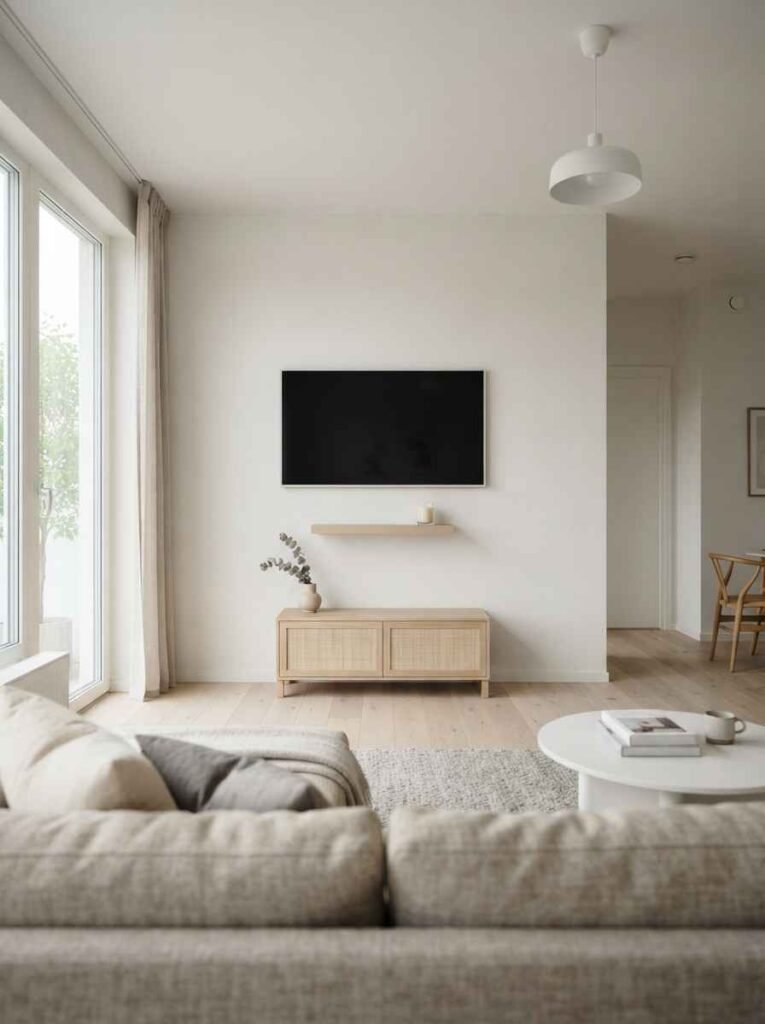
- Measure your seating distance before picking a TV size for a built-in niche. A too-small screen in a huge wall looks lost.
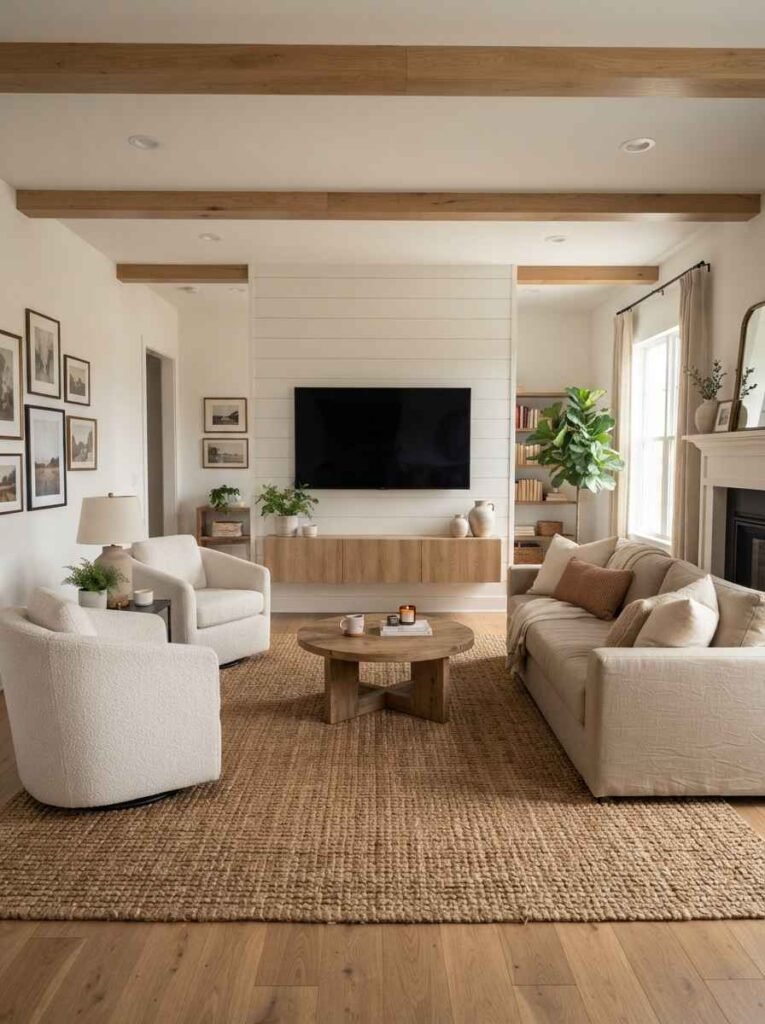
- If you’re renting, skip anything that requires drilling into brick or removing drywall. Tension-mounted shelving and peel-and-stick paneling exist for a reason.
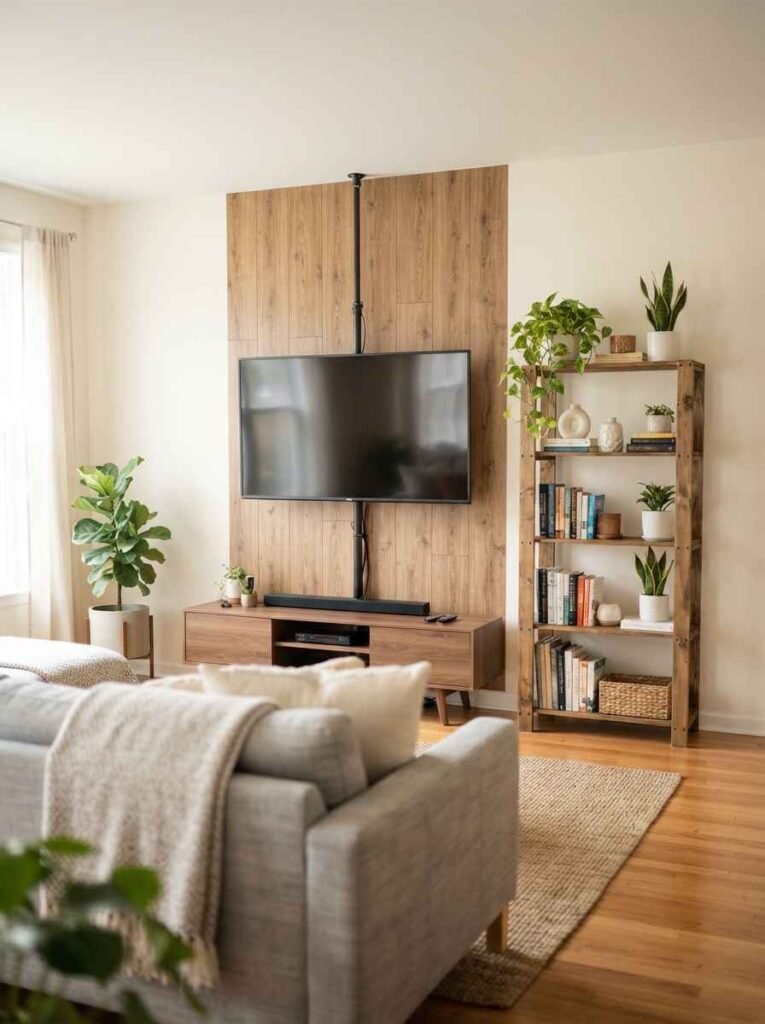
- Don’t copy a design exactly from a photo without checking your outlet placement first. This is the mistake I made on attempt number one, and it cost me an extra $200 in electrician fees.
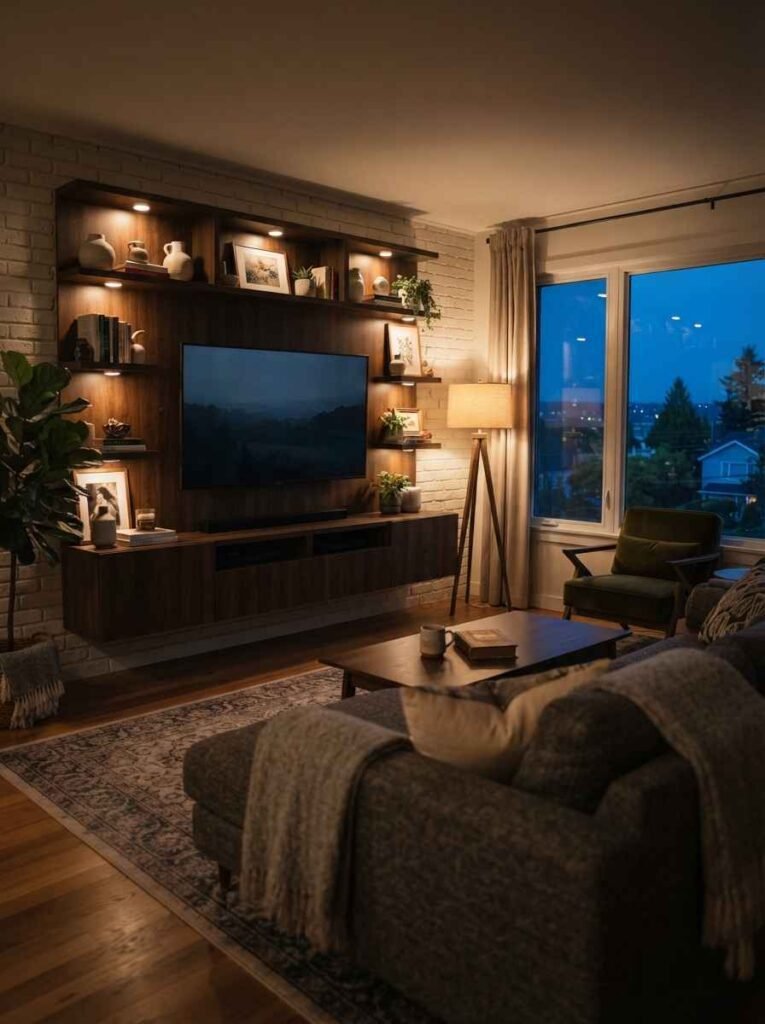
- Test paint colors on the actual wall, at the actual time of day you’ll be watching TV. Evening lighting changes everything.
For more layout inspiration, sites like the Apartment Therapy design archive and Architectural Digest’s living room features are worth a scroll before you commit to anything permanent.
FAQs
What’s the most popular TV wall color for 2026? Warm neutrals like greige and soft taupe still lead, but dark, near-black accent walls are gaining fast because they make the screen blend in when it’s off.
Do I need an electrician for a TV wall makeover? Only if you’re moving outlets, adding recessed lighting, or hiding cables inside the wall itself. Surface-mounted solutions and paint refreshes don’t require one.
Can renters do any of these ideas? Yes.
Peel-and-stick panels, tension rod shelving, removable wallpaper, and plug-in LED strips are all renter-friendly and leave no permanent damage.
Final thought
A TV wall doesn’t need to be perfect. Mine still isn’t, and I’ve redone it three times.
Pick one idea from this list that actually fits how you live, not just how a photo looks. What’s stopping you from starting this weekend?
