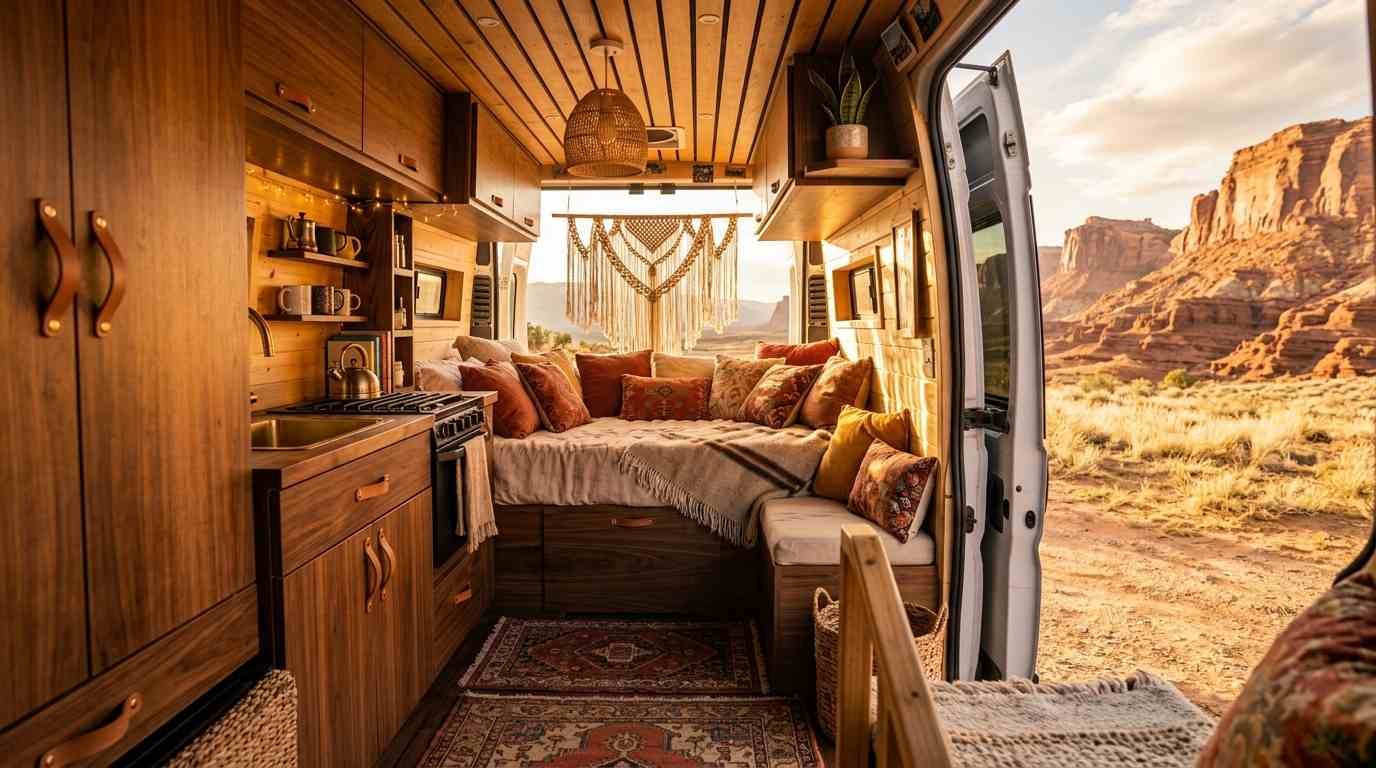
I converted my first van with a staple gun, a stack of thrifted rugs, and absolutely no plan. Three years and two builds later,
I still think boho is the easiest style to get right in a tiny space, because it forgives mismatched everything.
A crooked shelf just reads as “curated.” A clashing rug pattern? Character. Try that with a minimalist white interior and you’re stuck redoing the whole thing.
If you’re pinning camper inspiration right now and your board is turning into a rainbow of macrame and rattan, you’re in good company.
Bohemian design was born from artists and wanderers who valued personality over matching furniture sets, and that history makes it a natural fit for life on wheels.
Here are 20 ideas that actually work inside a few hundred square feet, plus a few lessons I learned the hard way.
Quick reference: boho camper basics
| Element | Budget-friendly option | Splurge option | Best for |
|---|---|---|---|
| Flooring | Peel-and-stick vinyl tile | Cork or reclaimed hardwood | High-traffic layouts |
| Textiles | Thrifted kilim rug | Handwoven wool from a maker’s market | Cozy sleeping nook |
| Lighting | String lights + battery lanterns | Rattan pendant with dimmer | Evening ambiance |
| Storage | Woven baskets | Built-in cabinetry with cane doors | Small kitchens |
1. Start with a warm, neutral base
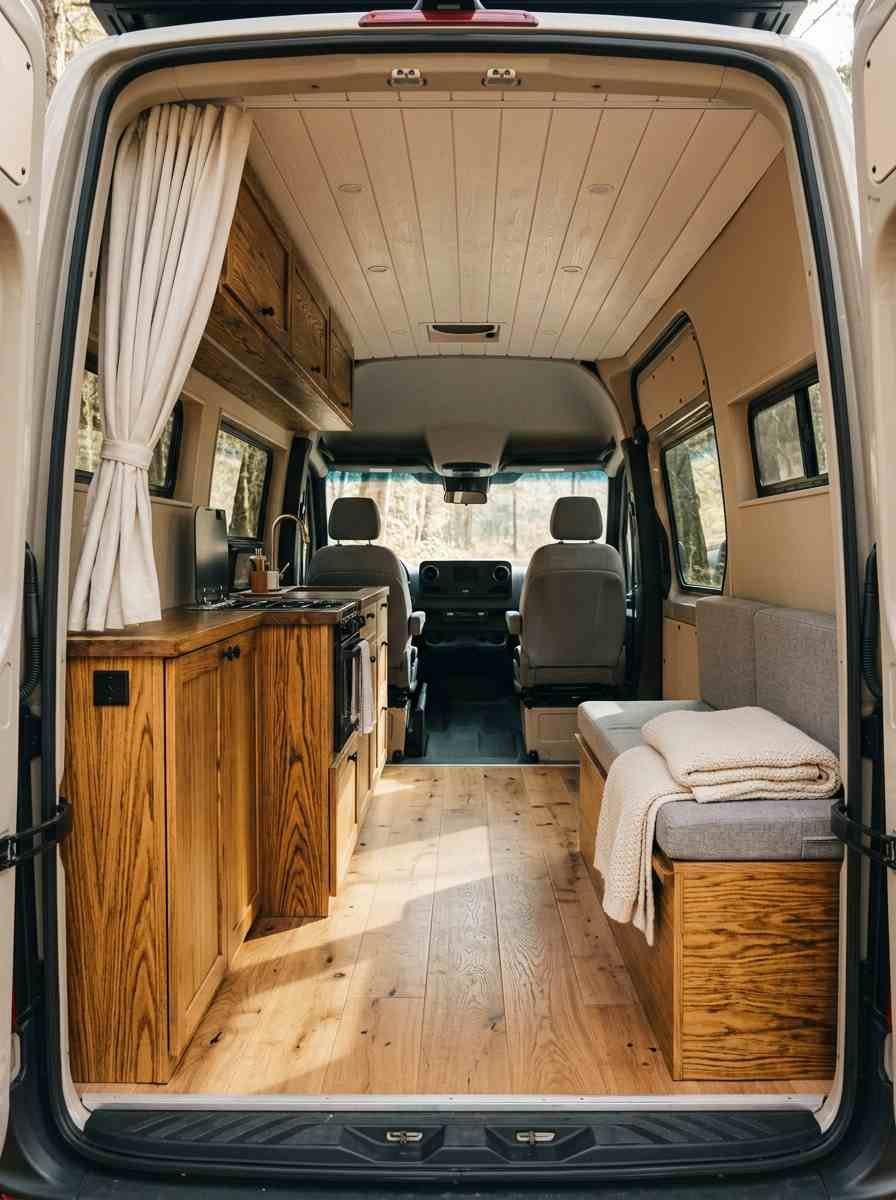
Most boho pros build on a neutral shell (think warm white, sand, or soft clay) and let color come from textiles and decor.
This actually matters more in a van than a house, because a small, saturated space can feel like a padded cell fast.
I painted my ceiling a warm off-white and everything above the counters got instantly brighter.
2. Layer rugs like you mean it
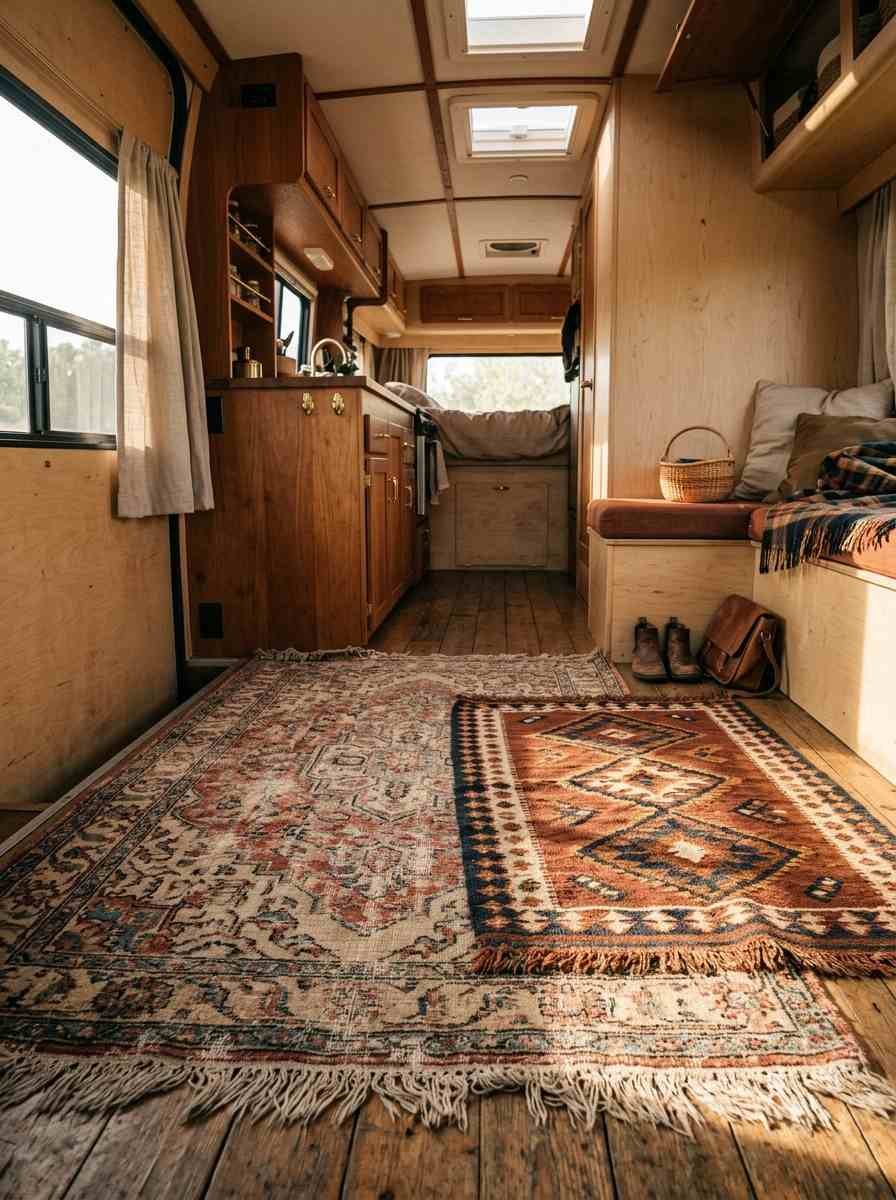
One rug is fine. Two overlapping rugs, a Persian-style pattern under a smaller kilim, is where the magic happens.
it’s a trick borrowed straight from home design, where layered textiles are one of the defining moves of the whole bohemian look.
Just secure the edges with rug tape so nobody’s tripping on a hairpin turn.
3. Macrame wall hangings over the bed
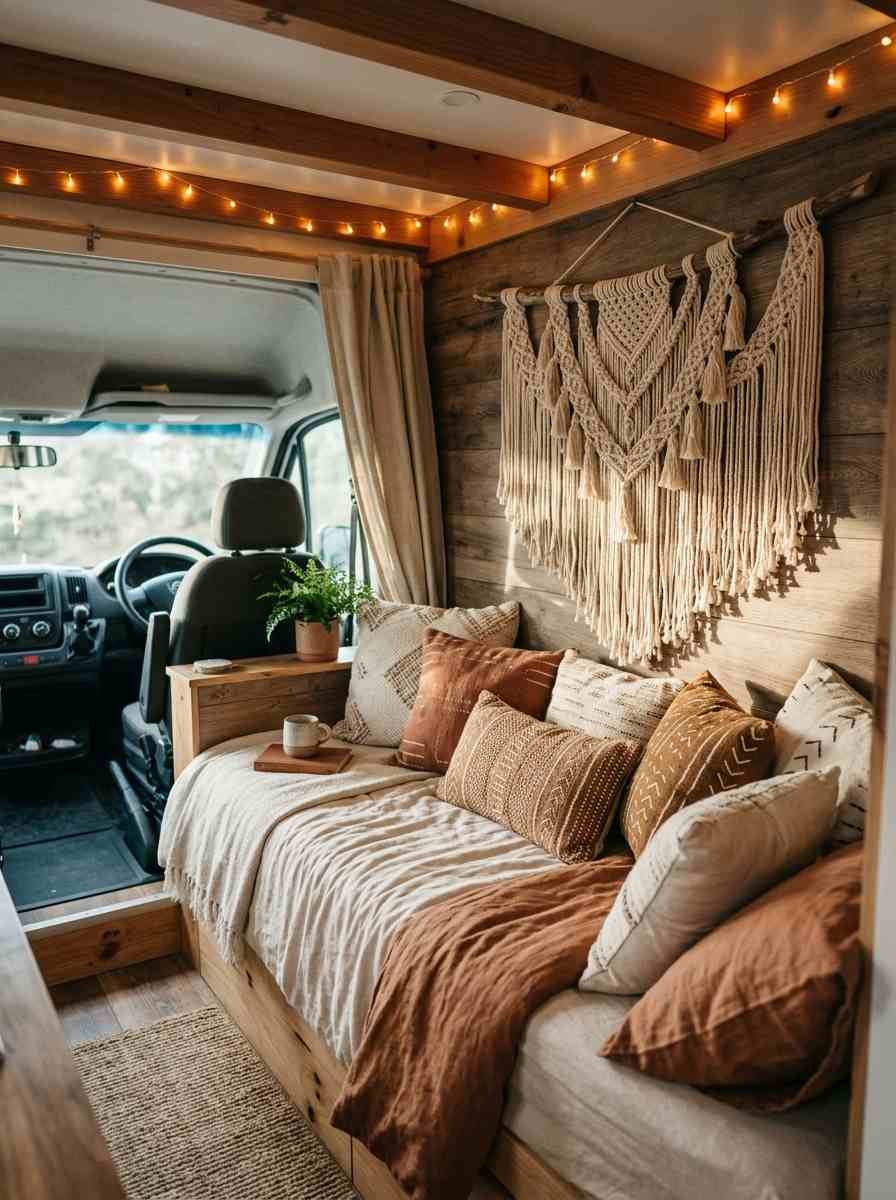
A macrame piece behind the pillows does more for the vibe than almost anything else you’ll buy. It’s lightweight,
it doesn’t rattle around when you’re driving, and it hides a wall seam if your build has one (mine does, right where I patched the old shelving).
4. Mix wood tones on purpose
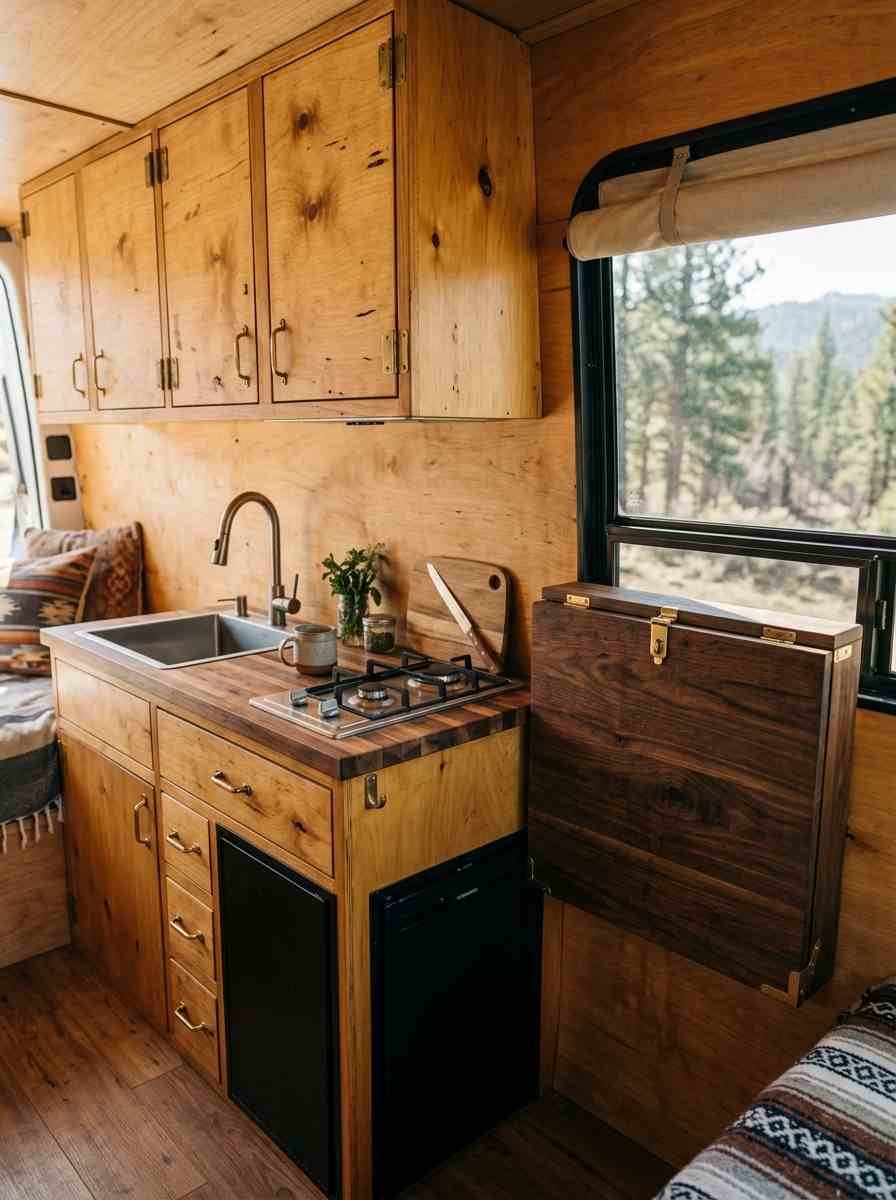
Don’t stress about matching your cabinetry to your table.
Boho actually wants a mix: a honey-toned plywood cabinet next to a dark walnut folding table looks intentional, not like you ran out of matching lumber.
IMO this is the single easiest way to make a build look designed instead of default.
5. Bring in rattan and cane details
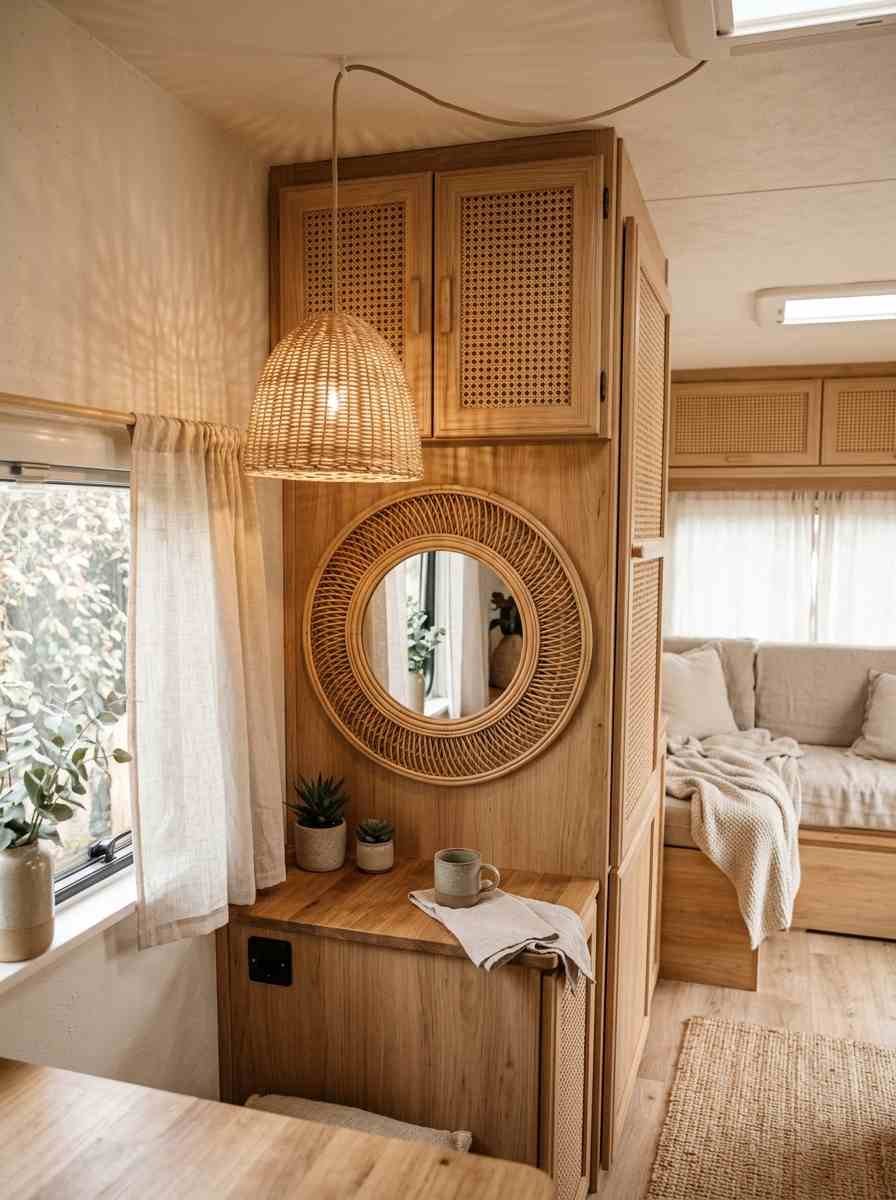
Cane cabinet fronts, a rattan mirror, a woven pendant shade.
These natural materials are a core boho signature and they’re surprisingly light, which matters when every pound affects your gas mileage.
6. Go bold with one statement textile
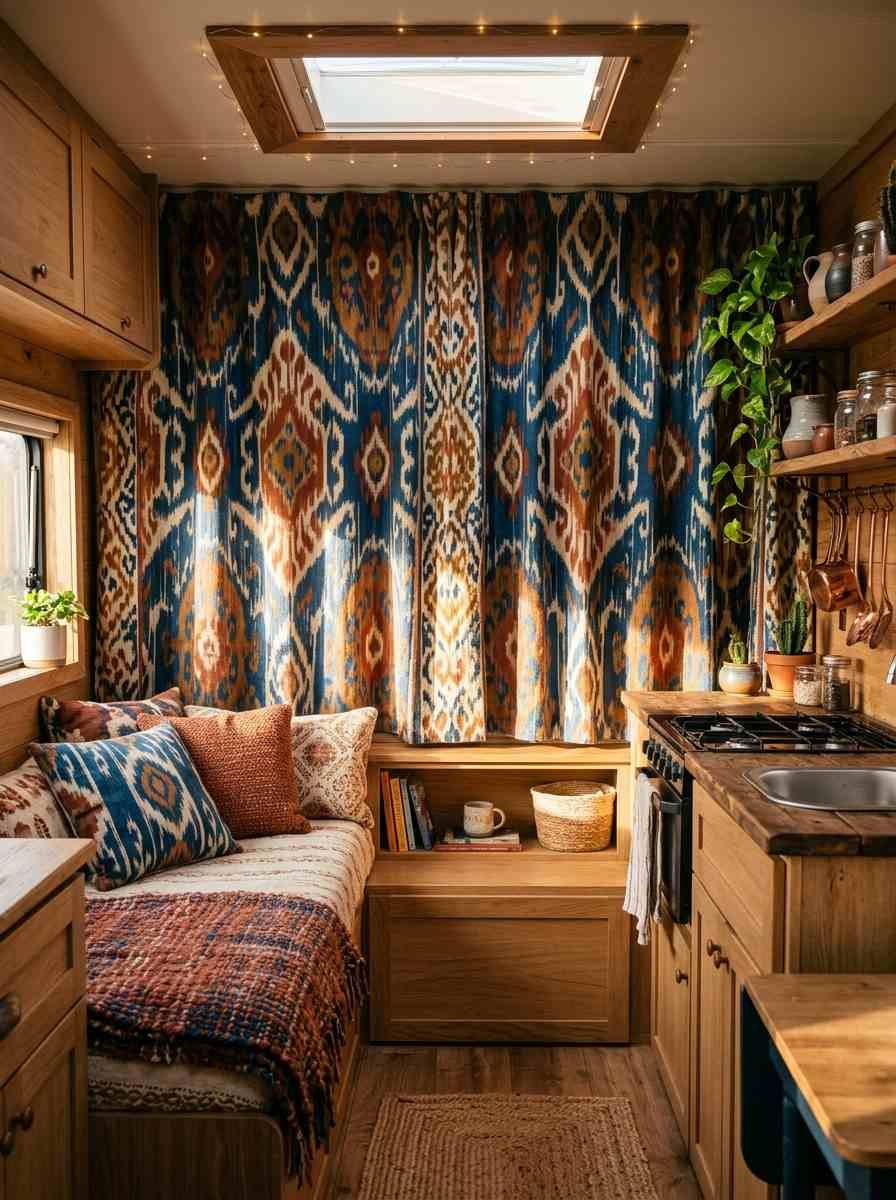
Pick one fabric, a Suzani print, an ikat, a big block-print curtain, and let it anchor the whole space.
Everything else (pillows, throws, rug) can pull two or three colors from that one piece so the room feels pulled together instead of random.
7. Hang plants from every corner you can find
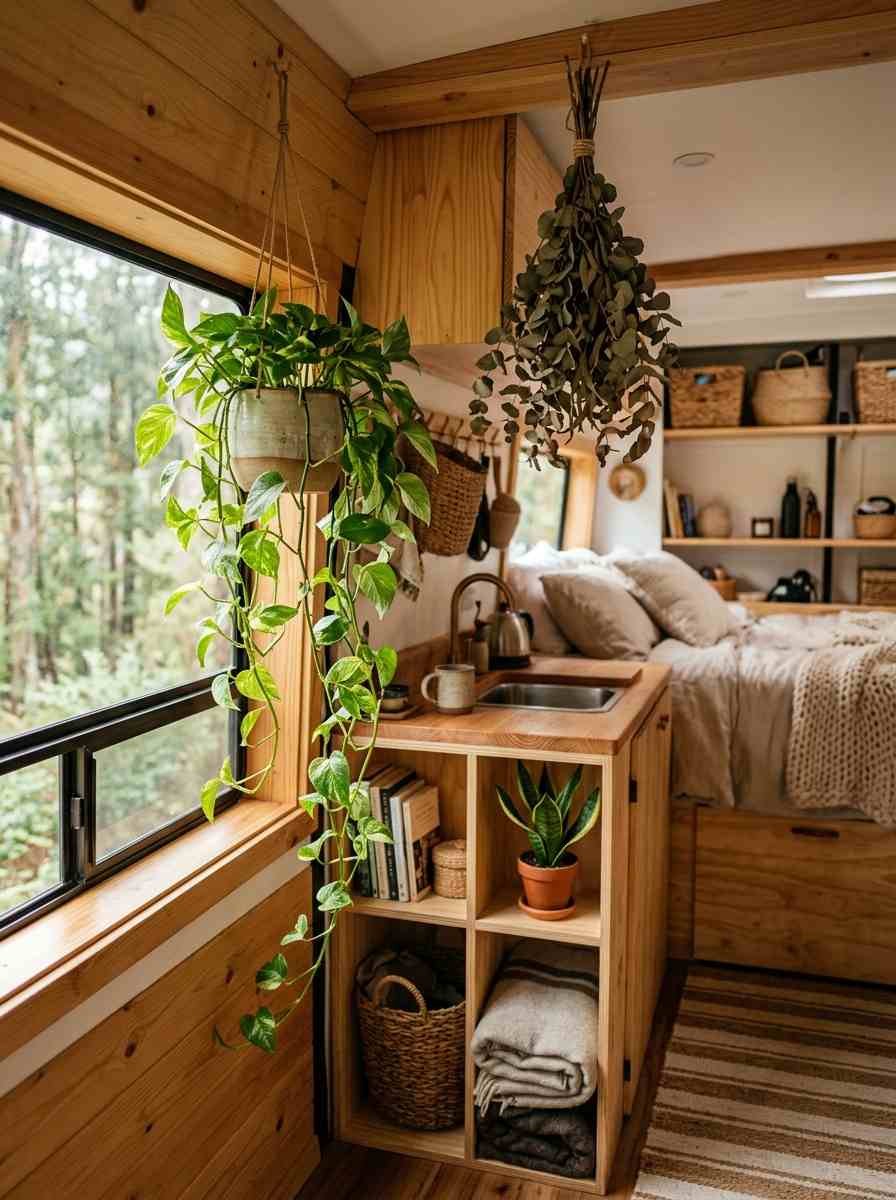
Trailing pothos, a small snake plant wedged into a cubby, a dried eucalyptus bundle if you’re worried about watering on the road.
Plants are non-negotiable in boho design and they genuinely make the cabin smell better than yesterday’s campfire clothes.
8. Use a floor cushion or two
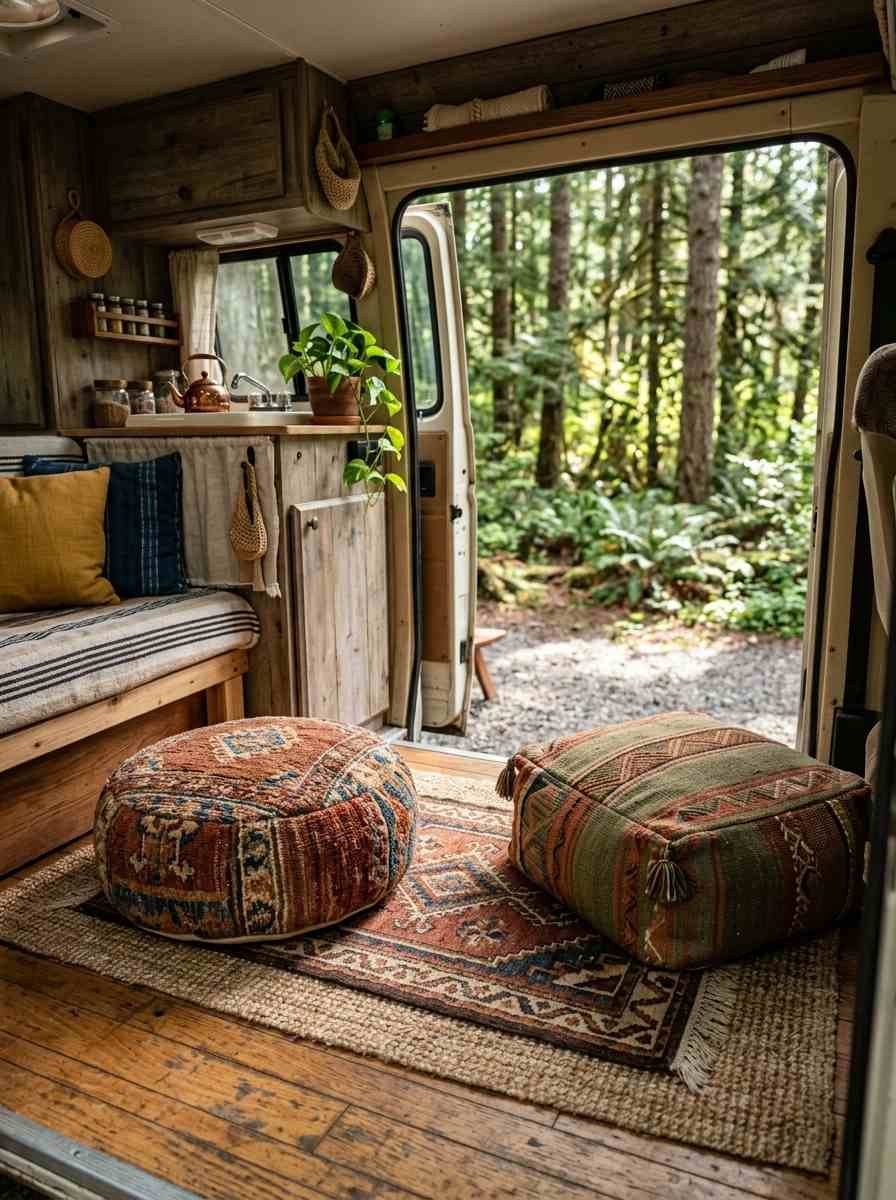
Skip a second chair and throw down a floor pouf instead. It stacks flat for driving,
it doubles as extra seating when friends stop by your site, and it fits the low, lounge-forward furniture style that defines the whole aesthetic.
9. Install warm string lights, not cold LEDs
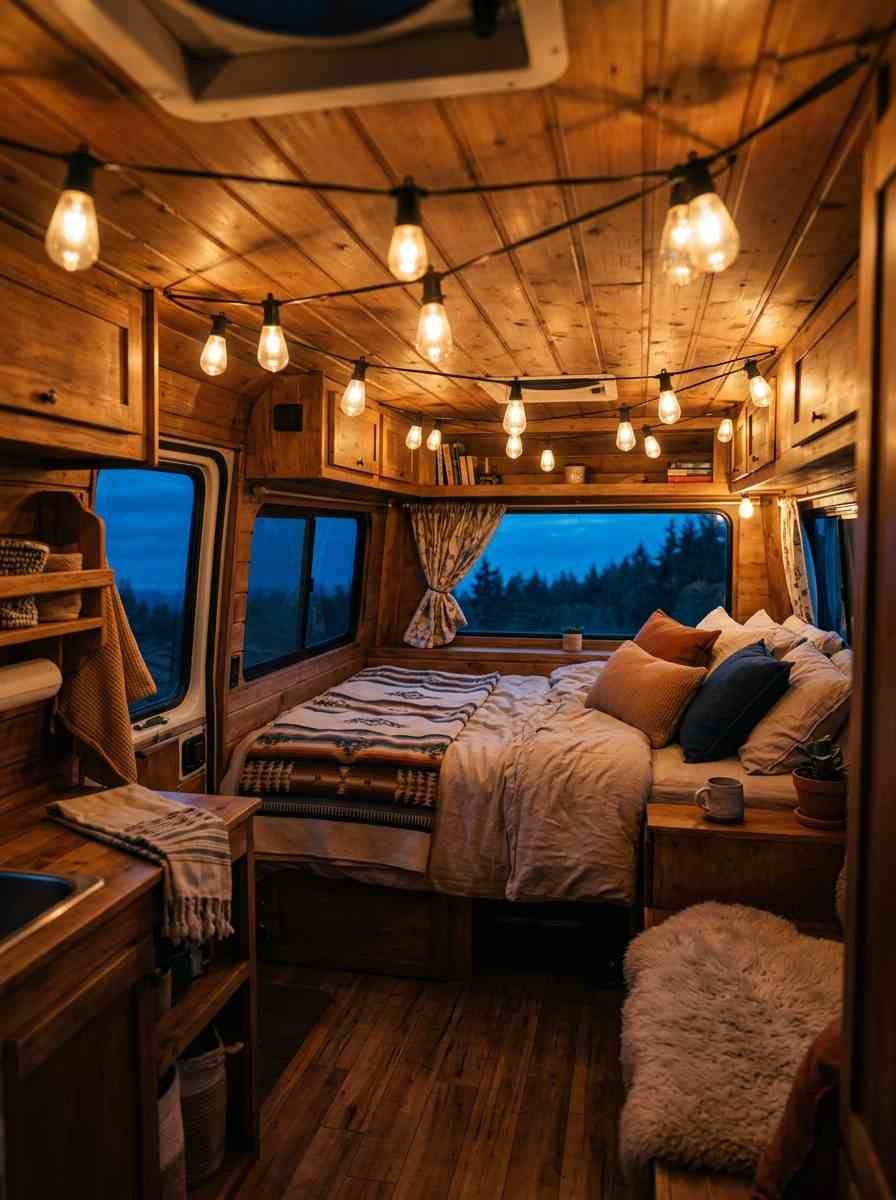
Cool white LED strips make a van feel like a hospital hallway. Warm-toned string lights, the kind with the little Edison bulbs, do the opposite.
This is the cheapest upgrade on this whole list and probably the one with the best payoff per dollar.
10. Add a gallery wall of small art
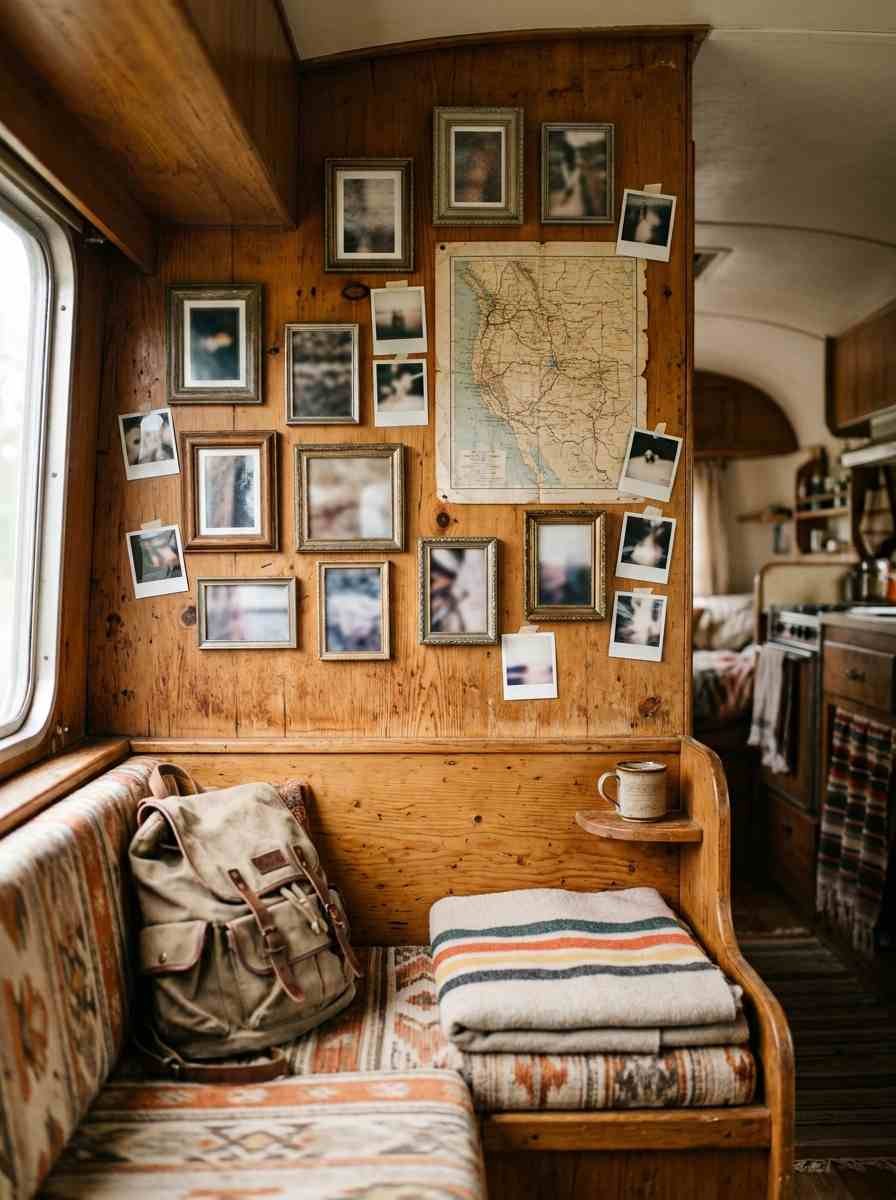
Postcards, a vintage map, a framed photo from your last trip. Command strips work fine on painted plywood and won’t leave holes.
This is the wall that tells your actual story, not a generic one, so let it be a little messy.
11. Choose a jewel-tone accent color
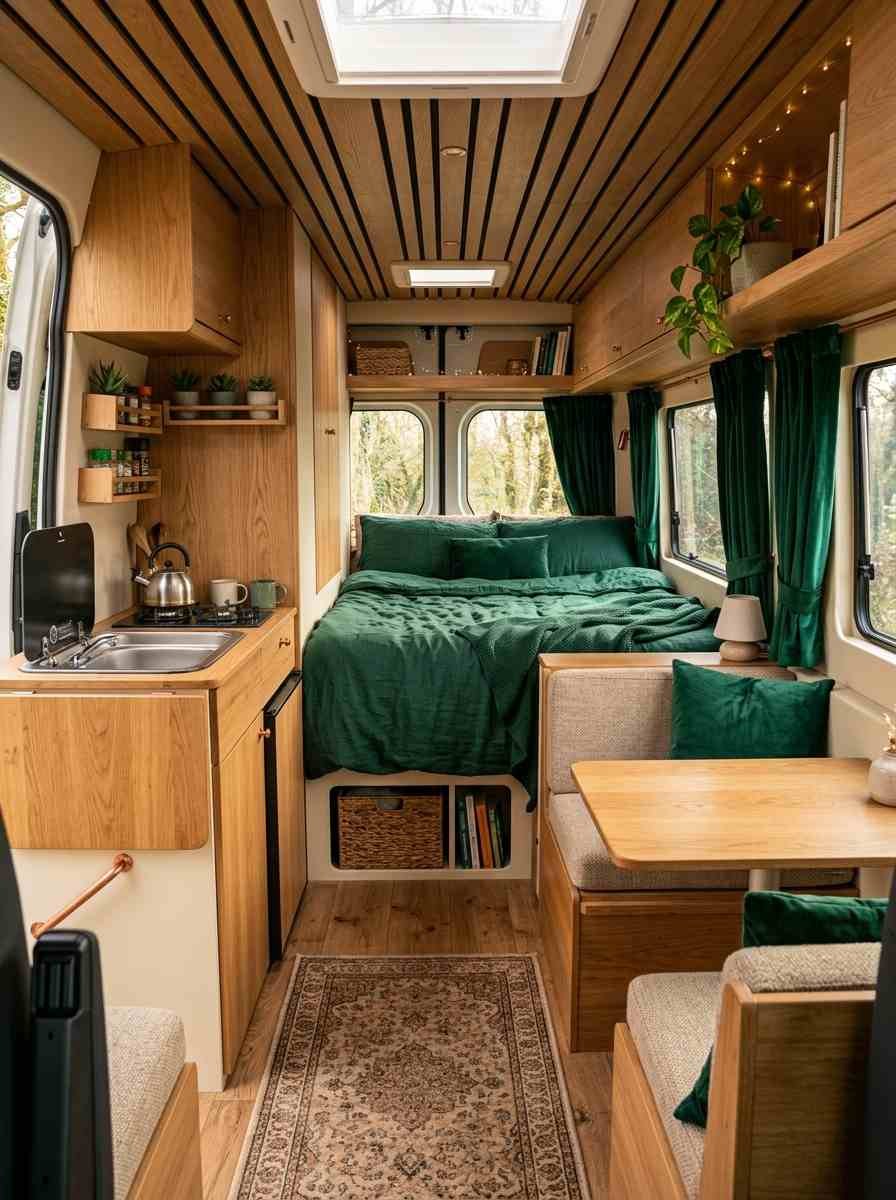
Deep emerald, rust, burnt orange, or a dusty terracotta gives a boho space its warmth.
Pick one dominant jewel tone and use it on your biggest textile (curtains or bedding) so it doesn’t turn into a color explosion in 60 square feet.
A lot of people ask me why they should even bother picking a “dominant” color first. Here’s the honest answer: without one, a small space starts fighting itself.
Terracotta pillows next to a turquoise curtain next to a mustard rug can absolutely work, but only if there’s a thread tying them together, usually a shared undertone or one repeated accent shade.
Pick your jewel tone before you buy anything else, and every purchase after that gets easier because you’re shopping with a filter already in place.
12. Cover cushions in mismatched patterns
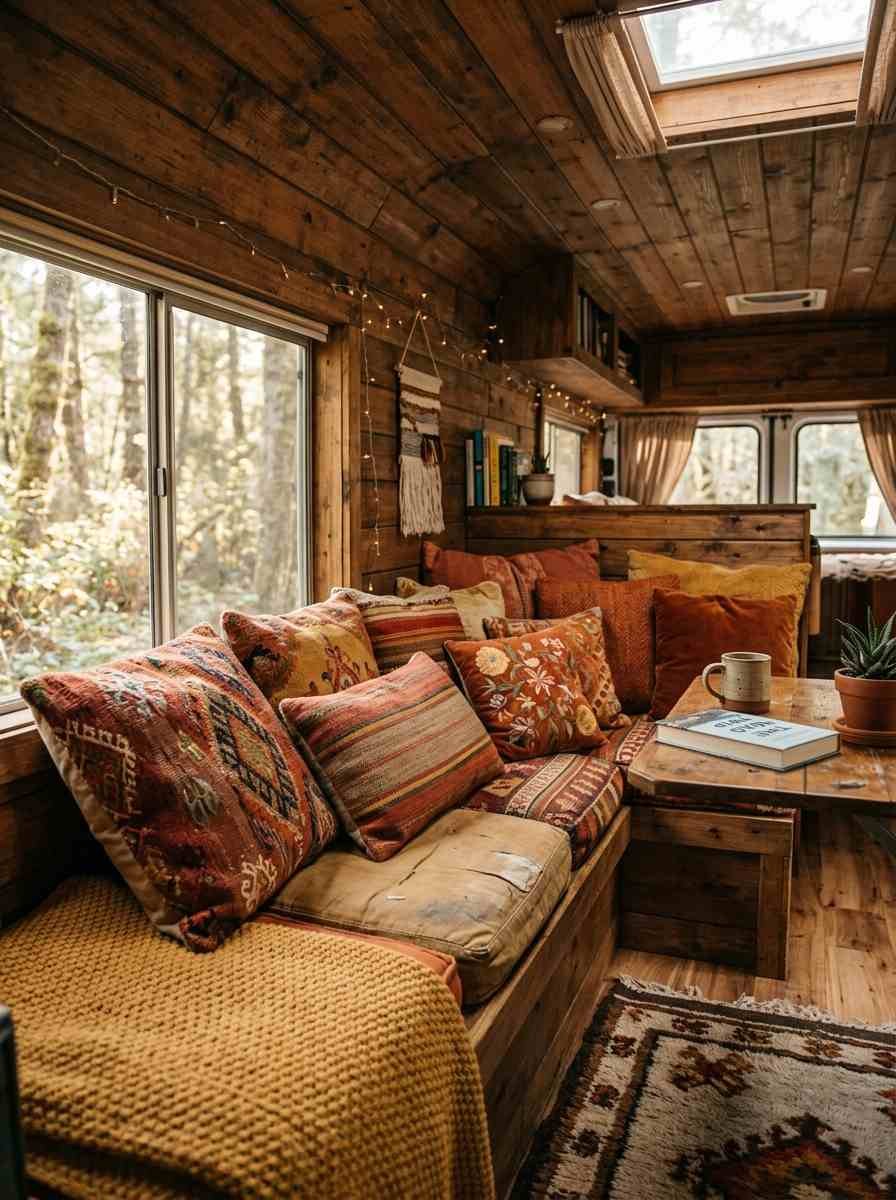
Buy or sew three or four pillow covers in different patterns but similar color families.
This is the fastest, cheapest facelift for a dated interior, and it’s genuinely one of my favorite weekend projects because you can see the difference in an afternoon.
13. Use woven baskets for visible storage
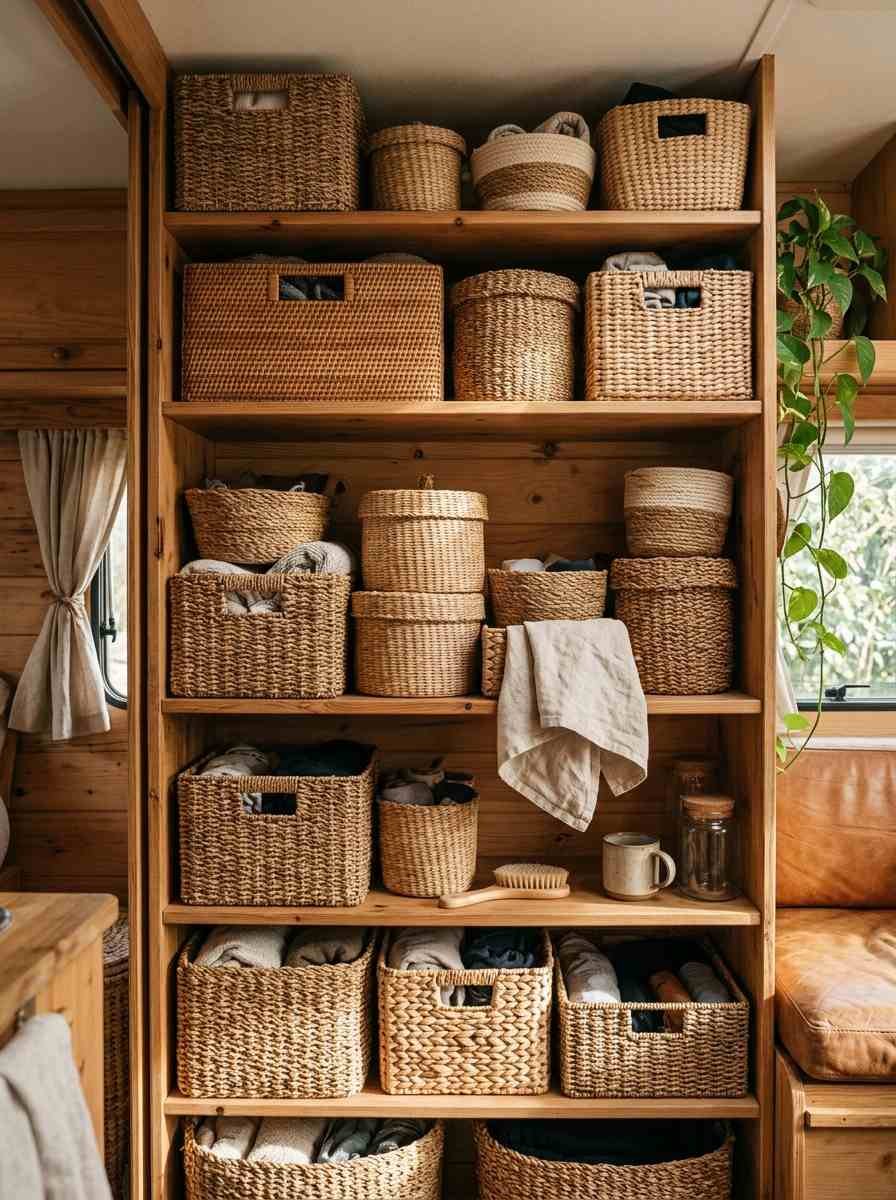
Open shelving looks great in photos and terrible on a rough dirt road unless everything’s contained.
Baskets solve both problems: they look boho, and they keep your gear from becoming a projectile at the next pothole.
14. Swap curtains for a beaded or macrame door divider
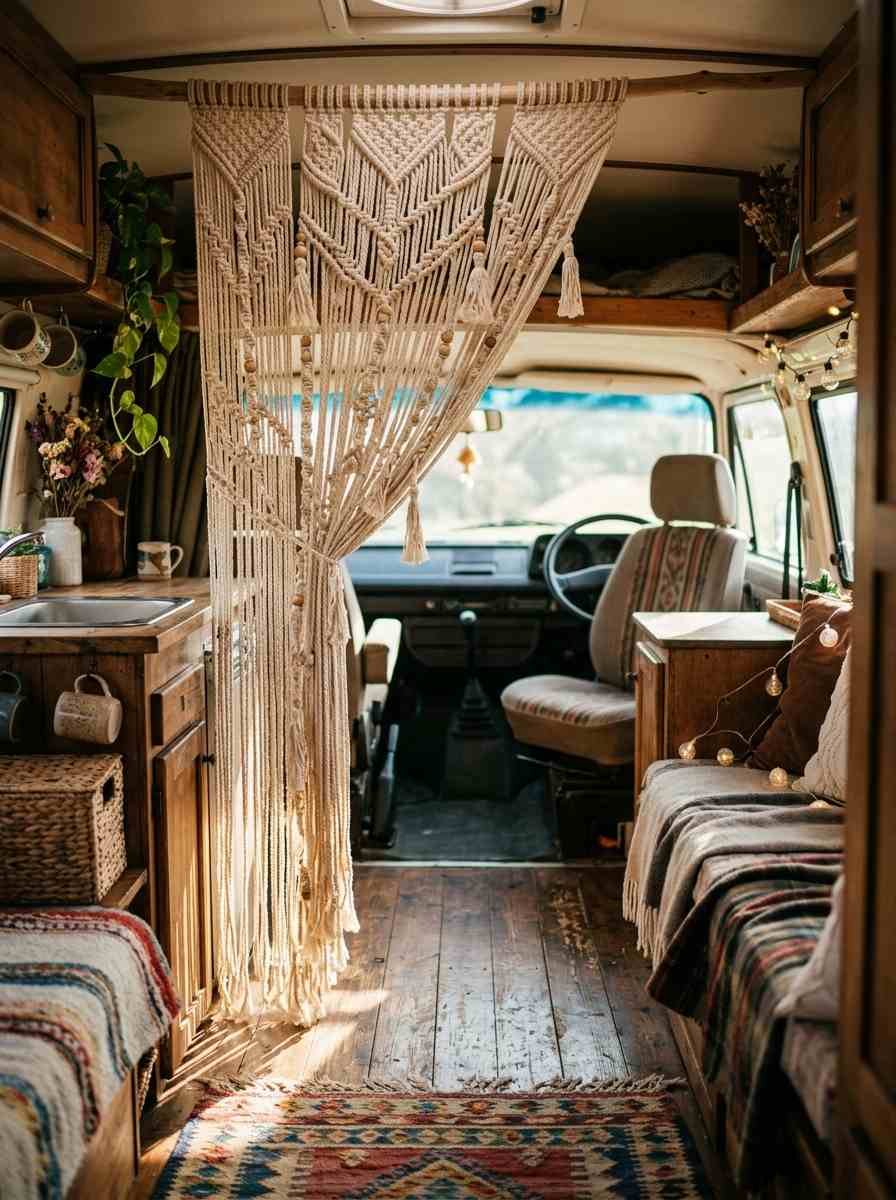
Instead of a solid door between cab and living space, some builders hang a beaded curtain or a macrame room divider.
It’s not practical for winter builds, honestly, but for warm-weather rigs it adds privacy without closing off the light.
15. Choose a patterned tile backsplash
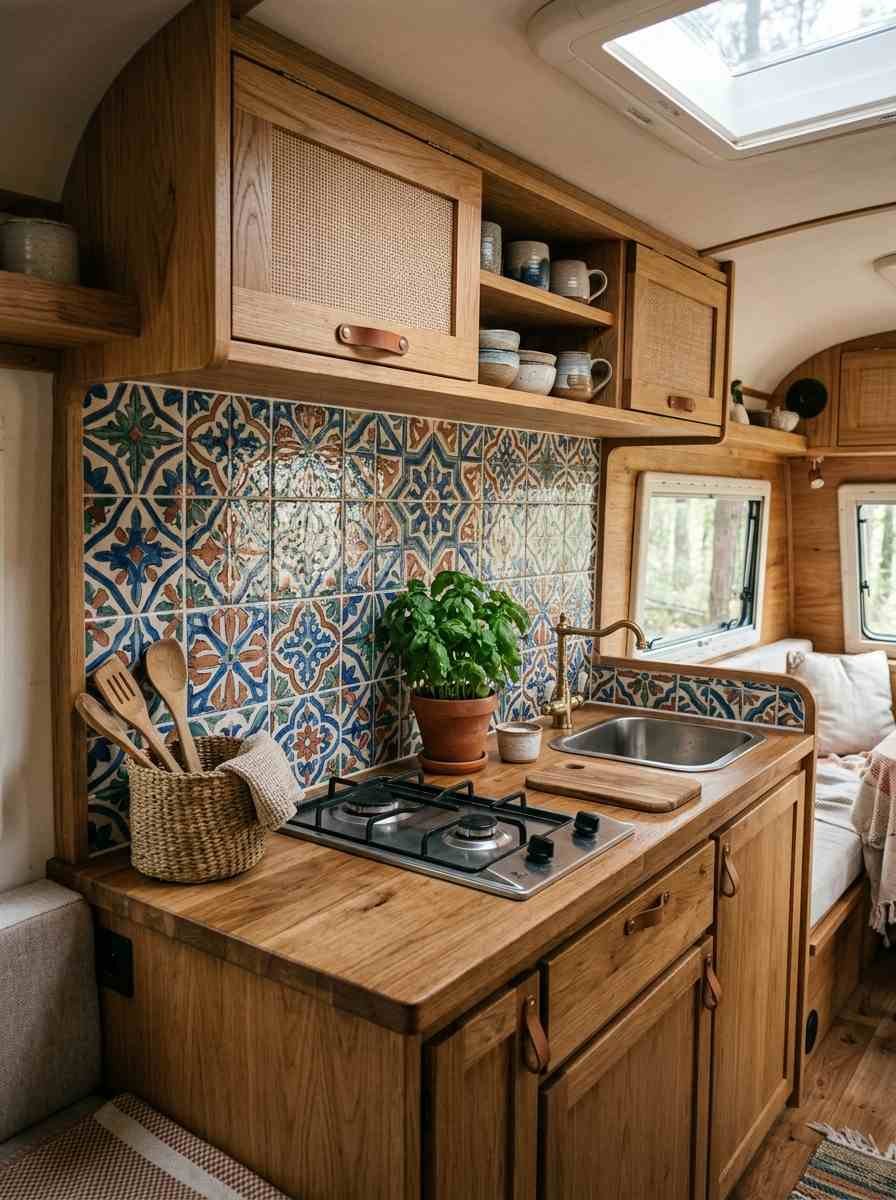
A small run of Moroccan-style peel-and-stick tile behind the stove instantly reads as intentional design rather than “unfinished plywood.” Keep it to a small zone.
Too much pattern in a tiny galley starts to feel busy fast.
16. Go for a low platform bed
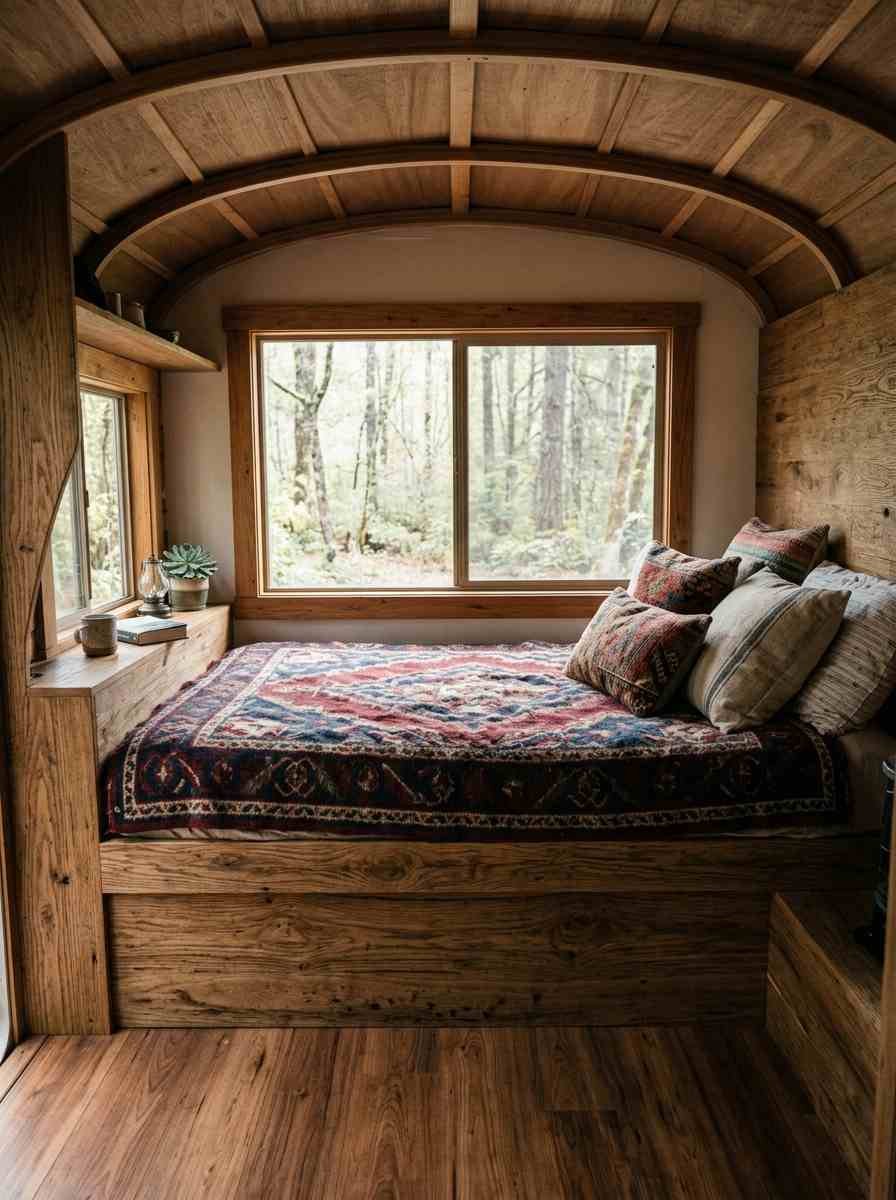
Boho furniture sits low to the ground, and in a van that’s a practical win too, since it opens up headroom.
A simple platform with a textured throw and a stack of mismatched pillows does more visual work than an elaborate headboard ever could.
17. Add a vintage-style area rug runner in the galley
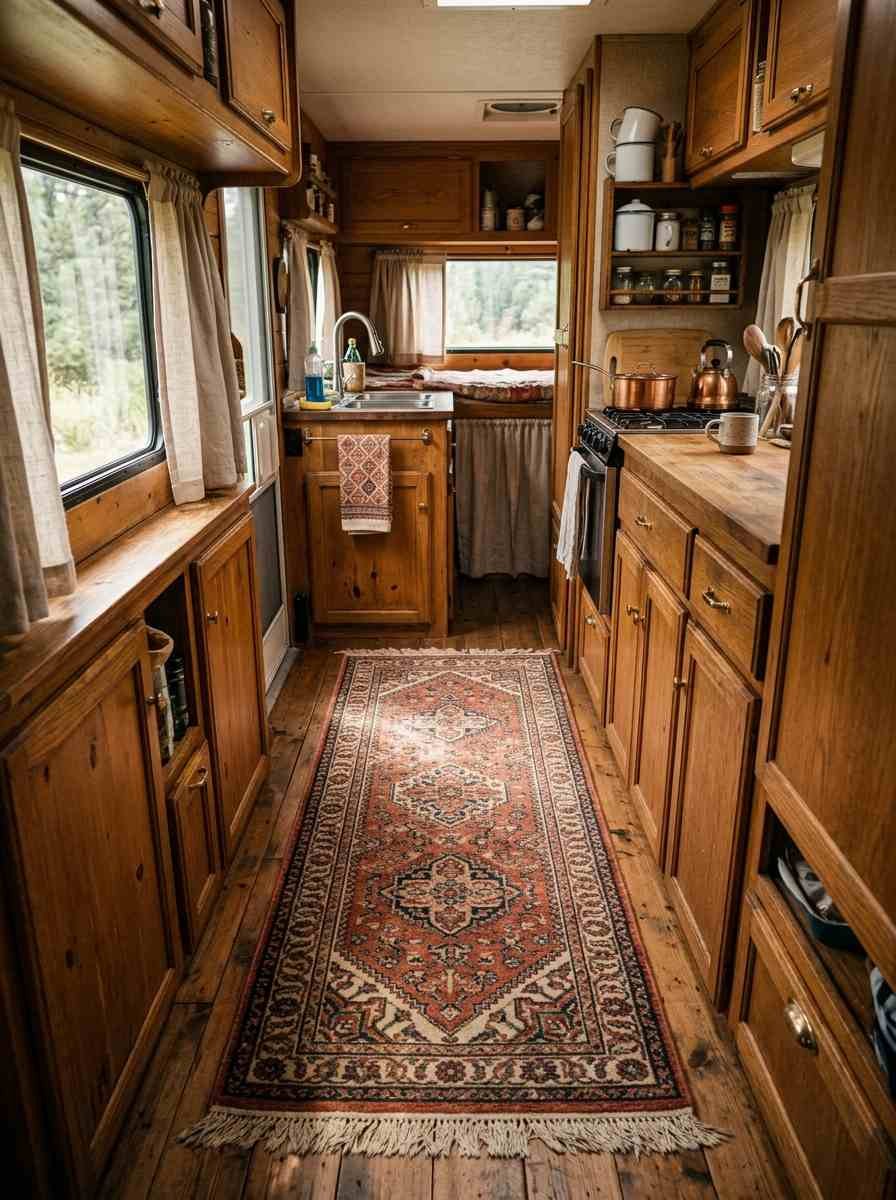
A narrow runner in the kitchen area softens the whole cooking zone and hides scuffed subfloor.
Look for a washable version. Wow, this sounds obvious, but I learned that lesson after ruining my first rug with spilled olive oil during a windy pull-off.
18. Use dried florals instead of fresh
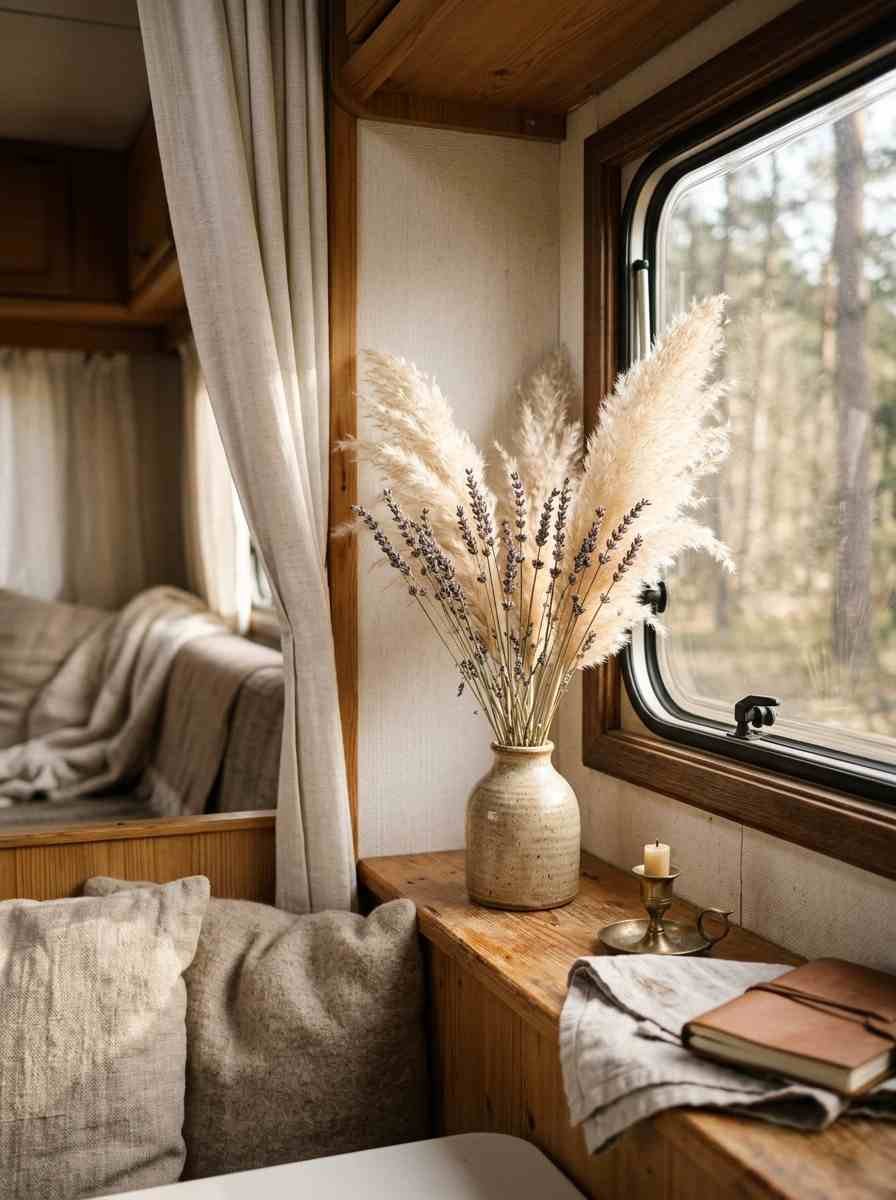
Pampas grass, dried lavender bundles, or eucalyptus stems in a small vase add texture without the maintenance of fresh flowers, which, let’s be honest, die within a week of highway vibration anyway.
19. Pick brass or matte black hardware, not chrome
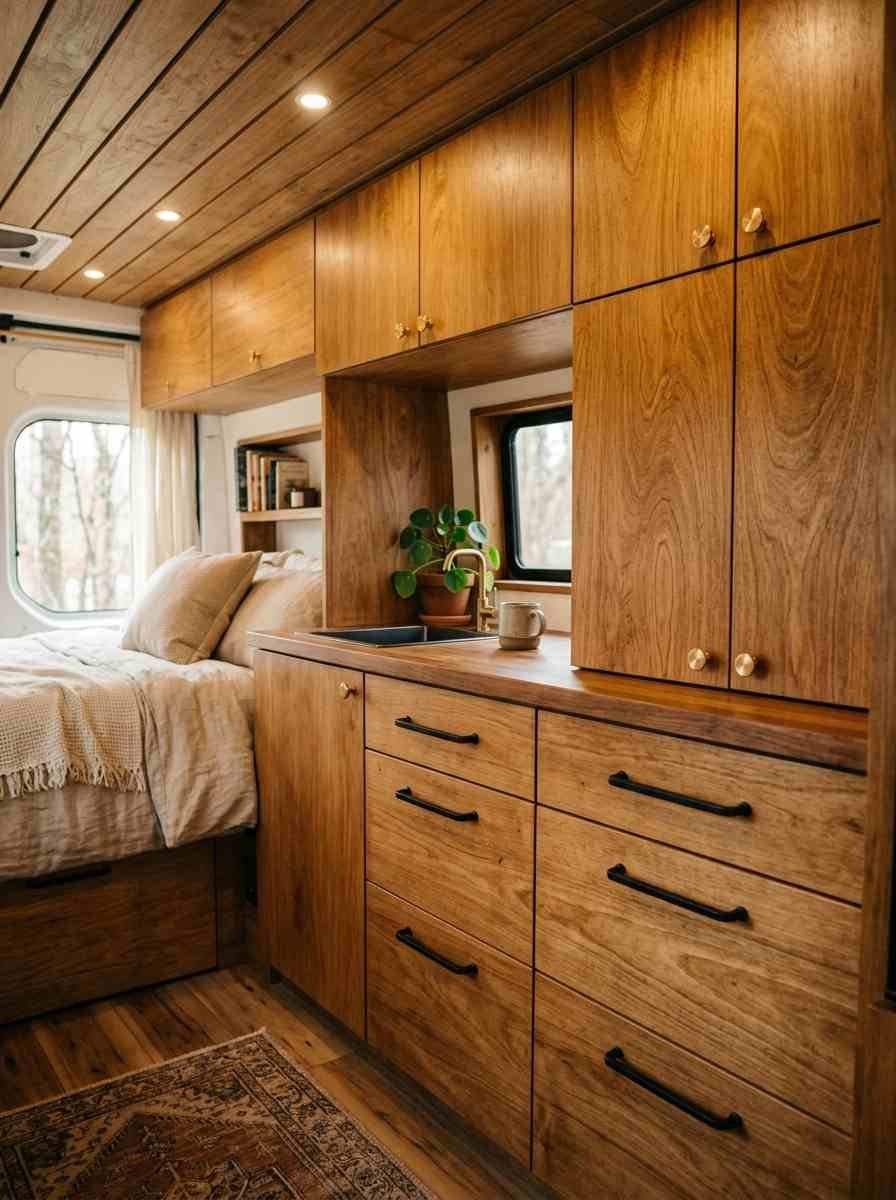
Chrome reads modern and cold. Warm brass or matte black cabinet pulls fit the earthy boho palette and they’re an easy swap if you’re refreshing an older build instead of starting from scratch.
20. Don’t skip the insulation before you decorate
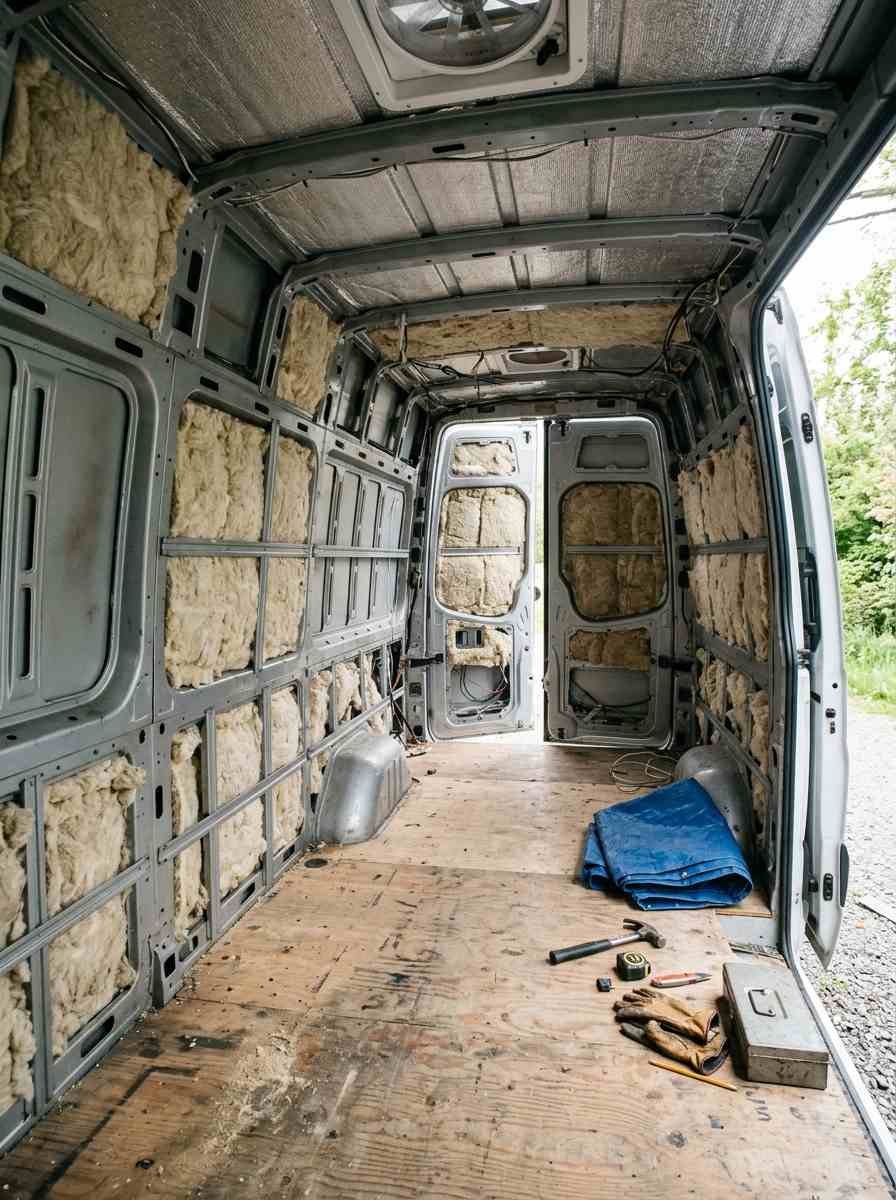
This one’s not glamorous, but it matters more than any throw pillow. A poorly insulated van sweats, molds, and ruins your fabric investment fast.
If you’re still in the build phase, it’s worth reading a proper guide on campervan insulation materials before you close up your walls, because ripping out finished paneling later is nobody’s idea of a good weekend.
A quick tangent, because I can’t help it
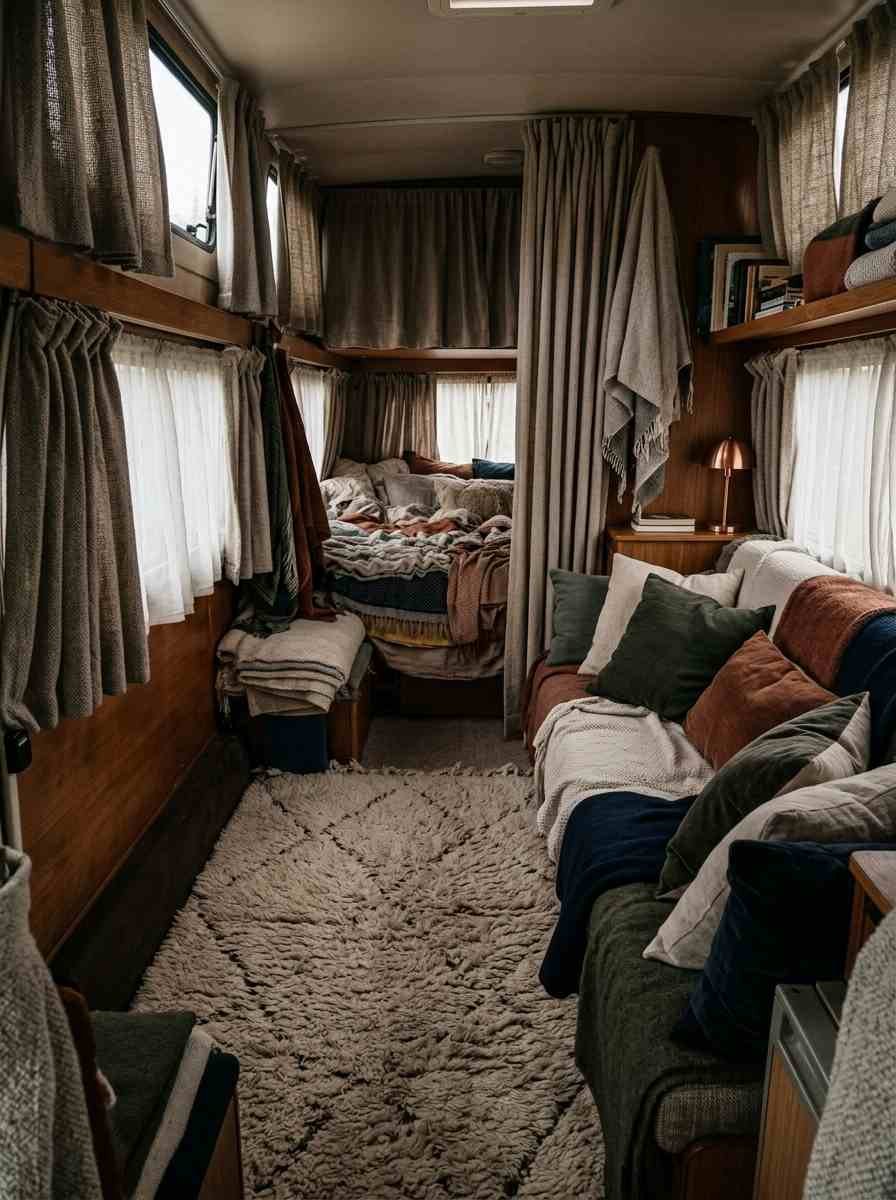
Random thought while writing this: the number one thing people underestimate about van life isn’t the tiny bathroom or the awkward parking. It’s noise.
A metal box amplifies every gust of wind and every zipper.
Layering in soft textiles (rugs, curtains, cushions) does more for sound dampening than people expect, which is a nice bonus on top of looking good.
Making it your own
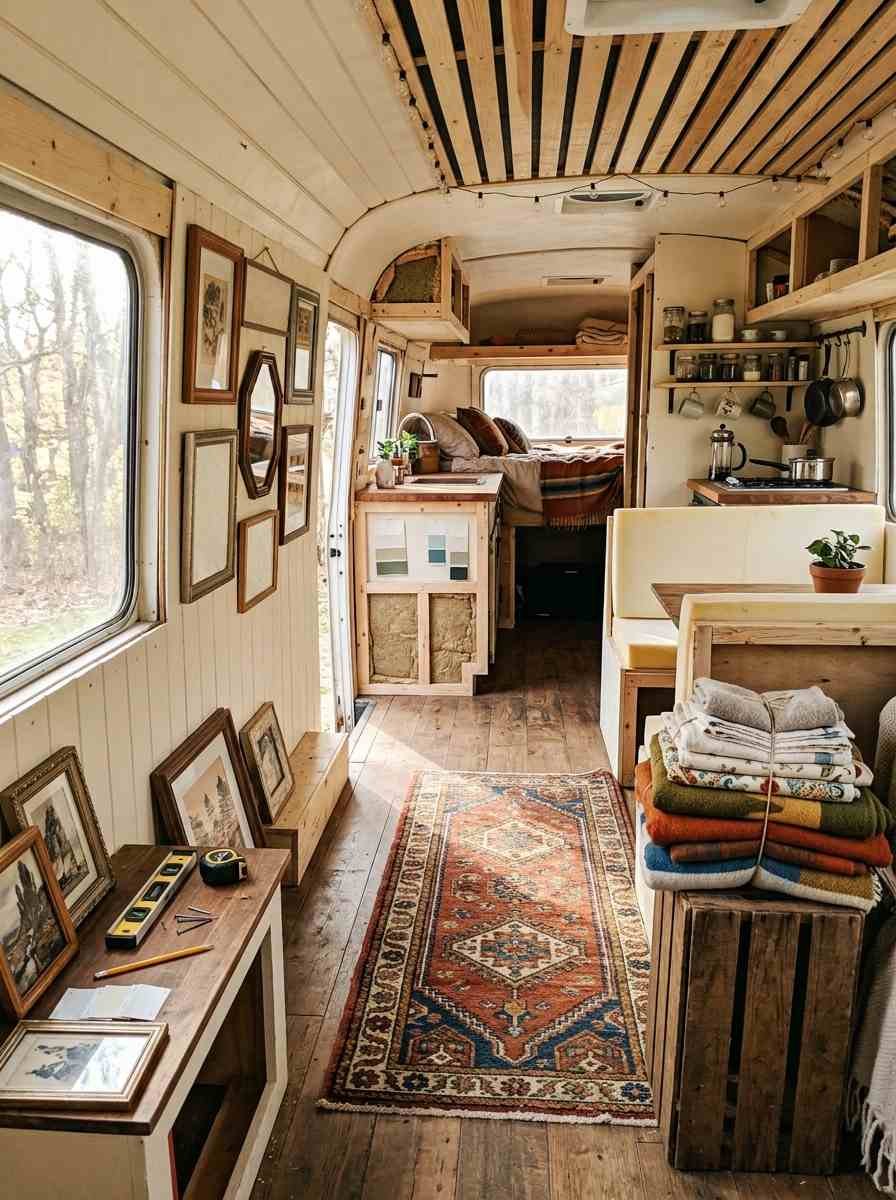
None of these ideas need to be done all at once, and honestly, you shouldn’t try.
Boho spaces get better with time because they’re built from things you actually find and love, not a matching set ordered in one checkout.
Start with the base (paint, flooring, insulation if you’re still building), add one or two textile layers, and let the rest accumulate over your next few trips.
That’s genuinely how the best ones happen, one flea market stop at a time.
If you want a deeper dive into the design roots of the style before you shop, this overview of bohemian interior design is a solid starting point for understanding why certain colors and textures keep showing up in every boho space you’ve ever pinned.
Frequently asked questions
Is bohemian style practical for a small camper? Yes, more than most styles actually. Boho doesn’t require matching furniture or a strict color palette, so you can build it up piece by piece using lightweight, secondhand, or handmade items that suit a moving space.
How do I keep a colorful interior from looking cluttered? Pick one or two dominant colors and repeat them across your rug, curtains, and pillows. Everything else should pull from that same palette. Clutter usually comes from too many unrelated colors, not too many patterns.
What’s the cheapest way to start a boho camper build? Textiles. A secondhand rug, a few pillow covers, and a string of warm lights will transform a van for under 100 dollars, long before you touch cabinetry or flooring. Thrift stores and estate sales are honestly better hunting grounds than most home decor shops for this style, since the whole point is that things look collected over time rather than bought in a matching set last weekend.
Will bright colors and heavy textiles make a small van feel more cramped? Not if you keep your base neutral and let color live in a few focused spots rather than everywhere at once. A saturated ceiling or all four walls in a bold print will shrink a space fast. A neutral shell with one or two loud textiles does the opposite, it makes a tiny camper feel intentional instead of chaotic.
Final thought
Your camper doesn’t need to look like a magazine spread. It needs to feel like somewhere you actually want to pull over and stay a while.
Pick two or three ideas from this list, start there, and let the rest build up naturally on the road. What’s the first thing you’re adding to your build: the rug, the lights, or the macrame?
