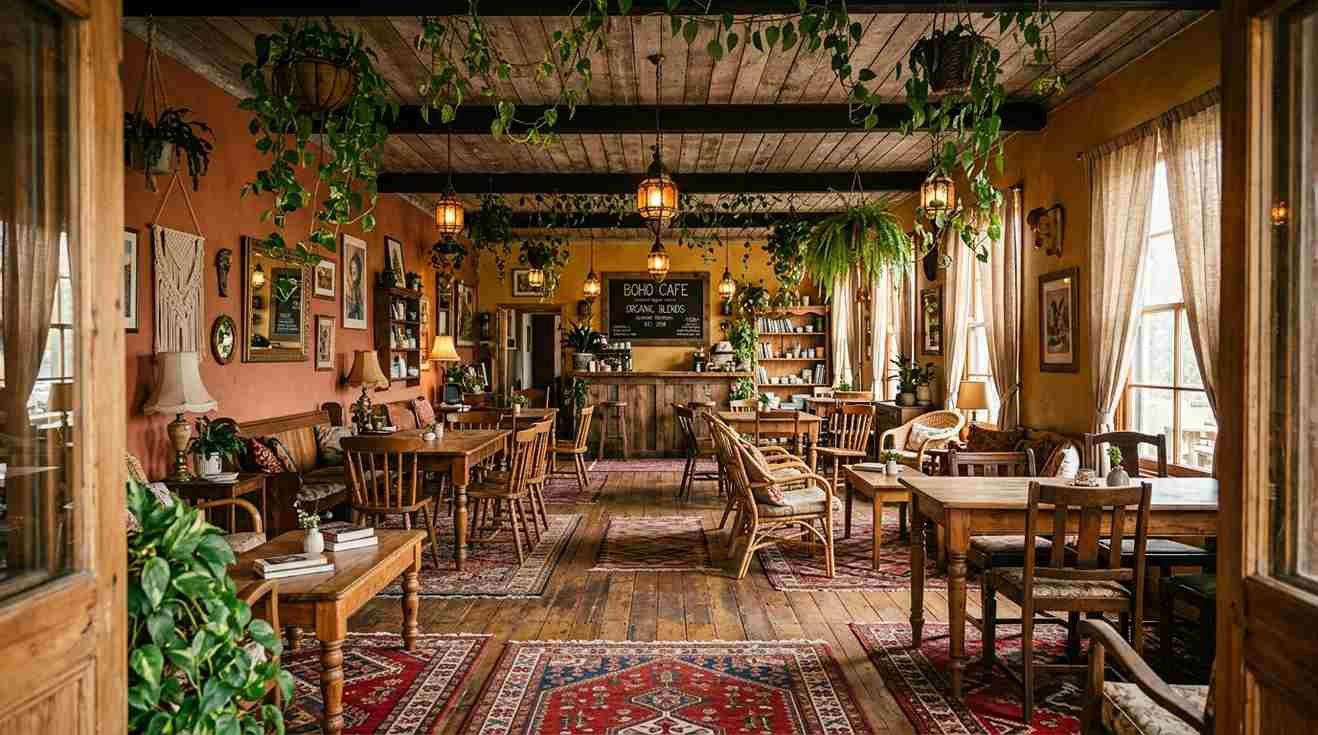
You know that moment when you walk into a cafe and just… exhale? Like your shoulders drop two inches and you suddenly want to stay for three hours with a latte you’ve already finished. That’s the bohemian cafe effect, and it’s not an accident.
I’ve spent way too much time hunting down the most beautifully chaotic, warmly layered, soul-nourishing boho cafe interiors on Pinterest, in real neighborhoods, and honestly in my own sketchbooks.
So here’s my honest, experience-backed breakdown of 20 ideas that actually work, whether you’re designing a full cafe from scratch or just want to bring that dreamy boho energy to your own little coffee corner at home.
What Makes a Bohemian Cafe Interior Actually Work
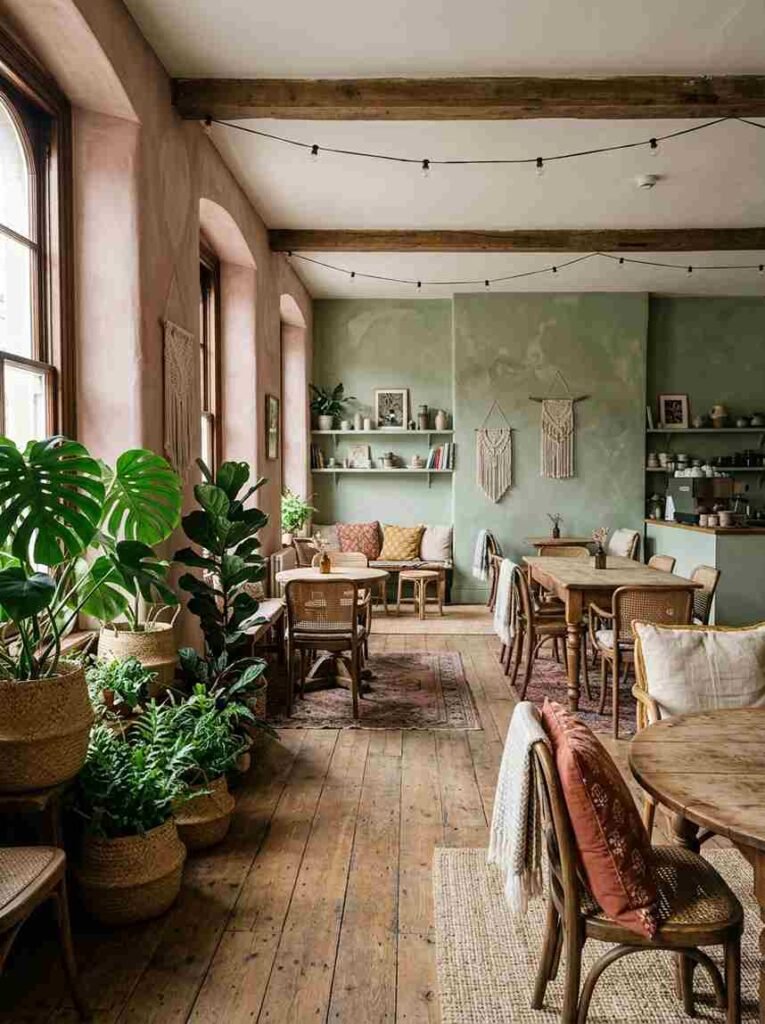
Before we get into the list, here’s the thing most Pinterest boards miss: boho design isn’t random clutter with string lights thrown on top.
There’s a quiet logic to it. The layering is intentional. The worn textures are chosen. The “imperfect” details are crafted with care.
Bohemian style pulls from multiple cultural traditions, including Moroccan, Indian, Scandinavian, and vintage European influences.
When you’re designing a cafe with boho intent, you’re essentially curating a cross-cultural, multi-era visual conversation. Sounds intense, but it’s also incredibly freeing.
Let’s get into it.
1. Start With Warm, Earthy Walls
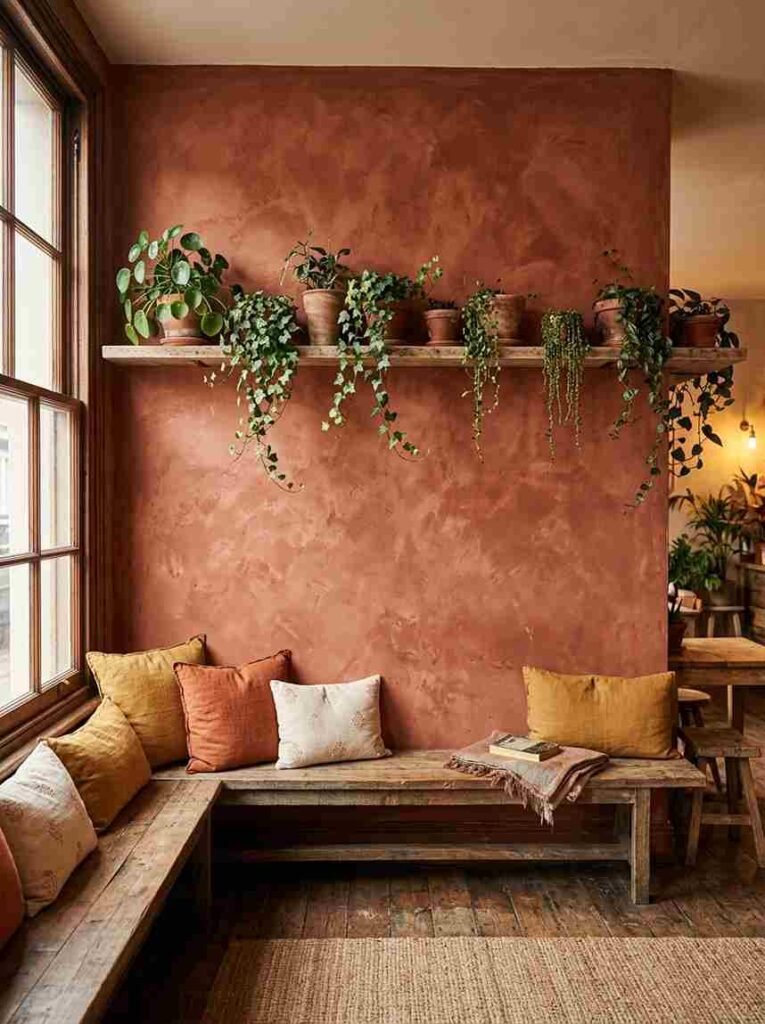
Terracotta, mustard, sage, dusty rose. These are your foundation colors, and they do the heavy lifting before a single piece of furniture arrives.
Warm walls make people feel held. There’s actual research behind color psychology in hospitality spaces, and cafes with warm earthy tones consistently score higher on perceived coziness.
Paint two accent walls in deep terracotta and leave the rest in a soft warm white. The contrast gives the space breathing room without losing the warmth.
If you want to go deeper, look at the work being done with limewash paint techniques right now.
The textured, slightly uneven finish is exactly the kind of organic imperfection that makes boho spaces feel lived-in rather than staged.
2. Mismatched Furniture Done Right
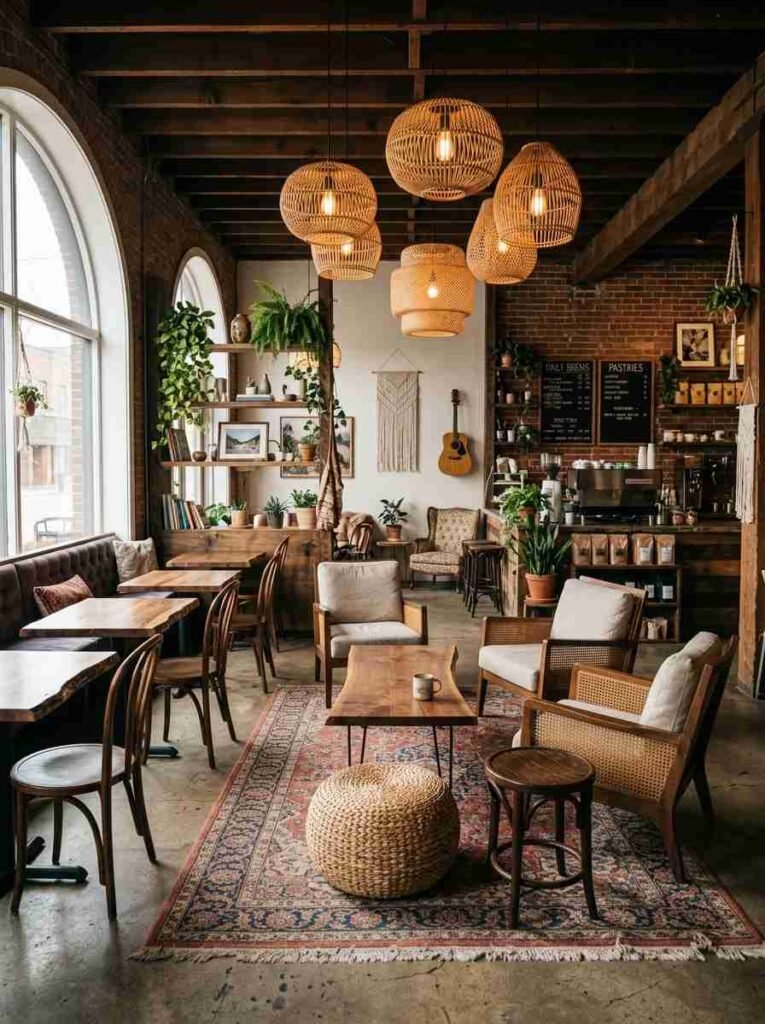
The mismatched look is probably the most misunderstood element of boho design. People either avoid it entirely
(too scared) or go full chaos (too many competing shapes). The secret is unifying through material or tone, not through matching sets.
Pick a wood tone, say, medium walnut, and then let chairs, tables, and stools vary in style. One mid-century cane chair, one low pouffe, one vintage bentwood stool. All walnut-toned. All different. Completely coherent.
I personally love sourcing from antique markets and Etsy vintage shops for this. Every piece has a story, and somehow people can feel that.
3. Macrame Wall Hangings as Focal Points
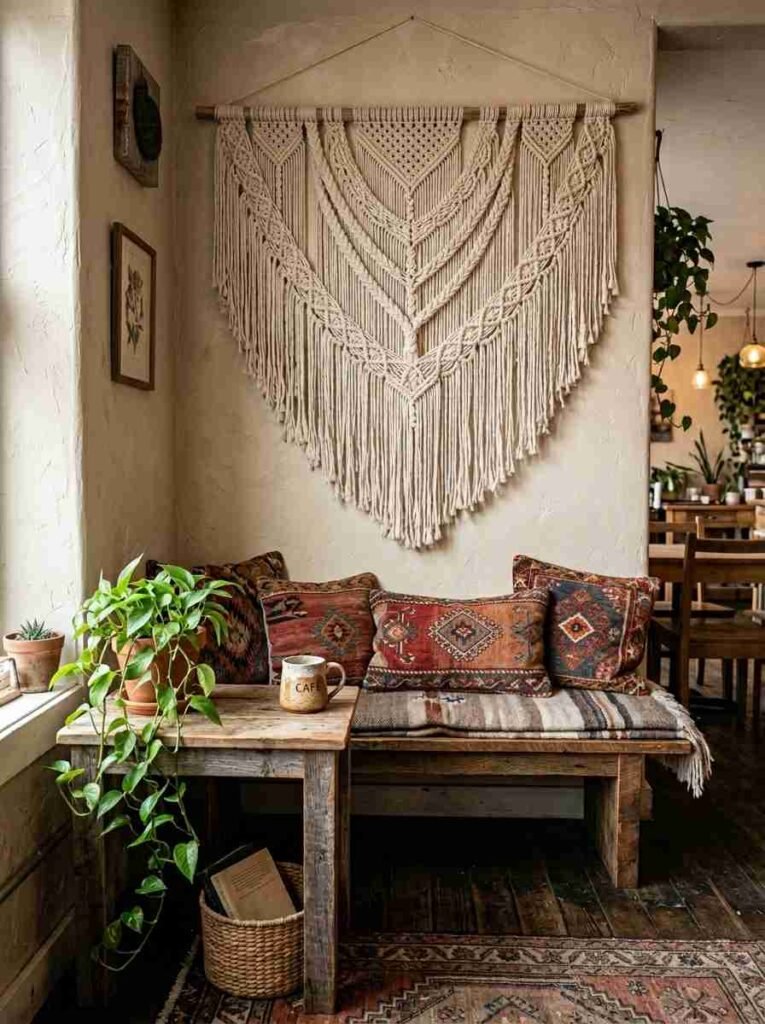
Macrame is still going strong, and for good reason. A large-scale macrame wall hanging above a seating nook does three things:
- Adds texture without weight
- Creates a natural focal point that draws people into that corner
- Introduces the handmade, artisan quality that’s central to boho identity
Size matters here. A small macrame piece on a big wall looks like an afterthought. Go large, or use a cluster of smaller pieces at varying heights.
For inspiration on handcrafted fiber art, Etsy’s macrame home decor section is genuinely worth an hour of your time.
4. Plants, Plants, and More Plants
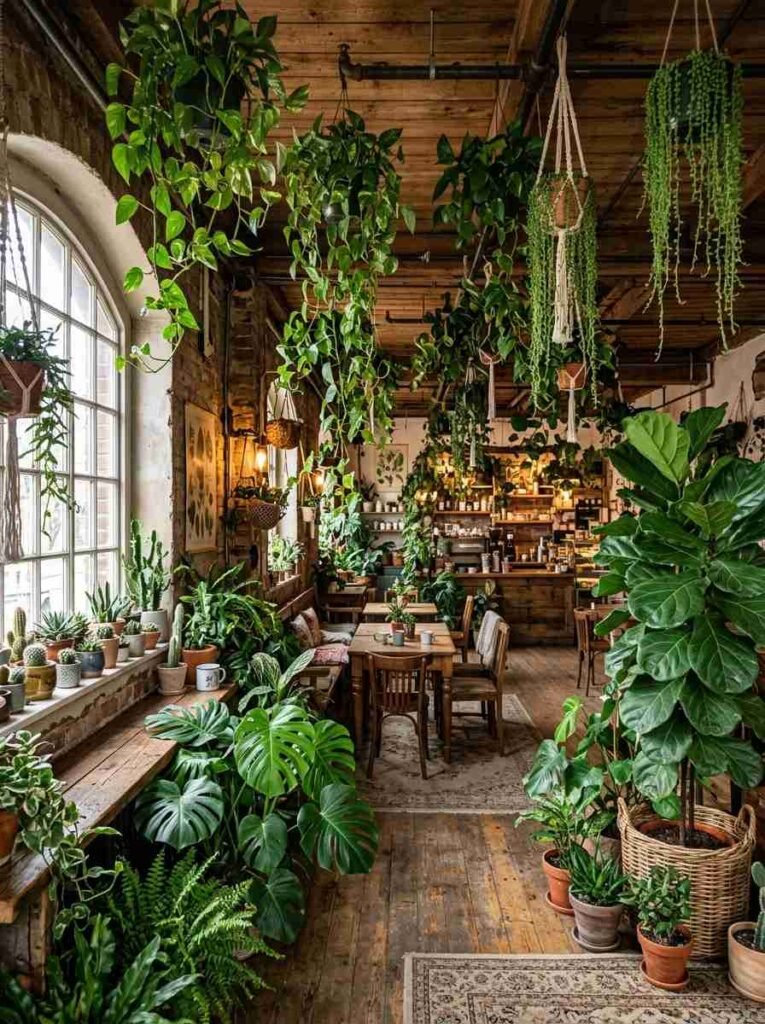
This is non-negotiable in any serious boho cafe interior. Plants aren’t decorative accessories here; they’re structural elements that define the space’s character.
A few approaches that work particularly well:
- Ceiling-hung trailing plants (pothos, string of pearls) above counters and seating areas
- Large statement plants (fiddle leaf fig, monstera, rubber tree) in woven baskets as floor anchors
- Shelved plant collections mixing succulents, trailing vines, and small cacti
The layering of greenery at different heights creates that lush, slightly overgrown feeling that makes you want to sink into a corner and stay.
Functionally, plants also improve air quality and reduce ambient noise, which is an actual win for a cafe environment.
5. Layered Textiles for Every Surface
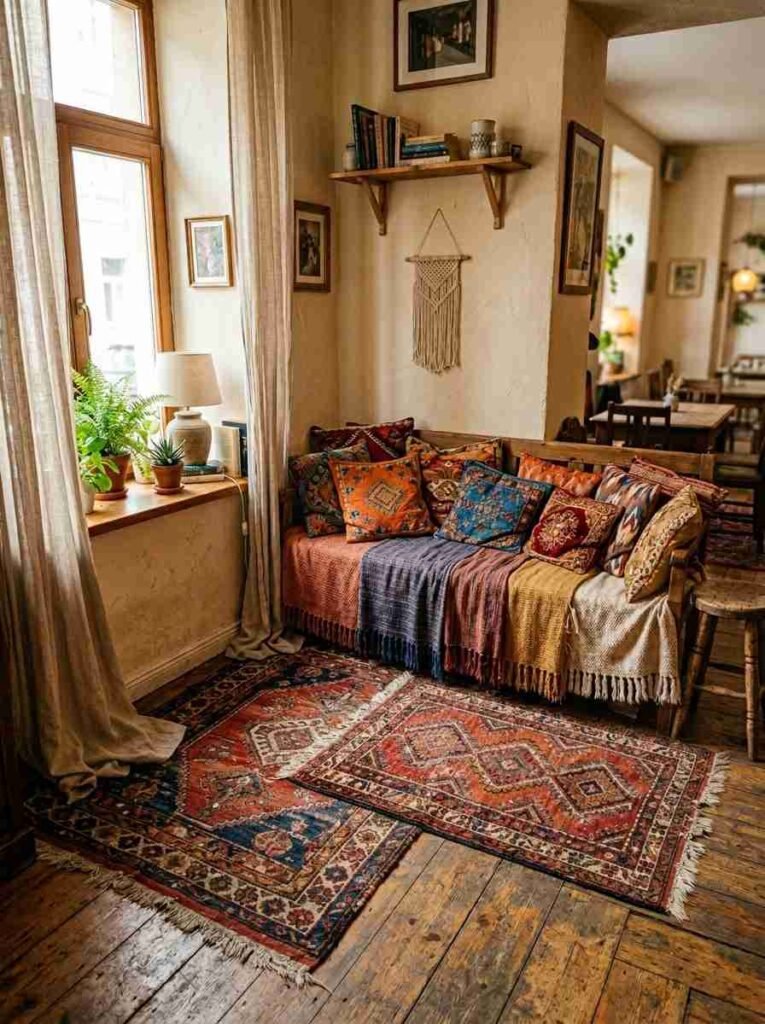
If I had to pick the single most impactful boho technique, it’s this one. Layered textiles transform a room faster and more affordably than almost anything else.
Think:
- Kilim or Turkish rugs over bare floors (or even layered over each other)
- Woven throws draped over chair backs
- Embroidered cushions in multiple sizes on benches and window seats
- Linen or cotton curtains in earthy tones pooling slightly on the floor
The mix of patterns works because boho design operates on a “collected over time” logic. You’re not matching a set. You’re building a visual story.
6. Vintage and Reclaimed Wood Elements
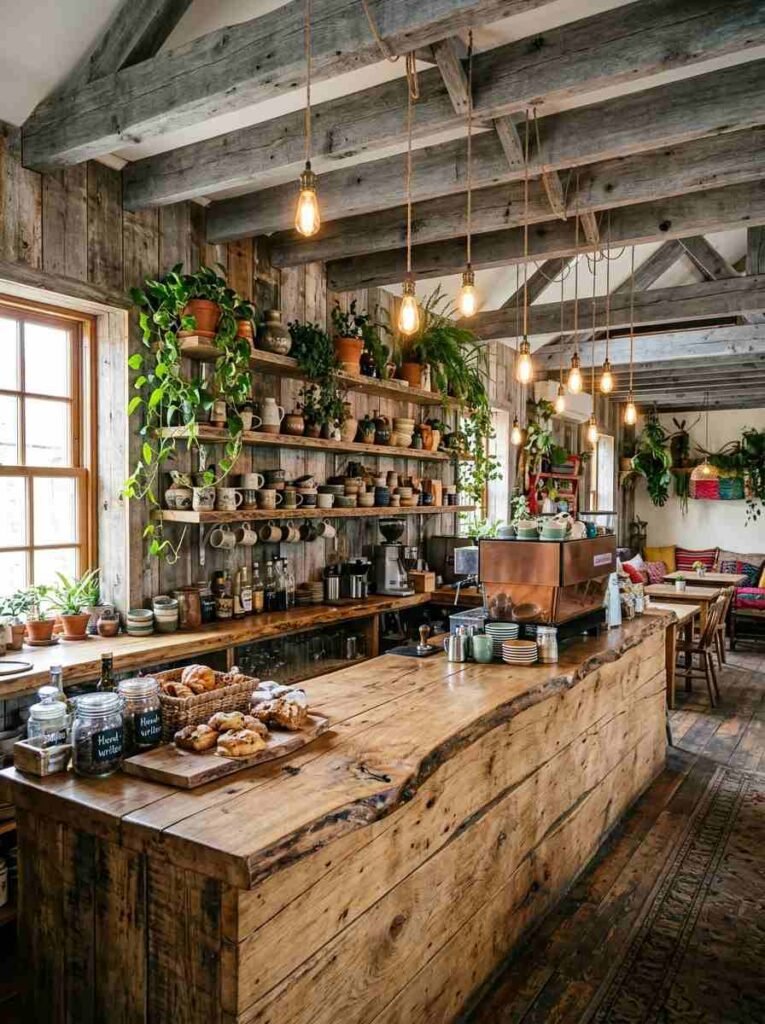
Reclaimed wood as a design material carries something that no new material can replicate: actual history.
The knots, color variations, and weathered marks are irreplaceable, and in a boho cafe they read as authenticity rather than wear.
Use it for:
- Bar counters and service areas
- Floating shelves for plants and ceramics
- Feature ceiling beams
- Table tops with live edges
One note from personal experience: be thoughtful about sealing reclaimed wood properly for cafe use. A food-safe matte finish keeps the organic look while making it genuinely practical for a commercial space.
7. Moroccan Lanterns and Layered Lighting
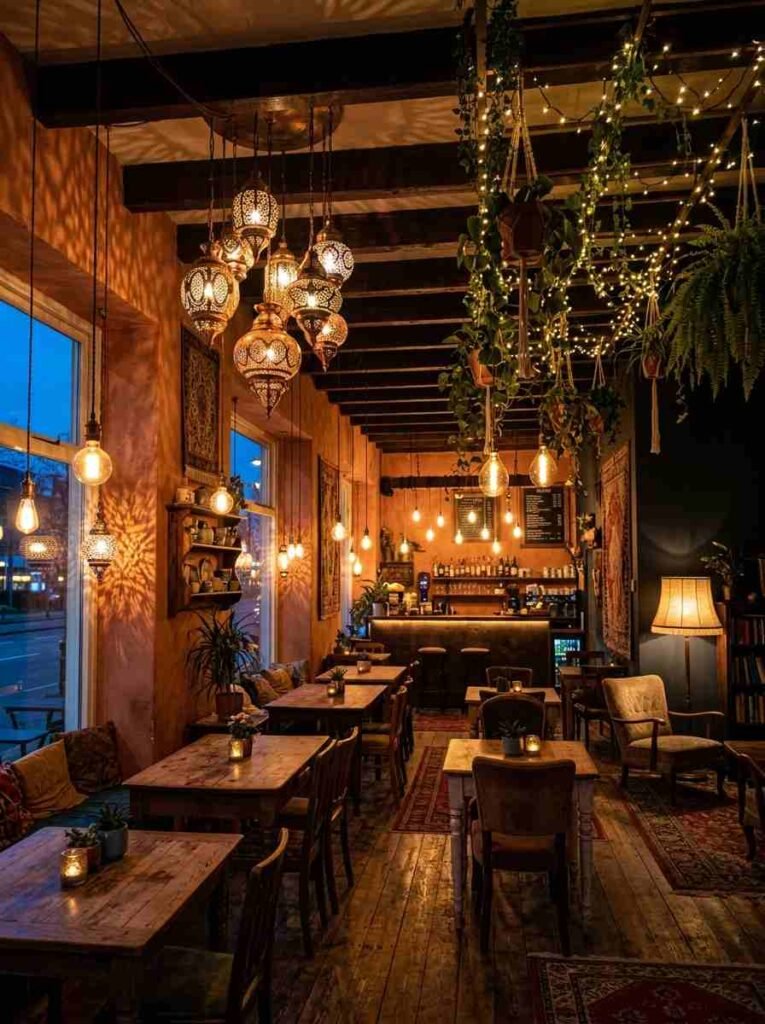
Lighting is where boho interiors either succeed completely or fall flat entirely. Overhead fluorescents? Absolutely not. The goal is warm, layered, slightly dramatic lighting that feels like golden hour, all day.
Moroccan lanterns are one of the most effective tools for this. Whether hung in clusters from the ceiling or placed on tabletops as candle holders,
they cast the kind of patterned, warm light that makes everyone look good and feel relaxed.
Layer in:
- Edison bulb pendants on varied cord lengths
- Floor lamps with fabric shades in low corners
- String lights woven through ceiling plants or draped along shelving
For a deeper look at how lighting affects mood in hospitality spaces, Architectural Digest’s coverage of restaurant lighting design has genuinely useful breakdowns.
8. A Statement Gallery Wall
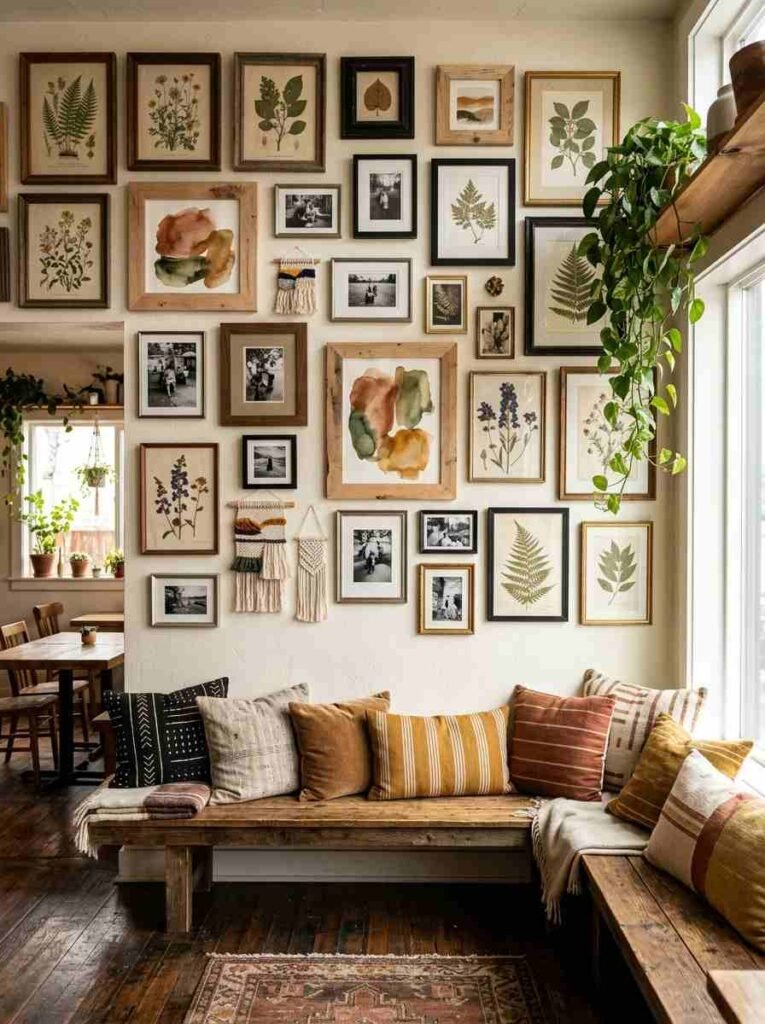
A gallery wall in a boho cafe should feel like a collector’s wall, not a staged showroom. The difference is variety and personal curation.
Mix:
- Vintage botanical prints
- Abstract watercolors
- Black-and-white photography
- Small woven textiles or embroidered pieces
- Pressed dried flowers in frames
Vary the frame styles but keep a loose color family, mostly wood tones and black frames with a few raw/unfinished ones. The arrangement should be slightly asymmetrical. If it looks too perfect, it loses the boho spirit entirely.
9. Exposed Brick or Textured Plaster Walls
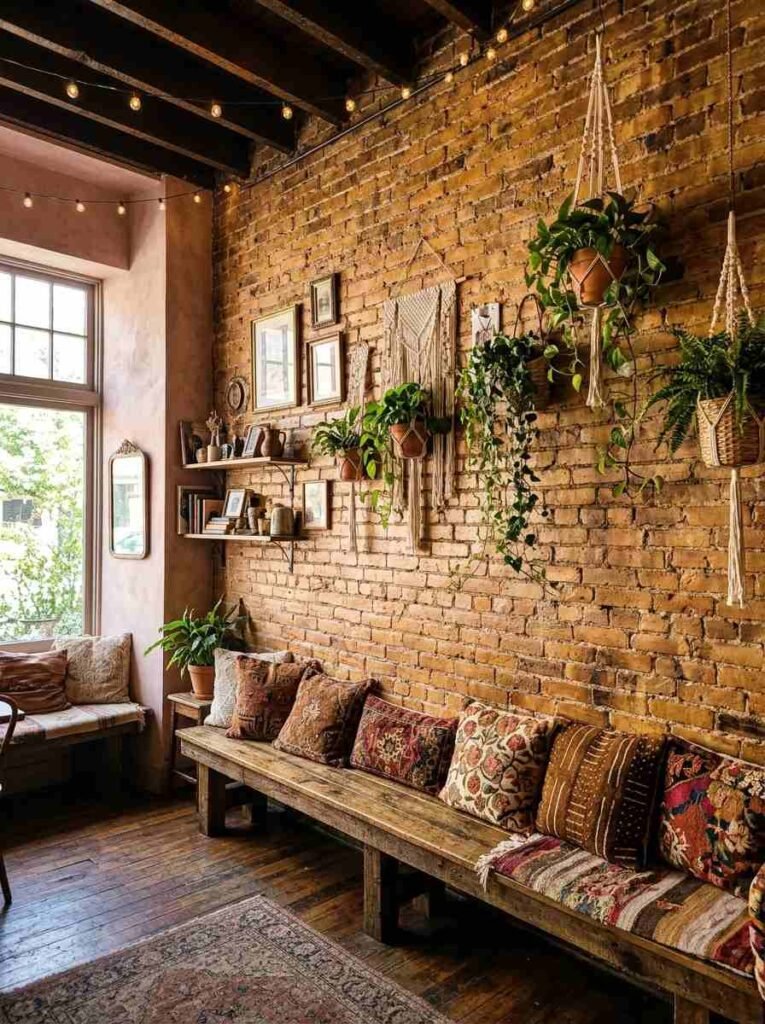
Raw, unfinished wall surfaces are a gift to boho interiors. Exposed brick brings warmth and history.
Textured plaster (especially in earthy tones) creates an organic, handmade quality that no smooth drywall can replicate.
If your space doesn’t have existing brick, Venetian plaster or even a DIY textured paint technique can get you surprisingly close.
The key is embracing irregularity. Perfectly smooth and uniform is the opposite of what you’re going for.
10. Low Seating and Floor Cushions
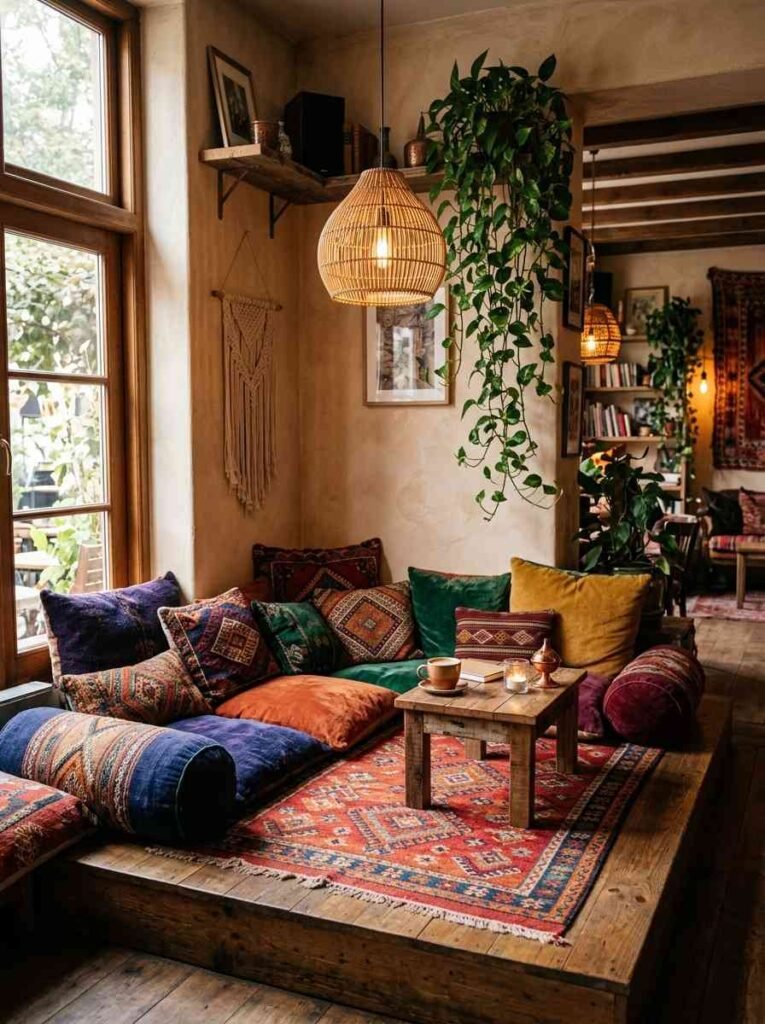
Here’s where a bohemian cafe can really separate itself from every other coffee shop on the block.
Low seating areas, including floor cushions, pouffe ottomans, and low wooden platforms with cushions, create intimate gathering spaces that people actively seek out.
A corner with a low wooden platform, a few large floor cushions, a small side table, and a hanging plant overhead? That corner will be fully booked every single day. People come specifically for that spot.
It’s also genuinely the most affordable way to create impact seating. Floor cushions from Moroccan or Indian textile suppliers cost a fraction of cafe chairs and add significantly more visual and experiential richness.
11. Open Wooden Shelving as Decor
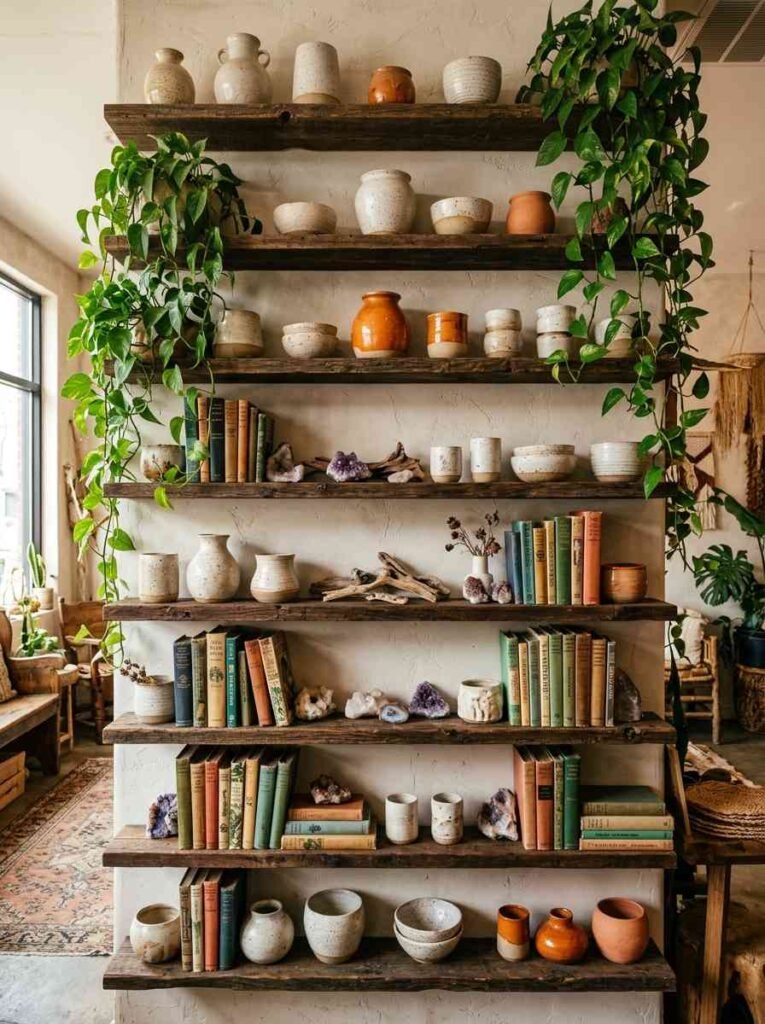
Shelving in a boho cafe does double duty: practical storage and intentional display. The key is treating the shelves as a curated vignette rather than functional storage.
Style them with:
- Ceramics in varied earth tones
- Trailing plants overhanging the shelf edge
- A few carefully chosen books (spines facing out, nothing too corporate)
- Small collected objects like crystals, driftwood, or vintage bottles
The slight imperfection and organic arrangement is the whole point. Everything shouldn’t be perfectly spaced.
12. Handmade Ceramics and Local Artisan Ware
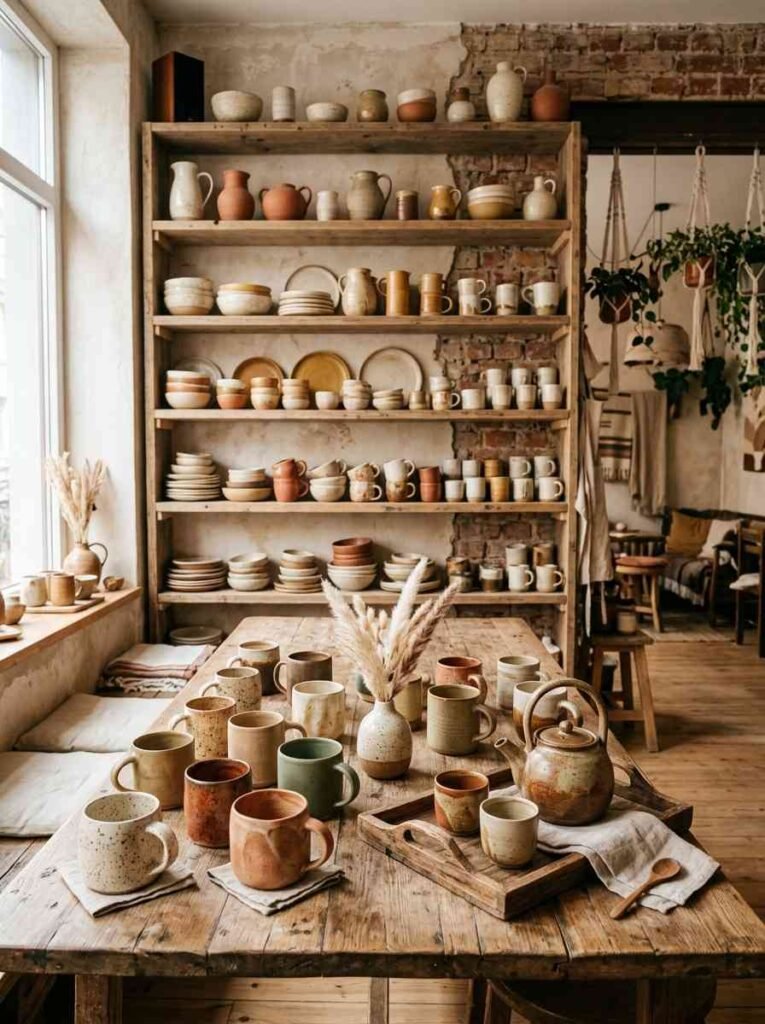
This one goes beyond aesthetics. Serving coffee in handmade ceramic mugs and displaying locally crafted pottery on your shelves tells a story about your cafe’s values.
It signals care, community, and an appreciation for craft.
Functionally, handmade ceramics also hold heat differently (usually better) and feel different in the hand than mass-produced cups. That sensory experience is part of what makes a cafe memorable.
Sourcing from local potters or markets like Faire’s wholesale artisan platform is a practical way to build this collection sustainably.
13. Vintage Rugs as the Floor Anchor
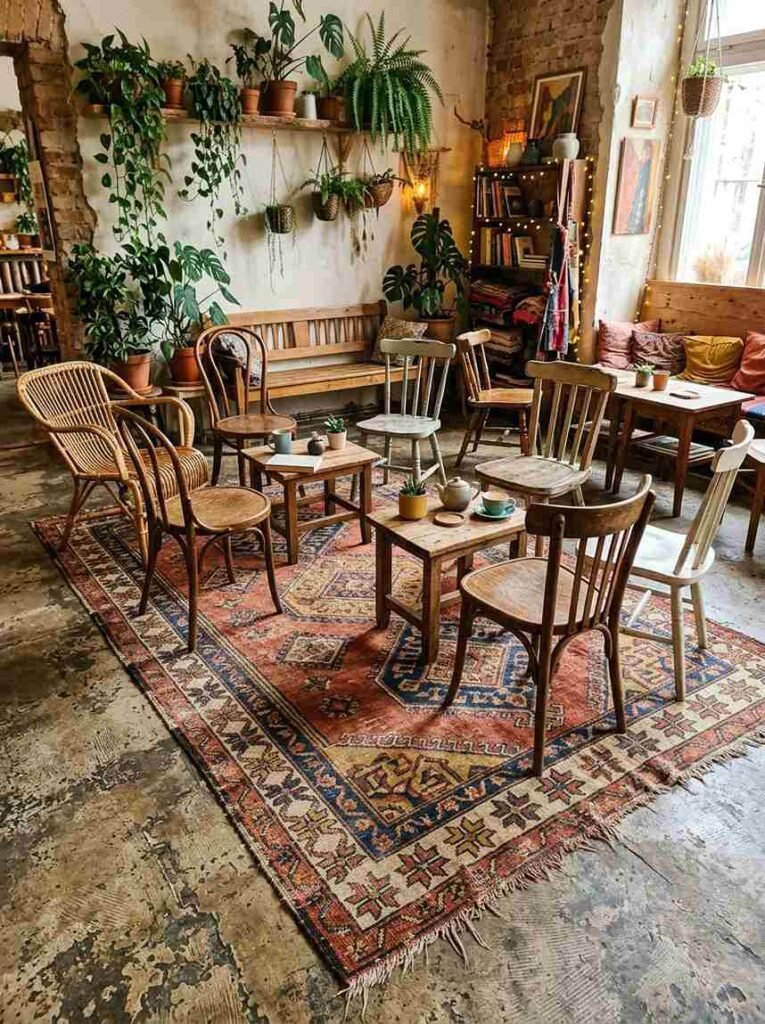
A good vintage rug can define an entire seating zone. In a cafe with multiple seating areas, using different vintage rugs for each zone creates visual variety while maintaining the boho through-line.
Kilim rugs are probably the most useful for cafe use because of their flat weave (easier to clean, less trip hazard), geometric patterns (forgiving of spills and wear), and incredible color variety.
Layer them over tile, concrete, or hardwood floors. The juxtaposition of the raw industrial floor with the soft, patterned rug is genuinely one of the most effective design moves in boho interiors.
14. Wicker, Rattan, and Cane Furniture
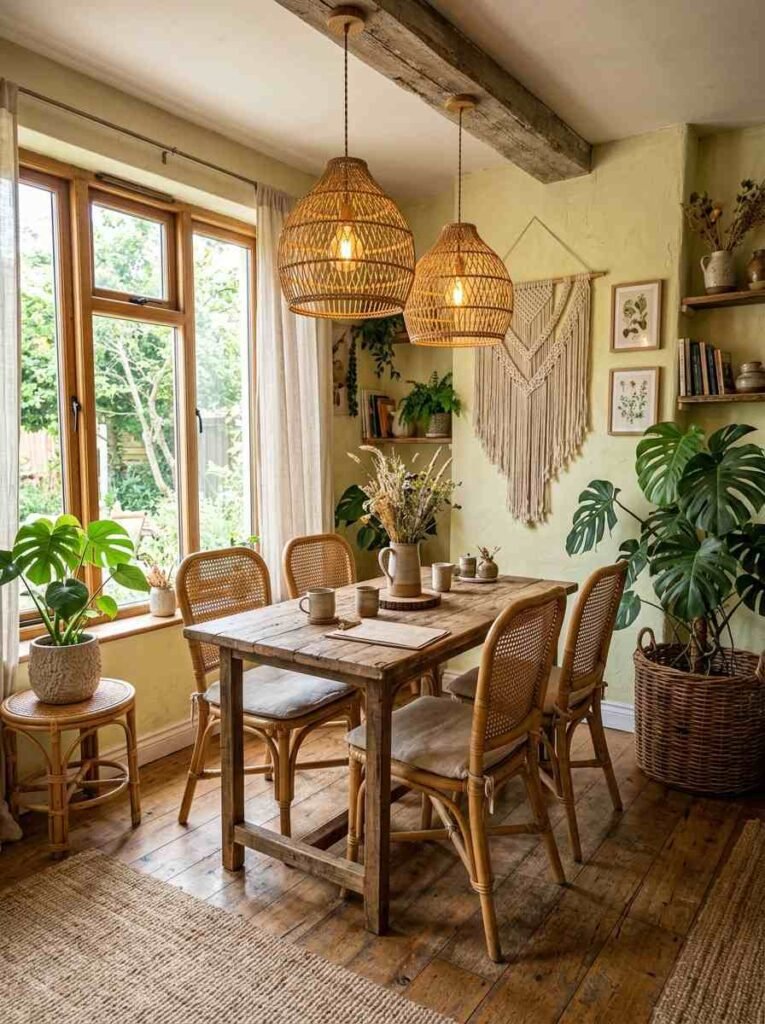
These natural materials are having a justified renaissance right now, and they belong in every serious boho cafe.
Rattan pendants, wicker chairs, and cane-backed seating bring warmth, texture, and that unmistakable organic quality that defines the bohemian aesthetic.
A rattan pendant light over a wooden table surrounded by cane chairs is a complete design statement in itself. Add a plant and a vintage rug underneath and that corner is done.
The practical bonus: wicker and rattan furniture is lightweight and durable, which matters enormously in a busy cafe environment.
Quick Comparison: Best Boho Seating Options for Cafes
| Seating Type | Cost Level | Visual Impact | Practical for Cafe Use |
|---|---|---|---|
| Cane/rattan chairs | Medium | High | Yes |
| Floor cushions | Low | Very High | Yes (with covers) |
| Pouffe ottomans | Low-Medium | High | Yes |
| Vintage wooden chairs | Medium-High | Very High | Yes |
15. A Living Wall or Vertical Garden
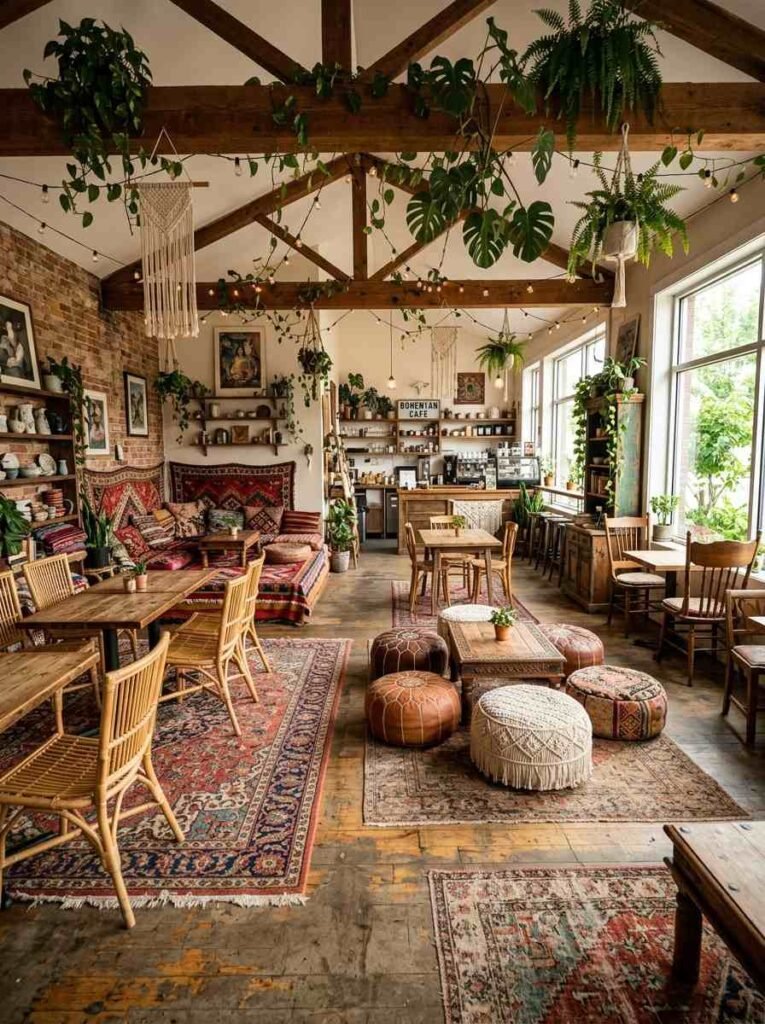
If you have one wall that needs a dramatic, memorable feature, a living vertical garden is about as impactful as it gets.
Wow, the first time I saw one done properly in a small cafe in Lisbon, I honestly stood there for a solid minute just taking it in.
Living walls work best with hardy, low-maintenance plants like pothos, ferns, and heart-leaf philodendrons.
A simple trellis system with mounted planters is a DIY-achievable version that doesn’t require an irrigation system.
The visual payoff is completely disproportionate to the effort, especially for photography. And for a Pinterest-forward cafe, a stunning living wall is the kind of thing that ends up shared thousands of times.
16. Vintage Books and Curated Reading Corners
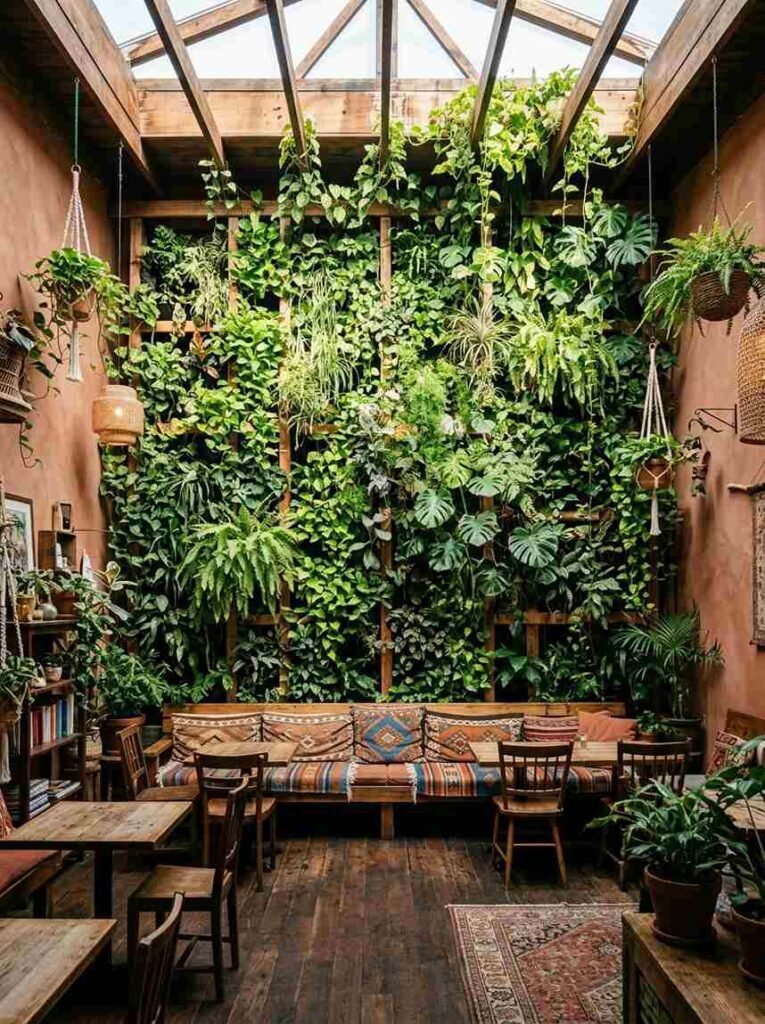
Books in a cafe aren’t just decoration. They signal an invitation to slow down. A well-curated reading corner with a small bookshelf, a comfortable chair, and good lighting creates a specific kind of customer magnet.
For the boho version, keep the books visually interesting. Group by spine color in earthy tones.
Mix fiction, travel, art books, and old illustrated encyclopedias. Old spines with interesting typography are worth hunting down specifically for visual texture.
17. Dreamcatchers and Spiritual Decor Elements
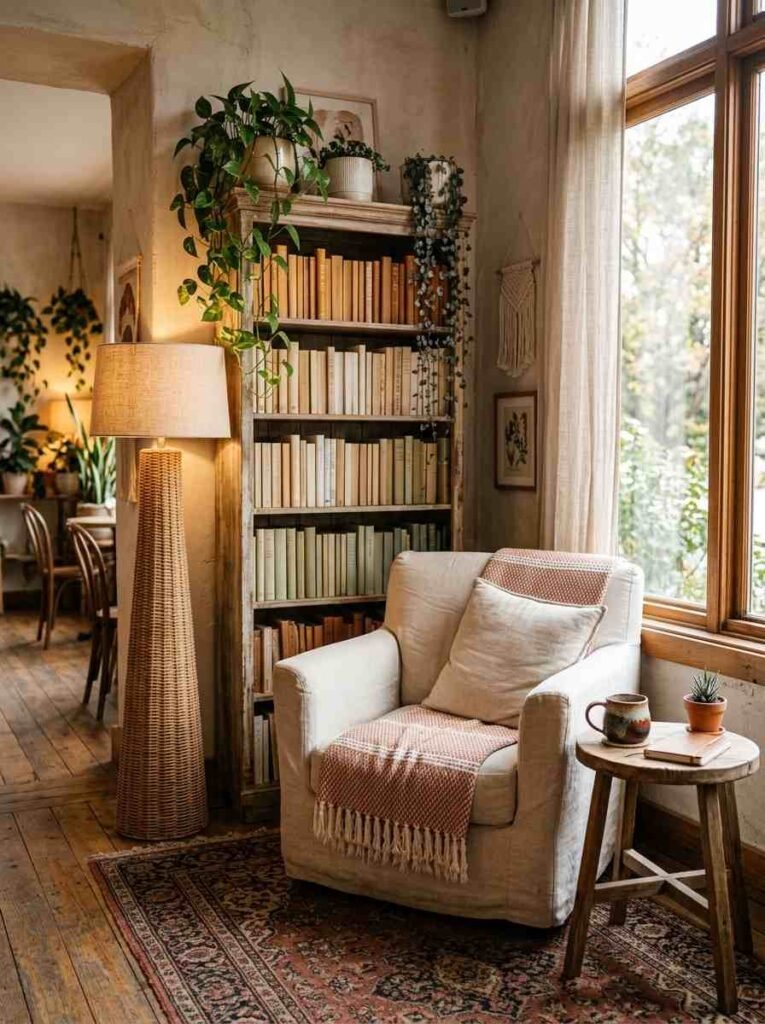
Used thoughtfully and respectfully, dreamcatchers, crystal displays, and similar objects with cultural or spiritual significance add depth to a boho space. The caveat here is genuine care about cultural context.
Source from makers who come from the traditions they’re working with. This isn’t just ethically important (though it is), it also means the objects carry authentic craftsmanship that’s immediately visible in the quality.
Mass-produced dreamcatchers look exactly like mass-produced dreamcatchers. The real thing looks different.
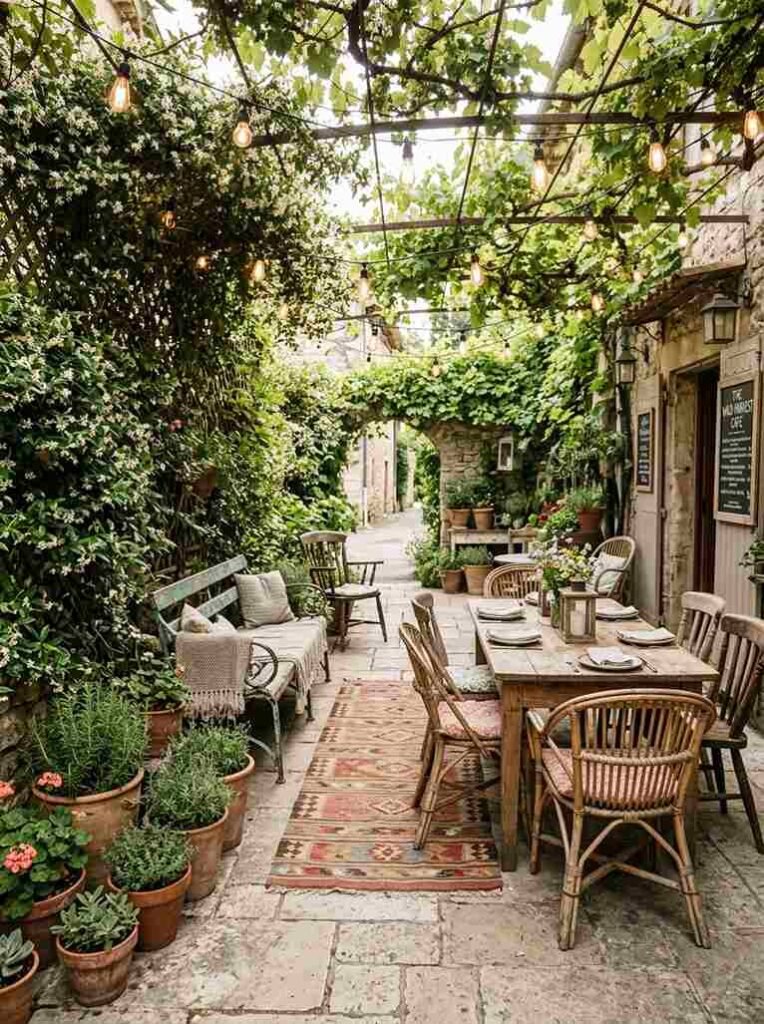
18. An Outdoor or Semi-Outdoor Extension
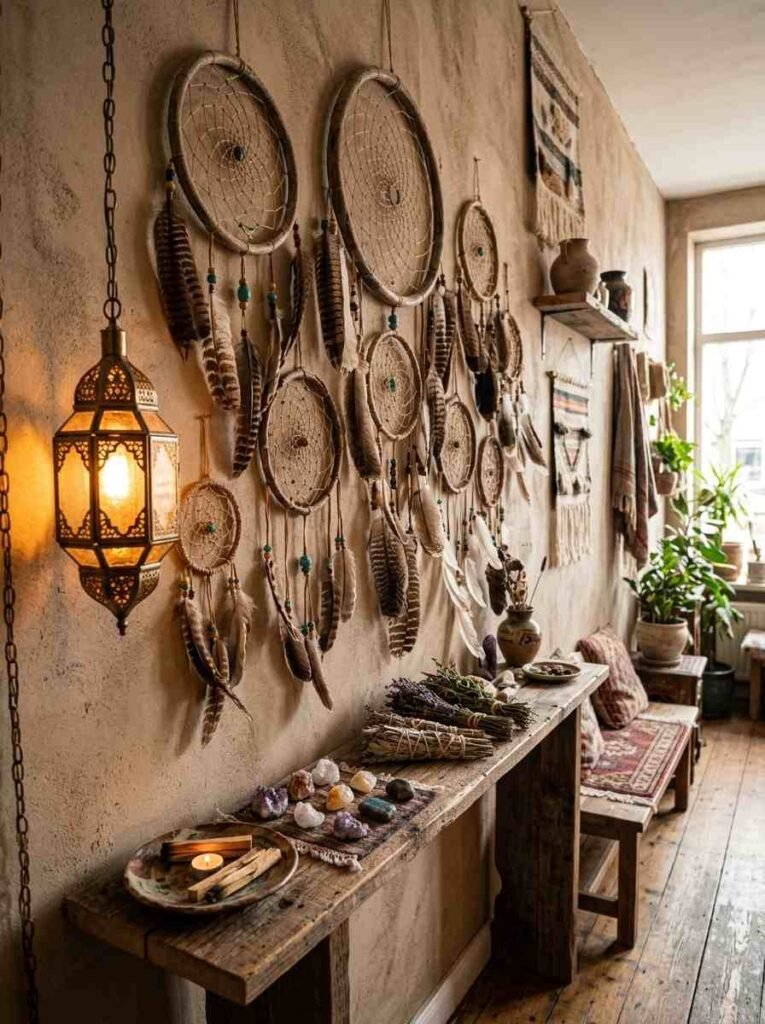
If your space allows it, a covered outdoor area with boho styling is a serious competitive advantage.
String lights overhead, mismatched garden furniture, climbing plants, and potted herbs create a space that feels entirely different from the indoor area while sharing the same design language.
Even a small covered terrace with 4 tables treated with boho care will become your most requested seating area.
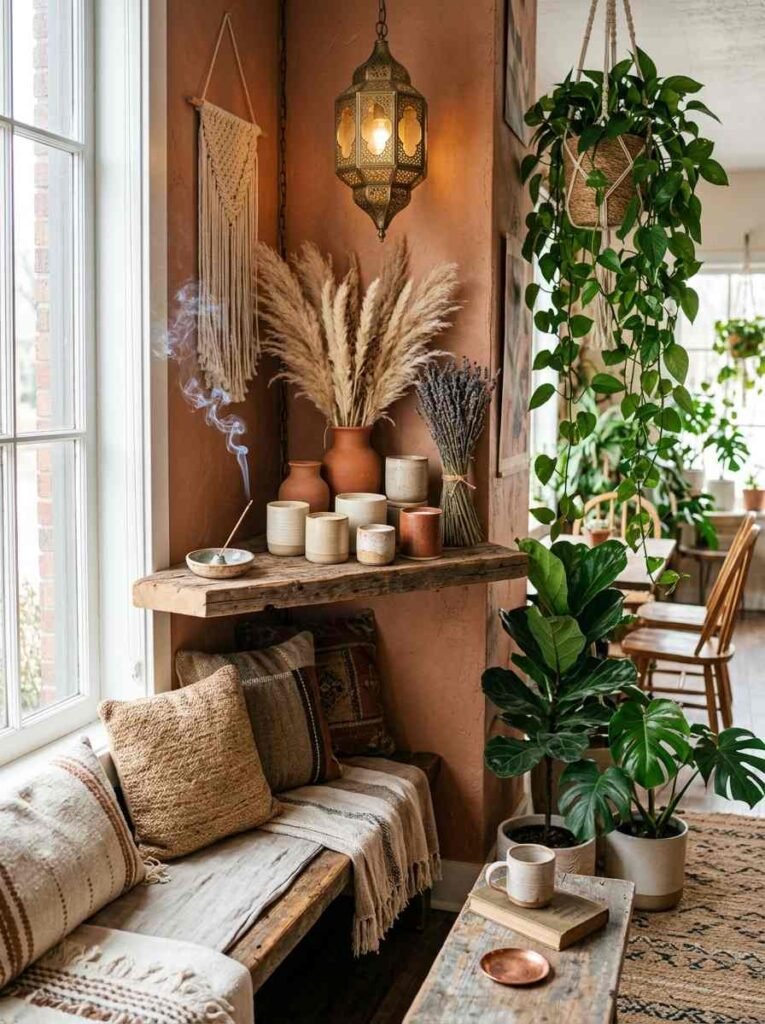
19. A Signature Scent Strategy
Okay, this one’s slightly off-topic from interior design per se, but hear me out: the boho cafe experience is multi-sensory.
The most memorable cafe spaces I’ve been in have a subtle, consistent scent that you can’t quite name but that you associate entirely with that place.
Soy candles in earthy scents (sandalwood, patchouli, cedar, dried flowers), occasional incense burned thoughtfully, and natural cleaning products that don’t leave a chemical smell.
It costs almost nothing and it’s part of the design experience in a way that most people don’t consciously register but definitely feel.
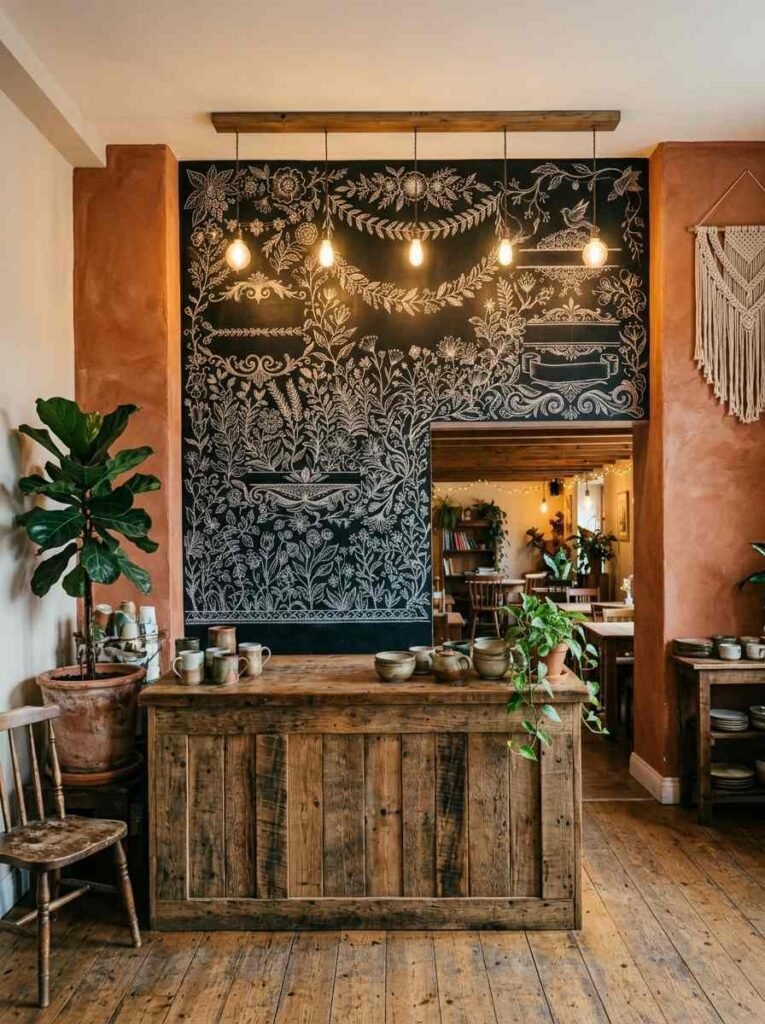
20. Handwritten Menus and Chalkboard Art
The final touch that ties the whole thing together: typography and lettering as design elements.
A beautifully handwritten chalkboard menu, custom lettering on mirrors, and chalk-drawn botanical illustrations on a feature blackboard wall give the space a personal, handcrafted feel that printed menus simply can’t replicate.
Even small signs above seating areas or hand-lettered labels on shelves contribute to that artisanal, human-made quality. It’s the textual equivalent of all the other handmade elements in the space.’
Frequently Asked Questions
Q: What’s the most affordable way to start a boho cafe transformation? Textiles and plants.
A kilim rug, a set of throw cushions, a few trailing plants in woven baskets, and some layered lighting will dramatically shift the atmosphere of any space for a relatively small investment. Start there before committing to furniture changes.
Q: How do I keep a boho interior from feeling cluttered or chaotic? Anchor the space with a consistent color story. Pick 3 to 4 earthy tones and let those thread through every element. Within that color framework, patterns and textures can vary significantly without creating visual overwhelm. Negative space matters too. Not every surface needs decoration.
Q: Can boho style work in a small cafe space? It actually works especially well in smaller spaces. The layering and intimacy of boho design suits compact interiors beautifully.
Use vertical space aggressively (hanging plants, tall shelving, ceiling macrame) and choose low seating in at least part of the space to make the room feel larger.
A Final Thought
Boho cafe design is fundamentally about creating a space where people feel comfortable enough to stay, connect, and come back.
Every element on this list serves that purpose, whether it’s a vintage rug that softens the acoustics or a handmade mug that makes the coffee taste better just by being beautiful to hold.
The best boho cafes I’ve experienced don’t feel designed at all. They feel accumulated. Built gradually by someone who genuinely cared about each object and each corner. That intentionality is the real secret.
So here’s my question for you: if you were starting today, which one of these 20 ideas would you tackle first? Drop your answer in the comments. I’m genuinely curious where people start.
