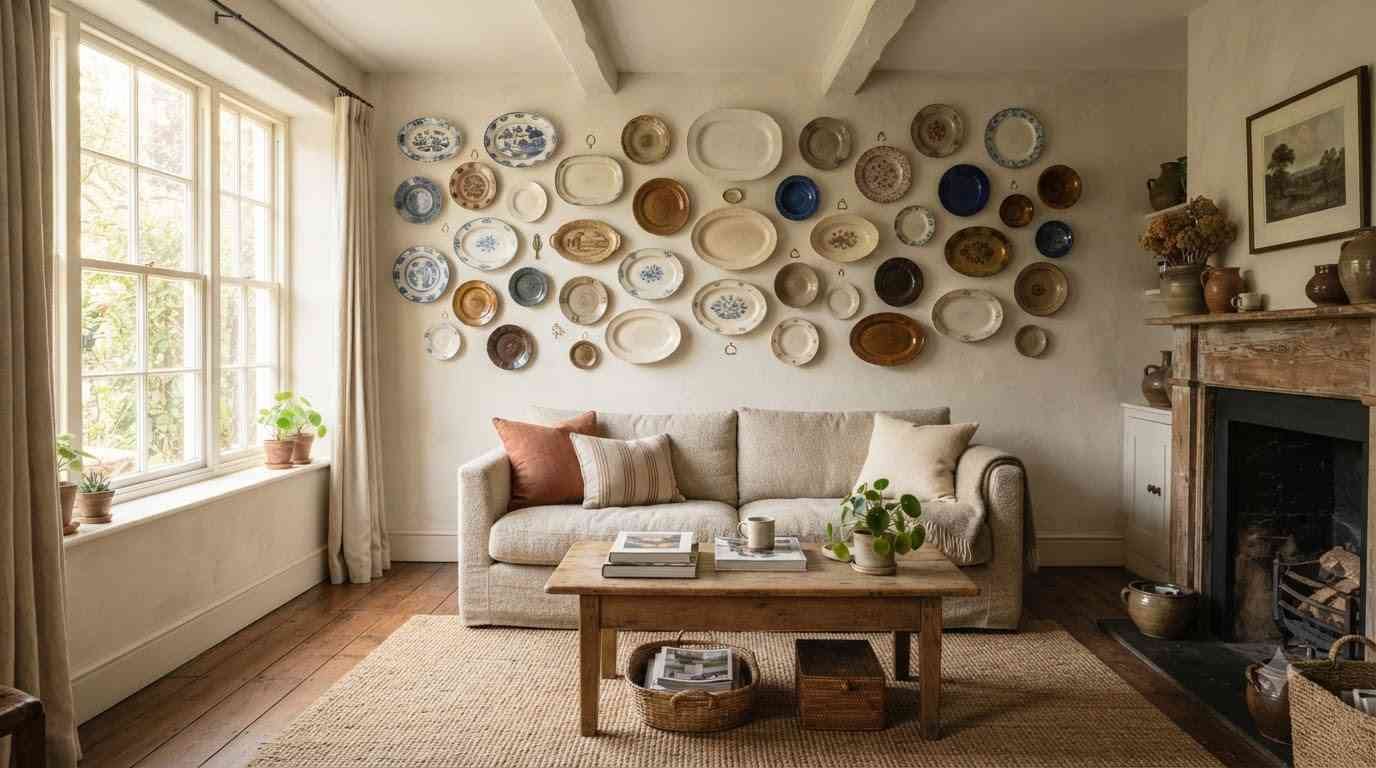
I broke a $40 dinner plate trying to hang it with a Command strip. Learned that lesson the hard way, so you don’t have to.
Plate wall art has this weird reputation. Some people picture their grandmother’s dusty china cabinet.
Others picture the moody, collected-looking dining rooms all over Pinterest right now, the ones with mismatched vintage plates climbing up the wall like ivy.
Both images are technically “plate art.” Only one of them is going to make your living room look intentional instead of accidental.
I’ve hung plates in 3 different apartments now, made every mistake in the book, and landed on a system that actually works. Below are 20 ideas, organized by vibe, with the practical details you need so you don’t end up with a chipped heirloom on your kitchen floor.
Classic and collected looks
1. The mismatched vintage cluster
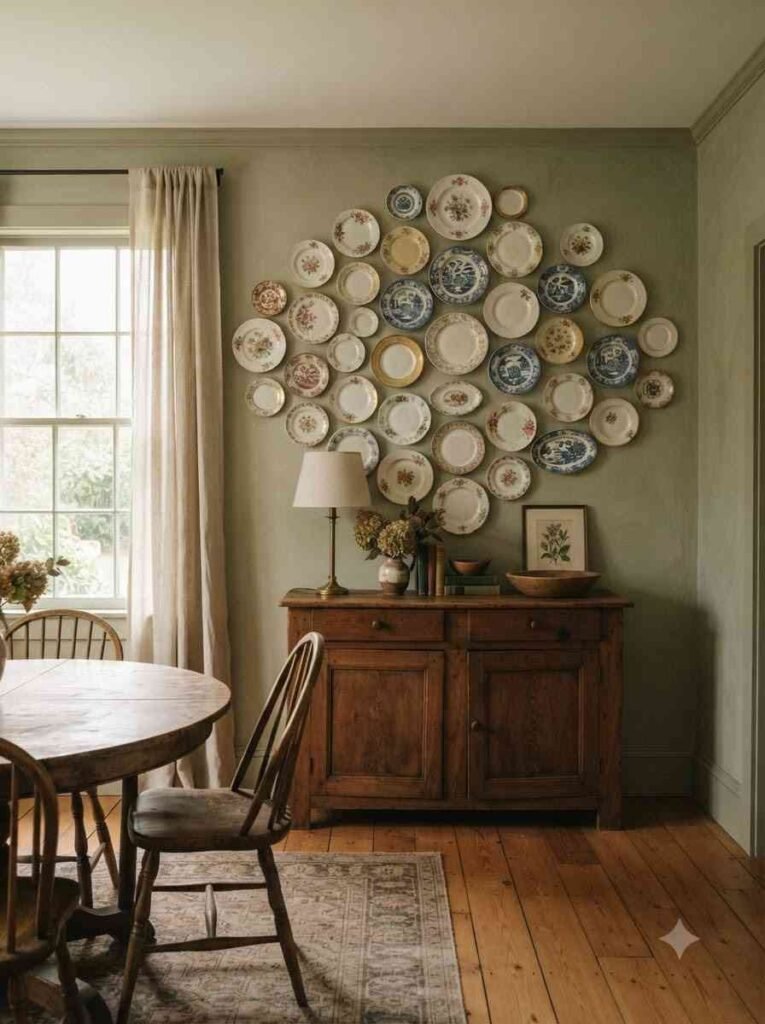
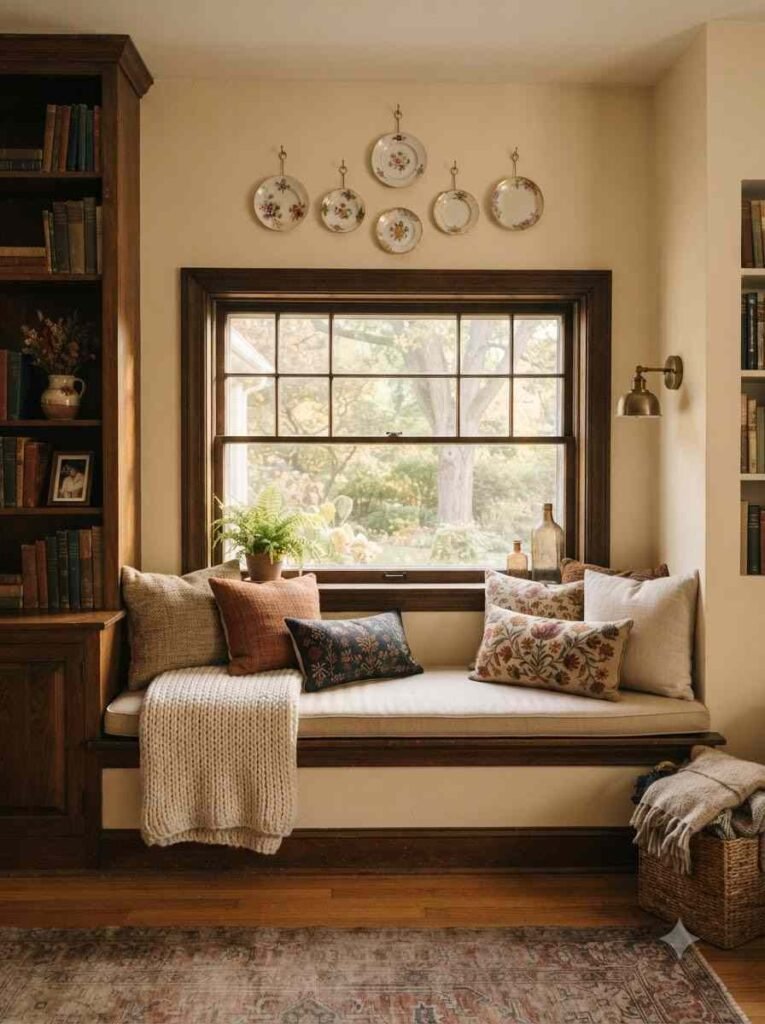
This is the look most people picture when they hear “plate wall,” and for good reason. Grab plates from thrift stores, estate sales, or your own cabinet that never gets used.
Mix florals, transferware blues, and gold-rimmed pieces from different decades. The point isn’t matching.
The point is that everything feels like it was collected over years, not bought in one trip to a home goods store.
2. Monochrome plate grid
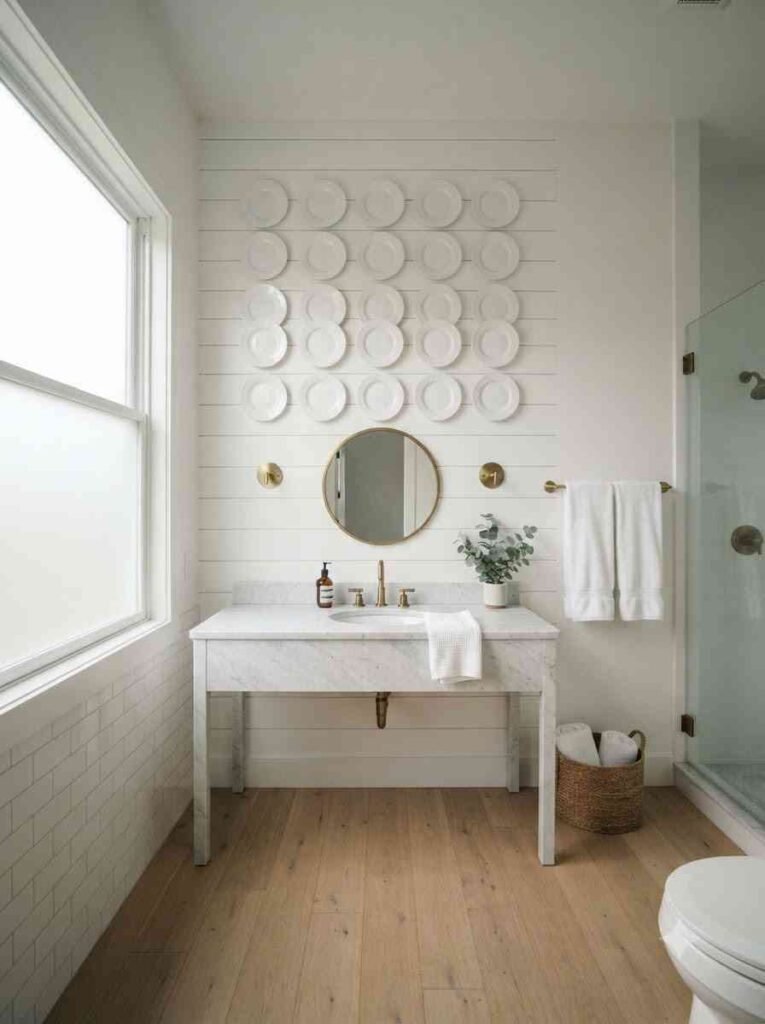
If clutter stresses you out, go the opposite directi
on. Pick plates in a single color family (all white, all blue, all terracotta) and arrange them in a tight, even grid.
This reads as calm and deliberate. I did this in a rental bathroom with 9 identical white plates and it looked more expensive than it was.
3. Symmetrical formal arrangement
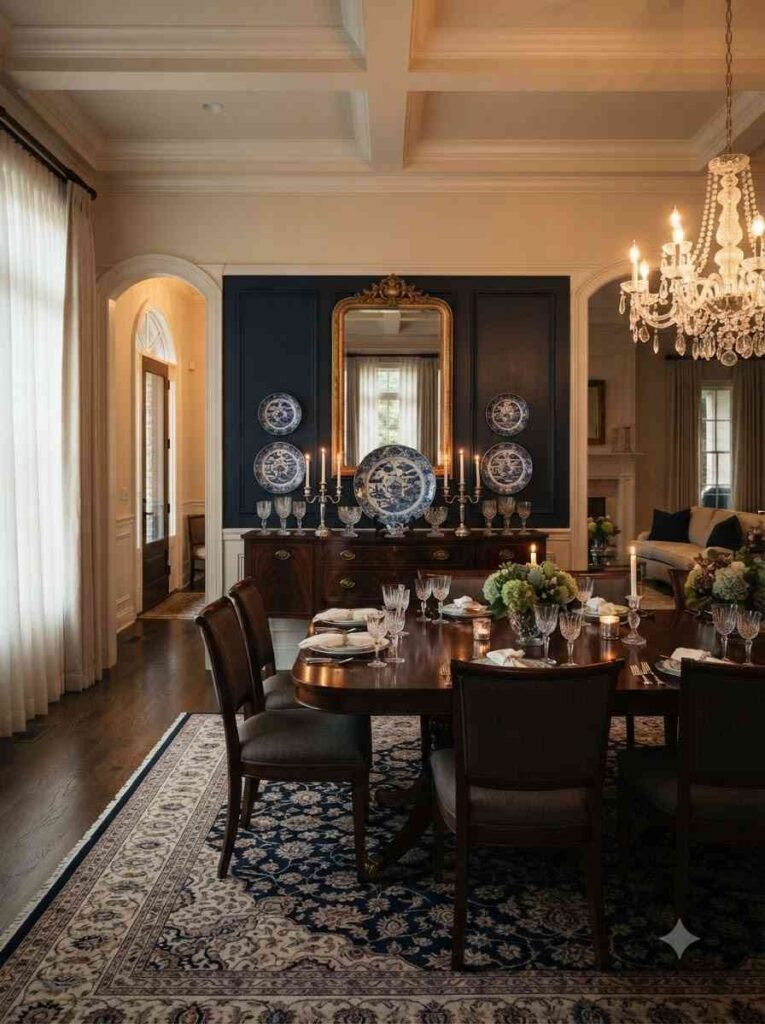
Formal dining rooms deserve a formal layout. Center a large statement plate, then build outward with matching pairs on either side.
This is the same logic interior designers use for gallery walls: pick an anchor piece first, then balance everything around it.
4. Antique china spotlight
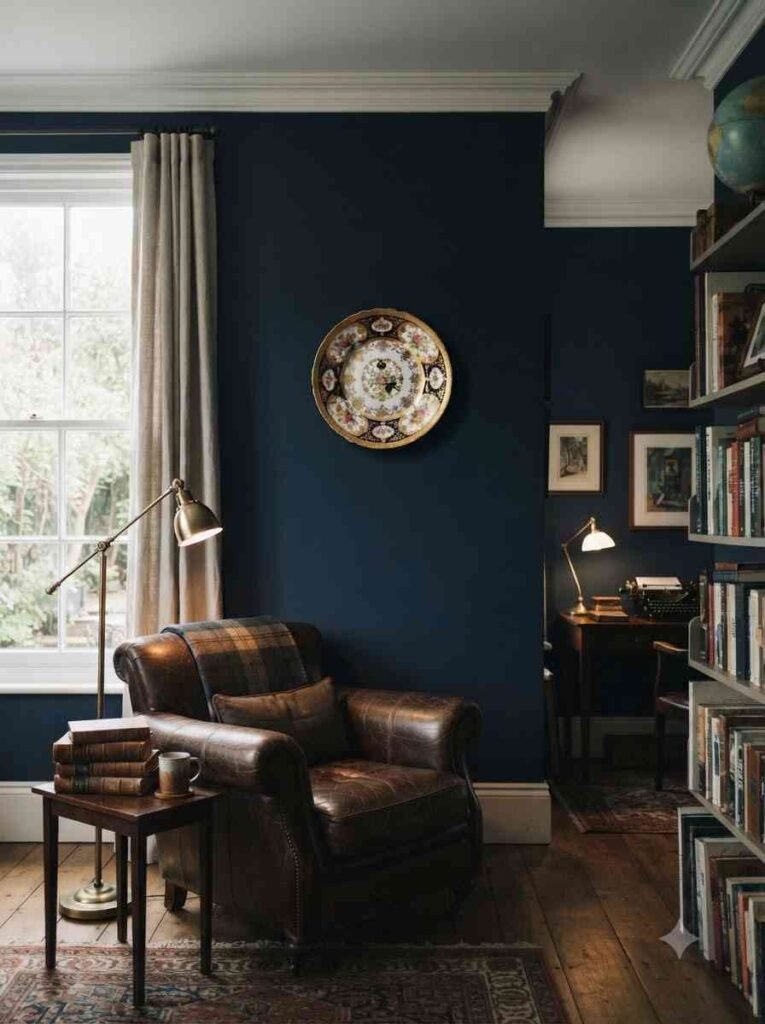
Got one genuinely old, genuinely beautiful plate from a relative? Don’t bury it in a cluster.
Hang it alone, slightly larger than you’d expect, with real breathing room around it. A single striking piece does more work than 6 mediocre ones crammed together.
5. Heirloom wall above a sideboard
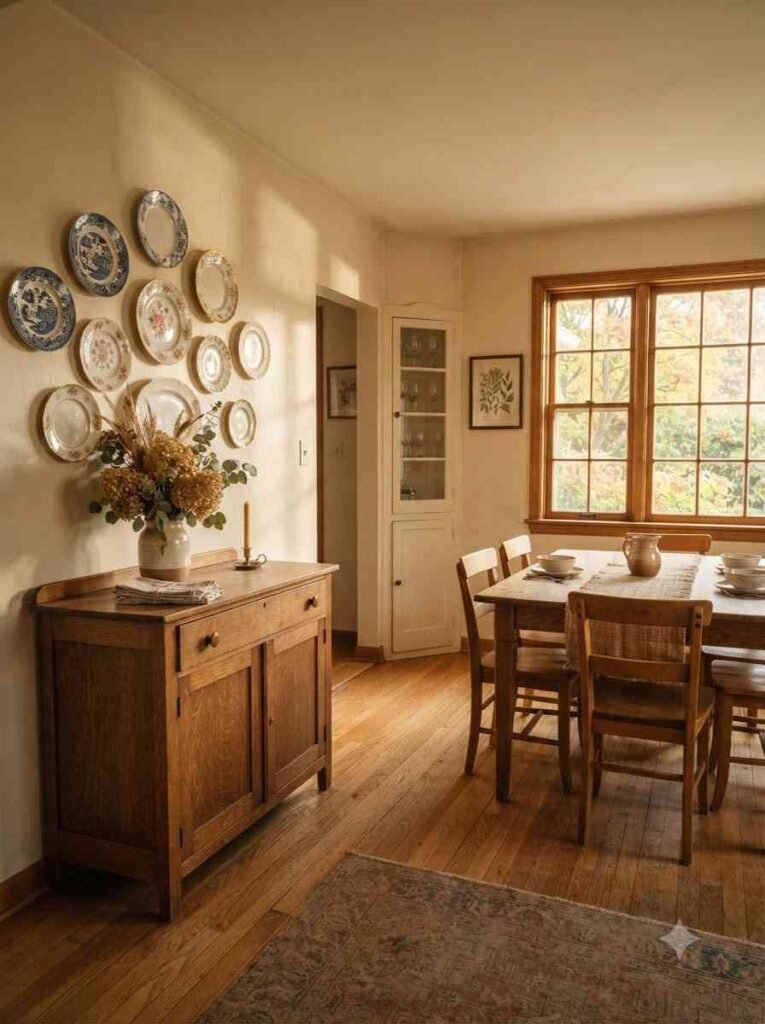
Group inherited plates above a console or sideboard instead of scattering them around the house.
It turns a random collection into a proper display, and honestly, it’s a nice way to keep family history visible instead of stuck in a cabinet.
Bold and colorful ideas
6. Bright ceramic accent wall
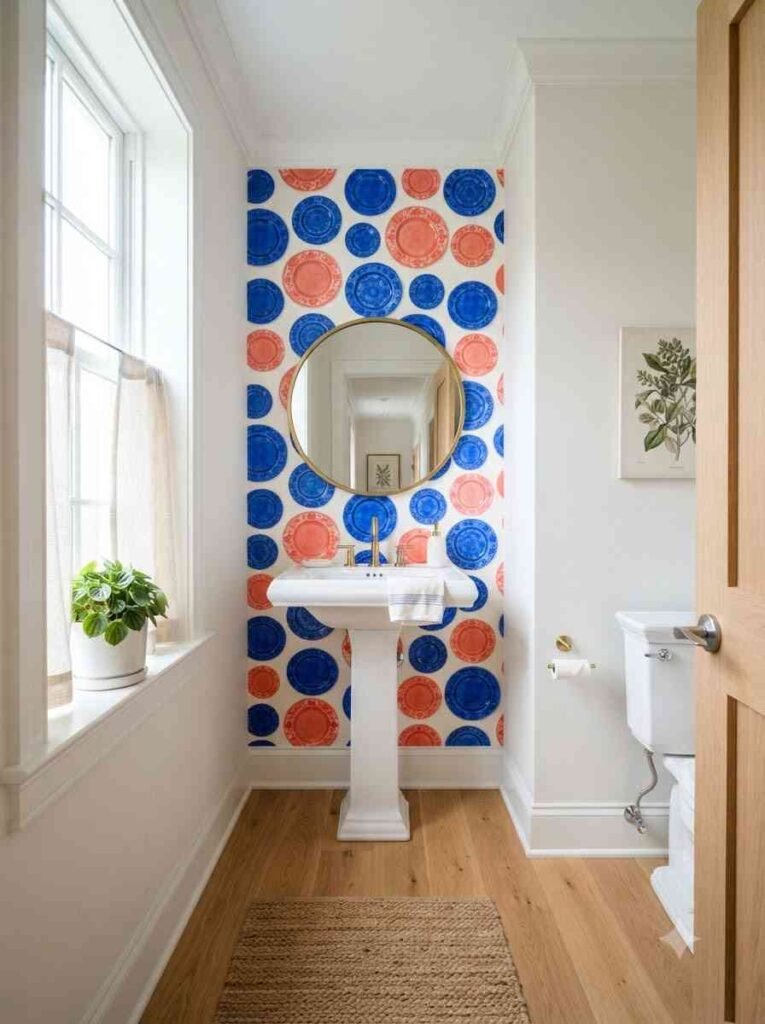
Skip subtle. Choose plates in saturated colors like cobalt, coral, or emerald and let them do the heavy lifting in an otherwise neutral room.
This works especially well in a small powder room where you want one punch of personality.
7. Talavera and Mexican pottery display
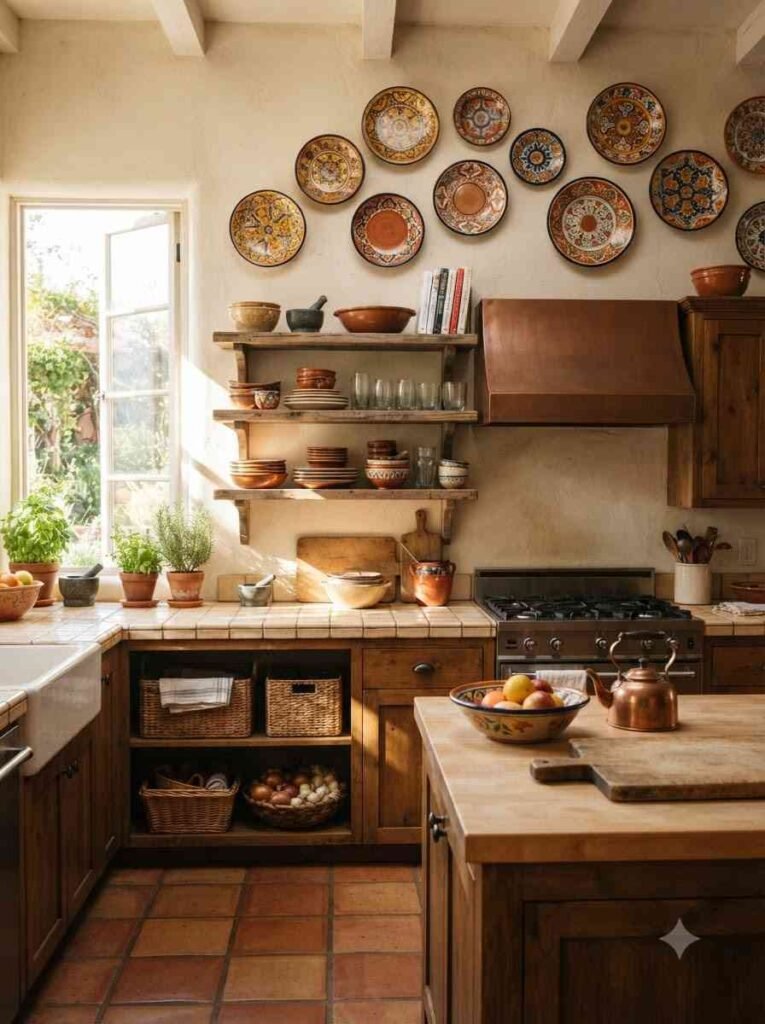
Hand-painted Talavera plates bring warmth that plain ceramic just can’t match.
IMO this is one of the most underrated plate styles for a kitchen or covered patio, and the hand-painted irregularities are the whole appeal, not a flaw.
8. Ombre color gradient
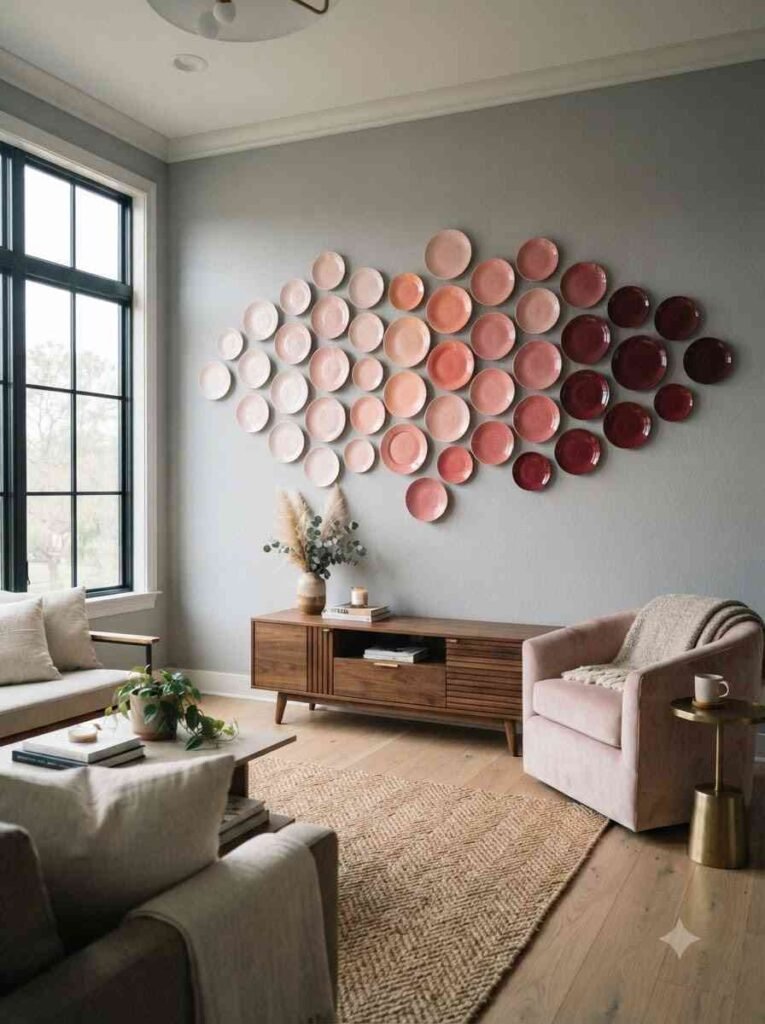
Arrange plates so the color shifts gradually across the wall, light blue fading into navy, or pale pink into deep red.
It takes patience to source the right shades, but the finished effect looks custom-made even if every plate came from different stores.
9. Patterned plate collage
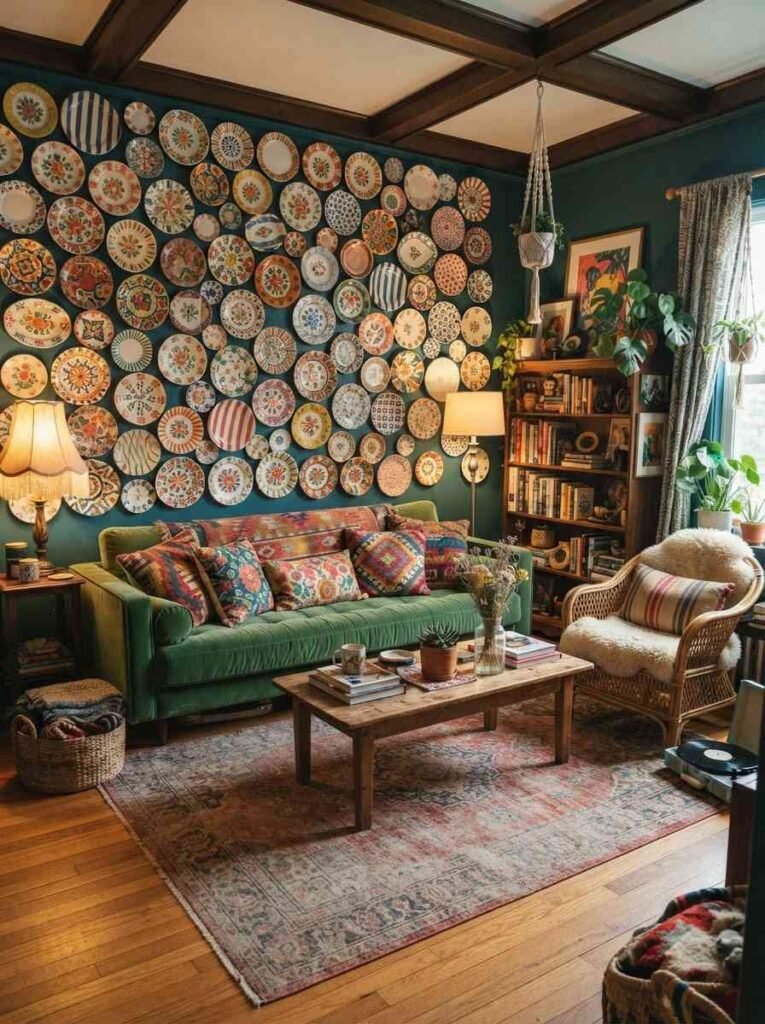
Layer bold patterns, stripes next to florals next to geometric prints, the way you’d style a maximalist throw pillow arrangement.
This one isn’t for everybody. If you already love a lot going on visually, though, it’s genuinely fun to build.
10. Single statement plate as focal point
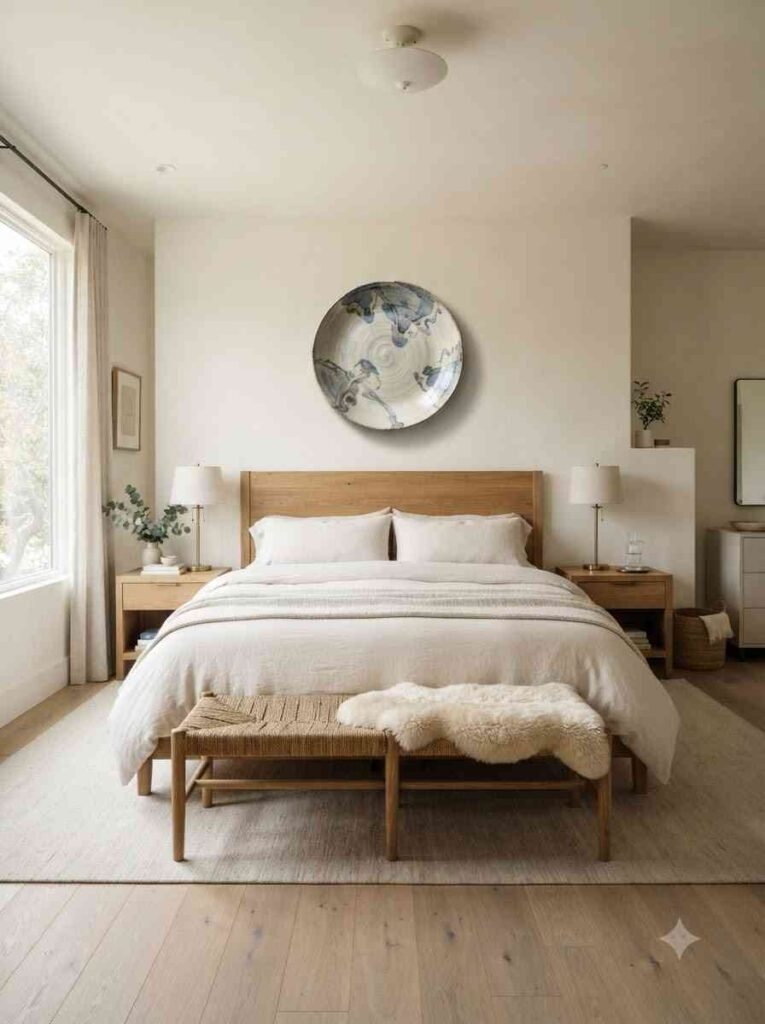
Sometimes one oversized decorative platter, hung dead center above a bed or sofa, beats an entire cluster.
It’s the plate-wall equivalent of a single piece of striking artwork, and it takes about 5 minutes to hang.
Themed and creative concepts
11. Botanical and floral plate series
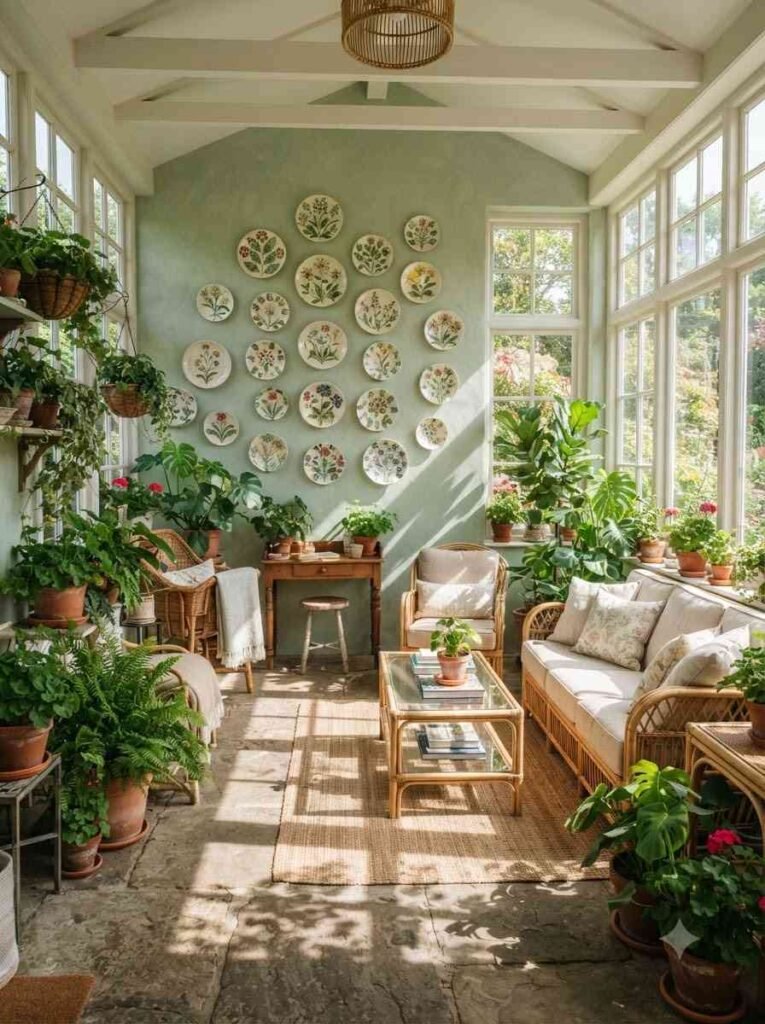
Hunt for plates with hand-painted leaves, herbs, or flowers and group them in a kitchen or sunroom.
They add a garden feel without a single real plant to water, which, IMO, is a win for anyone with a track record of killing houseplants.
12. Coastal and nautical plates
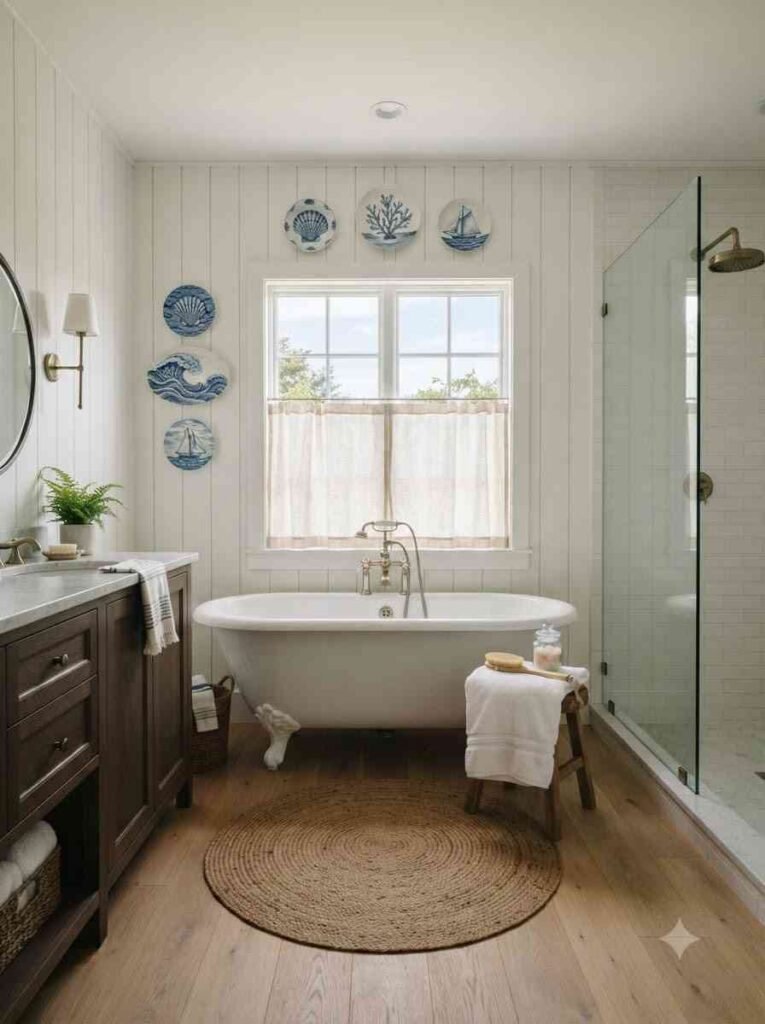
Shells, waves, anchors, coral motifs, this theme works in beach houses obviously, but also in any bathroom that wants a calm, watery feel.
Blue and white is the classic pairing here for a reason.
13. Holiday and seasonal rotation
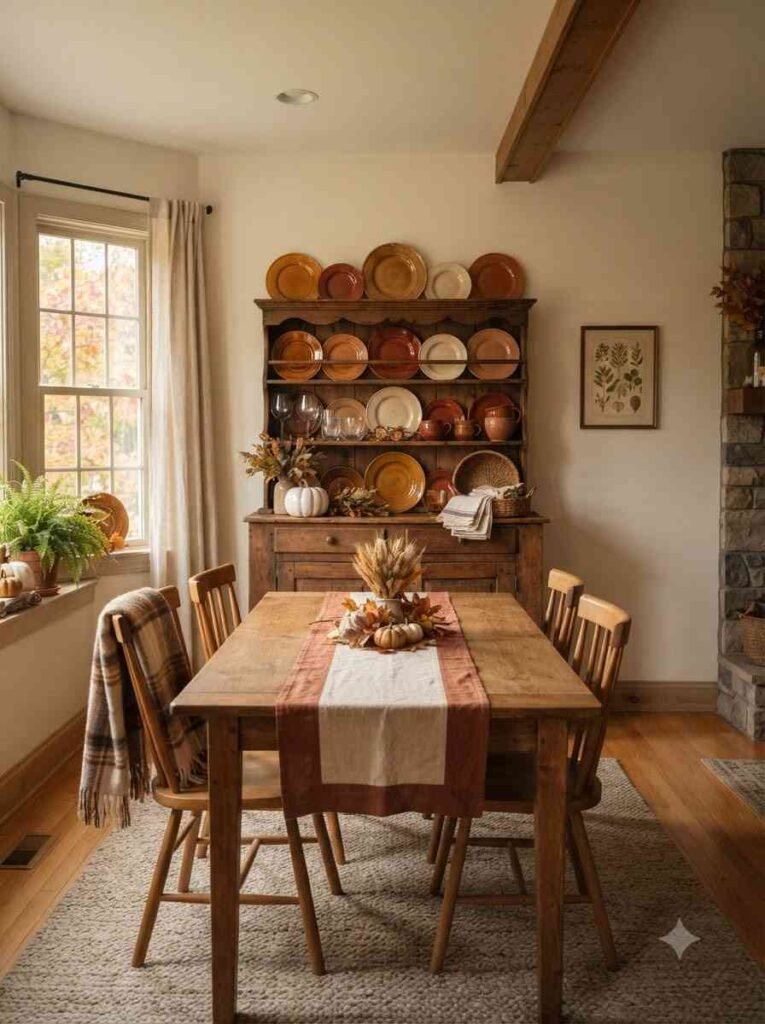
Buy a small set of plates specifically for a rotating display: pastels for spring, warm tones for fall, silver and white for winter. Swap them out every few months so the wall never feels static.
This is a great way to keep a space feeling fresh without repainting anything.
14. Kids’ hand-painted plates
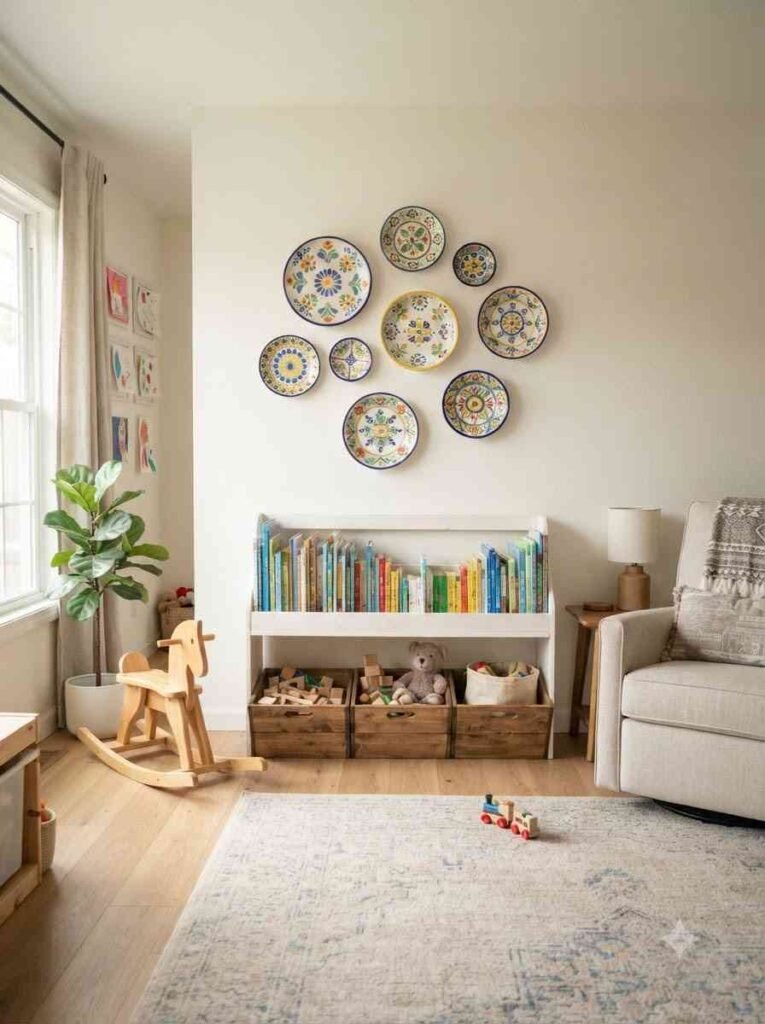
Paint-your-own pottery studios exist for a reason.
Frame or hang a few plates your kids painted, and you’ve got wall art with actual sentimental weight, not just something bought off a shelf.
15. Travel souvenir plates
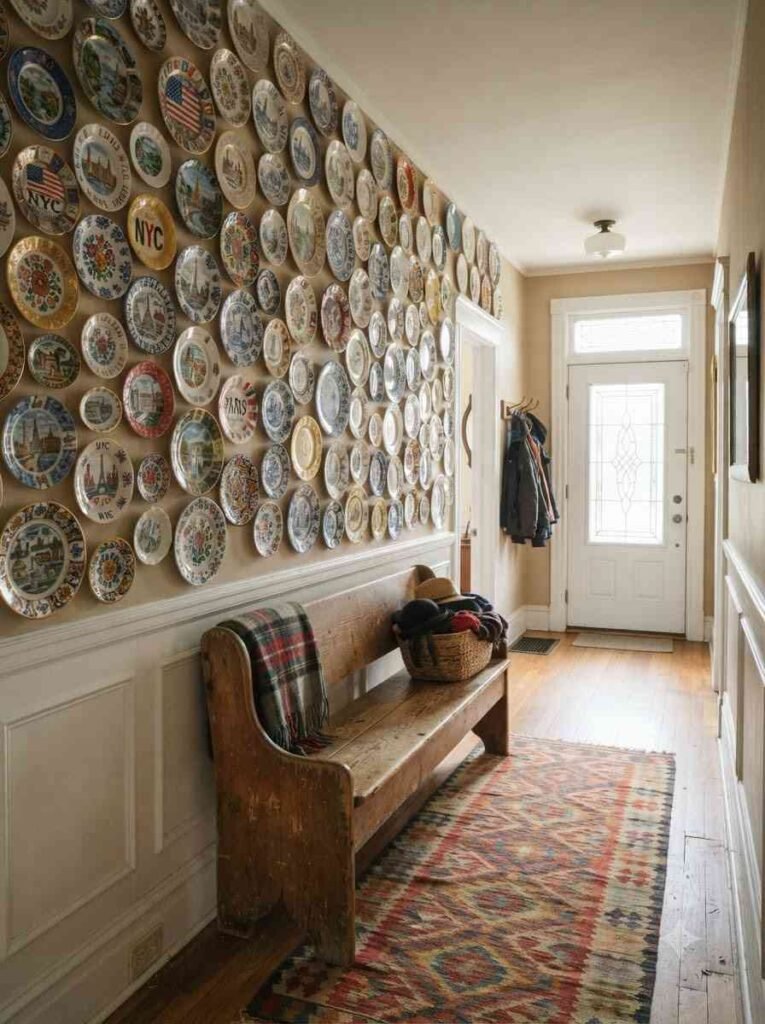
Every decorative plate you bought on vacation and never used, put them on the wall together.
It becomes a visual map of where you’ve been, which makes for a way better conversation piece than a generic print ever could.
Layout and technique ideas
16. Salon-style plate wall
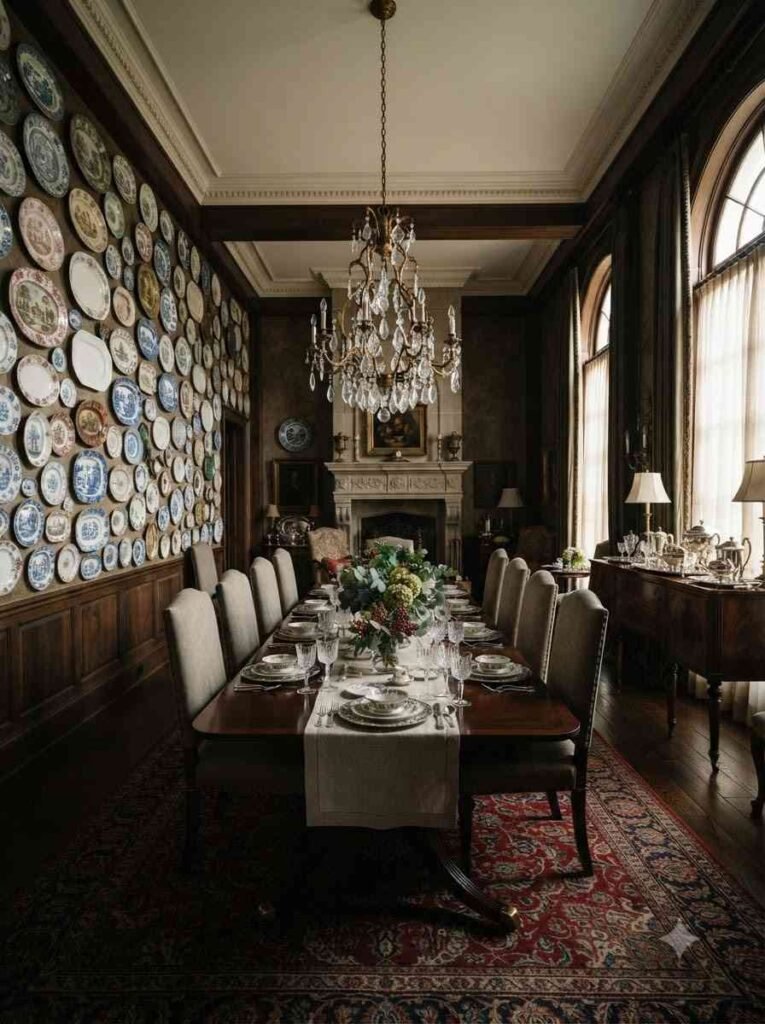
Cover an entire wall floor-to-ceiling with plates of every size, shape, and era. It’s dramatic, it’s a commitment, and it looks incredible in a dining room with high ceilings.
Not a beginner project, but worth it if you’re going for maximum impact.
17. Vertical plate column
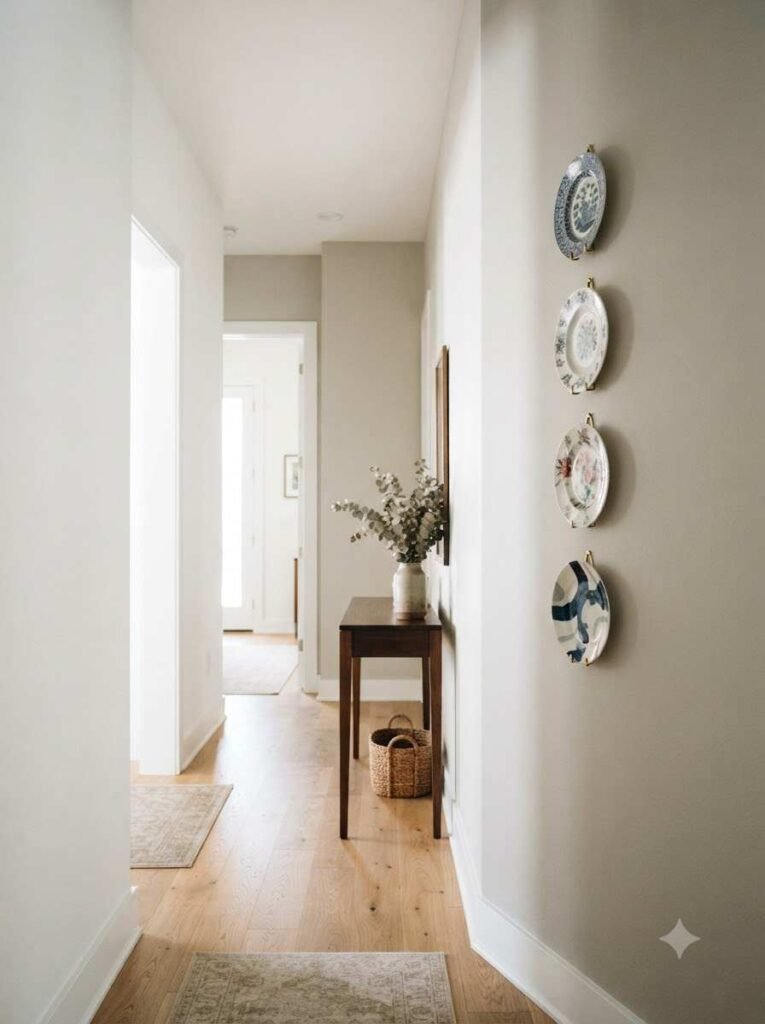
Instead of spreading out horizontally, stack 3 to 5 plates in a straight vertical line.
This works really well in narrow spaces, like a hallway or the sliver of wall next to a doorway, where a wide arrangement wouldn’t fit.
18. Circular fan pattern
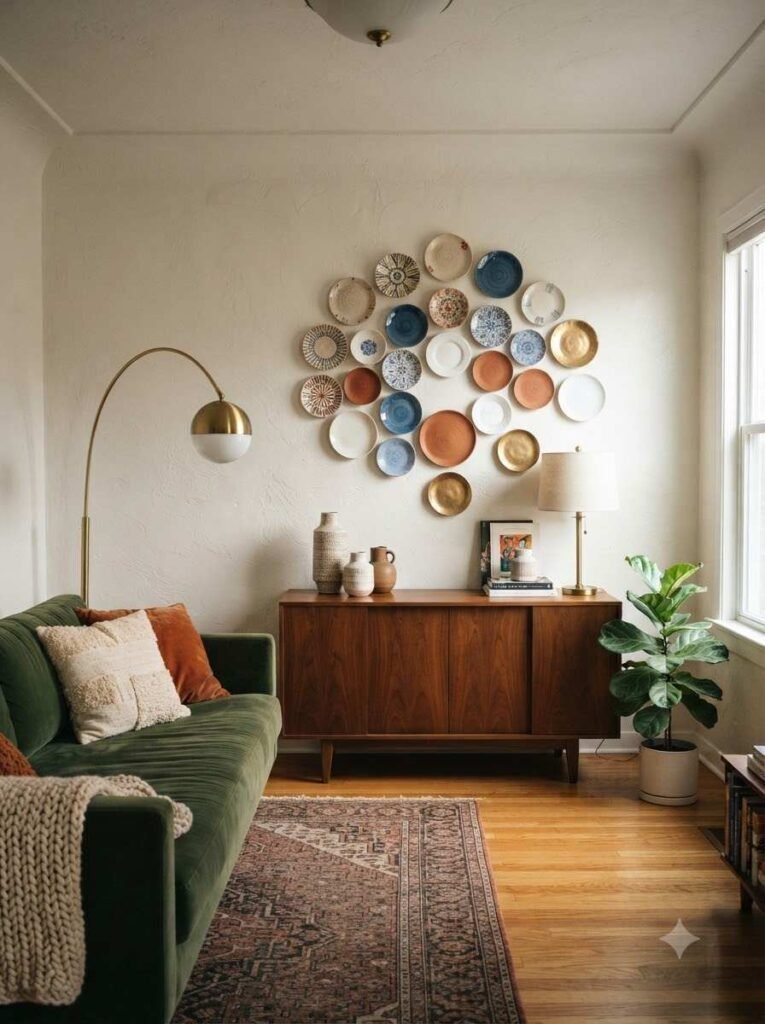
Arrange plates in a radiating, fan-like pattern from a central point.
It’s more technical to plan than a grid, so I’d recommend tracing the layout on paper first before you touch the wall. A little templating goes a long way here.
19. Combined plates and framed art
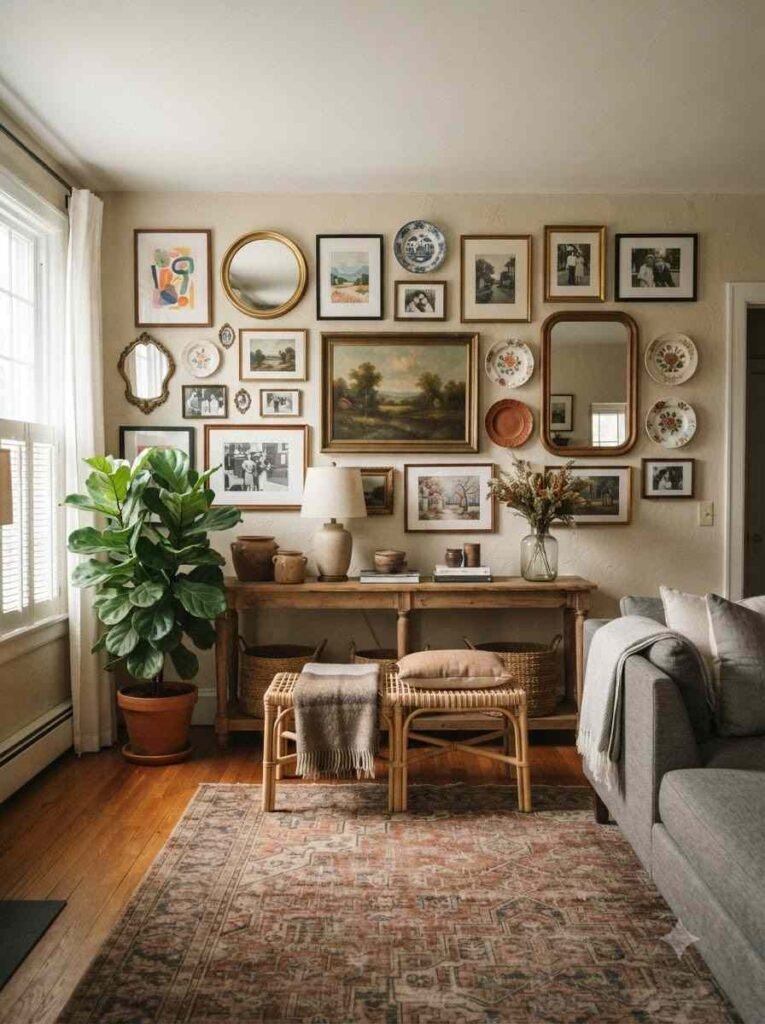
Mix decorative plates with actual framed prints, mirrors, or photos in one gallery-style wall.
The plates add texture and dimension that flat frames alone can’t give you, and honestly, it’s the easiest way to make a gallery wall feel less generic.
20. Floating shelf plate ledges
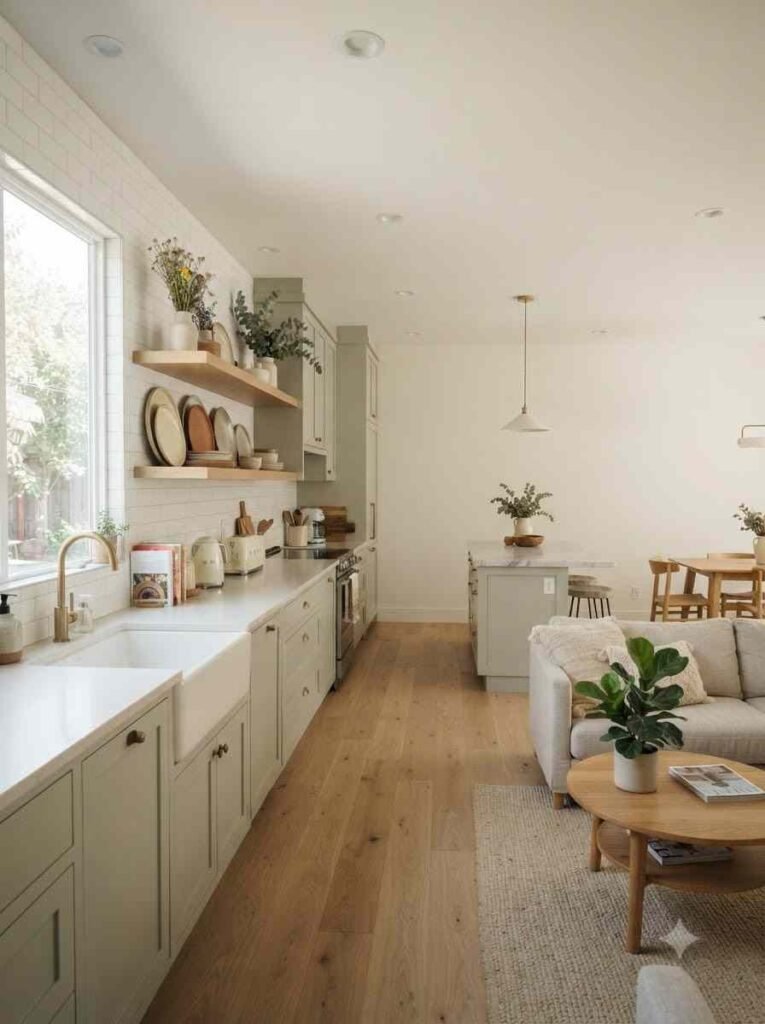
Skip nails entirely and use narrow floating shelves to lean plates against the wall. It’s the lowest-commitment option on this list.
You can rearrange the whole thing in 10 minutes whenever you’re bored of the current setup, no new holes required.
How to actually hang your plates without disaster
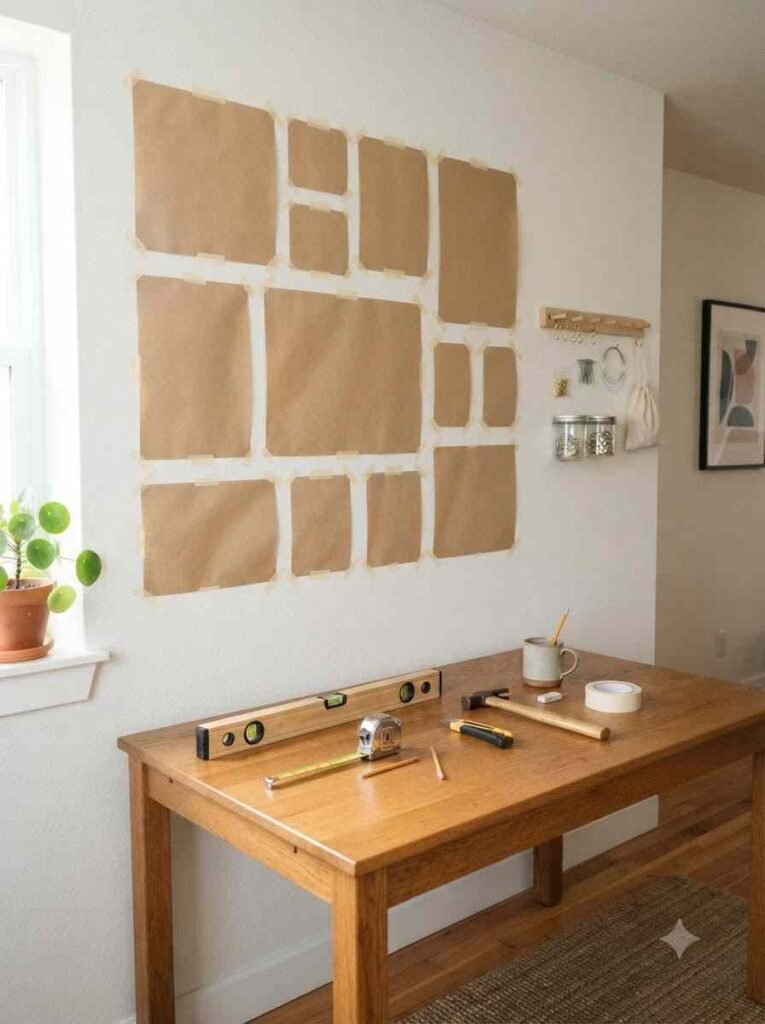
Picking the idea is the fun part. Getting the plates on the wall without cracking one is where people usually get nervous, myself included the first time around.
A few things I’ve learned matter more than anything else:
- Plan on paper first. Trace your plates onto kraft paper, cut them out, and tape the templates to the wall before you commit to a single hole. It sounds like an extra step, but it saves you from a wall full of unnecessary nail holes.
- Use the right hanger for the weight. Spring-style plate hangers work for everyday dishes, but heavier antique china needs sturdier hardware. The Home Depot’s step-by-step plate hanging guide walks through which hanger type suits which plate.
- Space things intentionally, not randomly. Apartment Therapy’s breakdown of picture spacing suggests leaving 3 to 6 inches of room between pieces in a gallery-style arrangement, which applies just as well to plates as it does to framed art.
- Test your layout before nailing anything. The Turquoise Home’s paper-template method is genuinely the trick that saved me the most drywall repair.
Here’s a quick reference for matching a style to a room, since staring at 20 ideas at once can get overwhelming:
| Plate style | Best room | Vibe |
|---|---|---|
| Mismatched vintage | Dining room | Warm, collected |
| Monochrome grid | Bathroom | Calm, tidy |
| Bright ceramic | Powder room | Bold, playful |
| Floating shelf ledges | Hallway | Flexible, casual |
One slightly off-topic thought while we’re here: I genuinely think plate walls became popular again because people got tired of the same 3 framed prints everyone was buying from the same 2 online stores.
A plate wall can’t really be mass-produced the same way. Every version ends up a little different, which is probably the actual appeal.
Frequently asked questions
Will hanging plates damage my walls? Not if you use the right hardware. Small nails or adhesive plate hangers leave minimal marks, especially compared to heavier picture frames. Just match the hanger to the plate’s weight so nothing pulls loose.
Can I mix plates with different rim styles and still make it look put together? Yes, and honestly it usually looks better than a perfectly matched set. Repeat one element, like a similar color palette or a shared era, so the mismatch feels curated instead of random.
How many plates do I need to start a wall display? You can start with as few as 3. A small vertical column or a simple triangle arrangement looks intentional even with a small collection, and you can always add more later.
So, which idea are you stealing first, the salon-style wall or the low-commitment floating shelf? Grab a few plates you already own, lay them out on the floor, and see what kind of story they tell before you put a single nail in the wall.
