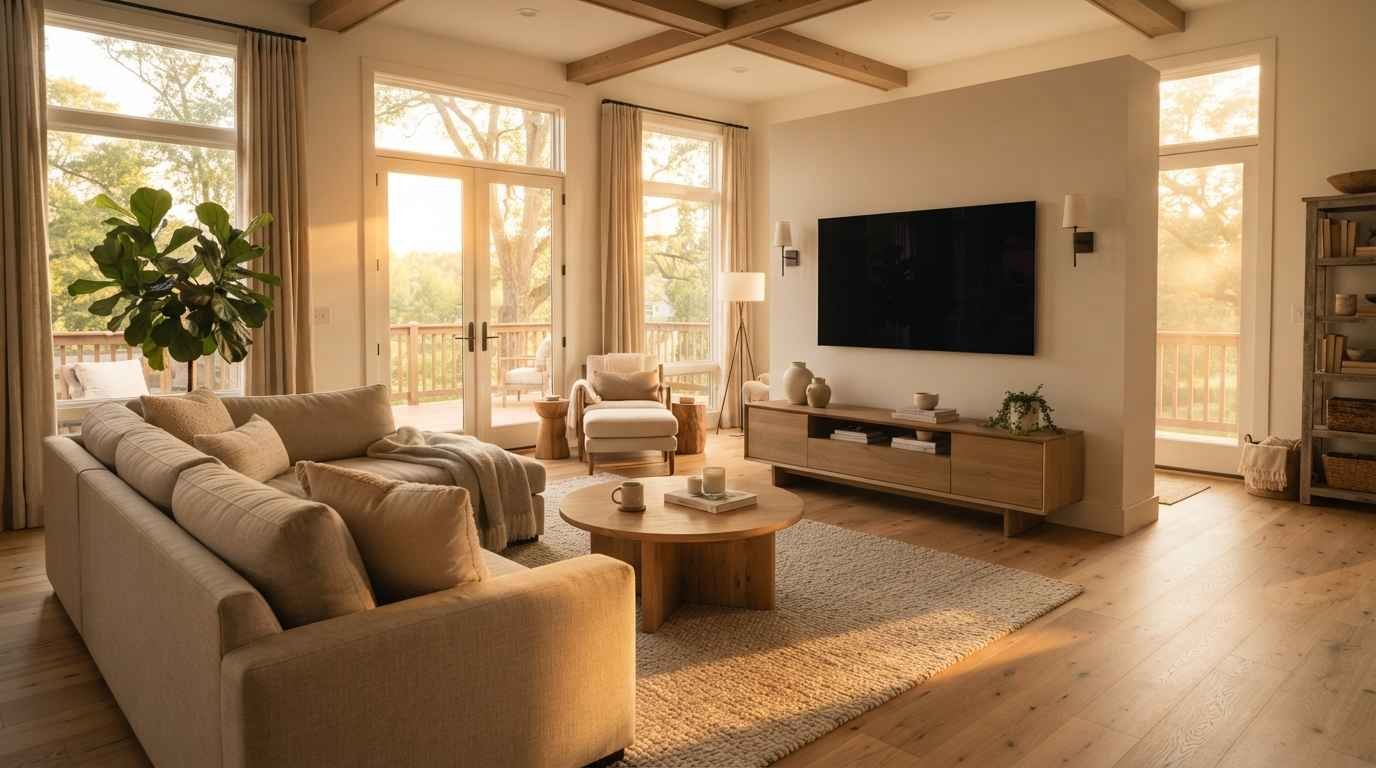
I used to think a TV wall was just… a wall with a TV on it. Mount the bracket, hide the cables, done. Then I redid my own living room three years ago and realized how wrong I was.
The TV wall sets the tone for the entire room.
It’s the first thing guests see when they walk in, and it’s the last thing you look at before falling asleep on the couch mid-movie (no judgment, we’ve all been there).
A well-planned wall makes a 55-inch screen feel like part of the room’s architecture. A rushed one makes even a gorgeous space feel like an electronics showroom.
So if you’re pinning ideas for your own space, here are 20 that actually hold up in real homes, not just in staged photography.
I’ve tried a handful of these myself, first in a rental where I couldn’t drill a single hole, and later in a house where I finally got to do things properly.
You’re getting opinions built on trial and error here, not just theory scraped off a design blog.
1. The floating wood slat wall
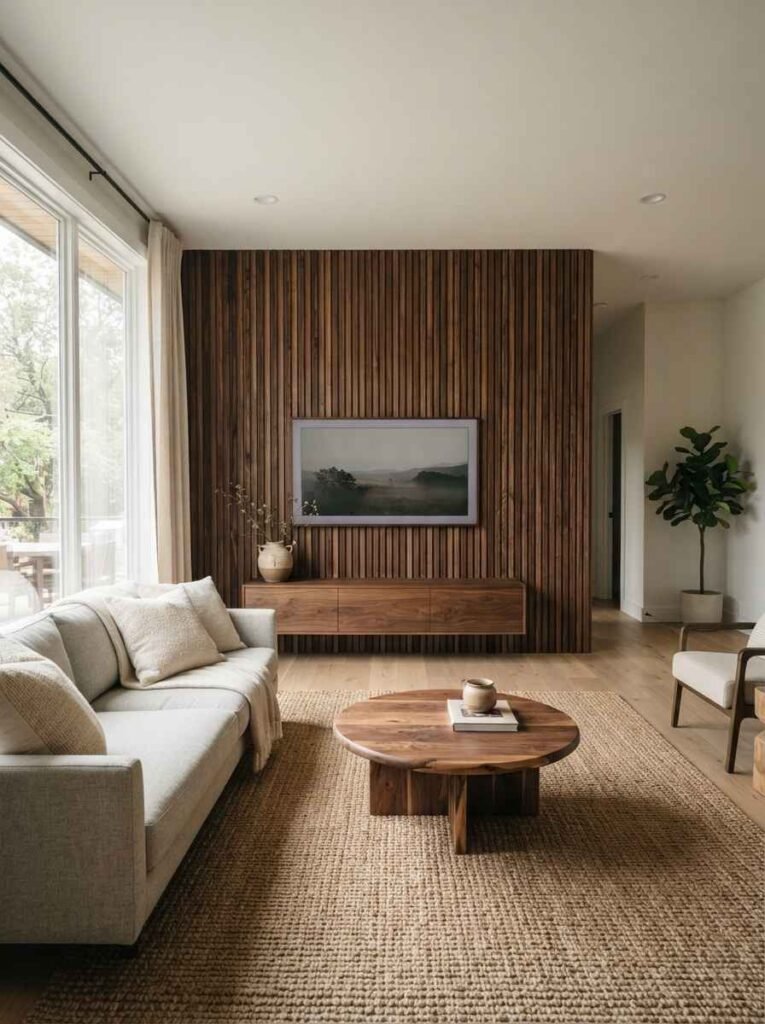
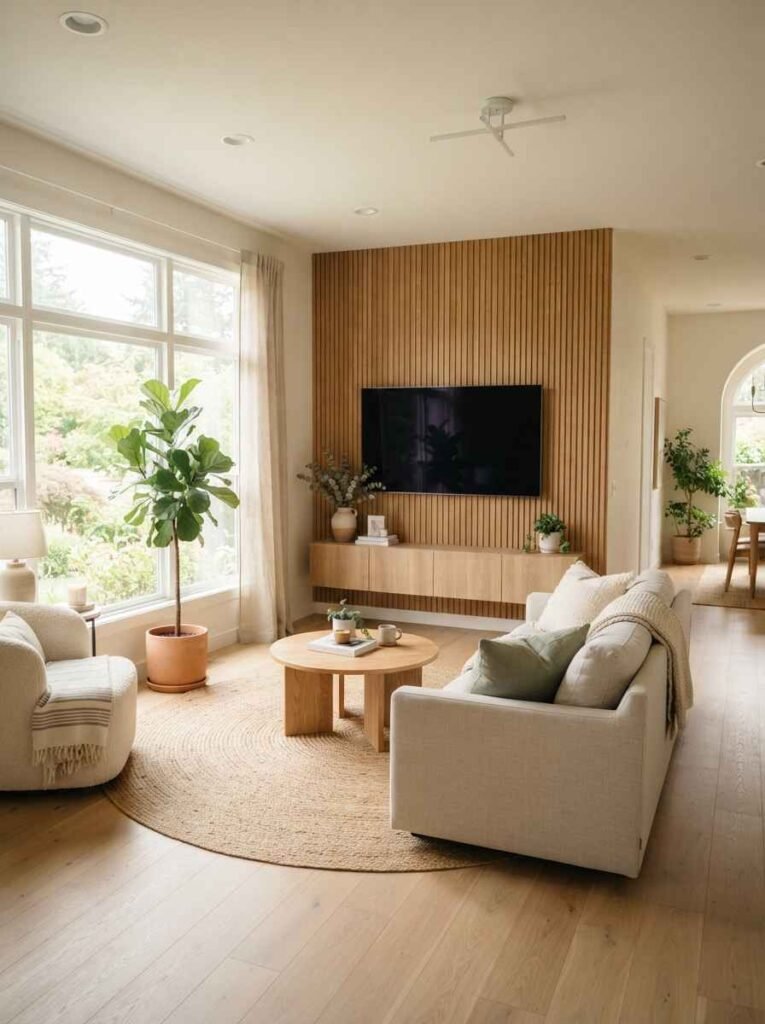
Vertical wood slats behind a mounted TV have become a design staple for good reason.
They add texture without shouting for attention, and the TV almost disappears into the pattern when it’s off.
I tried this in a small apartment once with cheap pine battens from a hardware store, spaced about 2 inches apart and stained a warm walnut.
It looked shockingly close to the pricier versions you see online, and it took me one Saturday afternoon. Budget-friendly and high-impact, which is rare in this hobby.
One thing nobody mentions: measure your outlet placement before you start attaching slats.
I had to notch two of mine to fit around an existing outlet, and it wasn’t fun with a jigsaw at 9pm on a weeknight.
2. Built-in shelving on either side
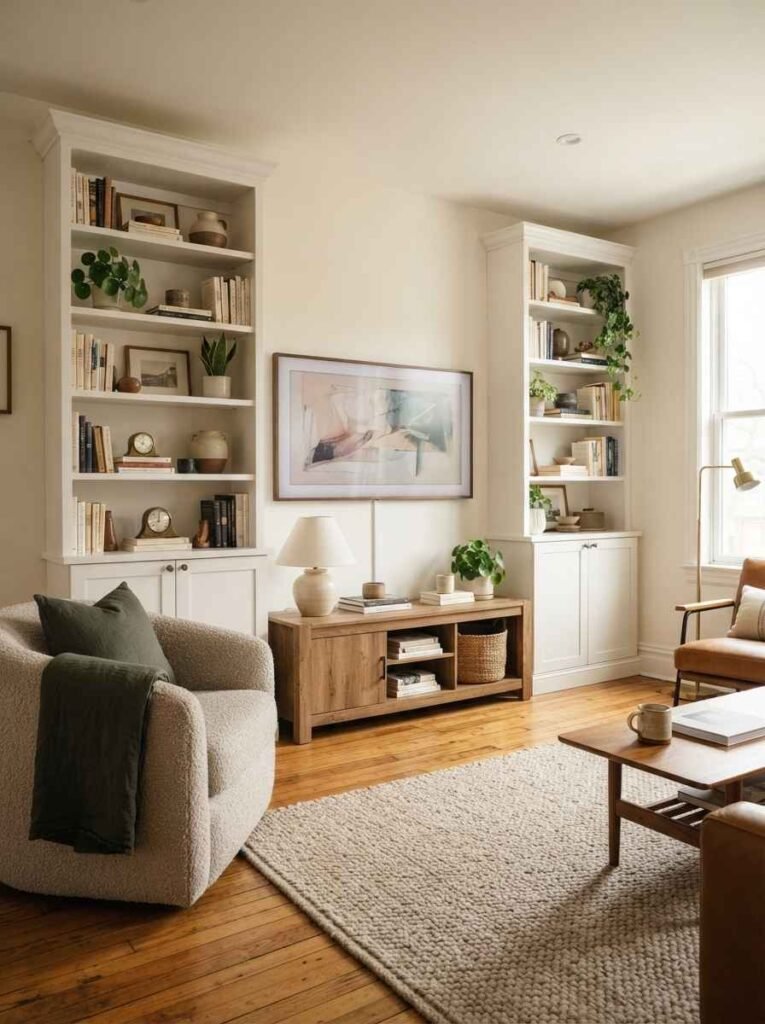
Flanking your TV with built-in or freestanding shelving turns a flat wall into a functional display case. Books, plants, framed photos: it all works here.
IMO this is the most forgiving layout for renters, since a lot of shelving units are freestanding. No drilling into someone else’s drywall required.
Go for open-back shelving if you can find it, so cables from the TV can run straight down through the back panel instead of dangling in full view.
It’s a small detail, but it’s the difference between looking curated and looking like you gave up halfway through.
3. The gallery wall wrap-around
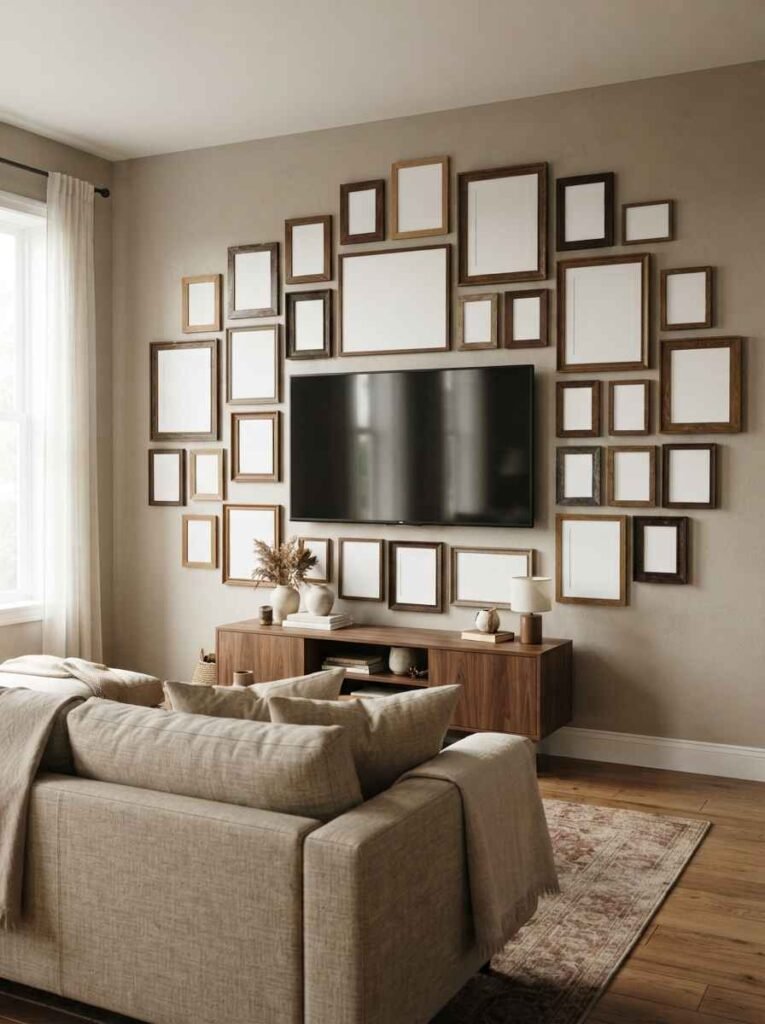
Frame the television so it sits inside a cluster of art prints, almost like it’s just another piece hanging on the wall.
It works surprisingly well with mismatched frame sizes.
A friend of mine did this above her fireplace, and honestly, guests don’t even clock the TV until she turns it on.
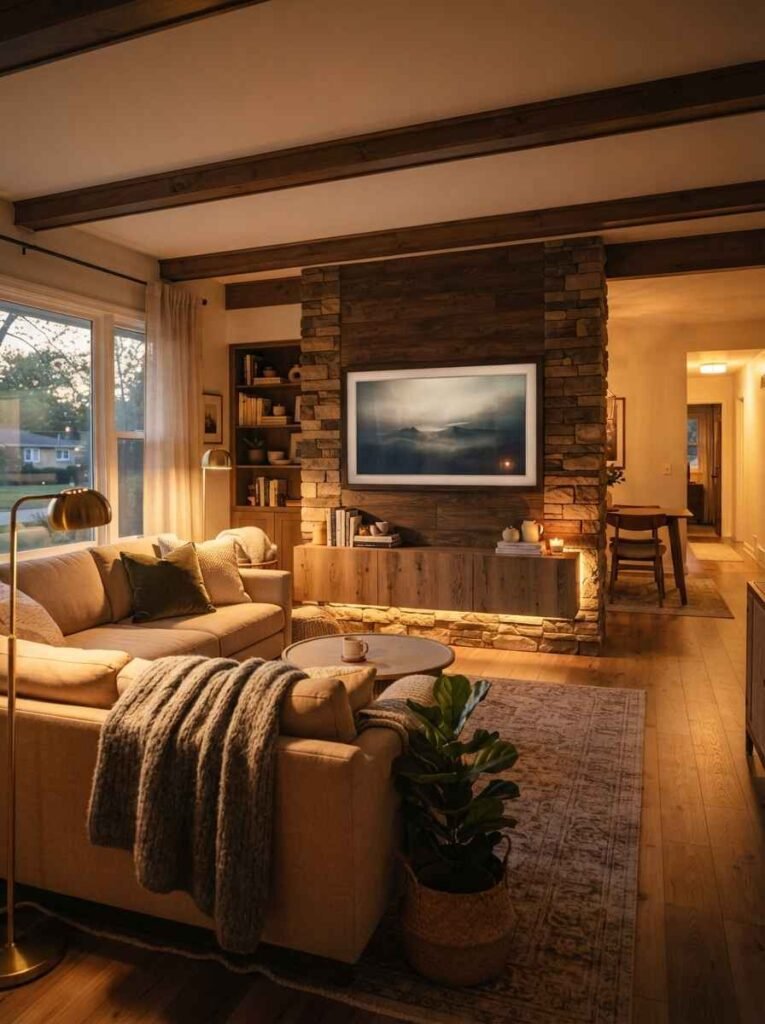
4. Stone or faux-stone accent panel
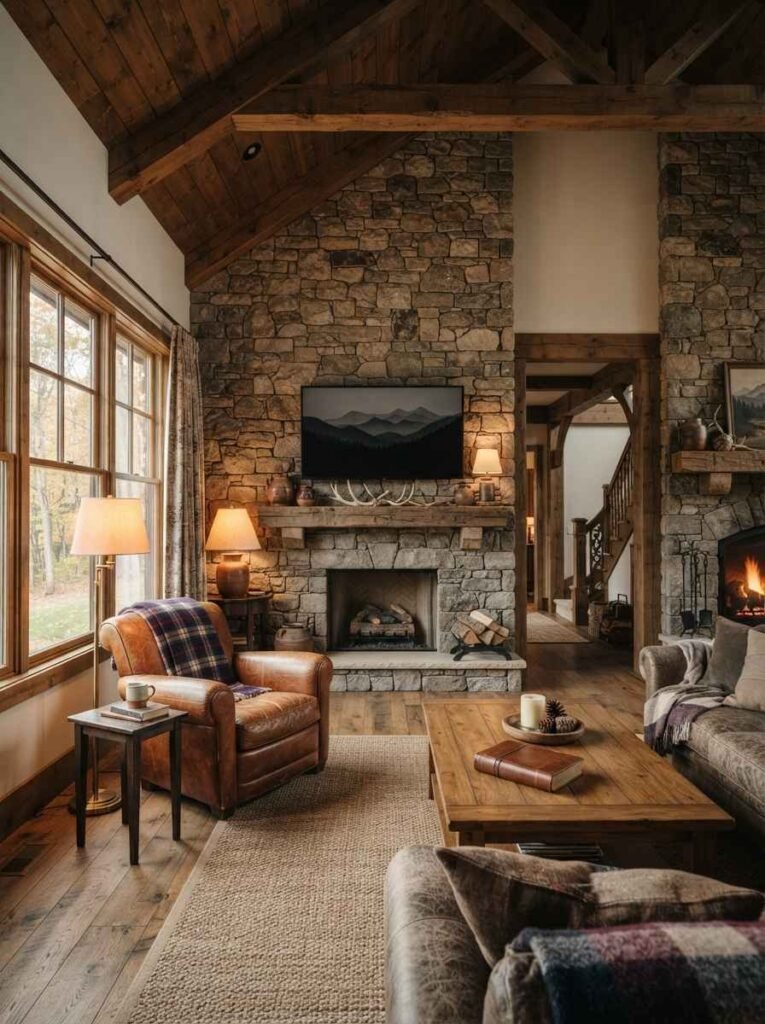
Stacked stone panels bring warmth and a slightly rugged edge to a TV wall.
This one leans more traditional or lodge-style, so it fits best in rooms with wood beams or a fireplace already in the mix.
5. Recessed niche mounting
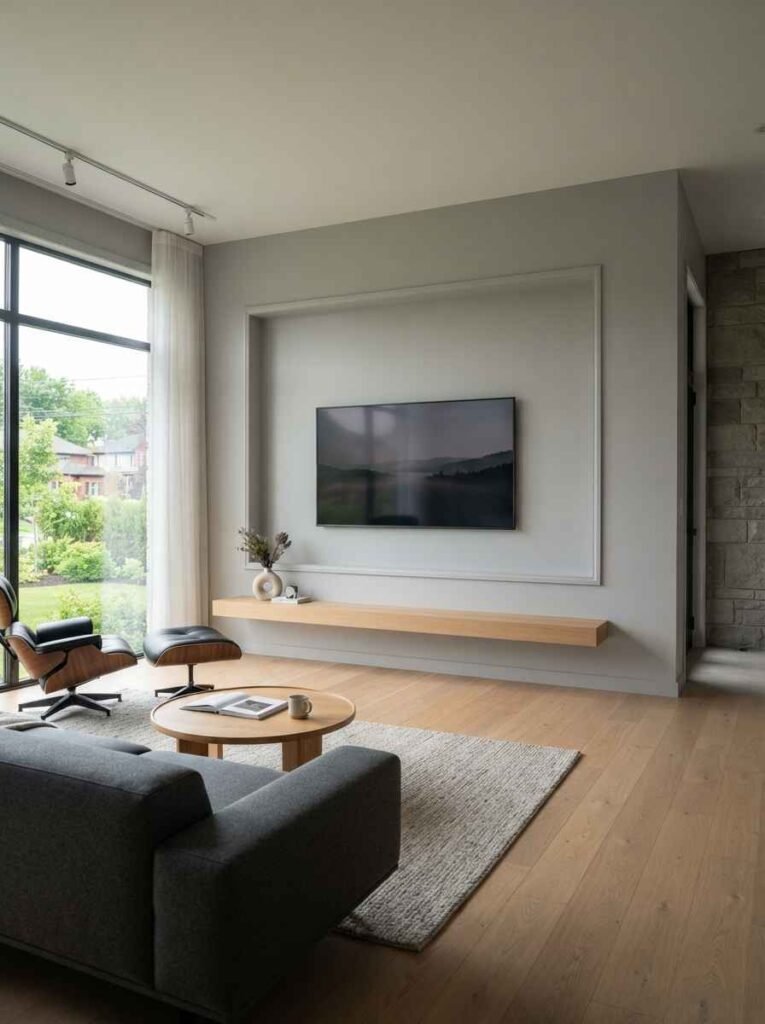
Cutting a shallow recess into the wall and mounting the TV flush inside it gives you a built-in look without a full renovation budget. It also does wonders for hiding the awkward gap between screen and wall.
6. The bold accent color wall
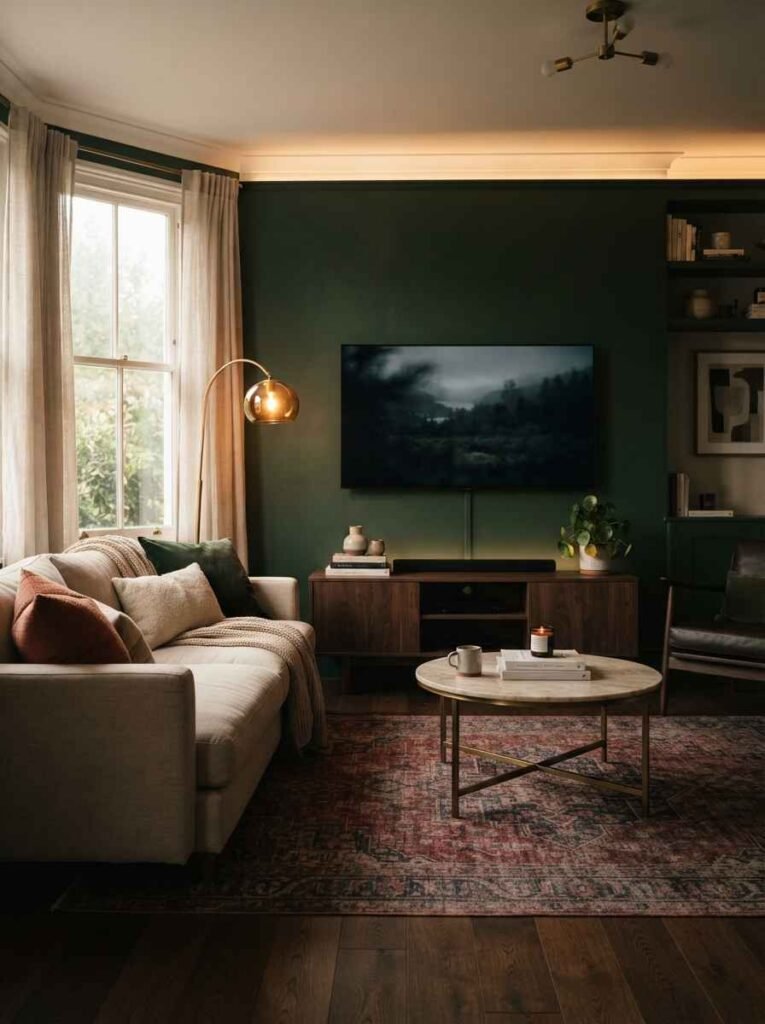
Paint just the TV wall a deep color: forest green, navy, terracotta, whatever matches your palette.
The screen practically disappears against a dark, saturated background, since dark walls minimize glare and screen reflection.
7. Media console with hidden storage
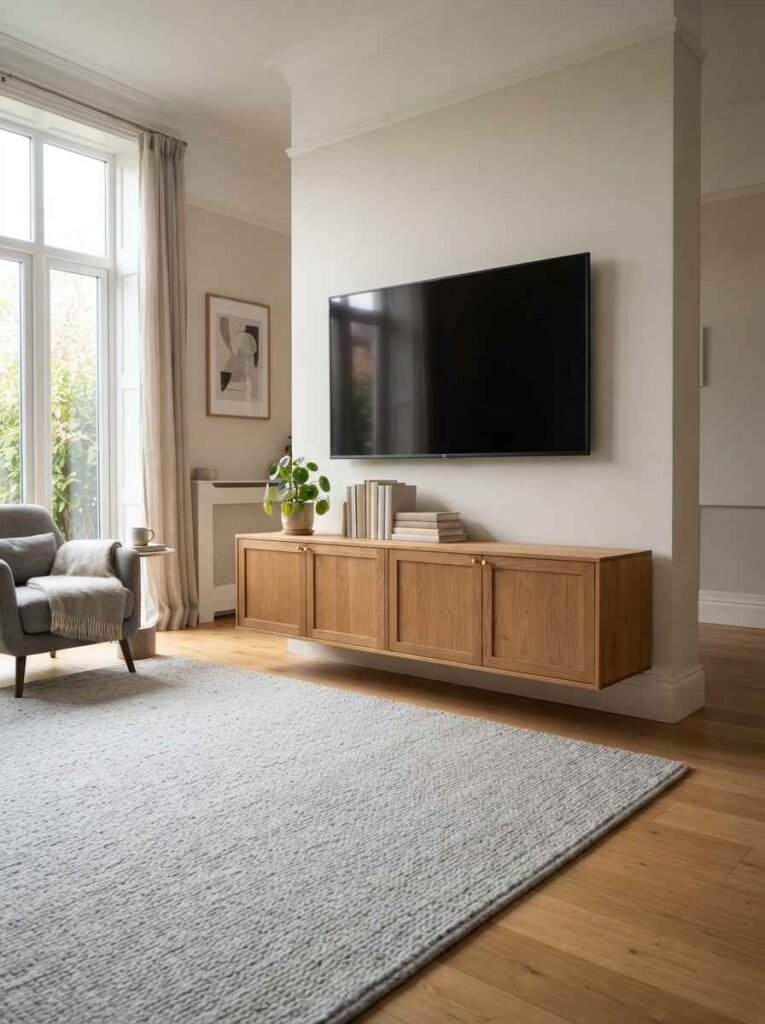
A long, low console under the TV keeps remotes, game consoles, and cable boxes out of sight.
Look for one with cord-management holes in the back; it saves you from the dreaded cable spaghetti behind the couch.
8. Fireplace and TV combo wall
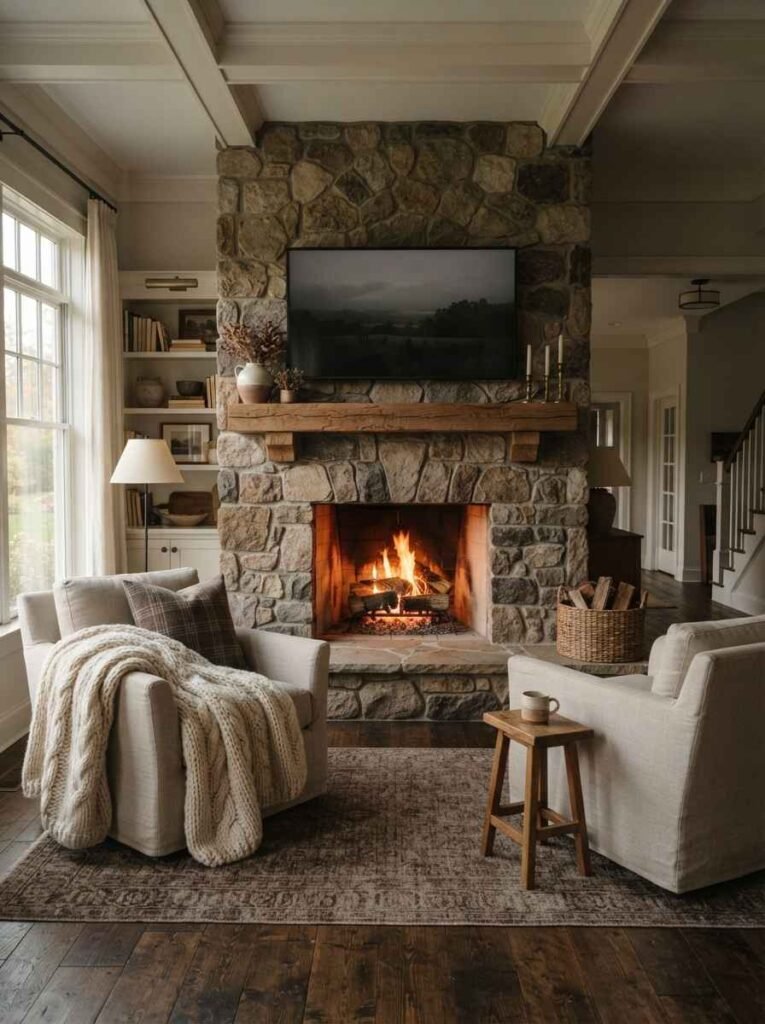
Mounting a TV above the fireplace remains one of the most requested layouts, and it’s popular for a reason: it centralizes the room’s two biggest focal points into one wall.
That said, heat and viewing height both matter here.
HGTV’s guide on installing a TV above the fireplace recommends leaving roughly 7 inches of clearance between the mantel and the screen, both for ventilation and so the whole setup doesn’t look cramped.
If you use your fireplace regularly, get a tilting mount.
Watching TV from the couch with your neck craned upward gets old after about a week, and no amount of gorgeous stone tile fixes bad ergonomics.
9. Minimalist floating shelf only
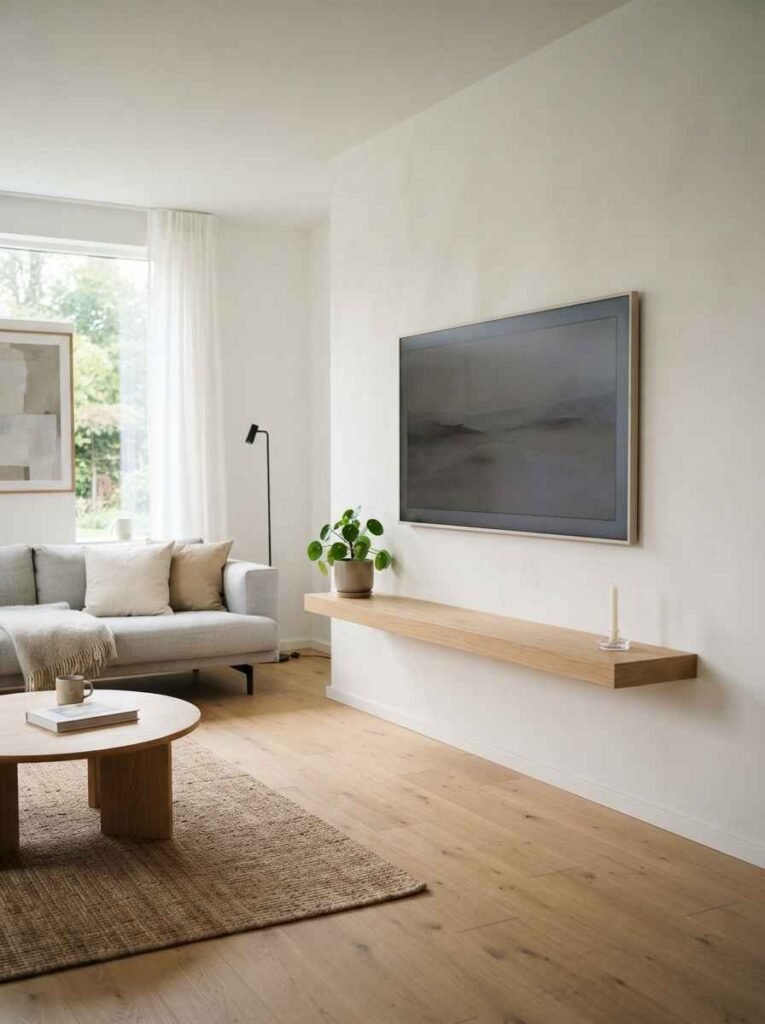
Sometimes less really is less, in a good way.
A single thin floating shelf under the TV, holding one plant and maybe a candle, keeps the whole wall breathing.
10. Herringbone or chevron wood pattern
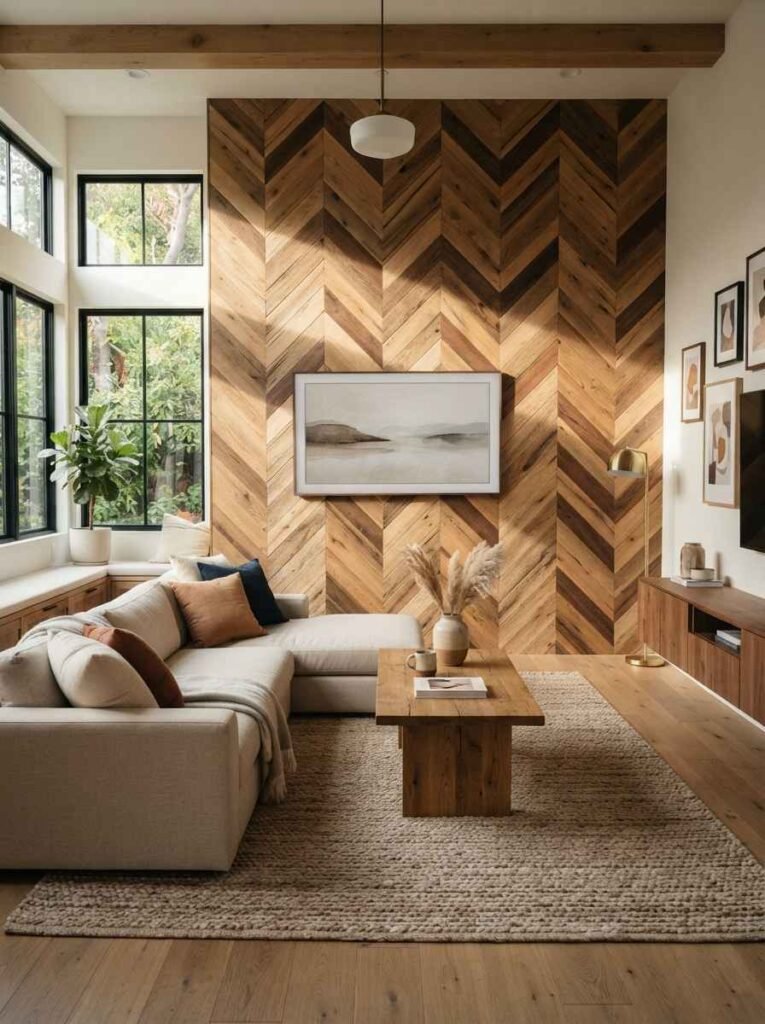
Instead of straight vertical slats, angle the wood into a herringbone or chevron layout.
It reads as more custom and architectural, though it takes more planning (and patience) to install evenly.
11. Backlit panel frame
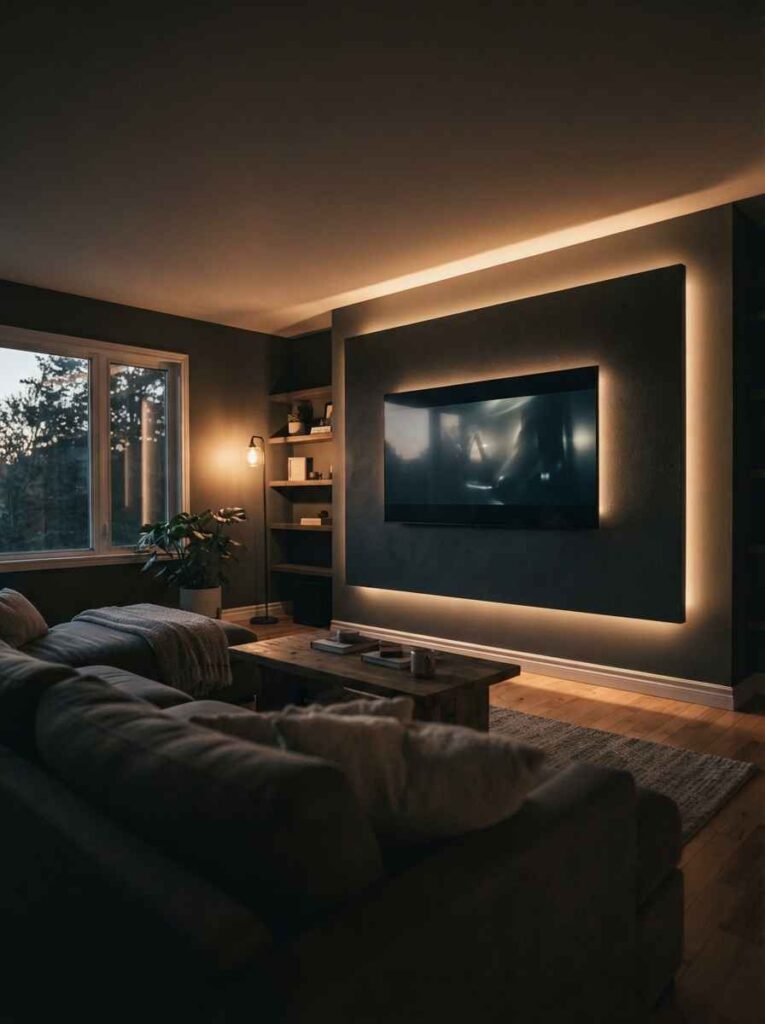
LED strip lighting installed behind a raised panel around the TV creates a soft glow that frames the screen like a picture.
It’s dramatic at night and honestly kind of addictive once you install it. This is the one upgrade in my own place that gets the most comments from visitors.
12. Wallpaper feature wall
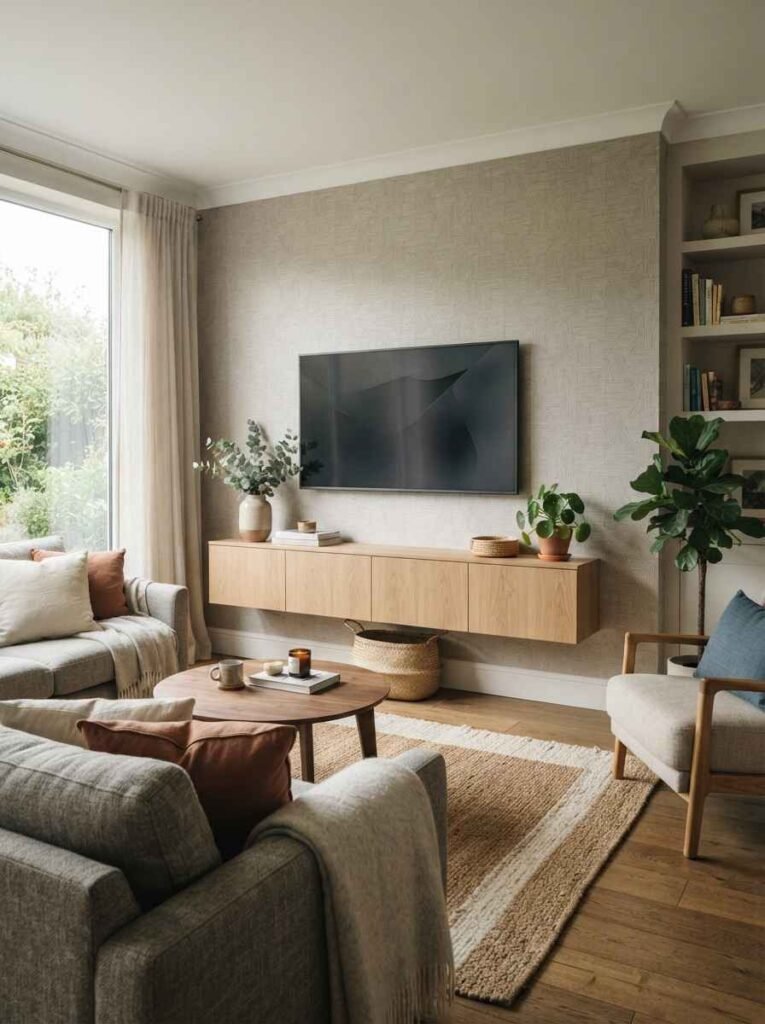
A patterned or textured wallpaper behind the TV adds personality fast, without the commitment of built-ins or paneling.
Removable wallpaper makes this a solid option for renters too.
13. Symmetrical cabinetry wall
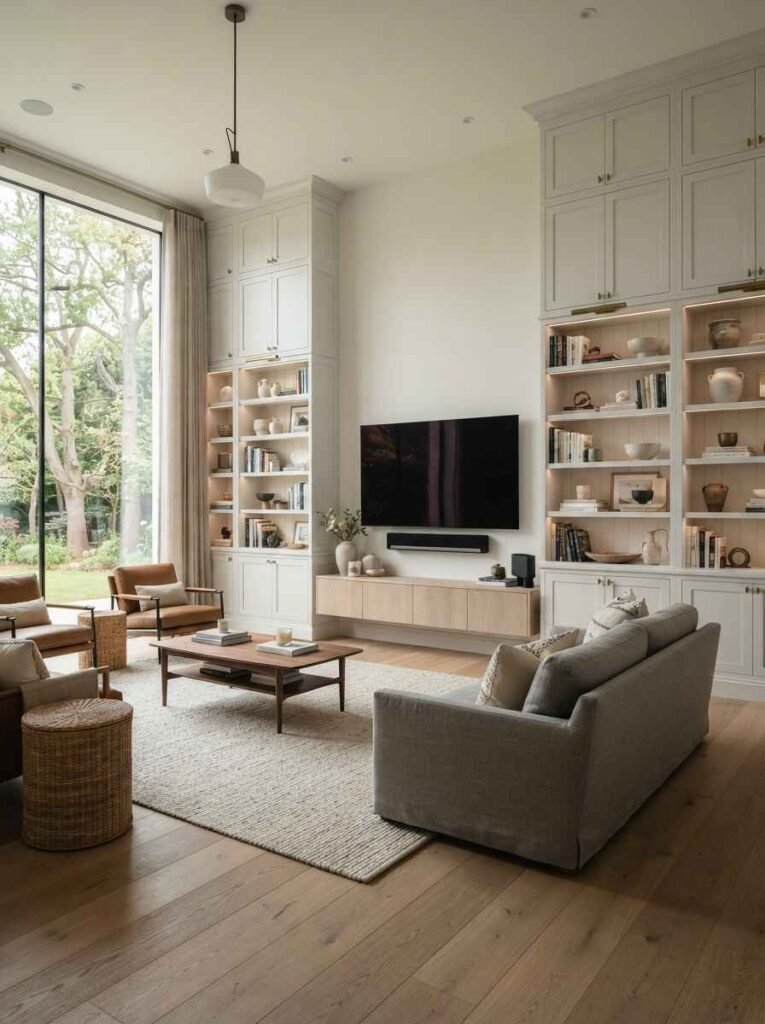
Matching cabinets on both sides of the TV, built to the ceiling, give a room a tailored, almost custom-home feel.
This layout works especially well in rooms with higher ceilings where a low console would look lost.
14. Concrete or microcement finish
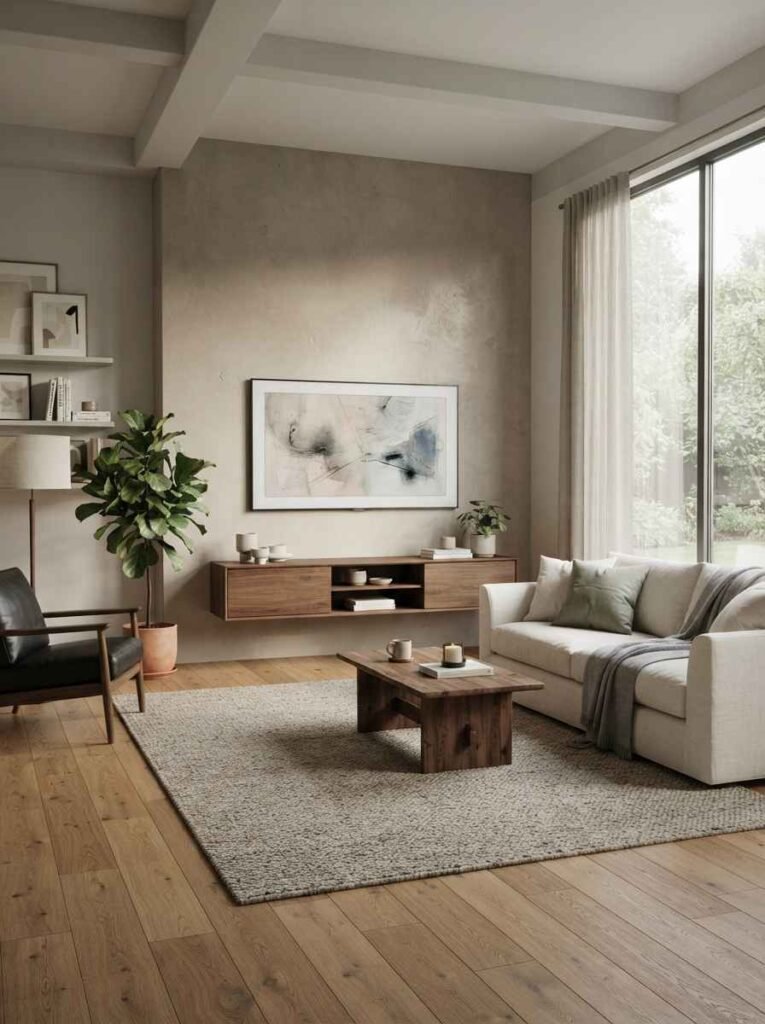
A smooth, matte concrete-look panel behind the television creates a cool, gallery-like backdrop.
It pairs nicely with warm wood tones so the room doesn’t feel cold or industrial.
15. Corner TV wall setup
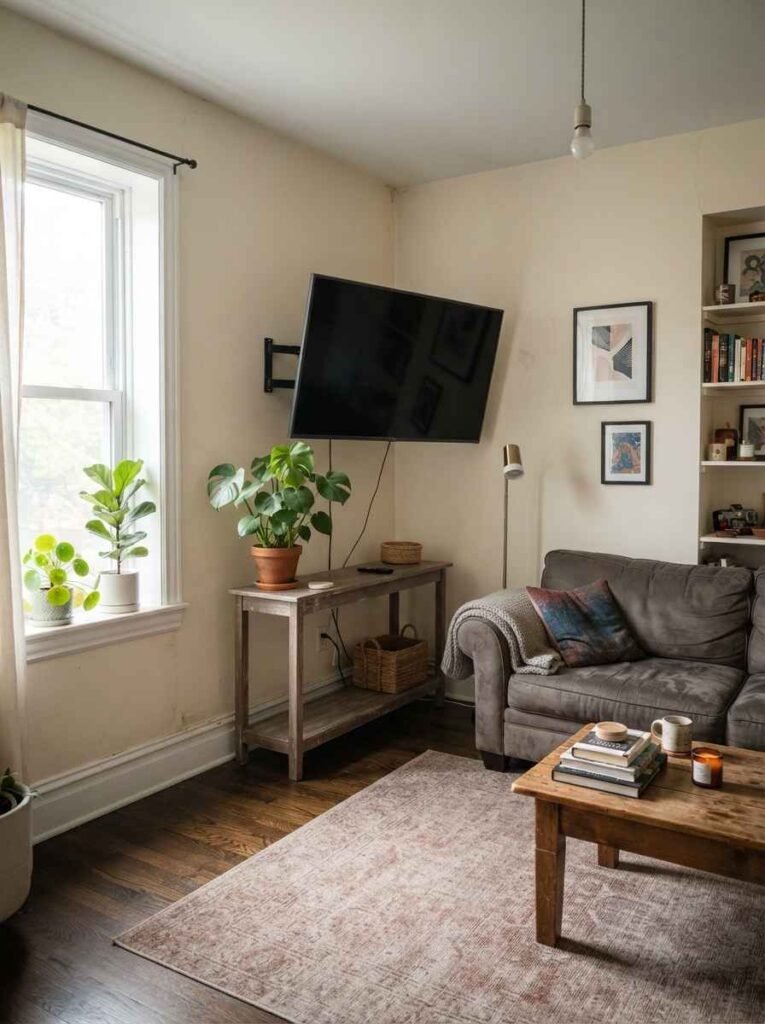
Not every living room has a clean, flat wall available for the TV, and that’s fine.
A corner mount with a slim shelf or console below can work just as well, especially in awkward or older-home layouts.
16. Mixed material wall
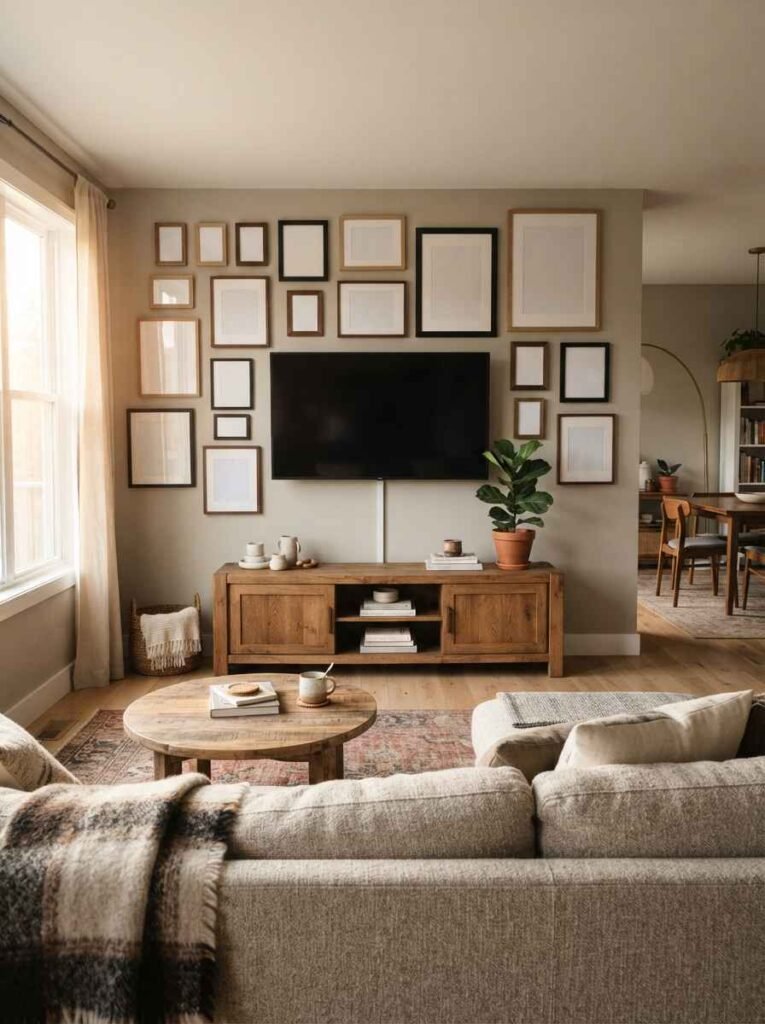
Combine two or three materials, like wood slats plus a stone insert, or wallpaper plus a floating shelf.
Mixing textures keeps a large wall from feeling flat, though I’d stop at three materials max before it starts looking busy.
The trick is picking one material to lead and treating the rest as support.
Let the wood slats cover 70 percent of the wall, then use the stone insert as a smaller accent panel directly behind the screen.
Trying to give every material equal weight is usually what makes a mixed wall feel chaotic instead of curated.
17. Gallery of family photos around the screen
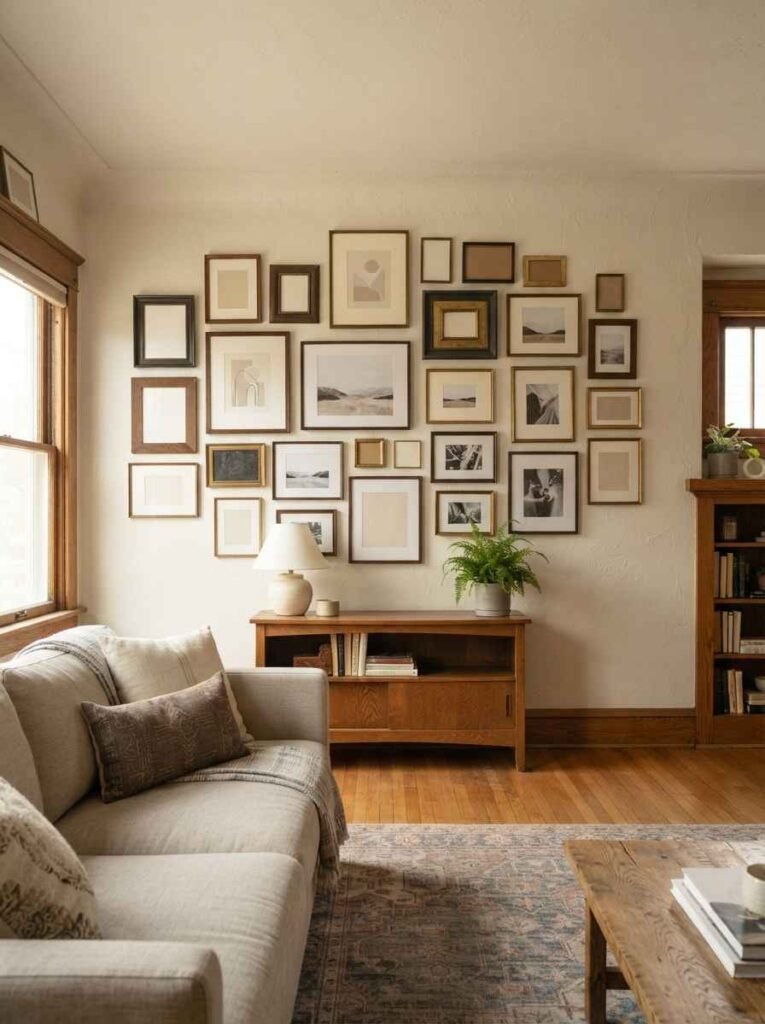
Similar to the art gallery idea, but personal: baby photos, travel shots, wedding pictures, arranged around the TV. This one feels the most “you” out of every idea on this list.
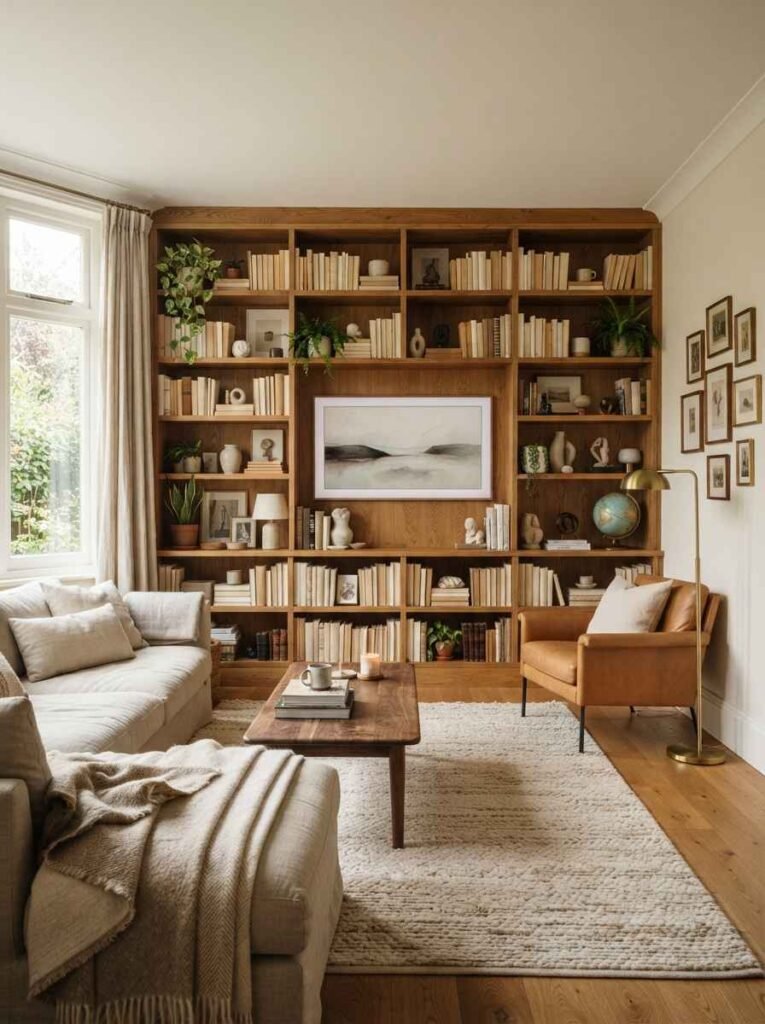
18. The bookshelf-heavy wall
If you’re a reader, let your TV wall double as your library. Stack shelves floor to ceiling and let the television sit as one component among many, not the star of the show.
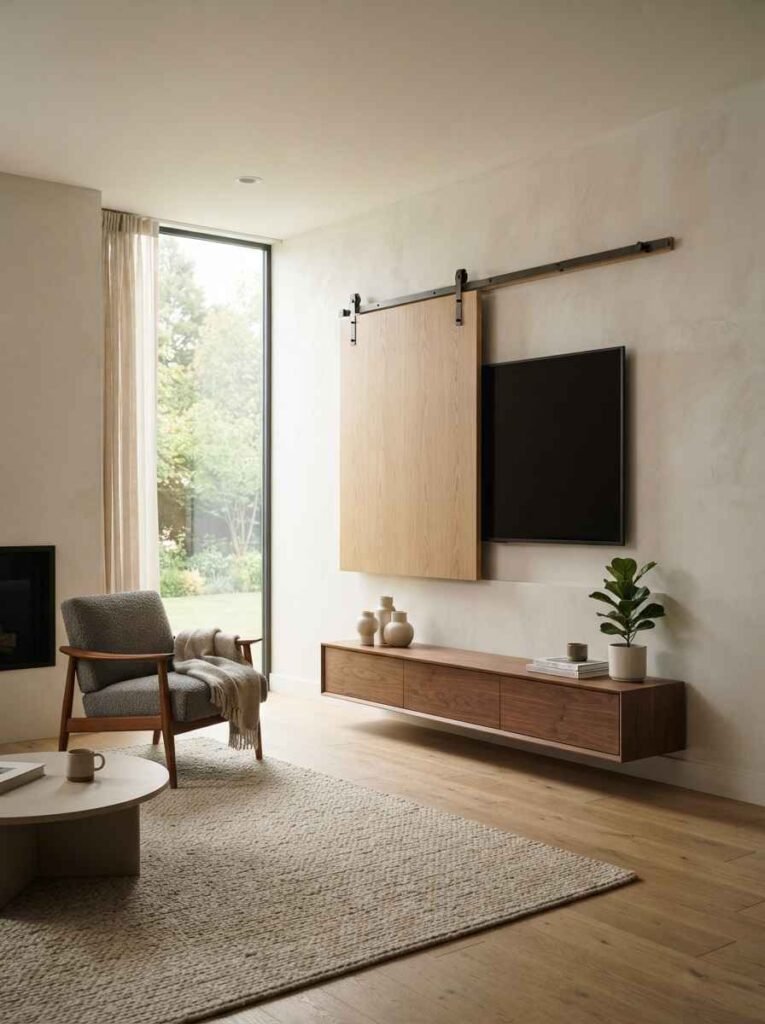
19. Sliding or hidden TV panel
For anyone who really doesn’t want a screen dominating their decor, a sliding panel or piece of art on a track can cover the TV entirely when it’s not in use.
It’s pricier to install, but it’s the closest thing to making a 65-inch screen vanish.
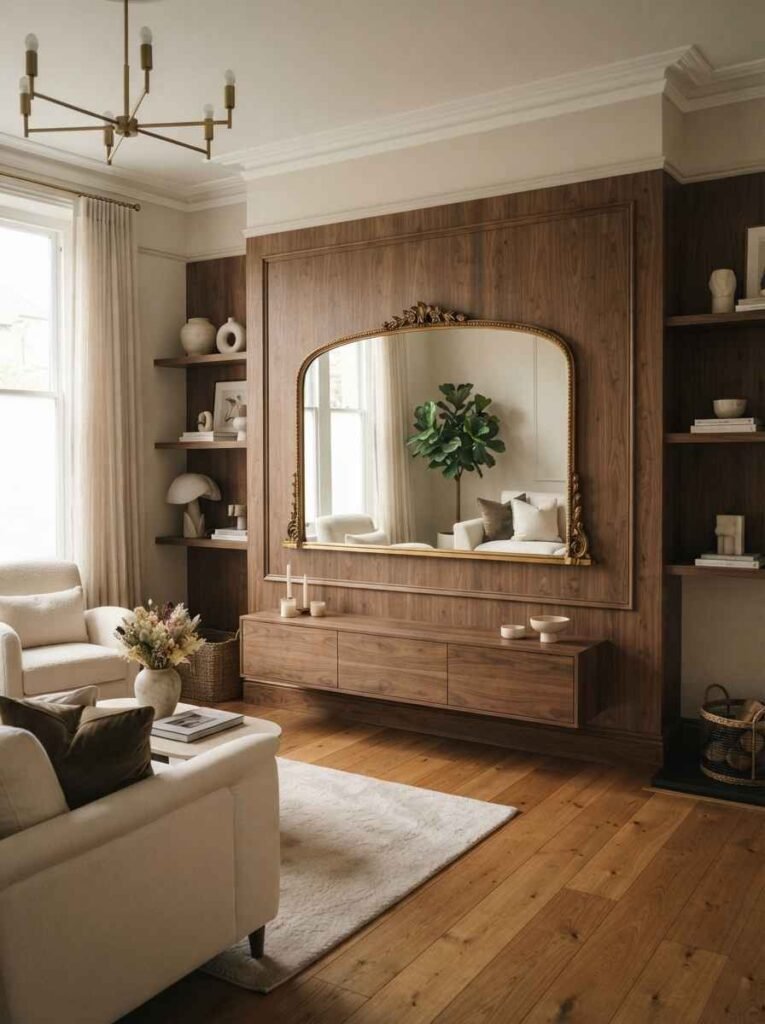
20. The statement mirror-TV combo
Mirror-finish TV covers or frames blend the screen into a decorative mirror when it’s off.
It’s a niche option, sure, but it works beautifully in smaller rooms where a mirror also helps bounce light around.
Quick comparison: which idea fits your room
| Style | Best for | Rough cost | Renter-friendly |
|---|---|---|---|
| Wood slat wall | Small to mid rooms | Low to mid | Yes, with adhesive strips |
| Built-in shelving | Book lovers, families | Mid to high | Only if freestanding |
| Fireplace combo | Rooms with existing fireplace | Mid | No |
| Backlit panel | Anyone wanting drama at night | Mid | No |
A quick side note
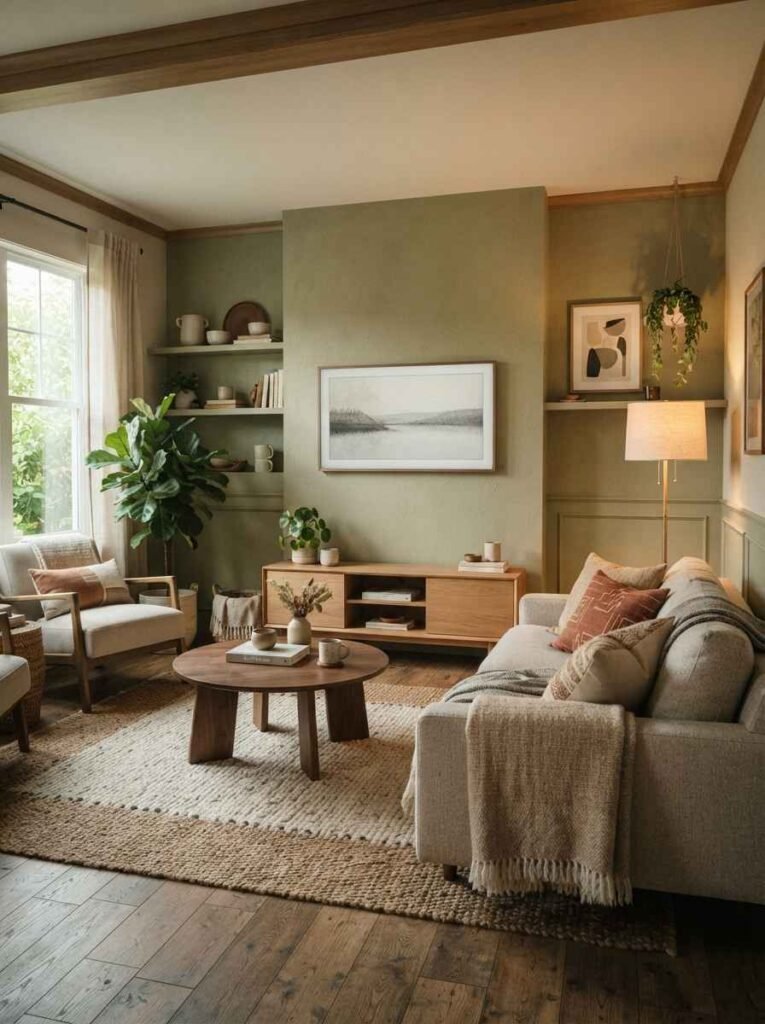
Random thought while writing this: I always assumed bigger TVs meant a better setup, and then I watched a home tour where a 43-inch screen looked perfect simply because the wall around it was designed well.
Size matters less than people think. Proportion and lighting do most of the heavy lifting.
How to pick the right idea for your space
Before you start pinning every option on this list, think through a few practical questions first.
- What’s your actual budget? Wood sl
- ats and paint cost far less than custom cabinetry.
- Are you renting? Skip anything that requires cutting into drywall.
- Do you already have a fireplace? That usually decides your layout before anything else does.
- How much natural light does the room get? Dark accent walls work best in rooms that get decent daylight, otherwise they can feel gloomy.
I’d personally start with the wood slat wall or a floating shelf if you’re on any kind of budget. Both are reversible, both look expensive, and neither requires a contractor.
One more thing worth saying out loud: don’t pick a style just because it’s trending on your feed this week.
A backlit panel looks amazing in photos, but if your living room already has three other light sources competing for attention, it’ll just add visual noise.
Match the idea to the room you actually live in, not the room you wish you had.
Frequently asked questions
What is the best height to mount a TV in a living room? Most designers suggest the center of the screen sit around eye level when seated, which usually lands between 42 and 48 inches from the floor for a standard sofa setup.
Should I paint my TV wall a different color than the rest of the room? It’s a common approach, and it works well when the color is darker than the surrounding walls, since it reduces glare and makes the screen blend in rather than stand out awkwardly.
Is it safe to mount a TV above a fireplace? Yes, with the right precautions. Heat exposure and viewing height are the two biggest factors, so check clearance guidelines like the ones outlined by HGTV before drilling anything.
Final thought
Twenty ideas, one wall, endless combinations.
Pick two or three that fit your budget and your room’s natural light, and build from there instead of trying to copy a Pinterest board exactly.
Which one of these are you saving for your own living room? Drop it in your Pinterest board now, before you talk yourself out of it.
