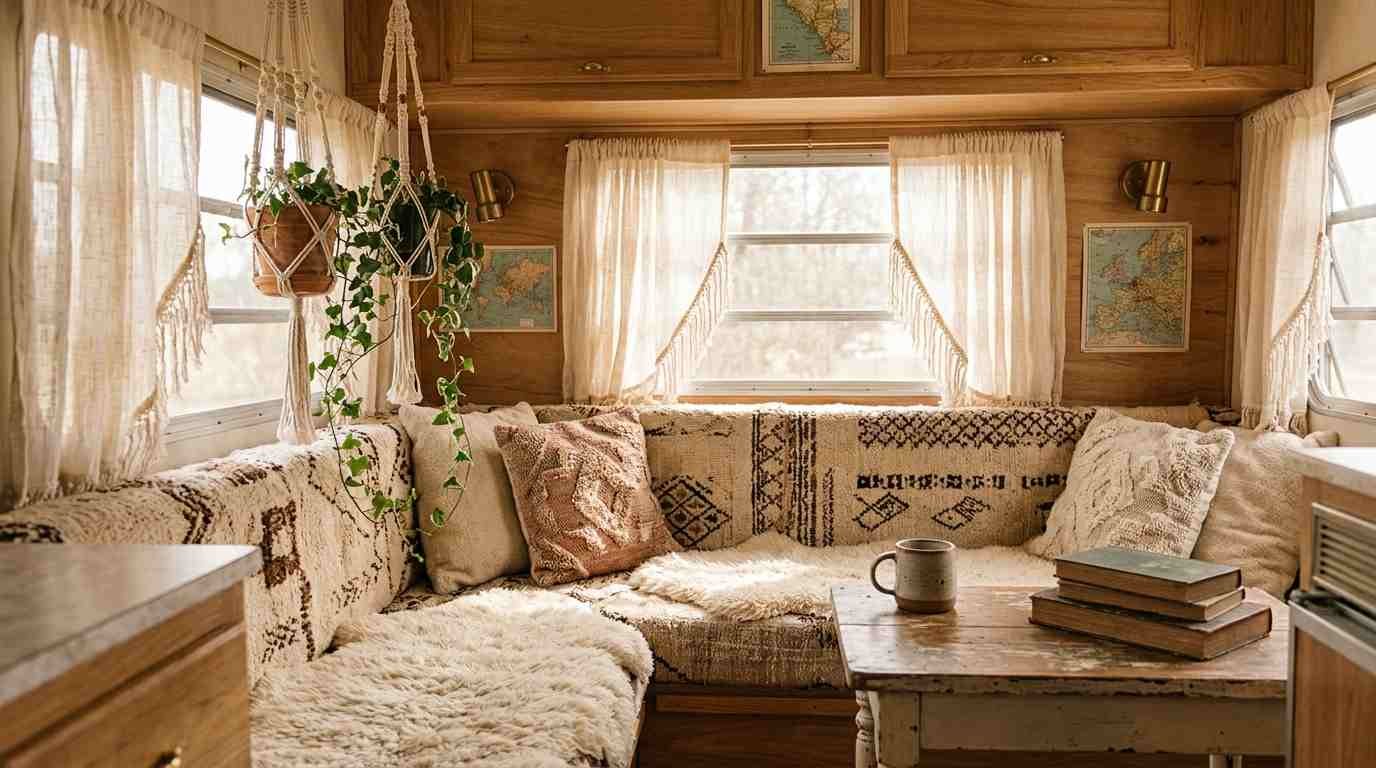
I converted my first van three summers ago with a secondhand drill, a stack of Pinterest boards, and zero clue what I was doing.
It turned out fine. More than fine, actually. IMO boho is the easiest style to get right in a small rolling space, because the whole point of the aesthetic is layered, imperfect, collected-over-time.
A camper interior that looks a little lived-in isn’t a mistake here. It’s the goal.
Here are 18 ideas I’d actually put in my own van again, plus a couple I’d skip next time (I’ll be honest about which is which).
1. Layer two or three rugs instead of one
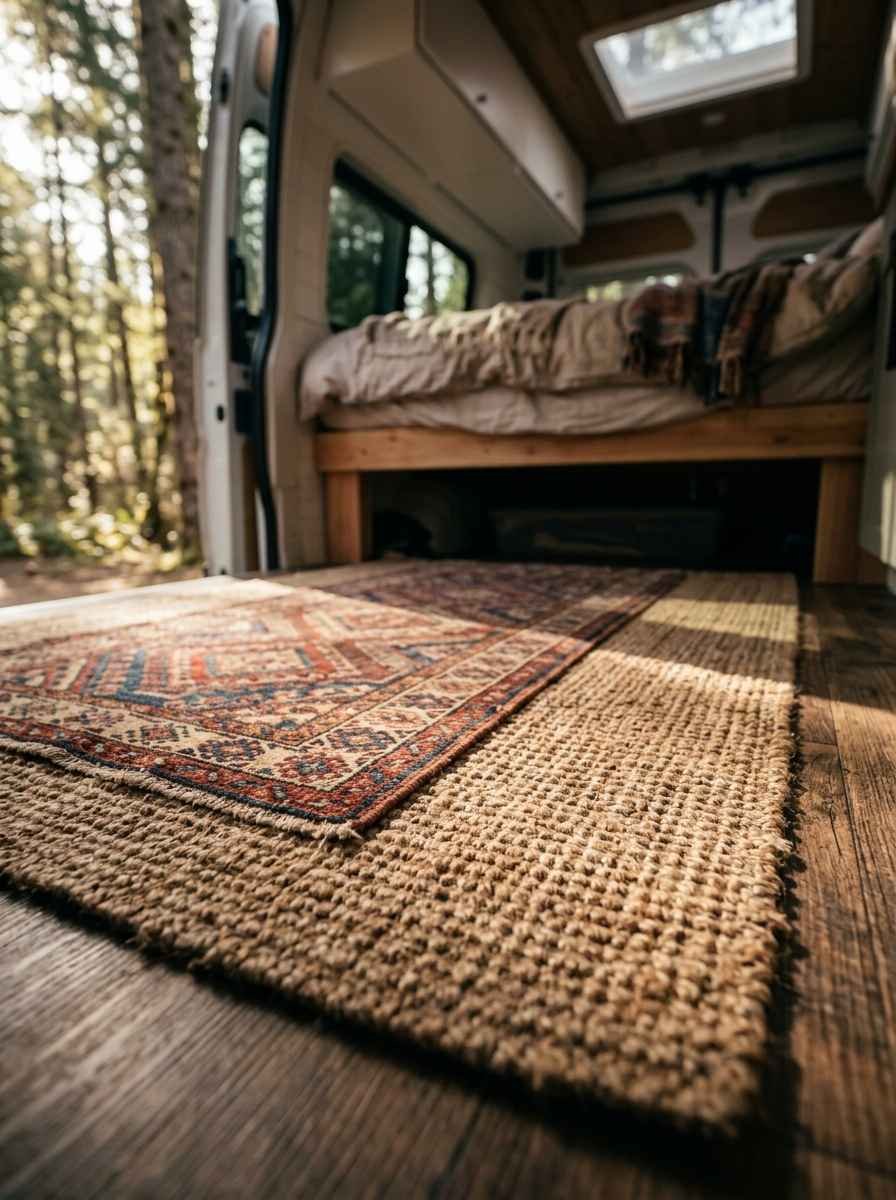
A single rug in a 20 square foot floor plan looks like an afterthought. Two overlapping rugs, in different textures, look intentional.
Try a flatweave kilim as your base layer, then a smaller sheepskin or shag rug on top near the bed. Cheap outdoor rugs work fine for the bottom layer since they take the abuse.
2. Hang a macrame piece above the bed
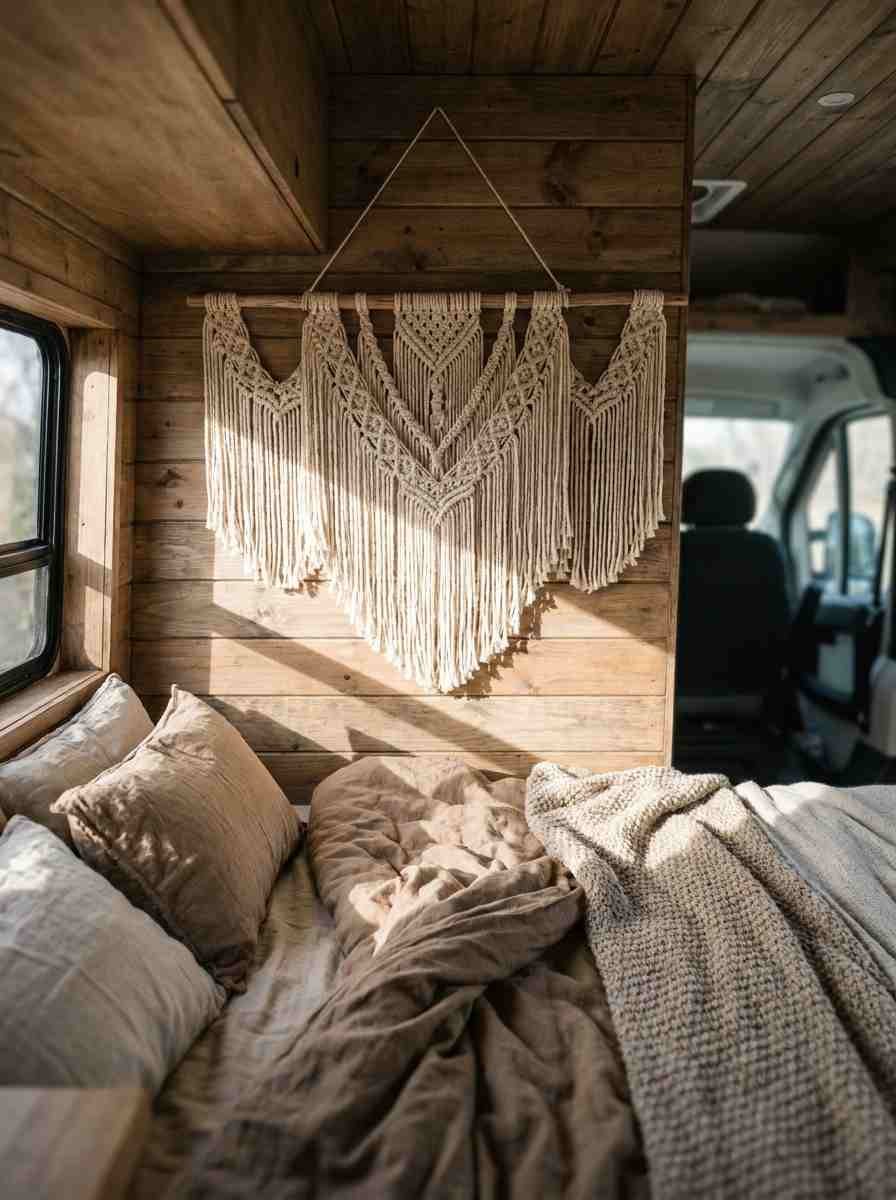
This is the single most “boho camper” thing you can do, and it costs almost nothing if you make it yourself.
Cotton rope, a few knots, a piece of driftwood for the top bar, done.
If knotting sounds like a nightmare, ready-made macrame wall hangings are cheap and travel well since they roll up flat.
3. Mix your throw pillows on purpose
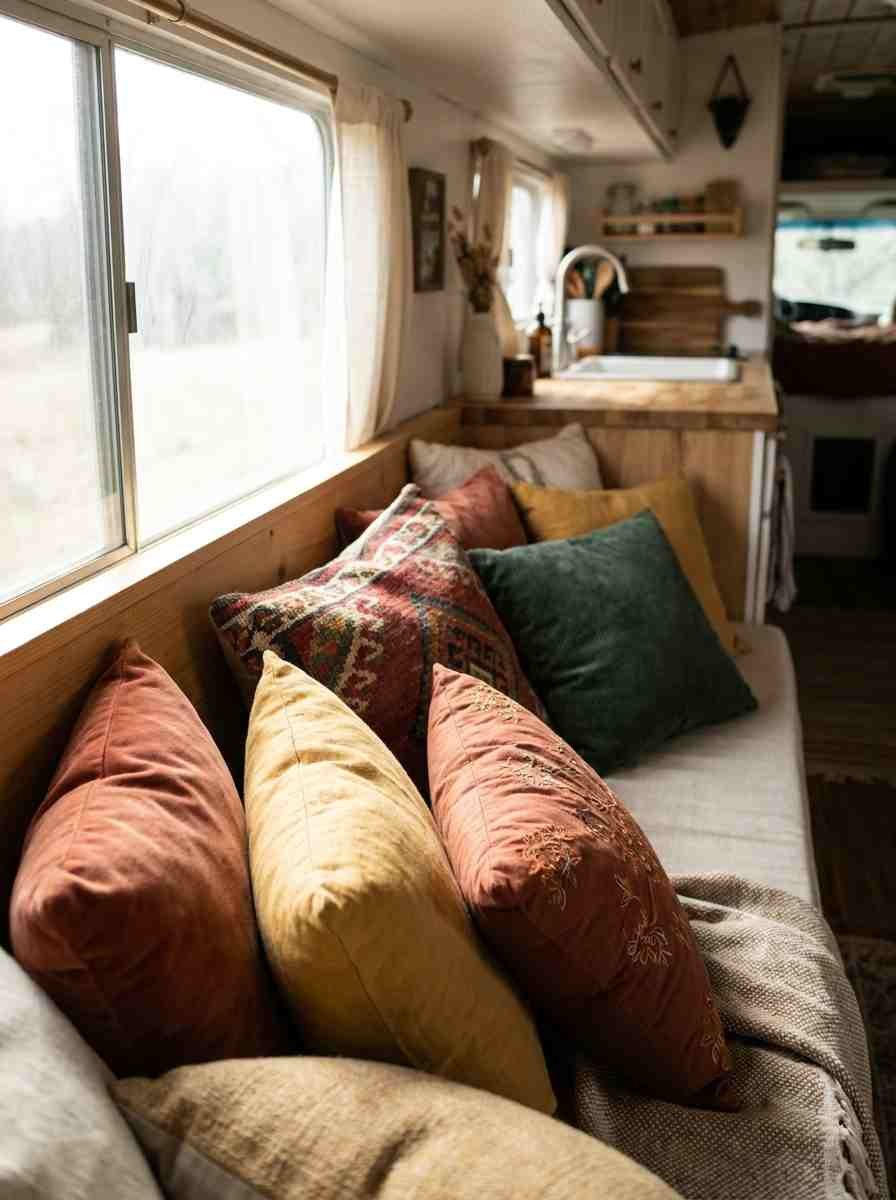
Don’t match your pillows. Buy one, then buy a completely different one, then a third that has no business being in the same room as the first two.
That’s the whole trick. Boho patterns work because they clash a little.
4. Swap harsh overhead lighting for warm string lights
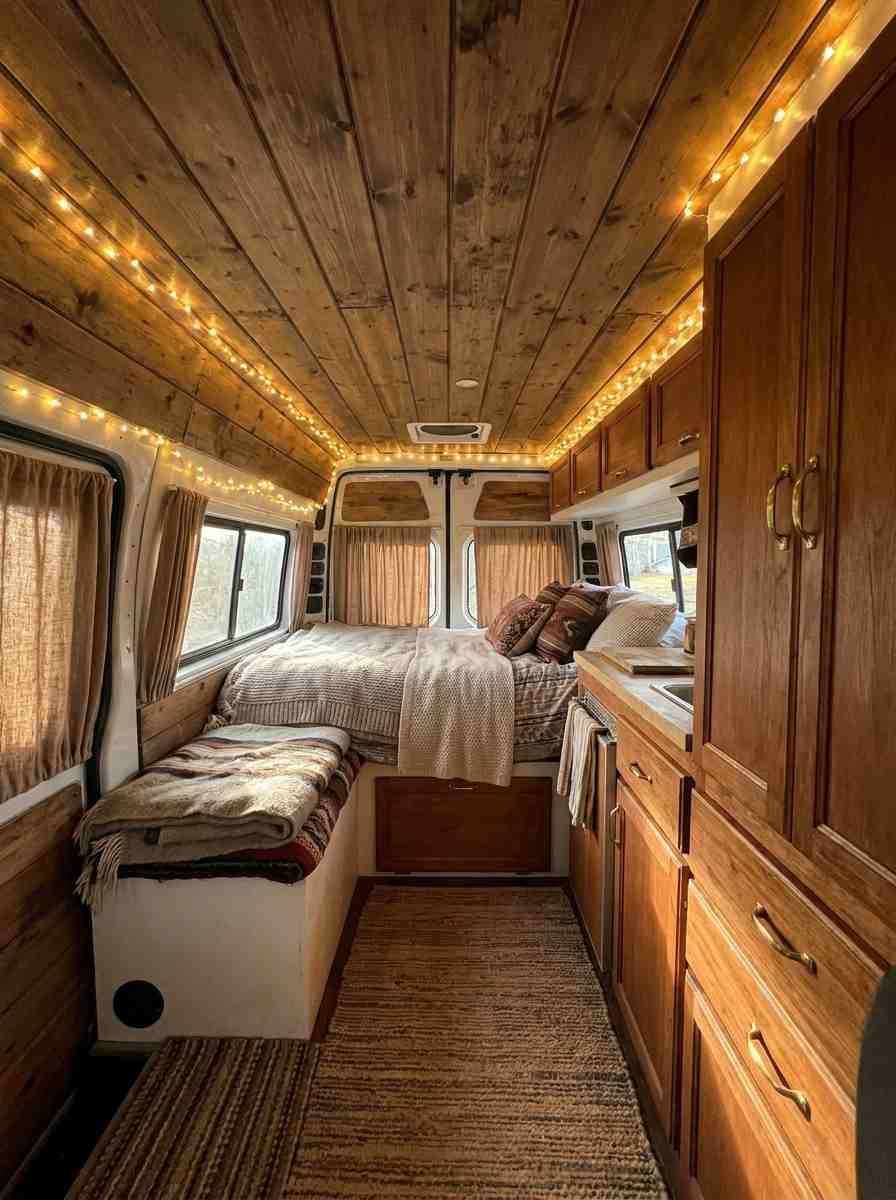
Van ceiling lights are usually cold white and unforgiving. Run warm LED string lights along the ceiling seams instead, and add a battery lantern or two for the corners.
Layered lighting changes the entire mood of a van after dark, way more than any single decor piece will.
5. Bring in rattan or wicker storage
Rattan baskets do double duty: they hide clutter and they look good doing it.
I keep dry goods in a lidded wicker basket under the bench seat and it’s held up through two years of washboard roads.
- A rattan hamper for laundry beats a plastic bin every time
- Wicker trays corral loose items on open shelving so nothing looks like a junk drawer
- A woven pendant light shade softens any bulb instantly
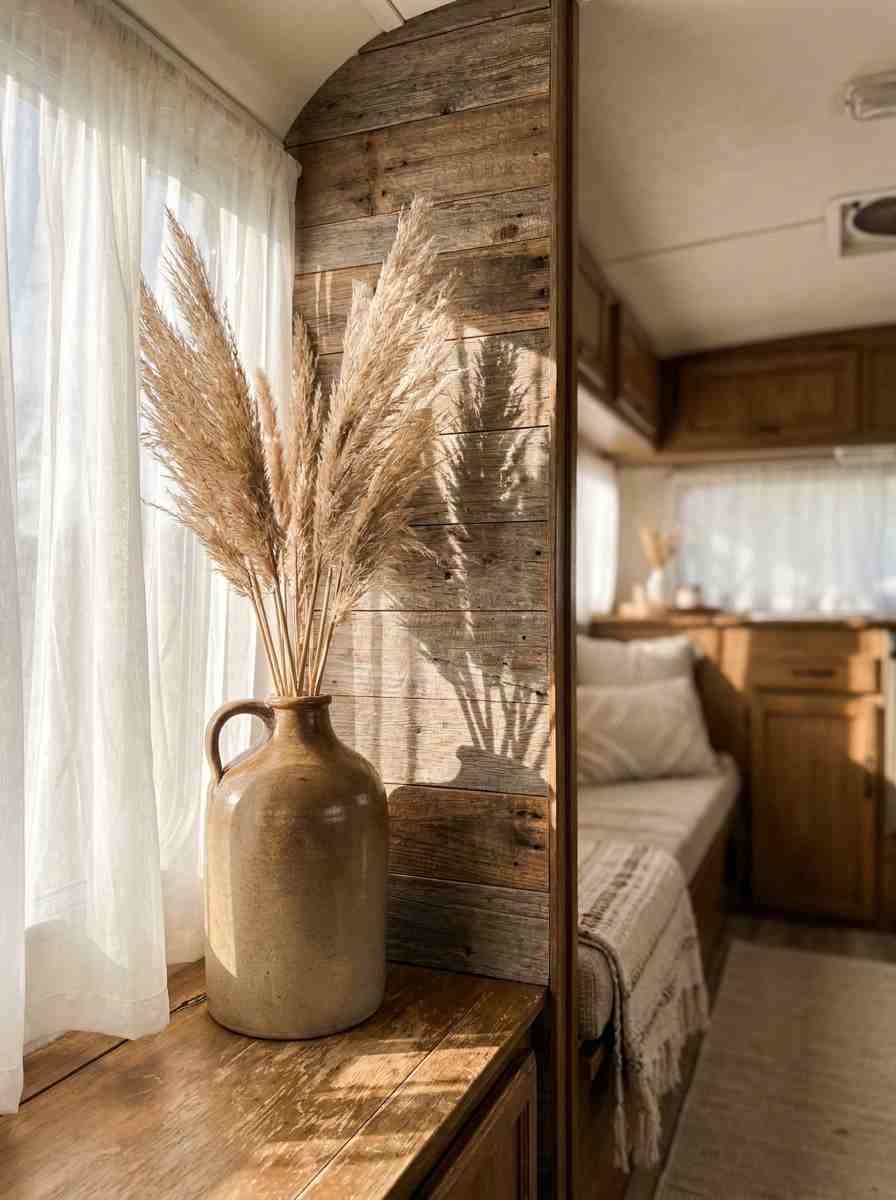
6. Add dried pampas grass or eucalyptus
Real plants and moving vehicles don’t get along well (ask me how I know).
Dried florals give you the same soft, organic shape without the watering schedule or the soil spilling every time you hit a pothole.
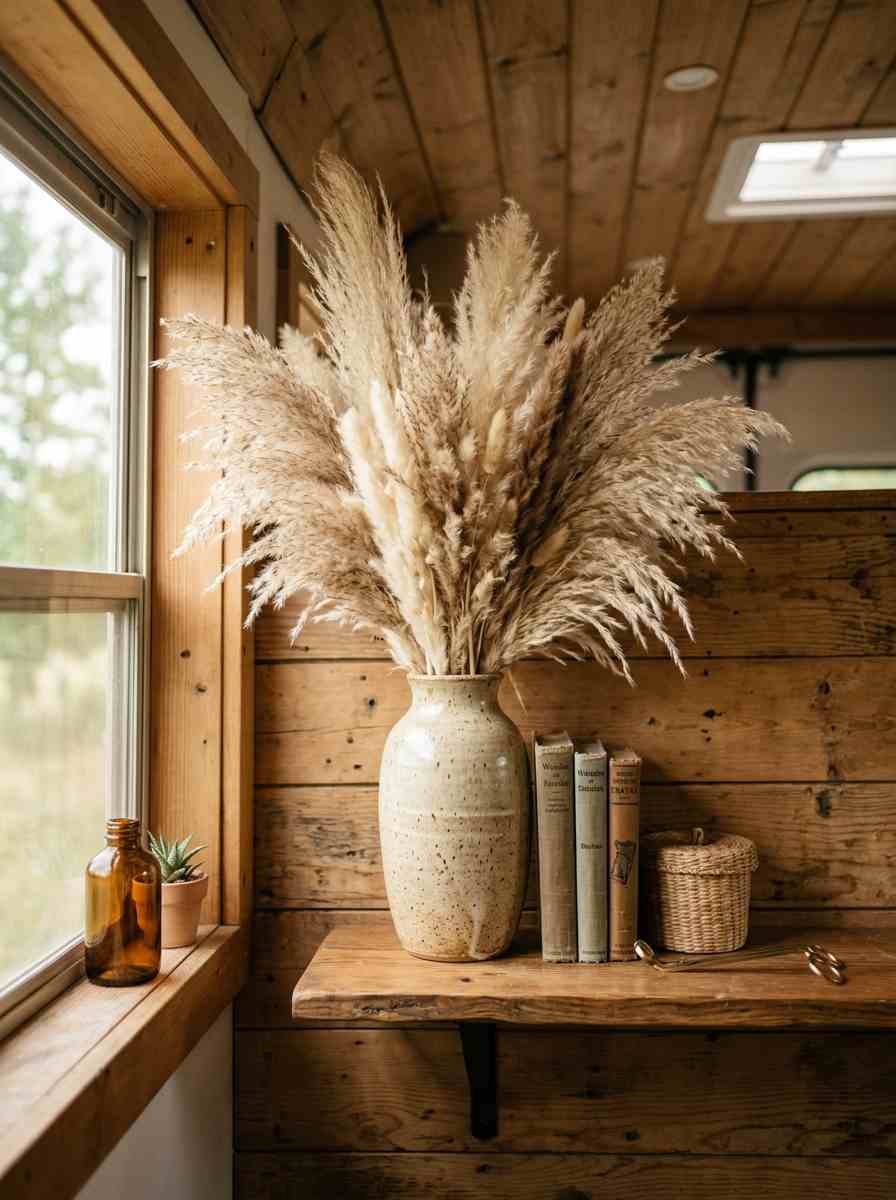
One tall stem of pampas grass in a stoneware vase fills an entire corner for under 15 dollars.
7. Pick curtains with real pattern, not just color
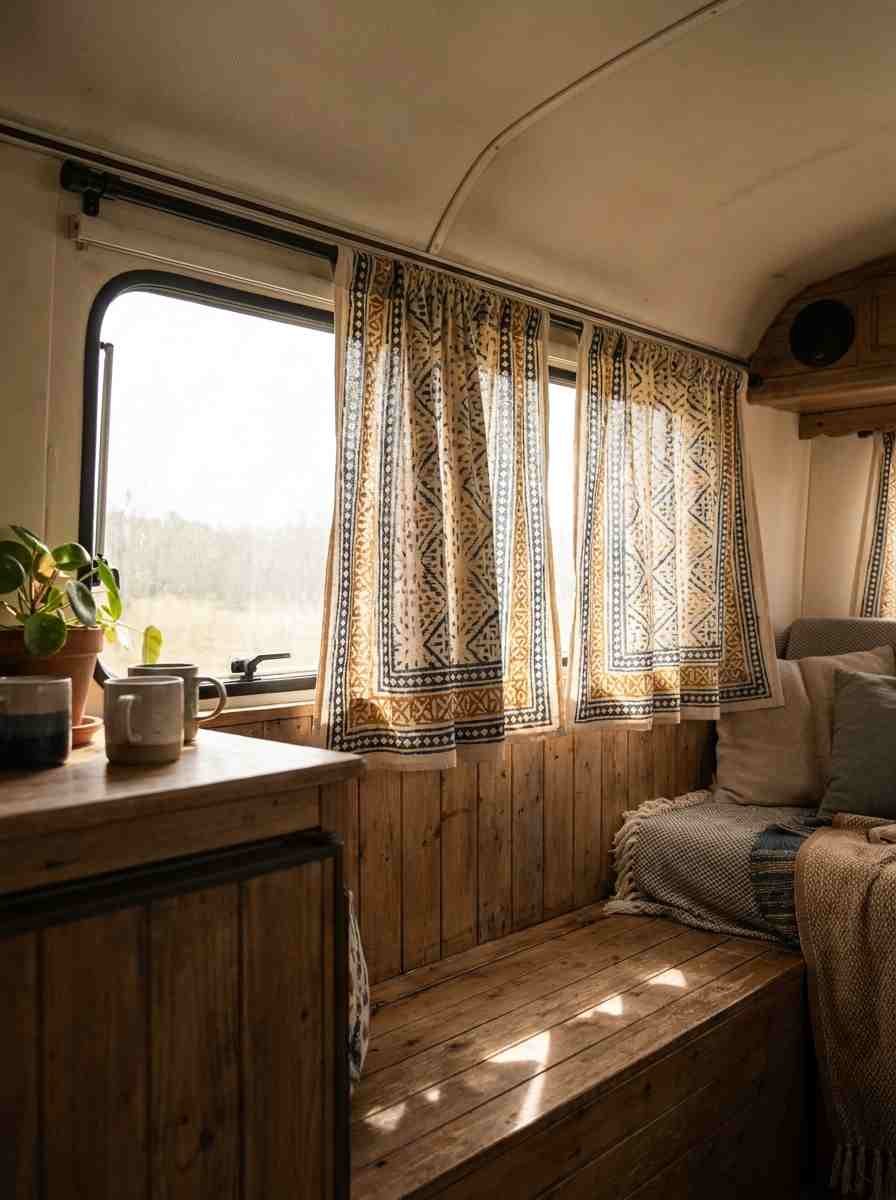
Solid curtains do the job but they waste an easy styling opportunity. Go for a block print, a Moroccan-inspired design, or a faded floral instead.
Magnetic curtain rods stick straight to the van’s metal walls, so you skip the drilling.
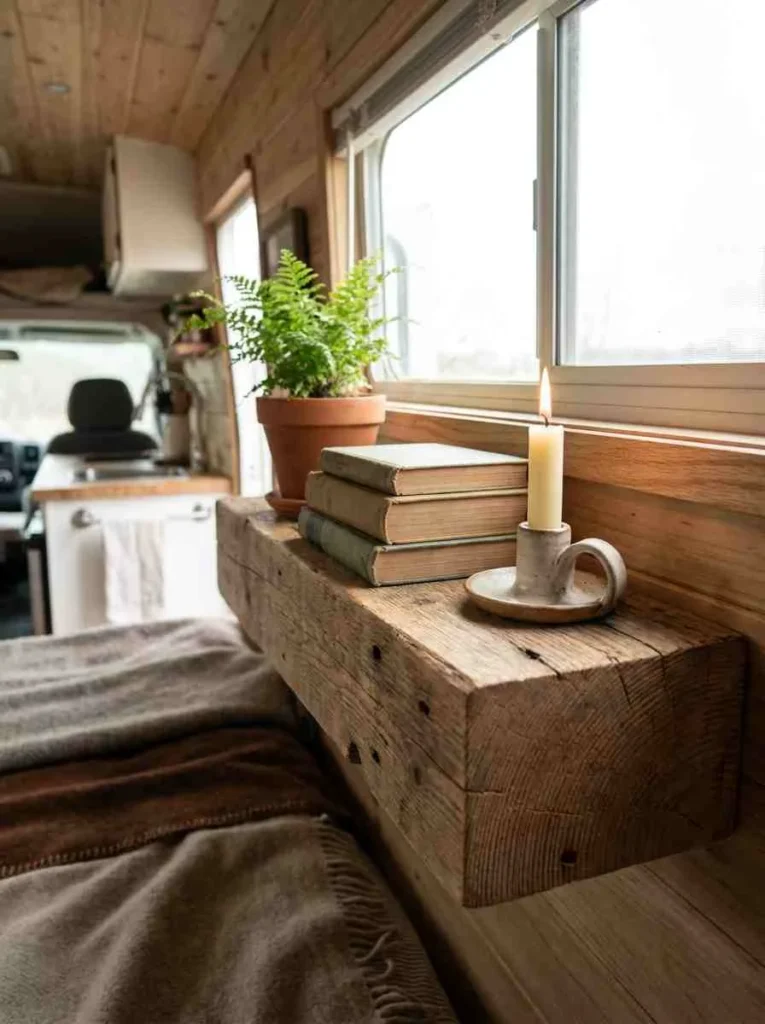
8. Build one shelf out of reclaimed wood
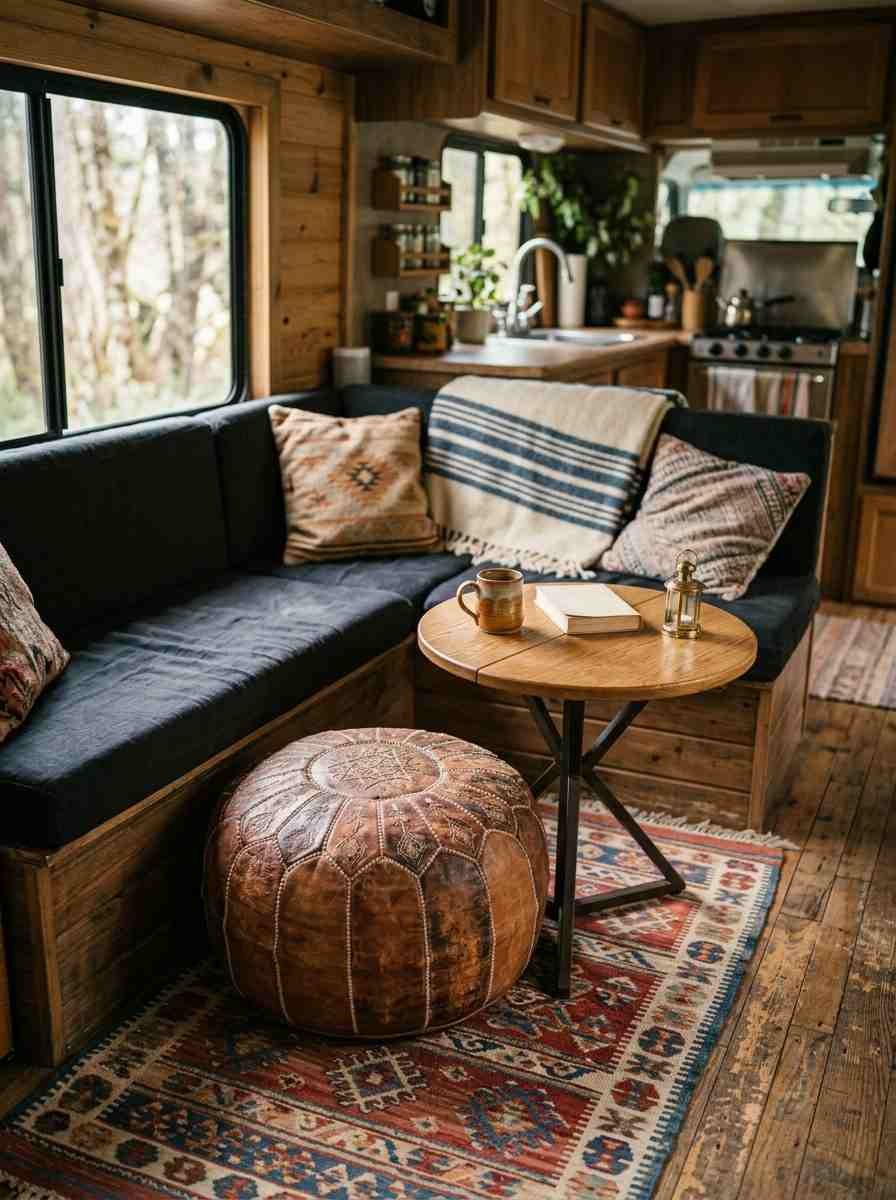
You don’t need a full reclaimed-wood interior.
One shelf, roughly sanded, with visible grain and a couple of nail holes left in, adds more warmth than a whole wall of finished cabinetry.
I pulled mine from a broken pallet behind a hardware store. Free, and it looks better than anything I could’ve bought.
9. Start a small gallery wall
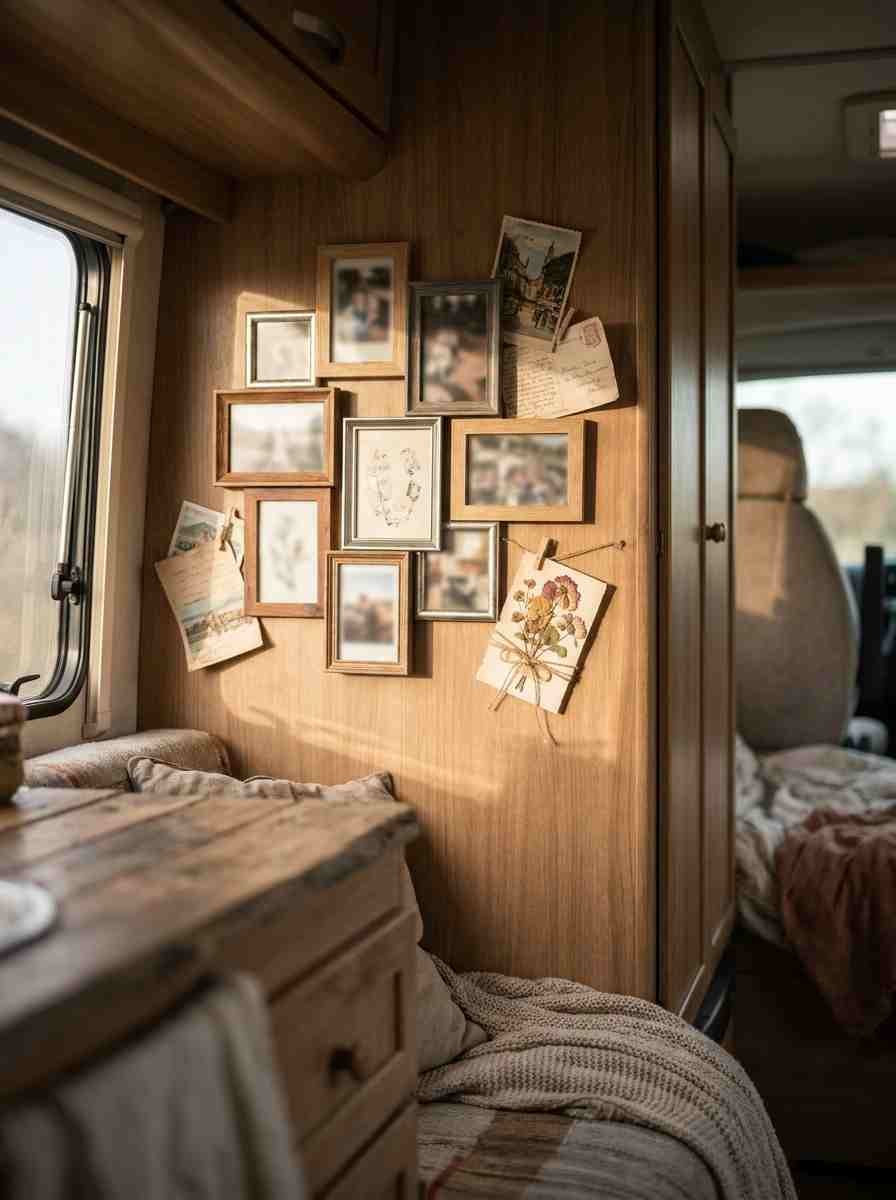
A cluster of five or six photos, postcards, and pressed flowers tells a better story than one big framed print.
Use removable adhesive strips so nothing punches through the wall panels.
This is the one spot in the van that’s purely yours. Fill it with proof you’ve actually been places.
10. Add a Moroccan pouf for extra seating
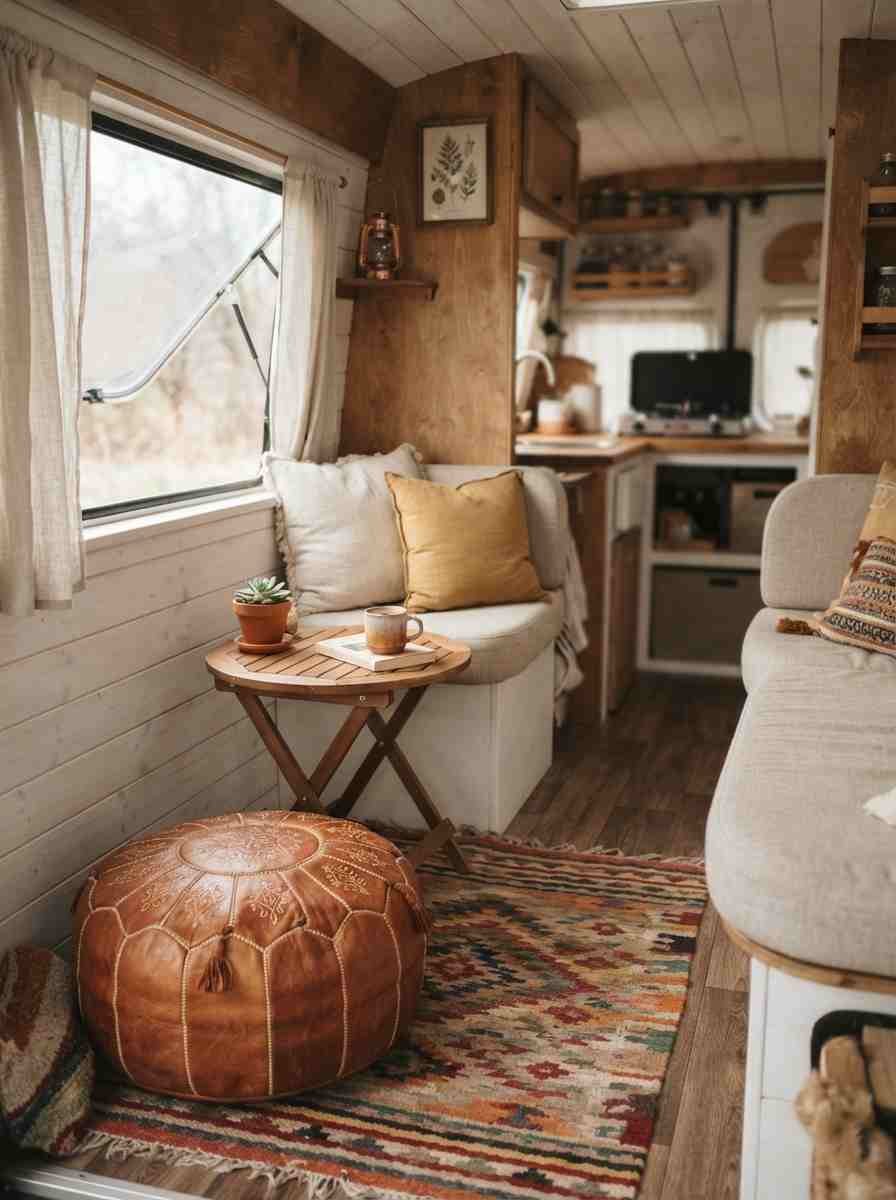
A leather or woven pouf tucks under the table and pulls out when you have a guest. It’s cheap floor seating that reads as intentional rather than makeshift, unlike, say, a bean bag.
11. Go for jewel tones, not just neutrals
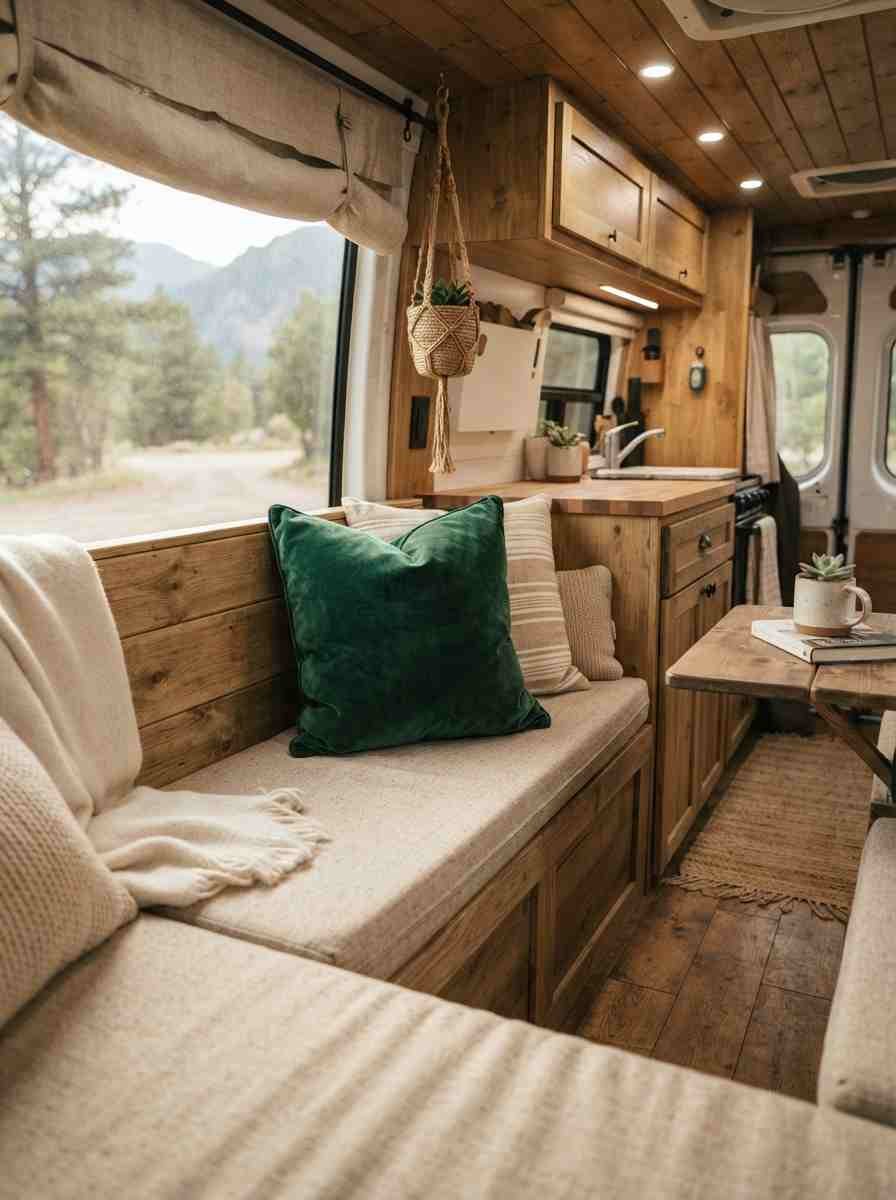
Boho gets lumped in with beige and rust a lot, and sure, those work.
But a single deep emerald or sapphire cushion against all that warm wood tone makes the whole space feel richer.
Pick one jewel tone and use it two or three times across the van. Consistency without matching everything exactly.
12. Drape fabric across part of the ceiling
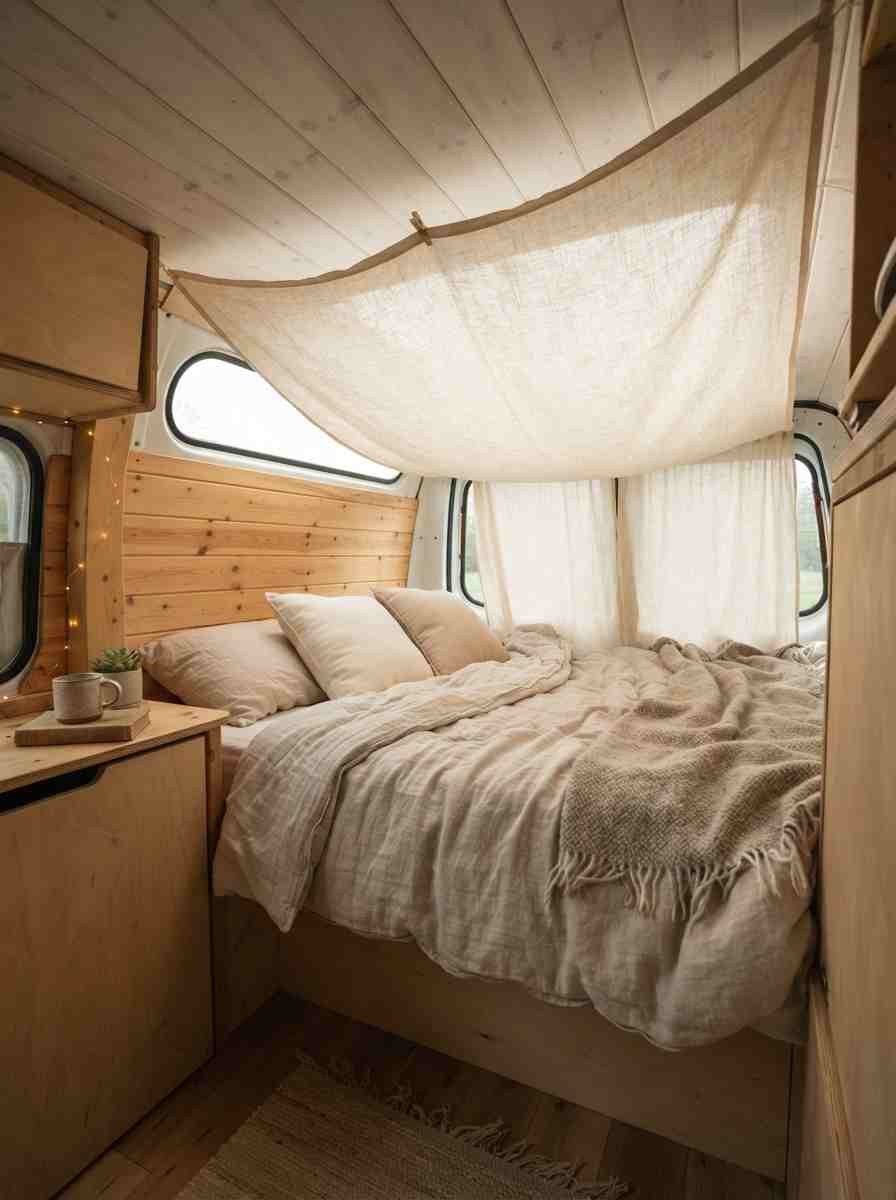
A lightweight fabric panel stretched along the ceiling above the bed creates a tent-like, cocooned feel.
It also happens to hide ugly wiring runs, which is a nice bonus nobody tells you about until you’ve stared at exposed cable for six months.
Random aside: I once tried this with a bedsheet that was, in hindsight, way too heavy, and it sagged into my face at 2am on a mountain road. Use something light. Trust me.
13. Hang plants instead of potting them on surfaces
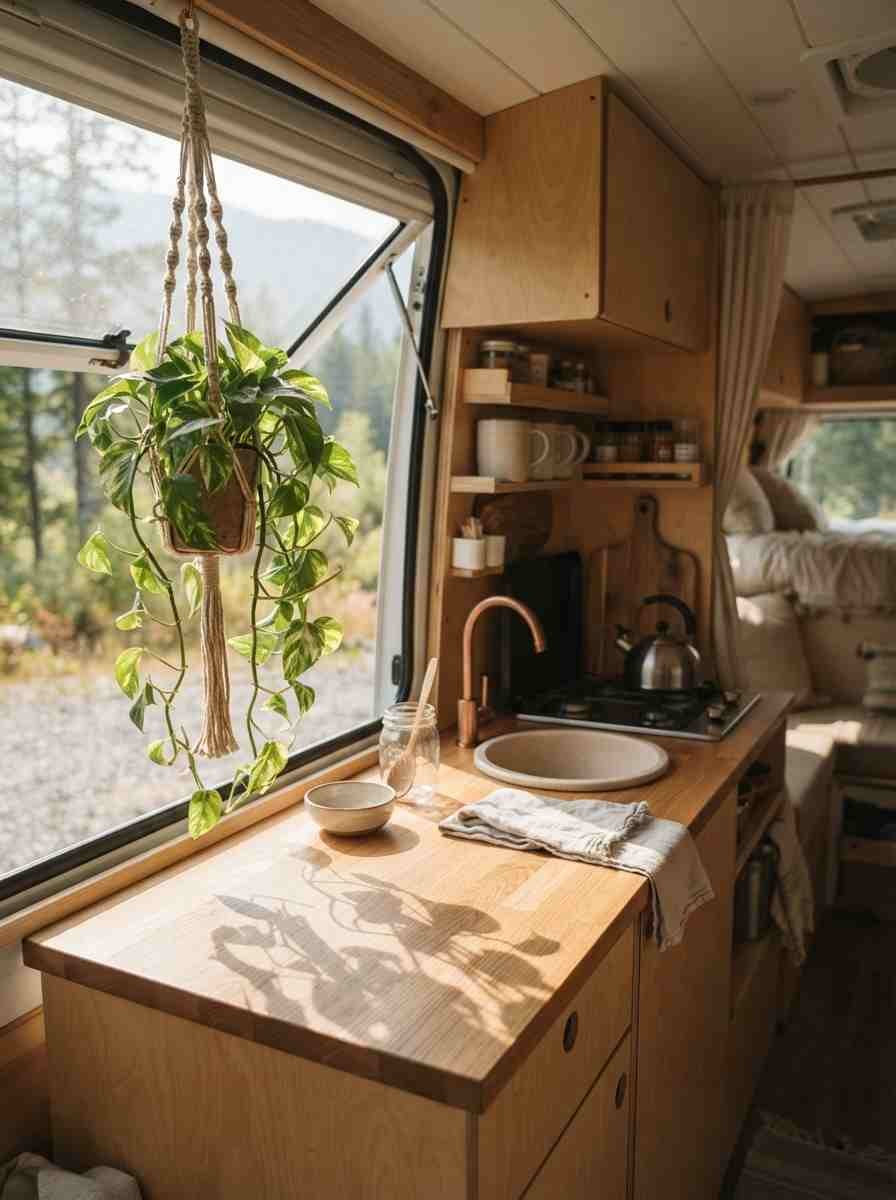
Hanging planters keep greenery off counters that need to stay clear while driving. Secure the hooks properly and you’re fine.
Faux trailing pothos looks convincing from a few feet away and needs exactly zero maintenance, which matters when you’re gone for a week at a time.
14. Bring in one bold global textile
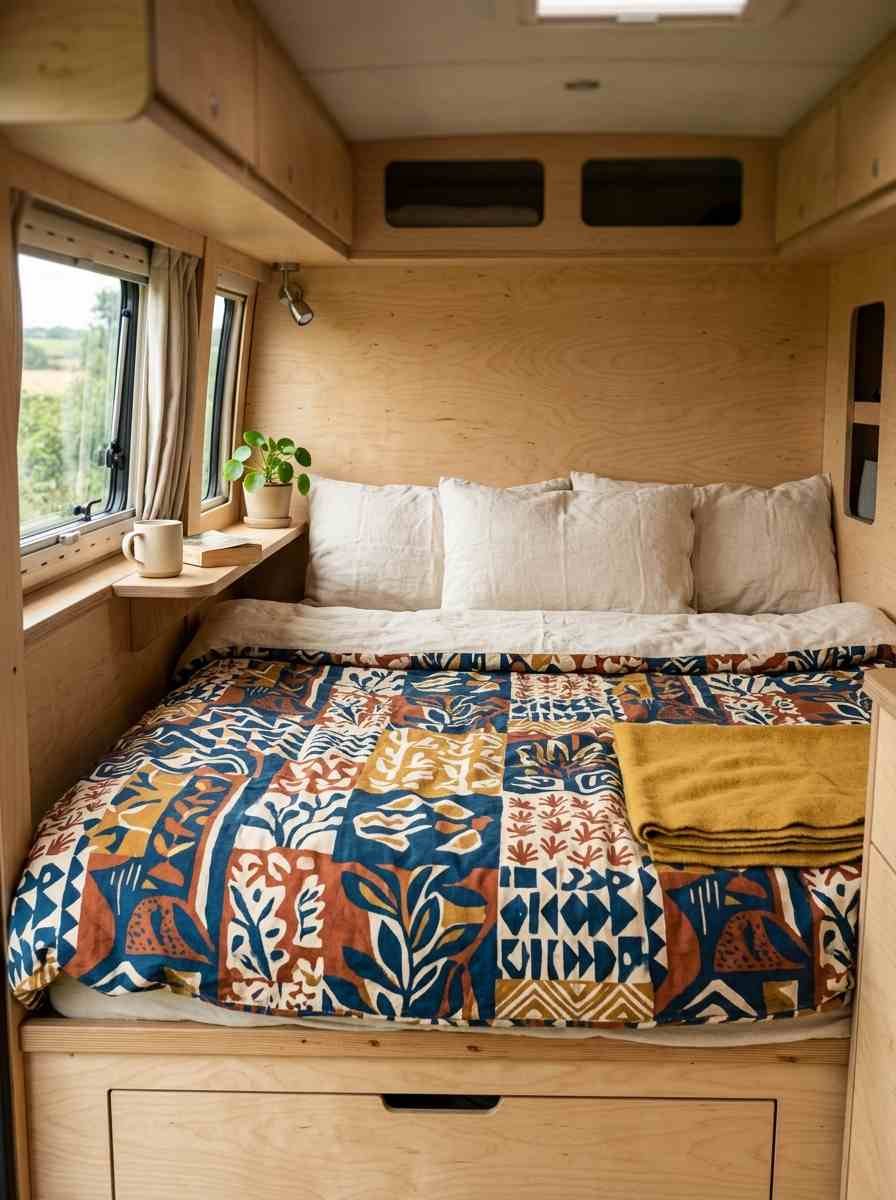
A mudcloth throw, a kantha quilt, or a beaded curtain adds instant character. Pick one strong piece rather than five competing ones, or the space starts to feel cluttered instead of curated.
I’m partial to a vintage kantha quilt over the bench seat. It’s the first thing people comment on when they step inside.
15. Add brass or copper hardware
Swap plain cabinet pulls for brass ones. Add a small copper mug for pens or brushes. These small metal accents catch lamplight in a way that plastic hardware never will.
16. Build a tiny reading nook with floor cushions
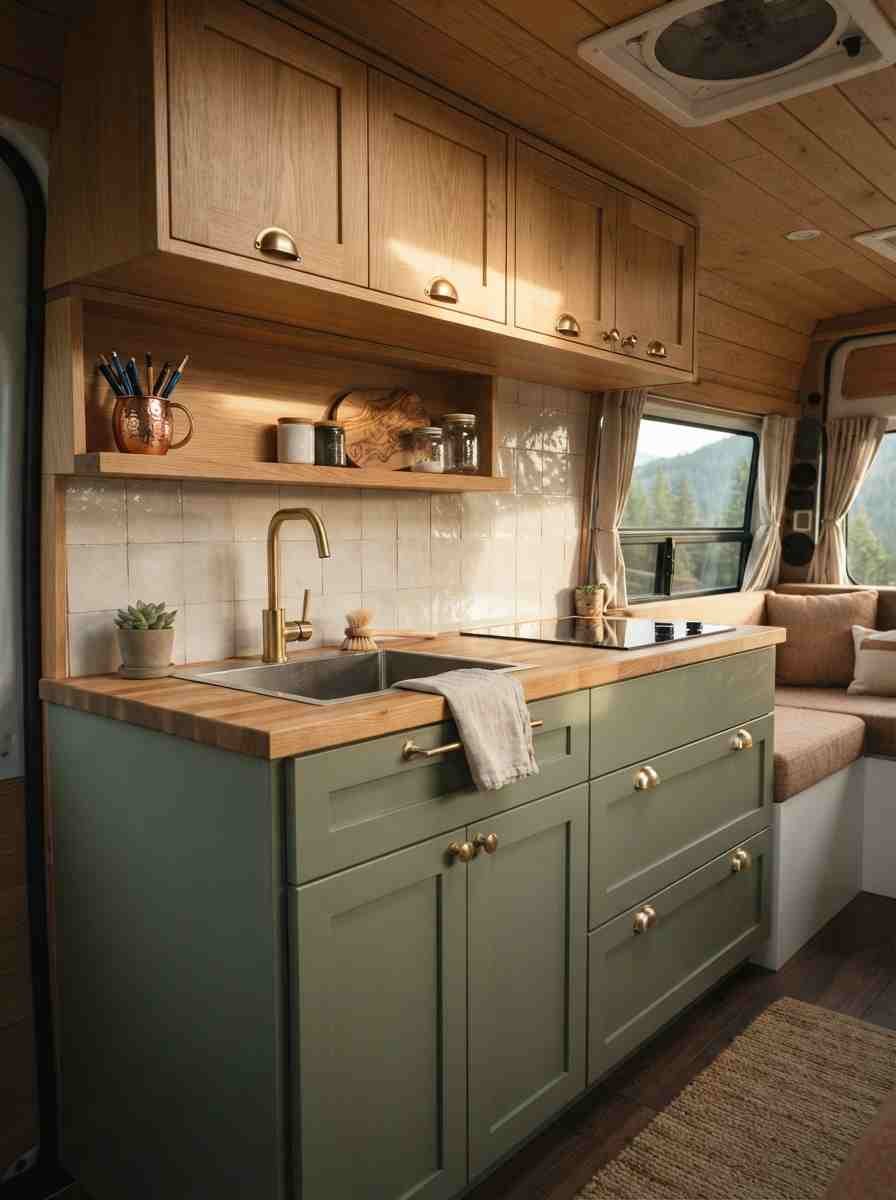
If you’ve got even a foot of unused floor space, stack two or three floor cushions there with a small side table for a mug. It becomes the spot everyone gravitates toward, every single time.
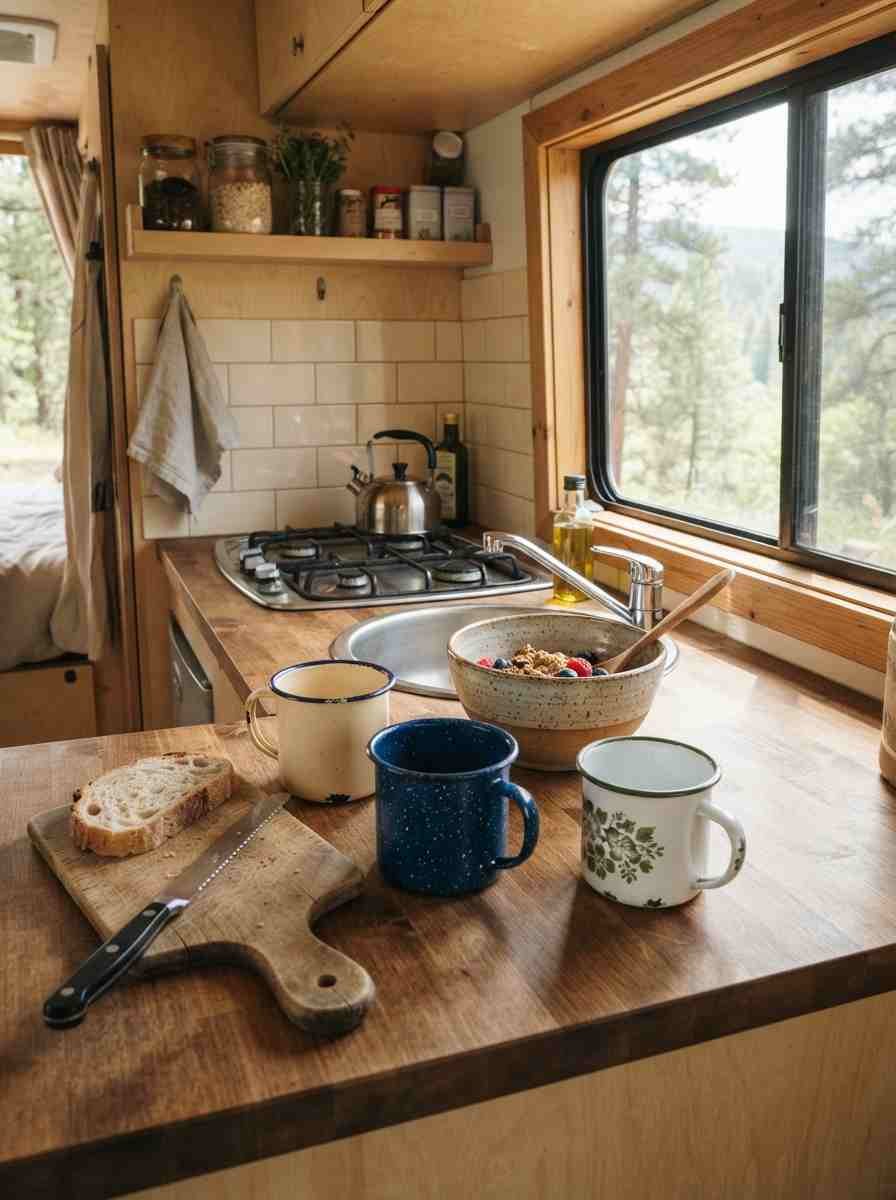
17. Use handmade pottery and enamelware in the kitchen
Skip the matching plastic dish set. Mismatched enamelware mugs and one or two handmade ceramic bowls make the kitchen corner feel like an actual kitchen instead of a camping supply closet.
Thrift stores are goldmines for this. I’ve never paid more than 4 dollars for an enamel mug.
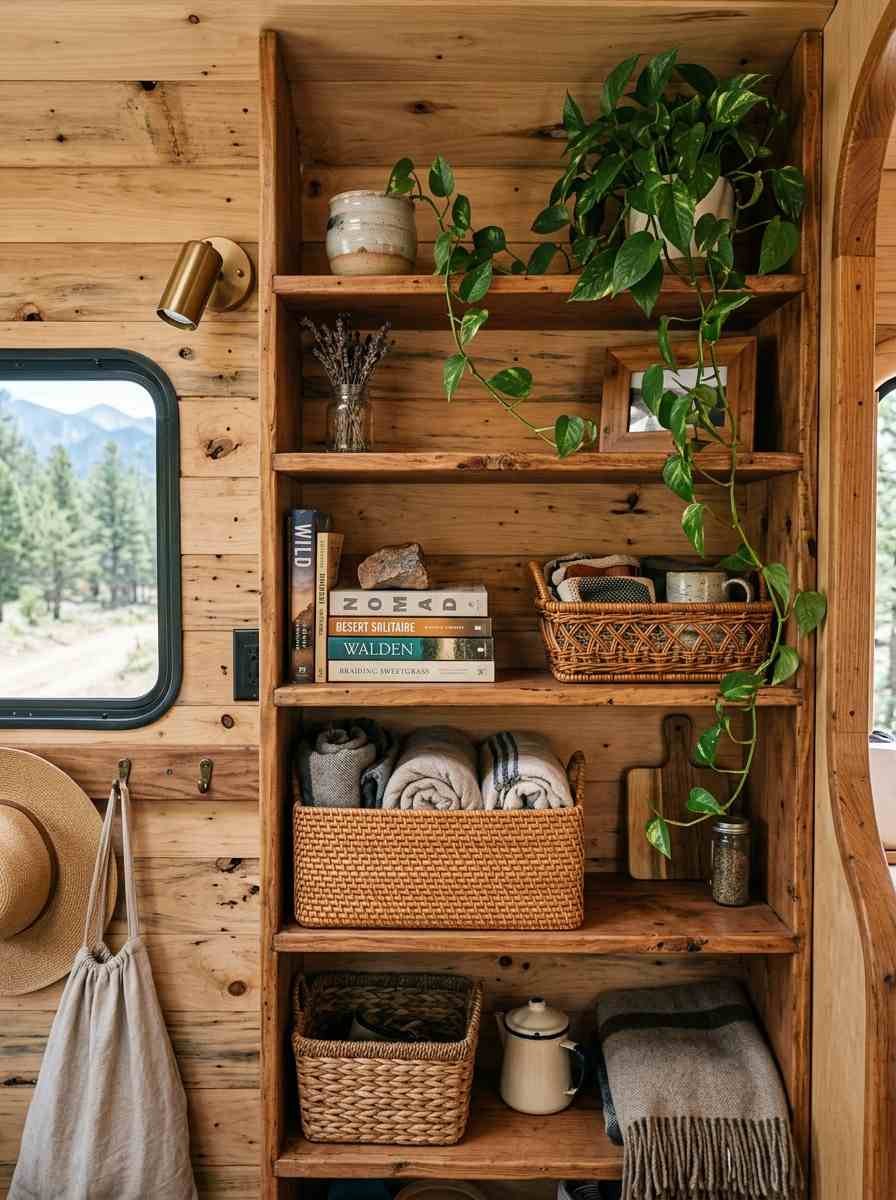
18. Keep a tiny personal shelf, just for you
A candle, a smooth stone from somewhere that mattered, a photo. It doesn’t need to be big and it doesn’t need to match anything else in the van.
This is the idea I’d tell any first-timer to prioritize. Everything else is decoration. This one’s grounding.
Quick comparison: where to start based on your budget
| Idea | Approx. cost | Effort | Best for |
|---|---|---|---|
| Dried pampas grass + throw pillows | Under $30 | Low | Renters or first-time builders |
| Macrame + curtains + rugs | $50 to $150 | Medium | Weekend project people |
| Reclaimed wood shelf + gallery wall | $0 to $40 | Medium | Anyone with basic tools |
| Full textile overhaul (rugs, curtains, quilt) | $200+ | High | A full van conversion |
If you want a broader sense of how these same ideas translate into fixed spaces, Havenly’s boho living room roundup is worth a scroll, and Sukkha Interior Design’s boho tips covers the plant styling side in more depth than I can here.
A few things I’d genuinely skip
Not every boho van photo you see on Pinterest holds up in real life. Real feathers shed everywhere and aren’t great near a stovetop.
Actual candles are a fire risk in a space this small, so stick with battery ones.
And heavy curtains on a standard tension rod will eventually pull the rod straight out of the window frame. Learned that one the hard way, and it was not a fun 6am surprise.
FAQ
Do I need to buy everything new to get the boho look? No, and honestly you shouldn’t. Thrift stores, flea markets, and family hand-me-downs are where most of the best boho pieces come from anyway. A brand-new macrame hanging looks fine, but a slightly weathered one looks right.
Will real plants survive in a moving van? Some do. Low-light, low-water plants like pothos or snake plants can handle it if they’re secured well. But dried florals or good faux plants save you the heartbreak when a real one doesn’t make it through a hot week parked in the sun.
How much does a full boho camper makeover cost? It ranges enormously. You can hit a solid boho look for under 200 dollars if you thrift hard and DIY the macrame and shelving. A fully custom build with new textiles, wood, and fixtures can run well past 1,000 dollars.
So, which one of these are you trying first: the macrame, the reclaimed shelf, or something you’re already picturing in your own van? Save this post, pin your favorite idea, and tell me in the comments how your build turns out.
