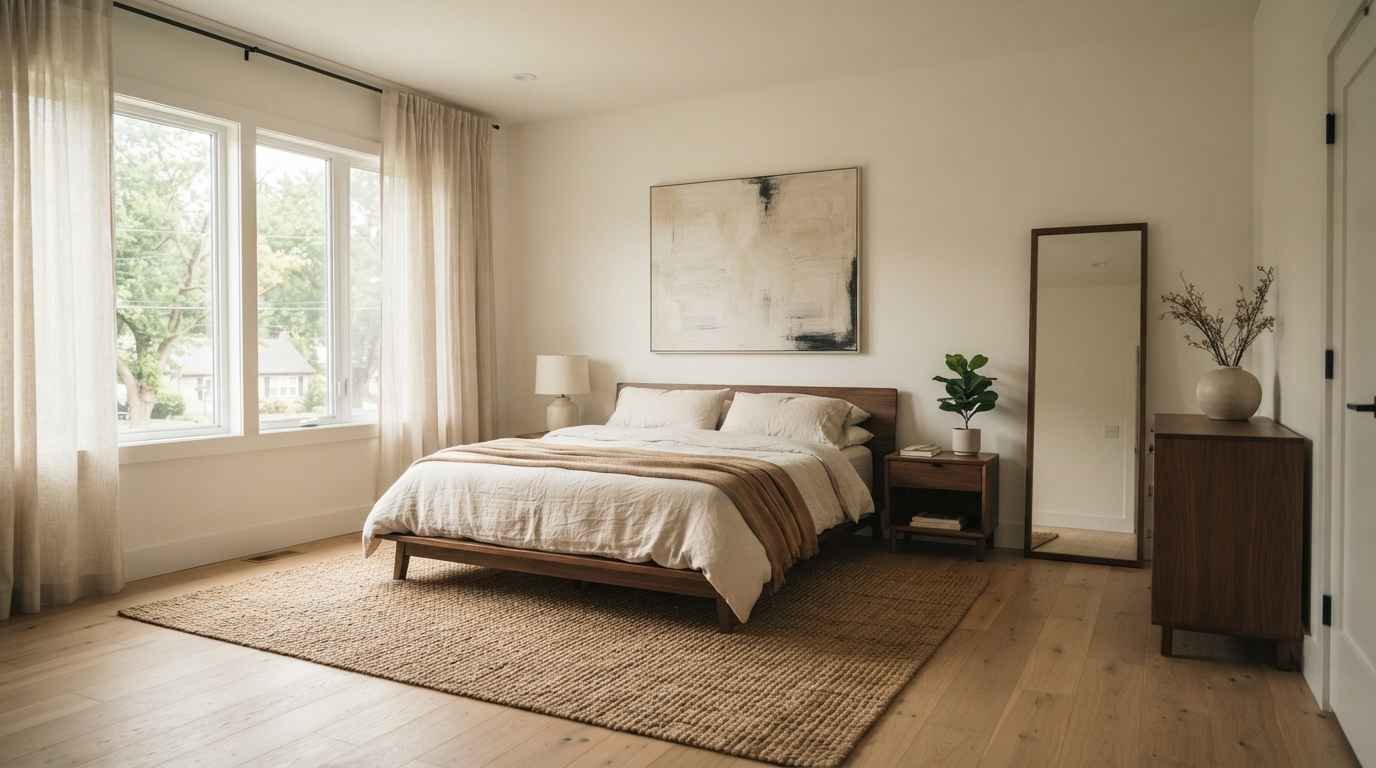
I redid my bedroom three times before it finally felt right. Twice I went too stark. It looked like a hotel room nobody had checked into yet.
Minimalist doesn’t mean empty. It means every single thing in the room earns its spot.
That’s the whole trick, and once it clicks, you stop buying random decor just to fill wall space.
If you’re pinning bedroom inspo and keep landing on the same beige rooms with a single plant in the corner, this list goes deeper.
Some of these ideas I’ve tried myself. A few I stole from designers who clearly know more than I do.
1. Start with a color palette of three, max
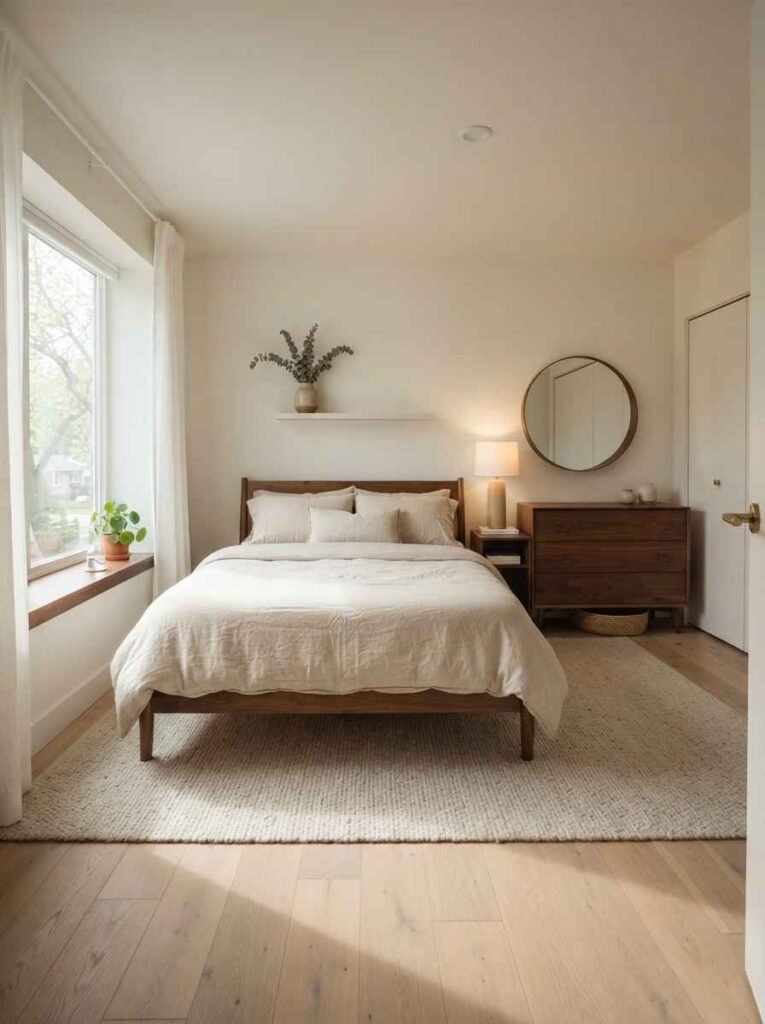
Pick one base neutral, one warm accent, one texture-driven third tone. White, oatmeal, and walnut brown works every time.
More than three colors and a “minimalist” room starts looking like it’s still deciding what it wants to be.
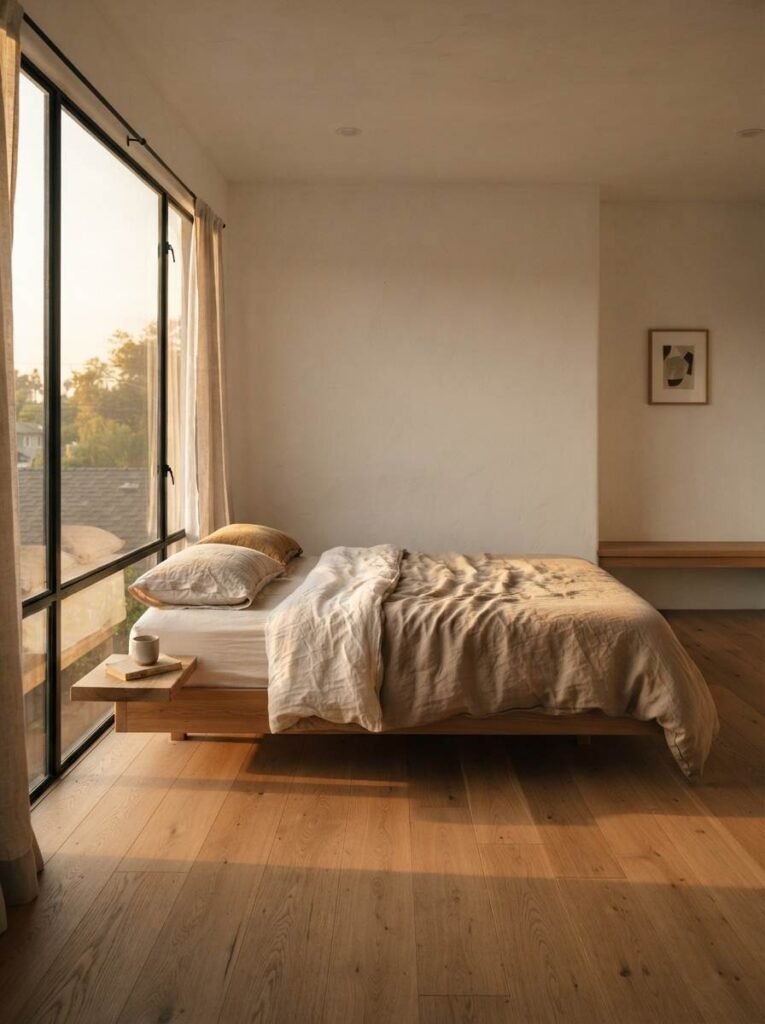
2. Choose a platform bed with exposed legs
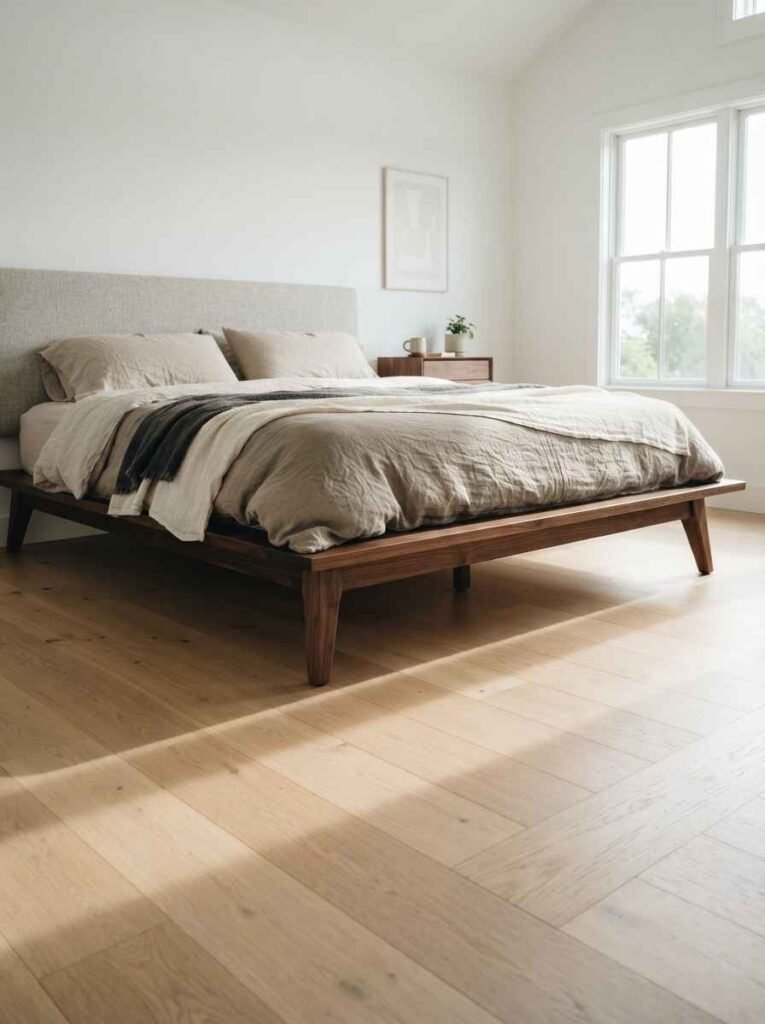
Platform beds sit low, skip the bulky box spring, and show a sliver of floor underneath. That gap makes a small room read bigger instantly.
I switched to one two years ago and genuinely forgot how much visual weight a traditional bed frame carries until it was gone.
3. Let negative space do the work
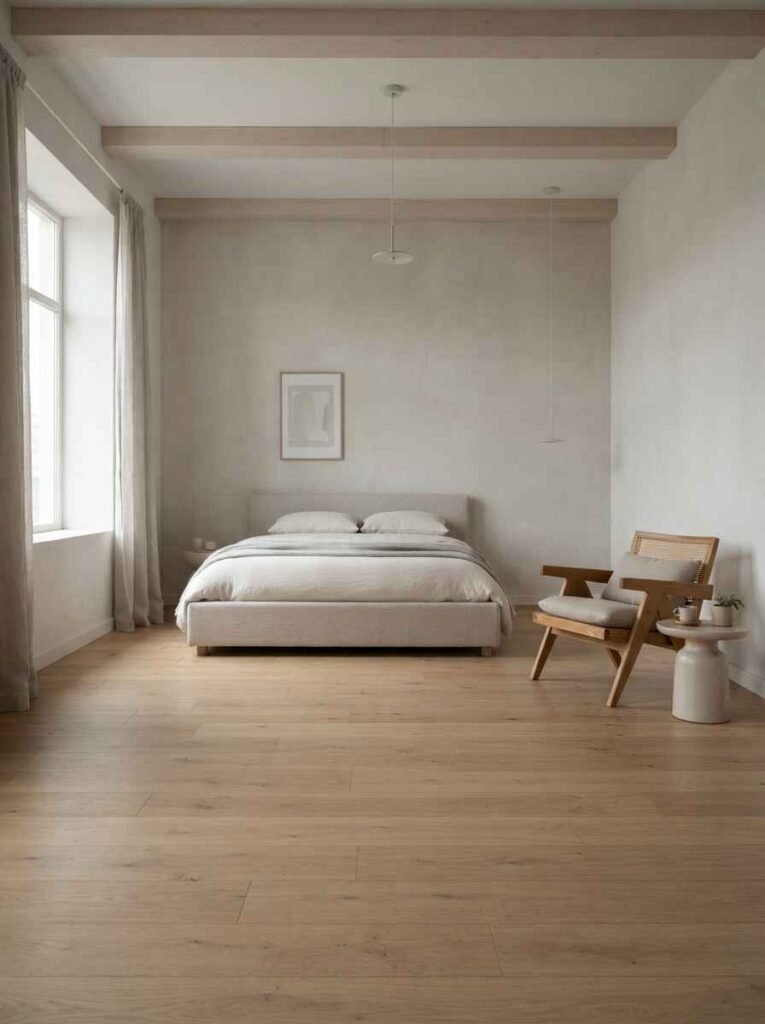
Leave gaps between furniture pieces on purpose.
A minimalist bedroom breathes because there’s room around each object, not because there are fewer objects crammed closer together.
4. Swap overhead lighting for layered lamps
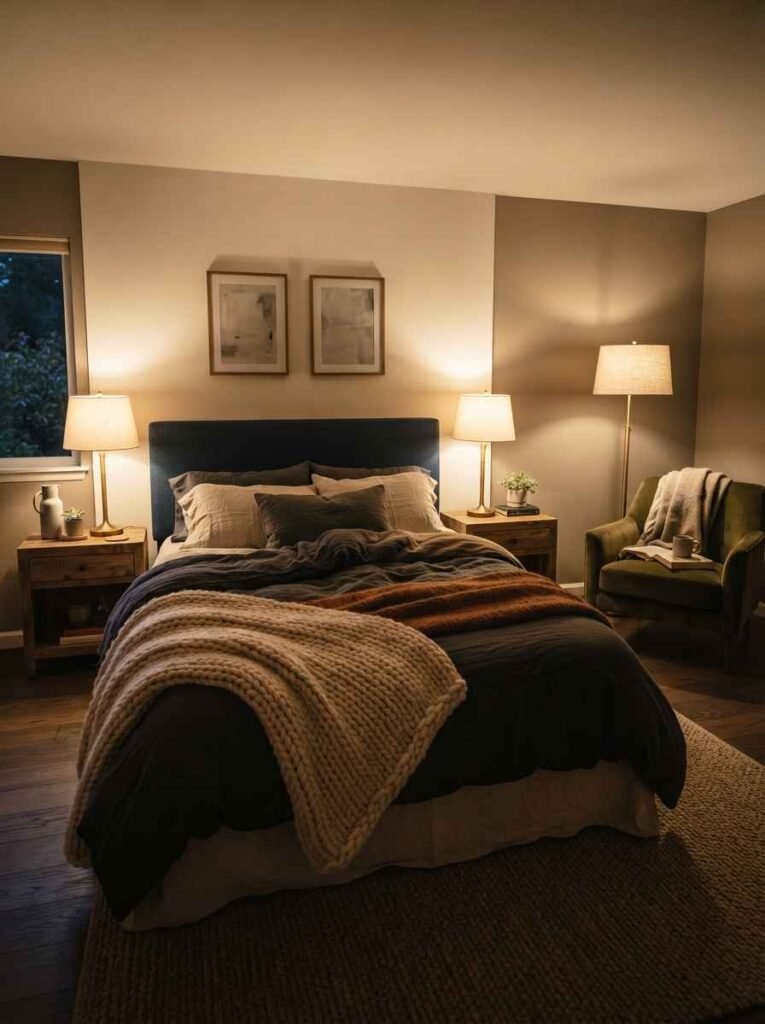
A single ceiling light flattens a room. Two bedside lamps plus one floor lamp in a reading corner give you actual depth after sunset.
Warm bulbs (2700K, not the harsh blue-white ones) make a huge difference here.
5. Pick one statement piece, not five small ones
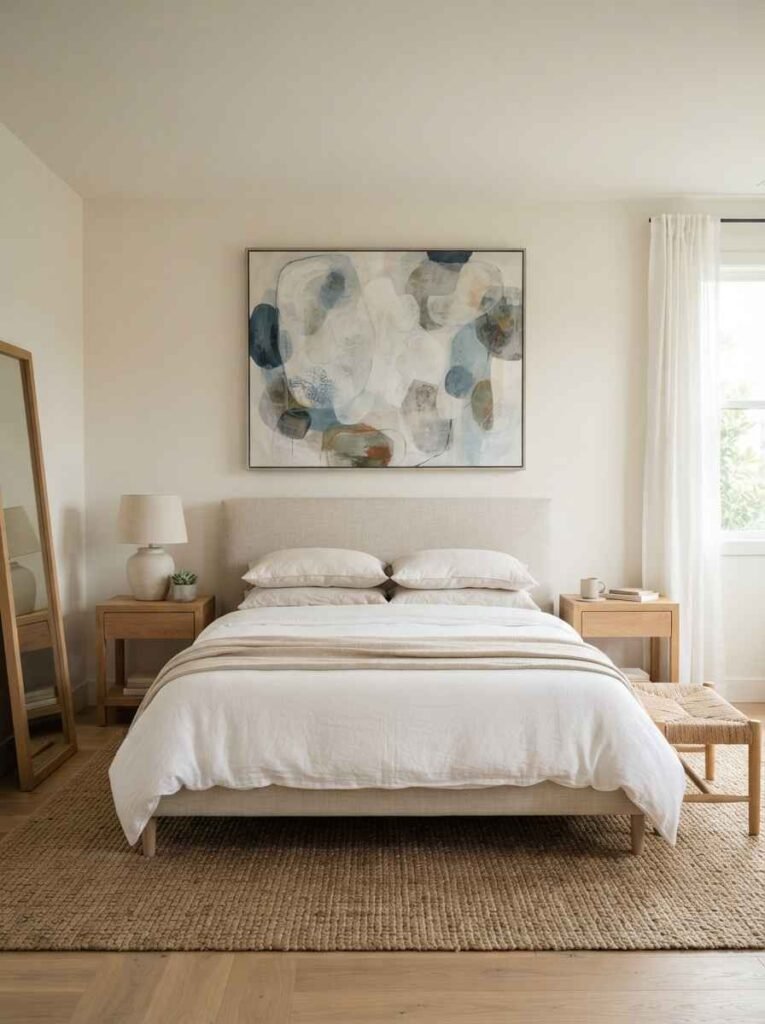
A single oversized abstract print over the headboard beats six tiny frames scattered across the wall.
One anchor point, and the eye knows exactly where to land.
6. Use a storage bed to hide the chaos
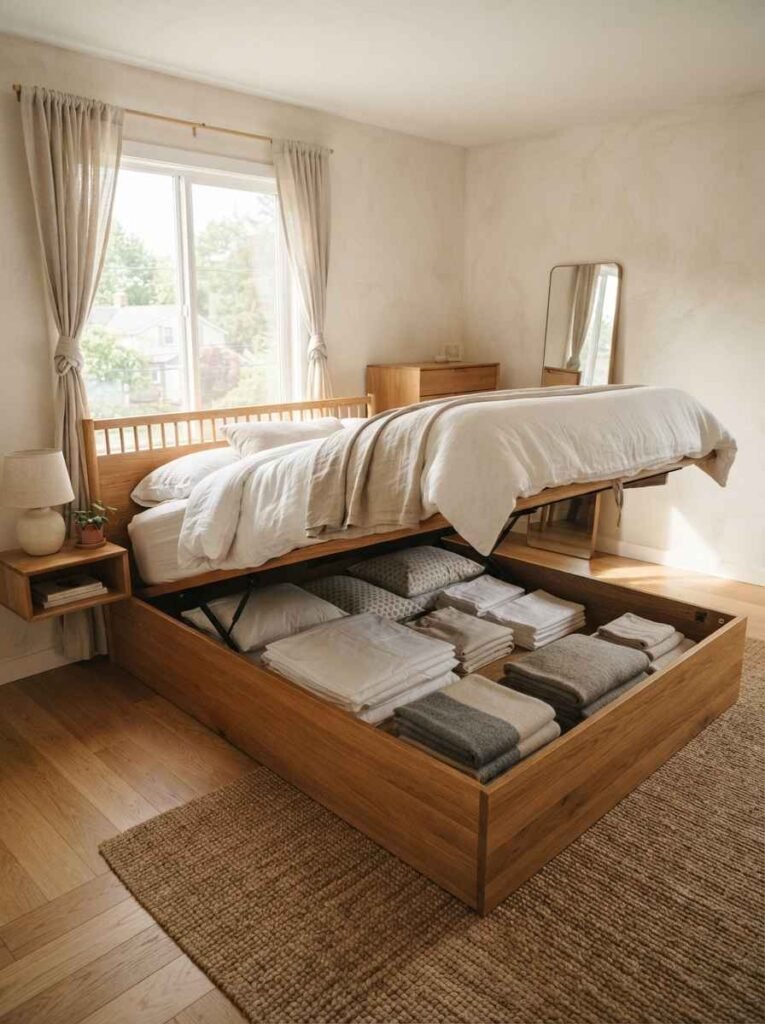
Storage beds that lift up or slide open solve the biggest minimalist problem: where does everything go? Off-season clothes, extra bedding, the stuff you can’t part with yet, all of it disappears under the mattress instead of on a dresser top.
7. Keep nightstands small and shallow
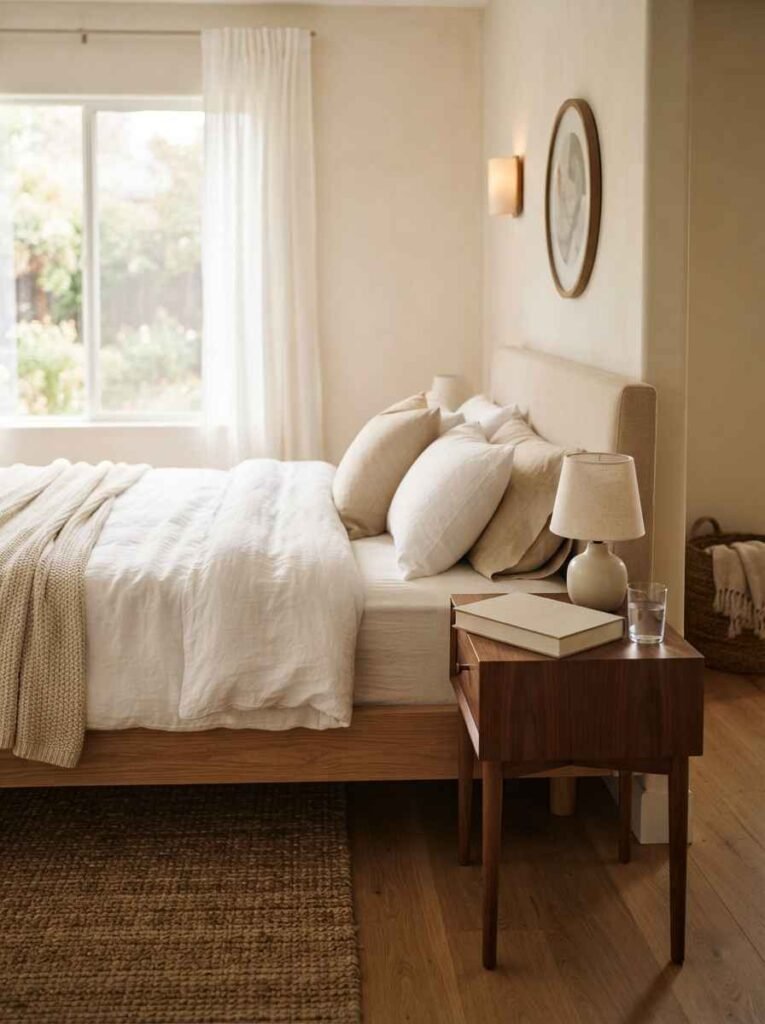
A slim nightstand forces you to only keep what you actually reach for at night. Lamp, book, glass of water, phone charger.
That’s it. Anything bigger just becomes a junk drawer with a lamp on top.
8. Try a neutral wall with one textured accent
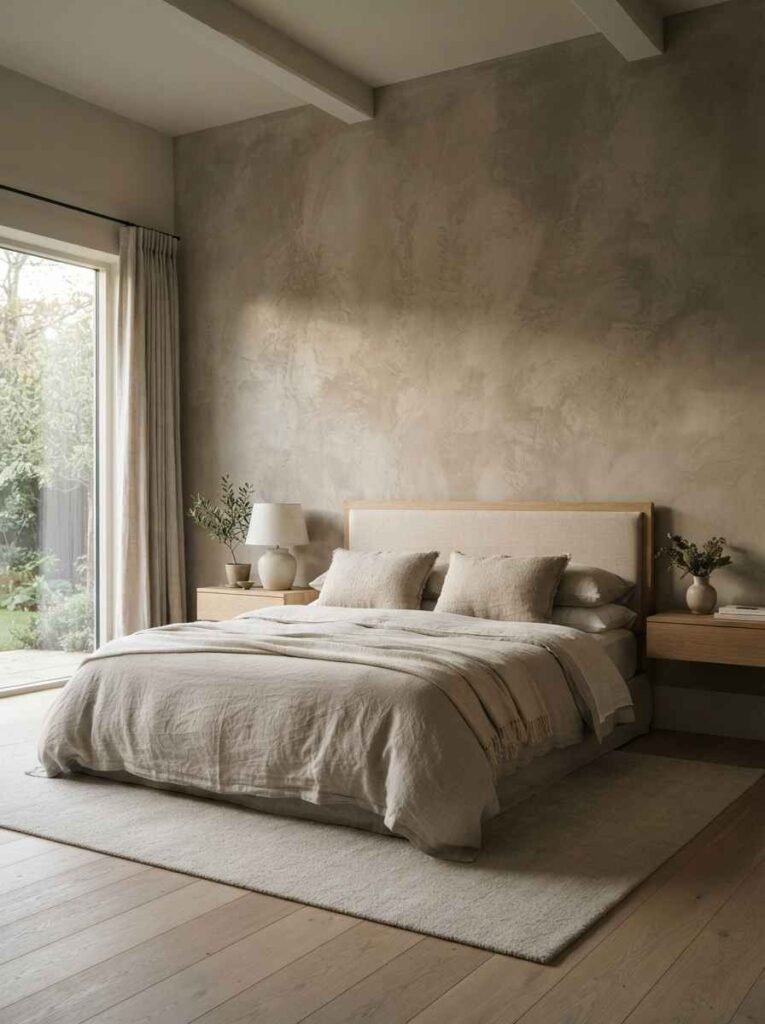
Limewash paint, a slatted wood panel, or a boucle headboard against a flat white wall gives texture without adding clutter.
Texture is doing the visual work that color and pattern usually do in a maximalist room.
9. Ditch the rug pattern, keep the rug
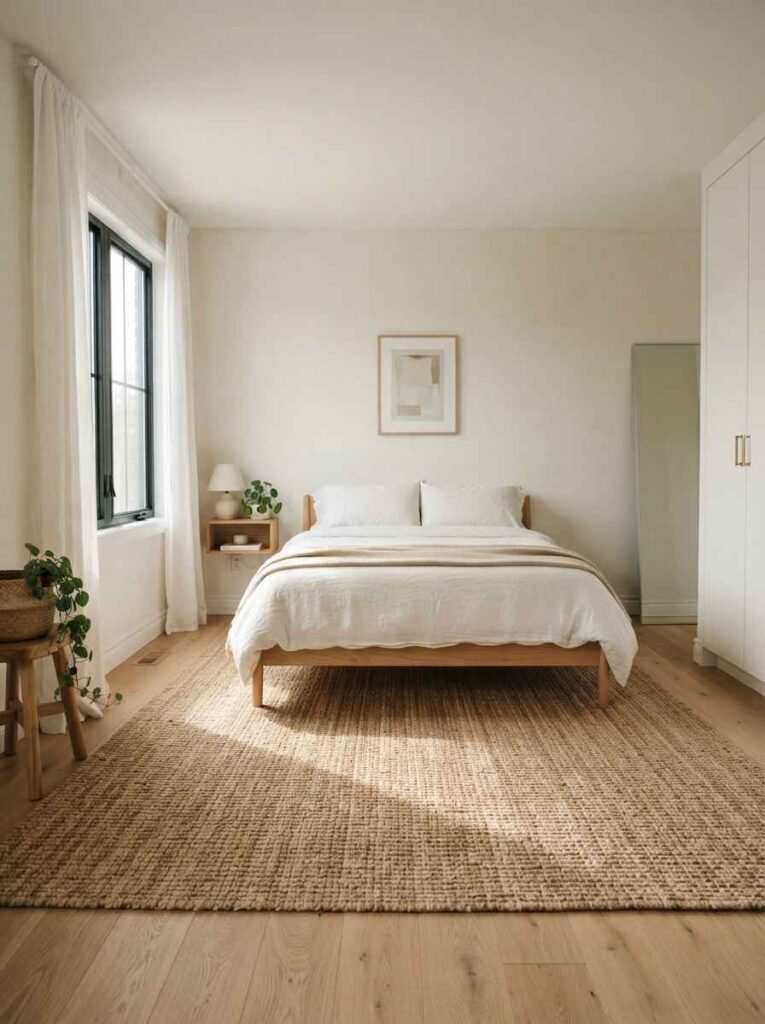
A patterned rug fights with everything else in a minimalist space.
A plain wool or jute rug in a warm neutral grounds the room without competing for attention.
10. Ground the bed with a bench, not a bulky ottoman
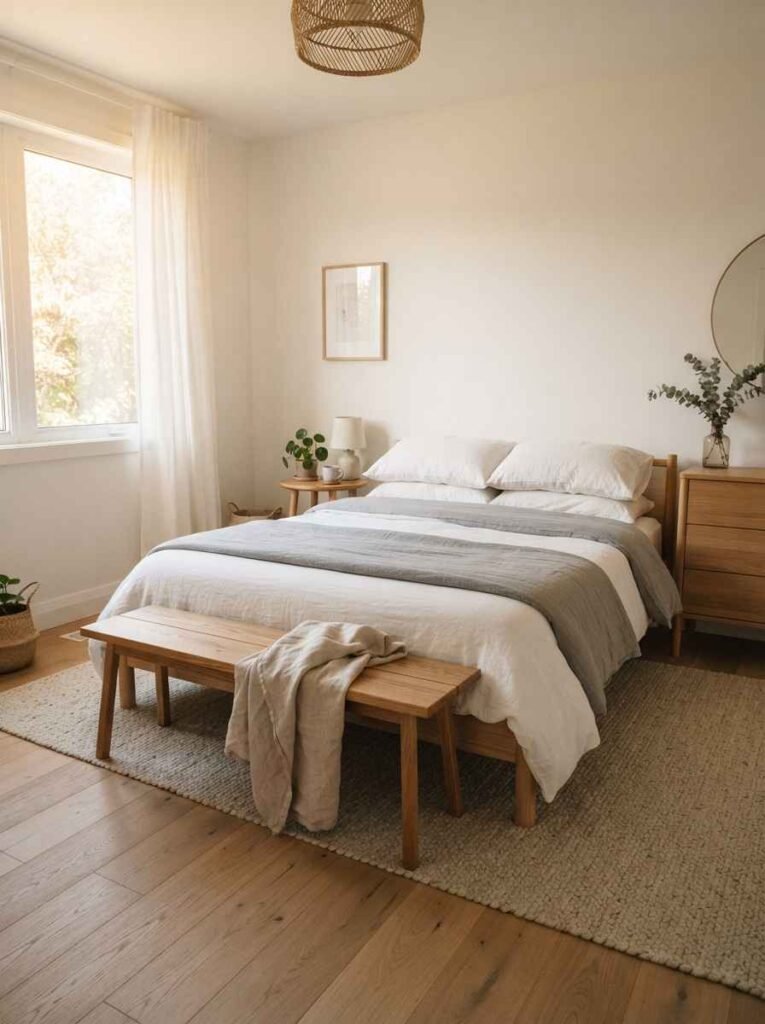
A slim wooden bench at the foot of the bed adds a Scandinavian touch and gives you somewhere to sit while you put your socks on.
An ottoman does the same job but eats twice the floor space.
11. Choose linen bedding over anything with a pattern
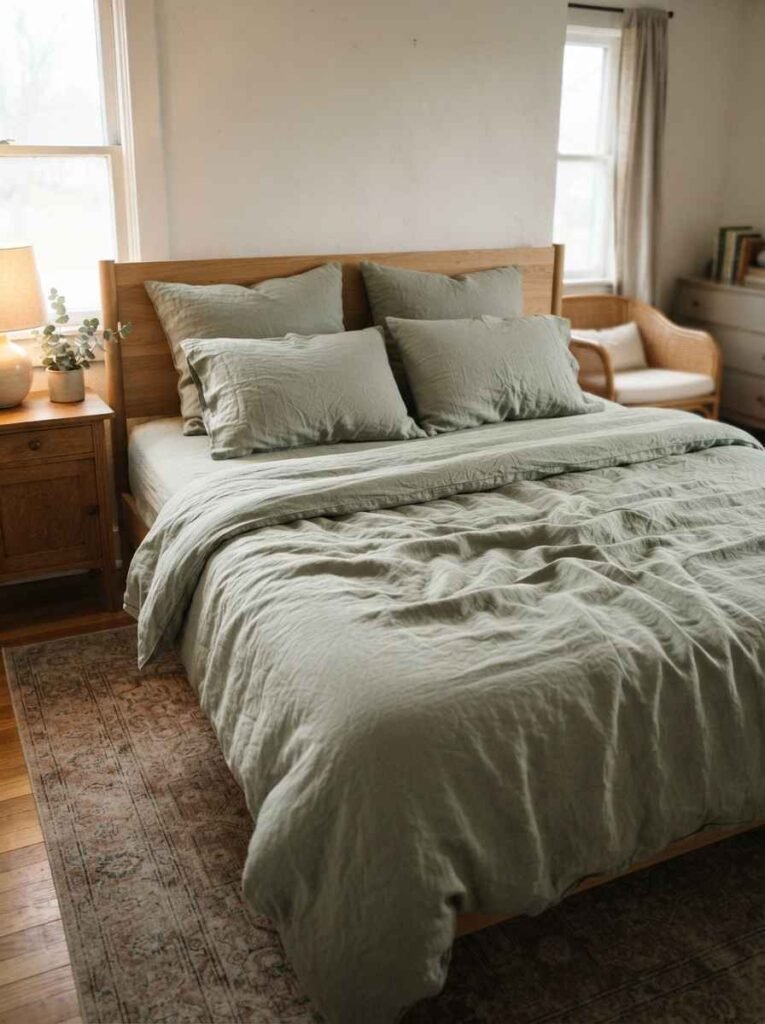
Solid linen in a soft neutral (oat, sage, dusty blue) wrinkles in a way that looks intentional, not messy.
It’s honestly the fastest upgrade on this whole list, and it’s the one I recommend to everyone first.
12. Add exactly one plant, and make it a real one
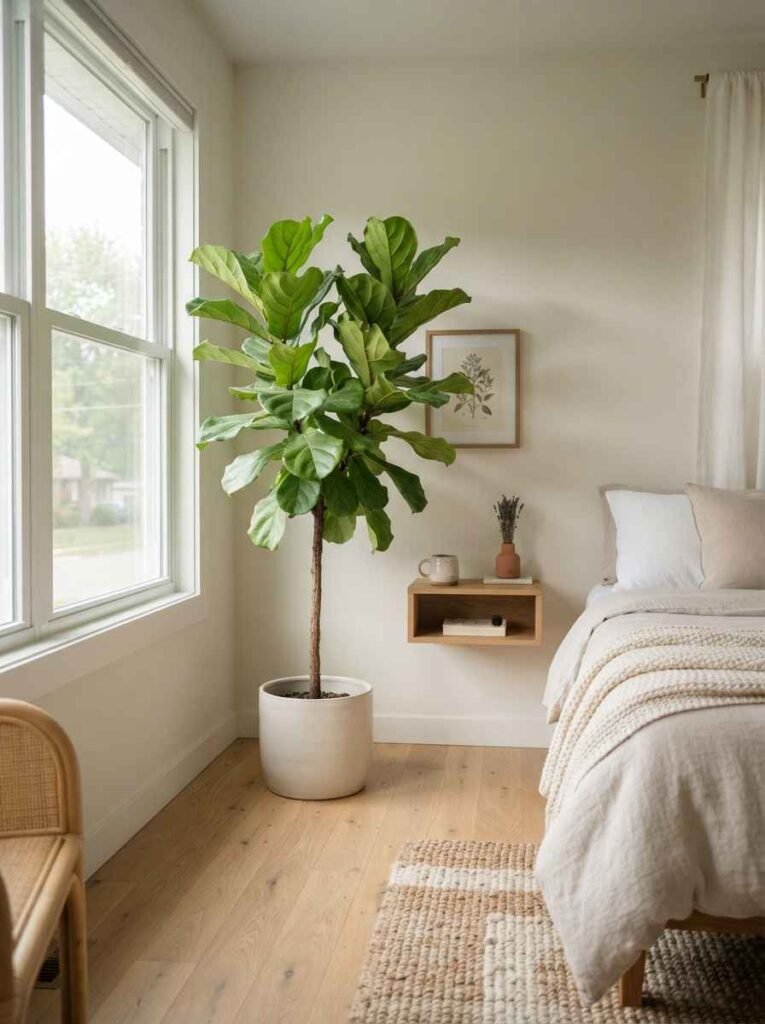
Fake plants read as clutter in a minimalist room the second you notice they’re fake.
One real plant, a snake plant or a fiddle leaf fig, brings in color and life without needing a whole shelf of greenery.
13. Hide the cords
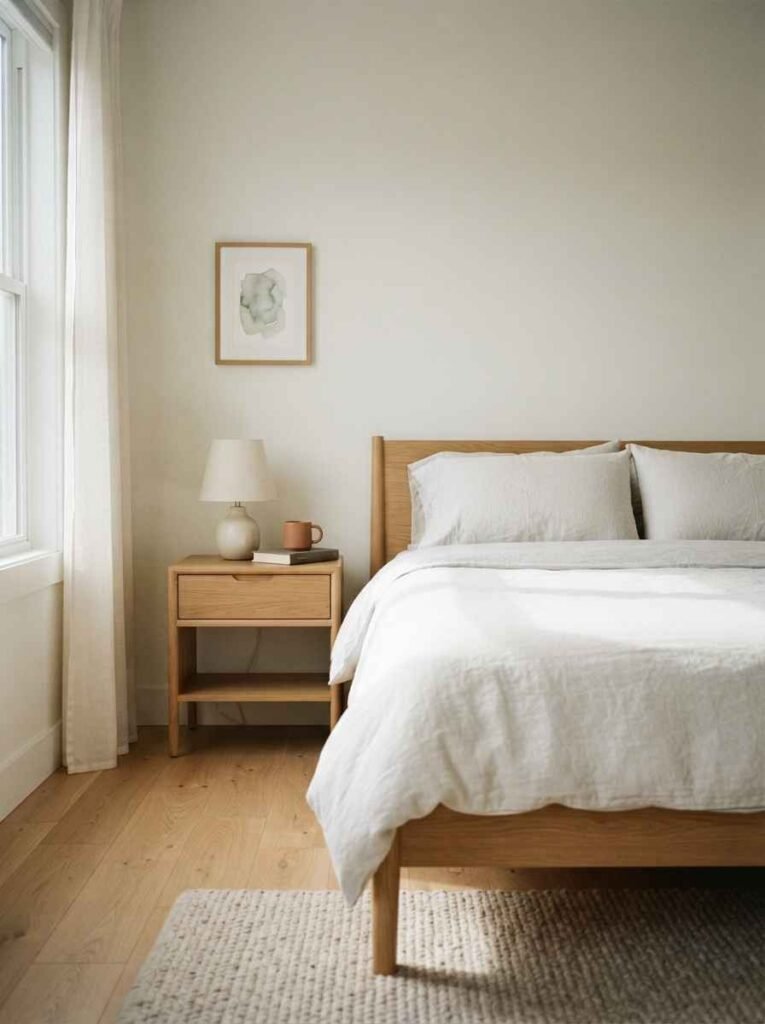
Nothing kills a calm bedroom faster than a tangle of charging cables hanging off the nightstand.
Cable clips and a small cord box cost almost nothing and fix this in ten minutes.
14. Use blackout curtains in a solid, muted tone
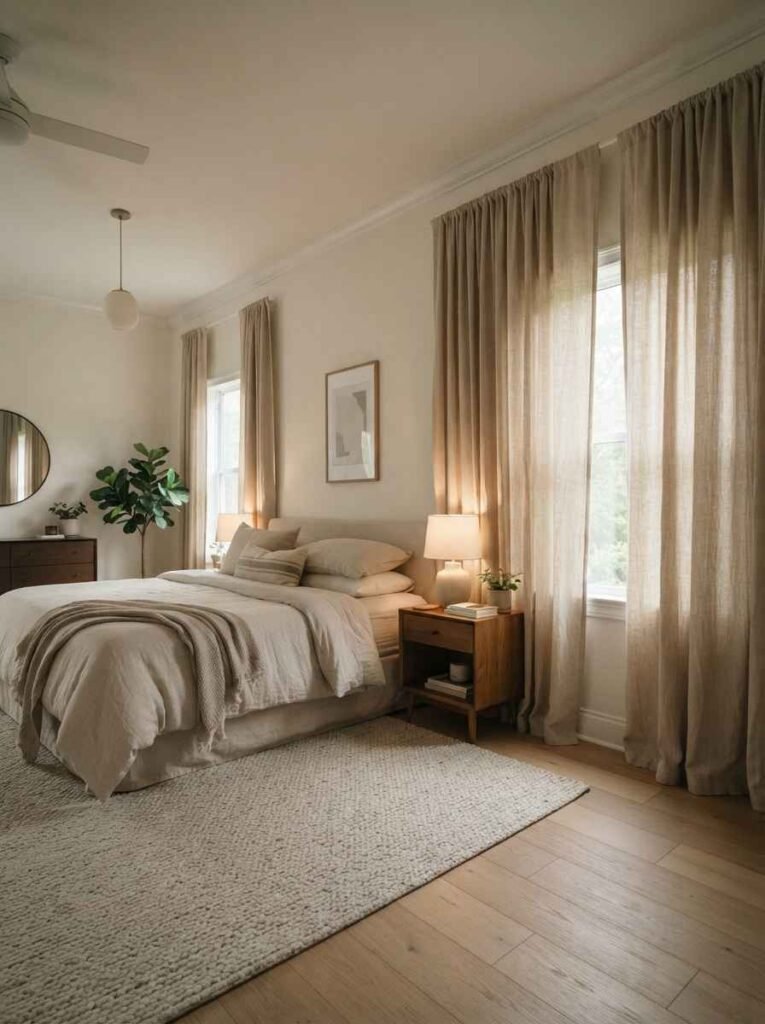
Curtains do double duty here: they block light and they’re one of the biggest visual surfaces in the room.
Keep them the same tone family as your walls so they disappear into the design instead of competing with it.
15. Pick one geometric detail and repeat it
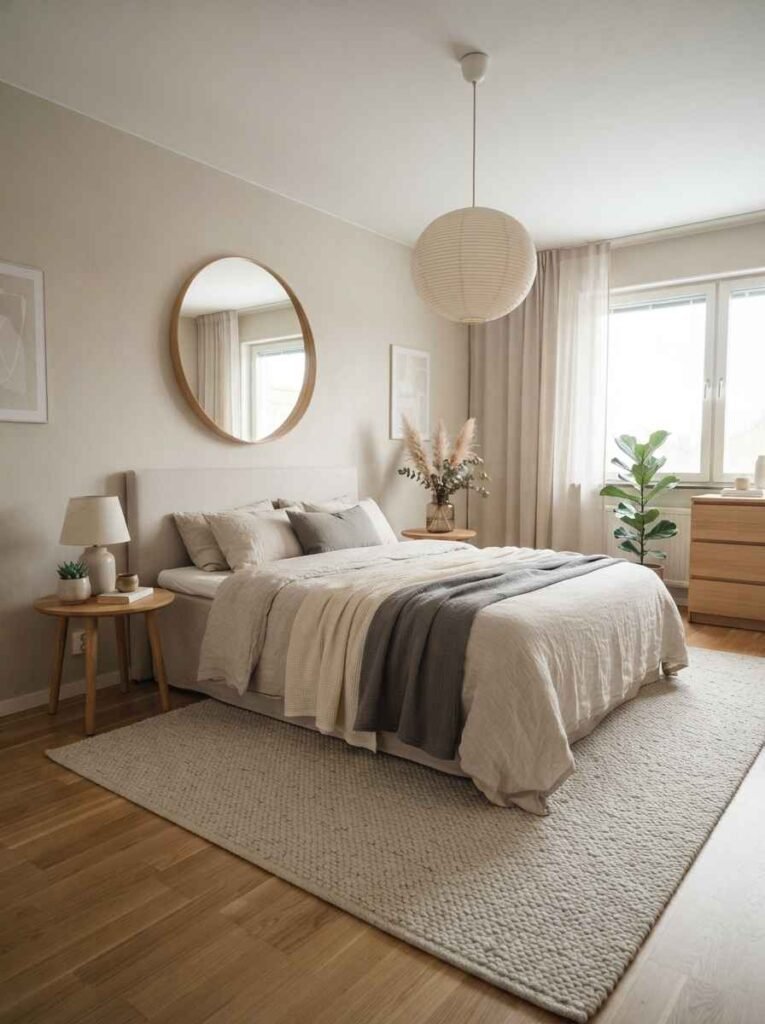
A round mirror, a round pendant light, a round side table. Repeating one shape across a few pieces gives a room cohesion without anyone consciously noticing why it feels put together.
16. Keep the dresser top completely clear
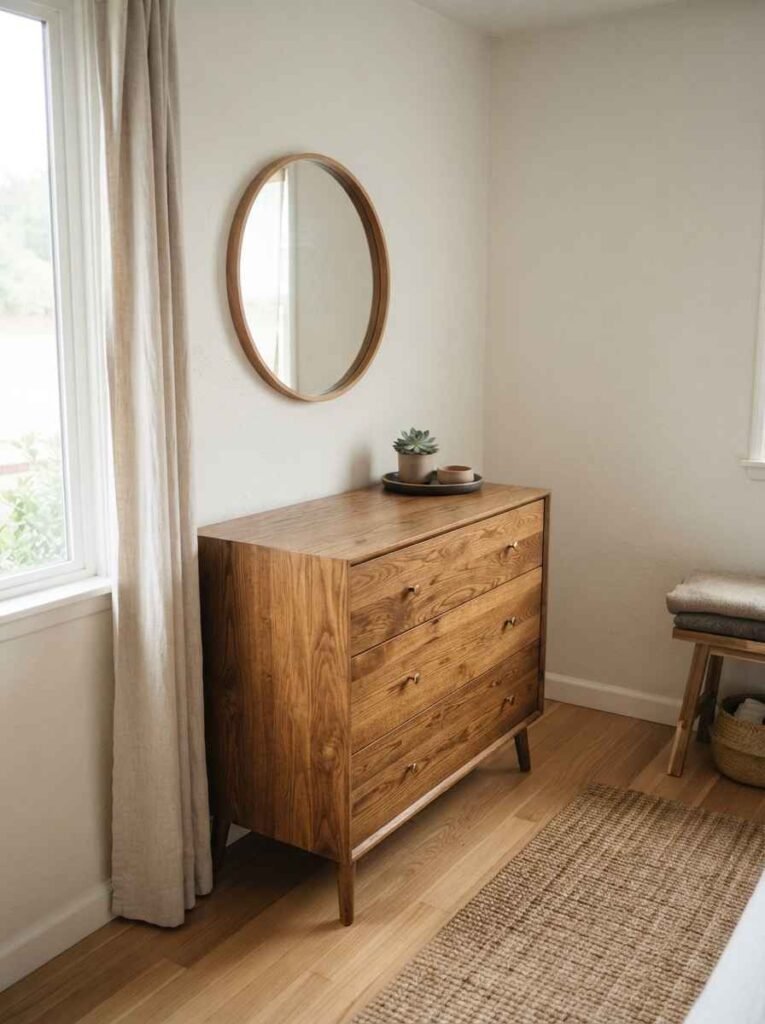
This one’s hard. I get it. But a bare dresser top, maybe with one small tray for jewelry, is what separates a minimalist bedroom from a bedroom that’s just tidy that week.
17. Add a reading nook if you have the corner for it
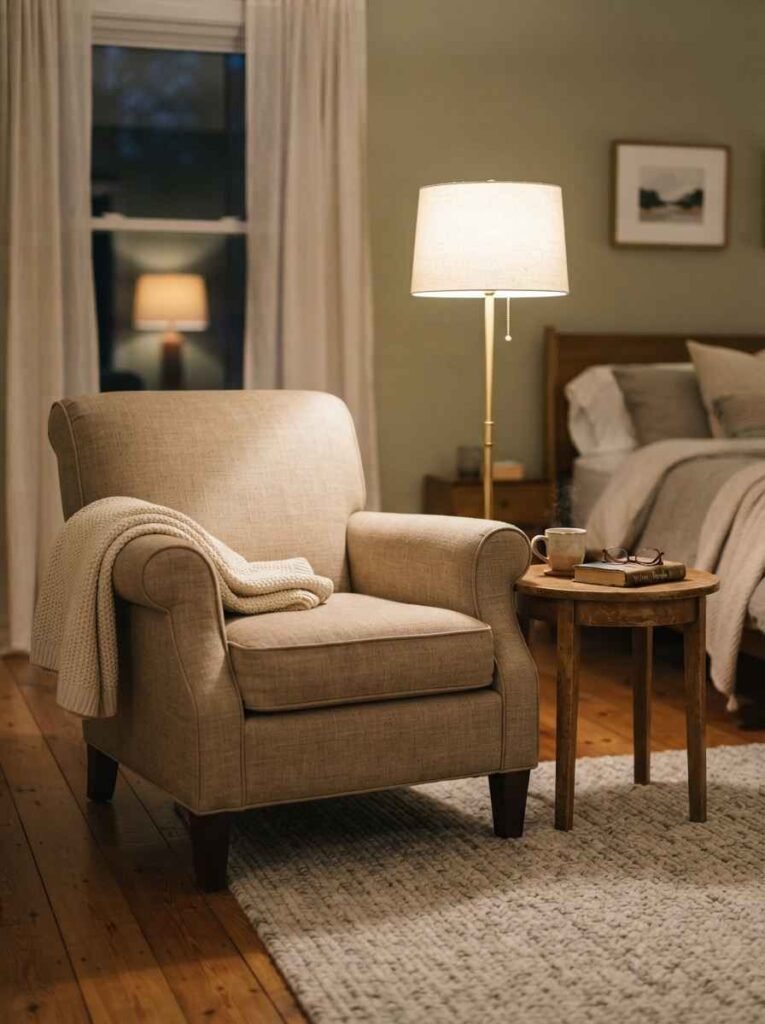
One chair, one small side table, one lamp. That’s a whole second function packed into three items, and it gives the room a reason to exist beyond sleeping.
18. Let the ceiling breathe too
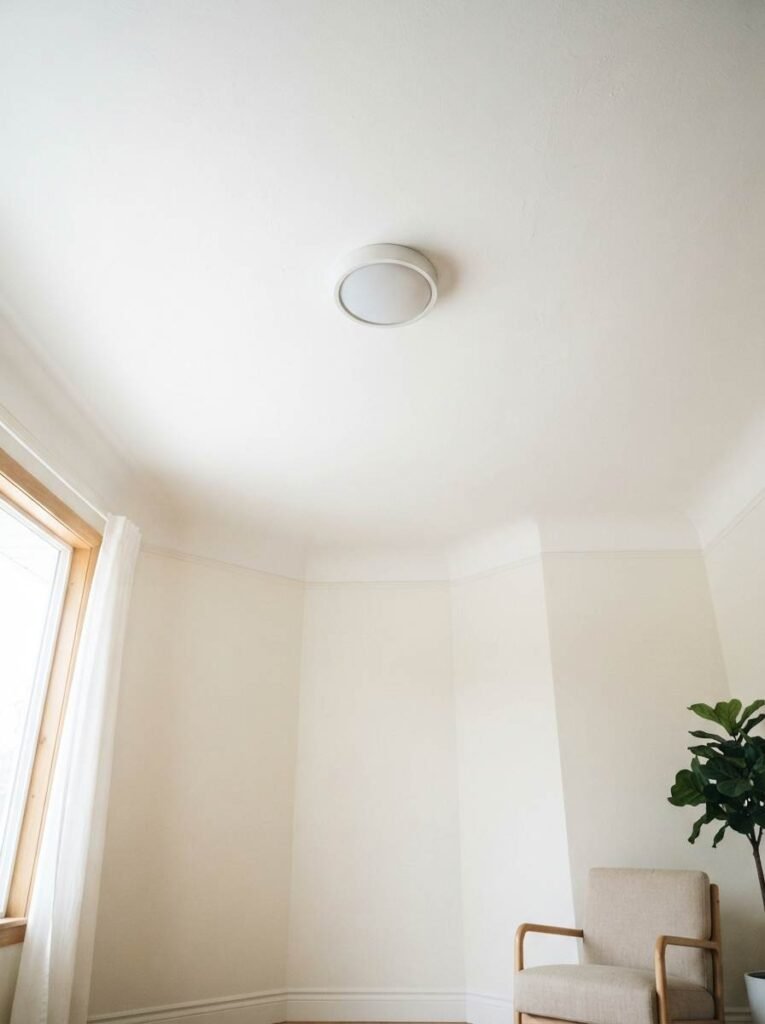
Skip the ceiling fan with the ornate light kit. A flush-mount fixture or a simple flat fan keeps your eye moving down toward the room instead of getting stuck on a busy ceiling.
Quick comparison: what to keep vs. what to cut
| Room element | Minimalist approach | Skip this instead |
|---|---|---|
| Bedding | Solid linen, one or two tones | Bold patterns, mixed prints |
| Lighting | Layered lamps, warm bulbs | Single harsh overhead light |
| Storage | Under-bed storage, closed cabinets | Open shelving with knickknacks |
| Wall decor | One large statement piece | Multiple small scattered frames |
Random thought while I was writing this: I keep seeing “minimalist” boards on Pinterest that are secretly just expensive maximalism with fewer colors. A $2,000 sculptural chair isn’t minimalist just because it’s beige.
The philosophy is about restraint, not price tag. Anyway, back to the list.
The Danish idea of hygge and the Swedish concept of lagom both circle the same point long before minimalism became a design category: comfort comes from having just enough, not from having little for its own sake. Architectural Digest breaks this down well if you want the deeper design history behind it.
For a room-by-room decluttering method before you redecorate, this guide from Extra Space Storage walks through sorting items into keep, donate, and toss piles, which honestly should happen before you buy a single new thing.
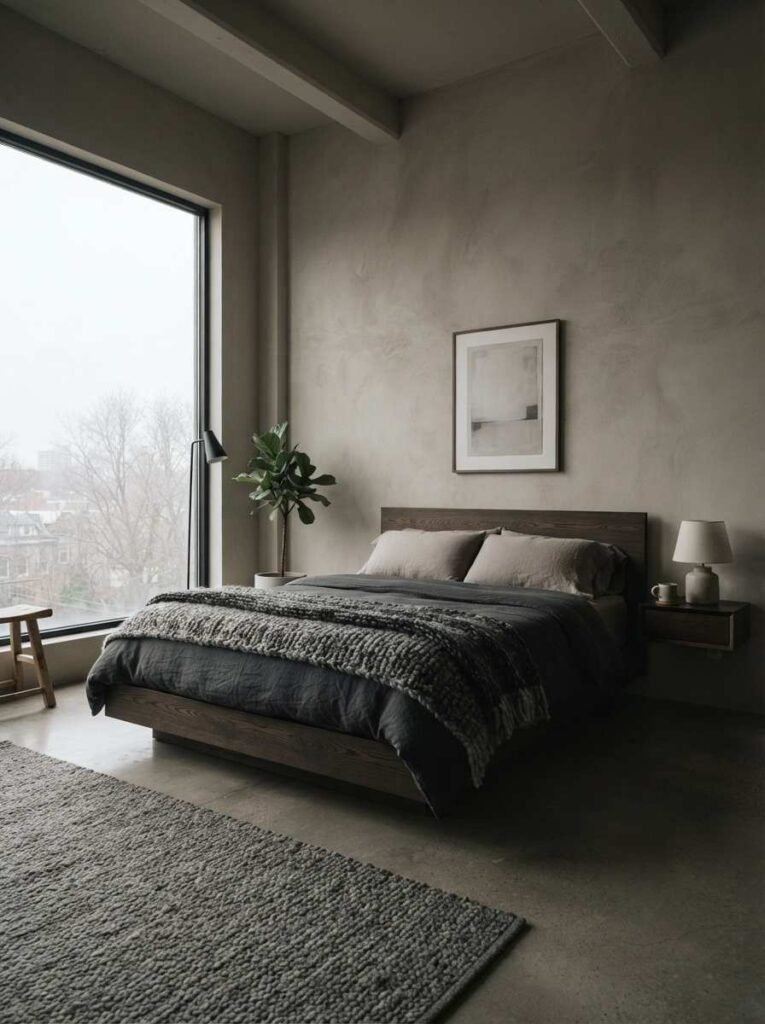
And if you want more texture ideas that keep a space from feeling too sterile, House Digest’s roundup covers leather accents and dark-toned minimalism, which surprised me since I always assumed minimalist meant white walls only.
Frequently asked questions
Does a minimalist bedroom have to be all white? No. White is common because it’s easy to keep calm-looking,
but warm neutrals, soft grays, and even deep charcoal work fine as long as the palette stays limited and the furniture stays simple.
How many decor items is too many for a minimalist room? There’s no exact number.
A good test: if you can’t explain why an item is there in one sentence, it’s probably clutter, not decor.
Is minimalist bedroom design expensive? It can go either way. You’re often buying fewer, better-made pieces instead of many cheap ones, so the cost evens out over time.
IMO the biggest cost saver is just not buying decor you don’t need in the first place.
Eighteen ideas is a lot to take in at once, so don’t try to do all of them this weekend.
Pick three. Maybe start with the linen bedding and the clear dresser top since those cost the least and change the room the fastest.
Which one are you trying first?
