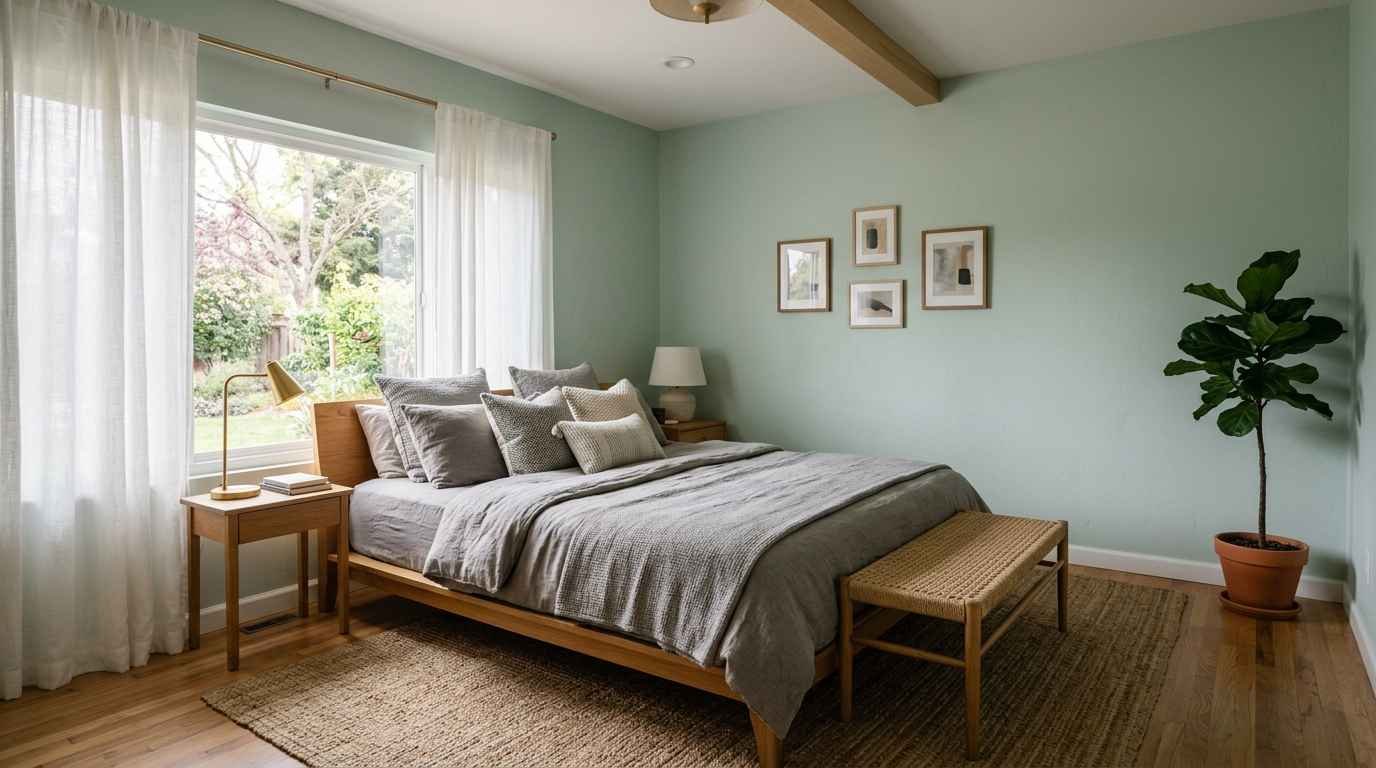
I repainted my bedroom mint green and grey three years ago, and I still walk in some mornings and just stop for a second.
It’s that good. If you’ve been scrolling Pinterest at 1am, saving board after board of soft green rooms, you already know the pull. This combo just works.
Mint green and grey is having a real moment right now, and for once, I get why. Green is one of the few colors that actually helps you relax.
Sleep researchers at Better Sleep have pointed to green as a non-stimulating shade that lowers stress and calms the nervous system before bed, which is basically the whole job of a bedroom.
Grey backs it up without competing for attention. Together they feel fresh, a little coastal, a little Scandinavian, and never trendy in a way that ages badly.
Below are 17 ways to bring this pairing into your own space, from full room makeovers to small touches you can add this weekend.
Some of these came from my own trial and error (RIP the one wall I painted three times before getting the shade right).
Others are just ideas I’ve admired and stolen shamelessly, because that’s what good design is for.
Start with a soft sage accent wall
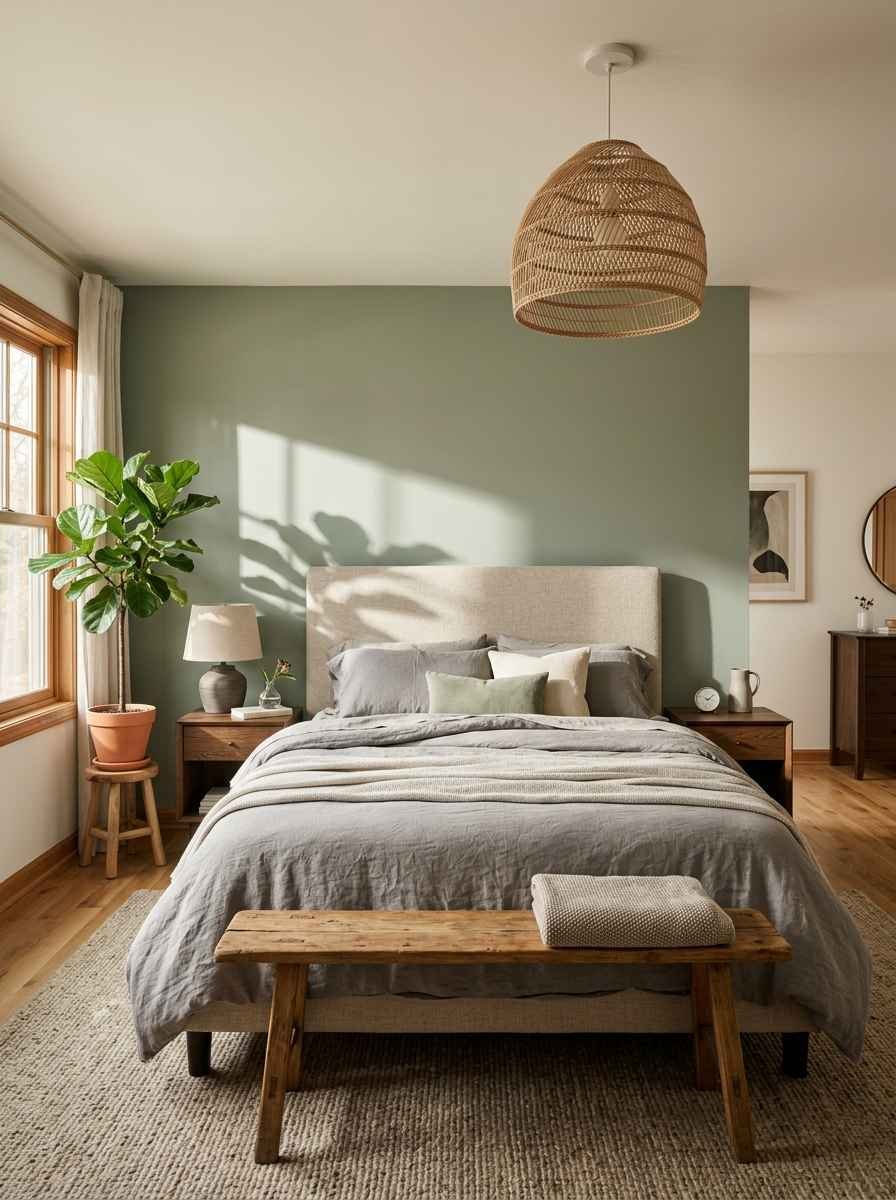
Skip bright mint if you want longevity. A muted sage or eucalyptus tone on one wall gives you the green without it screaming for attention.
I did this behind my headboard and it still reads calm two years later, not dated.
Layer grey bedding on a green base
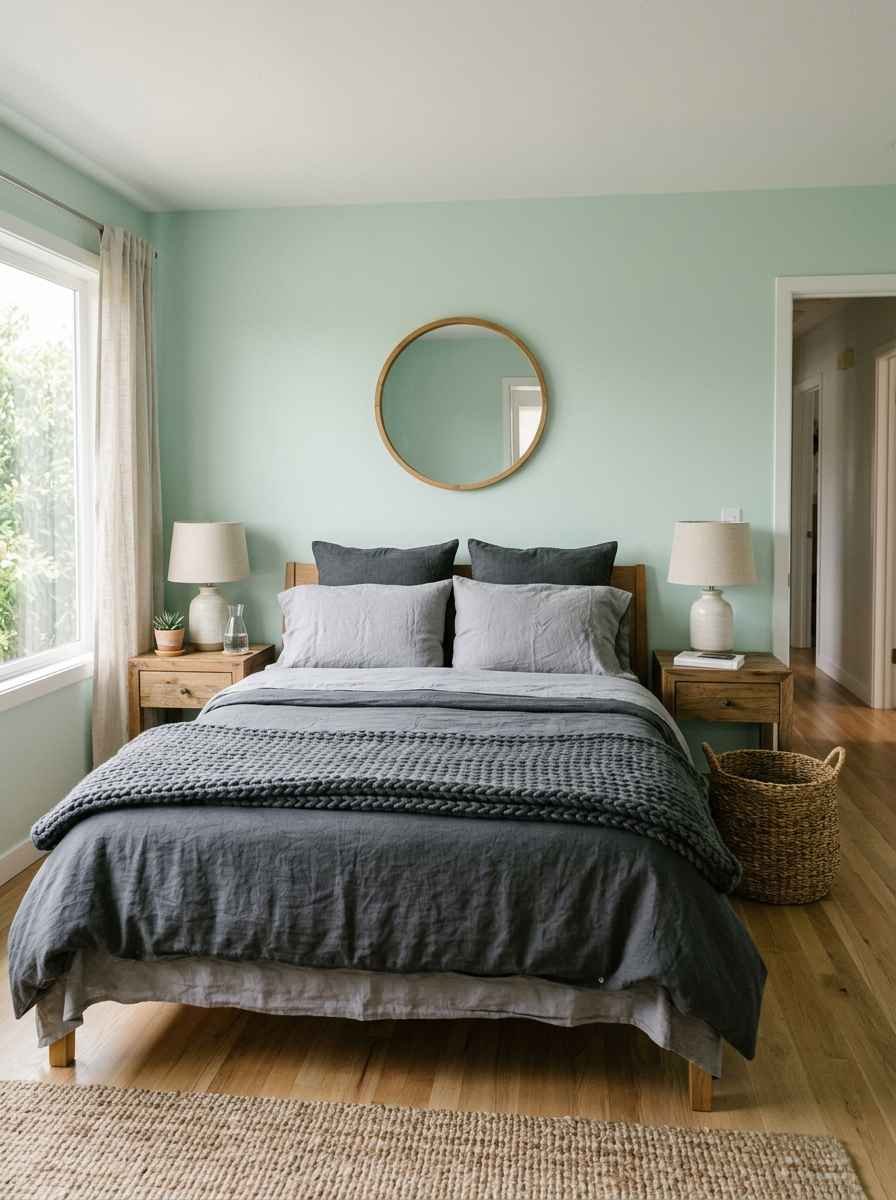
White bedding is fine.
Grey bedding is better with this palette. A charcoal or dove-grey duvet grounds a mint wall so the room doesn’t feel like a mint chocolate chip cupcake exploded.
Try a mint green headboard instead of paint
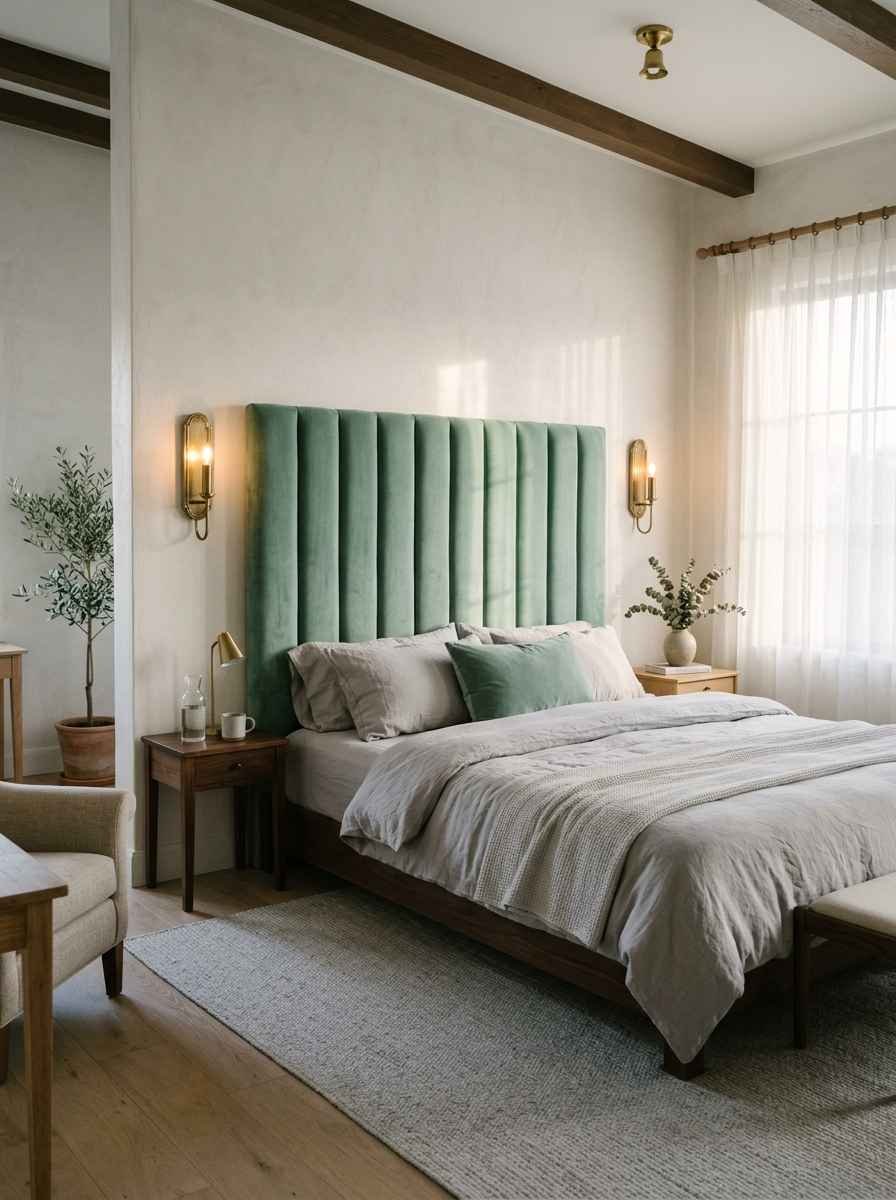
If commitment scares you, a mint upholstered headboard is the move.
You get the color payoff in one focal piece, and repainting later isn’t a weekend-long ordeal.
Go full monochrome with tonal greens
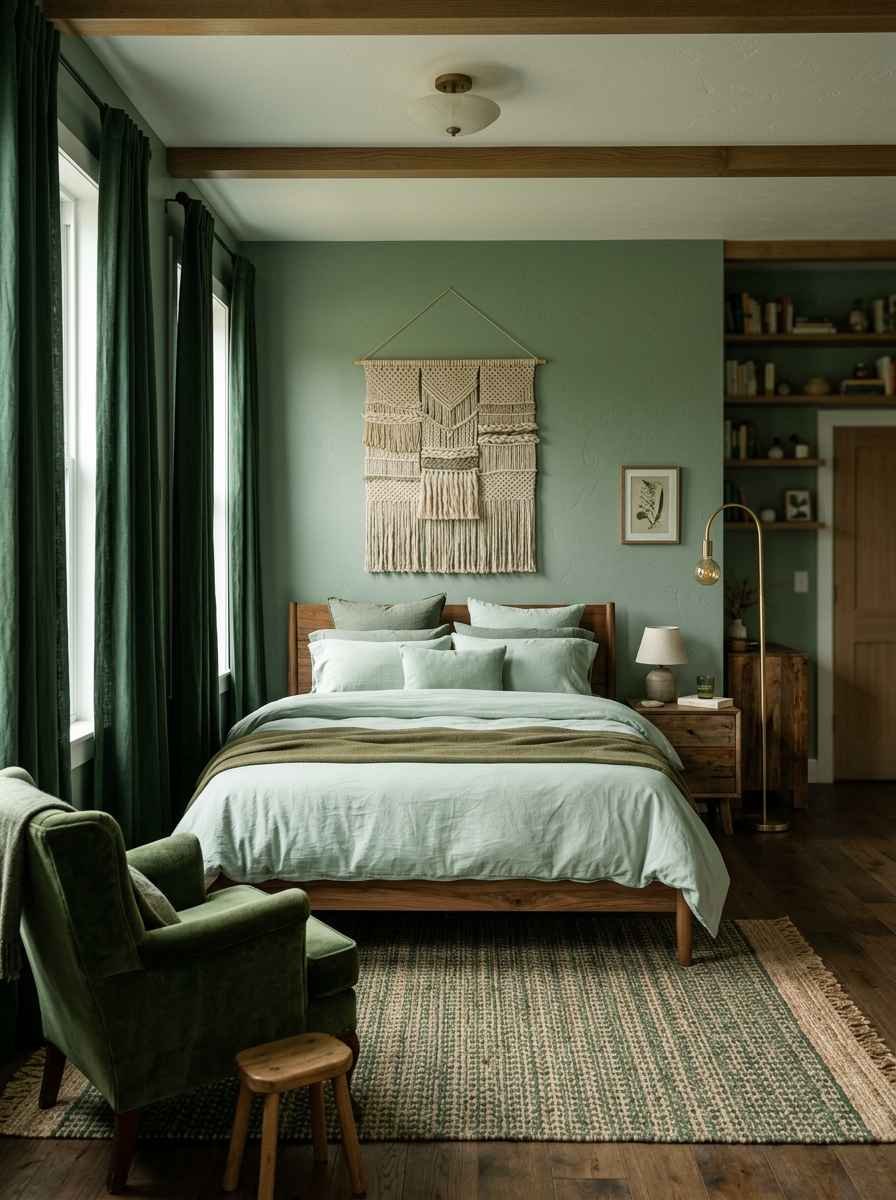
Pick three shades of green, light, medium, and deep, and layer them across walls, curtains, and a throw blanket.
It’s more sophisticated than one flat color and honestly looks like something out of a design magazine.
Add grey wood furniture for warmth
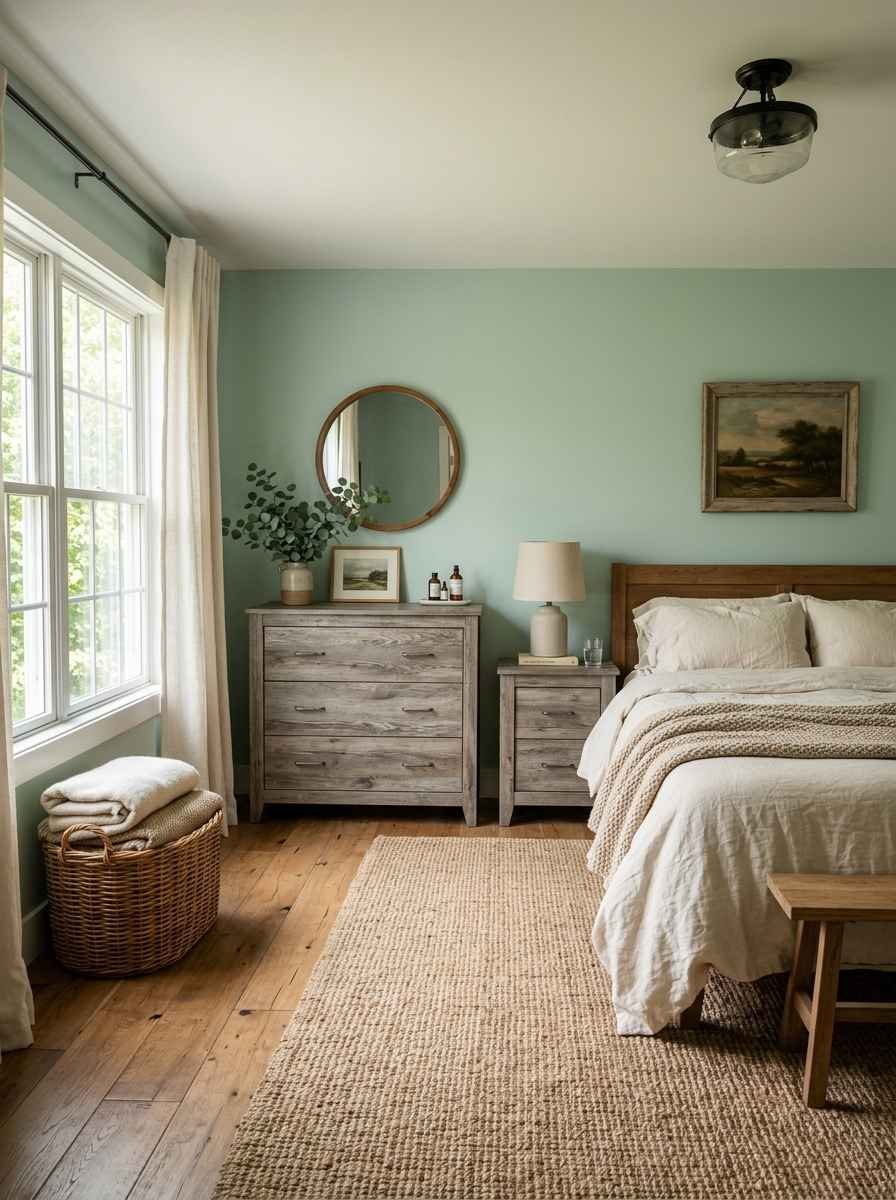
Weathered grey wood, think a driftwood dresser or nightstand, softens the whole room.
It stops the space from feeling too crisp or clinical, which mint and grey can drift toward if you’re not careful.
Use mint as the pop, not the base
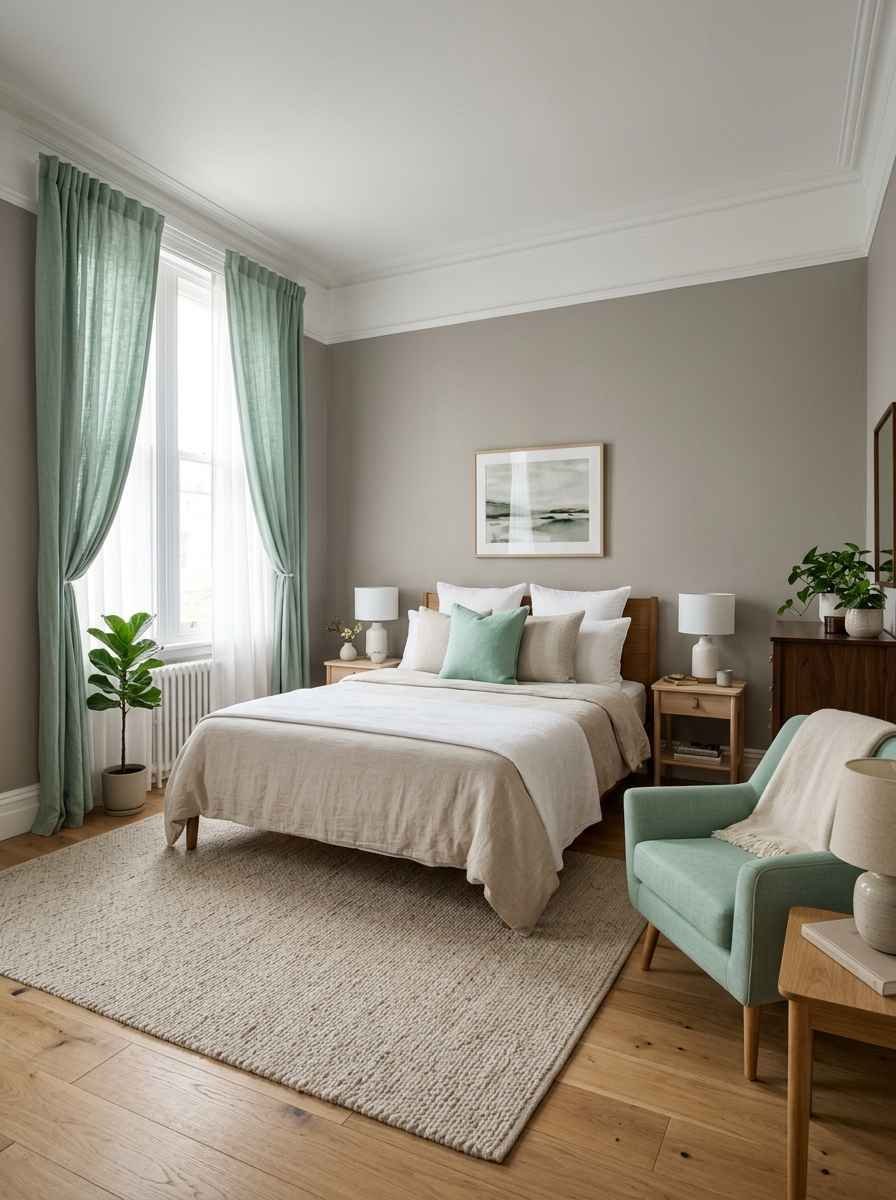
Keep walls a warm grey and let mint show up in pillows, a reading chair, or curtains. This is my favorite approach for renters.
Zero paint required, full impact delivered.
Bring in brass or gold hardware
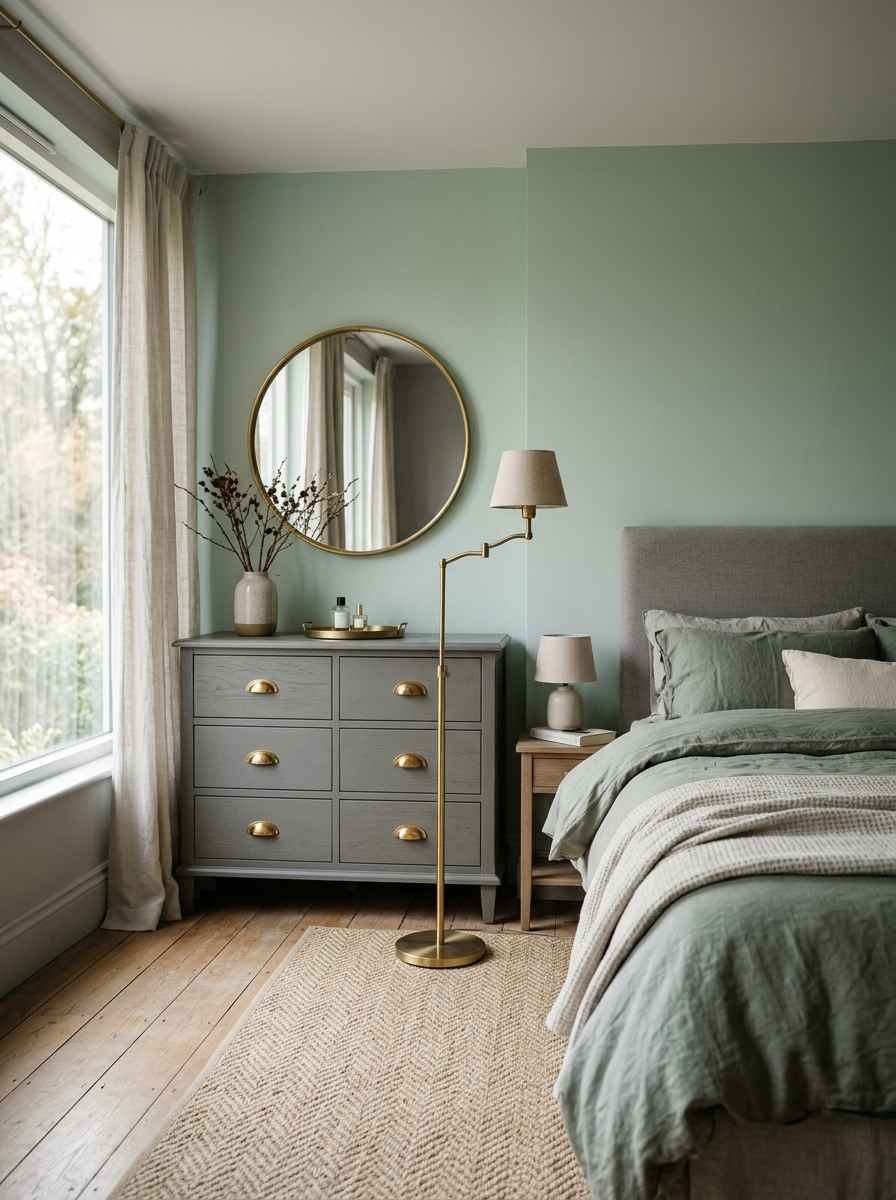
Cool tones need a little warmth to stop them from feeling flat. Brass drawer pulls, a gold-rimmed mirror, or a brass floor lamp does the trick instantly.
It’s a small swap with a disproportionate payoff.
Try a mint green ceiling
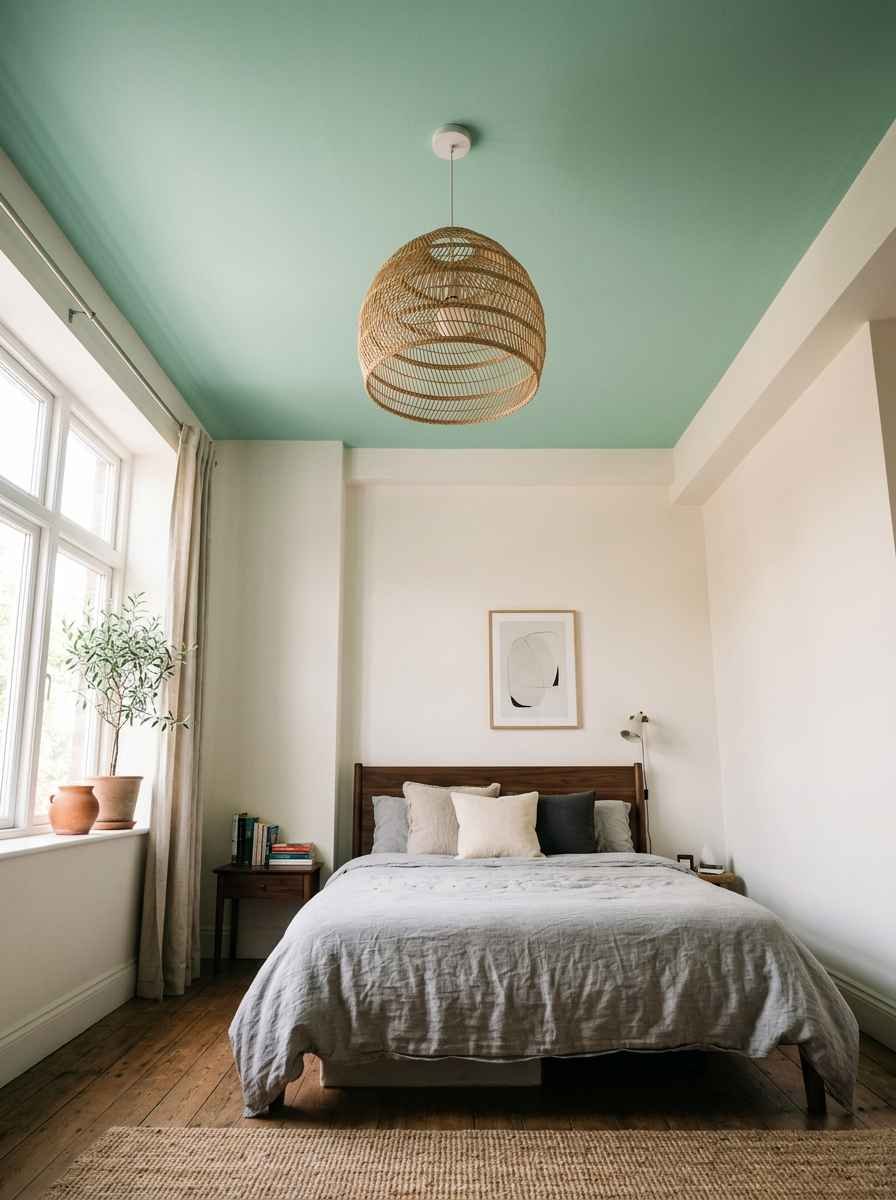
This one’s bold, and honestly I hesitated before trying it in a guest room.
But a painted ceiling (“the fifth wall,” as designers love to call it) adds depth without adding visual clutter to your eye level. Worth it.
Pair with natural wood tones
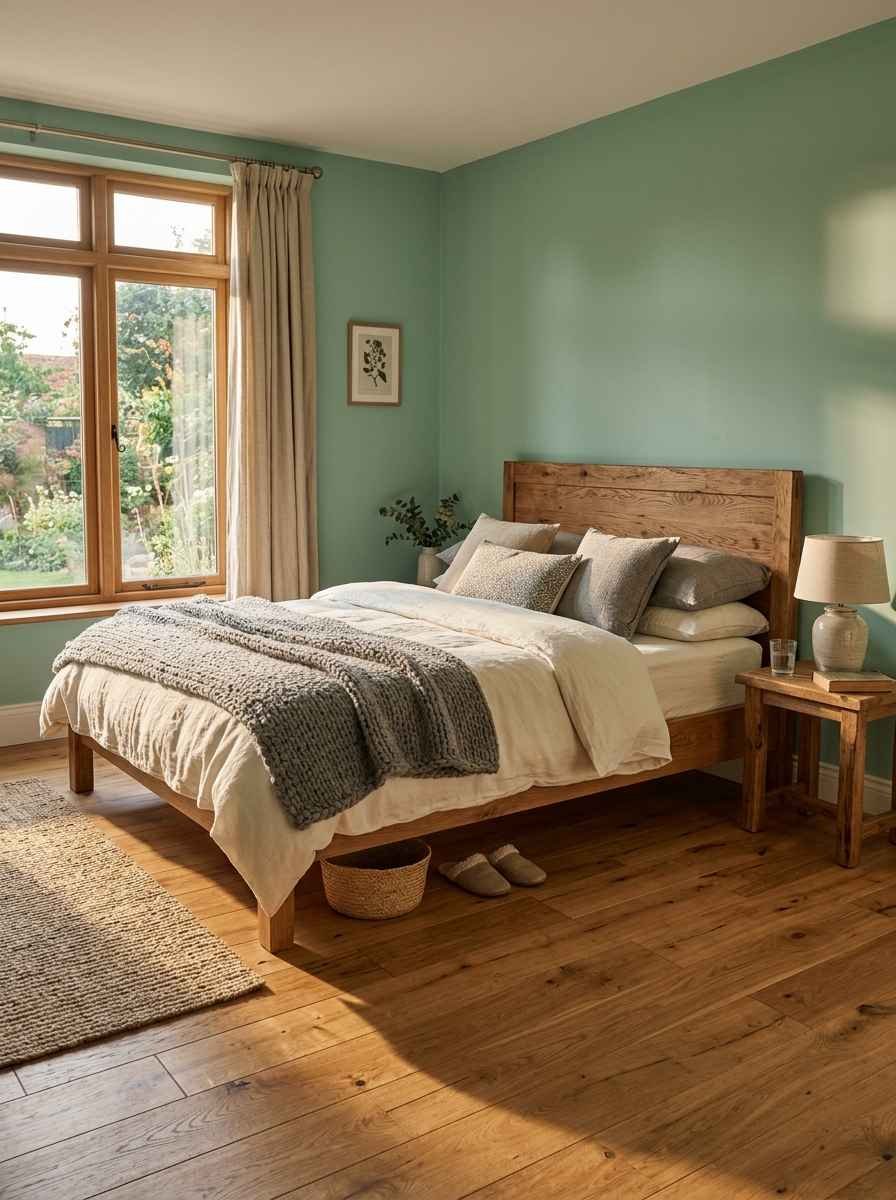
Grey plus mint plus warm oak flooring or furniture is a combination that never feels cold.
It’s the difference between a room that photographs well and one that actually feels good to live in.
Use a grey area rug to anchor the room
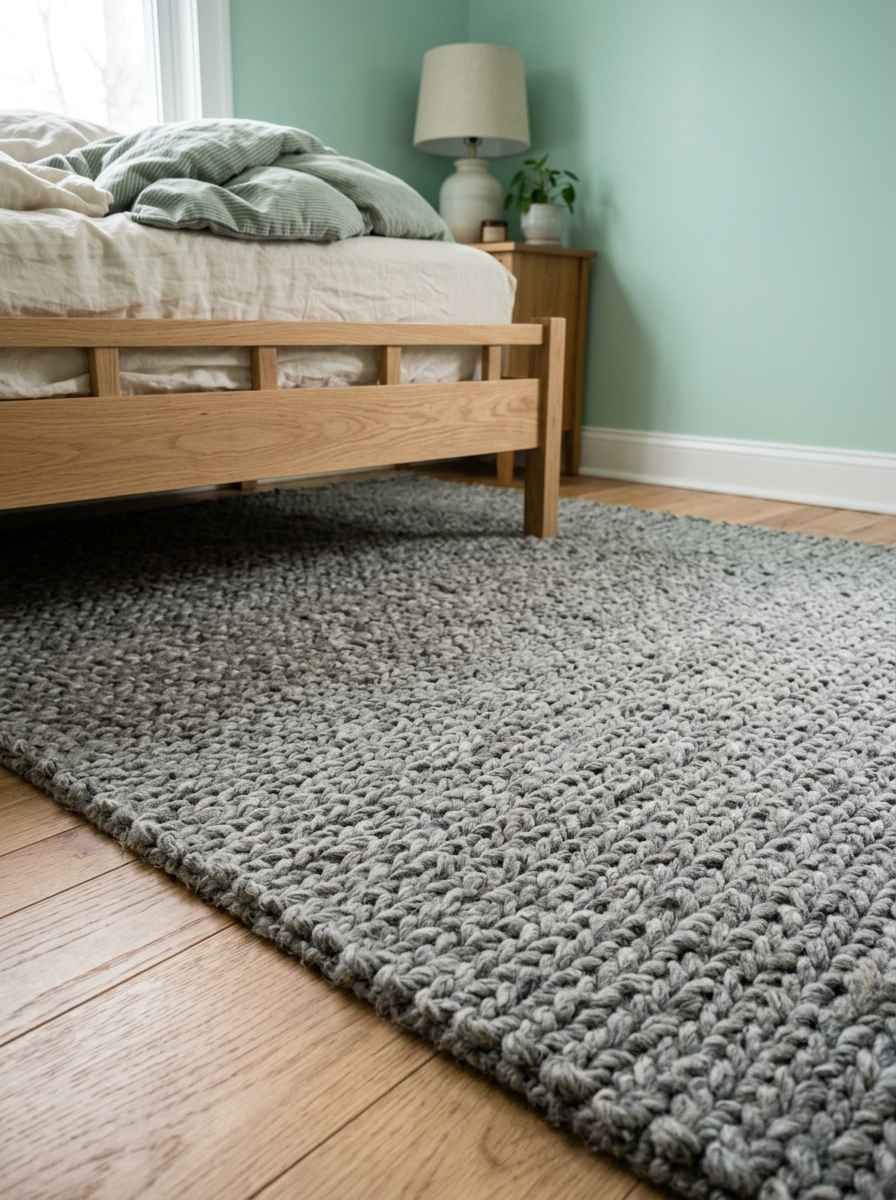
A soft grey rug under the bed pulls the whole palette together and adds texture underfoot.
Wool or a wool blend holds up best if you’re padding around barefoot every morning like I do.
Add mint through curtains, not walls
Sheer or linen curtains in a pale mint let light filter through with a slight green tint. It’s subtle, it’s pretty, and it’s the easiest reversible change on this whole list.
Go grey and white with mint accents only
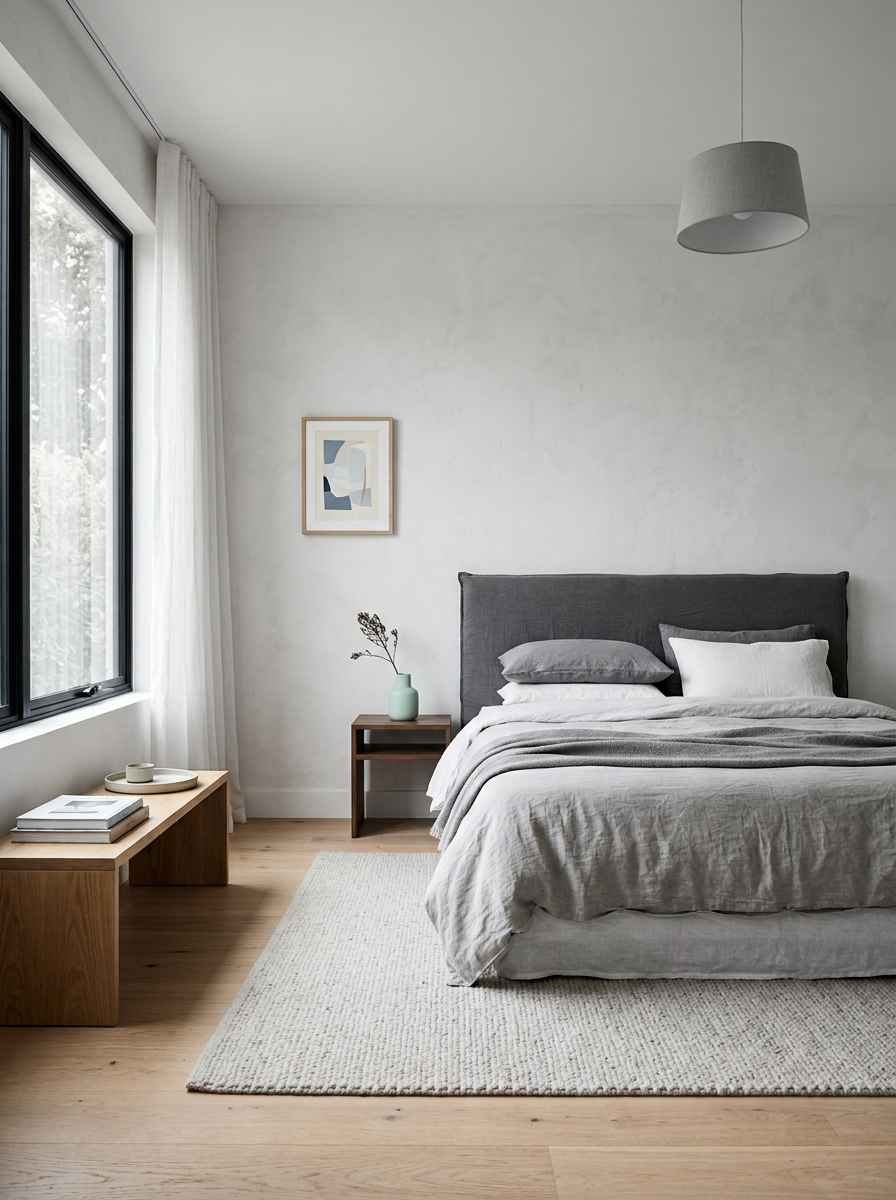
If two colors feels like plenty already, keep your base neutral (grey walls, white trim) and use mint sparingly through a lamp, a vase, or a single piece of art.
Less really can be more here.
Try a mint green accent chair
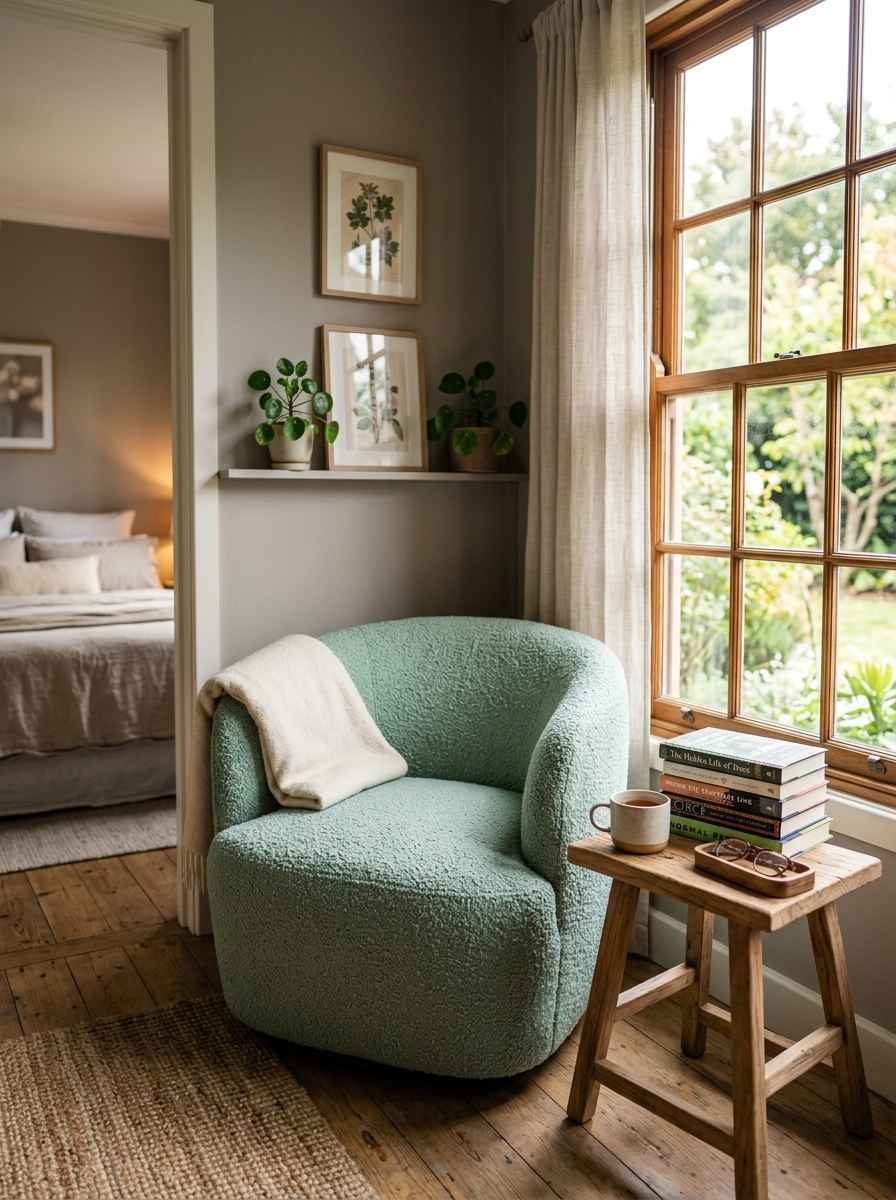
A small reading nook with a mint velvet or bouclé chair gives your bedroom a second purpose. Bonus points if you put it by a window. This is where I do most of my actual reading, not the bed.
Use grey tile or flooring as your base
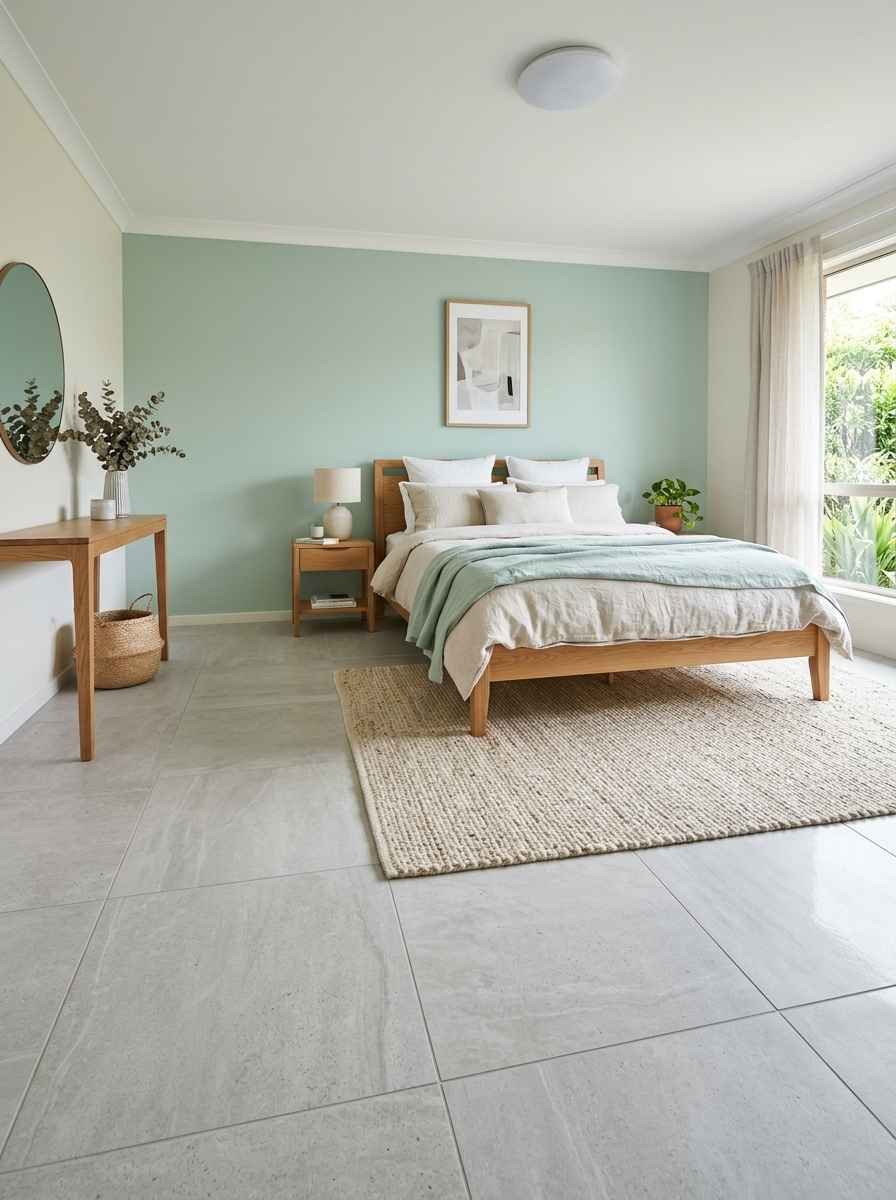
If you’re doing a bigger renovation, grey flooring (tile, engineered wood, whatever fits your budget) creates a neutral canvas that lets mint accents do the talking upstairs.
Add botanical prints or real plants
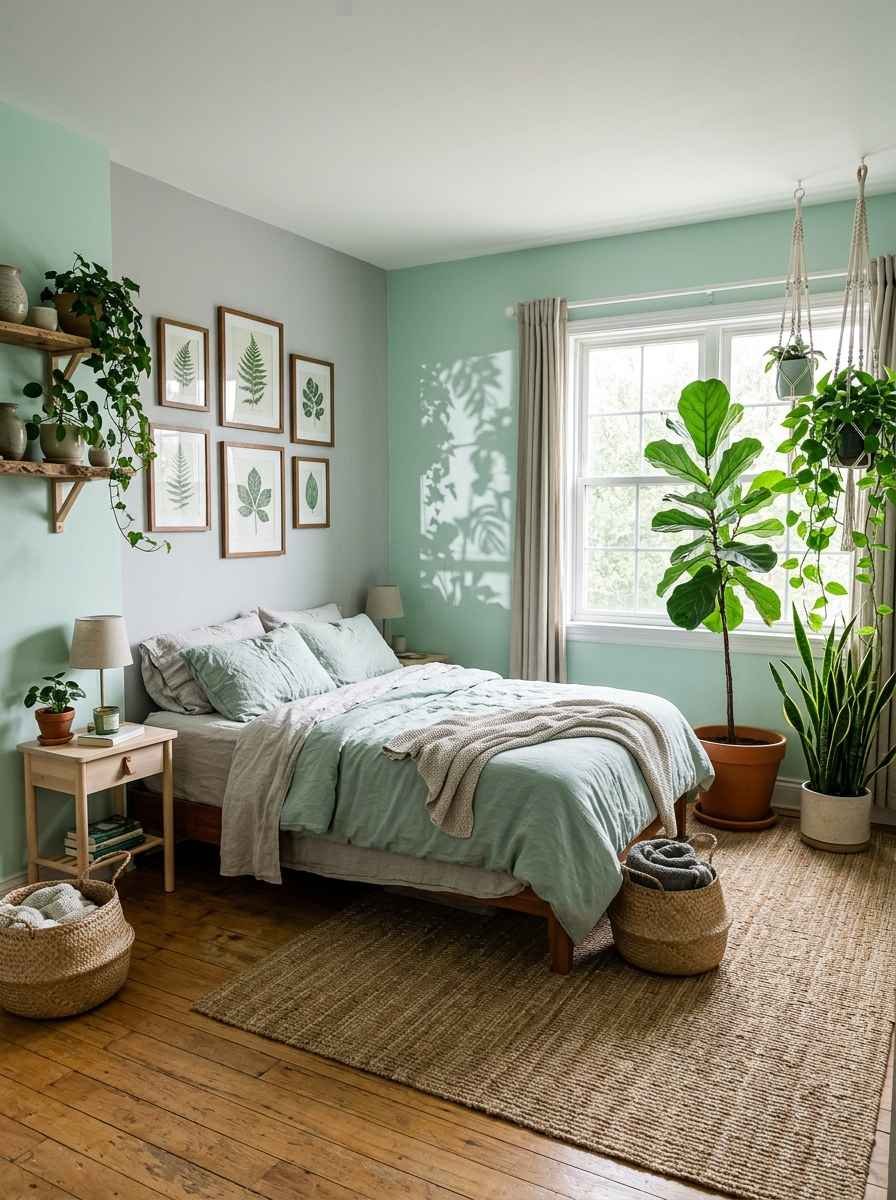
Green walls plus actual greenery sounds like it might be too much. It isn’t.
A few plants (pothos, snake plant, whatever survives your track record) tie the room back to nature and soften hard edges.
Mix metals sparingly
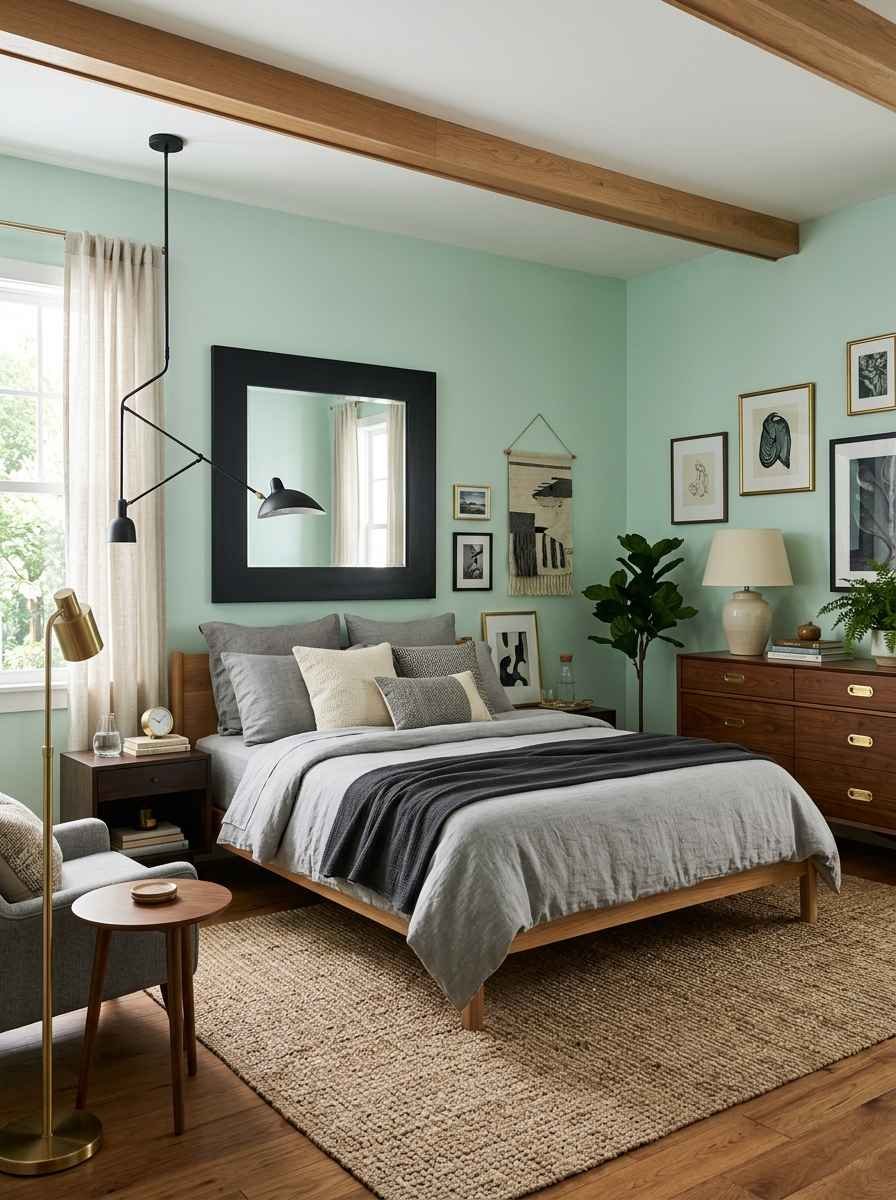
Don’t just stick to brass. A little matte black or brushed nickel mixed in keeps the room from feeling like a themed set. Two metal finishes, used with intention, look curated rather than accidental.
Finish with a statement mirror
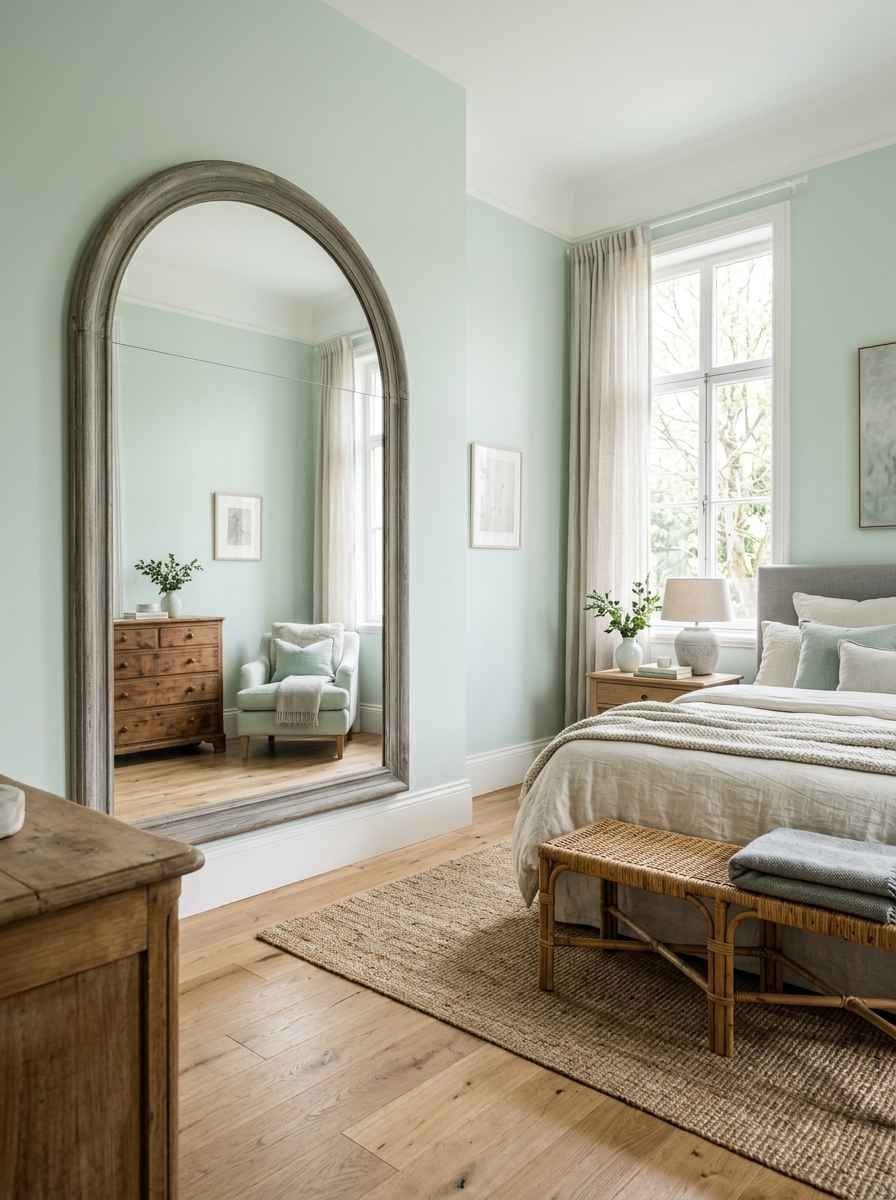
A round or arched mirror with a grey or antiqued frame bounces light around the room and makes a small space feel bigger.
It’s the easiest “finishing touch” item on this entire list, and it’s the one people notice last but remember most.
Quick side note, completely unrelated: I once spent 45 minutes in a paint store debating between two shades of grey that looked identical to my husband and wildly different to me.
He still brings it up. Anyway, back to the room.
If you want to see exactly how a mint shade will look before you commit a single brush stroke, Sherwin-Williams’ Mint Condition color page lets you preview the tone digitally, which saved me from at least one regrettable can of paint.
Here’s a quick breakdown of how to split your color ratio depending on the vibe you’re going for:
Style approach | Wall color | Where mint shows up Bold and cozy | Mint green (main walls) | Bedding, trim, ceiling Balanced and calm | Warm grey (main walls) | Pillows, curtains, art Minimal and airy | White or light grey | One accent piece only
This isn’t a rule you have to follow exactly. It’s more of a starting point. IMO, the balanced approach ages the best if you like to change up decor every year or two, since you’re only swapping small accents instead of repainting.
A word on undertones, because this trips people up constantly.
Grey can lean blue, green, or purple depending on the light in your room, and pairing it with the wrong green can make both colors look muddy.
Test samples on your actual wall, at different times of day, before buying gallons.
This piece on bedroom color psychology and sleep breaks down why cooler, less saturated tones tend to read as more restful, which lines up with what I’ve noticed in my own space.
Frequently asked questions
Does mint green go with grey in a bedroom? Yes, and it’s one of the more forgiving color pairings out there.
Grey is neutral enough to balance mint without fighting it, so you get a calm, put-together look even if you’re not confident mixing colors.
What’s the best grey to pair with mint green walls? A warm or greige-leaning grey usually works better than a stark cool grey, since it softens the room.
Cooler greys can work too, but they tend to need warm metal accents (brass, gold) to keep the space from feeling chilly.
Is mint green bedroom paint going out of style? Muted, sage-leaning mints have staying power because they read more “natural” than “trendy.” Brighter, candy-toned mints are more of a moment.
If you want longevity, lean sage over bright mint.
So which of these are you actually going to try first? Save this post, pin your favorite, and tell me in the comments which idea you’re stealing for your own room. I want to see it.
