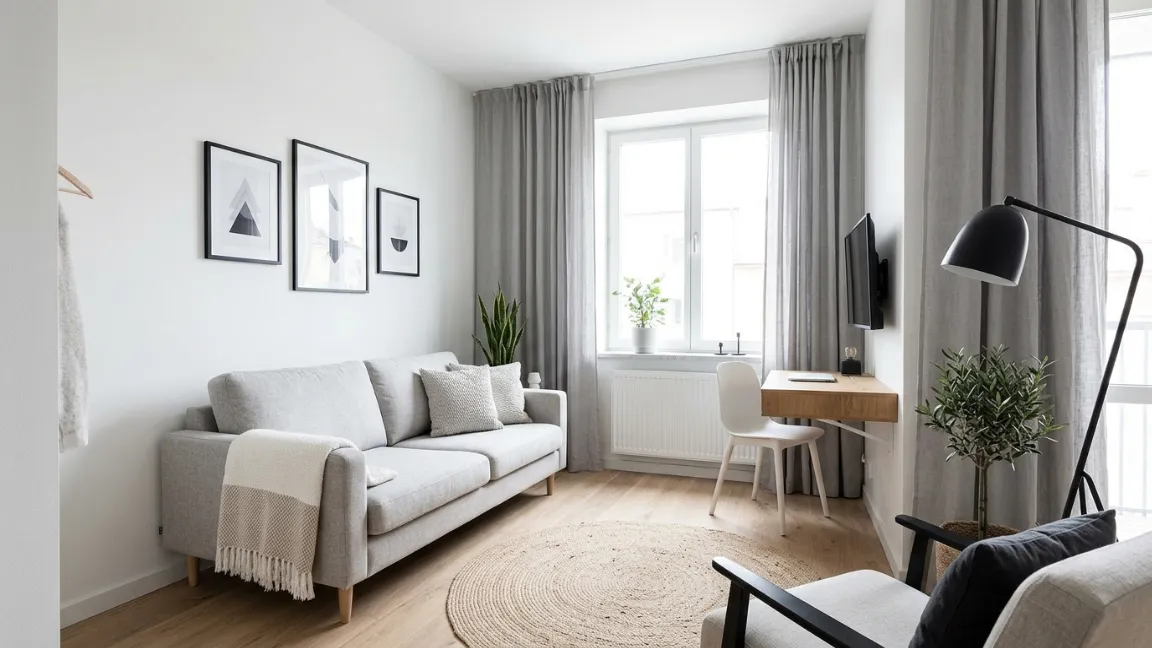
Okay, real talk — I used to think small living rooms were a lost cause. Like, what’s the point of decorating when you can barely turn around without bumping into the sofa? Then I discovered Scandinavian design, and honestly… it changed everything for me.
My 380-square-foot apartment went from feeling like a storage unit with a TV to an actual cozy retreat I look forward to coming home to. No joke.
Scandi style isn’t just about white walls and a sad-looking plant in the corner. It’s a whole philosophy — warmth, simplicity, purpose.
And for small spaces? It’s basically a cheat code. Let me walk you through 34 ideas that genuinely work, drawn from my own experience and years of obsessing over Nordic interiors.
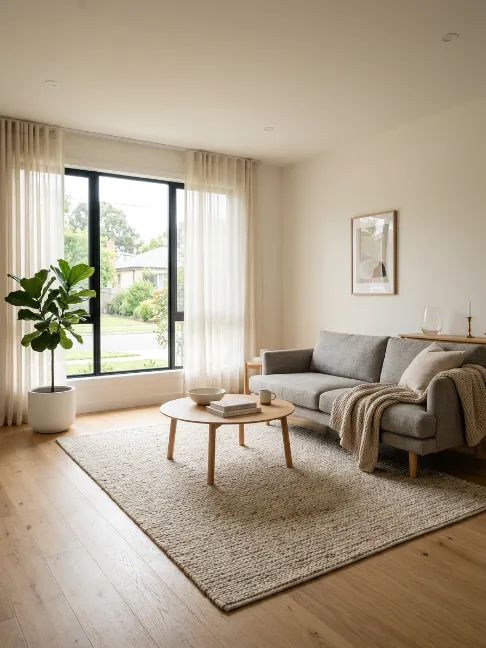
Why Scandinavian Design Is a Small Room’s Best Friend
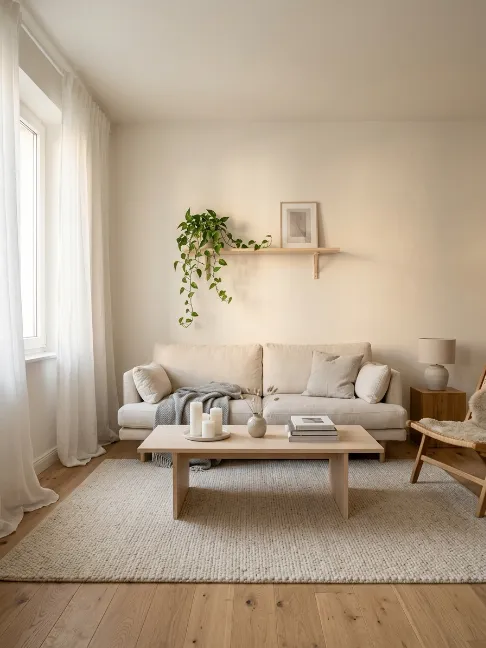
There’s a reason Scandinavian countries consistently rank among the happiest in the world — and their homes have something to do with it.
The design philosophy prioritizes light, function, and emotional warmth over showiness or excess. When your room is small, that restraint isn’t a limitation. It’s a superpower.
The concept of hygge (a Danish word roughly meaning coziness and contentment) sits at the heart of this style. It’s about making a space feel genuinely good to be in — not just good to photograph.
And trust me, once you experience a properly hygge-d small living room, you won’t want to go back.
The Color Foundation: Get This Right First
1. Warm White Walls — Always
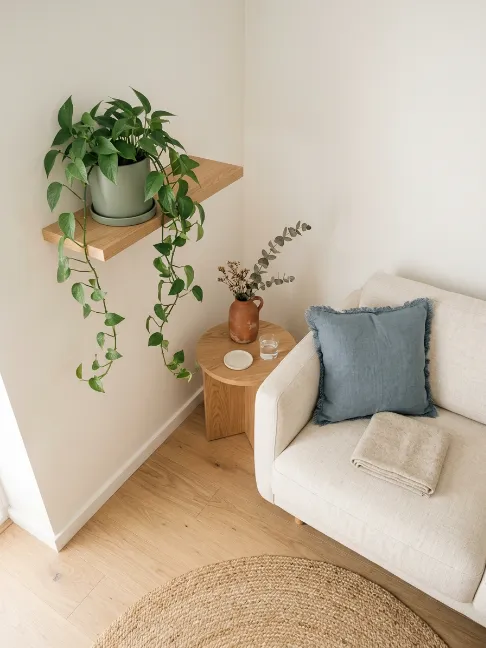
Warm white is the single most impactful change you can make to a small living room. I painted mine Benjamin Moore “White Dove” two years ago and my room literally looked bigger the next morning.
Not a metaphor — it genuinely felt like someone added square footage overnight. Avoid stark, cool whites though — they feel clinical, not cozy.
2. Build a Cohesive Neutral Palette
Once you’ve nailed the walls, build your palette around 2–3 neutral tones maximum — think oat, warm grey, linen, and sand.
The restraint is the point. Scandi rooms feel calm because nothing competes for attention. Every color earns its place.
3. Add Muted Colour Accents Intentionally
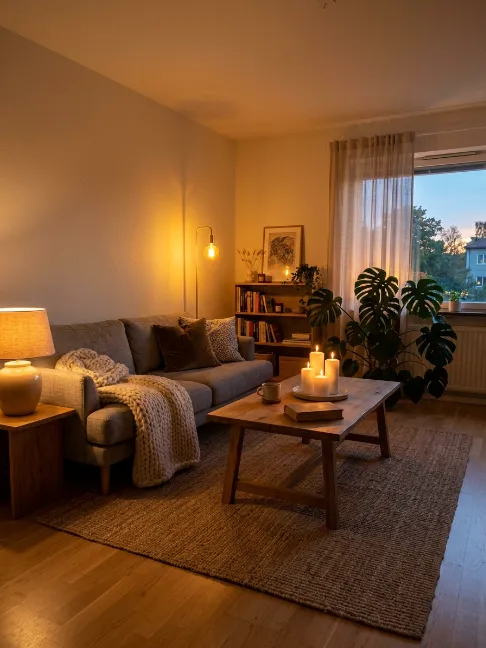
This is where dusty blue, sage green, and warm terracotta come in. Don’t go full bold — go muted and earthy.
A dusty blue cushion or a terracotta vase adds just enough personality without turning your living room into a colour experiment gone wrong.
📊 Quick Scandi Colour Guide
| Colour | Best Use | Mood |
|---|---|---|
| Warm White | Walls, large pieces | Openness, calm |
| Dusty Blue | Cushions, one accent wall | Depth, serenity |
| Warm Terracotta | Accessories, throws | Earthiness, warmth |
| Sage Green | Plants, small accents | Nature, grounding |
Lighting: The Secret Weapon Nobody Talks About Enough
4. Layer Your Lighting — This Is Non-Negotiable
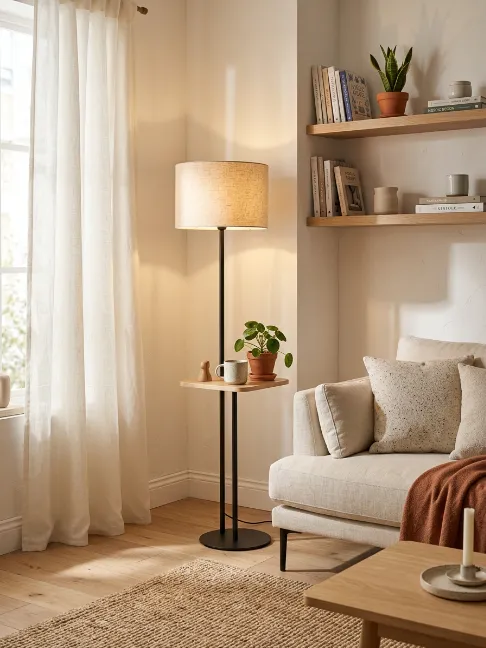
One overhead light is not a vibe. It’s a crime against coziness. Scandi rooms always use layered lighting — a floor lamp in the corner, a table lamp on the side table, pendant lights, and candles. Lots of candles.
I’m not exaggerating when I say switching from one overhead bulb to layered warm lighting transformed my living room more than any furniture change ever did.
5. Always Use Warm-Toned Bulbs
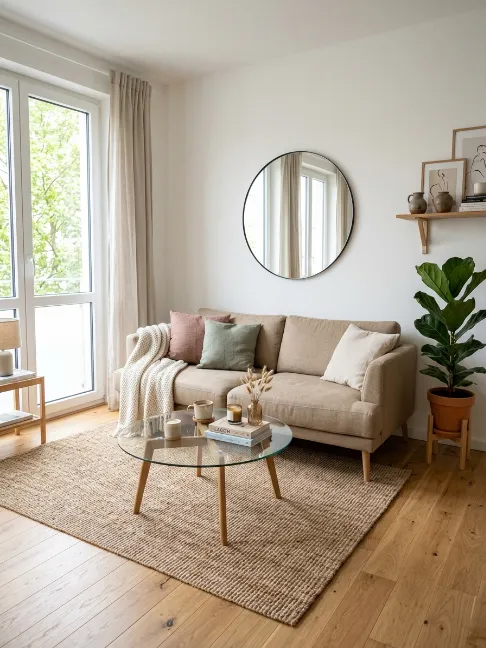
Swap out any cool or daylight bulbs for warm-toned options in the 2700K–3000K range. They make skin look better, make rooms feel warmer, and create that golden-hour atmosphere at 8pm on a Tuesday. Honestly, this one costs almost nothing and the difference is wild.
6. Candles Are a Design Element, Not Just Ambiance
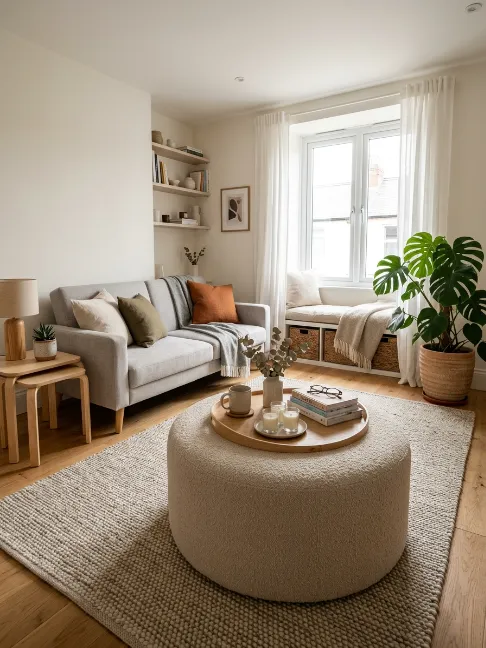
Scandinavians burn more candles per capita than almost any other culture — and there’s a very good reason.
Candlelight does something no bulb can replicate. Cluster a few candles on your coffee table or windowsill and watch the whole atmosphere shift.
My go-to: simple white pillar candles in varying heights. Simple, cheap, killer effect.
Furniture That Works With Your Space, Not Against It
7. Low-Profile Sofas With Tapered Wooden Legs
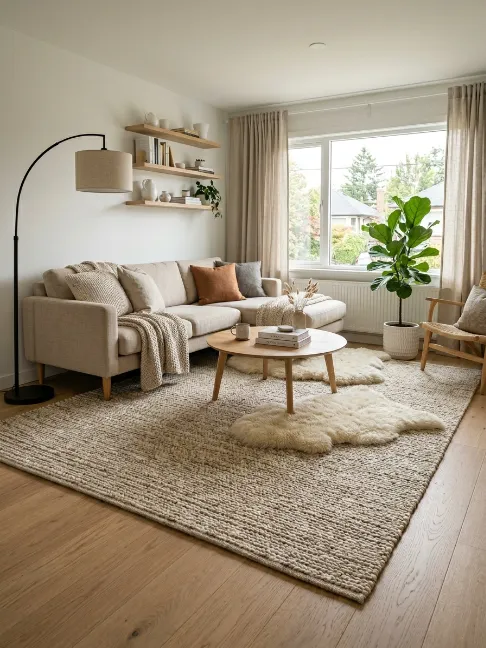
High-backed sofas suffocate small rooms. Low-profile sofas — clean lines, slim arms, tapered legs in natural wood — create visual breathing room.
The legs are actually key because they let light pass underneath, which makes the floor look bigger. I cannot stress this enough. Legs on furniture = more perceived space. Always.
8. The Multifunctional Furniture Rule
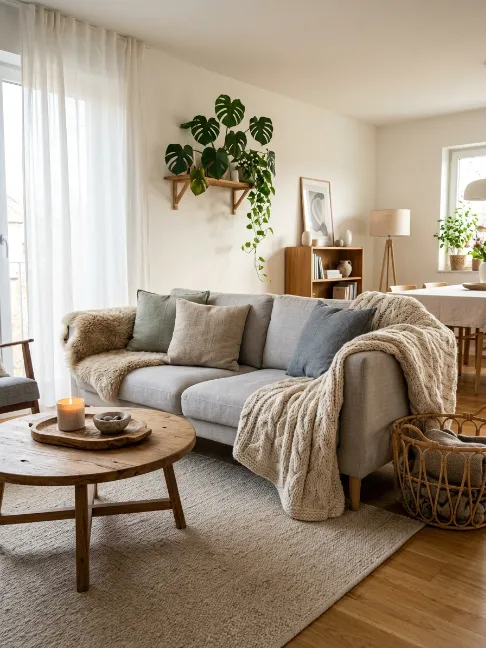
In a small Scandi living room, every single piece of furniture should do at least two jobs. Here’s what I mean:
- Storage ottomans that double as a coffee table (I use mine daily — game changer)
- Sofa beds for guest flexibility without a dedicated guest room
- Nesting tables that tuck away neatly when you have people over
- Window benches with hidden storage — this one flopped for me aesthetically the first time I tried it, but the second version with a linen cushion looked brilliant
- Sideboards with closed storage to hide everything that clutters visual space
FYI — IKEA’s KALLAX shelving unit is legitimately one of the best small-room furniture investments I’ve ever made. Versatile, affordable, and very Scandi.
9. Round or Oval Coffee Table
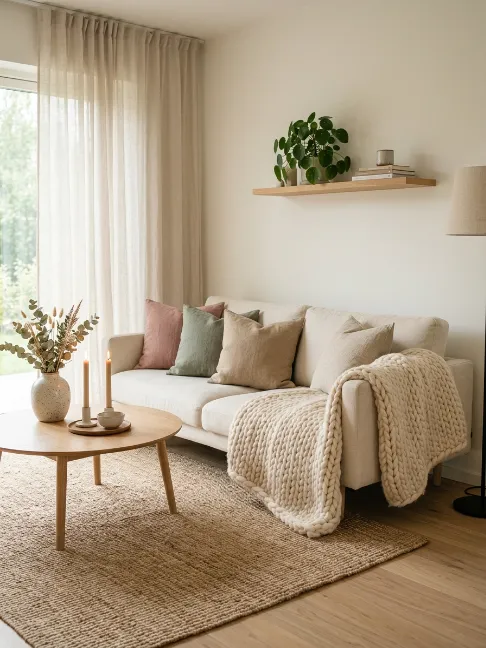
Sharp corners on a coffee table in a small room create both a visual and physical obstacle. Round or oval tables keep traffic flowing and feel softer in a cozy space.
Light oak or glass both work beautifully — glass if you want to maximise the sense of space, wood if you want more warmth.
10. Glass or Acrylic Accent Pieces
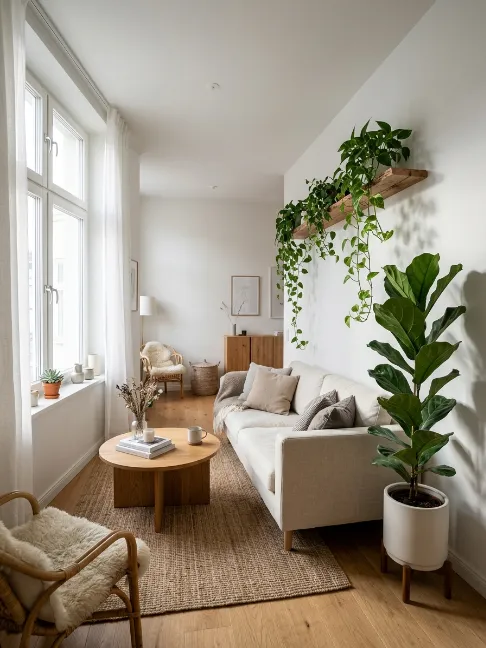
Transparent furniture — a clear acrylic side table, a glass coffee table — takes up visual space without filling it.
Your eye passes through the piece rather than stopping at it. This is one of those designer tricks that sounds weird until you try it and go “Wow, that actually works.”
11. Don’t Push Everything Against the Walls
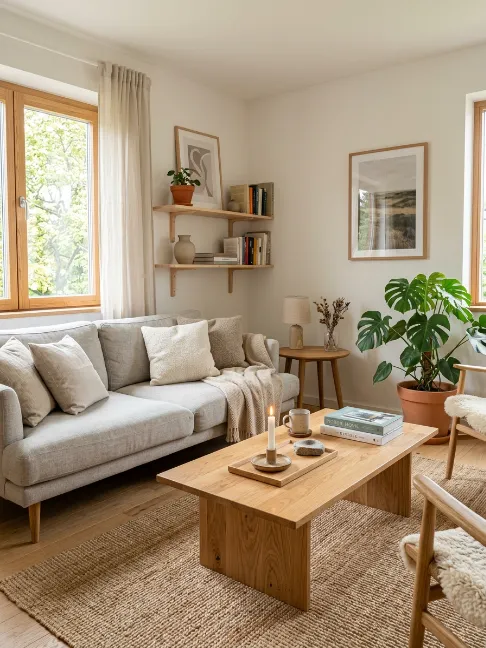
Bro, I know it feels counterintuitive, but pulling your sofa slightly away from the wall — even just 4 to 6 inches — makes the room feel significantly larger. It creates layers. The eye reads depth. It works, trust me.
Textiles: Where the Coziness Actually Lives
12. A Large Anchor Rug Is Essential
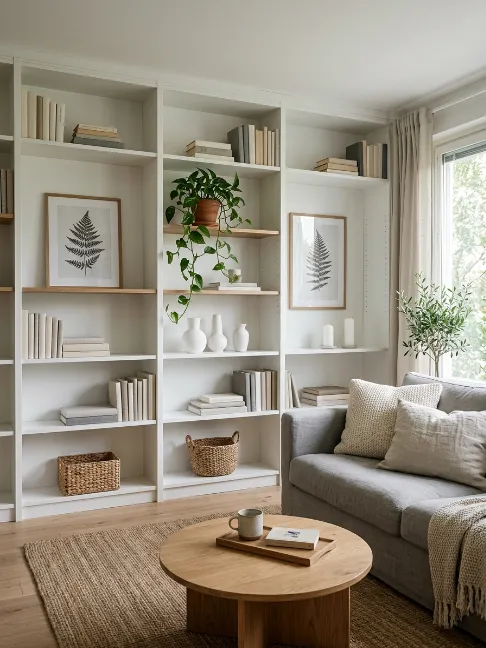
The rug grounds your entire seating area. Too small a rug is one of the most common — and most costly — Scandi decorating mistakes.
Your sofa legs should sit on the rug, not hover beside it. Go for flat-weave wool in a natural tone — oat, warm grey, or off-white. Clean, warm, classic.
13. Layer Textures, Not Patterns
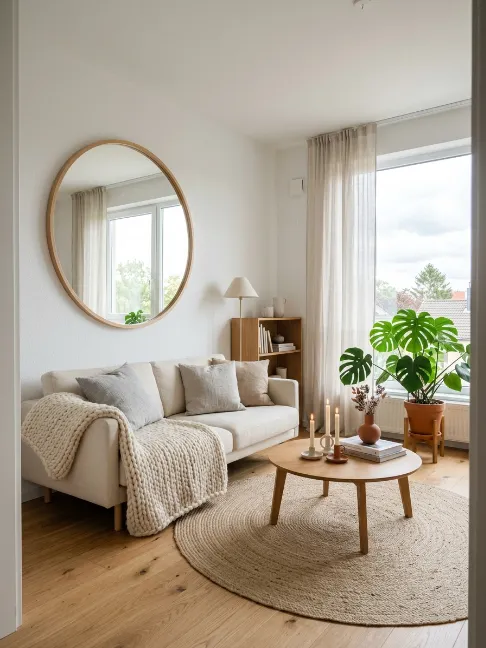
Scandi style layers texture, not pattern. A flat-weave rug, a chunky knit throw, a linen cushion, and a sheepskin over the armchair — that’s four textures in a cohesive palette. It reads rich and cozy without looking busy.
This took me a while to figure out honestly, but once I stopped chasing patterns and focused on texture, everything clicked.
14. Chunky Knit Throws — Yes, They’re a Cliché. Still Works.
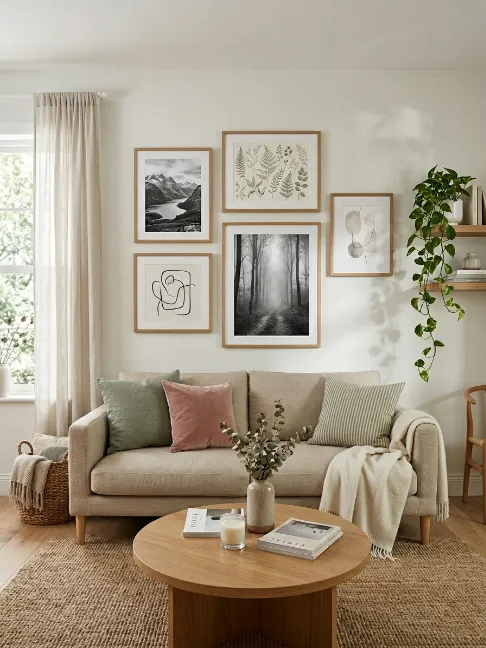
I know, I know — every Scandi Pinterest board has one. But there’s a reason. A chunky knit throw draped casually over the sofa arm adds immediate warmth and softness that transforms even a plain sofa into something inviting.
Natural fibres only — wool or cotton. The synthetic versions just don’t drape the same way.
15. Linen Cushions in Odd Numbers
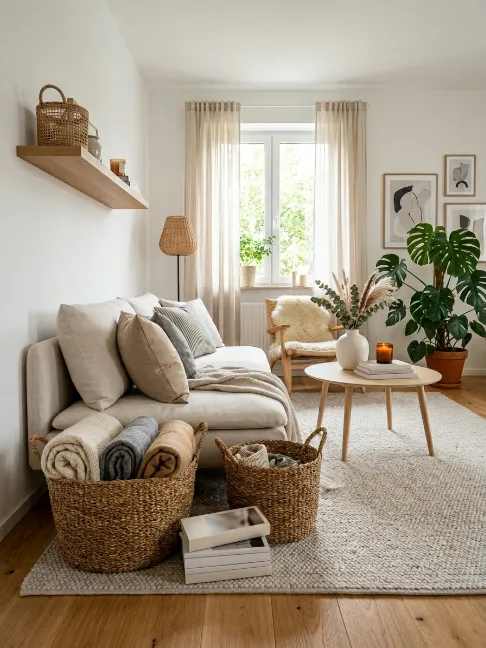
Three cushions. Five cushions. Never four. Odd numbers look relaxed and natural; even numbers look staged. Stick to dusty pink, warm beige, sage green, or muted terracotta. Mix textures within that palette. That’s literally the formula.
Bringing Nature Indoors — The Nordic Way
16. Plants Are Non-Negotiable
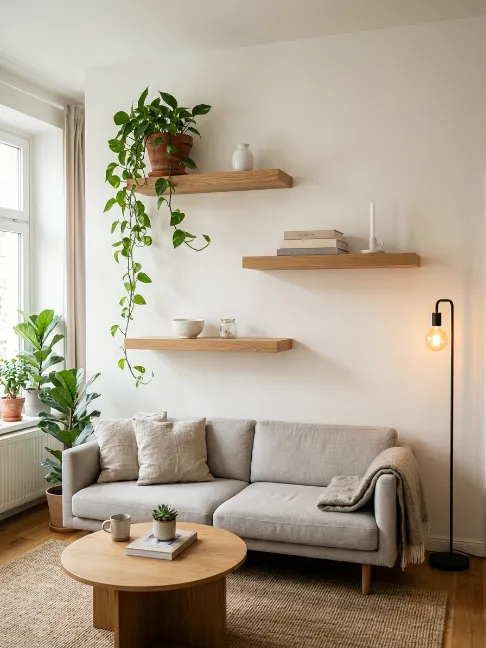
Every Scandi living room has plants. Not optional, not decorative afterthoughts — plants are a core design element in Nordic interiors.
They add life, oxygen, and that essential connection to nature that makes a room feel genuinely alive.
Even if you’ve killed every plant you’ve ever owned (been there), a pothos or snake plant will survive almost anything.
17. Don’t Overdo the Plant Count in a Small Room
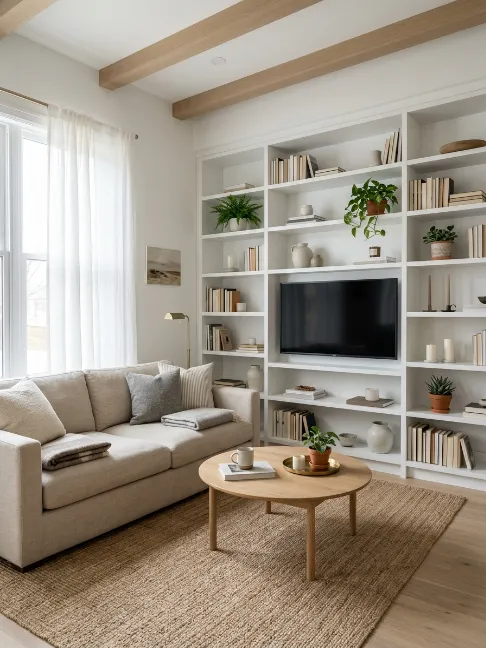
Two to four plants is the sweet spot for a small space. One large statement plant — a fiddle leaf fig or a monstera in the corner — plus a couple of smaller ones on shelves.
Too many plants tips from “Nordic forest vibes” into “unhinged plant person territory.” There’s a line. Respect it.
18. Natural Wood Accents Everywhere
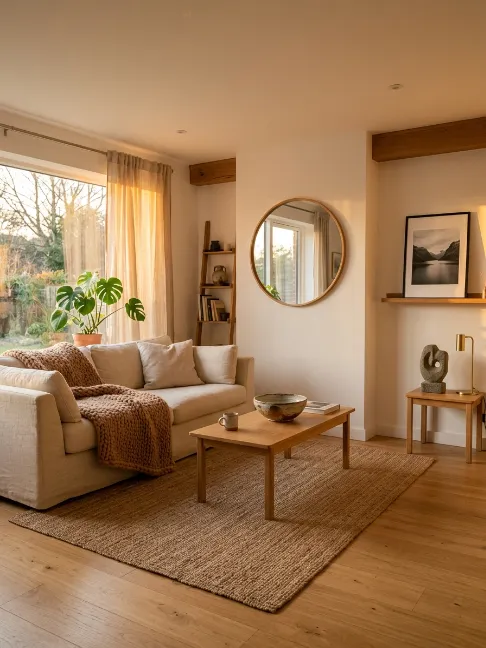
Raw or lightly oiled oak, birch, or pine — natural wood is the material backbone of Scandi design. A wooden side table, a light wood picture frame, a timber tray on the coffee table.
These touches ground the room in nature and add warmth that painted or laminate surfaces simply can’t replicate.
19. Raw Stone and Ceramics for Texture
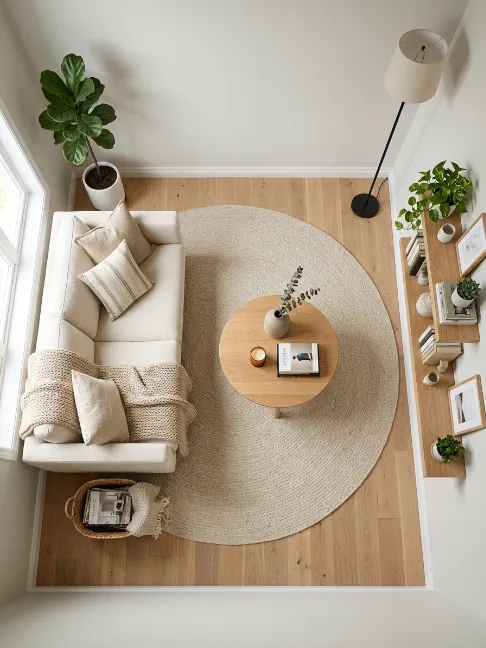
A ceramic vase in muted terracotta, a concrete candle holder, a small stone bowl on the shelf — these raw, tactile accessories add texture without adding visual noise. Less is more here. One or two pieces per surface, max.
Honestly, this next section is where a lot of people go wrong — they nail the furniture and colours but completely ignore the storage situation. And in a small room, clutter is the enemy of calm. Full stop.
Storage Solutions That Look Like Design Features
20. Floor-to-Ceiling Built-In Shelving
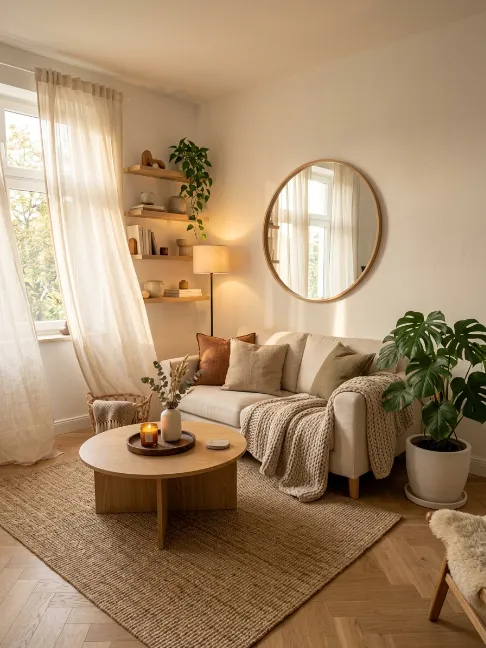
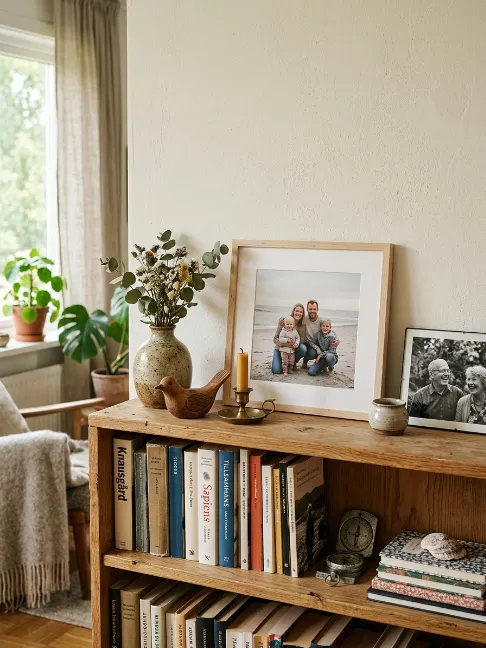
If you can swing it, floor-to-ceiling built-ins along one wall are the ultimate Scandi storage move. They solve your storage problem and become a design feature simultaneously.
Style them with books, plants, and a few curated objects — not crammed with random clutter. The key is breathing room between objects.
21. The 60/40 Shelf Styling Rule
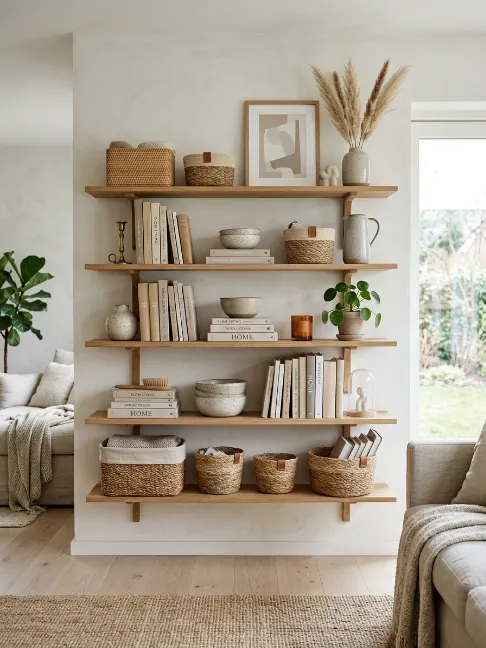
I follow this religiously now: 60% functional (books, storage boxes, baskets), 40% decorative (plants, ceramics, candles).
This balance keeps shelves looking purposeful and styled without tipping into either “charity shop” or “empty and sad.” This one tip alone levelled up my whole apartment.
22. Floating Shelves Done Right
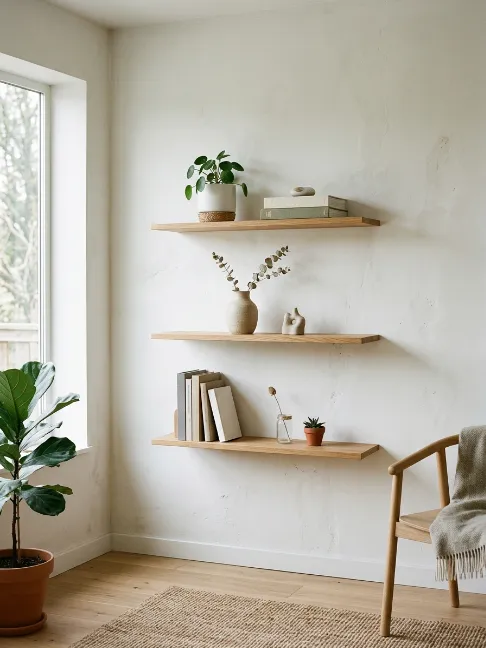
Three floating shelves in a cluster, or a single long shelf running across a wall — both work brilliantly.
Style them sparsely. One plant, a couple of books, a small ceramic piece. Resist the urge to fill every inch. The empty space is part of the design.
23. Woven Baskets for Hidden Storage
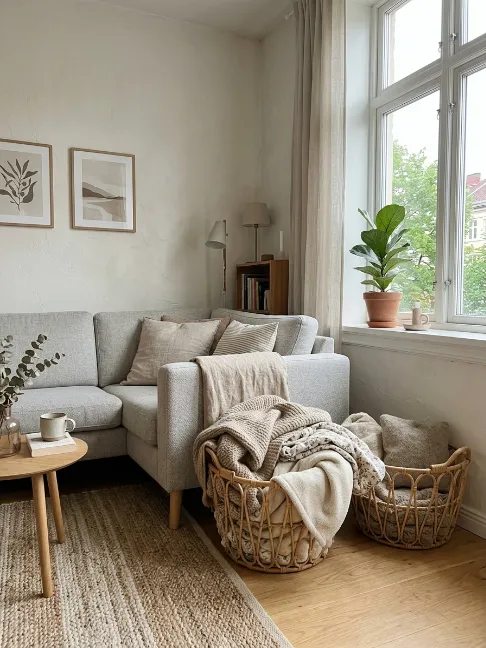
Rattan or seagrass baskets are one of those things that look decorative but are actually doing heavy lifting.
Store blankets, remote controls, kids’ toys, or anything else that creates visual mess inside baskets that sit on the floor or on shelves. They add texture and keep everything neat. Win-win.
Layout Tricks That Actually Make Your Room Feel Bigger
24. Create a Single, Clear Focal Point
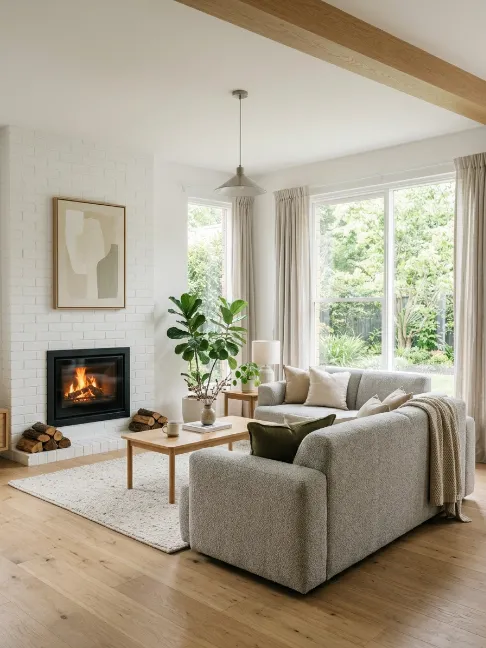
One focal point per room — that’s the rule. A fireplace, a large window, a gallery wall — pick one and design the seating arrangement around it.
Multiple competing focal points fragment the eye and make a small room feel chaotic.
25. Use Mirrors Strategically
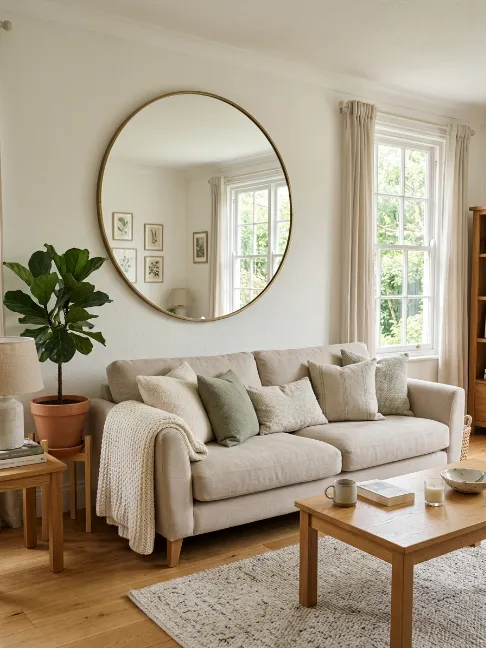
A large round mirror above the sofa or a full-length mirror leaning against a wall opposite a window doubles natural light and adds the illusion of depth.
This is genuinely one of the highest-impact, lowest-cost changes you can make. My round mirror cost £35 from a charity shop and everyone thinks it’s a design centrepiece.
26. Keep the Floor Visible
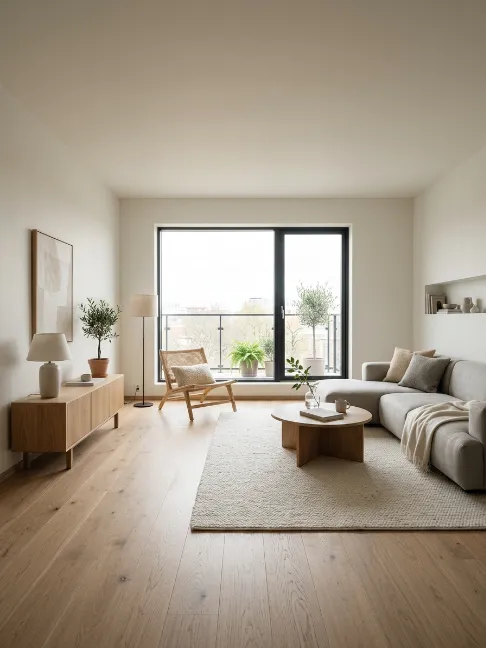
The more floor space you can see, the larger the room feels. Resist the urge to fill every corner.
Scandi design treats negative space — empty floor, bare wall — as an intentional design choice, not an oversight. Embrace it.
Walls, Art, and the Final Layer of Detail
27. A Scandi Gallery Wall Is Not a Chaotic Collage
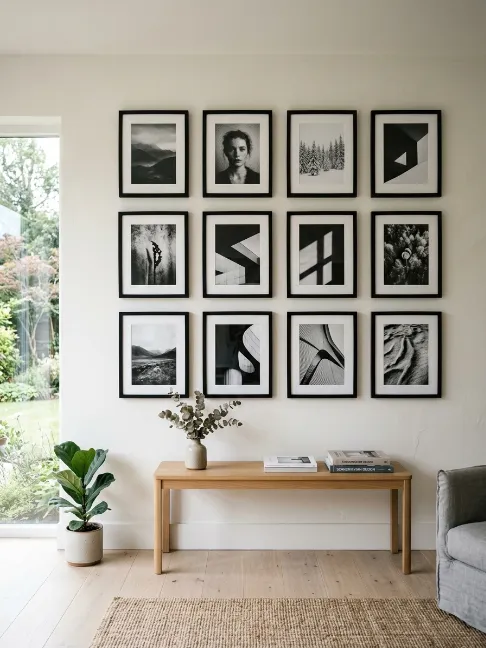
Curated is the operative word. Black-and-white photography, simple line art, botanical prints, the occasional typography print — all in matching frames (all black, all white, or all natural wood). Keep consistent spacing between frames.
It should feel intentional, not like you threw things at the wall. (Literally and figuratively.)
28. One Large Statement Print
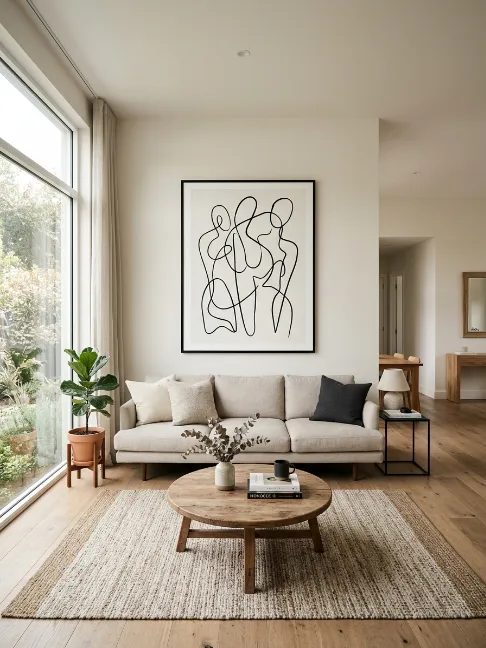
Sometimes simpler is better. A single large-format abstract line art print in a simple black frame makes a bold, sophisticated statement without the effort of a full gallery wall. Desenio has an excellent Scandi-style print collection that I keep going back to.
29. Subtle Accent Wallpaper on One Wall
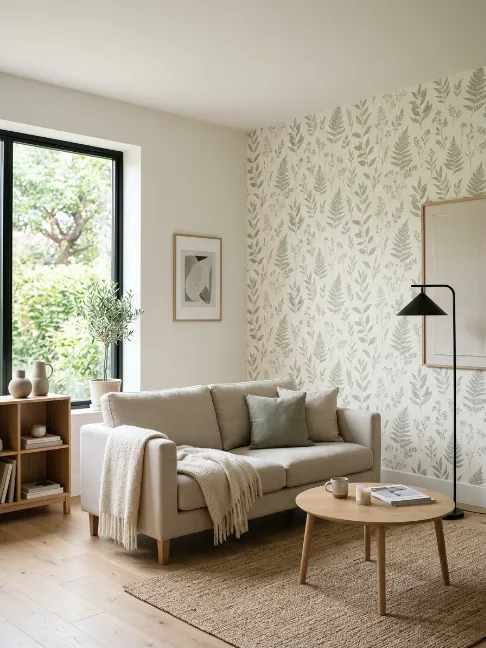
A delicate botanical print, soft geometric pattern, or linen-textured wallpaper on one wall adds depth without closing in a small room.
One wall only. Don’t go all four — that’s how you accidentally make your living room feel like a Victorian parlour.
30. Declutter Like You Mean It
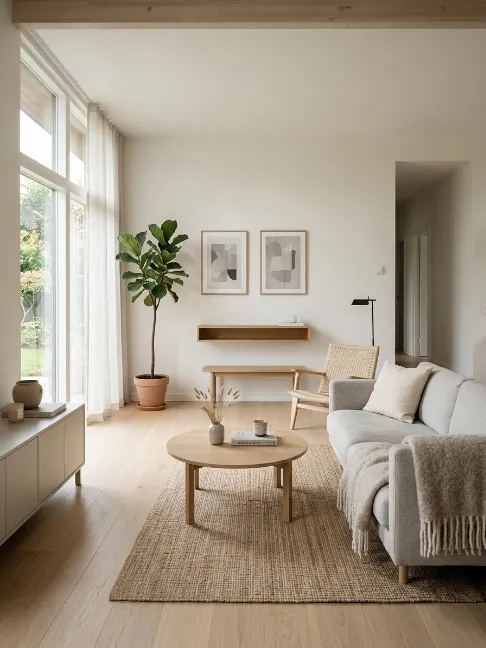
IMO, this is the most important Scandi principle of all. A cluttered small room is a stressful small room.
The Nordic approach is intentional — everything has a purpose and a place. If it doesn’t serve you, it doesn’t live in your space. Brutal? Maybe. Transformative? Absolutely.
The Final Details That Pull It All Together
31. Handle the TV Situation
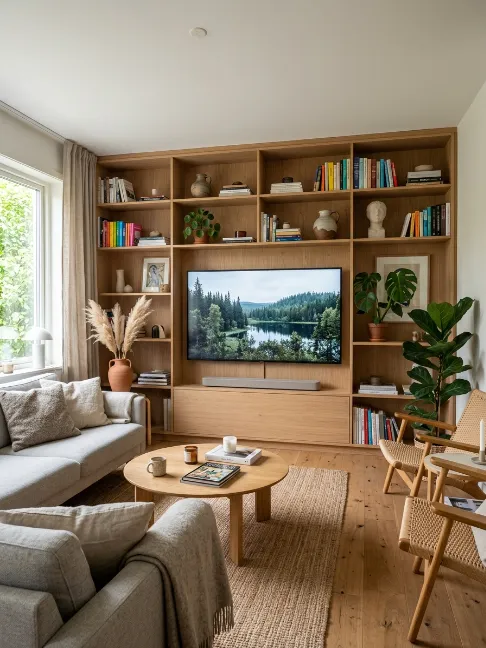
A massive black screen on a white wall is basically the anti-Scandi. Integrate it with built-in shelving, hide it behind cabinet doors, or frame it with art on either side.
Some people go full “no TV in the living room” — respect, but not always realistic. At minimum, manage the cable situation. Exposed cables are a vibe-killer.
32. Matte Over Gloss, Every Time
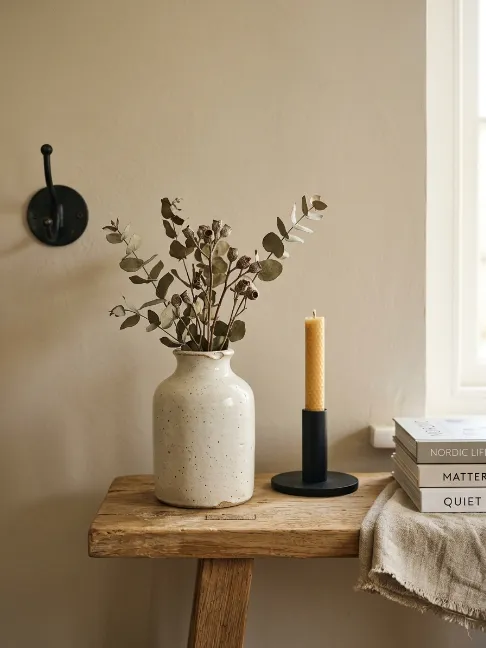
Glossy surfaces feel cold and clinical. Matte finishes on paint, furniture, and accessories feel softer, warmer, and more aligned with the Scandi aesthetic.
Matte black hardware, matte ceramic vases, matte-finish paint — it all adds up to a room that feels touched by human hands rather than produced in a factory.
33. Choose Personal Objects That Actually Mean Something
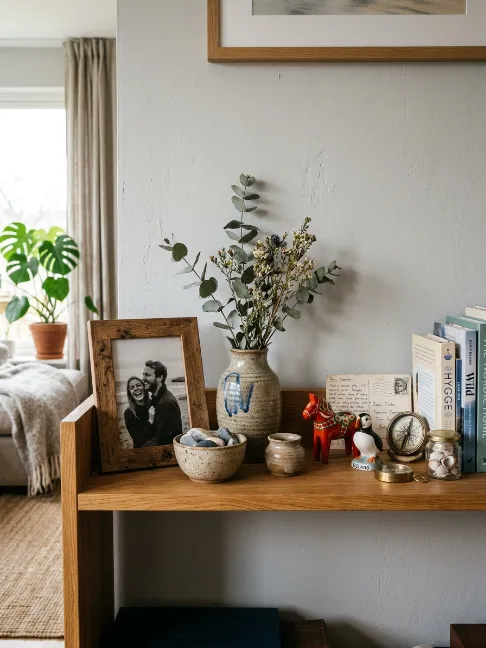
This is the part that separates a Scandi room from a Scandi showroom. A few meaningful personal objects — a photograph, a piece of pottery you made, something you brought back from a trip — give the space soul.
Design without personality is just interior decoration. You want a home, not a hotel lobby.
34. Seasonal Refresh With Small Swaps
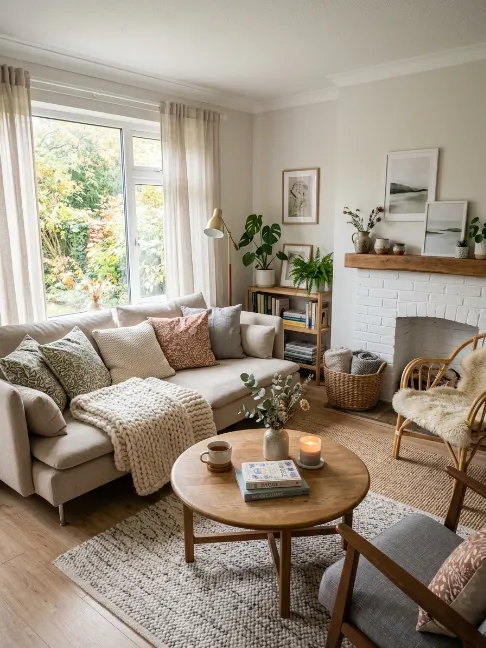
One of the things I love most about Scandi style is how easy it is to refresh seasonally without a full overhaul.
Swap cushion covers, add a heavier throw in winter, bring in different botanicals for summer. Small changes, big difference in how the room feels. It keeps things fresh without costing a fortune.
Discover More Decor Ideas
Top Cheap Living Room Essentials on Amazon That Look Expensive
10 Best Living Room Decor on Amazon Under $50
TOP 10 Amazon Finds: Stylish Living Room Furniture Under $100
✅ Quick Scandi Small Living Room Checklist
- Warm white or soft neutral walls ✔
- Layered warm-toned lighting (floor lamp + table lamp + candles) ✔
- Low-profile furniture with visible legs ✔
- At least one natural wood element ✔
- Two to four plants ✔
- Large anchor rug (big enough!) ✔
- Textured textiles in a cohesive neutral palette ✔
- Mirrors used strategically ✔
- Hidden or basket-based storage ✔
- Minimal, intentional accessories ✔
- Personal objects that mean something ✔
Frequently Asked Questions
Q: Can Scandinavian style really work in a very dark living room? Yes — and it can work brilliantly. The trick is doubling down on warm lighting layers, keeping walls and large furniture as light as possible, and using mirrors strategically to bounce whatever natural light you do have. Sheer linen curtains instead of blackout drapes help enormously too. I’ve seen completely north-facing rooms transformed this way.
Q: Is Scandi interior design expensive to pull off? Genuinely, no — and this surprises a lot of people. The philosophy is built on restraint and intentionality, not luxury price tags.
IKEA, H&M Home, Zara Home, and Amazon all carry excellent Scandi-adjacent pieces at very accessible prices. Spend carefully on one or two anchor pieces and be more budget-conscious everywhere else.
Q: What’s the real difference between Scandi and minimalist design? Great question. Minimalism is about reducing everything to almost nothing — pure austerity. Scandinavian design is warmer, softer, and more human. It embraces texture, natural materials, plants, candles, and personal objects. It’s minimalism with a cozy jumper on.
Q: How do I add personality to a Scandi room without making it look cluttered? Edit ruthlessly. Choose three to five meaningful personal objects — a photograph, a travel memento, a piece of art you genuinely love — and give each one space to breathe.
Meaningful objects styled with space around them read as intentional. The same objects crammed together read as clutter. Spacing is everything.
Q: Can I use bold colour and still keep a Scandi feel? Absolutely — but go muted rather than bright. Dusty blue, deep forest green, warm terracotta, and burgundy all work beautifully within a Scandi palette.
Avoid neon, overly saturated tones, or mixing more than two accent colours. One bold muted colour, used in two or three places across the room, is the sweet spot.
Let’s Wrap This Up 🎉
Honestly? Scandinavian small living room design is one of those things that sounds simple but has genuine depth the more you explore it.
It’s not about following rules rigidly — it’s about understanding why those principles exist and then applying them in a way that feels true to your own space and life.
Start small. Pick three or four ideas from this list that feel immediately doable — maybe the lighting, a new rug, and a couple of plants. Live with those changes for a few weeks. Then layer in more.
You don’t need to overhaul everything at once, and you definitely don’t need to spend a fortune.
The goal is a living room that makes you exhale when you walk through the door. Calm, warm, yours. That’s what Scandi design, at its best, actually delivers.
Have you tried any of these ideas in your own home? Which one made the biggest difference for you? Drop it in the comments — I genuinely want to know. And if you’re just starting out, tell me what your biggest small living room challenge is right now. Let’s figure it out together. 👇
