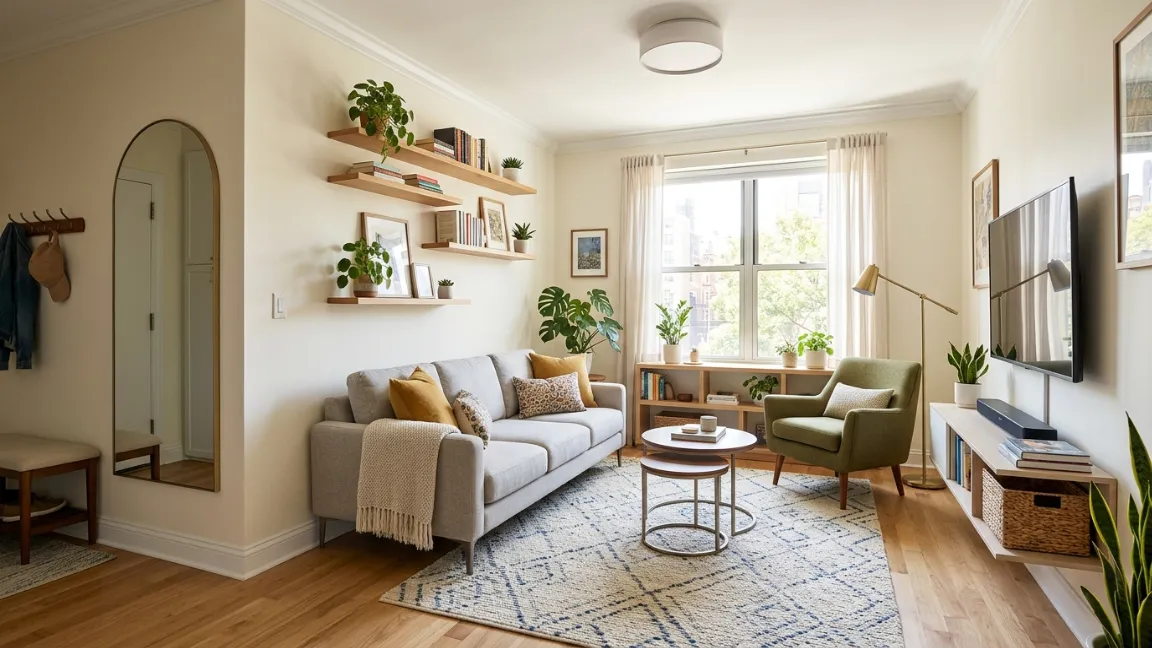
Look, I’m just gonna say it — small living rooms are both a curse and a creative challenge. I’ve lived in three different apartments where my “living room” was basically a fancy hallway with a sofa in it. And honestly? Some of those tiny spaces ended up being my favourite rooms I’ve ever decorated. There’s something weirdly satisfying about solving a space puzzle and nailing it.
So if you’re staring at your compact living room wondering how on earth you’re gonna make it work — grab a coffee, sit down (on that too-big sofa you probably bought), and let’s sort this out together.
Why Small Living Room Layouts Actually Matter
Most people think decorating a small room is just about buying smaller furniture. Bro, it’s so much more than that. Layout, light, colour, storage — it all plays into how a space feels. A badly laid-out large room can feel cramped. A well-designed small room can feel genuinely luxurious. The difference is always in the decisions.
Quick Space Info: What Works Where
| Room Size | Sofa Style | Rug Size | Layout Type |
|---|---|---|---|
| Under 100 sq ft | Loveseat | 5×7 ft | Floating centre |
| 100–150 sq ft | 2-seater sofa | 8×10 ft | L-shape corner |
| 150–200 sq ft | Small sectional | 9×12 ft | Open zone layout |
| 200+ sq ft | Standard sofa | 9×12 ft+ | Multi-zone setup |
1. Stop Pushing All Your Furniture Against the Walls
The Floating Furniture Rule Nobody Tells You About
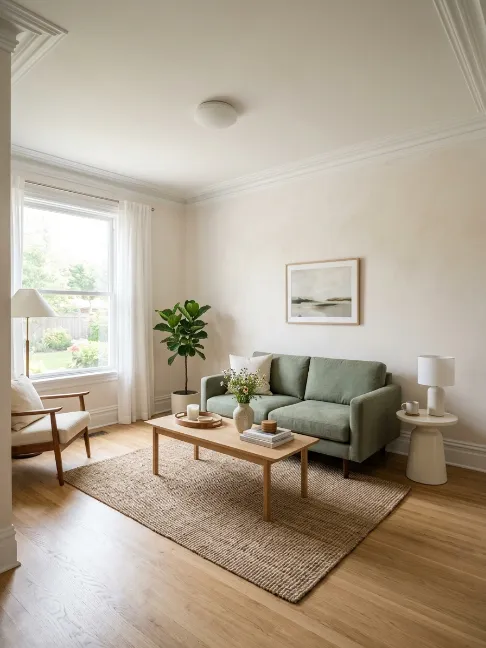
This is probably the biggest mistake I see in small living rooms — and honestly, I made it too in my first flat. Everyone instinctively shoves the sofa against the wall thinking it “saves space.” It doesn’t. It actually makes the room feel more like a waiting room than a living space. 😅
Floating your furniture — pulling it even 4–6 inches away from the wall — creates breathing room and makes the layout feel intentional. It sounds counterintuitive, but try it once and you’ll never go back. The room suddenly has depth, personality, and actual flow.
2. Choose the Right Sofa (This One’s Personal)
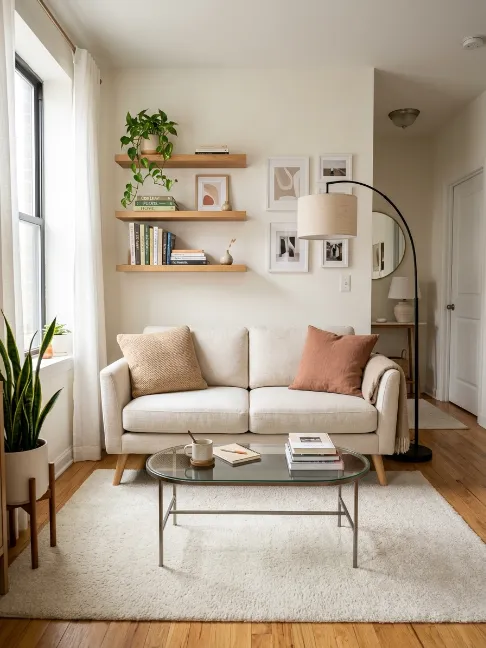
Apartment-Sized Sofas Are a Game Changer
When I finally swapped my massive dark grey three-seater for a smaller, lighter-coloured two-seater, my living room transformed overnight. No painting, no renovating — just a better sofa choice. The sofa is the most important piece in your living room, and in a small space, it can either make or break everything.
Here’s what to look for:
- Width under 80 inches — anything bigger starts dominating the room
- Exposed legs rather than a skirted base — legs create visual lift and make the room feel airier
- Light upholstery — cream, sand, or warm white reflects light beautifully
- Low profile back — keeps sightlines open across the room
- I personally tried a velvet blush two-seater once — looked incredible, showed every crumb known to mankind 😂
4. Multifunctional Furniture Is Your Best Friend
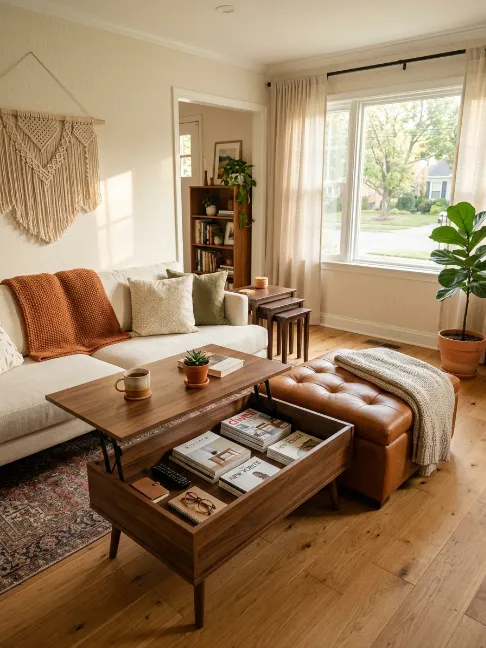
Why Every Piece Needs to Pull Double Duty
In a small living room, single-purpose furniture is kind of a luxury you can’t afford. Every piece should do at least two things — look good and store something, or seat people and fold away. Trust me, once you go multifunctional, you’ll wonder how you ever lived without it.
Some genuinely useful options:
- Lift-top coffee tables — I have one of these and it’s honestly changed my life. I eat, work, and store blankets in it
- Storage ottomans — doubles as a coffee table, extra seating, and hidden storage 🙌
- Nesting side tables — tuck one under the other when guests aren’t over
- Sofa beds or daybeds — especially useful if you host overnight guests
- Honestly, the nesting tables trend feels a bit 2015 now, but functionally? Still unbeatable
6. Use Mirrors Like a Pro
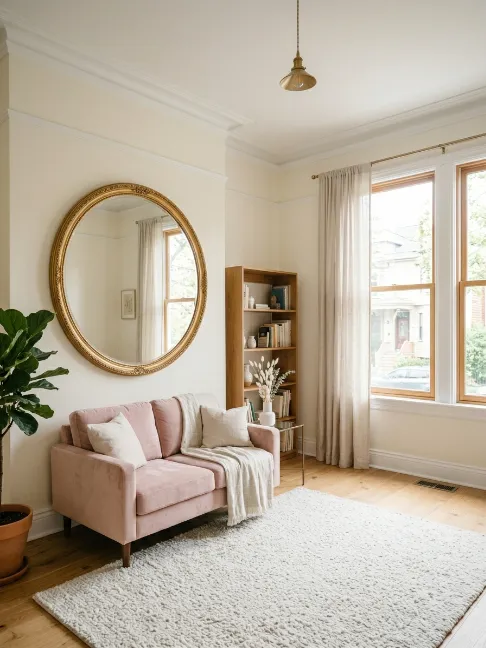
The Oldest Trick in the Book — But It Works
A large mirror on the right wall can literally make your room feel twice the size. I’m not being dramatic. Mirrors reflect light and create depth — two things every small living room desperately needs. The key is placement: opposite a window is the sweet spot, because it bounces natural light back into the room.
Go for a simple, clean-framed mirror rather than something fussy or ornate. In a small space, the frame competes with everything else visually. Lean a large one against the wall for that casual, editorial look — works every time.
7. Get the Rug Size Right (Most People Get This Wrong)
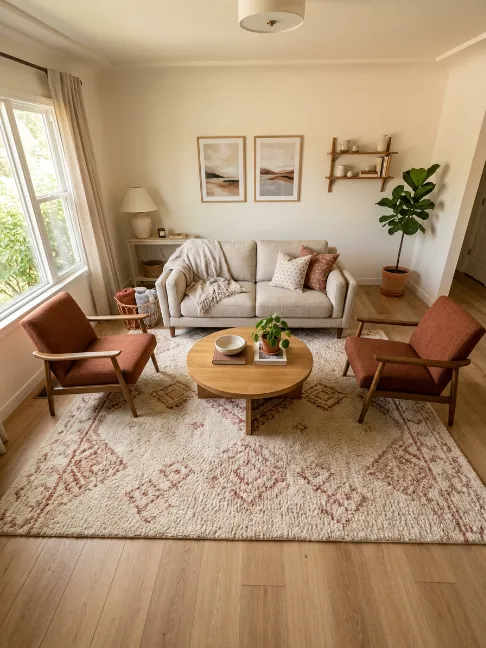
Rug Sizing for Small Living Rooms
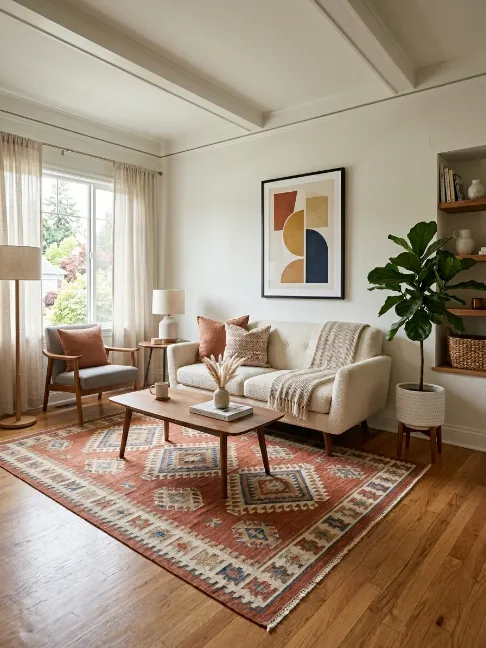
A tiny rug floating under just your coffee table? That’s a decorating crime, honestly. The rug should anchor your entire seating area, not just one piece of furniture. At minimum, the front legs of your sofa and chairs should sit on it.
For most small living rooms, an 8×10 ft rug is the sweet spot. Go smaller and the room feels fragmented. The right rug pulls the whole space together and makes it feel cohesive — which is exactly what a small room needs.
8. Lighting — Don’t Just Rely on One Overhead Light
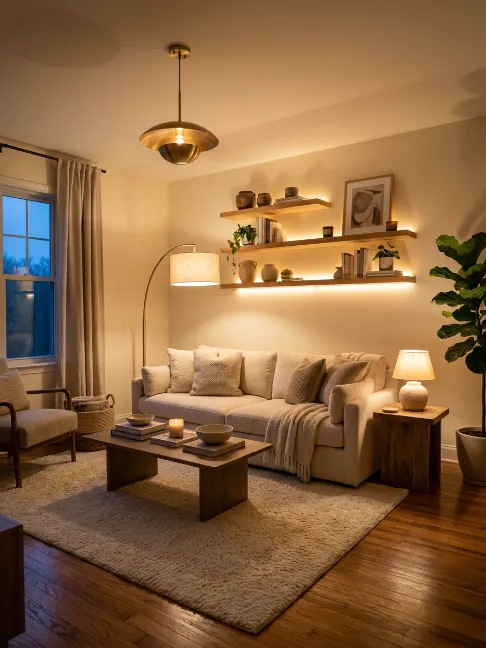
Layer It Up for Depth and Warmth
One harsh ceiling light in a small room is the interior design equivalent of fluorescent office lighting — functional, but deeply depressing. Layered lighting is what separates a room that looks designed from one that just… exists.
Here’s my go-to lighting layering system:
- Ambient — a ceiling fixture or recessed lighting for general brightness
- Task — a floor lamp or table lamp for reading nooks or corner seating
- Accent — LED strip lights behind the TV, wall sconces, or candles
- FYI: always go warm-toned bulbs — 2700K to 3000K. Cool white makes small rooms feel clinical and cold
- I tried smart bulbs that shift from warm to cool throughout the day — honestly, this is insane! Totally worth it
10. Go Vertical — Shelving Is Your Secret Weapon
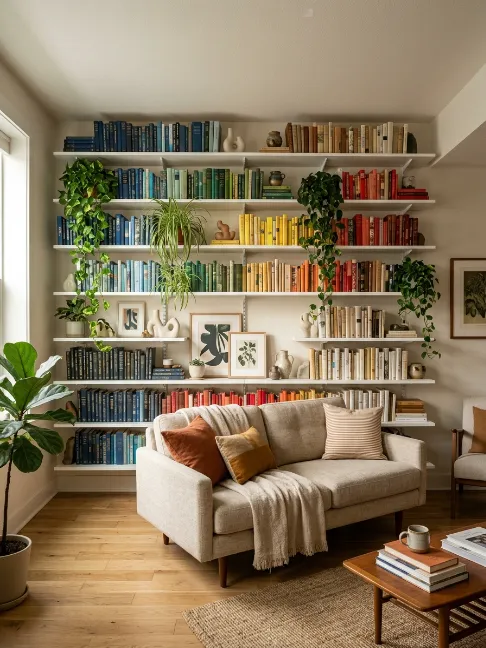
Use Wall Space, Not Floor Space
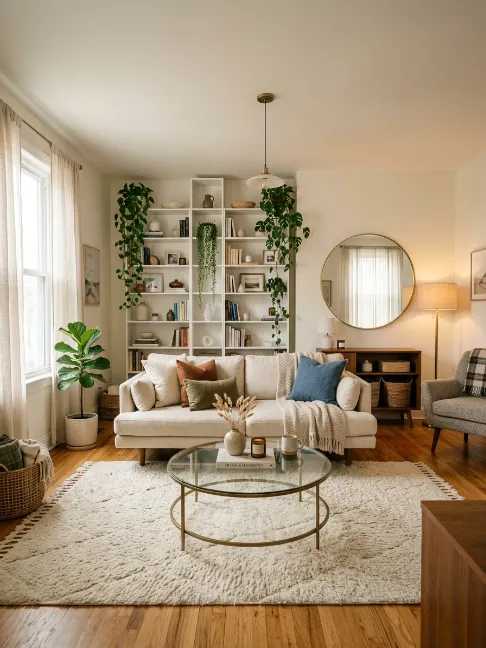
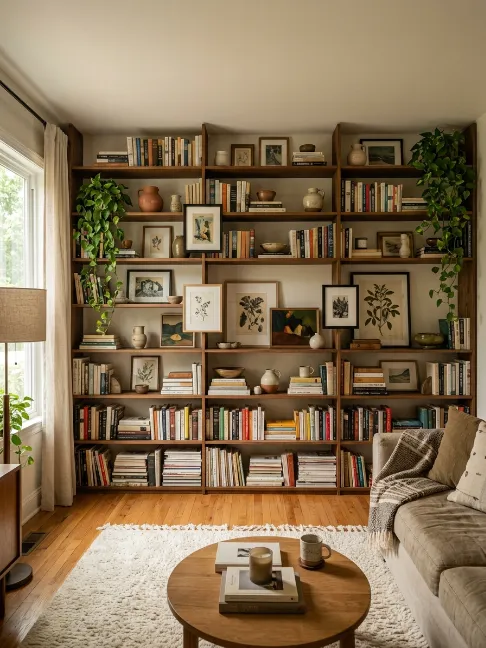
When your floor space is limited, the walls are basically untapped real estate. Floor-to-ceiling shelving draws the eye upward, making ceilings feel higher and giving you loads of storage without sacrificing a single square foot of floor. I fitted a set of tall floating shelves in my last apartment and it genuinely changed the entire dynamic of the room.
Style them with a mix of books, plants, and a few decorative objects. Don’t fill every shelf — negative space is part of the design. For inspiration and room planning tools, Houzz’s room planner is genuinely helpful before you commit to drilling holes.
11. Pick a Cohesive Colour Palette
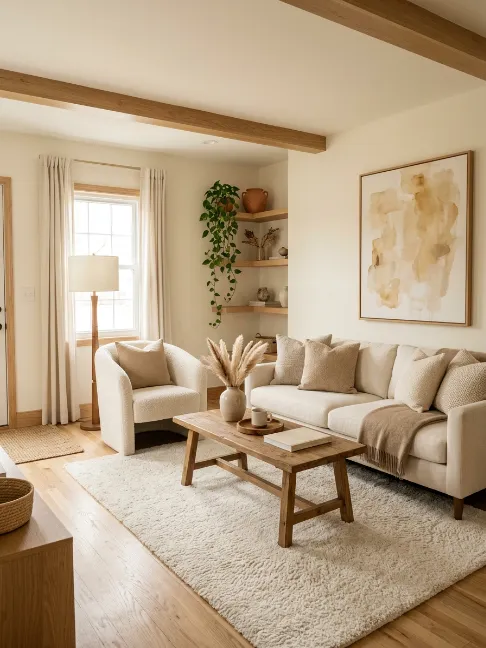
2–3 Colours Max — That’s the Rule
Too many colours in a small room creates visual chaos. Your eye doesn’t know where to land and the room feels busy and claustrophobic. Stick to two or three tones max, and repeat them in different textures across the room.
My personal favourite combo for small living rooms: warm white walls + natural wood tones + one soft accent colour (sage green, dusty blue, or terracotta — pick your vibe). It sounds simple because it is. Simple works.
12. Try Transparent or Lucite Furniture
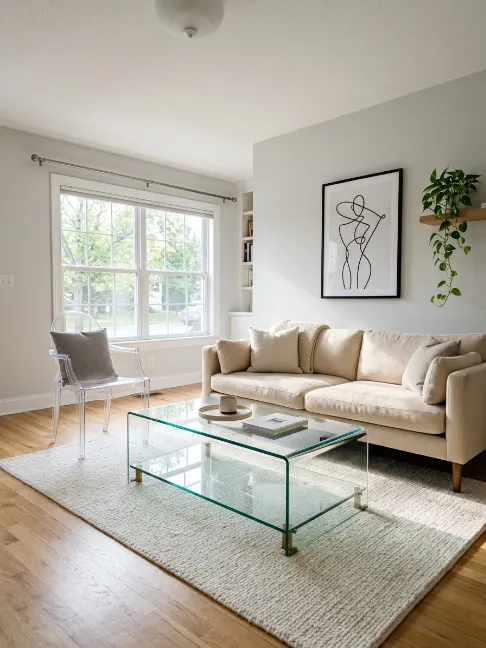
Furniture That Doesn’t “Take Up Space” Visually
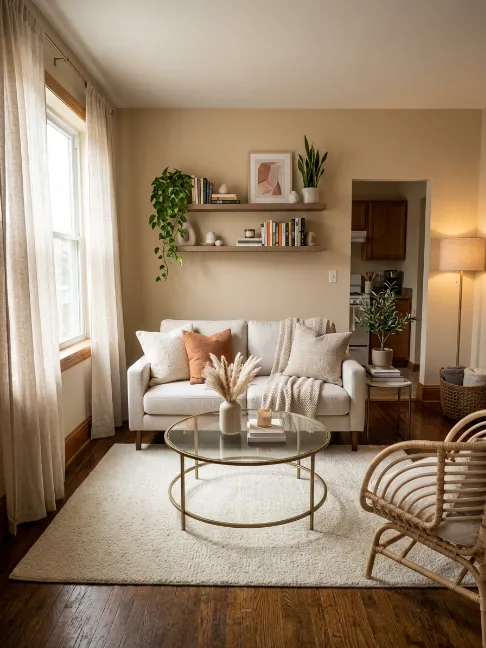
Glass coffee tables and acrylic accent chairs are genuinely underrated in small spaces. Because you can see through them, they don’t create visual blocks. Your eye travels across the room uninterrupted, which makes the space feel open even when it technically isn’t.
I use a glass-top coffee table currently and the difference from my old solid wood one is remarkable. It’s like the table barely exists — in the best possible way.
13. Create a Strong Focal Point
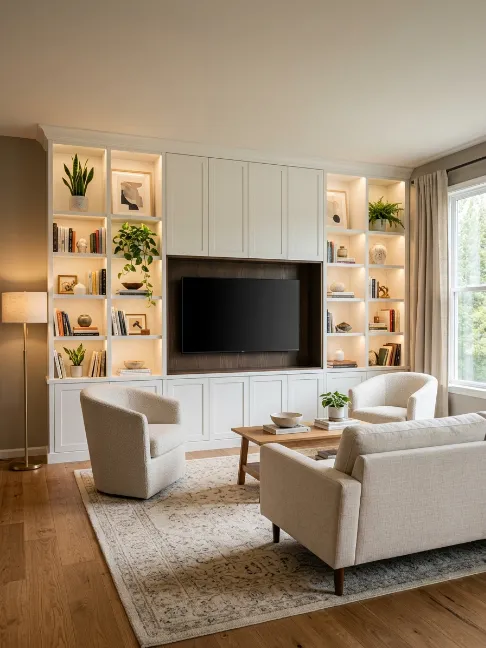
Give Your Room Something to “Point At”
Every room needs a focal point — one thing the eye naturally travels to first. Without it, a small room feels scattered and unresolved. A focal point gives the space purpose and structure.
Great options:
- A TV wall with built-in shelving around it
- A bold piece of artwork — large scale, not a cluster of tiny frames
- An electric fireplace — these have come a long way and look genuinely stunning
- A painted or wallpapered accent wall — one wall, done confidently
- Arrange all your seating to face or frame the focal point
14. Hang Curtains High and Wide
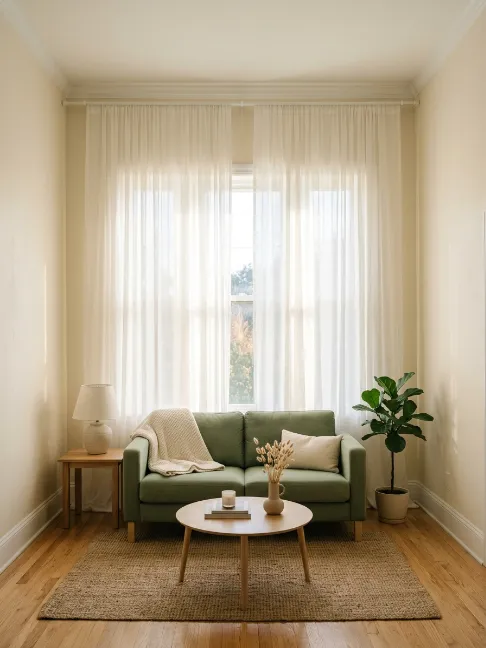
The Curtain Trick That Makes Windows Look Massive
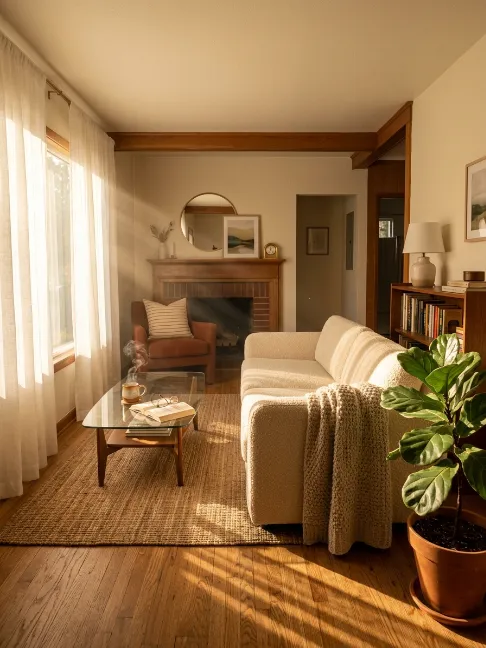
Mount your curtain rod as close to the ceiling as possible — not at the window frame. Then extend it 8–12 inches beyond the window on both sides. Wow! The difference is instant and almost embarrassingly effective. Your windows look enormous, your ceilings feel higher, and the whole room feels more expensive than it is.
Use lightweight linen or semi-sheer panels to keep maximum natural light flowing through. Heavy drapes in a small room are a hard no from me.
15. Declutter — Like, Actually Declutter
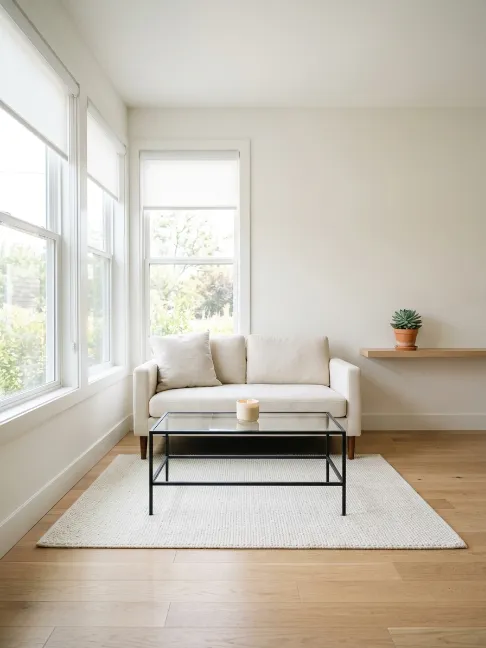
Visual Clutter Is the Enemy of Small Spaces
I can give you every layout trick in the book, but if your surfaces are covered in stuff, none of it matters. Clutter is the single fastest way to make a small room feel suffocating. One good declutter session does more for a small room than any furniture purchase.
Adopt a one-in, one-out policy. New candle comes in, an old one goes. New cushion arrives, one leaves. It sounds harsh but once you commit to it, maintaining a clean, open space becomes second nature.
16. Use Built-In or Modular Storage
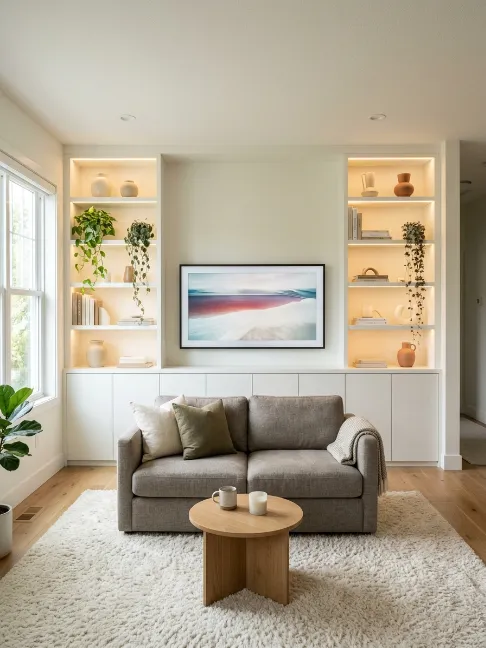
Look Built-In Without the Budget
Custom built-ins are dream territory for small spaces, but they’re not always budget-friendly. The good news? IKEA’s modular systems (like KALLAX or BESTÅ) can genuinely mimic the built-in look at a fraction of the cost. Flank your TV with matching units, paint them the same colour as the wall, and bro — it looks custom.
For product ideas that work within these systems, Apartment Therapy’s small space storage guide has some genuinely solid recommendations.
17. Bring in Plants — But Be Strategic
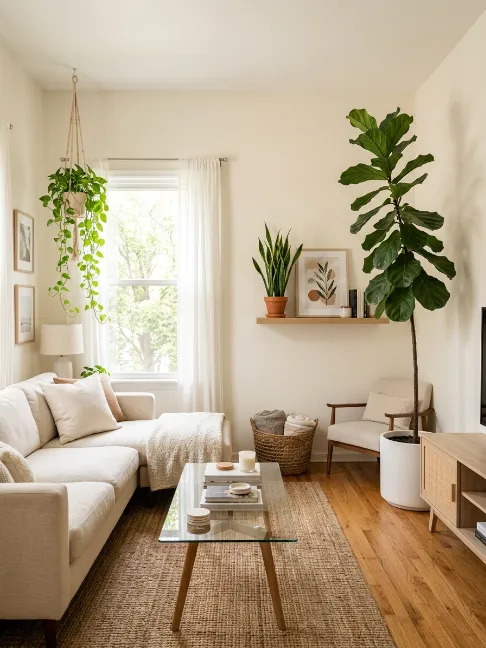
Tall and Lean, Not Wide and Bushy
Plants breathe life into any space, but in a small living room, the wrong plant placement just adds clutter. Go tall and architectural — a fiddle leaf fig, a snake plant, or a tall monstera in a corner adds vertical interest without using up precious floor area.
Trailing plants hung from shelves or ceiling hooks? Zero floor footprint, maximum visual impact. Honestly one of my favourite styling tricks and it costs almost nothing if you propagate your own.
18. Try a Loveseat and Accent Chair Combo
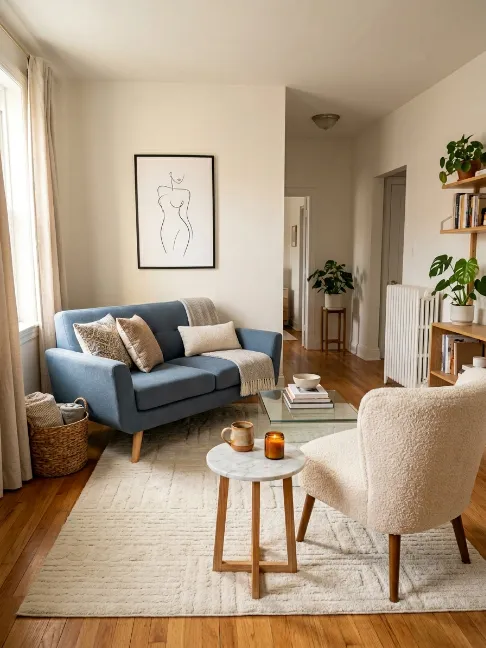
More Flexible Than You’d Think
Instead of forcing a full sofa into a tight space, consider pairing a loveseat with one or two accent chairs. It gives you the same seating capacity with a lighter visual footprint. You can also rearrange the chairs more easily when you need extra floor space — which you can’t do with a massive sectional.
I tried this layout in a previous flat and honestly preferred it to a standard sofa setup. Way more flexible for hosting.
19. Consider a Small Sectional — Done Right
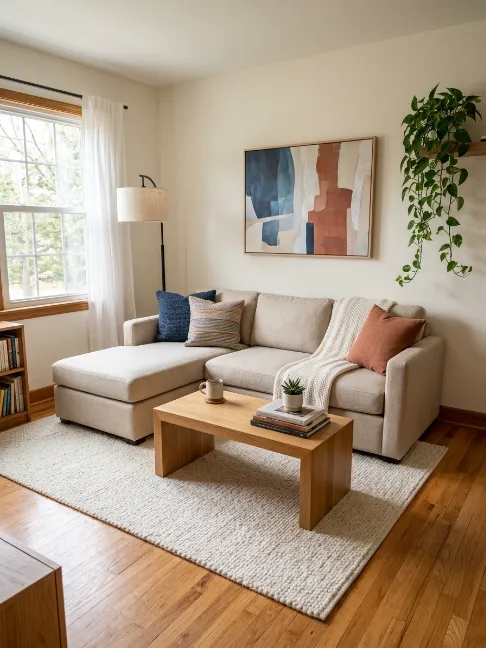
Sectionals Aren’t Always Space Hogs
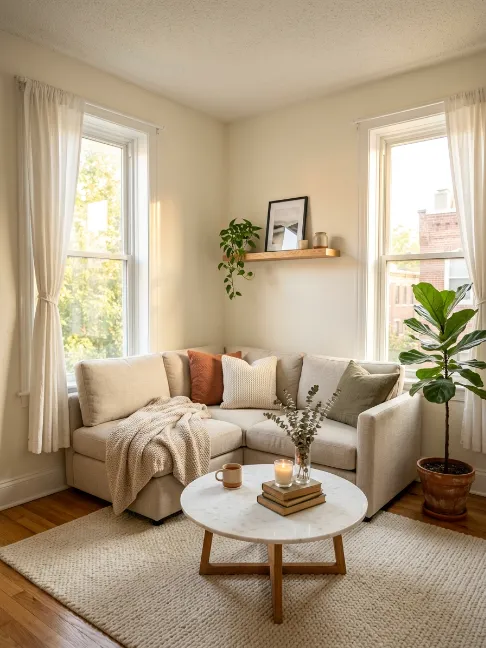
People assume sectionals are only for big rooms. Not true. A compact L-shaped sectional in a corner is actually one of the most efficient ways to maximise seating in a small room. It uses otherwise dead corner space and seats more people than a standard sofa.
Look for modular options with reversible chaises, low-profile arms, and clean lines. Avoid anything U-shaped or overstuffed — that’s where sectionals start bullying the room.
20. Use Diagonal Furniture Placement
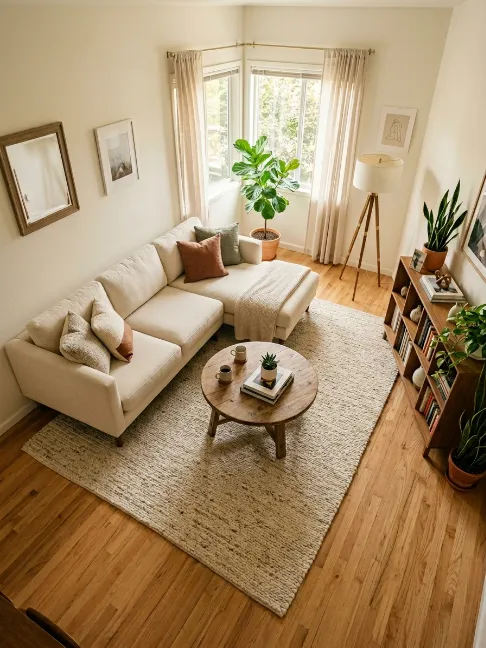
The Unexpected Layout That Opens Up Space
Placing your sofa or rug at a slight diagonal to the room creates longer sightlines, which tricks the eye into perceiving more space. It sounds unconventional — and yeah, it feels weird at first — but in awkwardly shaped or very narrow rooms, diagonal placement can completely change the energy of the space. Give it a try before you dismiss it.
21. Maximise Every Inch of Natural Light
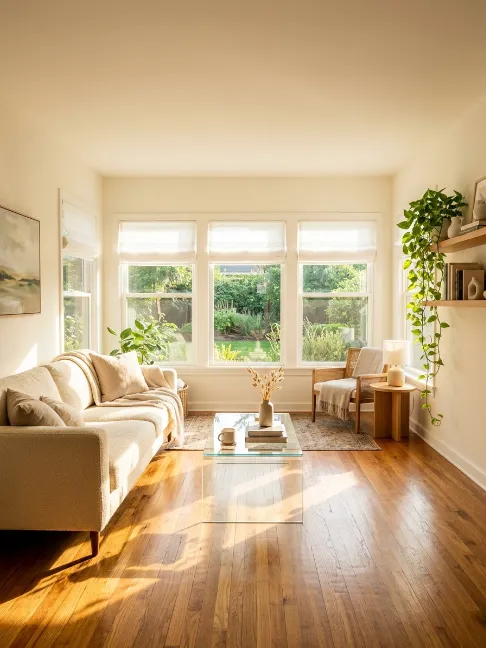
Light Is Free Real Estate
Natural light is the most powerful tool you have in a small space, and it costs absolutely nothing. Keep window treatments minimal — swap heavy curtains for simple Roman shades or sheer linen panels. Don’t position tall furniture anywhere near a window. Clean your windows. Seriously. Dirty glass blocks more light than you’d think. More light equals more perceived space, every single time — no exceptions.
22. Go Monochromatic for a Seamless Look
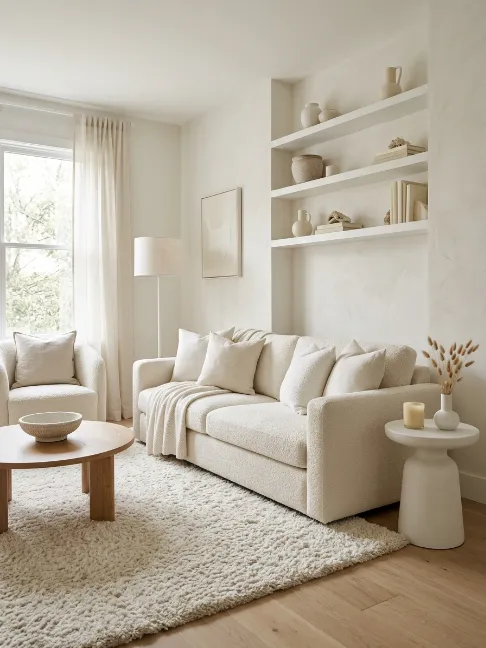
One Colour Family, Multiple Textures
A monochromatic scheme — using varying shades of a single colour — creates visual continuity that makes a room feel uninterrupted and larger. Ivory walls, cream sofa, warm sand rug, oatmeal throw. It sounds bland on paper but looks genuinely sophisticated in person. The trick is layering different textures within that one colour family — linen, velvet, cotton, wood — so it doesn’t read as flat.
23. Replace a Second Chair With a Bench
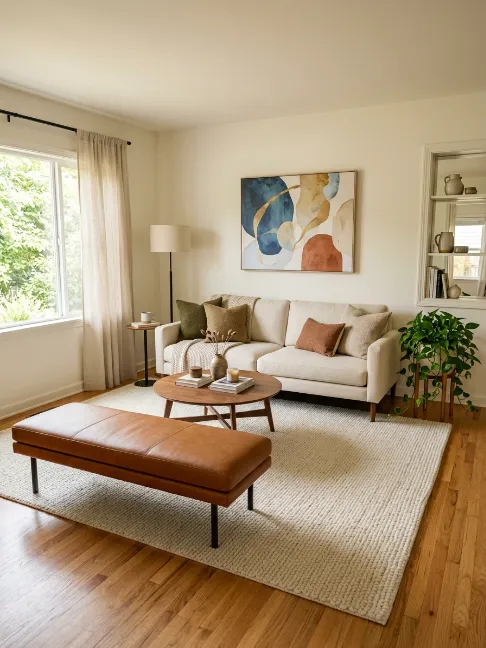
Sleek, Functional, and Easy to Tuck Away
A low, upholstered bench provides extra seating without the visual bulk of a second armchair. Push it against the wall, slide it under a console table, or use it as a coffee table alternative. Benches are criminally underused in small living rooms and honestly, more people should be talking about them.
24. Define Zones in Open-Plan Spaces
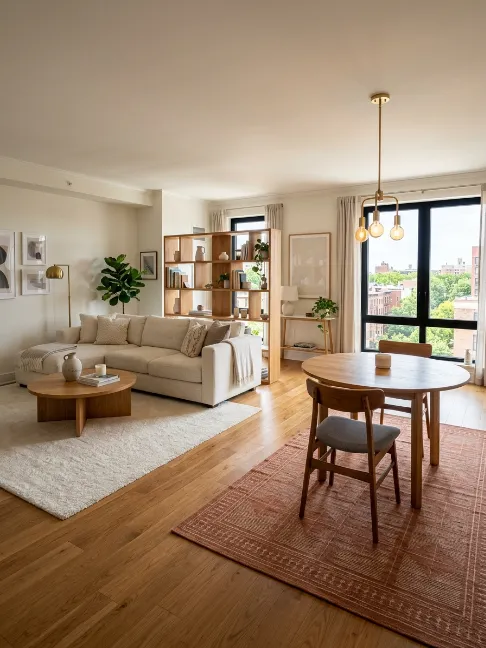
Make Each Area Feel Intentional
If your living room flows into a dining area or kitchen, defining separate zones is key. Without clear zones, an open-plan space just feels like organised chaos. Use rugs, lighting, and furniture placement to create invisible boundaries between your living and dining areas.
A bookshelf used as a room divider is particularly effective — it separates the zones while still letting light pass through. Functional and smart.
25. Design for Your Life — Not for Instagram
The Most Important Idea on This Entire List
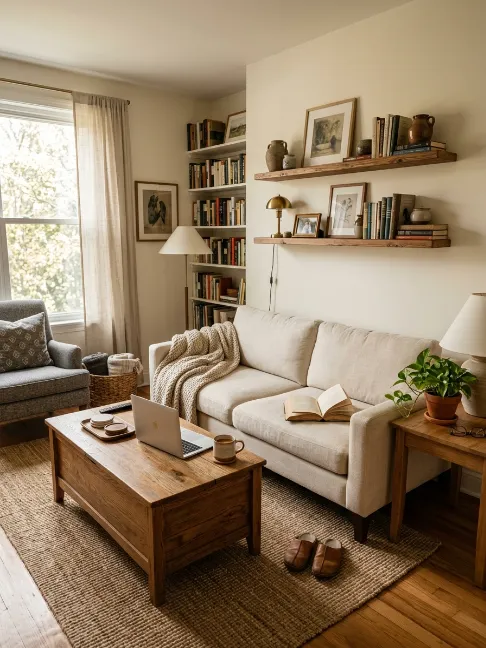
This is the one most people skip and honestly, it matters more than any other tip here. Design your small living room layout around how you actually live — not how you want it to look in a photo. Do you work from home? You need a functional corner. Do you host people often? Prioritise flexible seating and clear pathways. Do you watch a lot of TV? Every seat needs a decent sightline.
The “perfect” small living room isn’t the one that looks best on Pinterest. It’s the one that actually works for your daily life.
Favourite Products Mentioned in This Article
Just to bring it all together — here are the three products I highlighted throughout this article, all worth checking out on Amazon:
- HONBAY Convertible Sectional Sofa — great modular option for small apartments
- WLIVE Storage Ottoman with Tray — multifunctional and genuinely useful
- TaoTronics LED Floor Lamp — slim profile, adjustable warmth, ideal for small spaces
As an Amazon Associate, I earn from qualifying purchases at no extra cost to you.
Frequently Asked Questions
What’s the best furniture layout for a small living room?
Floating furniture away from walls and creating a central seating arrangement usually works best. Avoid pushing everything against the walls — it makes the room feel less dynamic and actually more cramped, not less.
Can I use a sectional sofa in a small living room?
Yes, absolutely — but choose wisely. A compact L-shaped or modular sectional that fits into a corner is ideal. Avoid oversized, U-shaped, or heavily cushioned sectionals that visually dominate the space.
What colours make a small living room look bigger?
Light, warm neutrals — whites, creams, warm greiges, soft sage — work best. They reflect light and create a sense of openness. That said, a well-lit dark room can look moody and intentional rather than cramped if done with confidence.
How do I add storage to a small living room without making it feel cluttered?
Go vertical with shelving, use multifunctional furniture (storage ottomans, lift-top tables), and look into modular storage systems that can be styled to look like built-ins. Keep surfaces as clear as possible.
Do rugs make a small room look bigger or smaller?
The right rug — sized correctly — makes a small room look bigger by anchoring the space and creating cohesion. The wrong rug (too small, too busy) makes it feel fragmented and smaller. Aim for an 8×10 ft rug in most small living rooms and make sure at least the front legs of your seating sit on it.
Wrapping It Up
Small living rooms aren’t a consolation prize — they’re just a different kind of design challenge, and honestly, I’ve had more fun decorating compact spaces than big ones. The constraints force creativity in a way that an enormous open room never really does.
Pick three or four ideas from this list that feel most relevant to your space and start there. You don’t need to overhaul everything at once. Move your sofa, add a mirror, get a storage ottoman, hang your curtains higher — small changes compound quickly in small rooms.
Have you tried any of these layouts in your own space? Drop a comment and let me know what worked (or what spectacularly didn’t)! I love hearing how people solve their own small space puzzles. 👇
