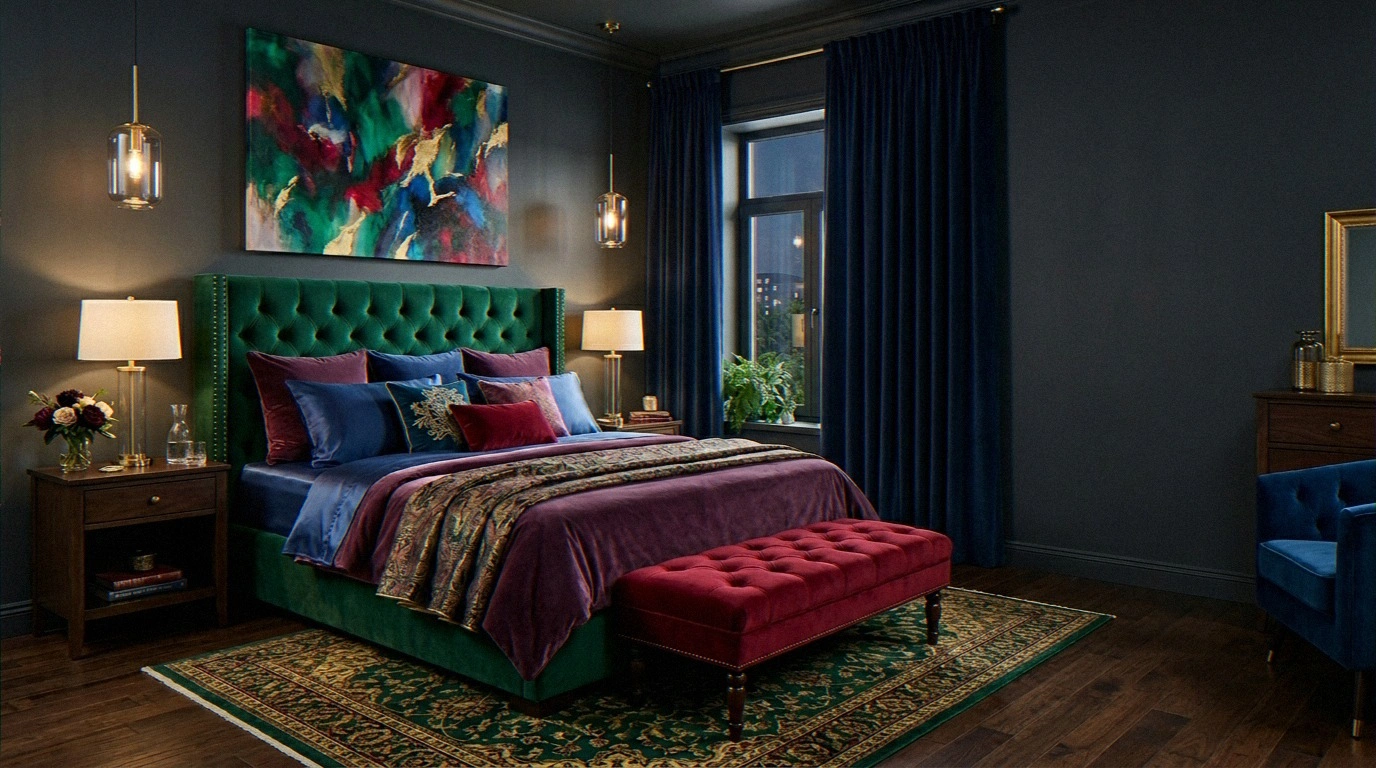
Right, so here’s the thing — the first time I painted my bedroom walls in deep emerald green, my mum literally stood in the doorway with her hand over her mouth. Not in a good way, either.
She thought I’d gone completely off the rails. “It’s going to look like a cave,” she said, with that very specific look parents give you when they think you’re making a life-ruining decision.
But honestly? The room looked like an absolute palace. Warm, rich, dramatic, and completely different from every beige, greige, or white box I’d lived in before.
That one decision changed how I think about bedrooms entirely, and I’ve been obsessed with jewel-tone interiors ever since.
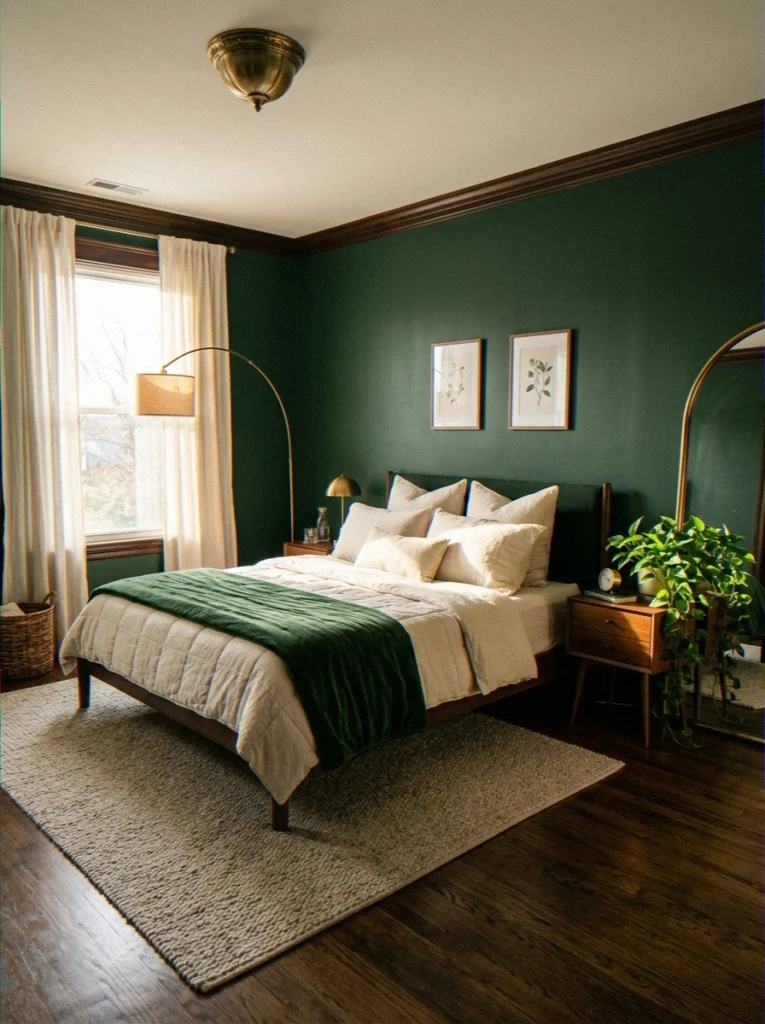
If you stay up late at night looking at Pinterest and wondering how to get that look without spending a lot of money, you’re in the right place.
This article has 41 ideas for bedrooms that use jewel tones, which are deep, rich colors inspired by gemstones that make a room feel truly luxurious.
There’s something in here for everyone, whether you want to completely redesign your bedroom or just give one tired corner a new look.
Why Jewel Tones Are Absolutely Built for Bedroom
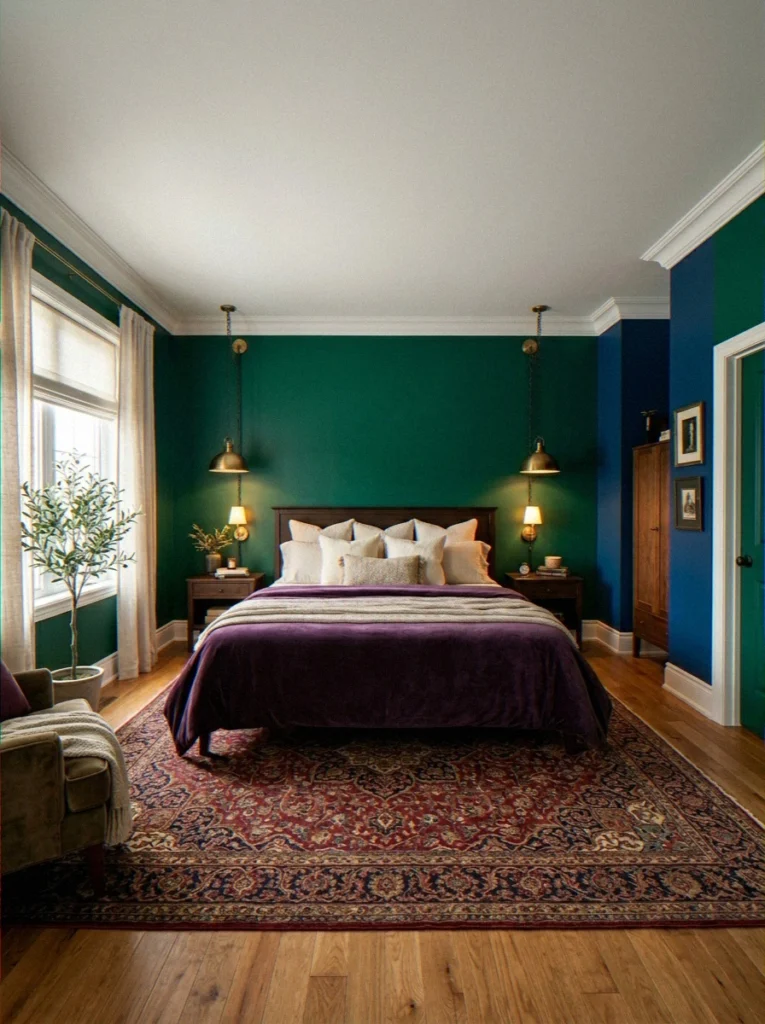
Bedrooms are not the same as kitchens or living rooms. They are private, close, and made just for you. So I’ve never understood why they should be neutral, not hurtful, and easy to forget.
Sapphire blue, emerald green, amethyst purple, ruby red, and topaz gold are all jewel tones that add natural depth and warmth to a room.
They turn a bedroom from “a room with a bed in it” into a real retreat. They soak up light in a way that makes the room feel cozy, and they look great with fabrics like velvet, linen, dark wood, and brass.
Color psychology research actually supports this — deeper, richer colors can lower cortisol and create feelings of safety and enclosure, which is exactly what you want in a space designed for rest.
If you want to geek out on that side of things, Psychology Today’s coverage of environment and design is genuinely worth reading.
IMO, no other color family does what jewel tones do: they’re bold enough to be interesting, sophisticated enough to feel intentional, and versatile enough to work in a tiny flat or a sprawling master suite.
Emerald Green Bedroom Ideas
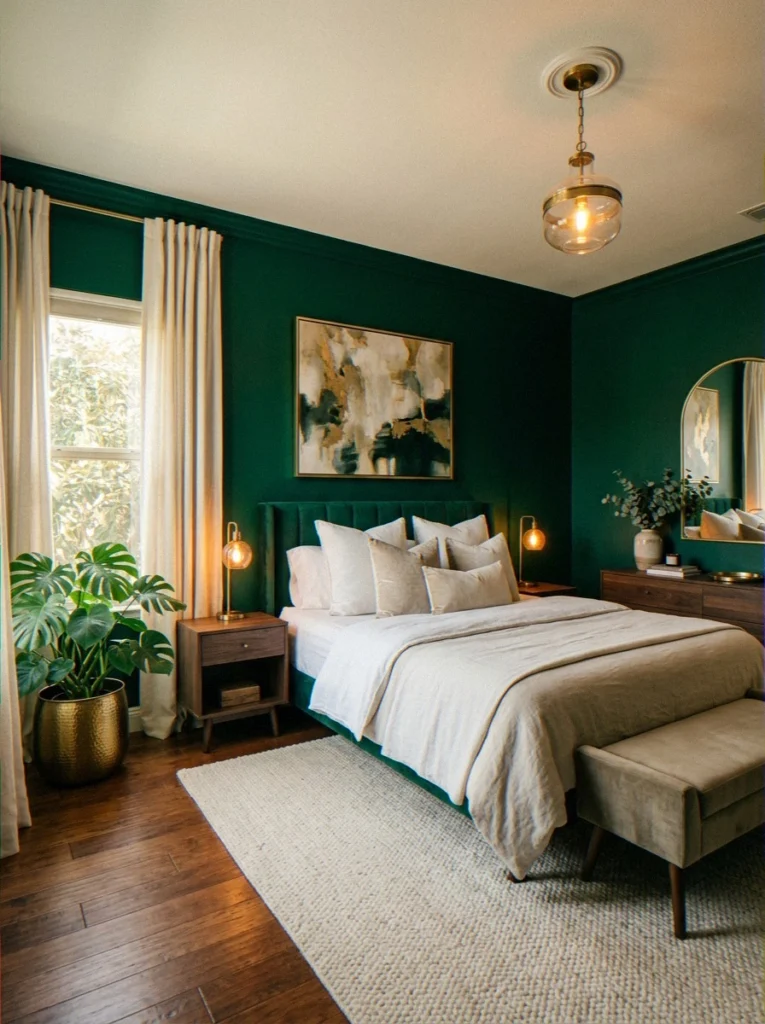
Emerald is where I’d tell anyone to start. Honestly, it’s the most forgiving jewel tone — it reads as sophisticated rather than aggressively bold, it pairs with almost everything, and it works equally well in warm-toned rooms and cool-toned ones. It was my entry point, and it converted me fully 🌿
1. The All-Emerald Statement Room
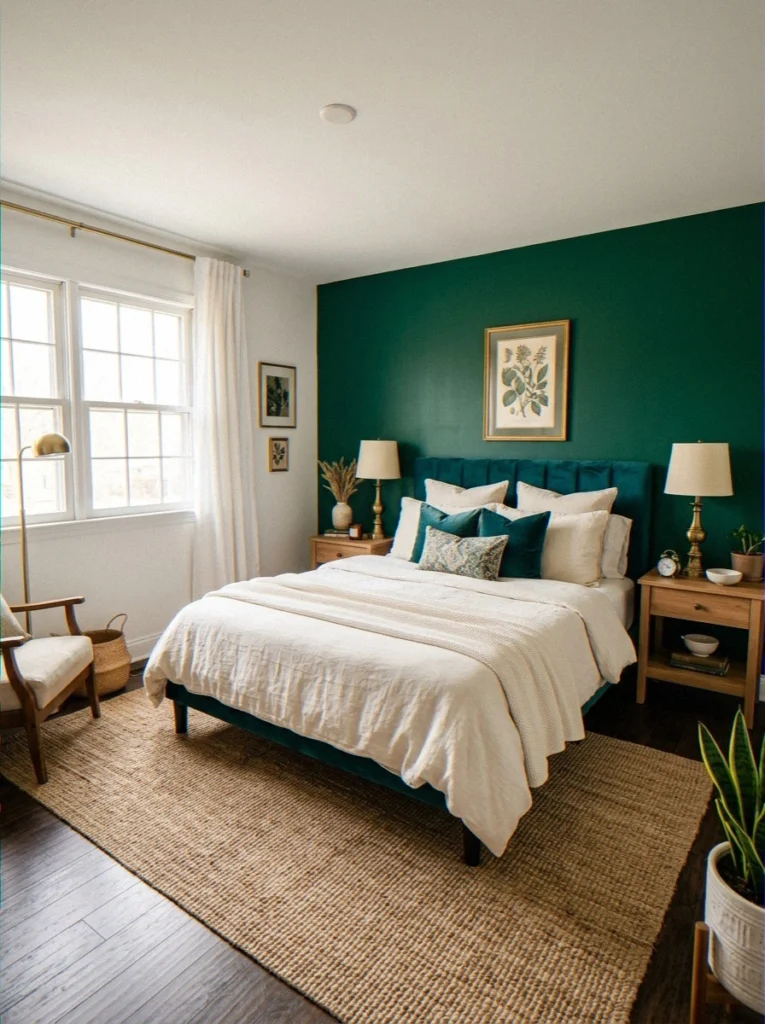
One of the best things you can do to a bedroom is paint all four walls a deep, true emerald color, like Sherwin-Williams’ Jasper or Farrow & Ball’s Calke Green.
The key is to balance it out with lighter things like cream linen bedding, warm natural wood furniture, and brass hardware.
The walls are very rich, and the lighter pieces keep it from feeling too heavy or closed in. This exact combination worked in my spare room, and it quickly became the most talked-about room in my house. People would walk in and just stop.
2. Emerald Velvet Headboard Against Neutral Walls
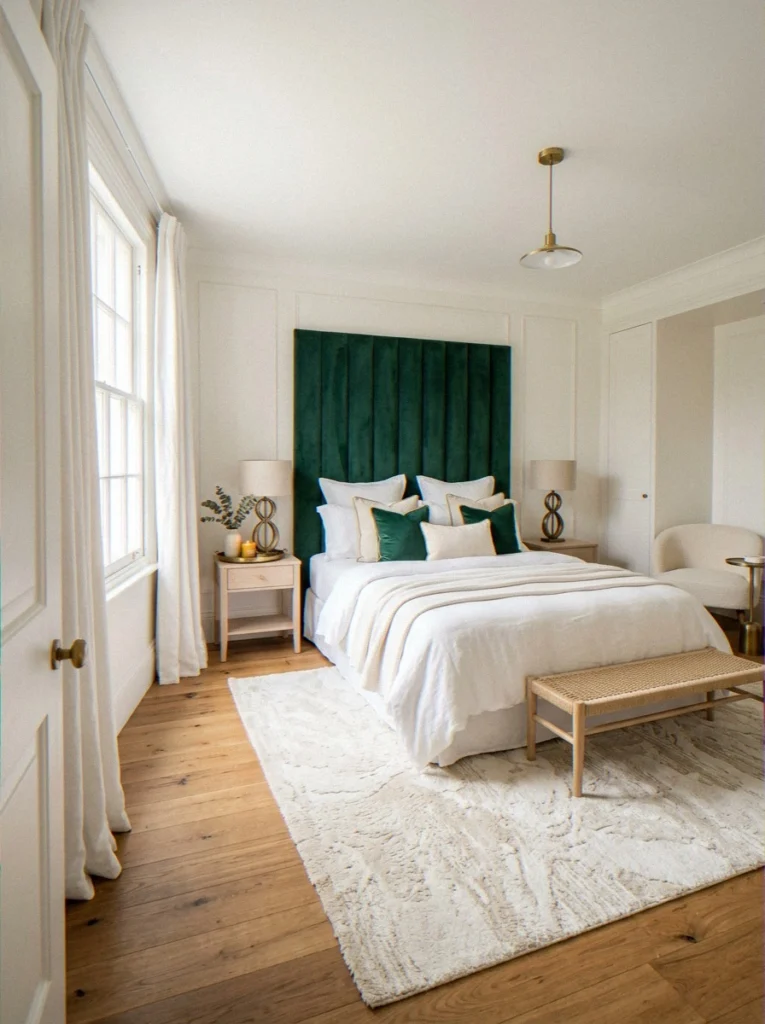
An emerald velvet headboard is a great place to start if you’re not ready to paint the whole room. Put it up against white or warm cream walls, and you’ll get that jewel-tone energy without having to paint your walls.
Put gold nightstand lamps and white bedding on top of it. Finished. I actually told my partner about the idea one piece at a time, like a very slow, very planned design takeover.
3. Emerald Canopy Bed
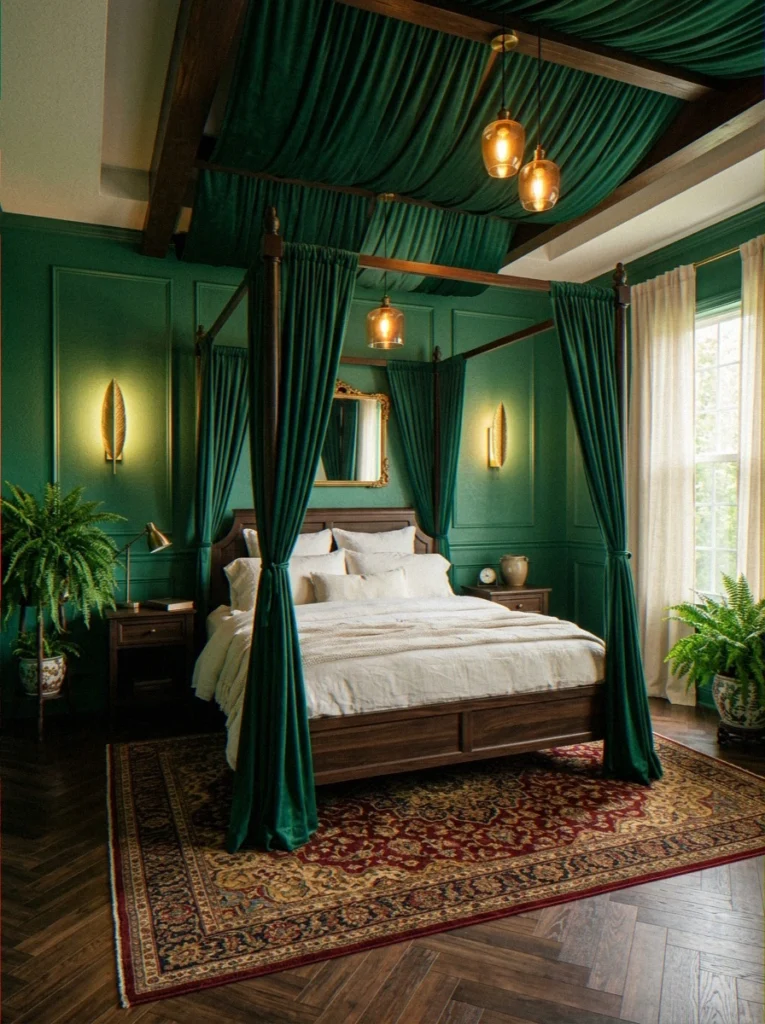
A canopy bed draped in emerald fabric panels is one of those ideas that sounds fussy but looks absolutely stunning in practice.
The fabric creates a cocoon-like feeling around the bed that’s romantic, intimate, and genuinely cozy. Use a lightweight cotton or silk-blend for airiness. If you want heavy drama, go velvet.
4. Emerald and Warm Brass Pairing
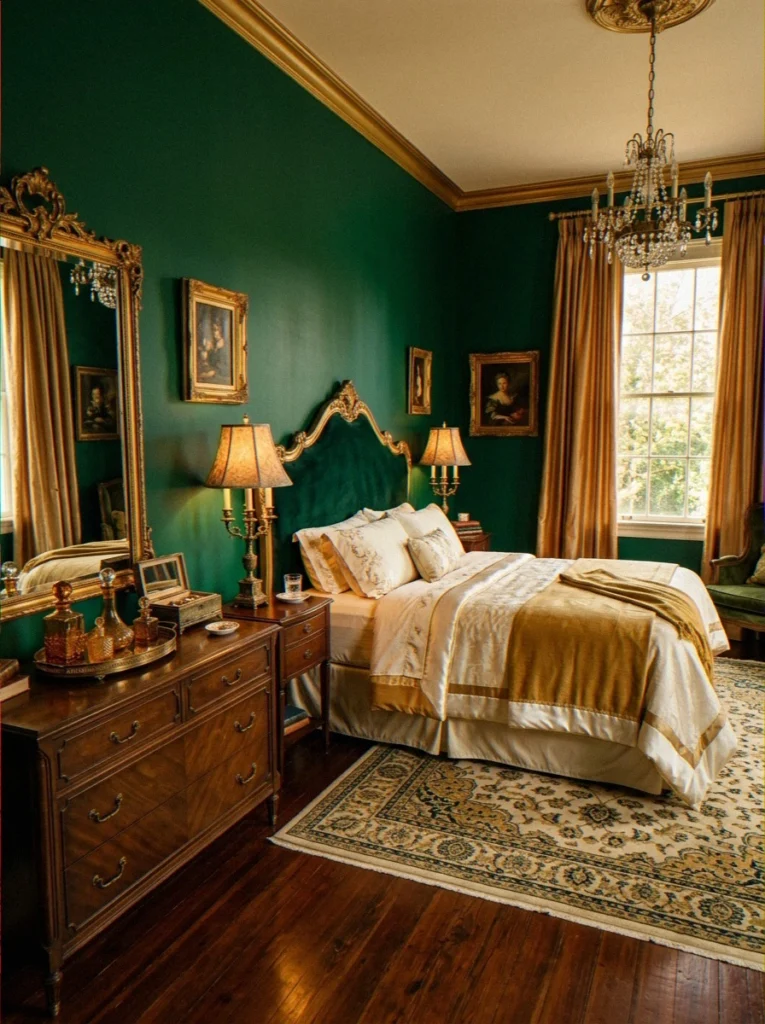
Emerald paired with antique brass or warm gold is one of those classic combinations that never gets old, and for good reason.
Emerald walls, brass wall sconces, a gold-framed vintage mirror, and warm-toned wood furniture creates a room that leans into old-world glamour without veering into Halloween territory. It’s a balance — and once you hit it, it’s chef’s kiss.
| Jewel Tone | Best Metal Pairing | Mood Created | Room Size Suitability |
|---|---|---|---|
| Emerald Green | Antique Brass | Opulent & Warm | Any size |
| Sapphire Blue | Chrome/Silver | Cool & Serene | Medium to large |
| Amethyst Purple | Rose Gold | Romantic & Dreamy | Small to medium |
| Ruby Red | Black & Gold | Dramatic & Bold | Large rooms |
5. Emerald on the Ceiling Only
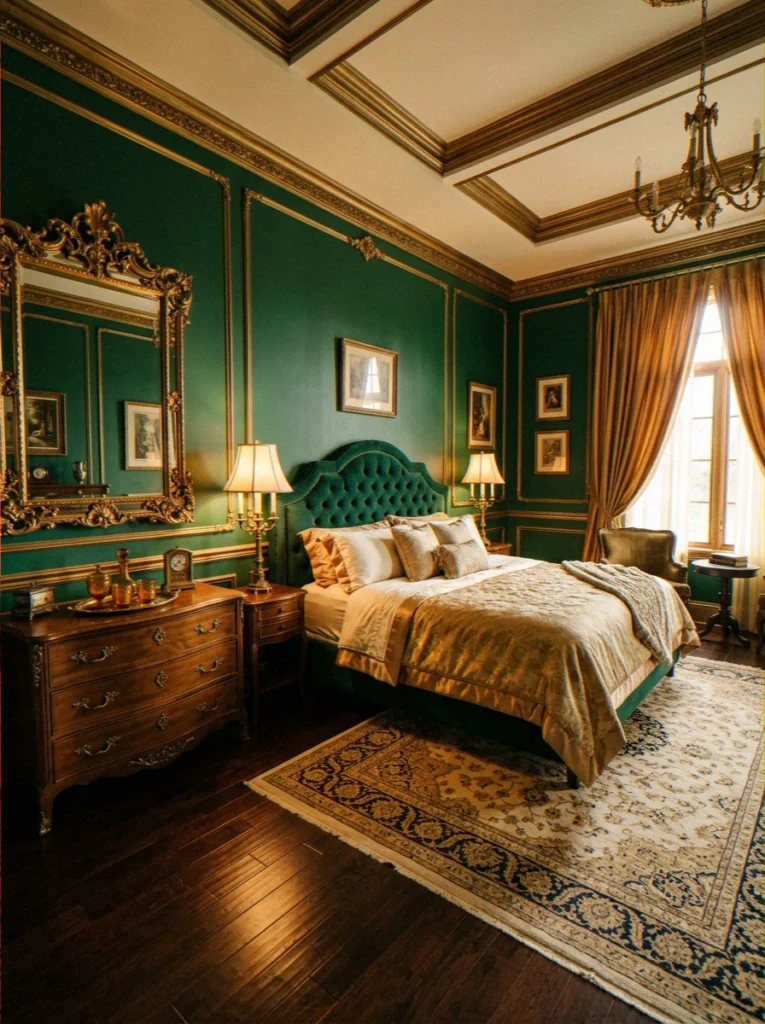
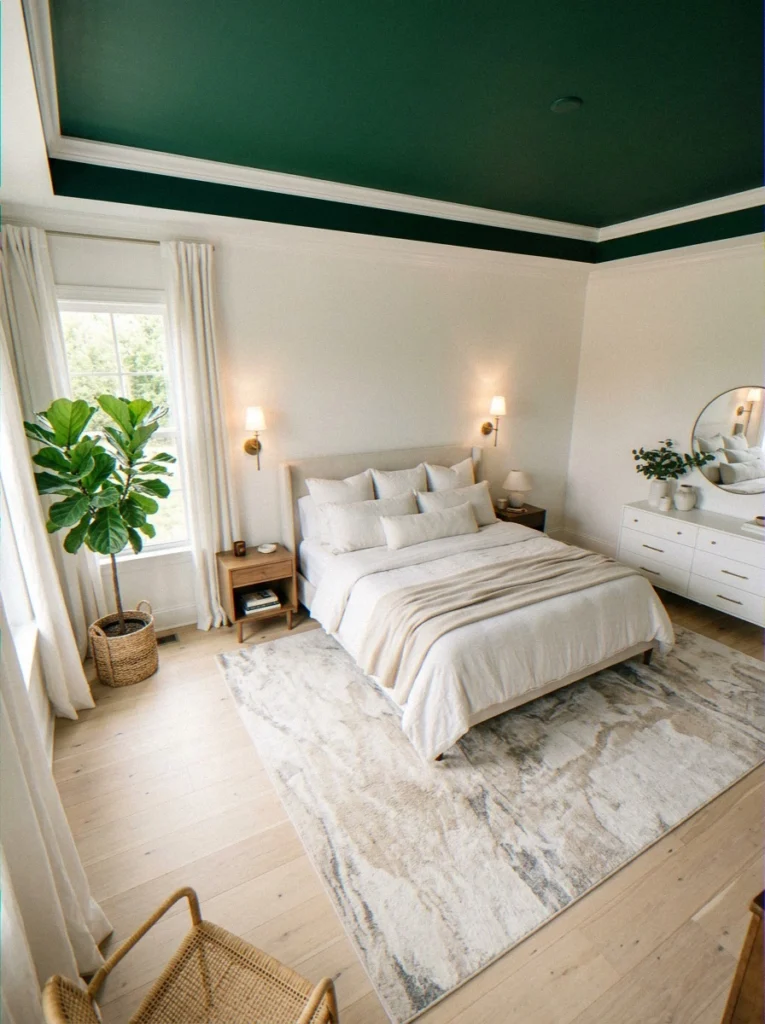
Most people haven’t tried this: painting only the ceiling emerald green and leaving the walls white or cream. This is what designers call the “fifth wall” approach, and it really works.
The ceiling turns into a jewel-toned canopy over your bed, making the room feel cozy and dramatic without making it too dark.
If you rent and your landlord won’t let you paint the walls, this is also a great option (paint it, deal with it later—again, not advice, just saying).
Sapphire Blue Bedroom Ideas
Sapphire is the cool, collected sibling of the jewel-tone family. It’s the color I’d recommend to anyone who describes their ideal bedroom as “calm but interesting.” It has this dual quality of being simultaneously energizing and restful depending on how you use it.
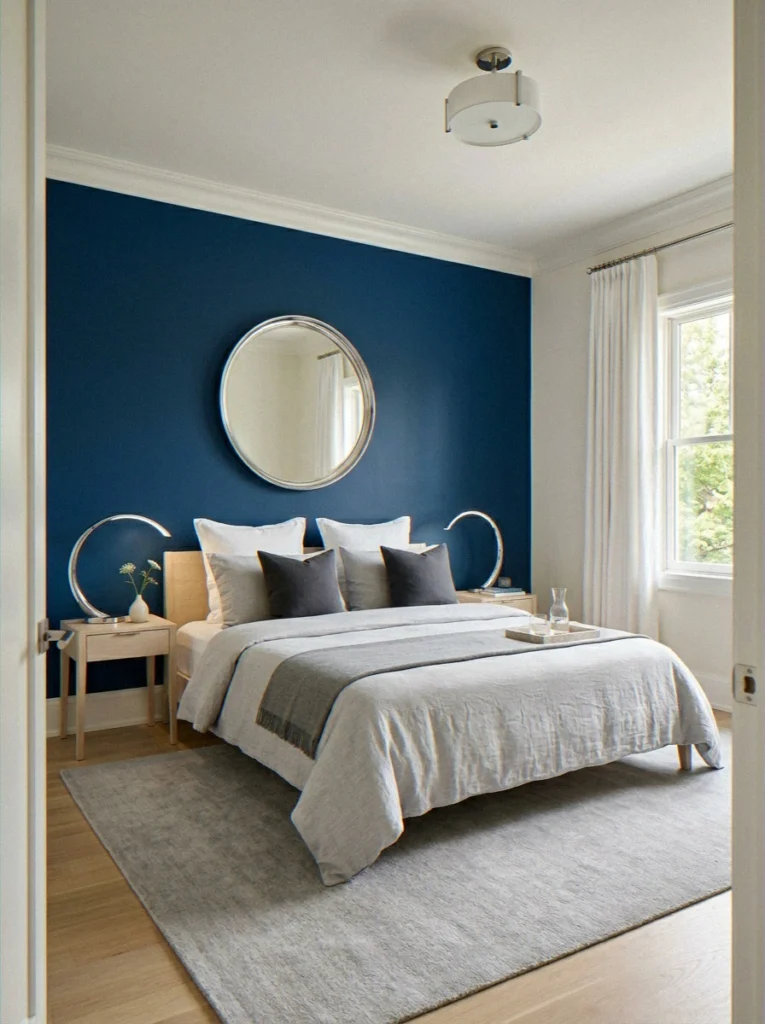
6. Deep Sapphire Feature Wall
Paint the wall directly behind your bed — the headboard wall — in a rich sapphire blue and keep everything else neutral.
Grey linen bedding, chrome or silver hardware, a light wood dresser. The contrast is everything here.
You get the jewel-tone impact without going all-in, which makes this perfect for commitment-phobes. (No shade — I’m one of them in most areas of my life.)
7. Sapphire Bedding and Layered Throws
Not touching the walls. Okay! Changing your bedding to jewel tones is one of the easiest things you can do to make your bedroom look better right away.
A sapphire blue velvet or high-thread-count cotton duvet, along with a navy throw and white shams, makes your bed look like a hotel bed without any construction, permission, or money.
I’ve done this in three different apartments, and it always works. Wow, this might be the best bedroom tip on this list that doesn’t take a lot of work.
8. Sapphire Wallpaper with Gold Motifs
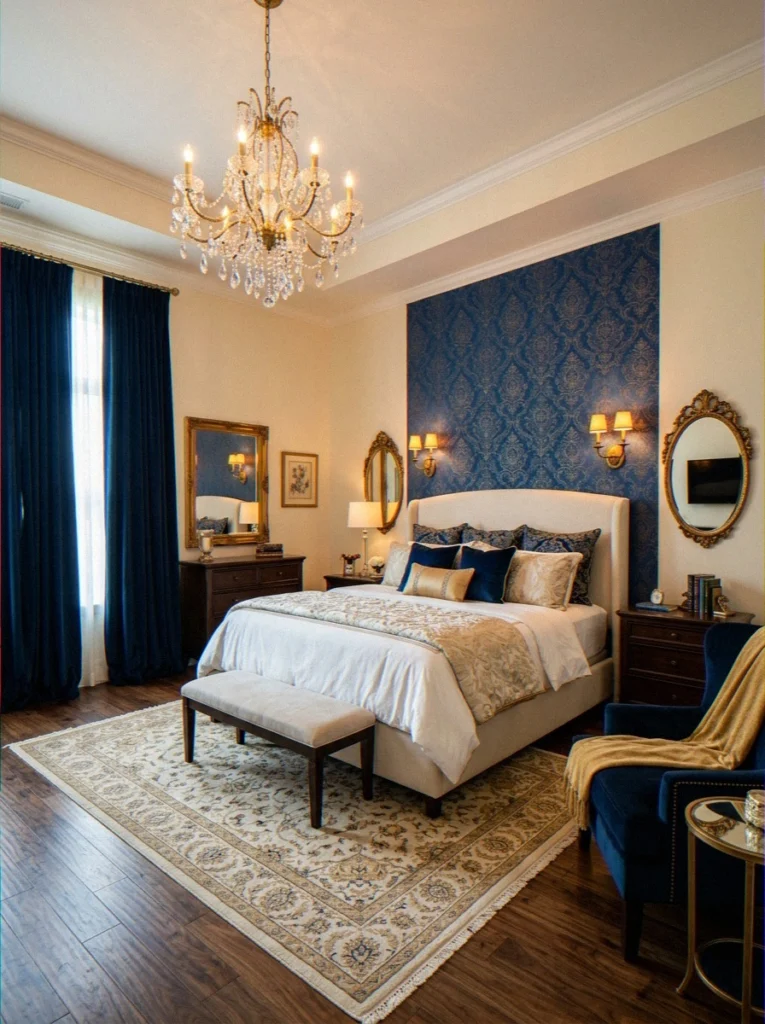
Deep sapphire patterned wallpaper, especially with subtle gold or silver geometric, damask, or botanical designs, makes a bedroom feel special right away.
You only need it on one wall (the one behind the bed), and it makes a big difference right away. Depending on how warm the base tone of the wallpaper is, you can use chrome or brushed gold fixtures.
9. Tufted Sapphire Bench at the Foot of the Bed
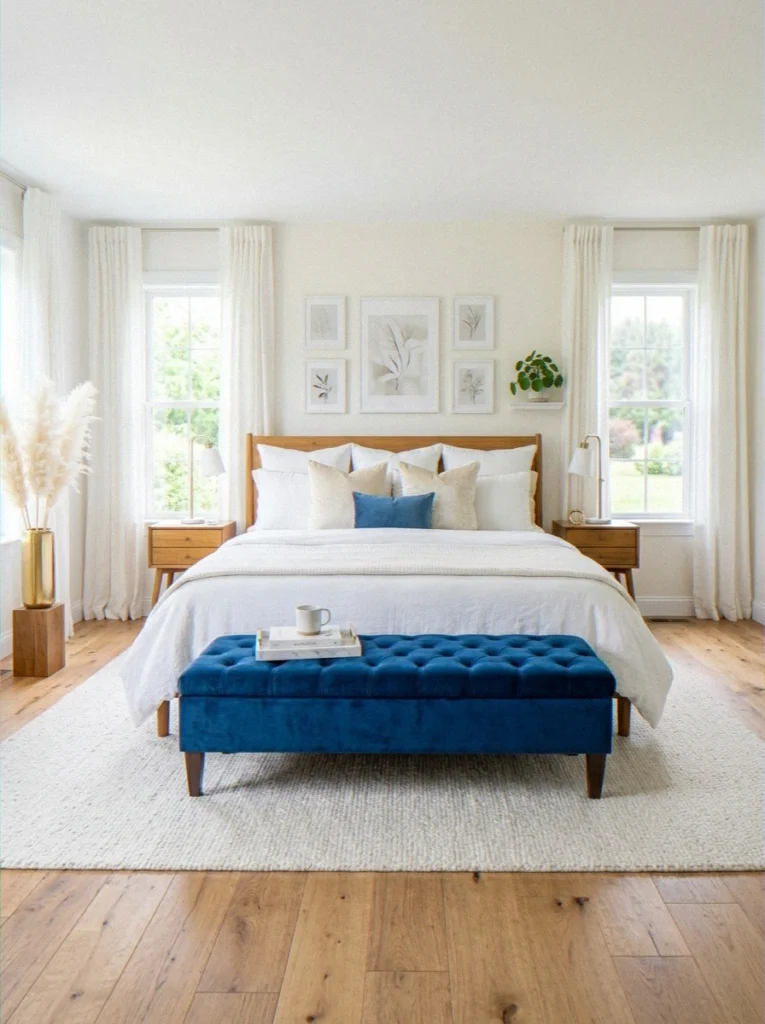
A velvet-tufted bench in sapphire blue at the foot of the bed is one of those additions that makes a bedroom feel genuinely finished.
It adds color, it adds texture, it adds a layer of formality — and it’s actually useful, which is rare for decorative furniture. I kept tripping over shoes before I got mine, so it’s practical too. Bonus.
10. Sapphire and Terracotta: The Unexpected Pairing
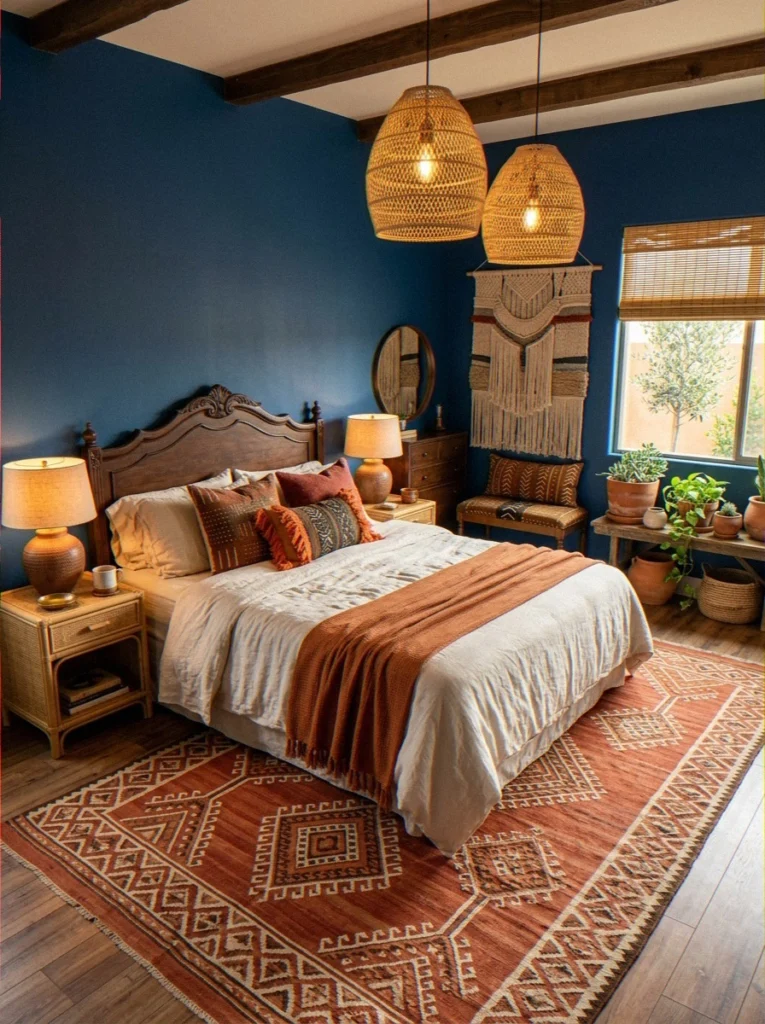
This one surprises people, but bro — sapphire blue and terracotta together is magic. The warm earthiness of terracotta cuts through the coolness of sapphire in a way that feels globally-inspired and incredibly cozy.
Try sapphire walls with a terracotta throw, a rust-colored rug, and natural rattan or wood furniture. It’s unexpected, it’s cool, and it genuinely works.
11. Sapphire Ceiling with White Crown Molding
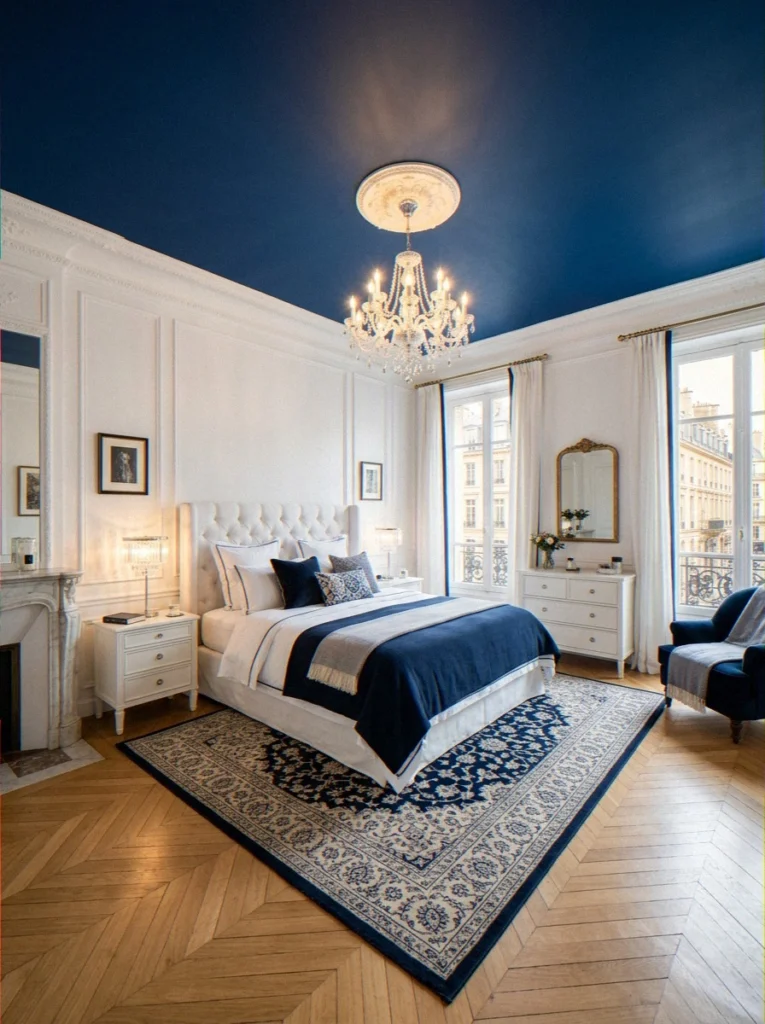
Classic white crown molding against a deep sapphire ceiling creates one of the most elegant architectural moments you can achieve in a bedroom.
It feels Parisian, it feels historic, and it makes even a modest ceiling height look intentional and designed.
If your room has no molding currently, you can install simple trim from any hardware store for under $100.
12. Navy-to-Sapphire Ombre Wall
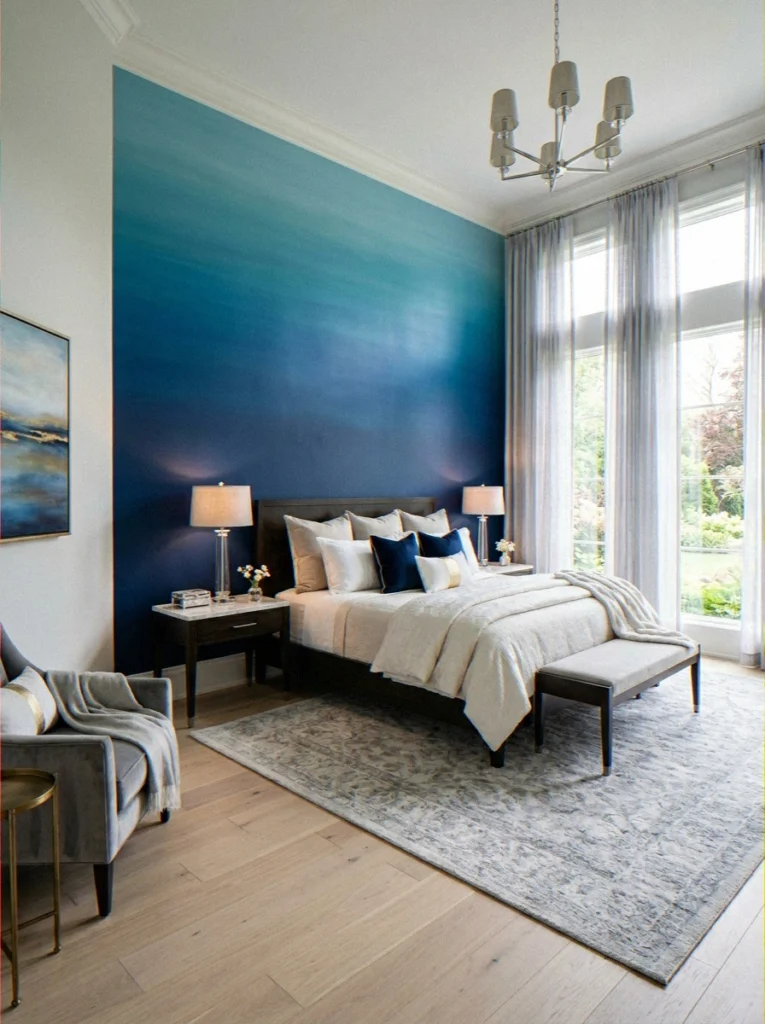
A gradient wall that moves from deep navy at the base up to bright sapphire at the top is a splurge on labor but an absolute showstopper.
It mimics the look of a twilight sky above your bed and creates a completely one-of-a-kind bedroom. No one else in your social circle will have this — guaranteed.
Amethyst and Purple Bedroom Ideas
Okay, I need to talk about the big purple elephant in the room. When most people hear “purple bedroom,” they think of a room with boy band posters that belongs to a preteen. That’s not what we’re talking about.
When used correctly, deep amethyst, plum, and violet are some of the most elegant colors in the jewel-tone family.
13. Deep Plum Feature Wall
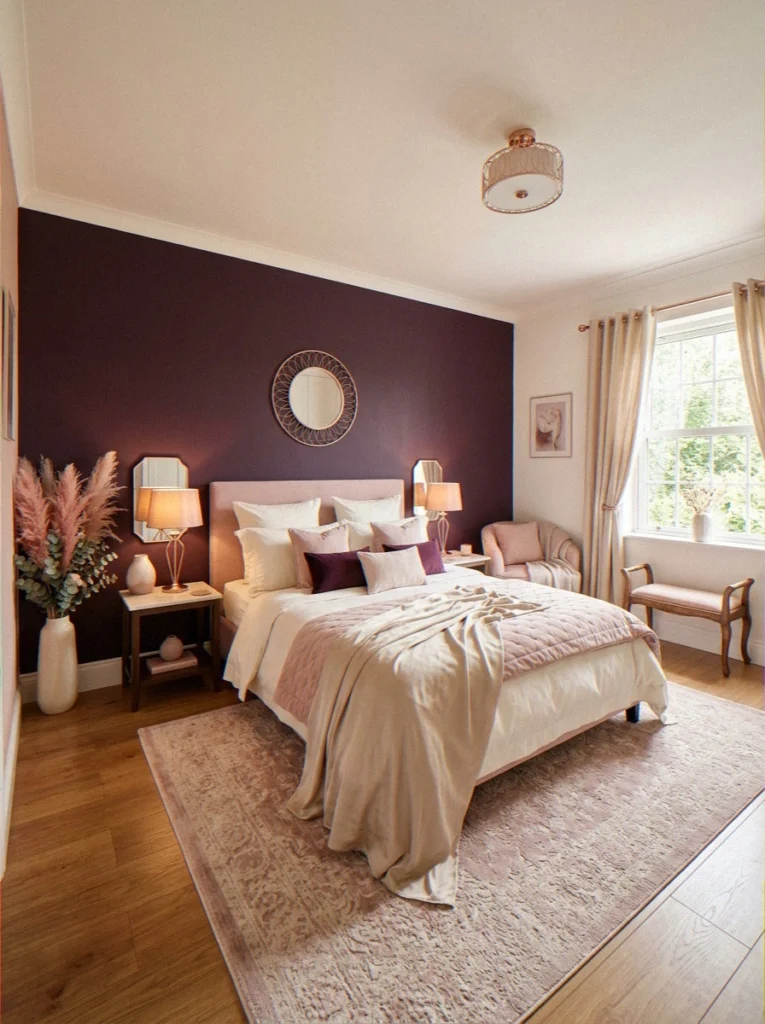
Plum is the grown-up, fully mature version of purple, and it looks incredible as an accent wall in a bedroom.
Keep everything else restrained — soft blush or cream bedding, light grey or white for the remaining walls, simple wood furniture — and the plum wall becomes a rich, romantic backdrop that makes the whole room feel more intentional.
14. Amethyst and Rose Gold
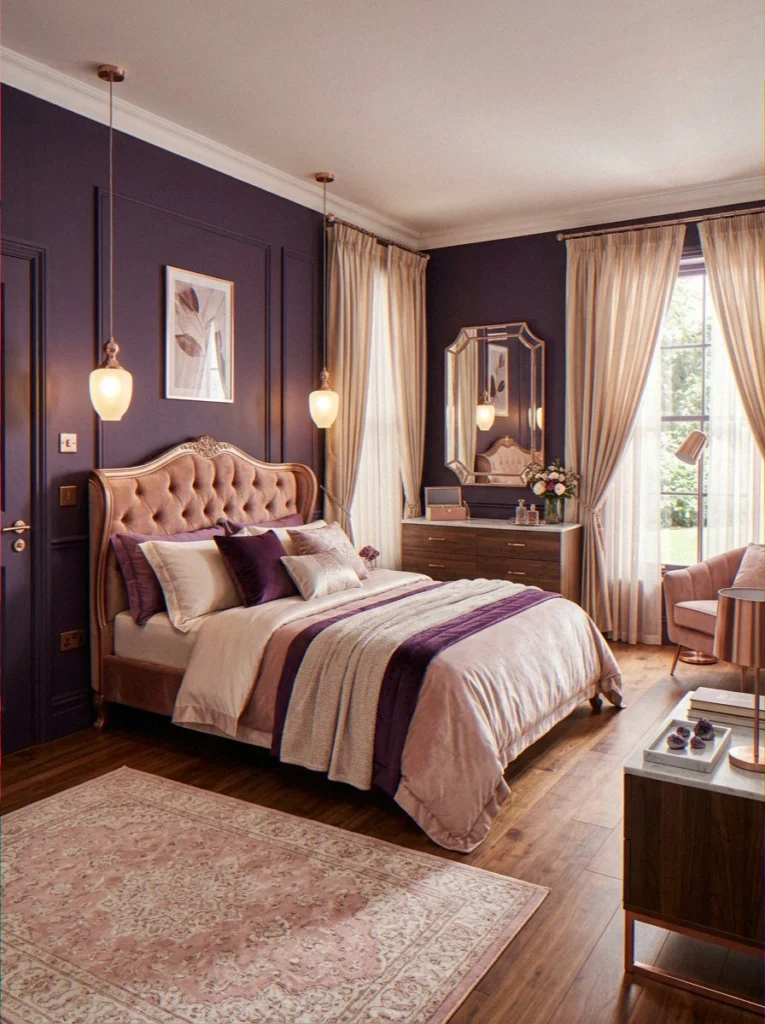
This combination is genuinely one of my favorites in the entire jewel-tone playbook. Deep amethyst paired with rose gold hardware, mirrors, and light fixtures creates a bedroom that’s romantic and sophisticated in equal measure.
It’s feminine without being girlish, and it photographs absolutely beautifully (important if you’re the type who likes your space to look good on Instagram — no shame in that at all).
15. Lavender Ceiling as a Soft Entry Point
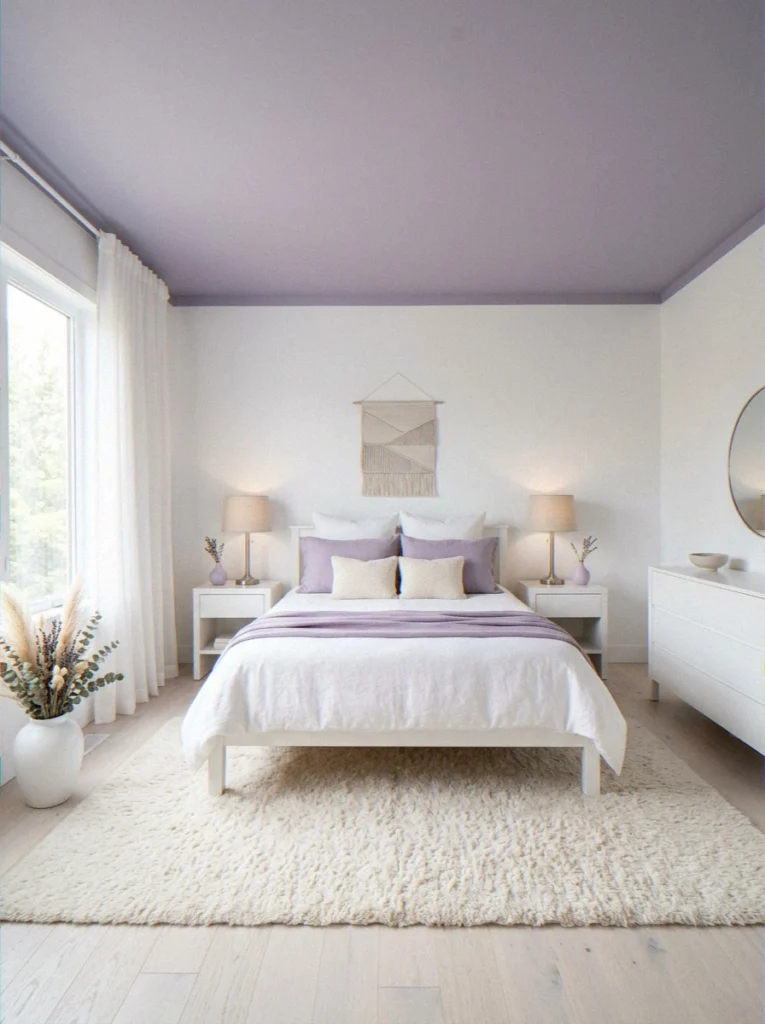
For anyone who loves the idea of purple but can’t quite commit to a deep, saturated version — a dusty lavender ceiling above white walls is your answer.
It’s a jewel-tone nod rather than a jewel-tone statement, and it creates a dreamy, slightly otherworldly quality in the bedroom that I personally find incredibly soothing. Layer in purple and cream accessories to pull the palette together.
16. Purple and Emerald Maximalist Combo
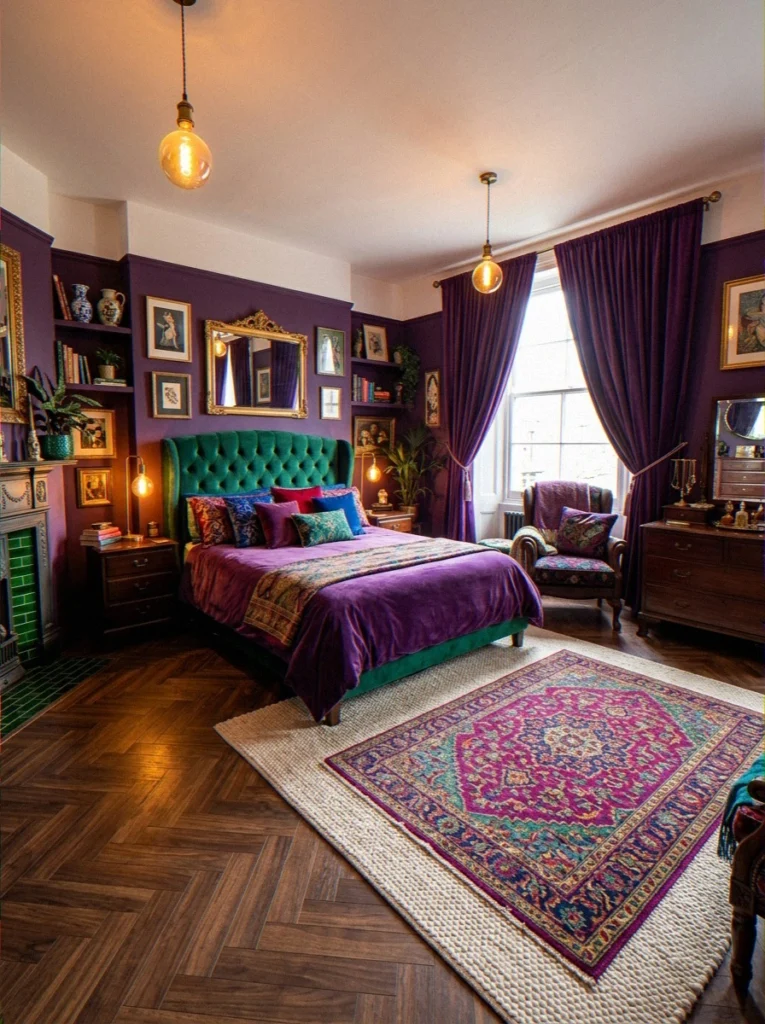
This one is for the brave. Really brave. Amethyst purple walls with emerald green accents—throw pillows, a velvet blanket, and maybe just one accent chair—sounds like it should be a mess, and it is in the wrong hands.
But if you keep both colors at the same saturation level and use dark wood furniture to anchor everything, it turns into a bedroom that looks like it came straight out of a design magazine. Just so you know, this works best in a big room where both colors can breathe.
17. Floor-to-Ceiling Velvet Purple Curtains
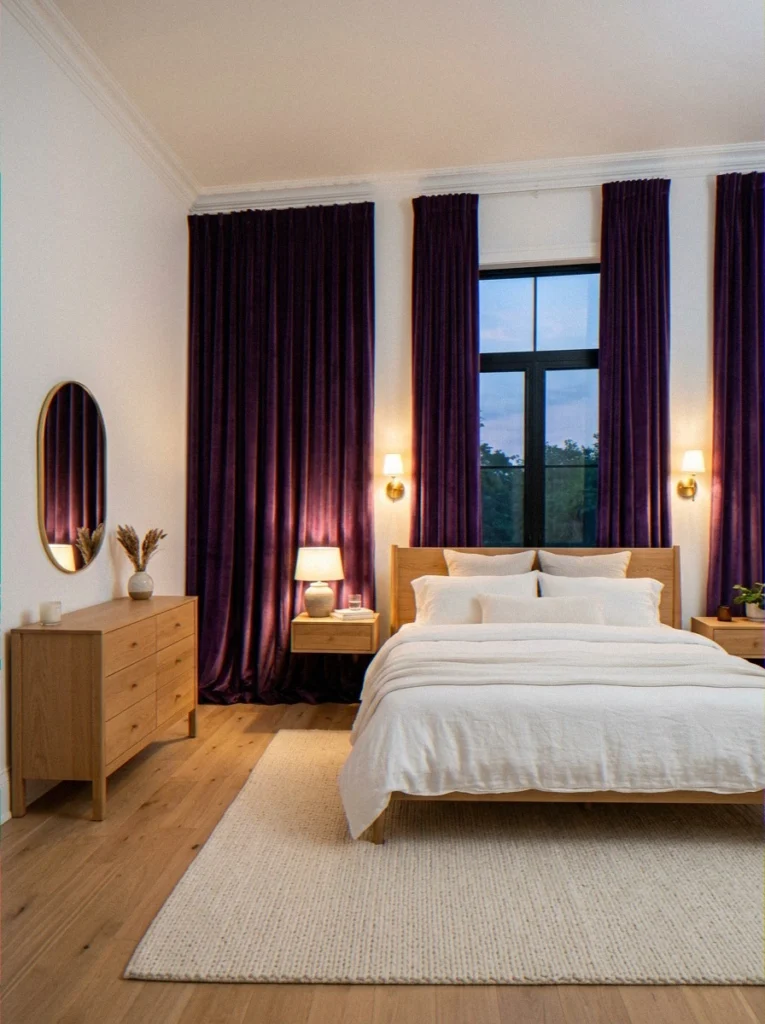
Floor-to-ceiling amethyst velvet curtains hung as high as possible are one of the most impactful and relatively affordable ways to bring jewel-tone drama into a bedroom.
The height draws the eye upward, the velvet adds that essential texture, and the color creates an enveloping, theatrical quality.
Pair with simple white bedding and the curtains will be the undisputed star of the room.
18. Amethyst and Matte Black
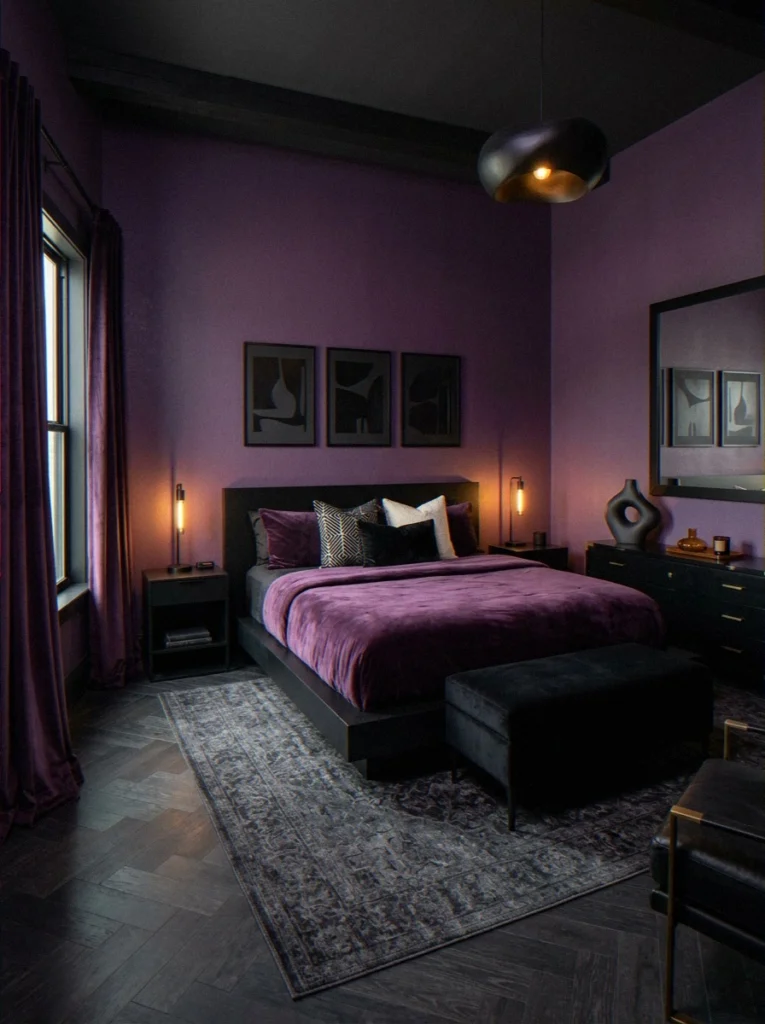
Deep amethyst walls with matte black mirror frames, nightstands, and hardware creates one of the darkest, moodiest, most editorial jewel-tone bedrooms possible. It looks like a luxury hotel suite that caters specifically to people with excellent taste.
This one genuinely floored me when I saw it in a friend’s flat — I stood in the doorway and couldn’t say anything for a solid ten seconds.
Ruby and Deep Red Bedroom Ideas
People are most afraid of red as a jewel tone, and I totally get why. If you don’t do it right, red bedrooms can look like a fast food restaurant or a bad guy’s hideout.
But done right, with deep garnet or burgundy tones? They are some of the coziest and warmest places to sleep.
19. Burgundy and Cream: A Timeless Classic
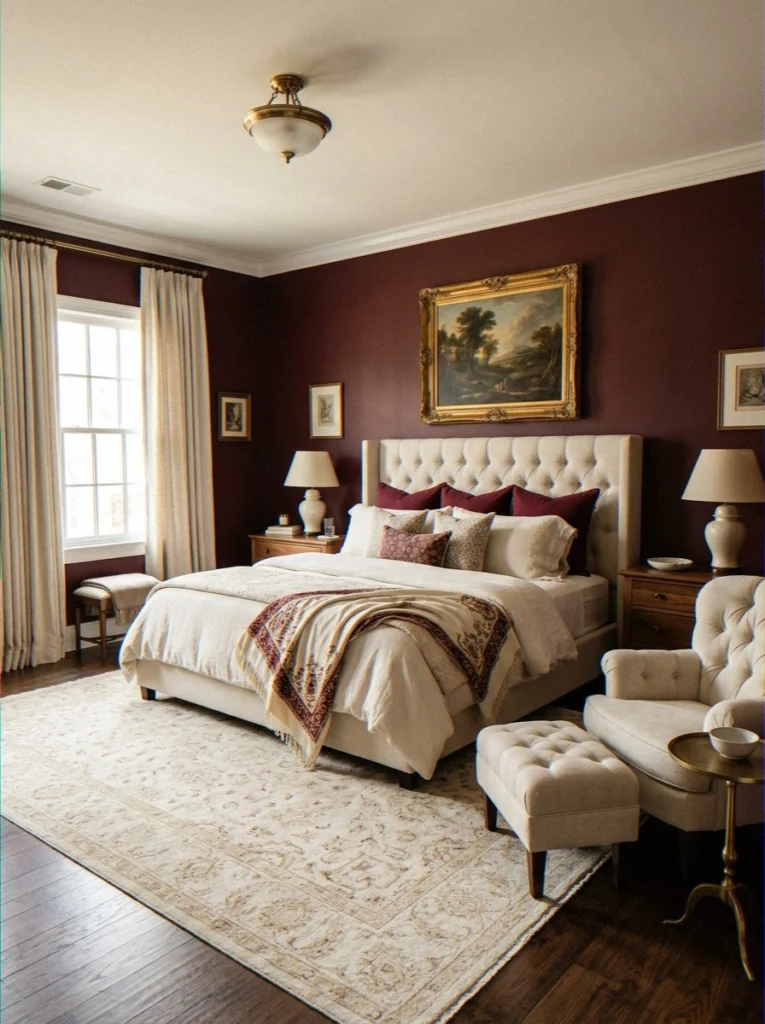
Burgundy walls paired with cream or ivory bedding is genuinely one of the most timeless bedroom combinations in existence. There’s a reason it’s been popular for a couple of centuries — it works, it’s warm, and it has this old-world library energy that feels cozy and distinguished at the same time.
Warm wood furniture, a cream area rug, and some atmospheric table lamps complete the look without overcomplicating it.
20. Ruby Red Velvet Headboard
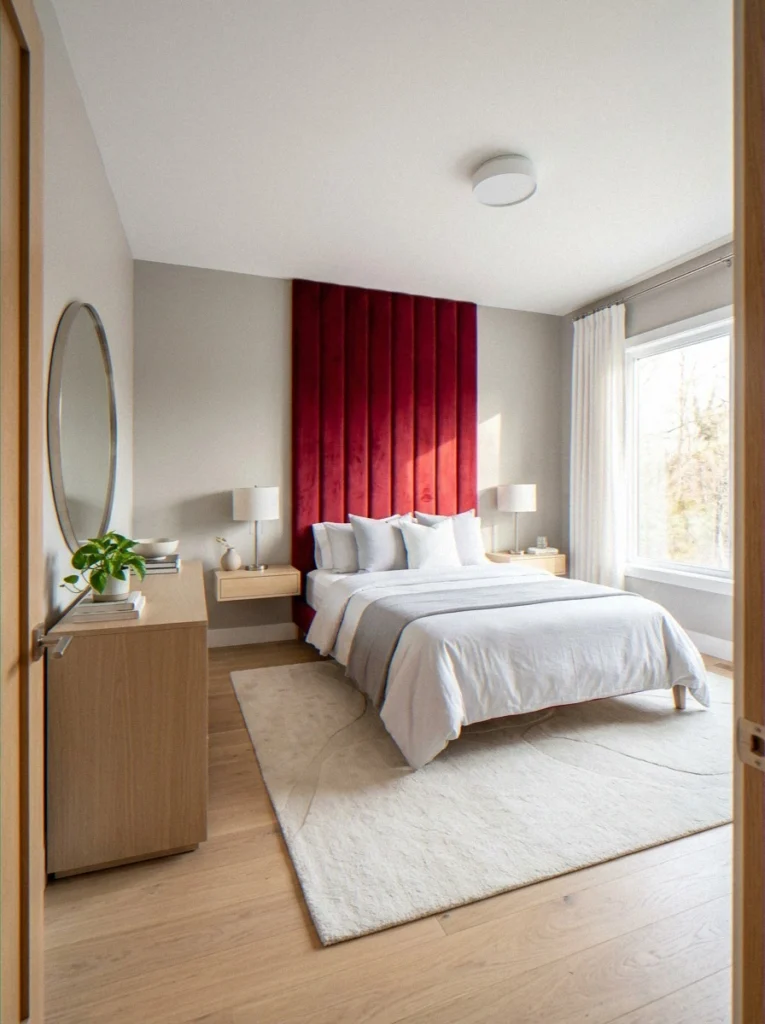
A channel-tufted ruby red velvet headboard against grey or white walls is one of those “one bold piece” decisions that pays off massively.
Everything else stays quiet — white bedding, simple furniture, understated accessories — and the headboard does all the visual work. Trust me on this one. I’ve seen it done in small rooms and large ones and it works in both.
21. Garnet Walls with Dark Walnut Furniture
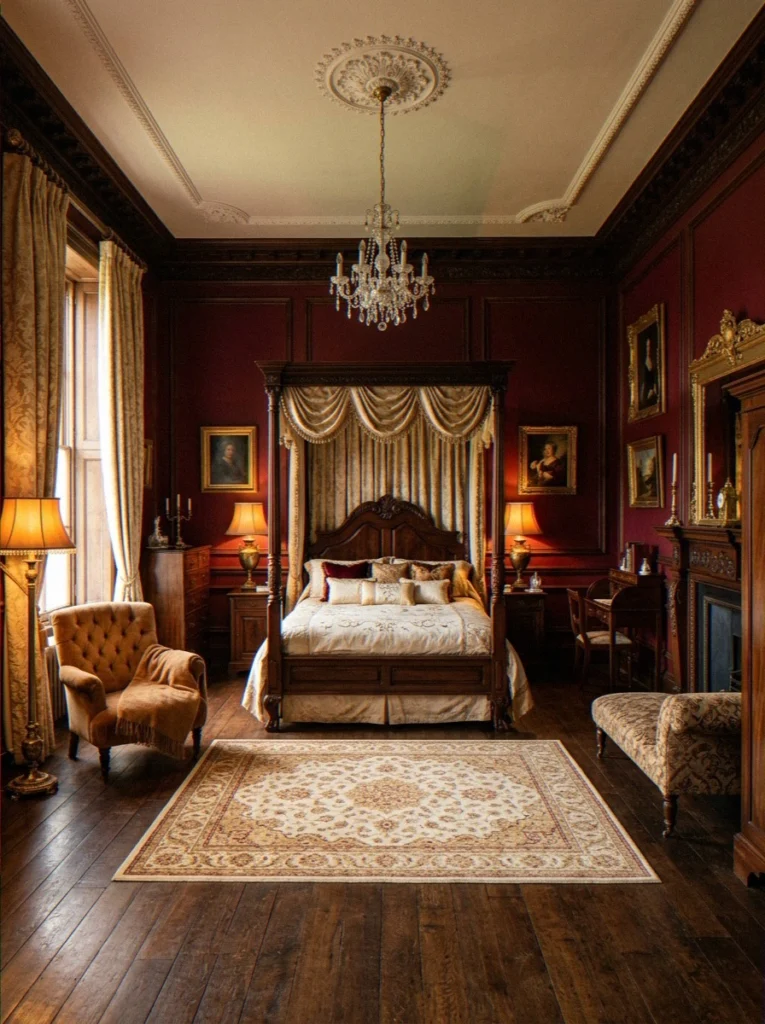
Deep garnet walls and dark walnut or mahogany furniture make a bedroom that really feels like it came from the past.
This is how to do manor-house energy right. A soft cream or muted gold area rug, some warm-toned lamps, and maybe a leather or velvet accent chair will make your bedroom feel like it belongs in a beautifully restored historic home.
Some people think this style is out of date, but I think it’s always classy. It just needs to be done the right way.
22. Ruby and Antique Gold Maximalism
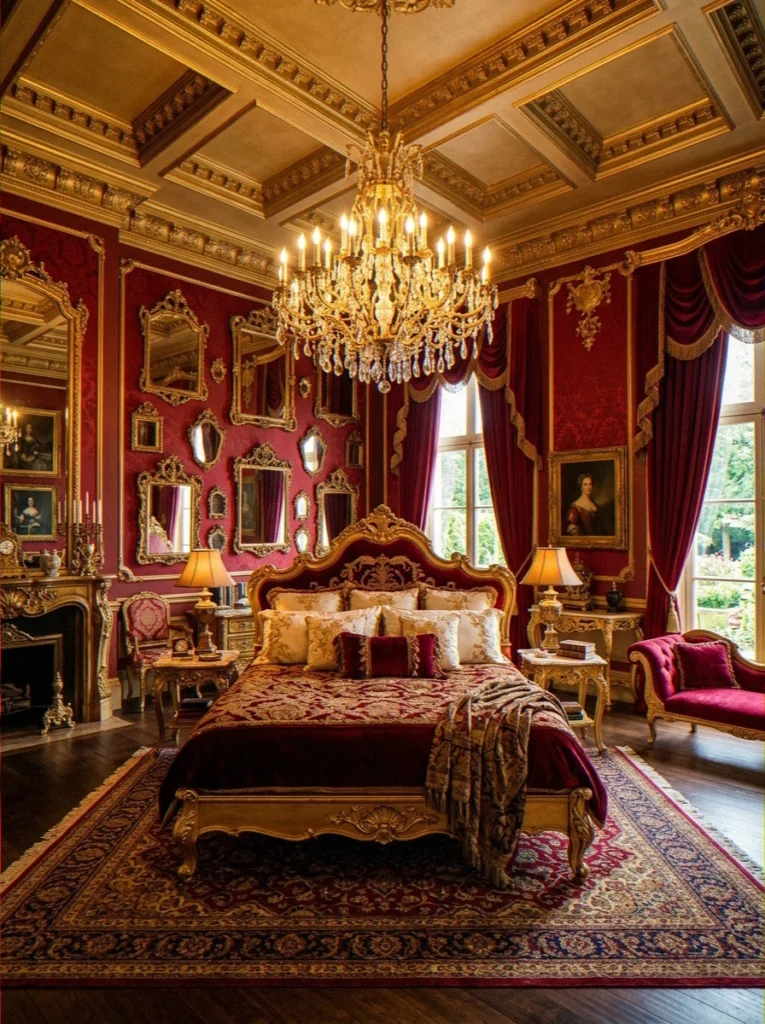
For the maximalists reading this — and hello, welcome, you are my people — ruby red paired with antique gold is the ultimate in unapologetic bedroom glamour.
Gold-framed mirrors, gilded fixtures, red velvet bedding, layered patterned throw pillows, a Persian-style rug. This is royalty-core and I am completely, unashamedly here for it.
23. Ruby Red Botanical Wallpaper
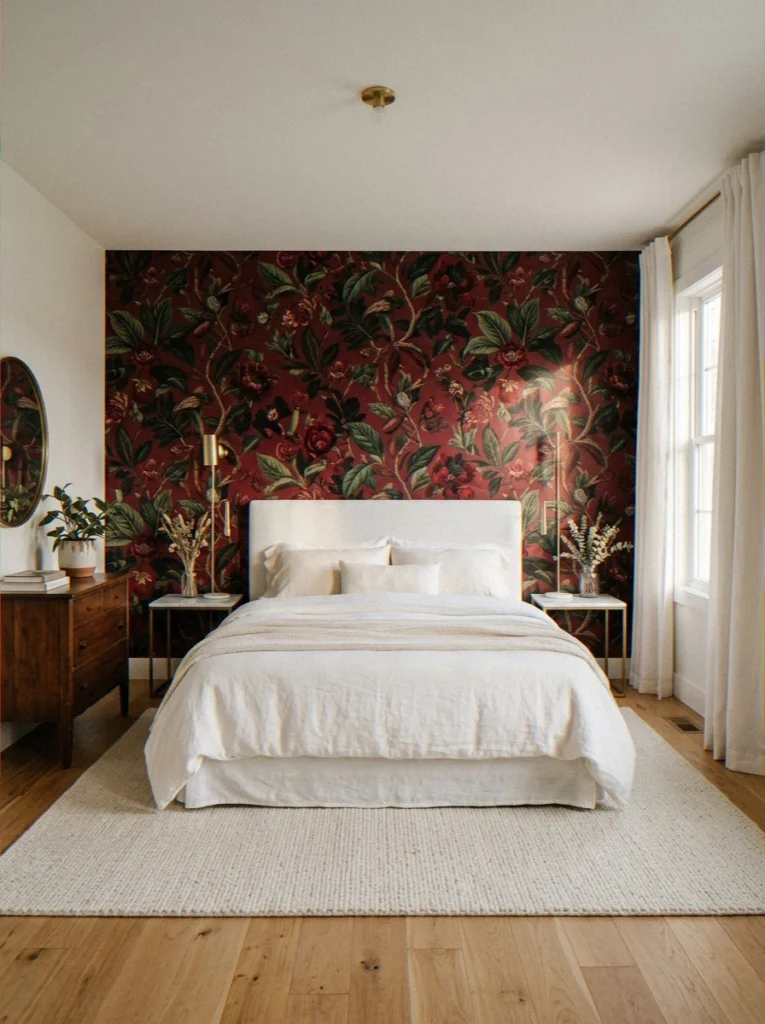
A botanical-print wallpaper in deep ruby red gives you the richness of the color while the organic pattern softens it.
The botanicals — leaves, branches, flowers — break up the intensity of the red in a way that feels naturalistic rather than heavy.
Pair with simple white or cream bedding and let the wallpaper be the undisputed star.
24. Burgundy and Navy Together
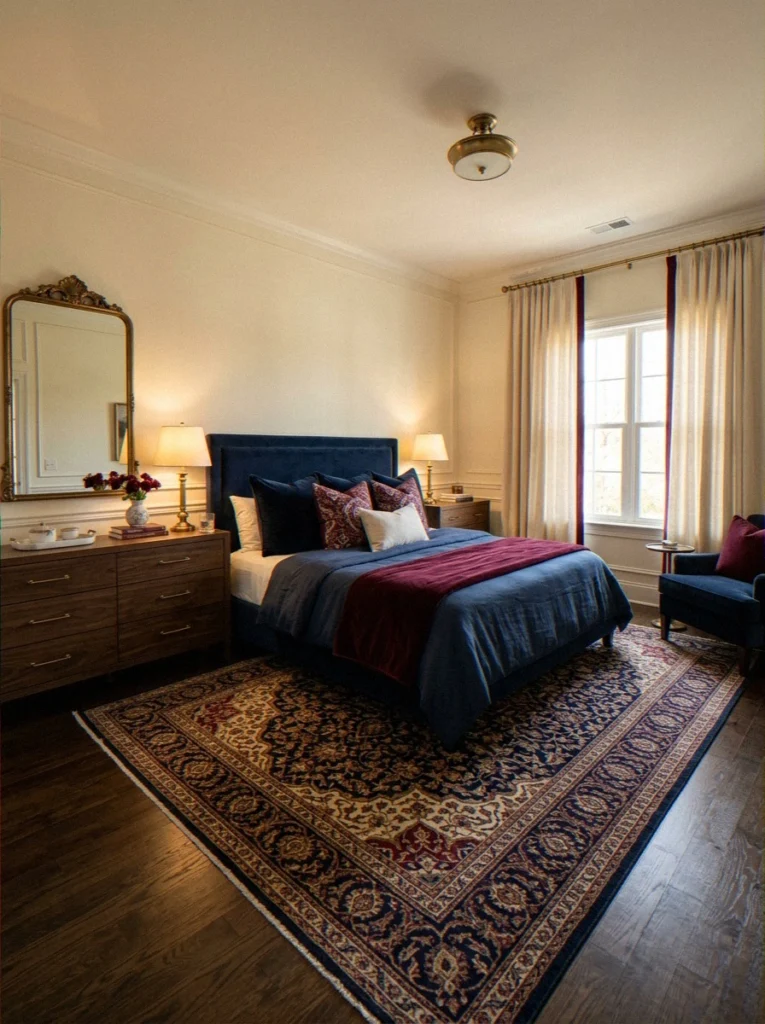
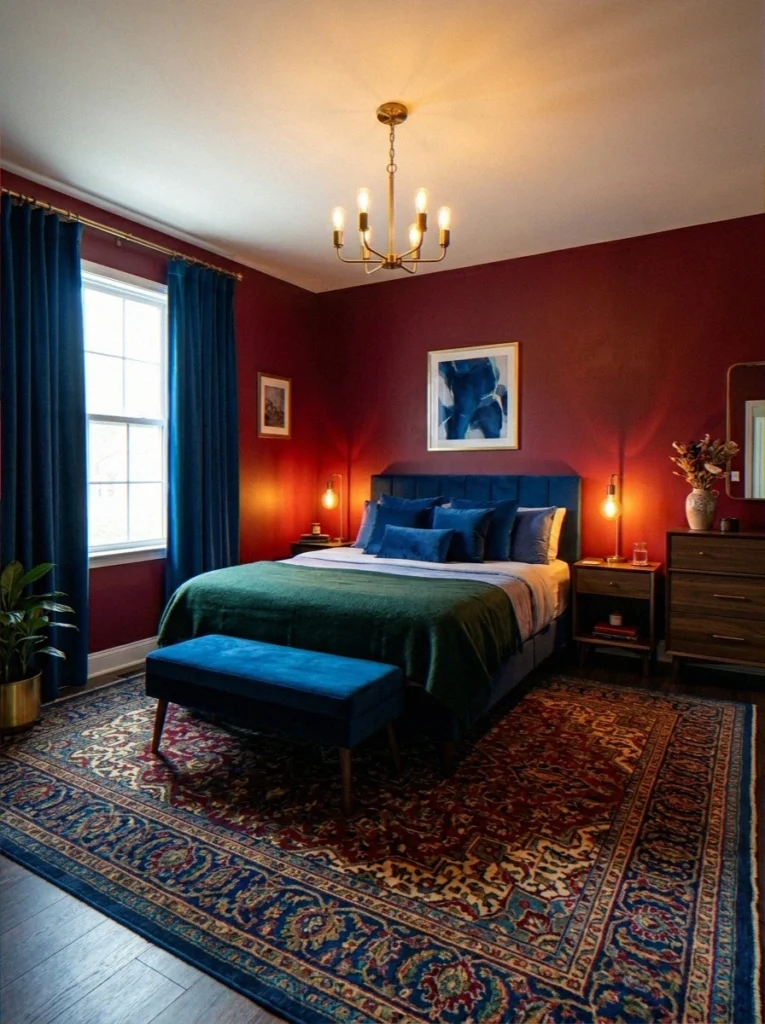
Both burgundy and navy are technically jewel tones, and used together with cream and gold accents they create a bedroom that’s layered, rich, and properly sophisticated. Navy bedding, burgundy throw pillows, cream walls, brass hardware throughout — it’s a combination that shouldn’t work on paper but absolutely does in practice. One of those happy design accidents I discovered by accident in my own flat.
Teal, Peacock, and Blue-Green Bedroom Ideas
This group of blue-greens, teals, and peacock tones is probably the most flexible in the jewel-tone spectrum. They feel new and bright, but they still have the depth and richness that makes jewel tones so appealing.
25. Full Peacock Teal Bedroom
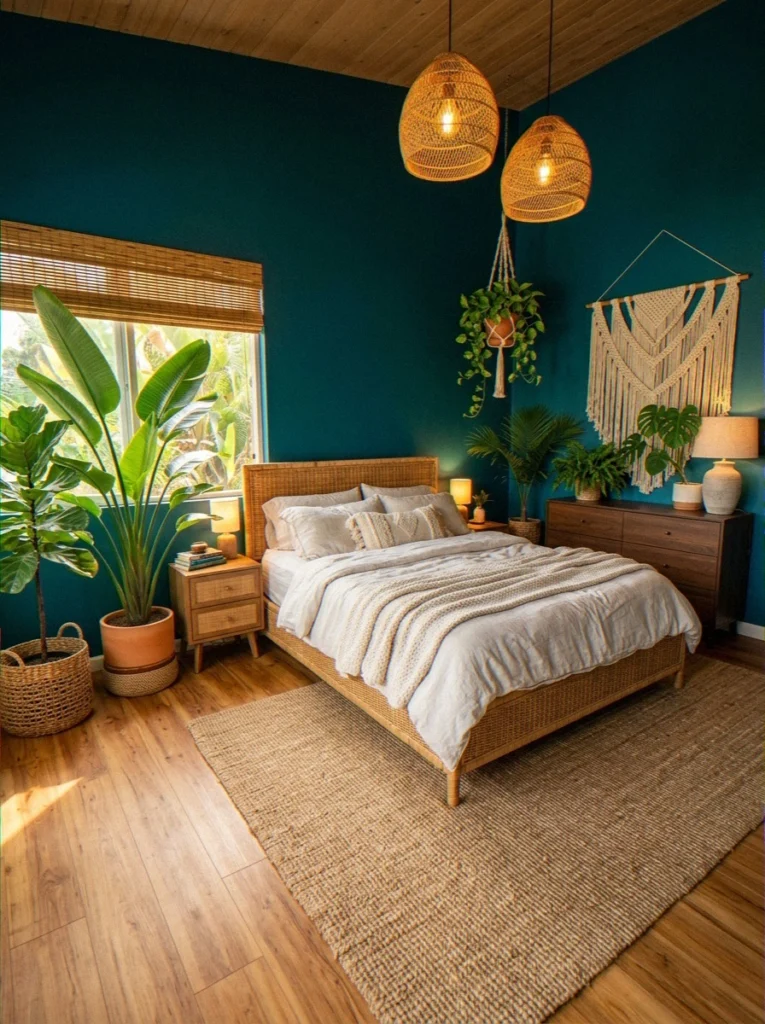
Peacock teal on all four walls paired with natural materials — rattan furniture, jute rugs, linen bedding, wooden accents, a few real plants — creates something that feels genuinely like a boutique hotel in Bali or Marrakech.
This look needs good natural light to work at its best, but in the right room, it’s absolutely stunning 🌊
26. Teal and White Coastal Luxe
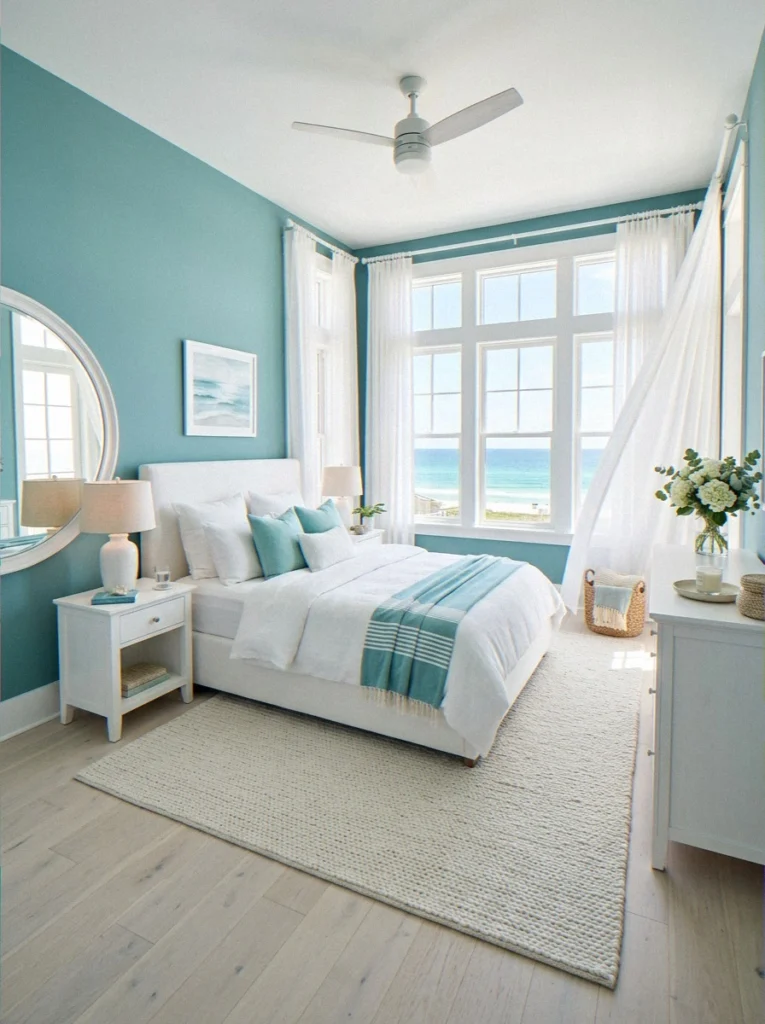
Teal walls with white furniture, white bedding, and natural wood floors creates a coastal-meets-luxury aesthetic that feels clean, airy, and sophisticated.
In a south-facing room with good natural light, the teal takes on a luminous, almost iridescent quality during the day that looks incredible.
27. Peacock Blue Velvet Bedding on Neutral Walls
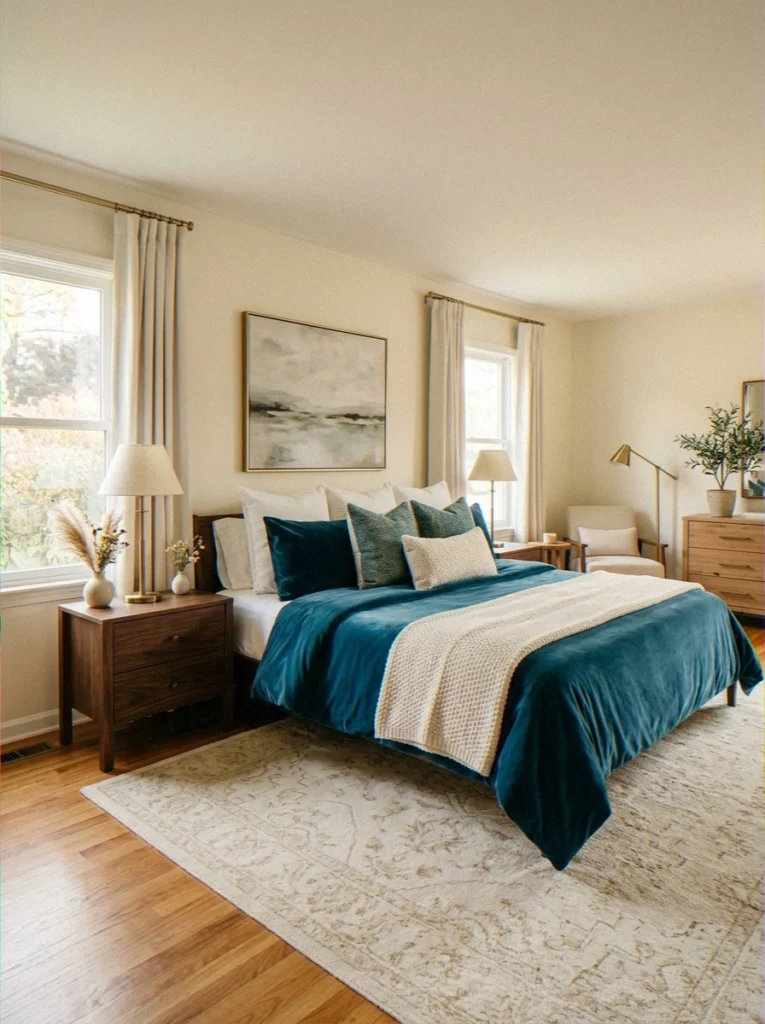
Peacock blue velvet bedding on an otherwise neutral bedroom is the easiest way into this color family.
The velvet catches the light beautifully and makes the color look expensive and intentional. Cream walls, natural wood, a little brass — done.
28. Teal Wallpaper with Geometric Patterns
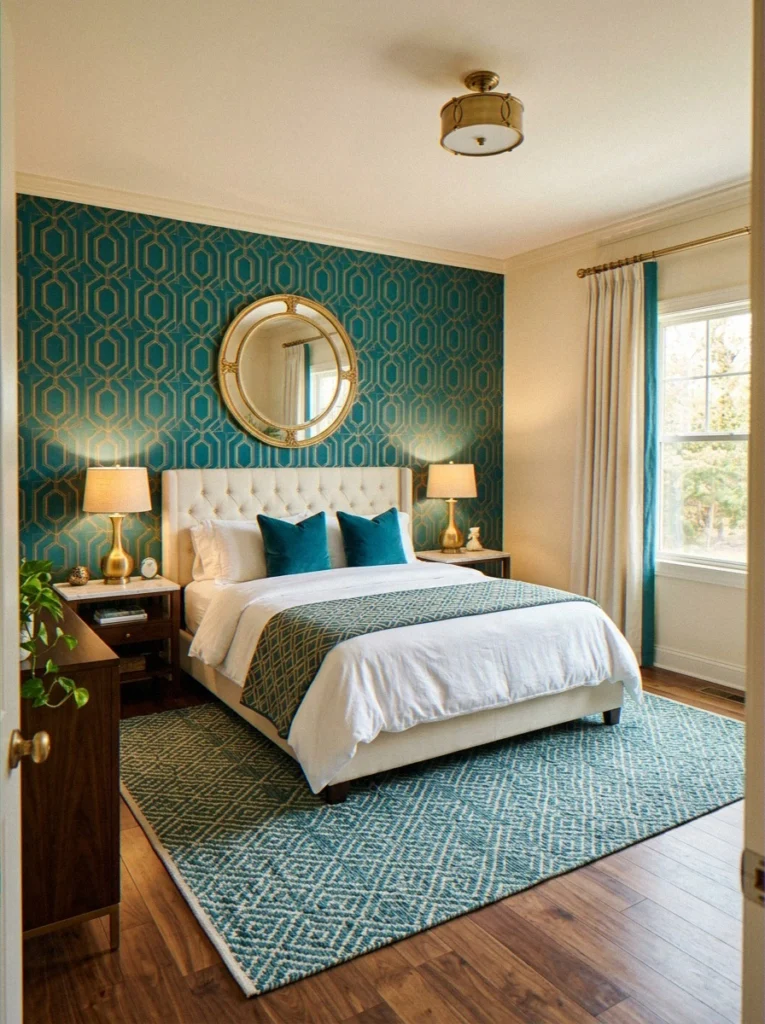
A bold geometric-pattern wallpaper in teal, particularly one with gold or brass accents woven into the print, makes a stunning statement behind the bed.
The geometry adds visual interest and structure while the teal delivers that essential jewel-tone richness.
29. Midnight Teal and Copper: A Killer Combination
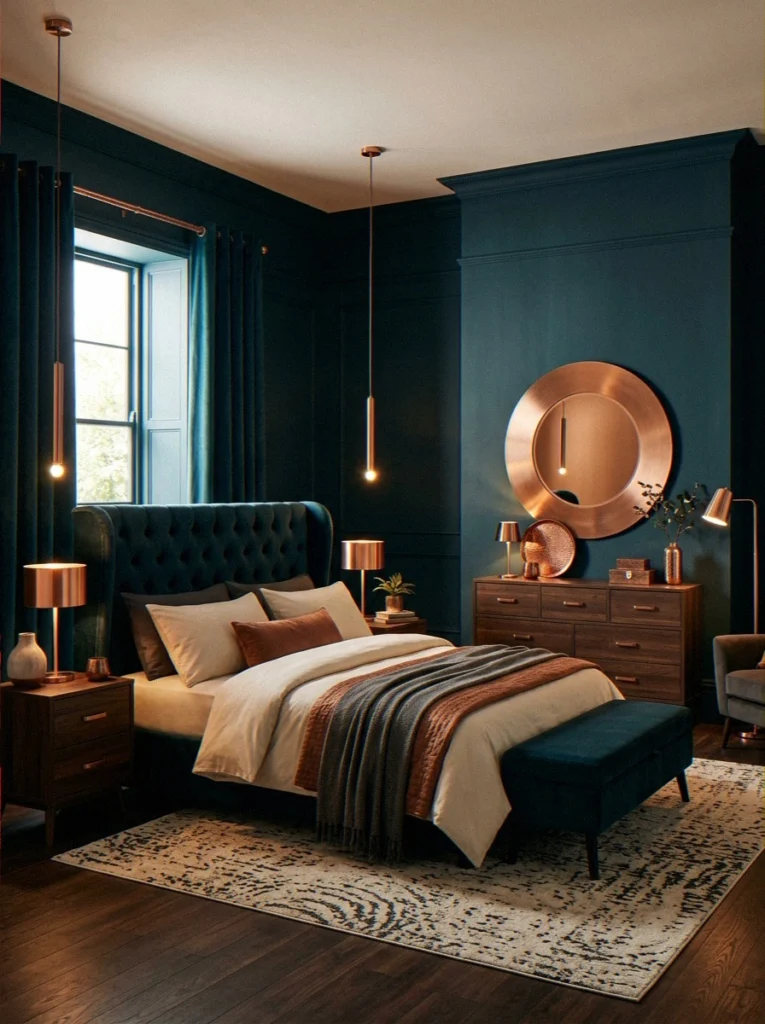
Midnight teal paired with copper or bronze accents is genuinely one of the most sophisticated contemporary color combinations I’ve come across. The warmth of the copper cuts perfectly through the coolness of the teal.
Copper light fixtures, copper-framed mirrors, copper hardware throughout — it’s one of those combinations where every element earns its place.
Modern Bedroom Ideas with Jewel Tones
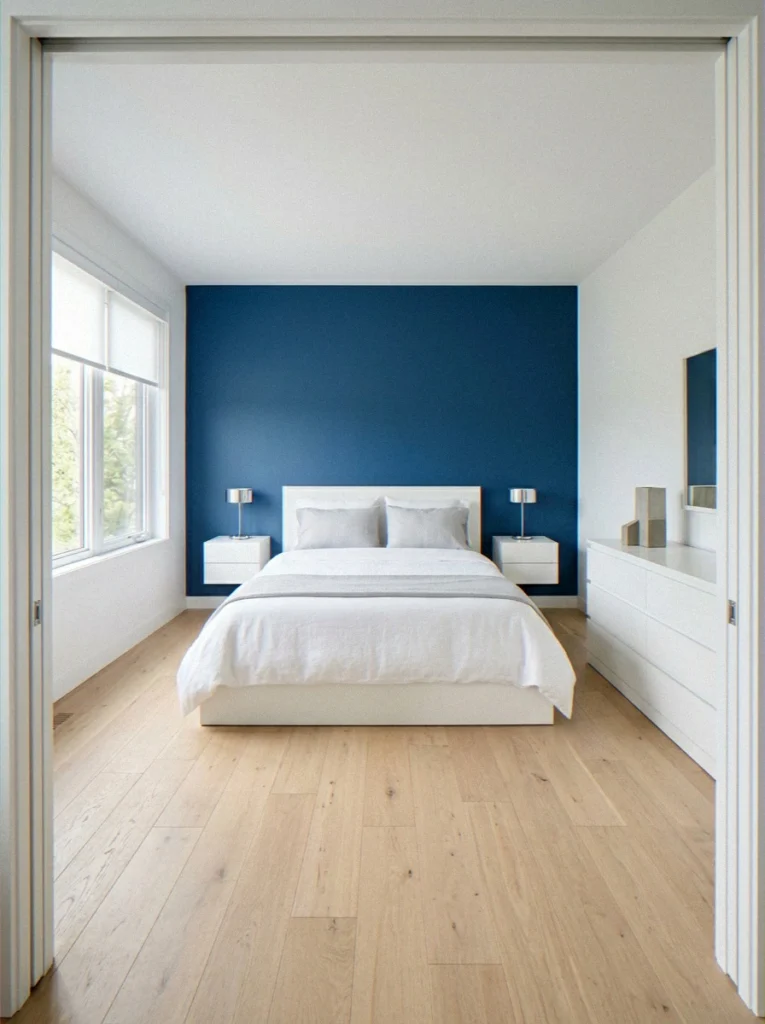
Modern bedrooms and jewel tones are a pairing that absolutely works — you just need to apply the color with a lighter, more restrained hand than you would in a traditional or maximalist space.
The idea behind a modern bedroom is simple: use one jewel tone to anchor the room and keep everything else clean and simple.
A single sapphire or emerald accent wall in a room with white walls, clean-lined furniture, and simple bedding gives the room a modern look. No extra accessories, no clutter, and no patterns that compete with each other.
Modern jewel-tone bedrooms often work best with:
- Matte or eggshell paint finish rather than satin or gloss
- Simple geometric or abstract patterns rather than traditional damask or botanical prints
- Minimal furniture with clean lines — no ornate carved wood pieces
- Monochromatic accessories in the same jewel-tone family
- One statement material (velvet OR linen, not both)
I tried a modern emerald bedroom once using flat-pack furniture and one carefully chosen velvet headboard.
It looked a hundred times more expensive than it was. Honestly, the restraint is the whole point in modern design.
Master Bedroom Ideas with Jewel Tones
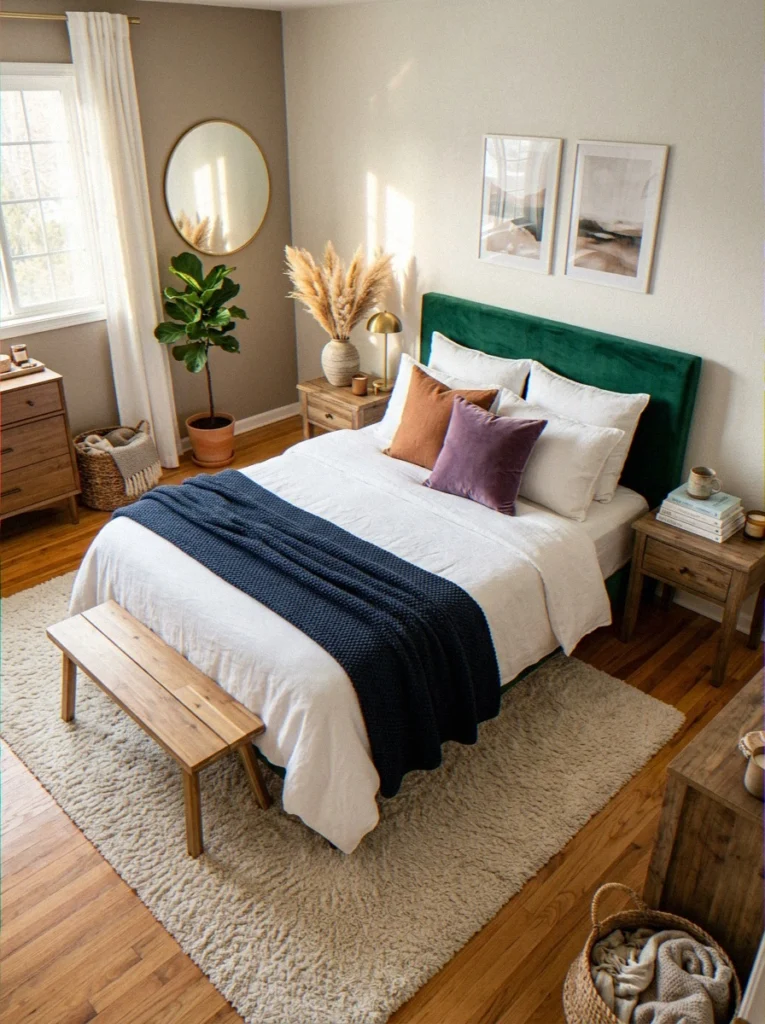
The master bedroom is the one space in the house where you get to be genuinely selfish with your design choices. It’s yours. So if you’re going to commit to jewel tones anywhere, commit in the master bedroom.
For a master suite, I’d encourage going further than you think you should. Four walls of deep sapphire.
A velvet upholstered ceiling panel. A jewel-toned canopy. A layered combination of two jewel tones.
The master bedroom can hold bolder choices than any other room because it’s not a public space — it’s a retreat designed specifically for rest and recovery, and deep, rich colors serve that function brilliantly.
Another benefit of a master bedroom is that you probably have more wall space to work with.
This means you can balance a dark jewel-tone wall with windows, architectural details, and bigger furniture pieces that keep the room from feeling cramped.
Quick master bedroom jewel-tone checklist:
- Choose one dominant jewel tone and one accent tone
- Invest in layered lighting — ambient, task, and accent
- Use velvet in at least one element (headboard, curtains, or throw)
- Bring in brass, copper, or rose gold hardware throughout
- Add a statement mirror to reflect light and add depth
Bedroom Ideas Jewel Tones — Pinterest Favorites
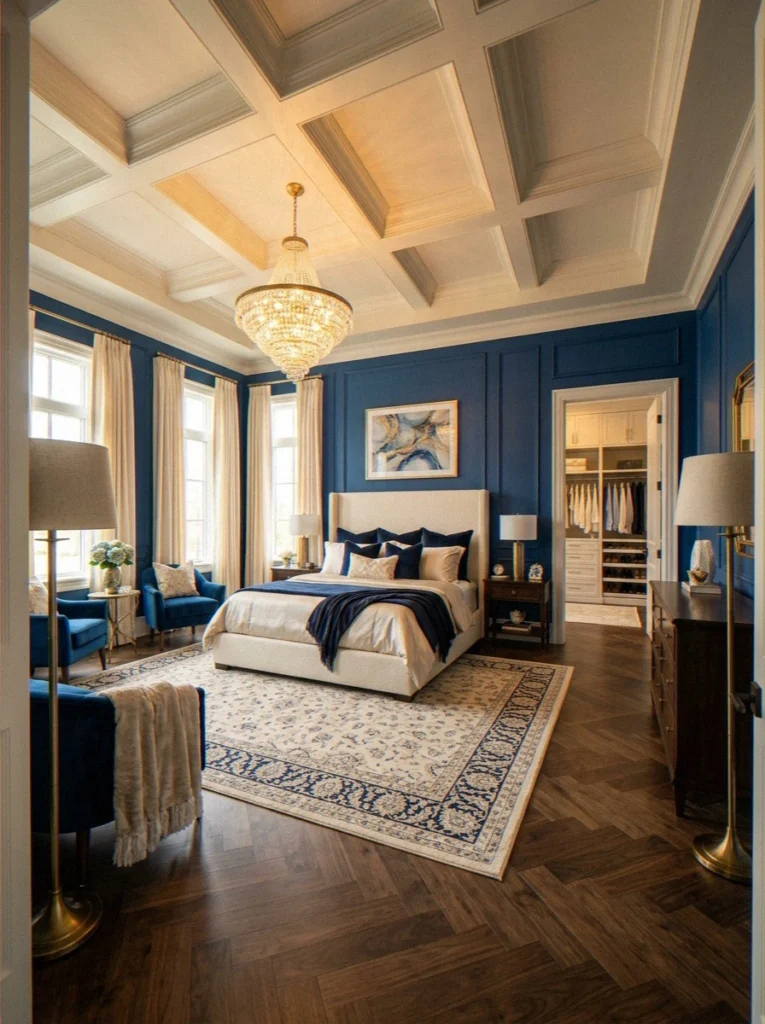
If you’ve spent any time on Pinterest looking at jewel-tone bedrooms (and if you haven’t, prepare to lose an evening), you’ll have noticed a few recurring ideas that consistently rack up saves.
These are the ones that actually translate into real life rather than staying stubbornly aspirational.
The most pinned jewel-tone bedroom looks right now:
- Emerald green velvet headboard against white walls — classic, easy, immediately elegant
- Dark sapphire blue bedroom with gold accents — the one everyone saves and half of them actually do
- Burgundy bedroom with layered warm lighting — this one always looks better in person than in photos
- Amethyst and rose gold bedroom — saved by approximately everyone who loves a romantic aesthetic
- Teal Bali-style bedroom with rattan and plants — high aspiration, genuinely achievable with the right pieces
The thing about Pinterest jewel-tone bedrooms is that the best-looking ones are almost never expensive — they’re just thoughtfully put together.
Good lighting makes half the difference, and the other half is texture layering.
Jewel Tone Living Room Ideas (Because Why Stop at the Bedroom?)
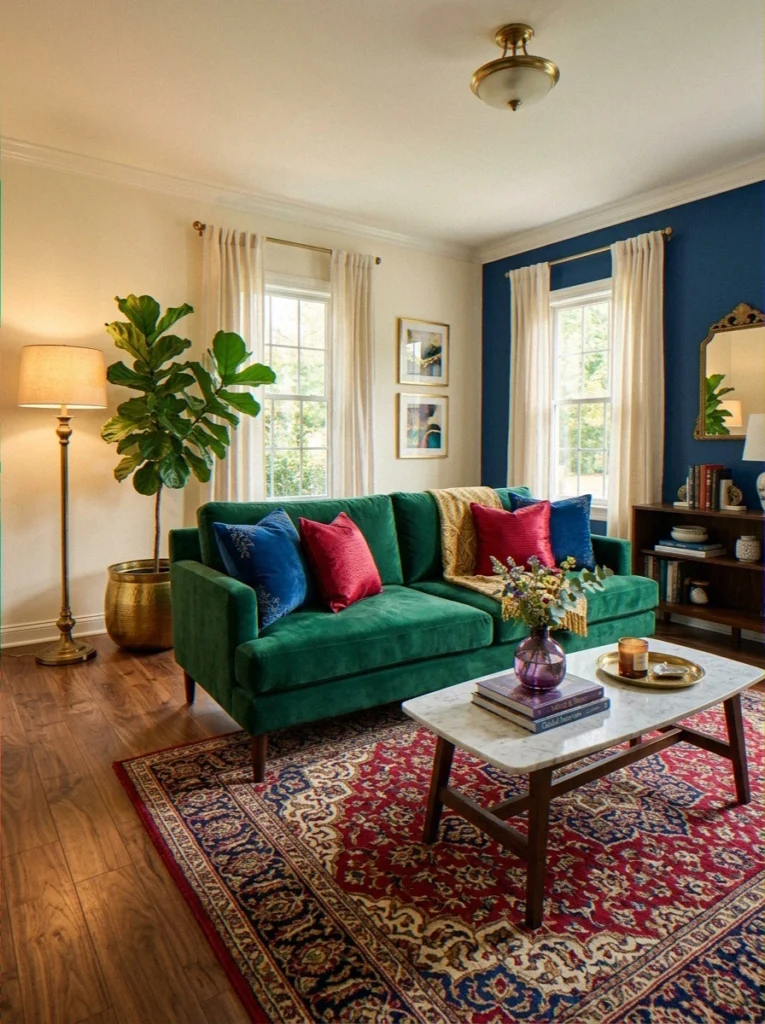
Since you’re clearly developing a jewel-tone obsession (same, honestly), let’s briefly talk about carrying this palette into your living room.
The principles are the same but the scale is different — living rooms tend to be larger and more public-facing, so you need to think about how the color reads across a bigger space and in more varied lighting conditions.
Jewel tones in a living room work brilliantly when:
- Used on a single statement wall behind a sofa or fireplace
- Applied through a velvet sofa in sapphire, emerald, or deep plum
- Introduced via floor-to-ceiling curtains in a rich jewel tone against neutral walls
- Layered through accessories — a ruby red throw, an amethyst vase, a peacock blue cushion
The living room is also the best place to mix jewel tones because the bigger floor area lets you spread the colors out and let each one breathe.
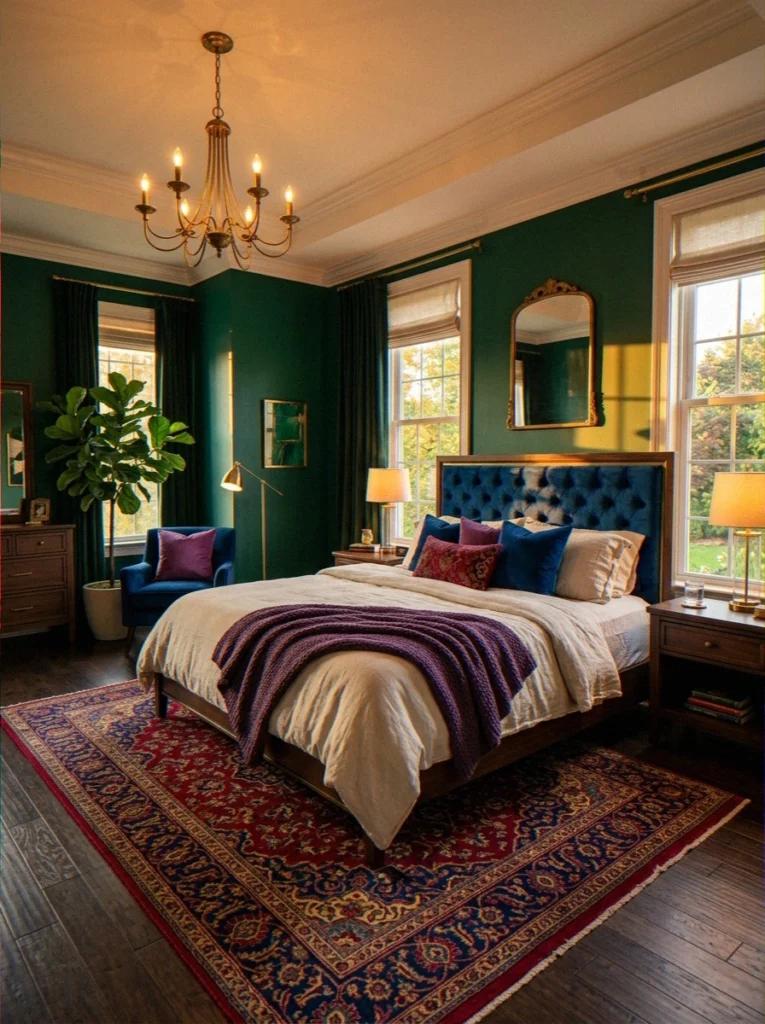
That’s really a beautiful living room: an emerald sofa with sapphire cushions and a ruby red accent chair, all on a Persian rug that has the whole color scheme.
For more living room and bedroom jewel-tone inspiration, Architectural Digest’s interiors section is the best free reference I’ve found online. Genuinely bookmark it.
Layering Multiple Jewel Tones Together
Here’s where people often get nervous, and I completely understand why. Mixing jewel tones sounds like it could easily become a chaotic mess. But the rules are actually simpler than you think.
The Jewel-Box Bedroom Approach
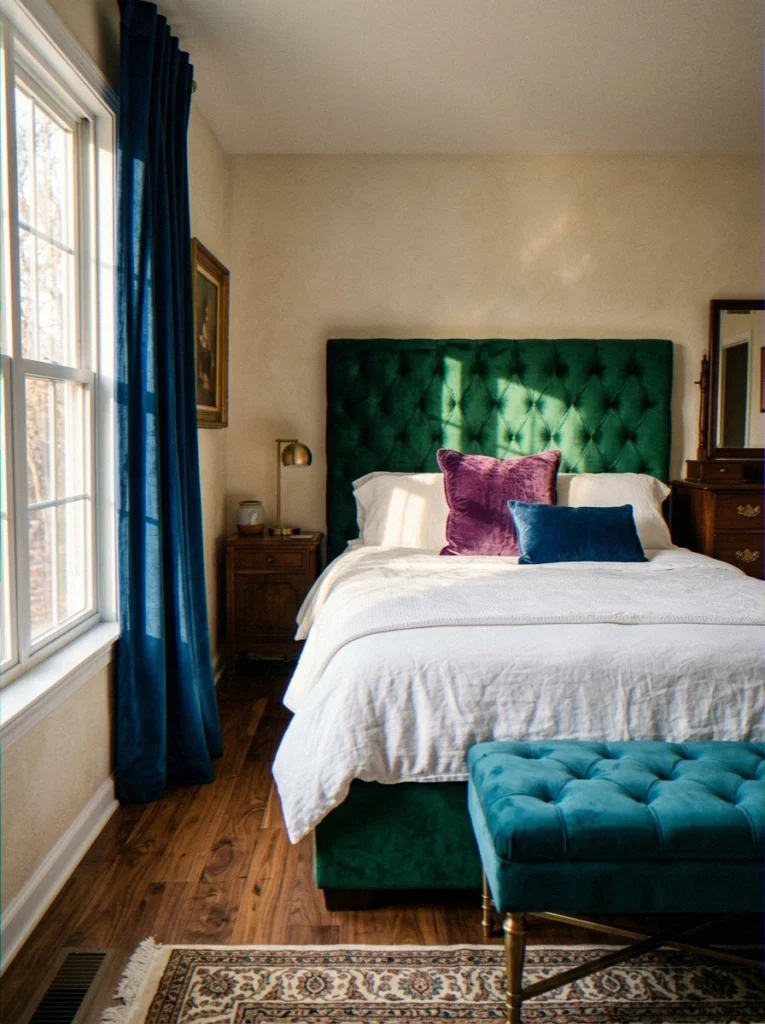
Treat your bedroom like the inside of a jewelry box — multiple rich colors, unified by material consistency.
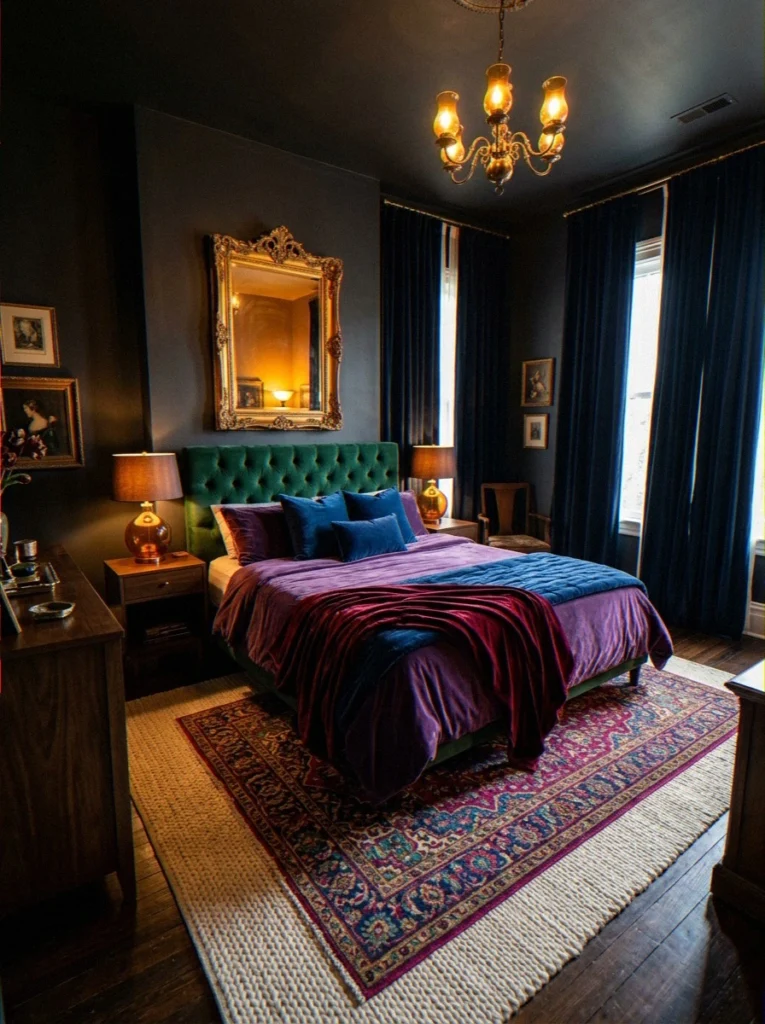
Emerald velvet headboard, amethyst velvet cushions, sapphire velvet throw. The fact that everything is in velvet creates visual cohesion across the different colors, and against a dark neutral wall (charcoal, deep navy), it all comes together as a rich, layered composition.
- Choose one dominant jewel tone (60% of the palette)
- Choose one supporting jewel tone (30%)
- Use the third as a small accent (10%) — more on this in a second
- Keep materials consistent — velvet throughout, or linen throughout, not both in equal measure
- Vary pattern scale if mixing prints (I tried equal-scale patterns once and it looked messy, learn from my mistake)
Scatter Jewel Tones Through Accessories Only
- Sapphire blue vase on the bedside table
- Amethyst throw blanket across the foot of the bed
- Ruby red accent pillow layered with neutrals
- Emerald candle holders on the dresser
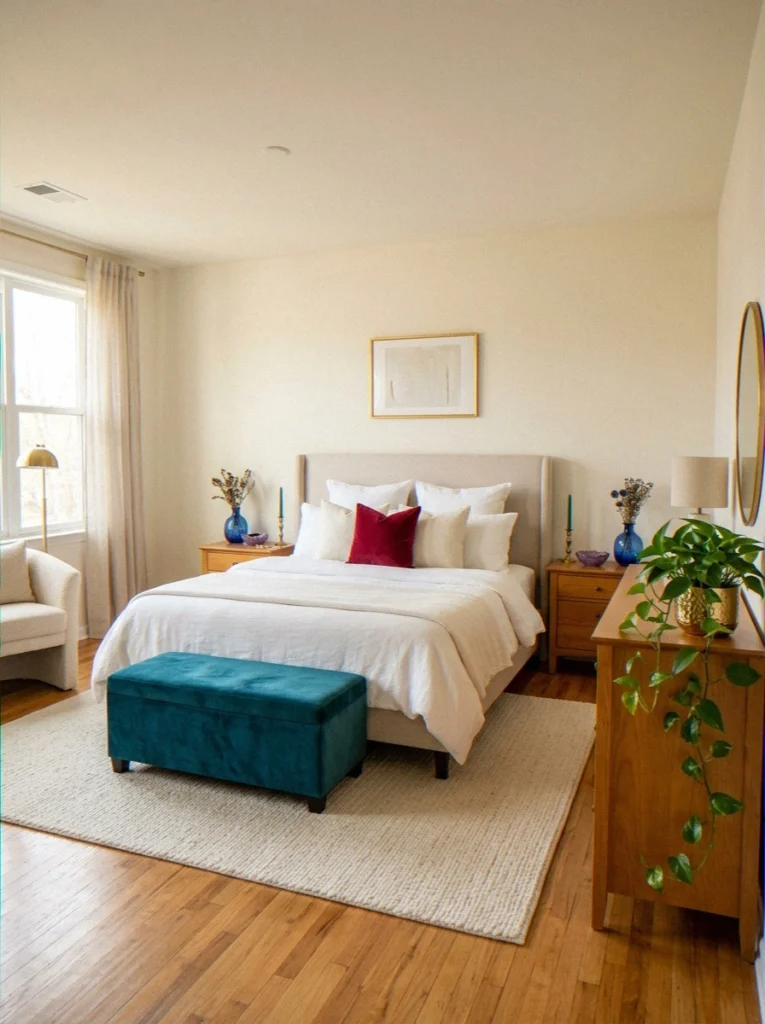
This is the lowest-risk way to play with multiple jewel tones — neutral walls and furniture, jewel tones exclusively in accessories. You can change it whenever you want, costs very little, and the impact is genuinely lovely.
The 60-30-10 Rule for Jewel-Tone Bedrooms
Since we’re talking about mixing jewel tones, this is the perfect moment to address one of the most commonly asked questions in bedroom design.
The 60-30-10 rule is the most practical color-balancing framework in interior design, and it works especially well with jewel tones. Here’s how it breaks down:
- 60% — Your dominant color. This is your main walls, your largest furniture pieces, your primary visual anchor. In a jewel-tone bedroom, this might be emerald walls or a deep sapphire bedding set.
- 30% — Your secondary color. This covers secondary furniture, curtains, upholstered pieces. This is where your second jewel tone lives — maybe amethyst curtains or a ruby red area rug.
- 10% — Your accent color. This is accessories, hardware, small decorative objects. A third jewel tone, or a metallic like brass or copper, typically lives here.
This rule is great because it keeps one color from overpowering the others and makes the palette feel like it fits together instead of being random.
I’ve used it in every jewel-tone room I’ve designed, for myself and for friends, and it’s always worked.
Start with your main jewel tone, then add more colors to it. Finally, use the 10% accent to make it even more interesting.
Texture and Materials That Elevate Jewel Tones
Getting the color right is literally only half the job. The materials you pair with jewel tones determine whether the room looks genuinely designed or just painted and forgotten.
Velvet: Non-Negotiable Partner
Velvet and jewel tones were made for each other. I genuinely believe this. The way velvet catches and reflects light makes saturated colors look richer, deeper, and more dimensional. It’s not just a style choice — it’s a practical one.
Use velvet in your headboard, throw pillows, curtains, and any upholstered seating pieces you include.
Layered Rugs Add Depth Without Adding Color
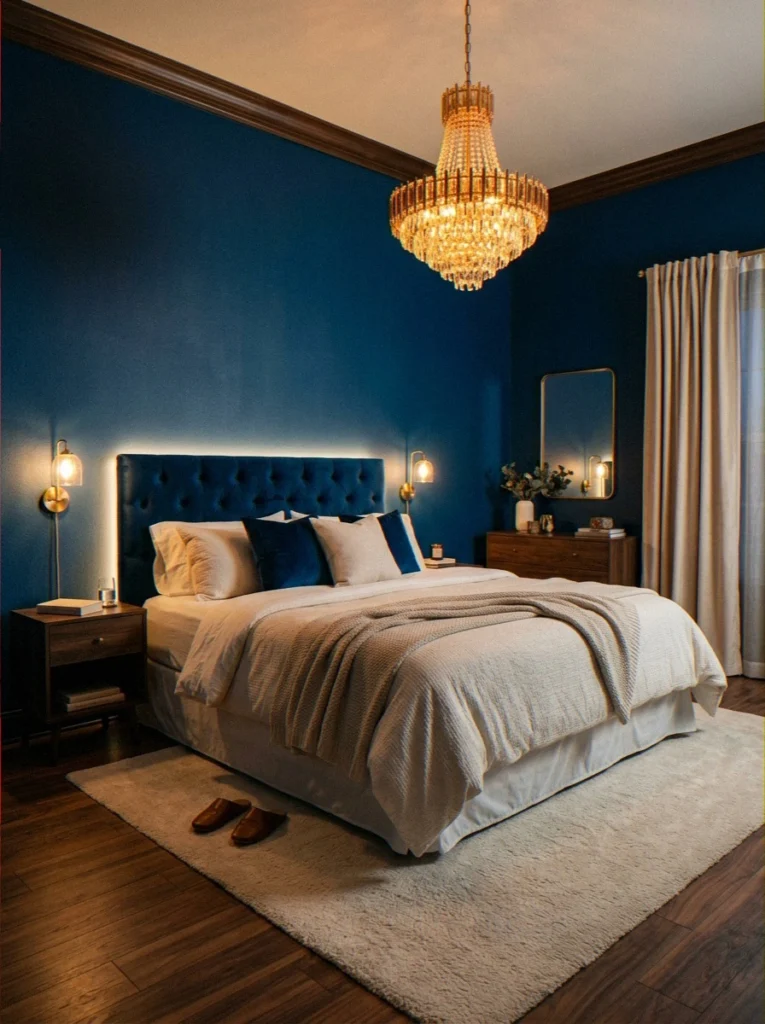
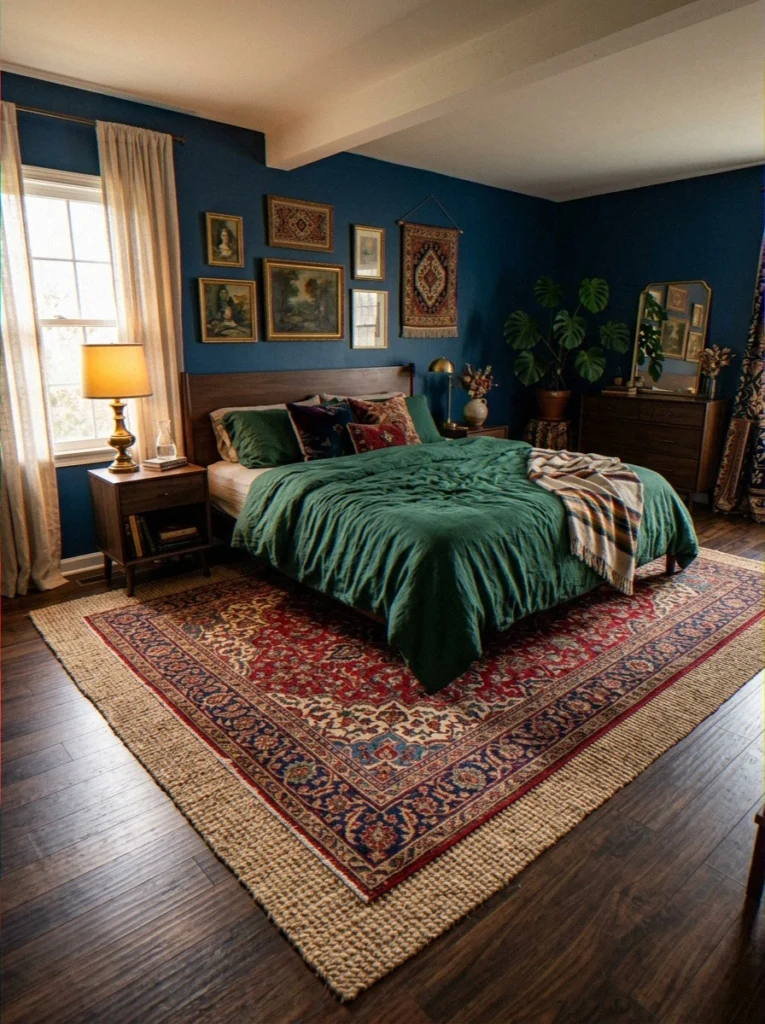
A large neutral base rug — cream, natural jute, or light grey — with a smaller jewel-toned rug layered on top creates visual depth and texture in a bedroom without adding another competing wall color.
Try a jute base with a smaller Persian-style rug in ruby or sapphire tones layered on top. It creates a bohemian luxe effect that looks expensive and intentional.
Dark Wood as a Visual Anchor
Dark walnut, mahogany, or painted matte black furniture looks great with jewel-tone colors. It gives the colors a visual anchor that keeps them from feeling unmoored or chaotic.
If you don’t want to get rid of your light wood furniture, think about painting it a deep espresso or matte black color. It makes a big difference.
For general material and texture guidance in interior design, House Beautiful’s bedroom section is one of the best free resources available and worth bookmarking alongside Architectural Digest.
Lighting: The Make-or-Break Factor
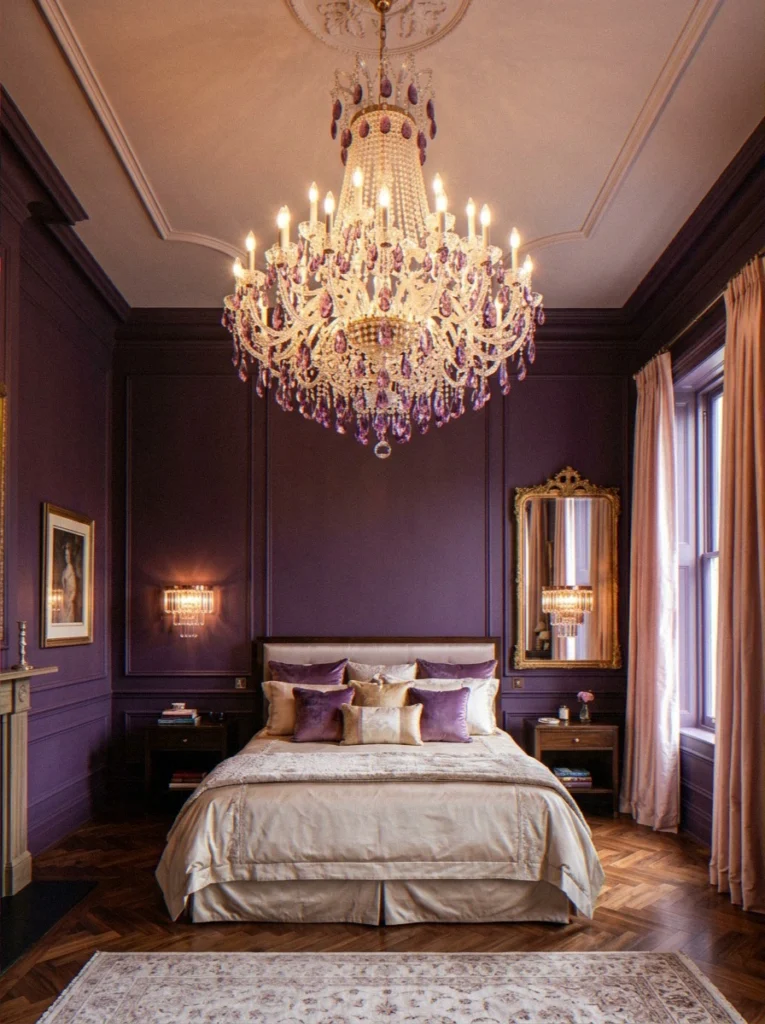
No jewel-tone bedroom fully works without the right lighting. This is the mistake I see most often — someone puts in the effort with paint, bedding, and furniture, and then plugs in a harsh cool-white bulb and wonders why the room doesn’t look like the Pinterest image. It’s always the lighting.
The three layers you absolutely need:
- Ambient lighting — your main overhead source (chandelier, pendant, or flush mount)
- Task lighting — bedside lamps or wall-mounted sconces
- Accent lighting — LED strips behind the headboard, under the bed frame, or inside a wardrobe
Warm bulbs (2700K) are non-negotiable in a jewel-tone bedroom. Cool white light strips the warmth and depth from rich colors and makes everything look flat and slightly sad.
Warm light, on the other hand, makes emerald glow, makes sapphire deepen, and makes ruby come alive. The difference is dramatic and immediate.
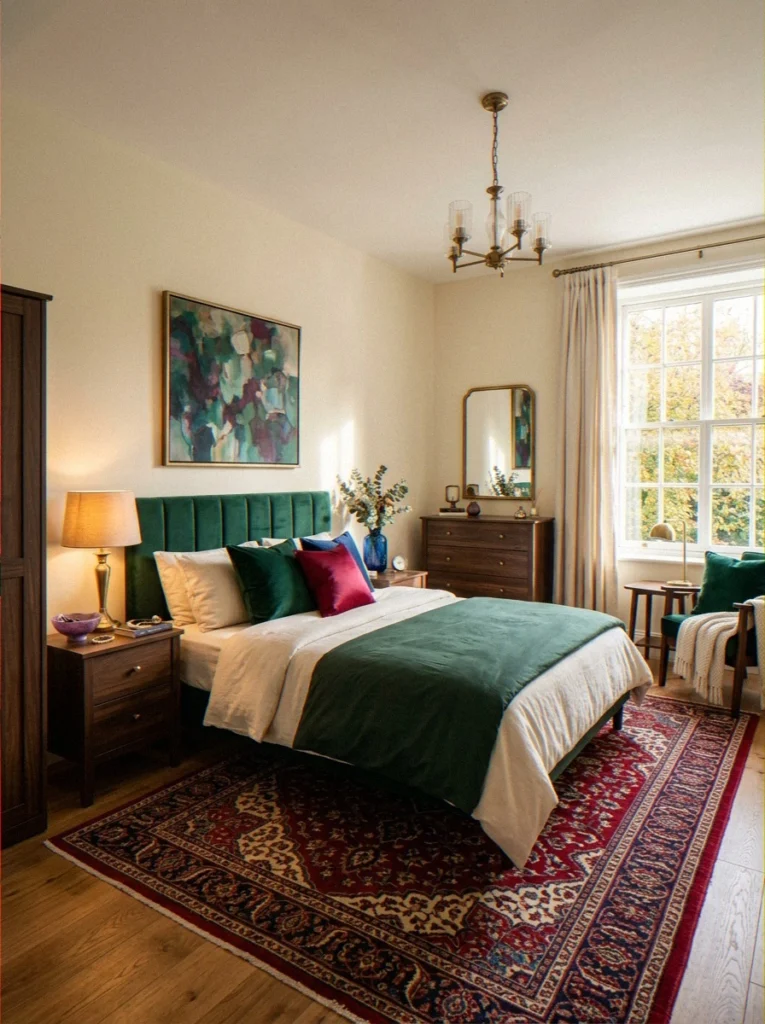
A statement chandelier that incorporates your jewel-tone palette — crystal in amethyst or smoky blue, for example — creates a cohesive, immersive effect that ties the whole room together overhead.
What Colors Go With Jewel Tones?
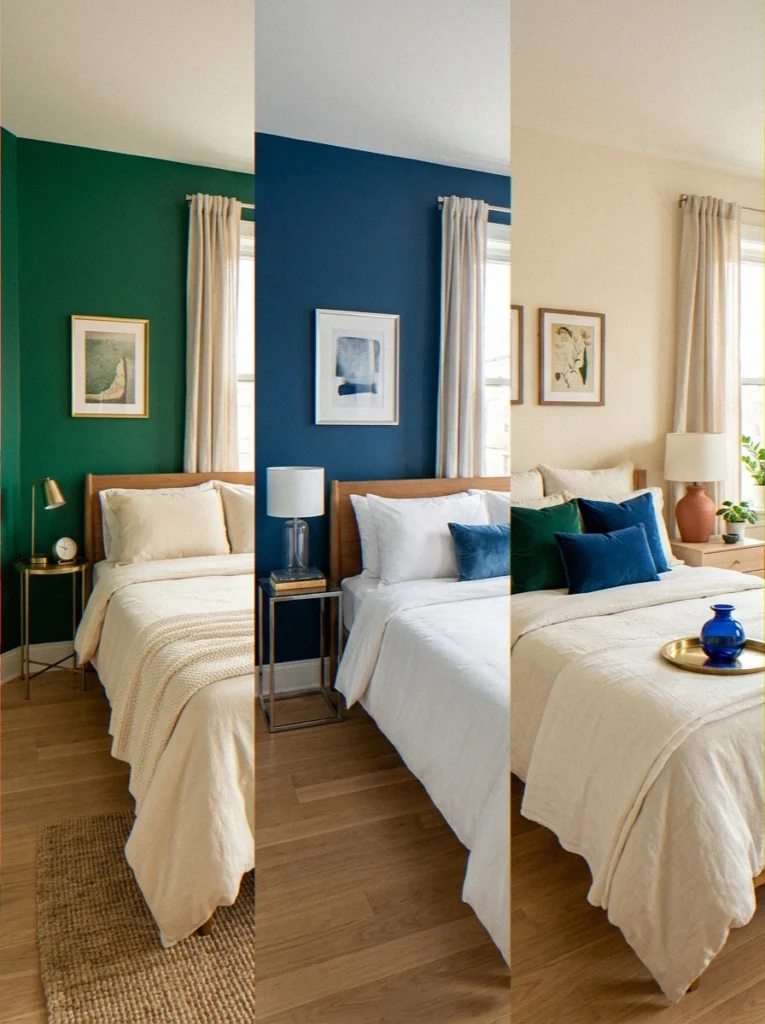
This is one of the most common questions people ask when they’re planning a jewel-tone bedroom, and the answer is more flexible than you might think.
Discover More Decor Ideas
37 Stunning Olive Green Wall Bedroom Ideas You’ll Love
How to Use Permeable Pavers for Driveway Flood Prevention?
42 Laundry Room Ideas for Ultimate Organization & Storage
Jewel tones pair brilliantly with:
- Warm neutrals — cream, ivory, warm white, camel, and soft caramel all complement jewel tones without competing with them. I’ve used warm white with every jewel tone I’ve ever worked with and it’s never failed.
- Metallics — brass, gold, copper, bronze, and rose gold all work beautifully. Chrome and silver work best with cooler jewel tones like sapphire and teal.
- Dark neutrals — charcoal, deep navy, and matte black work as grounding colors that make jewel tones pop rather than compete.
- Each other — when used in proportion (remember the 60-30-10 rule), jewel tones pair with each other beautifully.
- Natural materials — wood (dark or light), rattan, jute, linen, and stone all add textural contrast that makes jewel tones feel more grounded and less theatrical.
What to avoid: stark, cool grey (it kills the warmth of jewel tones completely), bright white with cool undertones (same issue), and competing pattern scales at the same visual weight.
What Are the Top 3 Bedroom Colors?
Based on interior design trends, search data, and my own experience helping people with their rooms, the top 3 bedroom colors right now are:
1. Deep Emerald Green — The jewel tone that dominates searches, Pinterest boards, and interior design publications. It works in every style from contemporary to traditional, it pairs with everything, and it has this universal quality of making people feel instantly at home.
2. Warm Sapphire Blue — Blue has been a dominant bedroom color for years, but the shift toward deeper, richer sapphire tones rather than pale, Scandi-inspired blues reflects a broader trend toward more saturated, courageous color choices.
3. Soft Warm White / Cream — Still the most popular choice overall because it’s safe, versatile, and works in every situation. Not glamorous, but perennially popular for a reason. (Bro, you can always add jewel-tone accents to a cream room and get the best of both worlds.)
The trend is clearly moving toward more depth and richness in bedroom color choices — away from the grey and greige dominance of the early 2010s and toward color that actually does something in a room.
Practical Tips From Personal Experience
Since we’re being real with each other, here are a few things I learned the hard way so you don’t have to:
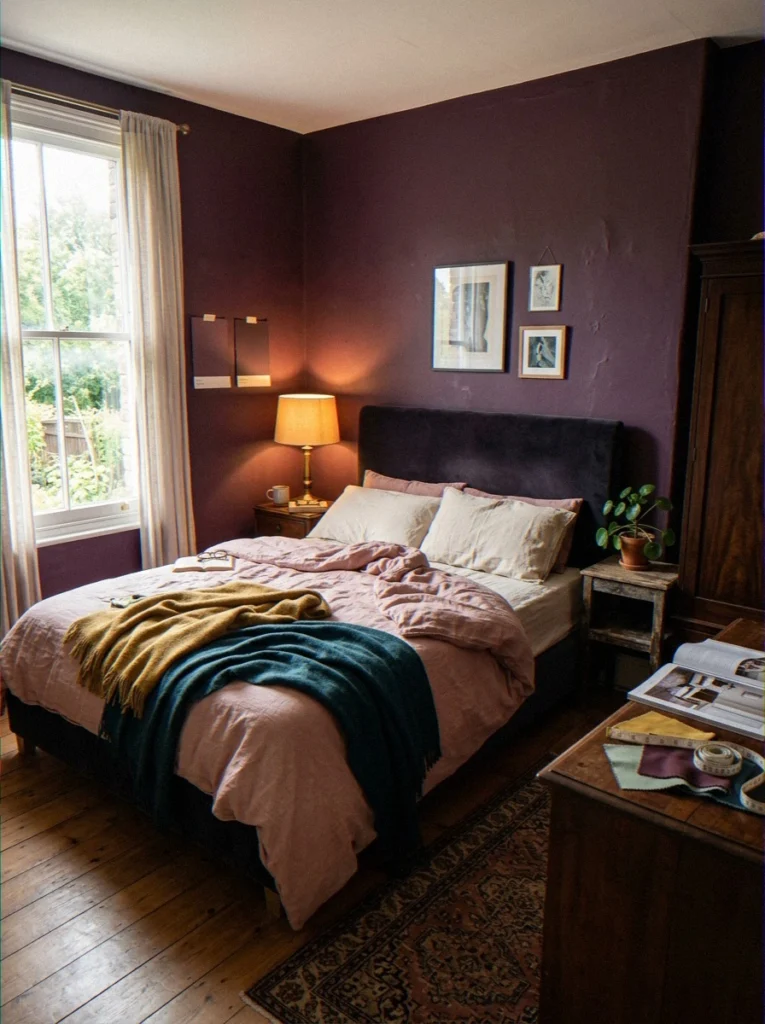
- Always test paint samples on the actual wall first. Paint a large swatch — at least 12×12 inches — and look at it over 48 hours in morning light, afternoon light, and evening artificial light. Jewel tones shift dramatically across different lighting conditions. I skipped this step once with a deep plum and ended up with what looked like bruised eggplant on my walls. Not the vibe.
- Invest in primer. Painting dark jewel tones over light walls without primer means four coats minimum. Good primer cuts it to two. Worth every penny.
- Dark trim is underrated. White trim with jewel-tone walls is classic. But deep charcoal or matte black trim with jewel-tone walls creates something genuinely spectacular. Try it in one room and see.
- Edit your accessories mercilessly. A jewel-tone bedroom is already visually rich. Too many accessories create noise that cancels out the impact of the color. This one I still struggle with — I love a surface covered in beautiful objects — but less really is more here.
Budget Breakdown: Where to Invest, Where to Save
You absolutely do not need a huge budget to achieve a beautiful jewel-tone bedroom. Here’s how I’d prioritize spending:
Worth investing in:
- Quality velvet headboard (the single most impactful piece)
- Good floor-to-ceiling curtains in a jewel tone or neutral
- A statement area rug that anchors the whole room
- Quality paint — premium brands like Farrow & Ball or Benjamin Moore give richer, more consistent coverage
Perfectly fine to go budget on:
- Throw pillows (change them seasonally, no need to spend big)
- Candles and small decorative accessories
- Side tables and dressers (paint them if they’re the wrong tone)
- Secondary bedding like throws and blankets
The DIY wildcard: Paint is genuinely the cheapest and most impactful transformation tool available. A single can of quality jewel-tone paint on one wall costs under $50 and can completely change how a room feels. Start there if budget is a genuine concern.
Common Jewel-Tone Mistakes to Avoid
I’ve made approximately all of these, so consider this a hard-won list :/
- Using cool-white light bulbs. Swap them out immediately. Non-negotiable.
- Pairing jewel tones with harsh, cool grey. Warm grey is fine. That stark, blue-grey from 2014? No.
- Forgetting the floor matters. A cold tile floor or bright white carpet undermines a jewel-tone bedroom completely. Add a warm rug.
- Using too many jewel tones at once without a unifying principle. Stick to 60-30-10.
- Buying cheap velvet. It pills, it flattens, it looks synthetic within weeks. Invest in quality.
- Going too dark in a room with limited natural light without compensating with warm, layered artificial lighting. The lighting is the answer, not avoiding the dark color.
Frequently Asked Questions
Q: What colors go with jewel tones? Warm neutrals (cream, ivory, warm white), metallics (brass, gold, copper, rose gold), dark neutrals (charcoal, matte black), natural materials (dark wood, rattan, jute), and other jewel tones at similar saturation levels all pair beautifully with jewel tones. Avoid stark cool grey and cold-white tones, which strip warmth from rich colors.
Q: What are the top 3 bedroom colors? Right now, deep emerald green, rich sapphire blue, and warm cream or soft white are the three most popular bedroom color choices.
The trend is clearly moving toward more depth and saturation — away from the beige-and-grey dominance of the last decade and toward colors that create genuine atmosphere.
Q: What is the 60-30-10 rule for bedrooms? The 60-30-10 rule divides your bedroom color palette into three proportions: 60% dominant color (main walls and largest furniture), 30% secondary color (curtains, secondary furniture, upholstery), and 10% accent color (accessories, hardware, small decorative objects).
This balance prevents any single color from overwhelming the space and creates a palette that feels cohesive rather than random. It’s the most reliable framework for using jewel tones successfully.
Q: Will dark jewel tones make my bedroom feel smaller? Not necessarily — and this is a common misconception. Properly layered warm lighting, lighter-toned bedding, mirrors to reflect light, and minimal furniture can make a jewel-tone bedroom feel intimate rather than cramped.
The feeling of enclosure can actually be positive in a bedroom — that’s the whole point of creating a retreat.
Q: What’s the easiest jewel tone to start with? Emerald green. It pairs with almost everything, reads sophisticated rather than bold, and works in warm-toned and cool-toned rooms alike.
Q: What paint finish works best for jewel-tone bedroom walls? Eggshell or satin finish — both are easy to clean, reflect just enough light to give the color depth, and avoid the flatness of matte or the shininess of gloss.
Q: Can I use jewel tones in a modern, minimalist bedroom? Absolutely — you just need to be more restrained. One jewel-tone accent wall or a single velvet headboard in a clean-lined, minimal room is incredibly effective. The restraint makes the jewel tone work harder, not less.
Final Thoughts: Go Get That Luxe Retreat You Deserve
The truth is that your bedroom is the only room in your house that is just for you. Not for guests, not for Instagram (well, maybe a little for Instagram), and not for anyone else’s approval.
It should feel special—warm, personal, and like a real break from the rest of the world. And if there’s a color family made just for that, it’s jewel tones.
You don’t have to agree to all four walls right away. A velvet headboard, a jewel-toned throw, or a single painted accent wall are all good places to start.
How does it make you feel? I bet you’ll be completely sold in a week and wonder why you ever lived with beige walls.
There are 41 ideas in this article that cover every level of commitment, from “I bought a new pillow” to “I painted the whole room and put up new curtains.”” There is no wrong place to start. The only mistake is not starting.
So, which jewel tone do you want to wear? Are you a deep emerald person, a sapphire soul, or a full-on amethyst fan? Please leave your answer in the comments or show me how you changed your jewel-tone bedroom. I would love to see what you come up with! 🏡✨
For further inspiration and design guidance, explore Architectural Digest’s bedroom galleries, House Beautiful’s bedroom design section, and Psychology Today on color and environment.
