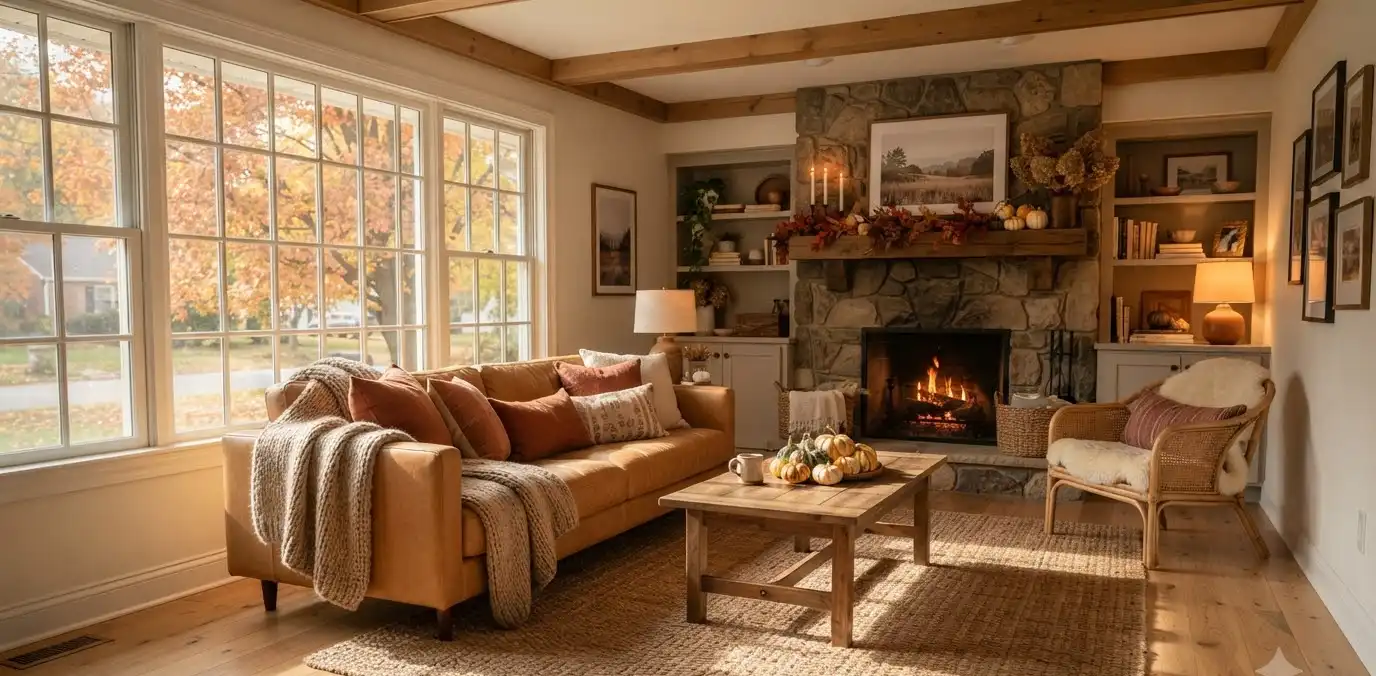
My living room used to look like a hotel lobby in October. Nice enough, but nothing you’d want to curl up in with a mug of cider.
Then I spent one weekend swapping about eight things, nothing structural, nothing expensive, and the whole room finally felt like fall.
That’s the thing about cozy fall decor. It’s rarely about buying more stuff. It’s about picking the right few things and layering them with intention.
I’ve pinned probably 400 fall living room boards over the years (my Pinterest algorithm thinks I live in a cabin), and the ones that actually work in real homes share the same handful of moves. Let’s get into them.
Start with a warm color palette, not a whole new couch
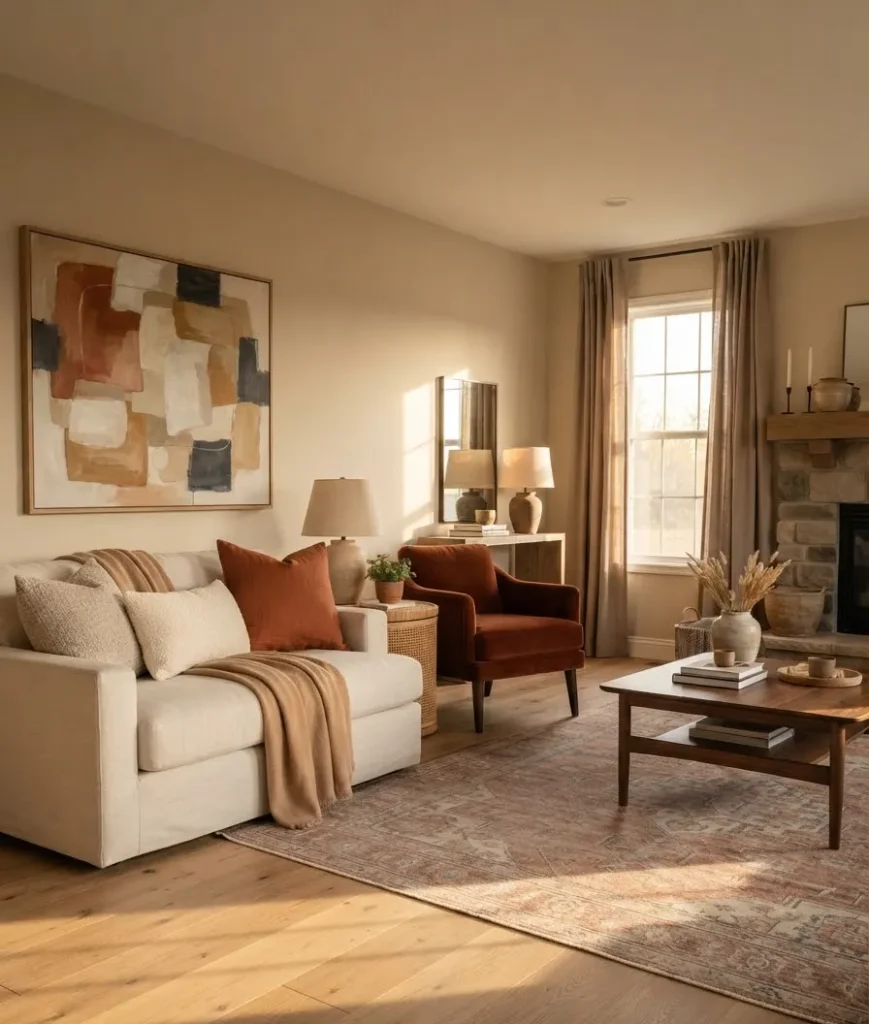
You don’t need to repaint or reupholster anything to make a room feel warmer.
Color does most of the emotional heavy lifting, and warm tones (rust, terracotta, mustard, deep olive) genuinely change how a space feels, not just how it looks.
There’s real research behind this. A quick read on the psychology of warm color palettes explains why these shades make rooms feel closer and more intimate instead of open and cold.
Here’s how I’d build a palette without overhauling anything:
- Pick one dominant warm neutral. Camel, terracotta, or warm taupe works on most existing furniture.
- Add one deep accent. Rust or forest green in a throw or a vase.
- Keep everything else neutral. Cream, oatmeal, warm white. This keeps the room from feeling like a pumpkin patch exploded in it.
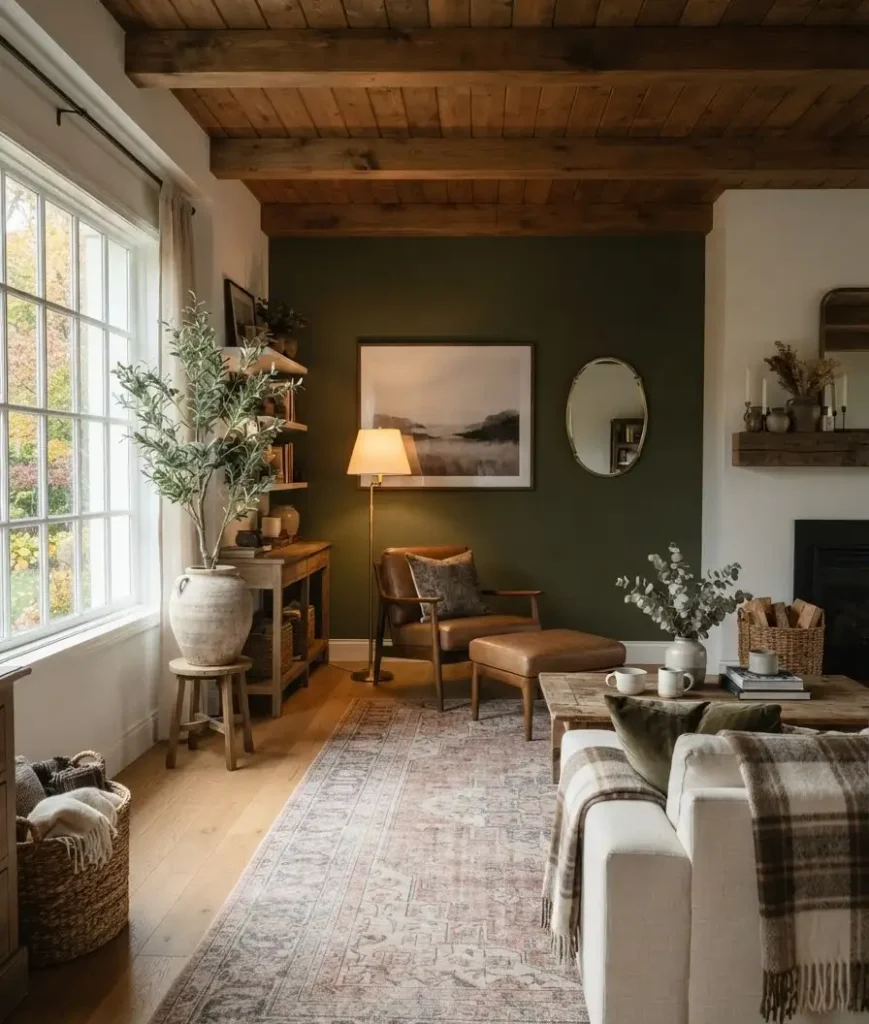
IMO, most fall decor fails because people go too saturated too fast.
Three orange pillows and a plaid throw and suddenly your living room looks like a Cracker Barrel gift shop.
Pick your warm color, then dilute it with neutrals until it feels intentional instead of themed.
Layer textures like you mean it
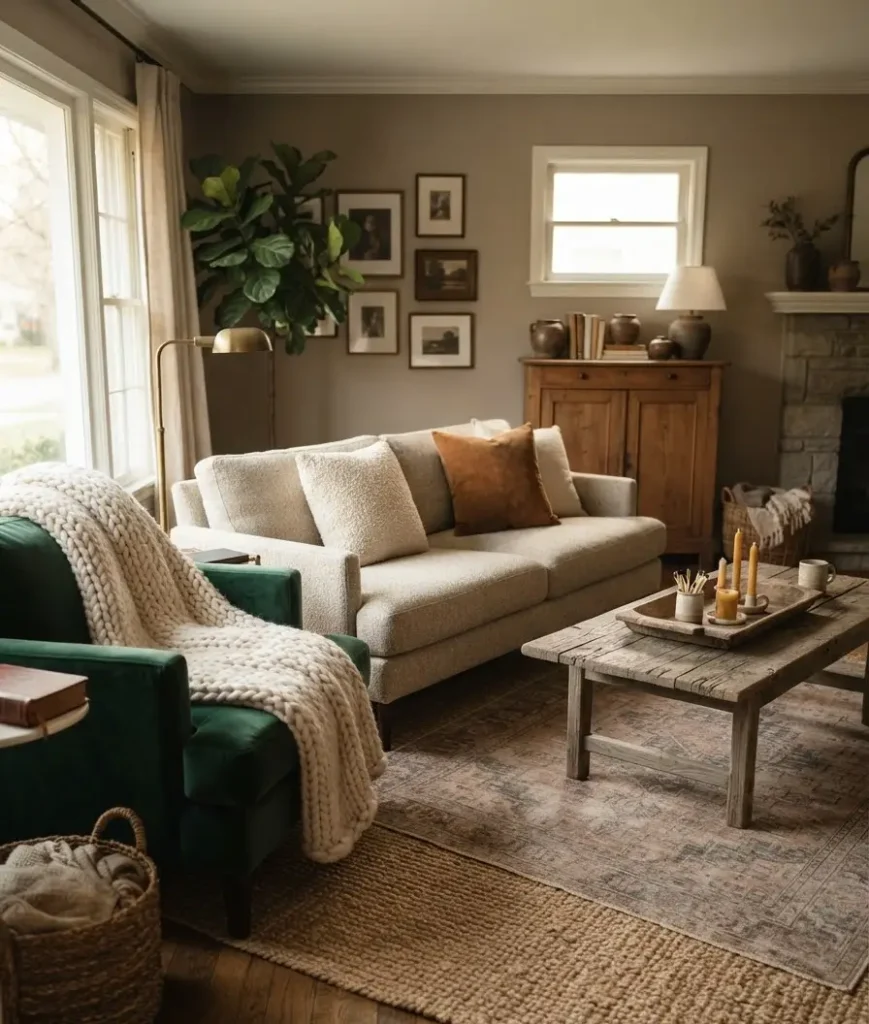
Fall coziness is a texture game as much as a color one. Smooth leather, chunky knit, sheepskin, worn wood. Mixing textures is what separates “styled” from “stiff.”
A few textures that pull their weight in a living room:
- Chunky knit throws draped over the arm of a chair, not folded flat (folded flat reads as staged, draped reads as lived-in)
- A wool or jute rug layered under your existing rug for depth and warmth underfoot
- Velvet or corduroy pillow covers, which catch lamplight in a way flat cotton just doesn’t
- A weathered wood coffee table tray to hold candles, a stack of books, whatever
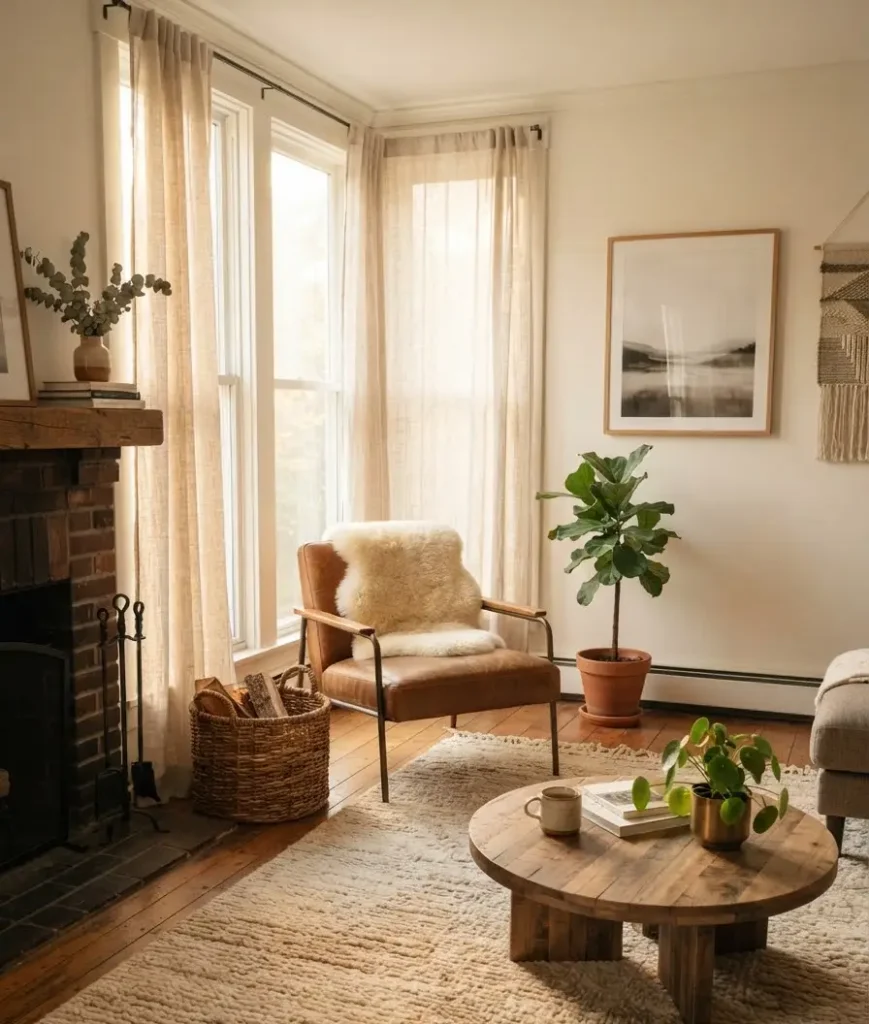
I switched my cotton throw pillow covers to a mix of velvet and boucle two falls ago and honestly, it made a bigger difference than I expected.
Same pillows underneath. Just a texture swap. Ever notice how a room can look expensive with cheap materials, purely because the textures are mixed well? That’s the trick.
Bring the outside in, minus the mess
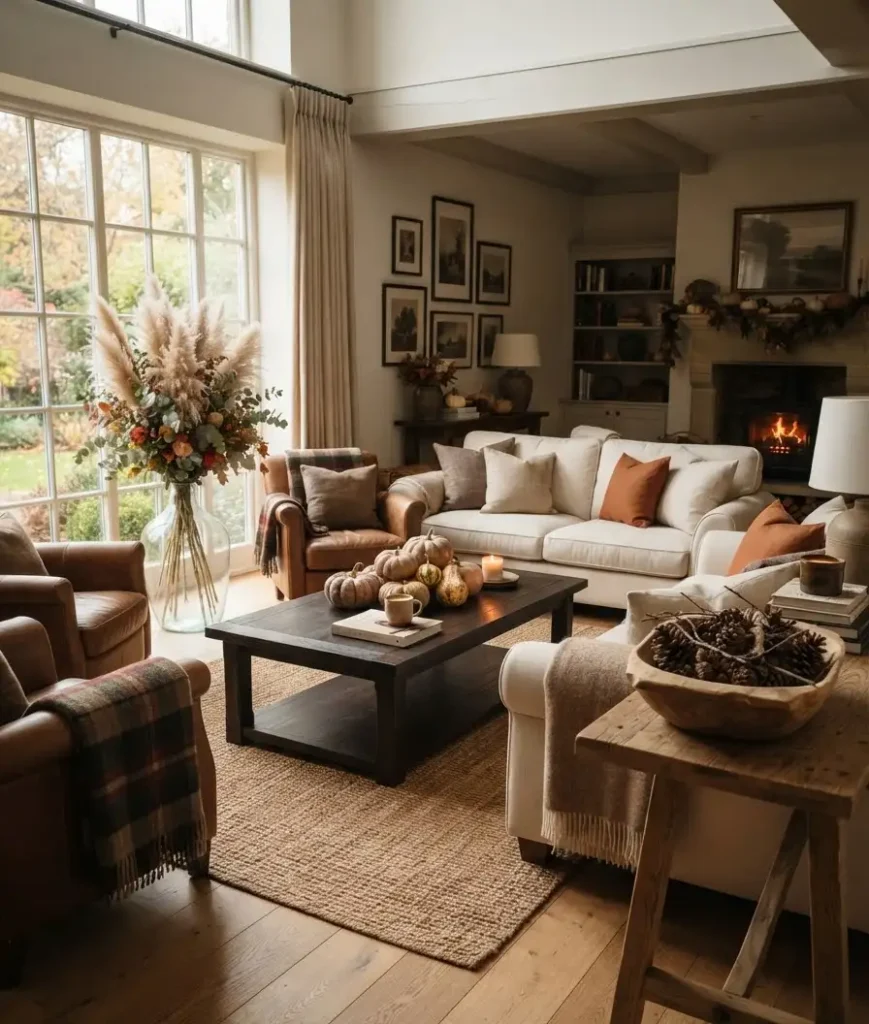
Natural elements are non-negotiable for a fall living room. Pumpkins, dried florals, pinecones, branches.
But here’s where a lot of Pinterest boards oversell you: you don’t need a farmer’s market haul.
Three natural touches go a long way:
- A cluster of small pumpkins or gourds on the coffee table, mixed heights, mixed colors. Skip the giant carving pumpkin indoors; it smells and it rots.
- Dried pampas grass or wheat stems in a tall vase in a corner. One vase, done. You do not need a full dried floral installation.
- A wood bowl of pinecones or cinnamon sticks near the seating area. Cheap, seasonal, smells nice without a candle.
If you want faux versions that don’t look plasticky, look for ones with matte finishes and slightly irregular shapes.
Glossy fake pumpkins are the fastest way to make a room feel like a craft store aisle instead of a home.
Get the lighting right (this one matters more than people think)
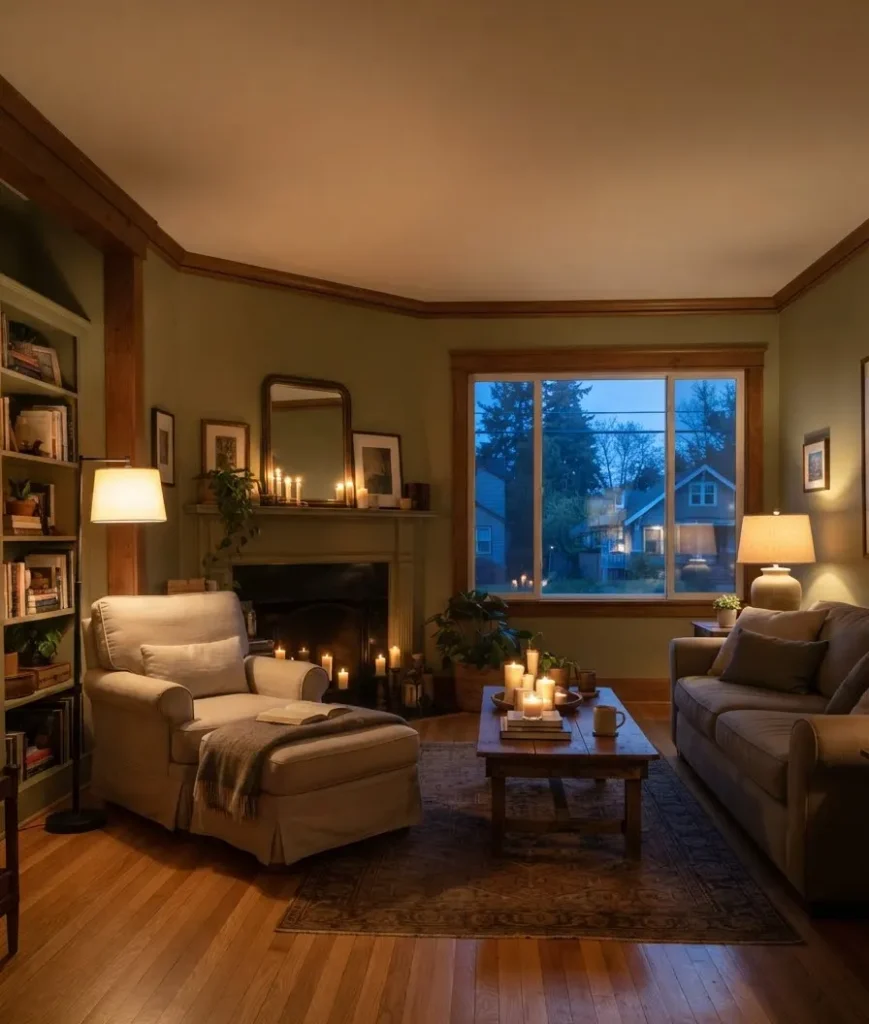
Bad lighting undoes every other decor choice you make. A room can have the perfect palette and still feel sterile under one harsh overhead light. Fall coziness lives in lamp light, not ceiling light.
A simple lighting layer for a living room:
- One floor lamp with a warm bulb (2700K, not the blue-white 5000K office kind)
- A table lamp near your reading chair
- Candles, actual flame ones, not just the fragrance diffuser
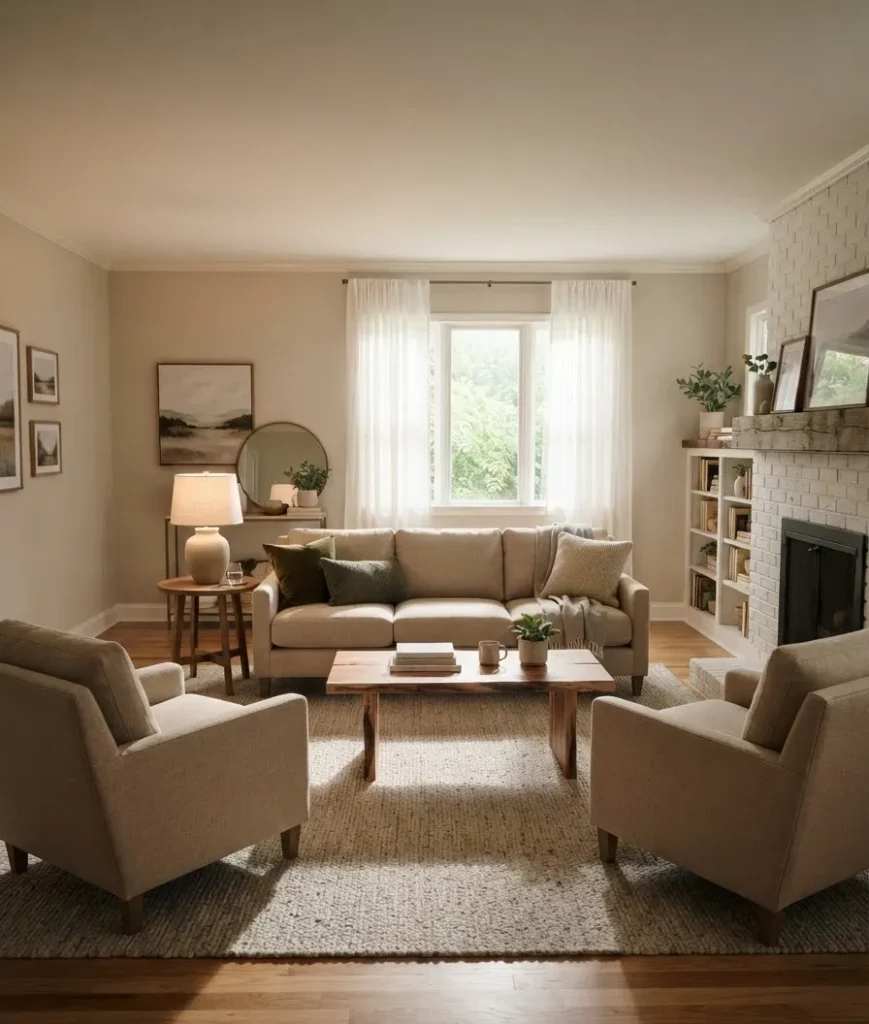
Candles do a lot of the emotional lifting here, but they come with real fire risk, so it’s worth following actual guidance instead of winging it.
The National Candle Association’s candle safety tips cover the basics: trim the wick, keep candles away from drafts and flammable fabric, never leave one burning unattended.
I learned the wick-trimming thing the hard way after a candle turned into a smoky, sooty mess on my mantle.
Trim it to a quarter inch. Trust me.
Here’s a quick reference for candle types if you’re stocking up for the season:
| Candle type | Burn time (avg) | Best for |
|---|---|---|
| Soy pillar (3×4 in) | 40-50 hours | Coffee table centerpiece |
| Votive | 8-10 hours | Mantle clusters |
| Taper | 6-8 hours | Dinner table, not left unattended |
Rearrange before you buy anything new
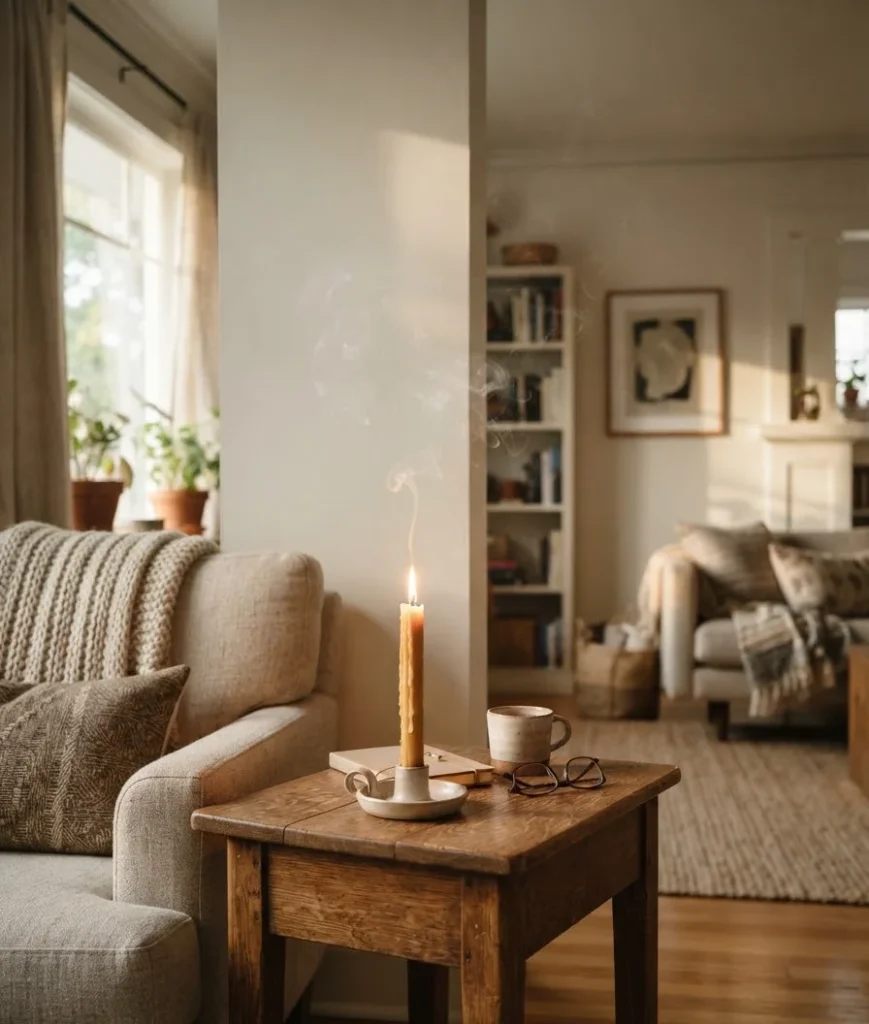
This is the step everyone skips because it’s free and free things feel less exciting than shopping.
But pulling your seating into a tighter, more conversational layout does more for “cozy” than any pillow ever will.
Try angling chairs toward each other instead of everything facing the TV. Pull the coffee table a little closer.
Add a small side table wherever there’s a gap. A room that invites conversation reads as warm even before you add a single pumpkin.
I moved my armchair about three feet, closer to the sofa and slightly angled, and my living room instantly felt like a place people wanted to sit and talk instead of a waiting room.
Didn’t spend a dollar.
Scent, without the headache-inducing overkill
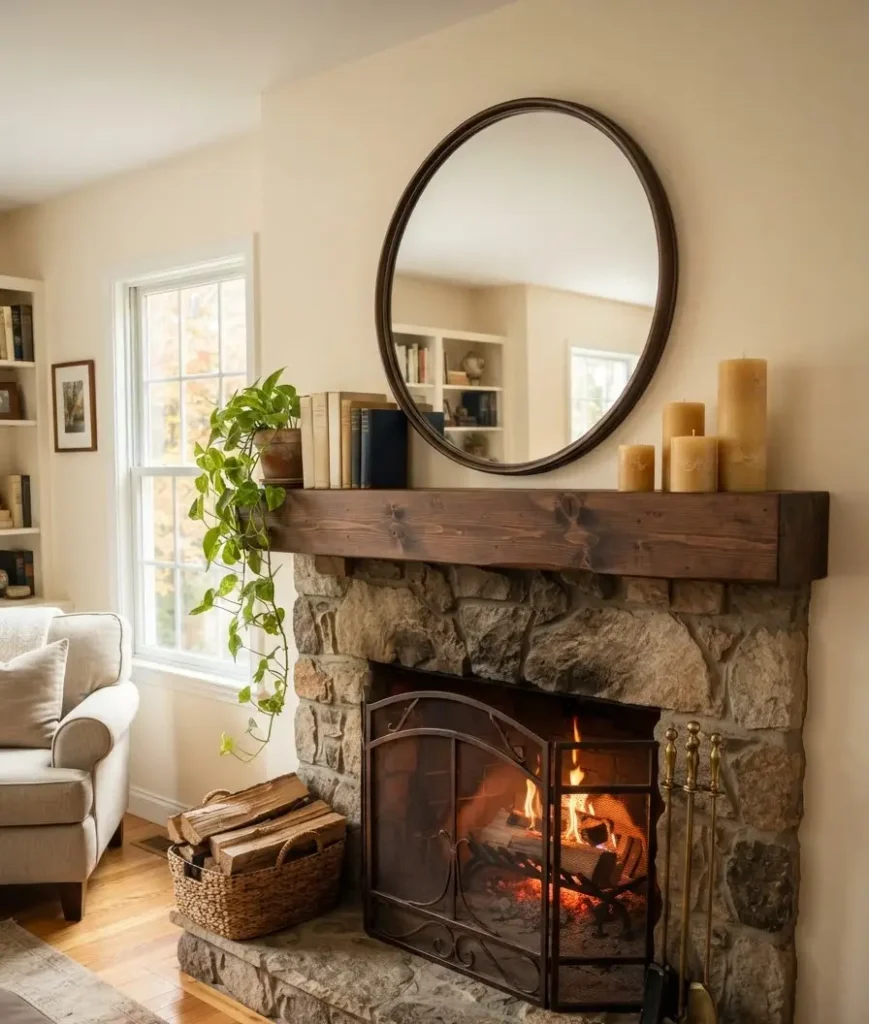
This is a slight tangent, but stick with me: I once walked into a friend’s house during fall and nearly turned around at the door because she had four different pumpkin spice candles burning at once.
It smelled like a candle shop had a small explosion. Scent should be a whisper, not a shout.
One candle or diffuser per main room is plenty. Cinnamon, clove, cedar, or a light apple note work better than anything screaming “PUMPKIN SPICE” at full volume.
This idea of restraint, actually, connects to a bigger concept worth knowing: the Danish idea of hygge, which is less about specific decor items and more about creating an atmosphere of warmth and contentment. It’s less stuff, more feeling.
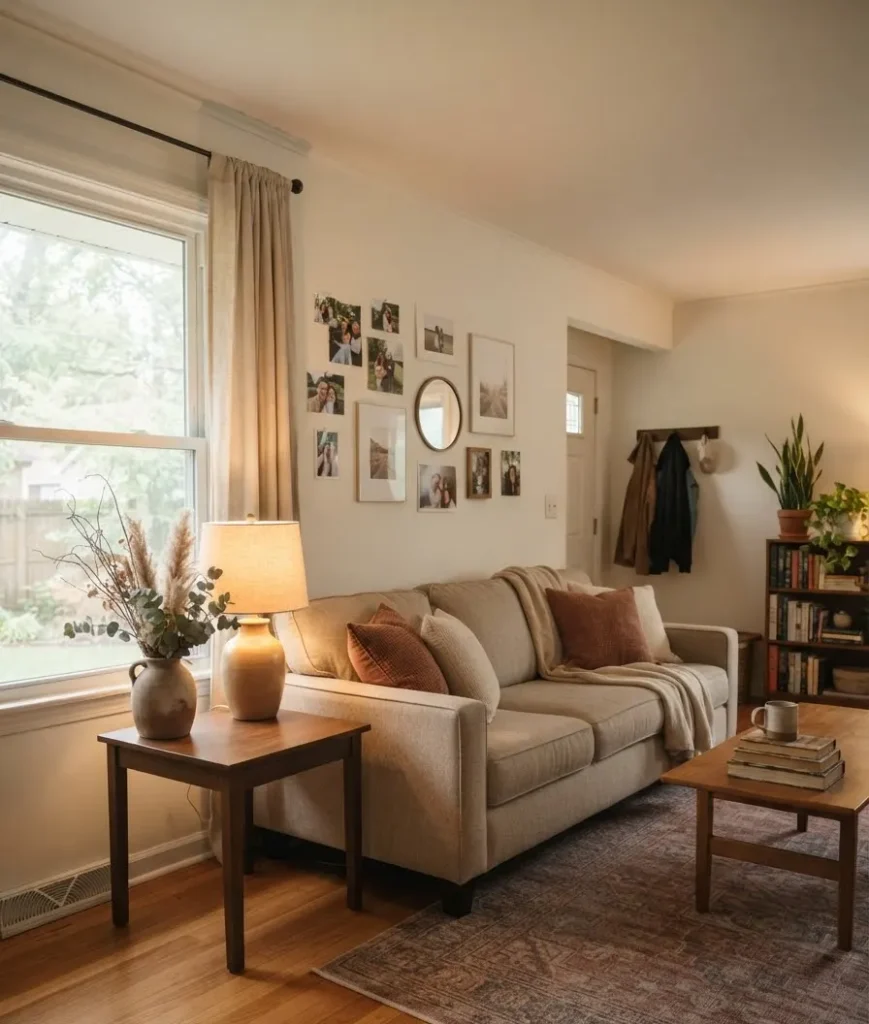
Style your mantle and coffee table with a rule of odd numbers
If you only take one styling tip from this whole article, take this one: group decor in odds, not evens. Three pumpkins, not two. Five books stacked with a candle on top, not four.
A simple mantle formula that works almost every time:
- One anchor item (a mirror, art, or a large vase) centered or slightly off-center
- Two to three candles of varying heights on one side
- A small stack of books or a plant on the other side for balance
Coffee tables follow the same logic. A tray, a stack of books, a small vase, done. Resist the urge to fill every inch. Empty space is part of the styling, not a gap you need to fix.
A few budget-friendly swaps worth doing first
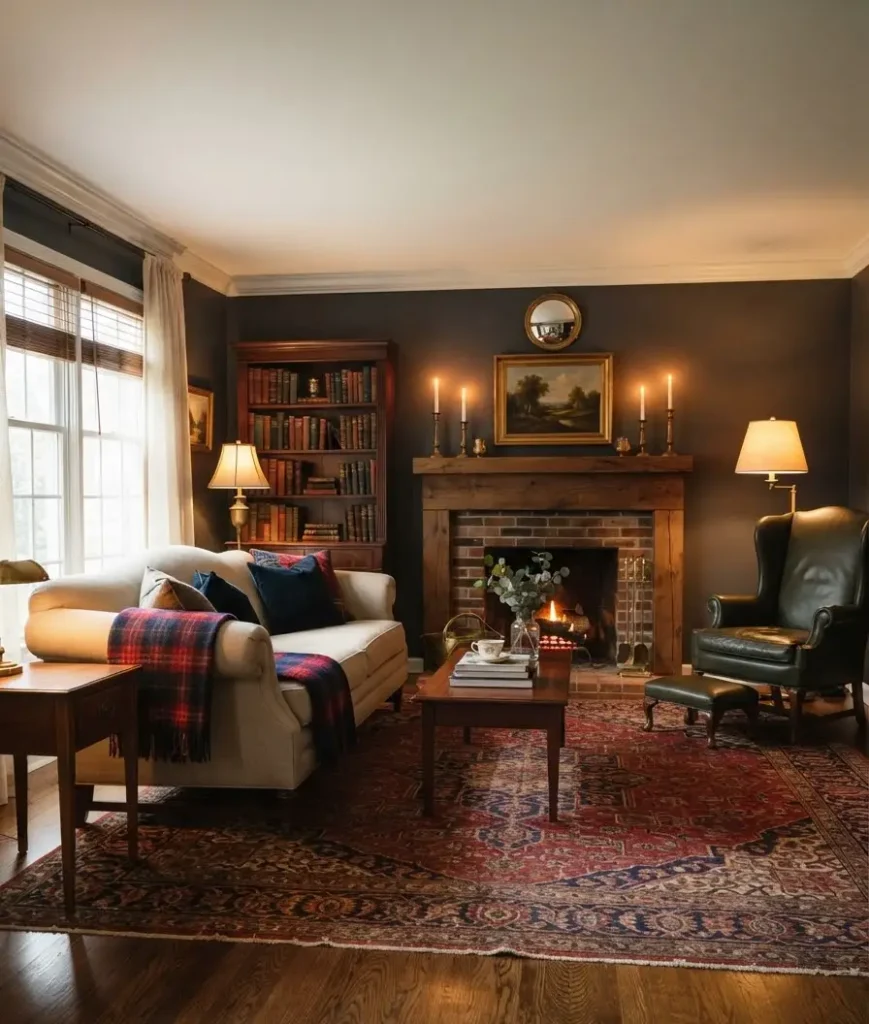
If you’re working with a tight budget this season (most of us are, honestly), prioritize in this order:
- Throw pillow covers over new pillows (cheaper, same effect)
- A new lamp bulb (warm white) over a new lamp
- Thrifted vases and trays over new ones
- Dried florals from your own yard over store-bought stems
None of these cost more than 20 or 30 dollars combined, and the visual shift is bigger than most people expect.
IMO, this is where most fall decor content online gets it backward. It pushes you to buy a whole new set of everything when swapping three or four key pieces gets you 80% of the way there.
Adapt the look to your existing style, don’t fight it
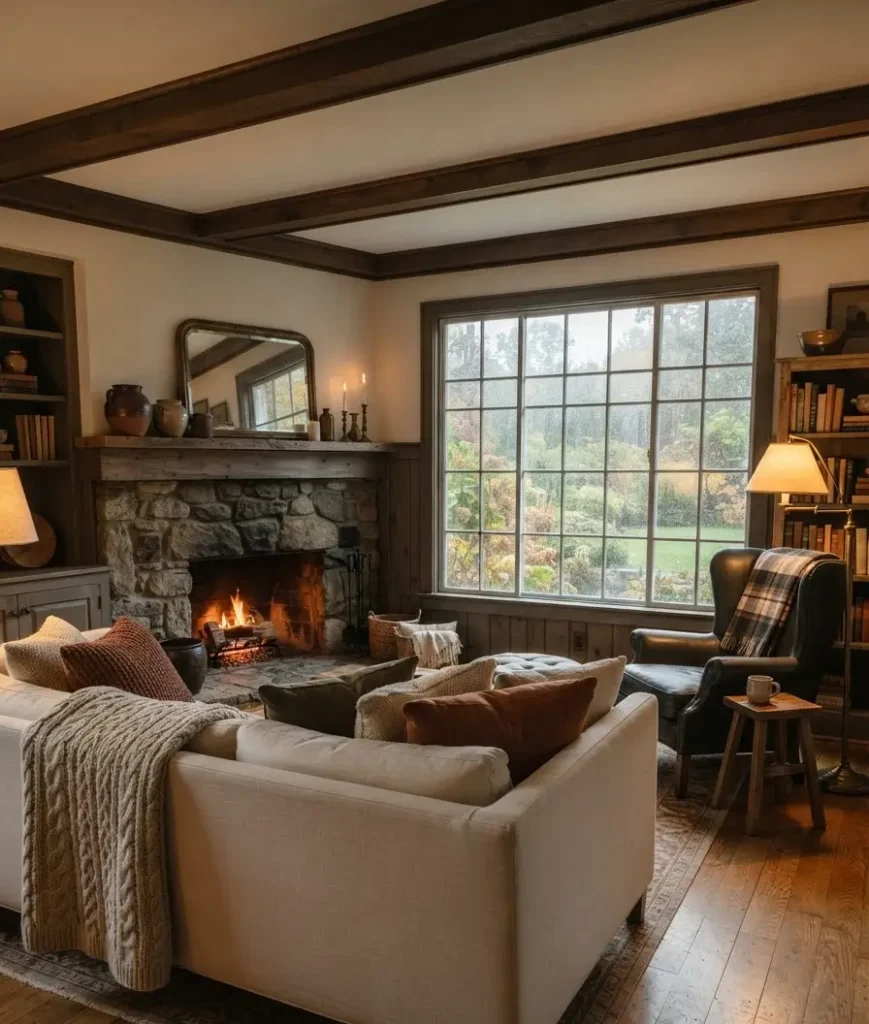
A common mistake I see on Pinterest boards: someone with a bright, modern living room tries to force a rustic farmhouse fall look on top of it, and the whole thing feels off.
Fall decor should sit on top of your existing style, not compete with it.
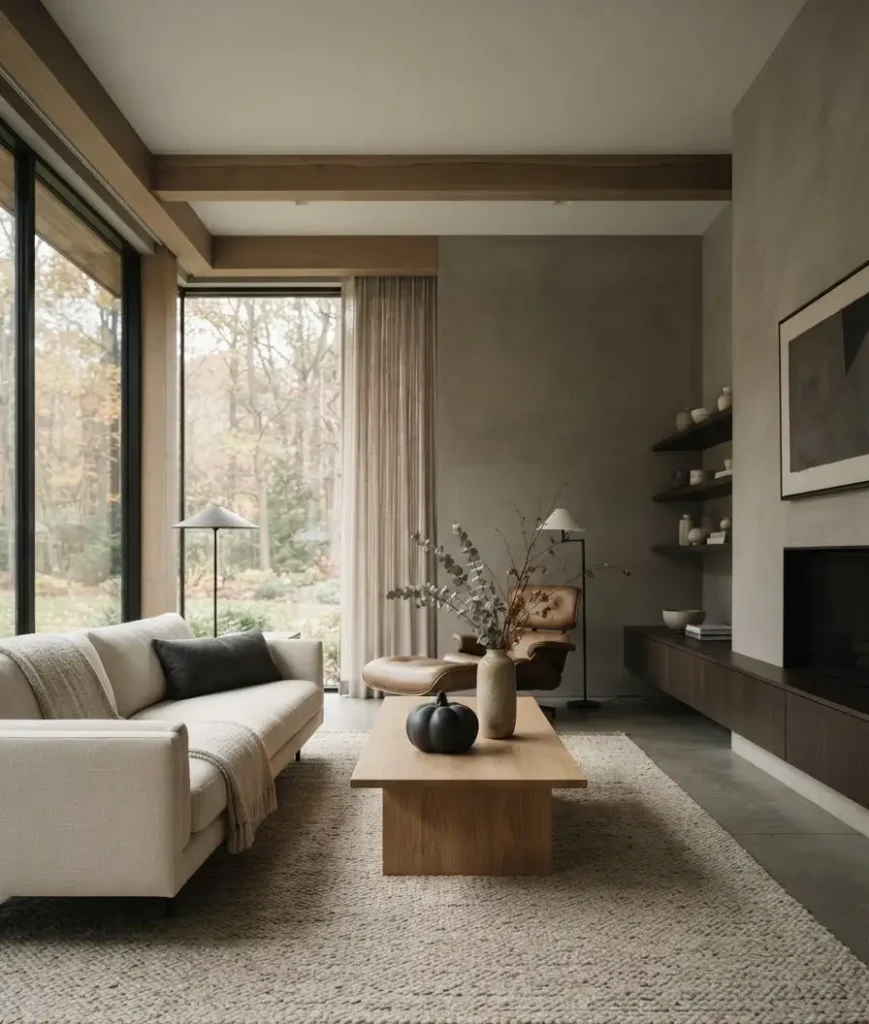
If your living room is modern and minimal: Skip the plaid and the burlap.
Lean into single statement pieces instead, one ceramic vase with dried branches, one sculptural pumpkin in a matte charcoal or cream finish. Less is genuinely more here.
If your living room already leans traditional: You have more room to layer. Plaid throws, brass candle holders, richer wood tones all fit naturally. Just watch the odd-number rule from earlier so it doesn’t tip into cluttered.
If your living room is boho or eclectic: This is where you can go a little wild with texture. Mix woven baskets, macrame, and dried pampas grass. Just keep the color palette anchored so it doesn’t feel like three different rooms fighting each other.
I have a friend with an ultra-modern, all-white apartment who tried the full plaid-and-burlap fall look one year.
It looked like a farmhouse Airbnb had crash-landed into a gallery space.
This year she did one burnt-orange throw and a single dried arrangement, and it worked so much better. Sometimes less really is the whole answer.
Don’t forget the transition out of summer
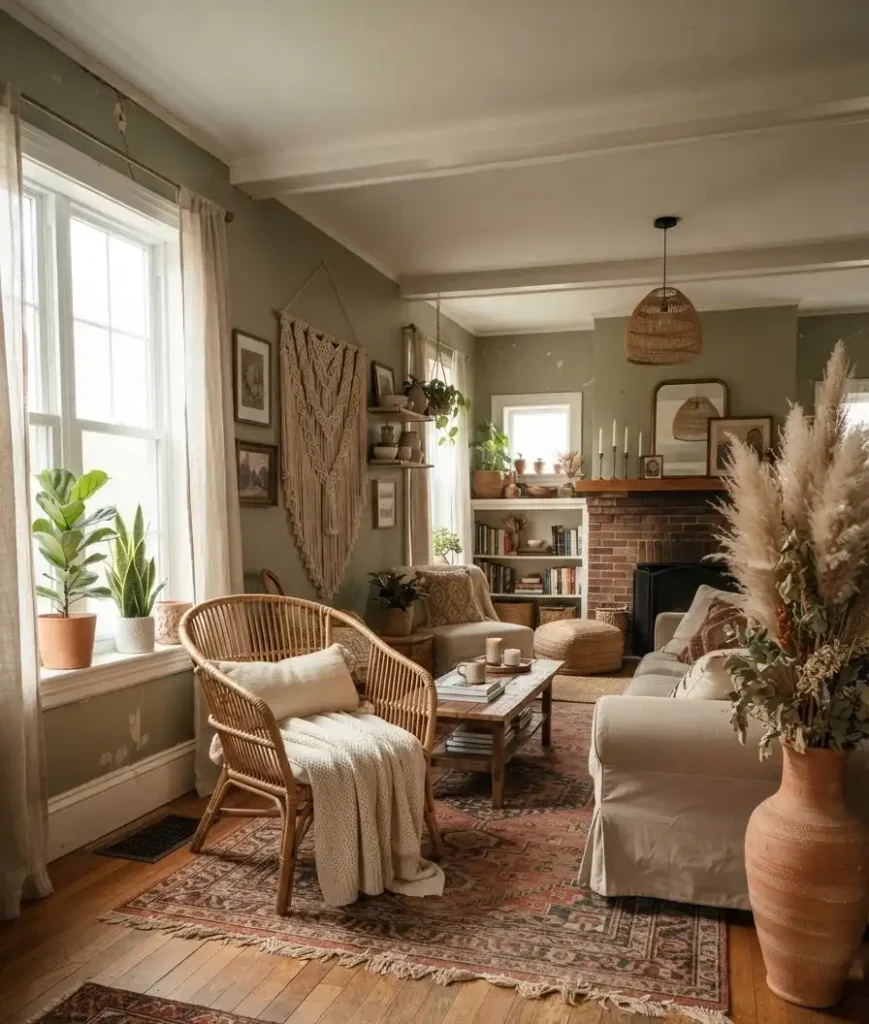
One thing that trips people up: fall decor doesn’t mean removing every trace of summer overnight.
A gradual transition actually looks more intentional and gives your room time to breathe between seasons.
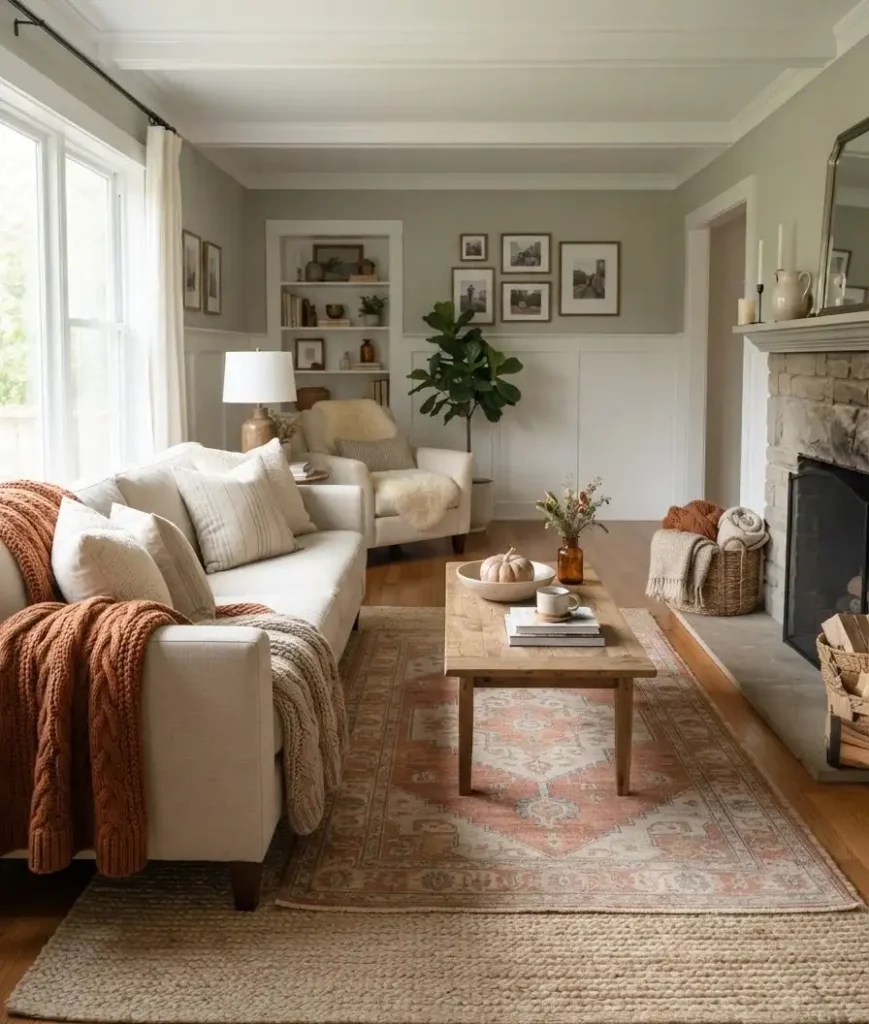
Start by swapping out anything obviously summery first, light linen pillow covers, bright florals, anything pastel.
Replace those with your fall texture pieces before adding pumpkins or seasonal accents on top.
This staggered approach also means you’re not storing two full sets of decor at once, which your closet will thank you for.
A rough order that works well:
- Swap pillow covers and throws (week one)
- Switch out any fresh or faux florals for dried stems or branches (week one or two)
- Add pumpkins, gourds, and candles last, once the base layer already feels warm
This staggered approach also solves the “where do I even start” problem. You’re never staring down a whole room at once. Just one layer, then the next.
Frequently asked questions
How do I make my living room feel cozy for fall without spending a lot? Focus on texture and lighting first. Swap pillow covers, add a warm-toned throw, and switch to warmer bulbs in your existing lamps. Those three changes cost very little and shift the whole feel of the room.
What colors work best for a fall living room? Warm neutrals like camel and terracotta paired with one deeper accent color, like rust or olive green, tend to read as fall without looking like a costume party. Keep the ratio mostly neutral with color as the accent, not the base.
Do I need real pumpkins and florals, or is faux okay? Faux is fine, and honestly practical since it doesn’t rot or attract bugs. Just look for matte finishes and irregular, natural-looking shapes instead of glossy, uniform ones, which tend to look cheap under lamp light.
So, where do you start? Pick one section from this list, maybe the lighting or the textures, and change just that this weekend. Small, deliberate swaps beat a total overhaul every single time. What’s the one thing your living room is missing for fall? I’d genuinely love to know.
