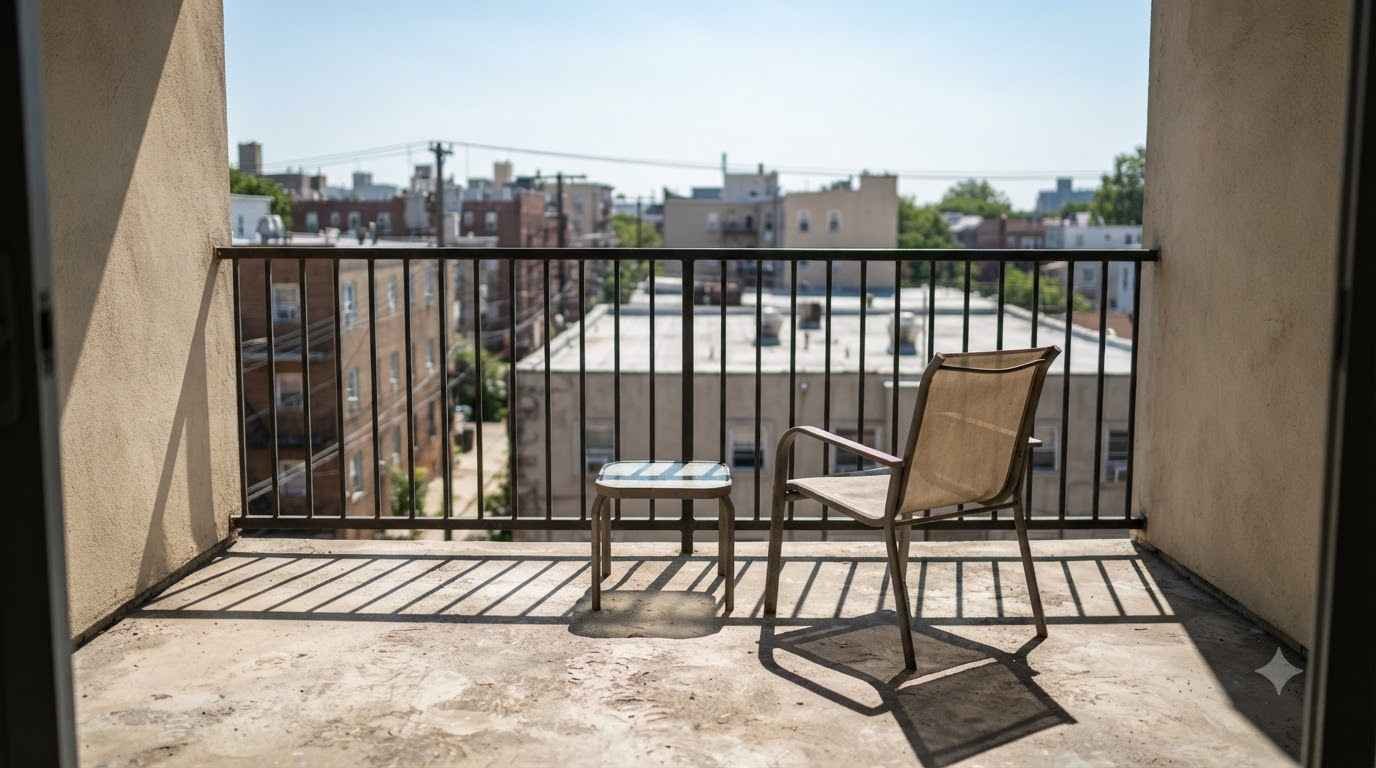
My old apartment balcony faced west. By 3pm every summer day, it turned into a place where you could probably fry an egg on the railing.
I tried sitting out there with iced tea once in July and lasted about six minutes before I retreated inside, defeated by my own building.
That balcony taught me more about shade than any home decor blog ever did. So this list isn’t theory.
It’s what actually worked, what looked good on camera for Pinterest, and what I’d genuinely tell a friend to skip.
If your balcony turns into a heat trap every afternoon, or you just want it to look like something worth photographing, these 17 ideas cover almost every budget, skill level, and landlord restriction. I’ve tested more of these than I’d like to admit, sometimes buying the wrong thing twice before landing on what actually held up. That’s the version I’m sharing here, not the version that looks perfect in a product photo but falls apart after one thunderstorm.
Small balconies get overlooked in most decor content because brands assume you have a backyard.
You probably don’t. Everything below is picked with apartment restrictions in mind: no permanent drilling unless I say so, no giant footprint, and nothing that needs a professional installer standing on your ninth-floor railing.
Let’s get into it.
TRIANGLE SHADE SAIL
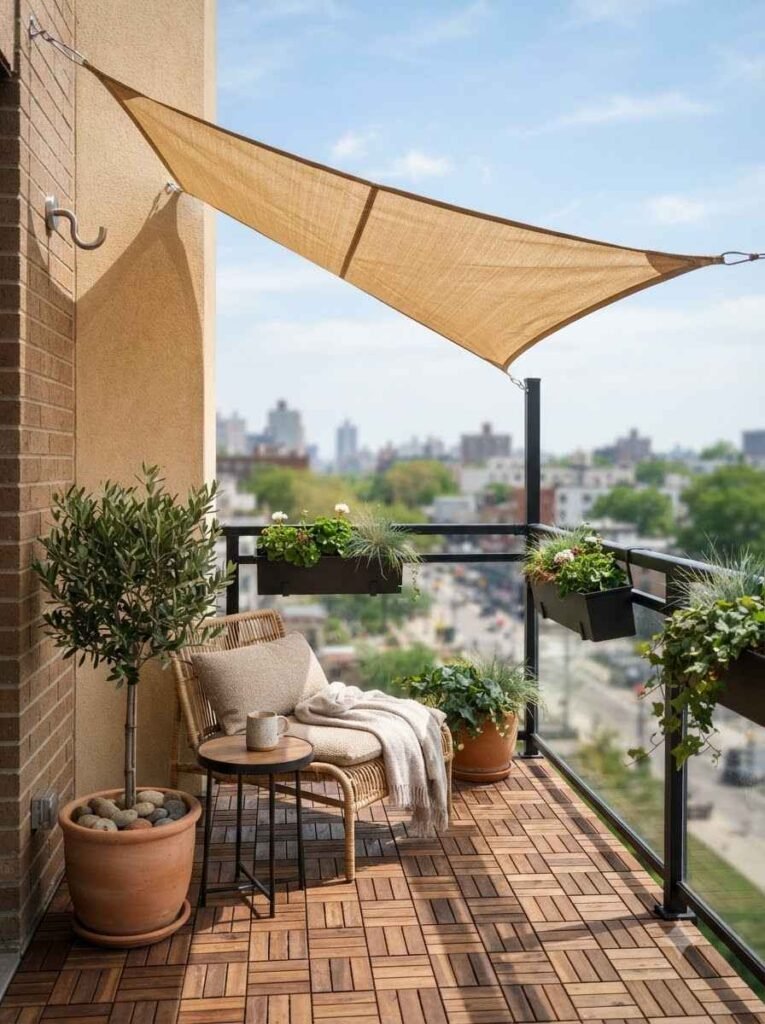
A triangle shade sail is the single fastest way to make a balcony look intentional instead of thrown together.
You anchor it at three points, usually the railing and a wall hook or ceiling bracket, and pull it taut.
I put one up on a corner balcony and honestly, it changed how the whole space felt. Not just cooler. It looked like someone actually designed the space on purpose.
- Works best on corner or irregular balconies
- Pick a light sand or gray tone so it photographs well and doesn’t trap heat
- Most anchor kits use adhesive hooks, so renters don’t need to drill
One thing nobody mentions when you’re shopping for these: check the fabric weight before buying. Thin polyester sails look fine in photos but sag within a season. I’d spend the extra 20 dollars for a denser, UV-treated canvas every time. Ever wonder why some sails look crisp years later while others droop like a sad flag? That’s the fabric, not the setup.
TENSION-ROD OUTDOOR CURTAINS
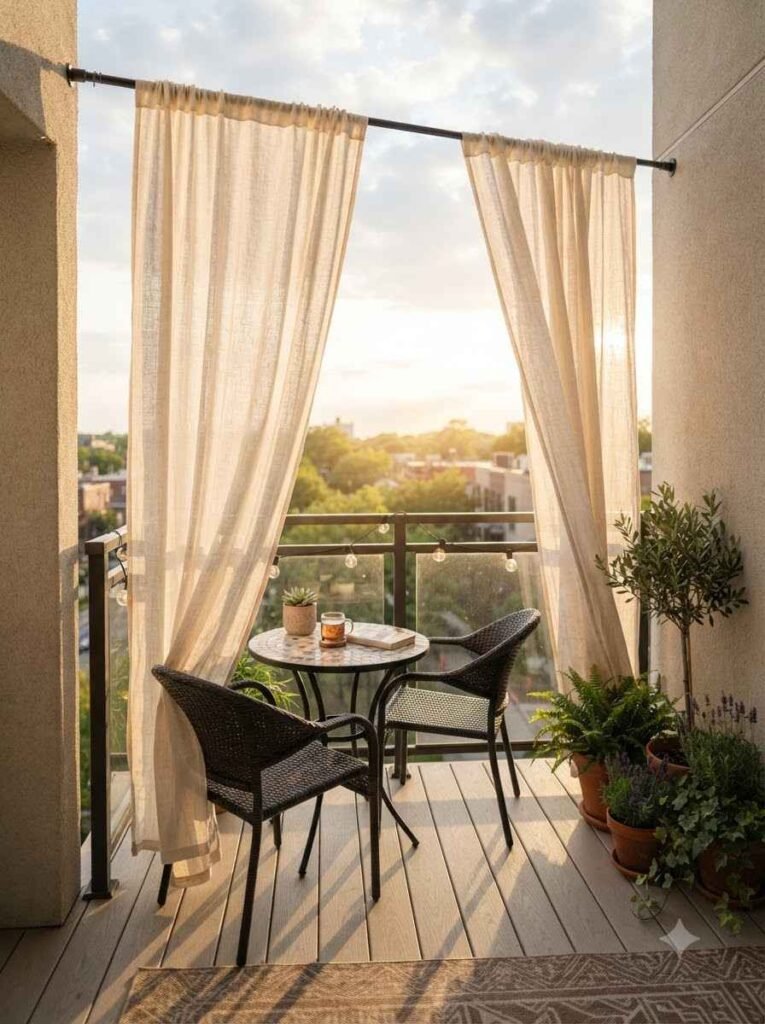
Curtains soften a balcony faster than almost anything else on this list.
A tension rod wedges between two walls or posts, no drilling required, and you hang lightweight outdoor fabric panels from it.
I like linen-look polyester because it moves in the wind without fraying apart after one storm.
White or cream curtains photograph beautifully against brick or dark railings, which matters if this balcony is also your content backdrop.
My honest take: skip the ultra-cheap curtain packs sold in bulk online. I bought a set for under 15 dollars once and the color bled the first time it rained.
A mid-range outdoor-rated fabric costs more upfront but saves you from repurchasing every spring, which is the kind of lesson you only need to learn once.
BAMBOO ROLL-UP BLINDS
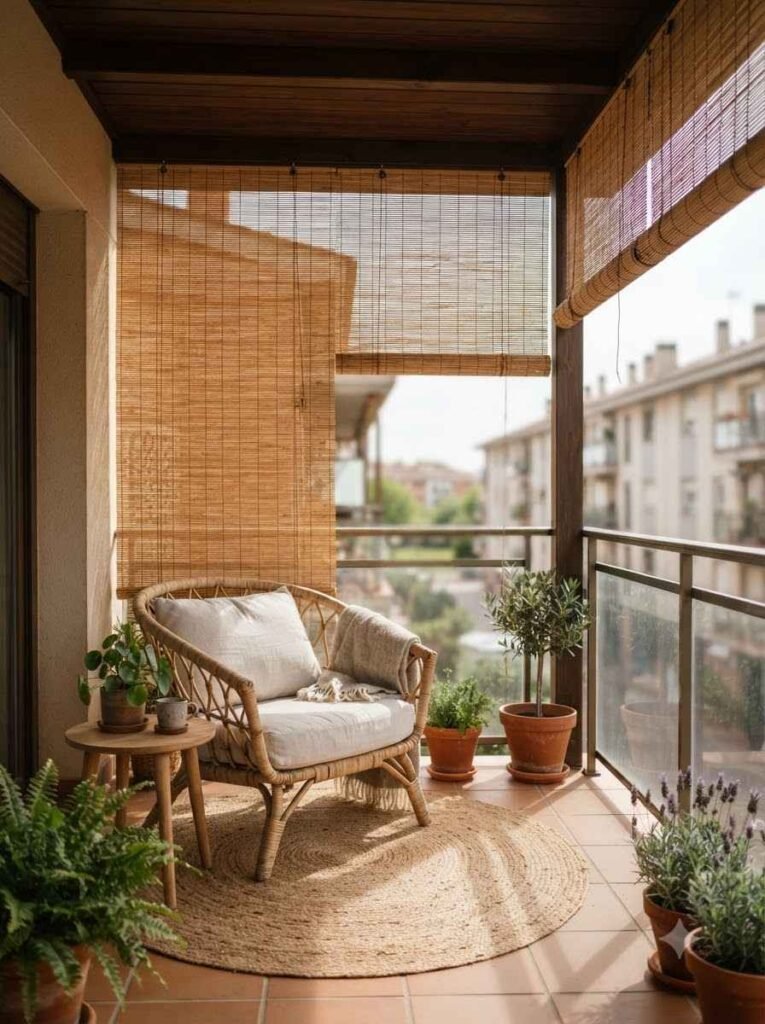
Bamboo blinds attach to your ceiling or overhead railing and roll down when the sun gets aggressive.
Roll them up in the morning for full light, drop them at noon when things heat up.
They filter light instead of blocking it completely, so your balcony stays bright without turning into an oven. IMO this is one of the most underrated options on this whole list.
Compared to a shade sail, bamboo blinds give you way more control throughout the day. A sail is basically fixed once it’s up.
Blinds go up and down in seconds, which matters if your balcony faces east and gets brutal morning sun but mellows out by 2pm.
POP-UP CANOPY
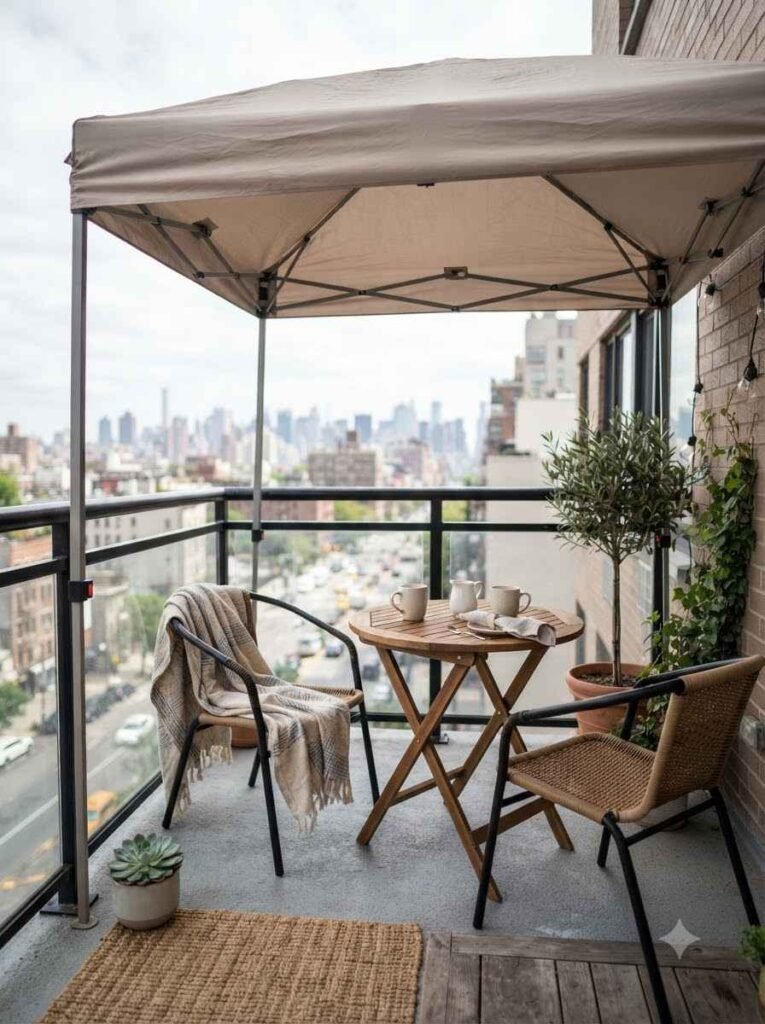
A pop-up canopy is the lazy person’s shade solution, and I mean that as a compliment.
No installation, no tools, just unfold it and you have instant coverage.
It’s not going to survive a hurricane. But for a Tuesday afternoon coffee session, it does exactly what it needs to do.
This is probably the option I’d hand to someone who’s never touched a toolbox in their life. Unfold, set, done.
Just remember to bring it in before a real storm rolls through, because a flying canopy frame is not the kind of Pinterest content you want to end up in.
CLIMBING VINES ON A TRELLIS
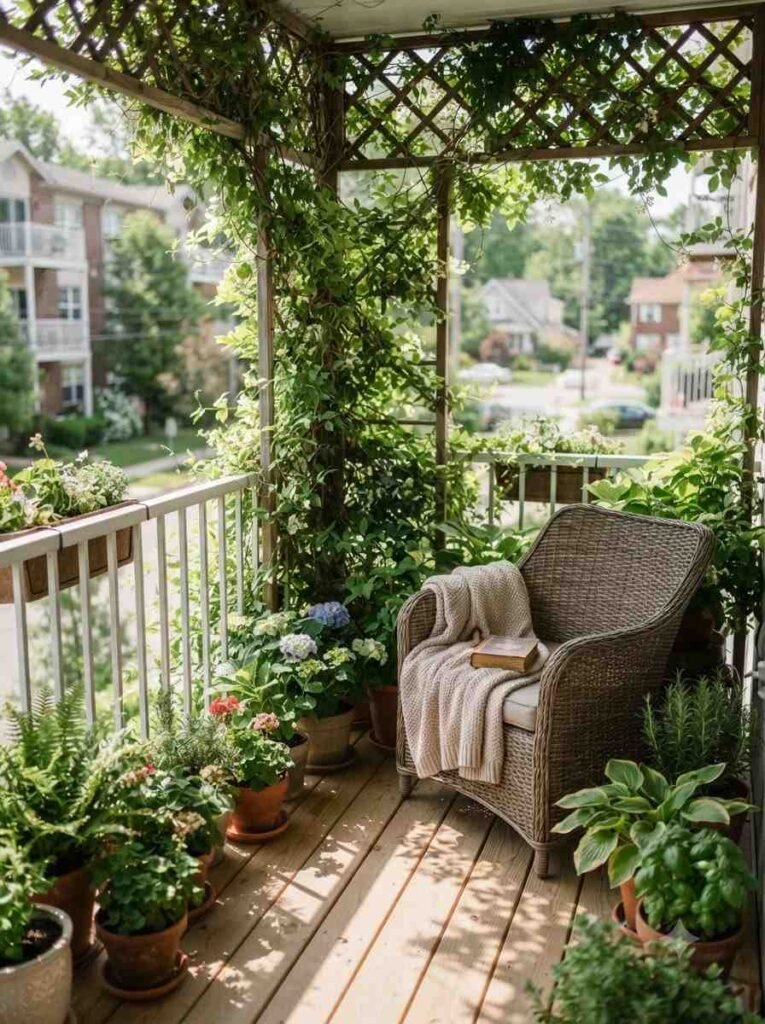
Plants do double duty here. A trellis with a fast climber like jasmine or a hardy pothos variety creates living shade that gets denser every season instead of fading like fabric does.
This one takes patience. You won’t get full coverage in week one, so don’t expect Pinterest-perfect results by next weekend.
OFFSET PATIO UMBRELLA
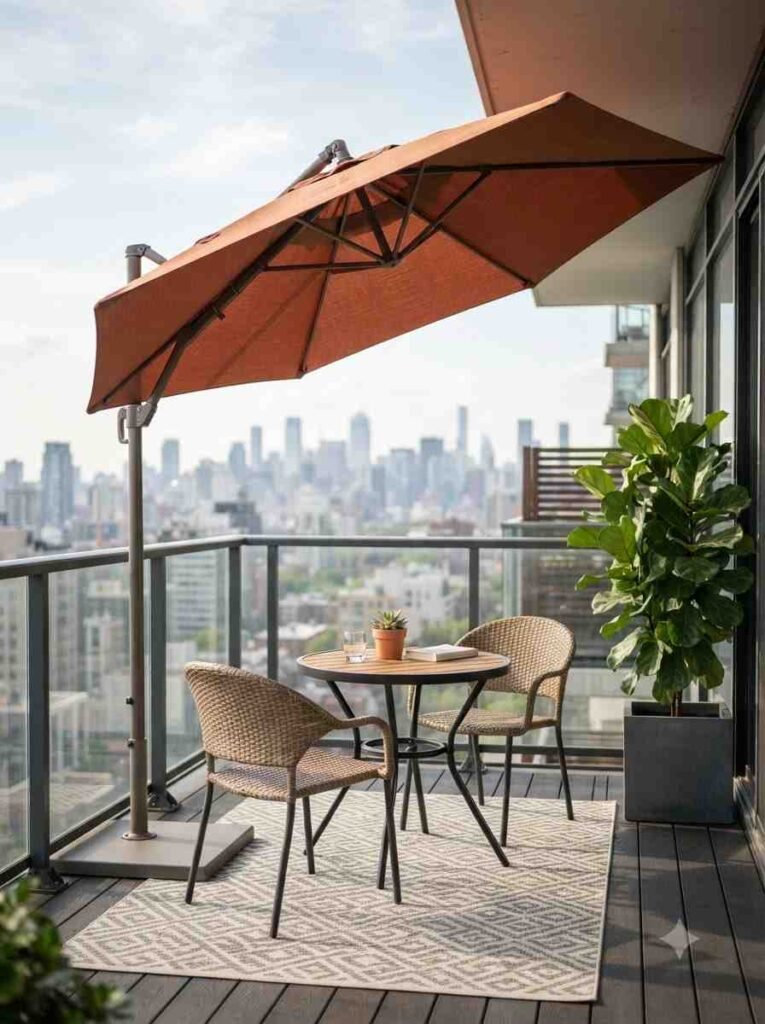
A standard umbrella needs a hole in the center of your table. An offset umbrella doesn’t, which makes it a much better fit for small balconies where table space is already tight.
Clamp-on bases exist specifically for railings, so you skip the giant weighted base that eats half your floor space.
I switched from a center-pole umbrella to an offset one last year and genuinely can’t go back.
Suddenly there was room for a second chair, a small plant, and my coffee, all under the same shade radius that used to be crowded around one pole.
PRIVACY SCREEN PANELS
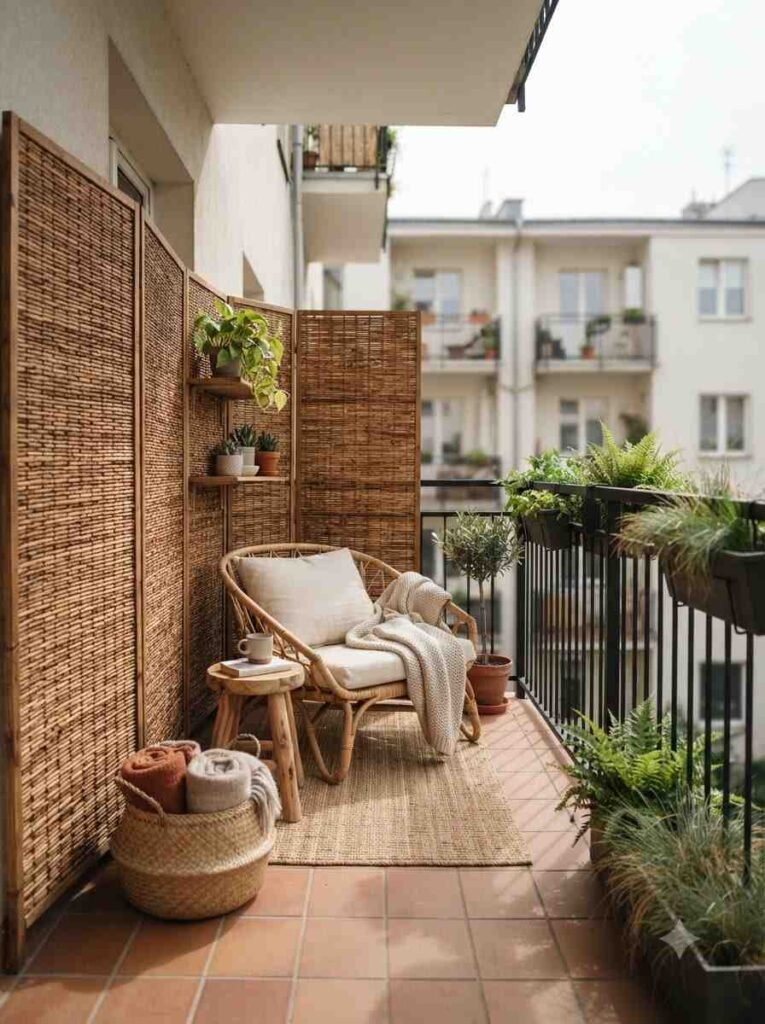
These are freestanding, foldable, and do double duty as both shade and a visual block from your neighbors.
Bamboo, rattan, and woven resin are the three materials I’d actually recommend.
Skip the flimsy fabric ones. I bought a cheap version once and it looked sad and sagged within a month.
VERTICAL HANGING SHADE CLOTH
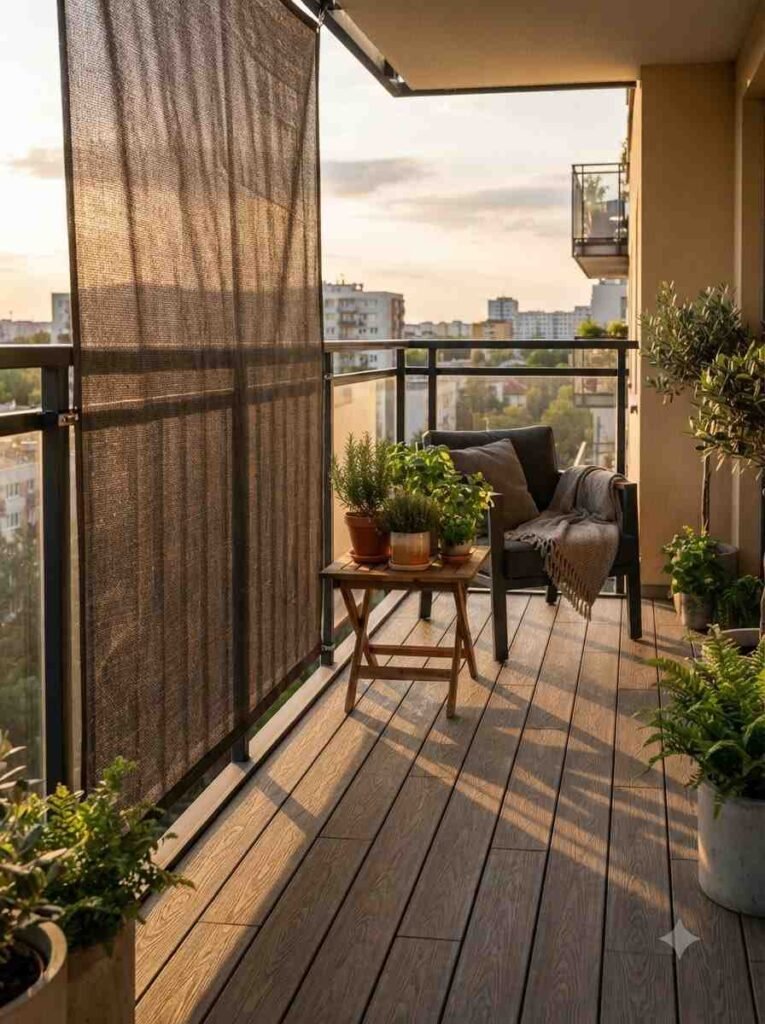
Hang shade cloth vertically along one side of your railing instead of overhead.
This works especially well if the sun hits you sideways in the late afternoon rather than straight down.
- Grommet-edge cloth attaches easily with zip ties or S-hooks
- Dark green or charcoal tones hide dirt better than white
- Breathable mesh keeps airflow moving so the space doesn’t feel stuffy
CLIP-ON PERGOLA CANVAS COVER
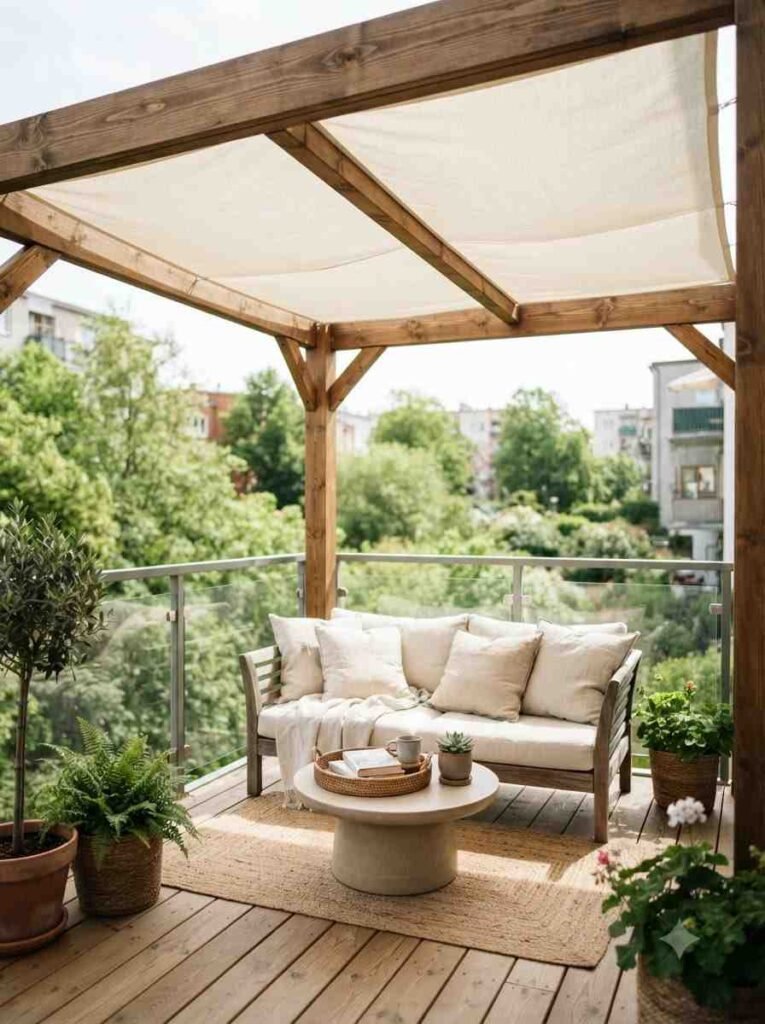
Some balconies already have a partial pergola frame built in.
If yours does, a canvas cover that clips onto the existing structure gives you shade without a single new drill hole.
This is honestly the closest thing to a real pergola without needing permission from a landlord who will absolutely say no.
LATTICE OVERHEAD PANEL
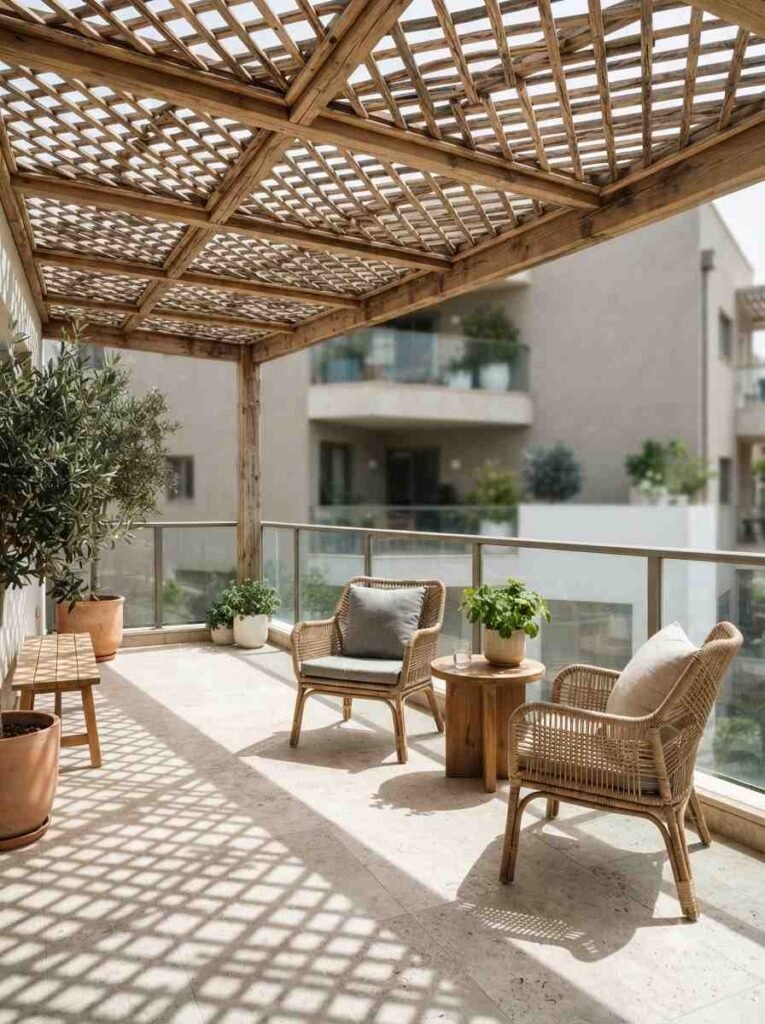
A lattice panel laid across the top of your balcony filters light in a way solid fabric can’t. You get dappled shade, the kind that shifts and moves throughout the day.
It’s a slower project than most on this list.
But the shadow pattern it throws on the floor is genuinely one of my favorite small details in outdoor design.
MOVABLE PLANT WALL
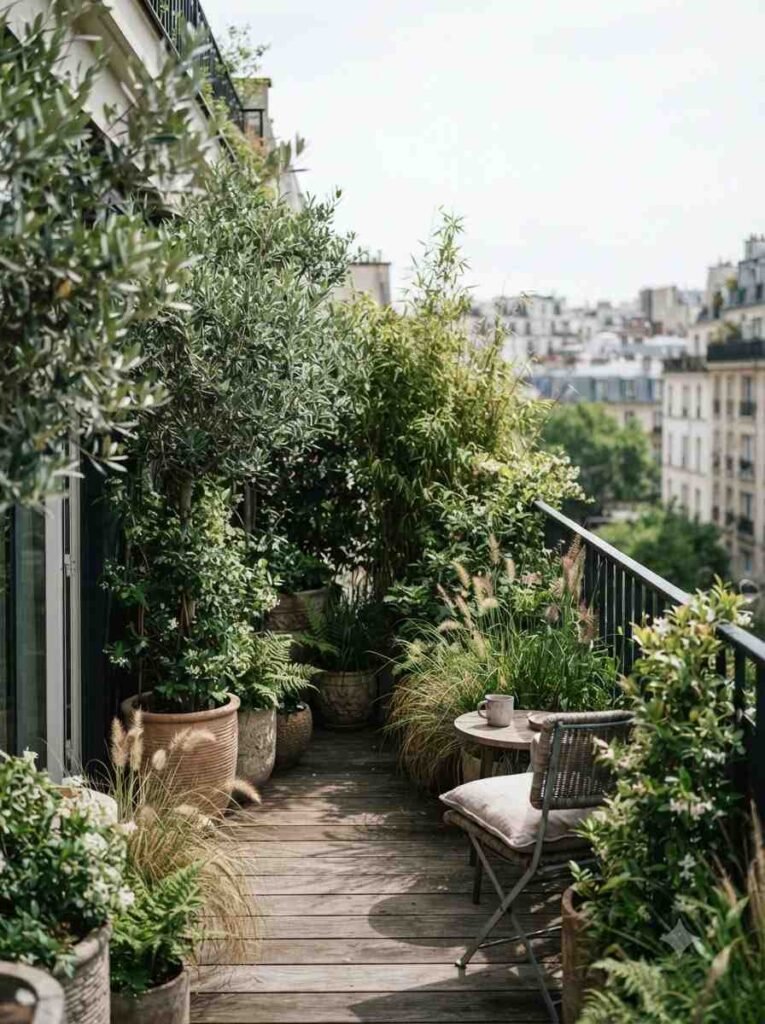
Line up tall potted plants like olive trees, bamboo, or ornamental grasses along your sunniest railing edge. Rearrange them seasonally since the sun’s angle shifts throughout the year.
Wow, this one surprised me. I expected the plants to help a little.
They ended up cutting the glare on my balcony floor almost as much as the actual shade sail did.
NO-DRILL RETRACTABLE AWNING
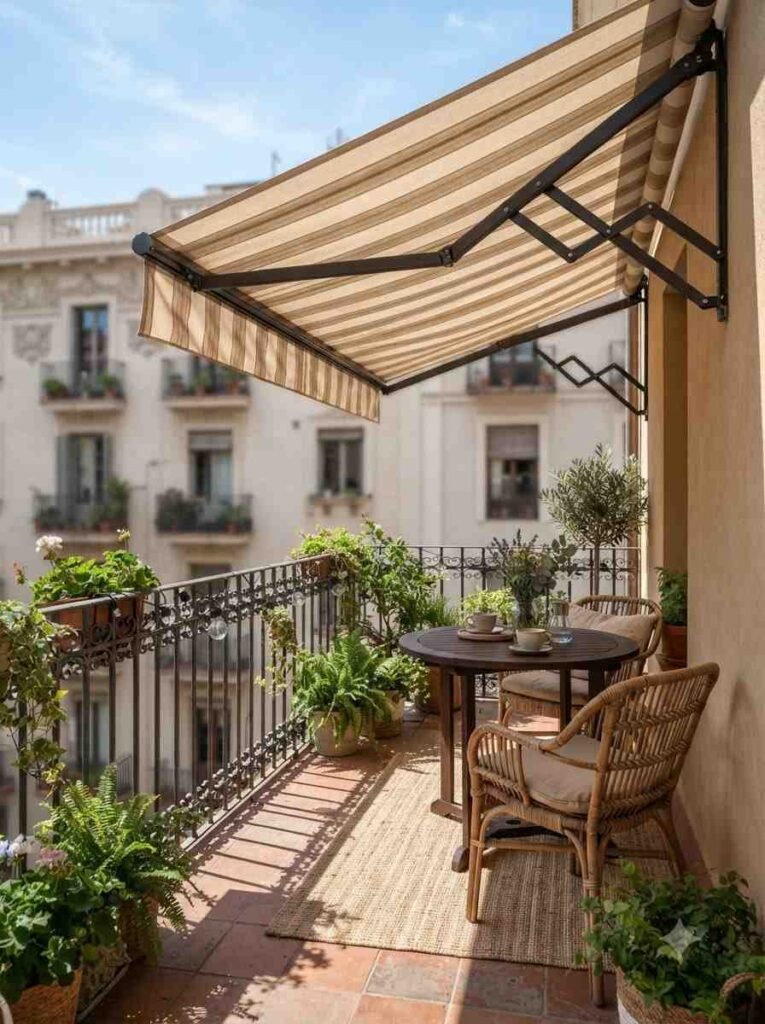
Full-size retractable awnings used to require permanent wall mounting.
Newer clamp-on versions attach to railings instead, so you get roll-out, roll-back shade without touching the building structure at all.
Push it out for shade, pull it back for full sun. It’s the closest thing to having your own weather control button.
SHEER CURTAIN READING NOOK
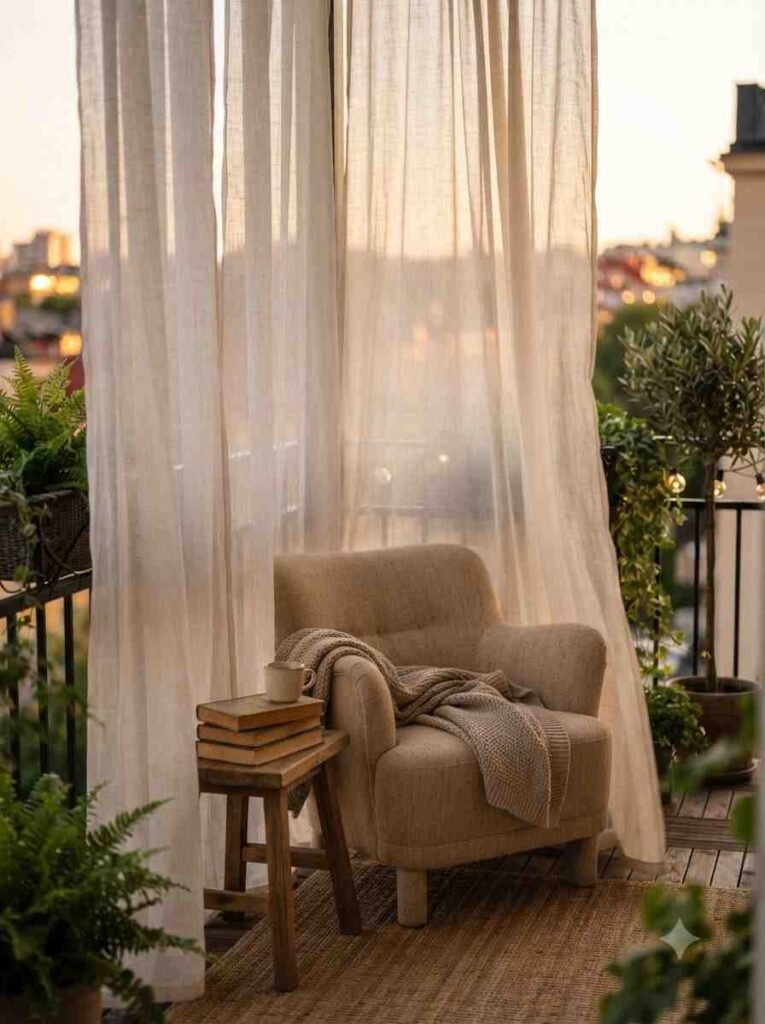
Pick one corner of your balcony and wrap it in sheer white or ivory curtains instead of covering the whole space.
You get a dedicated shaded reading spot without blocking your entire view.
Pair it with a single chair and a small side table. This is the setup I’d genuinely recommend if your balcony is small enough that full coverage feels like overkill.
RAILING-CLAMP UMBRELLA BASE
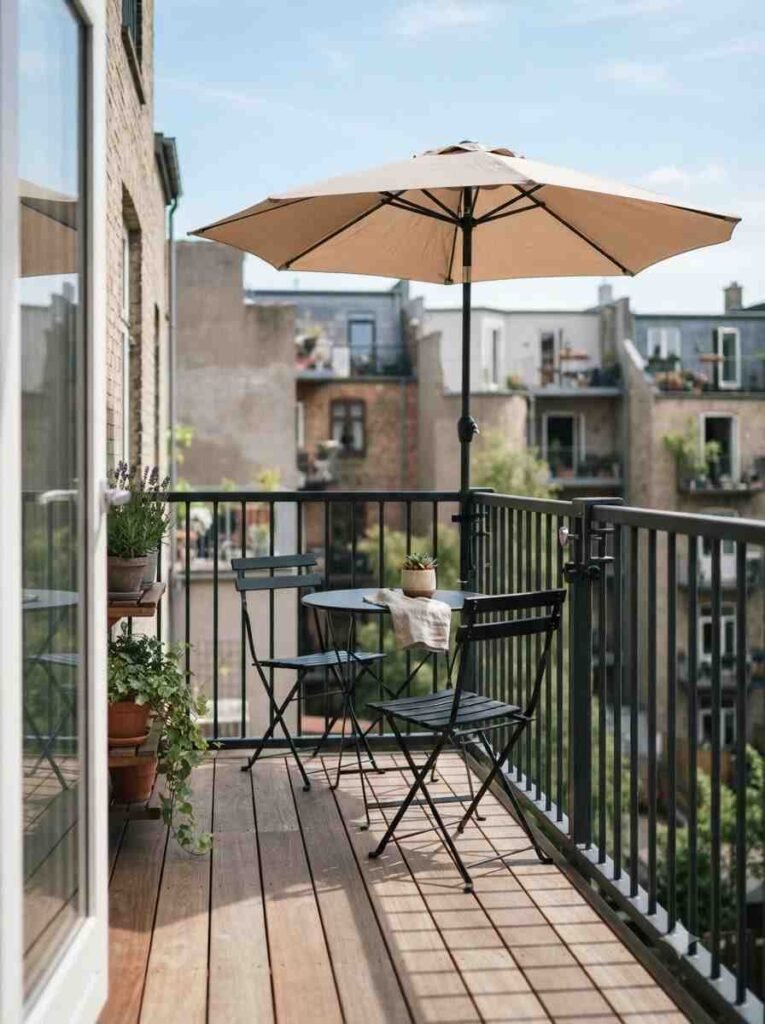
If your balcony floor space is too tight for a weighted umbrella base, a clamp-on version that grips the railing solves that instantly. No stand, no wasted square footage.
This matters more than people think. On a narrow balcony, floor space is basically currency.
WOVEN RATTAN SCREEN PANELS
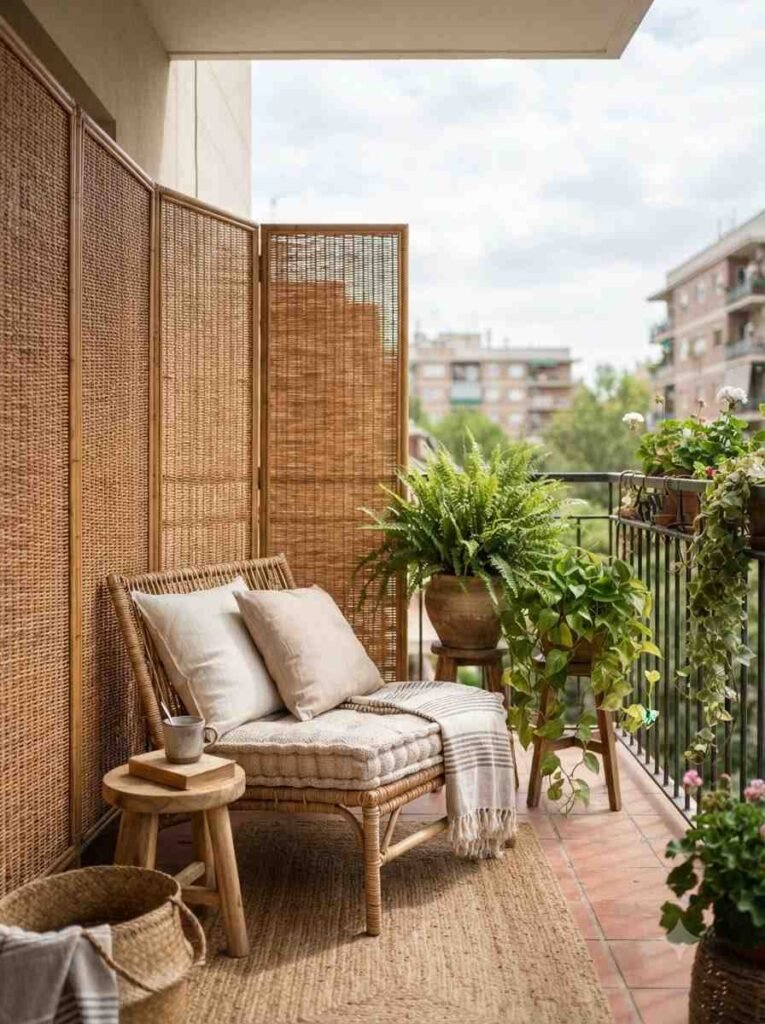
Rattan panels bring texture that fabric just can’t match. They filter light, block sightlines from neighboring balconies, and photograph incredibly well against greenery.
Compared to plastic privacy screens, rattan wins on looks every single time.
It costs more, sure, but it doesn’t look like it came from a big-box clearance aisle.
CLIP-ON SHADE CLOTH PERGOLA SYSTEM
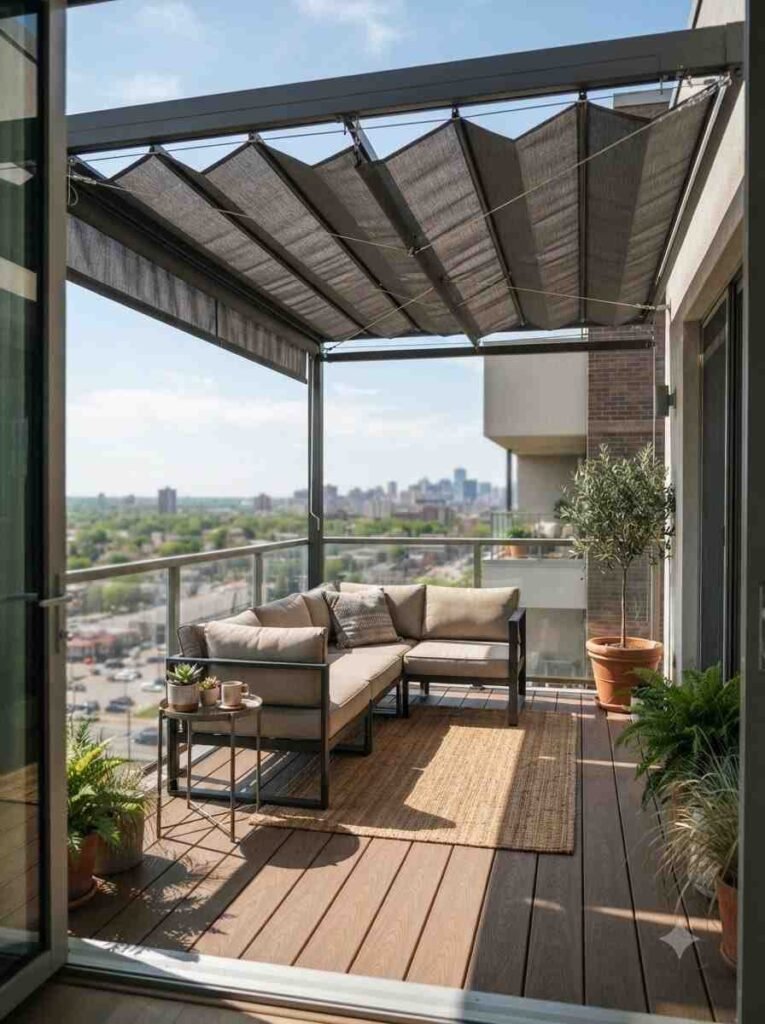
This is a step up from a basic overhead panel. A frame with adjustable shade cloth panels lets you angle coverage based on where the sun sits that day.
Slightly off-topic, but this reminded me how much people underestimate how fast the sun’s angle changes between June and September.
What blocked everything in summer let full glare through by early fall.
LAYERED CURTAIN AND PLANT COMBO
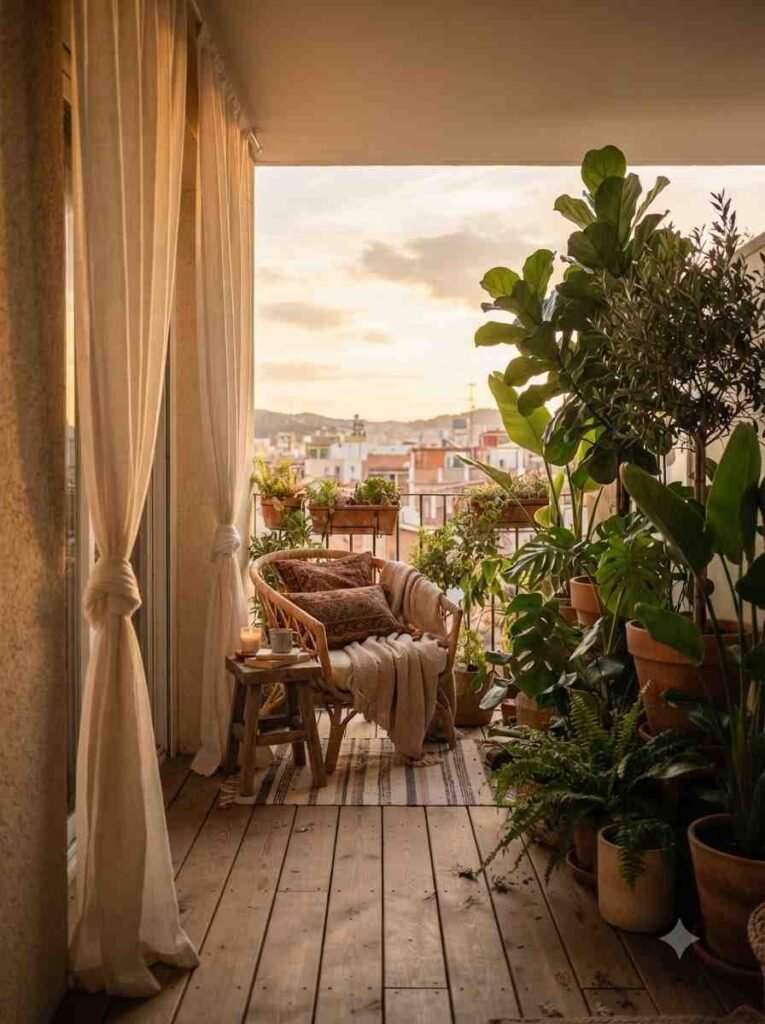
Combine two methods instead of picking just one.
Curtains on one side for softness, tall plants on the other for natural texture and extra cooling.
This is my personal favorite from the whole list. It doesn’t look like a single product installed on a balcony. It looks like a space someone actually lives in.
QUICK COMPARISON TABLE
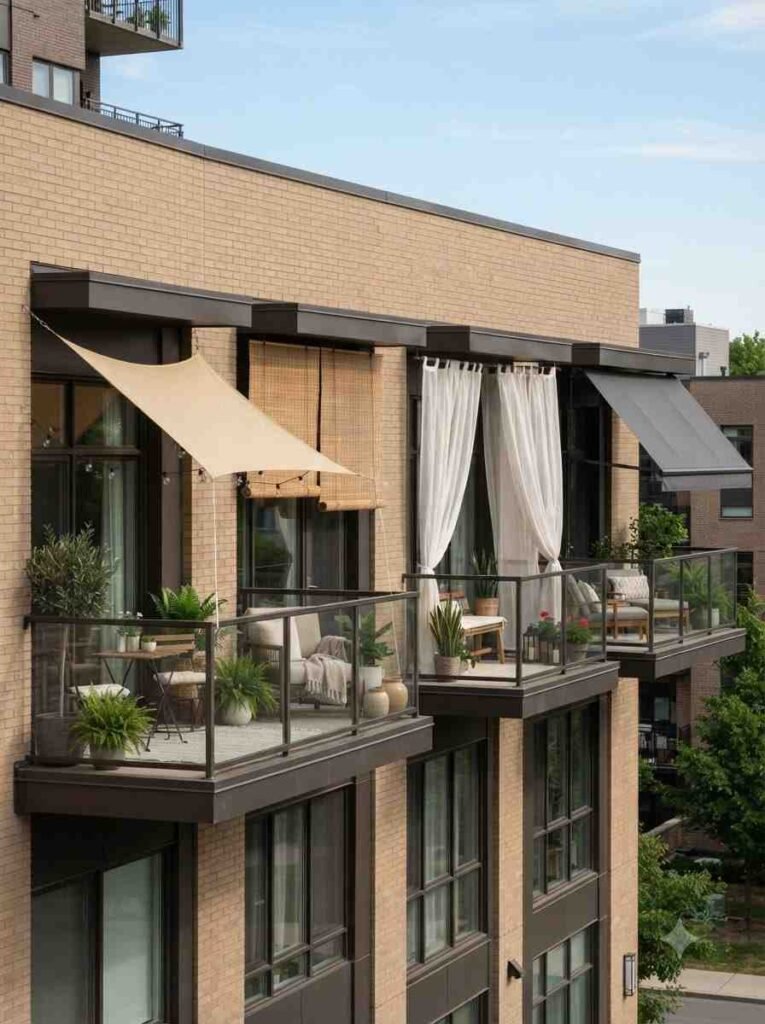
Option | Best For | No-Drill Friendly
Shade Sail | Corner or angled balconies | Yes
Outdoor Curtains | Softening the whole space | Yes
Bamboo Blinds | Filtering light, not blocking it | Yes
Retractable Awning | On-demand full coverage | Mostly, with clamp models
CHOOSING THE RIGHT ONE FOR YOUR BALCONY
Start by tracking where direct sun actually hits your balcony and at what time. A west-facing balcony needs serious afternoon coverage. A north-facing one might only need a light filter, if anything at all.
The EPA’s UV Index scale (https://www.epa.gov/sunsafety/uv-index-scale-0) is worth a quick look before you buy anything, especially if you plan to spend real time out there during peak sun hours. Knowing when UV levels spike in your area helps you decide whether you need heavy blocking fabric or something lighter that just filters glare.
If you’re renting, always check your lease before installing anything permanent. A lot of buildings restrict drilling into railings or exterior walls, so no-drill options like tension rods and clamp-on bases are usually the safest bet. When in doubt, a quick read through resources like the Apartment Therapy renter-friendly decorating guides (https://www.apartmenttherapy.com) can help you figure out what’s typically allowed before you buy anything.
FREQUENTLY ASKED QUESTIONS
Do balcony shade sails work in windy areas?
Yes, but tension matters.
Pull the fabric tight during setup and check the anchor points every few weeks, since wind loosens hardware faster than most people expect.
Will bamboo blinds fade in direct sunlight?
Natural bamboo does fade over a season or two, usually to a lighter honey tone. Most people find it still looks good, just less saturated than day one.
Can I install any of these without drilling into the building?
Most of them, yes. Tension rods, clamp-on umbrella bases, adhesive hooks, and railing-mounted brackets cover almost every option on this list without a single drill hole.
FINAL THOUGHT
A shaded balcony changes how often you actually use it.
That’s the real payoff: a space you avoid every summer afternoon turns into one you reach for daily, whether that’s morning coffee, evening wine, or just sitting outside with a book.
Pick one idea from this list, even the smallest one, and try it this week. Which balcony shade idea are you saving first, and what’s stopping your balcony from looking like this right now?
