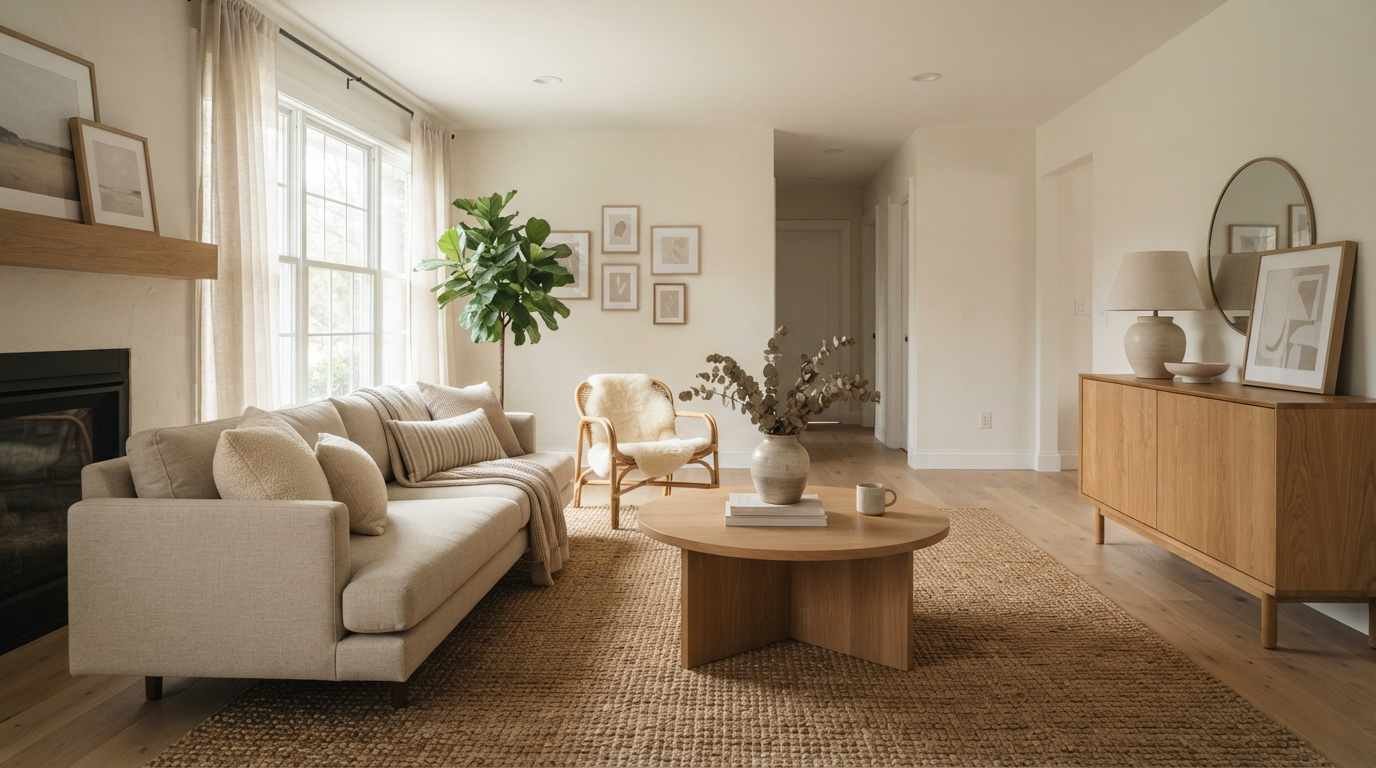
I used to think minimalism meant a cold, empty room with one chair and a lot of judgment.
Then I actually lived in a place like that for six months and hated it. Turns out the goal was never “less stuff.” It was “the right stuff, arranged so your brain can finally relax.”
That’s the version of minimalism I’m sharing here.
Cozy, warm, a little imperfect, but calm. If you’re a Pinterest scroller who saves a hundred boards and still can’t picture your own living room, these 17 ideas are a real starting point.
1. Start with a neutral base, not a blank one
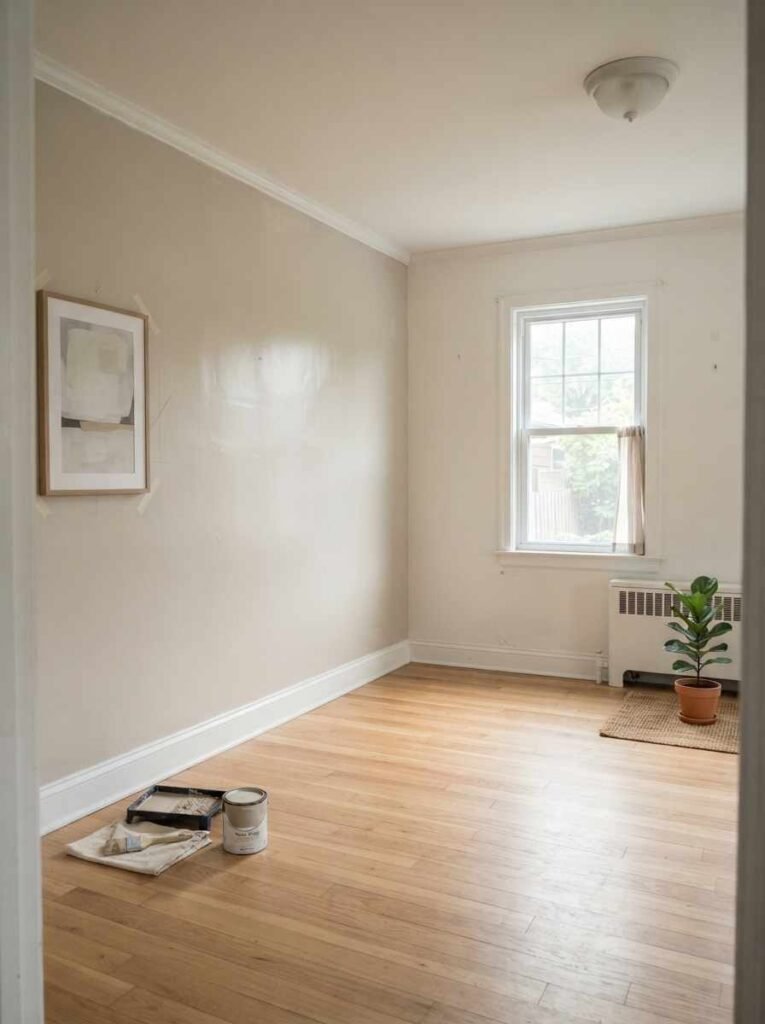
Neutral doesn’t mean boring. Think warm white, oatmeal, soft greige, a touch of clay.
Paint one wall, then live with it for a week before deciding on the rest.
The base color sets the emotional temperature of the whole room, so rushing this step usually backfires.
2. Let natural light do the heavy lifting
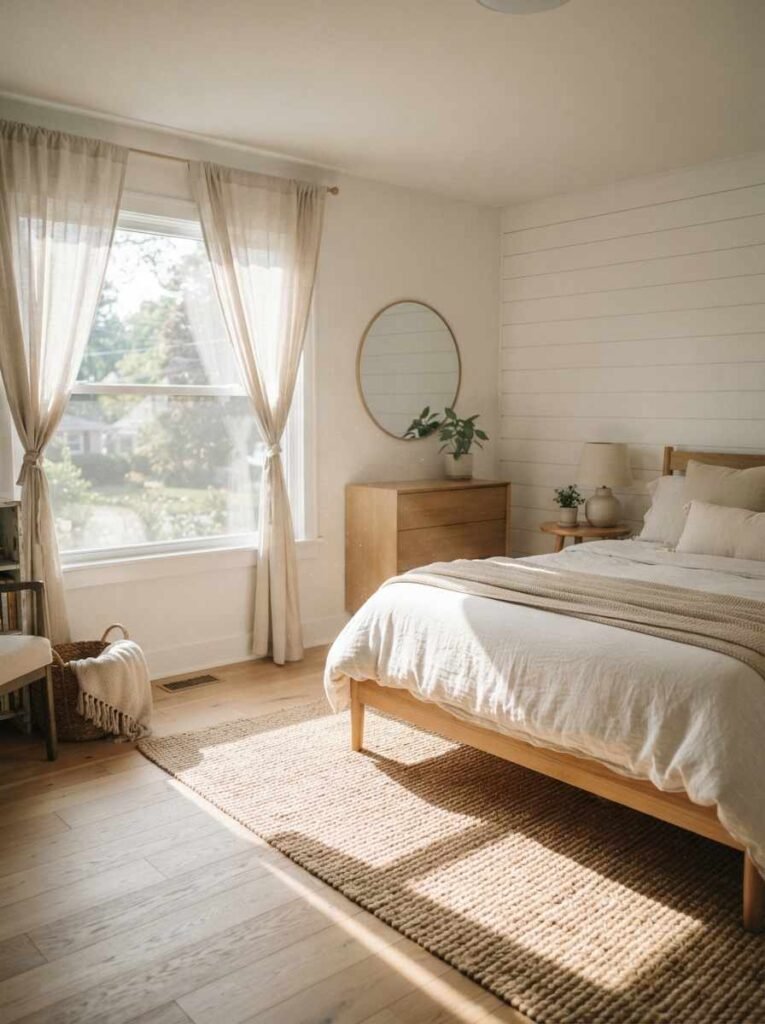
Swap heavy drapes for linen curtains or a simple woven shade. Daylight changes how a small room feels almost instantly.
Research on residential design backs this up.
A study in Building and Environment found that maximizing natural light in a home has one of the strongest effects on how content residents feel in their own space.
I’m not saying knock out a wall. Just pull the curtains back more often.
3. Choose furniture with visible legs
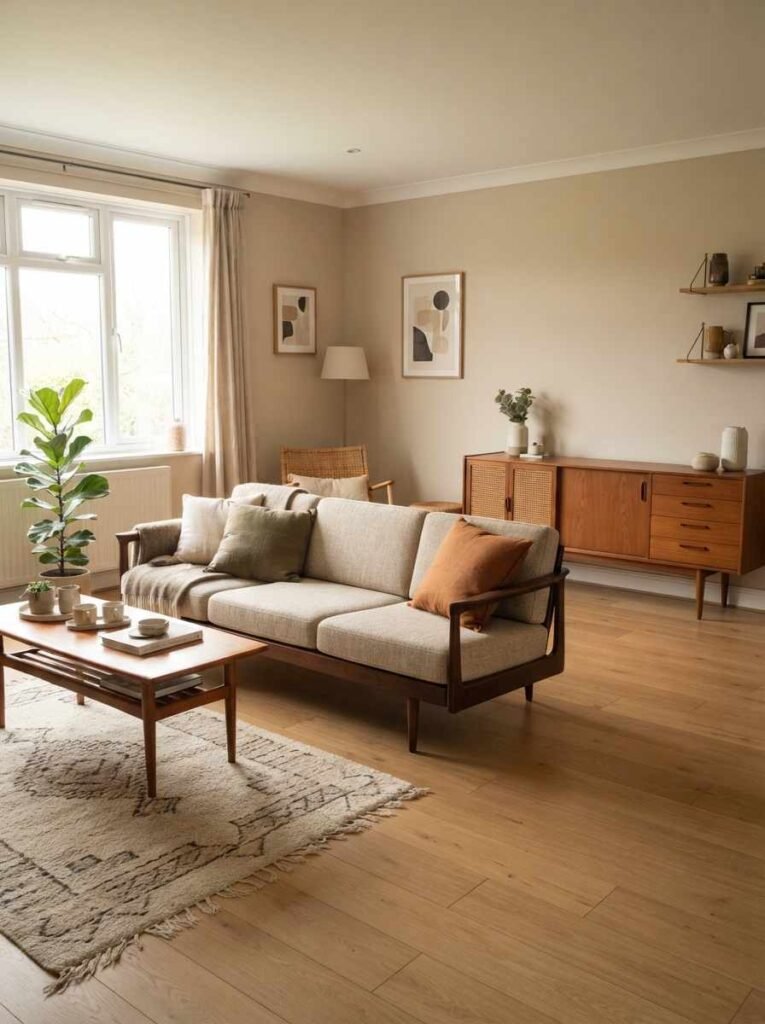
Sofas and cabinets that float slightly off the floor make a room feel lighter, literally.
Solid, floor-hugging pieces read as heavier and bulkier even at the same size.
This is one of those tricks that sounds too simple to work. It works.
4. Pick one hero material and repeat it
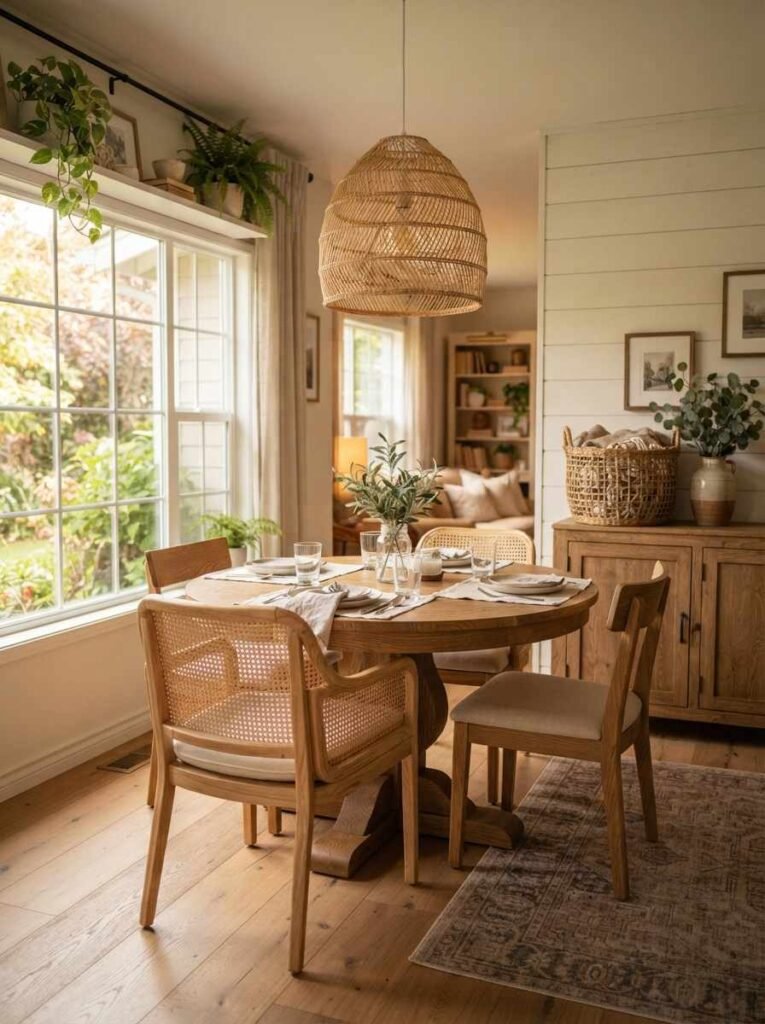
Oak, rattan, linen, unlacquered brass, pick one and let it show up in three or four spots. A woven pendant light, a rattan basket, a linen throw.
Repetition reads as intentional. Randomness reads as clutter, even when the individual pieces are nice.
5. Keep countertops mostly empty
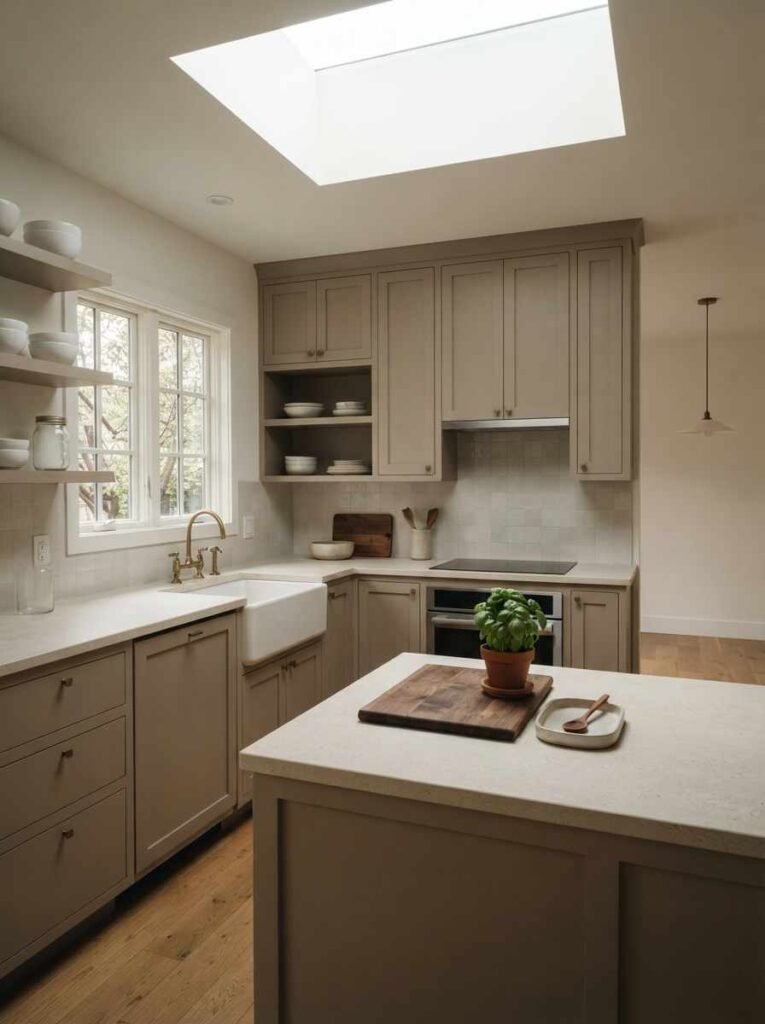
I know, easier said than done when you own a coffee maker, a toaster, and whatever gadget you bought during a 2 a.m. scroll. Store what you don’t use daily.
Leave out only what earns its spot.
- A cutting board you actually use
- One plant
- A tray for the two things you touch every morning
That’s it. Anything beyond that starts competing for attention.
6. Layer in texture instead of color
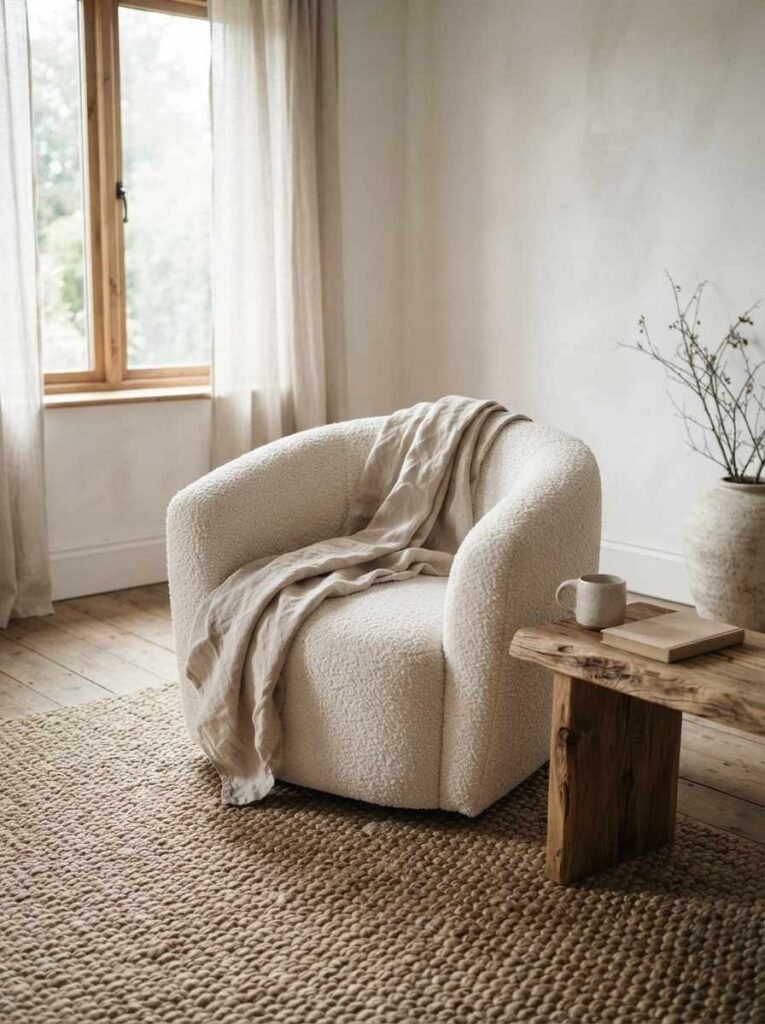
Bouclé, linen, jute, raw wood grain. When your palette is quiet, texture becomes the thing your eye notices first.
A monochrome room with zero texture variation looks flat and, honestly, a little sad.
7. Use a single statement piece per room
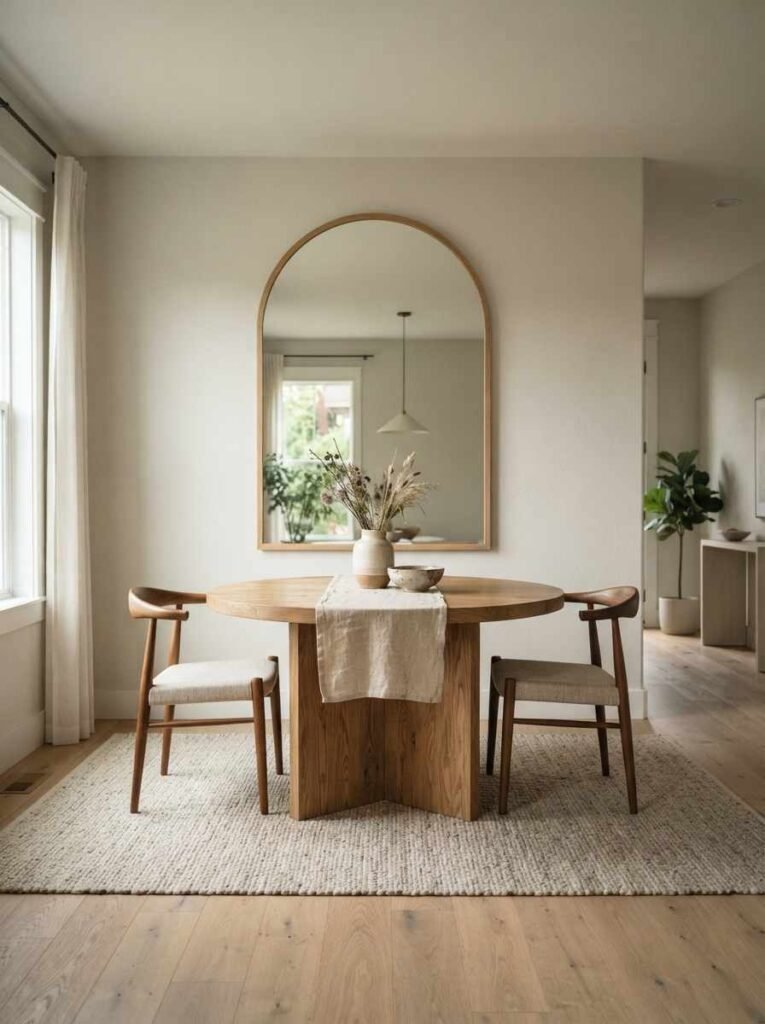
One oversized mirror. One sculptural chair.
One piece of art that actually means something to you. Pick one and let everything else support it.
I made this mistake in my own dining room. I bought three “statement” items at once and the room ended up looking like a showroom nobody lives in.
8. Ground the room with a low-pile rug
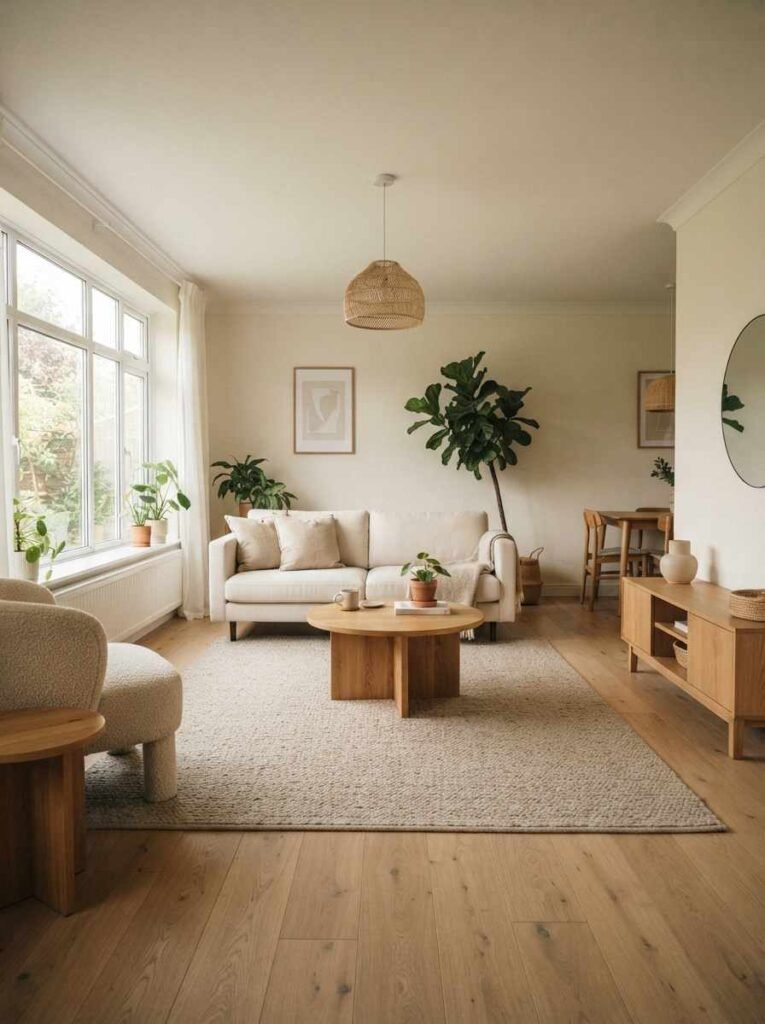
A rug in a tone close to your flooring anchors the space without adding visual weight.
Skip busy patterns if you’re going for calm. Save the bold rug for a room where you want energy, not rest.
9. Bring in one plant, minimum
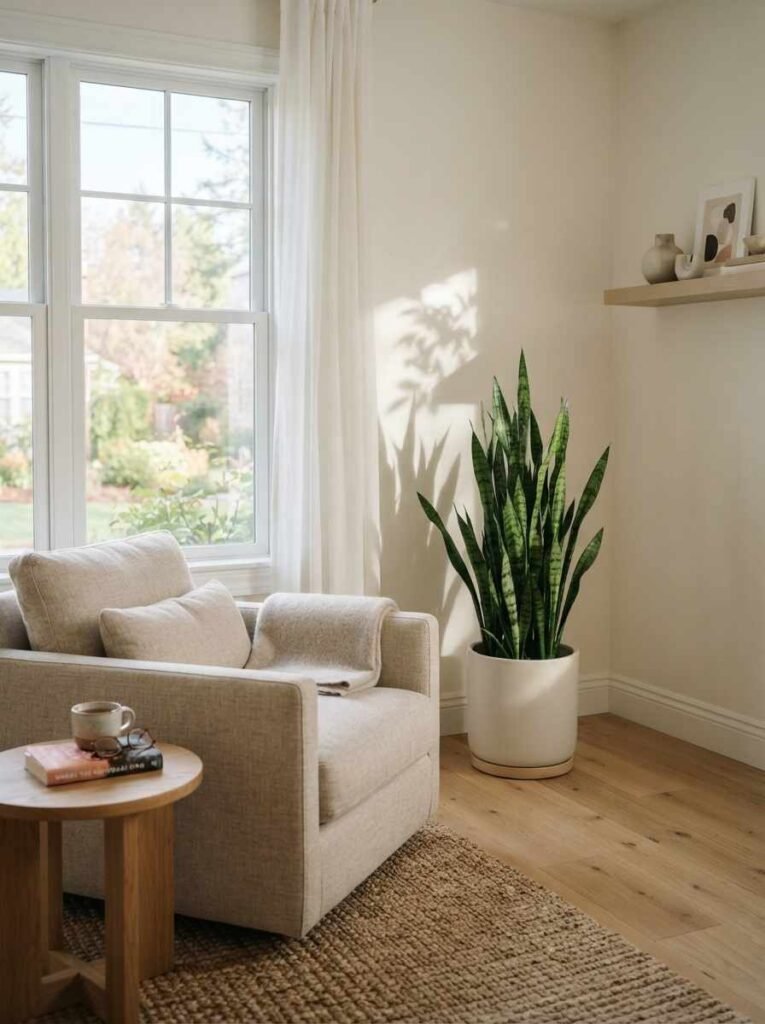
Even people who kill every plant they touch can handle a snake plant or a pothos. Greenery softens hard lines and adds life to a room that might otherwise feel sterile.
10. Hide the cords
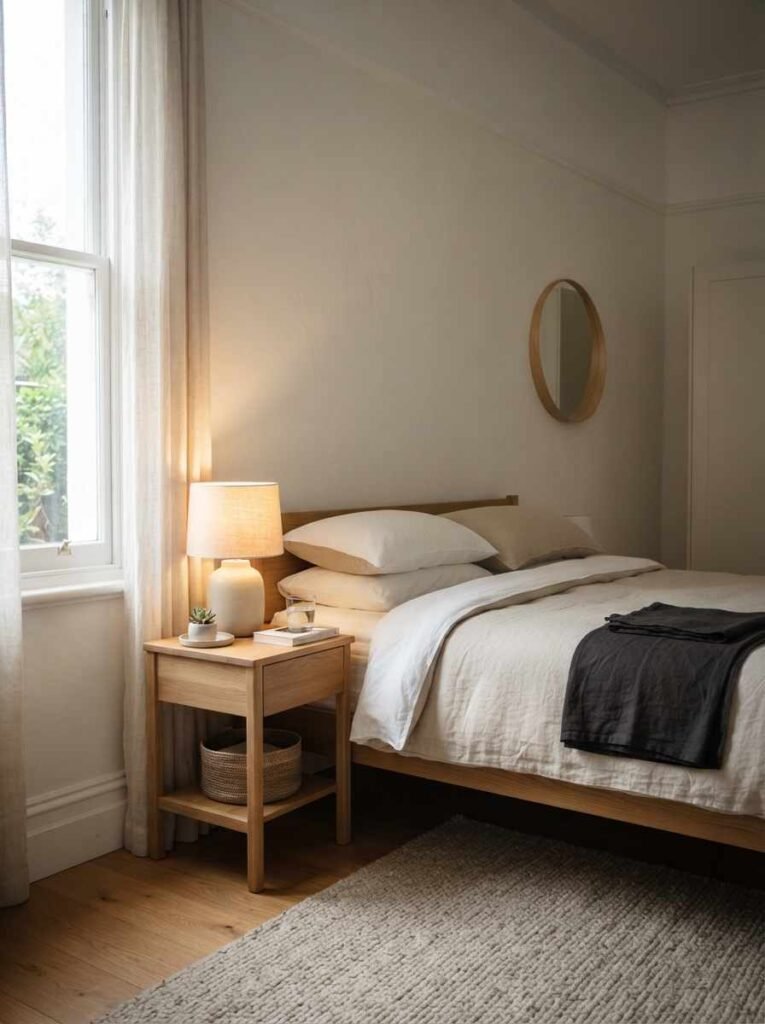
Nothing ruins a peaceful bedroom faster than a tangle of charging cables draped over a nightstand.
Cord clips, a cable box, or just tucking things behind furniture takes ten minutes and changes the whole vibe of the room.
11. Choose warm-toned lighting
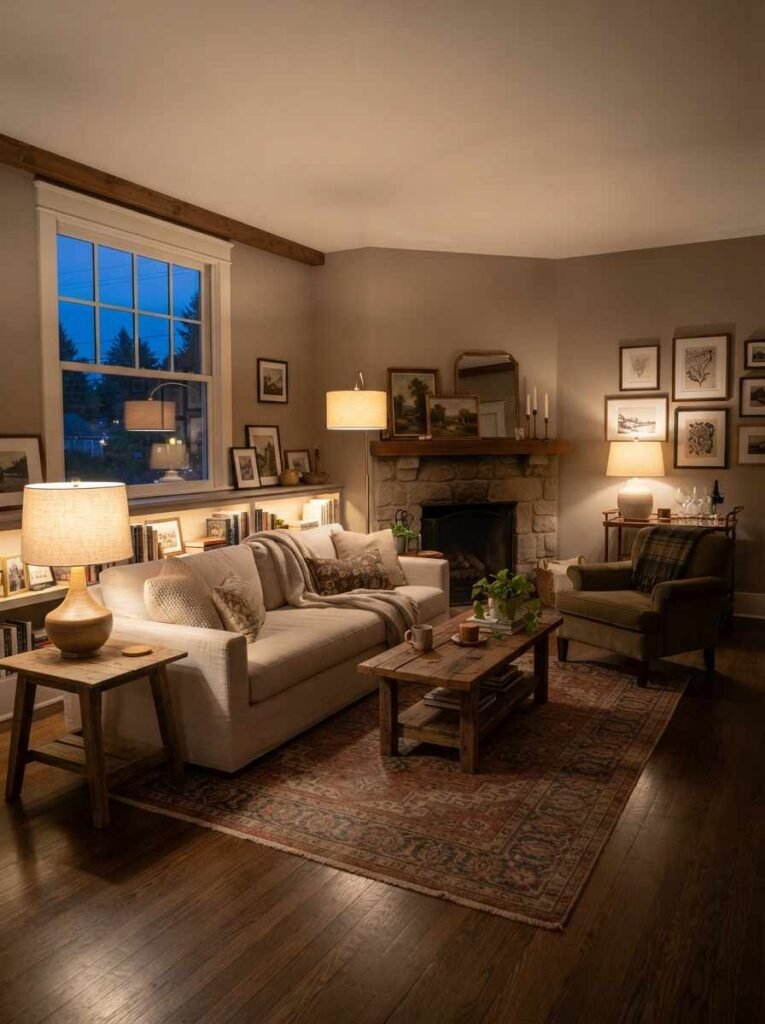
Skip cool white bulbs unless you’re in a home office. Warm bulbs, somewhere around 2700K to 3000K, make a minimalist room feel inviting instead of clinical.
This one change alone can rescue a room that otherwise feels a bit stark.
12. Layer lighting at different heights
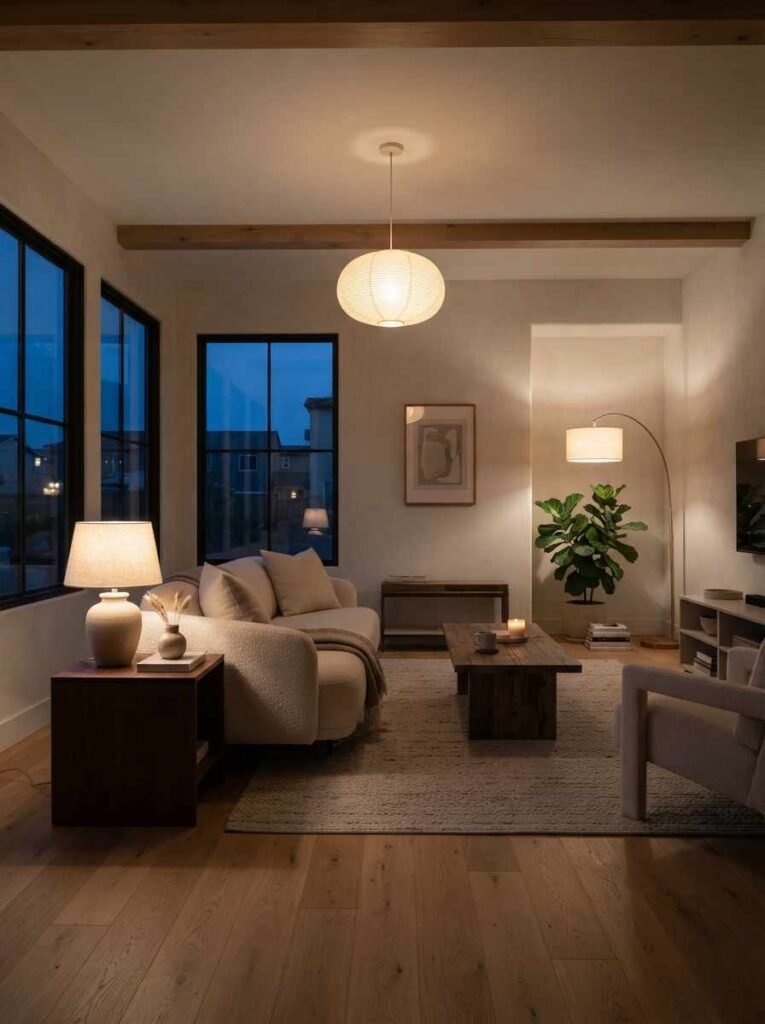
A ceiling fixture, a table lamp, maybe a floor lamp in the corner. Overhead light alone flattens a room and makes it feel more like an office than a home.
Mixing heights creates depth even in a small footprint.
13. Store, don’t display, the everyday clutter
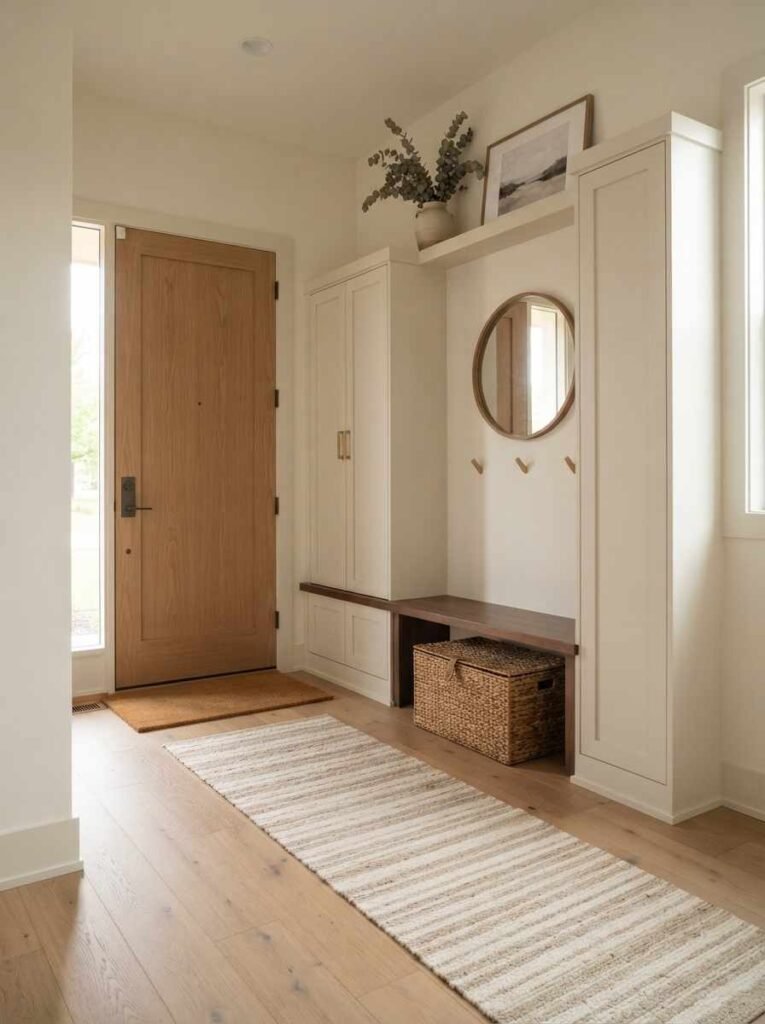
Baskets, closed cabinets, a bench with hidden storage. Minimalism isn’t about owning nothing. It’s about controlling what’s visible.
Keep the mail, chargers, and random receipts somewhere with a lid.
14. Pick artwork with breathing room
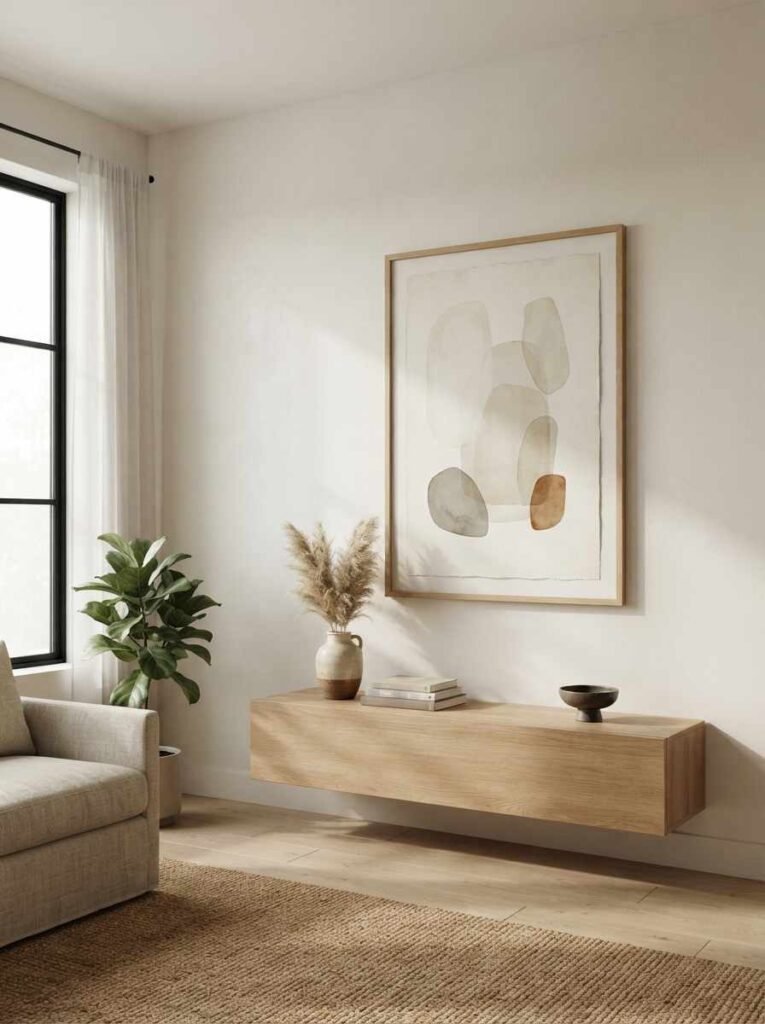
A single large print beats a wall of five small frames in most minimalist spaces.
If you love a gallery wall, keep the frames identical and the spacing generous. Crowded walls fight the calm you’re building everywhere else.
15. Bring in one organic shape
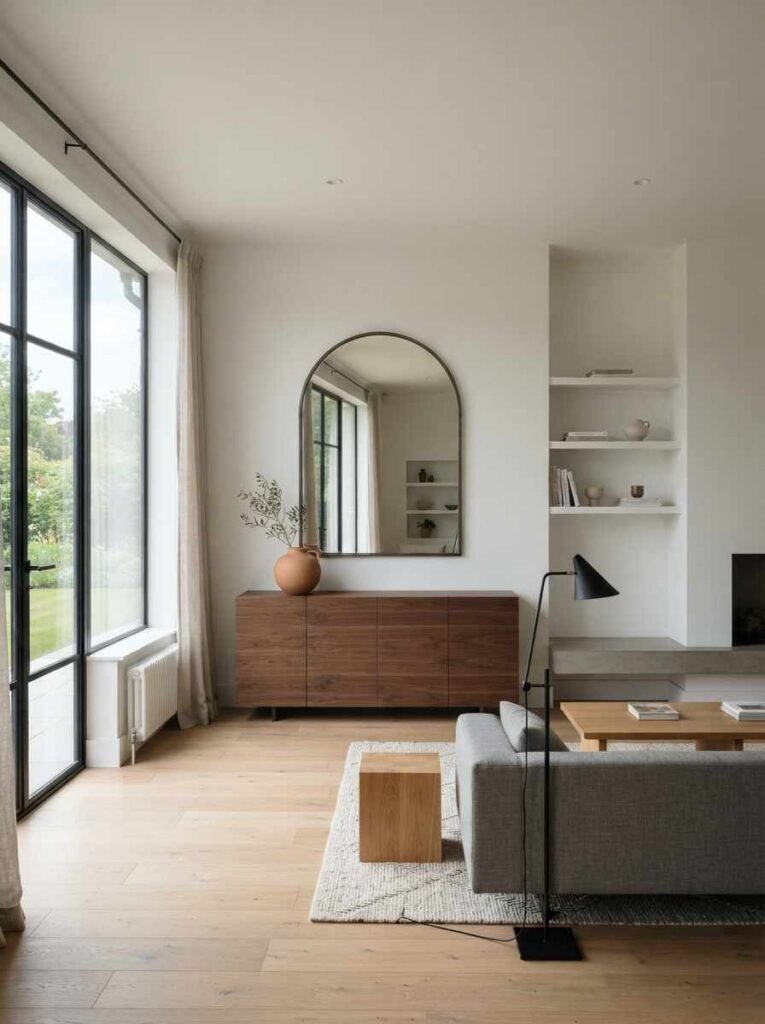
Straight lines everywhere start to feel severe after a while.
A curved side table, an arched mirror, a rounded vase. One soft shape in a room full of angles keeps things from feeling like a furniture showroom.
16. Match your storage to your actual habits
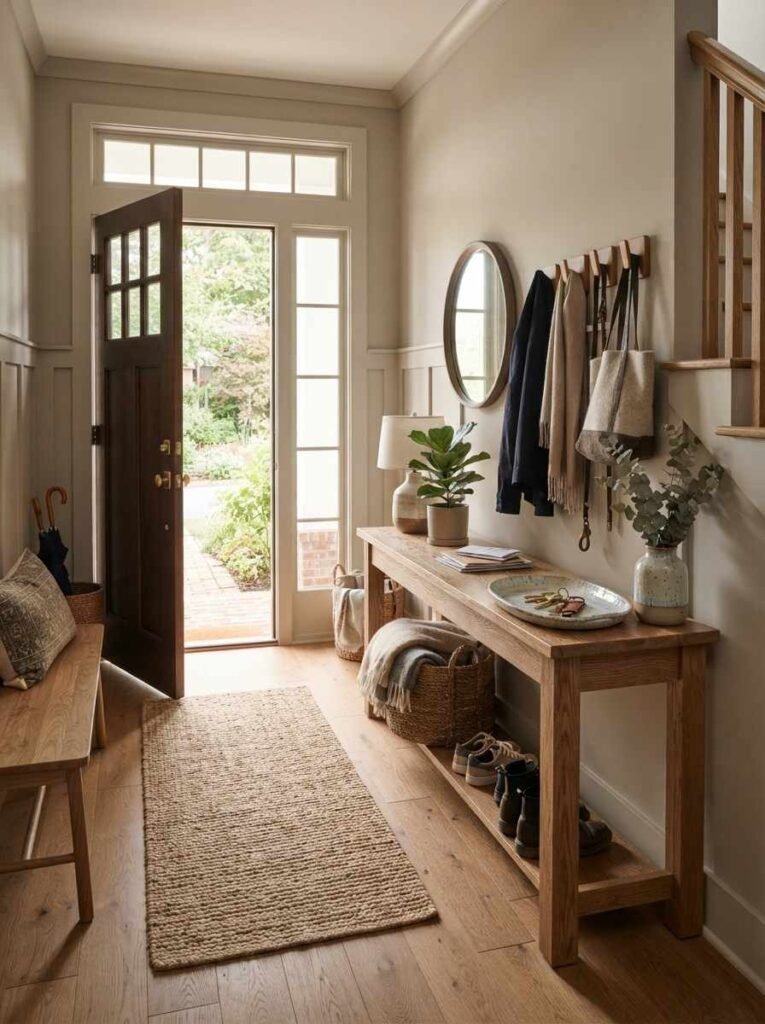
If you always toss your keys on the counter, don’t fight it.
Add a small tray there instead of pretending you’ll suddenly become a person who hangs keys on a hook by the door. Minimalism that ignores your real habits never lasts.
17. Leave one corner completely empty
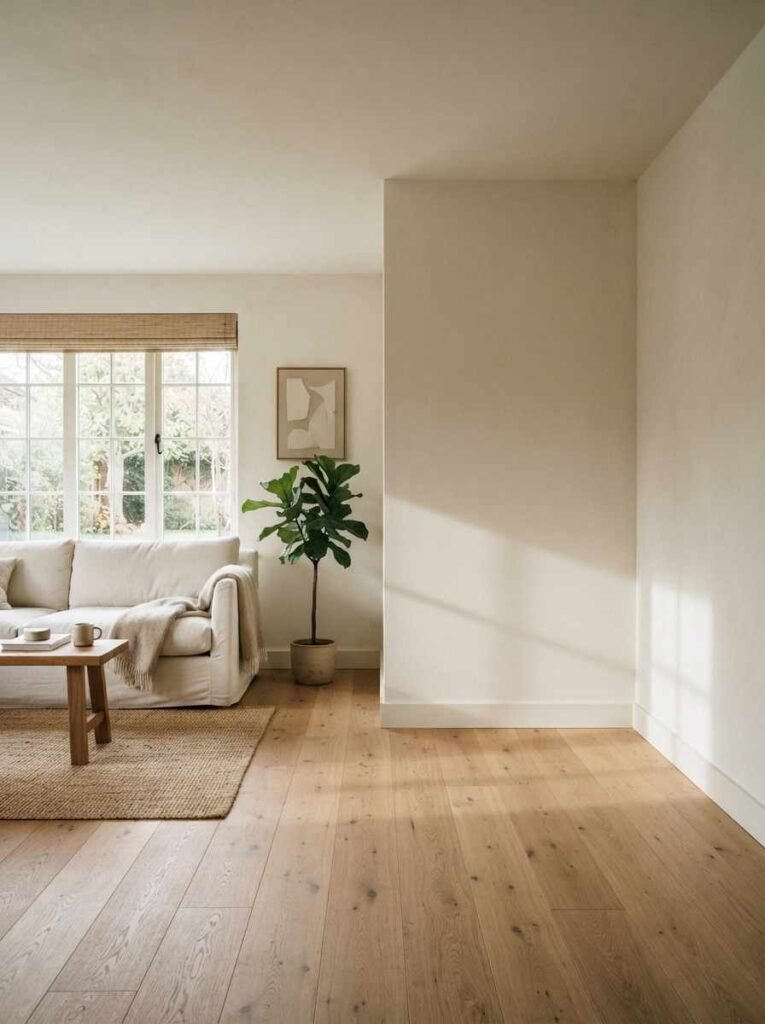
This is the one people skip, and it’s my favorite. An empty corner, no plant, no chair, nothing, gives the eye a place to rest.
It sounds counterintuitive in a list about filling your home with ideas, but negative space is doing just as much work as the furniture around it.
Random thought, but this is basically why a messy desk stresses me out more than a messy garage.
Visible clutter in a small, contained space registers louder than the same amount of stuff spread across a bigger one. Anyway.
Quick comparison: minimalist styles at a glance
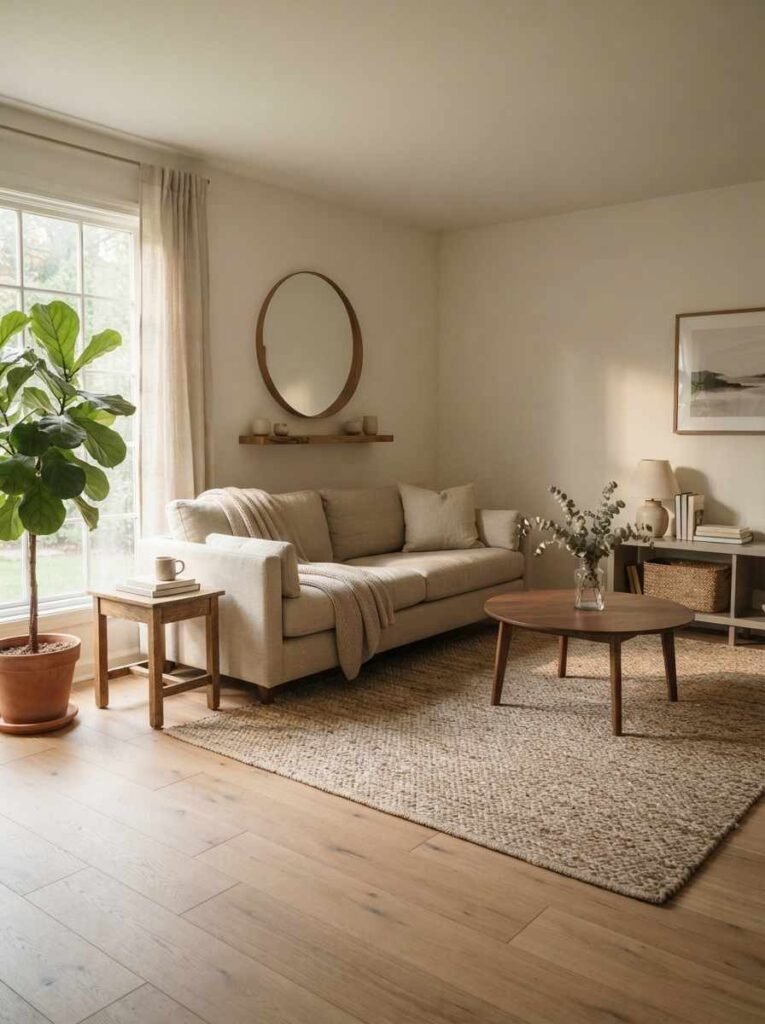
| Style | Color palette | Best for |
|---|---|---|
| Japandi | Warm wood, off-white, muted greens | Small apartments wanting warmth and order |
| Scandi minimalist | White, light wood, soft grey | Bright rooms, north-facing spaces |
| Warm minimalist | Clay, oat, terracotta accents | Anyone who finds pure white too clinical |
| Monochrome minimalist | Black, white, one accent tone | Bold statement rooms, entryways |
A note on where the psychology actually comes from
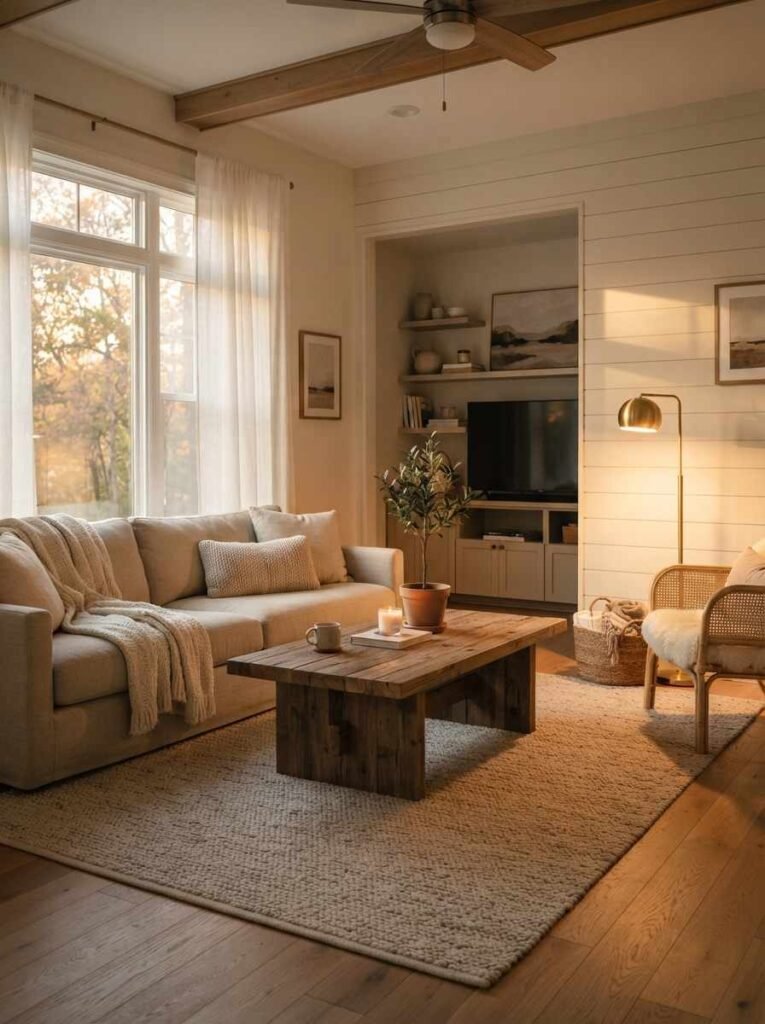
This isn’t just a design trend dressed up as self-care. Psychology Today has covered research linking cluttered environments to higher stress and lower focus, and a calmer home genuinely does seem to support a calmer head. That doesn’t mean you need a sterile space. It means the clutter you keep should be the clutter you chose on purpose.
FAQs
Does minimalist have to mean all white? No. Warm minimalism uses clay, oat, and soft browns instead of stark white, and it tends to feel far more livable day to day.
How do I start if my whole home feels cluttered? Pick one room, ideally the one you spend the most time in, and work through these ideas there first. Trying to overhaul the entire house at once is how most people quit by week two.
Is minimalist decor more expensive? Not necessarily. A lot of this is about editing what you already own and being selective about new purchases, not buying all new furniture.
So, which of these 17 is going straight onto your Pinterest board tonight? Pick one, try it this weekend, and see how the room feels before you touch anything else.
