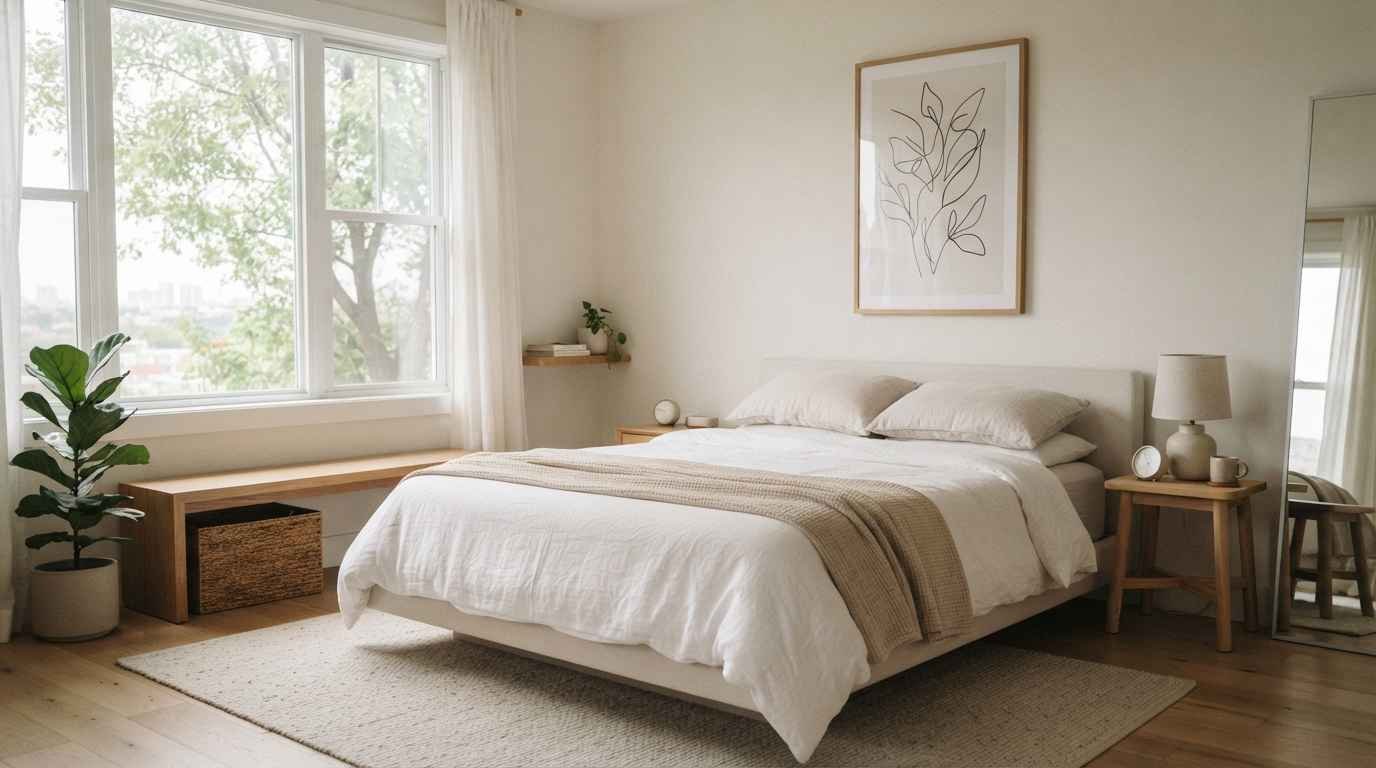
I redid my bedroom four times last year. Not because I’m rich or bored, but because I kept chasing a look I saw on Pinterest and kept missing the mark.
Too much stuff, then too little, then a room that looked like a hospital waiting area.
It took me way longer than I’d like to admit to figure out what “minimalist” actually means for a bedroom you want to sleep in, not just photograph.
So if you’re scrolling through boards at midnight trying to figure out why your room feels cluttered even though you “don’t own much,” this is for you.
Below are 19 ideas that actually work in real bedrooms, not just staged ones with suspiciously empty closets.
Why Minimalist Bedrooms Actually Help You Sleep Better
There’s real research behind this, not just aesthetic preference.
The Sleep Foundation has written about how visual clutter and excess stimulation in a bedroom can interfere with your ability to wind down at night.
Your brain reads a busy room as “still active,” which makes it harder to switch into rest mode.
I noticed this myself. My old room had a desk crammed in one corner, string lights, four throw pillows I never used, and a dresser covered in receipts and half-used candles. I slept fine, technically, but I never felt calm in there.
After I stripped it back, the difference was honestly kind of wild. Less to look at meant less for my brain to process before bed.
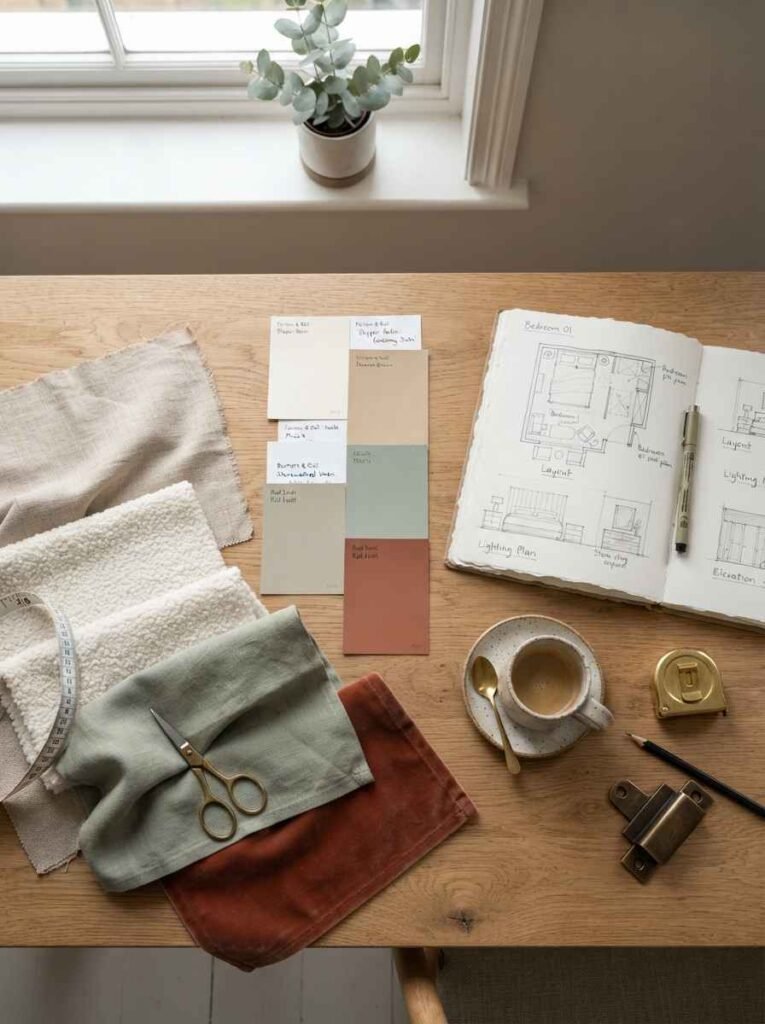
Start With a Color Palette, Not a Shopping List
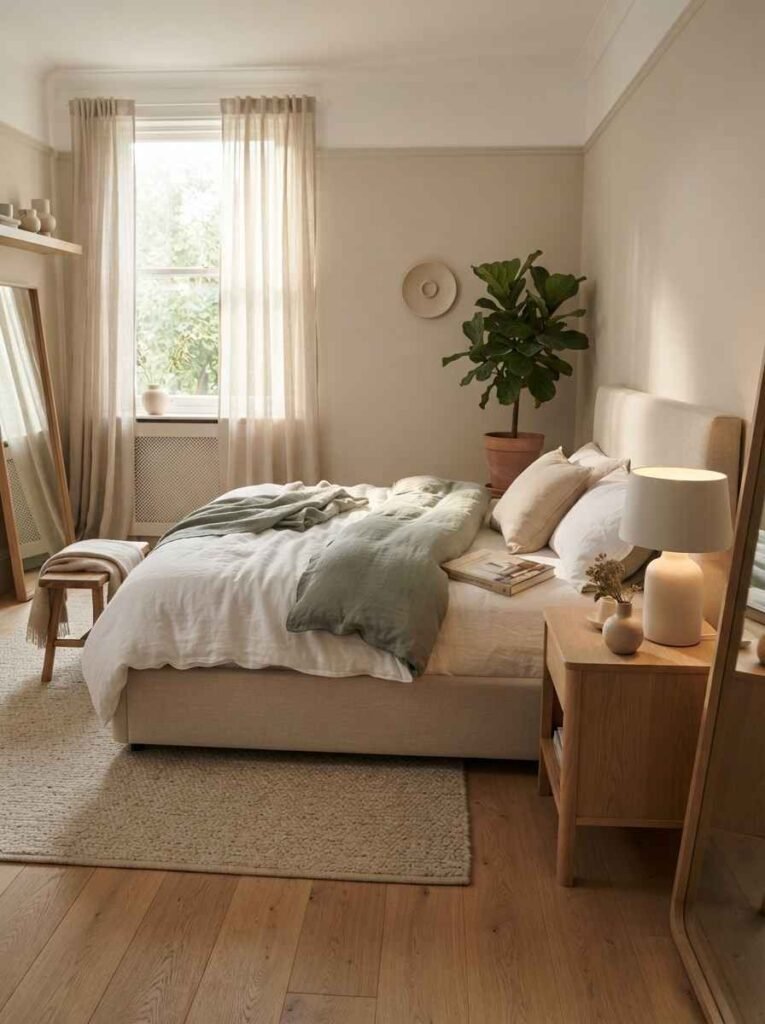
Before you buy a single thing, pick three colors max.
I know that sounds restrictive, but it’s the fastest way to avoid a room that looks like a mood board threw up.
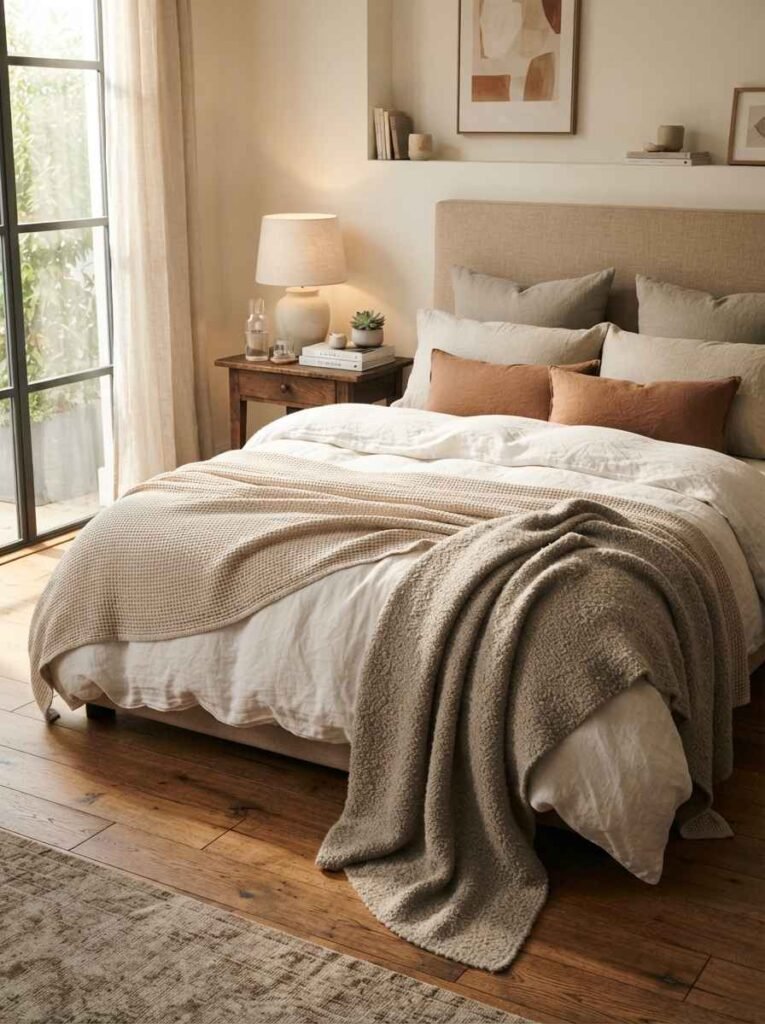
Soft white, warm beige, and one deeper accent like clay or sage work well together.
Choose Bedding That Feels Expensive Even If It Wasn’t
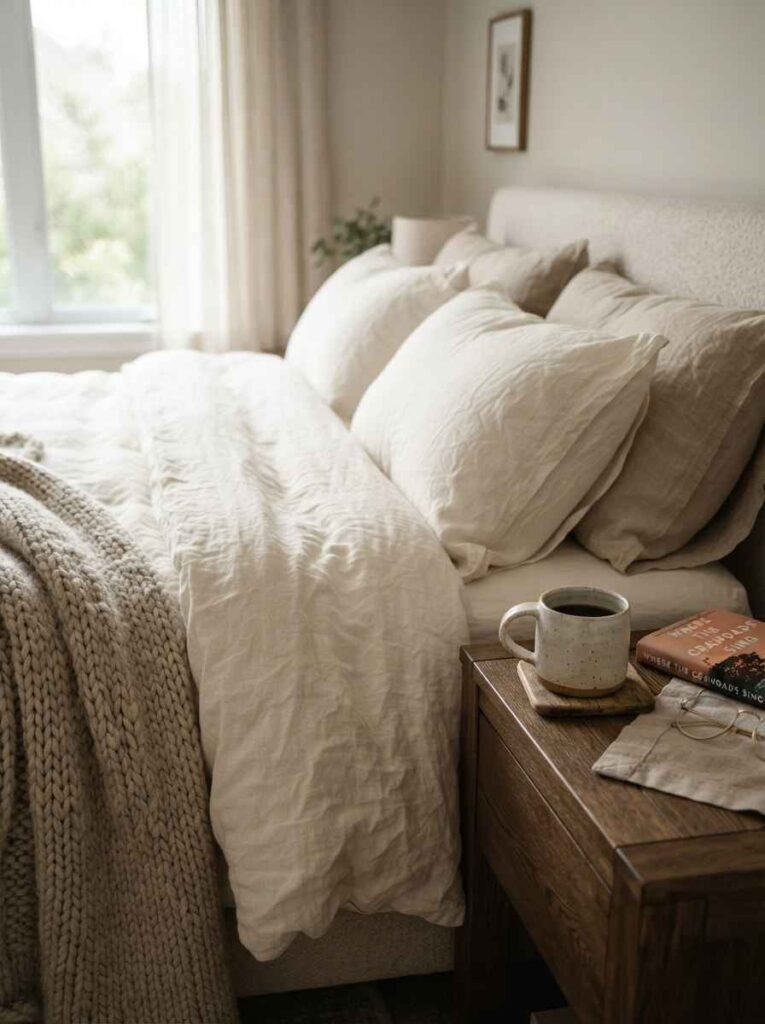
Linen or a linen-cotton blend duvet cover instantly reads as calm and high-end.
IMO this is the single highest-impact, lowest-effort upgrade you can make.
Brooklinen and Parachute both make solid options if you want a starting point.
Ditch the Matching Furniture Set
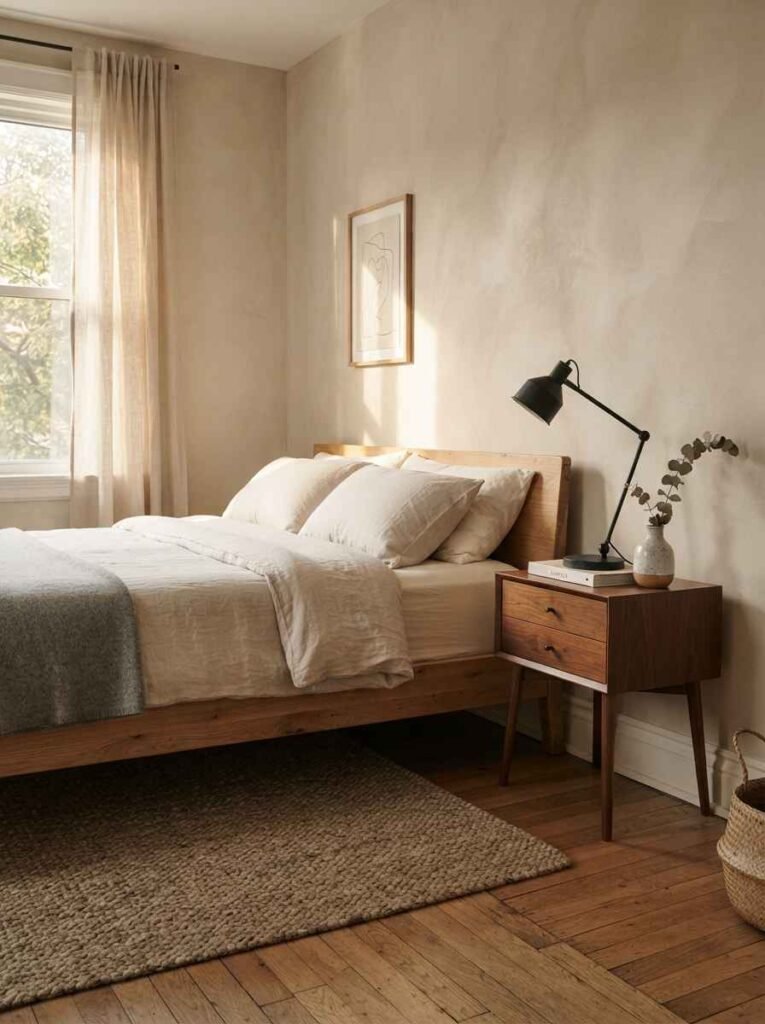
Matching bedroom sets from big box stores tend to look flat and impersonal.
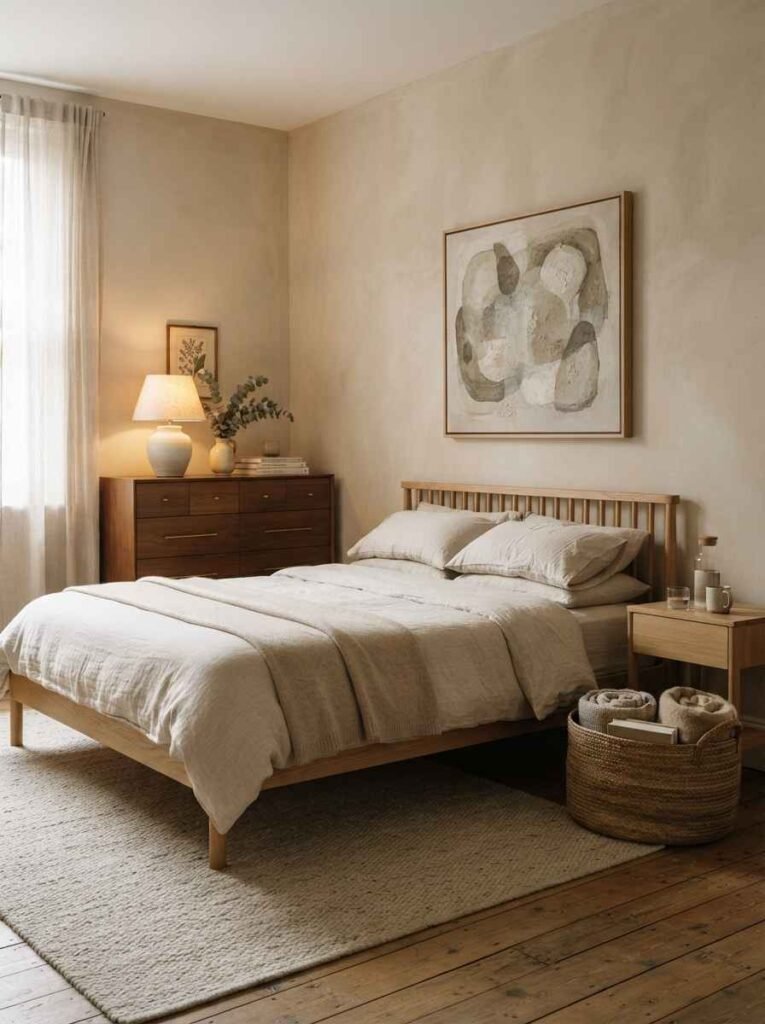
Mixing a vintage nightstand with a modern bed frame gives the room texture without adding visual noise.
Float Your Furniture Away From the Walls Slightly
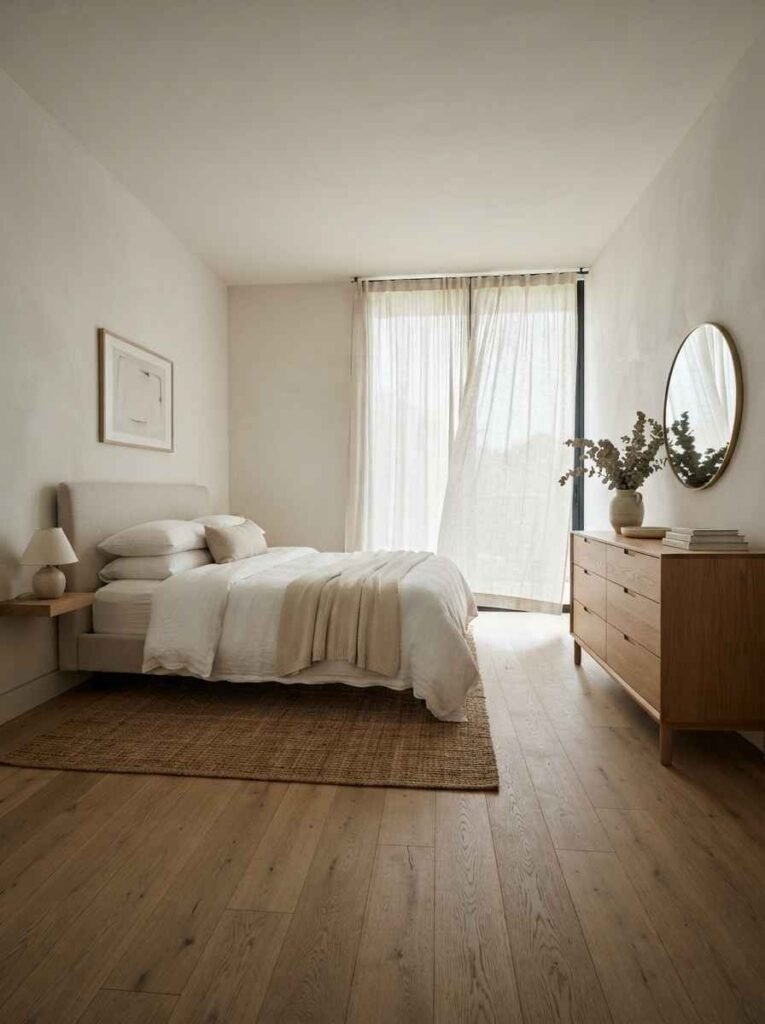
This one surprised me. Pulling your bed and dresser even two inches off the wall creates a sliver of shadow that makes the room feel intentional rather than shoved-together.
Use One Statement Piece, Not Five
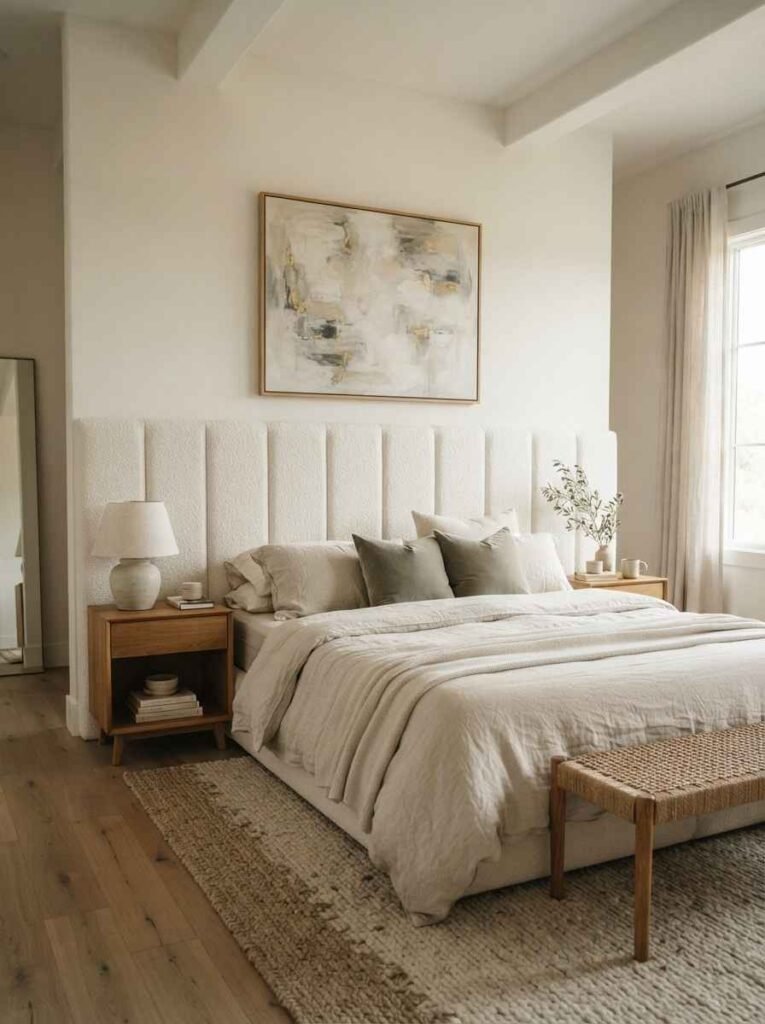
Pick one thing to be interesting: a headboard, a lamp, a piece of art. Everything else should support it quietly. A room with five “statement pieces” has zero statement pieces.
Hide the Cords
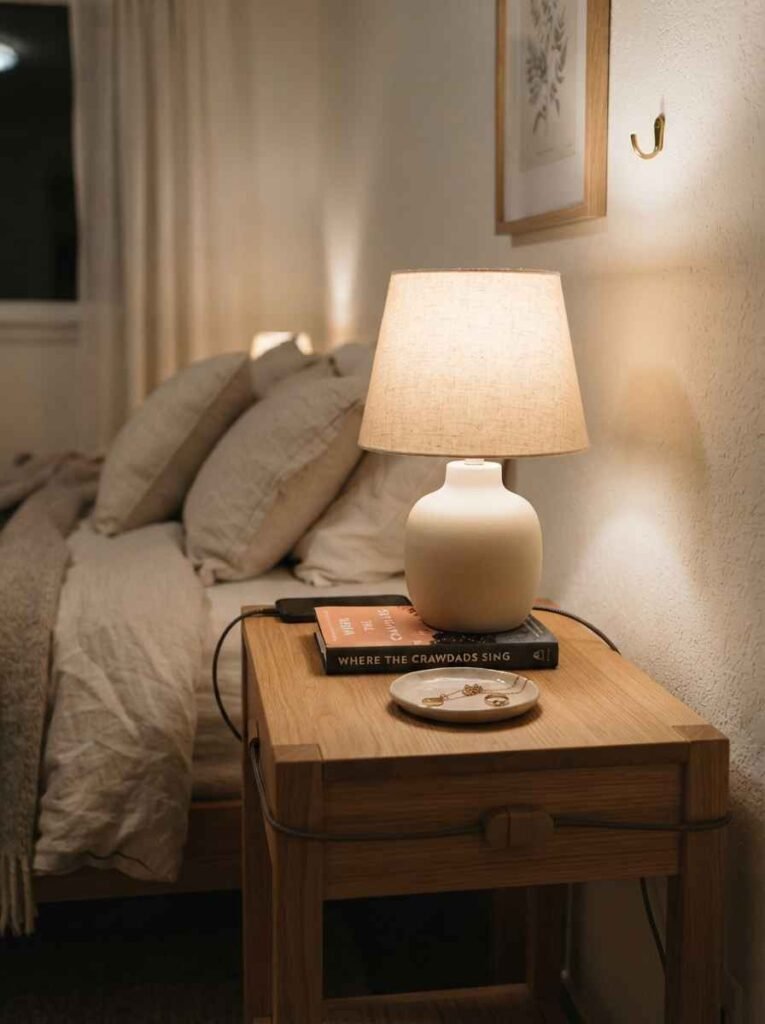
Nothing kills a calm aesthetic faster than a tangle of phone chargers hanging off the nightstand.
A simple cord clip or a small drawer with a cut-out hole solves this in about ten minutes.
Go Heavy on Texture, Light on Color
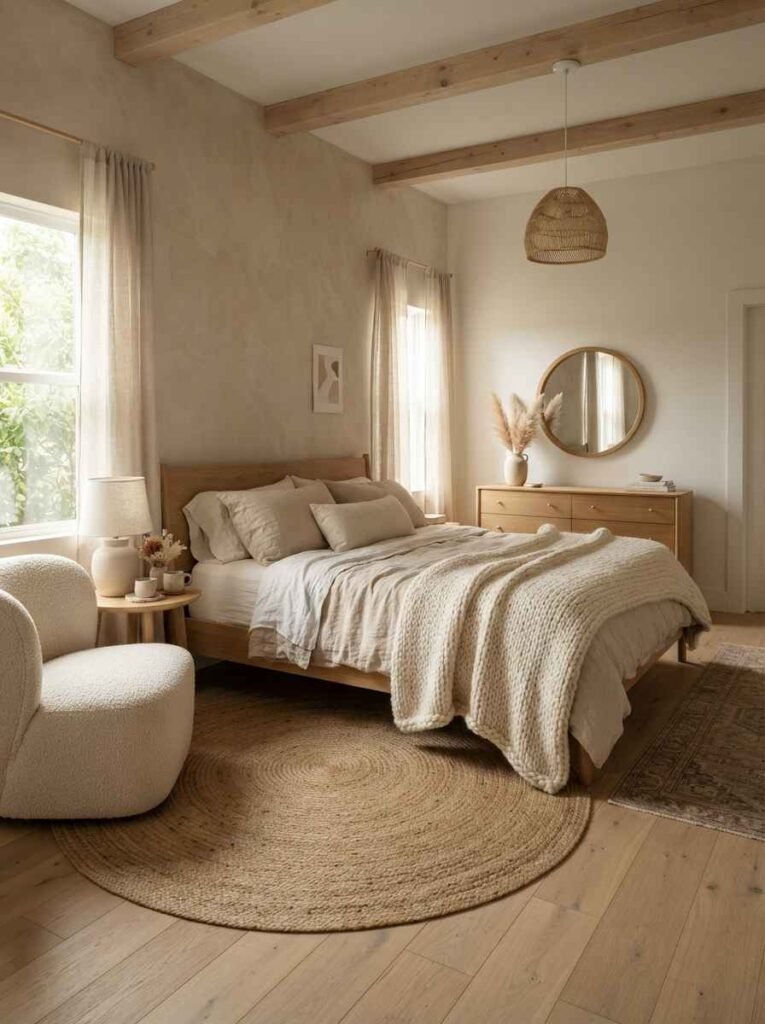
Layer a chunky knit throw over smooth linen sheets. Add a woven rug under a solid wood floor. Texture does the visual work that color and pattern used to do, without the chaos.
Keep the Nightstand Almost Empty
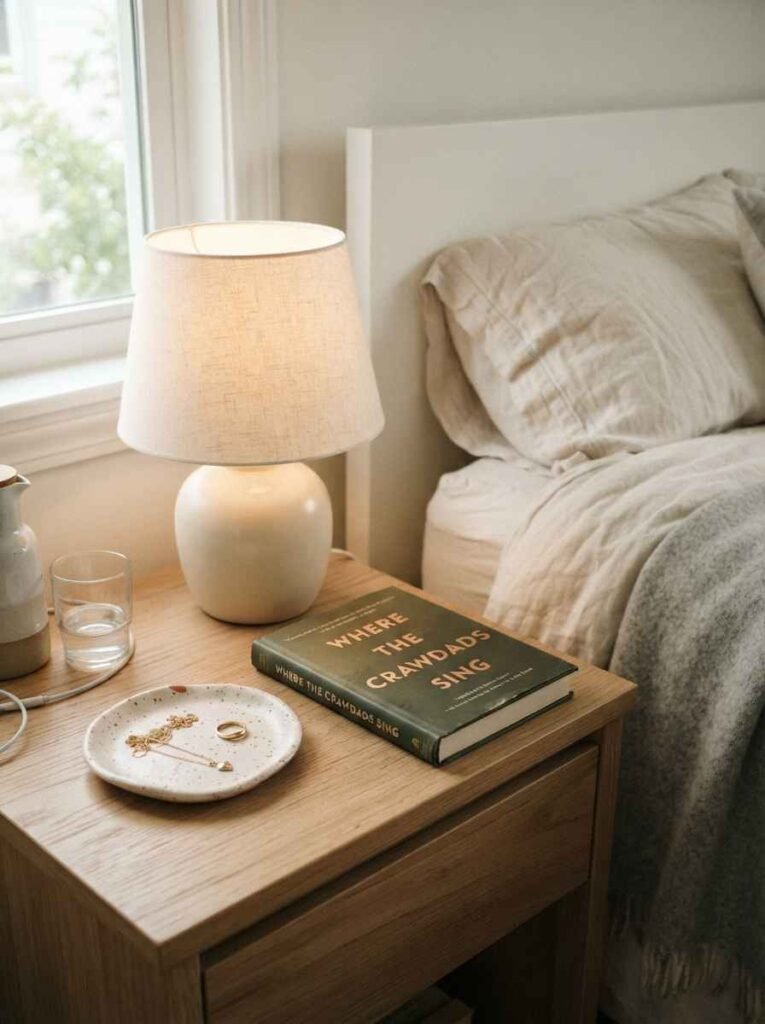
One lamp, one book, maybe a small tray for jewelry.
That’s it. I used to keep skincare, water bottles, and random mail on mine, and it made the whole room feel unfinished even when everything else was tidy.
Choose Warm Lighting Over Bright Overhead Lights
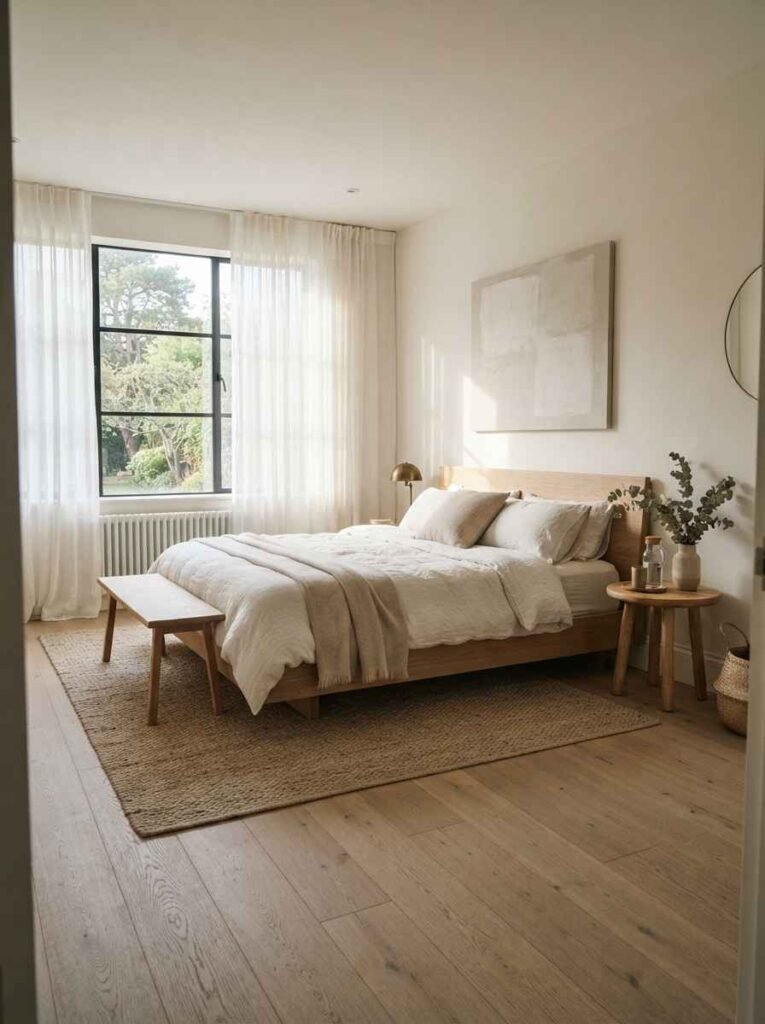
Overhead lighting is harsh and honestly kind of unflattering for a bedroom.
A dimmable lamp or a couple of warm-toned sconces will change the entire mood of the space at almost no cost.
Invest in Blackout or Linen Curtains, Not Both at Once
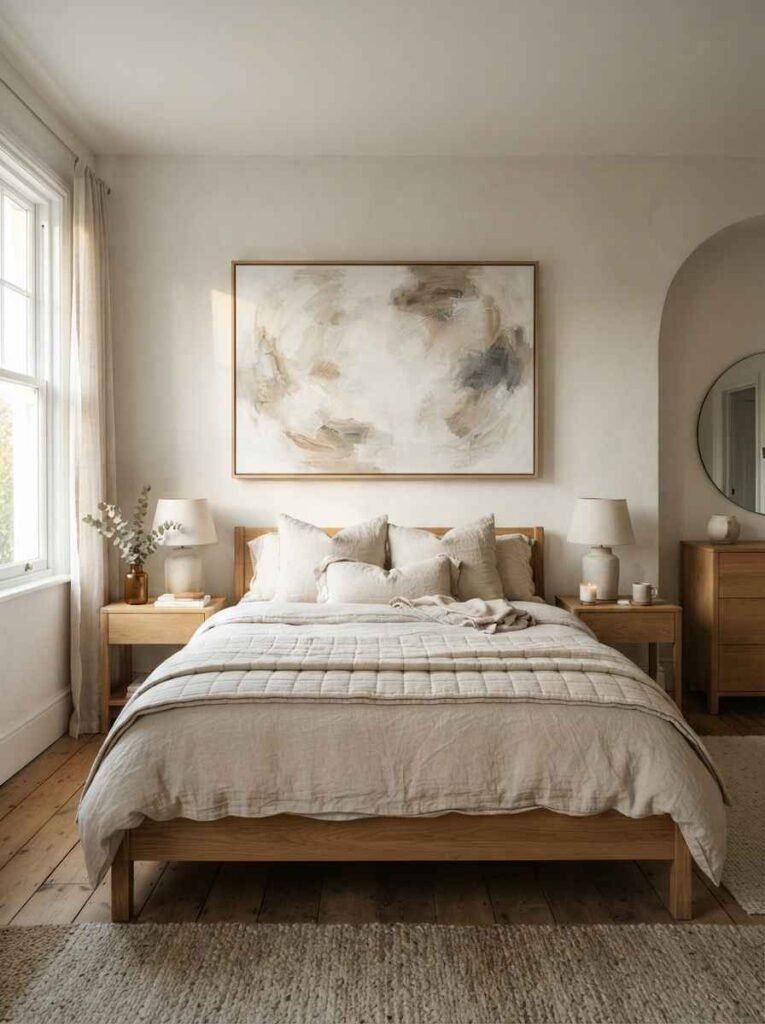
Pick a lane. Blackout curtains if you need serious sleep support, sheer linen if you want soft daylight filtering through.
Layering both often ends up looking busy in a small room.
Let the Bed Be the Focal Point
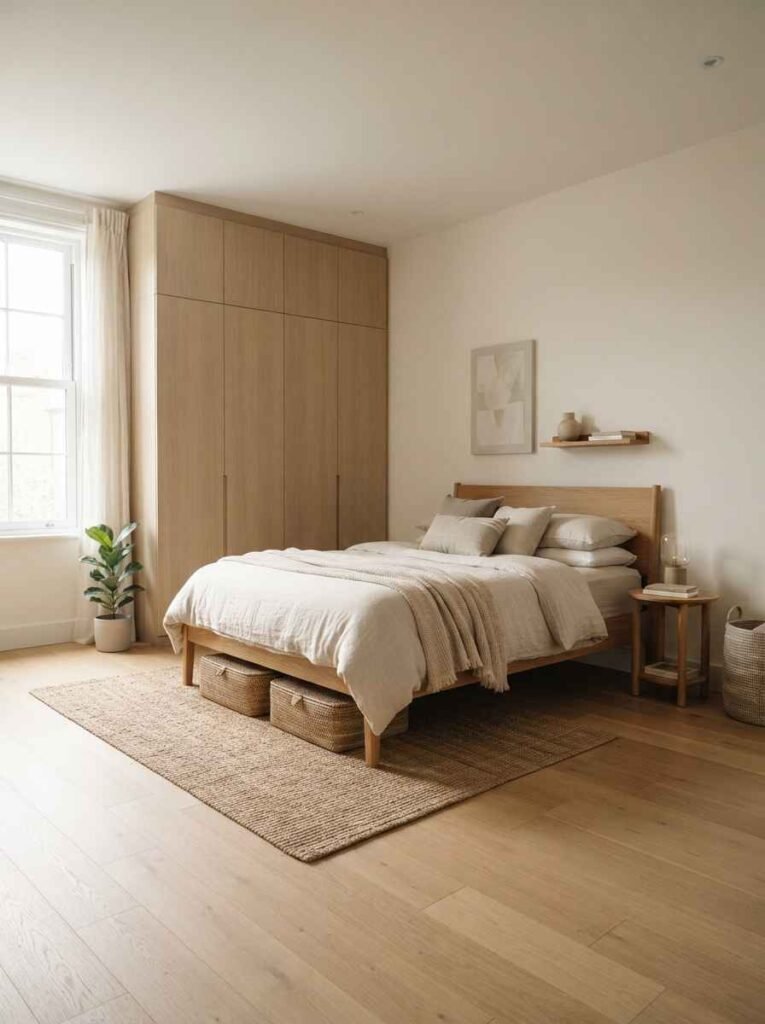
Everything in the room should visually point back to the bed.
That means low furniture, minimal wall art competing for attention, and a rug that sits under (not just in front of) the bed frame.
Skip the Gallery Wall
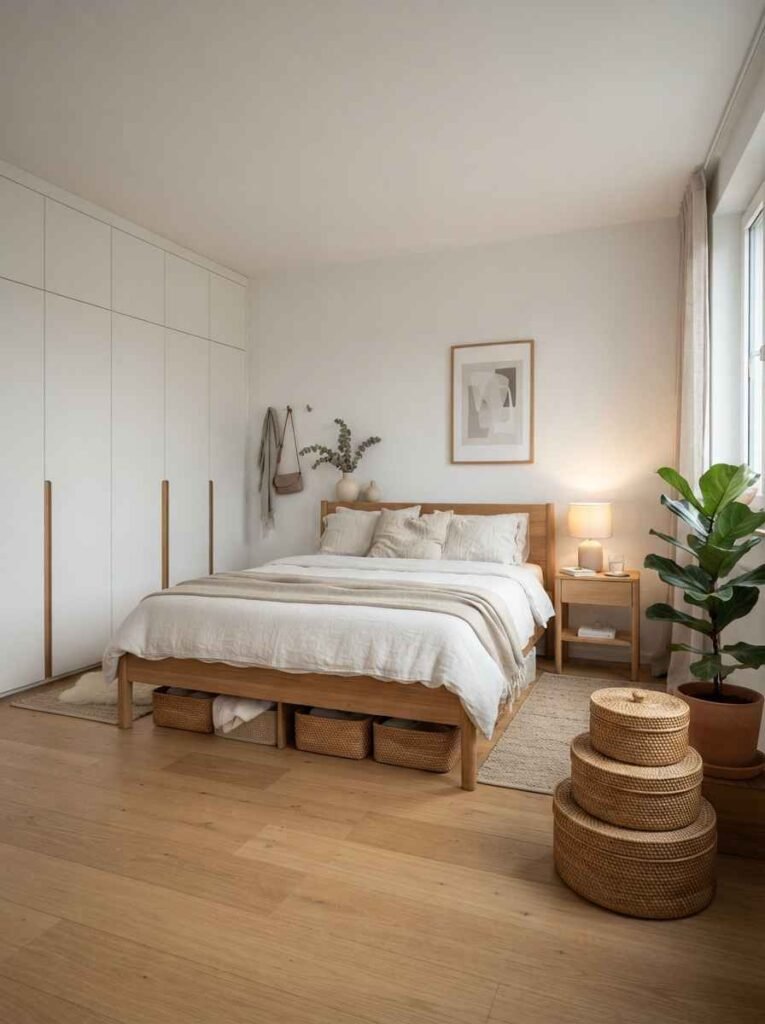
I love a gallery wall in a living room, but in a minimalist bedroom it usually works against you.
One or two large, simple pieces of art create more calm than six small frames ever will.
Use Closed Storage Wherever Possible
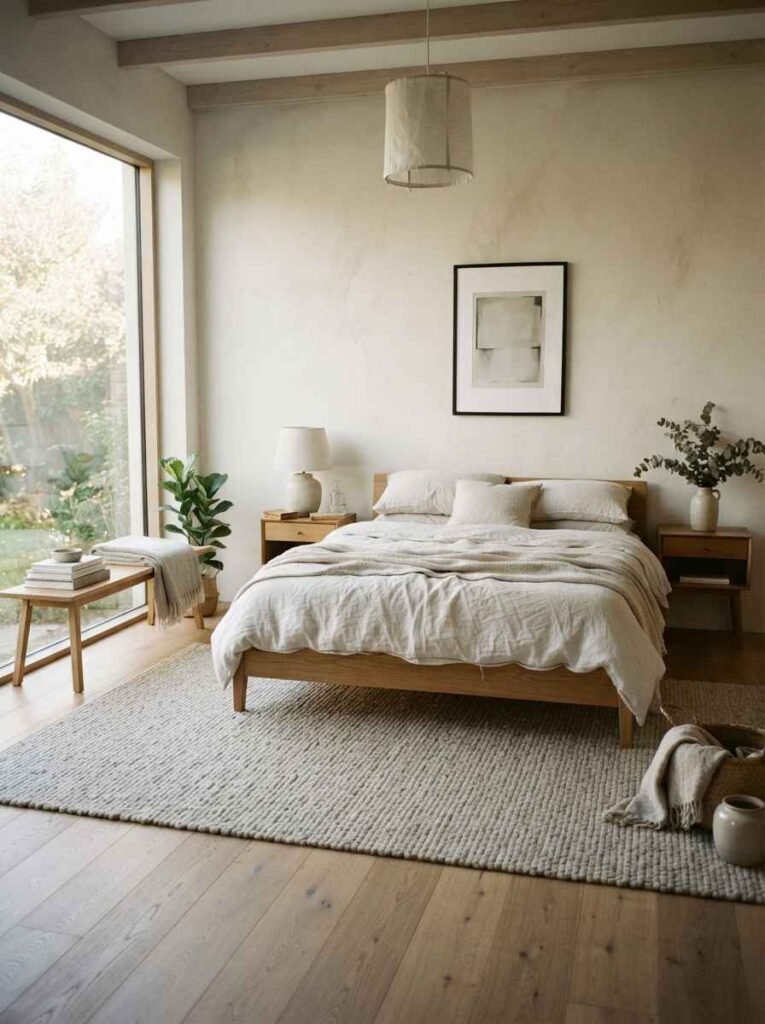
Open shelving looks great in photos and terrible in real life once you actually own things. Closed cabinets, baskets with lids, and under-bed storage boxes keep the visual field clean without forcing you to own nothing.
Pick a Rug That’s Slightly Oversized
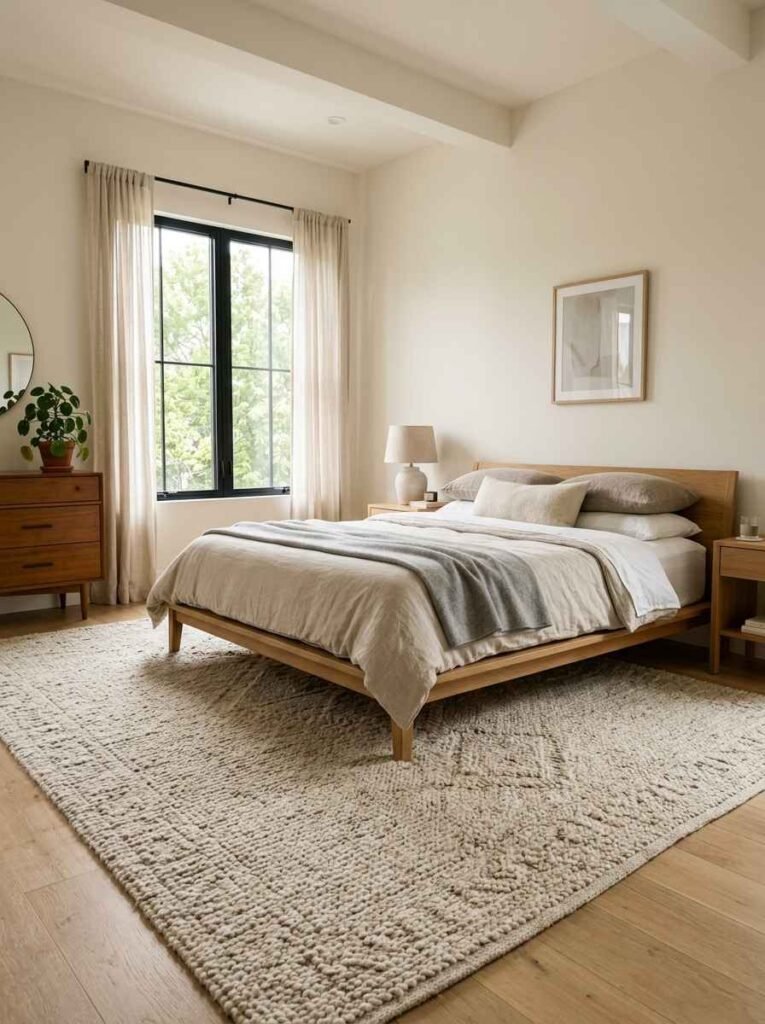
A too-small rug is one of the most common mistakes I see in bedrooms.
It should extend at least a foot beyond each side of the bed to feel grounded rather than like an afterthought.
Bring in One Living Plant
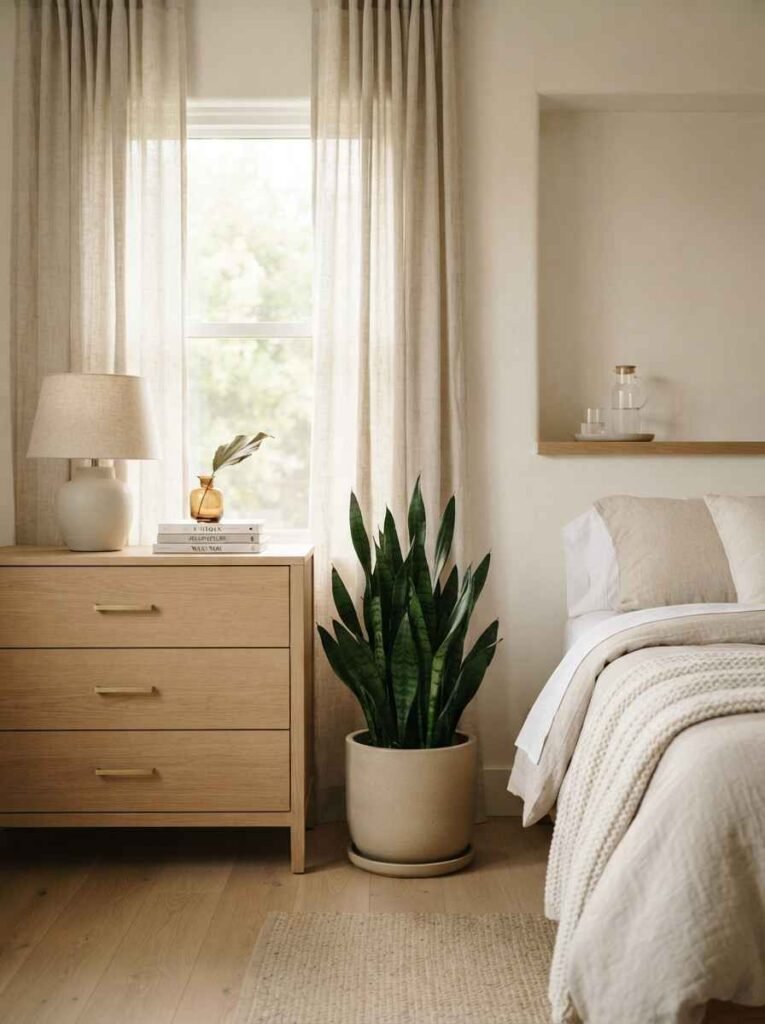
A single plant, like a snake plant or a pothos, softens a minimalist room without adding clutter.
Skip the collection of six succulents on the windowsill; one healthy plant does more work than five struggling ones.
Choose a Low-Profile Bed Frame
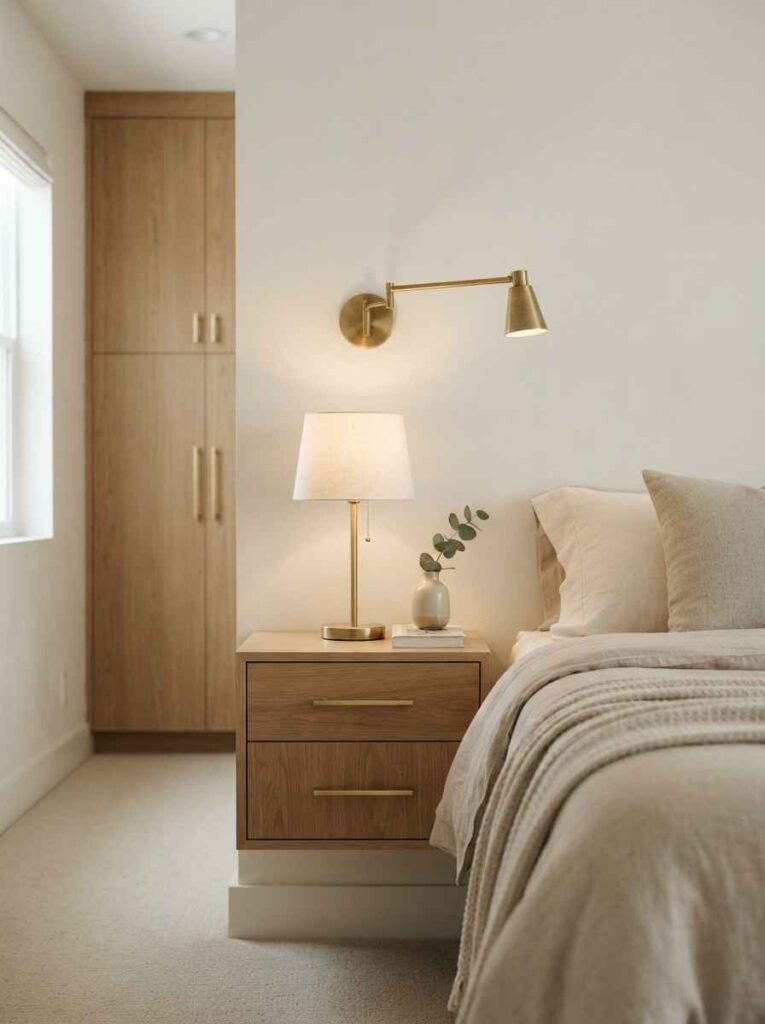
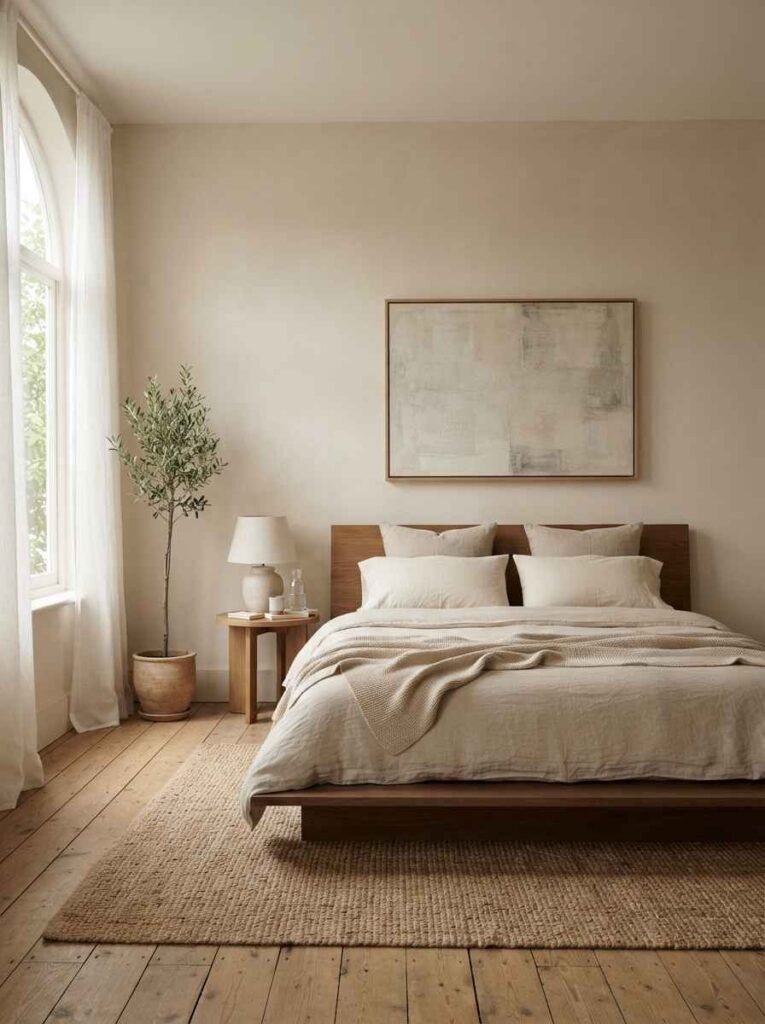
Platform beds without a tall headboard make ceilings feel higher and rooms feel more open. This matters even more in smaller bedrooms where every inch of visual height counts.
Match Your Hardware Finishes
Mixed metal finishes on drawer pulls, lamps, and light fixtures can quietly clutter a room even when the colors are neutral. Sticking to one metal tone, like brushed brass or matte black, pulls everything together.
Leave Negative Space on Purpose
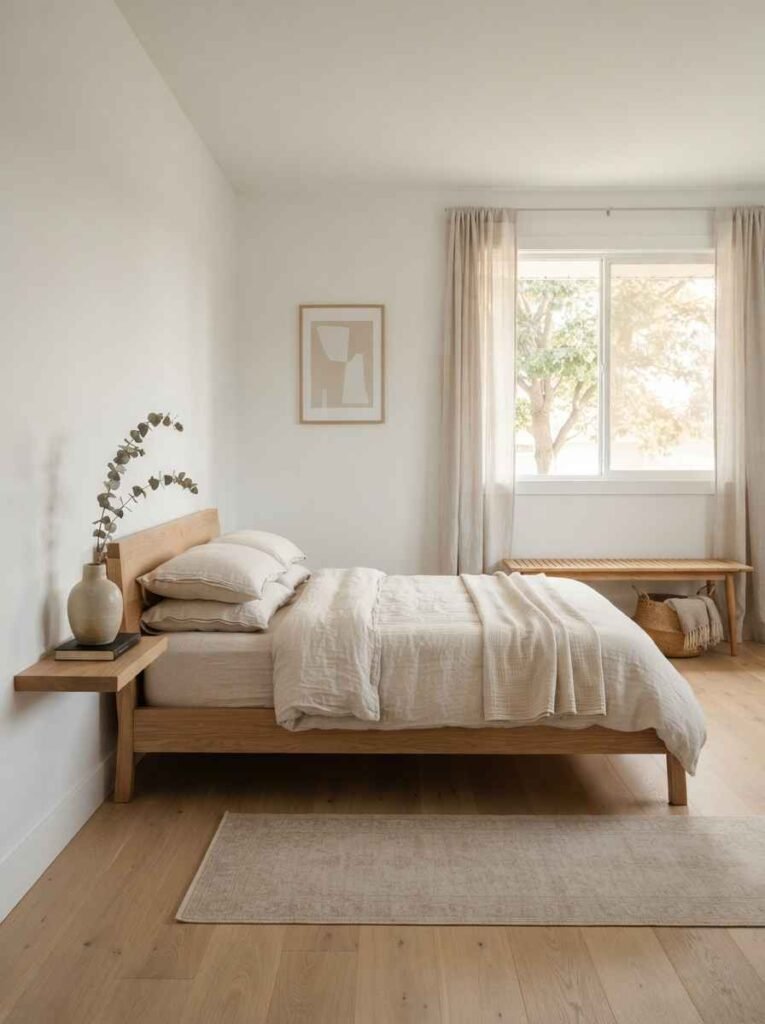
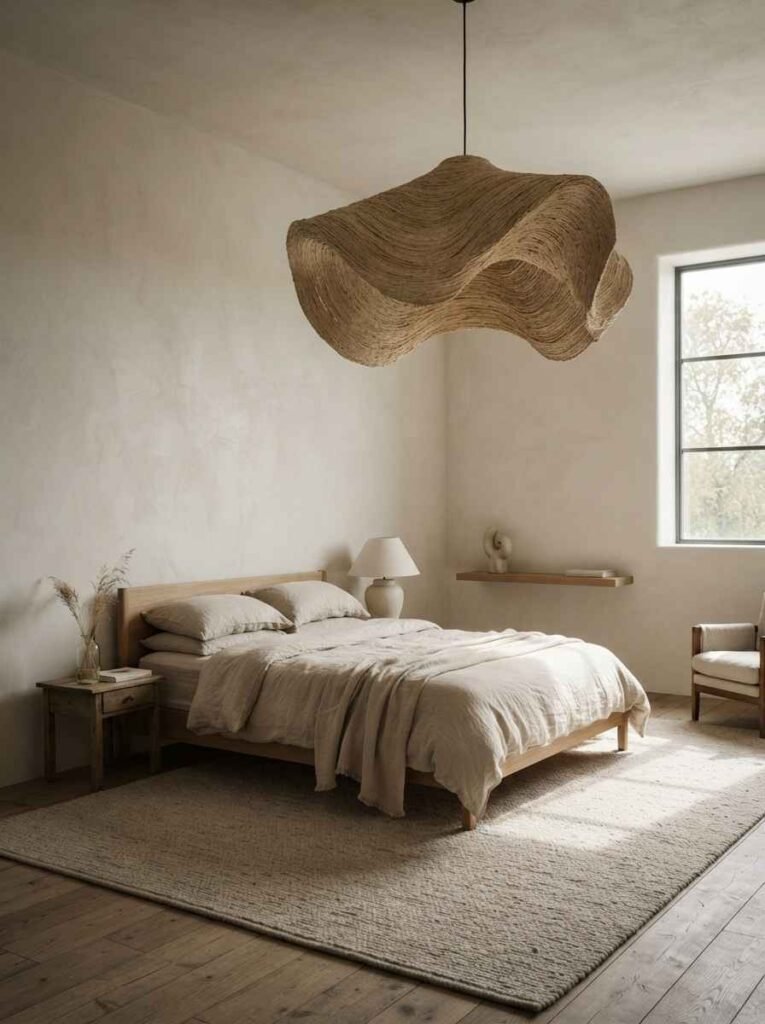
This is the idea people struggle with most. Empty wall space isn’t a problem to fix, it’s part of the design.
A little breathing room around your furniture and art is what makes the whole room feel calm instead of cramped.
Edit Ruthlessly Every Few Months
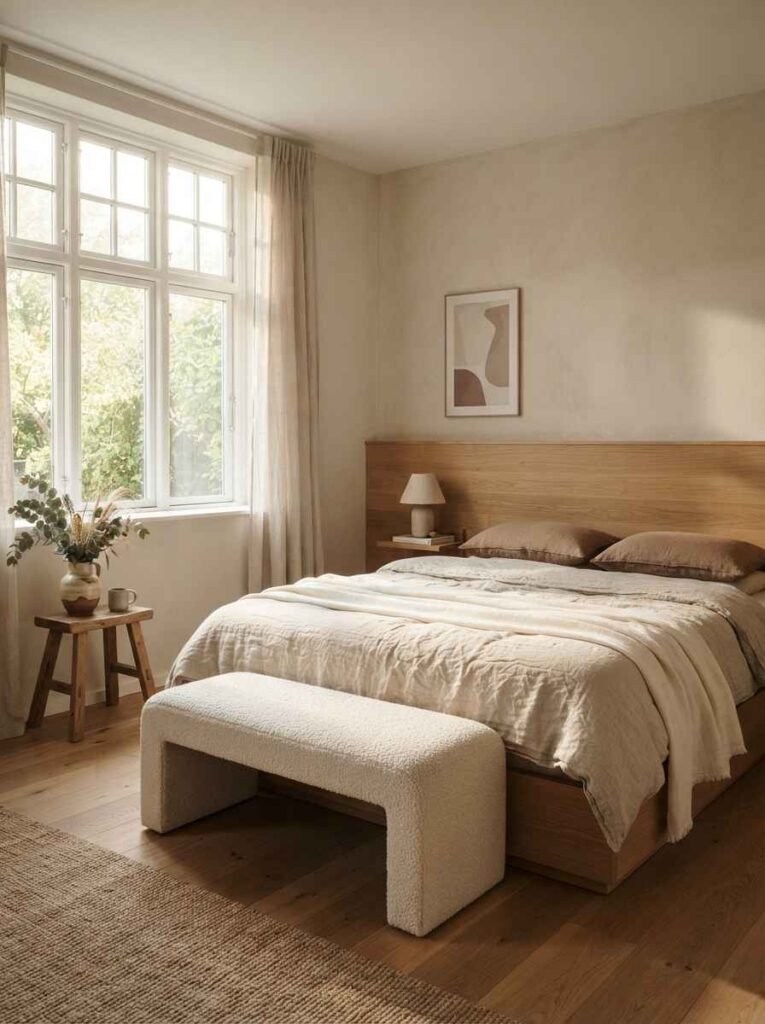
Minimalism isn’t a one-time decorating project, it’s a habit.
Every season, walk through your room and ask whether each item earns its spot. If not, it goes in a donation box.
A Quick Reference Table
Here’s a simple breakdown if you want the short version to save for later.
Room Zone | Keep | Skip Nightstand | Lamp, one book | Chargers, skincare pile Walls | One or two large art pieces | Gallery wall of six-plus frames Storage | Closed baskets, under-bed boxes | Open shelving with visible clutter
A Slightly Random Thought Before We Keep Going
Random thought, but has anyone else noticed that minimalist rooms photograph better in the morning light than at night.
I don’t fully know why, maybe it’s the shadows, maybe it’s just that everything looks calmer before 9am. Anyway, back to the ideas.
Where to Pin These Ideas for Later
If you’re building a Pinterest board around this look, search terms like “quiet luxury bedroom,” “Japandi bedroom,” and “neutral bedroom aesthetic” tend to surface the most useful reference images.
Apartment Therapy has a solid ongoing series on small-space minimalist bedrooms worth saving too.
Common Mistakes People Make With Minimalist Bedrooms
FYI, minimalist doesn’t mean boring, and it definitely doesn’t mean spending nothing. A few things I see over and over:
People confuse “empty” with “minimalist.” A room with three pieces of furniture and stark white walls can feel cold, not calm. The goal is intentional, not bare.
People skip texture entirely. Smooth surfaces everywhere reads as sterile. You need something to touch, whether that’s a linen throw or a wool rug.
People over-plan and never finish. I did this myself for months. At some point you have to commit to a palette and just start buying, even if it’s not perfect on day one.
How Much Does a Minimalist Bedroom Refresh Actually Cost
You don’t need to gut the room. Swapping bedding, adding one lamp, and decluttering the nightstand can cost under 150 dollars and change the entire feel of the space. The bigger investments, like a new bed frame or rug, are worth saving up for rather than rushing.
Frequently Asked Questions
Is minimalist bedroom design expensive to achieve? Not necessarily.
Some of the highest-impact changes, like decluttering surfaces and switching to warmer lighting, cost little to nothing. The expensive part, if you choose it, is usually the bed frame or a quality rug.
Does minimalist mean I can’t have personal items in my room? No. A minimalist bedroom just means you’re intentional about what you display. One meaningful photo or object says more than a shelf crowded with ten.
What colors work best for a calm, minimalist bedroom? Warm neutrals like beige, oatmeal, and soft white tend to work best, paired with one deeper accent color such as sage green or terracotta.
Final Thought
A minimalist bedroom isn’t about owning less for the sake of it. It’s about making sure everything left in the room actually earns its place.
Start with one or two ideas from this list, live with them for a few weeks, and see how the room feels before changing anything else.
Which of these 19 ideas are you trying first? Save this post to your Pinterest board so you can come back to it while you shop.
