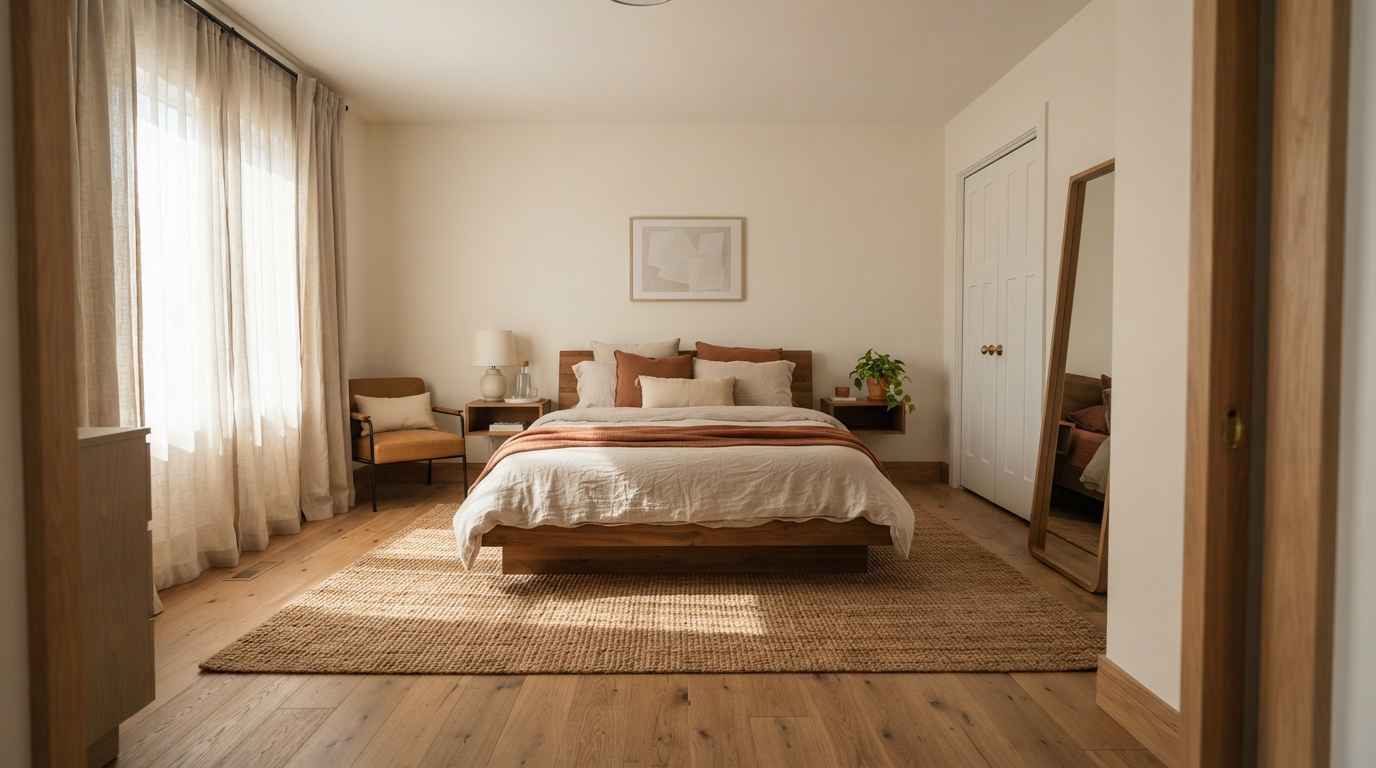
I redid my bedroom on a budget that would make a designer wince.
Total spend: under 400 dollars. And yet three separate friends have asked me, unprompted, “wait, did you hire someone for this?”
No. I did not hire someone. I just learned which changes actually move the needle and which ones are a waste of your Saturday.
That’s what this list is. Twenty-five ideas that make a bedroom look expensive, pinned from the corners of Pinterest, tested in my own 11×13 foot rental, and sorted by what genuinely worked versus what just looked good in a photo.
Why “expensive” is a feeling, not a price tag
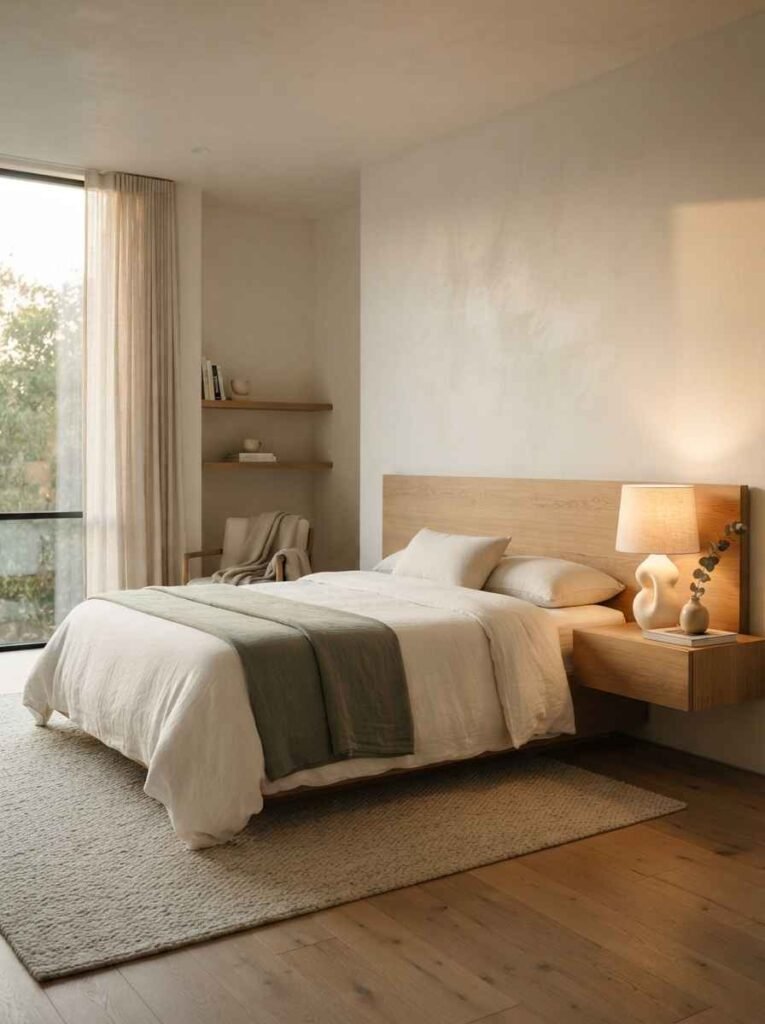
Here’s something nobody tells you at the furniture store: expensive-looking rooms aren’t expensive because of what’s in them.
They’re expensive-looking because of restraint.
Think about the last hotel room that impressed you. It probably wasn’t cluttered.
It probably had 3, maybe 4 colors total. Everything matched a plan, even if you couldn’t name the plan.
That’s the whole secret. A 40 dollar throw pillow in the right room reads as luxury. A 400 dollar lamp in a chaotic room reads as clutter.
IMO, that’s the single most useful thing to understand before you buy anything.
The lighting layer that changes everything
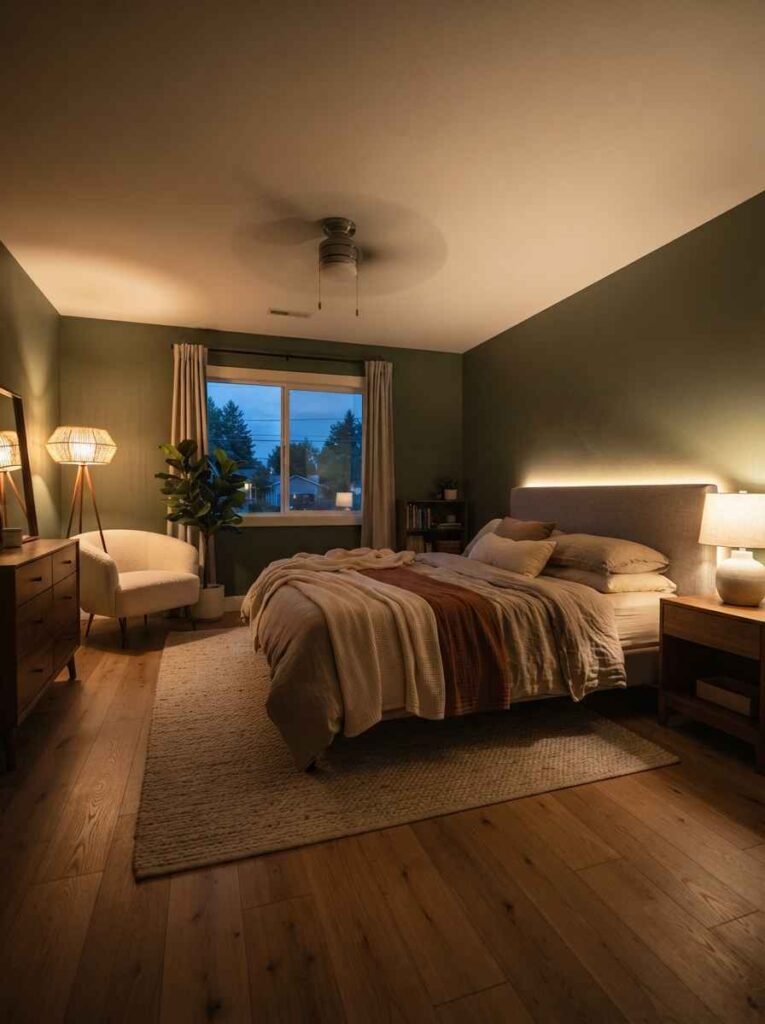
Bad lighting is the number one reason bedrooms look cheap, and it’s the easiest fix on this entire list.
If you take nothing else from this article, take this section.
Idea 1: Ditch the overhead light as your only source
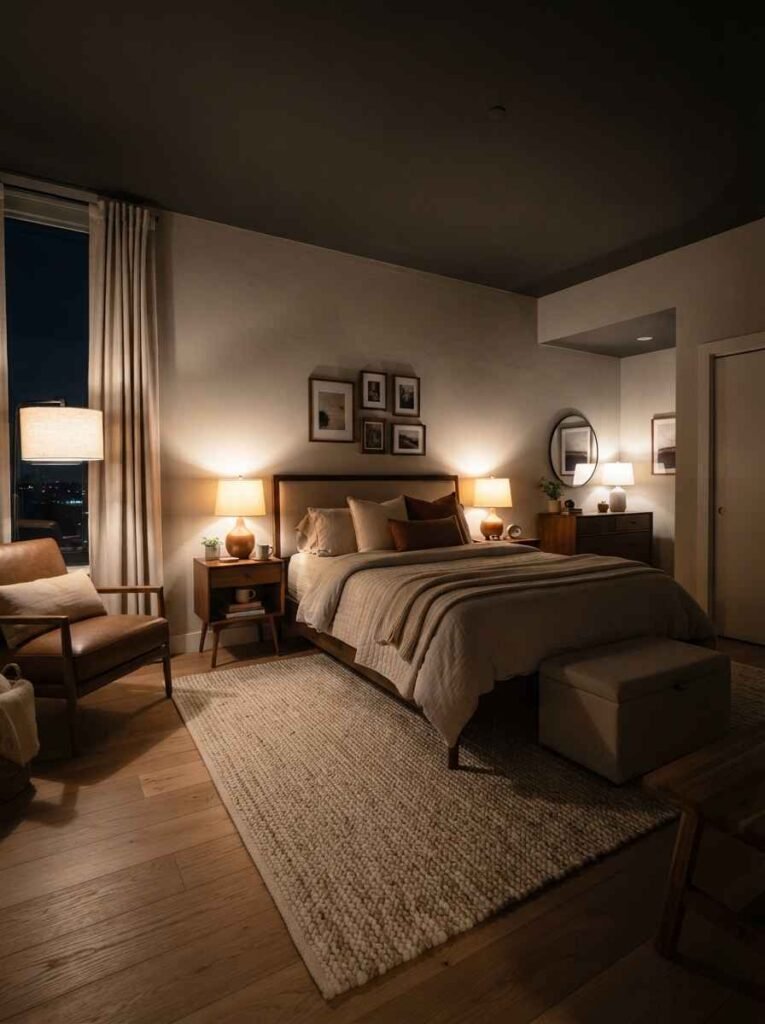
A single ceiling bulb blasting the whole room flat is basically the interior design equivalent of fluorescent office lighting.
It flattens shadows, kills mood, and makes everything look like a showroom nobody wanted to visit.
Idea 2: Layer three light sources minimum
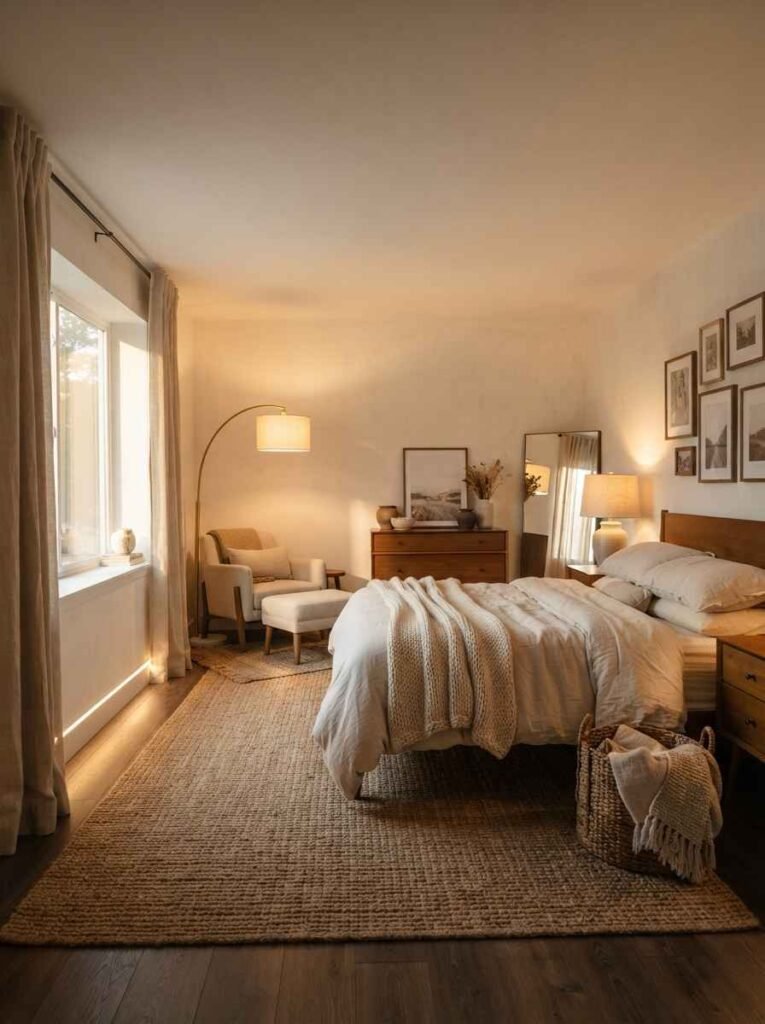
Add a floor lamp, a bedside lamp, and something low like an LED strip behind the headboard.
Three points of light at different heights creates depth. Your eye reads depth as expensive, every single time.
Idea 3: Warm bulbs only, please
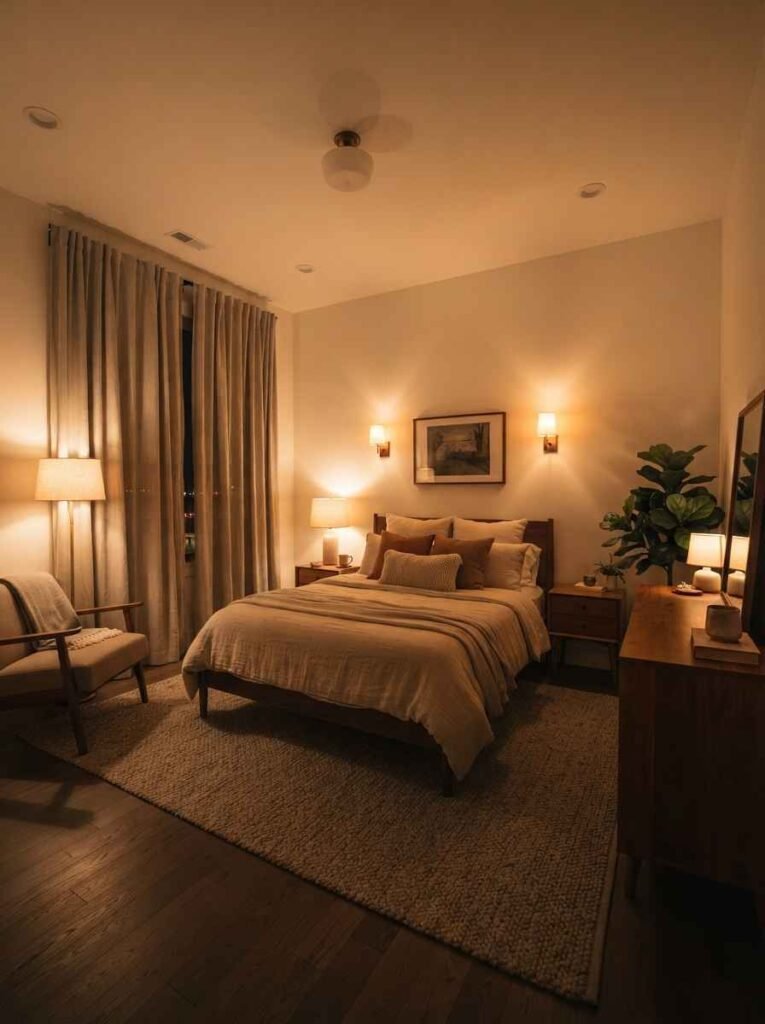
Stick to 2700K to 3000K bulbs. Anything cooler than that turns your bedroom into a dentist’s waiting room.
This one swap alone changed my whole room’s mood, and it cost me about 12 dollars.
Idea 4: Dimmers are worth the small install
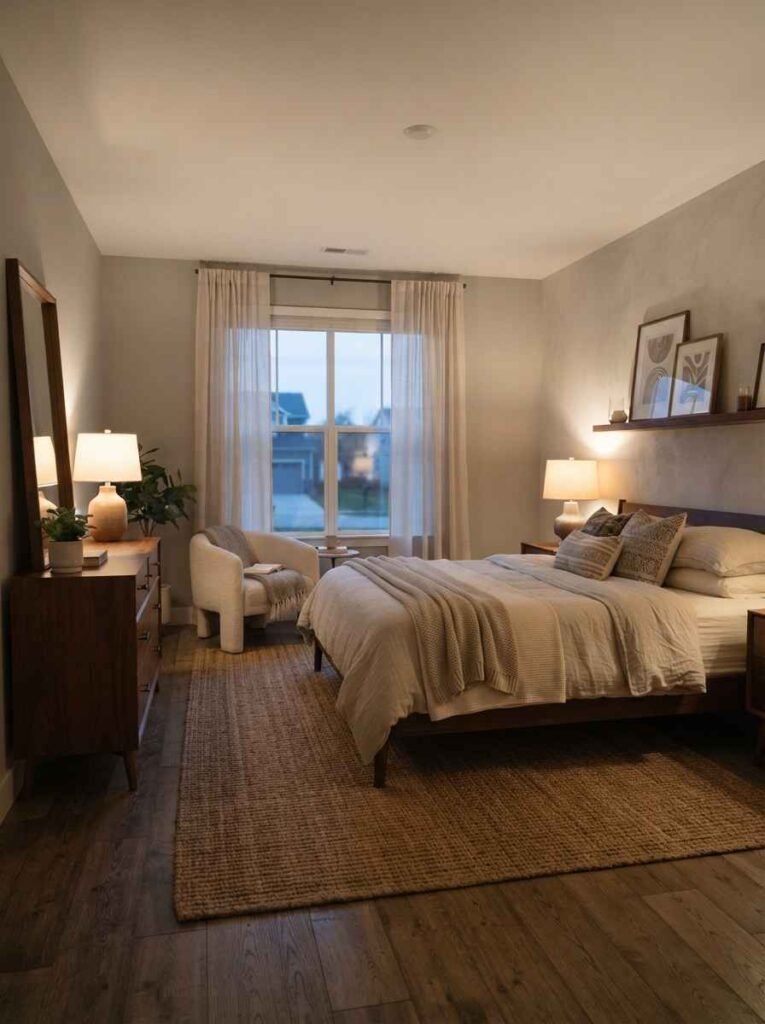
A dimmer switch is maybe a 20 dollar part and 15 minutes of YouTube tutorial.
Suddenly your room has “movie night” and “getting ready” as two entirely different settings, instead of one harsh option.
Idea 5: Try a statement lamp instead of a statement light fixture
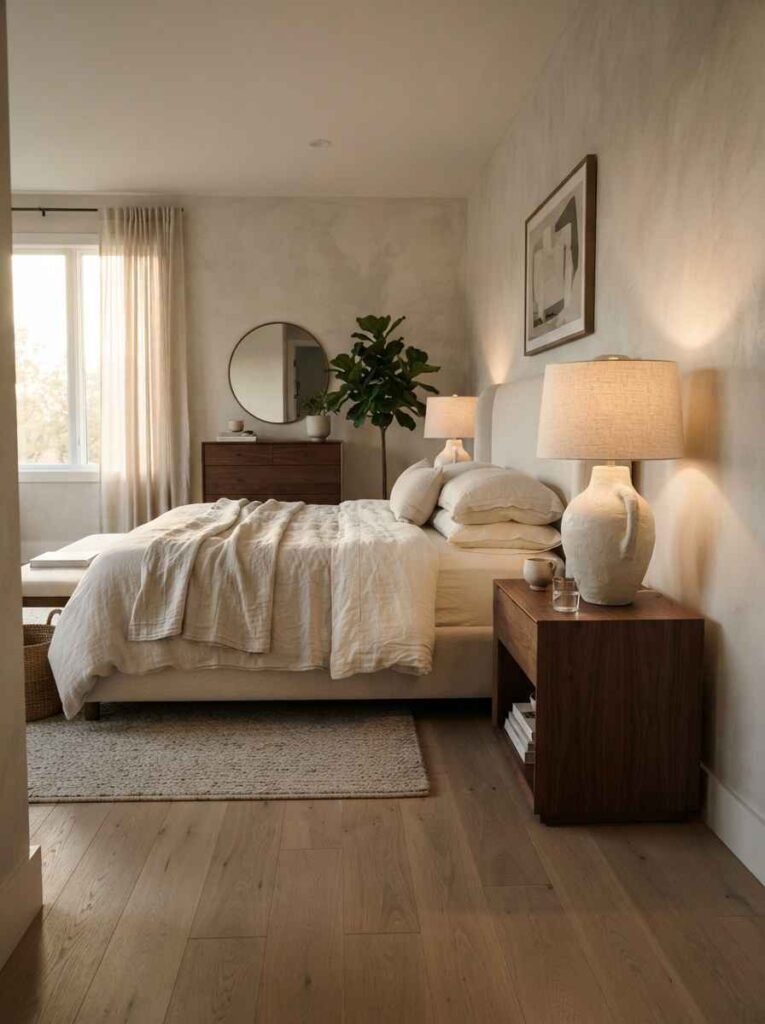
Big chandeliers in small bedrooms usually look like they’re trying too hard. A sculptural table lamp does the same visual job for a tenth of the price, and you can move it if it doesn’t work.
Texture over trends
Trends fade. Texture doesn’t. This is the section I wish someone had explained to me three apartments ago.
Idea 6: Bring in a boucle or velvet accent chair
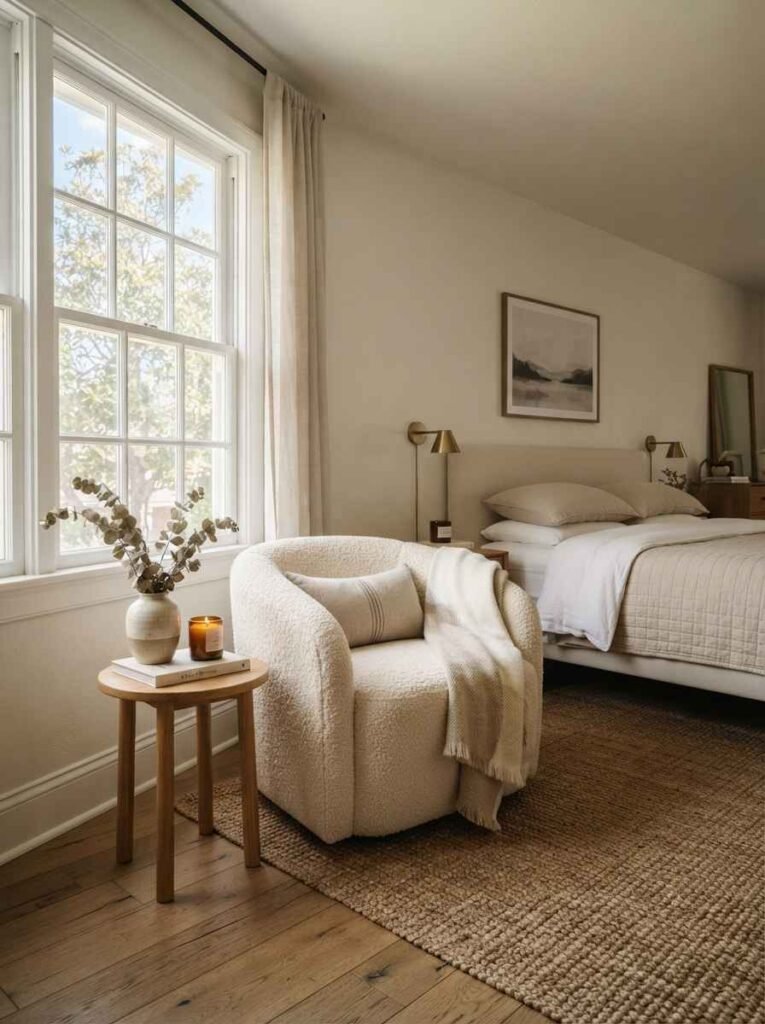
You don’t need a full seating area. One textured chair in a corner adds a hotel-lobby feel without the hotel-lobby budget.
Idea 7: Layer your bedding, don’t just buy “nice sheets”
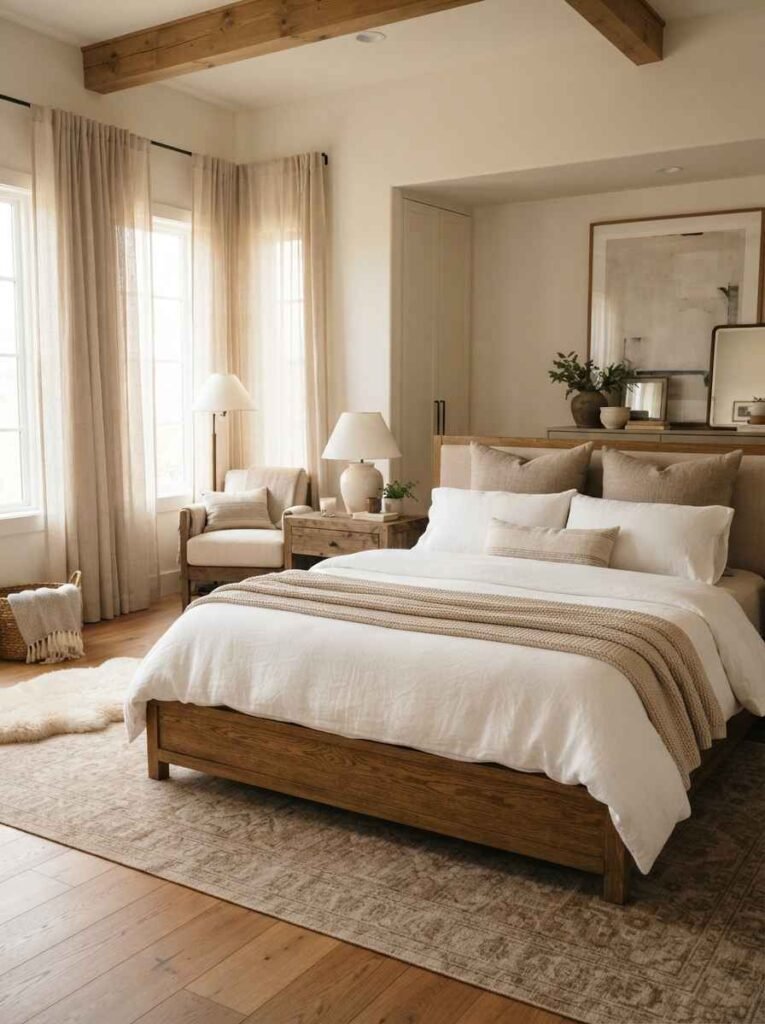
A flat comforter alone looks like a dorm room. Add a duvet, a throw blanket folded at the foot, and two throw pillows in a different texture from your shams.
That layering is what stylists actually do on shoots.
Idea 8: Chunky knit throws over the bed corner
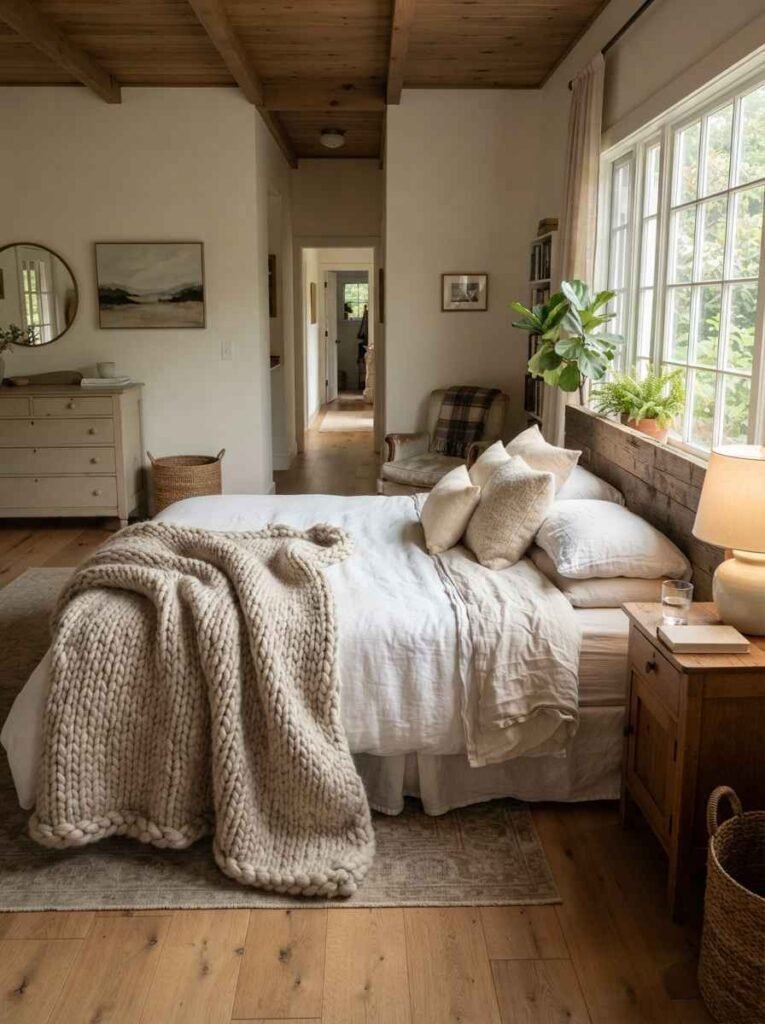
This one small detail makes a bed look styled instead of just made. Drape it, don’t fold it. Folded looks stiff. Draped looks lived-in on purpose.
Idea 9: Woven or jute rug under the bed
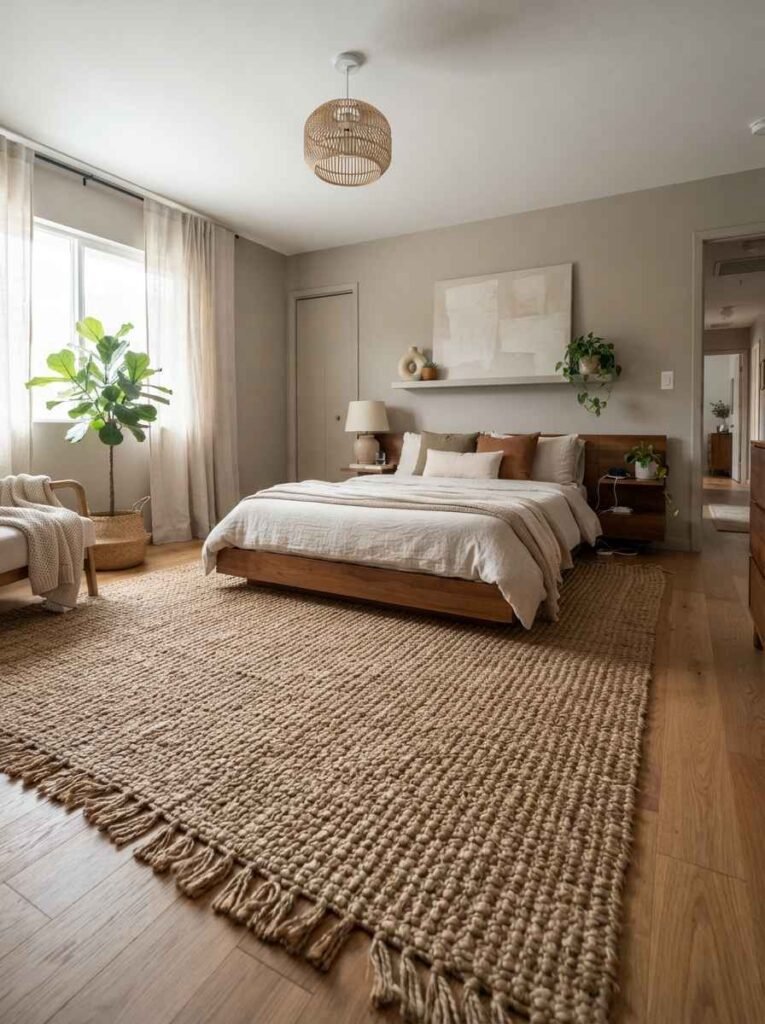
Skip the flat synthetic rug. A textured natural-fiber rug grounds the whole room and hides the fact that your floor might not be anything special underneath.
Idea 10: Linen curtains, always linen
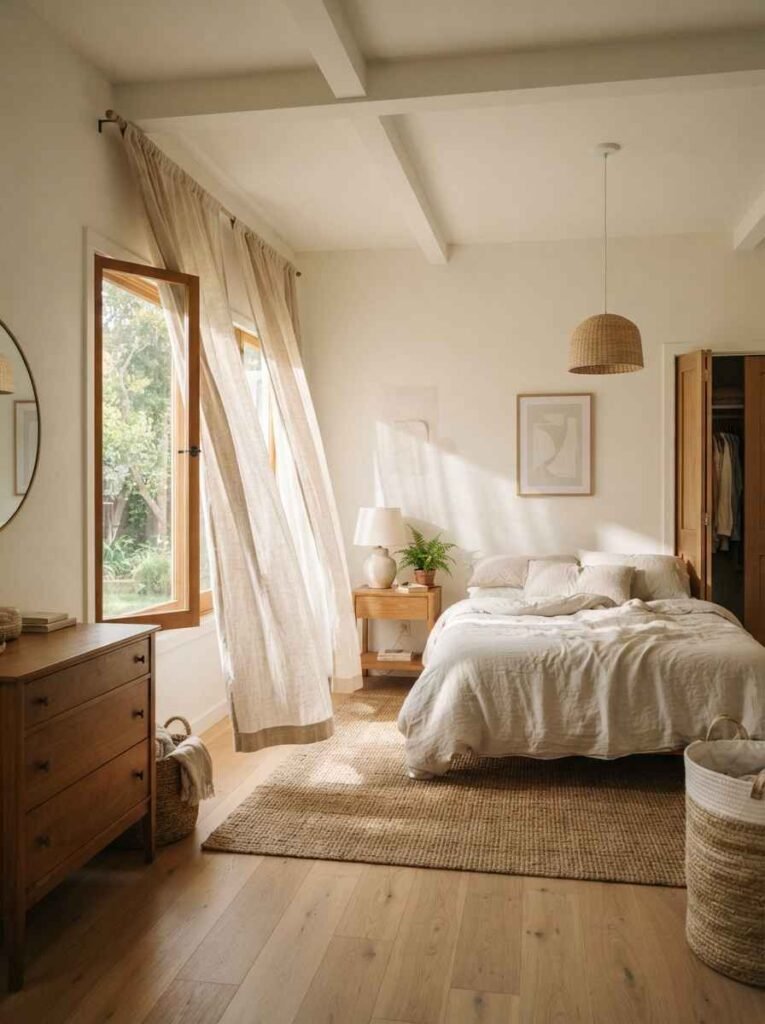
Cotton curtains are fine. Linen curtains, even the affordable ones, catch light differently and drape with that slightly rumpled, expensive-hotel look.
I switched mine and genuinely gasped a little. This is insane how much of a difference fabric weight makes.
Color and walls that do the heavy lifting
Idea 11: Pick one dominant tone, then stop
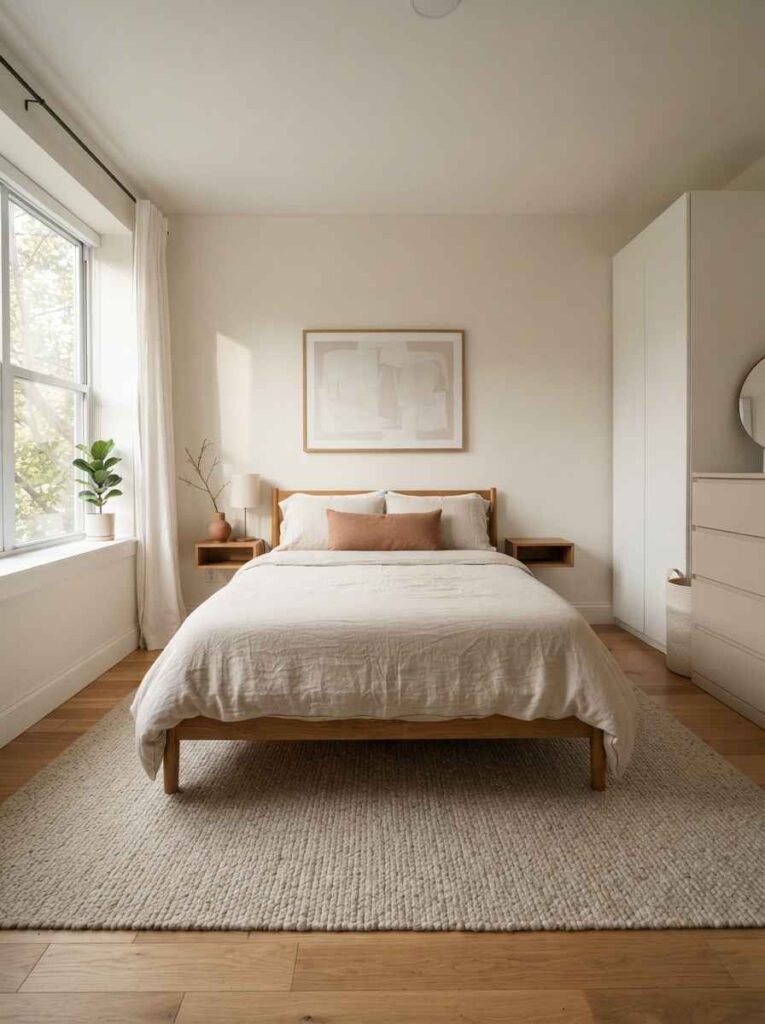
Rooms with too many competing colors read as busy and, frankly, cheap.
Pick a neutral base (think warm white, greige, or soft clay) and let one accent color repeat 2 to 3 times in the room.
Idea 12: Try a tonal, monochrome palette
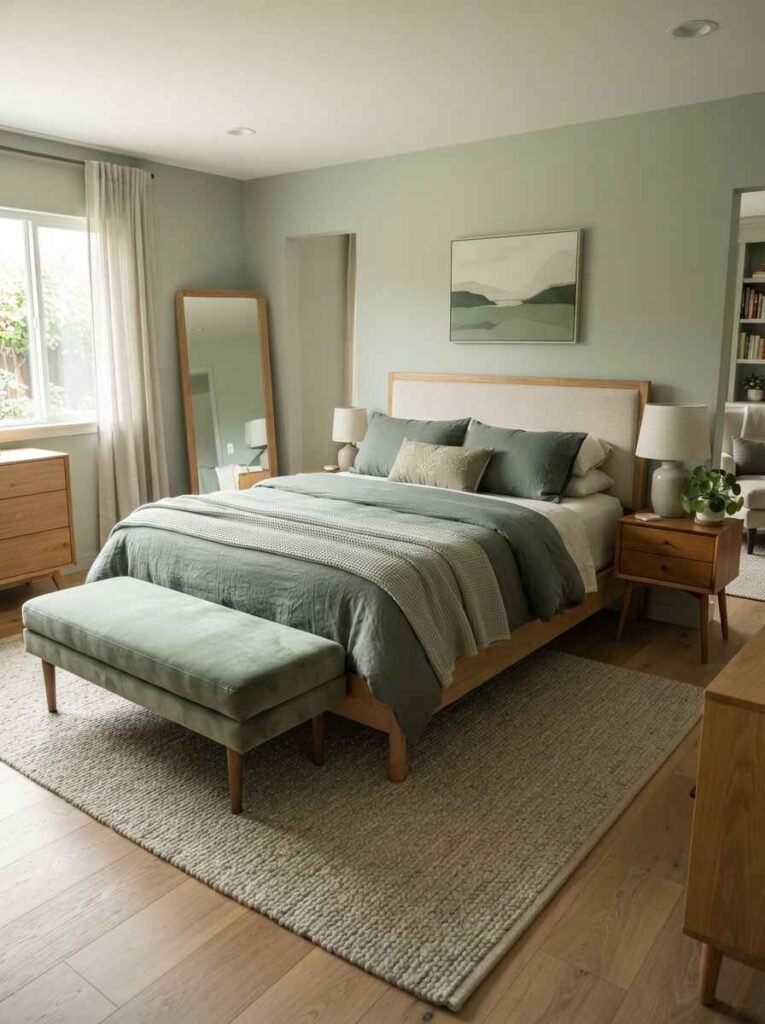
Different shades of the same color family (say, three shades of sage) reads as intentional in a way that mixing five random colors never will.
Sherwin-Williams has a solid free color-visualizer tool if you want to test shades on your actual wall before committing.
Idea 13: Paint the ceiling
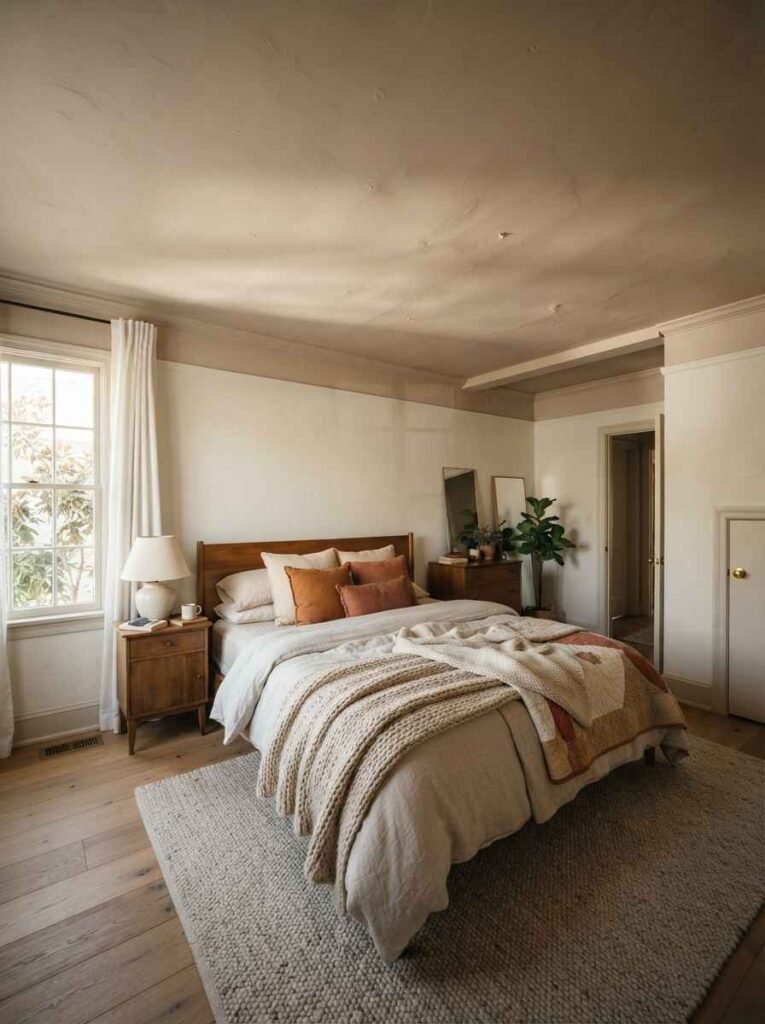
Nobody paints ceilings and that’s exactly why it works. A soft color up top makes the whole room feel wrapped and cozy instead of boxy.
Idea 14: Go for a textured accent wall, not wallpaper prints
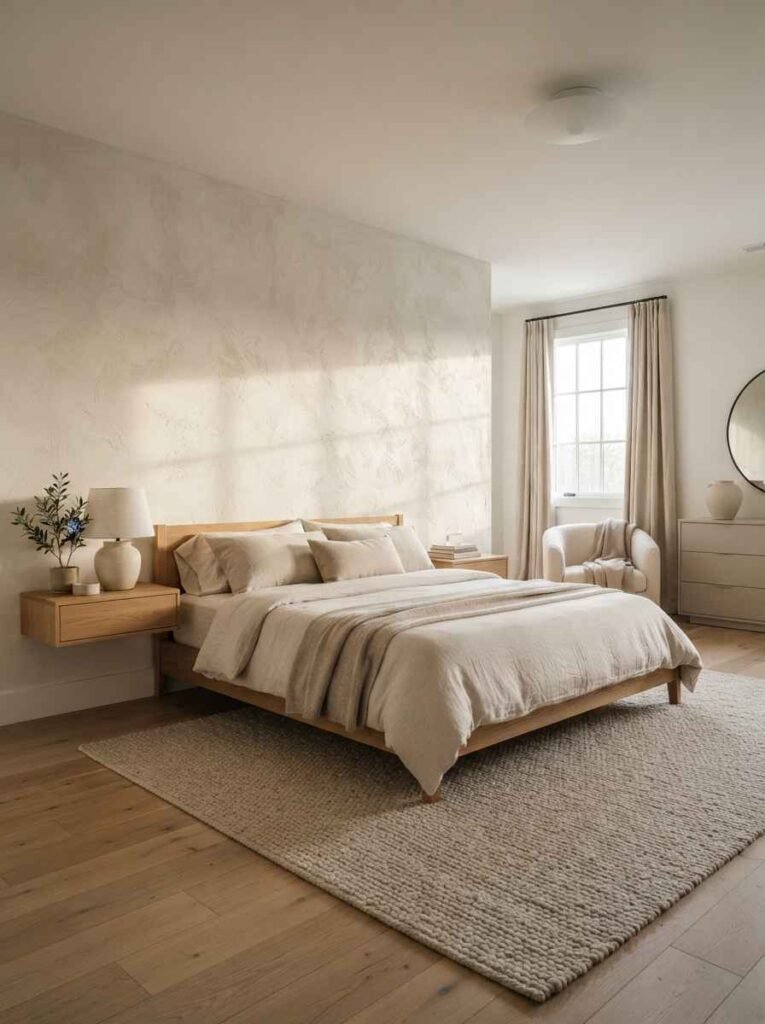
Plaster-effect paint or a subtle grasscloth wallpaper ages far better than a bold printed pattern.
Prints date a room fast. Texture doesn’t.
Idea 15: Match your wall color to your headboard fabric
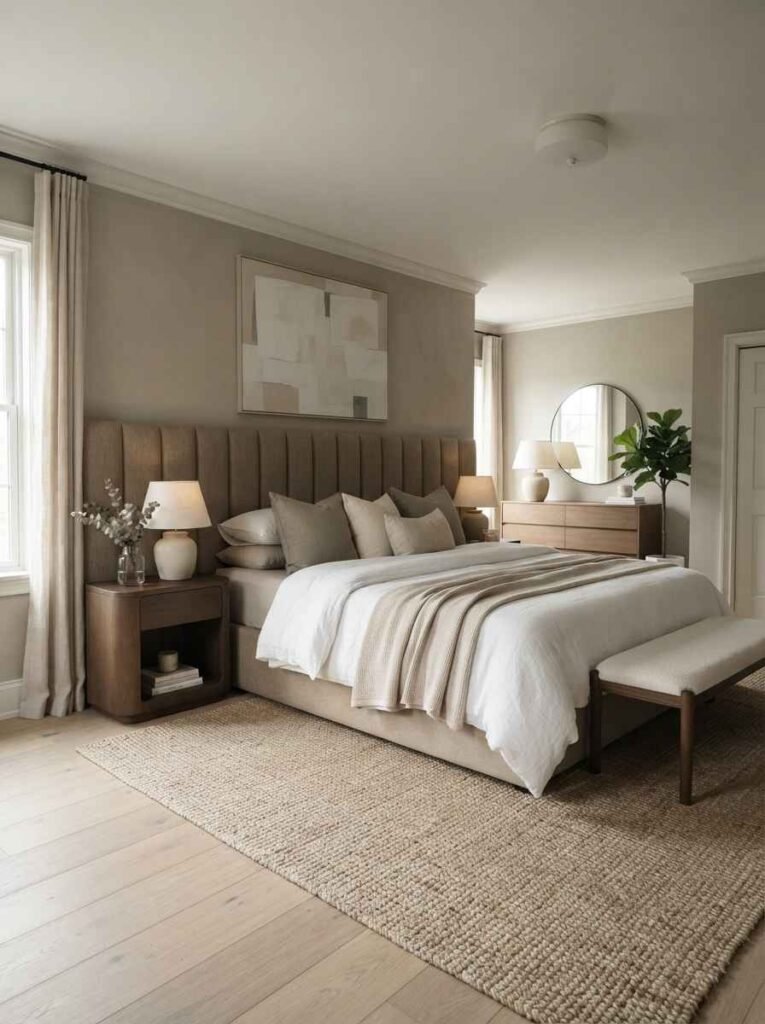
This sounds fussy, I know. But a headboard that blends into the wall instead of contrasting with it creates a built-in look, like the furniture was made for the space.
Furniture and layout tricks
Quick tangent, unrelated but stay with me: I once spent two hours rearranging furniture at 11pm because I couldn’t sleep, and it accidentally became the best layout I’ve ever had.
Sometimes the good ideas show up at the worst times.
Idea 16: Float your bed off the wall if the room allows it
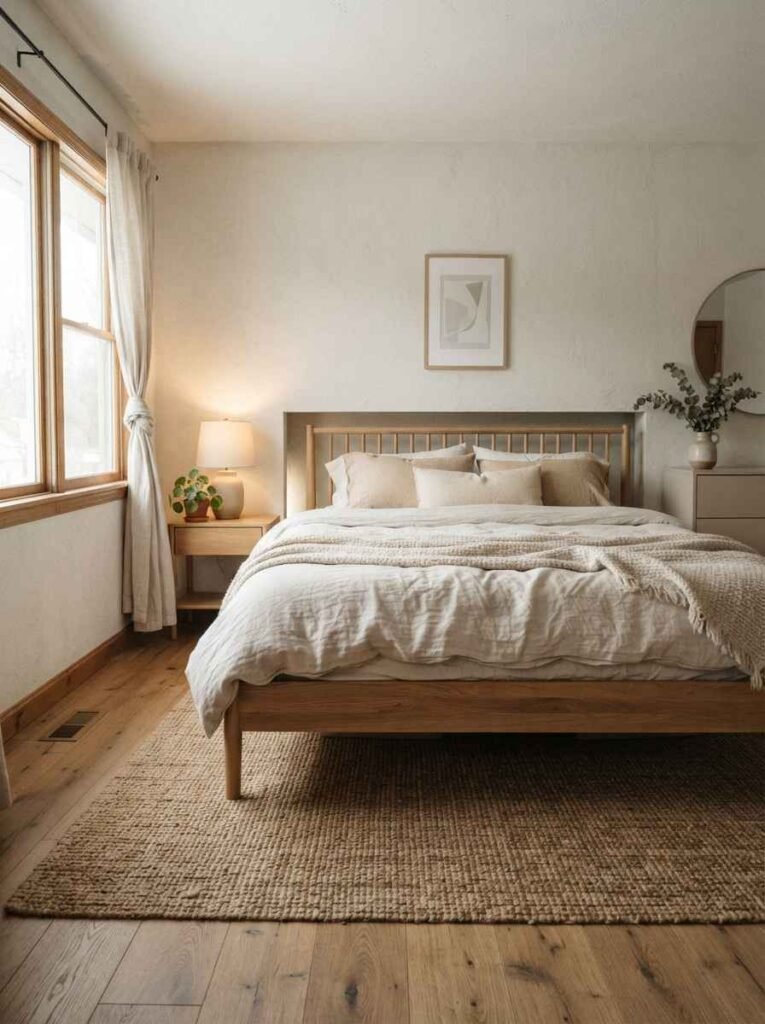
Even six inches of breathing room behind the headboard changes how the whole room reads. Pushed-against-the-wall beds can feel like storage units.
Idea 17: Get a bed frame with real height
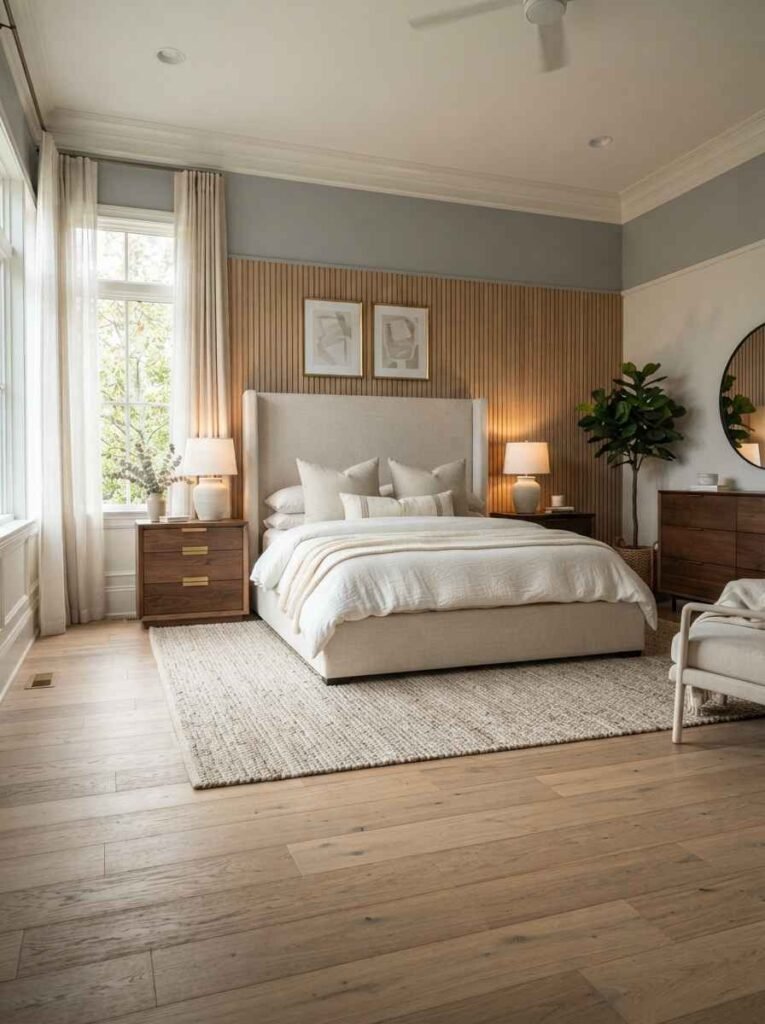
Low platform beds look modern in photos but can feel cheap in person if the proportions are off for your ceiling height. Measure first.
Idea 18: Symmetry at the nightstands
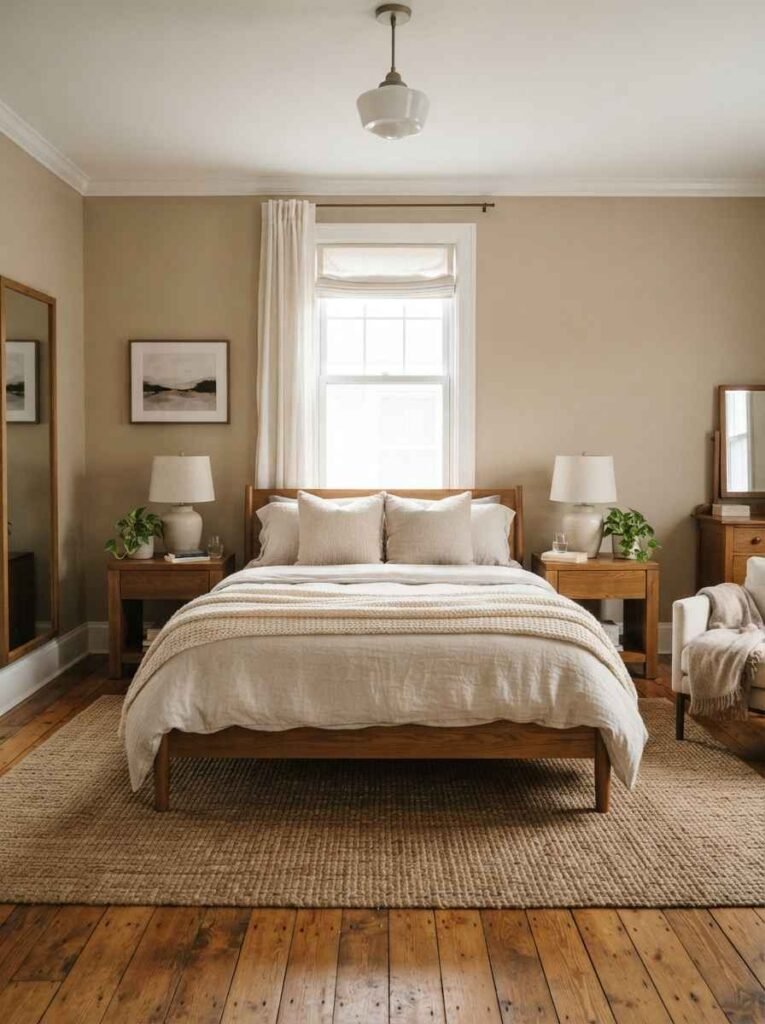
Matching lamps, matching nightstands, same height on both sides. Symmetry reads as designed.
Mismatched heights read as leftover furniture from three different apartments (which, let’s be honest, it usually is).
Idea 19: Add a bench or ottoman at the foot of the bed
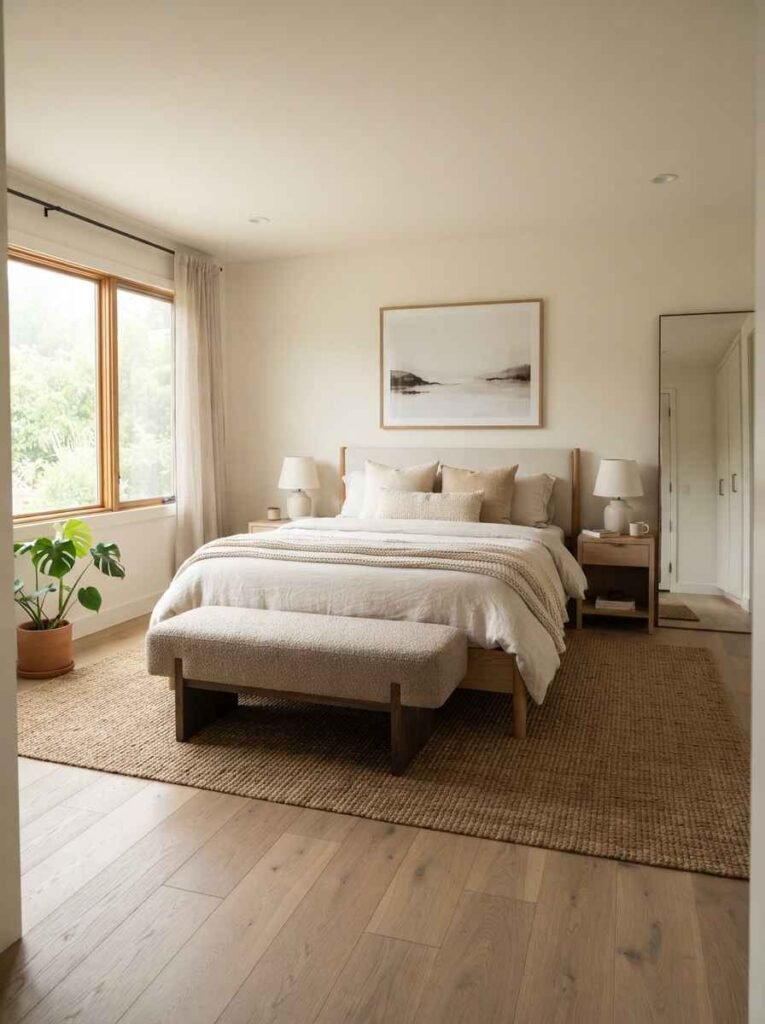
This is a classic hotel move. It fills dead space and gives the eye somewhere to land that isn’t just “bed, then floor.”
Idea 20: Keep furniture legs visible
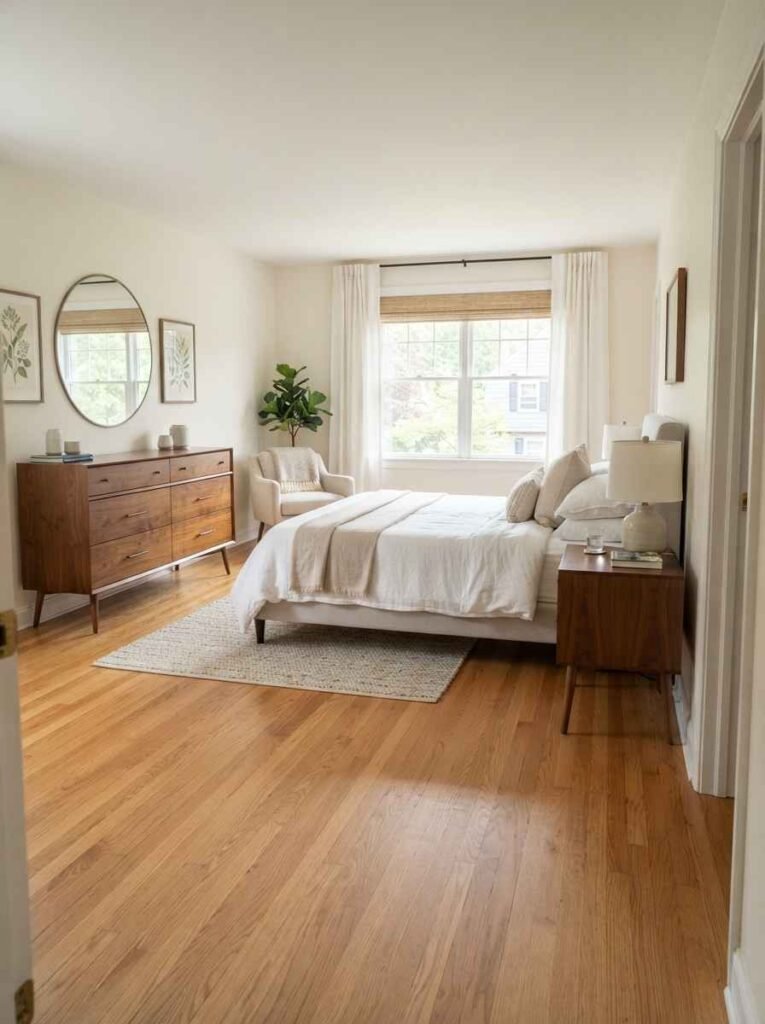
Furniture that touches the floor with visible slim legs (rather than heavy skirted bases) makes a small room feel less cramped.
IKEA’s furniture guides have decent breakdowns on leg height and proportion if you’re shopping on a budget.
Small details that fool everyone
Idea 21: Swap hardware on any dresser you already own
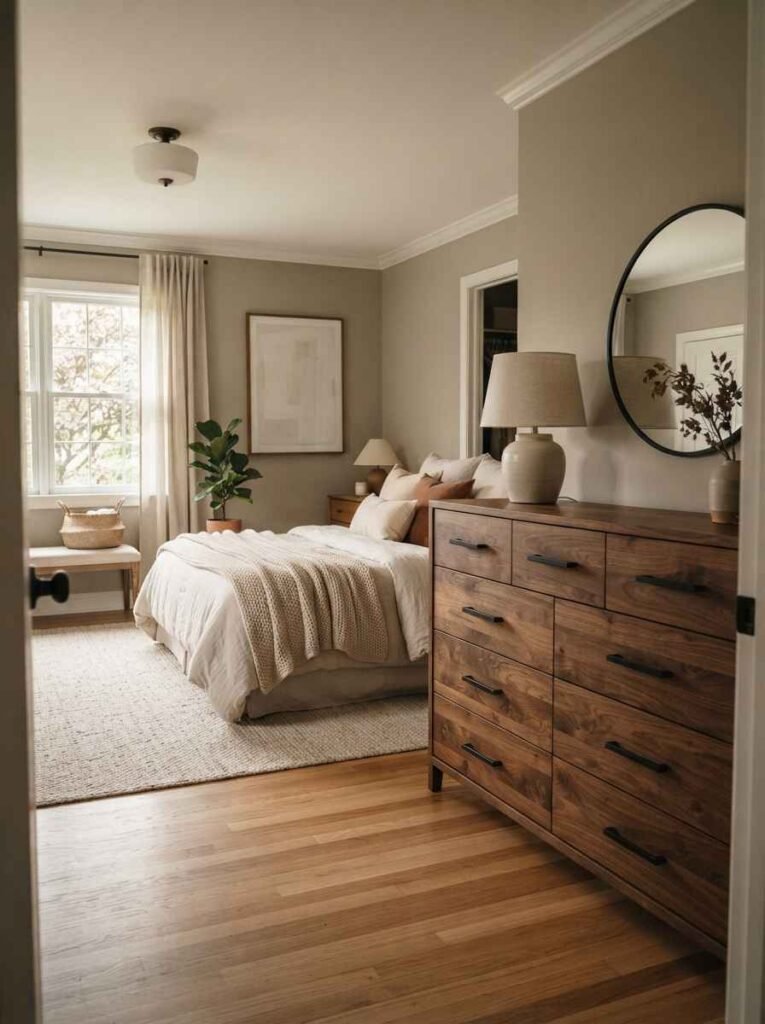
New drawer pulls cost almost nothing and instantly make old furniture look intentional instead of thrifted. Brass or matte black, pick one finish and repeat it across the room.
Idea 22: Frame real art, not posters
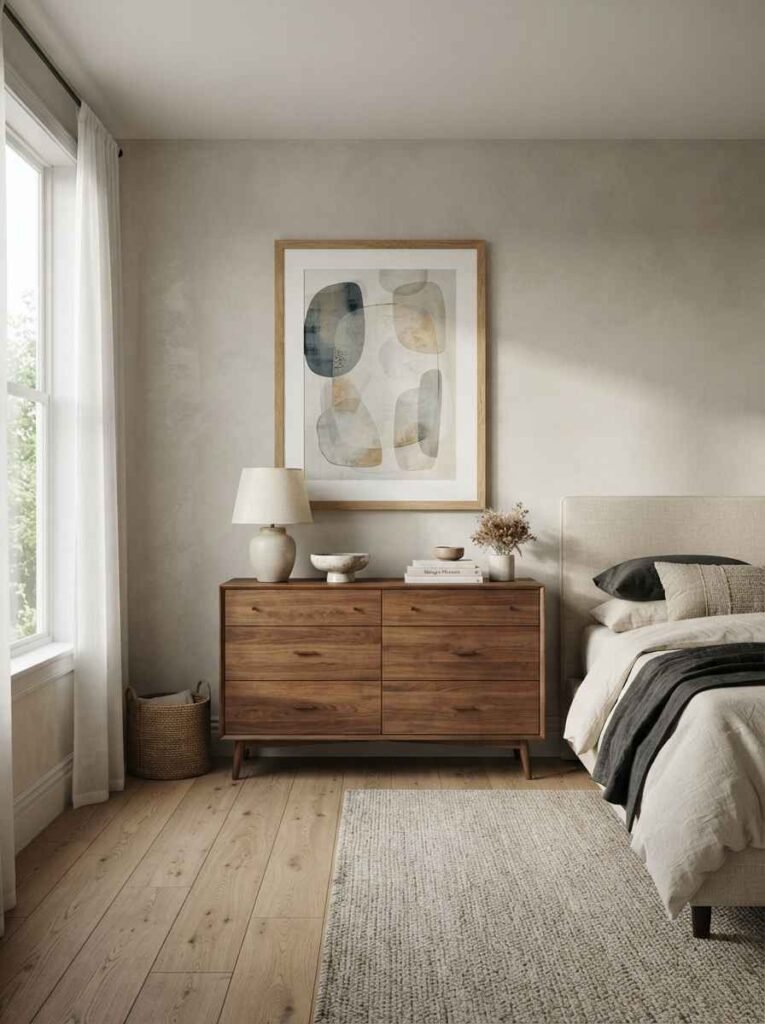
Even a cheap frame around something with a mat border looks ten times more expensive than a poster taped or pinned up. The mat border is doing more work than people realize.
Idea 23: Add one oversized item
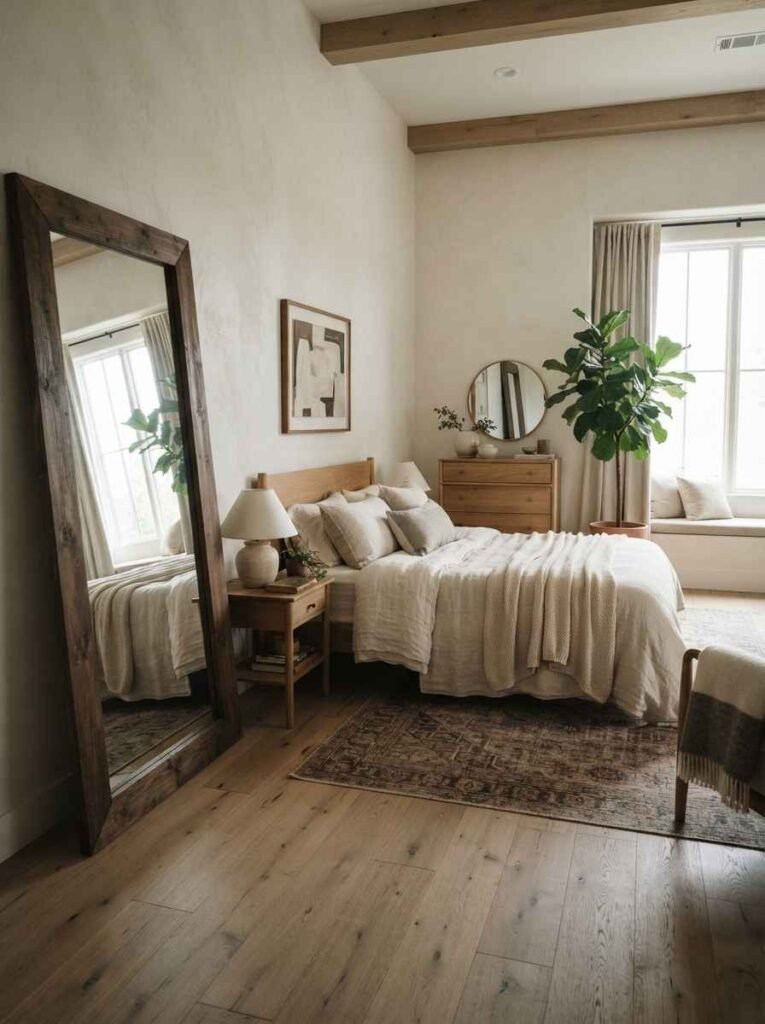
One big mirror, one large piece of art, one tall plant. A single large-scale item makes a room feel curated. A dozen small items makes it feel cluttered.
Idea 24: Hide the cords
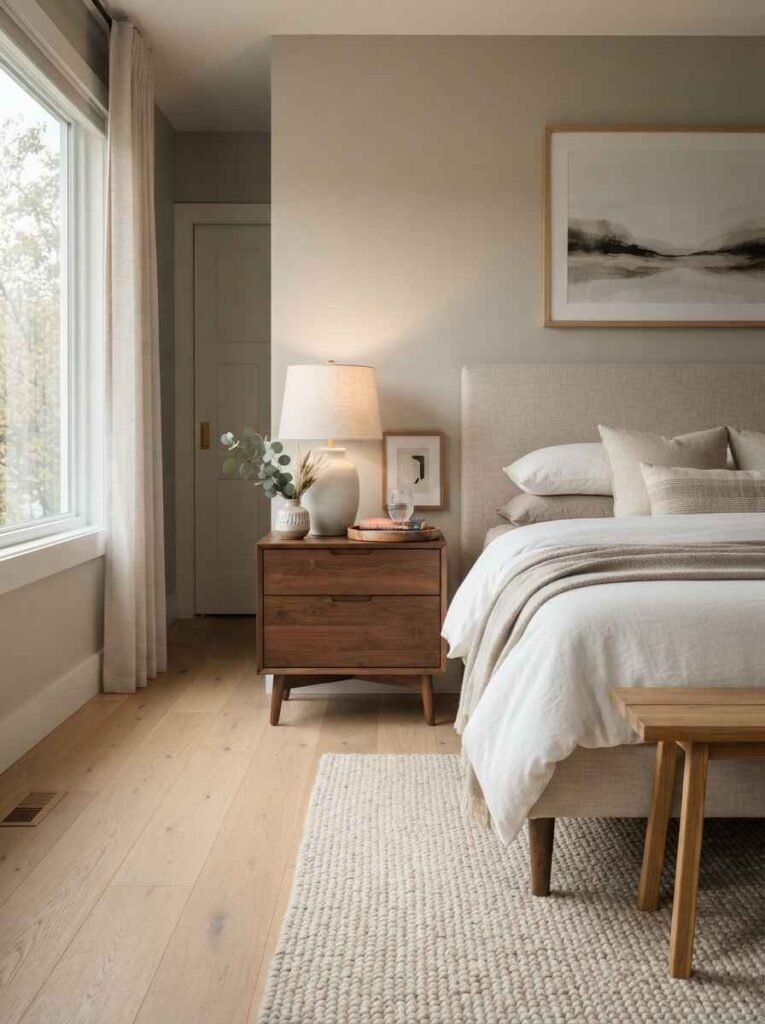
Nothing kills a “designer bedroom” moment faster than a tangle of charging cables hanging off the nightstand. Cord clips cost about 6 dollars for a pack of twenty.
Idea 25: Bring in something alive
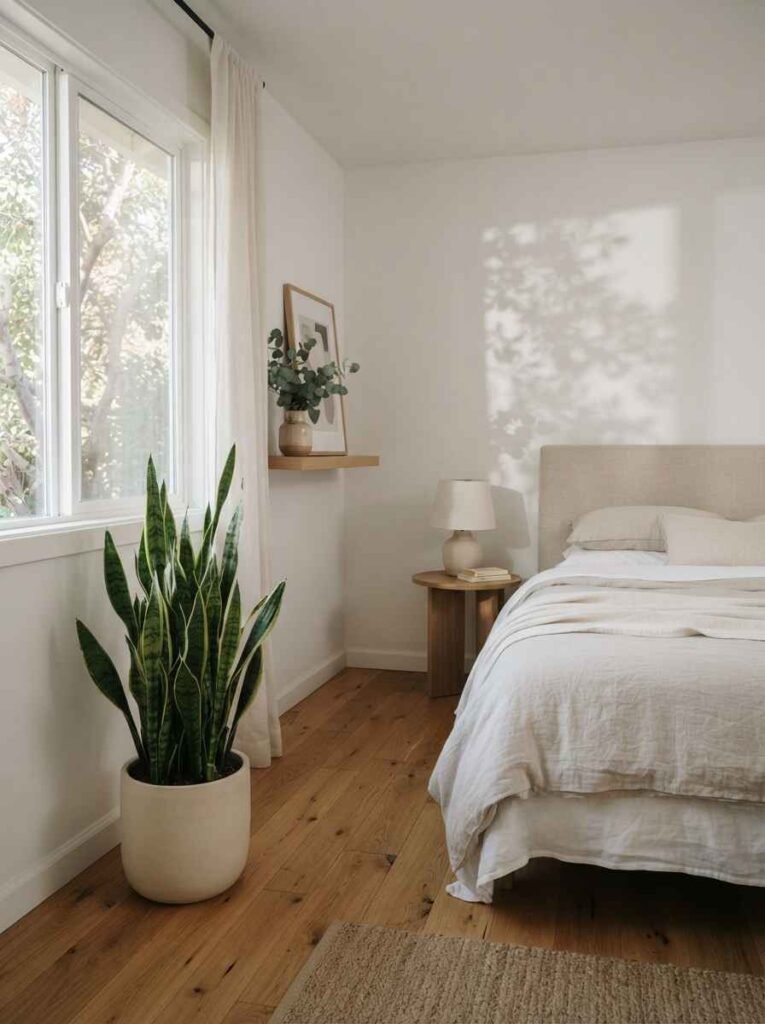
A real plant, even a low-maintenance one like a snake plant, adds color and life that fake plants just can’t fake (pun intended).
Architectural Digest has covered this exact point in their small-space design pieces, and honestly, they’re right.
A note on mistakes I actually made
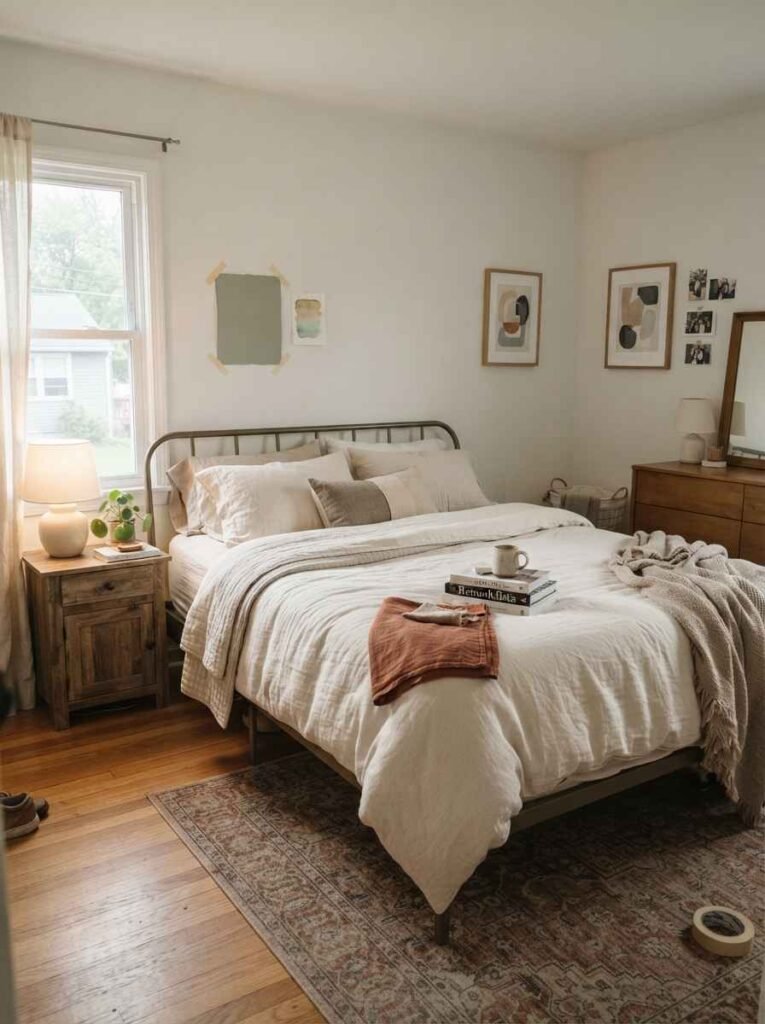
I want to be honest here, because most of these lists pretend the person writing them never got anything wrong. I did.
I bought a huge printed accent wallpaper before I understood the “one dominant tone” rule.
It looked great for about six weeks, then started fighting with everything else in the room. Repainting over wallpaper is not a fun weekend, trust me on that.
I also bought a cool-toned bulb because it was cheaper at the store, told myself the difference wouldn’t matter, and regretted it within about two days.
The whole room felt like a hospital corridor. Small detail, big consequence.
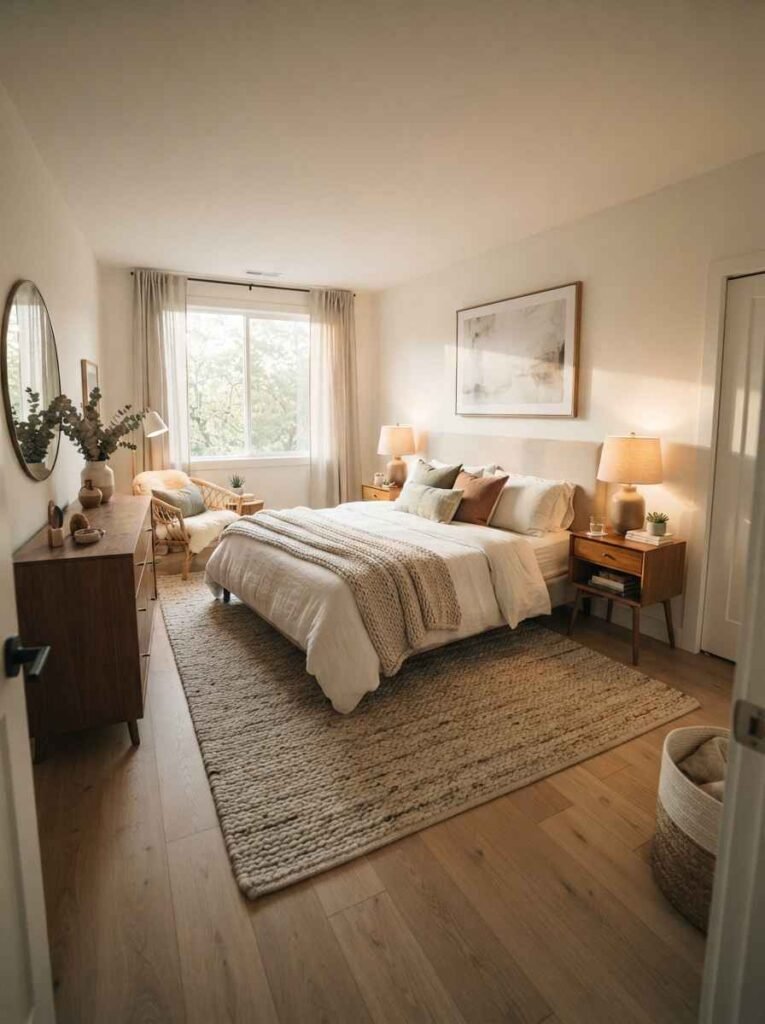
So if you only take one practical tip from this whole section: buy the sample size, the small pack, the single test item, before you commit to the full version.
It saves money and it saves you from living with a decision you already suspect is wrong.
Quick comparison: budget swap versus splurge item
| Category | Budget-friendly swap | Splurge version | Which one actually matters more |
|---|---|---|---|
| Lighting | Warm-toned bulb pack | Designer table lamp | Budget swap, every time |
| Bedding | Layered thrifted throws | Linen duvet set | Splurge, if you can only pick one |
| Wall color | Sample pot + ceiling paint | Full accent wallpaper | Budget swap first |
| Hardware | New drawer pulls | Custom dresser | Budget swap, huge return |
Frequently asked questions
What makes a bedroom look expensive without spending much money? Lighting layers, one restrained color palette, and texture do most of the work.
Clutter and mismatched furniture heights are the biggest giveaways of a rushed room, so fixing those first gets you further than buying new furniture.
Do I need an accent wall to make a modern bedroom look high-end? Not at all. A well-lit, symmetrical room with good bedding layering can look more expensive than a room with a bold accent wall and nothing else going for it.
The wall is a bonus, not a requirement.
What’s the single best cheap upgrade for a bedroom? Warm bulbs and a dimmer switch.
It’s the lowest-cost, highest-impact change on this whole list, and most people skip it because it sounds too simple to matter.
Final thought
None of this requires a full renovation or a design degree.
It requires picking a handful of these 25 ideas, doing them properly, and resisting the urge to buy fifteen mismatched things off your Pinterest board at once.
Start with lighting. Then bedding. Then whatever’s left in your budget.
And if a friend asks whether you hired a designer, just smile and let them wonder. You don’t owe anyone your receipts.
Which of these are you trying first, the lighting swap or the linen curtains? 🙂
