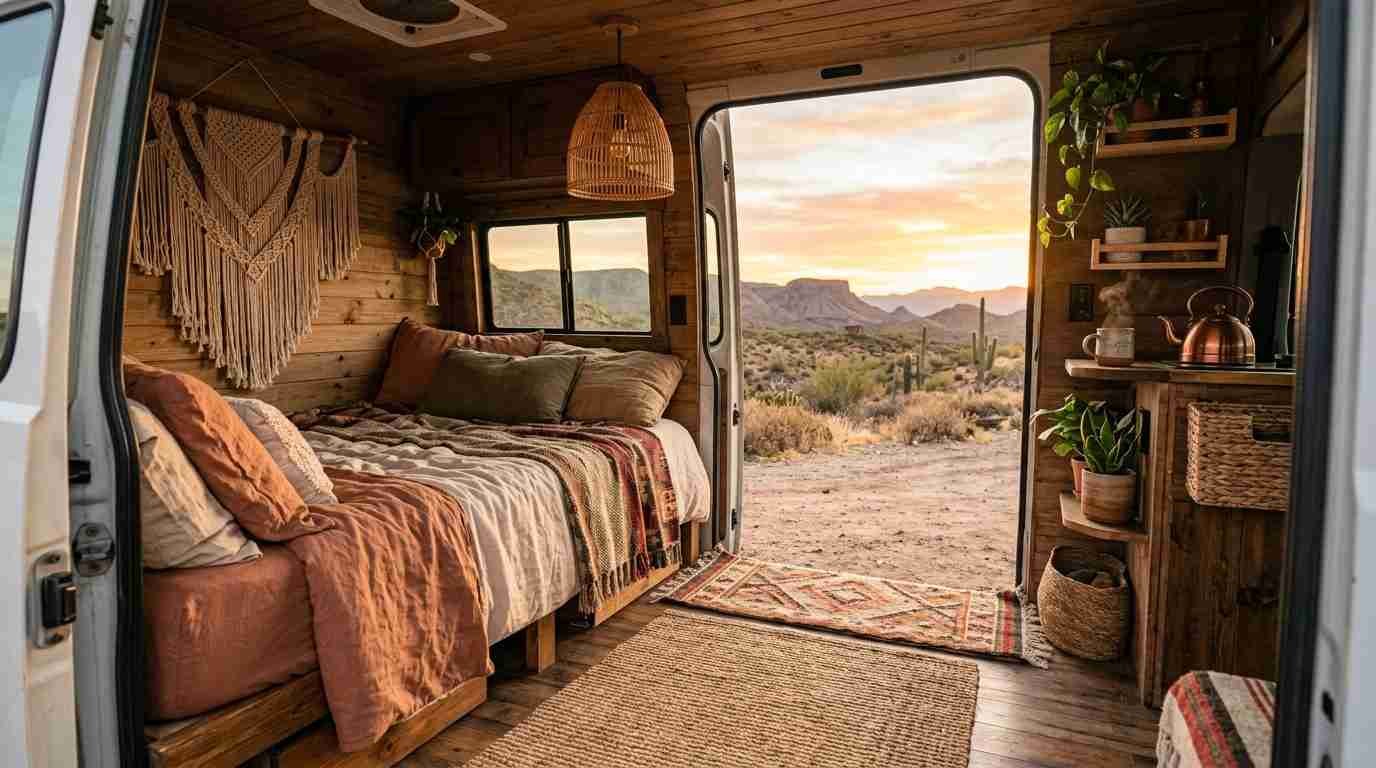
I converted my first van three years ago with a mattress, a cooler, and zero plan. It looked like a storage unit on wheels. Then I found boho style, and everything changed.
Small spaces get a bad reputation. People assume you have to choose between “cozy” and “cramped.” You don’t.
Bohemian design was basically built for tiny living. It’s about layering texture, color, and personal objects, not filling square footage.
A 60 square foot camper can hold as much personality as a city apartment. Sometimes more.
Here are 17 ideas I’ve actually used, tested, or stolen from other van dwellers who know what they’re doing. Save this one to your camper board, because you’ll want to come back to it.
- Hang a macrame wall behind your bed
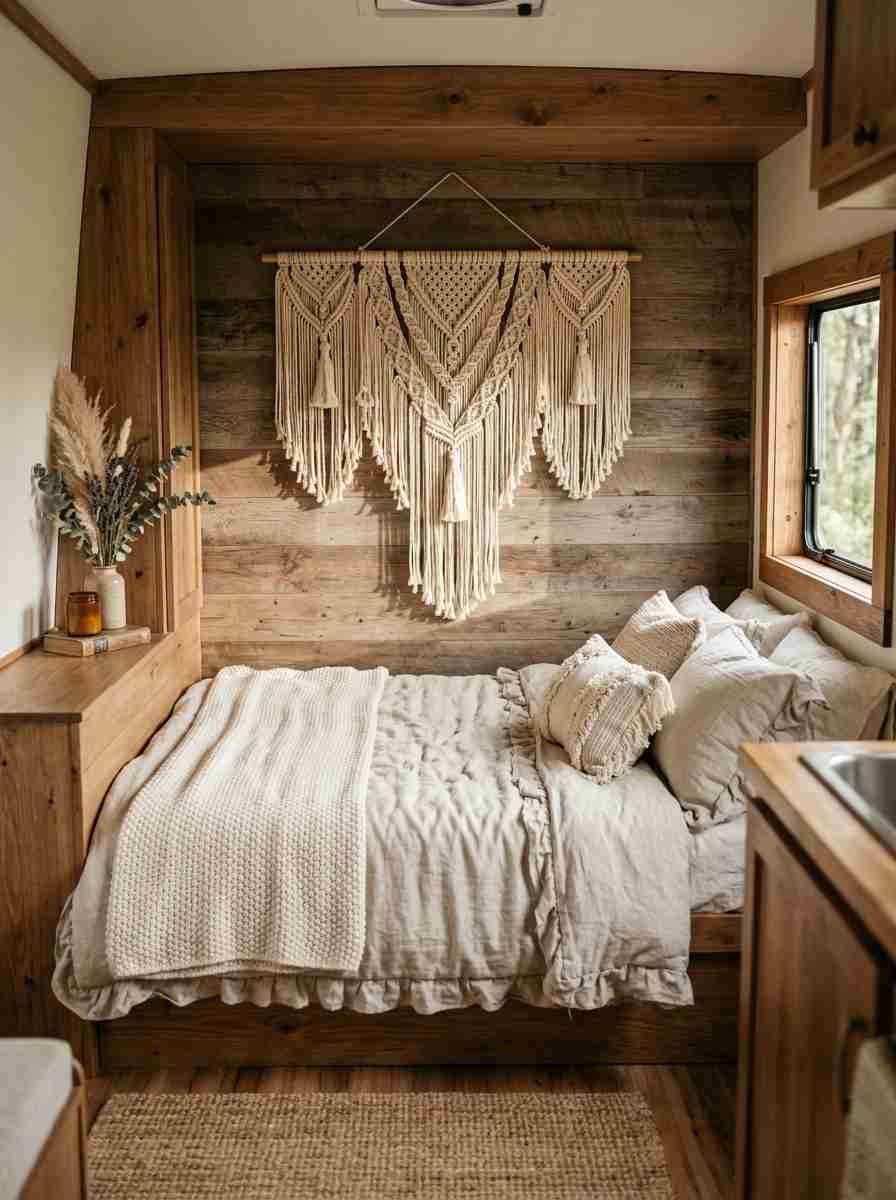
Macrame turns a blank wall into a focal point in about twenty minutes. Pick one large piece instead of three small ones.
It reads as intentional instead of cluttered, and in a tiny space, that distinction matters a lot.
I hung mine with a single screw and a hook rated for way more weight than the macrame actually needs.
Overkill, but the road is bumpy and I like sleeping without worrying about décor falling on my face.
- Bring in a Moroccan pouf
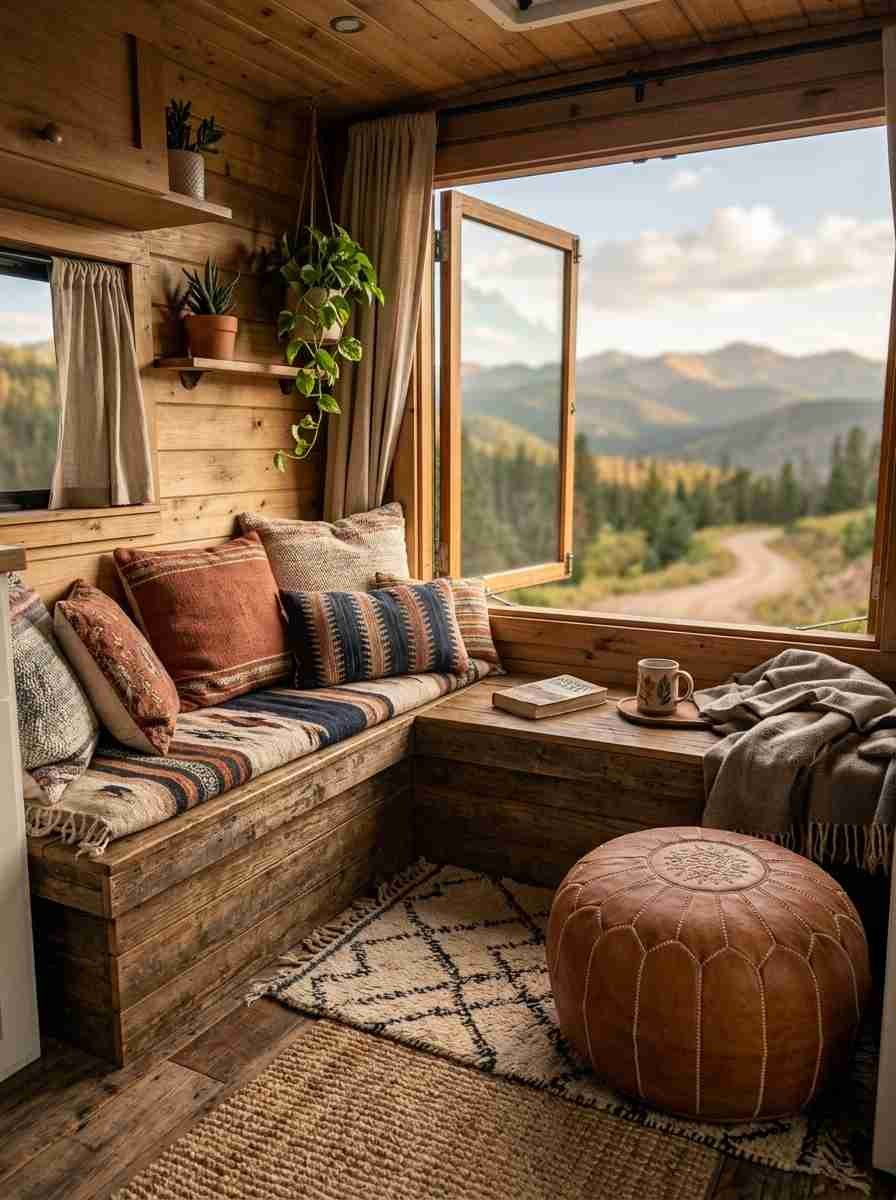
A pouf works as a footstool, extra seating, or a side table when you throw a tray on top. It also folds flat for storage, which is the real win in a camper.
According to the design guide from MasterClass,
Moroccan poufs are one of the staple furniture pieces that define the boho aesthetic, and honestly, they earn that spot.
Mine is faux leather because real leather and rain don’t mix. Learned that one the hard way.
- Layer a jute rug under a smaller kilim
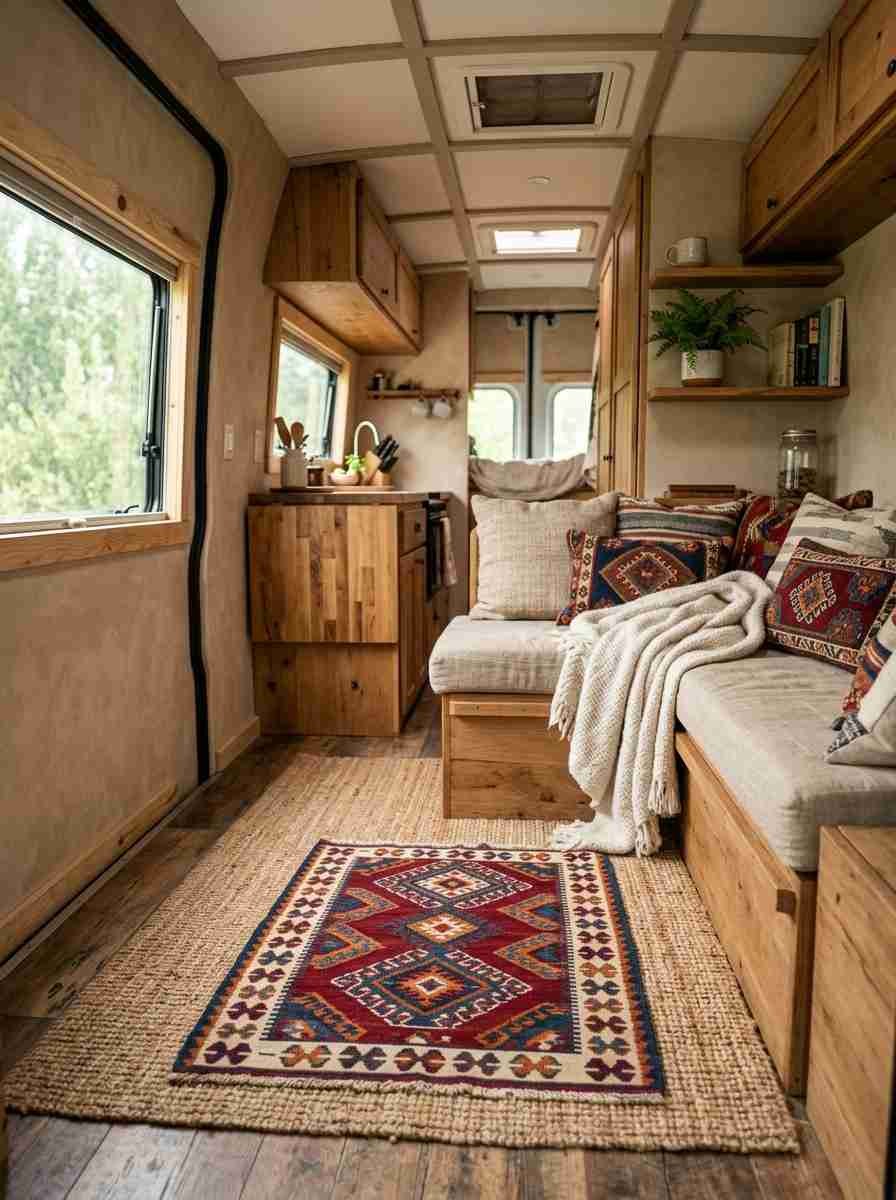
One rug looks fine. Two rugs, layered, looks like a home. Start with a neutral jute base that covers most of the floor, then toss a smaller patterned kilim on top near your seating area.
This trick works because it adds visual depth without adding bulk. You’re not buying more furniture, you’re buying six square feet of fabric.
- Swap your ceiling light for a rattan pendant
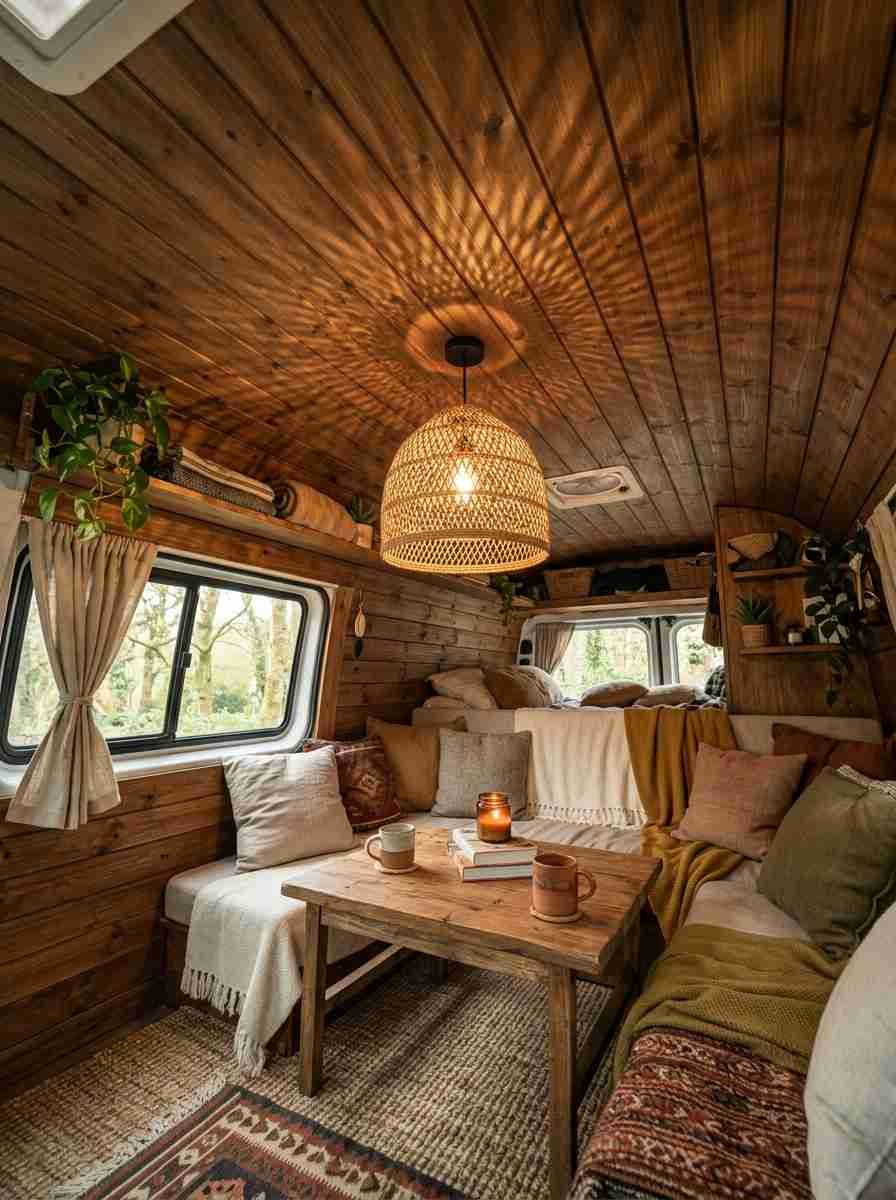
Stock camper lighting is usually a flat LED puck that feels like a hospital hallway.
A small rattan or wicker pendant shade fixes that instantly, and most clip right over your existing fixture without rewiring anything.
Fair warning: measure your ceiling height twice. I didn’t, and I now duck every single time I walk past mine.
- Repurpose wooden crates for storage
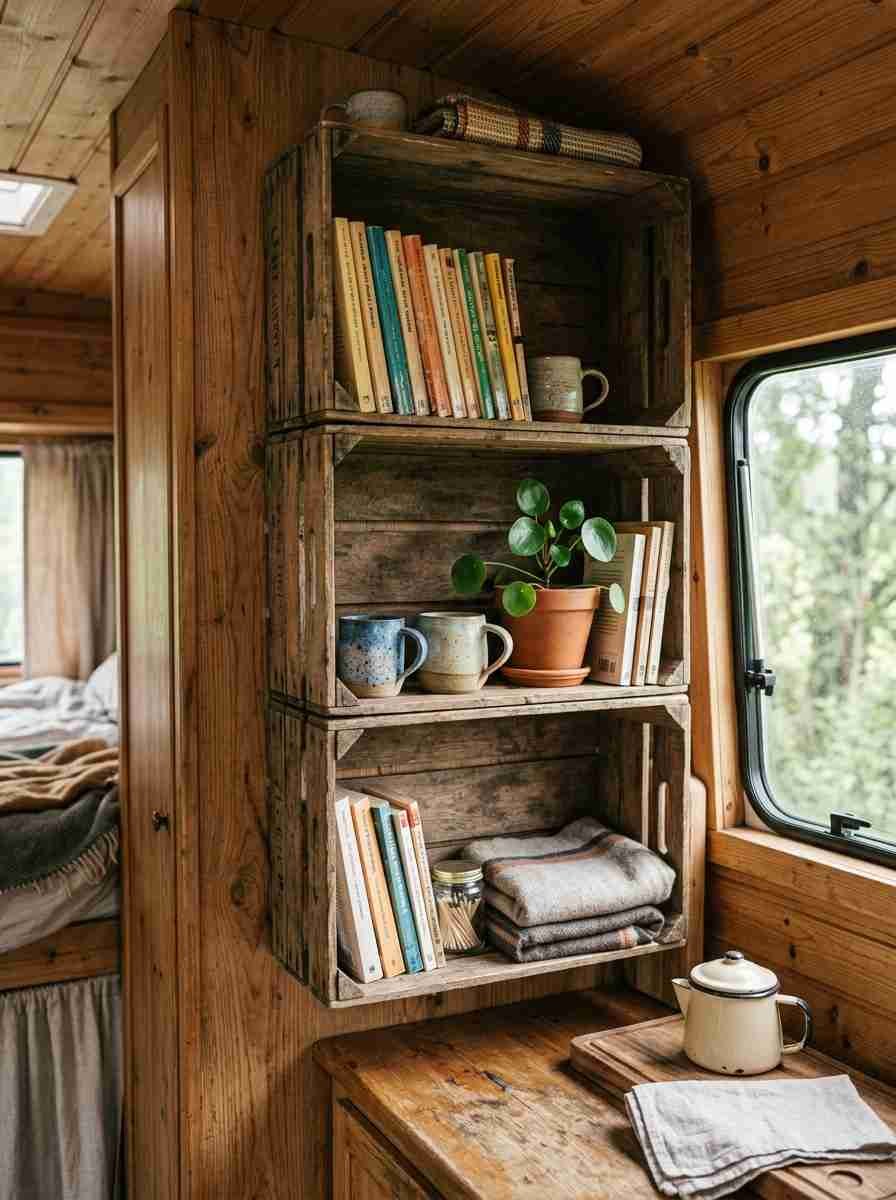
Stacked crates give you shelving that doesn’t scream “shelving unit.” Bolt them to the wall for safety, then use them for books, mugs, or that plant you’re determined to keep alive on the road.
Old fruit crates from a farmers market work great and usually cost less than five dollars. Sand the rough edges first. Splinters and bare feet in a camper are not a good combination.
- Ditch the dinette bench for floor cushions
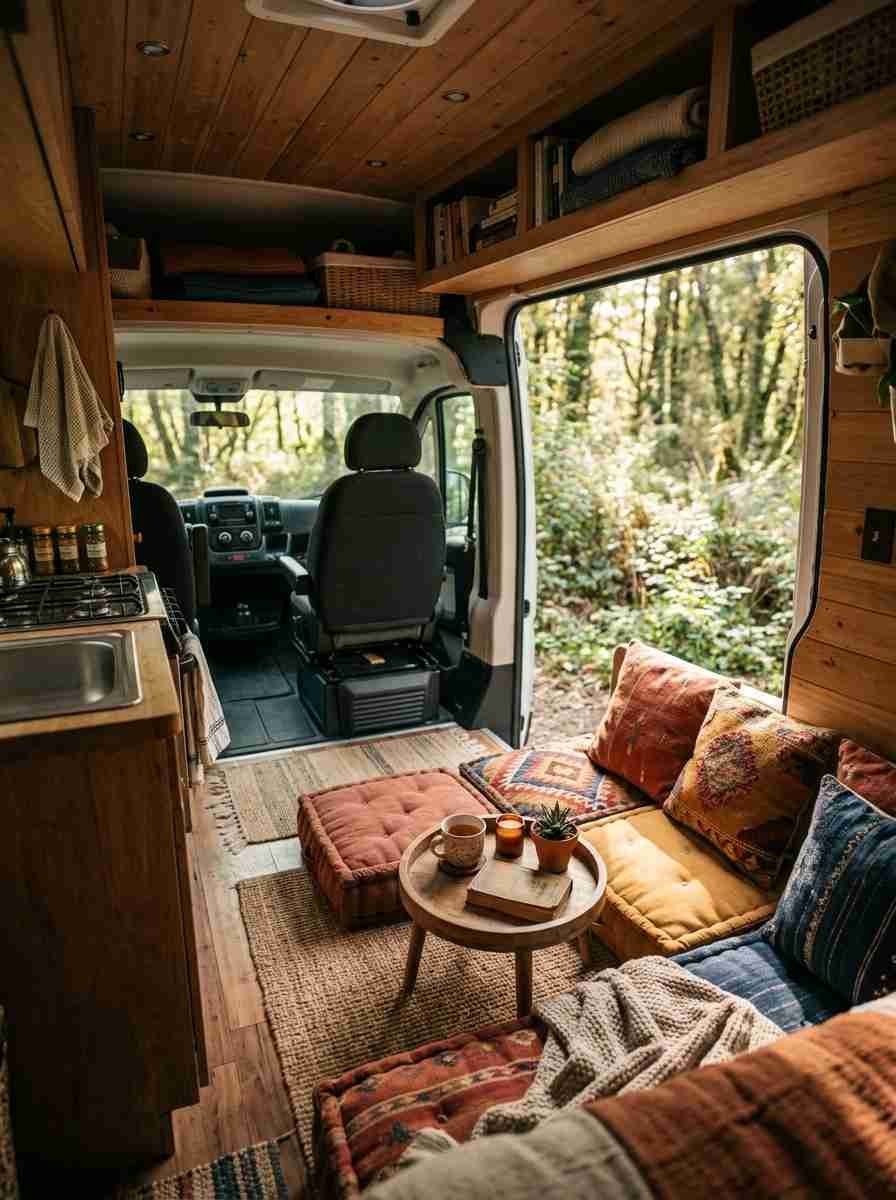
If your camper has a fixed dinette you rarely use, floor cushions can free up real space.
Low seating is a core part of bohemian style, and it makes a small room feel bigger because your eye travels further before hitting a wall of furniture.
I’ll be honest, this one’s not for everyone. If you’ve got bad knees, skip it. No shame in a normal chair.
- Drape a tapestry across the ceiling
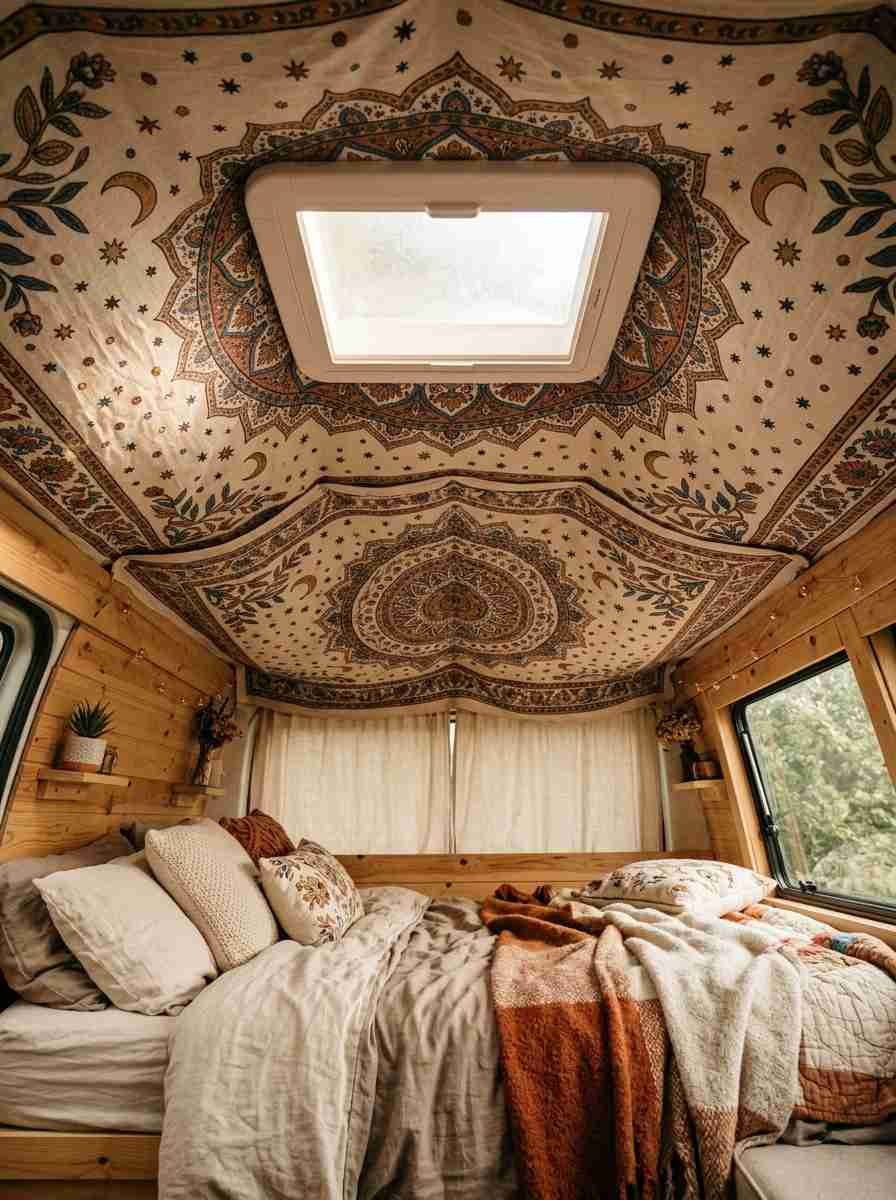
This is the move that gets the most Pinterest saves, and for good reason.
A lightweight tapestry stretched between two tension rods across the ceiling hides ugly paneling or vents and adds instant softness overhead.
Use fabric clips instead of glue or staples. You want this removable for cleaning and for when you inevitably change your mind about the color.
- Add dried pampas grass or eucalyptus
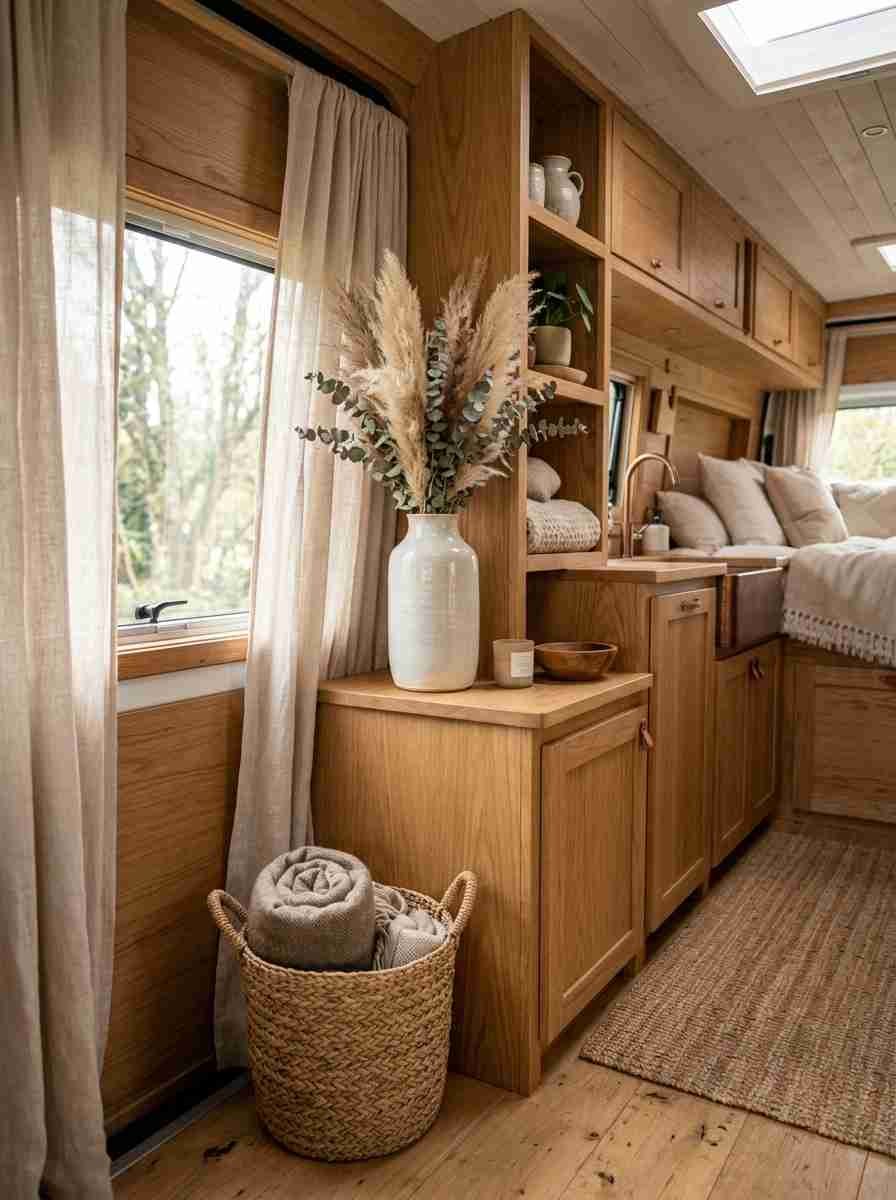
Real plants are tricky in a moving vehicle.
Dried florals solve that. A few stems of pampas grass in a ceramic vase cost less than ten dollars and last for months without watering, wilting, or tipping over on a mountain road.
- Mix at least four different throw pillow patterns
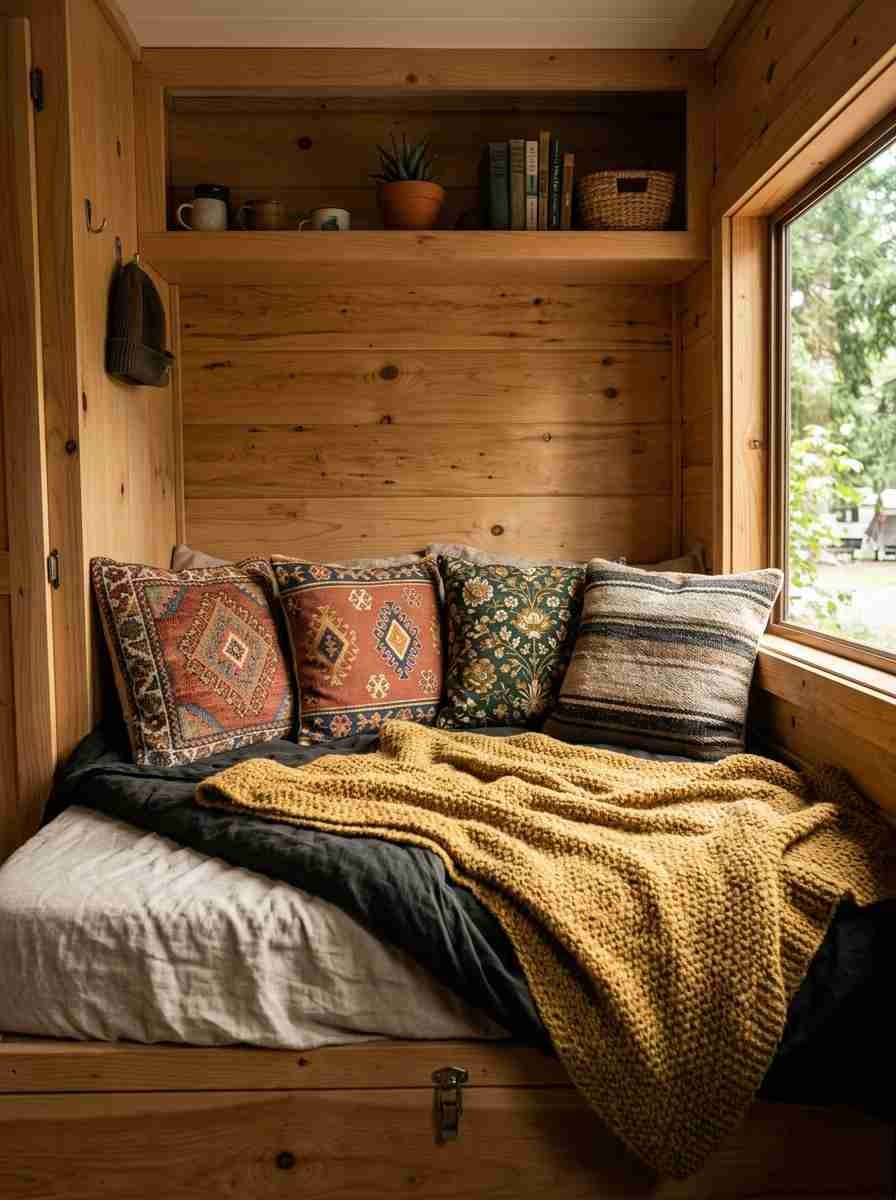
This is where people get nervous, and I get it. Matching feels safer. But boho design thrives on mismatch. Pull two or three colors from your rug,
then find pillow covers in those colors across different patterns: a stripe, a geometric print, a solid.
It shouldn’t look coordinated. It should look collected, like you found each piece somewhere different, because you probably did.
- Replace a cabinet door with a curtain
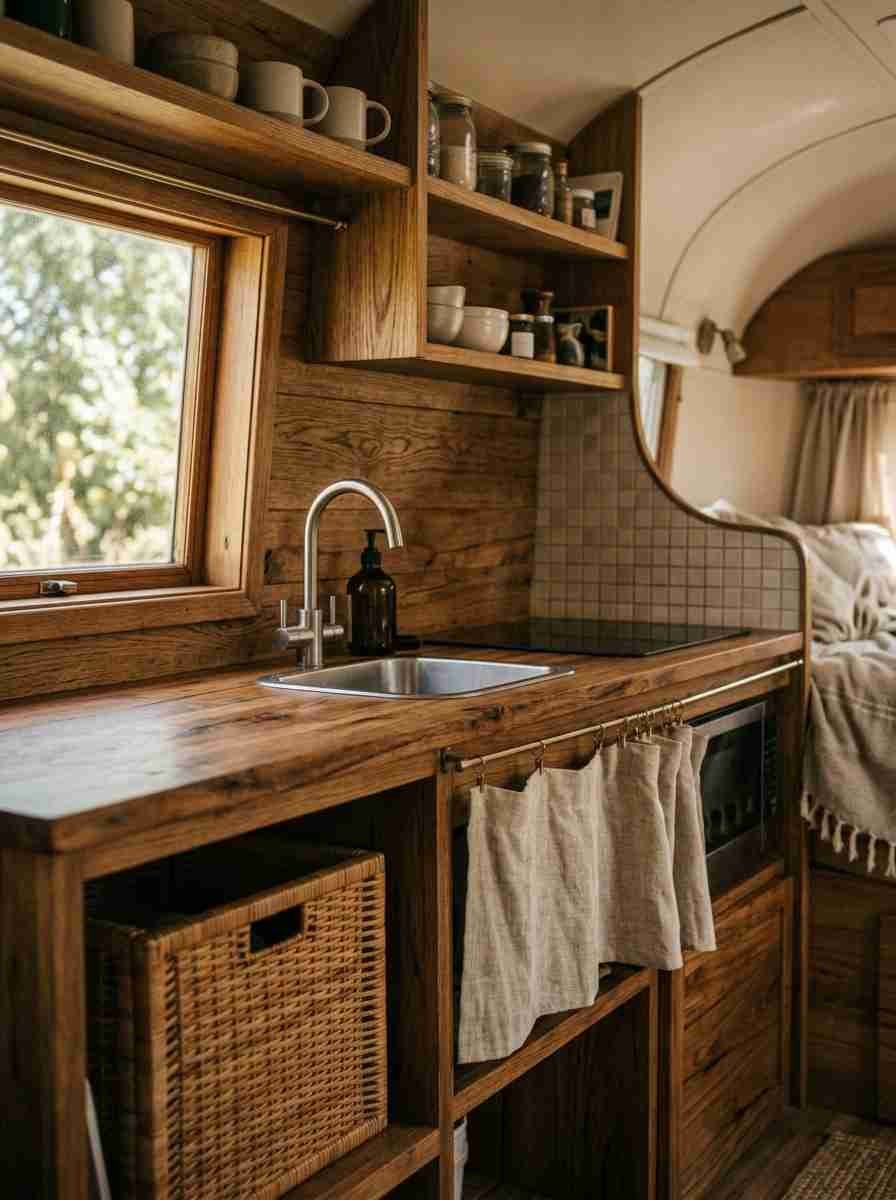
Cabinet doors in a moving vehicle rattle, and rattling drives me insane after about hour two of driving. Swap a problem door for a simple curtain on a tension rod.
It’s quieter, softer looking, and it takes ten minutes to install.
- Choose textiles with visible fringe
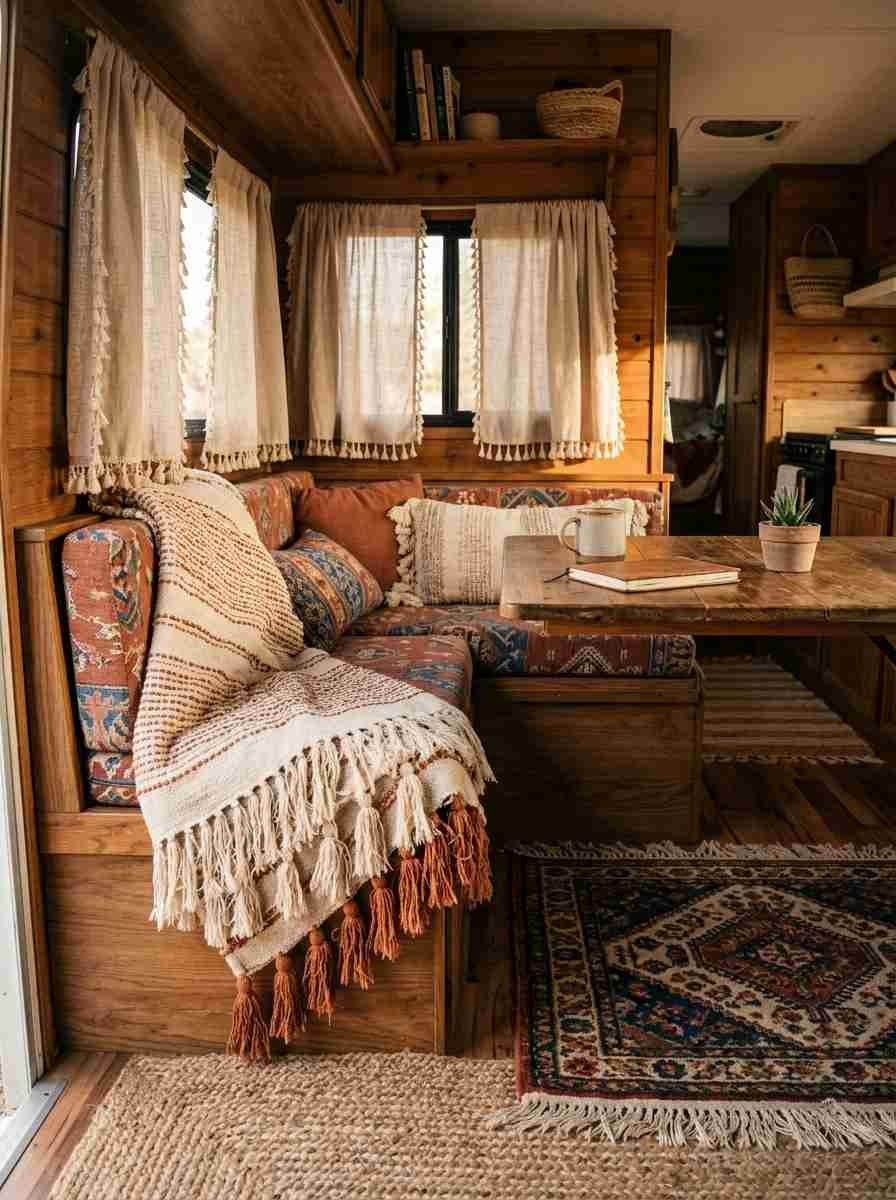
Fringe trim on blankets, pillow covers, and curtains adds texture without adding clutter.
It’s a small detail, but small details are basically the whole game when you’re decorating 60 square feet.
- Secure small plants with velcro straps
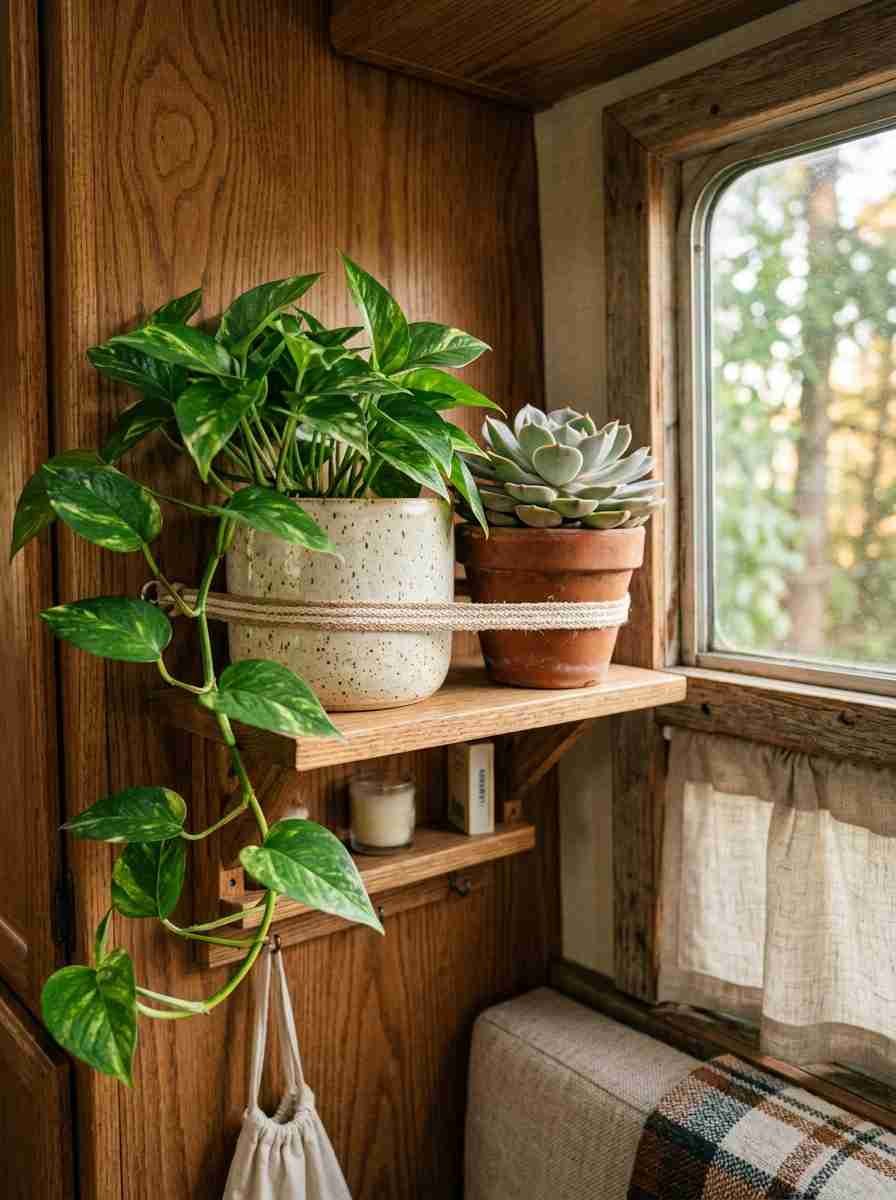
I know I mentioned dried florals above, but if you want a living plant, it’s doable. Use removable velcro straps or a small bungee to secure the pot to a shelf.
Succulents and pothos handle van life better than most, since they tolerate irregular watering and low light.
- Swap harsh LEDs for warm string lights with rattan shades
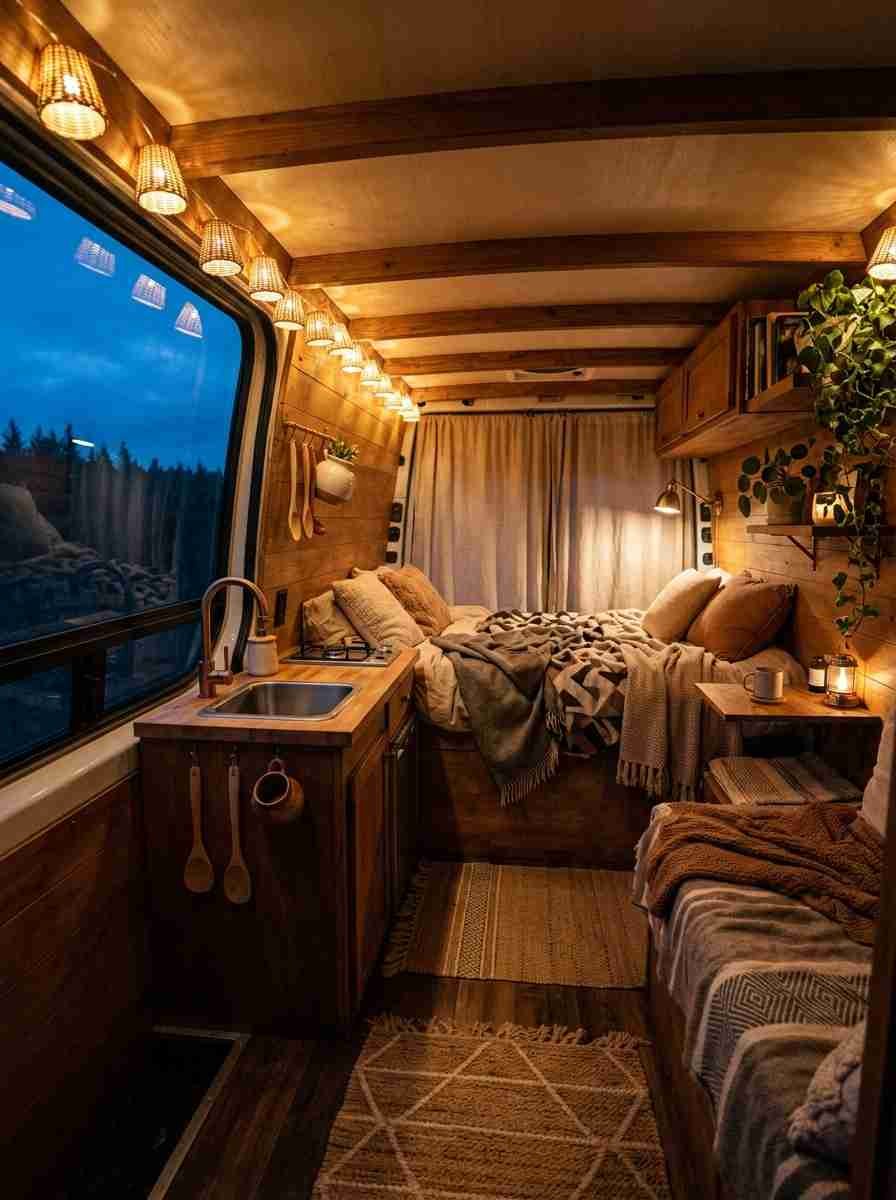
Cool white LED strips make everything look clinical.
String lights with small rattan or paper shades give off a warm, amber glow that instantly makes a space feel lived-in rather than parked.
- Turn a vintage suitcase into a side table
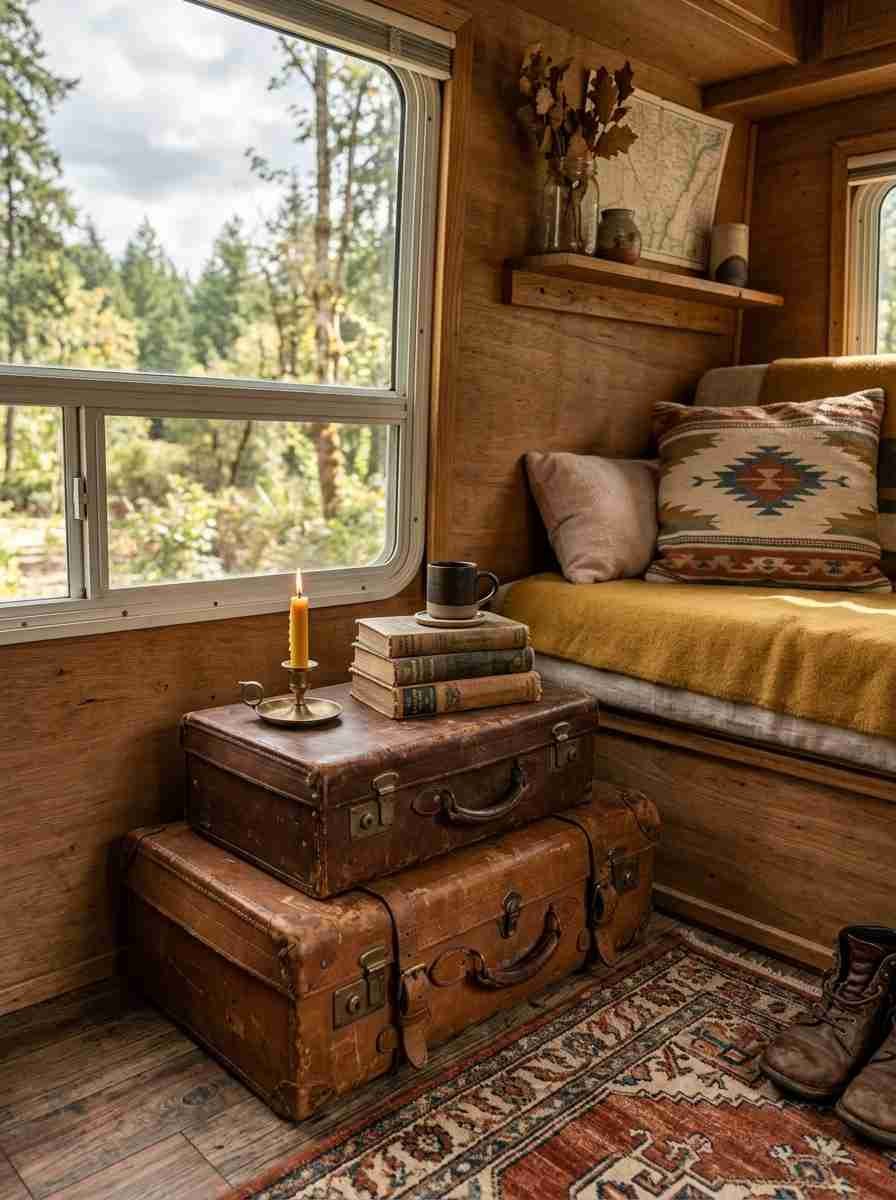
Stack two vintage suitcases of different sizes and you’ve got a side table with hidden storage underneath.
Thrift stores usually have a few beat-up ones for under fifteen dollars, and the scuffs only add character.
- Organize with woven baskets instead of plastic bins
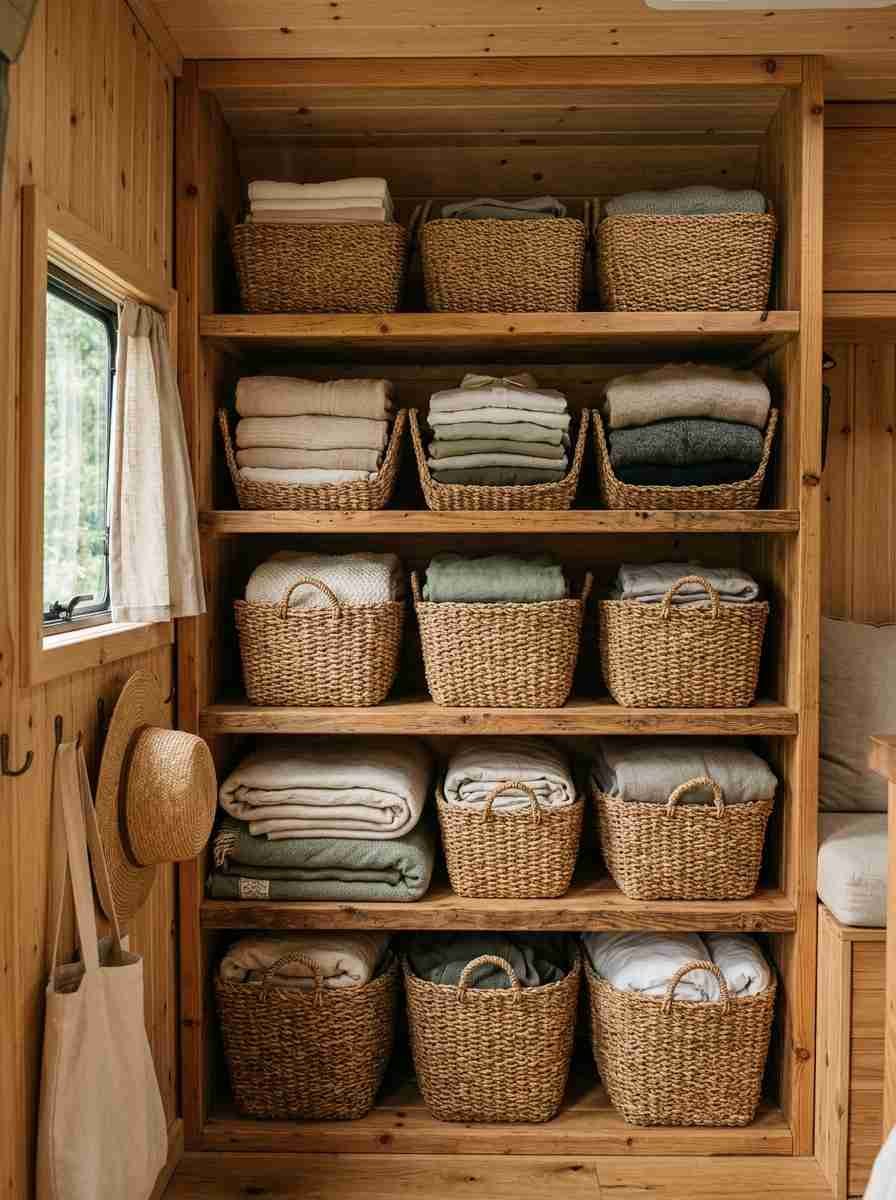
Plastic storage bins are practical, but they don’t do your camper’s vibe any favors.
Woven seagrass or rattan baskets hold the same clothes and gear while looking like part of the design instead of an obstacle to it.
- Add brass or copper hardware and accents
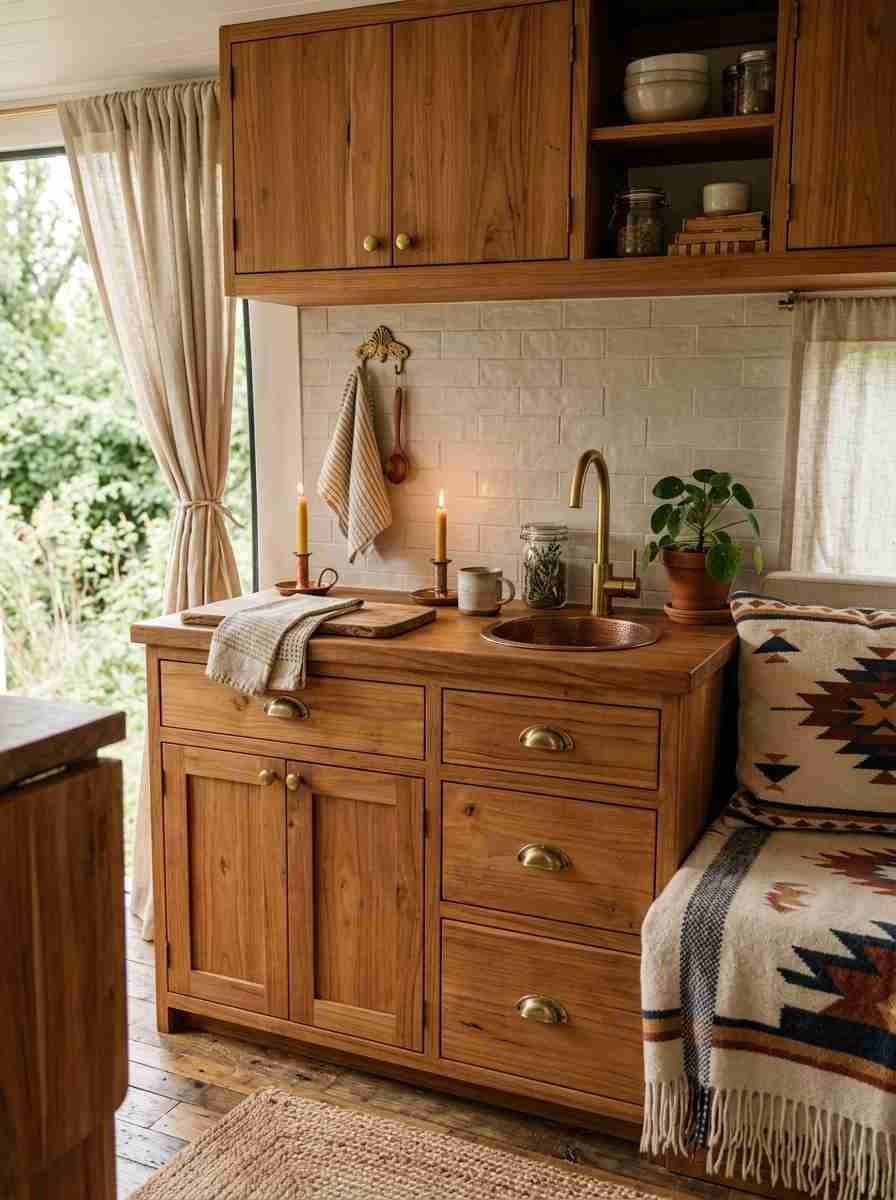
Small metallic touches, cabinet knobs, a candle holder, a hook, break up all the natural fiber textures and add a little shine.
ohemian spaces often mix warm metals with wood and rattan, and the contrast keeps the room from feeling flat.
- Build a shelf just for your travel trinkets
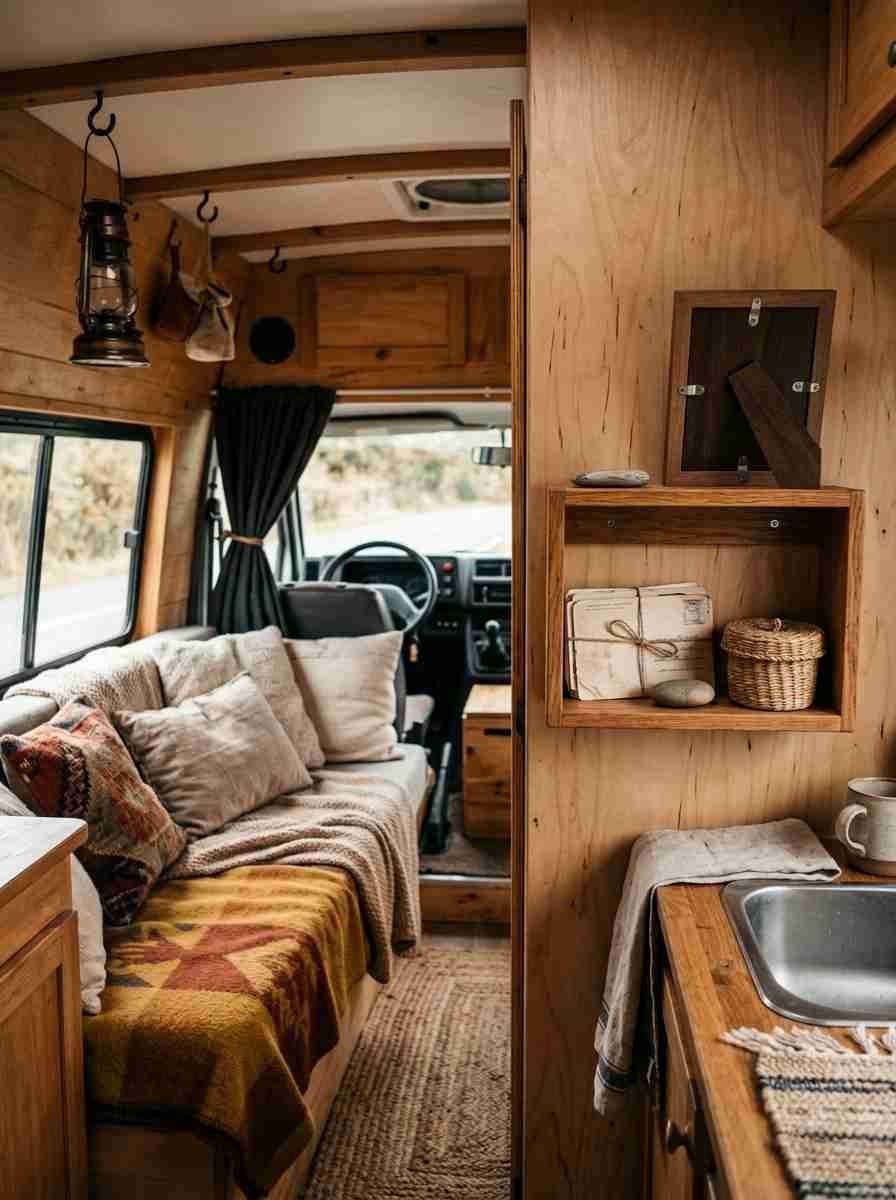
This is the idea I’d argue matters most. Pick one shelf, even a tiny one, and fill it only with things that mean something: a rock from a specific trail, a postcard, a ticket stub.
as the folks at Decorilla point out in their guide to bohemian interior design, boho style is really about curating objects that tell a story, and nothing tells your story better than the stuff you actually collected.
Quick comparison: three boho textile combos for tiny campers
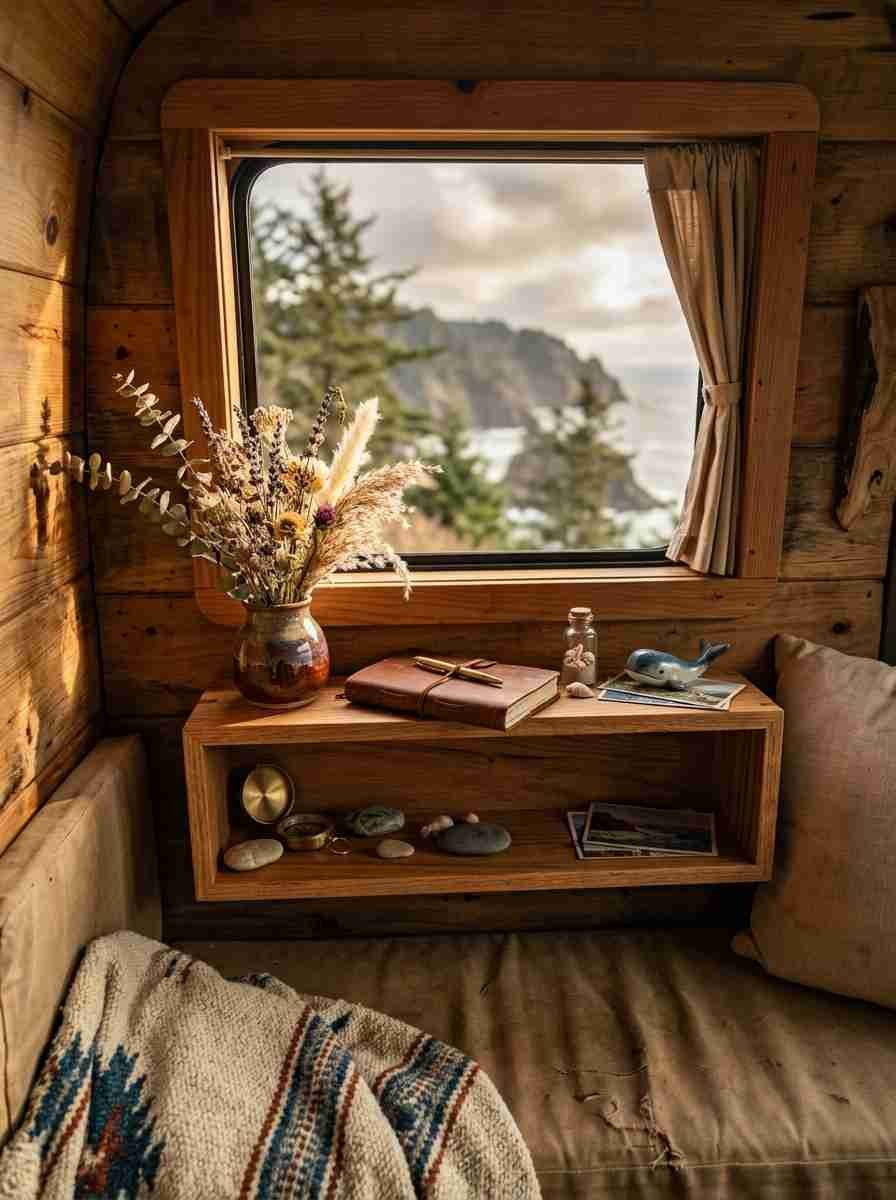
Combo | Best for | Approx cost Jute rug + kilim throw | Small living areas | $60 to $120 Macrame + tapestry ceiling | Bedroom nook | $40 to $90 Fringe pillows + woven basket | Reading corner | $35 to $70
Prices vary by region and how much thrifting you’re willing to do. IMO, thrifting cuts these numbers in half most of the time.
One thing nobody plans for: weight. Every rug, pillow, and crate adds up, and campers have payload limits.
I learned this the annoying way when my scale read 200 pounds over what I expected, mostly from rugs and books I swore I “needed.” Weigh your stuff before you commit to a full boho glow-up. Your suspension will thank you.
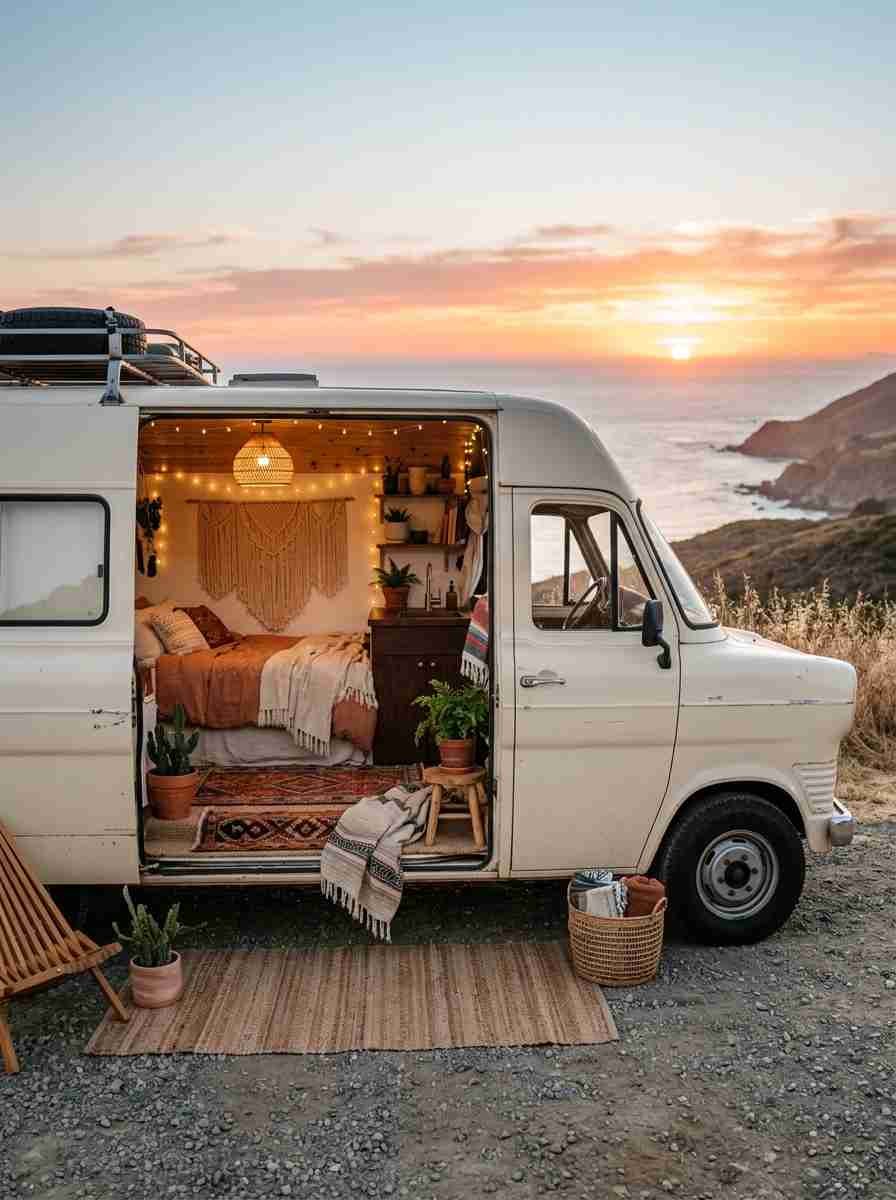
A few of these ideas cost almost nothing if you’re patient at thrift stores and flea markets. Others, like a good rattan pendant, are worth spending a bit more on since you’ll look at it every single day.
Mix cheap and splurge. That’s honestly how most bohemian spaces come together anyway, whether they’re in a camper or a cottage.
For more on the style’s roots and principles, the overview from Homes and Gardens is worth a read if you want the full picture.
FAQ
Is bohemian style practical for a moving vehicle?
Yes, with a few tweaks. Stick to lightweight textiles, secure loose items with velcro or bungees, and skip heavy furniture. Boho leans on fabric and small objects more than bulky pieces, which actually makes it well suited to a camper.
How much does a full boho camper makeover cost?
You can do a solid refresh for under $300 if you thrift rugs, pillow covers, and baskets. A higher-end version with a rattan pendant, real macrame, and vintage furniture pieces can run closer to $600 to $800.
Will patterns and textures make my camper feel smaller?
Not if you keep a consistent color palette. Mixing three or four colors across different patterns actually reads as cohesive.
Ten random colors with no connection is what makes a small space feel chaotic.
So, which one are you trying first? Pin this list, save your favorites, and start with just one or two ideas this weekend.
A macrame wall and a layered rug alone will change how your whole camper feels, and you don’t need a full renovation to get there.
