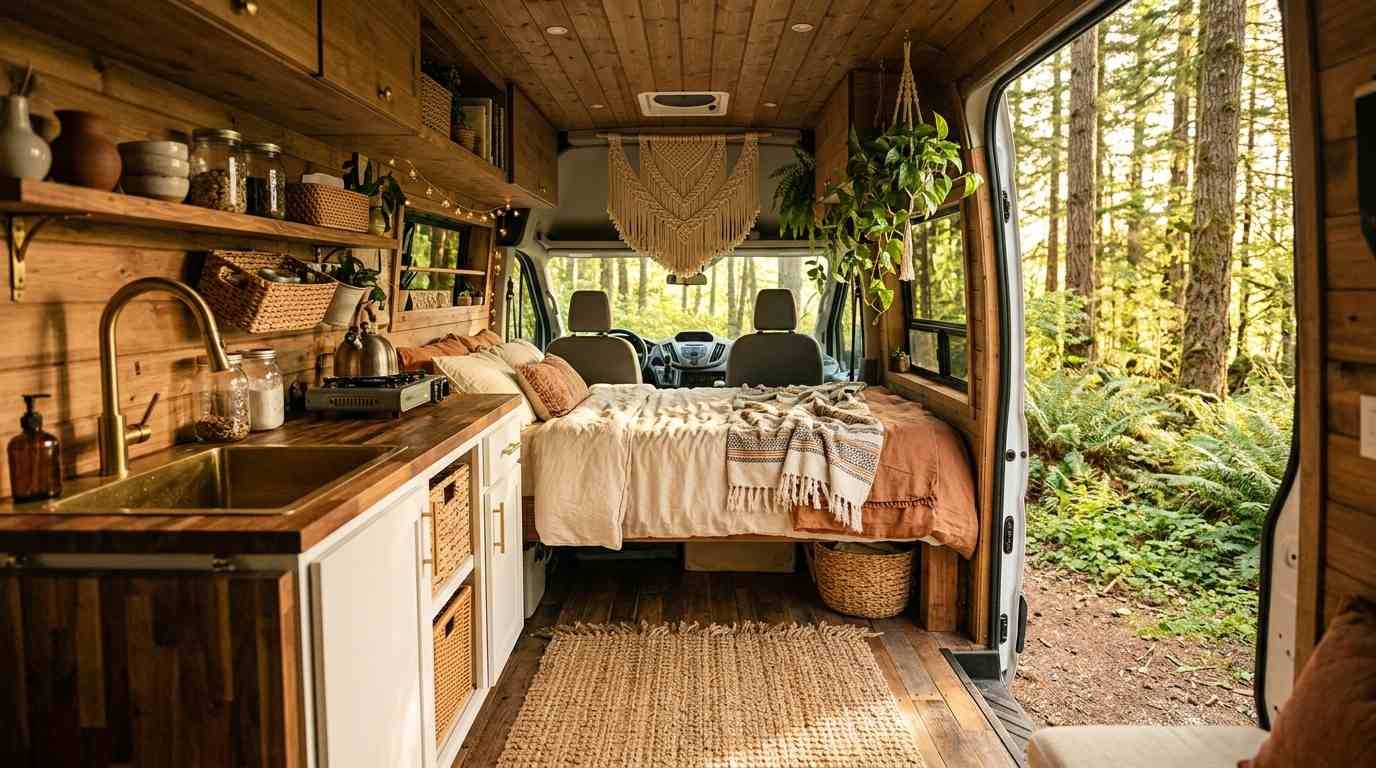
I’ve saved probably 400 camper interior pins over the past two years. Maybe more, honestly,
I stopped counting after my partner asked why my “van inspo” board had more pins than my actual wedding board.
There’s a reason boho camper interiors dominate Pinterest right now.
Small spaces need personality more than big houses do. A studio apartment can survive on white walls and good lighting.
A 70-square-foot van cannot. It either feels like a warm, lived-in hideaway or it feels like a hospital on wheels. Boho style is the fastest route to the first option.
I’ve built out two vans myself (one disaster, one I’m actually proud of) and pulled ideas from dozens of builders who know this stuff better than I do.
Here are 15 ways to bring color, texture, and warmth into a camper without it looking like a craft store exploded.
1. Start with a warm, light base palette
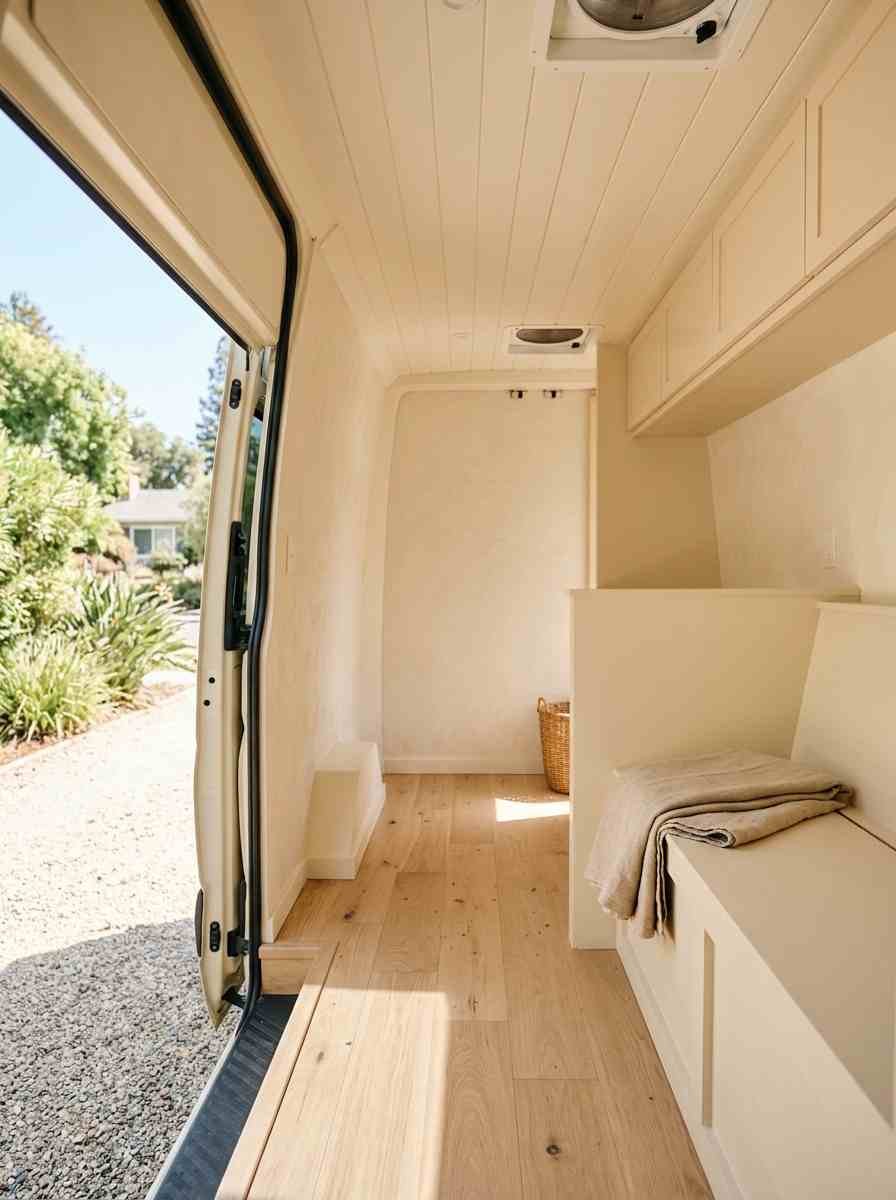
Most boho camper builds that actually work start with cream, warm white, or soft sand on the walls and ceiling.
Not stark white. Stark white in a van reads clinical, and nobody wants clinical.
The light base does double duty. It bounces light around a small space (crucial when your windows are the size of dinner plates), and it gives every bold accent color somewhere to breathe.
Without that neutral canvas, a rug, a tapestry, and patterned pillows all fighting for attention just look chaotic.
2. Layer rugs like you mean it
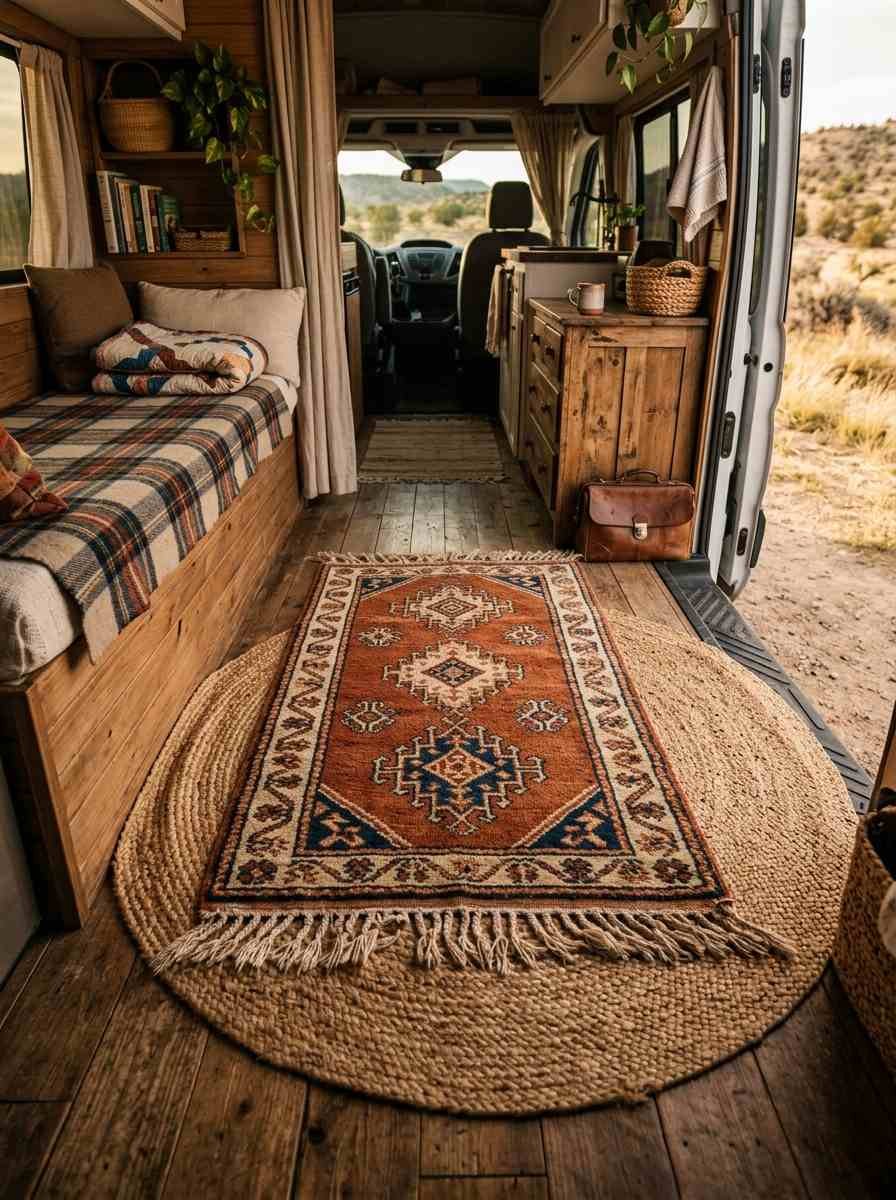
One rug is decor. Two overlapping rugs, mismatched on purpose, is a mood.
I know that sounds excessive for a van floor that’s maybe 20 square feet total.
But layering a smaller patterned rug over a larger jute or seagrass one adds depth that a single flat rug can’t touch.
builders who nail this look at things like <a href=”https://rvinspiration.com/renovate/boho-camper-makeover/”>these boho camper renovations</a> almost always have texture stacked underfoot, not just on the walls.
3. Hang a macrame headboard
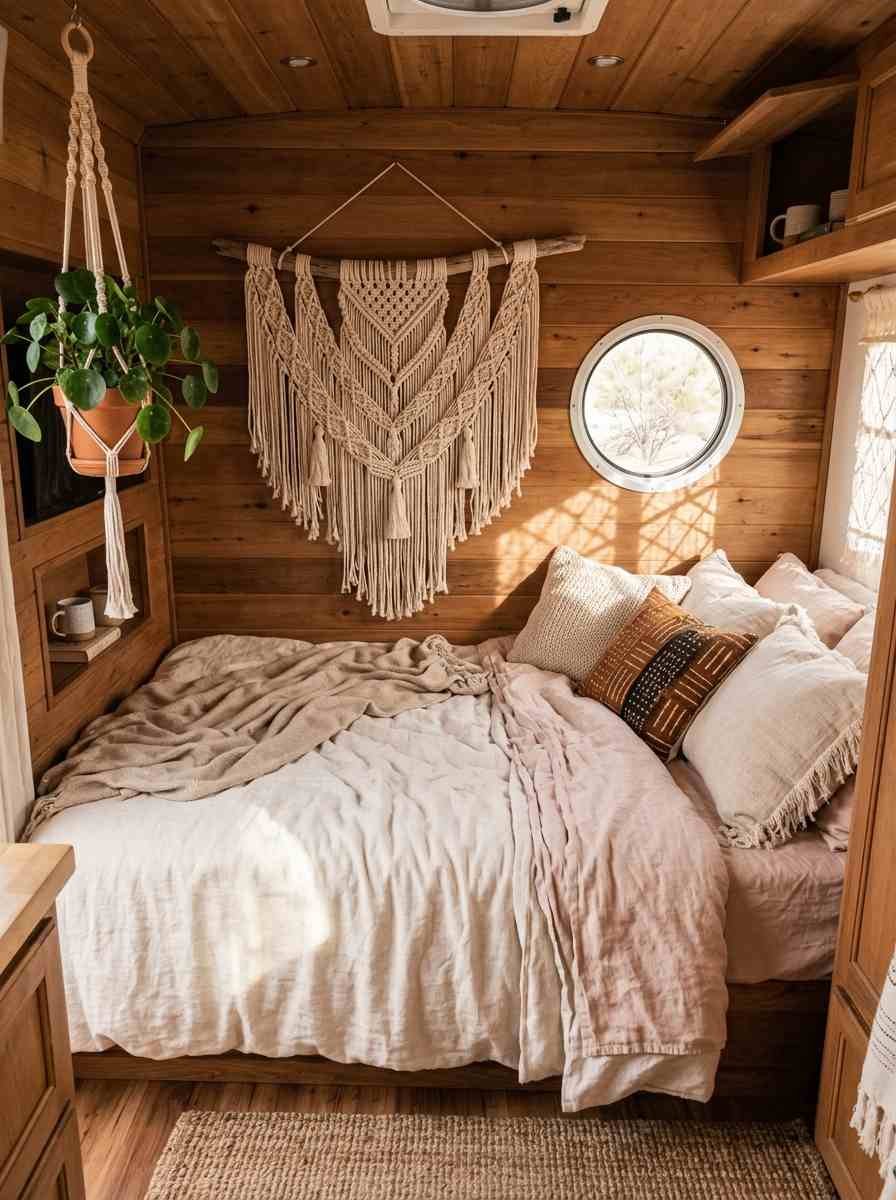
This is probably the single most “boho camper” image that exists.
A big macrame wall hanging behind the bed, knotted cream cotton against a wood or cream wall, instantly signals the aesthetic before anyone even sees the rest of the space.
Best part: it weighs almost nothing. Weight matters a lot in a van build, so decor that’s purely visual and barely adds pounds is a genuine win, not just an aesthetic one.
4. Mix patterns you’re not “supposed” to mix
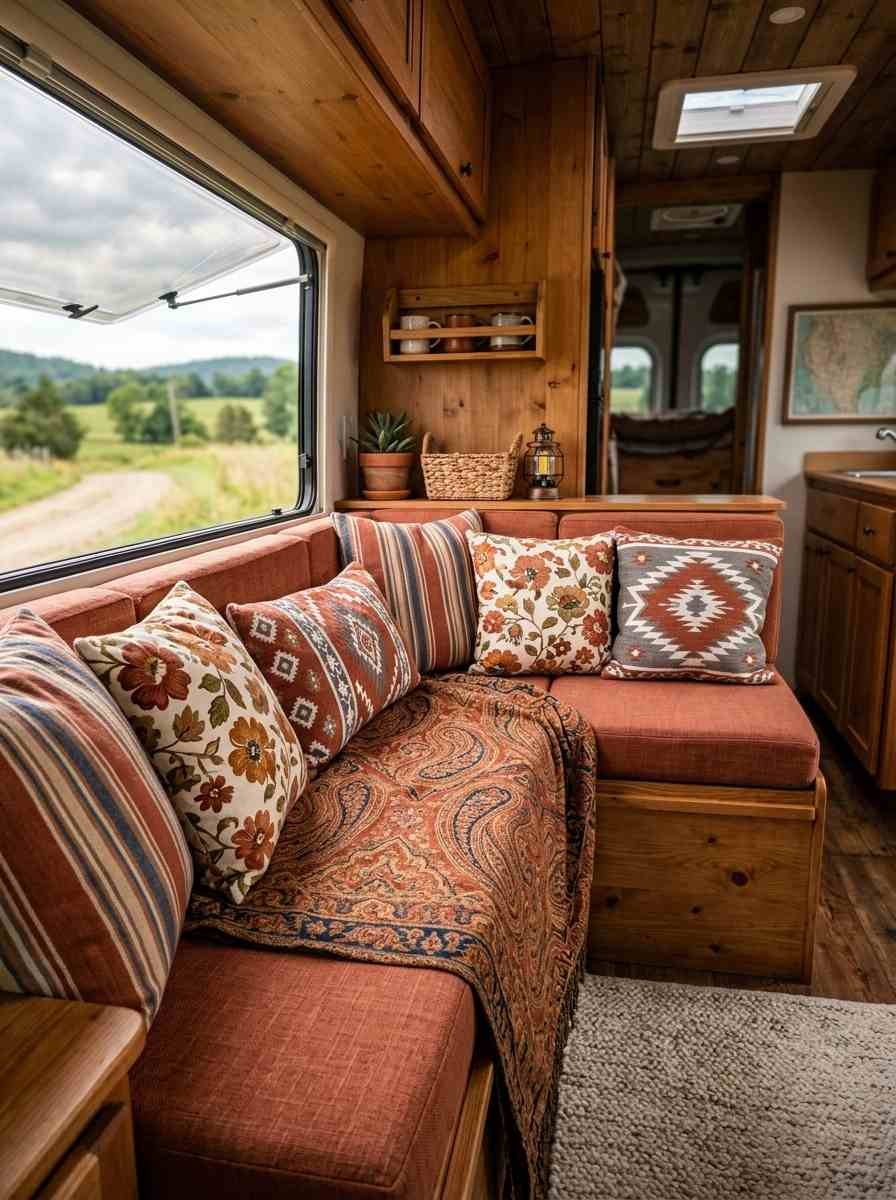
Florals with stripes. Geometric with paisley. Moroccan tile prints next to a solid mudcloth pillow.
Boho design more or less throws the matching rulebook out the window, and that’s the appeal.
I was terrified of this at first. My first attempt looked like a garage sale, not a getaway. The trick I eventually learned: keep one consistent color running through every pattern (mine is terracotta) so the mismatched prints still feel connected instead of random.
5. Bring in rattan and wicker wherever you can
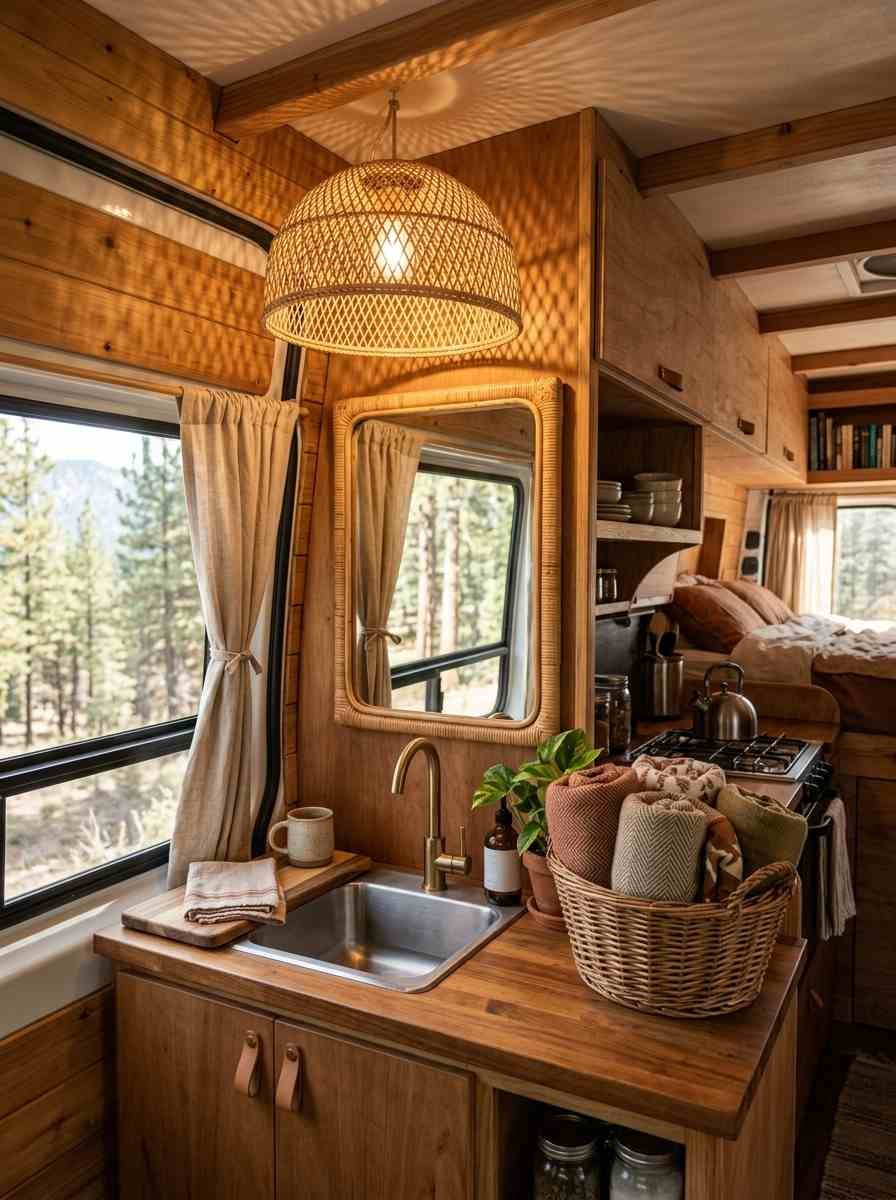
A rattan pendant light. A wicker basket for blankets. A woven rattan mirror frame over the sink.
These pieces read as handmade and organic even when they’re not, and they’re light enough to bolt or Velcro into a moving vehicle without adding real weight.
FYI, thrift stores are goldmines for rattan pieces. I found a wicker tray for $4 that would’ve been $35 new.
6. Go bold with one accent wall or cabinet
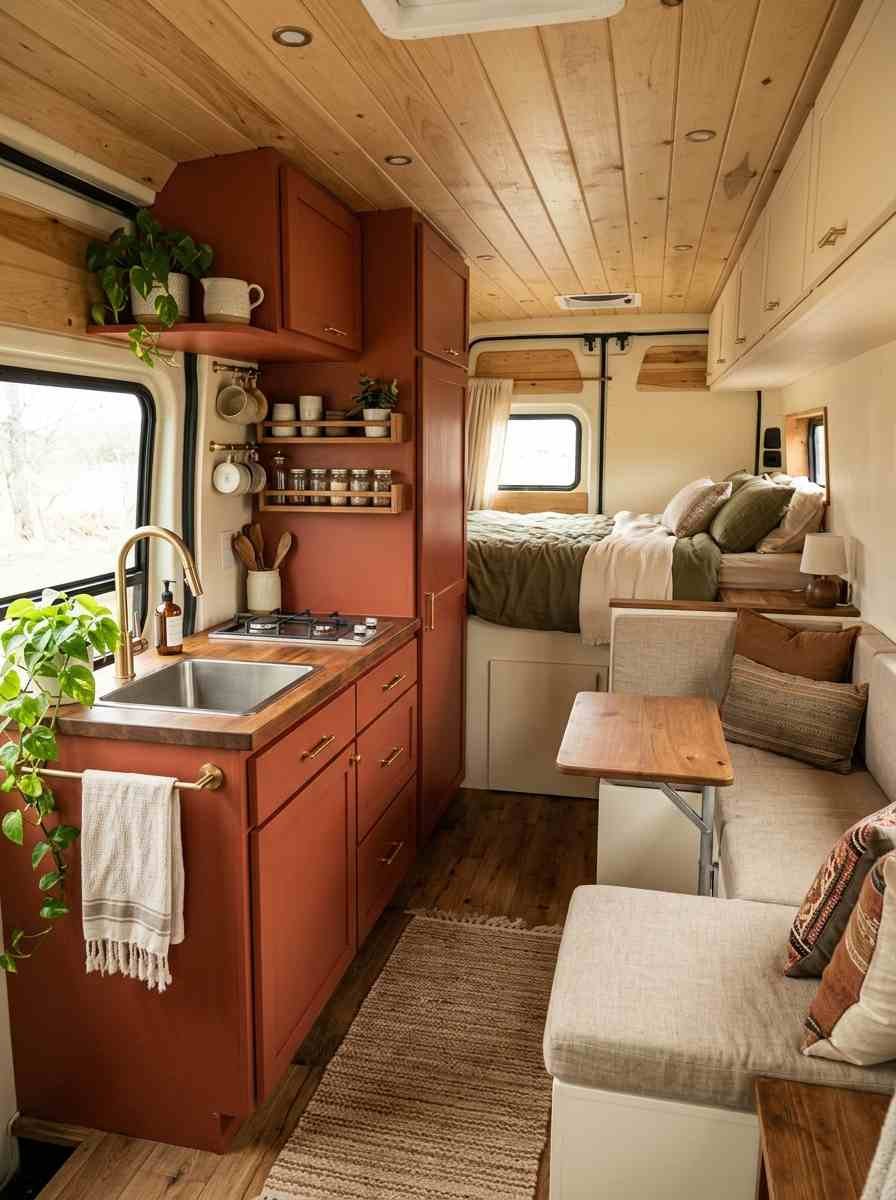
You don’t need to paint the whole interior a wild color. Pick one surface (a cabinet face, a headboard wall, the underside of an overhead bin) and go bold: deep terracotta, dusty rose, mustard, or a rich teal.
That single splash does more visual work than color spread thin across every surface. It also gives you an easy way to change the mood later without repainting an entire van.
7. String fairy lights everywhere the sun doesn’t reach
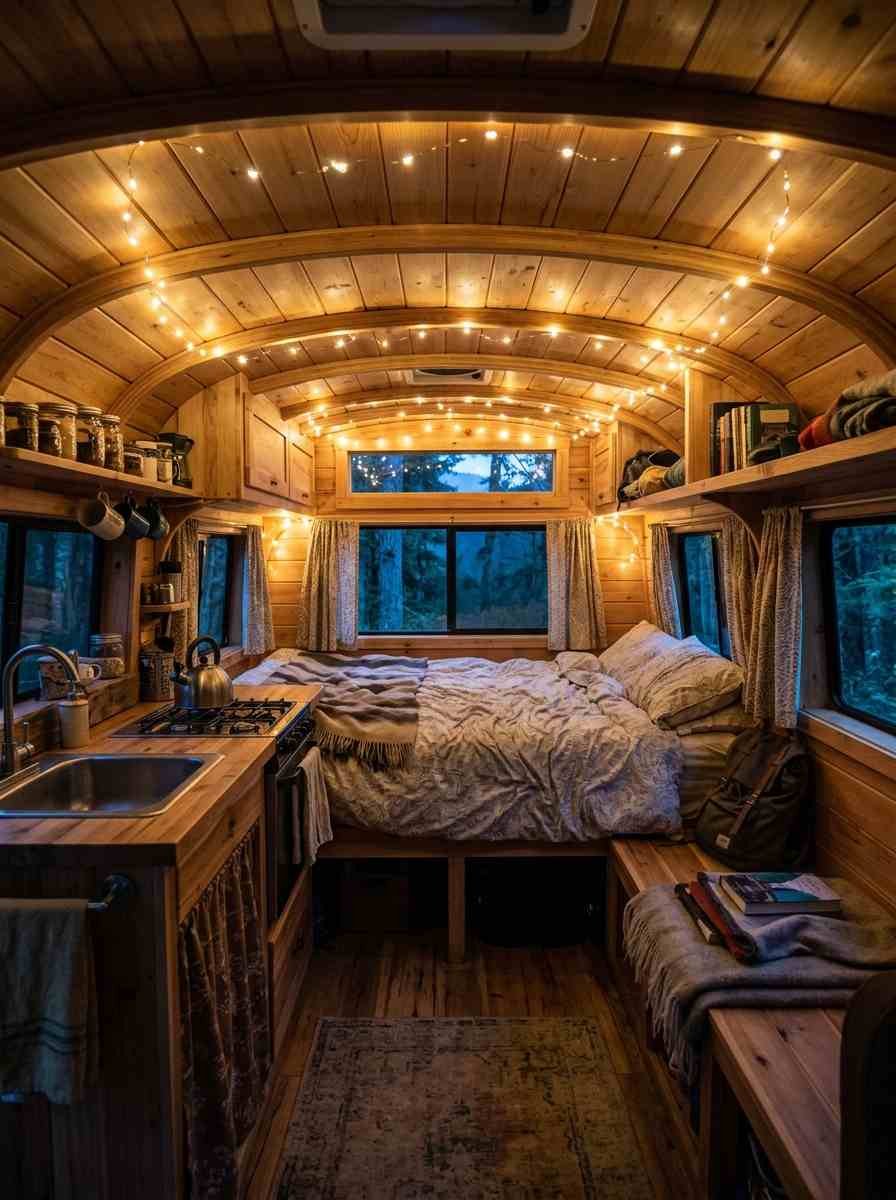
Warm-white string lights along the ceiling ribs, tucked into curtain folds, wrapped around a headboard shelf. This is the cheapest transformation on this entire list and arguably the most effective one.
Solar or battery-powered strings solve the fire-risk problem that candles create in a van, which is a real concern builders bring up constantly. Skip actual open flames. It’s not worth it.
8. Choose curtains that do more than block light
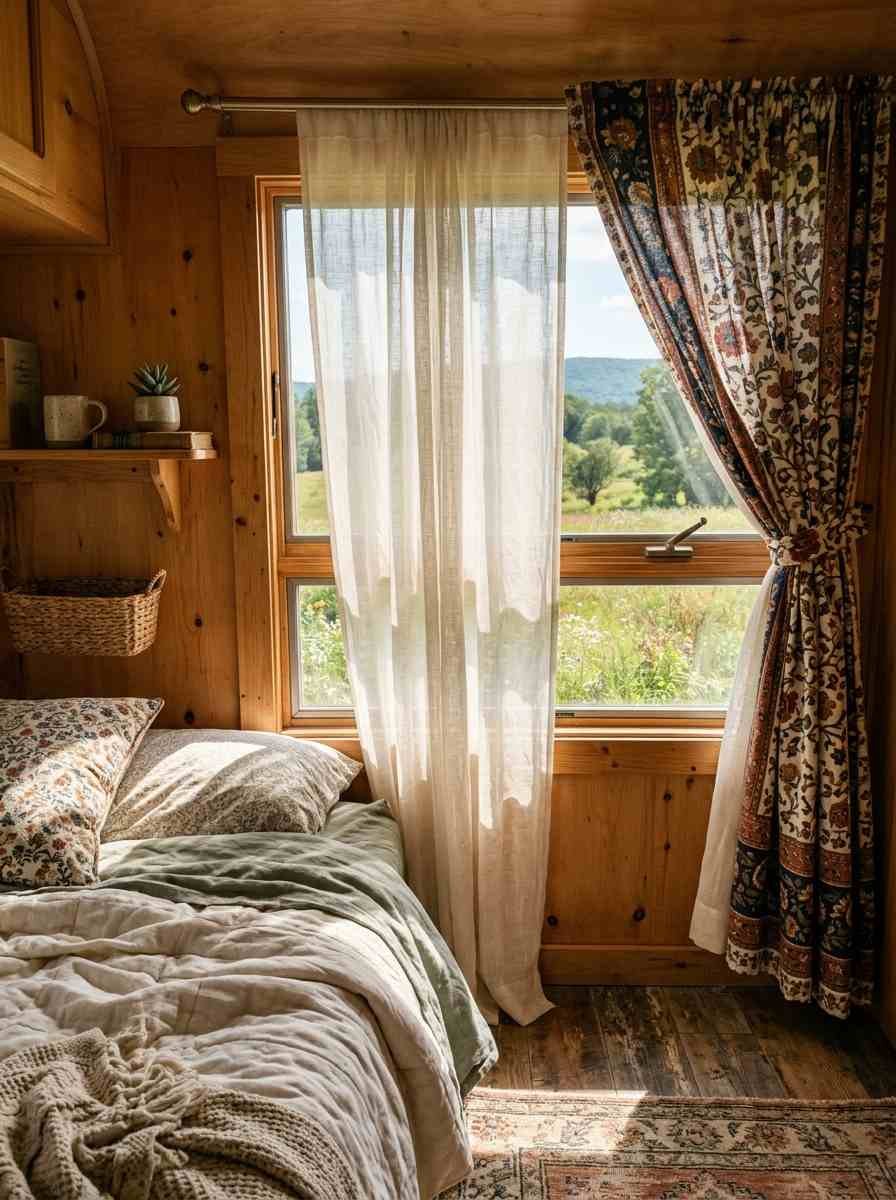
Boho curtains usually layer a heavier, light-blocking outer panel with a sheer, airy inner one. That combination gives you privacy at night and soft, filtered light during the day, plus a lot more color and texture than a plain roller shade ever will.
Magnetic curtain rods are honestly a lifesaver here since most van walls are metal and drilling extra holes into your rig isn’t always something you want to commit to.
9. Add plants that can survive a moving vehicle
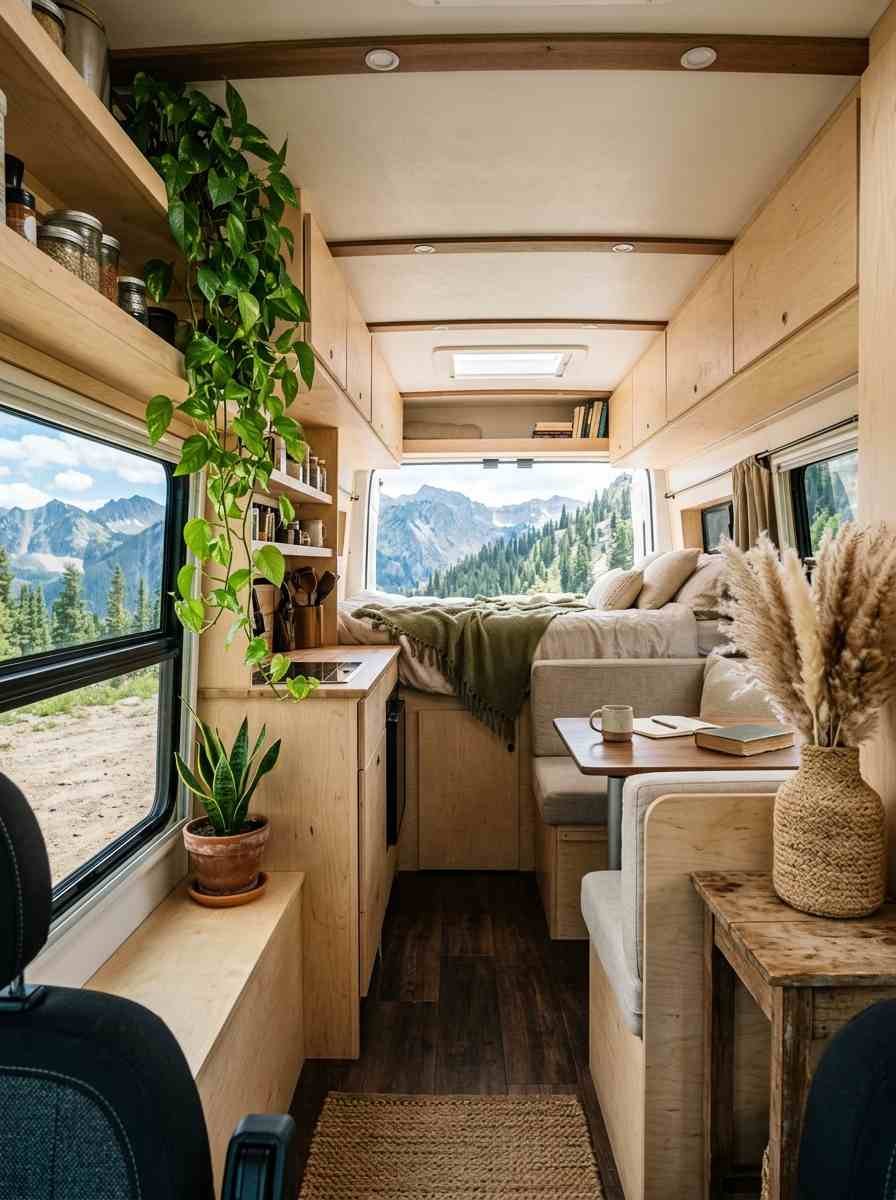
Real talk: most houseplants hate camper life. Constant temperature swings, bumpy roads, and inconsistent light kill them fast. Go for the tough ones instead: pothos, snake plants, or air plants that don’t even need soil.
Dried elements work too. A bundle of dried pampas grass or eucalyptus in a small vessel gives you that organic, earthy look without the maintenance guilt when it inevitably dies on a mountain pass.
10. Pick a kitchen backsplash that has personality
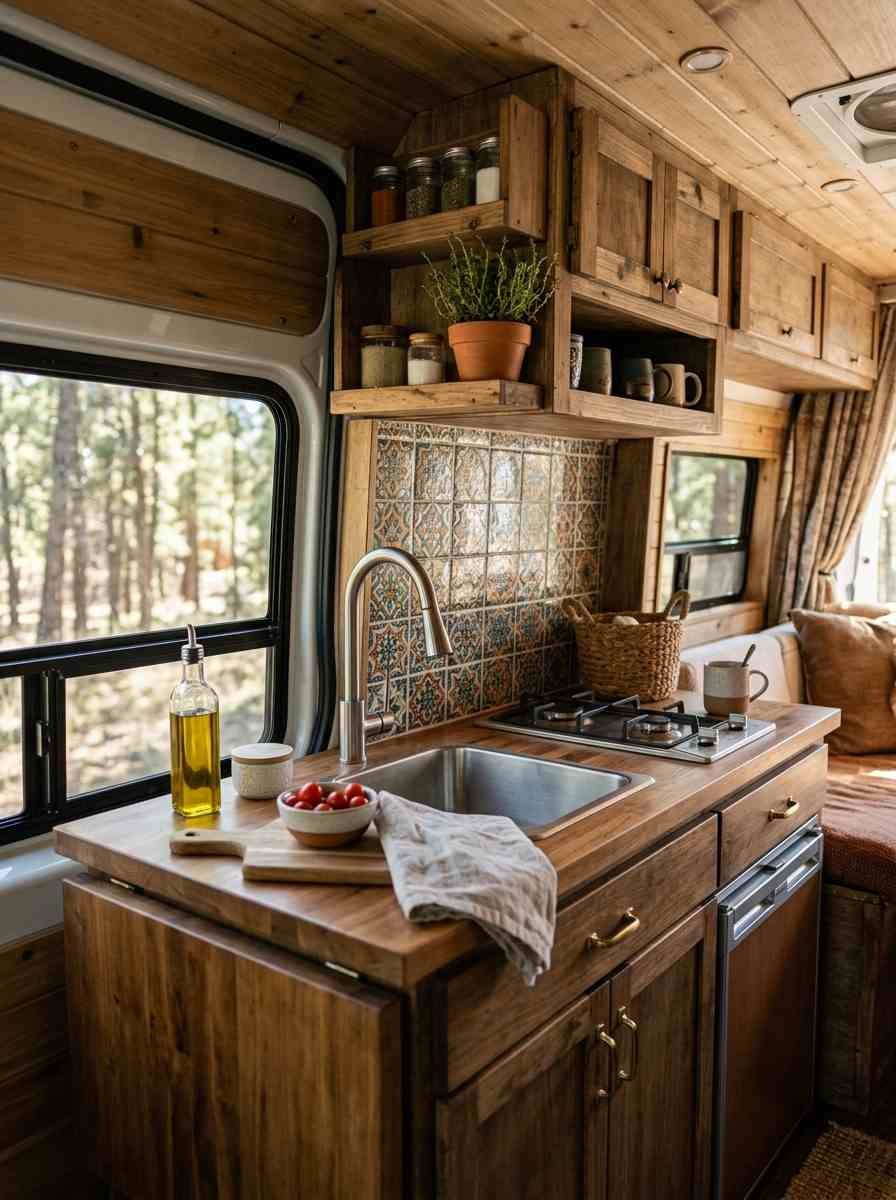
A plain metal backsplash is the most forgettable spot in most van kitchens, and also one of the easiest to fix.
Peel-and-stick Moroccan tile patterns, a small hand-painted tile insert, or even a bold wallpaper sealed with a clear coat can turn that dead zone into one of the prettiest corners of the whole build.
11. Use throw pillows as your color-testing ground
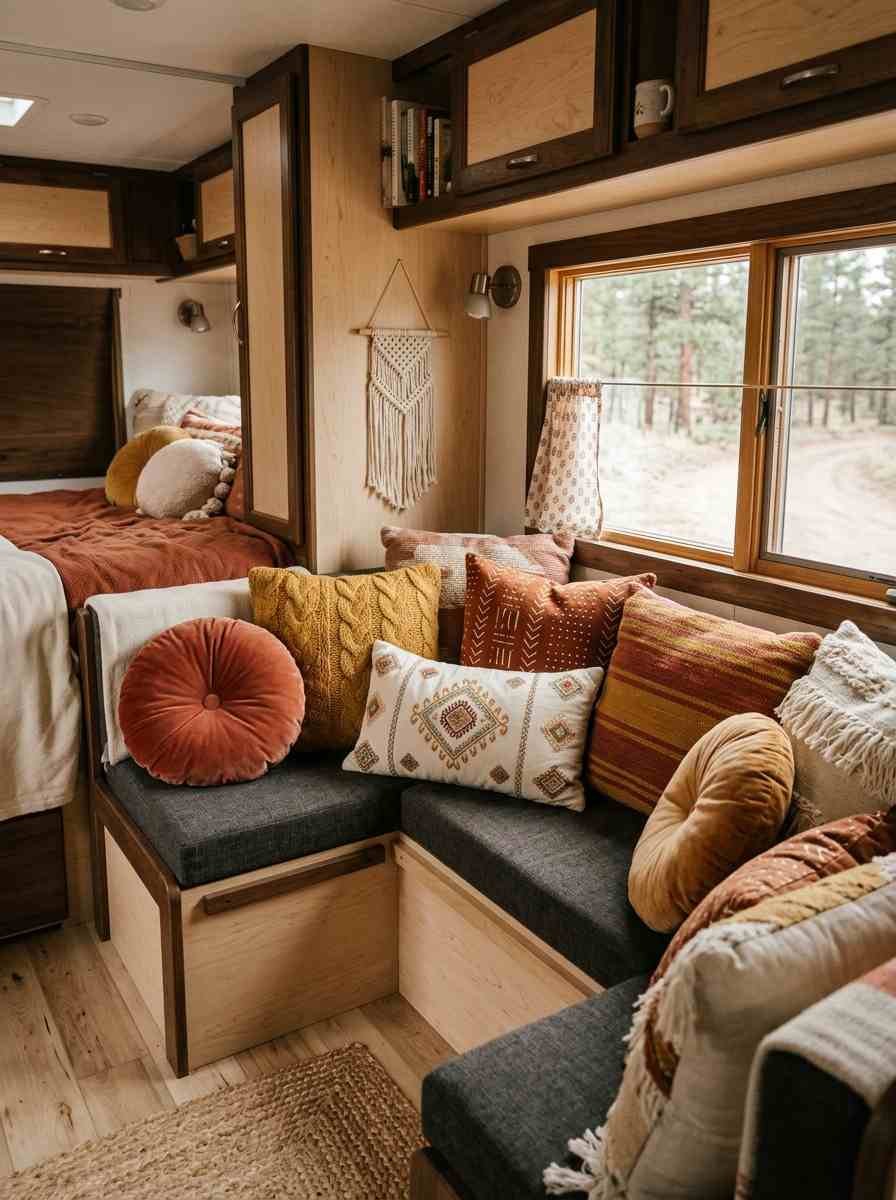
Pillows are the cheapest, lowest-commitment way to try a color scheme before you paint anything permanent.
Buy three or four in different boho patterns, throw them on the bed and bench seat, live with them a week, and see what actually feels right.
- Mix at least two textures (velvet with woven cotton, for example)
- Vary the sizes rather than buying a matched set
- Swap them seasonally if storage allows, it keeps the space from feeling static
I personally think people undersell how much a $12 pillow swap can shift the entire mood of a tiny living space. It’s the single cheapest redesign trick I’ve used.
12. Install open shelving instead of solid cabinets
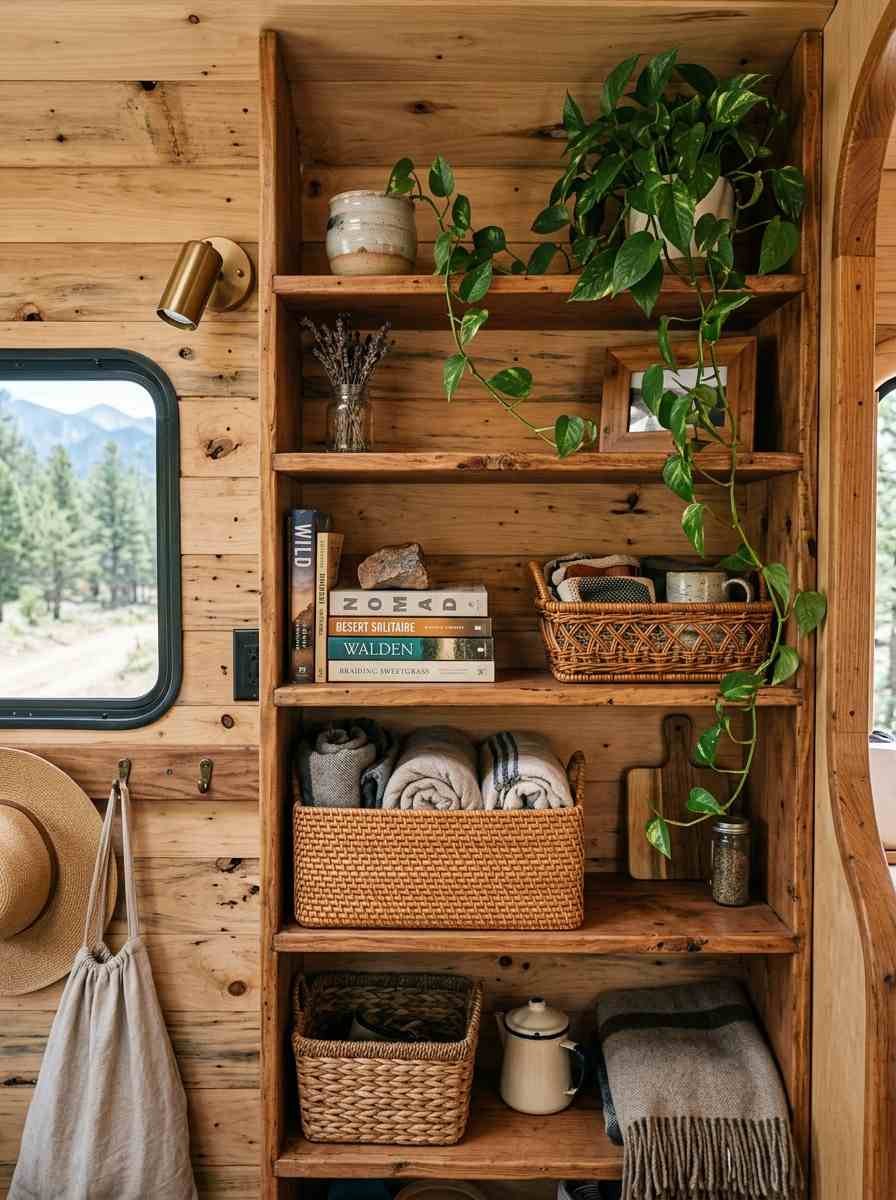
Solid cabinet doors hide clutter but also hide your decor. Open rattan or wood shelving lets you display woven baskets, small plants, and stacked books, all of which contribute to the lived-in boho look while still keeping things (mostly) organized.
The catch, and this is a real one: everything on open shelves needs to survive braking hard on a highway. Lip edges or small bungee restraints save you from a mid-drive avalanche.
13. Bring in leather and brass accents for contrast
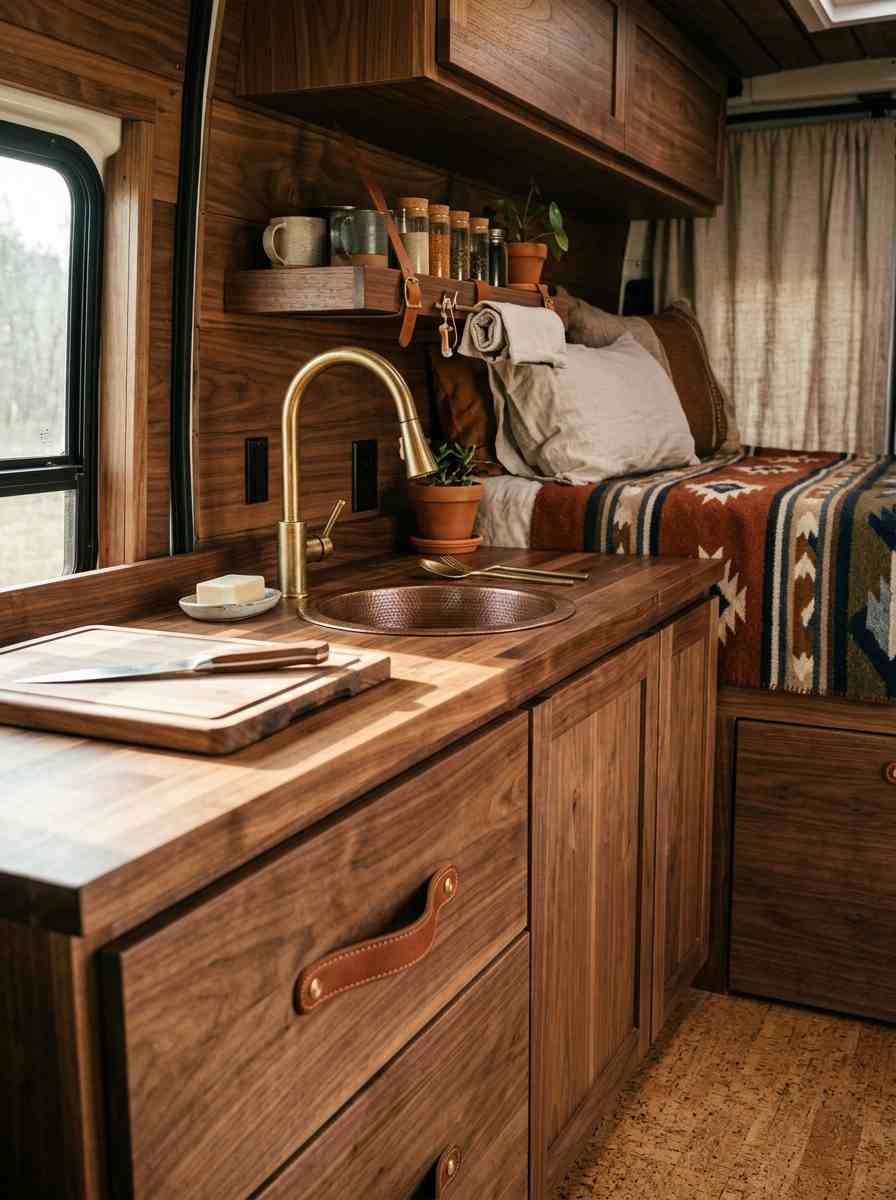
All that soft fabric and woven texture needs a little structure to keep it from feeling too soft-edged.
A leather cabinet pull, a brass faucet, a leather strap on a shelf all add just enough hard contrast to ground the space.
Builders featured on sites like <a href=”https://homemadegraceful.com/boho-camper-van-interior-ideas/”>this collection of boho van interiors</a> lean on exactly this trick, small hits of leather and brass against layers of fabric, and it works every time.
14. Paint or stain the ceiling, don’t ignore it
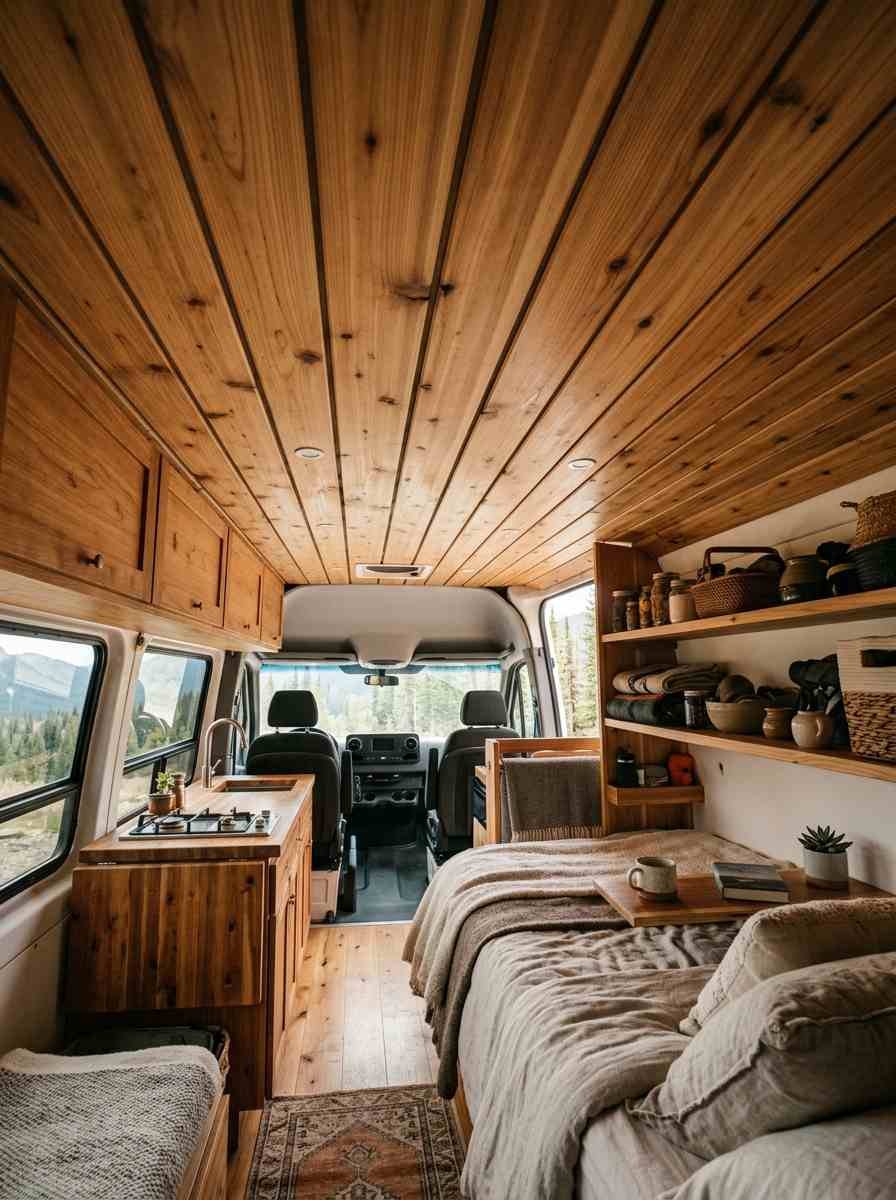
The ceiling in a van is basically a fifth wall, and it’s one people forget constantly.
A warm wood stain, tongue-and-groove paneling, or even a soft painted color overhead makes the whole cabin feel intentional instead of like an afterthought.
15. Let your personal collection be the final layer
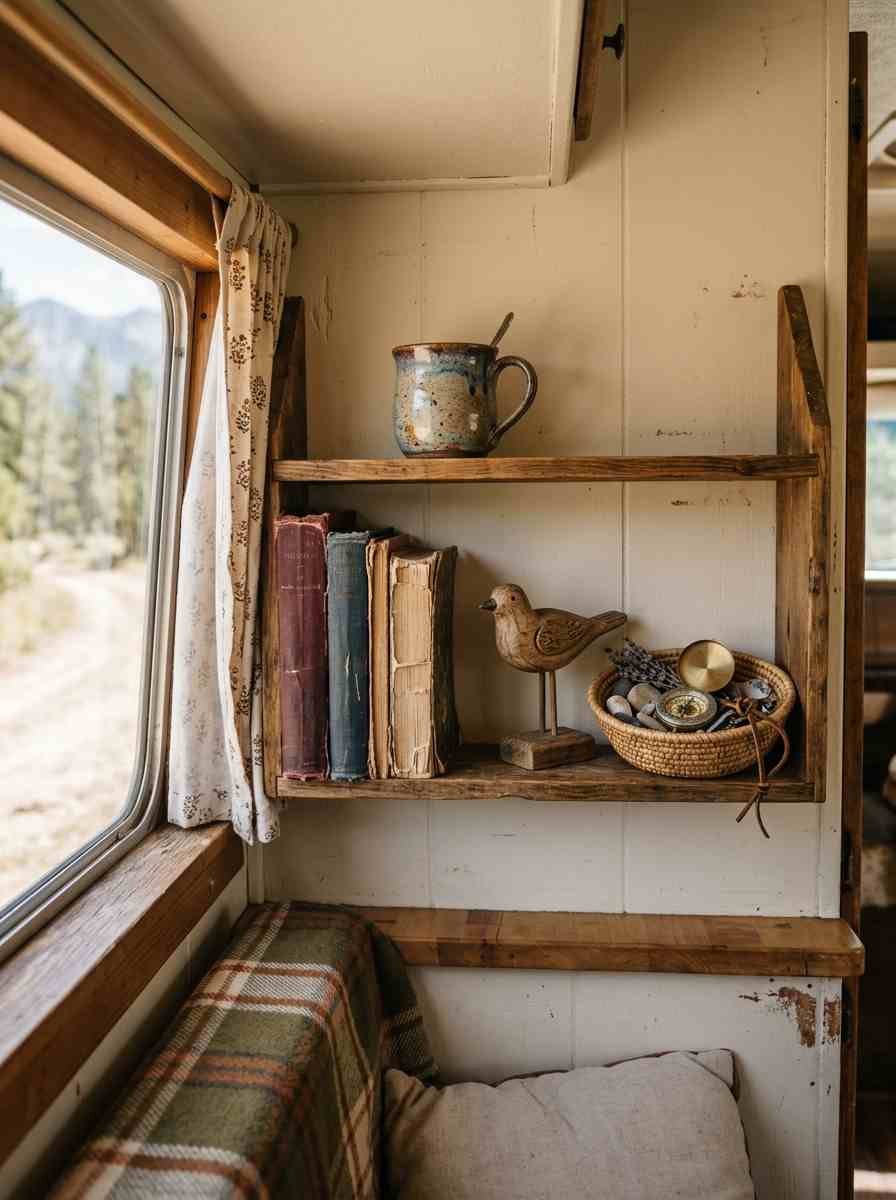
Books you actually read. A mug from a trip that mattered. A small piece of art from a market stall somewhere.
This is the part that separates a boho-styled van from a boho-inspired van, and it can’t really be bought as a kit.
Wow, honestly, this is the part I’d tell any new builder to prioritize over anything else on this list. Anyone can buy a macrame hanging.
Not everyone bothers to make the space actually theirs.
Quick side note, completely unrelated: I once tried to convince myself a camper needed a full espresso setup before it needed curtains.
It did not. Curtains came first. The espresso machine is still sitting in my garage.
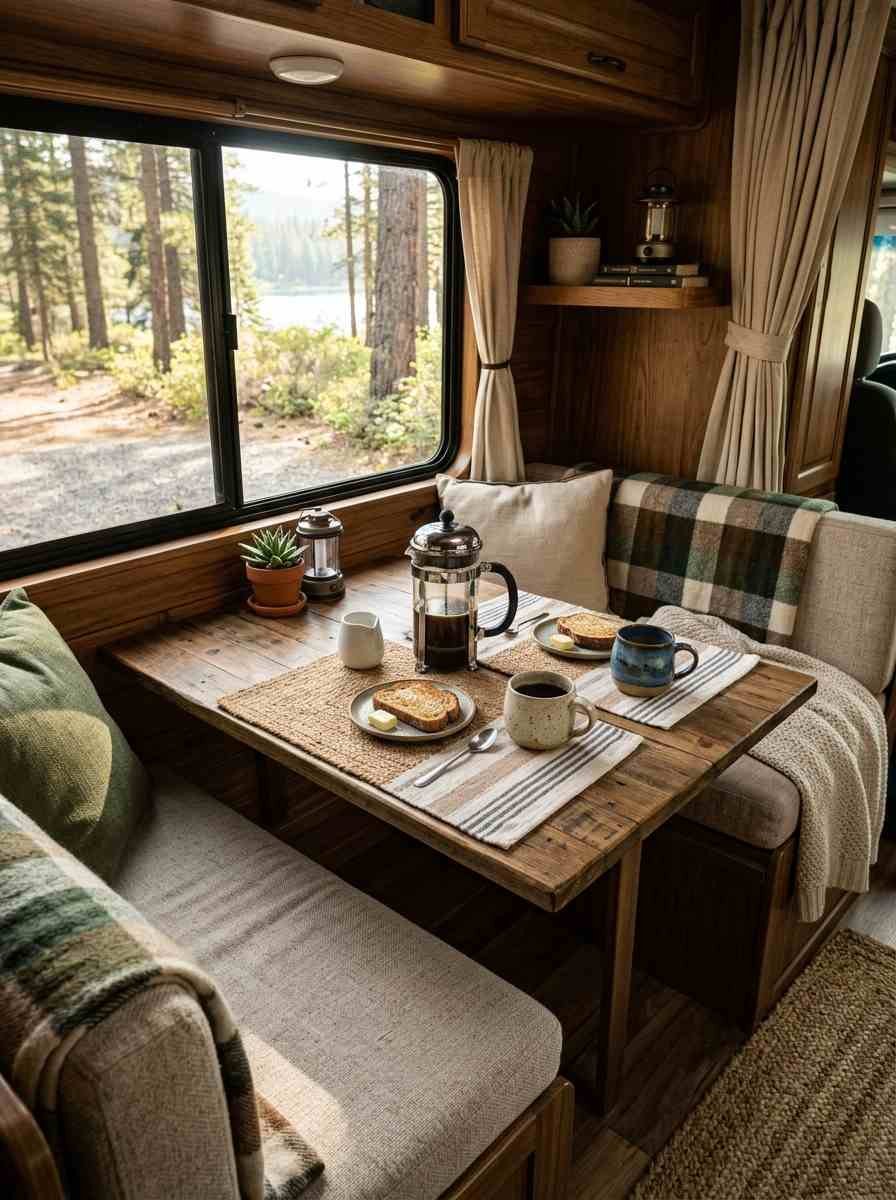
Quick color palette cheat sheet
| Palette | Best for | Key accent pieces |
|---|---|---|
| Terracotta & cream | Warm, desert-inspired builds | Rust cushions, jute rug, brass hardware |
| Dusty rose & sage | Softer, romantic feel | Pink bedding, green plants, rattan mirror |
| Mustard & deep teal | Bold, retro-boho mix | Patterned curtains, teal cabinet, woven pouf |
| Sand & charcoal | Minimal boho for small vans | Neutral textiles, black hardware, wood shelving |
Frequently asked questions
How much does a boho camper interior actually cost? It depends entirely on how much you DIY versus buy new. Thrifted rattan, painted cabinets, and a couple of well-chosen textiles can pull this off for a few hundred dollars. Fully custom builds with real macrame art and tile work run much higher.
Is boho style practical for full-time van life? Mostly yes, with a few tweaks. Skip real candles and heavy ceramics, and choose hardy plants over delicate ones. Everything else (fabric, rugs, lighting) travels just fine.
What’s the easiest boho update to try first? Fairy lights and a couple of new throw pillows. Both are cheap, both are reversible, and both change the feel of the space almost instantly.
So which one of these are you actually going to try first? I’d genuinely love to know, drop it in the comments or save this pin and tag me when you make it happen.
Your van (or camper, or trailer, whatever you’re working with) deserves to feel like home, not like a rental unit on wheels.
