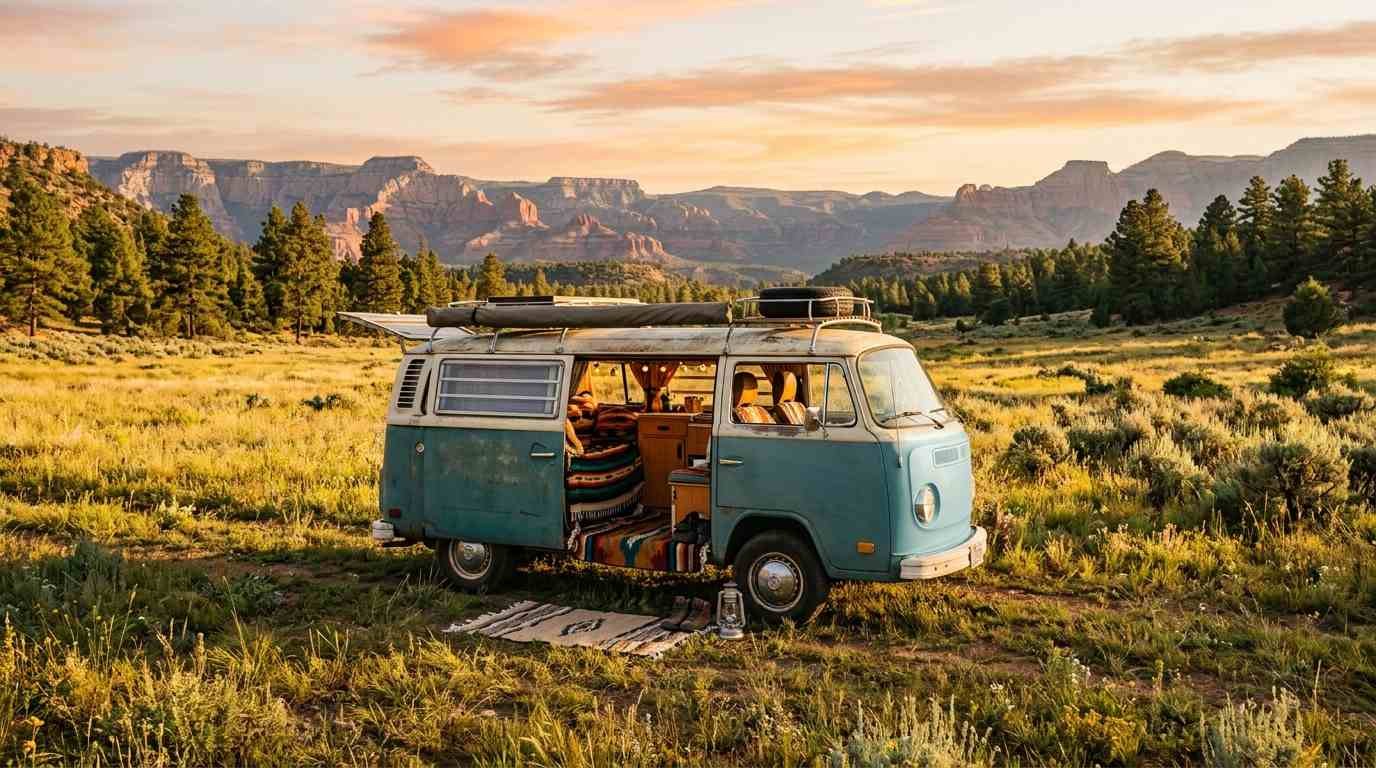
I converted my first van three summers ago, and I still remember staring at the bare plywood walls thinking: how does anyone make this look like a home?
Turns out, boho style is the easiest van aesthetic to pull off. It forgives mismatched textures. It loves flea market finds.
And it looks incredible in photos, which matters if you’re planning your build around Pinterest boards (no judgment, I do it too).
This list covers 22 ideas that actually work in a moving vehicle, not just a styled photo shoot. Some I’ve tried myself.
A few come from campers I’ve met on the road who were kind enough to let me poke around their rigs and ask way too many questions.
Textiles that make the space feel lived-in
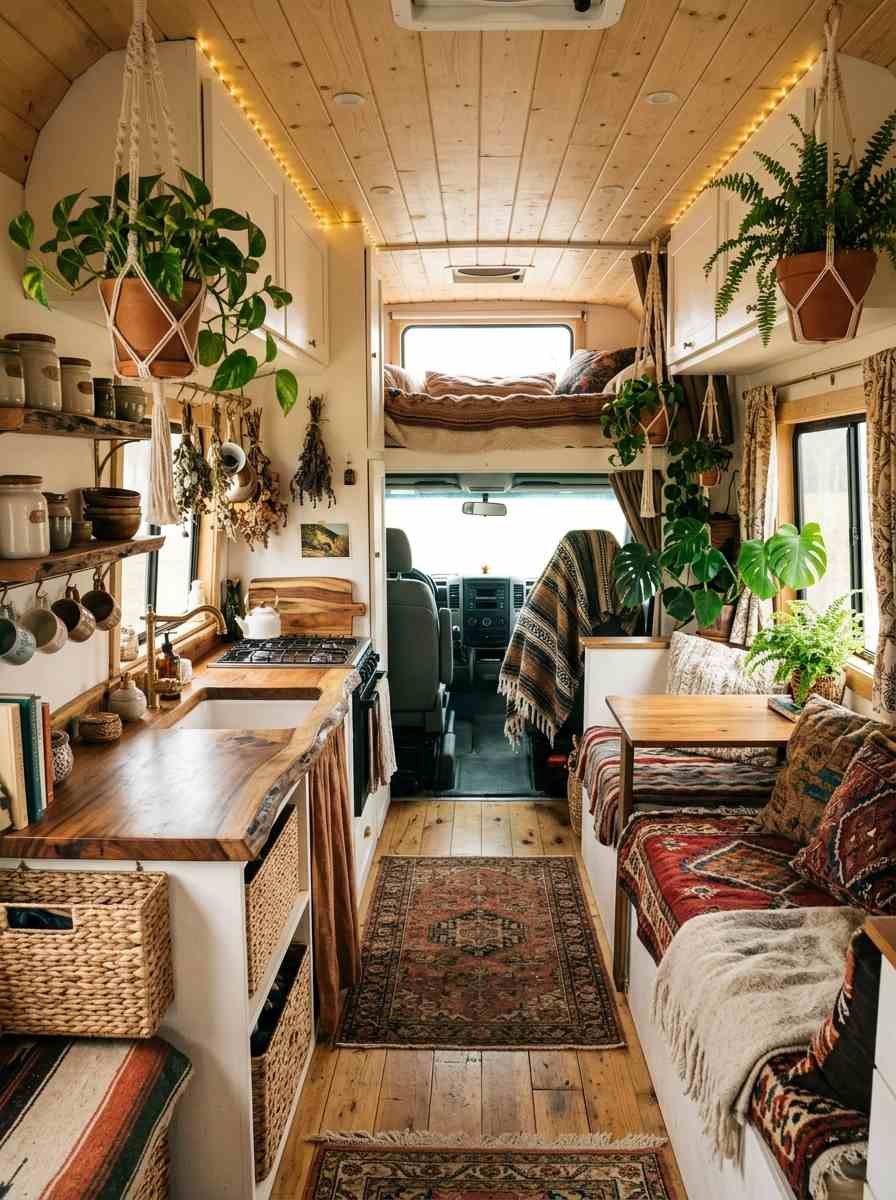
1. Layer rugs instead of picking one. A single rug in a camper looks sparse. Two or three overlapping rugs, different patterns, same color family, instantly warms up the floor.
I use a flatweave on the bottom so it doesn’t slide, then a smaller shag layered on top.
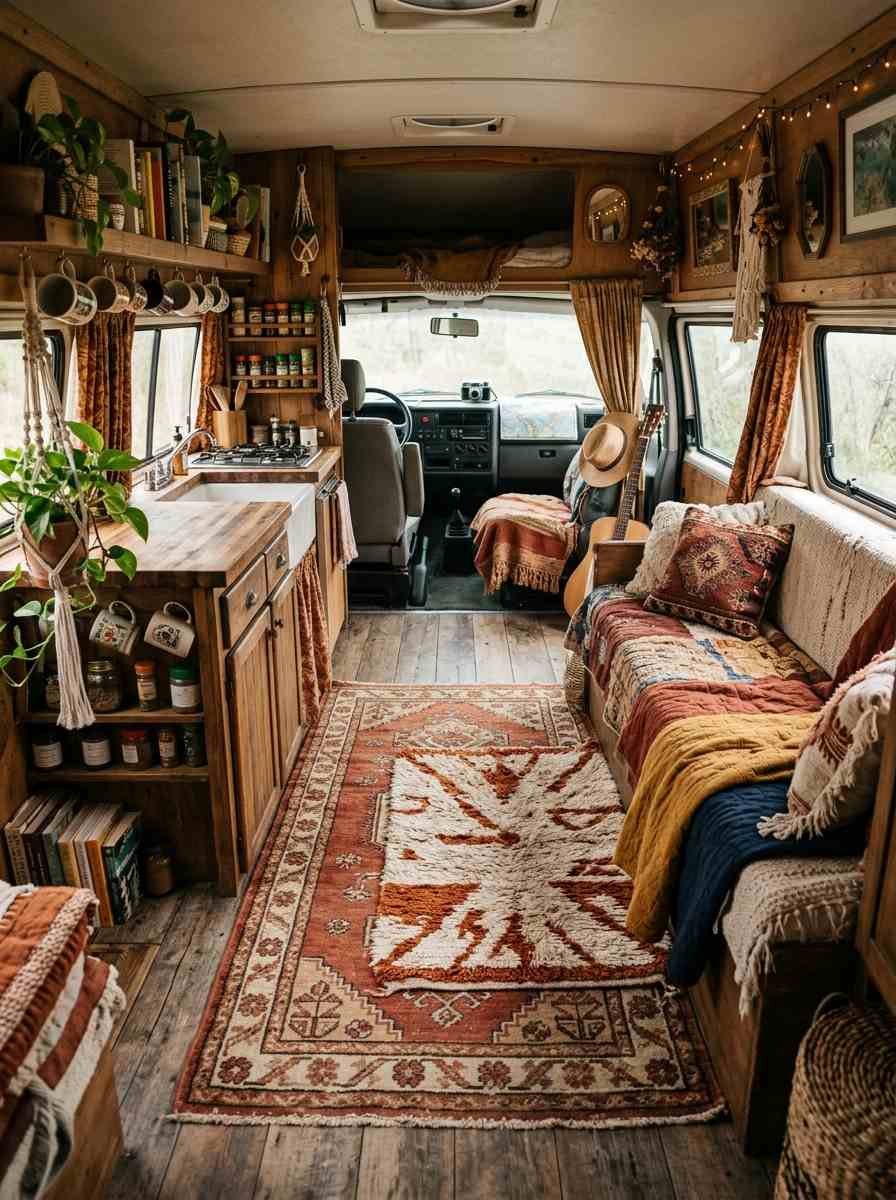
2. Hang a macrame wall piece behind the bed. This is the single fastest way to make plain paneling look intentional. If you’ve never tied a knot in your life, this macrame wall hanging tutorial walks through it in an afternoon. IMO it’s the best return on time you’ll get from any decor project on this list.
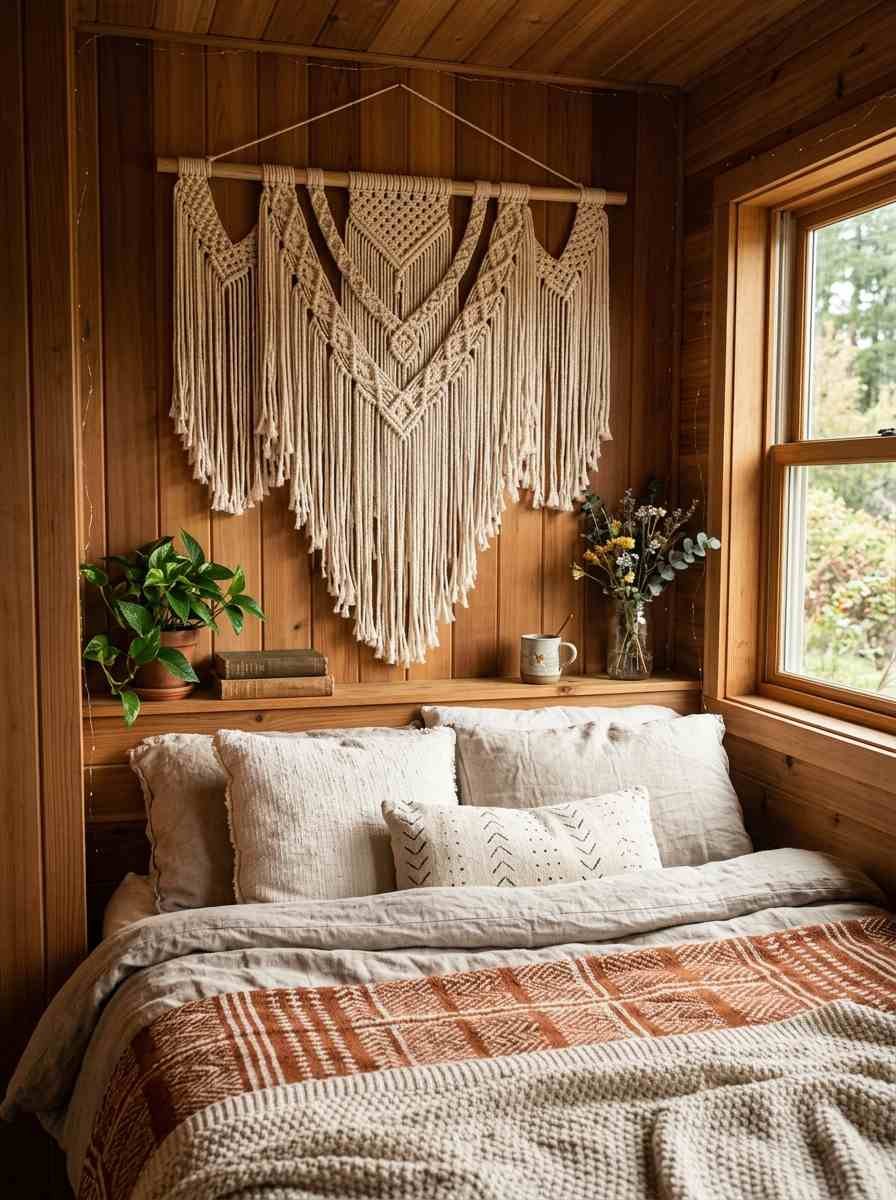
3. Go heavy on floor cushions. Skip the folding camp chairs. Floor cushions in Moroccan or kilim prints double as extra seating and stack away in seconds. Three or four is enough. Ten is a fire hazard and a laundry problem.
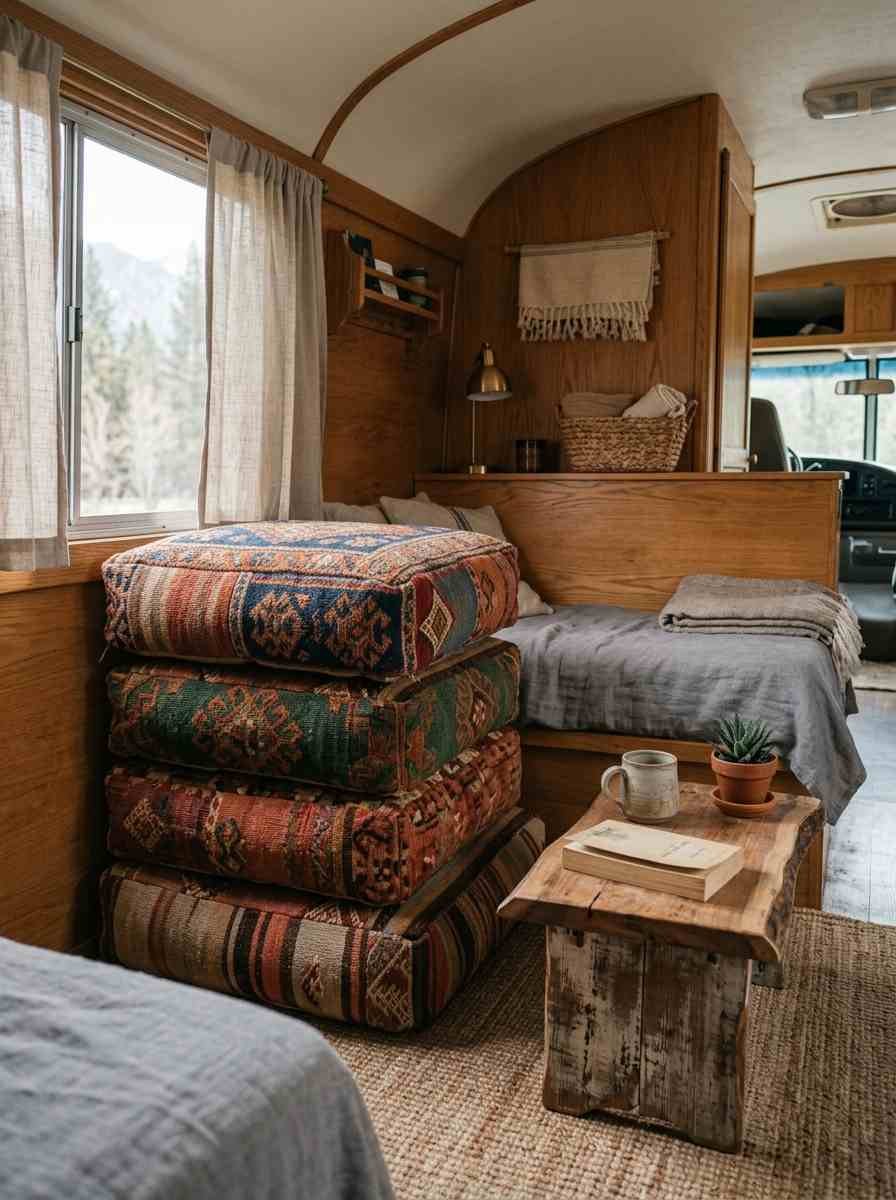
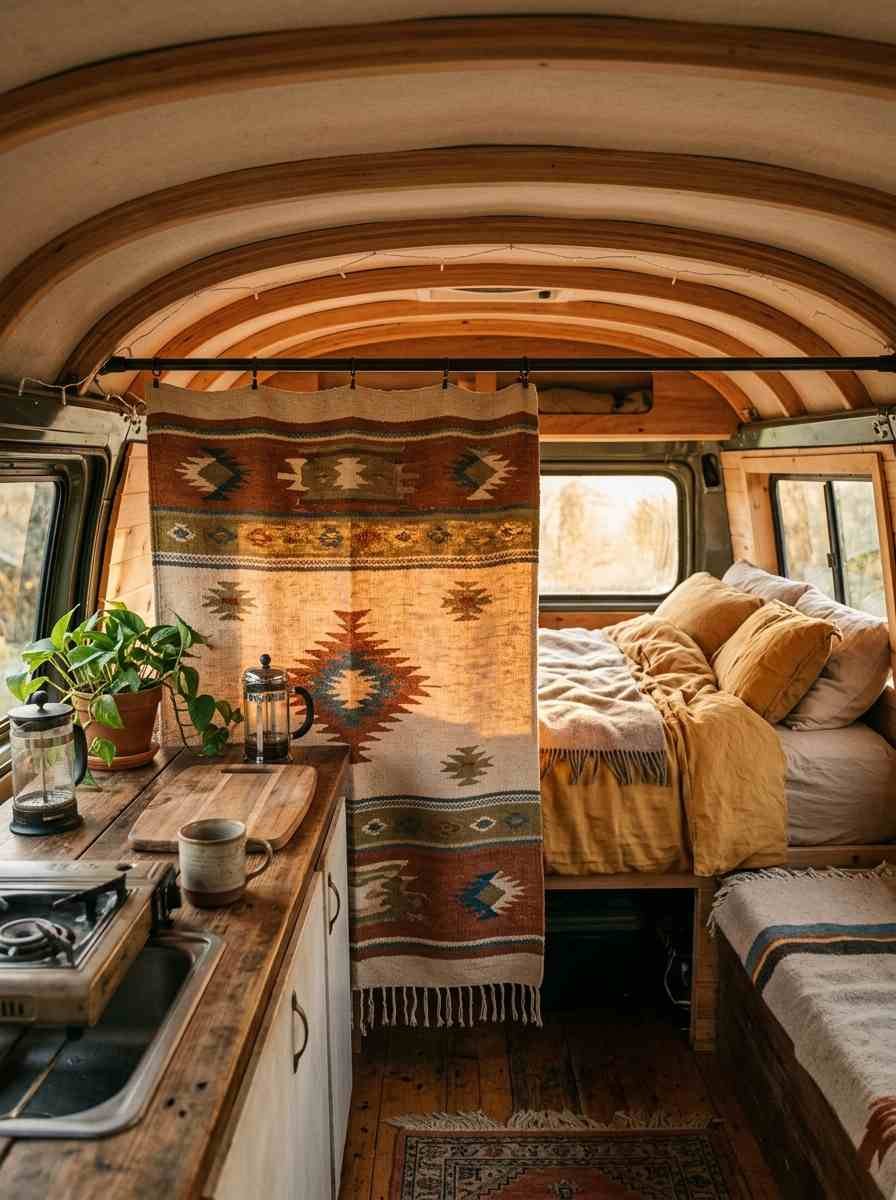
4. Swap curtains for a tapestry room divider. A tapestry strung on a tension rod separates the sleeping area from the kitchen without feeling like a hard wall. It also blocks morning sun, which matters more than people expect until they’re jolted awake at 5 a.m. by a sunrise they didn’t ask for.
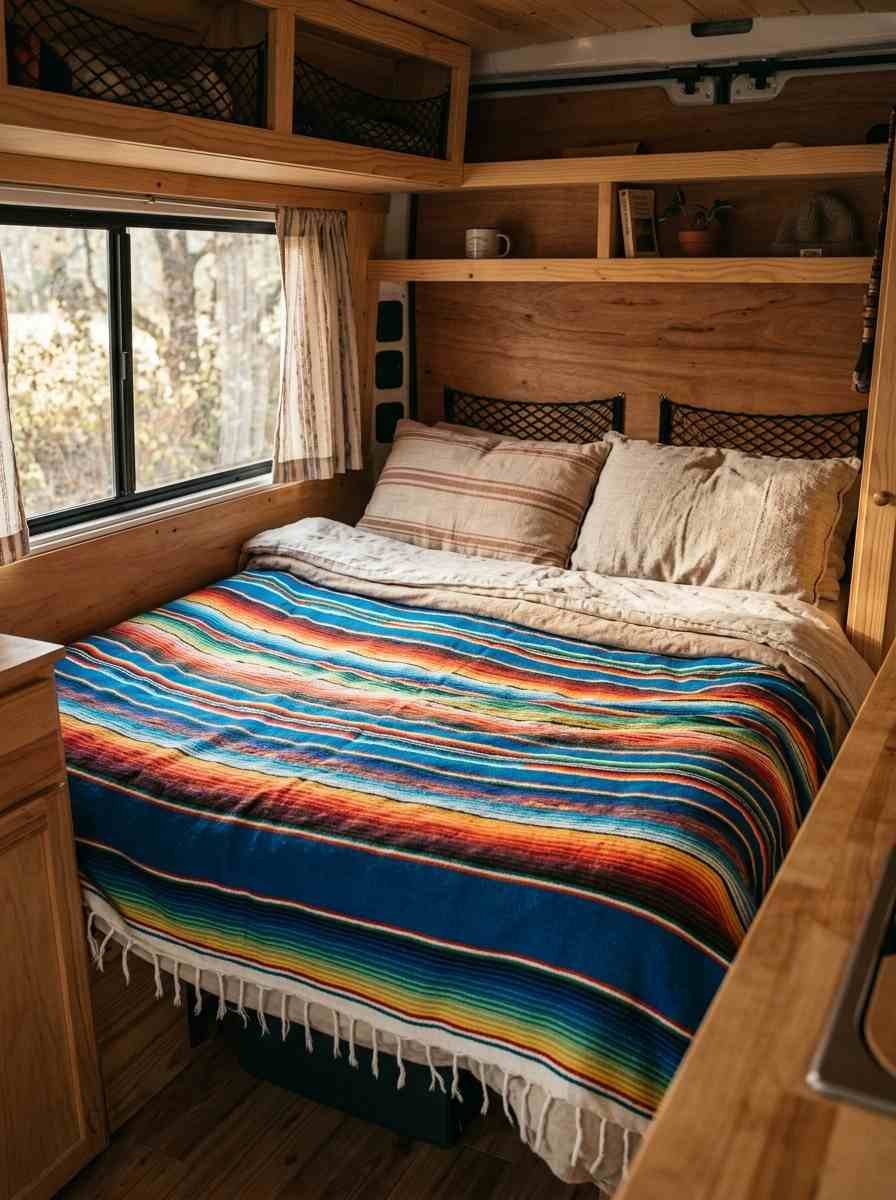
5. Use a patterned blanket as a bedspread, not just a throw. One good Mexican blanket or a Turkish kilim thrown over the mattress does more visual work than an entire matching bedding set. Bonus: it hides stains better than white linen ever will.
Storage and furniture that still feel boho
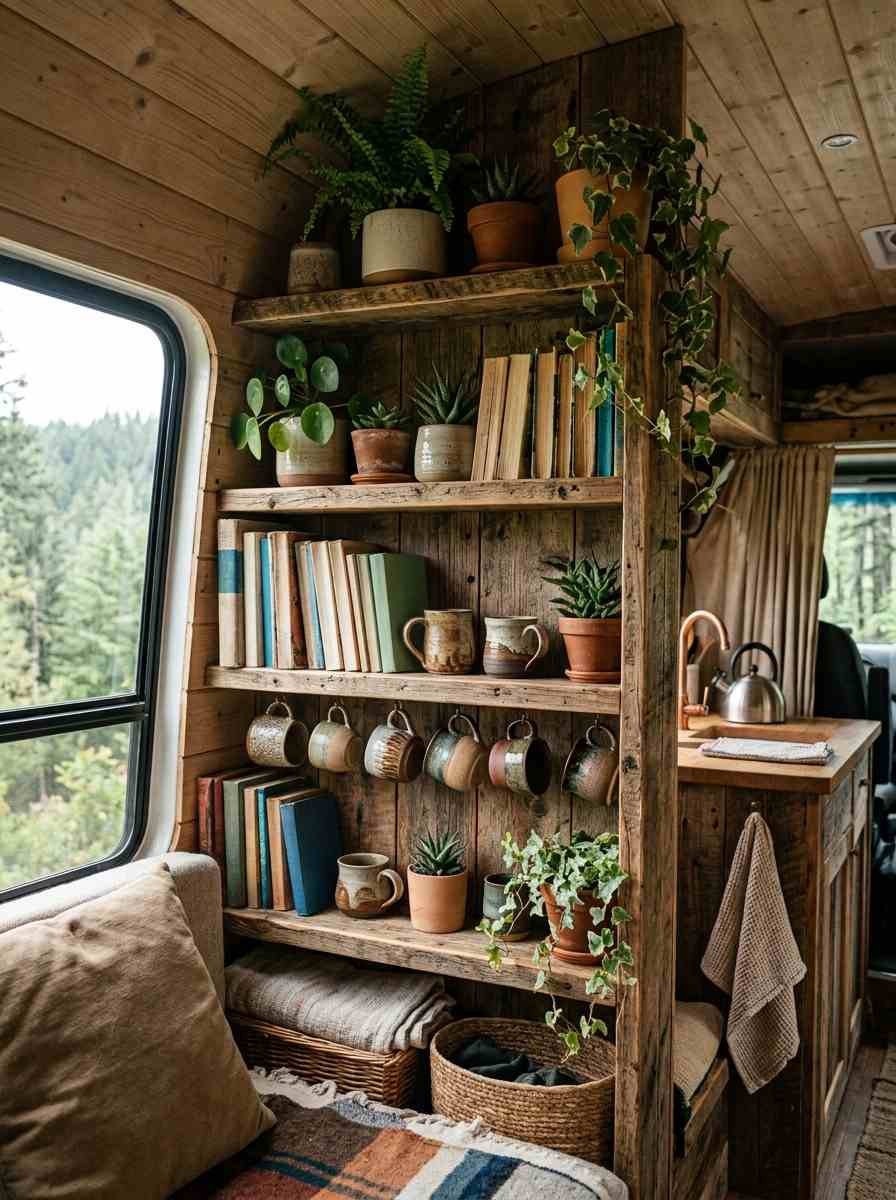
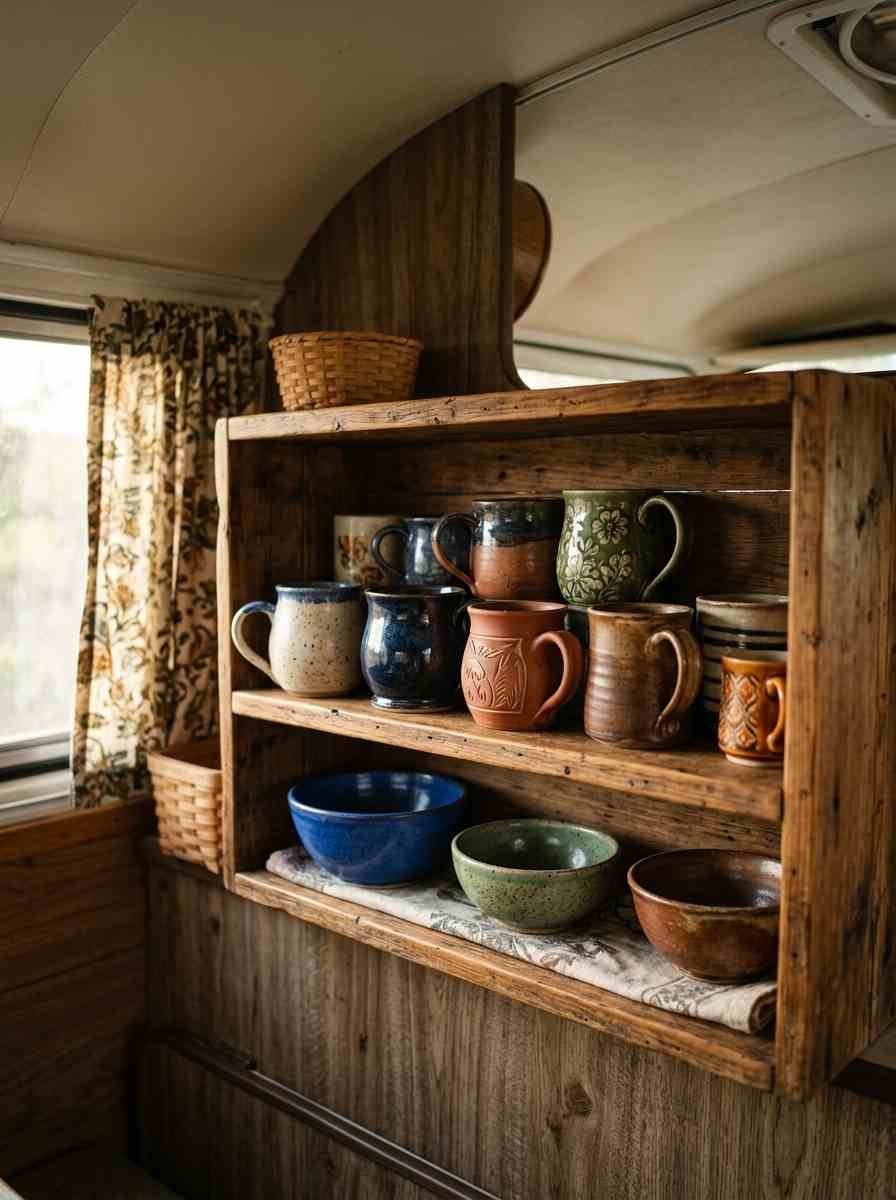
6. Build open wood shelving instead of closed cabinets. Closed cabinets feel like a kitchen showroom. Open shelves, especially reclaimed or rough-sawn wood, let you display plants, books, and mugs while keeping everything within reach. Just brace items so they don’t fly off on a bumpy road.
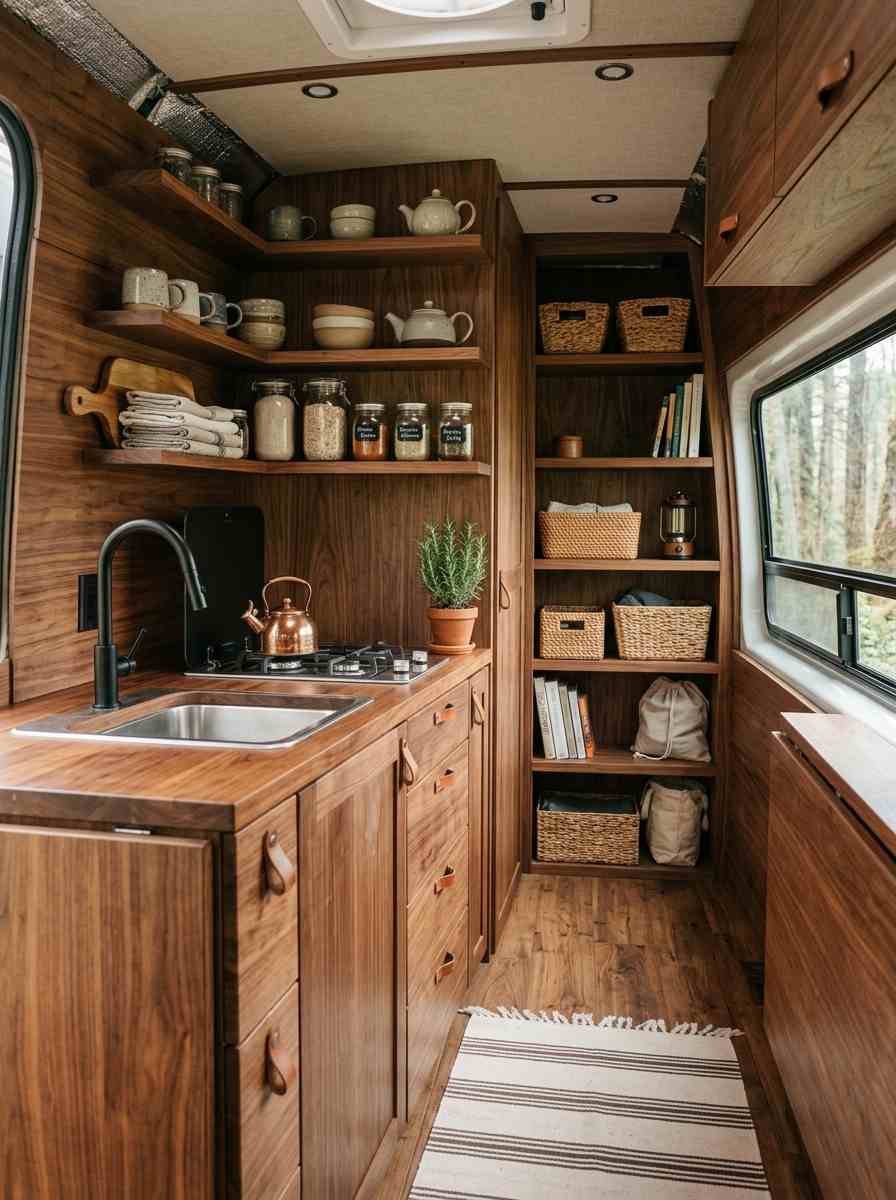
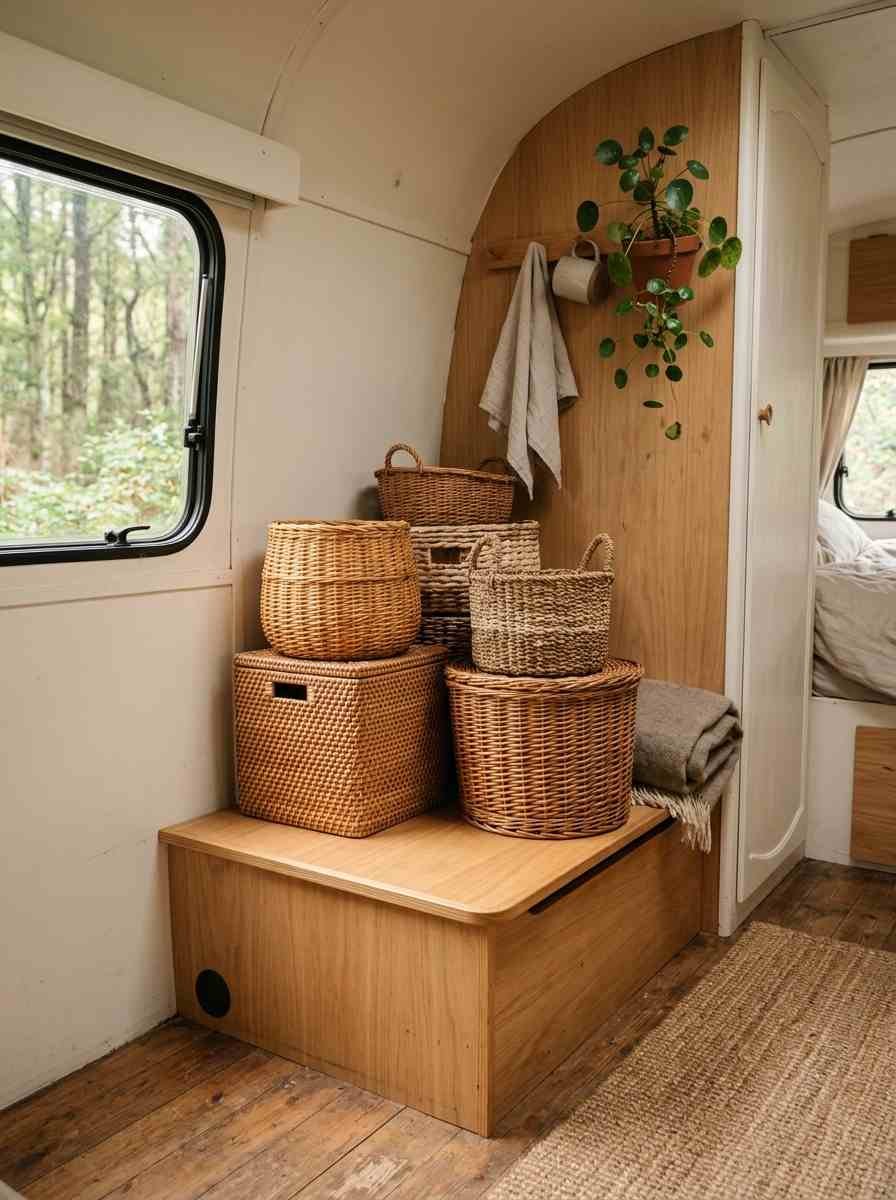
7. Add a rattan or wicker basket for everything loose. Chargers, sunglasses, that one sock. Wicker baskets are cheap, light, and somehow make clutter look styled rather than messy. I keep three sizes and it’s saved me more mornings than I’d like to admit.
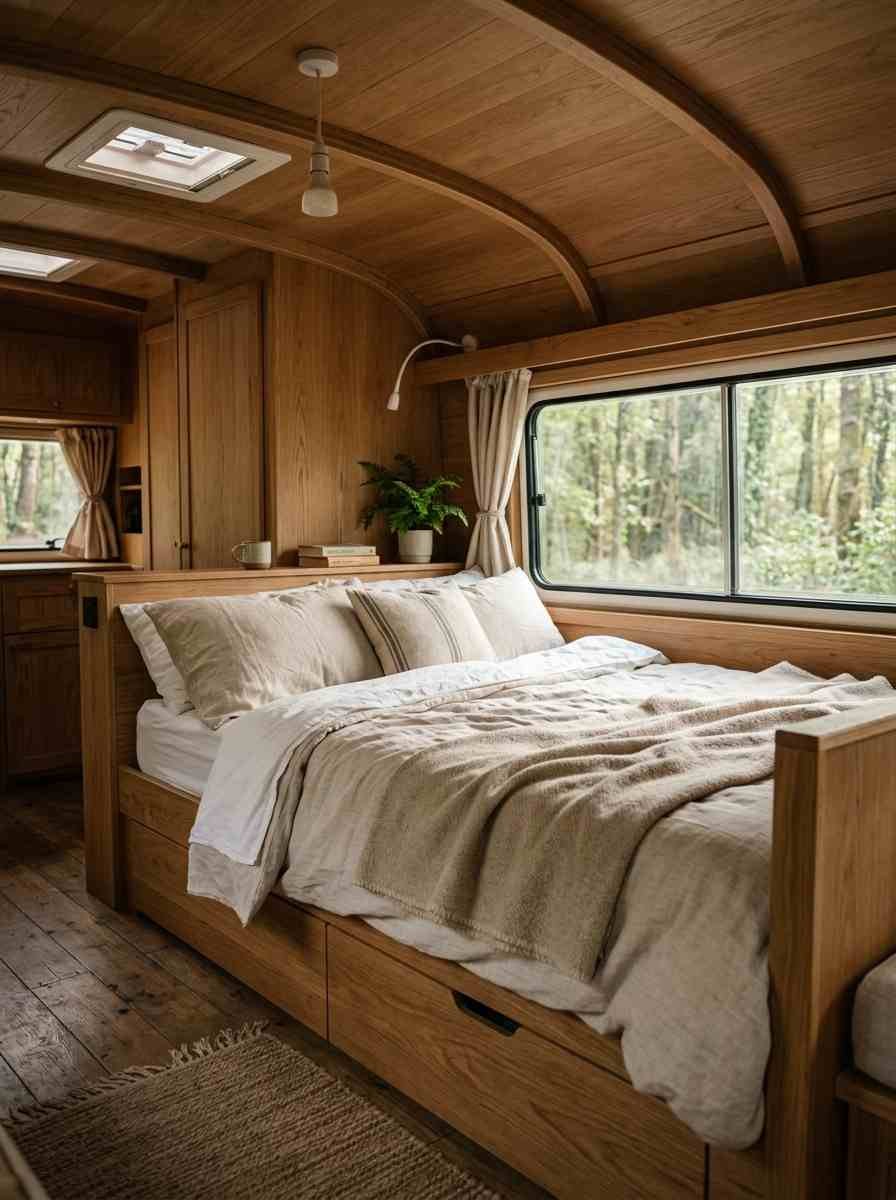
8. Choose a low platform bed frame. Boho design leans toward grounded, low furniture rather than tall bed frames. It also opens up headroom, which in a converted van is basically gold.
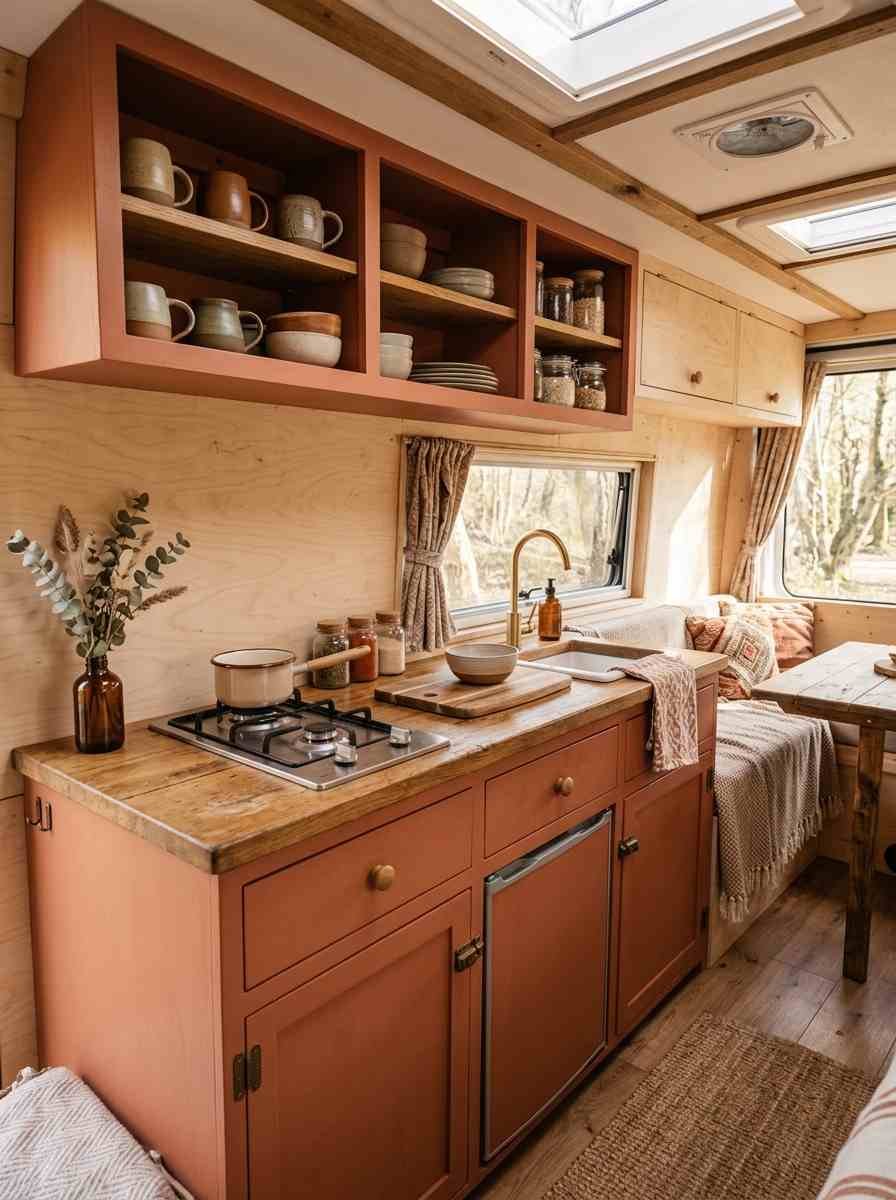
9. Repaint your existing cabinets in a warm terracotta or clay tone. You don’t need new cabinetry to change the whole vibe. A quart of paint in a warm earth tone and a weekend is often all it takes.
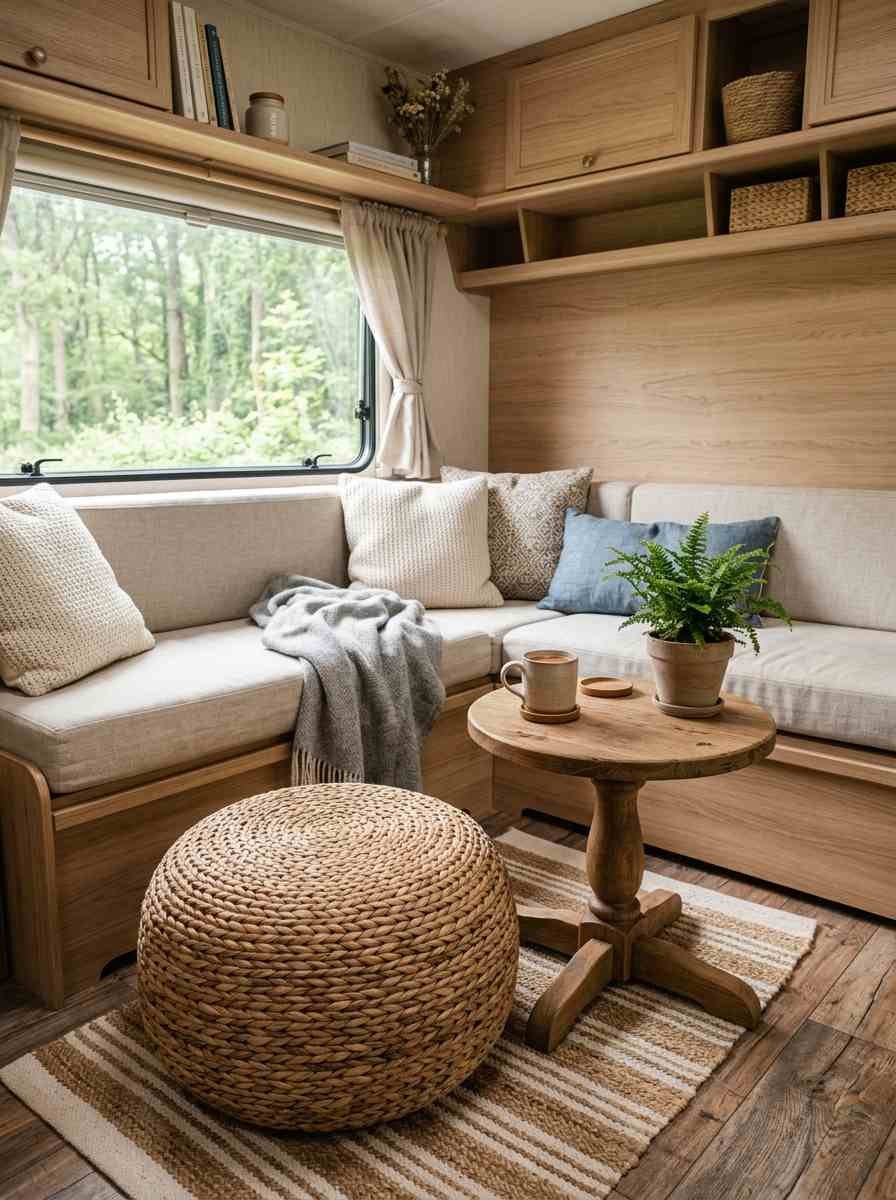
10. Hang a woven pouf or floor basket as extra seating. These pack flat-ish, weigh almost nothing, and give you a spot to sit without permanently using floor space. Good for tight galley layouts.
For a broader look at how people are laying out small spaces right now, this van decor and design guide has some solid non-boho ideas too, worth a look if you want contrast.
Lighting and ambiance
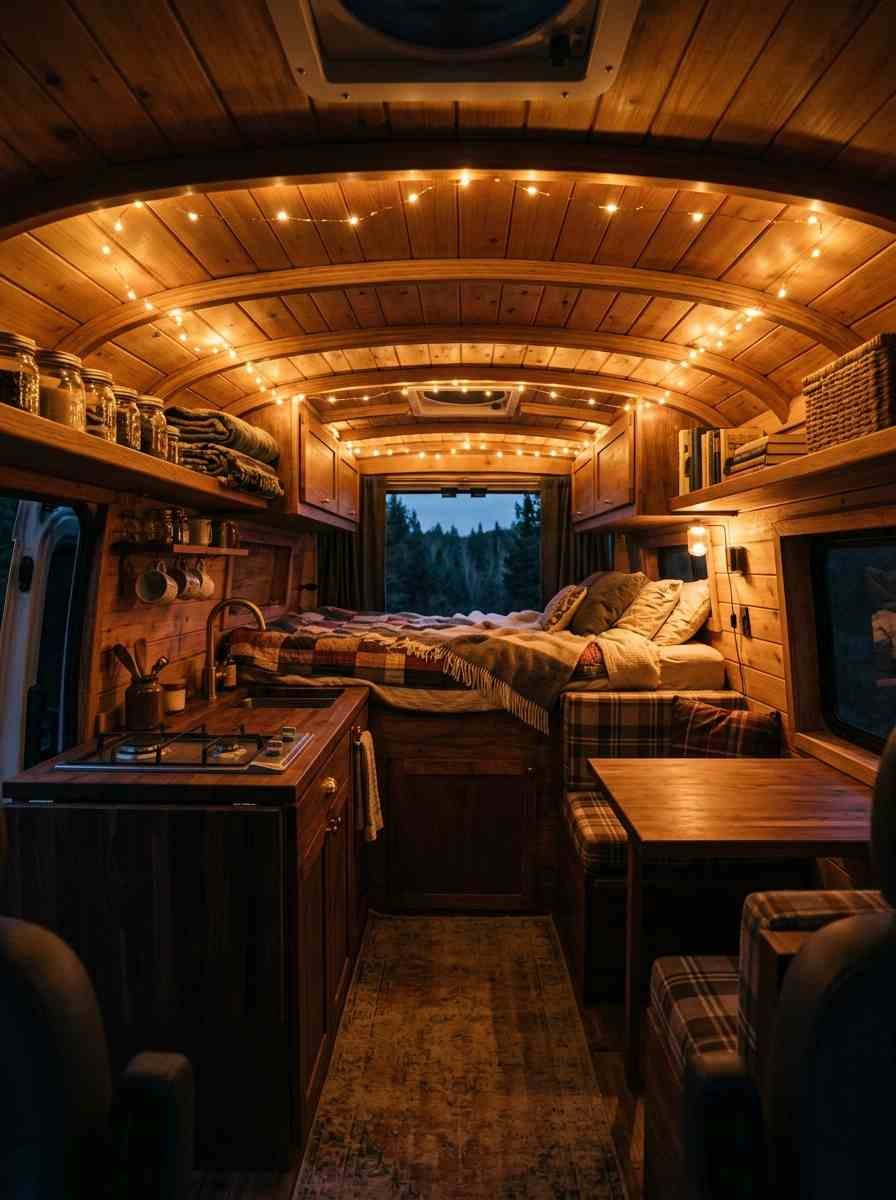
11. String warm LED fairy lights along the ceiling ribs. Skip cool white. Warm white or amber-toned string lights are what actually read as “cozy boho,” not “camping equipment.” Battery-powered ones save you a wiring headache if you’re not comfortable running new circuits.
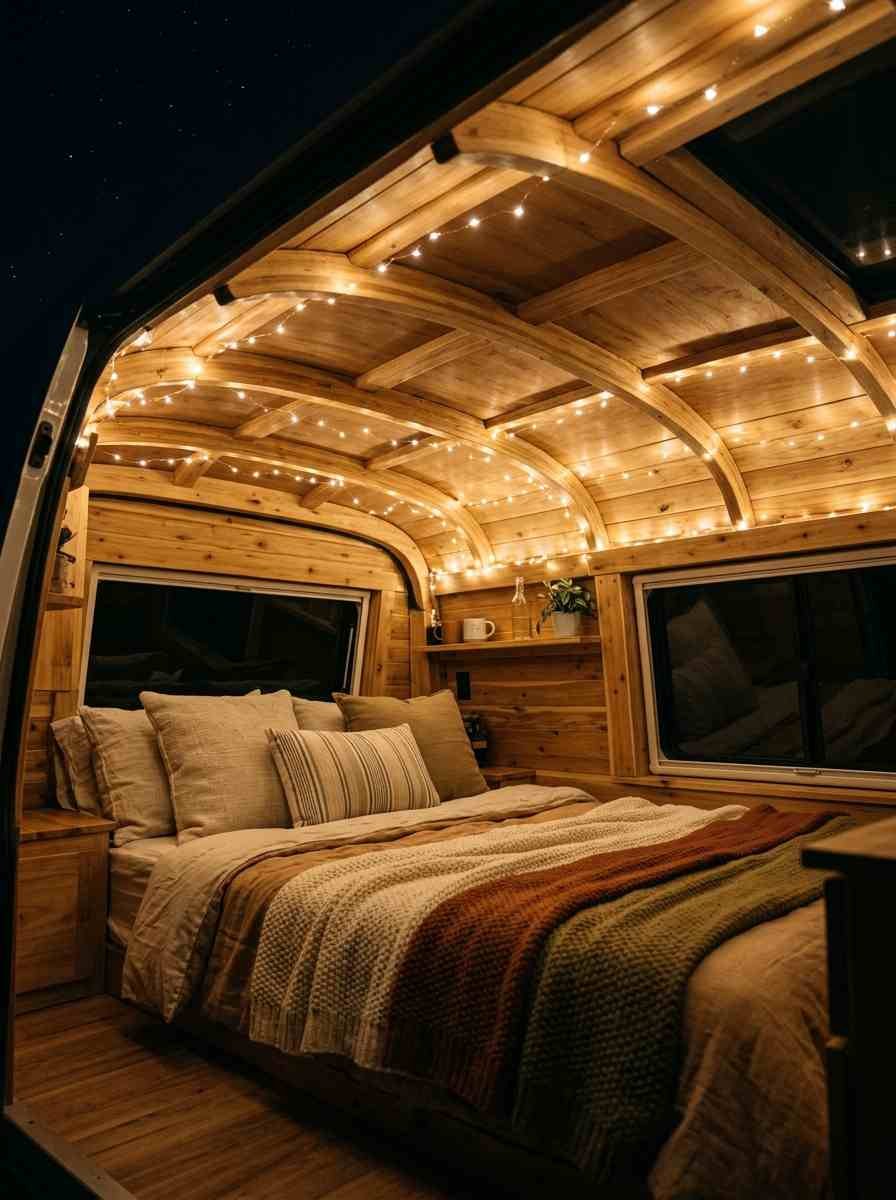
12. Add a rattan pendant shade over your one ceiling light. A basic dome light fixture gets a full personality transplant with a $20 rattan shade clipped over it. Just make sure it’s rated for enclosed, low-clearance spaces.
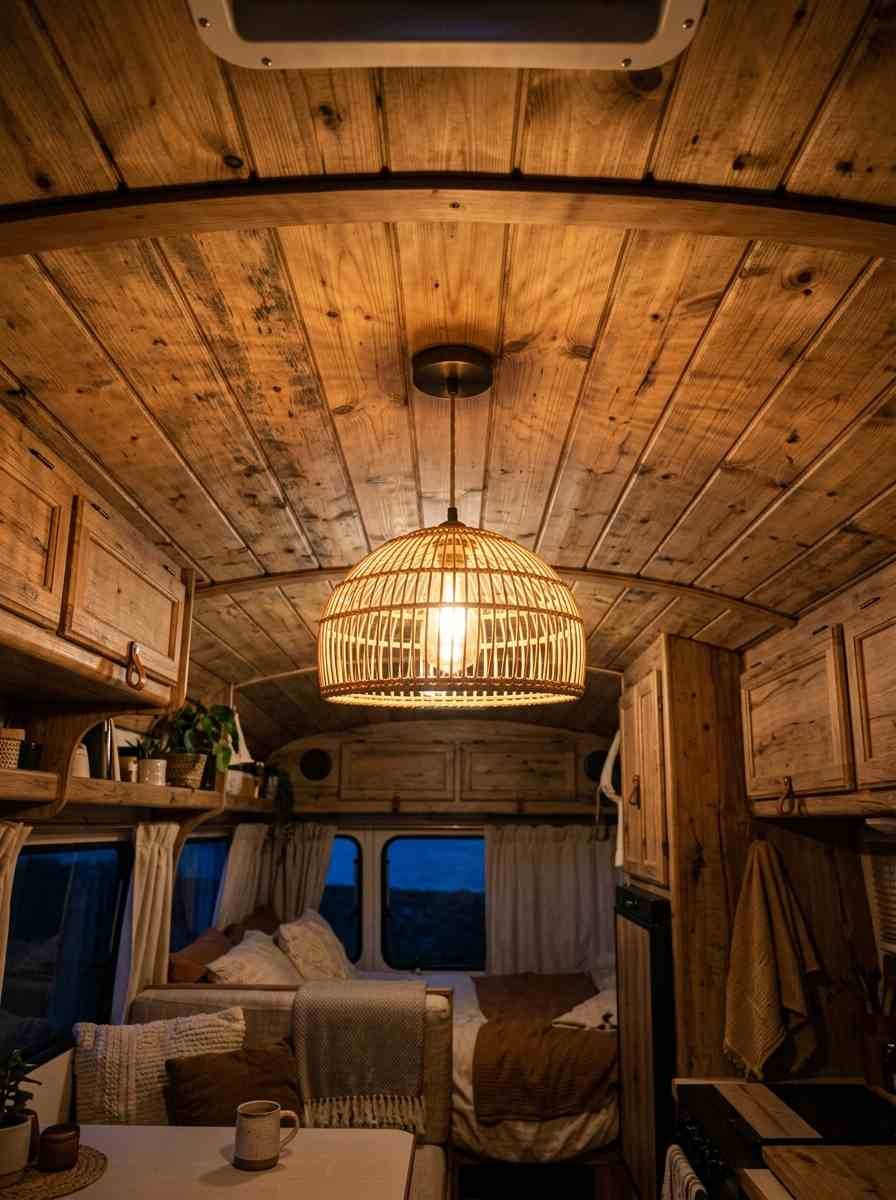
13. Bring in a battery lantern with a woven or wooden base. For nights parked off-grid, a lantern does more than a headlamp ever will for mood. Look for ones with a warm dimmable setting.
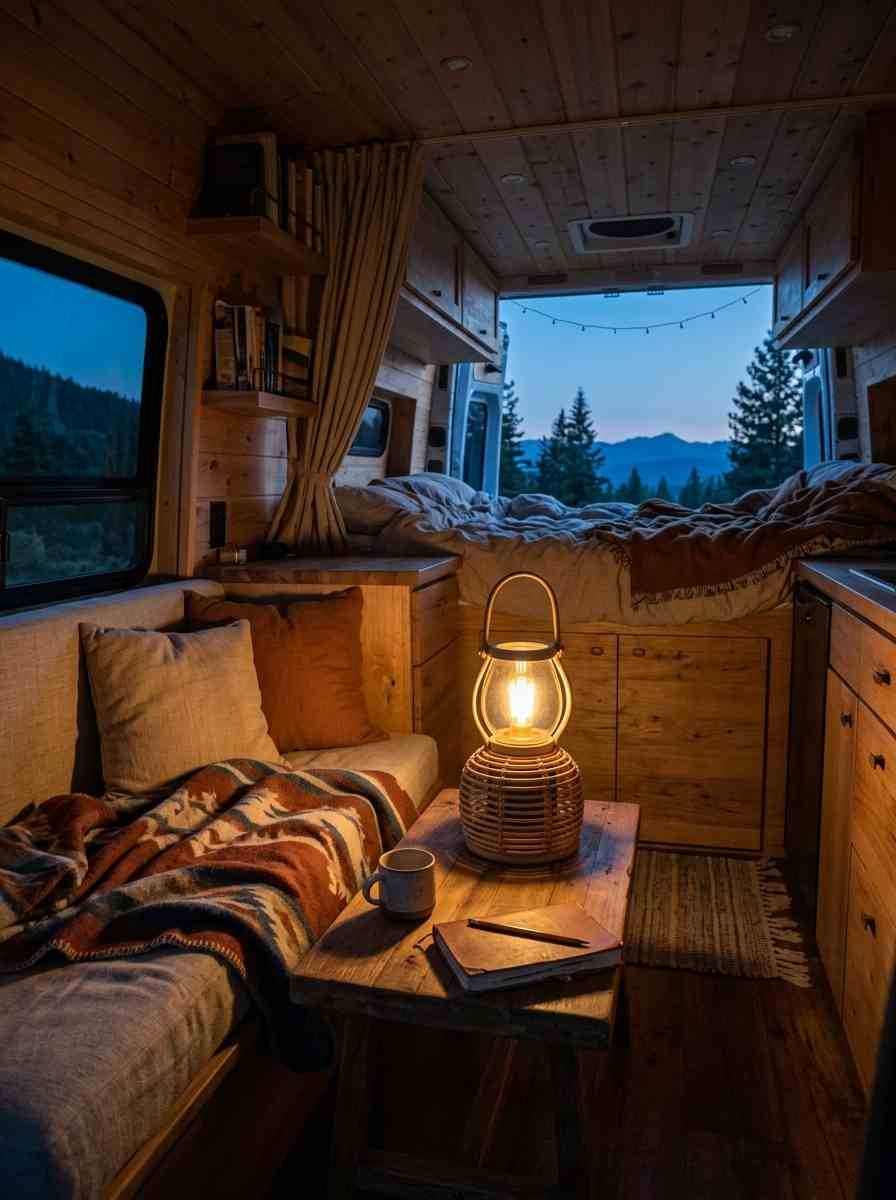
14. Use candles sparingly, and only the flameless kind. I know, real candles look better. But an open flame in a space this size, with this much fabric, is asking for trouble.
LED candles have gotten genuinely convincing.
Plants, textures, and small details
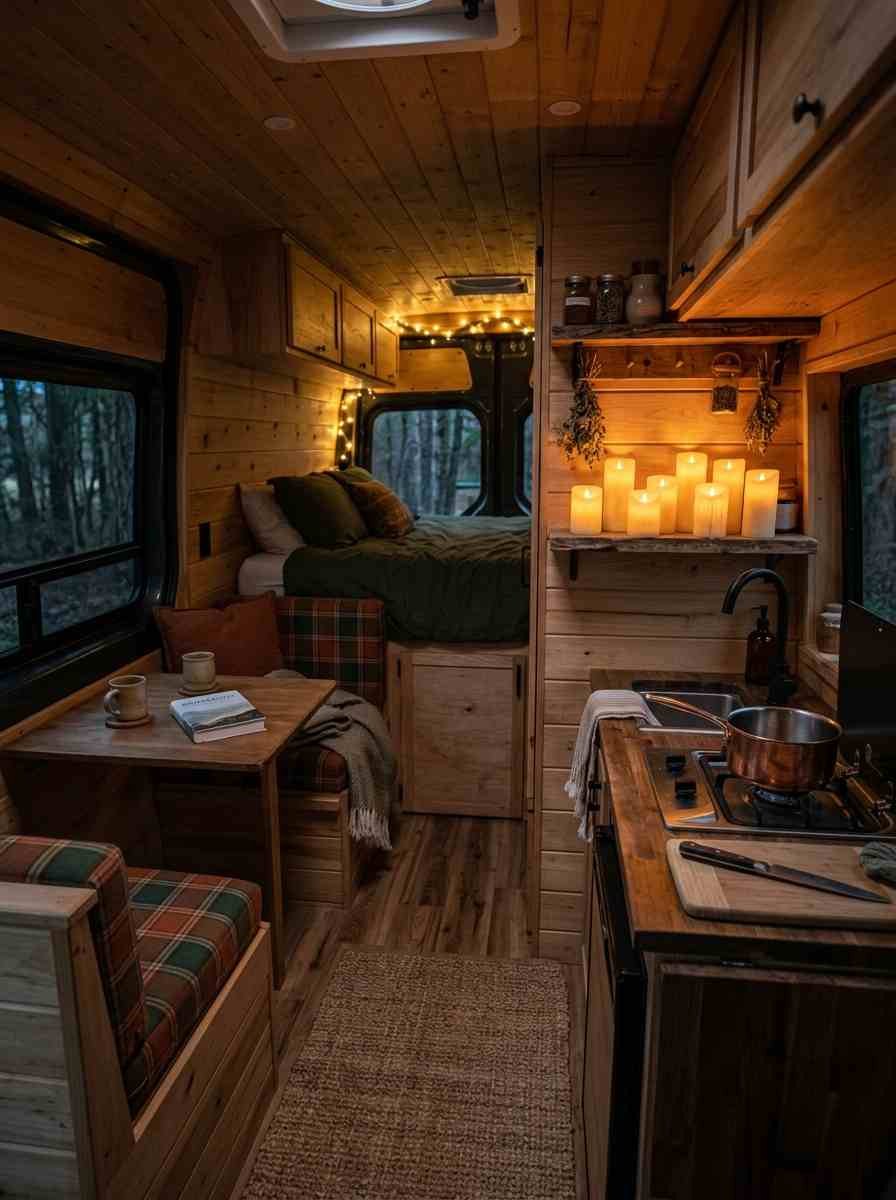
15. Hang trailing plants from ceiling hooks. Pothos or a faux version if you travel through hot climates. Trailing greenery softens every hard edge in a van and costs almost nothing.
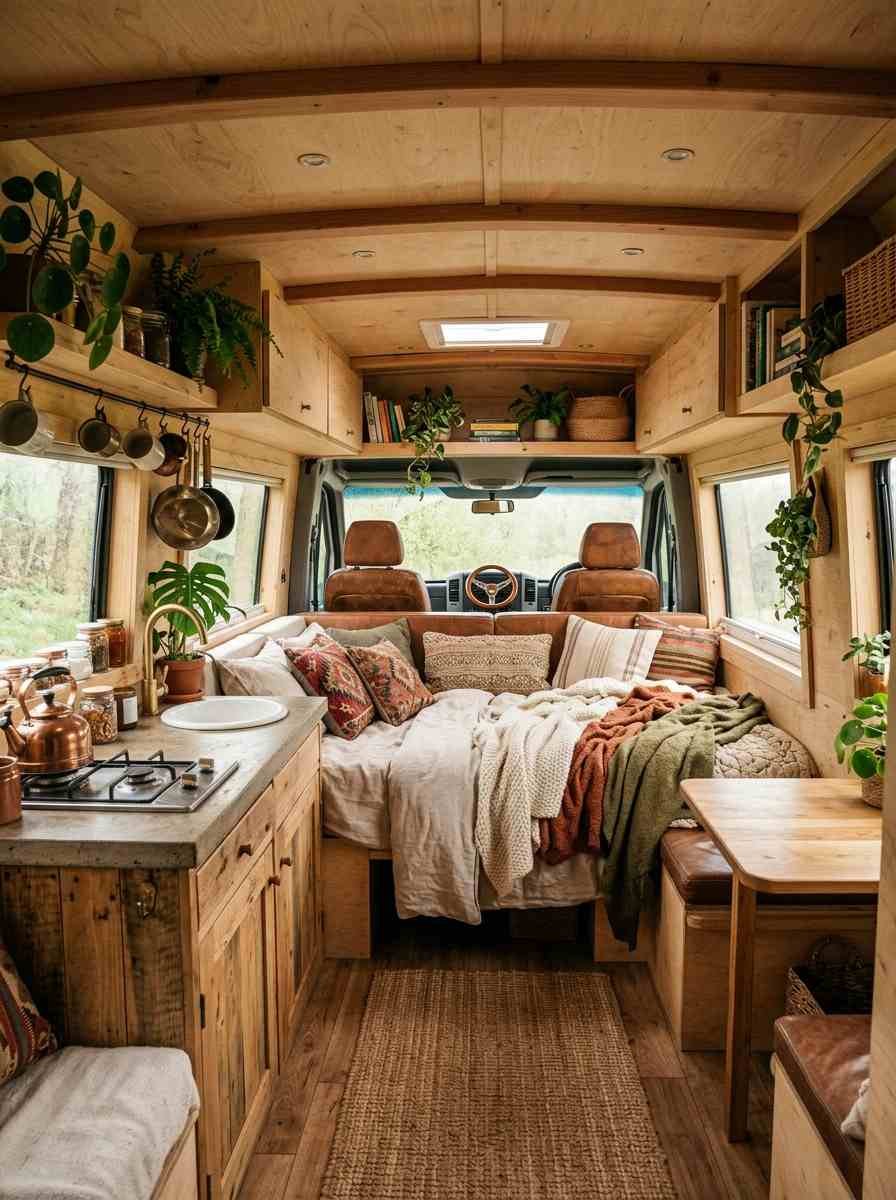
16. Add a small collection of woven baskets on open shelving. Not for storage this time, just as texture. Empty baskets stacked or nested look intentional and add warmth without adding weight.
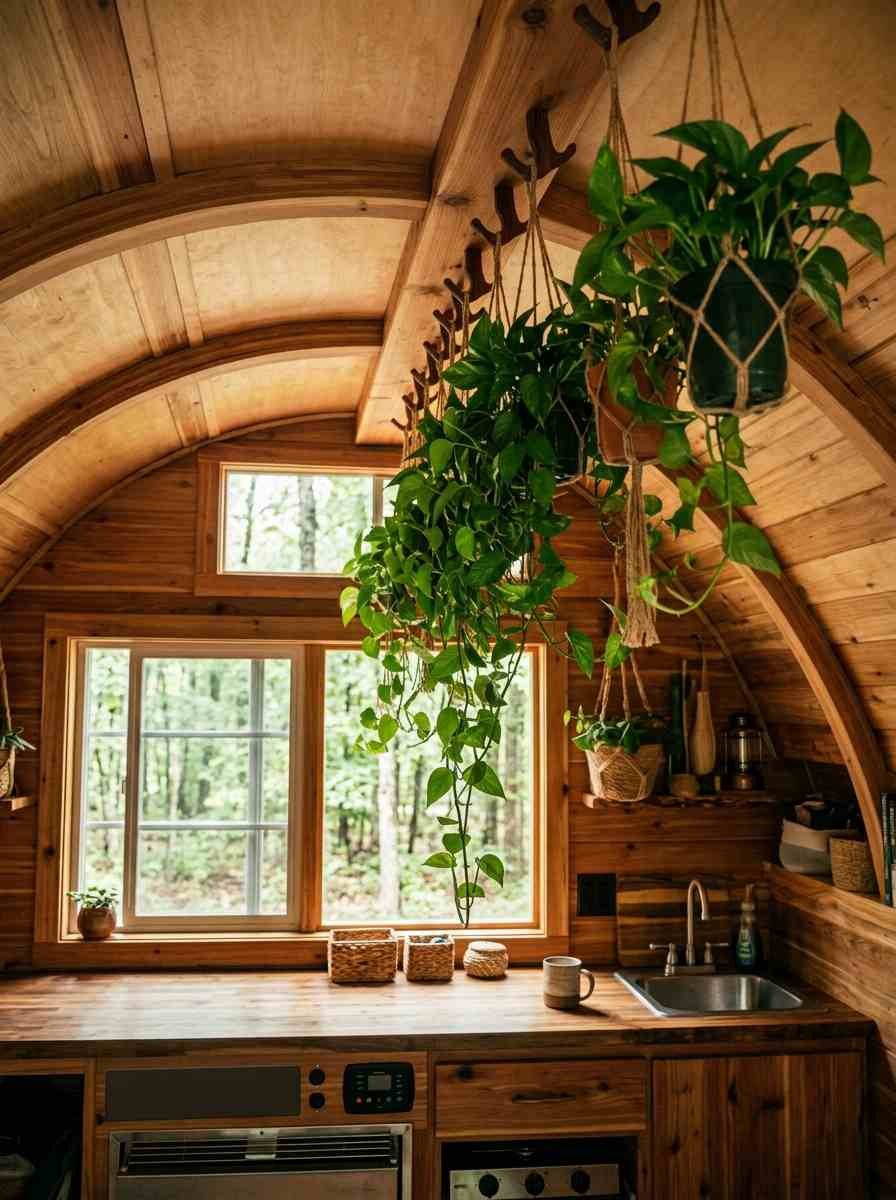
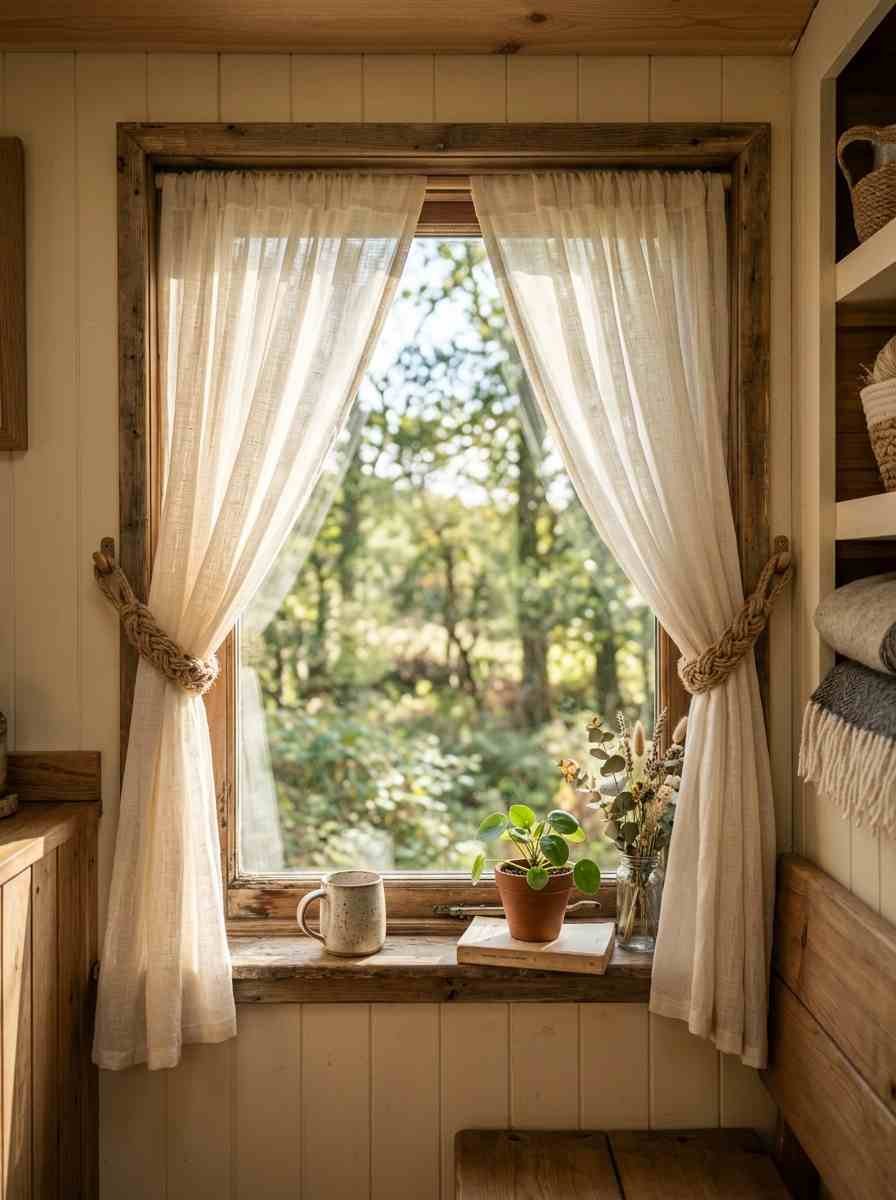
17. Use natural fiber curtain tiebacks instead of plastic clips. It’s a tiny detail, but jute or leather tiebacks instead of the plastic ones that ship with most curtain kits change the whole feel of a window.
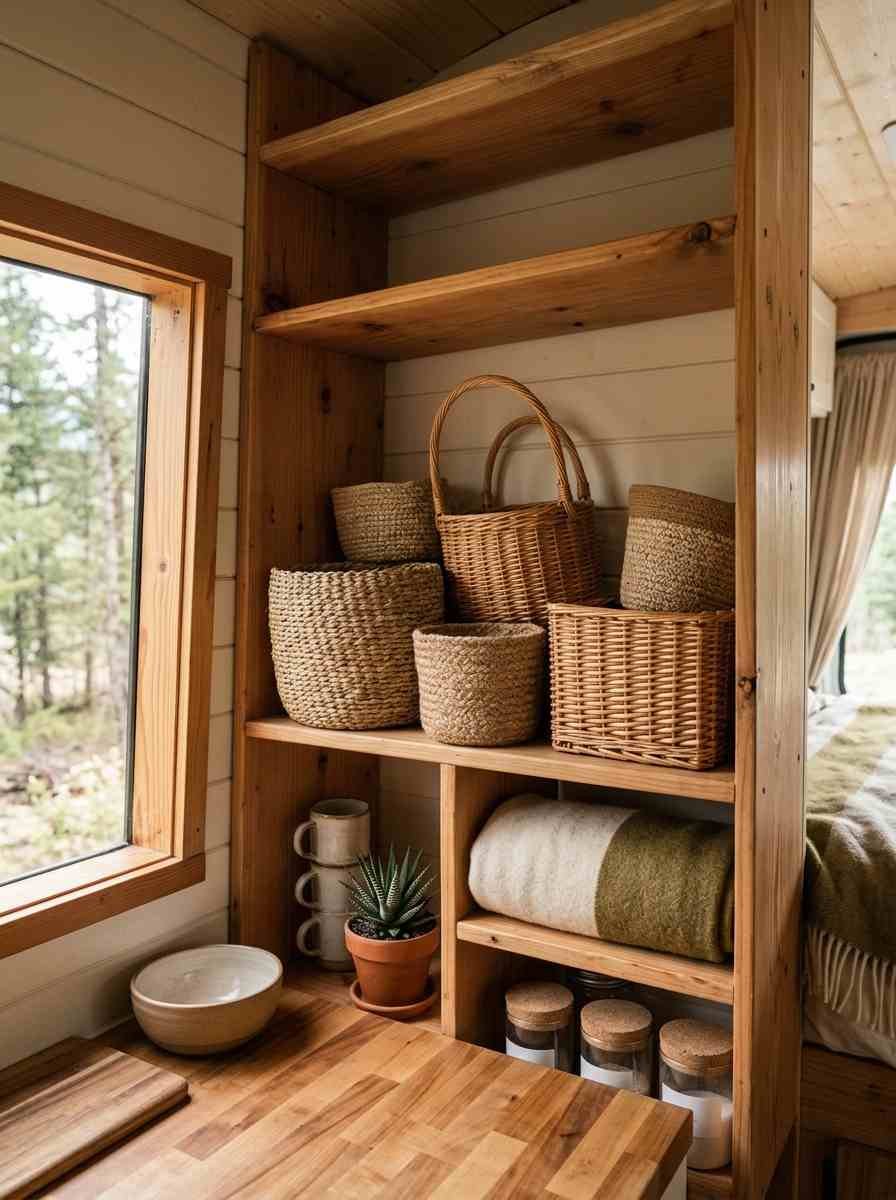
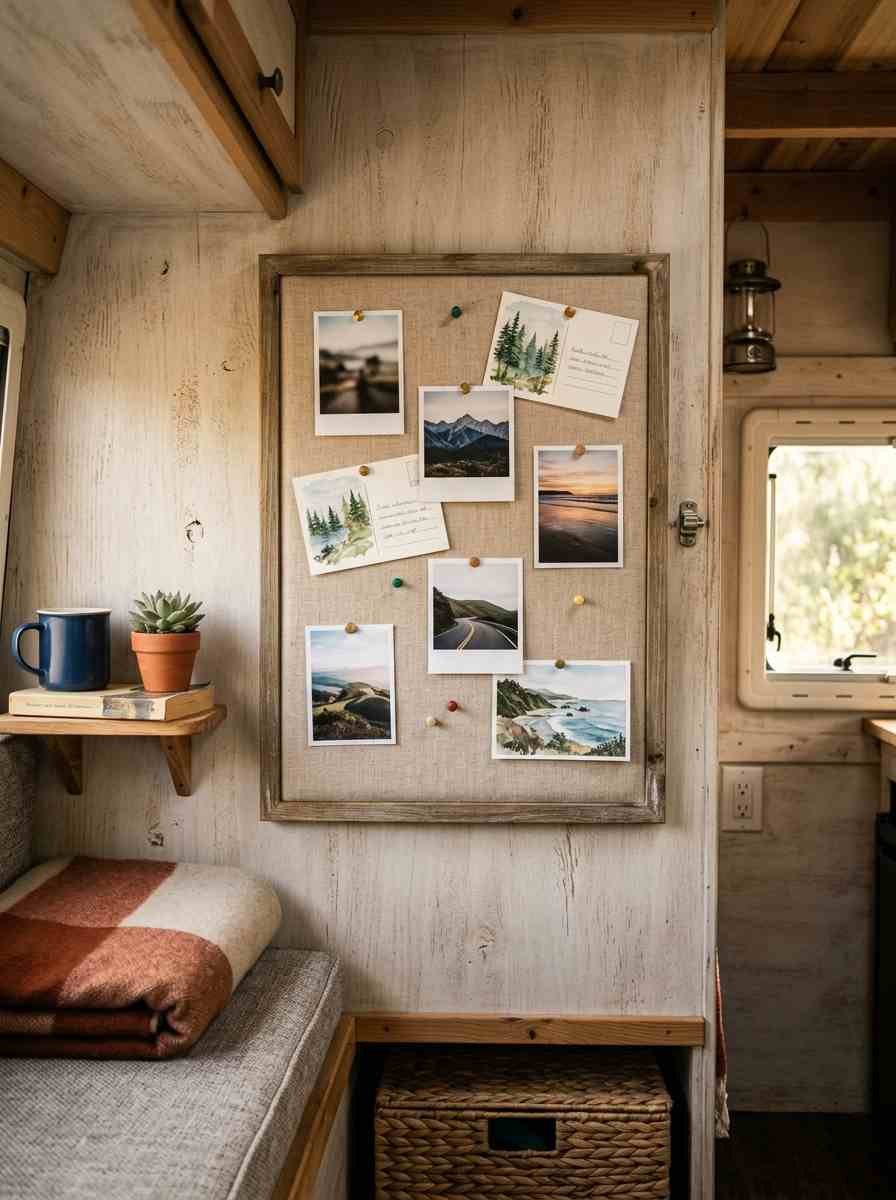
18. Frame a few travel photos or postcards on a small cork or fabric board. This is where your personality actually shows up.
Print a handful of photos from past trips and pin them somewhere visible. It’s cheap, it’s personal, and it makes the space feel like yours rather than a rental.
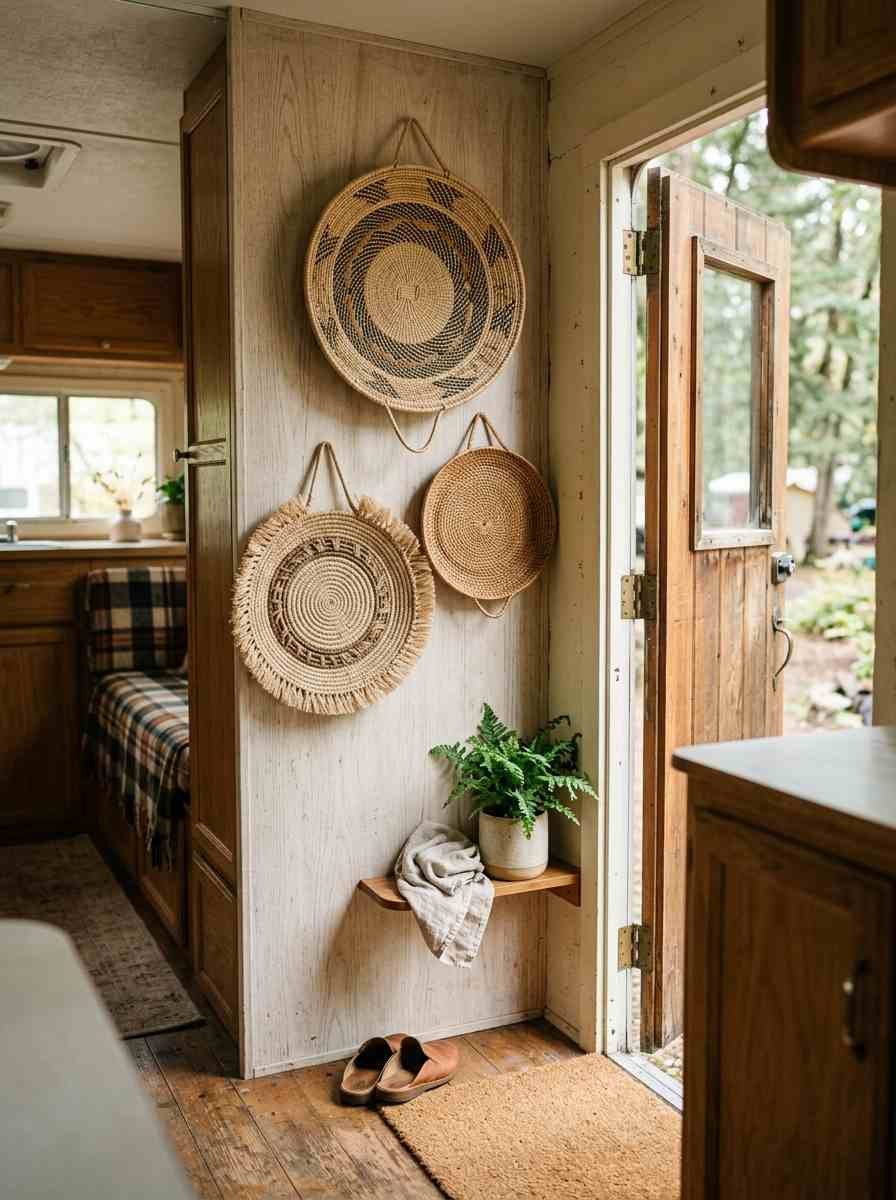
19. Add a woven wall basket cluster near the entry. A grouping of three flat woven baskets by the door is a design trick borrowed straight from boho apartments.
Works just as well in 60 square feet.
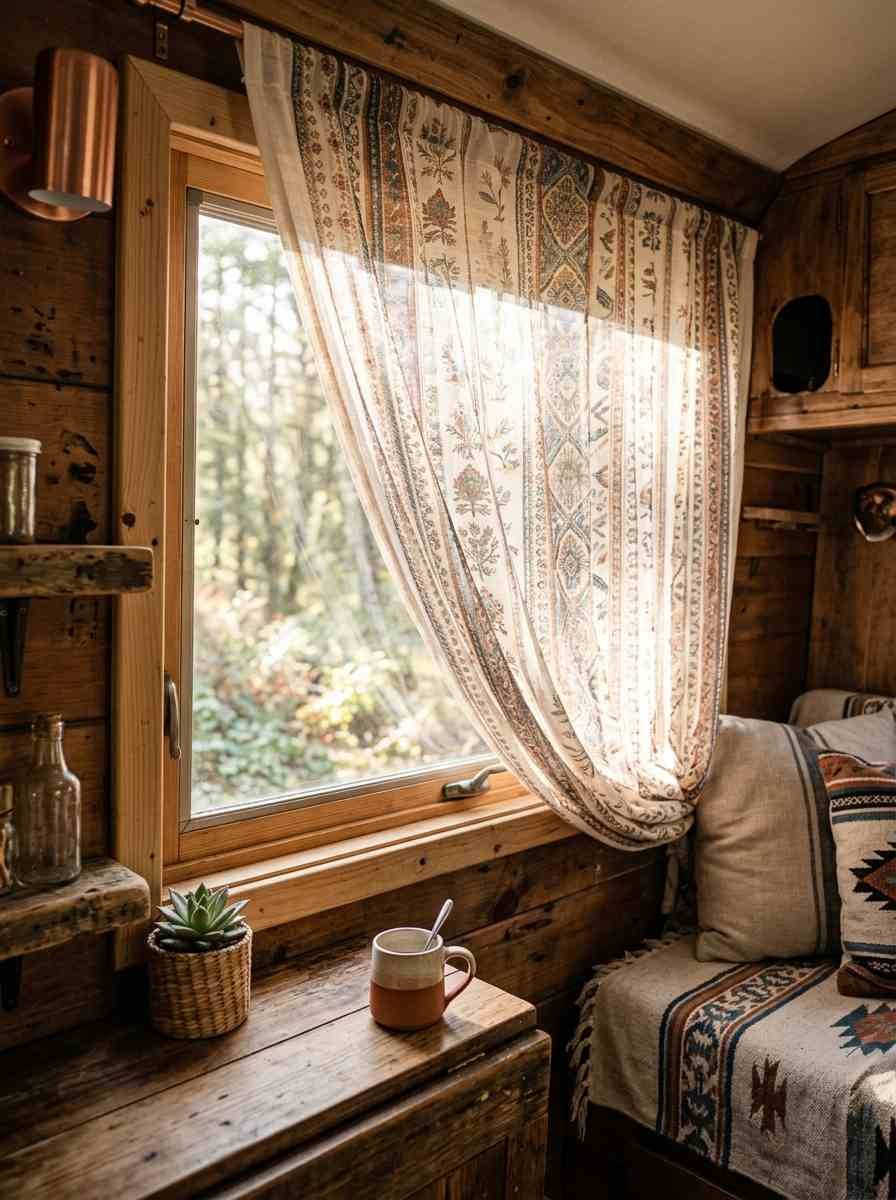
20. Use a patterned window film or sheer curtain for privacy without blackout. Full blackout curtains can make a small van feel like a cave during the day.
A sheer boho-print curtain gives privacy while still letting light filter through.
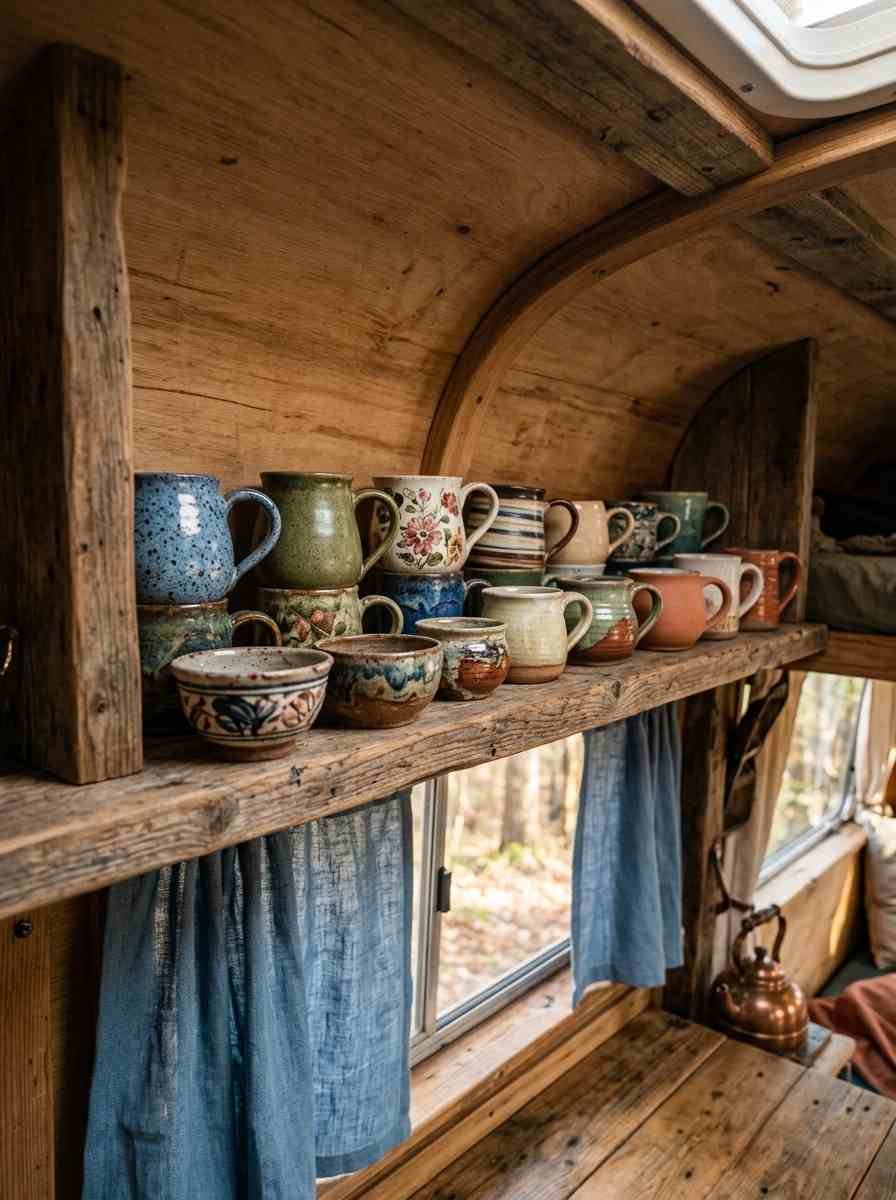
21. Bring in mismatched, vintage-style dishware. Uniform white dishware looks like a hotel.
A few mismatched ceramic mugs and bowls picked up from thrift stores along your route look collected, not cluttered, and honestly they make better stories when someone asks where you got them.
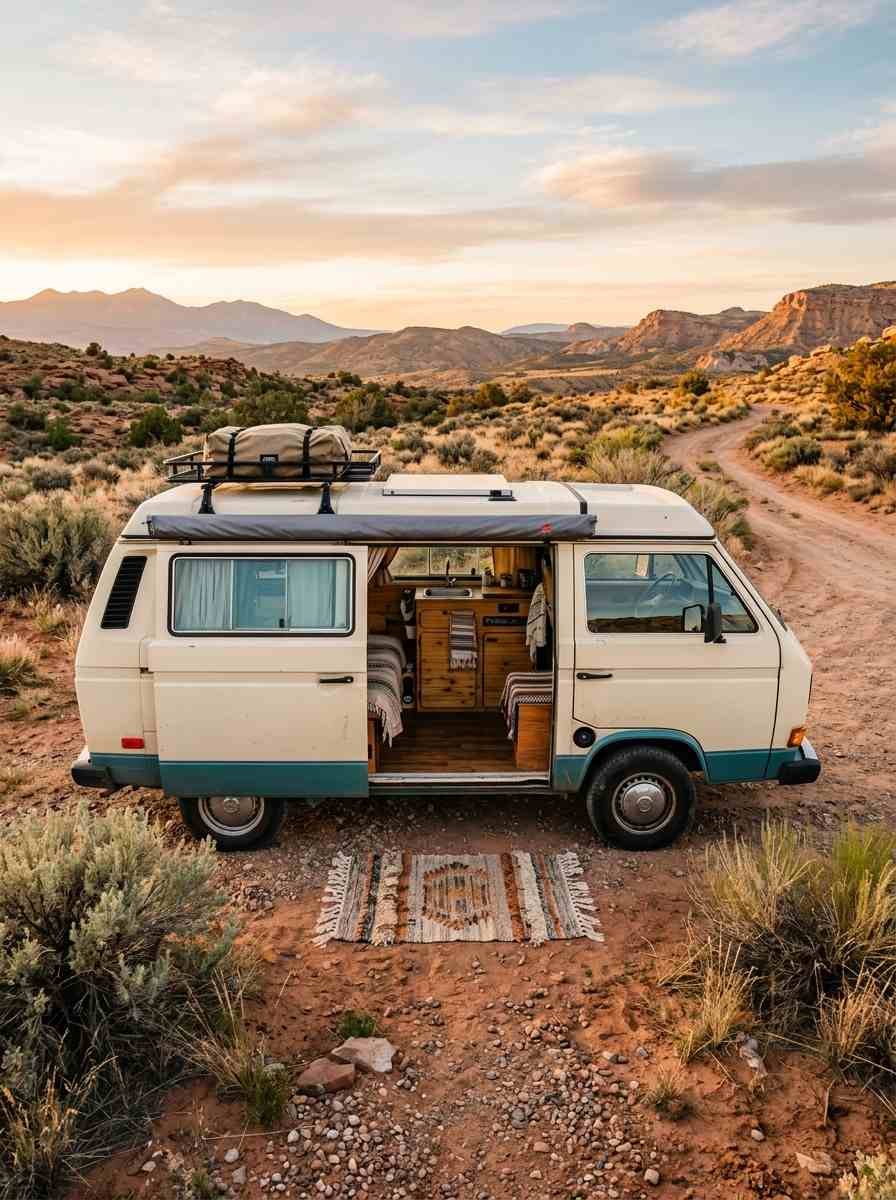
22. Finish with a hand-knotted or fringed door mat. The last thing people see before stepping into your rig sets the tone.
A small fringed mat by the door, even a 2×3, ties the whole exterior-to-interior transition together.
If you want more ideas beyond this list, this roundup of cozy van interiors is worth bookmarking, even if half of it isn’t boho-specific.
Quick reference: budget vs. impact
| Idea | Rough cost | Visual impact |
|---|---|---|
| Macrame wall hanging | Low | High |
| Terracotta cabinet repaint | Medium | High |
| Rattan pendant light shade | Low | Medium |
| Full rug layering | Medium | High |
Honestly, that table alone could be its own decision-making shortcut if you’re trying to prioritize what to tackle first on a tight budget.
Random aside: I once tried to hang a macrame piece while parked on a slight incline and spent twenty minutes wondering why the dowel kept sliding sideways.
Level ground exists for a reason, apparently.
Frequently asked questions
Is boho style practical for a small camper van? Yes, more than most styles actually. Boho leans on layering, texture, and imperfection, which hides the quirks of a small, moving space better than clean minimalist design does.
What’s the cheapest way to start a boho camper build? Textiles. A couple of throw pillows, one patterned blanket, and a macrame piece will change the feel of a van for under $50, before you touch any furniture or paint.
Will fabric and macrame hold up on rough roads? Mostly, yes. Just secure anything hanging with proper hooks rated for vibration, and avoid heavy glass or ceramic pieces on open shelves without a lip or strap.
So, which of these are you actually going to try first? Drop it in the comments, or better yet, pin this whole list so you’ve got it handy when you’re standing in your van trying to remember what idea number 11 even was.
