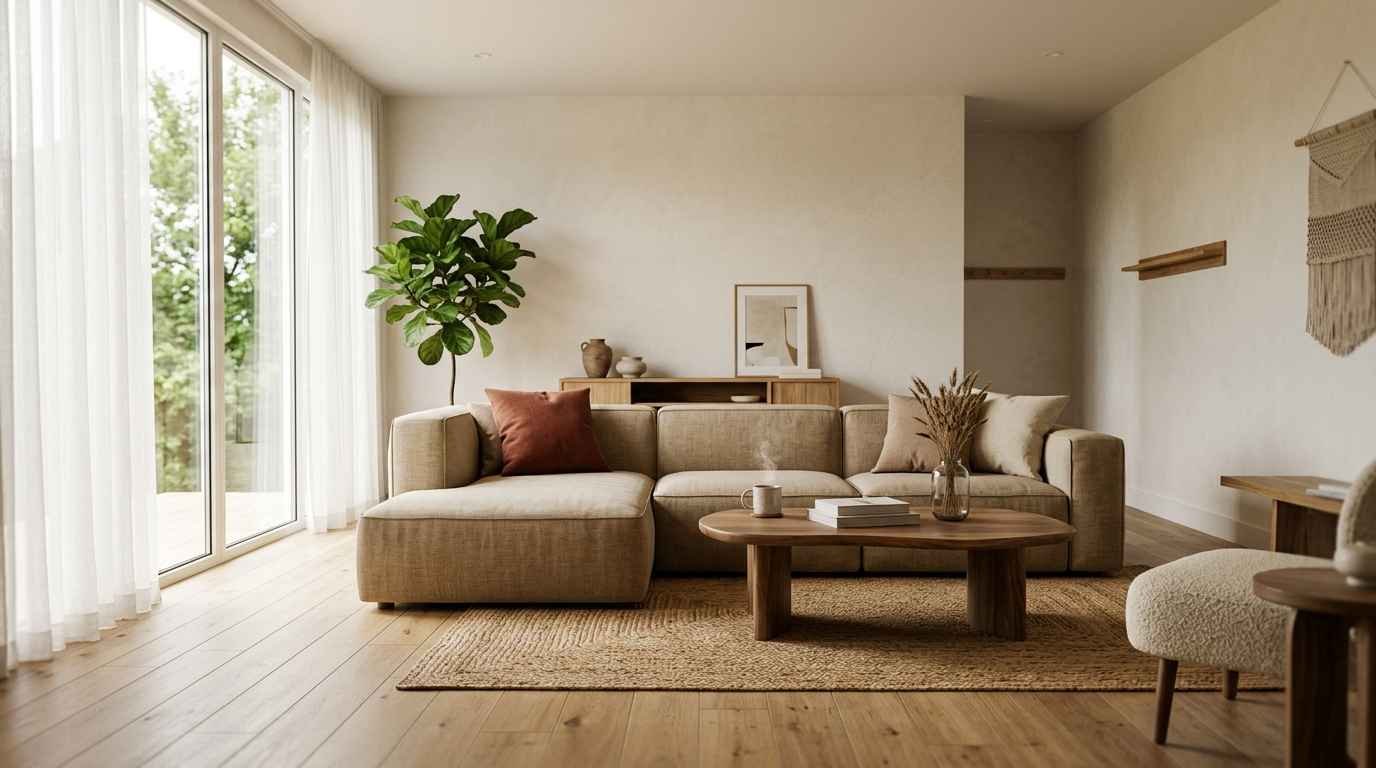
I used to think minimalist meant cold. Empty walls, one gray couch, maybe a single sad plant in the corner. Then I actually tried it in my own apartment, and I was wrong.
Done right, minimalist decor feels warmer than a cluttered room ever could. Less stuff means every piece you keep actually gets to matter.
That’s the whole trick.
Here are 26 ideas I’ve either used myself, stolen from friends with genuinely great taste, or picked up after way too many hours scrolling Pinterest boards at midnight. Pin whatever speaks to you and skip the rest. That’s allowed.
Start with less, not more
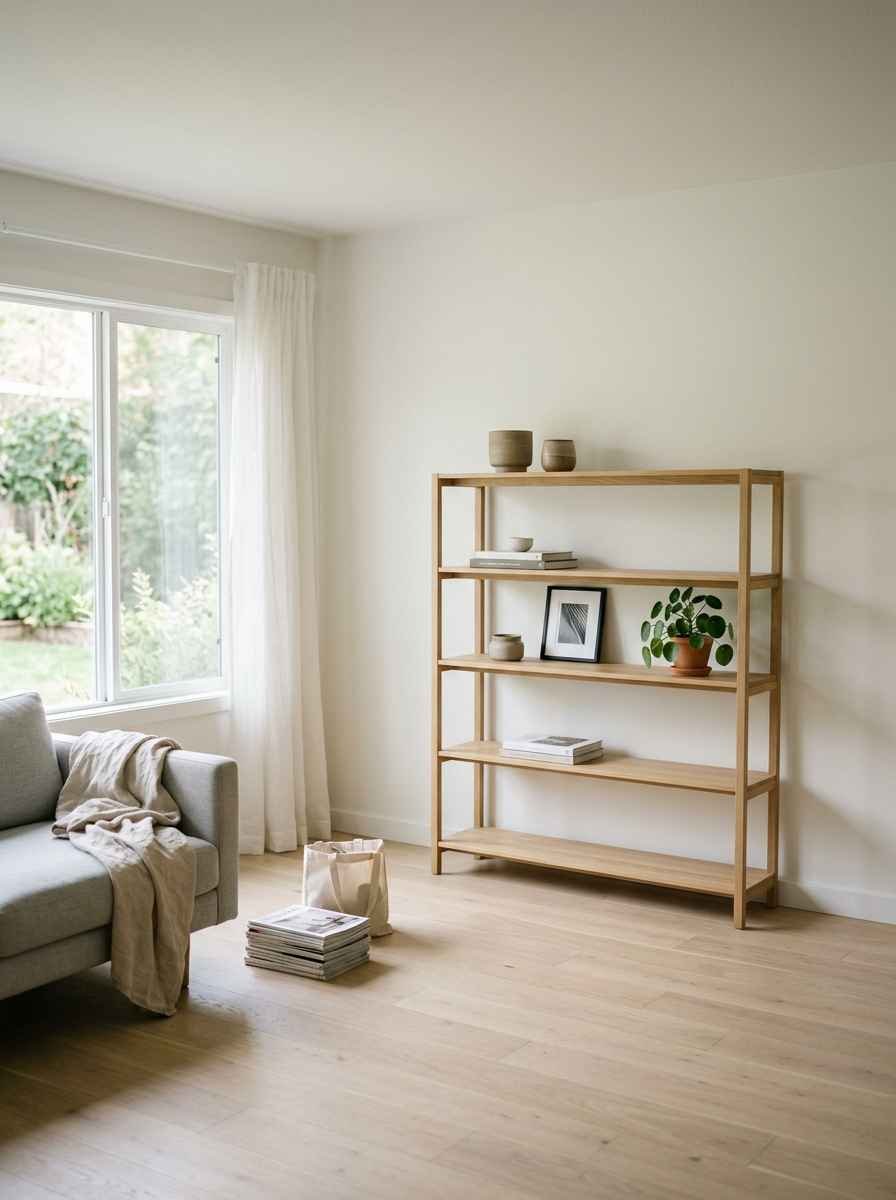
Before you buy a single new item, clear something out. It sounds backward, but it’s the fastest way to make a room feel calmer.
1. Do a one-shelf declutter. Pick one shelf. Take everything off it. Only put back what you actually use or love. Ten minutes, done.
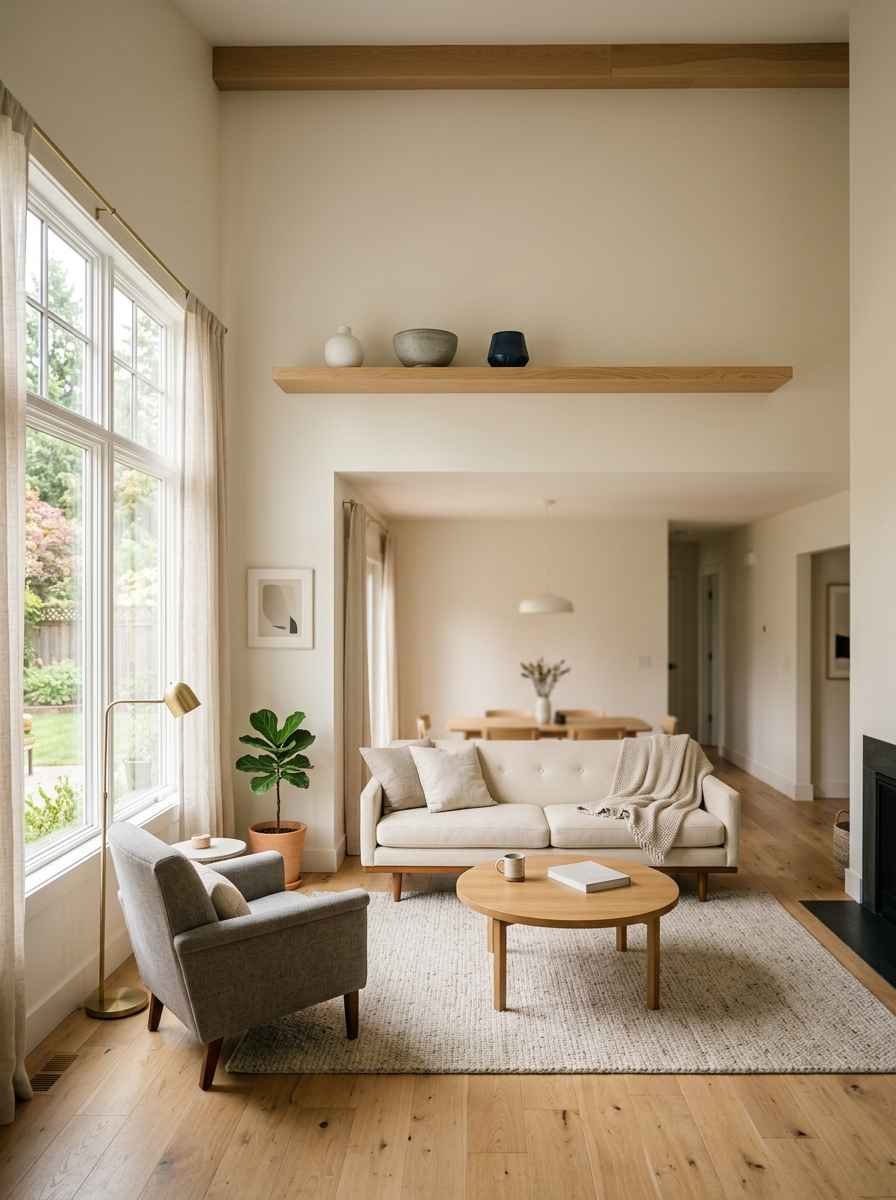
2. Try the KonMari approach on decor, not just clothes.
Marie Kondo’s tidying method asks a simple question about each item: does it spark joy? Apply that to your knickknacks and you’ll be shocked how much goes.
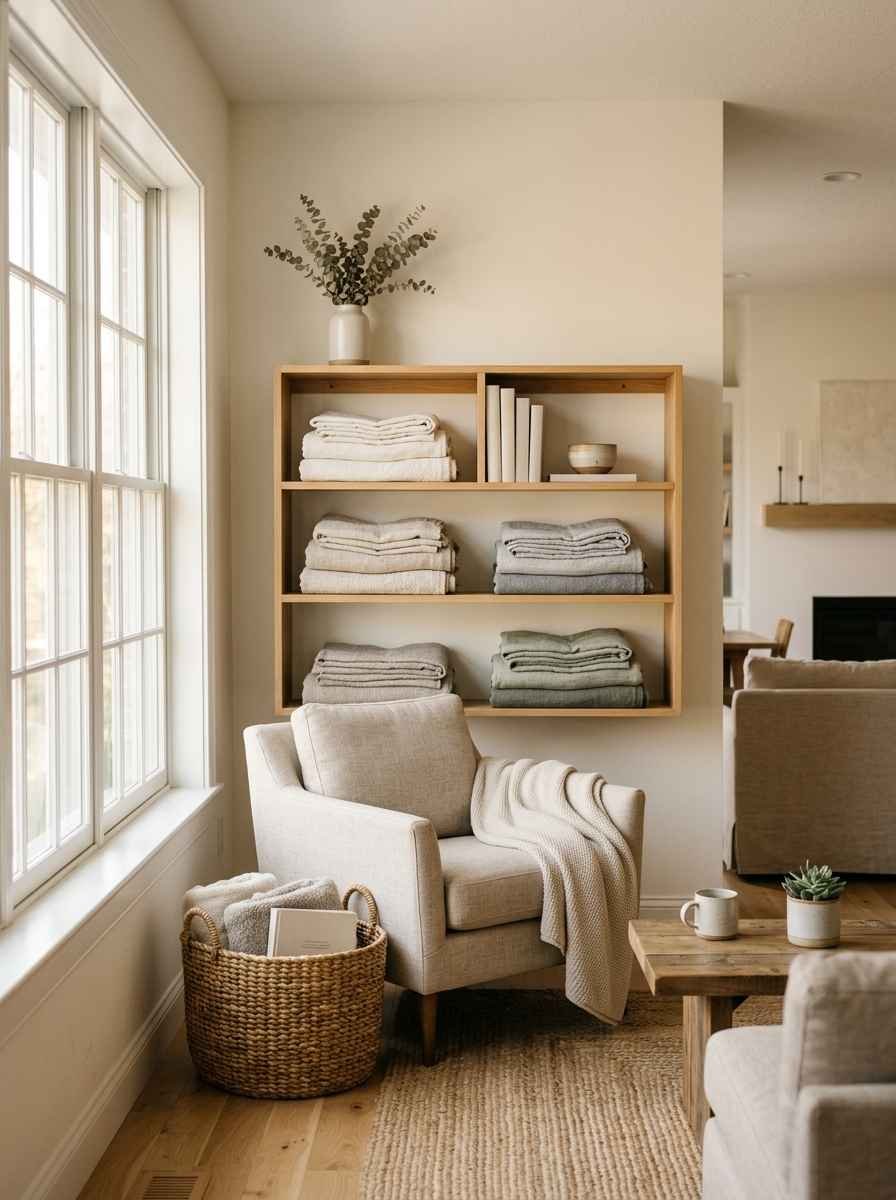
3. Box up the “maybe” pile for 30 days. If you don’t miss it in a month, donate it. I did this with a shelf of old candles and honestly forgot they existed within a week.
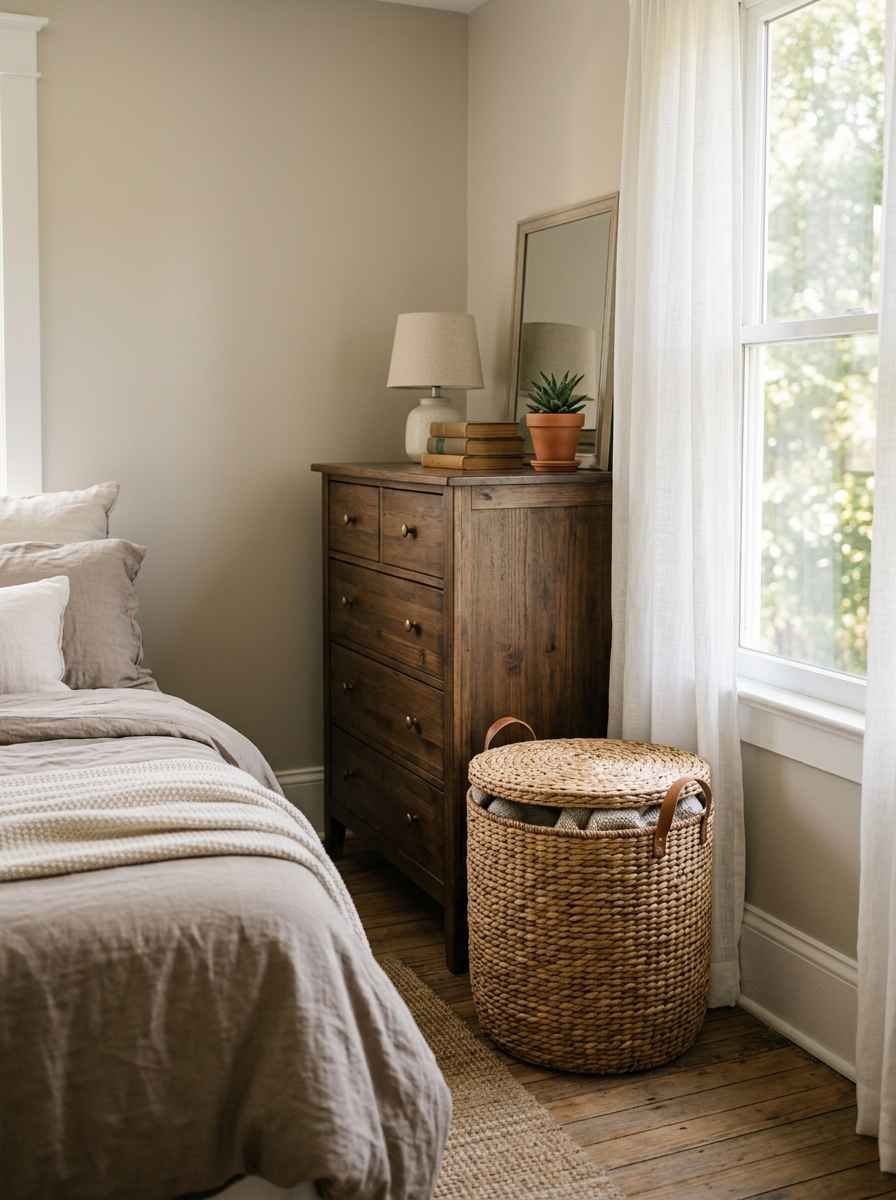
4. Limit surfaces to three objects max. Coffee table, nightstand, console, whatever. Three items, tops. It forces you to choose your favorites.
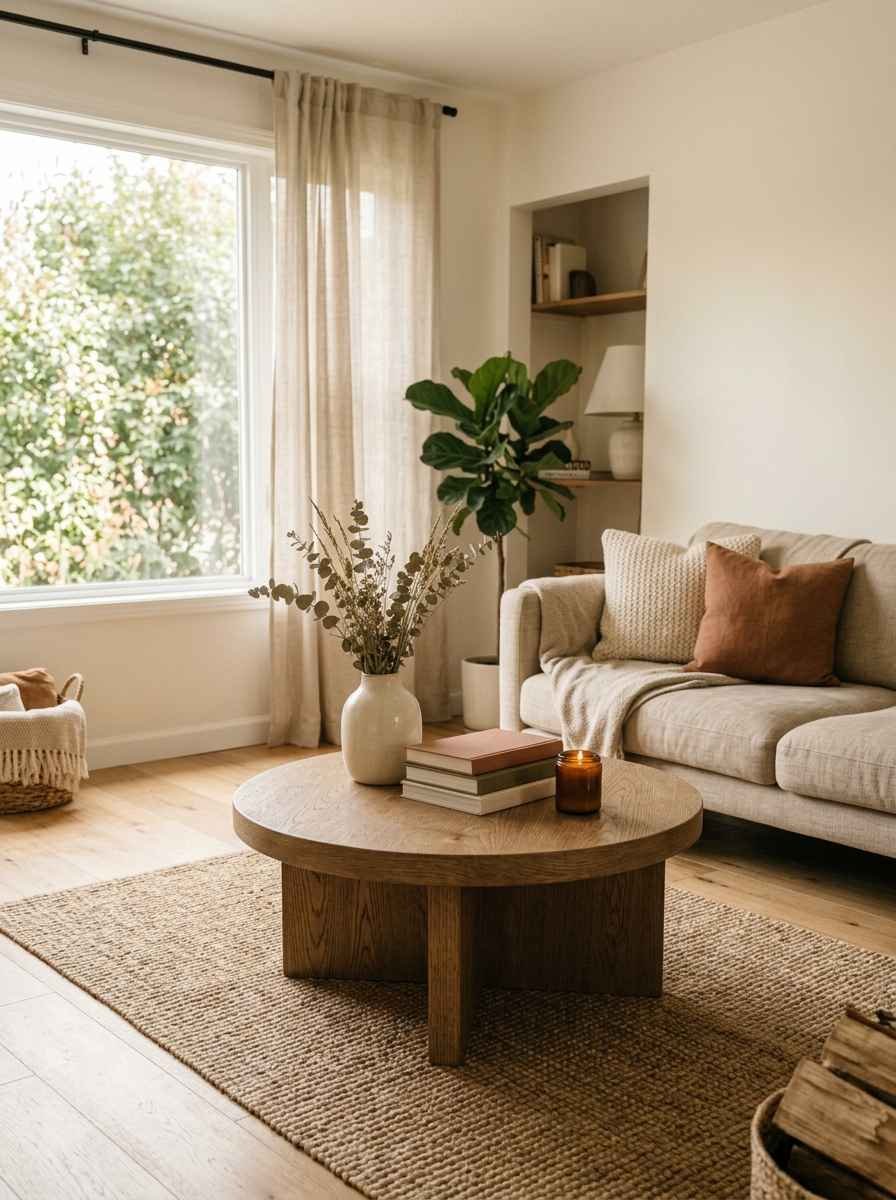
5. Store, don’t display, sentimental clutter. Keep the meaningful stuff in a drawer or box you open on purpose, not scattered across every surface where it turns into visual noise.
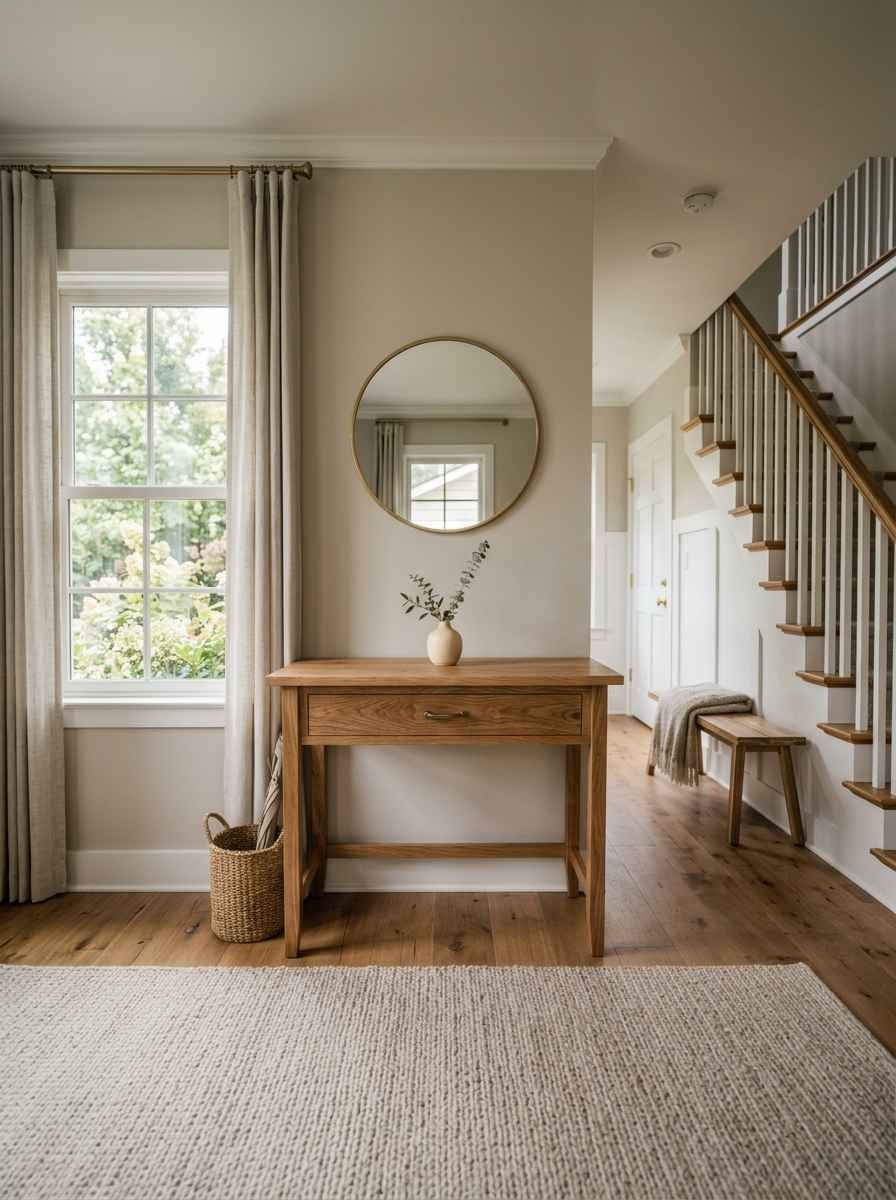
Build a calm color palette
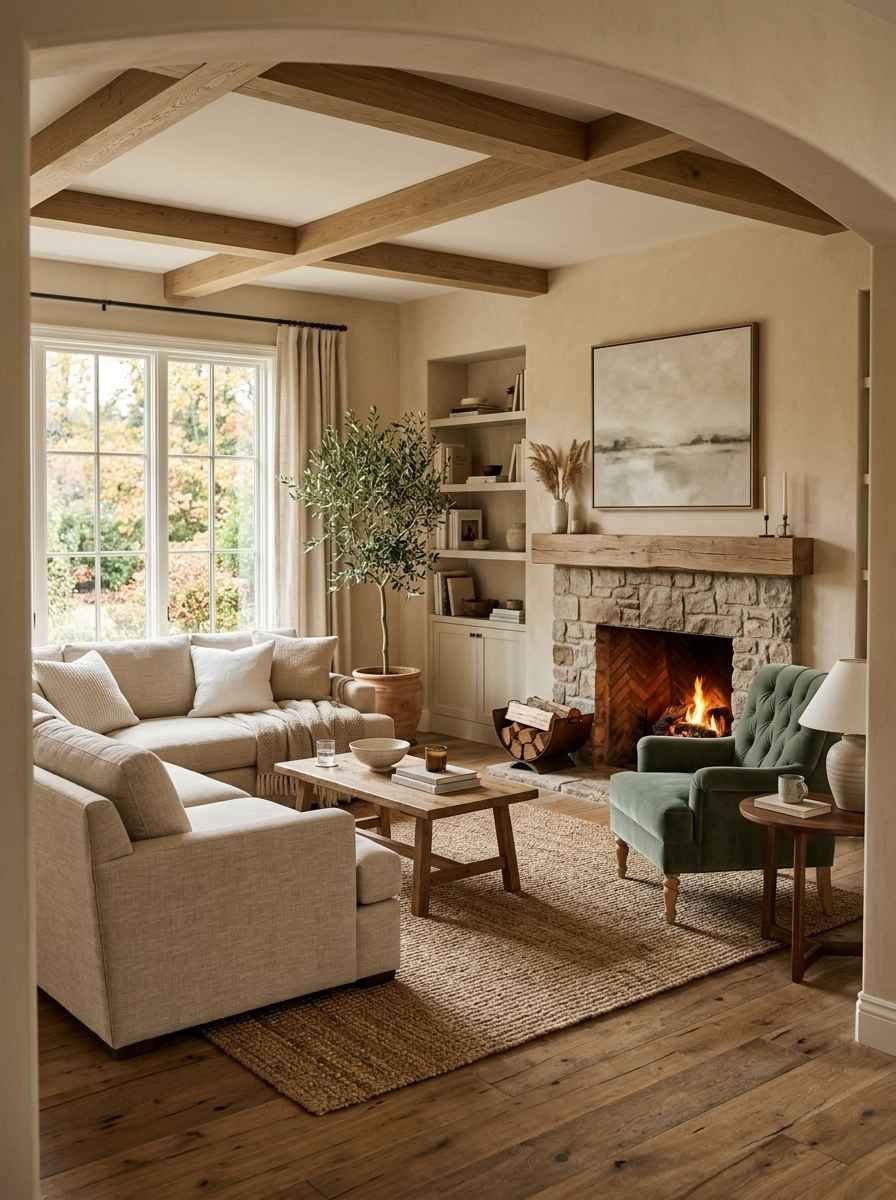
Color does more emotional heavy lifting than people give it credit for.
IMO, it’s the single biggest lever for making a minimalist room feel cozy instead of sterile.
6. Go 80/20 on neutrals and accents. Roughly 80% warm neutrals (think oatmeal, sand, soft white) and 20% one accent color you actually love.
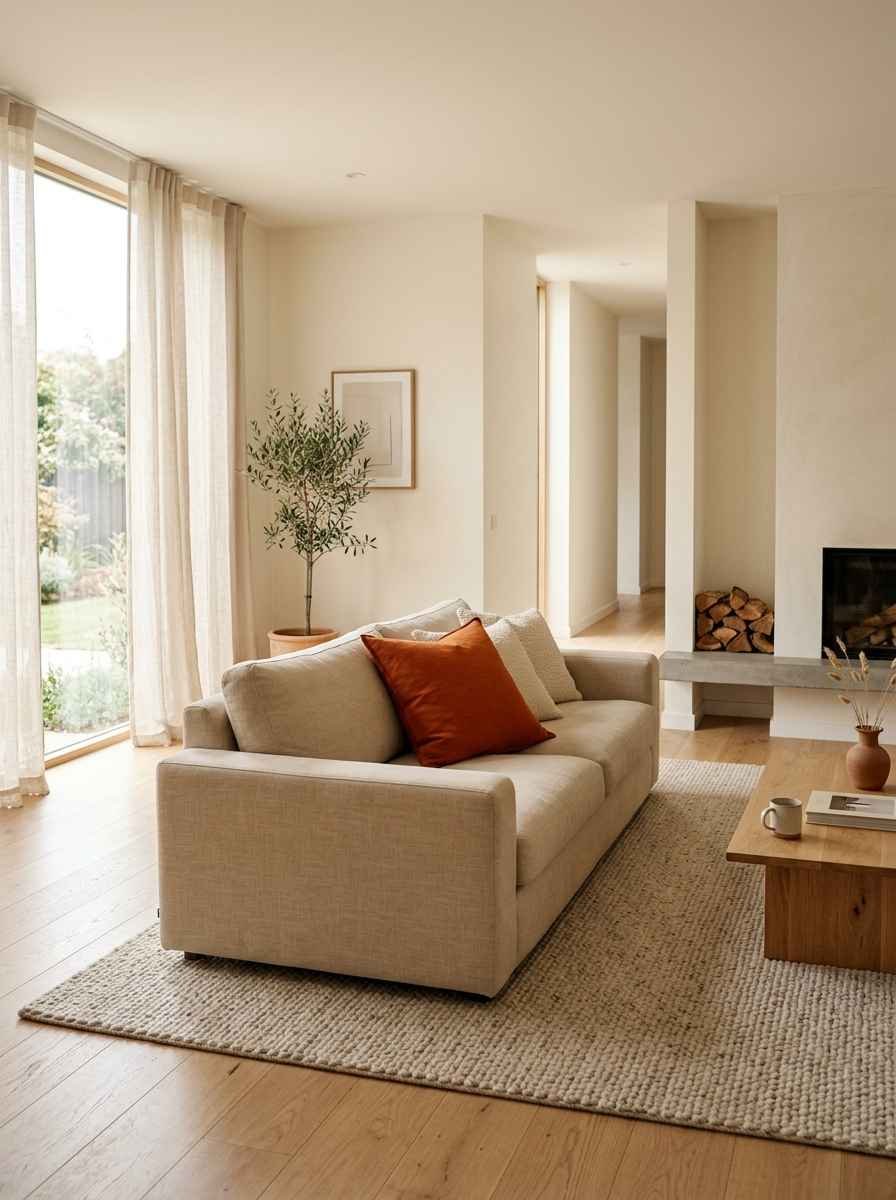
7. Pick warm white over stark white. Stark white paint can feel clinical under most home lighting. A warm white or greige softens everything instantly.
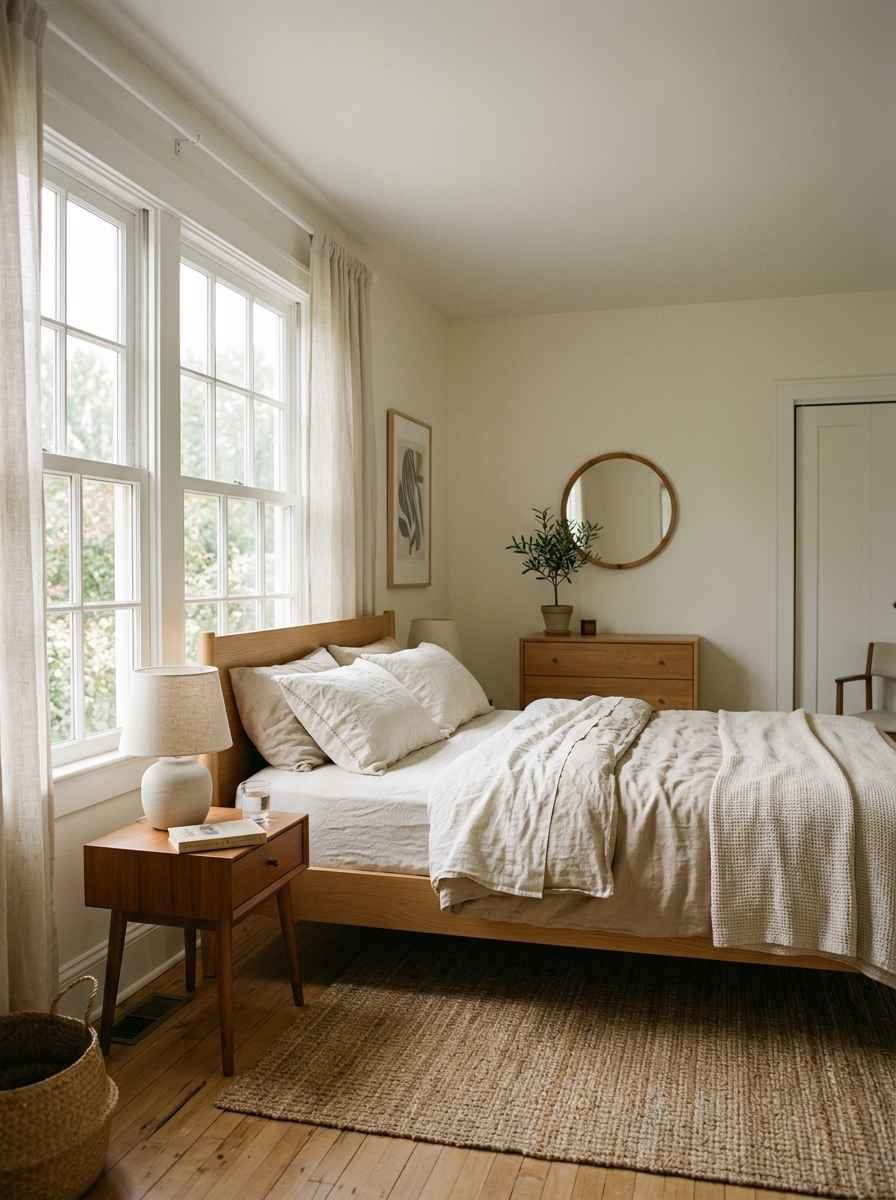
8. Add one deep, moody color. A single wall, a rug, or even just curtains in a deep green or rust tone gives the eye somewhere to land.
According to Sherwin-Williams’ research on color psychology, greens and soft blues read as calming, which tracks with what most designers actually recommend for bedrooms and living rooms.
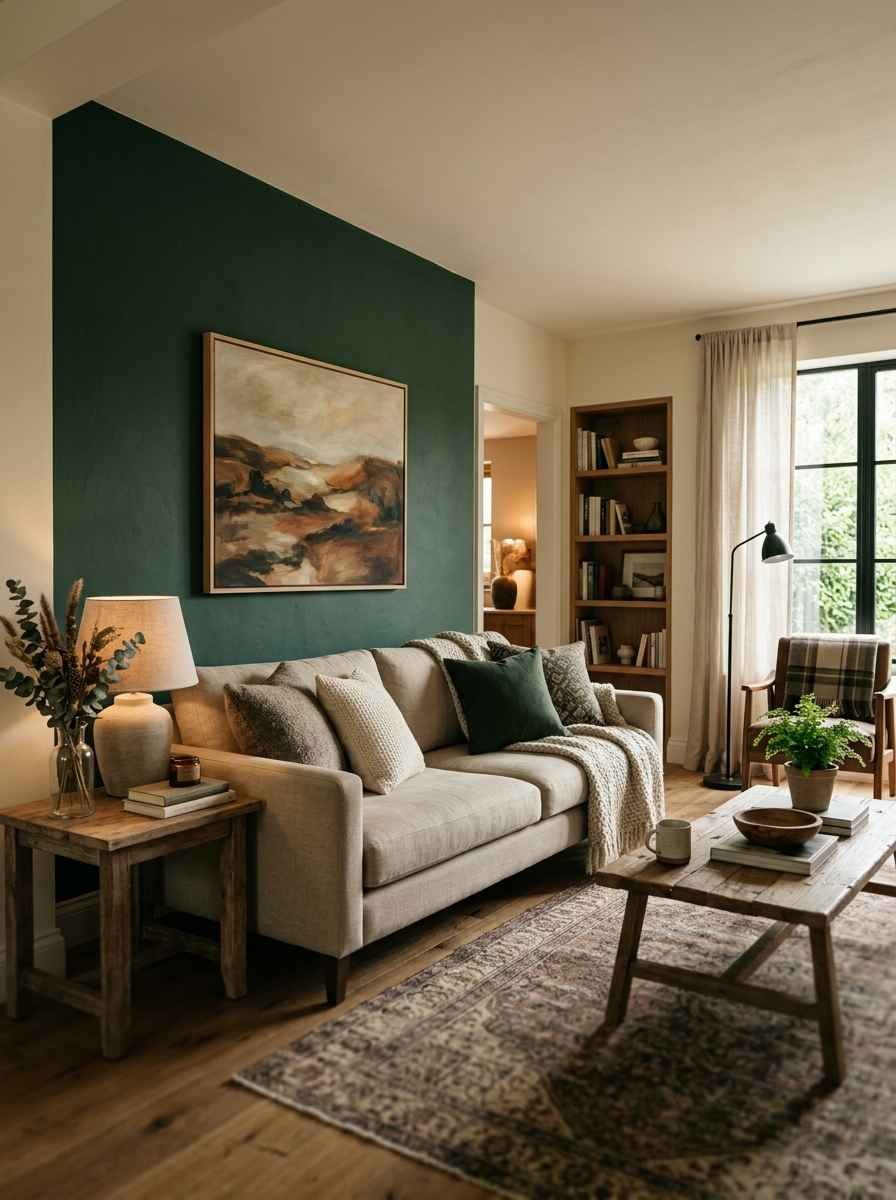
9. Stick to one metal finish. Pick brass, black, or brushed nickel and use it everywhere (hardware, light fixtures, frames).
Mixing metals randomly is a fast way to make a small space feel busy.
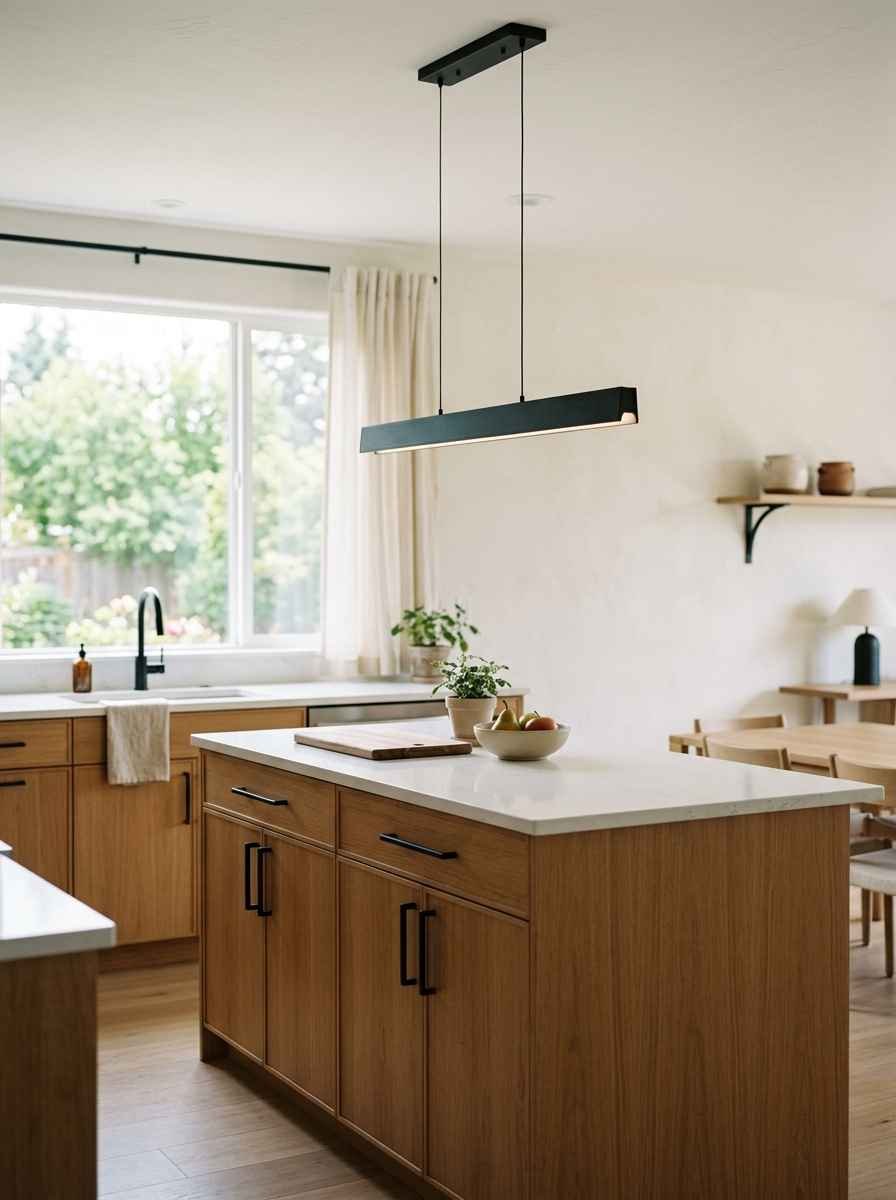
10. Test paint on the actual wall, not a swatch card.
Light changes everything. A color that looks perfect on paper can go strangely yellow or blue once it’s on your wall at 4pm.
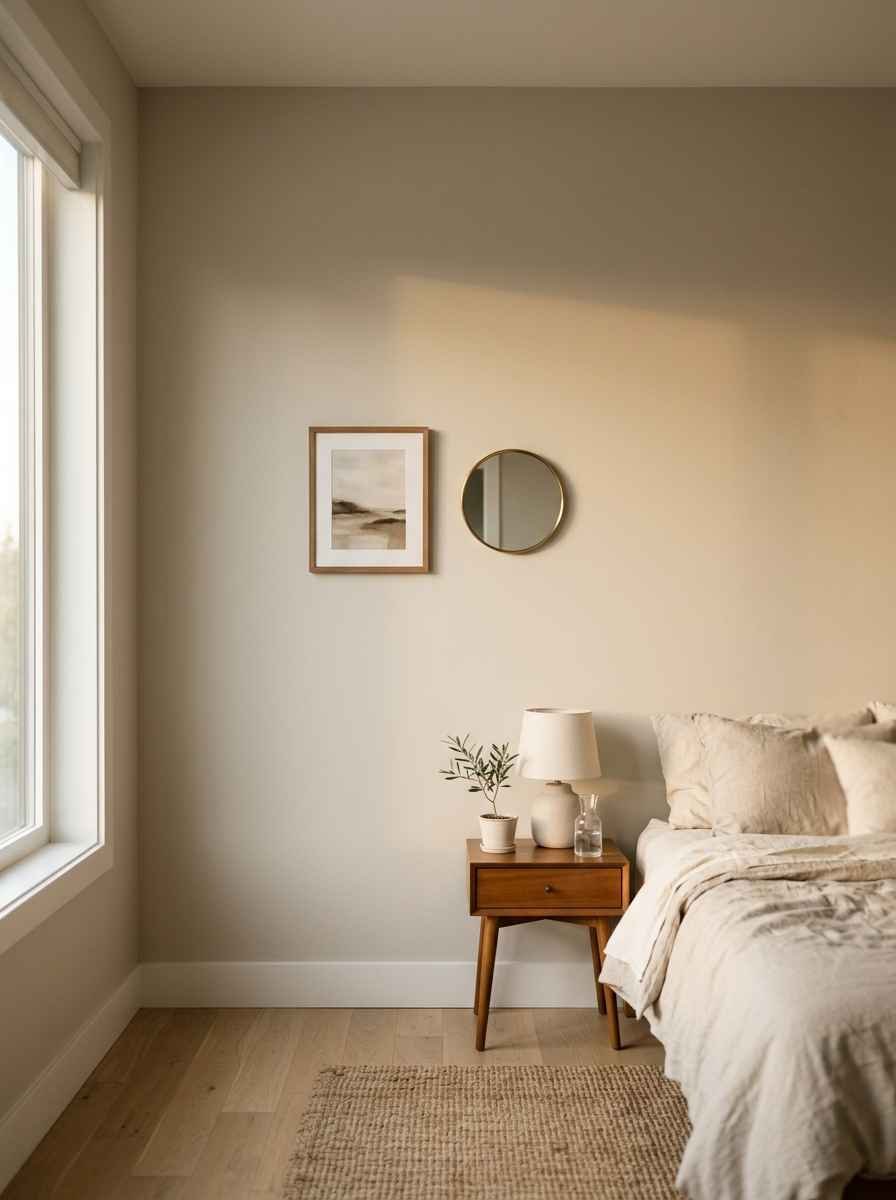
Layer texture so it doesn’t feel bare
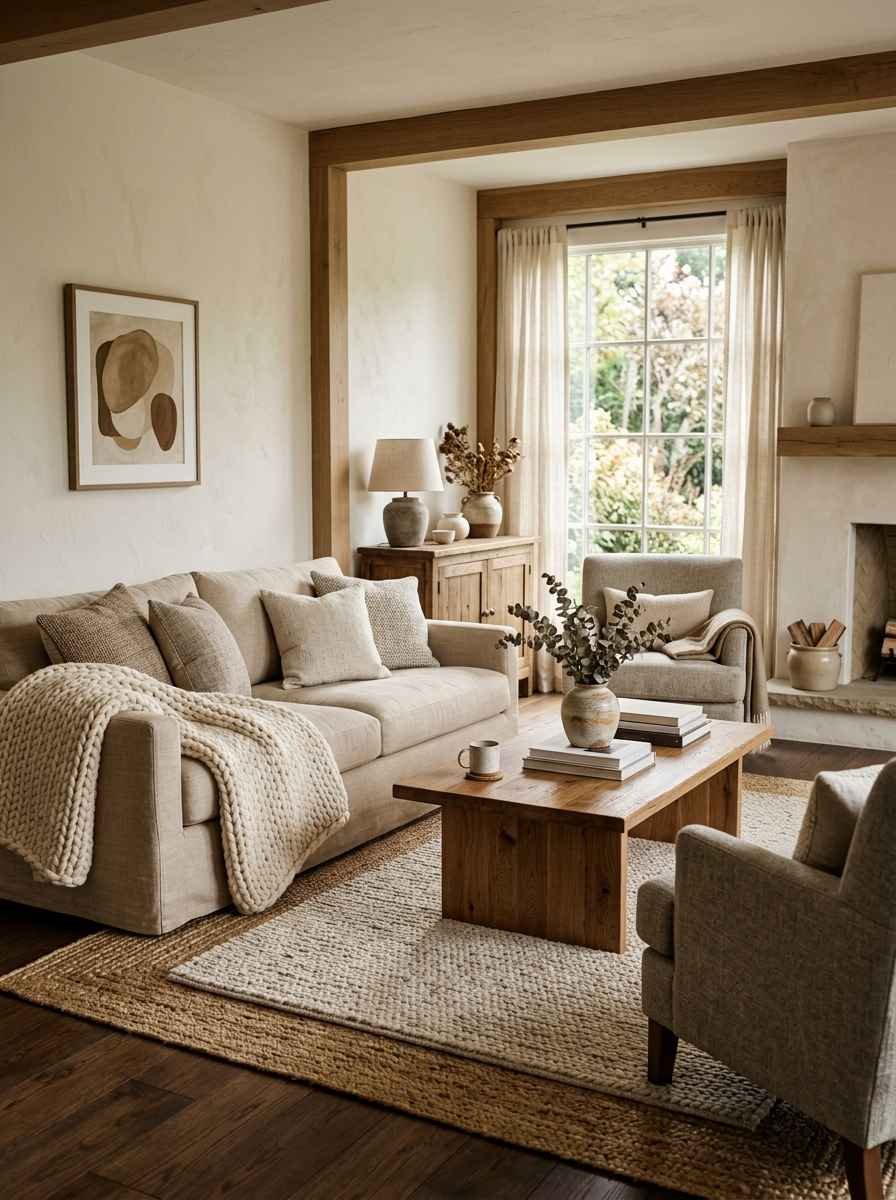
This is where most minimalist rooms go wrong. People strip out the clutter and forget to add texture back in, and the room ends up feeling unfinished rather than calm.
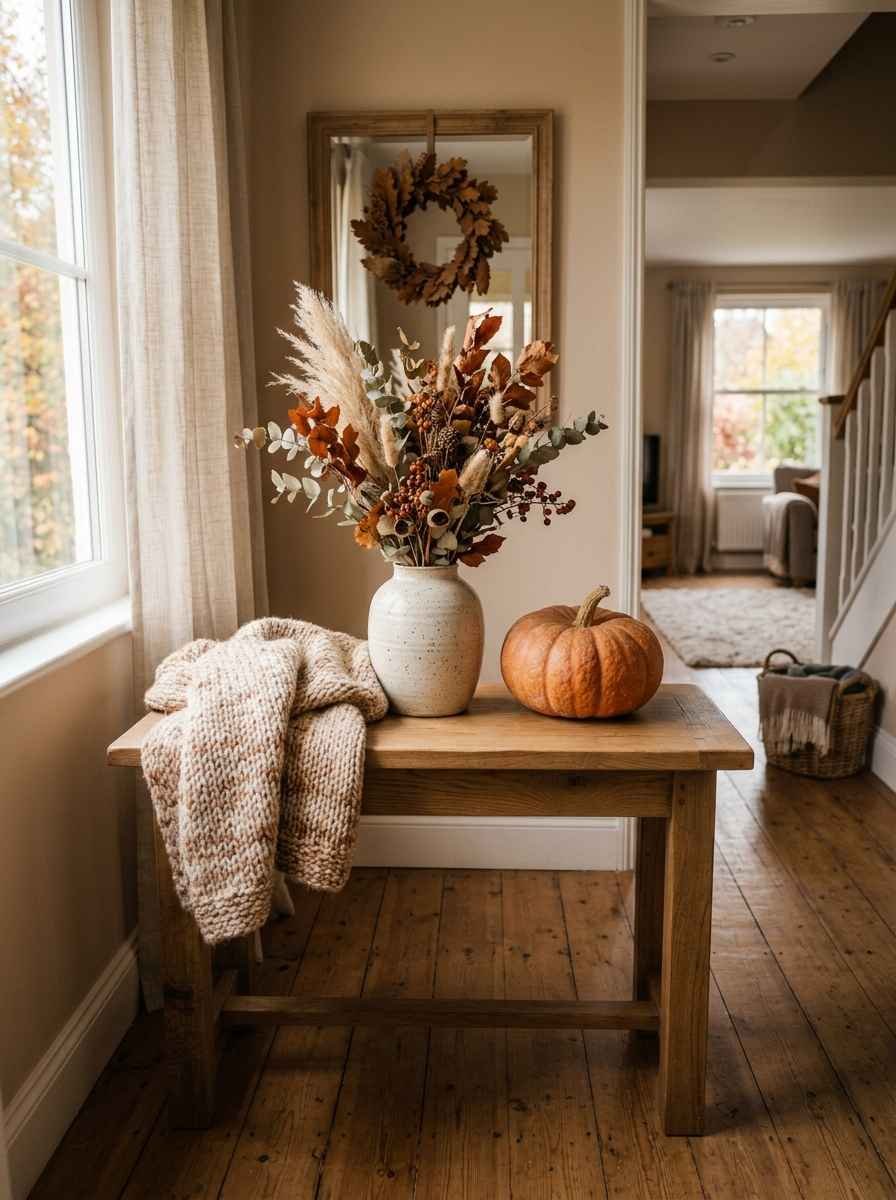
11. Add one chunky knit throw. Drape it over the couch arm, not folded flat. Lived-in beats staged every time.
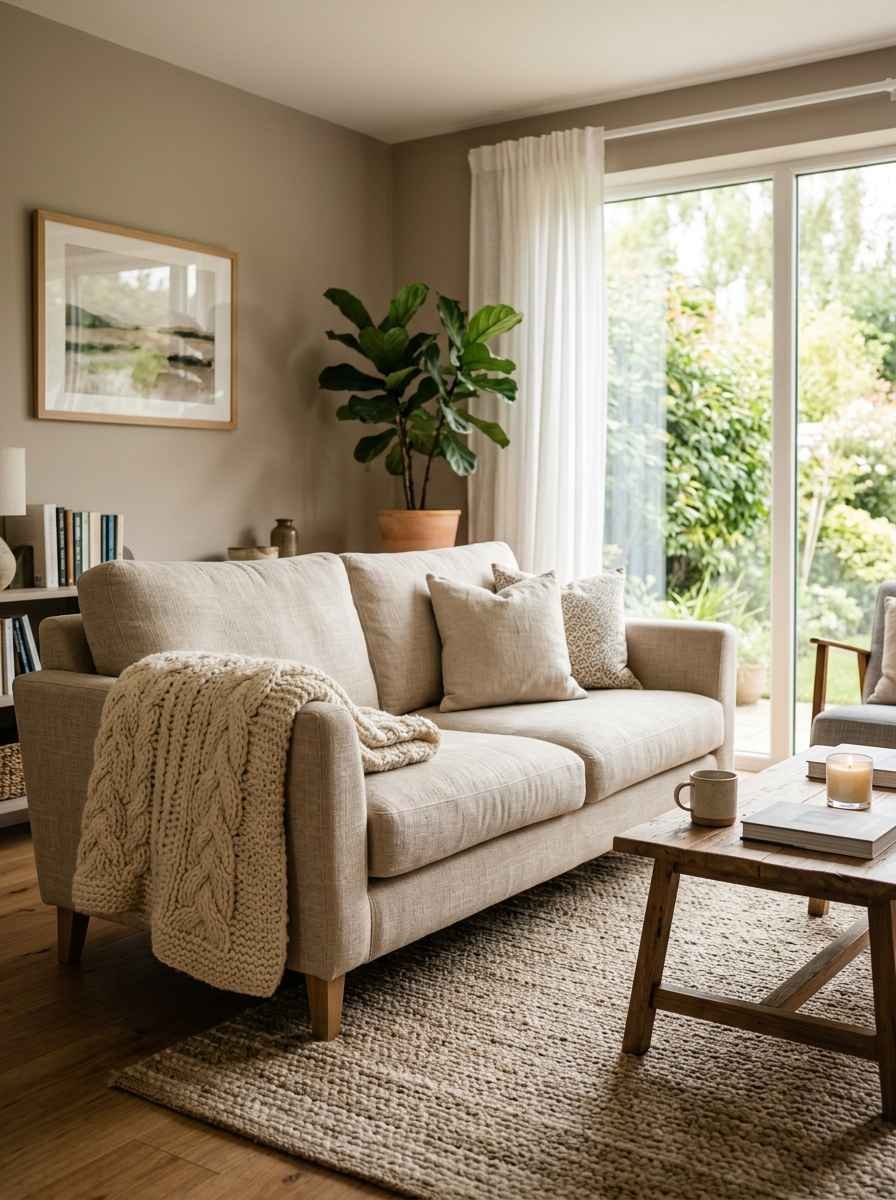
12. Layer two rugs. A smaller textured rug on top of a larger flat-weave one adds depth without adding color chaos.
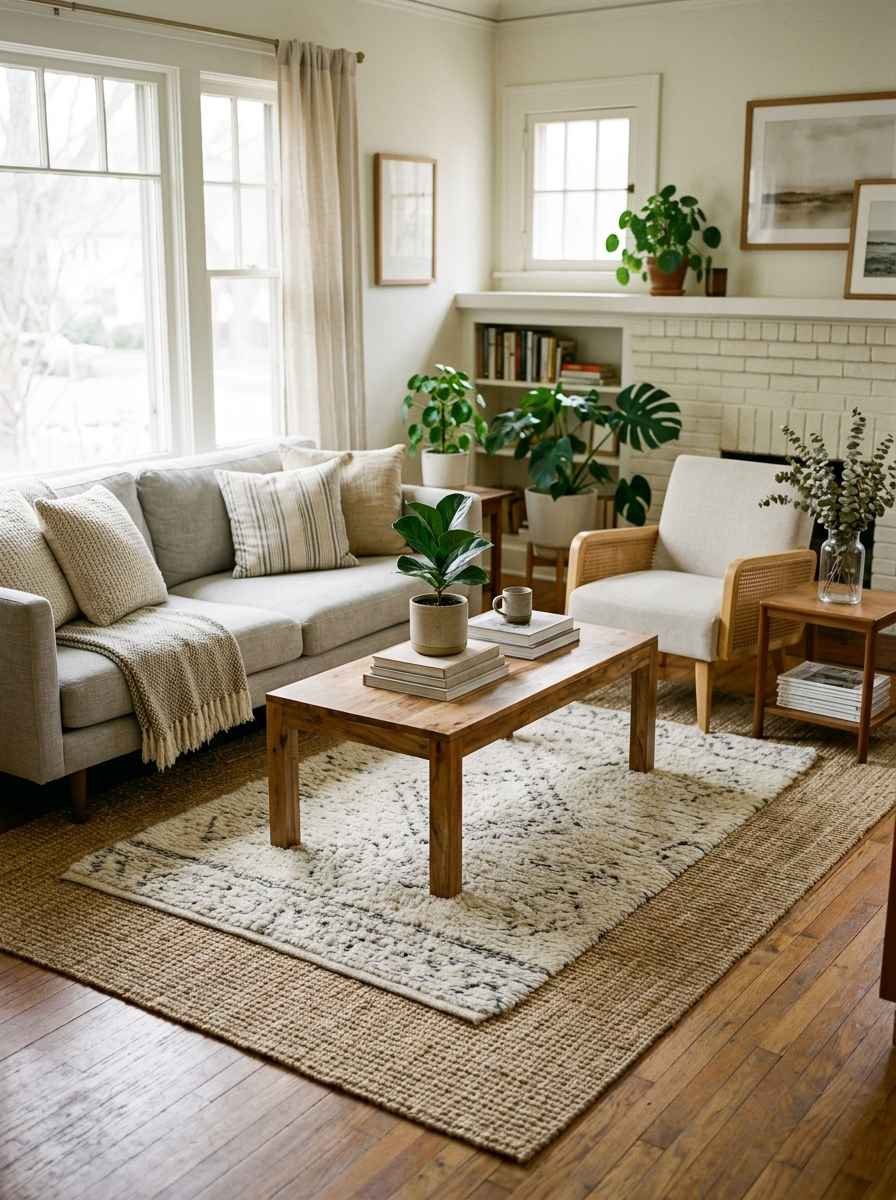
13. Mix matte and shine. A matte ceramic vase next to a glossy lamp base. Your eye needs contrast or the room reads as flat.
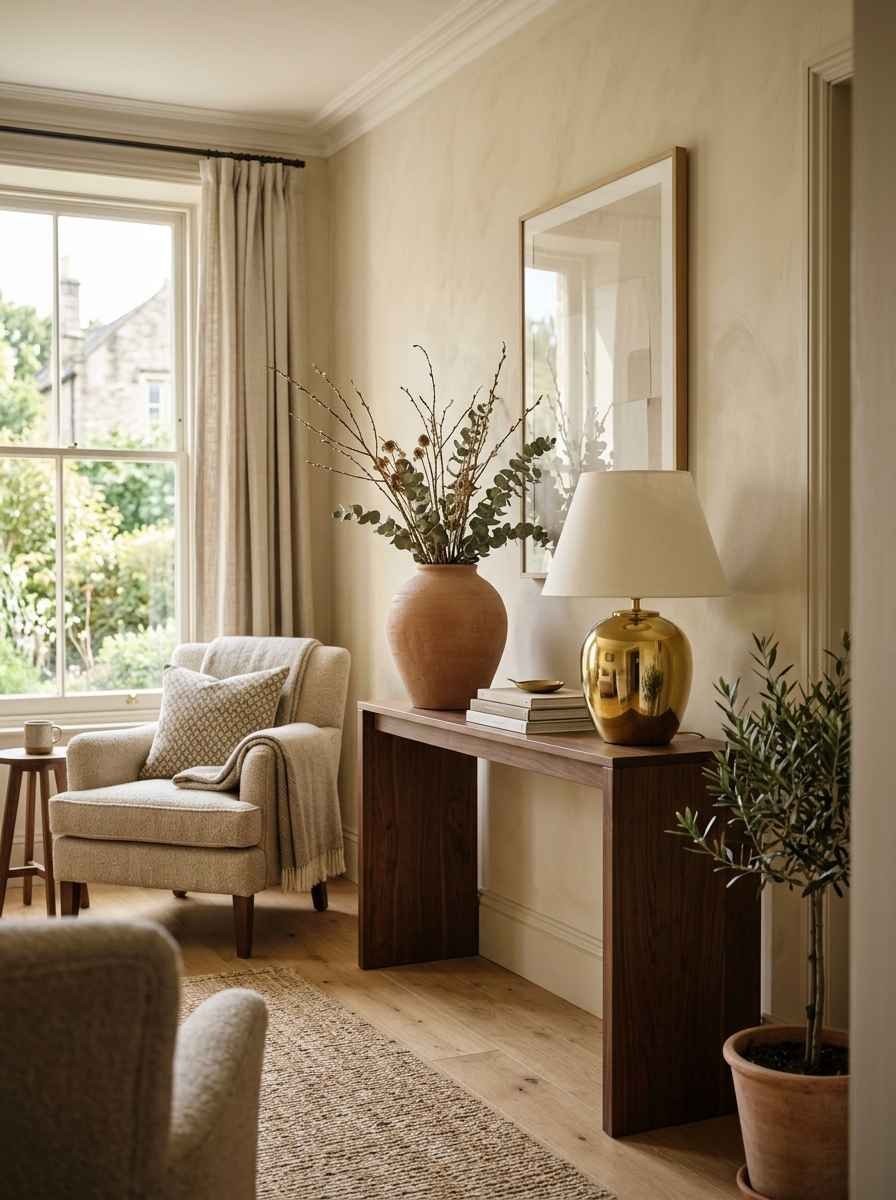
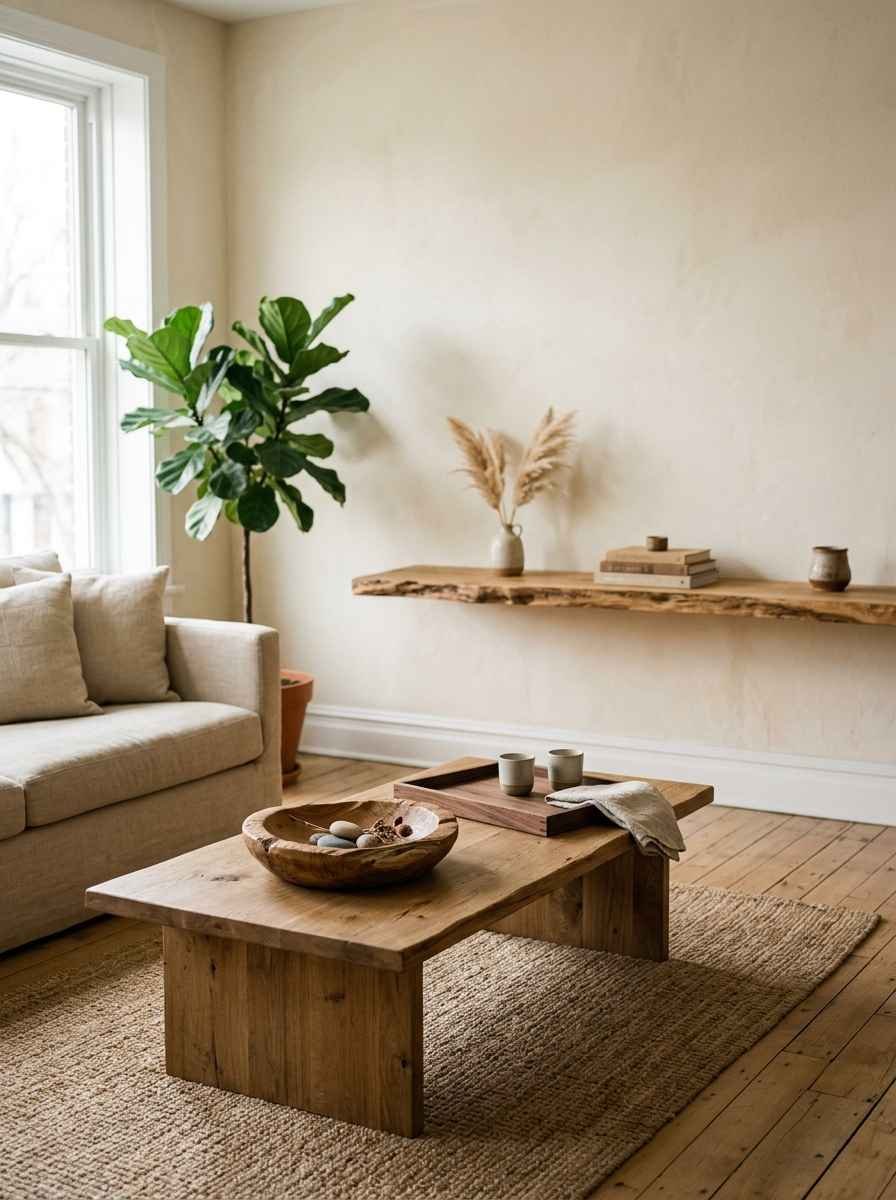
14. Bring in real wood. A wood tray, a wooden bowl, a raw-edge shelf. Wood grain does more to warm up a room than almost anything else on this list.
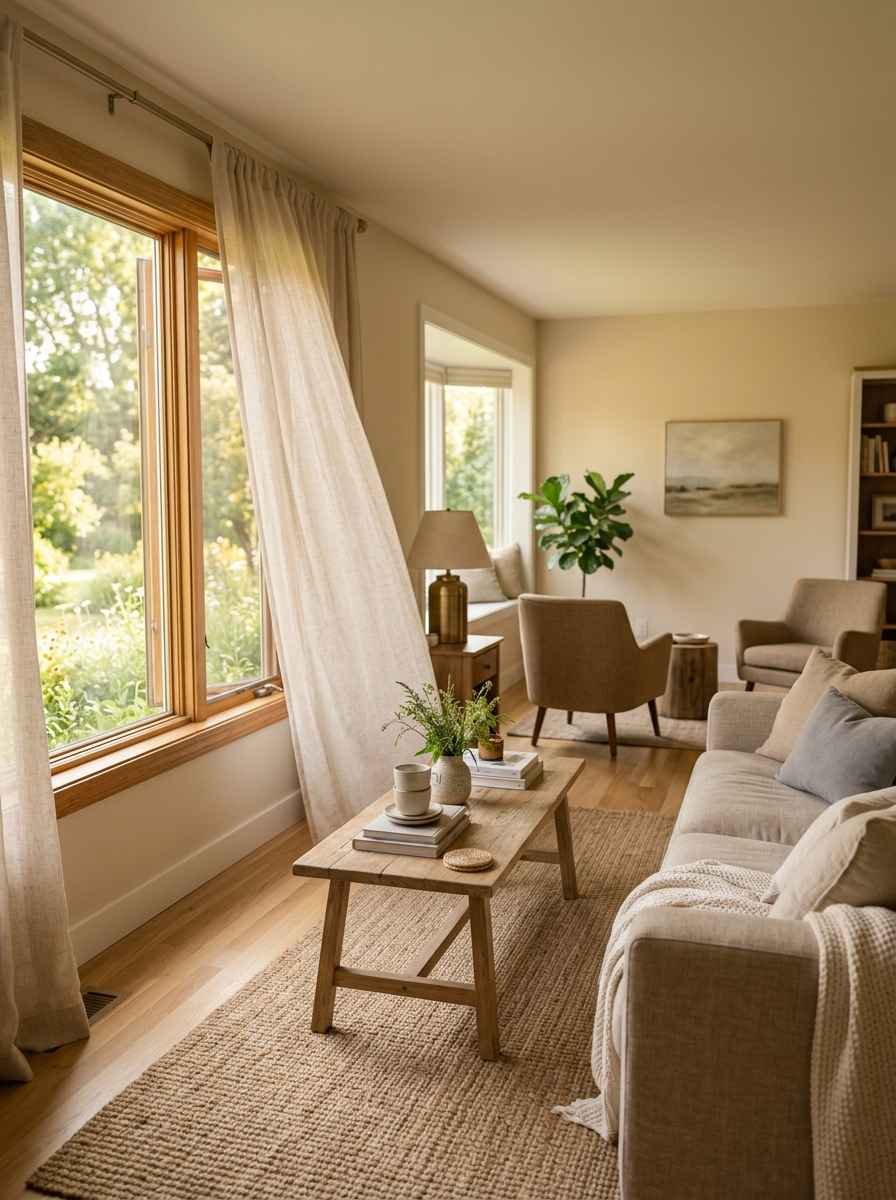
15. Choose linen over synthetic fabrics where you can. Linen curtains and cushion covers have a natural rumple that photographs beautifully and, more importantly, feels good against your skin.
Get the lighting right
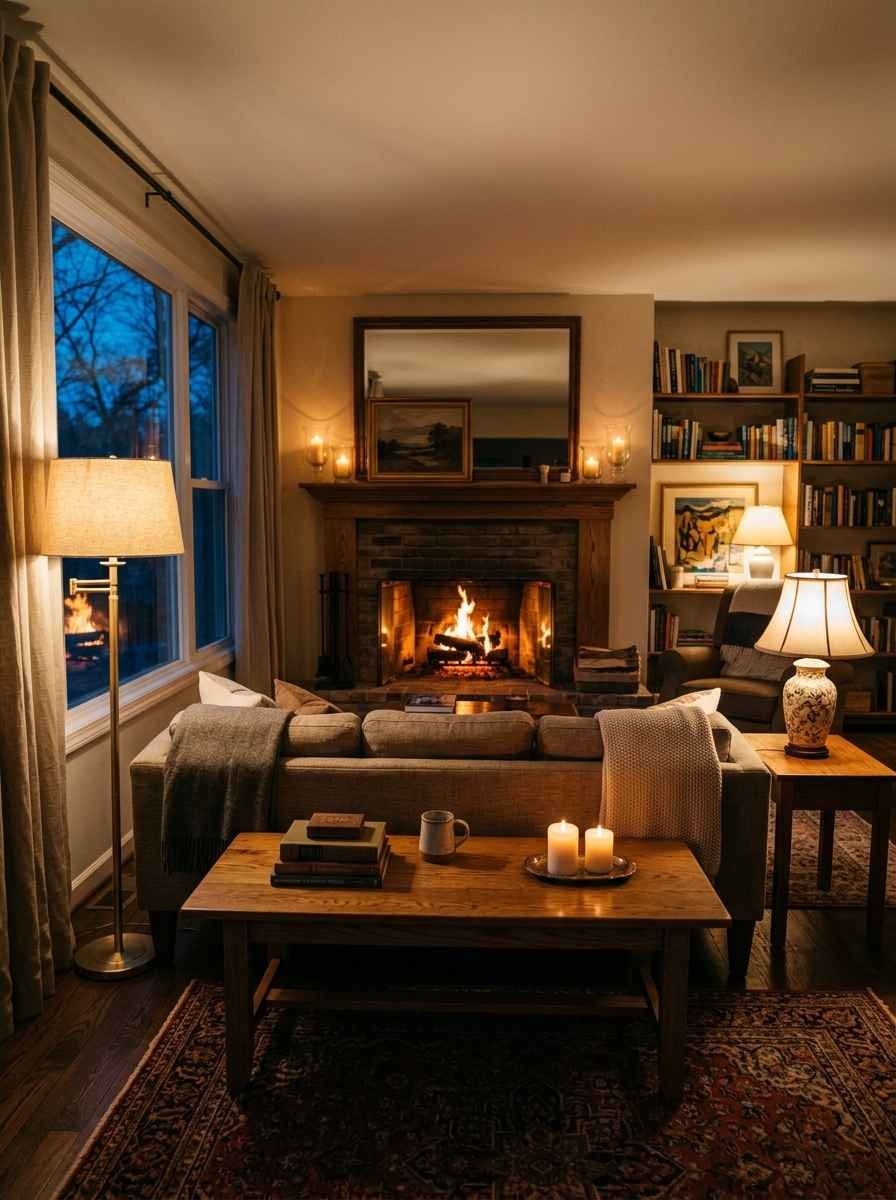
You can nail every other item on this list and still end up with a room that feels off if the lighting is wrong.
This part matters more than people think.
16. Layer three light sources per room. Overhead, a floor or table lamp, and a candle or string light. One overhead bulb alone always feels harsh.
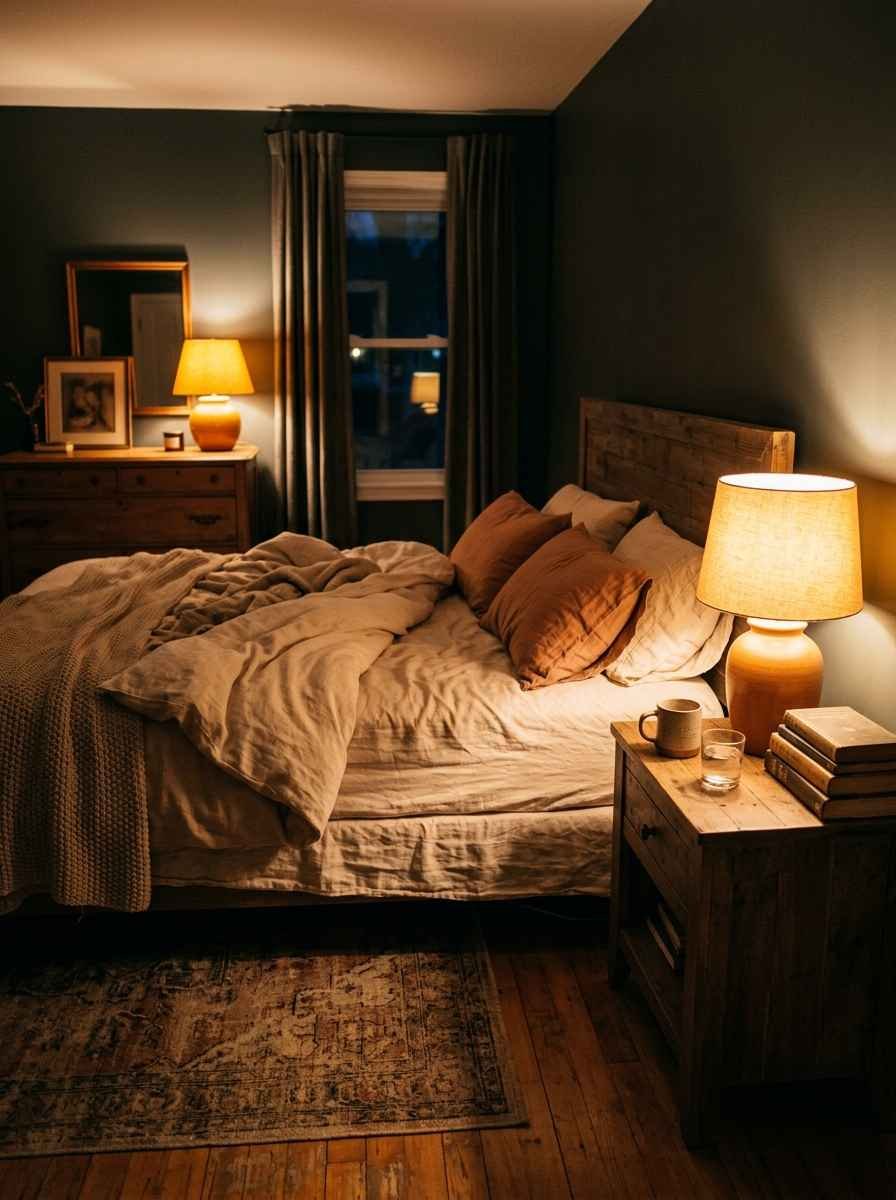
17. Swap to warm-toned bulbs. Anything under 3000K. Cool white bulbs make even the coziest furniture look like a waiting room.
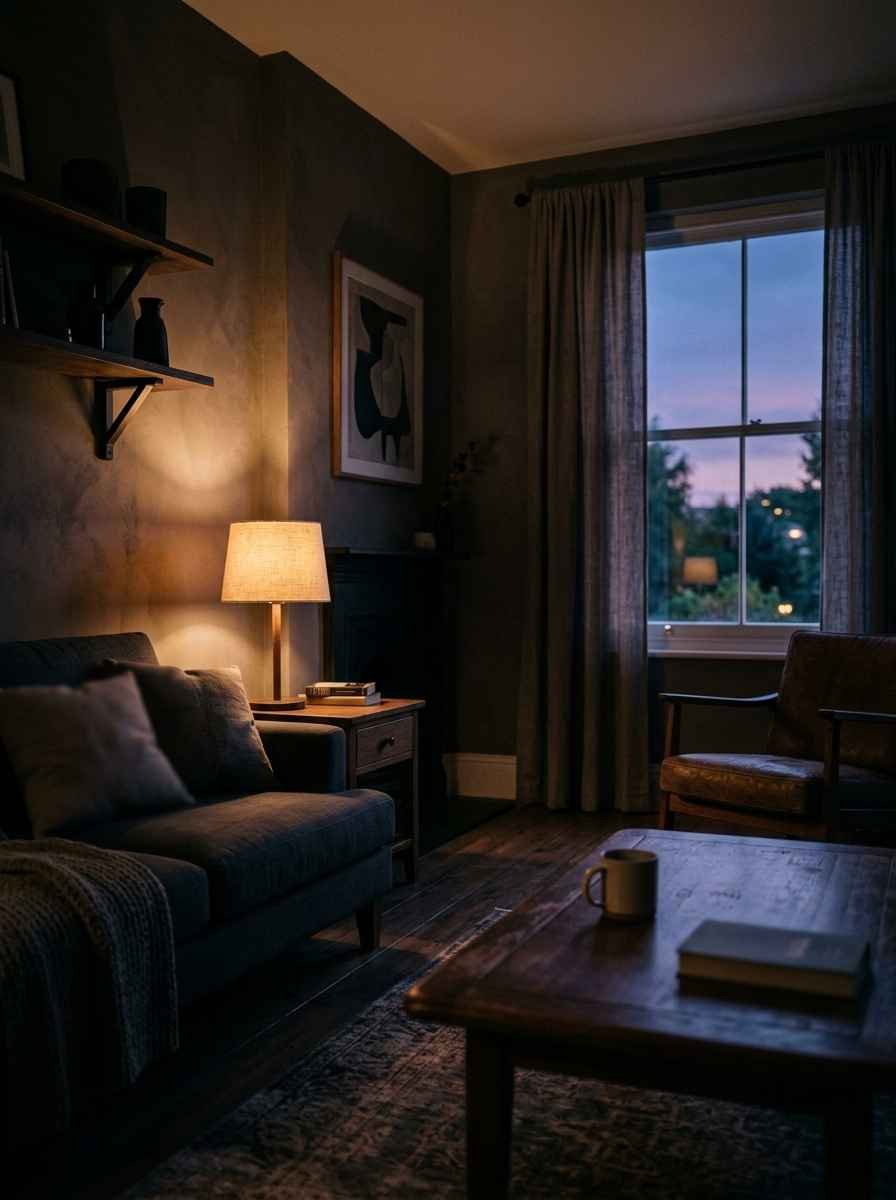
18. Use a dimmer switch if you can. It’s a small investment that changes the entire mood of a room in about ten seconds.
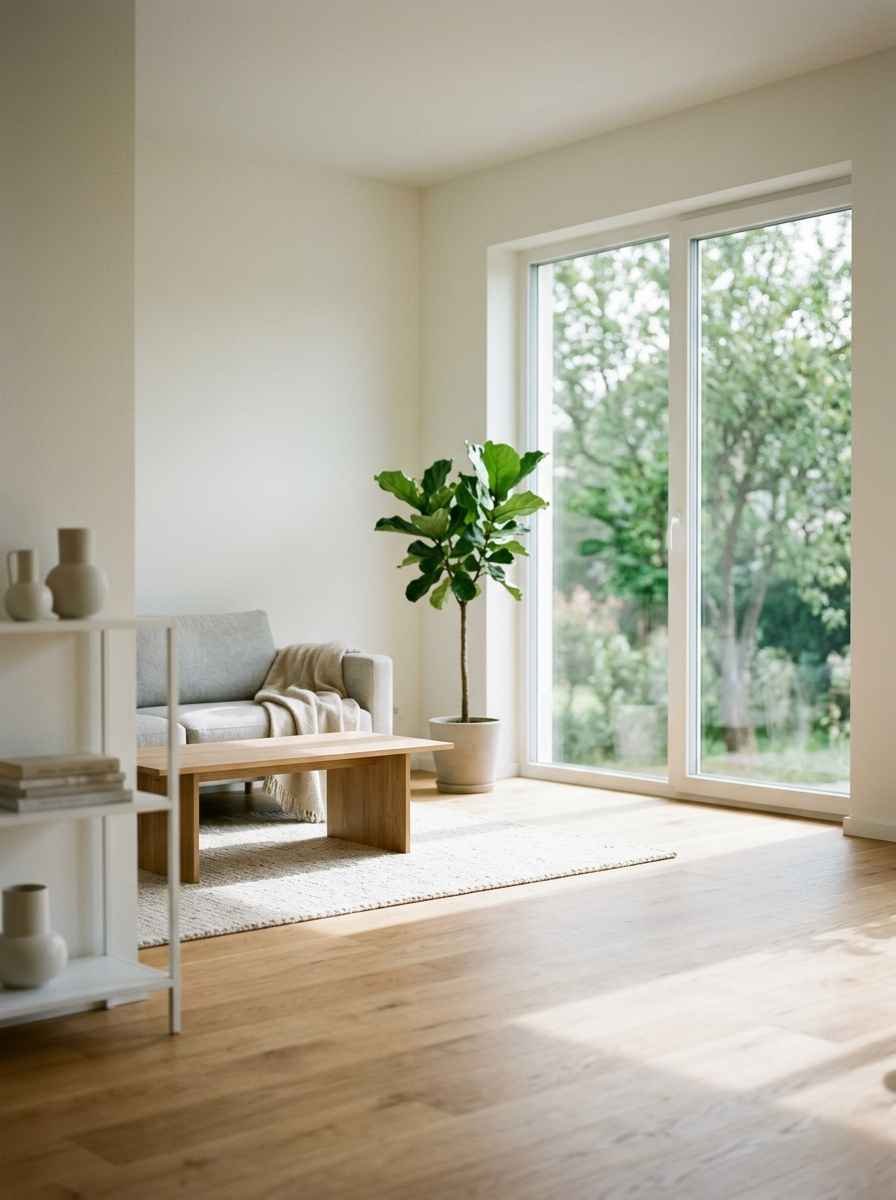
19. Let a window stay uncovered during the day. Skip heavy drapes on at least one window. Natural light is the cheapest decor upgrade you’ll ever make.
Add personal touches without adding clutter
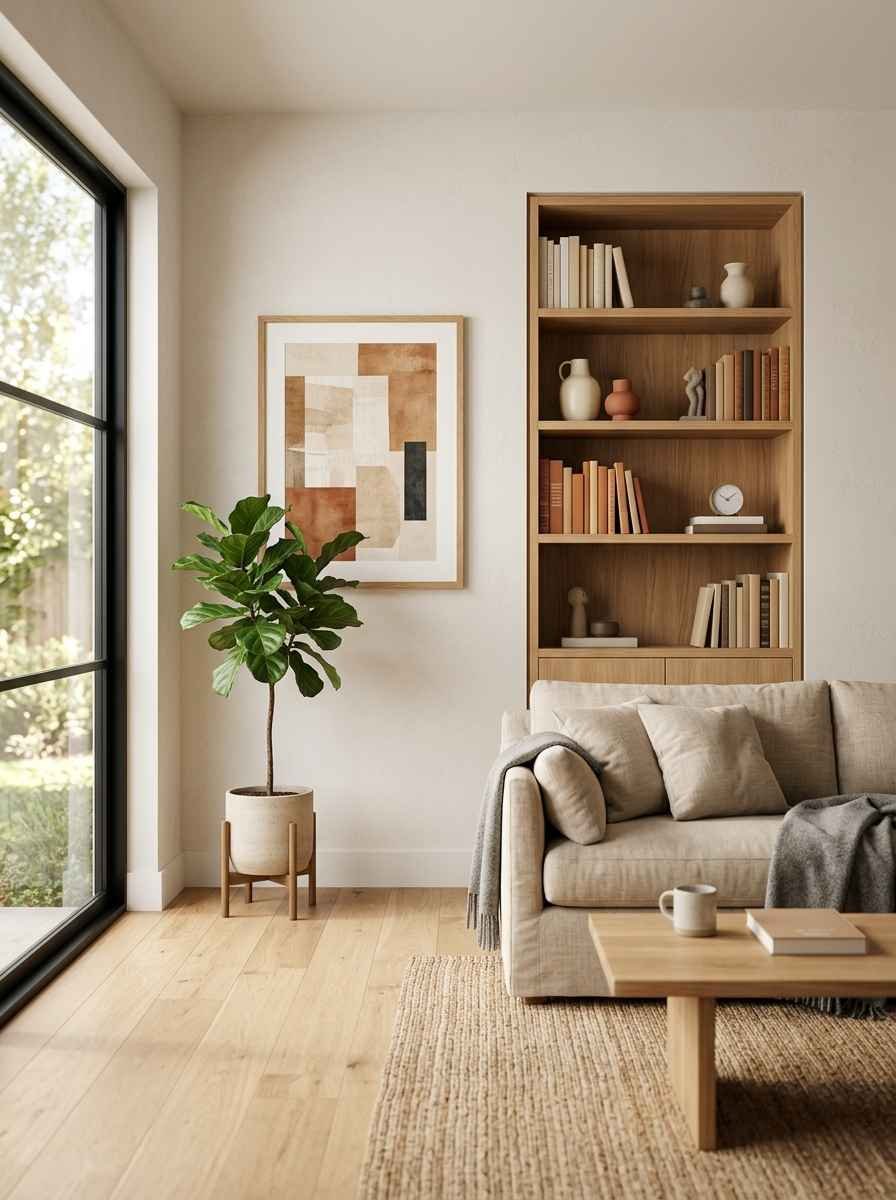
Minimalism isn’t about owning nothing. It’s about owning things on purpose.
A room with zero personality is just as tiring to be in as a cluttered one, honestly.
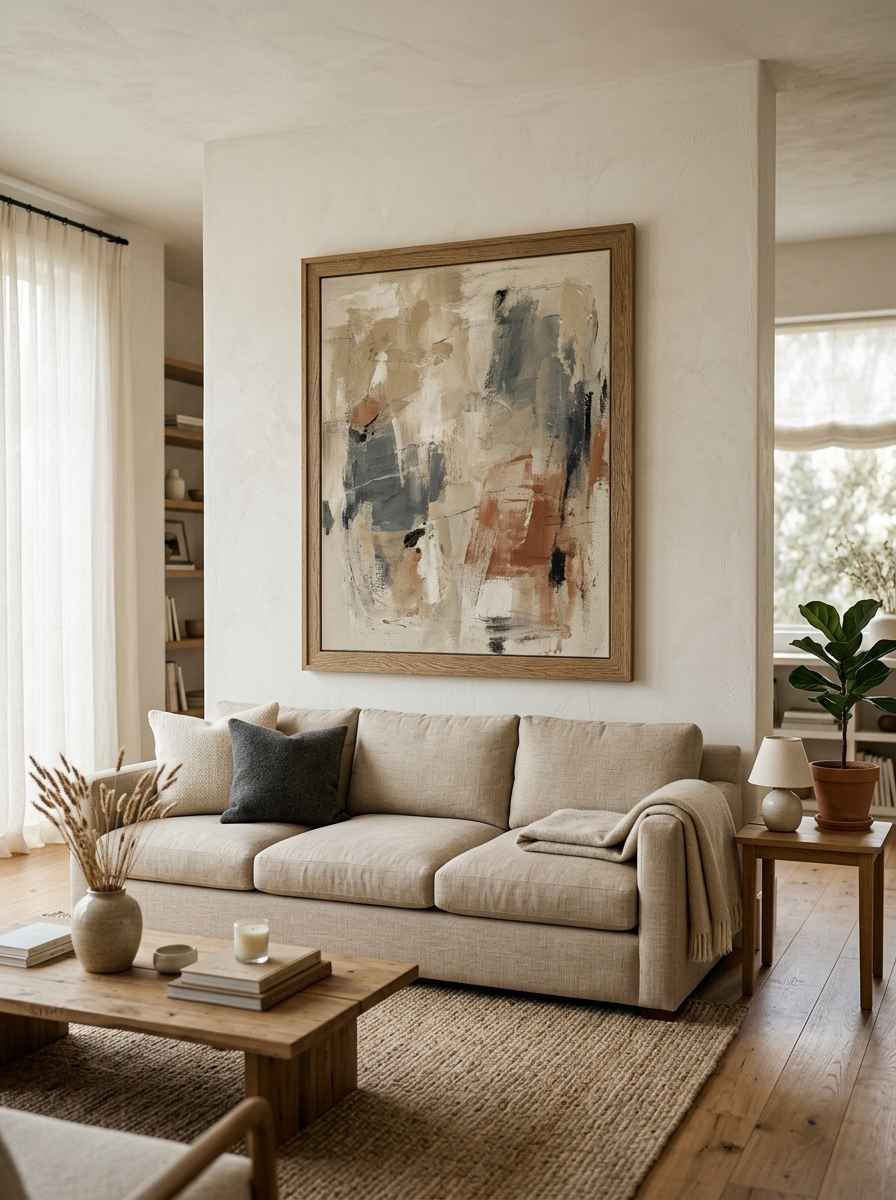
20. Frame one piece of real art, not a print. A single original piece, even something small from a local artist, does more for a room than five generic prints stacked on a gallery wall.
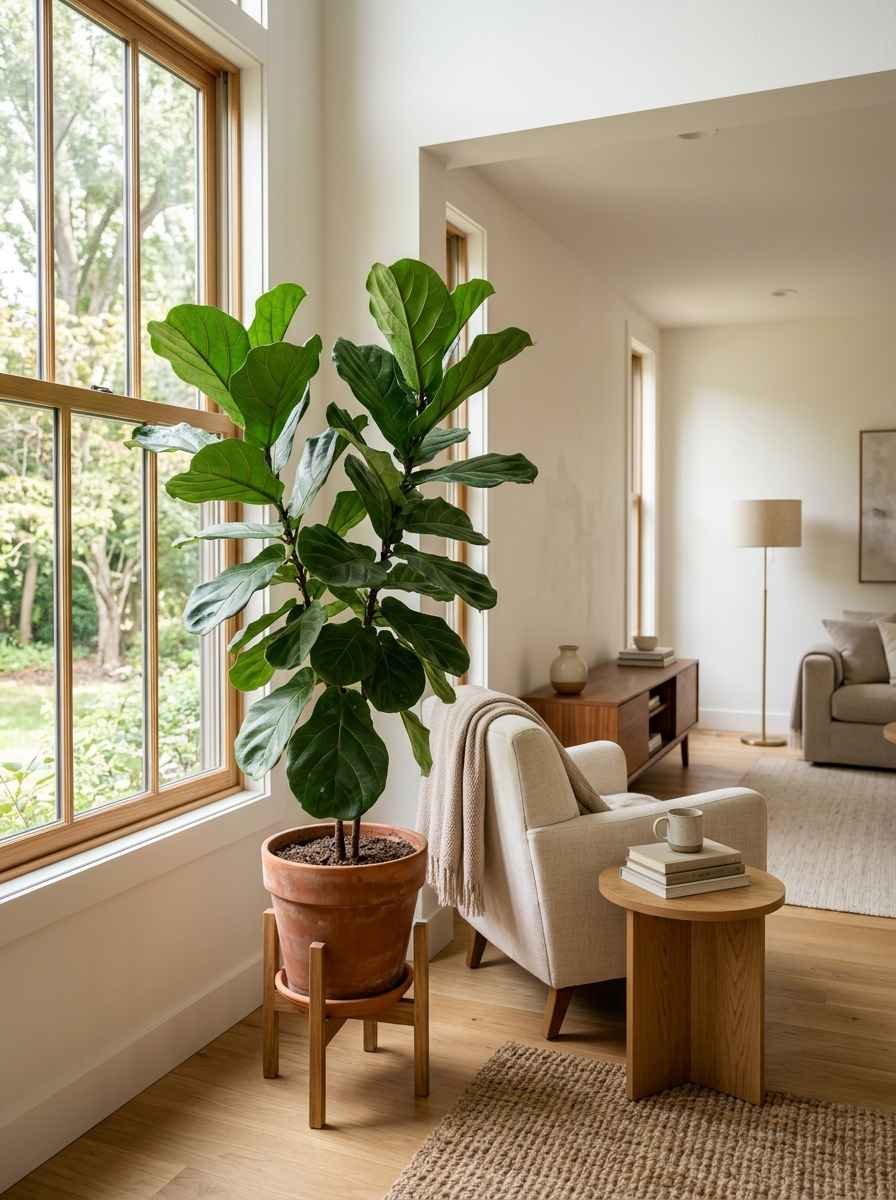
21. Keep one plant that’s actually alive. A pothos or snake plant. Both are nearly impossible to kill and they add the kind of texture and color a room needs.
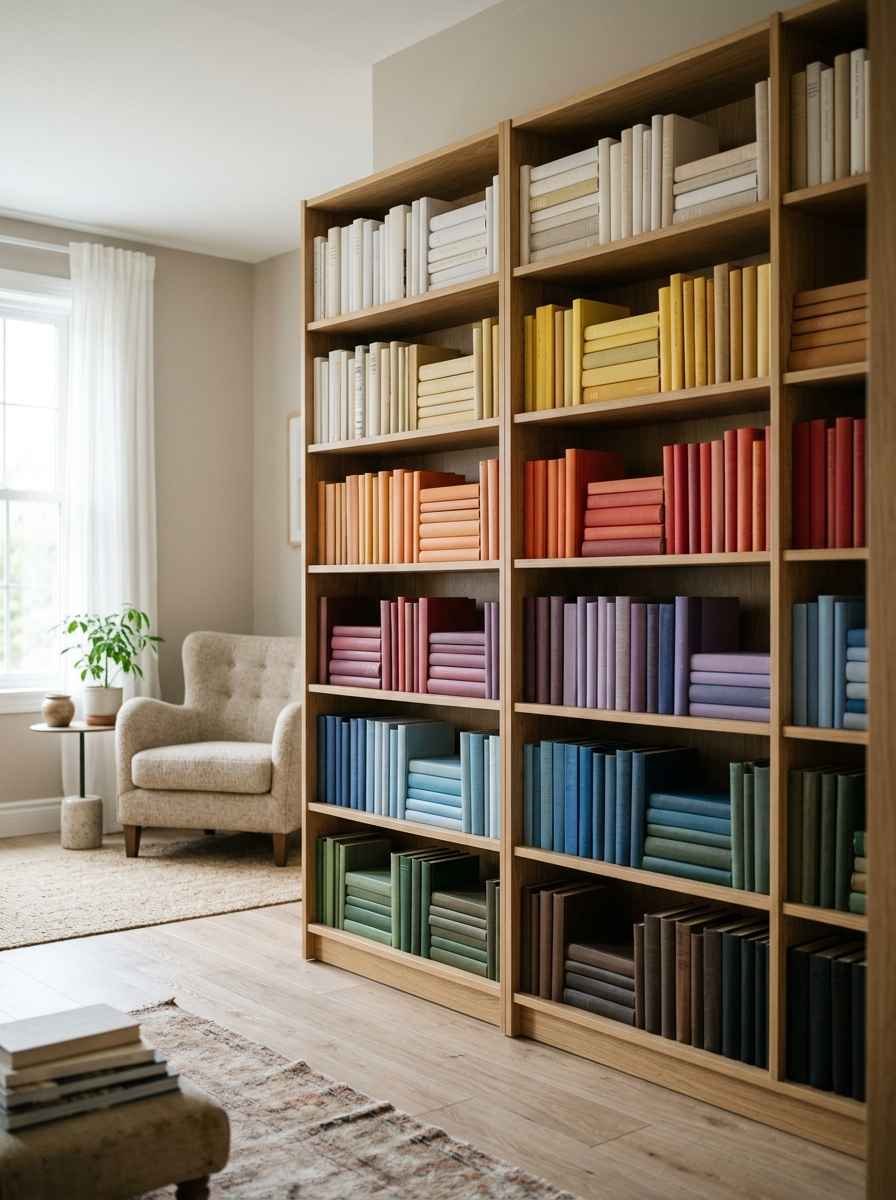
22. Display books by color or size, not alphabetically. It sounds fussy, but a tidy stack of books instantly reads as intentional rather than leftover.
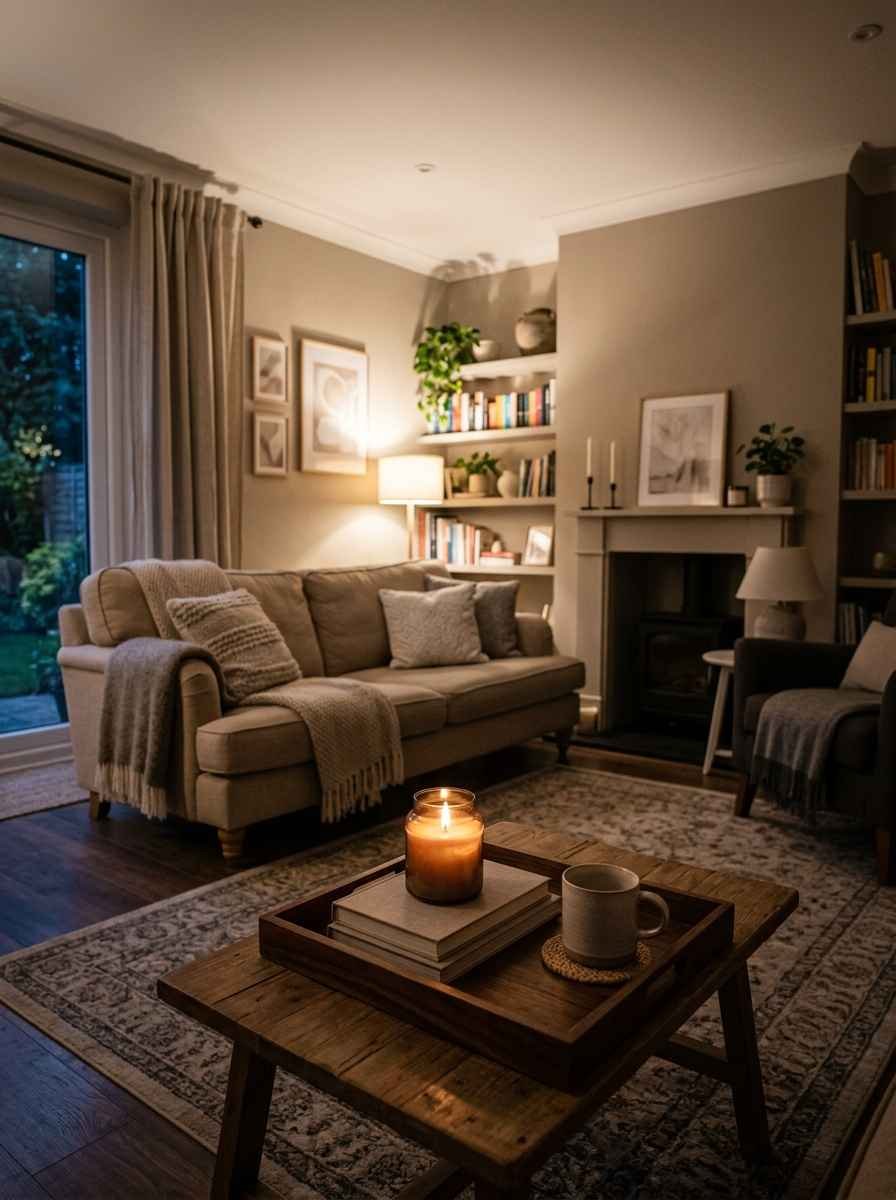
23. Use a scent as part of the decor. A candle or diffuser with a signature scent does something no visual object can. Walk in the door and it just feels like home.
24. Rotate your decor seasonally. Swap two or three small items every few months (a throw, a vase, a candle scent). It keeps a minimalist room from ever feeling static or boring.
Small-space specific tricks
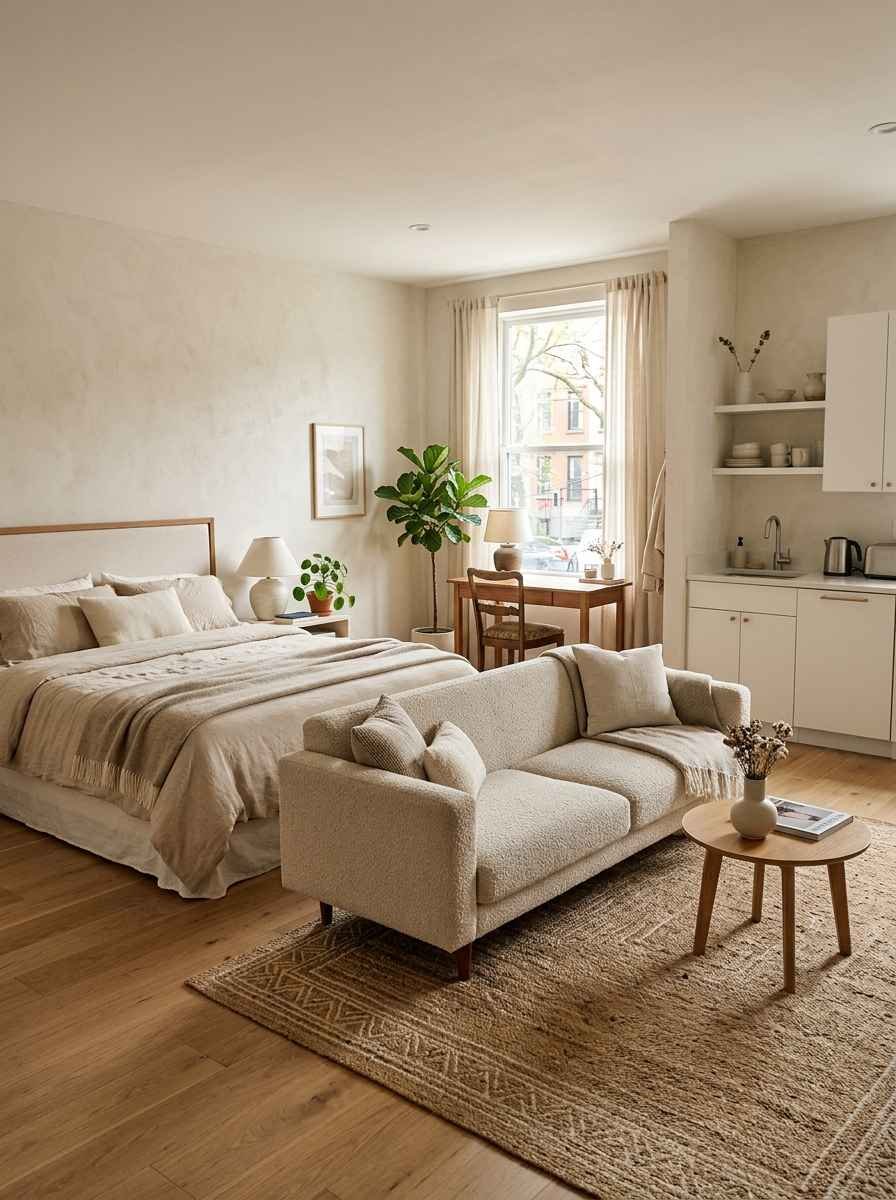
If you’re working with a studio or a tiny bedroom, a few of these matter more than the rest.
25. Float your furniture off the walls slightly. Pulling a couch even six inches away from the wall can make a small room feel bigger, not smaller. Counterintuitive, but it works.
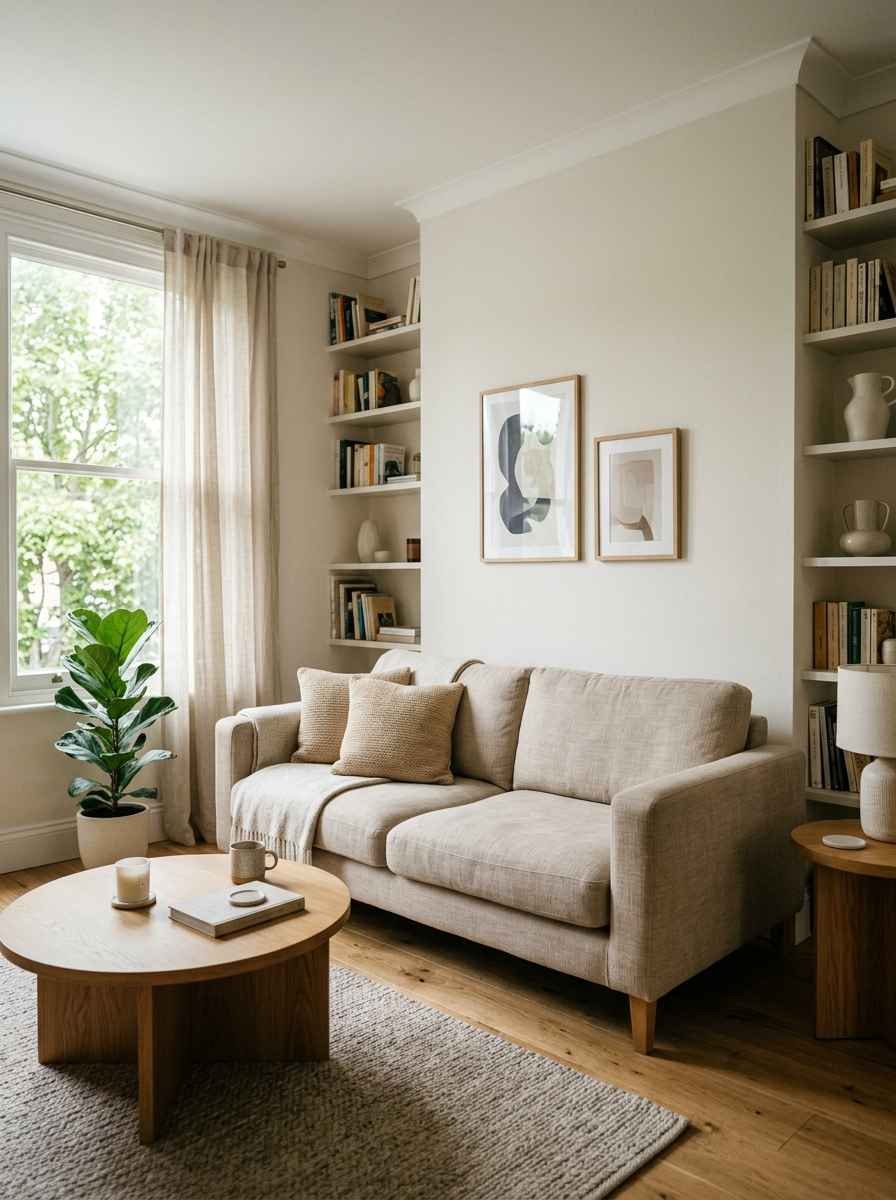
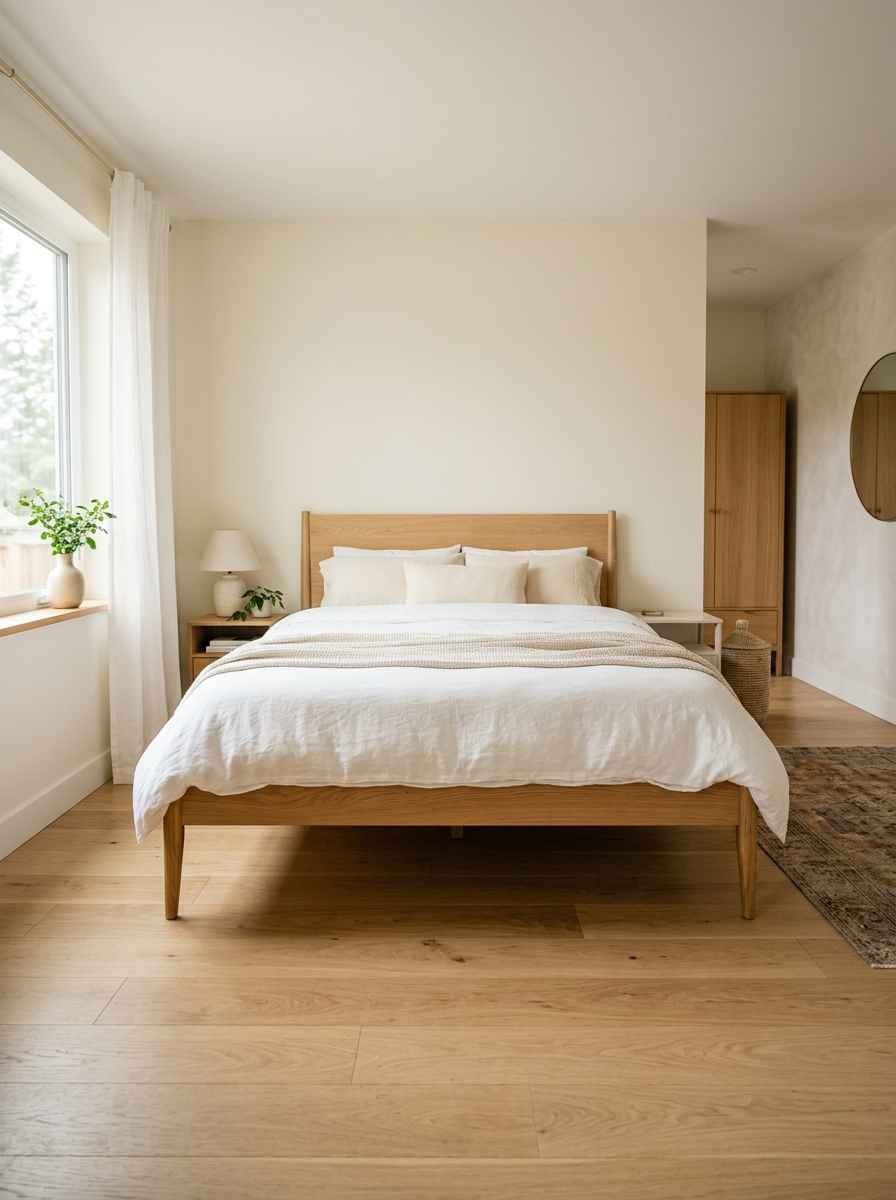
26. Choose furniture with visible legs. A couch or bed frame that shows the floor beneath it reads as lighter than one that sits flush to the ground. This one change alone made my old studio apartment feel almost 20% bigger, at least visually.
A quick comparison to keep handy
| Element | Cluttered Room Vibe | Cozy Minimalist Vibe |
|---|---|---|
| Surfaces | Everything displayed at once | 3 objects max per surface |
| Lighting | One harsh overhead bulb | 3 layered warm sources |
| Color | Random mix, no anchor | 80% neutral, 20% accent |
| Texture | Flat, matching sets | Mixed: linen, wood, wool |
Quick side note, and this has nothing to do with decor: I once spent an entire Sunday reorganizing my bookshelf by color instead of doing my taxes.
No regrets. Sometimes a small, satisfying task is exactly what your brain needs before it can tackle a big one.
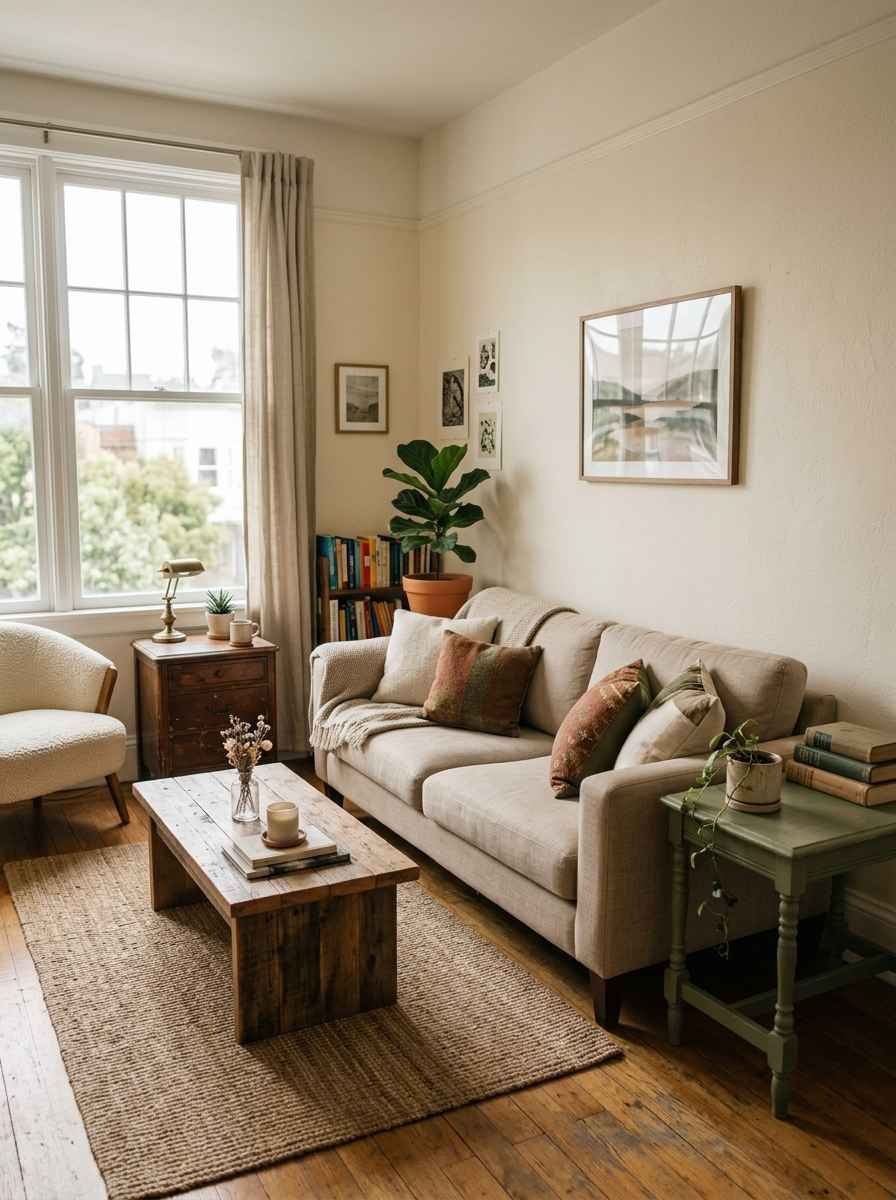
This whole cozy-but-uncluttered look actually has a name, by the way.
It overlaps a lot with hygge, the Danish concept of coziness, which leans on soft textures and warm light rather than piles of stuff. Worth a search if you want a deeper design rabbit hole to fall into.
A few things I’d skip
Not every trend earns a spot in a minimalist room. A couple of honest opinions here, since you asked (well, you didn’t, but I’m giving them anyway):
- Skip oversized statement furniture in small rooms. It looks impressive in a showroom and swallows a real bedroom whole.
- Skip matching furniture sets. A bedroom where the nightstands, dresser, and bed frame all came from the same three-piece set tends to feel like a hotel room, not a home.
FAQs
Does minimalist decor mean I can’t have personal items on display? No.
Minimalism just means being selective. Keep the pieces that actually mean something and store or donate the rest.
What’s the cheapest way to start a minimalist makeover? Declutter first.
It costs nothing and it’s the single biggest visual change you can make before spending a dollar on new decor.
Will a minimalist room feel too cold or empty? Only if you skip texture and lighting. A room with warm bulbs, a rug, and a few soft textiles will feel cozy even with very little furniture in it.
Final thought
Wow, 26 ideas is a lot to take in at once, so don’t try to do them all this weekend.
Pick three. Maybe start with the one-shelf declutter, a warmer bulb, and one throw blanket you actually love.
Which one are you trying first? Save this post and let me know how it turns out.
